All Explainers and GuidesAll Explainers and Guides
3 Under-the-Radar Bay Area Rose Gardens to Stroll for Free This Summer
Got World Cup Tickets? What to Know About Getting to a Match in Santa Clara
Primary 2026: Still Need to Vote on Election Day? Here’s Where to Do It (and Why You Shouldn’t Mail Your Ballot)
What Can Prediction Markets Tell Us About the California Governor’s Race?
Saws, Sewing Machines and Telescopes: The Surprising Things on Loan From Your Library
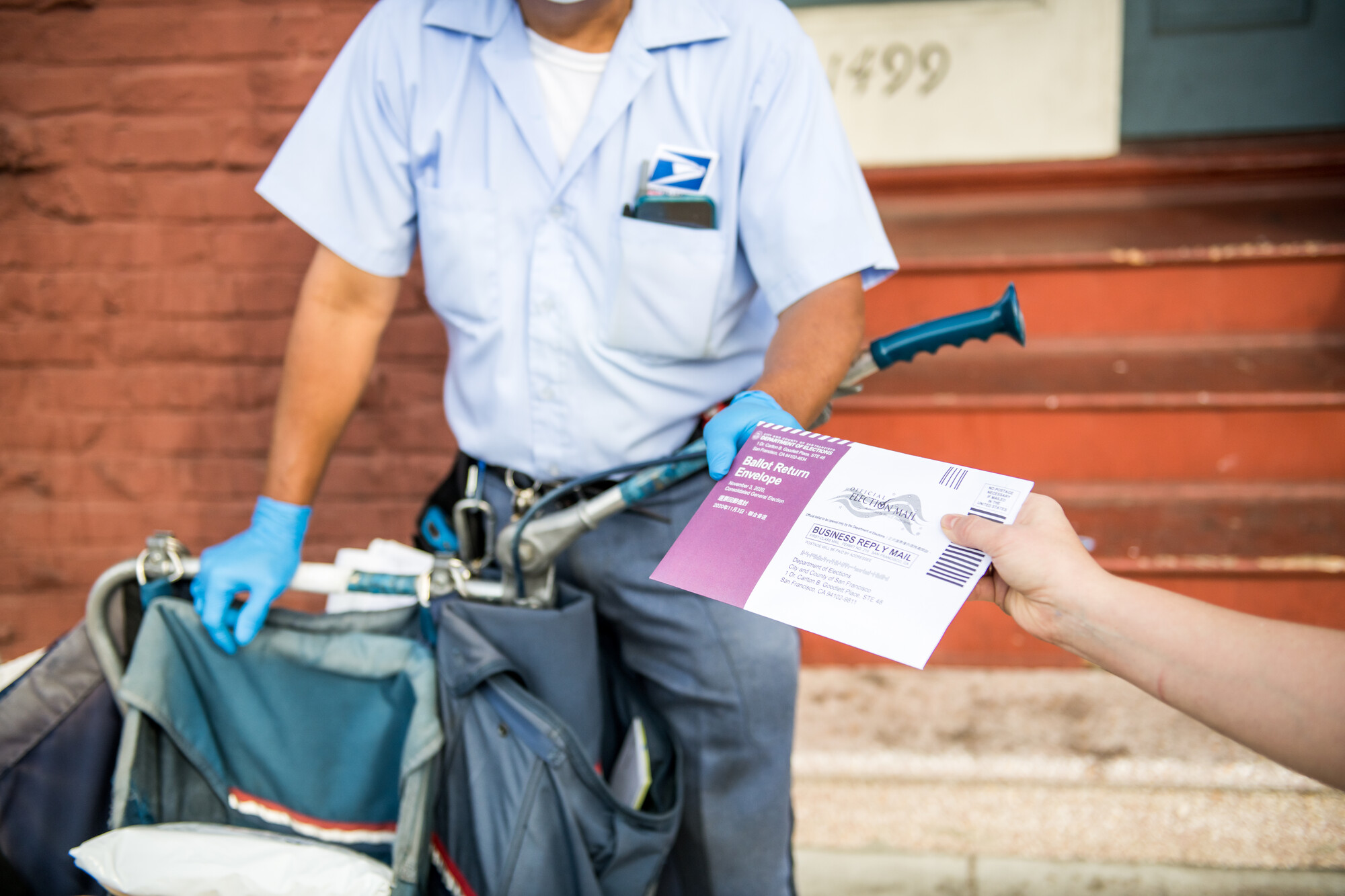
Still Need to Mail Your Primary Ballot? Don’t Rely on USPS, Officials Say
How to Protect Yourself From Ticks — and Lyme Disease — in the Bay Area
Seeing Ariana Grande at Oakland Arena? From Bag Policy to Parking, What to Know
As the Bay Area Prepares for World Cup, A San Francisco Team Looks For a Way Forward
Didn’t Save Enough for Retirement? Here’s How to Afford Aging in the Bay Area
Player sponsored by
window.__IS_SSR__=true
window.__INITIAL_STATE__={
"attachmentsReducer": {
"audio_0": {
"type": "attachments",
"id": "audio_0",
"imgSizes": {
"kqedFullSize": {
"file": "https://ww2.kqed.org/news/wp-content/themes/KQED-unified/img/audio_bgs/background0.jpg"
}
}
},
"audio_1": {
"type": "attachments",
"id": "audio_1",
"imgSizes": {
"kqedFullSize": {
"file": "https://ww2.kqed.org/news/wp-content/themes/KQED-unified/img/audio_bgs/background1.jpg"
}
}
},
"audio_2": {
"type": "attachments",
"id": "audio_2",
"imgSizes": {
"kqedFullSize": {
"file": "https://ww2.kqed.org/news/wp-content/themes/KQED-unified/img/audio_bgs/background2.jpg"
}
}
},
"audio_3": {
"type": "attachments",
"id": "audio_3",
"imgSizes": {
"kqedFullSize": {
"file": "https://ww2.kqed.org/news/wp-content/themes/KQED-unified/img/audio_bgs/background3.jpg"
}
}
},
"audio_4": {
"type": "attachments",
"id": "audio_4",
"imgSizes": {
"kqedFullSize": {
"file": "https://ww2.kqed.org/news/wp-content/themes/KQED-unified/img/audio_bgs/background4.jpg"
}
}
},
"placeholder": {
"type": "attachments",
"id": "placeholder",
"imgSizes": {
"thumbnail": {
"file": "https://cdn.kqed.org/wp-content/uploads/2024/12/KQED-Default-Image-816638274-2000x1333-1-160x107.jpg",
"width": 160,
"height": 107,
"mimeType": "image/jpeg"
},
"medium": {
"file": "https://cdn.kqed.org/wp-content/uploads/2024/12/KQED-Default-Image-816638274-2000x1333-1-800x533.jpg",
"width": 800,
"height": 533,
"mimeType": "image/jpeg"
},
"medium_large": {
"file": "https://cdn.kqed.org/wp-content/uploads/2024/12/KQED-Default-Image-816638274-2000x1333-1-768x512.jpg",
"width": 768,
"height": 512,
"mimeType": "image/jpeg"
},
"large": {
"file": "https://cdn.kqed.org/wp-content/uploads/2024/12/KQED-Default-Image-816638274-2000x1333-1-1020x680.jpg",
"width": 1020,
"height": 680,
"mimeType": "image/jpeg"
},
"1536x1536": {
"file": "https://cdn.kqed.org/wp-content/uploads/2024/12/KQED-Default-Image-816638274-2000x1333-1-1536x1024.jpg",
"width": 1536,
"height": 1024,
"mimeType": "image/jpeg"
},
"fd-lrg": {
"file": "https://cdn.kqed.org/wp-content/uploads/2024/12/KQED-Default-Image-816638274-2000x1333-1-1536x1024.jpg",
"width": 1536,
"height": 1024,
"mimeType": "image/jpeg"
},
"fd-med": {
"file": "https://cdn.kqed.org/wp-content/uploads/2024/12/KQED-Default-Image-816638274-2000x1333-1-1020x680.jpg",
"width": 1020,
"height": 680,
"mimeType": "image/jpeg"
},
"fd-sm": {
"file": "https://cdn.kqed.org/wp-content/uploads/2024/12/KQED-Default-Image-816638274-2000x1333-1-800x533.jpg",
"width": 800,
"height": 533,
"mimeType": "image/jpeg"
},
"post-thumbnail": {
"file": "https://cdn.kqed.org/wp-content/uploads/2024/12/KQED-Default-Image-816638274-2000x1333-1-672x372.jpg",
"width": 672,
"height": 372,
"mimeType": "image/jpeg"
},
"twentyfourteen-full-width": {
"file": "https://cdn.kqed.org/wp-content/uploads/2024/12/KQED-Default-Image-816638274-2000x1333-1-1038x576.jpg",
"width": 1038,
"height": 576,
"mimeType": "image/jpeg"
},
"xxsmall": {
"file": "https://cdn.kqed.org/wp-content/uploads/2024/12/KQED-Default-Image-816638274-2000x1333-1-160x107.jpg",
"width": 160,
"height": 107,
"mimeType": "image/jpeg"
},
"xsmall": {
"file": "https://cdn.kqed.org/wp-content/uploads/2024/12/KQED-Default-Image-816638274-2000x1333-1-672x372.jpg",
"width": 672,
"height": 372,
"mimeType": "image/jpeg"
},
"small": {
"file": "https://cdn.kqed.org/wp-content/uploads/2024/12/KQED-Default-Image-816638274-2000x1333-1-672x372.jpg",
"width": 672,
"height": 372,
"mimeType": "image/jpeg"
},
"xlarge": {
"file": "https://cdn.kqed.org/wp-content/uploads/2024/12/KQED-Default-Image-816638274-2000x1333-1-1020x680.jpg",
"width": 1020,
"height": 680,
"mimeType": "image/jpeg"
},
"full-width": {
"file": "https://cdn.kqed.org/wp-content/uploads/2024/12/KQED-Default-Image-816638274-2000x1333-1-1920x1280.jpg",
"width": 1920,
"height": 1280,
"mimeType": "image/jpeg"
},
"guest-author-32": {
"file": "https://cdn.kqed.org/wp-content/uploads/2025/01/KQED-Default-Image-816638274-1333x1333-1-160x160.jpg",
"width": 32,
"height": 32,
"mimeType": "image/jpeg"
},
"guest-author-50": {
"file": "https://cdn.kqed.org/wp-content/uploads/2025/01/KQED-Default-Image-816638274-1333x1333-1-160x160.jpg",
"width": 50,
"height": 50,
"mimeType": "image/jpeg"
},
"guest-author-64": {
"file": "https://cdn.kqed.org/wp-content/uploads/2025/01/KQED-Default-Image-816638274-1333x1333-1-160x160.jpg",
"width": 64,
"height": 64,
"mimeType": "image/jpeg"
},
"guest-author-96": {
"file": "https://cdn.kqed.org/wp-content/uploads/2025/01/KQED-Default-Image-816638274-1333x1333-1-160x160.jpg",
"width": 96,
"height": 96,
"mimeType": "image/jpeg"
},
"guest-author-128": {
"file": "https://cdn.kqed.org/wp-content/uploads/2025/01/KQED-Default-Image-816638274-1333x1333-1-160x160.jpg",
"width": 128,
"height": 128,
"mimeType": "image/jpeg"
},
"detail": {
"file": "https://cdn.kqed.org/wp-content/uploads/2025/01/KQED-Default-Image-816638274-1333x1333-1-160x160.jpg",
"width": 160,
"height": 160,
"mimeType": "image/jpeg"
},
"kqedFullSize": {
"file": "https://cdn.kqed.org/wp-content/uploads/2024/12/KQED-Default-Image-816638274-2000x1333-1.jpg",
"width": 2000,
"height": 1333
}
}
},
"root-site_22172": {
"type": "attachments",
"id": "root-site_22172",
"meta": {
"index": "attachments_1716263798",
"site": "root-site",
"id": "22172",
"found": true
},
"parent": 22151,
"imgSizes": {
"twentyfourteen-full-width": {
"file": "https://cdn.kqed.org/wp-content/uploads/2023/05/pexels-cottonbro-studio-4778412-1020x680-1-1020x576.jpg",
"width": 1020,
"mimeType": "image/jpeg",
"height": 576
},
"thumbnail": {
"file": "https://cdn.kqed.org/wp-content/uploads/2023/05/pexels-cottonbro-studio-4778412-1020x680-1-160x107.jpg",
"width": 160,
"mimeType": "image/jpeg",
"height": 107
},
"post-thumbnail": {
"file": "https://cdn.kqed.org/wp-content/uploads/2023/05/pexels-cottonbro-studio-4778412-1020x680-1-672x372.jpg",
"width": 672,
"mimeType": "image/jpeg",
"height": 372
},
"kqedFullSize": {
"file": "https://cdn.kqed.org/wp-content/uploads/2023/05/pexels-cottonbro-studio-4778412-1020x680-1.jpg",
"width": 1020,
"height": 680
},
"medium": {
"file": "https://cdn.kqed.org/wp-content/uploads/2023/05/pexels-cottonbro-studio-4778412-1020x680-1-800x533.jpg",
"width": 800,
"mimeType": "image/jpeg",
"height": 533
},
"medium_large": {
"file": "https://cdn.kqed.org/wp-content/uploads/2023/05/pexels-cottonbro-studio-4778412-1020x680-1-768x512.jpg",
"width": 768,
"mimeType": "image/jpeg",
"height": 512
}
},
"publishDate": 1683318897,
"modified": 1683318897,
"caption": null,
"description": null,
"title": "pexels-cottonbro-studio-4778412-1020x680 (1)",
"credit": null,
"status": "inherit",
"altTag": null,
"isLoading": false,
"fetchFailed": false
},
"news_12085320": {
"type": "attachments",
"id": "news_12085320",
"meta": {
"index": "attachments_1716263798",
"site": "news",
"id": "12085320",
"found": true
},
"title": "260521-ROSEGARDENS-14-BL-KQED",
"publishDate": 1779922808,
"status": "inherit",
"parent": 0,
"modified": 1779922990,
"caption": "Roses in bloom at the Berkeley Rose Garden in Berkeley on May 21, 2026, where approximately 1,500 rose bushes bloom across the terraced garden built in the 1930s. Read for local and blooming rose gardens around the Bay Area.",
"credit": "Beth LaBerge/KQED",
"altTag": null,
"description": null,
"imgSizes": {
"thumbnail": {
"file": "https://cdn.kqed.org/wp-content/uploads/sites/10/2026/05/260521-ROSEGARDENS-14-BL-KQED-160x107.jpg",
"width": 160,
"height": 107,
"mimeType": "image/jpeg"
},
"1536x1536": {
"file": "https://cdn.kqed.org/wp-content/uploads/sites/10/2026/05/260521-ROSEGARDENS-14-BL-KQED-1536x1024.jpg",
"width": 1536,
"height": 1024,
"mimeType": "image/jpeg"
},
"post-thumbnail": {
"file": "https://cdn.kqed.org/wp-content/uploads/sites/10/2026/05/260521-ROSEGARDENS-14-BL-KQED-672x372.jpg",
"width": 672,
"height": 372,
"mimeType": "image/jpeg"
},
"twentyfourteen-full-width": {
"file": "https://cdn.kqed.org/wp-content/uploads/sites/10/2026/05/260521-ROSEGARDENS-14-BL-KQED-1038x576.jpg",
"width": 1038,
"height": 576,
"mimeType": "image/jpeg"
},
"npr-cds-wide": {
"file": "https://cdn.kqed.org/wp-content/uploads/sites/10/2026/05/260521-ROSEGARDENS-14-BL-KQED-1200x675.jpg",
"width": 1200,
"height": 675,
"mimeType": "image/jpeg"
},
"npr-cds-square": {
"file": "https://cdn.kqed.org/wp-content/uploads/sites/10/2026/05/260521-ROSEGARDENS-14-BL-KQED-600x600.jpg",
"width": 600,
"height": 600,
"mimeType": "image/jpeg"
},
"kqedFullSize": {
"file": "https://cdn.kqed.org/wp-content/uploads/sites/10/2026/05/260521-ROSEGARDENS-14-BL-KQED.jpg",
"width": 2000,
"height": 1333
}
},
"isLoading": false,
"fetchFailed": false
},
"news_12085866": {
"type": "attachments",
"id": "news_12085866",
"meta": {
"index": "attachments_1716263798",
"site": "news",
"id": "12085866",
"found": true
},
"title": "FBL-WC-2026-STADIUM-SAN FRANCISCO BAY AREA",
"publishDate": 1780442512,
"status": "inherit",
"parent": 12084960,
"modified": 1780442548,
"caption": "San Francisco Bay Area Stadium (temporarily renamed from Levi's Stadium for the 2026 FIFA World Cup) in Santa Clara, California, on May 19, 2026. Levi's Stadium will host six matches during the 2026 FIFA World Cup, including five group stage matches throughout June 2026. ",
"credit": "Josh Edelson/AFP via Getty Images",
"altTag": null,
"description": null,
"imgSizes": {
"thumbnail": {
"file": "https://cdn.kqed.org/wp-content/uploads/sites/10/2026/06/FIFAWorldCupLevisStadiumGetty-160x99.jpg",
"width": 160,
"height": 99,
"mimeType": "image/jpeg"
},
"1536x1536": {
"file": "https://cdn.kqed.org/wp-content/uploads/sites/10/2026/06/FIFAWorldCupLevisStadiumGetty-1536x948.jpg",
"width": 1536,
"height": 948,
"mimeType": "image/jpeg"
},
"post-thumbnail": {
"file": "https://cdn.kqed.org/wp-content/uploads/sites/10/2026/06/FIFAWorldCupLevisStadiumGetty-672x372.jpg",
"width": 672,
"height": 372,
"mimeType": "image/jpeg"
},
"twentyfourteen-full-width": {
"file": "https://cdn.kqed.org/wp-content/uploads/sites/10/2026/06/FIFAWorldCupLevisStadiumGetty-1038x576.jpg",
"width": 1038,
"height": 576,
"mimeType": "image/jpeg"
},
"npr-cds-wide": {
"file": "https://cdn.kqed.org/wp-content/uploads/sites/10/2026/06/FIFAWorldCupLevisStadiumGetty-1200x675.jpg",
"width": 1200,
"height": 675,
"mimeType": "image/jpeg"
},
"npr-cds-square": {
"file": "https://cdn.kqed.org/wp-content/uploads/sites/10/2026/06/FIFAWorldCupLevisStadiumGetty-600x600.jpg",
"width": 600,
"height": 600,
"mimeType": "image/jpeg"
},
"kqedFullSize": {
"file": "https://cdn.kqed.org/wp-content/uploads/sites/10/2026/06/FIFAWorldCupLevisStadiumGetty.jpg",
"width": 2000,
"height": 1235
}
},
"isLoading": false,
"fetchFailed": false
},
"news_12085531": {
"type": "attachments",
"id": "news_12085531",
"meta": {
"index": "attachments_1716263798",
"site": "news",
"id": "12085531",
"found": true
},
"title": "San Francisco Ballot Box",
"publishDate": 1780077355,
"status": "inherit",
"parent": 12085528,
"modified": 1780077374,
"caption": "Ballot drop box with bilingual sign promoting June 2, 2026 election and opening date, on residential street, San Francisco, California, May 20, 2026. ",
"credit": "Smith Collection/Gado/Getty Images",
"altTag": null,
"description": null,
"imgSizes": {
"thumbnail": {
"file": "https://cdn.kqed.org/wp-content/uploads/sites/10/2026/05/GettyImages-2277984200-160x107.jpg",
"width": 160,
"height": 107,
"mimeType": "image/jpeg"
},
"1536x1536": {
"file": "https://cdn.kqed.org/wp-content/uploads/sites/10/2026/05/GettyImages-2277984200-1536x1024.jpg",
"width": 1536,
"height": 1024,
"mimeType": "image/jpeg"
},
"post-thumbnail": {
"file": "https://cdn.kqed.org/wp-content/uploads/sites/10/2026/05/GettyImages-2277984200-672x372.jpg",
"width": 672,
"height": 372,
"mimeType": "image/jpeg"
},
"twentyfourteen-full-width": {
"file": "https://cdn.kqed.org/wp-content/uploads/sites/10/2026/05/GettyImages-2277984200-1038x576.jpg",
"width": 1038,
"height": 576,
"mimeType": "image/jpeg"
},
"npr-cds-wide": {
"file": "https://cdn.kqed.org/wp-content/uploads/sites/10/2026/05/GettyImages-2277984200-1200x675.jpg",
"width": 1200,
"height": 675,
"mimeType": "image/jpeg"
},
"npr-cds-square": {
"file": "https://cdn.kqed.org/wp-content/uploads/sites/10/2026/05/GettyImages-2277984200-600x600.jpg",
"width": 600,
"height": 600,
"mimeType": "image/jpeg"
},
"kqedFullSize": {
"file": "https://cdn.kqed.org/wp-content/uploads/sites/10/2026/05/GettyImages-2277984200.jpg",
"width": 1980,
"height": 1320
}
},
"isLoading": false,
"fetchFailed": false
},
"news_12085722": {
"type": "attachments",
"id": "news_12085722",
"meta": {
"index": "attachments_1716263798",
"site": "news",
"id": "12085722",
"found": true
},
"title": "Prediction Markets Face Increased Scrutiny Over Insider Trading Allegations",
"publishDate": 1780339914,
"status": "inherit",
"parent": 12084937,
"modified": 1780340315,
"caption": "In this photo illustration, prediction market sites are shown on electronic devices on Feb. 25, 2026, in Chicago, Illinois. ",
"credit": "Scott Olson/Getty Images",
"altTag": null,
"description": null,
"imgSizes": {
"thumbnail": {
"file": "https://cdn.kqed.org/wp-content/uploads/sites/10/2026/06/KalshiPolymarketGetty-160x106.jpg",
"width": 160,
"height": 106,
"mimeType": "image/jpeg"
},
"1536x1536": {
"file": "https://cdn.kqed.org/wp-content/uploads/sites/10/2026/06/KalshiPolymarketGetty-1536x1022.jpg",
"width": 1536,
"height": 1022,
"mimeType": "image/jpeg"
},
"post-thumbnail": {
"file": "https://cdn.kqed.org/wp-content/uploads/sites/10/2026/06/KalshiPolymarketGetty-672x372.jpg",
"width": 672,
"height": 372,
"mimeType": "image/jpeg"
},
"twentyfourteen-full-width": {
"file": "https://cdn.kqed.org/wp-content/uploads/sites/10/2026/06/KalshiPolymarketGetty-1038x576.jpg",
"width": 1038,
"height": 576,
"mimeType": "image/jpeg"
},
"npr-cds-wide": {
"file": "https://cdn.kqed.org/wp-content/uploads/sites/10/2026/06/KalshiPolymarketGetty-1200x675.jpg",
"width": 1200,
"height": 675,
"mimeType": "image/jpeg"
},
"npr-cds-square": {
"file": "https://cdn.kqed.org/wp-content/uploads/sites/10/2026/06/KalshiPolymarketGetty-600x600.jpg",
"width": 600,
"height": 600,
"mimeType": "image/jpeg"
},
"kqedFullSize": {
"file": "https://cdn.kqed.org/wp-content/uploads/sites/10/2026/06/KalshiPolymarketGetty.jpg",
"width": 2000,
"height": 1331
}
},
"isLoading": false,
"fetchFailed": false
},
"news_12085356": {
"type": "attachments",
"id": "news_12085356",
"meta": {
"index": "attachments_1716263798",
"site": "news",
"id": "12085356",
"found": true
},
"title": "20260527_AFFORDABILITYLIBRARY_GC-9-KQED",
"publishDate": 1779986290,
"status": "inherit",
"parent": 0,
"modified": 1779991659,
"caption": "Various kits and gear are available for checkout at the Mill Valley Public Library’s “Library of Things” in Mill Valley on May 27, 2026.",
"credit": "Gina Castro for KQED",
"altTag": null,
"description": null,
"imgSizes": {
"thumbnail": {
"file": "https://cdn.kqed.org/wp-content/uploads/sites/10/2026/05/20260527_AFFORDABILITYLIBRARY_GC-9-KQED-160x107.jpg",
"width": 160,
"height": 107,
"mimeType": "image/jpeg"
},
"1536x1536": {
"file": "https://cdn.kqed.org/wp-content/uploads/sites/10/2026/05/20260527_AFFORDABILITYLIBRARY_GC-9-KQED-1536x1024.jpg",
"width": 1536,
"height": 1024,
"mimeType": "image/jpeg"
},
"post-thumbnail": {
"file": "https://cdn.kqed.org/wp-content/uploads/sites/10/2026/05/20260527_AFFORDABILITYLIBRARY_GC-9-KQED-672x372.jpg",
"width": 672,
"height": 372,
"mimeType": "image/jpeg"
},
"twentyfourteen-full-width": {
"file": "https://cdn.kqed.org/wp-content/uploads/sites/10/2026/05/20260527_AFFORDABILITYLIBRARY_GC-9-KQED-1038x576.jpg",
"width": 1038,
"height": 576,
"mimeType": "image/jpeg"
},
"npr-cds-wide": {
"file": "https://cdn.kqed.org/wp-content/uploads/sites/10/2026/05/20260527_AFFORDABILITYLIBRARY_GC-9-KQED-1200x675.jpg",
"width": 1200,
"height": 675,
"mimeType": "image/jpeg"
},
"npr-cds-square": {
"file": "https://cdn.kqed.org/wp-content/uploads/sites/10/2026/05/20260527_AFFORDABILITYLIBRARY_GC-9-KQED-600x600.jpg",
"width": 600,
"height": 600,
"mimeType": "image/jpeg"
},
"kqedFullSize": {
"file": "https://cdn.kqed.org/wp-content/uploads/sites/10/2026/05/20260527_AFFORDABILITYLIBRARY_GC-9-KQED.jpg",
"width": 2000,
"height": 1333
}
},
"isLoading": false,
"fetchFailed": false
},
"news_12062766": {
"type": "attachments",
"id": "news_12062766",
"meta": {
"index": "attachments_1716263798",
"site": "news",
"id": "12062766",
"found": true
},
"title": "Californians Head To The Polls To Vote Yes Or No On Prop 50",
"publishDate": 1762279509,
"status": "inherit",
"parent": 12062726,
"modified": 1778879377,
"caption": "A voter drops his ballot in a drop box inside of San Francisco City Hall on Nov. 4, 2025 in San Francisco, California. California voters are deciding whether to approve Proposition 50, a measure that would replace the state’s current congressional district map with new, legislature-drawn lines from 2026 through 2030.",
"credit": "Justin Sullivan/Getty Images",
"altTag": null,
"description": null,
"imgSizes": {
"medium": {
"file": "https://cdn.kqed.org/wp-content/uploads/sites/10/2025/11/GettyImages-2244994619-2000x1327.jpg",
"width": 2000,
"height": 1327,
"mimeType": "image/jpeg"
},
"large": {
"file": "https://cdn.kqed.org/wp-content/uploads/sites/10/2025/11/GettyImages-2244994619-2000x1327.jpg",
"width": 2000,
"height": 1327,
"mimeType": "image/jpeg"
},
"thumbnail": {
"file": "https://cdn.kqed.org/wp-content/uploads/sites/10/2025/11/GettyImages-2244994619-160x106.jpg",
"width": 160,
"height": 106,
"mimeType": "image/jpeg"
},
"1536x1536": {
"file": "https://cdn.kqed.org/wp-content/uploads/sites/10/2025/11/GettyImages-2244994619-1536x1019.jpg",
"width": 1536,
"height": 1019,
"mimeType": "image/jpeg"
},
"2048x2048": {
"file": "https://cdn.kqed.org/wp-content/uploads/sites/10/2025/11/GettyImages-2244994619-2048x1359.jpg",
"width": 2048,
"height": 1359,
"mimeType": "image/jpeg"
},
"post-thumbnail": {
"file": "https://cdn.kqed.org/wp-content/uploads/sites/10/2025/11/GettyImages-2244994619-672x372.jpg",
"width": 672,
"height": 372,
"mimeType": "image/jpeg"
},
"twentyfourteen-full-width": {
"file": "https://cdn.kqed.org/wp-content/uploads/sites/10/2025/11/GettyImages-2244994619-1038x576.jpg",
"width": 1038,
"height": 576,
"mimeType": "image/jpeg"
},
"full-width": {
"file": "https://cdn.kqed.org/wp-content/uploads/sites/10/2025/11/GettyImages-2244994619-2000x1327.jpg",
"width": 2000,
"height": 1327,
"mimeType": "image/jpeg"
},
"npr-cds-wide": {
"file": "https://cdn.kqed.org/wp-content/uploads/sites/10/2025/11/GettyImages-2244994619-1200x675.jpg",
"width": 1200,
"height": 675,
"mimeType": "image/jpeg"
},
"kqedFullSize": {
"file": "https://cdn.kqed.org/wp-content/uploads/sites/10/2025/11/GettyImages-2244994619-scaled-e1778879389849.jpg",
"width": 2000,
"height": 1327
}
},
"isLoading": false,
"fetchFailed": false
},
"news_12085008": {
"type": "attachments",
"id": "news_12085008",
"meta": {
"index": "attachments_1716263798",
"site": "news",
"id": "12085008",
"found": true
},
"title": "LEDE 2014-02-24_PD_NU_ScenerySkiers_0001",
"publishDate": 1779474684,
"status": "inherit",
"parent": 12084907,
"modified": 1779478528,
"caption": "Skiers at Niseko, an Alterra partner resort in Sapporo, Japan, enjoy a powder day. \r\n",
"credit": "Courtesy of Alterra Mountain Company",
"altTag": null,
"description": null,
"imgSizes": {
"thumbnail": {
"file": "https://cdn.kqed.org/wp-content/uploads/sites/10/2026/05/LEDE-2014-02-24_PD_NU_ScenerySkiers_0001-160x103.jpg",
"width": 160,
"height": 103,
"mimeType": "image/jpeg"
},
"1536x1536": {
"file": "https://cdn.kqed.org/wp-content/uploads/sites/10/2026/05/LEDE-2014-02-24_PD_NU_ScenerySkiers_0001-1536x986.jpg",
"width": 1536,
"height": 986,
"mimeType": "image/jpeg"
},
"post-thumbnail": {
"file": "https://cdn.kqed.org/wp-content/uploads/sites/10/2026/05/LEDE-2014-02-24_PD_NU_ScenerySkiers_0001-672x372.jpg",
"width": 672,
"height": 372,
"mimeType": "image/jpeg"
},
"twentyfourteen-full-width": {
"file": "https://cdn.kqed.org/wp-content/uploads/sites/10/2026/05/LEDE-2014-02-24_PD_NU_ScenerySkiers_0001-1038x576.jpg",
"width": 1038,
"height": 576,
"mimeType": "image/jpeg"
},
"npr-cds-wide": {
"file": "https://cdn.kqed.org/wp-content/uploads/sites/10/2026/05/LEDE-2014-02-24_PD_NU_ScenerySkiers_0001-1200x675.jpg",
"width": 1200,
"height": 675,
"mimeType": "image/jpeg"
},
"npr-cds-square": {
"file": "https://cdn.kqed.org/wp-content/uploads/sites/10/2026/05/LEDE-2014-02-24_PD_NU_ScenerySkiers_0001-600x600.jpg",
"width": 600,
"height": 600,
"mimeType": "image/jpeg"
},
"kqedFullSize": {
"file": "https://cdn.kqed.org/wp-content/uploads/sites/10/2026/05/LEDE-2014-02-24_PD_NU_ScenerySkiers_0001.jpg",
"width": 2000,
"height": 1284
}
},
"isLoading": false,
"fetchFailed": false
},
"news_12083700": {
"type": "attachments",
"id": "news_12083700",
"meta": {
"index": "attachments_1716263798",
"site": "news",
"id": "12083700",
"found": true
},
"title": "Young woman in forest putting up tent",
"publishDate": 1778788627,
"status": "inherit",
"parent": 12083697,
"modified": 1778794560,
"caption": "A stock photo of a young woman in the forest putting up a tent.",
"credit": "Jacob Rushing/Getty Images",
"altTag": null,
"description": null,
"imgSizes": {
"thumbnail": {
"file": "https://cdn.kqed.org/wp-content/uploads/sites/10/2026/05/CampingGetty1-160x107.jpg",
"width": 160,
"height": 107,
"mimeType": "image/jpeg"
},
"1536x1536": {
"file": "https://cdn.kqed.org/wp-content/uploads/sites/10/2026/05/CampingGetty1-1536x1024.jpg",
"width": 1536,
"height": 1024,
"mimeType": "image/jpeg"
},
"post-thumbnail": {
"file": "https://cdn.kqed.org/wp-content/uploads/sites/10/2026/05/CampingGetty1-672x372.jpg",
"width": 672,
"height": 372,
"mimeType": "image/jpeg"
},
"twentyfourteen-full-width": {
"file": "https://cdn.kqed.org/wp-content/uploads/sites/10/2026/05/CampingGetty1-1038x576.jpg",
"width": 1038,
"height": 576,
"mimeType": "image/jpeg"
},
"npr-cds-wide": {
"file": "https://cdn.kqed.org/wp-content/uploads/sites/10/2026/05/CampingGetty1-1200x675.jpg",
"width": 1200,
"height": 675,
"mimeType": "image/jpeg"
},
"npr-cds-square": {
"file": "https://cdn.kqed.org/wp-content/uploads/sites/10/2026/05/CampingGetty1-600x600.jpg",
"width": 600,
"height": 600,
"mimeType": "image/jpeg"
},
"kqedFullSize": {
"file": "https://cdn.kqed.org/wp-content/uploads/sites/10/2026/05/CampingGetty1.jpg",
"width": 2000,
"height": 1333
}
},
"isLoading": false,
"fetchFailed": false
},
"news_12079261": {
"type": "attachments",
"id": "news_12079261",
"meta": {
"index": "attachments_1716263798",
"site": "news",
"id": "12079261",
"found": true
},
"title": "040526CheapCamping_GH_017_qed",
"publishDate": 1775755540,
"status": "inherit",
"parent": 0,
"modified": 1778090954,
"caption": "Josh Dillen and reporter Sarah Wright, begin setting up a tent at a campsite at Anthony Chabot Family Campground on April 5, 2026, in Castro Valley, California.",
"credit": "Gustavo Hernandez/KQED",
"altTag": null,
"description": null,
"imgSizes": {
"thumbnail": {
"file": "https://cdn.kqed.org/wp-content/uploads/sites/10/2026/04/040526CheapCamping_GH_017_qed-160x107.jpg",
"width": 160,
"height": 107,
"mimeType": "image/jpeg"
},
"1536x1536": {
"file": "https://cdn.kqed.org/wp-content/uploads/sites/10/2026/04/040526CheapCamping_GH_017_qed-1536x1024.jpg",
"width": 1536,
"height": 1024,
"mimeType": "image/jpeg"
},
"post-thumbnail": {
"file": "https://cdn.kqed.org/wp-content/uploads/sites/10/2026/04/040526CheapCamping_GH_017_qed-672x372.jpg",
"width": 672,
"height": 372,
"mimeType": "image/jpeg"
},
"twentyfourteen-full-width": {
"file": "https://cdn.kqed.org/wp-content/uploads/sites/10/2026/04/040526CheapCamping_GH_017_qed-1038x576.jpg",
"width": 1038,
"height": 576,
"mimeType": "image/jpeg"
},
"npr-cds-wide": {
"file": "https://cdn.kqed.org/wp-content/uploads/sites/10/2026/04/040526CheapCamping_GH_017_qed-1200x675.jpg",
"width": 1200,
"height": 675,
"mimeType": "image/jpeg"
},
"npr-cds-square": {
"file": "https://cdn.kqed.org/wp-content/uploads/sites/10/2026/04/040526CheapCamping_GH_017_qed-600x600.jpg",
"width": 600,
"height": 600,
"mimeType": "image/jpeg"
},
"kqedFullSize": {
"file": "https://cdn.kqed.org/wp-content/uploads/sites/10/2026/04/040526CheapCamping_GH_017_qed.jpg",
"width": 2000,
"height": 1333
}
},
"isLoading": false,
"fetchFailed": false
},
"news_12085296": {
"type": "attachments",
"id": "news_12085296",
"meta": {
"index": "attachments_1716263798",
"site": "news",
"id": "12085296",
"found": true
},
"title": "US-ENTERTAINMENT-CELEBRITY-FILM-GALA",
"publishDate": 1779916959,
"status": "inherit",
"parent": 12084967,
"modified": 1779917000,
"caption": "Ariana Grande arrives for the 4th Annual Academy Museum Gala at the Academy Museum of Motion Pictures in Los Angeles, Oct. 19, 2024. ",
"credit": "VALERIE MACON/AFP via Getty Images",
"altTag": null,
"description": null,
"imgSizes": {
"thumbnail": {
"file": "https://cdn.kqed.org/wp-content/uploads/sites/10/2026/05/GettyImages-2178721058-160x107.jpg",
"width": 160,
"height": 107,
"mimeType": "image/jpeg"
},
"1536x1536": {
"file": "https://cdn.kqed.org/wp-content/uploads/sites/10/2026/05/GettyImages-2178721058-1536x1024.jpg",
"width": 1536,
"height": 1024,
"mimeType": "image/jpeg"
},
"post-thumbnail": {
"file": "https://cdn.kqed.org/wp-content/uploads/sites/10/2026/05/GettyImages-2178721058-672x372.jpg",
"width": 672,
"height": 372,
"mimeType": "image/jpeg"
},
"twentyfourteen-full-width": {
"file": "https://cdn.kqed.org/wp-content/uploads/sites/10/2026/05/GettyImages-2178721058-1038x576.jpg",
"width": 1038,
"height": 576,
"mimeType": "image/jpeg"
},
"npr-cds-wide": {
"file": "https://cdn.kqed.org/wp-content/uploads/sites/10/2026/05/GettyImages-2178721058-1200x675.jpg",
"width": 1200,
"height": 675,
"mimeType": "image/jpeg"
},
"npr-cds-square": {
"file": "https://cdn.kqed.org/wp-content/uploads/sites/10/2026/05/GettyImages-2178721058-600x600.jpg",
"width": 600,
"height": 600,
"mimeType": "image/jpeg"
},
"kqedFullSize": {
"file": "https://cdn.kqed.org/wp-content/uploads/sites/10/2026/05/GettyImages-2178721058.jpg",
"width": 1980,
"height": 1320
}
},
"isLoading": false,
"fetchFailed": false
},
"news_11987839": {
"type": "attachments",
"id": "news_11987839",
"meta": {
"index": "attachments_1716263798",
"site": "news",
"id": "11987839",
"found": true
},
"title": "240526-CarnavalParade-33-BL",
"publishDate": 1716767600,
"status": "inherit",
"parent": 12083056,
"modified": 1778611986,
"caption": "Cathedral City High School Ballet Folklórico performs during the Carnaval Grand Parade in San Francisco's Mission District on May 26, 2024.",
"credit": "Beth LaBerge/KQED",
"altTag": "Several women dressed in colorful clothing dance and walk down the street during a parade.",
"description": null,
"imgSizes": {
"medium": {
"file": "https://cdn.kqed.org/wp-content/uploads/sites/10/2024/05/240526-CarnavalParade-33-BL-800x533.jpg",
"width": 800,
"height": 533,
"mimeType": "image/jpeg"
},
"large": {
"file": "https://cdn.kqed.org/wp-content/uploads/sites/10/2024/05/240526-CarnavalParade-33-BL-1020x680.jpg",
"width": 1020,
"height": 680,
"mimeType": "image/jpeg"
},
"thumbnail": {
"file": "https://cdn.kqed.org/wp-content/uploads/sites/10/2024/05/240526-CarnavalParade-33-BL-160x107.jpg",
"width": 160,
"height": 107,
"mimeType": "image/jpeg"
},
"1536x1536": {
"file": "https://cdn.kqed.org/wp-content/uploads/sites/10/2024/05/240526-CarnavalParade-33-BL-1536x1024.jpg",
"width": 1536,
"height": 1024,
"mimeType": "image/jpeg"
},
"post-thumbnail": {
"file": "https://cdn.kqed.org/wp-content/uploads/sites/10/2024/05/240526-CarnavalParade-33-BL-672x372.jpg",
"width": 672,
"height": 372,
"mimeType": "image/jpeg"
},
"twentyfourteen-full-width": {
"file": "https://cdn.kqed.org/wp-content/uploads/sites/10/2024/05/240526-CarnavalParade-33-BL-1038x576.jpg",
"width": 1038,
"height": 576,
"mimeType": "image/jpeg"
},
"full-width": {
"file": "https://cdn.kqed.org/wp-content/uploads/sites/10/2024/05/240526-CarnavalParade-33-BL-1920x1280.jpg",
"width": 1920,
"height": 1280,
"mimeType": "image/jpeg"
},
"kqedFullSize": {
"file": "https://cdn.kqed.org/wp-content/uploads/sites/10/2024/05/240526-CarnavalParade-33-BL.jpg",
"width": 2000,
"height": 1333
}
},
"isLoading": false,
"fetchFailed": false
},
"news_12083065": {
"type": "attachments",
"id": "news_12083065",
"meta": {
"index": "attachments_1716263798",
"site": "news",
"id": "12083065",
"found": true
},
"title": "260510-VALKYRIESHOMEOPENER-29-BL-KQED",
"publishDate": 1778502703,
"status": "inherit",
"parent": 12082963,
"modified": 1778517144,
"caption": "Ashley Richardson cheers during the Golden State Valkyries’ home opener against the Phoenix Mercury at Chase Center in San Francisco on May 10, 2026.",
"credit": "Beth LaBerge/KQED",
"altTag": null,
"description": null,
"imgSizes": {
"thumbnail": {
"file": "https://cdn.kqed.org/wp-content/uploads/sites/10/2026/05/260510-VALKYRIESHOMEOPENER-29-BL-KQED-160x107.jpg",
"width": 160,
"height": 107,
"mimeType": "image/jpeg"
},
"1536x1536": {
"file": "https://cdn.kqed.org/wp-content/uploads/sites/10/2026/05/260510-VALKYRIESHOMEOPENER-29-BL-KQED-1536x1024.jpg",
"width": 1536,
"height": 1024,
"mimeType": "image/jpeg"
},
"post-thumbnail": {
"file": "https://cdn.kqed.org/wp-content/uploads/sites/10/2026/05/260510-VALKYRIESHOMEOPENER-29-BL-KQED-672x372.jpg",
"width": 672,
"height": 372,
"mimeType": "image/jpeg"
},
"twentyfourteen-full-width": {
"file": "https://cdn.kqed.org/wp-content/uploads/sites/10/2026/05/260510-VALKYRIESHOMEOPENER-29-BL-KQED-1038x576.jpg",
"width": 1038,
"height": 576,
"mimeType": "image/jpeg"
},
"npr-cds-wide": {
"file": "https://cdn.kqed.org/wp-content/uploads/sites/10/2026/05/260510-VALKYRIESHOMEOPENER-29-BL-KQED-1200x675.jpg",
"width": 1200,
"height": 675,
"mimeType": "image/jpeg"
},
"npr-cds-square": {
"file": "https://cdn.kqed.org/wp-content/uploads/sites/10/2026/05/260510-VALKYRIESHOMEOPENER-29-BL-KQED-600x600.jpg",
"width": 600,
"height": 600,
"mimeType": "image/jpeg"
},
"kqedFullSize": {
"file": "https://cdn.kqed.org/wp-content/uploads/sites/10/2026/05/260510-VALKYRIESHOMEOPENER-29-BL-KQED.jpg",
"width": 2000,
"height": 1333
}
},
"isLoading": false,
"fetchFailed": false
},
"news_12078178": {
"type": "attachments",
"id": "news_12078178",
"meta": {
"index": "attachments_1716263798",
"site": "news",
"id": "12078178",
"found": true
},
"title": "Mother holding her baby in her arms",
"publishDate": 1774980967,
"status": "inherit",
"parent": 12078161,
"modified": 1774981014,
"caption": "For more than a year, the Trump administration has fought a legal battle to enforce an executive order that will severely limit who can be a U.S. citizen at birth. Now, the Supreme Court must make a final, binding decision on the legality of this order.",
"credit": "Rawl Stock/Getty Images",
"altTag": null,
"description": null,
"imgSizes": {
"thumbnail": {
"file": "https://cdn.kqed.org/wp-content/uploads/sites/10/2026/03/BirthrightCitizenshipGetty1-160x107.jpg",
"width": 160,
"height": 107,
"mimeType": "image/jpeg"
},
"1536x1536": {
"file": "https://cdn.kqed.org/wp-content/uploads/sites/10/2026/03/BirthrightCitizenshipGetty1-1536x1024.jpg",
"width": 1536,
"height": 1024,
"mimeType": "image/jpeg"
},
"post-thumbnail": {
"file": "https://cdn.kqed.org/wp-content/uploads/sites/10/2026/03/BirthrightCitizenshipGetty1-672x372.jpg",
"width": 672,
"height": 372,
"mimeType": "image/jpeg"
},
"twentyfourteen-full-width": {
"file": "https://cdn.kqed.org/wp-content/uploads/sites/10/2026/03/BirthrightCitizenshipGetty1-1038x576.jpg",
"width": 1038,
"height": 576,
"mimeType": "image/jpeg"
},
"npr-cds-wide": {
"file": "https://cdn.kqed.org/wp-content/uploads/sites/10/2026/03/BirthrightCitizenshipGetty1-1200x675.jpg",
"width": 1200,
"height": 675,
"mimeType": "image/jpeg"
},
"npr-cds-square": {
"file": "https://cdn.kqed.org/wp-content/uploads/sites/10/2026/03/BirthrightCitizenshipGetty1-600x600.jpg",
"width": 600,
"height": 600,
"mimeType": "image/jpeg"
},
"kqedFullSize": {
"file": "https://cdn.kqed.org/wp-content/uploads/sites/10/2026/03/BirthrightCitizenshipGetty1.jpg",
"width": 2000,
"height": 1333
}
},
"isLoading": false,
"fetchFailed": false
},
"news_12074490": {
"type": "attachments",
"id": "news_12074490",
"meta": {
"index": "attachments_1716263798",
"site": "news",
"id": "12074490",
"found": true
},
"title": "SJ with Trans Flag in Background- Photographer - Miya Tsudome",
"publishDate": 1771976613,
"status": "inherit",
"parent": 12074453,
"modified": 1771976829,
"caption": "SJ Joslin, Yosemite National Park ranger and biologist, was fired in August after hanging a transgender pride flag on El Capitan. Joslin is now suing the Department of the Interior, alleging First Amendment and Privacy Act violations.",
"credit": "Courtesy of Miya Tsudome",
"altTag": null,
"description": null,
"imgSizes": {
"thumbnail": {
"file": "https://cdn.kqed.org/wp-content/uploads/sites/10/2026/02/SJ-with-Trans-Flag-in-Background-Photographer-Miya-Tsudome-160x120.jpg",
"width": 160,
"height": 120,
"mimeType": "image/jpeg"
},
"1536x1536": {
"file": "https://cdn.kqed.org/wp-content/uploads/sites/10/2026/02/SJ-with-Trans-Flag-in-Background-Photographer-Miya-Tsudome-1536x1152.jpg",
"width": 1536,
"height": 1152,
"mimeType": "image/jpeg"
},
"post-thumbnail": {
"file": "https://cdn.kqed.org/wp-content/uploads/sites/10/2026/02/SJ-with-Trans-Flag-in-Background-Photographer-Miya-Tsudome-672x372.jpg",
"width": 672,
"height": 372,
"mimeType": "image/jpeg"
},
"twentyfourteen-full-width": {
"file": "https://cdn.kqed.org/wp-content/uploads/sites/10/2026/02/SJ-with-Trans-Flag-in-Background-Photographer-Miya-Tsudome-1038x576.jpg",
"width": 1038,
"height": 576,
"mimeType": "image/jpeg"
},
"npr-cds-wide": {
"file": "https://cdn.kqed.org/wp-content/uploads/sites/10/2026/02/SJ-with-Trans-Flag-in-Background-Photographer-Miya-Tsudome-1200x675.jpg",
"width": 1200,
"height": 675,
"mimeType": "image/jpeg"
},
"kqedFullSize": {
"file": "https://cdn.kqed.org/wp-content/uploads/sites/10/2026/02/SJ-with-Trans-Flag-in-Background-Photographer-Miya-Tsudome.jpg",
"width": 2000,
"height": 1500
}
},
"isLoading": false,
"fetchFailed": false
},
"news_12071712": {
"type": "attachments",
"id": "news_12071712",
"meta": {
"index": "attachments_1716263798",
"site": "news",
"id": "12071712",
"found": true
},
"title": "US-IMMIGRATION-ICE-SHOOTING",
"publishDate": 1769798778,
"status": "inherit",
"parent": 12071704,
"modified": 1769806507,
"caption": "Sheriff's deputies keep an eye on protesters blocking the entrance to the Bishop Henry Whipple Federal Building in Minneapolis, Minnesota, on Jan. 30, 2026. Donald Trump's border chief said on Jan. 29, 2026, that some federal agents could be withdrawn from Minneapolis, the northern U.S. city that has become the flashpoint for the president's immigration crackdown. The Trump administration, facing a public backlash over the shooting deaths of two Americans by federal agents in Minneapolis, also eased immigration operations in the northeastern state of Maine. ",
"credit": "Roberto Schmidt/AFP via Getty Images",
"altTag": null,
"description": null,
"imgSizes": {
"thumbnail": {
"file": "https://cdn.kqed.org/wp-content/uploads/sites/10/2026/01/ICEAgentsMinnesotaGetty-160x107.jpg",
"width": 160,
"height": 107,
"mimeType": "image/jpeg"
},
"1536x1536": {
"file": "https://cdn.kqed.org/wp-content/uploads/sites/10/2026/01/ICEAgentsMinnesotaGetty-1536x1024.jpg",
"width": 1536,
"height": 1024,
"mimeType": "image/jpeg"
},
"post-thumbnail": {
"file": "https://cdn.kqed.org/wp-content/uploads/sites/10/2026/01/ICEAgentsMinnesotaGetty-672x372.jpg",
"width": 672,
"height": 372,
"mimeType": "image/jpeg"
},
"twentyfourteen-full-width": {
"file": "https://cdn.kqed.org/wp-content/uploads/sites/10/2026/01/ICEAgentsMinnesotaGetty-1038x576.jpg",
"width": 1038,
"height": 576,
"mimeType": "image/jpeg"
},
"npr-cds-wide": {
"file": "https://cdn.kqed.org/wp-content/uploads/sites/10/2026/01/ICEAgentsMinnesotaGetty-1200x675.jpg",
"width": 1200,
"height": 675,
"mimeType": "image/jpeg"
},
"kqedFullSize": {
"file": "https://cdn.kqed.org/wp-content/uploads/sites/10/2026/01/ICEAgentsMinnesotaGetty.jpg",
"width": 2000,
"height": 1333
}
},
"isLoading": false,
"fetchFailed": false
},
"news_12084764": {
"type": "attachments",
"id": "news_12084764",
"meta": {
"index": "attachments_1716263798",
"site": "news",
"id": "12084764",
"found": true
},
"title": "IMG_1522",
"publishDate": 1779397447,
"status": "inherit",
"parent": 12084761,
"modified": 1779397507,
"caption": "Living in the Bay Area means spending more on everything from childcare to groceries to housing — leaving younger residents wondering if it’s possible to retire here. ",
"credit": "Anna Vignet/KQED",
"altTag": null,
"description": null,
"imgSizes": {
"medium": {
"file": "https://cdn.kqed.org/wp-content/uploads/sites/10/2026/05/IMG_1522-2000x1500.jpg",
"width": 2000,
"height": 1500,
"mimeType": "image/jpeg"
},
"large": {
"file": "https://cdn.kqed.org/wp-content/uploads/sites/10/2026/05/IMG_1522-2000x1500.jpg",
"width": 2000,
"height": 1500,
"mimeType": "image/jpeg"
},
"thumbnail": {
"file": "https://cdn.kqed.org/wp-content/uploads/sites/10/2026/05/IMG_1522-160x120.jpg",
"width": 160,
"height": 120,
"mimeType": "image/jpeg"
},
"1536x1536": {
"file": "https://cdn.kqed.org/wp-content/uploads/sites/10/2026/05/IMG_1522-1536x1152.jpg",
"width": 1536,
"height": 1152,
"mimeType": "image/jpeg"
},
"2048x2048": {
"file": "https://cdn.kqed.org/wp-content/uploads/sites/10/2026/05/IMG_1522-2048x1536.jpg",
"width": 2048,
"height": 1536,
"mimeType": "image/jpeg"
},
"post-thumbnail": {
"file": "https://cdn.kqed.org/wp-content/uploads/sites/10/2026/05/IMG_1522-672x372.jpg",
"width": 672,
"height": 372,
"mimeType": "image/jpeg"
},
"twentyfourteen-full-width": {
"file": "https://cdn.kqed.org/wp-content/uploads/sites/10/2026/05/IMG_1522-1038x576.jpg",
"width": 1038,
"height": 576,
"mimeType": "image/jpeg"
},
"full-width": {
"file": "https://cdn.kqed.org/wp-content/uploads/sites/10/2026/05/IMG_1522-2000x1500.jpg",
"width": 2000,
"height": 1500,
"mimeType": "image/jpeg"
},
"npr-cds-wide": {
"file": "https://cdn.kqed.org/wp-content/uploads/sites/10/2026/05/IMG_1522-1200x675.jpg",
"width": 1200,
"height": 675,
"mimeType": "image/jpeg"
},
"npr-cds-square": {
"file": "https://cdn.kqed.org/wp-content/uploads/sites/10/2026/05/IMG_1522-600x600.jpg",
"width": 600,
"height": 600,
"mimeType": "image/jpeg"
},
"kqedFullSize": {
"file": "https://cdn.kqed.org/wp-content/uploads/sites/10/2026/05/IMG_1522.jpg",
"width": 2560,
"height": 1920
}
},
"isLoading": false,
"fetchFailed": false
},
"news_12066124": {
"type": "attachments",
"id": "news_12066124",
"meta": {
"index": "attachments_1716263798",
"site": "news",
"id": "12066124",
"found": true
},
"title": "Young woman shopping vegetables in supermarket",
"publishDate": 1764878539,
"status": "inherit",
"parent": 12066120,
"modified": 1779134143,
"caption": "A cropped photo of a female hand carrying a shopping basket while choosing vegetables at a supermarket. Grocery shopping concept.",
"credit": "Oscar Wong/Getty Images",
"altTag": null,
"description": null,
"imgSizes": {
"thumbnail": {
"file": "https://cdn.kqed.org/wp-content/uploads/sites/10/2025/12/CalFreshGetty-160x107.jpg",
"width": 160,
"height": 107,
"mimeType": "image/jpeg"
},
"1536x1536": {
"file": "https://cdn.kqed.org/wp-content/uploads/sites/10/2025/12/CalFreshGetty-1536x1024.jpg",
"width": 1536,
"height": 1024,
"mimeType": "image/jpeg"
},
"post-thumbnail": {
"file": "https://cdn.kqed.org/wp-content/uploads/sites/10/2025/12/CalFreshGetty-672x372.jpg",
"width": 672,
"height": 372,
"mimeType": "image/jpeg"
},
"twentyfourteen-full-width": {
"file": "https://cdn.kqed.org/wp-content/uploads/sites/10/2025/12/CalFreshGetty-1038x576.jpg",
"width": 1038,
"height": 576,
"mimeType": "image/jpeg"
},
"npr-cds-wide": {
"file": "https://cdn.kqed.org/wp-content/uploads/sites/10/2025/12/CalFreshGetty-1200x675.jpg",
"width": 1200,
"height": 675,
"mimeType": "image/jpeg"
},
"kqedFullSize": {
"file": "https://cdn.kqed.org/wp-content/uploads/sites/10/2025/12/CalFreshGetty.jpg",
"width": 2000,
"height": 1333
}
},
"isLoading": false,
"fetchFailed": false
},
"news_12078941": {
"type": "attachments",
"id": "news_12078941",
"meta": {
"index": "attachments_1716263798",
"site": "news",
"id": "12078941",
"found": true
},
"title": "033126Free Clinics Brentwood_GH_012_qed",
"publishDate": 1775580864,
"status": "inherit",
"parent": 0,
"modified": 1777931814,
"caption": "Dorina Salgado-Moraida, co-founder of Hijas del Campo, steps out of a Contra Costa Health Department mobile clinic used to deliver free medical services directly to underserved communities, on March 31, 2026, in Brentwood, California. After the passage of the One Big Beautiful Bill, many Californians no longer have access to health care because of higher premiums or their immigration status. Free clinics are rushing to fill the gaps in coverage.",
"credit": "Gustavo Hernandez/KQED",
"altTag": null,
"description": null,
"imgSizes": {
"thumbnail": {
"file": "https://cdn.kqed.org/wp-content/uploads/sites/10/2026/04/033126Free-Clinics-Brentwood_GH_012_qed-160x107.jpg",
"width": 160,
"height": 107,
"mimeType": "image/jpeg"
},
"1536x1536": {
"file": "https://cdn.kqed.org/wp-content/uploads/sites/10/2026/04/033126Free-Clinics-Brentwood_GH_012_qed-1536x1024.jpg",
"width": 1536,
"height": 1024,
"mimeType": "image/jpeg"
},
"post-thumbnail": {
"file": "https://cdn.kqed.org/wp-content/uploads/sites/10/2026/04/033126Free-Clinics-Brentwood_GH_012_qed-672x372.jpg",
"width": 672,
"height": 372,
"mimeType": "image/jpeg"
},
"twentyfourteen-full-width": {
"file": "https://cdn.kqed.org/wp-content/uploads/sites/10/2026/04/033126Free-Clinics-Brentwood_GH_012_qed-1038x576.jpg",
"width": 1038,
"height": 576,
"mimeType": "image/jpeg"
},
"npr-cds-wide": {
"file": "https://cdn.kqed.org/wp-content/uploads/sites/10/2026/04/033126Free-Clinics-Brentwood_GH_012_qed-1200x675.jpg",
"width": 1200,
"height": 675,
"mimeType": "image/jpeg"
},
"npr-cds-square": {
"file": "https://cdn.kqed.org/wp-content/uploads/sites/10/2026/04/033126Free-Clinics-Brentwood_GH_012_qed-600x600.jpg",
"width": 600,
"height": 600,
"mimeType": "image/jpeg"
},
"kqedFullSize": {
"file": "https://cdn.kqed.org/wp-content/uploads/sites/10/2026/04/033126Free-Clinics-Brentwood_GH_012_qed.jpg",
"width": 2000,
"height": 1333
}
},
"isLoading": false,
"fetchFailed": false
},
"news_11949273": {
"type": "attachments",
"id": "news_11949273",
"meta": {
"index": "attachments_1716263798",
"site": "news",
"id": "11949273",
"found": true
},
"parent": 11949180,
"imgSizes": {
"twentyfourteen-full-width": {
"file": "https://ww2.kqed.org/app/uploads/sites/10/2023/05/RS65506_GettyImages-1428290091-1-qut-1038x576.jpg",
"width": 1038,
"mimeType": "image/jpeg",
"height": 576
},
"thumbnail": {
"file": "https://ww2.kqed.org/app/uploads/sites/10/2023/05/RS65506_GettyImages-1428290091-1-qut-160x127.jpg",
"width": 160,
"mimeType": "image/jpeg",
"height": 127
},
"post-thumbnail": {
"file": "https://ww2.kqed.org/app/uploads/sites/10/2023/05/RS65506_GettyImages-1428290091-1-qut-672x372.jpg",
"width": 672,
"mimeType": "image/jpeg",
"height": 372
},
"kqedFullSize": {
"file": "https://ww2.kqed.org/app/uploads/sites/10/2023/05/RS65506_GettyImages-1428290091-1-qut.jpg",
"width": 1920,
"height": 1523
},
"large": {
"file": "https://ww2.kqed.org/app/uploads/sites/10/2023/05/RS65506_GettyImages-1428290091-1-qut-1020x809.jpg",
"width": 1020,
"mimeType": "image/jpeg",
"height": 809
},
"1536x1536": {
"file": "https://ww2.kqed.org/app/uploads/sites/10/2023/05/RS65506_GettyImages-1428290091-1-qut-1536x1218.jpg",
"width": 1536,
"mimeType": "image/jpeg",
"height": 1218
},
"medium": {
"file": "https://ww2.kqed.org/app/uploads/sites/10/2023/05/RS65506_GettyImages-1428290091-1-qut-800x635.jpg",
"width": 800,
"mimeType": "image/jpeg",
"height": 635
}
},
"publishDate": 1683903141,
"modified": 1687395979,
"caption": "Colorized transmission electron micrograph of mpox virus particles (orange) found within an infected cell (brown), cultured in a laboratory.",
"description": null,
"title": "mpox-monkeypox-virus",
"credit": "NIH-NIAID/Image Point FR/BSIP/Universal Images Group via Getty Images",
"status": "inherit",
"altTag": "Small circular patterns float in a dense, thick brown substance.",
"isLoading": false,
"fetchFailed": false
},
"news_12080282": {
"type": "attachments",
"id": "news_12080282",
"meta": {
"index": "attachments_1716263798",
"site": "news",
"id": "12080282",
"found": true
},
"title": "IMG_1441 (1)",
"publishDate": 1776366313,
"status": "inherit",
"parent": 12079852,
"modified": 1776366341,
"caption": "What does it take to start growing your own food in the Bay Area?",
"credit": "Anna Vignet/KQED",
"altTag": null,
"description": null,
"imgSizes": {
"medium": {
"file": "https://cdn.kqed.org/wp-content/uploads/sites/10/2026/04/IMG_1441-1-2000x1500.jpg",
"width": 2000,
"height": 1500,
"mimeType": "image/jpeg"
},
"large": {
"file": "https://cdn.kqed.org/wp-content/uploads/sites/10/2026/04/IMG_1441-1-2000x1500.jpg",
"width": 2000,
"height": 1500,
"mimeType": "image/jpeg"
},
"thumbnail": {
"file": "https://cdn.kqed.org/wp-content/uploads/sites/10/2026/04/IMG_1441-1-160x120.jpg",
"width": 160,
"height": 120,
"mimeType": "image/jpeg"
},
"1536x1536": {
"file": "https://cdn.kqed.org/wp-content/uploads/sites/10/2026/04/IMG_1441-1-1536x1152.jpg",
"width": 1536,
"height": 1152,
"mimeType": "image/jpeg"
},
"2048x2048": {
"file": "https://cdn.kqed.org/wp-content/uploads/sites/10/2026/04/IMG_1441-1-2048x1536.jpg",
"width": 2048,
"height": 1536,
"mimeType": "image/jpeg"
},
"post-thumbnail": {
"file": "https://cdn.kqed.org/wp-content/uploads/sites/10/2026/04/IMG_1441-1-672x372.jpg",
"width": 672,
"height": 372,
"mimeType": "image/jpeg"
},
"twentyfourteen-full-width": {
"file": "https://cdn.kqed.org/wp-content/uploads/sites/10/2026/04/IMG_1441-1-1038x576.jpg",
"width": 1038,
"height": 576,
"mimeType": "image/jpeg"
},
"full-width": {
"file": "https://cdn.kqed.org/wp-content/uploads/sites/10/2026/04/IMG_1441-1-2000x1500.jpg",
"width": 2000,
"height": 1500,
"mimeType": "image/jpeg"
},
"npr-cds-wide": {
"file": "https://cdn.kqed.org/wp-content/uploads/sites/10/2026/04/IMG_1441-1-1200x675.jpg",
"width": 1200,
"height": 675,
"mimeType": "image/jpeg"
},
"npr-cds-square": {
"file": "https://cdn.kqed.org/wp-content/uploads/sites/10/2026/04/IMG_1441-1-600x600.jpg",
"width": 600,
"height": 600,
"mimeType": "image/jpeg"
},
"kqedFullSize": {
"file": "https://cdn.kqed.org/wp-content/uploads/sites/10/2026/04/IMG_1441-1.jpg",
"width": 2560,
"height": 1920
}
},
"isLoading": false,
"fetchFailed": false
},
"news_12079174": {
"type": "attachments",
"id": "news_12079174",
"meta": {
"index": "attachments_1716263798",
"site": "news",
"id": "12079174",
"found": true
},
"title": "260408-I80Closure-01-BL_qed",
"publishDate": 1775691035,
"status": "inherit",
"parent": 12078991,
"modified": 1775778780,
"caption": "A sign for eastbound I-80 and the Bay Bridge on April 8, 2026. It’s a stressful situation for any driver. But transit officials have a plan to safely get you off the bridge — so here’s who to call.\r\n",
"credit": "Beth LaBerge/KQED",
"altTag": null,
"description": null,
"imgSizes": {
"thumbnail": {
"file": "https://cdn.kqed.org/wp-content/uploads/sites/10/2026/04/260408-I80Closure-01-BL_qed-160x107.jpg",
"width": 160,
"height": 107,
"mimeType": "image/jpeg"
},
"1536x1536": {
"file": "https://cdn.kqed.org/wp-content/uploads/sites/10/2026/04/260408-I80Closure-01-BL_qed-1536x1024.jpg",
"width": 1536,
"height": 1024,
"mimeType": "image/jpeg"
},
"post-thumbnail": {
"file": "https://cdn.kqed.org/wp-content/uploads/sites/10/2026/04/260408-I80Closure-01-BL_qed-672x372.jpg",
"width": 672,
"height": 372,
"mimeType": "image/jpeg"
},
"twentyfourteen-full-width": {
"file": "https://cdn.kqed.org/wp-content/uploads/sites/10/2026/04/260408-I80Closure-01-BL_qed-1038x576.jpg",
"width": 1038,
"height": 576,
"mimeType": "image/jpeg"
},
"npr-cds-wide": {
"file": "https://cdn.kqed.org/wp-content/uploads/sites/10/2026/04/260408-I80Closure-01-BL_qed-1200x675.jpg",
"width": 1200,
"height": 675,
"mimeType": "image/jpeg"
},
"npr-cds-square": {
"file": "https://cdn.kqed.org/wp-content/uploads/sites/10/2026/04/260408-I80Closure-01-BL_qed-600x600.jpg",
"width": 600,
"height": 600,
"mimeType": "image/jpeg"
},
"kqedFullSize": {
"file": "https://cdn.kqed.org/wp-content/uploads/sites/10/2026/04/260408-I80Closure-01-BL_qed.jpg",
"width": 2000,
"height": 1333
}
},
"isLoading": false,
"fetchFailed": false
},
"news_12040469": {
"type": "attachments",
"id": "news_12040469",
"meta": {
"index": "attachments_1716263798",
"site": "news",
"id": "12040469",
"found": true
},
"title": "GettyImages-517005006_qed",
"publishDate": 1747413582,
"status": "inherit",
"parent": 12040111,
"modified": 1747413752,
"caption": null,
"credit": "iStock / Getty Images ",
"altTag": null,
"description": "A Northern Pacific Rattlesnake found in California extends its forked tongue in a defensive posture.",
"imgSizes": {
"medium": {
"file": "https://cdn.kqed.org/wp-content/uploads/sites/10/2025/05/GettyImages-517005006_qed-800x533.jpg",
"width": 800,
"height": 533,
"mimeType": "image/jpeg"
},
"large": {
"file": "https://cdn.kqed.org/wp-content/uploads/sites/10/2025/05/GettyImages-517005006_qed-1020x680.jpg",
"width": 1020,
"height": 680,
"mimeType": "image/jpeg"
},
"thumbnail": {
"file": "https://cdn.kqed.org/wp-content/uploads/sites/10/2025/05/GettyImages-517005006_qed-160x107.jpg",
"width": 160,
"height": 107,
"mimeType": "image/jpeg"
},
"1536x1536": {
"file": "https://cdn.kqed.org/wp-content/uploads/sites/10/2025/05/GettyImages-517005006_qed-1536x1024.jpg",
"width": 1536,
"height": 1024,
"mimeType": "image/jpeg"
},
"post-thumbnail": {
"file": "https://cdn.kqed.org/wp-content/uploads/sites/10/2025/05/GettyImages-517005006_qed-672x372.jpg",
"width": 672,
"height": 372,
"mimeType": "image/jpeg"
},
"twentyfourteen-full-width": {
"file": "https://cdn.kqed.org/wp-content/uploads/sites/10/2025/05/GettyImages-517005006_qed-1038x576.jpg",
"width": 1038,
"height": 576,
"mimeType": "image/jpeg"
},
"full-width": {
"file": "https://cdn.kqed.org/wp-content/uploads/sites/10/2025/05/GettyImages-517005006_qed-1920x1280.jpg",
"width": 1920,
"height": 1280,
"mimeType": "image/jpeg"
},
"kqedFullSize": {
"file": "https://cdn.kqed.org/wp-content/uploads/sites/10/2025/05/GettyImages-517005006_qed.jpg",
"width": 1999,
"height": 1333
}
},
"isLoading": false,
"fetchFailed": false
},
"news_12077504": {
"type": "attachments",
"id": "news_12077504",
"meta": {
"index": "attachments_1716263798",
"site": "news",
"id": "12077504",
"found": true
},
"title": "Trump Sends ICE Agents To Airports As DHS Remains Unfunded",
"publishDate": 1774462696,
"status": "inherit",
"parent": 12077353,
"modified": 1779816919,
"caption": "CE agents stand next to the security line at Atlanta Hartsfield-Jackson International Airport on March 23, 2026 in Atlanta, Georgia. ",
"credit": "Megan Varner/Getty Images",
"altTag": null,
"description": null,
"imgSizes": {
"medium": {
"file": "https://cdn.kqed.org/wp-content/uploads/sites/10/2026/03/GettyImages-2267571375-2000x1333.jpg",
"width": 2000,
"height": 1333,
"mimeType": "image/jpeg"
},
"large": {
"file": "https://cdn.kqed.org/wp-content/uploads/sites/10/2026/03/GettyImages-2267571375-2000x1333.jpg",
"width": 2000,
"height": 1333,
"mimeType": "image/jpeg"
},
"thumbnail": {
"file": "https://cdn.kqed.org/wp-content/uploads/sites/10/2026/03/GettyImages-2267571375-160x107.jpg",
"width": 160,
"height": 107,
"mimeType": "image/jpeg"
},
"1536x1536": {
"file": "https://cdn.kqed.org/wp-content/uploads/sites/10/2026/03/GettyImages-2267571375-1536x1024.jpg",
"width": 1536,
"height": 1024,
"mimeType": "image/jpeg"
},
"2048x2048": {
"file": "https://cdn.kqed.org/wp-content/uploads/sites/10/2026/03/GettyImages-2267571375-2048x1365.jpg",
"width": 2048,
"height": 1365,
"mimeType": "image/jpeg"
},
"post-thumbnail": {
"file": "https://cdn.kqed.org/wp-content/uploads/sites/10/2026/03/GettyImages-2267571375-672x372.jpg",
"width": 672,
"height": 372,
"mimeType": "image/jpeg"
},
"twentyfourteen-full-width": {
"file": "https://cdn.kqed.org/wp-content/uploads/sites/10/2026/03/GettyImages-2267571375-1038x576.jpg",
"width": 1038,
"height": 576,
"mimeType": "image/jpeg"
},
"full-width": {
"file": "https://cdn.kqed.org/wp-content/uploads/sites/10/2026/03/GettyImages-2267571375-2000x1333.jpg",
"width": 2000,
"height": 1333,
"mimeType": "image/jpeg"
},
"npr-cds-wide": {
"file": "https://cdn.kqed.org/wp-content/uploads/sites/10/2026/03/GettyImages-2267571375-1200x675.jpg",
"width": 1200,
"height": 675,
"mimeType": "image/jpeg"
},
"npr-cds-square": {
"file": "https://cdn.kqed.org/wp-content/uploads/sites/10/2026/03/GettyImages-2267571375-600x600.jpg",
"width": 600,
"height": 600,
"mimeType": "image/jpeg"
},
"kqedFullSize": {
"file": "https://cdn.kqed.org/wp-content/uploads/sites/10/2026/03/GettyImages-2267571375-scaled-e1774462803299.jpg",
"width": 2000,
"height": 1334
}
},
"isLoading": false,
"fetchFailed": false
},
"news_11880255": {
"type": "attachments",
"id": "news_11880255",
"meta": {
"index": "attachments_1716263798",
"site": "news",
"id": "11880255",
"found": true
},
"parent": 11833686,
"imgSizes": {
"twentyfourteen-full-width": {
"file": "https://ww2.kqed.org/app/uploads/sites/10/2020/08/pexels-dids-1986996-1-1020x680-1-1020x576.jpg",
"width": 1020,
"mimeType": "image/jpeg",
"height": 576
},
"thumbnail": {
"file": "https://ww2.kqed.org/app/uploads/sites/10/2020/08/pexels-dids-1986996-1-1020x680-1-160x107.jpg",
"width": 160,
"mimeType": "image/jpeg",
"height": 107
},
"post-thumbnail": {
"file": "https://ww2.kqed.org/app/uploads/sites/10/2020/08/pexels-dids-1986996-1-1020x680-1-672x372.jpg",
"width": 672,
"mimeType": "image/jpeg",
"height": 372
},
"kqedFullSize": {
"file": "https://ww2.kqed.org/app/uploads/sites/10/2020/08/pexels-dids-1986996-1-1020x680-1.jpg",
"width": 1020,
"height": 680
},
"medium": {
"file": "https://ww2.kqed.org/app/uploads/sites/10/2020/08/pexels-dids-1986996-1-1020x680-1-800x533.jpg",
"width": 800,
"mimeType": "image/jpeg",
"height": 533
}
},
"publishDate": 1625243238,
"modified": 1625243296,
"caption": "KQED's recommendations for what to have in your emergency bag in the case of a natural disaster during the COVID-19 pandemic.\n",
"description": "KQED's recommendations for what to have in your emergency bag in the case of a natural disaster during the COVID-19 pandemic.\n",
"title": "pexels-dids-1986996-1-1020x680",
"credit": "Pexels",
"status": "inherit",
"altTag": "KQED's recommendations for what to have in your emergency bag in the case of a natural disaster during the COVID-19 pandemic.",
"isLoading": false,
"fetchFailed": false
},
"news_12025143": {
"type": "attachments",
"id": "news_12025143",
"meta": {
"index": "attachments_1716263798",
"site": "news",
"id": "12025143",
"found": true
},
"title": "230809-SoldOutParadise-59-BL_qed",
"publishDate": 1738359140,
"status": "inherit",
"parent": 12025125,
"modified": 1738359182,
"caption": "A memorial says, 'Faith, Hope, Paradise,' in Paradise, Butte County, on Aug. 9, 2023. The Camp Fire, a deadly fire destroying much of the towns of Paradise and Concow, swept through the area in 2018.",
"credit": "Beth LaBerge/KQED",
"altTag": null,
"description": null,
"imgSizes": {
"medium": {
"file": "https://cdn.kqed.org/wp-content/uploads/sites/10/2025/02/230809-SoldOutParadise-59-BL_qed-800x533.jpg",
"width": 800,
"height": 533,
"mimeType": "image/jpeg"
},
"large": {
"file": "https://cdn.kqed.org/wp-content/uploads/sites/10/2025/02/230809-SoldOutParadise-59-BL_qed-1020x680.jpg",
"width": 1020,
"height": 680,
"mimeType": "image/jpeg"
},
"thumbnail": {
"file": "https://cdn.kqed.org/wp-content/uploads/sites/10/2025/02/230809-SoldOutParadise-59-BL_qed-160x107.jpg",
"width": 160,
"height": 107,
"mimeType": "image/jpeg"
},
"1536x1536": {
"file": "https://cdn.kqed.org/wp-content/uploads/sites/10/2025/02/230809-SoldOutParadise-59-BL_qed-1536x1024.jpg",
"width": 1536,
"height": 1024,
"mimeType": "image/jpeg"
},
"post-thumbnail": {
"file": "https://cdn.kqed.org/wp-content/uploads/sites/10/2025/02/230809-SoldOutParadise-59-BL_qed-672x372.jpg",
"width": 672,
"height": 372,
"mimeType": "image/jpeg"
},
"twentyfourteen-full-width": {
"file": "https://cdn.kqed.org/wp-content/uploads/sites/10/2025/02/230809-SoldOutParadise-59-BL_qed-1038x576.jpg",
"width": 1038,
"height": 576,
"mimeType": "image/jpeg"
},
"full-width": {
"file": "https://cdn.kqed.org/wp-content/uploads/sites/10/2025/02/230809-SoldOutParadise-59-BL_qed-1920x1280.jpg",
"width": 1920,
"height": 1280,
"mimeType": "image/jpeg"
},
"kqedFullSize": {
"file": "https://cdn.kqed.org/wp-content/uploads/sites/10/2025/02/230809-SoldOutParadise-59-BL_qed.jpg",
"width": 2000,
"height": 1333
}
},
"isLoading": false,
"fetchFailed": false
},
"news_12022119": {
"type": "attachments",
"id": "news_12022119",
"meta": {
"index": "attachments_1716263798",
"site": "news",
"id": "12022119",
"found": true
},
"title": "is-it-safe-to-travel-to-los-angeles-right-now",
"publishDate": 1736890360,
"status": "inherit",
"parent": 12021574,
"modified": 1736900657,
"caption": "Wildfire smoke covers downtown Los Angeles, seen from Encino Hill on Jan. 12, 2025, in the Encino neighborhood of Los Angeles, California. ",
"credit": "Apu Gomes/Getty Images",
"altTag": null,
"description": null,
"imgSizes": {
"medium": {
"file": "https://cdn.kqed.org/wp-content/uploads/sites/10/2025/01/GettyImages-2193011145_resized-800x533.jpg",
"width": 800,
"height": 533,
"mimeType": "image/jpeg"
},
"large": {
"file": "https://cdn.kqed.org/wp-content/uploads/sites/10/2025/01/GettyImages-2193011145_resized-1020x680.jpg",
"width": 1020,
"height": 680,
"mimeType": "image/jpeg"
},
"thumbnail": {
"file": "https://cdn.kqed.org/wp-content/uploads/sites/10/2025/01/GettyImages-2193011145_resized-160x107.jpg",
"width": 160,
"height": 107,
"mimeType": "image/jpeg"
},
"1536x1536": {
"file": "https://cdn.kqed.org/wp-content/uploads/sites/10/2025/01/GettyImages-2193011145_resized-1536x1024.jpg",
"width": 1536,
"height": 1024,
"mimeType": "image/jpeg"
},
"post-thumbnail": {
"file": "https://cdn.kqed.org/wp-content/uploads/sites/10/2025/01/GettyImages-2193011145_resized-672x372.jpg",
"width": 672,
"height": 372,
"mimeType": "image/jpeg"
},
"twentyfourteen-full-width": {
"file": "https://cdn.kqed.org/wp-content/uploads/sites/10/2025/01/GettyImages-2193011145_resized-1038x576.jpg",
"width": 1038,
"height": 576,
"mimeType": "image/jpeg"
},
"kqedFullSize": {
"file": "https://cdn.kqed.org/wp-content/uploads/sites/10/2025/01/GettyImages-2193011145_resized.jpg",
"width": 1920,
"height": 1280
}
},
"isLoading": false,
"fetchFailed": false
},
"news_12077941": {
"type": "attachments",
"id": "news_12077941",
"meta": {
"index": "attachments_1716263798",
"site": "news",
"id": "12077941",
"found": true
},
"title": "TSA LINES",
"publishDate": 1774652697,
"status": "inherit",
"parent": 12077938,
"modified": 1774652706,
"caption": "Agentes de ICE se encuentran junto a la fila de seguridad en el Aeropuerto Internacional Hartsfield-Jackson de Atlanta el 23 de marzo de 2026 en Atlanta, Georgia. Las perturbaciones en los viajes continúan, ya que cientos de agentes de la TSA han dimitido o trabajan sin cobrar durante un cierre parcial del Gobierno. El presidente de EE. UU., Donald Trump, ha anunciado que el lunes se desplegarán agentes de ICE en los aeropuertos estadounidenses, bajo la dirección del responsable de fronteras, Tom Homan.",
"credit": null,
"altTag": null,
"description": null,
"imgSizes": {
"thumbnail": {
"file": "https://cdn.kqed.org/wp-content/uploads/sites/10/2026/03/TSA-LINES-160x107.jpg",
"width": 160,
"height": 107,
"mimeType": "image/jpeg"
},
"1536x1536": {
"file": "https://cdn.kqed.org/wp-content/uploads/sites/10/2026/03/TSA-LINES-1536x1024.jpg",
"width": 1536,
"height": 1024,
"mimeType": "image/jpeg"
},
"post-thumbnail": {
"file": "https://cdn.kqed.org/wp-content/uploads/sites/10/2026/03/TSA-LINES-672x372.jpg",
"width": 672,
"height": 372,
"mimeType": "image/jpeg"
},
"twentyfourteen-full-width": {
"file": "https://cdn.kqed.org/wp-content/uploads/sites/10/2026/03/TSA-LINES-1038x576.jpg",
"width": 1038,
"height": 576,
"mimeType": "image/jpeg"
},
"npr-cds-wide": {
"file": "https://cdn.kqed.org/wp-content/uploads/sites/10/2026/03/TSA-LINES-1200x675.jpg",
"width": 1200,
"height": 675,
"mimeType": "image/jpeg"
},
"npr-cds-square": {
"file": "https://cdn.kqed.org/wp-content/uploads/sites/10/2026/03/TSA-LINES-600x600.jpg",
"width": 600,
"height": 600,
"mimeType": "image/jpeg"
},
"kqedFullSize": {
"file": "https://cdn.kqed.org/wp-content/uploads/sites/10/2026/03/TSA-LINES.jpg",
"width": 2000,
"height": 1333
}
},
"isLoading": false,
"fetchFailed": false
},
"news_11910183": {
"type": "attachments",
"id": "news_11910183",
"meta": {
"index": "attachments_1716263798",
"site": "news",
"id": "11910183",
"found": true
},
"title": null,
"publishDate": 1648850866,
"status": "inherit",
"parent": 11909786,
"modified": 1773598485,
"caption": "Si está buscando ayuda fiscal gratuita antes de la fecha límite para presentar la declaración de impuestos de 2022, tenemos algunos consejos para usted.",
"credit": "Sora Shimazaki/Pexels",
"altTag": "Una mujer con una amplia gabardina beige está sentada a una mesa escribiendo en un portapapeles.",
"description": null,
"imgSizes": {
"medium": {
"file": "https://cdn.kqed.org/wp-content/uploads/sites/10/2022/04/pexels-sora-shimazaki-5668869-800x533.jpg",
"width": 800,
"height": 533,
"mimeType": "image/jpeg"
},
"large": {
"file": "https://cdn.kqed.org/wp-content/uploads/sites/10/2022/04/pexels-sora-shimazaki-5668869-1020x680.jpg",
"width": 1020,
"height": 680,
"mimeType": "image/jpeg"
},
"thumbnail": {
"file": "https://cdn.kqed.org/wp-content/uploads/sites/10/2022/04/pexels-sora-shimazaki-5668869-160x107.jpg",
"width": 160,
"height": 107,
"mimeType": "image/jpeg"
},
"1536x1536": {
"file": "https://cdn.kqed.org/wp-content/uploads/sites/10/2022/04/pexels-sora-shimazaki-5668869-1536x1024.jpg",
"width": 1536,
"height": 1024,
"mimeType": "image/jpeg"
},
"post-thumbnail": {
"file": "https://cdn.kqed.org/wp-content/uploads/sites/10/2022/04/pexels-sora-shimazaki-5668869-672x372.jpg",
"width": 672,
"height": 372,
"mimeType": "image/jpeg"
},
"twentyfourteen-full-width": {
"file": "https://cdn.kqed.org/wp-content/uploads/sites/10/2022/04/pexels-sora-shimazaki-5668869-1038x576.jpg",
"width": 1038,
"height": 576,
"mimeType": "image/jpeg"
},
"kqedFullSize": {
"file": "https://cdn.kqed.org/wp-content/uploads/sites/10/2022/04/pexels-sora-shimazaki-5668869.jpg",
"width": 1920,
"height": 1280
}
},
"isLoading": false,
"fetchFailed": false
},
"news_12075026": {
"type": "attachments",
"id": "news_12075026",
"meta": {
"index": "attachments_1716263798",
"site": "news",
"id": "12075026",
"found": true
},
"title": "IRS BUILDING EXTERIOR",
"publishDate": 1772407383,
"status": "inherit",
"parent": 12075025,
"modified": 1772407412,
"caption": "El edificio del Servicio de Impuestos Internos (IRS) en Washington, D.C. Un juez federal ha bloqueado temporalmente el acuerdo que anteriormente permitía al IRS compartir con el ICE la información personal de los contribuyentes no ciudadanos. Esto es lo que los expertos nos dijeron que los contribuyentes deben saber antes de presentar su declaración.",
"credit": "Zach Gibson/Getty Images",
"altTag": null,
"description": null,
"imgSizes": {
"thumbnail": {
"file": "https://cdn.kqed.org/wp-content/uploads/sites/10/2026/03/IRS-BUILDING-EXTERIOR-160x107.jpg",
"width": 160,
"height": 107,
"mimeType": "image/jpeg"
},
"post-thumbnail": {
"file": "https://cdn.kqed.org/wp-content/uploads/sites/10/2026/03/IRS-BUILDING-EXTERIOR-672x372.jpg",
"width": 672,
"height": 372,
"mimeType": "image/jpeg"
},
"twentyfourteen-full-width": {
"file": "https://cdn.kqed.org/wp-content/uploads/sites/10/2026/03/IRS-BUILDING-EXTERIOR-1020x576.jpg",
"width": 1020,
"height": 576,
"mimeType": "image/jpeg"
},
"npr-cds-wide": {
"file": "https://cdn.kqed.org/wp-content/uploads/sites/10/2026/03/IRS-BUILDING-EXTERIOR-1020x675.jpg",
"width": 1020,
"height": 675,
"mimeType": "image/jpeg"
},
"kqedFullSize": {
"file": "https://cdn.kqed.org/wp-content/uploads/sites/10/2026/03/IRS-BUILDING-EXTERIOR.jpg",
"width": 1020,
"height": 680
}
},
"isLoading": false,
"fetchFailed": false
},
"news_11968052": {
"type": "attachments",
"id": "news_11968052",
"meta": {
"index": "attachments_1716263798",
"site": "news",
"id": "11968052",
"found": true
},
"parent": 11967946,
"imgSizes": {
"twentyfourteen-full-width": {
"file": "https://cdn.kqed.org/wp-content/uploads/sites/10/2023/11/IMG_0507-1038x576.jpg",
"width": 1038,
"mimeType": "image/jpeg",
"height": 576
},
"thumbnail": {
"file": "https://cdn.kqed.org/wp-content/uploads/sites/10/2023/11/IMG_0507-160x103.jpg",
"width": 160,
"mimeType": "image/jpeg",
"height": 103
},
"post-thumbnail": {
"file": "https://cdn.kqed.org/wp-content/uploads/sites/10/2023/11/IMG_0507-672x372.jpg",
"width": 672,
"mimeType": "image/jpeg",
"height": 372
},
"kqedFullSize": {
"file": "https://cdn.kqed.org/wp-content/uploads/sites/10/2023/11/IMG_0507.jpg",
"width": 1920,
"height": 1240
},
"large": {
"file": "https://cdn.kqed.org/wp-content/uploads/sites/10/2023/11/IMG_0507-1020x659.jpg",
"width": 1020,
"mimeType": "image/jpeg",
"height": 659
},
"1536x1536": {
"file": "https://cdn.kqed.org/wp-content/uploads/sites/10/2023/11/IMG_0507-1536x992.jpg",
"width": 1536,
"mimeType": "image/jpeg",
"height": 992
},
"medium": {
"file": "https://cdn.kqed.org/wp-content/uploads/sites/10/2023/11/IMG_0507-800x517.jpg",
"width": 800,
"mimeType": "image/jpeg",
"height": 517
}
},
"publishDate": 1700586318,
"modified": 1703013952,
"caption": "Any time you're traveling, gathering and crowding into indoor spaces can bring heightened COVID-19 risks.",
"description": null,
"title": "holidays-covid-risks-ventilation",
"credit": "Anna Vignet/KQED",
"status": "inherit",
"altTag": "An illustration shows a pair of hands holding a plate with silverware over a table. Wind rushes in and out of two open windows, and bright pink COVID symbols waft in the wind.",
"isLoading": false,
"fetchFailed": false
},
"news_12053911": {
"type": "attachments",
"id": "news_12053911",
"meta": {
"index": "attachments_1716263798",
"site": "news",
"id": "12053911",
"found": true
},
"title": "Pfizer-BioNTech COVID-19 vaccine doses",
"publishDate": 1756325255,
"status": "inherit",
"parent": 12053906,
"modified": 1756326074,
"caption": "Pfizer-BioNTech COVID-19 vaccine (Comirnaty) doses being prepared by gloved medical worker with syringe.",
"credit": "Matt Hunt/Getty Images",
"altTag": null,
"description": null,
"imgSizes": {
"thumbnail": {
"file": "https://cdn.kqed.org/wp-content/uploads/sites/10/2025/08/COVIDGetty2-160x107.jpg",
"width": 160,
"height": 107,
"mimeType": "image/jpeg"
},
"1536x1536": {
"file": "https://cdn.kqed.org/wp-content/uploads/sites/10/2025/08/COVIDGetty2-1536x1024.jpg",
"width": 1536,
"height": 1024,
"mimeType": "image/jpeg"
},
"post-thumbnail": {
"file": "https://cdn.kqed.org/wp-content/uploads/sites/10/2025/08/COVIDGetty2-672x372.jpg",
"width": 672,
"height": 372,
"mimeType": "image/jpeg"
},
"twentyfourteen-full-width": {
"file": "https://cdn.kqed.org/wp-content/uploads/sites/10/2025/08/COVIDGetty2-1038x576.jpg",
"width": 1038,
"height": 576,
"mimeType": "image/jpeg"
},
"kqedFullSize": {
"file": "https://cdn.kqed.org/wp-content/uploads/sites/10/2025/08/COVIDGetty2.jpg",
"width": 2000,
"height": 1333
}
},
"isLoading": false,
"fetchFailed": false
},
"news_12053910": {
"type": "attachments",
"id": "news_12053910",
"meta": {
"index": "attachments_1716263798",
"site": "news",
"id": "12053910",
"found": true
},
"title": "Female doctor hands putting band-aid on woman arm after giving vaccine",
"publishDate": 1756325159,
"status": "inherit",
"parent": 12053906,
"modified": 1756328764,
"caption": "The FDA has announced who is approved to get their COVID-19 vaccine in 2025.",
"credit": "Luis Alvarez/Getty Images",
"altTag": null,
"description": null,
"imgSizes": {
"thumbnail": {
"file": "https://cdn.kqed.org/wp-content/uploads/sites/10/2025/08/COVIDGetty-160x107.jpg",
"width": 160,
"height": 107,
"mimeType": "image/jpeg"
},
"1536x1536": {
"file": "https://cdn.kqed.org/wp-content/uploads/sites/10/2025/08/COVIDGetty-1536x1024.jpg",
"width": 1536,
"height": 1024,
"mimeType": "image/jpeg"
},
"post-thumbnail": {
"file": "https://cdn.kqed.org/wp-content/uploads/sites/10/2025/08/COVIDGetty-672x372.jpg",
"width": 672,
"height": 372,
"mimeType": "image/jpeg"
},
"twentyfourteen-full-width": {
"file": "https://cdn.kqed.org/wp-content/uploads/sites/10/2025/08/COVIDGetty-1038x576.jpg",
"width": 1038,
"height": 576,
"mimeType": "image/jpeg"
},
"kqedFullSize": {
"file": "https://cdn.kqed.org/wp-content/uploads/sites/10/2025/08/COVIDGetty.jpg",
"width": 2000,
"height": 1333
}
},
"isLoading": false,
"fetchFailed": false
},
"news_12085284": {
"type": "attachments",
"id": "news_12085284",
"meta": {
"index": "attachments_1716263798",
"site": "news",
"id": "12085284",
"found": true
},
"title": "Dangerous deer tick and small child legs in summer shoes on grass. Ixodes ricinus",
"publishDate": 1779907341,
"status": "inherit",
"parent": 12085282,
"modified": 1779907445,
"caption": "A blacklegged tick is shown. The Western blacklegged tick is the primary carrier of Lyme disease in California. ",
"credit": "Courtesy of the Bay Area Lyme Foundation",
"altTag": null,
"description": null,
"imgSizes": {
"thumbnail": {
"file": "https://cdn.kqed.org/wp-content/uploads/sites/10/2026/05/Blacklegged-tick-2_442608915-160x107.jpeg",
"width": 160,
"height": 107,
"mimeType": "image/jpeg"
},
"1536x1536": {
"file": "https://cdn.kqed.org/wp-content/uploads/sites/10/2026/05/Blacklegged-tick-2_442608915-1536x1024.jpeg",
"width": 1536,
"height": 1024,
"mimeType": "image/jpeg"
},
"post-thumbnail": {
"file": "https://cdn.kqed.org/wp-content/uploads/sites/10/2026/05/Blacklegged-tick-2_442608915-672x372.jpeg",
"width": 672,
"height": 372,
"mimeType": "image/jpeg"
},
"twentyfourteen-full-width": {
"file": "https://cdn.kqed.org/wp-content/uploads/sites/10/2026/05/Blacklegged-tick-2_442608915-1038x576.jpeg",
"width": 1038,
"height": 576,
"mimeType": "image/jpeg"
},
"npr-cds-wide": {
"file": "https://cdn.kqed.org/wp-content/uploads/sites/10/2026/05/Blacklegged-tick-2_442608915-1200x675.jpeg",
"width": 1200,
"height": 675,
"mimeType": "image/jpeg"
},
"npr-cds-square": {
"file": "https://cdn.kqed.org/wp-content/uploads/sites/10/2026/05/Blacklegged-tick-2_442608915-600x600.jpeg",
"width": 600,
"height": 600,
"mimeType": "image/jpeg"
},
"kqedFullSize": {
"file": "https://cdn.kqed.org/wp-content/uploads/sites/10/2026/05/Blacklegged-tick-2_442608915.jpeg",
"width": 1980,
"height": 1320
}
},
"isLoading": false,
"fetchFailed": false
},
"news_12084952": {
"type": "attachments",
"id": "news_12084952",
"meta": {
"index": "attachments_1716263798",
"site": "news",
"id": "12084952",
"found": true
},
"title": "260522-SF City FC vs. Davis Legacy-AC-11-KQED",
"publishDate": 1779469387,
"status": "inherit",
"parent": 0,
"modified": 1779469420,
"caption": "A young fan joins chants in support of the San Francisco City Football Club during their game against Davis Legacy Soccer Club at Kezar Stadium on May 17. 2026.",
"credit": "Aryk Copley for KQED",
"altTag": null,
"description": null,
"imgSizes": {
"thumbnail": {
"file": "https://cdn.kqed.org/wp-content/uploads/sites/10/2026/05/260522-SF-City-FC-vs.-Davis-Legacy-AC-11-KQED-160x107.jpg",
"width": 160,
"height": 107,
"mimeType": "image/jpeg"
},
"1536x1536": {
"file": "https://cdn.kqed.org/wp-content/uploads/sites/10/2026/05/260522-SF-City-FC-vs.-Davis-Legacy-AC-11-KQED-1536x1024.jpg",
"width": 1536,
"height": 1024,
"mimeType": "image/jpeg"
},
"post-thumbnail": {
"file": "https://cdn.kqed.org/wp-content/uploads/sites/10/2026/05/260522-SF-City-FC-vs.-Davis-Legacy-AC-11-KQED-672x372.jpg",
"width": 672,
"height": 372,
"mimeType": "image/jpeg"
},
"twentyfourteen-full-width": {
"file": "https://cdn.kqed.org/wp-content/uploads/sites/10/2026/05/260522-SF-City-FC-vs.-Davis-Legacy-AC-11-KQED-1038x576.jpg",
"width": 1038,
"height": 576,
"mimeType": "image/jpeg"
},
"npr-cds-wide": {
"file": "https://cdn.kqed.org/wp-content/uploads/sites/10/2026/05/260522-SF-City-FC-vs.-Davis-Legacy-AC-11-KQED-1200x675.jpg",
"width": 1200,
"height": 675,
"mimeType": "image/jpeg"
},
"npr-cds-square": {
"file": "https://cdn.kqed.org/wp-content/uploads/sites/10/2026/05/260522-SF-City-FC-vs.-Davis-Legacy-AC-11-KQED-600x600.jpg",
"width": 600,
"height": 600,
"mimeType": "image/jpeg"
},
"kqedFullSize": {
"file": "https://cdn.kqed.org/wp-content/uploads/sites/10/2026/05/260522-SF-City-FC-vs.-Davis-Legacy-AC-11-KQED.jpg",
"width": 2000,
"height": 1333
}
},
"isLoading": false,
"fetchFailed": false
}
},
"audioPlayerReducer": {
"postId": "stream_live",
"isPaused": true,
"isPlaying": false,
"pfsActive": false,
"pledgeModalIsOpen": true,
"playerDrawerIsOpen": false
},
"authorsReducer": {
"sarahwright": {
"type": "authors",
"id": "11956",
"meta": {
"index": "authors_1716337520",
"id": "11956",
"found": true
},
"name": "Sarah Wright",
"firstName": "Sarah",
"lastName": "Wright",
"slug": "sarahwright",
"email": "swright@kqed.org",
"display_author_email": true,
"staff_mastheads": [],
"title": "Outdoors Engagement Reporter",
"bio": "Sarah Wright is KQED's Outdoors Engagement Reporter. Originally from Lake Tahoe, she completed a thru-hike of the Pacific Crest Trail in 2019 and was a U.S. Fulbright Program grantee to Argentina in 2023. Her journalism has appeared in The Guardian, The San Francisco Standard, The Palo Alto Weekly and the Half Moon Bay Review.",
"avatar": "https://secure.gravatar.com/avatar/585b7a53f459b86d1d3ca1561541ab4b?s=600&d=blank&r=g",
"twitter": null,
"bluesky": null,
"facebook": null,
"instagram": null,
"linkedin": null,
"sites": [
{
"site": "arts",
"roles": [
"editor"
]
},
{
"site": "news",
"roles": [
"editor"
]
},
{
"site": "science",
"roles": [
"contributor",
"author"
]
},
{
"site": "forum",
"roles": [
"editor"
]
}
],
"headData": {
"title": "Sarah Wright | KQED",
"description": "Outdoors Engagement Reporter",
"ogImgSrc": "https://secure.gravatar.com/avatar/585b7a53f459b86d1d3ca1561541ab4b?s=600&d=blank&r=g",
"twImgSrc": "https://secure.gravatar.com/avatar/585b7a53f459b86d1d3ca1561541ab4b?s=600&d=blank&r=g"
},
"isLoading": false,
"link": "/author/sarahwright"
},
"gmarzorati": {
"type": "authors",
"id": "227",
"meta": {
"index": "authors_1716337520",
"id": "227",
"found": true
},
"name": "Guy Marzorati",
"firstName": "Guy",
"lastName": "Marzorati",
"slug": "gmarzorati",
"email": "gmarzorati@KQED.org",
"display_author_email": true,
"staff_mastheads": [
"news"
],
"title": "Correspondent",
"bio": "Guy Marzorati is a correspondent on KQED's California Politics and Government Desk, based in San Jose. A graduate of Santa Clara University, Guy joined KQED in 2013. He reports on state and local politics and produces KQED's digital voter guide.",
"avatar": "https://secure.gravatar.com/avatar/e7038b8dbfd55b104369b76b1cd0b9de?s=600&d=blank&r=g",
"twitter": "guymarzorati",
"facebook": null,
"instagram": null,
"linkedin": null,
"sites": [
{
"site": "",
"roles": [
"editor"
]
},
{
"site": "news",
"roles": [
"editor"
]
},
{
"site": "science",
"roles": [
"editor"
]
},
{
"site": "forum",
"roles": [
"editor"
]
},
{
"site": "elections",
"roles": [
"editor"
]
},
{
"site": "liveblog",
"roles": [
"editor"
]
}
],
"headData": {
"title": "Guy Marzorati | KQED",
"description": "Correspondent",
"ogImgSrc": "https://secure.gravatar.com/avatar/e7038b8dbfd55b104369b76b1cd0b9de?s=600&d=blank&r=g",
"twImgSrc": "https://secure.gravatar.com/avatar/e7038b8dbfd55b104369b76b1cd0b9de?s=600&d=blank&r=g"
},
"isLoading": false,
"link": "/author/gmarzorati"
},
"carlysevern": {
"type": "authors",
"id": "3243",
"meta": {
"index": "authors_1716337520",
"id": "3243",
"found": true
},
"name": "Carly Severn",
"firstName": "Carly",
"lastName": "Severn",
"slug": "carlysevern",
"email": "csevern@kqed.org",
"display_author_email": false,
"staff_mastheads": [
"news"
],
"title": "Senior Editor, Audience News ",
"bio": "Carly is KQED's Senior Editor of Audience News on the Digital News team, and has reported for the California Report Magazine, Bay Curious and KQED Arts. She's formerly the host of \u003ca href=\"http://ww2.kqed.org/pop/category/the-cooler/\" rel=\"noopener noreferrer\">The Cooler\u003c/a> podcast.",
"avatar": "https://secure.gravatar.com/avatar/2d8d6765f186e64c798cf7f0c8088a41?s=600&d=blank&r=g",
"twitter": "teacupinthebay",
"facebook": null,
"instagram": null,
"linkedin": null,
"sites": [
{
"site": "",
"roles": [
"editor"
]
},
{
"site": "arts",
"roles": [
"editor"
]
},
{
"site": "news",
"roles": [
"administrator"
]
},
{
"site": "pop",
"roles": [
"editor"
]
},
{
"site": "futureofyou",
"roles": [
"editor"
]
},
{
"site": "about",
"roles": [
"administrator"
]
},
{
"site": "mindshift",
"roles": [
"editor"
]
},
{
"site": "bayareabites",
"roles": [
"editor"
]
},
{
"site": "stateofhealth",
"roles": [
"editor"
]
},
{
"site": "science",
"roles": [
"editor"
]
},
{
"site": "food",
"roles": [
"contributor"
]
},
{
"site": "forum",
"roles": [
"editor"
]
},
{
"site": "perspectives",
"roles": [
"administrator"
]
},
{
"site": "liveblog",
"roles": [
"editor"
]
}
],
"headData": {
"title": "Carly Severn | KQED",
"description": "Senior Editor, Audience News ",
"ogImgSrc": "https://secure.gravatar.com/avatar/2d8d6765f186e64c798cf7f0c8088a41?s=600&d=blank&r=g",
"twImgSrc": "https://secure.gravatar.com/avatar/2d8d6765f186e64c798cf7f0c8088a41?s=600&d=blank&r=g"
},
"isLoading": false,
"link": "/author/carlysevern"
},
"smohamad": {
"type": "authors",
"id": "11631",
"meta": {
"index": "authors_1716337520",
"id": "11631",
"found": true
},
"name": "Sarah Mohamad",
"firstName": "Sarah",
"lastName": "Mohamad",
"slug": "smohamad",
"email": "smohamad@KQED.org",
"display_author_email": true,
"staff_mastheads": [],
"title": "Engagement Producer and Reporter, KQED Science",
"bio": "Sarah Mohamad is an audience engagement reporter and producer for KQED Science. She reports on audience-focused science and environment stories and manages the team's social media, newsletter, and engagement efforts. Prior to this role, she played a key role as project manager for NSF's \u003ca href=\"https://www.kqed.org/crackingthecode\">\u003cem>Cracking the Code: Influencing Millennial Science Engagement\u003c/em> \u003c/a>audience research.",
"avatar": "https://secure.gravatar.com/avatar/085f65bb82616965f87e3d12f8550931?s=600&d=blank&r=g",
"twitter": "sarahkmohamad",
"facebook": null,
"instagram": null,
"linkedin": null,
"sites": [
{
"site": "arts",
"roles": [
"editor"
]
},
{
"site": "news",
"roles": [
"editor"
]
},
{
"site": "about",
"roles": [
"editor"
]
},
{
"site": "science",
"roles": [
"editor"
]
}
],
"headData": {
"title": "Sarah Mohamad | KQED",
"description": "Engagement Producer and Reporter, KQED Science",
"ogImgSrc": "https://secure.gravatar.com/avatar/085f65bb82616965f87e3d12f8550931?s=600&d=blank&r=g",
"twImgSrc": "https://secure.gravatar.com/avatar/085f65bb82616965f87e3d12f8550931?s=600&d=blank&r=g"
},
"isLoading": false,
"link": "/author/smohamad"
},
"ccabreralomeli": {
"type": "authors",
"id": "11708",
"meta": {
"index": "authors_1716337520",
"id": "11708",
"found": true
},
"name": "Carlos Cabrera-Lomelí",
"firstName": "Carlos",
"lastName": "Cabrera-Lomelí",
"slug": "ccabreralomeli",
"email": "ccabreralomeli@KQED.org",
"display_author_email": true,
"staff_mastheads": [
"news"
],
"title": "Community Reporter",
"bio": "Carlos Cabrera-Lomelí is a community reporter with KQED's digital engagement team. He also reports and co-produces for KQED's bilingual news hub KQED en Español. He grew up in San Francisco's Mission District and has previously worked with Univision, 48 Hills and REFORMA in Mexico City.",
"avatar": "https://secure.gravatar.com/avatar/e95ff80bb2eaf18a8f2af4dcf7ffb54b?s=600&d=mm&r=g",
"twitter": "@LomeliCabrera",
"facebook": null,
"instagram": null,
"linkedin": null,
"sites": [
{
"site": "arts",
"roles": [
"editor"
]
},
{
"site": "news",
"roles": [
"editor"
]
},
{
"site": "about",
"roles": [
"editor"
]
},
{
"site": "science",
"roles": [
"editor"
]
},
{
"site": "perspectives",
"roles": [
"editor"
]
},
{
"site": "elections",
"roles": [
"editor"
]
},
{
"site": "liveblog",
"roles": [
"contributor"
]
}
],
"headData": {
"title": "Carlos Cabrera-Lomelí | KQED",
"description": "Community Reporter",
"ogImgSrc": "https://secure.gravatar.com/avatar/e95ff80bb2eaf18a8f2af4dcf7ffb54b?s=600&d=mm&r=g",
"twImgSrc": "https://secure.gravatar.com/avatar/e95ff80bb2eaf18a8f2af4dcf7ffb54b?s=600&d=mm&r=g"
},
"isLoading": false,
"link": "/author/ccabreralomeli"
},
"adahlstromeckman": {
"type": "authors",
"id": "11785",
"meta": {
"index": "authors_1716337520",
"id": "11785",
"found": true
},
"name": "Azul Dahlstrom-Eckman",
"firstName": "Azul",
"lastName": "Dahlstrom-Eckman",
"slug": "adahlstromeckman",
"email": "adahlstrom-eckman@kqed.org",
"display_author_email": true,
"staff_mastheads": [],
"title": "Reporter",
"bio": "Azul is a reporter for KQED who focuses on producing sound-rich audio features for KQED's Morning Edition segment and digital features for KQED's online audiences. He previously worked as the Weekend News Editor at KQED, responsible for overseeing radio and digital news on the weekends. He joined KQED in 2021 as an alumna of KALW's Audio Academy radio journalism training program. He was born and raised on Potrero Hill in San Francisco and holds a B.A. in Environmental Studies from the University of Oregon.",
"avatar": "https://secure.gravatar.com/avatar/99c0cfc680078897572931b34e941e1e?s=600&d=blank&r=g",
"twitter": "@zuliemann",
"facebook": null,
"instagram": null,
"linkedin": null,
"sites": [
{
"site": "arts",
"roles": [
"editor"
]
},
{
"site": "news",
"roles": [
"editor"
]
},
{
"site": "science",
"roles": [
"editor"
]
}
],
"headData": {
"title": "Azul Dahlstrom-Eckman | KQED",
"description": "Reporter",
"ogImgSrc": "https://secure.gravatar.com/avatar/99c0cfc680078897572931b34e941e1e?s=600&d=blank&r=g",
"twImgSrc": "https://secure.gravatar.com/avatar/99c0cfc680078897572931b34e941e1e?s=600&d=blank&r=g"
},
"isLoading": false,
"link": "/author/adahlstromeckman"
},
"nkhan": {
"type": "authors",
"id": "11867",
"meta": {
"index": "authors_1716337520",
"id": "11867",
"found": true
},
"name": "Nisa Khan",
"firstName": "Nisa",
"lastName": "Khan",
"slug": "nkhan",
"email": "nkhan@kqed.org",
"display_author_email": false,
"staff_mastheads": [],
"title": "KQED Contributor",
"bio": "Nisa Khan is a reporter for KQED's Audience News Desk. She was formerly a data reporter at Michigan Radio. She earned a Bachelor of Science in Information from the University of Michigan and a Master of Arts in Communication from Stanford University.",
"avatar": "https://secure.gravatar.com/avatar/a3bf1efcfbe7658d13a434cc54d0b2e3?s=600&d=blank&r=g",
"twitter": "mnisakhan",
"bluesky": null,
"facebook": null,
"instagram": null,
"linkedin": null,
"sites": [
{
"site": "arts",
"roles": [
"editor"
]
},
{
"site": "news",
"roles": [
"editor"
]
},
{
"site": "science",
"roles": [
"editor",
"author"
]
},
{
"site": "forum",
"roles": [
"editor"
]
},
{
"site": "liveblog",
"roles": [
"contributor"
]
}
],
"headData": {
"title": "Nisa Khan | KQED",
"description": "KQED Contributor",
"ogImgSrc": "https://secure.gravatar.com/avatar/a3bf1efcfbe7658d13a434cc54d0b2e3?s=600&d=blank&r=g",
"twImgSrc": "https://secure.gravatar.com/avatar/a3bf1efcfbe7658d13a434cc54d0b2e3?s=600&d=blank&r=g"
},
"isLoading": false,
"link": "/author/nkhan"
},
"byline_news_12082251": {
"type": "authors",
"id": "byline_news_12082251",
"meta": {
"override": true
},
"slug": "byline_news_12082251",
"name": "Carlos Cabrera-Lomelí and Gustavo Hernandez",
"isLoading": false
},
"minakim": {
"type": "authors",
"id": "243",
"meta": {
"index": "authors_1716337520",
"id": "243",
"found": true
},
"name": "Mina Kim",
"firstName": "Mina",
"lastName": "Kim",
"slug": "minakim",
"email": "mkim@kqed.org",
"display_author_email": false,
"staff_mastheads": [
"news"
],
"title": "Host, Forum",
"bio": "Mina Kim is host of the 10 a.m. statewide hour of Forum; a live daily talk show for curious Californians on issues that matter to the state and nation, with a particular emphasis on race and equity.\r\n\r\nBefore joining the Forum team, Mina was KQED’s evening news anchor, and health reporter for The California Report. Her award-winning work has included natural disasters in Napa and gun violence in Oakland. Mina grew up in St. John’s, Newfoundland.",
"avatar": "https://secure.gravatar.com/avatar/145ce657a2d08cb86d93686beb958982?s=600&d=blank&r=g",
"twitter": "mkimreporter",
"facebook": null,
"instagram": null,
"linkedin": null,
"sites": [
{
"site": "news",
"roles": [
"contributor"
]
},
{
"site": "stateofhealth",
"roles": [
"author"
]
},
{
"site": "forum",
"roles": [
"editor"
]
}
],
"headData": {
"title": "Mina Kim | KQED",
"description": "Host, Forum",
"ogImgSrc": "https://secure.gravatar.com/avatar/145ce657a2d08cb86d93686beb958982?s=600&d=blank&r=g",
"twImgSrc": "https://secure.gravatar.com/avatar/145ce657a2d08cb86d93686beb958982?s=600&d=blank&r=g"
},
"isLoading": false,
"link": "/author/minakim"
},
"agarces": {
"type": "authors",
"id": "11367",
"meta": {
"index": "authors_1716337520",
"id": "11367",
"found": true
},
"name": "Audrey Garces",
"firstName": "Audrey",
"lastName": "Garces",
"slug": "agarces",
"email": "agarces@kqed.org",
"display_author_email": false,
"staff_mastheads": [
"news"
],
"title": "Digital Producer",
"bio": "Audrey is a former digital producer at KQED News. Previously, she was a KQED Raul Ramirez Diversity Fund intern where she developed stories that focused on highlighting diverse voices in journalism. Prior to her work at KQED, she worked as a news intern at the San Francisco Examiner. Audrey graduated from San Francisco State University with a B.A. in journalism and a minor in political science.",
"avatar": "https://secure.gravatar.com/avatar/5211bc2e6a809b9956da169e35ce63d5?s=600&d=blank&r=g",
"twitter": "audgar",
"facebook": null,
"instagram": null,
"linkedin": null,
"sites": [
{
"site": "arts",
"roles": []
},
{
"site": "news",
"roles": [
"subscriber"
]
},
{
"site": "science",
"roles": [
"editor"
]
},
{
"site": "forum",
"roles": [
"editor"
]
},
{
"site": "perspectives",
"roles": [
"administrator"
]
}
],
"headData": {
"title": "Audrey Garces | KQED",
"description": "Digital Producer",
"ogImgSrc": "https://secure.gravatar.com/avatar/5211bc2e6a809b9956da169e35ce63d5?s=600&d=blank&r=g",
"twImgSrc": "https://secure.gravatar.com/avatar/5211bc2e6a809b9956da169e35ce63d5?s=600&d=blank&r=g"
},
"isLoading": false,
"link": "/author/agarces"
},
"eaguilar": {
"type": "authors",
"id": "11382",
"meta": {
"index": "authors_1716337520",
"id": "11382",
"found": true
},
"name": "Erika Aguilar",
"firstName": "Erika",
"lastName": "Aguilar",
"slug": "eaguilar",
"email": "eaa712@gmail.com",
"display_author_email": false,
"staff_mastheads": [],
"title": "KQED Contributor",
"bio": "Erika Aguilar was the director of podcasts at KQED. She was in charge of KQED's portfolio of original podcasts and teams, and sets strategic plans for production and engagement.\r\n\r\nErika helped establish KQED's new housing affordability desk as senior editor. She was also a producer and editor for KQED's local news podcast called \u003cem>The Bay, \u003c/em>and wrote stories about housing in the Bay Area as a reporter for KQED News.\r\n\r\nErika joined KQED in 2017 after producing independent audio projects and podcasts in Southern California. She spent more than a dozen years reporting stories about law enforcement, breaking news, homelessness, government and the environment for KPCC in Los Angeles and KUT in Austin. She also volunteers as an editor and mentor for various journalism training programs.\r\n\r\nErika Aguilar is a proud Tejana from San Antonio. She believes in compromise, optimism and Selena.",
"avatar": "https://secure.gravatar.com/avatar/85bf7bb8dd9af4136525d94cef00f026?s=600&d=blank&r=g",
"twitter": "erikaaaguilar",
"facebook": null,
"instagram": null,
"linkedin": null,
"sites": [
{
"site": "",
"roles": [
"editor"
]
},
{
"site": "news",
"roles": [
"subscriber"
]
},
{
"site": "podcasts",
"roles": [
"editor"
]
}
],
"headData": {
"title": "Erika Aguilar | KQED",
"description": "KQED Contributor",
"ogImgSrc": "https://secure.gravatar.com/avatar/85bf7bb8dd9af4136525d94cef00f026?s=600&d=blank&r=g",
"twImgSrc": "https://secure.gravatar.com/avatar/85bf7bb8dd9af4136525d94cef00f026?s=600&d=blank&r=g"
},
"isLoading": false,
"link": "/author/eaguilar"
},
"csmith": {
"type": "authors",
"id": "11603",
"meta": {
"index": "authors_1716337520",
"id": "11603",
"found": true
},
"name": "Caroline Smith",
"firstName": "Caroline",
"lastName": "Smith",
"slug": "csmith",
"email": "csmith@kqed.org",
"display_author_email": true,
"staff_mastheads": [
"news"
],
"title": "Producer, Forum",
"bio": "Caroline Smith is a producer for \u003cem>Forum\u003c/em>, producing more than 500 segments since joining the team in 2019 as an intern. From the Bay Area, Smith graduated with a B.A. in Rhetoric from UC Berkeley and is an alumnus of \u003cem>The Daily Californian.\u003c/em> They have received multiple San Francisco Press Club awards, a Fulbright scholarship and the ICFJ's Arthur F. Burns Fellowship, through which they reported from Berlin for one of Germany's largest national newspapers.",
"avatar": "https://secure.gravatar.com/avatar/36b81e5f708f5bf91084149f95da8754?s=600&d=blank&r=g",
"twitter": null,
"bluesky": null,
"facebook": null,
"instagram": null,
"linkedin": null,
"sites": [
{
"site": "arts",
"roles": [
"editor"
]
},
{
"site": "news",
"roles": [
"author"
]
},
{
"site": "mindshift",
"roles": [
"editor"
]
},
{
"site": "forum",
"roles": [
"administrator"
]
},
{
"site": "perspectives",
"roles": [
"editor"
]
}
],
"headData": {
"title": "Caroline Smith | KQED",
"description": "Producer, Forum",
"ogImgSrc": "https://secure.gravatar.com/avatar/36b81e5f708f5bf91084149f95da8754?s=600&d=blank&r=g",
"twImgSrc": "https://secure.gravatar.com/avatar/36b81e5f708f5bf91084149f95da8754?s=600&d=blank&r=g"
},
"isLoading": false,
"link": "/author/csmith"
},
"ffenzi": {
"type": "authors",
"id": "11926",
"meta": {
"index": "authors_1716337520",
"id": "11926",
"found": true
},
"name": "Francesca Fenzi",
"firstName": "Francesca",
"lastName": "Fenzi",
"slug": "ffenzi",
"email": "ffenzi@kqed.org",
"display_author_email": false,
"staff_mastheads": [
"news"
],
"title": "Producer, Forum",
"bio": "Francesca Fenzi is a journalist and audio producer focused on making news media as transparent, participatory, and community-driven as possible. Since joining KQED's \u003cem>Forum\u003c/em> team in 2022, she's produced both local and statewide hours of the live public affairs show, and has reported other radio, podcast, and digital content for KQED News. She previously managed \u003ca href=\"https://discord.gg/kqed\">KQED's digital community on Discord\u003c/a> – connecting listeners with journalists, subject matter experts, and each other online.",
"avatar": "https://secure.gravatar.com/avatar/fcda5bbce7779d32c08ad4ff83a25f7a?s=600&d=blank&r=g",
"twitter": null,
"bluesky": null,
"facebook": null,
"instagram": null,
"linkedin": null,
"sites": [
{
"site": "",
"roles": [
"editor"
]
},
{
"site": "news",
"roles": [
"editor"
]
},
{
"site": "about",
"roles": [
"editor"
]
},
{
"site": "forum",
"roles": [
"editor"
]
}
],
"headData": {
"title": "Francesca Fenzi | KQED",
"description": "Producer, Forum",
"ogImgSrc": "https://secure.gravatar.com/avatar/fcda5bbce7779d32c08ad4ff83a25f7a?s=600&d=blank&r=g",
"twImgSrc": "https://secure.gravatar.com/avatar/fcda5bbce7779d32c08ad4ff83a25f7a?s=600&d=blank&r=g"
},
"isLoading": false,
"link": "/author/ffenzi"
}
},
"breakingNewsReducer": {},
"pagesReducer": {
"root-site_explainers": {
"type": "pages",
"id": "root-site_22151",
"meta": {
"index": "pages_1716337520",
"site": "root-site",
"id": "22151",
"score": 0
},
"slug": "explainers",
"title": "Explainers and Guides",
"headTitle": "Explainers and Guides | KQED",
"pagePath": "explainers",
"pageMeta": {
"sticky": false,
"WpPageTemplate": "page-topic-editorial",
"adSlotOverride": "300x250_food",
"excludeFromSiteSearch": "Include"
},
"headData": {
"title": "Explainers - A Guide to Navigate the Bay Area | KQED",
"description": "Discover clear, practical stories from KQED News to help you navigate life in the Bay Area, particularly when it's expensive.",
"ogTitle": "KQED Explainers and Guides",
"ogDescription": "Clear, practical stories from KQED News to help you navigate life in the Bay Area. (Particularly when it's expensive.)",
"ogImgId": "root-site_22172",
"twTitle": "KQED Explainers and Guides",
"twDescription": "Clear, practical stories from KQED News to help you navigate life in the Bay Area in 2023. (Particularly when it's expensive.)",
"twImgId": "root-site_22172",
"socialTitle": "Explainers - A Guide to Navigate the Bay Area | KQED",
"socialDescription": "Discover clear, practical stories from KQED News to help you navigate life in the Bay Area, particularly when it's expensive.",
"metaRobotsNoIndex": "2",
"imageData": {
"ogImageSize": "[Circular]",
"twImageSize": "[Circular]",
"twitterCard": "summary_large_image"
}
},
"labelTerm": {
"site": ""
},
"publishDate": 1683320772,
"content": "\u003cp>\u003c/p>\n\n\n\n\u003cp>Clear, practical stories from KQED News to help you navigate life in the Bay Area. (Particularly when it’s expensive.)\u003c/p>\n\n\n\n\u003cdiv class=\"wp-block-kqed-columns\">\n\u003cdiv class=\"wp-block-kqed-column\">\u003c/div>\n\n\n\n\u003cdiv class=\"wp-block-kqed-column\">\u003c/div>\n\u003c/div>\n\n\n\n\n\n\n\n\n\n\n\n\n\n\n\n\n\n\n\n\n\n\n\n\n\n\u003cp>\u003c/p>\n\u003cp>[ad fullwidth]\u003c/p>\u003cp>\u003c/p>\n",
"blocks": [
{
"blockName": "core/paragraph",
"attrs": [],
"innerHTML": "\n\u003cp>\u003c/p>\n",
"innerContent": [
"\n\u003cp>\u003c/p>\n"
],
"innerBlocks": []
},
{
"blockName": "core/paragraph",
"attrs": [],
"innerHTML": "\n\u003cp>Clear, practical stories from KQED News to help you navigate life in the Bay Area. (Particularly when it’s expensive.)\u003c/p>\n",
"innerContent": [
"\n\u003cp>Clear, practical stories from KQED News to help you navigate life in the Bay Area. (Particularly when it’s expensive.)\u003c/p>\n"
],
"innerBlocks": []
},
{
"blockName": "kqed/columns",
"attrs": [],
"innerHTML": "\n\u003cdiv class=\"wp-block-kqed-columns\">\n\n\u003c/div>\n",
"innerContent": [
"\n\u003cdiv class=\"wp-block-kqed-columns\">",
null,
"\n\n",
null,
"\u003c/div>\n"
],
"innerBlocks": [
{
"blockName": "kqed/column",
"attrs": {
"colSpan": "8",
"colSpanTablet": "6"
},
"innerBlocks": [
{
"blockName": "kqed/post-list",
"attrs": {
"layout": "cardEditorial1",
"query": "posts?tag=featured-audience-news&queryId=9efbba3578",
"title": "Today’s Top Story",
"useSSR": true
},
"innerBlocks": [],
"innerHTML": "",
"innerContent": []
}
],
"innerHTML": "\n\u003cdiv class=\"wp-block-kqed-column\">\u003c/div>\n",
"innerContent": [
"\n\u003cdiv class=\"wp-block-kqed-column\">",
null,
"\u003c/div>\n"
]
},
{
"blockName": "kqed/column",
"attrs": {
"colSpan": "4",
"colSpanTablet": "6"
},
"innerBlocks": [
{
"blockName": "kqed/post-list",
"attrs": {
"layout": "cardMostViewed",
"query": "posts?tag=audience-news&queryId=1586b38738d",
"featureQuery": "posts?tag=featured-audience-news&queryId=1586b38738d",
"title": "Latest News"
},
"innerBlocks": [],
"innerHTML": "",
"innerContent": []
}
],
"innerHTML": "\n\u003cdiv class=\"wp-block-kqed-column\">\u003c/div>\n",
"innerContent": [
"\n\u003cdiv class=\"wp-block-kqed-column\">",
null,
"\u003c/div>\n"
]
}
]
},
{
"blockName": "kqed/post-list",
"attrs": {
"layout": "cardsRecent",
"query": "posts?tag=audience-news;travel&queryId=151b3b0a484",
"featureQuery": "",
"title": "Travel and Outdoors",
"seeMore": true,
"sizeBase": 3,
"sizeSeeMore": 3
},
"innerHTML": "",
"innerContent": [],
"innerBlocks": []
},
{
"blockName": "kqed/post-list",
"attrs": {
"layout": "cardsRecent",
"query": "posts?tag=audience-news;events&queryId=802587eedb",
"featureQuery": "",
"title": "Things to Do in the Bay",
"seeMore": true,
"sizeBase": 3,
"sizeSeeMore": 3
},
"innerHTML": "",
"innerContent": [],
"innerBlocks": []
},
{
"blockName": "kqed/post-list",
"attrs": {
"layout": "cardsRecent",
"query": "posts?tag=audience-news;civil-rights&queryId=c269f0f400",
"featureQuery": "",
"title": "Your Rights",
"seeMore": true,
"sizeBase": 3,
"sizeSeeMore": 3
},
"innerHTML": "",
"innerContent": [],
"innerBlocks": []
},
{
"blockName": "kqed/post-list",
"attrs": {
"layout": "cardsRecent",
"query": "posts?tag=audience-news;economy&queryId=38ee7d5751",
"featureQuery": "",
"title": "Work and Money",
"seeMore": true,
"sizeBase": 3,
"sizeSeeMore": 3
},
"innerHTML": "",
"innerContent": [],
"innerBlocks": []
},
{
"blockName": "kqed/post-list",
"attrs": {
"layout": "cardsRecent",
"query": "posts?tag=audience-news;health&queryId=55b0f84ed7",
"featureQuery": "",
"title": "Your Health",
"seeMore": true,
"sizeBase": 3,
"sizeSeeMore": 3
},
"innerHTML": "",
"innerContent": [],
"innerBlocks": []
},
{
"blockName": "kqed/post-list",
"attrs": {
"layout": "cardsRecent",
"query": "posts?tag=audience-news;public-safety&queryId=76374f82c8",
"featureQuery": "",
"title": "Safety and Disasters",
"seeMore": true,
"sizeBase": 3,
"sizeSeeMore": 3
},
"innerHTML": "",
"innerContent": [],
"innerBlocks": []
},
{
"blockName": "kqed/post-list",
"attrs": {
"layout": "cardsRecent",
"query": "posts?tag=audience-news;wildfires&queryId=38a16e7f58",
"featureQuery": "",
"title": "Wildfires",
"seeMore": true,
"sizeBase": 3,
"sizeSeeMore": 3
},
"innerHTML": "",
"innerContent": [],
"innerBlocks": []
},
{
"blockName": "kqed/post-list",
"attrs": {
"layout": "cardsRecent",
"query": "posts?tag=audience-news;kqed-en-espanol&queryId=8e4b3434d6",
"featureQuery": "",
"title": "In Spanish",
"seeMore": true,
"sizeBase": 3,
"sizeSeeMore": 3
},
"innerHTML": "",
"innerContent": [],
"innerBlocks": []
},
{
"blockName": "kqed/post-list",
"attrs": {
"layout": "cardsRecent",
"query": "posts?tag=audience-news;covid&queryId=b1038295a9",
"featureQuery": "",
"title": "COVID",
"seeMore": true,
"sizeBase": 3,
"sizeSeeMore": 3
},
"innerHTML": "",
"innerContent": [],
"innerBlocks": []
},
{
"blockName": "kqed/post-list",
"attrs": {
"query": "posts/?tag=audience-news&queryId=8b6262e2f5",
"title": "All Explainers and Guides",
"useSSR": true,
"seeMore": true,
"sizeBase": 12
},
"innerHTML": "",
"innerContent": [],
"innerBlocks": []
},
{
"blockName": "kqed/ad",
"attrs": [],
"innerHTML": "",
"innerContent": [],
"innerBlocks": []
},
{
"blockName": "core/paragraph",
"attrs": [],
"innerHTML": "\n\u003cp>\u003c/p>\n",
"innerContent": [
"\n\u003cp>\u003c/p>\n"
],
"innerBlocks": []
}
],
"status": "publish",
"parent": 0,
"modified": 1772042995,
"format": "standard",
"path": "/root-site/22151/explainers",
"audioTrackLength": null,
"parsedContent": [
{
"type": "contentString",
"content": "\u003cdiv class=\"post-body\">\u003cp>\u003cp>\u003c/p>\n\n\n\n\u003cp>Clear, practical stories from KQED News to help you navigate life in the Bay Area. (Particularly when it’s expensive.)\u003c/p>\n\n\n\n\u003cdiv class=\"wp-block-kqed-columns\">\n\u003cdiv class=\"wp-block-kqed-column\">\u003c/div>\n\n\n\n\u003cdiv class=\"wp-block-kqed-column\">\u003c/div>\n\u003c/div>\n\n\n\n\n\n\n\n\n\n\n\n\n\n\n\n\n\n\n\n\n\n\n\n\n\n\u003cp>\u003c/p>\n\u003cp>\u003c/p>\u003c/div>",
"attributes": {
"named": {},
"numeric": []
}
},
{
"type": "component",
"content": "",
"name": "ad",
"attributes": {
"named": {
"label": "fullwidth"
},
"numeric": [
"fullwidth"
]
}
},
{
"type": "contentString",
"content": "\u003cdiv class=\"post-body\">\u003cp>\u003c/p>\u003cp>\u003c/p>\n\u003c/div>\u003c/p>",
"attributes": {
"named": {},
"numeric": []
}
}
],
"label": "root-site",
"isLoading": false
}
},
"postsReducer": {
"stream_live": {
"type": "live",
"id": "stream_live",
"audioUrl": "https://streams.kqed.org/kqedradio",
"title": "Live Stream",
"excerpt": "Live Stream information currently unavailable.",
"link": "/radio",
"featImg": "",
"label": {
"name": "KQED Live",
"link": "/"
}
},
"stream_kqedNewscast": {
"type": "posts",
"id": "stream_kqedNewscast",
"audioUrl": "https://www.kqed.org/.stream/anon/radio/RDnews/newscast.mp3?_=1",
"title": "KQED Newscast",
"featImg": "",
"label": {
"name": "88.5 FM",
"link": "/"
}
},
"news_12085760": {
"type": "posts",
"id": "news_12085760",
"meta": {
"index": "posts_1716263798",
"site": "news",
"id": "12085760",
"score": null,
"sort": [
1780570831000
]
},
"guestAuthors": [],
"slug": "free-rose-gardens-near-me-san-francisco-bay-area-oakland-marin-san-mateo-when-in-bloom",
"title": "3 Under-the-Radar Bay Area Rose Gardens to Stroll for Free This Summer",
"publishDate": 1780570831,
"format": "standard",
"headTitle": "3 Under-the-Radar Bay Area Rose Gardens to Stroll for Free This Summer | KQED",
"labelTerm": {
"site": "news"
},
"content": "\u003cp>In the \u003ca href=\"https://www.kqed.org/news/tag/bay-area\">Bay Area\u003c/a>, our temperate climate means there’s no shortage of stunning rose gardens.\u003c/p>\n\u003cp>And while the first, biggest bloom in springtime for many rose varietals has already come and gone, the arrival of summer offers many more weeks to visit one of these gardens — to admire these big, bright flowers that thrive in the Bay (almost) all season long.\u003c/p>\n\u003cp>You may have already been to the \u003ca href=\"http://google.com/search?q=berkeley+rose+garden&rlz=1C1GCCA_enUS1161US1161&oq=berkeley+rose+gar&gs_lcrp=EgZjaHJvbWUqCggAEAAY4wIYgAQyCggAEAAY4wIYgAQyEAgBEC4YrwEYxwEYgAQYjgUyEAgCEC4YrwEYxwEYgAQYjgUyBwgDEAAYgAQyBwgEEAAYgAQyEAgFEC4YrwEYxwEYgAQYjgUyBwgGEAAYgAQyBggHEEUYPKgCALACAA&sourceid=chrome&ie=UTF-8&safe=active&ssui=on\">Berkeley Rose Garden,\u003c/a> a secluded and amphitheater-like space where you can meander along endless rows of flowers. In San Francisco, there’s the smaller — but just as stunning — \u003ca href=\"https://sfrecpark.org/911/Golden-Gate-Park---Rose-Garden\">Golden Gate Park Rose Garden\u003c/a>.\u003c/p>\n\u003cp>[ad fullwidth]\u003c/p>\n\u003cp>And in the South Bay, perhaps you’ve seen the gigantic \u003ca href=\"https://www.sanjoseca.gov/Home/Components/FacilityDirectory/FacilityDirectory/2295/2028?npage=9\">San Jose Municipal Rose Garden\u003c/a> and its next-door \u003ca href=\"https://www.heritageroses.us/\">Heritage Rose Gardens\u003c/a>, which are famed for their enormous footprints and expansive varieties of the plants.\u003c/p>\n\u003cp>Lucky for us, the Bay Area holds \u003cem>even \u003c/em>more under-the-radar options for rose lovers looking for a romantic stroll, a contemplative break from the bustle of daily life or simply a scenic (and free) place to stroll with a coffee. A time and a space, if you will, to simply stop and smell the roses.\u003c/p>\n\u003cp>Read on for three more local and blooming rose gardens around the Bay Area:\u003c/p>\n\u003ch2>\u003ca href=\"https://maringarden.org/\">Marin Art and Garden Center, Marin\u003c/a>\u003c/h2>\n\u003cp>This North Bay rose garden is small but mighty, boasting 150 different species of roses all “mapped out in a pretty tight space,” said garden manager and rosarian — yes, “rosarian” is the name for a cultivator of roses — Jennifer Board.\u003c/p>\n\u003cp>Even so, the Marin Art and Garden Center’s roses range from miniatures to standard and climbing, hybrid and more.\u003c/p>\n\u003cfigure id=\"attachment_12085323\" class=\"wp-caption aligncenter\" style=\"max-width: 2000px\">\u003cimg loading=\"lazy\" decoding=\"async\" class=\"size-full wp-image-12085323\" src=\"https://cdn.kqed.org/wp-content/uploads/sites/10/2026/05/240716-GLITTER-33-BL-KQED.jpg\" alt=\"\" width=\"2000\" height=\"1333\" srcset=\"https://cdn.kqed.org/wp-content/uploads/sites/10/2026/05/240716-GLITTER-33-BL-KQED.jpg 2000w, https://cdn.kqed.org/wp-content/uploads/sites/10/2026/05/240716-GLITTER-33-BL-KQED-160x107.jpg 160w, https://cdn.kqed.org/wp-content/uploads/sites/10/2026/05/240716-GLITTER-33-BL-KQED-1536x1024.jpg 1536w\" sizes=\"auto, (max-width: 2000px) 100vw, 2000px\">\u003cfigcaption class=\"wp-caption-text\">The Morcom Rose Garden in Oakland on July 16, 2024. \u003ccite>(Beth LaBerge/KQED)\u003c/cite>\u003c/figcaption>\u003c/figure>\n\u003cp>This year, their first major flush came a few weeks before Mother’s Day and lasted through the holiday. But most of their roses go through three seasons, so they expect another flush in a month or two, in June or July. And “when you come to the rose garden, you will always see something blooming now through October,” Board said.\u003c/p>\n\u003cp>A visit to this place also offers a chance to spy wildlife in the air. In addition to the roses, their habitat garden “is lush with narrowleaf and showy milkweed, and so the monarch [butterflies] are dancing about that right now,” she said. They also have several ponds and fountains that make good habitat for dragonflies and birds as well as a redwood grove.\u003c/p>\n\u003cp>\u003cstrong>Cost:\u003c/strong> The Marin Art and Garden Center is free to enter and is open to foot traffic from sunrise to sunset every day. The parking lot and public restrooms are open from 9 a.m. to 5 p.m.\u003c/p>\n\u003cp>\u003cstrong>Pro tip: \u003c/strong>Board recommended coming Mondays through Fridays, when the offices are open. That way you have the best chance of catching a staff member to ask questions and learn more about the roses you’re seeing. And if you can catch one of local artist \u003ca href=\"https://www.eventbrite.com/e/tule-twined-basket-workshop-with-charlie-kennard-registration-1981806789456\">Charlie Kennard’s basketry classes\u003c/a> or see him in the garden behind the barn, you won’t be disappointed, Board said.\u003c/p>\n\u003ch2>\u003ca href=\"https://www.oaklandca.gov/Community/Parks-Facilities/Rent-a-Facility-or-Park/Morcom-Rose-Garden\">Morcom Rose Garden, Oakland\u003c/a>\u003c/h2>\n\u003cp>Described by its caretakers, Friends of the Morcom Rose Garden, as an \u003ca href=\"https://friendsofoaklandrose.org/\">“oasis” right here in Oakland\u003c/a>, Morcom Garden is a 1930s-era 7-acre formal rose garden that’s “surrounded by winding paths, graceful stairways, dramatic water features, and enough natural habitat to attract and provide a sanctuary for a variety of birds.”\u003c/p>\n\u003cp>Garden volunteer Nancy Friedman attested that “there’s plenty of bloom down there” right now, even despite some pesky deer who love to munch on the rose buds and\u003ca href=\"https://oaklandside.org/2025/11/05/morcom-rose-garden-oakland-stolen-bushes/\"> a series of thefts and vandalism\u003c/a> last year that affected some of their rarest plants.\u003c/p>\n\u003cfigure id=\"attachment_12085321\" class=\"wp-caption aligncenter\" style=\"max-width: 2000px\">\u003cimg loading=\"lazy\" decoding=\"async\" class=\"size-full wp-image-12085321\" src=\"https://cdn.kqed.org/wp-content/uploads/sites/10/2026/05/240716-GLITTER-18-BL-KQED.jpg\" alt=\"\" width=\"2000\" height=\"1333\" srcset=\"https://cdn.kqed.org/wp-content/uploads/sites/10/2026/05/240716-GLITTER-18-BL-KQED.jpg 2000w, https://cdn.kqed.org/wp-content/uploads/sites/10/2026/05/240716-GLITTER-18-BL-KQED-160x107.jpg 160w, https://cdn.kqed.org/wp-content/uploads/sites/10/2026/05/240716-GLITTER-18-BL-KQED-1536x1024.jpg 1536w\" sizes=\"auto, (max-width: 2000px) 100vw, 2000px\">\u003cfigcaption class=\"wp-caption-text\">Rosarian Royal Kreiger looks at a rose bush in the Morcom Rose Garden in Oakland on July 16, 2024. \u003ccite>(Beth LaBerge/KQED)\u003c/cite>\u003c/figcaption>\u003c/figure>\n\u003cp>Because of California’s Mediterranean climate, blooms will persist well into the fall, she said, and even all the way to December. Then, each winter, volunteers like her “hard-prune” the bushes to encourage growth again come spring.\u003c/p>\n\u003cp>The garden has bathrooms and is wheelchair accessible via the Jean Street entrance, Friedman said, “so there are many different ways to approach the garden depending on people’s physical abilities.”\u003c/p>\n\u003cp>And if you’re looking to spend even more time in your local rose garden, Morcom is currently in need of volunteers, so \u003ca href=\"https://friendsofoaklandrose.org/volunteer/\">you can even consider lending a hand yourself.\u003c/a>\u003c/p>\n\u003cp>\u003cstrong>Cost:\u003c/strong> Morcom Rose Garden is free to enter and is open seven days a week.\u003c/p>\n\u003cp>\u003cstrong>Pro tip: \u003c/strong>Morcom is the perfect place for a photoshoot or celebration – groups of hundreds of people are often there to celebrate, Friedman said. But one thing is key: \u003ca href=\"https://www.kqed.org/news/11994024/heading-to-morcom-rose-garden-better-leave-your-glitter-at-home\">Leave the glitter at home.\u003c/a>\u003c/p>\n\u003ch2>\u003ca href=\"https://sanmateoarboretum.org/rose-garden/\">Marion Panaretos Rose Garden, San Mateo\u003c/a>\u003c/h2>\n\u003cp>Managed by the San Mateo Arboretum Society, this garden in San Mateo’s Central Park is designed to “showcase the roses that do well in our area,” according to Susan Carter and Archana Singh, members of the San Mateo Arboretum Society, which developed and maintains the garden “so people can see the roses, admire them, and also know what they can plant in \u003cem>their \u003c/em>gardens.”\u003c/p>\n\u003cp>Carter and Singh said their group chooses the roses primarily for their disease resistance, then their bloom power and finally, their fragrance.\u003c/p>\n\u003cfigure id=\"attachment_12085317\" class=\"wp-caption aligncenter\" style=\"max-width: 2000px\">\u003cimg loading=\"lazy\" decoding=\"async\" class=\"size-full wp-image-12085317\" src=\"https://cdn.kqed.org/wp-content/uploads/sites/10/2026/05/260521-ROSEGARDENS-02-BL-KQED.jpg\" alt=\"\" width=\"2000\" height=\"1333\" srcset=\"https://cdn.kqed.org/wp-content/uploads/sites/10/2026/05/260521-ROSEGARDENS-02-BL-KQED.jpg 2000w, https://cdn.kqed.org/wp-content/uploads/sites/10/2026/05/260521-ROSEGARDENS-02-BL-KQED-160x107.jpg 160w, https://cdn.kqed.org/wp-content/uploads/sites/10/2026/05/260521-ROSEGARDENS-02-BL-KQED-1536x1024.jpg 1536w\" sizes=\"auto, (max-width: 2000px) 100vw, 2000px\">\u003cfigcaption class=\"wp-caption-text\">A visitor walks through the Berkeley Rose Garden in Berkeley on May 21, 2026, where approximately 1,500 rose bushes bloom across the terraced garden built in the 1930s. \u003ccite>(Beth LaBerge/KQED)\u003c/cite>\u003c/figcaption>\u003c/figure>\n\u003cp>Singh said they also tend to choose varieties that already do well in the area, so they are easy to care for. All of the roses here are labeled so that if you see one you like, you can figure out what it is and grow it at home, too.\u003c/p>\n\u003cp>There’s even a kiosk in the garden with a map and an alphabetical list of every type of rose growing there — so visitors “can look to see if it’s in the garden and exactly where to find it,” Carter said.\u003c/p>\n\u003cp>Also in Central Park, you can visit the \u003ca href=\"https://www.cityofsanmateo.org/3319/Central-Park-Japanese-Garden\">Japanese Garden\u003c/a>, \u003ca href=\"https://sanmateoarboretum.org/community-outreach-gardens/\">butterfly and hummingbird garden\u003c/a> and a \u003ca href=\"https://sanmateoarboretum.org/gardens/\">new native garden\u003c/a>.[aside postID=news_12083697 hero='https://cdn.kqed.org/wp-content/uploads/sites/10/2026/05/CampingGetty1.jpg']This garden is open all year round, 24/7, and Singh said it’s especially rewarding to visit the garden at different times of day during different seasons – and get entirely different experiences each time.\u003c/p>\n\u003cp>From the bursting green buds to the spring flush and even late into autumn and winter, these roses “take on a glow that’s just magical,” she said.\u003c/p>\n\u003cp>\u003cstrong>Cost: \u003c/strong>The Marion Panaretos Rose Garden is free to enter and is open 24/7\u003c/p>\n\u003cp>\u003cstrong>Pro tip: \u003c/strong>Singh said the biggest hidden gem of the area is the nearby \u003ca href=\"https://sanmateoarboretum.org/nursery/\">San Mateo Arboretum Society nursery and greenhouse\u003c/a>. They do plant sales there, with plants donated by volunteers, on Saturdays and Sundays and even offer workshops throughout the year. The arboretum is only open on weekends from noon to 3 p.m.\u003c/p>\n\u003cp>Regardless of whether you consider yourself a “plant enthusiast” or are new to gardening, “you can visit the nursery, and you get an amazing group of volunteers helping you out with the plantings,” Singh said.\u003c/p>\n\u003cp>[ad floatright]\u003c/p>\n",
"blocks": [],
"excerpt": "Plus: pro tips from rose gardeners on what to look for while you’re there.",
"status": "publish",
"parent": 0,
"modified": 1780443087,
"stats": {
"hasAudio": false,
"hasVideo": false,
"hasChartOrMap": false,
"iframeSrcs": [],
"hasGoogleForm": false,
"hasGallery": false,
"hasHearkenModule": false,
"hasPolis": false,
"paragraphCount": 30,
"wordCount": 1274
},
"headData": {
"title": "3 Under-the-Radar Bay Area Rose Gardens to Stroll for Free This Summer | KQED",
"description": "Plus: pro tips from rose gardeners on what to look for while you’re there.",
"ogTitle": "",
"ogDescription": "",
"ogImgId": "",
"twTitle": "",
"twDescription": "",
"twImgId": "",
"schema": {
"@context": "https://schema.org",
"@type": "NewsArticle",
"headline": "3 Under-the-Radar Bay Area Rose Gardens to Stroll for Free This Summer",
"datePublished": "2026-06-04T04:00:31-07:00",
"dateModified": "2026-06-02T16:31:27-07:00",
"image": "https://cdn.kqed.org/wp-content/uploads/2020/02/KQED-OG-Image@1x.png",
"isAccessibleForFree": "True",
"publisher": {
"@type": "NewsMediaOrganization",
"@id": "https://www.kqed.org/#organization",
"name": "KQED",
"logo": "https://cdn.kqed.org/wp-content/uploads/2020/02/KQED-OG-Image@1x.png",
"url": "https://www.kqed.org",
"sameAs": [
"https://www.facebook.com/KQED",
"https://twitter.com/KQED",
"https://www.instagram.com/kqed/",
"https://www.tiktok.com/@kqedofficial",
"https://www.linkedin.com/company/kqed",
"https://www.youtube.com/channel/UCeC0IOo7i1P_61zVUWbJ4nw"
]
}
}
},
"primaryCategory": {
"termId": 34168,
"slug": "guides-and-explainers",
"name": "Guides and Explainers"
},
"sticky": false,
"templateType": "standard",
"featuredImageType": "standard",
"excludeFromSiteSearch": "Include",
"articleAge": "0",
"path": "/news/12085760/free-rose-gardens-near-me-san-francisco-bay-area-oakland-marin-san-mateo-when-in-bloom",
"audioTrackLength": null,
"parsedContent": [
{
"type": "contentString",
"content": "\u003cdiv class=\"post-body\">\u003cp>\u003cp>In the \u003ca href=\"https://www.kqed.org/news/tag/bay-area\">Bay Area\u003c/a>, our temperate climate means there’s no shortage of stunning rose gardens.\u003c/p>\n\u003cp>And while the first, biggest bloom in springtime for many rose varietals has already come and gone, the arrival of summer offers many more weeks to visit one of these gardens — to admire these big, bright flowers that thrive in the Bay (almost) all season long.\u003c/p>\n\u003cp>You may have already been to the \u003ca href=\"http://google.com/search?q=berkeley+rose+garden&rlz=1C1GCCA_enUS1161US1161&oq=berkeley+rose+gar&gs_lcrp=EgZjaHJvbWUqCggAEAAY4wIYgAQyCggAEAAY4wIYgAQyEAgBEC4YrwEYxwEYgAQYjgUyEAgCEC4YrwEYxwEYgAQYjgUyBwgDEAAYgAQyBwgEEAAYgAQyEAgFEC4YrwEYxwEYgAQYjgUyBwgGEAAYgAQyBggHEEUYPKgCALACAA&sourceid=chrome&ie=UTF-8&safe=active&ssui=on\">Berkeley Rose Garden,\u003c/a> a secluded and amphitheater-like space where you can meander along endless rows of flowers. In San Francisco, there’s the smaller — but just as stunning — \u003ca href=\"https://sfrecpark.org/911/Golden-Gate-Park---Rose-Garden\">Golden Gate Park Rose Garden\u003c/a>.\u003c/p>\n\u003cp>\u003c/p>\u003c/div>",
"attributes": {
"named": {},
"numeric": []
}
},
{
"type": "component",
"content": "",
"name": "ad",
"attributes": {
"named": {
"label": "fullwidth"
},
"numeric": [
"fullwidth"
]
}
},
{
"type": "contentString",
"content": "\u003cdiv class=\"post-body\">\u003cp>\u003c/p>\n\u003cp>And in the South Bay, perhaps you’ve seen the gigantic \u003ca href=\"https://www.sanjoseca.gov/Home/Components/FacilityDirectory/FacilityDirectory/2295/2028?npage=9\">San Jose Municipal Rose Garden\u003c/a> and its next-door \u003ca href=\"https://www.heritageroses.us/\">Heritage Rose Gardens\u003c/a>, which are famed for their enormous footprints and expansive varieties of the plants.\u003c/p>\n\u003cp>Lucky for us, the Bay Area holds \u003cem>even \u003c/em>more under-the-radar options for rose lovers looking for a romantic stroll, a contemplative break from the bustle of daily life or simply a scenic (and free) place to stroll with a coffee. A time and a space, if you will, to simply stop and smell the roses.\u003c/p>\n\u003cp>Read on for three more local and blooming rose gardens around the Bay Area:\u003c/p>\n\u003ch2>\u003ca href=\"https://maringarden.org/\">Marin Art and Garden Center, Marin\u003c/a>\u003c/h2>\n\u003cp>This North Bay rose garden is small but mighty, boasting 150 different species of roses all “mapped out in a pretty tight space,” said garden manager and rosarian — yes, “rosarian” is the name for a cultivator of roses — Jennifer Board.\u003c/p>\n\u003cp>Even so, the Marin Art and Garden Center’s roses range from miniatures to standard and climbing, hybrid and more.\u003c/p>\n\u003cfigure id=\"attachment_12085323\" class=\"wp-caption aligncenter\" style=\"max-width: 2000px\">\u003cimg loading=\"lazy\" decoding=\"async\" class=\"size-full wp-image-12085323\" src=\"https://cdn.kqed.org/wp-content/uploads/sites/10/2026/05/240716-GLITTER-33-BL-KQED.jpg\" alt=\"\" width=\"2000\" height=\"1333\" srcset=\"https://cdn.kqed.org/wp-content/uploads/sites/10/2026/05/240716-GLITTER-33-BL-KQED.jpg 2000w, https://cdn.kqed.org/wp-content/uploads/sites/10/2026/05/240716-GLITTER-33-BL-KQED-160x107.jpg 160w, https://cdn.kqed.org/wp-content/uploads/sites/10/2026/05/240716-GLITTER-33-BL-KQED-1536x1024.jpg 1536w\" sizes=\"auto, (max-width: 2000px) 100vw, 2000px\">\u003cfigcaption class=\"wp-caption-text\">The Morcom Rose Garden in Oakland on July 16, 2024. \u003ccite>(Beth LaBerge/KQED)\u003c/cite>\u003c/figcaption>\u003c/figure>\n\u003cp>This year, their first major flush came a few weeks before Mother’s Day and lasted through the holiday. But most of their roses go through three seasons, so they expect another flush in a month or two, in June or July. And “when you come to the rose garden, you will always see something blooming now through October,” Board said.\u003c/p>\n\u003cp>A visit to this place also offers a chance to spy wildlife in the air. In addition to the roses, their habitat garden “is lush with narrowleaf and showy milkweed, and so the monarch [butterflies] are dancing about that right now,” she said. They also have several ponds and fountains that make good habitat for dragonflies and birds as well as a redwood grove.\u003c/p>\n\u003cp>\u003cstrong>Cost:\u003c/strong> The Marin Art and Garden Center is free to enter and is open to foot traffic from sunrise to sunset every day. The parking lot and public restrooms are open from 9 a.m. to 5 p.m.\u003c/p>\n\u003cp>\u003cstrong>Pro tip: \u003c/strong>Board recommended coming Mondays through Fridays, when the offices are open. That way you have the best chance of catching a staff member to ask questions and learn more about the roses you’re seeing. And if you can catch one of local artist \u003ca href=\"https://www.eventbrite.com/e/tule-twined-basket-workshop-with-charlie-kennard-registration-1981806789456\">Charlie Kennard’s basketry classes\u003c/a> or see him in the garden behind the barn, you won’t be disappointed, Board said.\u003c/p>\n\u003ch2>\u003ca href=\"https://www.oaklandca.gov/Community/Parks-Facilities/Rent-a-Facility-or-Park/Morcom-Rose-Garden\">Morcom Rose Garden, Oakland\u003c/a>\u003c/h2>\n\u003cp>Described by its caretakers, Friends of the Morcom Rose Garden, as an \u003ca href=\"https://friendsofoaklandrose.org/\">“oasis” right here in Oakland\u003c/a>, Morcom Garden is a 1930s-era 7-acre formal rose garden that’s “surrounded by winding paths, graceful stairways, dramatic water features, and enough natural habitat to attract and provide a sanctuary for a variety of birds.”\u003c/p>\n\u003cp>Garden volunteer Nancy Friedman attested that “there’s plenty of bloom down there” right now, even despite some pesky deer who love to munch on the rose buds and\u003ca href=\"https://oaklandside.org/2025/11/05/morcom-rose-garden-oakland-stolen-bushes/\"> a series of thefts and vandalism\u003c/a> last year that affected some of their rarest plants.\u003c/p>\n\u003cfigure id=\"attachment_12085321\" class=\"wp-caption aligncenter\" style=\"max-width: 2000px\">\u003cimg loading=\"lazy\" decoding=\"async\" class=\"size-full wp-image-12085321\" src=\"https://cdn.kqed.org/wp-content/uploads/sites/10/2026/05/240716-GLITTER-18-BL-KQED.jpg\" alt=\"\" width=\"2000\" height=\"1333\" srcset=\"https://cdn.kqed.org/wp-content/uploads/sites/10/2026/05/240716-GLITTER-18-BL-KQED.jpg 2000w, https://cdn.kqed.org/wp-content/uploads/sites/10/2026/05/240716-GLITTER-18-BL-KQED-160x107.jpg 160w, https://cdn.kqed.org/wp-content/uploads/sites/10/2026/05/240716-GLITTER-18-BL-KQED-1536x1024.jpg 1536w\" sizes=\"auto, (max-width: 2000px) 100vw, 2000px\">\u003cfigcaption class=\"wp-caption-text\">Rosarian Royal Kreiger looks at a rose bush in the Morcom Rose Garden in Oakland on July 16, 2024. \u003ccite>(Beth LaBerge/KQED)\u003c/cite>\u003c/figcaption>\u003c/figure>\n\u003cp>Because of California’s Mediterranean climate, blooms will persist well into the fall, she said, and even all the way to December. Then, each winter, volunteers like her “hard-prune” the bushes to encourage growth again come spring.\u003c/p>\n\u003cp>The garden has bathrooms and is wheelchair accessible via the Jean Street entrance, Friedman said, “so there are many different ways to approach the garden depending on people’s physical abilities.”\u003c/p>\n\u003cp>And if you’re looking to spend even more time in your local rose garden, Morcom is currently in need of volunteers, so \u003ca href=\"https://friendsofoaklandrose.org/volunteer/\">you can even consider lending a hand yourself.\u003c/a>\u003c/p>\n\u003cp>\u003cstrong>Cost:\u003c/strong> Morcom Rose Garden is free to enter and is open seven days a week.\u003c/p>\n\u003cp>\u003cstrong>Pro tip: \u003c/strong>Morcom is the perfect place for a photoshoot or celebration – groups of hundreds of people are often there to celebrate, Friedman said. But one thing is key: \u003ca href=\"https://www.kqed.org/news/11994024/heading-to-morcom-rose-garden-better-leave-your-glitter-at-home\">Leave the glitter at home.\u003c/a>\u003c/p>\n\u003ch2>\u003ca href=\"https://sanmateoarboretum.org/rose-garden/\">Marion Panaretos Rose Garden, San Mateo\u003c/a>\u003c/h2>\n\u003cp>Managed by the San Mateo Arboretum Society, this garden in San Mateo’s Central Park is designed to “showcase the roses that do well in our area,” according to Susan Carter and Archana Singh, members of the San Mateo Arboretum Society, which developed and maintains the garden “so people can see the roses, admire them, and also know what they can plant in \u003cem>their \u003c/em>gardens.”\u003c/p>\n\u003cp>Carter and Singh said their group chooses the roses primarily for their disease resistance, then their bloom power and finally, their fragrance.\u003c/p>\n\u003cfigure id=\"attachment_12085317\" class=\"wp-caption aligncenter\" style=\"max-width: 2000px\">\u003cimg loading=\"lazy\" decoding=\"async\" class=\"size-full wp-image-12085317\" src=\"https://cdn.kqed.org/wp-content/uploads/sites/10/2026/05/260521-ROSEGARDENS-02-BL-KQED.jpg\" alt=\"\" width=\"2000\" height=\"1333\" srcset=\"https://cdn.kqed.org/wp-content/uploads/sites/10/2026/05/260521-ROSEGARDENS-02-BL-KQED.jpg 2000w, https://cdn.kqed.org/wp-content/uploads/sites/10/2026/05/260521-ROSEGARDENS-02-BL-KQED-160x107.jpg 160w, https://cdn.kqed.org/wp-content/uploads/sites/10/2026/05/260521-ROSEGARDENS-02-BL-KQED-1536x1024.jpg 1536w\" sizes=\"auto, (max-width: 2000px) 100vw, 2000px\">\u003cfigcaption class=\"wp-caption-text\">A visitor walks through the Berkeley Rose Garden in Berkeley on May 21, 2026, where approximately 1,500 rose bushes bloom across the terraced garden built in the 1930s. \u003ccite>(Beth LaBerge/KQED)\u003c/cite>\u003c/figcaption>\u003c/figure>\n\u003cp>Singh said they also tend to choose varieties that already do well in the area, so they are easy to care for. All of the roses here are labeled so that if you see one you like, you can figure out what it is and grow it at home, too.\u003c/p>\n\u003cp>There’s even a kiosk in the garden with a map and an alphabetical list of every type of rose growing there — so visitors “can look to see if it’s in the garden and exactly where to find it,” Carter said.\u003c/p>\n\u003cp>Also in Central Park, you can visit the \u003ca href=\"https://www.cityofsanmateo.org/3319/Central-Park-Japanese-Garden\">Japanese Garden\u003c/a>, \u003ca href=\"https://sanmateoarboretum.org/community-outreach-gardens/\">butterfly and hummingbird garden\u003c/a> and a \u003ca href=\"https://sanmateoarboretum.org/gardens/\">new native garden\u003c/a>.\u003c/p>\u003c/div>",
"attributes": {
"named": {},
"numeric": []
}
},
{
"type": "component",
"content": "",
"name": "aside",
"attributes": {
"named": {
"postid": "news_12083697",
"hero": "https://cdn.kqed.org/wp-content/uploads/sites/10/2026/05/CampingGetty1.jpg",
"label": ""
},
"numeric": []
}
},
{
"type": "contentString",
"content": "\u003cdiv class=\"post-body\">\u003cp>This garden is open all year round, 24/7, and Singh said it’s especially rewarding to visit the garden at different times of day during different seasons – and get entirely different experiences each time.\u003c/p>\n\u003cp>From the bursting green buds to the spring flush and even late into autumn and winter, these roses “take on a glow that’s just magical,” she said.\u003c/p>\n\u003cp>\u003cstrong>Cost: \u003c/strong>The Marion Panaretos Rose Garden is free to enter and is open 24/7\u003c/p>\n\u003cp>\u003cstrong>Pro tip: \u003c/strong>Singh said the biggest hidden gem of the area is the nearby \u003ca href=\"https://sanmateoarboretum.org/nursery/\">San Mateo Arboretum Society nursery and greenhouse\u003c/a>. They do plant sales there, with plants donated by volunteers, on Saturdays and Sundays and even offer workshops throughout the year. The arboretum is only open on weekends from noon to 3 p.m.\u003c/p>\n\u003cp>Regardless of whether you consider yourself a “plant enthusiast” or are new to gardening, “you can visit the nursery, and you get an amazing group of volunteers helping you out with the plantings,” Singh said.\u003c/p>\n\u003cp>\u003c/p>\u003c/div>",
"attributes": {
"named": {},
"numeric": []
}
},
{
"type": "component",
"content": "",
"name": "ad",
"attributes": {
"named": {
"label": "floatright"
},
"numeric": [
"floatright"
]
}
},
{
"type": "contentString",
"content": "\u003cdiv class=\"post-body\">\u003cp>\u003c/p>\n\u003c/div>\u003c/p>",
"attributes": {
"named": {},
"numeric": []
}
}
],
"link": "/news/12085760/free-rose-gardens-near-me-san-francisco-bay-area-oakland-marin-san-mateo-when-in-bloom",
"authors": [
"11956"
],
"categories": [
"news_31795",
"news_34168",
"news_8"
],
"tags": [
"news_32707",
"news_129",
"news_35888",
"news_823",
"news_6505",
"news_36379",
"news_19192"
],
"featImg": "news_12085320",
"label": "news"
},
"news_12084960": {
"type": "posts",
"id": "news_12084960",
"meta": {
"index": "posts_1716263798",
"site": "news",
"id": "12084960",
"score": null,
"sort": [
1780528494000
]
},
"guestAuthors": [],
"slug": "world-cup-tickets-levis-stadium-santa-clara-parking-bart-vta-capitol-corridor",
"title": "Got World Cup Tickets? What to Know About Getting to a Match in Santa Clara",
"publishDate": 1780528494,
"format": "standard",
"headTitle": "Got World Cup Tickets? What to Know About Getting to a Match in Santa Clara | KQED",
"labelTerm": {
"site": "news"
},
"content": "\u003cp>This month, the World Cup is coming to \u003ca href=\"https://www.kqed.org/news/tag/levis-stadium\">Levi’s Stadium\u003c/a> in Santa Clara.\u003c/p>\n\u003cp>Over two weeks beginning on June 13, the stadium — also known as “San Francisco Bay Area Stadium” for the purposes of the World Cup — will host six matches, including one elimination match, as part of a worldwide celebration of soccer that happens once every four years.\u003c/p>\n\u003cp>With events at Levi’s Stadium already \u003ca href=\"https://www.sfgate.com/49ers/article/49ers-cowboys-game-traffic-jam-17734652.php\">infamous\u003c/a> for causing hourslong traffic jams, local leaders are encouraging the tens of thousands of fans expected to attend each match to take public transportation instead of driving.\u003c/p>\n\u003cp>[ad fullwidth]\u003c/p>\n\u003cp>The Bay Area’s public transit agencies are rolling out extended schedules to accommodate night games that are likely to end around midnight, discounted multi-day fare passes and increased service to make sure fans are able to get to and from games.\u003c/p>\n\u003cp>So whether you’re a Bay Area local who’s snagged World Cup tickets or you’re visiting our region from out of town, consider leaving your car — and definitely that \u003ca href=\"https://theworld.org/stories/2016/07/30/world-cups-official-instrument-now-banned-world-cup\">vuvuzela \u003c/a>— at home and keep reading for how to get to and from Levi’s Stadium on public transit. (And if you’re \u003cem>really \u003c/em>determined to drive there, we’ve got information on where to find parking at Levi’s Stadium, too.)\u003c/p>\n\u003cp>\u003cstrong>Jump straight to:\u003c/strong>\u003c/p>\n\u003cul>\n\u003cli>\u003cstrong>\u003ca href=\"#CanIstillgetticketstoWorldCupmatchesinSantaClara\">Can I still get tickets to World Cup matches in Santa Clara?\u003c/a>\u003c/strong>\u003c/li>\n\u003cli>\u003cstrong>\u003ca href=\"#HowcanIgethomefromWorldCupnightgamesonpublictransit\">How can I get home from World Cup night games on public transit?\u003c/a> \u003c/strong>\u003c/li>\n\u003cli>\u003cstrong>\u003ca href=\"#WhatstheparkingsituationatLevisStadium\">What’s the parking situation at Levi’s Stadium?\u003c/a>\u003c/strong>\u003c/li>\n\u003c/ul>\n\u003ch2>What matches are being played at San Francisco Bay Area Stadium (Levi’s Stadium)\u003c/h2>\n\u003cp>There are\u003ca href=\"https://www.kqed.org/news/12083101/world-cup-2026-bay-area-games-where-is-fifa-world-cup-santa-clara-levis-stadium-tickets-fan-zone-watch-parties\"> six World Cup matches at Levi’s Stadium\u003c/a>: five “group stage matches and one “Round of 32” match.\u003c/p>\n\u003cp>\u003cstrong>Group B: Qatar vs. Switzerland\u003c/strong>\u003c/p>\n\u003cp>Saturday, June 13 at 12 p.m.\u003c/p>\n\u003cp>\u003cstrong>Group J: Austria vs. Jordan\u003c/strong>\u003c/p>\n\u003cp>Tuesday, June 16 at 9 p.m.\u003c/p>\n\u003cp>\u003cstrong>Group D: Türkiye vs. Paraguay\u003c/strong>\u003c/p>\n\u003cp>Friday, June 19 at 8 p.m.\u003c/p>\n\u003cfigure id=\"attachment_12085857\" class=\"wp-caption aligncenter\" style=\"max-width: 2000px\">\u003cimg loading=\"lazy\" decoding=\"async\" class=\"size-full wp-image-12085857\" src=\"https://cdn.kqed.org/wp-content/uploads/sites/10/2026/06/Turkiye-vs.-Paraguay-Getty.jpg\" alt=\"\" width=\"2000\" height=\"1372\" srcset=\"https://cdn.kqed.org/wp-content/uploads/sites/10/2026/06/Turkiye-vs.-Paraguay-Getty.jpg 2000w, https://cdn.kqed.org/wp-content/uploads/sites/10/2026/06/Turkiye-vs.-Paraguay-Getty-160x110.jpg 160w, https://cdn.kqed.org/wp-content/uploads/sites/10/2026/06/Turkiye-vs.-Paraguay-Getty-1536x1054.jpg 1536w\" sizes=\"auto, (max-width: 2000px) 100vw, 2000px\">\u003cfigcaption class=\"wp-caption-text\">Turkey’s player Kerem Kesgin (8) duels for the ball against Paraguay’s Luis Zarate (15) during the FIFA U-17 World Cup match between Turkey and Paraguay in Mumbai, India, on Oct. 12, 2017. \u003ccite>(Imtiyaz Shaikh/Anadolu Agency via Getty Images)\u003c/cite>\u003c/figcaption>\u003c/figure>\n\u003cp>\u003cstrong>Group J: Jordan vs. Algeria\u003c/strong>\u003c/p>\n\u003cp>Monday, June 22 at 8 p.m.\u003c/p>\n\u003cp>\u003cstrong>Group D: Paraguay vs. Australia\u003c/strong>\u003c/p>\n\u003cp>Thursday, June 25 at 7 p.m.\u003c/p>\n\u003cp>Levi’s Stadium will then host one knockout match:\u003c/p>\n\u003cp>\u003cstrong>Top-scoring team from Group D vs. the third-best team from either Group B, E, F, I or J\u003c/strong>\u003c/p>\n\u003cp>Wednesday, July 1 at 5 p.m.\u003c/p>\n\u003ch2>\u003ca id=\"CanIstillgetticketstoWorldCupmatchesinSantaClara\">\u003c/a>Can I still get World Cup tickets for the Santa Clara matches this month?\u003c/h2>\n\u003cp>Yes, at the time of publication, some tickets were still available — but that might change. Check out \u003ca href=\"https://www.fifa.com/en/tournaments/mens/worldcup/canadamexicousa2026/tickets\">FIFA’s ticket portal\u003c/a>, which includes last-minute sales and verified resales. You can also look for tickets on a verified resale website, such as \u003ca href=\"https://www.ticketmaster.com/soccer\">Ticketmaster \u003c/a>or \u003ca href=\"https://www.stubhub.com/world-cup-tickets/grouping/45410\">StubHub\u003c/a>.\u003c/p>\n\u003cp>We recommend reading \u003ca href=\"https://www.kqed.org/news/12084228/dont-fall-for-world-cup-ticket-scams-in-california\">our guide on how to avoid World Cup resale ticket scams\u003c/a> first, though.\u003c/p>\n\u003ch2>How many people are expected to come to the Bay Area for the World Cup?\u003c/h2>\n\u003cp>The Bay Area Host Committee, which plans for major events like Super Bowl LX and the upcoming 2028 Summer Olympics, is expecting 260,000 visitors from outside the Bay Area over the course of the region’s World Cup matches — according to Zaileen Janmohamed, the host committee’s CEO and president.\u003c/p>\n\u003cp>Compared to \u003ca href=\"https://www.kqed.org/news/12070878/watch-super-bowl-lx-santa-clara-2026-levis-stadium-nfl-tickets-parking-bag-policy\">Super Bowl LX\u003c/a>, which Levi’s Stadium hosted in February, the World Cup’s Bay Area engagements are longer and more spread out, with \u003ca href=\"https://www.kqed.org/news/12083101/world-cup-2026-bay-area-games-where-is-fifa-world-cup-santa-clara-levis-stadium-tickets-fan-zone-watch-parties\">fan-related activities and experiences \u003c/a>spanning multiple locations and weeks.\u003c/p>\n\u003cfigure id=\"attachment_12076519\" class=\"wp-caption aligncenter\" style=\"max-width: 1980px\">\u003cimg loading=\"lazy\" decoding=\"async\" class=\"size-full wp-image-12076519\" src=\"https://cdn.kqed.org/wp-content/uploads/sites/10/2026/03/GettyImages-2259411504.jpg\" alt=\"\" width=\"1980\" height=\"1321\" srcset=\"https://cdn.kqed.org/wp-content/uploads/sites/10/2026/03/GettyImages-2259411504.jpg 1980w, https://cdn.kqed.org/wp-content/uploads/sites/10/2026/03/GettyImages-2259411504-160x107.jpg 160w, https://cdn.kqed.org/wp-content/uploads/sites/10/2026/03/GettyImages-2259411504-1536x1025.jpg 1536w\" sizes=\"auto, (max-width: 1980px) 100vw, 1980px\">\u003cfigcaption class=\"wp-caption-text\">An Adidas FIFA World Cup soccer ball is seen on a FIFA x NFL chair in the Media Center ahead of Super Bowl LX on Feb. 4, 2026, at the Moscone Center in San Francisco, California. \u003ccite>(Matthew Huang/Getty Images)\u003c/cite>\u003c/figcaption>\u003c/figure>\n\u003cp>“From a transit perspective, that means planning for repeated waves of movement across counties, venues, hotels and neighborhoods,” Janmohamed said — “for both local fans and a higher percentage of global visitors navigating the Bay Area for the first time.”\u003c/p>\n\u003cp>This is the first time one region has hosted both the Super Bowl and the World Cup in the same year, Janmohamed said.\u003c/p>\n\u003ch2>\u003ca id=\"HowcanIgethomefromWorldCupnightgamesonpublictransit\">\u003c/a>How do I get to Levi’s Stadium using public transportation?\u003c/h2>\n\u003cp>There are three transit agencies that will get you to the front door of Levi’s Stadium: Capitol Corridor, ACE Rail and the Santa Clara Valley Transportation Authority or VTA. And if you aren’t close to one of their stops, there are multiple ways to transfer to them from other transit agencies.\u003c/p>\n\u003cp>Here are the agencies that are changing their service schedules to accommodate World Cup fans.\u003c/p>\n\u003cp>\u003cstrong>VTA\u003c/strong>\u003c/p>\n\u003cp>The Santa Clara Valley Transportation Authority provides bus, light rail and paratransit services in Santa Clara County.\u003c/p>\n\u003cp>Great America, Alum Rock and Lick Mill are the VTA stations closest to Levi’s Stadium.\u003c/p>\n\u003cfigure id=\"attachment_12072787\" class=\"wp-caption aligncenter\" style=\"max-width: 2000px\">\u003cimg loading=\"lazy\" decoding=\"async\" class=\"wp-image-12072787 size-full\" src=\"https://cdn.kqed.org/wp-content/uploads/sites/10/2026/02/260208-SUPERBOWLSUNDAY00166_TV-KQED-KQED.jpg\" alt=\"\" width=\"2000\" height=\"1334\" srcset=\"https://cdn.kqed.org/wp-content/uploads/sites/10/2026/02/260208-SUPERBOWLSUNDAY00166_TV-KQED-KQED.jpg 2000w, https://cdn.kqed.org/wp-content/uploads/sites/10/2026/02/260208-SUPERBOWLSUNDAY00166_TV-KQED-KQED-160x107.jpg 160w, https://cdn.kqed.org/wp-content/uploads/sites/10/2026/02/260208-SUPERBOWLSUNDAY00166_TV-KQED-KQED-1536x1025.jpg 1536w\" sizes=\"auto, (max-width: 2000px) 100vw, 2000px\">\u003cfigcaption class=\"wp-caption-text\">Super Bowl attendees ride VTA to Levi’s Stadium for Super Bowl LX in Santa Clara on Feb. 8, 2026. \u003ccite>(Tâm Vũ/KQED)\u003c/cite>\u003c/figcaption>\u003c/figure>\n\u003cp>For information on fares, inter-agency transfers and where to park at VTA stations, check out the agency’s \u003ca href=\"https://worldcup.vta.org/fares\">World Cup page\u003c/a>.\u003c/p>\n\u003cp>VTA is expecting to carry as many as 15,000 people in and out of each match at Levi’s Stadium, according to Stacey Hendler Ross, the agency’s public information officer.\u003c/p>\n\u003cp>Hendler Ross said the agency will be adjusting routes to accommodate an expected increase in local riders heading to the stadium. For instance, the blue line will now additionally serve Levi’s Stadium for World Cup matches, instead of traveling straight to its scheduled stop in Bay Point.\u003c/p>\n\u003cp>The agency planned to finalize its route changes by Wednesday and said it’ll let riders know by email, SMS and VTA’s \u003ca href=\"https://x.com/vtaservice\">service updates on the social media platform X\u003c/a>. \u003ca href=\"https://worldcup.vta.org/updates\">Sign up for route change updates for each match here.\u003c/a>\u003c/p>\n\u003cp>“We are hoping to put out a lot of messaging about that so that people know that the service plan is going to be a little bit different than it is for every day,” Hendler Ross said.[aside postID=news_12084228 hero='https://cdn.kqed.org/wp-content/uploads/sites/10/2026/05/GettyImages-2271403567.jpg']For late-night games, Hendler Ross said VTA will guarantee service for up to about two hours after the end of each match.\u003c/p>\n\u003cp>“ If there are still hundreds of people on the platform two hours after the game, obviously we’re going to continue our service to get people where they need to go,” Hendler Ross said.\u003c/p>\n\u003cp>Hendler Ross also recommends using the \u003ca href=\"https://transitapp.com/\">Transit app\u003c/a> for trip planning.\u003c/p>\n\u003cp>Learn more about \u003ca href=\"https://www.vta.org/go/fares\">paying for VTA rides\u003c/a>.\u003c/p>\n\u003cp>\u003cstrong>ACE Rail\u003c/strong>\u003c/p>\n\u003cp>ACE Rail connects Central Valley communities with the East and South Bay Area.\u003c/p>\n\u003cp>The agency is planning additional services for three World Cup matches. Take a look at the \u003ca href=\"https://acerail.com/event-train/\">ACE Rail schedule. \u003c/a>\u003c/p>\n\u003cp>Learn more about \u003ca href=\"https://acerail.com/tickets/\">paying for ACE Rail here\u003c/a>.\u003c/p>\n\u003cp>\u003cstrong>Capitol Corridor\u003c/strong>\u003c/p>\n\u003cp>The Capitol Corridor connects the Sacramento area with the Bay Area by train, taking passengers from as far away as Rocklin and Auburn directly to Levi’s Stadium. The railway also provides easy transfers to BART and VTA.\u003c/p>\n\u003cp>Capitol Corridor is planning special match day service for five of the latest matches at Levi’s. The agency has a \u003ca href=\"https://www.capitolcorridor.org/fwc26-sfbayarea/\">World Cup page \u003c/a>including \u003ca href=\"https://www.capitolcorridor.org/trainschedule/FIFA-Train-Schedule_2026.pdf?v=28052026\">service adjustments\u003c/a>.\u003c/p>\n\u003cp>For evening and night games, Capitol Corridor will time its final departure from Levi’s Stadium to 15 minutes after the match is expected to end, according to Rob Padgette, the managing director of Capitol Corridor.\u003c/p>\n\u003cp>That means if you are taking Capitol Corridor to the game, you’ll want to leave the stadium \u003cem>right \u003c/em>after the match ends to ensure you catch your train home.\u003c/p>\n\u003cfigure id=\"attachment_11932707\" class=\"wp-caption aligncenter\" style=\"max-width: 2000px\">\u003cimg loading=\"lazy\" decoding=\"async\" class=\"wp-image-11932707 size-full\" src=\"https://cdn.kqed.org/wp-content/uploads/sites/10/2022/11/Capitol-Corridor-Alviso.jpeg\" alt=\"A passenger train reflected in a trackside puddle at sunset.\" width=\"2000\" height=\"1333\" srcset=\"https://cdn.kqed.org/wp-content/uploads/sites/10/2022/11/Capitol-Corridor-Alviso.jpeg 2000w, https://cdn.kqed.org/wp-content/uploads/sites/10/2022/11/Capitol-Corridor-Alviso-800x533.jpeg 800w, https://cdn.kqed.org/wp-content/uploads/sites/10/2022/11/Capitol-Corridor-Alviso-1020x680.jpeg 1020w, https://cdn.kqed.org/wp-content/uploads/sites/10/2022/11/Capitol-Corridor-Alviso-160x107.jpeg 160w, https://cdn.kqed.org/wp-content/uploads/sites/10/2022/11/Capitol-Corridor-Alviso-1536x1024.jpeg 1536w, https://cdn.kqed.org/wp-content/uploads/sites/10/2022/11/Capitol-Corridor-Alviso-1920x1280.jpeg 1920w\" sizes=\"auto, (max-width: 2000px) 100vw, 2000px\">\u003cfigcaption class=\"wp-caption-text\">Amtrak California’s Capitol Corridor at Alviso on the south end of San Francisco Bay. \u003ccite>(Max Camden/Link21-BART)\u003c/cite>\u003c/figcaption>\u003c/figure>\n\u003cp>Padgette also suggests riders \u003ca href=\"https://www.capitolcorridor.org/\">buy their ticket\u003c/a> in advance to make sure they get a seat. “ Because we expect a lot of fans to ride, we’re going to cap the number of sales on the train,” Padgette said.\u003c/p>\n\u003cp>Learn more about \u003ca href=\"https://www.capitolcorridor.org/tickets/\">paying for Capitol Corridor rides here\u003c/a>.\u003c/p>\n\u003cp>\u003cstrong>Caltrain\u003c/strong>\u003c/p>\n\u003cp>Caltrain connects Santa Clara County to San Francisco by rail, passing through Silicon Valley, Stanford and San Mateo County on the way.\u003c/p>\n\u003cp>If you plan to take Caltrain to Levi’s Stadium, get off at the \u003ca href=\"https://www.caltrain.com/station/mountainview\">Mountain View station\u003c/a> and transfer to \u003ca href=\"https://www.vta.org/go/routes/orange-line\">VTA’s Orange Line\u003c/a> and ride that to Alum Rock station. VTA recommends entering and exiting the stadium through \u003ca href=\"https://www.google.com/maps/place/4900+Centennial+Blvd+Intel+Gate+A,+Santa+Clara,+CA+95054/@37.4027987,-121.9717298,431m/data=!3m1!1e3!4m14!1m7!3m6!1s0x808fc9c827c5f0df:0x11455a372e1f7d18!2sLevi's+Stadium!8m2!3d37.4033165!4d-121.9693774!16s%2Fm%2F0269w0y!3m5!1s0x808fc9b7fe7b6d4b:0x40de625050fafeb7!8m2!3d37.4037655!4d-121.9712125!16s%2Fg%2F11f48k_zld?entry=ttu&g_ep=EgoyMDI2MDUyNi4wIKXMDSoASAFQAw%3D%3D\">Gate A\u003c/a> to get back to the Orange Line.\u003c/p>\n\u003cp>The agency is planning its regular \u003ca href=\"https://www.caltrain.com/worldcup26?active_tab=route_explorer_tab&destination=7021\">half-hourly service\u003c/a> for World Cup matches, with additional trains on top of that, Caltrain public information officer Dan Lieberman said.\u003c/p>\n\u003cp>“We’re going to have one or two scheduled additional post-game trains for each match, while also keeping an additional train on standby if crowds necessitate it,” Lieberman said.\u003c/p>\n\u003cp>Lieberman said Caltrain will publish specific \u003ca href=\"https://www.caltrain.com/about-caltrain/caltrain-news\">service plans for each match online soon\u003c/a>.\u003c/p>\n\u003cp>Learn more about paying for \u003ca href=\"https://www.caltrain.com/fares\">Caltrain fares\u003c/a>.\u003c/p>\n\u003cp>\u003cstrong>BART\u003c/strong>\u003c/p>\n\u003cp>Bay Area Rapid Transit serves five Bay Area counties, connecting a wide swath of the East Bay with San Francisco and the South Bay.\u003c/p>\n\u003cp>To get to Levi’s Stadium, BART recommends riders take its Green or Orange Line (labeled “Berryessa” or “OAK/Berryessa”) to Milpitas Station and use the pedestrian bridge to transfer to VTA’s Orange Line and then get off at Lick Mill Station. To get back to VTA after the match, follow “Gate F” signs while exiting the stadium.\u003c/p>\n\u003cfigure id=\"attachment_12080719\" class=\"wp-caption aligncenter\" style=\"max-width: 2000px\">\u003cimg loading=\"lazy\" decoding=\"async\" class=\"wp-image-12080719 size-full\" src=\"https://cdn.kqed.org/wp-content/uploads/sites/10/2026/04/BARTSFGetty.jpg\" alt=\"\" width=\"2000\" height=\"1391\" srcset=\"https://cdn.kqed.org/wp-content/uploads/sites/10/2026/04/BARTSFGetty.jpg 2000w, https://cdn.kqed.org/wp-content/uploads/sites/10/2026/04/BARTSFGetty-160x111.jpg 160w, https://cdn.kqed.org/wp-content/uploads/sites/10/2026/04/BARTSFGetty-1536x1068.jpg 1536w\" sizes=\"auto, (max-width: 2000px) 100vw, 2000px\">\u003cfigcaption class=\"wp-caption-text\">A commuter looks for a less crowded section of a westbound BART train at the West Oakland station in Oakland, California, on Friday, Feb. 16, 2018. \u003ccite>(Paul Chinn/The San Francisco Chronicle via Getty Images)\u003c/cite>\u003c/figcaption>\u003c/figure>\n\u003cp>The last scheduled BART train that stops at all stations systemwide leaves Milpitas at 11:53 p.m., heading towards the East Bay and San Francisco. But the agency is adding special limited-express service after midnight for matches that start at 8 p.m. and 9 p.m.\u003c/p>\n\u003cp>Those trains will generally depart Milpitas every 30 minutes between 12:30 a.m. and 1:40 a.m., depending on how long it takes to clear the stadium and timed transfers with VTA.\u003c/p>\n\u003cp>Riders taking these special limited-express service trains should note that the trains will \u003cem>not \u003c/em>stop at all BART stations. Instead, they’ll l only serve the following BART stations:\u003c/p>\n\u003cul>\n\u003cli>Bay Fair\u003c/li>\n\u003cli>Dublin\u003c/li>\n\u003cli>MacArthur\u003c/li>\n\u003cli>El Cerrito del Norte\u003c/li>\n\u003cli>Pleasant Hill\u003c/li>\n\u003cli>Powell Street\u003c/li>\n\u003c/ul>\n\u003cp>\u003cimg loading=\"lazy\" decoding=\"async\" class=\"aligncenter size-full wp-image-11935689\" src=\"https://cdn.kqed.org/wp-content/uploads/sites/10/2022/12/gettyimages-1448202231-01daa7c0eabc9dfe5eff17bfe429ac097ee645ce-scaled-e1780442735101.jpg\" alt=\"\" width=\"2000\" height=\"1500\">So if you plan to drive to a BART station and park your car, make sure you park at one of those stations to avoid getting stranded carless.\u003c/p>\n\u003cp>Find more details about special service on \u003ca href=\"https://www.bart.gov/news/fun/fifaworldcup\">BART’s World Cup page\u003c/a>.\u003c/p>\n\u003cp>Learn more about \u003ca href=\"https://www.bart.gov/tickets\">BART fares\u003c/a> here.\u003c/p>\n\u003cp>\u003cstrong>Muni \u003c/strong>\u003c/p>\n\u003cp>Muni is the public transit agency serving the city of San Francisco.\u003c/p>\n\u003cp>To get to Levi’s Stadium, riders can take Muni routes like the \u003ca href=\"https://www.sfmta.com/routes/30-stockton\">30 Stockton\u003c/a> bus, \u003ca href=\"https://www.sfmta.com/routes/45-unionstockton\">45 Union/Stockton\u003c/a> bus and the \u003ca href=\"https://www.sfmta.com/routes/t-third-street\">T Third Street\u003c/a> train and transfer to either BART or Caltrain and then transfer to VTA.\u003c/p>\n\u003cp>The agency is planning \u003ca href=\"https://www.sfmta.com/travel-updates/fifa-world-cup-26%E2%84%A2-sf-bay-area\">additional bus shuttle service\u003c/a> for nighttime World Cup matches.\u003c/p>\n\u003cp>The shuttle will operate between Union Square, the SoMa neighborhood, the Powell Street BART station and Caltrain’s Fourth and King Station, using the 45 Union/Stockton route. The shuttle will operate as late as 3:15 a.m., depending on the day. \u003ca href=\"https://www.sfmta.com/travel-updates/fifa-world-cup-26%E2%84%A2-sf-bay-area\">Check here for specific shuttle times.\u003c/a>\u003c/p>\n\u003cp>Learn more about \u003ca href=\"https://www.sfmta.com/getting-around/muni/fares\">Muni fares\u003c/a>.\u003c/p>\n\u003ch2>How do I pay for public transit to get to World Cup matches at Levi’s Stadium?\u003c/h2>\n\u003cp>There are a number of different ways to pay your fare.\u003c/p>\n\u003cp>\u003cstrong>Tap to pay with a chip-enabled credit or debit card\u003c/strong>\u003c/p>\n\u003cp>Most transit agencies that will get you to Levi’s Stadium accept chip-enabled credit or debit cards as a form of payment. Just tap your card on the card reader as you enter a station or board a vehicle, and in some cases, tap when you exit.\u003c/p>\n\u003cp>Two exceptions to know: Capitol Corridor accepts tap to pay, \u003ca href=\"https://www.capitolcorridor.org/tap2ride/\">but it requires registration ahead of time. \u003c/a>ACE Rail does not accept tap to pay.\u003c/p>\n\u003cfigure id=\"attachment_12040954\" class=\"wp-caption aligncenter\" style=\"max-width: 1999px\">\u003cimg loading=\"lazy\" decoding=\"async\" class=\"size-full wp-image-12040954\" src=\"https://cdn.kqed.org/wp-content/uploads/sites/10/2025/05/20241204-BART-JY-028_qed.jpg\" alt=\"\" width=\"1999\" height=\"1333\" srcset=\"https://cdn.kqed.org/wp-content/uploads/sites/10/2025/05/20241204-BART-JY-028_qed.jpg 1999w, https://cdn.kqed.org/wp-content/uploads/sites/10/2025/05/20241204-BART-JY-028_qed-800x533.jpg 800w, https://cdn.kqed.org/wp-content/uploads/sites/10/2025/05/20241204-BART-JY-028_qed-1020x680.jpg 1020w, https://cdn.kqed.org/wp-content/uploads/sites/10/2025/05/20241204-BART-JY-028_qed-160x107.jpg 160w, https://cdn.kqed.org/wp-content/uploads/sites/10/2025/05/20241204-BART-JY-028_qed-1536x1024.jpg 1536w, https://cdn.kqed.org/wp-content/uploads/sites/10/2025/05/20241204-BART-JY-028_qed-1920x1280.jpg 1920w\" sizes=\"auto, (max-width: 1999px) 100vw, 1999px\">\u003cfigcaption class=\"wp-caption-text\">A passenger tags their Clipper card at Montgomery BART Station in San Francisco on Dec. 4, 2024. \u003ccite>(Juliana Yamada/KQED)\u003c/cite>\u003c/figcaption>\u003c/figure>\n\u003cp>\u003cstrong>Clipper\u003c/strong>\u003c/p>\n\u003cp>Most Bay Area transit agencies accept \u003ca href=\"https://www.clippercard.com/\">Clipper\u003c/a>, a fare payment platform for public transit. You can use Clipper by either purchasing a physical card for $3 at a ticket vending machine (located at many BART, Muni and Caltrain stations) and pre-loading money onto it, or by \u003ca href=\"https://www.clippercard.com/clipper-app\">downloading the app\u003c/a> and pre-loading money that way — through which you can also tap using your phone by transferring your Clipper card to your Apple or Google Wallet.\u003c/p>\n\u003cp>Look up \u003ca href=\"https://www.clippercard.com/locations\">Clipper card sales and service locations\u003c/a>.\u003c/p>\n\u003cp>ACE Rail and Capitol Corridor trains do not accept Clipper as a form of payment.\u003c/p>\n\u003cp>\u003cstrong>Token Transit\u003c/strong>\u003c/p>\n\u003cp>VTA is offering one-day, three-day, five-day and seven-day adult passes via the \u003ca href=\"https://tokentransit.com/app\">Token Transit app\u003c/a>. The agency is also offering a joint VTA/Caltrain Adult one-day pass that includes unlimited transfers within VTA, valid for World Cup match days only.\u003c/p>\n\u003cp>\u003ca href=\"https://worldcup.vta.org/fares\">Read more about paying for VTA\u003c/a>.\u003c/p>\n\u003cp>\u003cstrong>Cash\u003c/strong>\u003c/p>\n\u003cp>VTA buses only accept exact fare, while light rail ticket machines accept cash or card.\u003c/p>\n\u003cp>Cash fareboxes are located at the front of each Muni bus or train. Use exact change and keep your transfer as proof of payment.\u003c/p>\n\u003cfigure id=\"attachment_11254007\" class=\"wp-caption aligncenter\" style=\"max-width: 1920px\">\u003cimg loading=\"lazy\" decoding=\"async\" class=\"size-full wp-image-11254007\" src=\"https://cdn.kqed.org/wp-content/uploads/sites/10/2017/01/31909760916_d88814d339_o-e1483581327477.jpg\" alt=\"The side of a Caltrain train as it enters a station.\" width=\"1920\" height=\"1440\">\u003cfigcaption class=\"wp-caption-text\">Caltrain cars at San José’s Diridon Station, December 2016. \u003ccite>(Dan Brekke/KQED)\u003c/cite>\u003c/figcaption>\u003c/figure>\n\u003cp>BART trains don’t accept cash, but you can pay with cash on BART by using the add value machines located inside every station to purchase or reload a plastic Clipper Card.\u003c/p>\n\u003cp>Caltrain has ticket vending machines at every station that accept coins and bills.\u003c/p>\n\u003cp>Capitol Corridor riders can use cash to pay for a ticket directly from a conductor on board a train.\u003c/p>\n\u003cp>ACE Rail accepts cash for ticket purchases at staffed locations.\u003c/p>\n\u003ch2>\u003ca id=\"WhatstheparkingsituationatLevisStadium\">\u003c/a>What if I want to drive and park my car at Levi’s Stadium?\u003c/h2>\n\u003cp>Parking at Levi’s Stadium must be purchased in advance, and only one parking pass may be purchased per World Cup match ticket. \u003ca href=\"https://www.justpark.com/us/event-parking/fifa-world-cup-2026/fifa-worldcup-2026-san-francisco/\">Check out FIFA’s official parking page. \u003c/a>\u003c/p>\n\u003cp>You can also park at a \u003ca href=\"https://www.vta.org/go/stations\">VTA station,\u003c/a> a \u003ca href=\"https://www.caltrain.com/rider-information/parking\">Caltrain station\u003c/a> or a \u003ca href=\"https://www.bart.gov/guide/parking\">BART station\u003c/a> and ride public transit to Levi’s Stadium from there.\u003c/p>\n\u003cp>Remember: If you are taking BART to a night game, make sure you park at one of the stations that will be available by BART’s \u003ca href=\"https://www.bart.gov/news/fun/fifaworldcup\">limited express service\u003c/a> (Bay Fair, Dublin, MacArthur, El Cerrito del Norte, Pleasant Hill and Powell Street stations).\u003c/p>\n\u003ch2>Can I get to Levi’s Stadium using a ride-hailing app like Uber, Lyft or Waymo?\u003c/h2>\n\u003cp>Yes, but according to the FIFA website, there will be “geofenced” rideshare stops for pickup starting one hour after kick-off — that is, you’ll have to meet your rideshare at a designated location at Levi’s Stadium.\u003c/p>\n\u003cp>Rideshare North (Red Lot 7) covers northbound rides to San Francisco and Rideshare South (Freedom Circle) covers southbound rides to San José.\u003c/p>\n\u003cfigure id=\"attachment_12063808\" class=\"wp-caption aligncenter\" style=\"max-width: 2000px\">\u003cimg loading=\"lazy\" decoding=\"async\" class=\"size-full wp-image-12063808\" src=\"https://cdn.kqed.org/wp-content/uploads/sites/10/2025/11/WaymoSFGetty.jpg\" alt=\"\" width=\"2000\" height=\"1333\" srcset=\"https://cdn.kqed.org/wp-content/uploads/sites/10/2025/11/WaymoSFGetty.jpg 2000w, https://cdn.kqed.org/wp-content/uploads/sites/10/2025/11/WaymoSFGetty-160x107.jpg 160w, https://cdn.kqed.org/wp-content/uploads/sites/10/2025/11/WaymoSFGetty-1536x1024.jpg 1536w\" sizes=\"auto, (max-width: 2000px) 100vw, 2000px\">\u003cfigcaption class=\"wp-caption-text\">A self-driving Waymo car with rooftop lidar and a bird-themed mural on the Embarcadero with the San Francisco-Oakland Bay Bridge in the background, in San Francisco, California, on Aug. 14, 2025. \u003ccite>(Smith Collection/Gado via Getty Images)\u003c/cite>\u003c/figcaption>\u003c/figure>\n\u003cp>FIFA advises that World Cup guests leaving from Gates A, E and F will be directed to Rideshare North Red Lot 7. Guests leaving from Gates B or C will be directed to Rideshare South on Freedom Circle.\u003c/p>\n\u003cp>Autonomous vehicles like Waymo are not allowed into the rideshare lots at Levi’s Stadium.\u003c/p>\n\u003ch2>What about people with mobility needs?\u003c/h2>\n\u003cp>FIFA said accessible pickup and drop-off points for fans are located on Patrick Henry Drive.\u003c/p>\n\u003cp>Accessible parking is also offered to fans via the Official FIFA World Cup 2026 \u003ca href=\"https://www.justpark.com/us/event-parking/fifa-world-cup-2026/\">Parking Page\u003c/a>.\u003c/p>\n\u003cp>The association said guests with mobility needs who use rideshare should use the Rideshare North lot and be shuttled to the Stadium Plaza drop-off.\u003c/p>\n\u003cp>Check out FIFA’s \u003ca href=\"https://www.fifa.com/en/tournaments/mens/worldcup/canadamexicousa2026/stadiums/san-francisco-bay-area/accessibility\">accessibility page\u003c/a> here.\u003c/p>\n\u003cp>[ad floatright]\u003c/p>\n",
"blocks": [],
"excerpt": "Bay Area public transit agencies are offering extended schedules, increased frequency and discounted fare passes for soccer fans to get to World Cup matches at Levi’s Stadium.",
"status": "publish",
"parent": 0,
"modified": 1780528486,
"stats": {
"hasAudio": false,
"hasVideo": false,
"hasChartOrMap": false,
"iframeSrcs": [],
"hasGoogleForm": false,
"hasGallery": false,
"hasHearkenModule": false,
"hasPolis": false,
"paragraphCount": 103,
"wordCount": 2785
},
"headData": {
"title": "Got World Cup Tickets? What to Know About Getting to a Match in Santa Clara | KQED",
"description": "Bay Area public transit agencies are offering extended schedules, increased frequency and discounted fare passes for soccer fans to get to World Cup matches at Levi’s Stadium.",
"ogTitle": "",
"ogDescription": "",
"ogImgId": "",
"twTitle": "",
"twDescription": "",
"twImgId": "",
"schema": {
"@context": "https://schema.org",
"@type": "NewsArticle",
"headline": "Got World Cup Tickets? What to Know About Getting to a Match in Santa Clara",
"datePublished": "2026-06-03T16:14:54-07:00",
"dateModified": "2026-06-03T16:14:46-07:00",
"image": "https://cdn.kqed.org/wp-content/uploads/2020/02/KQED-OG-Image@1x.png",
"isAccessibleForFree": "True",
"publisher": {
"@type": "NewsMediaOrganization",
"@id": "https://www.kqed.org/#organization",
"name": "KQED",
"logo": "https://cdn.kqed.org/wp-content/uploads/2020/02/KQED-OG-Image@1x.png",
"url": "https://www.kqed.org",
"sameAs": [
"https://www.facebook.com/KQED",
"https://twitter.com/KQED",
"https://www.instagram.com/kqed/",
"https://www.tiktok.com/@kqedofficial",
"https://www.linkedin.com/company/kqed",
"https://www.youtube.com/channel/UCeC0IOo7i1P_61zVUWbJ4nw"
]
}
}
},
"primaryCategory": {
"termId": 34168,
"slug": "guides-and-explainers",
"name": "Guides and Explainers"
},
"sticky": false,
"nprStoryId": "kqed-12084960",
"templateType": "standard",
"featuredImageType": "standard",
"excludeFromSiteSearch": "Include",
"articleAge": "0",
"path": "/news/12084960/world-cup-tickets-levis-stadium-santa-clara-parking-bart-vta-capitol-corridor",
"audioTrackLength": null,
"parsedContent": [
{
"type": "contentString",
"content": "\u003cdiv class=\"post-body\">\u003cp>\u003cp>This month, the World Cup is coming to \u003ca href=\"https://www.kqed.org/news/tag/levis-stadium\">Levi’s Stadium\u003c/a> in Santa Clara.\u003c/p>\n\u003cp>Over two weeks beginning on June 13, the stadium — also known as “San Francisco Bay Area Stadium” for the purposes of the World Cup — will host six matches, including one elimination match, as part of a worldwide celebration of soccer that happens once every four years.\u003c/p>\n\u003cp>With events at Levi’s Stadium already \u003ca href=\"https://www.sfgate.com/49ers/article/49ers-cowboys-game-traffic-jam-17734652.php\">infamous\u003c/a> for causing hourslong traffic jams, local leaders are encouraging the tens of thousands of fans expected to attend each match to take public transportation instead of driving.\u003c/p>\n\u003cp>\u003c/p>\u003c/div>",
"attributes": {
"named": {},
"numeric": []
}
},
{
"type": "component",
"content": "",
"name": "ad",
"attributes": {
"named": {
"label": "fullwidth"
},
"numeric": [
"fullwidth"
]
}
},
{
"type": "contentString",
"content": "\u003cdiv class=\"post-body\">\u003cp>\u003c/p>\n\u003cp>The Bay Area’s public transit agencies are rolling out extended schedules to accommodate night games that are likely to end around midnight, discounted multi-day fare passes and increased service to make sure fans are able to get to and from games.\u003c/p>\n\u003cp>So whether you’re a Bay Area local who’s snagged World Cup tickets or you’re visiting our region from out of town, consider leaving your car — and definitely that \u003ca href=\"https://theworld.org/stories/2016/07/30/world-cups-official-instrument-now-banned-world-cup\">vuvuzela \u003c/a>— at home and keep reading for how to get to and from Levi’s Stadium on public transit. (And if you’re \u003cem>really \u003c/em>determined to drive there, we’ve got information on where to find parking at Levi’s Stadium, too.)\u003c/p>\n\u003cp>\u003cstrong>Jump straight to:\u003c/strong>\u003c/p>\n\u003cul>\n\u003cli>\u003cstrong>\u003ca href=\"#CanIstillgetticketstoWorldCupmatchesinSantaClara\">Can I still get tickets to World Cup matches in Santa Clara?\u003c/a>\u003c/strong>\u003c/li>\n\u003cli>\u003cstrong>\u003ca href=\"#HowcanIgethomefromWorldCupnightgamesonpublictransit\">How can I get home from World Cup night games on public transit?\u003c/a> \u003c/strong>\u003c/li>\n\u003cli>\u003cstrong>\u003ca href=\"#WhatstheparkingsituationatLevisStadium\">What’s the parking situation at Levi’s Stadium?\u003c/a>\u003c/strong>\u003c/li>\n\u003c/ul>\n\u003ch2>What matches are being played at San Francisco Bay Area Stadium (Levi’s Stadium)\u003c/h2>\n\u003cp>There are\u003ca href=\"https://www.kqed.org/news/12083101/world-cup-2026-bay-area-games-where-is-fifa-world-cup-santa-clara-levis-stadium-tickets-fan-zone-watch-parties\"> six World Cup matches at Levi’s Stadium\u003c/a>: five “group stage matches and one “Round of 32” match.\u003c/p>\n\u003cp>\u003cstrong>Group B: Qatar vs. Switzerland\u003c/strong>\u003c/p>\n\u003cp>Saturday, June 13 at 12 p.m.\u003c/p>\n\u003cp>\u003cstrong>Group J: Austria vs. Jordan\u003c/strong>\u003c/p>\n\u003cp>Tuesday, June 16 at 9 p.m.\u003c/p>\n\u003cp>\u003cstrong>Group D: Türkiye vs. Paraguay\u003c/strong>\u003c/p>\n\u003cp>Friday, June 19 at 8 p.m.\u003c/p>\n\u003cfigure id=\"attachment_12085857\" class=\"wp-caption aligncenter\" style=\"max-width: 2000px\">\u003cimg loading=\"lazy\" decoding=\"async\" class=\"size-full wp-image-12085857\" src=\"https://cdn.kqed.org/wp-content/uploads/sites/10/2026/06/Turkiye-vs.-Paraguay-Getty.jpg\" alt=\"\" width=\"2000\" height=\"1372\" srcset=\"https://cdn.kqed.org/wp-content/uploads/sites/10/2026/06/Turkiye-vs.-Paraguay-Getty.jpg 2000w, https://cdn.kqed.org/wp-content/uploads/sites/10/2026/06/Turkiye-vs.-Paraguay-Getty-160x110.jpg 160w, https://cdn.kqed.org/wp-content/uploads/sites/10/2026/06/Turkiye-vs.-Paraguay-Getty-1536x1054.jpg 1536w\" sizes=\"auto, (max-width: 2000px) 100vw, 2000px\">\u003cfigcaption class=\"wp-caption-text\">Turkey’s player Kerem Kesgin (8) duels for the ball against Paraguay’s Luis Zarate (15) during the FIFA U-17 World Cup match between Turkey and Paraguay in Mumbai, India, on Oct. 12, 2017. \u003ccite>(Imtiyaz Shaikh/Anadolu Agency via Getty Images)\u003c/cite>\u003c/figcaption>\u003c/figure>\n\u003cp>\u003cstrong>Group J: Jordan vs. Algeria\u003c/strong>\u003c/p>\n\u003cp>Monday, June 22 at 8 p.m.\u003c/p>\n\u003cp>\u003cstrong>Group D: Paraguay vs. Australia\u003c/strong>\u003c/p>\n\u003cp>Thursday, June 25 at 7 p.m.\u003c/p>\n\u003cp>Levi’s Stadium will then host one knockout match:\u003c/p>\n\u003cp>\u003cstrong>Top-scoring team from Group D vs. the third-best team from either Group B, E, F, I or J\u003c/strong>\u003c/p>\n\u003cp>Wednesday, July 1 at 5 p.m.\u003c/p>\n\u003ch2>\u003ca id=\"CanIstillgetticketstoWorldCupmatchesinSantaClara\">\u003c/a>Can I still get World Cup tickets for the Santa Clara matches this month?\u003c/h2>\n\u003cp>Yes, at the time of publication, some tickets were still available — but that might change. Check out \u003ca href=\"https://www.fifa.com/en/tournaments/mens/worldcup/canadamexicousa2026/tickets\">FIFA’s ticket portal\u003c/a>, which includes last-minute sales and verified resales. You can also look for tickets on a verified resale website, such as \u003ca href=\"https://www.ticketmaster.com/soccer\">Ticketmaster \u003c/a>or \u003ca href=\"https://www.stubhub.com/world-cup-tickets/grouping/45410\">StubHub\u003c/a>.\u003c/p>\n\u003cp>We recommend reading \u003ca href=\"https://www.kqed.org/news/12084228/dont-fall-for-world-cup-ticket-scams-in-california\">our guide on how to avoid World Cup resale ticket scams\u003c/a> first, though.\u003c/p>\n\u003ch2>How many people are expected to come to the Bay Area for the World Cup?\u003c/h2>\n\u003cp>The Bay Area Host Committee, which plans for major events like Super Bowl LX and the upcoming 2028 Summer Olympics, is expecting 260,000 visitors from outside the Bay Area over the course of the region’s World Cup matches — according to Zaileen Janmohamed, the host committee’s CEO and president.\u003c/p>\n\u003cp>Compared to \u003ca href=\"https://www.kqed.org/news/12070878/watch-super-bowl-lx-santa-clara-2026-levis-stadium-nfl-tickets-parking-bag-policy\">Super Bowl LX\u003c/a>, which Levi’s Stadium hosted in February, the World Cup’s Bay Area engagements are longer and more spread out, with \u003ca href=\"https://www.kqed.org/news/12083101/world-cup-2026-bay-area-games-where-is-fifa-world-cup-santa-clara-levis-stadium-tickets-fan-zone-watch-parties\">fan-related activities and experiences \u003c/a>spanning multiple locations and weeks.\u003c/p>\n\u003cfigure id=\"attachment_12076519\" class=\"wp-caption aligncenter\" style=\"max-width: 1980px\">\u003cimg loading=\"lazy\" decoding=\"async\" class=\"size-full wp-image-12076519\" src=\"https://cdn.kqed.org/wp-content/uploads/sites/10/2026/03/GettyImages-2259411504.jpg\" alt=\"\" width=\"1980\" height=\"1321\" srcset=\"https://cdn.kqed.org/wp-content/uploads/sites/10/2026/03/GettyImages-2259411504.jpg 1980w, https://cdn.kqed.org/wp-content/uploads/sites/10/2026/03/GettyImages-2259411504-160x107.jpg 160w, https://cdn.kqed.org/wp-content/uploads/sites/10/2026/03/GettyImages-2259411504-1536x1025.jpg 1536w\" sizes=\"auto, (max-width: 1980px) 100vw, 1980px\">\u003cfigcaption class=\"wp-caption-text\">An Adidas FIFA World Cup soccer ball is seen on a FIFA x NFL chair in the Media Center ahead of Super Bowl LX on Feb. 4, 2026, at the Moscone Center in San Francisco, California. \u003ccite>(Matthew Huang/Getty Images)\u003c/cite>\u003c/figcaption>\u003c/figure>\n\u003cp>“From a transit perspective, that means planning for repeated waves of movement across counties, venues, hotels and neighborhoods,” Janmohamed said — “for both local fans and a higher percentage of global visitors navigating the Bay Area for the first time.”\u003c/p>\n\u003cp>This is the first time one region has hosted both the Super Bowl and the World Cup in the same year, Janmohamed said.\u003c/p>\n\u003ch2>\u003ca id=\"HowcanIgethomefromWorldCupnightgamesonpublictransit\">\u003c/a>How do I get to Levi’s Stadium using public transportation?\u003c/h2>\n\u003cp>There are three transit agencies that will get you to the front door of Levi’s Stadium: Capitol Corridor, ACE Rail and the Santa Clara Valley Transportation Authority or VTA. And if you aren’t close to one of their stops, there are multiple ways to transfer to them from other transit agencies.\u003c/p>\n\u003cp>Here are the agencies that are changing their service schedules to accommodate World Cup fans.\u003c/p>\n\u003cp>\u003cstrong>VTA\u003c/strong>\u003c/p>\n\u003cp>The Santa Clara Valley Transportation Authority provides bus, light rail and paratransit services in Santa Clara County.\u003c/p>\n\u003cp>Great America, Alum Rock and Lick Mill are the VTA stations closest to Levi’s Stadium.\u003c/p>\n\u003cfigure id=\"attachment_12072787\" class=\"wp-caption aligncenter\" style=\"max-width: 2000px\">\u003cimg loading=\"lazy\" decoding=\"async\" class=\"wp-image-12072787 size-full\" src=\"https://cdn.kqed.org/wp-content/uploads/sites/10/2026/02/260208-SUPERBOWLSUNDAY00166_TV-KQED-KQED.jpg\" alt=\"\" width=\"2000\" height=\"1334\" srcset=\"https://cdn.kqed.org/wp-content/uploads/sites/10/2026/02/260208-SUPERBOWLSUNDAY00166_TV-KQED-KQED.jpg 2000w, https://cdn.kqed.org/wp-content/uploads/sites/10/2026/02/260208-SUPERBOWLSUNDAY00166_TV-KQED-KQED-160x107.jpg 160w, https://cdn.kqed.org/wp-content/uploads/sites/10/2026/02/260208-SUPERBOWLSUNDAY00166_TV-KQED-KQED-1536x1025.jpg 1536w\" sizes=\"auto, (max-width: 2000px) 100vw, 2000px\">\u003cfigcaption class=\"wp-caption-text\">Super Bowl attendees ride VTA to Levi’s Stadium for Super Bowl LX in Santa Clara on Feb. 8, 2026. \u003ccite>(Tâm Vũ/KQED)\u003c/cite>\u003c/figcaption>\u003c/figure>\n\u003cp>For information on fares, inter-agency transfers and where to park at VTA stations, check out the agency’s \u003ca href=\"https://worldcup.vta.org/fares\">World Cup page\u003c/a>.\u003c/p>\n\u003cp>VTA is expecting to carry as many as 15,000 people in and out of each match at Levi’s Stadium, according to Stacey Hendler Ross, the agency’s public information officer.\u003c/p>\n\u003cp>Hendler Ross said the agency will be adjusting routes to accommodate an expected increase in local riders heading to the stadium. For instance, the blue line will now additionally serve Levi’s Stadium for World Cup matches, instead of traveling straight to its scheduled stop in Bay Point.\u003c/p>\n\u003cp>The agency planned to finalize its route changes by Wednesday and said it’ll let riders know by email, SMS and VTA’s \u003ca href=\"https://x.com/vtaservice\">service updates on the social media platform X\u003c/a>. \u003ca href=\"https://worldcup.vta.org/updates\">Sign up for route change updates for each match here.\u003c/a>\u003c/p>\n\u003cp>“We are hoping to put out a lot of messaging about that so that people know that the service plan is going to be a little bit different than it is for every day,” Hendler Ross said.\u003c/p>\u003c/div>",
"attributes": {
"named": {},
"numeric": []
}
},
{
"type": "component",
"content": "",
"name": "aside",
"attributes": {
"named": {
"postid": "news_12084228",
"hero": "https://cdn.kqed.org/wp-content/uploads/sites/10/2026/05/GettyImages-2271403567.jpg",
"label": ""
},
"numeric": []
}
},
{
"type": "contentString",
"content": "\u003cdiv class=\"post-body\">\u003cp>For late-night games, Hendler Ross said VTA will guarantee service for up to about two hours after the end of each match.\u003c/p>\n\u003cp>“ If there are still hundreds of people on the platform two hours after the game, obviously we’re going to continue our service to get people where they need to go,” Hendler Ross said.\u003c/p>\n\u003cp>Hendler Ross also recommends using the \u003ca href=\"https://transitapp.com/\">Transit app\u003c/a> for trip planning.\u003c/p>\n\u003cp>Learn more about \u003ca href=\"https://www.vta.org/go/fares\">paying for VTA rides\u003c/a>.\u003c/p>\n\u003cp>\u003cstrong>ACE Rail\u003c/strong>\u003c/p>\n\u003cp>ACE Rail connects Central Valley communities with the East and South Bay Area.\u003c/p>\n\u003cp>The agency is planning additional services for three World Cup matches. Take a look at the \u003ca href=\"https://acerail.com/event-train/\">ACE Rail schedule. \u003c/a>\u003c/p>\n\u003cp>Learn more about \u003ca href=\"https://acerail.com/tickets/\">paying for ACE Rail here\u003c/a>.\u003c/p>\n\u003cp>\u003cstrong>Capitol Corridor\u003c/strong>\u003c/p>\n\u003cp>The Capitol Corridor connects the Sacramento area with the Bay Area by train, taking passengers from as far away as Rocklin and Auburn directly to Levi’s Stadium. The railway also provides easy transfers to BART and VTA.\u003c/p>\n\u003cp>Capitol Corridor is planning special match day service for five of the latest matches at Levi’s. The agency has a \u003ca href=\"https://www.capitolcorridor.org/fwc26-sfbayarea/\">World Cup page \u003c/a>including \u003ca href=\"https://www.capitolcorridor.org/trainschedule/FIFA-Train-Schedule_2026.pdf?v=28052026\">service adjustments\u003c/a>.\u003c/p>\n\u003cp>For evening and night games, Capitol Corridor will time its final departure from Levi’s Stadium to 15 minutes after the match is expected to end, according to Rob Padgette, the managing director of Capitol Corridor.\u003c/p>\n\u003cp>That means if you are taking Capitol Corridor to the game, you’ll want to leave the stadium \u003cem>right \u003c/em>after the match ends to ensure you catch your train home.\u003c/p>\n\u003cfigure id=\"attachment_11932707\" class=\"wp-caption aligncenter\" style=\"max-width: 2000px\">\u003cimg loading=\"lazy\" decoding=\"async\" class=\"wp-image-11932707 size-full\" src=\"https://cdn.kqed.org/wp-content/uploads/sites/10/2022/11/Capitol-Corridor-Alviso.jpeg\" alt=\"A passenger train reflected in a trackside puddle at sunset.\" width=\"2000\" height=\"1333\" srcset=\"https://cdn.kqed.org/wp-content/uploads/sites/10/2022/11/Capitol-Corridor-Alviso.jpeg 2000w, https://cdn.kqed.org/wp-content/uploads/sites/10/2022/11/Capitol-Corridor-Alviso-800x533.jpeg 800w, https://cdn.kqed.org/wp-content/uploads/sites/10/2022/11/Capitol-Corridor-Alviso-1020x680.jpeg 1020w, https://cdn.kqed.org/wp-content/uploads/sites/10/2022/11/Capitol-Corridor-Alviso-160x107.jpeg 160w, https://cdn.kqed.org/wp-content/uploads/sites/10/2022/11/Capitol-Corridor-Alviso-1536x1024.jpeg 1536w, https://cdn.kqed.org/wp-content/uploads/sites/10/2022/11/Capitol-Corridor-Alviso-1920x1280.jpeg 1920w\" sizes=\"auto, (max-width: 2000px) 100vw, 2000px\">\u003cfigcaption class=\"wp-caption-text\">Amtrak California’s Capitol Corridor at Alviso on the south end of San Francisco Bay. \u003ccite>(Max Camden/Link21-BART)\u003c/cite>\u003c/figcaption>\u003c/figure>\n\u003cp>Padgette also suggests riders \u003ca href=\"https://www.capitolcorridor.org/\">buy their ticket\u003c/a> in advance to make sure they get a seat. “ Because we expect a lot of fans to ride, we’re going to cap the number of sales on the train,” Padgette said.\u003c/p>\n\u003cp>Learn more about \u003ca href=\"https://www.capitolcorridor.org/tickets/\">paying for Capitol Corridor rides here\u003c/a>.\u003c/p>\n\u003cp>\u003cstrong>Caltrain\u003c/strong>\u003c/p>\n\u003cp>Caltrain connects Santa Clara County to San Francisco by rail, passing through Silicon Valley, Stanford and San Mateo County on the way.\u003c/p>\n\u003cp>If you plan to take Caltrain to Levi’s Stadium, get off at the \u003ca href=\"https://www.caltrain.com/station/mountainview\">Mountain View station\u003c/a> and transfer to \u003ca href=\"https://www.vta.org/go/routes/orange-line\">VTA’s Orange Line\u003c/a> and ride that to Alum Rock station. VTA recommends entering and exiting the stadium through \u003ca href=\"https://www.google.com/maps/place/4900+Centennial+Blvd+Intel+Gate+A,+Santa+Clara,+CA+95054/@37.4027987,-121.9717298,431m/data=!3m1!1e3!4m14!1m7!3m6!1s0x808fc9c827c5f0df:0x11455a372e1f7d18!2sLevi's+Stadium!8m2!3d37.4033165!4d-121.9693774!16s%2Fm%2F0269w0y!3m5!1s0x808fc9b7fe7b6d4b:0x40de625050fafeb7!8m2!3d37.4037655!4d-121.9712125!16s%2Fg%2F11f48k_zld?entry=ttu&g_ep=EgoyMDI2MDUyNi4wIKXMDSoASAFQAw%3D%3D\">Gate A\u003c/a> to get back to the Orange Line.\u003c/p>\n\u003cp>The agency is planning its regular \u003ca href=\"https://www.caltrain.com/worldcup26?active_tab=route_explorer_tab&destination=7021\">half-hourly service\u003c/a> for World Cup matches, with additional trains on top of that, Caltrain public information officer Dan Lieberman said.\u003c/p>\n\u003cp>“We’re going to have one or two scheduled additional post-game trains for each match, while also keeping an additional train on standby if crowds necessitate it,” Lieberman said.\u003c/p>\n\u003cp>Lieberman said Caltrain will publish specific \u003ca href=\"https://www.caltrain.com/about-caltrain/caltrain-news\">service plans for each match online soon\u003c/a>.\u003c/p>\n\u003cp>Learn more about paying for \u003ca href=\"https://www.caltrain.com/fares\">Caltrain fares\u003c/a>.\u003c/p>\n\u003cp>\u003cstrong>BART\u003c/strong>\u003c/p>\n\u003cp>Bay Area Rapid Transit serves five Bay Area counties, connecting a wide swath of the East Bay with San Francisco and the South Bay.\u003c/p>\n\u003cp>To get to Levi’s Stadium, BART recommends riders take its Green or Orange Line (labeled “Berryessa” or “OAK/Berryessa”) to Milpitas Station and use the pedestrian bridge to transfer to VTA’s Orange Line and then get off at Lick Mill Station. To get back to VTA after the match, follow “Gate F” signs while exiting the stadium.\u003c/p>\n\u003cfigure id=\"attachment_12080719\" class=\"wp-caption aligncenter\" style=\"max-width: 2000px\">\u003cimg loading=\"lazy\" decoding=\"async\" class=\"wp-image-12080719 size-full\" src=\"https://cdn.kqed.org/wp-content/uploads/sites/10/2026/04/BARTSFGetty.jpg\" alt=\"\" width=\"2000\" height=\"1391\" srcset=\"https://cdn.kqed.org/wp-content/uploads/sites/10/2026/04/BARTSFGetty.jpg 2000w, https://cdn.kqed.org/wp-content/uploads/sites/10/2026/04/BARTSFGetty-160x111.jpg 160w, https://cdn.kqed.org/wp-content/uploads/sites/10/2026/04/BARTSFGetty-1536x1068.jpg 1536w\" sizes=\"auto, (max-width: 2000px) 100vw, 2000px\">\u003cfigcaption class=\"wp-caption-text\">A commuter looks for a less crowded section of a westbound BART train at the West Oakland station in Oakland, California, on Friday, Feb. 16, 2018. \u003ccite>(Paul Chinn/The San Francisco Chronicle via Getty Images)\u003c/cite>\u003c/figcaption>\u003c/figure>\n\u003cp>The last scheduled BART train that stops at all stations systemwide leaves Milpitas at 11:53 p.m., heading towards the East Bay and San Francisco. But the agency is adding special limited-express service after midnight for matches that start at 8 p.m. and 9 p.m.\u003c/p>\n\u003cp>Those trains will generally depart Milpitas every 30 minutes between 12:30 a.m. and 1:40 a.m., depending on how long it takes to clear the stadium and timed transfers with VTA.\u003c/p>\n\u003cp>Riders taking these special limited-express service trains should note that the trains will \u003cem>not \u003c/em>stop at all BART stations. Instead, they’ll l only serve the following BART stations:\u003c/p>\n\u003cul>\n\u003cli>Bay Fair\u003c/li>\n\u003cli>Dublin\u003c/li>\n\u003cli>MacArthur\u003c/li>\n\u003cli>El Cerrito del Norte\u003c/li>\n\u003cli>Pleasant Hill\u003c/li>\n\u003cli>Powell Street\u003c/li>\n\u003c/ul>\n\u003cp>\u003cimg loading=\"lazy\" decoding=\"async\" class=\"aligncenter size-full wp-image-11935689\" src=\"https://cdn.kqed.org/wp-content/uploads/sites/10/2022/12/gettyimages-1448202231-01daa7c0eabc9dfe5eff17bfe429ac097ee645ce-scaled-e1780442735101.jpg\" alt=\"\" width=\"2000\" height=\"1500\">So if you plan to drive to a BART station and park your car, make sure you park at one of those stations to avoid getting stranded carless.\u003c/p>\n\u003cp>Find more details about special service on \u003ca href=\"https://www.bart.gov/news/fun/fifaworldcup\">BART’s World Cup page\u003c/a>.\u003c/p>\n\u003cp>Learn more about \u003ca href=\"https://www.bart.gov/tickets\">BART fares\u003c/a> here.\u003c/p>\n\u003cp>\u003cstrong>Muni \u003c/strong>\u003c/p>\n\u003cp>Muni is the public transit agency serving the city of San Francisco.\u003c/p>\n\u003cp>To get to Levi’s Stadium, riders can take Muni routes like the \u003ca href=\"https://www.sfmta.com/routes/30-stockton\">30 Stockton\u003c/a> bus, \u003ca href=\"https://www.sfmta.com/routes/45-unionstockton\">45 Union/Stockton\u003c/a> bus and the \u003ca href=\"https://www.sfmta.com/routes/t-third-street\">T Third Street\u003c/a> train and transfer to either BART or Caltrain and then transfer to VTA.\u003c/p>\n\u003cp>The agency is planning \u003ca href=\"https://www.sfmta.com/travel-updates/fifa-world-cup-26%E2%84%A2-sf-bay-area\">additional bus shuttle service\u003c/a> for nighttime World Cup matches.\u003c/p>\n\u003cp>The shuttle will operate between Union Square, the SoMa neighborhood, the Powell Street BART station and Caltrain’s Fourth and King Station, using the 45 Union/Stockton route. The shuttle will operate as late as 3:15 a.m., depending on the day. \u003ca href=\"https://www.sfmta.com/travel-updates/fifa-world-cup-26%E2%84%A2-sf-bay-area\">Check here for specific shuttle times.\u003c/a>\u003c/p>\n\u003cp>Learn more about \u003ca href=\"https://www.sfmta.com/getting-around/muni/fares\">Muni fares\u003c/a>.\u003c/p>\n\u003ch2>How do I pay for public transit to get to World Cup matches at Levi’s Stadium?\u003c/h2>\n\u003cp>There are a number of different ways to pay your fare.\u003c/p>\n\u003cp>\u003cstrong>Tap to pay with a chip-enabled credit or debit card\u003c/strong>\u003c/p>\n\u003cp>Most transit agencies that will get you to Levi’s Stadium accept chip-enabled credit or debit cards as a form of payment. Just tap your card on the card reader as you enter a station or board a vehicle, and in some cases, tap when you exit.\u003c/p>\n\u003cp>Two exceptions to know: Capitol Corridor accepts tap to pay, \u003ca href=\"https://www.capitolcorridor.org/tap2ride/\">but it requires registration ahead of time. \u003c/a>ACE Rail does not accept tap to pay.\u003c/p>\n\u003cfigure id=\"attachment_12040954\" class=\"wp-caption aligncenter\" style=\"max-width: 1999px\">\u003cimg loading=\"lazy\" decoding=\"async\" class=\"size-full wp-image-12040954\" src=\"https://cdn.kqed.org/wp-content/uploads/sites/10/2025/05/20241204-BART-JY-028_qed.jpg\" alt=\"\" width=\"1999\" height=\"1333\" srcset=\"https://cdn.kqed.org/wp-content/uploads/sites/10/2025/05/20241204-BART-JY-028_qed.jpg 1999w, https://cdn.kqed.org/wp-content/uploads/sites/10/2025/05/20241204-BART-JY-028_qed-800x533.jpg 800w, https://cdn.kqed.org/wp-content/uploads/sites/10/2025/05/20241204-BART-JY-028_qed-1020x680.jpg 1020w, https://cdn.kqed.org/wp-content/uploads/sites/10/2025/05/20241204-BART-JY-028_qed-160x107.jpg 160w, https://cdn.kqed.org/wp-content/uploads/sites/10/2025/05/20241204-BART-JY-028_qed-1536x1024.jpg 1536w, https://cdn.kqed.org/wp-content/uploads/sites/10/2025/05/20241204-BART-JY-028_qed-1920x1280.jpg 1920w\" sizes=\"auto, (max-width: 1999px) 100vw, 1999px\">\u003cfigcaption class=\"wp-caption-text\">A passenger tags their Clipper card at Montgomery BART Station in San Francisco on Dec. 4, 2024. \u003ccite>(Juliana Yamada/KQED)\u003c/cite>\u003c/figcaption>\u003c/figure>\n\u003cp>\u003cstrong>Clipper\u003c/strong>\u003c/p>\n\u003cp>Most Bay Area transit agencies accept \u003ca href=\"https://www.clippercard.com/\">Clipper\u003c/a>, a fare payment platform for public transit. You can use Clipper by either purchasing a physical card for $3 at a ticket vending machine (located at many BART, Muni and Caltrain stations) and pre-loading money onto it, or by \u003ca href=\"https://www.clippercard.com/clipper-app\">downloading the app\u003c/a> and pre-loading money that way — through which you can also tap using your phone by transferring your Clipper card to your Apple or Google Wallet.\u003c/p>\n\u003cp>Look up \u003ca href=\"https://www.clippercard.com/locations\">Clipper card sales and service locations\u003c/a>.\u003c/p>\n\u003cp>ACE Rail and Capitol Corridor trains do not accept Clipper as a form of payment.\u003c/p>\n\u003cp>\u003cstrong>Token Transit\u003c/strong>\u003c/p>\n\u003cp>VTA is offering one-day, three-day, five-day and seven-day adult passes via the \u003ca href=\"https://tokentransit.com/app\">Token Transit app\u003c/a>. The agency is also offering a joint VTA/Caltrain Adult one-day pass that includes unlimited transfers within VTA, valid for World Cup match days only.\u003c/p>\n\u003cp>\u003ca href=\"https://worldcup.vta.org/fares\">Read more about paying for VTA\u003c/a>.\u003c/p>\n\u003cp>\u003cstrong>Cash\u003c/strong>\u003c/p>\n\u003cp>VTA buses only accept exact fare, while light rail ticket machines accept cash or card.\u003c/p>\n\u003cp>Cash fareboxes are located at the front of each Muni bus or train. Use exact change and keep your transfer as proof of payment.\u003c/p>\n\u003cfigure id=\"attachment_11254007\" class=\"wp-caption aligncenter\" style=\"max-width: 1920px\">\u003cimg loading=\"lazy\" decoding=\"async\" class=\"size-full wp-image-11254007\" src=\"https://cdn.kqed.org/wp-content/uploads/sites/10/2017/01/31909760916_d88814d339_o-e1483581327477.jpg\" alt=\"The side of a Caltrain train as it enters a station.\" width=\"1920\" height=\"1440\">\u003cfigcaption class=\"wp-caption-text\">Caltrain cars at San José’s Diridon Station, December 2016. \u003ccite>(Dan Brekke/KQED)\u003c/cite>\u003c/figcaption>\u003c/figure>\n\u003cp>BART trains don’t accept cash, but you can pay with cash on BART by using the add value machines located inside every station to purchase or reload a plastic Clipper Card.\u003c/p>\n\u003cp>Caltrain has ticket vending machines at every station that accept coins and bills.\u003c/p>\n\u003cp>Capitol Corridor riders can use cash to pay for a ticket directly from a conductor on board a train.\u003c/p>\n\u003cp>ACE Rail accepts cash for ticket purchases at staffed locations.\u003c/p>\n\u003ch2>\u003ca id=\"WhatstheparkingsituationatLevisStadium\">\u003c/a>What if I want to drive and park my car at Levi’s Stadium?\u003c/h2>\n\u003cp>Parking at Levi’s Stadium must be purchased in advance, and only one parking pass may be purchased per World Cup match ticket. \u003ca href=\"https://www.justpark.com/us/event-parking/fifa-world-cup-2026/fifa-worldcup-2026-san-francisco/\">Check out FIFA’s official parking page. \u003c/a>\u003c/p>\n\u003cp>You can also park at a \u003ca href=\"https://www.vta.org/go/stations\">VTA station,\u003c/a> a \u003ca href=\"https://www.caltrain.com/rider-information/parking\">Caltrain station\u003c/a> or a \u003ca href=\"https://www.bart.gov/guide/parking\">BART station\u003c/a> and ride public transit to Levi’s Stadium from there.\u003c/p>\n\u003cp>Remember: If you are taking BART to a night game, make sure you park at one of the stations that will be available by BART’s \u003ca href=\"https://www.bart.gov/news/fun/fifaworldcup\">limited express service\u003c/a> (Bay Fair, Dublin, MacArthur, El Cerrito del Norte, Pleasant Hill and Powell Street stations).\u003c/p>\n\u003ch2>Can I get to Levi’s Stadium using a ride-hailing app like Uber, Lyft or Waymo?\u003c/h2>\n\u003cp>Yes, but according to the FIFA website, there will be “geofenced” rideshare stops for pickup starting one hour after kick-off — that is, you’ll have to meet your rideshare at a designated location at Levi’s Stadium.\u003c/p>\n\u003cp>Rideshare North (Red Lot 7) covers northbound rides to San Francisco and Rideshare South (Freedom Circle) covers southbound rides to San José.\u003c/p>\n\u003cfigure id=\"attachment_12063808\" class=\"wp-caption aligncenter\" style=\"max-width: 2000px\">\u003cimg loading=\"lazy\" decoding=\"async\" class=\"size-full wp-image-12063808\" src=\"https://cdn.kqed.org/wp-content/uploads/sites/10/2025/11/WaymoSFGetty.jpg\" alt=\"\" width=\"2000\" height=\"1333\" srcset=\"https://cdn.kqed.org/wp-content/uploads/sites/10/2025/11/WaymoSFGetty.jpg 2000w, https://cdn.kqed.org/wp-content/uploads/sites/10/2025/11/WaymoSFGetty-160x107.jpg 160w, https://cdn.kqed.org/wp-content/uploads/sites/10/2025/11/WaymoSFGetty-1536x1024.jpg 1536w\" sizes=\"auto, (max-width: 2000px) 100vw, 2000px\">\u003cfigcaption class=\"wp-caption-text\">A self-driving Waymo car with rooftop lidar and a bird-themed mural on the Embarcadero with the San Francisco-Oakland Bay Bridge in the background, in San Francisco, California, on Aug. 14, 2025. \u003ccite>(Smith Collection/Gado via Getty Images)\u003c/cite>\u003c/figcaption>\u003c/figure>\n\u003cp>FIFA advises that World Cup guests leaving from Gates A, E and F will be directed to Rideshare North Red Lot 7. Guests leaving from Gates B or C will be directed to Rideshare South on Freedom Circle.\u003c/p>\n\u003cp>Autonomous vehicles like Waymo are not allowed into the rideshare lots at Levi’s Stadium.\u003c/p>\n\u003ch2>What about people with mobility needs?\u003c/h2>\n\u003cp>FIFA said accessible pickup and drop-off points for fans are located on Patrick Henry Drive.\u003c/p>\n\u003cp>Accessible parking is also offered to fans via the Official FIFA World Cup 2026 \u003ca href=\"https://www.justpark.com/us/event-parking/fifa-world-cup-2026/\">Parking Page\u003c/a>.\u003c/p>\n\u003cp>The association said guests with mobility needs who use rideshare should use the Rideshare North lot and be shuttled to the Stadium Plaza drop-off.\u003c/p>\n\u003cp>Check out FIFA’s \u003ca href=\"https://www.fifa.com/en/tournaments/mens/worldcup/canadamexicousa2026/stadiums/san-francisco-bay-area/accessibility\">accessibility page\u003c/a> here.\u003c/p>\n\u003cp>\u003c/p>\u003c/div>",
"attributes": {
"named": {},
"numeric": []
}
},
{
"type": "component",
"content": "",
"name": "ad",
"attributes": {
"named": {
"label": "floatright"
},
"numeric": [
"floatright"
]
}
},
{
"type": "contentString",
"content": "\u003cdiv class=\"post-body\">\u003cp>\u003c/p>\n\u003c/div>\u003c/p>",
"attributes": {
"named": {},
"numeric": []
}
}
],
"link": "/news/12084960/world-cup-tickets-levis-stadium-santa-clara-parking-bart-vta-capitol-corridor",
"authors": [
"11785"
],
"categories": [
"news_34168",
"news_28250",
"news_8",
"news_10",
"news_1397"
],
"tags": [
"news_32707",
"news_1386",
"news_35888",
"news_5379",
"news_20008",
"news_34054",
"news_38",
"news_18188",
"news_1489",
"news_21285",
"news_34078",
"news_20517",
"news_6464"
],
"featImg": "news_12085866",
"label": "news"
},
"news_12085688": {
"type": "posts",
"id": "news_12085688",
"meta": {
"index": "posts_1716263798",
"site": "news",
"id": "12085688",
"score": null,
"sort": [
1780398033000
]
},
"guestAuthors": [],
"slug": "where-to-vote-election-day-california-primary-governor-find-dropbox-near-me-where-is-my-polling-place",
"title": "Primary 2026: Still Need to Vote on Election Day? Here’s Where to Do It (and Why You Shouldn’t Mail Your Ballot)",
"publishDate": 1780398033,
"format": "standard",
"headTitle": "Primary 2026: Still Need to Vote on Election Day? Here’s Where to Do It (and Why You Shouldn’t Mail Your Ballot) | KQED",
"labelTerm": {
"site": "news"
},
"content": "\u003cp>Tuesday is \u003ca href=\"https://www.kqed.org/electionsnews\">Election Day\u003c/a> in California, so it’s your last chance to vote in the state primary election — and to cast your vote for who should be the next governor.\u003c/p>\n\u003cp>But if you still need to vote before 8 p.m., you’re not alone. As of Sunday, less than\u003ca href=\"https://elections.cdn.sos.ca.gov/statewide-elections/2026-primary/bsr-statistics.pdf\"> 17%\u003c/a> of registered voters in California returned their ballots, according to \u003ca href=\"https://www.sos.ca.gov/elections/upcoming-elections/primary-election-june-2-2026\">data\u003c/a> from the Secretary of State.\u003c/p>\n\u003cp>Luckily, you have lots of options for how to cast your vote on Election Day itself. One big thing to know: At this stage, officials say \u003ca href=\"https://www.kqed.org/news/12085378/usps-changes-ballot-drop-box-near-me-deadline-california-primary-vote-for-governor\">you should definitely \u003cem>not \u003c/em>mail your ballot\u003c/a> using a United States Postal Service mail collection box, since it now runs the risk of being postmarked too late to be counted.\u003c/p>\n\u003cp>[ad fullwidth]\u003c/p>\n\u003cp>Keep reading for all the ways you can vote on Tuesday. If you still want to learn more about the candidates and measures on your ballot, including the candidates vying for state governor, \u003ca href=\"https://www.kqed.org/voterguide\">take a look at our comprehensive KQED voter guide.\u003c/a>\u003c/p>\n\u003cp>And if you’ve already filled out your ballot but you’re worried you’ve made a mistake, read \u003ca href=\"https://www.kqed.org/news/12082075/california-primary-elections-2026-faq-governors-race-vote-ballot-signature-how-to-correct-mistake\">our guide on addressing common ballot errors\u003c/a> before you submit it. The good news: If you’re \u003cem>really \u003c/em>concerned, you still have options to get a fresh ballot or vote in person, even on Tuesday.\u003c/p>\n\u003ch2>I’ve filled out my ballot. Where can I submit it?\u003c/h2>\n\u003cp>First, \u003ca href=\"https://www.kqed.org/news/12082075/california-primary-elections-2026-faq-governors-race-vote-ballot-signature-how-to-correct-mistake\">make sure you’ve signed the back\u003c/a> of your ballot and included the right date and your address. (It can be easy to forget when you’re rushing.) Then:\u003c/p>\n\u003cp>\u003cstrong>Find a secure election drop box near you\u003c/strong>\u003c/p>\n\u003cp>Visit the\u003ca href=\"https://caearlyvoting.sos.ca.gov/\"> state of California lookup tool\u003c/a>, where you can:\u003c/p>\n\u003cul>\n\u003cli>Enter your county (adding your city or ZIP code will give more localized results, but it’s optional).\u003c/li>\n\u003cli>Check the “Drop Off Location” box.\u003c/li>\n\u003cli>Hit “Search” to see all the drop-off locations in that area.\u003c/li>\n\u003c/ul>\n\u003cfigure id=\"attachment_11847168\" class=\"wp-caption aligncenter\" style=\"max-width: 1920px\">\u003cimg loading=\"lazy\" decoding=\"async\" class=\"size-full wp-image-11847168\" src=\"https://cdn.kqed.org/wp-content/uploads/sites/10/2020/11/RS45623_026_KQED_SanFrancisco_BallotDropOff_10312020-qut.jpg\" alt=\"Voters drop off their mail-in ballots at the Chase Center official ballot drop-off location on Oct. 31, 2020.\" width=\"1920\" height=\"1280\" srcset=\"https://cdn.kqed.org/wp-content/uploads/sites/10/2020/11/RS45623_026_KQED_SanFrancisco_BallotDropOff_10312020-qut.jpg 1920w, https://cdn.kqed.org/wp-content/uploads/sites/10/2020/11/RS45623_026_KQED_SanFrancisco_BallotDropOff_10312020-qut-800x533.jpg 800w, https://cdn.kqed.org/wp-content/uploads/sites/10/2020/11/RS45623_026_KQED_SanFrancisco_BallotDropOff_10312020-qut-1020x680.jpg 1020w, https://cdn.kqed.org/wp-content/uploads/sites/10/2020/11/RS45623_026_KQED_SanFrancisco_BallotDropOff_10312020-qut-160x107.jpg 160w, https://cdn.kqed.org/wp-content/uploads/sites/10/2020/11/RS45623_026_KQED_SanFrancisco_BallotDropOff_10312020-qut-1536x1024.jpg 1536w\" sizes=\"auto, (max-width: 1920px) 100vw, 1920px\">\u003cfigcaption class=\"wp-caption-text\">Voters drop off their mail-in ballots at the Chase Center official ballot drop-off location on Oct. 31, 2020. \u003ccite>(Beth LaBerge/KQED)\u003c/cite>\u003c/figcaption>\u003c/figure>\n\u003cp>\u003cstrong>Submit it at a voting location near you\u003c/strong>\u003c/p>\n\u003cp>Use the\u003ca href=\"https://caearlyvoting.sos.ca.gov/\"> state of California lookup tool\u003c/a> and check the “Early Voting” box to see all the Election Day voting locations near you. You can then take your ballot to one of these locations and hand-deliver it there.\u003c/p>\n\u003cp>Another perk of dropping off your ballot at a voting location during operating hours: If you have a few lingering questions about your ballot or the process, chances are good that you’ll find someone there to help answer them.\u003c/p>\n\u003cp>\u003cstrong>Don’t mail your ballot using USPS on Tuesday\u003c/strong>\u003c/p>\n\u003cp>Remember: State officials — and USPS — stress that \u003ca href=\"https://www.kqed.org/news/12082075/california-primary-elections-2026-faq-governors-race-vote-ballot-signature-how-to-correct-mistake\">you shouldn’t \u003cem>mail \u003c/em>your ballot on Election Day\u003c/a>, because there’s a real risk it might be postmarked too late for it to be counted at this stage.\u003c/p>\n\u003cp>Instead, find a secure official election drop box or take it to an open voting location and submit it there. You can also take it to the counter at an open post office on Tuesday and ask them to postmark it today.\u003c/p>\n\u003cp>Regardless of how you deliver it, you can\u003ca href=\"https://california.ballottrax.net/voter/\"> sign up to track your ballot’s progress with the “Where’s My Ballot?” online tool\u003c/a>, for reassurance that it’s on its way to being counted.\u003c/p>\n\u003ch2>Where can I vote in person on Election Day?\u003c/h2>\n\u003cp>Until 8 p.m. on Election Day, in-person voting is still available at every county registrar’s office (also known as your county’s elections office) in the Bay Area. If you’re a San Francisco voter, this location will be City Hall.\u003ca href=\"https://www.sos.ca.gov/elections/voting-resources/county-elections-offices\"> Find your county registrar’s office and opening hours.\u003c/a>\u003c/p>\n\u003cp>Check your mail-in ballot to see where you can vote and whether you’ve been assigned a specific polling place.\u003c/p>\n\u003cfigure id=\"attachment_11846400\" class=\"wp-caption aligncenter\" style=\"max-width: 1920px\">\u003cimg loading=\"lazy\" decoding=\"async\" class=\"size-full wp-image-11846400\" src=\"https://cdn.kqed.org/wp-content/uploads/sites/10/2020/11/002_KQED_SanFrancisco_PollingPlaces_Columbarium_11032020.jpg\" alt=\"\" width=\"1920\" height=\"1280\" srcset=\"https://cdn.kqed.org/wp-content/uploads/sites/10/2020/11/002_KQED_SanFrancisco_PollingPlaces_Columbarium_11032020.jpg 1920w, https://cdn.kqed.org/wp-content/uploads/sites/10/2020/11/002_KQED_SanFrancisco_PollingPlaces_Columbarium_11032020-800x533.jpg 800w, https://cdn.kqed.org/wp-content/uploads/sites/10/2020/11/002_KQED_SanFrancisco_PollingPlaces_Columbarium_11032020-1020x680.jpg 1020w, https://cdn.kqed.org/wp-content/uploads/sites/10/2020/11/002_KQED_SanFrancisco_PollingPlaces_Columbarium_11032020-160x107.jpg 160w, https://cdn.kqed.org/wp-content/uploads/sites/10/2020/11/002_KQED_SanFrancisco_PollingPlaces_Columbarium_11032020-1536x1024.jpg 1536w\" sizes=\"auto, (max-width: 1920px) 100vw, 1920px\">\u003cfigcaption class=\"wp-caption-text\">The San Francisco Columbarium and Funeral Home polling place on Nov. 3, 2020 \u003ccite>(Beth LaBerge/KQED)\u003c/cite>\u003c/figcaption>\u003c/figure>\n\u003cp>\u003cstrong>If you live in San Francisco, Contra Costa or Solano counties:\u003c/strong>\u003c/p>\n\u003cp>You are assigned a specific polling place, though Contra Costa County election officials say they can process your ballot no matter where you show up to vote.\u003c/p>\n\u003cp>But even if you live in a county that assigns you a particular polling place, you can still vote at\u003ca href=\"https://www.sos.ca.gov/elections/voting-resources/county-elections-offices\"> your county registrar’s office\u003c/a>.[aside label=\"2026 California Voter Guide\" link1='https://www.kqed.org/voterguide,Learn everything you need to cast an informed ballot for the 2026 primary election' hero=https://cdn.kqed.org/wp-content/uploads/sites/80/2026/04/Aside-California-Voter-Guide-2026-Primary-Election-1200x1200@2x.png]\u003c/p>\n\u003cp>\u003cstrong>If you live in Alameda, Marin, Napa, San Mateo, Santa Clara or Sonoma counties:\u003c/strong>\u003c/p>\n\u003cp>You can vote at any voting location — known as Vote Centers — including your county registrar’s office.\u003c/p>\n\u003cp>You can\u003ca href=\"https://caearlyvoting.sos.ca.gov/\"> find your voting location through the state’s lookup tool\u003c/a>.\u003c/p>\n\u003cp>\u003cstrong>Do I need to bring my ballot with me?\u003c/strong>\u003c/p>\n\u003cp>If you’d like to cast a ballot in person, it’s a good idea to bring the blank ballot you were mailed, as some counties may require you to vote provisionally if you don’t bring it. If you’re issued a new ballot when you vote in person, any ballot you left at home will be canceled.\u003c/p>\n\u003cp>Provisional votes are subject to extra checks — confirming that you’re actually registered to vote in California, or that you didn’t already complete and mail your ballot — and this extra layer of confirmation takes time. That means that although your vote will eventually be counted, it might not be tallied on Election Day itself.\u003c/p>\n\u003ch2>I still need to register to vote. Can I do this on Election Day?\u003c/h2>\n\u003cp>If you’ve changed your name or the political party choice that you previously registered to vote with, or you’ve moved addresses, you’ll need to\u003ca href=\"https://www.sos.ca.gov/elections/voter-registration/\"> reregister\u003c/a>.\u003c/p>\n\u003cp>You can’t do this online on Election Day, but you can still complete the\u003ca href=\"https://www.sos.ca.gov/elections/voter-registration/same-day-reg/\"> same-day voter registration\u003c/a> process (also known as “conditional voting”) and request your ballot in person at your county elections office or polling location. This system enables you to fill out and submit your ballot then and there, up until polls close at 8 p.m. on Tuesday.\u003c/p>\n\u003cp>In addition to voter registration, many voting locations also offer replacement ballots, accessible voting machines and language assistance.\u003c/p>\n\u003ch2>How can I contact my county directly about voting?\u003c/h2>\n\u003cul>\n\u003cli>\u003ca href=\"https://acvote.alamedacountyca.gov/index\">\u003cstrong>Alameda\u003c/strong>\u003c/a>: For information about voting by mail, registration and polling place lookup, call 510-267-8683.\u003c/li>\n\u003cli>\u003ca href=\"https://www.contracostavote.gov/elections/\">\u003cstrong>Contra Costa\u003c/strong>\u003c/a>: Call 925-335-7800 or email voter.services@vote.cccounty.us.\u003c/li>\n\u003cli>\u003ca href=\"https://www.marincounty.org/depts/rv\">\u003cstrong>Marin\u003c/strong>\u003c/a>: Call 415-473-6456 or go to the Marin County elections webpage to\u003ca href=\"https://www.marincounty.org/depts/rv/contact-us\"> send a form email\u003c/a>.\u003c/li>\n\u003cli>\u003ca href=\"https://www.countyofnapa.org/396/Elections\">\u003cstrong>Napa\u003c/strong>\u003c/a>: Call 707-253-4321 or email the elections office at elections@countyofnapa.org.\u003c/li>\n\u003cli>\u003ca href=\"https://sfelections.sfgov.org\">\u003cstrong>San Francisco\u003c/strong>\u003c/a>: Call 415-554-4375 or email sfvote@sfgov.org.\u003c/li>\n\u003cli>\u003ca href=\"https://www.smcacre.org/elections\">\u003cstrong>San Mateo\u003c/strong>\u003c/a>: Call 888-762-8683 or email registrar@smcacre.org.\u003c/li>\n\u003cli>\u003ca href=\"https://www.sccgov.org/sites/rov/Pages/Registrar-of-Voters.aspx\">\u003cstrong>Santa Clara\u003c/strong>\u003c/a>: Call toll-free at 866-430-VOTE (8683) or email registrar@rov.sccgov.org.\u003c/li>\n\u003cli>\u003ca href=\"https://www.solanocounty.com/depts/rov/default.asp\">\u003cstrong>Solano\u003c/strong>\u003c/a>\u003cstrong>: \u003c/strong>Call 707-784-6675 or 888-933-VOTE (8683). You can also email elections@solanocounty.com.\u003c/li>\n\u003cli>\u003ca href=\"https://sonomacounty.ca.gov/CRA/Registrar-of-Voters/\">\u003cstrong>Sonoma\u003c/strong>\u003c/a>: Call 707-565-6800 or toll-free at 800-750-8683.\u003c/li>\n\u003c/ul>\n\u003cp>The state also has a full list of \u003ca href=\"https://www.sos.ca.gov/elections/voting-resources/county-elections-offices/\">every county elections office in California\u003c/a>.\u003c/p>\n\u003cp>[ad floatright]\u003c/p>\n",
"blocks": [],
"excerpt": "Where to vote on Tuesday — and how to make sure you submit your ballot in time to be counted.",
"status": "publish",
"parent": 0,
"modified": 1780345058,
"stats": {
"hasAudio": false,
"hasVideo": false,
"hasChartOrMap": false,
"iframeSrcs": [],
"hasGoogleForm": false,
"hasGallery": false,
"hasHearkenModule": false,
"hasPolis": false,
"paragraphCount": 32,
"wordCount": 1254
},
"headData": {
"title": "Primary 2026: Still Need to Vote on Election Day? Here’s Where to Do It (and Why You Shouldn’t Mail Your Ballot) | KQED",
"description": "Where to vote on Tuesday — and how to make sure you submit your ballot in time to be counted.",
"ogTitle": "",
"ogDescription": "",
"ogImgId": "",
"twTitle": "",
"twDescription": "",
"twImgId": "",
"schema": {
"@context": "https://schema.org",
"@type": "NewsArticle",
"headline": "Primary 2026: Still Need to Vote on Election Day? Here’s Where to Do It (and Why You Shouldn’t Mail Your Ballot)",
"datePublished": "2026-06-02T04:00:33-07:00",
"dateModified": "2026-06-01T13:17:38-07:00",
"image": "https://cdn.kqed.org/wp-content/uploads/2020/02/KQED-OG-Image@1x.png",
"isAccessibleForFree": "True",
"publisher": {
"@type": "NewsMediaOrganization",
"@id": "https://www.kqed.org/#organization",
"name": "KQED",
"logo": "https://cdn.kqed.org/wp-content/uploads/2020/02/KQED-OG-Image@1x.png",
"url": "https://www.kqed.org",
"sameAs": [
"https://www.facebook.com/KQED",
"https://twitter.com/KQED",
"https://www.instagram.com/kqed/",
"https://www.tiktok.com/@kqedofficial",
"https://www.linkedin.com/company/kqed",
"https://www.youtube.com/channel/UCeC0IOo7i1P_61zVUWbJ4nw"
]
}
}
},
"primaryCategory": {
"termId": 34168,
"slug": "guides-and-explainers",
"name": "Guides and Explainers"
},
"sticky": false,
"templateType": "standard",
"featuredImageType": "standard",
"excludeFromSiteSearch": "Include",
"articleAge": "0",
"path": "/news/12085688/where-to-vote-election-day-california-primary-governor-find-dropbox-near-me-where-is-my-polling-place",
"audioTrackLength": null,
"parsedContent": [
{
"type": "contentString",
"content": "\u003cdiv class=\"post-body\">\u003cp>\u003cp>Tuesday is \u003ca href=\"https://www.kqed.org/electionsnews\">Election Day\u003c/a> in California, so it’s your last chance to vote in the state primary election — and to cast your vote for who should be the next governor.\u003c/p>\n\u003cp>But if you still need to vote before 8 p.m., you’re not alone. As of Sunday, less than\u003ca href=\"https://elections.cdn.sos.ca.gov/statewide-elections/2026-primary/bsr-statistics.pdf\"> 17%\u003c/a> of registered voters in California returned their ballots, according to \u003ca href=\"https://www.sos.ca.gov/elections/upcoming-elections/primary-election-june-2-2026\">data\u003c/a> from the Secretary of State.\u003c/p>\n\u003cp>Luckily, you have lots of options for how to cast your vote on Election Day itself. One big thing to know: At this stage, officials say \u003ca href=\"https://www.kqed.org/news/12085378/usps-changes-ballot-drop-box-near-me-deadline-california-primary-vote-for-governor\">you should definitely \u003cem>not \u003c/em>mail your ballot\u003c/a> using a United States Postal Service mail collection box, since it now runs the risk of being postmarked too late to be counted.\u003c/p>\n\u003cp>\u003c/p>\u003c/div>",
"attributes": {
"named": {},
"numeric": []
}
},
{
"type": "component",
"content": "",
"name": "ad",
"attributes": {
"named": {
"label": "fullwidth"
},
"numeric": [
"fullwidth"
]
}
},
{
"type": "contentString",
"content": "\u003cdiv class=\"post-body\">\u003cp>\u003c/p>\n\u003cp>Keep reading for all the ways you can vote on Tuesday. If you still want to learn more about the candidates and measures on your ballot, including the candidates vying for state governor, \u003ca href=\"https://www.kqed.org/voterguide\">take a look at our comprehensive KQED voter guide.\u003c/a>\u003c/p>\n\u003cp>And if you’ve already filled out your ballot but you’re worried you’ve made a mistake, read \u003ca href=\"https://www.kqed.org/news/12082075/california-primary-elections-2026-faq-governors-race-vote-ballot-signature-how-to-correct-mistake\">our guide on addressing common ballot errors\u003c/a> before you submit it. The good news: If you’re \u003cem>really \u003c/em>concerned, you still have options to get a fresh ballot or vote in person, even on Tuesday.\u003c/p>\n\u003ch2>I’ve filled out my ballot. Where can I submit it?\u003c/h2>\n\u003cp>First, \u003ca href=\"https://www.kqed.org/news/12082075/california-primary-elections-2026-faq-governors-race-vote-ballot-signature-how-to-correct-mistake\">make sure you’ve signed the back\u003c/a> of your ballot and included the right date and your address. (It can be easy to forget when you’re rushing.) Then:\u003c/p>\n\u003cp>\u003cstrong>Find a secure election drop box near you\u003c/strong>\u003c/p>\n\u003cp>Visit the\u003ca href=\"https://caearlyvoting.sos.ca.gov/\"> state of California lookup tool\u003c/a>, where you can:\u003c/p>\n\u003cul>\n\u003cli>Enter your county (adding your city or ZIP code will give more localized results, but it’s optional).\u003c/li>\n\u003cli>Check the “Drop Off Location” box.\u003c/li>\n\u003cli>Hit “Search” to see all the drop-off locations in that area.\u003c/li>\n\u003c/ul>\n\u003cfigure id=\"attachment_11847168\" class=\"wp-caption aligncenter\" style=\"max-width: 1920px\">\u003cimg loading=\"lazy\" decoding=\"async\" class=\"size-full wp-image-11847168\" src=\"https://cdn.kqed.org/wp-content/uploads/sites/10/2020/11/RS45623_026_KQED_SanFrancisco_BallotDropOff_10312020-qut.jpg\" alt=\"Voters drop off their mail-in ballots at the Chase Center official ballot drop-off location on Oct. 31, 2020.\" width=\"1920\" height=\"1280\" srcset=\"https://cdn.kqed.org/wp-content/uploads/sites/10/2020/11/RS45623_026_KQED_SanFrancisco_BallotDropOff_10312020-qut.jpg 1920w, https://cdn.kqed.org/wp-content/uploads/sites/10/2020/11/RS45623_026_KQED_SanFrancisco_BallotDropOff_10312020-qut-800x533.jpg 800w, https://cdn.kqed.org/wp-content/uploads/sites/10/2020/11/RS45623_026_KQED_SanFrancisco_BallotDropOff_10312020-qut-1020x680.jpg 1020w, https://cdn.kqed.org/wp-content/uploads/sites/10/2020/11/RS45623_026_KQED_SanFrancisco_BallotDropOff_10312020-qut-160x107.jpg 160w, https://cdn.kqed.org/wp-content/uploads/sites/10/2020/11/RS45623_026_KQED_SanFrancisco_BallotDropOff_10312020-qut-1536x1024.jpg 1536w\" sizes=\"auto, (max-width: 1920px) 100vw, 1920px\">\u003cfigcaption class=\"wp-caption-text\">Voters drop off their mail-in ballots at the Chase Center official ballot drop-off location on Oct. 31, 2020. \u003ccite>(Beth LaBerge/KQED)\u003c/cite>\u003c/figcaption>\u003c/figure>\n\u003cp>\u003cstrong>Submit it at a voting location near you\u003c/strong>\u003c/p>\n\u003cp>Use the\u003ca href=\"https://caearlyvoting.sos.ca.gov/\"> state of California lookup tool\u003c/a> and check the “Early Voting” box to see all the Election Day voting locations near you. You can then take your ballot to one of these locations and hand-deliver it there.\u003c/p>\n\u003cp>Another perk of dropping off your ballot at a voting location during operating hours: If you have a few lingering questions about your ballot or the process, chances are good that you’ll find someone there to help answer them.\u003c/p>\n\u003cp>\u003cstrong>Don’t mail your ballot using USPS on Tuesday\u003c/strong>\u003c/p>\n\u003cp>Remember: State officials — and USPS — stress that \u003ca href=\"https://www.kqed.org/news/12082075/california-primary-elections-2026-faq-governors-race-vote-ballot-signature-how-to-correct-mistake\">you shouldn’t \u003cem>mail \u003c/em>your ballot on Election Day\u003c/a>, because there’s a real risk it might be postmarked too late for it to be counted at this stage.\u003c/p>\n\u003cp>Instead, find a secure official election drop box or take it to an open voting location and submit it there. You can also take it to the counter at an open post office on Tuesday and ask them to postmark it today.\u003c/p>\n\u003cp>Regardless of how you deliver it, you can\u003ca href=\"https://california.ballottrax.net/voter/\"> sign up to track your ballot’s progress with the “Where’s My Ballot?” online tool\u003c/a>, for reassurance that it’s on its way to being counted.\u003c/p>\n\u003ch2>Where can I vote in person on Election Day?\u003c/h2>\n\u003cp>Until 8 p.m. on Election Day, in-person voting is still available at every county registrar’s office (also known as your county’s elections office) in the Bay Area. If you’re a San Francisco voter, this location will be City Hall.\u003ca href=\"https://www.sos.ca.gov/elections/voting-resources/county-elections-offices\"> Find your county registrar’s office and opening hours.\u003c/a>\u003c/p>\n\u003cp>Check your mail-in ballot to see where you can vote and whether you’ve been assigned a specific polling place.\u003c/p>\n\u003cfigure id=\"attachment_11846400\" class=\"wp-caption aligncenter\" style=\"max-width: 1920px\">\u003cimg loading=\"lazy\" decoding=\"async\" class=\"size-full wp-image-11846400\" src=\"https://cdn.kqed.org/wp-content/uploads/sites/10/2020/11/002_KQED_SanFrancisco_PollingPlaces_Columbarium_11032020.jpg\" alt=\"\" width=\"1920\" height=\"1280\" srcset=\"https://cdn.kqed.org/wp-content/uploads/sites/10/2020/11/002_KQED_SanFrancisco_PollingPlaces_Columbarium_11032020.jpg 1920w, https://cdn.kqed.org/wp-content/uploads/sites/10/2020/11/002_KQED_SanFrancisco_PollingPlaces_Columbarium_11032020-800x533.jpg 800w, https://cdn.kqed.org/wp-content/uploads/sites/10/2020/11/002_KQED_SanFrancisco_PollingPlaces_Columbarium_11032020-1020x680.jpg 1020w, https://cdn.kqed.org/wp-content/uploads/sites/10/2020/11/002_KQED_SanFrancisco_PollingPlaces_Columbarium_11032020-160x107.jpg 160w, https://cdn.kqed.org/wp-content/uploads/sites/10/2020/11/002_KQED_SanFrancisco_PollingPlaces_Columbarium_11032020-1536x1024.jpg 1536w\" sizes=\"auto, (max-width: 1920px) 100vw, 1920px\">\u003cfigcaption class=\"wp-caption-text\">The San Francisco Columbarium and Funeral Home polling place on Nov. 3, 2020 \u003ccite>(Beth LaBerge/KQED)\u003c/cite>\u003c/figcaption>\u003c/figure>\n\u003cp>\u003cstrong>If you live in San Francisco, Contra Costa or Solano counties:\u003c/strong>\u003c/p>\n\u003cp>You are assigned a specific polling place, though Contra Costa County election officials say they can process your ballot no matter where you show up to vote.\u003c/p>\n\u003cp>But even if you live in a county that assigns you a particular polling place, you can still vote at\u003ca href=\"https://www.sos.ca.gov/elections/voting-resources/county-elections-offices\"> your county registrar’s office\u003c/a>.\u003c/p>\u003c/div>",
"attributes": {
"named": {},
"numeric": []
}
},
{
"type": "component",
"content": "",
"name": "aside",
"attributes": {
"named": {
"label": "2026 California Voter Guide ",
"link1": "https://www.kqed.org/voterguide,Learn everything you need to cast an informed ballot for the 2026 primary election",
"hero": "https://cdn.kqed.org/wp-content/uploads/sites/80/2026/04/Aside-California-Voter-Guide-2026-Primary-Election-1200x1200@2x.png"
},
"numeric": []
}
},
{
"type": "contentString",
"content": "\u003cdiv class=\"post-body\">\u003cp>\u003c/p>\n\u003cp>\u003cstrong>If you live in Alameda, Marin, Napa, San Mateo, Santa Clara or Sonoma counties:\u003c/strong>\u003c/p>\n\u003cp>You can vote at any voting location — known as Vote Centers — including your county registrar’s office.\u003c/p>\n\u003cp>You can\u003ca href=\"https://caearlyvoting.sos.ca.gov/\"> find your voting location through the state’s lookup tool\u003c/a>.\u003c/p>\n\u003cp>\u003cstrong>Do I need to bring my ballot with me?\u003c/strong>\u003c/p>\n\u003cp>If you’d like to cast a ballot in person, it’s a good idea to bring the blank ballot you were mailed, as some counties may require you to vote provisionally if you don’t bring it. If you’re issued a new ballot when you vote in person, any ballot you left at home will be canceled.\u003c/p>\n\u003cp>Provisional votes are subject to extra checks — confirming that you’re actually registered to vote in California, or that you didn’t already complete and mail your ballot — and this extra layer of confirmation takes time. That means that although your vote will eventually be counted, it might not be tallied on Election Day itself.\u003c/p>\n\u003ch2>I still need to register to vote. Can I do this on Election Day?\u003c/h2>\n\u003cp>If you’ve changed your name or the political party choice that you previously registered to vote with, or you’ve moved addresses, you’ll need to\u003ca href=\"https://www.sos.ca.gov/elections/voter-registration/\"> reregister\u003c/a>.\u003c/p>\n\u003cp>You can’t do this online on Election Day, but you can still complete the\u003ca href=\"https://www.sos.ca.gov/elections/voter-registration/same-day-reg/\"> same-day voter registration\u003c/a> process (also known as “conditional voting”) and request your ballot in person at your county elections office or polling location. This system enables you to fill out and submit your ballot then and there, up until polls close at 8 p.m. on Tuesday.\u003c/p>\n\u003cp>In addition to voter registration, many voting locations also offer replacement ballots, accessible voting machines and language assistance.\u003c/p>\n\u003ch2>How can I contact my county directly about voting?\u003c/h2>\n\u003cul>\n\u003cli>\u003ca href=\"https://acvote.alamedacountyca.gov/index\">\u003cstrong>Alameda\u003c/strong>\u003c/a>: For information about voting by mail, registration and polling place lookup, call 510-267-8683.\u003c/li>\n\u003cli>\u003ca href=\"https://www.contracostavote.gov/elections/\">\u003cstrong>Contra Costa\u003c/strong>\u003c/a>: Call 925-335-7800 or email voter.services@vote.cccounty.us.\u003c/li>\n\u003cli>\u003ca href=\"https://www.marincounty.org/depts/rv\">\u003cstrong>Marin\u003c/strong>\u003c/a>: Call 415-473-6456 or go to the Marin County elections webpage to\u003ca href=\"https://www.marincounty.org/depts/rv/contact-us\"> send a form email\u003c/a>.\u003c/li>\n\u003cli>\u003ca href=\"https://www.countyofnapa.org/396/Elections\">\u003cstrong>Napa\u003c/strong>\u003c/a>: Call 707-253-4321 or email the elections office at elections@countyofnapa.org.\u003c/li>\n\u003cli>\u003ca href=\"https://sfelections.sfgov.org\">\u003cstrong>San Francisco\u003c/strong>\u003c/a>: Call 415-554-4375 or email sfvote@sfgov.org.\u003c/li>\n\u003cli>\u003ca href=\"https://www.smcacre.org/elections\">\u003cstrong>San Mateo\u003c/strong>\u003c/a>: Call 888-762-8683 or email registrar@smcacre.org.\u003c/li>\n\u003cli>\u003ca href=\"https://www.sccgov.org/sites/rov/Pages/Registrar-of-Voters.aspx\">\u003cstrong>Santa Clara\u003c/strong>\u003c/a>: Call toll-free at 866-430-VOTE (8683) or email registrar@rov.sccgov.org.\u003c/li>\n\u003cli>\u003ca href=\"https://www.solanocounty.com/depts/rov/default.asp\">\u003cstrong>Solano\u003c/strong>\u003c/a>\u003cstrong>: \u003c/strong>Call 707-784-6675 or 888-933-VOTE (8683). You can also email elections@solanocounty.com.\u003c/li>\n\u003cli>\u003ca href=\"https://sonomacounty.ca.gov/CRA/Registrar-of-Voters/\">\u003cstrong>Sonoma\u003c/strong>\u003c/a>: Call 707-565-6800 or toll-free at 800-750-8683.\u003c/li>\n\u003c/ul>\n\u003cp>The state also has a full list of \u003ca href=\"https://www.sos.ca.gov/elections/voting-resources/county-elections-offices/\">every county elections office in California\u003c/a>.\u003c/p>\n\u003cp>\u003c/p>\u003c/div>",
"attributes": {
"named": {},
"numeric": []
}
},
{
"type": "component",
"content": "",
"name": "ad",
"attributes": {
"named": {
"label": "floatright"
},
"numeric": [
"floatright"
]
}
},
{
"type": "contentString",
"content": "\u003cdiv class=\"post-body\">\u003cp>\u003c/p>\n\u003c/div>\u003c/p>",
"attributes": {
"named": {},
"numeric": []
}
}
],
"link": "/news/12085688/where-to-vote-election-day-california-primary-governor-find-dropbox-near-me-where-is-my-polling-place",
"authors": [
"3243",
"227"
],
"categories": [
"news_31795",
"news_34168",
"news_8",
"news_13"
],
"tags": [
"news_35700",
"news_32707",
"news_34218",
"news_1386",
"news_18538",
"news_36336",
"news_35888",
"news_27626",
"news_36335",
"news_17968",
"news_2027"
],
"featImg": "news_12085531",
"label": "news"
},
"news_12084937": {
"type": "posts",
"id": "news_12084937",
"meta": {
"index": "posts_1716263798",
"site": "news",
"id": "12084937",
"score": null,
"sort": [
1780339156000
]
},
"guestAuthors": [],
"slug": "polymarket-kalshi-prediction-markets-elections-california-primary-governor-vote",
"title": "What Can Prediction Markets Tell Us About the California Governor’s Race?",
"publishDate": 1780339156,
"format": "standard",
"headTitle": "What Can Prediction Markets Tell Us About the California Governor’s Race? | KQED",
"labelTerm": {
"site": "news"
},
"content": "\u003cp>California’s \u003ca href=\"https://www.kqed.org/voterguide/california/governor%5C\">top-two primary for governor\u003c/a> is coming down to the final turn.\u003c/p>\n\u003cp>In the last few polls before Election Day, Democrat Xavier Becerra has kept a steady — but small — lead. One survey \u003ca href=\"https://www.kqed.org/news/12085443/new-california-governor-poll-shows-a-slim-but-growing-chance-of-2-democrats-advancing\">showed\u003c/a> Becerra leading with 25% support among likely voters, followed closely by Republican Steve Hilton with 21%. Another poll \u003ca href=\"https://emersoncollegepolling.com/california-2026-poll-becerra-leads-steyer-and-hilton-toss-up-for-second-spot/\">published\u003c/a> last Saturday also had Becerra ahead, but with Democrat Tom Steyer in second position instead.\u003c/p>\n\u003cp>Polls ask likely voters who they think they will vote for. But what if instead you ask voters who they think \u003cem>will win\u003c/em> the race? Two different questions, two different kinds of information.\u003c/p>\n\u003cp>[ad fullwidth]\u003c/p>\n\u003cp>As Californians follow this year’s governor’s race, they have access not only to polls but also to data from prediction markets like Kalshi and Polymarket. Major media outlets like \u003ca href=\"https://news.kalshi.com/p/kalshi-cnn-prediction-market-partnership\">CNN\u003c/a> and \u003ca href=\"https://news.kalshi.com/p/fox-kalshi-partnership-prediction-market-data-integration\">Fox News\u003c/a> now include the probabilities listed on Kalshi as part of their election coverage.\u003c/p>\n\u003cp>And earlier this year, Polymarket \u003ca href=\"https://x.com/Polymarket/status/2024217326065783058\">announced\u003c/a> an exclusive partnership with the newsletter platform Substack, claiming that “journalism is better when it’s backed by live markets.”\u003c/p>\n\u003cp>As of this story’s publishing, Becerra’s odds are listed at 74% on Polymarket and 72% on Kalshi. Steyer comes in second position on both sites, just shy of 20%.\u003c/p>\n\u003cfigure id=\"attachment_12071100\" class=\"wp-caption aligncenter\" style=\"max-width: 2000px\">\u003cimg loading=\"lazy\" decoding=\"async\" class=\"size-full wp-image-12071100\" src=\"https://cdn.kqed.org/wp-content/uploads/sites/10/2026/01/260226-GOVRACEFORUM-04-BL-KQED.jpg\" alt=\"\" width=\"2000\" height=\"1333\" srcset=\"https://cdn.kqed.org/wp-content/uploads/sites/10/2026/01/260226-GOVRACEFORUM-04-BL-KQED.jpg 2000w, https://cdn.kqed.org/wp-content/uploads/sites/10/2026/01/260226-GOVRACEFORUM-04-BL-KQED-160x107.jpg 160w, https://cdn.kqed.org/wp-content/uploads/sites/10/2026/01/260226-GOVRACEFORUM-04-BL-KQED-1536x1024.jpg 1536w\" sizes=\"auto, (max-width: 2000px) 100vw, 2000px\">\u003cfigcaption class=\"wp-caption-text\">Former U.S. Secretary of Health and Human Services Xavier Becerra speaks during a gubernatorial candidate forum at the UCSF Mission Bay campus in San Francisco on Jan. 26, 2026. \u003ccite>(Beth LaBerge/KQED)\u003c/cite>\u003c/figcaption>\u003c/figure>\n\u003cp>Becerra’s odds on both prediction markets have steadily increased as more traders put money down on him becoming the next governor. The more people believe something will happen, the more valuable those “shares” become — unlike traditional betting, in which oddsmakers set odds.\u003c/p>\n\u003cp>But just how good are prediction markets and what can they tell us that polls can’t?\u003c/p>\n\u003cp>While prediction markets have advertised themselves as \u003ca href=\"https://www.youtube.com/watch?v=ZA5bY4K9XPs\">powerful tools\u003c/a> to predict what will happen in the future, the experts KQED spoke with recommended looking at predictions on the governor’s race with a critical eye, as these markets can be informative but remain vulnerable to inefficiencies and manipulation.\u003c/p>\n\u003ch2>What markets know (and don’t)\u003c/h2>\n\u003cp>Kalshi and Polymarket let people become “traders” and make predictions about future events by putting money down on a specific outcome. There are wagers for almost anything that involves some uncertainty: whether the United States and Iran will \u003ca href=\"https://kalshi.com/markets/kxusairanagreement/us-iran-nuclear-deal/kxusairanagreement-27\">sign a new nuclear deal\u003c/a>, which nation will win the \u003ca href=\"https://kalshi.com/markets/kxmenworldcup/mens-world-cup-winner/kxmenworldcup-26\">FIFA Men’s World Cup\u003c/a> and even whether Jesus Christ \u003ca href=\"https://polymarket.com/event/will-jesus-christ-return-before-2027\">will return\u003c/a> — before 2027.\u003c/p>\n\u003cp>(But just don’t call it “betting” — both sites avoid that terminology as \u003ca href=\"https://www.cbssports.com/betting/news/u-s-sports-betting-where-all-50-states-stand-on-legalizing-online-sports-betting-sites-proposed-legislation/\">most states\u003c/a> prohibit online sports gambling, which makes up the bulk of the billions of dollars traded.)\u003c/p>\n\u003cp>Prediction markets listing Becerra’s odds at 70% does not mean he will end up with 70% of the vote on Tuesday. Rather, this number lets traders know how much each share costs and the expected payout if he’s elected governor. If you were to buy the “yes” position on Becerra becoming the next governor, you would essentially be entering into a contract that pays $1 if he wins and $0 if he doesn’t. With 70% odds, each contract for a Becerra win will cost $.70.\u003c/p>\n\u003cfigure id=\"attachment_12082916\" class=\"wp-caption aligncenter\" style=\"max-width: 2000px\">\u003cimg loading=\"lazy\" decoding=\"async\" class=\"size-full wp-image-12082916\" src=\"https://cdn.kqed.org/wp-content/uploads/sites/10/2026/05/GettyImages-2274719112-scaled-e1778887506369.jpg\" alt=\"\" width=\"2000\" height=\"1316\">\u003cfigcaption class=\"wp-caption-text\">California gubernatorial candidates former U.S. Rep. Katie Porter, businessman Tom Steyer, businessman Steve Hilton, Riverside County Sheriff Chad Bianco, former U.S. Secretary of Health and Human Services Xavier Becerra, San José Mayor Matt Mahan look on during a CNN California Governor Primary Debate at East Los Angeles College on May 5, 2026, in Monterey Park, California. \u003ccite>(Justin Sullivan/Getty Images)\u003c/cite>\u003c/figcaption>\u003c/figure>\n\u003cp>As more users — and their money — join Polymarket and Kalshi to trade on the \u003ca href=\"https://www.npr.org/2025/12/23/nx-s1-5647749/rise-of-prediction-markets\">outcomes of elections\u003c/a>, both sites have sought to brand themselves as more effective alternatives to polls. A spokesperson for Polymarket told KQED that the platform “has proved to be an accurate tool for political forecasting, oftentimes even more so than traditional polling data.”\u003c/p>\n\u003cp>And while Kalshi did not respond to KQED’s questions, CEO Tarek Mansour said in a \u003ca href=\"https://www.youtube.com/watch?v=ztDWEjW8xNg&t=21s\">recent interview\u003c/a> that people tend to be more truthful when they have money on the line. “I think there’s a little bit of elegance in the idea that markets don’t lie,” he said.\u003c/p>\n\u003cp>Prediction markets can aggregate a lot of different information at once, as traders are usually keeping up with the news and different polls, said Neil Malhotra, professor of political economy at the Stanford Graduate School of Business. The assumption, he said, “is that people are incentivized to make good predictions because if they don’t, they’ll lose money.”[aside label=\"From the 2026 Voter Guide\" link1='https://www.kqed.org/voterguide/california/governor,Learn about the California Governor Election' hero=https://cdn.kqed.org/wp-content/uploads/sites/80/2026/04/Aside-California-Governor-2026-Primary-Election-1200x1200@2x.png]Traders can sell and buy shares of a race at any given time before election officials announce results. So the odds for a candidate can reflect changes on the campaign trail a lot faster than what it would take pollsters to conduct a survey.\u003c/p>\n\u003cp>Back in March, for example, then-Congressman Eric Swalwell saw his odds on Kalshi reach 75% but then quickly sink as more women \u003ca href=\"https://www.kqed.org/news/12079505/sexual-assault-allegations-against-rep-eric-swalwell-could-upend-california-governors-race\">spoke up\u003c/a> to accuse him of sexual harassment. The day before he announced his exit from the race, Swalwell’s odds were almost at zero.\u003c/p>\n\u003cp>But Malhotra also cautioned that it’s still unclear how much the actions of a single trader could influence the probabilities listed on the platform. A single person could pump tens of thousands of dollars into the market for a specific outcome and potentially make one candidate look like they have a much stronger chance of victory. Earlier this year, major Democratic donor Stephen Cloobeck \u003ca href=\"https://www.politico.com/news/2026/02/24/swalwell-ally-blocked-from-prediction-market-in-california-governors-race-00796988\">was blocked\u003c/a> from Kalshi after trying to place approximately $1,000 on ally and close friend Swalwell.\u003c/p>\n\u003cp>And if traders are looking at different polls to make their predictions, any problems in polling, Malhotra said, “might be reflected in the prediction markets as well.”\u003c/p>\n\u003cp>That’s why other researchers believe that prediction markets are flawed tools.\u003c/p>\n\u003cp>“I think that the movements that we see day to day in these markets oftentimes should be purely ignored,” said Eben Lazarus, assistant professor of finance at the Haas School of Business at UC Berkeley.\u003c/p>\n\u003cp>“Markets move so much in response to small trades and small pieces of news,” he said. “That adds to the uncertainty that you should attach to the numbers that you see in them.”\u003c/p>\n\u003cfigure id=\"attachment_11989914\" class=\"wp-caption aligncenter\" style=\"max-width: 2000px\">\u003cimg loading=\"lazy\" decoding=\"async\" class=\"wp-image-11989914 size-full\" src=\"https://cdn.kqed.org/wp-content/uploads/sites/10/2024/06/AP24164510666254-scaled-e1780339017880.jpg\" alt=\"A logo of a blue, white and red silhouette with a man dribbling a basketball.\" width=\"2000\" height=\"1334\">\u003cfigcaption class=\"wp-caption-text\">The NBA logo is shown on a basketball court in Lake Buena Vista, Florida, on Aug. 28, 2020. \u003ccite>(Ashley Landis/The Associated Press)\u003c/cite>\u003c/figcaption>\u003c/figure>\n\u003cp>Let’s run that back — on the basketball court.\u003c/p>\n\u003cp>By studying how basketball fans bet over NBA games, Lazarus \u003ca href=\"https://newsroom.haas.berkeley.edu/sports-betting-and-financial-market-data-show-how-people-misinterpret-new-information-in-predictable-ways/\">found\u003c/a> that individuals can be heavily influenced by small, insignificant news and actually underestimate much more important pieces of information. Participants in his study would place a lot of importance on things that would happen during the first quarter and underreact during the last few minutes of the game — when the game’s actual outcome is decided.\u003c/p>\n\u003cp>Traders might get really excited that Stephen Curry hits a three-pointer for the Golden State Warriors early in the first quarter, but, Lazarus said, “that means very little for the eventual outcome.”\u003c/p>\n\u003cp>Similar behavior comes up in other types of markets that wager on predictions, he said. “People tend to treat pieces of information as sort of too similar to one another,” he said. “Then you’re going to overreact to basically useless stuff and often underreact to stuff that matters a lot.”\u003c/p>\n\u003cp>That means that the odds listed in prediction markets are dependent not just on \u003cem>who’s\u003c/em> betting on what outcome, but \u003cem>how\u003c/em> traders process the information they’re being exposed to throughout the race. A flashy debate performance or big policy announcement may not actually move voters as much as it could influence traders who may be constantly consuming a lot more election coverage.\u003c/p>\n\u003ch2>What’s the price of knowing?\u003c/h2>\n\u003cp>It’s important to remember that prediction markets have also been wrong many times, said Julian Vogel, assistant professor of finance at San José State University and \u003ca href=\"https://career.rady.ucsd.edu/blog/2023/01/24/what-is-a-chartered-financial-analyst-cfa/\">chartered financial analyst\u003c/a>. “This doesn’t show you what will actually happen; it shows you what most people — who invest in this platform in particular — think might happen,” he said.\u003c/p>\n\u003cp>These platforms \u003ca href=\"https://news.kalshi.com/p/fox-kalshi-partnership-prediction-market-data-integration\">may insist\u003c/a> that they offer data that’s accurate and unbiased, but for markets to be a “truth machine”, Vogel said, “there have to be insiders who know the truth [also] trading.”\u003c/p>\n\u003cp>He pointed to the case of the U.S. soldier \u003ca href=\"https://www.justice.gov/opa/pr/us-soldier-charged-using-classified-information-profit-prediction-market-bets\">charged\u003c/a> with using classified information about the capture of Venezuelan leader Nicolás Maduro to make more than $400,000 \u003ca href=\"https://www.npr.org/2026/04/23/nx-s1-5797957/maduro-raid-charges-polymarket-insider\">on Polymarket\u003c/a>. Having someone with access to real, classified information “tipped the scales in favor of what turned out to be the correct outcome,” he said.\u003c/p>\n\u003cfigure id=\"attachment_12068661\" class=\"wp-caption aligncenter\" style=\"max-width: 2000px\">\u003cimg loading=\"lazy\" decoding=\"async\" class=\"size-full wp-image-12068661\" src=\"https://cdn.kqed.org/wp-content/uploads/sites/10/2026/01/NicolasMaduroGetty.jpg\" alt=\"\" width=\"2000\" height=\"1485\" srcset=\"https://cdn.kqed.org/wp-content/uploads/sites/10/2026/01/NicolasMaduroGetty.jpg 2000w, https://cdn.kqed.org/wp-content/uploads/sites/10/2026/01/NicolasMaduroGetty-160x119.jpg 160w, https://cdn.kqed.org/wp-content/uploads/sites/10/2026/01/NicolasMaduroGetty-1536x1140.jpg 1536w\" sizes=\"auto, (max-width: 2000px) 100vw, 2000px\">\u003cfigcaption class=\"wp-caption-text\">Nicolas Maduro and his wife, Cilia Flores, are seen in handcuffs after landing at a Manhattan helipad, escorted by heavily armed Federal agents as they make their way into an armored car en route to a Federal courthouse in Manhattan on Jan. 5, 2026, in New York City. \u003ccite>(XNY/Star Max via GC Images)\u003c/cite>\u003c/figcaption>\u003c/figure>\n\u003cp>“If that person would not have traded, then it would have been anybody’s best guess,” he said.\u003c/p>\n\u003cp>But having people with access to delicate information trade — and profit — from this knowledge raises both ethical and legal questions. The Senate \u003ca href=\"https://www.npr.org/2026/05/19/g-s1-121820/house-holds-off-on-prediction-market-ban-despite-bipartisan-calls-for-prohibition\">banned\u003c/a> earlier this year staff and Senators from using prediction markets, including buying shares related to federal policy. And in April, Kalshi \u003ca href=\"https://www.pbs.org/newshour/politics/kalshi-fines-and-suspends-3-congressional-candidates-for-betting-on-their-own-elections\">suspended\u003c/a> the accounts of three users who were also congressional candidates and wagered on the outcome of their own elections.\u003c/p>\n\u003cp>As more money flows into these sites, individual states have stepped up regulation. Last month, Minnesota became the \u003ca href=\"https://www.npr.org/2026/05/19/nx-s1-5821265/minnesota-ban-prediction-markets\">first state\u003c/a> to specifically ban prediction markets — including wagers over the outcome of “a federal, state, or local election.” However, the Commodity Futures Trading Commission, the federal agency tasked with regulating prediction markets, almost immediately filed \u003ca href=\"https://www.cftc.gov/PressRoom/PressReleases/9233-26\">a lawsuit\u003c/a> against Minnesota over the new law, claiming the legislation undermines federal authority.[aside label=\"2026 California Voter Guide\" link1='https://www.kqed.org/voterguide,Learn everything you need to cast an informed ballot for the 2026 primary election' hero=https://cdn.kqed.org/wp-content/uploads/sites/80/2026/04/Aside-California-Voter-Guide-2026-Primary-Election-1200x1200@2x.png]President Donald Trump, in a recent \u003ca href=\"https://truthsocial.com/@realDonaldTrump/posts/116642964849373081\">Truth Social post\u003c/a>, sided with the CFTC, insisting that the agency maintains “exclusive authority” over prediction markets and that it’s “critically important” that these companies “thrive.” Trump’s eldest son, Donald Trump, Jr., is an advisor for both Kalshi and Polymarket — a relationship that independent experts \u003ca href=\"https://www.nytimes.com/2026/05/24/us/how-prediction-markets-and-crypto-firms-steamrolled-a-watchdog-agency.html\">have questioned\u003c/a>.\u003c/p>\n\u003cp>And even in California, prediction market companies are flexing their own muscles. As first \u003ca href=\"https://calmatters.org/politics/2026/06/kalshi-becerra-prediction-governor/\">reported\u003c/a> by CalMatters on Monday, Kalshi donated $39,200 to Becerra’s campaign, one of the company’s largest political contributions to date.\u003c/p>\n\u003cp>As for individual voters looking at prediction markets now, they should consider if the people making wagers are actually “learning from other people’s wisdom,” Malhotra said.\u003c/p>\n\u003cp>But this strategy comes with its own risks, he said. The wisdom of crowds doesn’t work when the judgment of each individual is correlated, meaning that the same outside factor influences us.\u003c/p>\n\u003cp>“If we’re judging a candidate by how handsome they are or something like that, rather than their quality or their policy issues … then you might actually not have the wisdom of crowds because our mistakes might be correlated with each other,” Malhotra said.\u003c/p>\n\u003cp>Financial markets help us understand the price of almost anything — something economists call “price discovery.” How much you pay to fill up your car’s gas tank is \u003ca href=\"https://www.eia.gov/energyexplained/oil-and-petroleum-products/prices-and-outlook.php\">directly correlated\u003c/a> with the actions of investors in petroleum markets worldwide. But with prediction data now available alongside polls, voters have the power to decide how much markets will influence \u003cem>their \u003c/em>individual decisions when filling out a ballot, Malhotra said.\u003c/p>\n\u003cp>“A big social question we have to ask: Is the price discovery about things that are important to us as a society — like who’s going to win an election — should that be put in the same category as what’s the price of an apple?” he said.\u003c/p>\n\u003cp>“That’s something we have to struggle with,” he said. “What are the pros and cons of these prediction markets on our democracy?”\u003c/p>\n\u003cp>[ad floatright]\u003c/p>\n",
"blocks": [],
"excerpt": "Kalshi and Polymarket have promoted themselves as more accurate alternatives to opinion polls. But just how good are prediction markets — and what can they tell us that opinion polls can’t?",
"status": "publish",
"parent": 0,
"modified": 1780358173,
"stats": {
"hasAudio": false,
"hasVideo": false,
"hasChartOrMap": false,
"iframeSrcs": [],
"hasGoogleForm": false,
"hasGallery": false,
"hasHearkenModule": false,
"hasPolis": false,
"paragraphCount": 41,
"wordCount": 2202
},
"headData": {
"title": "What Can Prediction Markets Tell Us About the California Governor’s Race? | KQED",
"description": "Kalshi and Polymarket have promoted themselves as more accurate alternatives to opinion polls. But just how good are prediction markets — and what can they tell us that opinion polls can’t?",
"ogTitle": "",
"ogDescription": "",
"ogImgId": "",
"twTitle": "",
"twDescription": "",
"twImgId": "",
"schema": {
"@context": "https://schema.org",
"@type": "NewsArticle",
"headline": "What Can Prediction Markets Tell Us About the California Governor’s Race?",
"datePublished": "2026-06-01T11:39:16-07:00",
"dateModified": "2026-06-01T16:56:13-07:00",
"image": "https://cdn.kqed.org/wp-content/uploads/2020/02/KQED-OG-Image@1x.png",
"isAccessibleForFree": "True",
"publisher": {
"@type": "NewsMediaOrganization",
"@id": "https://www.kqed.org/#organization",
"name": "KQED",
"logo": "https://cdn.kqed.org/wp-content/uploads/2020/02/KQED-OG-Image@1x.png",
"url": "https://www.kqed.org",
"sameAs": [
"https://www.facebook.com/KQED",
"https://twitter.com/KQED",
"https://www.instagram.com/kqed/",
"https://www.tiktok.com/@kqedofficial",
"https://www.linkedin.com/company/kqed",
"https://www.youtube.com/channel/UCeC0IOo7i1P_61zVUWbJ4nw"
]
}
}
},
"primaryCategory": {
"termId": 34168,
"slug": "guides-and-explainers",
"name": "Guides and Explainers"
},
"sticky": false,
"nprStoryId": "kqed-12084937",
"templateType": "standard",
"featuredImageType": "standard",
"excludeFromSiteSearch": "Include",
"articleAge": "0",
"path": "/news/12084937/polymarket-kalshi-prediction-markets-elections-california-primary-governor-vote",
"audioTrackLength": null,
"parsedContent": [
{
"type": "contentString",
"content": "\u003cdiv class=\"post-body\">\u003cp>\u003cp>California’s \u003ca href=\"https://www.kqed.org/voterguide/california/governor%5C\">top-two primary for governor\u003c/a> is coming down to the final turn.\u003c/p>\n\u003cp>In the last few polls before Election Day, Democrat Xavier Becerra has kept a steady — but small — lead. One survey \u003ca href=\"https://www.kqed.org/news/12085443/new-california-governor-poll-shows-a-slim-but-growing-chance-of-2-democrats-advancing\">showed\u003c/a> Becerra leading with 25% support among likely voters, followed closely by Republican Steve Hilton with 21%. Another poll \u003ca href=\"https://emersoncollegepolling.com/california-2026-poll-becerra-leads-steyer-and-hilton-toss-up-for-second-spot/\">published\u003c/a> last Saturday also had Becerra ahead, but with Democrat Tom Steyer in second position instead.\u003c/p>\n\u003cp>Polls ask likely voters who they think they will vote for. But what if instead you ask voters who they think \u003cem>will win\u003c/em> the race? Two different questions, two different kinds of information.\u003c/p>\n\u003cp>\u003c/p>\u003c/div>",
"attributes": {
"named": {},
"numeric": []
}
},
{
"type": "component",
"content": "",
"name": "ad",
"attributes": {
"named": {
"label": "fullwidth"
},
"numeric": [
"fullwidth"
]
}
},
{
"type": "contentString",
"content": "\u003cdiv class=\"post-body\">\u003cp>\u003c/p>\n\u003cp>As Californians follow this year’s governor’s race, they have access not only to polls but also to data from prediction markets like Kalshi and Polymarket. Major media outlets like \u003ca href=\"https://news.kalshi.com/p/kalshi-cnn-prediction-market-partnership\">CNN\u003c/a> and \u003ca href=\"https://news.kalshi.com/p/fox-kalshi-partnership-prediction-market-data-integration\">Fox News\u003c/a> now include the probabilities listed on Kalshi as part of their election coverage.\u003c/p>\n\u003cp>And earlier this year, Polymarket \u003ca href=\"https://x.com/Polymarket/status/2024217326065783058\">announced\u003c/a> an exclusive partnership with the newsletter platform Substack, claiming that “journalism is better when it’s backed by live markets.”\u003c/p>\n\u003cp>As of this story’s publishing, Becerra’s odds are listed at 74% on Polymarket and 72% on Kalshi. Steyer comes in second position on both sites, just shy of 20%.\u003c/p>\n\u003cfigure id=\"attachment_12071100\" class=\"wp-caption aligncenter\" style=\"max-width: 2000px\">\u003cimg loading=\"lazy\" decoding=\"async\" class=\"size-full wp-image-12071100\" src=\"https://cdn.kqed.org/wp-content/uploads/sites/10/2026/01/260226-GOVRACEFORUM-04-BL-KQED.jpg\" alt=\"\" width=\"2000\" height=\"1333\" srcset=\"https://cdn.kqed.org/wp-content/uploads/sites/10/2026/01/260226-GOVRACEFORUM-04-BL-KQED.jpg 2000w, https://cdn.kqed.org/wp-content/uploads/sites/10/2026/01/260226-GOVRACEFORUM-04-BL-KQED-160x107.jpg 160w, https://cdn.kqed.org/wp-content/uploads/sites/10/2026/01/260226-GOVRACEFORUM-04-BL-KQED-1536x1024.jpg 1536w\" sizes=\"auto, (max-width: 2000px) 100vw, 2000px\">\u003cfigcaption class=\"wp-caption-text\">Former U.S. Secretary of Health and Human Services Xavier Becerra speaks during a gubernatorial candidate forum at the UCSF Mission Bay campus in San Francisco on Jan. 26, 2026. \u003ccite>(Beth LaBerge/KQED)\u003c/cite>\u003c/figcaption>\u003c/figure>\n\u003cp>Becerra’s odds on both prediction markets have steadily increased as more traders put money down on him becoming the next governor. The more people believe something will happen, the more valuable those “shares” become — unlike traditional betting, in which oddsmakers set odds.\u003c/p>\n\u003cp>But just how good are prediction markets and what can they tell us that polls can’t?\u003c/p>\n\u003cp>While prediction markets have advertised themselves as \u003ca href=\"https://www.youtube.com/watch?v=ZA5bY4K9XPs\">powerful tools\u003c/a> to predict what will happen in the future, the experts KQED spoke with recommended looking at predictions on the governor’s race with a critical eye, as these markets can be informative but remain vulnerable to inefficiencies and manipulation.\u003c/p>\n\u003ch2>What markets know (and don’t)\u003c/h2>\n\u003cp>Kalshi and Polymarket let people become “traders” and make predictions about future events by putting money down on a specific outcome. There are wagers for almost anything that involves some uncertainty: whether the United States and Iran will \u003ca href=\"https://kalshi.com/markets/kxusairanagreement/us-iran-nuclear-deal/kxusairanagreement-27\">sign a new nuclear deal\u003c/a>, which nation will win the \u003ca href=\"https://kalshi.com/markets/kxmenworldcup/mens-world-cup-winner/kxmenworldcup-26\">FIFA Men’s World Cup\u003c/a> and even whether Jesus Christ \u003ca href=\"https://polymarket.com/event/will-jesus-christ-return-before-2027\">will return\u003c/a> — before 2027.\u003c/p>\n\u003cp>(But just don’t call it “betting” — both sites avoid that terminology as \u003ca href=\"https://www.cbssports.com/betting/news/u-s-sports-betting-where-all-50-states-stand-on-legalizing-online-sports-betting-sites-proposed-legislation/\">most states\u003c/a> prohibit online sports gambling, which makes up the bulk of the billions of dollars traded.)\u003c/p>\n\u003cp>Prediction markets listing Becerra’s odds at 70% does not mean he will end up with 70% of the vote on Tuesday. Rather, this number lets traders know how much each share costs and the expected payout if he’s elected governor. If you were to buy the “yes” position on Becerra becoming the next governor, you would essentially be entering into a contract that pays $1 if he wins and $0 if he doesn’t. With 70% odds, each contract for a Becerra win will cost $.70.\u003c/p>\n\u003cfigure id=\"attachment_12082916\" class=\"wp-caption aligncenter\" style=\"max-width: 2000px\">\u003cimg loading=\"lazy\" decoding=\"async\" class=\"size-full wp-image-12082916\" src=\"https://cdn.kqed.org/wp-content/uploads/sites/10/2026/05/GettyImages-2274719112-scaled-e1778887506369.jpg\" alt=\"\" width=\"2000\" height=\"1316\">\u003cfigcaption class=\"wp-caption-text\">California gubernatorial candidates former U.S. Rep. Katie Porter, businessman Tom Steyer, businessman Steve Hilton, Riverside County Sheriff Chad Bianco, former U.S. Secretary of Health and Human Services Xavier Becerra, San José Mayor Matt Mahan look on during a CNN California Governor Primary Debate at East Los Angeles College on May 5, 2026, in Monterey Park, California. \u003ccite>(Justin Sullivan/Getty Images)\u003c/cite>\u003c/figcaption>\u003c/figure>\n\u003cp>As more users — and their money — join Polymarket and Kalshi to trade on the \u003ca href=\"https://www.npr.org/2025/12/23/nx-s1-5647749/rise-of-prediction-markets\">outcomes of elections\u003c/a>, both sites have sought to brand themselves as more effective alternatives to polls. A spokesperson for Polymarket told KQED that the platform “has proved to be an accurate tool for political forecasting, oftentimes even more so than traditional polling data.”\u003c/p>\n\u003cp>And while Kalshi did not respond to KQED’s questions, CEO Tarek Mansour said in a \u003ca href=\"https://www.youtube.com/watch?v=ztDWEjW8xNg&t=21s\">recent interview\u003c/a> that people tend to be more truthful when they have money on the line. “I think there’s a little bit of elegance in the idea that markets don’t lie,” he said.\u003c/p>\n\u003cp>Prediction markets can aggregate a lot of different information at once, as traders are usually keeping up with the news and different polls, said Neil Malhotra, professor of political economy at the Stanford Graduate School of Business. The assumption, he said, “is that people are incentivized to make good predictions because if they don’t, they’ll lose money.”\u003c/p>\u003c/div>",
"attributes": {
"named": {},
"numeric": []
}
},
{
"type": "component",
"content": "",
"name": "aside",
"attributes": {
"named": {
"label": "From the 2026 Voter Guide ",
"link1": "https://www.kqed.org/voterguide/california/governor,Learn about the California Governor Election",
"hero": "https://cdn.kqed.org/wp-content/uploads/sites/80/2026/04/Aside-California-Governor-2026-Primary-Election-1200x1200@2x.png"
},
"numeric": []
}
},
{
"type": "contentString",
"content": "\u003cdiv class=\"post-body\">\u003cp>Traders can sell and buy shares of a race at any given time before election officials announce results. So the odds for a candidate can reflect changes on the campaign trail a lot faster than what it would take pollsters to conduct a survey.\u003c/p>\n\u003cp>Back in March, for example, then-Congressman Eric Swalwell saw his odds on Kalshi reach 75% but then quickly sink as more women \u003ca href=\"https://www.kqed.org/news/12079505/sexual-assault-allegations-against-rep-eric-swalwell-could-upend-california-governors-race\">spoke up\u003c/a> to accuse him of sexual harassment. The day before he announced his exit from the race, Swalwell’s odds were almost at zero.\u003c/p>\n\u003cp>But Malhotra also cautioned that it’s still unclear how much the actions of a single trader could influence the probabilities listed on the platform. A single person could pump tens of thousands of dollars into the market for a specific outcome and potentially make one candidate look like they have a much stronger chance of victory. Earlier this year, major Democratic donor Stephen Cloobeck \u003ca href=\"https://www.politico.com/news/2026/02/24/swalwell-ally-blocked-from-prediction-market-in-california-governors-race-00796988\">was blocked\u003c/a> from Kalshi after trying to place approximately $1,000 on ally and close friend Swalwell.\u003c/p>\n\u003cp>And if traders are looking at different polls to make their predictions, any problems in polling, Malhotra said, “might be reflected in the prediction markets as well.”\u003c/p>\n\u003cp>That’s why other researchers believe that prediction markets are flawed tools.\u003c/p>\n\u003cp>“I think that the movements that we see day to day in these markets oftentimes should be purely ignored,” said Eben Lazarus, assistant professor of finance at the Haas School of Business at UC Berkeley.\u003c/p>\n\u003cp>“Markets move so much in response to small trades and small pieces of news,” he said. “That adds to the uncertainty that you should attach to the numbers that you see in them.”\u003c/p>\n\u003cfigure id=\"attachment_11989914\" class=\"wp-caption aligncenter\" style=\"max-width: 2000px\">\u003cimg loading=\"lazy\" decoding=\"async\" class=\"wp-image-11989914 size-full\" src=\"https://cdn.kqed.org/wp-content/uploads/sites/10/2024/06/AP24164510666254-scaled-e1780339017880.jpg\" alt=\"A logo of a blue, white and red silhouette with a man dribbling a basketball.\" width=\"2000\" height=\"1334\">\u003cfigcaption class=\"wp-caption-text\">The NBA logo is shown on a basketball court in Lake Buena Vista, Florida, on Aug. 28, 2020. \u003ccite>(Ashley Landis/The Associated Press)\u003c/cite>\u003c/figcaption>\u003c/figure>\n\u003cp>Let’s run that back — on the basketball court.\u003c/p>\n\u003cp>By studying how basketball fans bet over NBA games, Lazarus \u003ca href=\"https://newsroom.haas.berkeley.edu/sports-betting-and-financial-market-data-show-how-people-misinterpret-new-information-in-predictable-ways/\">found\u003c/a> that individuals can be heavily influenced by small, insignificant news and actually underestimate much more important pieces of information. Participants in his study would place a lot of importance on things that would happen during the first quarter and underreact during the last few minutes of the game — when the game’s actual outcome is decided.\u003c/p>\n\u003cp>Traders might get really excited that Stephen Curry hits a three-pointer for the Golden State Warriors early in the first quarter, but, Lazarus said, “that means very little for the eventual outcome.”\u003c/p>\n\u003cp>Similar behavior comes up in other types of markets that wager on predictions, he said. “People tend to treat pieces of information as sort of too similar to one another,” he said. “Then you’re going to overreact to basically useless stuff and often underreact to stuff that matters a lot.”\u003c/p>\n\u003cp>That means that the odds listed in prediction markets are dependent not just on \u003cem>who’s\u003c/em> betting on what outcome, but \u003cem>how\u003c/em> traders process the information they’re being exposed to throughout the race. A flashy debate performance or big policy announcement may not actually move voters as much as it could influence traders who may be constantly consuming a lot more election coverage.\u003c/p>\n\u003ch2>What’s the price of knowing?\u003c/h2>\n\u003cp>It’s important to remember that prediction markets have also been wrong many times, said Julian Vogel, assistant professor of finance at San José State University and \u003ca href=\"https://career.rady.ucsd.edu/blog/2023/01/24/what-is-a-chartered-financial-analyst-cfa/\">chartered financial analyst\u003c/a>. “This doesn’t show you what will actually happen; it shows you what most people — who invest in this platform in particular — think might happen,” he said.\u003c/p>\n\u003cp>These platforms \u003ca href=\"https://news.kalshi.com/p/fox-kalshi-partnership-prediction-market-data-integration\">may insist\u003c/a> that they offer data that’s accurate and unbiased, but for markets to be a “truth machine”, Vogel said, “there have to be insiders who know the truth [also] trading.”\u003c/p>\n\u003cp>He pointed to the case of the U.S. soldier \u003ca href=\"https://www.justice.gov/opa/pr/us-soldier-charged-using-classified-information-profit-prediction-market-bets\">charged\u003c/a> with using classified information about the capture of Venezuelan leader Nicolás Maduro to make more than $400,000 \u003ca href=\"https://www.npr.org/2026/04/23/nx-s1-5797957/maduro-raid-charges-polymarket-insider\">on Polymarket\u003c/a>. Having someone with access to real, classified information “tipped the scales in favor of what turned out to be the correct outcome,” he said.\u003c/p>\n\u003cfigure id=\"attachment_12068661\" class=\"wp-caption aligncenter\" style=\"max-width: 2000px\">\u003cimg loading=\"lazy\" decoding=\"async\" class=\"size-full wp-image-12068661\" src=\"https://cdn.kqed.org/wp-content/uploads/sites/10/2026/01/NicolasMaduroGetty.jpg\" alt=\"\" width=\"2000\" height=\"1485\" srcset=\"https://cdn.kqed.org/wp-content/uploads/sites/10/2026/01/NicolasMaduroGetty.jpg 2000w, https://cdn.kqed.org/wp-content/uploads/sites/10/2026/01/NicolasMaduroGetty-160x119.jpg 160w, https://cdn.kqed.org/wp-content/uploads/sites/10/2026/01/NicolasMaduroGetty-1536x1140.jpg 1536w\" sizes=\"auto, (max-width: 2000px) 100vw, 2000px\">\u003cfigcaption class=\"wp-caption-text\">Nicolas Maduro and his wife, Cilia Flores, are seen in handcuffs after landing at a Manhattan helipad, escorted by heavily armed Federal agents as they make their way into an armored car en route to a Federal courthouse in Manhattan on Jan. 5, 2026, in New York City. \u003ccite>(XNY/Star Max via GC Images)\u003c/cite>\u003c/figcaption>\u003c/figure>\n\u003cp>“If that person would not have traded, then it would have been anybody’s best guess,” he said.\u003c/p>\n\u003cp>But having people with access to delicate information trade — and profit — from this knowledge raises both ethical and legal questions. The Senate \u003ca href=\"https://www.npr.org/2026/05/19/g-s1-121820/house-holds-off-on-prediction-market-ban-despite-bipartisan-calls-for-prohibition\">banned\u003c/a> earlier this year staff and Senators from using prediction markets, including buying shares related to federal policy. And in April, Kalshi \u003ca href=\"https://www.pbs.org/newshour/politics/kalshi-fines-and-suspends-3-congressional-candidates-for-betting-on-their-own-elections\">suspended\u003c/a> the accounts of three users who were also congressional candidates and wagered on the outcome of their own elections.\u003c/p>\n\u003cp>As more money flows into these sites, individual states have stepped up regulation. Last month, Minnesota became the \u003ca href=\"https://www.npr.org/2026/05/19/nx-s1-5821265/minnesota-ban-prediction-markets\">first state\u003c/a> to specifically ban prediction markets — including wagers over the outcome of “a federal, state, or local election.” However, the Commodity Futures Trading Commission, the federal agency tasked with regulating prediction markets, almost immediately filed \u003ca href=\"https://www.cftc.gov/PressRoom/PressReleases/9233-26\">a lawsuit\u003c/a> against Minnesota over the new law, claiming the legislation undermines federal authority.\u003c/p>\u003c/div>",
"attributes": {
"named": {},
"numeric": []
}
},
{
"type": "component",
"content": "",
"name": "aside",
"attributes": {
"named": {
"label": "2026 California Voter Guide ",
"link1": "https://www.kqed.org/voterguide,Learn everything you need to cast an informed ballot for the 2026 primary election",
"hero": "https://cdn.kqed.org/wp-content/uploads/sites/80/2026/04/Aside-California-Voter-Guide-2026-Primary-Election-1200x1200@2x.png"
},
"numeric": []
}
},
{
"type": "contentString",
"content": "\u003cdiv class=\"post-body\">\u003cp>President Donald Trump, in a recent \u003ca href=\"https://truthsocial.com/@realDonaldTrump/posts/116642964849373081\">Truth Social post\u003c/a>, sided with the CFTC, insisting that the agency maintains “exclusive authority” over prediction markets and that it’s “critically important” that these companies “thrive.” Trump’s eldest son, Donald Trump, Jr., is an advisor for both Kalshi and Polymarket — a relationship that independent experts \u003ca href=\"https://www.nytimes.com/2026/05/24/us/how-prediction-markets-and-crypto-firms-steamrolled-a-watchdog-agency.html\">have questioned\u003c/a>.\u003c/p>\n\u003cp>And even in California, prediction market companies are flexing their own muscles. As first \u003ca href=\"https://calmatters.org/politics/2026/06/kalshi-becerra-prediction-governor/\">reported\u003c/a> by CalMatters on Monday, Kalshi donated $39,200 to Becerra’s campaign, one of the company’s largest political contributions to date.\u003c/p>\n\u003cp>As for individual voters looking at prediction markets now, they should consider if the people making wagers are actually “learning from other people’s wisdom,” Malhotra said.\u003c/p>\n\u003cp>But this strategy comes with its own risks, he said. The wisdom of crowds doesn’t work when the judgment of each individual is correlated, meaning that the same outside factor influences us.\u003c/p>\n\u003cp>“If we’re judging a candidate by how handsome they are or something like that, rather than their quality or their policy issues … then you might actually not have the wisdom of crowds because our mistakes might be correlated with each other,” Malhotra said.\u003c/p>\n\u003cp>Financial markets help us understand the price of almost anything — something economists call “price discovery.” How much you pay to fill up your car’s gas tank is \u003ca href=\"https://www.eia.gov/energyexplained/oil-and-petroleum-products/prices-and-outlook.php\">directly correlated\u003c/a> with the actions of investors in petroleum markets worldwide. But with prediction data now available alongside polls, voters have the power to decide how much markets will influence \u003cem>their \u003c/em>individual decisions when filling out a ballot, Malhotra said.\u003c/p>\n\u003cp>“A big social question we have to ask: Is the price discovery about things that are important to us as a society — like who’s going to win an election — should that be put in the same category as what’s the price of an apple?” he said.\u003c/p>\n\u003cp>“That’s something we have to struggle with,” he said. “What are the pros and cons of these prediction markets on our democracy?”\u003c/p>\n\u003cp>\u003c/p>\u003c/div>",
"attributes": {
"named": {},
"numeric": []
}
},
{
"type": "component",
"content": "",
"name": "ad",
"attributes": {
"named": {
"label": "floatright"
},
"numeric": [
"floatright"
]
}
},
{
"type": "contentString",
"content": "\u003cdiv class=\"post-body\">\u003cp>\u003c/p>\n\u003c/div>\u003c/p>",
"attributes": {
"named": {},
"numeric": []
}
}
],
"link": "/news/12084937/polymarket-kalshi-prediction-markets-elections-california-primary-governor-vote",
"authors": [
"11708"
],
"categories": [
"news_31795",
"news_34168",
"news_8",
"news_13"
],
"tags": [
"news_35700",
"news_32707",
"news_1386",
"news_18538",
"news_6317",
"news_36336",
"news_35888",
"news_36335",
"news_17968",
"news_36793"
],
"featImg": "news_12085722",
"label": "news"
},
"news_12085382": {
"type": "posts",
"id": "news_12085382",
"meta": {
"index": "posts_1716263798",
"site": "news",
"id": "12085382",
"score": null,
"sort": [
1780063220000
]
},
"guestAuthors": [],
"slug": "saws-sewing-machines-and-telescopes-the-surprising-things-on-loan-from-your-library",
"title": "Saws, Sewing Machines and Telescopes: The Surprising Things on Loan From Your Library",
"publishDate": 1780063220,
"format": "standard",
"headTitle": "Saws, Sewing Machines and Telescopes: The Surprising Things on Loan From Your Library | KQED",
"labelTerm": {
"site": "news"
},
"content": "\u003cp>\u003cem>This story is part of \u003c/em>\u003ca href=\"https://www.kqed.org/affordability\">\u003cem>How We Get By\u003c/em>\u003c/a>\u003cem>, a KQED series exploring how people are coping with rising costs in the Bay Area and California. Find the \u003c/em>\u003ca href=\"https://www.kqed.org/affordability\">\u003cem>full series here\u003c/em>\u003c/a>\u003cem>.\u003c/em>\u003c/p>\n\u003cp>An Arturia DrumBrute is a sleek analog drum machine with buttons, pads and a sequencer capable of producing electronic beats, which retails for around $300.\u003c/p>\n\u003cp>And Jericho Saria and his family recently borrowed one from their local public library – for free.\u003c/p>\n\u003cp>Saria was surprised to find professional-grade music equipment available at his local library in San Mateo County.\u003c/p>\n\u003cp>[ad fullwidth]\u003c/p>\n\u003cp>“My brother-in-law is an electronic musician, and he has the same gear,” he said. “I’m like, wow, this is a legit instrument.”\u003c/p>\n\u003cp>Saria originally checked out the drum machine for his 5-year-old daughter, who had become fascinated with the music of German electronic band Kraftwerk. They wanted to show her how electronic music gets made.\u003c/p>\n\u003cp>While the instrument ultimately proved a little too advanced for a kindergartner,\u003c/p>\n\u003cp>“\u003cem>I\u003c/em> had fun with it,” Saria said.\u003c/p>\n\u003cp>His experience wasn’t a one-off. Across the Bay Area, libraries are lending out far more than books. Patrons can check out musical instruments, home-improvement tools, \u003ca href=\"https://www.kqed.org/science/2000962/how-bay-area-libraries-are-helping-residents-switch-from-gas-to-induction-cooking\">induction cooktops\u003c/a>, sewing machines, telescopes, bicycles, toys, gardening kits, Wi-Fi hotspots and even\u003ca href=\"https://www.kqed.org/news/11910495/how-to-get-free-entry-to-california-state-parks-with-your-library-card\"> passes to state parks\u003c/a>.\u003c/p>\n\u003cfigure id=\"attachment_12085359\" class=\"wp-caption aligncenter\" style=\"max-width: 2000px\">\u003cimg loading=\"lazy\" decoding=\"async\" class=\"size-full wp-image-12085359\" src=\"https://cdn.kqed.org/wp-content/uploads/sites/10/2026/05/20260527_AFFORDABILITYLIBRARY_GC-24-KQED.jpg\" alt=\"\" width=\"2000\" height=\"1313\" srcset=\"https://cdn.kqed.org/wp-content/uploads/sites/10/2026/05/20260527_AFFORDABILITYLIBRARY_GC-24-KQED.jpg 2000w, https://cdn.kqed.org/wp-content/uploads/sites/10/2026/05/20260527_AFFORDABILITYLIBRARY_GC-24-KQED-160x105.jpg 160w, https://cdn.kqed.org/wp-content/uploads/sites/10/2026/05/20260527_AFFORDABILITYLIBRARY_GC-24-KQED-1536x1008.jpg 1536w\" sizes=\"auto, (max-width: 2000px) 100vw, 2000px\">\u003cfigcaption class=\"wp-caption-text\">Patrons work on tasks in the Mill Valley Public Library in Mill Valley on May 27, 2026. \u003ccite>(Gina Castro for KQED)\u003c/cite>\u003c/figcaption>\u003c/figure>\n\u003cp>Many of these collections fall under what libraries commonly call\u003ca href=\"https://smcl.org/libraryofthings/\"> a “Library of Things”\u003c/a> — a growing movement that allows patrons to borrow everyday objects, technology, tools and experiences. While offerings vary by library system, the goal is to expand access while reducing the burden of purchasing items outright.\u003c/p>\n\u003cp>As Bay Area residents \u003ca href=\"https://www.kqed.org/news/12080889/with-cost-of-living-rising-cuts-to-housing-programs-put-san-francisco-on-edge\">navigate rising costs\u003c/a>, \u003ca href=\"https://www.kqed.org/news/12080289/700-a-month-sleeping-pods-make-sf-more-affordable-but-at-what-cost\">smaller living spaces\u003c/a> and a \u003ca href=\"https://www.kqed.org/news/12078915/in-east-oakland-a-store-where-1-item-is-always-free\">growing desire to buy less and share more\u003c/a>, libraries are increasingly becoming places where people can try new hobbies, learn new skills and access experiences they might otherwise be unable to afford — all through these free rentals.\u003c/p>\n\u003cp>The diverse offerings and their availability at no cost are a testament to the services a public library provides, said Anji Brenner, a city librarian at Mill Valley Public Library. Whether a library card holder is checking out a book, a tool or a sewing machine — or gathering with others under the bookstacks — it all speaks to the larger public library mission.\u003c/p>\n\u003cp>“It doesn’t matter if you’re rich or poor,” she said. “It doesn’t matter what you look like.”\u003c/p>\n\u003cp>“All of those things don’t matter — you’re welcome here.”\u003c/p>\n\u003cul>\n\u003cli>\u003cstrong>\u003ca href=\"#HowdoIfindoutwhatsavailabletoloanatmylocallibrary\"> How do I find out what’s available to loan at my local library?\u003c/a>\u003c/strong>\u003c/li>\n\u003c/ul>\n\u003ch2>Creativity: Where to find musical instruments, karaoke machines, sewing machines, craft kits and more\u003c/h2>\n\u003cp>The drum machine was just one of many surprising things Saria’s family had checked out from the library. “It almost feels like a secret,” he said. “People should know more about this.”\u003c/p>\n\u003cp>They’ve also rented ukuleles and experimented with Makey Makey kits: electronic sets that can turn \u003ca href=\"https://www.youtube.com/watch?v=X1mYalegtdI\">bananas and other objects into musical instruments\u003c/a>.\u003c/p>\n\u003cfigure id=\"attachment_12085222\" class=\"wp-caption aligncenter\" style=\"max-width: 2000px\">\u003cimg loading=\"lazy\" decoding=\"async\" class=\"size-full wp-image-12085222\" src=\"https://cdn.kqed.org/wp-content/uploads/sites/10/2026/05/260417-CLIMATESOLUTIONSINDUCTION02832_TV-KQED.jpg\" alt=\"\" width=\"2000\" height=\"1333\" srcset=\"https://cdn.kqed.org/wp-content/uploads/sites/10/2026/05/260417-CLIMATESOLUTIONSINDUCTION02832_TV-KQED.jpg 2000w, https://cdn.kqed.org/wp-content/uploads/sites/10/2026/05/260417-CLIMATESOLUTIONSINDUCTION02832_TV-KQED-160x107.jpg 160w, https://cdn.kqed.org/wp-content/uploads/sites/10/2026/05/260417-CLIMATESOLUTIONSINDUCTION02832_TV-KQED-1536x1024.jpg 1536w\" sizes=\"auto, (max-width: 2000px) 100vw, 2000px\">\u003cfigcaption class=\"wp-caption-text\">The San Mateo Public Library stands on 55 W 3rd Ave in San Mateo on April 17, 2026. \u003ccite>(Tâm Vũ/KQED)\u003c/cite>\u003c/figcaption>\u003c/figure>\n\u003cp>“It makes the library way more interesting,” Saria said. “It’s fun to see what’s available to bring home.”\u003c/p>\n\u003cp>Libraries across the Bay Area offer collections built around creative experimentation: musical instruments, art tools, karaoke machines, record players, sewing machines and hobby equipment.\u003c/p>\n\u003cp>Karaoke machines are available to loan out at the Belvedere-Tiburon Public Library, San Mateo County Libraries, Santa Clara County Library District and Sunnyvale Public Library, among others.\u003c/p>\n\u003cp>At the Mill Valley Public Library, Brenner said many people use the library as a place to experiment before committing to an expensive purchase.\u003c/p>\n\u003cp>A resident recently borrowed a weaving loom as they considered whether to pursue weaving long-term. “Before you fork over $600, you might want to see how something works and if it works for you,” Brenner said.\u003c/p>\n\u003cp>That same thinking extends to sewing machines, which are among the library’s most popular items. “Maybe I want to check it out, buy a simple pattern and see if I can even make it \u003cem>through \u003c/em>a simple pattern,” she said.\u003c/p>\n\u003cfigure id=\"attachment_12085215\" class=\"wp-caption aligncenter\" style=\"max-width: 2000px\">\u003cimg loading=\"lazy\" decoding=\"async\" class=\"size-full wp-image-12085215\" src=\"https://cdn.kqed.org/wp-content/uploads/sites/10/2026/05/260526-10-THINGS-AT-YOUR-LIBRARY-MD-05-KQED.jpg\" alt=\"\" width=\"2000\" height=\"1334\" srcset=\"https://cdn.kqed.org/wp-content/uploads/sites/10/2026/05/260526-10-THINGS-AT-YOUR-LIBRARY-MD-05-KQED.jpg 2000w, https://cdn.kqed.org/wp-content/uploads/sites/10/2026/05/260526-10-THINGS-AT-YOUR-LIBRARY-MD-05-KQED-160x107.jpg 160w, https://cdn.kqed.org/wp-content/uploads/sites/10/2026/05/260526-10-THINGS-AT-YOUR-LIBRARY-MD-05-KQED-1536x1025.jpg 1536w\" sizes=\"auto, (max-width: 2000px) 100vw, 2000px\">\u003cfigcaption class=\"wp-caption-text\">Power tools line shelves at the Oakland Tool Lending Library in Oakland on May 21, 2026. \u003ccite>(Martin do Nascimento/KQED)\u003c/cite>\u003c/figcaption>\u003c/figure>\n\u003cp>In response to demand, sewing machines have become increasingly common to find for loan across Bay Area library systems, including the Marin County Free Library, the Mill Valley Public Library, the Santa Clara County Library District, the Sunnyvale Public Library, the San Mateo County Libraries and the Redwood City Public Library.\u003c/p>\n\u003cp>Some libraries allow residents to take the machine home, while others will ask you to use it at the library itself.\u003c/p>\n\u003cp>Besides weaving looms and sewing machines, the Marin County Free Library offers kits for embroidery, crochet and knitting, jewelry making and quilting.\u003c/p>\n\u003ch2>DIY: Where to find home improvement and gardening tools and supplies\u003c/h2>\n\u003cp>For Oakland homeowner and DIY enthusiast Isaac Kelly, his local public library has been essential. “If it’s something I’m going to use once a year or less, I’ll absolutely check the library first,” he said.\u003c/p>\n\u003cp>Kelly regularly borrows tools from Oakland Public Library’s renowned tool-lending collection. The program traces its roots to \u003ca href=\"https://www.eastbaytimes.com/2017/01/20/oaklands-community-toolbox/\">rebuilding efforts following the 1989 Loma Prieta earthquake\u003c/a> and the 1991 Oakland Hills firestorm, in response to community demand.\u003c/p>\n\u003cfigure id=\"attachment_12085212\" class=\"wp-caption aligncenter\" style=\"max-width: 2000px\">\u003cimg loading=\"lazy\" decoding=\"async\" class=\"size-full wp-image-12085212\" src=\"https://cdn.kqed.org/wp-content/uploads/sites/10/2026/05/260526-10-THINGS-AT-YOUR-LIBRARY-MD-02-KQED.jpg\" alt=\"\" width=\"2000\" height=\"1334\" srcset=\"https://cdn.kqed.org/wp-content/uploads/sites/10/2026/05/260526-10-THINGS-AT-YOUR-LIBRARY-MD-02-KQED.jpg 2000w, https://cdn.kqed.org/wp-content/uploads/sites/10/2026/05/260526-10-THINGS-AT-YOUR-LIBRARY-MD-02-KQED-160x107.jpg 160w, https://cdn.kqed.org/wp-content/uploads/sites/10/2026/05/260526-10-THINGS-AT-YOUR-LIBRARY-MD-02-KQED-1536x1025.jpg 1536w\" sizes=\"auto, (max-width: 2000px) 100vw, 2000px\">\u003cfigcaption class=\"wp-caption-text\">Isaac Kelly uses a tamper checked out from the Oakland Tool Lending Library at his home in Oakland on May 20, 2026. \u003ccite>(Martin do Nascimento/KQED)\u003c/cite>\u003c/figcaption>\u003c/figure>\n\u003cp>Recently, Kelly took home an SDS drill — a heavy-duty concrete drill roughly the size of a carry-on suitcase. Next on his list: a soil compactor for a paving project. The alternative would be spending hundreds of dollars on tools he expects to use only once.\u003c/p>\n\u003cp>“Housing is scarce. Space is scarce,” Kelly said. But borrowing tools, he said, is also about more than affordability. “Being able to do things yourself is empowering,” he said.\u003c/p>\n\u003cp>Oakland residents Rosa and Aralya Yee-Phinith discovered the same thing while building a backyard deck at their home. The project stretched across several months and required rotary hammer drills, shovels and concrete-breaking tools — many of which they borrowed from Oakland’s tool lending library.\u003c/p>\n\u003cp>“It saved a huge chunk of money,” Rosa Yee-Phinith said.\u003c/p>\n\u003cp>The couple had already spent heavily on construction materials and didn’t want to spend even more on tools they might rarely use again. (This author, who is friends with the Yee-Phiniths, can attest that their deck turned out very nicely.)\u003c/p>\n\u003cp>Oakland’s tool lending program includes all types of saws — including circular, pruning and reciprocating ones — along with drills, sledgehammers and caulking guns, among others.\u003c/p>\n\u003cfigure id=\"attachment_12085214\" class=\"wp-caption aligncenter\" style=\"max-width: 2000px\">\u003cimg loading=\"lazy\" decoding=\"async\" class=\"size-full wp-image-12085214\" src=\"https://cdn.kqed.org/wp-content/uploads/sites/10/2026/05/260526-10-THINGS-AT-YOUR-LIBRARY-MD-04-KQED.jpg\" alt=\"\" width=\"2000\" height=\"1334\" srcset=\"https://cdn.kqed.org/wp-content/uploads/sites/10/2026/05/260526-10-THINGS-AT-YOUR-LIBRARY-MD-04-KQED.jpg 2000w, https://cdn.kqed.org/wp-content/uploads/sites/10/2026/05/260526-10-THINGS-AT-YOUR-LIBRARY-MD-04-KQED-160x107.jpg 160w, https://cdn.kqed.org/wp-content/uploads/sites/10/2026/05/260526-10-THINGS-AT-YOUR-LIBRARY-MD-04-KQED-1536x1025.jpg 1536w\" sizes=\"auto, (max-width: 2000px) 100vw, 2000px\">\u003cfigcaption class=\"wp-caption-text\">Rosendo Molina works checking in tools at the Oakland Tool Lending Library in Oakland on May 21, 2026. \u003ccite>(Martin do Nascimento/KQED)\u003c/cite>\u003c/figcaption>\u003c/figure>\n\u003cp>As for other cities around the Bay, the Berkeley public library offers a similar tool lending program to Oakland’s. And while not as extensive, the Sunnyvale Public Library has a manual lawn mower, orbital sanders, screwdrivers, hex-key sets and a collapsible hand truck available to residents.\u003c/p>\n\u003cp>Gardening enthusiasts can find tools like soil block presses, fruit pickers and weeding tools at libraries, including those in Oakland, Berkeley, Sunnyvale and Marin County. Residents can also \u003ca href=\"https://www.kqed.org/news/12079852/want-to-save-on-groceries-you-can-grow-your-own-garden\">obtain seeds to start their own vegetable garden \u003c/a>at libraries, including Marin, Fremont and Oakland.\u003c/p>\n\u003ch2>Outdoors: Where to find bicycles, telescopes, hiking, camping, picnic kits and park passes\u003c/h2>\n\u003cp>At libraries throughout the Bay Area, patrons can check out \u003ca href=\"https://www.kqed.org/news/11910495/how-to-get-free-entry-to-california-state-parks-with-your-library-card\">California State Parks passes\u003c/a> along with gear like hiking backpacks and stargazing kits.\u003c/p>\n\u003cp>Jean Walker, a reference librarian with Oakland Public Library, said the goal is to help remove barriers that keep people from getting into nature. “We know how impactful it is on people’s mental health to just get outside,” Walker said.\u003c/p>\n\u003cp>Some libraries loan out hiking gear like trekking poles, baby carriers, camping gear like tents, bear canisters, foldable tables and portable power stations.\u003c/p>\n\u003cfigure id=\"attachment_12085216\" class=\"wp-caption aligncenter\" style=\"max-width: 2000px\">\u003cimg loading=\"lazy\" decoding=\"async\" class=\"size-full wp-image-12085216\" src=\"https://cdn.kqed.org/wp-content/uploads/sites/10/2026/05/260526-10-THINGS-AT-YOUR-LIBRARY-MD-06-KQED.jpg\" alt=\"\" width=\"2000\" height=\"1334\" srcset=\"https://cdn.kqed.org/wp-content/uploads/sites/10/2026/05/260526-10-THINGS-AT-YOUR-LIBRARY-MD-06-KQED.jpg 2000w, https://cdn.kqed.org/wp-content/uploads/sites/10/2026/05/260526-10-THINGS-AT-YOUR-LIBRARY-MD-06-KQED-160x107.jpg 160w, https://cdn.kqed.org/wp-content/uploads/sites/10/2026/05/260526-10-THINGS-AT-YOUR-LIBRARY-MD-06-KQED-1536x1025.jpg 1536w\" sizes=\"auto, (max-width: 2000px) 100vw, 2000px\">\u003cfigcaption class=\"wp-caption-text\">Yard tools are arranged at the Oakland Public Library Tool Lending Library on May 21, 2026. \u003ccite>(Martin do Nascimento/KQED)\u003c/cite>\u003c/figcaption>\u003c/figure>\n\u003cp>Mill Valley Public Library created “experience backpacks” designed around local exploration. One kit includes bird guides, trail maps and binoculars for self-guided walks through nearby marshes. Another includes a wildflower guide.\u003c/p>\n\u003cp>For Haniza Zainal Abidin, a longtime San Jose resident and homeschooling parent, those programs became essential for her family. As a single-income household, she regularly relied on libraries for books, science programming and museum passes while raising her children.\u003c/p>\n\u003cp>One of \u003cspan style=\"font-weight: 400\">Zainal \u003c/span>Abidin’s favorite discoveries was a park pass she borrowed from the library, which allowed her family free entry to county parks.[aside postID=news_12084761 hero='https://cdn.kqed.org/wp-content/uploads/sites/10/2026/05/IMG_1522.jpg']It helped them discover Joseph D. Grant County Park, where the family spotted wild boars crossing nearby trails. “We could hear them snorting in the bushes,” she said.\u003c/p>\n\u003cp>Residents can find California park passes at most public libraries in the Bay Area. Some libraries, such as the San Mateo Public Library, include them in their backpack kits, which include hiking essentials like a water bottle, first aid kit and headlamp.\u003c/p>\n\u003cp>For those wanting to take a two-wheeled adventure, San Mateo County Libraries offer a number of bicycles through the system’s Book-A-Bike program.\u003c/p>\n\u003cp>Bikes come equipped with a helmet, bike lock, cargo basket, first aid kit, headlight, two tail lights and a charger for the lights. Some libraries also loan out bike racks, like at the Sunnyvale Public Library.\u003c/p>\n\u003cp>And for skywatchers and stargazers alike, you can borrow a telescope at Oakland Public Library, Mill Valley Public Library and other libraries in Marin County, as well as Sunnyvale Public Library.\u003c/p>\n\u003ch2>Cooking: Where to find Instant Pots, food dehydrators, sous vides and other culinary tools\u003c/h2>\n\u003cp>Libraries have also expanded their offerings into kitchen equipment.\u003c/p>\n\u003cp>The Berkeley Tool Lending Library also offers a wide selection of culinary and kitchen tools, including Instant Pots, air fryers, blenders and portable induction cooktops.\u003c/p>\n\u003cfigure id=\"attachment_12085220\" class=\"wp-caption aligncenter\" style=\"max-width: 2000px\">\u003cimg loading=\"lazy\" decoding=\"async\" class=\"size-full wp-image-12085220\" src=\"https://cdn.kqed.org/wp-content/uploads/sites/10/2026/05/260417-CLIMATESOLUTIONSINDUCTION02262_TV-KQED.jpg\" alt=\"\" width=\"2000\" height=\"1333\" srcset=\"https://cdn.kqed.org/wp-content/uploads/sites/10/2026/05/260417-CLIMATESOLUTIONSINDUCTION02262_TV-KQED.jpg 2000w, https://cdn.kqed.org/wp-content/uploads/sites/10/2026/05/260417-CLIMATESOLUTIONSINDUCTION02262_TV-KQED-160x107.jpg 160w, https://cdn.kqed.org/wp-content/uploads/sites/10/2026/05/260417-CLIMATESOLUTIONSINDUCTION02262_TV-KQED-1536x1024.jpg 1536w\" sizes=\"auto, (max-width: 2000px) 100vw, 2000px\">\u003cfigcaption class=\"wp-caption-text\">An induction stove available for check out at the San Mateo Public Library in San Mateo on April 17, 2026. \u003ccite>(Tâm Vũ/KQED)\u003c/cite>\u003c/figcaption>\u003c/figure>\n\u003cp>Culinary equipment like sous vides, ice cream makers, dehydrators and cake pans is available in both Berkeley and at the Sunnyvale Public Library.\u003c/p>\n\u003cp>In Sunnyvale, residents can also borrow a rice cooker, hot pot, grill, dehydrator, popcorn maker, baking pans, cookie cutters and knife sharpeners.\u003c/p>\n\u003ch2>Kids: Where to find children’s toys and activities\u003c/h2>\n\u003cp>Libraries also provide kid-focused collections, from rotating toy libraries to educational kits and science activities. Walker said children at Oakland libraries often return toys after storytime and immediately check out something new.\u003c/p>\n\u003cp>The toys are “the highlight of a lot of those kids’ weeks,” she said.\u003c/p>\n\u003cp>The Oakland Public Library has a large toy-lending program aimed at children ages 0 to 6. They can borrow train sets, toy cars, sensory toys and more.\u003c/p>\n\u003cp>Libraries in San Mateo, Berkeley, Oakland, San Francisco, San Jose, Santa Clara and other cities also offer play spaces for small children. For older kids, activities and resources related to coding, robotics, science and engineering, like STEAM kits, are readily available too.\u003c/p>\n\u003ch2>\u003ca id=\"HowdoIfindoutwhatsavailabletoloanatmylocallibrary\">\u003c/a>How do I find out what kinds of items are available at my local public library?\u003c/h2>\n\u003cp>To find out what’s available in the “Library of Things” at your local library, staff advise checking their branch’s website or calling to learn more.\u003c/p>\n\u003cp>Most libraries have an updated online catalog of items and offer the option to place holds online, while others require you to call to place your hold.\u003c/p>\n\u003cfigure id=\"attachment_12085355\" class=\"wp-caption aligncenter\" style=\"max-width: 2000px\">\u003cimg loading=\"lazy\" decoding=\"async\" class=\"size-full wp-image-12085355\" src=\"https://cdn.kqed.org/wp-content/uploads/sites/10/2026/05/20260527_AFFORDABILITYLIBRARY_GC-6-KQED.jpg\" alt=\"\" width=\"2000\" height=\"1333\" srcset=\"https://cdn.kqed.org/wp-content/uploads/sites/10/2026/05/20260527_AFFORDABILITYLIBRARY_GC-6-KQED.jpg 2000w, https://cdn.kqed.org/wp-content/uploads/sites/10/2026/05/20260527_AFFORDABILITYLIBRARY_GC-6-KQED-160x107.jpg 160w, https://cdn.kqed.org/wp-content/uploads/sites/10/2026/05/20260527_AFFORDABILITYLIBRARY_GC-6-KQED-1536x1024.jpg 1536w\" sizes=\"auto, (max-width: 2000px) 100vw, 2000px\">\u003cfigcaption class=\"wp-caption-text\">Hannah Waldschmidt, Library Assistant, holds trail and plant guides, part of the “Family Scavenger Hunt” kit, available for checkout at Mill Valley Public Library’s “Library of Things” on May 27, 2026. \u003ccite>(Gina Castro for KQED)\u003c/cite>\u003c/figcaption>\u003c/figure>\n\u003cp>Calling the library directly would get you the most recent updates on descriptions and availability.\u003c/p>\n\u003cp>Some libraries allow nonresidents of that city to borrow certain items, as long as you’re a California resident. Others, like the tool lending libraries, require you to actually be a resident of that library’s city.\u003c/p>\n\u003cp>[ad floatright]\u003c/p>\n",
"blocks": [],
"excerpt": "As living costs continue to rise, libraries are leaning into their mission as a haven of discovery.",
"status": "publish",
"parent": 0,
"modified": 1780084811,
"stats": {
"hasAudio": false,
"hasVideo": false,
"hasChartOrMap": false,
"iframeSrcs": [],
"hasGoogleForm": false,
"hasGallery": false,
"hasHearkenModule": false,
"hasPolis": false,
"paragraphCount": 59,
"wordCount": 2142
},
"headData": {
"title": "Saws, Sewing Machines and Telescopes: The Surprising Things on Loan From Your Library | KQED",
"description": "As living costs continue to rise, libraries are leaning into their mission as a haven of discovery.",
"ogTitle": "",
"ogDescription": "",
"ogImgId": "",
"twTitle": "",
"twDescription": "",
"twImgId": "",
"schema": {
"@context": "https://schema.org",
"@type": "NewsArticle",
"headline": "Saws, Sewing Machines and Telescopes: The Surprising Things on Loan From Your Library",
"datePublished": "2026-05-29T07:00:20-07:00",
"dateModified": "2026-05-29T13:00:11-07:00",
"image": "https://cdn.kqed.org/wp-content/uploads/2020/02/KQED-OG-Image@1x.png",
"isAccessibleForFree": "True",
"publisher": {
"@type": "NewsMediaOrganization",
"@id": "https://www.kqed.org/#organization",
"name": "KQED",
"logo": "https://cdn.kqed.org/wp-content/uploads/2020/02/KQED-OG-Image@1x.png",
"url": "https://www.kqed.org",
"sameAs": [
"https://www.facebook.com/KQED",
"https://twitter.com/KQED",
"https://www.instagram.com/kqed/",
"https://www.tiktok.com/@kqedofficial",
"https://www.linkedin.com/company/kqed",
"https://www.youtube.com/channel/UCeC0IOo7i1P_61zVUWbJ4nw"
]
}
}
},
"primaryCategory": {
"termId": 34168,
"slug": "guides-and-explainers",
"name": "Guides and Explainers"
},
"sticky": false,
"nprStoryId": "kqed-12085382",
"templateType": "standard",
"featuredImageType": "standard",
"excludeFromSiteSearch": "Include",
"articleAge": "0",
"path": "/news/12085382/saws-sewing-machines-and-telescopes-the-surprising-things-on-loan-from-your-library",
"audioTrackLength": null,
"parsedContent": [
{
"type": "contentString",
"content": "\u003cdiv class=\"post-body\">\u003cp>\u003cp>\u003cem>This story is part of \u003c/em>\u003ca href=\"https://www.kqed.org/affordability\">\u003cem>How We Get By\u003c/em>\u003c/a>\u003cem>, a KQED series exploring how people are coping with rising costs in the Bay Area and California. Find the \u003c/em>\u003ca href=\"https://www.kqed.org/affordability\">\u003cem>full series here\u003c/em>\u003c/a>\u003cem>.\u003c/em>\u003c/p>\n\u003cp>An Arturia DrumBrute is a sleek analog drum machine with buttons, pads and a sequencer capable of producing electronic beats, which retails for around $300.\u003c/p>\n\u003cp>And Jericho Saria and his family recently borrowed one from their local public library – for free.\u003c/p>\n\u003cp>Saria was surprised to find professional-grade music equipment available at his local library in San Mateo County.\u003c/p>\n\u003cp>\u003c/p>\u003c/div>",
"attributes": {
"named": {},
"numeric": []
}
},
{
"type": "component",
"content": "",
"name": "ad",
"attributes": {
"named": {
"label": "fullwidth"
},
"numeric": [
"fullwidth"
]
}
},
{
"type": "contentString",
"content": "\u003cdiv class=\"post-body\">\u003cp>\u003c/p>\n\u003cp>“My brother-in-law is an electronic musician, and he has the same gear,” he said. “I’m like, wow, this is a legit instrument.”\u003c/p>\n\u003cp>Saria originally checked out the drum machine for his 5-year-old daughter, who had become fascinated with the music of German electronic band Kraftwerk. They wanted to show her how electronic music gets made.\u003c/p>\n\u003cp>While the instrument ultimately proved a little too advanced for a kindergartner,\u003c/p>\n\u003cp>“\u003cem>I\u003c/em> had fun with it,” Saria said.\u003c/p>\n\u003cp>His experience wasn’t a one-off. Across the Bay Area, libraries are lending out far more than books. Patrons can check out musical instruments, home-improvement tools, \u003ca href=\"https://www.kqed.org/science/2000962/how-bay-area-libraries-are-helping-residents-switch-from-gas-to-induction-cooking\">induction cooktops\u003c/a>, sewing machines, telescopes, bicycles, toys, gardening kits, Wi-Fi hotspots and even\u003ca href=\"https://www.kqed.org/news/11910495/how-to-get-free-entry-to-california-state-parks-with-your-library-card\"> passes to state parks\u003c/a>.\u003c/p>\n\u003cfigure id=\"attachment_12085359\" class=\"wp-caption aligncenter\" style=\"max-width: 2000px\">\u003cimg loading=\"lazy\" decoding=\"async\" class=\"size-full wp-image-12085359\" src=\"https://cdn.kqed.org/wp-content/uploads/sites/10/2026/05/20260527_AFFORDABILITYLIBRARY_GC-24-KQED.jpg\" alt=\"\" width=\"2000\" height=\"1313\" srcset=\"https://cdn.kqed.org/wp-content/uploads/sites/10/2026/05/20260527_AFFORDABILITYLIBRARY_GC-24-KQED.jpg 2000w, https://cdn.kqed.org/wp-content/uploads/sites/10/2026/05/20260527_AFFORDABILITYLIBRARY_GC-24-KQED-160x105.jpg 160w, https://cdn.kqed.org/wp-content/uploads/sites/10/2026/05/20260527_AFFORDABILITYLIBRARY_GC-24-KQED-1536x1008.jpg 1536w\" sizes=\"auto, (max-width: 2000px) 100vw, 2000px\">\u003cfigcaption class=\"wp-caption-text\">Patrons work on tasks in the Mill Valley Public Library in Mill Valley on May 27, 2026. \u003ccite>(Gina Castro for KQED)\u003c/cite>\u003c/figcaption>\u003c/figure>\n\u003cp>Many of these collections fall under what libraries commonly call\u003ca href=\"https://smcl.org/libraryofthings/\"> a “Library of Things”\u003c/a> — a growing movement that allows patrons to borrow everyday objects, technology, tools and experiences. While offerings vary by library system, the goal is to expand access while reducing the burden of purchasing items outright.\u003c/p>\n\u003cp>As Bay Area residents \u003ca href=\"https://www.kqed.org/news/12080889/with-cost-of-living-rising-cuts-to-housing-programs-put-san-francisco-on-edge\">navigate rising costs\u003c/a>, \u003ca href=\"https://www.kqed.org/news/12080289/700-a-month-sleeping-pods-make-sf-more-affordable-but-at-what-cost\">smaller living spaces\u003c/a> and a \u003ca href=\"https://www.kqed.org/news/12078915/in-east-oakland-a-store-where-1-item-is-always-free\">growing desire to buy less and share more\u003c/a>, libraries are increasingly becoming places where people can try new hobbies, learn new skills and access experiences they might otherwise be unable to afford — all through these free rentals.\u003c/p>\n\u003cp>The diverse offerings and their availability at no cost are a testament to the services a public library provides, said Anji Brenner, a city librarian at Mill Valley Public Library. Whether a library card holder is checking out a book, a tool or a sewing machine — or gathering with others under the bookstacks — it all speaks to the larger public library mission.\u003c/p>\n\u003cp>“It doesn’t matter if you’re rich or poor,” she said. “It doesn’t matter what you look like.”\u003c/p>\n\u003cp>“All of those things don’t matter — you’re welcome here.”\u003c/p>\n\u003cul>\n\u003cli>\u003cstrong>\u003ca href=\"#HowdoIfindoutwhatsavailabletoloanatmylocallibrary\"> How do I find out what’s available to loan at my local library?\u003c/a>\u003c/strong>\u003c/li>\n\u003c/ul>\n\u003ch2>Creativity: Where to find musical instruments, karaoke machines, sewing machines, craft kits and more\u003c/h2>\n\u003cp>The drum machine was just one of many surprising things Saria’s family had checked out from the library. “It almost feels like a secret,” he said. “People should know more about this.”\u003c/p>\n\u003cp>They’ve also rented ukuleles and experimented with Makey Makey kits: electronic sets that can turn \u003ca href=\"https://www.youtube.com/watch?v=X1mYalegtdI\">bananas and other objects into musical instruments\u003c/a>.\u003c/p>\n\u003cfigure id=\"attachment_12085222\" class=\"wp-caption aligncenter\" style=\"max-width: 2000px\">\u003cimg loading=\"lazy\" decoding=\"async\" class=\"size-full wp-image-12085222\" src=\"https://cdn.kqed.org/wp-content/uploads/sites/10/2026/05/260417-CLIMATESOLUTIONSINDUCTION02832_TV-KQED.jpg\" alt=\"\" width=\"2000\" height=\"1333\" srcset=\"https://cdn.kqed.org/wp-content/uploads/sites/10/2026/05/260417-CLIMATESOLUTIONSINDUCTION02832_TV-KQED.jpg 2000w, https://cdn.kqed.org/wp-content/uploads/sites/10/2026/05/260417-CLIMATESOLUTIONSINDUCTION02832_TV-KQED-160x107.jpg 160w, https://cdn.kqed.org/wp-content/uploads/sites/10/2026/05/260417-CLIMATESOLUTIONSINDUCTION02832_TV-KQED-1536x1024.jpg 1536w\" sizes=\"auto, (max-width: 2000px) 100vw, 2000px\">\u003cfigcaption class=\"wp-caption-text\">The San Mateo Public Library stands on 55 W 3rd Ave in San Mateo on April 17, 2026. \u003ccite>(Tâm Vũ/KQED)\u003c/cite>\u003c/figcaption>\u003c/figure>\n\u003cp>“It makes the library way more interesting,” Saria said. “It’s fun to see what’s available to bring home.”\u003c/p>\n\u003cp>Libraries across the Bay Area offer collections built around creative experimentation: musical instruments, art tools, karaoke machines, record players, sewing machines and hobby equipment.\u003c/p>\n\u003cp>Karaoke machines are available to loan out at the Belvedere-Tiburon Public Library, San Mateo County Libraries, Santa Clara County Library District and Sunnyvale Public Library, among others.\u003c/p>\n\u003cp>At the Mill Valley Public Library, Brenner said many people use the library as a place to experiment before committing to an expensive purchase.\u003c/p>\n\u003cp>A resident recently borrowed a weaving loom as they considered whether to pursue weaving long-term. “Before you fork over $600, you might want to see how something works and if it works for you,” Brenner said.\u003c/p>\n\u003cp>That same thinking extends to sewing machines, which are among the library’s most popular items. “Maybe I want to check it out, buy a simple pattern and see if I can even make it \u003cem>through \u003c/em>a simple pattern,” she said.\u003c/p>\n\u003cfigure id=\"attachment_12085215\" class=\"wp-caption aligncenter\" style=\"max-width: 2000px\">\u003cimg loading=\"lazy\" decoding=\"async\" class=\"size-full wp-image-12085215\" src=\"https://cdn.kqed.org/wp-content/uploads/sites/10/2026/05/260526-10-THINGS-AT-YOUR-LIBRARY-MD-05-KQED.jpg\" alt=\"\" width=\"2000\" height=\"1334\" srcset=\"https://cdn.kqed.org/wp-content/uploads/sites/10/2026/05/260526-10-THINGS-AT-YOUR-LIBRARY-MD-05-KQED.jpg 2000w, https://cdn.kqed.org/wp-content/uploads/sites/10/2026/05/260526-10-THINGS-AT-YOUR-LIBRARY-MD-05-KQED-160x107.jpg 160w, https://cdn.kqed.org/wp-content/uploads/sites/10/2026/05/260526-10-THINGS-AT-YOUR-LIBRARY-MD-05-KQED-1536x1025.jpg 1536w\" sizes=\"auto, (max-width: 2000px) 100vw, 2000px\">\u003cfigcaption class=\"wp-caption-text\">Power tools line shelves at the Oakland Tool Lending Library in Oakland on May 21, 2026. \u003ccite>(Martin do Nascimento/KQED)\u003c/cite>\u003c/figcaption>\u003c/figure>\n\u003cp>In response to demand, sewing machines have become increasingly common to find for loan across Bay Area library systems, including the Marin County Free Library, the Mill Valley Public Library, the Santa Clara County Library District, the Sunnyvale Public Library, the San Mateo County Libraries and the Redwood City Public Library.\u003c/p>\n\u003cp>Some libraries allow residents to take the machine home, while others will ask you to use it at the library itself.\u003c/p>\n\u003cp>Besides weaving looms and sewing machines, the Marin County Free Library offers kits for embroidery, crochet and knitting, jewelry making and quilting.\u003c/p>\n\u003ch2>DIY: Where to find home improvement and gardening tools and supplies\u003c/h2>\n\u003cp>For Oakland homeowner and DIY enthusiast Isaac Kelly, his local public library has been essential. “If it’s something I’m going to use once a year or less, I’ll absolutely check the library first,” he said.\u003c/p>\n\u003cp>Kelly regularly borrows tools from Oakland Public Library’s renowned tool-lending collection. The program traces its roots to \u003ca href=\"https://www.eastbaytimes.com/2017/01/20/oaklands-community-toolbox/\">rebuilding efforts following the 1989 Loma Prieta earthquake\u003c/a> and the 1991 Oakland Hills firestorm, in response to community demand.\u003c/p>\n\u003cfigure id=\"attachment_12085212\" class=\"wp-caption aligncenter\" style=\"max-width: 2000px\">\u003cimg loading=\"lazy\" decoding=\"async\" class=\"size-full wp-image-12085212\" src=\"https://cdn.kqed.org/wp-content/uploads/sites/10/2026/05/260526-10-THINGS-AT-YOUR-LIBRARY-MD-02-KQED.jpg\" alt=\"\" width=\"2000\" height=\"1334\" srcset=\"https://cdn.kqed.org/wp-content/uploads/sites/10/2026/05/260526-10-THINGS-AT-YOUR-LIBRARY-MD-02-KQED.jpg 2000w, https://cdn.kqed.org/wp-content/uploads/sites/10/2026/05/260526-10-THINGS-AT-YOUR-LIBRARY-MD-02-KQED-160x107.jpg 160w, https://cdn.kqed.org/wp-content/uploads/sites/10/2026/05/260526-10-THINGS-AT-YOUR-LIBRARY-MD-02-KQED-1536x1025.jpg 1536w\" sizes=\"auto, (max-width: 2000px) 100vw, 2000px\">\u003cfigcaption class=\"wp-caption-text\">Isaac Kelly uses a tamper checked out from the Oakland Tool Lending Library at his home in Oakland on May 20, 2026. \u003ccite>(Martin do Nascimento/KQED)\u003c/cite>\u003c/figcaption>\u003c/figure>\n\u003cp>Recently, Kelly took home an SDS drill — a heavy-duty concrete drill roughly the size of a carry-on suitcase. Next on his list: a soil compactor for a paving project. The alternative would be spending hundreds of dollars on tools he expects to use only once.\u003c/p>\n\u003cp>“Housing is scarce. Space is scarce,” Kelly said. But borrowing tools, he said, is also about more than affordability. “Being able to do things yourself is empowering,” he said.\u003c/p>\n\u003cp>Oakland residents Rosa and Aralya Yee-Phinith discovered the same thing while building a backyard deck at their home. The project stretched across several months and required rotary hammer drills, shovels and concrete-breaking tools — many of which they borrowed from Oakland’s tool lending library.\u003c/p>\n\u003cp>“It saved a huge chunk of money,” Rosa Yee-Phinith said.\u003c/p>\n\u003cp>The couple had already spent heavily on construction materials and didn’t want to spend even more on tools they might rarely use again. (This author, who is friends with the Yee-Phiniths, can attest that their deck turned out very nicely.)\u003c/p>\n\u003cp>Oakland’s tool lending program includes all types of saws — including circular, pruning and reciprocating ones — along with drills, sledgehammers and caulking guns, among others.\u003c/p>\n\u003cfigure id=\"attachment_12085214\" class=\"wp-caption aligncenter\" style=\"max-width: 2000px\">\u003cimg loading=\"lazy\" decoding=\"async\" class=\"size-full wp-image-12085214\" src=\"https://cdn.kqed.org/wp-content/uploads/sites/10/2026/05/260526-10-THINGS-AT-YOUR-LIBRARY-MD-04-KQED.jpg\" alt=\"\" width=\"2000\" height=\"1334\" srcset=\"https://cdn.kqed.org/wp-content/uploads/sites/10/2026/05/260526-10-THINGS-AT-YOUR-LIBRARY-MD-04-KQED.jpg 2000w, https://cdn.kqed.org/wp-content/uploads/sites/10/2026/05/260526-10-THINGS-AT-YOUR-LIBRARY-MD-04-KQED-160x107.jpg 160w, https://cdn.kqed.org/wp-content/uploads/sites/10/2026/05/260526-10-THINGS-AT-YOUR-LIBRARY-MD-04-KQED-1536x1025.jpg 1536w\" sizes=\"auto, (max-width: 2000px) 100vw, 2000px\">\u003cfigcaption class=\"wp-caption-text\">Rosendo Molina works checking in tools at the Oakland Tool Lending Library in Oakland on May 21, 2026. \u003ccite>(Martin do Nascimento/KQED)\u003c/cite>\u003c/figcaption>\u003c/figure>\n\u003cp>As for other cities around the Bay, the Berkeley public library offers a similar tool lending program to Oakland’s. And while not as extensive, the Sunnyvale Public Library has a manual lawn mower, orbital sanders, screwdrivers, hex-key sets and a collapsible hand truck available to residents.\u003c/p>\n\u003cp>Gardening enthusiasts can find tools like soil block presses, fruit pickers and weeding tools at libraries, including those in Oakland, Berkeley, Sunnyvale and Marin County. Residents can also \u003ca href=\"https://www.kqed.org/news/12079852/want-to-save-on-groceries-you-can-grow-your-own-garden\">obtain seeds to start their own vegetable garden \u003c/a>at libraries, including Marin, Fremont and Oakland.\u003c/p>\n\u003ch2>Outdoors: Where to find bicycles, telescopes, hiking, camping, picnic kits and park passes\u003c/h2>\n\u003cp>At libraries throughout the Bay Area, patrons can check out \u003ca href=\"https://www.kqed.org/news/11910495/how-to-get-free-entry-to-california-state-parks-with-your-library-card\">California State Parks passes\u003c/a> along with gear like hiking backpacks and stargazing kits.\u003c/p>\n\u003cp>Jean Walker, a reference librarian with Oakland Public Library, said the goal is to help remove barriers that keep people from getting into nature. “We know how impactful it is on people’s mental health to just get outside,” Walker said.\u003c/p>\n\u003cp>Some libraries loan out hiking gear like trekking poles, baby carriers, camping gear like tents, bear canisters, foldable tables and portable power stations.\u003c/p>\n\u003cfigure id=\"attachment_12085216\" class=\"wp-caption aligncenter\" style=\"max-width: 2000px\">\u003cimg loading=\"lazy\" decoding=\"async\" class=\"size-full wp-image-12085216\" src=\"https://cdn.kqed.org/wp-content/uploads/sites/10/2026/05/260526-10-THINGS-AT-YOUR-LIBRARY-MD-06-KQED.jpg\" alt=\"\" width=\"2000\" height=\"1334\" srcset=\"https://cdn.kqed.org/wp-content/uploads/sites/10/2026/05/260526-10-THINGS-AT-YOUR-LIBRARY-MD-06-KQED.jpg 2000w, https://cdn.kqed.org/wp-content/uploads/sites/10/2026/05/260526-10-THINGS-AT-YOUR-LIBRARY-MD-06-KQED-160x107.jpg 160w, https://cdn.kqed.org/wp-content/uploads/sites/10/2026/05/260526-10-THINGS-AT-YOUR-LIBRARY-MD-06-KQED-1536x1025.jpg 1536w\" sizes=\"auto, (max-width: 2000px) 100vw, 2000px\">\u003cfigcaption class=\"wp-caption-text\">Yard tools are arranged at the Oakland Public Library Tool Lending Library on May 21, 2026. \u003ccite>(Martin do Nascimento/KQED)\u003c/cite>\u003c/figcaption>\u003c/figure>\n\u003cp>Mill Valley Public Library created “experience backpacks” designed around local exploration. One kit includes bird guides, trail maps and binoculars for self-guided walks through nearby marshes. Another includes a wildflower guide.\u003c/p>\n\u003cp>For Haniza Zainal Abidin, a longtime San Jose resident and homeschooling parent, those programs became essential for her family. As a single-income household, she regularly relied on libraries for books, science programming and museum passes while raising her children.\u003c/p>\n\u003cp>One of \u003cspan style=\"font-weight: 400\">Zainal \u003c/span>Abidin’s favorite discoveries was a park pass she borrowed from the library, which allowed her family free entry to county parks.\u003c/p>\u003c/div>",
"attributes": {
"named": {},
"numeric": []
}
},
{
"type": "component",
"content": "",
"name": "aside",
"attributes": {
"named": {
"postid": "news_12084761",
"hero": "https://cdn.kqed.org/wp-content/uploads/sites/10/2026/05/IMG_1522.jpg",
"label": ""
},
"numeric": []
}
},
{
"type": "contentString",
"content": "\u003cdiv class=\"post-body\">\u003cp>It helped them discover Joseph D. Grant County Park, where the family spotted wild boars crossing nearby trails. “We could hear them snorting in the bushes,” she said.\u003c/p>\n\u003cp>Residents can find California park passes at most public libraries in the Bay Area. Some libraries, such as the San Mateo Public Library, include them in their backpack kits, which include hiking essentials like a water bottle, first aid kit and headlamp.\u003c/p>\n\u003cp>For those wanting to take a two-wheeled adventure, San Mateo County Libraries offer a number of bicycles through the system’s Book-A-Bike program.\u003c/p>\n\u003cp>Bikes come equipped with a helmet, bike lock, cargo basket, first aid kit, headlight, two tail lights and a charger for the lights. Some libraries also loan out bike racks, like at the Sunnyvale Public Library.\u003c/p>\n\u003cp>And for skywatchers and stargazers alike, you can borrow a telescope at Oakland Public Library, Mill Valley Public Library and other libraries in Marin County, as well as Sunnyvale Public Library.\u003c/p>\n\u003ch2>Cooking: Where to find Instant Pots, food dehydrators, sous vides and other culinary tools\u003c/h2>\n\u003cp>Libraries have also expanded their offerings into kitchen equipment.\u003c/p>\n\u003cp>The Berkeley Tool Lending Library also offers a wide selection of culinary and kitchen tools, including Instant Pots, air fryers, blenders and portable induction cooktops.\u003c/p>\n\u003cfigure id=\"attachment_12085220\" class=\"wp-caption aligncenter\" style=\"max-width: 2000px\">\u003cimg loading=\"lazy\" decoding=\"async\" class=\"size-full wp-image-12085220\" src=\"https://cdn.kqed.org/wp-content/uploads/sites/10/2026/05/260417-CLIMATESOLUTIONSINDUCTION02262_TV-KQED.jpg\" alt=\"\" width=\"2000\" height=\"1333\" srcset=\"https://cdn.kqed.org/wp-content/uploads/sites/10/2026/05/260417-CLIMATESOLUTIONSINDUCTION02262_TV-KQED.jpg 2000w, https://cdn.kqed.org/wp-content/uploads/sites/10/2026/05/260417-CLIMATESOLUTIONSINDUCTION02262_TV-KQED-160x107.jpg 160w, https://cdn.kqed.org/wp-content/uploads/sites/10/2026/05/260417-CLIMATESOLUTIONSINDUCTION02262_TV-KQED-1536x1024.jpg 1536w\" sizes=\"auto, (max-width: 2000px) 100vw, 2000px\">\u003cfigcaption class=\"wp-caption-text\">An induction stove available for check out at the San Mateo Public Library in San Mateo on April 17, 2026. \u003ccite>(Tâm Vũ/KQED)\u003c/cite>\u003c/figcaption>\u003c/figure>\n\u003cp>Culinary equipment like sous vides, ice cream makers, dehydrators and cake pans is available in both Berkeley and at the Sunnyvale Public Library.\u003c/p>\n\u003cp>In Sunnyvale, residents can also borrow a rice cooker, hot pot, grill, dehydrator, popcorn maker, baking pans, cookie cutters and knife sharpeners.\u003c/p>\n\u003ch2>Kids: Where to find children’s toys and activities\u003c/h2>\n\u003cp>Libraries also provide kid-focused collections, from rotating toy libraries to educational kits and science activities. Walker said children at Oakland libraries often return toys after storytime and immediately check out something new.\u003c/p>\n\u003cp>The toys are “the highlight of a lot of those kids’ weeks,” she said.\u003c/p>\n\u003cp>The Oakland Public Library has a large toy-lending program aimed at children ages 0 to 6. They can borrow train sets, toy cars, sensory toys and more.\u003c/p>\n\u003cp>Libraries in San Mateo, Berkeley, Oakland, San Francisco, San Jose, Santa Clara and other cities also offer play spaces for small children. For older kids, activities and resources related to coding, robotics, science and engineering, like STEAM kits, are readily available too.\u003c/p>\n\u003ch2>\u003ca id=\"HowdoIfindoutwhatsavailabletoloanatmylocallibrary\">\u003c/a>How do I find out what kinds of items are available at my local public library?\u003c/h2>\n\u003cp>To find out what’s available in the “Library of Things” at your local library, staff advise checking their branch’s website or calling to learn more.\u003c/p>\n\u003cp>Most libraries have an updated online catalog of items and offer the option to place holds online, while others require you to call to place your hold.\u003c/p>\n\u003cfigure id=\"attachment_12085355\" class=\"wp-caption aligncenter\" style=\"max-width: 2000px\">\u003cimg loading=\"lazy\" decoding=\"async\" class=\"size-full wp-image-12085355\" src=\"https://cdn.kqed.org/wp-content/uploads/sites/10/2026/05/20260527_AFFORDABILITYLIBRARY_GC-6-KQED.jpg\" alt=\"\" width=\"2000\" height=\"1333\" srcset=\"https://cdn.kqed.org/wp-content/uploads/sites/10/2026/05/20260527_AFFORDABILITYLIBRARY_GC-6-KQED.jpg 2000w, https://cdn.kqed.org/wp-content/uploads/sites/10/2026/05/20260527_AFFORDABILITYLIBRARY_GC-6-KQED-160x107.jpg 160w, https://cdn.kqed.org/wp-content/uploads/sites/10/2026/05/20260527_AFFORDABILITYLIBRARY_GC-6-KQED-1536x1024.jpg 1536w\" sizes=\"auto, (max-width: 2000px) 100vw, 2000px\">\u003cfigcaption class=\"wp-caption-text\">Hannah Waldschmidt, Library Assistant, holds trail and plant guides, part of the “Family Scavenger Hunt” kit, available for checkout at Mill Valley Public Library’s “Library of Things” on May 27, 2026. \u003ccite>(Gina Castro for KQED)\u003c/cite>\u003c/figcaption>\u003c/figure>\n\u003cp>Calling the library directly would get you the most recent updates on descriptions and availability.\u003c/p>\n\u003cp>Some libraries allow nonresidents of that city to borrow certain items, as long as you’re a California resident. Others, like the tool lending libraries, require you to actually be a resident of that library’s city.\u003c/p>\n\u003cp>\u003c/p>\u003c/div>",
"attributes": {
"named": {},
"numeric": []
}
},
{
"type": "component",
"content": "",
"name": "ad",
"attributes": {
"named": {
"label": "floatright"
},
"numeric": [
"floatright"
]
}
},
{
"type": "contentString",
"content": "\u003cdiv class=\"post-body\">\u003cp>\u003c/p>\n\u003c/div>\u003c/p>",
"attributes": {
"named": {},
"numeric": []
}
}
],
"link": "/news/12085382/saws-sewing-machines-and-telescopes-the-surprising-things-on-loan-from-your-library",
"authors": [
"11631"
],
"categories": [
"news_1758",
"news_34168",
"news_8"
],
"tags": [
"news_26598",
"news_32707",
"news_36350",
"news_35888",
"news_27626",
"news_658",
"news_35434"
],
"featImg": "news_12085356",
"label": "news"
},
"news_12085378": {
"type": "posts",
"id": "news_12085378",
"meta": {
"index": "posts_1716263798",
"site": "news",
"id": "12085378",
"score": null,
"sort": [
1780004454000
]
},
"guestAuthors": [],
"slug": "usps-changes-ballot-drop-box-near-me-deadline-california-primary-vote-for-governor",
"title": "Still Need to Mail Your Primary Ballot? Don’t Rely on USPS, Officials Say",
"publishDate": 1780004454,
"format": "standard",
"headTitle": "Still Need to Mail Your Primary Ballot? Don’t Rely on USPS, Officials Say | KQED",
"labelTerm": {
"site": "news"
},
"content": "\u003cp>\u003ca href=\"https://www.kqed.org/electionsnews\">Election Day\u003c/a> in the California primary is on Tuesday — just days away — and it’ll decide the two candidates who will advance in the \u003ca href=\"https://www.kqed.org/news/tag/2026-governors-race\">governor’s race\u003c/a>.\u003c/p>\n\u003cp>But if you were still planning on mailing your ballot through the United States Postal Service, California officials have warned that at this stage, for voters outside major cities, there’s a risk it might not be counted — and they’re urging you to cast your vote another way.\u003c/p>\n\u003cp>Why is this happening? To be counted, a mail-in ballot needs to be postmarked by USPS before or on Election Day — June 2.\u003c/p>\n\u003cp>[ad fullwidth]\u003c/p>\n\u003cp>And in previous years, as long as you didn’t drop your ballot in a USPS mailbox that already saw its last collection, or at a closed post office, your ballot would have received that Election Day postmark.\u003c/p>\n\u003cp>But now, California Attorney General Rob Bonta warned, \u003ca href=\"https://oag.ca.gov/news/press-releases/attorney-general-bonta-and-secretary-state-weber-sacramento-vote-early-june\">USPS has changed\u003c/a> how often it collects mail from post offices and collection boxes “in areas outside California’s major coastal cities.”\u003c/p>\n\u003cp>And if you live in one of these regions, “a ballot dropped in the U.S. mail on Election Day might be collected too late to be counted,” he added.\u003c/p>\n\u003ch2>A new voter deadline\u003c/h2>\n\u003cp>In a joint statement with Secretary of State Shirley Weber, Bonta said that California voters planning to mail their ballots “should do so at least a week before Election Day.”\u003c/p>\n\u003cp>This means Wednesday was actually the last day the state recommended putting your mail-in ballot into a USPS collection box — even if you live in a relatively metropolitan area.\u003c/p>\n\u003cfigure id=\"attachment_12082778\" class=\"wp-caption aligncenter\" style=\"max-width: 2000px\">\u003cimg loading=\"lazy\" decoding=\"async\" class=\"size-full wp-image-12082778\" src=\"https://cdn.kqed.org/wp-content/uploads/sites/10/2026/05/GettyImages-2274165052-scaled-e1778866234143.jpg\" alt=\"\" width=\"2000\" height=\"1334\">\u003cfigcaption class=\"wp-caption-text\">Election voting materials, including an official voter information guide, a sample ballot and an official ballot with a return envelope, were mailed to a Southern California resident ahead of a state primary election, photographed May 5, 2026, in Los Angeles, California. \u003ccite>(Jay L Clendenin/Getty Images)\u003c/cite>\u003c/figcaption>\u003c/figure>\n\u003cp>These changes to how USPS collects its mail in certain areas are particularly impactful in a state like California, which saw \u003ca href=\"https://www.sos.ca.gov/elections/historical-absentee\">almost 90% of its votes\u003c/a> cast via mail-in ballots in the last statewide election.\u003c/p>\n\u003cp>But the good news: If you were planning to mail your ballot through USPS before or on Tuesday, you still have \u003cem>lots \u003c/em>of other options for making sure your ballot reaches your county swiftly, so it can be counted after all.\u003c/p>\n\u003cp>Keep reading for what to know, or jump straight to.\u003c/p>\n\u003cp>\u003cstrong>Jump straight to: \u003c/strong>\u003c/p>\n\u003cul>\n\u003cli>\u003cstrong>\u003ca href=\"#Wheretosubmityourballotinsteadofmailingit\"> Where to submit your ballot instead of mailing it\u003c/a>\u003c/strong>\u003c/li>\n\u003cli>\u003cstrong>\u003ca href=\"#Howtomakesureyourballothasbeencounted\"> How to make sure your ballot has been counted\u003c/a>\u003c/strong>\u003c/li>\n\u003c/ul>\n\u003ch2>How has USPS changed mail collection — and how do I know if I’ll be affected?\u003c/h2>\n\u003cp>In April 2025, \u003ca href=\"https://prc.gov/postal-service-implements-nationwide-changes-mail-service\">USPS implemented changes\u003c/a> that mean that if a post office or a collection box is more than 50 miles from a USPS regional hub, the mail dropped off there is now picked up the next day, rather than the same day.\u003c/p>\n\u003cp>The only USPS regional hubs in Northern California are located in Richmond and West Sacramento.\u003c/p>\n\u003cp>So if your local post office or collection box where you live is more than 50 miles away from these locations, any mail you drop off there won’t be picked up until the next day.\u003c/p>\n\u003cfigure id=\"attachment_12085425\" class=\"wp-caption alignleft\" style=\"max-width: 2000px\">\u003cimg loading=\"lazy\" decoding=\"async\" class=\"size-full wp-image-12085425\" src=\"https://cdn.kqed.org/wp-content/uploads/sites/10/2026/05/Voting-Rights-Social-Map.jpg\" alt=\"\" width=\"2000\" height=\"2500\" srcset=\"https://cdn.kqed.org/wp-content/uploads/sites/10/2026/05/Voting-Rights-Social-Map.jpg 2000w, https://cdn.kqed.org/wp-content/uploads/sites/10/2026/05/Voting-Rights-Social-Map-160x200.jpg 160w, https://cdn.kqed.org/wp-content/uploads/sites/10/2026/05/Voting-Rights-Social-Map-1229x1536.jpg 1229w, https://cdn.kqed.org/wp-content/uploads/sites/10/2026/05/Voting-Rights-Social-Map-1638x2048.jpg 1638w\" sizes=\"auto, (max-width: 2000px) 100vw, 2000px\">\u003cfigcaption class=\"wp-caption-text\">A map illustrating the location of California’s six USPS regional hubs, and the regions 50 miles or more away that are now impacted by the postal service’s new collections system. \u003ccite>(Office of the Attorney General of California)\u003c/cite>\u003c/figcaption>\u003c/figure>\n\u003cp>And if you’re dropping off your election ballot on Tuesday, it won’t be picked up until Wednesday and will therefore be considered invalid due to the lack of postmark by June 2.\u003c/p>\n\u003cp>In their early mailing PSA, Bonta and Weber cited \u003ca href=\"https://www.latimes.com/california/story/2026-04-04/california-election-experts-sound-alarm-as-rejected-ballots-quadruple\">an LA Times investigation \u003c/a>that found that under the new USPS system, mail-in ballots in California’s 2025 Proposition 50 election arrived too late to be counted at four times the 2024 rate.\u003c/p>\n\u003cp>But even if you live within 50 miles of a USPS regional hub, the state \u003cem>still \u003c/em>recommends that, at this stage, you use another method to submit your ballot rather than mailing it to a USPS collection box.\u003c/p>\n\u003cp>Something that might convince you: The same LA Times report found that even within the 17 counties mostly or entirely within that 50-mile radius, the average rate of late ballots still doubled in 2025 under the new USPS system.\u003c/p>\n\u003ch2>\u003ca id=\"Wheretosubmityourballotinsteadofmailingit\">\u003c/a>How should I now submit my ballot instead of mailing it via USPS?\u003c/h2>\n\u003cp>Regardless of the method you choose below, you should strongly consider submitting your mail-in ballot before Tuesday. In their statement, Bonta and Weber cited a USPS spokesperson’s \u003ca href=\"https://oag.ca.gov/news/press-releases/attorney-general-bonta-and-secretary-state-weber-sacramento-vote-early-june\">warning \u003c/a>that “you should never be mailing your ballot on election day.”\u003c/p>\n\u003cp>Instead of using a USPS collection box in the days before June 2, you can:\u003c/p>\n\u003cp>\u003cstrong>Use a secure drop box\u003c/strong>\u003c/p>\n\u003cp>You can submit your completed ballot into a secure drop box until polls close at 8 p.m. on Election Day. To find your closest drop box, visit the\u003ca href=\"https://caearlyvoting.sos.ca.gov/\"> state of California lookup tool\u003c/a>, where you can:\u003c/p>\n\u003cul>\n\u003cli>Enter your county (adding your city or ZIP code will give more localized results, but it’s optional).\u003c/li>\n\u003cli>Check “Drop Off Location.”\u003c/li>\n\u003cli>Hit “Search” to see all the early voting and drop-off locations in that area.\u003c/li>\n\u003c/ul>\n\u003cp>\u003cstrong>Take your ballot to an open post office and ask staff to postmark it\u003c/strong>\u003c/p>\n\u003cp>This approach — \u003ca href=\"https://oag.ca.gov/news/press-releases/attorney-general-bonta-and-secretary-state-weber-sacramento-vote-early-june\">recommended \u003c/a>by Bonta and Weber specifically as a good option for Election Day itself — means you’ll have proof there and then that your ballot was postmarked by Election Day.[aside label=\"2026 California Voter Guide\" link1='https://www.kqed.org/voterguide,Learn everything you need to cast an informed ballot for the 2026 primary election' hero=https://cdn.kqed.org/wp-content/uploads/sites/80/2026/04/Aside-California-Voter-Guide-2026-Primary-Election-1200x1200@2x.png]From there, you can drop it into a USPS collection box at the post office.\u003c/p>\n\u003cp>\u003cstrong>Vote early in person — or drop off your ballot at an open voting location\u003c/strong>\u003c/p>\n\u003cp>\u003ca href=\"https://www.sos.ca.gov/elections/upcoming-elections/primary-election-june-2-2026\">The first vote centers\u003c/a> have already opened in certain counties, with more early voting locations opening on Saturday.\u003c/p>\n\u003cp>To find your closest early voting location, visit the\u003ca href=\"https://caearlyvoting.sos.ca.gov/\"> state of California lookup tool\u003c/a>, where you can:\u003c/p>\n\u003cul>\n\u003cli>Enter your county (adding your city or ZIP code will give more localized results, but it’s optional).\u003c/li>\n\u003cli>Check “Early Voting.”\u003c/li>\n\u003cli>Hit “Search” to see all the early voting and drop-off locations in that area.\u003c/li>\n\u003c/ul>\n\u003cp>Remember that in-person voting hours may differ by location, and some locations may not be open every day.\u003c/p>\n\u003cp>If you intend to vote in person, it’s a good idea to bring the blank ballot you were mailed, as some counties may require you to \u003ca href=\"https://www.kqed.org/news/12082074/california-primary-2026-dropbox-near-me-san-francisco-bay-area-find-my-polling-place-election-day-voter-guide\">vote provisionally\u003c/a> if you don’t bring it. If you’re issued a new ballot when you vote in person, any ballot you left at home will be canceled.\u003c/p>\n\u003cp>\u003cstrong>Vote in person on Election Day itself\u003c/strong>\u003c/p>\n\u003cp>On Tuesday, in-person voting is still available at every county registrar’s office (also known as your county’s elections office) in the Bay Area. If you’re a San Francisco voter, this location will be City Hall.\u003ca href=\"https://www.sos.ca.gov/elections/voting-resources/county-elections-offices\"> Find your county registrar’s office and opening hours.\u003c/a>\u003c/p>\n\u003cp>Check your mail-in ballot to see where you can vote and whether you’ve been assigned a specific polling place.\u003c/p>\n\u003cfigure id=\"attachment_12079133\" class=\"wp-caption aligncenter\" style=\"max-width: 2000px\">\u003cimg loading=\"lazy\" decoding=\"async\" class=\"size-full wp-image-12079133\" src=\"https://cdn.kqed.org/wp-content/uploads/sites/10/2026/04/230808-SanFranciscoCityHall-18-BL_qed.jpg\" alt=\"\" width=\"2000\" height=\"1333\" srcset=\"https://cdn.kqed.org/wp-content/uploads/sites/10/2026/04/230808-SanFranciscoCityHall-18-BL_qed.jpg 2000w, https://cdn.kqed.org/wp-content/uploads/sites/10/2026/04/230808-SanFranciscoCityHall-18-BL_qed-160x107.jpg 160w, https://cdn.kqed.org/wp-content/uploads/sites/10/2026/04/230808-SanFranciscoCityHall-18-BL_qed-1536x1024.jpg 1536w\" sizes=\"auto, (max-width: 2000px) 100vw, 2000px\">\u003cfigcaption class=\"wp-caption-text\">Vehicles pass by City Hall in San Francisco on Aug. 8, 2023. \u003ccite>(Beth LaBerge/KQED)\u003c/cite>\u003c/figcaption>\u003c/figure>\n\u003cp>If you live in San Francisco, Contra Costa or Solano counties, you’ll be assigned a specific polling place, though Contra Costa County election officials say they can process your ballot no matter where you show up to vote. You can also still vote at\u003ca href=\"https://www.sos.ca.gov/elections/voting-resources/county-elections-offices\"> your county registrar’s office\u003c/a>.\u003c/p>\n\u003cp>If you live in Alameda, Marin, Napa, San Mateo, Santa Clara or Sonoma counties, you can vote at any voting location — known as Vote Centers — including your county registrar’s office. Find \u003ca href=\"https://caearlyvoting.sos.ca.gov/\">your voting location through the state’s lookup tool\u003c/a>.\u003c/p>\n\u003cp>Again, it’s a good idea to bring along the blank ballot that you were mailed.\u003c/p>\n\u003ch2>\u003ca id=\"Howtomakesureyourballothasbeencounted\">\u003c/a>I submitted my ballot, but now I’m paranoid. How can I make sure it’ll be counted?\u003c/h2>\n\u003cp>You can sign up to track your ballot’s progress with the state’s \u003ca href=\"https://california.ballottrax.net/voter/\">“Where’s My Ballot?” online tool\u003c/a>, where you can receive updates — and be reassured that your vote is on its way to being counted.\u003c/p>\n\u003ch2>How can I contact my county directly about voting?\u003c/h2>\n\u003cp>Across the Bay Area, elections officials are encouraging voters to reach out — early — with any questions or concerns. Here’s the contact information for your county:\u003c/p>\n\u003cul>\n\u003cli>\u003ca href=\"https://acvote.alamedacountyca.gov/index\">\u003cstrong>Alameda\u003c/strong>\u003c/a>: For information about voting by mail, registration and polling place lookup, call (510) 267-8683.\u003c/li>\n\u003cli>\u003ca href=\"https://www.contracostavote.gov/elections/\">\u003cstrong>Contra Costa\u003c/strong>\u003c/a>: Call (925) 335-7800 or email voter.services@vote.cccounty.us.\u003c/li>\n\u003cli>\u003ca href=\"https://www.marincounty.org/depts/rv\">\u003cstrong>Marin\u003c/strong>\u003c/a>: Call (415) 473-6456 or go to the Marin County elections webpage to\u003ca href=\"https://www.marincounty.org/depts/rv/contact-us\"> send a form email\u003c/a>.\u003c/li>\n\u003cli>\u003ca href=\"https://www.countyofnapa.org/396/Elections\">\u003cstrong>Napa\u003c/strong>\u003c/a>: Call (707) 253-4321 or email the elections office at elections@countyofnapa.org.\u003c/li>\n\u003cli>\u003ca href=\"https://sfelections.sfgov.org\">\u003cstrong>San Francisco\u003c/strong>\u003c/a>: Call (415) 554-4375 or email sfvote@sfgov.org.\u003c/li>\n\u003cli>\u003ca href=\"https://www.smcacre.org/elections\">\u003cstrong>San Mateo\u003c/strong>\u003c/a>: Call (888) 762-8683 or email registrar@smcacre.org.\u003c/li>\n\u003cli>\u003ca href=\"https://www.sccgov.org/sites/rov/Pages/Registrar-of-Voters.aspx\">\u003cstrong>Santa Clara\u003c/strong>\u003c/a>: Call toll-free at (866) 430-VOTE (8683) or email registrar@rov.sccgov.org.\u003c/li>\n\u003cli>\u003ca href=\"https://www.solanocounty.com/depts/rov/default.asp\">\u003cstrong>Solano\u003c/strong>\u003c/a>\u003cstrong>: \u003c/strong>Call (707) 784-6675 or (888) 933-VOTE (8683). You can also email elections@solanocounty.com.\u003c/li>\n\u003cli>\u003ca href=\"https://sonomacounty.ca.gov/CRA/Registrar-of-Voters/\">\u003cstrong>Sonoma\u003c/strong>\u003c/a>: Call (707) 565-6800 or toll-free at (800) 750-8683.\u003c/li>\n\u003c/ul>\n\u003cp>The state also has a full list of \u003ca href=\"https://www.sos.ca.gov/elections/voting-resources/county-elections-offices/\">every county elections office in California\u003c/a>.\u003c/p>\n\u003cp>[ad floatright]\u003c/p>\n",
"blocks": [],
"excerpt": "State officials are warning that some ballots mailed too close to Election Day might not be counted. Here are other recommended ways to submit your ballot instead.",
"status": "publish",
"parent": 0,
"modified": 1780332241,
"stats": {
"hasAudio": false,
"hasVideo": false,
"hasChartOrMap": false,
"iframeSrcs": [],
"hasGoogleForm": false,
"hasGallery": false,
"hasHearkenModule": false,
"hasPolis": false,
"paragraphCount": 41,
"wordCount": 1645
},
"headData": {
"title": "Still Need to Mail Your Primary Ballot? Don’t Rely on USPS, Officials Say | KQED",
"description": "State officials are warning that some ballots mailed too close to Election Day might not be counted. Here are other recommended ways to submit your ballot instead.",
"ogTitle": "",
"ogDescription": "",
"ogImgId": "",
"twTitle": "",
"twDescription": "",
"twImgId": "",
"schema": {
"@context": "https://schema.org",
"@type": "NewsArticle",
"headline": "Still Need to Mail Your Primary Ballot? Don’t Rely on USPS, Officials Say",
"datePublished": "2026-05-28T14:40:54-07:00",
"dateModified": "2026-06-01T09:44:01-07:00",
"image": "https://cdn.kqed.org/wp-content/uploads/2020/02/KQED-OG-Image@1x.png",
"isAccessibleForFree": "True",
"publisher": {
"@type": "NewsMediaOrganization",
"@id": "https://www.kqed.org/#organization",
"name": "KQED",
"logo": "https://cdn.kqed.org/wp-content/uploads/2020/02/KQED-OG-Image@1x.png",
"url": "https://www.kqed.org",
"sameAs": [
"https://www.facebook.com/KQED",
"https://twitter.com/KQED",
"https://www.instagram.com/kqed/",
"https://www.tiktok.com/@kqedofficial",
"https://www.linkedin.com/company/kqed",
"https://www.youtube.com/channel/UCeC0IOo7i1P_61zVUWbJ4nw"
]
}
}
},
"primaryCategory": {
"termId": 13,
"slug": "politics",
"name": "Politics"
},
"audioUrl": "https://traffic.omny.fm/d/clips/0af137ef-751e-4b19-a055-aaef00d2d578/ffca7e9f-6831-4[…]f-aaef00f5a073/3a5d8c44-28b4-456b-91d7-b45c01102406/audio.mp3",
"sticky": false,
"nprStoryId": "kqed-12085378",
"templateType": "standard",
"featuredImageType": "standard",
"excludeFromSiteSearch": "Include",
"articleAge": "0",
"path": "/news/12085378/usps-changes-ballot-drop-box-near-me-deadline-california-primary-vote-for-governor",
"audioTrackLength": null,
"parsedContent": [
{
"type": "contentString",
"content": "\u003cdiv class=\"post-body\">\u003cp>\u003cp>\u003ca href=\"https://www.kqed.org/electionsnews\">Election Day\u003c/a> in the California primary is on Tuesday — just days away — and it’ll decide the two candidates who will advance in the \u003ca href=\"https://www.kqed.org/news/tag/2026-governors-race\">governor’s race\u003c/a>.\u003c/p>\n\u003cp>But if you were still planning on mailing your ballot through the United States Postal Service, California officials have warned that at this stage, for voters outside major cities, there’s a risk it might not be counted — and they’re urging you to cast your vote another way.\u003c/p>\n\u003cp>Why is this happening? To be counted, a mail-in ballot needs to be postmarked by USPS before or on Election Day — June 2.\u003c/p>\n\u003cp>\u003c/p>\u003c/div>",
"attributes": {
"named": {},
"numeric": []
}
},
{
"type": "component",
"content": "",
"name": "ad",
"attributes": {
"named": {
"label": "fullwidth"
},
"numeric": [
"fullwidth"
]
}
},
{
"type": "contentString",
"content": "\u003cdiv class=\"post-body\">\u003cp>\u003c/p>\n\u003cp>And in previous years, as long as you didn’t drop your ballot in a USPS mailbox that already saw its last collection, or at a closed post office, your ballot would have received that Election Day postmark.\u003c/p>\n\u003cp>But now, California Attorney General Rob Bonta warned, \u003ca href=\"https://oag.ca.gov/news/press-releases/attorney-general-bonta-and-secretary-state-weber-sacramento-vote-early-june\">USPS has changed\u003c/a> how often it collects mail from post offices and collection boxes “in areas outside California’s major coastal cities.”\u003c/p>\n\u003cp>And if you live in one of these regions, “a ballot dropped in the U.S. mail on Election Day might be collected too late to be counted,” he added.\u003c/p>\n\u003ch2>A new voter deadline\u003c/h2>\n\u003cp>In a joint statement with Secretary of State Shirley Weber, Bonta said that California voters planning to mail their ballots “should do so at least a week before Election Day.”\u003c/p>\n\u003cp>This means Wednesday was actually the last day the state recommended putting your mail-in ballot into a USPS collection box — even if you live in a relatively metropolitan area.\u003c/p>\n\u003cfigure id=\"attachment_12082778\" class=\"wp-caption aligncenter\" style=\"max-width: 2000px\">\u003cimg loading=\"lazy\" decoding=\"async\" class=\"size-full wp-image-12082778\" src=\"https://cdn.kqed.org/wp-content/uploads/sites/10/2026/05/GettyImages-2274165052-scaled-e1778866234143.jpg\" alt=\"\" width=\"2000\" height=\"1334\">\u003cfigcaption class=\"wp-caption-text\">Election voting materials, including an official voter information guide, a sample ballot and an official ballot with a return envelope, were mailed to a Southern California resident ahead of a state primary election, photographed May 5, 2026, in Los Angeles, California. \u003ccite>(Jay L Clendenin/Getty Images)\u003c/cite>\u003c/figcaption>\u003c/figure>\n\u003cp>These changes to how USPS collects its mail in certain areas are particularly impactful in a state like California, which saw \u003ca href=\"https://www.sos.ca.gov/elections/historical-absentee\">almost 90% of its votes\u003c/a> cast via mail-in ballots in the last statewide election.\u003c/p>\n\u003cp>But the good news: If you were planning to mail your ballot through USPS before or on Tuesday, you still have \u003cem>lots \u003c/em>of other options for making sure your ballot reaches your county swiftly, so it can be counted after all.\u003c/p>\n\u003cp>Keep reading for what to know, or jump straight to.\u003c/p>\n\u003cp>\u003cstrong>Jump straight to: \u003c/strong>\u003c/p>\n\u003cul>\n\u003cli>\u003cstrong>\u003ca href=\"#Wheretosubmityourballotinsteadofmailingit\"> Where to submit your ballot instead of mailing it\u003c/a>\u003c/strong>\u003c/li>\n\u003cli>\u003cstrong>\u003ca href=\"#Howtomakesureyourballothasbeencounted\"> How to make sure your ballot has been counted\u003c/a>\u003c/strong>\u003c/li>\n\u003c/ul>\n\u003ch2>How has USPS changed mail collection — and how do I know if I’ll be affected?\u003c/h2>\n\u003cp>In April 2025, \u003ca href=\"https://prc.gov/postal-service-implements-nationwide-changes-mail-service\">USPS implemented changes\u003c/a> that mean that if a post office or a collection box is more than 50 miles from a USPS regional hub, the mail dropped off there is now picked up the next day, rather than the same day.\u003c/p>\n\u003cp>The only USPS regional hubs in Northern California are located in Richmond and West Sacramento.\u003c/p>\n\u003cp>So if your local post office or collection box where you live is more than 50 miles away from these locations, any mail you drop off there won’t be picked up until the next day.\u003c/p>\n\u003cfigure id=\"attachment_12085425\" class=\"wp-caption alignleft\" style=\"max-width: 2000px\">\u003cimg loading=\"lazy\" decoding=\"async\" class=\"size-full wp-image-12085425\" src=\"https://cdn.kqed.org/wp-content/uploads/sites/10/2026/05/Voting-Rights-Social-Map.jpg\" alt=\"\" width=\"2000\" height=\"2500\" srcset=\"https://cdn.kqed.org/wp-content/uploads/sites/10/2026/05/Voting-Rights-Social-Map.jpg 2000w, https://cdn.kqed.org/wp-content/uploads/sites/10/2026/05/Voting-Rights-Social-Map-160x200.jpg 160w, https://cdn.kqed.org/wp-content/uploads/sites/10/2026/05/Voting-Rights-Social-Map-1229x1536.jpg 1229w, https://cdn.kqed.org/wp-content/uploads/sites/10/2026/05/Voting-Rights-Social-Map-1638x2048.jpg 1638w\" sizes=\"auto, (max-width: 2000px) 100vw, 2000px\">\u003cfigcaption class=\"wp-caption-text\">A map illustrating the location of California’s six USPS regional hubs, and the regions 50 miles or more away that are now impacted by the postal service’s new collections system. \u003ccite>(Office of the Attorney General of California)\u003c/cite>\u003c/figcaption>\u003c/figure>\n\u003cp>And if you’re dropping off your election ballot on Tuesday, it won’t be picked up until Wednesday and will therefore be considered invalid due to the lack of postmark by June 2.\u003c/p>\n\u003cp>In their early mailing PSA, Bonta and Weber cited \u003ca href=\"https://www.latimes.com/california/story/2026-04-04/california-election-experts-sound-alarm-as-rejected-ballots-quadruple\">an LA Times investigation \u003c/a>that found that under the new USPS system, mail-in ballots in California’s 2025 Proposition 50 election arrived too late to be counted at four times the 2024 rate.\u003c/p>\n\u003cp>But even if you live within 50 miles of a USPS regional hub, the state \u003cem>still \u003c/em>recommends that, at this stage, you use another method to submit your ballot rather than mailing it to a USPS collection box.\u003c/p>\n\u003cp>Something that might convince you: The same LA Times report found that even within the 17 counties mostly or entirely within that 50-mile radius, the average rate of late ballots still doubled in 2025 under the new USPS system.\u003c/p>\n\u003ch2>\u003ca id=\"Wheretosubmityourballotinsteadofmailingit\">\u003c/a>How should I now submit my ballot instead of mailing it via USPS?\u003c/h2>\n\u003cp>Regardless of the method you choose below, you should strongly consider submitting your mail-in ballot before Tuesday. In their statement, Bonta and Weber cited a USPS spokesperson’s \u003ca href=\"https://oag.ca.gov/news/press-releases/attorney-general-bonta-and-secretary-state-weber-sacramento-vote-early-june\">warning \u003c/a>that “you should never be mailing your ballot on election day.”\u003c/p>\n\u003cp>Instead of using a USPS collection box in the days before June 2, you can:\u003c/p>\n\u003cp>\u003cstrong>Use a secure drop box\u003c/strong>\u003c/p>\n\u003cp>You can submit your completed ballot into a secure drop box until polls close at 8 p.m. on Election Day. To find your closest drop box, visit the\u003ca href=\"https://caearlyvoting.sos.ca.gov/\"> state of California lookup tool\u003c/a>, where you can:\u003c/p>\n\u003cul>\n\u003cli>Enter your county (adding your city or ZIP code will give more localized results, but it’s optional).\u003c/li>\n\u003cli>Check “Drop Off Location.”\u003c/li>\n\u003cli>Hit “Search” to see all the early voting and drop-off locations in that area.\u003c/li>\n\u003c/ul>\n\u003cp>\u003cstrong>Take your ballot to an open post office and ask staff to postmark it\u003c/strong>\u003c/p>\n\u003cp>This approach — \u003ca href=\"https://oag.ca.gov/news/press-releases/attorney-general-bonta-and-secretary-state-weber-sacramento-vote-early-june\">recommended \u003c/a>by Bonta and Weber specifically as a good option for Election Day itself — means you’ll have proof there and then that your ballot was postmarked by Election Day.\u003c/p>\u003c/div>",
"attributes": {
"named": {},
"numeric": []
}
},
{
"type": "component",
"content": "",
"name": "aside",
"attributes": {
"named": {
"label": "2026 California Voter Guide ",
"link1": "https://www.kqed.org/voterguide,Learn everything you need to cast an informed ballot for the 2026 primary election",
"hero": "https://cdn.kqed.org/wp-content/uploads/sites/80/2026/04/Aside-California-Voter-Guide-2026-Primary-Election-1200x1200@2x.png"
},
"numeric": []
}
},
{
"type": "contentString",
"content": "\u003cdiv class=\"post-body\">\u003cp>From there, you can drop it into a USPS collection box at the post office.\u003c/p>\n\u003cp>\u003cstrong>Vote early in person — or drop off your ballot at an open voting location\u003c/strong>\u003c/p>\n\u003cp>\u003ca href=\"https://www.sos.ca.gov/elections/upcoming-elections/primary-election-june-2-2026\">The first vote centers\u003c/a> have already opened in certain counties, with more early voting locations opening on Saturday.\u003c/p>\n\u003cp>To find your closest early voting location, visit the\u003ca href=\"https://caearlyvoting.sos.ca.gov/\"> state of California lookup tool\u003c/a>, where you can:\u003c/p>\n\u003cul>\n\u003cli>Enter your county (adding your city or ZIP code will give more localized results, but it’s optional).\u003c/li>\n\u003cli>Check “Early Voting.”\u003c/li>\n\u003cli>Hit “Search” to see all the early voting and drop-off locations in that area.\u003c/li>\n\u003c/ul>\n\u003cp>Remember that in-person voting hours may differ by location, and some locations may not be open every day.\u003c/p>\n\u003cp>If you intend to vote in person, it’s a good idea to bring the blank ballot you were mailed, as some counties may require you to \u003ca href=\"https://www.kqed.org/news/12082074/california-primary-2026-dropbox-near-me-san-francisco-bay-area-find-my-polling-place-election-day-voter-guide\">vote provisionally\u003c/a> if you don’t bring it. If you’re issued a new ballot when you vote in person, any ballot you left at home will be canceled.\u003c/p>\n\u003cp>\u003cstrong>Vote in person on Election Day itself\u003c/strong>\u003c/p>\n\u003cp>On Tuesday, in-person voting is still available at every county registrar’s office (also known as your county’s elections office) in the Bay Area. If you’re a San Francisco voter, this location will be City Hall.\u003ca href=\"https://www.sos.ca.gov/elections/voting-resources/county-elections-offices\"> Find your county registrar’s office and opening hours.\u003c/a>\u003c/p>\n\u003cp>Check your mail-in ballot to see where you can vote and whether you’ve been assigned a specific polling place.\u003c/p>\n\u003cfigure id=\"attachment_12079133\" class=\"wp-caption aligncenter\" style=\"max-width: 2000px\">\u003cimg loading=\"lazy\" decoding=\"async\" class=\"size-full wp-image-12079133\" src=\"https://cdn.kqed.org/wp-content/uploads/sites/10/2026/04/230808-SanFranciscoCityHall-18-BL_qed.jpg\" alt=\"\" width=\"2000\" height=\"1333\" srcset=\"https://cdn.kqed.org/wp-content/uploads/sites/10/2026/04/230808-SanFranciscoCityHall-18-BL_qed.jpg 2000w, https://cdn.kqed.org/wp-content/uploads/sites/10/2026/04/230808-SanFranciscoCityHall-18-BL_qed-160x107.jpg 160w, https://cdn.kqed.org/wp-content/uploads/sites/10/2026/04/230808-SanFranciscoCityHall-18-BL_qed-1536x1024.jpg 1536w\" sizes=\"auto, (max-width: 2000px) 100vw, 2000px\">\u003cfigcaption class=\"wp-caption-text\">Vehicles pass by City Hall in San Francisco on Aug. 8, 2023. \u003ccite>(Beth LaBerge/KQED)\u003c/cite>\u003c/figcaption>\u003c/figure>\n\u003cp>If you live in San Francisco, Contra Costa or Solano counties, you’ll be assigned a specific polling place, though Contra Costa County election officials say they can process your ballot no matter where you show up to vote. You can also still vote at\u003ca href=\"https://www.sos.ca.gov/elections/voting-resources/county-elections-offices\"> your county registrar’s office\u003c/a>.\u003c/p>\n\u003cp>If you live in Alameda, Marin, Napa, San Mateo, Santa Clara or Sonoma counties, you can vote at any voting location — known as Vote Centers — including your county registrar’s office. Find \u003ca href=\"https://caearlyvoting.sos.ca.gov/\">your voting location through the state’s lookup tool\u003c/a>.\u003c/p>\n\u003cp>Again, it’s a good idea to bring along the blank ballot that you were mailed.\u003c/p>\n\u003ch2>\u003ca id=\"Howtomakesureyourballothasbeencounted\">\u003c/a>I submitted my ballot, but now I’m paranoid. How can I make sure it’ll be counted?\u003c/h2>\n\u003cp>You can sign up to track your ballot’s progress with the state’s \u003ca href=\"https://california.ballottrax.net/voter/\">“Where’s My Ballot?” online tool\u003c/a>, where you can receive updates — and be reassured that your vote is on its way to being counted.\u003c/p>\n\u003ch2>How can I contact my county directly about voting?\u003c/h2>\n\u003cp>Across the Bay Area, elections officials are encouraging voters to reach out — early — with any questions or concerns. Here’s the contact information for your county:\u003c/p>\n\u003cul>\n\u003cli>\u003ca href=\"https://acvote.alamedacountyca.gov/index\">\u003cstrong>Alameda\u003c/strong>\u003c/a>: For information about voting by mail, registration and polling place lookup, call (510) 267-8683.\u003c/li>\n\u003cli>\u003ca href=\"https://www.contracostavote.gov/elections/\">\u003cstrong>Contra Costa\u003c/strong>\u003c/a>: Call (925) 335-7800 or email voter.services@vote.cccounty.us.\u003c/li>\n\u003cli>\u003ca href=\"https://www.marincounty.org/depts/rv\">\u003cstrong>Marin\u003c/strong>\u003c/a>: Call (415) 473-6456 or go to the Marin County elections webpage to\u003ca href=\"https://www.marincounty.org/depts/rv/contact-us\"> send a form email\u003c/a>.\u003c/li>\n\u003cli>\u003ca href=\"https://www.countyofnapa.org/396/Elections\">\u003cstrong>Napa\u003c/strong>\u003c/a>: Call (707) 253-4321 or email the elections office at elections@countyofnapa.org.\u003c/li>\n\u003cli>\u003ca href=\"https://sfelections.sfgov.org\">\u003cstrong>San Francisco\u003c/strong>\u003c/a>: Call (415) 554-4375 or email sfvote@sfgov.org.\u003c/li>\n\u003cli>\u003ca href=\"https://www.smcacre.org/elections\">\u003cstrong>San Mateo\u003c/strong>\u003c/a>: Call (888) 762-8683 or email registrar@smcacre.org.\u003c/li>\n\u003cli>\u003ca href=\"https://www.sccgov.org/sites/rov/Pages/Registrar-of-Voters.aspx\">\u003cstrong>Santa Clara\u003c/strong>\u003c/a>: Call toll-free at (866) 430-VOTE (8683) or email registrar@rov.sccgov.org.\u003c/li>\n\u003cli>\u003ca href=\"https://www.solanocounty.com/depts/rov/default.asp\">\u003cstrong>Solano\u003c/strong>\u003c/a>\u003cstrong>: \u003c/strong>Call (707) 784-6675 or (888) 933-VOTE (8683). You can also email elections@solanocounty.com.\u003c/li>\n\u003cli>\u003ca href=\"https://sonomacounty.ca.gov/CRA/Registrar-of-Voters/\">\u003cstrong>Sonoma\u003c/strong>\u003c/a>: Call (707) 565-6800 or toll-free at (800) 750-8683.\u003c/li>\n\u003c/ul>\n\u003cp>The state also has a full list of \u003ca href=\"https://www.sos.ca.gov/elections/voting-resources/county-elections-offices/\">every county elections office in California\u003c/a>.\u003c/p>\n\u003cp>\u003c/p>\u003c/div>",
"attributes": {
"named": {},
"numeric": []
}
},
{
"type": "component",
"content": "",
"name": "ad",
"attributes": {
"named": {
"label": "floatright"
},
"numeric": [
"floatright"
]
}
},
{
"type": "contentString",
"content": "\u003cdiv class=\"post-body\">\u003cp>\u003c/p>\n\u003c/div>\u003c/p>",
"attributes": {
"named": {},
"numeric": []
}
}
],
"link": "/news/12085378/usps-changes-ballot-drop-box-near-me-deadline-california-primary-vote-for-governor",
"authors": [
"3243"
],
"categories": [
"news_34168",
"news_8",
"news_13"
],
"tags": [
"news_32707",
"news_34218",
"news_36336",
"news_35888",
"news_28404",
"news_17968",
"news_20147"
],
"featImg": "news_12062766",
"label": "news"
},
"news_12084907": {
"type": "posts",
"id": "news_12084907",
"meta": {
"index": "posts_1716263798",
"site": "news",
"id": "12084907",
"score": null,
"sort": [
1779475809000
]
},
"guestAuthors": [],
"slug": "sfo-sapporo-flights-skiing-japan-cheaper-costs-tahoe-ski-passes-rusutsu-niseko",
"title": "SFO Will Begin Nonstop Flights for Japan Skiing This Winter. What Could It Mean for Tahoe?",
"publishDate": 1779475809,
"format": "standard",
"headTitle": "SFO Will Begin Nonstop Flights for Japan Skiing This Winter. What Could It Mean for Tahoe? | KQED",
"labelTerm": {
"site": "news"
},
"content": "\u003cp>This winter, \u003ca href=\"https://www.united.com/en/us/newsroom/announcements/cision-125464\">San Francisco International Airport will begin offering nonstop flights to Sapporo\u003c/a>, the capital city of Hokkaido in Japan, which is also a prime skiing destination — with the new route running three times a week.\u003c/p>\n\u003cp>These direct United Airlines flights to Japan’s northernmost island are part of the airline’s move to offer more flights nationwide to Sapporo during the winter. Currently, travelers wanting to reach the city’s ski resorts typically fly into Tokyo first before making their way north by air or train.\u003c/p>\n\u003cp>The flights may make what is \u003ca href=\"https://www.nytimes.com/2024/06/07/world/asia/japan-mount-fuji-kyoto-tourism.html\">already an increasingly popular\u003c/a> winter ski destination even more attractive. They’ve also been announced at a time when many Bay Area skiers are already making plans for this coming winter by mulling which, if any, \u003ca href=\"https://www.epicpass.com/passes/epic-pass.aspx?CMPID=PPC&adname=NTL_CONS_EP_EPICP_PROSG_RegionStudent_BD&gad_source=1&gad_campaignid=22264120545&gbraid=0AAAAADQhkiC9xGt3kFhwV7wX9gKfwAXJL&gclid=CjwKCAjw2rrQBhBuEiwAarLWHf8T55VAKvANLeQ9SgoK7fKTcIWPrhzObLZ62jySenoF5YiNlWn7OhoC3jIQAvD_BwE\">annual ski passes to buy\u003c/a>.\u003c/p>\n\u003cp>[ad fullwidth]\u003c/p>\n\u003cp>Winter sports enthusiasts have long complained that \u003ca href=\"https://www.travelandleisure.com/is-it-cheaper-to-ski-in-europe-than-in-the-us-11880026\">in many instances\u003c/a>, it’s cheaper to fly abroad to ski than to take a trip to American resorts.\u003c/p>\n\u003cp>Still, these SFO-Sapporo flights — which last 11 hours each way — are not exactly cheap. Right now, \u003ca href=\"https://www.united.com/en-us/flights-from-san-francisco-to-sapporo\">they’re listed at around $1,500 for a January 2027 round trip\u003c/a>.\u003c/p>\n\u003cp>But once in Japan, the skiing, accommodations, rentals and other daily costs are \u003ca href=\"https://www.skimag.com/ski-resort-life/how-i-skied-japan-on-a-budget/\">much lower\u003c/a> than in most other ski destinations. So much so that U.S. travelers already mulling an international vacation this winter might just consider bringing along their skis and making a trip out of it, said Christine Savage, co-founder of \u003ca href=\"https://www.btbounds.com/\">Beyond the Boundaries\u003c/a>, a women-oriented snowboard camp and tour company.\u003c/p>\n\u003cfigure id=\"attachment_12085011\" class=\"wp-caption aligncenter\" style=\"max-width: 2000px\">\u003cimg loading=\"lazy\" decoding=\"async\" class=\"size-full wp-image-12085011\" src=\"https://cdn.kqed.org/wp-content/uploads/sites/10/2026/05/KristaHolden_2026_JapanBTB-135.jpg\" alt=\"\" width=\"2000\" height=\"1333\" srcset=\"https://cdn.kqed.org/wp-content/uploads/sites/10/2026/05/KristaHolden_2026_JapanBTB-135.jpg 2000w, https://cdn.kqed.org/wp-content/uploads/sites/10/2026/05/KristaHolden_2026_JapanBTB-135-160x107.jpg 160w, https://cdn.kqed.org/wp-content/uploads/sites/10/2026/05/KristaHolden_2026_JapanBTB-135-1536x1024.jpg 1536w\" sizes=\"auto, (max-width: 2000px) 100vw, 2000px\">\u003cfigcaption class=\"wp-caption-text\">Participants on a Beyond the Boundaries trip enjoy snowboarding in Sapporo, Japan. \u003ccite>(Courtesy of Krista Holden)\u003c/cite>\u003c/figcaption>\u003c/figure>\n\u003cp>“If Japan isn’t on your bucket list, it’s just because you haven’t looked into it enough yet,” Savage said.\u003c/p>\n\u003cp>Savage said she’s excited to hear about the new flights — both for herself and for the tour groups she leads to \u003ca href=\"https://www.btbounds.com/japan-8-day-trip-north-island\">Sapporo every winter.\u003c/a>\u003c/p>\n\u003cp>Not only does she hope more frequent, direct flights will mean easier access to Hokkaido and “more simplified, more smooth” travel — with the nonstop route potentially reducing headaches like delays and lost luggage — there are major bonuses to going all the way to Sapporo to ski, Savage said.\u003c/p>\n\u003ch2>Why U.S. skiers might choose Japan\u003c/h2>\n\u003cp>For one, the snow is fantastic in Japan — something to which this author can attest. During my own winter ski trip to Rusutsu in January, courtesy of a $500 round trip budget flight on \u003ca href=\"https://www.zipair.net/en\">ZIPAIR\u003c/a>, it snowed more than a foot each day I was on the mountain.\u003c/p>\n\u003cp>While “nowhere is guaranteed” to have snow, and Savage said she’s had “lackluster” snow years even in Japan, \u003ca href=\"https://www.data.jma.go.jp/stats/etrn/view/monthly_s3_en.php?block_no=47412&view=14\">the city of Sapporo\u003c/a> itself gets around 13 feet of snow each year, with higher-elevation mountains nearby getting \u003ca href=\"https://www.burton.com/blogs/the-burton-blog/burtons-official-guide-to-snowboarding-Rusutsu/\">closer to 40 feet per year\u003c/a>.\u003c/p>\n\u003cp>That’s compared to Tahoe’s \u003ca href=\"https://www.palisadestahoe.com/mountain-information/snowfall-tracker\">average annual snowfall of around 30 feet\u003c/a> at its resorts — and the fact that \u003ca href=\"https://www.kqed.org/news/12077367/tahoe-ski-resorts-closing-dates-2026-heavenly-palisades-homewood-closed-weather-snow-forecast-storms\">particularly dismal\u003c/a> snow seasons, like this year’s, are not uncommon here.\u003c/p>\n\u003cfigure id=\"attachment_12085010\" class=\"wp-caption aligncenter\" style=\"max-width: 2000px\">\u003cimg loading=\"lazy\" decoding=\"async\" class=\"size-full wp-image-12085010\" src=\"https://cdn.kqed.org/wp-content/uploads/sites/10/2026/05/KristaHolden_2026_JapanBTB-147.jpg\" alt=\"\" width=\"2000\" height=\"1333\" srcset=\"https://cdn.kqed.org/wp-content/uploads/sites/10/2026/05/KristaHolden_2026_JapanBTB-147.jpg 2000w, https://cdn.kqed.org/wp-content/uploads/sites/10/2026/05/KristaHolden_2026_JapanBTB-147-160x107.jpg 160w, https://cdn.kqed.org/wp-content/uploads/sites/10/2026/05/KristaHolden_2026_JapanBTB-147-1536x1024.jpg 1536w\" sizes=\"auto, (max-width: 2000px) 100vw, 2000px\">\u003cfigcaption class=\"wp-caption-text\">Participants on a Beyond the Boundaries trip enjoy snowboarding in Sapporo, Japan. \u003ccite>(Courtesy of Krista Holden)\u003c/cite>\u003c/figcaption>\u003c/figure>\n\u003cp>“In general, Japan tends to be fairly reliable,” Savage said. “The snow quality is incredible. I feel really grateful to get to ride it.”\u003c/p>\n\u003cp>Then there’s the lower cost of skiing in Japan. Day rates for lift tickets at major resorts like Niseko and Rusutsu can be extremely low — rates around $50 per day — \u003ca href=\"https://www.travelandleisure.com/is-it-cheaper-to-ski-in-japan-or-the-us-11894156\">as opposed to hundreds of dollars for walk-up tickets at major U.S. resorts\u003c/a>.\u003c/p>\n\u003cp>Gear rentals, too, can be hundreds of dollars lower in Japan than in Tahoe or other U.S. ski destinations.[aside postID=news_12064955 hero='https://cdn.kqed.org/wp-content/uploads/sites/10/2025/11/Sugar-Bowl-2-johnjackson3_2-5-2025_ME.png']This broad difference in price has held true despite \u003ca href=\"https://www.asahi.com/ajw/articles/16314799\">price increases\u003c/a> across Japanese resorts in the last couple of years, as the \u003ca href=\"https://www.japantimes.co.jp/news/2026/03/27/japan/japan-overtourism-measures/\">country tries to mitigate overtourism\u003c/a>. Savage said she expects to see prices continue to rise for people traveling into Japan from abroad to ski (some ski resorts, like Niseko,\u003ca href=\"https://locals.hirafu-hanazono.com/public/landing/en/shop.html\"> offer discounts for area residents\u003c/a>).\u003c/p>\n\u003cp>For San Ramon resident Scott Yin, skiing in Japan is a way to get more bang for his buck. He started skiing when he was living in China in 2021, and said that compared to a ski vacation in Tahoe, the experience of skiing in Japan is as good, if not better, and sometimes around half the price.\u003c/p>\n\u003cp>For one thing, he noted the range of resorts and ski towns in Sapporo, meaning fewer crowds, lots of family-friendly options and less of a need to book far in advance. Yin has found that Sapporo lift lines are shorter, parking is easier and the food — particularly the affordable prices and high quality — is a big draw.\u003c/p>\n\u003cp>Yin doesn’t have an Ikon or Epic Pass, so it’s cheapest for him to get lift tickets directly from the resorts and hotels he stays at for individual trips.\u003c/p>\n\u003cp>“Tahoe is kind of the go-to, but we didn’t go this season because it was so expensive and there was no good date for us,” he said. “Compared to Sapporo, where there’s way more choice.”\u003c/p>\n\u003ch2>What could this mean for Tahoe?\u003c/h2>\n\u003cp>The announcement of United’s direct Sapporo flights comes at a time when the cost of skiing in Tahoe has \u003ca href=\"https://www.tahoedailytribune.com/news/prices-for-the-epic-pass-hit-new-highs-for-2026-2027-season-despite-discount-for-next-generation/\">reached an all-time high.\u003c/a> That’s sent many people in the Bay Area \u003ca href=\"https://www.kqed.org/news/12064955/is-it-possible-to-ski-tahoe-without-spending-a-fortune\">looking for cheaper alternatives, like smaller, local mountains or independent pass options.\u003c/a>\u003c/p>\n\u003cp>But it’s also driving some to head abroad for their ski trips. Tim Pham founded SnowPals, a platform that connects Bay Area skiers and snow enthusiasts who want to share rides, ski leases or days out on the mountain — and his forum’s community was abuzz at the news of the direct SFO-Sapporo flights, he said.\u003c/p>\n\u003cp>“People are very excited, and they’re looking to do it,” he said. “Especially if the snow is lacking [in Tahoe].”\u003c/p>\n\u003cfigure id=\"attachment_12078062\" class=\"wp-caption aligncenter\" style=\"max-width: 2000px\">\u003cimg loading=\"lazy\" decoding=\"async\" class=\"size-full wp-image-12078062\" src=\"https://cdn.kqed.org/wp-content/uploads/sites/10/2026/03/TahoeGetty1.jpg\" alt=\"\" width=\"2000\" height=\"1333\" srcset=\"https://cdn.kqed.org/wp-content/uploads/sites/10/2026/03/TahoeGetty1.jpg 2000w, https://cdn.kqed.org/wp-content/uploads/sites/10/2026/03/TahoeGetty1-160x107.jpg 160w, https://cdn.kqed.org/wp-content/uploads/sites/10/2026/03/TahoeGetty1-1536x1024.jpg 1536w\" sizes=\"auto, (max-width: 2000px) 100vw, 2000px\">\u003cfigcaption class=\"wp-caption-text\">People carry skis as they walk toward a resort on March 21, 2023, in South Lake Tahoe, California. \u003ccite>(Justin Sullivan/Getty Images)\u003c/cite>\u003c/figcaption>\u003c/figure>\n\u003cp>Pham chalked the excitement up mostly to these conditions: This year’s poor snow in Tahoe was a real disappointment, he said. What’s more, many are worried next year might bring a “\u003ca href=\"https://www.kqed.org/news/12083376/an-incoming-super-el-nino-may-bring-california-a-wet-hot-winter\">Super El Niño\u003c/a>”: repeating warm, wet conditions that don’t bode well for mountain sports.\u003c/p>\n\u003cp>“But what can you do, right? Now there’s an option where you can hop on a plane, and you can be skiing dry powder in Japan,” he said.\u003c/p>\n\u003cp>For some of the higher-income skiers in the Bay Area, that direct flight will feel worth the high price, Pham said. Especially since there’s even a red-eye option that can see a traveler get onto the mountain straightaway the next day, in time for a half-day of skiing.\u003c/p>\n\u003cp>And it’s not just Japan, Pham said — he’s also seeing international travel to ski destinations like Chile and Europe rising in popularity among online communities like his.\u003c/p>\n\u003cp>But while some people might outright replace their once-yearly Tahoe trip with a ski vacation abroad, Pham said, the entry-level costs inherent in skiing and snowboarding mean that there’ll always be others who’ll just do both.\u003c/p>\n\u003cfigure id=\"attachment_12085012\" class=\"wp-caption aligncenter\" style=\"max-width: 2000px\">\u003cimg loading=\"lazy\" decoding=\"async\" class=\"size-full wp-image-12085012\" src=\"https://cdn.kqed.org/wp-content/uploads/sites/10/2026/05/2015-02-25_PD_NU_SkiingPowder_0004.jpg\" alt=\"\" width=\"2000\" height=\"1125\" srcset=\"https://cdn.kqed.org/wp-content/uploads/sites/10/2026/05/2015-02-25_PD_NU_SkiingPowder_0004.jpg 2000w, https://cdn.kqed.org/wp-content/uploads/sites/10/2026/05/2015-02-25_PD_NU_SkiingPowder_0004-160x90.jpg 160w, https://cdn.kqed.org/wp-content/uploads/sites/10/2026/05/2015-02-25_PD_NU_SkiingPowder_0004-1536x864.jpg 1536w, https://cdn.kqed.org/wp-content/uploads/sites/10/2026/05/2015-02-25_PD_NU_SkiingPowder_0004-1200x675.jpg 1200w\" sizes=\"auto, (max-width: 2000px) 100vw, 2000px\">\u003cfigcaption class=\"wp-caption-text\">A skier at Niseko, an Alterra partner resort in Sapporo, Japan. \u003ccite>(Courtesy of Alterra Mountain Company)\u003c/cite>\u003c/figcaption>\u003c/figure>\n\u003cp>“It’s an expensive sport. It’s not cheap,” he said. “So if people have the means, they are always planning trips.”\u003c/p>\n\u003cp>And even as day rates and Tahoe pass prices continue to climb, Pham doubts the rise in international skiing will dent annual pass sales, either. Both the Ikon and Epic Passes have destinations in Sapporo and all over the world.\u003c/p>\n\u003cp>There are, in fact, two destinations on the Epic Pass in Japan — Hakuba Valley, a few hours by train from Tokyo, and Rusutsu Resort, just two hours from Sapporo — which allows passholders a total of 10 days of skiing in Japan each season.\u003c/p>\n\u003cp>“With Sapporo serving as a major gateway to Rusutsu, expanded flight options from SFO to Sapporo make access even more seamless,” Carly Mangan, spokesperson for Vail Resorts, told KQED. Heavenly, Northstar and Kirkwood resorts in Tahoe are all operated by Vail.\u003c/p>\n\u003cp>For Savage, an Ikon Pass holder, it’s a major selling point of the pass itself.[aside postID=news_12066608 hero='https://cdn.kqed.org/wp-content/uploads/sites/10/2025/12/251209-SNOWY-TAHOE-CS-KQED.jpg']“It makes my Ikon Pass more worthwhile having those Japan days that I know I’ll use,” she said.\u003c/p>\n\u003cp>That’s exactly the marketing message being promoted by Alterra Mountain Company, which sells the Ikon Pass and has nine partner resorts in the country, Ikon spokesperson Kristin Rust said.\u003c/p>\n\u003cp>“The Ikon Pass is mostly rooted in aspiration,” she said. “We look at our destinations at really the tipping point of why you would choose Ikon Pass.”\u003c/p>\n\u003cp>United’s upcoming SFO-Sapporo flights are “a huge adjacent perk for us,” she said. “The more access and the easier access, the more skiers are going to get on a plane and go.”\u003c/p>\n\u003cp>As for whether or not skiers might see international destinations as equally expensive — or even cheaper — alternatives, it’s all about the trade-offs, Rust said.\u003c/p>\n\u003cp>“It all depends on what you want in a trip,” she said. “You gotta look at exchange rates, you gotta look at fuel rates when it comes to driving or flying.\u003c/p>\n\u003cp>“But oftentimes that can be the case — and so why not go explore the culture of Japan?” Rust said.\u003c/p>\n\u003cp>Still, not everyone is convinced it’s really worth it to go all the way to Japan \u003cem>just \u003c/em>to ski — including Yin.\u003c/p>\n\u003cfigure id=\"attachment_12063307\" class=\"wp-caption aligncenter\" style=\"max-width: 2000px\">\u003cimg loading=\"lazy\" decoding=\"async\" class=\"size-full wp-image-12063307\" src=\"https://cdn.kqed.org/wp-content/uploads/sites/10/2025/11/GETTYIMAGES-2244764792-KQED.jpg\" alt=\"\" width=\"2000\" height=\"1332\" srcset=\"https://cdn.kqed.org/wp-content/uploads/sites/10/2025/11/GETTYIMAGES-2244764792-KQED.jpg 2000w, https://cdn.kqed.org/wp-content/uploads/sites/10/2025/11/GETTYIMAGES-2244764792-KQED-160x107.jpg 160w, https://cdn.kqed.org/wp-content/uploads/sites/10/2025/11/GETTYIMAGES-2244764792-KQED-1536x1023.jpg 1536w\" sizes=\"auto, (max-width: 2000px) 100vw, 2000px\">\u003cfigcaption class=\"wp-caption-text\">A United Airlines plane takes off from the San Francisco International Airport (SFO) in San Francisco on Nov. 5, 2025. \u003ccite>(Tayfun Coskun/Anadolu via Getty Images)\u003c/cite>\u003c/figcaption>\u003c/figure>\n\u003cp>Even if he does travel all the way to Japan just to ski, he said, he isn’t likely to shell out to fly direct even with the new United routes.\u003c/p>\n\u003cp>“I’m not going to spend that much money just for the flight ticket,” Yin said. Given local airports like SFO already offer direct flights to Tokyo, “I’d rather just fly to Tokyo or anywhere that’s cheaper.”\u003c/p>\n\u003cp>\u003ca href=\"https://www.msn.com/en-us/travel/news/japan-tourism-is-booming-as-travellers-look-beyond-tokyo-and-kyoto/ar-AA1Yu3zb?apiversion=v2&domshim=1&noservercache=1&noservertelemetry=1&batchservertelemetry=1&renderwebcomponents=1&wcseo=1\">Sapporo’s increasing popularity\u003c/a>, he said, may have more to do with the rising popularity of Japan as a tourist destination in general. And more likely, many people already planning a multi-week international vacation may find it worthwhile to tack on some skiing while they’re there.\u003c/p>\n\u003cp>Savage and her tour clients have the same mentality, she said.\u003c/p>\n\u003cp>“I think for a lot of folks, it’s easy to be like, ‘Well, if I’m already spending this extreme amount of money, why not spend it and go see somewhere I’ve never been?’” Savage said.\u003c/p>\n\u003cp>[ad floatright]\u003c/p>\n",
"blocks": [],
"excerpt": "New direct flights from SFO to Sapporo could make skiing in Japan even more popular. What to know — and how it could impact Tahoe.",
"status": "publish",
"parent": 0,
"modified": 1779480686,
"stats": {
"hasAudio": false,
"hasVideo": false,
"hasChartOrMap": false,
"iframeSrcs": [],
"hasGoogleForm": false,
"hasGallery": false,
"hasHearkenModule": false,
"hasPolis": false,
"paragraphCount": 46,
"wordCount": 1947
},
"headData": {
"title": "SFO Will Begin Nonstop Flights for Japan Skiing This Winter. What Could It Mean for Tahoe? | KQED",
"description": "New direct flights from SFO to Sapporo could make skiing in Japan even more popular. What to know — and how it could impact Tahoe.",
"ogTitle": "",
"ogDescription": "",
"ogImgId": "",
"twTitle": "",
"twDescription": "",
"twImgId": "",
"schema": {
"@context": "https://schema.org",
"@type": "NewsArticle",
"headline": "SFO Will Begin Nonstop Flights for Japan Skiing This Winter. What Could It Mean for Tahoe?",
"datePublished": "2026-05-22T11:50:09-07:00",
"dateModified": "2026-05-22T13:11:26-07:00",
"image": "https://cdn.kqed.org/wp-content/uploads/2020/02/KQED-OG-Image@1x.png",
"isAccessibleForFree": "True",
"publisher": {
"@type": "NewsMediaOrganization",
"@id": "https://www.kqed.org/#organization",
"name": "KQED",
"logo": "https://cdn.kqed.org/wp-content/uploads/2020/02/KQED-OG-Image@1x.png",
"url": "https://www.kqed.org",
"sameAs": [
"https://www.facebook.com/KQED",
"https://twitter.com/KQED",
"https://www.instagram.com/kqed/",
"https://www.tiktok.com/@kqedofficial",
"https://www.linkedin.com/company/kqed",
"https://www.youtube.com/channel/UCeC0IOo7i1P_61zVUWbJ4nw"
]
}
}
},
"primaryCategory": {
"termId": 34168,
"slug": "guides-and-explainers",
"name": "Guides and Explainers"
},
"sticky": false,
"nprStoryId": "kqed-12084907",
"templateType": "standard",
"featuredImageType": "standard",
"excludeFromSiteSearch": "Include",
"articleAge": "0",
"path": "/news/12084907/sfo-sapporo-flights-skiing-japan-cheaper-costs-tahoe-ski-passes-rusutsu-niseko",
"audioTrackLength": null,
"parsedContent": [
{
"type": "contentString",
"content": "\u003cdiv class=\"post-body\">\u003cp>\u003cp>This winter, \u003ca href=\"https://www.united.com/en/us/newsroom/announcements/cision-125464\">San Francisco International Airport will begin offering nonstop flights to Sapporo\u003c/a>, the capital city of Hokkaido in Japan, which is also a prime skiing destination — with the new route running three times a week.\u003c/p>\n\u003cp>These direct United Airlines flights to Japan’s northernmost island are part of the airline’s move to offer more flights nationwide to Sapporo during the winter. Currently, travelers wanting to reach the city’s ski resorts typically fly into Tokyo first before making their way north by air or train.\u003c/p>\n\u003cp>The flights may make what is \u003ca href=\"https://www.nytimes.com/2024/06/07/world/asia/japan-mount-fuji-kyoto-tourism.html\">already an increasingly popular\u003c/a> winter ski destination even more attractive. They’ve also been announced at a time when many Bay Area skiers are already making plans for this coming winter by mulling which, if any, \u003ca href=\"https://www.epicpass.com/passes/epic-pass.aspx?CMPID=PPC&adname=NTL_CONS_EP_EPICP_PROSG_RegionStudent_BD&gad_source=1&gad_campaignid=22264120545&gbraid=0AAAAADQhkiC9xGt3kFhwV7wX9gKfwAXJL&gclid=CjwKCAjw2rrQBhBuEiwAarLWHf8T55VAKvANLeQ9SgoK7fKTcIWPrhzObLZ62jySenoF5YiNlWn7OhoC3jIQAvD_BwE\">annual ski passes to buy\u003c/a>.\u003c/p>\n\u003cp>\u003c/p>\u003c/div>",
"attributes": {
"named": {},
"numeric": []
}
},
{
"type": "component",
"content": "",
"name": "ad",
"attributes": {
"named": {
"label": "fullwidth"
},
"numeric": [
"fullwidth"
]
}
},
{
"type": "contentString",
"content": "\u003cdiv class=\"post-body\">\u003cp>\u003c/p>\n\u003cp>Winter sports enthusiasts have long complained that \u003ca href=\"https://www.travelandleisure.com/is-it-cheaper-to-ski-in-europe-than-in-the-us-11880026\">in many instances\u003c/a>, it’s cheaper to fly abroad to ski than to take a trip to American resorts.\u003c/p>\n\u003cp>Still, these SFO-Sapporo flights — which last 11 hours each way — are not exactly cheap. Right now, \u003ca href=\"https://www.united.com/en-us/flights-from-san-francisco-to-sapporo\">they’re listed at around $1,500 for a January 2027 round trip\u003c/a>.\u003c/p>\n\u003cp>But once in Japan, the skiing, accommodations, rentals and other daily costs are \u003ca href=\"https://www.skimag.com/ski-resort-life/how-i-skied-japan-on-a-budget/\">much lower\u003c/a> than in most other ski destinations. So much so that U.S. travelers already mulling an international vacation this winter might just consider bringing along their skis and making a trip out of it, said Christine Savage, co-founder of \u003ca href=\"https://www.btbounds.com/\">Beyond the Boundaries\u003c/a>, a women-oriented snowboard camp and tour company.\u003c/p>\n\u003cfigure id=\"attachment_12085011\" class=\"wp-caption aligncenter\" style=\"max-width: 2000px\">\u003cimg loading=\"lazy\" decoding=\"async\" class=\"size-full wp-image-12085011\" src=\"https://cdn.kqed.org/wp-content/uploads/sites/10/2026/05/KristaHolden_2026_JapanBTB-135.jpg\" alt=\"\" width=\"2000\" height=\"1333\" srcset=\"https://cdn.kqed.org/wp-content/uploads/sites/10/2026/05/KristaHolden_2026_JapanBTB-135.jpg 2000w, https://cdn.kqed.org/wp-content/uploads/sites/10/2026/05/KristaHolden_2026_JapanBTB-135-160x107.jpg 160w, https://cdn.kqed.org/wp-content/uploads/sites/10/2026/05/KristaHolden_2026_JapanBTB-135-1536x1024.jpg 1536w\" sizes=\"auto, (max-width: 2000px) 100vw, 2000px\">\u003cfigcaption class=\"wp-caption-text\">Participants on a Beyond the Boundaries trip enjoy snowboarding in Sapporo, Japan. \u003ccite>(Courtesy of Krista Holden)\u003c/cite>\u003c/figcaption>\u003c/figure>\n\u003cp>“If Japan isn’t on your bucket list, it’s just because you haven’t looked into it enough yet,” Savage said.\u003c/p>\n\u003cp>Savage said she’s excited to hear about the new flights — both for herself and for the tour groups she leads to \u003ca href=\"https://www.btbounds.com/japan-8-day-trip-north-island\">Sapporo every winter.\u003c/a>\u003c/p>\n\u003cp>Not only does she hope more frequent, direct flights will mean easier access to Hokkaido and “more simplified, more smooth” travel — with the nonstop route potentially reducing headaches like delays and lost luggage — there are major bonuses to going all the way to Sapporo to ski, Savage said.\u003c/p>\n\u003ch2>Why U.S. skiers might choose Japan\u003c/h2>\n\u003cp>For one, the snow is fantastic in Japan — something to which this author can attest. During my own winter ski trip to Rusutsu in January, courtesy of a $500 round trip budget flight on \u003ca href=\"https://www.zipair.net/en\">ZIPAIR\u003c/a>, it snowed more than a foot each day I was on the mountain.\u003c/p>\n\u003cp>While “nowhere is guaranteed” to have snow, and Savage said she’s had “lackluster” snow years even in Japan, \u003ca href=\"https://www.data.jma.go.jp/stats/etrn/view/monthly_s3_en.php?block_no=47412&view=14\">the city of Sapporo\u003c/a> itself gets around 13 feet of snow each year, with higher-elevation mountains nearby getting \u003ca href=\"https://www.burton.com/blogs/the-burton-blog/burtons-official-guide-to-snowboarding-Rusutsu/\">closer to 40 feet per year\u003c/a>.\u003c/p>\n\u003cp>That’s compared to Tahoe’s \u003ca href=\"https://www.palisadestahoe.com/mountain-information/snowfall-tracker\">average annual snowfall of around 30 feet\u003c/a> at its resorts — and the fact that \u003ca href=\"https://www.kqed.org/news/12077367/tahoe-ski-resorts-closing-dates-2026-heavenly-palisades-homewood-closed-weather-snow-forecast-storms\">particularly dismal\u003c/a> snow seasons, like this year’s, are not uncommon here.\u003c/p>\n\u003cfigure id=\"attachment_12085010\" class=\"wp-caption aligncenter\" style=\"max-width: 2000px\">\u003cimg loading=\"lazy\" decoding=\"async\" class=\"size-full wp-image-12085010\" src=\"https://cdn.kqed.org/wp-content/uploads/sites/10/2026/05/KristaHolden_2026_JapanBTB-147.jpg\" alt=\"\" width=\"2000\" height=\"1333\" srcset=\"https://cdn.kqed.org/wp-content/uploads/sites/10/2026/05/KristaHolden_2026_JapanBTB-147.jpg 2000w, https://cdn.kqed.org/wp-content/uploads/sites/10/2026/05/KristaHolden_2026_JapanBTB-147-160x107.jpg 160w, https://cdn.kqed.org/wp-content/uploads/sites/10/2026/05/KristaHolden_2026_JapanBTB-147-1536x1024.jpg 1536w\" sizes=\"auto, (max-width: 2000px) 100vw, 2000px\">\u003cfigcaption class=\"wp-caption-text\">Participants on a Beyond the Boundaries trip enjoy snowboarding in Sapporo, Japan. \u003ccite>(Courtesy of Krista Holden)\u003c/cite>\u003c/figcaption>\u003c/figure>\n\u003cp>“In general, Japan tends to be fairly reliable,” Savage said. “The snow quality is incredible. I feel really grateful to get to ride it.”\u003c/p>\n\u003cp>Then there’s the lower cost of skiing in Japan. Day rates for lift tickets at major resorts like Niseko and Rusutsu can be extremely low — rates around $50 per day — \u003ca href=\"https://www.travelandleisure.com/is-it-cheaper-to-ski-in-japan-or-the-us-11894156\">as opposed to hundreds of dollars for walk-up tickets at major U.S. resorts\u003c/a>.\u003c/p>\n\u003cp>Gear rentals, too, can be hundreds of dollars lower in Japan than in Tahoe or other U.S. ski destinations.\u003c/p>\u003c/div>",
"attributes": {
"named": {},
"numeric": []
}
},
{
"type": "component",
"content": "",
"name": "aside",
"attributes": {
"named": {
"postid": "news_12064955",
"hero": "https://cdn.kqed.org/wp-content/uploads/sites/10/2025/11/Sugar-Bowl-2-johnjackson3_2-5-2025_ME.png",
"label": ""
},
"numeric": []
}
},
{
"type": "contentString",
"content": "\u003cdiv class=\"post-body\">\u003cp>This broad difference in price has held true despite \u003ca href=\"https://www.asahi.com/ajw/articles/16314799\">price increases\u003c/a> across Japanese resorts in the last couple of years, as the \u003ca href=\"https://www.japantimes.co.jp/news/2026/03/27/japan/japan-overtourism-measures/\">country tries to mitigate overtourism\u003c/a>. Savage said she expects to see prices continue to rise for people traveling into Japan from abroad to ski (some ski resorts, like Niseko,\u003ca href=\"https://locals.hirafu-hanazono.com/public/landing/en/shop.html\"> offer discounts for area residents\u003c/a>).\u003c/p>\n\u003cp>For San Ramon resident Scott Yin, skiing in Japan is a way to get more bang for his buck. He started skiing when he was living in China in 2021, and said that compared to a ski vacation in Tahoe, the experience of skiing in Japan is as good, if not better, and sometimes around half the price.\u003c/p>\n\u003cp>For one thing, he noted the range of resorts and ski towns in Sapporo, meaning fewer crowds, lots of family-friendly options and less of a need to book far in advance. Yin has found that Sapporo lift lines are shorter, parking is easier and the food — particularly the affordable prices and high quality — is a big draw.\u003c/p>\n\u003cp>Yin doesn’t have an Ikon or Epic Pass, so it’s cheapest for him to get lift tickets directly from the resorts and hotels he stays at for individual trips.\u003c/p>\n\u003cp>“Tahoe is kind of the go-to, but we didn’t go this season because it was so expensive and there was no good date for us,” he said. “Compared to Sapporo, where there’s way more choice.”\u003c/p>\n\u003ch2>What could this mean for Tahoe?\u003c/h2>\n\u003cp>The announcement of United’s direct Sapporo flights comes at a time when the cost of skiing in Tahoe has \u003ca href=\"https://www.tahoedailytribune.com/news/prices-for-the-epic-pass-hit-new-highs-for-2026-2027-season-despite-discount-for-next-generation/\">reached an all-time high.\u003c/a> That’s sent many people in the Bay Area \u003ca href=\"https://www.kqed.org/news/12064955/is-it-possible-to-ski-tahoe-without-spending-a-fortune\">looking for cheaper alternatives, like smaller, local mountains or independent pass options.\u003c/a>\u003c/p>\n\u003cp>But it’s also driving some to head abroad for their ski trips. Tim Pham founded SnowPals, a platform that connects Bay Area skiers and snow enthusiasts who want to share rides, ski leases or days out on the mountain — and his forum’s community was abuzz at the news of the direct SFO-Sapporo flights, he said.\u003c/p>\n\u003cp>“People are very excited, and they’re looking to do it,” he said. “Especially if the snow is lacking [in Tahoe].”\u003c/p>\n\u003cfigure id=\"attachment_12078062\" class=\"wp-caption aligncenter\" style=\"max-width: 2000px\">\u003cimg loading=\"lazy\" decoding=\"async\" class=\"size-full wp-image-12078062\" src=\"https://cdn.kqed.org/wp-content/uploads/sites/10/2026/03/TahoeGetty1.jpg\" alt=\"\" width=\"2000\" height=\"1333\" srcset=\"https://cdn.kqed.org/wp-content/uploads/sites/10/2026/03/TahoeGetty1.jpg 2000w, https://cdn.kqed.org/wp-content/uploads/sites/10/2026/03/TahoeGetty1-160x107.jpg 160w, https://cdn.kqed.org/wp-content/uploads/sites/10/2026/03/TahoeGetty1-1536x1024.jpg 1536w\" sizes=\"auto, (max-width: 2000px) 100vw, 2000px\">\u003cfigcaption class=\"wp-caption-text\">People carry skis as they walk toward a resort on March 21, 2023, in South Lake Tahoe, California. \u003ccite>(Justin Sullivan/Getty Images)\u003c/cite>\u003c/figcaption>\u003c/figure>\n\u003cp>Pham chalked the excitement up mostly to these conditions: This year’s poor snow in Tahoe was a real disappointment, he said. What’s more, many are worried next year might bring a “\u003ca href=\"https://www.kqed.org/news/12083376/an-incoming-super-el-nino-may-bring-california-a-wet-hot-winter\">Super El Niño\u003c/a>”: repeating warm, wet conditions that don’t bode well for mountain sports.\u003c/p>\n\u003cp>“But what can you do, right? Now there’s an option where you can hop on a plane, and you can be skiing dry powder in Japan,” he said.\u003c/p>\n\u003cp>For some of the higher-income skiers in the Bay Area, that direct flight will feel worth the high price, Pham said. Especially since there’s even a red-eye option that can see a traveler get onto the mountain straightaway the next day, in time for a half-day of skiing.\u003c/p>\n\u003cp>And it’s not just Japan, Pham said — he’s also seeing international travel to ski destinations like Chile and Europe rising in popularity among online communities like his.\u003c/p>\n\u003cp>But while some people might outright replace their once-yearly Tahoe trip with a ski vacation abroad, Pham said, the entry-level costs inherent in skiing and snowboarding mean that there’ll always be others who’ll just do both.\u003c/p>\n\u003cfigure id=\"attachment_12085012\" class=\"wp-caption aligncenter\" style=\"max-width: 2000px\">\u003cimg loading=\"lazy\" decoding=\"async\" class=\"size-full wp-image-12085012\" src=\"https://cdn.kqed.org/wp-content/uploads/sites/10/2026/05/2015-02-25_PD_NU_SkiingPowder_0004.jpg\" alt=\"\" width=\"2000\" height=\"1125\" srcset=\"https://cdn.kqed.org/wp-content/uploads/sites/10/2026/05/2015-02-25_PD_NU_SkiingPowder_0004.jpg 2000w, https://cdn.kqed.org/wp-content/uploads/sites/10/2026/05/2015-02-25_PD_NU_SkiingPowder_0004-160x90.jpg 160w, https://cdn.kqed.org/wp-content/uploads/sites/10/2026/05/2015-02-25_PD_NU_SkiingPowder_0004-1536x864.jpg 1536w, https://cdn.kqed.org/wp-content/uploads/sites/10/2026/05/2015-02-25_PD_NU_SkiingPowder_0004-1200x675.jpg 1200w\" sizes=\"auto, (max-width: 2000px) 100vw, 2000px\">\u003cfigcaption class=\"wp-caption-text\">A skier at Niseko, an Alterra partner resort in Sapporo, Japan. \u003ccite>(Courtesy of Alterra Mountain Company)\u003c/cite>\u003c/figcaption>\u003c/figure>\n\u003cp>“It’s an expensive sport. It’s not cheap,” he said. “So if people have the means, they are always planning trips.”\u003c/p>\n\u003cp>And even as day rates and Tahoe pass prices continue to climb, Pham doubts the rise in international skiing will dent annual pass sales, either. Both the Ikon and Epic Passes have destinations in Sapporo and all over the world.\u003c/p>\n\u003cp>There are, in fact, two destinations on the Epic Pass in Japan — Hakuba Valley, a few hours by train from Tokyo, and Rusutsu Resort, just two hours from Sapporo — which allows passholders a total of 10 days of skiing in Japan each season.\u003c/p>\n\u003cp>“With Sapporo serving as a major gateway to Rusutsu, expanded flight options from SFO to Sapporo make access even more seamless,” Carly Mangan, spokesperson for Vail Resorts, told KQED. Heavenly, Northstar and Kirkwood resorts in Tahoe are all operated by Vail.\u003c/p>\n\u003cp>For Savage, an Ikon Pass holder, it’s a major selling point of the pass itself.\u003c/p>\u003c/div>",
"attributes": {
"named": {},
"numeric": []
}
},
{
"type": "component",
"content": "",
"name": "aside",
"attributes": {
"named": {
"postid": "news_12066608",
"hero": "https://cdn.kqed.org/wp-content/uploads/sites/10/2025/12/251209-SNOWY-TAHOE-CS-KQED.jpg",
"label": ""
},
"numeric": []
}
},
{
"type": "contentString",
"content": "\u003cdiv class=\"post-body\">\u003cp>“It makes my Ikon Pass more worthwhile having those Japan days that I know I’ll use,” she said.\u003c/p>\n\u003cp>That’s exactly the marketing message being promoted by Alterra Mountain Company, which sells the Ikon Pass and has nine partner resorts in the country, Ikon spokesperson Kristin Rust said.\u003c/p>\n\u003cp>“The Ikon Pass is mostly rooted in aspiration,” she said. “We look at our destinations at really the tipping point of why you would choose Ikon Pass.”\u003c/p>\n\u003cp>United’s upcoming SFO-Sapporo flights are “a huge adjacent perk for us,” she said. “The more access and the easier access, the more skiers are going to get on a plane and go.”\u003c/p>\n\u003cp>As for whether or not skiers might see international destinations as equally expensive — or even cheaper — alternatives, it’s all about the trade-offs, Rust said.\u003c/p>\n\u003cp>“It all depends on what you want in a trip,” she said. “You gotta look at exchange rates, you gotta look at fuel rates when it comes to driving or flying.\u003c/p>\n\u003cp>“But oftentimes that can be the case — and so why not go explore the culture of Japan?” Rust said.\u003c/p>\n\u003cp>Still, not everyone is convinced it’s really worth it to go all the way to Japan \u003cem>just \u003c/em>to ski — including Yin.\u003c/p>\n\u003cfigure id=\"attachment_12063307\" class=\"wp-caption aligncenter\" style=\"max-width: 2000px\">\u003cimg loading=\"lazy\" decoding=\"async\" class=\"size-full wp-image-12063307\" src=\"https://cdn.kqed.org/wp-content/uploads/sites/10/2025/11/GETTYIMAGES-2244764792-KQED.jpg\" alt=\"\" width=\"2000\" height=\"1332\" srcset=\"https://cdn.kqed.org/wp-content/uploads/sites/10/2025/11/GETTYIMAGES-2244764792-KQED.jpg 2000w, https://cdn.kqed.org/wp-content/uploads/sites/10/2025/11/GETTYIMAGES-2244764792-KQED-160x107.jpg 160w, https://cdn.kqed.org/wp-content/uploads/sites/10/2025/11/GETTYIMAGES-2244764792-KQED-1536x1023.jpg 1536w\" sizes=\"auto, (max-width: 2000px) 100vw, 2000px\">\u003cfigcaption class=\"wp-caption-text\">A United Airlines plane takes off from the San Francisco International Airport (SFO) in San Francisco on Nov. 5, 2025. \u003ccite>(Tayfun Coskun/Anadolu via Getty Images)\u003c/cite>\u003c/figcaption>\u003c/figure>\n\u003cp>Even if he does travel all the way to Japan just to ski, he said, he isn’t likely to shell out to fly direct even with the new United routes.\u003c/p>\n\u003cp>“I’m not going to spend that much money just for the flight ticket,” Yin said. Given local airports like SFO already offer direct flights to Tokyo, “I’d rather just fly to Tokyo or anywhere that’s cheaper.”\u003c/p>\n\u003cp>\u003ca href=\"https://www.msn.com/en-us/travel/news/japan-tourism-is-booming-as-travellers-look-beyond-tokyo-and-kyoto/ar-AA1Yu3zb?apiversion=v2&domshim=1&noservercache=1&noservertelemetry=1&batchservertelemetry=1&renderwebcomponents=1&wcseo=1\">Sapporo’s increasing popularity\u003c/a>, he said, may have more to do with the rising popularity of Japan as a tourist destination in general. And more likely, many people already planning a multi-week international vacation may find it worthwhile to tack on some skiing while they’re there.\u003c/p>\n\u003cp>Savage and her tour clients have the same mentality, she said.\u003c/p>\n\u003cp>“I think for a lot of folks, it’s easy to be like, ‘Well, if I’m already spending this extreme amount of money, why not spend it and go see somewhere I’ve never been?’” Savage said.\u003c/p>\n\u003cp>\u003c/p>\u003c/div>",
"attributes": {
"named": {},
"numeric": []
}
},
{
"type": "component",
"content": "",
"name": "ad",
"attributes": {
"named": {
"label": "floatright"
},
"numeric": [
"floatright"
]
}
},
{
"type": "contentString",
"content": "\u003cdiv class=\"post-body\">\u003cp>\u003c/p>\n\u003c/div>\u003c/p>",
"attributes": {
"named": {},
"numeric": []
}
}
],
"link": "/news/12084907/sfo-sapporo-flights-skiing-japan-cheaper-costs-tahoe-ski-passes-rusutsu-niseko",
"authors": [
"11956"
],
"categories": [
"news_34168",
"news_28250",
"news_8",
"news_1397"
],
"tags": [
"news_20281",
"news_32707",
"news_35888",
"news_27626",
"news_1011",
"news_2767",
"news_451",
"news_1855"
],
"featImg": "news_12085008",
"label": "news"
},
"news_12083697": {
"type": "posts",
"id": "news_12083697",
"meta": {
"index": "posts_1716263798",
"site": "news",
"id": "12083697",
"score": null,
"sort": [
1779102050000
]
},
"guestAuthors": [],
"slug": "how-to-find-dispersed-camping-california-near-san-francisco-bay-area-free-campsites-public-lands-national-forests-blm",
"title": "Dispersed Camping 101: How to Find Free Campsites Near the Bay Area",
"publishDate": 1779102050,
"format": "standard",
"headTitle": "Dispersed Camping 101: How to Find Free Campsites Near the Bay Area | KQED",
"labelTerm": {
"site": "news"
},
"content": "\u003cp>It’s a problem familiar to many Californians: You love camping — especially \u003ca href=\"https://www.kqed.org/news/12082396/cheap-camping-near-bay-area-checklist-gear-cookware-tent-rental-sleeping-bag-pad\">how low-cost it can be\u003c/a> — but \u003ca href=\"https://www.kqed.org/news/11973183/want-to-go-camping-near-the-bay-area-this-summer-make-your-reservations-now\">reservations for the campsites you want\u003c/a> are never available. And when you \u003cem>do \u003c/em>strike it lucky, rather than feeling you’re “getting away from it all,” you instead find yourself surrounded by crowds of fellow campers in fully-booked campgrounds.\u003c/p>\n\u003cp>You might have heard of “dispersed camping” as an alternative to reserving a traditional campground site: When campers find a spot, they can drive right up to — usually for free — outside of a developed campground, where there aren’t any facilities or services.\u003c/p>\n\u003cp>But even if you’re curious and willing to do a little work to find these spots, it can be hard to know where to begin with making dispersed camping work for you. That’s why we’ve compiled this guide to getting started near the Bay Area.\u003c/p>\n\u003cp>[ad fullwidth]\u003c/p>\n\u003ch2>Everything you need to know about dispersed camping\u003c/h2>\n\u003cp>When it comes to dispersed camping, “even with 40 million people in the state, you can absolutely find locations where you won’t see a neighbor around you — if you know where to look,” said Ben Easley, founder of \u003ca href=\"https://www.overlandtrailguides.com/\">Overland Trail Guides\u003c/a>.\u003c/p>\n\u003cp>Easley’s company provides information about traveling “overland” all over the country, he said, with guides that have detailed driving routes to get you into the wilderness.\u003c/p>\n\u003cp>“Everybody’s heard about safaris in Africa,” he said. “It’s that same kind of vehicle-assisted adventure where the vehicle is the tool to do extensive backcountry exploration.”\u003c/p>\n\u003cfigure id=\"attachment_11953871\" class=\"wp-caption aligncenter\" style=\"max-width: 1920px\">\u003cimg loading=\"lazy\" decoding=\"async\" class=\"size-full wp-image-11953871\" src=\"https://cdn.kqed.org/wp-content/uploads/sites/10/2023/06/RS66535_GettyImages-523679818-1-qut.jpg\" alt=\"A view of two yellow tents in a forest of tall redwood treats, in low light\" width=\"1920\" height=\"1291\" srcset=\"https://cdn.kqed.org/wp-content/uploads/sites/10/2023/06/RS66535_GettyImages-523679818-1-qut.jpg 1920w, https://cdn.kqed.org/wp-content/uploads/sites/10/2023/06/RS66535_GettyImages-523679818-1-qut-800x538.jpg 800w, https://cdn.kqed.org/wp-content/uploads/sites/10/2023/06/RS66535_GettyImages-523679818-1-qut-1020x686.jpg 1020w, https://cdn.kqed.org/wp-content/uploads/sites/10/2023/06/RS66535_GettyImages-523679818-1-qut-160x108.jpg 160w, https://cdn.kqed.org/wp-content/uploads/sites/10/2023/06/RS66535_GettyImages-523679818-1-qut-1536x1033.jpg 1536w\" sizes=\"auto, (max-width: 1920px) 100vw, 1920px\">\u003cfigcaption class=\"wp-caption-text\">Struggling to find a campsite in California? We have tips. \u003ccite>(Robert Holmes/Getty)\u003c/cite>\u003c/figcaption>\u003c/figure>\n\u003cp>Overland Trail Guides offers paid downloadable guides with GPS waypoints and suggestions for remote camping spots across the U.S. But as Easley notes, anyone wanting to get into dispersed camping closer to home can also put their trip together using a wealth of information available online — often for free.\u003c/p>\n\u003cp>The fact of the matter is this, he said: Dispersed camping may sound intimidating, but if you’re a regular camper, you probably already have most of the skills and gear you need, and it’s easy to get started.\u003c/p>\n\u003cp>So read on for what you need to know before you go on your first dispersed camping adventure, or jump straight to:\u003c/p>\n\u003cul>\n\u003cli>\u003cstrong>\u003ca href=\"#Howtoactuallyfindaplacetodispersedcamplegally\">How to actually find a place to dispersed camp legally\u003c/a>\u003c/strong>\u003c/li>\n\u003cli>\u003cstrong>\u003ca href=\"#RecommendedspotsfordispersedcampingneartheBayArea\">Recommended spots for dispersed camping near the Bay Area\u003c/a>\u003c/strong>\u003c/li>\n\u003cli>\u003cstrong>\u003ca href=\"#Whatextracampingequipmentyoumightneedtobring\">What extra camping equipment you might need to bring\u003c/a>\u003c/strong>\u003c/li>\n\u003c/ul>\n\u003ch2>What dispersed camping actually is (and why people do it)\u003c/h2>\n\u003cp>Dispersed camping is practically the same as regular camping, but it’s outside of a developed (and typically reservable) campground. In the United States, it means you can camp on most federal land — like \u003ca href=\"https://www.fs.usda.gov/r05/recreation/dispersed-camping\">U.S. Forest Service\u003c/a> or \u003ca href=\"https://www.blm.gov/programs/recreation/camping\">Bureau of Land Management\u003c/a> lands — for free.\u003c/p>\n\u003cp>There is a catch: Because you’re camping outside of a campground, there typically aren’t any real facilities nearby — so no bathrooms, sinks, or potable water at all, in many cases. And there may not be cell phone service, either. That means you’re more or less on your own.\u003c/p>\n\u003cfigure id=\"attachment_12083718\" class=\"wp-caption aligncenter\" style=\"max-width: 2000px\">\u003cimg loading=\"lazy\" decoding=\"async\" class=\"size-full wp-image-12083718\" src=\"https://cdn.kqed.org/wp-content/uploads/sites/10/2026/05/DispersedCamping.jpg\" alt=\"\" width=\"2000\" height=\"1333\" srcset=\"https://cdn.kqed.org/wp-content/uploads/sites/10/2026/05/DispersedCamping.jpg 2000w, https://cdn.kqed.org/wp-content/uploads/sites/10/2026/05/DispersedCamping-160x107.jpg 160w, https://cdn.kqed.org/wp-content/uploads/sites/10/2026/05/DispersedCamping-1536x1024.jpg 1536w\" sizes=\"auto, (max-width: 2000px) 100vw, 2000px\">\u003cfigcaption class=\"wp-caption-text\">A Subaru Forester at a dispersed camping or boondocking site next to Link Lake on May 21, 2018. \u003ccite>(Donald Gruener/Getty Images)\u003c/cite>\u003c/figcaption>\u003c/figure>\n\u003cp>Easley grew up exploring Marin County’s vast network of trails, and said his “love of exploring and wondering what’s around the corner never really died.”\u003c/p>\n\u003cp>But he didn’t really get into dispersed camping until his 40s, when he felt the pull of getting into nature grow even stronger.\u003c/p>\n\u003cp>“I had a friend that was into off-roading, had a built-out Tacoma, and I was, like, ‘Wait, so you mean rather than going on foot or my mountain bike, I could easily reach all these awesome places that I’ve seen photos of that I read about that I wanted to go to?’”[aside postID=news_11920867 hero='https://ww2.kqed.org/app/uploads/sites/10/2022/07/RS57480_Photo-by-Todd-Trapani-Pexels-qut-1020x681.jpg']Since the COVID-19 pandemic in particular, Easley said he’s seen an explosion in popularity of dispersed camping, with more and more people attracted by the lack of reservations amid \u003ca href=\"https://www.kqed.org/news/11973183/want-to-go-camping-near-the-bay-area-this-summer-make-your-reservations-now\">an often hyper-competitive booking environment online\u003c/a> and the fact that these sites are very often free. (That popularity doesn’t mean dispersed sites are all filled up all the time, though — more on that below.)\u003c/p>\n\u003cp>And like other dispersed campers, he too is drawn to it for the quieter, more rugged experience it can offer.\u003c/p>\n\u003cp>“There’s still some amazing campgrounds out there, don’t get me wrong,” he said. “But I think once you get turned on to dispersed camping, you can make better educated decisions on where to camp that are gonna meet your criteria.”\u003c/p>\n\u003cp>Here’s another catch about dispersed camping: If you live in San Francisco or the greater Bay Area, “you’re probably gonna have to do a little bit of driving,” Easley said.\u003c/p>\n\u003cp>That’s because the Forest Service or BLM land where dispersed camping is typically allowed tends to be in more remote areas.\u003c/p>\n\u003cp>So if you like the idea of being more remote, don’t mind a more rustic site (and bringing your own water) and are prepared to do a little research to find a potentially free campsite, dispersed camping could be for you.\u003c/p>\n\u003cp>As for how to actually try it …\u003c/p>\n\u003ch2>\u003ca id=\"Howtoactuallyfindaplacetodispersedcamplegally\">\u003c/a>How to find a place to dispersed camp\u003c/h2>\n\u003cp>\u003cstrong>First, decide (roughly) on the region you want to visit:\u003c/strong>\u003c/p>\n\u003cp>If you’re not sure where you want to go, start exploring online to zone in on an area of federal land you could visit.\u003c/p>\n\u003cp>A big thing you’re looking for: Which \u003cem>agency \u003c/em>manages the land you’d like to dispersed camp on, whether that’s the Forest Service or BLM.\u003c/p>\n\u003cp>From online forums to YouTube channels to guidebooks, there are tons of resources out there on the wealth of federal land here in Northern California, and all it has to offer.\u003c/p>\n\u003cfigure id=\"attachment_12083721\" class=\"wp-caption aligncenter\" style=\"max-width: 2000px\">\u003cimg loading=\"lazy\" decoding=\"async\" class=\"size-full wp-image-12083721\" src=\"https://cdn.kqed.org/wp-content/uploads/sites/10/2026/05/DisperseCamping2.jpg\" alt=\"\" width=\"2000\" height=\"1333\" srcset=\"https://cdn.kqed.org/wp-content/uploads/sites/10/2026/05/DisperseCamping2.jpg 2000w, https://cdn.kqed.org/wp-content/uploads/sites/10/2026/05/DisperseCamping2-160x107.jpg 160w, https://cdn.kqed.org/wp-content/uploads/sites/10/2026/05/DisperseCamping2-1536x1024.jpg 1536w\" sizes=\"auto, (max-width: 2000px) 100vw, 2000px\">\u003cfigcaption class=\"wp-caption-text\">The desert landscape from inside a tent on a beautiful, clear day. \u003ccite>(Nisian Hughes/Getty Images)\u003c/cite>\u003c/figcaption>\u003c/figure>\n\u003cp>You could try:\u003c/p>\n\u003cul>\n\u003cli>Backcountry discussion forums like on \u003ca href=\"https://www.reddit.com/r/overlanding/\">Reddit\u003c/a>, \u003ca href=\"https://www.overlandbound.com/forums/\">OverlandBound\u003c/a> and \u003ca href=\"https://www.facebook.com/groups/overlandusa/\">various other social media groups\u003c/a> (a tip: If you aren’t finding anything specific enough on these forums, try joining hiking or camping groups for the region you’re hoping to go to and pose your questions directly there.)\u003c/li>\n\u003cli>YouTube channels like \u003ca href=\"https://www.youtube.com/c/DispersedCamperMan\">Dispersed Camper Man,\u003c/a> \u003ca href=\"https://www.youtube.com/c/DirtLifestyle\">Dirt Lifestyle\u003c/a>, and \u003ca href=\"https://www.youtube.com/independenceoverland\">Independence Overland\u003c/a>, which discuss all the gear, planning and adventuring of overlanding\u003c/li>\n\u003cli>Guidebooks like \u003ca href=\"https://www.amazon.com/Overlanding-101-Vehicle-Based-Adventure-Overland/dp/150722365X?psc=1&tag=admarketus-20&ref=pd_sl_b32206bd6332e19ada22aaad74845269301a3bd5c03907f4adf5b036\">Overlanding 101\u003c/a> or \u003ca href=\"https://www.amazon.com/Camp-Free-Dispersed-Boondocking-Americas/dp/0999904000\">Camp for Free\u003c/a> — these are often freely available at your local library.\u003c/li>\n\u003c/ul>\n\u003cp>You’ll find there are lots of people online willing to share their wisdom about dispersed camping: \u003ca href=\"http://reddit.com/r/camping/comments/1mikir5/how_to_find_dispersed_camping_in_13_screenshots/\">both on how to find sites\u003c/a> and what to do from there. Just remember to make sure the dispersed sites you’re looking at aren’t \u003ca href=\"https://www.kqed.org/news/12040242/start-backpacking-trails-bay-area-near-me-permits\">backpacking camping spots \u003c/a>way out in the wilderness that you can’t drive up to.\u003c/p>\n\u003cp>Once you’ve decided where you want to go generally, there are tools and apps — some free, some paid — you can use to find out what’s public, private and who owns what and where specifically you might find legal places to camp.\u003c/p>\n\u003cp>\u003cstrong>Paid apps to find dispersed camping sites:\u003c/strong>\u003c/p>\n\u003cp>Remember, you can always try out more than one of the apps with their free trials before committing. Premium apps like this can be especially helpful for discovering new places to camp or getting into the nitty-gritty for backcountry travel.\u003c/p>\n\u003cul>\n\u003cli>\u003ca href=\"https://www.onxmaps.com/backcountry/app?&utm_source=google&utm_medium=cpc&utm_campaign=PERF_BC_US_NATION_GoogleAC_WEB_ACQ_ALL_PMAX&gad_source=1&gad_campaignid=22944513032&gbraid=0AAAAABs4zQ7eUWu6VhSDIucuAPQxipiTv&gclid=CjwKCAjwzevPBhBaEiwAplAxvtrUi0-hjRXWx8_fMLMZ8wuR8DZ22skpwgMcZD0UjJalLJAh3RERmhoCpGsQAvD_BwE\">OnX:\u003c/a> This one is paid (typically $100 a year for full membership, but often goes on sale) and allows navigation with overlays that show public and private land — plus offline maps, road conditions information and other layers for fire and avalanche information.\u003c/li>\n\u003cli>\u003ca href=\"https://www.gaiagps.com/\">Gaia GPS:\u003c/a> This app is most useful if you’re looking for detailed and comprehensive maps with information like topography, fire history and avalanche terrain. A premium subscription is $90 per year.\u003c/li>\n\u003cli>\u003ca href=\"https://www.trailsoffroad.com/?20569156697=&utm_term=trails+offroad&utm_campaign=&utm_source=adwords&utm_medium=ppc&hsa_grp=156596443151&hsa_ad=674509711914&hsa_src=g&hsa_tgt=kwd-518119310564&hsa_kw=trails+offroad&hsa_mt=b&hsa_net=adwords&hsa_ver=3&gad_source=1&gad_campaignid=20569156697&gbraid=0AAAAADiX962Z5nyf8bb4Qz4qlVKITRXU1&gclid=CjwKCAjwzevPBhBaEiwAplAxvmZBozGteZZZ0gCR9CBlI4qVaWxwk3CfK1syeqJ8n8Aa5kM-fwfluhoCoZ8QAvD_BwE\">Trails Offroad\u003c/a>: Mostly useful for road reports, this app is $40 per year.\u003c/li>\n\u003cli>\u003ca href=\"https://thedyrt.com/\">The Dyrt\u003c/a>: Also a good resource for finding ideas for dispersed camping, The Dyrt is $60 per year.\u003c/li>\n\u003cli>\u003ca href=\"https://www.overlandtrailguides.com/\">Overland Trail Guides\u003c/a>: This is Easley’s site, which offers curated routes and downloadable map files to go with them starting at $45 per year.\u003c/li>\n\u003c/ul>\n\u003cfigure id=\"attachment_12078378\" class=\"wp-caption aligncenter\" style=\"max-width: 2000px\">\u003cimg loading=\"lazy\" decoding=\"async\" class=\"size-full wp-image-12078378\" src=\"https://cdn.kqed.org/wp-content/uploads/sites/10/2026/04/031626_PinnaclesForTheDay-_GH_034_qed.jpg\" alt=\"\" width=\"2000\" height=\"1333\" srcset=\"https://cdn.kqed.org/wp-content/uploads/sites/10/2026/04/031626_PinnaclesForTheDay-_GH_034_qed.jpg 2000w, https://cdn.kqed.org/wp-content/uploads/sites/10/2026/04/031626_PinnaclesForTheDay-_GH_034_qed-160x107.jpg 160w, https://cdn.kqed.org/wp-content/uploads/sites/10/2026/04/031626_PinnaclesForTheDay-_GH_034_qed-1536x1024.jpg 1536w\" sizes=\"auto, (max-width: 2000px) 100vw, 2000px\">\u003cfigcaption class=\"wp-caption-text\">Wildflowers bloom in the foreground along the Condor Gulch Trail, with the park’s rocky spires rising in the distance at Pinnacles National Park on March 16, 2026. \u003ccite>(Gustavo Hernandez/KQED)\u003c/cite>\u003c/figcaption>\u003c/figure>\n\u003cp>\u003cstrong>Free apps to find dispersed campsites:\u003c/strong>\u003c/p>\n\u003cul>\n\u003cli>\u003ca href=\"https://caltopo.com/\">CalTopo\u003c/a>: Its 3D mapping and recent satellite imagery are a draw to this app, as is its offline feature to help you find dispersed sites. You can also build limited routes in its free version, but the more you pay, the more offline features and layers you get.\u003c/li>\n\u003cli>\u003ca href=\"https://store.avenza.com/?srsltid=AfmBOor5HiflWDg2zDvpYKQsFE8rhhCmgXsvYMtYkdutGl634QGHT4wc\">Avenza Maps\u003c/a>: A repository of downloadable maps, most of them free — although \u003ca href=\"https://www.reddit.com/r/Thruhiking/comments/1tak0wc/avenza_enshittified_sigh/\">Reddit users warn\u003c/a> many of their free features may be going away soon.\u003c/li>\n\u003cli>\u003ca href=\"https://apps.apple.com/us/app/ioverlander/id1486556203\">iOverlander\u003c/a>: Free and crowdsourced information on free campsites, including reviews and information about cell service and other tips from people who have been to the site.\u003c/li>\n\u003cli>\u003ca href=\"http://freecampsites.net\">Freecampsites.net\u003c/a>: Similar to iOverlander, this is a free repository of user-submitted campsites with a 5-star rating system.\u003c/li>\n\u003cli>\u003ca href=\"https://apps.apple.com/us/app/us-public-lands/id723185418\">U.S. Public Lands App:\u003c/a> OK, this one’s not actually \u003cem>free \u003c/em>— but it is only $4, with tons of information about public lands and who is in charge of what, in one place.\u003c/li>\n\u003c/ul>\n\u003cp>Remember: you don’t need these apps, paid or otherwise, to actually \u003cem>do \u003c/em>your dispersed camping. In fact, many people get into dispersed camping in the first place out of pure curiosity, simply by driving down a dirt road near their neighborhood or on vacation and finding an empty space to camp.\u003c/p>\n\u003cp>The main key is to figure out the land manager for where you want to go — at which point you can go to \u003cem>their \u003c/em>website to find all the information you need.\u003c/p>\n\u003cfigure id=\"attachment_12083723\" class=\"wp-caption aligncenter\" style=\"max-width: 2000px\">\u003cimg loading=\"lazy\" decoding=\"async\" class=\"size-full wp-image-12083723\" src=\"https://cdn.kqed.org/wp-content/uploads/sites/10/2026/05/DisperseCamping3.jpg\" alt=\"\" width=\"2000\" height=\"1333\" srcset=\"https://cdn.kqed.org/wp-content/uploads/sites/10/2026/05/DisperseCamping3.jpg 2000w, https://cdn.kqed.org/wp-content/uploads/sites/10/2026/05/DisperseCamping3-160x107.jpg 160w, https://cdn.kqed.org/wp-content/uploads/sites/10/2026/05/DisperseCamping3-1536x1024.jpg 1536w\" sizes=\"auto, (max-width: 2000px) 100vw, 2000px\">\u003cfigcaption class=\"wp-caption-text\">Views at the dispersed campgrounds in the California Sierra Nevada at sunrise. \u003ccite>(Adam Mustafa/Getty Images)\u003c/cite>\u003c/figcaption>\u003c/figure>\n\u003cp>\u003cstrong>For dispersed camping on Forest Service land:\u003c/strong>\u003c/p>\n\u003cp>You’ll find general information on dispersed camping on U.S. Forest Service land in Northern California online \u003ca href=\"https://www.fs.usda.gov/r05/recreation/dispersed-camping\">here\u003c/a>.\u003c/p>\n\u003cp>From there, \u003ca href=\"https://www.fs.usda.gov/r05/offices\">you can look up the local district office\u003c/a> and a \u003ca href=\"https://www.fs.usda.gov/r05/data-tools/interactive-maps/mvum-finder\">Motor Vehicle Use Map\u003c/a> that shows the road systems available to get you where you’re going. \u003ca href=\"https://www.fs.usda.gov/r05/plumas\">Check the website for the forest you’re visiting\u003c/a> for information on closures, fire restrictions and information on camping.\u003c/p>\n\u003cp>\u003cstrong>For dispersed camping on BLM land:\u003c/strong>\u003c/p>\n\u003cp>\u003ca href=\"https://www.blm.gov/programs/recreation/recreation-activities/california\">The BLM California homepage\u003c/a> has a wealth of information, where \u003ca href=\"https://www.blm.gov/programs/national-conservation-lands/california/california-coastal\">you can find regional pages\u003c/a> that have detailed maps, safety information and local regulations and closures.\u003c/p>\n\u003cp>And if you get confused or simply want advice, your best bet is to give the district office of either the Forest Service or BLM a call, Easley said.\u003c/p>\n\u003cp>“You’d be amazed how much information you can simply get by just picking up a phone,” he said. “And sometimes the people that you talk to will tell you their secret spots to go check out as well.”\u003c/p>\n\u003cp>\u003cstrong>Can I just use ChatGPT or other AI to find dispersed camping?\u003c/strong>\u003c/p>\n\u003cp>Easley cautioned against taking information only directly from AI tools without double-checking it, as there are many different regulations across different forests, and they can have unique rules.\u003c/p>\n\u003cp>“It’s so easy to just punch something in there, but they hallucinate,” he said. “Always go to the source.”\u003c/p>\n\u003ch2>Do I need to pay or get a permit to dispersed camp?\u003c/h2>\n\u003cp>Dispersed camping is almost always free. There are some exceptions, though: With the post-COVID spike in national park visitation, some parks that used to allow dispersed camping anywhere no longer do — and now have designated dispersed spots to concentrate campers in one area and leave the rest of the wilderness alone.\u003c/p>\n\u003cp>Others require permits to enter the wilderness at all. Even so, these permits and fees are typically low, around $10.\u003c/p>\n\u003cfigure id=\"attachment_12052372\" class=\"wp-caption aligncenter\" style=\"max-width: 2000px\">\u003cimg loading=\"lazy\" decoding=\"async\" class=\"wp-image-12052372 size-full\" src=\"https://cdn.kqed.org/wp-content/uploads/sites/10/2025/08/campfire-photo-sarah-wright-e1755279648823.jpg\" alt=\"\" width=\"2000\" height=\"1500\">\u003cfigcaption class=\"wp-caption-text\">If you plan to bring firewood for a campfire, be sure to check your state and campsite’s fire regulations. \u003ccite>(Sarah Wright/KQED)\u003c/cite>\u003c/figcaption>\u003c/figure>\n\u003cp>And everyone who is planning to camp and use a stove, make a campfire or use other cooking equipment needs to have an up-to-date \u003ca href=\"https://permit.preventwildfiresca.org/\">California campfire permit\u003c/a>, which is free and available online.\u003c/p>\n\u003cp>That’s why it’s so important to do your research ahead of time — checking the regional websites or calling the local ranger station — so you know all the regulations in effect and what to expect, Easley said.\u003c/p>\n\u003cp>Just don’t overstay your welcome on a longer trip: Two weeks is the usual limit for staying in a dispersed campsite.\u003c/p>\n\u003ch2>How can I be sure my dispersed campsite is legal — and safe?\u003c/h2>\n\u003cp>Before you head out, make a phone call to the local land manager, pop onto their website and double-check your app, guidebook or map with public lands layers to make sure the spot you’ve chosen is actually on public land. But in Easley’s experience, “if somebody has private property, they’re absolutely going to let you know.”\u003c/p>\n\u003cp>“If you encounter a gate that’s locked and says ‘private property,’ don’t go through it,” he said.\u003c/p>\n\u003cp>It \u003cem>can \u003c/em>sometimes get confusing, Easley said: For example, the road itself will be public while the land around it is private. That’s why it’s good practice to have a backup option or two (also, in case someone is already in your spot — more on that later).\u003c/p>\n\u003cfigure id=\"attachment_11920961\" class=\"wp-caption aligncenter\" style=\"max-width: 1920px\">\u003cimg loading=\"lazy\" decoding=\"async\" class=\"size-full wp-image-11920961\" src=\"https://cdn.kqed.org/wp-content/uploads/sites/10/2022/07/RS57479_pexels-anastassiya-golovko-8659561-qut.jpg\" alt=\"A forest scene with thin trees reaching into the sky, photographed from inside a yellow-orange tent.\" width=\"1920\" height=\"1280\" srcset=\"https://cdn.kqed.org/wp-content/uploads/sites/10/2022/07/RS57479_pexels-anastassiya-golovko-8659561-qut.jpg 1920w, https://cdn.kqed.org/wp-content/uploads/sites/10/2022/07/RS57479_pexels-anastassiya-golovko-8659561-qut-800x533.jpg 800w, https://cdn.kqed.org/wp-content/uploads/sites/10/2022/07/RS57479_pexels-anastassiya-golovko-8659561-qut-1020x680.jpg 1020w, https://cdn.kqed.org/wp-content/uploads/sites/10/2022/07/RS57479_pexels-anastassiya-golovko-8659561-qut-160x107.jpg 160w, https://cdn.kqed.org/wp-content/uploads/sites/10/2022/07/RS57479_pexels-anastassiya-golovko-8659561-qut-1536x1024.jpg 1536w\" sizes=\"auto, (max-width: 1920px) 100vw, 1920px\">\u003cfigcaption class=\"wp-caption-text\">Dispersed camping is a great way to stay in California’s national forests, and it’s free. \u003ccite>(Anastassiya Golovko/Pexels)\u003c/cite>\u003c/figcaption>\u003c/figure>\n\u003cp>But in general, look for signs and don’t assume you’re on federal land just because it’s remote. “Just because you’re on a dirt road does not mean you can just pull over anywhere and set up camp,” he said. “If you’re unsure, I would just say don’t go through.”\u003c/p>\n\u003cp>When you arrive at what you believe to be a dispersed camping spot, look for signs someone has used that site before, such as a fire ring or pit, flattened ground and tire tracks.\u003c/p>\n\u003cp>Be extra cautious if dispersed camping alone. You may be a confident, experienced camper when staying in developed campgrounds, but remote dispersed camping carries a few more risks, Easley said.\u003c/p>\n\u003cp>“I think if you’re going solo, the risk-taking decision needs to be a lot more risk-averse,” he said. “You don’t want to put yourself in a situation where you’re getting stuck.”\u003c/p>\n\u003cp>People go out into the wilderness to do all sorts of weird stuff, he said, but Easley’s rule of thumb is this: “If you feel uncomfortable and absolutely if you’re feeling safe, you should get up and move.” Listen to your gut.\u003c/p>\n\u003ch2>\u003ca id=\"Whatextracampingequipmentyoumightneedtobring\">\u003c/a>What to bring dispersed camping\u003c/h2>\n\u003cp>If you’re used to camping at a developed campsite, dispersed camping is not so different.\u003c/p>\n\u003cp>Bring all the usual things — a shelter, sleeping bag, sleeping pad, and enough food for however long you’re spending in the wilderness.\u003c/p>\n\u003cfigure id=\"attachment_11988415\" class=\"wp-caption aligncenter\" style=\"max-width: 1920px\">\u003cimg loading=\"lazy\" decoding=\"async\" class=\"size-full wp-image-11988415\" src=\"https://cdn.kqed.org/wp-content/uploads/sites/10/2024/05/BigSurCamping.jpg\" alt=\"\" width=\"1920\" height=\"1282\" srcset=\"https://cdn.kqed.org/wp-content/uploads/sites/10/2024/05/BigSurCamping.jpg 1920w, https://cdn.kqed.org/wp-content/uploads/sites/10/2024/05/BigSurCamping-800x534.jpg 800w, https://cdn.kqed.org/wp-content/uploads/sites/10/2024/05/BigSurCamping-1020x681.jpg 1020w, https://cdn.kqed.org/wp-content/uploads/sites/10/2024/05/BigSurCamping-160x107.jpg 160w, https://cdn.kqed.org/wp-content/uploads/sites/10/2024/05/BigSurCamping-1536x1026.jpg 1536w\" sizes=\"auto, (max-width: 1920px) 100vw, 1920px\">\u003cfigcaption class=\"wp-caption-text\">Planning a quick Big Sur camping getaway? Stick to the northern options closer to the Bay Area. Choose from public and private campgrounds or dispersed wilderness camping. \u003ccite>(Cavan Images/Getty Images)\u003c/cite>\u003c/figcaption>\u003c/figure>\n\u003cp>But because of the lack of services, there \u003cem>are \u003c/em>some extras you’ll need to remember:\u003c/p>\n\u003cp>\u003cstrong>Water\u003c/strong>\u003c/p>\n\u003cp>Dispersed campsites won’t have a spigot, so you need to be prepared. Either bring all the water you’ll need (plus some extra just in case) or plan to \u003ca href=\"https://www.rei.com/learn/expert-advice/water-treatment-howto.html\">camp next to a water source that you can filter\u003c/a>. Double-check that any water source you’re relying on isn’t seasonal or contaminated in any way.\u003c/p>\n\u003cp>\u003cstrong>Firewood\u003c/strong>\u003c/p>\n\u003cp>Be sure to check if you’re \u003ca href=\"https://www.blm.gov/programs/fire/regional-info/california/fire-restrictions\">allowed to build a campfire\u003c/a> in the first place. Then, check if you’re allowed to collect firewood at your site, or if there are any regulations around bringing wood into the area. Because of disease-spreading beetles, many wilderness areas \u003ca href=\"https://www.dontmovefirewood.org/map/california/\">prohibit you from bringing your own firewood\u003c/a>. If you’re allowed to collect wood onsite, only collect dead wood that’s on the ground.\u003c/p>\n\u003cp>\u003cstrong>Tools to put your fire out\u003c/strong>\u003c/p>\n\u003cp>This includes \u003ca href=\"https://www.blm.gov/programs/fire/regional-info/california/fire-restrictions\">enough water to smother the fire and a shovel\u003c/a> to stir it until it’s fully out. Unlike at a developed campsite, there won’t be a camp host or ranger around to make sure all fires are fully out, so it’s on you.\u003c/p>\n\u003cp>\u003cstrong>Extra food \u003c/strong>\u003c/p>\n\u003cp>Because you might be truly out on your own, Easley said he always brings extra nonperishable food, “whether that’s chili in a can, beans in a can, stuff that isn’t gonna go bad in five days,” he said. “And I kind of have a surplus of that stuff that I just carry with me, and it always stays in my food bins.”\u003c/p>\n\u003cfigure id=\"attachment_12079262\" class=\"wp-caption aligncenter\" style=\"max-width: 2000px\">\u003cimg loading=\"lazy\" decoding=\"async\" class=\"wp-image-12079262 size-full\" src=\"https://cdn.kqed.org/wp-content/uploads/sites/10/2026/04/040526CheapCamping_GH_018_qed.jpg\" alt=\"\" width=\"2000\" height=\"1333\" srcset=\"https://cdn.kqed.org/wp-content/uploads/sites/10/2026/04/040526CheapCamping_GH_018_qed.jpg 2000w, https://cdn.kqed.org/wp-content/uploads/sites/10/2026/04/040526CheapCamping_GH_018_qed-160x107.jpg 160w, https://cdn.kqed.org/wp-content/uploads/sites/10/2026/04/040526CheapCamping_GH_018_qed-1536x1024.jpg 1536w\" sizes=\"auto, (max-width: 2000px) 100vw, 2000px\">\u003cfigcaption class=\"wp-caption-text\">Used and borrowed coolers hold food at a campsite at Anthony Chabot Family Campground on April 5, 2026, in Castro Valley, California. \u003ccite>(Gustavo Hernandez/KQED)\u003c/cite>\u003c/figcaption>\u003c/figure>\n\u003cp>\u003cstrong>Emergency devices\u003c/strong>\u003c/p>\n\u003cp>You might be dispersed camping in a place with zero cellphone signal. \u003ca href=\"https://www.outsideonline.com/outdoor-adventure/exploration-survival/satellite-messaging-iphone-backcountry/\">Many iPhones have satellite messaging now, \u003c/a>but if yours doesn’t (\u003ca href=\"https://support.apple.com/en-us/120930\">because it’s older than the iPhone 14\u003c/a>) or if you’re worried about being completely out of cell service and alone, \u003ca href=\"https://www.rei.com/learn/expert-advice/personal-locator-beacons.html\">consider bringing a satellite messaging device.\u003c/a>\u003c/p>\n\u003cp>\u003cstrong>A trash receptacle\u003c/strong>\u003c/p>\n\u003cp>There won’t be anywhere to dump your waste while you’re dispersed camping, so don’t forget to bring something to put your trash in. In some wilderness areas, that might also include your human waste. Make sure you know local regulations ahead of time and, if required by the land manager, come prepared with \u003ca href=\"https://lnt.org/disposing-of-waste-properly-wag-bags/\">W.A.G. bags\u003c/a>: Waste Alleviation and Gelling bags, which are smell-proof ziplocks that you \u003ca href=\"https://thetrek.co/how-to-poop-in-a-wag-bag-the-wilderness-hygiene-guide-you-never-knew-you-needed/\">poop in\u003c/a> in highly impacted wilderness areas (and which rangers will often provide if you ask).\u003c/p>\n\u003cp>\u003cstrong>The right vehicle\u003c/strong>\u003c/p>\n\u003cp>Most dispersed campsites are located off paved roads, so be sure to look up road conditions ahead of time and bring a car that can handle a few bumps and potholes. Be aware that if it’s rained recently, roads might be muddy or impassable. Have a plan B or C if your spot isn’t reachable, and always be prepared to turn around if it gets too dicey.\u003c/p>\n\u003cp>\u003cstrong>Food storage \u003c/strong>\u003c/p>\n\u003cp>In some forests, your vehicle might be enough to keep food away from animals. In other places, you might have to bring \u003ca href=\"https://www.rei.com/learn/expert-advice/bear-resistant-canisters.html\">specific bear-safe food storage\u003c/a>. Be sure to check beforehand.\u003c/p>\n\u003cp>In general, remember to \u003ca href=\"https://lnt.org/why/7-principles/\">Leave No Trace.\u003c/a> That means:\u003c/p>\n\u003cul>\n\u003cli>Planning ahead\u003c/li>\n\u003cli>Camping where others have before to minimize disturbance\u003c/li>\n\u003cli>Packing out your trash and burying your waste, if allowed, at least 200 feet away from water\u003c/li>\n\u003cli>Not collecting anything from nature that you shouldn’t\u003c/li>\n\u003cli>Putting out your fire fully and safely\u003c/li>\n\u003cli>Respecting wildlife\u003c/li>\n\u003cli>And respecting other people\u003c/li>\n\u003c/ul>\n\u003cp>And because you might be really out there when dispersed camping, don’t forget to tell someone where you’re going and when you plan to be back, Easley said.\u003c/p>\n\u003ch2>What to do if you arrive at a dispersed campsite but other people are already there\u003c/h2>\n\u003cp>First-timers should know: There is an important etiquette to dispersed camping, Easley said, and “it’s easy to break if you’re not familiar with it.”\u003c/p>\n\u003cp>If you’re arriving at your chosen campsite and someone is already there, slow down and pull over on the side of the road. Don’t pull into the campsite itself.[aside postID=news_12044161 hero='https://cdn.kqed.org/wp-content/uploads/sites/10/2025/06/inntown-3-2000x1333.jpg']“Leave some room,” he said. “You want to be friendly, you want to wave.”\u003c/p>\n\u003cp>Easley advised that you get out of your car, approach the campers and talk if you’d like, he said — to try to find out if there’s another spot nearby you can camp at.\u003c/p>\n\u003cp>“When there’s other room around you, the expectation is that you should respect that somebody got to that site before you,” he said, “and you should try to find somewhere else.”\u003c/p>\n\u003cp>That’s why it’s always good to have a few backup campsite options if your first choice is already taken. Once all the sites are full at more popular destinations or during peak visitor times, then sharing of sites may start to happen, Easley said.\u003c/p>\n\u003cp>And if you ever feel uncomfortable or unwelcome, again: listen to your gut. “If you pick up on signals that you’re not welcome there, I would just leave,” Easley said.\u003c/p>\n\u003ch2>Finally … embrace the dispersed camping adventure\u003c/h2>\n\u003cp>Being prepared and cautious enough to dispersed camp beyond the likes of famous national parks or developed campgrounds is well worth the effort, Easley insists. With so much land and so many options, you can truly personalize your camping experience — whether you want to be next to a river, have excellent views or be as far away from other people as possible.\u003c/p>\n\u003cp>“It’s not that Yosemite and Sequoia National Park aren’t awesome,” he said.\u003c/p>\n\u003cp>“There’s still some amazing campgrounds out there, don’t get me wrong. But I think once you get turned on to dispersed camping, you can make better-educated decisions on where to camp that are gonna meet your criteria.”\u003c/p>\n\u003ch2>\u003ca id=\"RecommendedspotsfordispersedcampingneartheBayArea\">\u003c/a>Areas with dispersed camping within a few hours’ drive of the Bay Area\u003c/h2>\n\u003cp>While it’s not technically dispersed camping, for first-timers, Easley especially \u003ca href=\"https://www.fire.ca.gov/what-we-do/natural-resource-management/demonstration-state-forests/jackson-demonstration-state-forest\">recommends Jackson Demonstration State Forest \u003c/a>in Mendocino County.\u003c/p>\n\u003cp>Managed by CalFire, all these first-come, first-served campsites are spread apart and have outhouses — although not potable water — so it’s a great transition option for people curious about dispersed camping who’ve been nervous to take the leap until now, he said.\u003c/p>\n\u003cp>Or, try these federal lands within a few hours of the Bay Area:\u003c/p>\n\u003cul>\n\u003cli>\u003ca href=\"https://www.fs.usda.gov/r05/mendocino\">Mendocino National Forest\u003c/a>\u003c/li>\n\u003cli>\u003ca href=\"https://www.blm.gov/visit/knoxville-management-area\">Knoxville Management Area\u003c/a>\u003c/li>\n\u003cli>\u003ca href=\"https://www.fs.usda.gov/r05/tahoe\">Tahoe National Forest\u003c/a>\u003c/li>\n\u003cli>\u003ca href=\"https://www.fs.usda.gov/r05/plumas\">Plumas National Forest\u003c/a>\u003c/li>\n\u003cli>\u003ca href=\"https://www.fs.usda.gov/r05/eldorado\">Eldorado National Forest\u003c/a>\u003c/li>\n\u003cli>\u003ca href=\"https://www.fs.usda.gov/r05/stanislaus\">Stanislaus National Forest \u003c/a>\u003c/li>\n\u003cli>\u003ca href=\"https://www.fs.usda.gov/r05/lospadres\">Los Padres National Forest\u003c/a>\u003c/li>\n\u003cli>\u003ca href=\"https://www.fs.usda.gov/r05/sierra\">Sierra National Forest\u003c/a>\u003c/li>\n\u003c/ul>\n\u003cp>\u003cem>KQED’s \u003c/em>\u003ca href=\"https://www.kqed.org/author/smohamad\">\u003cem>Sarah Mohamad\u003c/em>\u003c/a>\u003cem> contributed reporting to this guide.\u003c/em>\u003c/p>\n\u003cp>[ad floatright]\u003c/p>\n",
"blocks": [],
"excerpt": "Tempted by dispersed camping in the wilderness but don’t know how to find free, legal drive-up sites — or what to bring? Here’s what to know.",
"status": "publish",
"parent": 0,
"modified": 1779208326,
"stats": {
"hasAudio": false,
"hasVideo": false,
"hasChartOrMap": false,
"iframeSrcs": [],
"hasGoogleForm": false,
"hasGallery": false,
"hasHearkenModule": false,
"hasPolis": false,
"paragraphCount": 91,
"wordCount": 3895
},
"headData": {
"title": "Dispersed Camping 101: How to Find Free Campsites Near the Bay Area | KQED",
"description": "Tempted by dispersed camping in the wilderness but don’t know how to find free, legal drive-up sites — or what to bring? Here’s what to know.",
"ogTitle": "",
"ogDescription": "",
"ogImgId": "",
"twTitle": "",
"twDescription": "",
"twImgId": "",
"schema": {
"@context": "https://schema.org",
"@type": "NewsArticle",
"headline": "Dispersed Camping 101: How to Find Free Campsites Near the Bay Area",
"datePublished": "2026-05-18T04:00:50-07:00",
"dateModified": "2026-05-19T09:32:06-07:00",
"image": "https://cdn.kqed.org/wp-content/uploads/2020/02/KQED-OG-Image@1x.png",
"isAccessibleForFree": "True",
"publisher": {
"@type": "NewsMediaOrganization",
"@id": "https://www.kqed.org/#organization",
"name": "KQED",
"logo": "https://cdn.kqed.org/wp-content/uploads/2020/02/KQED-OG-Image@1x.png",
"url": "https://www.kqed.org",
"sameAs": [
"https://www.facebook.com/KQED",
"https://twitter.com/KQED",
"https://www.instagram.com/kqed/",
"https://www.tiktok.com/@kqedofficial",
"https://www.linkedin.com/company/kqed",
"https://www.youtube.com/channel/UCeC0IOo7i1P_61zVUWbJ4nw"
]
}
}
},
"primaryCategory": {
"termId": 34168,
"slug": "guides-and-explainers",
"name": "Guides and Explainers"
},
"sticky": false,
"nprStoryId": "kqed-12083697",
"templateType": "standard",
"featuredImageType": "standard",
"excludeFromSiteSearch": "Include",
"articleAge": "0",
"path": "/news/12083697/how-to-find-dispersed-camping-california-near-san-francisco-bay-area-free-campsites-public-lands-national-forests-blm",
"audioTrackLength": null,
"parsedContent": [
{
"type": "contentString",
"content": "\u003cdiv class=\"post-body\">\u003cp>\u003cp>It’s a problem familiar to many Californians: You love camping — especially \u003ca href=\"https://www.kqed.org/news/12082396/cheap-camping-near-bay-area-checklist-gear-cookware-tent-rental-sleeping-bag-pad\">how low-cost it can be\u003c/a> — but \u003ca href=\"https://www.kqed.org/news/11973183/want-to-go-camping-near-the-bay-area-this-summer-make-your-reservations-now\">reservations for the campsites you want\u003c/a> are never available. And when you \u003cem>do \u003c/em>strike it lucky, rather than feeling you’re “getting away from it all,” you instead find yourself surrounded by crowds of fellow campers in fully-booked campgrounds.\u003c/p>\n\u003cp>You might have heard of “dispersed camping” as an alternative to reserving a traditional campground site: When campers find a spot, they can drive right up to — usually for free — outside of a developed campground, where there aren’t any facilities or services.\u003c/p>\n\u003cp>But even if you’re curious and willing to do a little work to find these spots, it can be hard to know where to begin with making dispersed camping work for you. That’s why we’ve compiled this guide to getting started near the Bay Area.\u003c/p>\n\u003cp>\u003c/p>\u003c/div>",
"attributes": {
"named": {},
"numeric": []
}
},
{
"type": "component",
"content": "",
"name": "ad",
"attributes": {
"named": {
"label": "fullwidth"
},
"numeric": [
"fullwidth"
]
}
},
{
"type": "contentString",
"content": "\u003cdiv class=\"post-body\">\u003cp>\u003c/p>\n\u003ch2>Everything you need to know about dispersed camping\u003c/h2>\n\u003cp>When it comes to dispersed camping, “even with 40 million people in the state, you can absolutely find locations where you won’t see a neighbor around you — if you know where to look,” said Ben Easley, founder of \u003ca href=\"https://www.overlandtrailguides.com/\">Overland Trail Guides\u003c/a>.\u003c/p>\n\u003cp>Easley’s company provides information about traveling “overland” all over the country, he said, with guides that have detailed driving routes to get you into the wilderness.\u003c/p>\n\u003cp>“Everybody’s heard about safaris in Africa,” he said. “It’s that same kind of vehicle-assisted adventure where the vehicle is the tool to do extensive backcountry exploration.”\u003c/p>\n\u003cfigure id=\"attachment_11953871\" class=\"wp-caption aligncenter\" style=\"max-width: 1920px\">\u003cimg loading=\"lazy\" decoding=\"async\" class=\"size-full wp-image-11953871\" src=\"https://cdn.kqed.org/wp-content/uploads/sites/10/2023/06/RS66535_GettyImages-523679818-1-qut.jpg\" alt=\"A view of two yellow tents in a forest of tall redwood treats, in low light\" width=\"1920\" height=\"1291\" srcset=\"https://cdn.kqed.org/wp-content/uploads/sites/10/2023/06/RS66535_GettyImages-523679818-1-qut.jpg 1920w, https://cdn.kqed.org/wp-content/uploads/sites/10/2023/06/RS66535_GettyImages-523679818-1-qut-800x538.jpg 800w, https://cdn.kqed.org/wp-content/uploads/sites/10/2023/06/RS66535_GettyImages-523679818-1-qut-1020x686.jpg 1020w, https://cdn.kqed.org/wp-content/uploads/sites/10/2023/06/RS66535_GettyImages-523679818-1-qut-160x108.jpg 160w, https://cdn.kqed.org/wp-content/uploads/sites/10/2023/06/RS66535_GettyImages-523679818-1-qut-1536x1033.jpg 1536w\" sizes=\"auto, (max-width: 1920px) 100vw, 1920px\">\u003cfigcaption class=\"wp-caption-text\">Struggling to find a campsite in California? We have tips. \u003ccite>(Robert Holmes/Getty)\u003c/cite>\u003c/figcaption>\u003c/figure>\n\u003cp>Overland Trail Guides offers paid downloadable guides with GPS waypoints and suggestions for remote camping spots across the U.S. But as Easley notes, anyone wanting to get into dispersed camping closer to home can also put their trip together using a wealth of information available online — often for free.\u003c/p>\n\u003cp>The fact of the matter is this, he said: Dispersed camping may sound intimidating, but if you’re a regular camper, you probably already have most of the skills and gear you need, and it’s easy to get started.\u003c/p>\n\u003cp>So read on for what you need to know before you go on your first dispersed camping adventure, or jump straight to:\u003c/p>\n\u003cul>\n\u003cli>\u003cstrong>\u003ca href=\"#Howtoactuallyfindaplacetodispersedcamplegally\">How to actually find a place to dispersed camp legally\u003c/a>\u003c/strong>\u003c/li>\n\u003cli>\u003cstrong>\u003ca href=\"#RecommendedspotsfordispersedcampingneartheBayArea\">Recommended spots for dispersed camping near the Bay Area\u003c/a>\u003c/strong>\u003c/li>\n\u003cli>\u003cstrong>\u003ca href=\"#Whatextracampingequipmentyoumightneedtobring\">What extra camping equipment you might need to bring\u003c/a>\u003c/strong>\u003c/li>\n\u003c/ul>\n\u003ch2>What dispersed camping actually is (and why people do it)\u003c/h2>\n\u003cp>Dispersed camping is practically the same as regular camping, but it’s outside of a developed (and typically reservable) campground. In the United States, it means you can camp on most federal land — like \u003ca href=\"https://www.fs.usda.gov/r05/recreation/dispersed-camping\">U.S. Forest Service\u003c/a> or \u003ca href=\"https://www.blm.gov/programs/recreation/camping\">Bureau of Land Management\u003c/a> lands — for free.\u003c/p>\n\u003cp>There is a catch: Because you’re camping outside of a campground, there typically aren’t any real facilities nearby — so no bathrooms, sinks, or potable water at all, in many cases. And there may not be cell phone service, either. That means you’re more or less on your own.\u003c/p>\n\u003cfigure id=\"attachment_12083718\" class=\"wp-caption aligncenter\" style=\"max-width: 2000px\">\u003cimg loading=\"lazy\" decoding=\"async\" class=\"size-full wp-image-12083718\" src=\"https://cdn.kqed.org/wp-content/uploads/sites/10/2026/05/DispersedCamping.jpg\" alt=\"\" width=\"2000\" height=\"1333\" srcset=\"https://cdn.kqed.org/wp-content/uploads/sites/10/2026/05/DispersedCamping.jpg 2000w, https://cdn.kqed.org/wp-content/uploads/sites/10/2026/05/DispersedCamping-160x107.jpg 160w, https://cdn.kqed.org/wp-content/uploads/sites/10/2026/05/DispersedCamping-1536x1024.jpg 1536w\" sizes=\"auto, (max-width: 2000px) 100vw, 2000px\">\u003cfigcaption class=\"wp-caption-text\">A Subaru Forester at a dispersed camping or boondocking site next to Link Lake on May 21, 2018. \u003ccite>(Donald Gruener/Getty Images)\u003c/cite>\u003c/figcaption>\u003c/figure>\n\u003cp>Easley grew up exploring Marin County’s vast network of trails, and said his “love of exploring and wondering what’s around the corner never really died.”\u003c/p>\n\u003cp>But he didn’t really get into dispersed camping until his 40s, when he felt the pull of getting into nature grow even stronger.\u003c/p>\n\u003cp>“I had a friend that was into off-roading, had a built-out Tacoma, and I was, like, ‘Wait, so you mean rather than going on foot or my mountain bike, I could easily reach all these awesome places that I’ve seen photos of that I read about that I wanted to go to?’”\u003c/p>\u003c/div>",
"attributes": {
"named": {},
"numeric": []
}
},
{
"type": "component",
"content": "",
"name": "aside",
"attributes": {
"named": {
"postid": "news_11920867",
"hero": "https://ww2.kqed.org/app/uploads/sites/10/2022/07/RS57480_Photo-by-Todd-Trapani-Pexels-qut-1020x681.jpg",
"label": ""
},
"numeric": []
}
},
{
"type": "contentString",
"content": "\u003cdiv class=\"post-body\">\u003cp>Since the COVID-19 pandemic in particular, Easley said he’s seen an explosion in popularity of dispersed camping, with more and more people attracted by the lack of reservations amid \u003ca href=\"https://www.kqed.org/news/11973183/want-to-go-camping-near-the-bay-area-this-summer-make-your-reservations-now\">an often hyper-competitive booking environment online\u003c/a> and the fact that these sites are very often free. (That popularity doesn’t mean dispersed sites are all filled up all the time, though — more on that below.)\u003c/p>\n\u003cp>And like other dispersed campers, he too is drawn to it for the quieter, more rugged experience it can offer.\u003c/p>\n\u003cp>“There’s still some amazing campgrounds out there, don’t get me wrong,” he said. “But I think once you get turned on to dispersed camping, you can make better educated decisions on where to camp that are gonna meet your criteria.”\u003c/p>\n\u003cp>Here’s another catch about dispersed camping: If you live in San Francisco or the greater Bay Area, “you’re probably gonna have to do a little bit of driving,” Easley said.\u003c/p>\n\u003cp>That’s because the Forest Service or BLM land where dispersed camping is typically allowed tends to be in more remote areas.\u003c/p>\n\u003cp>So if you like the idea of being more remote, don’t mind a more rustic site (and bringing your own water) and are prepared to do a little research to find a potentially free campsite, dispersed camping could be for you.\u003c/p>\n\u003cp>As for how to actually try it …\u003c/p>\n\u003ch2>\u003ca id=\"Howtoactuallyfindaplacetodispersedcamplegally\">\u003c/a>How to find a place to dispersed camp\u003c/h2>\n\u003cp>\u003cstrong>First, decide (roughly) on the region you want to visit:\u003c/strong>\u003c/p>\n\u003cp>If you’re not sure where you want to go, start exploring online to zone in on an area of federal land you could visit.\u003c/p>\n\u003cp>A big thing you’re looking for: Which \u003cem>agency \u003c/em>manages the land you’d like to dispersed camp on, whether that’s the Forest Service or BLM.\u003c/p>\n\u003cp>From online forums to YouTube channels to guidebooks, there are tons of resources out there on the wealth of federal land here in Northern California, and all it has to offer.\u003c/p>\n\u003cfigure id=\"attachment_12083721\" class=\"wp-caption aligncenter\" style=\"max-width: 2000px\">\u003cimg loading=\"lazy\" decoding=\"async\" class=\"size-full wp-image-12083721\" src=\"https://cdn.kqed.org/wp-content/uploads/sites/10/2026/05/DisperseCamping2.jpg\" alt=\"\" width=\"2000\" height=\"1333\" srcset=\"https://cdn.kqed.org/wp-content/uploads/sites/10/2026/05/DisperseCamping2.jpg 2000w, https://cdn.kqed.org/wp-content/uploads/sites/10/2026/05/DisperseCamping2-160x107.jpg 160w, https://cdn.kqed.org/wp-content/uploads/sites/10/2026/05/DisperseCamping2-1536x1024.jpg 1536w\" sizes=\"auto, (max-width: 2000px) 100vw, 2000px\">\u003cfigcaption class=\"wp-caption-text\">The desert landscape from inside a tent on a beautiful, clear day. \u003ccite>(Nisian Hughes/Getty Images)\u003c/cite>\u003c/figcaption>\u003c/figure>\n\u003cp>You could try:\u003c/p>\n\u003cul>\n\u003cli>Backcountry discussion forums like on \u003ca href=\"https://www.reddit.com/r/overlanding/\">Reddit\u003c/a>, \u003ca href=\"https://www.overlandbound.com/forums/\">OverlandBound\u003c/a> and \u003ca href=\"https://www.facebook.com/groups/overlandusa/\">various other social media groups\u003c/a> (a tip: If you aren’t finding anything specific enough on these forums, try joining hiking or camping groups for the region you’re hoping to go to and pose your questions directly there.)\u003c/li>\n\u003cli>YouTube channels like \u003ca href=\"https://www.youtube.com/c/DispersedCamperMan\">Dispersed Camper Man,\u003c/a> \u003ca href=\"https://www.youtube.com/c/DirtLifestyle\">Dirt Lifestyle\u003c/a>, and \u003ca href=\"https://www.youtube.com/independenceoverland\">Independence Overland\u003c/a>, which discuss all the gear, planning and adventuring of overlanding\u003c/li>\n\u003cli>Guidebooks like \u003ca href=\"https://www.amazon.com/Overlanding-101-Vehicle-Based-Adventure-Overland/dp/150722365X?psc=1&tag=admarketus-20&ref=pd_sl_b32206bd6332e19ada22aaad74845269301a3bd5c03907f4adf5b036\">Overlanding 101\u003c/a> or \u003ca href=\"https://www.amazon.com/Camp-Free-Dispersed-Boondocking-Americas/dp/0999904000\">Camp for Free\u003c/a> — these are often freely available at your local library.\u003c/li>\n\u003c/ul>\n\u003cp>You’ll find there are lots of people online willing to share their wisdom about dispersed camping: \u003ca href=\"http://reddit.com/r/camping/comments/1mikir5/how_to_find_dispersed_camping_in_13_screenshots/\">both on how to find sites\u003c/a> and what to do from there. Just remember to make sure the dispersed sites you’re looking at aren’t \u003ca href=\"https://www.kqed.org/news/12040242/start-backpacking-trails-bay-area-near-me-permits\">backpacking camping spots \u003c/a>way out in the wilderness that you can’t drive up to.\u003c/p>\n\u003cp>Once you’ve decided where you want to go generally, there are tools and apps — some free, some paid — you can use to find out what’s public, private and who owns what and where specifically you might find legal places to camp.\u003c/p>\n\u003cp>\u003cstrong>Paid apps to find dispersed camping sites:\u003c/strong>\u003c/p>\n\u003cp>Remember, you can always try out more than one of the apps with their free trials before committing. Premium apps like this can be especially helpful for discovering new places to camp or getting into the nitty-gritty for backcountry travel.\u003c/p>\n\u003cul>\n\u003cli>\u003ca href=\"https://www.onxmaps.com/backcountry/app?&utm_source=google&utm_medium=cpc&utm_campaign=PERF_BC_US_NATION_GoogleAC_WEB_ACQ_ALL_PMAX&gad_source=1&gad_campaignid=22944513032&gbraid=0AAAAABs4zQ7eUWu6VhSDIucuAPQxipiTv&gclid=CjwKCAjwzevPBhBaEiwAplAxvtrUi0-hjRXWx8_fMLMZ8wuR8DZ22skpwgMcZD0UjJalLJAh3RERmhoCpGsQAvD_BwE\">OnX:\u003c/a> This one is paid (typically $100 a year for full membership, but often goes on sale) and allows navigation with overlays that show public and private land — plus offline maps, road conditions information and other layers for fire and avalanche information.\u003c/li>\n\u003cli>\u003ca href=\"https://www.gaiagps.com/\">Gaia GPS:\u003c/a> This app is most useful if you’re looking for detailed and comprehensive maps with information like topography, fire history and avalanche terrain. A premium subscription is $90 per year.\u003c/li>\n\u003cli>\u003ca href=\"https://www.trailsoffroad.com/?20569156697=&utm_term=trails+offroad&utm_campaign=&utm_source=adwords&utm_medium=ppc&hsa_grp=156596443151&hsa_ad=674509711914&hsa_src=g&hsa_tgt=kwd-518119310564&hsa_kw=trails+offroad&hsa_mt=b&hsa_net=adwords&hsa_ver=3&gad_source=1&gad_campaignid=20569156697&gbraid=0AAAAADiX962Z5nyf8bb4Qz4qlVKITRXU1&gclid=CjwKCAjwzevPBhBaEiwAplAxvmZBozGteZZZ0gCR9CBlI4qVaWxwk3CfK1syeqJ8n8Aa5kM-fwfluhoCoZ8QAvD_BwE\">Trails Offroad\u003c/a>: Mostly useful for road reports, this app is $40 per year.\u003c/li>\n\u003cli>\u003ca href=\"https://thedyrt.com/\">The Dyrt\u003c/a>: Also a good resource for finding ideas for dispersed camping, The Dyrt is $60 per year.\u003c/li>\n\u003cli>\u003ca href=\"https://www.overlandtrailguides.com/\">Overland Trail Guides\u003c/a>: This is Easley’s site, which offers curated routes and downloadable map files to go with them starting at $45 per year.\u003c/li>\n\u003c/ul>\n\u003cfigure id=\"attachment_12078378\" class=\"wp-caption aligncenter\" style=\"max-width: 2000px\">\u003cimg loading=\"lazy\" decoding=\"async\" class=\"size-full wp-image-12078378\" src=\"https://cdn.kqed.org/wp-content/uploads/sites/10/2026/04/031626_PinnaclesForTheDay-_GH_034_qed.jpg\" alt=\"\" width=\"2000\" height=\"1333\" srcset=\"https://cdn.kqed.org/wp-content/uploads/sites/10/2026/04/031626_PinnaclesForTheDay-_GH_034_qed.jpg 2000w, https://cdn.kqed.org/wp-content/uploads/sites/10/2026/04/031626_PinnaclesForTheDay-_GH_034_qed-160x107.jpg 160w, https://cdn.kqed.org/wp-content/uploads/sites/10/2026/04/031626_PinnaclesForTheDay-_GH_034_qed-1536x1024.jpg 1536w\" sizes=\"auto, (max-width: 2000px) 100vw, 2000px\">\u003cfigcaption class=\"wp-caption-text\">Wildflowers bloom in the foreground along the Condor Gulch Trail, with the park’s rocky spires rising in the distance at Pinnacles National Park on March 16, 2026. \u003ccite>(Gustavo Hernandez/KQED)\u003c/cite>\u003c/figcaption>\u003c/figure>\n\u003cp>\u003cstrong>Free apps to find dispersed campsites:\u003c/strong>\u003c/p>\n\u003cul>\n\u003cli>\u003ca href=\"https://caltopo.com/\">CalTopo\u003c/a>: Its 3D mapping and recent satellite imagery are a draw to this app, as is its offline feature to help you find dispersed sites. You can also build limited routes in its free version, but the more you pay, the more offline features and layers you get.\u003c/li>\n\u003cli>\u003ca href=\"https://store.avenza.com/?srsltid=AfmBOor5HiflWDg2zDvpYKQsFE8rhhCmgXsvYMtYkdutGl634QGHT4wc\">Avenza Maps\u003c/a>: A repository of downloadable maps, most of them free — although \u003ca href=\"https://www.reddit.com/r/Thruhiking/comments/1tak0wc/avenza_enshittified_sigh/\">Reddit users warn\u003c/a> many of their free features may be going away soon.\u003c/li>\n\u003cli>\u003ca href=\"https://apps.apple.com/us/app/ioverlander/id1486556203\">iOverlander\u003c/a>: Free and crowdsourced information on free campsites, including reviews and information about cell service and other tips from people who have been to the site.\u003c/li>\n\u003cli>\u003ca href=\"http://freecampsites.net\">Freecampsites.net\u003c/a>: Similar to iOverlander, this is a free repository of user-submitted campsites with a 5-star rating system.\u003c/li>\n\u003cli>\u003ca href=\"https://apps.apple.com/us/app/us-public-lands/id723185418\">U.S. Public Lands App:\u003c/a> OK, this one’s not actually \u003cem>free \u003c/em>— but it is only $4, with tons of information about public lands and who is in charge of what, in one place.\u003c/li>\n\u003c/ul>\n\u003cp>Remember: you don’t need these apps, paid or otherwise, to actually \u003cem>do \u003c/em>your dispersed camping. In fact, many people get into dispersed camping in the first place out of pure curiosity, simply by driving down a dirt road near their neighborhood or on vacation and finding an empty space to camp.\u003c/p>\n\u003cp>The main key is to figure out the land manager for where you want to go — at which point you can go to \u003cem>their \u003c/em>website to find all the information you need.\u003c/p>\n\u003cfigure id=\"attachment_12083723\" class=\"wp-caption aligncenter\" style=\"max-width: 2000px\">\u003cimg loading=\"lazy\" decoding=\"async\" class=\"size-full wp-image-12083723\" src=\"https://cdn.kqed.org/wp-content/uploads/sites/10/2026/05/DisperseCamping3.jpg\" alt=\"\" width=\"2000\" height=\"1333\" srcset=\"https://cdn.kqed.org/wp-content/uploads/sites/10/2026/05/DisperseCamping3.jpg 2000w, https://cdn.kqed.org/wp-content/uploads/sites/10/2026/05/DisperseCamping3-160x107.jpg 160w, https://cdn.kqed.org/wp-content/uploads/sites/10/2026/05/DisperseCamping3-1536x1024.jpg 1536w\" sizes=\"auto, (max-width: 2000px) 100vw, 2000px\">\u003cfigcaption class=\"wp-caption-text\">Views at the dispersed campgrounds in the California Sierra Nevada at sunrise. \u003ccite>(Adam Mustafa/Getty Images)\u003c/cite>\u003c/figcaption>\u003c/figure>\n\u003cp>\u003cstrong>For dispersed camping on Forest Service land:\u003c/strong>\u003c/p>\n\u003cp>You’ll find general information on dispersed camping on U.S. Forest Service land in Northern California online \u003ca href=\"https://www.fs.usda.gov/r05/recreation/dispersed-camping\">here\u003c/a>.\u003c/p>\n\u003cp>From there, \u003ca href=\"https://www.fs.usda.gov/r05/offices\">you can look up the local district office\u003c/a> and a \u003ca href=\"https://www.fs.usda.gov/r05/data-tools/interactive-maps/mvum-finder\">Motor Vehicle Use Map\u003c/a> that shows the road systems available to get you where you’re going. \u003ca href=\"https://www.fs.usda.gov/r05/plumas\">Check the website for the forest you’re visiting\u003c/a> for information on closures, fire restrictions and information on camping.\u003c/p>\n\u003cp>\u003cstrong>For dispersed camping on BLM land:\u003c/strong>\u003c/p>\n\u003cp>\u003ca href=\"https://www.blm.gov/programs/recreation/recreation-activities/california\">The BLM California homepage\u003c/a> has a wealth of information, where \u003ca href=\"https://www.blm.gov/programs/national-conservation-lands/california/california-coastal\">you can find regional pages\u003c/a> that have detailed maps, safety information and local regulations and closures.\u003c/p>\n\u003cp>And if you get confused or simply want advice, your best bet is to give the district office of either the Forest Service or BLM a call, Easley said.\u003c/p>\n\u003cp>“You’d be amazed how much information you can simply get by just picking up a phone,” he said. “And sometimes the people that you talk to will tell you their secret spots to go check out as well.”\u003c/p>\n\u003cp>\u003cstrong>Can I just use ChatGPT or other AI to find dispersed camping?\u003c/strong>\u003c/p>\n\u003cp>Easley cautioned against taking information only directly from AI tools without double-checking it, as there are many different regulations across different forests, and they can have unique rules.\u003c/p>\n\u003cp>“It’s so easy to just punch something in there, but they hallucinate,” he said. “Always go to the source.”\u003c/p>\n\u003ch2>Do I need to pay or get a permit to dispersed camp?\u003c/h2>\n\u003cp>Dispersed camping is almost always free. There are some exceptions, though: With the post-COVID spike in national park visitation, some parks that used to allow dispersed camping anywhere no longer do — and now have designated dispersed spots to concentrate campers in one area and leave the rest of the wilderness alone.\u003c/p>\n\u003cp>Others require permits to enter the wilderness at all. Even so, these permits and fees are typically low, around $10.\u003c/p>\n\u003cfigure id=\"attachment_12052372\" class=\"wp-caption aligncenter\" style=\"max-width: 2000px\">\u003cimg loading=\"lazy\" decoding=\"async\" class=\"wp-image-12052372 size-full\" src=\"https://cdn.kqed.org/wp-content/uploads/sites/10/2025/08/campfire-photo-sarah-wright-e1755279648823.jpg\" alt=\"\" width=\"2000\" height=\"1500\">\u003cfigcaption class=\"wp-caption-text\">If you plan to bring firewood for a campfire, be sure to check your state and campsite’s fire regulations. \u003ccite>(Sarah Wright/KQED)\u003c/cite>\u003c/figcaption>\u003c/figure>\n\u003cp>And everyone who is planning to camp and use a stove, make a campfire or use other cooking equipment needs to have an up-to-date \u003ca href=\"https://permit.preventwildfiresca.org/\">California campfire permit\u003c/a>, which is free and available online.\u003c/p>\n\u003cp>That’s why it’s so important to do your research ahead of time — checking the regional websites or calling the local ranger station — so you know all the regulations in effect and what to expect, Easley said.\u003c/p>\n\u003cp>Just don’t overstay your welcome on a longer trip: Two weeks is the usual limit for staying in a dispersed campsite.\u003c/p>\n\u003ch2>How can I be sure my dispersed campsite is legal — and safe?\u003c/h2>\n\u003cp>Before you head out, make a phone call to the local land manager, pop onto their website and double-check your app, guidebook or map with public lands layers to make sure the spot you’ve chosen is actually on public land. But in Easley’s experience, “if somebody has private property, they’re absolutely going to let you know.”\u003c/p>\n\u003cp>“If you encounter a gate that’s locked and says ‘private property,’ don’t go through it,” he said.\u003c/p>\n\u003cp>It \u003cem>can \u003c/em>sometimes get confusing, Easley said: For example, the road itself will be public while the land around it is private. That’s why it’s good practice to have a backup option or two (also, in case someone is already in your spot — more on that later).\u003c/p>\n\u003cfigure id=\"attachment_11920961\" class=\"wp-caption aligncenter\" style=\"max-width: 1920px\">\u003cimg loading=\"lazy\" decoding=\"async\" class=\"size-full wp-image-11920961\" src=\"https://cdn.kqed.org/wp-content/uploads/sites/10/2022/07/RS57479_pexels-anastassiya-golovko-8659561-qut.jpg\" alt=\"A forest scene with thin trees reaching into the sky, photographed from inside a yellow-orange tent.\" width=\"1920\" height=\"1280\" srcset=\"https://cdn.kqed.org/wp-content/uploads/sites/10/2022/07/RS57479_pexels-anastassiya-golovko-8659561-qut.jpg 1920w, https://cdn.kqed.org/wp-content/uploads/sites/10/2022/07/RS57479_pexels-anastassiya-golovko-8659561-qut-800x533.jpg 800w, https://cdn.kqed.org/wp-content/uploads/sites/10/2022/07/RS57479_pexels-anastassiya-golovko-8659561-qut-1020x680.jpg 1020w, https://cdn.kqed.org/wp-content/uploads/sites/10/2022/07/RS57479_pexels-anastassiya-golovko-8659561-qut-160x107.jpg 160w, https://cdn.kqed.org/wp-content/uploads/sites/10/2022/07/RS57479_pexels-anastassiya-golovko-8659561-qut-1536x1024.jpg 1536w\" sizes=\"auto, (max-width: 1920px) 100vw, 1920px\">\u003cfigcaption class=\"wp-caption-text\">Dispersed camping is a great way to stay in California’s national forests, and it’s free. \u003ccite>(Anastassiya Golovko/Pexels)\u003c/cite>\u003c/figcaption>\u003c/figure>\n\u003cp>But in general, look for signs and don’t assume you’re on federal land just because it’s remote. “Just because you’re on a dirt road does not mean you can just pull over anywhere and set up camp,” he said. “If you’re unsure, I would just say don’t go through.”\u003c/p>\n\u003cp>When you arrive at what you believe to be a dispersed camping spot, look for signs someone has used that site before, such as a fire ring or pit, flattened ground and tire tracks.\u003c/p>\n\u003cp>Be extra cautious if dispersed camping alone. You may be a confident, experienced camper when staying in developed campgrounds, but remote dispersed camping carries a few more risks, Easley said.\u003c/p>\n\u003cp>“I think if you’re going solo, the risk-taking decision needs to be a lot more risk-averse,” he said. “You don’t want to put yourself in a situation where you’re getting stuck.”\u003c/p>\n\u003cp>People go out into the wilderness to do all sorts of weird stuff, he said, but Easley’s rule of thumb is this: “If you feel uncomfortable and absolutely if you’re feeling safe, you should get up and move.” Listen to your gut.\u003c/p>\n\u003ch2>\u003ca id=\"Whatextracampingequipmentyoumightneedtobring\">\u003c/a>What to bring dispersed camping\u003c/h2>\n\u003cp>If you’re used to camping at a developed campsite, dispersed camping is not so different.\u003c/p>\n\u003cp>Bring all the usual things — a shelter, sleeping bag, sleeping pad, and enough food for however long you’re spending in the wilderness.\u003c/p>\n\u003cfigure id=\"attachment_11988415\" class=\"wp-caption aligncenter\" style=\"max-width: 1920px\">\u003cimg loading=\"lazy\" decoding=\"async\" class=\"size-full wp-image-11988415\" src=\"https://cdn.kqed.org/wp-content/uploads/sites/10/2024/05/BigSurCamping.jpg\" alt=\"\" width=\"1920\" height=\"1282\" srcset=\"https://cdn.kqed.org/wp-content/uploads/sites/10/2024/05/BigSurCamping.jpg 1920w, https://cdn.kqed.org/wp-content/uploads/sites/10/2024/05/BigSurCamping-800x534.jpg 800w, https://cdn.kqed.org/wp-content/uploads/sites/10/2024/05/BigSurCamping-1020x681.jpg 1020w, https://cdn.kqed.org/wp-content/uploads/sites/10/2024/05/BigSurCamping-160x107.jpg 160w, https://cdn.kqed.org/wp-content/uploads/sites/10/2024/05/BigSurCamping-1536x1026.jpg 1536w\" sizes=\"auto, (max-width: 1920px) 100vw, 1920px\">\u003cfigcaption class=\"wp-caption-text\">Planning a quick Big Sur camping getaway? Stick to the northern options closer to the Bay Area. Choose from public and private campgrounds or dispersed wilderness camping. \u003ccite>(Cavan Images/Getty Images)\u003c/cite>\u003c/figcaption>\u003c/figure>\n\u003cp>But because of the lack of services, there \u003cem>are \u003c/em>some extras you’ll need to remember:\u003c/p>\n\u003cp>\u003cstrong>Water\u003c/strong>\u003c/p>\n\u003cp>Dispersed campsites won’t have a spigot, so you need to be prepared. Either bring all the water you’ll need (plus some extra just in case) or plan to \u003ca href=\"https://www.rei.com/learn/expert-advice/water-treatment-howto.html\">camp next to a water source that you can filter\u003c/a>. Double-check that any water source you’re relying on isn’t seasonal or contaminated in any way.\u003c/p>\n\u003cp>\u003cstrong>Firewood\u003c/strong>\u003c/p>\n\u003cp>Be sure to check if you’re \u003ca href=\"https://www.blm.gov/programs/fire/regional-info/california/fire-restrictions\">allowed to build a campfire\u003c/a> in the first place. Then, check if you’re allowed to collect firewood at your site, or if there are any regulations around bringing wood into the area. Because of disease-spreading beetles, many wilderness areas \u003ca href=\"https://www.dontmovefirewood.org/map/california/\">prohibit you from bringing your own firewood\u003c/a>. If you’re allowed to collect wood onsite, only collect dead wood that’s on the ground.\u003c/p>\n\u003cp>\u003cstrong>Tools to put your fire out\u003c/strong>\u003c/p>\n\u003cp>This includes \u003ca href=\"https://www.blm.gov/programs/fire/regional-info/california/fire-restrictions\">enough water to smother the fire and a shovel\u003c/a> to stir it until it’s fully out. Unlike at a developed campsite, there won’t be a camp host or ranger around to make sure all fires are fully out, so it’s on you.\u003c/p>\n\u003cp>\u003cstrong>Extra food \u003c/strong>\u003c/p>\n\u003cp>Because you might be truly out on your own, Easley said he always brings extra nonperishable food, “whether that’s chili in a can, beans in a can, stuff that isn’t gonna go bad in five days,” he said. “And I kind of have a surplus of that stuff that I just carry with me, and it always stays in my food bins.”\u003c/p>\n\u003cfigure id=\"attachment_12079262\" class=\"wp-caption aligncenter\" style=\"max-width: 2000px\">\u003cimg loading=\"lazy\" decoding=\"async\" class=\"wp-image-12079262 size-full\" src=\"https://cdn.kqed.org/wp-content/uploads/sites/10/2026/04/040526CheapCamping_GH_018_qed.jpg\" alt=\"\" width=\"2000\" height=\"1333\" srcset=\"https://cdn.kqed.org/wp-content/uploads/sites/10/2026/04/040526CheapCamping_GH_018_qed.jpg 2000w, https://cdn.kqed.org/wp-content/uploads/sites/10/2026/04/040526CheapCamping_GH_018_qed-160x107.jpg 160w, https://cdn.kqed.org/wp-content/uploads/sites/10/2026/04/040526CheapCamping_GH_018_qed-1536x1024.jpg 1536w\" sizes=\"auto, (max-width: 2000px) 100vw, 2000px\">\u003cfigcaption class=\"wp-caption-text\">Used and borrowed coolers hold food at a campsite at Anthony Chabot Family Campground on April 5, 2026, in Castro Valley, California. \u003ccite>(Gustavo Hernandez/KQED)\u003c/cite>\u003c/figcaption>\u003c/figure>\n\u003cp>\u003cstrong>Emergency devices\u003c/strong>\u003c/p>\n\u003cp>You might be dispersed camping in a place with zero cellphone signal. \u003ca href=\"https://www.outsideonline.com/outdoor-adventure/exploration-survival/satellite-messaging-iphone-backcountry/\">Many iPhones have satellite messaging now, \u003c/a>but if yours doesn’t (\u003ca href=\"https://support.apple.com/en-us/120930\">because it’s older than the iPhone 14\u003c/a>) or if you’re worried about being completely out of cell service and alone, \u003ca href=\"https://www.rei.com/learn/expert-advice/personal-locator-beacons.html\">consider bringing a satellite messaging device.\u003c/a>\u003c/p>\n\u003cp>\u003cstrong>A trash receptacle\u003c/strong>\u003c/p>\n\u003cp>There won’t be anywhere to dump your waste while you’re dispersed camping, so don’t forget to bring something to put your trash in. In some wilderness areas, that might also include your human waste. Make sure you know local regulations ahead of time and, if required by the land manager, come prepared with \u003ca href=\"https://lnt.org/disposing-of-waste-properly-wag-bags/\">W.A.G. bags\u003c/a>: Waste Alleviation and Gelling bags, which are smell-proof ziplocks that you \u003ca href=\"https://thetrek.co/how-to-poop-in-a-wag-bag-the-wilderness-hygiene-guide-you-never-knew-you-needed/\">poop in\u003c/a> in highly impacted wilderness areas (and which rangers will often provide if you ask).\u003c/p>\n\u003cp>\u003cstrong>The right vehicle\u003c/strong>\u003c/p>\n\u003cp>Most dispersed campsites are located off paved roads, so be sure to look up road conditions ahead of time and bring a car that can handle a few bumps and potholes. Be aware that if it’s rained recently, roads might be muddy or impassable. Have a plan B or C if your spot isn’t reachable, and always be prepared to turn around if it gets too dicey.\u003c/p>\n\u003cp>\u003cstrong>Food storage \u003c/strong>\u003c/p>\n\u003cp>In some forests, your vehicle might be enough to keep food away from animals. In other places, you might have to bring \u003ca href=\"https://www.rei.com/learn/expert-advice/bear-resistant-canisters.html\">specific bear-safe food storage\u003c/a>. Be sure to check beforehand.\u003c/p>\n\u003cp>In general, remember to \u003ca href=\"https://lnt.org/why/7-principles/\">Leave No Trace.\u003c/a> That means:\u003c/p>\n\u003cul>\n\u003cli>Planning ahead\u003c/li>\n\u003cli>Camping where others have before to minimize disturbance\u003c/li>\n\u003cli>Packing out your trash and burying your waste, if allowed, at least 200 feet away from water\u003c/li>\n\u003cli>Not collecting anything from nature that you shouldn’t\u003c/li>\n\u003cli>Putting out your fire fully and safely\u003c/li>\n\u003cli>Respecting wildlife\u003c/li>\n\u003cli>And respecting other people\u003c/li>\n\u003c/ul>\n\u003cp>And because you might be really out there when dispersed camping, don’t forget to tell someone where you’re going and when you plan to be back, Easley said.\u003c/p>\n\u003ch2>What to do if you arrive at a dispersed campsite but other people are already there\u003c/h2>\n\u003cp>First-timers should know: There is an important etiquette to dispersed camping, Easley said, and “it’s easy to break if you’re not familiar with it.”\u003c/p>\n\u003cp>If you’re arriving at your chosen campsite and someone is already there, slow down and pull over on the side of the road. Don’t pull into the campsite itself.\u003c/p>\u003c/div>",
"attributes": {
"named": {},
"numeric": []
}
},
{
"type": "component",
"content": "",
"name": "aside",
"attributes": {
"named": {
"postid": "news_12044161",
"hero": "https://cdn.kqed.org/wp-content/uploads/sites/10/2025/06/inntown-3-2000x1333.jpg",
"label": ""
},
"numeric": []
}
},
{
"type": "contentString",
"content": "\u003cdiv class=\"post-body\">\u003cp>“Leave some room,” he said. “You want to be friendly, you want to wave.”\u003c/p>\n\u003cp>Easley advised that you get out of your car, approach the campers and talk if you’d like, he said — to try to find out if there’s another spot nearby you can camp at.\u003c/p>\n\u003cp>“When there’s other room around you, the expectation is that you should respect that somebody got to that site before you,” he said, “and you should try to find somewhere else.”\u003c/p>\n\u003cp>That’s why it’s always good to have a few backup campsite options if your first choice is already taken. Once all the sites are full at more popular destinations or during peak visitor times, then sharing of sites may start to happen, Easley said.\u003c/p>\n\u003cp>And if you ever feel uncomfortable or unwelcome, again: listen to your gut. “If you pick up on signals that you’re not welcome there, I would just leave,” Easley said.\u003c/p>\n\u003ch2>Finally … embrace the dispersed camping adventure\u003c/h2>\n\u003cp>Being prepared and cautious enough to dispersed camp beyond the likes of famous national parks or developed campgrounds is well worth the effort, Easley insists. With so much land and so many options, you can truly personalize your camping experience — whether you want to be next to a river, have excellent views or be as far away from other people as possible.\u003c/p>\n\u003cp>“It’s not that Yosemite and Sequoia National Park aren’t awesome,” he said.\u003c/p>\n\u003cp>“There’s still some amazing campgrounds out there, don’t get me wrong. But I think once you get turned on to dispersed camping, you can make better-educated decisions on where to camp that are gonna meet your criteria.”\u003c/p>\n\u003ch2>\u003ca id=\"RecommendedspotsfordispersedcampingneartheBayArea\">\u003c/a>Areas with dispersed camping within a few hours’ drive of the Bay Area\u003c/h2>\n\u003cp>While it’s not technically dispersed camping, for first-timers, Easley especially \u003ca href=\"https://www.fire.ca.gov/what-we-do/natural-resource-management/demonstration-state-forests/jackson-demonstration-state-forest\">recommends Jackson Demonstration State Forest \u003c/a>in Mendocino County.\u003c/p>\n\u003cp>Managed by CalFire, all these first-come, first-served campsites are spread apart and have outhouses — although not potable water — so it’s a great transition option for people curious about dispersed camping who’ve been nervous to take the leap until now, he said.\u003c/p>\n\u003cp>Or, try these federal lands within a few hours of the Bay Area:\u003c/p>\n\u003cul>\n\u003cli>\u003ca href=\"https://www.fs.usda.gov/r05/mendocino\">Mendocino National Forest\u003c/a>\u003c/li>\n\u003cli>\u003ca href=\"https://www.blm.gov/visit/knoxville-management-area\">Knoxville Management Area\u003c/a>\u003c/li>\n\u003cli>\u003ca href=\"https://www.fs.usda.gov/r05/tahoe\">Tahoe National Forest\u003c/a>\u003c/li>\n\u003cli>\u003ca href=\"https://www.fs.usda.gov/r05/plumas\">Plumas National Forest\u003c/a>\u003c/li>\n\u003cli>\u003ca href=\"https://www.fs.usda.gov/r05/eldorado\">Eldorado National Forest\u003c/a>\u003c/li>\n\u003cli>\u003ca href=\"https://www.fs.usda.gov/r05/stanislaus\">Stanislaus National Forest \u003c/a>\u003c/li>\n\u003cli>\u003ca href=\"https://www.fs.usda.gov/r05/lospadres\">Los Padres National Forest\u003c/a>\u003c/li>\n\u003cli>\u003ca href=\"https://www.fs.usda.gov/r05/sierra\">Sierra National Forest\u003c/a>\u003c/li>\n\u003c/ul>\n\u003cp>\u003cem>KQED’s \u003c/em>\u003ca href=\"https://www.kqed.org/author/smohamad\">\u003cem>Sarah Mohamad\u003c/em>\u003c/a>\u003cem> contributed reporting to this guide.\u003c/em>\u003c/p>\n\u003cp>\u003c/p>\u003c/div>",
"attributes": {
"named": {},
"numeric": []
}
},
{
"type": "component",
"content": "",
"name": "ad",
"attributes": {
"named": {
"label": "floatright"
},
"numeric": [
"floatright"
]
}
},
{
"type": "contentString",
"content": "\u003cdiv class=\"post-body\">\u003cp>\u003c/p>\n\u003c/div>\u003c/p>",
"attributes": {
"named": {},
"numeric": []
}
}
],
"link": "/news/12083697/how-to-find-dispersed-camping-california-near-san-francisco-bay-area-free-campsites-public-lands-national-forests-blm",
"authors": [
"11956"
],
"categories": [
"news_31795",
"news_34168"
],
"tags": [
"news_32707",
"news_18538",
"news_35888",
"news_27626",
"news_36379",
"news_1855"
],
"featImg": "news_12083700",
"label": "news"
},
"news_12082396": {
"type": "posts",
"id": "news_12082396",
"meta": {
"index": "posts_1716263798",
"site": "news",
"id": "12082396",
"score": null,
"sort": [
1778162452000
]
},
"guestAuthors": [],
"slug": "cheap-camping-near-bay-area-checklist-gear-cookware-tent-rental-sleeping-bag-pad",
"title": "How Cheaply Can You Camp in the Bay Area — Without Sacrificing Comfort?",
"publishDate": 1778162452,
"format": "standard",
"headTitle": "How Cheaply Can You Camp in the Bay Area — Without Sacrificing Comfort? | KQED",
"labelTerm": {
"site": "news"
},
"content": "\u003cp>\u003cem>This story is part of \u003c/em>\u003ca href=\"https://www.kqed.org/affordability\">\u003cem>How We Get By\u003c/em>\u003c/a>\u003cem>, a KQED series exploring how people are coping with rising costs in the Bay Area and California. Find the \u003c/em>\u003ca href=\"https://www.kqed.org/affordability\">\u003cem>full series here\u003c/em>\u003c/a>\u003cem>. \u003c/em>\u003c/p>\n\u003cp>As the \u003ca href=\"https://www.nytimes.com/2026/04/07/travel/airfare-bag-fees-fuel-surcharges.html\">cost of travel\u003c/a> continues to skyrocket, with gas and flight prices rising amid the Iran war, even more Californians than usual might be considering camping as a more achievable way to take a vacation this summer.\u003c/p>\n\u003cp>But as many people discover, the costs of camping can quickly rack up. And once you’ve bought your equipment, acquired the extras and secured those endless groceries, a getaway that originally seemed like the cheapest option can suddenly seem oddly expensive.\u003c/p>\n\u003cp>As it turns out, it doesn’t have to be. In my role as KQED’s Outdoor Reporter, I talked to local experts and set out to test the cheapest camping trip that would still be fun — and comfortable — right here in the Bay Area.\u003c/p>\n\u003cp>[ad fullwidth]\u003c/p>\n\u003ch2>The quest for cheap camping\u003c/h2>\n\u003cp>My aim: To keep costs under $200 — what a person might spend for dinner and a night at a hotel.\u003c/p>\n\u003cp>To run this experiment, I had to set some parameters:\u003c/p>\n\u003cul>\n\u003cli>I couldn’t use the camping gear I already owned\u003c/li>\n\u003cli>Anything I brought would have to be something your average person might have at home\u003c/li>\n\u003cli>Everything else I would have to borrow, rent or buy as affordably as possible\u003c/li>\n\u003c/ul>\n\u003cfigure id=\"attachment_12079258\" class=\"wp-caption aligncenter\" style=\"max-width: 1999px\">\u003cimg loading=\"lazy\" decoding=\"async\" class=\"size-full wp-image-12079258\" src=\"https://cdn.kqed.org/wp-content/uploads/sites/10/2026/04/040526CheapCamping_GH_005_qed.jpg\" alt=\"\" width=\"1999\" height=\"1333\" srcset=\"https://cdn.kqed.org/wp-content/uploads/sites/10/2026/04/040526CheapCamping_GH_005_qed.jpg 1999w, https://cdn.kqed.org/wp-content/uploads/sites/10/2026/04/040526CheapCamping_GH_005_qed-160x107.jpg 160w, https://cdn.kqed.org/wp-content/uploads/sites/10/2026/04/040526CheapCamping_GH_005_qed-1536x1024.jpg 1536w\" sizes=\"auto, (max-width: 1999px) 100vw, 1999px\">\u003cfigcaption class=\"wp-caption-text\">A view of Lake Chabot is seen from Anthony Chabot Family Campground, which sits about 1.5 miles above the lake, on April 5, 2026, in Castro Valley, California. \u003ccite>(Gustavo Hernandez/KQED)\u003c/cite>\u003c/figcaption>\u003c/figure>\n\u003cp>I also brought my partner with me, because camping with others is nearly always more fun.\u003c/p>\n\u003cp>It would take some creativity, but I did it — and for far less than $200. All told, my weekend adventure came in at around $180.\u003c/p>\n\u003cp>Keep reading what I learned about camping as cheaply as possible near the Bay Area, and the tips you can use to make your next weekend away as budget-friendly as possible.\u003c/p>\n\u003cp>\u003cstrong>Jump straight to:\u003c/strong>\u003c/p>\n\u003cul>\n\u003cli>\u003cstrong>\u003ca href=\"#WheretofindfreecampsitesneartheBayArea\">Where to find free campsites near the Bay Area\u003c/a>\u003c/strong>\u003c/li>\n\u003cli>\u003cstrong>\u003ca href=\"#Howtokeepcostsdownwhenrentingcampingequipment\">How to keep costs down when renting camping equipment\u003c/a>\u003c/strong>\u003c/li>\n\u003cli>\u003cstrong>\u003ca href=\"#Wheretobuyorthriftcheapercampingsupplies\">Where to buy (or thrift) cheaper camping supplies\u003c/a>\u003c/strong>\u003c/li>\n\u003c/ul>\n\u003ch2>Try reserving a cheaper ‘walk-in’ campsite …\u003c/h2>\n\u003cp>For my night away, I spent $33 on \u003ca href=\"https://campnab.com/camping-glossary/walk-in-campsite\">a walk-in campsite \u003c/a>— that is, a campsite you have to walk a little way to after parking, as opposed to one where you can pop your tent right next to your vehicle. These are not to be confused with walk-\u003cem>up\u003c/em> campsites, which are “first-come, first-served” and can’t be reserved.\u003c/p>\n\u003cp>I chose a walk-in site because these are usually a few dollars cheaper than drive-up sites. (I even called the reservation office to see if making the $25 campsite reservation by phone could waive the $8 service fee — alas, it did not.)\u003c/p>\n\u003cfigure id=\"attachment_12079262\" class=\"wp-caption aligncenter\" style=\"max-width: 2000px\">\u003cimg loading=\"lazy\" decoding=\"async\" class=\"size-full wp-image-12079262\" src=\"https://cdn.kqed.org/wp-content/uploads/sites/10/2026/04/040526CheapCamping_GH_018_qed.jpg\" alt=\"\" width=\"2000\" height=\"1333\" srcset=\"https://cdn.kqed.org/wp-content/uploads/sites/10/2026/04/040526CheapCamping_GH_018_qed.jpg 2000w, https://cdn.kqed.org/wp-content/uploads/sites/10/2026/04/040526CheapCamping_GH_018_qed-160x107.jpg 160w, https://cdn.kqed.org/wp-content/uploads/sites/10/2026/04/040526CheapCamping_GH_018_qed-1536x1024.jpg 1536w\" sizes=\"auto, (max-width: 2000px) 100vw, 2000px\">\u003cfigcaption class=\"wp-caption-text\">Used and borrowed coolers hold food at a campsite at Anthony Chabot Family Campground on April 5, 2026, in Castro Valley, California. Camper Ernesto Carmona said reusing gear is a key way to keep camping affordable. \u003ccite>(Gustavo Hernandez/KQED)\u003c/cite>\u003c/figcaption>\u003c/figure>\n\u003cp>For the cost of a 5-minute walk with all your stuff, a walk-in site gives you a much more secluded, immersive camping experience. Still, first-time campers may use a regular drive-in site to keep their car close by. Regardless of what you decide, most Bay Area campsites will be in the $30-$50 range per night, including the service fee.\u003c/p>\n\u003cp>I chose the East Bay’s \u003ca href=\"https://www.ebparks.org/parks/anthony-chabot/camping\">Anthony Chabot Campground\u003c/a> because of its beginner-friendly nature, and the short 35-minute drive from downtown Oakland (even closer if you live in Castro Valley or Hayward). Not only did this hillside spot have plenty of available reservations, but it’s beautiful, too: nestled within eucalyptus trees with a view of scenic Lake Chabot.\u003c/p>\n\u003cp>And it has \u003ca href=\"https://www.alltrails.com/parks/us/california/anthony-chabot-regional-park--2\">hiking trails for all levels\u003c/a> — for a relaxed stroll at sunset, we took the easy, mostly flat Towhee Trail, connecting a loop around the campground above Lake Chabot.\u003c/p>\n\u003ch2>\u003ca id=\"WheretofindfreecampsitesneartheBayArea\">\u003c/a>… or choose a dispersed site for even cheaper (or free) camping\u003c/h2>\n\u003cp>Want to keep your costs even lower? You can always “\u003ca href=\"https://www.kqed.org/news/11920867/how-to-find-free-camping-in-californias-national-forests\">dispersed camp\u003c/a>” in national forests or other federal land — meaning you’ll pitch your tent outside a developed campground.\u003c/p>\n\u003cp>Not only is dispersed camping far cheaper — it’s usually free, although certain forests may require a pass that costs a few dollars — it tends to be quieter and doesn’t usually require a permit.\u003c/p>\n\u003cp>Dispersed camping “kind of brings the benefit of backpacking” while still having your car, said Brian Low, general manager at Club Urban Diversion, a Bay Area-based social club that organizes outdoor trips. “You get into the backcountry away from other people and have a really tranquil experience in the wilderness, but you have the benefit of being able to drive right up to your site and camp there.”\u003c/p>\n\u003cfigure id=\"attachment_12082551\" class=\"wp-caption aligncenter\" style=\"max-width: 2000px\">\u003cimg loading=\"lazy\" decoding=\"async\" class=\"size-full wp-image-12082551\" src=\"https://cdn.kqed.org/wp-content/uploads/sites/10/2026/05/HikingJosh.jpg\" alt=\"\" width=\"2000\" height=\"1500\" srcset=\"https://cdn.kqed.org/wp-content/uploads/sites/10/2026/05/HikingJosh.jpg 2000w, https://cdn.kqed.org/wp-content/uploads/sites/10/2026/05/HikingJosh-160x120.jpg 160w, https://cdn.kqed.org/wp-content/uploads/sites/10/2026/05/HikingJosh-1536x1152.jpg 1536w\" sizes=\"auto, (max-width: 2000px) 100vw, 2000px\">\u003cfigcaption class=\"wp-caption-text\">Joshua Dillen hikes the Towhee Trail, which circles Anthony Chabot Campground, on April 5, 2026. \u003ccite>(Sarah Wright/KQED)\u003c/cite>\u003c/figcaption>\u003c/figure>\n\u003cp>But there is a catch: Most of those campsites don’t have any facilities at all, like toilets or showers, and may not be properly marked on maps. Make sure you know you’re camping legally and not on private property beforehand (apps like \u003ca href=\"https://www.gaiagps.com/\">Gaia GPS\u003c/a> and \u003ca href=\"https://www.onxmaps.com/backcountry/app?utm_source=googlesearch&utm_medium=paid_search&utm_campaign=PERF_BC_US_NATION_GOOGLE-AC_WEB_ACQ_BRAND_07-23-2025&https://www.onxmaps.com/backcountry/blog/fatmap-alternative&gad_source=1&gad_campaignid=22520966125&gbraid=0AAAAABs4zQ6QJkac9R-vd5C9tuG0WzE20&gclid=Cj0KCQjwkrzPBhCqARIsAJN460lTK-0LmtCQmpc7Tgsli9ZcuHAFAvNMLcLgGUd-7OSarKtVbhfCukwaAvSyEALw_wcB\">onX Backcountry\u003c/a> can help you navigate).\u003c/p>\n\u003cp>You can also call the local land management office where you’re trying to camp, usually the \u003ca href=\"https://www.fs.usda.gov/r05/offices\">U.S. Forest Service\u003c/a> or \u003ca href=\"https://www.blm.gov/office/central-california-district-office\">Bureau of Land Management\u003c/a>, and ask a ranger or staff member where to camp safely and legally nearby.\u003c/p>\n\u003cp>Make sure you ask about \u003ca href=\"https://www.blm.gov/programs/fire/regional-info/california/fire-restrictions\">any local fire restrictions\u003c/a> or other regulations. You’ll probably also need a \u003ca href=\"http://readyforwildfire.org/permits/campfire-permit/\">California Campfire Permit\u003c/a>, which is free.\u003c/p>\n\u003cfigure id=\"attachment_12082554\" class=\"wp-caption aligncenter\" style=\"max-width: 2000px\">\u003cimg loading=\"lazy\" decoding=\"async\" class=\"size-full wp-image-12082554\" src=\"https://cdn.kqed.org/wp-content/uploads/sites/10/2026/05/TentView.jpeg\" alt=\"\" width=\"2000\" height=\"1500\" srcset=\"https://cdn.kqed.org/wp-content/uploads/sites/10/2026/05/TentView.jpeg 2000w, https://cdn.kqed.org/wp-content/uploads/sites/10/2026/05/TentView-160x120.jpeg 160w, https://cdn.kqed.org/wp-content/uploads/sites/10/2026/05/TentView-1536x1152.jpeg 1536w\" sizes=\"auto, (max-width: 2000px) 100vw, 2000px\">\u003cfigcaption class=\"wp-caption-text\">A tent is set up in the corner of a campsite at Anthony Chabot Campground on April 5, 2026. \u003ccite>(Sarah Wright/KQED)\u003c/cite>\u003c/figcaption>\u003c/figure>\n\u003cp>Dispersed camping also means you’ll have to:\u003c/p>\n\u003cul>\n\u003cli>Bring water in your car (or a\u003ca href=\"https://www.kqed.org/news/12040242/start-backpacking-trails-bay-area-near-me-permits#backpacking-gear\"> water filter\u003c/a>) for the entire weekend\u003c/li>\n\u003cli>Expect to pack out your trash (yes, including toilet paper)\u003c/li>\n\u003cli>Follow other\u003ca href=\"https://lnt.org/why/7-principles/\"> Leave No Trace principles\u003c/a> like camping away from streams …\u003c/li>\n\u003cli>… and burying your poop at least 6 inches deep in the ground.\u003c/li>\n\u003c/ul>\n\u003cp>“It does require a little bit more know-how and skill to camp in those places,” Low said. “So it’s not always the most beginner-friendly.”\u003c/p>\n\u003cp>In short, while dispersed camping will keep reservation costs way down, saving this money might not be worth the stress if you’re more of a beginner camper.\u003c/p>\n\u003ch2>Know the essentials you absolutely \u003cem>shouldn’t \u003c/em>cut corners on\u003c/h2>\n\u003cp>Namely, your “big three”: Your tent, sleeping bag and sleeping pad. These are the essential pieces of gear you 100% need to safely enjoy a night out camping, even if the weather forecast is perfect.\u003c/p>\n\u003cp>“If you go out and you can’t sleep because you’re freezing cold and you’re shivering all night, and then you wake up, tired and groggy and grumpy, you’re just not going to have fun the next day,” Low said.\u003c/p>\n\u003cp>Besides a warm, comfortable sleep setup, you don’t technically \u003cem>need \u003c/em>anything else to camp. But there are some nice-to-haves, and you can borrow, rent or find them at local thrift stores. Which brings us to …\u003c/p>\n\u003ch2>Borrow from your community (before you invest in your own costly gear)\u003c/h2>\n\u003cp>Camping with friends or family is the easiest way to keep costs down. You can carpool, share tents and other gear — and you’ll probably have more fun, too.\u003c/p>\n\u003cp>You can also borrow extra equipment from that one friend who has too much or another who can’t make the trip this time. (Full disclosure: I am usually that one friend — I have lent my gear to pretty much anyone who asked. As far as I’m concerned, the more use my gear gets, the better.)\u003c/p>\n\u003cp>“Lean on your community, friends, family, acquaintances – see if there’s stuff that you can borrow,” Low said. “And then stuff you can’t borrow, see if you can rent it. And \u003cem>then \u003c/em>stuff you can’t rent, consider buying it.”\u003c/p>\n\u003cfigure id=\"attachment_12079264\" class=\"wp-caption aligncenter\" style=\"max-width: 2000px\">\u003cimg loading=\"lazy\" decoding=\"async\" class=\"size-full wp-image-12079264\" src=\"https://cdn.kqed.org/wp-content/uploads/sites/10/2026/04/040526CheapCamping_GH_025_qed.jpg\" alt=\"\" width=\"2000\" height=\"1333\" srcset=\"https://cdn.kqed.org/wp-content/uploads/sites/10/2026/04/040526CheapCamping_GH_025_qed.jpg 2000w, https://cdn.kqed.org/wp-content/uploads/sites/10/2026/04/040526CheapCamping_GH_025_qed-160x107.jpg 160w, https://cdn.kqed.org/wp-content/uploads/sites/10/2026/04/040526CheapCamping_GH_025_qed-1536x1024.jpg 1536w\" sizes=\"auto, (max-width: 2000px) 100vw, 2000px\">\u003cfigcaption class=\"wp-caption-text\">Marcus Johnson, of Hayward, with his family at Anthony Chabot Family Campground on April 5, 2026, in Castro Valley, CA. Bringing used gear and choosing local campsites helps keep trips affordable, according to Mr Johnson. \u003ccite>(Gustavo Hernandez/KQED)\u003c/cite>\u003c/figcaption>\u003c/figure>\n\u003cp>Your local library may also offer \u003ca href=\"https://sfstandard.com/2024/01/01/free-hiking-gear-bay-area-libraries/\">rentals for hiking gear\u003c/a> that you can check out the way you would a book — all for free. You can also reserve and check out \u003ca href=\"https://www.kqed.org/news/11910495/how-to-get-free-entry-to-california-state-parks-with-your-library-card\">free state parks passes\u003c/a> from your library.\u003c/p>\n\u003cp>If you’re associated with a university, check whether your school has an \u003ca href=\"https://chaosberkeley.org/gear-shed/\">outdoors club\u003c/a>, as these organizations often rent gear for cheap to students and faculty.\u003c/p>\n\u003cp>For this trip, I borrowed a lawn chair from my roommate. It’s been sitting in our house for a while, and was the perfect way to relax around the campfire — so who cares if it wasn’t an actual camping chair?\u003c/p>\n\u003ch2>\u003ca id=\"Howtokeepcostsdownwhenrentingcampingequipment\">\u003c/a>How to affordably rent your most crucial gear\u003c/h2>\n\u003cp>If you’re planning on making camping a habit, you may consider buying your “big three” — tent, sleeping bag and sleeping pad — but you’ll want to buy it from a reputable outdoors gear store, advised Low. When you buy from sellers on sites like Amazon, you run the risk of receiving dupes or low-quality gear that hasn’t been field-tested and may not hold up in bad weather.\u003c/p>\n\u003cp>Once you buy it, good gear can last a lifetime. Case in point: I have used my sleeping bag and pad for hundreds of nights outdoors. And you can trust the recommendations of many outfitters’ salespeople, as they generally don’t work on commission, Low said.\u003c/p>\n\u003cfigure id=\"attachment_12079255\" class=\"wp-caption aligncenter\" style=\"max-width: 2000px\">\u003cimg loading=\"lazy\" decoding=\"async\" class=\"size-full wp-image-12079255\" src=\"https://cdn.kqed.org/wp-content/uploads/sites/10/2026/04/040526CheapCamping_GH_001_qed.jpg\" alt=\"\" width=\"2000\" height=\"1333\" srcset=\"https://cdn.kqed.org/wp-content/uploads/sites/10/2026/04/040526CheapCamping_GH_001_qed.jpg 2000w, https://cdn.kqed.org/wp-content/uploads/sites/10/2026/04/040526CheapCamping_GH_001_qed-160x107.jpg 160w, https://cdn.kqed.org/wp-content/uploads/sites/10/2026/04/040526CheapCamping_GH_001_qed-1536x1024.jpg 1536w\" sizes=\"auto, (max-width: 2000px) 100vw, 2000px\">\u003cfigcaption class=\"wp-caption-text\">A sign marks the entrance to Anthony Chabot Regional Park at Marciel Gate along Redwood Road on April 5, 2026, in Castro Valley, California. \u003ccite>(Gustavo Hernandez/KQED)\u003c/cite>\u003c/figcaption>\u003c/figure>\n\u003cp>But what if you’re a more casual camper who’s only planning on sleeping in a tent for a weekend or two per year? In this instance, you don’t have to drop hundreds of dollars on new gear — and if you can’t borrow it as above, you can plan to rent it.\u003c/p>\n\u003cp>For my trip, I rented the big three from Sports Basement in San Francisco, where employees Neil Barbo and Erica Huerta helped me pick up my rentals.\u003c/p>\n\u003cp>\u003ca href=\"https://www.sportsbasement.com/pages/camping-rental-rates\">You can make reservations\u003c/a> for gear rentals online ahead of time, but in this case, I just walked in to find everything I needed right there in the store.[aside postID=news_12035515 hero='https://cdn.kqed.org/wp-content/uploads/sites/10/2025/04/GettyImages-1366211065_qed-1020x681.jpg']As Barbo and Huerta showed me, places like Sports Basement offer bundled \u003ca href=\"https://www.sportsbasement.com/products/sbrents-2-person-car-camping-package-with-duo-sleeping-options\">rental packages\u003c/a> for people who want to go all in. But most campers don’t need \u003cem>everything \u003c/em>in the package, Barbo said — so if keeping costs low is your priority, forget the bundles and just pick and choose what you need.\u003c/p>\n\u003cp>The cost of my setup for the weekend was $108 for a tent, sleeping bag, sleeping pad and camping stove. For the stove, I also had to buy fuel — I bought a refillable one, but most single-use cans go for around $10 (and may be found even cheaper at hardware stores).\u003c/p>\n\u003cp>I hadn’t used the kind of stove I was renting before, so Barbo offered me a demonstration right there in the shop to ensure I’d be able to make dinner when I got to Chabot.\u003c/p>\n\u003cp>You shouldn’t be afraid of asking rental staff how to use an item, stressed Barbo, because the worst case scenario is spending money to rent something you then can’t figure out how to use.\u003c/p>\n\u003cp>Another upside of renting, the pair said, is being able to test out different types of gear to see what you do and don’t like before committing to any one brand or item.\u003c/p>\n\u003cp>“You can kind of figure out, ‘is camping for you?’” Huerta said. “‘Is maybe backpacking more your style?’ There’s different ways to camp, different ways to backpack, and it’s a good way to try out different variations and see what makes you happiest.”\u003c/p>\n\u003ch2>\u003ca id=\"Wheretobuyorthriftcheapercampingsupplies\">\u003c/a>Where to buy or thrift the rest of your camping gear affordably\u003c/h2>\n\u003cp>If you know you want to make camping a habit but don’t want to shell out just yet, online used markets like Craigslist and Facebook Marketplace are great options.\u003c/p>\n\u003cp>You can also visit your local thrift store, like Goodwill. For my trip, I went to the \u003ca href=\"https://www.communitythriftsf.org/\">Community Thrift Store\u003c/a> in the Mission and picked up a small cooler for $3, so I wouldn’t need that entire Sports Basement camping package. For another $3, I also found some solar-powered string lights to hang on my tent at night.\u003c/p>\n\u003cfigure id=\"attachment_12082552\" class=\"wp-caption aligncenter\" style=\"max-width: 2000px\">\u003cimg loading=\"lazy\" decoding=\"async\" class=\"size-full wp-image-12082552\" src=\"https://cdn.kqed.org/wp-content/uploads/sites/10/2026/05/Flashlights.jpeg\" alt=\"\" width=\"2000\" height=\"1500\" srcset=\"https://cdn.kqed.org/wp-content/uploads/sites/10/2026/05/Flashlights.jpeg 2000w, https://cdn.kqed.org/wp-content/uploads/sites/10/2026/05/Flashlights-160x120.jpeg 160w, https://cdn.kqed.org/wp-content/uploads/sites/10/2026/05/Flashlights-1536x1152.jpeg 1536w\" sizes=\"auto, (max-width: 2000px) 100vw, 2000px\">\u003cfigcaption class=\"wp-caption-text\">A bin at the Community Thrift Store in San Francisco’s Mission District holds flashlights for sale. \u003ccite>(Sarah Wright/KQED)\u003c/cite>\u003c/figcaption>\u003c/figure>\n\u003cp>Other items I saw at the thrift store that I already owned but would be great to bring camping were:\u003c/p>\n\u003cul>\n\u003cli>A headlamp and flashlight\u003c/li>\n\u003cli>Tons of cookware, utensils, water bottles and Tupperware\u003c/li>\n\u003cli>Warm beanies, gloves and sun hats\u003c/li>\n\u003cli>Hiking boots and sandals\u003c/li>\n\u003cli>Lawn toys like frisbees, inflatable footballs and bouncy balls\u003c/li>\n\u003cli>Art supplies like colored pencils and paints\u003c/li>\n\u003cli>Board games and books galore\u003c/li>\n\u003c/ul>\n\u003cp>Once I arrived at Chabot, I got chatting to fellow camper Ernesto Carmona, who was there with his family. Lots of their gear was borrowed, said Carmona, but the rest was affordably acquired from places like Costco, Walmart and Target. “As simple as possible is the best way to go,” he said.\u003c/p>\n\u003cp>“The first time we ever camped, we tried to bring a bunch of fancy stuff, and we were more worried about getting it damaged than enjoying the camping trip,” Carmona said. Instead, he advised bringing things you \u003cem>won’t \u003c/em>miss if they get damaged — or stressed out if they get dirty — and particularly suggested a cheap cooler.\u003c/p>\n\u003cp>“You make better memories that way,” he said.\u003c/p>\n\u003cfigure id=\"attachment_12082556\" class=\"wp-caption aligncenter\" style=\"max-width: 2000px\">\u003cimg loading=\"lazy\" decoding=\"async\" class=\"wp-image-12082556 size-full\" src=\"https://cdn.kqed.org/wp-content/uploads/sites/10/2026/05/GamesThrift.jpeg\" alt=\"\" width=\"2000\" height=\"1500\" srcset=\"https://cdn.kqed.org/wp-content/uploads/sites/10/2026/05/GamesThrift.jpeg 2000w, https://cdn.kqed.org/wp-content/uploads/sites/10/2026/05/GamesThrift-160x120.jpeg 160w, https://cdn.kqed.org/wp-content/uploads/sites/10/2026/05/GamesThrift-1536x1152.jpeg 1536w\" sizes=\"auto, (max-width: 2000px) 100vw, 2000px\">\u003cfigcaption class=\"wp-caption-text\">Local thrift stores, including the Community Thrift Store in San Francisco’s Mission District, sell lots of toys and board games that you can bring camping. \u003ccite>(Sarah Wright/KQED)\u003c/cite>\u003c/figcaption>\u003c/figure>\n\u003cp>Carmona even got four or five giant boxes of firewood from Foodmax. He said big box stores fit his needs better than expensive outdoors ones, finding Bass Pro Shop in particular “too purpose-intended.”\u003c/p>\n\u003cp>And if you’re worried about staying warm at night around the campfire or in your tent, Sports Basement’s Huerta suggested you head to your local hardware store to pick up \u003ca href=\"https://www.backpacker.com/survival/survival-skills/emergency-shelters/how-and-when-hikers-should-use-space-blankets-and-survival-blankets/\">a space blanket\u003c/a> — those shiny Mylar emergency blankets used to prevent hypothermia — for just a few dollars. If you put one of these blankets down on your tent floor under your sleeping pad, it will reflect your body heat back up to you at night.\u003c/p>\n\u003cp>“It’s such a simple thing and has been such a great saver for a good night of sleep,” she said.\u003c/p>\n\u003cp>I happened to have one already at home, leftover from a race I participated in years ago, and can attest: wearing mine around the campfire at night kept me extra toasty.\u003c/p>\n\u003ch2>You almost certainly don’t need to buy or rent camping clothes\u003c/h2>\n\u003cp>There’s no need to make this part complicated: You probably already have the right clothes for camping. So just bring whatever is comfortable and that you’re not afraid to get dirty.\u003c/p>\n\u003cp>If you’re planning on hiking, bring gear for that, including sun protection and walking or hiking shoes. Unless you’re planning a major hike, you probably don’t need hiking boots, as regular tennis shoes will perform just fine.\u003c/p>\n\u003cfigure id=\"attachment_12082553\" class=\"wp-caption aligncenter\" style=\"max-width: 2000px\">\u003cimg loading=\"lazy\" decoding=\"async\" class=\"size-full wp-image-12082553\" src=\"https://cdn.kqed.org/wp-content/uploads/sites/10/2026/05/Sunset.jpeg\" alt=\"\" width=\"2000\" height=\"1500\" srcset=\"https://cdn.kqed.org/wp-content/uploads/sites/10/2026/05/Sunset.jpeg 2000w, https://cdn.kqed.org/wp-content/uploads/sites/10/2026/05/Sunset-160x120.jpeg 160w, https://cdn.kqed.org/wp-content/uploads/sites/10/2026/05/Sunset-1536x1152.jpeg 1536w\" sizes=\"auto, (max-width: 2000px) 100vw, 2000px\">\u003cfigcaption class=\"wp-caption-text\">Dusk falls on a campground at Anthony Chabot Regional Park on April 5, 2026. Campers here thrifted string lights to deck out their tent. \u003ccite>(Sarah Wright/KQED)\u003c/cite>\u003c/figcaption>\u003c/figure>\n\u003cp>Always check the weather ahead of time — you might need a rain jacket. And be sure to bring more layers for nighttime, as temperatures in the Bay Area can drop dramatically when the sun goes down. A pair of gloves and a beanie go a long way – and can be easily thrifted, if you need to pick some up.\u003c/p>\n\u003cp>\u003cem>Really \u003c/em>worried about being warm at night? Bring a hard-sided Nalgene bottle, if you own one, and fill it with boiling water before bed to act as a space heater in your sleeping bag.\u003c/p>\n\u003ch2>Camp food can be as cheap as you’d like\u003c/h2>\n\u003cp>For this trip, I spent just $15 at the grocery store for food for two, supplemented by a few pantry items from home (more on that below) — and found we had plenty of food to enjoy during our stay.\u003c/p>\n\u003cp>We purchased buns, hot dogs and grilled zucchini for dinner and brought instant oatmeal packets and instant coffee from home for breakfast to keep things cheap and easy.\u003c/p>\n\u003cfigure id=\"attachment_12082559\" class=\"wp-caption aligncenter\" style=\"max-width: 2000px\">\u003cimg loading=\"lazy\" decoding=\"async\" class=\"size-full wp-image-12082559\" src=\"https://cdn.kqed.org/wp-content/uploads/sites/10/2026/05/Cooking.jpeg\" alt=\"\" width=\"2000\" height=\"1500\" srcset=\"https://cdn.kqed.org/wp-content/uploads/sites/10/2026/05/Cooking.jpeg 2000w, https://cdn.kqed.org/wp-content/uploads/sites/10/2026/05/Cooking-160x120.jpeg 160w, https://cdn.kqed.org/wp-content/uploads/sites/10/2026/05/Cooking-1536x1152.jpeg 1536w\" sizes=\"auto, (max-width: 2000px) 100vw, 2000px\">\u003cfigcaption class=\"wp-caption-text\">Campers at Anthony Chabot Regional Park cook hot dogs on a two-burner camping stove rented at Sports Basement on April 5, 2026. \u003ccite>(Sarah Wright/KQED)\u003c/cite>\u003c/figcaption>\u003c/figure>\n\u003cp>You could easily pack more involved fare, since preparing a somewhat time-consuming meal can be an intrinsic part of the fun when camping. But if you don’t care about making a big meal, some of my go-to cheap and easy camping meals are instant ramen, instant mashed potatoes and boxed mac and cheese — which are all around a dollar at stores like Grocery Outlet.\u003c/p>\n\u003cp>And if you’re not dead set on making s’mores, a simple mug of hot chocolate and tea can be a more budget-friendly campfire treat.\u003c/p>\n\u003cp>My partner and I also purchased a $10 bundle of wood at the campground to make our campfire. For extra thriftiness, we used our paper grocery bag as a firestarter.\u003c/p>\n\u003ch2>Remember: You can bring a ton of stuff from home\u003c/h2>\n\u003cp>While I prefer having a headlamp in a campsite, you can always bring an emergency flashlight from home or use your phone as a flashlight. Just remember, you may not be able to charge it, so airplane mode might be your best bet this trip.\u003c/p>\n\u003cp>And you can skip the fancy camping cookware. While I rented a Coleman-style camping stove from Sports Basement, I brought the pots and pans we used for meals right from my kitchen, as well as mugs, tongs for cooking and utensils, along with that extra food already in our pantry. I also brought a trash bag, dish soap and a sponge from home.\u003c/p>\n\u003cfigure id=\"attachment_12079256\" class=\"wp-caption aligncenter\" style=\"max-width: 1999px\">\u003cimg loading=\"lazy\" decoding=\"async\" class=\"wp-image-12079256 size-full\" src=\"https://cdn.kqed.org/wp-content/uploads/sites/10/2026/04/040526CheapCamping_GH_003_qed.jpg\" alt=\"\" width=\"1999\" height=\"1333\" srcset=\"https://cdn.kqed.org/wp-content/uploads/sites/10/2026/04/040526CheapCamping_GH_003_qed.jpg 1999w, https://cdn.kqed.org/wp-content/uploads/sites/10/2026/04/040526CheapCamping_GH_003_qed-160x107.jpg 160w, https://cdn.kqed.org/wp-content/uploads/sites/10/2026/04/040526CheapCamping_GH_003_qed-1536x1024.jpg 1536w\" sizes=\"auto, (max-width: 1999px) 100vw, 1999px\">\u003cfigcaption class=\"wp-caption-text\">Firewood and charcoal are sold at Anthony Chabot Family Campground on April 5, 2026, in Castro Valley, California. \u003ccite>(Gustavo Hernandez/KQED)\u003c/cite>\u003c/figcaption>\u003c/figure>\n\u003cp>Low also suggested items like takeout containers or Tupperware can be perfect to eat out of or help you prep your food. I took his advice: On my trip, my main eating bowl was a plastic tupperware that I’ve had forever.\u003c/p>\n\u003cp>“Almost everybody usually has something like that at home,” he said. “So you don’t have to go out and buy everything.”\u003c/p>\n\u003ch2>Money left over? Don’t sleep on the fun optional extras\u003c/h2>\n\u003cp>For entertainment around camp, bring a book you have lying around but haven’t gotten to, a deck of cards, a board game or even a frisbee. Sports Basement offers hammocks to rent as well. If you’re by a lake, you can even bring a floaty and a small speaker to lean into the beach vibes.\u003c/p>\n\u003cp>One of Low’s favorite camp games is bocce ball, he said. He even found a set with LEDs so he can play at night with friends.\u003c/p>\n\u003cfigure id=\"attachment_12079263\" class=\"wp-caption aligncenter\" style=\"max-width: 2000px\">\u003cimg loading=\"lazy\" decoding=\"async\" class=\"size-full wp-image-12079263\" src=\"https://cdn.kqed.org/wp-content/uploads/sites/10/2026/04/040526CheapCamping_GH_021_qed.jpg\" alt=\"\" width=\"2000\" height=\"1333\" srcset=\"https://cdn.kqed.org/wp-content/uploads/sites/10/2026/04/040526CheapCamping_GH_021_qed.jpg 2000w, https://cdn.kqed.org/wp-content/uploads/sites/10/2026/04/040526CheapCamping_GH_021_qed-160x107.jpg 160w, https://cdn.kqed.org/wp-content/uploads/sites/10/2026/04/040526CheapCamping_GH_021_qed-1536x1024.jpg 1536w\" sizes=\"auto, (max-width: 2000px) 100vw, 2000px\">\u003cfigcaption class=\"wp-caption-text\">Elena Carmona, 5, holds a toy container with a darkling beetle and a kite at Anthony Chabot Family Campground on April 5, 2026, in Castro Valley, California. \u003ccite>(Gustavo Hernandez/KQED)\u003c/cite>\u003c/figcaption>\u003c/figure>\n\u003cp>“It’s not serious,” he said. “It doesn’t matter if the ground is perfectly level. We’ve played it on a hill before, and it just kind of makes it that much more fun when all the balls roll out there and then roll back towards you.”\u003c/p>\n\u003cp>Low has also had friends bring musical instruments. On my trip, I brought art supplies and a board game from home to pass the time.\u003c/p>\n\u003cp>“If you’re car camping, the world is your oyster,” Low said. “If it fits in the car and you think it’s gonna improve your experience and be kind of fun out there, then bring it.”\u003c/p>\n\u003cp>[ad floatright]\u003c/p>\n",
"blocks": [],
"excerpt": "Feel like a camping trip can quickly become expensive? We got expert tips on how to keep camping cheap — and tried them out. ",
"status": "publish",
"parent": 0,
"modified": 1778697859,
"stats": {
"hasAudio": false,
"hasVideo": false,
"hasChartOrMap": false,
"iframeSrcs": [],
"hasGoogleForm": false,
"hasGallery": false,
"hasHearkenModule": false,
"hasPolis": false,
"paragraphCount": 73,
"wordCount": 3568
},
"headData": {
"title": "How Cheaply Can You Camp in the Bay Area — Without Sacrificing Comfort? | KQED",
"description": "Feel like a camping trip can quickly become expensive? We got expert tips on how to keep camping cheap — and tried them out. ",
"ogTitle": "",
"ogDescription": "",
"ogImgId": "",
"twTitle": "",
"twDescription": "",
"twImgId": "",
"schema": {
"@context": "https://schema.org",
"@type": "NewsArticle",
"headline": "How Cheaply Can You Camp in the Bay Area — Without Sacrificing Comfort?",
"datePublished": "2026-05-07T07:00:52-07:00",
"dateModified": "2026-05-13T11:44:19-07:00",
"image": "https://cdn.kqed.org/wp-content/uploads/2020/02/KQED-OG-Image@1x.png",
"isAccessibleForFree": "True",
"publisher": {
"@type": "NewsMediaOrganization",
"@id": "https://www.kqed.org/#organization",
"name": "KQED",
"logo": "https://cdn.kqed.org/wp-content/uploads/2020/02/KQED-OG-Image@1x.png",
"url": "https://www.kqed.org",
"sameAs": [
"https://www.facebook.com/KQED",
"https://twitter.com/KQED",
"https://www.instagram.com/kqed/",
"https://www.tiktok.com/@kqedofficial",
"https://www.linkedin.com/company/kqed",
"https://www.youtube.com/channel/UCeC0IOo7i1P_61zVUWbJ4nw"
]
}
}
},
"primaryCategory": {
"termId": 34168,
"slug": "guides-and-explainers",
"name": "Guides and Explainers"
},
"audioUrl": "https://traffic.omny.fm/d/clips/0af137ef-751e-4b19-a055-aaef00d2d578/ffca7e9f-6831-41c5-bcaf-aaef00f5a073/4cb51a5b-107c-4763-b226-b44901190e7f/audio.mp3",
"sticky": false,
"nprStoryId": "kqed-12082396",
"templateType": "standard",
"featuredImageType": "standard",
"excludeFromSiteSearch": "Include",
"articleAge": "0",
"path": "/news/12082396/cheap-camping-near-bay-area-checklist-gear-cookware-tent-rental-sleeping-bag-pad",
"audioTrackLength": null,
"parsedContent": [
{
"type": "contentString",
"content": "\u003cdiv class=\"post-body\">\u003cp>\u003cp>\u003cem>This story is part of \u003c/em>\u003ca href=\"https://www.kqed.org/affordability\">\u003cem>How We Get By\u003c/em>\u003c/a>\u003cem>, a KQED series exploring how people are coping with rising costs in the Bay Area and California. Find the \u003c/em>\u003ca href=\"https://www.kqed.org/affordability\">\u003cem>full series here\u003c/em>\u003c/a>\u003cem>. \u003c/em>\u003c/p>\n\u003cp>As the \u003ca href=\"https://www.nytimes.com/2026/04/07/travel/airfare-bag-fees-fuel-surcharges.html\">cost of travel\u003c/a> continues to skyrocket, with gas and flight prices rising amid the Iran war, even more Californians than usual might be considering camping as a more achievable way to take a vacation this summer.\u003c/p>\n\u003cp>But as many people discover, the costs of camping can quickly rack up. And once you’ve bought your equipment, acquired the extras and secured those endless groceries, a getaway that originally seemed like the cheapest option can suddenly seem oddly expensive.\u003c/p>\n\u003cp>As it turns out, it doesn’t have to be. In my role as KQED’s Outdoor Reporter, I talked to local experts and set out to test the cheapest camping trip that would still be fun — and comfortable — right here in the Bay Area.\u003c/p>\n\u003cp>\u003c/p>\u003c/div>",
"attributes": {
"named": {},
"numeric": []
}
},
{
"type": "component",
"content": "",
"name": "ad",
"attributes": {
"named": {
"label": "fullwidth"
},
"numeric": [
"fullwidth"
]
}
},
{
"type": "contentString",
"content": "\u003cdiv class=\"post-body\">\u003cp>\u003c/p>\n\u003ch2>The quest for cheap camping\u003c/h2>\n\u003cp>My aim: To keep costs under $200 — what a person might spend for dinner and a night at a hotel.\u003c/p>\n\u003cp>To run this experiment, I had to set some parameters:\u003c/p>\n\u003cul>\n\u003cli>I couldn’t use the camping gear I already owned\u003c/li>\n\u003cli>Anything I brought would have to be something your average person might have at home\u003c/li>\n\u003cli>Everything else I would have to borrow, rent or buy as affordably as possible\u003c/li>\n\u003c/ul>\n\u003cfigure id=\"attachment_12079258\" class=\"wp-caption aligncenter\" style=\"max-width: 1999px\">\u003cimg loading=\"lazy\" decoding=\"async\" class=\"size-full wp-image-12079258\" src=\"https://cdn.kqed.org/wp-content/uploads/sites/10/2026/04/040526CheapCamping_GH_005_qed.jpg\" alt=\"\" width=\"1999\" height=\"1333\" srcset=\"https://cdn.kqed.org/wp-content/uploads/sites/10/2026/04/040526CheapCamping_GH_005_qed.jpg 1999w, https://cdn.kqed.org/wp-content/uploads/sites/10/2026/04/040526CheapCamping_GH_005_qed-160x107.jpg 160w, https://cdn.kqed.org/wp-content/uploads/sites/10/2026/04/040526CheapCamping_GH_005_qed-1536x1024.jpg 1536w\" sizes=\"auto, (max-width: 1999px) 100vw, 1999px\">\u003cfigcaption class=\"wp-caption-text\">A view of Lake Chabot is seen from Anthony Chabot Family Campground, which sits about 1.5 miles above the lake, on April 5, 2026, in Castro Valley, California. \u003ccite>(Gustavo Hernandez/KQED)\u003c/cite>\u003c/figcaption>\u003c/figure>\n\u003cp>I also brought my partner with me, because camping with others is nearly always more fun.\u003c/p>\n\u003cp>It would take some creativity, but I did it — and for far less than $200. All told, my weekend adventure came in at around $180.\u003c/p>\n\u003cp>Keep reading what I learned about camping as cheaply as possible near the Bay Area, and the tips you can use to make your next weekend away as budget-friendly as possible.\u003c/p>\n\u003cp>\u003cstrong>Jump straight to:\u003c/strong>\u003c/p>\n\u003cul>\n\u003cli>\u003cstrong>\u003ca href=\"#WheretofindfreecampsitesneartheBayArea\">Where to find free campsites near the Bay Area\u003c/a>\u003c/strong>\u003c/li>\n\u003cli>\u003cstrong>\u003ca href=\"#Howtokeepcostsdownwhenrentingcampingequipment\">How to keep costs down when renting camping equipment\u003c/a>\u003c/strong>\u003c/li>\n\u003cli>\u003cstrong>\u003ca href=\"#Wheretobuyorthriftcheapercampingsupplies\">Where to buy (or thrift) cheaper camping supplies\u003c/a>\u003c/strong>\u003c/li>\n\u003c/ul>\n\u003ch2>Try reserving a cheaper ‘walk-in’ campsite …\u003c/h2>\n\u003cp>For my night away, I spent $33 on \u003ca href=\"https://campnab.com/camping-glossary/walk-in-campsite\">a walk-in campsite \u003c/a>— that is, a campsite you have to walk a little way to after parking, as opposed to one where you can pop your tent right next to your vehicle. These are not to be confused with walk-\u003cem>up\u003c/em> campsites, which are “first-come, first-served” and can’t be reserved.\u003c/p>\n\u003cp>I chose a walk-in site because these are usually a few dollars cheaper than drive-up sites. (I even called the reservation office to see if making the $25 campsite reservation by phone could waive the $8 service fee — alas, it did not.)\u003c/p>\n\u003cfigure id=\"attachment_12079262\" class=\"wp-caption aligncenter\" style=\"max-width: 2000px\">\u003cimg loading=\"lazy\" decoding=\"async\" class=\"size-full wp-image-12079262\" src=\"https://cdn.kqed.org/wp-content/uploads/sites/10/2026/04/040526CheapCamping_GH_018_qed.jpg\" alt=\"\" width=\"2000\" height=\"1333\" srcset=\"https://cdn.kqed.org/wp-content/uploads/sites/10/2026/04/040526CheapCamping_GH_018_qed.jpg 2000w, https://cdn.kqed.org/wp-content/uploads/sites/10/2026/04/040526CheapCamping_GH_018_qed-160x107.jpg 160w, https://cdn.kqed.org/wp-content/uploads/sites/10/2026/04/040526CheapCamping_GH_018_qed-1536x1024.jpg 1536w\" sizes=\"auto, (max-width: 2000px) 100vw, 2000px\">\u003cfigcaption class=\"wp-caption-text\">Used and borrowed coolers hold food at a campsite at Anthony Chabot Family Campground on April 5, 2026, in Castro Valley, California. Camper Ernesto Carmona said reusing gear is a key way to keep camping affordable. \u003ccite>(Gustavo Hernandez/KQED)\u003c/cite>\u003c/figcaption>\u003c/figure>\n\u003cp>For the cost of a 5-minute walk with all your stuff, a walk-in site gives you a much more secluded, immersive camping experience. Still, first-time campers may use a regular drive-in site to keep their car close by. Regardless of what you decide, most Bay Area campsites will be in the $30-$50 range per night, including the service fee.\u003c/p>\n\u003cp>I chose the East Bay’s \u003ca href=\"https://www.ebparks.org/parks/anthony-chabot/camping\">Anthony Chabot Campground\u003c/a> because of its beginner-friendly nature, and the short 35-minute drive from downtown Oakland (even closer if you live in Castro Valley or Hayward). Not only did this hillside spot have plenty of available reservations, but it’s beautiful, too: nestled within eucalyptus trees with a view of scenic Lake Chabot.\u003c/p>\n\u003cp>And it has \u003ca href=\"https://www.alltrails.com/parks/us/california/anthony-chabot-regional-park--2\">hiking trails for all levels\u003c/a> — for a relaxed stroll at sunset, we took the easy, mostly flat Towhee Trail, connecting a loop around the campground above Lake Chabot.\u003c/p>\n\u003ch2>\u003ca id=\"WheretofindfreecampsitesneartheBayArea\">\u003c/a>… or choose a dispersed site for even cheaper (or free) camping\u003c/h2>\n\u003cp>Want to keep your costs even lower? You can always “\u003ca href=\"https://www.kqed.org/news/11920867/how-to-find-free-camping-in-californias-national-forests\">dispersed camp\u003c/a>” in national forests or other federal land — meaning you’ll pitch your tent outside a developed campground.\u003c/p>\n\u003cp>Not only is dispersed camping far cheaper — it’s usually free, although certain forests may require a pass that costs a few dollars — it tends to be quieter and doesn’t usually require a permit.\u003c/p>\n\u003cp>Dispersed camping “kind of brings the benefit of backpacking” while still having your car, said Brian Low, general manager at Club Urban Diversion, a Bay Area-based social club that organizes outdoor trips. “You get into the backcountry away from other people and have a really tranquil experience in the wilderness, but you have the benefit of being able to drive right up to your site and camp there.”\u003c/p>\n\u003cfigure id=\"attachment_12082551\" class=\"wp-caption aligncenter\" style=\"max-width: 2000px\">\u003cimg loading=\"lazy\" decoding=\"async\" class=\"size-full wp-image-12082551\" src=\"https://cdn.kqed.org/wp-content/uploads/sites/10/2026/05/HikingJosh.jpg\" alt=\"\" width=\"2000\" height=\"1500\" srcset=\"https://cdn.kqed.org/wp-content/uploads/sites/10/2026/05/HikingJosh.jpg 2000w, https://cdn.kqed.org/wp-content/uploads/sites/10/2026/05/HikingJosh-160x120.jpg 160w, https://cdn.kqed.org/wp-content/uploads/sites/10/2026/05/HikingJosh-1536x1152.jpg 1536w\" sizes=\"auto, (max-width: 2000px) 100vw, 2000px\">\u003cfigcaption class=\"wp-caption-text\">Joshua Dillen hikes the Towhee Trail, which circles Anthony Chabot Campground, on April 5, 2026. \u003ccite>(Sarah Wright/KQED)\u003c/cite>\u003c/figcaption>\u003c/figure>\n\u003cp>But there is a catch: Most of those campsites don’t have any facilities at all, like toilets or showers, and may not be properly marked on maps. Make sure you know you’re camping legally and not on private property beforehand (apps like \u003ca href=\"https://www.gaiagps.com/\">Gaia GPS\u003c/a> and \u003ca href=\"https://www.onxmaps.com/backcountry/app?utm_source=googlesearch&utm_medium=paid_search&utm_campaign=PERF_BC_US_NATION_GOOGLE-AC_WEB_ACQ_BRAND_07-23-2025&https://www.onxmaps.com/backcountry/blog/fatmap-alternative&gad_source=1&gad_campaignid=22520966125&gbraid=0AAAAABs4zQ6QJkac9R-vd5C9tuG0WzE20&gclid=Cj0KCQjwkrzPBhCqARIsAJN460lTK-0LmtCQmpc7Tgsli9ZcuHAFAvNMLcLgGUd-7OSarKtVbhfCukwaAvSyEALw_wcB\">onX Backcountry\u003c/a> can help you navigate).\u003c/p>\n\u003cp>You can also call the local land management office where you’re trying to camp, usually the \u003ca href=\"https://www.fs.usda.gov/r05/offices\">U.S. Forest Service\u003c/a> or \u003ca href=\"https://www.blm.gov/office/central-california-district-office\">Bureau of Land Management\u003c/a>, and ask a ranger or staff member where to camp safely and legally nearby.\u003c/p>\n\u003cp>Make sure you ask about \u003ca href=\"https://www.blm.gov/programs/fire/regional-info/california/fire-restrictions\">any local fire restrictions\u003c/a> or other regulations. You’ll probably also need a \u003ca href=\"http://readyforwildfire.org/permits/campfire-permit/\">California Campfire Permit\u003c/a>, which is free.\u003c/p>\n\u003cfigure id=\"attachment_12082554\" class=\"wp-caption aligncenter\" style=\"max-width: 2000px\">\u003cimg loading=\"lazy\" decoding=\"async\" class=\"size-full wp-image-12082554\" src=\"https://cdn.kqed.org/wp-content/uploads/sites/10/2026/05/TentView.jpeg\" alt=\"\" width=\"2000\" height=\"1500\" srcset=\"https://cdn.kqed.org/wp-content/uploads/sites/10/2026/05/TentView.jpeg 2000w, https://cdn.kqed.org/wp-content/uploads/sites/10/2026/05/TentView-160x120.jpeg 160w, https://cdn.kqed.org/wp-content/uploads/sites/10/2026/05/TentView-1536x1152.jpeg 1536w\" sizes=\"auto, (max-width: 2000px) 100vw, 2000px\">\u003cfigcaption class=\"wp-caption-text\">A tent is set up in the corner of a campsite at Anthony Chabot Campground on April 5, 2026. \u003ccite>(Sarah Wright/KQED)\u003c/cite>\u003c/figcaption>\u003c/figure>\n\u003cp>Dispersed camping also means you’ll have to:\u003c/p>\n\u003cul>\n\u003cli>Bring water in your car (or a\u003ca href=\"https://www.kqed.org/news/12040242/start-backpacking-trails-bay-area-near-me-permits#backpacking-gear\"> water filter\u003c/a>) for the entire weekend\u003c/li>\n\u003cli>Expect to pack out your trash (yes, including toilet paper)\u003c/li>\n\u003cli>Follow other\u003ca href=\"https://lnt.org/why/7-principles/\"> Leave No Trace principles\u003c/a> like camping away from streams …\u003c/li>\n\u003cli>… and burying your poop at least 6 inches deep in the ground.\u003c/li>\n\u003c/ul>\n\u003cp>“It does require a little bit more know-how and skill to camp in those places,” Low said. “So it’s not always the most beginner-friendly.”\u003c/p>\n\u003cp>In short, while dispersed camping will keep reservation costs way down, saving this money might not be worth the stress if you’re more of a beginner camper.\u003c/p>\n\u003ch2>Know the essentials you absolutely \u003cem>shouldn’t \u003c/em>cut corners on\u003c/h2>\n\u003cp>Namely, your “big three”: Your tent, sleeping bag and sleeping pad. These are the essential pieces of gear you 100% need to safely enjoy a night out camping, even if the weather forecast is perfect.\u003c/p>\n\u003cp>“If you go out and you can’t sleep because you’re freezing cold and you’re shivering all night, and then you wake up, tired and groggy and grumpy, you’re just not going to have fun the next day,” Low said.\u003c/p>\n\u003cp>Besides a warm, comfortable sleep setup, you don’t technically \u003cem>need \u003c/em>anything else to camp. But there are some nice-to-haves, and you can borrow, rent or find them at local thrift stores. Which brings us to …\u003c/p>\n\u003ch2>Borrow from your community (before you invest in your own costly gear)\u003c/h2>\n\u003cp>Camping with friends or family is the easiest way to keep costs down. You can carpool, share tents and other gear — and you’ll probably have more fun, too.\u003c/p>\n\u003cp>You can also borrow extra equipment from that one friend who has too much or another who can’t make the trip this time. (Full disclosure: I am usually that one friend — I have lent my gear to pretty much anyone who asked. As far as I’m concerned, the more use my gear gets, the better.)\u003c/p>\n\u003cp>“Lean on your community, friends, family, acquaintances – see if there’s stuff that you can borrow,” Low said. “And then stuff you can’t borrow, see if you can rent it. And \u003cem>then \u003c/em>stuff you can’t rent, consider buying it.”\u003c/p>\n\u003cfigure id=\"attachment_12079264\" class=\"wp-caption aligncenter\" style=\"max-width: 2000px\">\u003cimg loading=\"lazy\" decoding=\"async\" class=\"size-full wp-image-12079264\" src=\"https://cdn.kqed.org/wp-content/uploads/sites/10/2026/04/040526CheapCamping_GH_025_qed.jpg\" alt=\"\" width=\"2000\" height=\"1333\" srcset=\"https://cdn.kqed.org/wp-content/uploads/sites/10/2026/04/040526CheapCamping_GH_025_qed.jpg 2000w, https://cdn.kqed.org/wp-content/uploads/sites/10/2026/04/040526CheapCamping_GH_025_qed-160x107.jpg 160w, https://cdn.kqed.org/wp-content/uploads/sites/10/2026/04/040526CheapCamping_GH_025_qed-1536x1024.jpg 1536w\" sizes=\"auto, (max-width: 2000px) 100vw, 2000px\">\u003cfigcaption class=\"wp-caption-text\">Marcus Johnson, of Hayward, with his family at Anthony Chabot Family Campground on April 5, 2026, in Castro Valley, CA. Bringing used gear and choosing local campsites helps keep trips affordable, according to Mr Johnson. \u003ccite>(Gustavo Hernandez/KQED)\u003c/cite>\u003c/figcaption>\u003c/figure>\n\u003cp>Your local library may also offer \u003ca href=\"https://sfstandard.com/2024/01/01/free-hiking-gear-bay-area-libraries/\">rentals for hiking gear\u003c/a> that you can check out the way you would a book — all for free. You can also reserve and check out \u003ca href=\"https://www.kqed.org/news/11910495/how-to-get-free-entry-to-california-state-parks-with-your-library-card\">free state parks passes\u003c/a> from your library.\u003c/p>\n\u003cp>If you’re associated with a university, check whether your school has an \u003ca href=\"https://chaosberkeley.org/gear-shed/\">outdoors club\u003c/a>, as these organizations often rent gear for cheap to students and faculty.\u003c/p>\n\u003cp>For this trip, I borrowed a lawn chair from my roommate. It’s been sitting in our house for a while, and was the perfect way to relax around the campfire — so who cares if it wasn’t an actual camping chair?\u003c/p>\n\u003ch2>\u003ca id=\"Howtokeepcostsdownwhenrentingcampingequipment\">\u003c/a>How to affordably rent your most crucial gear\u003c/h2>\n\u003cp>If you’re planning on making camping a habit, you may consider buying your “big three” — tent, sleeping bag and sleeping pad — but you’ll want to buy it from a reputable outdoors gear store, advised Low. When you buy from sellers on sites like Amazon, you run the risk of receiving dupes or low-quality gear that hasn’t been field-tested and may not hold up in bad weather.\u003c/p>\n\u003cp>Once you buy it, good gear can last a lifetime. Case in point: I have used my sleeping bag and pad for hundreds of nights outdoors. And you can trust the recommendations of many outfitters’ salespeople, as they generally don’t work on commission, Low said.\u003c/p>\n\u003cfigure id=\"attachment_12079255\" class=\"wp-caption aligncenter\" style=\"max-width: 2000px\">\u003cimg loading=\"lazy\" decoding=\"async\" class=\"size-full wp-image-12079255\" src=\"https://cdn.kqed.org/wp-content/uploads/sites/10/2026/04/040526CheapCamping_GH_001_qed.jpg\" alt=\"\" width=\"2000\" height=\"1333\" srcset=\"https://cdn.kqed.org/wp-content/uploads/sites/10/2026/04/040526CheapCamping_GH_001_qed.jpg 2000w, https://cdn.kqed.org/wp-content/uploads/sites/10/2026/04/040526CheapCamping_GH_001_qed-160x107.jpg 160w, https://cdn.kqed.org/wp-content/uploads/sites/10/2026/04/040526CheapCamping_GH_001_qed-1536x1024.jpg 1536w\" sizes=\"auto, (max-width: 2000px) 100vw, 2000px\">\u003cfigcaption class=\"wp-caption-text\">A sign marks the entrance to Anthony Chabot Regional Park at Marciel Gate along Redwood Road on April 5, 2026, in Castro Valley, California. \u003ccite>(Gustavo Hernandez/KQED)\u003c/cite>\u003c/figcaption>\u003c/figure>\n\u003cp>But what if you’re a more casual camper who’s only planning on sleeping in a tent for a weekend or two per year? In this instance, you don’t have to drop hundreds of dollars on new gear — and if you can’t borrow it as above, you can plan to rent it.\u003c/p>\n\u003cp>For my trip, I rented the big three from Sports Basement in San Francisco, where employees Neil Barbo and Erica Huerta helped me pick up my rentals.\u003c/p>\n\u003cp>\u003ca href=\"https://www.sportsbasement.com/pages/camping-rental-rates\">You can make reservations\u003c/a> for gear rentals online ahead of time, but in this case, I just walked in to find everything I needed right there in the store.\u003c/p>\u003c/div>",
"attributes": {
"named": {},
"numeric": []
}
},
{
"type": "component",
"content": "",
"name": "aside",
"attributes": {
"named": {
"postid": "news_12035515",
"hero": "https://cdn.kqed.org/wp-content/uploads/sites/10/2025/04/GettyImages-1366211065_qed-1020x681.jpg",
"label": ""
},
"numeric": []
}
},
{
"type": "contentString",
"content": "\u003cdiv class=\"post-body\">\u003cp>As Barbo and Huerta showed me, places like Sports Basement offer bundled \u003ca href=\"https://www.sportsbasement.com/products/sbrents-2-person-car-camping-package-with-duo-sleeping-options\">rental packages\u003c/a> for people who want to go all in. But most campers don’t need \u003cem>everything \u003c/em>in the package, Barbo said — so if keeping costs low is your priority, forget the bundles and just pick and choose what you need.\u003c/p>\n\u003cp>The cost of my setup for the weekend was $108 for a tent, sleeping bag, sleeping pad and camping stove. For the stove, I also had to buy fuel — I bought a refillable one, but most single-use cans go for around $10 (and may be found even cheaper at hardware stores).\u003c/p>\n\u003cp>I hadn’t used the kind of stove I was renting before, so Barbo offered me a demonstration right there in the shop to ensure I’d be able to make dinner when I got to Chabot.\u003c/p>\n\u003cp>You shouldn’t be afraid of asking rental staff how to use an item, stressed Barbo, because the worst case scenario is spending money to rent something you then can’t figure out how to use.\u003c/p>\n\u003cp>Another upside of renting, the pair said, is being able to test out different types of gear to see what you do and don’t like before committing to any one brand or item.\u003c/p>\n\u003cp>“You can kind of figure out, ‘is camping for you?’” Huerta said. “‘Is maybe backpacking more your style?’ There’s different ways to camp, different ways to backpack, and it’s a good way to try out different variations and see what makes you happiest.”\u003c/p>\n\u003ch2>\u003ca id=\"Wheretobuyorthriftcheapercampingsupplies\">\u003c/a>Where to buy or thrift the rest of your camping gear affordably\u003c/h2>\n\u003cp>If you know you want to make camping a habit but don’t want to shell out just yet, online used markets like Craigslist and Facebook Marketplace are great options.\u003c/p>\n\u003cp>You can also visit your local thrift store, like Goodwill. For my trip, I went to the \u003ca href=\"https://www.communitythriftsf.org/\">Community Thrift Store\u003c/a> in the Mission and picked up a small cooler for $3, so I wouldn’t need that entire Sports Basement camping package. For another $3, I also found some solar-powered string lights to hang on my tent at night.\u003c/p>\n\u003cfigure id=\"attachment_12082552\" class=\"wp-caption aligncenter\" style=\"max-width: 2000px\">\u003cimg loading=\"lazy\" decoding=\"async\" class=\"size-full wp-image-12082552\" src=\"https://cdn.kqed.org/wp-content/uploads/sites/10/2026/05/Flashlights.jpeg\" alt=\"\" width=\"2000\" height=\"1500\" srcset=\"https://cdn.kqed.org/wp-content/uploads/sites/10/2026/05/Flashlights.jpeg 2000w, https://cdn.kqed.org/wp-content/uploads/sites/10/2026/05/Flashlights-160x120.jpeg 160w, https://cdn.kqed.org/wp-content/uploads/sites/10/2026/05/Flashlights-1536x1152.jpeg 1536w\" sizes=\"auto, (max-width: 2000px) 100vw, 2000px\">\u003cfigcaption class=\"wp-caption-text\">A bin at the Community Thrift Store in San Francisco’s Mission District holds flashlights for sale. \u003ccite>(Sarah Wright/KQED)\u003c/cite>\u003c/figcaption>\u003c/figure>\n\u003cp>Other items I saw at the thrift store that I already owned but would be great to bring camping were:\u003c/p>\n\u003cul>\n\u003cli>A headlamp and flashlight\u003c/li>\n\u003cli>Tons of cookware, utensils, water bottles and Tupperware\u003c/li>\n\u003cli>Warm beanies, gloves and sun hats\u003c/li>\n\u003cli>Hiking boots and sandals\u003c/li>\n\u003cli>Lawn toys like frisbees, inflatable footballs and bouncy balls\u003c/li>\n\u003cli>Art supplies like colored pencils and paints\u003c/li>\n\u003cli>Board games and books galore\u003c/li>\n\u003c/ul>\n\u003cp>Once I arrived at Chabot, I got chatting to fellow camper Ernesto Carmona, who was there with his family. Lots of their gear was borrowed, said Carmona, but the rest was affordably acquired from places like Costco, Walmart and Target. “As simple as possible is the best way to go,” he said.\u003c/p>\n\u003cp>“The first time we ever camped, we tried to bring a bunch of fancy stuff, and we were more worried about getting it damaged than enjoying the camping trip,” Carmona said. Instead, he advised bringing things you \u003cem>won’t \u003c/em>miss if they get damaged — or stressed out if they get dirty — and particularly suggested a cheap cooler.\u003c/p>\n\u003cp>“You make better memories that way,” he said.\u003c/p>\n\u003cfigure id=\"attachment_12082556\" class=\"wp-caption aligncenter\" style=\"max-width: 2000px\">\u003cimg loading=\"lazy\" decoding=\"async\" class=\"wp-image-12082556 size-full\" src=\"https://cdn.kqed.org/wp-content/uploads/sites/10/2026/05/GamesThrift.jpeg\" alt=\"\" width=\"2000\" height=\"1500\" srcset=\"https://cdn.kqed.org/wp-content/uploads/sites/10/2026/05/GamesThrift.jpeg 2000w, https://cdn.kqed.org/wp-content/uploads/sites/10/2026/05/GamesThrift-160x120.jpeg 160w, https://cdn.kqed.org/wp-content/uploads/sites/10/2026/05/GamesThrift-1536x1152.jpeg 1536w\" sizes=\"auto, (max-width: 2000px) 100vw, 2000px\">\u003cfigcaption class=\"wp-caption-text\">Local thrift stores, including the Community Thrift Store in San Francisco’s Mission District, sell lots of toys and board games that you can bring camping. \u003ccite>(Sarah Wright/KQED)\u003c/cite>\u003c/figcaption>\u003c/figure>\n\u003cp>Carmona even got four or five giant boxes of firewood from Foodmax. He said big box stores fit his needs better than expensive outdoors ones, finding Bass Pro Shop in particular “too purpose-intended.”\u003c/p>\n\u003cp>And if you’re worried about staying warm at night around the campfire or in your tent, Sports Basement’s Huerta suggested you head to your local hardware store to pick up \u003ca href=\"https://www.backpacker.com/survival/survival-skills/emergency-shelters/how-and-when-hikers-should-use-space-blankets-and-survival-blankets/\">a space blanket\u003c/a> — those shiny Mylar emergency blankets used to prevent hypothermia — for just a few dollars. If you put one of these blankets down on your tent floor under your sleeping pad, it will reflect your body heat back up to you at night.\u003c/p>\n\u003cp>“It’s such a simple thing and has been such a great saver for a good night of sleep,” she said.\u003c/p>\n\u003cp>I happened to have one already at home, leftover from a race I participated in years ago, and can attest: wearing mine around the campfire at night kept me extra toasty.\u003c/p>\n\u003ch2>You almost certainly don’t need to buy or rent camping clothes\u003c/h2>\n\u003cp>There’s no need to make this part complicated: You probably already have the right clothes for camping. So just bring whatever is comfortable and that you’re not afraid to get dirty.\u003c/p>\n\u003cp>If you’re planning on hiking, bring gear for that, including sun protection and walking or hiking shoes. Unless you’re planning a major hike, you probably don’t need hiking boots, as regular tennis shoes will perform just fine.\u003c/p>\n\u003cfigure id=\"attachment_12082553\" class=\"wp-caption aligncenter\" style=\"max-width: 2000px\">\u003cimg loading=\"lazy\" decoding=\"async\" class=\"size-full wp-image-12082553\" src=\"https://cdn.kqed.org/wp-content/uploads/sites/10/2026/05/Sunset.jpeg\" alt=\"\" width=\"2000\" height=\"1500\" srcset=\"https://cdn.kqed.org/wp-content/uploads/sites/10/2026/05/Sunset.jpeg 2000w, https://cdn.kqed.org/wp-content/uploads/sites/10/2026/05/Sunset-160x120.jpeg 160w, https://cdn.kqed.org/wp-content/uploads/sites/10/2026/05/Sunset-1536x1152.jpeg 1536w\" sizes=\"auto, (max-width: 2000px) 100vw, 2000px\">\u003cfigcaption class=\"wp-caption-text\">Dusk falls on a campground at Anthony Chabot Regional Park on April 5, 2026. Campers here thrifted string lights to deck out their tent. \u003ccite>(Sarah Wright/KQED)\u003c/cite>\u003c/figcaption>\u003c/figure>\n\u003cp>Always check the weather ahead of time — you might need a rain jacket. And be sure to bring more layers for nighttime, as temperatures in the Bay Area can drop dramatically when the sun goes down. A pair of gloves and a beanie go a long way – and can be easily thrifted, if you need to pick some up.\u003c/p>\n\u003cp>\u003cem>Really \u003c/em>worried about being warm at night? Bring a hard-sided Nalgene bottle, if you own one, and fill it with boiling water before bed to act as a space heater in your sleeping bag.\u003c/p>\n\u003ch2>Camp food can be as cheap as you’d like\u003c/h2>\n\u003cp>For this trip, I spent just $15 at the grocery store for food for two, supplemented by a few pantry items from home (more on that below) — and found we had plenty of food to enjoy during our stay.\u003c/p>\n\u003cp>We purchased buns, hot dogs and grilled zucchini for dinner and brought instant oatmeal packets and instant coffee from home for breakfast to keep things cheap and easy.\u003c/p>\n\u003cfigure id=\"attachment_12082559\" class=\"wp-caption aligncenter\" style=\"max-width: 2000px\">\u003cimg loading=\"lazy\" decoding=\"async\" class=\"size-full wp-image-12082559\" src=\"https://cdn.kqed.org/wp-content/uploads/sites/10/2026/05/Cooking.jpeg\" alt=\"\" width=\"2000\" height=\"1500\" srcset=\"https://cdn.kqed.org/wp-content/uploads/sites/10/2026/05/Cooking.jpeg 2000w, https://cdn.kqed.org/wp-content/uploads/sites/10/2026/05/Cooking-160x120.jpeg 160w, https://cdn.kqed.org/wp-content/uploads/sites/10/2026/05/Cooking-1536x1152.jpeg 1536w\" sizes=\"auto, (max-width: 2000px) 100vw, 2000px\">\u003cfigcaption class=\"wp-caption-text\">Campers at Anthony Chabot Regional Park cook hot dogs on a two-burner camping stove rented at Sports Basement on April 5, 2026. \u003ccite>(Sarah Wright/KQED)\u003c/cite>\u003c/figcaption>\u003c/figure>\n\u003cp>You could easily pack more involved fare, since preparing a somewhat time-consuming meal can be an intrinsic part of the fun when camping. But if you don’t care about making a big meal, some of my go-to cheap and easy camping meals are instant ramen, instant mashed potatoes and boxed mac and cheese — which are all around a dollar at stores like Grocery Outlet.\u003c/p>\n\u003cp>And if you’re not dead set on making s’mores, a simple mug of hot chocolate and tea can be a more budget-friendly campfire treat.\u003c/p>\n\u003cp>My partner and I also purchased a $10 bundle of wood at the campground to make our campfire. For extra thriftiness, we used our paper grocery bag as a firestarter.\u003c/p>\n\u003ch2>Remember: You can bring a ton of stuff from home\u003c/h2>\n\u003cp>While I prefer having a headlamp in a campsite, you can always bring an emergency flashlight from home or use your phone as a flashlight. Just remember, you may not be able to charge it, so airplane mode might be your best bet this trip.\u003c/p>\n\u003cp>And you can skip the fancy camping cookware. While I rented a Coleman-style camping stove from Sports Basement, I brought the pots and pans we used for meals right from my kitchen, as well as mugs, tongs for cooking and utensils, along with that extra food already in our pantry. I also brought a trash bag, dish soap and a sponge from home.\u003c/p>\n\u003cfigure id=\"attachment_12079256\" class=\"wp-caption aligncenter\" style=\"max-width: 1999px\">\u003cimg loading=\"lazy\" decoding=\"async\" class=\"wp-image-12079256 size-full\" src=\"https://cdn.kqed.org/wp-content/uploads/sites/10/2026/04/040526CheapCamping_GH_003_qed.jpg\" alt=\"\" width=\"1999\" height=\"1333\" srcset=\"https://cdn.kqed.org/wp-content/uploads/sites/10/2026/04/040526CheapCamping_GH_003_qed.jpg 1999w, https://cdn.kqed.org/wp-content/uploads/sites/10/2026/04/040526CheapCamping_GH_003_qed-160x107.jpg 160w, https://cdn.kqed.org/wp-content/uploads/sites/10/2026/04/040526CheapCamping_GH_003_qed-1536x1024.jpg 1536w\" sizes=\"auto, (max-width: 1999px) 100vw, 1999px\">\u003cfigcaption class=\"wp-caption-text\">Firewood and charcoal are sold at Anthony Chabot Family Campground on April 5, 2026, in Castro Valley, California. \u003ccite>(Gustavo Hernandez/KQED)\u003c/cite>\u003c/figcaption>\u003c/figure>\n\u003cp>Low also suggested items like takeout containers or Tupperware can be perfect to eat out of or help you prep your food. I took his advice: On my trip, my main eating bowl was a plastic tupperware that I’ve had forever.\u003c/p>\n\u003cp>“Almost everybody usually has something like that at home,” he said. “So you don’t have to go out and buy everything.”\u003c/p>\n\u003ch2>Money left over? Don’t sleep on the fun optional extras\u003c/h2>\n\u003cp>For entertainment around camp, bring a book you have lying around but haven’t gotten to, a deck of cards, a board game or even a frisbee. Sports Basement offers hammocks to rent as well. If you’re by a lake, you can even bring a floaty and a small speaker to lean into the beach vibes.\u003c/p>\n\u003cp>One of Low’s favorite camp games is bocce ball, he said. He even found a set with LEDs so he can play at night with friends.\u003c/p>\n\u003cfigure id=\"attachment_12079263\" class=\"wp-caption aligncenter\" style=\"max-width: 2000px\">\u003cimg loading=\"lazy\" decoding=\"async\" class=\"size-full wp-image-12079263\" src=\"https://cdn.kqed.org/wp-content/uploads/sites/10/2026/04/040526CheapCamping_GH_021_qed.jpg\" alt=\"\" width=\"2000\" height=\"1333\" srcset=\"https://cdn.kqed.org/wp-content/uploads/sites/10/2026/04/040526CheapCamping_GH_021_qed.jpg 2000w, https://cdn.kqed.org/wp-content/uploads/sites/10/2026/04/040526CheapCamping_GH_021_qed-160x107.jpg 160w, https://cdn.kqed.org/wp-content/uploads/sites/10/2026/04/040526CheapCamping_GH_021_qed-1536x1024.jpg 1536w\" sizes=\"auto, (max-width: 2000px) 100vw, 2000px\">\u003cfigcaption class=\"wp-caption-text\">Elena Carmona, 5, holds a toy container with a darkling beetle and a kite at Anthony Chabot Family Campground on April 5, 2026, in Castro Valley, California. \u003ccite>(Gustavo Hernandez/KQED)\u003c/cite>\u003c/figcaption>\u003c/figure>\n\u003cp>“It’s not serious,” he said. “It doesn’t matter if the ground is perfectly level. We’ve played it on a hill before, and it just kind of makes it that much more fun when all the balls roll out there and then roll back towards you.”\u003c/p>\n\u003cp>Low has also had friends bring musical instruments. On my trip, I brought art supplies and a board game from home to pass the time.\u003c/p>\n\u003cp>“If you’re car camping, the world is your oyster,” Low said. “If it fits in the car and you think it’s gonna improve your experience and be kind of fun out there, then bring it.”\u003c/p>\n\u003cp>\u003c/p>\u003c/div>",
"attributes": {
"named": {},
"numeric": []
}
},
{
"type": "component",
"content": "",
"name": "ad",
"attributes": {
"named": {
"label": "floatright"
},
"numeric": [
"floatright"
]
}
},
{
"type": "contentString",
"content": "\u003cdiv class=\"post-body\">\u003cp>\u003c/p>\n\u003c/div>\u003c/p>",
"attributes": {
"named": {},
"numeric": []
}
}
],
"link": "/news/12082396/cheap-camping-near-bay-area-checklist-gear-cookware-tent-rental-sleeping-bag-pad",
"authors": [
"11956"
],
"categories": [
"news_31795",
"news_34168",
"news_8"
],
"tags": [
"news_26598",
"news_32707",
"news_1386",
"news_18538",
"news_24345",
"news_36350",
"news_35888",
"news_27626",
"news_2715",
"news_36379",
"news_1855"
],
"featImg": "news_12079261",
"label": "news"
},
"news_12084967": {
"type": "posts",
"id": "news_12084967",
"meta": {
"index": "posts_1716263798",
"site": "news",
"id": "12084967",
"score": null,
"sort": [
1779917943000
]
},
"guestAuthors": [],
"slug": "ariana-grande-oakland-arena-eternal-sunshine-tickets-bag-policy-parking-coliseum-bart",
"title": "Seeing Ariana Grande at Oakland Arena? From Bag Policy to Parking, What to Know",
"publishDate": 1779917943,
"format": "standard",
"headTitle": "Seeing Ariana Grande at Oakland Arena? From Bag Policy to Parking, What to Know | KQED",
"labelTerm": {
"site": "news"
},
"content": "\u003cp>With \u003ca href=\"https://www.youtube.com/watch?v=JsUnsCcvqIA\">the era of Glinda the Good\u003c/a> wrapped up, pop star Ariana Grande is embarking on her Eternal Sunshine Tour — and she’s kicking it off right here in the Bay Area.\u003c/p>\n\u003cp>The tour, which comes to Oakland Arena over three nights on June 6, 9 and 10, will focus on the 2024 album Eternal Sunshine, featuring songs like “we can’t be friends (wait for your love)” and “yes, and?”\u003c/p>\n\u003cp>Since this will mark Grande’s first tour since 2019, anticipation from Arianators is high. If you’re planning on attending the Eternal Sunshine Tour in Oakland, you may be looking for a game plan for parking at the venue — or just getting in and out of the crowded, hectic stadium as painlessly as possible.\u003c/p>\n\u003cp>[ad fullwidth]\u003c/p>\n\u003cp>Keep reading for our at-a-glance information on parking options, bag policy, public transit and more for Ariana Grande’s Oakland dates.\u003c/p>\n\u003cp>(And if this is your first show at Oakland Arena, be sure not to confuse it with the Oakland-Alameda County Coliseum next door — the big difference being that the \u003cem>arena \u003c/em>is indoors while the coliseum is outdoors.)\u003c/p>\n\u003cp>\u003cstrong>Jump straight to:\u003c/strong>\u003c/p>\n\u003cul>\n\u003cli>\u003cstrong>\u003ca href=\"#WhatsthebagpolicyatOaklandArena\"> What’s the bag policy at Oakland Arena?\u003c/a>\u003c/strong>\u003c/li>\n\u003cli>\u003cstrong>\u003ca href=\"#IsthereparkingatOaklandArenafortheArianaGrandeshows\"> Is there parking at Oakland Arena for the Ariana Grande shows?\u003c/a>\u003c/strong>\u003c/li>\n\u003cli>\u003cstrong>\u003ca href=\"#CanIstillgetticketsfortheEternalSunshinetourinOakland\"> Can I still get tickets for the Eternal Sunshine tour in Oakland?\u003c/a>\u003c/strong>\u003c/li>\n\u003c/ul>\n\u003cfigure id=\"attachment_12085299\" class=\"wp-caption aligncenter\" style=\"max-width: 1980px\">\u003cimg loading=\"lazy\" decoding=\"async\" class=\"size-full wp-image-12085299\" src=\"https://cdn.kqed.org/wp-content/uploads/sites/10/2026/05/GettyImages-2208208140.jpg\" alt=\"\" width=\"1980\" height=\"1414\" srcset=\"https://cdn.kqed.org/wp-content/uploads/sites/10/2026/05/GettyImages-2208208140.jpg 1980w, https://cdn.kqed.org/wp-content/uploads/sites/10/2026/05/GettyImages-2208208140-160x114.jpg 160w, https://cdn.kqed.org/wp-content/uploads/sites/10/2026/05/GettyImages-2208208140-1536x1097.jpg 1536w\" sizes=\"auto, (max-width: 1980px) 100vw, 1980px\">\u003cfigcaption class=\"wp-caption-text\">Ariana Grande, left, and Cynthia Erivo promote the upcoming film “Wicked: For Good” at the Universal Pictures and Focus Features presentation during CinemaCon, the official convention of Cinema United, at The Colosseum at Caesars Palace on April 2, 2025, in Las Vegas, Nevada. \u003ccite>(Ethan Miller/Getty Images)\u003c/cite>\u003c/figcaption>\u003c/figure>\n\u003ch2>What time are the Ariana Grande shows at Oakland Arena?\u003c/h2>\n\u003cp>On Saturday, June 6, Tuesday, June 9 and Wednesday, June 10, the Eternal Sunshine show will start at 8 p.m. each night.\u003c/p>\n\u003cp>According to Oakland Arena, for \u003ca href=\"https://www.theoaklandarena.com/oakland-a-z\">“most shows,”\u003c/a> their doors open one hour prior to the scheduled performance time.\u003c/p>\n\u003cp>Since this will be the first stop of the Eternal Sunshine Tour, no confirmed setlists are yet available online. (See it as a great opportunity for Bay Area Arianators to break the news!)\u003c/p>\n\u003ch2>\u003ca id=\"WhatsthebagpolicyatOaklandArena\">\u003c/a>What’s the Oakland Arena bag policy for the Ariana Grande shows?\u003c/h2>\n\u003cp>A big thing to know: Bag check is not available at Oakland Arena, so you should plan accordingly.\u003c/p>\n\u003cp>\u003cspan style=\"font-weight: 400\">For the Ariana Grande shows, there will be a clear bag policy. That means “this tour will operate under a clear-bag-only policy for all ticketed attendees,” according to \u003c/span>\u003ca href=\"https://www.theoaklandarena.com/oakland-a-z\">\u003cspan style=\"font-weight: 400\">Oakland Arena’s website\u003c/span>\u003c/a>\u003cspan style=\"font-weight: 400\">. Bags – even ones under 14″ x 14″ x 6″ that are \u003c/span>\u003ci>\u003cspan style=\"font-weight: 400\">usually\u003c/span>\u003c/i>\u003cspan style=\"font-weight: 400\"> allowed inside – should be left at home.\u003c/span>\u003c/p>\n\u003cp>\u003cspan style=\"font-weight: 400\">“Guests are strongly encouraged to arrive with only essential items,” the website reads under the Bagpacks, Bags and Purses section. “Approved bags must be clear plastic, vinyl, or PVC and must be easily searchable upon entry. Small clutches or wallets may be permitted, subject to venue policy and security screening.”\u003c/span>\u003c/p>\n\u003cp>\u003cspan style=\"font-weight: 400\">Medical bags and child-care bags may be permitted after a security check.\u003c/span>\u003c/p>\n\u003cp>Other items \u003ca href=\"https://www.theoaklandarena.com/prohibited-items\">you cannot bring into the Eternal Sunshine show\u003c/a> — so you shouldn’t bring them to the arena — include:\u003c/p>\n\u003cul>\n\u003cli>Outside food or beverage (as well as hard-sided containers like a thermos)\u003c/li>\n\u003cli>Coolers\u003c/li>\n\u003cli>Any type of backpack\u003c/li>\n\u003cli>Weapons or sharp objects\u003c/li>\n\u003cli>Bats and clubs\u003c/li>\n\u003cli>Selfie sticks and tripods\u003c/li>\n\u003cli>Strollers\u003c/li>\n\u003cli>Portable chairs\u003c/li>\n\u003cli>Seat cushions\u003c/li>\n\u003cli>Large banners or flags\u003c/li>\n\u003c/ul>\n\u003cp>\u003ca href=\"https://www.kqed.org/news/11959799/how-to-avoid-a-car-break-in-bay-area\">Be careful if you’re choosing to stash anything in your vehicle\u003c/a> during the show, as break-ins are unfortunately common around the Bay Area. Don’t leave anything on display in your car, especially electronics like laptops — even if you think they’re hidden from view.[aside postID=news_12080384 hero='https://cdn.kqed.org/wp-content/uploads/sites/10/2026/05/260510-VALKYRIESHOMEOPENER-29-BL-KQED.jpg']\u003c/p>\n\u003cp>Items that are permitted into Oakland Arena but still may be subjected to a search:\u003c/p>\n\u003cul>\n\u003cli>Empty soft plastic bottles\u003c/li>\n\u003cli>Binoculars and their cases\u003c/li>\n\u003cli>Still cameras with lenses shorter than 3 inches.\u003c/li>\n\u003c/ul>\n\u003ch2>\u003ca id=\"IsthereparkingatOaklandArenafortheArianaGrandeshows\">\u003c/a>What should I know about parking at and near Oakland Arena?\u003c/h2>\n\u003cp>As of publication, you can still buy tickets to parking spots at Oakland Arena on Ticketmaster for \u003ca href=\"https://www.ticketmaster.com/prepaid-parking-pass-only-ariana-grande-oakland-california-06-06-2026/event/1C0063250C3C89B9\">June 6\u003c/a>, \u003ca href=\"https://www.ticketmaster.com/prepaid-parking-pass-only-ariana-grande-oakland-california-06-09-2026/event/1C0063250C3F89BD\">9\u003c/a> and \u003ca href=\"https://www.ticketmaster.com/event/1C0063250CC989F0\">10\u003c/a>. Prices range from around $48 to $170+.\u003c/p>\n\u003cp>You may be able to find a more affordable parking space on \u003ca href=\"https://spothero.com/search?kind=event&id=1188274&view=dl\">a website like Spot Hero,\u003c/a> which locates available spaces near the venue.\u003c/p>\n\u003cp>(If you end up using this option, be sure to map out your route and make sure you aren’t \u003cem>too\u003c/em> far away from the venue – and wear comfy footwear!)\u003c/p>\n\u003ch2>How to take public transportation to the Eternal Sunshine concert\u003c/h2>\n\u003cp>Public transit schedules can always be subject to change. Check the timings for your route on the day of the show itself, and be sure of your very last service home.\u003c/p>\n\u003cp>The Oakland Arena is located near \u003ca href=\"https://www.bart.gov/\">BART\u003c/a>, the \u003ca href=\"https://www.amtrak.com/stations/okj\">Capitol Corridor Amtrak train\u003c/a>, and \u003ca href=\"http://www.actransit.org/\">AC Transit\u003c/a>. If you are taking the BART or Amtrak, you’ll get off at \u003ca href=\"https://www.theoaklandarena.com/public-transportation\">Coliseum Station and cross the ramp to the arena\u003c/a> — \u003ca href=\"https://www.capitolcorridor.org/stations/oakland-coliseum/\">around a six-minute walk\u003c/a>.\u003c/p>\n\u003cfigure id=\"attachment_11425097\" class=\"wp-caption aligncenter\" style=\"max-width: 1920px\">\u003cimg loading=\"lazy\" decoding=\"async\" class=\"size-full wp-image-11425097\" src=\"https://cdn.kqed.org/wp-content/uploads/sites/10/2017/04/BartColiseum.jpg\" alt=\"A BART train at Oakland's Coliseum station, where 40 to 60 youths took over a train car and robbed and beat passengers.\" width=\"1920\" height=\"1224\" srcset=\"https://cdn.kqed.org/wp-content/uploads/sites/10/2017/04/BartColiseum.jpg 1920w, https://cdn.kqed.org/wp-content/uploads/sites/10/2017/04/BartColiseum-160x102.jpg 160w, https://cdn.kqed.org/wp-content/uploads/sites/10/2017/04/BartColiseum-800x510.jpg 800w, https://cdn.kqed.org/wp-content/uploads/sites/10/2017/04/BartColiseum-1020x650.jpg 1020w, https://cdn.kqed.org/wp-content/uploads/sites/10/2017/04/BartColiseum-1180x752.jpg 1180w, https://cdn.kqed.org/wp-content/uploads/sites/10/2017/04/BartColiseum-960x612.jpg 960w, https://cdn.kqed.org/wp-content/uploads/sites/10/2017/04/BartColiseum-240x153.jpg 240w, https://cdn.kqed.org/wp-content/uploads/sites/10/2017/04/BartColiseum-375x239.jpg 375w, https://cdn.kqed.org/wp-content/uploads/sites/10/2017/04/BartColiseum-520x332.jpg 520w\" sizes=\"auto, (max-width: 1920px) 100vw, 1920px\">\u003cfigcaption class=\"wp-caption-text\">A BART train at Oakland’s Coliseum station, where 40 to 60 youths took over a train car and robbed and beat passengers. \u003ccite>(Paul Sullivan/Flickr)\u003c/cite>\u003c/figcaption>\u003c/figure>\n\u003cp>For some of these transportation options, you can use \u003ca href=\"https://www.kqed.org/news/12052690/bart-fares-2025-credit-card-clipper-tap-and-ride-contactless\">a Clipper Card, a credit or debit card or Apple/Google Pay to tap on and off these services\u003c/a>.\u003c/p>\n\u003cp>If you are taking \u003ca href=\"https://www.theoaklandarena.com/plan/getting-here\">an Uber or Lyft\u003c/a> to or from the event, you will need to be \u003ca href=\"https://www.theoaklandarena.com/plan/getting-here\">picked up at Baldwin Gate\u003c/a>. Baldwin Gate opens two hours before the event starts. Be aware that there will likely be a surge charge around this time due to the crowds.\u003c/p>\n\u003ch2>What should I know about accessibility at Oakland Arena?\u003c/h2>\n\u003cp>Oakland Arena has \u003ca href=\"https://www.theoaklandarena.com/accessibility\">an online guide to its accessibility services\u003c/a>. You can call 510-569-2121 or email customerservice@coliseum.com for information or requests.\u003c/p>\n\u003cp>Highlights are:\u003c/p>\n\u003cul>\n\u003cli>Assisted Listening Devices are available in the First Aid Section 106\u003c/li>\n\u003cli>Elevators are available at the west side, near Section 114, and the east side, near Section 101\u003c/li>\n\u003cli>Escalators are available at the west side, near Section 115, and the east side, near Section 128\u003c/li>\n\u003cli>ADA parking is available, \u003ca href=\"https://www.theoaklandarena.com/accessibility\">located at the front of the parking lots closest to Oakland Arena.\u003c/a>\u003c/li>\n\u003c/ul>\n\u003ch2>How do I know if I’ve got a good seat at the Eternal Sunshine show?\u003c/h2>\n\u003cp>If you are anxious about anything obscuring your sight of the stage or how you want to get to your seat fast, you can check it out on \u003ca href=\"https://www.theoaklandarena.com/seating-charts\">Oakland Arena’s website\u003c/a> or \u003ca href=\"https://aviewfrommyseat.com/venue/Oakland+Arena/\">A View From My Seat\u003c/a>.\u003c/p>\n\u003ch2>\u003ca id=\"CanIstillgetticketsfortheEternalSunshinetourinOakland\">\u003c/a>Can I still get a ticket for the Eternal Sunshine tour at Oakland Arena?\u003c/h2>\n\u003cp>As of publication, tickets to Ariana Grande’s shows on June \u003ca href=\"https://www.ticketmaster.com/ariana-grande-the-eternal-sunshine-tour-oakland-california-06-06-2026/event/1C00631913D14AD8\">6\u003c/a>, \u003ca href=\"https://www.ticketmaster.com/ariana-grande-the-eternal-sunshine-tour-oakland-california-06-09-2026/event/1C00631A8FC31891\">9\u003c/a> and \u003ca href=\"https://www.ticketmaster.com/ariana-grande-the-eternal-sunshine-tour-oakland-california-06-10-2026/event/1C00632490B77E47\">10\u003c/a> in Oakland are still available on Ticketmaster.\u003c/p>\n\u003cp>But be warned: prices are at the higher end. The cost of one ticket for the Saturday night show ranges from \u003ca href=\"https://www.ticketmaster.com/ariana-grande-the-eternal-sunshine-tour-oakland-california-06-06-2026/event/1C00631913D14AD8\">around $600 to over $2,284\u003c/a>.\u003c/p>\n\u003cp>Many of these tickets are \u003ca href=\"https://legal.ticketmaster.com/resale-purchase-policy/\">Verified Resale Tickets \u003c/a>– meaning tickets being resold by others through the Ticketmaster website.\u003c/p>\n\u003cfigure id=\"attachment_12085301\" class=\"wp-caption aligncenter\" style=\"max-width: 1980px\">\u003cimg loading=\"lazy\" decoding=\"async\" class=\"size-full wp-image-12085301\" src=\"https://cdn.kqed.org/wp-content/uploads/sites/10/2026/05/GettyImages-2264385459.jpg\" alt=\"\" width=\"1980\" height=\"1320\" srcset=\"https://cdn.kqed.org/wp-content/uploads/sites/10/2026/05/GettyImages-2264385459.jpg 1980w, https://cdn.kqed.org/wp-content/uploads/sites/10/2026/05/GettyImages-2264385459-160x107.jpg 160w, https://cdn.kqed.org/wp-content/uploads/sites/10/2026/05/GettyImages-2264385459-1536x1024.jpg 1536w\" sizes=\"auto, (max-width: 1980px) 100vw, 1980px\">\u003cfigcaption class=\"wp-caption-text\">The Ticketmaster logo is displayed on a smartphone screen in this photo illustration in Brussels, Belgium, on March 5, 2026. \u003ccite>(Jonathan Raa/NurPhoto via Getty Images)\u003c/cite>\u003c/figcaption>\u003c/figure>\n\u003cp>You could try \u003cem>other\u003c/em> \u003ca href=\"https://www.stubhub.com/ariana-grande-oakland-tickets-6-10-2026/event/159362861?quantity=2\">resale vendors like StubHub\u003c/a>, but stay cautious about online resales, especially with social media ticket trades. The \u003ca href=\"https://abc7news.com/taylor-swift-scams-concert-tickets-better-business-bureau/13474055/\">Better Business Bureau issued a warning\u003c/a> about resale scams during Taylor Swift’s 2023 Eras Tour, with many people discovering after sending the money through apps like Venmo or Zelle that these “tickets” never existed.\u003c/p>\n\u003cp>Check out the person’s profile and their past posting history to see if it seems real. And if you do choose to buy a resale, \u003ca href=\"https://web.archive.org/web/20230728200939/https:/www.bbb.org/article/scams/28902-bbb-scam-alert-spot-the-scam-before-paying-big-bucks-for-taylor-swift-tickets\">use your credit card\u003c/a>, the BBB says. This at least provides some protection for you if the deal was fake.\u003c/p>\n\u003cp>If you are getting a resale from a friend, \u003ca href=\"https://web.archive.org/web/20230728200939/https:/www.bbb.org/article/scams/28902-bbb-scam-alert-spot-the-scam-before-paying-big-bucks-for-taylor-swift-tickets\">make sure you call\u003c/a> them directly — to make sure someone isn’t impersonating them online.\u003c/p>\n\u003cp>[ad floatright]\u003c/p>\n",
"blocks": [],
"excerpt": "In June, Ariana Grande will kick off her first tour since 2019 with three nights at Oakland Arena. Here’s what you need to know about attending.",
"status": "publish",
"parent": 0,
"modified": 1779983403,
"stats": {
"hasAudio": false,
"hasVideo": false,
"hasChartOrMap": false,
"iframeSrcs": [],
"hasGoogleForm": false,
"hasGallery": false,
"hasHearkenModule": false,
"hasPolis": false,
"paragraphCount": 34,
"wordCount": 1375
},
"headData": {
"title": "Seeing Ariana Grande at Oakland Arena? From Bag Policy to Parking, What to Know | KQED",
"description": "In June, Ariana Grande will kick off her first tour since 2019 with three nights at Oakland Arena. Here’s what you need to know about attending.",
"ogTitle": "",
"ogDescription": "",
"ogImgId": "",
"twTitle": "",
"twDescription": "",
"twImgId": "",
"schema": {
"@context": "https://schema.org",
"@type": "NewsArticle",
"headline": "Seeing Ariana Grande at Oakland Arena? From Bag Policy to Parking, What to Know",
"datePublished": "2026-05-27T14:39:03-07:00",
"dateModified": "2026-05-28T08:50:03-07:00",
"image": "https://cdn.kqed.org/wp-content/uploads/2020/02/KQED-OG-Image@1x.png",
"isAccessibleForFree": "True",
"publisher": {
"@type": "NewsMediaOrganization",
"@id": "https://www.kqed.org/#organization",
"name": "KQED",
"logo": "https://cdn.kqed.org/wp-content/uploads/2020/02/KQED-OG-Image@1x.png",
"url": "https://www.kqed.org",
"sameAs": [
"https://www.facebook.com/KQED",
"https://twitter.com/KQED",
"https://www.instagram.com/kqed/",
"https://www.tiktok.com/@kqedofficial",
"https://www.linkedin.com/company/kqed",
"https://www.youtube.com/channel/UCeC0IOo7i1P_61zVUWbJ4nw"
]
}
}
},
"primaryCategory": {
"termId": 34168,
"slug": "guides-and-explainers",
"name": "Guides and Explainers"
},
"sticky": false,
"nprStoryId": "kqed-12084967",
"templateType": "standard",
"featuredImageType": "standard",
"excludeFromSiteSearch": "Include",
"articleAge": "0",
"path": "/news/12084967/ariana-grande-oakland-arena-eternal-sunshine-tickets-bag-policy-parking-coliseum-bart",
"audioTrackLength": null,
"parsedContent": [
{
"type": "contentString",
"content": "\u003cdiv class=\"post-body\">\u003cp>\u003cp>With \u003ca href=\"https://www.youtube.com/watch?v=JsUnsCcvqIA\">the era of Glinda the Good\u003c/a> wrapped up, pop star Ariana Grande is embarking on her Eternal Sunshine Tour — and she’s kicking it off right here in the Bay Area.\u003c/p>\n\u003cp>The tour, which comes to Oakland Arena over three nights on June 6, 9 and 10, will focus on the 2024 album Eternal Sunshine, featuring songs like “we can’t be friends (wait for your love)” and “yes, and?”\u003c/p>\n\u003cp>Since this will mark Grande’s first tour since 2019, anticipation from Arianators is high. If you’re planning on attending the Eternal Sunshine Tour in Oakland, you may be looking for a game plan for parking at the venue — or just getting in and out of the crowded, hectic stadium as painlessly as possible.\u003c/p>\n\u003cp>\u003c/p>\u003c/div>",
"attributes": {
"named": {},
"numeric": []
}
},
{
"type": "component",
"content": "",
"name": "ad",
"attributes": {
"named": {
"label": "fullwidth"
},
"numeric": [
"fullwidth"
]
}
},
{
"type": "contentString",
"content": "\u003cdiv class=\"post-body\">\u003cp>\u003c/p>\n\u003cp>Keep reading for our at-a-glance information on parking options, bag policy, public transit and more for Ariana Grande’s Oakland dates.\u003c/p>\n\u003cp>(And if this is your first show at Oakland Arena, be sure not to confuse it with the Oakland-Alameda County Coliseum next door — the big difference being that the \u003cem>arena \u003c/em>is indoors while the coliseum is outdoors.)\u003c/p>\n\u003cp>\u003cstrong>Jump straight to:\u003c/strong>\u003c/p>\n\u003cul>\n\u003cli>\u003cstrong>\u003ca href=\"#WhatsthebagpolicyatOaklandArena\"> What’s the bag policy at Oakland Arena?\u003c/a>\u003c/strong>\u003c/li>\n\u003cli>\u003cstrong>\u003ca href=\"#IsthereparkingatOaklandArenafortheArianaGrandeshows\"> Is there parking at Oakland Arena for the Ariana Grande shows?\u003c/a>\u003c/strong>\u003c/li>\n\u003cli>\u003cstrong>\u003ca href=\"#CanIstillgetticketsfortheEternalSunshinetourinOakland\"> Can I still get tickets for the Eternal Sunshine tour in Oakland?\u003c/a>\u003c/strong>\u003c/li>\n\u003c/ul>\n\u003cfigure id=\"attachment_12085299\" class=\"wp-caption aligncenter\" style=\"max-width: 1980px\">\u003cimg loading=\"lazy\" decoding=\"async\" class=\"size-full wp-image-12085299\" src=\"https://cdn.kqed.org/wp-content/uploads/sites/10/2026/05/GettyImages-2208208140.jpg\" alt=\"\" width=\"1980\" height=\"1414\" srcset=\"https://cdn.kqed.org/wp-content/uploads/sites/10/2026/05/GettyImages-2208208140.jpg 1980w, https://cdn.kqed.org/wp-content/uploads/sites/10/2026/05/GettyImages-2208208140-160x114.jpg 160w, https://cdn.kqed.org/wp-content/uploads/sites/10/2026/05/GettyImages-2208208140-1536x1097.jpg 1536w\" sizes=\"auto, (max-width: 1980px) 100vw, 1980px\">\u003cfigcaption class=\"wp-caption-text\">Ariana Grande, left, and Cynthia Erivo promote the upcoming film “Wicked: For Good” at the Universal Pictures and Focus Features presentation during CinemaCon, the official convention of Cinema United, at The Colosseum at Caesars Palace on April 2, 2025, in Las Vegas, Nevada. \u003ccite>(Ethan Miller/Getty Images)\u003c/cite>\u003c/figcaption>\u003c/figure>\n\u003ch2>What time are the Ariana Grande shows at Oakland Arena?\u003c/h2>\n\u003cp>On Saturday, June 6, Tuesday, June 9 and Wednesday, June 10, the Eternal Sunshine show will start at 8 p.m. each night.\u003c/p>\n\u003cp>According to Oakland Arena, for \u003ca href=\"https://www.theoaklandarena.com/oakland-a-z\">“most shows,”\u003c/a> their doors open one hour prior to the scheduled performance time.\u003c/p>\n\u003cp>Since this will be the first stop of the Eternal Sunshine Tour, no confirmed setlists are yet available online. (See it as a great opportunity for Bay Area Arianators to break the news!)\u003c/p>\n\u003ch2>\u003ca id=\"WhatsthebagpolicyatOaklandArena\">\u003c/a>What’s the Oakland Arena bag policy for the Ariana Grande shows?\u003c/h2>\n\u003cp>A big thing to know: Bag check is not available at Oakland Arena, so you should plan accordingly.\u003c/p>\n\u003cp>\u003cspan style=\"font-weight: 400\">For the Ariana Grande shows, there will be a clear bag policy. That means “this tour will operate under a clear-bag-only policy for all ticketed attendees,” according to \u003c/span>\u003ca href=\"https://www.theoaklandarena.com/oakland-a-z\">\u003cspan style=\"font-weight: 400\">Oakland Arena’s website\u003c/span>\u003c/a>\u003cspan style=\"font-weight: 400\">. Bags – even ones under 14″ x 14″ x 6″ that are \u003c/span>\u003ci>\u003cspan style=\"font-weight: 400\">usually\u003c/span>\u003c/i>\u003cspan style=\"font-weight: 400\"> allowed inside – should be left at home.\u003c/span>\u003c/p>\n\u003cp>\u003cspan style=\"font-weight: 400\">“Guests are strongly encouraged to arrive with only essential items,” the website reads under the Bagpacks, Bags and Purses section. “Approved bags must be clear plastic, vinyl, or PVC and must be easily searchable upon entry. Small clutches or wallets may be permitted, subject to venue policy and security screening.”\u003c/span>\u003c/p>\n\u003cp>\u003cspan style=\"font-weight: 400\">Medical bags and child-care bags may be permitted after a security check.\u003c/span>\u003c/p>\n\u003cp>Other items \u003ca href=\"https://www.theoaklandarena.com/prohibited-items\">you cannot bring into the Eternal Sunshine show\u003c/a> — so you shouldn’t bring them to the arena — include:\u003c/p>\n\u003cul>\n\u003cli>Outside food or beverage (as well as hard-sided containers like a thermos)\u003c/li>\n\u003cli>Coolers\u003c/li>\n\u003cli>Any type of backpack\u003c/li>\n\u003cli>Weapons or sharp objects\u003c/li>\n\u003cli>Bats and clubs\u003c/li>\n\u003cli>Selfie sticks and tripods\u003c/li>\n\u003cli>Strollers\u003c/li>\n\u003cli>Portable chairs\u003c/li>\n\u003cli>Seat cushions\u003c/li>\n\u003cli>Large banners or flags\u003c/li>\n\u003c/ul>\n\u003cp>\u003ca href=\"https://www.kqed.org/news/11959799/how-to-avoid-a-car-break-in-bay-area\">Be careful if you’re choosing to stash anything in your vehicle\u003c/a> during the show, as break-ins are unfortunately common around the Bay Area. Don’t leave anything on display in your car, especially electronics like laptops — even if you think they’re hidden from view.\u003c/p>\u003c/div>",
"attributes": {
"named": {},
"numeric": []
}
},
{
"type": "component",
"content": "",
"name": "aside",
"attributes": {
"named": {
"postid": "news_12080384",
"hero": "https://cdn.kqed.org/wp-content/uploads/sites/10/2026/05/260510-VALKYRIESHOMEOPENER-29-BL-KQED.jpg",
"label": ""
},
"numeric": []
}
},
{
"type": "contentString",
"content": "\u003cdiv class=\"post-body\">\u003cp>\u003c/p>\n\u003cp>Items that are permitted into Oakland Arena but still may be subjected to a search:\u003c/p>\n\u003cul>\n\u003cli>Empty soft plastic bottles\u003c/li>\n\u003cli>Binoculars and their cases\u003c/li>\n\u003cli>Still cameras with lenses shorter than 3 inches.\u003c/li>\n\u003c/ul>\n\u003ch2>\u003ca id=\"IsthereparkingatOaklandArenafortheArianaGrandeshows\">\u003c/a>What should I know about parking at and near Oakland Arena?\u003c/h2>\n\u003cp>As of publication, you can still buy tickets to parking spots at Oakland Arena on Ticketmaster for \u003ca href=\"https://www.ticketmaster.com/prepaid-parking-pass-only-ariana-grande-oakland-california-06-06-2026/event/1C0063250C3C89B9\">June 6\u003c/a>, \u003ca href=\"https://www.ticketmaster.com/prepaid-parking-pass-only-ariana-grande-oakland-california-06-09-2026/event/1C0063250C3F89BD\">9\u003c/a> and \u003ca href=\"https://www.ticketmaster.com/event/1C0063250CC989F0\">10\u003c/a>. Prices range from around $48 to $170+.\u003c/p>\n\u003cp>You may be able to find a more affordable parking space on \u003ca href=\"https://spothero.com/search?kind=event&id=1188274&view=dl\">a website like Spot Hero,\u003c/a> which locates available spaces near the venue.\u003c/p>\n\u003cp>(If you end up using this option, be sure to map out your route and make sure you aren’t \u003cem>too\u003c/em> far away from the venue – and wear comfy footwear!)\u003c/p>\n\u003ch2>How to take public transportation to the Eternal Sunshine concert\u003c/h2>\n\u003cp>Public transit schedules can always be subject to change. Check the timings for your route on the day of the show itself, and be sure of your very last service home.\u003c/p>\n\u003cp>The Oakland Arena is located near \u003ca href=\"https://www.bart.gov/\">BART\u003c/a>, the \u003ca href=\"https://www.amtrak.com/stations/okj\">Capitol Corridor Amtrak train\u003c/a>, and \u003ca href=\"http://www.actransit.org/\">AC Transit\u003c/a>. If you are taking the BART or Amtrak, you’ll get off at \u003ca href=\"https://www.theoaklandarena.com/public-transportation\">Coliseum Station and cross the ramp to the arena\u003c/a> — \u003ca href=\"https://www.capitolcorridor.org/stations/oakland-coliseum/\">around a six-minute walk\u003c/a>.\u003c/p>\n\u003cfigure id=\"attachment_11425097\" class=\"wp-caption aligncenter\" style=\"max-width: 1920px\">\u003cimg loading=\"lazy\" decoding=\"async\" class=\"size-full wp-image-11425097\" src=\"https://cdn.kqed.org/wp-content/uploads/sites/10/2017/04/BartColiseum.jpg\" alt=\"A BART train at Oakland's Coliseum station, where 40 to 60 youths took over a train car and robbed and beat passengers.\" width=\"1920\" height=\"1224\" srcset=\"https://cdn.kqed.org/wp-content/uploads/sites/10/2017/04/BartColiseum.jpg 1920w, https://cdn.kqed.org/wp-content/uploads/sites/10/2017/04/BartColiseum-160x102.jpg 160w, https://cdn.kqed.org/wp-content/uploads/sites/10/2017/04/BartColiseum-800x510.jpg 800w, https://cdn.kqed.org/wp-content/uploads/sites/10/2017/04/BartColiseum-1020x650.jpg 1020w, https://cdn.kqed.org/wp-content/uploads/sites/10/2017/04/BartColiseum-1180x752.jpg 1180w, https://cdn.kqed.org/wp-content/uploads/sites/10/2017/04/BartColiseum-960x612.jpg 960w, https://cdn.kqed.org/wp-content/uploads/sites/10/2017/04/BartColiseum-240x153.jpg 240w, https://cdn.kqed.org/wp-content/uploads/sites/10/2017/04/BartColiseum-375x239.jpg 375w, https://cdn.kqed.org/wp-content/uploads/sites/10/2017/04/BartColiseum-520x332.jpg 520w\" sizes=\"auto, (max-width: 1920px) 100vw, 1920px\">\u003cfigcaption class=\"wp-caption-text\">A BART train at Oakland’s Coliseum station, where 40 to 60 youths took over a train car and robbed and beat passengers. \u003ccite>(Paul Sullivan/Flickr)\u003c/cite>\u003c/figcaption>\u003c/figure>\n\u003cp>For some of these transportation options, you can use \u003ca href=\"https://www.kqed.org/news/12052690/bart-fares-2025-credit-card-clipper-tap-and-ride-contactless\">a Clipper Card, a credit or debit card or Apple/Google Pay to tap on and off these services\u003c/a>.\u003c/p>\n\u003cp>If you are taking \u003ca href=\"https://www.theoaklandarena.com/plan/getting-here\">an Uber or Lyft\u003c/a> to or from the event, you will need to be \u003ca href=\"https://www.theoaklandarena.com/plan/getting-here\">picked up at Baldwin Gate\u003c/a>. Baldwin Gate opens two hours before the event starts. Be aware that there will likely be a surge charge around this time due to the crowds.\u003c/p>\n\u003ch2>What should I know about accessibility at Oakland Arena?\u003c/h2>\n\u003cp>Oakland Arena has \u003ca href=\"https://www.theoaklandarena.com/accessibility\">an online guide to its accessibility services\u003c/a>. You can call 510-569-2121 or email customerservice@coliseum.com for information or requests.\u003c/p>\n\u003cp>Highlights are:\u003c/p>\n\u003cul>\n\u003cli>Assisted Listening Devices are available in the First Aid Section 106\u003c/li>\n\u003cli>Elevators are available at the west side, near Section 114, and the east side, near Section 101\u003c/li>\n\u003cli>Escalators are available at the west side, near Section 115, and the east side, near Section 128\u003c/li>\n\u003cli>ADA parking is available, \u003ca href=\"https://www.theoaklandarena.com/accessibility\">located at the front of the parking lots closest to Oakland Arena.\u003c/a>\u003c/li>\n\u003c/ul>\n\u003ch2>How do I know if I’ve got a good seat at the Eternal Sunshine show?\u003c/h2>\n\u003cp>If you are anxious about anything obscuring your sight of the stage or how you want to get to your seat fast, you can check it out on \u003ca href=\"https://www.theoaklandarena.com/seating-charts\">Oakland Arena’s website\u003c/a> or \u003ca href=\"https://aviewfrommyseat.com/venue/Oakland+Arena/\">A View From My Seat\u003c/a>.\u003c/p>\n\u003ch2>\u003ca id=\"CanIstillgetticketsfortheEternalSunshinetourinOakland\">\u003c/a>Can I still get a ticket for the Eternal Sunshine tour at Oakland Arena?\u003c/h2>\n\u003cp>As of publication, tickets to Ariana Grande’s shows on June \u003ca href=\"https://www.ticketmaster.com/ariana-grande-the-eternal-sunshine-tour-oakland-california-06-06-2026/event/1C00631913D14AD8\">6\u003c/a>, \u003ca href=\"https://www.ticketmaster.com/ariana-grande-the-eternal-sunshine-tour-oakland-california-06-09-2026/event/1C00631A8FC31891\">9\u003c/a> and \u003ca href=\"https://www.ticketmaster.com/ariana-grande-the-eternal-sunshine-tour-oakland-california-06-10-2026/event/1C00632490B77E47\">10\u003c/a> in Oakland are still available on Ticketmaster.\u003c/p>\n\u003cp>But be warned: prices are at the higher end. The cost of one ticket for the Saturday night show ranges from \u003ca href=\"https://www.ticketmaster.com/ariana-grande-the-eternal-sunshine-tour-oakland-california-06-06-2026/event/1C00631913D14AD8\">around $600 to over $2,284\u003c/a>.\u003c/p>\n\u003cp>Many of these tickets are \u003ca href=\"https://legal.ticketmaster.com/resale-purchase-policy/\">Verified Resale Tickets \u003c/a>– meaning tickets being resold by others through the Ticketmaster website.\u003c/p>\n\u003cfigure id=\"attachment_12085301\" class=\"wp-caption aligncenter\" style=\"max-width: 1980px\">\u003cimg loading=\"lazy\" decoding=\"async\" class=\"size-full wp-image-12085301\" src=\"https://cdn.kqed.org/wp-content/uploads/sites/10/2026/05/GettyImages-2264385459.jpg\" alt=\"\" width=\"1980\" height=\"1320\" srcset=\"https://cdn.kqed.org/wp-content/uploads/sites/10/2026/05/GettyImages-2264385459.jpg 1980w, https://cdn.kqed.org/wp-content/uploads/sites/10/2026/05/GettyImages-2264385459-160x107.jpg 160w, https://cdn.kqed.org/wp-content/uploads/sites/10/2026/05/GettyImages-2264385459-1536x1024.jpg 1536w\" sizes=\"auto, (max-width: 1980px) 100vw, 1980px\">\u003cfigcaption class=\"wp-caption-text\">The Ticketmaster logo is displayed on a smartphone screen in this photo illustration in Brussels, Belgium, on March 5, 2026. \u003ccite>(Jonathan Raa/NurPhoto via Getty Images)\u003c/cite>\u003c/figcaption>\u003c/figure>\n\u003cp>You could try \u003cem>other\u003c/em> \u003ca href=\"https://www.stubhub.com/ariana-grande-oakland-tickets-6-10-2026/event/159362861?quantity=2\">resale vendors like StubHub\u003c/a>, but stay cautious about online resales, especially with social media ticket trades. The \u003ca href=\"https://abc7news.com/taylor-swift-scams-concert-tickets-better-business-bureau/13474055/\">Better Business Bureau issued a warning\u003c/a> about resale scams during Taylor Swift’s 2023 Eras Tour, with many people discovering after sending the money through apps like Venmo or Zelle that these “tickets” never existed.\u003c/p>\n\u003cp>Check out the person’s profile and their past posting history to see if it seems real. And if you do choose to buy a resale, \u003ca href=\"https://web.archive.org/web/20230728200939/https:/www.bbb.org/article/scams/28902-bbb-scam-alert-spot-the-scam-before-paying-big-bucks-for-taylor-swift-tickets\">use your credit card\u003c/a>, the BBB says. This at least provides some protection for you if the deal was fake.\u003c/p>\n\u003cp>If you are getting a resale from a friend, \u003ca href=\"https://web.archive.org/web/20230728200939/https:/www.bbb.org/article/scams/28902-bbb-scam-alert-spot-the-scam-before-paying-big-bucks-for-taylor-swift-tickets\">make sure you call\u003c/a> them directly — to make sure someone isn’t impersonating them online.\u003c/p>\n\u003cp>\u003c/p>\u003c/div>",
"attributes": {
"named": {},
"numeric": []
}
},
{
"type": "component",
"content": "",
"name": "ad",
"attributes": {
"named": {
"label": "floatright"
},
"numeric": [
"floatright"
]
}
},
{
"type": "contentString",
"content": "\u003cdiv class=\"post-body\">\u003cp>\u003c/p>\n\u003c/div>\u003c/p>",
"attributes": {
"named": {},
"numeric": []
}
}
],
"link": "/news/12084967/ariana-grande-oakland-arena-eternal-sunshine-tickets-bag-policy-parking-coliseum-bart",
"authors": [
"11867"
],
"categories": [
"news_34168",
"news_28250",
"news_8"
],
"tags": [
"news_32707",
"news_34081",
"news_35888",
"news_1425",
"news_34054"
],
"featImg": "news_12085296",
"label": "news"
},
"news_12083297": {
"type": "posts",
"id": "news_12083297",
"meta": {
"index": "posts_1716263798",
"site": "news",
"id": "12083297",
"score": null,
"sort": [
1779382109000
]
},
"guestAuthors": [],
"slug": "carnaval-san-francisco-2026-parade-route-map-parking-headliners-mi-banda-el-mexicano-world-cup-muni-street-closures",
"title": "Carnaval San Francisco 2026: From Parade Route to Parking, What to Know This Weekend",
"publishDate": 1779382109,
"format": "standard",
"headTitle": "Carnaval San Francisco 2026: From Parade Route to Parking, What to Know This Weekend | KQED",
"labelTerm": {
"site": "news"
},
"content": "\u003cp>This weekend, \u003ca href=\"https://www.kqed.org/news/tag/carnaval\">Carnaval San Francisco\u003c/a> will take over the streets of San Francisco’s Mission District, bringing a flurry of colors, feathers and sequins — moving to the beats of samba, regional mexicano and reggaeton.\u003c/p>\n\u003cp>This community celebration, now in its 48th year, will fall on Memorial Day weekend: Saturday, May 23 and Sunday, May 24.\u003c/p>\n\u003cp>With \u003ca href=\"https://carnavalsanfrancisco.org/festival/\">a two-day festival\u003c/a> featuring headliner Mi Banda el Mexicano de Casimiro on Saturday and the \u003ca href=\"https://carnavalsanfrancisco.org/parade/\">Grand Parade\u003c/a> on Sunday, made up of over 70 different contingents, Carnaval is one of San Francisco’s most emblematic celebrations – and it’s all completely free.\u003c/p>\n\u003cp>[ad fullwidth]\u003c/p>\n\u003cp>\u003cstrong>Jump straight to:\u003c/strong>\u003c/p>\n\u003cul>\n\u003cli>\u003cstrong>\u003ca href=\"#WhattimedoesCarnavalSanFranciscostartonMemorialDayweekend\">What time does Carnaval San Francisco start on Memorial Day weekend?\u003c/a>\u003c/strong>\u003c/li>\n\u003cli>\u003cstrong>\u003ca href=\"#MAPWherecanIwatchtheCarnavalSanFranciscoparade\">MAP: Where can I watch the Carnaval San Francisco parade?\u003c/a>\u003c/strong>\u003c/li>\n\u003cli>\u003cstrong>\u003ca href=\"#WherecanIfindparkingatCarnavalSanFrancisco\">Where can I find parking at Carnaval San Francisco?\u003c/a>\u003c/strong>\u003c/li>\n\u003c/ul>\n\u003cp>Never seen the Grand Parade before? Picture Mission Street not full of the usual commuter traffic and Muni buses — but instead brimming with beautifully decorated floats accompanied by thousands of dancers and musicians representing the many cultures of Latin America and the Caribbean.\u003c/p>\n\u003cfigure id=\"attachment_11987833\" class=\"wp-caption aligncenter\" style=\"max-width: 2000px\">\u003cimg loading=\"lazy\" decoding=\"async\" class=\"size-full wp-image-11987833\" src=\"https://cdn.kqed.org/wp-content/uploads/sites/10/2024/05/240526-CarnavalParade-08-BL.jpg\" alt=\"A woman dressed in a colorful costume walks during a parade.\" width=\"2000\" height=\"1333\" srcset=\"https://cdn.kqed.org/wp-content/uploads/sites/10/2024/05/240526-CarnavalParade-08-BL.jpg 2000w, https://cdn.kqed.org/wp-content/uploads/sites/10/2024/05/240526-CarnavalParade-08-BL-800x533.jpg 800w, https://cdn.kqed.org/wp-content/uploads/sites/10/2024/05/240526-CarnavalParade-08-BL-1020x680.jpg 1020w, https://cdn.kqed.org/wp-content/uploads/sites/10/2024/05/240526-CarnavalParade-08-BL-160x107.jpg 160w, https://cdn.kqed.org/wp-content/uploads/sites/10/2024/05/240526-CarnavalParade-08-BL-1536x1024.jpg 1536w, https://cdn.kqed.org/wp-content/uploads/sites/10/2024/05/240526-CarnavalParade-08-BL-1920x1280.jpg 1920w\" sizes=\"auto, (max-width: 2000px) 100vw, 2000px\">\u003cfigcaption class=\"wp-caption-text\">A performer in the Carnaval Grand Parade in San Francisco’s Mission District on May 26, 2024. \u003ccite>(Beth LaBerge/KQED)\u003c/cite>\u003c/figcaption>\u003c/figure>\n\u003cp>And that’s just Sunday. With over 3,000 dancers, musicians and artists sharing their work throughout the entire weekend, it’s hard to run out of things to do at Carnaval.\u003c/p>\n\u003cp>Keep reading for all the information you need to make the most of Carnaval 2026 this weekend.\u003c/p>\n\u003ch2>Carnaval 2026: Bringing soccer back to the people\u003c/h2>\n\u003cp>Back in 1979, Carnaval was first held in SF’s Precita Park as part of an effort by artists and organizers to pay homage to the historic Carnaval celebrations across Latin America and the Caribbean — while giving a platform for local musicians and dancers to come together and pass on their traditions.\u003c/p>\n\u003cp>Decades later, this community celebration has now grown to include over twenty blocks of the Mission District, making it one of the biggest celebrations of its kind on the West Coast.\u003c/p>\n\u003cfigure id=\"attachment_12044957\" class=\"wp-caption aligncenter\" style=\"max-width: 2000px\">\u003cimg loading=\"lazy\" decoding=\"async\" class=\"size-full wp-image-12044957\" src=\"https://cdn.kqed.org/wp-content/uploads/sites/10/2025/06/SJEarthquakesGetty.jpg\" alt=\"\" width=\"2000\" height=\"1333\" srcset=\"https://cdn.kqed.org/wp-content/uploads/sites/10/2025/06/SJEarthquakesGetty.jpg 2000w, https://cdn.kqed.org/wp-content/uploads/sites/10/2025/06/SJEarthquakesGetty-160x107.jpg 160w, https://cdn.kqed.org/wp-content/uploads/sites/10/2025/06/SJEarthquakesGetty-1536x1024.jpg 1536w\" sizes=\"auto, (max-width: 2000px) 100vw, 2000px\">\u003cfigcaption class=\"wp-caption-text\">Nick Lima #24 of San José Earthquakes with the ball tackled by Jayden Reid #99 of St. Louis City SC during the second half of an MLS game between St. Louis City SC and San José Earthquakes at Energizer Park on May 31, 2025, in St Louis, Missouri. \u003ccite>(Bill Barrett/ISI Photos/Getty Images)\u003c/cite>\u003c/figcaption>\u003c/figure>\n\u003cp>This year, Carnaval is embracing soccer as its theme, Executive Director Rodrigo Durán said. “Soccer is deeply ingrained in Latin American culture,” he said. “This is the people we serve. These are the people that we dance with. The World Cup coming to the Bay really meant a lot for the many people involved in Carnaval.”\u003c/p>\n\u003cp>As the Bay Area prepares to host \u003ca href=\"https://www.kqed.org/news/12083101/world-cup-2026-bay-area-games-where-is-fifa-world-cup-santa-clara-levis-stadium-tickets-fan-zone-watch-parties\">six World Cup games this summer\u003c/a>, Durán said that community events like Carnaval help keep soccer accessible to all. “You don’t need an expensive ticket to come to Carnaval, because it’s 100% free,” he said, adding that event organizers have partnered up with \u003ca href=\"https://www.kqed.org/news/12076503/mens-world-cup-soccer-san-francisco-bay-area-tickets-matches-santa-clara-levis-stadium\">local teams\u003c/a> like Bay FC, the Oakland Roots and San Francisco City FC to host scrimmages, giveaways and soccer workshops all weekend long.\u003c/p>\n\u003cp>“Come play soccer, come see wonderful players, or reconnect yourself with that wonderful game of soccer,” he said. “We want this to be the cup of the people — la copa del pueblo.”\u003c/p>\n\u003ch2>\u003ca id=\"WhattimedoesCarnavalSanFranciscostartonMemorialDayweekend\">\u003c/a>Where is Carnaval San Francisco, and what’s the schedule?\u003c/h2>\n\u003cp>Carnaval has two main components: the festival and Sunday’s Grand Parade.\u003c/p>\n\u003cp>The festival happens on Saturday and Sunday: on both days, gates open at 11 a.m. and festivities wrap up by 6 p.m.\u003c/p>\n\u003cp>The festival will take place on Harrison Street, from 16th to 24th streets. Hundreds of artisans and food vendors fill up this space, with DJs playing at block parties on 18th, 20th and 21st streets.\u003c/p>\n\u003cfigure id=\"attachment_11987825\" class=\"wp-caption aligncenter\" style=\"max-width: 2000px\">\u003cimg loading=\"lazy\" decoding=\"async\" class=\"size-full wp-image-11987825\" src=\"https://cdn.kqed.org/wp-content/uploads/sites/10/2024/05/240526-CarnavalParade-18-BL.jpg\" alt=\"A man and woman dance in white clothing and colorful dresses in the street.\" width=\"2000\" height=\"1333\" srcset=\"https://cdn.kqed.org/wp-content/uploads/sites/10/2024/05/240526-CarnavalParade-18-BL.jpg 2000w, https://cdn.kqed.org/wp-content/uploads/sites/10/2024/05/240526-CarnavalParade-18-BL-800x533.jpg 800w, https://cdn.kqed.org/wp-content/uploads/sites/10/2024/05/240526-CarnavalParade-18-BL-1020x680.jpg 1020w, https://cdn.kqed.org/wp-content/uploads/sites/10/2024/05/240526-CarnavalParade-18-BL-160x107.jpg 160w, https://cdn.kqed.org/wp-content/uploads/sites/10/2024/05/240526-CarnavalParade-18-BL-1536x1024.jpg 1536w, https://cdn.kqed.org/wp-content/uploads/sites/10/2024/05/240526-CarnavalParade-18-BL-1920x1280.jpg 1920w\" sizes=\"auto, (max-width: 2000px) 100vw, 2000px\">\u003cfigcaption class=\"wp-caption-text\">Members of the group Mi Tierra Colombiana practice before the Carnaval Grand Parade in San Francisco’s Mission District on May 26, 2024. \u003ccite>(Beth LaBerge/KQED)\u003c/cite>\u003c/figcaption>\u003c/figure>\n\u003cp>Four stages will be set up throughout Harrison Street, featuring performances from headliner Mi Banda el Mexicano de Casimiro.\u003c/p>\n\u003cp>Led by Casimiro Zamudio, the band — whose signature sound blends traditional banda percussion with elements of electronic music — became a household name for many families in the 90s with hits like “Feliz Feliz,” “La Bota” and “No Bailes de Caballito.” If you’ve been to a quinceañera and this band comes on, that means you \u003cem>got \u003c/em>to go dance.\u003c/p>\n\u003cp>Dozens of other live performances are scheduled throughout the neighborhood on both days, including a tribute to the \u003ca href=\"https://www.kqed.org/arts/13986089/dr-loco-dies-jose-cuellar-chicano-scholar-bandleader-san-francisco\">late Bay Area rock icon and academic\u003c/a> José Cuéllar, also known as Dr. Loco: saxophonist, accordionist and vocalist of Dr. Loco’s Rockin’ Jalapeño Band. [aside postID=news_12083056 hero='https://cdn.kqed.org/wp-content/uploads/sites/10/2026/05/260511-KONDAMAY-03-BL-KQED.jpg']\u003ca href=\"https://carnavalsanfrancisco.org/festival/\">Check out the full Carnaval 2026 festival lineup.\u003c/a>\u003c/p>\n\u003cp>Perhaps the biggest addition to this year’s festival is the area entirely dedicated to soccer on Harrison between 19th and 20th streets, where \u003ca href=\"https://www.kqed.org/news/12076503/mens-world-cup-soccer-san-francisco-bay-area-tickets-matches-santa-clara-levis-stadium\">local soccer teams\u003c/a> will host scrimmages and giveaways throughout the weekend.\u003c/p>\n\u003cp>You can even \u003ca href=\"https://carnavalsanfrancisco.org/festival/#soccer-arena\">sign up ahead of time\u003c/a> to request a specific time for you and your team to play (3 vs. 3 and 5 vs. 5 options available). La Plaza del Fútbol — as organizers have named the space — is open to all genders and skill levels.\u003c/p>\n\u003cp>Throughout the weekend, \u003ca href=\"https://carnavalsanfrancisco.org/festival/\">there will also be four different block parties\u003c/a>, each with live DJs hitting different musical styles.\u003c/p>\n\u003cp>One of those block parties — Colores de Amor on 19th and Harrison streets — will feature drag performances on Sunday by \u003ca href=\"https://www.instagram.com/per_sia/\">Per Sia\u003c/a> and \u003ca href=\"https://www.instagram.com/sweetestmilksf/\">Dulce De Leche\u003c/a>, along with DJ sets from \u003ca href=\"https://www.instagram.com/djbrownangel/\">Brown Angel\u003c/a>.\u003c/p>\n\u003ch2>Where are the entrances to the Carnaval 2026 festival?\u003c/h2>\n\u003cp>You’ll find free entrances (and exits) on every street from 16th to 24th streets, located at:\u003c/p>\n\u003cul>\n\u003cli>16th and Harrison\u003c/li>\n\u003cli>17th and Alabama\u003c/li>\n\u003cli>18th and Folsom\u003c/li>\n\u003cli>19th and Alabama\u003c/li>\n\u003cli>20th and Folsom\u003c/li>\n\u003cli>20th and Alabama\u003c/li>\n\u003cli>21st and Folsom\u003c/li>\n\u003cli>23rd and Folsom\u003c/li>\n\u003cli>23rd and Alabama\u003c/li>\n\u003cli>24th and Harrison.\u003c/li>\n\u003c/ul>\n\u003cp>Visitors cannot bring \u003ca href=\"https://carnavalsanfrancisco.org/faq/#festival\">outside alcoholic beverages\u003c/a> into the festival space. Alcohol is available for purchase inside the festival, but only in specific enclosed areas requiring visitors to provide identification for access. Pets are also not permitted in the festival space — except if they’re service animals.\u003c/p>\n\u003cp>Remember: Security staff will be present at each entrance to check bags.\u003c/p>\n\u003ch2>\u003ca id=\"MAPWherecanIwatchtheCarnavalSanFranciscoparade\">\u003c/a>When does the Carnaval Grand Parade start, and what’s the parade route?\u003c/h2>\n\u003cp>The Carnaval Grand Parade takes place on Sunday. Starting at 10 a.m., the parade features dozens of floats and hundreds of dancers moving through the entire neighborhood.\u003c/p>\n\u003cp>The Carnaval parade route begins at Bryant and 24th streets, then moves through 24th Street, takes a right on Mission Street, stays on that street all the way to 15th Street, and wraps up at Harrison and 15th streets.\u003c/p>\n\u003cp>The dancers and musicians in the parade perform nonstop the whole way, which is a particularly impressive feat when you consider that some of the most elaborate outfits can weigh up to 40 pounds.\u003c/p>\n\u003cp>On top of that, there’s a contest element — as contingents, or comparsas, compete against each other in multiple categories. Judges will rank each comparsa on originality, choreography and production design.\u003c/p>\n\u003cfigure id=\"attachment_12083325\" class=\"wp-caption alignleft\" style=\"max-width: 547px\">\u003cimg loading=\"lazy\" decoding=\"async\" class=\"size-full wp-image-12083325\" src=\"https://cdn.kqed.org/wp-content/uploads/sites/10/2026/05/ParadeMap_2026-1.jpg\" alt=\"\" width=\"547\" height=\"708\" srcset=\"https://cdn.kqed.org/wp-content/uploads/sites/10/2026/05/ParadeMap_2026-1.jpg 547w, https://cdn.kqed.org/wp-content/uploads/sites/10/2026/05/ParadeMap_2026-1-160x207.jpg 160w\" sizes=\"auto, (max-width: 547px) 100vw, 547px\">\u003cfigcaption class=\"wp-caption-text\">The Grand Parade and festival map for the 2026 Carnaval San Francisco \u003ccite>(Carnaval San Francisco)\u003c/cite>\u003c/figcaption>\u003c/figure>\n\u003cp>If you can’t make it exactly at the 10 a.m. parade start time, don’t worry: The parade goes on for hours before finally wrapping up at 2 p.m.\u003c/p>\n\u003cp>Can’t make it in person at all? \u003ca href=\"https://www.cbsnews.com/sanfrancisco/live/\">KPIX will be streaming the parade online.\u003c/a>\u003c/p>\n\u003ch2>A few things to look for at the Carnaval San Francisco Grand Parade\u003c/h2>\n\u003cp>What makes San Francisco’s Carnaval distinct from other Carnaval celebrations you may see in Rio de Janeiro or Barranquilla is that it embraces the multiple traditions and histories of California’s Latin American and Caribbean diasporas.\u003c/p>\n\u003cp>One tradition that San Francisco has carried on for decades: a few weeks before Carnaval weekend, community members choose a new King and Queen of Carnaval. This year, Chris Cornelious and Mizzy Ng will wear the crowns during the parade.\u003c/p>\n\u003cp>The 70 different comparsas that make up this year’s parade include long-standing groups like Flavaz of D’ Caribbean, who’ve won multiple Carnaval categories year after year with high-energy choreography representing the music of Trinidad and Tobago.\u003c/p>\n\u003cp>You can also spot the contingent from Tradición Peruana Cultural Center — one of the oldest community-led groups nationwide dedicated to Peruvian culture, which, despite losing its San Francisco home \u003ca href=\"https://missionlocal.org/2026/01/sf-peruvian-cultural-center-closes/\">earlier this year\u003c/a>, has continued to work with public schools to promote Peruvian dance and drumming.\u003c/p>\n\u003cp>And while you dance to the music, make sure to pay close attention to what the performers are wearing. Many comparsas start preparing their parade outfits months in advance.\u003c/p>\n\u003cp>For example, dancers with Carnaval Putleco, a comparsa which \u003ca href=\"https://www.kqed.org/news/11987673/carnaval-putleco-brings-a-oaxacan-festival-of-colors-to-the-bay-area\">honors the culture of Putla, Oaxaca,\u003c/a> by dancing with tiliches: incredibly colorful and elaborate full-body suits made by hand with hundreds of ribbons, shells and beads.\u003c/p>\n\u003cp>\u003ca href=\"https://carnavalsanfrancisco.org/parade/\">See the full list of participating comparsas at Carnaval San Francisco.\u003c/a>\u003c/p>\n\u003ch2>If the Carnaval San Francisco Grand Parade is free, can I just show up?\u003c/h2>\n\u003cp>Yes: no tickets or registration are required for the Carnaval parade — or the festival itself. Just show up anywhere along the parade route and enjoy the show.\u003c/p>\n\u003cp>However, if you want a unique vantage point, \u003ca href=\"https://givebutter.com/2026GrandstandSeating\">you can purchase special Grand Stand seats for the Carnaval parade\u003c/a>.\u003c/p>\n\u003cfigure id=\"attachment_11987820\" class=\"wp-caption aligncenter\" style=\"max-width: 2000px\">\u003cimg loading=\"lazy\" decoding=\"async\" class=\"size-full wp-image-11987820\" src=\"https://cdn.kqed.org/wp-content/uploads/sites/10/2024/05/240526-CarnavalParade-22-BL.jpg\" alt=\"Several people dressed in decorative attire walk down the street during a parade.\" width=\"2000\" height=\"1333\" srcset=\"https://cdn.kqed.org/wp-content/uploads/sites/10/2024/05/240526-CarnavalParade-22-BL.jpg 2000w, https://cdn.kqed.org/wp-content/uploads/sites/10/2024/05/240526-CarnavalParade-22-BL-800x533.jpg 800w, https://cdn.kqed.org/wp-content/uploads/sites/10/2024/05/240526-CarnavalParade-22-BL-1020x680.jpg 1020w, https://cdn.kqed.org/wp-content/uploads/sites/10/2024/05/240526-CarnavalParade-22-BL-160x107.jpg 160w, https://cdn.kqed.org/wp-content/uploads/sites/10/2024/05/240526-CarnavalParade-22-BL-1536x1024.jpg 1536w, https://cdn.kqed.org/wp-content/uploads/sites/10/2024/05/240526-CarnavalParade-22-BL-1920x1280.jpg 1920w\" sizes=\"auto, (max-width: 2000px) 100vw, 2000px\">\u003cfigcaption class=\"wp-caption-text\">Amando Herrera Villa wears a tiliche handmade by his wife, Martha Cortés Rojas, with beads and ayoyote shells, during the Carnaval Grand Parade in San Francisco’s Mission District. Herrera Villa is part of the Oaxacan group Carnaval Putleco. \u003ccite>(Beth LaBerge/KQED)\u003c/cite>\u003c/figcaption>\u003c/figure>\n\u003cp>These elevated bleachers, located along Mission Street between 22nd and 23rd streets, are next to the judges’ tables, where each contingent will pause and perform for an extra amount of time. Keep in mind that Grand Stand tickets will only be available before the parade and will not be sold day of.\u003c/p>\n\u003cp>There are no truly bad spots from which to watch the parade, but if you post up at 24th Street, you’ll be much closer to the performers — albeit a bit more cramped with foot traffic. If you’re on Mission Street, you’ll definitely have a lot more room to move around.\u003c/p>\n\u003ch2>Who’s headlining this year at Carnaval San Francisco?\u003c/h2>\n\u003cp>Over 50 musicians, DJs and dance groups will perform throughout the weekend across the four stages and five block parties located throughout Harrison Street.\u003c/p>\n\u003cp>This year’s headliner is Mi Banda el Mexicano de Casimiro — and getting the band to Carnaval is a dream come true, Durán said. When organizers made the announcement last month on social media, hundreds of fans quickly posted how excited they were about the group coming to the festival.\u003c/p>\n\u003cp>Even if you don’t know the group’s music just yet, stick around and watch how fans dance. Many of Banda El Mexicano’s greatest hits helped the \u003ca href=\"https://www.dazeddigital.com/art-photography/article/61840/1/quebradita-los-angeles-subculture-vaquero-cowboy-dance-james-pearson-howes-photo\">quebradita genre\u003c/a> of Mexican regional music reach wider audiences on both sides of the border throughout the 90s. And since dancing quebradita is an acrobatic feat, expect high kicks, flips in the air and backbends from within the crowd — all in one song.\u003c/p>\n\u003cp>\u003ca href=\"https://carnavalsanfrancisco.org/festival/\">See the full list of performers at Carnaval San Francisco.\u003c/a>\u003c/p>\n\u003ch2>Is Carnaval San Francisco family-friendly?\u003c/h2>\n\u003cp>Yes: For many Bay Area families, going to Carnaval with the kids, teens and grandparents is a decades-long tradition.\u003c/p>\n\u003cp>In the festival space, organizers have set up a Kids Zone at Harrison and 18th Street where families can paint, dance and play drums. Families are also welcome to join the different activities scheduled at La Plaza del Fútbol.\u003c/p>\n\u003cfigure id=\"attachment_11987821\" class=\"wp-caption aligncenter\" style=\"max-width: 2000px\">\u003cimg loading=\"lazy\" decoding=\"async\" class=\"size-full wp-image-11987821\" src=\"https://cdn.kqed.org/wp-content/uploads/sites/10/2024/05/240526-CarnavalParade-23-BL.jpg\" alt=\"Several people dressed in decorative attire walk down the street during a parade.\" width=\"2000\" height=\"1333\" srcset=\"https://cdn.kqed.org/wp-content/uploads/sites/10/2024/05/240526-CarnavalParade-23-BL.jpg 2000w, https://cdn.kqed.org/wp-content/uploads/sites/10/2024/05/240526-CarnavalParade-23-BL-800x533.jpg 800w, https://cdn.kqed.org/wp-content/uploads/sites/10/2024/05/240526-CarnavalParade-23-BL-1020x680.jpg 1020w, https://cdn.kqed.org/wp-content/uploads/sites/10/2024/05/240526-CarnavalParade-23-BL-160x107.jpg 160w, https://cdn.kqed.org/wp-content/uploads/sites/10/2024/05/240526-CarnavalParade-23-BL-1536x1024.jpg 1536w, https://cdn.kqed.org/wp-content/uploads/sites/10/2024/05/240526-CarnavalParade-23-BL-1920x1280.jpg 1920w\" sizes=\"auto, (max-width: 2000px) 100vw, 2000px\">\u003cfigcaption class=\"wp-caption-text\">Groups from Oaxaca dance on Mission Street during the Carnaval Grand Parade in San Francisco’s Mission District on May 26, 2024. \u003ccite>(Beth LaBerge/KQED)\u003c/cite>\u003c/figcaption>\u003c/figure>\n\u003cp>You’ll also find an area set up for skateboarding on 23rd and Harrison, next to a health and wellness pavilion offering testing for both COVID-19 and blood pressure.\u003c/p>\n\u003cp>Event staff will be present at several points throughout the festival, including an information booth on 19th and Harrison.\u003c/p>\n\u003ch2>\u003ca id=\"WherecanIfindparkingatCarnavalSanFrancisco\">\u003c/a>How do I get to Carnaval San Francisco? What about parking?\u003c/h2>\n\u003cp>If you’re planning to drive into the Mission during Carnaval weekend, it’s not going to be easy.\u003c/p>\n\u003cp>The areas surrounding Harrison Street, from 16th to 24th streets, will be closed off to cars the whole weekend, which means a huge amount of the neighborhood’s parking spots will be off-limits. Even residents will have to move their cars to make way for the festival, so there’ll be a lot of competition for the few remaining spots left.\u003c/p>\n\u003cp>“Driving in is not the best idea,” said Durán, who recommends that attendees instead use public transit to get to the celebrations.\u003c/p>\n\u003cfigure id=\"attachment_11987822\" class=\"wp-caption aligncenter\" style=\"max-width: 2000px\">\u003cimg loading=\"lazy\" decoding=\"async\" class=\"size-full wp-image-11987822\" src=\"https://cdn.kqed.org/wp-content/uploads/sites/10/2024/05/240526-CarnavalParade-26-BL.jpg\" alt=\"Several people dance on the sidewalk during a parade.\" width=\"2000\" height=\"1333\" srcset=\"https://cdn.kqed.org/wp-content/uploads/sites/10/2024/05/240526-CarnavalParade-26-BL.jpg 2000w, https://cdn.kqed.org/wp-content/uploads/sites/10/2024/05/240526-CarnavalParade-26-BL-800x533.jpg 800w, https://cdn.kqed.org/wp-content/uploads/sites/10/2024/05/240526-CarnavalParade-26-BL-1020x680.jpg 1020w, https://cdn.kqed.org/wp-content/uploads/sites/10/2024/05/240526-CarnavalParade-26-BL-160x107.jpg 160w, https://cdn.kqed.org/wp-content/uploads/sites/10/2024/05/240526-CarnavalParade-26-BL-1536x1024.jpg 1536w, https://cdn.kqed.org/wp-content/uploads/sites/10/2024/05/240526-CarnavalParade-26-BL-1920x1280.jpg 1920w\" sizes=\"auto, (max-width: 2000px) 100vw, 2000px\">\u003cfigcaption class=\"wp-caption-text\">Spectators dance during the Carnaval Grand Parade in San Francisco’s Mission District on May 26, 2024. \u003ccite>(Beth LaBerge/KQED)\u003c/cite>\u003c/figcaption>\u003c/figure>\n\u003cp>But if you do need to drive, he suggested looking for a spot to the west of Harrison Street (past Valencia Street) as the streets on the eastern half of the Mission District will see the most competition for parking.\u003c/p>\n\u003cp>On Sunday, all cars parked along the Grand Parade route will have to move, including Mission Street from 24th Street to 15th Street, chunks of 24th and 15th streets as well, and sections of Bryant Street.\u003c/p>\n\u003cp>If you live on any of the streets that’ll be taken over by Carnaval this weekend and need to move your car in or out of your garage, look for a Carnaval staff member so they can escort your vehicle through the emergency access lanes.\u003c/p>\n\u003ch2>Taking public transit to Carnaval San Francisco\u003c/h2>\n\u003cp>BART will continue operating with a weekday schedule at both 16th and 24th Mission stations.\u003c/p>\n\u003cp>On Saturday, you can ride the 22, 33, 55 and 48 Muni bus routes, which will pass near the festival entrances, and the 9, 12, 14, 14R and 49 bus lines can drop you off a few blocks away. Prepare for your trip on Muni \u003ca href=\"https://www.sfmta.com/trip-planner\">using SFMTA’s online planning tool\u003c/a>.\u003c/p>\n\u003cfigure id=\"attachment_11911716\" class=\"wp-caption aligncenter\" style=\"max-width: 1920px\">\u003cimg loading=\"lazy\" decoding=\"async\" class=\"size-full wp-image-11911716\" src=\"https://cdn.kqed.org/wp-content/uploads/sites/10/2022/04/RS42256_030_KQED_SanFrancisco_Mission_03202020_9678-qut.jpg\" alt=\"\" width=\"1920\" height=\"1280\" srcset=\"https://cdn.kqed.org/wp-content/uploads/sites/10/2022/04/RS42256_030_KQED_SanFrancisco_Mission_03202020_9678-qut.jpg 1920w, https://cdn.kqed.org/wp-content/uploads/sites/10/2022/04/RS42256_030_KQED_SanFrancisco_Mission_03202020_9678-qut-800x533.jpg 800w, https://cdn.kqed.org/wp-content/uploads/sites/10/2022/04/RS42256_030_KQED_SanFrancisco_Mission_03202020_9678-qut-1020x680.jpg 1020w, https://cdn.kqed.org/wp-content/uploads/sites/10/2022/04/RS42256_030_KQED_SanFrancisco_Mission_03202020_9678-qut-160x107.jpg 160w, https://cdn.kqed.org/wp-content/uploads/sites/10/2022/04/RS42256_030_KQED_SanFrancisco_Mission_03202020_9678-qut-1536x1024.jpg 1536w\" sizes=\"auto, (max-width: 1920px) 100vw, 1920px\">\u003cfigcaption class=\"wp-caption-text\">A bank of BART turnstiles at 24th Street Station. \u003ccite>(Beth LaBerge/KQED)\u003c/cite>\u003c/figcaption>\u003c/figure>\n\u003cp>SFMTA officials confirmed with KQED that the complete list of Muni service affected by the festival and parade will be available a few days ahead of Carnaval.\u003c/p>\n\u003cp>If you want to avoid congestion caused by all the changes to Muni service, your best bet would be to take BART to either 16th or 24th Mission BART stations.\u003c/p>\n\u003cp>Prepare for your trip on BART \u003ca href=\"https://www.bart.gov/planner\">using the agency’s online planning tool\u003c/a>.\u003c/p>\n\u003cp>[ad floatright]\u003c/p>\n",
"blocks": [],
"excerpt": "The Mission District’s biggest party is almost here. Where to park, how to watch the parade, who’s headlining and what family activities are available.\r\n",
"status": "publish",
"parent": 0,
"modified": 1779382062,
"stats": {
"hasAudio": false,
"hasVideo": false,
"hasChartOrMap": false,
"iframeSrcs": [],
"hasGoogleForm": false,
"hasGallery": false,
"hasHearkenModule": false,
"hasPolis": false,
"paragraphCount": 63,
"wordCount": 2551
},
"headData": {
"title": "Carnaval San Francisco 2026: From Parade Route to Parking, What to Know This Weekend | KQED",
"description": "The Mission District’s biggest party is almost here. Where to park, how to watch the parade, who’s headlining and what family activities are available.\r\n",
"ogTitle": "",
"ogDescription": "",
"ogImgId": "",
"twTitle": "",
"twDescription": "",
"twImgId": "",
"schema": {
"@context": "https://schema.org",
"@type": "NewsArticle",
"headline": "Carnaval San Francisco 2026: From Parade Route to Parking, What to Know This Weekend",
"datePublished": "2026-05-21T09:48:29-07:00",
"dateModified": "2026-05-21T09:47:42-07:00",
"image": "https://cdn.kqed.org/wp-content/uploads/2020/02/KQED-OG-Image@1x.png",
"isAccessibleForFree": "True",
"publisher": {
"@type": "NewsMediaOrganization",
"@id": "https://www.kqed.org/#organization",
"name": "KQED",
"logo": "https://cdn.kqed.org/wp-content/uploads/2020/02/KQED-OG-Image@1x.png",
"url": "https://www.kqed.org",
"sameAs": [
"https://www.facebook.com/KQED",
"https://twitter.com/KQED",
"https://www.instagram.com/kqed/",
"https://www.tiktok.com/@kqedofficial",
"https://www.linkedin.com/company/kqed",
"https://www.youtube.com/channel/UCeC0IOo7i1P_61zVUWbJ4nw"
]
}
}
},
"primaryCategory": {
"termId": 34168,
"slug": "guides-and-explainers",
"name": "Guides and Explainers"
},
"sticky": false,
"nprStoryId": "kqed-12083297",
"templateType": "standard",
"featuredImageType": "standard",
"excludeFromSiteSearch": "Include",
"articleAge": "0",
"path": "/news/12083297/carnaval-san-francisco-2026-parade-route-map-parking-headliners-mi-banda-el-mexicano-world-cup-muni-street-closures",
"audioTrackLength": null,
"parsedContent": [
{
"type": "contentString",
"content": "\u003cdiv class=\"post-body\">\u003cp>\u003cp>This weekend, \u003ca href=\"https://www.kqed.org/news/tag/carnaval\">Carnaval San Francisco\u003c/a> will take over the streets of San Francisco’s Mission District, bringing a flurry of colors, feathers and sequins — moving to the beats of samba, regional mexicano and reggaeton.\u003c/p>\n\u003cp>This community celebration, now in its 48th year, will fall on Memorial Day weekend: Saturday, May 23 and Sunday, May 24.\u003c/p>\n\u003cp>With \u003ca href=\"https://carnavalsanfrancisco.org/festival/\">a two-day festival\u003c/a> featuring headliner Mi Banda el Mexicano de Casimiro on Saturday and the \u003ca href=\"https://carnavalsanfrancisco.org/parade/\">Grand Parade\u003c/a> on Sunday, made up of over 70 different contingents, Carnaval is one of San Francisco’s most emblematic celebrations – and it’s all completely free.\u003c/p>\n\u003cp>\u003c/p>\u003c/div>",
"attributes": {
"named": {},
"numeric": []
}
},
{
"type": "component",
"content": "",
"name": "ad",
"attributes": {
"named": {
"label": "fullwidth"
},
"numeric": [
"fullwidth"
]
}
},
{
"type": "contentString",
"content": "\u003cdiv class=\"post-body\">\u003cp>\u003c/p>\n\u003cp>\u003cstrong>Jump straight to:\u003c/strong>\u003c/p>\n\u003cul>\n\u003cli>\u003cstrong>\u003ca href=\"#WhattimedoesCarnavalSanFranciscostartonMemorialDayweekend\">What time does Carnaval San Francisco start on Memorial Day weekend?\u003c/a>\u003c/strong>\u003c/li>\n\u003cli>\u003cstrong>\u003ca href=\"#MAPWherecanIwatchtheCarnavalSanFranciscoparade\">MAP: Where can I watch the Carnaval San Francisco parade?\u003c/a>\u003c/strong>\u003c/li>\n\u003cli>\u003cstrong>\u003ca href=\"#WherecanIfindparkingatCarnavalSanFrancisco\">Where can I find parking at Carnaval San Francisco?\u003c/a>\u003c/strong>\u003c/li>\n\u003c/ul>\n\u003cp>Never seen the Grand Parade before? Picture Mission Street not full of the usual commuter traffic and Muni buses — but instead brimming with beautifully decorated floats accompanied by thousands of dancers and musicians representing the many cultures of Latin America and the Caribbean.\u003c/p>\n\u003cfigure id=\"attachment_11987833\" class=\"wp-caption aligncenter\" style=\"max-width: 2000px\">\u003cimg loading=\"lazy\" decoding=\"async\" class=\"size-full wp-image-11987833\" src=\"https://cdn.kqed.org/wp-content/uploads/sites/10/2024/05/240526-CarnavalParade-08-BL.jpg\" alt=\"A woman dressed in a colorful costume walks during a parade.\" width=\"2000\" height=\"1333\" srcset=\"https://cdn.kqed.org/wp-content/uploads/sites/10/2024/05/240526-CarnavalParade-08-BL.jpg 2000w, https://cdn.kqed.org/wp-content/uploads/sites/10/2024/05/240526-CarnavalParade-08-BL-800x533.jpg 800w, https://cdn.kqed.org/wp-content/uploads/sites/10/2024/05/240526-CarnavalParade-08-BL-1020x680.jpg 1020w, https://cdn.kqed.org/wp-content/uploads/sites/10/2024/05/240526-CarnavalParade-08-BL-160x107.jpg 160w, https://cdn.kqed.org/wp-content/uploads/sites/10/2024/05/240526-CarnavalParade-08-BL-1536x1024.jpg 1536w, https://cdn.kqed.org/wp-content/uploads/sites/10/2024/05/240526-CarnavalParade-08-BL-1920x1280.jpg 1920w\" sizes=\"auto, (max-width: 2000px) 100vw, 2000px\">\u003cfigcaption class=\"wp-caption-text\">A performer in the Carnaval Grand Parade in San Francisco’s Mission District on May 26, 2024. \u003ccite>(Beth LaBerge/KQED)\u003c/cite>\u003c/figcaption>\u003c/figure>\n\u003cp>And that’s just Sunday. With over 3,000 dancers, musicians and artists sharing their work throughout the entire weekend, it’s hard to run out of things to do at Carnaval.\u003c/p>\n\u003cp>Keep reading for all the information you need to make the most of Carnaval 2026 this weekend.\u003c/p>\n\u003ch2>Carnaval 2026: Bringing soccer back to the people\u003c/h2>\n\u003cp>Back in 1979, Carnaval was first held in SF’s Precita Park as part of an effort by artists and organizers to pay homage to the historic Carnaval celebrations across Latin America and the Caribbean — while giving a platform for local musicians and dancers to come together and pass on their traditions.\u003c/p>\n\u003cp>Decades later, this community celebration has now grown to include over twenty blocks of the Mission District, making it one of the biggest celebrations of its kind on the West Coast.\u003c/p>\n\u003cfigure id=\"attachment_12044957\" class=\"wp-caption aligncenter\" style=\"max-width: 2000px\">\u003cimg loading=\"lazy\" decoding=\"async\" class=\"size-full wp-image-12044957\" src=\"https://cdn.kqed.org/wp-content/uploads/sites/10/2025/06/SJEarthquakesGetty.jpg\" alt=\"\" width=\"2000\" height=\"1333\" srcset=\"https://cdn.kqed.org/wp-content/uploads/sites/10/2025/06/SJEarthquakesGetty.jpg 2000w, https://cdn.kqed.org/wp-content/uploads/sites/10/2025/06/SJEarthquakesGetty-160x107.jpg 160w, https://cdn.kqed.org/wp-content/uploads/sites/10/2025/06/SJEarthquakesGetty-1536x1024.jpg 1536w\" sizes=\"auto, (max-width: 2000px) 100vw, 2000px\">\u003cfigcaption class=\"wp-caption-text\">Nick Lima #24 of San José Earthquakes with the ball tackled by Jayden Reid #99 of St. Louis City SC during the second half of an MLS game between St. Louis City SC and San José Earthquakes at Energizer Park on May 31, 2025, in St Louis, Missouri. \u003ccite>(Bill Barrett/ISI Photos/Getty Images)\u003c/cite>\u003c/figcaption>\u003c/figure>\n\u003cp>This year, Carnaval is embracing soccer as its theme, Executive Director Rodrigo Durán said. “Soccer is deeply ingrained in Latin American culture,” he said. “This is the people we serve. These are the people that we dance with. The World Cup coming to the Bay really meant a lot for the many people involved in Carnaval.”\u003c/p>\n\u003cp>As the Bay Area prepares to host \u003ca href=\"https://www.kqed.org/news/12083101/world-cup-2026-bay-area-games-where-is-fifa-world-cup-santa-clara-levis-stadium-tickets-fan-zone-watch-parties\">six World Cup games this summer\u003c/a>, Durán said that community events like Carnaval help keep soccer accessible to all. “You don’t need an expensive ticket to come to Carnaval, because it’s 100% free,” he said, adding that event organizers have partnered up with \u003ca href=\"https://www.kqed.org/news/12076503/mens-world-cup-soccer-san-francisco-bay-area-tickets-matches-santa-clara-levis-stadium\">local teams\u003c/a> like Bay FC, the Oakland Roots and San Francisco City FC to host scrimmages, giveaways and soccer workshops all weekend long.\u003c/p>\n\u003cp>“Come play soccer, come see wonderful players, or reconnect yourself with that wonderful game of soccer,” he said. “We want this to be the cup of the people — la copa del pueblo.”\u003c/p>\n\u003ch2>\u003ca id=\"WhattimedoesCarnavalSanFranciscostartonMemorialDayweekend\">\u003c/a>Where is Carnaval San Francisco, and what’s the schedule?\u003c/h2>\n\u003cp>Carnaval has two main components: the festival and Sunday’s Grand Parade.\u003c/p>\n\u003cp>The festival happens on Saturday and Sunday: on both days, gates open at 11 a.m. and festivities wrap up by 6 p.m.\u003c/p>\n\u003cp>The festival will take place on Harrison Street, from 16th to 24th streets. Hundreds of artisans and food vendors fill up this space, with DJs playing at block parties on 18th, 20th and 21st streets.\u003c/p>\n\u003cfigure id=\"attachment_11987825\" class=\"wp-caption aligncenter\" style=\"max-width: 2000px\">\u003cimg loading=\"lazy\" decoding=\"async\" class=\"size-full wp-image-11987825\" src=\"https://cdn.kqed.org/wp-content/uploads/sites/10/2024/05/240526-CarnavalParade-18-BL.jpg\" alt=\"A man and woman dance in white clothing and colorful dresses in the street.\" width=\"2000\" height=\"1333\" srcset=\"https://cdn.kqed.org/wp-content/uploads/sites/10/2024/05/240526-CarnavalParade-18-BL.jpg 2000w, https://cdn.kqed.org/wp-content/uploads/sites/10/2024/05/240526-CarnavalParade-18-BL-800x533.jpg 800w, https://cdn.kqed.org/wp-content/uploads/sites/10/2024/05/240526-CarnavalParade-18-BL-1020x680.jpg 1020w, https://cdn.kqed.org/wp-content/uploads/sites/10/2024/05/240526-CarnavalParade-18-BL-160x107.jpg 160w, https://cdn.kqed.org/wp-content/uploads/sites/10/2024/05/240526-CarnavalParade-18-BL-1536x1024.jpg 1536w, https://cdn.kqed.org/wp-content/uploads/sites/10/2024/05/240526-CarnavalParade-18-BL-1920x1280.jpg 1920w\" sizes=\"auto, (max-width: 2000px) 100vw, 2000px\">\u003cfigcaption class=\"wp-caption-text\">Members of the group Mi Tierra Colombiana practice before the Carnaval Grand Parade in San Francisco’s Mission District on May 26, 2024. \u003ccite>(Beth LaBerge/KQED)\u003c/cite>\u003c/figcaption>\u003c/figure>\n\u003cp>Four stages will be set up throughout Harrison Street, featuring performances from headliner Mi Banda el Mexicano de Casimiro.\u003c/p>\n\u003cp>Led by Casimiro Zamudio, the band — whose signature sound blends traditional banda percussion with elements of electronic music — became a household name for many families in the 90s with hits like “Feliz Feliz,” “La Bota” and “No Bailes de Caballito.” If you’ve been to a quinceañera and this band comes on, that means you \u003cem>got \u003c/em>to go dance.\u003c/p>\n\u003cp>Dozens of other live performances are scheduled throughout the neighborhood on both days, including a tribute to the \u003ca href=\"https://www.kqed.org/arts/13986089/dr-loco-dies-jose-cuellar-chicano-scholar-bandleader-san-francisco\">late Bay Area rock icon and academic\u003c/a> José Cuéllar, also known as Dr. Loco: saxophonist, accordionist and vocalist of Dr. Loco’s Rockin’ Jalapeño Band. \u003c/p>\u003c/div>",
"attributes": {
"named": {},
"numeric": []
}
},
{
"type": "component",
"content": "",
"name": "aside",
"attributes": {
"named": {
"postid": "news_12083056",
"hero": "https://cdn.kqed.org/wp-content/uploads/sites/10/2026/05/260511-KONDAMAY-03-BL-KQED.jpg",
"label": ""
},
"numeric": []
}
},
{
"type": "contentString",
"content": "\u003cdiv class=\"post-body\">\u003cp>\u003ca href=\"https://carnavalsanfrancisco.org/festival/\">Check out the full Carnaval 2026 festival lineup.\u003c/a>\u003c/p>\n\u003cp>Perhaps the biggest addition to this year’s festival is the area entirely dedicated to soccer on Harrison between 19th and 20th streets, where \u003ca href=\"https://www.kqed.org/news/12076503/mens-world-cup-soccer-san-francisco-bay-area-tickets-matches-santa-clara-levis-stadium\">local soccer teams\u003c/a> will host scrimmages and giveaways throughout the weekend.\u003c/p>\n\u003cp>You can even \u003ca href=\"https://carnavalsanfrancisco.org/festival/#soccer-arena\">sign up ahead of time\u003c/a> to request a specific time for you and your team to play (3 vs. 3 and 5 vs. 5 options available). La Plaza del Fútbol — as organizers have named the space — is open to all genders and skill levels.\u003c/p>\n\u003cp>Throughout the weekend, \u003ca href=\"https://carnavalsanfrancisco.org/festival/\">there will also be four different block parties\u003c/a>, each with live DJs hitting different musical styles.\u003c/p>\n\u003cp>One of those block parties — Colores de Amor on 19th and Harrison streets — will feature drag performances on Sunday by \u003ca href=\"https://www.instagram.com/per_sia/\">Per Sia\u003c/a> and \u003ca href=\"https://www.instagram.com/sweetestmilksf/\">Dulce De Leche\u003c/a>, along with DJ sets from \u003ca href=\"https://www.instagram.com/djbrownangel/\">Brown Angel\u003c/a>.\u003c/p>\n\u003ch2>Where are the entrances to the Carnaval 2026 festival?\u003c/h2>\n\u003cp>You’ll find free entrances (and exits) on every street from 16th to 24th streets, located at:\u003c/p>\n\u003cul>\n\u003cli>16th and Harrison\u003c/li>\n\u003cli>17th and Alabama\u003c/li>\n\u003cli>18th and Folsom\u003c/li>\n\u003cli>19th and Alabama\u003c/li>\n\u003cli>20th and Folsom\u003c/li>\n\u003cli>20th and Alabama\u003c/li>\n\u003cli>21st and Folsom\u003c/li>\n\u003cli>23rd and Folsom\u003c/li>\n\u003cli>23rd and Alabama\u003c/li>\n\u003cli>24th and Harrison.\u003c/li>\n\u003c/ul>\n\u003cp>Visitors cannot bring \u003ca href=\"https://carnavalsanfrancisco.org/faq/#festival\">outside alcoholic beverages\u003c/a> into the festival space. Alcohol is available for purchase inside the festival, but only in specific enclosed areas requiring visitors to provide identification for access. Pets are also not permitted in the festival space — except if they’re service animals.\u003c/p>\n\u003cp>Remember: Security staff will be present at each entrance to check bags.\u003c/p>\n\u003ch2>\u003ca id=\"MAPWherecanIwatchtheCarnavalSanFranciscoparade\">\u003c/a>When does the Carnaval Grand Parade start, and what’s the parade route?\u003c/h2>\n\u003cp>The Carnaval Grand Parade takes place on Sunday. Starting at 10 a.m., the parade features dozens of floats and hundreds of dancers moving through the entire neighborhood.\u003c/p>\n\u003cp>The Carnaval parade route begins at Bryant and 24th streets, then moves through 24th Street, takes a right on Mission Street, stays on that street all the way to 15th Street, and wraps up at Harrison and 15th streets.\u003c/p>\n\u003cp>The dancers and musicians in the parade perform nonstop the whole way, which is a particularly impressive feat when you consider that some of the most elaborate outfits can weigh up to 40 pounds.\u003c/p>\n\u003cp>On top of that, there’s a contest element — as contingents, or comparsas, compete against each other in multiple categories. Judges will rank each comparsa on originality, choreography and production design.\u003c/p>\n\u003cfigure id=\"attachment_12083325\" class=\"wp-caption alignleft\" style=\"max-width: 547px\">\u003cimg loading=\"lazy\" decoding=\"async\" class=\"size-full wp-image-12083325\" src=\"https://cdn.kqed.org/wp-content/uploads/sites/10/2026/05/ParadeMap_2026-1.jpg\" alt=\"\" width=\"547\" height=\"708\" srcset=\"https://cdn.kqed.org/wp-content/uploads/sites/10/2026/05/ParadeMap_2026-1.jpg 547w, https://cdn.kqed.org/wp-content/uploads/sites/10/2026/05/ParadeMap_2026-1-160x207.jpg 160w\" sizes=\"auto, (max-width: 547px) 100vw, 547px\">\u003cfigcaption class=\"wp-caption-text\">The Grand Parade and festival map for the 2026 Carnaval San Francisco \u003ccite>(Carnaval San Francisco)\u003c/cite>\u003c/figcaption>\u003c/figure>\n\u003cp>If you can’t make it exactly at the 10 a.m. parade start time, don’t worry: The parade goes on for hours before finally wrapping up at 2 p.m.\u003c/p>\n\u003cp>Can’t make it in person at all? \u003ca href=\"https://www.cbsnews.com/sanfrancisco/live/\">KPIX will be streaming the parade online.\u003c/a>\u003c/p>\n\u003ch2>A few things to look for at the Carnaval San Francisco Grand Parade\u003c/h2>\n\u003cp>What makes San Francisco’s Carnaval distinct from other Carnaval celebrations you may see in Rio de Janeiro or Barranquilla is that it embraces the multiple traditions and histories of California’s Latin American and Caribbean diasporas.\u003c/p>\n\u003cp>One tradition that San Francisco has carried on for decades: a few weeks before Carnaval weekend, community members choose a new King and Queen of Carnaval. This year, Chris Cornelious and Mizzy Ng will wear the crowns during the parade.\u003c/p>\n\u003cp>The 70 different comparsas that make up this year’s parade include long-standing groups like Flavaz of D’ Caribbean, who’ve won multiple Carnaval categories year after year with high-energy choreography representing the music of Trinidad and Tobago.\u003c/p>\n\u003cp>You can also spot the contingent from Tradición Peruana Cultural Center — one of the oldest community-led groups nationwide dedicated to Peruvian culture, which, despite losing its San Francisco home \u003ca href=\"https://missionlocal.org/2026/01/sf-peruvian-cultural-center-closes/\">earlier this year\u003c/a>, has continued to work with public schools to promote Peruvian dance and drumming.\u003c/p>\n\u003cp>And while you dance to the music, make sure to pay close attention to what the performers are wearing. Many comparsas start preparing their parade outfits months in advance.\u003c/p>\n\u003cp>For example, dancers with Carnaval Putleco, a comparsa which \u003ca href=\"https://www.kqed.org/news/11987673/carnaval-putleco-brings-a-oaxacan-festival-of-colors-to-the-bay-area\">honors the culture of Putla, Oaxaca,\u003c/a> by dancing with tiliches: incredibly colorful and elaborate full-body suits made by hand with hundreds of ribbons, shells and beads.\u003c/p>\n\u003cp>\u003ca href=\"https://carnavalsanfrancisco.org/parade/\">See the full list of participating comparsas at Carnaval San Francisco.\u003c/a>\u003c/p>\n\u003ch2>If the Carnaval San Francisco Grand Parade is free, can I just show up?\u003c/h2>\n\u003cp>Yes: no tickets or registration are required for the Carnaval parade — or the festival itself. Just show up anywhere along the parade route and enjoy the show.\u003c/p>\n\u003cp>However, if you want a unique vantage point, \u003ca href=\"https://givebutter.com/2026GrandstandSeating\">you can purchase special Grand Stand seats for the Carnaval parade\u003c/a>.\u003c/p>\n\u003cfigure id=\"attachment_11987820\" class=\"wp-caption aligncenter\" style=\"max-width: 2000px\">\u003cimg loading=\"lazy\" decoding=\"async\" class=\"size-full wp-image-11987820\" src=\"https://cdn.kqed.org/wp-content/uploads/sites/10/2024/05/240526-CarnavalParade-22-BL.jpg\" alt=\"Several people dressed in decorative attire walk down the street during a parade.\" width=\"2000\" height=\"1333\" srcset=\"https://cdn.kqed.org/wp-content/uploads/sites/10/2024/05/240526-CarnavalParade-22-BL.jpg 2000w, https://cdn.kqed.org/wp-content/uploads/sites/10/2024/05/240526-CarnavalParade-22-BL-800x533.jpg 800w, https://cdn.kqed.org/wp-content/uploads/sites/10/2024/05/240526-CarnavalParade-22-BL-1020x680.jpg 1020w, https://cdn.kqed.org/wp-content/uploads/sites/10/2024/05/240526-CarnavalParade-22-BL-160x107.jpg 160w, https://cdn.kqed.org/wp-content/uploads/sites/10/2024/05/240526-CarnavalParade-22-BL-1536x1024.jpg 1536w, https://cdn.kqed.org/wp-content/uploads/sites/10/2024/05/240526-CarnavalParade-22-BL-1920x1280.jpg 1920w\" sizes=\"auto, (max-width: 2000px) 100vw, 2000px\">\u003cfigcaption class=\"wp-caption-text\">Amando Herrera Villa wears a tiliche handmade by his wife, Martha Cortés Rojas, with beads and ayoyote shells, during the Carnaval Grand Parade in San Francisco’s Mission District. Herrera Villa is part of the Oaxacan group Carnaval Putleco. \u003ccite>(Beth LaBerge/KQED)\u003c/cite>\u003c/figcaption>\u003c/figure>\n\u003cp>These elevated bleachers, located along Mission Street between 22nd and 23rd streets, are next to the judges’ tables, where each contingent will pause and perform for an extra amount of time. Keep in mind that Grand Stand tickets will only be available before the parade and will not be sold day of.\u003c/p>\n\u003cp>There are no truly bad spots from which to watch the parade, but if you post up at 24th Street, you’ll be much closer to the performers — albeit a bit more cramped with foot traffic. If you’re on Mission Street, you’ll definitely have a lot more room to move around.\u003c/p>\n\u003ch2>Who’s headlining this year at Carnaval San Francisco?\u003c/h2>\n\u003cp>Over 50 musicians, DJs and dance groups will perform throughout the weekend across the four stages and five block parties located throughout Harrison Street.\u003c/p>\n\u003cp>This year’s headliner is Mi Banda el Mexicano de Casimiro — and getting the band to Carnaval is a dream come true, Durán said. When organizers made the announcement last month on social media, hundreds of fans quickly posted how excited they were about the group coming to the festival.\u003c/p>\n\u003cp>Even if you don’t know the group’s music just yet, stick around and watch how fans dance. Many of Banda El Mexicano’s greatest hits helped the \u003ca href=\"https://www.dazeddigital.com/art-photography/article/61840/1/quebradita-los-angeles-subculture-vaquero-cowboy-dance-james-pearson-howes-photo\">quebradita genre\u003c/a> of Mexican regional music reach wider audiences on both sides of the border throughout the 90s. And since dancing quebradita is an acrobatic feat, expect high kicks, flips in the air and backbends from within the crowd — all in one song.\u003c/p>\n\u003cp>\u003ca href=\"https://carnavalsanfrancisco.org/festival/\">See the full list of performers at Carnaval San Francisco.\u003c/a>\u003c/p>\n\u003ch2>Is Carnaval San Francisco family-friendly?\u003c/h2>\n\u003cp>Yes: For many Bay Area families, going to Carnaval with the kids, teens and grandparents is a decades-long tradition.\u003c/p>\n\u003cp>In the festival space, organizers have set up a Kids Zone at Harrison and 18th Street where families can paint, dance and play drums. Families are also welcome to join the different activities scheduled at La Plaza del Fútbol.\u003c/p>\n\u003cfigure id=\"attachment_11987821\" class=\"wp-caption aligncenter\" style=\"max-width: 2000px\">\u003cimg loading=\"lazy\" decoding=\"async\" class=\"size-full wp-image-11987821\" src=\"https://cdn.kqed.org/wp-content/uploads/sites/10/2024/05/240526-CarnavalParade-23-BL.jpg\" alt=\"Several people dressed in decorative attire walk down the street during a parade.\" width=\"2000\" height=\"1333\" srcset=\"https://cdn.kqed.org/wp-content/uploads/sites/10/2024/05/240526-CarnavalParade-23-BL.jpg 2000w, https://cdn.kqed.org/wp-content/uploads/sites/10/2024/05/240526-CarnavalParade-23-BL-800x533.jpg 800w, https://cdn.kqed.org/wp-content/uploads/sites/10/2024/05/240526-CarnavalParade-23-BL-1020x680.jpg 1020w, https://cdn.kqed.org/wp-content/uploads/sites/10/2024/05/240526-CarnavalParade-23-BL-160x107.jpg 160w, https://cdn.kqed.org/wp-content/uploads/sites/10/2024/05/240526-CarnavalParade-23-BL-1536x1024.jpg 1536w, https://cdn.kqed.org/wp-content/uploads/sites/10/2024/05/240526-CarnavalParade-23-BL-1920x1280.jpg 1920w\" sizes=\"auto, (max-width: 2000px) 100vw, 2000px\">\u003cfigcaption class=\"wp-caption-text\">Groups from Oaxaca dance on Mission Street during the Carnaval Grand Parade in San Francisco’s Mission District on May 26, 2024. \u003ccite>(Beth LaBerge/KQED)\u003c/cite>\u003c/figcaption>\u003c/figure>\n\u003cp>You’ll also find an area set up for skateboarding on 23rd and Harrison, next to a health and wellness pavilion offering testing for both COVID-19 and blood pressure.\u003c/p>\n\u003cp>Event staff will be present at several points throughout the festival, including an information booth on 19th and Harrison.\u003c/p>\n\u003ch2>\u003ca id=\"WherecanIfindparkingatCarnavalSanFrancisco\">\u003c/a>How do I get to Carnaval San Francisco? What about parking?\u003c/h2>\n\u003cp>If you’re planning to drive into the Mission during Carnaval weekend, it’s not going to be easy.\u003c/p>\n\u003cp>The areas surrounding Harrison Street, from 16th to 24th streets, will be closed off to cars the whole weekend, which means a huge amount of the neighborhood’s parking spots will be off-limits. Even residents will have to move their cars to make way for the festival, so there’ll be a lot of competition for the few remaining spots left.\u003c/p>\n\u003cp>“Driving in is not the best idea,” said Durán, who recommends that attendees instead use public transit to get to the celebrations.\u003c/p>\n\u003cfigure id=\"attachment_11987822\" class=\"wp-caption aligncenter\" style=\"max-width: 2000px\">\u003cimg loading=\"lazy\" decoding=\"async\" class=\"size-full wp-image-11987822\" src=\"https://cdn.kqed.org/wp-content/uploads/sites/10/2024/05/240526-CarnavalParade-26-BL.jpg\" alt=\"Several people dance on the sidewalk during a parade.\" width=\"2000\" height=\"1333\" srcset=\"https://cdn.kqed.org/wp-content/uploads/sites/10/2024/05/240526-CarnavalParade-26-BL.jpg 2000w, https://cdn.kqed.org/wp-content/uploads/sites/10/2024/05/240526-CarnavalParade-26-BL-800x533.jpg 800w, https://cdn.kqed.org/wp-content/uploads/sites/10/2024/05/240526-CarnavalParade-26-BL-1020x680.jpg 1020w, https://cdn.kqed.org/wp-content/uploads/sites/10/2024/05/240526-CarnavalParade-26-BL-160x107.jpg 160w, https://cdn.kqed.org/wp-content/uploads/sites/10/2024/05/240526-CarnavalParade-26-BL-1536x1024.jpg 1536w, https://cdn.kqed.org/wp-content/uploads/sites/10/2024/05/240526-CarnavalParade-26-BL-1920x1280.jpg 1920w\" sizes=\"auto, (max-width: 2000px) 100vw, 2000px\">\u003cfigcaption class=\"wp-caption-text\">Spectators dance during the Carnaval Grand Parade in San Francisco’s Mission District on May 26, 2024. \u003ccite>(Beth LaBerge/KQED)\u003c/cite>\u003c/figcaption>\u003c/figure>\n\u003cp>But if you do need to drive, he suggested looking for a spot to the west of Harrison Street (past Valencia Street) as the streets on the eastern half of the Mission District will see the most competition for parking.\u003c/p>\n\u003cp>On Sunday, all cars parked along the Grand Parade route will have to move, including Mission Street from 24th Street to 15th Street, chunks of 24th and 15th streets as well, and sections of Bryant Street.\u003c/p>\n\u003cp>If you live on any of the streets that’ll be taken over by Carnaval this weekend and need to move your car in or out of your garage, look for a Carnaval staff member so they can escort your vehicle through the emergency access lanes.\u003c/p>\n\u003ch2>Taking public transit to Carnaval San Francisco\u003c/h2>\n\u003cp>BART will continue operating with a weekday schedule at both 16th and 24th Mission stations.\u003c/p>\n\u003cp>On Saturday, you can ride the 22, 33, 55 and 48 Muni bus routes, which will pass near the festival entrances, and the 9, 12, 14, 14R and 49 bus lines can drop you off a few blocks away. Prepare for your trip on Muni \u003ca href=\"https://www.sfmta.com/trip-planner\">using SFMTA’s online planning tool\u003c/a>.\u003c/p>\n\u003cfigure id=\"attachment_11911716\" class=\"wp-caption aligncenter\" style=\"max-width: 1920px\">\u003cimg loading=\"lazy\" decoding=\"async\" class=\"size-full wp-image-11911716\" src=\"https://cdn.kqed.org/wp-content/uploads/sites/10/2022/04/RS42256_030_KQED_SanFrancisco_Mission_03202020_9678-qut.jpg\" alt=\"\" width=\"1920\" height=\"1280\" srcset=\"https://cdn.kqed.org/wp-content/uploads/sites/10/2022/04/RS42256_030_KQED_SanFrancisco_Mission_03202020_9678-qut.jpg 1920w, https://cdn.kqed.org/wp-content/uploads/sites/10/2022/04/RS42256_030_KQED_SanFrancisco_Mission_03202020_9678-qut-800x533.jpg 800w, https://cdn.kqed.org/wp-content/uploads/sites/10/2022/04/RS42256_030_KQED_SanFrancisco_Mission_03202020_9678-qut-1020x680.jpg 1020w, https://cdn.kqed.org/wp-content/uploads/sites/10/2022/04/RS42256_030_KQED_SanFrancisco_Mission_03202020_9678-qut-160x107.jpg 160w, https://cdn.kqed.org/wp-content/uploads/sites/10/2022/04/RS42256_030_KQED_SanFrancisco_Mission_03202020_9678-qut-1536x1024.jpg 1536w\" sizes=\"auto, (max-width: 1920px) 100vw, 1920px\">\u003cfigcaption class=\"wp-caption-text\">A bank of BART turnstiles at 24th Street Station. \u003ccite>(Beth LaBerge/KQED)\u003c/cite>\u003c/figcaption>\u003c/figure>\n\u003cp>SFMTA officials confirmed with KQED that the complete list of Muni service affected by the festival and parade will be available a few days ahead of Carnaval.\u003c/p>\n\u003cp>If you want to avoid congestion caused by all the changes to Muni service, your best bet would be to take BART to either 16th or 24th Mission BART stations.\u003c/p>\n\u003cp>Prepare for your trip on BART \u003ca href=\"https://www.bart.gov/planner\">using the agency’s online planning tool\u003c/a>.\u003c/p>\n\u003cp>\u003c/p>\u003c/div>",
"attributes": {
"named": {},
"numeric": []
}
},
{
"type": "component",
"content": "",
"name": "ad",
"attributes": {
"named": {
"label": "floatright"
},
"numeric": [
"floatright"
]
}
},
{
"type": "contentString",
"content": "\u003cdiv class=\"post-body\">\u003cp>\u003c/p>\n\u003c/div>\u003c/p>",
"attributes": {
"named": {},
"numeric": []
}
}
],
"link": "/news/12083297/carnaval-san-francisco-2026-parade-route-map-parking-headliners-mi-banda-el-mexicano-world-cup-muni-street-closures",
"authors": [
"11708"
],
"categories": [
"news_223",
"news_34168",
"news_28250",
"news_8"
],
"tags": [
"news_32707",
"news_1500",
"news_33972",
"news_34081",
"news_35888",
"news_25409",
"news_5270"
],
"featImg": "news_11987839",
"label": "news"
},
"news_12080384": {
"type": "posts",
"id": "news_12080384",
"meta": {
"index": "posts_1716263798",
"site": "news",
"id": "12080384",
"score": null,
"sort": [
1778778136000
]
},
"guestAuthors": [],
"slug": "golden-state-valkyries-wnba-2026-ballhalla-chase-center-san-francisco-tickets-parking-bag-policy-merch",
"title": "What to Know About 2026 Valkyries Games at Chase Center: Transportation, Watch Parties and Tickets",
"publishDate": 1778778136,
"format": "standard",
"headTitle": "What to Know About 2026 Valkyries Games at Chase Center: Transportation, Watch Parties and Tickets | KQED",
"labelTerm": {
"site": "news"
},
"content": "\u003cp>This spring, San Francisco’s Chase Center is once again morphing into \u003ca href=\"https://www.kqed.org/news/12047885/how-to-be-a-valkyries-fan-a-beginners-guide-to-bay-area-wnba-fandom\">Ballhalla\u003c/a>, the home of the Golden State Valkyries — who are \u003ca href=\"https://www.kqed.org/news/12082963/ballhalla-rising-golden-state-valkyries-cool-off-phoenix-mercury-to-take-home-opener\">beginning their second year\u003c/a> in the Women’s National Basketball Association.\u003c/p>\n\u003cp>During the team’s inaugural year, fans enthusiastically welcomed the Valkyries to the Bay Area sports scene. Home games \u003ca href=\"https://frontofficesports.com/valkyries-have-stunned-the-wnba-nothing-has-held-us-back/#:~:text=The%20team%20sold%20out%20its,rebrand%20of%20the%20Chase%20Center.\">consistently sold out\u003c/a> and were so loud that even opposing players and their fans have taken notice on \u003ca href=\"https://www.reddit.com/r/warriors/comments/1lfu3np/why_is_the_valkyries_crowd_so_much_better_than/\">social\u003c/a> \u003ca href=\"https://www.threads.com/@beltzner/post/DLG5Ur_RgiP/holy-moly-the-chase-center-sounds-as-loud-for-the-valkyries-at-least-on-the-broa\">media\u003c/a>.\u003c/p>\n\u003cp>This year, the Valkyries are back with \u003ca href=\"https://valkyries.wnba.com/roster\">new players\u003c/a>, \u003ca href=\"https://www.wnba.com/news/wnba-expansion-cleveland-detroit-philadelphia\">new teams to play against \u003c/a>and another chance to make it to \u003ca href=\"https://www.kqed.org/news/12056563/better-than-i-ever-dreamed-valkyries-fans-reflect-on-historic-first-season\">the WNBA playoffs\u003c/a> once again.\u003c/p>\n\u003cp>And if you’re a newer fan, keep reading for our guide to how to attend a home game at Chase Center, including information about where to get tickets, parking and public transportation.\u003c/p>\n\u003cp>[ad fullwidth]\u003c/p>\n\u003cp>\u003cstrong>Jump straight to:\u003c/strong>\u003c/p>\n\u003cul>\n\u003cli>\u003cstrong>\u003ca href=\"#WherecanIfindparkingnearChaseCenterforaValkyriesgame\">Where can I find parking near Chase Center for a Valkyries game?\u003c/a>\u003c/strong>\u003c/li>\n\u003cli>\u003cstrong>\u003ca href=\"#ValkyrieswatchpartiesintheBayAreaifyoudidntgettickets\">Valkyries watch parties in the Bay Area (if you didn’t get tickets)\u003c/a>\u003c/strong>\u003c/li>\n\u003c/ul>\n\u003cp>And if you missed out on the Valkyries hype last year altogether, jump in this month by using \u003ca href=\"https://www.kqed.org/news/12047885/how-to-be-a-valkyries-fan-a-beginners-guide-to-bay-area-wnba-fandom\">KQED’s 2025 guide on WNBA fandom and culture\u003c/a> to help you prepare. (Just keep in mind that some aspects of the guide may be outdated, like the team’s roster.) You can jump straight to our section on gatherings in the Bay to learn how you can meet other fans and celebrate the Valkyries outside of Chase Center.\u003c/p>\n\u003ch2>What is the Valkyries’ 2026 schedule?\u003c/h2>\n\u003cp>The \u003ca href=\"https://valkyries.wnba.com/schedule?season=2026&month=all&location=all&opponent=all&gclsrc=aw.ds&utm_medium=cpc&utm_source=google&utm_campaign=DEPT_SEM_Google_Brand_Acquisition_GSV_Bay-Area_US_Tickets_ROAS_BAU_02-05-2026&utm_term=valkyries&gad_source=1&gad_campaignid=23527058315&gbraid=0AAAAACpgn3d2oPa-VcSg7etJhBLaKdwcX&gclid=CjwKCAjwnN3OBhA8EiwAfpTYerWar1or-i19ohlTr_DUZOfqVv77H1ryO6-Esj5LVadL6-FZAof4ERoC7xMQAvD_BwE&upcoming=false\">current 2026 schedule\u003c/a> for home games is as follows:\u003c/p>\n\u003cul>\n\u003cli>\u003cstrong>Wednesday, May 13, at 7 p.m.: \u003c/strong>Valkyries vs. Chicago Sky\u003cstrong> \u003c/strong>\u003c/li>\n\u003cli>\u003cstrong>Monday, May 25, at 7 p.m.: \u003c/strong>Valkyries vs. Connecticut Sun\u003c/li>\n\u003cli>\u003cstrong>Thursday, May 28, at 7 p.m.: \u003c/strong>Valkyries vs. Indiana Fever\u003c/li>\n\u003cli>\u003cstrong>Sunday, May 31, at 12:30 p.m.: \u003c/strong>Valkyries vs. Las Vegas Aces\u003c/li>\n\u003cli>\u003cstrong>Tuesday, June 2, at 7 p.m.: \u003c/strong>Valkyries vs. Portland Fire\u003c/li>\n\u003cli>\u003cstrong>Tuesday, June 9, at 7 p.m.: \u003c/strong>Valkyries vs. Phoenix Mercury\u003c/li>\n\u003cli>\u003cstrong>Monday, June 15, at 7 p.m.: \u003c/strong>Valkyries vs. Los Angeles Sparks\u003c/li>\n\u003cli>\u003cstrong>Wednesday, June 17, at 7 p.m.: \u003c/strong>Valkyries vs. Dallas Wings\u003c/li>\n\u003cli>\u003cstrong>Friday, June 19, at 7 p.m: \u003c/strong>Valkyries vs. Minnesota Lynx\u003c/li>\n\u003cli>\u003cstrong>Wednesday, June 24, at 7 p.m.: \u003c/strong>Valkyries vs. Atlanta Dream\u003c/li>\n\u003cli>\u003cstrong>Friday, June 26, at 7 p.m.: \u003c/strong>Valkyries vs. Atlanta Dream\u003c/li>\n\u003cli>\u003cstrong>Sunday, June 28, at 4 p.m.: \u003c/strong>Valkyries vs New York Liberty\u003c/li>\n\u003cli>\u003cstrong>Saturday, July 18, at 5:30 p.m.: \u003c/strong>Valkyries vs. Washington Mystics\u003c/li>\n\u003cli>\u003cstrong>Monday, July 20, at 7 p.m.: \u003c/strong>Valkyries vs. Washington Mystics\u003c/li>\n\u003cli>\u003cstrong>Sunday, Aug. 2, at 7 p.m.: \u003c/strong>Valkyries vs. Toronto Tempo\u003c/li>\n\u003cli>\u003cstrong>Tuesday, Aug. 4, at 7 p.m.: \u003c/strong>Valkyries vs. Toronto Tempo\u003c/li>\n\u003cli>\u003cstrong>Wednesday, Aug. 12, at 7 p.m.: \u003c/strong>Valkyries vs. Chicago Sky\u003c/li>\n\u003cli>\u003cstrong>Monday, Aug. 17, at 7 p.m.: \u003c/strong>Valkyries vs. Dallas Wings\u003c/li>\n\u003cli>\u003cstrong>Wednesday, Aug. 19, at 7 p.m.: \u003c/strong>Valkyries vs. Minnesota Lynx\u003c/li>\n\u003cli>\u003cstrong>Friday, Sept. 18, at 7 p.m.: \u003c/strong>Valkyries vs. Portland Fire\u003c/li>\n\u003cli>\u003cstrong>Saturday, Sept. 19, at 6 p.m.: \u003c/strong>Valkyries vs. Seattle Storm\u003c/li>\n\u003c/ul>\n\u003cfigure id=\"attachment_12083066\" class=\"wp-caption aligncenter\" style=\"max-width: 2000px\">\u003cimg loading=\"lazy\" decoding=\"async\" class=\"size-full wp-image-12083066\" src=\"https://cdn.kqed.org/wp-content/uploads/sites/10/2026/05/260510-VALKYRIESHOMEOPENER-35-BL-KQED.jpg\" alt=\"\" width=\"2000\" height=\"1333\" srcset=\"https://cdn.kqed.org/wp-content/uploads/sites/10/2026/05/260510-VALKYRIESHOMEOPENER-35-BL-KQED.jpg 2000w, https://cdn.kqed.org/wp-content/uploads/sites/10/2026/05/260510-VALKYRIESHOMEOPENER-35-BL-KQED-160x107.jpg 160w, https://cdn.kqed.org/wp-content/uploads/sites/10/2026/05/260510-VALKYRIESHOMEOPENER-35-BL-KQED-1536x1024.jpg 1536w\" sizes=\"auto, (max-width: 2000px) 100vw, 2000px\">\u003cfigcaption class=\"wp-caption-text\">The Golden State Valkyries celebrate the team’s win against the Phoenix Mercury during their home opener at Chase Center in San Francisco on May 10, 2026. The game marked the start of the Valkyries’ second WNBA season. \u003ccite>(Beth LaBerge/KQED)\u003c/cite>\u003c/figcaption>\u003c/figure>\n\u003cp>Home games usually have halftime shows featuring performances by local acts, such as \u003ca href=\"https://www.instagram.com/p/DVcW0azDyUr/\">a Bollywood dance group\u003c/a>. The first home game of this season featured \u003ca href=\"https://www.youtube.com/shorts/LYv5mupFaq0\">Oakland-born musician Sheila E.\u003c/a> as the halftime show act and \u003ca href=\"https://www.facebook.com/nbcolympics/videos/olympic-gold-meets-valkyries-violet-bay-area-native-eileen-gu-felt-right-at-home/1492140162634875/\">Bay Area Olympian Eileen Gu\u003c/a> hitting the GSV drum.\u003c/p>\n\u003cp>You may also see famous Bay Area faces at the game. Last year, \u003ca href=\"https://www.instagram.com/reel/DLgbcQyxEef/\">Warriors star Steph Curry\u003c/a> and \u003ca href=\"https://www.sfchronicle.com/entertainment/article/ali-wong-golden-state-valkyries-20332724.php\">comedian Ali Wong\u003c/a> were in the audience. The \u003ca href=\"https://www.youtube.com/watch?v=M3TzNm7gRgI\">Warriors’ Brandin Podziemski\u003c/a> is also a frequent face at Valkyries games.\u003c/p>\n\u003cp>The Valkyries’ away games are as scheduled:\u003c/p>\n\u003cul>\n\u003cli>\u003cstrong>Thursday, June 4, at 6 p.m.: \u003c/strong>Valkyries vs. Minnesota Lynx\u003c/li>\n\u003cli>\u003cstrong>Saturday, June 6, at 12 p.m.: \u003c/strong>Valkyries vs. Las Vegas Aces\u003c/li>\n\u003cli>\u003cstrong>Friday, June 12, at 7 p.m.: \u003c/strong>Valkyries vs. Seattle Storm\u003c/li>\n\u003cli>\u003cstrong>Sunday, June 21, at 1 p.m.: \u003c/strong>Valkyries vs. Las Vegas Aces\u003c/li>\n\u003cli>\u003cstrong>Saturday, July 4, at 10 a.m.: \u003c/strong>Valkyries vs. Atlanta Dream\u003c/li>\n\u003cli>\u003cstrong>Monday, July 6, at 4:30 p.m.: \u003c/strong>Valkyries vs. Washington Mystics\u003c/li>\n\u003cli>\u003cstrong>Wednesday, July 8, at 4 p.m.: \u003c/strong>Valkyries vs. Toronto Tempo\u003c/li>\n\u003cli>\u003cstrong>Friday, July 10, at 4:30 p.m.: \u003c/strong>Valkyries vs. Connecticut Sun\u003c/li>\n\u003cli>\u003cstrong>Wednesday, July 15, at 5 p.m.: \u003c/strong>Valkyries vs. Indiana Fever\u003c/li>\n\u003cli>\u003cstrong>Wednesday, July 29, at 7 p.m.: \u003c/strong>Valkyries vs. Phoenix Mercury\u003c/li>\n\u003cli>\u003cstrong>Friday, Aug. 7, at 6:30 p.m.: \u003c/strong>Valkyries vs. Dallas Wings\u003c/li>\n\u003cli>\u003cstrong>Sunday, Aug. 9, at 4 p.m: \u003c/strong>Valkyries vs. Los Angeles Sparks\u003c/li>\n\u003cli>\u003cstrong>Friday, Aug. 21, at 4:30 p.m: \u003c/strong>Valkyries vs. Chicago Sky\u003c/li>\n\u003cli>\u003cstrong>Monday, Aug. 24, at 5 p.m: \u003c/strong>Valkyries vs. Minnesota Lynx\u003c/li>\n\u003cli>\u003cstrong>Wednesday, Aug. 26, at 5 p.m.: \u003c/strong>Valkyries vs. Connecticut Sun\u003c/li>\n\u003cli>\u003cstrong>Thursday, Aug. 27, at 5 p.m.: \u003c/strong>Valkyries vs New York Liberty\u003c/li>\n\u003cli>\u003cstrong>Sunday, Aug. 30, at 4 p.m.: \u003c/strong>Valkyries vs. Portland Fire\u003c/li>\n\u003cli>\u003cstrong>Tuesday, Sept. 22, at 7 p.m.: \u003c/strong>Valkyries vs. Portland Fire\u003c/li>\n\u003cli>\u003cstrong>Thursday, Sept. 24, at 7 p.m.: \u003c/strong>Valkyries vs. Los Angeles Sparks\u003c/li>\n\u003c/ul>\n\u003cp>You can keep an eye on \u003ca href=\"https://valkyries.wnba.com/schedule/broadcast-schedule\">the broadcast schedule\u003c/a> on the Valkyries’ website to see your options for streaming or live TV.\u003c/p>\n\u003ch2>How can I get tickets to a Valkyries game?\u003c/h2>\n\u003cp>You can \u003ca href=\"https://valkyries.wnba.com/tickets\">get tickets for home games\u003c/a> at the Valkyries’ official website, where options include mini-plans for multiple games or season tickets.\u003c/p>\n\u003cp>Single-game tickets currently start at relatively affordable prices. As of publication, for example, tickets for the May 25 game start \u003ca href=\"https://www.ticketmaster.com/golden-state-valkyries-vs-connecticut-sun-san-francisco-california-05-25-2026/event/1C006435CB183623\">around $27 but run to over $216\u003c/a>. (Fans have noted that tickets have gotten \u003ca href=\"https://www.sfgate.com/valkyries/article/valkyries-most-expensive-ticket-wnba-game-20325914.php\">more expensive as the hype for the team has grown\u003c/a>.)\u003c/p>\n\u003cfigure id=\"attachment_12040692\" class=\"wp-caption aligncenter\" style=\"max-width: 2000px\">\u003cimg loading=\"lazy\" decoding=\"async\" class=\"size-full wp-image-12040692\" src=\"https://cdn.kqed.org/wp-content/uploads/sites/10/2025/05/20250516_ValkyriesHomeOpener_GC-23_qed-1.jpg\" alt=\"\" width=\"2000\" height=\"1243\" srcset=\"https://cdn.kqed.org/wp-content/uploads/sites/10/2025/05/20250516_ValkyriesHomeOpener_GC-23_qed-1.jpg 2000w, https://cdn.kqed.org/wp-content/uploads/sites/10/2025/05/20250516_ValkyriesHomeOpener_GC-23_qed-1-800x497.jpg 800w, https://cdn.kqed.org/wp-content/uploads/sites/10/2025/05/20250516_ValkyriesHomeOpener_GC-23_qed-1-1020x634.jpg 1020w, https://cdn.kqed.org/wp-content/uploads/sites/10/2025/05/20250516_ValkyriesHomeOpener_GC-23_qed-1-160x99.jpg 160w, https://cdn.kqed.org/wp-content/uploads/sites/10/2025/05/20250516_ValkyriesHomeOpener_GC-23_qed-1-1536x955.jpg 1536w, https://cdn.kqed.org/wp-content/uploads/sites/10/2025/05/20250516_ValkyriesHomeOpener_GC-23_qed-1-1920x1193.jpg 1920w\" sizes=\"auto, (max-width: 2000px) 100vw, 2000px\">\u003cfigcaption class=\"wp-caption-text\">The Golden State Valkyries at their home opener at Chase Center on May 16, 2025. \u003ccite>(Gina Castro/KQED)\u003c/cite>\u003c/figcaption>\u003c/figure>\n\u003cp>Some fans who have season tickets may sell individual games to other people. You may be able to find these offers on social media sites like Facebook groups. Valqueeries organizer Megan Doherty-Baker said \u003ca href=\"https://www.kqed.org/news/12047885/how-to-be-a-valkyries-fan-a-beginners-guide-to-bay-area-wnba-fandom#valkyries-schedule\">in 2025\u003c/a> that fan groups like hers may also have a quick connection to people who are looking to sell or just generously give out their tickets.\u003c/p>\n\u003cp>(But be careful, and verify the person before sending any money — \u003ca href=\"https://www.kqed.org/news/11956083/taylor-swift-levis-stadium-eras-santa-clara-tickets#taylorswifttickets\">ticket scams have been common in recent years\u003c/a>.)\u003c/p>\n\u003ch2>What time should I arrive at Chase Center?\u003c/h2>\n\u003cp>Doors are scheduled to open \u003ca href=\"https://chasecenter.com/plan-your-visit/a-to-z-guide/\">at least 90 minutes\u003c/a> before a game starts.\u003c/p>\n\u003cp>If you are new to the sport, like this reporter was last year, know that basketball games move \u003cem>fast,\u003c/em> and it is best to be in your seat at tip-off. Games, which are split into quarters, are around two to two-and-a-half hours long and it can be easy to miss something once play gets started (unlike, for example, baseball).\u003c/p>\n\u003ch2>Where can I find Golden State Valkyries merch?\u003c/h2>\n\u003cp>Some select games and themed nights at Chase Center may have promotions or complimentary merch for all fans or people who arrive early.\u003c/p>\n\u003cp>For example, on April 25, attendees will get \u003ca href=\"https://valkyries.wnba.com/schedule?season=2026&month=all&location=all&opponent=all&gclsrc=aw.ds&utm_medium=cpc&utm_source=google&utm_campaign=DEPT_SEM_Google_Brand_Acquisition_GSV_Bay-Area_US_Tickets_ROAS_BAU_02-05-2026&utm_term=valkyries&gad_source=1&gad_campaignid=23527058315&gbraid=0AAAAACpgn3d2oPa-VcSg7etJhBLaKdwcX&gclid=CjwKCAjwnN3OBhA8EiwAfpTYerWar1or-i19ohlTr_DUZOfqVv77H1ryO6-Esj5LVadL6-FZAof4ERoC7xMQAvD_BwE&upcoming=false\">a free Valkyries shirt\u003c/a> that says, “Born in the Bay.” On July 20, the team will distribute a very cute plushie of Hello Kitty wearing Valkyries merch. Another special night to keep note of: June 28 is the 30th anniversary of the WNBA.\u003c/p>\n\u003cp>If you are \u003ca href=\"https://www.chasecenter.com/plan-your-visit/a-to-z-guide/#letter-M\">on the hunt for merch\u003c/a> — \u003ca href=\"https://shop.valkyries.com/en/\">the Valkyries have plenty\u003c/a> in the team’s signature\u003ca href=\"https://www.nylon.com/entertainment/olivia-rodrigo-prince-hole-purple-pop-music-history\"> pop-girl purple\u003c/a> — check out the stands at Portals 10, 21, 41, 42, 47 and 59.\u003c/p>\n\u003cfigure id=\"attachment_12040691\" class=\"wp-caption aligncenter\" style=\"max-width: 1873px\">\u003cimg loading=\"lazy\" decoding=\"async\" class=\"size-full wp-image-12040691\" src=\"https://cdn.kqed.org/wp-content/uploads/sites/10/2025/05/20250516_ValkyriesHomeOpener_GC-53_qed.jpg\" alt=\"\" width=\"1873\" height=\"1333\" srcset=\"https://cdn.kqed.org/wp-content/uploads/sites/10/2025/05/20250516_ValkyriesHomeOpener_GC-53_qed.jpg 1873w, https://cdn.kqed.org/wp-content/uploads/sites/10/2025/05/20250516_ValkyriesHomeOpener_GC-53_qed-800x569.jpg 800w, https://cdn.kqed.org/wp-content/uploads/sites/10/2025/05/20250516_ValkyriesHomeOpener_GC-53_qed-1020x726.jpg 1020w, https://cdn.kqed.org/wp-content/uploads/sites/10/2025/05/20250516_ValkyriesHomeOpener_GC-53_qed-160x114.jpg 160w, https://cdn.kqed.org/wp-content/uploads/sites/10/2025/05/20250516_ValkyriesHomeOpener_GC-53_qed-1536x1093.jpg 1536w\" sizes=\"auto, (max-width: 1873px) 100vw, 1873px\">\u003cfigcaption class=\"wp-caption-text\">Fans pose for a photo outside of Chase Center, following the WNBA game between the Golden State Valkyries and the Los Angeles Sparks on May 16, 2025. \u003ccite>(Gina Castro/KQED)\u003c/cite>\u003c/figcaption>\u003c/figure>\n\u003cp>The Golden State Shop right outside Chase Center, which stays \u003ca href=\"https://goldenstate.com/shop/\">open late after games\u003c/a>, also sells merch. Keep in mind: The line after a game will be \u003cem>long\u003c/em>.\u003c/p>\n\u003cp>Some merch can also be found online, including at the \u003ca href=\"https://shop.valkyries.com/\">official Valkyries shop\u003c/a>, \u003ca href=\"https://wnbastore.nba.com/Golden-State-Valkyries/t-13183796+z-9844603-3130371206?vap=1&ab=%7Bwt-static_graphic%7D%7Bpt-tlp%7D%7Bal-a_spot%7D%7Bct-team%7D%7Btt-valkyries%7D%7Baid-091825%7D\">the WNBA store\u003c/a>, local brands like \u003ca href=\"https://www.oaklandish.com/collections/golden-state-valkyries-tees?srsltid=AfmBOooGOo08ctr3-Pf7IG-YyXXCATiZ8eSWRFcPNrBIMKdxNZOXHdbs\">Oaklandish\u003c/a> and retailers like \u003ca href=\"https://www.homage.com/collections/wnba-x-peanuts/products/peanuts-peppermint-patty-x-golden-state-valkyries\">Homage\u003c/a> and \u003ca href=\"https://www.dickssportinggoods.com/f/golden-state-valkyries?srsltid=AfmBOootDt1JVfLmLqK5fBIm0qMA_zYCr5qdK117rjHshqK-zhYh9fxA\">Dick’s Sporting Goods\u003c/a>.\u003c/p>\n\u003cp>In this reporter’s experience, Bay Area designers unveil their own specialized fan merch around WNBA season and can be found on Instagram and at block parties and street festivals. They are unofficial — and unaffiliated with the WNBA — but some designs may be worth keeping an eye on.\u003c/p>\n\u003ch2>What is the Chase Center bag policy for Valkyries games?\u003c/h2>\n\u003cp>Backpacks (except for single-compartment drawstring bags) of any kind are \u003ca href=\"https://www.chasecenter.com/plan-your-visit/a-to-z-guide/#letter-B\">prohibited from entering the arena\u003c/a>.\u003c/p>\n\u003cp>Any other bag, including diaper bags, must be smaller than 14 inches by 14 inches by 6 inches.\u003c/p>\n\u003cp>Attendees with bags that do not meet the requirements can check them at 16th Street & Terry Francois Boulevard for $10. Bag check opens an hour before doors open and closes an hour after the event ends.\u003c/p>\n\u003cfigure id=\"attachment_12040681\" class=\"wp-caption aligncenter\" style=\"max-width: 2000px\">\u003cimg loading=\"lazy\" decoding=\"async\" class=\"size-full wp-image-12040681\" src=\"https://cdn.kqed.org/wp-content/uploads/sites/10/2025/05/20250516_ValkyriesHomeOpener_GC-69_qed.jpg\" alt=\"\" width=\"2000\" height=\"1304\" srcset=\"https://cdn.kqed.org/wp-content/uploads/sites/10/2025/05/20250516_ValkyriesHomeOpener_GC-69_qed.jpg 2000w, https://cdn.kqed.org/wp-content/uploads/sites/10/2025/05/20250516_ValkyriesHomeOpener_GC-69_qed-800x522.jpg 800w, https://cdn.kqed.org/wp-content/uploads/sites/10/2025/05/20250516_ValkyriesHomeOpener_GC-69_qed-1020x665.jpg 1020w, https://cdn.kqed.org/wp-content/uploads/sites/10/2025/05/20250516_ValkyriesHomeOpener_GC-69_qed-160x104.jpg 160w, https://cdn.kqed.org/wp-content/uploads/sites/10/2025/05/20250516_ValkyriesHomeOpener_GC-69_qed-1536x1001.jpg 1536w, https://cdn.kqed.org/wp-content/uploads/sites/10/2025/05/20250516_ValkyriesHomeOpener_GC-69_qed-1920x1252.jpg 1920w\" sizes=\"auto, (max-width: 2000px) 100vw, 2000px\">\u003cfigcaption class=\"wp-caption-text\">Golden State Valkyries guard Julie Vanloo (35) advances toward the basket at the Valkyries’ home opener against the Los Angeles Sparks at Chase Center on May 16, 2025. \u003ccite>(Gina Castro/KQED)\u003c/cite>\u003c/figcaption>\u003c/figure>\n\u003cp>Here are some more things \u003ca href=\"https://www.chasecenter.com/plan-your-visit/a-to-z-guide/#letter-P\">you cannot bring into Chase Center\u003c/a>:\u003c/p>\n\u003cul>\n\u003cli>Reusable bottles and cans\u003c/li>\n\u003cli>Refillable water bottles or cups\u003c/li>\n\u003cli>Signs over 11 x 17 inches or attached to any pole or stick\u003c/li>\n\u003cli>Masks that cover the whole face (Face coverings to lower your risks of catching — or spreading — COVID-19, like N95 masks, are allowed. Limited face paint is acceptable.)\u003c/li>\n\u003cli>Lights, tripods and professional recording equipment\u003c/li>\n\u003cli>Noise-making devices, such as air horns, whistles or cowbells\u003c/li>\n\u003cli>Weapons and self-defense items of any kind, including mace, knives and tasers\u003c/li>\n\u003cli>Selfie sticks\u003c/li>\n\u003cli>Skateboards, scooters, rollerblades, bicycles and helmets\u003c/li>\n\u003c/ul>\n\u003cp>You can bring:\u003c/p>\n\u003cul>\n\u003cli>\u003ca href=\"https://www.chasecenter.com/plan-your-visit/a-to-z-guide/#letter-C\">Baby bags\u003c/a>, plastic baby bottles and formula\u003c/li>\n\u003cli>\u003ca href=\"https://www.chasecenter.com/plan-your-visit/a-to-z-guide/#letter-S\">Strollers\u003c/a>, which can be checked in at Portals 13 or 52 during the event\u003c/li>\n\u003cli>\u003ca href=\"https://www.chasecenter.com/plan-your-visit/a-to-z-guide/#letter-U\">Umbrellas\u003c/a>\u003c/li>\n\u003cli>\u003ca href=\"https://www.chasecenter.com/plan-your-visit/a-to-z-guide/#letter-B\">Binoculars and their cases\u003c/a>, in most instances, but they will likely be searched.\u003c/li>\n\u003c/ul>\n\u003ch2>Is food available at Chase Center?\u003c/h2>\n\u003cp>Outside food and drink are \u003ca href=\"https://www.chasecenter.com/plan-your-visit/a-to-z-guide/#letter-F\">\u003cem>not\u003c/em> permitted \u003c/a>into the Chase Center. There are a lot of food stalls and bars within the center, with drink stands scattered throughout.\u003c/p>\n\u003cp>You can find \u003ca href=\"https://www.chasecenter.com/plan-your-visit/food-and-beverage/\">a list of restaurants on the Chase Center website\u003c/a>, although in this reporter’s experience, not all of them will be open on the day of a game. But there will be reliable game-day bites, like chicken tenders and fries.\u003c/p>\n\u003ch2>\u003ca id=\"WherecanIfindparkingnearChaseCenterforaValkyriesgame\">\u003c/a>Where can I find parking near Chase Center?\u003c/h2>\n\u003cp>Chase Center has \u003ca href=\"https://www.chasecenter.com/plan-your-visit/transportation/parking/\">a guide to its parking garage\u003c/a> on 99 Warriors Way, including \u003ca href=\"https://www.chasecenter.com/plan-your-visit/transportation/parking/#event-day\">what to do during event days.\u003c/a>\u003c/p>\n\u003cp>According to the Chase Center website, event parking begins two hours before the start time, and the rate “is an additional $75, on top of any accrued public parking fees.” You can try \u003ca href=\"https://www.ticketmaster.com/chase-center-tickets-san-francisco/venue/230012?addOnType=PARKING\">reserving parking on Ticketmaster\u003c/a>.\u003c/p>\n\u003cfigure id=\"attachment_12040685\" class=\"wp-caption aligncenter\" style=\"max-width: 2000px\">\u003cimg loading=\"lazy\" decoding=\"async\" class=\"size-full wp-image-12040685\" src=\"https://cdn.kqed.org/wp-content/uploads/sites/10/2025/05/20250516_ValkyriesHomeOpener_GC-49_qed.jpg\" alt=\"\" width=\"2000\" height=\"1333\" srcset=\"https://cdn.kqed.org/wp-content/uploads/sites/10/2025/05/20250516_ValkyriesHomeOpener_GC-49_qed.jpg 2000w, https://cdn.kqed.org/wp-content/uploads/sites/10/2025/05/20250516_ValkyriesHomeOpener_GC-49_qed-800x533.jpg 800w, https://cdn.kqed.org/wp-content/uploads/sites/10/2025/05/20250516_ValkyriesHomeOpener_GC-49_qed-1020x680.jpg 1020w, https://cdn.kqed.org/wp-content/uploads/sites/10/2025/05/20250516_ValkyriesHomeOpener_GC-49_qed-160x107.jpg 160w, https://cdn.kqed.org/wp-content/uploads/sites/10/2025/05/20250516_ValkyriesHomeOpener_GC-49_qed-1536x1024.jpg 1536w, https://cdn.kqed.org/wp-content/uploads/sites/10/2025/05/20250516_ValkyriesHomeOpener_GC-49_qed-1920x1280.jpg 1920w\" sizes=\"auto, (max-width: 2000px) 100vw, 2000px\">\u003cfigcaption class=\"wp-caption-text\">A fan cheers after the Golden State Valkyries scored during their home opener against the Los Angeles Sparks at Chase Center on May 16, 2025. \u003ccite>(Gina Castro/KQED)\u003c/cite>\u003c/figcaption>\u003c/figure>\n\u003cp>You can also book a spot using \u003ca href=\"https://spothero.com/destination/san-francisco/chase-center-parking\">the third-party parking website SpotHero\u003c/a>, which may have cheaper parking options farther away.\u003c/p>\n\u003cp>You can take a chance on street parking in the area \u003ca href=\"https://www.sfmta.com/getting-around/drive-park/oracle-park-and-chase-center-special-event-parking-regulations\">by using this guide from SFMTA\u003c/a>, but be sure to be careful of parking tickets.\u003c/p>\n\u003ch2>What should I know about rideshare services like Uber, Lyft and Waymo at Chase Center?\u003c/h2>\n\u003cp>Getting to Chase Center using a rideshare service will likely be pretty smooth — it’s getting \u003cem>out \u003c/em>of the area after a game that is almost certainly going to be a challenge. And due to surge pricing, it will also be far more expensive to get an Uber or Lyft as you exit the venue.\u003c/p>\n\u003cp>There are \u003ca href=\"https://chasecenter.com/lyft/\">multiple designated pickup and drop-off zones\u003c/a> located around Chase Center, including:\u003c/p>\n\u003cul>\n\u003cli>Warriors Way & Terry Francois Boulevard\u003c/li>\n\u003cli>Mission Bay Boulevard (South)\u003c/li>\n\u003cli>Fourth Street & Campus Way\u003c/li>\n\u003cli>Zone 1 and 2: Pier 52\u003c/li>\n\u003cli>Zone 3 and 4: Mission Rock Resort\u003c/li>\n\u003c/ul>\n\u003ch2>What are my public transit options at Chase Center?\u003c/h2>\n\u003cp>Public transit schedules are always subject to change, so check the timetable for your route on the day of the event, and be cognizant of when service ends so you don’t get stuck far from home.\u003c/p>\n\u003cp>A map of public transit options can be \u003ca href=\"https://cdn.nba.com/teams/uploads/sites/1610612744/2024/08/CC_BM_20231005_CC_Transportation_MapCC_BM_20231005_CC_Transportation_Map_1080x1080.jpg\">found on the Valkyries’ website\u003c/a>.\u003c/p>\n\u003cp>\u003cstrong>SF Muni\u003c/strong>\u003c/p>\n\u003cp>Any Chase Center patron who shows their event ticket at Muni turnstiles and boarding platforms can ride Muni \u003ca href=\"https://www.sfmta.com/fares/your-chase-center-event-ticket-your-muni-fare\">without charge\u003c/a>. (This offer expires at 2 a.m.)\u003c/p>\n\u003cp>There is a Muni Metro rail stop serving the venue on the T Third Street line, which connects Chinatown and Sunnydale. See \u003ca href=\"https://www.sfmta.com/routes/t-third-street\">the Muni Metro schedule\u003c/a>.\u003c/p>\n\u003cfigure id=\"attachment_12040688\" class=\"wp-caption aligncenter\" style=\"max-width: 2000px\">\u003cimg loading=\"lazy\" decoding=\"async\" class=\"size-full wp-image-12040688\" src=\"https://cdn.kqed.org/wp-content/uploads/sites/10/2025/05/20250516_ValkyriesHomeOpener_GC-11_qed.jpg\" alt=\"\" width=\"2000\" height=\"1333\" srcset=\"https://cdn.kqed.org/wp-content/uploads/sites/10/2025/05/20250516_ValkyriesHomeOpener_GC-11_qed.jpg 2000w, https://cdn.kqed.org/wp-content/uploads/sites/10/2025/05/20250516_ValkyriesHomeOpener_GC-11_qed-800x533.jpg 800w, https://cdn.kqed.org/wp-content/uploads/sites/10/2025/05/20250516_ValkyriesHomeOpener_GC-11_qed-1020x680.jpg 1020w, https://cdn.kqed.org/wp-content/uploads/sites/10/2025/05/20250516_ValkyriesHomeOpener_GC-11_qed-160x107.jpg 160w, https://cdn.kqed.org/wp-content/uploads/sites/10/2025/05/20250516_ValkyriesHomeOpener_GC-11_qed-1536x1024.jpg 1536w, https://cdn.kqed.org/wp-content/uploads/sites/10/2025/05/20250516_ValkyriesHomeOpener_GC-11_qed-1920x1280.jpg 1920w\" sizes=\"auto, (max-width: 2000px) 100vw, 2000px\">\u003cfigcaption class=\"wp-caption-text\">Couple Cesar and Corrine Cueva pose for a photo, holding a sign that Cesar made, ahead of the Golden State Valkyries’ home opener against the Los Angeles Sparks at Chase Center on May 16, 2025. \u003ccite>(Gina Castro/KQED)\u003c/cite>\u003c/figcaption>\u003c/figure>\n\u003cp>\u003cstrong>BART\u003c/strong>\u003c/p>\n\u003cp>Several BART stations offer convenient connections to get to the venue.\u003c/p>\n\u003cp>Muni Route 22 connects to the 16th Street and Mission BART station. The closest stop is located on Third Street and Gene Friend Way.\u003c/p>\n\u003cp>Muni Route 15 serves as a connection to the Montgomery Street BART station. The closest stop is located on Third Street and Warriors Way.[aside postID=news_12047885 hero='https://cdn.kqed.org/wp-content/uploads/sites/10/2025/07/golden-state-valkyries.png']You can transfer to the new Union Square Muni Metro rail station from Powell BART station via the underground corridor to take the T Third Street line or S Shuttle Mission Bay line to the UCSF/Chase Center stop.\u003c/p>\n\u003cp>You can find more information and schedules \u003ca href=\"https://www.bart.gov/\">on the BART website\u003c/a>.\u003c/p>\n\u003cp>\u003cstrong>Caltrain\u003c/strong>\u003c/p>\n\u003cp>If you take Caltrain to San Francisco, you can walk 15-20 minutes along Fourth Street and turn left on Gene Friend Way to Chase Center.\u003c/p>\n\u003cp>You can also transfer from the San Francisco Caltrain station to the Muni Metro T Third Street platform, which is located across the street, and take Muni to the UCSF/Chase Center stop.\u003c/p>\n\u003cp>If you are attending a weekend game, be sure to check \u003ca href=\"https://www.caltrain.com/dollarfares?active_tab=route_explorer_tab\">Caltrain’s weekend schedule to make sure you know when the last train leaves\u003c/a>.\u003c/p>\n\u003cp>Riders 18 and under can ride for \u003ca href=\"https://www.caltrain.com/dollarfares\">$1 one-way or buy a day pass for $2\u003c/a>.\u003c/p>\n\u003cp>\u003cstrong>Biking\u003c/strong>\u003c/p>\n\u003cp>Chase Center offers guests \u003ca href=\"https://chasecenter.com/plan-your-visit/a-to-z-guide/#letter-B\">free bike valet\u003c/a> for up to 300 bikes beginning an hour before start time. The valet is available along 16th Street, on the south side of Chase Center.\u003c/p>\n\u003cp>There is also \u003ca href=\"https://www.lyft.com/bikes/bay-wheels\">a Lyft/Bay Wheels bike share station\u003c/a> on Warriors Way.\u003c/p>\n\u003ch2>What should I know about accessibility at Chase Center?\u003c/h2>\n\u003cp>Chase Center addresses \u003ca href=\"https://chasecenter.com/plan-your-visit/accessible-services/\">questions about accessibility\u003c/a> in its \u003ca href=\"https://www.chasecenter.com/plan-your-visit/a-to-z-guide/#letter-A\">online A-to-Z Guide\u003c/a>, which includes information about accessible parking, hearing assistance, ADA-compliant restrooms and service animals. For more questions, fans can contact \u003ca href=\"mailto:guestexperiences@warriors.com\">guestexperiences@warriors.com\u003c/a>.\u003c/p>\n\u003cp>According to the guide, all entrances are wheelchair accessible.\u003c/p>\n\u003cfigure id=\"attachment_12049845\" class=\"wp-caption aligncenter\" style=\"max-width: 2000px\">\u003cimg loading=\"lazy\" decoding=\"async\" class=\"size-full wp-image-12049845\" src=\"https://cdn.kqed.org/wp-content/uploads/sites/10/2025/07/20250516_ValkyriesHomeOpener_GC-79_qed.jpg\" alt=\"\" width=\"2000\" height=\"1284\" srcset=\"https://cdn.kqed.org/wp-content/uploads/sites/10/2025/07/20250516_ValkyriesHomeOpener_GC-79_qed.jpg 2000w, https://cdn.kqed.org/wp-content/uploads/sites/10/2025/07/20250516_ValkyriesHomeOpener_GC-79_qed-160x103.jpg 160w, https://cdn.kqed.org/wp-content/uploads/sites/10/2025/07/20250516_ValkyriesHomeOpener_GC-79_qed-1536x986.jpg 1536w\" sizes=\"auto, (max-width: 2000px) 100vw, 2000px\">\u003cfigcaption class=\"wp-caption-text\">Golden State Valkyries forward Kayla Thornton (5) attempts to make a basket during the first quarter at the Valkyries’ home opener at Chase Center on May 16, 2025. \u003ccite>(Gina Castro/KQED)\u003c/cite>\u003c/figcaption>\u003c/figure>\n\u003cp>The venue said guests can request complimentary wheelchair escorts by visiting the kiosks located at Portal 13 and Portal 53, or by texting 833-CC4-FANS. Wheelchairs are not available for rent.\u003c/p>\n\u003cp>Accessible parking in \u003ca href=\"https://www.chasecenter.com/plan-your-visit/transportation/#drive\">the parking garage\u003c/a> is available on a first-come, first-served basis.\u003c/p>\n\u003cp>According to \u003ca href=\"https://www.chasecenter.com/plan-your-visit/a-to-z-guide/#letter-A\">the guide\u003c/a>, “disabled and accessible seating is available at Chase Center in all ticket price categories, based on availability.” Guests buying these seats “may purchase companion seating as well. Chase Center will attempt to reasonably accommodate any concern regarding guests with disabilities.”\u003c/p>\n\u003ch2>\u003ca id=\"ValkyrieswatchpartiesintheBayAreaifyoudidntgettickets\">\u003c/a>I didn’t get tickets. Are there any Valkyries watch parties in the Bay Area?\u003c/h2>\n\u003cp>There will definitely be more watch parties popping up throughout the WNBA season (including at \u003ca href=\"https://www.instagram.com/thetwelfthmarin\">a Marin women’s sports bar\u003c/a> scheduled to open this summer).\u003c/p>\n\u003cp>Local sports journalist Maya Goldberg-Safir, who writes about \u003ca href=\"https://wnbaroughnotes.substack.com/\">the WNBA in Rough Notes\u003c/a>, also pulled together \u003ca href=\"https://www.google.com/maps/d/u/0/viewer?mid=1yIDpg_Y8ULIO2-IdC2H3wmR9nZeXbl4&ll=38.06201922218028%2C-121.05610149375002&z=8\">a \u003cem>very\u003c/em> thorough map of Valkyries fandom spots\u003c/a> throughout the Bay Area, including parties, extended Ballhalla communities and women’s/queer pickup basketball.\u003c/p>\n\u003cp>\u003c!-- iframe plugin v.4.3 wordpress.org/plugins/iframe/ -->\u003cbr>\n\u003ciframe loading=\"lazy\" src=\"https://www.google.com/maps/d/embed?mid=1yIDpg_Y8ULIO2-IdC2H3wmR9nZeXbl4&ehbc=2E312F\" width=\"640\" height=\"480\" scrolling=\"yes\" class=\"iframe-class\" frameborder=\"0\">\u003c/iframe>\u003c/p>\n\u003cp>Spots that have aired Valkyries games, hosted viewing parties in the past or are part of the \u003ca href=\"https://valkyries.wnba.com/bar-network\">Valkyries Bar Network\u003c/a> include:\u003c/p>\n\u003cp>\u003cstrong>San Francisco\u003c/strong>\u003c/p>\n\u003cul>\n\u003cli>\u003ca href=\"https://www.chasecenter.com/events/?brand=Thrive%20city\">Thrive City\u003c/a> (the venue connected to Chase Center) may show away games on a large screen outside the arena. Be sure to check the website beforehand to verify.\u003c/li>\n\u003cli>\u003ca href=\"https://www.kqed.org/arts/13977457/rikkis-first-womens-sports-bar-bay-area-open-castro-sf-valkyries\">Rikki’s\u003c/a>\u003c/li>\n\u003cli>\u003ca href=\"https://www.mothersf.com/\">Mother\u003c/a>\u003c/li>\n\u003cli>\u003ca href=\"http://valleytavern.com/\">Valley Tavern\u003c/a>\u003c/li>\n\u003cli>\u003ca href=\"https://www.atwatertavern.com/\">Atwater Tavern\u003c/a>\u003c/li>\n\u003cli>\u003ca href=\"http://harmonicbrewing.com/\">Harmonic Brewing Thrive City\u003c/a>\u003c/li>\n\u003cli>\u003ca href=\"https://www.harrysbarsf.com/\">Harry’s Bar\u003c/a>\u003c/li>\n\u003cli>\u003ca href=\"http://hitopsbar.com/\">Hi Tops\u003c/a>\u003c/li>\n\u003cli>\u003ca href=\"http://standarddeviantbrewing.com/\">Standard Deviant\u003c/a>\u003c/li>\n\u003cli>\u003ca href=\"http://splashsportsbar.com/\">Splash Sports Bar\u003c/a>\u003c/li>\n\u003c/ul>\n\u003cp>\u003cstrong>Oakland\u003c/strong>\u003c/p>\n\u003cul>\n\u003cli>\u003ca href=\"https://www.instagram.com/georgeandwaltsbar/\">George & Walt’s\u003c/a>\u003c/li>\n\u003cli>\u003ca href=\"https://line51beer.com/\">Line 51 Brewing\u003c/a>\u003c/li>\n\u003cli>\u003ca href=\"https://xingones.com/\">Xingones Cantina\u003c/a>\u003c/li>\n\u003cli>\u003ca href=\"https://lucybluebar.com/\">Lucy Blue\u003c/a>\u003c/li>\n\u003cli>\u003ca href=\"http://benandnicks.com/\">Ben n’ Nicks\u003c/a>\u003c/li>\n\u003cli>\u003ca href=\"https://www.pickleathletics.com/public-events/\">Pickle Athletics\u003c/a>\u003c/li>\n\u003cli>\u003ca href=\"http://whitehorsebar.com/\">The White Horse\u003c/a>\u003c/li>\n\u003c/ul>\n\u003cp>\u003cstrong>South Bay\u003c/strong>\u003c/p>\n\u003cul>\n\u003cli>\u003ca href=\"https://www.rookieslodge.com/\">Rookie’s Sports Lodge\u003c/a> in San José\u003c/li>\n\u003c/ul>\n\u003cp>[ad floatright]\u003c/p>\n",
"blocks": [],
"excerpt": "It’s the Golden State Valkyries’ second-ever season as a professional women’s basketball team. Here’s how to attend a game in San Francisco.",
"status": "publish",
"parent": 0,
"modified": 1778778177,
"stats": {
"hasAudio": false,
"hasVideo": false,
"hasChartOrMap": true,
"iframeSrcs": [
"https://www.google.com/maps/d/embed"
],
"hasGoogleForm": false,
"hasGallery": false,
"hasHearkenModule": false,
"hasPolis": false,
"paragraphCount": 68,
"wordCount": 2788
},
"headData": {
"title": "What to Know About 2026 Valkyries Games at Chase Center: Transportation, Watch Parties and Tickets | KQED",
"description": "It’s the Golden State Valkyries’ second-ever season as a professional women’s basketball team. Here’s how to attend a game in San Francisco.",
"ogTitle": "",
"ogDescription": "",
"ogImgId": "",
"twTitle": "",
"twDescription": "",
"twImgId": "",
"schema": {
"@context": "https://schema.org",
"@type": "NewsArticle",
"headline": "What to Know About 2026 Valkyries Games at Chase Center: Transportation, Watch Parties and Tickets",
"datePublished": "2026-05-14T10:02:16-07:00",
"dateModified": "2026-05-14T10:02:57-07:00",
"image": "https://cdn.kqed.org/wp-content/uploads/2020/02/KQED-OG-Image@1x.png",
"isAccessibleForFree": "True",
"publisher": {
"@type": "NewsMediaOrganization",
"@id": "https://www.kqed.org/#organization",
"name": "KQED",
"logo": "https://cdn.kqed.org/wp-content/uploads/2020/02/KQED-OG-Image@1x.png",
"url": "https://www.kqed.org",
"sameAs": [
"https://www.facebook.com/KQED",
"https://twitter.com/KQED",
"https://www.instagram.com/kqed/",
"https://www.tiktok.com/@kqedofficial",
"https://www.linkedin.com/company/kqed",
"https://www.youtube.com/channel/UCeC0IOo7i1P_61zVUWbJ4nw"
]
}
}
},
"primaryCategory": {
"termId": 34168,
"slug": "guides-and-explainers",
"name": "Guides and Explainers"
},
"sticky": false,
"nprStoryId": "kqed-12080384",
"templateType": "standard",
"featuredImageType": "standard",
"excludeFromSiteSearch": "Include",
"articleAge": "0",
"path": "/news/12080384/golden-state-valkyries-wnba-2026-ballhalla-chase-center-san-francisco-tickets-parking-bag-policy-merch",
"audioTrackLength": null,
"parsedContent": [
{
"type": "contentString",
"content": "\u003cdiv class=\"post-body\">\u003cp>\u003cp>This spring, San Francisco’s Chase Center is once again morphing into \u003ca href=\"https://www.kqed.org/news/12047885/how-to-be-a-valkyries-fan-a-beginners-guide-to-bay-area-wnba-fandom\">Ballhalla\u003c/a>, the home of the Golden State Valkyries — who are \u003ca href=\"https://www.kqed.org/news/12082963/ballhalla-rising-golden-state-valkyries-cool-off-phoenix-mercury-to-take-home-opener\">beginning their second year\u003c/a> in the Women’s National Basketball Association.\u003c/p>\n\u003cp>During the team’s inaugural year, fans enthusiastically welcomed the Valkyries to the Bay Area sports scene. Home games \u003ca href=\"https://frontofficesports.com/valkyries-have-stunned-the-wnba-nothing-has-held-us-back/#:~:text=The%20team%20sold%20out%20its,rebrand%20of%20the%20Chase%20Center.\">consistently sold out\u003c/a> and were so loud that even opposing players and their fans have taken notice on \u003ca href=\"https://www.reddit.com/r/warriors/comments/1lfu3np/why_is_the_valkyries_crowd_so_much_better_than/\">social\u003c/a> \u003ca href=\"https://www.threads.com/@beltzner/post/DLG5Ur_RgiP/holy-moly-the-chase-center-sounds-as-loud-for-the-valkyries-at-least-on-the-broa\">media\u003c/a>.\u003c/p>\n\u003cp>This year, the Valkyries are back with \u003ca href=\"https://valkyries.wnba.com/roster\">new players\u003c/a>, \u003ca href=\"https://www.wnba.com/news/wnba-expansion-cleveland-detroit-philadelphia\">new teams to play against \u003c/a>and another chance to make it to \u003ca href=\"https://www.kqed.org/news/12056563/better-than-i-ever-dreamed-valkyries-fans-reflect-on-historic-first-season\">the WNBA playoffs\u003c/a> once again.\u003c/p>\n\u003cp>And if you’re a newer fan, keep reading for our guide to how to attend a home game at Chase Center, including information about where to get tickets, parking and public transportation.\u003c/p>\n\u003cp>\u003c/p>\u003c/div>",
"attributes": {
"named": {},
"numeric": []
}
},
{
"type": "component",
"content": "",
"name": "ad",
"attributes": {
"named": {
"label": "fullwidth"
},
"numeric": [
"fullwidth"
]
}
},
{
"type": "contentString",
"content": "\u003cdiv class=\"post-body\">\u003cp>\u003c/p>\n\u003cp>\u003cstrong>Jump straight to:\u003c/strong>\u003c/p>\n\u003cul>\n\u003cli>\u003cstrong>\u003ca href=\"#WherecanIfindparkingnearChaseCenterforaValkyriesgame\">Where can I find parking near Chase Center for a Valkyries game?\u003c/a>\u003c/strong>\u003c/li>\n\u003cli>\u003cstrong>\u003ca href=\"#ValkyrieswatchpartiesintheBayAreaifyoudidntgettickets\">Valkyries watch parties in the Bay Area (if you didn’t get tickets)\u003c/a>\u003c/strong>\u003c/li>\n\u003c/ul>\n\u003cp>And if you missed out on the Valkyries hype last year altogether, jump in this month by using \u003ca href=\"https://www.kqed.org/news/12047885/how-to-be-a-valkyries-fan-a-beginners-guide-to-bay-area-wnba-fandom\">KQED’s 2025 guide on WNBA fandom and culture\u003c/a> to help you prepare. (Just keep in mind that some aspects of the guide may be outdated, like the team’s roster.) You can jump straight to our section on gatherings in the Bay to learn how you can meet other fans and celebrate the Valkyries outside of Chase Center.\u003c/p>\n\u003ch2>What is the Valkyries’ 2026 schedule?\u003c/h2>\n\u003cp>The \u003ca href=\"https://valkyries.wnba.com/schedule?season=2026&month=all&location=all&opponent=all&gclsrc=aw.ds&utm_medium=cpc&utm_source=google&utm_campaign=DEPT_SEM_Google_Brand_Acquisition_GSV_Bay-Area_US_Tickets_ROAS_BAU_02-05-2026&utm_term=valkyries&gad_source=1&gad_campaignid=23527058315&gbraid=0AAAAACpgn3d2oPa-VcSg7etJhBLaKdwcX&gclid=CjwKCAjwnN3OBhA8EiwAfpTYerWar1or-i19ohlTr_DUZOfqVv77H1ryO6-Esj5LVadL6-FZAof4ERoC7xMQAvD_BwE&upcoming=false\">current 2026 schedule\u003c/a> for home games is as follows:\u003c/p>\n\u003cul>\n\u003cli>\u003cstrong>Wednesday, May 13, at 7 p.m.: \u003c/strong>Valkyries vs. Chicago Sky\u003cstrong> \u003c/strong>\u003c/li>\n\u003cli>\u003cstrong>Monday, May 25, at 7 p.m.: \u003c/strong>Valkyries vs. Connecticut Sun\u003c/li>\n\u003cli>\u003cstrong>Thursday, May 28, at 7 p.m.: \u003c/strong>Valkyries vs. Indiana Fever\u003c/li>\n\u003cli>\u003cstrong>Sunday, May 31, at 12:30 p.m.: \u003c/strong>Valkyries vs. Las Vegas Aces\u003c/li>\n\u003cli>\u003cstrong>Tuesday, June 2, at 7 p.m.: \u003c/strong>Valkyries vs. Portland Fire\u003c/li>\n\u003cli>\u003cstrong>Tuesday, June 9, at 7 p.m.: \u003c/strong>Valkyries vs. Phoenix Mercury\u003c/li>\n\u003cli>\u003cstrong>Monday, June 15, at 7 p.m.: \u003c/strong>Valkyries vs. Los Angeles Sparks\u003c/li>\n\u003cli>\u003cstrong>Wednesday, June 17, at 7 p.m.: \u003c/strong>Valkyries vs. Dallas Wings\u003c/li>\n\u003cli>\u003cstrong>Friday, June 19, at 7 p.m: \u003c/strong>Valkyries vs. Minnesota Lynx\u003c/li>\n\u003cli>\u003cstrong>Wednesday, June 24, at 7 p.m.: \u003c/strong>Valkyries vs. Atlanta Dream\u003c/li>\n\u003cli>\u003cstrong>Friday, June 26, at 7 p.m.: \u003c/strong>Valkyries vs. Atlanta Dream\u003c/li>\n\u003cli>\u003cstrong>Sunday, June 28, at 4 p.m.: \u003c/strong>Valkyries vs New York Liberty\u003c/li>\n\u003cli>\u003cstrong>Saturday, July 18, at 5:30 p.m.: \u003c/strong>Valkyries vs. Washington Mystics\u003c/li>\n\u003cli>\u003cstrong>Monday, July 20, at 7 p.m.: \u003c/strong>Valkyries vs. Washington Mystics\u003c/li>\n\u003cli>\u003cstrong>Sunday, Aug. 2, at 7 p.m.: \u003c/strong>Valkyries vs. Toronto Tempo\u003c/li>\n\u003cli>\u003cstrong>Tuesday, Aug. 4, at 7 p.m.: \u003c/strong>Valkyries vs. Toronto Tempo\u003c/li>\n\u003cli>\u003cstrong>Wednesday, Aug. 12, at 7 p.m.: \u003c/strong>Valkyries vs. Chicago Sky\u003c/li>\n\u003cli>\u003cstrong>Monday, Aug. 17, at 7 p.m.: \u003c/strong>Valkyries vs. Dallas Wings\u003c/li>\n\u003cli>\u003cstrong>Wednesday, Aug. 19, at 7 p.m.: \u003c/strong>Valkyries vs. Minnesota Lynx\u003c/li>\n\u003cli>\u003cstrong>Friday, Sept. 18, at 7 p.m.: \u003c/strong>Valkyries vs. Portland Fire\u003c/li>\n\u003cli>\u003cstrong>Saturday, Sept. 19, at 6 p.m.: \u003c/strong>Valkyries vs. Seattle Storm\u003c/li>\n\u003c/ul>\n\u003cfigure id=\"attachment_12083066\" class=\"wp-caption aligncenter\" style=\"max-width: 2000px\">\u003cimg loading=\"lazy\" decoding=\"async\" class=\"size-full wp-image-12083066\" src=\"https://cdn.kqed.org/wp-content/uploads/sites/10/2026/05/260510-VALKYRIESHOMEOPENER-35-BL-KQED.jpg\" alt=\"\" width=\"2000\" height=\"1333\" srcset=\"https://cdn.kqed.org/wp-content/uploads/sites/10/2026/05/260510-VALKYRIESHOMEOPENER-35-BL-KQED.jpg 2000w, https://cdn.kqed.org/wp-content/uploads/sites/10/2026/05/260510-VALKYRIESHOMEOPENER-35-BL-KQED-160x107.jpg 160w, https://cdn.kqed.org/wp-content/uploads/sites/10/2026/05/260510-VALKYRIESHOMEOPENER-35-BL-KQED-1536x1024.jpg 1536w\" sizes=\"auto, (max-width: 2000px) 100vw, 2000px\">\u003cfigcaption class=\"wp-caption-text\">The Golden State Valkyries celebrate the team’s win against the Phoenix Mercury during their home opener at Chase Center in San Francisco on May 10, 2026. The game marked the start of the Valkyries’ second WNBA season. \u003ccite>(Beth LaBerge/KQED)\u003c/cite>\u003c/figcaption>\u003c/figure>\n\u003cp>Home games usually have halftime shows featuring performances by local acts, such as \u003ca href=\"https://www.instagram.com/p/DVcW0azDyUr/\">a Bollywood dance group\u003c/a>. The first home game of this season featured \u003ca href=\"https://www.youtube.com/shorts/LYv5mupFaq0\">Oakland-born musician Sheila E.\u003c/a> as the halftime show act and \u003ca href=\"https://www.facebook.com/nbcolympics/videos/olympic-gold-meets-valkyries-violet-bay-area-native-eileen-gu-felt-right-at-home/1492140162634875/\">Bay Area Olympian Eileen Gu\u003c/a> hitting the GSV drum.\u003c/p>\n\u003cp>You may also see famous Bay Area faces at the game. Last year, \u003ca href=\"https://www.instagram.com/reel/DLgbcQyxEef/\">Warriors star Steph Curry\u003c/a> and \u003ca href=\"https://www.sfchronicle.com/entertainment/article/ali-wong-golden-state-valkyries-20332724.php\">comedian Ali Wong\u003c/a> were in the audience. The \u003ca href=\"https://www.youtube.com/watch?v=M3TzNm7gRgI\">Warriors’ Brandin Podziemski\u003c/a> is also a frequent face at Valkyries games.\u003c/p>\n\u003cp>The Valkyries’ away games are as scheduled:\u003c/p>\n\u003cul>\n\u003cli>\u003cstrong>Thursday, June 4, at 6 p.m.: \u003c/strong>Valkyries vs. Minnesota Lynx\u003c/li>\n\u003cli>\u003cstrong>Saturday, June 6, at 12 p.m.: \u003c/strong>Valkyries vs. Las Vegas Aces\u003c/li>\n\u003cli>\u003cstrong>Friday, June 12, at 7 p.m.: \u003c/strong>Valkyries vs. Seattle Storm\u003c/li>\n\u003cli>\u003cstrong>Sunday, June 21, at 1 p.m.: \u003c/strong>Valkyries vs. Las Vegas Aces\u003c/li>\n\u003cli>\u003cstrong>Saturday, July 4, at 10 a.m.: \u003c/strong>Valkyries vs. Atlanta Dream\u003c/li>\n\u003cli>\u003cstrong>Monday, July 6, at 4:30 p.m.: \u003c/strong>Valkyries vs. Washington Mystics\u003c/li>\n\u003cli>\u003cstrong>Wednesday, July 8, at 4 p.m.: \u003c/strong>Valkyries vs. Toronto Tempo\u003c/li>\n\u003cli>\u003cstrong>Friday, July 10, at 4:30 p.m.: \u003c/strong>Valkyries vs. Connecticut Sun\u003c/li>\n\u003cli>\u003cstrong>Wednesday, July 15, at 5 p.m.: \u003c/strong>Valkyries vs. Indiana Fever\u003c/li>\n\u003cli>\u003cstrong>Wednesday, July 29, at 7 p.m.: \u003c/strong>Valkyries vs. Phoenix Mercury\u003c/li>\n\u003cli>\u003cstrong>Friday, Aug. 7, at 6:30 p.m.: \u003c/strong>Valkyries vs. Dallas Wings\u003c/li>\n\u003cli>\u003cstrong>Sunday, Aug. 9, at 4 p.m: \u003c/strong>Valkyries vs. Los Angeles Sparks\u003c/li>\n\u003cli>\u003cstrong>Friday, Aug. 21, at 4:30 p.m: \u003c/strong>Valkyries vs. Chicago Sky\u003c/li>\n\u003cli>\u003cstrong>Monday, Aug. 24, at 5 p.m: \u003c/strong>Valkyries vs. Minnesota Lynx\u003c/li>\n\u003cli>\u003cstrong>Wednesday, Aug. 26, at 5 p.m.: \u003c/strong>Valkyries vs. Connecticut Sun\u003c/li>\n\u003cli>\u003cstrong>Thursday, Aug. 27, at 5 p.m.: \u003c/strong>Valkyries vs New York Liberty\u003c/li>\n\u003cli>\u003cstrong>Sunday, Aug. 30, at 4 p.m.: \u003c/strong>Valkyries vs. Portland Fire\u003c/li>\n\u003cli>\u003cstrong>Tuesday, Sept. 22, at 7 p.m.: \u003c/strong>Valkyries vs. Portland Fire\u003c/li>\n\u003cli>\u003cstrong>Thursday, Sept. 24, at 7 p.m.: \u003c/strong>Valkyries vs. Los Angeles Sparks\u003c/li>\n\u003c/ul>\n\u003cp>You can keep an eye on \u003ca href=\"https://valkyries.wnba.com/schedule/broadcast-schedule\">the broadcast schedule\u003c/a> on the Valkyries’ website to see your options for streaming or live TV.\u003c/p>\n\u003ch2>How can I get tickets to a Valkyries game?\u003c/h2>\n\u003cp>You can \u003ca href=\"https://valkyries.wnba.com/tickets\">get tickets for home games\u003c/a> at the Valkyries’ official website, where options include mini-plans for multiple games or season tickets.\u003c/p>\n\u003cp>Single-game tickets currently start at relatively affordable prices. As of publication, for example, tickets for the May 25 game start \u003ca href=\"https://www.ticketmaster.com/golden-state-valkyries-vs-connecticut-sun-san-francisco-california-05-25-2026/event/1C006435CB183623\">around $27 but run to over $216\u003c/a>. (Fans have noted that tickets have gotten \u003ca href=\"https://www.sfgate.com/valkyries/article/valkyries-most-expensive-ticket-wnba-game-20325914.php\">more expensive as the hype for the team has grown\u003c/a>.)\u003c/p>\n\u003cfigure id=\"attachment_12040692\" class=\"wp-caption aligncenter\" style=\"max-width: 2000px\">\u003cimg loading=\"lazy\" decoding=\"async\" class=\"size-full wp-image-12040692\" src=\"https://cdn.kqed.org/wp-content/uploads/sites/10/2025/05/20250516_ValkyriesHomeOpener_GC-23_qed-1.jpg\" alt=\"\" width=\"2000\" height=\"1243\" srcset=\"https://cdn.kqed.org/wp-content/uploads/sites/10/2025/05/20250516_ValkyriesHomeOpener_GC-23_qed-1.jpg 2000w, https://cdn.kqed.org/wp-content/uploads/sites/10/2025/05/20250516_ValkyriesHomeOpener_GC-23_qed-1-800x497.jpg 800w, https://cdn.kqed.org/wp-content/uploads/sites/10/2025/05/20250516_ValkyriesHomeOpener_GC-23_qed-1-1020x634.jpg 1020w, https://cdn.kqed.org/wp-content/uploads/sites/10/2025/05/20250516_ValkyriesHomeOpener_GC-23_qed-1-160x99.jpg 160w, https://cdn.kqed.org/wp-content/uploads/sites/10/2025/05/20250516_ValkyriesHomeOpener_GC-23_qed-1-1536x955.jpg 1536w, https://cdn.kqed.org/wp-content/uploads/sites/10/2025/05/20250516_ValkyriesHomeOpener_GC-23_qed-1-1920x1193.jpg 1920w\" sizes=\"auto, (max-width: 2000px) 100vw, 2000px\">\u003cfigcaption class=\"wp-caption-text\">The Golden State Valkyries at their home opener at Chase Center on May 16, 2025. \u003ccite>(Gina Castro/KQED)\u003c/cite>\u003c/figcaption>\u003c/figure>\n\u003cp>Some fans who have season tickets may sell individual games to other people. You may be able to find these offers on social media sites like Facebook groups. Valqueeries organizer Megan Doherty-Baker said \u003ca href=\"https://www.kqed.org/news/12047885/how-to-be-a-valkyries-fan-a-beginners-guide-to-bay-area-wnba-fandom#valkyries-schedule\">in 2025\u003c/a> that fan groups like hers may also have a quick connection to people who are looking to sell or just generously give out their tickets.\u003c/p>\n\u003cp>(But be careful, and verify the person before sending any money — \u003ca href=\"https://www.kqed.org/news/11956083/taylor-swift-levis-stadium-eras-santa-clara-tickets#taylorswifttickets\">ticket scams have been common in recent years\u003c/a>.)\u003c/p>\n\u003ch2>What time should I arrive at Chase Center?\u003c/h2>\n\u003cp>Doors are scheduled to open \u003ca href=\"https://chasecenter.com/plan-your-visit/a-to-z-guide/\">at least 90 minutes\u003c/a> before a game starts.\u003c/p>\n\u003cp>If you are new to the sport, like this reporter was last year, know that basketball games move \u003cem>fast,\u003c/em> and it is best to be in your seat at tip-off. Games, which are split into quarters, are around two to two-and-a-half hours long and it can be easy to miss something once play gets started (unlike, for example, baseball).\u003c/p>\n\u003ch2>Where can I find Golden State Valkyries merch?\u003c/h2>\n\u003cp>Some select games and themed nights at Chase Center may have promotions or complimentary merch for all fans or people who arrive early.\u003c/p>\n\u003cp>For example, on April 25, attendees will get \u003ca href=\"https://valkyries.wnba.com/schedule?season=2026&month=all&location=all&opponent=all&gclsrc=aw.ds&utm_medium=cpc&utm_source=google&utm_campaign=DEPT_SEM_Google_Brand_Acquisition_GSV_Bay-Area_US_Tickets_ROAS_BAU_02-05-2026&utm_term=valkyries&gad_source=1&gad_campaignid=23527058315&gbraid=0AAAAACpgn3d2oPa-VcSg7etJhBLaKdwcX&gclid=CjwKCAjwnN3OBhA8EiwAfpTYerWar1or-i19ohlTr_DUZOfqVv77H1ryO6-Esj5LVadL6-FZAof4ERoC7xMQAvD_BwE&upcoming=false\">a free Valkyries shirt\u003c/a> that says, “Born in the Bay.” On July 20, the team will distribute a very cute plushie of Hello Kitty wearing Valkyries merch. Another special night to keep note of: June 28 is the 30th anniversary of the WNBA.\u003c/p>\n\u003cp>If you are \u003ca href=\"https://www.chasecenter.com/plan-your-visit/a-to-z-guide/#letter-M\">on the hunt for merch\u003c/a> — \u003ca href=\"https://shop.valkyries.com/en/\">the Valkyries have plenty\u003c/a> in the team’s signature\u003ca href=\"https://www.nylon.com/entertainment/olivia-rodrigo-prince-hole-purple-pop-music-history\"> pop-girl purple\u003c/a> — check out the stands at Portals 10, 21, 41, 42, 47 and 59.\u003c/p>\n\u003cfigure id=\"attachment_12040691\" class=\"wp-caption aligncenter\" style=\"max-width: 1873px\">\u003cimg loading=\"lazy\" decoding=\"async\" class=\"size-full wp-image-12040691\" src=\"https://cdn.kqed.org/wp-content/uploads/sites/10/2025/05/20250516_ValkyriesHomeOpener_GC-53_qed.jpg\" alt=\"\" width=\"1873\" height=\"1333\" srcset=\"https://cdn.kqed.org/wp-content/uploads/sites/10/2025/05/20250516_ValkyriesHomeOpener_GC-53_qed.jpg 1873w, https://cdn.kqed.org/wp-content/uploads/sites/10/2025/05/20250516_ValkyriesHomeOpener_GC-53_qed-800x569.jpg 800w, https://cdn.kqed.org/wp-content/uploads/sites/10/2025/05/20250516_ValkyriesHomeOpener_GC-53_qed-1020x726.jpg 1020w, https://cdn.kqed.org/wp-content/uploads/sites/10/2025/05/20250516_ValkyriesHomeOpener_GC-53_qed-160x114.jpg 160w, https://cdn.kqed.org/wp-content/uploads/sites/10/2025/05/20250516_ValkyriesHomeOpener_GC-53_qed-1536x1093.jpg 1536w\" sizes=\"auto, (max-width: 1873px) 100vw, 1873px\">\u003cfigcaption class=\"wp-caption-text\">Fans pose for a photo outside of Chase Center, following the WNBA game between the Golden State Valkyries and the Los Angeles Sparks on May 16, 2025. \u003ccite>(Gina Castro/KQED)\u003c/cite>\u003c/figcaption>\u003c/figure>\n\u003cp>The Golden State Shop right outside Chase Center, which stays \u003ca href=\"https://goldenstate.com/shop/\">open late after games\u003c/a>, also sells merch. Keep in mind: The line after a game will be \u003cem>long\u003c/em>.\u003c/p>\n\u003cp>Some merch can also be found online, including at the \u003ca href=\"https://shop.valkyries.com/\">official Valkyries shop\u003c/a>, \u003ca href=\"https://wnbastore.nba.com/Golden-State-Valkyries/t-13183796+z-9844603-3130371206?vap=1&ab=%7Bwt-static_graphic%7D%7Bpt-tlp%7D%7Bal-a_spot%7D%7Bct-team%7D%7Btt-valkyries%7D%7Baid-091825%7D\">the WNBA store\u003c/a>, local brands like \u003ca href=\"https://www.oaklandish.com/collections/golden-state-valkyries-tees?srsltid=AfmBOooGOo08ctr3-Pf7IG-YyXXCATiZ8eSWRFcPNrBIMKdxNZOXHdbs\">Oaklandish\u003c/a> and retailers like \u003ca href=\"https://www.homage.com/collections/wnba-x-peanuts/products/peanuts-peppermint-patty-x-golden-state-valkyries\">Homage\u003c/a> and \u003ca href=\"https://www.dickssportinggoods.com/f/golden-state-valkyries?srsltid=AfmBOootDt1JVfLmLqK5fBIm0qMA_zYCr5qdK117rjHshqK-zhYh9fxA\">Dick’s Sporting Goods\u003c/a>.\u003c/p>\n\u003cp>In this reporter’s experience, Bay Area designers unveil their own specialized fan merch around WNBA season and can be found on Instagram and at block parties and street festivals. They are unofficial — and unaffiliated with the WNBA — but some designs may be worth keeping an eye on.\u003c/p>\n\u003ch2>What is the Chase Center bag policy for Valkyries games?\u003c/h2>\n\u003cp>Backpacks (except for single-compartment drawstring bags) of any kind are \u003ca href=\"https://www.chasecenter.com/plan-your-visit/a-to-z-guide/#letter-B\">prohibited from entering the arena\u003c/a>.\u003c/p>\n\u003cp>Any other bag, including diaper bags, must be smaller than 14 inches by 14 inches by 6 inches.\u003c/p>\n\u003cp>Attendees with bags that do not meet the requirements can check them at 16th Street & Terry Francois Boulevard for $10. Bag check opens an hour before doors open and closes an hour after the event ends.\u003c/p>\n\u003cfigure id=\"attachment_12040681\" class=\"wp-caption aligncenter\" style=\"max-width: 2000px\">\u003cimg loading=\"lazy\" decoding=\"async\" class=\"size-full wp-image-12040681\" src=\"https://cdn.kqed.org/wp-content/uploads/sites/10/2025/05/20250516_ValkyriesHomeOpener_GC-69_qed.jpg\" alt=\"\" width=\"2000\" height=\"1304\" srcset=\"https://cdn.kqed.org/wp-content/uploads/sites/10/2025/05/20250516_ValkyriesHomeOpener_GC-69_qed.jpg 2000w, https://cdn.kqed.org/wp-content/uploads/sites/10/2025/05/20250516_ValkyriesHomeOpener_GC-69_qed-800x522.jpg 800w, https://cdn.kqed.org/wp-content/uploads/sites/10/2025/05/20250516_ValkyriesHomeOpener_GC-69_qed-1020x665.jpg 1020w, https://cdn.kqed.org/wp-content/uploads/sites/10/2025/05/20250516_ValkyriesHomeOpener_GC-69_qed-160x104.jpg 160w, https://cdn.kqed.org/wp-content/uploads/sites/10/2025/05/20250516_ValkyriesHomeOpener_GC-69_qed-1536x1001.jpg 1536w, https://cdn.kqed.org/wp-content/uploads/sites/10/2025/05/20250516_ValkyriesHomeOpener_GC-69_qed-1920x1252.jpg 1920w\" sizes=\"auto, (max-width: 2000px) 100vw, 2000px\">\u003cfigcaption class=\"wp-caption-text\">Golden State Valkyries guard Julie Vanloo (35) advances toward the basket at the Valkyries’ home opener against the Los Angeles Sparks at Chase Center on May 16, 2025. \u003ccite>(Gina Castro/KQED)\u003c/cite>\u003c/figcaption>\u003c/figure>\n\u003cp>Here are some more things \u003ca href=\"https://www.chasecenter.com/plan-your-visit/a-to-z-guide/#letter-P\">you cannot bring into Chase Center\u003c/a>:\u003c/p>\n\u003cul>\n\u003cli>Reusable bottles and cans\u003c/li>\n\u003cli>Refillable water bottles or cups\u003c/li>\n\u003cli>Signs over 11 x 17 inches or attached to any pole or stick\u003c/li>\n\u003cli>Masks that cover the whole face (Face coverings to lower your risks of catching — or spreading — COVID-19, like N95 masks, are allowed. Limited face paint is acceptable.)\u003c/li>\n\u003cli>Lights, tripods and professional recording equipment\u003c/li>\n\u003cli>Noise-making devices, such as air horns, whistles or cowbells\u003c/li>\n\u003cli>Weapons and self-defense items of any kind, including mace, knives and tasers\u003c/li>\n\u003cli>Selfie sticks\u003c/li>\n\u003cli>Skateboards, scooters, rollerblades, bicycles and helmets\u003c/li>\n\u003c/ul>\n\u003cp>You can bring:\u003c/p>\n\u003cul>\n\u003cli>\u003ca href=\"https://www.chasecenter.com/plan-your-visit/a-to-z-guide/#letter-C\">Baby bags\u003c/a>, plastic baby bottles and formula\u003c/li>\n\u003cli>\u003ca href=\"https://www.chasecenter.com/plan-your-visit/a-to-z-guide/#letter-S\">Strollers\u003c/a>, which can be checked in at Portals 13 or 52 during the event\u003c/li>\n\u003cli>\u003ca href=\"https://www.chasecenter.com/plan-your-visit/a-to-z-guide/#letter-U\">Umbrellas\u003c/a>\u003c/li>\n\u003cli>\u003ca href=\"https://www.chasecenter.com/plan-your-visit/a-to-z-guide/#letter-B\">Binoculars and their cases\u003c/a>, in most instances, but they will likely be searched.\u003c/li>\n\u003c/ul>\n\u003ch2>Is food available at Chase Center?\u003c/h2>\n\u003cp>Outside food and drink are \u003ca href=\"https://www.chasecenter.com/plan-your-visit/a-to-z-guide/#letter-F\">\u003cem>not\u003c/em> permitted \u003c/a>into the Chase Center. There are a lot of food stalls and bars within the center, with drink stands scattered throughout.\u003c/p>\n\u003cp>You can find \u003ca href=\"https://www.chasecenter.com/plan-your-visit/food-and-beverage/\">a list of restaurants on the Chase Center website\u003c/a>, although in this reporter’s experience, not all of them will be open on the day of a game. But there will be reliable game-day bites, like chicken tenders and fries.\u003c/p>\n\u003ch2>\u003ca id=\"WherecanIfindparkingnearChaseCenterforaValkyriesgame\">\u003c/a>Where can I find parking near Chase Center?\u003c/h2>\n\u003cp>Chase Center has \u003ca href=\"https://www.chasecenter.com/plan-your-visit/transportation/parking/\">a guide to its parking garage\u003c/a> on 99 Warriors Way, including \u003ca href=\"https://www.chasecenter.com/plan-your-visit/transportation/parking/#event-day\">what to do during event days.\u003c/a>\u003c/p>\n\u003cp>According to the Chase Center website, event parking begins two hours before the start time, and the rate “is an additional $75, on top of any accrued public parking fees.” You can try \u003ca href=\"https://www.ticketmaster.com/chase-center-tickets-san-francisco/venue/230012?addOnType=PARKING\">reserving parking on Ticketmaster\u003c/a>.\u003c/p>\n\u003cfigure id=\"attachment_12040685\" class=\"wp-caption aligncenter\" style=\"max-width: 2000px\">\u003cimg loading=\"lazy\" decoding=\"async\" class=\"size-full wp-image-12040685\" src=\"https://cdn.kqed.org/wp-content/uploads/sites/10/2025/05/20250516_ValkyriesHomeOpener_GC-49_qed.jpg\" alt=\"\" width=\"2000\" height=\"1333\" srcset=\"https://cdn.kqed.org/wp-content/uploads/sites/10/2025/05/20250516_ValkyriesHomeOpener_GC-49_qed.jpg 2000w, https://cdn.kqed.org/wp-content/uploads/sites/10/2025/05/20250516_ValkyriesHomeOpener_GC-49_qed-800x533.jpg 800w, https://cdn.kqed.org/wp-content/uploads/sites/10/2025/05/20250516_ValkyriesHomeOpener_GC-49_qed-1020x680.jpg 1020w, https://cdn.kqed.org/wp-content/uploads/sites/10/2025/05/20250516_ValkyriesHomeOpener_GC-49_qed-160x107.jpg 160w, https://cdn.kqed.org/wp-content/uploads/sites/10/2025/05/20250516_ValkyriesHomeOpener_GC-49_qed-1536x1024.jpg 1536w, https://cdn.kqed.org/wp-content/uploads/sites/10/2025/05/20250516_ValkyriesHomeOpener_GC-49_qed-1920x1280.jpg 1920w\" sizes=\"auto, (max-width: 2000px) 100vw, 2000px\">\u003cfigcaption class=\"wp-caption-text\">A fan cheers after the Golden State Valkyries scored during their home opener against the Los Angeles Sparks at Chase Center on May 16, 2025. \u003ccite>(Gina Castro/KQED)\u003c/cite>\u003c/figcaption>\u003c/figure>\n\u003cp>You can also book a spot using \u003ca href=\"https://spothero.com/destination/san-francisco/chase-center-parking\">the third-party parking website SpotHero\u003c/a>, which may have cheaper parking options farther away.\u003c/p>\n\u003cp>You can take a chance on street parking in the area \u003ca href=\"https://www.sfmta.com/getting-around/drive-park/oracle-park-and-chase-center-special-event-parking-regulations\">by using this guide from SFMTA\u003c/a>, but be sure to be careful of parking tickets.\u003c/p>\n\u003ch2>What should I know about rideshare services like Uber, Lyft and Waymo at Chase Center?\u003c/h2>\n\u003cp>Getting to Chase Center using a rideshare service will likely be pretty smooth — it’s getting \u003cem>out \u003c/em>of the area after a game that is almost certainly going to be a challenge. And due to surge pricing, it will also be far more expensive to get an Uber or Lyft as you exit the venue.\u003c/p>\n\u003cp>There are \u003ca href=\"https://chasecenter.com/lyft/\">multiple designated pickup and drop-off zones\u003c/a> located around Chase Center, including:\u003c/p>\n\u003cul>\n\u003cli>Warriors Way & Terry Francois Boulevard\u003c/li>\n\u003cli>Mission Bay Boulevard (South)\u003c/li>\n\u003cli>Fourth Street & Campus Way\u003c/li>\n\u003cli>Zone 1 and 2: Pier 52\u003c/li>\n\u003cli>Zone 3 and 4: Mission Rock Resort\u003c/li>\n\u003c/ul>\n\u003ch2>What are my public transit options at Chase Center?\u003c/h2>\n\u003cp>Public transit schedules are always subject to change, so check the timetable for your route on the day of the event, and be cognizant of when service ends so you don’t get stuck far from home.\u003c/p>\n\u003cp>A map of public transit options can be \u003ca href=\"https://cdn.nba.com/teams/uploads/sites/1610612744/2024/08/CC_BM_20231005_CC_Transportation_MapCC_BM_20231005_CC_Transportation_Map_1080x1080.jpg\">found on the Valkyries’ website\u003c/a>.\u003c/p>\n\u003cp>\u003cstrong>SF Muni\u003c/strong>\u003c/p>\n\u003cp>Any Chase Center patron who shows their event ticket at Muni turnstiles and boarding platforms can ride Muni \u003ca href=\"https://www.sfmta.com/fares/your-chase-center-event-ticket-your-muni-fare\">without charge\u003c/a>. (This offer expires at 2 a.m.)\u003c/p>\n\u003cp>There is a Muni Metro rail stop serving the venue on the T Third Street line, which connects Chinatown and Sunnydale. See \u003ca href=\"https://www.sfmta.com/routes/t-third-street\">the Muni Metro schedule\u003c/a>.\u003c/p>\n\u003cfigure id=\"attachment_12040688\" class=\"wp-caption aligncenter\" style=\"max-width: 2000px\">\u003cimg loading=\"lazy\" decoding=\"async\" class=\"size-full wp-image-12040688\" src=\"https://cdn.kqed.org/wp-content/uploads/sites/10/2025/05/20250516_ValkyriesHomeOpener_GC-11_qed.jpg\" alt=\"\" width=\"2000\" height=\"1333\" srcset=\"https://cdn.kqed.org/wp-content/uploads/sites/10/2025/05/20250516_ValkyriesHomeOpener_GC-11_qed.jpg 2000w, https://cdn.kqed.org/wp-content/uploads/sites/10/2025/05/20250516_ValkyriesHomeOpener_GC-11_qed-800x533.jpg 800w, https://cdn.kqed.org/wp-content/uploads/sites/10/2025/05/20250516_ValkyriesHomeOpener_GC-11_qed-1020x680.jpg 1020w, https://cdn.kqed.org/wp-content/uploads/sites/10/2025/05/20250516_ValkyriesHomeOpener_GC-11_qed-160x107.jpg 160w, https://cdn.kqed.org/wp-content/uploads/sites/10/2025/05/20250516_ValkyriesHomeOpener_GC-11_qed-1536x1024.jpg 1536w, https://cdn.kqed.org/wp-content/uploads/sites/10/2025/05/20250516_ValkyriesHomeOpener_GC-11_qed-1920x1280.jpg 1920w\" sizes=\"auto, (max-width: 2000px) 100vw, 2000px\">\u003cfigcaption class=\"wp-caption-text\">Couple Cesar and Corrine Cueva pose for a photo, holding a sign that Cesar made, ahead of the Golden State Valkyries’ home opener against the Los Angeles Sparks at Chase Center on May 16, 2025. \u003ccite>(Gina Castro/KQED)\u003c/cite>\u003c/figcaption>\u003c/figure>\n\u003cp>\u003cstrong>BART\u003c/strong>\u003c/p>\n\u003cp>Several BART stations offer convenient connections to get to the venue.\u003c/p>\n\u003cp>Muni Route 22 connects to the 16th Street and Mission BART station. The closest stop is located on Third Street and Gene Friend Way.\u003c/p>\n\u003cp>Muni Route 15 serves as a connection to the Montgomery Street BART station. The closest stop is located on Third Street and Warriors Way.\u003c/p>\u003c/div>",
"attributes": {
"named": {},
"numeric": []
}
},
{
"type": "component",
"content": "",
"name": "aside",
"attributes": {
"named": {
"postid": "news_12047885",
"hero": "https://cdn.kqed.org/wp-content/uploads/sites/10/2025/07/golden-state-valkyries.png",
"label": ""
},
"numeric": []
}
},
{
"type": "contentString",
"content": "\u003cdiv class=\"post-body\">\u003cp>You can transfer to the new Union Square Muni Metro rail station from Powell BART station via the underground corridor to take the T Third Street line or S Shuttle Mission Bay line to the UCSF/Chase Center stop.\u003c/p>\n\u003cp>You can find more information and schedules \u003ca href=\"https://www.bart.gov/\">on the BART website\u003c/a>.\u003c/p>\n\u003cp>\u003cstrong>Caltrain\u003c/strong>\u003c/p>\n\u003cp>If you take Caltrain to San Francisco, you can walk 15-20 minutes along Fourth Street and turn left on Gene Friend Way to Chase Center.\u003c/p>\n\u003cp>You can also transfer from the San Francisco Caltrain station to the Muni Metro T Third Street platform, which is located across the street, and take Muni to the UCSF/Chase Center stop.\u003c/p>\n\u003cp>If you are attending a weekend game, be sure to check \u003ca href=\"https://www.caltrain.com/dollarfares?active_tab=route_explorer_tab\">Caltrain’s weekend schedule to make sure you know when the last train leaves\u003c/a>.\u003c/p>\n\u003cp>Riders 18 and under can ride for \u003ca href=\"https://www.caltrain.com/dollarfares\">$1 one-way or buy a day pass for $2\u003c/a>.\u003c/p>\n\u003cp>\u003cstrong>Biking\u003c/strong>\u003c/p>\n\u003cp>Chase Center offers guests \u003ca href=\"https://chasecenter.com/plan-your-visit/a-to-z-guide/#letter-B\">free bike valet\u003c/a> for up to 300 bikes beginning an hour before start time. The valet is available along 16th Street, on the south side of Chase Center.\u003c/p>\n\u003cp>There is also \u003ca href=\"https://www.lyft.com/bikes/bay-wheels\">a Lyft/Bay Wheels bike share station\u003c/a> on Warriors Way.\u003c/p>\n\u003ch2>What should I know about accessibility at Chase Center?\u003c/h2>\n\u003cp>Chase Center addresses \u003ca href=\"https://chasecenter.com/plan-your-visit/accessible-services/\">questions about accessibility\u003c/a> in its \u003ca href=\"https://www.chasecenter.com/plan-your-visit/a-to-z-guide/#letter-A\">online A-to-Z Guide\u003c/a>, which includes information about accessible parking, hearing assistance, ADA-compliant restrooms and service animals. For more questions, fans can contact \u003ca href=\"mailto:guestexperiences@warriors.com\">guestexperiences@warriors.com\u003c/a>.\u003c/p>\n\u003cp>According to the guide, all entrances are wheelchair accessible.\u003c/p>\n\u003cfigure id=\"attachment_12049845\" class=\"wp-caption aligncenter\" style=\"max-width: 2000px\">\u003cimg loading=\"lazy\" decoding=\"async\" class=\"size-full wp-image-12049845\" src=\"https://cdn.kqed.org/wp-content/uploads/sites/10/2025/07/20250516_ValkyriesHomeOpener_GC-79_qed.jpg\" alt=\"\" width=\"2000\" height=\"1284\" srcset=\"https://cdn.kqed.org/wp-content/uploads/sites/10/2025/07/20250516_ValkyriesHomeOpener_GC-79_qed.jpg 2000w, https://cdn.kqed.org/wp-content/uploads/sites/10/2025/07/20250516_ValkyriesHomeOpener_GC-79_qed-160x103.jpg 160w, https://cdn.kqed.org/wp-content/uploads/sites/10/2025/07/20250516_ValkyriesHomeOpener_GC-79_qed-1536x986.jpg 1536w\" sizes=\"auto, (max-width: 2000px) 100vw, 2000px\">\u003cfigcaption class=\"wp-caption-text\">Golden State Valkyries forward Kayla Thornton (5) attempts to make a basket during the first quarter at the Valkyries’ home opener at Chase Center on May 16, 2025. \u003ccite>(Gina Castro/KQED)\u003c/cite>\u003c/figcaption>\u003c/figure>\n\u003cp>The venue said guests can request complimentary wheelchair escorts by visiting the kiosks located at Portal 13 and Portal 53, or by texting 833-CC4-FANS. Wheelchairs are not available for rent.\u003c/p>\n\u003cp>Accessible parking in \u003ca href=\"https://www.chasecenter.com/plan-your-visit/transportation/#drive\">the parking garage\u003c/a> is available on a first-come, first-served basis.\u003c/p>\n\u003cp>According to \u003ca href=\"https://www.chasecenter.com/plan-your-visit/a-to-z-guide/#letter-A\">the guide\u003c/a>, “disabled and accessible seating is available at Chase Center in all ticket price categories, based on availability.” Guests buying these seats “may purchase companion seating as well. Chase Center will attempt to reasonably accommodate any concern regarding guests with disabilities.”\u003c/p>\n\u003ch2>\u003ca id=\"ValkyrieswatchpartiesintheBayAreaifyoudidntgettickets\">\u003c/a>I didn’t get tickets. Are there any Valkyries watch parties in the Bay Area?\u003c/h2>\n\u003cp>There will definitely be more watch parties popping up throughout the WNBA season (including at \u003ca href=\"https://www.instagram.com/thetwelfthmarin\">a Marin women’s sports bar\u003c/a> scheduled to open this summer).\u003c/p>\n\u003cp>Local sports journalist Maya Goldberg-Safir, who writes about \u003ca href=\"https://wnbaroughnotes.substack.com/\">the WNBA in Rough Notes\u003c/a>, also pulled together \u003ca href=\"https://www.google.com/maps/d/u/0/viewer?mid=1yIDpg_Y8ULIO2-IdC2H3wmR9nZeXbl4&ll=38.06201922218028%2C-121.05610149375002&z=8\">a \u003cem>very\u003c/em> thorough map of Valkyries fandom spots\u003c/a> throughout the Bay Area, including parties, extended Ballhalla communities and women’s/queer pickup basketball.\u003c/p>\n\u003cp>\u003c!-- iframe plugin v.4.3 wordpress.org/plugins/iframe/ -->\u003cbr>\n\u003ciframe loading=\"lazy\" src=\"https://www.google.com/maps/d/embed?mid=1yIDpg_Y8ULIO2-IdC2H3wmR9nZeXbl4&ehbc=2E312F\" width=\"640\" height=\"480\" scrolling=\"yes\" class=\"iframe-class\" frameborder=\"0\">\u003c/iframe>\u003c/p>\n\u003cp>Spots that have aired Valkyries games, hosted viewing parties in the past or are part of the \u003ca href=\"https://valkyries.wnba.com/bar-network\">Valkyries Bar Network\u003c/a> include:\u003c/p>\n\u003cp>\u003cstrong>San Francisco\u003c/strong>\u003c/p>\n\u003cul>\n\u003cli>\u003ca href=\"https://www.chasecenter.com/events/?brand=Thrive%20city\">Thrive City\u003c/a> (the venue connected to Chase Center) may show away games on a large screen outside the arena. Be sure to check the website beforehand to verify.\u003c/li>\n\u003cli>\u003ca href=\"https://www.kqed.org/arts/13977457/rikkis-first-womens-sports-bar-bay-area-open-castro-sf-valkyries\">Rikki’s\u003c/a>\u003c/li>\n\u003cli>\u003ca href=\"https://www.mothersf.com/\">Mother\u003c/a>\u003c/li>\n\u003cli>\u003ca href=\"http://valleytavern.com/\">Valley Tavern\u003c/a>\u003c/li>\n\u003cli>\u003ca href=\"https://www.atwatertavern.com/\">Atwater Tavern\u003c/a>\u003c/li>\n\u003cli>\u003ca href=\"http://harmonicbrewing.com/\">Harmonic Brewing Thrive City\u003c/a>\u003c/li>\n\u003cli>\u003ca href=\"https://www.harrysbarsf.com/\">Harry’s Bar\u003c/a>\u003c/li>\n\u003cli>\u003ca href=\"http://hitopsbar.com/\">Hi Tops\u003c/a>\u003c/li>\n\u003cli>\u003ca href=\"http://standarddeviantbrewing.com/\">Standard Deviant\u003c/a>\u003c/li>\n\u003cli>\u003ca href=\"http://splashsportsbar.com/\">Splash Sports Bar\u003c/a>\u003c/li>\n\u003c/ul>\n\u003cp>\u003cstrong>Oakland\u003c/strong>\u003c/p>\n\u003cul>\n\u003cli>\u003ca href=\"https://www.instagram.com/georgeandwaltsbar/\">George & Walt’s\u003c/a>\u003c/li>\n\u003cli>\u003ca href=\"https://line51beer.com/\">Line 51 Brewing\u003c/a>\u003c/li>\n\u003cli>\u003ca href=\"https://xingones.com/\">Xingones Cantina\u003c/a>\u003c/li>\n\u003cli>\u003ca href=\"https://lucybluebar.com/\">Lucy Blue\u003c/a>\u003c/li>\n\u003cli>\u003ca href=\"http://benandnicks.com/\">Ben n’ Nicks\u003c/a>\u003c/li>\n\u003cli>\u003ca href=\"https://www.pickleathletics.com/public-events/\">Pickle Athletics\u003c/a>\u003c/li>\n\u003cli>\u003ca href=\"http://whitehorsebar.com/\">The White Horse\u003c/a>\u003c/li>\n\u003c/ul>\n\u003cp>\u003cstrong>South Bay\u003c/strong>\u003c/p>\n\u003cul>\n\u003cli>\u003ca href=\"https://www.rookieslodge.com/\">Rookie’s Sports Lodge\u003c/a> in San José\u003c/li>\n\u003c/ul>\n\u003cp>\u003c/p>\u003c/div>",
"attributes": {
"named": {},
"numeric": []
}
},
{
"type": "component",
"content": "",
"name": "ad",
"attributes": {
"named": {
"label": "floatright"
},
"numeric": [
"floatright"
]
}
},
{
"type": "contentString",
"content": "\u003cdiv class=\"post-body\">\u003cp>\u003c/p>\n\u003c/div>\u003c/p>",
"attributes": {
"named": {},
"numeric": []
}
}
],
"link": "/news/12080384/golden-state-valkyries-wnba-2026-ballhalla-chase-center-san-francisco-tickets-parking-bag-policy-merch",
"authors": [
"11867"
],
"categories": [
"news_34168",
"news_28250",
"news_10"
],
"tags": [
"news_32707",
"news_18058",
"news_33130",
"news_26589",
"news_34081",
"news_35888",
"news_34044",
"news_38",
"news_34078",
"news_1131",
"news_25293"
],
"featImg": "news_12083065",
"label": "news"
},
"news_12078161": {
"type": "posts",
"id": "news_12078161",
"meta": {
"index": "posts_1716263798",
"site": "news",
"id": "12078161",
"score": null,
"sort": [
1775041216000
]
},
"guestAuthors": [],
"slug": "trump-executive-order-ending-birthright-citizenship-supreme-court-ruling-who-is-affected-can-citizen-be-revoked",
"title": "Birthright Citizenship at the Supreme Court: Who Could Be Affected by Trump’s Order?",
"publishDate": 1775041216,
"format": "standard",
"headTitle": "Birthright Citizenship at the Supreme Court: Who Could Be Affected by Trump’s Order? | KQED",
"labelTerm": {
"site": "news"
},
"content": "\u003cp>On the same day he returned to the White House in 2025, President \u003ca href=\"https://www.kqed.org/news/tag/donald-trump\">Donald Trump\u003c/a> signed \u003ca href=\"https://www.kqed.org/news/12046217/what-the-supreme-courts-latest-ruling-means-for-birthright-citizenship%5C\">an executive order\u003c/a> that would severely limit birthright citizenship in the United States.\u003c/p>\n\u003cp>This week, a lawsuit challenging this policy has reached the Supreme Court. On Wednesday, the justices will hear arguments in \u003cem>Trump v. Barbara\u003c/em> and decide if the president’s order — which would deny American citizenship to babies born in the country to parents who aren’t U.S. citizens or permanent legal residents— is in line with the Constitution.\u003c/p>\n\u003ch2>What’s at stake in \u003cem>Trump v. Barbara\u003c/em>\u003c/h2>\n\u003cp>Several lower courts have already ruled against the Trump administration and blocked the executive order from being enforced in the last 14 months. If the Supreme Court strikes down the order, that would confirm the \u003ca href=\"https://www.kqed.org/news/12015449/a-129-year-old-san-francisco-lawsuit-could-stop-trump-from-ending-birthright-citizenship\">longstanding interpretation\u003c/a> of the Constitution’s Fourteenth Amendment, which states that “All persons born or naturalized in the United States, and subject to the jurisdiction thereof, are citizens of the United States.”\u003c/p>\n\u003cp>[ad fullwidth]\u003c/p>\n\u003cp>\u003cstrong>Jump straight to: \u003c/strong>\u003c/p>\n\u003cul>\n\u003cli>\u003cstrong>\u003ca href=\"#CouldTrumpsexecutiveorderrevokeanyonesAmericancitizenship\">Could Trump’s executive order revoke anyone’s American citizenship?\u003c/a>\u003c/strong>\u003c/li>\n\u003cli>\u003cstrong>\u003ca href=\"#ImhavingababysoonCouldmyfamilybeaffected\">I’m having a baby soon. Could my family be affected?\u003c/a>\u003c/strong>\u003c/li>\n\u003c/ul>\n\u003cp>The White House, however, \u003ca href=\"https://www.whitehouse.gov/presidential-actions/2025/01/protecting-the-meaning-and-value-of-american-citizenship/\">argues\u003c/a> that unless a child has a parent who’s a U.S. citizen or lawful permanent resident, they should not be a U.S. citizen by birth.\u003c/p>\n\u003cp>If both parents are immigrants with no permanent legal status — a category that includes parents with no immigration documents, but also those with a student visa or temporary work permit — Trump’s executive order would deny those children U.S. citizenship at birth.\u003c/p>\n\u003cfigure id=\"attachment_11954996\" class=\"wp-caption aligncenter\" style=\"max-width: 2000px\">\u003cimg loading=\"lazy\" decoding=\"async\" class=\"size-full wp-image-11954996\" src=\"https://cdn.kqed.org/wp-content/uploads/sites/10/2023/07/230705-SUPREME-COURT-SCOTUS-AP-JM-KQED.jpg\" alt=\"The ornate columned facade of the US Supreme Court.\" width=\"2000\" height=\"1333\" srcset=\"https://cdn.kqed.org/wp-content/uploads/sites/10/2023/07/230705-SUPREME-COURT-SCOTUS-AP-JM-KQED.jpg 2000w, https://cdn.kqed.org/wp-content/uploads/sites/10/2023/07/230705-SUPREME-COURT-SCOTUS-AP-JM-KQED-800x533.jpg 800w, https://cdn.kqed.org/wp-content/uploads/sites/10/2023/07/230705-SUPREME-COURT-SCOTUS-AP-JM-KQED-1020x680.jpg 1020w, https://cdn.kqed.org/wp-content/uploads/sites/10/2023/07/230705-SUPREME-COURT-SCOTUS-AP-JM-KQED-160x107.jpg 160w, https://cdn.kqed.org/wp-content/uploads/sites/10/2023/07/230705-SUPREME-COURT-SCOTUS-AP-JM-KQED-1536x1024.jpg 1536w, https://cdn.kqed.org/wp-content/uploads/sites/10/2023/07/230705-SUPREME-COURT-SCOTUS-AP-JM-KQED-1920x1280.jpg 1920w\" sizes=\"auto, (max-width: 2000px) 100vw, 2000px\">\u003cfigcaption class=\"wp-caption-text\">The Supreme Court in Washington on April 19, 2023. \u003ccite>(Jacquelyn Martin/AP Photo)\u003c/cite>\u003c/figcaption>\u003c/figure>\n\u003cp>In 2023, around 300,000 babies were born to undocumented parents, \u003ca href=\"https://www.pewresearch.org/race-and-ethnicity/2025/08/21/u-s-unauthorized-immigrant-population-reached-a-record-14-million-in-2023/\">according to the Pew Research Center\u003c/a>. According to Trump’s order, these babies are “not subject to the jurisdiction” of the U.S. government and therefore do not qualify for citizenship. But the federal government has not provided clear information on what legal status would be provided to children born in this situation.\u003c/p>\n\u003cp>“Our community members would be stateless,” said Roslyne Shiao, co-executive director for AAPI New Jersey, an advocacy group for Asian Americans and Pacific Islanders that has also organized a rally at the Supreme Court on Wednesday in defense of birthright citizenship.\u003c/p>\n\u003cp>The court is expected to deliver its ruling sometime between June and July. As the country waits for this decision, KQED will be responding to questions from audience members about what’s at stake in this legal battle and what families need to know about the potential impacts of this Supreme Court ruling.\u003c/p>\n\u003ch2>What does Trump’s birthright citizenship order say?\u003c/h2>\n\u003cp>On Jan. 20, Trump signed \u003ca href=\"https://www.whitehouse.gov/presidential-actions/2025/01/protecting-the-meaning-and-value-of-american-citizenship/\">an executive order\u003c/a> declaring that the federal government would no longer grant documents that confirm citizenship, like a Social Security Number or passport, to children born on or after Feb. 19, 2025, who are in the following situations:\u003c/p>\n\u003cul>\n\u003cli>At the time of birth, the baby’s biological mother was “unlawfully present” (with no legal status) in the U.S., and the biological father was not a U.S. citizen or lawful permanent resident.\u003c/li>\n\u003cli>At the time of birth, the baby’s biological mother was in the U.S. with a temporary visa or permit, and the biological father was not a U.S. citizen or lawful permanent resident.\u003c/li>\n\u003c/ul>\n\u003cfigure id=\"attachment_12074482\" class=\"wp-caption aligncenter\" style=\"max-width: 2000px\">\u003cimg loading=\"lazy\" decoding=\"async\" class=\"size-full wp-image-12074482\" src=\"https://cdn.kqed.org/wp-content/uploads/sites/10/2026/02/GettyImages-2262729717-scaled-e1773182284895.jpg\" alt=\"\" width=\"2000\" height=\"1413\">\u003cfigcaption class=\"wp-caption-text\">President Donald Trump speaks during a press briefing at the White House on Feb. 20, 2026, in Washington, D.C. \u003ccite>(Chen Mengtong/China News Service/VCG via Getty Images)\u003c/cite>\u003c/figcaption>\u003c/figure>\n\u003cp>The text of the executive order, while written in legal language that is often opaque to the general public, suggests that the following families could be affected by Trump’s order:\u003c/p>\n\u003cul>\n\u003cli>Families where both parents have no legal immigration documents at the time of their baby’s birth\u003c/li>\n\u003cli>Families where both parents only have a \u003cem>temporary \u003c/em>legal status, which could include: Temporary Protected Status (TPS), Deferred Action for Childhood Arrivals (DACA), H1-B holders, a student J-1 visa or an H-2A visa for agricultural workers, another temporary visa or humanitarian parole\u003c/li>\n\u003cli>If one parent has no legal status and the other only has a temporary legal status, which could include: TPS, DACA, H1-B holders, a student J-1 visa or an H-2A visa for agricultural workers, another temporary visa or humanitarian parole.\u003c/li>\n\u003c/ul>\n\u003cp>If the executive order is allowed to take effect, babies born to families in the above situations would not have birthright citizenship.\u003c/p>\n\u003ch2>Is the federal government enforcing this order right now?\u003c/h2>\n\u003cp>No. The Trump administration currently cannot enforce the executive order due to a nationwide injunction \u003ca href=\"https://www.npr.org/2025/07/11/nx-s1-5463808/new-hampshire-judge-blocks-trump-birthright-citizenship-executive-order-nationwide\">issued last summer\u003c/a> by a federal judge in New Hampshire.\u003c/p>\n\u003cp>The order remains frozen until the Supreme Court makes a final decision over its legality. In the meantime, U.S. citizenship is still guaranteed to babies born to immigrant parents without permanent legal status.\u003c/p>\n\u003ch2>Who is behind \u003cem>Trump v. Barbara\u003c/em>?\u003c/h2>\n\u003cp>From the moment that Trump signed his executive order in 2025, different groups have sought to stop this policy in the courtroom.\u003c/p>\n\u003cp>Twenty-two states — including California — announced a lawsuit the day after, and soon were able to obtain multiple nationwide injunctions from federal district judges. However, the Supreme Court \u003ca href=\"https://www.kqed.org/news/12044886/supreme-court-birthright-citizenship-ruling-limits-nationwide-injunctions\">overturned these injunctions\u003c/a> last summer and ruled that lower courts had exceeded their authority.\u003c/p>\n\u003cfigure id=\"attachment_12078180\" class=\"wp-caption aligncenter\" style=\"max-width: 2000px\">\u003cimg loading=\"lazy\" decoding=\"async\" class=\"size-full wp-image-12078180\" src=\"https://cdn.kqed.org/wp-content/uploads/sites/10/2026/03/BirthrightCitizenshipGetty2.jpg\" alt=\"\" width=\"2000\" height=\"1296\" srcset=\"https://cdn.kqed.org/wp-content/uploads/sites/10/2026/03/BirthrightCitizenshipGetty2.jpg 2000w, https://cdn.kqed.org/wp-content/uploads/sites/10/2026/03/BirthrightCitizenshipGetty2-160x104.jpg 160w, https://cdn.kqed.org/wp-content/uploads/sites/10/2026/03/BirthrightCitizenshipGetty2-1536x995.jpg 1536w\" sizes=\"auto, (max-width: 2000px) 100vw, 2000px\">\u003cfigcaption class=\"wp-caption-text\">Nine-month-old Tyler Colt enjoys a ride on his grandfather, Keith Kennedy’s, shoulders on June 30, 2016, in League City. \u003ccite>(Steve Gonzales/Houston Chronicle via Getty Images)\u003c/cite>\u003c/figcaption>\u003c/figure>\n\u003cp>But the court still allows for nationwide injunctions in class-action cases. So in response, a coalition of civil rights groups presented the \u003ca href=\"https://www.asianlawcaucus.org/news-resources/news/brief-birthright-citizenship-scotus\">class-action \u003cem>Trump v. Barbara\u003c/em>\u003c/a> on behalf of newborn babies affected by the executive order.\u003c/p>\n\u003cp>One of those groups is the San Francisco-based Asian Law Caucus, whose legal team is arguing that the question of birthright citizenship was established a long time ago — \u003ca href=\"https://www.kqed.org/news/12015449/a-129-year-old-san-francisco-lawsuit-could-stop-trump-from-ending-birthright-citizenship\">128 years ago\u003c/a>, specifically, in the landmark case \u003cem>United States v. Wong Kim Ark\u003c/em>.[aside postID=news_12015449 hero='https://cdn.kqed.org/wp-content/uploads/sites/10/2024/11/20241119_BirthrightCitizenshipExplainer_GC-16_qed-1020x680.jpg']Born in San Francisco in the 1870s to Chinese immigrants, Wong Kim Ark sued the federal government when he was denied reentry into the U.S. after a trip to China.\u003c/p>\n\u003cp>Officials said that Wong was not a U.S. citizen but rather a Chinese national: a population that at the time was restricted from entering the country.\u003c/p>\n\u003cp>Wong’s case made it all the way to the Supreme Court, where the federal government asserted that Wong could not be a citizen because his parents were not under the jurisdiction of the U.S. government at the time of his birth — a very similar claim to the one the Trump administration has used to defend its executive order.\u003c/p>\n\u003cp>The justices did not accept this argument and \u003ca href=\"https://www.law.cornell.edu/supremecourt/text/169/649\">sided with Wong\u003c/a> in 1898. In its ruling, the court declared that the Fourteenth Amendment — initially written to defend the rights of formerly enslaved African Americans and their children — also “includes the children born within the territory of the United States of all other persons, of whatever race or color.”\u003c/p>\n\u003cp>This legal battle is about defending the legacy of Wong Kim Ark and the Bay Area’s Chinese-American community that stood by him, said Winnie Kao, senior counsel for Asian Law Caucus.\u003c/p>\n\u003cp>“In the 120-plus years since, the decision has been understood to affirm that U.S.-born children are citizens, regardless of their parents’ immigration status,” Kao said. “All three branches of government — Republican and Democratic — have relied upon that understanding since.”\u003c/p>\n\u003ch2>\u003ca id=\"CouldTrumpsexecutiveorderrevokeanyonesAmericancitizenship\">\u003c/a>Would Trump’s executive order take away anyone’s American citizenship?\u003c/h2>\n\u003cp>Trump’s executive order said nothing about rescinding the citizenship of people born in the U.S. before Feb. 19, 2025, regardless of the immigration status of their parents.\u003c/p>\n\u003ch2>I’m worried: Is my newborn baby still a U.S. citizen?\u003c/h2>\n\u003cp>Trump’s executive order is still blocked nationwide as the Supreme Court makes a final decision, which isn’t expected until late June or early July.\u003c/p>\n\u003cp>At this moment, if your baby was born on or after Feb. 19, 2025, the federal government will still recognize them as a U.S. citizen, regardless of your own immigration status or what state the child was born in.\u003c/p>\n\u003ch2>If the Supreme Court rules in favor of the Trump administration, what will happen to babies excluded from U.S. citizenship?\u003c/h2>\n\u003cp>This remains unclear. The White House did not directly answer KQED’s question regarding what legal status would be available for affected babies if the Supreme Court rules in its favor.[aside postID=news_12078171 hero='https://cdn.kqed.org/wp-content/uploads/sites/10/2025/05/gettyimages-2157829281-11-1020x680.jpeg']Instead, White House spokeswoman Abigail Jackson wrote in an email to KQED that “[t]he Supreme Court has the opportunity to review the Fourteenth Amendment’s Citizenship Clause and restore the meaning of citizenship in the United States to its original public meaning.”\u003c/p>\n\u003cp>Officials also did not provide information on how children excluded from U.S. citizenship at birth would be able to attain this status in the future.\u003c/p>\n\u003cp>“Birthright citizenship is this really powerful idea that if you’re born in this country, you belong,” said Asian Law Caucus’s Kao. “You start as a full member of this democracy, regardless of your parents’ status or circumstances.”\u003c/p>\n\u003cp>While some children could seek the citizenship of their parents’ home countries, that’s not guaranteed. Some nations — like \u003ca href=\"https://consulmex.sre.gob.mx/losangeles/index.php/es/regcivil-podnotariales-menu2020/registro-de-nacimiento-de-hijos-de-mexicanos-nacidos-en-el-extranjero\">Mexico\u003c/a> or \u003ca href=\"https://www.gov.br/pt-br/servicos/registrar-nascimento-no-exterior\">Brazil\u003c/a> — do make it possible for parents to register their baby for citizenship at a consulate in the U.S.\u003c/p>\n\u003cp>But other nations, including \u003ca href=\"https://en.nia.gov.cn/n147418/n147458/c155976/content.html\">China\u003c/a>, prevent someone from seeking that country’s citizenship if that person lives elsewhere. And traveling abroad would be almost impossible for U.S.-born babies affected by the order, as they would lack a passport from any country.\u003c/p>\n\u003ch2>\u003ca id=\"ImhavingababysoonCouldmyfamilybeaffected\">\u003c/a>I’m currently expecting a baby, and my family could be affected by this executive order. Should I do anything to prepare?\u003c/h2>\n\u003cp>Some legal scholars told KQED that they’d be surprised if the Supreme Court sided with the Trump administration. One major reason they point out: every lower-ranking judge involved in this legal battle has said that the executive order goes against established law.\u003c/p>\n\u003cp>Just three days after Trump signed the executive order in January 2025, U.S. District Judge John C. Coughenour blocked the policy. “I have been on the bench for over four decades,” Coughenour said. “I can’t remember another case where the question presented is as clear as it is here. This is a blatantly unconstitutional order.”\u003c/p>\n\u003cfigure id=\"attachment_12078279\" class=\"wp-caption aligncenter\" style=\"max-width: 2000px\">\u003cimg loading=\"lazy\" decoding=\"async\" class=\"size-full wp-image-12078279\" src=\"https://cdn.kqed.org/wp-content/uploads/sites/10/2026/03/BirthrightCitizenshipGetty3.jpg\" alt=\"\" width=\"2000\" height=\"1333\" srcset=\"https://cdn.kqed.org/wp-content/uploads/sites/10/2026/03/BirthrightCitizenshipGetty3.jpg 2000w, https://cdn.kqed.org/wp-content/uploads/sites/10/2026/03/BirthrightCitizenshipGetty3-160x107.jpg 160w, https://cdn.kqed.org/wp-content/uploads/sites/10/2026/03/BirthrightCitizenshipGetty3-1536x1024.jpg 1536w\" sizes=\"auto, (max-width: 2000px) 100vw, 2000px\">\u003cfigcaption class=\"wp-caption-text\">A student carries her baby at Lincoln Park High School, a school for pregnant students and young mothers, in Brownsville, Texas, on Nov. 1, 2023. \u003ccite>(Veronica G. Cardenas/AFP via Getty Images)\u003c/cite>\u003c/figcaption>\u003c/figure>\n\u003cp>However, the possibility still exists that the conservative-leaning Supreme Court could hand Trump an unexpected victory and overturn historical precedent — as happened \u003ca href=\"https://www.kqed.org/news/11917776/supreme-court-overturns-roe-v-wade\">in 2022\u003c/a> when the justices struck down \u003cem>Roe. v Wade\u003c/em>.\u003c/p>\n\u003cp>Kao from Asian Law Caucus said that even if the Supreme Court upholds the executive order, families could nonetheless anticipate an “implementation period” before the order took effect.\u003c/p>\n\u003cp>But to anyone expecting a baby very soon, Kao said, talk with an immigration lawyer as soon as possible. “Get a passport [for the baby] immediately,” she said. “Don’t sit and wait.”\u003c/p>\n\u003cp>[ad floatright]\u003c/p>\n",
"blocks": [],
"excerpt": "For more than a year, the Trump administration has fought a legal battle to enforce an executive order that will severely limit who can be a U.S. citizen at birth. Now, the Supreme Court must make a final, binding decision on the legality of this order.",
"status": "publish",
"parent": 0,
"modified": 1775064695,
"stats": {
"hasAudio": false,
"hasVideo": false,
"hasChartOrMap": false,
"iframeSrcs": [],
"hasGoogleForm": false,
"hasGallery": false,
"hasHearkenModule": false,
"hasPolis": false,
"paragraphCount": 38,
"wordCount": 1979
},
"headData": {
"title": "Birthright Citizenship at the Supreme Court: Who Could Be Affected by Trump’s Order? | KQED",
"description": "For more than a year, the Trump administration has fought a legal battle to enforce an executive order that will severely limit who can be a U.S. citizen at birth. Now, the Supreme Court must make a final, binding decision on the legality of this order.",
"ogTitle": "",
"ogDescription": "",
"ogImgId": "",
"twTitle": "",
"twDescription": "",
"twImgId": "",
"schema": {
"@context": "https://schema.org",
"@type": "NewsArticle",
"headline": "Birthright Citizenship at the Supreme Court: Who Could Be Affected by Trump’s Order?",
"datePublished": "2026-04-01T04:00:16-07:00",
"dateModified": "2026-04-01T10:31:35-07:00",
"image": "https://cdn.kqed.org/wp-content/uploads/2020/02/KQED-OG-Image@1x.png",
"isAccessibleForFree": "True",
"publisher": {
"@type": "NewsMediaOrganization",
"@id": "https://www.kqed.org/#organization",
"name": "KQED",
"logo": "https://cdn.kqed.org/wp-content/uploads/2020/02/KQED-OG-Image@1x.png",
"url": "https://www.kqed.org",
"sameAs": [
"https://www.facebook.com/KQED",
"https://twitter.com/KQED",
"https://www.instagram.com/kqed/",
"https://www.tiktok.com/@kqedofficial",
"https://www.linkedin.com/company/kqed",
"https://www.youtube.com/channel/UCeC0IOo7i1P_61zVUWbJ4nw"
]
}
}
},
"primaryCategory": {
"termId": 34168,
"slug": "guides-and-explainers",
"name": "Guides and Explainers"
},
"sticky": false,
"nprStoryId": "kqed-12078161",
"templateType": "standard",
"featuredImageType": "standard",
"excludeFromSiteSearch": "Include",
"articleAge": "0",
"path": "/news/12078161/trump-executive-order-ending-birthright-citizenship-supreme-court-ruling-who-is-affected-can-citizen-be-revoked",
"audioTrackLength": null,
"parsedContent": [
{
"type": "contentString",
"content": "\u003cdiv class=\"post-body\">\u003cp>\u003cp>On the same day he returned to the White House in 2025, President \u003ca href=\"https://www.kqed.org/news/tag/donald-trump\">Donald Trump\u003c/a> signed \u003ca href=\"https://www.kqed.org/news/12046217/what-the-supreme-courts-latest-ruling-means-for-birthright-citizenship%5C\">an executive order\u003c/a> that would severely limit birthright citizenship in the United States.\u003c/p>\n\u003cp>This week, a lawsuit challenging this policy has reached the Supreme Court. On Wednesday, the justices will hear arguments in \u003cem>Trump v. Barbara\u003c/em> and decide if the president’s order — which would deny American citizenship to babies born in the country to parents who aren’t U.S. citizens or permanent legal residents— is in line with the Constitution.\u003c/p>\n\u003ch2>What’s at stake in \u003cem>Trump v. Barbara\u003c/em>\u003c/h2>\n\u003cp>Several lower courts have already ruled against the Trump administration and blocked the executive order from being enforced in the last 14 months. If the Supreme Court strikes down the order, that would confirm the \u003ca href=\"https://www.kqed.org/news/12015449/a-129-year-old-san-francisco-lawsuit-could-stop-trump-from-ending-birthright-citizenship\">longstanding interpretation\u003c/a> of the Constitution’s Fourteenth Amendment, which states that “All persons born or naturalized in the United States, and subject to the jurisdiction thereof, are citizens of the United States.”\u003c/p>\n\u003cp>\u003c/p>\u003c/div>",
"attributes": {
"named": {},
"numeric": []
}
},
{
"type": "component",
"content": "",
"name": "ad",
"attributes": {
"named": {
"label": "fullwidth"
},
"numeric": [
"fullwidth"
]
}
},
{
"type": "contentString",
"content": "\u003cdiv class=\"post-body\">\u003cp>\u003c/p>\n\u003cp>\u003cstrong>Jump straight to: \u003c/strong>\u003c/p>\n\u003cul>\n\u003cli>\u003cstrong>\u003ca href=\"#CouldTrumpsexecutiveorderrevokeanyonesAmericancitizenship\">Could Trump’s executive order revoke anyone’s American citizenship?\u003c/a>\u003c/strong>\u003c/li>\n\u003cli>\u003cstrong>\u003ca href=\"#ImhavingababysoonCouldmyfamilybeaffected\">I’m having a baby soon. Could my family be affected?\u003c/a>\u003c/strong>\u003c/li>\n\u003c/ul>\n\u003cp>The White House, however, \u003ca href=\"https://www.whitehouse.gov/presidential-actions/2025/01/protecting-the-meaning-and-value-of-american-citizenship/\">argues\u003c/a> that unless a child has a parent who’s a U.S. citizen or lawful permanent resident, they should not be a U.S. citizen by birth.\u003c/p>\n\u003cp>If both parents are immigrants with no permanent legal status — a category that includes parents with no immigration documents, but also those with a student visa or temporary work permit — Trump’s executive order would deny those children U.S. citizenship at birth.\u003c/p>\n\u003cfigure id=\"attachment_11954996\" class=\"wp-caption aligncenter\" style=\"max-width: 2000px\">\u003cimg loading=\"lazy\" decoding=\"async\" class=\"size-full wp-image-11954996\" src=\"https://cdn.kqed.org/wp-content/uploads/sites/10/2023/07/230705-SUPREME-COURT-SCOTUS-AP-JM-KQED.jpg\" alt=\"The ornate columned facade of the US Supreme Court.\" width=\"2000\" height=\"1333\" srcset=\"https://cdn.kqed.org/wp-content/uploads/sites/10/2023/07/230705-SUPREME-COURT-SCOTUS-AP-JM-KQED.jpg 2000w, https://cdn.kqed.org/wp-content/uploads/sites/10/2023/07/230705-SUPREME-COURT-SCOTUS-AP-JM-KQED-800x533.jpg 800w, https://cdn.kqed.org/wp-content/uploads/sites/10/2023/07/230705-SUPREME-COURT-SCOTUS-AP-JM-KQED-1020x680.jpg 1020w, https://cdn.kqed.org/wp-content/uploads/sites/10/2023/07/230705-SUPREME-COURT-SCOTUS-AP-JM-KQED-160x107.jpg 160w, https://cdn.kqed.org/wp-content/uploads/sites/10/2023/07/230705-SUPREME-COURT-SCOTUS-AP-JM-KQED-1536x1024.jpg 1536w, https://cdn.kqed.org/wp-content/uploads/sites/10/2023/07/230705-SUPREME-COURT-SCOTUS-AP-JM-KQED-1920x1280.jpg 1920w\" sizes=\"auto, (max-width: 2000px) 100vw, 2000px\">\u003cfigcaption class=\"wp-caption-text\">The Supreme Court in Washington on April 19, 2023. \u003ccite>(Jacquelyn Martin/AP Photo)\u003c/cite>\u003c/figcaption>\u003c/figure>\n\u003cp>In 2023, around 300,000 babies were born to undocumented parents, \u003ca href=\"https://www.pewresearch.org/race-and-ethnicity/2025/08/21/u-s-unauthorized-immigrant-population-reached-a-record-14-million-in-2023/\">according to the Pew Research Center\u003c/a>. According to Trump’s order, these babies are “not subject to the jurisdiction” of the U.S. government and therefore do not qualify for citizenship. But the federal government has not provided clear information on what legal status would be provided to children born in this situation.\u003c/p>\n\u003cp>“Our community members would be stateless,” said Roslyne Shiao, co-executive director for AAPI New Jersey, an advocacy group for Asian Americans and Pacific Islanders that has also organized a rally at the Supreme Court on Wednesday in defense of birthright citizenship.\u003c/p>\n\u003cp>The court is expected to deliver its ruling sometime between June and July. As the country waits for this decision, KQED will be responding to questions from audience members about what’s at stake in this legal battle and what families need to know about the potential impacts of this Supreme Court ruling.\u003c/p>\n\u003ch2>What does Trump’s birthright citizenship order say?\u003c/h2>\n\u003cp>On Jan. 20, Trump signed \u003ca href=\"https://www.whitehouse.gov/presidential-actions/2025/01/protecting-the-meaning-and-value-of-american-citizenship/\">an executive order\u003c/a> declaring that the federal government would no longer grant documents that confirm citizenship, like a Social Security Number or passport, to children born on or after Feb. 19, 2025, who are in the following situations:\u003c/p>\n\u003cul>\n\u003cli>At the time of birth, the baby’s biological mother was “unlawfully present” (with no legal status) in the U.S., and the biological father was not a U.S. citizen or lawful permanent resident.\u003c/li>\n\u003cli>At the time of birth, the baby’s biological mother was in the U.S. with a temporary visa or permit, and the biological father was not a U.S. citizen or lawful permanent resident.\u003c/li>\n\u003c/ul>\n\u003cfigure id=\"attachment_12074482\" class=\"wp-caption aligncenter\" style=\"max-width: 2000px\">\u003cimg loading=\"lazy\" decoding=\"async\" class=\"size-full wp-image-12074482\" src=\"https://cdn.kqed.org/wp-content/uploads/sites/10/2026/02/GettyImages-2262729717-scaled-e1773182284895.jpg\" alt=\"\" width=\"2000\" height=\"1413\">\u003cfigcaption class=\"wp-caption-text\">President Donald Trump speaks during a press briefing at the White House on Feb. 20, 2026, in Washington, D.C. \u003ccite>(Chen Mengtong/China News Service/VCG via Getty Images)\u003c/cite>\u003c/figcaption>\u003c/figure>\n\u003cp>The text of the executive order, while written in legal language that is often opaque to the general public, suggests that the following families could be affected by Trump’s order:\u003c/p>\n\u003cul>\n\u003cli>Families where both parents have no legal immigration documents at the time of their baby’s birth\u003c/li>\n\u003cli>Families where both parents only have a \u003cem>temporary \u003c/em>legal status, which could include: Temporary Protected Status (TPS), Deferred Action for Childhood Arrivals (DACA), H1-B holders, a student J-1 visa or an H-2A visa for agricultural workers, another temporary visa or humanitarian parole\u003c/li>\n\u003cli>If one parent has no legal status and the other only has a temporary legal status, which could include: TPS, DACA, H1-B holders, a student J-1 visa or an H-2A visa for agricultural workers, another temporary visa or humanitarian parole.\u003c/li>\n\u003c/ul>\n\u003cp>If the executive order is allowed to take effect, babies born to families in the above situations would not have birthright citizenship.\u003c/p>\n\u003ch2>Is the federal government enforcing this order right now?\u003c/h2>\n\u003cp>No. The Trump administration currently cannot enforce the executive order due to a nationwide injunction \u003ca href=\"https://www.npr.org/2025/07/11/nx-s1-5463808/new-hampshire-judge-blocks-trump-birthright-citizenship-executive-order-nationwide\">issued last summer\u003c/a> by a federal judge in New Hampshire.\u003c/p>\n\u003cp>The order remains frozen until the Supreme Court makes a final decision over its legality. In the meantime, U.S. citizenship is still guaranteed to babies born to immigrant parents without permanent legal status.\u003c/p>\n\u003ch2>Who is behind \u003cem>Trump v. Barbara\u003c/em>?\u003c/h2>\n\u003cp>From the moment that Trump signed his executive order in 2025, different groups have sought to stop this policy in the courtroom.\u003c/p>\n\u003cp>Twenty-two states — including California — announced a lawsuit the day after, and soon were able to obtain multiple nationwide injunctions from federal district judges. However, the Supreme Court \u003ca href=\"https://www.kqed.org/news/12044886/supreme-court-birthright-citizenship-ruling-limits-nationwide-injunctions\">overturned these injunctions\u003c/a> last summer and ruled that lower courts had exceeded their authority.\u003c/p>\n\u003cfigure id=\"attachment_12078180\" class=\"wp-caption aligncenter\" style=\"max-width: 2000px\">\u003cimg loading=\"lazy\" decoding=\"async\" class=\"size-full wp-image-12078180\" src=\"https://cdn.kqed.org/wp-content/uploads/sites/10/2026/03/BirthrightCitizenshipGetty2.jpg\" alt=\"\" width=\"2000\" height=\"1296\" srcset=\"https://cdn.kqed.org/wp-content/uploads/sites/10/2026/03/BirthrightCitizenshipGetty2.jpg 2000w, https://cdn.kqed.org/wp-content/uploads/sites/10/2026/03/BirthrightCitizenshipGetty2-160x104.jpg 160w, https://cdn.kqed.org/wp-content/uploads/sites/10/2026/03/BirthrightCitizenshipGetty2-1536x995.jpg 1536w\" sizes=\"auto, (max-width: 2000px) 100vw, 2000px\">\u003cfigcaption class=\"wp-caption-text\">Nine-month-old Tyler Colt enjoys a ride on his grandfather, Keith Kennedy’s, shoulders on June 30, 2016, in League City. \u003ccite>(Steve Gonzales/Houston Chronicle via Getty Images)\u003c/cite>\u003c/figcaption>\u003c/figure>\n\u003cp>But the court still allows for nationwide injunctions in class-action cases. So in response, a coalition of civil rights groups presented the \u003ca href=\"https://www.asianlawcaucus.org/news-resources/news/brief-birthright-citizenship-scotus\">class-action \u003cem>Trump v. Barbara\u003c/em>\u003c/a> on behalf of newborn babies affected by the executive order.\u003c/p>\n\u003cp>One of those groups is the San Francisco-based Asian Law Caucus, whose legal team is arguing that the question of birthright citizenship was established a long time ago — \u003ca href=\"https://www.kqed.org/news/12015449/a-129-year-old-san-francisco-lawsuit-could-stop-trump-from-ending-birthright-citizenship\">128 years ago\u003c/a>, specifically, in the landmark case \u003cem>United States v. Wong Kim Ark\u003c/em>.\u003c/p>\u003c/div>",
"attributes": {
"named": {},
"numeric": []
}
},
{
"type": "component",
"content": "",
"name": "aside",
"attributes": {
"named": {
"postid": "news_12015449",
"hero": "https://cdn.kqed.org/wp-content/uploads/sites/10/2024/11/20241119_BirthrightCitizenshipExplainer_GC-16_qed-1020x680.jpg",
"label": ""
},
"numeric": []
}
},
{
"type": "contentString",
"content": "\u003cdiv class=\"post-body\">\u003cp>Born in San Francisco in the 1870s to Chinese immigrants, Wong Kim Ark sued the federal government when he was denied reentry into the U.S. after a trip to China.\u003c/p>\n\u003cp>Officials said that Wong was not a U.S. citizen but rather a Chinese national: a population that at the time was restricted from entering the country.\u003c/p>\n\u003cp>Wong’s case made it all the way to the Supreme Court, where the federal government asserted that Wong could not be a citizen because his parents were not under the jurisdiction of the U.S. government at the time of his birth — a very similar claim to the one the Trump administration has used to defend its executive order.\u003c/p>\n\u003cp>The justices did not accept this argument and \u003ca href=\"https://www.law.cornell.edu/supremecourt/text/169/649\">sided with Wong\u003c/a> in 1898. In its ruling, the court declared that the Fourteenth Amendment — initially written to defend the rights of formerly enslaved African Americans and their children — also “includes the children born within the territory of the United States of all other persons, of whatever race or color.”\u003c/p>\n\u003cp>This legal battle is about defending the legacy of Wong Kim Ark and the Bay Area’s Chinese-American community that stood by him, said Winnie Kao, senior counsel for Asian Law Caucus.\u003c/p>\n\u003cp>“In the 120-plus years since, the decision has been understood to affirm that U.S.-born children are citizens, regardless of their parents’ immigration status,” Kao said. “All three branches of government — Republican and Democratic — have relied upon that understanding since.”\u003c/p>\n\u003ch2>\u003ca id=\"CouldTrumpsexecutiveorderrevokeanyonesAmericancitizenship\">\u003c/a>Would Trump’s executive order take away anyone’s American citizenship?\u003c/h2>\n\u003cp>Trump’s executive order said nothing about rescinding the citizenship of people born in the U.S. before Feb. 19, 2025, regardless of the immigration status of their parents.\u003c/p>\n\u003ch2>I’m worried: Is my newborn baby still a U.S. citizen?\u003c/h2>\n\u003cp>Trump’s executive order is still blocked nationwide as the Supreme Court makes a final decision, which isn’t expected until late June or early July.\u003c/p>\n\u003cp>At this moment, if your baby was born on or after Feb. 19, 2025, the federal government will still recognize them as a U.S. citizen, regardless of your own immigration status or what state the child was born in.\u003c/p>\n\u003ch2>If the Supreme Court rules in favor of the Trump administration, what will happen to babies excluded from U.S. citizenship?\u003c/h2>\n\u003cp>This remains unclear. The White House did not directly answer KQED’s question regarding what legal status would be available for affected babies if the Supreme Court rules in its favor.\u003c/p>\u003c/div>",
"attributes": {
"named": {},
"numeric": []
}
},
{
"type": "component",
"content": "",
"name": "aside",
"attributes": {
"named": {
"postid": "news_12078171",
"hero": "https://cdn.kqed.org/wp-content/uploads/sites/10/2025/05/gettyimages-2157829281-11-1020x680.jpeg",
"label": ""
},
"numeric": []
}
},
{
"type": "contentString",
"content": "\u003cdiv class=\"post-body\">\u003cp>Instead, White House spokeswoman Abigail Jackson wrote in an email to KQED that “[t]he Supreme Court has the opportunity to review the Fourteenth Amendment’s Citizenship Clause and restore the meaning of citizenship in the United States to its original public meaning.”\u003c/p>\n\u003cp>Officials also did not provide information on how children excluded from U.S. citizenship at birth would be able to attain this status in the future.\u003c/p>\n\u003cp>“Birthright citizenship is this really powerful idea that if you’re born in this country, you belong,” said Asian Law Caucus’s Kao. “You start as a full member of this democracy, regardless of your parents’ status or circumstances.”\u003c/p>\n\u003cp>While some children could seek the citizenship of their parents’ home countries, that’s not guaranteed. Some nations — like \u003ca href=\"https://consulmex.sre.gob.mx/losangeles/index.php/es/regcivil-podnotariales-menu2020/registro-de-nacimiento-de-hijos-de-mexicanos-nacidos-en-el-extranjero\">Mexico\u003c/a> or \u003ca href=\"https://www.gov.br/pt-br/servicos/registrar-nascimento-no-exterior\">Brazil\u003c/a> — do make it possible for parents to register their baby for citizenship at a consulate in the U.S.\u003c/p>\n\u003cp>But other nations, including \u003ca href=\"https://en.nia.gov.cn/n147418/n147458/c155976/content.html\">China\u003c/a>, prevent someone from seeking that country’s citizenship if that person lives elsewhere. And traveling abroad would be almost impossible for U.S.-born babies affected by the order, as they would lack a passport from any country.\u003c/p>\n\u003ch2>\u003ca id=\"ImhavingababysoonCouldmyfamilybeaffected\">\u003c/a>I’m currently expecting a baby, and my family could be affected by this executive order. Should I do anything to prepare?\u003c/h2>\n\u003cp>Some legal scholars told KQED that they’d be surprised if the Supreme Court sided with the Trump administration. One major reason they point out: every lower-ranking judge involved in this legal battle has said that the executive order goes against established law.\u003c/p>\n\u003cp>Just three days after Trump signed the executive order in January 2025, U.S. District Judge John C. Coughenour blocked the policy. “I have been on the bench for over four decades,” Coughenour said. “I can’t remember another case where the question presented is as clear as it is here. This is a blatantly unconstitutional order.”\u003c/p>\n\u003cfigure id=\"attachment_12078279\" class=\"wp-caption aligncenter\" style=\"max-width: 2000px\">\u003cimg loading=\"lazy\" decoding=\"async\" class=\"size-full wp-image-12078279\" src=\"https://cdn.kqed.org/wp-content/uploads/sites/10/2026/03/BirthrightCitizenshipGetty3.jpg\" alt=\"\" width=\"2000\" height=\"1333\" srcset=\"https://cdn.kqed.org/wp-content/uploads/sites/10/2026/03/BirthrightCitizenshipGetty3.jpg 2000w, https://cdn.kqed.org/wp-content/uploads/sites/10/2026/03/BirthrightCitizenshipGetty3-160x107.jpg 160w, https://cdn.kqed.org/wp-content/uploads/sites/10/2026/03/BirthrightCitizenshipGetty3-1536x1024.jpg 1536w\" sizes=\"auto, (max-width: 2000px) 100vw, 2000px\">\u003cfigcaption class=\"wp-caption-text\">A student carries her baby at Lincoln Park High School, a school for pregnant students and young mothers, in Brownsville, Texas, on Nov. 1, 2023. \u003ccite>(Veronica G. Cardenas/AFP via Getty Images)\u003c/cite>\u003c/figcaption>\u003c/figure>\n\u003cp>However, the possibility still exists that the conservative-leaning Supreme Court could hand Trump an unexpected victory and overturn historical precedent — as happened \u003ca href=\"https://www.kqed.org/news/11917776/supreme-court-overturns-roe-v-wade\">in 2022\u003c/a> when the justices struck down \u003cem>Roe. v Wade\u003c/em>.\u003c/p>\n\u003cp>Kao from Asian Law Caucus said that even if the Supreme Court upholds the executive order, families could nonetheless anticipate an “implementation period” before the order took effect.\u003c/p>\n\u003cp>But to anyone expecting a baby very soon, Kao said, talk with an immigration lawyer as soon as possible. “Get a passport [for the baby] immediately,” she said. “Don’t sit and wait.”\u003c/p>\n\u003cp>\u003c/p>\u003c/div>",
"attributes": {
"named": {},
"numeric": []
}
},
{
"type": "component",
"content": "",
"name": "ad",
"attributes": {
"named": {
"label": "floatright"
},
"numeric": [
"floatright"
]
}
},
{
"type": "contentString",
"content": "\u003cdiv class=\"post-body\">\u003cp>\u003c/p>\n\u003c/div>\u003c/p>",
"attributes": {
"named": {},
"numeric": []
}
}
],
"link": "/news/12078161/trump-executive-order-ending-birthright-citizenship-supreme-court-ruling-who-is-affected-can-citizen-be-revoked",
"authors": [
"11708"
],
"categories": [
"news_34168",
"news_1169",
"news_13"
],
"tags": [
"news_32707",
"news_34903",
"news_4750",
"news_35888",
"news_27626",
"news_686",
"news_20579",
"news_20202",
"news_17968",
"news_201"
],
"featImg": "news_12078178",
"label": "news"
},
"news_12074453": {
"type": "posts",
"id": "news_12074453",
"meta": {
"index": "posts_1716263798",
"site": "news",
"id": "12074453",
"score": null,
"sort": [
1771977540000
]
},
"guestAuthors": [],
"slug": "yosemite-park-ranger-who-was-fired-after-hanging-transgender-flag-files-lawsuit",
"title": "Yosemite Park Ranger Who Was Fired After Hanging Transgender Flag Files Lawsuit",
"publishDate": 1771977540,
"format": "standard",
"headTitle": "Yosemite Park Ranger Who Was Fired After Hanging Transgender Flag Files Lawsuit | KQED",
"labelTerm": {
"site": "news"
},
"content": "\u003cp>A Yosemite National Park ranger and biologist who was \u003ca href=\"https://www.kqed.org/news/12053078/yosemite-biologist-fired-after-hanging-transgender-pride-flag-from-el-capitan\">fired last year\u003c/a> after hanging a transgender pride flag on El Capitan has filed a civil rights lawsuit against the Department of the Interior.\u003c/p>\n\u003cp>Last spring, SJ Joslin and several others lugged the 58-pound flag up the imposing granite wall and flew it on a heart-shaped feature of the rock for several hours. Joslin did so in an off-duty capacity, they said in an interview with KQED last year.\u003c/p>\n\u003cp>Then, in August, Joslin received a termination letter, which said they had “failed to demonstrate acceptable conduct.” At the time, a National Park Service representative told KQED it was “pursuing administrative action against multiple employees for failing to follow National Park Service regulations” and that there had been multiple “unauthorized demonstrations involving El Capitan,” which require a permit.\u003c/p>\n\u003cp>[ad fullwidth]\u003c/p>\n\u003cp>Joslin told KQED in August that flying the flag was not a demonstration but a celebration of their transgender identity. They criticized the park service for taking action against them but not others who have similarly displayed flags on the prominent rock wall facing Yosemite Valley.\u003c/p>\n\u003cp>The \u003ca href=\"https://peer.org/wp-content/uploads/2026/02/2_23_26-Joslin-v-DOI-Complaint.pdf\">complaint\u003c/a>, filed on Monday, points out a “tradition” of flying flags across Yosemite — none of which, to Joslin and her team’s knowledge, have led to any legal or other consequences.\u003c/p>\n\u003cfigure id=\"attachment_11947774\" class=\"wp-caption aligncenter\" style=\"max-width: 1920px\">\u003cimg loading=\"lazy\" decoding=\"async\" class=\"size-full wp-image-11947774\" src=\"https://cdn.kqed.org/wp-content/uploads/sites/10/2023/04/RS64733_GettyImages-1244209043-qut.jpg\" alt=\"A view of El Capitan in Yosemite, a sheer rock face with a bright blue sky behind it. An orange car drives on the road in the foreground.\" width=\"1920\" height=\"1280\" srcset=\"https://cdn.kqed.org/wp-content/uploads/sites/10/2023/04/RS64733_GettyImages-1244209043-qut.jpg 1920w, https://cdn.kqed.org/wp-content/uploads/sites/10/2023/04/RS64733_GettyImages-1244209043-qut-800x533.jpg 800w, https://cdn.kqed.org/wp-content/uploads/sites/10/2023/04/RS64733_GettyImages-1244209043-qut-1020x680.jpg 1020w, https://cdn.kqed.org/wp-content/uploads/sites/10/2023/04/RS64733_GettyImages-1244209043-qut-160x107.jpg 160w, https://cdn.kqed.org/wp-content/uploads/sites/10/2023/04/RS64733_GettyImages-1244209043-qut-1536x1024.jpg 1536w\" sizes=\"auto, (max-width: 1920px) 100vw, 1920px\">\u003cfigcaption class=\"wp-caption-text\">A view of El Capitan in Yosemite National Park on Oct. 23, 2022. \u003ccite>(Tayfun Coskun/Anadolu Agency via Getty Images)\u003c/cite>\u003c/figcaption>\u003c/figure>\n\u003cp>“Nobody had ever been disciplined before, much less fired and subject to criminal investigation,” said Paula Dinerstein, senior counsel at Public Employees for Environmental Responsibility, which is representing Joslin.\u003c/p>\n\u003cp>The question of whether or not it was a demonstration also doesn’t matter, Dinerstein said, because Joslin’s First Amendment rights were violated.\u003c/p>\n\u003cp>“Our claim is that the only reason that SJ and their fellow climbers were singled out was because of the message affirming transgender rights,” she said.[aside postID=news_12053078 hero='https://cdn.kqed.org/wp-content/uploads/sites/10/2025/08/YosemiteTransFlagGetty.jpg']The lawsuit also alleges that Joslin’s rights under the Privacy Act were violated, stemming from claims that the National Park Service’s records describing Joslin’s actions include false or harmful information, Dinerstein said.\u003c/p>\n\u003cp>While the Department of the Interior would not comment on the specific case, a spokesperson emphasized in a statement to KQED that department officials “take the protection of the park’s resources and the experience of our visitors very seriously and will not tolerate violations of laws and regulations that impact those resources and experiences.”\u003c/p>\n\u003cp>“No matter the cause, demonstrating without a permit outside of designated First-Amendment areas detracts from the visitor experience and the protection of the park,” the statement said. “To safeguard the protection of visitors, visitor experiences, and park resources, many demonstrations require a permit.”\u003c/p>\n\u003cp>Dinerstein also noted that the National Park Service told Joslin it had opened a criminal investigation, which the complaint in the suit calls part of a “vindictive campaign” that “continues to chill their expressive conduct and speech.”\u003c/p>\n\u003cp>Dinerstein said that because they filed a preliminary injunction, the parties are meeting now with lawyers from the Department of the Interior to set a schedule to begin legal proceedings.\u003c/p>\n\u003cp>\u003c/p>\n",
"blocks": [],
"excerpt": "SJ Joslin lost their job last year after hanging the trans pride flag on El Capitan. Their lawsuit alleges First Amendment and Privacy Act violations.",
"status": "publish",
"parent": 0,
"modified": 1771978383,
"stats": {
"hasAudio": false,
"hasVideo": false,
"hasChartOrMap": false,
"iframeSrcs": [],
"hasGoogleForm": false,
"hasGallery": false,
"hasHearkenModule": false,
"hasPolis": false,
"paragraphCount": 14,
"wordCount": 566
},
"headData": {
"title": "Yosemite Park Ranger Who Was Fired After Hanging Transgender Flag Files Lawsuit | KQED",
"description": "SJ Joslin lost their job last year after hanging the trans pride flag on El Capitan. Their lawsuit alleges First Amendment and Privacy Act violations.",
"ogTitle": "",
"ogDescription": "",
"ogImgId": "",
"twTitle": "",
"twDescription": "",
"twImgId": "",
"schema": {
"@context": "https://schema.org",
"@type": "NewsArticle",
"headline": "Yosemite Park Ranger Who Was Fired After Hanging Transgender Flag Files Lawsuit",
"datePublished": "2026-02-24T15:59:00-08:00",
"dateModified": "2026-02-24T16:13:03-08:00",
"image": "https://cdn.kqed.org/wp-content/uploads/2020/02/KQED-OG-Image@1x.png",
"isAccessibleForFree": "True",
"publisher": {
"@type": "NewsMediaOrganization",
"@id": "https://www.kqed.org/#organization",
"name": "KQED",
"logo": "https://cdn.kqed.org/wp-content/uploads/2020/02/KQED-OG-Image@1x.png",
"url": "https://www.kqed.org",
"sameAs": [
"https://www.facebook.com/KQED",
"https://twitter.com/KQED",
"https://www.instagram.com/kqed/",
"https://www.tiktok.com/@kqedofficial",
"https://www.linkedin.com/company/kqed",
"https://www.youtube.com/channel/UCeC0IOo7i1P_61zVUWbJ4nw"
]
}
}
},
"primaryCategory": {
"termId": 6188,
"slug": "law-and-justice",
"name": "Law and Justice"
},
"sticky": false,
"nprStoryId": "kqed-12074453",
"templateType": "standard",
"featuredImageType": "standard",
"excludeFromSiteSearch": "Include",
"articleAge": "0",
"path": "/news/12074453/yosemite-park-ranger-who-was-fired-after-hanging-transgender-flag-files-lawsuit",
"audioTrackLength": null,
"parsedContent": [
{
"type": "contentString",
"content": "\u003cdiv class=\"post-body\">\u003cp>\u003cp>A Yosemite National Park ranger and biologist who was \u003ca href=\"https://www.kqed.org/news/12053078/yosemite-biologist-fired-after-hanging-transgender-pride-flag-from-el-capitan\">fired last year\u003c/a> after hanging a transgender pride flag on El Capitan has filed a civil rights lawsuit against the Department of the Interior.\u003c/p>\n\u003cp>Last spring, SJ Joslin and several others lugged the 58-pound flag up the imposing granite wall and flew it on a heart-shaped feature of the rock for several hours. Joslin did so in an off-duty capacity, they said in an interview with KQED last year.\u003c/p>\n\u003cp>Then, in August, Joslin received a termination letter, which said they had “failed to demonstrate acceptable conduct.” At the time, a National Park Service representative told KQED it was “pursuing administrative action against multiple employees for failing to follow National Park Service regulations” and that there had been multiple “unauthorized demonstrations involving El Capitan,” which require a permit.\u003c/p>\n\u003cp>\u003c/p>\u003c/div>",
"attributes": {
"named": {},
"numeric": []
}
},
{
"type": "component",
"content": "",
"name": "ad",
"attributes": {
"named": {
"label": "fullwidth"
},
"numeric": [
"fullwidth"
]
}
},
{
"type": "contentString",
"content": "\u003cdiv class=\"post-body\">\u003cp>\u003c/p>\n\u003cp>Joslin told KQED in August that flying the flag was not a demonstration but a celebration of their transgender identity. They criticized the park service for taking action against them but not others who have similarly displayed flags on the prominent rock wall facing Yosemite Valley.\u003c/p>\n\u003cp>The \u003ca href=\"https://peer.org/wp-content/uploads/2026/02/2_23_26-Joslin-v-DOI-Complaint.pdf\">complaint\u003c/a>, filed on Monday, points out a “tradition” of flying flags across Yosemite — none of which, to Joslin and her team’s knowledge, have led to any legal or other consequences.\u003c/p>\n\u003cfigure id=\"attachment_11947774\" class=\"wp-caption aligncenter\" style=\"max-width: 1920px\">\u003cimg loading=\"lazy\" decoding=\"async\" class=\"size-full wp-image-11947774\" src=\"https://cdn.kqed.org/wp-content/uploads/sites/10/2023/04/RS64733_GettyImages-1244209043-qut.jpg\" alt=\"A view of El Capitan in Yosemite, a sheer rock face with a bright blue sky behind it. An orange car drives on the road in the foreground.\" width=\"1920\" height=\"1280\" srcset=\"https://cdn.kqed.org/wp-content/uploads/sites/10/2023/04/RS64733_GettyImages-1244209043-qut.jpg 1920w, https://cdn.kqed.org/wp-content/uploads/sites/10/2023/04/RS64733_GettyImages-1244209043-qut-800x533.jpg 800w, https://cdn.kqed.org/wp-content/uploads/sites/10/2023/04/RS64733_GettyImages-1244209043-qut-1020x680.jpg 1020w, https://cdn.kqed.org/wp-content/uploads/sites/10/2023/04/RS64733_GettyImages-1244209043-qut-160x107.jpg 160w, https://cdn.kqed.org/wp-content/uploads/sites/10/2023/04/RS64733_GettyImages-1244209043-qut-1536x1024.jpg 1536w\" sizes=\"auto, (max-width: 1920px) 100vw, 1920px\">\u003cfigcaption class=\"wp-caption-text\">A view of El Capitan in Yosemite National Park on Oct. 23, 2022. \u003ccite>(Tayfun Coskun/Anadolu Agency via Getty Images)\u003c/cite>\u003c/figcaption>\u003c/figure>\n\u003cp>“Nobody had ever been disciplined before, much less fired and subject to criminal investigation,” said Paula Dinerstein, senior counsel at Public Employees for Environmental Responsibility, which is representing Joslin.\u003c/p>\n\u003cp>The question of whether or not it was a demonstration also doesn’t matter, Dinerstein said, because Joslin’s First Amendment rights were violated.\u003c/p>\n\u003cp>“Our claim is that the only reason that SJ and their fellow climbers were singled out was because of the message affirming transgender rights,” she said.\u003c/p>\u003c/div>",
"attributes": {
"named": {},
"numeric": []
}
},
{
"type": "component",
"content": "",
"name": "aside",
"attributes": {
"named": {
"postid": "news_12053078",
"hero": "https://cdn.kqed.org/wp-content/uploads/sites/10/2025/08/YosemiteTransFlagGetty.jpg",
"label": ""
},
"numeric": []
}
},
{
"type": "contentString",
"content": "\u003cdiv class=\"post-body\">\u003cp>The lawsuit also alleges that Joslin’s rights under the Privacy Act were violated, stemming from claims that the National Park Service’s records describing Joslin’s actions include false or harmful information, Dinerstein said.\u003c/p>\n\u003cp>While the Department of the Interior would not comment on the specific case, a spokesperson emphasized in a statement to KQED that department officials “take the protection of the park’s resources and the experience of our visitors very seriously and will not tolerate violations of laws and regulations that impact those resources and experiences.”\u003c/p>\n\u003cp>“No matter the cause, demonstrating without a permit outside of designated First-Amendment areas detracts from the visitor experience and the protection of the park,” the statement said. “To safeguard the protection of visitors, visitor experiences, and park resources, many demonstrations require a permit.”\u003c/p>\n\u003cp>Dinerstein also noted that the National Park Service told Joslin it had opened a criminal investigation, which the complaint in the suit calls part of a “vindictive campaign” that “continues to chill their expressive conduct and speech.”\u003c/p>\n\u003cp>Dinerstein said that because they filed a preliminary injunction, the parties are meeting now with lawyers from the Department of the Interior to set a schedule to begin legal proceedings.\u003c/p>\n\u003cp>\u003c/p>\n\u003c/div>\u003c/p>",
"attributes": {
"named": {},
"numeric": []
}
}
],
"link": "/news/12074453/yosemite-park-ranger-who-was-fired-after-hanging-transgender-flag-files-lawsuit",
"authors": [
"11956"
],
"categories": [
"news_31795",
"news_34551",
"news_6188",
"news_8",
"news_13"
],
"tags": [
"news_32707",
"news_18538",
"news_4750",
"news_35888",
"news_19904",
"news_21891",
"news_20004",
"news_2486",
"news_35628",
"news_17603",
"news_4746"
],
"featImg": "news_12074490",
"label": "news"
},
"news_12071704": {
"type": "posts",
"id": "news_12071704",
"meta": {
"index": "posts_1716263798",
"site": "news",
"id": "12071704",
"score": null,
"sort": [
1769801597000
]
},
"guestAuthors": [],
"slug": "ice-super-bowl-immigration-enforcement-santa-clara-san-francisco-bay-area-2026",
"title": "ICE at the Super Bowl: What We Know Right Now",
"publishDate": 1769801597,
"format": "standard",
"headTitle": "ICE at the Super Bowl: What We Know Right Now | KQED",
"labelTerm": {
"site": "news"
},
"content": "\u003cp>\u003ca href=\"https://www.kqed.org/news/12071997/ice-en-el-super-bowl-santa-clara-area-de-la-bahia\">\u003cem>Leer en español\u003c/em>\u003c/a>\u003c/p>\n\u003cp>On Sunday, Feb. 8, \u003ca href=\"https://www.kqed.org/news/12071370/as-bay-area-gears-up-to-host-super-bowl-lx-and-bad-bunny-halftime-show-fears-of-ice-loom\">the Bay Area will host Super Bowl LX \u003c/a>at Levi’s Stadium in Santa Clara.\u003c/p>\n\u003cp>And after widespread violence from Immigration and Customs Enforcement agents against Minnesota residents, including \u003ca href=\"https://www.pbs.org/newshour/nation/a-look-at-shootings-by-federal-immigration-officers\">two fatal shootings \u003c/a>these last weeks, \u003ca href=\"https://www.kqed.org/news/12060893/south-bay-leaders-aim-to-create-ice-free-zones\">longstanding anxieties about potential ICE presence in the South Bay\u003c/a> have only grown, stoked by public comments late last year from members of President Donald Trump’s administration.\u003c/p>\n\u003cp>But as the Super Bowl draws closer, what do we actually know about potential plans to send ICE to the Bay Area?\u003c/p>\n\u003cp>[ad fullwidth]\u003c/p>\n\u003cp>The latest update to know: In a \u003ca href=\"https://www.youtube.com/live/JWSMxTeFLkk\">Tuesday\u003c/a> press conference, the National Football League’s head of security said there were no planned ICE or immigration enforcement operations scheduled around the Super Bowl or any events related to the game.\u003c/p>\n\u003cp>Keep reading for what we know about ICE and the Super Bowl right now, including how you can avoid accidentally spreading misinformation about immigration enforcement sightings in the region.\u003c/p>\n\u003cp>\u003cstrong>Jump straight to:\u003c/strong>\u003c/p>\n\u003cul>\n\u003cli>\u003cstrong>\u003ca href=\"#WillPresidentDonaldTrumpbeattheSuperBowl\">Will President Donald Trump be at the Super Bowl?\u003c/a>\u003c/strong>\u003c/li>\n\u003cli>\u003cstrong>\u003ca href=\"#HowdoIknowwhenrumorsofICEintheBayAreaarereal\">How do I know when rumors of ICE in the Bay Area are real?\u003c/a>\u003c/strong>\u003c/li>\n\u003cli>\u003cstrong>\u003ca href=\"#IfIseeICEagentscanIfilmthem\">If I see ICE agents, can I film them?\u003c/a>\u003c/strong>\u003c/li>\n\u003c/ul>\n\u003ch2>What do we know about possible ICE presence at the Super Bowl?\u003c/h2>\n\u003cp>The Trump administration has sent mixed messages on whether ICE will be part of this year’s Super Bowl safety strategy — following initial strong statements of intent last year to deploy agents to the game.\u003c/p>\n\u003cp>When asked by right-wing podcaster Benny Johnson \u003ca href=\"https://x.com/bennyjohnson/status/1974212740807078303\">in October\u003c/a> if there would be ICE enforcement at the game, U.S. Department of Homeland Security Secretary Kristi Noem said, “There will be, because the Department of Homeland Security is responsible for keeping it safe.” She added in the same interview that “people should not be coming to the Super Bowl unless they’re law-abiding Americans who love this country.”\u003c/p>\n\u003cfigure id=\"attachment_12069309\" class=\"wp-caption aligncenter\" style=\"max-width: 2000px\">\u003cimg loading=\"lazy\" decoding=\"async\" class=\"wp-image-12069309 size-full\" src=\"https://cdn.kqed.org/wp-content/uploads/sites/10/2026/01/KristiNoemGetty.jpg\" alt=\"\" width=\"2000\" height=\"1333\" srcset=\"https://cdn.kqed.org/wp-content/uploads/sites/10/2026/01/KristiNoemGetty.jpg 2000w, https://cdn.kqed.org/wp-content/uploads/sites/10/2026/01/KristiNoemGetty-160x107.jpg 160w, https://cdn.kqed.org/wp-content/uploads/sites/10/2026/01/KristiNoemGetty-1536x1024.jpg 1536w\" sizes=\"auto, (max-width: 2000px) 100vw, 2000px\">\u003cfigcaption class=\"wp-caption-text\">Secretary of Homeland Security Kristi Noem speaks at a news conference on Jan. 7, 2026, in Brownsville, Texas. Noem announced that the federal government would be deploying 500 miles of water barriers in the Rio Grande River. \u003ccite>(Michael Gonzalez/Getty Images)\u003c/cite>\u003c/figcaption>\u003c/figure>\n\u003cp>On another episode of Johnson’s \u003ca href=\"https://www.youtube.com/watch?v=EY4Zdsm3Zp8\">podcast\u003c/a> later that month, DHS adviser Corey Lewandowski echoed the administration’s plan to send ICE to the event, calling the enforcement a “directive from the president.”\u003c/p>\n\u003cp>But when KQED sought confirmation from DHS last week, agency officials were much vaguer.\u003c/p>\n\u003cp>“We will not disclose future operations or discuss personnel,” Assistant Secretary Tricia McLaughlin said in an email to KQED. “Super Bowl security will entail a whole-of-government response conducted in line with the U.S. Constitution. Those who are here legally and are not breaking other laws have nothing to fear.” On Wednesday, KQED requested an updated comment from DHS.[aside postID=news_12071370 hero='https://cdn.kqed.org/wp-content/uploads/sites/10/2026/01/260128-BAD-BUNNY-FANS-MD-04-KQED-1-1536x1025.jpg']In a \u003ca href=\"http://%5Baside%20postID=news_12071370%20hero='https://cdn.kqed.org/wp-content/uploads/sites/10/2026/01/260128-BAD-BUNNY-FANS-MD-04-KQED-1-1536x1025.jpg'%5D\">Tuesday\u003c/a> press conference, the National Football League chief security officer Cathy Lanier said: “There are no planned ICE or immigration enforcement operations that are scheduled around the Super Bowl or any of the Super Bowl related events.”\u003c/p>\n\u003cp>Lanier also appeared to downplay suggestions that the Trump administration could potentially deploy ICE agents to the Super Bowl without giving advance warning, telling reporters that the NFL had “a great relationship with our federal partners” and had met with DHS leadership “in the last week.”\u003c/p>\n\u003cp>“I’m confident that this partnership is strong and that we’re here for that public safety mission, and that’s what everybody that’s here is focused on,” said Lanier.\u003c/p>\n\u003cp>Last week, Gov. Gavin Newsom’s office told \u003cem>\u003ca href=\"https://www.sfgate.com/bayarea/article/super-bowl-ice-trump-21321255.php\">SFGATE \u003c/a>\u003c/em>that “we don’t anticipate unusual ICE activity” at the Super Bowl, and that the state would “work with state and local officials to ensure everyone’s safety.”\u003c/p>\n\u003cp>“We expect our federal partners to uphold safety, transparency and trust,” Newsom spokesperson Diana Crofts-Pelayo said.\u003c/p>\n\u003ch2>What are South Bay elected officials saying about ICE at the Super Bowl?\u003c/h2>\n\u003cp>Since the killing of \u003ca href=\"https://www.mprnews.org/story/2026/01/09/renee-goods-wife-releases-statement-about-ice-shooting\">Renée Macklin Good\u003c/a> and \u003ca href=\"https://www.npr.org/2026/01/26/nx-s1-5688898/alex-pretti-remembered-as-friend-nurse-and-dog-dad\">Alex Pretti\u003c/a> by immigration enforcement agents in Minneapolis, state and local officials in California have ramped up their criticism of DHS leadership. Gov. Gavin Newsom, along with Sens. Alex Padilla and Adam Schiff, \u003ca href=\"https://x.com/gavinnewsom/status/2015240929465307474\">has called\u003c/a> for Noem’s resignation.\u003c/p>\n\u003cp>In the Bay Area, local leaders have acknowledged the panic among residents caused by the lack of clear information on whether ICE or CBP will be in the region.\u003c/p>\n\u003cp>In a Tuesday statement, Santa Clara Mayor Lisa Gillmor echoed the NFL’s assurances, saying, “There are no planned ICE immigration enforcement operations associated with Super Bowl events in Santa Clara” and that “any federal presence that visitors or residents may see during Super Bowl week is standard event security.”\u003c/p>\n\u003cp>On Friday, San José Mayor Matt Mahan acknowledged the “rumors swirling for months about heightened immigration enforcement” at the Super Bowl, stating that in a conversation with NFL representatives, “We have been told those rumors are false.”\u003c/p>\n\u003cp>https://twitter.com/MattMahanSJ/status/2017329892707447136\u003c/p>\n\u003cp>In an earlier \u003ca href=\"https://x.com/MattMahanSJ/status/2015642306540609688\">statement on Jan. 25\u003c/a>, Mahan said his city’s police officers “cannot and will not interrupt or assist with legal immigration enforcement — but they will protect you, your freedoms and our city.”\u003c/p>\n\u003cp>But officials also acknowledge that for the Bay Area to host major sporting events, such as the Super Bowl and the FIFA World Cup later this year, they must cooperate at some level with the Trump administration. (Jump to: \u003ca href=\"#WhathasICEspresenceattheSuperBowllookedlikeinpreviousyears\">What has ICE’s presence at the Super Bowl looked like in previous years?\u003c/a>)\u003c/p>\n\u003cfigure id=\"attachment_12071720\" class=\"wp-caption aligncenter\" style=\"max-width: 2000px\">\u003cimg loading=\"lazy\" decoding=\"async\" class=\"size-full wp-image-12071720\" src=\"https://cdn.kqed.org/wp-content/uploads/sites/10/2026/01/260128-superbowlfile00030_TV_qed.jpg\" alt=\"\" width=\"2000\" height=\"1333\" srcset=\"https://cdn.kqed.org/wp-content/uploads/sites/10/2026/01/260128-superbowlfile00030_TV_qed.jpg 2000w, https://cdn.kqed.org/wp-content/uploads/sites/10/2026/01/260128-superbowlfile00030_TV_qed-160x107.jpg 160w, https://cdn.kqed.org/wp-content/uploads/sites/10/2026/01/260128-superbowlfile00030_TV_qed-1536x1024.jpg 1536w\" sizes=\"auto, (max-width: 2000px) 100vw, 2000px\">\u003cfigcaption class=\"wp-caption-text\">A Super Bowl banner decorates the exterior of Levi’s Stadium in San José on Jan. 28, 2026. \u003ccite>(Tâm Vũ/KQED)\u003c/cite>\u003c/figcaption>\u003c/figure>\n\u003cp>That doesn’t mean there aren’t limits to what federal agents can do, Santa Clara County Supervisor Otto Lee said last week. “No one is above the law. There is no absolute immunity, and there is no license to kill,” he said of ICE officers.\u003c/p>\n\u003cp>“If anyone comes into our County masked, spreading terror, breaking laws and threatening our residents,” he said, “they will be arrested by our Sheriff’s deputies and police officers and held accountable under the full force of federal and state law.”\u003c/p>\n\u003cp>Last week, Santa Clara County Sheriff Robert Jonsen reminded residents that his own department’s deputies do not cover their faces while on duty.\u003c/p>\n\u003cp>“If they’re masked and they’re trying to hide their identity, then somebody hasn’t communicated with us,” he said, “because we’ve made it very clear to our officers, our workforce is to be open, transparent and engaged with this community.”\u003c/p>\n\u003ch2>ICE and the Super Bowl: What are advocates in the South Bay saying?\u003c/h2>\n\u003cp>Amidst this uncertainty about the true scale of possible ICE activity at the Super Bowl, the \u003ca href=\"https://www.instagram.com/scc_rapidresponsenetwork/\">Rapid Response Network in Santa Clara County\u003c/a> — a coalition of hundreds of volunteers working \u003ca href=\"https://www.kqed.org/news/12050993/a-day-in-the-life-of-san-joses-rapid-response-network-built-to-resist-ice-fear\">around the clock\u003c/a> to verify possible ICE sightings — have recommended that vulnerable families do not let their guard down.\u003c/p>\n\u003cp>“We’re not sure if ICE is coming and when they’ll be here and how many agents they’ll be sharing,” said Socorro Montaño, a member of the network, at a press conference on Thursday. “What we do know is that ICE is always present in our community.”\u003c/p>\n\u003cfigure id=\"attachment_12049160\" class=\"wp-caption aligncenter\" style=\"max-width: 2000px\">\u003cimg loading=\"lazy\" decoding=\"async\" class=\"size-full wp-image-12049160\" src=\"https://cdn.kqed.org/wp-content/uploads/sites/10/2025/07/250718-RIDEALONGRAPIDRESPONSE-08-BL-KQED.jpg\" alt=\"\" width=\"2000\" height=\"1333\" srcset=\"https://cdn.kqed.org/wp-content/uploads/sites/10/2025/07/250718-RIDEALONGRAPIDRESPONSE-08-BL-KQED.jpg 2000w, https://cdn.kqed.org/wp-content/uploads/sites/10/2025/07/250718-RIDEALONGRAPIDRESPONSE-08-BL-KQED-160x107.jpg 160w, https://cdn.kqed.org/wp-content/uploads/sites/10/2025/07/250718-RIDEALONGRAPIDRESPONSE-08-BL-KQED-1536x1024.jpg 1536w\" sizes=\"auto, (max-width: 2000px) 100vw, 2000px\">\u003cfigcaption class=\"wp-caption-text\">Socorro Montaño, lead dispatcher for the Rapid Response Network, speaks with a business owner about how to report ICE activity and the network’s efforts to verify sightings in San José on July 21, 2025. \u003ccite>(Beth LaBerge/KQED)\u003c/cite>\u003c/figcaption>\u003c/figure>\n\u003cp>“This threat is not new, so we don’t need to reinvent the wheel,” they said. “What we know is we need to stay ready so we don’t have to get ready to protect our community.”\u003c/p>\n\u003cp>On Super Bowl Sunday, the coalition will mobilize near Levi’s Stadium teams of legal observers trained to identify federal immigration agents and who can also send out alerts to the community if ICE or CBP agents are spotted. Montaño also confirmed that the network has been in communication with the unions representing stadium workers.\u003c/p>\n\u003cp>Advocates are also recommending that residents \u003ca href=\"https://www.ilrc.org/redcards\">inform themselves\u003c/a> of \u003ca href=\"https://www.kqed.org/news/12025647/what-to-do-if-you-encounter-ice\">their rights when crossing paths with a federal officer \u003c/a>and also save the contact information of \u003ca href=\"https://www.ccijustice.org/carrn\">their county’s rapid response network\u003c/a> to their phone.\u003c/p>\n\u003cp>Jump to more information \u003ca href=\"#HowdoIknowwhenrumorsofICEintheBayAreaarereal\">about verifying ICE rumors in the Bay Area\u003c/a>.\u003c/p>\n\u003ch2>\u003ca id=\"WillPresidentDonaldTrumpbeattheSuperBowl\">\u003c/a>Will President Donald Trump be at the Super Bowl?\u003c/h2>\n\u003cp>According to the president’s own statements, no. In an interview on Saturday with \u003ca href=\"https://nypost.com/2026/01/24/us-news/trump-tells-the-post-hes-skipping-the-super-bowl-slams-halftime-performers-bad-bunny-and-green-day/\">the \u003cem>New York Post\u003c/em>\u003c/a>, Trump said the Santa Clara game was “just too far away.”\u003c/p>\n\u003cp>He also criticized the choice of Bad Bunny and Green Day as the event’s musical acts, calling their booking “a terrible choice.” Both acts have been critical of Trump and his administration.\u003c/p>\n\u003ch2>\u003ca id=\"WhathasICEspresenceattheSuperBowllookedlikeinpreviousyears\">\u003c/a>What has ICE’s presence at the Super Bowl looked like in previous years?\u003c/h2>\n\u003cp>The presence itself of the Department of Homeland Security at the Super Bowl is not new or unprecedented.\u003c/p>\n\u003cp>At last year’s Super Bowl, agents from Homeland Security Investigations — a \u003ca href=\"https://www.ice.gov/about-ice/hsi\">directive\u003c/a> within ICE — were \u003ca href=\"https://www.ice.gov/about-ice/hsi/news/hsi-insider/strategic-safety-operations/super-bowl-lix\">deployed\u003c/a> to New Orleans, in a decision the federal government described as a partnership “with the NFL and federal, state and local law enforcement agencies to ensure the sports arena, workers, volunteers, athletes and spectators are safe and secure.”\u003c/p>\n\u003cp>In both previous Democratic and Republican administrations, \u003ca href=\"https://www.dhs.gov/archive/news/2023/02/07/dhs-teams-state-and-local-officials-secure-super-bowl-lvii\">DHS has been involved\u003c/a> in some capacity with Super Bowl security, \u003ca href=\"https://www.dhs.gov/archive/news/2024/02/07/dhs-works-nfl-nevada-and-las-vegas-partners-secure-super-bowl-lviii\">previously stating\u003c/a> that the game has “significant national and/or international importance.” Including immigration enforcement as part of the event’s security strategy, however, would be a development unique to Trump’s time in the White House.\u003c/p>\n\u003ch2>\u003ca id=\"HowdoIknowwhenrumorsofICEintheBayAreaarereal\">\u003c/a>How do I know when rumors of ICE presence in the Bay Area \u003cem>are\u003c/em> real?\u003c/h2>\n\u003cp>It’s normal to feel scared about ICE showing up in your community, Huy Tran — executive director of Services, Immigrant Rights and Education Network (SIREN) — told KQED in 2025.\u003c/p>\n\u003cp>“I understand the desire to want to do something, to share information right away,” said Tran, whose organization’s San José and Fresno offices offer legal aid, training and leadership development to immigrant communities.[aside postID=news_12071347 hero='https://cdn.kqed.org/wp-content/uploads/sites/10/2026/01/Moscone_Super_Bowl_closures.jpg']But fear also makes it hard for people to sort bad information from good, and panic can lead folks to quickly share online posts without verifying them.\u003c/p>\n\u003cp>“Anxiety, fear, it spreads incredibly quickly,” Tran said. “When people send information out to these huge networks, it spreads far, wide and fast.”\u003c/p>\n\u003cp>So if you think you see ICE in your neighborhood or see ICE reported nearby on social media, advocates advise that you call them instead of circulating anything online.\u003c/p>\n\u003cp>Tran recommends you should first reach out to \u003ca href=\"https://www.ccijustice.org/find-your-local-rr-hotline\">your local rapid response network\u003c/a> — a coalition of volunteers, organizations and attorneys that work together to confirm ICE sightings and connect people who ICE has detained to legal representation. \u003ca href=\"https://pactsj.org/\">Santa Clara County’s own Rapid Response Network hotline \u003c/a>can be reached at 408-290-1144.\u003c/p>\n\u003cp>\u003ca href=\"https://www.kqed.org/news/12024332/ice-raids-in-california-how-to-sort-fact-from-rumor-online\">Read more about verifying ICE rumors online — and how to not accidentally spread misinformation.\u003c/a>\u003c/p>\n\u003ch2>\u003ca id=\"IfIseeICEagentscanIfilmthem\">\u003c/a>If I do see ICE in the Bay Area, can I film them?\u003c/h2>\n\u003cp>“Taking photographs and video of things that are plainly visible in public spaces is \u003ca href=\"https://www.aclu.org/issues/free-speech/photographers-rights/filming-and-photographing-police\">a constitutional right\u003c/a> — and that includes police and other government officials carrying out their duties,” the ACLU said.\u003c/p>\n\u003cp>And while there’s no Supreme Court ruling on an unambiguous First Amendment right to film law enforcement officers, “all of the seven U.S. Federal Circuit Courts that have considered the issue have\u003ca href=\"https://www.kqed.org/news/12069590/are-you-allowed-to-record-ice\"> pretty much said there is a First Amendment right\u003c/a> to record the police and observe the police,” criminal justice reporter \u003ca href=\"https://reason.com/people/cj-ciaramella/\">C.J. Ciaramella\u003c/a> at Reason told KQED’s Close All Tabs podcast this month.\u003c/p>\n\u003cfigure id=\"attachment_12069591\" class=\"wp-caption aligncenter\" style=\"max-width: 1920px\">\u003cimg loading=\"lazy\" decoding=\"async\" class=\"wp-image-12069591 size-full\" src=\"https://cdn.kqed.org/wp-content/uploads/sites/10/2026/01/Recording-ICE_webimg.png\" alt=\"A line of U.S. Border Patrol agents wearing helmets, tactical vests, and face coverings stand shoulder to shoulder behind a metal crowd-control barrier, obscuring their identities, as they block a street during a law enforcement operation.\" width=\"1920\" height=\"1080\" srcset=\"https://cdn.kqed.org/wp-content/uploads/sites/10/2026/01/Recording-ICE_webimg.png 1920w, https://cdn.kqed.org/wp-content/uploads/sites/10/2026/01/Recording-ICE_webimg-160x90.png 160w, https://cdn.kqed.org/wp-content/uploads/sites/10/2026/01/Recording-ICE_webimg-1536x864.png 1536w, https://cdn.kqed.org/wp-content/uploads/sites/10/2026/01/Recording-ICE_webimg-1200x675.png 1200w\" sizes=\"auto, (max-width: 1920px) 100vw, 1920px\">\u003cfigcaption class=\"wp-caption-text\">U.S. Border Patrol agents stand guard at the Bishop Henry Whipple Federal Building in Minneapolis, Minnesota, on Jan. 8, 2026. A U.S. Immigration and Customs Enforcement (ICE) agent shot and killed an American woman, Renée Nicole Good, on the streets of Minneapolis on Jan. 7. \u003ccite>(Charly Triballeau/AFP via Getty Images)\u003c/cite>\u003c/figcaption>\u003c/figure>\n\u003cp>\u003ca href=\"https://www.kqed.org/news/11871364/recording-the-police-what-to-know-and-how-to-stay-safe-doing-it\">Bystander videos also provide important counternarratives\u003c/a> to official law enforcement accounts. After the fatal shooting of Alex Pretti by ICE officers, Trump administration officials immediately claimed Pretti was a “domestic terrorist” intending to “massacre” officers —\u003ca href=\"https://www.npr.org/2026/01/25/nx-s1-5687875/minneapolis-shooting-minnesota-ice-alex-pretti-dhs-investigation\"> claims contradicted by the multiple eyewitness videos\u003c/a> taken of the killing.\u003c/p>\n\u003cp>Officials with the Trump administration have, however,\u003ca href=\"https://abc3340.com/news/nation-world/secretary-kristi-noem-addresses-surge-in-attacks-on-ice-agents-in-tampa-dhs-us-immigration-and-customs-enforcement-agents-florida-department-of-homeland-security-july-13-2025\"> characterized filming ICE as “violence”\u003c/a> and \u003ca href=\"https://prospect.org/2025/09/09/2025-09-09-dhs-claims-videotaping-ice-raids-is-violence/\">“doxing,”\u003c/a> and \u003ca href=\"https://www.kqed.org/news/12069590/are-you-allowed-to-record-ice\">Americans have faced detention\u003c/a> from ICE \u003ca href=\"https://www.fox9.com/news/ice-detains-woodbury-man-filming-agents\">after filming them.\u003c/a>\u003c/p>\n\u003cp>So while recording ICE might be your constitutional right, it also brings increasing risks.\u003c/p>\n\u003cp>\u003ca href=\"https://www.kqed.org/news/11871364/recording-the-police-what-to-know-and-how-to-stay-safe-doing-it\">Read more about the logistics — and risks — of recording law enforcement officers like ICE agents.\u003c/a>\u003c/p>\n\u003cp>[ad floatright]\u003c/p>\n",
"blocks": [],
"excerpt": "As Santa Clara prepares to host Super Bowl LX, anxieties about possible ICE presence in the Bay Area have grown. What do we actually know?",
"status": "publish",
"parent": 0,
"modified": 1770226993,
"stats": {
"hasAudio": false,
"hasVideo": false,
"hasChartOrMap": false,
"iframeSrcs": [],
"hasGoogleForm": false,
"hasGallery": false,
"hasHearkenModule": false,
"hasPolis": false,
"paragraphCount": 51,
"wordCount": 2269
},
"headData": {
"title": "ICE at the Super Bowl: What We Know Right Now | KQED",
"description": "As Santa Clara prepares to host Super Bowl LX, anxieties about possible ICE presence in the Bay Area have grown. What do we actually know?",
"ogTitle": "",
"ogDescription": "",
"ogImgId": "",
"twTitle": "",
"twDescription": "",
"twImgId": "",
"translatedArticles": [
{
"path": "/news/12071997/ice-en-el-super-bowl-santa-clara-area-de-la-bahia",
"lang": "es"
},
{
"path": "/news/12071704/ice-super-bowl-immigration-enforcement-santa-clara-san-francisco-bay-area-2026",
"lang": "en"
}
],
"schema": {
"@context": "https://schema.org",
"@type": "NewsArticle",
"headline": "ICE at the Super Bowl: What We Know Right Now",
"datePublished": "2026-01-30T11:33:17-08:00",
"dateModified": "2026-02-04T09:43:13-08:00",
"image": "https://cdn.kqed.org/wp-content/uploads/2020/02/KQED-OG-Image@1x.png",
"isAccessibleForFree": "True",
"publisher": {
"@type": "NewsMediaOrganization",
"@id": "https://www.kqed.org/#organization",
"name": "KQED",
"logo": "https://cdn.kqed.org/wp-content/uploads/2020/02/KQED-OG-Image@1x.png",
"url": "https://www.kqed.org",
"sameAs": [
"https://www.facebook.com/KQED",
"https://twitter.com/KQED",
"https://www.instagram.com/kqed/",
"https://www.tiktok.com/@kqedofficial",
"https://www.linkedin.com/company/kqed",
"https://www.youtube.com/channel/UCeC0IOo7i1P_61zVUWbJ4nw"
]
}
}
},
"primaryCategory": {
"termId": 1169,
"slug": "immigration",
"name": "Immigration"
},
"sticky": false,
"nprStoryId": "kqed-12071704",
"templateType": "standard",
"featuredImageType": "standard",
"excludeFromSiteSearch": "Include",
"articleAge": "0",
"path": "/news/12071704/ice-super-bowl-immigration-enforcement-santa-clara-san-francisco-bay-area-2026",
"audioTrackLength": null,
"parsedContent": [
{
"type": "contentString",
"content": "\u003cdiv class=\"post-body\">\u003cp>\u003cp>\u003ca href=\"https://www.kqed.org/news/12071997/ice-en-el-super-bowl-santa-clara-area-de-la-bahia\">\u003cem>Leer en español\u003c/em>\u003c/a>\u003c/p>\n\u003cp>On Sunday, Feb. 8, \u003ca href=\"https://www.kqed.org/news/12071370/as-bay-area-gears-up-to-host-super-bowl-lx-and-bad-bunny-halftime-show-fears-of-ice-loom\">the Bay Area will host Super Bowl LX \u003c/a>at Levi’s Stadium in Santa Clara.\u003c/p>\n\u003cp>And after widespread violence from Immigration and Customs Enforcement agents against Minnesota residents, including \u003ca href=\"https://www.pbs.org/newshour/nation/a-look-at-shootings-by-federal-immigration-officers\">two fatal shootings \u003c/a>these last weeks, \u003ca href=\"https://www.kqed.org/news/12060893/south-bay-leaders-aim-to-create-ice-free-zones\">longstanding anxieties about potential ICE presence in the South Bay\u003c/a> have only grown, stoked by public comments late last year from members of President Donald Trump’s administration.\u003c/p>\n\u003cp>But as the Super Bowl draws closer, what do we actually know about potential plans to send ICE to the Bay Area?\u003c/p>\n\u003cp>\u003c/p>\u003c/div>",
"attributes": {
"named": {},
"numeric": []
}
},
{
"type": "component",
"content": "",
"name": "ad",
"attributes": {
"named": {
"label": "fullwidth"
},
"numeric": [
"fullwidth"
]
}
},
{
"type": "contentString",
"content": "\u003cdiv class=\"post-body\">\u003cp>\u003c/p>\n\u003cp>The latest update to know: In a \u003ca href=\"https://www.youtube.com/live/JWSMxTeFLkk\">Tuesday\u003c/a> press conference, the National Football League’s head of security said there were no planned ICE or immigration enforcement operations scheduled around the Super Bowl or any events related to the game.\u003c/p>\n\u003cp>Keep reading for what we know about ICE and the Super Bowl right now, including how you can avoid accidentally spreading misinformation about immigration enforcement sightings in the region.\u003c/p>\n\u003cp>\u003cstrong>Jump straight to:\u003c/strong>\u003c/p>\n\u003cul>\n\u003cli>\u003cstrong>\u003ca href=\"#WillPresidentDonaldTrumpbeattheSuperBowl\">Will President Donald Trump be at the Super Bowl?\u003c/a>\u003c/strong>\u003c/li>\n\u003cli>\u003cstrong>\u003ca href=\"#HowdoIknowwhenrumorsofICEintheBayAreaarereal\">How do I know when rumors of ICE in the Bay Area are real?\u003c/a>\u003c/strong>\u003c/li>\n\u003cli>\u003cstrong>\u003ca href=\"#IfIseeICEagentscanIfilmthem\">If I see ICE agents, can I film them?\u003c/a>\u003c/strong>\u003c/li>\n\u003c/ul>\n\u003ch2>What do we know about possible ICE presence at the Super Bowl?\u003c/h2>\n\u003cp>The Trump administration has sent mixed messages on whether ICE will be part of this year’s Super Bowl safety strategy — following initial strong statements of intent last year to deploy agents to the game.\u003c/p>\n\u003cp>When asked by right-wing podcaster Benny Johnson \u003ca href=\"https://x.com/bennyjohnson/status/1974212740807078303\">in October\u003c/a> if there would be ICE enforcement at the game, U.S. Department of Homeland Security Secretary Kristi Noem said, “There will be, because the Department of Homeland Security is responsible for keeping it safe.” She added in the same interview that “people should not be coming to the Super Bowl unless they’re law-abiding Americans who love this country.”\u003c/p>\n\u003cfigure id=\"attachment_12069309\" class=\"wp-caption aligncenter\" style=\"max-width: 2000px\">\u003cimg loading=\"lazy\" decoding=\"async\" class=\"wp-image-12069309 size-full\" src=\"https://cdn.kqed.org/wp-content/uploads/sites/10/2026/01/KristiNoemGetty.jpg\" alt=\"\" width=\"2000\" height=\"1333\" srcset=\"https://cdn.kqed.org/wp-content/uploads/sites/10/2026/01/KristiNoemGetty.jpg 2000w, https://cdn.kqed.org/wp-content/uploads/sites/10/2026/01/KristiNoemGetty-160x107.jpg 160w, https://cdn.kqed.org/wp-content/uploads/sites/10/2026/01/KristiNoemGetty-1536x1024.jpg 1536w\" sizes=\"auto, (max-width: 2000px) 100vw, 2000px\">\u003cfigcaption class=\"wp-caption-text\">Secretary of Homeland Security Kristi Noem speaks at a news conference on Jan. 7, 2026, in Brownsville, Texas. Noem announced that the federal government would be deploying 500 miles of water barriers in the Rio Grande River. \u003ccite>(Michael Gonzalez/Getty Images)\u003c/cite>\u003c/figcaption>\u003c/figure>\n\u003cp>On another episode of Johnson’s \u003ca href=\"https://www.youtube.com/watch?v=EY4Zdsm3Zp8\">podcast\u003c/a> later that month, DHS adviser Corey Lewandowski echoed the administration’s plan to send ICE to the event, calling the enforcement a “directive from the president.”\u003c/p>\n\u003cp>But when KQED sought confirmation from DHS last week, agency officials were much vaguer.\u003c/p>\n\u003cp>“We will not disclose future operations or discuss personnel,” Assistant Secretary Tricia McLaughlin said in an email to KQED. “Super Bowl security will entail a whole-of-government response conducted in line with the U.S. Constitution. Those who are here legally and are not breaking other laws have nothing to fear.” On Wednesday, KQED requested an updated comment from DHS.\u003c/p>\u003c/div>",
"attributes": {
"named": {},
"numeric": []
}
},
{
"type": "component",
"content": "",
"name": "aside",
"attributes": {
"named": {
"postid": "news_12071370",
"hero": "https://cdn.kqed.org/wp-content/uploads/sites/10/2026/01/260128-BAD-BUNNY-FANS-MD-04-KQED-1-1536x1025.jpg",
"label": ""
},
"numeric": []
}
},
{
"type": "contentString",
"content": "\u003cdiv class=\"post-body\">\u003cp>In a \u003ca href=\"http://%5Baside%20postID=news_12071370%20hero='https://cdn.kqed.org/wp-content/uploads/sites/10/2026/01/260128-BAD-BUNNY-FANS-MD-04-KQED-1-1536x1025.jpg'%5D\">Tuesday\u003c/a> press conference, the National Football League chief security officer Cathy Lanier said: “There are no planned ICE or immigration enforcement operations that are scheduled around the Super Bowl or any of the Super Bowl related events.”\u003c/p>\n\u003cp>Lanier also appeared to downplay suggestions that the Trump administration could potentially deploy ICE agents to the Super Bowl without giving advance warning, telling reporters that the NFL had “a great relationship with our federal partners” and had met with DHS leadership “in the last week.”\u003c/p>\n\u003cp>“I’m confident that this partnership is strong and that we’re here for that public safety mission, and that’s what everybody that’s here is focused on,” said Lanier.\u003c/p>\n\u003cp>Last week, Gov. Gavin Newsom’s office told \u003cem>\u003ca href=\"https://www.sfgate.com/bayarea/article/super-bowl-ice-trump-21321255.php\">SFGATE \u003c/a>\u003c/em>that “we don’t anticipate unusual ICE activity” at the Super Bowl, and that the state would “work with state and local officials to ensure everyone’s safety.”\u003c/p>\n\u003cp>“We expect our federal partners to uphold safety, transparency and trust,” Newsom spokesperson Diana Crofts-Pelayo said.\u003c/p>\n\u003ch2>What are South Bay elected officials saying about ICE at the Super Bowl?\u003c/h2>\n\u003cp>Since the killing of \u003ca href=\"https://www.mprnews.org/story/2026/01/09/renee-goods-wife-releases-statement-about-ice-shooting\">Renée Macklin Good\u003c/a> and \u003ca href=\"https://www.npr.org/2026/01/26/nx-s1-5688898/alex-pretti-remembered-as-friend-nurse-and-dog-dad\">Alex Pretti\u003c/a> by immigration enforcement agents in Minneapolis, state and local officials in California have ramped up their criticism of DHS leadership. Gov. Gavin Newsom, along with Sens. Alex Padilla and Adam Schiff, \u003ca href=\"https://x.com/gavinnewsom/status/2015240929465307474\">has called\u003c/a> for Noem’s resignation.\u003c/p>\n\u003cp>In the Bay Area, local leaders have acknowledged the panic among residents caused by the lack of clear information on whether ICE or CBP will be in the region.\u003c/p>\n\u003cp>In a Tuesday statement, Santa Clara Mayor Lisa Gillmor echoed the NFL’s assurances, saying, “There are no planned ICE immigration enforcement operations associated with Super Bowl events in Santa Clara” and that “any federal presence that visitors or residents may see during Super Bowl week is standard event security.”\u003c/p>\n\u003cp>On Friday, San José Mayor Matt Mahan acknowledged the “rumors swirling for months about heightened immigration enforcement” at the Super Bowl, stating that in a conversation with NFL representatives, “We have been told those rumors are false.”\u003c/p>\u003c/p>\u003c/div>",
"attributes": {
"named": {},
"numeric": []
}
},
{
"type": "component",
"content": "",
"name": "singleTwitterStatus",
"attributes": {
"named": {
"id": "2017329892707447136"
},
"numeric": []
}
},
{
"type": "contentString",
"content": "\u003cdiv class=\"post-body\">\u003cp>\n\u003cp>In an earlier \u003ca href=\"https://x.com/MattMahanSJ/status/2015642306540609688\">statement on Jan. 25\u003c/a>, Mahan said his city’s police officers “cannot and will not interrupt or assist with legal immigration enforcement — but they will protect you, your freedoms and our city.”\u003c/p>\n\u003cp>But officials also acknowledge that for the Bay Area to host major sporting events, such as the Super Bowl and the FIFA World Cup later this year, they must cooperate at some level with the Trump administration. (Jump to: \u003ca href=\"#WhathasICEspresenceattheSuperBowllookedlikeinpreviousyears\">What has ICE’s presence at the Super Bowl looked like in previous years?\u003c/a>)\u003c/p>\n\u003cfigure id=\"attachment_12071720\" class=\"wp-caption aligncenter\" style=\"max-width: 2000px\">\u003cimg loading=\"lazy\" decoding=\"async\" class=\"size-full wp-image-12071720\" src=\"https://cdn.kqed.org/wp-content/uploads/sites/10/2026/01/260128-superbowlfile00030_TV_qed.jpg\" alt=\"\" width=\"2000\" height=\"1333\" srcset=\"https://cdn.kqed.org/wp-content/uploads/sites/10/2026/01/260128-superbowlfile00030_TV_qed.jpg 2000w, https://cdn.kqed.org/wp-content/uploads/sites/10/2026/01/260128-superbowlfile00030_TV_qed-160x107.jpg 160w, https://cdn.kqed.org/wp-content/uploads/sites/10/2026/01/260128-superbowlfile00030_TV_qed-1536x1024.jpg 1536w\" sizes=\"auto, (max-width: 2000px) 100vw, 2000px\">\u003cfigcaption class=\"wp-caption-text\">A Super Bowl banner decorates the exterior of Levi’s Stadium in San José on Jan. 28, 2026. \u003ccite>(Tâm Vũ/KQED)\u003c/cite>\u003c/figcaption>\u003c/figure>\n\u003cp>That doesn’t mean there aren’t limits to what federal agents can do, Santa Clara County Supervisor Otto Lee said last week. “No one is above the law. There is no absolute immunity, and there is no license to kill,” he said of ICE officers.\u003c/p>\n\u003cp>“If anyone comes into our County masked, spreading terror, breaking laws and threatening our residents,” he said, “they will be arrested by our Sheriff’s deputies and police officers and held accountable under the full force of federal and state law.”\u003c/p>\n\u003cp>Last week, Santa Clara County Sheriff Robert Jonsen reminded residents that his own department’s deputies do not cover their faces while on duty.\u003c/p>\n\u003cp>“If they’re masked and they’re trying to hide their identity, then somebody hasn’t communicated with us,” he said, “because we’ve made it very clear to our officers, our workforce is to be open, transparent and engaged with this community.”\u003c/p>\n\u003ch2>ICE and the Super Bowl: What are advocates in the South Bay saying?\u003c/h2>\n\u003cp>Amidst this uncertainty about the true scale of possible ICE activity at the Super Bowl, the \u003ca href=\"https://www.instagram.com/scc_rapidresponsenetwork/\">Rapid Response Network in Santa Clara County\u003c/a> — a coalition of hundreds of volunteers working \u003ca href=\"https://www.kqed.org/news/12050993/a-day-in-the-life-of-san-joses-rapid-response-network-built-to-resist-ice-fear\">around the clock\u003c/a> to verify possible ICE sightings — have recommended that vulnerable families do not let their guard down.\u003c/p>\n\u003cp>“We’re not sure if ICE is coming and when they’ll be here and how many agents they’ll be sharing,” said Socorro Montaño, a member of the network, at a press conference on Thursday. “What we do know is that ICE is always present in our community.”\u003c/p>\n\u003cfigure id=\"attachment_12049160\" class=\"wp-caption aligncenter\" style=\"max-width: 2000px\">\u003cimg loading=\"lazy\" decoding=\"async\" class=\"size-full wp-image-12049160\" src=\"https://cdn.kqed.org/wp-content/uploads/sites/10/2025/07/250718-RIDEALONGRAPIDRESPONSE-08-BL-KQED.jpg\" alt=\"\" width=\"2000\" height=\"1333\" srcset=\"https://cdn.kqed.org/wp-content/uploads/sites/10/2025/07/250718-RIDEALONGRAPIDRESPONSE-08-BL-KQED.jpg 2000w, https://cdn.kqed.org/wp-content/uploads/sites/10/2025/07/250718-RIDEALONGRAPIDRESPONSE-08-BL-KQED-160x107.jpg 160w, https://cdn.kqed.org/wp-content/uploads/sites/10/2025/07/250718-RIDEALONGRAPIDRESPONSE-08-BL-KQED-1536x1024.jpg 1536w\" sizes=\"auto, (max-width: 2000px) 100vw, 2000px\">\u003cfigcaption class=\"wp-caption-text\">Socorro Montaño, lead dispatcher for the Rapid Response Network, speaks with a business owner about how to report ICE activity and the network’s efforts to verify sightings in San José on July 21, 2025. \u003ccite>(Beth LaBerge/KQED)\u003c/cite>\u003c/figcaption>\u003c/figure>\n\u003cp>“This threat is not new, so we don’t need to reinvent the wheel,” they said. “What we know is we need to stay ready so we don’t have to get ready to protect our community.”\u003c/p>\n\u003cp>On Super Bowl Sunday, the coalition will mobilize near Levi’s Stadium teams of legal observers trained to identify federal immigration agents and who can also send out alerts to the community if ICE or CBP agents are spotted. Montaño also confirmed that the network has been in communication with the unions representing stadium workers.\u003c/p>\n\u003cp>Advocates are also recommending that residents \u003ca href=\"https://www.ilrc.org/redcards\">inform themselves\u003c/a> of \u003ca href=\"https://www.kqed.org/news/12025647/what-to-do-if-you-encounter-ice\">their rights when crossing paths with a federal officer \u003c/a>and also save the contact information of \u003ca href=\"https://www.ccijustice.org/carrn\">their county’s rapid response network\u003c/a> to their phone.\u003c/p>\n\u003cp>Jump to more information \u003ca href=\"#HowdoIknowwhenrumorsofICEintheBayAreaarereal\">about verifying ICE rumors in the Bay Area\u003c/a>.\u003c/p>\n\u003ch2>\u003ca id=\"WillPresidentDonaldTrumpbeattheSuperBowl\">\u003c/a>Will President Donald Trump be at the Super Bowl?\u003c/h2>\n\u003cp>According to the president’s own statements, no. In an interview on Saturday with \u003ca href=\"https://nypost.com/2026/01/24/us-news/trump-tells-the-post-hes-skipping-the-super-bowl-slams-halftime-performers-bad-bunny-and-green-day/\">the \u003cem>New York Post\u003c/em>\u003c/a>, Trump said the Santa Clara game was “just too far away.”\u003c/p>\n\u003cp>He also criticized the choice of Bad Bunny and Green Day as the event’s musical acts, calling their booking “a terrible choice.” Both acts have been critical of Trump and his administration.\u003c/p>\n\u003ch2>\u003ca id=\"WhathasICEspresenceattheSuperBowllookedlikeinpreviousyears\">\u003c/a>What has ICE’s presence at the Super Bowl looked like in previous years?\u003c/h2>\n\u003cp>The presence itself of the Department of Homeland Security at the Super Bowl is not new or unprecedented.\u003c/p>\n\u003cp>At last year’s Super Bowl, agents from Homeland Security Investigations — a \u003ca href=\"https://www.ice.gov/about-ice/hsi\">directive\u003c/a> within ICE — were \u003ca href=\"https://www.ice.gov/about-ice/hsi/news/hsi-insider/strategic-safety-operations/super-bowl-lix\">deployed\u003c/a> to New Orleans, in a decision the federal government described as a partnership “with the NFL and federal, state and local law enforcement agencies to ensure the sports arena, workers, volunteers, athletes and spectators are safe and secure.”\u003c/p>\n\u003cp>In both previous Democratic and Republican administrations, \u003ca href=\"https://www.dhs.gov/archive/news/2023/02/07/dhs-teams-state-and-local-officials-secure-super-bowl-lvii\">DHS has been involved\u003c/a> in some capacity with Super Bowl security, \u003ca href=\"https://www.dhs.gov/archive/news/2024/02/07/dhs-works-nfl-nevada-and-las-vegas-partners-secure-super-bowl-lviii\">previously stating\u003c/a> that the game has “significant national and/or international importance.” Including immigration enforcement as part of the event’s security strategy, however, would be a development unique to Trump’s time in the White House.\u003c/p>\n\u003ch2>\u003ca id=\"HowdoIknowwhenrumorsofICEintheBayAreaarereal\">\u003c/a>How do I know when rumors of ICE presence in the Bay Area \u003cem>are\u003c/em> real?\u003c/h2>\n\u003cp>It’s normal to feel scared about ICE showing up in your community, Huy Tran — executive director of Services, Immigrant Rights and Education Network (SIREN) — told KQED in 2025.\u003c/p>\n\u003cp>“I understand the desire to want to do something, to share information right away,” said Tran, whose organization’s San José and Fresno offices offer legal aid, training and leadership development to immigrant communities.\u003c/p>\u003c/div>",
"attributes": {
"named": {},
"numeric": []
}
},
{
"type": "component",
"content": "",
"name": "aside",
"attributes": {
"named": {
"postid": "news_12071347",
"hero": "https://cdn.kqed.org/wp-content/uploads/sites/10/2026/01/Moscone_Super_Bowl_closures.jpg",
"label": ""
},
"numeric": []
}
},
{
"type": "contentString",
"content": "\u003cdiv class=\"post-body\">\u003cp>But fear also makes it hard for people to sort bad information from good, and panic can lead folks to quickly share online posts without verifying them.\u003c/p>\n\u003cp>“Anxiety, fear, it spreads incredibly quickly,” Tran said. “When people send information out to these huge networks, it spreads far, wide and fast.”\u003c/p>\n\u003cp>So if you think you see ICE in your neighborhood or see ICE reported nearby on social media, advocates advise that you call them instead of circulating anything online.\u003c/p>\n\u003cp>Tran recommends you should first reach out to \u003ca href=\"https://www.ccijustice.org/find-your-local-rr-hotline\">your local rapid response network\u003c/a> — a coalition of volunteers, organizations and attorneys that work together to confirm ICE sightings and connect people who ICE has detained to legal representation. \u003ca href=\"https://pactsj.org/\">Santa Clara County’s own Rapid Response Network hotline \u003c/a>can be reached at 408-290-1144.\u003c/p>\n\u003cp>\u003ca href=\"https://www.kqed.org/news/12024332/ice-raids-in-california-how-to-sort-fact-from-rumor-online\">Read more about verifying ICE rumors online — and how to not accidentally spread misinformation.\u003c/a>\u003c/p>\n\u003ch2>\u003ca id=\"IfIseeICEagentscanIfilmthem\">\u003c/a>If I do see ICE in the Bay Area, can I film them?\u003c/h2>\n\u003cp>“Taking photographs and video of things that are plainly visible in public spaces is \u003ca href=\"https://www.aclu.org/issues/free-speech/photographers-rights/filming-and-photographing-police\">a constitutional right\u003c/a> — and that includes police and other government officials carrying out their duties,” the ACLU said.\u003c/p>\n\u003cp>And while there’s no Supreme Court ruling on an unambiguous First Amendment right to film law enforcement officers, “all of the seven U.S. Federal Circuit Courts that have considered the issue have\u003ca href=\"https://www.kqed.org/news/12069590/are-you-allowed-to-record-ice\"> pretty much said there is a First Amendment right\u003c/a> to record the police and observe the police,” criminal justice reporter \u003ca href=\"https://reason.com/people/cj-ciaramella/\">C.J. Ciaramella\u003c/a> at Reason told KQED’s Close All Tabs podcast this month.\u003c/p>\n\u003cfigure id=\"attachment_12069591\" class=\"wp-caption aligncenter\" style=\"max-width: 1920px\">\u003cimg loading=\"lazy\" decoding=\"async\" class=\"wp-image-12069591 size-full\" src=\"https://cdn.kqed.org/wp-content/uploads/sites/10/2026/01/Recording-ICE_webimg.png\" alt=\"A line of U.S. Border Patrol agents wearing helmets, tactical vests, and face coverings stand shoulder to shoulder behind a metal crowd-control barrier, obscuring their identities, as they block a street during a law enforcement operation.\" width=\"1920\" height=\"1080\" srcset=\"https://cdn.kqed.org/wp-content/uploads/sites/10/2026/01/Recording-ICE_webimg.png 1920w, https://cdn.kqed.org/wp-content/uploads/sites/10/2026/01/Recording-ICE_webimg-160x90.png 160w, https://cdn.kqed.org/wp-content/uploads/sites/10/2026/01/Recording-ICE_webimg-1536x864.png 1536w, https://cdn.kqed.org/wp-content/uploads/sites/10/2026/01/Recording-ICE_webimg-1200x675.png 1200w\" sizes=\"auto, (max-width: 1920px) 100vw, 1920px\">\u003cfigcaption class=\"wp-caption-text\">U.S. Border Patrol agents stand guard at the Bishop Henry Whipple Federal Building in Minneapolis, Minnesota, on Jan. 8, 2026. A U.S. Immigration and Customs Enforcement (ICE) agent shot and killed an American woman, Renée Nicole Good, on the streets of Minneapolis on Jan. 7. \u003ccite>(Charly Triballeau/AFP via Getty Images)\u003c/cite>\u003c/figcaption>\u003c/figure>\n\u003cp>\u003ca href=\"https://www.kqed.org/news/11871364/recording-the-police-what-to-know-and-how-to-stay-safe-doing-it\">Bystander videos also provide important counternarratives\u003c/a> to official law enforcement accounts. After the fatal shooting of Alex Pretti by ICE officers, Trump administration officials immediately claimed Pretti was a “domestic terrorist” intending to “massacre” officers —\u003ca href=\"https://www.npr.org/2026/01/25/nx-s1-5687875/minneapolis-shooting-minnesota-ice-alex-pretti-dhs-investigation\"> claims contradicted by the multiple eyewitness videos\u003c/a> taken of the killing.\u003c/p>\n\u003cp>Officials with the Trump administration have, however,\u003ca href=\"https://abc3340.com/news/nation-world/secretary-kristi-noem-addresses-surge-in-attacks-on-ice-agents-in-tampa-dhs-us-immigration-and-customs-enforcement-agents-florida-department-of-homeland-security-july-13-2025\"> characterized filming ICE as “violence”\u003c/a> and \u003ca href=\"https://prospect.org/2025/09/09/2025-09-09-dhs-claims-videotaping-ice-raids-is-violence/\">“doxing,”\u003c/a> and \u003ca href=\"https://www.kqed.org/news/12069590/are-you-allowed-to-record-ice\">Americans have faced detention\u003c/a> from ICE \u003ca href=\"https://www.fox9.com/news/ice-detains-woodbury-man-filming-agents\">after filming them.\u003c/a>\u003c/p>\n\u003cp>So while recording ICE might be your constitutional right, it also brings increasing risks.\u003c/p>\n\u003cp>\u003ca href=\"https://www.kqed.org/news/11871364/recording-the-police-what-to-know-and-how-to-stay-safe-doing-it\">Read more about the logistics — and risks — of recording law enforcement officers like ICE agents.\u003c/a>\u003c/p>\n\u003cp>\u003c/p>\u003c/div>",
"attributes": {
"named": {},
"numeric": []
}
},
{
"type": "component",
"content": "",
"name": "ad",
"attributes": {
"named": {
"label": "floatright"
},
"numeric": [
"floatright"
]
}
},
{
"type": "contentString",
"content": "\u003cdiv class=\"post-body\">\u003cp>\u003c/p>\n\u003c/div>\u003c/p>",
"attributes": {
"named": {},
"numeric": []
}
}
],
"link": "/news/12071704/ice-super-bowl-immigration-enforcement-santa-clara-san-francisco-bay-area-2026",
"authors": [
"11708",
"3243"
],
"categories": [
"news_1169",
"news_8",
"news_10"
],
"tags": [
"news_32707",
"news_1386",
"news_4750",
"news_2231",
"news_35957",
"news_20202",
"news_5379",
"news_499",
"news_21285",
"news_34078",
"news_783",
"news_20529"
],
"featImg": "news_12071712",
"label": "news"
},
"news_12084761": {
"type": "posts",
"id": "news_12084761",
"meta": {
"index": "posts_1716263798",
"site": "news",
"id": "12084761",
"score": null,
"sort": [
1779804008000
]
},
"guestAuthors": [],
"slug": "retiring-savings-retirement-planning-california-bay-area",
"title": "Didn’t Save Enough for Retirement? Here’s How to Afford Aging in the Bay Area",
"publishDate": 1779804008,
"format": "standard",
"headTitle": "Didn’t Save Enough for Retirement? Here’s How to Afford Aging in the Bay Area | KQED",
"labelTerm": {
"site": "news"
},
"content": "\u003cp>\u003cem>This story is part of \u003c/em>\u003ca href=\"https://www.kqed.org/affordability\">\u003cem>How We Get By\u003c/em>\u003c/a>\u003cem>, a KQED series exploring how people are coping with rising costs in the Bay Area and California. Find the \u003c/em>\u003ca href=\"https://www.kqed.org/affordability\">\u003cem>full series here\u003c/em>\u003c/a>\u003cem>.\u003c/em>\u003c/p>\n\u003cp>At 74, Teresa Chan is still working.\u003c/p>\n\u003cp>When she started thinking about retirement about a decade ago, Chan realized that financially, she still didn’t feel ready to live without a regular income. “I did not prepare,” she said. “I had no money. If I had money, I would have bought a home, but that was not possible.”\u003c/p>\n\u003cp>For more than 30 years, Chan has worked in various administrative jobs in San Francisco — most recently in a remote data entry role. Through it all, paying rent and healthcare — for her family, as well as herself— were always her biggest expenses.\u003c/p>\n\u003cp>“I had nothing to save after paying my bills,” she said, even with her Social Security benefits, which she began receiving at 66 after she reached full retirement age.\u003c/p>\n\u003cp>[ad fullwidth]\u003c/p>\n\u003cp>Last year, Chan moved from San Francisco to an apartment in Contra Costa County to save on housing costs. And she doesn’t plan to ever stop working. It’s her best way to support herself and hopefully save enough to one day visit her mother — who is now in her 90s — in Hong Kong, she said.\u003c/p>\n\u003cp>“While I can still have the job, then I want to work,” Chan said, although she said that she wishes she had another option. “Maybe I’ll quit if I win the lottery.”\u003c/p>\n\u003cfigure id=\"attachment_11953002\" class=\"wp-caption aligncenter\" style=\"max-width: 2000px\">\u003cimg loading=\"lazy\" decoding=\"async\" class=\"size-full wp-image-11953002\" src=\"https://cdn.kqed.org/wp-content/uploads/sites/10/2023/06/RS66300_230613-SFMarinFoodPantry-11-BL-KQED.jpg\" alt=\"A woman with white hair and a warm coat picks through a huge box of ears of corn in a paved outdoor area where lots of other people are also circulating.\" width=\"2000\" height=\"1333\" srcset=\"https://cdn.kqed.org/wp-content/uploads/sites/10/2023/06/RS66300_230613-SFMarinFoodPantry-11-BL-KQED.jpg 2000w, https://cdn.kqed.org/wp-content/uploads/sites/10/2023/06/RS66300_230613-SFMarinFoodPantry-11-BL-KQED-800x533.jpg 800w, https://cdn.kqed.org/wp-content/uploads/sites/10/2023/06/RS66300_230613-SFMarinFoodPantry-11-BL-KQED-1020x680.jpg 1020w, https://cdn.kqed.org/wp-content/uploads/sites/10/2023/06/RS66300_230613-SFMarinFoodPantry-11-BL-KQED-160x107.jpg 160w, https://cdn.kqed.org/wp-content/uploads/sites/10/2023/06/RS66300_230613-SFMarinFoodPantry-11-BL-KQED-1536x1024.jpg 1536w, https://cdn.kqed.org/wp-content/uploads/sites/10/2023/06/RS66300_230613-SFMarinFoodPantry-11-BL-KQED-1920x1280.jpg 1920w\" sizes=\"auto, (max-width: 2000px) 100vw, 2000px\">\u003cfigcaption class=\"wp-caption-text\">Volunteers distribute food items at a San Francisco-Marin Food Bank pop-up pantry in the Richmond District of San Francisco on June 13, 2023. \u003ccite>(Beth LaBerge/KQED)\u003c/cite>\u003c/figcaption>\u003c/figure>\n\u003cp>Chan is not alone. According to federal data from the \u003ca href=\"https://www.gao.gov/financial-security-older-americans\">Government Accountability Office\u003c/a> (GAO), about half of households nationwide with a worker aged 55 or older had no retirement savings. And like her, more seniors are \u003ca href=\"https://www.gao.gov/blog/older-americans-are-working-longer-how-do-we-support-them\">staying in the workforce longer\u003c/a>, downsizing and depending more than ever on family and social services to meet essential needs.\u003c/p>\n\u003cp>But if you’re already approaching your 60s and don’t have much saved, what options are available for potentially changing that?\u003c/p>\n\u003cp>KQED reached out to financial advisers and groups that serve seniors to better understand what older adults with fewer savings in the Bay Area are doing to make retirement possible.\u003c/p>\n\u003ch2>In the Bay Area, inequalities before and after retirement\u003c/h2>\n\u003cp>Planning for retirement is even more difficult for low-income older adults — \u003ca href=\"https://www.gao.gov/assets/gao-23-105342.pdf\">only 15%\u003c/a> of this group report having anything saved at all.\u003c/p>\n\u003cp>The GAO also found that \u003ca href=\"https://www.gao.gov/assets/gao-23-105342.pdf\">lower-income workers are effectively shut out\u003c/a> from workplace retirement accounts, such as 401(k)s. By contrast, higher earners consistently have greater access to these kinds of accounts and usually receive larger employer contributions.\u003c/p>\n\u003cp>And the Bay Area’s high cost of living makes preparing for retirement even more complicated, said Vanessa Merlano Sittauer, director of Santa Clara County’s Department of Aging and Adult Services. “We need to talk about retirement [in] the greater context of what it’s like to live in a place like the Bay Area,” she said.\u003c/p>\n\u003cfigure id=\"attachment_11986980\" class=\"wp-caption aligncenter\" style=\"max-width: 1920px\">\u003cimg loading=\"lazy\" decoding=\"async\" class=\"wp-image-11986980 size-full\" src=\"https://cdn.kqed.org/wp-content/uploads/sites/10/2024/05/PXL_20240520_185856861_qut.jpg\" alt=\"\" width=\"1920\" height=\"1446\" srcset=\"https://cdn.kqed.org/wp-content/uploads/sites/10/2024/05/PXL_20240520_185856861_qut.jpg 1920w, https://cdn.kqed.org/wp-content/uploads/sites/10/2024/05/PXL_20240520_185856861_qut-800x603.jpg 800w, https://cdn.kqed.org/wp-content/uploads/sites/10/2024/05/PXL_20240520_185856861_qut-1020x768.jpg 1020w, https://cdn.kqed.org/wp-content/uploads/sites/10/2024/05/PXL_20240520_185856861_qut-160x121.jpg 160w, https://cdn.kqed.org/wp-content/uploads/sites/10/2024/05/PXL_20240520_185856861_qut-1536x1157.jpg 1536w\" sizes=\"auto, (max-width: 1920px) 100vw, 1920px\">\u003cfigcaption class=\"wp-caption-text\">People gathered at a rally on May 20, 2024, in support of a San Francisco proposal to expand funding for affordable housing for seniors and others with low incomes. \u003ccite>(Joe Fitzgerald Rodriguez/KQED)\u003c/cite>\u003c/figcaption>\u003c/figure>\n\u003cp>Sittauer points to data from the research publication \u003ca href=\"https://jointventure.org/images/stories/pdf/index2026-jvsv.pdf\">Silicon Valley Index\u003c/a> that shows that more that 40% of renters ages 18-64 across the South Bay and the Peninsula are severely rent burdened — meaning that at least half of their monthly income pays housing costs. For residents older than 65, that number climbs to 67%.\u003c/p>\n\u003cp>But if living in the Bay Area means spending more on housing — along with \u003ca href=\"https://www.kqed.org/news/12075761/when-child-care-costs-half-a-paycheck-bay-area-parents-must-choose-kids-or-career\">childcare\u003c/a>, \u003ca href=\"https://www.kqed.org/news/12081471/driving-in-the-bay-area-is-essential-for-many-its-only-gotten-more-expensive\">transportation\u003c/a>, \u003ca href=\"https://www.kqed.org/news/12082251/after-the-one-big-beautiful-bill-free-clinics-are-stepping-up\">healthcare\u003c/a> and almost everything else — younger people \u003ca href=\"https://www.reddit.com/r/AskSF/comments/1t5or0s/retirement_in_sf_as_a_lifelong_renter_whats_the\">are asking\u003c/a> if it’s even \u003cem>possible \u003c/em>to retire here when not much is left over at the end of every month.\u003c/p>\n\u003ch2>What does retirement planning with less time look like?\u003c/h2>\n\u003cp>Starting to plan for retirement in your 50s can feel overwhelming, said Matt Gellene, head of Specialized Consumer Client Solutions for Bank of America. “But the first and most important step is to be honest about your full financial picture,” he said.\u003c/p>\n\u003cp>“Take a full inventory: what you have saved, what you owe, what you expect from Social Security, and what you want retirement to look like,” he said.\u003c/p>\n\u003ch2>Plan out your spending — and debt payments\u003c/h2>\n\u003cp>Think carefully about the debt you have \u003cem>now\u003c/em>, Gellene said. “High-interest debt can erode retirement readiness faster than many people realize,” he said. “Paying down that debt in the years before retirement reduces the monthly income you’ll need to cover fixed costs once you stop working.”\u003c/p>\n\u003cp>Even setting a realistic monthly budget now that limits lifestyle expenses can help down the road. Many Bay Area public libraries offer \u003ca href=\"https://advisersgiveback.org/sf-library/\">free workshops with financial advisers\u003c/a> who can help you figure out what you can start cutting back on now.\u003c/p>\n\u003cfigure id=\"attachment_11946480\" class=\"wp-caption aligncenter\" style=\"max-width: 2000px\">\u003cimg loading=\"lazy\" decoding=\"async\" class=\"wp-image-11946480 size-full\" src=\"https://cdn.kqed.org/wp-content/uploads/sites/10/2023/04/GettyImages-1400799758-scaled-e1779405949186.jpg\" alt=\"A woman sits at her kitchen table and sifts through documents, looking concerned. Next to her is her opened laptop.\" width=\"2000\" height=\"1334\">\u003cfigcaption class=\"wp-caption-text\">According to federal data from the Government Accountability Office (GAO), about half of households nationwide with a worker aged 55 or older had no retirement savings. \u003ccite>(MoMo Productions/Getty Images)\u003c/cite>\u003c/figcaption>\u003c/figure>\n\u003cp>United Way Bay Area, known by many in the region for its\u003ca href=\"https://www.kqed.org/news/11909786/how-to-find-free-tax-help-near-you-and-prepare-everything-you-need-for-your-appointment\"> free tax filing services\u003c/a>, also runs a network of free financial coaching centers known as \u003ca href=\"https://uwba.org/what-we-do/sparkpoint-program/\">SparkPoint\u003c/a>.\u003c/p>\n\u003cp>There are centers in San Francisco, Alameda, Contra Costa, San Mateo and Marin counties, where financial coaches can help with making plans to achieve long-term goals like reducing debt and growing savings.\u003c/p>\n\u003ch2>Know your options if you need to continue working\u003c/h2>\n\u003cp>Seniors who feel they are not ready to leave the workforce but are looking for a job with more flexibility can also contact \u003ca href=\"https://www.selfhelpelderly.org/\">Self-Help for the Elderly\u003c/a>, a nonprofit organization that provides seniors in San Francisco, Santa Clara and San Mateo counties with housing, food and other social services.\u003c/p>\n\u003cp>“We train older workers as home health aides, housekeepers and restaurant workers,” CEO Anni Chung said. Seniors who are trained as housekeepers, for example, can work a few hours a week for several different clients. Multiple trainings for \u003ca href=\"https://www.selfhelpelderly.org/our-services/employment-services/job-placements-and-employment-training\">this older worker program\u003c/a> are held throughout the year.\u003c/p>\n\u003ch2>Remember healthcare costs\u003c/h2>\n\u003cp>Another huge retirement expense to consider is healthcare costs. Seniors with Medicare may still have to pay monthly premiums and deductibles, depending on what coverage plan they sign up for. Medicare Part A, which does not charge monthly premiums and covers major hospital bills, \u003ca href=\"https://www.cms.gov/newsroom/fact-sheets/2026-medicare-parts-b-premiums-deductibles\">still comes with deductibles\u003c/a> that beneficiaries pay if they are admitted to the hospital.\u003c/p>\n\u003cp>Other Medicare options can cover additional medical expenses, like lab tests and medication, but those plans come with monthly premiums. And researchers have found that out-of-pocket healthcare expenses increase significantly \u003ca href=\"https://pmc.ncbi.nlm.nih.gov/articles/PMC3614143/\">for Medicare recipients\u003c/a> in the last years of life, and most individuals are considered \u003ca href=\"https://jamanetwork.com/journals/jama/fullarticle/2686318\">high-need, high-cost patients\u003c/a> prior to death.\u003c/p>\n\u003cfigure id=\"attachment_12058933\" class=\"wp-caption aligncenter\" style=\"max-width: 1829px\">\u003cimg loading=\"lazy\" decoding=\"async\" class=\"wp-image-12058933 size-full\" src=\"https://cdn.kqed.org/wp-content/uploads/sites/10/2025/10/125841436_qed.jpg\" alt=\"\" width=\"1829\" height=\"1333\" srcset=\"https://cdn.kqed.org/wp-content/uploads/sites/10/2025/10/125841436_qed.jpg 1829w, https://cdn.kqed.org/wp-content/uploads/sites/10/2025/10/125841436_qed-160x117.jpg 160w, https://cdn.kqed.org/wp-content/uploads/sites/10/2025/10/125841436_qed-1536x1119.jpg 1536w\" sizes=\"auto, (max-width: 1829px) 100vw, 1829px\">\u003cfigcaption class=\"wp-caption-text\">Protestors carry signs as they demonstrate against proposed cuts to Medi-Cal and Medicare outside San Francisco city hall on Sept. 21, 2011, in San Francisco, California. \u003ccite>(Justin Sullivan/Getty Images)\u003c/cite>\u003c/figcaption>\u003c/figure>\n\u003cp>You can start preparing for medical expenses now with a health savings account, or HSA. This kind of savings account “offers what we call triple tax savings,” said Gellene from Bank of America. “Your money goes in pre-tax, it can grow tax-free if you invest it and you can withdraw it tax-free for qualified medical expenses.”\u003c/p>\n\u003cp>And if you can save a little more in the next few years, there may still be some options to make what you have grow. If you have one, Gellene recommends maxing out your 401(k) — that is, contributing as much as the IRS allows you to — especially if your employer offers a match.\u003c/p>\n\u003cp>“That’s essentially free money, and you don’t want to leave any of it on the table,” he said.\u003c/p>\n\u003ch2>Think about where you’ll live\u003c/h2>\n\u003cp>At a recent \u003ca href=\"https://www.instagram.com/p/DWlMAlHFX9N/\">affordable housing fair\u003c/a> in San Francisco, several seniors had the same question for Anni Chung, from Self-Help for the Elderly. “Either their spouse or other family members have passed away, and they can’t keep up with the rent just on their own.”\u003c/p>\n\u003cp>When the biggest expense is housing, Chung and her team help seniors apply for affordable housing via \u003ca href=\"https://housing.sfgov.org/\">San Francisco’s Dahlia portal\u003c/a>, where eligible residents can enter different lotteries for affordable apartments or studios. The available units listed can sometimes be smaller than where seniors lived when they had a full-time job, Chung said.[aside postID=news_12082251 hero='https://cdn.kqed.org/wp-content/uploads/sites/10/2026/04/033126Free-Clinics-Brentwood_GH_012_qed.jpg']Some financial advisers shared with KQED that often, clients are able to bring their living expenses way down when they plan for retirement far from California. The state consistently ranks as one of the most expensive places for long-term care services. For example, the \u003ca href=\"https://assets.carescout.com/x/5c90319b6a/298701.pdf\">median monthly price\u003c/a> for a private room in a nursing home in California is about $15,000 — compared to roughly $10,000 in Ohio and $7,600 in Texas.\u003c/p>\n\u003cp>Another option for some seniors is moving in with their adult children. In many circumstances, this is an ideal arrangement for all parties. “They take care of each other, and it’s one big happy family,” Chung said. But even in these cases, she said it’s important to set up clear expectations about living together — especially if a family is already living in a smaller Bay Area apartment.\u003c/p>\n\u003cp>And even if actual cohabitation isn’t on the table, it’s still important to maintain family connections and support, Chung said. “If living with family is complicated, then the seniors would rather have their own place but still have a good relationship with the family,” she said.\u003c/p>\n\u003cp>If someone has little savings in the bank but was able to buy a home earlier in their life, they can also look into home-sharing programs like \u003ca href=\"https://frontporch.net/live/home-match/#request-info\">Home Match\u003c/a>. This program in San Francisco, Alameda, Contra Costa and Marin counties connects homeowners with folks looking to rent a room or an accessory dwelling unit on their property.\u003c/p>\n\u003cp>As they figure out next steps, Bay Area seniors should remember they can consult — and lean on — groups like Self-Help for the Elderly, Chung said. “We need our seniors. We don’t want to see them have to move,” she said.\u003c/p>\n\u003cp>“They worked hard here. They should enjoy their golden years here.”\u003c/p>\n\u003cp>[ad floatright]\u003c/p>\n",
"blocks": [],
"excerpt": "Many older adults in the region are working longer, moving to smaller homes in cheaper places and depending more than ever on social services.",
"status": "publish",
"parent": 0,
"modified": 1779812302,
"stats": {
"hasAudio": false,
"hasVideo": false,
"hasChartOrMap": false,
"iframeSrcs": [],
"hasGoogleForm": false,
"hasGallery": false,
"hasHearkenModule": false,
"hasPolis": false,
"paragraphCount": 37,
"wordCount": 1807
},
"headData": {
"title": "Didn’t Save Enough for Retirement? Here’s How to Afford Aging in the Bay Area | KQED",
"description": "Many older adults in the region are working longer, moving to smaller homes in cheaper places and depending more than ever on social services.",
"ogTitle": "",
"ogDescription": "",
"ogImgId": "",
"twTitle": "",
"twDescription": "",
"twImgId": "",
"schema": {
"@context": "https://schema.org",
"@type": "NewsArticle",
"headline": "Didn’t Save Enough for Retirement? Here’s How to Afford Aging in the Bay Area",
"datePublished": "2026-05-26T07:00:08-07:00",
"dateModified": "2026-05-26T09:18:22-07:00",
"image": "https://cdn.kqed.org/wp-content/uploads/2020/02/KQED-OG-Image@1x.png",
"isAccessibleForFree": "True",
"publisher": {
"@type": "NewsMediaOrganization",
"@id": "https://www.kqed.org/#organization",
"name": "KQED",
"logo": "https://cdn.kqed.org/wp-content/uploads/2020/02/KQED-OG-Image@1x.png",
"url": "https://www.kqed.org",
"sameAs": [
"https://www.facebook.com/KQED",
"https://twitter.com/KQED",
"https://www.instagram.com/kqed/",
"https://www.tiktok.com/@kqedofficial",
"https://www.linkedin.com/company/kqed",
"https://www.youtube.com/channel/UCeC0IOo7i1P_61zVUWbJ4nw"
]
}
}
},
"primaryCategory": {
"termId": 34168,
"slug": "guides-and-explainers",
"name": "Guides and Explainers"
},
"sticky": false,
"nprStoryId": "kqed-12084761",
"templateType": "standard",
"featuredImageType": "standard",
"excludeFromSiteSearch": "Include",
"articleAge": "0",
"path": "/news/12084761/retiring-savings-retirement-planning-california-bay-area",
"audioTrackLength": null,
"parsedContent": [
{
"type": "contentString",
"content": "\u003cdiv class=\"post-body\">\u003cp>\u003cp>\u003cem>This story is part of \u003c/em>\u003ca href=\"https://www.kqed.org/affordability\">\u003cem>How We Get By\u003c/em>\u003c/a>\u003cem>, a KQED series exploring how people are coping with rising costs in the Bay Area and California. Find the \u003c/em>\u003ca href=\"https://www.kqed.org/affordability\">\u003cem>full series here\u003c/em>\u003c/a>\u003cem>.\u003c/em>\u003c/p>\n\u003cp>At 74, Teresa Chan is still working.\u003c/p>\n\u003cp>When she started thinking about retirement about a decade ago, Chan realized that financially, she still didn’t feel ready to live without a regular income. “I did not prepare,” she said. “I had no money. If I had money, I would have bought a home, but that was not possible.”\u003c/p>\n\u003cp>For more than 30 years, Chan has worked in various administrative jobs in San Francisco — most recently in a remote data entry role. Through it all, paying rent and healthcare — for her family, as well as herself— were always her biggest expenses.\u003c/p>\n\u003cp>“I had nothing to save after paying my bills,” she said, even with her Social Security benefits, which she began receiving at 66 after she reached full retirement age.\u003c/p>\n\u003cp>\u003c/p>\u003c/div>",
"attributes": {
"named": {},
"numeric": []
}
},
{
"type": "component",
"content": "",
"name": "ad",
"attributes": {
"named": {
"label": "fullwidth"
},
"numeric": [
"fullwidth"
]
}
},
{
"type": "contentString",
"content": "\u003cdiv class=\"post-body\">\u003cp>\u003c/p>\n\u003cp>Last year, Chan moved from San Francisco to an apartment in Contra Costa County to save on housing costs. And she doesn’t plan to ever stop working. It’s her best way to support herself and hopefully save enough to one day visit her mother — who is now in her 90s — in Hong Kong, she said.\u003c/p>\n\u003cp>“While I can still have the job, then I want to work,” Chan said, although she said that she wishes she had another option. “Maybe I’ll quit if I win the lottery.”\u003c/p>\n\u003cfigure id=\"attachment_11953002\" class=\"wp-caption aligncenter\" style=\"max-width: 2000px\">\u003cimg loading=\"lazy\" decoding=\"async\" class=\"size-full wp-image-11953002\" src=\"https://cdn.kqed.org/wp-content/uploads/sites/10/2023/06/RS66300_230613-SFMarinFoodPantry-11-BL-KQED.jpg\" alt=\"A woman with white hair and a warm coat picks through a huge box of ears of corn in a paved outdoor area where lots of other people are also circulating.\" width=\"2000\" height=\"1333\" srcset=\"https://cdn.kqed.org/wp-content/uploads/sites/10/2023/06/RS66300_230613-SFMarinFoodPantry-11-BL-KQED.jpg 2000w, https://cdn.kqed.org/wp-content/uploads/sites/10/2023/06/RS66300_230613-SFMarinFoodPantry-11-BL-KQED-800x533.jpg 800w, https://cdn.kqed.org/wp-content/uploads/sites/10/2023/06/RS66300_230613-SFMarinFoodPantry-11-BL-KQED-1020x680.jpg 1020w, https://cdn.kqed.org/wp-content/uploads/sites/10/2023/06/RS66300_230613-SFMarinFoodPantry-11-BL-KQED-160x107.jpg 160w, https://cdn.kqed.org/wp-content/uploads/sites/10/2023/06/RS66300_230613-SFMarinFoodPantry-11-BL-KQED-1536x1024.jpg 1536w, https://cdn.kqed.org/wp-content/uploads/sites/10/2023/06/RS66300_230613-SFMarinFoodPantry-11-BL-KQED-1920x1280.jpg 1920w\" sizes=\"auto, (max-width: 2000px) 100vw, 2000px\">\u003cfigcaption class=\"wp-caption-text\">Volunteers distribute food items at a San Francisco-Marin Food Bank pop-up pantry in the Richmond District of San Francisco on June 13, 2023. \u003ccite>(Beth LaBerge/KQED)\u003c/cite>\u003c/figcaption>\u003c/figure>\n\u003cp>Chan is not alone. According to federal data from the \u003ca href=\"https://www.gao.gov/financial-security-older-americans\">Government Accountability Office\u003c/a> (GAO), about half of households nationwide with a worker aged 55 or older had no retirement savings. And like her, more seniors are \u003ca href=\"https://www.gao.gov/blog/older-americans-are-working-longer-how-do-we-support-them\">staying in the workforce longer\u003c/a>, downsizing and depending more than ever on family and social services to meet essential needs.\u003c/p>\n\u003cp>But if you’re already approaching your 60s and don’t have much saved, what options are available for potentially changing that?\u003c/p>\n\u003cp>KQED reached out to financial advisers and groups that serve seniors to better understand what older adults with fewer savings in the Bay Area are doing to make retirement possible.\u003c/p>\n\u003ch2>In the Bay Area, inequalities before and after retirement\u003c/h2>\n\u003cp>Planning for retirement is even more difficult for low-income older adults — \u003ca href=\"https://www.gao.gov/assets/gao-23-105342.pdf\">only 15%\u003c/a> of this group report having anything saved at all.\u003c/p>\n\u003cp>The GAO also found that \u003ca href=\"https://www.gao.gov/assets/gao-23-105342.pdf\">lower-income workers are effectively shut out\u003c/a> from workplace retirement accounts, such as 401(k)s. By contrast, higher earners consistently have greater access to these kinds of accounts and usually receive larger employer contributions.\u003c/p>\n\u003cp>And the Bay Area’s high cost of living makes preparing for retirement even more complicated, said Vanessa Merlano Sittauer, director of Santa Clara County’s Department of Aging and Adult Services. “We need to talk about retirement [in] the greater context of what it’s like to live in a place like the Bay Area,” she said.\u003c/p>\n\u003cfigure id=\"attachment_11986980\" class=\"wp-caption aligncenter\" style=\"max-width: 1920px\">\u003cimg loading=\"lazy\" decoding=\"async\" class=\"wp-image-11986980 size-full\" src=\"https://cdn.kqed.org/wp-content/uploads/sites/10/2024/05/PXL_20240520_185856861_qut.jpg\" alt=\"\" width=\"1920\" height=\"1446\" srcset=\"https://cdn.kqed.org/wp-content/uploads/sites/10/2024/05/PXL_20240520_185856861_qut.jpg 1920w, https://cdn.kqed.org/wp-content/uploads/sites/10/2024/05/PXL_20240520_185856861_qut-800x603.jpg 800w, https://cdn.kqed.org/wp-content/uploads/sites/10/2024/05/PXL_20240520_185856861_qut-1020x768.jpg 1020w, https://cdn.kqed.org/wp-content/uploads/sites/10/2024/05/PXL_20240520_185856861_qut-160x121.jpg 160w, https://cdn.kqed.org/wp-content/uploads/sites/10/2024/05/PXL_20240520_185856861_qut-1536x1157.jpg 1536w\" sizes=\"auto, (max-width: 1920px) 100vw, 1920px\">\u003cfigcaption class=\"wp-caption-text\">People gathered at a rally on May 20, 2024, in support of a San Francisco proposal to expand funding for affordable housing for seniors and others with low incomes. \u003ccite>(Joe Fitzgerald Rodriguez/KQED)\u003c/cite>\u003c/figcaption>\u003c/figure>\n\u003cp>Sittauer points to data from the research publication \u003ca href=\"https://jointventure.org/images/stories/pdf/index2026-jvsv.pdf\">Silicon Valley Index\u003c/a> that shows that more that 40% of renters ages 18-64 across the South Bay and the Peninsula are severely rent burdened — meaning that at least half of their monthly income pays housing costs. For residents older than 65, that number climbs to 67%.\u003c/p>\n\u003cp>But if living in the Bay Area means spending more on housing — along with \u003ca href=\"https://www.kqed.org/news/12075761/when-child-care-costs-half-a-paycheck-bay-area-parents-must-choose-kids-or-career\">childcare\u003c/a>, \u003ca href=\"https://www.kqed.org/news/12081471/driving-in-the-bay-area-is-essential-for-many-its-only-gotten-more-expensive\">transportation\u003c/a>, \u003ca href=\"https://www.kqed.org/news/12082251/after-the-one-big-beautiful-bill-free-clinics-are-stepping-up\">healthcare\u003c/a> and almost everything else — younger people \u003ca href=\"https://www.reddit.com/r/AskSF/comments/1t5or0s/retirement_in_sf_as_a_lifelong_renter_whats_the\">are asking\u003c/a> if it’s even \u003cem>possible \u003c/em>to retire here when not much is left over at the end of every month.\u003c/p>\n\u003ch2>What does retirement planning with less time look like?\u003c/h2>\n\u003cp>Starting to plan for retirement in your 50s can feel overwhelming, said Matt Gellene, head of Specialized Consumer Client Solutions for Bank of America. “But the first and most important step is to be honest about your full financial picture,” he said.\u003c/p>\n\u003cp>“Take a full inventory: what you have saved, what you owe, what you expect from Social Security, and what you want retirement to look like,” he said.\u003c/p>\n\u003ch2>Plan out your spending — and debt payments\u003c/h2>\n\u003cp>Think carefully about the debt you have \u003cem>now\u003c/em>, Gellene said. “High-interest debt can erode retirement readiness faster than many people realize,” he said. “Paying down that debt in the years before retirement reduces the monthly income you’ll need to cover fixed costs once you stop working.”\u003c/p>\n\u003cp>Even setting a realistic monthly budget now that limits lifestyle expenses can help down the road. Many Bay Area public libraries offer \u003ca href=\"https://advisersgiveback.org/sf-library/\">free workshops with financial advisers\u003c/a> who can help you figure out what you can start cutting back on now.\u003c/p>\n\u003cfigure id=\"attachment_11946480\" class=\"wp-caption aligncenter\" style=\"max-width: 2000px\">\u003cimg loading=\"lazy\" decoding=\"async\" class=\"wp-image-11946480 size-full\" src=\"https://cdn.kqed.org/wp-content/uploads/sites/10/2023/04/GettyImages-1400799758-scaled-e1779405949186.jpg\" alt=\"A woman sits at her kitchen table and sifts through documents, looking concerned. Next to her is her opened laptop.\" width=\"2000\" height=\"1334\">\u003cfigcaption class=\"wp-caption-text\">According to federal data from the Government Accountability Office (GAO), about half of households nationwide with a worker aged 55 or older had no retirement savings. \u003ccite>(MoMo Productions/Getty Images)\u003c/cite>\u003c/figcaption>\u003c/figure>\n\u003cp>United Way Bay Area, known by many in the region for its\u003ca href=\"https://www.kqed.org/news/11909786/how-to-find-free-tax-help-near-you-and-prepare-everything-you-need-for-your-appointment\"> free tax filing services\u003c/a>, also runs a network of free financial coaching centers known as \u003ca href=\"https://uwba.org/what-we-do/sparkpoint-program/\">SparkPoint\u003c/a>.\u003c/p>\n\u003cp>There are centers in San Francisco, Alameda, Contra Costa, San Mateo and Marin counties, where financial coaches can help with making plans to achieve long-term goals like reducing debt and growing savings.\u003c/p>\n\u003ch2>Know your options if you need to continue working\u003c/h2>\n\u003cp>Seniors who feel they are not ready to leave the workforce but are looking for a job with more flexibility can also contact \u003ca href=\"https://www.selfhelpelderly.org/\">Self-Help for the Elderly\u003c/a>, a nonprofit organization that provides seniors in San Francisco, Santa Clara and San Mateo counties with housing, food and other social services.\u003c/p>\n\u003cp>“We train older workers as home health aides, housekeepers and restaurant workers,” CEO Anni Chung said. Seniors who are trained as housekeepers, for example, can work a few hours a week for several different clients. Multiple trainings for \u003ca href=\"https://www.selfhelpelderly.org/our-services/employment-services/job-placements-and-employment-training\">this older worker program\u003c/a> are held throughout the year.\u003c/p>\n\u003ch2>Remember healthcare costs\u003c/h2>\n\u003cp>Another huge retirement expense to consider is healthcare costs. Seniors with Medicare may still have to pay monthly premiums and deductibles, depending on what coverage plan they sign up for. Medicare Part A, which does not charge monthly premiums and covers major hospital bills, \u003ca href=\"https://www.cms.gov/newsroom/fact-sheets/2026-medicare-parts-b-premiums-deductibles\">still comes with deductibles\u003c/a> that beneficiaries pay if they are admitted to the hospital.\u003c/p>\n\u003cp>Other Medicare options can cover additional medical expenses, like lab tests and medication, but those plans come with monthly premiums. And researchers have found that out-of-pocket healthcare expenses increase significantly \u003ca href=\"https://pmc.ncbi.nlm.nih.gov/articles/PMC3614143/\">for Medicare recipients\u003c/a> in the last years of life, and most individuals are considered \u003ca href=\"https://jamanetwork.com/journals/jama/fullarticle/2686318\">high-need, high-cost patients\u003c/a> prior to death.\u003c/p>\n\u003cfigure id=\"attachment_12058933\" class=\"wp-caption aligncenter\" style=\"max-width: 1829px\">\u003cimg loading=\"lazy\" decoding=\"async\" class=\"wp-image-12058933 size-full\" src=\"https://cdn.kqed.org/wp-content/uploads/sites/10/2025/10/125841436_qed.jpg\" alt=\"\" width=\"1829\" height=\"1333\" srcset=\"https://cdn.kqed.org/wp-content/uploads/sites/10/2025/10/125841436_qed.jpg 1829w, https://cdn.kqed.org/wp-content/uploads/sites/10/2025/10/125841436_qed-160x117.jpg 160w, https://cdn.kqed.org/wp-content/uploads/sites/10/2025/10/125841436_qed-1536x1119.jpg 1536w\" sizes=\"auto, (max-width: 1829px) 100vw, 1829px\">\u003cfigcaption class=\"wp-caption-text\">Protestors carry signs as they demonstrate against proposed cuts to Medi-Cal and Medicare outside San Francisco city hall on Sept. 21, 2011, in San Francisco, California. \u003ccite>(Justin Sullivan/Getty Images)\u003c/cite>\u003c/figcaption>\u003c/figure>\n\u003cp>You can start preparing for medical expenses now with a health savings account, or HSA. This kind of savings account “offers what we call triple tax savings,” said Gellene from Bank of America. “Your money goes in pre-tax, it can grow tax-free if you invest it and you can withdraw it tax-free for qualified medical expenses.”\u003c/p>\n\u003cp>And if you can save a little more in the next few years, there may still be some options to make what you have grow. If you have one, Gellene recommends maxing out your 401(k) — that is, contributing as much as the IRS allows you to — especially if your employer offers a match.\u003c/p>\n\u003cp>“That’s essentially free money, and you don’t want to leave any of it on the table,” he said.\u003c/p>\n\u003ch2>Think about where you’ll live\u003c/h2>\n\u003cp>At a recent \u003ca href=\"https://www.instagram.com/p/DWlMAlHFX9N/\">affordable housing fair\u003c/a> in San Francisco, several seniors had the same question for Anni Chung, from Self-Help for the Elderly. “Either their spouse or other family members have passed away, and they can’t keep up with the rent just on their own.”\u003c/p>\n\u003cp>When the biggest expense is housing, Chung and her team help seniors apply for affordable housing via \u003ca href=\"https://housing.sfgov.org/\">San Francisco’s Dahlia portal\u003c/a>, where eligible residents can enter different lotteries for affordable apartments or studios. The available units listed can sometimes be smaller than where seniors lived when they had a full-time job, Chung said.\u003c/p>\u003c/div>",
"attributes": {
"named": {},
"numeric": []
}
},
{
"type": "component",
"content": "",
"name": "aside",
"attributes": {
"named": {
"postid": "news_12082251",
"hero": "https://cdn.kqed.org/wp-content/uploads/sites/10/2026/04/033126Free-Clinics-Brentwood_GH_012_qed.jpg",
"label": ""
},
"numeric": []
}
},
{
"type": "contentString",
"content": "\u003cdiv class=\"post-body\">\u003cp>Some financial advisers shared with KQED that often, clients are able to bring their living expenses way down when they plan for retirement far from California. The state consistently ranks as one of the most expensive places for long-term care services. For example, the \u003ca href=\"https://assets.carescout.com/x/5c90319b6a/298701.pdf\">median monthly price\u003c/a> for a private room in a nursing home in California is about $15,000 — compared to roughly $10,000 in Ohio and $7,600 in Texas.\u003c/p>\n\u003cp>Another option for some seniors is moving in with their adult children. In many circumstances, this is an ideal arrangement for all parties. “They take care of each other, and it’s one big happy family,” Chung said. But even in these cases, she said it’s important to set up clear expectations about living together — especially if a family is already living in a smaller Bay Area apartment.\u003c/p>\n\u003cp>And even if actual cohabitation isn’t on the table, it’s still important to maintain family connections and support, Chung said. “If living with family is complicated, then the seniors would rather have their own place but still have a good relationship with the family,” she said.\u003c/p>\n\u003cp>If someone has little savings in the bank but was able to buy a home earlier in their life, they can also look into home-sharing programs like \u003ca href=\"https://frontporch.net/live/home-match/#request-info\">Home Match\u003c/a>. This program in San Francisco, Alameda, Contra Costa and Marin counties connects homeowners with folks looking to rent a room or an accessory dwelling unit on their property.\u003c/p>\n\u003cp>As they figure out next steps, Bay Area seniors should remember they can consult — and lean on — groups like Self-Help for the Elderly, Chung said. “We need our seniors. We don’t want to see them have to move,” she said.\u003c/p>\n\u003cp>“They worked hard here. They should enjoy their golden years here.”\u003c/p>\n\u003cp>\u003c/p>\u003c/div>",
"attributes": {
"named": {},
"numeric": []
}
},
{
"type": "component",
"content": "",
"name": "ad",
"attributes": {
"named": {
"label": "floatright"
},
"numeric": [
"floatright"
]
}
},
{
"type": "contentString",
"content": "\u003cdiv class=\"post-body\">\u003cp>\u003c/p>\n\u003c/div>\u003c/p>",
"attributes": {
"named": {},
"numeric": []
}
}
],
"link": "/news/12084761/retiring-savings-retirement-planning-california-bay-area",
"authors": [
"11708"
],
"categories": [
"news_1758",
"news_34168",
"news_8"
],
"tags": [
"news_26598",
"news_32707",
"news_18538",
"news_3651",
"news_18545",
"news_36350",
"news_35888",
"news_27626",
"news_35118",
"news_3735"
],
"featImg": "news_12084764",
"label": "news"
},
"news_12083922": {
"type": "posts",
"id": "news_12083922",
"meta": {
"index": "posts_1716263798",
"site": "news",
"id": "12083922",
"score": null,
"sort": [
1779199210000
]
},
"guestAuthors": [],
"slug": "calfresh-snap-new-work-requirements-rules-2026-hr1-eligibility-who-is-exempt-food-stamps",
"title": "On CalFresh? What to Know About New June 1 Work Requirements",
"publishDate": 1779199210,
"format": "standard",
"headTitle": "On CalFresh? What to Know About New June 1 Work Requirements | KQED",
"labelTerm": {
"site": "news"
},
"content": "\u003cp>For the first time since the COVID-19 pandemic began, California will begin enforcing new and expanded federal guidelines that require some CalFresh recipients to \u003ca href=\"https://www.sfhsa.org/services/jobs/keep-benefits\">work 20 hours a week, or an average of 80 hours a month\u003c/a> — with a stark reduction in food benefits for those who don’t fulfill the requirements.\u003c/p>\n\u003cp>Approximately \u003ca href=\"https://lao.ca.gov/Publications/Report/5126\">5.5 million people\u003c/a> use CalFresh in California. And since 2020, California, like several other states, has exempted its residents from the federal government’s longstanding (and \u003ca href=\"https://frac.org/blog/history-shows-congress-should-end-snap-time-limits\">contentious) “time limit” policy\u003c/a>, which mandates that any Supplemental Nutrition Assistance Program (SNAP) recipients who don’t meet federal work requirements can only receive three months of food benefits in three years.\u003c/p>\n\u003cp>[ad fullwidth]\u003c/p>\n\u003cp>But now, due to H.R. 1 — \u003ca href=\"https://www.kqed.org/forum/2010101910533/what-the-big-beautiful-bill-means-for-california\">the so-called “One Big Beautiful Bill\u003c/a>” authored by President Donald Trump’s administration — California’s ability to waive work requirements for the entire state has been limited to only seven counties, none of them in the Bay Area.\u003c/p>\n\u003cp>The work requirements also now apply nationally to a wider range of people, including people up to 64 years old and parents with children 14 and older.\u003c/p>\n\u003cp>Using data from \u003ca href=\"https://www.kqed.org/news/12083881/heres-what-newsoms-revised-budget-means-for-education-in-california\">Gov. Gavin Newsom’s revised state budget\u003c/a> released in May, the California Department of Social Services estimates that 2.6 million Californians will be subject to these work requirements starting June 1 — and that as many as 562,000 CalFresh users could ultimately lose access to their food benefits after the new time limit rules are put in place.\u003c/p>\n\u003cul>\n\u003cli>\u003cstrong>Jump to: \u003ca href=\"#ImonCalFreshWhatdoIneedtoknowaboutthenewworkrequirements\"> I’m on CalFresh. What do I need to know about the new work requirements?\u003c/a>\u003c/strong>\u003c/li>\n\u003c/ul>\n\u003cfigure id=\"attachment_12073668\" class=\"wp-caption aligncenter\" style=\"max-width: 2000px\">\u003cimg loading=\"lazy\" decoding=\"async\" class=\"size-full wp-image-12073668\" src=\"https://cdn.kqed.org/wp-content/uploads/sites/10/2026/02/RamadanGetty.jpg\" alt=\"\" width=\"2000\" height=\"1333\" srcset=\"https://cdn.kqed.org/wp-content/uploads/sites/10/2026/02/RamadanGetty.jpg 2000w, https://cdn.kqed.org/wp-content/uploads/sites/10/2026/02/RamadanGetty-160x107.jpg 160w, https://cdn.kqed.org/wp-content/uploads/sites/10/2026/02/RamadanGetty-1536x1024.jpg 1536w\" sizes=\"auto, (max-width: 2000px) 100vw, 2000px\">\u003cfigcaption class=\"wp-caption-text\">Close-up shot of hands holding food. \u003ccite>(Tashdique Mehtaj Ahmed/Getty Images)\u003c/cite>\u003c/figcaption>\u003c/figure>\n\u003cp>“The changes that go into effect on June 1 make several unprecedented changes to this policy, which was already incredibly cruel, and decades of research have shown that it’s ineffectual,” said Andrew Cheyne, managing director at the County Welfare Directors Association.\u003c/p>\n\u003cp>The state has already started rolling out directives from the Trump administration that have impacted eligibility for CalFresh. For example, in April, California began to enforce a requirement that barred \u003ca href=\"https://www.kqed.org/news/12078168/april-1-snap-food-stamps-cal-fresh-eligibility-change-2026-immigrants-refugees-asylum-seekers-recertify-where-to-find-food-bank\">some humanitarian immigrants from signing up for food benefits\u003c/a>.\u003c/p>\n\u003cp>Advocates like Cheyne have expressed alarm about the barriers to food access that are being increased by these directives — additional “burdens for recipients who are experiencing poverty-related hunger,” he said.\u003c/p>\n\u003cp>“We’re seeing in other states’ data just devastating drops in the SNAP caseload,” he said. “Not because people are ineligible. Not because they are getting good jobs with good wages. But because of the inability to navigate the red tape that Congress enacted in H.R. 1.”\u003c/p>\n\u003cp>Cheyne warned that without significant investment in county workers to support residents through these changes, \u003ca href=\"https://www.cdss.ca.gov/Portals/9/Additional-Resources/Fiscal-and-Financial-Information/LOcal-Assistance-Estimates/2026-27/Revisions/2026-may-revision-estimate-methodologies.pdf\">hundreds of thousands of recipients could lose access to CalFresh\u003c/a> after the H.R. 1 updates.\u003c/p>\n\u003ch2>The coming impact of CalFresh changes in June\u003c/h2>\n\u003cp>California’s SNAP changes in June will not apply to everyone. And some people, like those who are pregnant, may be exempt from the work hours guidelines.\u003c/p>\n\u003cp>Trent Rhorer, executive director of the San Francisco Human Services Agency, said 112,000 people in the city receive CalFresh benefits. He estimated these new work requirements may apply to 18% of them: about 19,300 people.\u003c/p>\n\u003cfigure id=\"attachment_12078496\" class=\"wp-caption aligncenter\" style=\"max-width: 2000px\">\u003cimg loading=\"lazy\" decoding=\"async\" class=\"size-full wp-image-12078496\" src=\"https://cdn.kqed.org/wp-content/uploads/sites/10/2026/04/GroceriesAP.jpg\" alt=\"\" width=\"2000\" height=\"1333\" srcset=\"https://cdn.kqed.org/wp-content/uploads/sites/10/2026/04/GroceriesAP.jpg 2000w, https://cdn.kqed.org/wp-content/uploads/sites/10/2026/04/GroceriesAP-160x107.jpg 160w, https://cdn.kqed.org/wp-content/uploads/sites/10/2026/04/GroceriesAP-1536x1024.jpg 1536w\" sizes=\"auto, (max-width: 2000px) 100vw, 2000px\">\u003cfigcaption class=\"wp-caption-text\">A California SNAP benefits shopper pushes a cart through a supermarket in Bellflower, California, on Feb. 13, 2023. \u003ccite>(Allison Dinner/AP Photo)\u003c/cite>\u003c/figcaption>\u003c/figure>\n\u003cp>Rhorer said his office is aiming to reach out to SNAP users who might be impacted through community organizations, to provide them more information about the changes in eligibility and “make this requirement as easy as possible to fulfill for CalFresh recipients.”\u003c/p>\n\u003cp>“Safety net supports, such as food or healthcare, should be provided to low-income people unconditionally,” he said. “There shouldn’t be additional bureaucratic hoops to jump through. There shouldn’t be work requirements ascribed to services that we provide that meet basic human needs.”\u003c/p>\n\u003cp>But what \u003cem>are \u003c/em>these new CalFresh work requirements — and who will be most affected starting in June?\u003c/p>\n\u003cp>Keep reading for what we know. KQED also has \u003ca href=\"https://www.kqed.org/news/12078168/april-1-snap-food-stamps-cal-fresh-eligibility-change-2026-immigrants-refugees-asylum-seekers-recertify-where-to-find-food-bank\">an FAQ on the restrictions announced in April\u003c/a>, which barred some humanitarian immigrants from receiving CalFresh benefits, and a thorough \u003ca href=\"https://www.kqed.org/news/12061440/calfresh-snap-ebt-shutdown-find-food-banks-near-me-san-francisco-bay-area-alameda-oakland-contra-costa-newsom-national-guard\">guide on using food banks or food pantries\u003c/a> near you.\u003c/p>\n\u003cp>You can also jump straight to:\u003c/p>\n\u003cul>\n\u003cli>\u003cstrong>\u003ca href=\"#HowcanIfulfillthenewworkrequirements\">How can I fulfill the new work requirements?\u003c/a>\u003c/strong>\u003c/li>\n\u003cli>\u003cstrong>\u003ca href=\"#Whowillbeexemptfromworkrequirements\">Who will be exempt from work requirements?\u003c/a>\u003c/strong>\u003c/li>\n\u003c/ul>\n\u003ch2>\u003ca id=\"ImonCalFreshWhatdoIneedtoknowaboutthenewworkrequirements\">\u003c/a>What are the new CalFresh work requirements, and who will be affected?\u003c/h2>\n\u003cp>The major change: Starting June 1, CalFresh recipients between the ages of 18 and 64 who do \u003cem>not\u003c/em> live with a child under the age of 14 are required to fulfill a certain number of work hours.\u003c/p>\n\u003cp>(Nationally, the age threshold for federal SNAP work requirements was previously 55. Parents or caregivers with a child age 17 or younger were also exempt.)\u003c/p>\n\u003cfigure id=\"attachment_12064446\" class=\"wp-caption aligncenter\" style=\"max-width: 2000px\">\u003cimg loading=\"lazy\" decoding=\"async\" class=\"size-full wp-image-12064446\" src=\"https://cdn.kqed.org/wp-content/uploads/sites/10/2025/11/251113-SNAPDELAYSFEATURE00936_TV-KQED.jpg\" alt=\"\" width=\"2000\" height=\"1333\" srcset=\"https://cdn.kqed.org/wp-content/uploads/sites/10/2025/11/251113-SNAPDELAYSFEATURE00936_TV-KQED.jpg 2000w, https://cdn.kqed.org/wp-content/uploads/sites/10/2025/11/251113-SNAPDELAYSFEATURE00936_TV-KQED-160x107.jpg 160w, https://cdn.kqed.org/wp-content/uploads/sites/10/2025/11/251113-SNAPDELAYSFEATURE00936_TV-KQED-1536x1024.jpg 1536w\" sizes=\"auto, (max-width: 2000px) 100vw, 2000px\">\u003cfigcaption class=\"wp-caption-text\">Shopping carts are parked around the Alameda Food Bank on Nov. 14, 2025. \u003ccite>(Tâm Vũ/KQED)\u003c/cite>\u003c/figcaption>\u003c/figure>\n\u003cp>CalFresh recipients who are subject to work requirements must complete 20 hours of work-related activities a week, or an average of 80 hours a month.\u003c/p>\n\u003cp>If you’re not exempt (see below) and you’re not working or participating in the eligible work activities outlined below, you can only receive CalFresh benefits for three months out of 36 months, i.e., three years.\u003c/p>\n\u003cp>An important detail on timing: The eligibility guidelines will first apply to \u003cem>new\u003c/em> CalFresh applicants starting June 1. Current SNAP recipients in California will only be subject to these rules once they recertify their benefits, said Rhorer.\u003c/p>\n\u003cp>What if you’re \u003cem>applying \u003c/em>for CalFresh before June 1? “Applications that are submitted now are applied under the current rules,” Cheyne said.\u003c/p>\n\u003cp>This means that if you’re one of the people eligible for the CalFresh work requirements starting June 1, applying for SNAP before that date would mean you’d receive a year of food benefits \u003cem>without \u003c/em>being subject to the work rules, before you eventually recertify. (For most people, \u003ca href=\"https://www.sfhsa.org/services/food/calfresh/keep-calfresh\">recertifying is an annual process\u003c/a>.)\u003c/p>\n\u003ch2>\u003ca id=\"HowcanIfulfillthenewworkrequirements\">\u003c/a>How do I fulfill the new CalFresh work requirements?\u003c/h2>\n\u003cp>According to \u003ca href=\"https://www.sfhsa.org/services/jobs/keep-benefits\">the San Francisco HSA’s website\u003c/a>, work-related activities that satisfy these requirements include:\u003c/p>\n\u003cul>\n\u003cli>Working at a job\u003c/li>\n\u003cli>Volunteering or doing community service\u003c/li>\n\u003cli>Participating in a job training or employment program (in San Francisco, this could be through SFHSA)\u003c/li>\n\u003cli>Enrolled in school less than half-time or in a training program (which in San Francisco could include City College classes like GED or English as a second language, according to Rhorer).\u003c/li>\n\u003c/ul>\n\u003cp>On its website, \u003ca href=\"https://www.sfhsa.org/services/jobs/keep-benefits\">SFHSA said\u003c/a> that the “work activities also need to be documented and can be combined from different activities for a total of 80 hours per month.”\u003c/p>\n\u003cp>There are some positions — like a job at a nonprofit — where recipients can work \u003cem>fewer\u003c/em> than 80 hours per month.\u003c/p>\n\u003cfigure id=\"attachment_12064448\" class=\"wp-caption aligncenter\" style=\"max-width: 2000px\">\u003cimg loading=\"lazy\" decoding=\"async\" class=\"size-full wp-image-12064448\" src=\"https://cdn.kqed.org/wp-content/uploads/sites/10/2025/11/251113-SNAPDELAYSFEATURE01284_TV-KQED.jpg\" alt=\"\" width=\"2000\" height=\"1333\" srcset=\"https://cdn.kqed.org/wp-content/uploads/sites/10/2025/11/251113-SNAPDELAYSFEATURE01284_TV-KQED.jpg 2000w, https://cdn.kqed.org/wp-content/uploads/sites/10/2025/11/251113-SNAPDELAYSFEATURE01284_TV-KQED-160x107.jpg 160w, https://cdn.kqed.org/wp-content/uploads/sites/10/2025/11/251113-SNAPDELAYSFEATURE01284_TV-KQED-1536x1024.jpg 1536w\" sizes=\"auto, (max-width: 2000px) 100vw, 2000px\">\u003cfigcaption class=\"wp-caption-text\">A person stands across advertisements for CalFresh as she holds her groceries from the Alameda Food Bank at the 12th Street BART Station in Oakland on Nov. 14, 2025. \u003ccite>(Tâm Vũ/KQED)\u003c/cite>\u003c/figcaption>\u003c/figure>\n\u003cp>However, a CalFresh recipient would need to check with \u003ca href=\"https://calfresh.dss.ca.gov/food/officelocator/\">their Benefits Program\u003c/a> to see if they still qualify with these reduced work hours. A list of county offices can be found on \u003ca href=\"https://calfresh.dss.ca.gov/food/officelocator/\">an interactive map on CalFresh’s website\u003c/a>, and you can also call CalFresh at 1-877-847-3663.\u003c/p>\n\u003cp>If you’re on CalFresh, your county may have opportunities or referrals for work or job training. For example, San Francisco is “expanding available community work slots for our CalFresh clients,” according to Rhorer, and has \u003ca href=\"https://www.sfhsa.org/services/jobs/jobsnow\">a JobsNOW! Program to connect recipients to workplaces\u003c/a>.\u003c/p>\n\u003cp>San Francisco is partnering with community-based organizations to provide employment training for CalFresh users — from resume preparation to home healthcare for seniors — and pinpointing job opportunities in sectors that are hiring, like tech, construction, hospitality and home care.\u003c/p>\n\u003cp>The city is also developing “a community works program, which is really a way for nonprofit organizations to get volunteers who are on CalFresh to go ahead and work in their nonprofit agencies,” Rhorer said.\u003c/p>\n\u003ch2>\u003ca id=\"Whowillbeexemptfromworkrequirements\">\u003c/a>Which CalFresh recipients are exempt from work requirements?\u003c/h2>\n\u003cp>CalFresh recipients should \u003ca href=\"https://calfresh.dss.ca.gov/food/officelocator/\">check with the Benefits Program\u003c/a> to make sure the exceptions apply to them, but broadly, exemptions from the federal government include:\u003c/p>\n\u003cul>\n\u003cli>Being younger than 18\u003c/li>\n\u003cli>Being older than 64\u003c/li>\n\u003cli>Pregnancy\u003c/li>\n\u003cli>Having a \u003ca href=\"https://www.sfhsa.org/services/jobs/keep-benefits\">“physical or mental health condition that prevents you from working”\u003c/a>\u003c/li>\n\u003cli>Receiving other benefits, like unemployment insurance or Supplemental Security Income\u003c/li>\n\u003cli>In a substance use disorder program\u003c/li>\n\u003cli>Caregiving for a person with a disability\u003c/li>\n\u003cli>Member of a federally recognized tribe\u003c/li>\n\u003cli>Participating in a program like CalWORKS\u003c/li>\n\u003cli>Going to school at least part-time (and adhering to student eligibility requirements).\u003c/li>\n\u003c/ul>\n\u003cp>Veterans, some people experiencing homelessness and\u003ca href=\"https://imprintnews.org/top-stories/california-lawmakers-looking-to-avoid-foster-youth-going-hungry/274537\"> former foster youth\u003c/a> were previously also \u003ca href=\"https://www.cafoodbanks.org/what-we-do/policy/calfresh-changes-hr1/#work\">exempt \u003c/a>from federal work requirements to access SNAP, but may be newly subject to these rules starting June 1.[aside postID=news_12078168 hero='https://cdn.kqed.org/wp-content/uploads/sites/10/2025/10/251031-SFMARINFOODBANK-11-BL-KQED.jpg']\u003c/p>\n\u003ch2>What about those California counties that are still exempt from CalFresh work requirements?\u003c/h2>\n\u003cp>Both states and Congress have worked to waive benefit limits related to work requirements in times of economic distress, including the Great Recession of 2008 and the COVID-19 pandemic.\u003c/p>\n\u003cp>And before the Trump administration’s H.R.1 bill, \u003ca href=\"https://frac.org/blog/qa-how-does-the-new-snap-time-limits-policy-affect-you-what-states-and-families-need-to-know\">some states, including California, were able to get waivers\u003c/a> exempting some or all SNAP recipients from work requirements due to an insufficient number of job opportunities.\u003c/p>\n\u003cp>These waivers are now restricted to California counties with \u003ca href=\"https://frac.org/blog/qa-how-does-the-new-snap-time-limits-policy-affect-you-what-states-and-families-need-to-know\">an unemployment rate of 10% and greater\u003c/a> — which only applies to “very few areas,” Cheyne said. None of them is in the nine-county Bay Area.\u003c/p>\n\u003cp>Until Oct. 31 this year, SNAP recipients in these California counties will remain exempt from work requirements:\u003c/p>\n\u003cul>\n\u003cli>Alpine\u003c/li>\n\u003cli>Colusa\u003c/li>\n\u003cli>Imperial\u003c/li>\n\u003cli>Merced\u003c/li>\n\u003cli>Monterey\u003c/li>\n\u003cli>Plumas\u003c/li>\n\u003cli>Tulare.\u003c/li>\n\u003c/ul>\n\u003ch2>Where can CalFresh recipients go for more information or support?\u003c/h2>\n\u003cp>Cheyne reminded current CalFresh users that these new work requirements won’t apply to them until they recertify their SNAP benefits.\u003c/p>\n\u003cp>Once their case is up for renewal, people should look for information from their county on how to continue their food benefits. A list of county offices can be found on \u003ca href=\"https://calfresh.dss.ca.gov/food/officelocator/\">an interactive map on CalFresh’s website\u003c/a>. You can also call CalFresh at 1-877-847-3663.\u003c/p>\n\u003cp>But Cheyne warned CalFresh users that county workers likely see a higher volume of cases and paperwork, which could impact their ability to serve SNAP recipients like this.\u003c/p>\n\u003cfigure id=\"attachment_12078659\" class=\"wp-caption aligncenter\" style=\"max-width: 1999px\">\u003cimg loading=\"lazy\" decoding=\"async\" class=\"size-full wp-image-12078659\" src=\"https://cdn.kqed.org/wp-content/uploads/sites/10/2026/04/251031-SFMarinFoodBank-21-BL_qed.jpg\" alt=\"\" width=\"1999\" height=\"1333\" srcset=\"https://cdn.kqed.org/wp-content/uploads/sites/10/2026/04/251031-SFMarinFoodBank-21-BL_qed.jpg 1999w, https://cdn.kqed.org/wp-content/uploads/sites/10/2026/04/251031-SFMarinFoodBank-21-BL_qed-160x107.jpg 160w, https://cdn.kqed.org/wp-content/uploads/sites/10/2026/04/251031-SFMarinFoodBank-21-BL_qed-1536x1024.jpg 1536w\" sizes=\"auto, (max-width: 1999px) 100vw, 1999px\">\u003cfigcaption class=\"wp-caption-text\">Volunteers sort fresh produce into boxes at the San Francisco‑Marin Food Bank warehouse in San Francisco. \u003ccite>(Beth LaBerge/KQED)\u003c/cite>\u003c/figcaption>\u003c/figure>\n\u003cp>He recommended that CalFresh users call their usual SNAP office when the time for recertification is coming up. Because of California’s yearslong waiver on work requirements, “this is going to be new for everyone, all of the recipients and all of the workers,” he said.\u003c/p>\n\u003cp>Cheyne pointed to \u003ca href=\"https://www.bostonglobe.com/2026/05/01/metro/snap-benefits-lost-calls-disconnected/\">Massachusetts\u003c/a>, which has already implemented the new eligibility guidelines and has seen “a dramatic drop-off in eligible households … families who are trying to get through, who need assistance.”\u003c/p>\n\u003cp>“But the workers are simply overwhelmed by the volume of workload and can’t keep up with the cases.”\u003c/p>\n\u003cp>[ad floatright]\u003c/p>\n",
"blocks": [],
"excerpt": "Starting in June, California will start enforcing new federal guidelines that require some SNAP recipients to work 20 hours a week — or see their food benefits cut. Here’s what you need to know.",
"status": "publish",
"parent": 0,
"modified": 1780416873,
"stats": {
"hasAudio": false,
"hasVideo": false,
"hasChartOrMap": false,
"iframeSrcs": [],
"hasGoogleForm": false,
"hasGallery": false,
"hasHearkenModule": false,
"hasPolis": false,
"paragraphCount": 45,
"wordCount": 1925
},
"headData": {
"title": "On CalFresh? What to Know About New June 1 Work Requirements | KQED",
"description": "Starting in June, California will start enforcing new federal guidelines that require some SNAP recipients to work 20 hours a week — or see their food benefits cut. Here’s what you need to know.",
"ogTitle": "",
"ogDescription": "",
"ogImgId": "",
"twTitle": "",
"twDescription": "",
"twImgId": "",
"schema": {
"@context": "https://schema.org",
"@type": "NewsArticle",
"headline": "On CalFresh? What to Know About New June 1 Work Requirements",
"datePublished": "2026-05-19T07:00:10-07:00",
"dateModified": "2026-06-02T09:14:33-07:00",
"image": "https://cdn.kqed.org/wp-content/uploads/2020/02/KQED-OG-Image@1x.png",
"isAccessibleForFree": "True",
"publisher": {
"@type": "NewsMediaOrganization",
"@id": "https://www.kqed.org/#organization",
"name": "KQED",
"logo": "https://cdn.kqed.org/wp-content/uploads/2020/02/KQED-OG-Image@1x.png",
"url": "https://www.kqed.org",
"sameAs": [
"https://www.facebook.com/KQED",
"https://twitter.com/KQED",
"https://www.instagram.com/kqed/",
"https://www.tiktok.com/@kqedofficial",
"https://www.linkedin.com/company/kqed",
"https://www.youtube.com/channel/UCeC0IOo7i1P_61zVUWbJ4nw"
]
}
}
},
"primaryCategory": {
"termId": 34168,
"slug": "guides-and-explainers",
"name": "Guides and Explainers"
},
"audioUrl": "https://traffic.omny.fm/d/clips/0af137ef-751e-4b19-a055-aaef00d2d578/ffca7e9f-6831-41c5-bcaf-aaef00f5a073/70c89ce9-e4c1-4867-bac9-b45c01102405/audio.mp3",
"sticky": false,
"nprStoryId": "kqed-12083922",
"templateType": "standard",
"featuredImageType": "standard",
"excludeFromSiteSearch": "Include",
"articleAge": "0",
"path": "/news/12083922/calfresh-snap-new-work-requirements-rules-2026-hr1-eligibility-who-is-exempt-food-stamps",
"audioTrackLength": null,
"parsedContent": [
{
"type": "contentString",
"content": "\u003cdiv class=\"post-body\">\u003cp>\u003cp>For the first time since the COVID-19 pandemic began, California will begin enforcing new and expanded federal guidelines that require some CalFresh recipients to \u003ca href=\"https://www.sfhsa.org/services/jobs/keep-benefits\">work 20 hours a week, or an average of 80 hours a month\u003c/a> — with a stark reduction in food benefits for those who don’t fulfill the requirements.\u003c/p>\n\u003cp>Approximately \u003ca href=\"https://lao.ca.gov/Publications/Report/5126\">5.5 million people\u003c/a> use CalFresh in California. And since 2020, California, like several other states, has exempted its residents from the federal government’s longstanding (and \u003ca href=\"https://frac.org/blog/history-shows-congress-should-end-snap-time-limits\">contentious) “time limit” policy\u003c/a>, which mandates that any Supplemental Nutrition Assistance Program (SNAP) recipients who don’t meet federal work requirements can only receive three months of food benefits in three years.\u003c/p>\n\u003cp>\u003c/p>\u003c/div>",
"attributes": {
"named": {},
"numeric": []
}
},
{
"type": "component",
"content": "",
"name": "ad",
"attributes": {
"named": {
"label": "fullwidth"
},
"numeric": [
"fullwidth"
]
}
},
{
"type": "contentString",
"content": "\u003cdiv class=\"post-body\">\u003cp>\u003c/p>\n\u003cp>But now, due to H.R. 1 — \u003ca href=\"https://www.kqed.org/forum/2010101910533/what-the-big-beautiful-bill-means-for-california\">the so-called “One Big Beautiful Bill\u003c/a>” authored by President Donald Trump’s administration — California’s ability to waive work requirements for the entire state has been limited to only seven counties, none of them in the Bay Area.\u003c/p>\n\u003cp>The work requirements also now apply nationally to a wider range of people, including people up to 64 years old and parents with children 14 and older.\u003c/p>\n\u003cp>Using data from \u003ca href=\"https://www.kqed.org/news/12083881/heres-what-newsoms-revised-budget-means-for-education-in-california\">Gov. Gavin Newsom’s revised state budget\u003c/a> released in May, the California Department of Social Services estimates that 2.6 million Californians will be subject to these work requirements starting June 1 — and that as many as 562,000 CalFresh users could ultimately lose access to their food benefits after the new time limit rules are put in place.\u003c/p>\n\u003cul>\n\u003cli>\u003cstrong>Jump to: \u003ca href=\"#ImonCalFreshWhatdoIneedtoknowaboutthenewworkrequirements\"> I’m on CalFresh. What do I need to know about the new work requirements?\u003c/a>\u003c/strong>\u003c/li>\n\u003c/ul>\n\u003cfigure id=\"attachment_12073668\" class=\"wp-caption aligncenter\" style=\"max-width: 2000px\">\u003cimg loading=\"lazy\" decoding=\"async\" class=\"size-full wp-image-12073668\" src=\"https://cdn.kqed.org/wp-content/uploads/sites/10/2026/02/RamadanGetty.jpg\" alt=\"\" width=\"2000\" height=\"1333\" srcset=\"https://cdn.kqed.org/wp-content/uploads/sites/10/2026/02/RamadanGetty.jpg 2000w, https://cdn.kqed.org/wp-content/uploads/sites/10/2026/02/RamadanGetty-160x107.jpg 160w, https://cdn.kqed.org/wp-content/uploads/sites/10/2026/02/RamadanGetty-1536x1024.jpg 1536w\" sizes=\"auto, (max-width: 2000px) 100vw, 2000px\">\u003cfigcaption class=\"wp-caption-text\">Close-up shot of hands holding food. \u003ccite>(Tashdique Mehtaj Ahmed/Getty Images)\u003c/cite>\u003c/figcaption>\u003c/figure>\n\u003cp>“The changes that go into effect on June 1 make several unprecedented changes to this policy, which was already incredibly cruel, and decades of research have shown that it’s ineffectual,” said Andrew Cheyne, managing director at the County Welfare Directors Association.\u003c/p>\n\u003cp>The state has already started rolling out directives from the Trump administration that have impacted eligibility for CalFresh. For example, in April, California began to enforce a requirement that barred \u003ca href=\"https://www.kqed.org/news/12078168/april-1-snap-food-stamps-cal-fresh-eligibility-change-2026-immigrants-refugees-asylum-seekers-recertify-where-to-find-food-bank\">some humanitarian immigrants from signing up for food benefits\u003c/a>.\u003c/p>\n\u003cp>Advocates like Cheyne have expressed alarm about the barriers to food access that are being increased by these directives — additional “burdens for recipients who are experiencing poverty-related hunger,” he said.\u003c/p>\n\u003cp>“We’re seeing in other states’ data just devastating drops in the SNAP caseload,” he said. “Not because people are ineligible. Not because they are getting good jobs with good wages. But because of the inability to navigate the red tape that Congress enacted in H.R. 1.”\u003c/p>\n\u003cp>Cheyne warned that without significant investment in county workers to support residents through these changes, \u003ca href=\"https://www.cdss.ca.gov/Portals/9/Additional-Resources/Fiscal-and-Financial-Information/LOcal-Assistance-Estimates/2026-27/Revisions/2026-may-revision-estimate-methodologies.pdf\">hundreds of thousands of recipients could lose access to CalFresh\u003c/a> after the H.R. 1 updates.\u003c/p>\n\u003ch2>The coming impact of CalFresh changes in June\u003c/h2>\n\u003cp>California’s SNAP changes in June will not apply to everyone. And some people, like those who are pregnant, may be exempt from the work hours guidelines.\u003c/p>\n\u003cp>Trent Rhorer, executive director of the San Francisco Human Services Agency, said 112,000 people in the city receive CalFresh benefits. He estimated these new work requirements may apply to 18% of them: about 19,300 people.\u003c/p>\n\u003cfigure id=\"attachment_12078496\" class=\"wp-caption aligncenter\" style=\"max-width: 2000px\">\u003cimg loading=\"lazy\" decoding=\"async\" class=\"size-full wp-image-12078496\" src=\"https://cdn.kqed.org/wp-content/uploads/sites/10/2026/04/GroceriesAP.jpg\" alt=\"\" width=\"2000\" height=\"1333\" srcset=\"https://cdn.kqed.org/wp-content/uploads/sites/10/2026/04/GroceriesAP.jpg 2000w, https://cdn.kqed.org/wp-content/uploads/sites/10/2026/04/GroceriesAP-160x107.jpg 160w, https://cdn.kqed.org/wp-content/uploads/sites/10/2026/04/GroceriesAP-1536x1024.jpg 1536w\" sizes=\"auto, (max-width: 2000px) 100vw, 2000px\">\u003cfigcaption class=\"wp-caption-text\">A California SNAP benefits shopper pushes a cart through a supermarket in Bellflower, California, on Feb. 13, 2023. \u003ccite>(Allison Dinner/AP Photo)\u003c/cite>\u003c/figcaption>\u003c/figure>\n\u003cp>Rhorer said his office is aiming to reach out to SNAP users who might be impacted through community organizations, to provide them more information about the changes in eligibility and “make this requirement as easy as possible to fulfill for CalFresh recipients.”\u003c/p>\n\u003cp>“Safety net supports, such as food or healthcare, should be provided to low-income people unconditionally,” he said. “There shouldn’t be additional bureaucratic hoops to jump through. There shouldn’t be work requirements ascribed to services that we provide that meet basic human needs.”\u003c/p>\n\u003cp>But what \u003cem>are \u003c/em>these new CalFresh work requirements — and who will be most affected starting in June?\u003c/p>\n\u003cp>Keep reading for what we know. KQED also has \u003ca href=\"https://www.kqed.org/news/12078168/april-1-snap-food-stamps-cal-fresh-eligibility-change-2026-immigrants-refugees-asylum-seekers-recertify-where-to-find-food-bank\">an FAQ on the restrictions announced in April\u003c/a>, which barred some humanitarian immigrants from receiving CalFresh benefits, and a thorough \u003ca href=\"https://www.kqed.org/news/12061440/calfresh-snap-ebt-shutdown-find-food-banks-near-me-san-francisco-bay-area-alameda-oakland-contra-costa-newsom-national-guard\">guide on using food banks or food pantries\u003c/a> near you.\u003c/p>\n\u003cp>You can also jump straight to:\u003c/p>\n\u003cul>\n\u003cli>\u003cstrong>\u003ca href=\"#HowcanIfulfillthenewworkrequirements\">How can I fulfill the new work requirements?\u003c/a>\u003c/strong>\u003c/li>\n\u003cli>\u003cstrong>\u003ca href=\"#Whowillbeexemptfromworkrequirements\">Who will be exempt from work requirements?\u003c/a>\u003c/strong>\u003c/li>\n\u003c/ul>\n\u003ch2>\u003ca id=\"ImonCalFreshWhatdoIneedtoknowaboutthenewworkrequirements\">\u003c/a>What are the new CalFresh work requirements, and who will be affected?\u003c/h2>\n\u003cp>The major change: Starting June 1, CalFresh recipients between the ages of 18 and 64 who do \u003cem>not\u003c/em> live with a child under the age of 14 are required to fulfill a certain number of work hours.\u003c/p>\n\u003cp>(Nationally, the age threshold for federal SNAP work requirements was previously 55. Parents or caregivers with a child age 17 or younger were also exempt.)\u003c/p>\n\u003cfigure id=\"attachment_12064446\" class=\"wp-caption aligncenter\" style=\"max-width: 2000px\">\u003cimg loading=\"lazy\" decoding=\"async\" class=\"size-full wp-image-12064446\" src=\"https://cdn.kqed.org/wp-content/uploads/sites/10/2025/11/251113-SNAPDELAYSFEATURE00936_TV-KQED.jpg\" alt=\"\" width=\"2000\" height=\"1333\" srcset=\"https://cdn.kqed.org/wp-content/uploads/sites/10/2025/11/251113-SNAPDELAYSFEATURE00936_TV-KQED.jpg 2000w, https://cdn.kqed.org/wp-content/uploads/sites/10/2025/11/251113-SNAPDELAYSFEATURE00936_TV-KQED-160x107.jpg 160w, https://cdn.kqed.org/wp-content/uploads/sites/10/2025/11/251113-SNAPDELAYSFEATURE00936_TV-KQED-1536x1024.jpg 1536w\" sizes=\"auto, (max-width: 2000px) 100vw, 2000px\">\u003cfigcaption class=\"wp-caption-text\">Shopping carts are parked around the Alameda Food Bank on Nov. 14, 2025. \u003ccite>(Tâm Vũ/KQED)\u003c/cite>\u003c/figcaption>\u003c/figure>\n\u003cp>CalFresh recipients who are subject to work requirements must complete 20 hours of work-related activities a week, or an average of 80 hours a month.\u003c/p>\n\u003cp>If you’re not exempt (see below) and you’re not working or participating in the eligible work activities outlined below, you can only receive CalFresh benefits for three months out of 36 months, i.e., three years.\u003c/p>\n\u003cp>An important detail on timing: The eligibility guidelines will first apply to \u003cem>new\u003c/em> CalFresh applicants starting June 1. Current SNAP recipients in California will only be subject to these rules once they recertify their benefits, said Rhorer.\u003c/p>\n\u003cp>What if you’re \u003cem>applying \u003c/em>for CalFresh before June 1? “Applications that are submitted now are applied under the current rules,” Cheyne said.\u003c/p>\n\u003cp>This means that if you’re one of the people eligible for the CalFresh work requirements starting June 1, applying for SNAP before that date would mean you’d receive a year of food benefits \u003cem>without \u003c/em>being subject to the work rules, before you eventually recertify. (For most people, \u003ca href=\"https://www.sfhsa.org/services/food/calfresh/keep-calfresh\">recertifying is an annual process\u003c/a>.)\u003c/p>\n\u003ch2>\u003ca id=\"HowcanIfulfillthenewworkrequirements\">\u003c/a>How do I fulfill the new CalFresh work requirements?\u003c/h2>\n\u003cp>According to \u003ca href=\"https://www.sfhsa.org/services/jobs/keep-benefits\">the San Francisco HSA’s website\u003c/a>, work-related activities that satisfy these requirements include:\u003c/p>\n\u003cul>\n\u003cli>Working at a job\u003c/li>\n\u003cli>Volunteering or doing community service\u003c/li>\n\u003cli>Participating in a job training or employment program (in San Francisco, this could be through SFHSA)\u003c/li>\n\u003cli>Enrolled in school less than half-time or in a training program (which in San Francisco could include City College classes like GED or English as a second language, according to Rhorer).\u003c/li>\n\u003c/ul>\n\u003cp>On its website, \u003ca href=\"https://www.sfhsa.org/services/jobs/keep-benefits\">SFHSA said\u003c/a> that the “work activities also need to be documented and can be combined from different activities for a total of 80 hours per month.”\u003c/p>\n\u003cp>There are some positions — like a job at a nonprofit — where recipients can work \u003cem>fewer\u003c/em> than 80 hours per month.\u003c/p>\n\u003cfigure id=\"attachment_12064448\" class=\"wp-caption aligncenter\" style=\"max-width: 2000px\">\u003cimg loading=\"lazy\" decoding=\"async\" class=\"size-full wp-image-12064448\" src=\"https://cdn.kqed.org/wp-content/uploads/sites/10/2025/11/251113-SNAPDELAYSFEATURE01284_TV-KQED.jpg\" alt=\"\" width=\"2000\" height=\"1333\" srcset=\"https://cdn.kqed.org/wp-content/uploads/sites/10/2025/11/251113-SNAPDELAYSFEATURE01284_TV-KQED.jpg 2000w, https://cdn.kqed.org/wp-content/uploads/sites/10/2025/11/251113-SNAPDELAYSFEATURE01284_TV-KQED-160x107.jpg 160w, https://cdn.kqed.org/wp-content/uploads/sites/10/2025/11/251113-SNAPDELAYSFEATURE01284_TV-KQED-1536x1024.jpg 1536w\" sizes=\"auto, (max-width: 2000px) 100vw, 2000px\">\u003cfigcaption class=\"wp-caption-text\">A person stands across advertisements for CalFresh as she holds her groceries from the Alameda Food Bank at the 12th Street BART Station in Oakland on Nov. 14, 2025. \u003ccite>(Tâm Vũ/KQED)\u003c/cite>\u003c/figcaption>\u003c/figure>\n\u003cp>However, a CalFresh recipient would need to check with \u003ca href=\"https://calfresh.dss.ca.gov/food/officelocator/\">their Benefits Program\u003c/a> to see if they still qualify with these reduced work hours. A list of county offices can be found on \u003ca href=\"https://calfresh.dss.ca.gov/food/officelocator/\">an interactive map on CalFresh’s website\u003c/a>, and you can also call CalFresh at 1-877-847-3663.\u003c/p>\n\u003cp>If you’re on CalFresh, your county may have opportunities or referrals for work or job training. For example, San Francisco is “expanding available community work slots for our CalFresh clients,” according to Rhorer, and has \u003ca href=\"https://www.sfhsa.org/services/jobs/jobsnow\">a JobsNOW! Program to connect recipients to workplaces\u003c/a>.\u003c/p>\n\u003cp>San Francisco is partnering with community-based organizations to provide employment training for CalFresh users — from resume preparation to home healthcare for seniors — and pinpointing job opportunities in sectors that are hiring, like tech, construction, hospitality and home care.\u003c/p>\n\u003cp>The city is also developing “a community works program, which is really a way for nonprofit organizations to get volunteers who are on CalFresh to go ahead and work in their nonprofit agencies,” Rhorer said.\u003c/p>\n\u003ch2>\u003ca id=\"Whowillbeexemptfromworkrequirements\">\u003c/a>Which CalFresh recipients are exempt from work requirements?\u003c/h2>\n\u003cp>CalFresh recipients should \u003ca href=\"https://calfresh.dss.ca.gov/food/officelocator/\">check with the Benefits Program\u003c/a> to make sure the exceptions apply to them, but broadly, exemptions from the federal government include:\u003c/p>\n\u003cul>\n\u003cli>Being younger than 18\u003c/li>\n\u003cli>Being older than 64\u003c/li>\n\u003cli>Pregnancy\u003c/li>\n\u003cli>Having a \u003ca href=\"https://www.sfhsa.org/services/jobs/keep-benefits\">“physical or mental health condition that prevents you from working”\u003c/a>\u003c/li>\n\u003cli>Receiving other benefits, like unemployment insurance or Supplemental Security Income\u003c/li>\n\u003cli>In a substance use disorder program\u003c/li>\n\u003cli>Caregiving for a person with a disability\u003c/li>\n\u003cli>Member of a federally recognized tribe\u003c/li>\n\u003cli>Participating in a program like CalWORKS\u003c/li>\n\u003cli>Going to school at least part-time (and adhering to student eligibility requirements).\u003c/li>\n\u003c/ul>\n\u003cp>Veterans, some people experiencing homelessness and\u003ca href=\"https://imprintnews.org/top-stories/california-lawmakers-looking-to-avoid-foster-youth-going-hungry/274537\"> former foster youth\u003c/a> were previously also \u003ca href=\"https://www.cafoodbanks.org/what-we-do/policy/calfresh-changes-hr1/#work\">exempt \u003c/a>from federal work requirements to access SNAP, but may be newly subject to these rules starting June 1.\u003c/p>\u003c/div>",
"attributes": {
"named": {},
"numeric": []
}
},
{
"type": "component",
"content": "",
"name": "aside",
"attributes": {
"named": {
"postid": "news_12078168",
"hero": "https://cdn.kqed.org/wp-content/uploads/sites/10/2025/10/251031-SFMARINFOODBANK-11-BL-KQED.jpg",
"label": ""
},
"numeric": []
}
},
{
"type": "contentString",
"content": "\u003cdiv class=\"post-body\">\u003cp>\u003c/p>\n\u003ch2>What about those California counties that are still exempt from CalFresh work requirements?\u003c/h2>\n\u003cp>Both states and Congress have worked to waive benefit limits related to work requirements in times of economic distress, including the Great Recession of 2008 and the COVID-19 pandemic.\u003c/p>\n\u003cp>And before the Trump administration’s H.R.1 bill, \u003ca href=\"https://frac.org/blog/qa-how-does-the-new-snap-time-limits-policy-affect-you-what-states-and-families-need-to-know\">some states, including California, were able to get waivers\u003c/a> exempting some or all SNAP recipients from work requirements due to an insufficient number of job opportunities.\u003c/p>\n\u003cp>These waivers are now restricted to California counties with \u003ca href=\"https://frac.org/blog/qa-how-does-the-new-snap-time-limits-policy-affect-you-what-states-and-families-need-to-know\">an unemployment rate of 10% and greater\u003c/a> — which only applies to “very few areas,” Cheyne said. None of them is in the nine-county Bay Area.\u003c/p>\n\u003cp>Until Oct. 31 this year, SNAP recipients in these California counties will remain exempt from work requirements:\u003c/p>\n\u003cul>\n\u003cli>Alpine\u003c/li>\n\u003cli>Colusa\u003c/li>\n\u003cli>Imperial\u003c/li>\n\u003cli>Merced\u003c/li>\n\u003cli>Monterey\u003c/li>\n\u003cli>Plumas\u003c/li>\n\u003cli>Tulare.\u003c/li>\n\u003c/ul>\n\u003ch2>Where can CalFresh recipients go for more information or support?\u003c/h2>\n\u003cp>Cheyne reminded current CalFresh users that these new work requirements won’t apply to them until they recertify their SNAP benefits.\u003c/p>\n\u003cp>Once their case is up for renewal, people should look for information from their county on how to continue their food benefits. A list of county offices can be found on \u003ca href=\"https://calfresh.dss.ca.gov/food/officelocator/\">an interactive map on CalFresh’s website\u003c/a>. You can also call CalFresh at 1-877-847-3663.\u003c/p>\n\u003cp>But Cheyne warned CalFresh users that county workers likely see a higher volume of cases and paperwork, which could impact their ability to serve SNAP recipients like this.\u003c/p>\n\u003cfigure id=\"attachment_12078659\" class=\"wp-caption aligncenter\" style=\"max-width: 1999px\">\u003cimg loading=\"lazy\" decoding=\"async\" class=\"size-full wp-image-12078659\" src=\"https://cdn.kqed.org/wp-content/uploads/sites/10/2026/04/251031-SFMarinFoodBank-21-BL_qed.jpg\" alt=\"\" width=\"1999\" height=\"1333\" srcset=\"https://cdn.kqed.org/wp-content/uploads/sites/10/2026/04/251031-SFMarinFoodBank-21-BL_qed.jpg 1999w, https://cdn.kqed.org/wp-content/uploads/sites/10/2026/04/251031-SFMarinFoodBank-21-BL_qed-160x107.jpg 160w, https://cdn.kqed.org/wp-content/uploads/sites/10/2026/04/251031-SFMarinFoodBank-21-BL_qed-1536x1024.jpg 1536w\" sizes=\"auto, (max-width: 1999px) 100vw, 1999px\">\u003cfigcaption class=\"wp-caption-text\">Volunteers sort fresh produce into boxes at the San Francisco‑Marin Food Bank warehouse in San Francisco. \u003ccite>(Beth LaBerge/KQED)\u003c/cite>\u003c/figcaption>\u003c/figure>\n\u003cp>He recommended that CalFresh users call their usual SNAP office when the time for recertification is coming up. Because of California’s yearslong waiver on work requirements, “this is going to be new for everyone, all of the recipients and all of the workers,” he said.\u003c/p>\n\u003cp>Cheyne pointed to \u003ca href=\"https://www.bostonglobe.com/2026/05/01/metro/snap-benefits-lost-calls-disconnected/\">Massachusetts\u003c/a>, which has already implemented the new eligibility guidelines and has seen “a dramatic drop-off in eligible households … families who are trying to get through, who need assistance.”\u003c/p>\n\u003cp>“But the workers are simply overwhelmed by the volume of workload and can’t keep up with the cases.”\u003c/p>\n\u003cp>\u003c/p>\u003c/div>",
"attributes": {
"named": {},
"numeric": []
}
},
{
"type": "component",
"content": "",
"name": "ad",
"attributes": {
"named": {
"label": "floatright"
},
"numeric": [
"floatright"
]
}
},
{
"type": "contentString",
"content": "\u003cdiv class=\"post-body\">\u003cp>\u003c/p>\n\u003c/div>\u003c/p>",
"attributes": {
"named": {},
"numeric": []
}
}
],
"link": "/news/12083922/calfresh-snap-new-work-requirements-rules-2026-hr1-eligibility-who-is-exempt-food-stamps",
"authors": [
"11867"
],
"categories": [
"news_24114",
"news_34168",
"news_34551",
"news_8"
],
"tags": [
"news_32707",
"news_36078",
"news_22578",
"news_18545",
"news_35888",
"news_333",
"news_21602",
"news_19904"
],
"featImg": "news_12066124",
"label": "news"
},
"news_12082251": {
"type": "posts",
"id": "news_12082251",
"meta": {
"index": "posts_1716263798",
"site": "news",
"id": "12082251",
"score": null,
"sort": [
1777989632000
]
},
"guestAuthors": [],
"slug": "after-the-one-big-beautiful-bill-free-clinics-are-stepping-up",
"title": "After the One Big Beautiful Bill, Free Clinics Are Stepping Up",
"publishDate": 1777989632,
"format": "standard",
"headTitle": "After the One Big Beautiful Bill, Free Clinics Are Stepping Up | KQED",
"labelTerm": {
"site": "news"
},
"content": "\u003cp>\u003cem>This story is part of \u003c/em>\u003ca href=\"https://www.kqed.org/affordability\">\u003cem>How We Get By\u003c/em>\u003c/a>\u003cem>, a KQED series exploring how people are coping with rising costs in the Bay Area and California. Find the \u003c/em>\u003ca href=\"https://www.kqed.org/affordability\">\u003cem>full series here\u003c/em>\u003c/a>\u003cem>. \u003c/em>\u003c/p>\n\u003cp>For Marisol, it’s not strange to feel aches and pains all over her body when she comes home after work. She picks and packages fruit for farms in \u003ca href=\"https://www.kqed.org/news/tag/contra-costa-county\">Contra Costa County\u003c/a>. Even when temperatures rise over 100 degrees Fahrenheit, she’s out in the field collecting cherries, peaches, nectarines and apricots.\u003c/p>\n\u003cp>She knows it takes a toll on her body. “Sometimes you’re so exhausted that it feels like there’s something wrong with your body, and you don’t know if you’re actually sick or just tired,” she said in Spanish.\u003c/p>\n\u003cp>As an undocumented immigrant without employer-provided health insurance, actually finding out if she’s sick is a luxury. KQED is withholding her full name because publishing it could expose her to potential immigration enforcement. “I either pay my rent or I go to the doctor,” she said.\u003c/p>\n\u003cp>[ad fullwidth]\u003c/p>\n\u003cp>But in the summer of 2023 — when she began to feel several bumps on her breasts — she decided her health could no longer wait. She went to the one place she knew she could get care at no cost: \u003ca href=\"https://www.hijasdelcampo.org/\">Hijas del Campo\u003c/a>.\u003c/p>\n\u003cp>Every Tuesday afternoon, the Contra Costa County Department of Public Health parks \u003ca href=\"https://www.cchealth.org/get-care/for-people-without-health-coverage/health-care-for-the-homeless\">a mobile clinic\u003c/a> outside the nonprofit’s Brentwood offices. The clinic offers limited free care to residents like Marisol who qualify. It’s one of dozens of free clinics across the Bay Area that serve low-income and undocumented immigrants who don’t have access to healthcare.\u003c/p>\n\u003cfigure id=\"attachment_12078942\" class=\"wp-caption aligncenter\" style=\"max-width: 2000px\">\u003cimg loading=\"lazy\" decoding=\"async\" class=\"wp-image-12078942 size-full\" src=\"https://cdn.kqed.org/wp-content/uploads/sites/10/2026/04/033126Free-Clinics-Brentwood_GH_016_qed.jpg\" alt=\"\" width=\"2000\" height=\"1333\" srcset=\"https://cdn.kqed.org/wp-content/uploads/sites/10/2026/04/033126Free-Clinics-Brentwood_GH_016_qed.jpg 2000w, https://cdn.kqed.org/wp-content/uploads/sites/10/2026/04/033126Free-Clinics-Brentwood_GH_016_qed-160x107.jpg 160w, https://cdn.kqed.org/wp-content/uploads/sites/10/2026/04/033126Free-Clinics-Brentwood_GH_016_qed-1536x1024.jpg 1536w\" sizes=\"auto, (max-width: 2000px) 100vw, 2000px\">\u003cfigcaption class=\"wp-caption-text\">Marisol, a farmworker in Brentwood, sits outside the Hijas del Campo offices, an organization that connects agricultural workers and their families to free health services, food assistance and legal support on March 31, 2026, in Brentwood, California. \u003ccite>(Gustavo Hernandez/KQED)\u003c/cite>\u003c/figcaption>\u003c/figure>\n\u003cp>Free clinics across California are bracing for a surge of uninsured patients as provisions in President Donald Trump’s “\u003ca href=\"https://www.kqed.org/news/12073880/tax-credits-trump-2026-refund-tips-child-tax-credit-car-loan-interest-documents\">One Big Beautiful Bill\u003c/a>” take effect, eliminating federal subsidies for some Affordable Care Act plans and tightening Medicaid eligibility rules.\u003c/p>\n\u003cp>About 160,000 Californians have already \u003ca href=\"https://www.ppic.org/blog/many-californians-are-paying-more-for-health-insurance-from-covered-california/\">lost federal subsidies\u003c/a> that made their premiums cheaper and in the coming years, state officials \u003ca href=\"https://lao.ca.gov/reports/2026/5180/Changing_Landscape_Affects_Californias_Health_Care_System_050426.pdf\">estimate\u003c/a> that the number of Californians without health insurance — currently around 2 million — could double by 2030, leaving safety-net clinics to absorb the growing demand for care.\u003c/p>\n\u003cp>The White House has \u003ca href=\"https://www.whitehouse.gov/releases/2025/06/myth-vs-fact-the-one-big-beautiful-bill/\">defended\u003c/a> the OBBB, arguing that these changes will help eliminate “waste, fraud, and abuse” from the nation’s healthcare system. But doctors and volunteers who staff free clinics are already seeing people who have lost coverage and warn that a growing uninsured population could negatively impact care for all patients.\u003c/p>\n\u003ch2>How free care works\u003c/h2>\n\u003cp>Free clinics have existed for decades across the Bay Area, offering primary care to those without health insurance. Many serve suburban and rural communities far from the medical infrastructure of the region’s larger cities. But even in San Francisco, free clinics serve thousands each year.\u003c/p>\n\u003cp>The \u003ca href=\"https://www.clinicbythebay.org/\">Clinic by the Bay\u003c/a> — located in San Francisco’s Excelsior District, one of the most \u003ca href=\"https://www.sfchronicle.com/sf/article/demographic-map-san-francisco-21310100.php\">ethnically diverse neighborhoods\u003c/a> in the city — sees many patients who are experiencing a transition that left them uninsured, often a layoff, aging out of their parents’ insurance or migrating to the United States.\u003c/p>\n\u003cfigure id=\"attachment_12079790\" class=\"wp-caption aligncenter\" style=\"max-width: 2000px\">\u003cimg loading=\"lazy\" decoding=\"async\" class=\"size-full wp-image-12079790\" src=\"https://cdn.kqed.org/wp-content/uploads/sites/10/2026/04/030526_FREECLINICS-_GH_017-KQED.jpg\" alt=\"\" width=\"2000\" height=\"1333\" srcset=\"https://cdn.kqed.org/wp-content/uploads/sites/10/2026/04/030526_FREECLINICS-_GH_017-KQED.jpg 2000w, https://cdn.kqed.org/wp-content/uploads/sites/10/2026/04/030526_FREECLINICS-_GH_017-KQED-160x107.jpg 160w, https://cdn.kqed.org/wp-content/uploads/sites/10/2026/04/030526_FREECLINICS-_GH_017-KQED-1536x1024.jpg 1536w\" sizes=\"auto, (max-width: 2000px) 100vw, 2000px\">\u003cfigcaption class=\"wp-caption-text\">Katelyn McMeekin-Jackson, executive director of Clinic by the Bay, poses for a portrait inside the clinic in San Francisco on March 5, 2026. \u003ccite>(Gustavo Hernandez/KQED)\u003c/cite>\u003c/figcaption>\u003c/figure>\n\u003cp>“And there’s people who are working but cannot afford their healthcare premiums, so they have decided to go without health insurance,” said Katelyn McMeekin-Jackson, executive director of Clinic by the Bay. She knows many patients by their first name, greeting them warmly when they come through the front door.\u003c/p>\n\u003cp>There are only a few requirements to get care there, McMeekin-Jackson said. A new patient must share a copy of an ID, proof of income and confirm they do not have health insurance.\u003c/p>\n\u003cp>More than 200 volunteers — many of them retired doctors, resident physicians and medical students — help the clinic offer primary and ongoing care for those living with chronic conditions, like diabetes.\u003c/p>\n\u003cfigure id=\"attachment_12079789\" class=\"wp-caption aligncenter\" style=\"max-width: 2000px\">\u003cimg loading=\"lazy\" decoding=\"async\" class=\"size-full wp-image-12079789\" src=\"https://cdn.kqed.org/wp-content/uploads/sites/10/2026/04/030526_FREECLINICS-_GH_016-KQED.jpg\" alt=\"\" width=\"2000\" height=\"1333\" srcset=\"https://cdn.kqed.org/wp-content/uploads/sites/10/2026/04/030526_FREECLINICS-_GH_016-KQED.jpg 2000w, https://cdn.kqed.org/wp-content/uploads/sites/10/2026/04/030526_FREECLINICS-_GH_016-KQED-160x107.jpg 160w, https://cdn.kqed.org/wp-content/uploads/sites/10/2026/04/030526_FREECLINICS-_GH_016-KQED-1536x1024.jpg 1536w\" sizes=\"auto, (max-width: 2000px) 100vw, 2000px\">\u003cfigcaption class=\"wp-caption-text\">Volunteer Melissa Castillo, left, and executive director Katelyn McMeekin-Jackson walk through a hallway inside Clinic by the Bay in San Francisco on March 5, 2026. \u003ccite>(Gustavo Hernandez/KQED)\u003c/cite>\u003c/figcaption>\u003c/figure>\n\u003cp>When a patient needs a service that’s not available in-house, staff work with the clinic’s extended network of physicians who are willing to donate their time. Companies like LabCorp also provide a limited number of free screenings, and skilled nursing homes regularly donate surplus medication.\u003c/p>\n\u003cp>“A big part of the puzzle is figuring out how we can get around the limitations to get free care,” McMeekin-Jackson said, adding that over the past year, volunteer numbers increased by about 30% to keep pace with the growing number of patients.\u003c/p>\n\u003cp>“We’re anticipating that patient numbers will grow as premiums increase,” she said. “And there are Medi-Cal changes projected in the future.”\u003c/p>\n\u003ch2>Finding the limits\u003c/h2>\n\u003cp>As Congress raced to finalize the details of the OBBB last summer, lawmakers \u003ca href=\"https://www.wsj.com/politics/policy/trump-wsj-poll-tax-bill-support-ee51c67e\">sought to balance\u003c/a> the price tag of other Trump policy priorities — reshaping the \u003ca href=\"https://www.kqed.org/news/12073880/tax-credits-trump-2026-refund-tips-child-tax-credit-car-loan-interest-documents\">nation’s tax system\u003c/a> and supercharging immigration enforcement — by freeing up funding elsewhere.\u003c/p>\n\u003cp>Republicans moved to end the subsidies that lowered the costs of healthcare premiums for millions of people nationwide who bought their plan through an Affordable Care Act marketplace, which includes Covered California.\u003c/p>\n\u003cfigure id=\"attachment_12079787\" class=\"wp-caption aligncenter\" style=\"max-width: 2000px\">\u003cimg loading=\"lazy\" decoding=\"async\" class=\"size-full wp-image-12079787\" src=\"https://cdn.kqed.org/wp-content/uploads/sites/10/2026/04/022726_FREE-CLINICS-_GH_037-KQED.jpg\" alt=\"\" width=\"2000\" height=\"1333\" srcset=\"https://cdn.kqed.org/wp-content/uploads/sites/10/2026/04/022726_FREE-CLINICS-_GH_037-KQED.jpg 2000w, https://cdn.kqed.org/wp-content/uploads/sites/10/2026/04/022726_FREE-CLINICS-_GH_037-KQED-160x107.jpg 160w, https://cdn.kqed.org/wp-content/uploads/sites/10/2026/04/022726_FREE-CLINICS-_GH_037-KQED-1536x1024.jpg 1536w\" sizes=\"auto, (max-width: 2000px) 100vw, 2000px\">\u003cfigcaption class=\"wp-caption-text\">The Jewish Community Free Clinic building is seen on March 2, 2026, in Santa Rosa. The clinic provides free healthcare services to uninsured patients. \u003ccite>(Gustavo Hernandez/KQED)\u003c/cite>\u003c/figcaption>\u003c/figure>\n\u003cp>In 2024, the federal government spent nearly $14 billion \u003ca href=\"https://www.kff.org/medicaid/what-does-the-federal-government-spend-on-health-care/#Appendix-Table-3\">on subsidies\u003c/a>, which helped millions of Americans \u003ca href=\"https://www.pewresearch.org/short-reads/2026/01/22/what-the-data-says-about-affordable-care-act-health-insurance-exchanges/\">enroll in a plan\u003c/a>. According to the \u003ca href=\"https://www.kff.org/affordable-care-act/inflation-reduction-act-health-insurance-subsidies-what-is-their-impact-and-what-would-happen-if-they-expire/#:~:text=The%20enhanced%20subsidies%20in%20the%20Inflation%20Reduction%20Act%20reduce%20net%20premium%20costs%20by%2044%25%2C%20on%20average%2C%20for%20enrollees%20receiving%20premium%20tax%20credits%2C%20though%20the%20amount%20of%20savings%20varies%20by%20person.\">Kaiser Family Foundation\u003c/a>, a San Francisco-based public health research nonprofit, the subsidies lowered the annual premium payment in 2024 from about $1,600 to $900 — a difference of about 44%.\u003c/p>\n\u003cp>On Jan. 1, the majority of Covered California enrollees saw their \u003ca href=\"https://www.ppic.org/blog/many-californians-are-paying-more-for-health-insurance-from-covered-california/\">premiums rise\u003c/a> as the federal government pulled back subsidies. But people making above 400% of the federal poverty level — roughly $62,000 for a single person — began paying the full monthly premium for their health insurance. In the Bay Area, some residents \u003ca href=\"https://www.kqed.org/forum/2010101912612/how-are-you-coping-with-increased-health-insurance-premiums\">have shared\u003c/a> that their premiums have gone up by over 150%.\u003c/p>\n\u003cp>“We’re getting a lot of calls from people who lost their plan because they couldn’t pay these outrageous new premiums,” said Donna Waldman, the executive director of the Santa Rosa-based \u003ca href=\"https://www.jewishfreeclinic.org/\">Jewish Community Free Clinic\u003c/a>.\u003c/p>\n\u003cfigure id=\"attachment_12079785\" class=\"wp-caption aligncenter\" style=\"max-width: 2000px\">\u003cimg loading=\"lazy\" decoding=\"async\" class=\"size-full wp-image-12079785\" src=\"https://cdn.kqed.org/wp-content/uploads/sites/10/2026/04/022726_FREE-CLINICS-_GH_027-KQED.jpg\" alt=\"\" width=\"2000\" height=\"1333\" srcset=\"https://cdn.kqed.org/wp-content/uploads/sites/10/2026/04/022726_FREE-CLINICS-_GH_027-KQED.jpg 2000w, https://cdn.kqed.org/wp-content/uploads/sites/10/2026/04/022726_FREE-CLINICS-_GH_027-KQED-160x107.jpg 160w, https://cdn.kqed.org/wp-content/uploads/sites/10/2026/04/022726_FREE-CLINICS-_GH_027-KQED-1536x1024.jpg 1536w\" sizes=\"auto, (max-width: 2000px) 100vw, 2000px\">\u003cfigcaption class=\"wp-caption-text\">Donna Waldman, executive director and one of the founders of the Jewish Community Free Clinic, listens during a conversation inside the clinic on March 2, 2026, in Santa Rosa. \u003ccite>(Gustavo Hernandez/KQED)\u003c/cite>\u003c/figcaption>\u003c/figure>\n\u003cp>Waldman, along with a handful of doctors and nurses, started the clinic in 2001. The majority of patients are immigrant farmworkers who power Sonoma County’s multimillion-dollar wine industry. Many are seeing a doctor for the first time in years and are coming in for a one-time check-in — a situation that the clinic is well-equipped for, Waldman said.\u003c/p>\n\u003cp>“We are not set up to do chronic disease maintenance,” she said. “Our system’s not set up to have you come back every three or four months to get your blood pressure checked — that’s not our type of practice.”\u003c/p>\n\u003cp>Higher premiums are not just forcing people to drop their plan, but also discouraging those who could qualify for a Covered California plan from signing up.\u003c/p>\n\u003cfigure id=\"attachment_12079786\" class=\"wp-caption aligncenter\" style=\"max-width: 2000px\">\u003cimg loading=\"lazy\" decoding=\"async\" class=\"size-full wp-image-12079786\" src=\"https://cdn.kqed.org/wp-content/uploads/sites/10/2026/04/022726_FREE-CLINICS-_GH_029-KQED.jpg\" alt=\"\" width=\"2000\" height=\"1333\" srcset=\"https://cdn.kqed.org/wp-content/uploads/sites/10/2026/04/022726_FREE-CLINICS-_GH_029-KQED.jpg 2000w, https://cdn.kqed.org/wp-content/uploads/sites/10/2026/04/022726_FREE-CLINICS-_GH_029-KQED-160x107.jpg 160w, https://cdn.kqed.org/wp-content/uploads/sites/10/2026/04/022726_FREE-CLINICS-_GH_029-KQED-1536x1024.jpg 1536w\" sizes=\"auto, (max-width: 2000px) 100vw, 2000px\">\u003cfigcaption class=\"wp-caption-text\">Rivka Vaughan, who works at the front desk and assists with grant writing, sits in the waiting area of the Jewish Community Free Clinic on March 2, 2026, in Santa Rosa. \u003ccite>(Gustavo Hernandez/KQED)\u003c/cite>\u003c/figcaption>\u003c/figure>\n\u003cp>In Sonoma County, new enrollment this year \u003ca href=\"https://www.pressdemocrat.com/2026/02/28/new-affordable-care-act-enrollment-declines-by-33-in-north-bay/\">decreased by 33%\u003c/a>, with officials reporting a \u003ca href=\"https://www.coveredca.com/newsroom/news-releases/2026/02/26/as-enhanced-federal-subsidies-expire-covered-california-ends-open-enrollment-with-state-subsidies-keeping-renewals-steady-for-now-and-new-signups-down/#:~:text=California%20allocated%20%24190%20million%20from,of%20the%20federal%20poverty%20level.\">similar drop statewide\u003c/a>. And according to \u003ca href=\"https://lao.ca.gov/reports/2026/5180/Changing_Landscape_Affects_Californias_Health_Care_System_050426.pdf\">some researchers\u003c/a>, the first people to drop their Covered California plans are usually younger, healthier individuals who use fewer benefits. Those enrollees help lower the costs of care for everyone else. But with fewer healthier people in the marketplace, premiums could rise even higher.\u003c/p>\n\u003cp>When folks call in after dropping their plan, Waldman said the clinic can see them in the meantime, but they also work with the patient to see if they qualify for care at a \u003ca href=\"https://findahealthcenter.hrsa.gov/\">federally qualified health center\u003c/a> — which serve patients on a sliding fee scale, but are subject to income limits and \u003ca href=\"https://www.hhs.gov/press-room/prwora-hhs-bans-illegal-aliens-accessing-taxpayer-funded-programs.html\">potential immigration rules\u003c/a> from the Trump administration.\u003c/p>\n\u003cp>“We have nothing to lose monetarily from the federal government,” Waldman said. “Free clinics play a really important role in the resiliency of the community right now because we are independent organizations.”\u003c/p>\n\u003ch2>‘Influenza doesn’t know if you have insurance or not’\u003c/h2>\n\u003cp>The OBBB’s next big shock to healthcare is expected at the end of this year. By Dec. 31, states must implement stricter eligibility requirements for patients enrolled in Medicaid — known as Medi-Cal in California, which provides free or low-cost care to roughly 15 million lower-income residents.\u003c/p>\n\u003cp>In 2010, the Obama administration expanded Medicaid eligibility to include adults aged 19-64 with incomes below 138% of the federal poverty level. In the decade that followed, \u003ca href=\"https://www.ppic.org/blog/medi-cal-has-expanded-health-coverage-in-california/\">Medi-Cal enrollment soared\u003c/a>, with the biggest increase in that newly-eligible group.\u003c/p>\n\u003cfigure id=\"attachment_12079783\" class=\"wp-caption aligncenter\" style=\"max-width: 2000px\">\u003cimg loading=\"lazy\" decoding=\"async\" class=\"size-full wp-image-12079783\" src=\"https://cdn.kqed.org/wp-content/uploads/sites/10/2026/04/022726_FREE-CLINICS-_GH_009-KQED.jpg\" alt=\"\" width=\"2000\" height=\"1333\" srcset=\"https://cdn.kqed.org/wp-content/uploads/sites/10/2026/04/022726_FREE-CLINICS-_GH_009-KQED.jpg 2000w, https://cdn.kqed.org/wp-content/uploads/sites/10/2026/04/022726_FREE-CLINICS-_GH_009-KQED-160x107.jpg 160w, https://cdn.kqed.org/wp-content/uploads/sites/10/2026/04/022726_FREE-CLINICS-_GH_009-KQED-1536x1024.jpg 1536w\" sizes=\"auto, (max-width: 2000px) 100vw, 2000px\">\u003cfigcaption class=\"wp-caption-text\">A hallway inside the San Francisco Free Clinic in the Richmond District on Feb. 27, 2026. The clinic provides free primary care and specialty services to patients without health insurance. \u003ccite>(Gustavo Hernandez/KQED)\u003c/cite>\u003c/figcaption>\u003c/figure>\n\u003cp>Under the OBBB, Medi-Cal recipients will need to renew their eligibility every six months, instead of annually, and those who are able-bodied and without dependents have to either work, go to school or do community service for at least 80 hours each month.\u003c/p>\n\u003cp>State officials \u003ca href=\"https://www.gov.ca.gov/wp-content/uploads/2025/05/newsom-medicaid-impacts-memo.pdf\">estimated\u003c/a> the new requirements would result in up to 3.4 million Californians losing their Medi-Cal coverage. And because federal funding for Medi-Cal is dependent on how many people are enrolled, the state could lose over $30 billion.\u003c/p>\n\u003cp>That’s unfortunate, said Ashley Tsang, medical director for the San Francisco Free Clinic, because more people on Medi-Cal means fewer people who are uninsured.[aside postID=news_12078480 hero='https://cdn.kqed.org/wp-content/uploads/sites/10/2026/04/AffordabilitySeriesIntro_Lede.jpg']“We were hoping that there were going to be fewer people uninsured as Medi-Cal covered more people,” Tsang said. “At some point, our numbers would have actually dropped.”\u003c/p>\n\u003cp>The clinic currently sees around 1,500 uninsured patients each year with the help of a few dozen physicians and medical students. Tsang — who helps run the Richmond District clinic along with her husband and fellow physician Ian Nelligan — said the team hasn’t yet needed to expand service hours, but that’s something they are thinking about given the political situation.\u003c/p>\n\u003cp>“COVID-19 taught us that [infectious diseases don’t] know if you have insurance or not, and people will end up at the emergency department one way or the other,” she said. “We all end up paying for patients who have no health insurance.”\u003c/p>\n\u003cp>A \u003ca href=\"https://lao.ca.gov/reports/2026/5180/Changing_Landscape_Affects_Californias_Health_Care_System_050426.pdf\">recent report\u003c/a> from the state Legislative Analyst’s Office predicts that care providers — including private and public hospitals that treat patients with coverage — may feel greater financial pressure as the uninsured population grows in the coming years.\u003c/p>\n\u003cp>Many providers, the report finds, “will still provide some care to these populations without receiving reimbursement,” and as these expenses go up, they may negotiate higher rates with private insurance plans.\u003c/p>\n\u003ch2>Pushing back on closed doors\u003c/h2>\n\u003cp>White House officials have argued that other parts of the OBBB — like larger tax deductibles and expanded flexible spending accounts — will make it easier for individuals to pay for health insurance.\u003c/p>\n\u003cp>But the administration has made clear the changes will limit access to low-cost care for one group of people in particular: undocumented immigrants. Blocking this group from Medicaid is necessary “to preserve it for hardworking Americans who need it,” press secretary Karoline Leavitt said before the bill’s passage.\u003c/p>\n\u003cp>The OBBB reduced federal funds that helped states provide emergency Medicaid coverage to undocumented immigrants — a \u003ca href=\"https://www.whitehouse.gov/wp-content/uploads/2025/10/WFTCA-Illegal-Immigrant-Healthcare-Memo-FINAL.pdf\">White House memo\u003c/a> went as far as calling this move “closing the California loophole.”\u003c/p>\n\u003cfigure id=\"attachment_12078937\" class=\"wp-caption aligncenter\" style=\"max-width: 2000px\">\u003cimg loading=\"lazy\" decoding=\"async\" class=\"size-full wp-image-12078937\" src=\"https://cdn.kqed.org/wp-content/uploads/sites/10/2026/04/033126Free-Clinics-Brentwood_GH_001_qed.jpg\" alt=\"\" width=\"2000\" height=\"1333\" srcset=\"https://cdn.kqed.org/wp-content/uploads/sites/10/2026/04/033126Free-Clinics-Brentwood_GH_001_qed.jpg 2000w, https://cdn.kqed.org/wp-content/uploads/sites/10/2026/04/033126Free-Clinics-Brentwood_GH_001_qed-160x107.jpg 160w, https://cdn.kqed.org/wp-content/uploads/sites/10/2026/04/033126Free-Clinics-Brentwood_GH_001_qed-1536x1024.jpg 1536w\" sizes=\"auto, (max-width: 2000px) 100vw, 2000px\">\u003cfigcaption class=\"wp-caption-text\">Pro-farmworker posters adorn the walls inside the Hijas del Campo workspace. The group helps coordinate services including food distribution, healthcare access and legal aid for farmworkers and their families, on March 31, 2026, in Brentwood, California. \u003ccite>(Gustavo Hernandez/KQED)\u003c/cite>\u003c/figcaption>\u003c/figure>\n\u003cp>This change — along with other expected healthcare cuts from the federal government — prompted state lawmakers last year to \u003ca href=\"https://calmatters.org/politics/2025/06/california-budget-newsom-democrats/\">block new Medi-Cal enrollment\u003c/a> for undocumented immigrants aged 19 and older.\u003c/p>\n\u003cp>That means Marisol can no longer sign up for Medi-Cal, leaving her with only the mobile clinic outside Hijas del Campo for care.\u003c/p>\n\u003cp>“This is an injustice,” the farmworker said. “Our work is very intense, and it’s what brings food to people’s tables. But this work is not valued.”\u003c/p>\n\u003cfigure id=\"attachment_12078938\" class=\"wp-caption aligncenter\" style=\"max-width: 2000px\">\u003cimg loading=\"lazy\" decoding=\"async\" class=\"size-full wp-image-12078938\" src=\"https://cdn.kqed.org/wp-content/uploads/sites/10/2026/04/033126Free-Clinics-Brentwood_GH_008_qed.jpg\" alt=\"\" width=\"2000\" height=\"1333\" srcset=\"https://cdn.kqed.org/wp-content/uploads/sites/10/2026/04/033126Free-Clinics-Brentwood_GH_008_qed.jpg 2000w, https://cdn.kqed.org/wp-content/uploads/sites/10/2026/04/033126Free-Clinics-Brentwood_GH_008_qed-160x107.jpg 160w, https://cdn.kqed.org/wp-content/uploads/sites/10/2026/04/033126Free-Clinics-Brentwood_GH_008_qed-1536x1024.jpg 1536w\" sizes=\"auto, (max-width: 2000px) 100vw, 2000px\">\u003cfigcaption class=\"wp-caption-text\">Dorina Salgado-Moraida, co-founder of Hijas del Campo, stands beside a Contra Costa Health Department mobile clinic used to provide free and low-cost medical services to farmworkers and underserved residents, on March 31, 2026, in Brentwood, California. \u003ccite>(Gustavo Hernandez/KQED)\u003c/cite>\u003c/figcaption>\u003c/figure>\n\u003cp>When she first felt those bumps on her breasts in 2023, a doctor at the clinic confirmed she had a tumor — but a benign one that was treated thanks to the county program. Marisol still comes to the mobile clinic for follow-ups.\u003c/p>\n\u003cp>“People are still going to be sick,” said Hijas del Campo co-founder Dorina Salgado-Moraida, who pointed out that there are thousands of undocumented immigrants in other parts of the state who will be left with no options for care.\u003c/p>\n\u003cp>“We had some learnings from the pandemic, but then at the same time, we didn’t really learn much,” she said. “We didn’t put systems in place to protect those who are the most essential.”\u003c/p>\n\u003cp>\u003cem>Editor’s Note: This story was updated to clarify medical terminology. \u003c/em>\u003c/p>\n\u003cp>[ad floatright]\u003c/p>\n",
"blocks": [],
"excerpt": "After the passage of the One Big Beautiful Bill, many Californians no longer have access to healthcare because of higher premiums or their immigration status. Free clinics are rushing to fill the gaps in coverage.",
"status": "publish",
"parent": 0,
"modified": 1778542376,
"stats": {
"hasAudio": false,
"hasVideo": false,
"hasChartOrMap": false,
"iframeSrcs": [],
"hasGoogleForm": false,
"hasGallery": false,
"hasHearkenModule": false,
"hasPolis": false,
"paragraphCount": 49,
"wordCount": 2448
},
"headData": {
"title": "After the One Big Beautiful Bill, Free Clinics Are Stepping Up | KQED",
"description": "After the passage of the One Big Beautiful Bill, many Californians no longer have access to healthcare because of higher premiums or their immigration status. Free clinics are rushing to fill the gaps in coverage.",
"ogTitle": "",
"ogDescription": "",
"ogImgId": "",
"twTitle": "",
"twDescription": "",
"twImgId": "",
"schema": {
"@context": "https://schema.org",
"@type": "NewsArticle",
"headline": "After the One Big Beautiful Bill, Free Clinics Are Stepping Up",
"datePublished": "2026-05-05T07:00:32-07:00",
"dateModified": "2026-05-11T16:32:56-07:00",
"image": "https://cdn.kqed.org/wp-content/uploads/2020/02/KQED-OG-Image@1x.png",
"isAccessibleForFree": "True",
"publisher": {
"@type": "NewsMediaOrganization",
"@id": "https://www.kqed.org/#organization",
"name": "KQED",
"logo": "https://cdn.kqed.org/wp-content/uploads/2020/02/KQED-OG-Image@1x.png",
"url": "https://www.kqed.org",
"sameAs": [
"https://www.facebook.com/KQED",
"https://twitter.com/KQED",
"https://www.instagram.com/kqed/",
"https://www.tiktok.com/@kqedofficial",
"https://www.linkedin.com/company/kqed",
"https://www.youtube.com/channel/UCeC0IOo7i1P_61zVUWbJ4nw"
]
}
}
},
"primaryCategory": {
"termId": 457,
"slug": "health",
"name": "Health"
},
"audioUrl": "https://traffic.omny.fm/d/clips/0af137ef-751e-4b19-a055-aaef00d2d578/ffca7e9f-6831-41c5-bcaf-aaef00f5a073/0275765c-a4b7-4de9-8a42-b442010dceca/audio.mp3",
"sticky": false,
"nprByline": "Carlos Cabrera-Lomelí and Gustavo Hernandez",
"nprStoryId": "kqed-12082251",
"templateType": "standard",
"featuredImageType": "standard",
"excludeFromSiteSearch": "Include",
"showOnAuthorArchivePages": "Yes",
"articleAge": "0",
"path": "/news/12082251/after-the-one-big-beautiful-bill-free-clinics-are-stepping-up",
"audioTrackLength": null,
"parsedContent": [
{
"type": "contentString",
"content": "\u003cdiv class=\"post-body\">\u003cp>\u003cp>\u003cem>This story is part of \u003c/em>\u003ca href=\"https://www.kqed.org/affordability\">\u003cem>How We Get By\u003c/em>\u003c/a>\u003cem>, a KQED series exploring how people are coping with rising costs in the Bay Area and California. Find the \u003c/em>\u003ca href=\"https://www.kqed.org/affordability\">\u003cem>full series here\u003c/em>\u003c/a>\u003cem>. \u003c/em>\u003c/p>\n\u003cp>For Marisol, it’s not strange to feel aches and pains all over her body when she comes home after work. She picks and packages fruit for farms in \u003ca href=\"https://www.kqed.org/news/tag/contra-costa-county\">Contra Costa County\u003c/a>. Even when temperatures rise over 100 degrees Fahrenheit, she’s out in the field collecting cherries, peaches, nectarines and apricots.\u003c/p>\n\u003cp>She knows it takes a toll on her body. “Sometimes you’re so exhausted that it feels like there’s something wrong with your body, and you don’t know if you’re actually sick or just tired,” she said in Spanish.\u003c/p>\n\u003cp>As an undocumented immigrant without employer-provided health insurance, actually finding out if she’s sick is a luxury. KQED is withholding her full name because publishing it could expose her to potential immigration enforcement. “I either pay my rent or I go to the doctor,” she said.\u003c/p>\n\u003cp>\u003c/p>\u003c/div>",
"attributes": {
"named": {},
"numeric": []
}
},
{
"type": "component",
"content": "",
"name": "ad",
"attributes": {
"named": {
"label": "fullwidth"
},
"numeric": [
"fullwidth"
]
}
},
{
"type": "contentString",
"content": "\u003cdiv class=\"post-body\">\u003cp>\u003c/p>\n\u003cp>But in the summer of 2023 — when she began to feel several bumps on her breasts — she decided her health could no longer wait. She went to the one place she knew she could get care at no cost: \u003ca href=\"https://www.hijasdelcampo.org/\">Hijas del Campo\u003c/a>.\u003c/p>\n\u003cp>Every Tuesday afternoon, the Contra Costa County Department of Public Health parks \u003ca href=\"https://www.cchealth.org/get-care/for-people-without-health-coverage/health-care-for-the-homeless\">a mobile clinic\u003c/a> outside the nonprofit’s Brentwood offices. The clinic offers limited free care to residents like Marisol who qualify. It’s one of dozens of free clinics across the Bay Area that serve low-income and undocumented immigrants who don’t have access to healthcare.\u003c/p>\n\u003cfigure id=\"attachment_12078942\" class=\"wp-caption aligncenter\" style=\"max-width: 2000px\">\u003cimg loading=\"lazy\" decoding=\"async\" class=\"wp-image-12078942 size-full\" src=\"https://cdn.kqed.org/wp-content/uploads/sites/10/2026/04/033126Free-Clinics-Brentwood_GH_016_qed.jpg\" alt=\"\" width=\"2000\" height=\"1333\" srcset=\"https://cdn.kqed.org/wp-content/uploads/sites/10/2026/04/033126Free-Clinics-Brentwood_GH_016_qed.jpg 2000w, https://cdn.kqed.org/wp-content/uploads/sites/10/2026/04/033126Free-Clinics-Brentwood_GH_016_qed-160x107.jpg 160w, https://cdn.kqed.org/wp-content/uploads/sites/10/2026/04/033126Free-Clinics-Brentwood_GH_016_qed-1536x1024.jpg 1536w\" sizes=\"auto, (max-width: 2000px) 100vw, 2000px\">\u003cfigcaption class=\"wp-caption-text\">Marisol, a farmworker in Brentwood, sits outside the Hijas del Campo offices, an organization that connects agricultural workers and their families to free health services, food assistance and legal support on March 31, 2026, in Brentwood, California. \u003ccite>(Gustavo Hernandez/KQED)\u003c/cite>\u003c/figcaption>\u003c/figure>\n\u003cp>Free clinics across California are bracing for a surge of uninsured patients as provisions in President Donald Trump’s “\u003ca href=\"https://www.kqed.org/news/12073880/tax-credits-trump-2026-refund-tips-child-tax-credit-car-loan-interest-documents\">One Big Beautiful Bill\u003c/a>” take effect, eliminating federal subsidies for some Affordable Care Act plans and tightening Medicaid eligibility rules.\u003c/p>\n\u003cp>About 160,000 Californians have already \u003ca href=\"https://www.ppic.org/blog/many-californians-are-paying-more-for-health-insurance-from-covered-california/\">lost federal subsidies\u003c/a> that made their premiums cheaper and in the coming years, state officials \u003ca href=\"https://lao.ca.gov/reports/2026/5180/Changing_Landscape_Affects_Californias_Health_Care_System_050426.pdf\">estimate\u003c/a> that the number of Californians without health insurance — currently around 2 million — could double by 2030, leaving safety-net clinics to absorb the growing demand for care.\u003c/p>\n\u003cp>The White House has \u003ca href=\"https://www.whitehouse.gov/releases/2025/06/myth-vs-fact-the-one-big-beautiful-bill/\">defended\u003c/a> the OBBB, arguing that these changes will help eliminate “waste, fraud, and abuse” from the nation’s healthcare system. But doctors and volunteers who staff free clinics are already seeing people who have lost coverage and warn that a growing uninsured population could negatively impact care for all patients.\u003c/p>\n\u003ch2>How free care works\u003c/h2>\n\u003cp>Free clinics have existed for decades across the Bay Area, offering primary care to those without health insurance. Many serve suburban and rural communities far from the medical infrastructure of the region’s larger cities. But even in San Francisco, free clinics serve thousands each year.\u003c/p>\n\u003cp>The \u003ca href=\"https://www.clinicbythebay.org/\">Clinic by the Bay\u003c/a> — located in San Francisco’s Excelsior District, one of the most \u003ca href=\"https://www.sfchronicle.com/sf/article/demographic-map-san-francisco-21310100.php\">ethnically diverse neighborhoods\u003c/a> in the city — sees many patients who are experiencing a transition that left them uninsured, often a layoff, aging out of their parents’ insurance or migrating to the United States.\u003c/p>\n\u003cfigure id=\"attachment_12079790\" class=\"wp-caption aligncenter\" style=\"max-width: 2000px\">\u003cimg loading=\"lazy\" decoding=\"async\" class=\"size-full wp-image-12079790\" src=\"https://cdn.kqed.org/wp-content/uploads/sites/10/2026/04/030526_FREECLINICS-_GH_017-KQED.jpg\" alt=\"\" width=\"2000\" height=\"1333\" srcset=\"https://cdn.kqed.org/wp-content/uploads/sites/10/2026/04/030526_FREECLINICS-_GH_017-KQED.jpg 2000w, https://cdn.kqed.org/wp-content/uploads/sites/10/2026/04/030526_FREECLINICS-_GH_017-KQED-160x107.jpg 160w, https://cdn.kqed.org/wp-content/uploads/sites/10/2026/04/030526_FREECLINICS-_GH_017-KQED-1536x1024.jpg 1536w\" sizes=\"auto, (max-width: 2000px) 100vw, 2000px\">\u003cfigcaption class=\"wp-caption-text\">Katelyn McMeekin-Jackson, executive director of Clinic by the Bay, poses for a portrait inside the clinic in San Francisco on March 5, 2026. \u003ccite>(Gustavo Hernandez/KQED)\u003c/cite>\u003c/figcaption>\u003c/figure>\n\u003cp>“And there’s people who are working but cannot afford their healthcare premiums, so they have decided to go without health insurance,” said Katelyn McMeekin-Jackson, executive director of Clinic by the Bay. She knows many patients by their first name, greeting them warmly when they come through the front door.\u003c/p>\n\u003cp>There are only a few requirements to get care there, McMeekin-Jackson said. A new patient must share a copy of an ID, proof of income and confirm they do not have health insurance.\u003c/p>\n\u003cp>More than 200 volunteers — many of them retired doctors, resident physicians and medical students — help the clinic offer primary and ongoing care for those living with chronic conditions, like diabetes.\u003c/p>\n\u003cfigure id=\"attachment_12079789\" class=\"wp-caption aligncenter\" style=\"max-width: 2000px\">\u003cimg loading=\"lazy\" decoding=\"async\" class=\"size-full wp-image-12079789\" src=\"https://cdn.kqed.org/wp-content/uploads/sites/10/2026/04/030526_FREECLINICS-_GH_016-KQED.jpg\" alt=\"\" width=\"2000\" height=\"1333\" srcset=\"https://cdn.kqed.org/wp-content/uploads/sites/10/2026/04/030526_FREECLINICS-_GH_016-KQED.jpg 2000w, https://cdn.kqed.org/wp-content/uploads/sites/10/2026/04/030526_FREECLINICS-_GH_016-KQED-160x107.jpg 160w, https://cdn.kqed.org/wp-content/uploads/sites/10/2026/04/030526_FREECLINICS-_GH_016-KQED-1536x1024.jpg 1536w\" sizes=\"auto, (max-width: 2000px) 100vw, 2000px\">\u003cfigcaption class=\"wp-caption-text\">Volunteer Melissa Castillo, left, and executive director Katelyn McMeekin-Jackson walk through a hallway inside Clinic by the Bay in San Francisco on March 5, 2026. \u003ccite>(Gustavo Hernandez/KQED)\u003c/cite>\u003c/figcaption>\u003c/figure>\n\u003cp>When a patient needs a service that’s not available in-house, staff work with the clinic’s extended network of physicians who are willing to donate their time. Companies like LabCorp also provide a limited number of free screenings, and skilled nursing homes regularly donate surplus medication.\u003c/p>\n\u003cp>“A big part of the puzzle is figuring out how we can get around the limitations to get free care,” McMeekin-Jackson said, adding that over the past year, volunteer numbers increased by about 30% to keep pace with the growing number of patients.\u003c/p>\n\u003cp>“We’re anticipating that patient numbers will grow as premiums increase,” she said. “And there are Medi-Cal changes projected in the future.”\u003c/p>\n\u003ch2>Finding the limits\u003c/h2>\n\u003cp>As Congress raced to finalize the details of the OBBB last summer, lawmakers \u003ca href=\"https://www.wsj.com/politics/policy/trump-wsj-poll-tax-bill-support-ee51c67e\">sought to balance\u003c/a> the price tag of other Trump policy priorities — reshaping the \u003ca href=\"https://www.kqed.org/news/12073880/tax-credits-trump-2026-refund-tips-child-tax-credit-car-loan-interest-documents\">nation’s tax system\u003c/a> and supercharging immigration enforcement — by freeing up funding elsewhere.\u003c/p>\n\u003cp>Republicans moved to end the subsidies that lowered the costs of healthcare premiums for millions of people nationwide who bought their plan through an Affordable Care Act marketplace, which includes Covered California.\u003c/p>\n\u003cfigure id=\"attachment_12079787\" class=\"wp-caption aligncenter\" style=\"max-width: 2000px\">\u003cimg loading=\"lazy\" decoding=\"async\" class=\"size-full wp-image-12079787\" src=\"https://cdn.kqed.org/wp-content/uploads/sites/10/2026/04/022726_FREE-CLINICS-_GH_037-KQED.jpg\" alt=\"\" width=\"2000\" height=\"1333\" srcset=\"https://cdn.kqed.org/wp-content/uploads/sites/10/2026/04/022726_FREE-CLINICS-_GH_037-KQED.jpg 2000w, https://cdn.kqed.org/wp-content/uploads/sites/10/2026/04/022726_FREE-CLINICS-_GH_037-KQED-160x107.jpg 160w, https://cdn.kqed.org/wp-content/uploads/sites/10/2026/04/022726_FREE-CLINICS-_GH_037-KQED-1536x1024.jpg 1536w\" sizes=\"auto, (max-width: 2000px) 100vw, 2000px\">\u003cfigcaption class=\"wp-caption-text\">The Jewish Community Free Clinic building is seen on March 2, 2026, in Santa Rosa. The clinic provides free healthcare services to uninsured patients. \u003ccite>(Gustavo Hernandez/KQED)\u003c/cite>\u003c/figcaption>\u003c/figure>\n\u003cp>In 2024, the federal government spent nearly $14 billion \u003ca href=\"https://www.kff.org/medicaid/what-does-the-federal-government-spend-on-health-care/#Appendix-Table-3\">on subsidies\u003c/a>, which helped millions of Americans \u003ca href=\"https://www.pewresearch.org/short-reads/2026/01/22/what-the-data-says-about-affordable-care-act-health-insurance-exchanges/\">enroll in a plan\u003c/a>. According to the \u003ca href=\"https://www.kff.org/affordable-care-act/inflation-reduction-act-health-insurance-subsidies-what-is-their-impact-and-what-would-happen-if-they-expire/#:~:text=The%20enhanced%20subsidies%20in%20the%20Inflation%20Reduction%20Act%20reduce%20net%20premium%20costs%20by%2044%25%2C%20on%20average%2C%20for%20enrollees%20receiving%20premium%20tax%20credits%2C%20though%20the%20amount%20of%20savings%20varies%20by%20person.\">Kaiser Family Foundation\u003c/a>, a San Francisco-based public health research nonprofit, the subsidies lowered the annual premium payment in 2024 from about $1,600 to $900 — a difference of about 44%.\u003c/p>\n\u003cp>On Jan. 1, the majority of Covered California enrollees saw their \u003ca href=\"https://www.ppic.org/blog/many-californians-are-paying-more-for-health-insurance-from-covered-california/\">premiums rise\u003c/a> as the federal government pulled back subsidies. But people making above 400% of the federal poverty level — roughly $62,000 for a single person — began paying the full monthly premium for their health insurance. In the Bay Area, some residents \u003ca href=\"https://www.kqed.org/forum/2010101912612/how-are-you-coping-with-increased-health-insurance-premiums\">have shared\u003c/a> that their premiums have gone up by over 150%.\u003c/p>\n\u003cp>“We’re getting a lot of calls from people who lost their plan because they couldn’t pay these outrageous new premiums,” said Donna Waldman, the executive director of the Santa Rosa-based \u003ca href=\"https://www.jewishfreeclinic.org/\">Jewish Community Free Clinic\u003c/a>.\u003c/p>\n\u003cfigure id=\"attachment_12079785\" class=\"wp-caption aligncenter\" style=\"max-width: 2000px\">\u003cimg loading=\"lazy\" decoding=\"async\" class=\"size-full wp-image-12079785\" src=\"https://cdn.kqed.org/wp-content/uploads/sites/10/2026/04/022726_FREE-CLINICS-_GH_027-KQED.jpg\" alt=\"\" width=\"2000\" height=\"1333\" srcset=\"https://cdn.kqed.org/wp-content/uploads/sites/10/2026/04/022726_FREE-CLINICS-_GH_027-KQED.jpg 2000w, https://cdn.kqed.org/wp-content/uploads/sites/10/2026/04/022726_FREE-CLINICS-_GH_027-KQED-160x107.jpg 160w, https://cdn.kqed.org/wp-content/uploads/sites/10/2026/04/022726_FREE-CLINICS-_GH_027-KQED-1536x1024.jpg 1536w\" sizes=\"auto, (max-width: 2000px) 100vw, 2000px\">\u003cfigcaption class=\"wp-caption-text\">Donna Waldman, executive director and one of the founders of the Jewish Community Free Clinic, listens during a conversation inside the clinic on March 2, 2026, in Santa Rosa. \u003ccite>(Gustavo Hernandez/KQED)\u003c/cite>\u003c/figcaption>\u003c/figure>\n\u003cp>Waldman, along with a handful of doctors and nurses, started the clinic in 2001. The majority of patients are immigrant farmworkers who power Sonoma County’s multimillion-dollar wine industry. Many are seeing a doctor for the first time in years and are coming in for a one-time check-in — a situation that the clinic is well-equipped for, Waldman said.\u003c/p>\n\u003cp>“We are not set up to do chronic disease maintenance,” she said. “Our system’s not set up to have you come back every three or four months to get your blood pressure checked — that’s not our type of practice.”\u003c/p>\n\u003cp>Higher premiums are not just forcing people to drop their plan, but also discouraging those who could qualify for a Covered California plan from signing up.\u003c/p>\n\u003cfigure id=\"attachment_12079786\" class=\"wp-caption aligncenter\" style=\"max-width: 2000px\">\u003cimg loading=\"lazy\" decoding=\"async\" class=\"size-full wp-image-12079786\" src=\"https://cdn.kqed.org/wp-content/uploads/sites/10/2026/04/022726_FREE-CLINICS-_GH_029-KQED.jpg\" alt=\"\" width=\"2000\" height=\"1333\" srcset=\"https://cdn.kqed.org/wp-content/uploads/sites/10/2026/04/022726_FREE-CLINICS-_GH_029-KQED.jpg 2000w, https://cdn.kqed.org/wp-content/uploads/sites/10/2026/04/022726_FREE-CLINICS-_GH_029-KQED-160x107.jpg 160w, https://cdn.kqed.org/wp-content/uploads/sites/10/2026/04/022726_FREE-CLINICS-_GH_029-KQED-1536x1024.jpg 1536w\" sizes=\"auto, (max-width: 2000px) 100vw, 2000px\">\u003cfigcaption class=\"wp-caption-text\">Rivka Vaughan, who works at the front desk and assists with grant writing, sits in the waiting area of the Jewish Community Free Clinic on March 2, 2026, in Santa Rosa. \u003ccite>(Gustavo Hernandez/KQED)\u003c/cite>\u003c/figcaption>\u003c/figure>\n\u003cp>In Sonoma County, new enrollment this year \u003ca href=\"https://www.pressdemocrat.com/2026/02/28/new-affordable-care-act-enrollment-declines-by-33-in-north-bay/\">decreased by 33%\u003c/a>, with officials reporting a \u003ca href=\"https://www.coveredca.com/newsroom/news-releases/2026/02/26/as-enhanced-federal-subsidies-expire-covered-california-ends-open-enrollment-with-state-subsidies-keeping-renewals-steady-for-now-and-new-signups-down/#:~:text=California%20allocated%20%24190%20million%20from,of%20the%20federal%20poverty%20level.\">similar drop statewide\u003c/a>. And according to \u003ca href=\"https://lao.ca.gov/reports/2026/5180/Changing_Landscape_Affects_Californias_Health_Care_System_050426.pdf\">some researchers\u003c/a>, the first people to drop their Covered California plans are usually younger, healthier individuals who use fewer benefits. Those enrollees help lower the costs of care for everyone else. But with fewer healthier people in the marketplace, premiums could rise even higher.\u003c/p>\n\u003cp>When folks call in after dropping their plan, Waldman said the clinic can see them in the meantime, but they also work with the patient to see if they qualify for care at a \u003ca href=\"https://findahealthcenter.hrsa.gov/\">federally qualified health center\u003c/a> — which serve patients on a sliding fee scale, but are subject to income limits and \u003ca href=\"https://www.hhs.gov/press-room/prwora-hhs-bans-illegal-aliens-accessing-taxpayer-funded-programs.html\">potential immigration rules\u003c/a> from the Trump administration.\u003c/p>\n\u003cp>“We have nothing to lose monetarily from the federal government,” Waldman said. “Free clinics play a really important role in the resiliency of the community right now because we are independent organizations.”\u003c/p>\n\u003ch2>‘Influenza doesn’t know if you have insurance or not’\u003c/h2>\n\u003cp>The OBBB’s next big shock to healthcare is expected at the end of this year. By Dec. 31, states must implement stricter eligibility requirements for patients enrolled in Medicaid — known as Medi-Cal in California, which provides free or low-cost care to roughly 15 million lower-income residents.\u003c/p>\n\u003cp>In 2010, the Obama administration expanded Medicaid eligibility to include adults aged 19-64 with incomes below 138% of the federal poverty level. In the decade that followed, \u003ca href=\"https://www.ppic.org/blog/medi-cal-has-expanded-health-coverage-in-california/\">Medi-Cal enrollment soared\u003c/a>, with the biggest increase in that newly-eligible group.\u003c/p>\n\u003cfigure id=\"attachment_12079783\" class=\"wp-caption aligncenter\" style=\"max-width: 2000px\">\u003cimg loading=\"lazy\" decoding=\"async\" class=\"size-full wp-image-12079783\" src=\"https://cdn.kqed.org/wp-content/uploads/sites/10/2026/04/022726_FREE-CLINICS-_GH_009-KQED.jpg\" alt=\"\" width=\"2000\" height=\"1333\" srcset=\"https://cdn.kqed.org/wp-content/uploads/sites/10/2026/04/022726_FREE-CLINICS-_GH_009-KQED.jpg 2000w, https://cdn.kqed.org/wp-content/uploads/sites/10/2026/04/022726_FREE-CLINICS-_GH_009-KQED-160x107.jpg 160w, https://cdn.kqed.org/wp-content/uploads/sites/10/2026/04/022726_FREE-CLINICS-_GH_009-KQED-1536x1024.jpg 1536w\" sizes=\"auto, (max-width: 2000px) 100vw, 2000px\">\u003cfigcaption class=\"wp-caption-text\">A hallway inside the San Francisco Free Clinic in the Richmond District on Feb. 27, 2026. The clinic provides free primary care and specialty services to patients without health insurance. \u003ccite>(Gustavo Hernandez/KQED)\u003c/cite>\u003c/figcaption>\u003c/figure>\n\u003cp>Under the OBBB, Medi-Cal recipients will need to renew their eligibility every six months, instead of annually, and those who are able-bodied and without dependents have to either work, go to school or do community service for at least 80 hours each month.\u003c/p>\n\u003cp>State officials \u003ca href=\"https://www.gov.ca.gov/wp-content/uploads/2025/05/newsom-medicaid-impacts-memo.pdf\">estimated\u003c/a> the new requirements would result in up to 3.4 million Californians losing their Medi-Cal coverage. And because federal funding for Medi-Cal is dependent on how many people are enrolled, the state could lose over $30 billion.\u003c/p>\n\u003cp>That’s unfortunate, said Ashley Tsang, medical director for the San Francisco Free Clinic, because more people on Medi-Cal means fewer people who are uninsured.\u003c/p>\u003c/div>",
"attributes": {
"named": {},
"numeric": []
}
},
{
"type": "component",
"content": "",
"name": "aside",
"attributes": {
"named": {
"postid": "news_12078480",
"hero": "https://cdn.kqed.org/wp-content/uploads/sites/10/2026/04/AffordabilitySeriesIntro_Lede.jpg",
"label": ""
},
"numeric": []
}
},
{
"type": "contentString",
"content": "\u003cdiv class=\"post-body\">\u003cp>“We were hoping that there were going to be fewer people uninsured as Medi-Cal covered more people,” Tsang said. “At some point, our numbers would have actually dropped.”\u003c/p>\n\u003cp>The clinic currently sees around 1,500 uninsured patients each year with the help of a few dozen physicians and medical students. Tsang — who helps run the Richmond District clinic along with her husband and fellow physician Ian Nelligan — said the team hasn’t yet needed to expand service hours, but that’s something they are thinking about given the political situation.\u003c/p>\n\u003cp>“COVID-19 taught us that [infectious diseases don’t] know if you have insurance or not, and people will end up at the emergency department one way or the other,” she said. “We all end up paying for patients who have no health insurance.”\u003c/p>\n\u003cp>A \u003ca href=\"https://lao.ca.gov/reports/2026/5180/Changing_Landscape_Affects_Californias_Health_Care_System_050426.pdf\">recent report\u003c/a> from the state Legislative Analyst’s Office predicts that care providers — including private and public hospitals that treat patients with coverage — may feel greater financial pressure as the uninsured population grows in the coming years.\u003c/p>\n\u003cp>Many providers, the report finds, “will still provide some care to these populations without receiving reimbursement,” and as these expenses go up, they may negotiate higher rates with private insurance plans.\u003c/p>\n\u003ch2>Pushing back on closed doors\u003c/h2>\n\u003cp>White House officials have argued that other parts of the OBBB — like larger tax deductibles and expanded flexible spending accounts — will make it easier for individuals to pay for health insurance.\u003c/p>\n\u003cp>But the administration has made clear the changes will limit access to low-cost care for one group of people in particular: undocumented immigrants. Blocking this group from Medicaid is necessary “to preserve it for hardworking Americans who need it,” press secretary Karoline Leavitt said before the bill’s passage.\u003c/p>\n\u003cp>The OBBB reduced federal funds that helped states provide emergency Medicaid coverage to undocumented immigrants — a \u003ca href=\"https://www.whitehouse.gov/wp-content/uploads/2025/10/WFTCA-Illegal-Immigrant-Healthcare-Memo-FINAL.pdf\">White House memo\u003c/a> went as far as calling this move “closing the California loophole.”\u003c/p>\n\u003cfigure id=\"attachment_12078937\" class=\"wp-caption aligncenter\" style=\"max-width: 2000px\">\u003cimg loading=\"lazy\" decoding=\"async\" class=\"size-full wp-image-12078937\" src=\"https://cdn.kqed.org/wp-content/uploads/sites/10/2026/04/033126Free-Clinics-Brentwood_GH_001_qed.jpg\" alt=\"\" width=\"2000\" height=\"1333\" srcset=\"https://cdn.kqed.org/wp-content/uploads/sites/10/2026/04/033126Free-Clinics-Brentwood_GH_001_qed.jpg 2000w, https://cdn.kqed.org/wp-content/uploads/sites/10/2026/04/033126Free-Clinics-Brentwood_GH_001_qed-160x107.jpg 160w, https://cdn.kqed.org/wp-content/uploads/sites/10/2026/04/033126Free-Clinics-Brentwood_GH_001_qed-1536x1024.jpg 1536w\" sizes=\"auto, (max-width: 2000px) 100vw, 2000px\">\u003cfigcaption class=\"wp-caption-text\">Pro-farmworker posters adorn the walls inside the Hijas del Campo workspace. The group helps coordinate services including food distribution, healthcare access and legal aid for farmworkers and their families, on March 31, 2026, in Brentwood, California. \u003ccite>(Gustavo Hernandez/KQED)\u003c/cite>\u003c/figcaption>\u003c/figure>\n\u003cp>This change — along with other expected healthcare cuts from the federal government — prompted state lawmakers last year to \u003ca href=\"https://calmatters.org/politics/2025/06/california-budget-newsom-democrats/\">block new Medi-Cal enrollment\u003c/a> for undocumented immigrants aged 19 and older.\u003c/p>\n\u003cp>That means Marisol can no longer sign up for Medi-Cal, leaving her with only the mobile clinic outside Hijas del Campo for care.\u003c/p>\n\u003cp>“This is an injustice,” the farmworker said. “Our work is very intense, and it’s what brings food to people’s tables. But this work is not valued.”\u003c/p>\n\u003cfigure id=\"attachment_12078938\" class=\"wp-caption aligncenter\" style=\"max-width: 2000px\">\u003cimg loading=\"lazy\" decoding=\"async\" class=\"size-full wp-image-12078938\" src=\"https://cdn.kqed.org/wp-content/uploads/sites/10/2026/04/033126Free-Clinics-Brentwood_GH_008_qed.jpg\" alt=\"\" width=\"2000\" height=\"1333\" srcset=\"https://cdn.kqed.org/wp-content/uploads/sites/10/2026/04/033126Free-Clinics-Brentwood_GH_008_qed.jpg 2000w, https://cdn.kqed.org/wp-content/uploads/sites/10/2026/04/033126Free-Clinics-Brentwood_GH_008_qed-160x107.jpg 160w, https://cdn.kqed.org/wp-content/uploads/sites/10/2026/04/033126Free-Clinics-Brentwood_GH_008_qed-1536x1024.jpg 1536w\" sizes=\"auto, (max-width: 2000px) 100vw, 2000px\">\u003cfigcaption class=\"wp-caption-text\">Dorina Salgado-Moraida, co-founder of Hijas del Campo, stands beside a Contra Costa Health Department mobile clinic used to provide free and low-cost medical services to farmworkers and underserved residents, on March 31, 2026, in Brentwood, California. \u003ccite>(Gustavo Hernandez/KQED)\u003c/cite>\u003c/figcaption>\u003c/figure>\n\u003cp>When she first felt those bumps on her breasts in 2023, a doctor at the clinic confirmed she had a tumor — but a benign one that was treated thanks to the county program. Marisol still comes to the mobile clinic for follow-ups.\u003c/p>\n\u003cp>“People are still going to be sick,” said Hijas del Campo co-founder Dorina Salgado-Moraida, who pointed out that there are thousands of undocumented immigrants in other parts of the state who will be left with no options for care.\u003c/p>\n\u003cp>“We had some learnings from the pandemic, but then at the same time, we didn’t really learn much,” she said. “We didn’t put systems in place to protect those who are the most essential.”\u003c/p>\n\u003cp>\u003cem>Editor’s Note: This story was updated to clarify medical terminology. \u003c/em>\u003c/p>\n\u003cp>\u003c/p>\u003c/div>",
"attributes": {
"named": {},
"numeric": []
}
},
{
"type": "component",
"content": "",
"name": "ad",
"attributes": {
"named": {
"label": "floatright"
},
"numeric": [
"floatright"
]
}
},
{
"type": "contentString",
"content": "\u003cdiv class=\"post-body\">\u003cp>\u003c/p>\n\u003c/div>\u003c/p>",
"attributes": {
"named": {},
"numeric": []
}
}
],
"link": "/news/12082251/after-the-one-big-beautiful-bill-free-clinics-are-stepping-up",
"authors": [
"byline_news_12082251"
],
"categories": [
"news_31795",
"news_34168",
"news_457",
"news_28250"
],
"tags": [
"news_26598",
"news_2409",
"news_32707",
"news_1386",
"news_3651",
"news_1323",
"news_18545",
"news_36350",
"news_35888",
"news_27626",
"news_18543",
"news_35118",
"news_20202",
"news_19960"
],
"featImg": "news_12078941",
"label": "news"
},
"news_12080320": {
"type": "posts",
"id": "news_12080320",
"meta": {
"index": "posts_1716263798",
"site": "news",
"id": "12080320",
"score": null,
"sort": [
1776460965000
]
},
"guestAuthors": [],
"slug": "mpox-clade-i-san-francisco-2026-symptoms-rash-where-to-find-monkeypox-vaccine",
"title": "San Francisco Reports Its First Clade I Mpox Case — What to Know and How to Find a Vaccine",
"publishDate": 1776460965,
"format": "standard",
"headTitle": "San Francisco Reports Its First Clade I Mpox Case — What to Know and How to Find a Vaccine | KQED",
"labelTerm": {
"site": "news"
},
"content": "\u003cp>\u003ca href=\"https://www.kqed.org/healthnews\">Health\u003c/a> officials in San Francisco say the city now has its \u003ca href=\"https://www.sf.gov/news-san-francisco-department-of-public-health-confirms-first-clade-i-mpox-case-in-san-francisco\">first\u003c/a> case of a newer, potentially more severe mpox strain.\u003c/p>\n\u003cp>This variant of mpox — the disease formerly called monkeypox — is known as clade I, and has been \u003ca href=\"https://www.cdc.gov/monkeypox/outbreaks/2023/index.html\">circulating in eastern and central Africa since 2023\u003c/a>, where it’s caused more than 53,000 cases among children and adults and at least 200 deaths.\u003c/p>\n\u003cp>The disease usually spreads through close skin-to-skin contact, including sex.\u003c/p>\n\u003cp>[ad fullwidth]\u003c/p>\n\u003cp>On Thursday, the San Francisco Department of Public Health announced that the city’s first clade I mpox case had been confirmed in a resident earlier this week.\u003c/p>\n\u003cp>The patient, who had not received the mpox vaccine, was hospitalized and is improving, according to SFPDH.\u003c/p>\n\u003cp>The agency said that this clade I mpox patient had reported close contact with another person who had traveled internationally.\u003c/p>\n\u003ch2>A more potentially severe strain\u003c/h2>\n\u003cp>The Centers for Disease Control and Prevention said that until now, \u003ca href=\"https://www.cdc.gov/monkeypox/outbreaks/2023/index.html\">15 cases of clade I mpox \u003c/a>have been detected in the U.S. since late 2024. Over a quarter of these cases were diagnosed in March 2026 alone.\u003c/p>\n\u003cp>According to the CDC, all U.S. cases of clade I mpox — which are not linked — were in people who had either recently traveled to areas associated with the outbreak in Central and Eastern Africa or parts of Western Europe with more recent outbreaks, or, like the San Francisco case, were linked to travel.\u003c/p>\n\u003cfigure id=\"attachment_11988132\" class=\"wp-caption aligncenter\" style=\"max-width: 1920px\">\u003cimg loading=\"lazy\" decoding=\"async\" class=\"size-full wp-image-11988132\" src=\"https://cdn.kqed.org/wp-content/uploads/sites/10/2024/05/GettyImages-1412778743.jpg\" alt=\"\" width=\"1920\" height=\"1315\" srcset=\"https://cdn.kqed.org/wp-content/uploads/sites/10/2024/05/GettyImages-1412778743.jpg 1920w, https://cdn.kqed.org/wp-content/uploads/sites/10/2024/05/GettyImages-1412778743-800x548.jpg 800w, https://cdn.kqed.org/wp-content/uploads/sites/10/2024/05/GettyImages-1412778743-1020x699.jpg 1020w, https://cdn.kqed.org/wp-content/uploads/sites/10/2024/05/GettyImages-1412778743-160x110.jpg 160w, https://cdn.kqed.org/wp-content/uploads/sites/10/2024/05/GettyImages-1412778743-1536x1052.jpg 1536w\" sizes=\"auto, (max-width: 1920px) 100vw, 1920px\">\u003cfigcaption class=\"wp-caption-text\">A pharmacist prepares a dose of the Jynneos mpox vaccine at a pop-up vaccination clinic opened by the Los Angeles County Department of Public Health at the West Hollywood Library on Aug. 3, 2022, in West Hollywood, California. \u003ccite>(Mario Tama/Getty Images)\u003c/cite>\u003c/figcaption>\u003c/figure>\n\u003cp>\u003cstrong>Jump straight to: \u003c/strong>\u003c/p>\n\u003cul>\n\u003cli>\u003cstrong>\u003ca href=\"#Whatarethesymptomsofmpox\">What are the symptoms of mpox?\u003c/a>\u003c/strong>\u003c/li>\n\u003cli>\u003cb>\u003ca href=\"#WhoseligibleforanmpoxvaccineintheBayArea\">Who’s eligible for an mpox vaccine in the Bay Area?\u003c/a>\u003c/b>\u003c/li>\n\u003c/ul>\n\u003cp>In other parts of the world, clade I has proven a more severe strain of mpox compared to the clade II strain that caused an outbreak\u003ca href=\"https://www.kqed.org/news/11919070/monkeypox-in-the-bay-area-from-symptoms-to-how-to-find-a-vaccine-heres-what-we-know\"> in the Bay Area in 2022\u003c/a>, and that’s still circulating at low levels. But SFDPH said officials are still determining whether clade I mpox causes more severe disease than clade II mpox in the U.S., and stress that the risk of exposure to mpox “is low for individuals who are not in higher‑risk groups.”\u003c/p>\n\u003cp>“While anyone can get mpox, most reported cases in the United States are among gay, bisexual and other men who have sex with men, as well as transgender persons who have sex with men,” the agency said.\u003c/p>\n\u003cfigure id=\"attachment_11921529\" class=\"wp-caption aligncenter\" style=\"max-width: 1920px\">\u003cimg loading=\"lazy\" decoding=\"async\" class=\"size-full wp-image-11921529\" src=\"https://cdn.kqed.org/wp-content/uploads/sites/10/2022/08/RS57502_007_KQED_MonkeypoxVaccineLineSFGen_08012022-qut.jpg\" alt=\"People lined up to get the monkeypox vaccine.\" width=\"1920\" height=\"1280\" srcset=\"https://cdn.kqed.org/wp-content/uploads/sites/10/2022/08/RS57502_007_KQED_MonkeypoxVaccineLineSFGen_08012022-qut.jpg 1920w, https://cdn.kqed.org/wp-content/uploads/sites/10/2022/08/RS57502_007_KQED_MonkeypoxVaccineLineSFGen_08012022-qut-800x533.jpg 800w, https://cdn.kqed.org/wp-content/uploads/sites/10/2022/08/RS57502_007_KQED_MonkeypoxVaccineLineSFGen_08012022-qut-1020x680.jpg 1020w, https://cdn.kqed.org/wp-content/uploads/sites/10/2022/08/RS57502_007_KQED_MonkeypoxVaccineLineSFGen_08012022-qut-160x107.jpg 160w, https://cdn.kqed.org/wp-content/uploads/sites/10/2022/08/RS57502_007_KQED_MonkeypoxVaccineLineSFGen_08012022-qut-1536x1024.jpg 1536w\" sizes=\"auto, (max-width: 1920px) 100vw, 1920px\">\u003cfigcaption class=\"wp-caption-text\">Hundreds of people wait in a walk-in line for an mpox vaccine at Zuckerberg San Francisco General Hospital on Monday, Aug. 1, 2022. \u003ccite>(Beth LaBerge/KQED)\u003c/cite>\u003c/figcaption>\u003c/figure>\n\u003cp>\u003ca href=\"https://www.cdc.gov/mpox/vaccines/index.html\">A two-dose vaccine\u003c/a>, which offers protection against both clade I and clade II, remains available for eligible people at higher risk of infection.\u003c/p>\n\u003cp>“This development reminds us just how important it is to be fully vaccinated against mpox if you are at risk,” said Dr. Susan Philip, San Francisco health officer.\u003c/p>\n\u003cp>“With summer travel and events quickly approaching, now is a great time to seek the mpox vaccine,” Philip said.\u003c/p>\n\u003cp>Keep reading for what we know about this new Bay Area case of clade I mpox, how mpox spreads, what symptoms to be aware of and who should get an mpox vaccine.\u003c/p>\n\u003ch2>What is clade I mpox, and where has it spread?\u003c/h2>\n\u003cp>The mpox virus spreads through close contact with someone who is infected and causes mpox disease. As the name might suggest, the virus is related to the smallpox virus, but it’s generally less severe and much less contagious than smallpox, according to the California Department of Public Health. In addition to fever, chills, headache and muscle pain, mpox can cause a painful rash — also known as lesions — that appears on many parts of the body.\u003c/p>\n\u003cp>In 2024, the World Health Organization declared a clade I \u003ca href=\"https://www.kqed.org/news/11988079/2024-mpox-vaccine-formerly-monkeypox-symptoms-rash\">mpox\u003c/a> outbreak that began in late 2023 in eastern and central Africa \u003ca href=\"https://www.kqed.org/news/12000319/mpox-is-declared-a-global-emergency-again-heres-what-to-know\">a global emergency\u003c/a>. Historically, this strain has caused more severe illness and higher fatality rates than the other type of mpox, clade II.\u003c/p>\n\u003cfigure id=\"attachment_11939831\" class=\"wp-caption aligncenter\" style=\"max-width: 2000px\">\u003cimg loading=\"lazy\" decoding=\"async\" class=\"size-full wp-image-11939831\" src=\"https://cdn.kqed.org/wp-content/uploads/sites/10/2023/01/082422_MonkeyPoxClinicFresno_LV__012-CM-1.jpg\" alt=\"a man in a blue shirt wearing a mask receives a vaccine shot from a nurse with black hair in a dark blue shirt\" width=\"2000\" height=\"1333\" srcset=\"https://cdn.kqed.org/wp-content/uploads/sites/10/2023/01/082422_MonkeyPoxClinicFresno_LV__012-CM-1.jpg 2000w, https://cdn.kqed.org/wp-content/uploads/sites/10/2023/01/082422_MonkeyPoxClinicFresno_LV__012-CM-1-800x533.jpg 800w, https://cdn.kqed.org/wp-content/uploads/sites/10/2023/01/082422_MonkeyPoxClinicFresno_LV__012-CM-1-1020x680.jpg 1020w, https://cdn.kqed.org/wp-content/uploads/sites/10/2023/01/082422_MonkeyPoxClinicFresno_LV__012-CM-1-160x107.jpg 160w, https://cdn.kqed.org/wp-content/uploads/sites/10/2023/01/082422_MonkeyPoxClinicFresno_LV__012-CM-1-1536x1024.jpg 1536w, https://cdn.kqed.org/wp-content/uploads/sites/10/2023/01/082422_MonkeyPoxClinicFresno_LV__012-CM-1-1920x1280.jpg 1920w\" sizes=\"auto, (max-width: 2000px) 100vw, 2000px\">\u003cfigcaption class=\"wp-caption-text\">Fresno resident Gonzalo Garcia receives the mpox vaccine on Aug. 24, 2022. \u003ccite>(Larry Valenzuela/CalMatters/CatchLight Local)\u003c/cite>\u003c/figcaption>\u003c/figure>\n\u003cp>Since Jan. 1, 2024, more than 53,000 clade I mpox cases and more than 200 deaths have been confirmed in several countries throughout Central and Eastern Africa, including the Democratic Republic of the Congo (which was originally the epicenter of the outbreak), Burundi, Central African Republic, Republic of the Congo, Rwanda and Uganda.\u003c/p>\n\u003cp>Since March 2025, over 30 countries have reported over 37,000 cases of the strain.\u003c/p>\n\u003cp>The first clade I mpox case outside the African continent \u003ca href=\"https://apnews.com/article/mpox-sweden-congo-9923d0ee8deb362b2af5416bb273d629\">was detected in Sweden\u003c/a> in August 2024. In November of that year, the first U.S. clade I mpox case was confirmed \u003ca href=\"https://www.kqed.org/news/12014961/the-first-us-clade-i-mpox-case-has-been-found-in-the-bay-area-heres-what-to-know\">in a Bay Area resident\u003c/a>.\u003c/p>\n\u003ch2>How is clade I different from the clade II mpox that hit the Bay Area in 2022?\u003c/h2>\n\u003cp>\u003ca href=\"https://www.kqed.org/news/11919070/monkeypox-in-the-bay-area-from-symptoms-to-how-to-find-a-vaccine-heres-what-we-know\">The 2022 mpox outbreak in the United States \u003c/a>— which particularly affected gay and bisexual men, as well as trans and nonbinary people who have sex with men — was caused by clade II mpox, the less severe strain. \u003ca href=\"https://www.kqed.org/news/12000319/mpox-is-declared-a-global-emergency-again-heres-what-to-know#mpox-wastewater\">Read more about the 2022 outbreak.\u003c/a>[aside postID=news_12074909 hero='https://cdn.kqed.org/wp-content/uploads/sites/10/2026/02/PandaExpressRestaurantSignGetty.jpg']Wastewater \u003ca href=\"https://data.wastewaterscan.org/tracker/?charts=CjEQASABSABSBmU5ZTg3ZVIGMzc0MzBhWgpNUFhWX0cyUl9HeIkBigEGOTY3NzIwwAEB&selectedChartId=967720\">data\u003c/a> shows that four years after the initial 2022 outbreak, clade II of mpox is still occasionally detected in the Bay Area’s wastewater.\u003c/p>\n\u003cp>According to the CDPH, \u003ca href=\"https://www.cdph.ca.gov/Programs/CID/DCDC/Pages/Mpox-Data.aspx\">San Francisco\u003c/a> has seen over 1,000 cases of clade II mpox since the 2022 outbreak, but the state’s most recent data shows the average of new cases has dropped to under two people a week.\u003c/p>\n\u003cp>Clade I cases in Central and Eastern African countries “at first spread through heterosexual intimate or sexual contact between adults, then spread likely occurred within households, including to children,” the CDC said.\u003c/p>\n\u003cp>But the agency notes that while the first cases outside that continent were primarily linked to travel to Central and Eastern African countries, as of late 2025 central Western European countries began reporting clade I mpox cases “among individuals who had no documented history of international travel” — cases which the CDC concludes were “likely related to intimate or sexual exposure among men who have sex with men.”\u003c/p>\n\u003cp>The CDC now “expect[s] additional cases” of clade I in Europe and the United States.\u003c/p>\n\u003ch2>\u003ca id=\"Whatarethesymptomsofmpox\">\u003c/a>What are the symptoms of mpox, and how does it spread?\u003c/h2>\n\u003cp>The mpox virus spreads through close — usually skin-to-skin — contact with someone who is infected. This could be direct contact with the infectious rashes or scabs someone with mpox develops, scabs, having intimate physical contact with someone who has mpox, such as kissing, cuddling or sex. Coming into contact with infected bodily fluids or items that have been touched by rashes or fluids from an infected person can also expose you to the virus.\u003c/p>\n\u003cp>The symptoms of clade I and clade II mpox are similar, SFDPH’s Janssen said, and they can often start as flu-like conditions, which is worth bearing in mind as the Bay Area enters respiratory virus season.\u003c/p>\n\u003cp>The mpox virus also appears as a rash or sores or spots that can resemble pimples or blisters on the skin anywhere on the body, including the face, inside the mouth, hands, feet, chest, genitals and anus.\u003c/p>\n\u003cfigure id=\"attachment_12014828\" class=\"wp-caption aligncenter\" style=\"max-width: 2000px\">\u003cimg loading=\"lazy\" decoding=\"async\" class=\"size-full wp-image-12014828\" src=\"https://cdn.kqed.org/wp-content/uploads/sites/10/2024/11/AP24321658476826-scaled-e1776375452652.jpg\" alt=\"Blobs of brown with white and greenish smaller dots in the background.\" width=\"2000\" height=\"1334\">\u003cfigcaption class=\"wp-caption-text\">This colorized electron microscope image provided by the National Institute of Allergy and Infectious Diseases in 2024 shows Mpox virus particles, orange, found within infected cells, green. \u003ccite>(NIAID via AP)\u003c/cite>\u003c/figcaption>\u003c/figure>\n\u003cp>These spots often start as red, flat spots that then become bumps before the bumps become filled with pus and turn into scabs when they break. These symptoms can be extremely painful. If you’re unsure about recognizing an mpox rash, \u003ca href=\"https://www.cdc.gov/monkeypox/signs-symptoms/?CDC_AAref_Val=https://www.cdc.gov/poxvirus/mpox/symptoms/index.html\">the CDC has a photo guide.\u003c/a>\u003c/p>\n\u003cp>\u003ca href=\"https://www.cdc.gov/monkeypox/signs-symptoms/?CDC_AAref_Val=https://www.cdc.gov/poxvirus/mpox/symptoms/index.html\">Mpox can have a long incubation period\u003c/a> — that is, the time between when you’re exposed to mpox and when you start to develop symptoms — that can range from three to 17 days, according to the CDC.\u003c/p>\n\u003cp>If you suspect you might have mpox symptoms — even if they’re subtle — see your health care provider right away or \u003ca href=\"https://www.sf.gov/get-mpox-vaccines-testing-and-medicine\">consult one of SFPDH’s clinics for mpox testing\u003c/a>.\u003c/p>\n\u003ch2>\u003ca id=\"WhoseligibleforanmpoxvaccineintheBayArea\">\u003c/a>Who’s eligible for an mpox vaccine in the Bay Area?\u003c/h2>\n\u003cp>The vaccine currently available in the U.S. (brand name: Jynneos) is a two-dose series, with roughly a month between doses. Maximal immunity will build two weeks after your second dose. If you only got one dose previously, go ahead and seek out your second dose ASAP.\u003c/p>\n\u003cp>The vaccine “provides the best protection against the mpox virus and protects against both clade I and clade II,” according to \u003ca href=\"https://www.sf.gov/news-san-francisco-department-of-public-health-confirms-first-clade-i-mpox-case-in-san-francisco\">a statement \u003c/a>from the SFDPH.\u003c/p>\n\u003cp>The CDC recommends the two-dose mpox vaccine to gay and bisexual men and other men who have sex with men, as well as transgender, nonbinary or gender-diverse people who in the past 6 months have had:\u003c/p>\n\u003cul>\n\u003cli>More than one sexual partner and/or\u003c/li>\n\u003cli>A new diagnosis of one or more sexually transmitted infections.\u003c/li>\n\u003c/ul>\n\u003cp>The CDC’s vaccine recommendations also include anyone who has had sex at a commercial sex venue like a sex club or bathhouse. See the\u003ca href=\"https://www.cdc.gov/mpox/vaccines/index.html\"> CDC’s full mpox vaccine eligibility recommendations.\u003c/a>\u003c/p>\n\u003cfigure id=\"attachment_11921194\" class=\"wp-caption aligncenter\" style=\"max-width: 1920px\">\u003cimg loading=\"lazy\" decoding=\"async\" class=\"size-full wp-image-11921194\" src=\"https://cdn.kqed.org/wp-content/uploads/sites/10/2022/08/RS57498_005_KQED_MonkeypoxVaccineLineSFGen_08012022-qut.jpg\" alt=\"A long line of men wait in line in front of a Zuckerberg San Francisco General Hospital\" width=\"1920\" height=\"1280\" srcset=\"https://cdn.kqed.org/wp-content/uploads/sites/10/2022/08/RS57498_005_KQED_MonkeypoxVaccineLineSFGen_08012022-qut.jpg 1920w, https://cdn.kqed.org/wp-content/uploads/sites/10/2022/08/RS57498_005_KQED_MonkeypoxVaccineLineSFGen_08012022-qut-800x533.jpg 800w, https://cdn.kqed.org/wp-content/uploads/sites/10/2022/08/RS57498_005_KQED_MonkeypoxVaccineLineSFGen_08012022-qut-1020x680.jpg 1020w, https://cdn.kqed.org/wp-content/uploads/sites/10/2022/08/RS57498_005_KQED_MonkeypoxVaccineLineSFGen_08012022-qut-160x107.jpg 160w, https://cdn.kqed.org/wp-content/uploads/sites/10/2022/08/RS57498_005_KQED_MonkeypoxVaccineLineSFGen_08012022-qut-1536x1024.jpg 1536w\" sizes=\"auto, (max-width: 1920px) 100vw, 1920px\">\u003cfigcaption class=\"wp-caption-text\">Hundreds of people wait in a walk-in line for a the mpox vaccine at Zuckerberg San Francisco General Hospital on Aug. 1, 2022. \u003ccite>(Beth LaBerge/KQED)\u003c/cite>\u003c/figcaption>\u003c/figure>\n\u003cp>\u003ca href=\"https://www.sf.gov/get-mpox-vaccines-testing-and-treatment\">San Francisco additionally recommends vaccination\u003c/a> for anyone living with HIV, anyone taking PrEP or who’s eligible to take it and sex workers.\u003c/p>\n\u003cp>In 2024, the CDC updated its vaccination recommendations to extend to people traveling to countries \u003ca href=\"https://www.cdc.gov/monkeypox/outbreaks/2023/index.html\">with clade I outbreaks\u003c/a>. The agency recommends getting both doses of the vaccine “if you anticipate experiencing any of the following” while traveling to these countries:\u003c/p>\n\u003cul>\n\u003cli>Sex with a new partner\u003c/li>\n\u003cli>Sex at a commercial sex venue, such as a sex club or bathhouse\u003c/li>\n\u003cli>Sex in exchange for money, goods, drugs or other trade\u003c/li>\n\u003cli>Sex in association with a large public event, such as a rave, party or festival.\u003c/li>\n\u003c/ul>\n\u003cp>The mpox vaccine was also originally only available for people aged 18 and older, but in 2022, the Food and Drug Administration (FDA) issued an emergency-use authorization that allows providers to also give the vaccine to young people aged under 18 who are “determined to be at high risk” of infection.\u003c/p>\n\u003ch2>Where can I find an mpox vaccine?\u003c/h2>\n\u003cp>If you have a regular health care provider, SFDPH recommends you ask them first about getting the mpox vaccine. Your vaccine will be free, but you may be charged a regular copay for seeing your provider.\u003c/p>\n\u003cp>If you’re eligible for the vaccine, your health insurance should cover the costs thanks to \u003ca href=\"https://www.cdc.gov/mpox/vaccines/index.html\">the CDC’s recommendations\u003c/a>. If you don’t have a regular health care provider or insurance, SFDPH said you can visit one of \u003ca href=\"https://www.sf.gov/get-mpox-vaccines-testing-and-treatment\">these three recommended clinics in the city\u003c/a>. You can opt to schedule an appointment or choose a walk-in clinic, depending on what works best for you.\u003c/p>\n\u003cp>(As with the COVID-19 vaccine, receiving an mpox vaccine won’t make you \u003ca href=\"https://documentedny.com/2021/04/04/public-charge-rule-explained/\">a public charge\u003c/a> or affect any future immigration processes you may enter into, and you won’t be asked about your immigration status to receive the mpox vaccine.)\u003c/p>\n\u003ch2>If you live in or near San Francisco:\u003c/h2>\n\u003cp>See \u003ca href=\"https://www.sf.gov/get-mpox-vaccines-testing-and-treatment\">a full list of mpox vaccine sites near you in San Francisco\u003c/a>. SFDPH confirms that you don’t have to be a city resident to get vaccinated for mpox in San Francisco.\u003c/p>\n\u003cp>You can also find an mpox vaccine clinic near you using \u003ca href=\"https://myturn.ca.gov/\">the state’s myturn.ca.gov site.\u003c/a>\u003c/p>\n\u003ch2>Getting an mpox vaccine at a pharmacy\u003c/h2>\n\u003cp>Some pharmacies offer mpox vaccination appointments online, along with other vaccines like COVID-19 and flu. But if you choose this route, you’ll be asked for insurance details — and it’s important to verify with your insurer ahead of time that they’ll cover the cost of an mpox vaccine at a pharmacy like CVS or Walgreens, as the out-of-pocket costs you’ll be quoted may be steep. If you find your insurance doesn’t fully cover the cost, \u003ca href=\"https://www.sf.gov/get-mpox-vaccines-testing-and-treatment\">SFDPH said you can seek your vaccine at one of their clinics, while supplies last.\u003c/a>\u003c/p>\n\u003cfigure id=\"attachment_12021632\" class=\"wp-caption aligncenter\" style=\"max-width: 2000px\">\u003cimg loading=\"lazy\" decoding=\"async\" class=\"size-full wp-image-12021632\" src=\"https://cdn.kqed.org/wp-content/uploads/sites/10/2025/01/SFDepartmentPublicHealth.jpg\" alt=\"\" width=\"2000\" height=\"1500\" srcset=\"https://cdn.kqed.org/wp-content/uploads/sites/10/2025/01/SFDepartmentPublicHealth.jpg 2000w, https://cdn.kqed.org/wp-content/uploads/sites/10/2025/01/SFDepartmentPublicHealth-800x600.jpg 800w, https://cdn.kqed.org/wp-content/uploads/sites/10/2025/01/SFDepartmentPublicHealth-1020x765.jpg 1020w, https://cdn.kqed.org/wp-content/uploads/sites/10/2025/01/SFDepartmentPublicHealth-160x120.jpg 160w, https://cdn.kqed.org/wp-content/uploads/sites/10/2025/01/SFDepartmentPublicHealth-1536x1152.jpg 1536w, https://cdn.kqed.org/wp-content/uploads/sites/10/2025/01/SFDepartmentPublicHealth-1920x1440.jpg 1920w\" sizes=\"auto, (max-width: 2000px) 100vw, 2000px\">\u003cfigcaption class=\"wp-caption-text\">The San Francisco Department of Public Health on Feb. 6, 2014. \u003ccite>(Getty Images)\u003c/cite>\u003c/figcaption>\u003c/figure>\n\u003cp>If you get your health care through a health system like Kaiser Permanente, it’s unlikely you’ll be able to get your mpox vaccine covered by insurance at a pharmacy like CVS or Walgreens — the way you can’t get your COVID-19 or flu shot covered by Kaiser at a pharmacy either — and may have to seek it directly from a Kaiser provider.\u003c/p>\n\u003cp>If you’re able to make an appointment online at a pharmacy for your mpox vaccine, you should consider calling that location ahead of time to verify that they do indeed have supplies in stock.\u003c/p>\n\u003cp>\u003cem>This story includes reporting from KQED’s \u003c/em>\u003ca href=\"https://www.kqed.org/author/ccabreralomeli\">\u003cem>Carlos Cabrera-Lomelí \u003c/em>\u003c/a>\u003cem>and \u003c/em>\u003ca href=\"https://www.kqed.org/author/nkhan\">\u003cem>Nisa Khan\u003c/em>\u003c/a>\u003cem>.\u003c/em>\u003c/p>\n\u003cp>[ad floatright]\u003c/p>\n",
"blocks": [],
"excerpt": "The case, detected in San Francisco, is the 16th in the U.S. so far of the newer, potentially more severe strain. ",
"status": "publish",
"parent": 0,
"modified": 1776460926,
"stats": {
"hasAudio": false,
"hasVideo": false,
"hasChartOrMap": false,
"iframeSrcs": [],
"hasGoogleForm": false,
"hasGallery": false,
"hasHearkenModule": false,
"hasPolis": false,
"paragraphCount": 49,
"wordCount": 2247
},
"headData": {
"title": "San Francisco Reports Its First Clade I Mpox Case — What to Know and How to Find a Vaccine | KQED",
"description": "The case, detected in San Francisco, is the 16th in the U.S. so far of the newer, potentially more severe strain. ",
"ogTitle": "",
"ogDescription": "",
"ogImgId": "",
"twTitle": "",
"twDescription": "",
"twImgId": "",
"schema": {
"@context": "https://schema.org",
"@type": "NewsArticle",
"headline": "San Francisco Reports Its First Clade I Mpox Case — What to Know and How to Find a Vaccine",
"datePublished": "2026-04-17T14:22:45-07:00",
"dateModified": "2026-04-17T14:22:06-07:00",
"image": "https://cdn.kqed.org/wp-content/uploads/2020/02/KQED-OG-Image@1x.png",
"isAccessibleForFree": "True",
"publisher": {
"@type": "NewsMediaOrganization",
"@id": "https://www.kqed.org/#organization",
"name": "KQED",
"logo": "https://cdn.kqed.org/wp-content/uploads/2020/02/KQED-OG-Image@1x.png",
"url": "https://www.kqed.org",
"sameAs": [
"https://www.facebook.com/KQED",
"https://twitter.com/KQED",
"https://www.instagram.com/kqed/",
"https://www.tiktok.com/@kqedofficial",
"https://www.linkedin.com/company/kqed",
"https://www.youtube.com/channel/UCeC0IOo7i1P_61zVUWbJ4nw"
]
}
}
},
"primaryCategory": {
"termId": 34168,
"slug": "guides-and-explainers",
"name": "Guides and Explainers"
},
"sticky": false,
"nprStoryId": "kqed-12080320",
"templateType": "standard",
"featuredImageType": "standard",
"excludeFromSiteSearch": "Include",
"articleAge": "0",
"path": "/news/12080320/mpox-clade-i-san-francisco-2026-symptoms-rash-where-to-find-monkeypox-vaccine",
"audioTrackLength": null,
"parsedContent": [
{
"type": "contentString",
"content": "\u003cdiv class=\"post-body\">\u003cp>\u003cp>\u003ca href=\"https://www.kqed.org/healthnews\">Health\u003c/a> officials in San Francisco say the city now has its \u003ca href=\"https://www.sf.gov/news-san-francisco-department-of-public-health-confirms-first-clade-i-mpox-case-in-san-francisco\">first\u003c/a> case of a newer, potentially more severe mpox strain.\u003c/p>\n\u003cp>This variant of mpox — the disease formerly called monkeypox — is known as clade I, and has been \u003ca href=\"https://www.cdc.gov/monkeypox/outbreaks/2023/index.html\">circulating in eastern and central Africa since 2023\u003c/a>, where it’s caused more than 53,000 cases among children and adults and at least 200 deaths.\u003c/p>\n\u003cp>The disease usually spreads through close skin-to-skin contact, including sex.\u003c/p>\n\u003cp>\u003c/p>\u003c/div>",
"attributes": {
"named": {},
"numeric": []
}
},
{
"type": "component",
"content": "",
"name": "ad",
"attributes": {
"named": {
"label": "fullwidth"
},
"numeric": [
"fullwidth"
]
}
},
{
"type": "contentString",
"content": "\u003cdiv class=\"post-body\">\u003cp>\u003c/p>\n\u003cp>On Thursday, the San Francisco Department of Public Health announced that the city’s first clade I mpox case had been confirmed in a resident earlier this week.\u003c/p>\n\u003cp>The patient, who had not received the mpox vaccine, was hospitalized and is improving, according to SFPDH.\u003c/p>\n\u003cp>The agency said that this clade I mpox patient had reported close contact with another person who had traveled internationally.\u003c/p>\n\u003ch2>A more potentially severe strain\u003c/h2>\n\u003cp>The Centers for Disease Control and Prevention said that until now, \u003ca href=\"https://www.cdc.gov/monkeypox/outbreaks/2023/index.html\">15 cases of clade I mpox \u003c/a>have been detected in the U.S. since late 2024. Over a quarter of these cases were diagnosed in March 2026 alone.\u003c/p>\n\u003cp>According to the CDC, all U.S. cases of clade I mpox — which are not linked — were in people who had either recently traveled to areas associated with the outbreak in Central and Eastern Africa or parts of Western Europe with more recent outbreaks, or, like the San Francisco case, were linked to travel.\u003c/p>\n\u003cfigure id=\"attachment_11988132\" class=\"wp-caption aligncenter\" style=\"max-width: 1920px\">\u003cimg loading=\"lazy\" decoding=\"async\" class=\"size-full wp-image-11988132\" src=\"https://cdn.kqed.org/wp-content/uploads/sites/10/2024/05/GettyImages-1412778743.jpg\" alt=\"\" width=\"1920\" height=\"1315\" srcset=\"https://cdn.kqed.org/wp-content/uploads/sites/10/2024/05/GettyImages-1412778743.jpg 1920w, https://cdn.kqed.org/wp-content/uploads/sites/10/2024/05/GettyImages-1412778743-800x548.jpg 800w, https://cdn.kqed.org/wp-content/uploads/sites/10/2024/05/GettyImages-1412778743-1020x699.jpg 1020w, https://cdn.kqed.org/wp-content/uploads/sites/10/2024/05/GettyImages-1412778743-160x110.jpg 160w, https://cdn.kqed.org/wp-content/uploads/sites/10/2024/05/GettyImages-1412778743-1536x1052.jpg 1536w\" sizes=\"auto, (max-width: 1920px) 100vw, 1920px\">\u003cfigcaption class=\"wp-caption-text\">A pharmacist prepares a dose of the Jynneos mpox vaccine at a pop-up vaccination clinic opened by the Los Angeles County Department of Public Health at the West Hollywood Library on Aug. 3, 2022, in West Hollywood, California. \u003ccite>(Mario Tama/Getty Images)\u003c/cite>\u003c/figcaption>\u003c/figure>\n\u003cp>\u003cstrong>Jump straight to: \u003c/strong>\u003c/p>\n\u003cul>\n\u003cli>\u003cstrong>\u003ca href=\"#Whatarethesymptomsofmpox\">What are the symptoms of mpox?\u003c/a>\u003c/strong>\u003c/li>\n\u003cli>\u003cb>\u003ca href=\"#WhoseligibleforanmpoxvaccineintheBayArea\">Who’s eligible for an mpox vaccine in the Bay Area?\u003c/a>\u003c/b>\u003c/li>\n\u003c/ul>\n\u003cp>In other parts of the world, clade I has proven a more severe strain of mpox compared to the clade II strain that caused an outbreak\u003ca href=\"https://www.kqed.org/news/11919070/monkeypox-in-the-bay-area-from-symptoms-to-how-to-find-a-vaccine-heres-what-we-know\"> in the Bay Area in 2022\u003c/a>, and that’s still circulating at low levels. But SFDPH said officials are still determining whether clade I mpox causes more severe disease than clade II mpox in the U.S., and stress that the risk of exposure to mpox “is low for individuals who are not in higher‑risk groups.”\u003c/p>\n\u003cp>“While anyone can get mpox, most reported cases in the United States are among gay, bisexual and other men who have sex with men, as well as transgender persons who have sex with men,” the agency said.\u003c/p>\n\u003cfigure id=\"attachment_11921529\" class=\"wp-caption aligncenter\" style=\"max-width: 1920px\">\u003cimg loading=\"lazy\" decoding=\"async\" class=\"size-full wp-image-11921529\" src=\"https://cdn.kqed.org/wp-content/uploads/sites/10/2022/08/RS57502_007_KQED_MonkeypoxVaccineLineSFGen_08012022-qut.jpg\" alt=\"People lined up to get the monkeypox vaccine.\" width=\"1920\" height=\"1280\" srcset=\"https://cdn.kqed.org/wp-content/uploads/sites/10/2022/08/RS57502_007_KQED_MonkeypoxVaccineLineSFGen_08012022-qut.jpg 1920w, https://cdn.kqed.org/wp-content/uploads/sites/10/2022/08/RS57502_007_KQED_MonkeypoxVaccineLineSFGen_08012022-qut-800x533.jpg 800w, https://cdn.kqed.org/wp-content/uploads/sites/10/2022/08/RS57502_007_KQED_MonkeypoxVaccineLineSFGen_08012022-qut-1020x680.jpg 1020w, https://cdn.kqed.org/wp-content/uploads/sites/10/2022/08/RS57502_007_KQED_MonkeypoxVaccineLineSFGen_08012022-qut-160x107.jpg 160w, https://cdn.kqed.org/wp-content/uploads/sites/10/2022/08/RS57502_007_KQED_MonkeypoxVaccineLineSFGen_08012022-qut-1536x1024.jpg 1536w\" sizes=\"auto, (max-width: 1920px) 100vw, 1920px\">\u003cfigcaption class=\"wp-caption-text\">Hundreds of people wait in a walk-in line for an mpox vaccine at Zuckerberg San Francisco General Hospital on Monday, Aug. 1, 2022. \u003ccite>(Beth LaBerge/KQED)\u003c/cite>\u003c/figcaption>\u003c/figure>\n\u003cp>\u003ca href=\"https://www.cdc.gov/mpox/vaccines/index.html\">A two-dose vaccine\u003c/a>, which offers protection against both clade I and clade II, remains available for eligible people at higher risk of infection.\u003c/p>\n\u003cp>“This development reminds us just how important it is to be fully vaccinated against mpox if you are at risk,” said Dr. Susan Philip, San Francisco health officer.\u003c/p>\n\u003cp>“With summer travel and events quickly approaching, now is a great time to seek the mpox vaccine,” Philip said.\u003c/p>\n\u003cp>Keep reading for what we know about this new Bay Area case of clade I mpox, how mpox spreads, what symptoms to be aware of and who should get an mpox vaccine.\u003c/p>\n\u003ch2>What is clade I mpox, and where has it spread?\u003c/h2>\n\u003cp>The mpox virus spreads through close contact with someone who is infected and causes mpox disease. As the name might suggest, the virus is related to the smallpox virus, but it’s generally less severe and much less contagious than smallpox, according to the California Department of Public Health. In addition to fever, chills, headache and muscle pain, mpox can cause a painful rash — also known as lesions — that appears on many parts of the body.\u003c/p>\n\u003cp>In 2024, the World Health Organization declared a clade I \u003ca href=\"https://www.kqed.org/news/11988079/2024-mpox-vaccine-formerly-monkeypox-symptoms-rash\">mpox\u003c/a> outbreak that began in late 2023 in eastern and central Africa \u003ca href=\"https://www.kqed.org/news/12000319/mpox-is-declared-a-global-emergency-again-heres-what-to-know\">a global emergency\u003c/a>. Historically, this strain has caused more severe illness and higher fatality rates than the other type of mpox, clade II.\u003c/p>\n\u003cfigure id=\"attachment_11939831\" class=\"wp-caption aligncenter\" style=\"max-width: 2000px\">\u003cimg loading=\"lazy\" decoding=\"async\" class=\"size-full wp-image-11939831\" src=\"https://cdn.kqed.org/wp-content/uploads/sites/10/2023/01/082422_MonkeyPoxClinicFresno_LV__012-CM-1.jpg\" alt=\"a man in a blue shirt wearing a mask receives a vaccine shot from a nurse with black hair in a dark blue shirt\" width=\"2000\" height=\"1333\" srcset=\"https://cdn.kqed.org/wp-content/uploads/sites/10/2023/01/082422_MonkeyPoxClinicFresno_LV__012-CM-1.jpg 2000w, https://cdn.kqed.org/wp-content/uploads/sites/10/2023/01/082422_MonkeyPoxClinicFresno_LV__012-CM-1-800x533.jpg 800w, https://cdn.kqed.org/wp-content/uploads/sites/10/2023/01/082422_MonkeyPoxClinicFresno_LV__012-CM-1-1020x680.jpg 1020w, https://cdn.kqed.org/wp-content/uploads/sites/10/2023/01/082422_MonkeyPoxClinicFresno_LV__012-CM-1-160x107.jpg 160w, https://cdn.kqed.org/wp-content/uploads/sites/10/2023/01/082422_MonkeyPoxClinicFresno_LV__012-CM-1-1536x1024.jpg 1536w, https://cdn.kqed.org/wp-content/uploads/sites/10/2023/01/082422_MonkeyPoxClinicFresno_LV__012-CM-1-1920x1280.jpg 1920w\" sizes=\"auto, (max-width: 2000px) 100vw, 2000px\">\u003cfigcaption class=\"wp-caption-text\">Fresno resident Gonzalo Garcia receives the mpox vaccine on Aug. 24, 2022. \u003ccite>(Larry Valenzuela/CalMatters/CatchLight Local)\u003c/cite>\u003c/figcaption>\u003c/figure>\n\u003cp>Since Jan. 1, 2024, more than 53,000 clade I mpox cases and more than 200 deaths have been confirmed in several countries throughout Central and Eastern Africa, including the Democratic Republic of the Congo (which was originally the epicenter of the outbreak), Burundi, Central African Republic, Republic of the Congo, Rwanda and Uganda.\u003c/p>\n\u003cp>Since March 2025, over 30 countries have reported over 37,000 cases of the strain.\u003c/p>\n\u003cp>The first clade I mpox case outside the African continent \u003ca href=\"https://apnews.com/article/mpox-sweden-congo-9923d0ee8deb362b2af5416bb273d629\">was detected in Sweden\u003c/a> in August 2024. In November of that year, the first U.S. clade I mpox case was confirmed \u003ca href=\"https://www.kqed.org/news/12014961/the-first-us-clade-i-mpox-case-has-been-found-in-the-bay-area-heres-what-to-know\">in a Bay Area resident\u003c/a>.\u003c/p>\n\u003ch2>How is clade I different from the clade II mpox that hit the Bay Area in 2022?\u003c/h2>\n\u003cp>\u003ca href=\"https://www.kqed.org/news/11919070/monkeypox-in-the-bay-area-from-symptoms-to-how-to-find-a-vaccine-heres-what-we-know\">The 2022 mpox outbreak in the United States \u003c/a>— which particularly affected gay and bisexual men, as well as trans and nonbinary people who have sex with men — was caused by clade II mpox, the less severe strain. \u003ca href=\"https://www.kqed.org/news/12000319/mpox-is-declared-a-global-emergency-again-heres-what-to-know#mpox-wastewater\">Read more about the 2022 outbreak.\u003c/a>\u003c/p>\u003c/div>",
"attributes": {
"named": {},
"numeric": []
}
},
{
"type": "component",
"content": "",
"name": "aside",
"attributes": {
"named": {
"postid": "news_12074909",
"hero": "https://cdn.kqed.org/wp-content/uploads/sites/10/2026/02/PandaExpressRestaurantSignGetty.jpg",
"label": ""
},
"numeric": []
}
},
{
"type": "contentString",
"content": "\u003cdiv class=\"post-body\">\u003cp>Wastewater \u003ca href=\"https://data.wastewaterscan.org/tracker/?charts=CjEQASABSABSBmU5ZTg3ZVIGMzc0MzBhWgpNUFhWX0cyUl9HeIkBigEGOTY3NzIwwAEB&selectedChartId=967720\">data\u003c/a> shows that four years after the initial 2022 outbreak, clade II of mpox is still occasionally detected in the Bay Area’s wastewater.\u003c/p>\n\u003cp>According to the CDPH, \u003ca href=\"https://www.cdph.ca.gov/Programs/CID/DCDC/Pages/Mpox-Data.aspx\">San Francisco\u003c/a> has seen over 1,000 cases of clade II mpox since the 2022 outbreak, but the state’s most recent data shows the average of new cases has dropped to under two people a week.\u003c/p>\n\u003cp>Clade I cases in Central and Eastern African countries “at first spread through heterosexual intimate or sexual contact between adults, then spread likely occurred within households, including to children,” the CDC said.\u003c/p>\n\u003cp>But the agency notes that while the first cases outside that continent were primarily linked to travel to Central and Eastern African countries, as of late 2025 central Western European countries began reporting clade I mpox cases “among individuals who had no documented history of international travel” — cases which the CDC concludes were “likely related to intimate or sexual exposure among men who have sex with men.”\u003c/p>\n\u003cp>The CDC now “expect[s] additional cases” of clade I in Europe and the United States.\u003c/p>\n\u003ch2>\u003ca id=\"Whatarethesymptomsofmpox\">\u003c/a>What are the symptoms of mpox, and how does it spread?\u003c/h2>\n\u003cp>The mpox virus spreads through close — usually skin-to-skin — contact with someone who is infected. This could be direct contact with the infectious rashes or scabs someone with mpox develops, scabs, having intimate physical contact with someone who has mpox, such as kissing, cuddling or sex. Coming into contact with infected bodily fluids or items that have been touched by rashes or fluids from an infected person can also expose you to the virus.\u003c/p>\n\u003cp>The symptoms of clade I and clade II mpox are similar, SFDPH’s Janssen said, and they can often start as flu-like conditions, which is worth bearing in mind as the Bay Area enters respiratory virus season.\u003c/p>\n\u003cp>The mpox virus also appears as a rash or sores or spots that can resemble pimples or blisters on the skin anywhere on the body, including the face, inside the mouth, hands, feet, chest, genitals and anus.\u003c/p>\n\u003cfigure id=\"attachment_12014828\" class=\"wp-caption aligncenter\" style=\"max-width: 2000px\">\u003cimg loading=\"lazy\" decoding=\"async\" class=\"size-full wp-image-12014828\" src=\"https://cdn.kqed.org/wp-content/uploads/sites/10/2024/11/AP24321658476826-scaled-e1776375452652.jpg\" alt=\"Blobs of brown with white and greenish smaller dots in the background.\" width=\"2000\" height=\"1334\">\u003cfigcaption class=\"wp-caption-text\">This colorized electron microscope image provided by the National Institute of Allergy and Infectious Diseases in 2024 shows Mpox virus particles, orange, found within infected cells, green. \u003ccite>(NIAID via AP)\u003c/cite>\u003c/figcaption>\u003c/figure>\n\u003cp>These spots often start as red, flat spots that then become bumps before the bumps become filled with pus and turn into scabs when they break. These symptoms can be extremely painful. If you’re unsure about recognizing an mpox rash, \u003ca href=\"https://www.cdc.gov/monkeypox/signs-symptoms/?CDC_AAref_Val=https://www.cdc.gov/poxvirus/mpox/symptoms/index.html\">the CDC has a photo guide.\u003c/a>\u003c/p>\n\u003cp>\u003ca href=\"https://www.cdc.gov/monkeypox/signs-symptoms/?CDC_AAref_Val=https://www.cdc.gov/poxvirus/mpox/symptoms/index.html\">Mpox can have a long incubation period\u003c/a> — that is, the time between when you’re exposed to mpox and when you start to develop symptoms — that can range from three to 17 days, according to the CDC.\u003c/p>\n\u003cp>If you suspect you might have mpox symptoms — even if they’re subtle — see your health care provider right away or \u003ca href=\"https://www.sf.gov/get-mpox-vaccines-testing-and-medicine\">consult one of SFPDH’s clinics for mpox testing\u003c/a>.\u003c/p>\n\u003ch2>\u003ca id=\"WhoseligibleforanmpoxvaccineintheBayArea\">\u003c/a>Who’s eligible for an mpox vaccine in the Bay Area?\u003c/h2>\n\u003cp>The vaccine currently available in the U.S. (brand name: Jynneos) is a two-dose series, with roughly a month between doses. Maximal immunity will build two weeks after your second dose. If you only got one dose previously, go ahead and seek out your second dose ASAP.\u003c/p>\n\u003cp>The vaccine “provides the best protection against the mpox virus and protects against both clade I and clade II,” according to \u003ca href=\"https://www.sf.gov/news-san-francisco-department-of-public-health-confirms-first-clade-i-mpox-case-in-san-francisco\">a statement \u003c/a>from the SFDPH.\u003c/p>\n\u003cp>The CDC recommends the two-dose mpox vaccine to gay and bisexual men and other men who have sex with men, as well as transgender, nonbinary or gender-diverse people who in the past 6 months have had:\u003c/p>\n\u003cul>\n\u003cli>More than one sexual partner and/or\u003c/li>\n\u003cli>A new diagnosis of one or more sexually transmitted infections.\u003c/li>\n\u003c/ul>\n\u003cp>The CDC’s vaccine recommendations also include anyone who has had sex at a commercial sex venue like a sex club or bathhouse. See the\u003ca href=\"https://www.cdc.gov/mpox/vaccines/index.html\"> CDC’s full mpox vaccine eligibility recommendations.\u003c/a>\u003c/p>\n\u003cfigure id=\"attachment_11921194\" class=\"wp-caption aligncenter\" style=\"max-width: 1920px\">\u003cimg loading=\"lazy\" decoding=\"async\" class=\"size-full wp-image-11921194\" src=\"https://cdn.kqed.org/wp-content/uploads/sites/10/2022/08/RS57498_005_KQED_MonkeypoxVaccineLineSFGen_08012022-qut.jpg\" alt=\"A long line of men wait in line in front of a Zuckerberg San Francisco General Hospital\" width=\"1920\" height=\"1280\" srcset=\"https://cdn.kqed.org/wp-content/uploads/sites/10/2022/08/RS57498_005_KQED_MonkeypoxVaccineLineSFGen_08012022-qut.jpg 1920w, https://cdn.kqed.org/wp-content/uploads/sites/10/2022/08/RS57498_005_KQED_MonkeypoxVaccineLineSFGen_08012022-qut-800x533.jpg 800w, https://cdn.kqed.org/wp-content/uploads/sites/10/2022/08/RS57498_005_KQED_MonkeypoxVaccineLineSFGen_08012022-qut-1020x680.jpg 1020w, https://cdn.kqed.org/wp-content/uploads/sites/10/2022/08/RS57498_005_KQED_MonkeypoxVaccineLineSFGen_08012022-qut-160x107.jpg 160w, https://cdn.kqed.org/wp-content/uploads/sites/10/2022/08/RS57498_005_KQED_MonkeypoxVaccineLineSFGen_08012022-qut-1536x1024.jpg 1536w\" sizes=\"auto, (max-width: 1920px) 100vw, 1920px\">\u003cfigcaption class=\"wp-caption-text\">Hundreds of people wait in a walk-in line for a the mpox vaccine at Zuckerberg San Francisco General Hospital on Aug. 1, 2022. \u003ccite>(Beth LaBerge/KQED)\u003c/cite>\u003c/figcaption>\u003c/figure>\n\u003cp>\u003ca href=\"https://www.sf.gov/get-mpox-vaccines-testing-and-treatment\">San Francisco additionally recommends vaccination\u003c/a> for anyone living with HIV, anyone taking PrEP or who’s eligible to take it and sex workers.\u003c/p>\n\u003cp>In 2024, the CDC updated its vaccination recommendations to extend to people traveling to countries \u003ca href=\"https://www.cdc.gov/monkeypox/outbreaks/2023/index.html\">with clade I outbreaks\u003c/a>. The agency recommends getting both doses of the vaccine “if you anticipate experiencing any of the following” while traveling to these countries:\u003c/p>\n\u003cul>\n\u003cli>Sex with a new partner\u003c/li>\n\u003cli>Sex at a commercial sex venue, such as a sex club or bathhouse\u003c/li>\n\u003cli>Sex in exchange for money, goods, drugs or other trade\u003c/li>\n\u003cli>Sex in association with a large public event, such as a rave, party or festival.\u003c/li>\n\u003c/ul>\n\u003cp>The mpox vaccine was also originally only available for people aged 18 and older, but in 2022, the Food and Drug Administration (FDA) issued an emergency-use authorization that allows providers to also give the vaccine to young people aged under 18 who are “determined to be at high risk” of infection.\u003c/p>\n\u003ch2>Where can I find an mpox vaccine?\u003c/h2>\n\u003cp>If you have a regular health care provider, SFDPH recommends you ask them first about getting the mpox vaccine. Your vaccine will be free, but you may be charged a regular copay for seeing your provider.\u003c/p>\n\u003cp>If you’re eligible for the vaccine, your health insurance should cover the costs thanks to \u003ca href=\"https://www.cdc.gov/mpox/vaccines/index.html\">the CDC’s recommendations\u003c/a>. If you don’t have a regular health care provider or insurance, SFDPH said you can visit one of \u003ca href=\"https://www.sf.gov/get-mpox-vaccines-testing-and-treatment\">these three recommended clinics in the city\u003c/a>. You can opt to schedule an appointment or choose a walk-in clinic, depending on what works best for you.\u003c/p>\n\u003cp>(As with the COVID-19 vaccine, receiving an mpox vaccine won’t make you \u003ca href=\"https://documentedny.com/2021/04/04/public-charge-rule-explained/\">a public charge\u003c/a> or affect any future immigration processes you may enter into, and you won’t be asked about your immigration status to receive the mpox vaccine.)\u003c/p>\n\u003ch2>If you live in or near San Francisco:\u003c/h2>\n\u003cp>See \u003ca href=\"https://www.sf.gov/get-mpox-vaccines-testing-and-treatment\">a full list of mpox vaccine sites near you in San Francisco\u003c/a>. SFDPH confirms that you don’t have to be a city resident to get vaccinated for mpox in San Francisco.\u003c/p>\n\u003cp>You can also find an mpox vaccine clinic near you using \u003ca href=\"https://myturn.ca.gov/\">the state’s myturn.ca.gov site.\u003c/a>\u003c/p>\n\u003ch2>Getting an mpox vaccine at a pharmacy\u003c/h2>\n\u003cp>Some pharmacies offer mpox vaccination appointments online, along with other vaccines like COVID-19 and flu. But if you choose this route, you’ll be asked for insurance details — and it’s important to verify with your insurer ahead of time that they’ll cover the cost of an mpox vaccine at a pharmacy like CVS or Walgreens, as the out-of-pocket costs you’ll be quoted may be steep. If you find your insurance doesn’t fully cover the cost, \u003ca href=\"https://www.sf.gov/get-mpox-vaccines-testing-and-treatment\">SFDPH said you can seek your vaccine at one of their clinics, while supplies last.\u003c/a>\u003c/p>\n\u003cfigure id=\"attachment_12021632\" class=\"wp-caption aligncenter\" style=\"max-width: 2000px\">\u003cimg loading=\"lazy\" decoding=\"async\" class=\"size-full wp-image-12021632\" src=\"https://cdn.kqed.org/wp-content/uploads/sites/10/2025/01/SFDepartmentPublicHealth.jpg\" alt=\"\" width=\"2000\" height=\"1500\" srcset=\"https://cdn.kqed.org/wp-content/uploads/sites/10/2025/01/SFDepartmentPublicHealth.jpg 2000w, https://cdn.kqed.org/wp-content/uploads/sites/10/2025/01/SFDepartmentPublicHealth-800x600.jpg 800w, https://cdn.kqed.org/wp-content/uploads/sites/10/2025/01/SFDepartmentPublicHealth-1020x765.jpg 1020w, https://cdn.kqed.org/wp-content/uploads/sites/10/2025/01/SFDepartmentPublicHealth-160x120.jpg 160w, https://cdn.kqed.org/wp-content/uploads/sites/10/2025/01/SFDepartmentPublicHealth-1536x1152.jpg 1536w, https://cdn.kqed.org/wp-content/uploads/sites/10/2025/01/SFDepartmentPublicHealth-1920x1440.jpg 1920w\" sizes=\"auto, (max-width: 2000px) 100vw, 2000px\">\u003cfigcaption class=\"wp-caption-text\">The San Francisco Department of Public Health on Feb. 6, 2014. \u003ccite>(Getty Images)\u003c/cite>\u003c/figcaption>\u003c/figure>\n\u003cp>If you get your health care through a health system like Kaiser Permanente, it’s unlikely you’ll be able to get your mpox vaccine covered by insurance at a pharmacy like CVS or Walgreens — the way you can’t get your COVID-19 or flu shot covered by Kaiser at a pharmacy either — and may have to seek it directly from a Kaiser provider.\u003c/p>\n\u003cp>If you’re able to make an appointment online at a pharmacy for your mpox vaccine, you should consider calling that location ahead of time to verify that they do indeed have supplies in stock.\u003c/p>\n\u003cp>\u003cem>This story includes reporting from KQED’s \u003c/em>\u003ca href=\"https://www.kqed.org/author/ccabreralomeli\">\u003cem>Carlos Cabrera-Lomelí \u003c/em>\u003c/a>\u003cem>and \u003c/em>\u003ca href=\"https://www.kqed.org/author/nkhan\">\u003cem>Nisa Khan\u003c/em>\u003c/a>\u003cem>.\u003c/em>\u003c/p>\n\u003cp>\u003c/p>\u003c/div>",
"attributes": {
"named": {},
"numeric": []
}
},
{
"type": "component",
"content": "",
"name": "ad",
"attributes": {
"named": {
"label": "floatright"
},
"numeric": [
"floatright"
]
}
},
{
"type": "contentString",
"content": "\u003cdiv class=\"post-body\">\u003cp>\u003c/p>\n\u003c/div>\u003c/p>",
"attributes": {
"named": {},
"numeric": []
}
}
],
"link": "/news/12080320/mpox-clade-i-san-francisco-2026-symptoms-rash-where-to-find-monkeypox-vaccine",
"authors": [
"3243"
],
"categories": [
"news_34168",
"news_457"
],
"tags": [
"news_32707",
"news_22221",
"news_35888",
"news_18543",
"news_32353",
"news_31325",
"news_38",
"news_26203"
],
"featImg": "news_11949273",
"label": "news"
},
"news_12079852": {
"type": "posts",
"id": "news_12079852",
"meta": {
"index": "posts_1716263798",
"site": "news",
"id": "12079852",
"score": null,
"sort": [
1776434438000
]
},
"guestAuthors": [],
"slug": "want-to-save-on-groceries-you-can-grow-your-own-garden",
"title": "Want to Save on Groceries? You Can Grow Your Own Garden",
"publishDate": 1776434438,
"format": "standard",
"headTitle": "Want to Save on Groceries? You Can Grow Your Own Garden | KQED",
"labelTerm": {
"site": "news"
},
"content": "\u003cp>\u003cem>This story is part of\u003c/em>\u003ca href=\"https://www.kqed.org/affordability\">\u003cem> \u003cstrong>How We Get By\u003c/strong>\u003c/em>\u003c/a>\u003cem>, a KQED series exploring how people are coping with rising costs in the Bay Area and California. Find the\u003c/em>\u003ca href=\"https://www.kqed.org/affordability\">\u003cem> full series here\u003c/em>\u003c/a>\u003cem>.\u003c/em>\u003c/p>\n\u003cp>If you’ve been feeling the sticker shock of grocery prices these days, it’s not just you. The cost of food at Bay Area grocery stores went up by almost 6% in the last year alone, \u003ca href=\"https://www.bls.gov/regions/west/news-release/consumerpriceindex_sanfrancisco.htm\">according to the U.S. Bureau of Labor Statistics.\u003c/a>\u003c/p>\n\u003cp>Scouring the shelves for deals, buying off-brand or purchasing items in bulk are some options for reducing your food bills. But here in the Bay Area, with our year-round good weather, you could consider growing your own food — even if you’ve never done it before, or don’t have a big yard.\u003c/p>\n\u003cp>So how can you get started growing your own garden, and what could you grow here in the Bay Area that might help reduce your grocery bill? We talked to the experts for their top tips and practical information for starting your own garden, no matter how small.\u003c/p>\n\u003cp>[ad fullwidth]\u003c/p>\n\u003cp>\u003cstrong>Jump straight to: \u003c/strong>\u003c/p>\n\u003cul>\n\u003cli>\u003cstrong>\u003ca href=\"#ThreesimplefoodstogrowhereintheBayArea\">Three simple foods to grow here in the Bay Area\u003c/a>\u003c/strong>\u003c/li>\n\u003cli>\u003cstrong>\u003ca href=\"#Thebeginnermistakeseveryonemakesthatyoucanavoid\">The beginner mistakes everyone makes (that you can avoid)\u003c/a>\u003c/strong>\u003c/li>\n\u003c/ul>\n\u003ch2>Why grow your own garden?\u003c/h2>\n\u003cp>Take it from the experts: Growing your own food at home isn’t just beneficial to your wallet.\u003c/p>\n\u003cp>“Almost as important as saving money on your food is, what you grow is likely to be healthier,” said Maggie Mah, one of the University of California’s Master Gardeners who specialize in helping people grow their own food here in the Bay Area and nationwide. The food you grow is “going to be fresher,” she said.\u003c/p>\n\u003cfigure id=\"attachment_12080116\" class=\"wp-caption aligncenter\" style=\"max-width: 2000px\">\u003cimg loading=\"lazy\" decoding=\"async\" class=\"size-full wp-image-12080116\" src=\"https://cdn.kqed.org/wp-content/uploads/sites/10/2026/04/041526GROWN-YOUR-OWN-GARDEN_GH_005-KQED.jpg\" alt=\"\" width=\"2000\" height=\"1333\" srcset=\"https://cdn.kqed.org/wp-content/uploads/sites/10/2026/04/041526GROWN-YOUR-OWN-GARDEN_GH_005-KQED.jpg 2000w, https://cdn.kqed.org/wp-content/uploads/sites/10/2026/04/041526GROWN-YOUR-OWN-GARDEN_GH_005-KQED-160x107.jpg 160w, https://cdn.kqed.org/wp-content/uploads/sites/10/2026/04/041526GROWN-YOUR-OWN-GARDEN_GH_005-KQED-1536x1024.jpg 1536w\" sizes=\"auto, (max-width: 2000px) 100vw, 2000px\">\u003cfigcaption class=\"wp-caption-text\">Maggie Mah, Marketing & Media Co-Chair and UC Master Gardener, stands beside her car with trays of tomato plants at the Gardening Education Center on April 15, 2026, in San Mateo. \u003ccite>(Gustavo Hernandez/KQED)\u003c/cite>\u003c/figcaption>\u003c/figure>\n\u003cp>You can also have greater control over the food itself, she said, by growing a pesticide-free garden and producing the fruits and veggies you know you’ll eat.\u003c/p>\n\u003cp>“But on top of that is really the sense of being empowered,” Mah said. “I find that it’s just great to be able to go out and pick big handfuls of green beans that I grew myself, or tomatoes or whatever it is.”\u003c/p>\n\u003cp>“It’s a sense of reclaiming yourself in this day and age,” she said.\u003c/p>\n\u003ch2>Start small\u003c/h2>\n\u003cp>The first thing you should do, Mah said, is assess how much space you have and let that determine your gardening potential — and your path forward.\u003c/p>\n\u003cp>And don’t worry: You don’t need all that much space. All it takes is \u003cem>some \u003c/em>access to the outdoors, even if that’s just a windowsill or railing which can hold a pot big enough for basics like herbs, some lettuce, tomatoes or even potatoes.\u003c/p>\n\u003cp>Then, advised Mah, decide what you want to grow. If your square footage is small, consider plants that produce a lot of fruits or veggies relative to their size — like tomatoes, rather than a space-intensive plant like a watermelon.\u003c/p>\n\u003cfigure id=\"attachment_12080118\" class=\"wp-caption aligncenter\" style=\"max-width: 2000px\">\u003cimg loading=\"lazy\" decoding=\"async\" class=\"size-full wp-image-12080118\" src=\"https://cdn.kqed.org/wp-content/uploads/sites/10/2026/04/041526GROWN-YOUR-OWN-GARDEN_GH_007-KQED.jpg\" alt=\"\" width=\"2000\" height=\"1333\" srcset=\"https://cdn.kqed.org/wp-content/uploads/sites/10/2026/04/041526GROWN-YOUR-OWN-GARDEN_GH_007-KQED.jpg 2000w, https://cdn.kqed.org/wp-content/uploads/sites/10/2026/04/041526GROWN-YOUR-OWN-GARDEN_GH_007-KQED-160x107.jpg 160w, https://cdn.kqed.org/wp-content/uploads/sites/10/2026/04/041526GROWN-YOUR-OWN-GARDEN_GH_007-KQED-1536x1024.jpg 1536w\" sizes=\"auto, (max-width: 2000px) 100vw, 2000px\">\u003cfigcaption class=\"wp-caption-text\">Helen Lew removes deep-rooted weeds while seated in a demonstration garden at the Gardening Education Center on April 15, 2026, in San Mateo. \u003ccite>(Gustavo Hernandez/KQED)\u003c/cite>\u003c/figcaption>\u003c/figure>\n\u003cp>And if you’re really pressed for space, remember you can always utilize vertical space for crops like pole beans or squash. You could even try \u003ca href=\"https://ucanr.edu/blog/hort-coco-uc-master-gardener-program-contra-costa/article/companion-planting-vegetable-garden\">inter-cropping or companion planting,\u003c/a> which is pairing similar plants to make the most of your space.\u003c/p>\n\u003cp>“Start small, and then as you build success and you build learning about your particular location and what works and what doesn’t work, you can really build upon that,” Mah said.\u003c/p>\n\u003cp>[ad fullwidth]\u003c/p>\n\u003cp>Plants like tomatoes or broccoli thrive \u003ca href=\"https://ucanr.edu/site/uc-master-gardeners-santa-clara-county/container-gardening-basics\">even in somewhat small pots or buckets\u003c/a>. And lettuces need just a few inches of soil. Arugula in particular is a very quick, easy and nutritious crop, Mah said.\u003c/p>\n\u003cp>“You throw the seeds in the ground and a couple of days later, you’ve got arugula — and you can keep on harvesting it,” Mah said.\u003c/p>\n\u003ch2>Assess conditions\u003c/h2>\n\u003cp>While you can work with different space limitations, one nonnegotiable when it comes to growing your own food is consistent access to sun, Mah said. “It takes six to eight hours of sun to be successful growing pretty much anything,” she said.\u003c/p>\n\u003cp>Also, “you don’t want to plant something that’s going to take a bunch of months to be able to harvest,” Mah said — so you’ll want to look for varieties that mature quickly, and that might depend on exactly where you’re located.\u003c/p>\n\u003cfigure id=\"attachment_12080117\" class=\"wp-caption aligncenter\" style=\"max-width: 2000px\">\u003cimg loading=\"lazy\" decoding=\"async\" class=\"size-full wp-image-12080117\" src=\"https://cdn.kqed.org/wp-content/uploads/sites/10/2026/04/041526GROWN-YOUR-OWN-GARDEN_GH_006-KQED.jpg\" alt=\"\" width=\"2000\" height=\"1333\" srcset=\"https://cdn.kqed.org/wp-content/uploads/sites/10/2026/04/041526GROWN-YOUR-OWN-GARDEN_GH_006-KQED.jpg 2000w, https://cdn.kqed.org/wp-content/uploads/sites/10/2026/04/041526GROWN-YOUR-OWN-GARDEN_GH_006-KQED-160x107.jpg 160w, https://cdn.kqed.org/wp-content/uploads/sites/10/2026/04/041526GROWN-YOUR-OWN-GARDEN_GH_006-KQED-1536x1024.jpg 1536w\" sizes=\"auto, (max-width: 2000px) 100vw, 2000px\">\u003cfigcaption class=\"wp-caption-text\">Paul Robeson tomato seedlings grow among dozens of varieties cultivated at the Gardening Education Center on April 15, 2026, in San Mateo. \u003ccite>(Gustavo Hernandez/KQED)\u003c/cite>\u003c/figcaption>\u003c/figure>\n\u003cp>You can find that information on the seed packet itself — but be aware that how quickly your food will grow is entirely location-dependent. And the Bay Area’s fog and microclimates, which can create dramatically different temperatures just a few miles away, can heavily influence a plant’s timeline.\u003c/p>\n\u003cp>Before choosing a plant, you should also consult a \u003ca href=\"https://ucanr.edu/site/mgsmsf/edible-gardening-and-planting-calendars\">planting calendar\u003c/a>, Mah said, and make sure you’re planting something that can grow at this time of year. The calendars are \u003ca href=\"https://ecologycenter.org/wp-content/uploads/2012/06/seed_chart.pdf\">location-specific\u003c/a> and often available where seeds and plants are sold or lent, so be sure you’re looking at information for your specific geographic region.\u003c/p>\n\u003ch2>Prep your soil\u003c/h2>\n\u003cp>Once you’ve decided on a plant, make sure your soil is prepared. You can get soil and — more importantly — compost from many different sources. \u003ca href=\"https://ucanr.edu/site/ucce-master-gardeners-stanislaus-county/composting-basics\">Compost is decomposed organic material\u003c/a> that helps add nutrients to your soil and boosts its health, and as a result, boosts the growth potential for your plants.\u003c/p>\n\u003cp>For one, you can get free compost via giveaway programs like the one for Berkeley residents \u003ca href=\"https://berkeleyca.gov/city-services/trash-recycling/free-compost-program\">at the Berkeley Marina.\u003c/a>\u003c/p>\n\u003cp>Eddie Mendoza, who works at the marina, said the compost is usually delivered on Fridays from the Central Valley and that the supply lasts through the weekend. They sometimes also have \u003ca href=\"https://ucanr.edu/program/uc-master-gardener-program/mulch\">woodchips and mulch\u003c/a> available, which can also boost the health of your soil or help with drainage, he said.\u003c/p>\n\u003cfigure id=\"attachment_12080270\" class=\"wp-caption aligncenter\" style=\"max-width: 2000px\">\u003cimg loading=\"lazy\" decoding=\"async\" class=\"wp-image-12080270 size-full\" src=\"https://cdn.kqed.org/wp-content/uploads/sites/10/2026/04/CompostFlickr.jpg\" alt=\"\" width=\"2000\" height=\"1262\" srcset=\"https://cdn.kqed.org/wp-content/uploads/sites/10/2026/04/CompostFlickr.jpg 2000w, https://cdn.kqed.org/wp-content/uploads/sites/10/2026/04/CompostFlickr-160x101.jpg 160w, https://cdn.kqed.org/wp-content/uploads/sites/10/2026/04/CompostFlickr-1536x969.jpg 1536w\" sizes=\"auto, (max-width: 2000px) 100vw, 2000px\">\u003cfigcaption class=\"wp-caption-text\">The Velveteen Bean produces and sells small-batch compost and teaches people how to build and maintain their own compost piles. \u003ccite>(Brian Hicks/Flickr)\u003c/cite>\u003c/figcaption>\u003c/figure>\n\u003cp>But you have to bring your own tools to the marina — Mendoza suggested you pack a shovel and a few buckets — and it’s best to get there early, especially during peak weekends during the summer, he said.\u003c/p>\n\u003cp>“By Monday morning, it’s all gone,” he said.\u003c/p>\n\u003cp>You can even make your own compost pile, although Mah warned it might take a few months if starting from scratch. It’s easier than many people imagine, said Maggie Owsley, whose East Bay group \u003ca href=\"https://www.thevelveteenbean.com/\">The Velveteen Bean\u003c/a> produces and sells small-batch compost and teaches people how to build and maintain their own compost piles.\u003c/p>\n\u003cp>“There’s a myth that you need a huge bag of compost to start seeds, to start a garden,” Owsley said. “You actually can do a lot with what you’re making at home or what your neighbors are making.”\u003c/p>\n\u003ch2>Decide whether you’ll choose seeds or plants — and get to know your local resources\u003c/h2>\n\u003cp>Seeds are the least expensive option when it comes to starting your garden — but be aware that where they lack in cost, they more than make up in time. So only go the seed route if you’re not in a hurry to harvest, said Odette Pollar, executive director of the East Bay-based Plant Exchange.\u003c/p>\n\u003cp>If you have the time, “seeds are always the easiest, the least expensive way to go,” she said.\u003c/p>\n\u003cp>While you can purchase seeds at a garden store, you could also head to your local seed lending library for free seeds, where you’ll be highly encouraged to then harvest seeds from whatever resulting plant you grow and donate them back to the library (more on this below). The San Francisco Public Library system maintains a \u003ca href=\"https://sfpl.org/locations/potrero/potrero-branch-seed-lending-library\">Seed Lending Library at its Potrero Branch\u003c/a>, as does the \u003ca href=\"https://oaklandlibrary.org/seed-lending/\">Oakland Public Library\u003c/a> and \u003ca href=\"https://smcl.org/blogs/post/san-mateo-county-libraries-has-seed-libraries/\">many Peninsula libraries\u003c/a>.\u003c/p>\n\u003cfigure id=\"attachment_12080123\" class=\"wp-caption aligncenter\" style=\"max-width: 2000px\">\u003cimg loading=\"lazy\" decoding=\"async\" class=\"size-full wp-image-12080123\" src=\"https://cdn.kqed.org/wp-content/uploads/sites/10/2026/04/041526GROWN-YOUR-OWN-GARDEN_GH_018-KQED.jpg\" alt=\"\" width=\"2000\" height=\"1333\" srcset=\"https://cdn.kqed.org/wp-content/uploads/sites/10/2026/04/041526GROWN-YOUR-OWN-GARDEN_GH_018-KQED.jpg 2000w, https://cdn.kqed.org/wp-content/uploads/sites/10/2026/04/041526GROWN-YOUR-OWN-GARDEN_GH_018-KQED-160x107.jpg 160w, https://cdn.kqed.org/wp-content/uploads/sites/10/2026/04/041526GROWN-YOUR-OWN-GARDEN_GH_018-KQED-1536x1024.jpg 1536w\" sizes=\"auto, (max-width: 2000px) 100vw, 2000px\">\u003cfigcaption class=\"wp-caption-text\">Anne Blenman Hare, a UC Master Gardener since 2003, trims tomato plant stems at the Gardening Education Center on April 15, 2026, in San Mateo. \u003ccite>(Gustavo Hernandez/KQED)\u003c/cite>\u003c/figcaption>\u003c/figure>\n\u003cp>The Berkeley Ecology Center, too, now hosts the \u003ca href=\"https://ecologycenter.org/basil/\">Bay Area Seed Interchange Library\u003c/a>, which is open Wednesday through Saturday from 12 to 6 p.m. and also does periodic seed exchange events, where participants can come learn about seed saving and shop for free seeds.\u003c/p>\n\u003cp>“It’s really cool to see these little things go in the dirt and you think, oh, this is never going to happen,” Mah said. “Then, all of a sudden, ‘boom.’ It’s really fun.”\u003c/p>\n\u003cp>There is one advantage to starting with a plant: “You know they were alive when you brought them home,” Pollar said. You can get plants for relatively cheap at nurseries or at large stores like Home Depot.[aside postID=news_12040961 hero='https://cdn.kqed.org/wp-content/uploads/sites/10/2025/05/GettyImages-1312721999-1020x680.jpg']You can also find free (albeit mostly non-edible) plants at places like \u003ca href=\"https://theplantexchange.com/\">The Plant Exchange\u003c/a>, along with the pots to grow them in. While this East Bay group isn’t fully operational anymore since executive director Pollar retired in 2023, the group still promotes grassroots exchanges, cohosts events with other organizations and throws one-day plant sale events every few months.\u003c/p>\n\u003cp>At sales like these, you can find an abundance of tools like rakes and shovels, soil, decorative rocks and pots — and they’re all priced to sell, Pollar said.\u003c/p>\n\u003cp>“Our goal is for all neighborhoods to have exchanges,” Pollar said. “Just do it — throw it in your driveway. It’s a great way to get to know neighbors, but also to reuse and recycle and rehome.”\u003c/p>\n\u003cp>Pollar also suggested scouring thrift stores, secondhand stores and online forums like Craigslist for free or low-cost gardening supplies.\u003c/p>\n\u003cp>[ad fullwidth]\u003c/p>\n\u003cp>But the most effective way to lower your overall food costs at home, Pollar said, is to start growing plants like herbs that take up relatively little space but tend to be expensive at the grocery store.\u003c/p>\n\u003cp>And from there, you can graduate from herbs to experimenting with slightly bigger plants like tomatoes, and even dwarf citrus fruit trees in pots.\u003c/p>\n\u003ch2>Lean on community\u003c/h2>\n\u003cp>The absolutely best free resource you’ll find, Pollar said, is people with experience in gardening.\u003c/p>\n\u003cp>You might find them at your local nursery or garden store, or even at your local gardening club, where Pollar suggested you can meet people with experience and get your questions answered immediately. “And then that keeps \u003cem>you \u003c/em>motivated as well,” she said.\u003c/p>\n\u003cp>You could also source expertise from your neighbors or your local \u003ca href=\"https://www.kqed.org/news/12040961/in-the-bay-area-community-gardens-can-help-you-make-the-most-of-spring\">community garden\u003c/a>, Owsley said.\u003c/p>\n\u003cfigure id=\"attachment_12080122\" class=\"wp-caption aligncenter\" style=\"max-width: 2000px\">\u003cimg loading=\"lazy\" decoding=\"async\" class=\"size-full wp-image-12080122\" src=\"https://cdn.kqed.org/wp-content/uploads/sites/10/2026/04/041526GROWN-YOUR-OWN-GARDEN_GH_017-KQED.jpg\" alt=\"\" width=\"2000\" height=\"1333\" srcset=\"https://cdn.kqed.org/wp-content/uploads/sites/10/2026/04/041526GROWN-YOUR-OWN-GARDEN_GH_017-KQED.jpg 2000w, https://cdn.kqed.org/wp-content/uploads/sites/10/2026/04/041526GROWN-YOUR-OWN-GARDEN_GH_017-KQED-160x107.jpg 160w, https://cdn.kqed.org/wp-content/uploads/sites/10/2026/04/041526GROWN-YOUR-OWN-GARDEN_GH_017-KQED-1536x1024.jpg 1536w\" sizes=\"auto, (max-width: 2000px) 100vw, 2000px\">\u003cfigcaption class=\"wp-caption-text\">Susan Patton-Fox and Kathy Fleming trim tomato plant stems among dense foliage at the Gardening Education Center on April 15, 2026, in San Mateo. \u003ccite>(Gustavo Hernandez/KQED)\u003c/cite>\u003c/figcaption>\u003c/figure>\n\u003cp>“Connect with people in your neighborhood,” Owsley said. “Connect with your community garden. Connect with someone who has nice pots outside their house. They are probably more than willing to talk to you about it.”\u003c/p>\n\u003cp>“Gardeners are also extremely generous, and they’ll generally give you a clipping if you ask for it,” Pollar said. “They’ll usually offer — ‘do you want some?’ That’s a great way to start.”\u003c/p>\n\u003cp>Alternatively, you could draw wisdom from a \u003ca href=\"https://ucanr.edu/site/mgsmsf\">UC Master Gardener\u003c/a> like Mah. She’s one of a whole staff that is available to help people grow their own food, for free. Their planting calendar, books and other no-cost resources are on hand to help anyone start a garden here in the Bay Area and beyond.[aside postID=news_12078915 hero='https://cdn.kqed.org/wp-content/uploads/sites/10/2026/04/012426_FREEOAKLANDUP_GH_011-KQED.jpg']The UC Master Gardeners’ best resource is their free help line, which “will give very detailed personal responses to people who call in with problems” about gardening, Mah said. You can reach the help line at 650-276-7430 for San Francisco and San Mateo counties, or 510-670-5645 for Alameda County. You can also reach the master gardeners via email or by \u003ca href=\"https://ucanr.edu/counties\">visiting their office in person.\u003c/a>\u003c/p>\n\u003cp>With the right advice, struggling gardeners often end up with the opposite problem: an overabundance of what they’ve grown. And soon, you’ll be the one giving back to the community, Mah said.\u003c/p>\n\u003cp>“Start small, and focus on what you and your family are going to eat reasonably,” she said. “Because it becomes kind of addictive.”\u003c/p>\n\u003cp>Once you have one successfully producing plant, you can propagate it for your or others’ future use — or find out \u003ca href=\"https://ucanr.edu/site/uc-master-gardeners-santa-clara-county/seed-saving-basics\">how to save seeds\u003c/a> to use in the future or donate back to your local seed library.\u003c/p>\n\u003cp>If there’s one thing Rebecca Newburn, who founded the \u003ca href=\"https://www.richmondgrowsseeds.org/\">Richmond Grows Seed Lending Library\u003c/a>, has learned from growing her own garden and the gardening community, it’s generosity, she said.\u003c/p>\n\u003cp>“You plant a lettuce plant, and you’re gonna get 500 from one,” she said. “It’s the most generous part of the universe — just planting a seed.”\u003c/p>\n\u003ch2>\u003ca id=\"Thebeginnermistakeseveryonemakesthatyoucanavoid\">\u003c/a>What \u003cem>not\u003c/em> to do when gardening\u003c/h2>\n\u003cp>Mah said the key to gardening — and where many new gardeners get tripped up — is putting “the right plant in the right place.”\u003c/p>\n\u003cp>That means not only keeping your plant healthy, but also giving it the particular balance of sun, drainage and compost it needs to thrive.\u003c/p>\n\u003cp>Pollar warned about over- and under-watering, especially for beginner gardeners. Bugs can also be a problem, she said, but growing a garden in a planter or on a deck can help mitigate pests.\u003c/p>\n\u003cfigure id=\"attachment_12080121\" class=\"wp-caption aligncenter\" style=\"max-width: 2000px\">\u003cimg loading=\"lazy\" decoding=\"async\" class=\"size-full wp-image-12080121\" src=\"https://cdn.kqed.org/wp-content/uploads/sites/10/2026/04/041526GROWN-YOUR-OWN-GARDEN_GH_014-KQED.jpg\" alt=\"\" width=\"2000\" height=\"1333\" srcset=\"https://cdn.kqed.org/wp-content/uploads/sites/10/2026/04/041526GROWN-YOUR-OWN-GARDEN_GH_014-KQED.jpg 2000w, https://cdn.kqed.org/wp-content/uploads/sites/10/2026/04/041526GROWN-YOUR-OWN-GARDEN_GH_014-KQED-160x107.jpg 160w, https://cdn.kqed.org/wp-content/uploads/sites/10/2026/04/041526GROWN-YOUR-OWN-GARDEN_GH_014-KQED-1536x1024.jpg 1536w\" sizes=\"auto, (max-width: 2000px) 100vw, 2000px\">\u003cfigcaption class=\"wp-caption-text\">Kathy Fleming, the UC Master Gardener Program’s first president, laughs as volunteers prepare plants for the Spring Garden Market sale at the Gardening Education Center on April 15, 2026, in San Mateo. \u003ccite>(Gustavo Hernandez/KQED)\u003c/cite>\u003c/figcaption>\u003c/figure>\n\u003cp>Keep your expectations realistic and start slow, Pollar said: “What you want to do is have fun with this and not say, ‘OK, now half my vegetable intake I will be growing immediately,’” she said. “Maybe not so much.”\u003c/p>\n\u003cp>But if you’re really intent on making a dent in your food bill, you’ll need to plan ahead, Mah said. “There’s a rotation to pay attention to — what you’re planting and when,” she said.\u003c/p>\n\u003cp>\u003ca href=\"https://ucanr.edu/site/uc-master-gardeners-placer-county/article/vegetable-crop-rotation\">Rotating your crops\u003c/a> not only ensures you’ll have food all year round, but it is also critical to keeping your soil healthy. Luckily, even “\u003ca href=\"https://ucanr.edu/site/uc-marin-master-gardeners/cover-crops-soil-enhancement\">cover crops\u003c/a>” — the ones intended to replenish the nutrients in your soil, like fava beans — can be delicious.\u003c/p>\n\u003ch2>\u003ca id=\"ThreesimplefoodstogrowhereintheBayArea\">\u003c/a>How to grow three simple produce staples at home in the Bay Area\u003c/h2>\n\u003cp>\u003cstrong>Broccoli\u003c/strong>\u003c/p>\n\u003cp>You can grow \u003ca href=\"https://ucanr.edu/site/uc-marin-master-gardeners/document/broccoli\">broccoli\u003c/a> both in the spring and the fall, so no matter when you get your garden started, the planting season won’t be too far away.\u003c/p>\n\u003cp>You can even start your broccoli seeds indoors to avoid any near-freezing temperatures — which may stunt the growth of young plants — then transfer them outside after six weeks into a bucket or planter at least 1 foot deep.\u003c/p>\n\u003cfigure id=\"attachment_12080267\" class=\"wp-caption aligncenter\" style=\"max-width: 2000px\">\u003cimg loading=\"lazy\" decoding=\"async\" class=\"wp-image-12080267 size-full\" src=\"https://cdn.kqed.org/wp-content/uploads/sites/10/2026/04/BroccoliFlickr1.jpg\" alt=\"\" width=\"2000\" height=\"1500\" srcset=\"https://cdn.kqed.org/wp-content/uploads/sites/10/2026/04/BroccoliFlickr1.jpg 2000w, https://cdn.kqed.org/wp-content/uploads/sites/10/2026/04/BroccoliFlickr1-160x120.jpg 160w, https://cdn.kqed.org/wp-content/uploads/sites/10/2026/04/BroccoliFlickr1-1536x1152.jpg 1536w\" sizes=\"auto, (max-width: 2000px) 100vw, 2000px\">\u003cfigcaption class=\"wp-caption-text\">Broccoli is a vegetable that can grow in the spring and fall. \u003ccite>(Ann Gahagen/Flickr)\u003c/cite>\u003c/figcaption>\u003c/figure>\n\u003cp>Make sure your plants are 12 inches apart (or maybe just start with one plant) and that your soil has adequate drainage and enough water, watering two to three times a week or less if leaves begin to turn yellow. And always harvest broccoli as soon as it’s mature and firm. You can keep harvesting even after you remove the main head, as smaller offshoots will start to form.\u003c/p>\n\u003cp>Be sure to rotate this crop — by planting something else or moving its location between seasons — to avoid pest buildups.\u003c/p>\n\u003cp>Specific UC Master Gardener broccoli guides for:\u003c/p>\n\u003cul>\n\u003cli>\u003cstrong>\u003ca href=\"https://ucanr.edu/site/uc-marin-master-gardeners/document/broccoli\">Marin County\u003c/a>\u003c/strong>\u003c/li>\n\u003cli>\u003cstrong>\u003ca href=\"https://ucanr.edu/site/uc-master-gardeners-santa-clara-county/broccoli\">Santa Clara County\u003c/a>\u003c/strong>\u003c/li>\n\u003cli>\u003cstrong>\u003ca href=\"https://ucanr.edu/site/mg-sonoma/broccoli\">Sonoma County\u003c/a>\u003c/strong>\u003c/li>\n\u003c/ul>\n\u003cp>\u003cstrong>Tomatoes\u003c/strong>\u003c/p>\n\u003cp>The big thing to know about \u003ca href=\"https://ucanr.edu/site/uc-master-gardener-program-alameda-county/guide-growing-tomatoes\">tomatoes \u003c/a>is that they’re sun-lovers — they need at least 6 full hours of direct sunlight per day — so make sure you can provide that.\u003c/p>\n\u003cp>You can start your tomatoes as seeds or full plants, but wait to put them outside until daytime temperatures are regularly above 70 degrees and nights are above 50 degrees. Until then, keep them indoors.\u003c/p>\n\u003cfigure id=\"attachment_12080273\" class=\"wp-caption aligncenter\" style=\"max-width: 2000px\">\u003cimg loading=\"lazy\" decoding=\"async\" class=\"size-full wp-image-12080273\" src=\"https://cdn.kqed.org/wp-content/uploads/sites/10/2026/04/TomatoesFlickr2.jpg\" alt=\"\" width=\"2000\" height=\"1227\" srcset=\"https://cdn.kqed.org/wp-content/uploads/sites/10/2026/04/TomatoesFlickr2.jpg 2000w, https://cdn.kqed.org/wp-content/uploads/sites/10/2026/04/TomatoesFlickr2-160x98.jpg 160w, https://cdn.kqed.org/wp-content/uploads/sites/10/2026/04/TomatoesFlickr2-1536x942.jpg 1536w\" sizes=\"auto, (max-width: 2000px) 100vw, 2000px\">\u003cfigcaption class=\"wp-caption-text\">Tomatoes. \u003ccite>(Thomas Johnson/Flickr)\u003c/cite>\u003c/figcaption>\u003c/figure>\n\u003cp>Tomatoes should be planted in at least 18 inches of soil to let them take root and need to be watered consistently, so don’t let them dry out. You may need stakes to support the plants if they’re especially tall.\u003c/p>\n\u003cp>Harvest tomatoes when they have a little bit of “give” to them and aren’t rock hard, but before they’re fully soft. The more you harvest them, the more fruit they produce.\u003c/p>\n\u003cp>Specific UC Master Gardener tomato guides for:\u003c/p>\n\u003cul>\n\u003cli>\u003cstrong>\u003ca href=\"https://ucanr.edu/site/uc-master-gardener-program-alameda-county/guide-growing-tomatoes\">Alameda County\u003c/a>\u003c/strong>\u003c/li>\n\u003cli>\u003cstrong>\u003ca href=\"https://ucanr.edu/site/uc-master-gardeners-santa-clara-county/tomatoes\">Santa Clara County\u003c/a>\u003c/strong>\u003c/li>\n\u003cli>\u003cstrong>\u003ca href=\"https://ucanr.edu/sites/default/files/2025-06/5795_FactSheet_Growing%20Container%20Tomatoes%20in%20SF_v6.6.pdf\">San Francisco\u003c/a>\u003c/strong>\u003c/li>\n\u003c/ul>\n\u003cp>\u003cstrong>Potatoes\u003c/strong>\u003c/p>\n\u003cp>Perhaps the most fun and easy staple to grow is the \u003ca href=\"https://ucanr.edu/site/uc-marin-master-gardeners/document/potato\">potato\u003c/a>, which can be planted all the way through the spring and summer, depending on your local microclimate.\u003c/p>\n\u003cp>You don’t even need seeds for this one, as you can actually plant an entire potato or just a piece of it. Just make sure any potato chunk you plant has an “eye”: the discolored, pocked part of the potato.\u003c/p>\n\u003cfigure id=\"attachment_12080115\" class=\"wp-caption aligncenter\" style=\"max-width: 2000px\">\u003cimg loading=\"lazy\" decoding=\"async\" class=\"size-full wp-image-12080115\" src=\"https://cdn.kqed.org/wp-content/uploads/sites/10/2026/04/041526GROWN-YOUR-OWN-GARDEN_GH_003-KQED.jpg\" alt=\"\" width=\"2000\" height=\"1333\" srcset=\"https://cdn.kqed.org/wp-content/uploads/sites/10/2026/04/041526GROWN-YOUR-OWN-GARDEN_GH_003-KQED.jpg 2000w, https://cdn.kqed.org/wp-content/uploads/sites/10/2026/04/041526GROWN-YOUR-OWN-GARDEN_GH_003-KQED-160x107.jpg 160w, https://cdn.kqed.org/wp-content/uploads/sites/10/2026/04/041526GROWN-YOUR-OWN-GARDEN_GH_003-KQED-1536x1024.jpg 1536w\" sizes=\"auto, (max-width: 2000px) 100vw, 2000px\">\u003cfigcaption class=\"wp-caption-text\">A honeybee pollinates a flowering plant in the demonstration garden at the Gardening Education Center on April 15, 2026, in San Mateo. \u003ccite>(Gustavo Hernandez/KQED)\u003c/cite>\u003c/figcaption>\u003c/figure>\n\u003cp>Just dig about 8 inches down into a bucket or planter (it should be at least 18 inches deep with soil) and place your potato pieces around a foot apart.\u003c/p>\n\u003cp>Keep adding soil once the plant starts to grow and water the tubers once or twice a week — but only lightly to avoid rot. Once the leaves of the plant have gone yellow, use your hands to dig up the potatoes and discard any green ones, as those are toxic.\u003c/p>\n\u003cp>Specific UC Master Gardener potato guides for:\u003c/p>\n\u003cul>\n\u003cli>\u003cstrong>\u003ca href=\"https://ucanr.edu/site/uc-marin-master-gardeners/document/potato\">Marin County\u003c/a>\u003c/strong>\u003c/li>\n\u003cli>\u003cstrong>\u003ca href=\"https://ucanr.edu/site/uc-master-gardeners-santa-clara-county/potatoes\">Santa Clara County\u003c/a>\u003c/strong>\u003c/li>\n\u003cli>\u003cstrong>\u003ca href=\"https://ucanr.edu/blog/hort-coco-uc-master-gardener-program-contra-costa/article/growing-potatoes-grow-bags\">Contra Costa County\u003c/a>\u003c/strong>\u003c/li>\n\u003c/ul>\n\u003cp>Not interested in any of these veggies? Take a look at the \u003ca href=\"https://ucanr.edu/site/uc-master-gardener-program-alameda-county/your-alameda-county-garden-month-month\">Alameda County month-by-month planting calendar\u003c/a> for more ideas.\u003c/p>\n\u003cp>[ad floatright]\u003c/p>\n",
"blocks": [],
"excerpt": "Starting your own garden doesn’t have to cost much. Find out what you need to grow grocery staples.",
"status": "publish",
"parent": 0,
"modified": 1776833354,
"stats": {
"hasAudio": false,
"hasVideo": false,
"hasChartOrMap": false,
"iframeSrcs": [],
"hasGoogleForm": false,
"hasGallery": false,
"hasHearkenModule": false,
"hasPolis": false,
"paragraphCount": 79,
"wordCount": 3198
},
"headData": {
"title": "Want to Save on Groceries? You Can Grow Your Own Garden | KQED",
"description": "Starting your own garden doesn’t have to cost much. Find out what you need to grow grocery staples.",
"ogTitle": "",
"ogDescription": "",
"ogImgId": "",
"twTitle": "",
"twDescription": "",
"twImgId": "",
"schema": {
"@context": "https://schema.org",
"@type": "NewsArticle",
"headline": "Want to Save on Groceries? You Can Grow Your Own Garden",
"datePublished": "2026-04-17T07:00:38-07:00",
"dateModified": "2026-04-21T21:49:14-07:00",
"image": "https://cdn.kqed.org/wp-content/uploads/2020/02/KQED-OG-Image@1x.png",
"isAccessibleForFree": "True",
"publisher": {
"@type": "NewsMediaOrganization",
"@id": "https://www.kqed.org/#organization",
"name": "KQED",
"logo": "https://cdn.kqed.org/wp-content/uploads/2020/02/KQED-OG-Image@1x.png",
"url": "https://www.kqed.org",
"sameAs": [
"https://www.facebook.com/KQED",
"https://twitter.com/KQED",
"https://www.instagram.com/kqed/",
"https://www.tiktok.com/@kqedofficial",
"https://www.linkedin.com/company/kqed",
"https://www.youtube.com/channel/UCeC0IOo7i1P_61zVUWbJ4nw"
]
}
}
},
"primaryCategory": {
"termId": 457,
"slug": "health",
"name": "Health"
},
"audioUrl": "https://traffic.omny.fm/d/clips/0af137ef-751e-4b19-a055-aaef00d2d578/ffca7e9f-6831-41c5-bcaf-aaef00f5a073/683f56d2-cef2-49c3-bc92-b42f0135e0b0/audio.mp3",
"sticky": false,
"nprStoryId": "kqed-12079852",
"templateType": "standard",
"featuredImageType": "standard",
"excludeFromSiteSearch": "Include",
"articleAge": "0",
"path": "/news/12079852/want-to-save-on-groceries-you-can-grow-your-own-garden",
"audioTrackLength": null,
"parsedContent": [
{
"type": "contentString",
"content": "\u003cdiv class=\"post-body\">\u003cp>\u003cp>\u003cem>This story is part of\u003c/em>\u003ca href=\"https://www.kqed.org/affordability\">\u003cem> \u003cstrong>How We Get By\u003c/strong>\u003c/em>\u003c/a>\u003cem>, a KQED series exploring how people are coping with rising costs in the Bay Area and California. Find the\u003c/em>\u003ca href=\"https://www.kqed.org/affordability\">\u003cem> full series here\u003c/em>\u003c/a>\u003cem>.\u003c/em>\u003c/p>\n\u003cp>If you’ve been feeling the sticker shock of grocery prices these days, it’s not just you. The cost of food at Bay Area grocery stores went up by almost 6% in the last year alone, \u003ca href=\"https://www.bls.gov/regions/west/news-release/consumerpriceindex_sanfrancisco.htm\">according to the U.S. Bureau of Labor Statistics.\u003c/a>\u003c/p>\n\u003cp>Scouring the shelves for deals, buying off-brand or purchasing items in bulk are some options for reducing your food bills. But here in the Bay Area, with our year-round good weather, you could consider growing your own food — even if you’ve never done it before, or don’t have a big yard.\u003c/p>\n\u003cp>So how can you get started growing your own garden, and what could you grow here in the Bay Area that might help reduce your grocery bill? We talked to the experts for their top tips and practical information for starting your own garden, no matter how small.\u003c/p>\n\u003cp>\u003c/p>\u003c/div>",
"attributes": {
"named": {},
"numeric": []
}
},
{
"type": "component",
"content": "",
"name": "ad",
"attributes": {
"named": {
"label": "fullwidth"
},
"numeric": [
"fullwidth"
]
}
},
{
"type": "contentString",
"content": "\u003cdiv class=\"post-body\">\u003cp>\u003c/p>\n\u003cp>\u003cstrong>Jump straight to: \u003c/strong>\u003c/p>\n\u003cul>\n\u003cli>\u003cstrong>\u003ca href=\"#ThreesimplefoodstogrowhereintheBayArea\">Three simple foods to grow here in the Bay Area\u003c/a>\u003c/strong>\u003c/li>\n\u003cli>\u003cstrong>\u003ca href=\"#Thebeginnermistakeseveryonemakesthatyoucanavoid\">The beginner mistakes everyone makes (that you can avoid)\u003c/a>\u003c/strong>\u003c/li>\n\u003c/ul>\n\u003ch2>Why grow your own garden?\u003c/h2>\n\u003cp>Take it from the experts: Growing your own food at home isn’t just beneficial to your wallet.\u003c/p>\n\u003cp>“Almost as important as saving money on your food is, what you grow is likely to be healthier,” said Maggie Mah, one of the University of California’s Master Gardeners who specialize in helping people grow their own food here in the Bay Area and nationwide. The food you grow is “going to be fresher,” she said.\u003c/p>\n\u003cfigure id=\"attachment_12080116\" class=\"wp-caption aligncenter\" style=\"max-width: 2000px\">\u003cimg loading=\"lazy\" decoding=\"async\" class=\"size-full wp-image-12080116\" src=\"https://cdn.kqed.org/wp-content/uploads/sites/10/2026/04/041526GROWN-YOUR-OWN-GARDEN_GH_005-KQED.jpg\" alt=\"\" width=\"2000\" height=\"1333\" srcset=\"https://cdn.kqed.org/wp-content/uploads/sites/10/2026/04/041526GROWN-YOUR-OWN-GARDEN_GH_005-KQED.jpg 2000w, https://cdn.kqed.org/wp-content/uploads/sites/10/2026/04/041526GROWN-YOUR-OWN-GARDEN_GH_005-KQED-160x107.jpg 160w, https://cdn.kqed.org/wp-content/uploads/sites/10/2026/04/041526GROWN-YOUR-OWN-GARDEN_GH_005-KQED-1536x1024.jpg 1536w\" sizes=\"auto, (max-width: 2000px) 100vw, 2000px\">\u003cfigcaption class=\"wp-caption-text\">Maggie Mah, Marketing & Media Co-Chair and UC Master Gardener, stands beside her car with trays of tomato plants at the Gardening Education Center on April 15, 2026, in San Mateo. \u003ccite>(Gustavo Hernandez/KQED)\u003c/cite>\u003c/figcaption>\u003c/figure>\n\u003cp>You can also have greater control over the food itself, she said, by growing a pesticide-free garden and producing the fruits and veggies you know you’ll eat.\u003c/p>\n\u003cp>“But on top of that is really the sense of being empowered,” Mah said. “I find that it’s just great to be able to go out and pick big handfuls of green beans that I grew myself, or tomatoes or whatever it is.”\u003c/p>\n\u003cp>“It’s a sense of reclaiming yourself in this day and age,” she said.\u003c/p>\n\u003ch2>Start small\u003c/h2>\n\u003cp>The first thing you should do, Mah said, is assess how much space you have and let that determine your gardening potential — and your path forward.\u003c/p>\n\u003cp>And don’t worry: You don’t need all that much space. All it takes is \u003cem>some \u003c/em>access to the outdoors, even if that’s just a windowsill or railing which can hold a pot big enough for basics like herbs, some lettuce, tomatoes or even potatoes.\u003c/p>\n\u003cp>Then, advised Mah, decide what you want to grow. If your square footage is small, consider plants that produce a lot of fruits or veggies relative to their size — like tomatoes, rather than a space-intensive plant like a watermelon.\u003c/p>\n\u003cfigure id=\"attachment_12080118\" class=\"wp-caption aligncenter\" style=\"max-width: 2000px\">\u003cimg loading=\"lazy\" decoding=\"async\" class=\"size-full wp-image-12080118\" src=\"https://cdn.kqed.org/wp-content/uploads/sites/10/2026/04/041526GROWN-YOUR-OWN-GARDEN_GH_007-KQED.jpg\" alt=\"\" width=\"2000\" height=\"1333\" srcset=\"https://cdn.kqed.org/wp-content/uploads/sites/10/2026/04/041526GROWN-YOUR-OWN-GARDEN_GH_007-KQED.jpg 2000w, https://cdn.kqed.org/wp-content/uploads/sites/10/2026/04/041526GROWN-YOUR-OWN-GARDEN_GH_007-KQED-160x107.jpg 160w, https://cdn.kqed.org/wp-content/uploads/sites/10/2026/04/041526GROWN-YOUR-OWN-GARDEN_GH_007-KQED-1536x1024.jpg 1536w\" sizes=\"auto, (max-width: 2000px) 100vw, 2000px\">\u003cfigcaption class=\"wp-caption-text\">Helen Lew removes deep-rooted weeds while seated in a demonstration garden at the Gardening Education Center on April 15, 2026, in San Mateo. \u003ccite>(Gustavo Hernandez/KQED)\u003c/cite>\u003c/figcaption>\u003c/figure>\n\u003cp>And if you’re really pressed for space, remember you can always utilize vertical space for crops like pole beans or squash. You could even try \u003ca href=\"https://ucanr.edu/blog/hort-coco-uc-master-gardener-program-contra-costa/article/companion-planting-vegetable-garden\">inter-cropping or companion planting,\u003c/a> which is pairing similar plants to make the most of your space.\u003c/p>\n\u003cp>“Start small, and then as you build success and you build learning about your particular location and what works and what doesn’t work, you can really build upon that,” Mah said.\u003c/p>\n\u003cp>\u003c/p>\u003c/div>",
"attributes": {
"named": {},
"numeric": []
}
},
{
"type": "component",
"content": "",
"name": "ad",
"attributes": {
"named": {
"label": "fullwidth"
},
"numeric": [
"fullwidth"
]
}
},
{
"type": "contentString",
"content": "\u003cdiv class=\"post-body\">\u003cp>\u003c/p>\n\u003cp>Plants like tomatoes or broccoli thrive \u003ca href=\"https://ucanr.edu/site/uc-master-gardeners-santa-clara-county/container-gardening-basics\">even in somewhat small pots or buckets\u003c/a>. And lettuces need just a few inches of soil. Arugula in particular is a very quick, easy and nutritious crop, Mah said.\u003c/p>\n\u003cp>“You throw the seeds in the ground and a couple of days later, you’ve got arugula — and you can keep on harvesting it,” Mah said.\u003c/p>\n\u003ch2>Assess conditions\u003c/h2>\n\u003cp>While you can work with different space limitations, one nonnegotiable when it comes to growing your own food is consistent access to sun, Mah said. “It takes six to eight hours of sun to be successful growing pretty much anything,” she said.\u003c/p>\n\u003cp>Also, “you don’t want to plant something that’s going to take a bunch of months to be able to harvest,” Mah said — so you’ll want to look for varieties that mature quickly, and that might depend on exactly where you’re located.\u003c/p>\n\u003cfigure id=\"attachment_12080117\" class=\"wp-caption aligncenter\" style=\"max-width: 2000px\">\u003cimg loading=\"lazy\" decoding=\"async\" class=\"size-full wp-image-12080117\" src=\"https://cdn.kqed.org/wp-content/uploads/sites/10/2026/04/041526GROWN-YOUR-OWN-GARDEN_GH_006-KQED.jpg\" alt=\"\" width=\"2000\" height=\"1333\" srcset=\"https://cdn.kqed.org/wp-content/uploads/sites/10/2026/04/041526GROWN-YOUR-OWN-GARDEN_GH_006-KQED.jpg 2000w, https://cdn.kqed.org/wp-content/uploads/sites/10/2026/04/041526GROWN-YOUR-OWN-GARDEN_GH_006-KQED-160x107.jpg 160w, https://cdn.kqed.org/wp-content/uploads/sites/10/2026/04/041526GROWN-YOUR-OWN-GARDEN_GH_006-KQED-1536x1024.jpg 1536w\" sizes=\"auto, (max-width: 2000px) 100vw, 2000px\">\u003cfigcaption class=\"wp-caption-text\">Paul Robeson tomato seedlings grow among dozens of varieties cultivated at the Gardening Education Center on April 15, 2026, in San Mateo. \u003ccite>(Gustavo Hernandez/KQED)\u003c/cite>\u003c/figcaption>\u003c/figure>\n\u003cp>You can find that information on the seed packet itself — but be aware that how quickly your food will grow is entirely location-dependent. And the Bay Area’s fog and microclimates, which can create dramatically different temperatures just a few miles away, can heavily influence a plant’s timeline.\u003c/p>\n\u003cp>Before choosing a plant, you should also consult a \u003ca href=\"https://ucanr.edu/site/mgsmsf/edible-gardening-and-planting-calendars\">planting calendar\u003c/a>, Mah said, and make sure you’re planting something that can grow at this time of year. The calendars are \u003ca href=\"https://ecologycenter.org/wp-content/uploads/2012/06/seed_chart.pdf\">location-specific\u003c/a> and often available where seeds and plants are sold or lent, so be sure you’re looking at information for your specific geographic region.\u003c/p>\n\u003ch2>Prep your soil\u003c/h2>\n\u003cp>Once you’ve decided on a plant, make sure your soil is prepared. You can get soil and — more importantly — compost from many different sources. \u003ca href=\"https://ucanr.edu/site/ucce-master-gardeners-stanislaus-county/composting-basics\">Compost is decomposed organic material\u003c/a> that helps add nutrients to your soil and boosts its health, and as a result, boosts the growth potential for your plants.\u003c/p>\n\u003cp>For one, you can get free compost via giveaway programs like the one for Berkeley residents \u003ca href=\"https://berkeleyca.gov/city-services/trash-recycling/free-compost-program\">at the Berkeley Marina.\u003c/a>\u003c/p>\n\u003cp>Eddie Mendoza, who works at the marina, said the compost is usually delivered on Fridays from the Central Valley and that the supply lasts through the weekend. They sometimes also have \u003ca href=\"https://ucanr.edu/program/uc-master-gardener-program/mulch\">woodchips and mulch\u003c/a> available, which can also boost the health of your soil or help with drainage, he said.\u003c/p>\n\u003cfigure id=\"attachment_12080270\" class=\"wp-caption aligncenter\" style=\"max-width: 2000px\">\u003cimg loading=\"lazy\" decoding=\"async\" class=\"wp-image-12080270 size-full\" src=\"https://cdn.kqed.org/wp-content/uploads/sites/10/2026/04/CompostFlickr.jpg\" alt=\"\" width=\"2000\" height=\"1262\" srcset=\"https://cdn.kqed.org/wp-content/uploads/sites/10/2026/04/CompostFlickr.jpg 2000w, https://cdn.kqed.org/wp-content/uploads/sites/10/2026/04/CompostFlickr-160x101.jpg 160w, https://cdn.kqed.org/wp-content/uploads/sites/10/2026/04/CompostFlickr-1536x969.jpg 1536w\" sizes=\"auto, (max-width: 2000px) 100vw, 2000px\">\u003cfigcaption class=\"wp-caption-text\">The Velveteen Bean produces and sells small-batch compost and teaches people how to build and maintain their own compost piles. \u003ccite>(Brian Hicks/Flickr)\u003c/cite>\u003c/figcaption>\u003c/figure>\n\u003cp>But you have to bring your own tools to the marina — Mendoza suggested you pack a shovel and a few buckets — and it’s best to get there early, especially during peak weekends during the summer, he said.\u003c/p>\n\u003cp>“By Monday morning, it’s all gone,” he said.\u003c/p>\n\u003cp>You can even make your own compost pile, although Mah warned it might take a few months if starting from scratch. It’s easier than many people imagine, said Maggie Owsley, whose East Bay group \u003ca href=\"https://www.thevelveteenbean.com/\">The Velveteen Bean\u003c/a> produces and sells small-batch compost and teaches people how to build and maintain their own compost piles.\u003c/p>\n\u003cp>“There’s a myth that you need a huge bag of compost to start seeds, to start a garden,” Owsley said. “You actually can do a lot with what you’re making at home or what your neighbors are making.”\u003c/p>\n\u003ch2>Decide whether you’ll choose seeds or plants — and get to know your local resources\u003c/h2>\n\u003cp>Seeds are the least expensive option when it comes to starting your garden — but be aware that where they lack in cost, they more than make up in time. So only go the seed route if you’re not in a hurry to harvest, said Odette Pollar, executive director of the East Bay-based Plant Exchange.\u003c/p>\n\u003cp>If you have the time, “seeds are always the easiest, the least expensive way to go,” she said.\u003c/p>\n\u003cp>While you can purchase seeds at a garden store, you could also head to your local seed lending library for free seeds, where you’ll be highly encouraged to then harvest seeds from whatever resulting plant you grow and donate them back to the library (more on this below). The San Francisco Public Library system maintains a \u003ca href=\"https://sfpl.org/locations/potrero/potrero-branch-seed-lending-library\">Seed Lending Library at its Potrero Branch\u003c/a>, as does the \u003ca href=\"https://oaklandlibrary.org/seed-lending/\">Oakland Public Library\u003c/a> and \u003ca href=\"https://smcl.org/blogs/post/san-mateo-county-libraries-has-seed-libraries/\">many Peninsula libraries\u003c/a>.\u003c/p>\n\u003cfigure id=\"attachment_12080123\" class=\"wp-caption aligncenter\" style=\"max-width: 2000px\">\u003cimg loading=\"lazy\" decoding=\"async\" class=\"size-full wp-image-12080123\" src=\"https://cdn.kqed.org/wp-content/uploads/sites/10/2026/04/041526GROWN-YOUR-OWN-GARDEN_GH_018-KQED.jpg\" alt=\"\" width=\"2000\" height=\"1333\" srcset=\"https://cdn.kqed.org/wp-content/uploads/sites/10/2026/04/041526GROWN-YOUR-OWN-GARDEN_GH_018-KQED.jpg 2000w, https://cdn.kqed.org/wp-content/uploads/sites/10/2026/04/041526GROWN-YOUR-OWN-GARDEN_GH_018-KQED-160x107.jpg 160w, https://cdn.kqed.org/wp-content/uploads/sites/10/2026/04/041526GROWN-YOUR-OWN-GARDEN_GH_018-KQED-1536x1024.jpg 1536w\" sizes=\"auto, (max-width: 2000px) 100vw, 2000px\">\u003cfigcaption class=\"wp-caption-text\">Anne Blenman Hare, a UC Master Gardener since 2003, trims tomato plant stems at the Gardening Education Center on April 15, 2026, in San Mateo. \u003ccite>(Gustavo Hernandez/KQED)\u003c/cite>\u003c/figcaption>\u003c/figure>\n\u003cp>The Berkeley Ecology Center, too, now hosts the \u003ca href=\"https://ecologycenter.org/basil/\">Bay Area Seed Interchange Library\u003c/a>, which is open Wednesday through Saturday from 12 to 6 p.m. and also does periodic seed exchange events, where participants can come learn about seed saving and shop for free seeds.\u003c/p>\n\u003cp>“It’s really cool to see these little things go in the dirt and you think, oh, this is never going to happen,” Mah said. “Then, all of a sudden, ‘boom.’ It’s really fun.”\u003c/p>\n\u003cp>There is one advantage to starting with a plant: “You know they were alive when you brought them home,” Pollar said. You can get plants for relatively cheap at nurseries or at large stores like Home Depot.\u003c/p>\u003c/div>",
"attributes": {
"named": {},
"numeric": []
}
},
{
"type": "component",
"content": "",
"name": "aside",
"attributes": {
"named": {
"postid": "news_12040961",
"hero": "https://cdn.kqed.org/wp-content/uploads/sites/10/2025/05/GettyImages-1312721999-1020x680.jpg",
"label": ""
},
"numeric": []
}
},
{
"type": "contentString",
"content": "\u003cdiv class=\"post-body\">\u003cp>You can also find free (albeit mostly non-edible) plants at places like \u003ca href=\"https://theplantexchange.com/\">The Plant Exchange\u003c/a>, along with the pots to grow them in. While this East Bay group isn’t fully operational anymore since executive director Pollar retired in 2023, the group still promotes grassroots exchanges, cohosts events with other organizations and throws one-day plant sale events every few months.\u003c/p>\n\u003cp>At sales like these, you can find an abundance of tools like rakes and shovels, soil, decorative rocks and pots — and they’re all priced to sell, Pollar said.\u003c/p>\n\u003cp>“Our goal is for all neighborhoods to have exchanges,” Pollar said. “Just do it — throw it in your driveway. It’s a great way to get to know neighbors, but also to reuse and recycle and rehome.”\u003c/p>\n\u003cp>Pollar also suggested scouring thrift stores, secondhand stores and online forums like Craigslist for free or low-cost gardening supplies.\u003c/p>\n\u003cp>\u003c/p>\u003c/div>",
"attributes": {
"named": {},
"numeric": []
}
},
{
"type": "component",
"content": "",
"name": "ad",
"attributes": {
"named": {
"label": "fullwidth"
},
"numeric": [
"fullwidth"
]
}
},
{
"type": "contentString",
"content": "\u003cdiv class=\"post-body\">\u003cp>\u003c/p>\n\u003cp>But the most effective way to lower your overall food costs at home, Pollar said, is to start growing plants like herbs that take up relatively little space but tend to be expensive at the grocery store.\u003c/p>\n\u003cp>And from there, you can graduate from herbs to experimenting with slightly bigger plants like tomatoes, and even dwarf citrus fruit trees in pots.\u003c/p>\n\u003ch2>Lean on community\u003c/h2>\n\u003cp>The absolutely best free resource you’ll find, Pollar said, is people with experience in gardening.\u003c/p>\n\u003cp>You might find them at your local nursery or garden store, or even at your local gardening club, where Pollar suggested you can meet people with experience and get your questions answered immediately. “And then that keeps \u003cem>you \u003c/em>motivated as well,” she said.\u003c/p>\n\u003cp>You could also source expertise from your neighbors or your local \u003ca href=\"https://www.kqed.org/news/12040961/in-the-bay-area-community-gardens-can-help-you-make-the-most-of-spring\">community garden\u003c/a>, Owsley said.\u003c/p>\n\u003cfigure id=\"attachment_12080122\" class=\"wp-caption aligncenter\" style=\"max-width: 2000px\">\u003cimg loading=\"lazy\" decoding=\"async\" class=\"size-full wp-image-12080122\" src=\"https://cdn.kqed.org/wp-content/uploads/sites/10/2026/04/041526GROWN-YOUR-OWN-GARDEN_GH_017-KQED.jpg\" alt=\"\" width=\"2000\" height=\"1333\" srcset=\"https://cdn.kqed.org/wp-content/uploads/sites/10/2026/04/041526GROWN-YOUR-OWN-GARDEN_GH_017-KQED.jpg 2000w, https://cdn.kqed.org/wp-content/uploads/sites/10/2026/04/041526GROWN-YOUR-OWN-GARDEN_GH_017-KQED-160x107.jpg 160w, https://cdn.kqed.org/wp-content/uploads/sites/10/2026/04/041526GROWN-YOUR-OWN-GARDEN_GH_017-KQED-1536x1024.jpg 1536w\" sizes=\"auto, (max-width: 2000px) 100vw, 2000px\">\u003cfigcaption class=\"wp-caption-text\">Susan Patton-Fox and Kathy Fleming trim tomato plant stems among dense foliage at the Gardening Education Center on April 15, 2026, in San Mateo. \u003ccite>(Gustavo Hernandez/KQED)\u003c/cite>\u003c/figcaption>\u003c/figure>\n\u003cp>“Connect with people in your neighborhood,” Owsley said. “Connect with your community garden. Connect with someone who has nice pots outside their house. They are probably more than willing to talk to you about it.”\u003c/p>\n\u003cp>“Gardeners are also extremely generous, and they’ll generally give you a clipping if you ask for it,” Pollar said. “They’ll usually offer — ‘do you want some?’ That’s a great way to start.”\u003c/p>\n\u003cp>Alternatively, you could draw wisdom from a \u003ca href=\"https://ucanr.edu/site/mgsmsf\">UC Master Gardener\u003c/a> like Mah. She’s one of a whole staff that is available to help people grow their own food, for free. Their planting calendar, books and other no-cost resources are on hand to help anyone start a garden here in the Bay Area and beyond.\u003c/p>\u003c/div>",
"attributes": {
"named": {},
"numeric": []
}
},
{
"type": "component",
"content": "",
"name": "aside",
"attributes": {
"named": {
"postid": "news_12078915",
"hero": "https://cdn.kqed.org/wp-content/uploads/sites/10/2026/04/012426_FREEOAKLANDUP_GH_011-KQED.jpg",
"label": ""
},
"numeric": []
}
},
{
"type": "contentString",
"content": "\u003cdiv class=\"post-body\">\u003cp>The UC Master Gardeners’ best resource is their free help line, which “will give very detailed personal responses to people who call in with problems” about gardening, Mah said. You can reach the help line at 650-276-7430 for San Francisco and San Mateo counties, or 510-670-5645 for Alameda County. You can also reach the master gardeners via email or by \u003ca href=\"https://ucanr.edu/counties\">visiting their office in person.\u003c/a>\u003c/p>\n\u003cp>With the right advice, struggling gardeners often end up with the opposite problem: an overabundance of what they’ve grown. And soon, you’ll be the one giving back to the community, Mah said.\u003c/p>\n\u003cp>“Start small, and focus on what you and your family are going to eat reasonably,” she said. “Because it becomes kind of addictive.”\u003c/p>\n\u003cp>Once you have one successfully producing plant, you can propagate it for your or others’ future use — or find out \u003ca href=\"https://ucanr.edu/site/uc-master-gardeners-santa-clara-county/seed-saving-basics\">how to save seeds\u003c/a> to use in the future or donate back to your local seed library.\u003c/p>\n\u003cp>If there’s one thing Rebecca Newburn, who founded the \u003ca href=\"https://www.richmondgrowsseeds.org/\">Richmond Grows Seed Lending Library\u003c/a>, has learned from growing her own garden and the gardening community, it’s generosity, she said.\u003c/p>\n\u003cp>“You plant a lettuce plant, and you’re gonna get 500 from one,” she said. “It’s the most generous part of the universe — just planting a seed.”\u003c/p>\n\u003ch2>\u003ca id=\"Thebeginnermistakeseveryonemakesthatyoucanavoid\">\u003c/a>What \u003cem>not\u003c/em> to do when gardening\u003c/h2>\n\u003cp>Mah said the key to gardening — and where many new gardeners get tripped up — is putting “the right plant in the right place.”\u003c/p>\n\u003cp>That means not only keeping your plant healthy, but also giving it the particular balance of sun, drainage and compost it needs to thrive.\u003c/p>\n\u003cp>Pollar warned about over- and under-watering, especially for beginner gardeners. Bugs can also be a problem, she said, but growing a garden in a planter or on a deck can help mitigate pests.\u003c/p>\n\u003cfigure id=\"attachment_12080121\" class=\"wp-caption aligncenter\" style=\"max-width: 2000px\">\u003cimg loading=\"lazy\" decoding=\"async\" class=\"size-full wp-image-12080121\" src=\"https://cdn.kqed.org/wp-content/uploads/sites/10/2026/04/041526GROWN-YOUR-OWN-GARDEN_GH_014-KQED.jpg\" alt=\"\" width=\"2000\" height=\"1333\" srcset=\"https://cdn.kqed.org/wp-content/uploads/sites/10/2026/04/041526GROWN-YOUR-OWN-GARDEN_GH_014-KQED.jpg 2000w, https://cdn.kqed.org/wp-content/uploads/sites/10/2026/04/041526GROWN-YOUR-OWN-GARDEN_GH_014-KQED-160x107.jpg 160w, https://cdn.kqed.org/wp-content/uploads/sites/10/2026/04/041526GROWN-YOUR-OWN-GARDEN_GH_014-KQED-1536x1024.jpg 1536w\" sizes=\"auto, (max-width: 2000px) 100vw, 2000px\">\u003cfigcaption class=\"wp-caption-text\">Kathy Fleming, the UC Master Gardener Program’s first president, laughs as volunteers prepare plants for the Spring Garden Market sale at the Gardening Education Center on April 15, 2026, in San Mateo. \u003ccite>(Gustavo Hernandez/KQED)\u003c/cite>\u003c/figcaption>\u003c/figure>\n\u003cp>Keep your expectations realistic and start slow, Pollar said: “What you want to do is have fun with this and not say, ‘OK, now half my vegetable intake I will be growing immediately,’” she said. “Maybe not so much.”\u003c/p>\n\u003cp>But if you’re really intent on making a dent in your food bill, you’ll need to plan ahead, Mah said. “There’s a rotation to pay attention to — what you’re planting and when,” she said.\u003c/p>\n\u003cp>\u003ca href=\"https://ucanr.edu/site/uc-master-gardeners-placer-county/article/vegetable-crop-rotation\">Rotating your crops\u003c/a> not only ensures you’ll have food all year round, but it is also critical to keeping your soil healthy. Luckily, even “\u003ca href=\"https://ucanr.edu/site/uc-marin-master-gardeners/cover-crops-soil-enhancement\">cover crops\u003c/a>” — the ones intended to replenish the nutrients in your soil, like fava beans — can be delicious.\u003c/p>\n\u003ch2>\u003ca id=\"ThreesimplefoodstogrowhereintheBayArea\">\u003c/a>How to grow three simple produce staples at home in the Bay Area\u003c/h2>\n\u003cp>\u003cstrong>Broccoli\u003c/strong>\u003c/p>\n\u003cp>You can grow \u003ca href=\"https://ucanr.edu/site/uc-marin-master-gardeners/document/broccoli\">broccoli\u003c/a> both in the spring and the fall, so no matter when you get your garden started, the planting season won’t be too far away.\u003c/p>\n\u003cp>You can even start your broccoli seeds indoors to avoid any near-freezing temperatures — which may stunt the growth of young plants — then transfer them outside after six weeks into a bucket or planter at least 1 foot deep.\u003c/p>\n\u003cfigure id=\"attachment_12080267\" class=\"wp-caption aligncenter\" style=\"max-width: 2000px\">\u003cimg loading=\"lazy\" decoding=\"async\" class=\"wp-image-12080267 size-full\" src=\"https://cdn.kqed.org/wp-content/uploads/sites/10/2026/04/BroccoliFlickr1.jpg\" alt=\"\" width=\"2000\" height=\"1500\" srcset=\"https://cdn.kqed.org/wp-content/uploads/sites/10/2026/04/BroccoliFlickr1.jpg 2000w, https://cdn.kqed.org/wp-content/uploads/sites/10/2026/04/BroccoliFlickr1-160x120.jpg 160w, https://cdn.kqed.org/wp-content/uploads/sites/10/2026/04/BroccoliFlickr1-1536x1152.jpg 1536w\" sizes=\"auto, (max-width: 2000px) 100vw, 2000px\">\u003cfigcaption class=\"wp-caption-text\">Broccoli is a vegetable that can grow in the spring and fall. \u003ccite>(Ann Gahagen/Flickr)\u003c/cite>\u003c/figcaption>\u003c/figure>\n\u003cp>Make sure your plants are 12 inches apart (or maybe just start with one plant) and that your soil has adequate drainage and enough water, watering two to three times a week or less if leaves begin to turn yellow. And always harvest broccoli as soon as it’s mature and firm. You can keep harvesting even after you remove the main head, as smaller offshoots will start to form.\u003c/p>\n\u003cp>Be sure to rotate this crop — by planting something else or moving its location between seasons — to avoid pest buildups.\u003c/p>\n\u003cp>Specific UC Master Gardener broccoli guides for:\u003c/p>\n\u003cul>\n\u003cli>\u003cstrong>\u003ca href=\"https://ucanr.edu/site/uc-marin-master-gardeners/document/broccoli\">Marin County\u003c/a>\u003c/strong>\u003c/li>\n\u003cli>\u003cstrong>\u003ca href=\"https://ucanr.edu/site/uc-master-gardeners-santa-clara-county/broccoli\">Santa Clara County\u003c/a>\u003c/strong>\u003c/li>\n\u003cli>\u003cstrong>\u003ca href=\"https://ucanr.edu/site/mg-sonoma/broccoli\">Sonoma County\u003c/a>\u003c/strong>\u003c/li>\n\u003c/ul>\n\u003cp>\u003cstrong>Tomatoes\u003c/strong>\u003c/p>\n\u003cp>The big thing to know about \u003ca href=\"https://ucanr.edu/site/uc-master-gardener-program-alameda-county/guide-growing-tomatoes\">tomatoes \u003c/a>is that they’re sun-lovers — they need at least 6 full hours of direct sunlight per day — so make sure you can provide that.\u003c/p>\n\u003cp>You can start your tomatoes as seeds or full plants, but wait to put them outside until daytime temperatures are regularly above 70 degrees and nights are above 50 degrees. Until then, keep them indoors.\u003c/p>\n\u003cfigure id=\"attachment_12080273\" class=\"wp-caption aligncenter\" style=\"max-width: 2000px\">\u003cimg loading=\"lazy\" decoding=\"async\" class=\"size-full wp-image-12080273\" src=\"https://cdn.kqed.org/wp-content/uploads/sites/10/2026/04/TomatoesFlickr2.jpg\" alt=\"\" width=\"2000\" height=\"1227\" srcset=\"https://cdn.kqed.org/wp-content/uploads/sites/10/2026/04/TomatoesFlickr2.jpg 2000w, https://cdn.kqed.org/wp-content/uploads/sites/10/2026/04/TomatoesFlickr2-160x98.jpg 160w, https://cdn.kqed.org/wp-content/uploads/sites/10/2026/04/TomatoesFlickr2-1536x942.jpg 1536w\" sizes=\"auto, (max-width: 2000px) 100vw, 2000px\">\u003cfigcaption class=\"wp-caption-text\">Tomatoes. \u003ccite>(Thomas Johnson/Flickr)\u003c/cite>\u003c/figcaption>\u003c/figure>\n\u003cp>Tomatoes should be planted in at least 18 inches of soil to let them take root and need to be watered consistently, so don’t let them dry out. You may need stakes to support the plants if they’re especially tall.\u003c/p>\n\u003cp>Harvest tomatoes when they have a little bit of “give” to them and aren’t rock hard, but before they’re fully soft. The more you harvest them, the more fruit they produce.\u003c/p>\n\u003cp>Specific UC Master Gardener tomato guides for:\u003c/p>\n\u003cul>\n\u003cli>\u003cstrong>\u003ca href=\"https://ucanr.edu/site/uc-master-gardener-program-alameda-county/guide-growing-tomatoes\">Alameda County\u003c/a>\u003c/strong>\u003c/li>\n\u003cli>\u003cstrong>\u003ca href=\"https://ucanr.edu/site/uc-master-gardeners-santa-clara-county/tomatoes\">Santa Clara County\u003c/a>\u003c/strong>\u003c/li>\n\u003cli>\u003cstrong>\u003ca href=\"https://ucanr.edu/sites/default/files/2025-06/5795_FactSheet_Growing%20Container%20Tomatoes%20in%20SF_v6.6.pdf\">San Francisco\u003c/a>\u003c/strong>\u003c/li>\n\u003c/ul>\n\u003cp>\u003cstrong>Potatoes\u003c/strong>\u003c/p>\n\u003cp>Perhaps the most fun and easy staple to grow is the \u003ca href=\"https://ucanr.edu/site/uc-marin-master-gardeners/document/potato\">potato\u003c/a>, which can be planted all the way through the spring and summer, depending on your local microclimate.\u003c/p>\n\u003cp>You don’t even need seeds for this one, as you can actually plant an entire potato or just a piece of it. Just make sure any potato chunk you plant has an “eye”: the discolored, pocked part of the potato.\u003c/p>\n\u003cfigure id=\"attachment_12080115\" class=\"wp-caption aligncenter\" style=\"max-width: 2000px\">\u003cimg loading=\"lazy\" decoding=\"async\" class=\"size-full wp-image-12080115\" src=\"https://cdn.kqed.org/wp-content/uploads/sites/10/2026/04/041526GROWN-YOUR-OWN-GARDEN_GH_003-KQED.jpg\" alt=\"\" width=\"2000\" height=\"1333\" srcset=\"https://cdn.kqed.org/wp-content/uploads/sites/10/2026/04/041526GROWN-YOUR-OWN-GARDEN_GH_003-KQED.jpg 2000w, https://cdn.kqed.org/wp-content/uploads/sites/10/2026/04/041526GROWN-YOUR-OWN-GARDEN_GH_003-KQED-160x107.jpg 160w, https://cdn.kqed.org/wp-content/uploads/sites/10/2026/04/041526GROWN-YOUR-OWN-GARDEN_GH_003-KQED-1536x1024.jpg 1536w\" sizes=\"auto, (max-width: 2000px) 100vw, 2000px\">\u003cfigcaption class=\"wp-caption-text\">A honeybee pollinates a flowering plant in the demonstration garden at the Gardening Education Center on April 15, 2026, in San Mateo. \u003ccite>(Gustavo Hernandez/KQED)\u003c/cite>\u003c/figcaption>\u003c/figure>\n\u003cp>Just dig about 8 inches down into a bucket or planter (it should be at least 18 inches deep with soil) and place your potato pieces around a foot apart.\u003c/p>\n\u003cp>Keep adding soil once the plant starts to grow and water the tubers once or twice a week — but only lightly to avoid rot. Once the leaves of the plant have gone yellow, use your hands to dig up the potatoes and discard any green ones, as those are toxic.\u003c/p>\n\u003cp>Specific UC Master Gardener potato guides for:\u003c/p>\n\u003cul>\n\u003cli>\u003cstrong>\u003ca href=\"https://ucanr.edu/site/uc-marin-master-gardeners/document/potato\">Marin County\u003c/a>\u003c/strong>\u003c/li>\n\u003cli>\u003cstrong>\u003ca href=\"https://ucanr.edu/site/uc-master-gardeners-santa-clara-county/potatoes\">Santa Clara County\u003c/a>\u003c/strong>\u003c/li>\n\u003cli>\u003cstrong>\u003ca href=\"https://ucanr.edu/blog/hort-coco-uc-master-gardener-program-contra-costa/article/growing-potatoes-grow-bags\">Contra Costa County\u003c/a>\u003c/strong>\u003c/li>\n\u003c/ul>\n\u003cp>Not interested in any of these veggies? Take a look at the \u003ca href=\"https://ucanr.edu/site/uc-master-gardener-program-alameda-county/your-alameda-county-garden-month-month\">Alameda County month-by-month planting calendar\u003c/a> for more ideas.\u003c/p>\n\u003cp>\u003c/p>\u003c/div>",
"attributes": {
"named": {},
"numeric": []
}
},
{
"type": "component",
"content": "",
"name": "ad",
"attributes": {
"named": {
"label": "floatright"
},
"numeric": [
"floatright"
]
}
},
{
"type": "contentString",
"content": "\u003cdiv class=\"post-body\">\u003cp>\u003c/p>\n\u003c/div>\u003c/p>",
"attributes": {
"named": {},
"numeric": []
}
}
],
"link": "/news/12079852/want-to-save-on-groceries-you-can-grow-your-own-garden",
"authors": [
"11956"
],
"categories": [
"news_1758",
"news_24114",
"news_34168",
"news_457",
"news_28250"
],
"tags": [
"news_26598",
"news_32707",
"news_1386",
"news_18538",
"news_3651",
"news_18545",
"news_27626",
"news_333",
"news_5620",
"news_34418",
"news_18543"
],
"featImg": "news_12080282",
"label": "news"
},
"news_12079845": {
"type": "posts",
"id": "news_12079845",
"meta": {
"index": "posts_1716263798",
"site": "news",
"id": "12079845",
"score": null,
"sort": [
1776360324000
]
},
"guestAuthors": [],
"slug": "bay-bridge-san-francisco-traffic-what-to-do-if-my-car-breaks-down-on-bridge-caltrans-tow-truck-aaa",
"title": "What Do I Do if My Car Breaks Down on the Bay Bridge?",
"publishDate": 1776360324,
"format": "standard",
"headTitle": "What Do I Do if My Car Breaks Down on the Bay Bridge? | KQED",
"labelTerm": {
"site": "news"
},
"content": "\u003cp>It’s a driver’s nightmare: You’re driving on the Bay Bridge from \u003ca href=\"https://www.kqed.org/news/tag/san-francisco\">San Francisco\u003c/a> to Oakland, and your car grinds to a halt.\u003c/p>\n\u003cp>But whether it’s your car’s transmission, tire pressure or you simply ran out of gas, who are you meant to call?\u003c/p>\n\u003cp>KQED spoke to Caltrans to learn exactly what you’re meant to do in this situation. Keep reading for what to do if your car breaks down on the Bay Bridge or other bridges around California.\u003c/p>\n\u003cp>(And if you’re wondering if the Bay Bridge will be closed during \u003ca href=\"https://www.kqed.org/news/12078991/i80-101-closure-san-francisco-weekend-april-17-18-19-bay-bridge-detour-traffic-alternative-route\">this weekend’s I-80 closure through San Francisco\u003c/a>, the answer is: the bridge won’t be closed, but it \u003cem>will \u003c/em>see traffic impacts Friday-Monday from this 1.6 miles of freeway closure and detours.)\u003c/p>\n\u003ch2>Pull over, stay inside the vehicle and call 911\u003c/h2>\n\u003cp>If you can, drive to the shoulder and once there, stay in the car. While some drivers’ instincts may be to exit their vehicle and try to see what’s wrong — or say, \u003ca href=\"https://www.reddit.com/r/sanfrancisco/comments/930hj5/reminder_if_you_get_a_flat_on_the_bay_bridge/\">fix a tire themselves\u003c/a> — officials strongly recommend you:\u003c/p>\n\u003cul>\n\u003cli>Stay seated in your car\u003c/li>\n\u003cli>Turn on your flashing hazard warning lights\u003c/li>\n\u003cli>Call 911\u003c/li>\n\u003c/ul>\n\u003cfigure id=\"attachment_12064591\" class=\"wp-caption aligncenter\" style=\"max-width: 2000px\">\u003cimg loading=\"lazy\" decoding=\"async\" class=\"size-full wp-image-12064591\" src=\"https://cdn.kqed.org/wp-content/uploads/sites/10/2025/11/250129-BayBridgeCables-16-BL_qed.jpg\" alt=\"\" width=\"2000\" height=\"1333\" srcset=\"https://cdn.kqed.org/wp-content/uploads/sites/10/2025/11/250129-BayBridgeCables-16-BL_qed.jpg 2000w, https://cdn.kqed.org/wp-content/uploads/sites/10/2025/11/250129-BayBridgeCables-16-BL_qed-160x107.jpg 160w, https://cdn.kqed.org/wp-content/uploads/sites/10/2025/11/250129-BayBridgeCables-16-BL_qed-1536x1024.jpg 1536w\" sizes=\"auto, (max-width: 2000px) 100vw, 2000px\">\u003cfigcaption class=\"wp-caption-text\">Two lanes are closed as crews perform routine cable inspection and maintenance on the San Francisco/Oakland Bay Bridge’s western span on Jan. 29, 2025. This work is part of a Caltrans effort to ensure the bridge’s long-term safety and durability, as the steel cables are inspected for corrosion and other potential issues. \u003ccite>(Beth LaBerge/KQED)\u003c/cite>\u003c/figcaption>\u003c/figure>\n\u003cp>If your car didn’t make it all the way to the shoulder and you’re still in a lane (or if there is no shoulder), stick to the same plan and be extra-sure to turn on your hazard lights to alert other drivers that you’re stationary.\u003c/p>\n\u003cp>By calling 911 \u003cem>first\u003c/em>, drivers can “report to the California Highway Patrol what their location is,” said Lori Shepherd, Caltrans’ public information officer for San Francisco County.\u003c/p>\n\u003cul>\n\u003cli>\u003cstrong>Jump straight to: \u003ca href=\"#WhatifIbreakdownontheGoldenGateBridge\">What if I break down on the Golden Gate Bridge?\u003c/a>\u003c/strong>\u003c/li>\n\u003c/ul>\n\u003cp>CHP will contact the Caltrans Dispatch Communication Center, which then sends out a tow truck. This applies both during the day and night, no matter the time.\u003c/p>\n\u003cp>It’s normal to be stressed when you have car trouble like this, and you might also be panicking about the traffic your stall is already causing.\u003c/p>\n\u003cp>It’s normal to be stressed when you have car trouble like this, and you might also be panicking about the traffic your stall is already causing.\u003c/p>\n\u003cp>https://twitter.com/KCBSAMFMTraffic/status/2011872678718947405\u003c/p>\n\u003cp>So if you don’t know what to say when you call 911, just focus on telling the operator \u003cem>where \u003c/em>you are. “Remember, ‘911, I’m on the Bay Bridge, I need to talk to CHP’ — and that says everything,” Shepherd said.\u003c/p>\n\u003cp>You should also mention which span of the Bay Bridge you’re on, and in which direction. The western span is near San Francisco, while the eastern span is the newer portion closer to Oakland.\u003c/p>\n\u003cp>Caltrans asks that you do not exit your vehicle unless directed by emergency personnel once they arrive.\u003c/p>\n\u003ch2>Should I call my own tow truck?\u003c/h2>\n\u003cp>No: You cannot call a private tow company to pick you up from the Bay Bridge — or any other bridge managed by Caltrans — unless cleared by an agency supervisor. “And that would be in an extreme situation,” Shepherd said.\u003c/p>\n\u003cp>[ad fullwidth]\u003c/p>\n\u003cp>This is because outside tow companies are not allowed within the toll zone of any of these other bridges, unless they receive that Caltrans clearance.\u003c/p>\n\u003cp>You may, however, need a tow truck later after you and your car have been removed from the bridge — more on that below.\u003c/p>\n\u003ch2>How long till help arrives?\u003c/h2>\n\u003cp>\u003cstrong>“\u003c/strong>CHP considers breakdowns on the Bay Bridge an emergency,” Shepherd said.\u003c/p>\n\u003cp>After you call, Caltrans will send a tow truck from one of its dispatch centers located near the toll crossing zones on either side of the bridge.\u003c/p>\n\u003cfigure id=\"attachment_11949500\" class=\"wp-caption aligncenter\" style=\"max-width: 1920px\">\u003cimg loading=\"lazy\" decoding=\"async\" class=\"wp-image-11949500 size-full\" src=\"https://cdn.kqed.org/wp-content/uploads/sites/10/2023/05/RS58520_063_KQED_WoodStreetOaklandCalTrans_09082022-qut.jpg\" alt=\"Men in orange and yellow work clothes and white hardhats clear a homeless encampment using large machinery. A white pickup truck is seen being hoisted into the air and hauled off.\" width=\"1920\" height=\"1280\" srcset=\"https://cdn.kqed.org/wp-content/uploads/sites/10/2023/05/RS58520_063_KQED_WoodStreetOaklandCalTrans_09082022-qut.jpg 1920w, https://cdn.kqed.org/wp-content/uploads/sites/10/2023/05/RS58520_063_KQED_WoodStreetOaklandCalTrans_09082022-qut-800x533.jpg 800w, https://cdn.kqed.org/wp-content/uploads/sites/10/2023/05/RS58520_063_KQED_WoodStreetOaklandCalTrans_09082022-qut-1020x680.jpg 1020w, https://cdn.kqed.org/wp-content/uploads/sites/10/2023/05/RS58520_063_KQED_WoodStreetOaklandCalTrans_09082022-qut-160x107.jpg 160w, https://cdn.kqed.org/wp-content/uploads/sites/10/2023/05/RS58520_063_KQED_WoodStreetOaklandCalTrans_09082022-qut-1536x1024.jpg 1536w\" sizes=\"auto, (max-width: 1920px) 100vw, 1920px\">\u003cfigcaption class=\"wp-caption-text\">Caltrans workers clear garbage from the Wood Street encampment in Oakland on Sept. 8, 2022. \u003ccite>(Beth LaBerge/KQED)\u003c/cite>\u003c/figcaption>\u003c/figure>\n\u003cp>“They won’t have to come from very far to get a motorist,” added Shepherd.\u003c/p>\n\u003cp>The Caltrans emergency tow service is completely free, but the tow truck will \u003cem>not \u003c/em>take you and your car home. The truck driver’s job is to remove your car from the freeway and move it to a legal parking space, one exit after the toll crossing on whichever side of the bridge works best for you.\u003c/p>\n\u003ch2>How much will all of this cost me?\u003c/h2>\n\u003cp>After the Caltrans emergency tow service gets you off the bridge for free, getting back home or to an auto shop is the part where you may have to call a private tow company.\u003c/p>\n\u003cp>And “all services provided by those outside tow companies will come at a cost that is not controlled by Caltrans or the state of California,” Shepherd said.\u003c/p>\n\u003ch2>What if I have a AAA membership or another form of roadside assistance?\u003c/h2>\n\u003cp>If you get roadside assistance through AAA or your auto insurance, call them directly and make sure to tell them \u003cem>when \u003c/em>you need to leave the spot where the Caltrans emergency tow service dropped you off.\u003c/p>\n\u003cp>If you don’t have AAA membership already, the organization said that drivers can access instant roadside assistance by buying a \u003ca href=\"https://mwg.aaa.com/automotive/roadside\">“Classic Membership” package\u003c/a> along with a $75 fee.\u003c/p>\n\u003cp>If you don’t have AAA, another option is to call 511 and ask for “Freeway Assist” to alert the \u003ca href=\"https://511.org/driving/assist\">Freeway Service Patrol\u003c/a>.[aside postID=news_12078991 hero='https://cdn.kqed.org/wp-content/uploads/sites/10/2026/04/260408-I80Closure-11-BL_qed.jpg']In some cases, this service will be able to help you for free if you ran out of gas or your battery died.\u003c/p>\n\u003cp>And if you’re worried about cost, be warned: The most expensive option in this scenario may be calling a towing company \u003cem>without \u003c/em>having roadside assistance from AAA or your insurance.\u003c/p>\n\u003cp>Caltrans officials confirmed with KQED that drivers should follow the same emergency procedures above if their car breaks down while driving through the six other toll bridges the agency manages in the region:\u003c/p>\n\u003cul>\n\u003cli>Antioch Bridge\u003c/li>\n\u003cli>Benicia-Martinez Bridge\u003c/li>\n\u003cli>Carquinez Bridge\u003c/li>\n\u003cli>Richmond-San Rafael Bridge\u003c/li>\n\u003cli>San Mateo-Hayward Bridge\u003c/li>\n\u003cli>Dumbarton Bridge\u003c/li>\n\u003c/ul>\n\u003cp>Remember: turn on hazard lights, drive to the shoulder, call 911 to contact CHP, and wait for Caltrans’ tow services to arrive while staying in your car.\u003c/p>\n\u003cp>One exception: If your car breaks down while driving on the Golden Gate Bridge, it will be a different agency that will help you out after you call 911.\u003c/p>\n\u003cp>KQED reached out to several tow companies in West Oakland, which all noted that the size of your vehicle and how far you need to go will influence how much you could end up paying — with some towing services charging hundreds of dollars per hour.\u003c/p>\n\u003cp>[ad floatright]\u003c/p>\n",
"blocks": [],
"excerpt": "It’s a stressful situation for any driver. But transit officials have a plan to safely get you off the bridge — so here’s who to call.",
"status": "publish",
"parent": 0,
"modified": 1776454589,
"stats": {
"hasAudio": false,
"hasVideo": false,
"hasChartOrMap": false,
"iframeSrcs": [],
"hasGoogleForm": false,
"hasGallery": false,
"hasHearkenModule": false,
"hasPolis": false,
"paragraphCount": 32,
"wordCount": 1205
},
"headData": {
"title": "What Do I Do if My Car Breaks Down on the Bay Bridge? | KQED",
"description": "It’s a stressful situation for any driver. But transit officials have a plan to safely get you off the bridge — so here’s who to call.",
"ogTitle": "",
"ogDescription": "",
"ogImgId": "",
"twTitle": "",
"twDescription": "",
"twImgId": "",
"schema": {
"@context": "https://schema.org",
"@type": "NewsArticle",
"headline": "What Do I Do if My Car Breaks Down on the Bay Bridge?",
"datePublished": "2026-04-16T10:25:24-07:00",
"dateModified": "2026-04-17T12:36:29-07:00",
"image": "https://cdn.kqed.org/wp-content/uploads/2020/02/KQED-OG-Image@1x.png",
"isAccessibleForFree": "True",
"publisher": {
"@type": "NewsMediaOrganization",
"@id": "https://www.kqed.org/#organization",
"name": "KQED",
"logo": "https://cdn.kqed.org/wp-content/uploads/2020/02/KQED-OG-Image@1x.png",
"url": "https://www.kqed.org",
"sameAs": [
"https://www.facebook.com/KQED",
"https://twitter.com/KQED",
"https://www.instagram.com/kqed/",
"https://www.tiktok.com/@kqedofficial",
"https://www.linkedin.com/company/kqed",
"https://www.youtube.com/channel/UCeC0IOo7i1P_61zVUWbJ4nw"
]
}
}
},
"primaryCategory": {
"termId": 34168,
"slug": "guides-and-explainers",
"name": "Guides and Explainers"
},
"sticky": false,
"nprStoryId": "kqed-12079845",
"templateType": "standard",
"featuredImageType": "standard",
"excludeFromSiteSearch": "Include",
"articleAge": "0",
"path": "/news/12079845/bay-bridge-san-francisco-traffic-what-to-do-if-my-car-breaks-down-on-bridge-caltrans-tow-truck-aaa",
"audioTrackLength": null,
"parsedContent": [
{
"type": "contentString",
"content": "\u003cdiv class=\"post-body\">\u003cp>\u003cp>It’s a driver’s nightmare: You’re driving on the Bay Bridge from \u003ca href=\"https://www.kqed.org/news/tag/san-francisco\">San Francisco\u003c/a> to Oakland, and your car grinds to a halt.\u003c/p>\n\u003cp>But whether it’s your car’s transmission, tire pressure or you simply ran out of gas, who are you meant to call?\u003c/p>\n\u003cp>KQED spoke to Caltrans to learn exactly what you’re meant to do in this situation. Keep reading for what to do if your car breaks down on the Bay Bridge or other bridges around California.\u003c/p>\n\u003cp>(And if you’re wondering if the Bay Bridge will be closed during \u003ca href=\"https://www.kqed.org/news/12078991/i80-101-closure-san-francisco-weekend-april-17-18-19-bay-bridge-detour-traffic-alternative-route\">this weekend’s I-80 closure through San Francisco\u003c/a>, the answer is: the bridge won’t be closed, but it \u003cem>will \u003c/em>see traffic impacts Friday-Monday from this 1.6 miles of freeway closure and detours.)\u003c/p>\n\u003ch2>Pull over, stay inside the vehicle and call 911\u003c/h2>\n\u003cp>If you can, drive to the shoulder and once there, stay in the car. While some drivers’ instincts may be to exit their vehicle and try to see what’s wrong — or say, \u003ca href=\"https://www.reddit.com/r/sanfrancisco/comments/930hj5/reminder_if_you_get_a_flat_on_the_bay_bridge/\">fix a tire themselves\u003c/a> — officials strongly recommend you:\u003c/p>\n\u003cul>\n\u003cli>Stay seated in your car\u003c/li>\n\u003cli>Turn on your flashing hazard warning lights\u003c/li>\n\u003cli>Call 911\u003c/li>\n\u003c/ul>\n\u003cfigure id=\"attachment_12064591\" class=\"wp-caption aligncenter\" style=\"max-width: 2000px\">\u003cimg loading=\"lazy\" decoding=\"async\" class=\"size-full wp-image-12064591\" src=\"https://cdn.kqed.org/wp-content/uploads/sites/10/2025/11/250129-BayBridgeCables-16-BL_qed.jpg\" alt=\"\" width=\"2000\" height=\"1333\" srcset=\"https://cdn.kqed.org/wp-content/uploads/sites/10/2025/11/250129-BayBridgeCables-16-BL_qed.jpg 2000w, https://cdn.kqed.org/wp-content/uploads/sites/10/2025/11/250129-BayBridgeCables-16-BL_qed-160x107.jpg 160w, https://cdn.kqed.org/wp-content/uploads/sites/10/2025/11/250129-BayBridgeCables-16-BL_qed-1536x1024.jpg 1536w\" sizes=\"auto, (max-width: 2000px) 100vw, 2000px\">\u003cfigcaption class=\"wp-caption-text\">Two lanes are closed as crews perform routine cable inspection and maintenance on the San Francisco/Oakland Bay Bridge’s western span on Jan. 29, 2025. This work is part of a Caltrans effort to ensure the bridge’s long-term safety and durability, as the steel cables are inspected for corrosion and other potential issues. \u003ccite>(Beth LaBerge/KQED)\u003c/cite>\u003c/figcaption>\u003c/figure>\n\u003cp>If your car didn’t make it all the way to the shoulder and you’re still in a lane (or if there is no shoulder), stick to the same plan and be extra-sure to turn on your hazard lights to alert other drivers that you’re stationary.\u003c/p>\n\u003cp>By calling 911 \u003cem>first\u003c/em>, drivers can “report to the California Highway Patrol what their location is,” said Lori Shepherd, Caltrans’ public information officer for San Francisco County.\u003c/p>\n\u003cul>\n\u003cli>\u003cstrong>Jump straight to: \u003ca href=\"#WhatifIbreakdownontheGoldenGateBridge\">What if I break down on the Golden Gate Bridge?\u003c/a>\u003c/strong>\u003c/li>\n\u003c/ul>\n\u003cp>CHP will contact the Caltrans Dispatch Communication Center, which then sends out a tow truck. This applies both during the day and night, no matter the time.\u003c/p>\n\u003cp>It’s normal to be stressed when you have car trouble like this, and you might also be panicking about the traffic your stall is already causing.\u003c/p>\n\u003cp>It’s normal to be stressed when you have car trouble like this, and you might also be panicking about the traffic your stall is already causing.\u003c/p>\u003c/p>\u003c/div>",
"attributes": {
"named": {},
"numeric": []
}
},
{
"type": "component",
"content": "",
"name": "singleTwitterStatus",
"attributes": {
"named": {
"id": "2011872678718947405"
},
"numeric": []
}
},
{
"type": "contentString",
"content": "\u003cdiv class=\"post-body\">\u003cp>\n\u003cp>So if you don’t know what to say when you call 911, just focus on telling the operator \u003cem>where \u003c/em>you are. “Remember, ‘911, I’m on the Bay Bridge, I need to talk to CHP’ — and that says everything,” Shepherd said.\u003c/p>\n\u003cp>You should also mention which span of the Bay Bridge you’re on, and in which direction. The western span is near San Francisco, while the eastern span is the newer portion closer to Oakland.\u003c/p>\n\u003cp>Caltrans asks that you do not exit your vehicle unless directed by emergency personnel once they arrive.\u003c/p>\n\u003ch2>Should I call my own tow truck?\u003c/h2>\n\u003cp>No: You cannot call a private tow company to pick you up from the Bay Bridge — or any other bridge managed by Caltrans — unless cleared by an agency supervisor. “And that would be in an extreme situation,” Shepherd said.\u003c/p>\n\u003cp>\u003c/p>\u003c/div>",
"attributes": {
"named": {},
"numeric": []
}
},
{
"type": "component",
"content": "",
"name": "ad",
"attributes": {
"named": {
"label": "fullwidth"
},
"numeric": [
"fullwidth"
]
}
},
{
"type": "contentString",
"content": "\u003cdiv class=\"post-body\">\u003cp>\u003c/p>\n\u003cp>This is because outside tow companies are not allowed within the toll zone of any of these other bridges, unless they receive that Caltrans clearance.\u003c/p>\n\u003cp>You may, however, need a tow truck later after you and your car have been removed from the bridge — more on that below.\u003c/p>\n\u003ch2>How long till help arrives?\u003c/h2>\n\u003cp>\u003cstrong>“\u003c/strong>CHP considers breakdowns on the Bay Bridge an emergency,” Shepherd said.\u003c/p>\n\u003cp>After you call, Caltrans will send a tow truck from one of its dispatch centers located near the toll crossing zones on either side of the bridge.\u003c/p>\n\u003cfigure id=\"attachment_11949500\" class=\"wp-caption aligncenter\" style=\"max-width: 1920px\">\u003cimg loading=\"lazy\" decoding=\"async\" class=\"wp-image-11949500 size-full\" src=\"https://cdn.kqed.org/wp-content/uploads/sites/10/2023/05/RS58520_063_KQED_WoodStreetOaklandCalTrans_09082022-qut.jpg\" alt=\"Men in orange and yellow work clothes and white hardhats clear a homeless encampment using large machinery. A white pickup truck is seen being hoisted into the air and hauled off.\" width=\"1920\" height=\"1280\" srcset=\"https://cdn.kqed.org/wp-content/uploads/sites/10/2023/05/RS58520_063_KQED_WoodStreetOaklandCalTrans_09082022-qut.jpg 1920w, https://cdn.kqed.org/wp-content/uploads/sites/10/2023/05/RS58520_063_KQED_WoodStreetOaklandCalTrans_09082022-qut-800x533.jpg 800w, https://cdn.kqed.org/wp-content/uploads/sites/10/2023/05/RS58520_063_KQED_WoodStreetOaklandCalTrans_09082022-qut-1020x680.jpg 1020w, https://cdn.kqed.org/wp-content/uploads/sites/10/2023/05/RS58520_063_KQED_WoodStreetOaklandCalTrans_09082022-qut-160x107.jpg 160w, https://cdn.kqed.org/wp-content/uploads/sites/10/2023/05/RS58520_063_KQED_WoodStreetOaklandCalTrans_09082022-qut-1536x1024.jpg 1536w\" sizes=\"auto, (max-width: 1920px) 100vw, 1920px\">\u003cfigcaption class=\"wp-caption-text\">Caltrans workers clear garbage from the Wood Street encampment in Oakland on Sept. 8, 2022. \u003ccite>(Beth LaBerge/KQED)\u003c/cite>\u003c/figcaption>\u003c/figure>\n\u003cp>“They won’t have to come from very far to get a motorist,” added Shepherd.\u003c/p>\n\u003cp>The Caltrans emergency tow service is completely free, but the tow truck will \u003cem>not \u003c/em>take you and your car home. The truck driver’s job is to remove your car from the freeway and move it to a legal parking space, one exit after the toll crossing on whichever side of the bridge works best for you.\u003c/p>\n\u003ch2>How much will all of this cost me?\u003c/h2>\n\u003cp>After the Caltrans emergency tow service gets you off the bridge for free, getting back home or to an auto shop is the part where you may have to call a private tow company.\u003c/p>\n\u003cp>And “all services provided by those outside tow companies will come at a cost that is not controlled by Caltrans or the state of California,” Shepherd said.\u003c/p>\n\u003ch2>What if I have a AAA membership or another form of roadside assistance?\u003c/h2>\n\u003cp>If you get roadside assistance through AAA or your auto insurance, call them directly and make sure to tell them \u003cem>when \u003c/em>you need to leave the spot where the Caltrans emergency tow service dropped you off.\u003c/p>\n\u003cp>If you don’t have AAA membership already, the organization said that drivers can access instant roadside assistance by buying a \u003ca href=\"https://mwg.aaa.com/automotive/roadside\">“Classic Membership” package\u003c/a> along with a $75 fee.\u003c/p>\n\u003cp>If you don’t have AAA, another option is to call 511 and ask for “Freeway Assist” to alert the \u003ca href=\"https://511.org/driving/assist\">Freeway Service Patrol\u003c/a>.\u003c/p>\u003c/div>",
"attributes": {
"named": {},
"numeric": []
}
},
{
"type": "component",
"content": "",
"name": "aside",
"attributes": {
"named": {
"postid": "news_12078991",
"hero": "https://cdn.kqed.org/wp-content/uploads/sites/10/2026/04/260408-I80Closure-11-BL_qed.jpg",
"label": ""
},
"numeric": []
}
},
{
"type": "contentString",
"content": "\u003cdiv class=\"post-body\">\u003cp>In some cases, this service will be able to help you for free if you ran out of gas or your battery died.\u003c/p>\n\u003cp>And if you’re worried about cost, be warned: The most expensive option in this scenario may be calling a towing company \u003cem>without \u003c/em>having roadside assistance from AAA or your insurance.\u003c/p>\n\u003cp>Caltrans officials confirmed with KQED that drivers should follow the same emergency procedures above if their car breaks down while driving through the six other toll bridges the agency manages in the region:\u003c/p>\n\u003cul>\n\u003cli>Antioch Bridge\u003c/li>\n\u003cli>Benicia-Martinez Bridge\u003c/li>\n\u003cli>Carquinez Bridge\u003c/li>\n\u003cli>Richmond-San Rafael Bridge\u003c/li>\n\u003cli>San Mateo-Hayward Bridge\u003c/li>\n\u003cli>Dumbarton Bridge\u003c/li>\n\u003c/ul>\n\u003cp>Remember: turn on hazard lights, drive to the shoulder, call 911 to contact CHP, and wait for Caltrans’ tow services to arrive while staying in your car.\u003c/p>\n\u003cp>One exception: If your car breaks down while driving on the Golden Gate Bridge, it will be a different agency that will help you out after you call 911.\u003c/p>\n\u003cp>KQED reached out to several tow companies in West Oakland, which all noted that the size of your vehicle and how far you need to go will influence how much you could end up paying — with some towing services charging hundreds of dollars per hour.\u003c/p>\n\u003cp>\u003c/p>\u003c/div>",
"attributes": {
"named": {},
"numeric": []
}
},
{
"type": "component",
"content": "",
"name": "ad",
"attributes": {
"named": {
"label": "floatright"
},
"numeric": [
"floatright"
]
}
},
{
"type": "contentString",
"content": "\u003cdiv class=\"post-body\">\u003cp>\u003c/p>\n\u003c/div>\u003c/p>",
"attributes": {
"named": {},
"numeric": []
}
}
],
"link": "/news/12079845/bay-bridge-san-francisco-traffic-what-to-do-if-my-car-breaks-down-on-bridge-caltrans-tow-truck-aaa",
"authors": [
"11708"
],
"categories": [
"news_34168",
"news_8",
"news_1397"
],
"tags": [
"news_32707",
"news_231",
"news_18538",
"news_35355",
"news_35888",
"news_22456",
"news_35836"
],
"featImg": "news_12079174",
"label": "news"
},
"news_12040111": {
"type": "posts",
"id": "news_12040111",
"meta": {
"index": "posts_1716263798",
"site": "news",
"id": "12040111",
"score": null,
"sort": [
1775595475000
]
},
"guestAuthors": [],
"slug": "rattlesnakes-bay-area-warning-venom-bites-rattlesnake-vs-gophersnake",
"title": "If You Encounter a Rattlesnake in the Bay Area, What Should You Do?",
"publishDate": 1775595475,
"format": "standard",
"headTitle": "If You Encounter a Rattlesnake in the Bay Area, What Should You Do? | KQED",
"labelTerm": {
"site": "news"
},
"content": "\u003cp>With summer and warmer temperatures just around the corner, the Bay Area’s \u003ca href=\"https://www.kqed.org/science/1985496/best-bay-area-hikes-wildlife-near-me\">parks and trails are starting to bustle even more with wildlife\u003c/a>.\u003c/p>\n\u003cp>But there are a few critters that hikers should look to avoid — and rattlesnakes are definitely one of them.\u003c/p>\n\u003cp>On Monday, the \u003ca href=\"https://www.ebparks.org/about-us/whats-new/news/rattlesnake-advisory\">East Bay Regional Parks District issued an advisory\u003c/a> warning hikers about the potential dangers of encountering rattlesnakes on local trails, stressing the threat these venomous creatures can pose.\u003c/p>\n\u003cp>[ad fullwidth]\u003c/p>\n\u003cul>\n\u003cli>\u003cstrong>Jump to: \u003ca href=\"#rattlesnake-bite-what-to-do\">What should I do if a rattlesnake bites me?\u003c/a>\u003c/strong>\u003c/li>\n\u003c/ul>\n\u003cp>And\u003ca href=\"https://www.theguardian.com/us-news/2026/apr/06/california-sixth-person-bitten-rattlesnake\"> two people \u003c/a>have already died in 2026 after being bitten by rattlesnakes in California, both in Ventura County.\u003c/p>\n\u003cp>Native to California and the Bay Area, rattlesnakes are common on local trails in areas like \u003ca href=\"https://www.ebparks.org/maps\">Anthony Chabot, Tilden and Diablo Foothills regional parks\u003c/a> – but you should take them seriously, EBRPD spokesperson Dave Mason told KQED in 2025.\u003c/p>\n\u003cp>“It’s definitely important to be cautious for us humans – and also our pets,” he said.\u003c/p>\n\u003cp>So if you or your pup stumble across a rattlesnake in the wild, what should you do?\u003c/p>\n\u003ch2>\u003cstrong>First off: How can I recognize a rattlesnake?\u003c/strong>\u003c/h2>\n\u003cp>\u003ca href=\"https://www.ebparks.org/sites/default/files/common_snakes.pdf\">The rattlesnakes local to the Bay Area\u003c/a> tend to be brown or black, matching the general color of the soil they inhabit. Their skin is dull-colored with large blotches, and their head is flat and triangular with folds of skin at its tail forming a “rattle.”\u003c/p>\n\u003cp>However, you may be more likely to recognize a rattlesnake by ear. True to their name, \u003ca href=\"https://www.youtube.com/watch?v=d0nYnVPba4g\">they make a “rattling” sound\u003c/a> that makes them easy to distinguish from other, less harmful snakes:\u003c/p>\n\u003cp>https://www.youtube.com/watch?v=d0nYnVPba4g\u003c/p>\n\u003cp>\u003ca href=\"https://www.youtube.com/watch?v=E2bBSdxIEjs\">Rattlesnakes are often confused with gopher snakes\u003c/a>, which have similar coloration and length. The key differences to keep are the gopher snake’s glossy skin and more slender head and body. Unlike rattlesnakes, gopher snakes are not venomous.\u003c/p>\n\u003ch2>\u003cstrong>When should I most watch out for rattlesnakes — and where? \u003c/strong>\u003c/h2>\n\u003cp>EBRPD’s Mason said that like all reptiles, rattlesnakes become more active in warmer weather — as do humans. This is the reason that \u003ca href=\"https://calpoison.org/about-rattlesnakes\">encounters between the two species tend to happen most between April and October\u003c/a>.\u003c/p>\n\u003cp>While snakes can be found all over these East Bay parks and preserves, many encounters happen out on hiking trails and fire roads, Mason said — often in grassy areas. This is why he advises: “Don’t go off the trails into the grass.”\u003c/p>\n\u003cfigure id=\"attachment_11743401\" class=\"wp-caption aligncenter\" style=\"max-width: 1335px\">\u003cimg loading=\"lazy\" decoding=\"async\" class=\"size-full wp-image-11743401\" src=\"https://cdn.kqed.org/wp-content/uploads/sites/10/2019/04/image-from-ios-1-_wide-a3f0899f95013c976164e2ee22a7ab7e85f9be71-e1556467826638.png\" alt=\"\" width=\"1335\" height=\"751\">\u003cfigcaption class=\"wp-caption-text\">Photographer Michael Lee Jackson hops out of his Toyota to capture a closer view of a rattlesnake sunning itself on the dirt road. \u003ccite>(Kirk Siegler/NPR)\u003c/cite>\u003c/figcaption>\u003c/figure>\n\u003cp>In addition to staying on designated trails, try to scan the ground while walking. When sitting down, examine your chosen spot first and try not to put your hands or feet anywhere you can’t clearly see. Keep your dog on a leash to keep yourself and your pet safe.\u003c/p>\n\u003cp>Remember, hiking alone means it might be harder to find speedy medical attention if you do get bitten — so consider finding a hiking buddy during these warmer months when the risks of rattlesnake encounters are higher.\u003c/p>\n\u003ch2>\u003cstrong>What should I do if I see a rattlesnake?\u003c/strong>\u003c/h2>\n\u003cp>Give the snake plenty of space immediately, Mason advised. Do not try to capture or harm a snake.\u003c/p>\n\u003cp>Often, you will hear a rattlesnake before you see it — so when that happens, “be wary, look around and get away from it as quickly as possible,” he said. “Go around it. Leave it alone. They are part of nature.”\u003c/p>\n\u003cp>If you’re out hiking with your dog and you see a snake, calmly and slowly steer them away from it. \u003ca href=\"https://napahumane.org/rattlesnake-season-safety-tips-and-rattlesnake-avoidance-training-options/\">Some experts even recommend rattlesnake avoidance training\u003c/a> for your dog. If you’re interested, make sure you find a certified training professional using humane science-based methods, which can help teach dogs to respond to scents and cues to avoid bites.\u003c/p>\n\u003ch2>\u003cstrong>\u003ca id=\"rattlesnake-bite-what-to-do\">\u003c/a>If a rattlesnake bites me, what should I do?\u003c/strong>\u003c/h2>\n\u003cp>\u003ca href=\"https://www.fs.usda.gov/Internet/FSE_DOCUMENTS/stelprdb5393596.pdf\">Around 8,000 people in the U.S. are bitten by rattlesnakes every year\u003c/a>, usually on the hands, feet and ankles. Somewhere between 5 and 15 of those cases are fatal each year, according to \u003ca href=\"https://www.cdc.gov/niosh/outdoor-workers/about/venomous-snakes.html\">the Centers for Disease Control and Prevention\u003c/a> and the Food and Drug Administration.\u003c/p>\n\u003cp>Usually, rattlesnake bites will leave two puncture marks, and you’ll feel an intense, burning pain. If this happens, “focus on how to get medical attention as soon as possible,” Mason said.[aside postID=news_12035515 hero='https://cdn.kqed.org/wp-content/uploads/sites/10/2025/04/GettyImages-1366211065_qed-1020x681.jpg']After immediately calling 911, try to sit or lie down, keeping the bite below your heart. Most importantly, keep the area of the bite in a neutral, comfortable position. If possible, you should gently wash the wound with any clean water you have nearby — like from your water bottle or a fast-moving stream — and soap if you have it.\u003c/p>\n\u003cp>\u003ca href=\"https://www.cdc.gov/niosh/outdoor-workers/about/venomous-snakes.html\">The CDC recommends\u003c/a> taking note of the time the bite occurred by actually writing it on your skin next to the wound and removing any jewelry or watches that might constrict swelling. Around 25% of bites are “dry,” meaning the snake did not use venom, but even those bites still need to be treated.\u003c/p>\n\u003cp>EBRPD advised against using tourniquets or snakebite kits (more on this below) and said \u003cem>not \u003c/em>to try sucking out the venom. You also shouldn’t take any medications like ibuprofen or acetaminophen.\u003c/p>\n\u003cp>If you’re bitten while hiking alone, walk slowly to get help. While this might feel counterintuitive, the CDC warns that running increases your heart rate and could spread the venom more quickly throughout your body, as could driving yourself to the hospital.\u003c/p>\n\u003cp>\u003ca href=\"https://www.ebparks.org/sites/default/files/common_snakes.pdf\">Other types of snake bites\u003c/a> — like a bite from the Pacific gopher snake — can be treated with soap and water, but medical attention is still advised.\u003c/p>\n\u003cp>\u003cstrong>Why shouldn’t I use a snakebite kit?\u003c/strong>\u003c/p>\n\u003cp>Experts \u003ca href=\"https://www.snakebitefoundation.org/blog/the-truth-about-commercial-snakebite-kits-including-the-venom-extractor\">warn against using commercially sold snakebite kits\u003c/a>. While the idea of “sucking out the poison” using a tool seems like a solution, the reality is that snake venom instantly diffuses away from the wound and cannot be extracted this way.\u003c/p>\n\u003cp>In some cases, extraction tools can even force the venom further into your body or harm the site of the bite. \u003ca href=\"https://www.ncbi.nlm.nih.gov/books/NBK431065/\">The antivenom you receive at the hospital is most effective\u003c/a> the sooner it is administered, so getting help should be your first priority.\u003c/p>\n\u003ch2>Other potential risks for Bay Area hikers to watch for\u003c/h2>\n\u003cfigure id=\"attachment_11801419\" class=\"wp-caption aligncenter\" style=\"max-width: 1200px\">\u003cimg loading=\"lazy\" decoding=\"async\" class=\"size-full wp-image-11801419\" src=\"https://cdn.kqed.org/wp-content/uploads/sites/10/2020/02/RS41107_Coyote-Pair-qut.jpg\" alt=\"\" width=\"1200\" height=\"900\" srcset=\"https://cdn.kqed.org/wp-content/uploads/sites/10/2020/02/RS41107_Coyote-Pair-qut.jpg 1200w, https://cdn.kqed.org/wp-content/uploads/sites/10/2020/02/RS41107_Coyote-Pair-qut-160x120.jpg 160w, https://cdn.kqed.org/wp-content/uploads/sites/10/2020/02/RS41107_Coyote-Pair-qut-800x600.jpg 800w, https://cdn.kqed.org/wp-content/uploads/sites/10/2020/02/RS41107_Coyote-Pair-qut-1020x765.jpg 1020w, https://cdn.kqed.org/wp-content/uploads/sites/10/2020/02/RS41107_Coyote-Pair-qut-1044x783.jpg 1044w, https://cdn.kqed.org/wp-content/uploads/sites/10/2020/02/RS41107_Coyote-Pair-qut-632x474.jpg 632w, https://cdn.kqed.org/wp-content/uploads/sites/10/2020/02/RS41107_Coyote-Pair-qut-536x402.jpg 536w\" sizes=\"auto, (max-width: 1200px) 100vw, 1200px\">\u003cfigcaption class=\"wp-caption-text\">A coyote pair enjoys a relaxed afternoon in a secluded part of a park. \u003ccite>(Courtesy of Janet Kessler)\u003c/cite>\u003c/figcaption>\u003c/figure>\n\u003cp>\u003cstrong>Poison oak\u003c/strong>\u003c/p>\n\u003cp>\u003ca href=\"https://ipm.ucanr.edu/PMG/PESTNOTES/pn7431.html\">Poison oak,\u003c/a> whose three-sided leaves look oily, will leave a reaction on most peoples’ skin. Staying on trail is your best bet to avoid a rash, but if you do touch any irritating plants, wash your skin immediately and see a doctor if the rash spreads.\u003c/p>\n\u003cp>\u003cstrong>Ticks\u003c/strong>\u003c/p>\n\u003cp>\u003ca href=\"https://www.bayarealyme.org/about-lyme/what-causes-lyme-disease/blacklegged-tick/\">Ticks, which position themselves on long grasses hoping to grab hold as you brush by, can carry Lyme disease\u003c/a>. Wear long-sleeved clothing, use insect repellent and stay on trails to avoid ticks.\u003c/p>\n\u003cp>In addition to staying on designated trails and out of dense foliage, Mason advises checking yourself and your pets for ticks after any outdoor activity.\u003c/p>\n\u003cp>“Give them a once-over, once you get back to your car or back away from the trail,” Mason said.\u003c/p>\n\u003cp>If you do find a tick on your skin, remove it using tweezers or a tissue and scrape the skin (a credit card works great for this) to remove any of its body parts left behind. Then wash your hands and the bite area thoroughly, and seek medical attention if you later recognize \u003ca href=\"https://www.cdc.gov/lyme/signs-symptoms/index.html\">any symptoms of Lyme disease\u003c/a>, which include a rash, fever, headache and stiffness around the bite area.\u003c/p>\n\u003cfigure id=\"attachment_11880481\" class=\"wp-caption aligncenter\" style=\"max-width: 800px\">\u003cimg loading=\"lazy\" decoding=\"async\" class=\"size-full wp-image-11880481\" src=\"https://cdn.kqed.org/wp-content/uploads/sites/10/2021/07/ticks_types-jpeg.jpg\" alt=\"\" width=\"800\" height=\"531\" srcset=\"https://cdn.kqed.org/wp-content/uploads/sites/10/2021/07/ticks_types-jpeg.jpg 800w, https://cdn.kqed.org/wp-content/uploads/sites/10/2021/07/ticks_types-jpeg-160x106.jpg 160w\" sizes=\"auto, (max-width: 800px) 100vw, 800px\">\u003cfigcaption class=\"wp-caption-text\">Six common types of adult female ticks. Top row, left to right: Lone star, Black-legged, Asian long-horned. Bottom row, left to right: Gulf coast, American dog, Rocky mountain wood \u003ccite>((Top row, left to right) Public Health Image Library, Wikimedia Commons, James Gathany/CDC (Bottom row, left to right) Public Health Image Library, Patrick Gorring/iNaturalist, Public Health Image Library)\u003c/cite>\u003c/figcaption>\u003c/figure>\n\u003cp>\u003cstrong>Roaming animals\u003c/strong>\u003c/p>\n\u003cp>The parks department advises keeping your distance around cattle and avoiding getting between a mother and her calf. Don’t try to touch or pet cows, and keep dogs and kids away.\u003c/p>\n\u003cp>\u003ca href=\"https://www.ebparks.org/safety/wildlife-encounters\">That goes for any other wild animals, too\u003c/a>. Coyotes, deer and mountain lions all inhabit local parks but should never be fed, approached or petted. Even though most aren’t dangerous by nature, they can become unpredictable if surprised.\u003c/p>\n\u003cp>“The important thing really is knowing that when you’re going out there that you’re in a wild area — and to be cautious of your surroundings,” Mason said.\u003c/p>\n\u003cp>https://docs.google.com/forms/d/e/1FAIpQLSeCeDp_MY_h4G6VWj_-VPl-BJlQ3Uya2H0vxRZZd_47BpXwVA/viewform?embedded=true\u003c/p>\n\u003cp>[ad floatright]\u003c/p>\n",
"blocks": [],
"excerpt": "With another alert for rattlesnake activity issued for the East Bay, here’s how to stay aware while hiking in the Bay Area this spring – and what to do if you’re bitten.",
"status": "publish",
"parent": 0,
"modified": 1775848207,
"stats": {
"hasAudio": false,
"hasVideo": true,
"hasChartOrMap": false,
"iframeSrcs": [],
"hasGoogleForm": true,
"hasGallery": false,
"hasHearkenModule": false,
"hasPolis": false,
"paragraphCount": 39,
"wordCount": 1512
},
"headData": {
"title": "If You Encounter a Rattlesnake in the Bay Area, What Should You Do? | KQED",
"description": "With another alert for rattlesnake activity issued for the East Bay, here’s how to stay aware while hiking in the Bay Area this spring – and what to do if you’re bitten.",
"ogTitle": "",
"ogDescription": "",
"ogImgId": "",
"twTitle": "",
"twDescription": "",
"twImgId": "",
"schema": {
"@context": "https://schema.org",
"@type": "NewsArticle",
"headline": "If You Encounter a Rattlesnake in the Bay Area, What Should You Do?",
"datePublished": "2026-04-07T13:57:55-07:00",
"dateModified": "2026-04-10T12:10:07-07:00",
"image": "https://cdn.kqed.org/wp-content/uploads/2020/02/KQED-OG-Image@1x.png",
"isAccessibleForFree": "True",
"publisher": {
"@type": "NewsMediaOrganization",
"@id": "https://www.kqed.org/#organization",
"name": "KQED",
"logo": "https://cdn.kqed.org/wp-content/uploads/2020/02/KQED-OG-Image@1x.png",
"url": "https://www.kqed.org",
"sameAs": [
"https://www.facebook.com/KQED",
"https://twitter.com/KQED",
"https://www.instagram.com/kqed/",
"https://www.tiktok.com/@kqedofficial",
"https://www.linkedin.com/company/kqed",
"https://www.youtube.com/channel/UCeC0IOo7i1P_61zVUWbJ4nw"
]
}
}
},
"primaryCategory": {
"termId": 34168,
"slug": "guides-and-explainers",
"name": "Guides and Explainers"
},
"sticky": false,
"nprStoryId": "kqed-12040111",
"templateType": "standard",
"featuredImageType": "standard",
"excludeFromSiteSearch": "Include",
"articleAge": "0",
"path": "/news/12040111/rattlesnakes-bay-area-warning-venom-bites-rattlesnake-vs-gophersnake",
"audioTrackLength": null,
"parsedContent": [
{
"type": "contentString",
"content": "\u003cdiv class=\"post-body\">\u003cp>\u003cp>With summer and warmer temperatures just around the corner, the Bay Area’s \u003ca href=\"https://www.kqed.org/science/1985496/best-bay-area-hikes-wildlife-near-me\">parks and trails are starting to bustle even more with wildlife\u003c/a>.\u003c/p>\n\u003cp>But there are a few critters that hikers should look to avoid — and rattlesnakes are definitely one of them.\u003c/p>\n\u003cp>On Monday, the \u003ca href=\"https://www.ebparks.org/about-us/whats-new/news/rattlesnake-advisory\">East Bay Regional Parks District issued an advisory\u003c/a> warning hikers about the potential dangers of encountering rattlesnakes on local trails, stressing the threat these venomous creatures can pose.\u003c/p>\n\u003cp>\u003c/p>\u003c/div>",
"attributes": {
"named": {},
"numeric": []
}
},
{
"type": "component",
"content": "",
"name": "ad",
"attributes": {
"named": {
"label": "fullwidth"
},
"numeric": [
"fullwidth"
]
}
},
{
"type": "contentString",
"content": "\u003cdiv class=\"post-body\">\u003cp>\u003c/p>\n\u003cul>\n\u003cli>\u003cstrong>Jump to: \u003ca href=\"#rattlesnake-bite-what-to-do\">What should I do if a rattlesnake bites me?\u003c/a>\u003c/strong>\u003c/li>\n\u003c/ul>\n\u003cp>And\u003ca href=\"https://www.theguardian.com/us-news/2026/apr/06/california-sixth-person-bitten-rattlesnake\"> two people \u003c/a>have already died in 2026 after being bitten by rattlesnakes in California, both in Ventura County.\u003c/p>\n\u003cp>Native to California and the Bay Area, rattlesnakes are common on local trails in areas like \u003ca href=\"https://www.ebparks.org/maps\">Anthony Chabot, Tilden and Diablo Foothills regional parks\u003c/a> – but you should take them seriously, EBRPD spokesperson Dave Mason told KQED in 2025.\u003c/p>\n\u003cp>“It’s definitely important to be cautious for us humans – and also our pets,” he said.\u003c/p>\n\u003cp>So if you or your pup stumble across a rattlesnake in the wild, what should you do?\u003c/p>\n\u003ch2>\u003cstrong>First off: How can I recognize a rattlesnake?\u003c/strong>\u003c/h2>\n\u003cp>\u003ca href=\"https://www.ebparks.org/sites/default/files/common_snakes.pdf\">The rattlesnakes local to the Bay Area\u003c/a> tend to be brown or black, matching the general color of the soil they inhabit. Their skin is dull-colored with large blotches, and their head is flat and triangular with folds of skin at its tail forming a “rattle.”\u003c/p>\n\u003cp>However, you may be more likely to recognize a rattlesnake by ear. True to their name, \u003ca href=\"https://www.youtube.com/watch?v=d0nYnVPba4g\">they make a “rattling” sound\u003c/a> that makes them easy to distinguish from other, less harmful snakes:\u003c/p>\u003c/p>\u003cp>\u003cspan class='utils-parseShortcode-shortcodes-__youtubeShortcode__embedYoutube'>\n \u003cspan class='utils-parseShortcode-shortcodes-__youtubeShortcode__embedYoutubeInside'>\n \u003ciframe\n loading='lazy'\n class='utils-parseShortcode-shortcodes-__youtubeShortcode__youtubePlayer'\n type='text/html'\n src='//www.youtube.com/embed/d0nYnVPba4g'\n title='//www.youtube.com/embed/d0nYnVPba4g'\n allowfullscreen='true'\n style='border:0;'>\u003c/iframe>\n \u003c/span>\n \u003c/span>\u003c/p>\u003cp>\u003cp>\u003ca href=\"https://www.youtube.com/watch?v=E2bBSdxIEjs\">Rattlesnakes are often confused with gopher snakes\u003c/a>, which have similar coloration and length. The key differences to keep are the gopher snake’s glossy skin and more slender head and body. Unlike rattlesnakes, gopher snakes are not venomous.\u003c/p>\n\u003ch2>\u003cstrong>When should I most watch out for rattlesnakes — and where? \u003c/strong>\u003c/h2>\n\u003cp>EBRPD’s Mason said that like all reptiles, rattlesnakes become more active in warmer weather — as do humans. This is the reason that \u003ca href=\"https://calpoison.org/about-rattlesnakes\">encounters between the two species tend to happen most between April and October\u003c/a>.\u003c/p>\n\u003cp>While snakes can be found all over these East Bay parks and preserves, many encounters happen out on hiking trails and fire roads, Mason said — often in grassy areas. This is why he advises: “Don’t go off the trails into the grass.”\u003c/p>\n\u003cfigure id=\"attachment_11743401\" class=\"wp-caption aligncenter\" style=\"max-width: 1335px\">\u003cimg loading=\"lazy\" decoding=\"async\" class=\"size-full wp-image-11743401\" src=\"https://cdn.kqed.org/wp-content/uploads/sites/10/2019/04/image-from-ios-1-_wide-a3f0899f95013c976164e2ee22a7ab7e85f9be71-e1556467826638.png\" alt=\"\" width=\"1335\" height=\"751\">\u003cfigcaption class=\"wp-caption-text\">Photographer Michael Lee Jackson hops out of his Toyota to capture a closer view of a rattlesnake sunning itself on the dirt road. \u003ccite>(Kirk Siegler/NPR)\u003c/cite>\u003c/figcaption>\u003c/figure>\n\u003cp>In addition to staying on designated trails, try to scan the ground while walking. When sitting down, examine your chosen spot first and try not to put your hands or feet anywhere you can’t clearly see. Keep your dog on a leash to keep yourself and your pet safe.\u003c/p>\n\u003cp>Remember, hiking alone means it might be harder to find speedy medical attention if you do get bitten — so consider finding a hiking buddy during these warmer months when the risks of rattlesnake encounters are higher.\u003c/p>\n\u003ch2>\u003cstrong>What should I do if I see a rattlesnake?\u003c/strong>\u003c/h2>\n\u003cp>Give the snake plenty of space immediately, Mason advised. Do not try to capture or harm a snake.\u003c/p>\n\u003cp>Often, you will hear a rattlesnake before you see it — so when that happens, “be wary, look around and get away from it as quickly as possible,” he said. “Go around it. Leave it alone. They are part of nature.”\u003c/p>\n\u003cp>If you’re out hiking with your dog and you see a snake, calmly and slowly steer them away from it. \u003ca href=\"https://napahumane.org/rattlesnake-season-safety-tips-and-rattlesnake-avoidance-training-options/\">Some experts even recommend rattlesnake avoidance training\u003c/a> for your dog. If you’re interested, make sure you find a certified training professional using humane science-based methods, which can help teach dogs to respond to scents and cues to avoid bites.\u003c/p>\n\u003ch2>\u003cstrong>\u003ca id=\"rattlesnake-bite-what-to-do\">\u003c/a>If a rattlesnake bites me, what should I do?\u003c/strong>\u003c/h2>\n\u003cp>\u003ca href=\"https://www.fs.usda.gov/Internet/FSE_DOCUMENTS/stelprdb5393596.pdf\">Around 8,000 people in the U.S. are bitten by rattlesnakes every year\u003c/a>, usually on the hands, feet and ankles. Somewhere between 5 and 15 of those cases are fatal each year, according to \u003ca href=\"https://www.cdc.gov/niosh/outdoor-workers/about/venomous-snakes.html\">the Centers for Disease Control and Prevention\u003c/a> and the Food and Drug Administration.\u003c/p>\n\u003cp>Usually, rattlesnake bites will leave two puncture marks, and you’ll feel an intense, burning pain. If this happens, “focus on how to get medical attention as soon as possible,” Mason said.\u003c/p>\u003c/div>",
"attributes": {
"named": {},
"numeric": []
}
},
{
"type": "component",
"content": "",
"name": "aside",
"attributes": {
"named": {
"postid": "news_12035515",
"hero": "https://cdn.kqed.org/wp-content/uploads/sites/10/2025/04/GettyImages-1366211065_qed-1020x681.jpg",
"label": ""
},
"numeric": []
}
},
{
"type": "contentString",
"content": "\u003cdiv class=\"post-body\">\u003cp>After immediately calling 911, try to sit or lie down, keeping the bite below your heart. Most importantly, keep the area of the bite in a neutral, comfortable position. If possible, you should gently wash the wound with any clean water you have nearby — like from your water bottle or a fast-moving stream — and soap if you have it.\u003c/p>\n\u003cp>\u003ca href=\"https://www.cdc.gov/niosh/outdoor-workers/about/venomous-snakes.html\">The CDC recommends\u003c/a> taking note of the time the bite occurred by actually writing it on your skin next to the wound and removing any jewelry or watches that might constrict swelling. Around 25% of bites are “dry,” meaning the snake did not use venom, but even those bites still need to be treated.\u003c/p>\n\u003cp>EBRPD advised against using tourniquets or snakebite kits (more on this below) and said \u003cem>not \u003c/em>to try sucking out the venom. You also shouldn’t take any medications like ibuprofen or acetaminophen.\u003c/p>\n\u003cp>If you’re bitten while hiking alone, walk slowly to get help. While this might feel counterintuitive, the CDC warns that running increases your heart rate and could spread the venom more quickly throughout your body, as could driving yourself to the hospital.\u003c/p>\n\u003cp>\u003ca href=\"https://www.ebparks.org/sites/default/files/common_snakes.pdf\">Other types of snake bites\u003c/a> — like a bite from the Pacific gopher snake — can be treated with soap and water, but medical attention is still advised.\u003c/p>\n\u003cp>\u003cstrong>Why shouldn’t I use a snakebite kit?\u003c/strong>\u003c/p>\n\u003cp>Experts \u003ca href=\"https://www.snakebitefoundation.org/blog/the-truth-about-commercial-snakebite-kits-including-the-venom-extractor\">warn against using commercially sold snakebite kits\u003c/a>. While the idea of “sucking out the poison” using a tool seems like a solution, the reality is that snake venom instantly diffuses away from the wound and cannot be extracted this way.\u003c/p>\n\u003cp>In some cases, extraction tools can even force the venom further into your body or harm the site of the bite. \u003ca href=\"https://www.ncbi.nlm.nih.gov/books/NBK431065/\">The antivenom you receive at the hospital is most effective\u003c/a> the sooner it is administered, so getting help should be your first priority.\u003c/p>\n\u003ch2>Other potential risks for Bay Area hikers to watch for\u003c/h2>\n\u003cfigure id=\"attachment_11801419\" class=\"wp-caption aligncenter\" style=\"max-width: 1200px\">\u003cimg loading=\"lazy\" decoding=\"async\" class=\"size-full wp-image-11801419\" src=\"https://cdn.kqed.org/wp-content/uploads/sites/10/2020/02/RS41107_Coyote-Pair-qut.jpg\" alt=\"\" width=\"1200\" height=\"900\" srcset=\"https://cdn.kqed.org/wp-content/uploads/sites/10/2020/02/RS41107_Coyote-Pair-qut.jpg 1200w, https://cdn.kqed.org/wp-content/uploads/sites/10/2020/02/RS41107_Coyote-Pair-qut-160x120.jpg 160w, https://cdn.kqed.org/wp-content/uploads/sites/10/2020/02/RS41107_Coyote-Pair-qut-800x600.jpg 800w, https://cdn.kqed.org/wp-content/uploads/sites/10/2020/02/RS41107_Coyote-Pair-qut-1020x765.jpg 1020w, https://cdn.kqed.org/wp-content/uploads/sites/10/2020/02/RS41107_Coyote-Pair-qut-1044x783.jpg 1044w, https://cdn.kqed.org/wp-content/uploads/sites/10/2020/02/RS41107_Coyote-Pair-qut-632x474.jpg 632w, https://cdn.kqed.org/wp-content/uploads/sites/10/2020/02/RS41107_Coyote-Pair-qut-536x402.jpg 536w\" sizes=\"auto, (max-width: 1200px) 100vw, 1200px\">\u003cfigcaption class=\"wp-caption-text\">A coyote pair enjoys a relaxed afternoon in a secluded part of a park. \u003ccite>(Courtesy of Janet Kessler)\u003c/cite>\u003c/figcaption>\u003c/figure>\n\u003cp>\u003cstrong>Poison oak\u003c/strong>\u003c/p>\n\u003cp>\u003ca href=\"https://ipm.ucanr.edu/PMG/PESTNOTES/pn7431.html\">Poison oak,\u003c/a> whose three-sided leaves look oily, will leave a reaction on most peoples’ skin. Staying on trail is your best bet to avoid a rash, but if you do touch any irritating plants, wash your skin immediately and see a doctor if the rash spreads.\u003c/p>\n\u003cp>\u003cstrong>Ticks\u003c/strong>\u003c/p>\n\u003cp>\u003ca href=\"https://www.bayarealyme.org/about-lyme/what-causes-lyme-disease/blacklegged-tick/\">Ticks, which position themselves on long grasses hoping to grab hold as you brush by, can carry Lyme disease\u003c/a>. Wear long-sleeved clothing, use insect repellent and stay on trails to avoid ticks.\u003c/p>\n\u003cp>In addition to staying on designated trails and out of dense foliage, Mason advises checking yourself and your pets for ticks after any outdoor activity.\u003c/p>\n\u003cp>“Give them a once-over, once you get back to your car or back away from the trail,” Mason said.\u003c/p>\n\u003cp>If you do find a tick on your skin, remove it using tweezers or a tissue and scrape the skin (a credit card works great for this) to remove any of its body parts left behind. Then wash your hands and the bite area thoroughly, and seek medical attention if you later recognize \u003ca href=\"https://www.cdc.gov/lyme/signs-symptoms/index.html\">any symptoms of Lyme disease\u003c/a>, which include a rash, fever, headache and stiffness around the bite area.\u003c/p>\n\u003cfigure id=\"attachment_11880481\" class=\"wp-caption aligncenter\" style=\"max-width: 800px\">\u003cimg loading=\"lazy\" decoding=\"async\" class=\"size-full wp-image-11880481\" src=\"https://cdn.kqed.org/wp-content/uploads/sites/10/2021/07/ticks_types-jpeg.jpg\" alt=\"\" width=\"800\" height=\"531\" srcset=\"https://cdn.kqed.org/wp-content/uploads/sites/10/2021/07/ticks_types-jpeg.jpg 800w, https://cdn.kqed.org/wp-content/uploads/sites/10/2021/07/ticks_types-jpeg-160x106.jpg 160w\" sizes=\"auto, (max-width: 800px) 100vw, 800px\">\u003cfigcaption class=\"wp-caption-text\">Six common types of adult female ticks. Top row, left to right: Lone star, Black-legged, Asian long-horned. Bottom row, left to right: Gulf coast, American dog, Rocky mountain wood \u003ccite>((Top row, left to right) Public Health Image Library, Wikimedia Commons, James Gathany/CDC (Bottom row, left to right) Public Health Image Library, Patrick Gorring/iNaturalist, Public Health Image Library)\u003c/cite>\u003c/figcaption>\u003c/figure>\n\u003cp>\u003cstrong>Roaming animals\u003c/strong>\u003c/p>\n\u003cp>The parks department advises keeping your distance around cattle and avoiding getting between a mother and her calf. Don’t try to touch or pet cows, and keep dogs and kids away.\u003c/p>\n\u003cp>\u003ca href=\"https://www.ebparks.org/safety/wildlife-encounters\">That goes for any other wild animals, too\u003c/a>. Coyotes, deer and mountain lions all inhabit local parks but should never be fed, approached or petted. Even though most aren’t dangerous by nature, they can become unpredictable if surprised.\u003c/p>\n\u003cp>“The important thing really is knowing that when you’re going out there that you’re in a wild area — and to be cautious of your surroundings,” Mason said.\u003c/p>\u003c/p>\u003cp>\u003cdiv class='utils-parseShortcode-shortcodes-__shortcodes__shortcodeWrapper'>\n \u003ciframe\n src='https://docs.google.com/forms/d/e/1FAIpQLSeCeDp_MY_h4G6VWj_-VPl-BJlQ3Uya2H0vxRZZd_47BpXwVA/viewform?embedded=true?embedded=true'\n title='https://docs.google.com/forms/d/e/1FAIpQLSeCeDp_MY_h4G6VWj_-VPl-BJlQ3Uya2H0vxRZZd_47BpXwVA/viewform?embedded=true'\n width='760' height='500'\n frameborder='0'\n marginheight='0' marginwidth='0'>\u003c/iframe>\u003c/div>\u003c/p>\u003cp>\u003cp>\u003c/p>\u003c/div>",
"attributes": {
"named": {},
"numeric": []
}
},
{
"type": "component",
"content": "",
"name": "ad",
"attributes": {
"named": {
"label": "floatright"
},
"numeric": [
"floatright"
]
}
},
{
"type": "contentString",
"content": "\u003cdiv class=\"post-body\">\u003cp>\u003c/p>\n\u003c/div>\u003c/p>",
"attributes": {
"named": {},
"numeric": []
}
}
],
"link": "/news/12040111/rattlesnakes-bay-area-warning-venom-bites-rattlesnake-vs-gophersnake",
"authors": [
"11956"
],
"categories": [
"news_31795",
"news_19906",
"news_34168"
],
"tags": [
"news_18132",
"news_32707",
"news_1386",
"news_18538",
"news_35888",
"news_17925",
"news_22456",
"news_34112",
"news_34111"
],
"featImg": "news_12040469",
"label": "news"
},
"news_12077353": {
"type": "posts",
"id": "news_12077353",
"meta": {
"index": "posts_1716263798",
"site": "news",
"id": "12077353",
"score": null,
"sort": [
1774466913000
]
},
"guestAuthors": [],
"slug": "ice-airports-tsa-trump-deployed-shutdown-sfo-incident-your-rights-what-to-know",
"title": "ICE in Airports: What Are Your Rights?",
"publishDate": 1774466913,
"format": "standard",
"headTitle": "ICE in Airports: What Are Your Rights? | KQED",
"labelTerm": {
"site": "news"
},
"content": "\u003cp>Since \u003ca href=\"https://www.npr.org/2026/03/13/nx-s1-5744648/as-partial-shutdown-drags-on-morning-edition-checks-out-tsa-lines-at-3-airports\">Feb. 14\u003c/a>, \u003ca href=\"https://www.kqed.org/news/tag/air-travel\">Transportation Security Administration\u003c/a> staff have worked without pay due to the ongoing partial government shutdown — and with many calling out of work, passengers across the United States have experienced \u003ca href=\"https://www.npr.org/2026/03/21/nx-s1-5755796/airport-security-tsa-lines-travel-tips\">hourslong security screening lines\u003c/a>.\u003c/p>\n\u003cp>This weekend, President Donald Trump announced that as of Monday, Immigration and Customs Enforcement agents would be deployed to airports to support TSA operations.\u003c/p>\n\u003cp>The Trump administration said that ICE officers would be on duty to \u003ca href=\"https://www.kqed.org/news/12077292/is-ice-at-sfo-heres-what-we-know-about-videos-of-woman-being-forcefully-detained\">assist with airport security staffing\u003c/a>. But the presence of ICE officers has \u003ca href=\"https://www.youtube.com/watch?v=KeBTNUdzvN8\">sparked fear and\u003c/a> \u003ca href=\"https://www.azcentral.com/story/news/politics/immigration/2026/03/23/ice-officers-at-airports-could-sow-fear-latino-group-warns/89294194007/?gnt-cfr=1&gca-cat=p&gca-uir=true&gca-epti=z116320p119050l004550c119050e1123xxv116320d--45--b--45--&gca-ft=168&gca-ds=sophi\">uncertainty \u003c/a>among travelers.\u003c/p>\n\u003cp>[ad fullwidth]\u003c/p>\n\u003cp>San Francisco International Airport, the Bay Area’s biggest airport, has been spared long wait lines by the fact that its security screening is \u003ca href=\"https://www.instagram.com/flysfo/p/DWHseVzDnnc/\">contracted by a private company\u003c/a> rather than TSA.\u003c/p>\n\u003cp>But on Sunday night, in an incident\u003ca href=\"https://www.reddit.com/r/sanfrancisco/comments/1s1a3lq/ice_already_causing_havoc_at_sfo/\"> captured on video\u003c/a>, plainclothes immigration officers were seen at SFO \u003ca href=\"https://www.kqed.org/news/12077292/is-ice-at-sfo-heres-what-we-know-about-videos-of-woman-being-forcefully-detained\">forcefully handling a woman in front of her young child\u003c/a>. SFO was not on the list of 14 airports \u003ca href=\"https://www.cnn.com/us/live-news/tsa-wait-times-ice-airports-03-23-26?post-id=cmn37qf65000q3b6rfo32wpep\">obtained by CNN\u003c/a> where ICE would be appearing.\u003c/p>\n\u003cp>\u003cstrong>Jump straight to: \u003c/strong>\u003c/p>\n\u003cul>\n\u003cli>\u003cstrong>\u003ca href=\"#SFO\">Why was ICE at SFO on Sunday?\u003c/a>\u003c/strong>\u003c/li>\n\u003cli>\u003cstrong>\u003ca href=\"#Questions\">Do I have to answer ICE’s questions in an airport?\u003c/a>\u003c/strong>\u003c/li>\n\u003cli>\u003cstrong>\u003ca href=\"#Film\">Is it legal to film ICE in an airport?\u003c/a>\u003c/strong>\u003c/li>\n\u003c/ul>\n\u003cfigure id=\"attachment_12067064\" class=\"wp-caption aligncenter\" style=\"max-width: 2000px\">\u003ca href=\"https://cdn.kqed.org/wp-content/uploads/sites/10/2025/12/251210-SFOEATING-91-BL-KQED.jpg\">\u003cimg loading=\"lazy\" decoding=\"async\" class=\"size-full wp-image-12067064\" src=\"https://cdn.kqed.org/wp-content/uploads/sites/10/2025/12/251210-SFOEATING-91-BL-KQED.jpg\" alt=\"\" width=\"2000\" height=\"1333\" srcset=\"https://cdn.kqed.org/wp-content/uploads/sites/10/2025/12/251210-SFOEATING-91-BL-KQED.jpg 2000w, https://cdn.kqed.org/wp-content/uploads/sites/10/2025/12/251210-SFOEATING-91-BL-KQED-160x107.jpg 160w, https://cdn.kqed.org/wp-content/uploads/sites/10/2025/12/251210-SFOEATING-91-BL-KQED-1536x1024.jpg 1536w\" sizes=\"auto, (max-width: 2000px) 100vw, 2000px\">\u003c/a>\u003cfigcaption class=\"wp-caption-text\">The International Terminal at San Francisco International Airport on Dec. 10, 2025. \u003ccite>(Beth LaBerge/KQED)\u003c/cite>\u003c/figcaption>\u003c/figure>\n\u003cp>So what should you know about ICE in U.S. airports right now? Keep reading for what we know about immigration officers, air travel and your rights around ICE officers.\u003c/p>\n\u003cp>Bear in mind that the following information doesn’t constitute legal advice, and you should direct any specific questions about your individual situation to a lawyer.\u003c/p>\n\u003ch2>Which U.S. airports have ICE been deployed to?\u003c/h2>\n\u003cp>According to \u003ca href=\"https://www.nytimes.com/2026/03/22/us/politics/ice-airports-homan-trump.html?smid=url-share\">reporting by\u003cem> The New York Times\u003c/em>\u003c/a>, 14 airports around the country will host ICE agents.\u003c/p>\n\u003cp>\u003ca href=\"https://www.cnn.com/us/live-news/tsa-wait-times-ice-airports-03-23-26?post-id=cmn37qf65000q3b6rfo32wpep\">CNN reported\u003c/a> that these locations include Chicago-O’Hare International Airport, Hartsfield-Jackson Atlanta International Airport, John F. Kennedy International and LaGuardia airports in New York and Louis Armstrong New Orleans International Airport.\u003c/p>\n\u003cp>No California airports appear on CNN’s current list.\u003c/p>\n\u003cp>On Tuesday, a TSA spokesperson confirmed to KQED that ICE would be deployed to “airports being adversely impacted” by TSA callouts and resignations — and that none of these were in the Bay Area.\u003c/p>\n\u003ch2>\u003ca id=\"SFO\">\u003c/a>Why was ICE at SFO on Sunday?\u003c/h2>\n\u003cp>In footage from around 10 p.m. Sunday that was posted to social media, men wearing dark clothing were filmed at SFO pulling a crying woman from an airport terminal bench and then pushing her into a wheelchair — as a girl of around 10 is heard crying nearby. San Francisco police officers were seen standing by as the arrest occurred.[aside postID=news_12047506 hero='https://cdn.kqed.org/wp-content/uploads/sites/10/2025/07/250609-SEIUProtests-07-BL_qed.jpg']\u003c/p>\n\u003cp>The men are not wearing visible badges or agency markings, but the Department of Homeland Security \u003ca href=\"https://x.com/dhsgov/status/2036158826341077203?s=46&t=PMxn5DJx4Cr-fWgaQBUvVA\">said\u003c/a> on the social media platform X Monday that they were, in fact, ICE officers.\u003c/p>\n\u003cp>According to a DHS spokesperson, the woman and her daughter were arrested at the airport and were being “escorted to the international terminal for processing” when the woman tried to flee. \u003ca href=\"https://www.kqed.org/news/12077292/is-ice-at-sfo-heres-what-we-know-about-videos-of-woman-being-forcefully-detained\">Read more about Sunday night’s incident at SFO.\u003c/a> As reported by \u003cem>The New York Times\u003c/em> on Tuesday evening, \u003ca href=\"https://www.nytimes.com/2026/03/24/us/tsa-data-ice-deportation-san-francisco-airport.html\">ICE had originally been alerted\u003c/a> to the pair’s presence at SFO by TSA.\u003c/p>\n\u003cp>According to \u003ca href=\"https://www.instagram.com/flysfo/p/DWPA-h5D_QG/\">a statement released by SFO\u003c/a>, the airport was “not involved in or notified in advance of this incident.”\u003c/p>\n\u003cp>“We understand federal officers were transporting two individuals on an outbound flight when this incident occurred,” the statement reads. “We believe this is an isolated incident and have no reason to suspect broader enforcement action at SFO.”\u003c/p>\n\u003cp>\u003ca href=\"https://www.instagram.com/p/DWPGTBvmGX9/\">San Francisco Mayor Daniel Lurie echoed the airport’s statement on Monday in a social media post\u003c/a>. Lurie said in his statement that local law enforcement “does not participate in federal civil immigration enforcement,” although \u003ca href=\"https://missionlocal.org/2026/03/attorneys-say-sfpd-may-have-violated-the-law-during-ice-arrest-at-sfo/\">some immigration attorneys have nonetheless questioned SFPD’s presence\u003c/a> during the arrest.\u003c/p>\n\u003cp>As of Monday afternoon, local immigration advocates said they were \u003ca href=\"https://www.instagram.com/sfrrn_/p/DWPQRS4lMjl/\">still assessing the situation\u003c/a> and working to “confirm all the facts related to this incident.”\u003c/p>\n\u003cp>“After killing people in our streets and detaining U.S. citizens, ICE has lost all credibility and trust with the public,” Bay Area Rep. Kevin Mullin and Speaker Emerita Nancy Pelosi said in a joint statement. “We demand immediate answers as to the mother’s and her child’s condition and the grounds for their detainment.”\u003c/p>\n\u003ch2>\u003cstrong>Can ICE arrest people at the airport?\u003c/strong>\u003c/h2>\n\u003cp>Yes, there have been documented instances of \u003ca href=\"https://www.nilc.org/resources/community-alert-immigration-arrests-at-airports/\">ICE arresting people at airports\u003c/a>.\u003c/p>\n\u003cp>Jonathan Blazer, director of border strategies and senior advisor at the American Civil Liberties Union, said that there is “nothing that categorically prohibits ICE from going into an airport as an immigration enforcement agent.”\u003c/p>\n\u003cp>For example, Blazer said, ICE agents have used commercial flights in the past to transport individuals on deportation flights — or to transfer arrested people to immigration detention centers.\u003c/p>\n\u003cfigure id=\"attachment_12067210\" class=\"wp-caption aligncenter\" style=\"max-width: 2000px\">\u003ca href=\"https://cdn.kqed.org/wp-content/uploads/sites/10/2025/12/251210-SFOEating-86-BL_qed.jpg\">\u003cimg loading=\"lazy\" decoding=\"async\" class=\"size-full wp-image-12067210\" src=\"https://cdn.kqed.org/wp-content/uploads/sites/10/2025/12/251210-SFOEating-86-BL_qed.jpg\" alt=\"\" width=\"2000\" height=\"1333\" srcset=\"https://cdn.kqed.org/wp-content/uploads/sites/10/2025/12/251210-SFOEating-86-BL_qed.jpg 2000w, https://cdn.kqed.org/wp-content/uploads/sites/10/2025/12/251210-SFOEating-86-BL_qed-160x107.jpg 160w, https://cdn.kqed.org/wp-content/uploads/sites/10/2025/12/251210-SFOEating-86-BL_qed-1536x1024.jpg 1536w\" sizes=\"auto, (max-width: 2000px) 100vw, 2000px\">\u003c/a>\u003cfigcaption class=\"wp-caption-text\">Passengers wait for their flight at San Francisco International Airport on Dec. 10, 2025. \u003ccite>(Beth LaBerge/KQED)\u003c/cite>\u003c/figcaption>\u003c/figure>\n\u003cp>Additionally, as first reported by \u003ca href=\"https://www.nytimes.com/2025/12/12/us/politics/immigration-tsa-passenger-data.html?unlocked_article_code=1.9U8.1lIj.Qa1WfLVCwcJB&smid=url-share\">\u003cem>The New York Times\u003c/em>\u003c/a> in December 2025, TSA has shared information about air travelers who are believed to be under deportation orders with ICE, enabling immigration agents to make arrests at the airport.\u003c/p>\n\u003cp>But Blazer said that this week’s deployment of ICE to airports — the “mere presence for this purpose, in an untargeted fashion, in large numbers” — was “unprecedented.”\u003c/p>\n\u003cp>According to \u003ca href=\"https://www.cnn.com/us/live-news/ice-tsa-wait-times-shutdown-03-24-26?post-id=cmn48kb0y00823b6p6u9q5bxl\">CNN on Tuesday morning\u003c/a>, Trump said that agents will continue arresting undocumented people, but said of ICE agents in airports: “That’s not why they’re there; they’re really there to help.” (Most TSA officers are \u003ca href=\"https://www.aclu.org/know-your-rights/what-do-when-encountering-law-enforcement-airports-and-other-ports-entry-us#what-types-of-law-enforcement-officers-and-other-government-officials-could-i-encounter-during-the-security-screening-process-at-the-airport\">not commissioned law enforcement officers\u003c/a>.)\u003c/p>\n\u003cp>“Part of what’s so challenging here is that the Trump administration hasn’t really made clear what authorities they are vesting with ICE as part of this mission,” Blazer said.\u003c/p>\n\u003cp>In its roundup of \u003ca href=\"https://www.nilc.org/resources/community-alert-immigration-arrests-at-airports/\">risks of air travel,\u003c/a> the National Immigration Law Center said that for people who are undocumented, have temporary immigration status or who are under a deportation order, there is “a significant risk of arrest at a U.S. airport.”\u003c/p>\n\u003cp>However, NILC also said that “all non-citizens face some risk” while traveling through U.S. airports, including those with green cards, if they have certain criminal convictions or who have Deferred Action for Childhood Arrivals status.\u003c/p>\n\u003cp>Advocates encourage \u003ca href=\"https://www.instagram.com/p/DWMjSDSgeoZ/?igsh=NTc4MTIwNjQ2YQ%3D%3D\">passengers who aren’t U.S. citizens to talk to a lawyer\u003c/a> about their specific situation before traveling.\u003c/p>\n\u003ch2>\u003cstrong>Customs and Border Protection already regularly works in airports. What’s the difference between their powers and ICE’s?\u003c/strong>\u003c/h2>\n\u003cp>ICE and CBP are both immigration enforcement agencies within DHS.\u003c/p>\n\u003cp>While \u003ca href=\"https://crsreports.congress.gov/product/pdf/LSB/LSB10362\">ICE conducts enforcement within the U.S.\u003c/a> and manages detention and deportation operations, CBP conducts inspections at all U.S. “ports of entry” — at land borders, seaports and airports.[aside postID=news_12025647 hero='https://cdn.kqed.org/wp-content/uploads/sites/10/2025/01/GettyImages-1243312873-1020x680.jpg'] ACLU’s Blazer said that while CBP has a lot of “power when they’re screening people coming in on an international flight,” that doesn’t apply to \u003ca href=\"https://www.aclu.org/news/national-security/cbp-cant-detain-domestic-flight-passengers-refusing-suspicionless-id-checks#:~:text=CBP%20is%20bound%20by%20those,actions%20that%20participation%20is%20voluntary.\">domestic flights\u003c/a>. For example, CBP — and ICE — should not be able to check your electronic devices without a warrant for a domestic flight.\u003c/p>\n\u003cp>Nicole Hallett, director of the Immigrants’ Rights Clinic and a clinical professor of law at the University of Chicago, told the \u003ca href=\"https://www.washingtonpost.com/travel/tips/ice-agents-tsa-airports/\">\u003cem>Washington Post\u003c/em>\u003c/a> that ICE cannot search a passenger’s personal belongings without a warrant — and can only do this if they are working on behalf of an agency that \u003cem>can\u003c/em>, like CBP.\u003c/p>\n\u003cp>“If they’re acting as a TSA agent, they have to follow TSA rules. If they’re acting as a CBP agent and doing Border Patrol work, then they have the authority that Border Patrol has,” Hallett said.\u003c/p>\n\u003cp>“And if they are just merely standing in the airport as ICE officers, then they have the same legal authority that any ICE officer standing in a public location has,” she said. (Regardless, she said that ICE can \u003ca href=\"https://archive.ph/YWJ1z#selection-853.62-853.119\">approach passengers anywhere\u003c/a> in the airport, including after security.)\u003c/p>\n\u003ch2>\u003cstrong>What should I do if ICE approaches me in the airport?\u003c/strong>\u003c/h2>\n\u003cp>At border checkpoints — including airports — officers can ask questions, carry out personal searches and detain people with wide latitude, Ahilan Arulanantham, co-director of the UCLA School of Law’s Center for Immigration Law & Policy, \u003ca href=\"https://www.npr.org/2025/09/05/nx-s1-5517998/ice-arrest-rules-explained\">told NPR\u003c/a>.\u003c/p>\n\u003cp>But Blazer said that in order for ICE to arrest someone for an immigration violation \u003cem>without\u003c/em> a warrant, they would \u003ca href=\"https://immigrantjustice.org/sites/default/files/content-type/page/documents/2025-01/Castanon-Nava_training_slides_2025-01-16-english.pdf\">need to establish probable cause\u003c/a> that the person is in the U.S. in violation of U.S. immigration laws — and that the person is likely to escape before a warrant can be obtained for the arrest. There has been \u003ca href=\"https://www.aclu.org/press-releases/five-individuals-launch-class-action-lawsuit-over-warrantless-immigration-arrests-in-north-carolina\">recent litigation across the country\u003c/a> challenging some of ICE’s warrantless arrests, he said.\u003c/p>\n\u003cfigure id=\"attachment_12067757\" class=\"wp-caption aligncenter\" style=\"max-width: 1999px\">\u003ca href=\"https://cdn.kqed.org/wp-content/uploads/sites/10/2025/11/251210-SFOEating-24-BL_qed.jpg\">\u003cimg loading=\"lazy\" decoding=\"async\" class=\"size-full wp-image-12067757\" src=\"https://cdn.kqed.org/wp-content/uploads/sites/10/2025/11/251210-SFOEating-24-BL_qed.jpg\" alt=\"\" width=\"1999\" height=\"1333\" srcset=\"https://cdn.kqed.org/wp-content/uploads/sites/10/2025/11/251210-SFOEating-24-BL_qed.jpg 1999w, https://cdn.kqed.org/wp-content/uploads/sites/10/2025/11/251210-SFOEating-24-BL_qed-160x107.jpg 160w, https://cdn.kqed.org/wp-content/uploads/sites/10/2025/11/251210-SFOEating-24-BL_qed-1536x1024.jpg 1536w\" sizes=\"auto, (max-width: 1999px) 100vw, 1999px\">\u003c/a>\u003cfigcaption class=\"wp-caption-text\">Passengers walk past a flight board in Harvey Milk Terminal 1 at San Francisco International Airport on Dec. 10, 2025. \u003ccite>(Beth LaBerge/KQED)\u003c/cite>\u003c/figcaption>\u003c/figure>\n\u003cp>ICE officers \u003cstrong>“\u003c/strong>have no additional authority in an airport,” Blazer said. But in reality, he said, the constitutional protections and rights people have can be “a lot trickier to make the choice to exercise them” in an airport setting for most people — who are dealing not only with the added pressures of catching expensive flights but also the impatience of other passengers in the security line.\u003c/p>\n\u003cp>For example, people — whether \u003ca href=\"https://www.ilrc.org/community-resources/know-your-rights-faq#item-5131\">citizens or immigrants\u003c/a> — have the right to ask an immigration officer, “Am I free to go?” If they don’t have a specific, individualized, reasonable suspicion that you’ve committed a crime, they can’t question you further and you can go, Blazer said.\u003c/p>\n\u003cp>“But let’s think about how that works in the airport context,” he said. “‘Am I free to go?’ and leaving means that I’m probably leaving the airport to get myself out of a situation, and I may miss my flight at that point.”\u003c/p>\n\u003ch2>\u003ca id=\"Questions\">\u003c/a>Do I have to answer ICE’s questions at the airport?\u003c/h2>\n\u003cp>If an ICE agent asks you questions in the airport, you “have the same right to remain silent as you do on the street,” Blazer said. “Nothing changes just because you’re in an airport.”\u003c/p>\n\u003cp>But this is another example of how the pressures of the airport setting can affect your situation, Blazer said. If you choose to exercise your right to remain silent, the officer may pull you out of the security line and try to ask more questions.\u003c/p>\n\u003cp>“We have the same rights, but in that environment, there are additional costs associated with exercising those rights,” Blazer said. “Many people in that situation, out of their own self-interest … ‘go along to get along’ as much as possible.”\u003c/p>\n\u003ch2>\u003cstrong>What if ICE asks me for ID?\u003c/strong>\u003c/h2>\n\u003cp>According to \u003ca href=\"https://www.usatoday.com/story/travel/news/2026/03/23/ice-agents-airports-tsa-my-rights/89278550007/\">reporting from USA Today\u003c/a>, travelers do need to provide identification and comply with TSA screening to board a flight. But generally, \u003ca href=\"https://www.ilrc.org/community-resources/know-your-rights-faq#item-5131\">citizens and immigrants \u003c/a>have the right to remain silent when talking to law enforcement, including ICE.\u003c/p>\n\u003cp>The Asian Law Caucus said that if you believe you are being taken into ICE custody, \u003ca href=\"https://www.asianlawcaucus.org/news-resources/guides-reports/know-your-rights-at-airports\">you should practice your right to remain silent and should not answer any questions\u003c/a>. You should also not sign any documents without a lawyer reviewing them, the organization said.[aside postID=news_12038914 hero='https://cdn.kqed.org/wp-content/uploads/sites/10/2025/02/ICE-three-agents.jpg']\u003c/p>\n\u003cp>Blazer said that \u003ca href=\"https://www.kqed.org/news/12065885/ice-immigration-us-citizens-detained-carry-passports-documentation-green-card\">federal law \u003c/a>said people with lawful permanent residency or other visas that grant them lawful status must carry proof of their status with them — like their green card. “And it may be in their interest, in terms of avoiding further improper questioning or improper unlawful arrests, to answer those questions and to show that proof of status,” Blazer said.\u003c/p>\n\u003cp>“So even though you have a right \u003cem>not \u003c/em>to, I want to make clear that people are going to need to make an individualized decision as to whether it’s in their interest to exercise that right,” he said. “Especially if they are an adult green cardholder or somebody else who is subject to a federal law requiring them to carry proof of their status at all times.”\u003c/p>\n\u003ch2>\u003ca id=\"Film\">\u003c/a>Is it legal to film ICE?\u003c/h2>\n\u003cp>“Taking photographs and video of things that are plainly visible in public spaces is \u003ca href=\"https://www.aclu.org/issues/free-speech/photographers-rights/filming-and-photographing-police\">a constitutional right\u003c/a> — and that includes police and other government officials carrying out their duties,” the ACLU’s guidance reads.\u003c/p>\n\u003cp>And while there’s no Supreme Court ruling on an unambiguous First Amendment right to film law enforcement officers, “all of the seven U.S. Federal Circuit Courts that have considered the issue have pretty much said there is\u003ca href=\"https://www.kqed.org/news/12069590/are-you-allowed-to-record-ice\"> a First Amendment right to record the police \u003c/a>and observe the police,” criminal justice reporter C.J. Ciaramella at Reason told KQED’s Close All Tabs podcast earlier this year.\u003c/p>\n\u003cfigure id=\"attachment_12068316\" class=\"wp-caption aligncenter\" style=\"max-width: 2000px\">\u003ca href=\"https://cdn.kqed.org/wp-content/uploads/sites/10/2025/12/BorderPatrolAgentsGetty.jpeg\">\u003cimg loading=\"lazy\" decoding=\"async\" class=\"size-full wp-image-12068316\" src=\"https://cdn.kqed.org/wp-content/uploads/sites/10/2025/12/BorderPatrolAgentsGetty.jpeg\" alt=\"\" width=\"2000\" height=\"1334\" srcset=\"https://cdn.kqed.org/wp-content/uploads/sites/10/2025/12/BorderPatrolAgentsGetty.jpeg 2000w, https://cdn.kqed.org/wp-content/uploads/sites/10/2025/12/BorderPatrolAgentsGetty-160x107.jpeg 160w, https://cdn.kqed.org/wp-content/uploads/sites/10/2025/12/BorderPatrolAgentsGetty-1536x1025.jpeg 1536w\" sizes=\"auto, (max-width: 2000px) 100vw, 2000px\">\u003c/a>\u003cfigcaption class=\"wp-caption-text\">Gregory Bovino, former Border Patrol commander at large (center), marches with federal agents to the Edward R. Roybal Federal Building after U.S. Border Patrol agents produced a show of force outside the Japanese American National Museum, where Gov. Newsom was holding a redistricting press conference on Thursday, Aug. 14, 2025, in Los Angeles. \u003ccite>(Carlin Stiehl / Los Angeles Times via Getty Images)\u003c/cite>\u003c/figcaption>\u003c/figure>\n\u003cp>But airports \u003cem>could\u003c/em> be a potentially harder environment to film, Blazer said.\u003c/p>\n\u003cp>“It’s not as though the First Amendment doesn’t exist at airports, but airports are not traditional public domain in a way that parks [are],” Blazer said. For example, some TSA security lines have a sign nearby that says “no photos.”\u003c/p>\n\u003cp>“They rarely enforce that, but it just shows you that it’s already a more regulated environment in which they can impose certain restrictions,” Blazer said.\u003c/p>\n\u003cp>It \u003cem>is\u003c/em> lawful to film law enforcement in “any open, visible place when they’re performing their duties,” Blazer said, echoing the guidance laid out in \u003ca href=\"https://www.aclu.org/issues/free-speech/photographers-rights/filming-and-photographing-police\">this thorough guide by the ACLU\u003c/a>.\u003c/p>\n\u003cp>“But at the same time, it can be permissible for airport operators to impose certain reasonable rules, and those rules might include restricting photographing in particular areas of the airport,” Blazer said.[aside postID=news_12026817 hero='https://cdn.kqed.org/wp-content/uploads/sites/10/2025/02/GettyImages-2197914000-1020x680.jpg'] Practically, it could be hard to argue against an airport official who is telling you not to take photos in an area, Blazer said. And there may be a legal fight after the fact, “if a person doesn’t comply with that order and is arrested or is taken out of the line,” he said.\u003c/p>\n\u003cp>“But, I think, the practical reality is that” in an airport “environment, it gets harder to exercise that right,” he said.\u003c/p>\n\u003cp>\u003ca href=\"https://www.kqed.org/news/11871364/recording-the-police-what-to-know-and-how-to-stay-safe-doing-it\">Bystander videos also provide important counternarratives\u003c/a> to official law enforcement accounts. After the fatal shooting of Alex Pretti by ICE officers in Minnesota earlier this year, Trump administration officials immediately claimed Pretti was a “domestic terrorist” intending to “massacre” officers — \u003ca href=\"https://www.npr.org/2026/01/25/nx-s1-5687875/minneapolis-shooting-minnesota-ice-alex-pretti-dhs-investigation\">claims contradicted\u003c/a> by the multiple eyewitness videos taken of the killing.\u003c/p>\n\u003cp>Officials with the Trump administration have, however, \u003ca href=\"https://abc3340.com/news/nation-world/secretary-kristi-noem-addresses-surge-in-attacks-on-ice-agents-in-tampa-dhs-us-immigration-and-customs-enforcement-agents-florida-department-of-homeland-security-july-13-2025\">characterized filming ICE as “violence” and “doxing,”\u003c/a> and \u003ca href=\"https://www.kqed.org/news/12069590/are-you-allowed-to-record-ice\">Americans have faced detention\u003c/a> by ICE \u003ca href=\"https://www.fox9.com/news/ice-detains-woodbury-man-filming-agents\">after filming agents.\u003c/a>\u003c/p>\n\u003cp>So all in all, while recording ICE might be your constitutional right, it also brings increasing risks. \u003ca href=\"https://www.kqed.org/news/11871364/recording-the-police-what-to-know-and-how-to-stay-safe-doing-it\">Read more about the logistics — and risks — of recording law enforcement officers like ICE agents.\u003c/a>\u003c/p>\n\u003ch2>\u003cstrong>What do immigrant advocates say about traveling during this time? \u003c/strong>\u003c/h2>\n\u003cp>San Francisco advocacy group \u003ca href=\"https://www.instagram.com/sfrrn_/p/DWPQRS4lMjl/?img_index=2\">Mission Action\u003c/a> warns that noncitizens who do not currently have legal status “should carefully consider the risks of air travel, including domestic flights within the U.S.”\u003c/p>\n\u003cp>“Recent reporting suggests increased risks, including that TSA may be sharing traveler information with ICE, which could expose individuals to enforcement,” \u003ca href=\"https://www.instagram.com/sfrrn_/p/DWPQRS4lMjl/?img_index=2\">their social media post\u003c/a> reads.\u003c/p>\n\u003cfigure id=\"attachment_12077525\" class=\"wp-caption aligncenter\" style=\"max-width: 2000px\">\u003ca href=\"https://cdn.kqed.org/wp-content/uploads/sites/10/2026/03/GettyImages-2267556279-scaled-e1774466569963.jpg\">\u003cimg loading=\"lazy\" decoding=\"async\" class=\"size-full wp-image-12077525\" src=\"https://cdn.kqed.org/wp-content/uploads/sites/10/2026/03/GettyImages-2267556279-scaled-e1774466569963.jpg\" alt=\"\" width=\"2000\" height=\"1334\">\u003c/a>\u003cfigcaption class=\"wp-caption-text\">Atlanta Police Department officers look on as travelers stand in long lines at Atlanta Hartsfield-Jackson International Airport on March 23, 2026, in Atlanta, Georgia. \u003ccite>(Photo by Megan Varner/Getty Images)\u003c/cite>\u003c/figcaption>\u003c/figure>\n\u003cp>The Alameda County Immigration Legal Education Partnership said people should \u003ca href=\"https://www.instagram.com/p/DWMjSDSgeoZ/?igsh=NTc4MTIwNjQ2YQ%3D%3D\">“talk to an attorney before flying to understand your risk.”\u003c/a> The \u003ca href=\"https://www.instagram.com/p/DWMjSDSgeoZ/?igsh=NTc4MTIwNjQ2YQ%3D%3D\">guidance\u003c/a> suggested people plan extra time before traveling and keep key documents — like \u003ca href=\"https://www.nilc.org/resources/community-alert-immigration-arrests-at-airports/\">proof of lawful status, pending applications or certified copies of criminal cases if the case was closed\u003c/a> — on hand. The organization emphasized that people should not “sign anything” they’re given by immigration agents that they “don’t understand.”\u003c/p>\n\u003cp>The ACLU Northern California has \u003ca href=\"https://www.aclunorcal.org/know-your-rights/know-your-rights-us-airports-and-ports-entry/\">a page that breaks down your rights at the airport \u003c/a>and whether or not border officers can ask about your immigration status.\u003c/p>\n\u003cp>According to ACLU NorCal, U.S. citizens only have to \u003ca href=\"https://www.aclunorcal.org/know-your-rights/know-your-rights-us-airports-and-ports-entry/\">“answer questions establishing your identity and citizenship\u003c/a> (in addition to customs-related questions).”\u003c/p>\n\u003cp>However, the organization cautions that \u003ca href=\"https://www.aclu.org/know-your-rights/what-do-when-encountering-law-enforcement-airports-and-other-ports-entry-us\">“refusing to answer routine questions \u003c/a>about the nature and purpose of your travel could result in delay and/or further inspection.”\u003c/p>\n\u003cp>Noncitizen visa holders and visitors who refuse to answer questions could face a delay or be denied entry. Lawful permanent residents, like green card holders, only have to answer questions about their identity and permanent residency, \u003ca href=\"https://www.aclunorcal.org/know-your-rights/know-your-rights-us-airports-and-ports-entry/\">according to ACLU NorCal.\u003c/a>\u003c/p>\n\u003cp>“Refusal to answer other questions will likely cause delay, but officials may not deny you entry into the U.S. for failure to answer other questions,” \u003ca href=\"https://www.aclunorcal.org/know-your-rights/know-your-rights-us-airports-and-ports-entry/\">ACLU NorCal\u003c/a> advised legal permanent residents — noting that green card status “may be revoked only by an immigration judge,” and warning, “Do not give up your green card voluntarily!”\u003c/p>\n\u003cp>The Asian Law Caucus also has \u003ca href=\"https://www.asianlawcaucus.org/news-resources/guides-reports/know-your-rights-at-airports\">a helpful chart\u003c/a> on what people of differing statuses can expect in airports when it comes to their baggage, device searches and length of potential detainment.\u003c/p>\n\u003ch2>\u003cstrong>What should I do if I think I see ICE in an airport?\u003c/strong>\u003c/h2>\n\u003cp>Instead of posting possible ICE sightings to social media, immigration advocates \u003ca href=\"https://www.kqed.org/news/12025647/what-to-do-if-you-encounter-ice\">highly encourage\u003c/a> people to call them first instead. With these hotlines, advocates can \u003ca href=\"https://www.kqed.org/news/12024332/ice-raids-in-california-how-to-sort-fact-from-rumor-online\">fact-check these sightings\u003c/a>, with the goal of preventing the spread of misinformation online.\u003c/p>\n\u003cp>You can find the complete and updated list of rapid response numbers on \u003ca href=\"https://www.ccijustice.org/carrn\">the California Collaborative for Immigrant Justice’s website\u003c/a>.\u003c/p>\n\u003cp>You can also follow these organizations on \u003ca href=\"https://www.instagram.com/acilep_rapidresponse/\">their social media accounts\u003c/a> to see if these are confirmed sightings or just rumors.\u003c/p>\n\u003ch2>\u003cstrong>Immigration agents detained someone I know. How do I find them?\u003c/strong>\u003c/h2>\n\u003cp>Typically, a person of any status can be \u003ca href=\"https://www.asianlawcaucus.org/news-resources/guides-reports/know-your-rights-at-airports\">detained up to 72 hours at a port of entry\u003c/a>, according to the Asian Law Caucus. They can also be transferred to criminal or ICE custody.\u003c/p>\n\u003cp>KQED has\u003ca href=\"https://www.kqed.org/news/12047506/searching-for-a-loved-one-in-ice-custody-heres-what-you-need-to-know\"> a guide that walks you through\u003c/a> how to potentially locate someone through different detention centers.\u003c/p>\n\u003cp>The primary way to find someone is through \u003ca href=\"https://locator.ice.gov/odls/#/search\">ICE’s Online Detainee Locator System\u003c/a>. You can also call ICE at \u003ca href=\"https://www.help.cbp.gov/s/article/Article-1706?language=en_US\">866-347-2423\u003c/a>.\u003c/p>\n\u003cp>According to the \u003ca href=\"https://help.asylumadvocacy.org/faqs-other-topics/#detained-loved-one\">Asylum Seeker Advocacy Project\u003c/a>, it may take a few days for a person to appear in the ICE database. If the name you’re searching for isn’t showing up in the ICE system — or if you’re concerned about their safety and possible deportation — you can seek out assistance from advocacy organizations such as \u003ca href=\"https://www.freedomforimmigrants.org/hotline\">Freedom for Immigrants\u003c/a>.\u003c/p>\n\u003cp>\u003ca href=\"https://www.kqed.org/news/12013522/free-legal-aid-in-the-bay-area-how-it-works-where-to-find-it\">Read more on how to find free or low-cost legal aid in the Bay Area.\u003c/a>\u003c/p>\n\u003cp>\u003cem>This story contains reporting from KQED’s Katie DeBenedetti, Carlos Cabrera-Lomelí, Tyche Hendricks and Carly Severn.\u003c/em>\u003c/p>\n\u003cp>[ad floatright]\u003c/p>\n",
"blocks": [],
"excerpt": "As the Trump administration deploys ICE agents amid TSA delays, here’s what experts and advocates say about encounters with immigration enforcement officers in airports.",
"status": "publish",
"parent": 0,
"modified": 1774978397,
"stats": {
"hasAudio": false,
"hasVideo": false,
"hasChartOrMap": false,
"iframeSrcs": [],
"hasGoogleForm": false,
"hasGallery": false,
"hasHearkenModule": false,
"hasPolis": false,
"paragraphCount": 78,
"wordCount": 3382
},
"headData": {
"title": "ICE in Airports: What Are Your Rights? | KQED",
"description": "As the Trump administration deploys ICE agents amid TSA delays, here’s what experts and advocates say about encounters with immigration enforcement officers in airports.",
"ogTitle": "",
"ogDescription": "",
"ogImgId": "",
"twTitle": "",
"twDescription": "",
"twImgId": "",
"schema": {
"@context": "https://schema.org",
"@type": "NewsArticle",
"headline": "ICE in Airports: What Are Your Rights?",
"datePublished": "2026-03-25T12:28:33-07:00",
"dateModified": "2026-03-31T10:33:17-07:00",
"image": "https://cdn.kqed.org/wp-content/uploads/2020/02/KQED-OG-Image@1x.png",
"isAccessibleForFree": "True",
"publisher": {
"@type": "NewsMediaOrganization",
"@id": "https://www.kqed.org/#organization",
"name": "KQED",
"logo": "https://cdn.kqed.org/wp-content/uploads/2020/02/KQED-OG-Image@1x.png",
"url": "https://www.kqed.org",
"sameAs": [
"https://www.facebook.com/KQED",
"https://twitter.com/KQED",
"https://www.instagram.com/kqed/",
"https://www.tiktok.com/@kqedofficial",
"https://www.linkedin.com/company/kqed",
"https://www.youtube.com/channel/UCeC0IOo7i1P_61zVUWbJ4nw"
]
}
}
},
"primaryCategory": {
"termId": 34168,
"slug": "guides-and-explainers",
"name": "Guides and Explainers"
},
"audioUrl": "https://traffic.omny.fm/d/clips/0af137ef-751e-4b19-a055-aaef00d2d578/87fdd794-f90e-4280-920f-ab89016e8062/279f4ed0-896f-4714-b9cc-b41d01719785/audio.mp3",
"sticky": false,
"nprStoryId": "kqed-12077353",
"templateType": "standard",
"featuredImageType": "standard",
"excludeFromSiteSearch": "Include",
"articleAge": "0",
"path": "/news/12077353/ice-airports-tsa-trump-deployed-shutdown-sfo-incident-your-rights-what-to-know",
"audioTrackLength": null,
"parsedContent": [
{
"type": "contentString",
"content": "\u003cdiv class=\"post-body\">\u003cp>\u003cp>Since \u003ca href=\"https://www.npr.org/2026/03/13/nx-s1-5744648/as-partial-shutdown-drags-on-morning-edition-checks-out-tsa-lines-at-3-airports\">Feb. 14\u003c/a>, \u003ca href=\"https://www.kqed.org/news/tag/air-travel\">Transportation Security Administration\u003c/a> staff have worked without pay due to the ongoing partial government shutdown — and with many calling out of work, passengers across the United States have experienced \u003ca href=\"https://www.npr.org/2026/03/21/nx-s1-5755796/airport-security-tsa-lines-travel-tips\">hourslong security screening lines\u003c/a>.\u003c/p>\n\u003cp>This weekend, President Donald Trump announced that as of Monday, Immigration and Customs Enforcement agents would be deployed to airports to support TSA operations.\u003c/p>\n\u003cp>The Trump administration said that ICE officers would be on duty to \u003ca href=\"https://www.kqed.org/news/12077292/is-ice-at-sfo-heres-what-we-know-about-videos-of-woman-being-forcefully-detained\">assist with airport security staffing\u003c/a>. But the presence of ICE officers has \u003ca href=\"https://www.youtube.com/watch?v=KeBTNUdzvN8\">sparked fear and\u003c/a> \u003ca href=\"https://www.azcentral.com/story/news/politics/immigration/2026/03/23/ice-officers-at-airports-could-sow-fear-latino-group-warns/89294194007/?gnt-cfr=1&gca-cat=p&gca-uir=true&gca-epti=z116320p119050l004550c119050e1123xxv116320d--45--b--45--&gca-ft=168&gca-ds=sophi\">uncertainty \u003c/a>among travelers.\u003c/p>\n\u003cp>\u003c/p>\u003c/div>",
"attributes": {
"named": {},
"numeric": []
}
},
{
"type": "component",
"content": "",
"name": "ad",
"attributes": {
"named": {
"label": "fullwidth"
},
"numeric": [
"fullwidth"
]
}
},
{
"type": "contentString",
"content": "\u003cdiv class=\"post-body\">\u003cp>\u003c/p>\n\u003cp>San Francisco International Airport, the Bay Area’s biggest airport, has been spared long wait lines by the fact that its security screening is \u003ca href=\"https://www.instagram.com/flysfo/p/DWHseVzDnnc/\">contracted by a private company\u003c/a> rather than TSA.\u003c/p>\n\u003cp>But on Sunday night, in an incident\u003ca href=\"https://www.reddit.com/r/sanfrancisco/comments/1s1a3lq/ice_already_causing_havoc_at_sfo/\"> captured on video\u003c/a>, plainclothes immigration officers were seen at SFO \u003ca href=\"https://www.kqed.org/news/12077292/is-ice-at-sfo-heres-what-we-know-about-videos-of-woman-being-forcefully-detained\">forcefully handling a woman in front of her young child\u003c/a>. SFO was not on the list of 14 airports \u003ca href=\"https://www.cnn.com/us/live-news/tsa-wait-times-ice-airports-03-23-26?post-id=cmn37qf65000q3b6rfo32wpep\">obtained by CNN\u003c/a> where ICE would be appearing.\u003c/p>\n\u003cp>\u003cstrong>Jump straight to: \u003c/strong>\u003c/p>\n\u003cul>\n\u003cli>\u003cstrong>\u003ca href=\"#SFO\">Why was ICE at SFO on Sunday?\u003c/a>\u003c/strong>\u003c/li>\n\u003cli>\u003cstrong>\u003ca href=\"#Questions\">Do I have to answer ICE’s questions in an airport?\u003c/a>\u003c/strong>\u003c/li>\n\u003cli>\u003cstrong>\u003ca href=\"#Film\">Is it legal to film ICE in an airport?\u003c/a>\u003c/strong>\u003c/li>\n\u003c/ul>\n\u003cfigure id=\"attachment_12067064\" class=\"wp-caption aligncenter\" style=\"max-width: 2000px\">\u003ca href=\"https://cdn.kqed.org/wp-content/uploads/sites/10/2025/12/251210-SFOEATING-91-BL-KQED.jpg\">\u003cimg loading=\"lazy\" decoding=\"async\" class=\"size-full wp-image-12067064\" src=\"https://cdn.kqed.org/wp-content/uploads/sites/10/2025/12/251210-SFOEATING-91-BL-KQED.jpg\" alt=\"\" width=\"2000\" height=\"1333\" srcset=\"https://cdn.kqed.org/wp-content/uploads/sites/10/2025/12/251210-SFOEATING-91-BL-KQED.jpg 2000w, https://cdn.kqed.org/wp-content/uploads/sites/10/2025/12/251210-SFOEATING-91-BL-KQED-160x107.jpg 160w, https://cdn.kqed.org/wp-content/uploads/sites/10/2025/12/251210-SFOEATING-91-BL-KQED-1536x1024.jpg 1536w\" sizes=\"auto, (max-width: 2000px) 100vw, 2000px\">\u003c/a>\u003cfigcaption class=\"wp-caption-text\">The International Terminal at San Francisco International Airport on Dec. 10, 2025. \u003ccite>(Beth LaBerge/KQED)\u003c/cite>\u003c/figcaption>\u003c/figure>\n\u003cp>So what should you know about ICE in U.S. airports right now? Keep reading for what we know about immigration officers, air travel and your rights around ICE officers.\u003c/p>\n\u003cp>Bear in mind that the following information doesn’t constitute legal advice, and you should direct any specific questions about your individual situation to a lawyer.\u003c/p>\n\u003ch2>Which U.S. airports have ICE been deployed to?\u003c/h2>\n\u003cp>According to \u003ca href=\"https://www.nytimes.com/2026/03/22/us/politics/ice-airports-homan-trump.html?smid=url-share\">reporting by\u003cem> The New York Times\u003c/em>\u003c/a>, 14 airports around the country will host ICE agents.\u003c/p>\n\u003cp>\u003ca href=\"https://www.cnn.com/us/live-news/tsa-wait-times-ice-airports-03-23-26?post-id=cmn37qf65000q3b6rfo32wpep\">CNN reported\u003c/a> that these locations include Chicago-O’Hare International Airport, Hartsfield-Jackson Atlanta International Airport, John F. Kennedy International and LaGuardia airports in New York and Louis Armstrong New Orleans International Airport.\u003c/p>\n\u003cp>No California airports appear on CNN’s current list.\u003c/p>\n\u003cp>On Tuesday, a TSA spokesperson confirmed to KQED that ICE would be deployed to “airports being adversely impacted” by TSA callouts and resignations — and that none of these were in the Bay Area.\u003c/p>\n\u003ch2>\u003ca id=\"SFO\">\u003c/a>Why was ICE at SFO on Sunday?\u003c/h2>\n\u003cp>In footage from around 10 p.m. Sunday that was posted to social media, men wearing dark clothing were filmed at SFO pulling a crying woman from an airport terminal bench and then pushing her into a wheelchair — as a girl of around 10 is heard crying nearby. San Francisco police officers were seen standing by as the arrest occurred.\u003c/p>\u003c/div>",
"attributes": {
"named": {},
"numeric": []
}
},
{
"type": "component",
"content": "",
"name": "aside",
"attributes": {
"named": {
"postid": "news_12047506",
"hero": "https://cdn.kqed.org/wp-content/uploads/sites/10/2025/07/250609-SEIUProtests-07-BL_qed.jpg",
"label": ""
},
"numeric": []
}
},
{
"type": "contentString",
"content": "\u003cdiv class=\"post-body\">\u003cp>\u003c/p>\n\u003cp>The men are not wearing visible badges or agency markings, but the Department of Homeland Security \u003ca href=\"https://x.com/dhsgov/status/2036158826341077203?s=46&t=PMxn5DJx4Cr-fWgaQBUvVA\">said\u003c/a> on the social media platform X Monday that they were, in fact, ICE officers.\u003c/p>\n\u003cp>According to a DHS spokesperson, the woman and her daughter were arrested at the airport and were being “escorted to the international terminal for processing” when the woman tried to flee. \u003ca href=\"https://www.kqed.org/news/12077292/is-ice-at-sfo-heres-what-we-know-about-videos-of-woman-being-forcefully-detained\">Read more about Sunday night’s incident at SFO.\u003c/a> As reported by \u003cem>The New York Times\u003c/em> on Tuesday evening, \u003ca href=\"https://www.nytimes.com/2026/03/24/us/tsa-data-ice-deportation-san-francisco-airport.html\">ICE had originally been alerted\u003c/a> to the pair’s presence at SFO by TSA.\u003c/p>\n\u003cp>According to \u003ca href=\"https://www.instagram.com/flysfo/p/DWPA-h5D_QG/\">a statement released by SFO\u003c/a>, the airport was “not involved in or notified in advance of this incident.”\u003c/p>\n\u003cp>“We understand federal officers were transporting two individuals on an outbound flight when this incident occurred,” the statement reads. “We believe this is an isolated incident and have no reason to suspect broader enforcement action at SFO.”\u003c/p>\n\u003cp>\u003ca href=\"https://www.instagram.com/p/DWPGTBvmGX9/\">San Francisco Mayor Daniel Lurie echoed the airport’s statement on Monday in a social media post\u003c/a>. Lurie said in his statement that local law enforcement “does not participate in federal civil immigration enforcement,” although \u003ca href=\"https://missionlocal.org/2026/03/attorneys-say-sfpd-may-have-violated-the-law-during-ice-arrest-at-sfo/\">some immigration attorneys have nonetheless questioned SFPD’s presence\u003c/a> during the arrest.\u003c/p>\n\u003cp>As of Monday afternoon, local immigration advocates said they were \u003ca href=\"https://www.instagram.com/sfrrn_/p/DWPQRS4lMjl/\">still assessing the situation\u003c/a> and working to “confirm all the facts related to this incident.”\u003c/p>\n\u003cp>“After killing people in our streets and detaining U.S. citizens, ICE has lost all credibility and trust with the public,” Bay Area Rep. Kevin Mullin and Speaker Emerita Nancy Pelosi said in a joint statement. “We demand immediate answers as to the mother’s and her child’s condition and the grounds for their detainment.”\u003c/p>\n\u003ch2>\u003cstrong>Can ICE arrest people at the airport?\u003c/strong>\u003c/h2>\n\u003cp>Yes, there have been documented instances of \u003ca href=\"https://www.nilc.org/resources/community-alert-immigration-arrests-at-airports/\">ICE arresting people at airports\u003c/a>.\u003c/p>\n\u003cp>Jonathan Blazer, director of border strategies and senior advisor at the American Civil Liberties Union, said that there is “nothing that categorically prohibits ICE from going into an airport as an immigration enforcement agent.”\u003c/p>\n\u003cp>For example, Blazer said, ICE agents have used commercial flights in the past to transport individuals on deportation flights — or to transfer arrested people to immigration detention centers.\u003c/p>\n\u003cfigure id=\"attachment_12067210\" class=\"wp-caption aligncenter\" style=\"max-width: 2000px\">\u003ca href=\"https://cdn.kqed.org/wp-content/uploads/sites/10/2025/12/251210-SFOEating-86-BL_qed.jpg\">\u003cimg loading=\"lazy\" decoding=\"async\" class=\"size-full wp-image-12067210\" src=\"https://cdn.kqed.org/wp-content/uploads/sites/10/2025/12/251210-SFOEating-86-BL_qed.jpg\" alt=\"\" width=\"2000\" height=\"1333\" srcset=\"https://cdn.kqed.org/wp-content/uploads/sites/10/2025/12/251210-SFOEating-86-BL_qed.jpg 2000w, https://cdn.kqed.org/wp-content/uploads/sites/10/2025/12/251210-SFOEating-86-BL_qed-160x107.jpg 160w, https://cdn.kqed.org/wp-content/uploads/sites/10/2025/12/251210-SFOEating-86-BL_qed-1536x1024.jpg 1536w\" sizes=\"auto, (max-width: 2000px) 100vw, 2000px\">\u003c/a>\u003cfigcaption class=\"wp-caption-text\">Passengers wait for their flight at San Francisco International Airport on Dec. 10, 2025. \u003ccite>(Beth LaBerge/KQED)\u003c/cite>\u003c/figcaption>\u003c/figure>\n\u003cp>Additionally, as first reported by \u003ca href=\"https://www.nytimes.com/2025/12/12/us/politics/immigration-tsa-passenger-data.html?unlocked_article_code=1.9U8.1lIj.Qa1WfLVCwcJB&smid=url-share\">\u003cem>The New York Times\u003c/em>\u003c/a> in December 2025, TSA has shared information about air travelers who are believed to be under deportation orders with ICE, enabling immigration agents to make arrests at the airport.\u003c/p>\n\u003cp>But Blazer said that this week’s deployment of ICE to airports — the “mere presence for this purpose, in an untargeted fashion, in large numbers” — was “unprecedented.”\u003c/p>\n\u003cp>According to \u003ca href=\"https://www.cnn.com/us/live-news/ice-tsa-wait-times-shutdown-03-24-26?post-id=cmn48kb0y00823b6p6u9q5bxl\">CNN on Tuesday morning\u003c/a>, Trump said that agents will continue arresting undocumented people, but said of ICE agents in airports: “That’s not why they’re there; they’re really there to help.” (Most TSA officers are \u003ca href=\"https://www.aclu.org/know-your-rights/what-do-when-encountering-law-enforcement-airports-and-other-ports-entry-us#what-types-of-law-enforcement-officers-and-other-government-officials-could-i-encounter-during-the-security-screening-process-at-the-airport\">not commissioned law enforcement officers\u003c/a>.)\u003c/p>\n\u003cp>“Part of what’s so challenging here is that the Trump administration hasn’t really made clear what authorities they are vesting with ICE as part of this mission,” Blazer said.\u003c/p>\n\u003cp>In its roundup of \u003ca href=\"https://www.nilc.org/resources/community-alert-immigration-arrests-at-airports/\">risks of air travel,\u003c/a> the National Immigration Law Center said that for people who are undocumented, have temporary immigration status or who are under a deportation order, there is “a significant risk of arrest at a U.S. airport.”\u003c/p>\n\u003cp>However, NILC also said that “all non-citizens face some risk” while traveling through U.S. airports, including those with green cards, if they have certain criminal convictions or who have Deferred Action for Childhood Arrivals status.\u003c/p>\n\u003cp>Advocates encourage \u003ca href=\"https://www.instagram.com/p/DWMjSDSgeoZ/?igsh=NTc4MTIwNjQ2YQ%3D%3D\">passengers who aren’t U.S. citizens to talk to a lawyer\u003c/a> about their specific situation before traveling.\u003c/p>\n\u003ch2>\u003cstrong>Customs and Border Protection already regularly works in airports. What’s the difference between their powers and ICE’s?\u003c/strong>\u003c/h2>\n\u003cp>ICE and CBP are both immigration enforcement agencies within DHS.\u003c/p>\n\u003cp>While \u003ca href=\"https://crsreports.congress.gov/product/pdf/LSB/LSB10362\">ICE conducts enforcement within the U.S.\u003c/a> and manages detention and deportation operations, CBP conducts inspections at all U.S. “ports of entry” — at land borders, seaports and airports.\u003c/p>\u003c/div>",
"attributes": {
"named": {},
"numeric": []
}
},
{
"type": "component",
"content": "",
"name": "aside",
"attributes": {
"named": {
"postid": "news_12025647",
"hero": "https://cdn.kqed.org/wp-content/uploads/sites/10/2025/01/GettyImages-1243312873-1020x680.jpg",
"label": ""
},
"numeric": []
}
},
{
"type": "contentString",
"content": "\u003cdiv class=\"post-body\">\u003cp> ACLU’s Blazer said that while CBP has a lot of “power when they’re screening people coming in on an international flight,” that doesn’t apply to \u003ca href=\"https://www.aclu.org/news/national-security/cbp-cant-detain-domestic-flight-passengers-refusing-suspicionless-id-checks#:~:text=CBP%20is%20bound%20by%20those,actions%20that%20participation%20is%20voluntary.\">domestic flights\u003c/a>. For example, CBP — and ICE — should not be able to check your electronic devices without a warrant for a domestic flight.\u003c/p>\n\u003cp>Nicole Hallett, director of the Immigrants’ Rights Clinic and a clinical professor of law at the University of Chicago, told the \u003ca href=\"https://www.washingtonpost.com/travel/tips/ice-agents-tsa-airports/\">\u003cem>Washington Post\u003c/em>\u003c/a> that ICE cannot search a passenger’s personal belongings without a warrant — and can only do this if they are working on behalf of an agency that \u003cem>can\u003c/em>, like CBP.\u003c/p>\n\u003cp>“If they’re acting as a TSA agent, they have to follow TSA rules. If they’re acting as a CBP agent and doing Border Patrol work, then they have the authority that Border Patrol has,” Hallett said.\u003c/p>\n\u003cp>“And if they are just merely standing in the airport as ICE officers, then they have the same legal authority that any ICE officer standing in a public location has,” she said. (Regardless, she said that ICE can \u003ca href=\"https://archive.ph/YWJ1z#selection-853.62-853.119\">approach passengers anywhere\u003c/a> in the airport, including after security.)\u003c/p>\n\u003ch2>\u003cstrong>What should I do if ICE approaches me in the airport?\u003c/strong>\u003c/h2>\n\u003cp>At border checkpoints — including airports — officers can ask questions, carry out personal searches and detain people with wide latitude, Ahilan Arulanantham, co-director of the UCLA School of Law’s Center for Immigration Law & Policy, \u003ca href=\"https://www.npr.org/2025/09/05/nx-s1-5517998/ice-arrest-rules-explained\">told NPR\u003c/a>.\u003c/p>\n\u003cp>But Blazer said that in order for ICE to arrest someone for an immigration violation \u003cem>without\u003c/em> a warrant, they would \u003ca href=\"https://immigrantjustice.org/sites/default/files/content-type/page/documents/2025-01/Castanon-Nava_training_slides_2025-01-16-english.pdf\">need to establish probable cause\u003c/a> that the person is in the U.S. in violation of U.S. immigration laws — and that the person is likely to escape before a warrant can be obtained for the arrest. There has been \u003ca href=\"https://www.aclu.org/press-releases/five-individuals-launch-class-action-lawsuit-over-warrantless-immigration-arrests-in-north-carolina\">recent litigation across the country\u003c/a> challenging some of ICE’s warrantless arrests, he said.\u003c/p>\n\u003cfigure id=\"attachment_12067757\" class=\"wp-caption aligncenter\" style=\"max-width: 1999px\">\u003ca href=\"https://cdn.kqed.org/wp-content/uploads/sites/10/2025/11/251210-SFOEating-24-BL_qed.jpg\">\u003cimg loading=\"lazy\" decoding=\"async\" class=\"size-full wp-image-12067757\" src=\"https://cdn.kqed.org/wp-content/uploads/sites/10/2025/11/251210-SFOEating-24-BL_qed.jpg\" alt=\"\" width=\"1999\" height=\"1333\" srcset=\"https://cdn.kqed.org/wp-content/uploads/sites/10/2025/11/251210-SFOEating-24-BL_qed.jpg 1999w, https://cdn.kqed.org/wp-content/uploads/sites/10/2025/11/251210-SFOEating-24-BL_qed-160x107.jpg 160w, https://cdn.kqed.org/wp-content/uploads/sites/10/2025/11/251210-SFOEating-24-BL_qed-1536x1024.jpg 1536w\" sizes=\"auto, (max-width: 1999px) 100vw, 1999px\">\u003c/a>\u003cfigcaption class=\"wp-caption-text\">Passengers walk past a flight board in Harvey Milk Terminal 1 at San Francisco International Airport on Dec. 10, 2025. \u003ccite>(Beth LaBerge/KQED)\u003c/cite>\u003c/figcaption>\u003c/figure>\n\u003cp>ICE officers \u003cstrong>“\u003c/strong>have no additional authority in an airport,” Blazer said. But in reality, he said, the constitutional protections and rights people have can be “a lot trickier to make the choice to exercise them” in an airport setting for most people — who are dealing not only with the added pressures of catching expensive flights but also the impatience of other passengers in the security line.\u003c/p>\n\u003cp>For example, people — whether \u003ca href=\"https://www.ilrc.org/community-resources/know-your-rights-faq#item-5131\">citizens or immigrants\u003c/a> — have the right to ask an immigration officer, “Am I free to go?” If they don’t have a specific, individualized, reasonable suspicion that you’ve committed a crime, they can’t question you further and you can go, Blazer said.\u003c/p>\n\u003cp>“But let’s think about how that works in the airport context,” he said. “‘Am I free to go?’ and leaving means that I’m probably leaving the airport to get myself out of a situation, and I may miss my flight at that point.”\u003c/p>\n\u003ch2>\u003ca id=\"Questions\">\u003c/a>Do I have to answer ICE’s questions at the airport?\u003c/h2>\n\u003cp>If an ICE agent asks you questions in the airport, you “have the same right to remain silent as you do on the street,” Blazer said. “Nothing changes just because you’re in an airport.”\u003c/p>\n\u003cp>But this is another example of how the pressures of the airport setting can affect your situation, Blazer said. If you choose to exercise your right to remain silent, the officer may pull you out of the security line and try to ask more questions.\u003c/p>\n\u003cp>“We have the same rights, but in that environment, there are additional costs associated with exercising those rights,” Blazer said. “Many people in that situation, out of their own self-interest … ‘go along to get along’ as much as possible.”\u003c/p>\n\u003ch2>\u003cstrong>What if ICE asks me for ID?\u003c/strong>\u003c/h2>\n\u003cp>According to \u003ca href=\"https://www.usatoday.com/story/travel/news/2026/03/23/ice-agents-airports-tsa-my-rights/89278550007/\">reporting from USA Today\u003c/a>, travelers do need to provide identification and comply with TSA screening to board a flight. But generally, \u003ca href=\"https://www.ilrc.org/community-resources/know-your-rights-faq#item-5131\">citizens and immigrants \u003c/a>have the right to remain silent when talking to law enforcement, including ICE.\u003c/p>\n\u003cp>The Asian Law Caucus said that if you believe you are being taken into ICE custody, \u003ca href=\"https://www.asianlawcaucus.org/news-resources/guides-reports/know-your-rights-at-airports\">you should practice your right to remain silent and should not answer any questions\u003c/a>. You should also not sign any documents without a lawyer reviewing them, the organization said.\u003c/p>\u003c/div>",
"attributes": {
"named": {},
"numeric": []
}
},
{
"type": "component",
"content": "",
"name": "aside",
"attributes": {
"named": {
"postid": "news_12038914",
"hero": "https://cdn.kqed.org/wp-content/uploads/sites/10/2025/02/ICE-three-agents.jpg",
"label": ""
},
"numeric": []
}
},
{
"type": "contentString",
"content": "\u003cdiv class=\"post-body\">\u003cp>\u003c/p>\n\u003cp>Blazer said that \u003ca href=\"https://www.kqed.org/news/12065885/ice-immigration-us-citizens-detained-carry-passports-documentation-green-card\">federal law \u003c/a>said people with lawful permanent residency or other visas that grant them lawful status must carry proof of their status with them — like their green card. “And it may be in their interest, in terms of avoiding further improper questioning or improper unlawful arrests, to answer those questions and to show that proof of status,” Blazer said.\u003c/p>\n\u003cp>“So even though you have a right \u003cem>not \u003c/em>to, I want to make clear that people are going to need to make an individualized decision as to whether it’s in their interest to exercise that right,” he said. “Especially if they are an adult green cardholder or somebody else who is subject to a federal law requiring them to carry proof of their status at all times.”\u003c/p>\n\u003ch2>\u003ca id=\"Film\">\u003c/a>Is it legal to film ICE?\u003c/h2>\n\u003cp>“Taking photographs and video of things that are plainly visible in public spaces is \u003ca href=\"https://www.aclu.org/issues/free-speech/photographers-rights/filming-and-photographing-police\">a constitutional right\u003c/a> — and that includes police and other government officials carrying out their duties,” the ACLU’s guidance reads.\u003c/p>\n\u003cp>And while there’s no Supreme Court ruling on an unambiguous First Amendment right to film law enforcement officers, “all of the seven U.S. Federal Circuit Courts that have considered the issue have pretty much said there is\u003ca href=\"https://www.kqed.org/news/12069590/are-you-allowed-to-record-ice\"> a First Amendment right to record the police \u003c/a>and observe the police,” criminal justice reporter C.J. Ciaramella at Reason told KQED’s Close All Tabs podcast earlier this year.\u003c/p>\n\u003cfigure id=\"attachment_12068316\" class=\"wp-caption aligncenter\" style=\"max-width: 2000px\">\u003ca href=\"https://cdn.kqed.org/wp-content/uploads/sites/10/2025/12/BorderPatrolAgentsGetty.jpeg\">\u003cimg loading=\"lazy\" decoding=\"async\" class=\"size-full wp-image-12068316\" src=\"https://cdn.kqed.org/wp-content/uploads/sites/10/2025/12/BorderPatrolAgentsGetty.jpeg\" alt=\"\" width=\"2000\" height=\"1334\" srcset=\"https://cdn.kqed.org/wp-content/uploads/sites/10/2025/12/BorderPatrolAgentsGetty.jpeg 2000w, https://cdn.kqed.org/wp-content/uploads/sites/10/2025/12/BorderPatrolAgentsGetty-160x107.jpeg 160w, https://cdn.kqed.org/wp-content/uploads/sites/10/2025/12/BorderPatrolAgentsGetty-1536x1025.jpeg 1536w\" sizes=\"auto, (max-width: 2000px) 100vw, 2000px\">\u003c/a>\u003cfigcaption class=\"wp-caption-text\">Gregory Bovino, former Border Patrol commander at large (center), marches with federal agents to the Edward R. Roybal Federal Building after U.S. Border Patrol agents produced a show of force outside the Japanese American National Museum, where Gov. Newsom was holding a redistricting press conference on Thursday, Aug. 14, 2025, in Los Angeles. \u003ccite>(Carlin Stiehl / Los Angeles Times via Getty Images)\u003c/cite>\u003c/figcaption>\u003c/figure>\n\u003cp>But airports \u003cem>could\u003c/em> be a potentially harder environment to film, Blazer said.\u003c/p>\n\u003cp>“It’s not as though the First Amendment doesn’t exist at airports, but airports are not traditional public domain in a way that parks [are],” Blazer said. For example, some TSA security lines have a sign nearby that says “no photos.”\u003c/p>\n\u003cp>“They rarely enforce that, but it just shows you that it’s already a more regulated environment in which they can impose certain restrictions,” Blazer said.\u003c/p>\n\u003cp>It \u003cem>is\u003c/em> lawful to film law enforcement in “any open, visible place when they’re performing their duties,” Blazer said, echoing the guidance laid out in \u003ca href=\"https://www.aclu.org/issues/free-speech/photographers-rights/filming-and-photographing-police\">this thorough guide by the ACLU\u003c/a>.\u003c/p>\n\u003cp>“But at the same time, it can be permissible for airport operators to impose certain reasonable rules, and those rules might include restricting photographing in particular areas of the airport,” Blazer said.\u003c/p>\u003c/div>",
"attributes": {
"named": {},
"numeric": []
}
},
{
"type": "component",
"content": "",
"name": "aside",
"attributes": {
"named": {
"postid": "news_12026817",
"hero": "https://cdn.kqed.org/wp-content/uploads/sites/10/2025/02/GettyImages-2197914000-1020x680.jpg",
"label": ""
},
"numeric": []
}
},
{
"type": "contentString",
"content": "\u003cdiv class=\"post-body\">\u003cp> Practically, it could be hard to argue against an airport official who is telling you not to take photos in an area, Blazer said. And there may be a legal fight after the fact, “if a person doesn’t comply with that order and is arrested or is taken out of the line,” he said.\u003c/p>\n\u003cp>“But, I think, the practical reality is that” in an airport “environment, it gets harder to exercise that right,” he said.\u003c/p>\n\u003cp>\u003ca href=\"https://www.kqed.org/news/11871364/recording-the-police-what-to-know-and-how-to-stay-safe-doing-it\">Bystander videos also provide important counternarratives\u003c/a> to official law enforcement accounts. After the fatal shooting of Alex Pretti by ICE officers in Minnesota earlier this year, Trump administration officials immediately claimed Pretti was a “domestic terrorist” intending to “massacre” officers — \u003ca href=\"https://www.npr.org/2026/01/25/nx-s1-5687875/minneapolis-shooting-minnesota-ice-alex-pretti-dhs-investigation\">claims contradicted\u003c/a> by the multiple eyewitness videos taken of the killing.\u003c/p>\n\u003cp>Officials with the Trump administration have, however, \u003ca href=\"https://abc3340.com/news/nation-world/secretary-kristi-noem-addresses-surge-in-attacks-on-ice-agents-in-tampa-dhs-us-immigration-and-customs-enforcement-agents-florida-department-of-homeland-security-july-13-2025\">characterized filming ICE as “violence” and “doxing,”\u003c/a> and \u003ca href=\"https://www.kqed.org/news/12069590/are-you-allowed-to-record-ice\">Americans have faced detention\u003c/a> by ICE \u003ca href=\"https://www.fox9.com/news/ice-detains-woodbury-man-filming-agents\">after filming agents.\u003c/a>\u003c/p>\n\u003cp>So all in all, while recording ICE might be your constitutional right, it also brings increasing risks. \u003ca href=\"https://www.kqed.org/news/11871364/recording-the-police-what-to-know-and-how-to-stay-safe-doing-it\">Read more about the logistics — and risks — of recording law enforcement officers like ICE agents.\u003c/a>\u003c/p>\n\u003ch2>\u003cstrong>What do immigrant advocates say about traveling during this time? \u003c/strong>\u003c/h2>\n\u003cp>San Francisco advocacy group \u003ca href=\"https://www.instagram.com/sfrrn_/p/DWPQRS4lMjl/?img_index=2\">Mission Action\u003c/a> warns that noncitizens who do not currently have legal status “should carefully consider the risks of air travel, including domestic flights within the U.S.”\u003c/p>\n\u003cp>“Recent reporting suggests increased risks, including that TSA may be sharing traveler information with ICE, which could expose individuals to enforcement,” \u003ca href=\"https://www.instagram.com/sfrrn_/p/DWPQRS4lMjl/?img_index=2\">their social media post\u003c/a> reads.\u003c/p>\n\u003cfigure id=\"attachment_12077525\" class=\"wp-caption aligncenter\" style=\"max-width: 2000px\">\u003ca href=\"https://cdn.kqed.org/wp-content/uploads/sites/10/2026/03/GettyImages-2267556279-scaled-e1774466569963.jpg\">\u003cimg loading=\"lazy\" decoding=\"async\" class=\"size-full wp-image-12077525\" src=\"https://cdn.kqed.org/wp-content/uploads/sites/10/2026/03/GettyImages-2267556279-scaled-e1774466569963.jpg\" alt=\"\" width=\"2000\" height=\"1334\">\u003c/a>\u003cfigcaption class=\"wp-caption-text\">Atlanta Police Department officers look on as travelers stand in long lines at Atlanta Hartsfield-Jackson International Airport on March 23, 2026, in Atlanta, Georgia. \u003ccite>(Photo by Megan Varner/Getty Images)\u003c/cite>\u003c/figcaption>\u003c/figure>\n\u003cp>The Alameda County Immigration Legal Education Partnership said people should \u003ca href=\"https://www.instagram.com/p/DWMjSDSgeoZ/?igsh=NTc4MTIwNjQ2YQ%3D%3D\">“talk to an attorney before flying to understand your risk.”\u003c/a> The \u003ca href=\"https://www.instagram.com/p/DWMjSDSgeoZ/?igsh=NTc4MTIwNjQ2YQ%3D%3D\">guidance\u003c/a> suggested people plan extra time before traveling and keep key documents — like \u003ca href=\"https://www.nilc.org/resources/community-alert-immigration-arrests-at-airports/\">proof of lawful status, pending applications or certified copies of criminal cases if the case was closed\u003c/a> — on hand. The organization emphasized that people should not “sign anything” they’re given by immigration agents that they “don’t understand.”\u003c/p>\n\u003cp>The ACLU Northern California has \u003ca href=\"https://www.aclunorcal.org/know-your-rights/know-your-rights-us-airports-and-ports-entry/\">a page that breaks down your rights at the airport \u003c/a>and whether or not border officers can ask about your immigration status.\u003c/p>\n\u003cp>According to ACLU NorCal, U.S. citizens only have to \u003ca href=\"https://www.aclunorcal.org/know-your-rights/know-your-rights-us-airports-and-ports-entry/\">“answer questions establishing your identity and citizenship\u003c/a> (in addition to customs-related questions).”\u003c/p>\n\u003cp>However, the organization cautions that \u003ca href=\"https://www.aclu.org/know-your-rights/what-do-when-encountering-law-enforcement-airports-and-other-ports-entry-us\">“refusing to answer routine questions \u003c/a>about the nature and purpose of your travel could result in delay and/or further inspection.”\u003c/p>\n\u003cp>Noncitizen visa holders and visitors who refuse to answer questions could face a delay or be denied entry. Lawful permanent residents, like green card holders, only have to answer questions about their identity and permanent residency, \u003ca href=\"https://www.aclunorcal.org/know-your-rights/know-your-rights-us-airports-and-ports-entry/\">according to ACLU NorCal.\u003c/a>\u003c/p>\n\u003cp>“Refusal to answer other questions will likely cause delay, but officials may not deny you entry into the U.S. for failure to answer other questions,” \u003ca href=\"https://www.aclunorcal.org/know-your-rights/know-your-rights-us-airports-and-ports-entry/\">ACLU NorCal\u003c/a> advised legal permanent residents — noting that green card status “may be revoked only by an immigration judge,” and warning, “Do not give up your green card voluntarily!”\u003c/p>\n\u003cp>The Asian Law Caucus also has \u003ca href=\"https://www.asianlawcaucus.org/news-resources/guides-reports/know-your-rights-at-airports\">a helpful chart\u003c/a> on what people of differing statuses can expect in airports when it comes to their baggage, device searches and length of potential detainment.\u003c/p>\n\u003ch2>\u003cstrong>What should I do if I think I see ICE in an airport?\u003c/strong>\u003c/h2>\n\u003cp>Instead of posting possible ICE sightings to social media, immigration advocates \u003ca href=\"https://www.kqed.org/news/12025647/what-to-do-if-you-encounter-ice\">highly encourage\u003c/a> people to call them first instead. With these hotlines, advocates can \u003ca href=\"https://www.kqed.org/news/12024332/ice-raids-in-california-how-to-sort-fact-from-rumor-online\">fact-check these sightings\u003c/a>, with the goal of preventing the spread of misinformation online.\u003c/p>\n\u003cp>You can find the complete and updated list of rapid response numbers on \u003ca href=\"https://www.ccijustice.org/carrn\">the California Collaborative for Immigrant Justice’s website\u003c/a>.\u003c/p>\n\u003cp>You can also follow these organizations on \u003ca href=\"https://www.instagram.com/acilep_rapidresponse/\">their social media accounts\u003c/a> to see if these are confirmed sightings or just rumors.\u003c/p>\n\u003ch2>\u003cstrong>Immigration agents detained someone I know. How do I find them?\u003c/strong>\u003c/h2>\n\u003cp>Typically, a person of any status can be \u003ca href=\"https://www.asianlawcaucus.org/news-resources/guides-reports/know-your-rights-at-airports\">detained up to 72 hours at a port of entry\u003c/a>, according to the Asian Law Caucus. They can also be transferred to criminal or ICE custody.\u003c/p>\n\u003cp>KQED has\u003ca href=\"https://www.kqed.org/news/12047506/searching-for-a-loved-one-in-ice-custody-heres-what-you-need-to-know\"> a guide that walks you through\u003c/a> how to potentially locate someone through different detention centers.\u003c/p>\n\u003cp>The primary way to find someone is through \u003ca href=\"https://locator.ice.gov/odls/#/search\">ICE’s Online Detainee Locator System\u003c/a>. You can also call ICE at \u003ca href=\"https://www.help.cbp.gov/s/article/Article-1706?language=en_US\">866-347-2423\u003c/a>.\u003c/p>\n\u003cp>According to the \u003ca href=\"https://help.asylumadvocacy.org/faqs-other-topics/#detained-loved-one\">Asylum Seeker Advocacy Project\u003c/a>, it may take a few days for a person to appear in the ICE database. If the name you’re searching for isn’t showing up in the ICE system — or if you’re concerned about their safety and possible deportation — you can seek out assistance from advocacy organizations such as \u003ca href=\"https://www.freedomforimmigrants.org/hotline\">Freedom for Immigrants\u003c/a>.\u003c/p>\n\u003cp>\u003ca href=\"https://www.kqed.org/news/12013522/free-legal-aid-in-the-bay-area-how-it-works-where-to-find-it\">Read more on how to find free or low-cost legal aid in the Bay Area.\u003c/a>\u003c/p>\n\u003cp>\u003cem>This story contains reporting from KQED’s Katie DeBenedetti, Carlos Cabrera-Lomelí, Tyche Hendricks and Carly Severn.\u003c/em>\u003c/p>\n\u003cp>\u003c/p>\u003c/div>",
"attributes": {
"named": {},
"numeric": []
}
},
{
"type": "component",
"content": "",
"name": "ad",
"attributes": {
"named": {
"label": "floatright"
},
"numeric": [
"floatright"
]
}
},
{
"type": "contentString",
"content": "\u003cdiv class=\"post-body\">\u003cp>\u003c/p>\n\u003c/div>\u003c/p>",
"attributes": {
"named": {},
"numeric": []
}
}
],
"link": "/news/12077353/ice-airports-tsa-trump-deployed-shutdown-sfo-incident-your-rights-what-to-know",
"authors": [
"11867"
],
"categories": [
"news_34168",
"news_1169",
"news_8",
"news_1397"
],
"tags": [
"news_36369",
"news_32707",
"news_1386",
"news_18538",
"news_35888",
"news_20579",
"news_20202",
"news_22456",
"news_20517",
"news_20529"
],
"featImg": "news_12077504",
"label": "news"
},
"news_11833686": {
"type": "posts",
"id": "news_11833686",
"meta": {
"index": "posts_1716263798",
"site": "news",
"id": "11833686",
"score": null,
"sort": [
1767801027000
]
},
"guestAuthors": [],
"slug": "how-to-pack-emergency-go-bag-disaster-wildfire-california-fires",
"title": "What to Pack in Your Emergency Bag to Prepare for a Wildfire",
"publishDate": 1767801027,
"format": "standard",
"headTitle": "What to Pack in Your Emergency Bag to Prepare for a Wildfire | KQED",
"labelTerm": {},
"content": "\u003cp>\u003cstrong>\u003ca href=\"https://www.kqed.org/news/11834103/que-debo-traer-en-mi-mochila-de-emergencia-para-los-incendios-durante-covid-19\">\u003cem>Leer en español.\u003c/em>\u003c/a>\u003c/strong>\u003c/p>\n\u003cp>As the state marks one year since \u003ca href=\"https://www.kqed.org/news/tag/la-fires\">the outbreak of the devastating 2005 Los Angeles wildfires\u003c/a>, the sudden danger posed by fast-moving blazes is on the minds of many Californians.\u003c/p>\n\u003cp>When hot, dry and windy weather conditions raise the risk of wildfire, residents may be ordered to \u003ca href=\"https://www.kqed.org/news/11834901/fire-evacuation-what-actually-happens-and-how-can-you-plan\">evacuate their homes immediately to escape disaster\u003c/a>. And while it’s a scary prospect — especially if you’ve never had to do it before — being prepared to leave by having a well-stocked emergency bag ready to go for you and your family can be a huge help, practically and psychologically.\u003c/p>\n\u003cp>Another reason you might consider prepping a “go bag” like this during wildfire season, even if you don’t live in a typically fire-prone area? Elevated wildfire risk also increases the likelihood that \u003ca href=\"https://www.kqed.org/news/11836990/pge-shutoffs-are-here-again-what-to-know-about-power-outages-today\">power outages might take place\u003c/a>, which could in some circumstances mean your home remains without power for days — a situation during which many people choose to temporarily relocate to stay with friends or family. And of course, being \u003ca href=\"https://www.kqed.org/science/1949019/its-about-time-how-to-get-ready-for-the-next-emergency\">prepared for a major earthquake\u003c/a> or another natural disaster is always a good idea as a California resident.[aside postID=\"news_11834901,news_11840047,news_11834305\" label='Evacuation 101']\u003c/p>\n\u003cp>Keep reading for how to build an emergency bag with expert advice from San Francisco’s Neighborhood Emergency Response Team (NERT), \u003ca href=\"https://www.listoscalifornia.org/\">Listos California Emergency Preparedness Campaign\u003c/a> (whose \u003ca href=\"https://www.valleyvision.org/wp-content/uploads/Disaster-Ready-Guide-Digital-SelfPrint-Spa.pdf\">guide is also available in\u003c/a>\u003ca href=\"https://www.valleyvision.org/wp-content/uploads/Disaster-Ready-Guide-Digital-SelfPrint-Spa.pdf\"> \u003c/a>\u003ca href=\"https://www.valleyvision.org/wp-content/uploads/Disaster-Ready-Guide-Digital-SelfPrint-Spa.pdf\">Spanish\u003c/a>), \u003ca href=\"https://www.readyforwildfire.org/prepare-for-wildfire/get-set/emergency-supply-kit/\">Cal Fire, \u003c/a>the \u003ca href=\"https://www.redcross.org/get-help/how-to-prepare-for-emergencies/survival-kit-supplies.html\">American Red Cross\u003c/a> and the \u003ca href=\"https://www.cdc.gov/disasters/hurricanes/covid-19/public-disaster-shelter-during-covid.html\">Centers for Disease Control and Prevention (CDC).\u003c/a> And after you’ve read this, take a look at \u003ca href=\"https://www.kqed.org/news/11834901/fire-evacuation-what-actually-happens-and-how-can-you-plan\">our full guide to safely and swiftly evacuating your home\u003c/a>, including when to leave, where to go and even what to wear as you’re actively evacuating.\u003c/p>\n\u003ch2>What should be in your evacuation ‘go bag’?\u003c/h2>\n\u003cp>According to Cal Fire PIO Heather Williams, keeping your bag by your front door is best, so you can easily grab it and go. (Keeping your evacuation kit in your car is also generally recommended, but given \u003ca href=\"https://www.kqed.org/news/11959799/how-to-avoid-a-car-break-in-bay-area\">the high rate of vehicle break-ins and thefts from cars in the Bay Area\u003c/a> that may not be feasible for you.)\u003c/p>\n\u003cp>What bag(s) should you use to pack your emergency supplies? You may have to walk to safety, so choose something that’s durable and easy to carry, such as a backpack or duffle bag.\u003c/p>\n\u003cp>For heavier items, such as food and water, using a tub or chest on wheels may make it easier to transport — but make sure it’s still light enough to lift.\u003c/p>\n\u003cp>\u003cstrong>Personal safety essentials\u003c/strong>\u003c/p>\n\u003cul>\n\u003cli>An extra set of keys to your home\u003c/li>\n\u003cli>Eyeglasses or contact lenses\u003c/li>\n\u003cli>Flashlight\u003c/li>\n\u003cli>A copy of your ID and other important documents (birth certificates, passports, etc)\u003c/li>\n\u003cli>A change of clothes\u003c/li>\n\u003cli>Cash in small bills\u003c/li>\n\u003cli>A map marked with at least two evacuation routes from your home\u003c/li>\n\u003c/ul>\n\u003cp>\u003cstrong>Communication\u003c/strong>\u003c/p>\n\u003cul>\n\u003cli>A portable radio and batteries\u003c/li>\n\u003cli>Charging cables for your cellphone and a portable cellphone battery pack\u003c/li>\n\u003c/ul>\n\u003cp>\u003cstrong>Food and water\u003c/strong>\u003c/p>\n\u003cul>\n\u003cli>Water: one gallon per person, per day (three-day supply for evacuation, two-week supply for home)\u003c/li>\n\u003cli>Food: nonperishable, easy-to-prepare items (three-day supply for evacuation, two-week supply for home)\u003c/li>\n\u003cli>Baby supplies, if applicable\u003c/li>\n\u003c/ul>\n\u003cp>\u003cstrong>Health and medicines \u003c/strong>\u003c/p>\n\u003cul>\n\u003cli>Medication, supplies and home-use medical devices\u003c/li>\n\u003cli>A list of all medications you and your family need, including all prescriptions and other important medical information\u003c/li>\n\u003cli>First-aid kit\u003c/li>\n\u003cli>\u003ca href=\"https://www.kqed.org/news/11834305/masks-for-smoke-and-covid-19-what-kind-is-best\">Well-fitting N95 masks or similar (like KN95)\u003c/a> to protect you from wildfire smoke\u003c/li>\n\u003c/ul>\n\u003cp>\u003cstrong>Items to take if time (and space) allow\u003c/strong>\u003c/p>\n\u003cul>\n\u003cli>Easily carried valuables\u003c/li>\n\u003cli>Personal computer information on hard drives and disks\u003c/li>\n\u003cli>Extra chargers for cellphones, laptops, etc.\u003c/li>\n\u003cli>\u003ca href=\"https://www.redcross.org/store/survive-outdoors-longer-sol-emergency-blanket/0140-1222.html?utm_source=RCO&utm_medium=Referral&utm_term=1_emergency_blanket&utm_campaign=Anatomy_of_a_First_Aid_Kit\">Emergency blanket\u003c/a>, extra blankets or sleeping bags\u003c/li>\n\u003cli>Can opener\u003c/li>\n\u003cli>Games and activities for children\u003c/li>\n\u003c/ul>\n\u003cp>And when it comes to irreplaceable items of deep personal value, Capt. Erica Arteseros of San Francisco’s Fire Department recommends building a special box that you can take with your go bag. Those items would include heirlooms, photos and scrapbooks — anything that you consider special in your life that you would be devastated to lose, but aren’t practical to keep inside your go bag itself.\u003c/p>\n\u003ch2>What should I pack to evacuate my pets?\u003c/h2>\n\u003cp>\u003ca href=\"https://www.readyforwildfire.org/prepare-for-wildfire/go-evacuation-guide/animal-evacuation/\">Cal Fire’s list of items for pet owners\u003c/a> includes:\u003c/p>\n\u003cul>\n\u003cli>A carrier for each pet\u003c/li>\n\u003cli>Vaccination and medical records, proof of ownership, a current photo, contact information for the pet’s veterinarian\u003c/li>\n\u003cli>Two week supply of food and water\u003c/li>\n\u003cli>Food and water bowls that are non-spill\u003c/li>\n\u003cli>A pet first-aid kit\u003c/li>\n\u003cli>Medications and instructions on dosing\u003c/li>\n\u003cli>Litter box and litter\u003c/li>\n\u003cli>Waste disposal bags\u003c/li>\n\u003cli>Paper towels and newspaper\u003c/li>\n\u003cli>Disinfectant\u003c/li>\n\u003cli>Leashes/collars/harnesses\u003c/li>\n\u003cli>Blankets\u003c/li>\n\u003cli>Toys and treats\u003c/li>\n\u003c/ul>\n\u003cp>Make sure your pets have collars with identification, rabies and license tags. Check to make sure your contact information is up to date.\u003c/p>\n\u003cp>For more information on transporting pets, larger animals and livestock, \u003ca href=\"https://www.readyforwildfire.org/prepare-for-wildfire/go-evacuation-guide/animal-evacuation/\">check Cal Fire’s animal evacuation guide\u003c/a> and read our archive story on \u003ca href=\"https://www.kqed.org/news/11840375/animal-evacuation-during-a-wildfire-how-to-plan-and-where-to-go\">how to plan for wildfires if you have pets or livestock\u003c/a>.\u003c/p>\n\u003cp>[ad fullwidth]\u003c/p>\n\u003ch3>How can I prepare my home?\u003c/h3>\n\u003cp>If you live in a fire-prone area, it’s important to make sure your home is prepared though \u003ca href=\"https://www.readyforwildfire.org/prepare-for-wildfire/get-ready/hardening-your-home/\">home hardening\u003c/a> and maintaining a\u003ca href=\"https://www.readyforwildfire.org/prepare-for-wildfire/get-ready/defensible-space/\"> defensible space \u003c/a>to increase the chance of your home’s survival in the case of a wildfire.\u003c/p>\n\u003cp>Depending on where you live, you can \u003ca href=\"https://www.fire.ca.gov/dspace/\">request for a Cal Fire inspector\u003c/a> to come to your property and assess your home for defensible space. You can also conduct \u003ca href=\"https://www.kqed.org/science/1965575/and-now-fire-season-heres-how-to-prepare\">a self-assessment of your home’s defensible space\u003c/a> that’ll help you identify where any weaknesses may lie, and address them.\u003c/p>\n\u003cp>\u003cstrong>Should I turn off the natural gas?\u003c/strong>\u003c/p>\n\u003cp>If you need to evacuate immediately, you should follow evacuation orders and leave.\u003c/p>\n\u003cp>However, if you have the time, \u003ca href=\"https://www.ready.gov/evacuation\">FEMA\u003c/a> and \u003ca href=\"https://www.readyforwildfire.org/prepare-for-wildfire/go-evacuation-guide/pre-evacuation-preparation-steps/\">Cal Fire\u003c/a> recommend that you turn off the gas supply. First locate the shutoff valve, which is usually located close to your gas meter. Using a 12-15 inch wrench,\u003ca href=\"https://www.pge.com/en_US/safety/gas-safety/gas-safety-tips.page#p3\"> turn off the gas\u003c/a> by turning the hand wheel clockwise so that it is perpendicular to the pipe. You should also turn off any propane tanks.\u003c/p>\n\u003cfigure id=\"attachment_11834270\" class=\"wp-caption aligncenter\" style=\"max-width: 426px\">\u003cimg loading=\"lazy\" decoding=\"async\" class=\"size-full wp-image-11834270\" src=\"https://ww2.kqed.org/app/uploads/sites/10/2020/08/426x304-gas-safety-diagram.jpg\" alt=\"how to turn off your gas safely\" width=\"426\" height=\"303\" srcset=\"https://cdn.kqed.org/wp-content/uploads/sites/10/2020/08/426x304-gas-safety-diagram.jpg 426w, https://cdn.kqed.org/wp-content/uploads/sites/10/2020/08/426x304-gas-safety-diagram-160x114.jpg 160w\" sizes=\"auto, (max-width: 426px) 100vw, 426px\">\u003cfigcaption class=\"wp-caption-text\">PG&E diagram on how to turn off your gas safely. \u003ccite>(PG&E/https://www.pge.com/)\u003c/cite>\u003c/figcaption>\u003c/figure>\n\u003cp>Do not turn your natural gas back on by yourself after an evacuation. PG&E crews will inspect each meter and turn it back on.\u003c/p>\n\u003ch3>How do you get information on fires prior to evacuation?\u003c/h3>\n\u003cp>You should monitor local alerting systems for the most up-to-date emergency information and instructions. It’s best to set up multiple ways to receive emergency weather alerts:\u003c/p>\n\u003cul>\n\u003cli>Sign up to get your county’s \u003ca href=\"http://calalerts.org\">wireless emergency alerts\u003c/a> from the governor’s Office of Emergency Services, which are also available in Spanish\u003c/li>\n\u003cli>Monitor Cal Fire’s online \u003ca href=\"https://www.fire.ca.gov/incidents/\">incident map\u003c/a> and download its \u003ca href=\"https://www.readyforwildfire.org/more/ready-for-wildfire-app/\">app\u003c/a>, where you can create a readiness plan and learn about imminent threats to your area\u003c/li>\n\u003cli>Listen to \u003ca href=\"https://www.weather.gov/nwr&ln_desc=NOAA+Weather+Radio/\">NOAA Weather Radio\u003c/a>, which broadcasts information from the nearest National Weather Service station\u003c/li>\n\u003cli>Follow the \u003ca href=\"https://twitter.com/NWSBayArea?ref_src=twsrc%5Egoogle%7Ctwcamp%5Eserp%7Ctwgr%5Eauthor\">Bay Area National Weather Service\u003c/a>’s X alerts\u003c/li>\n\u003c/ul>\n\u003cp>You can also \u003ca href=\"https://www.kqed.org/news/11834901/fire-evacuation-what-actually-happens-and-how-can-you-plan#2\">consult our county-by-county list of regional safety alerts\u003c/a>, including Nixle.\u003c/p>\n\u003ch3>What can I do if I can’t use my smartphone to connect with family and friends?\u003c/h3>\n\u003cp>“We’ve become so reliant on smartphones. And when it fails us, there is that panic moment,” said Arteseros of the San Francisco Fire Department. “So, we always recommend to identify an out-of-state person to be a check-in contact.”[aside postID=\"science_1965575\" label=\"Here's How to Prepare for Fire Season\" hero=\"https://ww2.kqed.org/app/uploads/sites/35/2020/06/GettyImages-489836785.jpg\"]\u003c/p>\n\u003cp>Arteseros said you should send a text message to that out-of-state person with the time and your location, even if you don’t have wireless service, because that text message will eventually get to that person. Phone calls will fail when cell towers are down for either you or your contact, but text messages work on a relay system between emergency beacons on cell towers, so they are more likely to reach people than voice messages and phone calls.\u003c/p>\n\u003cp>It’s also a good idea to update your social media profiles on Facebook, X (formerly Twitter) or Instagram to let friends and family know your status, including where you are and when you plan to update your status again. This allows people to know when to expect information from you and will save cellphone battery, allowing you to go without cell service and Wi-Fi for a little while, if you must.\u003c/p>\n\u003cp>Remember, some smartphones allow you to change settings to make calls over Wi-Fi, and some apps like Facebook Messenger and WhatsApp allow Wi-Fi phone calls.\u003c/p>\n\u003cp>If you notice that you have no signal and you’re concerned about your phone battery, placing your phone in airplane mode – and making sure Wi-Fi and bluetooth connectivity are also disabled – will conserve battery life. You can periodically turn it on and off to check for signal while also conserving battery life. Turning down your screen’s brightness will also help save your battery, as will putting your device in low power mode (even if your battery still has significant charge).\u003c/p>\n\u003cp>Read more about \u003ca href=\"https://www.kqed.org/news/11840047/during-a-disaster-your-phone-might-stop-working-how-can-you-communicate\">how to keep communicating with loved ones during a disaster situation \u003c/a>in our guide.\u003c/p>\n\u003cp>\u003cstrong>Will I miss important news because I don’t have a smartphone?\u003c/strong>\u003c/p>\n\u003cp>Not necessarily. Counties increasingly rely on the WEA system — wireless emergency alerts that by and large are delivered to cellphones through the IPAWS system, the federal integrated public alert and warning system. Those alerts also go to NOAA Weather Radios, which operate on emergency cranks or battery power. NOAA weather radios broadcast official warnings, watches, forecasts and other hazard information consistently.\u003c/p>\n\u003cp>You can also sign up to get \u003ca href=\"https://local.nixle.com/register/\">Nixle alerts\u003c/a>, which can come via texts, voice messages and emails. If you have a friend, family member or neighbor who does have a smartphone, set up a system so they can get you important info.\u003c/p>\n\u003ch3>What should I do about my neighbors?\u003c/h3>\n\u003cp>“Make a plan,” Arteseros said, who said it’s important to know who your neighbors are.\u003c/p>\n\u003cp>You can help your neighbors make a go bag if they don’t have one, and make sure they have a way to escape, especially if they don’t have a car. It’s also a very good idea to keep your gas tank as full as you can, so you’re not trying to evacuate in a car that’s very low on gas.\u003c/p>\n\u003cp>“We don’t want anyone waiting for a neighbor that just can’t get ready,” she said. “But it is important for everyone to look out for each other when something happens.”\u003c/p>\n\u003cp>\u003cem>KQED’s Molly Peterson, Danielle Venton and Michelle Wiley contributed to this story.\u003c/em>\u003c/p>\n\u003cp>[ad floatright]\u003c/p>\n",
"blocks": [],
"excerpt": "Here's what to pack in your 'go bag' to prepare for evacuating from wildfires or other natural disasters.",
"status": "publish",
"parent": 0,
"modified": 1767801460,
"stats": {
"hasAudio": false,
"hasVideo": false,
"hasChartOrMap": false,
"iframeSrcs": [],
"hasGoogleForm": false,
"hasGallery": false,
"hasHearkenModule": false,
"hasPolis": false,
"paragraphCount": 40,
"wordCount": 1864
},
"headData": {
"title": "What to Pack in Your Emergency Bag to Prepare for a Wildfire | KQED",
"description": "Here's what to pack in your 'go bag' to prepare for evacuating from wildfires or other natural disasters.",
"ogTitle": "",
"ogDescription": "",
"ogImgId": "",
"twTitle": "",
"twDescription": "",
"twImgId": "",
"schema": {
"@context": "https://schema.org",
"@type": "NewsArticle",
"headline": "What to Pack in Your Emergency Bag to Prepare for a Wildfire",
"datePublished": "2026-01-07T07:50:27-08:00",
"dateModified": "2026-01-07T07:57:40-08:00",
"image": "https://cdn.kqed.org/wp-content/uploads/2020/02/KQED-OG-Image@1x.png",
"isAccessibleForFree": "True",
"publisher": {
"@type": "NewsMediaOrganization",
"@id": "https://www.kqed.org/#organization",
"name": "KQED",
"logo": "https://cdn.kqed.org/wp-content/uploads/2020/02/KQED-OG-Image@1x.png",
"url": "https://www.kqed.org",
"sameAs": [
"https://www.facebook.com/KQED",
"https://twitter.com/KQED",
"https://www.instagram.com/kqed/",
"https://www.tiktok.com/@kqedofficial",
"https://www.linkedin.com/company/kqed",
"https://www.youtube.com/channel/UCeC0IOo7i1P_61zVUWbJ4nw"
]
}
}
},
"primaryCategory": {
"termId": 8,
"slug": "news",
"name": "News"
},
"source": "Coronavirus",
"sourceUrl": "https://www.kqed.org/coronavirus",
"sticky": false,
"WpOldSlug": "what-to-pack-in-your-emergency-bag-with-covid-19-in-mind",
"templateType": "standard",
"featuredImageType": "standard",
"excludeFromSiteSearch": "Include",
"articleAge": "0",
"path": "/news/11833686/how-to-pack-emergency-go-bag-disaster-wildfire-california-fires",
"audioTrackLength": null,
"parsedContent": [
{
"type": "contentString",
"content": "\u003cdiv class=\"post-body\">\u003cp>\u003cp>\u003cstrong>\u003ca href=\"https://www.kqed.org/news/11834103/que-debo-traer-en-mi-mochila-de-emergencia-para-los-incendios-durante-covid-19\">\u003cem>Leer en español.\u003c/em>\u003c/a>\u003c/strong>\u003c/p>\n\u003cp>As the state marks one year since \u003ca href=\"https://www.kqed.org/news/tag/la-fires\">the outbreak of the devastating 2005 Los Angeles wildfires\u003c/a>, the sudden danger posed by fast-moving blazes is on the minds of many Californians.\u003c/p>\n\u003cp>When hot, dry and windy weather conditions raise the risk of wildfire, residents may be ordered to \u003ca href=\"https://www.kqed.org/news/11834901/fire-evacuation-what-actually-happens-and-how-can-you-plan\">evacuate their homes immediately to escape disaster\u003c/a>. And while it’s a scary prospect — especially if you’ve never had to do it before — being prepared to leave by having a well-stocked emergency bag ready to go for you and your family can be a huge help, practically and psychologically.\u003c/p>\n\u003cp>Another reason you might consider prepping a “go bag” like this during wildfire season, even if you don’t live in a typically fire-prone area? Elevated wildfire risk also increases the likelihood that \u003ca href=\"https://www.kqed.org/news/11836990/pge-shutoffs-are-here-again-what-to-know-about-power-outages-today\">power outages might take place\u003c/a>, which could in some circumstances mean your home remains without power for days — a situation during which many people choose to temporarily relocate to stay with friends or family. And of course, being \u003ca href=\"https://www.kqed.org/science/1949019/its-about-time-how-to-get-ready-for-the-next-emergency\">prepared for a major earthquake\u003c/a> or another natural disaster is always a good idea as a California resident.\u003c/p>\u003c/div>",
"attributes": {
"named": {},
"numeric": []
}
},
{
"type": "component",
"content": "",
"name": "aside",
"attributes": {
"named": {
"postid": "news_11834901,news_11840047,news_11834305",
"label": "Evacuation 101 "
},
"numeric": []
}
},
{
"type": "contentString",
"content": "\u003cdiv class=\"post-body\">\u003cp>\u003c/p>\n\u003cp>Keep reading for how to build an emergency bag with expert advice from San Francisco’s Neighborhood Emergency Response Team (NERT), \u003ca href=\"https://www.listoscalifornia.org/\">Listos California Emergency Preparedness Campaign\u003c/a> (whose \u003ca href=\"https://www.valleyvision.org/wp-content/uploads/Disaster-Ready-Guide-Digital-SelfPrint-Spa.pdf\">guide is also available in\u003c/a>\u003ca href=\"https://www.valleyvision.org/wp-content/uploads/Disaster-Ready-Guide-Digital-SelfPrint-Spa.pdf\"> \u003c/a>\u003ca href=\"https://www.valleyvision.org/wp-content/uploads/Disaster-Ready-Guide-Digital-SelfPrint-Spa.pdf\">Spanish\u003c/a>), \u003ca href=\"https://www.readyforwildfire.org/prepare-for-wildfire/get-set/emergency-supply-kit/\">Cal Fire, \u003c/a>the \u003ca href=\"https://www.redcross.org/get-help/how-to-prepare-for-emergencies/survival-kit-supplies.html\">American Red Cross\u003c/a> and the \u003ca href=\"https://www.cdc.gov/disasters/hurricanes/covid-19/public-disaster-shelter-during-covid.html\">Centers for Disease Control and Prevention (CDC).\u003c/a> And after you’ve read this, take a look at \u003ca href=\"https://www.kqed.org/news/11834901/fire-evacuation-what-actually-happens-and-how-can-you-plan\">our full guide to safely and swiftly evacuating your home\u003c/a>, including when to leave, where to go and even what to wear as you’re actively evacuating.\u003c/p>\n\u003ch2>What should be in your evacuation ‘go bag’?\u003c/h2>\n\u003cp>According to Cal Fire PIO Heather Williams, keeping your bag by your front door is best, so you can easily grab it and go. (Keeping your evacuation kit in your car is also generally recommended, but given \u003ca href=\"https://www.kqed.org/news/11959799/how-to-avoid-a-car-break-in-bay-area\">the high rate of vehicle break-ins and thefts from cars in the Bay Area\u003c/a> that may not be feasible for you.)\u003c/p>\n\u003cp>What bag(s) should you use to pack your emergency supplies? You may have to walk to safety, so choose something that’s durable and easy to carry, such as a backpack or duffle bag.\u003c/p>\n\u003cp>For heavier items, such as food and water, using a tub or chest on wheels may make it easier to transport — but make sure it’s still light enough to lift.\u003c/p>\n\u003cp>\u003cstrong>Personal safety essentials\u003c/strong>\u003c/p>\n\u003cul>\n\u003cli>An extra set of keys to your home\u003c/li>\n\u003cli>Eyeglasses or contact lenses\u003c/li>\n\u003cli>Flashlight\u003c/li>\n\u003cli>A copy of your ID and other important documents (birth certificates, passports, etc)\u003c/li>\n\u003cli>A change of clothes\u003c/li>\n\u003cli>Cash in small bills\u003c/li>\n\u003cli>A map marked with at least two evacuation routes from your home\u003c/li>\n\u003c/ul>\n\u003cp>\u003cstrong>Communication\u003c/strong>\u003c/p>\n\u003cul>\n\u003cli>A portable radio and batteries\u003c/li>\n\u003cli>Charging cables for your cellphone and a portable cellphone battery pack\u003c/li>\n\u003c/ul>\n\u003cp>\u003cstrong>Food and water\u003c/strong>\u003c/p>\n\u003cul>\n\u003cli>Water: one gallon per person, per day (three-day supply for evacuation, two-week supply for home)\u003c/li>\n\u003cli>Food: nonperishable, easy-to-prepare items (three-day supply for evacuation, two-week supply for home)\u003c/li>\n\u003cli>Baby supplies, if applicable\u003c/li>\n\u003c/ul>\n\u003cp>\u003cstrong>Health and medicines \u003c/strong>\u003c/p>\n\u003cul>\n\u003cli>Medication, supplies and home-use medical devices\u003c/li>\n\u003cli>A list of all medications you and your family need, including all prescriptions and other important medical information\u003c/li>\n\u003cli>First-aid kit\u003c/li>\n\u003cli>\u003ca href=\"https://www.kqed.org/news/11834305/masks-for-smoke-and-covid-19-what-kind-is-best\">Well-fitting N95 masks or similar (like KN95)\u003c/a> to protect you from wildfire smoke\u003c/li>\n\u003c/ul>\n\u003cp>\u003cstrong>Items to take if time (and space) allow\u003c/strong>\u003c/p>\n\u003cul>\n\u003cli>Easily carried valuables\u003c/li>\n\u003cli>Personal computer information on hard drives and disks\u003c/li>\n\u003cli>Extra chargers for cellphones, laptops, etc.\u003c/li>\n\u003cli>\u003ca href=\"https://www.redcross.org/store/survive-outdoors-longer-sol-emergency-blanket/0140-1222.html?utm_source=RCO&utm_medium=Referral&utm_term=1_emergency_blanket&utm_campaign=Anatomy_of_a_First_Aid_Kit\">Emergency blanket\u003c/a>, extra blankets or sleeping bags\u003c/li>\n\u003cli>Can opener\u003c/li>\n\u003cli>Games and activities for children\u003c/li>\n\u003c/ul>\n\u003cp>And when it comes to irreplaceable items of deep personal value, Capt. Erica Arteseros of San Francisco’s Fire Department recommends building a special box that you can take with your go bag. Those items would include heirlooms, photos and scrapbooks — anything that you consider special in your life that you would be devastated to lose, but aren’t practical to keep inside your go bag itself.\u003c/p>\n\u003ch2>What should I pack to evacuate my pets?\u003c/h2>\n\u003cp>\u003ca href=\"https://www.readyforwildfire.org/prepare-for-wildfire/go-evacuation-guide/animal-evacuation/\">Cal Fire’s list of items for pet owners\u003c/a> includes:\u003c/p>\n\u003cul>\n\u003cli>A carrier for each pet\u003c/li>\n\u003cli>Vaccination and medical records, proof of ownership, a current photo, contact information for the pet’s veterinarian\u003c/li>\n\u003cli>Two week supply of food and water\u003c/li>\n\u003cli>Food and water bowls that are non-spill\u003c/li>\n\u003cli>A pet first-aid kit\u003c/li>\n\u003cli>Medications and instructions on dosing\u003c/li>\n\u003cli>Litter box and litter\u003c/li>\n\u003cli>Waste disposal bags\u003c/li>\n\u003cli>Paper towels and newspaper\u003c/li>\n\u003cli>Disinfectant\u003c/li>\n\u003cli>Leashes/collars/harnesses\u003c/li>\n\u003cli>Blankets\u003c/li>\n\u003cli>Toys and treats\u003c/li>\n\u003c/ul>\n\u003cp>Make sure your pets have collars with identification, rabies and license tags. Check to make sure your contact information is up to date.\u003c/p>\n\u003cp>For more information on transporting pets, larger animals and livestock, \u003ca href=\"https://www.readyforwildfire.org/prepare-for-wildfire/go-evacuation-guide/animal-evacuation/\">check Cal Fire’s animal evacuation guide\u003c/a> and read our archive story on \u003ca href=\"https://www.kqed.org/news/11840375/animal-evacuation-during-a-wildfire-how-to-plan-and-where-to-go\">how to plan for wildfires if you have pets or livestock\u003c/a>.\u003c/p>\n\u003cp>\u003c/p>\u003c/div>",
"attributes": {
"named": {},
"numeric": []
}
},
{
"type": "component",
"content": "",
"name": "ad",
"attributes": {
"named": {
"label": "fullwidth"
},
"numeric": [
"fullwidth"
]
}
},
{
"type": "contentString",
"content": "\u003cdiv class=\"post-body\">\u003cp>\u003c/p>\n\u003ch3>How can I prepare my home?\u003c/h3>\n\u003cp>If you live in a fire-prone area, it’s important to make sure your home is prepared though \u003ca href=\"https://www.readyforwildfire.org/prepare-for-wildfire/get-ready/hardening-your-home/\">home hardening\u003c/a> and maintaining a\u003ca href=\"https://www.readyforwildfire.org/prepare-for-wildfire/get-ready/defensible-space/\"> defensible space \u003c/a>to increase the chance of your home’s survival in the case of a wildfire.\u003c/p>\n\u003cp>Depending on where you live, you can \u003ca href=\"https://www.fire.ca.gov/dspace/\">request for a Cal Fire inspector\u003c/a> to come to your property and assess your home for defensible space. You can also conduct \u003ca href=\"https://www.kqed.org/science/1965575/and-now-fire-season-heres-how-to-prepare\">a self-assessment of your home’s defensible space\u003c/a> that’ll help you identify where any weaknesses may lie, and address them.\u003c/p>\n\u003cp>\u003cstrong>Should I turn off the natural gas?\u003c/strong>\u003c/p>\n\u003cp>If you need to evacuate immediately, you should follow evacuation orders and leave.\u003c/p>\n\u003cp>However, if you have the time, \u003ca href=\"https://www.ready.gov/evacuation\">FEMA\u003c/a> and \u003ca href=\"https://www.readyforwildfire.org/prepare-for-wildfire/go-evacuation-guide/pre-evacuation-preparation-steps/\">Cal Fire\u003c/a> recommend that you turn off the gas supply. First locate the shutoff valve, which is usually located close to your gas meter. Using a 12-15 inch wrench,\u003ca href=\"https://www.pge.com/en_US/safety/gas-safety/gas-safety-tips.page#p3\"> turn off the gas\u003c/a> by turning the hand wheel clockwise so that it is perpendicular to the pipe. You should also turn off any propane tanks.\u003c/p>\n\u003cfigure id=\"attachment_11834270\" class=\"wp-caption aligncenter\" style=\"max-width: 426px\">\u003cimg loading=\"lazy\" decoding=\"async\" class=\"size-full wp-image-11834270\" src=\"https://ww2.kqed.org/app/uploads/sites/10/2020/08/426x304-gas-safety-diagram.jpg\" alt=\"how to turn off your gas safely\" width=\"426\" height=\"303\" srcset=\"https://cdn.kqed.org/wp-content/uploads/sites/10/2020/08/426x304-gas-safety-diagram.jpg 426w, https://cdn.kqed.org/wp-content/uploads/sites/10/2020/08/426x304-gas-safety-diagram-160x114.jpg 160w\" sizes=\"auto, (max-width: 426px) 100vw, 426px\">\u003cfigcaption class=\"wp-caption-text\">PG&E diagram on how to turn off your gas safely. \u003ccite>(PG&E/https://www.pge.com/)\u003c/cite>\u003c/figcaption>\u003c/figure>\n\u003cp>Do not turn your natural gas back on by yourself after an evacuation. PG&E crews will inspect each meter and turn it back on.\u003c/p>\n\u003ch3>How do you get information on fires prior to evacuation?\u003c/h3>\n\u003cp>You should monitor local alerting systems for the most up-to-date emergency information and instructions. It’s best to set up multiple ways to receive emergency weather alerts:\u003c/p>\n\u003cul>\n\u003cli>Sign up to get your county’s \u003ca href=\"http://calalerts.org\">wireless emergency alerts\u003c/a> from the governor’s Office of Emergency Services, which are also available in Spanish\u003c/li>\n\u003cli>Monitor Cal Fire’s online \u003ca href=\"https://www.fire.ca.gov/incidents/\">incident map\u003c/a> and download its \u003ca href=\"https://www.readyforwildfire.org/more/ready-for-wildfire-app/\">app\u003c/a>, where you can create a readiness plan and learn about imminent threats to your area\u003c/li>\n\u003cli>Listen to \u003ca href=\"https://www.weather.gov/nwr&ln_desc=NOAA+Weather+Radio/\">NOAA Weather Radio\u003c/a>, which broadcasts information from the nearest National Weather Service station\u003c/li>\n\u003cli>Follow the \u003ca href=\"https://twitter.com/NWSBayArea?ref_src=twsrc%5Egoogle%7Ctwcamp%5Eserp%7Ctwgr%5Eauthor\">Bay Area National Weather Service\u003c/a>’s X alerts\u003c/li>\n\u003c/ul>\n\u003cp>You can also \u003ca href=\"https://www.kqed.org/news/11834901/fire-evacuation-what-actually-happens-and-how-can-you-plan#2\">consult our county-by-county list of regional safety alerts\u003c/a>, including Nixle.\u003c/p>\n\u003ch3>What can I do if I can’t use my smartphone to connect with family and friends?\u003c/h3>\n\u003cp>“We’ve become so reliant on smartphones. And when it fails us, there is that panic moment,” said Arteseros of the San Francisco Fire Department. “So, we always recommend to identify an out-of-state person to be a check-in contact.”\u003c/p>\u003c/div>",
"attributes": {
"named": {},
"numeric": []
}
},
{
"type": "component",
"content": "",
"name": "aside",
"attributes": {
"named": {
"postid": "science_1965575",
"label": "Here's How to Prepare for Fire Season ",
"hero": "https://ww2.kqed.org/app/uploads/sites/35/2020/06/GettyImages-489836785.jpg"
},
"numeric": []
}
},
{
"type": "contentString",
"content": "\u003cdiv class=\"post-body\">\u003cp>\u003c/p>\n\u003cp>Arteseros said you should send a text message to that out-of-state person with the time and your location, even if you don’t have wireless service, because that text message will eventually get to that person. Phone calls will fail when cell towers are down for either you or your contact, but text messages work on a relay system between emergency beacons on cell towers, so they are more likely to reach people than voice messages and phone calls.\u003c/p>\n\u003cp>It’s also a good idea to update your social media profiles on Facebook, X (formerly Twitter) or Instagram to let friends and family know your status, including where you are and when you plan to update your status again. This allows people to know when to expect information from you and will save cellphone battery, allowing you to go without cell service and Wi-Fi for a little while, if you must.\u003c/p>\n\u003cp>Remember, some smartphones allow you to change settings to make calls over Wi-Fi, and some apps like Facebook Messenger and WhatsApp allow Wi-Fi phone calls.\u003c/p>\n\u003cp>If you notice that you have no signal and you’re concerned about your phone battery, placing your phone in airplane mode – and making sure Wi-Fi and bluetooth connectivity are also disabled – will conserve battery life. You can periodically turn it on and off to check for signal while also conserving battery life. Turning down your screen’s brightness will also help save your battery, as will putting your device in low power mode (even if your battery still has significant charge).\u003c/p>\n\u003cp>Read more about \u003ca href=\"https://www.kqed.org/news/11840047/during-a-disaster-your-phone-might-stop-working-how-can-you-communicate\">how to keep communicating with loved ones during a disaster situation \u003c/a>in our guide.\u003c/p>\n\u003cp>\u003cstrong>Will I miss important news because I don’t have a smartphone?\u003c/strong>\u003c/p>\n\u003cp>Not necessarily. Counties increasingly rely on the WEA system — wireless emergency alerts that by and large are delivered to cellphones through the IPAWS system, the federal integrated public alert and warning system. Those alerts also go to NOAA Weather Radios, which operate on emergency cranks or battery power. NOAA weather radios broadcast official warnings, watches, forecasts and other hazard information consistently.\u003c/p>\n\u003cp>You can also sign up to get \u003ca href=\"https://local.nixle.com/register/\">Nixle alerts\u003c/a>, which can come via texts, voice messages and emails. If you have a friend, family member or neighbor who does have a smartphone, set up a system so they can get you important info.\u003c/p>\n\u003ch3>What should I do about my neighbors?\u003c/h3>\n\u003cp>“Make a plan,” Arteseros said, who said it’s important to know who your neighbors are.\u003c/p>\n\u003cp>You can help your neighbors make a go bag if they don’t have one, and make sure they have a way to escape, especially if they don’t have a car. It’s also a very good idea to keep your gas tank as full as you can, so you’re not trying to evacuate in a car that’s very low on gas.\u003c/p>\n\u003cp>“We don’t want anyone waiting for a neighbor that just can’t get ready,” she said. “But it is important for everyone to look out for each other when something happens.”\u003c/p>\n\u003cp>\u003cem>KQED’s Molly Peterson, Danielle Venton and Michelle Wiley contributed to this story.\u003c/em>\u003c/p>\n\u003cp>\u003c/p>\u003c/div>",
"attributes": {
"named": {},
"numeric": []
}
},
{
"type": "component",
"content": "",
"name": "ad",
"attributes": {
"named": {
"label": "floatright"
},
"numeric": [
"floatright"
]
}
},
{
"type": "contentString",
"content": "\u003cdiv class=\"post-body\">\u003cp>\u003c/p>\n\u003c/div>\u003c/p>",
"attributes": {
"named": {},
"numeric": []
}
}
],
"link": "/news/11833686/how-to-pack-emergency-go-bag-disaster-wildfire-california-fires",
"authors": [
"11367",
"11382",
"3243"
],
"categories": [
"news_19906",
"news_8",
"news_356"
],
"tags": [
"news_32707",
"news_6383",
"news_23099",
"news_27017",
"news_35888",
"news_4463"
],
"featImg": "news_11880255",
"label": "source_news_11833686"
},
"news_12025125": {
"type": "posts",
"id": "news_12025125",
"meta": {
"index": "posts_1716263798",
"site": "news",
"id": "12025125",
"score": null,
"sort": [
1738584058000
]
},
"guestAuthors": [],
"slug": "advice-to-those-recovering-from-wildfire-from-northern-californians-whove-been-there",
"title": "Tips for Recovering from Wildfires: Lessons from Survivors",
"publishDate": 1738584058,
"format": "standard",
"headTitle": "Tips for Recovering from Wildfires: Lessons from Survivors | KQED",
"labelTerm": {
"site": "news"
},
"content": "\u003cp>For many of us, the idea of rebuilding your life after losing your home and belongings to a wildfire is unthinkable. But for many in Los Angeles, that’s now the reality after a \u003ca href=\"https://www.kqed.org/news/12020872/la-fires-eaton-fire-palisades-pasadena-wildfire-resources-air-quality\">firestorm leveled thousands of homes and businesses in early January\u003c/a>.\u003c/p>\n\u003cp>This kind of recovery is “a long, hard road,” said Lizz Porter, a small business owner who lives in Colfax. Porter lost her home during the River Fire in Placer County in 2021. The work of rebuilding in the wake of a fire can take years, she said. “It is time consuming. It is heartbreaking. It is exhausting, but it’s also worth it.”\u003c/p>\n\u003cp>Porter is one of many Northern Californians who have survived devastating wildfires in recent years — and endured the process of rebuilding their lives. In \u003ca href=\"https://www.kqed.org/forum/2010101908557/advice-on-recovering-from-a-wildfire-from-californians-whove-been-there\">a conversation broadcast on KQED’s \u003cem>Forum\u003c/em>\u003c/a>, Porter and other fire survivors shared their emotional and practical advice for people who have only recently started along the path to recovery.\u003c/p>\n\u003cp>[ad fullwidth]\u003c/p>\n\u003ch2>Big picture advice for fire survivors\u003c/h2>\n\u003cp>\u003cstrong>Give yourself space, time and compassion — especially in Year One\u003c/strong>\u003c/p>\n\u003cp>“You will get through this. It’s not going to be easy. There will be peaks and valleys, but you will get through this,” said Melissa Schuster, owner of Burnt Barn Distilling Company in Paradise, California. Schuster lost her home to the \u003ca href=\"https://www.kqed.org/news/12015150/life-after-paradise-one-camp-fire-survivors-long-road-to-a-new-home\">Camp Fire in 2018\u003c/a>. “Just take each moment as it comes and each event as it happens.”\u003c/p>\n\u003cp>Jennifer Gray Thompson is the CEO of \u003ca href=\"https://afterthefireusa.org/\">After the Fire\u003c/a>, a nonprofit that helps communities rebuild in the wake of wildfires. Her community in Sonoma was destroyed by the \u003ca href=\"https://www.kqed.org/arts/13828118/up-from-the-ashes-six-months-after-the-north-bay-fires\">North Bay fires in 2017\u003c/a>.\u003c/p>\n\u003cp>“It’s perfectly natural and normal, for the first year in particular, to be very challenging,” said Thompson. “It can be hard to form words. Your fight or flight [response] is completely activated for a very long time.”\u003c/p>\n\u003cp>Once the adrenaline starts to wear off, Thompson added, “a bit of crankiness” can set in. She described the whole first year as “surreal.”\u003c/p>\n\u003cp>“Everything that you thought was true the day before the fire is completely different the day after the fire, especially for those who lost loved ones, who lost homes.”\u003c/p>\n\u003cfigure id=\"attachment_12022580\" class=\"wp-caption aligncenter\" style=\"max-width: 2000px\">\u003cimg loading=\"lazy\" decoding=\"async\" class=\"size-full wp-image-12022580\" src=\"https://cdn.kqed.org/wp-content/uploads/sites/10/2025/01/AP25016124878838-scaled-e1737665727227.jpg\" alt=\"\" width=\"2000\" height=\"1334\">\u003cfigcaption class=\"wp-caption-text\">Residents embrace in front of a fire-ravaged property after the Palisades Fire swept through the Pacific Palisades neighborhood of Los Angeles on Wednesday, Jan. 8, 2025. \u003ccite>(Etienne Laurent/AP Photo)\u003c/cite>\u003c/figcaption>\u003c/figure>\n\u003cp>\u003cstrong>Lean into your community\u003c/strong>\u003c/p>\n\u003cp>Another piece of shared advice from fire survivors: Gather a community of supporters around you. And don’t be afraid to rely on them.\u003c/p>\n\u003cp>“Let people do things for you,” Leigh-Anne Lehrmann suggested. “Do you have a friend that you can send to the store to buy you some basic clothes or comfort foods? Let them do it. They want to help and you don’t need to spend time doing these errands.”\u003c/p>\n\u003cp>For Lehrmann, the “fun” of shopping was gone after she lost her home to the CZU Lightning Complex fire in 2020. “It quickly becomes a chore, because you don’t \u003cem>want \u003c/em>a new shirt,” she explained. “You want the one that you always liked to wear but now it’s gone.”\u003c/p>\n\u003cp>Lehrmann also recommends being transparent about your loss, as you begin to purchase replacement goods and clothing. “Tell the store owner your situation,” she said. “Many stores will give you some level of discount, as their way of helping you.”\u003c/p>\n\u003cp>“Reach out to your work community,” suggested another \u003cem>Forum \u003c/em>listener. “My union was a huge supporter of my family. They asked for my whole family’s clothes sizes. They got us new clothes and suitcases! You always forget that you need a way to carry stuff.”\u003c/p>\n\u003cp>Network, recommended Lehrmann, because you’ll “learn so much from other people as you go through the rebuilding process.” Lehrmann said she and her family formed a special email list with everyone who had the same home insurer, which was “invaluable.”\u003c/p>\n\u003cp>It’s important to remember that you’re not alone, Thompson said. “You are in this very unique club, a terrible club nobody wanted to be in, but it is full of the very best people.”\u003c/p>\n\u003cfigure id=\"attachment_12022769\" class=\"wp-caption aligncenter\" style=\"max-width: 1024px\">\u003cimg loading=\"lazy\" decoding=\"async\" class=\"size-full wp-image-12022769\" src=\"https://cdn.kqed.org/wp-content/uploads/sites/10/2025/01/GettyImages-2193205551.jpg\" alt=\"\" width=\"1024\" height=\"683\" srcset=\"https://cdn.kqed.org/wp-content/uploads/sites/10/2025/01/GettyImages-2193205551.jpg 1024w, https://cdn.kqed.org/wp-content/uploads/sites/10/2025/01/GettyImages-2193205551-800x534.jpg 800w, https://cdn.kqed.org/wp-content/uploads/sites/10/2025/01/GettyImages-2193205551-1020x680.jpg 1020w, https://cdn.kqed.org/wp-content/uploads/sites/10/2025/01/GettyImages-2193205551-160x107.jpg 160w\" sizes=\"auto, (max-width: 1024px) 100vw, 1024px\">\u003cfigcaption class=\"wp-caption-text\">Volunteers carry water for evacuees from the Eaton Fire dwell at a donation center in Santa Anita Park, Arcadia, Los Angeles, on Jan. 13, 2025. \u003ccite>(Etienne Laurent/AFP via Getty Images)\u003c/cite>\u003c/figcaption>\u003c/figure>\n\u003cp>\u003cstrong>Keep yourself open to transformation\u003c/strong>\u003c/p>\n\u003cp>For many people, said fire survivor Melissa Schuster, their first instinct is to “get the stuff that they’ve lost, rebuild the same house.” Schuster saw it more as “an opportunity, really, for us to do something different and do it better.”\u003c/p>\n\u003cp>Among Schuster’s learnings from the experience: “I don’t need the number of clothes and all the fast fashion and all the stuff that I had before the fire. … I can live in a much smaller footprint.”\u003c/p>\n\u003cp>Schuster and her husband ultimately decided to rebuild the home they lost, but not exactly as it was. \u003ca href=\"https://www.kqed.org/news/12024420/rebuilding-la-heres-what-fire-survivors-and-experts-say-is-key\">Their new home is less flammable\u003c/a>, using insulated concrete foam — and it took over five years to construct.\u003c/p>\n\u003cp>“We were in an RV for four and a half years, and I know a lot of people were, too.”\u003c/p>\n\u003ch2>\u003cstrong>Practical steps for fire survivors to take \u003c/strong>\u003c/h2>\n\u003cp>\u003cstrong>Get your bills and finances in order\u003c/strong>\u003c/p>\n\u003cp>Set up a P.O. Box ASAP, says Schuster. “Your mail needs to get to you, and it can’t get [to you] any other way.” You could also lean on a trusted friend or relative for a new mailing address, or redirect mail to your business address, she advised.\u003c/p>\n\u003cp>To accomplish these tasks, Lehrmann said she relied on a checklist. Among her recommendations:\u003c/p>\n\u003cul>\n\u003cli>Quickly download an updated estimated value for your home from a real estate site.\u003c/li>\n\u003cli>Ask your cellphone carrier if they will give you an unlimited data, voice and message plan at a discount.\u003c/li>\n\u003cli>Request a waiver of mortgage payments and interest charges for at least three months.\u003c/li>\n\u003cli>Call all of your utilities and either freeze or cancel service.\u003c/li>\n\u003cli>Stop payments to your homeowners association.\u003c/li>\n\u003cli>Cancel or update magazines and newspapers to online subscriptions.\u003c/li>\n\u003cli>If you lost a car, don’t forget to cancel your car insurance.\u003c/li>\n\u003c/ul>\n\u003cp>But the most important step, according to Lehrmann, is to open a dedicated checking account \u003cem>just \u003c/em>for fire expenses and payments from insurance or relief foundations: “Our credit union did this at no charge, and gave us a debit card for that account.”\u003c/p>\n\u003cp>You should also save receipts carefully, she advised, but having this dedicated checking account and debit card will help with documenting expenses for insurance and tax purposes later.\u003c/p>\n\u003cp>\u003cstrong>Document your losses — and communication\u003c/strong>\u003c/p>\n\u003cp>One of the most difficult parts of the process, survivors agreed, is taking stock of all the personal property you’ve lost. “This is not fun at all,” said Lehrmann. “Be prepared to cry.”\u003c/p>\n\u003cp>To split this task into mentally — and emotionally — manageable chunks, she recommended organizing your list room by room, and listing everything that was there with a replacement cost.[aside label=\"Related Stories\" postID=\"forum_2010101908557,news_12021661,news_11624683\"]Be specific with brand names of the things you owned, she added — because otherwise you could end up with insurance only covering “a crappy generic item.” And the replacement cost should be what it would currently cost to replace your item, she noted — “not the sale price at Walmart.”\u003c/p>\n\u003cp>It’s important to list \u003cem>everything\u003c/em>, even if it is above and beyond your policy limit — because those costs can still be considered a loss and claimed as such on your taxes. This process isn’t linear, Thompson said, and you may remember lost items weeks — or months — later. Her tips: Keep an inventory of things you find and remember — for example, while clearing your property. Collect photos of property and belongings to share with your insurance company, and expect to be updating this inventory for a long time.\u003c/p>\n\u003cp>Colorado-based wildfire survivor Dan Hasselbach suggested that to juggle the huge amount of information, numbers and costs you’ll be discussing, you should record all phone conversations (with permission), request everything in writing, write “confirmation emails” back to insurance adjusters and contractors to make sure you have any information in writing — “to make sure everyone is on the same page, and to jog your memory later.”\u003c/p>\n\u003cp>\u003cstrong>Plan for long-term temporary housing — and get your insurance involved\u003c/strong>\u003c/p>\n\u003cp>Start searching for a long term rental, advised Lehrman — because “everyone will be grabbing whatever they can.”\u003c/p>\n\u003cp>You should plan on renting for between one and two years, she said, but she advised against signing a lease for a full two years, as your circumstances could change\u003cstrong>. \u003c/strong>You should call your homeowners or rental insurance to \u003ca href=\"https://www.nerdwallet.com/article/insurance/loss-of-use-coverage\">trigger “Loss of Use”\u003c/a> coverage, which can help pay for you to live elsewhere.\u003c/p>\n\u003cp>You can also ask your insurance company to ask about allowances for additional living expenses (a.k.a “ALE”) for costs potentially including clothes, toiletries, meal stipends and hotel stays.\u003c/p>\n\u003cp>\u003cstrong>Get familiar with the cleanup and rebuilding process\u003c/strong>\u003c/p>\n\u003cp>You won’t be allowed back inside your home right away after a fire, stressed Thompson — and it helps to know why that is.\u003c/p>\n\u003cp>If a wildfire has resulted in fatalities or missing persons, emergency services first will need to conduct searches in the area. After this, the Environmental Protection Agency (EPA) will move in to remove any hazardous waste — which is why Thompson stressed it’s important to fill out a Right of Entry (ROE) form as soon as possible, to give remediators access to your land. “They really want to do this in blocks in order to make it efficient, especially in a large-scale disaster,” she said. “Not doing that can actually hold up the entire neighborhood.”\u003c/p>\n\u003cfigure id=\"attachment_12021365\" class=\"wp-caption aligncenter\" style=\"max-width: 2000px\">\u003cimg loading=\"lazy\" decoding=\"async\" class=\"size-full wp-image-12021365\" src=\"https://cdn.kqed.org/wp-content/uploads/sites/10/2025/01/240109-CAWindStorm-043-1.jpg\" alt=\"\" width=\"2000\" height=\"1333\" srcset=\"https://cdn.kqed.org/wp-content/uploads/sites/10/2025/01/240109-CAWindStorm-043-1.jpg 2000w, https://cdn.kqed.org/wp-content/uploads/sites/10/2025/01/240109-CAWindStorm-043-1-800x533.jpg 800w, https://cdn.kqed.org/wp-content/uploads/sites/10/2025/01/240109-CAWindStorm-043-1-1020x680.jpg 1020w, https://cdn.kqed.org/wp-content/uploads/sites/10/2025/01/240109-CAWindStorm-043-1-160x107.jpg 160w, https://cdn.kqed.org/wp-content/uploads/sites/10/2025/01/240109-CAWindStorm-043-1-1536x1024.jpg 1536w, https://cdn.kqed.org/wp-content/uploads/sites/10/2025/01/240109-CAWindStorm-043-1-1920x1280.jpg 1920w\" sizes=\"auto, (max-width: 2000px) 100vw, 2000px\">\u003cfigcaption class=\"wp-caption-text\">Fire destruction in downtown Altadena, after the Eaton Fire swept through the area northeast of Los Angeles, on Thursday, Jan. 9, 2025. \u003ccite>(Beth LaBerge/KQED)\u003c/cite>\u003c/figcaption>\u003c/figure>\n\u003cp>Once the EPA has cleared your neighborhood zone, you’re allowed to sift your individual land — although Thompson noted that some people choose not to. Those that do should wear personal protective equipment (PPE), as there may still be hazardous waste and chemicals on the property.\u003c/p>\n\u003cp>Don’t forget that there will almost certainly be permits to account for, said Lehrmann — such as a permit for removing debris from your property. You may also need a permit to put erosion control in place, or to install a temporary power source and trailer while you build. Get the ball rolling on these permits early, advised Thompson, which can help you move quickly once the land is clear — and this is another reason that organizing with your neighbors into zones or blocks, and designating “zone captains” will be really helpful.\u003c/p>\n\u003cp>For example, your home insurance claim may be passed from one insurance adjuster to another over the period it takes to rebuild — perhaps even several times. This means most fire survivors don’t deal with one insurance adjuster who understands the full history of their claim, Thompson explained — and may find themselves having to explain the history of their claim and experience to several adjusters. This is another reason why community is “so important,” she said, and remember that you’re not the only person in your area dealing with this. “You have to be able to lean on your neighbors to share the very best information,” she advised.\u003c/p>\n\u003cp>Zone captains can help collect information for the neighborhood, and help your community advocate collectively with insurance companies and government agencies. Thompson particularly recommended \u003ca href=\"https://uphelp.org/\">UnitedPolicyholders\u003c/a> as “a wonderful resource” for people looking to get organized and informed about their options.\u003c/p>\n\u003cfigure id=\"attachment_12021154\" class=\"wp-caption aligncenter\" style=\"max-width: 1024px\">\u003cimg loading=\"lazy\" decoding=\"async\" class=\"size-full wp-image-12021154\" src=\"https://cdn.kqed.org/wp-content/uploads/sites/10/2025/01/GettyImages-2192407566.jpg\" alt=\"\" width=\"1024\" height=\"683\" srcset=\"https://cdn.kqed.org/wp-content/uploads/sites/10/2025/01/GettyImages-2192407566.jpg 1024w, https://cdn.kqed.org/wp-content/uploads/sites/10/2025/01/GettyImages-2192407566-800x534.jpg 800w, https://cdn.kqed.org/wp-content/uploads/sites/10/2025/01/GettyImages-2192407566-1020x680.jpg 1020w, https://cdn.kqed.org/wp-content/uploads/sites/10/2025/01/GettyImages-2192407566-160x107.jpg 160w\" sizes=\"auto, (max-width: 1024px) 100vw, 1024px\">\u003cfigcaption class=\"wp-caption-text\">Evacuees from the Palisades fire are seen at an evacuation and shelter center at Westwood Recreation Center in Los Angeles, on Jan. 8, 2025. \u003ccite>(Agustin Paullier/AFP via Getty Images)\u003c/cite>\u003c/figcaption>\u003c/figure>\n\u003cp>\u003cstrong>Learn about the agencies and resources you have to work with\u003c/strong>\u003c/p>\n\u003cp>Agencies, organizations and advocacy groups that a wildfire survivor might encounter include:\u003c/p>\n\u003cul>\n\u003cli>\u003ca href=\"https://www.ca.gov/support/\">California Department of Forestry and Fire Protection\u003c/a> (Cal Fire)\u003c/li>\n\u003cli>\u003ca href=\"https://www.fema.gov/assistance\">Federal Emergency Management Agency\u003c/a> (FEMA)\u003c/li>\n\u003cli>\u003ca href=\"https://www.caloes.ca.gov/\">California Governor’s Office of Emergency Services\u003c/a> (CalOES)\u003c/li>\n\u003cli>\u003ca href=\"https://www.fema.gov/assistance/individual/disaster-survivors/state-local-referral-lists/california\">Search for regional offices of emergency management\u003c/a>\u003c/li>\n\u003cli>\u003ca href=\"https://uphelp.org/\">United Policyholders\u003c/a> (nonprofit that supports consumers with insurance)\u003c/li>\n\u003cli>\u003ca href=\"https://afterthefireusa.org/\">After the Fire\u003c/a> (nonprofit that supports fire survivors)\u003c/li>\n\u003c/ul>\n\u003cp>Each jurisdiction will likely set up a recovery center immediately after a wildfire, where representatives from the DMV, the county, the state and insurance companies will gather to field questions from survivors.\u003c/p>\n\u003cp>Lizz Porter said that in the aftermath of the Tubbs Fire, there was a lot of misinformation about what FEMA would or wouldn’t help with. Ignore this, she said, and make an appointment to meet with FEMA anyway — because it will “open doors to other choices.” Porter’s own situation didn’t qualify her for FEMA grants, but it did give her family “the ability to apply for a FEMA disaster recovery loan,” which allowed them to “close that gap between insurance and our actual rebuild cost.”\u003c/p>\n\u003cp>[ad floatright]\u003c/p>\n",
"blocks": [],
"excerpt": "Survivors share their experiences on all the steps you'll need to take on the road to recovering and rebuilding in the aftermath of a disaster.",
"status": "publish",
"parent": 0,
"modified": 1749136433,
"stats": {
"hasAudio": false,
"hasVideo": false,
"hasChartOrMap": false,
"iframeSrcs": [],
"hasGoogleForm": false,
"hasGallery": false,
"hasHearkenModule": false,
"hasPolis": false,
"paragraphCount": 49,
"wordCount": 2293
},
"headData": {
"title": "Recovery Tips from Those Who’ve Survived Wildfires | KQED",
"description": "Gain emotional and practical guidance from Californians who have rebuilt after wildfires. Learn about PO boxes, insurance claims, and self-compassion.",
"ogTitle": "",
"ogDescription": "",
"ogImgId": "",
"twTitle": "",
"twDescription": "",
"twImgId": "",
"socialTitle": "Recovery Tips from Those Who’ve Survived Wildfires | KQED",
"socialDescription": "Gain emotional and practical guidance from Californians who have rebuilt after wildfires. Learn about PO boxes, insurance claims, and self-compassion.",
"schema": {
"@context": "https://schema.org",
"@type": "NewsArticle",
"headline": "Tips for Recovering from Wildfires: Lessons from Survivors",
"datePublished": "2025-02-03T04:00:58-08:00",
"dateModified": "2025-06-05T08:13:53-07:00",
"image": "https://cdn.kqed.org/wp-content/uploads/2020/02/KQED-OG-Image@1x.png",
"isAccessibleForFree": "True",
"publisher": {
"@type": "NewsMediaOrganization",
"@id": "https://www.kqed.org/#organization",
"name": "KQED",
"logo": "https://cdn.kqed.org/wp-content/uploads/2020/02/KQED-OG-Image@1x.png",
"url": "https://www.kqed.org",
"sameAs": [
"https://www.facebook.com/KQED",
"https://twitter.com/KQED",
"https://www.instagram.com/kqed/",
"https://www.tiktok.com/@kqedofficial",
"https://www.linkedin.com/company/kqed",
"https://www.youtube.com/channel/UCeC0IOo7i1P_61zVUWbJ4nw"
]
}
}
},
"sticky": false,
"nprStoryId": "kqed-12025125",
"templateType": "standard",
"featuredImageType": "standard",
"excludeFromSiteSearch": "Include",
"showOnAuthorArchivePages": "No",
"articleAge": "0",
"path": "/news/12025125/advice-to-those-recovering-from-wildfire-from-northern-californians-whove-been-there",
"audioTrackLength": null,
"parsedContent": [
{
"type": "contentString",
"content": "\u003cdiv class=\"post-body\">\u003cp>\u003cp>For many of us, the idea of rebuilding your life after losing your home and belongings to a wildfire is unthinkable. But for many in Los Angeles, that’s now the reality after a \u003ca href=\"https://www.kqed.org/news/12020872/la-fires-eaton-fire-palisades-pasadena-wildfire-resources-air-quality\">firestorm leveled thousands of homes and businesses in early January\u003c/a>.\u003c/p>\n\u003cp>This kind of recovery is “a long, hard road,” said Lizz Porter, a small business owner who lives in Colfax. Porter lost her home during the River Fire in Placer County in 2021. The work of rebuilding in the wake of a fire can take years, she said. “It is time consuming. It is heartbreaking. It is exhausting, but it’s also worth it.”\u003c/p>\n\u003cp>Porter is one of many Northern Californians who have survived devastating wildfires in recent years — and endured the process of rebuilding their lives. In \u003ca href=\"https://www.kqed.org/forum/2010101908557/advice-on-recovering-from-a-wildfire-from-californians-whove-been-there\">a conversation broadcast on KQED’s \u003cem>Forum\u003c/em>\u003c/a>, Porter and other fire survivors shared their emotional and practical advice for people who have only recently started along the path to recovery.\u003c/p>\n\u003cp>\u003c/p>\u003c/div>",
"attributes": {
"named": {},
"numeric": []
}
},
{
"type": "component",
"content": "",
"name": "ad",
"attributes": {
"named": {
"label": "fullwidth"
},
"numeric": [
"fullwidth"
]
}
},
{
"type": "contentString",
"content": "\u003cdiv class=\"post-body\">\u003cp>\u003c/p>\n\u003ch2>Big picture advice for fire survivors\u003c/h2>\n\u003cp>\u003cstrong>Give yourself space, time and compassion — especially in Year One\u003c/strong>\u003c/p>\n\u003cp>“You will get through this. It’s not going to be easy. There will be peaks and valleys, but you will get through this,” said Melissa Schuster, owner of Burnt Barn Distilling Company in Paradise, California. Schuster lost her home to the \u003ca href=\"https://www.kqed.org/news/12015150/life-after-paradise-one-camp-fire-survivors-long-road-to-a-new-home\">Camp Fire in 2018\u003c/a>. “Just take each moment as it comes and each event as it happens.”\u003c/p>\n\u003cp>Jennifer Gray Thompson is the CEO of \u003ca href=\"https://afterthefireusa.org/\">After the Fire\u003c/a>, a nonprofit that helps communities rebuild in the wake of wildfires. Her community in Sonoma was destroyed by the \u003ca href=\"https://www.kqed.org/arts/13828118/up-from-the-ashes-six-months-after-the-north-bay-fires\">North Bay fires in 2017\u003c/a>.\u003c/p>\n\u003cp>“It’s perfectly natural and normal, for the first year in particular, to be very challenging,” said Thompson. “It can be hard to form words. Your fight or flight [response] is completely activated for a very long time.”\u003c/p>\n\u003cp>Once the adrenaline starts to wear off, Thompson added, “a bit of crankiness” can set in. She described the whole first year as “surreal.”\u003c/p>\n\u003cp>“Everything that you thought was true the day before the fire is completely different the day after the fire, especially for those who lost loved ones, who lost homes.”\u003c/p>\n\u003cfigure id=\"attachment_12022580\" class=\"wp-caption aligncenter\" style=\"max-width: 2000px\">\u003cimg loading=\"lazy\" decoding=\"async\" class=\"size-full wp-image-12022580\" src=\"https://cdn.kqed.org/wp-content/uploads/sites/10/2025/01/AP25016124878838-scaled-e1737665727227.jpg\" alt=\"\" width=\"2000\" height=\"1334\">\u003cfigcaption class=\"wp-caption-text\">Residents embrace in front of a fire-ravaged property after the Palisades Fire swept through the Pacific Palisades neighborhood of Los Angeles on Wednesday, Jan. 8, 2025. \u003ccite>(Etienne Laurent/AP Photo)\u003c/cite>\u003c/figcaption>\u003c/figure>\n\u003cp>\u003cstrong>Lean into your community\u003c/strong>\u003c/p>\n\u003cp>Another piece of shared advice from fire survivors: Gather a community of supporters around you. And don’t be afraid to rely on them.\u003c/p>\n\u003cp>“Let people do things for you,” Leigh-Anne Lehrmann suggested. “Do you have a friend that you can send to the store to buy you some basic clothes or comfort foods? Let them do it. They want to help and you don’t need to spend time doing these errands.”\u003c/p>\n\u003cp>For Lehrmann, the “fun” of shopping was gone after she lost her home to the CZU Lightning Complex fire in 2020. “It quickly becomes a chore, because you don’t \u003cem>want \u003c/em>a new shirt,” she explained. “You want the one that you always liked to wear but now it’s gone.”\u003c/p>\n\u003cp>Lehrmann also recommends being transparent about your loss, as you begin to purchase replacement goods and clothing. “Tell the store owner your situation,” she said. “Many stores will give you some level of discount, as their way of helping you.”\u003c/p>\n\u003cp>“Reach out to your work community,” suggested another \u003cem>Forum \u003c/em>listener. “My union was a huge supporter of my family. They asked for my whole family’s clothes sizes. They got us new clothes and suitcases! You always forget that you need a way to carry stuff.”\u003c/p>\n\u003cp>Network, recommended Lehrmann, because you’ll “learn so much from other people as you go through the rebuilding process.” Lehrmann said she and her family formed a special email list with everyone who had the same home insurer, which was “invaluable.”\u003c/p>\n\u003cp>It’s important to remember that you’re not alone, Thompson said. “You are in this very unique club, a terrible club nobody wanted to be in, but it is full of the very best people.”\u003c/p>\n\u003cfigure id=\"attachment_12022769\" class=\"wp-caption aligncenter\" style=\"max-width: 1024px\">\u003cimg loading=\"lazy\" decoding=\"async\" class=\"size-full wp-image-12022769\" src=\"https://cdn.kqed.org/wp-content/uploads/sites/10/2025/01/GettyImages-2193205551.jpg\" alt=\"\" width=\"1024\" height=\"683\" srcset=\"https://cdn.kqed.org/wp-content/uploads/sites/10/2025/01/GettyImages-2193205551.jpg 1024w, https://cdn.kqed.org/wp-content/uploads/sites/10/2025/01/GettyImages-2193205551-800x534.jpg 800w, https://cdn.kqed.org/wp-content/uploads/sites/10/2025/01/GettyImages-2193205551-1020x680.jpg 1020w, https://cdn.kqed.org/wp-content/uploads/sites/10/2025/01/GettyImages-2193205551-160x107.jpg 160w\" sizes=\"auto, (max-width: 1024px) 100vw, 1024px\">\u003cfigcaption class=\"wp-caption-text\">Volunteers carry water for evacuees from the Eaton Fire dwell at a donation center in Santa Anita Park, Arcadia, Los Angeles, on Jan. 13, 2025. \u003ccite>(Etienne Laurent/AFP via Getty Images)\u003c/cite>\u003c/figcaption>\u003c/figure>\n\u003cp>\u003cstrong>Keep yourself open to transformation\u003c/strong>\u003c/p>\n\u003cp>For many people, said fire survivor Melissa Schuster, their first instinct is to “get the stuff that they’ve lost, rebuild the same house.” Schuster saw it more as “an opportunity, really, for us to do something different and do it better.”\u003c/p>\n\u003cp>Among Schuster’s learnings from the experience: “I don’t need the number of clothes and all the fast fashion and all the stuff that I had before the fire. … I can live in a much smaller footprint.”\u003c/p>\n\u003cp>Schuster and her husband ultimately decided to rebuild the home they lost, but not exactly as it was. \u003ca href=\"https://www.kqed.org/news/12024420/rebuilding-la-heres-what-fire-survivors-and-experts-say-is-key\">Their new home is less flammable\u003c/a>, using insulated concrete foam — and it took over five years to construct.\u003c/p>\n\u003cp>“We were in an RV for four and a half years, and I know a lot of people were, too.”\u003c/p>\n\u003ch2>\u003cstrong>Practical steps for fire survivors to take \u003c/strong>\u003c/h2>\n\u003cp>\u003cstrong>Get your bills and finances in order\u003c/strong>\u003c/p>\n\u003cp>Set up a P.O. Box ASAP, says Schuster. “Your mail needs to get to you, and it can’t get [to you] any other way.” You could also lean on a trusted friend or relative for a new mailing address, or redirect mail to your business address, she advised.\u003c/p>\n\u003cp>To accomplish these tasks, Lehrmann said she relied on a checklist. Among her recommendations:\u003c/p>\n\u003cul>\n\u003cli>Quickly download an updated estimated value for your home from a real estate site.\u003c/li>\n\u003cli>Ask your cellphone carrier if they will give you an unlimited data, voice and message plan at a discount.\u003c/li>\n\u003cli>Request a waiver of mortgage payments and interest charges for at least three months.\u003c/li>\n\u003cli>Call all of your utilities and either freeze or cancel service.\u003c/li>\n\u003cli>Stop payments to your homeowners association.\u003c/li>\n\u003cli>Cancel or update magazines and newspapers to online subscriptions.\u003c/li>\n\u003cli>If you lost a car, don’t forget to cancel your car insurance.\u003c/li>\n\u003c/ul>\n\u003cp>But the most important step, according to Lehrmann, is to open a dedicated checking account \u003cem>just \u003c/em>for fire expenses and payments from insurance or relief foundations: “Our credit union did this at no charge, and gave us a debit card for that account.”\u003c/p>\n\u003cp>You should also save receipts carefully, she advised, but having this dedicated checking account and debit card will help with documenting expenses for insurance and tax purposes later.\u003c/p>\n\u003cp>\u003cstrong>Document your losses — and communication\u003c/strong>\u003c/p>\n\u003cp>One of the most difficult parts of the process, survivors agreed, is taking stock of all the personal property you’ve lost. “This is not fun at all,” said Lehrmann. “Be prepared to cry.”\u003c/p>\n\u003cp>To split this task into mentally — and emotionally — manageable chunks, she recommended organizing your list room by room, and listing everything that was there with a replacement cost.\u003c/p>\u003c/div>",
"attributes": {
"named": {},
"numeric": []
}
},
{
"type": "component",
"content": "",
"name": "aside",
"attributes": {
"named": {
"label": "Related Stories ",
"postid": "forum_2010101908557,news_12021661,news_11624683"
},
"numeric": []
}
},
{
"type": "contentString",
"content": "\u003cdiv class=\"post-body\">\u003cp>Be specific with brand names of the things you owned, she added — because otherwise you could end up with insurance only covering “a crappy generic item.” And the replacement cost should be what it would currently cost to replace your item, she noted — “not the sale price at Walmart.”\u003c/p>\n\u003cp>It’s important to list \u003cem>everything\u003c/em>, even if it is above and beyond your policy limit — because those costs can still be considered a loss and claimed as such on your taxes. This process isn’t linear, Thompson said, and you may remember lost items weeks — or months — later. Her tips: Keep an inventory of things you find and remember — for example, while clearing your property. Collect photos of property and belongings to share with your insurance company, and expect to be updating this inventory for a long time.\u003c/p>\n\u003cp>Colorado-based wildfire survivor Dan Hasselbach suggested that to juggle the huge amount of information, numbers and costs you’ll be discussing, you should record all phone conversations (with permission), request everything in writing, write “confirmation emails” back to insurance adjusters and contractors to make sure you have any information in writing — “to make sure everyone is on the same page, and to jog your memory later.”\u003c/p>\n\u003cp>\u003cstrong>Plan for long-term temporary housing — and get your insurance involved\u003c/strong>\u003c/p>\n\u003cp>Start searching for a long term rental, advised Lehrman — because “everyone will be grabbing whatever they can.”\u003c/p>\n\u003cp>You should plan on renting for between one and two years, she said, but she advised against signing a lease for a full two years, as your circumstances could change\u003cstrong>. \u003c/strong>You should call your homeowners or rental insurance to \u003ca href=\"https://www.nerdwallet.com/article/insurance/loss-of-use-coverage\">trigger “Loss of Use”\u003c/a> coverage, which can help pay for you to live elsewhere.\u003c/p>\n\u003cp>You can also ask your insurance company to ask about allowances for additional living expenses (a.k.a “ALE”) for costs potentially including clothes, toiletries, meal stipends and hotel stays.\u003c/p>\n\u003cp>\u003cstrong>Get familiar with the cleanup and rebuilding process\u003c/strong>\u003c/p>\n\u003cp>You won’t be allowed back inside your home right away after a fire, stressed Thompson — and it helps to know why that is.\u003c/p>\n\u003cp>If a wildfire has resulted in fatalities or missing persons, emergency services first will need to conduct searches in the area. After this, the Environmental Protection Agency (EPA) will move in to remove any hazardous waste — which is why Thompson stressed it’s important to fill out a Right of Entry (ROE) form as soon as possible, to give remediators access to your land. “They really want to do this in blocks in order to make it efficient, especially in a large-scale disaster,” she said. “Not doing that can actually hold up the entire neighborhood.”\u003c/p>\n\u003cfigure id=\"attachment_12021365\" class=\"wp-caption aligncenter\" style=\"max-width: 2000px\">\u003cimg loading=\"lazy\" decoding=\"async\" class=\"size-full wp-image-12021365\" src=\"https://cdn.kqed.org/wp-content/uploads/sites/10/2025/01/240109-CAWindStorm-043-1.jpg\" alt=\"\" width=\"2000\" height=\"1333\" srcset=\"https://cdn.kqed.org/wp-content/uploads/sites/10/2025/01/240109-CAWindStorm-043-1.jpg 2000w, https://cdn.kqed.org/wp-content/uploads/sites/10/2025/01/240109-CAWindStorm-043-1-800x533.jpg 800w, https://cdn.kqed.org/wp-content/uploads/sites/10/2025/01/240109-CAWindStorm-043-1-1020x680.jpg 1020w, https://cdn.kqed.org/wp-content/uploads/sites/10/2025/01/240109-CAWindStorm-043-1-160x107.jpg 160w, https://cdn.kqed.org/wp-content/uploads/sites/10/2025/01/240109-CAWindStorm-043-1-1536x1024.jpg 1536w, https://cdn.kqed.org/wp-content/uploads/sites/10/2025/01/240109-CAWindStorm-043-1-1920x1280.jpg 1920w\" sizes=\"auto, (max-width: 2000px) 100vw, 2000px\">\u003cfigcaption class=\"wp-caption-text\">Fire destruction in downtown Altadena, after the Eaton Fire swept through the area northeast of Los Angeles, on Thursday, Jan. 9, 2025. \u003ccite>(Beth LaBerge/KQED)\u003c/cite>\u003c/figcaption>\u003c/figure>\n\u003cp>Once the EPA has cleared your neighborhood zone, you’re allowed to sift your individual land — although Thompson noted that some people choose not to. Those that do should wear personal protective equipment (PPE), as there may still be hazardous waste and chemicals on the property.\u003c/p>\n\u003cp>Don’t forget that there will almost certainly be permits to account for, said Lehrmann — such as a permit for removing debris from your property. You may also need a permit to put erosion control in place, or to install a temporary power source and trailer while you build. Get the ball rolling on these permits early, advised Thompson, which can help you move quickly once the land is clear — and this is another reason that organizing with your neighbors into zones or blocks, and designating “zone captains” will be really helpful.\u003c/p>\n\u003cp>For example, your home insurance claim may be passed from one insurance adjuster to another over the period it takes to rebuild — perhaps even several times. This means most fire survivors don’t deal with one insurance adjuster who understands the full history of their claim, Thompson explained — and may find themselves having to explain the history of their claim and experience to several adjusters. This is another reason why community is “so important,” she said, and remember that you’re not the only person in your area dealing with this. “You have to be able to lean on your neighbors to share the very best information,” she advised.\u003c/p>\n\u003cp>Zone captains can help collect information for the neighborhood, and help your community advocate collectively with insurance companies and government agencies. Thompson particularly recommended \u003ca href=\"https://uphelp.org/\">UnitedPolicyholders\u003c/a> as “a wonderful resource” for people looking to get organized and informed about their options.\u003c/p>\n\u003cfigure id=\"attachment_12021154\" class=\"wp-caption aligncenter\" style=\"max-width: 1024px\">\u003cimg loading=\"lazy\" decoding=\"async\" class=\"size-full wp-image-12021154\" src=\"https://cdn.kqed.org/wp-content/uploads/sites/10/2025/01/GettyImages-2192407566.jpg\" alt=\"\" width=\"1024\" height=\"683\" srcset=\"https://cdn.kqed.org/wp-content/uploads/sites/10/2025/01/GettyImages-2192407566.jpg 1024w, https://cdn.kqed.org/wp-content/uploads/sites/10/2025/01/GettyImages-2192407566-800x534.jpg 800w, https://cdn.kqed.org/wp-content/uploads/sites/10/2025/01/GettyImages-2192407566-1020x680.jpg 1020w, https://cdn.kqed.org/wp-content/uploads/sites/10/2025/01/GettyImages-2192407566-160x107.jpg 160w\" sizes=\"auto, (max-width: 1024px) 100vw, 1024px\">\u003cfigcaption class=\"wp-caption-text\">Evacuees from the Palisades fire are seen at an evacuation and shelter center at Westwood Recreation Center in Los Angeles, on Jan. 8, 2025. \u003ccite>(Agustin Paullier/AFP via Getty Images)\u003c/cite>\u003c/figcaption>\u003c/figure>\n\u003cp>\u003cstrong>Learn about the agencies and resources you have to work with\u003c/strong>\u003c/p>\n\u003cp>Agencies, organizations and advocacy groups that a wildfire survivor might encounter include:\u003c/p>\n\u003cul>\n\u003cli>\u003ca href=\"https://www.ca.gov/support/\">California Department of Forestry and Fire Protection\u003c/a> (Cal Fire)\u003c/li>\n\u003cli>\u003ca href=\"https://www.fema.gov/assistance\">Federal Emergency Management Agency\u003c/a> (FEMA)\u003c/li>\n\u003cli>\u003ca href=\"https://www.caloes.ca.gov/\">California Governor’s Office of Emergency Services\u003c/a> (CalOES)\u003c/li>\n\u003cli>\u003ca href=\"https://www.fema.gov/assistance/individual/disaster-survivors/state-local-referral-lists/california\">Search for regional offices of emergency management\u003c/a>\u003c/li>\n\u003cli>\u003ca href=\"https://uphelp.org/\">United Policyholders\u003c/a> (nonprofit that supports consumers with insurance)\u003c/li>\n\u003cli>\u003ca href=\"https://afterthefireusa.org/\">After the Fire\u003c/a> (nonprofit that supports fire survivors)\u003c/li>\n\u003c/ul>\n\u003cp>Each jurisdiction will likely set up a recovery center immediately after a wildfire, where representatives from the DMV, the county, the state and insurance companies will gather to field questions from survivors.\u003c/p>\n\u003cp>Lizz Porter said that in the aftermath of the Tubbs Fire, there was a lot of misinformation about what FEMA would or wouldn’t help with. Ignore this, she said, and make an appointment to meet with FEMA anyway — because it will “open doors to other choices.” Porter’s own situation didn’t qualify her for FEMA grants, but it did give her family “the ability to apply for a FEMA disaster recovery loan,” which allowed them to “close that gap between insurance and our actual rebuild cost.”\u003c/p>\n\u003cp>\u003c/p>\u003c/div>",
"attributes": {
"named": {},
"numeric": []
}
},
{
"type": "component",
"content": "",
"name": "ad",
"attributes": {
"named": {
"label": "floatright"
},
"numeric": [
"floatright"
]
}
},
{
"type": "contentString",
"content": "\u003cdiv class=\"post-body\">\u003cp>\u003c/p>\n\u003c/div>\u003c/p>",
"attributes": {
"named": {},
"numeric": []
}
}
],
"link": "/news/12025125/advice-to-those-recovering-from-wildfire-from-northern-californians-whove-been-there",
"authors": [
"11926",
"243",
"11603"
],
"categories": [
"news_34165",
"news_34168",
"news_6266",
"news_8",
"news_356"
],
"tags": [
"news_32707",
"news_25135",
"news_19204",
"news_1775",
"news_5946",
"news_4463"
],
"featImg": "news_12025143",
"label": "news"
},
"news_12021574": {
"type": "posts",
"id": "news_12021574",
"meta": {
"index": "posts_1716263798",
"site": "news",
"id": "12021574",
"score": null,
"sort": [
1736899817000
]
},
"guestAuthors": [],
"slug": "cancel-travel-los-angeles-fires-palisades-eaton-wildfire",
"title": "Travel Plans to LA — Should You Still Go?",
"publishDate": 1736899817,
"format": "standard",
"headTitle": "Travel Plans to LA — Should You Still Go? | KQED",
"labelTerm": {
"site": "news"
},
"content": "\u003cp>The multiple wildfires that broke out last week in and around Los Angeles County — including \u003ca href=\"https://www.fire.ca.gov/\">the Palisades, Eaton and Hurst fires\u003c/a> — have claimed \u003ca href=\"https://www.nbcnews.com/news/us-news/california-wildfires-victims-rcna186989\">at least 24 lives so far \u003c/a>and \u003ca href=\"https://www.latimes.com/california/live/pacific-palisades-fire-updates-los-angeles\">destroyed over 12,300 buildings.\u003c/a>\u003c/p>\n\u003cp>\u003ca href=\"https://www.travelagewest.com/Travel/USA-Canada/los-angeles-tourism-recovery\">Los Angeles receives around 50 million visitors a year\u003c/a> from all over the world — and the Bay Area. The two regions are particularly closely intertwined: Folks constantly travel back and forth for family, friends or community events. But as fires continue to burn — and emergency resources and volunteers mobilize in response — is now the best time for folks to travel to Los Angeles? And is it even safe to visit L.A. right now?\u003c/p>\n\u003cp>\u003ca href=\"https://www.reddit.com/r/AskLosAngeles/comments/1hxl1tt/should_i_travel_to_la_this_weekend/\">These are questions some folks have been seeking guidance on online\u003c/a>. And \u003ca href=\"https://www.kqed.org/news/11957996/how-to-help-the-people-of-lahaina-on-maui-after-devastating-wildfires\">unlike Maui officials after the devastating Lahaina wildfire in 2023\u003c/a>, California authorities have still not made any public requests for travelers to stay away — yet. Los Angeles International Airport (LAX) says it’s “\u003ca href=\"https://www.flylax.com/\">open and operating normally\u003c/a>” while also noting that travelers “should check their flight status directly with their airline.”\u003c/p>\n\u003cul>\n\u003cli>\u003cstrong>Jump straight to: \u003ca href=\"#la-fires-volunteer\">Why firefighters aren’t looking for out-of-town “clean-up volunteers” right now\u003c/a>\u003c/strong>\u003c/li>\n\u003c/ul>\n\u003cp>However, officials elsewhere have urged people not to travel within the area, with \u003ca href=\"https://x.com/CaltransDist7/status/1879023687346843909\">CalTrans warning of ongoing highway closures. \u003c/a>Last week, the agency asked people to “\u003ca href=\"https://x.com/CaltransDist7/status/1877633112152183130\">limit your non-essential travel and stay away\u003c/a>” from the affected areas.\u003c/p>\n\u003cp>In the absence of explicit guidance from officials, some folks with plans to visit L.A. might be torn about whether to cancel their plans, potentially losing money in the process from non-refundable reservations. And while much of this decision may ultimately come down to personal choice, it’s also important to be aware of your impact — and the extreme challenges you might face as a visitor to L.A. at the moment — when making your judgment.\u003c/p>\n\u003cp>Keep reading for the reasons you might strongly consider canceling your visit to L.A. right now. And remember: Everyone’s situation is different when it comes to refunds, so it’s important that you speak directly to any providers you’ve reserved travel through — or to your insurer if you’ve purchased travel insurance — to see what’s possible.\u003c/p>\n\u003cp>[ad fullwidth]\u003c/p>\n\u003ch2>\u003ca id=\"la-fires-volunteer\">\u003c/a>Reason 1: Contrary to some social media postings, officials aren’t looking for out-of-town “clean-up volunteers” right now\u003c/h2>\n\u003cp>Wanting to help the people of L.A. in this current moment is completely natural — and we’ve got \u003ca href=\"https://www.kqed.org/news/12021150/where-to-donate-help-los-angeles-wildfire-eaton-fire-palisades-pasadena\">an ongoing list of organizations and mutual aid funds you can donate to\u003c/a>.\u003c/p>\n\u003cp>But on Tuesday, CalFire warned that an “inaccurate social media post is currently circulating on Facebook” that “claims that individuals can come to California to join a clean-up crew in areas affected by recent LA wildfires.”\u003c/p>\n\u003cp>“This information is false, and we would like to clarify that there is no such opportunity available,” CalFire says. Edwin Zuniga, the agency’s public information officer, confirmed that \u003ca href=\"https://www.usatoday.com/story/news/nation/2025/01/12/los-angeles-fires-cleanup-crews-volunteers/77655364007/\">“we don’t just take volunteers off the street to come help out”\u003c/a> due to a lack of specific training and experience in wildfire and firefighting situations — and that fire departments will instead call in firefighters from other departments to assist them, if they’re lacking personnel.\u003c/p>\n\u003cp>L.A. volunteer nonprofit, L.A. Works, is also \u003ca href=\"https://www.laworks.com/2025fires\">urging people not to “self-deploy to impacted areas,”\u003c/a> as “first responders need roads to remain clear and Angelenos to stay safe.”\u003c/p>\n\u003cp>It’s entirely natural to feel the impulse to help out in person at the current moment. But right now, if you don’t live in the L.A. region, your energies might be better spent\u003ca href=\"https://www.kqed.org/news/12021150/where-to-donate-help-los-angeles-wildfire-eaton-fire-palisades-pasadena\"> supporting the volunteers and organizations who are already doing the work down there\u003c/a>, especially as several fires are still ongoing. L.A. Works also has:\u003c/p>\n\u003cul>\n\u003cli>\u003ca href=\"https://www.laworks.com/2025fires\">A list of donation opportunities plus specific calls for volunteers \u003c/a>\u003c/li>\n\u003cli>\u003ca href=\"https://docs.google.com/spreadsheets/u/1/d/1eaSXTYlLY_spJ-_w43ac55qu6X4YtgApgRGfads3cM4/htmlview\">A spreadsheet of in-person volunteer opportunities for people in the region \u003c/a>(“These are not necessarily vetted, so please assess before showing up,” L.A. Works says.)\u003c/li>\n\u003cli>\u003ca href=\"https://go.laworks.com/disaster-volunteers\">A sign-up sheet for folks interested in more volunteer opportunities\u003c/a> “once the fire is contained.”\u003c/li>\n\u003c/ul>\n\u003cfigure id=\"attachment_12021613\" class=\"wp-caption alignnone\" style=\"max-width: 1024px\">\u003cimg loading=\"lazy\" decoding=\"async\" class=\"size-full wp-image-12021613\" src=\"https://cdn.kqed.org/wp-content/uploads/sites/10/2025/01/GettyImages-2192452461.jpg\" alt=\"A tree by a burnt out pool with the city in the distance from a hill.\" width=\"1024\" height=\"683\" srcset=\"https://cdn.kqed.org/wp-content/uploads/sites/10/2025/01/GettyImages-2192452461.jpg 1024w, https://cdn.kqed.org/wp-content/uploads/sites/10/2025/01/GettyImages-2192452461-800x534.jpg 800w, https://cdn.kqed.org/wp-content/uploads/sites/10/2025/01/GettyImages-2192452461-1020x680.jpg 1020w, https://cdn.kqed.org/wp-content/uploads/sites/10/2025/01/GettyImages-2192452461-160x107.jpg 160w\" sizes=\"auto, (max-width: 1024px) 100vw, 1024px\">\u003cfigcaption class=\"wp-caption-text\">A tree remains intact, in the devastation of the Palisades Fire, on Jan. 8, 2025 in the Pacific Palisades community of Los Angeles. \u003ccite>(Jay L. Clendenin/Getty Images)\u003c/cite>\u003c/figcaption>\u003c/figure>\n\u003ch2>\u003cstrong>Reason 2: Evacuees may still need those hotel rooms and short-term rentals right now \u003c/strong>\u003c/h2>\n\u003cp>\u003ca href=\"https://www.aljazeera.com/news/2025/1/14/los-angeles-wildfires-day-8-whats-the-latest-whats-next-as-winds-rage\">Over 100,000 people are under mandatory evacuation orders\u003c/a> in Los Angeles County, with another 89,000 under evacuation warnings. A great number have lost their homes entirely.\u003c/p>\n\u003cp>And while many people are finding shelter with friends or family elsewhere in the region, that still means there are a huge number of evacuees who are seeking a roof over their heads in the form of a hotel room or a short-term rental like Airbnb or VRBO.\u003c/p>\n\u003cp>Airbnb is currently partnering with 211 LA to offer \u003ca href=\"https://news.airbnb.com/airbnb-org-offers-temporary-housing-to-people-impacted-by-the-los-angeles-wildfires/\">free accommodation to people displaced by the fires in L.A\u003c/a>., and \u003ca href=\"https://211la.org/LA-Wildfires\">211 LA is warning that high demand for these short-term rentals means applicants are already waiting\u003c/a> to get a response.\u003c/p>\n\u003cp>Of course, losing money by canceling non-refundable accommodation is no small thing. But if your hotel or short-term rental is non-refundable, it’s always worth contacting the hotel or owner directly to explain the situation and ask what’s possible.\u003c/p>\n\u003cfigure id=\"attachment_12021699\" class=\"wp-caption alignnone\" style=\"max-width: 1024px\">\u003cimg loading=\"lazy\" decoding=\"async\" class=\"size-full wp-image-12021699\" src=\"https://cdn.kqed.org/wp-content/uploads/sites/10/2025/01/GettyImages-2192770618.jpg\" alt=\"Aerial view of mountains near a city with smoke billowing out of a valley.\" width=\"1024\" height=\"621\" srcset=\"https://cdn.kqed.org/wp-content/uploads/sites/10/2025/01/GettyImages-2192770618.jpg 1024w, https://cdn.kqed.org/wp-content/uploads/sites/10/2025/01/GettyImages-2192770618-800x485.jpg 800w, https://cdn.kqed.org/wp-content/uploads/sites/10/2025/01/GettyImages-2192770618-1020x619.jpg 1020w, https://cdn.kqed.org/wp-content/uploads/sites/10/2025/01/GettyImages-2192770618-160x97.jpg 160w\" sizes=\"auto, (max-width: 1024px) 100vw, 1024px\">\u003cfigcaption class=\"wp-caption-text\">Helicopter aerial view of the Palisades fire burning in the Mountain Gate Country\u003cbr>Club area with smoke visible from the San Fernando Valley on Saturday, Jan. 11, 2025. \u003ccite>(Myung J. Chun/Los Angeles Times via Getty Images)\u003c/cite>\u003c/figcaption>\u003c/figure>\n\u003ch2>\u003cstrong>Reason 3: The air quality in many parts of L.A. could still pose a risk to your health \u003c/strong>\u003c/h2>\n\u003cp>As you’ll have seen from \u003ca href=\"https://www.kqed.org/news/12020918/photos-thousands-in-la-evacuate-amid-exploding-wind-fueled-wildfires\">the harrowing photographs coming out of L.A. since last week\u003c/a>, huge portions of the region have been choked with thick wildfire smoke. But because of the way this smoke can travel huge distances, fanned by the powerful winds sweeping through the region right now, it’s not just\u003ca href=\"https://www.fire.ca.gov/\"> areas actively burning right now\u003c/a> that are impacted by dangerous air quality. \u003ca href=\"https://map.purpleair.com/air-quality-standards-us-epa-aqi?opt=%2F1%2Flp%2Fa10%2Fp604800%2FcC0#9.47/33.9749/-118.1902\">See the current air quality readings for the L.A. area\u003c/a>.\u003c/p>\n\u003cp>It’s crucial to take wildfire smoke seriously because \u003ca href=\"https://www.kqed.org/science/1926793/protecting-your-health-from-toxic-wildfire-smoke\">even brief exposure to it can cause potentially serious health problems\u003c/a> for everyone. What we call “wildfire smoke” is actually an ever-changing mix of particles and gasses, and many of these compounds are toxic. But the most dangerous thing for your health in wildfire smoke is the fine particulate matter: that is, the tiny pieces of soot and ash that are invisible to the naked eye. These particles — also known as PM 2.5 — are so small and light that they can travel huge distances from a raging wildfire and then cause damage to your body just by entering it, setting off inflammatory reactions that can make breathing difficult.\u003c/p>\n\u003cp>In serious cases, \u003ca href=\"https://www.kqed.org/science/1926793/protecting-your-health-from-toxic-wildfire-smoke\">these reactions can even trigger a heart attack or stroke\u003c/a> in people already at risk of those events. The particles can travel deep into your lungs, and within a few days, the damage they cause can result in bronchitis or pneumonia.\u003c/p>\n\u003cp>So, if you intend to still visit L.A., it’ll be crucial for you to \u003ca href=\"https://map.purpleair.com/air-quality-standards-us-epa-aqi?opt=%2F1%2Flp%2Fa10%2Fp604800%2FcC0#9.47/33.9749/-118.1902\">monitor the air quality\u003c/a>, and to stay inside if readings become hazardous. If you have to be outside in those conditions, \u003ca href=\"https://www.kqed.org/news/11834305/masks-for-smoke-and-covid-19-what-kind-is-best\">you should wear an N95 or KN95 mask\u003c/a> — the kind you may have stocked up on due to COVID-19.\u003c/p>\n\u003cfigure id=\"attachment_12021615\" class=\"wp-caption aligncenter\" style=\"max-width: 1024px\">\u003cimg loading=\"lazy\" decoding=\"async\" class=\"size-full wp-image-12021615\" src=\"https://cdn.kqed.org/wp-content/uploads/sites/10/2025/01/GettyImages-2193042689.jpg\" alt=\"A flaming hill with helicopter dropping water at night and city in the distance.\" width=\"1024\" height=\"703\" srcset=\"https://cdn.kqed.org/wp-content/uploads/sites/10/2025/01/GettyImages-2193042689.jpg 1024w, https://cdn.kqed.org/wp-content/uploads/sites/10/2025/01/GettyImages-2193042689-800x549.jpg 800w, https://cdn.kqed.org/wp-content/uploads/sites/10/2025/01/GettyImages-2193042689-1020x700.jpg 1020w, https://cdn.kqed.org/wp-content/uploads/sites/10/2025/01/GettyImages-2193042689-160x110.jpg 160w\" sizes=\"auto, (max-width: 1024px) 100vw, 1024px\">\u003cfigcaption class=\"wp-caption-text\">A firefighting helicopter drops water as the Sunset Fire burns in the Hollywood Hills, with evacuations ordered on Jan. 8, 2025, in Los Angeles. \u003ccite>(Mario Tama/Getty Images)\u003c/cite>\u003c/figcaption>\u003c/figure>\n\u003ch2>\u003cstrong>Reason 4: Tourist attractions and big events are closing — or moving\u003c/strong>\u003c/h2>\n\u003cp>There are always fun things happening in L.A., but the fires — and smoke that’s covering most of the city — changed all that last week.\u003c/p>\n\u003cp>The Hollywood sign, perhaps the most emblematic landmark of Southern California, is currently not welcoming any visitors. The Los Angeles Department of Recreation and Parks says that Griffith Park, where the Hollywood sign is located, \u003ca href=\"https://www.laparks.org/emergency\">will now remain closed until Wednesday, Jan. 15\u003c/a>. This also includes other popular attractions like the Griffith Observatory, Runyon Canyon and Lake Hollywood Park, another popular viewpoint for the Hollywood sign.\u003c/p>\n\u003cp>Just a few of the tourist attractions in the greater Los Angeles area that remain closed as of Tuesday, Jan. 14:\u003c/p>\n\u003cul>\n\u003cli>\u003ca href=\"https://www.wbstudiotour.com/info/arrival-information/\">Warner Bros. Studios\u003c/a>\u003c/li>\n\u003cli>\u003ca href=\"https://deadline.com/2025/01/getty-villa-closed-indefinitely-palisades-fire-1236255978/\">The Getty Villa\u003c/a>\u003c/li>\n\u003cli>\u003ca href=\"https://deadline.com/2025/01/getty-villa-closed-indefinitely-palisades-fire-1236255978/\">The Getty Center,\u003c/a> located in Brentwood, will be closed till Sunday, Jan. 12.\u003c/li>\n\u003cli>\u003ca href=\"https://www.moca.org/visit/hours-tickets-admission\">The Museum of Contemporary Art, Los Angeles (MOCA)\u003c/a>\u003c/li>\n\u003cli>\u003ca href=\"https://hammer.ucla.edu/visit#:~:text=ALERT%3A%20Due%20to%20ongoing%20nearby,the%20museum%20is%20currently%20closed.\">The Hammer Museum\u003c/a>\u003c/li>\n\u003cli>The Natural History Museum of Los Angeles County will be closed on Friday, Jan. 10.[aside label=\"Related Stories\" postID=\"forum_2010101908436,news_12021213,news_12021150\"]\u003c/li>\n\u003c/ul>\n\u003cp>Universal Studios Hollywood, Universal CityWalk and Disneyland remain open.\u003c/p>\n\u003cp>Big sporting events have also been affected by the fires. The Los Angeles Rams were scheduled to play against the Minnesota Vikings on Monday at SoFi Stadium in Inglewood, but \u003ca href=\"https://x.com/NFL345/status/1877514629796041126\">the game was instead played at State Farm Stadium\u003c/a> in Glendale, Arizona, at the same scheduled time. Other L.A. teams, like the Chargers and Kings, also programmed away games throughout the week.\u003c/p>\n\u003cfigure id=\"attachment_12022064\" class=\"wp-caption alignnone\" style=\"max-width: 1024px\">\u003cimg loading=\"lazy\" decoding=\"async\" class=\"size-full wp-image-12022064\" src=\"https://cdn.kqed.org/wp-content/uploads/sites/10/2025/01/GettyImages-2193297850.jpg\" alt=\"\" width=\"1024\" height=\"683\" srcset=\"https://cdn.kqed.org/wp-content/uploads/sites/10/2025/01/GettyImages-2193297850.jpg 1024w, https://cdn.kqed.org/wp-content/uploads/sites/10/2025/01/GettyImages-2193297850-800x534.jpg 800w, https://cdn.kqed.org/wp-content/uploads/sites/10/2025/01/GettyImages-2193297850-1020x680.jpg 1020w, https://cdn.kqed.org/wp-content/uploads/sites/10/2025/01/GettyImages-2193297850-160x107.jpg 160w\" sizes=\"auto, (max-width: 1024px) 100vw, 1024px\">\u003cfigcaption class=\"wp-caption-text\">A view of burned Altadena Church and Chevron gas station as greater Los Angeles fire continue, in Altadena, Los Angeles County, on Jan. 13, 2025. \u003ccite>(Tayfun Coskun/Anadolu via Getty Images)\u003c/cite>\u003c/figcaption>\u003c/figure>\n\u003ch2>\u003cstrong>Reason 5: Travel could still be difficult in L.A. right now\u003c/strong>\u003c/h2>\n\u003cp>All major Bay Area airports (San Francisco, Oakland and San José International) are still continuing to fly to the L.A. area. Amtrak is still also offering service to its L.A. stations.\u003c/p>\n\u003cp>However, Los Angeles city officials are been discouraging travel by car in the area. “Anywhere in this city, if you can stay off the roads, please do so,” City Councilmember Marqueece Harris-Dawson says during a Wednesday press conference. “If there is not a good reason for you to be on the roads, we ask that you leave the roads open as possibly as you can to the public safety professionals that have to do their work and will lead us out of the crisis that we face.”\u003c/p>\n\u003cp>Keep in mind that over 100,000 people in Los Angeles County are still under evacuation orders and \u003ca href=\"https://x.com/Cal_OES/status/1878865410944348623\">many are still in shelters\u003c/a>. Many residents will be using the roads to travel back home once evacuations are lifted — or, if another wildfire breaks out, using them to evacuate.\u003c/p>\n\u003ch2>\u003cstrong>Reason 6: Fires can be unpredictable\u003c/strong>\u003c/h2>\n\u003cp>If you’re traveling to an area of L.A. that’s far from \u003ca href=\"https://www.fire.ca.gov/\">the active wildfire zones down there\u003c/a>, you might consider yourself to be much safer than if you were staying closer to the fires.\u003c/p>\n\u003cp>But unfortunately, fires can move unpredictably — and, as we’ve seen this week, very fast. And new blazes can affect communities that would never have suspected themselves to be under threat of wildfires or evacuation.\u003c/p>\n\u003cp>\u003ca href=\"https://forecast.weather.gov/wwamap/wwatxtget.php?cwa=usa&wwa=Red%20Flag%20Warning\">New red flag warnings\u003c/a> for the Santa Ana winds, which have been stoking these L.A. wildfires, remain in place through Wednesday at 6 p.m., and \u003ca href=\"https://www.latimes.com/california/story/2025-01-13/particularly-dangerous-situation-red-flag-fire-weather-warning-issued-for-l-a-ventura-counties\">the National Weather Service has issued its most severe fire warning through noon Wednesday\u003c/a>.\u003c/p>\n\u003cp>The largest of the current fires, \u003ca href=\"https://www.fire.ca.gov/\">the Palisades fire, is still only 35% contained\u003c/a> after burning for a week.\u003c/p>\n\u003cp>All in all, it’s extremely difficult to make accurate predictions about how these wildfires in L.A. will develop, and assuming that the situation will improve within days is not advisable.\u003c/p>\n\u003cp>[ad floatright]\u003c/p>\n",
"blocks": [],
"excerpt": "As fires continue to burn — and emergency resources mobilize in response — is now the best time for you to travel to Los Angeles?",
"status": "publish",
"parent": 0,
"modified": 1736902393,
"stats": {
"hasAudio": false,
"hasVideo": false,
"hasChartOrMap": false,
"iframeSrcs": [],
"hasGoogleForm": false,
"hasGallery": false,
"hasHearkenModule": false,
"hasPolis": false,
"paragraphCount": 34,
"wordCount": 1979
},
"headData": {
"title": "Travel Plans to LA — Should You Still Go? | KQED",
"description": "As fires continue to burn — and emergency resources mobilize in response — is now the best time for you to travel to Los Angeles?",
"ogTitle": "",
"ogDescription": "",
"ogImgId": "",
"twTitle": "",
"twDescription": "",
"twImgId": "",
"schema": {
"@context": "https://schema.org",
"@type": "NewsArticle",
"headline": "Travel Plans to LA — Should You Still Go?",
"datePublished": "2025-01-14T16:10:17-08:00",
"dateModified": "2025-01-14T16:53:13-08:00",
"image": "https://cdn.kqed.org/wp-content/uploads/2020/02/KQED-OG-Image@1x.png",
"isAccessibleForFree": "True",
"publisher": {
"@type": "NewsMediaOrganization",
"@id": "https://www.kqed.org/#organization",
"name": "KQED",
"logo": "https://cdn.kqed.org/wp-content/uploads/2020/02/KQED-OG-Image@1x.png",
"url": "https://www.kqed.org",
"sameAs": [
"https://www.facebook.com/KQED",
"https://twitter.com/KQED",
"https://www.instagram.com/kqed/",
"https://www.tiktok.com/@kqedofficial",
"https://www.linkedin.com/company/kqed",
"https://www.youtube.com/channel/UCeC0IOo7i1P_61zVUWbJ4nw"
]
}
}
},
"sticky": false,
"nprStoryId": "kqed-12021574",
"excludeFromSiteSearch": "Include",
"articleAge": "0",
"path": "/news/12021574/cancel-travel-los-angeles-fires-palisades-eaton-wildfire",
"audioTrackLength": null,
"parsedContent": [
{
"type": "contentString",
"content": "\u003cdiv class=\"post-body\">\u003cp>\u003cp>The multiple wildfires that broke out last week in and around Los Angeles County — including \u003ca href=\"https://www.fire.ca.gov/\">the Palisades, Eaton and Hurst fires\u003c/a> — have claimed \u003ca href=\"https://www.nbcnews.com/news/us-news/california-wildfires-victims-rcna186989\">at least 24 lives so far \u003c/a>and \u003ca href=\"https://www.latimes.com/california/live/pacific-palisades-fire-updates-los-angeles\">destroyed over 12,300 buildings.\u003c/a>\u003c/p>\n\u003cp>\u003ca href=\"https://www.travelagewest.com/Travel/USA-Canada/los-angeles-tourism-recovery\">Los Angeles receives around 50 million visitors a year\u003c/a> from all over the world — and the Bay Area. The two regions are particularly closely intertwined: Folks constantly travel back and forth for family, friends or community events. But as fires continue to burn — and emergency resources and volunteers mobilize in response — is now the best time for folks to travel to Los Angeles? And is it even safe to visit L.A. right now?\u003c/p>\n\u003cp>\u003ca href=\"https://www.reddit.com/r/AskLosAngeles/comments/1hxl1tt/should_i_travel_to_la_this_weekend/\">These are questions some folks have been seeking guidance on online\u003c/a>. And \u003ca href=\"https://www.kqed.org/news/11957996/how-to-help-the-people-of-lahaina-on-maui-after-devastating-wildfires\">unlike Maui officials after the devastating Lahaina wildfire in 2023\u003c/a>, California authorities have still not made any public requests for travelers to stay away — yet. Los Angeles International Airport (LAX) says it’s “\u003ca href=\"https://www.flylax.com/\">open and operating normally\u003c/a>” while also noting that travelers “should check their flight status directly with their airline.”\u003c/p>\n\u003cul>\n\u003cli>\u003cstrong>Jump straight to: \u003ca href=\"#la-fires-volunteer\">Why firefighters aren’t looking for out-of-town “clean-up volunteers” right now\u003c/a>\u003c/strong>\u003c/li>\n\u003c/ul>\n\u003cp>However, officials elsewhere have urged people not to travel within the area, with \u003ca href=\"https://x.com/CaltransDist7/status/1879023687346843909\">CalTrans warning of ongoing highway closures. \u003c/a>Last week, the agency asked people to “\u003ca href=\"https://x.com/CaltransDist7/status/1877633112152183130\">limit your non-essential travel and stay away\u003c/a>” from the affected areas.\u003c/p>\n\u003cp>In the absence of explicit guidance from officials, some folks with plans to visit L.A. might be torn about whether to cancel their plans, potentially losing money in the process from non-refundable reservations. And while much of this decision may ultimately come down to personal choice, it’s also important to be aware of your impact — and the extreme challenges you might face as a visitor to L.A. at the moment — when making your judgment.\u003c/p>\n\u003cp>Keep reading for the reasons you might strongly consider canceling your visit to L.A. right now. And remember: Everyone’s situation is different when it comes to refunds, so it’s important that you speak directly to any providers you’ve reserved travel through — or to your insurer if you’ve purchased travel insurance — to see what’s possible.\u003c/p>\n\u003cp>\u003c/p>\u003c/div>",
"attributes": {
"named": {},
"numeric": []
}
},
{
"type": "component",
"content": "",
"name": "ad",
"attributes": {
"named": {
"label": "fullwidth"
},
"numeric": [
"fullwidth"
]
}
},
{
"type": "contentString",
"content": "\u003cdiv class=\"post-body\">\u003cp>\u003c/p>\n\u003ch2>\u003ca id=\"la-fires-volunteer\">\u003c/a>Reason 1: Contrary to some social media postings, officials aren’t looking for out-of-town “clean-up volunteers” right now\u003c/h2>\n\u003cp>Wanting to help the people of L.A. in this current moment is completely natural — and we’ve got \u003ca href=\"https://www.kqed.org/news/12021150/where-to-donate-help-los-angeles-wildfire-eaton-fire-palisades-pasadena\">an ongoing list of organizations and mutual aid funds you can donate to\u003c/a>.\u003c/p>\n\u003cp>But on Tuesday, CalFire warned that an “inaccurate social media post is currently circulating on Facebook” that “claims that individuals can come to California to join a clean-up crew in areas affected by recent LA wildfires.”\u003c/p>\n\u003cp>“This information is false, and we would like to clarify that there is no such opportunity available,” CalFire says. Edwin Zuniga, the agency’s public information officer, confirmed that \u003ca href=\"https://www.usatoday.com/story/news/nation/2025/01/12/los-angeles-fires-cleanup-crews-volunteers/77655364007/\">“we don’t just take volunteers off the street to come help out”\u003c/a> due to a lack of specific training and experience in wildfire and firefighting situations — and that fire departments will instead call in firefighters from other departments to assist them, if they’re lacking personnel.\u003c/p>\n\u003cp>L.A. volunteer nonprofit, L.A. Works, is also \u003ca href=\"https://www.laworks.com/2025fires\">urging people not to “self-deploy to impacted areas,”\u003c/a> as “first responders need roads to remain clear and Angelenos to stay safe.”\u003c/p>\n\u003cp>It’s entirely natural to feel the impulse to help out in person at the current moment. But right now, if you don’t live in the L.A. region, your energies might be better spent\u003ca href=\"https://www.kqed.org/news/12021150/where-to-donate-help-los-angeles-wildfire-eaton-fire-palisades-pasadena\"> supporting the volunteers and organizations who are already doing the work down there\u003c/a>, especially as several fires are still ongoing. L.A. Works also has:\u003c/p>\n\u003cul>\n\u003cli>\u003ca href=\"https://www.laworks.com/2025fires\">A list of donation opportunities plus specific calls for volunteers \u003c/a>\u003c/li>\n\u003cli>\u003ca href=\"https://docs.google.com/spreadsheets/u/1/d/1eaSXTYlLY_spJ-_w43ac55qu6X4YtgApgRGfads3cM4/htmlview\">A spreadsheet of in-person volunteer opportunities for people in the region \u003c/a>(“These are not necessarily vetted, so please assess before showing up,” L.A. Works says.)\u003c/li>\n\u003cli>\u003ca href=\"https://go.laworks.com/disaster-volunteers\">A sign-up sheet for folks interested in more volunteer opportunities\u003c/a> “once the fire is contained.”\u003c/li>\n\u003c/ul>\n\u003cfigure id=\"attachment_12021613\" class=\"wp-caption alignnone\" style=\"max-width: 1024px\">\u003cimg loading=\"lazy\" decoding=\"async\" class=\"size-full wp-image-12021613\" src=\"https://cdn.kqed.org/wp-content/uploads/sites/10/2025/01/GettyImages-2192452461.jpg\" alt=\"A tree by a burnt out pool with the city in the distance from a hill.\" width=\"1024\" height=\"683\" srcset=\"https://cdn.kqed.org/wp-content/uploads/sites/10/2025/01/GettyImages-2192452461.jpg 1024w, https://cdn.kqed.org/wp-content/uploads/sites/10/2025/01/GettyImages-2192452461-800x534.jpg 800w, https://cdn.kqed.org/wp-content/uploads/sites/10/2025/01/GettyImages-2192452461-1020x680.jpg 1020w, https://cdn.kqed.org/wp-content/uploads/sites/10/2025/01/GettyImages-2192452461-160x107.jpg 160w\" sizes=\"auto, (max-width: 1024px) 100vw, 1024px\">\u003cfigcaption class=\"wp-caption-text\">A tree remains intact, in the devastation of the Palisades Fire, on Jan. 8, 2025 in the Pacific Palisades community of Los Angeles. \u003ccite>(Jay L. Clendenin/Getty Images)\u003c/cite>\u003c/figcaption>\u003c/figure>\n\u003ch2>\u003cstrong>Reason 2: Evacuees may still need those hotel rooms and short-term rentals right now \u003c/strong>\u003c/h2>\n\u003cp>\u003ca href=\"https://www.aljazeera.com/news/2025/1/14/los-angeles-wildfires-day-8-whats-the-latest-whats-next-as-winds-rage\">Over 100,000 people are under mandatory evacuation orders\u003c/a> in Los Angeles County, with another 89,000 under evacuation warnings. A great number have lost their homes entirely.\u003c/p>\n\u003cp>And while many people are finding shelter with friends or family elsewhere in the region, that still means there are a huge number of evacuees who are seeking a roof over their heads in the form of a hotel room or a short-term rental like Airbnb or VRBO.\u003c/p>\n\u003cp>Airbnb is currently partnering with 211 LA to offer \u003ca href=\"https://news.airbnb.com/airbnb-org-offers-temporary-housing-to-people-impacted-by-the-los-angeles-wildfires/\">free accommodation to people displaced by the fires in L.A\u003c/a>., and \u003ca href=\"https://211la.org/LA-Wildfires\">211 LA is warning that high demand for these short-term rentals means applicants are already waiting\u003c/a> to get a response.\u003c/p>\n\u003cp>Of course, losing money by canceling non-refundable accommodation is no small thing. But if your hotel or short-term rental is non-refundable, it’s always worth contacting the hotel or owner directly to explain the situation and ask what’s possible.\u003c/p>\n\u003cfigure id=\"attachment_12021699\" class=\"wp-caption alignnone\" style=\"max-width: 1024px\">\u003cimg loading=\"lazy\" decoding=\"async\" class=\"size-full wp-image-12021699\" src=\"https://cdn.kqed.org/wp-content/uploads/sites/10/2025/01/GettyImages-2192770618.jpg\" alt=\"Aerial view of mountains near a city with smoke billowing out of a valley.\" width=\"1024\" height=\"621\" srcset=\"https://cdn.kqed.org/wp-content/uploads/sites/10/2025/01/GettyImages-2192770618.jpg 1024w, https://cdn.kqed.org/wp-content/uploads/sites/10/2025/01/GettyImages-2192770618-800x485.jpg 800w, https://cdn.kqed.org/wp-content/uploads/sites/10/2025/01/GettyImages-2192770618-1020x619.jpg 1020w, https://cdn.kqed.org/wp-content/uploads/sites/10/2025/01/GettyImages-2192770618-160x97.jpg 160w\" sizes=\"auto, (max-width: 1024px) 100vw, 1024px\">\u003cfigcaption class=\"wp-caption-text\">Helicopter aerial view of the Palisades fire burning in the Mountain Gate Country\u003cbr>Club area with smoke visible from the San Fernando Valley on Saturday, Jan. 11, 2025. \u003ccite>(Myung J. Chun/Los Angeles Times via Getty Images)\u003c/cite>\u003c/figcaption>\u003c/figure>\n\u003ch2>\u003cstrong>Reason 3: The air quality in many parts of L.A. could still pose a risk to your health \u003c/strong>\u003c/h2>\n\u003cp>As you’ll have seen from \u003ca href=\"https://www.kqed.org/news/12020918/photos-thousands-in-la-evacuate-amid-exploding-wind-fueled-wildfires\">the harrowing photographs coming out of L.A. since last week\u003c/a>, huge portions of the region have been choked with thick wildfire smoke. But because of the way this smoke can travel huge distances, fanned by the powerful winds sweeping through the region right now, it’s not just\u003ca href=\"https://www.fire.ca.gov/\"> areas actively burning right now\u003c/a> that are impacted by dangerous air quality. \u003ca href=\"https://map.purpleair.com/air-quality-standards-us-epa-aqi?opt=%2F1%2Flp%2Fa10%2Fp604800%2FcC0#9.47/33.9749/-118.1902\">See the current air quality readings for the L.A. area\u003c/a>.\u003c/p>\n\u003cp>It’s crucial to take wildfire smoke seriously because \u003ca href=\"https://www.kqed.org/science/1926793/protecting-your-health-from-toxic-wildfire-smoke\">even brief exposure to it can cause potentially serious health problems\u003c/a> for everyone. What we call “wildfire smoke” is actually an ever-changing mix of particles and gasses, and many of these compounds are toxic. But the most dangerous thing for your health in wildfire smoke is the fine particulate matter: that is, the tiny pieces of soot and ash that are invisible to the naked eye. These particles — also known as PM 2.5 — are so small and light that they can travel huge distances from a raging wildfire and then cause damage to your body just by entering it, setting off inflammatory reactions that can make breathing difficult.\u003c/p>\n\u003cp>In serious cases, \u003ca href=\"https://www.kqed.org/science/1926793/protecting-your-health-from-toxic-wildfire-smoke\">these reactions can even trigger a heart attack or stroke\u003c/a> in people already at risk of those events. The particles can travel deep into your lungs, and within a few days, the damage they cause can result in bronchitis or pneumonia.\u003c/p>\n\u003cp>So, if you intend to still visit L.A., it’ll be crucial for you to \u003ca href=\"https://map.purpleair.com/air-quality-standards-us-epa-aqi?opt=%2F1%2Flp%2Fa10%2Fp604800%2FcC0#9.47/33.9749/-118.1902\">monitor the air quality\u003c/a>, and to stay inside if readings become hazardous. If you have to be outside in those conditions, \u003ca href=\"https://www.kqed.org/news/11834305/masks-for-smoke-and-covid-19-what-kind-is-best\">you should wear an N95 or KN95 mask\u003c/a> — the kind you may have stocked up on due to COVID-19.\u003c/p>\n\u003cfigure id=\"attachment_12021615\" class=\"wp-caption aligncenter\" style=\"max-width: 1024px\">\u003cimg loading=\"lazy\" decoding=\"async\" class=\"size-full wp-image-12021615\" src=\"https://cdn.kqed.org/wp-content/uploads/sites/10/2025/01/GettyImages-2193042689.jpg\" alt=\"A flaming hill with helicopter dropping water at night and city in the distance.\" width=\"1024\" height=\"703\" srcset=\"https://cdn.kqed.org/wp-content/uploads/sites/10/2025/01/GettyImages-2193042689.jpg 1024w, https://cdn.kqed.org/wp-content/uploads/sites/10/2025/01/GettyImages-2193042689-800x549.jpg 800w, https://cdn.kqed.org/wp-content/uploads/sites/10/2025/01/GettyImages-2193042689-1020x700.jpg 1020w, https://cdn.kqed.org/wp-content/uploads/sites/10/2025/01/GettyImages-2193042689-160x110.jpg 160w\" sizes=\"auto, (max-width: 1024px) 100vw, 1024px\">\u003cfigcaption class=\"wp-caption-text\">A firefighting helicopter drops water as the Sunset Fire burns in the Hollywood Hills, with evacuations ordered on Jan. 8, 2025, in Los Angeles. \u003ccite>(Mario Tama/Getty Images)\u003c/cite>\u003c/figcaption>\u003c/figure>\n\u003ch2>\u003cstrong>Reason 4: Tourist attractions and big events are closing — or moving\u003c/strong>\u003c/h2>\n\u003cp>There are always fun things happening in L.A., but the fires — and smoke that’s covering most of the city — changed all that last week.\u003c/p>\n\u003cp>The Hollywood sign, perhaps the most emblematic landmark of Southern California, is currently not welcoming any visitors. The Los Angeles Department of Recreation and Parks says that Griffith Park, where the Hollywood sign is located, \u003ca href=\"https://www.laparks.org/emergency\">will now remain closed until Wednesday, Jan. 15\u003c/a>. This also includes other popular attractions like the Griffith Observatory, Runyon Canyon and Lake Hollywood Park, another popular viewpoint for the Hollywood sign.\u003c/p>\n\u003cp>Just a few of the tourist attractions in the greater Los Angeles area that remain closed as of Tuesday, Jan. 14:\u003c/p>\n\u003cul>\n\u003cli>\u003ca href=\"https://www.wbstudiotour.com/info/arrival-information/\">Warner Bros. Studios\u003c/a>\u003c/li>\n\u003cli>\u003ca href=\"https://deadline.com/2025/01/getty-villa-closed-indefinitely-palisades-fire-1236255978/\">The Getty Villa\u003c/a>\u003c/li>\n\u003cli>\u003ca href=\"https://deadline.com/2025/01/getty-villa-closed-indefinitely-palisades-fire-1236255978/\">The Getty Center,\u003c/a> located in Brentwood, will be closed till Sunday, Jan. 12.\u003c/li>\n\u003cli>\u003ca href=\"https://www.moca.org/visit/hours-tickets-admission\">The Museum of Contemporary Art, Los Angeles (MOCA)\u003c/a>\u003c/li>\n\u003cli>\u003ca href=\"https://hammer.ucla.edu/visit#:~:text=ALERT%3A%20Due%20to%20ongoing%20nearby,the%20museum%20is%20currently%20closed.\">The Hammer Museum\u003c/a>\u003c/li>\n\u003cli>The Natural History Museum of Los Angeles County will be closed on Friday, Jan. 10.\u003c/p>\u003c/div>",
"attributes": {
"named": {},
"numeric": []
}
},
{
"type": "component",
"content": "",
"name": "aside",
"attributes": {
"named": {
"label": "Related Stories ",
"postid": "forum_2010101908436,news_12021213,news_12021150"
},
"numeric": []
}
},
{
"type": "contentString",
"content": "\u003cdiv class=\"post-body\">\u003cp>\u003c/li>\n\u003c/ul>\n\u003cp>Universal Studios Hollywood, Universal CityWalk and Disneyland remain open.\u003c/p>\n\u003cp>Big sporting events have also been affected by the fires. The Los Angeles Rams were scheduled to play against the Minnesota Vikings on Monday at SoFi Stadium in Inglewood, but \u003ca href=\"https://x.com/NFL345/status/1877514629796041126\">the game was instead played at State Farm Stadium\u003c/a> in Glendale, Arizona, at the same scheduled time. Other L.A. teams, like the Chargers and Kings, also programmed away games throughout the week.\u003c/p>\n\u003cfigure id=\"attachment_12022064\" class=\"wp-caption alignnone\" style=\"max-width: 1024px\">\u003cimg loading=\"lazy\" decoding=\"async\" class=\"size-full wp-image-12022064\" src=\"https://cdn.kqed.org/wp-content/uploads/sites/10/2025/01/GettyImages-2193297850.jpg\" alt=\"\" width=\"1024\" height=\"683\" srcset=\"https://cdn.kqed.org/wp-content/uploads/sites/10/2025/01/GettyImages-2193297850.jpg 1024w, https://cdn.kqed.org/wp-content/uploads/sites/10/2025/01/GettyImages-2193297850-800x534.jpg 800w, https://cdn.kqed.org/wp-content/uploads/sites/10/2025/01/GettyImages-2193297850-1020x680.jpg 1020w, https://cdn.kqed.org/wp-content/uploads/sites/10/2025/01/GettyImages-2193297850-160x107.jpg 160w\" sizes=\"auto, (max-width: 1024px) 100vw, 1024px\">\u003cfigcaption class=\"wp-caption-text\">A view of burned Altadena Church and Chevron gas station as greater Los Angeles fire continue, in Altadena, Los Angeles County, on Jan. 13, 2025. \u003ccite>(Tayfun Coskun/Anadolu via Getty Images)\u003c/cite>\u003c/figcaption>\u003c/figure>\n\u003ch2>\u003cstrong>Reason 5: Travel could still be difficult in L.A. right now\u003c/strong>\u003c/h2>\n\u003cp>All major Bay Area airports (San Francisco, Oakland and San José International) are still continuing to fly to the L.A. area. Amtrak is still also offering service to its L.A. stations.\u003c/p>\n\u003cp>However, Los Angeles city officials are been discouraging travel by car in the area. “Anywhere in this city, if you can stay off the roads, please do so,” City Councilmember Marqueece Harris-Dawson says during a Wednesday press conference. “If there is not a good reason for you to be on the roads, we ask that you leave the roads open as possibly as you can to the public safety professionals that have to do their work and will lead us out of the crisis that we face.”\u003c/p>\n\u003cp>Keep in mind that over 100,000 people in Los Angeles County are still under evacuation orders and \u003ca href=\"https://x.com/Cal_OES/status/1878865410944348623\">many are still in shelters\u003c/a>. Many residents will be using the roads to travel back home once evacuations are lifted — or, if another wildfire breaks out, using them to evacuate.\u003c/p>\n\u003ch2>\u003cstrong>Reason 6: Fires can be unpredictable\u003c/strong>\u003c/h2>\n\u003cp>If you’re traveling to an area of L.A. that’s far from \u003ca href=\"https://www.fire.ca.gov/\">the active wildfire zones down there\u003c/a>, you might consider yourself to be much safer than if you were staying closer to the fires.\u003c/p>\n\u003cp>But unfortunately, fires can move unpredictably — and, as we’ve seen this week, very fast. And new blazes can affect communities that would never have suspected themselves to be under threat of wildfires or evacuation.\u003c/p>\n\u003cp>\u003ca href=\"https://forecast.weather.gov/wwamap/wwatxtget.php?cwa=usa&wwa=Red%20Flag%20Warning\">New red flag warnings\u003c/a> for the Santa Ana winds, which have been stoking these L.A. wildfires, remain in place through Wednesday at 6 p.m., and \u003ca href=\"https://www.latimes.com/california/story/2025-01-13/particularly-dangerous-situation-red-flag-fire-weather-warning-issued-for-l-a-ventura-counties\">the National Weather Service has issued its most severe fire warning through noon Wednesday\u003c/a>.\u003c/p>\n\u003cp>The largest of the current fires, \u003ca href=\"https://www.fire.ca.gov/\">the Palisades fire, is still only 35% contained\u003c/a> after burning for a week.\u003c/p>\n\u003cp>All in all, it’s extremely difficult to make accurate predictions about how these wildfires in L.A. will develop, and assuming that the situation will improve within days is not advisable.\u003c/p>\n\u003cp>\u003c/p>\u003c/div>",
"attributes": {
"named": {},
"numeric": []
}
},
{
"type": "component",
"content": "",
"name": "ad",
"attributes": {
"named": {
"label": "floatright"
},
"numeric": [
"floatright"
]
}
},
{
"type": "contentString",
"content": "\u003cdiv class=\"post-body\">\u003cp>\u003c/p>\n\u003c/div>\u003c/p>",
"attributes": {
"named": {},
"numeric": []
}
}
],
"link": "/news/12021574/cancel-travel-los-angeles-fires-palisades-eaton-wildfire",
"authors": [
"11708",
"3243"
],
"categories": [
"news_34165",
"news_19906",
"news_8",
"news_1397"
],
"tags": [
"news_32707",
"news_4462",
"news_4463"
],
"featImg": "news_12022119",
"label": "news"
},
"news_12077938": {
"type": "posts",
"id": "news_12077938",
"meta": {
"index": "posts_1716263798",
"site": "news",
"id": "12077938",
"score": null,
"sort": [
1774983638000
]
},
"guestAuthors": [],
"slug": "ice-inmigracion-aeropuertos-conozca-sus-derechos",
"title": "¿Cuáles son sus derechos si ve a ICE en el aeropuerto?",
"publishDate": 1774983638,
"format": "standard",
"headTitle": "¿Cuáles son sus derechos si ve a ICE en el aeropuerto? | KQED",
"labelTerm": {},
"content": "\u003cp>\u003ca href=\"https://www.kqed.org/news/12077353/ice-airports-tsa-trump-deployed-shutdown-sfo-incident-your-rights-what-to-know\">\u003cem>Read in English\u003c/em>\u003c/a>\u003c/p>\n\u003cp>Desde \u003ca href=\"https://www.npr.org/2026/03/13/nx-s1-5744648/as-partial-shutdown-drags-on-morning-edition-checks-out-tsa-lines-at-3-airports\">el 14 de febrero\u003c/a>, el personal de la \u003ca href=\"https://www.kqed.org/news/tag/air-travel\">Administración de Seguridad en el Transporte\u003c/a> (o TSA por sus siglas en inglés) ha estado trabajando sin sueldo debido al cierre parcial del Gobierno que sigue vigente; y, dado que muchos han decidido no acudir al trabajo, los pasajeros en todo Estados Unidos han tenido que \u003ca href=\"https://www.npr.org/2026/03/21/nx-s1-5755796/airport-security-tsa-lines-travel-tips\">esperar durante horas en las filas de control de seguridad\u003c/a>.\u003c/p>\n\u003cp>El pasado fin de semana, el presidente Donald Trump anunció que, a partir del lunes , se desplegarían agentes del Servicio de Inmigración y Control de Aduanas (o ICE por sus siglas en inglés) en los aeropuertos para apoyar las operaciones de la TSA.\u003c/p>\n\u003cp>[ad fullwidth]\u003c/p>\n\u003cp>La administración de Trump dijo que los agentes de ICE permanecerían en servicio para \u003ca href=\"https://www.kqed.org/news/12077292/is-ice-at-sfo-heres-what-we-know-about-videos-of-woman-being-forcefully-detained\">ayudar con la capacidad de personal de seguridad en los aeropuertos\u003c/a>. Pero la presencia de los agentes de ICE ha \u003ca href=\"https://www.azcentral.com/story/news/politics/immigration/2026/03/23/ice-officers-at-airports-could-sow-fear-latino-group-warns/89294194007/?gnt-cfr=1&gca-cat=p&gca-uir=true&gca-epti=z116320p119050l004550c119050e1123xxv116320d--45--b--45--&gca-ft=168&gca-ds=sophi\">despertado el temor y la incertidumbre\u003c/a> entre los viajeros.\u003c/p>\n\u003cp>El Aeropuerto Internacional de San Francisco, el más grande del Área de la Bahía, se ha librado de las largas esperas gracias a que los controles de seguridad están \u003ca href=\"https://www.instagram.com/flysfo/p/DWHseVzDnnc/\">a cargo de una empresa privada\u003c/a> en lugar de la TSA.\u003c/p>\n\u003cp>Sin embargo, el domingo por la noche, en un incidente \u003ca href=\"https://www.reddit.com/r/sanfrancisco/comments/1s1a3lq/ice_already_causing_havoc_at_sfo/\">captado en vídeo\u003c/a>, se vio a agentes de inmigración vestidos de civiles en el Aeropuerto Internacional de San Francisco (o SFO por sus siglas en inglés) \u003ca href=\"https://www.kqed.org/news/12077292/is-ice-at-sfo-heres-what-we-know-about-videos-of-woman-being-forcefully-detained\">tratando con fuerza a una mujer delante de su hijo pequeño\u003c/a>. El SFO no figuraba en la lista de los 14 aeropuertos \u003ca href=\"https://www.cnn.com/us/live-news/tsa-wait-times-ice-airports-03-23-26?post-id=cmn37qf65000q3b6rfo32wpep\">obtenida por la cadena de noticias CNN\u003c/a> en los que iba a intervenir el ICE.\u003c/p>\n\u003cp>Ir directo a:\u003c/p>\n\u003cul>\n\u003cli>\u003ca href=\"#ICE\">\u003cstrong>¿Por qué estaba el ICE en el SFO con respecto al domingo?\u003c/strong>\u003c/a>\u003c/li>\n\u003cli>\u003ca href=\"#aeropuerto\">\u003cstrong>¿Tengo que responder a las preguntas del ICE en un aeropuerto?\u003c/strong>\u003c/a>\u003c/li>\n\u003cli>\u003ca href=\"#grabar\">\u003cstrong>¿Es legal grabar al ICE en un aeropuerto?\u003c/strong>\u003c/a>\u003c/li>\n\u003c/ul>\n\u003cfigure id=\"attachment_12077951\" class=\"wp-caption aligncenter\" style=\"max-width: 2000px\">\u003cimg loading=\"lazy\" decoding=\"async\" class=\"size-full wp-image-12077951\" src=\"https://cdn.kqed.org/wp-content/uploads/sites/10/2026/03/sfo-international-terminal.jpg\" alt=\"\" width=\"2000\" height=\"1333\" srcset=\"https://cdn.kqed.org/wp-content/uploads/sites/10/2026/03/sfo-international-terminal.jpg 2000w, https://cdn.kqed.org/wp-content/uploads/sites/10/2026/03/sfo-international-terminal-160x107.jpg 160w, https://cdn.kqed.org/wp-content/uploads/sites/10/2026/03/sfo-international-terminal-1536x1024.jpg 1536w\" sizes=\"auto, (max-width: 2000px) 100vw, 2000px\">\u003cfigcaption class=\"wp-caption-text\">La terminal internacional del Aeropuerto Internacional de San Francisco, con respecto al 10 de diciembre de 2025. \u003ccite>(Beth LaBerge/KQED)\u003c/cite>\u003c/figcaption>\u003c/figure>\n\u003cp>Entonces, ¿qué debe saber ahora mismo sobre el ICE en los aeropuertos de EE. UU.? Siga leyendo para conocer lo que sabemos sobre los agentes de inmigración, los viajes aéreos y sus derechos ante los agentes del ICE.\u003c/p>\n\u003cp>Tenga en cuenta que la siguiente información no constituye asesoramiento legal, y que debe dirigir cualquier pregunta específica sobre su situación particular a un abogado.\u003c/p>\n\u003ch3>¿A qué aeropuertos de EE. UU. se ha desplegado al ICE?\u003c/h3>\n\u003cp>De acuerdo con \u003ca href=\"https://www.nytimes.com/2026/03/22/us/politics/ice-airports-homan-trump.html?smid=url-share\">información publicada por The New York Times\u003c/a>, 14 aeropuertos de todo el país contarán con agentes del ICE.\u003c/p>\n\u003cp>\u003ca href=\"https://www.cnn.com/us/live-news/tsa-wait-times-ice-airports-03-23-26?post-id=cmn37qf65000q3b6rfo32wpep\">La cadena CNN informó\u003c/a> de que entre estos se encuentran el Aeropuerto Internacional O’Hare de Chicago, el Aeropuerto Internacional Hartsfield-Jackson de Atlanta, los aeropuertos internacionales John F. Kennedy y LaGuardia de Nueva York, y el Aeropuerto Internacional Louis Armstrong de Nueva Orleans.\u003c/p>\n\u003cp>Ningún aeropuerto de California figura en la lista actual de CNN.\u003c/p>\n\u003cp>El martes, un portavoz de la TSA confirmó a KQED que el ICE se desplegaría en “los aeropuertos que se ven afectados negativamente” por las ausencias y dimisiones de la TSA, y que ninguno de ellos se encontraba en el Área de la Bahía.\u003c/p>\n\u003ch3>\u003ca id=\"ICE\">\u003c/a>¿Por qué estaba el ICE en el aeropuerto de San Francisco el domingo?\u003c/h3>\n\u003cp>En unas imágenes grabadas alrededor de las 10 de la noche del domingo y publicadas en las redes sociales, se ve a unos hombres vestidos con ropa oscura en el aeropuerto de San Francisco sacando a una mujer que lloraba de un banquillo de la terminal y empujándola luego a una silla de ruedas, mientras se oye llorar cerca a una niña de unos 10 años. Se puede ver a agentes de la policía de San Francisco observando la escena mientras se producía la detención.\u003c/p>\n\u003cp>Los hombres no llevan insignias visibles ni distintivos de la agencia, pero el Departamento de Seguridad Nacional (o DHS por sus siglas en inglés) \u003ca href=\"https://x.com/dhsgov/status/2036158826341077203?s=46&t=PMxn5DJx4Cr-fWgaQBUvVA\">afirmó\u003c/a> el lunes en la red social X que, de hecho, se trataba de agentes de ICE.\u003c/p>\n\u003cp>Según un portavoz del DHS, la mujer y su hija fueron detenidas en el aeropuerto y estaban siendo “escoltadas a la terminal internacional para ser procesadas” cuando la mujer intentó huir. \u003ca href=\"https://www.kqed.org/news/12077292/is-ice-at-sfo-heres-what-we-know-about-videos-of-woman-being-forcefully-detained\">Lea más información sobre el incidente del domingo por la noche en el aeropuerto de San Francisco\u003c/a> (SFO). Según informó The New York Times el martes por la noche, \u003ca href=\"https://www.nytimes.com/2026/03/24/us/tsa-data-ice-deportation-san-francisco-airport.html\">el ICE había sido alertado inicialmente\u003c/a> de la presencia de ambas en el SFO por la TSA.\u003c/p>\n\u003cp>Según \u003ca href=\"https://www.instagram.com/flysfo/p/DWPA-h5D_QG/\">un comunicado emitido por el SFO\u003c/a>, el aeropuerto “no participó en este incidente ni fue notificado de antemano”.\u003c/p>\n\u003cp>“Entendemos que los agentes federales transportaban a dos personas en un vuelo con destino al extranjero cuando se produjo este incidente”, señala el comunicado. “Creemos que se trata de un incidente aislado y no tenemos motivos para sospechar que se esté llevando a cabo una operación de control más amplia en el Aeropuerto Internacional de San Francisco.\u003c/p>\n\u003cp>\u003ca href=\"https://www.instagram.com/p/DWPGTBvmGX9/\">El alcalde de San Francisco, Daniel Lurie, se hizo eco del comunicado del aeropuerto el lunes en una publicación en las redes sociales\u003c/a>. Lurie afirmó en su comunicado que las fuerzas del orden locales “no participan en la aplicación de la ley federal de inmigración civil”, \u003ca href=\"https://missionlocal.org/2026/03/attorneys-say-sfpd-may-have-violated-the-law-during-ice-arrest-at-sfo/\">aunque algunos abogados de inmigración han cuestionado, no obstante, la presencia de la Policía de San Francisco\u003c/a> (SFPD) durante la detención.\u003c/p>\n\u003cp>Hasta el lunes por la tarde, los defensores locales de los derechos de los inmigrantes afirmaron que \u003ca href=\"https://www.instagram.com/sfrrn_/p/DWPQRS4lMjl/\">seguían evaluando la situación\u003c/a> y trabajando para “confirmar todos los hechos relacionados con este incidente”.\u003c/p>\n\u003cp>“Tras haber matado a personas en nuestras calles y detenido a ciudadanos estadounidenses, el ICE ha perdido toda credibilidad y confianza ante la opinión pública”, afirmaron el representante del Área de la Bahía Kevin Mullin y la presidenta emérita de la Cámara de Representantes, Nancy Pelosi, en una declaración conjunta. “Exigimos respuestas inmediatas sobre el estado de la madre y su hijo, así como sobre los motivos de su detención”.\u003c/p>\n\u003ch3>¿Puede el ICE detener a personas en el aeropuerto?\u003c/h3>\n\u003cp>Sí, existen casos documentados de \u003ca href=\"https://www.nilc.org/resources/community-alert-immigration-arrests-at-airports/\">detenciones por parte del ICE en aeropuertos\u003c/a>.\u003c/p>\n\u003cp>Jonathan Blazer, director de estrategias fronterizas y asesor principal de la Unión Americana por las Libertades Civiles (o ACLU por sus siglas en inglés), afirmó que “no hay nada que prohíba categóricamente a ICE entrar en un aeropuerto en calidad de agente de control de inmigración”.\u003c/p>\n\u003cp>Por ejemplo, señaló Blazer, los agentes de ICE han utilizado vuelos comerciales anteriormente para transportar a personas en vuelos de deportación, o para trasladar a personas detenidas a centros de detención de inmigrantes.\u003c/p>\n\u003cfigure id=\"attachment_12077958\" class=\"wp-caption aligncenter\" style=\"max-width: 1536px\">\u003cimg loading=\"lazy\" decoding=\"async\" class=\"size-full wp-image-12077958\" src=\"https://cdn.kqed.org/wp-content/uploads/sites/10/2026/03/United-Airlines.jpg\" alt=\"\" width=\"1536\" height=\"1024\" srcset=\"https://cdn.kqed.org/wp-content/uploads/sites/10/2026/03/United-Airlines.jpg 1536w, https://cdn.kqed.org/wp-content/uploads/sites/10/2026/03/United-Airlines-160x107.jpg 160w\" sizes=\"auto, (max-width: 1536px) 100vw, 1536px\">\u003cfigcaption class=\"wp-caption-text\">Los pasajeros esperan su vuelo en el Aeropuerto Internacional de San Francisco el 10 de diciembre de 2025. \u003ccite>(Beth LaBerge/KQED)\u003c/cite>\u003c/figcaption>\u003c/figure>\n\u003cp>Además, tal y como informó por primera vez \u003ca href=\"https://www.nytimes.com/2025/12/12/us/politics/immigration-tsa-passenger-data.html?unlocked_article_code=1.9U8.1lIj.Qa1WfLVCwcJB&smid=url-share\">The New York Times\u003c/a> en diciembre de 2025, el TSA ha compartido con el ICE información sobre pasajeros de vuelos que se cree que están sujetos a órdenes de deportación, facilitando así a los agentes de inmigración la realización de detenciones en el aeropuerto.\u003c/p>\n\u003cp>Sin embargo, Blazer afirmó que el despliegue del ICE en los aeropuertos de esta semana —la simple presencia con este fin, de forma no selectiva y en gran número— es «sin precedentes»\u003c/p>\n\u003cp>Según \u003ca href=\"https://www.cnn.com/us/live-news/ice-tsa-wait-times-shutdown-03-24-26?post-id=cmn48kb0y00823b6p6u9q5bxl\">la cadena CNN el martes por la mañana\u003c/a>, Trump dijo que los agentes seguirán deteniendo a personas indocumentadas, pero dijo sobre los agentes del ICE en los aeropuertos “no es por eso por lo que están allí; en realidad están allí para ayudar”. (La mayoría de los agentes del TSA \u003ca href=\"https://www.aclu.org/know-your-rights/what-do-when-encountering-law-enforcement-airports-and-other-ports-entry-us#what-types-of-law-enforcement-officers-and-other-government-officials-could-i-encounter-during-the-security-screening-process-at-the-airport\">no son agentes de policía\u003c/a>.)\u003c/p>\n\u003cp>“Parte de lo que resulta tan complicado aquí es que la administración Trump no ha aclarado cuáles son las competencias que está otorgando a ICE como parte de esta misión”, dijo Blazer. En su resumen de \u003ca href=\"https://www.nilc.org/resources/community-alert-immigration-arrests-at-airports/\">los riesgos de los viajes aéreos\u003c/a>, el Centro Nacional de Leyes de Inmigración (o NILC por sus siglas en inglés) señaló que, para las personas indocumentadas, con estatus migratorio temporal o sujetas a una orden de deportación, existe “un riesgo significativo de ser detenidas en un aeropuerto de EE. UU.”.\u003c/p>\n\u003cp>Sin embargo, el NILC también señaló que “todos los no ciudadanos corren algún riesgo” al viajar por los aeropuertos de EE. UU., incluidos aquellos con residencia permanente, si tienen determinadas condenas penales o si gozan del estatus de Acción Diferida para los Llegados en la Infancia (o DACA por sus siglas en inglés).\u003c/p>\n\u003cp>Los defensores animan a \u003ca href=\"https://www.instagram.com/p/DWMjSDSgeoZ/?igsh=NTc4MTIwNjQ2YQ%3D%3D\">los pasajeros que no sean ciudadanos estadounidenses a consultar con un abogado\u003c/a> sobre su situación particular antes de viajar.\u003c/p>\n\u003cp>Blazer, de la ACLU, señaló que, aunque la CBP tiene mucho “poder a la hora de controlar a las personas que llegan en un vuelo internacional”, eso no es aplicable a los \u003ca href=\"https://www.aclu.org/news/national-security/cbp-cant-detain-domestic-flight-passengers-refusing-suspicionless-id-checks#:~:text=CBP%20is%20bound%20by%20those,actions%20that%20participation%20is%20voluntary.\">vuelos nacionales\u003c/a>. Por ejemplo, ni la CBP ni el ICE pueden inspeccionar sus dispositivos electrónicos sin una orden judicial en un vuelo nacional.\u003c/p>\n\u003cp>Nicole Hallett, directora de la Clínica de Derechos de los Inmigrantes y profesora clínica de Derecho en la Universidad de Chicago, declaró al \u003ca href=\"https://www.washingtonpost.com/travel/tips/ice-agents-tsa-airports/\">Washington Post\u003c/a> que el ICE no puede registrar las pertenencias personales de un pasajero sin una orden judicial, y solo puede hacerlo si actúa en nombre de una agencia que sí pueda, como la CBP.\u003c/p>\n\u003cp>“Si están actuando como agentes de la TSA, deben seguir las normas de la TSA. Si actúan como agentes de la CBP y realizan labores de la Patrulla Fronteriza, entonces tienen la autoridad que tiene la Patrulla Fronteriza”, dijo Hallett.\u003c/p>\n\u003cp>“Y si simplemente se encuentran en el aeropuerto como agentes de ICE, entonces tienen la misma autoridad legal que cualquier agente de ICE que se encuentre en un lugar público”, afirmó. (En cualquier caso, señaló que ICE puede \u003ca href=\"https://archive.ph/YWJ1z#selection-853.62-853.119\">acercarse a los pasajeros en cualquier lugar\u003c/a> del aeropuerto, incluso después del control de seguridad.)\u003c/p>\n\u003ch3>¿Qué debo hacer si ICE se me acerca en el aeropuerto?\u003c/h3>\n\u003cp>En los puestos de control fronterizos, incluidos los aeropuertos, los agentes pueden hacer preguntas, realizar registros personales y detener a personas con amplia discrecionalidad, explicó \u003ca href=\"https://www.npr.org/2025/09/05/nx-s1-5517998/ice-arrest-rules-explained\">a al cadena radial NPR\u003c/a> Ahilan Arulanantham, codirector del Centro de Derecho y Política Migratoria de la Facultad de Derecho de la Universidad de California en Los Angeles (o UCLA, pos sus siglas en inglés).\u003c/p>\n\u003cp>Sin embargo, Blazer señaló que, para que ICE pueda detener a alguien por una infracción de inmigración sin una orden judicial, \u003ca href=\"https://immigrantjustice.org/sites/default/files/content-type/page/documents/2025-01/Castanon-Nava_training_slides_2025-01-16-english.pdf\">debería demostrar que existen motivos fundados\u003c/a> para creer que la persona se encuentra en EE. UU. infringiendo las leyes de inmigración del país, y que es probable que huya antes de que se pueda obtener una orden de detención. Según él, \u003ca href=\"https://www.aclu.org/press-releases/five-individuals-launch-class-action-lawsuit-over-warrantless-immigration-arrests-in-north-carolina\">recientemente se han producido litigios en todo el país\u003c/a> que cuestionan algunas de las detenciones sin orden judicial llevadas a cabo por ICE.\u003c/p>\n\u003cfigure id=\"attachment_12077962\" class=\"wp-caption aligncenter\" style=\"max-width: 1536px\">\u003cimg loading=\"lazy\" decoding=\"async\" class=\"size-full wp-image-12077962\" src=\"https://cdn.kqed.org/wp-content/uploads/sites/10/2026/03/flight-boards.jpg\" alt=\"\" width=\"1536\" height=\"1024\" srcset=\"https://cdn.kqed.org/wp-content/uploads/sites/10/2026/03/flight-boards.jpg 1536w, https://cdn.kqed.org/wp-content/uploads/sites/10/2026/03/flight-boards-160x107.jpg 160w\" sizes=\"auto, (max-width: 1536px) 100vw, 1536px\">\u003cfigcaption class=\"wp-caption-text\">Unos pasajeros pasan junto a un panel de información de vuelos en la Terminal 1 “Harvey Milk” del Aeropuerto Internacional de San Francisco el 10 de diciembre de 2025. \u003ccite>(Beth LaBerge/KQED)\u003c/cite>\u003c/figcaption>\u003c/figure>\n\u003cp>Los agentes del ICE “no tienen ninguna autoridad adicional en un aeropuerto”, afirmó Blazer. Pero, en realidad, señaló, las garantías constitucionales y los derechos que tienen las personas pueden resultar “mucho más complicados de ejercer” en el contexto de un aeropuerto para la mayoría de la gente, que no solo tiene que lidiar con la presión añadida de perder vuelos caros, sino también con la impaciencia de los demás pasajeros en la fila de seguridad.\u003c/p>\n\u003cp>Por ejemplo, las personas, ya sean ciudadanos o inmigrantes, tienen derecho a preguntar a un agente de inmigración “¿Puedo marcharme?”. Si no tienen una sospecha concreta, individualizada y razonable de que ha cometido un delito, no pueden seguir interrogándole y usted puede marcharse, explicó Blazer.\u003c/p>\n\u003cp>“Pero pensemos sobre cómo funciona esto en el contexto del aeropuerto», dijo. ““¿Puedo marcharme?” Y marcharme significa que probablemente esté saliendo del aeropuerto para alejarme de una situación, y en ese momento podría perder mi vuelo”.\u003c/p>\n\u003ch3>\u003ca id=\"aeropuerto\">\u003c/a>¿Tengo que responder a las preguntas de ICE en el aeropuerto?\u003c/h3>\n\u003cp>Si un agente de ICE le hace preguntas en el aeropuerto, usted “tiene el mismo derecho a guardar silencio que en la vía pública””, afirmó Blazer. “Nada cambia por el mero hecho de estar en un aeropuerto”.\u003c/p>\n\u003cp>Pero este es otro ejemplo de cómo la presión del entorno aeroportuario puede afectar a su situación, señaló Blazer. Si decide ejercer su derecho a guardar silencio, el agente puede retirarle de la fila de seguridad e intentar hacerle más preguntas.\u003c/p>\n\u003cp>“Tenemos los mismos derechos, pero en ese entorno, el ejercitar esos derechos conlleva costos adicionales” , dijo Blazer. “Muchas personas en esa situación, por su propio interés… ‘siguen la corriente’ en la mayor medida posible”\u003c/p>\n\u003ch3>¿Qué pasa si ICE me pide la identificación?\u003c/h3>\n\u003cp>Según \u003ca href=\"https://www.usatoday.com/story/travel/news/2026/03/23/ice-agents-airports-tsa-my-rights/89278550007/\">una información publicada por USA Today\u003c/a>, los viajeros deben presentar un documento de identidad y someterse al control de seguridad de la TSA para embarcar en un vuelo. Sin embargo, por lo general, \u003ca href=\"https://www.ilrc.org/community-resources/know-your-rights-faq#item-5131\">tanto los ciudadanos como los inmigrantes\u003c/a> tienen derecho a guardar silencio cuando se dirigen a las fuerzas del orden, incluido ICE.\u003c/p>\n\u003cp>El Asian Law Caucus ha señalado que, si cree que va a ser detenido por ICE, \u003ca href=\"https://www.asianlawcaucus.org/news-resources/guides-reports/know-your-rights-at-airports\">debe ejercer su derecho a guardar silencio y no responder a ninguna pregunta\u003c/a>. La organización también ha indicado que no debe firmar ningún documento sin que lo revise un abogado.\u003c/p>\n\u003cp>Blazer señaló que, según \u003ca href=\"https://www.kqed.org/news/12065885/ice-immigration-us-citizens-detained-carry-passports-documentation-green-card\">la ley federal\u003c/a>, las personas con residencia permanente legal u otros visados que les otorguen un estatus legal deben llevar consigo una prueba de dicho estatus, como su tarjeta de residencia. “Y puede que les convenga, para evitar más interrogatorios indebidos o detenciones ilegales, responder a esas preguntas y mostrar dicha prueba de estatus”, afirmó Blazer.\u003c/p>\n\u003cp>“Así que, aunque usted tiene derecho a no hacerlo, quiero dejar claro que las personas tendrán que tomar una decisión personal sobre si les conviene ejercer ese derecho”, dijo. Especialmente si son titulares adultos de tarjetas de residente permanente o cualquier otra persona sujeta a una ley federal que les obligue a llevar consigo una prueba de su estatus en todo momento”.\u003c/p>\n\u003ch3>\u003ca id=\"grabar\">\u003c/a>¿Es legal grabar a los agentes de ICE?\u003c/h3>\n\u003cp>“Tomar fotografías y grabar vídeos de lo que es claramente visible en espacios públicos es \u003ca href=\"https://www.aclu.org/issues/free-speech/photographers-rights/filming-and-photographing-police\">un derecho constitucional\u003c/a>, y eso incluye a la policía y a otros funcionarios públicos en el ejercicio de sus funciones”, señala la guía de la ACLU.\u003c/p>\n\u003cp>Y aunque no existe una sentencia del Tribunal Supremo que establezca de forma inequívoca el derecho, amparado por la Primera Enmienda, a grabar a los agentes del orden, “los siete Tribunales Federales de Circuito de EE. UU. que han examinado la cuestión han afirmado prácticamente unánimemente que existe \u003ca href=\"https://www.kqed.org/news/12069590/are-you-allowed-to-record-ice\">un derecho, amparado por la Primera Enmienda, a grabar a la policía y a observarla\u003c/a>”, declaró a principios de este año el reportero de justicia penal C.J. Ciaramella, colaborador de Reason, en el podcast Close All Tabs de KQED.\u003c/p>\n\u003cfigure id=\"attachment_12077964\" class=\"wp-caption aligncenter\" style=\"max-width: 1536px\">\u003cimg loading=\"lazy\" decoding=\"async\" class=\"size-full wp-image-12077964\" src=\"https://cdn.kqed.org/wp-content/uploads/sites/10/2026/03/border-patrol-bovino.jpeg\" alt=\"\" width=\"1536\" height=\"1025\" srcset=\"https://cdn.kqed.org/wp-content/uploads/sites/10/2026/03/border-patrol-bovino.jpeg 1536w, https://cdn.kqed.org/wp-content/uploads/sites/10/2026/03/border-patrol-bovino-160x107.jpeg 160w\" sizes=\"auto, (max-width: 1536px) 100vw, 1536px\">\u003cfigcaption class=\"wp-caption-text\">Gregory Bovino, excomandante general de la Patrulla Fronteriza (en el centro), se dirige junto a agentes federales hacia el Edificio Federal Edward R. Roybal después de que agentes de la Patrulla Fronteriza de EE. UU. realizaran una demostración de fuerza frente al Museo Nacional Japonés-Americano, donde el gobernador Newsom ofrecía una rueda de prensa con respecto a la redistribución de distritos el jueves 14 de agosto de 2025, en Los Ángeles. \u003ccite>(Carlin Stiehl / Los Angeles Times vía Getty Images)\u003c/cite>\u003c/figcaption>\u003c/figure>\n\u003cp>Sin embargo, los aeropuertos podrían ser un entorno potencialmente más complicado para grabar, señaló Blazer.\u003c/p>\n\u003cp>“No es que la Primera Enmienda no se aplique en los aeropuertos, pero estos no son un espacio público tradicional como lo son los parques”, explicó Blazer. Por ejemplo, en algunas filas de seguridad de la TSA hay un aviso que dice “prohibido tomar fotos”\u003c/p>\n\u003cp>“Rara vez hacen cumplir esa norma, pero eso solo demuestra que ya se trata de un entorno más regulado en el que pueden imponer ciertas restricciones”, señaló Blazer.\u003c/p>\n\u003cp>Sí es legal grabar a las fuerzas del orden en “cualquier lugar abierto y visible mientras desempeñan sus funciones”, dijo Blazer, haciendo eco de las directrices establecidas en \u003ca href=\"https://www.aclu.org/issues/free-speech/photographers-rights/filming-and-photographing-police\">esta exhaustiva guía de la ACLU\u003c/a>.\u003c/p>\n\u003cp>“Pero, al mismo tiempo, puede ser permitido que los operadores aeroportuarios impongan ciertas normas razonables, y esas normas podrían incluir la restricción de tomar fotografías en áreas particulares del aeropuerto” dijo Blazer.\u003c/p>\n\u003cp>De hecho, podría ser difícil discutir con un funcionario del aeropuerto que le diga que no tome fotos en una zona determinada, señaló Blazer. Y podría haber una batalla legal después de los hechos, “si una persona no obedece esa orden y es detenida o retirada de la fila” señaló.\u003c/p>\n\u003cp>“Pero creo que la verdad es que, en un entorno aeroportuario, resulta más difícil ejercer ese derecho”, afirmó.\u003c/p>\n\u003cp>\u003ca href=\"https://www.kqed.org/news/11871364/recording-the-police-what-to-know-and-how-to-stay-safe-doing-it\">Los vídeos de testigos presenciales también ofrecen importantes narrativas alternativas\u003c/a> a las versiones oficiales de las fuerzas del orden. Tras el tiroteo mortal de Alex Pretti a manos de agentes de ICE en Minnesota a principios de este año, los funcionarios de la administración Trump afirmaron inmediatamente que Pretti era un “terrorista naciona” que pretendía “masacrar” a los agentes, \u003ca href=\"https://www.npr.org/2026/01/25/nx-s1-5687875/minneapolis-shooting-minnesota-ice-alex-pretti-dhs-investigation\">afirmaciones contradichas\u003c/a> por los múltiples vídeos de testigos presenciales grabados durante el tiroteo.\u003c/p>\n\u003cp>Sin embargo, funcionarios de la administración Trump han \u003ca href=\"https://abc3340.com/news/nation-world/secretary-kristi-noem-addresses-surge-in-attacks-on-ice-agents-in-tampa-dhs-us-immigration-and-customs-enforcement-agents-florida-department-of-homeland-security-july-13-2025\">calificado la filmación de ICE como “violencia” y “doxing”\u003c/a>, y \u003ca href=\"https://www.kqed.org/news/12069590/are-you-allowed-to-record-ice\">los estadounidenses se han enfrentado a la detención\u003c/a> por parte de ICE \u003ca href=\"https://www.fox9.com/news/ice-detains-woodbury-man-filming-agents\">tras filmar a los agentes\u003c/a>.\u003c/p>\n\u003cp>Así que, en definitiva, aunque grabar a ICE pueda ser un derecho constitucional, también conlleva riesgos cada vez mayores. \u003ca href=\"https://www.kqed.org/news/11871364/recording-the-police-what-to-know-and-how-to-stay-safe-doing-it\">Lea más sobre la logística, y los riesgos, de grabar a agentes de las fuerzas del orden como los de ICE\u003c/a>.\u003c/p>\n\u003ch3>¿Qué dicen los defensores de los inmigrantes sobre viajar en estos momentos?\u003c/h3>\n\u003cp>El grupo de defensa de San Francisco \u003ca href=\"https://www.instagram.com/sfrrn_/p/DWPQRS4lMjl/?img_index=2\">Mission Action\u003c/a> advierte de que los no ciudadanos que actualmente no tienen estatus legal “deberían considerar cuidadosamente los riesgos de viajar en avión, incluidos los vuelos nacionales dentro de los EE. UU.”.\u003c/p>\n\u003cp>“Informes recientes apuntan a un aumento de los riesgos, entre ellos la posibilidad de que la TSA esté compartiendo información sobre los viajeros con el ICE, lo que podría exponer a las personas a medidas legales”, se lee \u003ca href=\"https://www.instagram.com/sfrrn_/p/DWPQRS4lMjl/?img_index=2\">en su publicación en redes sociales\u003c/a>.\u003c/p>\n\u003cfigure id=\"attachment_12077966\" class=\"wp-caption aligncenter\" style=\"max-width: 2000px\">\u003cimg loading=\"lazy\" decoding=\"async\" class=\"size-full wp-image-12077966\" src=\"https://cdn.kqed.org/wp-content/uploads/sites/10/2026/03/Atlanta-police.jpg\" alt=\"\" width=\"2000\" height=\"1334\" srcset=\"https://cdn.kqed.org/wp-content/uploads/sites/10/2026/03/Atlanta-police.jpg 2000w, https://cdn.kqed.org/wp-content/uploads/sites/10/2026/03/Atlanta-police-160x107.jpg 160w, https://cdn.kqed.org/wp-content/uploads/sites/10/2026/03/Atlanta-police-1536x1025.jpg 1536w\" sizes=\"auto, (max-width: 2000px) 100vw, 2000px\">\u003cfigcaption class=\"wp-caption-text\">Agentes del Departamento de Policía de Atlanta observan con respecto a los viajeros que hacen largas colas en el Aeropuerto Internacional Hartsfield-Jackson de Atlanta el 23 de marzo de 2026, en Atlanta, Georgia. \u003ccite>(Foto de Megan Varner/Getty Images)\u003c/cite>\u003c/figcaption>\u003c/figure>\n\u003cp>La Asociación para la Educación Legal en materia de Inmigración del Condado de Alameda recomendó que las personas “\u003ca href=\"https://www.instagram.com/p/DWMjSDSgeoZ/?igsh=NTc4MTIwNjQ2YQ%3D%3D\">consulten con un abogado antes de volar para conocer los riesgos a los que se exponen\u003c/a>“. Las \u003ca href=\"https://www.instagram.com/p/DWMjSDSgeoZ/?igsh=NTc4MTIwNjQ2YQ%3D%3D\">recomendaciones\u003c/a> sugerían que las personas planificaran con tiempo suficiente antes de viajar y tuvieran a mano documentos clave, como \u003ca href=\"https://www.nilc.org/resources/community-alert-immigration-arrests-at-airports/\">pruebas de su situación legal, solicitudes pendientes o copias certificadas de expedientes penales si el caso se había cerrado\u003c/a>. La organización hizo hincapié en que las personas no deben “firmar nada» que les entreguen los agentes de inmigración y que «no entiendan”.\u003c/p>\n\u003cp>La ACLU del Norte de California tiene una \u003ca href=\"https://www.aclunorcal.org/know-your-rights/know-your-rights-us-airports-and-ports-entry/\">página que detalla sus derechos en el aeropuerto\u003c/a> y si los agentes fronterizos pueden o no preguntarle sobre su estatus migratorio.\u003c/p>\n\u003cp>Según la ACLU NorCal, los ciudadanos de los EE. UU. solo tienen que “\u003ca href=\"https://www.aclunorcal.org/know-your-rights/know-your-rights-us-airports-and-ports-entry/\">responder a preguntas que establezcan su identidad y ciudadanía\u003c/a> (además de preguntas relacionadas con la aduana)”.\u003c/p>\n\u003cp>Sin embargo, la organización advierte que “\u003ca href=\"https://www.aclu.org/know-your-rights/what-do-when-encountering-law-enforcement-airports-and-other-ports-entry-us\">negarse a responder a preguntas rutinarias\u003c/a> sobre la naturaleza y el propósito de su viaje podría dar lugar a retrasos y/o a una inspección más exhaustiva”.\u003c/p>\n\u003cp>Los titulares de visados que no sean ciudadanos y los visitantes que se nieguen a responder a las preguntas podrían sufrir un retraso o que se les deniegue la entrada. Los residentes permanentes legales, como los titulares de la tarjeta verde, solo tienen que responder a preguntas sobre su identidad y su residencia permanente, según \u003ca href=\"https://www.aclunorcal.org/know-your-rights/know-your-rights-us-airports-and-ports-entry/\">la ACLU del norte de California\u003c/a>.\u003c/p>\n\u003cp>“Negarse a responder a otras preguntas probablemente causará retrasos, pero es posible que los funcionarios no le denieguen la entrada a los EE. UU. por no responder a otras preguntas”, aconsejó \u003ca href=\"https://www.aclunorcal.org/know-your-rights/know-your-rights-us-airports-and-ports-entry/\">ACLU del norte de California\u003c/a> a los residentes permanentes legales, señalando que el estatus de tarjeta verde “solo puede ser revocado por un juez de inmigración” y advirtiendo: “¡No renuncie a su tarjeta verde voluntariamente!”.\u003c/p>\n\u003cp>El Asian Law Caucus también cuenta con \u003ca href=\"https://www.asianlawcaucus.org/news-resources/guides-reports/know-your-rights-at-airports\">una tabla muy útil\u003c/a> con respecto a lo que pueden esperar en los aeropuertos las personas con diferentes estatus en lo que respecta a su equipaje, los registros de dispositivos y la duración de una posible detención.\u003c/p>\n\u003ch3>¿Qué debo hacer si creo haber visto a agentes de ICE en un aeropuerto?\u003c/h3>\n\u003cp>En lugar de publicar posibles encuentros con agentes de ICE en las redes sociales, defensores de inmigrantes \u003ca href=\"https://www.kqed.org/news/12025647/what-to-do-if-you-encounter-ice\">recomiendan encarecidamente\u003c/a> que la gente les llamen primero. A través de estas líneas directas, los defensores pueden \u003ca href=\"https://www.kqed.org/news/12024332/ice-raids-in-california-how-to-sort-fact-from-rumor-online\">verificar estos avistamientos\u003c/a>, con el fin de evitar la difusión de información errónea en Internet.\u003c/p>\n\u003cp>Puede consultar la lista completa y actualizada de números de respuesta rápida en \u003ca href=\"https://www.ccijustice.org/carrn\">la página web de California Collaborative for Immigrant Justice\u003c/a>.\u003c/p>\n\u003cp>También puede seguir a estas organizaciones en \u003ca href=\"https://www.instagram.com/acilep_rapidresponse/\">sus cuentas de redes sociales\u003c/a> para ver si se trata de avistamientos confirmados o solo de rumores.\u003c/p>\n\u003ch3>Los agentes de inmigración han detenido a alguien que conozco. ¿Cómo puedo encontrarlo?\u003c/h3>\n\u003cp>Por lo general, cualquier persona, independientemente de su estatus, puede ser \u003ca href=\"https://www.asianlawcaucus.org/news-resources/guides-reports/know-your-rights-at-airports\">detenida hasta 72 horas en un puerto de entrada\u003c/a>, según el Asian Law Caucus. También puede ser trasladada a un centro de detención penal o a la custodia de ICE.\u003c/p>\n\u003cp>KQED ofrece \u003ca href=\"https://www.kqed.org/news/12047506/searching-for-a-loved-one-in-ice-custody-heres-what-you-need-to-know\">una guía que le explica paso a paso\u003c/a> cómo localizar a alguien en diferentes centros de detención.\u003c/p>\n\u003cp>La principal manera de encontrar a alguien es a través del \u003ca href=\"https://locator.ice.gov/odls/#/search\">Sistema de Localización de Detenidos en Línea de ICE\u003c/a>. También puede llamar a ICE al \u003ca href=\"https://www.help.cbp.gov/s/article/Article-1706?language=en_US\">866-347-2423\u003c/a>.\u003c/p>\n\u003cp>Según el \u003ca href=\"https://help.asylumadvocacy.org/faqs-other-topics/#detained-loved-one\">Asylum Seeker Advocacy Project\u003c/a>, pueden pasar unos días hasta que una persona aparezca en la base de datos de ICE. Si el nombre que busca no aparece en el sistema de ICE, o si le preocupa su seguridad y una posible deportación, puede solicitar ayuda a organizaciones de defensa como \u003ca href=\"https://www.freedomforimmigrants.org/hotline\">Freedom for Immigrants\u003c/a>.\u003c/p>\n\u003cp>\u003ca href=\"https://www.kqed.org/news/12013522/free-legal-aid-in-the-bay-area-how-it-works-where-to-find-it\">Lea más sobre cómo encontrar asistencia jurídica gratuita o de bajo costo en el Área de la Bahía.\u003c/a>\u003c/p>\n\u003cp>Este reportaje incluye información de Katie DeBenedetti, Carlos Cabrera-Lomelí, Tyche Hendricks y Carly Severn, de KQED.\u003c/p>\n\u003chr>\n\u003cp>\u003cem>Este artículo fue traducido por la periodista \u003ca href=\"https://www.kqed.org/author/mpena/\">María Peña\u003c/a> y esa traducción fue editada por el periodista \u003ca href=\"https://www.kqed.org/author/ccabreralomeli\">Carlos Cabrera-Lomelí\u003c/a>.\u003c/em>\u003c/p>\n\u003cp>[ad fullwidth]\u003c/p>\n\u003cp>[ad floatright]\u003c/p>\n",
"blocks": [],
"excerpt": "Agentes del ICE siguen presentes en varios aeropuertos de Estados Unidos y el gobierno de Donald Trump no ha aclarado cuando se irán. Expertos nos dicen qué hacer si se topa con agentes de esta dependencia en el aerupuerto.",
"status": "publish",
"parent": 0,
"modified": 1774984899,
"stats": {
"hasAudio": false,
"hasVideo": false,
"hasChartOrMap": false,
"iframeSrcs": [],
"hasGoogleForm": false,
"hasGallery": false,
"hasHearkenModule": false,
"hasPolis": false,
"paragraphCount": 80,
"wordCount": 4438
},
"headData": {
"title": "¿Cuáles son sus derechos si ve a ICE en el aeropuerto? | KQED",
"description": "Agentes del ICE siguen presentes en varios aeropuertos de Estados Unidos y el gobierno de Donald Trump no ha aclarado cuando se irán. Expertos nos dicen qué hacer si se topa con agentes de esta dependencia en el aerupuerto.",
"ogTitle": "",
"ogDescription": "",
"ogImgId": "",
"twTitle": "",
"twDescription": "",
"twImgId": "",
"schema": {
"@context": "https://schema.org",
"@type": "NewsArticle",
"headline": "¿Cuáles son sus derechos si ve a ICE en el aeropuerto?",
"datePublished": "2026-03-31T12:00:38-07:00",
"dateModified": "2026-03-31T12:21:39-07:00",
"image": "https://cdn.kqed.org/wp-content/uploads/2020/02/KQED-OG-Image@1x.png",
"isAccessibleForFree": "True",
"publisher": {
"@type": "NewsMediaOrganization",
"@id": "https://www.kqed.org/#organization",
"name": "KQED",
"logo": "https://cdn.kqed.org/wp-content/uploads/2020/02/KQED-OG-Image@1x.png",
"url": "https://www.kqed.org",
"sameAs": [
"https://www.facebook.com/KQED",
"https://twitter.com/KQED",
"https://www.instagram.com/kqed/",
"https://www.tiktok.com/@kqedofficial",
"https://www.linkedin.com/company/kqed",
"https://www.youtube.com/channel/UCeC0IOo7i1P_61zVUWbJ4nw"
]
}
}
},
"primaryCategory": {
"termId": 28523,
"slug": "kqed-en-espanol",
"name": "KQED en Español"
},
"source": "KQED en Español",
"sourceUrl": "https://www.kqed.org/kqedenespanol",
"sticky": false,
"nprStoryId": "kqed-12077938",
"templateType": "standard",
"featuredImageType": "standard",
"excludeFromSiteSearch": "Include",
"articleAge": "0",
"path": "/news/12077938/ice-inmigracion-aeropuertos-conozca-sus-derechos",
"audioTrackLength": null,
"parsedContent": [
{
"type": "contentString",
"content": "\u003cdiv class=\"post-body\">\u003cp>\u003cp>\u003ca href=\"https://www.kqed.org/news/12077353/ice-airports-tsa-trump-deployed-shutdown-sfo-incident-your-rights-what-to-know\">\u003cem>Read in English\u003c/em>\u003c/a>\u003c/p>\n\u003cp>Desde \u003ca href=\"https://www.npr.org/2026/03/13/nx-s1-5744648/as-partial-shutdown-drags-on-morning-edition-checks-out-tsa-lines-at-3-airports\">el 14 de febrero\u003c/a>, el personal de la \u003ca href=\"https://www.kqed.org/news/tag/air-travel\">Administración de Seguridad en el Transporte\u003c/a> (o TSA por sus siglas en inglés) ha estado trabajando sin sueldo debido al cierre parcial del Gobierno que sigue vigente; y, dado que muchos han decidido no acudir al trabajo, los pasajeros en todo Estados Unidos han tenido que \u003ca href=\"https://www.npr.org/2026/03/21/nx-s1-5755796/airport-security-tsa-lines-travel-tips\">esperar durante horas en las filas de control de seguridad\u003c/a>.\u003c/p>\n\u003cp>El pasado fin de semana, el presidente Donald Trump anunció que, a partir del lunes , se desplegarían agentes del Servicio de Inmigración y Control de Aduanas (o ICE por sus siglas en inglés) en los aeropuertos para apoyar las operaciones de la TSA.\u003c/p>\n\u003cp>\u003c/p>\u003c/div>",
"attributes": {
"named": {},
"numeric": []
}
},
{
"type": "component",
"content": "",
"name": "ad",
"attributes": {
"named": {
"label": "fullwidth"
},
"numeric": [
"fullwidth"
]
}
},
{
"type": "contentString",
"content": "\u003cdiv class=\"post-body\">\u003cp>\u003c/p>\n\u003cp>La administración de Trump dijo que los agentes de ICE permanecerían en servicio para \u003ca href=\"https://www.kqed.org/news/12077292/is-ice-at-sfo-heres-what-we-know-about-videos-of-woman-being-forcefully-detained\">ayudar con la capacidad de personal de seguridad en los aeropuertos\u003c/a>. Pero la presencia de los agentes de ICE ha \u003ca href=\"https://www.azcentral.com/story/news/politics/immigration/2026/03/23/ice-officers-at-airports-could-sow-fear-latino-group-warns/89294194007/?gnt-cfr=1&gca-cat=p&gca-uir=true&gca-epti=z116320p119050l004550c119050e1123xxv116320d--45--b--45--&gca-ft=168&gca-ds=sophi\">despertado el temor y la incertidumbre\u003c/a> entre los viajeros.\u003c/p>\n\u003cp>El Aeropuerto Internacional de San Francisco, el más grande del Área de la Bahía, se ha librado de las largas esperas gracias a que los controles de seguridad están \u003ca href=\"https://www.instagram.com/flysfo/p/DWHseVzDnnc/\">a cargo de una empresa privada\u003c/a> en lugar de la TSA.\u003c/p>\n\u003cp>Sin embargo, el domingo por la noche, en un incidente \u003ca href=\"https://www.reddit.com/r/sanfrancisco/comments/1s1a3lq/ice_already_causing_havoc_at_sfo/\">captado en vídeo\u003c/a>, se vio a agentes de inmigración vestidos de civiles en el Aeropuerto Internacional de San Francisco (o SFO por sus siglas en inglés) \u003ca href=\"https://www.kqed.org/news/12077292/is-ice-at-sfo-heres-what-we-know-about-videos-of-woman-being-forcefully-detained\">tratando con fuerza a una mujer delante de su hijo pequeño\u003c/a>. El SFO no figuraba en la lista de los 14 aeropuertos \u003ca href=\"https://www.cnn.com/us/live-news/tsa-wait-times-ice-airports-03-23-26?post-id=cmn37qf65000q3b6rfo32wpep\">obtenida por la cadena de noticias CNN\u003c/a> en los que iba a intervenir el ICE.\u003c/p>\n\u003cp>Ir directo a:\u003c/p>\n\u003cul>\n\u003cli>\u003ca href=\"#ICE\">\u003cstrong>¿Por qué estaba el ICE en el SFO con respecto al domingo?\u003c/strong>\u003c/a>\u003c/li>\n\u003cli>\u003ca href=\"#aeropuerto\">\u003cstrong>¿Tengo que responder a las preguntas del ICE en un aeropuerto?\u003c/strong>\u003c/a>\u003c/li>\n\u003cli>\u003ca href=\"#grabar\">\u003cstrong>¿Es legal grabar al ICE en un aeropuerto?\u003c/strong>\u003c/a>\u003c/li>\n\u003c/ul>\n\u003cfigure id=\"attachment_12077951\" class=\"wp-caption aligncenter\" style=\"max-width: 2000px\">\u003cimg loading=\"lazy\" decoding=\"async\" class=\"size-full wp-image-12077951\" src=\"https://cdn.kqed.org/wp-content/uploads/sites/10/2026/03/sfo-international-terminal.jpg\" alt=\"\" width=\"2000\" height=\"1333\" srcset=\"https://cdn.kqed.org/wp-content/uploads/sites/10/2026/03/sfo-international-terminal.jpg 2000w, https://cdn.kqed.org/wp-content/uploads/sites/10/2026/03/sfo-international-terminal-160x107.jpg 160w, https://cdn.kqed.org/wp-content/uploads/sites/10/2026/03/sfo-international-terminal-1536x1024.jpg 1536w\" sizes=\"auto, (max-width: 2000px) 100vw, 2000px\">\u003cfigcaption class=\"wp-caption-text\">La terminal internacional del Aeropuerto Internacional de San Francisco, con respecto al 10 de diciembre de 2025. \u003ccite>(Beth LaBerge/KQED)\u003c/cite>\u003c/figcaption>\u003c/figure>\n\u003cp>Entonces, ¿qué debe saber ahora mismo sobre el ICE en los aeropuertos de EE. UU.? Siga leyendo para conocer lo que sabemos sobre los agentes de inmigración, los viajes aéreos y sus derechos ante los agentes del ICE.\u003c/p>\n\u003cp>Tenga en cuenta que la siguiente información no constituye asesoramiento legal, y que debe dirigir cualquier pregunta específica sobre su situación particular a un abogado.\u003c/p>\n\u003ch3>¿A qué aeropuertos de EE. UU. se ha desplegado al ICE?\u003c/h3>\n\u003cp>De acuerdo con \u003ca href=\"https://www.nytimes.com/2026/03/22/us/politics/ice-airports-homan-trump.html?smid=url-share\">información publicada por The New York Times\u003c/a>, 14 aeropuertos de todo el país contarán con agentes del ICE.\u003c/p>\n\u003cp>\u003ca href=\"https://www.cnn.com/us/live-news/tsa-wait-times-ice-airports-03-23-26?post-id=cmn37qf65000q3b6rfo32wpep\">La cadena CNN informó\u003c/a> de que entre estos se encuentran el Aeropuerto Internacional O’Hare de Chicago, el Aeropuerto Internacional Hartsfield-Jackson de Atlanta, los aeropuertos internacionales John F. Kennedy y LaGuardia de Nueva York, y el Aeropuerto Internacional Louis Armstrong de Nueva Orleans.\u003c/p>\n\u003cp>Ningún aeropuerto de California figura en la lista actual de CNN.\u003c/p>\n\u003cp>El martes, un portavoz de la TSA confirmó a KQED que el ICE se desplegaría en “los aeropuertos que se ven afectados negativamente” por las ausencias y dimisiones de la TSA, y que ninguno de ellos se encontraba en el Área de la Bahía.\u003c/p>\n\u003ch3>\u003ca id=\"ICE\">\u003c/a>¿Por qué estaba el ICE en el aeropuerto de San Francisco el domingo?\u003c/h3>\n\u003cp>En unas imágenes grabadas alrededor de las 10 de la noche del domingo y publicadas en las redes sociales, se ve a unos hombres vestidos con ropa oscura en el aeropuerto de San Francisco sacando a una mujer que lloraba de un banquillo de la terminal y empujándola luego a una silla de ruedas, mientras se oye llorar cerca a una niña de unos 10 años. Se puede ver a agentes de la policía de San Francisco observando la escena mientras se producía la detención.\u003c/p>\n\u003cp>Los hombres no llevan insignias visibles ni distintivos de la agencia, pero el Departamento de Seguridad Nacional (o DHS por sus siglas en inglés) \u003ca href=\"https://x.com/dhsgov/status/2036158826341077203?s=46&t=PMxn5DJx4Cr-fWgaQBUvVA\">afirmó\u003c/a> el lunes en la red social X que, de hecho, se trataba de agentes de ICE.\u003c/p>\n\u003cp>Según un portavoz del DHS, la mujer y su hija fueron detenidas en el aeropuerto y estaban siendo “escoltadas a la terminal internacional para ser procesadas” cuando la mujer intentó huir. \u003ca href=\"https://www.kqed.org/news/12077292/is-ice-at-sfo-heres-what-we-know-about-videos-of-woman-being-forcefully-detained\">Lea más información sobre el incidente del domingo por la noche en el aeropuerto de San Francisco\u003c/a> (SFO). Según informó The New York Times el martes por la noche, \u003ca href=\"https://www.nytimes.com/2026/03/24/us/tsa-data-ice-deportation-san-francisco-airport.html\">el ICE había sido alertado inicialmente\u003c/a> de la presencia de ambas en el SFO por la TSA.\u003c/p>\n\u003cp>Según \u003ca href=\"https://www.instagram.com/flysfo/p/DWPA-h5D_QG/\">un comunicado emitido por el SFO\u003c/a>, el aeropuerto “no participó en este incidente ni fue notificado de antemano”.\u003c/p>\n\u003cp>“Entendemos que los agentes federales transportaban a dos personas en un vuelo con destino al extranjero cuando se produjo este incidente”, señala el comunicado. “Creemos que se trata de un incidente aislado y no tenemos motivos para sospechar que se esté llevando a cabo una operación de control más amplia en el Aeropuerto Internacional de San Francisco.\u003c/p>\n\u003cp>\u003ca href=\"https://www.instagram.com/p/DWPGTBvmGX9/\">El alcalde de San Francisco, Daniel Lurie, se hizo eco del comunicado del aeropuerto el lunes en una publicación en las redes sociales\u003c/a>. Lurie afirmó en su comunicado que las fuerzas del orden locales “no participan en la aplicación de la ley federal de inmigración civil”, \u003ca href=\"https://missionlocal.org/2026/03/attorneys-say-sfpd-may-have-violated-the-law-during-ice-arrest-at-sfo/\">aunque algunos abogados de inmigración han cuestionado, no obstante, la presencia de la Policía de San Francisco\u003c/a> (SFPD) durante la detención.\u003c/p>\n\u003cp>Hasta el lunes por la tarde, los defensores locales de los derechos de los inmigrantes afirmaron que \u003ca href=\"https://www.instagram.com/sfrrn_/p/DWPQRS4lMjl/\">seguían evaluando la situación\u003c/a> y trabajando para “confirmar todos los hechos relacionados con este incidente”.\u003c/p>\n\u003cp>“Tras haber matado a personas en nuestras calles y detenido a ciudadanos estadounidenses, el ICE ha perdido toda credibilidad y confianza ante la opinión pública”, afirmaron el representante del Área de la Bahía Kevin Mullin y la presidenta emérita de la Cámara de Representantes, Nancy Pelosi, en una declaración conjunta. “Exigimos respuestas inmediatas sobre el estado de la madre y su hijo, así como sobre los motivos de su detención”.\u003c/p>\n\u003ch3>¿Puede el ICE detener a personas en el aeropuerto?\u003c/h3>\n\u003cp>Sí, existen casos documentados de \u003ca href=\"https://www.nilc.org/resources/community-alert-immigration-arrests-at-airports/\">detenciones por parte del ICE en aeropuertos\u003c/a>.\u003c/p>\n\u003cp>Jonathan Blazer, director de estrategias fronterizas y asesor principal de la Unión Americana por las Libertades Civiles (o ACLU por sus siglas en inglés), afirmó que “no hay nada que prohíba categóricamente a ICE entrar en un aeropuerto en calidad de agente de control de inmigración”.\u003c/p>\n\u003cp>Por ejemplo, señaló Blazer, los agentes de ICE han utilizado vuelos comerciales anteriormente para transportar a personas en vuelos de deportación, o para trasladar a personas detenidas a centros de detención de inmigrantes.\u003c/p>\n\u003cfigure id=\"attachment_12077958\" class=\"wp-caption aligncenter\" style=\"max-width: 1536px\">\u003cimg loading=\"lazy\" decoding=\"async\" class=\"size-full wp-image-12077958\" src=\"https://cdn.kqed.org/wp-content/uploads/sites/10/2026/03/United-Airlines.jpg\" alt=\"\" width=\"1536\" height=\"1024\" srcset=\"https://cdn.kqed.org/wp-content/uploads/sites/10/2026/03/United-Airlines.jpg 1536w, https://cdn.kqed.org/wp-content/uploads/sites/10/2026/03/United-Airlines-160x107.jpg 160w\" sizes=\"auto, (max-width: 1536px) 100vw, 1536px\">\u003cfigcaption class=\"wp-caption-text\">Los pasajeros esperan su vuelo en el Aeropuerto Internacional de San Francisco el 10 de diciembre de 2025. \u003ccite>(Beth LaBerge/KQED)\u003c/cite>\u003c/figcaption>\u003c/figure>\n\u003cp>Además, tal y como informó por primera vez \u003ca href=\"https://www.nytimes.com/2025/12/12/us/politics/immigration-tsa-passenger-data.html?unlocked_article_code=1.9U8.1lIj.Qa1WfLVCwcJB&smid=url-share\">The New York Times\u003c/a> en diciembre de 2025, el TSA ha compartido con el ICE información sobre pasajeros de vuelos que se cree que están sujetos a órdenes de deportación, facilitando así a los agentes de inmigración la realización de detenciones en el aeropuerto.\u003c/p>\n\u003cp>Sin embargo, Blazer afirmó que el despliegue del ICE en los aeropuertos de esta semana —la simple presencia con este fin, de forma no selectiva y en gran número— es «sin precedentes»\u003c/p>\n\u003cp>Según \u003ca href=\"https://www.cnn.com/us/live-news/ice-tsa-wait-times-shutdown-03-24-26?post-id=cmn48kb0y00823b6p6u9q5bxl\">la cadena CNN el martes por la mañana\u003c/a>, Trump dijo que los agentes seguirán deteniendo a personas indocumentadas, pero dijo sobre los agentes del ICE en los aeropuertos “no es por eso por lo que están allí; en realidad están allí para ayudar”. (La mayoría de los agentes del TSA \u003ca href=\"https://www.aclu.org/know-your-rights/what-do-when-encountering-law-enforcement-airports-and-other-ports-entry-us#what-types-of-law-enforcement-officers-and-other-government-officials-could-i-encounter-during-the-security-screening-process-at-the-airport\">no son agentes de policía\u003c/a>.)\u003c/p>\n\u003cp>“Parte de lo que resulta tan complicado aquí es que la administración Trump no ha aclarado cuáles son las competencias que está otorgando a ICE como parte de esta misión”, dijo Blazer. En su resumen de \u003ca href=\"https://www.nilc.org/resources/community-alert-immigration-arrests-at-airports/\">los riesgos de los viajes aéreos\u003c/a>, el Centro Nacional de Leyes de Inmigración (o NILC por sus siglas en inglés) señaló que, para las personas indocumentadas, con estatus migratorio temporal o sujetas a una orden de deportación, existe “un riesgo significativo de ser detenidas en un aeropuerto de EE. UU.”.\u003c/p>\n\u003cp>Sin embargo, el NILC también señaló que “todos los no ciudadanos corren algún riesgo” al viajar por los aeropuertos de EE. UU., incluidos aquellos con residencia permanente, si tienen determinadas condenas penales o si gozan del estatus de Acción Diferida para los Llegados en la Infancia (o DACA por sus siglas en inglés).\u003c/p>\n\u003cp>Los defensores animan a \u003ca href=\"https://www.instagram.com/p/DWMjSDSgeoZ/?igsh=NTc4MTIwNjQ2YQ%3D%3D\">los pasajeros que no sean ciudadanos estadounidenses a consultar con un abogado\u003c/a> sobre su situación particular antes de viajar.\u003c/p>\n\u003cp>Blazer, de la ACLU, señaló que, aunque la CBP tiene mucho “poder a la hora de controlar a las personas que llegan en un vuelo internacional”, eso no es aplicable a los \u003ca href=\"https://www.aclu.org/news/national-security/cbp-cant-detain-domestic-flight-passengers-refusing-suspicionless-id-checks#:~:text=CBP%20is%20bound%20by%20those,actions%20that%20participation%20is%20voluntary.\">vuelos nacionales\u003c/a>. Por ejemplo, ni la CBP ni el ICE pueden inspeccionar sus dispositivos electrónicos sin una orden judicial en un vuelo nacional.\u003c/p>\n\u003cp>Nicole Hallett, directora de la Clínica de Derechos de los Inmigrantes y profesora clínica de Derecho en la Universidad de Chicago, declaró al \u003ca href=\"https://www.washingtonpost.com/travel/tips/ice-agents-tsa-airports/\">Washington Post\u003c/a> que el ICE no puede registrar las pertenencias personales de un pasajero sin una orden judicial, y solo puede hacerlo si actúa en nombre de una agencia que sí pueda, como la CBP.\u003c/p>\n\u003cp>“Si están actuando como agentes de la TSA, deben seguir las normas de la TSA. Si actúan como agentes de la CBP y realizan labores de la Patrulla Fronteriza, entonces tienen la autoridad que tiene la Patrulla Fronteriza”, dijo Hallett.\u003c/p>\n\u003cp>“Y si simplemente se encuentran en el aeropuerto como agentes de ICE, entonces tienen la misma autoridad legal que cualquier agente de ICE que se encuentre en un lugar público”, afirmó. (En cualquier caso, señaló que ICE puede \u003ca href=\"https://archive.ph/YWJ1z#selection-853.62-853.119\">acercarse a los pasajeros en cualquier lugar\u003c/a> del aeropuerto, incluso después del control de seguridad.)\u003c/p>\n\u003ch3>¿Qué debo hacer si ICE se me acerca en el aeropuerto?\u003c/h3>\n\u003cp>En los puestos de control fronterizos, incluidos los aeropuertos, los agentes pueden hacer preguntas, realizar registros personales y detener a personas con amplia discrecionalidad, explicó \u003ca href=\"https://www.npr.org/2025/09/05/nx-s1-5517998/ice-arrest-rules-explained\">a al cadena radial NPR\u003c/a> Ahilan Arulanantham, codirector del Centro de Derecho y Política Migratoria de la Facultad de Derecho de la Universidad de California en Los Angeles (o UCLA, pos sus siglas en inglés).\u003c/p>\n\u003cp>Sin embargo, Blazer señaló que, para que ICE pueda detener a alguien por una infracción de inmigración sin una orden judicial, \u003ca href=\"https://immigrantjustice.org/sites/default/files/content-type/page/documents/2025-01/Castanon-Nava_training_slides_2025-01-16-english.pdf\">debería demostrar que existen motivos fundados\u003c/a> para creer que la persona se encuentra en EE. UU. infringiendo las leyes de inmigración del país, y que es probable que huya antes de que se pueda obtener una orden de detención. Según él, \u003ca href=\"https://www.aclu.org/press-releases/five-individuals-launch-class-action-lawsuit-over-warrantless-immigration-arrests-in-north-carolina\">recientemente se han producido litigios en todo el país\u003c/a> que cuestionan algunas de las detenciones sin orden judicial llevadas a cabo por ICE.\u003c/p>\n\u003cfigure id=\"attachment_12077962\" class=\"wp-caption aligncenter\" style=\"max-width: 1536px\">\u003cimg loading=\"lazy\" decoding=\"async\" class=\"size-full wp-image-12077962\" src=\"https://cdn.kqed.org/wp-content/uploads/sites/10/2026/03/flight-boards.jpg\" alt=\"\" width=\"1536\" height=\"1024\" srcset=\"https://cdn.kqed.org/wp-content/uploads/sites/10/2026/03/flight-boards.jpg 1536w, https://cdn.kqed.org/wp-content/uploads/sites/10/2026/03/flight-boards-160x107.jpg 160w\" sizes=\"auto, (max-width: 1536px) 100vw, 1536px\">\u003cfigcaption class=\"wp-caption-text\">Unos pasajeros pasan junto a un panel de información de vuelos en la Terminal 1 “Harvey Milk” del Aeropuerto Internacional de San Francisco el 10 de diciembre de 2025. \u003ccite>(Beth LaBerge/KQED)\u003c/cite>\u003c/figcaption>\u003c/figure>\n\u003cp>Los agentes del ICE “no tienen ninguna autoridad adicional en un aeropuerto”, afirmó Blazer. Pero, en realidad, señaló, las garantías constitucionales y los derechos que tienen las personas pueden resultar “mucho más complicados de ejercer” en el contexto de un aeropuerto para la mayoría de la gente, que no solo tiene que lidiar con la presión añadida de perder vuelos caros, sino también con la impaciencia de los demás pasajeros en la fila de seguridad.\u003c/p>\n\u003cp>Por ejemplo, las personas, ya sean ciudadanos o inmigrantes, tienen derecho a preguntar a un agente de inmigración “¿Puedo marcharme?”. Si no tienen una sospecha concreta, individualizada y razonable de que ha cometido un delito, no pueden seguir interrogándole y usted puede marcharse, explicó Blazer.\u003c/p>\n\u003cp>“Pero pensemos sobre cómo funciona esto en el contexto del aeropuerto», dijo. ““¿Puedo marcharme?” Y marcharme significa que probablemente esté saliendo del aeropuerto para alejarme de una situación, y en ese momento podría perder mi vuelo”.\u003c/p>\n\u003ch3>\u003ca id=\"aeropuerto\">\u003c/a>¿Tengo que responder a las preguntas de ICE en el aeropuerto?\u003c/h3>\n\u003cp>Si un agente de ICE le hace preguntas en el aeropuerto, usted “tiene el mismo derecho a guardar silencio que en la vía pública””, afirmó Blazer. “Nada cambia por el mero hecho de estar en un aeropuerto”.\u003c/p>\n\u003cp>Pero este es otro ejemplo de cómo la presión del entorno aeroportuario puede afectar a su situación, señaló Blazer. Si decide ejercer su derecho a guardar silencio, el agente puede retirarle de la fila de seguridad e intentar hacerle más preguntas.\u003c/p>\n\u003cp>“Tenemos los mismos derechos, pero en ese entorno, el ejercitar esos derechos conlleva costos adicionales” , dijo Blazer. “Muchas personas en esa situación, por su propio interés… ‘siguen la corriente’ en la mayor medida posible”\u003c/p>\n\u003ch3>¿Qué pasa si ICE me pide la identificación?\u003c/h3>\n\u003cp>Según \u003ca href=\"https://www.usatoday.com/story/travel/news/2026/03/23/ice-agents-airports-tsa-my-rights/89278550007/\">una información publicada por USA Today\u003c/a>, los viajeros deben presentar un documento de identidad y someterse al control de seguridad de la TSA para embarcar en un vuelo. Sin embargo, por lo general, \u003ca href=\"https://www.ilrc.org/community-resources/know-your-rights-faq#item-5131\">tanto los ciudadanos como los inmigrantes\u003c/a> tienen derecho a guardar silencio cuando se dirigen a las fuerzas del orden, incluido ICE.\u003c/p>\n\u003cp>El Asian Law Caucus ha señalado que, si cree que va a ser detenido por ICE, \u003ca href=\"https://www.asianlawcaucus.org/news-resources/guides-reports/know-your-rights-at-airports\">debe ejercer su derecho a guardar silencio y no responder a ninguna pregunta\u003c/a>. La organización también ha indicado que no debe firmar ningún documento sin que lo revise un abogado.\u003c/p>\n\u003cp>Blazer señaló que, según \u003ca href=\"https://www.kqed.org/news/12065885/ice-immigration-us-citizens-detained-carry-passports-documentation-green-card\">la ley federal\u003c/a>, las personas con residencia permanente legal u otros visados que les otorguen un estatus legal deben llevar consigo una prueba de dicho estatus, como su tarjeta de residencia. “Y puede que les convenga, para evitar más interrogatorios indebidos o detenciones ilegales, responder a esas preguntas y mostrar dicha prueba de estatus”, afirmó Blazer.\u003c/p>\n\u003cp>“Así que, aunque usted tiene derecho a no hacerlo, quiero dejar claro que las personas tendrán que tomar una decisión personal sobre si les conviene ejercer ese derecho”, dijo. Especialmente si son titulares adultos de tarjetas de residente permanente o cualquier otra persona sujeta a una ley federal que les obligue a llevar consigo una prueba de su estatus en todo momento”.\u003c/p>\n\u003ch3>\u003ca id=\"grabar\">\u003c/a>¿Es legal grabar a los agentes de ICE?\u003c/h3>\n\u003cp>“Tomar fotografías y grabar vídeos de lo que es claramente visible en espacios públicos es \u003ca href=\"https://www.aclu.org/issues/free-speech/photographers-rights/filming-and-photographing-police\">un derecho constitucional\u003c/a>, y eso incluye a la policía y a otros funcionarios públicos en el ejercicio de sus funciones”, señala la guía de la ACLU.\u003c/p>\n\u003cp>Y aunque no existe una sentencia del Tribunal Supremo que establezca de forma inequívoca el derecho, amparado por la Primera Enmienda, a grabar a los agentes del orden, “los siete Tribunales Federales de Circuito de EE. UU. que han examinado la cuestión han afirmado prácticamente unánimemente que existe \u003ca href=\"https://www.kqed.org/news/12069590/are-you-allowed-to-record-ice\">un derecho, amparado por la Primera Enmienda, a grabar a la policía y a observarla\u003c/a>”, declaró a principios de este año el reportero de justicia penal C.J. Ciaramella, colaborador de Reason, en el podcast Close All Tabs de KQED.\u003c/p>\n\u003cfigure id=\"attachment_12077964\" class=\"wp-caption aligncenter\" style=\"max-width: 1536px\">\u003cimg loading=\"lazy\" decoding=\"async\" class=\"size-full wp-image-12077964\" src=\"https://cdn.kqed.org/wp-content/uploads/sites/10/2026/03/border-patrol-bovino.jpeg\" alt=\"\" width=\"1536\" height=\"1025\" srcset=\"https://cdn.kqed.org/wp-content/uploads/sites/10/2026/03/border-patrol-bovino.jpeg 1536w, https://cdn.kqed.org/wp-content/uploads/sites/10/2026/03/border-patrol-bovino-160x107.jpeg 160w\" sizes=\"auto, (max-width: 1536px) 100vw, 1536px\">\u003cfigcaption class=\"wp-caption-text\">Gregory Bovino, excomandante general de la Patrulla Fronteriza (en el centro), se dirige junto a agentes federales hacia el Edificio Federal Edward R. Roybal después de que agentes de la Patrulla Fronteriza de EE. UU. realizaran una demostración de fuerza frente al Museo Nacional Japonés-Americano, donde el gobernador Newsom ofrecía una rueda de prensa con respecto a la redistribución de distritos el jueves 14 de agosto de 2025, en Los Ángeles. \u003ccite>(Carlin Stiehl / Los Angeles Times vía Getty Images)\u003c/cite>\u003c/figcaption>\u003c/figure>\n\u003cp>Sin embargo, los aeropuertos podrían ser un entorno potencialmente más complicado para grabar, señaló Blazer.\u003c/p>\n\u003cp>“No es que la Primera Enmienda no se aplique en los aeropuertos, pero estos no son un espacio público tradicional como lo son los parques”, explicó Blazer. Por ejemplo, en algunas filas de seguridad de la TSA hay un aviso que dice “prohibido tomar fotos”\u003c/p>\n\u003cp>“Rara vez hacen cumplir esa norma, pero eso solo demuestra que ya se trata de un entorno más regulado en el que pueden imponer ciertas restricciones”, señaló Blazer.\u003c/p>\n\u003cp>Sí es legal grabar a las fuerzas del orden en “cualquier lugar abierto y visible mientras desempeñan sus funciones”, dijo Blazer, haciendo eco de las directrices establecidas en \u003ca href=\"https://www.aclu.org/issues/free-speech/photographers-rights/filming-and-photographing-police\">esta exhaustiva guía de la ACLU\u003c/a>.\u003c/p>\n\u003cp>“Pero, al mismo tiempo, puede ser permitido que los operadores aeroportuarios impongan ciertas normas razonables, y esas normas podrían incluir la restricción de tomar fotografías en áreas particulares del aeropuerto” dijo Blazer.\u003c/p>\n\u003cp>De hecho, podría ser difícil discutir con un funcionario del aeropuerto que le diga que no tome fotos en una zona determinada, señaló Blazer. Y podría haber una batalla legal después de los hechos, “si una persona no obedece esa orden y es detenida o retirada de la fila” señaló.\u003c/p>\n\u003cp>“Pero creo que la verdad es que, en un entorno aeroportuario, resulta más difícil ejercer ese derecho”, afirmó.\u003c/p>\n\u003cp>\u003ca href=\"https://www.kqed.org/news/11871364/recording-the-police-what-to-know-and-how-to-stay-safe-doing-it\">Los vídeos de testigos presenciales también ofrecen importantes narrativas alternativas\u003c/a> a las versiones oficiales de las fuerzas del orden. Tras el tiroteo mortal de Alex Pretti a manos de agentes de ICE en Minnesota a principios de este año, los funcionarios de la administración Trump afirmaron inmediatamente que Pretti era un “terrorista naciona” que pretendía “masacrar” a los agentes, \u003ca href=\"https://www.npr.org/2026/01/25/nx-s1-5687875/minneapolis-shooting-minnesota-ice-alex-pretti-dhs-investigation\">afirmaciones contradichas\u003c/a> por los múltiples vídeos de testigos presenciales grabados durante el tiroteo.\u003c/p>\n\u003cp>Sin embargo, funcionarios de la administración Trump han \u003ca href=\"https://abc3340.com/news/nation-world/secretary-kristi-noem-addresses-surge-in-attacks-on-ice-agents-in-tampa-dhs-us-immigration-and-customs-enforcement-agents-florida-department-of-homeland-security-july-13-2025\">calificado la filmación de ICE como “violencia” y “doxing”\u003c/a>, y \u003ca href=\"https://www.kqed.org/news/12069590/are-you-allowed-to-record-ice\">los estadounidenses se han enfrentado a la detención\u003c/a> por parte de ICE \u003ca href=\"https://www.fox9.com/news/ice-detains-woodbury-man-filming-agents\">tras filmar a los agentes\u003c/a>.\u003c/p>\n\u003cp>Así que, en definitiva, aunque grabar a ICE pueda ser un derecho constitucional, también conlleva riesgos cada vez mayores. \u003ca href=\"https://www.kqed.org/news/11871364/recording-the-police-what-to-know-and-how-to-stay-safe-doing-it\">Lea más sobre la logística, y los riesgos, de grabar a agentes de las fuerzas del orden como los de ICE\u003c/a>.\u003c/p>\n\u003ch3>¿Qué dicen los defensores de los inmigrantes sobre viajar en estos momentos?\u003c/h3>\n\u003cp>El grupo de defensa de San Francisco \u003ca href=\"https://www.instagram.com/sfrrn_/p/DWPQRS4lMjl/?img_index=2\">Mission Action\u003c/a> advierte de que los no ciudadanos que actualmente no tienen estatus legal “deberían considerar cuidadosamente los riesgos de viajar en avión, incluidos los vuelos nacionales dentro de los EE. UU.”.\u003c/p>\n\u003cp>“Informes recientes apuntan a un aumento de los riesgos, entre ellos la posibilidad de que la TSA esté compartiendo información sobre los viajeros con el ICE, lo que podría exponer a las personas a medidas legales”, se lee \u003ca href=\"https://www.instagram.com/sfrrn_/p/DWPQRS4lMjl/?img_index=2\">en su publicación en redes sociales\u003c/a>.\u003c/p>\n\u003cfigure id=\"attachment_12077966\" class=\"wp-caption aligncenter\" style=\"max-width: 2000px\">\u003cimg loading=\"lazy\" decoding=\"async\" class=\"size-full wp-image-12077966\" src=\"https://cdn.kqed.org/wp-content/uploads/sites/10/2026/03/Atlanta-police.jpg\" alt=\"\" width=\"2000\" height=\"1334\" srcset=\"https://cdn.kqed.org/wp-content/uploads/sites/10/2026/03/Atlanta-police.jpg 2000w, https://cdn.kqed.org/wp-content/uploads/sites/10/2026/03/Atlanta-police-160x107.jpg 160w, https://cdn.kqed.org/wp-content/uploads/sites/10/2026/03/Atlanta-police-1536x1025.jpg 1536w\" sizes=\"auto, (max-width: 2000px) 100vw, 2000px\">\u003cfigcaption class=\"wp-caption-text\">Agentes del Departamento de Policía de Atlanta observan con respecto a los viajeros que hacen largas colas en el Aeropuerto Internacional Hartsfield-Jackson de Atlanta el 23 de marzo de 2026, en Atlanta, Georgia. \u003ccite>(Foto de Megan Varner/Getty Images)\u003c/cite>\u003c/figcaption>\u003c/figure>\n\u003cp>La Asociación para la Educación Legal en materia de Inmigración del Condado de Alameda recomendó que las personas “\u003ca href=\"https://www.instagram.com/p/DWMjSDSgeoZ/?igsh=NTc4MTIwNjQ2YQ%3D%3D\">consulten con un abogado antes de volar para conocer los riesgos a los que se exponen\u003c/a>“. Las \u003ca href=\"https://www.instagram.com/p/DWMjSDSgeoZ/?igsh=NTc4MTIwNjQ2YQ%3D%3D\">recomendaciones\u003c/a> sugerían que las personas planificaran con tiempo suficiente antes de viajar y tuvieran a mano documentos clave, como \u003ca href=\"https://www.nilc.org/resources/community-alert-immigration-arrests-at-airports/\">pruebas de su situación legal, solicitudes pendientes o copias certificadas de expedientes penales si el caso se había cerrado\u003c/a>. La organización hizo hincapié en que las personas no deben “firmar nada» que les entreguen los agentes de inmigración y que «no entiendan”.\u003c/p>\n\u003cp>La ACLU del Norte de California tiene una \u003ca href=\"https://www.aclunorcal.org/know-your-rights/know-your-rights-us-airports-and-ports-entry/\">página que detalla sus derechos en el aeropuerto\u003c/a> y si los agentes fronterizos pueden o no preguntarle sobre su estatus migratorio.\u003c/p>\n\u003cp>Según la ACLU NorCal, los ciudadanos de los EE. UU. solo tienen que “\u003ca href=\"https://www.aclunorcal.org/know-your-rights/know-your-rights-us-airports-and-ports-entry/\">responder a preguntas que establezcan su identidad y ciudadanía\u003c/a> (además de preguntas relacionadas con la aduana)”.\u003c/p>\n\u003cp>Sin embargo, la organización advierte que “\u003ca href=\"https://www.aclu.org/know-your-rights/what-do-when-encountering-law-enforcement-airports-and-other-ports-entry-us\">negarse a responder a preguntas rutinarias\u003c/a> sobre la naturaleza y el propósito de su viaje podría dar lugar a retrasos y/o a una inspección más exhaustiva”.\u003c/p>\n\u003cp>Los titulares de visados que no sean ciudadanos y los visitantes que se nieguen a responder a las preguntas podrían sufrir un retraso o que se les deniegue la entrada. Los residentes permanentes legales, como los titulares de la tarjeta verde, solo tienen que responder a preguntas sobre su identidad y su residencia permanente, según \u003ca href=\"https://www.aclunorcal.org/know-your-rights/know-your-rights-us-airports-and-ports-entry/\">la ACLU del norte de California\u003c/a>.\u003c/p>\n\u003cp>“Negarse a responder a otras preguntas probablemente causará retrasos, pero es posible que los funcionarios no le denieguen la entrada a los EE. UU. por no responder a otras preguntas”, aconsejó \u003ca href=\"https://www.aclunorcal.org/know-your-rights/know-your-rights-us-airports-and-ports-entry/\">ACLU del norte de California\u003c/a> a los residentes permanentes legales, señalando que el estatus de tarjeta verde “solo puede ser revocado por un juez de inmigración” y advirtiendo: “¡No renuncie a su tarjeta verde voluntariamente!”.\u003c/p>\n\u003cp>El Asian Law Caucus también cuenta con \u003ca href=\"https://www.asianlawcaucus.org/news-resources/guides-reports/know-your-rights-at-airports\">una tabla muy útil\u003c/a> con respecto a lo que pueden esperar en los aeropuertos las personas con diferentes estatus en lo que respecta a su equipaje, los registros de dispositivos y la duración de una posible detención.\u003c/p>\n\u003ch3>¿Qué debo hacer si creo haber visto a agentes de ICE en un aeropuerto?\u003c/h3>\n\u003cp>En lugar de publicar posibles encuentros con agentes de ICE en las redes sociales, defensores de inmigrantes \u003ca href=\"https://www.kqed.org/news/12025647/what-to-do-if-you-encounter-ice\">recomiendan encarecidamente\u003c/a> que la gente les llamen primero. A través de estas líneas directas, los defensores pueden \u003ca href=\"https://www.kqed.org/news/12024332/ice-raids-in-california-how-to-sort-fact-from-rumor-online\">verificar estos avistamientos\u003c/a>, con el fin de evitar la difusión de información errónea en Internet.\u003c/p>\n\u003cp>Puede consultar la lista completa y actualizada de números de respuesta rápida en \u003ca href=\"https://www.ccijustice.org/carrn\">la página web de California Collaborative for Immigrant Justice\u003c/a>.\u003c/p>\n\u003cp>También puede seguir a estas organizaciones en \u003ca href=\"https://www.instagram.com/acilep_rapidresponse/\">sus cuentas de redes sociales\u003c/a> para ver si se trata de avistamientos confirmados o solo de rumores.\u003c/p>\n\u003ch3>Los agentes de inmigración han detenido a alguien que conozco. ¿Cómo puedo encontrarlo?\u003c/h3>\n\u003cp>Por lo general, cualquier persona, independientemente de su estatus, puede ser \u003ca href=\"https://www.asianlawcaucus.org/news-resources/guides-reports/know-your-rights-at-airports\">detenida hasta 72 horas en un puerto de entrada\u003c/a>, según el Asian Law Caucus. También puede ser trasladada a un centro de detención penal o a la custodia de ICE.\u003c/p>\n\u003cp>KQED ofrece \u003ca href=\"https://www.kqed.org/news/12047506/searching-for-a-loved-one-in-ice-custody-heres-what-you-need-to-know\">una guía que le explica paso a paso\u003c/a> cómo localizar a alguien en diferentes centros de detención.\u003c/p>\n\u003cp>La principal manera de encontrar a alguien es a través del \u003ca href=\"https://locator.ice.gov/odls/#/search\">Sistema de Localización de Detenidos en Línea de ICE\u003c/a>. También puede llamar a ICE al \u003ca href=\"https://www.help.cbp.gov/s/article/Article-1706?language=en_US\">866-347-2423\u003c/a>.\u003c/p>\n\u003cp>Según el \u003ca href=\"https://help.asylumadvocacy.org/faqs-other-topics/#detained-loved-one\">Asylum Seeker Advocacy Project\u003c/a>, pueden pasar unos días hasta que una persona aparezca en la base de datos de ICE. Si el nombre que busca no aparece en el sistema de ICE, o si le preocupa su seguridad y una posible deportación, puede solicitar ayuda a organizaciones de defensa como \u003ca href=\"https://www.freedomforimmigrants.org/hotline\">Freedom for Immigrants\u003c/a>.\u003c/p>\n\u003cp>\u003ca href=\"https://www.kqed.org/news/12013522/free-legal-aid-in-the-bay-area-how-it-works-where-to-find-it\">Lea más sobre cómo encontrar asistencia jurídica gratuita o de bajo costo en el Área de la Bahía.\u003c/a>\u003c/p>\n\u003cp>Este reportaje incluye información de Katie DeBenedetti, Carlos Cabrera-Lomelí, Tyche Hendricks y Carly Severn, de KQED.\u003c/p>\n\u003chr>\n\u003cp>\u003cem>Este artículo fue traducido por la periodista \u003ca href=\"https://www.kqed.org/author/mpena/\">María Peña\u003c/a> y esa traducción fue editada por el periodista \u003ca href=\"https://www.kqed.org/author/ccabreralomeli\">Carlos Cabrera-Lomelí\u003c/a>.\u003c/em>\u003c/p>\n\u003cp>\u003c/p>\u003c/div>",
"attributes": {
"named": {},
"numeric": []
}
},
{
"type": "component",
"content": "",
"name": "ad",
"attributes": {
"named": {
"label": "fullwidth"
},
"numeric": [
"fullwidth"
]
}
},
{
"type": "contentString",
"content": "\u003cdiv class=\"post-body\">\u003cp>\u003c/p>\n\u003cp>\u003c/p>\u003c/div>",
"attributes": {
"named": {},
"numeric": []
}
},
{
"type": "component",
"content": "",
"name": "ad",
"attributes": {
"named": {
"label": "floatright"
},
"numeric": [
"floatright"
]
}
},
{
"type": "contentString",
"content": "\u003cdiv class=\"post-body\">\u003cp>\u003c/p>\n\u003c/div>\u003c/p>",
"attributes": {
"named": {},
"numeric": []
}
}
],
"link": "/news/12077938/ice-inmigracion-aeropuertos-conozca-sus-derechos",
"authors": [
"11867"
],
"categories": [
"news_1169",
"news_28523"
],
"tags": [
"news_32707",
"news_28586",
"news_30152",
"news_27775",
"news_26702",
"news_28444",
"news_2767",
"news_20529"
],
"featImg": "news_12077941",
"label": "source_news_12077938"
},
"news_12076545": {
"type": "posts",
"id": "news_12076545",
"meta": {
"index": "posts_1716263798",
"site": "news",
"id": "12076545",
"score": null,
"sort": [
1773774013000
]
},
"guestAuthors": [],
"slug": "ayuda-para-presentar-impuestos-san-jose-oakland-san-jose-california",
"title": "Dónde encontrar ayuda gratuita para presentar sus impuestos de 2026 y cómo prepararse para su cita",
"publishDate": 1773774013,
"format": "standard",
"headTitle": "Dónde encontrar ayuda gratuita para presentar sus impuestos de 2026 y cómo prepararse para su cita | KQED",
"labelTerm": {},
"content": "\u003cp>\u003ca href=\"https://www.kqed.org/news/11909786/how-to-find-free-tax-help-near-you-and-prepare-everything-you-need-for-your-appointment\">\u003cem>Read in English\u003c/em>\u003c/a>\u003c/p>\n\u003cp>Este año, el plazo para presentar la declaración de impuestos es el miércoles 15 de abril. Y si necesita asesoramiento (o no le queda mucho tiempo antes de que se cumpla el plazo), una buena opción podría ser acudir a un centro de ayuda fiscal gratuito para presentar su declaración. Vaya directamente \u003ca href=\"#ayuda\">\u003cstrong>a donde encontrar ayuda gratuita para su declaración de impuestos.\u003c/strong>\u003c/a>\u003c/p>\n\u003cp>KQED se puso en contacto con varias organizaciones sin fines de lucro en el Área de la Bahía que ofrecen esta ayuda para preguntarles qué información les gustaría que sus clientes conocieran antes de utilizar sus servicios, y qué cambios a nivel federal podrían afectar su reembolso este año.\u003c/p>\n\u003cp>\u003cstrong>Ir directamente a:\u003c/strong>\u003c/p>\n\u003cul>\n\u003cli>\u003ca href=\"#presentar\">\u003cstrong>Qué hay que tener preparado antes de presentar la declaración\u003c/strong>\u003c/a>\u003c/li>\n\u003cli>\u003ca href=\"#asesor\">\u003cstrong>Qué hay que tener en cuenta al hablar con un preparador de impuestos\u003c/strong>\u003c/a>\u003c/li>\n\u003cli>\u003ca href=\"#tiempo\">\u003cstrong>¿Se le acaba el tiempo y está pensando en no presentar la declaración este año?\u003c/strong>\u003c/a>\u003c/li>\n\u003c/ul>\n\u003ch2>\u003ca id=\"ayuda\">\u003c/a>Dónde encontrar ayuda fiscal gratuita cerca de usted\u003c/h2>\n\u003cp>En toda el área de la bahía, docenas de organizaciones sin ánimo de lucro y centros de asistencia fiscal voluntaria (VITA) te ofrecen servicios gratuitos de presentación de declaraciones de impuestos, tanto en persona como de forma virtual, a menudo hasta el 15 de abril.\u003c/p>\n\u003cp>Muchos de estos sitios ofrecen asistencia en español, cantonés, tagalo, vietnamita y otros idiomas. Algunos también ofrecen citas sin cita previa.\u003c/p>\n\u003cp>\u003cstrong>Encuentre ayuda fiscal gratuita cerca de usted en línea:\u003c/strong>\u003c/p>\n\u003cul>\n\u003cli>Visite \u003ca href=\"http://myfreetaxes.org\">myfreetaxes.org/es/\u003c/a> para programar una cita en persona o virtual (o para presentar su declaración por su cuenta de forma gratuita).\u003c/li>\n\u003cli>Utilice \u003ca href=\"https://uwba.org/what-we-do/free-tax-help/es/\">el mapa de United Way Bay Area\u003c/a>.\u003c/li>\n\u003c/ul>\n\u003cp>\u003cstrong>Encuentre ayuda fiscal gratuita cerca de usted por teléfono:\u003c/strong>\u003c/p>\n\u003cul>\n\u003cli>Llame al 211\u003c/li>\n\u003cli>Envíe un mensaje de texto con la palabra “taxes” al 211-211 (una línea de ayuda por mensaje de texto de United Ways of California y 211) para encontrar un sitio de presentación de impuestos gratuito cerca de usted.\u003c/li>\n\u003c/ul>\n\u003ch2>\u003ca id=\"presentar\">\u003c/a>Qué debe tener listo antes de presentar la declaración\u003c/h2>\n\u003cp>Las dos últimas semanas antes del día de la declaración de impuestos suelen ser el período más ajetreado para las organizaciones que ofrecen asesoría fiscal gratuita, y muchas atienden a cientos de personas cada semana.\u003c/p>\n\u003cp>Por este motivo, los grupos de ayuda fiscal con los que habló KQED hicieron hincapié en lo importante que es que los contribuyentes tengan todo listo con antelación, para que el proceso sea lo más fácil y rápido posible. Por lo tanto, unos días antes de su cita para presentar la declaración, empiece a reunir todos sus documentos en un “kit de presentación”.\u003c/p>\n\u003cp>Asegúrese de que su kit incluya lo siguiente:\u003c/p>\n\u003cp>\u003cstrong>1. Su identificación con foto\u003c/strong>\u003c/p>\n\u003cp>\u003cstrong>2. Su tarjeta del Seguro Social o una carta de la Administración del Seguro Social que verifique su número de Seguro Social 3. Los números de Seguro Social y/o los números ITIN de todas las personas que incluirá en su declaración de impuestos este año.\u003c/strong>\u003c/p>\n\u003cul>\n\u003cli style=\"font-weight: 400;\">\u003cspan style=\"font-weight: 400;\">Si no tiene un número de la Seguridad Social, traiga su número de identificación fiscal individual (ITIN) proporcionado por el IRS. Un ITIN es un número creado por el IRS para los contribuyentes que no tienen un número de la Seguridad Social debido a su situación migratoria.\u003c/span>\u003c/li>\n\u003cli style=\"font-weight: 400;\">\u003cspan style=\"font-weight: 400;\">A partir del 5 de febrero, un juez federal ha\u003c/span>\u003ca href=\"https://www.kqed.org/news/12073445/tax-day-filing-2026-ice-irs-trump-itin-number-no-social-security-number\"> \u003cspan style=\"font-weight: 400;\">bloqueado temporalmente\u003c/span>\u003c/a>\u003cspan style=\"font-weight: 400;\"> que el IRS comparta con el Departamento de Seguridad Nacional la información personal de los contribuyentes que presentan su declaración con un ITIN con fines de control de la inmigración. Los tribunales aún no han tomado una decisión definitiva sobre si las agencias federales pueden compartir datos fiscales entre sí, pero mientras tanto, el IRS no puede compartir información personal, como la dirección de un contribuyente, con agencias como el ICE.\u003c/span>\u003c/li>\n\u003cli style=\"font-weight: 400;\">\u003ca href=\"https://www.irs.gov/individuals/how-do-i-apply-for-an-itin\">\u003cspan style=\"font-weight: 400;\">Obtenga más información sobre cómo solicitar un ITIN.\u003c/span>\u003c/a>\u003c/li>\n\u003c/ul>\n\u003cp>\u003cstrong>3. Los números de la Seguridad Social y/o los números ITIN de todas las personas que va a incluir en su declaración de la renta de este año\u003c/strong>\u003c/p>\n\u003cp>\u003cb>4. Formularios de declaración de ingresos de su empleador, como W-2, 1099-MISC, 1099-NEC o 1099-K.\u003c/b>\u003c/p>\n\u003cul>\n\u003cli style=\"font-weight: 400;\">\u003cspan style=\"font-weight: 400;\">A partir de este año, debe recibir por correo un formulario 1099-K si utiliza sistemas de pago en línea como Venmo, Cash App o PayPal, y ha recibido más de 20 mil dólares en más de 200 transacciones. Es posible que reciba un formulario 1099-K aunque haya ganado menos de esta cantidad. El IRS ha declarado este año que “debe declarar todos los ingresos en su declaración de impuestos”, independientemente de la cantidad de los pagos declarados.\u003c/span>\u003c/li>\n\u003cli style=\"font-weight: 400;\">\u003cspan style=\"font-weight: 400;\">Si no ha recibido un formulario 1099-K, pero ha ganado más de 20 000 dólares a través de plataformas en línea, comuníquelo a su declarante para evitar el riesgo de una posible auditoría del IRS.\u003c/span>\u003c/li>\n\u003cli style=\"font-weight: 400;\">\u003cspan style=\"font-weight: 400;\">Si solicitó prestaciones por desempleo en 2025, el EDD también debería haberle enviado un formulario 1099-G.\u003c/span>\u003c/li>\n\u003c/ul>\n\u003cp>\u003cstrong>5. Comprobante de seguro médico\u003c/strong>\u003c/p>\n\u003cul>\n\u003cli>Será un formulario 1095-B o 1095-A si tiene seguro médicoa través de Covered California.\u003c/li>\n\u003cli>Si no ha recibido el formulario 1095-B o 1095-A por correo y estaba inscrito en un plan de salud en 2025, póngase en contacto con su proveedor de atención médica o acceda a su cuenta de salud en línea para tenerlo listo antes de presentar sus impuestos.\u003c/li>\n\u003c/ul>\n\u003cfigure id=\"attachment_12076546\" class=\"wp-caption aligncenter\" style=\"max-width: 1536px\">\u003cimg loading=\"lazy\" decoding=\"async\" class=\"size-full wp-image-12076546\" src=\"https://cdn.kqed.org/wp-content/uploads/sites/10/2026/03/wallet-with-money.jpg\" alt=\"\" width=\"1536\" height=\"960\" srcset=\"https://cdn.kqed.org/wp-content/uploads/sites/10/2026/03/wallet-with-money.jpg 1536w, https://cdn.kqed.org/wp-content/uploads/sites/10/2026/03/wallet-with-money-160x100.jpg 160w\" sizes=\"auto, (max-width: 1536px) 100vw, 1536px\">\u003cfigcaption class=\"wp-caption-text\">Aunque le preocupe presentar su declaración de impuestos a última hora, no lo posponga. \u003ccite>(Karolina Grabowska/Pexels)\u003c/cite>\u003c/figcaption>\u003c/figure>\n\u003ch2>\u003ca id=\"asesor\">\u003c/a>Aspectos a tener en cuenta al hablar con un preparador de impuestos\u003c/h2>\n\u003cp>Una vez que haya reunido toda la documentación necesaria, asegúrese de compartir toda esta informacion con el preparador de impuestos. E incluso si ha extraviado algún formulario, informe a esta persona de lo que recibió en 2025.\u003c/p>\n\u003cp>Algunos contribuyentes piensan que cumplen con los requisitos para obtener muchos créditos fiscal, pero la realidad es más complicada. Por ejemplo, es posible pensar que todo el mundo tiene derecho a recibir el crédito fiscal federal por ingresos del trabajo, independientemente de sus ingresos.[aside label='Más en español' tag='kqed-en-espanol']Sin embargo, esta reembolso depende de los ingresos que reciba y del número de personas que incluya en su declaración de impuestos. Por ejemplo, si presenta una declaración conjunta con su cónyuge y solo tiene un hijo, sus ingresos de 2025 deben haber sido inferiores a 57 mil 554 dólares. Si presenta la declaración por su cuenta y no tiene personas a su cargo, sus ingresos del año pasado deben haber sido inferiores a 19 mil 104 dólares para tener derecho a este crédito.\u003c/p>\n\u003cp>\u003ca href=\"https://www.irs.gov/credits-deductions/individuals/earned-income-tax-credit/earned-income-and-earned-income-tax-credit-eitc-tables#eitctables\">El IRS tiene una lista completa de los límites de ingresos\u003c/a> que deben cumplir las familias para tener derecho al Crédito por Ingreso del Trabajo.\u003c/p>\n\u003cp>California tiene su propia versión estatal de este reembolso, llamada \u003ca href=\"https://www.ftb.ca.gov/file/personal/credits/caleitc/eligibility-and-credit-information.html\">Crédito por Ingreso del Trabajo de California\u003c/a>. Sin embargo, solo pueden optar a esta ayuda las familias cuyos ingresos no hayan superado los 32 mil 900 dólares en 2025.\u003c/p>\n\u003cp>Si no tiene prueba de cobertura médica (como un formulario 1095-B o 1095-A) porque no tiene seguro médico, debe dejarlo muy claro a su preparador de impuestos.\u003c/p>\n\u003cp>Es muy probable que el estado de California le imponga una multa por no tener seguro. Puede utilizar la herramienta de cálculo de multas \u003ca href=\"https://www.ftb.ca.gov/file/personal/filing-situations/healthcare/estimator/\">en el sitio web de la Junta Tributaria del Estado\u003c/a> para calcular cuánto podría ascender esta multa en su caso.\u003c/p>\n\u003ch2>\u003ca id=\"tiempo\">\u003c/a>¿Se le acaba el tiempo y está pensando en no presentar la declaración este año?\u003c/h2>\n\u003cp>Reunir todos los documentos y encontrar un lugar que le ayude a presentar la declaración puede resultar abrumador en ocasiones. Y aunque ponerse al día con el Tío Sam puede resultar estresante, hay consecuencias si no presenta la declaración, según Minnie Sage, directora del programa \u003ca href=\"https://tax-aid.org/\">Tax-Aid\u003c/a>, con sede en San Francisco.\u003c/p>\n\u003cp>“Nunca es buena idea no pagar los impuestos. A la larga, le va a salir caro”, afirma, y añade que el IRS ha fijado \u003ca href=\"http://irs.gov/payments/quarterly-interest-rates\">el tipo de interés\u003c/a> para los impuestos impagados por particulares en un 7 %, y que también hay \u003ca href=\"https://www.irs.gov/payments/failure-to-pay-penalty\">sanciones mensuales adicionales\u003c/a> por no presentar la declaración y no pagar los impuestos.\u003c/p>\n\u003cp>“Independientemente de cuánto deba, eso se va a acumular”, explica Sage.\u003c/p>\n\u003cp>Dependiendo de su situación financiera, es posible que tenga derecho a recibir una devolución o determinados créditos de años anteriores, pero solo dispone de \u003ca href=\"https://www.irs.gov/businesses/small-businesses-self-employed/filing-past-due-tax-returns\">hasta tres años\u003c/a> a partir de ese año fiscal para reclamar este dinero. Una vez transcurrido ese plazo, estos fondos pasan a ser propiedad del gobierno federal.\u003c/p>\n\u003cp>¿Y qué pasa si no puede pagar todo lo que debe por adelantado cuando presenta la declaración? Pregunte a la persona que le ayude a presentar la declaración cómo establecer un plan de pago. Puede hacerlo en el momento de presentar la declaración o más tarde en el sitio web del IRS.\u003c/p>\n\u003chr>\n\u003cp>\u003cem>Mary Franklin Harvin, previamente de KQED, colaboró en este artículo, el cual fue traducido por la periodista \u003ca href=\"https://www.kqed.org/author/mpena/\">María Peña\u003c/a> y editado por \u003ca href=\"https://www.kqed.org/author/ccabreralomeli\">Carlos Cabrera-Lomelí\u003c/a>.\u003c/em>\u003c/p>\n\u003cp>[ad fullwidth]\u003c/p>\n\u003cp>[ad floatright]\u003c/p>\n",
"blocks": [],
"excerpt": "Falta poco para el 15 de abril, el último día para presentrar sus Impuestos y si ya se le está acabando el tiempo, sepa dónde puede recibir ayuda gratuita para cumplir con este trámite en el Área de la Bahía.",
"status": "publish",
"parent": 0,
"modified": 1773775414,
"stats": {
"hasAudio": false,
"hasVideo": false,
"hasChartOrMap": false,
"iframeSrcs": [],
"hasGoogleForm": false,
"hasGallery": false,
"hasHearkenModule": false,
"hasPolis": false,
"paragraphCount": 30,
"wordCount": 1804
},
"headData": {
"title": "Dónde encontrar ayuda gratuita para presentar sus impuestos de 2026 y cómo prepararse para su cita | KQED",
"description": "Falta poco para el 15 de abril, el último día para presentrar sus Impuestos y si ya se le está acabando el tiempo, sepa dónde puede recibir ayuda gratuita para cumplir con este trámite en el Área de la Bahía.",
"ogTitle": "",
"ogDescription": "",
"ogImgId": "",
"twTitle": "",
"twDescription": "",
"twImgId": "",
"schema": {
"@context": "https://schema.org",
"@type": "NewsArticle",
"headline": "Dónde encontrar ayuda gratuita para presentar sus impuestos de 2026 y cómo prepararse para su cita",
"datePublished": "2026-03-17T12:00:13-07:00",
"dateModified": "2026-03-17T12:23:34-07:00",
"image": "https://cdn.kqed.org/wp-content/uploads/2020/02/KQED-OG-Image@1x.png",
"isAccessibleForFree": "True",
"publisher": {
"@type": "NewsMediaOrganization",
"@id": "https://www.kqed.org/#organization",
"name": "KQED",
"logo": "https://cdn.kqed.org/wp-content/uploads/2020/02/KQED-OG-Image@1x.png",
"url": "https://www.kqed.org",
"sameAs": [
"https://www.facebook.com/KQED",
"https://twitter.com/KQED",
"https://www.instagram.com/kqed/",
"https://www.tiktok.com/@kqedofficial",
"https://www.linkedin.com/company/kqed",
"https://www.youtube.com/channel/UCeC0IOo7i1P_61zVUWbJ4nw"
]
}
}
},
"primaryCategory": {
"termId": 28523,
"slug": "kqed-en-espanol",
"name": "KQED en Español"
},
"source": "KQED en Español",
"sourceUrl": "https://www.kqed.org/kqedenespanol",
"sticky": false,
"templateType": "standard",
"featuredImageType": "standard",
"excludeFromSiteSearch": "Include",
"articleAge": "0",
"path": "/news/12076545/ayuda-para-presentar-impuestos-san-jose-oakland-san-jose-california",
"audioTrackLength": null,
"parsedContent": [
{
"type": "contentString",
"content": "\u003cdiv class=\"post-body\">\u003cp>\u003cp>\u003ca href=\"https://www.kqed.org/news/11909786/how-to-find-free-tax-help-near-you-and-prepare-everything-you-need-for-your-appointment\">\u003cem>Read in English\u003c/em>\u003c/a>\u003c/p>\n\u003cp>Este año, el plazo para presentar la declaración de impuestos es el miércoles 15 de abril. Y si necesita asesoramiento (o no le queda mucho tiempo antes de que se cumpla el plazo), una buena opción podría ser acudir a un centro de ayuda fiscal gratuito para presentar su declaración. Vaya directamente \u003ca href=\"#ayuda\">\u003cstrong>a donde encontrar ayuda gratuita para su declaración de impuestos.\u003c/strong>\u003c/a>\u003c/p>\n\u003cp>KQED se puso en contacto con varias organizaciones sin fines de lucro en el Área de la Bahía que ofrecen esta ayuda para preguntarles qué información les gustaría que sus clientes conocieran antes de utilizar sus servicios, y qué cambios a nivel federal podrían afectar su reembolso este año.\u003c/p>\n\u003cp>\u003cstrong>Ir directamente a:\u003c/strong>\u003c/p>\n\u003cul>\n\u003cli>\u003ca href=\"#presentar\">\u003cstrong>Qué hay que tener preparado antes de presentar la declaración\u003c/strong>\u003c/a>\u003c/li>\n\u003cli>\u003ca href=\"#asesor\">\u003cstrong>Qué hay que tener en cuenta al hablar con un preparador de impuestos\u003c/strong>\u003c/a>\u003c/li>\n\u003cli>\u003ca href=\"#tiempo\">\u003cstrong>¿Se le acaba el tiempo y está pensando en no presentar la declaración este año?\u003c/strong>\u003c/a>\u003c/li>\n\u003c/ul>\n\u003ch2>\u003ca id=\"ayuda\">\u003c/a>Dónde encontrar ayuda fiscal gratuita cerca de usted\u003c/h2>\n\u003cp>En toda el área de la bahía, docenas de organizaciones sin ánimo de lucro y centros de asistencia fiscal voluntaria (VITA) te ofrecen servicios gratuitos de presentación de declaraciones de impuestos, tanto en persona como de forma virtual, a menudo hasta el 15 de abril.\u003c/p>\n\u003cp>Muchos de estos sitios ofrecen asistencia en español, cantonés, tagalo, vietnamita y otros idiomas. Algunos también ofrecen citas sin cita previa.\u003c/p>\n\u003cp>\u003cstrong>Encuentre ayuda fiscal gratuita cerca de usted en línea:\u003c/strong>\u003c/p>\n\u003cul>\n\u003cli>Visite \u003ca href=\"http://myfreetaxes.org\">myfreetaxes.org/es/\u003c/a> para programar una cita en persona o virtual (o para presentar su declaración por su cuenta de forma gratuita).\u003c/li>\n\u003cli>Utilice \u003ca href=\"https://uwba.org/what-we-do/free-tax-help/es/\">el mapa de United Way Bay Area\u003c/a>.\u003c/li>\n\u003c/ul>\n\u003cp>\u003cstrong>Encuentre ayuda fiscal gratuita cerca de usted por teléfono:\u003c/strong>\u003c/p>\n\u003cul>\n\u003cli>Llame al 211\u003c/li>\n\u003cli>Envíe un mensaje de texto con la palabra “taxes” al 211-211 (una línea de ayuda por mensaje de texto de United Ways of California y 211) para encontrar un sitio de presentación de impuestos gratuito cerca de usted.\u003c/li>\n\u003c/ul>\n\u003ch2>\u003ca id=\"presentar\">\u003c/a>Qué debe tener listo antes de presentar la declaración\u003c/h2>\n\u003cp>Las dos últimas semanas antes del día de la declaración de impuestos suelen ser el período más ajetreado para las organizaciones que ofrecen asesoría fiscal gratuita, y muchas atienden a cientos de personas cada semana.\u003c/p>\n\u003cp>Por este motivo, los grupos de ayuda fiscal con los que habló KQED hicieron hincapié en lo importante que es que los contribuyentes tengan todo listo con antelación, para que el proceso sea lo más fácil y rápido posible. Por lo tanto, unos días antes de su cita para presentar la declaración, empiece a reunir todos sus documentos en un “kit de presentación”.\u003c/p>\n\u003cp>Asegúrese de que su kit incluya lo siguiente:\u003c/p>\n\u003cp>\u003cstrong>1. Su identificación con foto\u003c/strong>\u003c/p>\n\u003cp>\u003cstrong>2. Su tarjeta del Seguro Social o una carta de la Administración del Seguro Social que verifique su número de Seguro Social 3. Los números de Seguro Social y/o los números ITIN de todas las personas que incluirá en su declaración de impuestos este año.\u003c/strong>\u003c/p>\n\u003cul>\n\u003cli style=\"font-weight: 400;\">\u003cspan style=\"font-weight: 400;\">Si no tiene un número de la Seguridad Social, traiga su número de identificación fiscal individual (ITIN) proporcionado por el IRS. Un ITIN es un número creado por el IRS para los contribuyentes que no tienen un número de la Seguridad Social debido a su situación migratoria.\u003c/span>\u003c/li>\n\u003cli style=\"font-weight: 400;\">\u003cspan style=\"font-weight: 400;\">A partir del 5 de febrero, un juez federal ha\u003c/span>\u003ca href=\"https://www.kqed.org/news/12073445/tax-day-filing-2026-ice-irs-trump-itin-number-no-social-security-number\"> \u003cspan style=\"font-weight: 400;\">bloqueado temporalmente\u003c/span>\u003c/a>\u003cspan style=\"font-weight: 400;\"> que el IRS comparta con el Departamento de Seguridad Nacional la información personal de los contribuyentes que presentan su declaración con un ITIN con fines de control de la inmigración. Los tribunales aún no han tomado una decisión definitiva sobre si las agencias federales pueden compartir datos fiscales entre sí, pero mientras tanto, el IRS no puede compartir información personal, como la dirección de un contribuyente, con agencias como el ICE.\u003c/span>\u003c/li>\n\u003cli style=\"font-weight: 400;\">\u003ca href=\"https://www.irs.gov/individuals/how-do-i-apply-for-an-itin\">\u003cspan style=\"font-weight: 400;\">Obtenga más información sobre cómo solicitar un ITIN.\u003c/span>\u003c/a>\u003c/li>\n\u003c/ul>\n\u003cp>\u003cstrong>3. Los números de la Seguridad Social y/o los números ITIN de todas las personas que va a incluir en su declaración de la renta de este año\u003c/strong>\u003c/p>\n\u003cp>\u003cb>4. Formularios de declaración de ingresos de su empleador, como W-2, 1099-MISC, 1099-NEC o 1099-K.\u003c/b>\u003c/p>\n\u003cul>\n\u003cli style=\"font-weight: 400;\">\u003cspan style=\"font-weight: 400;\">A partir de este año, debe recibir por correo un formulario 1099-K si utiliza sistemas de pago en línea como Venmo, Cash App o PayPal, y ha recibido más de 20 mil dólares en más de 200 transacciones. Es posible que reciba un formulario 1099-K aunque haya ganado menos de esta cantidad. El IRS ha declarado este año que “debe declarar todos los ingresos en su declaración de impuestos”, independientemente de la cantidad de los pagos declarados.\u003c/span>\u003c/li>\n\u003cli style=\"font-weight: 400;\">\u003cspan style=\"font-weight: 400;\">Si no ha recibido un formulario 1099-K, pero ha ganado más de 20 000 dólares a través de plataformas en línea, comuníquelo a su declarante para evitar el riesgo de una posible auditoría del IRS.\u003c/span>\u003c/li>\n\u003cli style=\"font-weight: 400;\">\u003cspan style=\"font-weight: 400;\">Si solicitó prestaciones por desempleo en 2025, el EDD también debería haberle enviado un formulario 1099-G.\u003c/span>\u003c/li>\n\u003c/ul>\n\u003cp>\u003cstrong>5. Comprobante de seguro médico\u003c/strong>\u003c/p>\n\u003cul>\n\u003cli>Será un formulario 1095-B o 1095-A si tiene seguro médicoa través de Covered California.\u003c/li>\n\u003cli>Si no ha recibido el formulario 1095-B o 1095-A por correo y estaba inscrito en un plan de salud en 2025, póngase en contacto con su proveedor de atención médica o acceda a su cuenta de salud en línea para tenerlo listo antes de presentar sus impuestos.\u003c/li>\n\u003c/ul>\n\u003cfigure id=\"attachment_12076546\" class=\"wp-caption aligncenter\" style=\"max-width: 1536px\">\u003cimg loading=\"lazy\" decoding=\"async\" class=\"size-full wp-image-12076546\" src=\"https://cdn.kqed.org/wp-content/uploads/sites/10/2026/03/wallet-with-money.jpg\" alt=\"\" width=\"1536\" height=\"960\" srcset=\"https://cdn.kqed.org/wp-content/uploads/sites/10/2026/03/wallet-with-money.jpg 1536w, https://cdn.kqed.org/wp-content/uploads/sites/10/2026/03/wallet-with-money-160x100.jpg 160w\" sizes=\"auto, (max-width: 1536px) 100vw, 1536px\">\u003cfigcaption class=\"wp-caption-text\">Aunque le preocupe presentar su declaración de impuestos a última hora, no lo posponga. \u003ccite>(Karolina Grabowska/Pexels)\u003c/cite>\u003c/figcaption>\u003c/figure>\n\u003ch2>\u003ca id=\"asesor\">\u003c/a>Aspectos a tener en cuenta al hablar con un preparador de impuestos\u003c/h2>\n\u003cp>Una vez que haya reunido toda la documentación necesaria, asegúrese de compartir toda esta informacion con el preparador de impuestos. E incluso si ha extraviado algún formulario, informe a esta persona de lo que recibió en 2025.\u003c/p>\n\u003cp>Algunos contribuyentes piensan que cumplen con los requisitos para obtener muchos créditos fiscal, pero la realidad es más complicada. Por ejemplo, es posible pensar que todo el mundo tiene derecho a recibir el crédito fiscal federal por ingresos del trabajo, independientemente de sus ingresos.\u003c/p>\u003c/div>",
"attributes": {
"named": {},
"numeric": []
}
},
{
"type": "component",
"content": "",
"name": "aside",
"attributes": {
"named": {
"label": "Más en español ",
"tag": "kqed-en-espanol"
},
"numeric": []
}
},
{
"type": "contentString",
"content": "\u003cdiv class=\"post-body\">\u003cp>Sin embargo, esta reembolso depende de los ingresos que reciba y del número de personas que incluya en su declaración de impuestos. Por ejemplo, si presenta una declaración conjunta con su cónyuge y solo tiene un hijo, sus ingresos de 2025 deben haber sido inferiores a 57 mil 554 dólares. Si presenta la declaración por su cuenta y no tiene personas a su cargo, sus ingresos del año pasado deben haber sido inferiores a 19 mil 104 dólares para tener derecho a este crédito.\u003c/p>\n\u003cp>\u003ca href=\"https://www.irs.gov/credits-deductions/individuals/earned-income-tax-credit/earned-income-and-earned-income-tax-credit-eitc-tables#eitctables\">El IRS tiene una lista completa de los límites de ingresos\u003c/a> que deben cumplir las familias para tener derecho al Crédito por Ingreso del Trabajo.\u003c/p>\n\u003cp>California tiene su propia versión estatal de este reembolso, llamada \u003ca href=\"https://www.ftb.ca.gov/file/personal/credits/caleitc/eligibility-and-credit-information.html\">Crédito por Ingreso del Trabajo de California\u003c/a>. Sin embargo, solo pueden optar a esta ayuda las familias cuyos ingresos no hayan superado los 32 mil 900 dólares en 2025.\u003c/p>\n\u003cp>Si no tiene prueba de cobertura médica (como un formulario 1095-B o 1095-A) porque no tiene seguro médico, debe dejarlo muy claro a su preparador de impuestos.\u003c/p>\n\u003cp>Es muy probable que el estado de California le imponga una multa por no tener seguro. Puede utilizar la herramienta de cálculo de multas \u003ca href=\"https://www.ftb.ca.gov/file/personal/filing-situations/healthcare/estimator/\">en el sitio web de la Junta Tributaria del Estado\u003c/a> para calcular cuánto podría ascender esta multa en su caso.\u003c/p>\n\u003ch2>\u003ca id=\"tiempo\">\u003c/a>¿Se le acaba el tiempo y está pensando en no presentar la declaración este año?\u003c/h2>\n\u003cp>Reunir todos los documentos y encontrar un lugar que le ayude a presentar la declaración puede resultar abrumador en ocasiones. Y aunque ponerse al día con el Tío Sam puede resultar estresante, hay consecuencias si no presenta la declaración, según Minnie Sage, directora del programa \u003ca href=\"https://tax-aid.org/\">Tax-Aid\u003c/a>, con sede en San Francisco.\u003c/p>\n\u003cp>“Nunca es buena idea no pagar los impuestos. A la larga, le va a salir caro”, afirma, y añade que el IRS ha fijado \u003ca href=\"http://irs.gov/payments/quarterly-interest-rates\">el tipo de interés\u003c/a> para los impuestos impagados por particulares en un 7 %, y que también hay \u003ca href=\"https://www.irs.gov/payments/failure-to-pay-penalty\">sanciones mensuales adicionales\u003c/a> por no presentar la declaración y no pagar los impuestos.\u003c/p>\n\u003cp>“Independientemente de cuánto deba, eso se va a acumular”, explica Sage.\u003c/p>\n\u003cp>Dependiendo de su situación financiera, es posible que tenga derecho a recibir una devolución o determinados créditos de años anteriores, pero solo dispone de \u003ca href=\"https://www.irs.gov/businesses/small-businesses-self-employed/filing-past-due-tax-returns\">hasta tres años\u003c/a> a partir de ese año fiscal para reclamar este dinero. Una vez transcurrido ese plazo, estos fondos pasan a ser propiedad del gobierno federal.\u003c/p>\n\u003cp>¿Y qué pasa si no puede pagar todo lo que debe por adelantado cuando presenta la declaración? Pregunte a la persona que le ayude a presentar la declaración cómo establecer un plan de pago. Puede hacerlo en el momento de presentar la declaración o más tarde en el sitio web del IRS.\u003c/p>\n\u003chr>\n\u003cp>\u003cem>Mary Franklin Harvin, previamente de KQED, colaboró en este artículo, el cual fue traducido por la periodista \u003ca href=\"https://www.kqed.org/author/mpena/\">María Peña\u003c/a> y editado por \u003ca href=\"https://www.kqed.org/author/ccabreralomeli\">Carlos Cabrera-Lomelí\u003c/a>.\u003c/em>\u003c/p>\n\u003cp>\u003c/p>\u003c/div>",
"attributes": {
"named": {},
"numeric": []
}
},
{
"type": "component",
"content": "",
"name": "ad",
"attributes": {
"named": {
"label": "fullwidth"
},
"numeric": [
"fullwidth"
]
}
},
{
"type": "contentString",
"content": "\u003cdiv class=\"post-body\">\u003cp>\u003c/p>\n\u003cp>\u003c/p>\u003c/div>",
"attributes": {
"named": {},
"numeric": []
}
},
{
"type": "component",
"content": "",
"name": "ad",
"attributes": {
"named": {
"label": "floatright"
},
"numeric": [
"floatright"
]
}
},
{
"type": "contentString",
"content": "\u003cdiv class=\"post-body\">\u003cp>\u003c/p>\n\u003c/div>\u003c/p>",
"attributes": {
"named": {},
"numeric": []
}
}
],
"link": "/news/12076545/ayuda-para-presentar-impuestos-san-jose-oakland-san-jose-california",
"authors": [
"11708"
],
"categories": [
"news_1758",
"news_34168",
"news_28523",
"news_28250"
],
"tags": [
"news_32707",
"news_28586",
"news_30152",
"news_25464",
"news_27775",
"news_26702",
"news_28444",
"news_423"
],
"featImg": "news_11910183",
"label": "source_news_12076545"
},
"news_12075025": {
"type": "posts",
"id": "news_12075025",
"meta": {
"index": "posts_1716263798",
"site": "news",
"id": "12075025",
"score": null,
"sort": [
1772568056000
]
},
"guestAuthors": [],
"slug": "tiene-itin-intercambio-datos-irs-ice-inmigracion-trump-impuestos",
"title": "¿El IRS sigue compartiendo datos con ICE? Si tiene ITIN, qué saber antes de presentar sus impuestos",
"publishDate": 1772568056,
"format": "standard",
"headTitle": "¿El IRS sigue compartiendo datos con ICE? Si tiene ITIN, qué saber antes de presentar sus impuestos | KQED",
"labelTerm": {},
"content": "\u003cp>\u003cem>\u003ca href=\"https://www.kqed.org/news/12073445/tax-day-filing-2026-ice-irs-trump-itin-number-no-social-security-number\">Read in English\u003c/a>\u003c/em>\u003c/p>\n\u003cp>Varios tribunales federales han dictaminado que el Servicio de Rentas Internas (IRS, por sus siglas en inglés) no puede compartir la información personal de los contribuyentes que presentan sus declaraciones con un número de identificación fiscal individual (ITIN, por sus siglas en inglés) con \u003ca href=\"https://www.kqed.org/immigration\">las agencias de control de inmigración\u003c/a>.\u003c/p>\n\u003cp>Ahora que millones depersonas comienzan a presentar sus declaraciones de impuestos, el gobirno del presidente Donald Trump ha solicitado acceso a los datos del IRS de los titulares de ITIN, que suelen ser inmigrantes que se encuentran en el país sin número del Seguro Social y que presentan sus declaraciones de impuestos con la esperanza de mejorar sus posibilidades de obtener algún día un estatus migratorio legal.\u003c/p>\n\u003cp>El año pasado, el Departamento de Seguridad Nacional (DHS, por sus siglas en inglés), que supervisa el Servicio de Inmigración y Control de Aduanas (ICE, por sus siglas en inglés), firmó un \u003ca href=\"https://www.kqed.org/news/12035735/what-we-now-know-about-the-irs-ice-tax-data-deal\">acuerdo de intercambio de datos con el IRS\u003c/a>, lo que abrió la puerta a ICE para solicitar \u003ca href=\"https://apnews.com/article/treasury-irs-ice-tax-immigration-5ab68bb8c96609aaf46f0e71f1610b14\">la información personal\u003c/a> de 1.28 millones de personas. El DHS comunicó a KQED que solicita esta información “para identificar a quiénes se encuentran en nuestro país, incluidos los delincuentes violentos”.\u003c/p>\n\u003cp>Pero el mes pasado, la jueza federal Indira Talwani \u003ca href=\"https://cdn.craft.cloud/5cd1c590-65ba-4ad2-a52c-b55e67f8f04b/assets/media/Programs/Workers-Rights/ICE_IRS_PreliminaryInjunction_260205_WR.pdf\">bloqueó este acuerdo de 2025\u003c/a> y prohibió a los agentes de ICE el acceso a cualquier dato de los contribuyentes.\u003cbr>\n[ad fullwidth]\u003cbr>\n“La orden de la jueza Talwani deja muy claro que ICE no puede basarse en ninguno de los acuerdos de intercambio de información fiscal que ha firmado con el IRS ni utilizar ninguna información que ya haya recibido del IRS”, afirmó Dorothy Chang, abogada en Asian Law Caucus, uno de los grupos que llevó al gobierno federal a los tribunales por este acuerdo.\u003c/p>\n\u003cp>Talwani es \u003ca href=\"https://www.politico.com/news/2026/02/05/second-judge-blocks-irs-from-sharing-taxpayer-information-with-ice-00768196\">la segunda jueza federal\u003c/a> que bloquea el acuerdo entre ICE y el IRS a medida que esta batalla legal avanza por el sistema judicial. El 24 de febrero, un tribunal de apelaciones de Washington D.C. (el siguiente escalón en la jerarquía judicial), \u003ca href=\"https://apnews.com/article/treasury-irs-ice-tax-immigration-5ab68bb8c96609aaf46f0e71f1610b14\">se negó\u003c/a> a emitir una orden judicial preliminar contra el gobierno federal, pero los expertos jurídicos subrayan que esta decisión no elimina la orden anterior de Talwani.\u003c/p>\n\u003cfigure id=\"attachment_12075027\" class=\"wp-caption aligncenter\" style=\"max-width: 1536px\">\u003cimg loading=\"lazy\" decoding=\"async\" class=\"size-full wp-image-12075027\" src=\"https://cdn.kqed.org/wp-content/uploads/sites/10/2026/03/ICE-BUILDING-SF.jpg\" alt=\"\" width=\"1536\" height=\"1024\" srcset=\"https://cdn.kqed.org/wp-content/uploads/sites/10/2026/03/ICE-BUILDING-SF.jpg 1536w, https://cdn.kqed.org/wp-content/uploads/sites/10/2026/03/ICE-BUILDING-SF-160x107.jpg 160w\" sizes=\"auto, (max-width: 1536px) 100vw, 1536px\">\u003cfigcaption class=\"wp-caption-text\">El 14 de octubre de 2025, varias personas hacen fila frente a la oficina local de ICE en el centro de San Francisco con respecto a las citas programadas y citas relacionadas con la inmigración. \u003ccite>(Beth LaBerge/KQED)\u003c/cite>\u003c/figcaption>\u003c/figure>\n\u003cp>“Los tribunales en los otros dos casos han determinado que el IRS y ICE no cumplieron con la ley”, dijo Josh Rosenthal, también abogado en Asian Law Caucus. “Siguen vigentes esas dos órdenes judiciales que impiden a las agencias realizar transferencias masivas de información de los contribuyentes y a ICE de actuar sobre cualquier dato del IRS que tenga en su poder”.\u003c/p>\n\u003cp>Varias organizaciones comunitarias en varias partes de California informaron a KQED que siguen recibiendo preguntas de los contribuyentes con respecto a quién tiene acceso a su información personal y si es posible que ICE pueda volver a acceder a los datos de los contribuyentes en el futuro.\u003c/p>\n\u003cp>Siga leyendo para conocer lo que los expertos legales y fiscales saben en este momento sobre esta situación en rápida evolución.\u003c/p>\n\u003ch2>¿Qué dice exactamente la orden de la jueza Talwani?\u003c/h2>\n\u003cp>En su fallo, Talwani, nombrada por el presidente Barack Obama para el tribunal federal de Boston en 2014, se mostró muy crítica con las acciones de la administración Trump.\u003c/p>\n\u003cp>Talwani destacó que el sistema fiscal federal depende de la confianza de los contribuyentes y afirmó que la implementación de acuerdos de intercambio de datos “daña esa base y socava el interés público en un sistema fiscal que funcione”.\u003c/p>\n\u003cfigure id=\"attachment_12075028\" class=\"wp-caption aligncenter\" style=\"max-width: 1536px\">\u003cimg loading=\"lazy\" decoding=\"async\" class=\"size-full wp-image-12075028\" src=\"https://cdn.kqed.org/wp-content/uploads/sites/10/2026/03/NOEM-AT-PODIUM.jpg\" alt=\"\" width=\"1536\" height=\"1024\" srcset=\"https://cdn.kqed.org/wp-content/uploads/sites/10/2026/03/NOEM-AT-PODIUM.jpg 1536w, https://cdn.kqed.org/wp-content/uploads/sites/10/2026/03/NOEM-AT-PODIUM-160x107.jpg 160w\" sizes=\"auto, (max-width: 1536px) 100vw, 1536px\">\u003cfigcaption class=\"wp-caption-text\">La secretaria de Seguridad Nacional, Kristi Noem, habla en una rueda de prensa con respecto a la situación en Brownsville, Texas, el 7 de enero de 2026. \u003ccite>(Michael Gonzalez/Getty Images)\u003c/cite>\u003c/figcaption>\u003c/figure>\n\u003cp>Ahora, la orden de Talwani prohíbe a la Secretaria del DHS, Kristi Noem, y a cualquier agente de ICE “inspeccionar, ver, utilizar, copiar, distribuir, basarse con respecto a cualquier información fiscal obtenida o revelada por el IRS”.\u003c/p>\n\u003cp>El IRS confirmó ante el tribunal que ya había compartido las direcciones de aproximadamente 47 mil contribuyentes quienes no ciudadanos. Esta información se encuentra almacenada en una computadora gubernamental de un empleado del DHS. Talwani mencionó específicamente que este trabajador federal también está sujeto a su orden.\u003c/p>\n\u003ch2>¿Esta sentencia anula definitivamente el acuerdo entre el IRS y ICE?\u003c/h2>\n\u003cp>No. Se trata solo de una suspensión temporal, que impide al IRS y al ICE colaborar mientras los tribunales toman una decisión definitiva con respecto a si este acuerdo es constitucional o no.\u003c/p>\n\u003ch2>¿Cómo ha respondido la administración Trump a la sentencia?\u003c/h2>\n\u003cp>En una declaración escrita, el DHS no respondió directamente a la pregunta de KQED con respecto a cómo actuará la agencia para cumplir con la orden judicial.\u003c/p>\n\u003cp>Sin embargo, un portavoz del DHS defendió el acuerdo con el IRS y dijo a KQED por correo electrónico que el gobierno federal sigue enfocado “en aplicar leyes penales que han sido descuidadas durante mucho tiempo que se aplican a los inmigrantes indocumentados, pero que la administración Biden ignoró”.\u003c/p>\n\u003cfigure id=\"attachment_12075029\" class=\"wp-caption aligncenter\" style=\"max-width: 1536px\">\u003cimg loading=\"lazy\" decoding=\"async\" class=\"size-full wp-image-12075029\" src=\"https://cdn.kqed.org/wp-content/uploads/sites/10/2026/03/PROTESTERS-AT-ICE-BUILDING.jpg\" alt=\"\" width=\"1536\" height=\"1024\" srcset=\"https://cdn.kqed.org/wp-content/uploads/sites/10/2026/03/PROTESTERS-AT-ICE-BUILDING.jpg 1536w, https://cdn.kqed.org/wp-content/uploads/sites/10/2026/03/PROTESTERS-AT-ICE-BUILDING-160x107.jpg 160w\" sizes=\"auto, (max-width: 1536px) 100vw, 1536px\">\u003cfigcaption class=\"wp-caption-text\">Agentes del Departamento de Seguridad Nacional detienen a manifestantes frente a las oficinas locales de ICE en San Francisco el 16 de diciembre de 2025, con respecto a la detención de manifestantes. \u003ccite>(Beth LaBerge/KQED)\u003c/cite>\u003c/figcaption>\u003c/figure>\n\u003ch2>¿Qué dicen los defensores de los inmigrantes sobre esta sentencia?\u003c/h2>\n\u003cp>Los defensores de los inmigrantes han aplaudido la decisión de Talwani. “Cuando presentamos nuestras declaraciones de impuestos, hay datos realmente delicados”, dijo Chang, abogada en Asian Law Caucus.\u003c/p>\n\u003cp>“Si tomamos información personal que está protegida y la utilizamos para perseguir a los inmigrantes, eso destruye por completo la confianza que la gente deposita en el gobierno federal para que haga lo correcto con la información de los contribuyentes”, agregó.\u003c/p>\n\u003cp>Chang añadió que los empleados del IRS deben seguir normas muy estrictas al manejar los datos de los contribuyentes, tal y como establece el \u003ca href=\"https://www.law.cornell.edu/uscode/text/26/6103\">Código de Rentas Internas\u003c/a>, creado por el Congreso en 1939.[aside label='Más en español' tag='kqed-en-espanol']Estas normas solo permiten al IRS compartir información en circunstancias muy limitadas, como una auditoría o determinadas investigaciones penales, por ejemplo, las relacionadas con amenazas terroristas.\u003c/p>\n\u003cp>Ni siquiera el presidente puede acceder directamente a los datos del IRS.\u003c/p>\n\u003cp>En 1976, el Congreso \u003ca href=\"https://www.law.berkeley.edu/center-article/the-future-of-tax-privacy/\">reforzó las normas de privacidad\u003c/a> del Código de Rentas Internas después de que varios empleados de la Casa Blanca admitieran que habían intentado obtener información fiscal sobre personas que el entonces presidente Richard Nixon \u003ca href=\"https://www.forbes.com/sites/taxnotes/2023/03/13/timelines-in-tax-history-nixon-aide-tried-to-weaponize-the-irs-by-pressuring-the-commissioner/\">consideraba sus enemigos\u003c/a>.\u003c/p>\n\u003cp>El uso del IRS como herramienta política sería más tarde una de las acusaciones a las que se enfrentó Nixon por parte de los legisladores que buscaban \u003ca href=\"https://www.nytimes.com/1974/06/14/archives/an-explanation-the-allegatoins-of-nixons-irs-interference-many.html\">destituirlo\u003c/a>.\u003c/p>\n\u003ch2>¿Qué va a pasar ahora en esta batalla legal?\u003c/h2>\n\u003cp>La administración Trump sigue defendiendo el acuerdo entre el IRS y ICE en diferentes batallas legales en todo el país.\u003c/p>\n\u003cp>Otro caso presentado por el Centro de Trabajadores Unidos, con sede en Chicago, ha llegado al tribunal de apelaciones en Washington, D.C. el paso previo a la Corte Suprema. En ese proceso, los jueces se han negado a dictar una orden judicial preliminar contra el gobierno federal, ya que consideran que la información que comparten las agencias no está cubierta por la ley de privacidad del IRS.\u003c/p>\n\u003cp>Otros medios de comunicación \u003ca href=\"https://apnews.com/article/treasury-irs-ice-tax-immigration-5ab68bb8c96609aaf46f0e71f1610b14\">han reportado\u003c/a> que esta última actualización del tribunal ha dado el visto bueno al IRS para reanudar el intercambio de datos fiscales de inmigrantes con ICE.\u003c/p>\n\u003cp>Sin embargo, las órdenes de los jueces Talwani y Colleen Kollar-Kotelly, quien fue la primera en bloquear el acuerdo entre ICE y el IRS el pasado mes de noviembre, siguen vigentes. Para que ICE recupere el acceso a los datos del IRS, un juez de más alto rango tendría que anular las órdenes de Talwani y Kollar-Kotelly, según Chang, del Asian Law Caucus.\u003c/p>\n\u003cp>Ni siquiera expertos jurídicos saben cómo será el resultado de estas batallas legales. Actualizaremos esta guía a medida que recibamos nueva información de los tribunales.\u003c/p>\n\u003ch2>¿Qué recomiendan los expertos fiscales a los contribuyentes?\u003c/h2>\n\u003cp>Varias organizaciones comunitarias que ofrecen \u003ca href=\"https://www.kqed.org/news/11909786/how-to-find-free-tax-help-near-you-and-prepare-everything-you-need-for-your-appointment\">servicios fiscales gratuitos\u003c/a> siguen escuchando las preocupaciones de personas con ITIN, quienes temen que presentar su declaración de impuestos este año pueda suponer un gran riesgo personal.\u003c/p>\n\u003cp>“Les hacemos saber que seguimos ayudándoles a presentar sus declaraciones de impuestos”, afirma Lindsay Rojas, directora de ayuda fiscal gratuita de \u003ca href=\"https://uwba.org/what-we-do/free-tax-help/\">United Way Bay Area\u003c/a>. “Y si tienen alguna pregunta o duda, deben \u003ca href=\"https://www.kqed.org/news/12013522/free-legal-aid-in-the-bay-area-how-it-works-where-to-find-it\">consultar a un abogado de inmigración\u003c/a> sobre su caso”.\u003c/p>\n\u003cp>Rojas subrayó que, en lugar de dar un consejo universal, se trata de una decisión que cada persona “debe tomar en base a sus circunstancias familiares” y personales. Las familias que viven en el Área de la Bahía pueden llamar al 211 para encontrar ayuda gratuita para presentar sus impuestos o ser conectadas con un abogado especializado en inmigración.\u003c/p>\n\u003cfigure id=\"attachment_12075031\" class=\"wp-caption aligncenter\" style=\"max-width: 1536px\">\u003cimg loading=\"lazy\" decoding=\"async\" class=\"size-full wp-image-12075031\" src=\"https://cdn.kqed.org/wp-content/uploads/sites/10/2026/03/MEDA-STAFF.jpg\" alt=\"\" width=\"1536\" height=\"1024\" srcset=\"https://cdn.kqed.org/wp-content/uploads/sites/10/2026/03/MEDA-STAFF.jpg 1536w, https://cdn.kqed.org/wp-content/uploads/sites/10/2026/03/MEDA-STAFF-160x107.jpg 160w\" sizes=\"auto, (max-width: 1536px) 100vw, 1536px\">\u003cfigcaption class=\"wp-caption-text\">El miembro del personal de MEDA, Dairo Romero, trabaja en el segundo piso del Mission Food Hub en San Francisco el 19 de mayo de 2021, donde se reúne con las familias para ayudarlas a presentar sus declaraciones de impuestos. \u003ccite>(Beth LaBerge)\u003c/cite>\u003c/figcaption>\u003c/figure>\n\u003cp>Otros grupos que prestan asistencia fiscal confirmaron a KQED que también aconsejan a los contribuyentes que consulten primero con un abogado especializado en inmigración si les preocupa la privacidad de sus datos. Es importante mencionar que si alguien ha presentado su declaración con un ITIN durante varios años, el IRS \u003ca href=\"https://www.irs.gov/es/privacy-disclosure/irs-privacy-policy\">ya ha recibido\u003c/a> su información personal de declaraciones anteriores.\u003c/p>\n\u003cp>Se debe mencionar que existen posibles consecuencias para quienes no presentan su declaración de impuestos, dijo Minnie Sage, directora de programas de \u003ca href=\"http://tax-aid.org/\">Tax-Aid\u003c/a>, con sede en San Francisco. “La declaración de impuestos es a menudo un requisito para acreditar los ingresos, en casos como la vivienda, la educación y \u003ca href=\"https://www.kqed.org/news/tag/fafsa\">los préstamos federales como FAFSA\u003c/a>“, dijo. “También ayuda a evitar costos adicionales y sanciones”.\u003c/p>\n\u003cp>Sandra Argueta-Bonneville, directora de operaciones de \u003ca href=\"https://laccnp.org/\">Central City Neighborhood Partners\u003c/a>, con sede en Los Ángeles, dijo que su equipo fiscal sigue viendo a gente que quiere presentar su declaración con un ITIN. “Realmente pensábamos que estas cifras iban a caer bajar drásticamente”, dijo, antes de añadir que muchos miembros de la comunidad siguen sintiendo una gran responsabilidad de pagar impuestos y tienen la esperanza de que cumplir con este compromiso les ayude en su proceso de inmigración en el futuro.\u003c/p>\n\u003ch2>¿Qué más deben quienes tienen ITIN?\u003c/h2>\n\u003cp>El verano pasado, el Congreso aprobó el plan masivo de gastos e impuestos conocido en inglés como \u003ca href=\"https://www.npr.org/2025/06/28/g-s1-74388/senate-big-beautiful-bill\">‘One Big Beautiful Bill’\u003c/a>, lo que limita considerablemente los créditos fiscales a los que pueden acceder los titulares de un ITIN\u003c/p>\n\u003cp>Si un hogar no tiene al menos un contribuyente que presente su declaración de impuestos de 2025 con un número del Seguro Social, las familias no tendrán derecho al crédito fiscal federal por hijos ni al crédito fiscal por ingresos del trabajo. Los hijos declarados como dependientes también deberán tener un número del Seguro Social para poder recibir el crédito fiscal por hijos.\u003c/p>\n\u003cfigure id=\"attachment_12075032\" class=\"wp-caption aligncenter\" style=\"max-width: 1536px\">\u003cimg loading=\"lazy\" decoding=\"async\" class=\"wp-image-12075032 size-full\" src=\"https://cdn.kqed.org/wp-content/uploads/sites/10/2026/03/FAMILY-OF-FOUR-STOCK.jpg\" alt=\"Familia de cuatro personas saltando por una calle mojada, tomados de la mano.\" width=\"1536\" height=\"1026\" srcset=\"https://cdn.kqed.org/wp-content/uploads/sites/10/2026/03/FAMILY-OF-FOUR-STOCK.jpg 1536w, https://cdn.kqed.org/wp-content/uploads/sites/10/2026/03/FAMILY-OF-FOUR-STOCK-160x107.jpg 160w\" sizes=\"auto, (max-width: 1536px) 100vw, 1536px\">\u003cfigcaption class=\"wp-caption-text\">Un hogar debe tener al menos un contribuyente que presente su declaración de impuestos de 2025 con un número del Seguro Social para recibir ciertos créditos fiscales. \u003ccite>(Emma Bauso/Pexels)\u003c/cite>\u003c/figcaption>\u003c/figure>\n\u003cp>Sin estos créditos, las familias inmigrantes podrían recibir un reembolso mucho más pequeño, quizás miles de dólares menos de lo que recibieron el año pasado, dijo Argueta-Bonneville.\u003c/p>\n\u003cp>“Muchas de nuestras familias dependen de los créditos y reembolsos para poder invertir en sí mismas, en sus hijos, y también están invirtiendo en la comunidad”, añadió.\u003c/p>\n\u003cp>Sin embargo, las familias que presentan su declaración con un ITIN siguen teniendo derecho al \u003ca href=\"https://www.ftb.ca.gov/file/personal/credits/caleitc/eligibility-and-credit-information.html\">Crédito por Ingreso del Trabajo\u003c/a> de California, y si tienen hijos menores de 6 años, también pueden recibir el \u003ca href=\"https://www.ftb.ca.gov/file/personal/credits/young-child-tax-credit.html\">Crédito Fiscal por Hijos Pequeños\u003c/a> del estado.\u003c/p>\n\u003chr>\n\u003cp>\u003cem>Este artículo fue traducido por la periodista \u003ca href=\"https://www.kqed.org/author/mpena/\">María Peña\u003c/a> y esa traducción fue editada por el periodista \u003ca href=\"https://www.kqed.org/author/ccabreralomeli\">Carlos Cabrera-Lomelí\u003c/a>.\u003c/em>\u003c/p>\n\u003cp>[ad fullwidth]\u003c/p>\n\u003cp>[ad floatright]\u003c/p>\n",
"blocks": [],
"excerpt": "Una jueza federal bloqueó temporalmente el acuerdo que permitía al IRS compartir con ICE la información personal de contribuyentes que no son ciudadanos. Expertos legales nos dicen quién tiene acceso ahora a la información de inmigrantes con ITIN.",
"status": "publish",
"parent": 0,
"modified": 1772649230,
"stats": {
"hasAudio": false,
"hasVideo": false,
"hasChartOrMap": false,
"iframeSrcs": [],
"hasGoogleForm": false,
"hasGallery": false,
"hasHearkenModule": false,
"hasPolis": false,
"paragraphCount": 41,
"wordCount": 2349
},
"headData": {
"title": "¿El IRS sigue compartiendo datos con ICE? Si tiene ITIN, qué saber antes de presentar sus impuestos | KQED",
"description": "Una jueza federal bloqueó temporalmente el acuerdo que permitía al IRS compartir con ICE la información personal de contribuyentes que no son ciudadanos. Expertos legales nos dicen quién tiene acceso ahora a la información de inmigrantes con ITIN.",
"ogTitle": "",
"ogDescription": "",
"ogImgId": "",
"twTitle": "",
"twDescription": "",
"twImgId": "",
"translatedArticles": [
{
"path": "/news/12073445/tax-day-filing-2026-ice-irs-trump-itin-number-no-social-security-number",
"lang": "en"
},
{
"path": "/news/12075025/tiene-itin-intercambio-datos-irs-ice-inmigracion-trump-impuestos",
"lang": "es"
}
],
"schema": {
"@context": "https://schema.org",
"@type": "NewsArticle",
"headline": "¿El IRS sigue compartiendo datos con ICE? Si tiene ITIN, qué saber antes de presentar sus impuestos",
"datePublished": "2026-03-03T12:00:56-08:00",
"dateModified": "2026-03-04T10:33:50-08:00",
"image": "https://cdn.kqed.org/wp-content/uploads/2020/02/KQED-OG-Image@1x.png",
"isAccessibleForFree": "True",
"publisher": {
"@type": "NewsMediaOrganization",
"@id": "https://www.kqed.org/#organization",
"name": "KQED",
"logo": "https://cdn.kqed.org/wp-content/uploads/2020/02/KQED-OG-Image@1x.png",
"url": "https://www.kqed.org",
"sameAs": [
"https://www.facebook.com/KQED",
"https://twitter.com/KQED",
"https://www.instagram.com/kqed/",
"https://www.tiktok.com/@kqedofficial",
"https://www.linkedin.com/company/kqed",
"https://www.youtube.com/channel/UCeC0IOo7i1P_61zVUWbJ4nw"
]
}
}
},
"primaryCategory": {
"termId": 28523,
"slug": "kqed-en-espanol",
"name": "KQED en Español"
},
"source": "KQED en Español",
"sourceUrl": "https://www.kqed.org/kqedenespanol",
"sticky": false,
"nprStoryId": "kqed-12075025",
"templateType": "standard",
"featuredImageType": "standard",
"excludeFromSiteSearch": "Include",
"articleAge": "0",
"path": "/news/12075025/tiene-itin-intercambio-datos-irs-ice-inmigracion-trump-impuestos",
"audioTrackLength": null,
"parsedContent": [
{
"type": "contentString",
"content": "\u003cdiv class=\"post-body\">\u003cp>\u003cp>\u003cem>\u003ca href=\"https://www.kqed.org/news/12073445/tax-day-filing-2026-ice-irs-trump-itin-number-no-social-security-number\">Read in English\u003c/a>\u003c/em>\u003c/p>\n\u003cp>Varios tribunales federales han dictaminado que el Servicio de Rentas Internas (IRS, por sus siglas en inglés) no puede compartir la información personal de los contribuyentes que presentan sus declaraciones con un número de identificación fiscal individual (ITIN, por sus siglas en inglés) con \u003ca href=\"https://www.kqed.org/immigration\">las agencias de control de inmigración\u003c/a>.\u003c/p>\n\u003cp>Ahora que millones depersonas comienzan a presentar sus declaraciones de impuestos, el gobirno del presidente Donald Trump ha solicitado acceso a los datos del IRS de los titulares de ITIN, que suelen ser inmigrantes que se encuentran en el país sin número del Seguro Social y que presentan sus declaraciones de impuestos con la esperanza de mejorar sus posibilidades de obtener algún día un estatus migratorio legal.\u003c/p>\n\u003cp>El año pasado, el Departamento de Seguridad Nacional (DHS, por sus siglas en inglés), que supervisa el Servicio de Inmigración y Control de Aduanas (ICE, por sus siglas en inglés), firmó un \u003ca href=\"https://www.kqed.org/news/12035735/what-we-now-know-about-the-irs-ice-tax-data-deal\">acuerdo de intercambio de datos con el IRS\u003c/a>, lo que abrió la puerta a ICE para solicitar \u003ca href=\"https://apnews.com/article/treasury-irs-ice-tax-immigration-5ab68bb8c96609aaf46f0e71f1610b14\">la información personal\u003c/a> de 1.28 millones de personas. El DHS comunicó a KQED que solicita esta información “para identificar a quiénes se encuentran en nuestro país, incluidos los delincuentes violentos”.\u003c/p>\n\u003cp>Pero el mes pasado, la jueza federal Indira Talwani \u003ca href=\"https://cdn.craft.cloud/5cd1c590-65ba-4ad2-a52c-b55e67f8f04b/assets/media/Programs/Workers-Rights/ICE_IRS_PreliminaryInjunction_260205_WR.pdf\">bloqueó este acuerdo de 2025\u003c/a> y prohibió a los agentes de ICE el acceso a cualquier dato de los contribuyentes.\u003cbr>\n\u003c/p>\u003c/div>",
"attributes": {
"named": {},
"numeric": []
}
},
{
"type": "component",
"content": "",
"name": "ad",
"attributes": {
"named": {
"label": "fullwidth"
},
"numeric": [
"fullwidth"
]
}
},
{
"type": "contentString",
"content": "\u003cdiv class=\"post-body\">\u003cp>\u003cbr>\n“La orden de la jueza Talwani deja muy claro que ICE no puede basarse en ninguno de los acuerdos de intercambio de información fiscal que ha firmado con el IRS ni utilizar ninguna información que ya haya recibido del IRS”, afirmó Dorothy Chang, abogada en Asian Law Caucus, uno de los grupos que llevó al gobierno federal a los tribunales por este acuerdo.\u003c/p>\n\u003cp>Talwani es \u003ca href=\"https://www.politico.com/news/2026/02/05/second-judge-blocks-irs-from-sharing-taxpayer-information-with-ice-00768196\">la segunda jueza federal\u003c/a> que bloquea el acuerdo entre ICE y el IRS a medida que esta batalla legal avanza por el sistema judicial. El 24 de febrero, un tribunal de apelaciones de Washington D.C. (el siguiente escalón en la jerarquía judicial), \u003ca href=\"https://apnews.com/article/treasury-irs-ice-tax-immigration-5ab68bb8c96609aaf46f0e71f1610b14\">se negó\u003c/a> a emitir una orden judicial preliminar contra el gobierno federal, pero los expertos jurídicos subrayan que esta decisión no elimina la orden anterior de Talwani.\u003c/p>\n\u003cfigure id=\"attachment_12075027\" class=\"wp-caption aligncenter\" style=\"max-width: 1536px\">\u003cimg loading=\"lazy\" decoding=\"async\" class=\"size-full wp-image-12075027\" src=\"https://cdn.kqed.org/wp-content/uploads/sites/10/2026/03/ICE-BUILDING-SF.jpg\" alt=\"\" width=\"1536\" height=\"1024\" srcset=\"https://cdn.kqed.org/wp-content/uploads/sites/10/2026/03/ICE-BUILDING-SF.jpg 1536w, https://cdn.kqed.org/wp-content/uploads/sites/10/2026/03/ICE-BUILDING-SF-160x107.jpg 160w\" sizes=\"auto, (max-width: 1536px) 100vw, 1536px\">\u003cfigcaption class=\"wp-caption-text\">El 14 de octubre de 2025, varias personas hacen fila frente a la oficina local de ICE en el centro de San Francisco con respecto a las citas programadas y citas relacionadas con la inmigración. \u003ccite>(Beth LaBerge/KQED)\u003c/cite>\u003c/figcaption>\u003c/figure>\n\u003cp>“Los tribunales en los otros dos casos han determinado que el IRS y ICE no cumplieron con la ley”, dijo Josh Rosenthal, también abogado en Asian Law Caucus. “Siguen vigentes esas dos órdenes judiciales que impiden a las agencias realizar transferencias masivas de información de los contribuyentes y a ICE de actuar sobre cualquier dato del IRS que tenga en su poder”.\u003c/p>\n\u003cp>Varias organizaciones comunitarias en varias partes de California informaron a KQED que siguen recibiendo preguntas de los contribuyentes con respecto a quién tiene acceso a su información personal y si es posible que ICE pueda volver a acceder a los datos de los contribuyentes en el futuro.\u003c/p>\n\u003cp>Siga leyendo para conocer lo que los expertos legales y fiscales saben en este momento sobre esta situación en rápida evolución.\u003c/p>\n\u003ch2>¿Qué dice exactamente la orden de la jueza Talwani?\u003c/h2>\n\u003cp>En su fallo, Talwani, nombrada por el presidente Barack Obama para el tribunal federal de Boston en 2014, se mostró muy crítica con las acciones de la administración Trump.\u003c/p>\n\u003cp>Talwani destacó que el sistema fiscal federal depende de la confianza de los contribuyentes y afirmó que la implementación de acuerdos de intercambio de datos “daña esa base y socava el interés público en un sistema fiscal que funcione”.\u003c/p>\n\u003cfigure id=\"attachment_12075028\" class=\"wp-caption aligncenter\" style=\"max-width: 1536px\">\u003cimg loading=\"lazy\" decoding=\"async\" class=\"size-full wp-image-12075028\" src=\"https://cdn.kqed.org/wp-content/uploads/sites/10/2026/03/NOEM-AT-PODIUM.jpg\" alt=\"\" width=\"1536\" height=\"1024\" srcset=\"https://cdn.kqed.org/wp-content/uploads/sites/10/2026/03/NOEM-AT-PODIUM.jpg 1536w, https://cdn.kqed.org/wp-content/uploads/sites/10/2026/03/NOEM-AT-PODIUM-160x107.jpg 160w\" sizes=\"auto, (max-width: 1536px) 100vw, 1536px\">\u003cfigcaption class=\"wp-caption-text\">La secretaria de Seguridad Nacional, Kristi Noem, habla en una rueda de prensa con respecto a la situación en Brownsville, Texas, el 7 de enero de 2026. \u003ccite>(Michael Gonzalez/Getty Images)\u003c/cite>\u003c/figcaption>\u003c/figure>\n\u003cp>Ahora, la orden de Talwani prohíbe a la Secretaria del DHS, Kristi Noem, y a cualquier agente de ICE “inspeccionar, ver, utilizar, copiar, distribuir, basarse con respecto a cualquier información fiscal obtenida o revelada por el IRS”.\u003c/p>\n\u003cp>El IRS confirmó ante el tribunal que ya había compartido las direcciones de aproximadamente 47 mil contribuyentes quienes no ciudadanos. Esta información se encuentra almacenada en una computadora gubernamental de un empleado del DHS. Talwani mencionó específicamente que este trabajador federal también está sujeto a su orden.\u003c/p>\n\u003ch2>¿Esta sentencia anula definitivamente el acuerdo entre el IRS y ICE?\u003c/h2>\n\u003cp>No. Se trata solo de una suspensión temporal, que impide al IRS y al ICE colaborar mientras los tribunales toman una decisión definitiva con respecto a si este acuerdo es constitucional o no.\u003c/p>\n\u003ch2>¿Cómo ha respondido la administración Trump a la sentencia?\u003c/h2>\n\u003cp>En una declaración escrita, el DHS no respondió directamente a la pregunta de KQED con respecto a cómo actuará la agencia para cumplir con la orden judicial.\u003c/p>\n\u003cp>Sin embargo, un portavoz del DHS defendió el acuerdo con el IRS y dijo a KQED por correo electrónico que el gobierno federal sigue enfocado “en aplicar leyes penales que han sido descuidadas durante mucho tiempo que se aplican a los inmigrantes indocumentados, pero que la administración Biden ignoró”.\u003c/p>\n\u003cfigure id=\"attachment_12075029\" class=\"wp-caption aligncenter\" style=\"max-width: 1536px\">\u003cimg loading=\"lazy\" decoding=\"async\" class=\"size-full wp-image-12075029\" src=\"https://cdn.kqed.org/wp-content/uploads/sites/10/2026/03/PROTESTERS-AT-ICE-BUILDING.jpg\" alt=\"\" width=\"1536\" height=\"1024\" srcset=\"https://cdn.kqed.org/wp-content/uploads/sites/10/2026/03/PROTESTERS-AT-ICE-BUILDING.jpg 1536w, https://cdn.kqed.org/wp-content/uploads/sites/10/2026/03/PROTESTERS-AT-ICE-BUILDING-160x107.jpg 160w\" sizes=\"auto, (max-width: 1536px) 100vw, 1536px\">\u003cfigcaption class=\"wp-caption-text\">Agentes del Departamento de Seguridad Nacional detienen a manifestantes frente a las oficinas locales de ICE en San Francisco el 16 de diciembre de 2025, con respecto a la detención de manifestantes. \u003ccite>(Beth LaBerge/KQED)\u003c/cite>\u003c/figcaption>\u003c/figure>\n\u003ch2>¿Qué dicen los defensores de los inmigrantes sobre esta sentencia?\u003c/h2>\n\u003cp>Los defensores de los inmigrantes han aplaudido la decisión de Talwani. “Cuando presentamos nuestras declaraciones de impuestos, hay datos realmente delicados”, dijo Chang, abogada en Asian Law Caucus.\u003c/p>\n\u003cp>“Si tomamos información personal que está protegida y la utilizamos para perseguir a los inmigrantes, eso destruye por completo la confianza que la gente deposita en el gobierno federal para que haga lo correcto con la información de los contribuyentes”, agregó.\u003c/p>\n\u003cp>Chang añadió que los empleados del IRS deben seguir normas muy estrictas al manejar los datos de los contribuyentes, tal y como establece el \u003ca href=\"https://www.law.cornell.edu/uscode/text/26/6103\">Código de Rentas Internas\u003c/a>, creado por el Congreso en 1939.\u003c/p>\u003c/div>",
"attributes": {
"named": {},
"numeric": []
}
},
{
"type": "component",
"content": "",
"name": "aside",
"attributes": {
"named": {
"label": "Más en español ",
"tag": "kqed-en-espanol"
},
"numeric": []
}
},
{
"type": "contentString",
"content": "\u003cdiv class=\"post-body\">\u003cp>Estas normas solo permiten al IRS compartir información en circunstancias muy limitadas, como una auditoría o determinadas investigaciones penales, por ejemplo, las relacionadas con amenazas terroristas.\u003c/p>\n\u003cp>Ni siquiera el presidente puede acceder directamente a los datos del IRS.\u003c/p>\n\u003cp>En 1976, el Congreso \u003ca href=\"https://www.law.berkeley.edu/center-article/the-future-of-tax-privacy/\">reforzó las normas de privacidad\u003c/a> del Código de Rentas Internas después de que varios empleados de la Casa Blanca admitieran que habían intentado obtener información fiscal sobre personas que el entonces presidente Richard Nixon \u003ca href=\"https://www.forbes.com/sites/taxnotes/2023/03/13/timelines-in-tax-history-nixon-aide-tried-to-weaponize-the-irs-by-pressuring-the-commissioner/\">consideraba sus enemigos\u003c/a>.\u003c/p>\n\u003cp>El uso del IRS como herramienta política sería más tarde una de las acusaciones a las que se enfrentó Nixon por parte de los legisladores que buscaban \u003ca href=\"https://www.nytimes.com/1974/06/14/archives/an-explanation-the-allegatoins-of-nixons-irs-interference-many.html\">destituirlo\u003c/a>.\u003c/p>\n\u003ch2>¿Qué va a pasar ahora en esta batalla legal?\u003c/h2>\n\u003cp>La administración Trump sigue defendiendo el acuerdo entre el IRS y ICE en diferentes batallas legales en todo el país.\u003c/p>\n\u003cp>Otro caso presentado por el Centro de Trabajadores Unidos, con sede en Chicago, ha llegado al tribunal de apelaciones en Washington, D.C. el paso previo a la Corte Suprema. En ese proceso, los jueces se han negado a dictar una orden judicial preliminar contra el gobierno federal, ya que consideran que la información que comparten las agencias no está cubierta por la ley de privacidad del IRS.\u003c/p>\n\u003cp>Otros medios de comunicación \u003ca href=\"https://apnews.com/article/treasury-irs-ice-tax-immigration-5ab68bb8c96609aaf46f0e71f1610b14\">han reportado\u003c/a> que esta última actualización del tribunal ha dado el visto bueno al IRS para reanudar el intercambio de datos fiscales de inmigrantes con ICE.\u003c/p>\n\u003cp>Sin embargo, las órdenes de los jueces Talwani y Colleen Kollar-Kotelly, quien fue la primera en bloquear el acuerdo entre ICE y el IRS el pasado mes de noviembre, siguen vigentes. Para que ICE recupere el acceso a los datos del IRS, un juez de más alto rango tendría que anular las órdenes de Talwani y Kollar-Kotelly, según Chang, del Asian Law Caucus.\u003c/p>\n\u003cp>Ni siquiera expertos jurídicos saben cómo será el resultado de estas batallas legales. Actualizaremos esta guía a medida que recibamos nueva información de los tribunales.\u003c/p>\n\u003ch2>¿Qué recomiendan los expertos fiscales a los contribuyentes?\u003c/h2>\n\u003cp>Varias organizaciones comunitarias que ofrecen \u003ca href=\"https://www.kqed.org/news/11909786/how-to-find-free-tax-help-near-you-and-prepare-everything-you-need-for-your-appointment\">servicios fiscales gratuitos\u003c/a> siguen escuchando las preocupaciones de personas con ITIN, quienes temen que presentar su declaración de impuestos este año pueda suponer un gran riesgo personal.\u003c/p>\n\u003cp>“Les hacemos saber que seguimos ayudándoles a presentar sus declaraciones de impuestos”, afirma Lindsay Rojas, directora de ayuda fiscal gratuita de \u003ca href=\"https://uwba.org/what-we-do/free-tax-help/\">United Way Bay Area\u003c/a>. “Y si tienen alguna pregunta o duda, deben \u003ca href=\"https://www.kqed.org/news/12013522/free-legal-aid-in-the-bay-area-how-it-works-where-to-find-it\">consultar a un abogado de inmigración\u003c/a> sobre su caso”.\u003c/p>\n\u003cp>Rojas subrayó que, en lugar de dar un consejo universal, se trata de una decisión que cada persona “debe tomar en base a sus circunstancias familiares” y personales. Las familias que viven en el Área de la Bahía pueden llamar al 211 para encontrar ayuda gratuita para presentar sus impuestos o ser conectadas con un abogado especializado en inmigración.\u003c/p>\n\u003cfigure id=\"attachment_12075031\" class=\"wp-caption aligncenter\" style=\"max-width: 1536px\">\u003cimg loading=\"lazy\" decoding=\"async\" class=\"size-full wp-image-12075031\" src=\"https://cdn.kqed.org/wp-content/uploads/sites/10/2026/03/MEDA-STAFF.jpg\" alt=\"\" width=\"1536\" height=\"1024\" srcset=\"https://cdn.kqed.org/wp-content/uploads/sites/10/2026/03/MEDA-STAFF.jpg 1536w, https://cdn.kqed.org/wp-content/uploads/sites/10/2026/03/MEDA-STAFF-160x107.jpg 160w\" sizes=\"auto, (max-width: 1536px) 100vw, 1536px\">\u003cfigcaption class=\"wp-caption-text\">El miembro del personal de MEDA, Dairo Romero, trabaja en el segundo piso del Mission Food Hub en San Francisco el 19 de mayo de 2021, donde se reúne con las familias para ayudarlas a presentar sus declaraciones de impuestos. \u003ccite>(Beth LaBerge)\u003c/cite>\u003c/figcaption>\u003c/figure>\n\u003cp>Otros grupos que prestan asistencia fiscal confirmaron a KQED que también aconsejan a los contribuyentes que consulten primero con un abogado especializado en inmigración si les preocupa la privacidad de sus datos. Es importante mencionar que si alguien ha presentado su declaración con un ITIN durante varios años, el IRS \u003ca href=\"https://www.irs.gov/es/privacy-disclosure/irs-privacy-policy\">ya ha recibido\u003c/a> su información personal de declaraciones anteriores.\u003c/p>\n\u003cp>Se debe mencionar que existen posibles consecuencias para quienes no presentan su declaración de impuestos, dijo Minnie Sage, directora de programas de \u003ca href=\"http://tax-aid.org/\">Tax-Aid\u003c/a>, con sede en San Francisco. “La declaración de impuestos es a menudo un requisito para acreditar los ingresos, en casos como la vivienda, la educación y \u003ca href=\"https://www.kqed.org/news/tag/fafsa\">los préstamos federales como FAFSA\u003c/a>“, dijo. “También ayuda a evitar costos adicionales y sanciones”.\u003c/p>\n\u003cp>Sandra Argueta-Bonneville, directora de operaciones de \u003ca href=\"https://laccnp.org/\">Central City Neighborhood Partners\u003c/a>, con sede en Los Ángeles, dijo que su equipo fiscal sigue viendo a gente que quiere presentar su declaración con un ITIN. “Realmente pensábamos que estas cifras iban a caer bajar drásticamente”, dijo, antes de añadir que muchos miembros de la comunidad siguen sintiendo una gran responsabilidad de pagar impuestos y tienen la esperanza de que cumplir con este compromiso les ayude en su proceso de inmigración en el futuro.\u003c/p>\n\u003ch2>¿Qué más deben quienes tienen ITIN?\u003c/h2>\n\u003cp>El verano pasado, el Congreso aprobó el plan masivo de gastos e impuestos conocido en inglés como \u003ca href=\"https://www.npr.org/2025/06/28/g-s1-74388/senate-big-beautiful-bill\">‘One Big Beautiful Bill’\u003c/a>, lo que limita considerablemente los créditos fiscales a los que pueden acceder los titulares de un ITIN\u003c/p>\n\u003cp>Si un hogar no tiene al menos un contribuyente que presente su declaración de impuestos de 2025 con un número del Seguro Social, las familias no tendrán derecho al crédito fiscal federal por hijos ni al crédito fiscal por ingresos del trabajo. Los hijos declarados como dependientes también deberán tener un número del Seguro Social para poder recibir el crédito fiscal por hijos.\u003c/p>\n\u003cfigure id=\"attachment_12075032\" class=\"wp-caption aligncenter\" style=\"max-width: 1536px\">\u003cimg loading=\"lazy\" decoding=\"async\" class=\"wp-image-12075032 size-full\" src=\"https://cdn.kqed.org/wp-content/uploads/sites/10/2026/03/FAMILY-OF-FOUR-STOCK.jpg\" alt=\"Familia de cuatro personas saltando por una calle mojada, tomados de la mano.\" width=\"1536\" height=\"1026\" srcset=\"https://cdn.kqed.org/wp-content/uploads/sites/10/2026/03/FAMILY-OF-FOUR-STOCK.jpg 1536w, https://cdn.kqed.org/wp-content/uploads/sites/10/2026/03/FAMILY-OF-FOUR-STOCK-160x107.jpg 160w\" sizes=\"auto, (max-width: 1536px) 100vw, 1536px\">\u003cfigcaption class=\"wp-caption-text\">Un hogar debe tener al menos un contribuyente que presente su declaración de impuestos de 2025 con un número del Seguro Social para recibir ciertos créditos fiscales. \u003ccite>(Emma Bauso/Pexels)\u003c/cite>\u003c/figcaption>\u003c/figure>\n\u003cp>Sin estos créditos, las familias inmigrantes podrían recibir un reembolso mucho más pequeño, quizás miles de dólares menos de lo que recibieron el año pasado, dijo Argueta-Bonneville.\u003c/p>\n\u003cp>“Muchas de nuestras familias dependen de los créditos y reembolsos para poder invertir en sí mismas, en sus hijos, y también están invirtiendo en la comunidad”, añadió.\u003c/p>\n\u003cp>Sin embargo, las familias que presentan su declaración con un ITIN siguen teniendo derecho al \u003ca href=\"https://www.ftb.ca.gov/file/personal/credits/caleitc/eligibility-and-credit-information.html\">Crédito por Ingreso del Trabajo\u003c/a> de California, y si tienen hijos menores de 6 años, también pueden recibir el \u003ca href=\"https://www.ftb.ca.gov/file/personal/credits/young-child-tax-credit.html\">Crédito Fiscal por Hijos Pequeños\u003c/a> del estado.\u003c/p>\n\u003chr>\n\u003cp>\u003cem>Este artículo fue traducido por la periodista \u003ca href=\"https://www.kqed.org/author/mpena/\">María Peña\u003c/a> y esa traducción fue editada por el periodista \u003ca href=\"https://www.kqed.org/author/ccabreralomeli\">Carlos Cabrera-Lomelí\u003c/a>.\u003c/em>\u003c/p>\n\u003cp>\u003c/p>\u003c/div>",
"attributes": {
"named": {},
"numeric": []
}
},
{
"type": "component",
"content": "",
"name": "ad",
"attributes": {
"named": {
"label": "fullwidth"
},
"numeric": [
"fullwidth"
]
}
},
{
"type": "contentString",
"content": "\u003cdiv class=\"post-body\">\u003cp>\u003c/p>\n\u003cp>\u003c/p>\u003c/div>",
"attributes": {
"named": {},
"numeric": []
}
},
{
"type": "component",
"content": "",
"name": "ad",
"attributes": {
"named": {
"label": "floatright"
},
"numeric": [
"floatright"
]
}
},
{
"type": "contentString",
"content": "\u003cdiv class=\"post-body\">\u003cp>\u003c/p>\n\u003c/div>\u003c/p>",
"attributes": {
"named": {},
"numeric": []
}
}
],
"link": "/news/12075025/tiene-itin-intercambio-datos-irs-ice-inmigracion-trump-impuestos",
"authors": [
"11708"
],
"categories": [
"news_34168",
"news_1169",
"news_28523"
],
"tags": [
"news_32707",
"news_28586",
"news_30152",
"news_20857",
"news_25464",
"news_27775",
"news_26702",
"news_28444",
"news_423",
"news_244"
],
"featImg": "news_12075026",
"label": "source_news_12075025"
},
"news_11967946": {
"type": "posts",
"id": "news_11967946",
"meta": {
"index": "posts_1716263798",
"site": "news",
"id": "11967946",
"score": null,
"sort": [
1764183349000
]
},
"guestAuthors": [],
"slug": "covid-ventilation-guide-indoors-windows",
"title": "How to Improve Indoor Airflow at Your Holiday Gathering",
"publishDate": 1764183349,
"format": "standard",
"headTitle": "How to Improve Indoor Airflow at Your Holiday Gathering | KQED",
"labelTerm": {
"site": "news"
},
"content": "\u003cp>Back in 2020, \u003ca href=\"https://www.kqed.org/news/11846759/saying-no-to-a-covid-thanksgiving-holidays-how-to-break-it-to-family-or-friends\">a huge number of people chose to say no to gathering for the holidays \u003c/a>because of the dangers posed by COVID-19 pre-vaccines, especially to older or immunocompromised family members.\u003c/p>\n\u003cp>Five years on, many folks now feel much safer when it comes to fears of getting sick from a holiday gathering — especially if they’ve recently \u003ca href=\"https://www.kqed.org/news/12055165/where-can-i-find-new-updated-2025-covid-vaccine-near-me-moderna-pfizer-cvs-walgreens-safeway-vaccinations-health-insurance-cost\">received an updated COVID-19 vaccine\u003c/a> and flu shot.\u003c/p>\n\u003cp>[ad fullwidth]\u003c/p>\n\u003cp>But the fact remains that at times like Thanksgiving, you’re gathering a large amount of people in the same room. And in crowded indoor spaces, the risk of transmitting respiratory viruses like COVID-19, flu and RSV increases if someone in that room has the virus, whether they know it or not.\u003c/p>\n\u003cul>\n\u003cli>\u003cb>Jump straight to: \u003ca href=\"#openwindows\">The best way to open your windows to help reduce respiratory virus risks\u003c/a>\u003c/b>\u003c/li>\n\u003c/ul>\n\u003cp>While \u003ca href=\"https://data.wastewaterscan.org/tracker/?charts=Ci0QACABSABSBmU5ZTg3ZVIGMzc0MzBhWgZOIEdlbmV41AGKAQZjNjg1ZjfAAQE%3D&selectedChartId=c685f7\">rates of COVID-19 in Bay Area wastewater\u003c/a> are low heading into Thanksgiving 2025, levels of flu and RSV are beginning to tick up, according to Stanford University’s WastewaterSCAN team, who monitor virus presence in human sewage.[aside postID='news_12064296,news_11967137,news_11970450' label='More Holiday Guides']\u003c/p>\n\u003cp>And one way to help reduce the risks of respiratory virus transmission in an indoor space is to ensure that an indoor space has clean air — because particles of COVID-19, flu and RSV can hang in the air of places that aren’t ventilated properly.\u003c/p>\n\u003cp>But other than cracking a window, what \u003ci>does \u003c/i>“ventilating your space” really mean in practice for your own holiday dinner, especially if you’re hosting friends and family who may be more vulnerable to sickness? Keep reading for practical tips about filtering and ventilating your home for your holiday dinner to reduce the risks of your loved ones catching a respiratory virus like flu, RSV or COVID-19.\u003c/p>\n\u003ch2>Filtering the air for the holidays\u003c/h2>\n\u003cp>Clean air makes it harder for the particles that cause respiratory viruses to hang around and infect you — and it can be achieved by filtering those particles from the air with a filtration device or by ventilating the space with fresh air. (This principle of fresh, ventilated air is also why being outdoors makes your risk of viral transmission drop significantly.)\u003c/p>\n\u003cp>\u003ca href=\"https://www.npr.org/sections/goatsandsoda/2022/06/29/1106822268/coronavirus-faq-got-any-tips-on-improving-indoor-air-flow-to-reduce-infection-ri\">“If people could see COVID in the air\u003c/a>, it would make a lot more sense that what you need to do is clean the air in your house,” Abraar Karan, an infectious disease physician at Stanford University, told NPR in 2022. The basic idea: “Exchange the air out, get fresh air in, improve ventilation so that you don’t have a lot of air hanging around where other people can breathe it in and get infected,” Karan said.\u003c/p>\n\u003cp>Some ways to filter in the air inside your home:\u003c/p>\n\u003cp>\u003cb>Use an air purifier\u003c/b>\u003c/p>\n\u003cp>In 2023 Catherine Gorle, associate professor of civil and environmental engineering at Stanford, told KQED that if you have a filtration device in your home — perhaps an air purifier you purchased in the past to combat wildfire smoke — then that is probably the best way to improve air quality.\u003c/p>\n\u003cp>Gorle said this comes with two caveats, though. First, “you need to make sure that you replace the filter frequently enough that the system can work optimally,” she said. \u003ca href=\"https://www.vox.com/even-better/23299793/clean-your-filters-hepa-water\">The recommended time limit for filter use may depend on the specific appliance\u003c/a>, but it’s probably time if you can’t remember when you last replaced it.\u003c/p>\n\u003cp>Second, make sure that “the capacity is rated for the room [size] that you have,” Gorle said. That is, don’t rely on a tiny filtering device intended for a small space to clean the air inside a really big room — because it just won’t do the job. \u003ca href=\"https://www.epa.gov/indoor-air-quality-iaq/air-cleaners-and-air-filters-home\">Read more from the Environmental Protection Agency (EPA) about effectively using an indoor air purifying unit.\u003c/a>\u003c/p>\n\u003cp>\u003cb>Use your air conditioning (if you have it)\u003c/b>\u003c/p>\n\u003cp>You may hear the filtration systems built \u003ci>into \u003c/i>homes called HVAC systems, an acronym for heating, ventilation and air conditioning.\u003c/p>\n\u003cp>In our usually temperate climate, Bay Area homes typically don’t have air conditioning, so this tip may not apply to many locals. But if your home does have AC, those systems can have “really high-grade filters as well,” Gorle said — “HEPA filters that will filter out particles, just the way that you do it with any indoor air filtering system.”\u003c/p>\n\u003cp>If you’re conscious of your energy use (and your bills), Gorle notes that your AC “will consume a bit more energy because at the same time they’re conditioning the air [to be] cooling it.”\u003c/p>\n\u003cfigure id=\"attachment_11932984\" class=\"wp-caption alignnone\" style=\"max-width: 1920px\">\u003cimg loading=\"lazy\" decoding=\"async\" class=\"wp-image-11932984 size-full\" src=\"https://ww2.kqed.org/app/uploads/sites/10/2022/11/pexels-fauxels-3184183.jpg\" alt=\"A shot taken from above of a group of people around a table, eating dinner and raising their glasses in a toast.\" width=\"1920\" height=\"1281\" srcset=\"https://cdn.kqed.org/wp-content/uploads/sites/10/2022/11/pexels-fauxels-3184183.jpg 1920w, https://cdn.kqed.org/wp-content/uploads/sites/10/2022/11/pexels-fauxels-3184183-800x534.jpg 800w, https://cdn.kqed.org/wp-content/uploads/sites/10/2022/11/pexels-fauxels-3184183-1020x681.jpg 1020w, https://cdn.kqed.org/wp-content/uploads/sites/10/2022/11/pexels-fauxels-3184183-160x107.jpg 160w, https://cdn.kqed.org/wp-content/uploads/sites/10/2022/11/pexels-fauxels-3184183-1536x1025.jpg 1536w\" sizes=\"auto, (max-width: 1920px) 100vw, 1920px\">\u003cfigcaption class=\"wp-caption-text\">As the holiday season arrives, there are things you can do to help reduce your risk of exposure to indoor COVID-19. \u003ccite>(fauxels via Pexels)\u003c/cite>\u003c/figcaption>\u003c/figure>\n\u003cp>\u003cstrong>No air purifier? Try making your own\u003c/strong>\u003c/p>\n\u003cp>If you have access to a box fan, \u003ca href=\"https://www.epa.gov/indoor-air-quality-iaq/what-merv-rating\">a MERV filter\u003c/a> and some duct tape, you can make your own DIY air filter device. Find our instructions — first published for wildfire smoke — in \u003ca href=\"https://www.kqed.org/science/1976551/how-to-get-or-make-a-free-low-cost-air-purifier-for-your-home#air\">this KQED guide, “How to make your own air purifier.”\u003c/a>\u003c/p>\n\u003cp>NPR also has another \u003ca href=\"https://www.npr.org/sections/goatsandsoda/2022/06/29/1106822268/coronavirus-faq-got-any-tips-on-improving-indoor-air-flow-to-reduce-infection-ri\">guide to making your own DIY air filter using a box fan\u003c/a>, or you can consult this \u003ca href=\"https://www.nytimes.com/wirecutter/blog/how-to-diy-an-air-purifier/\">“How to DIY an Air Purifier” explainer \u003c/a>from the \u003cem>New York Times\u003c/em> Wirecutter blog.\u003c/p>\n\u003ch2>\u003ca id=\"openwindows\">\u003c/a>How to open your windows to create maximum airflow\u003c/h2>\n\u003cp>If you don’t have a filtration device or AC, it’s time to open your windows, Gorle said.\u003c/p>\n\u003cp>Basically, you’re going to focus on “how you can maximize that airflow” through your space, she said. But it’s not just a case of cracking a solitary window open. Gorle’s expert advice is as follows:\u003c/p>\n\u003cp>\u003cb>Try to open more than one window around a room\u003c/b>\u003c/p>\n\u003cp>“The more windows you can open, the more ventilation you are going to get,” Gorle said — because it’s not enough to bring fresh air into your space. Ideally, you want to then help get that air out through \u003ci>another \u003c/i>window — and “the more windows, the better.”\u003c/p>\n\u003cp>Opening windows on the opposite sides of a room is particularly effective for creating cross-ventilation, Gorle said. In other words, opening two windows that are side-by-side will be less useful at this.\u003c/p>\n\u003cp>What if you can’t — or don’t want to — open your windows all the way? In this instance, even just cracking windows a bit is still a good idea, Virginia Tech professor of civil and environmental engineering Linsey Marr told NPR. \u003ca href=\"https://www.npr.org/sections/goatsandsoda/2022/06/29/1106822268/coronavirus-faq-got-any-tips-on-improving-indoor-air-flow-to-reduce-infection-ri\">Your windows “don’t have to be wide open,” Marr said.\u003c/a>\u003c/p>\n\u003cp>\u003cb>…but think carefully about where you seat your guests\u003c/b>\u003c/p>\n\u003cp>Consider the airflow direction in and out of your space when you have two or more windows open. “Because if you’re sitting at the window where the air is coming in, you’re getting all that clean air,” Gorle said. “But you’re sitting at the window where the air is going \u003ci>out\u003c/i>, you’re actually getting all the air that people have been breathing.”\u003c/p>\n\u003cp>Try to seat your guests as close as possible to the fresh air coming in — and don’t park them all by the window where airflow is going out. Because if respiratory virus particles are in that airflow, that “air out” area will be heavy.\u003c/p>\n\u003cfigure id=\"attachment_11967991\" class=\"wp-caption alignnone\" style=\"max-width: 1920px\">\u003cimg loading=\"lazy\" decoding=\"async\" class=\"size-full wp-image-11967991\" src=\"https://ww2.kqed.org/app/uploads/sites/10/2023/11/pexels-carlos-caamal-can-910458.jpg\" alt=\"An image of a window with short grey curtains set into brown walls. There is soft yellow light coming through.\" width=\"1920\" height=\"1280\" srcset=\"https://cdn.kqed.org/wp-content/uploads/sites/10/2023/11/pexels-carlos-caamal-can-910458.jpg 1920w, https://cdn.kqed.org/wp-content/uploads/sites/10/2023/11/pexels-carlos-caamal-can-910458-800x533.jpg 800w, https://cdn.kqed.org/wp-content/uploads/sites/10/2023/11/pexels-carlos-caamal-can-910458-1020x680.jpg 1020w, https://cdn.kqed.org/wp-content/uploads/sites/10/2023/11/pexels-carlos-caamal-can-910458-160x107.jpg 160w, https://cdn.kqed.org/wp-content/uploads/sites/10/2023/11/pexels-carlos-caamal-can-910458-1536x1024.jpg 1536w\" sizes=\"auto, (max-width: 1920px) 100vw, 1920px\">\u003cfigcaption class=\"wp-caption-text\">If you’re hosting guests this holiday season, opening your windows can help reduce the risk of indoor transmission of COVID-19. \u003ccite>(Carlos Caamal Can/Pexels)\u003c/cite>\u003c/figcaption>\u003c/figure>\n\u003cp>\u003cb>Run a test to see how air is coming in — or out\u003c/b>\u003c/p>\n\u003cp>How do you know which is the “air in” window and which is the “air out” one? Gorle has a few tricks up her sleeve for this. The simplest is to stand in front of the open window and hold up a small piece of string, ribbon, or anything similar in front of it, letting it hang down. This way, “you can kind of see which way the stream moves and then understand if the air is coming in or going out,” Gorle said.\u003c/p>\n\u003cp>You could also use a candle for this — although, of course, be careful with the lit flame (especially if you and your guests have already begun the holiday celebrations with a drink or two.)\u003c/p>\n\u003cp>Once you’ve established how air is coming in and out of your space through the windows, you know where best to seat your guests closest to that fresh incoming air and furthest from the outflow — especially those at higher risk for severe disease or hospitalization from viruses like COVID-19, flu and RSV. “That’s what I’ve done with my mom, who was at risk as well,” Gorle said.\u003c/p>\n\u003cp>\u003cb>Only got one window? Still open that\u003c/b>\u003c/p>\n\u003cp>Don’t panic if you only have one window to open, Gorle said — you’ll still “get some air exchanged depending on where the wind is coming from.” And some fresh air in your space is better than none.\u003c/p>\n\u003cp>If you get lucky, “you might have enough pressure differences between indoor and outdoor that you do actually get some ventilation with just one window open, she said — “so it is always better to open your window than to keep it closed.”\u003c/p>\n\u003cp>\u003cb>Use portable fans to help that existing airflow move\u003c/b>\u003c/p>\n\u003cp>Once you’ve worked out how air is coming in and out of your open windows, you could try using portable fans — like a box fan — to help push the existing airflow along, Gorle said.\u003c/p>\n\u003cp>You’ll be “using the fan to help the airflow in that same direction because you don’t want to start counteracting the natural driving force,” Gorle said.\u003c/p>\n\u003cfigure id=\"attachment_11967994\" class=\"wp-caption alignnone\" style=\"max-width: 1920px\">\u003cimg loading=\"lazy\" decoding=\"async\" class=\"size-full wp-image-11967994\" src=\"https://ww2.kqed.org/app/uploads/sites/10/2023/11/pexels-rdne-stock-project-5847615.jpg\" alt=\"A hand holds a bottle of olive oil, drizzling the oil over a raw turkey against the backdrop of a kitchen\" width=\"1920\" height=\"1280\" srcset=\"https://cdn.kqed.org/wp-content/uploads/sites/10/2023/11/pexels-rdne-stock-project-5847615.jpg 1920w, https://cdn.kqed.org/wp-content/uploads/sites/10/2023/11/pexels-rdne-stock-project-5847615-800x533.jpg 800w, https://cdn.kqed.org/wp-content/uploads/sites/10/2023/11/pexels-rdne-stock-project-5847615-1020x680.jpg 1020w, https://cdn.kqed.org/wp-content/uploads/sites/10/2023/11/pexels-rdne-stock-project-5847615-160x107.jpg 160w, https://cdn.kqed.org/wp-content/uploads/sites/10/2023/11/pexels-rdne-stock-project-5847615-1536x1024.jpg 1536w\" sizes=\"auto, (max-width: 1920px) 100vw, 1920px\">\u003cfigcaption class=\"wp-caption-text\">Improving ventilation in your indoor space over the holidays can help reduce COVID-19 risks. \u003ccite>(RDNE Stock project/Pexels)\u003c/cite>\u003c/figcaption>\u003c/figure>\n\u003cp>\u003cb>Got a skylight? Check if it opens\u003c/b>\u003c/p>\n\u003cp>If you have a skylight with a manual or remote-controlled way of opening it, do it. Opening an overhead window like a skylight will create airflow really easily, Gorle said — “because of temperature differences between indoors and outdoors, the air will move vertically as well.”\u003c/p>\n\u003cp>So, in addition to windows on your walls, “you can actually use buoyancy effects to try and create that airflow through openings that are at different heights,” she said.\u003c/p>\n\u003cp>\u003cb>Use your bathroom fan\u003c/b>\u003c/p>\n\u003cp>This tip is particularly good for smaller homes, or if you don’t have many windows, you can open them: Keep all the doors in your home open, and run any bathroom fan that’s extracting air.\u003c/p>\n\u003cp>“That is going to help bring air in through any windows that you can open as well,” and then push the air out, Gorle said.\u003c/p>\n\u003cp>\u003cb>Getting chilly inside? Don’t be afraid of using a heater\u003c/b>\u003c/p>\n\u003cp>If your family or friends complain about the cold indoors from all your open windows, rest assured that it’s okay to turn on your space heater — you won’t be undoing all your good ventilation work.\u003c/p>\n\u003cp>“It might be that you’re actually increasing the airflow if you heat up the indoors a little bit better,” Gorle said. “Bigger temperature differences usually cause more airflow” — unless you’ve got unlucky, and the air buoyancy (that is, the upward force) and the wind are fighting each other. But ultimately, it’s worth turning on a heater just to be able to \u003ci>keep \u003c/i>those windows open.\u003c/p>\n\u003cp>\u003ca href=\"https://www.epa.gov/coronavirus/indoor-air-homes-and-coronavirus-covid-19\">Read even more about ways to ventilate and filter the air inside your home from the EPA\u003c/a>.\u003c/p>\n\u003cp>\u003cem>This story was originally published on November 21, 2023.\u003c/em>\u003c/p>\n\u003cp>[ad floatright]\u003c/p>\n",
"blocks": [],
"excerpt": "If you’re getting together with family and friends this holiday season, the risk of COVID-19 transmission in crowded indoor spaces increases if someone in that room has the virus, whether they know it or not.",
"status": "publish",
"parent": 0,
"modified": 1764965694,
"stats": {
"hasAudio": false,
"hasVideo": false,
"hasChartOrMap": false,
"iframeSrcs": [],
"hasGoogleForm": false,
"hasGallery": false,
"hasHearkenModule": false,
"hasPolis": false,
"paragraphCount": 52,
"wordCount": 2029
},
"headData": {
"title": "Ventilate Your Home to Reduce COVID Risk Indoors | KQED",
"description": "Improve indoor air quality to lower COVID-19 transmission risk. Learn effective ventilation and filtration strategies for safer gatherings.",
"ogTitle": "",
"ogDescription": "",
"ogImgId": "",
"twTitle": "",
"twDescription": "",
"twImgId": "",
"socialTitle": "Ventilate Your Home to Reduce COVID Risk Indoors | KQED",
"socialDescription": "Improve indoor air quality to lower COVID-19 transmission risk. Learn effective ventilation and filtration strategies for safer gatherings.",
"schema": {
"@context": "https://schema.org",
"@type": "NewsArticle",
"headline": "How to Improve Indoor Airflow at Your Holiday Gathering",
"datePublished": "2025-11-26T10:55:49-08:00",
"dateModified": "2025-12-05T12:14:54-08:00",
"image": "https://cdn.kqed.org/wp-content/uploads/2020/02/KQED-OG-Image@1x.png",
"isAccessibleForFree": "True",
"publisher": {
"@type": "NewsMediaOrganization",
"@id": "https://www.kqed.org/#organization",
"name": "KQED",
"logo": "https://cdn.kqed.org/wp-content/uploads/2020/02/KQED-OG-Image@1x.png",
"url": "https://www.kqed.org",
"sameAs": [
"https://www.facebook.com/KQED",
"https://twitter.com/KQED",
"https://www.instagram.com/kqed/",
"https://www.tiktok.com/@kqedofficial",
"https://www.linkedin.com/company/kqed",
"https://www.youtube.com/channel/UCeC0IOo7i1P_61zVUWbJ4nw"
]
}
}
},
"primaryCategory": {
"termId": 8,
"slug": "news",
"name": "News"
},
"sticky": false,
"templateType": "standard",
"featuredImageType": "standard",
"excludeFromSiteSearch": "Include",
"articleAge": "0",
"path": "/news/11967946/covid-ventilation-guide-indoors-windows",
"audioTrackLength": null,
"parsedContent": [
{
"type": "contentString",
"content": "\u003cdiv class=\"post-body\">\u003cp>\u003cp>Back in 2020, \u003ca href=\"https://www.kqed.org/news/11846759/saying-no-to-a-covid-thanksgiving-holidays-how-to-break-it-to-family-or-friends\">a huge number of people chose to say no to gathering for the holidays \u003c/a>because of the dangers posed by COVID-19 pre-vaccines, especially to older or immunocompromised family members.\u003c/p>\n\u003cp>Five years on, many folks now feel much safer when it comes to fears of getting sick from a holiday gathering — especially if they’ve recently \u003ca href=\"https://www.kqed.org/news/12055165/where-can-i-find-new-updated-2025-covid-vaccine-near-me-moderna-pfizer-cvs-walgreens-safeway-vaccinations-health-insurance-cost\">received an updated COVID-19 vaccine\u003c/a> and flu shot.\u003c/p>\n\u003cp>\u003c/p>\u003c/div>",
"attributes": {
"named": {},
"numeric": []
}
},
{
"type": "component",
"content": "",
"name": "ad",
"attributes": {
"named": {
"label": "fullwidth"
},
"numeric": [
"fullwidth"
]
}
},
{
"type": "contentString",
"content": "\u003cdiv class=\"post-body\">\u003cp>\u003c/p>\n\u003cp>But the fact remains that at times like Thanksgiving, you’re gathering a large amount of people in the same room. And in crowded indoor spaces, the risk of transmitting respiratory viruses like COVID-19, flu and RSV increases if someone in that room has the virus, whether they know it or not.\u003c/p>\n\u003cul>\n\u003cli>\u003cb>Jump straight to: \u003ca href=\"#openwindows\">The best way to open your windows to help reduce respiratory virus risks\u003c/a>\u003c/b>\u003c/li>\n\u003c/ul>\n\u003cp>While \u003ca href=\"https://data.wastewaterscan.org/tracker/?charts=Ci0QACABSABSBmU5ZTg3ZVIGMzc0MzBhWgZOIEdlbmV41AGKAQZjNjg1ZjfAAQE%3D&selectedChartId=c685f7\">rates of COVID-19 in Bay Area wastewater\u003c/a> are low heading into Thanksgiving 2025, levels of flu and RSV are beginning to tick up, according to Stanford University’s WastewaterSCAN team, who monitor virus presence in human sewage.\u003c/p>\u003c/div>",
"attributes": {
"named": {},
"numeric": []
}
},
{
"type": "component",
"content": "",
"name": "aside",
"attributes": {
"named": {
"postid": "news_12064296,news_11967137,news_11970450",
"label": "More Holiday Guides "
},
"numeric": []
}
},
{
"type": "contentString",
"content": "\u003cdiv class=\"post-body\">\u003cp>\u003c/p>\n\u003cp>And one way to help reduce the risks of respiratory virus transmission in an indoor space is to ensure that an indoor space has clean air — because particles of COVID-19, flu and RSV can hang in the air of places that aren’t ventilated properly.\u003c/p>\n\u003cp>But other than cracking a window, what \u003ci>does \u003c/i>“ventilating your space” really mean in practice for your own holiday dinner, especially if you’re hosting friends and family who may be more vulnerable to sickness? Keep reading for practical tips about filtering and ventilating your home for your holiday dinner to reduce the risks of your loved ones catching a respiratory virus like flu, RSV or COVID-19.\u003c/p>\n\u003ch2>Filtering the air for the holidays\u003c/h2>\n\u003cp>Clean air makes it harder for the particles that cause respiratory viruses to hang around and infect you — and it can be achieved by filtering those particles from the air with a filtration device or by ventilating the space with fresh air. (This principle of fresh, ventilated air is also why being outdoors makes your risk of viral transmission drop significantly.)\u003c/p>\n\u003cp>\u003ca href=\"https://www.npr.org/sections/goatsandsoda/2022/06/29/1106822268/coronavirus-faq-got-any-tips-on-improving-indoor-air-flow-to-reduce-infection-ri\">“If people could see COVID in the air\u003c/a>, it would make a lot more sense that what you need to do is clean the air in your house,” Abraar Karan, an infectious disease physician at Stanford University, told NPR in 2022. The basic idea: “Exchange the air out, get fresh air in, improve ventilation so that you don’t have a lot of air hanging around where other people can breathe it in and get infected,” Karan said.\u003c/p>\n\u003cp>Some ways to filter in the air inside your home:\u003c/p>\n\u003cp>\u003cb>Use an air purifier\u003c/b>\u003c/p>\n\u003cp>In 2023 Catherine Gorle, associate professor of civil and environmental engineering at Stanford, told KQED that if you have a filtration device in your home — perhaps an air purifier you purchased in the past to combat wildfire smoke — then that is probably the best way to improve air quality.\u003c/p>\n\u003cp>Gorle said this comes with two caveats, though. First, “you need to make sure that you replace the filter frequently enough that the system can work optimally,” she said. \u003ca href=\"https://www.vox.com/even-better/23299793/clean-your-filters-hepa-water\">The recommended time limit for filter use may depend on the specific appliance\u003c/a>, but it’s probably time if you can’t remember when you last replaced it.\u003c/p>\n\u003cp>Second, make sure that “the capacity is rated for the room [size] that you have,” Gorle said. That is, don’t rely on a tiny filtering device intended for a small space to clean the air inside a really big room — because it just won’t do the job. \u003ca href=\"https://www.epa.gov/indoor-air-quality-iaq/air-cleaners-and-air-filters-home\">Read more from the Environmental Protection Agency (EPA) about effectively using an indoor air purifying unit.\u003c/a>\u003c/p>\n\u003cp>\u003cb>Use your air conditioning (if you have it)\u003c/b>\u003c/p>\n\u003cp>You may hear the filtration systems built \u003ci>into \u003c/i>homes called HVAC systems, an acronym for heating, ventilation and air conditioning.\u003c/p>\n\u003cp>In our usually temperate climate, Bay Area homes typically don’t have air conditioning, so this tip may not apply to many locals. But if your home does have AC, those systems can have “really high-grade filters as well,” Gorle said — “HEPA filters that will filter out particles, just the way that you do it with any indoor air filtering system.”\u003c/p>\n\u003cp>If you’re conscious of your energy use (and your bills), Gorle notes that your AC “will consume a bit more energy because at the same time they’re conditioning the air [to be] cooling it.”\u003c/p>\n\u003cfigure id=\"attachment_11932984\" class=\"wp-caption alignnone\" style=\"max-width: 1920px\">\u003cimg loading=\"lazy\" decoding=\"async\" class=\"wp-image-11932984 size-full\" src=\"https://ww2.kqed.org/app/uploads/sites/10/2022/11/pexels-fauxels-3184183.jpg\" alt=\"A shot taken from above of a group of people around a table, eating dinner and raising their glasses in a toast.\" width=\"1920\" height=\"1281\" srcset=\"https://cdn.kqed.org/wp-content/uploads/sites/10/2022/11/pexels-fauxels-3184183.jpg 1920w, https://cdn.kqed.org/wp-content/uploads/sites/10/2022/11/pexels-fauxels-3184183-800x534.jpg 800w, https://cdn.kqed.org/wp-content/uploads/sites/10/2022/11/pexels-fauxels-3184183-1020x681.jpg 1020w, https://cdn.kqed.org/wp-content/uploads/sites/10/2022/11/pexels-fauxels-3184183-160x107.jpg 160w, https://cdn.kqed.org/wp-content/uploads/sites/10/2022/11/pexels-fauxels-3184183-1536x1025.jpg 1536w\" sizes=\"auto, (max-width: 1920px) 100vw, 1920px\">\u003cfigcaption class=\"wp-caption-text\">As the holiday season arrives, there are things you can do to help reduce your risk of exposure to indoor COVID-19. \u003ccite>(fauxels via Pexels)\u003c/cite>\u003c/figcaption>\u003c/figure>\n\u003cp>\u003cstrong>No air purifier? Try making your own\u003c/strong>\u003c/p>\n\u003cp>If you have access to a box fan, \u003ca href=\"https://www.epa.gov/indoor-air-quality-iaq/what-merv-rating\">a MERV filter\u003c/a> and some duct tape, you can make your own DIY air filter device. Find our instructions — first published for wildfire smoke — in \u003ca href=\"https://www.kqed.org/science/1976551/how-to-get-or-make-a-free-low-cost-air-purifier-for-your-home#air\">this KQED guide, “How to make your own air purifier.”\u003c/a>\u003c/p>\n\u003cp>NPR also has another \u003ca href=\"https://www.npr.org/sections/goatsandsoda/2022/06/29/1106822268/coronavirus-faq-got-any-tips-on-improving-indoor-air-flow-to-reduce-infection-ri\">guide to making your own DIY air filter using a box fan\u003c/a>, or you can consult this \u003ca href=\"https://www.nytimes.com/wirecutter/blog/how-to-diy-an-air-purifier/\">“How to DIY an Air Purifier” explainer \u003c/a>from the \u003cem>New York Times\u003c/em> Wirecutter blog.\u003c/p>\n\u003ch2>\u003ca id=\"openwindows\">\u003c/a>How to open your windows to create maximum airflow\u003c/h2>\n\u003cp>If you don’t have a filtration device or AC, it’s time to open your windows, Gorle said.\u003c/p>\n\u003cp>Basically, you’re going to focus on “how you can maximize that airflow” through your space, she said. But it’s not just a case of cracking a solitary window open. Gorle’s expert advice is as follows:\u003c/p>\n\u003cp>\u003cb>Try to open more than one window around a room\u003c/b>\u003c/p>\n\u003cp>“The more windows you can open, the more ventilation you are going to get,” Gorle said — because it’s not enough to bring fresh air into your space. Ideally, you want to then help get that air out through \u003ci>another \u003c/i>window — and “the more windows, the better.”\u003c/p>\n\u003cp>Opening windows on the opposite sides of a room is particularly effective for creating cross-ventilation, Gorle said. In other words, opening two windows that are side-by-side will be less useful at this.\u003c/p>\n\u003cp>What if you can’t — or don’t want to — open your windows all the way? In this instance, even just cracking windows a bit is still a good idea, Virginia Tech professor of civil and environmental engineering Linsey Marr told NPR. \u003ca href=\"https://www.npr.org/sections/goatsandsoda/2022/06/29/1106822268/coronavirus-faq-got-any-tips-on-improving-indoor-air-flow-to-reduce-infection-ri\">Your windows “don’t have to be wide open,” Marr said.\u003c/a>\u003c/p>\n\u003cp>\u003cb>…but think carefully about where you seat your guests\u003c/b>\u003c/p>\n\u003cp>Consider the airflow direction in and out of your space when you have two or more windows open. “Because if you’re sitting at the window where the air is coming in, you’re getting all that clean air,” Gorle said. “But you’re sitting at the window where the air is going \u003ci>out\u003c/i>, you’re actually getting all the air that people have been breathing.”\u003c/p>\n\u003cp>Try to seat your guests as close as possible to the fresh air coming in — and don’t park them all by the window where airflow is going out. Because if respiratory virus particles are in that airflow, that “air out” area will be heavy.\u003c/p>\n\u003cfigure id=\"attachment_11967991\" class=\"wp-caption alignnone\" style=\"max-width: 1920px\">\u003cimg loading=\"lazy\" decoding=\"async\" class=\"size-full wp-image-11967991\" src=\"https://ww2.kqed.org/app/uploads/sites/10/2023/11/pexels-carlos-caamal-can-910458.jpg\" alt=\"An image of a window with short grey curtains set into brown walls. There is soft yellow light coming through.\" width=\"1920\" height=\"1280\" srcset=\"https://cdn.kqed.org/wp-content/uploads/sites/10/2023/11/pexels-carlos-caamal-can-910458.jpg 1920w, https://cdn.kqed.org/wp-content/uploads/sites/10/2023/11/pexels-carlos-caamal-can-910458-800x533.jpg 800w, https://cdn.kqed.org/wp-content/uploads/sites/10/2023/11/pexels-carlos-caamal-can-910458-1020x680.jpg 1020w, https://cdn.kqed.org/wp-content/uploads/sites/10/2023/11/pexels-carlos-caamal-can-910458-160x107.jpg 160w, https://cdn.kqed.org/wp-content/uploads/sites/10/2023/11/pexels-carlos-caamal-can-910458-1536x1024.jpg 1536w\" sizes=\"auto, (max-width: 1920px) 100vw, 1920px\">\u003cfigcaption class=\"wp-caption-text\">If you’re hosting guests this holiday season, opening your windows can help reduce the risk of indoor transmission of COVID-19. \u003ccite>(Carlos Caamal Can/Pexels)\u003c/cite>\u003c/figcaption>\u003c/figure>\n\u003cp>\u003cb>Run a test to see how air is coming in — or out\u003c/b>\u003c/p>\n\u003cp>How do you know which is the “air in” window and which is the “air out” one? Gorle has a few tricks up her sleeve for this. The simplest is to stand in front of the open window and hold up a small piece of string, ribbon, or anything similar in front of it, letting it hang down. This way, “you can kind of see which way the stream moves and then understand if the air is coming in or going out,” Gorle said.\u003c/p>\n\u003cp>You could also use a candle for this — although, of course, be careful with the lit flame (especially if you and your guests have already begun the holiday celebrations with a drink or two.)\u003c/p>\n\u003cp>Once you’ve established how air is coming in and out of your space through the windows, you know where best to seat your guests closest to that fresh incoming air and furthest from the outflow — especially those at higher risk for severe disease or hospitalization from viruses like COVID-19, flu and RSV. “That’s what I’ve done with my mom, who was at risk as well,” Gorle said.\u003c/p>\n\u003cp>\u003cb>Only got one window? Still open that\u003c/b>\u003c/p>\n\u003cp>Don’t panic if you only have one window to open, Gorle said — you’ll still “get some air exchanged depending on where the wind is coming from.” And some fresh air in your space is better than none.\u003c/p>\n\u003cp>If you get lucky, “you might have enough pressure differences between indoor and outdoor that you do actually get some ventilation with just one window open, she said — “so it is always better to open your window than to keep it closed.”\u003c/p>\n\u003cp>\u003cb>Use portable fans to help that existing airflow move\u003c/b>\u003c/p>\n\u003cp>Once you’ve worked out how air is coming in and out of your open windows, you could try using portable fans — like a box fan — to help push the existing airflow along, Gorle said.\u003c/p>\n\u003cp>You’ll be “using the fan to help the airflow in that same direction because you don’t want to start counteracting the natural driving force,” Gorle said.\u003c/p>\n\u003cfigure id=\"attachment_11967994\" class=\"wp-caption alignnone\" style=\"max-width: 1920px\">\u003cimg loading=\"lazy\" decoding=\"async\" class=\"size-full wp-image-11967994\" src=\"https://ww2.kqed.org/app/uploads/sites/10/2023/11/pexels-rdne-stock-project-5847615.jpg\" alt=\"A hand holds a bottle of olive oil, drizzling the oil over a raw turkey against the backdrop of a kitchen\" width=\"1920\" height=\"1280\" srcset=\"https://cdn.kqed.org/wp-content/uploads/sites/10/2023/11/pexels-rdne-stock-project-5847615.jpg 1920w, https://cdn.kqed.org/wp-content/uploads/sites/10/2023/11/pexels-rdne-stock-project-5847615-800x533.jpg 800w, https://cdn.kqed.org/wp-content/uploads/sites/10/2023/11/pexels-rdne-stock-project-5847615-1020x680.jpg 1020w, https://cdn.kqed.org/wp-content/uploads/sites/10/2023/11/pexels-rdne-stock-project-5847615-160x107.jpg 160w, https://cdn.kqed.org/wp-content/uploads/sites/10/2023/11/pexels-rdne-stock-project-5847615-1536x1024.jpg 1536w\" sizes=\"auto, (max-width: 1920px) 100vw, 1920px\">\u003cfigcaption class=\"wp-caption-text\">Improving ventilation in your indoor space over the holidays can help reduce COVID-19 risks. \u003ccite>(RDNE Stock project/Pexels)\u003c/cite>\u003c/figcaption>\u003c/figure>\n\u003cp>\u003cb>Got a skylight? Check if it opens\u003c/b>\u003c/p>\n\u003cp>If you have a skylight with a manual or remote-controlled way of opening it, do it. Opening an overhead window like a skylight will create airflow really easily, Gorle said — “because of temperature differences between indoors and outdoors, the air will move vertically as well.”\u003c/p>\n\u003cp>So, in addition to windows on your walls, “you can actually use buoyancy effects to try and create that airflow through openings that are at different heights,” she said.\u003c/p>\n\u003cp>\u003cb>Use your bathroom fan\u003c/b>\u003c/p>\n\u003cp>This tip is particularly good for smaller homes, or if you don’t have many windows, you can open them: Keep all the doors in your home open, and run any bathroom fan that’s extracting air.\u003c/p>\n\u003cp>“That is going to help bring air in through any windows that you can open as well,” and then push the air out, Gorle said.\u003c/p>\n\u003cp>\u003cb>Getting chilly inside? Don’t be afraid of using a heater\u003c/b>\u003c/p>\n\u003cp>If your family or friends complain about the cold indoors from all your open windows, rest assured that it’s okay to turn on your space heater — you won’t be undoing all your good ventilation work.\u003c/p>\n\u003cp>“It might be that you’re actually increasing the airflow if you heat up the indoors a little bit better,” Gorle said. “Bigger temperature differences usually cause more airflow” — unless you’ve got unlucky, and the air buoyancy (that is, the upward force) and the wind are fighting each other. But ultimately, it’s worth turning on a heater just to be able to \u003ci>keep \u003c/i>those windows open.\u003c/p>\n\u003cp>\u003ca href=\"https://www.epa.gov/coronavirus/indoor-air-homes-and-coronavirus-covid-19\">Read even more about ways to ventilate and filter the air inside your home from the EPA\u003c/a>.\u003c/p>\n\u003cp>\u003cem>This story was originally published on November 21, 2023.\u003c/em>\u003c/p>\n\u003cp>\u003c/p>\u003c/div>",
"attributes": {
"named": {},
"numeric": []
}
},
{
"type": "component",
"content": "",
"name": "ad",
"attributes": {
"named": {
"label": "floatright"
},
"numeric": [
"floatright"
]
}
},
{
"type": "contentString",
"content": "\u003cdiv class=\"post-body\">\u003cp>\u003c/p>\n\u003c/div>\u003c/p>",
"attributes": {
"named": {},
"numeric": []
}
}
],
"link": "/news/11967946/covid-ventilation-guide-indoors-windows",
"authors": [
"3243"
],
"categories": [
"news_8"
],
"tags": [
"news_29789",
"news_32707",
"news_29029",
"news_27989",
"news_18543",
"news_20138",
"news_22456",
"news_293"
],
"featImg": "news_11968052",
"label": "news"
},
"news_12055165": {
"type": "posts",
"id": "news_12055165",
"meta": {
"index": "posts_1716263798",
"site": "news",
"id": "12055165",
"score": null,
"sort": [
1757444456000
]
},
"guestAuthors": [],
"slug": "where-can-i-find-new-updated-2025-covid-vaccine-near-me-moderna-pfizer-cvs-walgreens-safeway-vaccinations-health-insurance-cost",
"title": "Where Can I Find the New 2025–26 COVID Vaccine Near Me, Now California Has Expanded Access to Everyone?",
"publishDate": 1757444456,
"format": "standard",
"headTitle": "Where Can I Find the New 2025–26 COVID Vaccine Near Me, Now California Has Expanded Access to Everyone? | KQED",
"labelTerm": {
"site": "news"
},
"content": "\u003cp>You’re not imagining it: The rollout of COVID-19 vaccines in 2025 has \u003cem>not\u003c/em> been like previous years.\u003c/p>\n\u003cp>But the big thing to know is that despite initial restrictions, \u003ca href=\"https://www.kqed.org/news/12056289/california-law-sets-states-own-vaccine-schedules-deepening-rift-with-cdc\">California has now opened up access to the new vaccines\u003c/a> for everyone age 6 months and older.\u003c/p>\n\u003cp>How we got here: In late August, \u003ca href=\"https://www.kqed.org/news/12053906/covid-vaccines-booster-2025-fda-cdc-who-can-get-updated-vaccine-novavax-pfizer-moderna-where-find\">the U.S. Food and Drug Administration announced\u003c/a> that the agency would be limiting eligibility for the updated shots for the first time. The FDA said this year’s newly approved vaccines from Pfizer, Moderna and Novavax will be available only to people age 65 and over and to anyone with a health condition that puts them at higher risk from COVID-19.\u003c/p>\n\u003cp>[ad fullwidth]\u003c/p>\n\u003cp>At first, the shots rolled out across California pharmacies only for these groups. On Sept. 15, Kaiser Permanente became the first provider in California to break with the FDA’s restrictions, making \u003ca href=\"https://healthy.kaiserpermanente.org/northern-california/health-wellness/coronavirus-information/vaccine-appointments\">the new COVID-19 shot available to all their members\u003c/a> age 6 months and older with no limitations.\u003c/p>\n\u003cp>On Sept. 17, \u003ca href=\"https://www.kqed.org/news/12056289/california-law-sets-states-own-vaccine-schedules-deepening-rift-with-cdc\">California officials released \u003cem>their\u003c/em> own recommendations\u003c/a> for \u003ca href=\"https://www.cdph.ca.gov/Pages/public-health-for-all/publichealthforall.aspx#1\">who can get the new COVID-19 vaccine\u003c/a>, breaking with the FDA’s eligibility limits and opening up vaccines for everyone in the state age 6 months and up.\u003c/p>\n\u003cp>\u003cstrong>Jump straight to: \u003c/strong>\u003c/p>\n\u003cul>\n\u003cli>\u003cstrong>\u003ca href=\"#new-california-eligibility-covid-vaccine\">Who is now eligible for a COVID-19 vaccine under California’s new rules? \u003c/a>\u003c/strong>\u003c/li>\n\u003cli>\u003cstrong>\u003ca href=\"#covid-vaccine-near-me\">Where will I be able to now find a COVID-19 vaccine if I wasn’t previously eligible?\u003c/a>\u003c/strong>\u003c/li>\n\u003cli>\u003cstrong>\u003ca href=\"#covid-vaccine-pharmacy-near-me-walgreens-cvs-safeway\">Where can I find a COVID-19 vaccine at a pharmacy like Walgreens or CVS?\u003c/a>\u003c/strong>\u003c/li>\n\u003cli>\u003cstrong>\u003ca href=\"#kaiser-permanente-covid-vaccines\">How can Kaiser members get their COVID-19 vaccine right now?\u003c/a>\u003c/strong>\u003c/li>\n\u003c/ul>\n\u003cp>Amid these developments, if you’re confused about how to get your updated COVID-19 shot this year, rest assured you’re not alone. Keep reading for where to find the new shots, how access in California has been opened up and how insurance coverage works this year.\u003c/p>\n\u003cfigure id=\"attachment_12027284\" class=\"wp-caption alignnone\" style=\"max-width: 2560px\">\u003cimg loading=\"lazy\" decoding=\"async\" class=\"size-full wp-image-12027284\" src=\"https://cdn.kqed.org/wp-content/uploads/sites/10/2025/02/GettyImages-1720991107-scaled.jpg\" alt=\"\" width=\"2560\" height=\"1707\" srcset=\"https://cdn.kqed.org/wp-content/uploads/sites/10/2025/02/GettyImages-1720991107-scaled.jpg 2560w, https://cdn.kqed.org/wp-content/uploads/sites/10/2025/02/GettyImages-1720991107-800x533.jpg 800w, https://cdn.kqed.org/wp-content/uploads/sites/10/2025/02/GettyImages-1720991107-1020x680.jpg 1020w, https://cdn.kqed.org/wp-content/uploads/sites/10/2025/02/GettyImages-1720991107-160x107.jpg 160w, https://cdn.kqed.org/wp-content/uploads/sites/10/2025/02/GettyImages-1720991107-1536x1024.jpg 1536w, https://cdn.kqed.org/wp-content/uploads/sites/10/2025/02/GettyImages-1720991107-2048x1365.jpg 2048w, https://cdn.kqed.org/wp-content/uploads/sites/10/2025/02/GettyImages-1720991107-1920x1280.jpg 1920w\" sizes=\"auto, (max-width: 2560px) 100vw, 2560px\">\u003cfigcaption class=\"wp-caption-text\">Tracy Gage, LVN, prepares a syringe at a flu and COVID-19 vaccination clinic at Kaiser Permanente in Pasadena on Oct. 12, 2023. \u003ccite>(Francine Orr / Los Angeles Times via Getty Images)\u003c/cite>\u003c/figcaption>\u003c/figure>\n\u003ch2>\u003ca id=\"new-california-eligibility-covid-vaccine\">\u003c/a>Who can now get the new COVID-19 vaccine in California?\u003c/h2>\n\u003cp>According to new recommendations by California public health officials around \u003ca href=\"https://www.cdph.ca.gov/Pages/public-health-for-all/publichealthforall.aspx#1\">who can get the new COVID-19 vaccine\u003c/a>, everyone age 6 months and up can get the updated shot.\u003c/p>\n\u003cp>\u003ca href=\"https://www.kqed.org/news/12056289/california-law-sets-states-own-vaccine-schedules-deepening-rift-with-cdc\">The state is breaking with the FDA’s eligibility limits\u003c/a> and opening up vaccines for “all who choose protection,” while also specifying certain groups among children and adults who’ll particularly benefit from getting the COVID-19 shot. These include:\u003c/p>\n\u003cul>\n\u003cli>All children 2-18 years with risk factors or who have never vaccinated against COVID-19\u003c/li>\n\u003cli>All children and adults with close contact with others with risk factors\u003c/li>\n\u003cli>All adults ages 18-64 years with risk factors\u003c/li>\n\u003cli>Everyone who is either planning a pregnancy, pregnant, postpartum, or lactating.\u003c/li>\n\u003c/ul>\n\u003cp>The California Department of Public Health says that\u003ca href=\"https://www.cdph.ca.gov/Programs/OPA/Pages/NR25-011.aspx\"> these recommended vaccines will “be covered by health care insurers\u003c/a> regulated by the State of California and can be received at your local pharmacy, from your health care provider, or through other authorized vaccine providers at no cost.”\u003c/p>\n\u003cp>The shots might take a little while to roll out across providers, but you can jump straight to our information on:\u003c/p>\n\u003cul>\n\u003cli>\u003cstrong>\u003ca href=\"#covid-vaccine-pharmacy-near-me-walgreens-cvs-safeway\">How to get your new shot at a pharmacy like Walgreens or CVS\u003c/a>\u003c/strong>\u003c/li>\n\u003cli>\u003cstrong>\u003ca href=\"#covid-vaccine-near-me\">Where else you might be able to find your COVID-19 vaccine soon.\u003c/a>\u003c/strong>\u003c/li>\n\u003c/ul>\n\u003cp>If you’ve seen headlines that \u003ca href=\"https://www.kqed.org/news/12056934/rfk-jr-s-vaccine-panel-backs-away-from-plan-to-require-an-rx-for-a-covid-shot\">the Centers for Disease Control and Prevention’s vaccine advisory panel ACIP voted on Sept. 19 to change access to COVID-19 vaccines \u003c/a>— by calling for patients to speak with a clinician about the risks and benefits before getting vaccinated — you should know: a CDPH spokesperson confirmed to KQED that the panel’s guidance “would not impact the recommendations, guidance, or access to COVID vaccine[s] in California.”\u003c/p>\n\u003cp>“As always, we encourage individuals to check with their health plan or health insurer with specific questions,” said CDPH.\u003c/p>\n\u003cp>\u003cstrong>How did California wind up breaking with the federal government on COVID-19 vaccines?\u003c/strong>\u003c/p>\n\u003cp>Earlier in September, California Gov. Gavin Newsom announced that the state would be join Oregon and Washington to \u003ca href=\"https://www.kqed.org/news/12054491/in-rebuke-of-rfk-jr-the-west-coast-unites-on-vaccine-policy\">launch a new “West Coast Health Alliance,”\u003c/a> a coalition that has now issued its own state-specific vaccine recommendations.\u003c/p>\n\u003cp>In a joint statement, \u003ca href=\"https://www.kqed.org/news/12054491/in-rebuke-of-rfk-jr-the-west-coast-unites-on-vaccine-policy\">the governors said the CDC had “become a political tool\u003c/a> that increasingly peddles ideology instead of science, ideology that will lead to severe health consequences,” adding that “California, Oregon, and Washington will not allow the people of our states to be put at risk.”\u003c/p>\n\u003cp>In June, Health Secretary Robert F. Kennedy Jr. dissolved the CDC’s Advisory Committee on Immunization Practices and \u003ca href=\"https://www.reuters.com/business/healthcare-pharmaceuticals/us-health-chief-kennedy-names-new-members-vaccine-advisory-committee-2025-06-11/\">replaced its members with a number of doctors and researchers \u003c/a>who have repeatedly questioned the safety of commonly used vaccines and ingredients. \u003ca href=\"https://www.cdc.gov/acip/meetings/index.html\">The new panel didn’t meet until Sept. 18,\u003c/a> and voted to \u003ca href=\"https://www.kqed.org/news/12056934/rfk-jr-s-vaccine-panel-backs-away-from-plan-to-require-an-rx-for-a-covid-shot\">change access to COVID-19 vaccines on Sept. 19\u003c/a> by calling for patients to speak with a clinician about the risks and benefits before getting vaccinated. CDPH confirms this decision still doesn’t affect access to vaccines in California.\u003c/p>\n\u003cp>\u003ca href=\"https://www.kqed.org/news/12056289/california-law-sets-states-own-vaccine-schedules-deepening-rift-with-cdc\">Newsom has also signed a law\u003c/a> which allows the state to act independently from the CDC when it comes to vaccine recommendation, “empowering California to chart its own path and reject corrupted federal guidelines” according to a statement from the governor’s office.\u003c/p>\n\u003cp>As for how California is able to expand beyond the FDA’s eligibility restrictions, that FDA decision affects what’s called the vaccine’s “label.” Essentially, California is now making the shot available to people outside of the FDA’s limitations “off-label.”\u003c/p>\n\u003cp>“It’s absolutely OK for us as doctors, clinicians, providers to use vaccines and medicines” off-label this way, said Dr. Brad Hare, an infectious disease expert at Kaiser Permanente San Francisco. “It’s something that’s very commonly done, it’s very safe to do.”\u003c/p>\n\u003ch2>\u003ca id=\"covid-vaccine-pharmacy-near-me-walgreens-cvs-safeway\">\u003c/a>Can I get my new COVID-19 vaccine at a pharmacy right now?\u003c/h2>\n\u003cp>Before Sept. 17, appointments for the updated 2025–26 COVID-19 vaccines were already available at pharmacies like \u003ca href=\"https://www.cvs.com/scheduling/patient-lookup?lob=rximz&flow=vaccine&icid=global-nav\">CVS\u003c/a>, \u003ca href=\"https://www.walgreens.com/topic/promotion/covid-vaccine.jsp?ban=immhub_covidinfo\">Walgreens\u003c/a> and \u003ca href=\"https://www.safeway.com/pharmacy/covid-19.html\">Safeway \u003c/a>in California — but only for people who, during the online booking process, said they were either age 65 and older or have a health condition that could make them at higher risk from COVID-19. (Pharmacies take their cue from the federal government, not the states, so they’ve always been the first places that COVID-19 vaccines roll out — before shots become more widely available through providers and public health authorities.)\u003c/p>\n\u003cp>But now, state health officials say \u003ca href=\"https://www.cdph.ca.gov/Programs/OPA/Pages/NR25-011.aspx\">everyone age 6 months and up can find a COVID-19 shot at their local pharmacy\u003c/a>, and it’ll be covered by your insurance.\u003c/p>\n\u003cfigure id=\"attachment_12028314\" class=\"wp-caption aligncenter\" style=\"max-width: 2000px\">\u003ca href=\"https://cdn.kqed.org/wp-content/uploads/sites/10/2025/02/FluGetty.jpg\">\u003cimg loading=\"lazy\" decoding=\"async\" class=\"size-full wp-image-12028314\" src=\"https://cdn.kqed.org/wp-content/uploads/sites/10/2025/02/FluGetty.jpg\" alt=\"\" width=\"2000\" height=\"1405\" srcset=\"https://cdn.kqed.org/wp-content/uploads/sites/10/2025/02/FluGetty.jpg 2000w, https://cdn.kqed.org/wp-content/uploads/sites/10/2025/02/FluGetty-800x562.jpg 800w, https://cdn.kqed.org/wp-content/uploads/sites/10/2025/02/FluGetty-1020x717.jpg 1020w, https://cdn.kqed.org/wp-content/uploads/sites/10/2025/02/FluGetty-160x112.jpg 160w, https://cdn.kqed.org/wp-content/uploads/sites/10/2025/02/FluGetty-1536x1079.jpg 1536w, https://cdn.kqed.org/wp-content/uploads/sites/10/2025/02/FluGetty-1920x1349.jpg 1920w\" sizes=\"auto, (max-width: 2000px) 100vw, 2000px\">\u003c/a>\u003cfigcaption class=\"wp-caption-text\">A CVS in Huntington Park on Aug. 28, 2024. \u003ccite>(Christina House/Los Angeles Times via Getty Images)\u003c/cite>\u003c/figcaption>\u003c/figure>\n\u003cp>On the online scheduling tools for COVID-19 vaccination appointments at \u003ca href=\"https://www.cvs.com/immunizations/get-vaccinated\">CVS\u003c/a> and \u003ca href=\"https://www.walgreens.com/topic/promotion/covid-vaccine.jsp?ban=immhub_covidinfo\">Walgreens\u003c/a>, previous messaging asking patients to confirm they were either age 65+ or had \u003ca href=\"https://www.cdc.gov/covid/risk-factors/index.html\">high-risk health conditions\u003c/a> — per the FDA’s eligibility restrictions — has been removed.\u003c/p>\n\u003cp>Instead, patients are only asked if they want the COVID-19 vaccine and if they’re “eligible.” While online pharmacy booking pages generally still link to the CDC’s list of \u003ca href=\"https://www.cdc.gov/covid/risk-factors/index.html\">conditions that can make a person at higher risk from COVID-19\u003c/a>, no actual criteria for eligibility is specified and Walgreens has confirmed that “eligible” in California means that a patient wants the vaccine and is age 6 months or older.\u003c/p>\n\u003cul>\n\u003cli>\u003cstrong>\u003ca href=\"https://www.cvs.com/immunizations/get-vaccinated\">Make a COVID-19 vaccine appointment at CVS\u003c/a>\u003c/strong>\u003c/li>\n\u003cli>\u003cstrong>\u003ca href=\"https://www.walgreens.com/topic/promotion/covid-vaccine.jsp?ban=immhub_covidinfo\">Make a COVID-19 vaccine appointment at Walgreens \u003c/a>\u003c/strong>\u003c/li>\n\u003cli>\u003cstrong>\u003ca href=\"https://www.safeway.com/pharmacy/covid-19.html\">Make a COVID-19 vaccine appointment at Safeway\u003c/a>\u003c/strong>\u003c/li>\n\u003cli>\u003cstrong>\u003ca href=\"https://www.costco.com/pharmacy/adult-immunization-program.html\">Make a COVID-19 vaccine appointment at Costco\u003c/a>\u003c/strong>\u003c/li>\n\u003cli>\u003cstrong>\u003ca href=\"https://www.albertsons.com/pharmacy/covid-19.html\">Make a COVID-19 vaccine appointment at Albertsons \u003c/a>\u003c/strong>\u003c/li>\n\u003cli>\u003cstrong>\u003ca href=\"https://www.walmart.com/cp/covid-19-vaccine/4289766?povid=OMNISRV_D_Cp_HW_AllVaccines_1228302_HW_4289766_TileCardsService_Covid-19Vaccines_LearnMore_1332399668\">Make a COVID-19 vaccine appointment at Walmart\u003c/a>\u003c/strong>\u003c/li>\n\u003cli>\u003cstrong>\u003ca href=\"https://www.ralphs.com/health/schedule-appointment\">Make a COVID-19 vaccine appointment at Ralph’s \u003c/a>\u003c/strong>\u003c/li>\n\u003c/ul>\n\u003cp>\u003cstrong>Who still \u003cem>can’t\u003c/em> get the COVID-19 vaccine at a pharmacy?\u003c/strong>\u003c/p>\n\u003cp>\u003ca href=\"https://www.kqed.org/news/12001396/where-can-i-get-new-covid-vaccine-near-me-2024#kaisernewcovidvaccine\">If you get your health care through a health system like Kaiser Permanente or Sutter Health\u003c/a>, you usually can’t get the new COVID-19 vaccine fully covered by your insurance at a pharmacy, and have to seek it out from your provider direct. \u003cstrong>Jump straight to \u003ca href=\"#kaiser-permanente-covid-vaccines\">how Kaiser members can get their COVID-19 vaccine.\u003c/a>\u003c/strong>\u003c/p>\n\u003cp>The state also says that pharmacies aren’t authorized to vaccinate children age 2 and under. This means that unless your child is age 3 or older, you won’t be able to get their COVID-19 shot at a pharmacy, and should talk to you child’s pediatrician about how best to get their shot. The exception to this is CVS’s MinuteClinics, which are staffed by providers who are permitted to administer a COVID-19 vaccine to kids age 18 months and older.\u003c/p>\n\u003cp>\u003cb>Remind me: What previously counted as “high risk” to be able to make a COVID-19 vaccine pharmacy appointment? \u003c/b>\u003c/p>\n\u003cp>\u003ca href=\"https://www.cdc.gov/covid/risk-factors/index.html\">The CDC’s current list of health conditions\u003c/a> that make increase the risk of severe illness, hospitalization or death from COVID-19 includes cancer, chronic lung, kidney and liver disease, as well as certain disabilities. It also includes factors such as mental health conditions — including depression — obesity and being a current or former smoker.\u003c/p>\n\u003cp>When making an online appointment, patients were asked only to “self-attest” about any health condition that put them at higher risk and therefore makes them eligible for the shot — meaning they \u003cem>weren’t \u003c/em>asked for supporting evidence. Proof of any condition was not required at a pharmacy vaccination appointment either, which is still true.\u003c/p>\n\u003cfigure id=\"attachment_12053910\" class=\"wp-caption alignnone\" style=\"max-width: 2000px\">\u003cimg loading=\"lazy\" decoding=\"async\" class=\"size-full wp-image-12053910\" src=\"https://cdn.kqed.org/wp-content/uploads/sites/10/2025/08/COVIDGetty.jpg\" alt=\"\" width=\"2000\" height=\"1333\" srcset=\"https://cdn.kqed.org/wp-content/uploads/sites/10/2025/08/COVIDGetty.jpg 2000w, https://cdn.kqed.org/wp-content/uploads/sites/10/2025/08/COVIDGetty-160x107.jpg 160w, https://cdn.kqed.org/wp-content/uploads/sites/10/2025/08/COVIDGetty-1536x1024.jpg 1536w\" sizes=\"auto, (max-width: 2000px) 100vw, 2000px\">\u003cfigcaption class=\"wp-caption-text\">The FDA has announced who is approved to get their COVID-19 vaccine in 2025. \u003ccite>(Luis Alvarez/Getty Images)\u003c/cite>\u003c/figcaption>\u003c/figure>\n\u003ch2 style=\"text-align: left;\">\u003ca id=\"covid-vaccine-near-me\">\u003c/a>So where can I get my COVID-19 vaccine now that California has expanded eligibility?\u003c/h2>\n\u003cp style=\"text-align: left;\">While everyone age 6 months and up in California can now \u003ca href=\"#covid-vaccine-pharmacy-near-me-walgreens-cvs-safeway\">find a COVID-19 vaccine at a pharmacy like Walgreens or CVS\u003c/a>, it may take a little while for vaccination appointments with providers and clinics to roll out across the state.\u003c/p>\n\u003cp style=\"text-align: left;\">Some other places you may be able to find your COVID-19 vaccine soon, in addition to pharmacies:\u003c/p>\n\u003cp style=\"text-align: left;\">\u003cstrong>Through your health care provider, when available\u003c/strong>\u003c/p>\n\u003cp style=\"text-align: left;\">If you have health insurance, check with your health care provider to see whether they can offer you an updated COVID-19 vaccine, and when.\u003c/p>\n\u003cp style=\"text-align: left;\">If you don’t have health insurance but get medical care through a city- or county-run provider, you should check with that location to see whether they can offer you the new COVID-19 vaccine.\u003c/p>\n\u003cp style=\"text-align: left;\">In addition to trying to talk with your health care provider directly, check the website of your provider to see whether it offers the ability to make appointments and sign up for their vaccine notifications if that’s an option.\u003c/p>\n\u003cp style=\"text-align: left;\">\u003cstrong>Through My Turn, when available\u003c/strong>\u003c/p>\n\u003cp style=\"text-align: left;\">Throughout the pandemic, \u003ca href=\"https://myturn.ca.gov/\">My Turn has been the state’s site\u003c/a> for Californians to schedule vaccination appointments or find walk-in locations, regardless of health insurance status.\u003c/p>\n\u003cp style=\"text-align: left;\">\u003ca href=\"https://myturn.ca.gov/\">If you visit the My Turn page\u003c/a>, select “Make an Appointment.” My Turn will ask for your information and the ZIP code or location you’d like to use to search for vaccine appointments. You can give your home location or input other locations to see which sites might be available farther away.\u003c/p>\n\u003cp style=\"text-align: left;\">My Turn will ask you to provide a cellphone number and an email address. The state says this is so you can use two-factor authentication to confirm your identity and make your appointment and to prevent bots from automatically scooping up available appointments online.\u003c/p>\n\u003cp style=\"text-align: left;\">If you don’t have an email address or a cellphone number, or you have questions, you can call the California COVID-19 hotline at 833-422-4255 (Monday–Friday 8 a.m.–8 p.m., Saturday and Sunday 8 a.m.–5 p.m.) and sign up over the phone. Both English-speaking and Spanish-speaking operators are available. Callers needing information in other languages will be connected to a translation service that offers assistance in over 250 languages.\u003c/p>\n\u003cp style=\"text-align: left;\">\u003cstrong>Through your county, when available\u003c/strong>\u003c/p>\n\u003cp style=\"text-align: left;\">Check your county’s public health website to see if the updated COVID-19 vaccine will soon be available to residents, especially those who are uninsured or underinsured.\u003c/p>\n\u003cp style=\"text-align: left;\">\u003ca href=\"https://www.kqed.org/news/11855623/where-can-i-get-a-covid-19-vaccine-in-the-bay-area-your-questions-answered#county\">Find your Bay Area county in our list.\u003c/a>\u003c/p>\n\u003ch2>\u003ca id=\"kaiser-permanente-covid-vaccines\">\u003c/a>How can Kaiser members get their COVID-19 vaccine?\u003c/h2>\n\u003cp>On Sept. 15, Kaiser Permanente made\u003ca href=\"https://healthy.kaiserpermanente.org/northern-california/health-wellness/coronavirus-information/vaccine-appointments\"> the updated COVID-19 shot available to all members\u003c/a>, breaking with the FDA’s restrictions before the state did.\u003c/p>\n\u003cp>A Kaiser spokesperson said the health system was making the vaccines available “at no cost” to its members “based on the latest scientific evidence and clinical guidance from our physician experts and many other sources, including leading medical societies.”\u003c/p>\n\u003cp>If you’re a Kaiser member, you can \u003ca href=\"https://mydoctor.kaiserpermanente.org/ncal/flu-and-covid-19-vaccine-locations/\">look up locations offering the COVID-19 vaccine near you\u003c/a> either by appointment or on a walk-in basis.\u003c/p>\n\u003cp>And if you considering getting your COVID-19 vaccine at a pharmacy for convenience, keep in mind that if your health care is through a system like Kaiser, you usually \u003cem>can’t\u003c/em> get vaccines fully covered by your insurance. But, according to Kaiser, \u003ca href=\"https://healthy.kaiserpermanente.org/northern-california/health-wellness/coronavirus-information/vaccine-appointments\">“you may be able to get up to half of the cost reimbursed.” \u003c/a>\u003c/p>\n\u003cp>Bear in mind that right now at CVS \u003ca href=\"https://www.cvs.com/immunizations/covid-19-vaccine\">the cost of a COVID-19 vaccine is $198.99.\u003c/a>\u003c/p>\n\u003cp>[ad floatright]\u003c/p>\n",
"blocks": [],
"excerpt": "Now that California has broken with the FDA's eligibility limits and made the 2025–26 COVID-19 vaccines available to everyone age 6 months and older, where can you find your Moderna, Pfizer or Novavax shot?",
"status": "publish",
"parent": 0,
"modified": 1758815844,
"stats": {
"hasAudio": false,
"hasVideo": false,
"hasChartOrMap": false,
"iframeSrcs": [],
"hasGoogleForm": false,
"hasGallery": false,
"hasHearkenModule": false,
"hasPolis": false,
"paragraphCount": 37,
"wordCount": 2328
},
"headData": {
"title": "Where Can I Find the New 2025–26 COVID Vaccine Near Me, Now California Has Expanded Access to Everyone? | KQED",
"description": "Now that California has broken with the FDA's eligibility limits and made the 2025–26 COVID-19 vaccines available to everyone age 6 months and older, where can you find your Moderna, Pfizer or Novavax shot?",
"ogTitle": "",
"ogDescription": "",
"ogImgId": "",
"twTitle": "",
"twDescription": "",
"twImgId": "",
"schema": {
"@context": "https://schema.org",
"@type": "NewsArticle",
"headline": "Where Can I Find the New 2025–26 COVID Vaccine Near Me, Now California Has Expanded Access to Everyone?",
"datePublished": "2025-09-09T12:00:56-07:00",
"dateModified": "2025-09-25T08:57:24-07:00",
"image": "https://cdn.kqed.org/wp-content/uploads/2020/02/KQED-OG-Image@1x.png",
"isAccessibleForFree": "True",
"publisher": {
"@type": "NewsMediaOrganization",
"@id": "https://www.kqed.org/#organization",
"name": "KQED",
"logo": "https://cdn.kqed.org/wp-content/uploads/2020/02/KQED-OG-Image@1x.png",
"url": "https://www.kqed.org",
"sameAs": [
"https://www.facebook.com/KQED",
"https://twitter.com/KQED",
"https://www.instagram.com/kqed/",
"https://www.tiktok.com/@kqedofficial",
"https://www.linkedin.com/company/kqed",
"https://www.youtube.com/channel/UCeC0IOo7i1P_61zVUWbJ4nw"
]
}
}
},
"primaryCategory": {
"termId": 457,
"slug": "health",
"name": "Health"
},
"sticky": false,
"nprStoryId": "kqed-12055165",
"templateType": "standard",
"featuredImageType": "standard",
"excludeFromSiteSearch": "Include",
"articleAge": "0",
"path": "/news/12055165/where-can-i-find-new-updated-2025-covid-vaccine-near-me-moderna-pfizer-cvs-walgreens-safeway-vaccinations-health-insurance-cost",
"audioTrackLength": null,
"parsedContent": [
{
"type": "contentString",
"content": "\u003cdiv class=\"post-body\">\u003cp>\u003cp>You’re not imagining it: The rollout of COVID-19 vaccines in 2025 has \u003cem>not\u003c/em> been like previous years.\u003c/p>\n\u003cp>But the big thing to know is that despite initial restrictions, \u003ca href=\"https://www.kqed.org/news/12056289/california-law-sets-states-own-vaccine-schedules-deepening-rift-with-cdc\">California has now opened up access to the new vaccines\u003c/a> for everyone age 6 months and older.\u003c/p>\n\u003cp>How we got here: In late August, \u003ca href=\"https://www.kqed.org/news/12053906/covid-vaccines-booster-2025-fda-cdc-who-can-get-updated-vaccine-novavax-pfizer-moderna-where-find\">the U.S. Food and Drug Administration announced\u003c/a> that the agency would be limiting eligibility for the updated shots for the first time. The FDA said this year’s newly approved vaccines from Pfizer, Moderna and Novavax will be available only to people age 65 and over and to anyone with a health condition that puts them at higher risk from COVID-19.\u003c/p>\n\u003cp>\u003c/p>\u003c/div>",
"attributes": {
"named": {},
"numeric": []
}
},
{
"type": "component",
"content": "",
"name": "ad",
"attributes": {
"named": {
"label": "fullwidth"
},
"numeric": [
"fullwidth"
]
}
},
{
"type": "contentString",
"content": "\u003cdiv class=\"post-body\">\u003cp>\u003c/p>\n\u003cp>At first, the shots rolled out across California pharmacies only for these groups. On Sept. 15, Kaiser Permanente became the first provider in California to break with the FDA’s restrictions, making \u003ca href=\"https://healthy.kaiserpermanente.org/northern-california/health-wellness/coronavirus-information/vaccine-appointments\">the new COVID-19 shot available to all their members\u003c/a> age 6 months and older with no limitations.\u003c/p>\n\u003cp>On Sept. 17, \u003ca href=\"https://www.kqed.org/news/12056289/california-law-sets-states-own-vaccine-schedules-deepening-rift-with-cdc\">California officials released \u003cem>their\u003c/em> own recommendations\u003c/a> for \u003ca href=\"https://www.cdph.ca.gov/Pages/public-health-for-all/publichealthforall.aspx#1\">who can get the new COVID-19 vaccine\u003c/a>, breaking with the FDA’s eligibility limits and opening up vaccines for everyone in the state age 6 months and up.\u003c/p>\n\u003cp>\u003cstrong>Jump straight to: \u003c/strong>\u003c/p>\n\u003cul>\n\u003cli>\u003cstrong>\u003ca href=\"#new-california-eligibility-covid-vaccine\">Who is now eligible for a COVID-19 vaccine under California’s new rules? \u003c/a>\u003c/strong>\u003c/li>\n\u003cli>\u003cstrong>\u003ca href=\"#covid-vaccine-near-me\">Where will I be able to now find a COVID-19 vaccine if I wasn’t previously eligible?\u003c/a>\u003c/strong>\u003c/li>\n\u003cli>\u003cstrong>\u003ca href=\"#covid-vaccine-pharmacy-near-me-walgreens-cvs-safeway\">Where can I find a COVID-19 vaccine at a pharmacy like Walgreens or CVS?\u003c/a>\u003c/strong>\u003c/li>\n\u003cli>\u003cstrong>\u003ca href=\"#kaiser-permanente-covid-vaccines\">How can Kaiser members get their COVID-19 vaccine right now?\u003c/a>\u003c/strong>\u003c/li>\n\u003c/ul>\n\u003cp>Amid these developments, if you’re confused about how to get your updated COVID-19 shot this year, rest assured you’re not alone. Keep reading for where to find the new shots, how access in California has been opened up and how insurance coverage works this year.\u003c/p>\n\u003cfigure id=\"attachment_12027284\" class=\"wp-caption alignnone\" style=\"max-width: 2560px\">\u003cimg loading=\"lazy\" decoding=\"async\" class=\"size-full wp-image-12027284\" src=\"https://cdn.kqed.org/wp-content/uploads/sites/10/2025/02/GettyImages-1720991107-scaled.jpg\" alt=\"\" width=\"2560\" height=\"1707\" srcset=\"https://cdn.kqed.org/wp-content/uploads/sites/10/2025/02/GettyImages-1720991107-scaled.jpg 2560w, https://cdn.kqed.org/wp-content/uploads/sites/10/2025/02/GettyImages-1720991107-800x533.jpg 800w, https://cdn.kqed.org/wp-content/uploads/sites/10/2025/02/GettyImages-1720991107-1020x680.jpg 1020w, https://cdn.kqed.org/wp-content/uploads/sites/10/2025/02/GettyImages-1720991107-160x107.jpg 160w, https://cdn.kqed.org/wp-content/uploads/sites/10/2025/02/GettyImages-1720991107-1536x1024.jpg 1536w, https://cdn.kqed.org/wp-content/uploads/sites/10/2025/02/GettyImages-1720991107-2048x1365.jpg 2048w, https://cdn.kqed.org/wp-content/uploads/sites/10/2025/02/GettyImages-1720991107-1920x1280.jpg 1920w\" sizes=\"auto, (max-width: 2560px) 100vw, 2560px\">\u003cfigcaption class=\"wp-caption-text\">Tracy Gage, LVN, prepares a syringe at a flu and COVID-19 vaccination clinic at Kaiser Permanente in Pasadena on Oct. 12, 2023. \u003ccite>(Francine Orr / Los Angeles Times via Getty Images)\u003c/cite>\u003c/figcaption>\u003c/figure>\n\u003ch2>\u003ca id=\"new-california-eligibility-covid-vaccine\">\u003c/a>Who can now get the new COVID-19 vaccine in California?\u003c/h2>\n\u003cp>According to new recommendations by California public health officials around \u003ca href=\"https://www.cdph.ca.gov/Pages/public-health-for-all/publichealthforall.aspx#1\">who can get the new COVID-19 vaccine\u003c/a>, everyone age 6 months and up can get the updated shot.\u003c/p>\n\u003cp>\u003ca href=\"https://www.kqed.org/news/12056289/california-law-sets-states-own-vaccine-schedules-deepening-rift-with-cdc\">The state is breaking with the FDA’s eligibility limits\u003c/a> and opening up vaccines for “all who choose protection,” while also specifying certain groups among children and adults who’ll particularly benefit from getting the COVID-19 shot. These include:\u003c/p>\n\u003cul>\n\u003cli>All children 2-18 years with risk factors or who have never vaccinated against COVID-19\u003c/li>\n\u003cli>All children and adults with close contact with others with risk factors\u003c/li>\n\u003cli>All adults ages 18-64 years with risk factors\u003c/li>\n\u003cli>Everyone who is either planning a pregnancy, pregnant, postpartum, or lactating.\u003c/li>\n\u003c/ul>\n\u003cp>The California Department of Public Health says that\u003ca href=\"https://www.cdph.ca.gov/Programs/OPA/Pages/NR25-011.aspx\"> these recommended vaccines will “be covered by health care insurers\u003c/a> regulated by the State of California and can be received at your local pharmacy, from your health care provider, or through other authorized vaccine providers at no cost.”\u003c/p>\n\u003cp>The shots might take a little while to roll out across providers, but you can jump straight to our information on:\u003c/p>\n\u003cul>\n\u003cli>\u003cstrong>\u003ca href=\"#covid-vaccine-pharmacy-near-me-walgreens-cvs-safeway\">How to get your new shot at a pharmacy like Walgreens or CVS\u003c/a>\u003c/strong>\u003c/li>\n\u003cli>\u003cstrong>\u003ca href=\"#covid-vaccine-near-me\">Where else you might be able to find your COVID-19 vaccine soon.\u003c/a>\u003c/strong>\u003c/li>\n\u003c/ul>\n\u003cp>If you’ve seen headlines that \u003ca href=\"https://www.kqed.org/news/12056934/rfk-jr-s-vaccine-panel-backs-away-from-plan-to-require-an-rx-for-a-covid-shot\">the Centers for Disease Control and Prevention’s vaccine advisory panel ACIP voted on Sept. 19 to change access to COVID-19 vaccines \u003c/a>— by calling for patients to speak with a clinician about the risks and benefits before getting vaccinated — you should know: a CDPH spokesperson confirmed to KQED that the panel’s guidance “would not impact the recommendations, guidance, or access to COVID vaccine[s] in California.”\u003c/p>\n\u003cp>“As always, we encourage individuals to check with their health plan or health insurer with specific questions,” said CDPH.\u003c/p>\n\u003cp>\u003cstrong>How did California wind up breaking with the federal government on COVID-19 vaccines?\u003c/strong>\u003c/p>\n\u003cp>Earlier in September, California Gov. Gavin Newsom announced that the state would be join Oregon and Washington to \u003ca href=\"https://www.kqed.org/news/12054491/in-rebuke-of-rfk-jr-the-west-coast-unites-on-vaccine-policy\">launch a new “West Coast Health Alliance,”\u003c/a> a coalition that has now issued its own state-specific vaccine recommendations.\u003c/p>\n\u003cp>In a joint statement, \u003ca href=\"https://www.kqed.org/news/12054491/in-rebuke-of-rfk-jr-the-west-coast-unites-on-vaccine-policy\">the governors said the CDC had “become a political tool\u003c/a> that increasingly peddles ideology instead of science, ideology that will lead to severe health consequences,” adding that “California, Oregon, and Washington will not allow the people of our states to be put at risk.”\u003c/p>\n\u003cp>In June, Health Secretary Robert F. Kennedy Jr. dissolved the CDC’s Advisory Committee on Immunization Practices and \u003ca href=\"https://www.reuters.com/business/healthcare-pharmaceuticals/us-health-chief-kennedy-names-new-members-vaccine-advisory-committee-2025-06-11/\">replaced its members with a number of doctors and researchers \u003c/a>who have repeatedly questioned the safety of commonly used vaccines and ingredients. \u003ca href=\"https://www.cdc.gov/acip/meetings/index.html\">The new panel didn’t meet until Sept. 18,\u003c/a> and voted to \u003ca href=\"https://www.kqed.org/news/12056934/rfk-jr-s-vaccine-panel-backs-away-from-plan-to-require-an-rx-for-a-covid-shot\">change access to COVID-19 vaccines on Sept. 19\u003c/a> by calling for patients to speak with a clinician about the risks and benefits before getting vaccinated. CDPH confirms this decision still doesn’t affect access to vaccines in California.\u003c/p>\n\u003cp>\u003ca href=\"https://www.kqed.org/news/12056289/california-law-sets-states-own-vaccine-schedules-deepening-rift-with-cdc\">Newsom has also signed a law\u003c/a> which allows the state to act independently from the CDC when it comes to vaccine recommendation, “empowering California to chart its own path and reject corrupted federal guidelines” according to a statement from the governor’s office.\u003c/p>\n\u003cp>As for how California is able to expand beyond the FDA’s eligibility restrictions, that FDA decision affects what’s called the vaccine’s “label.” Essentially, California is now making the shot available to people outside of the FDA’s limitations “off-label.”\u003c/p>\n\u003cp>“It’s absolutely OK for us as doctors, clinicians, providers to use vaccines and medicines” off-label this way, said Dr. Brad Hare, an infectious disease expert at Kaiser Permanente San Francisco. “It’s something that’s very commonly done, it’s very safe to do.”\u003c/p>\n\u003ch2>\u003ca id=\"covid-vaccine-pharmacy-near-me-walgreens-cvs-safeway\">\u003c/a>Can I get my new COVID-19 vaccine at a pharmacy right now?\u003c/h2>\n\u003cp>Before Sept. 17, appointments for the updated 2025–26 COVID-19 vaccines were already available at pharmacies like \u003ca href=\"https://www.cvs.com/scheduling/patient-lookup?lob=rximz&flow=vaccine&icid=global-nav\">CVS\u003c/a>, \u003ca href=\"https://www.walgreens.com/topic/promotion/covid-vaccine.jsp?ban=immhub_covidinfo\">Walgreens\u003c/a> and \u003ca href=\"https://www.safeway.com/pharmacy/covid-19.html\">Safeway \u003c/a>in California — but only for people who, during the online booking process, said they were either age 65 and older or have a health condition that could make them at higher risk from COVID-19. (Pharmacies take their cue from the federal government, not the states, so they’ve always been the first places that COVID-19 vaccines roll out — before shots become more widely available through providers and public health authorities.)\u003c/p>\n\u003cp>But now, state health officials say \u003ca href=\"https://www.cdph.ca.gov/Programs/OPA/Pages/NR25-011.aspx\">everyone age 6 months and up can find a COVID-19 shot at their local pharmacy\u003c/a>, and it’ll be covered by your insurance.\u003c/p>\n\u003cfigure id=\"attachment_12028314\" class=\"wp-caption aligncenter\" style=\"max-width: 2000px\">\u003ca href=\"https://cdn.kqed.org/wp-content/uploads/sites/10/2025/02/FluGetty.jpg\">\u003cimg loading=\"lazy\" decoding=\"async\" class=\"size-full wp-image-12028314\" src=\"https://cdn.kqed.org/wp-content/uploads/sites/10/2025/02/FluGetty.jpg\" alt=\"\" width=\"2000\" height=\"1405\" srcset=\"https://cdn.kqed.org/wp-content/uploads/sites/10/2025/02/FluGetty.jpg 2000w, https://cdn.kqed.org/wp-content/uploads/sites/10/2025/02/FluGetty-800x562.jpg 800w, https://cdn.kqed.org/wp-content/uploads/sites/10/2025/02/FluGetty-1020x717.jpg 1020w, https://cdn.kqed.org/wp-content/uploads/sites/10/2025/02/FluGetty-160x112.jpg 160w, https://cdn.kqed.org/wp-content/uploads/sites/10/2025/02/FluGetty-1536x1079.jpg 1536w, https://cdn.kqed.org/wp-content/uploads/sites/10/2025/02/FluGetty-1920x1349.jpg 1920w\" sizes=\"auto, (max-width: 2000px) 100vw, 2000px\">\u003c/a>\u003cfigcaption class=\"wp-caption-text\">A CVS in Huntington Park on Aug. 28, 2024. \u003ccite>(Christina House/Los Angeles Times via Getty Images)\u003c/cite>\u003c/figcaption>\u003c/figure>\n\u003cp>On the online scheduling tools for COVID-19 vaccination appointments at \u003ca href=\"https://www.cvs.com/immunizations/get-vaccinated\">CVS\u003c/a> and \u003ca href=\"https://www.walgreens.com/topic/promotion/covid-vaccine.jsp?ban=immhub_covidinfo\">Walgreens\u003c/a>, previous messaging asking patients to confirm they were either age 65+ or had \u003ca href=\"https://www.cdc.gov/covid/risk-factors/index.html\">high-risk health conditions\u003c/a> — per the FDA’s eligibility restrictions — has been removed.\u003c/p>\n\u003cp>Instead, patients are only asked if they want the COVID-19 vaccine and if they’re “eligible.” While online pharmacy booking pages generally still link to the CDC’s list of \u003ca href=\"https://www.cdc.gov/covid/risk-factors/index.html\">conditions that can make a person at higher risk from COVID-19\u003c/a>, no actual criteria for eligibility is specified and Walgreens has confirmed that “eligible” in California means that a patient wants the vaccine and is age 6 months or older.\u003c/p>\n\u003cul>\n\u003cli>\u003cstrong>\u003ca href=\"https://www.cvs.com/immunizations/get-vaccinated\">Make a COVID-19 vaccine appointment at CVS\u003c/a>\u003c/strong>\u003c/li>\n\u003cli>\u003cstrong>\u003ca href=\"https://www.walgreens.com/topic/promotion/covid-vaccine.jsp?ban=immhub_covidinfo\">Make a COVID-19 vaccine appointment at Walgreens \u003c/a>\u003c/strong>\u003c/li>\n\u003cli>\u003cstrong>\u003ca href=\"https://www.safeway.com/pharmacy/covid-19.html\">Make a COVID-19 vaccine appointment at Safeway\u003c/a>\u003c/strong>\u003c/li>\n\u003cli>\u003cstrong>\u003ca href=\"https://www.costco.com/pharmacy/adult-immunization-program.html\">Make a COVID-19 vaccine appointment at Costco\u003c/a>\u003c/strong>\u003c/li>\n\u003cli>\u003cstrong>\u003ca href=\"https://www.albertsons.com/pharmacy/covid-19.html\">Make a COVID-19 vaccine appointment at Albertsons \u003c/a>\u003c/strong>\u003c/li>\n\u003cli>\u003cstrong>\u003ca href=\"https://www.walmart.com/cp/covid-19-vaccine/4289766?povid=OMNISRV_D_Cp_HW_AllVaccines_1228302_HW_4289766_TileCardsService_Covid-19Vaccines_LearnMore_1332399668\">Make a COVID-19 vaccine appointment at Walmart\u003c/a>\u003c/strong>\u003c/li>\n\u003cli>\u003cstrong>\u003ca href=\"https://www.ralphs.com/health/schedule-appointment\">Make a COVID-19 vaccine appointment at Ralph’s \u003c/a>\u003c/strong>\u003c/li>\n\u003c/ul>\n\u003cp>\u003cstrong>Who still \u003cem>can’t\u003c/em> get the COVID-19 vaccine at a pharmacy?\u003c/strong>\u003c/p>\n\u003cp>\u003ca href=\"https://www.kqed.org/news/12001396/where-can-i-get-new-covid-vaccine-near-me-2024#kaisernewcovidvaccine\">If you get your health care through a health system like Kaiser Permanente or Sutter Health\u003c/a>, you usually can’t get the new COVID-19 vaccine fully covered by your insurance at a pharmacy, and have to seek it out from your provider direct. \u003cstrong>Jump straight to \u003ca href=\"#kaiser-permanente-covid-vaccines\">how Kaiser members can get their COVID-19 vaccine.\u003c/a>\u003c/strong>\u003c/p>\n\u003cp>The state also says that pharmacies aren’t authorized to vaccinate children age 2 and under. This means that unless your child is age 3 or older, you won’t be able to get their COVID-19 shot at a pharmacy, and should talk to you child’s pediatrician about how best to get their shot. The exception to this is CVS’s MinuteClinics, which are staffed by providers who are permitted to administer a COVID-19 vaccine to kids age 18 months and older.\u003c/p>\n\u003cp>\u003cb>Remind me: What previously counted as “high risk” to be able to make a COVID-19 vaccine pharmacy appointment? \u003c/b>\u003c/p>\n\u003cp>\u003ca href=\"https://www.cdc.gov/covid/risk-factors/index.html\">The CDC’s current list of health conditions\u003c/a> that make increase the risk of severe illness, hospitalization or death from COVID-19 includes cancer, chronic lung, kidney and liver disease, as well as certain disabilities. It also includes factors such as mental health conditions — including depression — obesity and being a current or former smoker.\u003c/p>\n\u003cp>When making an online appointment, patients were asked only to “self-attest” about any health condition that put them at higher risk and therefore makes them eligible for the shot — meaning they \u003cem>weren’t \u003c/em>asked for supporting evidence. Proof of any condition was not required at a pharmacy vaccination appointment either, which is still true.\u003c/p>\n\u003cfigure id=\"attachment_12053910\" class=\"wp-caption alignnone\" style=\"max-width: 2000px\">\u003cimg loading=\"lazy\" decoding=\"async\" class=\"size-full wp-image-12053910\" src=\"https://cdn.kqed.org/wp-content/uploads/sites/10/2025/08/COVIDGetty.jpg\" alt=\"\" width=\"2000\" height=\"1333\" srcset=\"https://cdn.kqed.org/wp-content/uploads/sites/10/2025/08/COVIDGetty.jpg 2000w, https://cdn.kqed.org/wp-content/uploads/sites/10/2025/08/COVIDGetty-160x107.jpg 160w, https://cdn.kqed.org/wp-content/uploads/sites/10/2025/08/COVIDGetty-1536x1024.jpg 1536w\" sizes=\"auto, (max-width: 2000px) 100vw, 2000px\">\u003cfigcaption class=\"wp-caption-text\">The FDA has announced who is approved to get their COVID-19 vaccine in 2025. \u003ccite>(Luis Alvarez/Getty Images)\u003c/cite>\u003c/figcaption>\u003c/figure>\n\u003ch2 style=\"text-align: left;\">\u003ca id=\"covid-vaccine-near-me\">\u003c/a>So where can I get my COVID-19 vaccine now that California has expanded eligibility?\u003c/h2>\n\u003cp style=\"text-align: left;\">While everyone age 6 months and up in California can now \u003ca href=\"#covid-vaccine-pharmacy-near-me-walgreens-cvs-safeway\">find a COVID-19 vaccine at a pharmacy like Walgreens or CVS\u003c/a>, it may take a little while for vaccination appointments with providers and clinics to roll out across the state.\u003c/p>\n\u003cp style=\"text-align: left;\">Some other places you may be able to find your COVID-19 vaccine soon, in addition to pharmacies:\u003c/p>\n\u003cp style=\"text-align: left;\">\u003cstrong>Through your health care provider, when available\u003c/strong>\u003c/p>\n\u003cp style=\"text-align: left;\">If you have health insurance, check with your health care provider to see whether they can offer you an updated COVID-19 vaccine, and when.\u003c/p>\n\u003cp style=\"text-align: left;\">If you don’t have health insurance but get medical care through a city- or county-run provider, you should check with that location to see whether they can offer you the new COVID-19 vaccine.\u003c/p>\n\u003cp style=\"text-align: left;\">In addition to trying to talk with your health care provider directly, check the website of your provider to see whether it offers the ability to make appointments and sign up for their vaccine notifications if that’s an option.\u003c/p>\n\u003cp style=\"text-align: left;\">\u003cstrong>Through My Turn, when available\u003c/strong>\u003c/p>\n\u003cp style=\"text-align: left;\">Throughout the pandemic, \u003ca href=\"https://myturn.ca.gov/\">My Turn has been the state’s site\u003c/a> for Californians to schedule vaccination appointments or find walk-in locations, regardless of health insurance status.\u003c/p>\n\u003cp style=\"text-align: left;\">\u003ca href=\"https://myturn.ca.gov/\">If you visit the My Turn page\u003c/a>, select “Make an Appointment.” My Turn will ask for your information and the ZIP code or location you’d like to use to search for vaccine appointments. You can give your home location or input other locations to see which sites might be available farther away.\u003c/p>\n\u003cp style=\"text-align: left;\">My Turn will ask you to provide a cellphone number and an email address. The state says this is so you can use two-factor authentication to confirm your identity and make your appointment and to prevent bots from automatically scooping up available appointments online.\u003c/p>\n\u003cp style=\"text-align: left;\">If you don’t have an email address or a cellphone number, or you have questions, you can call the California COVID-19 hotline at 833-422-4255 (Monday–Friday 8 a.m.–8 p.m., Saturday and Sunday 8 a.m.–5 p.m.) and sign up over the phone. Both English-speaking and Spanish-speaking operators are available. Callers needing information in other languages will be connected to a translation service that offers assistance in over 250 languages.\u003c/p>\n\u003cp style=\"text-align: left;\">\u003cstrong>Through your county, when available\u003c/strong>\u003c/p>\n\u003cp style=\"text-align: left;\">Check your county’s public health website to see if the updated COVID-19 vaccine will soon be available to residents, especially those who are uninsured or underinsured.\u003c/p>\n\u003cp style=\"text-align: left;\">\u003ca href=\"https://www.kqed.org/news/11855623/where-can-i-get-a-covid-19-vaccine-in-the-bay-area-your-questions-answered#county\">Find your Bay Area county in our list.\u003c/a>\u003c/p>\n\u003ch2>\u003ca id=\"kaiser-permanente-covid-vaccines\">\u003c/a>How can Kaiser members get their COVID-19 vaccine?\u003c/h2>\n\u003cp>On Sept. 15, Kaiser Permanente made\u003ca href=\"https://healthy.kaiserpermanente.org/northern-california/health-wellness/coronavirus-information/vaccine-appointments\"> the updated COVID-19 shot available to all members\u003c/a>, breaking with the FDA’s restrictions before the state did.\u003c/p>\n\u003cp>A Kaiser spokesperson said the health system was making the vaccines available “at no cost” to its members “based on the latest scientific evidence and clinical guidance from our physician experts and many other sources, including leading medical societies.”\u003c/p>\n\u003cp>If you’re a Kaiser member, you can \u003ca href=\"https://mydoctor.kaiserpermanente.org/ncal/flu-and-covid-19-vaccine-locations/\">look up locations offering the COVID-19 vaccine near you\u003c/a> either by appointment or on a walk-in basis.\u003c/p>\n\u003cp>And if you considering getting your COVID-19 vaccine at a pharmacy for convenience, keep in mind that if your health care is through a system like Kaiser, you usually \u003cem>can’t\u003c/em> get vaccines fully covered by your insurance. But, according to Kaiser, \u003ca href=\"https://healthy.kaiserpermanente.org/northern-california/health-wellness/coronavirus-information/vaccine-appointments\">“you may be able to get up to half of the cost reimbursed.” \u003c/a>\u003c/p>\n\u003cp>Bear in mind that right now at CVS \u003ca href=\"https://www.cvs.com/immunizations/covid-19-vaccine\">the cost of a COVID-19 vaccine is $198.99.\u003c/a>\u003c/p>\n\u003cp>\u003c/p>\u003c/div>",
"attributes": {
"named": {},
"numeric": []
}
},
{
"type": "component",
"content": "",
"name": "ad",
"attributes": {
"named": {
"label": "floatright"
},
"numeric": [
"floatright"
]
}
},
{
"type": "contentString",
"content": "\u003cdiv class=\"post-body\">\u003cp>\u003c/p>\n\u003c/div>\u003c/p>",
"attributes": {
"named": {},
"numeric": []
}
}
],
"link": "/news/12055165/where-can-i-find-new-updated-2025-covid-vaccine-near-me-moderna-pfizer-cvs-walgreens-safeway-vaccinations-health-insurance-cost",
"authors": [
"3243"
],
"categories": [
"news_34168",
"news_457",
"news_8"
],
"tags": [
"news_32707",
"news_27989",
"news_28801",
"news_18543",
"news_3187"
],
"featImg": "news_12053911",
"label": "news"
},
"news_12053906": {
"type": "posts",
"id": "news_12053906",
"meta": {
"index": "posts_1716263798",
"site": "news",
"id": "12053906",
"score": null,
"sort": [
1756327808000
]
},
"guestAuthors": [],
"slug": "covid-vaccines-booster-2025-fda-cdc-who-can-get-updated-vaccine-novavax-pfizer-moderna-where-find",
"title": "The FDA Has Limited Approvals For COVID Vaccines This Year. With Pharmacy Appointments Already Available, Who Can Even Get a Shot?",
"publishDate": 1756327808,
"format": "standard",
"headTitle": "The FDA Has Limited Approvals For COVID Vaccines This Year. With Pharmacy Appointments Already Available, Who Can Even Get a Shot? | KQED",
"labelTerm": {
"site": "news"
},
"content": "\u003cp>If you’ve been wondering, “When will the 2025 COVID vaccine be widely available?” you’re not alone.\u003c/p>\n\u003cp>By this time last year, the \u003ca href=\"https://www.kqed.org/news/12001396/where-can-i-get-new-covid-vaccine-near-me-2024\">2024-25 COVID-19 vaccines had already been approved\u003c/a> by the Food and Drug Administration, recommended by the Centers for Disease Control and Prevention for everyone age 6 months and older and rolled out across the country for several weeks.[aside postID=news_12055165 hero='https://cdn.kqed.org/wp-content/uploads/sites/10/2025/08/COVIDGetty2.jpg']\u003c/p>\n\u003cp>The FDA approved updated COVID-19 shots on Aug. 27, but for the first time has limited their use for many Americans, recommending them only for people 65 and older or those younger with a health condition that puts them at higher risk.\u003c/p>\n\u003cp>The FDA also removed one of the two vaccines available for young children.\u003c/p>\n\u003cp>Pharmacies including \u003ca href=\"https://www.cvs.com/scheduling/patient-lookup?lob=rximz&flow=vaccine&icid=global-nav\">CVS\u003c/a>, \u003ca href=\"https://www.walgreens.com/topic/promotion/covid-vaccine.jsp?ban=immhub_covidinfo\">Walgreens\u003c/a> and \u003ca href=\"https://www.safeway.com/pharmacy/covid-19.html\">Safeway\u003c/a> have already begun \u003ca href=\"https://www.kqed.org/news/12055165/where-can-i-find-new-updated-2025-covid-vaccine-near-me-moderna-pfizer-cvs-walgreens-safeway-vaccinations-health-insurance-cost\">offering appointments online for eligible people\u003c/a>, despite the fact that the CDC’s vaccine advisory panel recommendation — which is usually what health insurers base their decisions on around which vaccines they’ll cover for patients — still isn’t here.\u003c/p>\n\u003cul>\n\u003cli>\u003cstrong>Jump straight to: \u003ca href=\"#whocanmakeanonlineCOVIDvaccineappointmentatCVS\">Who can make an online COVID vaccine appointment at a pharmacy already\u003c/a>\u003c/strong>\u003c/li>\n\u003c/ul>\n\u003cp>Something else to know: On Sept. 3, Governor Gavin Newsom announced he was joining the governors of Oregon and Washington in \u003ca href=\"https://www.gov.ca.gov/2025/09/03/california-oregon-and-washington-to-launch-new-west-coast-health-alliance-to-uphold-scientific-integrity-in-public-health-as-trump-destroys-cdcs-credibility/\">launching a new “West Coast Health Alliance”\u003c/a> that would form its own recommendations in the coming weeks around who should get the updated COVID-19 vaccine in California this year — in the light of what the officials called “the Trump Administration’s destruction of the U.S. CDC’s credibility and scientific integrity.”\u003c/p>\n\u003cp>So as \u003ca href=\"https://www.kqed.org/news/12045979\">COVID-19 cases keep rising in the Bay Area\u003c/a>, who \u003cem>can\u003c/em> even get a vaccine right now? How can you make an appointment, and how could California’s upcoming decisions on vaccines change eligibility?\u003c/p>\n\u003cp>[ad fullwidth]\u003c/p>\n\u003cp>Keep reading for what we know about the FDA’s decision to limit COVID-19 vaccines this year, how it affects children, whether people who aren’t considered “high risk” might still be able to get a COVID-19 shot and how it could change health insurance covering these vaccines.\u003c/p>\n\u003cp>\u003cstrong>Jump straight to: \u003c/strong>\u003c/p>\n\u003cul>\n\u003cli>\u003cstrong>\u003ca href=\"#can-i-still-get-covid-vaccine-fda-2025\">If I’m not on the FDA’s approvals list, can I still get a COVID shot this year?\u003c/a>\u003c/strong>\u003c/li>\n\u003cli>\u003cstrong>\u003ca href=\"#updated-new-covid-vaccine-insurance-coverage-like-kaiser-blue-shield\">Will my insurance cover the updated COVID vaccine “off-label”?\u003c/a>\u003c/strong>\u003c/li>\n\u003c/ul>\n\u003ch2>Who can get an updated COVID shot this year, according to the FDA?\u003c/h2>\n\u003cp>Previously, the federal government recommended that \u003ca href=\"https://www.fda.gov/emergency-preparedness-and-response/coronavirus-disease-2019-covid-19/covid-19-vaccines-2024-2025\">everyone age 6 months and older should get a COVID-19 shot.\u003c/a>\u003c/p>\n\u003cp>But on Aug. 27, the FDA said that the updated COVID-19 shots from Pfizer, Moderna and Novavax are approved for people at higher risk from the disease, which is:\u003c/p>\n\u003cul>\n\u003cli>Everyone age 65 and older\u003c/li>\n\u003cli>Younger adults and children with at least one high-risk health condition (also called “comorbidities”), such as asthma or obesity.\u003c/li>\n\u003c/ul>\n\u003cp>Novavax’s shot is only open to people 12 or older, under the same risk-based restrictions now in place for the Moderna and Pfizer options. It’s the nation’s only protein-based COVID-19 vaccine.\u003c/p>\n\u003cp>Dr. Peter Chin-Hong, an infectious disease expert at UCSF, said the FDA’s decision was “regrettable in the way that it sidelines some others who also have a disproportionate risk for getting serious disease, such as pregnant people, even if they have no comorbidities, and children under two in particular.”\u003c/p>\n\u003cp>Dr. Abraar Karan, an infectious disease physician and researcher at Stanford University, also stressed the benefits of COVID-19 vaccination for otherwise healthy people that he sees every day when working urgent care shifts.\u003c/p>\n\u003cp>“I will say that being able to basically be protected enough [to reduce] the chance that you have to miss work, where you have come in and be seen here to be evaluated? It is a big benefit,” he said.\u003c/p>\n\u003cp>Karan also flagged the ongoing risks of longer-term impacts from a COVID-19 infection. Even if a person doesn’t develop long COVID, he said, many still experience “several days or weeks of weakness, fatigue, mental fog,” he said — for days or even weeks after their infection.\u003c/p>\n\u003ch2>So what counts as ‘high risk’ from COVID?\u003c/h2>\n\u003cp>While we still don’t know if this criteria will be changed, \u003ca href=\"https://www.cdc.gov/covid/risk-factors/index.html\">the CDC’s current list of health conditions \u003c/a>that make a person at higher risk of severe illness, hospitalization or death from COVID-19 includes:\u003c/p>\n\u003cul>\n\u003cli>Cancer\u003c/li>\n\u003cli>Chronic lung, kidney and liver disease\u003c/li>\n\u003cli>Heart conditions\u003c/li>\n\u003cli>Certain disabilities\u003c/li>\n\u003cli>HIV infection\u003c/li>\n\u003cli>Mental health conditions, including depression\u003c/li>\n\u003cli>Obesity\u003c/li>\n\u003cli>Being a current or former smoker.\u003c/li>\n\u003c/ul>\n\u003cp>\u003ca href=\"https://www.cdc.gov/covid/risk-factors/index.html\">See the full list of who the CDC currently deems high risk.\u003c/a>\u003c/p>\n\u003ch2>What has the FDA said about COVID vaccines for kids?\u003c/h2>\n\u003cp>The FDA’s approval said that anyone under 65 — including children — must have an underlying health condition that puts them at higher risk from COVID-19.\u003c/p>\n\u003cp>Previously, \u003ca href=\"https://www.cdc.gov/covid/communication/vaccines-children-teens.html\">all children aged 6 months and over were recommended \u003c/a>to get vaccinated against COVID-19.\u003c/p>\n\u003cfigure id=\"attachment_12053911\" class=\"wp-caption aligncenter\" style=\"max-width: 2000px\">\u003cimg loading=\"lazy\" decoding=\"async\" class=\"wp-image-12053911 size-full\" src=\"https://cdn.kqed.org/wp-content/uploads/sites/10/2025/08/COVIDGetty2.jpg\" alt=\"\" width=\"2000\" height=\"1333\" srcset=\"https://cdn.kqed.org/wp-content/uploads/sites/10/2025/08/COVIDGetty2.jpg 2000w, https://cdn.kqed.org/wp-content/uploads/sites/10/2025/08/COVIDGetty2-160x107.jpg 160w, https://cdn.kqed.org/wp-content/uploads/sites/10/2025/08/COVIDGetty2-1536x1024.jpg 1536w\" sizes=\"auto, (max-width: 2000px) 100vw, 2000px\">\u003cfigcaption class=\"wp-caption-text\">What do we know about who can get a COVID-19 vaccine in 2025? \u003ccite>(Matt Hunt/Getty Images)\u003c/cite>\u003c/figcaption>\u003c/figure>\n\u003cp>Additionally, Pfizer’s vaccine will no longer be available for any child under 5, even if they have an underlying health condition, because the FDA has revoked the shot’s emergency authorization for that age group.\u003c/p>\n\u003cp>Parents and caregivers will still be able to seek out shots from rival Moderna, the other drugmaker of mRNA vaccines, which has full FDA approval for children as young as 6 months. But the company’s Spikevax vaccine is only approved for children with at least one serious health problem.\u003c/p>\n\u003cp>Novavax’s shot is only open to people 12 or older, under the same risk-based restrictions as are now in place for the Moderna and Pfizer options.\u003c/p>\n\u003cp>That said, in May, the CDC removed the COVID-19 vaccine for healthy children from their recommended immunization schedule, but then updated the guidelines to allow for \u003ca href=\"https://publications.aap.org/aapnews/news/32332/CDC-to-allow-COVID-vaccination-for-children-after\">parents and caregivers to obtain the vaccine for their children only after consulting with their doctor, \u003c/a>known as “shared clinical decision-making.”\u003c/p>\n\u003cp>Last week, the American Academy of Pediatrics offered its own recommendations for kids, saying \u003ca href=\"https://www.cnn.com/2025/08/19/health/covid-vaccine-recommendation-aap\">annual shots are strongly recommended for children ages 6 months to 2 years\u003c/a> and advised for older children. The AAP acknowledged that their recommendation “differs from recent recommendations of the Advisory Committee on Immunization Practices of the CDC, which was overhauled this year and replaced with individuals who have a history of spreading vaccine misinformation.”\u003c/p>\n\u003ch2>So what happens next with COVID vaccines?\u003c/h2>\n\u003cp>In June, Health Secretary Robert F. Kennedy Jr. dissolved the CDC’s Advisory Committee on Immunization Practices and \u003ca href=\"https://www.reuters.com/business/healthcare-pharmaceuticals/us-health-chief-kennedy-names-new-members-vaccine-advisory-committee-2025-06-11/\">replaced its members with a number of doctors and researchers \u003c/a>who have repeatedly questioned the safety of commonly used vaccines and ingredients.\u003c/p>\n\u003cp>That’s the panel that in previous years has met to offer annual recommendations for who should get that year’s updated COVID-19 shot, following the FDA approval — recommendations that health insurers then use to determine whose vaccines they’ll cover. After the CDC recommendations, in previous years, COVID-19 vaccines have typically been rolled out widely within days.\u003c/p>\n\u003cp>This year,\u003ca href=\"https://www.cdc.gov/acip/meetings/index.html\"> the new ACIP panel is expected to meet on Sept. 18 and 19.\u003c/a>\u003c/p>\n\u003ch2>How will California’s new vaccine alliance impact who can get the new COVID shot this year?\u003c/h2>\n\u003cp>On Sept. 3, Governor Gavin Newsom announced he was joining Oregon Governor Tina Kotek and Washington Governor Bob Ferguson in \u003ca href=\"https://www.kqed.org/news/12054491/in-rebuke-of-rfk-jr-the-west-coast-unites-on-vaccine-policy\">launching a new “West Coast Health Alliance”\u003c/a> that would form its own recommendations “in the coming weeks” around who should get the updated COVID-19 vaccine in California this year.\u003c/p>\n\u003cp>The joint governors’ statement said that these states were forming the alliance in the light of \u003ca href=\"https://www.gov.ca.gov/2025/09/03/california-oregon-and-washington-to-launch-new-west-coast-health-alliance-to-uphold-scientific-integrity-in-public-health-as-trump-destroys-cdcs-credibility/\">“the Trump Administration’s destruction of the U.S. CDC’s credibility and scientific integrity,” \u003c/a>pointing particularly to Kennedy’s purge of the CDC’s vaccine panel in May.\u003c/p>\n\u003cp>It’s not yet clear when exactly these localized recommendations will roll out, how they’ll expand on the FDA’s eligibility criteria and how any such expansion would impact how \u003ca href=\"#updated-new-covid-vaccine-insurance-coverage-like-kaiser-blue-shield\">insurers might cover the updated COVID vaccines.\u003c/a>\u003c/p>\n\u003ch2>\u003ca id=\"whocanmakeanonlineCOVIDvaccineappointmentatCVS\">\u003c/a>Why are online appointments already available at pharmacies for the new COVID-19 shots?\u003c/h2>\n\u003cp>\u003ca href=\"https://www.cvs.com/scheduling/patient-lookup?lob=rximz&flow=vaccine&icid=global-nav\">CVS\u003c/a>, \u003ca href=\"https://www.walgreens.com/topic/promotion/covid-vaccine.jsp?ban=immhub_covidinfo\">Walgreens\u003c/a> and \u003ca href=\"https://www.safeway.com/pharmacy/covid-19.html\">Safeway\u003c/a> are already offering appointments online in California for eligible people to get the updated COVID-19 shot starting this week, despite the lack of the CDC recommendation.\u003c/p>\n\u003cp>You can only make an appointment to get vaccinated at these pharmacies if you’re age 65 or older, or check the box saying you have a health condition that puts you at higher risk from COVID-19 (i.e., that you meet the requirements of the latest FDA approval.)\u003c/p>\n\u003cp>In previous years, vaccine appointments at pharmacies have only rolled out once the CDC has weighed in. California is one of the 34 states in which pharmacies like \u003ca href=\"https://archive.ph/Bloz0#SQ5KO4JY7RCZXDI6Y74FUN63RA-30\">CVS are permitted to offer the COVID-19 vaccine without a prescription\u003c/a> from a provider.\u003c/p>\n\u003cp>\u003ca href=\"https://www.kqed.org/news/12055165/where-can-i-find-new-updated-2025-covid-vaccine-near-me-moderna-pfizer-cvs-walgreens-safeway-vaccinations-health-insurance-cost\">Read our full guide to finding a COVID-19 vaccine at a pharmacy near you.\u003c/a>\u003c/p>\n\u003cp>Will your vaccine at a pharmacy even be covered by health insurance if the CDC recommendation \u003cem>hasn’t\u003c/em> been issued by Sept. 4? In a statement last week, CVS said that “Our understanding is that the COVID-19 vaccine is covered by most insurance plans at no cost for eligible patients,” but that patients should still “check with their insurer to determine whether the updated COVID-19 vaccine is covered by their individual health plan.”\u003c/p>\n\u003cp>Blue Shield and United Healthcare did not respond to KQED’s request for confirmation that they will indeed cover the shots for eligible patients before the CDC’s recommendation is released.\u003c/p>\n\u003cp>Remember, \u003ca href=\"https://www.kqed.org/news/12001396/where-can-i-get-new-covid-vaccine-near-me-2024#kaisernewcovidvaccine\">if you get your health care through a health system like Kaiser Permanente or Sutter Health\u003c/a>, even if you’re eligible for the new COVID-19 shot according to the FDA you almost certainly \u003cem>won’t\u003c/em> be able to get the vaccine covered by insurance at a pharmacy (the way you can’t get your flu shot covered by Kaiser at a pharmacy either.) Instead, you’ll have to wait until the vaccine is offered by Kaiser itself.\u003c/p>\n\u003cp>Jump to more about \u003ca href=\"#updated-new-covid-vaccine-insurance-coverage-like-kaiser-blue-shield\">what we know about health insurance covering the new COVID-19 vaccines this year. \u003c/a>\u003c/p>\n\u003cp>\u003cstrong>Will I need to provide the pharmacy proof of any health conditions?\u003c/strong>\u003c/p>\n\u003cp>CVS confirmed Friday that if someone has self-attested in the CVS appointment scheduling process that they have a health condition that puts them at higher risk from COVID-19, they \u003cem>won’t\u003c/em> be asked for documentation or proof of that condition by the pharmacist at their appointment in order to get their vaccine.\u003c/p>\n\u003ch2>\u003ca id=\"can-i-still-get-covid-vaccine-fda-2025\">\u003c/a>So if I don’t fall under the FDA’s new limits, can I still get an updated COVID vaccine this year?\u003c/h2>\n\u003cp>We just don’t know yet.\u003c/p>\n\u003cp>On social media platform X, \u003ca href=\"https://x.com/SecKennedy/status/1960742897201872969\">Kennedy claimed that COVID-19 vaccines “are available for all patients who choose them after consulting with their doctors.”\u003c/a> While the updated COVID-19 vaccines — which target a newer version of the continuously evolving virus — were set to ship immediately after the FDA approval, access will still depend on decisions by federal health advisers, private health insurers, pharmacies and state authorities.\u003c/p>\n\u003cp>This all means it could be days or weeks before many Americans know for sure if they’ll be able to get a COVID-19 shot this year.\u003c/p>\n\u003cp>“I just worry that having targeted recommendations will make it harder for the people who even are \u003cem>part\u003c/em> of the recommendations to get the vaccine,” said UCSF’s Chin-Hong. “Because of confusion and uncertainty amongst insurance companies and pharmacists, and professional bodies that represent clinicians.\u003ci>“\u003c/i>\u003c/p>\n\u003cp>“At the end of the day, what’s going to happen is that the people who need it the most are going to suffer the most,” he said.\u003c/p>\n\u003cp>\u003cstrong>What about getting the shot “off label”?\u003c/strong>\u003c/p>\n\u003cp>The FDA’s decision on Wednesday affects what’s called the vaccine’s “label.” It’s possible that someone who isn’t on the FDA’s list of groups approved for the COVID-19 shot could find a doctor or other health professional willing to give the shot “off label,” i.e., outside the use listed on the FDA label.\u003c/p>\n\u003cp>Doctors \u003cem>can\u003c/em> write these off-label prescriptions “as long as you go over the risks and benefits with the patients,” said Chin-Hong — but there are still issues inherent in this approach, he said. Not only would a patient need to have access to a doctor they feel comfortable talking to about this, but it also relies on the provider themselves feeling comfortable to actually write the prescription.\u003c/p>\n\u003cp>There’s also the big question of whether your insurance will cover your vaccination if it’s off-label — i.e., if you’re not included in the FDA’s list of who can get the updated COVID-19 shot this year. For an insurer, it could be “low-hanging fruit for someone not to get covered, if it’s not officially authorized,” Chin-Hong said.\u003c/p>\n\u003cp>\u003cstrong>What about getting the shot at a pharmacy?\u003c/strong>\u003c/p>\n\u003cp>Depending on the CDC panel’s advice, Americans under 65 \u003cem>could\u003c/em> be required to provide documentation of a serious medical condition before they can get the shot.\u003c/p>\n\u003cp>But pharmacists, who administer most COVID-19 vaccines in the U.S., typically aren’t expected to collect that kind of documentation. Case in point: If you \u003ca href=\"#cvs-appointments-updated-%20covid-vaccine\">make an appointment to get the new COVID-19 vaccine at CVS right now\u003c/a>, you’ll only be asked to self-attest that you have a health condition that puts you at high risk from COVID-19, and CVS has confirmed the pharmacist won’t ask you for proof at your appointment.\u003c/p>\n\u003cp>Laws governing\u003ca href=\"https://archive.ph/Bloz0#SQ5KO4JY7RCZXDI6Y74FUN63RA-30\"> pharmacists’ ability to administer routine vaccinations vary by state\u003c/a>, where pharmacists are licensed. And most relevantly here, not only may pharmacists be reluctant to give vaccines off-label, but many states actually limit vaccinations by pharmacists to those recommended by the CDC panel.\u003c/p>\n\u003cfigure id=\"attachment_11945640\" class=\"wp-caption alignnone\" style=\"max-width: 1920px\">\u003cimg loading=\"lazy\" decoding=\"async\" class=\"wp-image-11945640 size-full\" src=\"https://cdn.kqed.org/wp-content/uploads/sites/10/2023/04/RS52115_GettyImages-1344323369-qut.jpg\" alt=\"A woman with long blond hair, wearing a white face mask, fills a syringe from a small, clear vile that contains a Pfizer booster.\" width=\"1920\" height=\"1311\" srcset=\"https://cdn.kqed.org/wp-content/uploads/sites/10/2023/04/RS52115_GettyImages-1344323369-qut.jpg 1920w, https://cdn.kqed.org/wp-content/uploads/sites/10/2023/04/RS52115_GettyImages-1344323369-qut-800x546.jpg 800w, https://cdn.kqed.org/wp-content/uploads/sites/10/2023/04/RS52115_GettyImages-1344323369-qut-1020x696.jpg 1020w, https://cdn.kqed.org/wp-content/uploads/sites/10/2023/04/RS52115_GettyImages-1344323369-qut-160x109.jpg 160w, https://cdn.kqed.org/wp-content/uploads/sites/10/2023/04/RS52115_GettyImages-1344323369-qut-1536x1049.jpg 1536w\" sizes=\"auto, (max-width: 1920px) 100vw, 1920px\">\u003cfigcaption class=\"wp-caption-text\">Previously, the federal government recommended COVID-19 vaccines for everyone age 6 months and older. That’s just changed. \u003ccite>(Justin Sullivan/Getty Images)\u003c/cite>\u003c/figcaption>\u003c/figure>\n\u003ch2>\u003ca id=\"updated-new-covid-vaccine-insurance-coverage-like-kaiser-blue-shield\">\u003c/a>If I can get an updated COVID shot, will it be covered by health insurance if I don’t fall under the FDA’s approval list?\u003c/h2>\n\u003cp>COVID-19 shots can cost $150 or more out of pocket if not covered by insurance. Right now \u003ca href=\"https://www.cvs.com/immunizations/covid-19-vaccine\">at CVS, the cost of a COVID-19 vaccine is $198.99.\u003c/a>\u003c/p>\n\u003cp>Insurers typically base their vaccine coverage decisions on the recommendations of the CDC’s panel of advisers. But some say they will also look to medical professional groups, including the American Medical Association — potentially leaving the door open for insurers to cover vaccinations for more groups than are included in the FDA’s narrow approvals list.\u003c/p>\n\u003cp>In a statement Friday, a spokesperson for Kaiser Permanente told KQED that their clinical experts were “reviewing the details of the FDA’s approval of the 2025-26 COVID vaccine, and while they’d also be reviewing the CDC’s recommendations when they’re released, Kaiser would also be “evaluat[ing] other sources of clinical recommendations, including relevant medical societies, to ensure safe and effective administration of the COVID vaccine.”\u003c/p>\n\u003cp>“Kaiser Permanente is committed to making the 2025-26 COVID vaccine available at no cost to children and adults for protection from severe illness from COVID,” said the spokesperson — who did not give a timeframe on when Kaiser members could expect the shot to roll out within the health system. (Remember, \u003ca href=\"https://www.kqed.org/news/12001396/where-can-i-get-new-covid-vaccine-near-me-2024#kaisernewcovidvaccine\">if you get your health care through a health system like Kaiser Permanente or Sutter Health\u003c/a>, you almost certainly won’t be able to get the new COVID-19 vaccine for free — i.e., covered by insurance — at a pharmacy like CVS or Walgreens, the way you can’t get your flu shot covered by Kaiser at a pharmacy either.)\u003c/p>\n\u003cp>KQED has reached out to other major California insurers about their plans to cover COVID-19 vaccination this year, but has not yet received a response.\u003c/p>\n\u003cp>Epidemiologist Dr. Michael Osterholm, leader of the Vaccine Integrity Project and director of the Center for Infectious Disease Research and Policy at the University of Minnesota, told KQED Forum on Aug. 21 that \u003ca href=\"https://www.kqed.org/forum/2010101910992/leading-pediatric-group-splits-with-cdc-over-vaccine-recommendations\">his group had also been in discussions with health insurers \u003c/a>about the issue of who will get their COVID-19 vaccinations covered in 2025.\u003c/p>\n\u003cp>Insurers, Osterholm said, “are looking at ways that they can cover more than what has been recommended by the CDC — think of that as kind of the basement to their recommendations.”\u003c/p>\n\u003cp>“When they look at the ceiling, it may be that they will be able to justify paying for all of these vaccines as they did before,” he said.\u003c/p>\n\u003ch2>Why is access to COVID vaccines changing?\u003c/h2>\n\u003cp>The approach reflects the vaccine skepticism of President Donald Trump’s second administration. Kennedy and FDA Commissioner Marty Makary have both been outspoken critics of wide-scale vaccinations.\u003c/p>\n\u003cp>Earlier this month, when his Department of Health and Human Services canceled nearly half a billion dollars in contracts for \u003ca href=\"https://www.kqed.org/news/11933882/beyond-vaccines-biotech-is-booming-in-the-bay-area-despite-a-cooling-economy\">mRNA vaccine development\u003c/a>, Kennedy falsely claimed that the vaccines “don’t perform well against viruses that affect the upper respiratory tract,” like COVID-19.\u003c/p>\n\u003cp>Back in May, Kennedy said he “couldn’t be more pleased” to announce that the CDC had removed the COVID-19 vaccine for healthy children and healthy pregnant women from their recommended immunization schedule. \u003ca href=\"https://www.npr.org/sections/shots-health-news/2025/05/27/nx-s1-5413179/covid-vaccine-children-pregnant-rfk-cdc\">This decision makes it much harder for these groups to get the COVID-19 shot\u003c/a> because insurance companies would not be required to pay for them.\u003c/p>\n\u003cp>“It’s hard not to look at this [FDA] announcement within the framing of RFK Jnr.’s hesitancy, or pushback, against vaccines,” said Stanford’s Karan. “A lot of claims being made against mRNA vaccines that are sort of \u003ca href=\"https://www.kqed.org/news/12051152/health-experts-alarmed-by-rfk-jr-s-frightening-cuts-to-mrna-vaccine-funding\">framing them in a light that is overly-critical or unjustified\u003c/a>.”\u003c/p>\n\u003cp>“And so it’s hard not to think that this is also part of why these restrictions have been put in place,” said Karan.\u003c/p>\n\u003cp>Karan also flagged the point that despite his claims that mRNA COVID-19 “don’t perform well” against the virus, Kennedy has nonetheless overseen the FDA approving them, in his own words, \u003ca href=\"https://x.com/SecKennedy/status/1960742897201872969\">“for those at higher risk” from COVID-19.\u003c/a>\u003c/p>\n\u003cp>\u003cb>“\u003c/b>You’re saying they’re not effective? But you’re actually saying ‘They are effective, we are approving them — we’re just going to nitpick on who gets them and who doesn’t get them,'” said Karan.\u003c/p>\n\u003cp>“They’re all over the place.\u003ci>“\u003c/i>\u003c/p>\n\u003ch2>Why \u003cem>is \u003c/em>there a new version of the COVID vaccine?\u003c/h2>\n\u003cp>COVID-19 vaccines do a good job preventing severe disease, hospitalization and death, which remain a bigger risk for seniors and people with underlying health factors, including heart disease, lung disease and cancer.\u003c/p>\n\u003cp>Preliminary data from the CDC estimates 47,500 Americans died from COVID-related causes last year. In at least two-thirds of those cases, COVID-19 was listed as the underlying cause of death. For the rest, COVID-19 was a contributing factor.[aside postID=news_12045979 hero='https://cdn.kqed.org/wp-content/uploads/sites/10/2023/05/GettyImages-1369841386-1020x680.jpg']The updated shots from Pfizer, Moderna and Novavax target a coronavirus subtype named LP. 8.1, a recently dominant version of the virus that is closely related to some newly emerging cousins.\u003c/p>\n\u003cp>All three shots were initially made available under the FDA’s emergency use authorization, an expedited process to quickly review vaccines and other countermeasures during the pandemic. Pfizer had not yet sought full approval for its doses designed for children under 5, which is the reason that Moderna will be the only provider of shots for the youngest children this year.\u003c/p>\n\u003cp>In addition to revoking emergency use of Pfizer’s vaccine in young children, Kennedy said Wednesday the government also pulled remaining authorizations for all other COVID-19 vaccines and convalescent plasma, a therapy used during the pandemic to treat hospitalized patients before the first antiviral drugs became available.\u003c/p>\n\u003cp>\u003cem>This story contains reporting from The Associated Press.\u003c/em>\u003c/p>\n\u003cp>[ad floatright]\u003c/p>\n",
"blocks": [],
"excerpt": "The FDA approved updated COVID-19 shots on Wednesday, but limited their use for many Americans. What happens now, what will health insurance cover and who can still get their shot this year?",
"status": "publish",
"parent": 0,
"modified": 1757521430,
"stats": {
"hasAudio": false,
"hasVideo": false,
"hasChartOrMap": false,
"iframeSrcs": [],
"hasGoogleForm": false,
"hasGallery": false,
"hasHearkenModule": false,
"hasPolis": false,
"paragraphCount": 77,
"wordCount": 3534
},
"headData": {
"title": "The FDA Has Limited Approvals For COVID Vaccines This Year. With Pharmacy Appointments Already Available, Who Can Even Get a Shot? | KQED",
"description": "The FDA approved updated COVID-19 shots on Wednesday, but limited their use for many Americans. What happens now, what will health insurance cover and who can still get their shot this year?",
"ogTitle": "",
"ogDescription": "",
"ogImgId": "",
"twTitle": "",
"twDescription": "",
"twImgId": "",
"schema": {
"@context": "https://schema.org",
"@type": "NewsArticle",
"headline": "The FDA Has Limited Approvals For COVID Vaccines This Year. With Pharmacy Appointments Already Available, Who Can Even Get a Shot?",
"datePublished": "2025-08-27T13:50:08-07:00",
"dateModified": "2025-09-10T09:23:50-07:00",
"image": "https://cdn.kqed.org/wp-content/uploads/2020/02/KQED-OG-Image@1x.png",
"isAccessibleForFree": "True",
"publisher": {
"@type": "NewsMediaOrganization",
"@id": "https://www.kqed.org/#organization",
"name": "KQED",
"logo": "https://cdn.kqed.org/wp-content/uploads/2020/02/KQED-OG-Image@1x.png",
"url": "https://www.kqed.org",
"sameAs": [
"https://www.facebook.com/KQED",
"https://twitter.com/KQED",
"https://www.instagram.com/kqed/",
"https://www.tiktok.com/@kqedofficial",
"https://www.linkedin.com/company/kqed",
"https://www.youtube.com/channel/UCeC0IOo7i1P_61zVUWbJ4nw"
]
}
}
},
"primaryCategory": {
"termId": 8,
"slug": "news",
"name": "News"
},
"audioUrl": "https://traffic.omny.fm/d/clips/0af137ef-751e-4b19-a055-aaef00d2d578/ffca7e9f-6831-41c5-bcaf-aaef00f5a073/e6f6819c-9c82-448a-9b85-b34e011b75d6/audio.mp3",
"sticky": false,
"nprStoryId": "kqed-12053906",
"templateType": "standard",
"featuredImageType": "standard",
"excludeFromSiteSearch": "Include",
"showOnAuthorArchivePages": "No",
"articleAge": "0",
"path": "/news/12053906/covid-vaccines-booster-2025-fda-cdc-who-can-get-updated-vaccine-novavax-pfizer-moderna-where-find",
"audioTrackLength": null,
"parsedContent": [
{
"type": "contentString",
"content": "\u003cdiv class=\"post-body\">\u003cp>\u003cp>If you’ve been wondering, “When will the 2025 COVID vaccine be widely available?” you’re not alone.\u003c/p>\n\u003cp>By this time last year, the \u003ca href=\"https://www.kqed.org/news/12001396/where-can-i-get-new-covid-vaccine-near-me-2024\">2024-25 COVID-19 vaccines had already been approved\u003c/a> by the Food and Drug Administration, recommended by the Centers for Disease Control and Prevention for everyone age 6 months and older and rolled out across the country for several weeks.\u003c/p>\u003c/div>",
"attributes": {
"named": {},
"numeric": []
}
},
{
"type": "component",
"content": "",
"name": "aside",
"attributes": {
"named": {
"postid": "news_12055165",
"hero": "https://cdn.kqed.org/wp-content/uploads/sites/10/2025/08/COVIDGetty2.jpg",
"label": ""
},
"numeric": []
}
},
{
"type": "contentString",
"content": "\u003cdiv class=\"post-body\">\u003cp>\u003c/p>\n\u003cp>The FDA approved updated COVID-19 shots on Aug. 27, but for the first time has limited their use for many Americans, recommending them only for people 65 and older or those younger with a health condition that puts them at higher risk.\u003c/p>\n\u003cp>The FDA also removed one of the two vaccines available for young children.\u003c/p>\n\u003cp>Pharmacies including \u003ca href=\"https://www.cvs.com/scheduling/patient-lookup?lob=rximz&flow=vaccine&icid=global-nav\">CVS\u003c/a>, \u003ca href=\"https://www.walgreens.com/topic/promotion/covid-vaccine.jsp?ban=immhub_covidinfo\">Walgreens\u003c/a> and \u003ca href=\"https://www.safeway.com/pharmacy/covid-19.html\">Safeway\u003c/a> have already begun \u003ca href=\"https://www.kqed.org/news/12055165/where-can-i-find-new-updated-2025-covid-vaccine-near-me-moderna-pfizer-cvs-walgreens-safeway-vaccinations-health-insurance-cost\">offering appointments online for eligible people\u003c/a>, despite the fact that the CDC’s vaccine advisory panel recommendation — which is usually what health insurers base their decisions on around which vaccines they’ll cover for patients — still isn’t here.\u003c/p>\n\u003cul>\n\u003cli>\u003cstrong>Jump straight to: \u003ca href=\"#whocanmakeanonlineCOVIDvaccineappointmentatCVS\">Who can make an online COVID vaccine appointment at a pharmacy already\u003c/a>\u003c/strong>\u003c/li>\n\u003c/ul>\n\u003cp>Something else to know: On Sept. 3, Governor Gavin Newsom announced he was joining the governors of Oregon and Washington in \u003ca href=\"https://www.gov.ca.gov/2025/09/03/california-oregon-and-washington-to-launch-new-west-coast-health-alliance-to-uphold-scientific-integrity-in-public-health-as-trump-destroys-cdcs-credibility/\">launching a new “West Coast Health Alliance”\u003c/a> that would form its own recommendations in the coming weeks around who should get the updated COVID-19 vaccine in California this year — in the light of what the officials called “the Trump Administration’s destruction of the U.S. CDC’s credibility and scientific integrity.”\u003c/p>\n\u003cp>So as \u003ca href=\"https://www.kqed.org/news/12045979\">COVID-19 cases keep rising in the Bay Area\u003c/a>, who \u003cem>can\u003c/em> even get a vaccine right now? How can you make an appointment, and how could California’s upcoming decisions on vaccines change eligibility?\u003c/p>\n\u003cp>\u003c/p>\u003c/div>",
"attributes": {
"named": {},
"numeric": []
}
},
{
"type": "component",
"content": "",
"name": "ad",
"attributes": {
"named": {
"label": "fullwidth"
},
"numeric": [
"fullwidth"
]
}
},
{
"type": "contentString",
"content": "\u003cdiv class=\"post-body\">\u003cp>\u003c/p>\n\u003cp>Keep reading for what we know about the FDA’s decision to limit COVID-19 vaccines this year, how it affects children, whether people who aren’t considered “high risk” might still be able to get a COVID-19 shot and how it could change health insurance covering these vaccines.\u003c/p>\n\u003cp>\u003cstrong>Jump straight to: \u003c/strong>\u003c/p>\n\u003cul>\n\u003cli>\u003cstrong>\u003ca href=\"#can-i-still-get-covid-vaccine-fda-2025\">If I’m not on the FDA’s approvals list, can I still get a COVID shot this year?\u003c/a>\u003c/strong>\u003c/li>\n\u003cli>\u003cstrong>\u003ca href=\"#updated-new-covid-vaccine-insurance-coverage-like-kaiser-blue-shield\">Will my insurance cover the updated COVID vaccine “off-label”?\u003c/a>\u003c/strong>\u003c/li>\n\u003c/ul>\n\u003ch2>Who can get an updated COVID shot this year, according to the FDA?\u003c/h2>\n\u003cp>Previously, the federal government recommended that \u003ca href=\"https://www.fda.gov/emergency-preparedness-and-response/coronavirus-disease-2019-covid-19/covid-19-vaccines-2024-2025\">everyone age 6 months and older should get a COVID-19 shot.\u003c/a>\u003c/p>\n\u003cp>But on Aug. 27, the FDA said that the updated COVID-19 shots from Pfizer, Moderna and Novavax are approved for people at higher risk from the disease, which is:\u003c/p>\n\u003cul>\n\u003cli>Everyone age 65 and older\u003c/li>\n\u003cli>Younger adults and children with at least one high-risk health condition (also called “comorbidities”), such as asthma or obesity.\u003c/li>\n\u003c/ul>\n\u003cp>Novavax’s shot is only open to people 12 or older, under the same risk-based restrictions now in place for the Moderna and Pfizer options. It’s the nation’s only protein-based COVID-19 vaccine.\u003c/p>\n\u003cp>Dr. Peter Chin-Hong, an infectious disease expert at UCSF, said the FDA’s decision was “regrettable in the way that it sidelines some others who also have a disproportionate risk for getting serious disease, such as pregnant people, even if they have no comorbidities, and children under two in particular.”\u003c/p>\n\u003cp>Dr. Abraar Karan, an infectious disease physician and researcher at Stanford University, also stressed the benefits of COVID-19 vaccination for otherwise healthy people that he sees every day when working urgent care shifts.\u003c/p>\n\u003cp>“I will say that being able to basically be protected enough [to reduce] the chance that you have to miss work, where you have come in and be seen here to be evaluated? It is a big benefit,” he said.\u003c/p>\n\u003cp>Karan also flagged the ongoing risks of longer-term impacts from a COVID-19 infection. Even if a person doesn’t develop long COVID, he said, many still experience “several days or weeks of weakness, fatigue, mental fog,” he said — for days or even weeks after their infection.\u003c/p>\n\u003ch2>So what counts as ‘high risk’ from COVID?\u003c/h2>\n\u003cp>While we still don’t know if this criteria will be changed, \u003ca href=\"https://www.cdc.gov/covid/risk-factors/index.html\">the CDC’s current list of health conditions \u003c/a>that make a person at higher risk of severe illness, hospitalization or death from COVID-19 includes:\u003c/p>\n\u003cul>\n\u003cli>Cancer\u003c/li>\n\u003cli>Chronic lung, kidney and liver disease\u003c/li>\n\u003cli>Heart conditions\u003c/li>\n\u003cli>Certain disabilities\u003c/li>\n\u003cli>HIV infection\u003c/li>\n\u003cli>Mental health conditions, including depression\u003c/li>\n\u003cli>Obesity\u003c/li>\n\u003cli>Being a current or former smoker.\u003c/li>\n\u003c/ul>\n\u003cp>\u003ca href=\"https://www.cdc.gov/covid/risk-factors/index.html\">See the full list of who the CDC currently deems high risk.\u003c/a>\u003c/p>\n\u003ch2>What has the FDA said about COVID vaccines for kids?\u003c/h2>\n\u003cp>The FDA’s approval said that anyone under 65 — including children — must have an underlying health condition that puts them at higher risk from COVID-19.\u003c/p>\n\u003cp>Previously, \u003ca href=\"https://www.cdc.gov/covid/communication/vaccines-children-teens.html\">all children aged 6 months and over were recommended \u003c/a>to get vaccinated against COVID-19.\u003c/p>\n\u003cfigure id=\"attachment_12053911\" class=\"wp-caption aligncenter\" style=\"max-width: 2000px\">\u003cimg loading=\"lazy\" decoding=\"async\" class=\"wp-image-12053911 size-full\" src=\"https://cdn.kqed.org/wp-content/uploads/sites/10/2025/08/COVIDGetty2.jpg\" alt=\"\" width=\"2000\" height=\"1333\" srcset=\"https://cdn.kqed.org/wp-content/uploads/sites/10/2025/08/COVIDGetty2.jpg 2000w, https://cdn.kqed.org/wp-content/uploads/sites/10/2025/08/COVIDGetty2-160x107.jpg 160w, https://cdn.kqed.org/wp-content/uploads/sites/10/2025/08/COVIDGetty2-1536x1024.jpg 1536w\" sizes=\"auto, (max-width: 2000px) 100vw, 2000px\">\u003cfigcaption class=\"wp-caption-text\">What do we know about who can get a COVID-19 vaccine in 2025? \u003ccite>(Matt Hunt/Getty Images)\u003c/cite>\u003c/figcaption>\u003c/figure>\n\u003cp>Additionally, Pfizer’s vaccine will no longer be available for any child under 5, even if they have an underlying health condition, because the FDA has revoked the shot’s emergency authorization for that age group.\u003c/p>\n\u003cp>Parents and caregivers will still be able to seek out shots from rival Moderna, the other drugmaker of mRNA vaccines, which has full FDA approval for children as young as 6 months. But the company’s Spikevax vaccine is only approved for children with at least one serious health problem.\u003c/p>\n\u003cp>Novavax’s shot is only open to people 12 or older, under the same risk-based restrictions as are now in place for the Moderna and Pfizer options.\u003c/p>\n\u003cp>That said, in May, the CDC removed the COVID-19 vaccine for healthy children from their recommended immunization schedule, but then updated the guidelines to allow for \u003ca href=\"https://publications.aap.org/aapnews/news/32332/CDC-to-allow-COVID-vaccination-for-children-after\">parents and caregivers to obtain the vaccine for their children only after consulting with their doctor, \u003c/a>known as “shared clinical decision-making.”\u003c/p>\n\u003cp>Last week, the American Academy of Pediatrics offered its own recommendations for kids, saying \u003ca href=\"https://www.cnn.com/2025/08/19/health/covid-vaccine-recommendation-aap\">annual shots are strongly recommended for children ages 6 months to 2 years\u003c/a> and advised for older children. The AAP acknowledged that their recommendation “differs from recent recommendations of the Advisory Committee on Immunization Practices of the CDC, which was overhauled this year and replaced with individuals who have a history of spreading vaccine misinformation.”\u003c/p>\n\u003ch2>So what happens next with COVID vaccines?\u003c/h2>\n\u003cp>In June, Health Secretary Robert F. Kennedy Jr. dissolved the CDC’s Advisory Committee on Immunization Practices and \u003ca href=\"https://www.reuters.com/business/healthcare-pharmaceuticals/us-health-chief-kennedy-names-new-members-vaccine-advisory-committee-2025-06-11/\">replaced its members with a number of doctors and researchers \u003c/a>who have repeatedly questioned the safety of commonly used vaccines and ingredients.\u003c/p>\n\u003cp>That’s the panel that in previous years has met to offer annual recommendations for who should get that year’s updated COVID-19 shot, following the FDA approval — recommendations that health insurers then use to determine whose vaccines they’ll cover. After the CDC recommendations, in previous years, COVID-19 vaccines have typically been rolled out widely within days.\u003c/p>\n\u003cp>This year,\u003ca href=\"https://www.cdc.gov/acip/meetings/index.html\"> the new ACIP panel is expected to meet on Sept. 18 and 19.\u003c/a>\u003c/p>\n\u003ch2>How will California’s new vaccine alliance impact who can get the new COVID shot this year?\u003c/h2>\n\u003cp>On Sept. 3, Governor Gavin Newsom announced he was joining Oregon Governor Tina Kotek and Washington Governor Bob Ferguson in \u003ca href=\"https://www.kqed.org/news/12054491/in-rebuke-of-rfk-jr-the-west-coast-unites-on-vaccine-policy\">launching a new “West Coast Health Alliance”\u003c/a> that would form its own recommendations “in the coming weeks” around who should get the updated COVID-19 vaccine in California this year.\u003c/p>\n\u003cp>The joint governors’ statement said that these states were forming the alliance in the light of \u003ca href=\"https://www.gov.ca.gov/2025/09/03/california-oregon-and-washington-to-launch-new-west-coast-health-alliance-to-uphold-scientific-integrity-in-public-health-as-trump-destroys-cdcs-credibility/\">“the Trump Administration’s destruction of the U.S. CDC’s credibility and scientific integrity,” \u003c/a>pointing particularly to Kennedy’s purge of the CDC’s vaccine panel in May.\u003c/p>\n\u003cp>It’s not yet clear when exactly these localized recommendations will roll out, how they’ll expand on the FDA’s eligibility criteria and how any such expansion would impact how \u003ca href=\"#updated-new-covid-vaccine-insurance-coverage-like-kaiser-blue-shield\">insurers might cover the updated COVID vaccines.\u003c/a>\u003c/p>\n\u003ch2>\u003ca id=\"whocanmakeanonlineCOVIDvaccineappointmentatCVS\">\u003c/a>Why are online appointments already available at pharmacies for the new COVID-19 shots?\u003c/h2>\n\u003cp>\u003ca href=\"https://www.cvs.com/scheduling/patient-lookup?lob=rximz&flow=vaccine&icid=global-nav\">CVS\u003c/a>, \u003ca href=\"https://www.walgreens.com/topic/promotion/covid-vaccine.jsp?ban=immhub_covidinfo\">Walgreens\u003c/a> and \u003ca href=\"https://www.safeway.com/pharmacy/covid-19.html\">Safeway\u003c/a> are already offering appointments online in California for eligible people to get the updated COVID-19 shot starting this week, despite the lack of the CDC recommendation.\u003c/p>\n\u003cp>You can only make an appointment to get vaccinated at these pharmacies if you’re age 65 or older, or check the box saying you have a health condition that puts you at higher risk from COVID-19 (i.e., that you meet the requirements of the latest FDA approval.)\u003c/p>\n\u003cp>In previous years, vaccine appointments at pharmacies have only rolled out once the CDC has weighed in. California is one of the 34 states in which pharmacies like \u003ca href=\"https://archive.ph/Bloz0#SQ5KO4JY7RCZXDI6Y74FUN63RA-30\">CVS are permitted to offer the COVID-19 vaccine without a prescription\u003c/a> from a provider.\u003c/p>\n\u003cp>\u003ca href=\"https://www.kqed.org/news/12055165/where-can-i-find-new-updated-2025-covid-vaccine-near-me-moderna-pfizer-cvs-walgreens-safeway-vaccinations-health-insurance-cost\">Read our full guide to finding a COVID-19 vaccine at a pharmacy near you.\u003c/a>\u003c/p>\n\u003cp>Will your vaccine at a pharmacy even be covered by health insurance if the CDC recommendation \u003cem>hasn’t\u003c/em> been issued by Sept. 4? In a statement last week, CVS said that “Our understanding is that the COVID-19 vaccine is covered by most insurance plans at no cost for eligible patients,” but that patients should still “check with their insurer to determine whether the updated COVID-19 vaccine is covered by their individual health plan.”\u003c/p>\n\u003cp>Blue Shield and United Healthcare did not respond to KQED’s request for confirmation that they will indeed cover the shots for eligible patients before the CDC’s recommendation is released.\u003c/p>\n\u003cp>Remember, \u003ca href=\"https://www.kqed.org/news/12001396/where-can-i-get-new-covid-vaccine-near-me-2024#kaisernewcovidvaccine\">if you get your health care through a health system like Kaiser Permanente or Sutter Health\u003c/a>, even if you’re eligible for the new COVID-19 shot according to the FDA you almost certainly \u003cem>won’t\u003c/em> be able to get the vaccine covered by insurance at a pharmacy (the way you can’t get your flu shot covered by Kaiser at a pharmacy either.) Instead, you’ll have to wait until the vaccine is offered by Kaiser itself.\u003c/p>\n\u003cp>Jump to more about \u003ca href=\"#updated-new-covid-vaccine-insurance-coverage-like-kaiser-blue-shield\">what we know about health insurance covering the new COVID-19 vaccines this year. \u003c/a>\u003c/p>\n\u003cp>\u003cstrong>Will I need to provide the pharmacy proof of any health conditions?\u003c/strong>\u003c/p>\n\u003cp>CVS confirmed Friday that if someone has self-attested in the CVS appointment scheduling process that they have a health condition that puts them at higher risk from COVID-19, they \u003cem>won’t\u003c/em> be asked for documentation or proof of that condition by the pharmacist at their appointment in order to get their vaccine.\u003c/p>\n\u003ch2>\u003ca id=\"can-i-still-get-covid-vaccine-fda-2025\">\u003c/a>So if I don’t fall under the FDA’s new limits, can I still get an updated COVID vaccine this year?\u003c/h2>\n\u003cp>We just don’t know yet.\u003c/p>\n\u003cp>On social media platform X, \u003ca href=\"https://x.com/SecKennedy/status/1960742897201872969\">Kennedy claimed that COVID-19 vaccines “are available for all patients who choose them after consulting with their doctors.”\u003c/a> While the updated COVID-19 vaccines — which target a newer version of the continuously evolving virus — were set to ship immediately after the FDA approval, access will still depend on decisions by federal health advisers, private health insurers, pharmacies and state authorities.\u003c/p>\n\u003cp>This all means it could be days or weeks before many Americans know for sure if they’ll be able to get a COVID-19 shot this year.\u003c/p>\n\u003cp>“I just worry that having targeted recommendations will make it harder for the people who even are \u003cem>part\u003c/em> of the recommendations to get the vaccine,” said UCSF’s Chin-Hong. “Because of confusion and uncertainty amongst insurance companies and pharmacists, and professional bodies that represent clinicians.\u003ci>“\u003c/i>\u003c/p>\n\u003cp>“At the end of the day, what’s going to happen is that the people who need it the most are going to suffer the most,” he said.\u003c/p>\n\u003cp>\u003cstrong>What about getting the shot “off label”?\u003c/strong>\u003c/p>\n\u003cp>The FDA’s decision on Wednesday affects what’s called the vaccine’s “label.” It’s possible that someone who isn’t on the FDA’s list of groups approved for the COVID-19 shot could find a doctor or other health professional willing to give the shot “off label,” i.e., outside the use listed on the FDA label.\u003c/p>\n\u003cp>Doctors \u003cem>can\u003c/em> write these off-label prescriptions “as long as you go over the risks and benefits with the patients,” said Chin-Hong — but there are still issues inherent in this approach, he said. Not only would a patient need to have access to a doctor they feel comfortable talking to about this, but it also relies on the provider themselves feeling comfortable to actually write the prescription.\u003c/p>\n\u003cp>There’s also the big question of whether your insurance will cover your vaccination if it’s off-label — i.e., if you’re not included in the FDA’s list of who can get the updated COVID-19 shot this year. For an insurer, it could be “low-hanging fruit for someone not to get covered, if it’s not officially authorized,” Chin-Hong said.\u003c/p>\n\u003cp>\u003cstrong>What about getting the shot at a pharmacy?\u003c/strong>\u003c/p>\n\u003cp>Depending on the CDC panel’s advice, Americans under 65 \u003cem>could\u003c/em> be required to provide documentation of a serious medical condition before they can get the shot.\u003c/p>\n\u003cp>But pharmacists, who administer most COVID-19 vaccines in the U.S., typically aren’t expected to collect that kind of documentation. Case in point: If you \u003ca href=\"#cvs-appointments-updated-%20covid-vaccine\">make an appointment to get the new COVID-19 vaccine at CVS right now\u003c/a>, you’ll only be asked to self-attest that you have a health condition that puts you at high risk from COVID-19, and CVS has confirmed the pharmacist won’t ask you for proof at your appointment.\u003c/p>\n\u003cp>Laws governing\u003ca href=\"https://archive.ph/Bloz0#SQ5KO4JY7RCZXDI6Y74FUN63RA-30\"> pharmacists’ ability to administer routine vaccinations vary by state\u003c/a>, where pharmacists are licensed. And most relevantly here, not only may pharmacists be reluctant to give vaccines off-label, but many states actually limit vaccinations by pharmacists to those recommended by the CDC panel.\u003c/p>\n\u003cfigure id=\"attachment_11945640\" class=\"wp-caption alignnone\" style=\"max-width: 1920px\">\u003cimg loading=\"lazy\" decoding=\"async\" class=\"wp-image-11945640 size-full\" src=\"https://cdn.kqed.org/wp-content/uploads/sites/10/2023/04/RS52115_GettyImages-1344323369-qut.jpg\" alt=\"A woman with long blond hair, wearing a white face mask, fills a syringe from a small, clear vile that contains a Pfizer booster.\" width=\"1920\" height=\"1311\" srcset=\"https://cdn.kqed.org/wp-content/uploads/sites/10/2023/04/RS52115_GettyImages-1344323369-qut.jpg 1920w, https://cdn.kqed.org/wp-content/uploads/sites/10/2023/04/RS52115_GettyImages-1344323369-qut-800x546.jpg 800w, https://cdn.kqed.org/wp-content/uploads/sites/10/2023/04/RS52115_GettyImages-1344323369-qut-1020x696.jpg 1020w, https://cdn.kqed.org/wp-content/uploads/sites/10/2023/04/RS52115_GettyImages-1344323369-qut-160x109.jpg 160w, https://cdn.kqed.org/wp-content/uploads/sites/10/2023/04/RS52115_GettyImages-1344323369-qut-1536x1049.jpg 1536w\" sizes=\"auto, (max-width: 1920px) 100vw, 1920px\">\u003cfigcaption class=\"wp-caption-text\">Previously, the federal government recommended COVID-19 vaccines for everyone age 6 months and older. That’s just changed. \u003ccite>(Justin Sullivan/Getty Images)\u003c/cite>\u003c/figcaption>\u003c/figure>\n\u003ch2>\u003ca id=\"updated-new-covid-vaccine-insurance-coverage-like-kaiser-blue-shield\">\u003c/a>If I can get an updated COVID shot, will it be covered by health insurance if I don’t fall under the FDA’s approval list?\u003c/h2>\n\u003cp>COVID-19 shots can cost $150 or more out of pocket if not covered by insurance. Right now \u003ca href=\"https://www.cvs.com/immunizations/covid-19-vaccine\">at CVS, the cost of a COVID-19 vaccine is $198.99.\u003c/a>\u003c/p>\n\u003cp>Insurers typically base their vaccine coverage decisions on the recommendations of the CDC’s panel of advisers. But some say they will also look to medical professional groups, including the American Medical Association — potentially leaving the door open for insurers to cover vaccinations for more groups than are included in the FDA’s narrow approvals list.\u003c/p>\n\u003cp>In a statement Friday, a spokesperson for Kaiser Permanente told KQED that their clinical experts were “reviewing the details of the FDA’s approval of the 2025-26 COVID vaccine, and while they’d also be reviewing the CDC’s recommendations when they’re released, Kaiser would also be “evaluat[ing] other sources of clinical recommendations, including relevant medical societies, to ensure safe and effective administration of the COVID vaccine.”\u003c/p>\n\u003cp>“Kaiser Permanente is committed to making the 2025-26 COVID vaccine available at no cost to children and adults for protection from severe illness from COVID,” said the spokesperson — who did not give a timeframe on when Kaiser members could expect the shot to roll out within the health system. (Remember, \u003ca href=\"https://www.kqed.org/news/12001396/where-can-i-get-new-covid-vaccine-near-me-2024#kaisernewcovidvaccine\">if you get your health care through a health system like Kaiser Permanente or Sutter Health\u003c/a>, you almost certainly won’t be able to get the new COVID-19 vaccine for free — i.e., covered by insurance — at a pharmacy like CVS or Walgreens, the way you can’t get your flu shot covered by Kaiser at a pharmacy either.)\u003c/p>\n\u003cp>KQED has reached out to other major California insurers about their plans to cover COVID-19 vaccination this year, but has not yet received a response.\u003c/p>\n\u003cp>Epidemiologist Dr. Michael Osterholm, leader of the Vaccine Integrity Project and director of the Center for Infectious Disease Research and Policy at the University of Minnesota, told KQED Forum on Aug. 21 that \u003ca href=\"https://www.kqed.org/forum/2010101910992/leading-pediatric-group-splits-with-cdc-over-vaccine-recommendations\">his group had also been in discussions with health insurers \u003c/a>about the issue of who will get their COVID-19 vaccinations covered in 2025.\u003c/p>\n\u003cp>Insurers, Osterholm said, “are looking at ways that they can cover more than what has been recommended by the CDC — think of that as kind of the basement to their recommendations.”\u003c/p>\n\u003cp>“When they look at the ceiling, it may be that they will be able to justify paying for all of these vaccines as they did before,” he said.\u003c/p>\n\u003ch2>Why is access to COVID vaccines changing?\u003c/h2>\n\u003cp>The approach reflects the vaccine skepticism of President Donald Trump’s second administration. Kennedy and FDA Commissioner Marty Makary have both been outspoken critics of wide-scale vaccinations.\u003c/p>\n\u003cp>Earlier this month, when his Department of Health and Human Services canceled nearly half a billion dollars in contracts for \u003ca href=\"https://www.kqed.org/news/11933882/beyond-vaccines-biotech-is-booming-in-the-bay-area-despite-a-cooling-economy\">mRNA vaccine development\u003c/a>, Kennedy falsely claimed that the vaccines “don’t perform well against viruses that affect the upper respiratory tract,” like COVID-19.\u003c/p>\n\u003cp>Back in May, Kennedy said he “couldn’t be more pleased” to announce that the CDC had removed the COVID-19 vaccine for healthy children and healthy pregnant women from their recommended immunization schedule. \u003ca href=\"https://www.npr.org/sections/shots-health-news/2025/05/27/nx-s1-5413179/covid-vaccine-children-pregnant-rfk-cdc\">This decision makes it much harder for these groups to get the COVID-19 shot\u003c/a> because insurance companies would not be required to pay for them.\u003c/p>\n\u003cp>“It’s hard not to look at this [FDA] announcement within the framing of RFK Jnr.’s hesitancy, or pushback, against vaccines,” said Stanford’s Karan. “A lot of claims being made against mRNA vaccines that are sort of \u003ca href=\"https://www.kqed.org/news/12051152/health-experts-alarmed-by-rfk-jr-s-frightening-cuts-to-mrna-vaccine-funding\">framing them in a light that is overly-critical or unjustified\u003c/a>.”\u003c/p>\n\u003cp>“And so it’s hard not to think that this is also part of why these restrictions have been put in place,” said Karan.\u003c/p>\n\u003cp>Karan also flagged the point that despite his claims that mRNA COVID-19 “don’t perform well” against the virus, Kennedy has nonetheless overseen the FDA approving them, in his own words, \u003ca href=\"https://x.com/SecKennedy/status/1960742897201872969\">“for those at higher risk” from COVID-19.\u003c/a>\u003c/p>\n\u003cp>\u003cb>“\u003c/b>You’re saying they’re not effective? But you’re actually saying ‘They are effective, we are approving them — we’re just going to nitpick on who gets them and who doesn’t get them,'” said Karan.\u003c/p>\n\u003cp>“They’re all over the place.\u003ci>“\u003c/i>\u003c/p>\n\u003ch2>Why \u003cem>is \u003c/em>there a new version of the COVID vaccine?\u003c/h2>\n\u003cp>COVID-19 vaccines do a good job preventing severe disease, hospitalization and death, which remain a bigger risk for seniors and people with underlying health factors, including heart disease, lung disease and cancer.\u003c/p>\n\u003cp>Preliminary data from the CDC estimates 47,500 Americans died from COVID-related causes last year. In at least two-thirds of those cases, COVID-19 was listed as the underlying cause of death. For the rest, COVID-19 was a contributing factor.\u003c/p>\u003c/div>",
"attributes": {
"named": {},
"numeric": []
}
},
{
"type": "component",
"content": "",
"name": "aside",
"attributes": {
"named": {
"postid": "news_12045979",
"hero": "https://cdn.kqed.org/wp-content/uploads/sites/10/2023/05/GettyImages-1369841386-1020x680.jpg",
"label": ""
},
"numeric": []
}
},
{
"type": "contentString",
"content": "\u003cdiv class=\"post-body\">\u003cp>The updated shots from Pfizer, Moderna and Novavax target a coronavirus subtype named LP. 8.1, a recently dominant version of the virus that is closely related to some newly emerging cousins.\u003c/p>\n\u003cp>All three shots were initially made available under the FDA’s emergency use authorization, an expedited process to quickly review vaccines and other countermeasures during the pandemic. Pfizer had not yet sought full approval for its doses designed for children under 5, which is the reason that Moderna will be the only provider of shots for the youngest children this year.\u003c/p>\n\u003cp>In addition to revoking emergency use of Pfizer’s vaccine in young children, Kennedy said Wednesday the government also pulled remaining authorizations for all other COVID-19 vaccines and convalescent plasma, a therapy used during the pandemic to treat hospitalized patients before the first antiviral drugs became available.\u003c/p>\n\u003cp>\u003cem>This story contains reporting from The Associated Press.\u003c/em>\u003c/p>\n\u003cp>\u003c/p>\u003c/div>",
"attributes": {
"named": {},
"numeric": []
}
},
{
"type": "component",
"content": "",
"name": "ad",
"attributes": {
"named": {
"label": "floatright"
},
"numeric": [
"floatright"
]
}
},
{
"type": "contentString",
"content": "\u003cdiv class=\"post-body\">\u003cp>\u003c/p>\n\u003c/div>\u003c/p>",
"attributes": {
"named": {},
"numeric": []
}
}
],
"link": "/news/12053906/covid-vaccines-booster-2025-fda-cdc-who-can-get-updated-vaccine-novavax-pfizer-moderna-where-find",
"authors": [
"3243"
],
"categories": [
"news_31795",
"news_34168",
"news_457",
"news_8"
],
"tags": [
"news_32707",
"news_1386",
"news_18538",
"news_27989",
"news_34438",
"news_34491",
"news_28801",
"news_30304",
"news_18543",
"news_19960",
"news_981"
],
"featImg": "news_12053910",
"label": "news"
},
"news_12085282": {
"type": "posts",
"id": "news_12085282",
"meta": {
"index": "posts_1716263798",
"site": "news",
"id": "12085282",
"score": null,
"sort": [
1779987699000
]
},
"guestAuthors": [],
"slug": "ticks-lyme-disease-california-bay-area-what-to-do-tick-bite-dog-deer-how-to-avoid-ticks",
"title": "How to Protect Yourself From Ticks — and Lyme Disease — in the Bay Area",
"publishDate": 1779987699,
"format": "standard",
"headTitle": "How to Protect Yourself From Ticks — and Lyme Disease — in the Bay Area | KQED",
"labelTerm": {
"site": "news"
},
"content": "\u003cp>If you’ve been out on a hike near the Bay Area recently, especially somewhere that’s shady or dense with vegetation, you or your pets might have accidentally carried home an unwanted traveler: \u003ca href=\"https://www.kqed.org/news/11880475/ticks-suck-heres-a-guide-to-identifying-them-and-avoiding-bites\">a tick\u003c/a>.\u003c/p>\n\u003cp>These tiny bugs — some as minuscule as a poppy seed in their young 1-year-old “nymph” stage — are out in full force during springtime, \u003ca href=\"https://www.kqed.org/science/1982376/after-bountiful-rains-ticks-are-out-in-force-heres-how-to-protect-yourself-bay-area\">when the weather is wet\u003c/a>. And unfortunately, they’re looking for a warm host for a “blood meal,” which is key to their survival.\u003c/p>\n\u003cp>But the diseases they can also carry, including \u003ca href=\"https://www.cdc.gov/lyme/index.html\">Lyme disease\u003c/a>, mean you \u003cem>really\u003c/em> don’t want to get bitten by a tick.\u003c/p>\n\u003cp>[ad fullwidth]\u003c/p>\n\u003cp>Even after a relatively mild and somewhat dry winter, \u003ca href=\"https://www.reddit.com/r/bayarea/comments/1snva21/out_on_the_trails_yesterday/\">Bay Area hikers have reported ticks\u003c/a> all over local trails this spring. And \u003ca href=\"https://www.ebparks.org/about-us/whats-new/news/tick-season-advisory\">local parks districts are advising\u003c/a> hikers to cover up their skin and be extra vigilant.\u003c/p>\n\u003cp>The Bay Area Lyme Foundation has seen a recent increase among people reaching out “about the explosion in ticks that they’re seeing this season,” according to David Walsey, the executive director of the organization, which funds research around diagnosing and treating Lyme disease nationwide.\u003c/p>\n\u003cp>Measuring the tick population of a place like the Bay Area can be complicated. Despite all the attention on ticks right now, the San Mateo County Mosquito and Vector Control District is currently reporting “normal-ish levels” of the creatures locally, communications director Rachel Curtis-Robles said.\u003c/p>\n\u003cfigure id=\"attachment_12085362\" class=\"wp-caption aligncenter\" style=\"max-width: 2000px\">\u003cimg loading=\"lazy\" decoding=\"async\" class=\"size-full wp-image-12085362\" src=\"https://cdn.kqed.org/wp-content/uploads/sites/10/2026/05/2-Portola-Valley-Tick-Sweep-2.jpg\" alt=\"\" width=\"2000\" height=\"1290\" srcset=\"https://cdn.kqed.org/wp-content/uploads/sites/10/2026/05/2-Portola-Valley-Tick-Sweep-2.jpg 2000w, https://cdn.kqed.org/wp-content/uploads/sites/10/2026/05/2-Portola-Valley-Tick-Sweep-2-160x103.jpg 160w, https://cdn.kqed.org/wp-content/uploads/sites/10/2026/05/2-Portola-Valley-Tick-Sweep-2-1536x991.jpg 1536w\" sizes=\"auto, (max-width: 2000px) 100vw, 2000px\">\u003cfigcaption class=\"wp-caption-text\">A number of ticks caught during the Bay Area Lyme Foundation 2025 tick sweep in Portola Valley. \u003ccite>(Courtesy of the Bay Area Lyme Foundation)\u003c/cite>\u003c/figcaption>\u003c/figure>\n\u003cp>But while neither her office nor the Bay Area Lyme Foundation collects actual population information about ticks here in the Bay Area, “ticks are around all year in our area,” warned Walsey. “There is really not a ‘tick season.'”\u003c/p>\n\u003cp>The Centers for Disease Control and Prevention estimates that Lyme disease \u003ca href=\"https://www.cdc.gov/lyme/data-research/facts-stats/index.html\">affects 500,000\u003c/a> people across the country each year. In the Western United States, the CDC is \u003ca href=\"https://www.cdc.gov/ticks/data-research/facts-stats/tick-bite-data-tracker.html\">reporting the highest number of emergency department visits for tick bites\u003c/a> this year in almost a decade. And while Lyme is generally regarded as \u003ca href=\"https://www.ucihealth.org/blog/2023/06/tick-safety\">a bigger threat on the East Coast\u003c/a> than it is to Californians, the disease \u003ca href=\"https://www.bayarealyme.org/about-lyme/lyme-disease-facts-statistics/\">is still present in nearly every county in our state\u003c/a>.\u003c/p>\n\u003cp>All of this means it’s important to protect yourself from ticks and tick bites, wherever you live. Read on to find out more about avoiding ticks, removing ticks from your body and how to keep your pets safe — plus suggestions on the Bay Area hikes where your chances of ticks might be lower.\u003c/p>\n\u003cp>\u003cstrong>Jump straight to:\u003c/strong>\u003c/p>\n\u003cul>\n\u003cli>\u003cstrong>\u003ca href=\"#HowcanIavoidticksandtickbites\"> How can I avoid ticks and tick bites?\u003c/a>\u003c/strong>\u003c/li>\n\u003cli>\u003cstrong>\u003ca href=\"#WhatshouldIdoifIgetatickbite\"> What should I do if I get a tick bite?\u003c/a>\u003c/strong>\u003c/li>\n\u003cli>\u003cstrong>\u003ca href=\"#WherecanIhikeintheBayAreatoavoidticks\"> Where can I hike in the Bay Area to avoid ticks?\u003c/a>\u003c/strong>\u003c/li>\n\u003c/ul>\n\u003ch2>What to know about Bay Area ticks\u003c/h2>\n\u003cp>Several types of ticks call the Bay Area home.\u003c/p>\n\u003cp>The American dog tick and the Pacific Coast tick are larger and don’t typically infect humans with Lyme disease (although they\u003ca href=\"http://cdph.ca.gov/Programs/CID/DCDC/CDPH%20Document%20Library/SpottedFeverRickettsiaFactSheet.pdf\"> can carry other pathogens that lead to illnesses,\u003c/a> like fevers and rashes. But the Western blacklegged tick \u003cem>does \u003c/em>pose a Lyme risk — and right now, during springtime, is when they’re the smallest and most easily missed, Curtis-Robles said.\u003c/p>\n\u003cfigure id=\"attachment_12085368\" class=\"wp-caption aligncenter\" style=\"max-width: 2000px\">\u003cimg loading=\"lazy\" decoding=\"async\" class=\"size-full wp-image-12085368\" src=\"https://cdn.kqed.org/wp-content/uploads/sites/10/2026/05/3-Portola-Valley-Tick-sweep.jpg\" alt=\"\" width=\"2000\" height=\"1505\" srcset=\"https://cdn.kqed.org/wp-content/uploads/sites/10/2026/05/3-Portola-Valley-Tick-sweep.jpg 2000w, https://cdn.kqed.org/wp-content/uploads/sites/10/2026/05/3-Portola-Valley-Tick-sweep-160x120.jpg 160w, https://cdn.kqed.org/wp-content/uploads/sites/10/2026/05/3-Portola-Valley-Tick-sweep-1536x1156.jpg 1536w\" sizes=\"auto, (max-width: 2000px) 100vw, 2000px\">\u003cfigcaption class=\"wp-caption-text\">The Bay Area Lyme Foundation’s 2025 tick sweep in Portola Valley. \u003ccite>(Courtesy of the Bay Area Lyme Foundation)\u003c/cite>\u003c/figcaption>\u003c/figure>\n\u003cp>“The danger is … they’re only the size of a poppy seed,” she said. “So those can be really hard for a person to notice if it’s on them.” (Western blacklegged ticks are different to Eastern blacklegged ticks, which are also known as deer ticks and are found outside of the western U.S.)\u003c/p>\n\u003cp>Western blacklegged ticks tend to live in tall grasses and wooded areas, where scrubs and bushes are plentiful. And when they’re young, in the nymph stage and harder to find on your body, \u003ca href=\"https://www.smcmvcd.org/lizards-ticks-and-lyme-disease\">is when they’re most likely to transmit Lyme disease.\u003c/a>\u003c/p>\n\u003cp>The vector control district in San Mateo County takes samples along public trails to get a better picture of when and where ticks live in the Bay Area, Curtis-Robles said. They also test the ticks they collect for pathogens, including the bacteria that can cause Lyme disease.\u003c/p>\n\u003cp>Some reassuring news: Less than 5% of the ticks tested in San Mateo County are carrying the bacteria that can cause Lyme disease, she said.[aside postID=news_12084907 hero='https://cdn.kqed.org/wp-content/uploads/sites/10/2026/05/LEDE-2014-02-24_PD_NU_ScenerySkiers_0001.jpg']That’s in contrast to the East Coast and Midwest, \u003ca href=\"https://www.binghamton.edu/news/story/6267/ticks-are-spreading-like-wildfire-and-more-of-them-are-carrying-lyme\">where 50%-60% of ticks have been found to carry the bacteria that cause Lyme disease\u003c/a> — and some studies even suggest that number is up to 80%, according to Curtis-Robles.\u003c/p>\n\u003cp>That’s in part due to a secret weapon we have here in California: \u003ca href=\"https://yubariver.org/posts/ticks-lizards-and-lyme-disease/\">the Western fence lizard.\u003c/a> These iridescent lizards are common hosts for ticks in their adolescent stage — and are even preferred by teenage ticks over other hosts like rodents, deer or dogs — but the \u003ca href=\"https://www.smcmvcd.org/lizards-ticks-and-lyme-disease\">lizard’s blood contains a protein\u003c/a> that kills the Lyme-causing bacteria.\u003c/p>\n\u003cp>The science, however, is complex, \u003ca href=\"https://www.smcmvcd.org/lizards-ticks-and-lyme-disease\">asserts a page from the vector control district\u003c/a>: \u003ca href=\"https://onlinelibrary.wiley.com/doi/10.1111/mec.16413\">One study\u003c/a> concluded that ticks that feed on these lizards, when feeding again, are \u003cem>more \u003c/em>likely to transmit the bacteria. \u003ca href=\"https://royalsocietypublishing.org/rspb/article-abstract/278/1720/2970/73732/Impact-of-the-experimental-removal-of-lizards-on?redirectedFrom=fulltext\">Another suggests \u003c/a>that the prevalence of lizards in California is what’s driving up mature tick populations to begin with.\u003c/p>\n\u003cp>In any case, it means that “the risk in California is much lower, but it’s not zero,” Curtis-Robles said.\u003c/p>\n\u003cp>In fact, Bay Area Lyme Foundation was founded in 2012 because few people believed Lyme disease even exists in the Bay Area and California, Walsey said, where “it was historically perceived as a Northeast and somewhat of a Midwest problem.”\u003c/p>\n\u003cp>“But in fact, we now know that ticks that carry Lyme has been found in all 50 states, including almost every county in California,” he said.\u003c/p>\n\u003cp>The group began by funding studies to detect the bacteria that cause Lyme in ticks, and now has expanded to support research to advance diagnostics and therapeutics for patients with Lyme.\u003c/p>\n\u003ch2>\u003ca id=\"HowcanIavoidticksandtickbites\">\u003c/a>How to avoid ticks and tick bites in the Bay Area\u003c/h2>\n\u003cp>\u003cstrong>Watch where you walk\u003c/strong>\u003c/p>\n\u003cp>Stay on trail — in the middle is best — and out of tall grasses. Ticks don’t tend to be in manicured lawn areas like soccer fields, but they can be found on trails near beaches at similar rates to woodland areas, Walsey said.\u003c/p>\n\u003cp>\u003cstrong>Cover up your skin (the right way)\u003c/strong>\u003c/p>\n\u003cp>Wear light-colored long pants and sleeves. Also, tuck \u003cem>in \u003c/em>your clothes: This helps keep ticks off of your skin so you can catch them before they bite.\u003c/p>\n\u003cp>\u003cstrong>Consider using chemical tick repellent\u003c/strong>\u003c/p>\n\u003cp>\u003cspan style=\"font-weight: 400\">If you’re really worried about tick bites, you can use a repellent on the skin you’re not able to cover up, Curtis-Robles said.\u003c/span>\u003c/p>\n\u003cp>There are several \u003ca href=\"https://www.epa.gov/insect-repellents/find-repellent-right-you\">insect or tick repellent\u003c/a>s that are registered with the U.S. Environmental Protection Agency, including DEET or \u003ca href=\"https://www.insectshield.com/blogs/blog/how-to-use-permethrin-on-clothing-safely\">Permethrin\u003c/a>. Be aware that DEET can erode plastic, so be careful not to use it on polyester clothing or opt for \u003ca href=\"https://www.llbean.com/llb/shop/516182?page=insect-repellent-clothing-and-gear&qs=3126198&GOOGLE&Matchtype=e&gclsrc=aw.ds&gad_source=1&gad_campaignid=665202954&gbraid=0AAAAADoqq1IMzalsVeGarMPNz3Xd1h5Tk&gclid=CjwKCAjwrNrQBhBjEiwAoR4VOzF9SZS-x6coHLH0mIxxiYx6A2YCXX6uLc3leF2k2xR025-5lFN2jRoCM9wQAvD_BwE\">Permethrin-treated clothing\u003c/a> instead.\u003c/p>\n\u003cp>“That will help deter the ticks,” she said. “If they get on you, they’re going to very quickly want to get off of you, even sort of just letting go and falling off, because it’s very uncomfortable for them to even touch the repellents.”\u003c/p>\n\u003cp>\u003cstrong>Protect your pet\u003c/strong>\u003c/p>\n\u003cp>Talk to your vet, Curtis-Robles said, and ask for a medication that repels fleas and ticks, to give them an even better chance of avoiding tick bites.\u003c/p>\n\u003cp>\u003cstrong>Watch your head \u003c/strong>\u003c/p>\n\u003cp>Ticks are commonly found on peoples’ and pets’ heads, Curtis-Robles said, and some people assume that’s because they drop from trees above.\u003c/p>\n\u003cp>But that’s not necessarily the case, she said — rather, they are doing something called “questing.”\u003c/p>\n\u003cfigure id=\"attachment_12085369\" class=\"wp-caption aligncenter\" style=\"max-width: 2000px\">\u003cimg loading=\"lazy\" decoding=\"async\" class=\"size-full wp-image-12085369\" src=\"https://cdn.kqed.org/wp-content/uploads/sites/10/2026/05/tick_size_Western_Eastern_color-REV-FINAL.jpg\" alt=\"\" width=\"2000\" height=\"1227\" srcset=\"https://cdn.kqed.org/wp-content/uploads/sites/10/2026/05/tick_size_Western_Eastern_color-REV-FINAL.jpg 2000w, https://cdn.kqed.org/wp-content/uploads/sites/10/2026/05/tick_size_Western_Eastern_color-REV-FINAL-160x98.jpg 160w, https://cdn.kqed.org/wp-content/uploads/sites/10/2026/05/tick_size_Western_Eastern_color-REV-FINAL-1536x942.jpg 1536w\" sizes=\"auto, (max-width: 2000px) 100vw, 2000px\">\u003cfigcaption class=\"wp-caption-text\">A guide to spotting the Western blacklegged tick, which can pose a threat of Lyme disease in California. \u003ccite>(Courtesy of the Bay Area Lyme Foundation)\u003c/cite>\u003c/figcaption>\u003c/figure>\n\u003cp>“They crawl to the top of the tall grass and they stick out their legs and they just hope that somebody wanders by that they can grab onto,” she said. “It just happens that when they’re questing and looking, they’re going to crawl up a person until they find a cozy spot where they feel like they’re not going to get groomed off easily.”\u003c/p>\n\u003cp>“But by the time they get to the top of the person, they run out of options,” she said. “And so quite frequently, people will find them on their heads and their hair.”\u003c/p>\n\u003ch2>How to do a proper tick check\u003c/h2>\n\u003cul>\n\u003cli>When you get home, remove the clothes you wore outside as soon as you can. If you’re not immediately planning to wash them, at least put them in the dryer, which should kill the ticks.\u003c/li>\n\u003cli>Run your hands on your entire body and through your hair, checking for any ticks. They don’t bite instantly, so double check the “cozy spots,” as Curtis-Robles calls them, like your groin area, between your toes, belly button, behind your ears and in your armpits — anywhere a tick might seek warmth.\u003c/li>\n\u003cli>Remember that ticks can be as small as a sesame or poppy seed\u003c/li>\n\u003cli>For children: Check during bathtime when you can see their whole body\u003c/li>\n\u003cli>For dogs: Run your fingers through their fur to detect little bumps — this is easier than parting their hair. Don’t forget to check their face, in and around their ears, and under their back legs, “really running your hands over their entire body — especially with dogs that have that thicker undercoat,” Curtis-Robles said.\u003c/li>\n\u003c/ul>\n\u003cp>You can even request \u003ca href=\"https://www.smcmvcd.org/tick-bite-prevention-kit\">a free tick bite prevention kit\u003c/a> from your local vector control district, which includes information about repelling ticks and tools to remove them.\u003c/p>\n\u003ch2>\u003ca id=\"WhatshouldIdoifIgetatickbite\">\u003c/a>What to do if you get a tick bite\u003c/h2>\n\u003cp>Don’t panic – not every tick has Lyme, and even those that do may not transmit it to your body immediately.\u003c/p>\n\u003cp>Safely remove the tick as soon as you can. Use tweezers to get as close to the skin as possible to remove the entire tic — but do it slowly and steadily. Do not jerk, squeeze, twist or pull off the tick. And don’t believe the various at-home remedies you may have learned from relatives: \u003ca href=\"https://osf-blog.live.imagescape.com/blog/wp-content/uploads/2018/09/ticks3.png\">Do \u003cem>not \u003c/em>try to smother it with Vaseline or nail polish or burn it off.\u003c/a>\u003c/p>\n\u003cp>\u003cstrong>Immediately after you’ve removed the tick:\u003c/strong>\u003c/p>\n\u003cp>Dispose of the tick by flushing it down the toilet or putting it in alcohol. Do not crush the tick with your fingers. Wash your hands and the bite area with soap and water. You can apply antiseptic gel and a Band-Aid to the bite.\u003c/p>\n\u003cp>\u003cstrong>For longer-term care:\u003c/strong>\u003c/p>\n\u003cp>Keep track of when and where you may have been bitten to report to your doctor if needed. For the next 30 days, monitor for any symptoms of what could be a tick-borne disease like Lyme. Symptoms include:\u003c/p>\n\u003cul>\n\u003cli>Fever, headache and other flu symptoms\u003c/li>\n\u003cli>Rash (which sometimes, but not always, resembles a bullseye)\u003c/li>\n\u003cli>Fatigue, aches and pains\u003c/li>\n\u003c/ul>\n\u003cp>Your doctor may want you to take antibiotics.\u003c/p>\n\u003cp>It’s important to remember that ticks don’t just carry Lyme, so be sure to keep an eye out for any symptoms of illness, Walsey said. Other diseases \u003ca href=\"https://www.ccjm.org/content/84/7/555\">could include Rocky Mountain Spotted Fever,\u003c/a> plus other infections and rashes whose symptoms may present similarly to Lyme.\u003c/p>\n\u003cp>\u003cstrong>Getting ticks tested for Lyme disease:\u003c/strong>\u003c/p>\n\u003cp>If you want to, you can even \u003ca href=\"https://publichealth.santaclaracounty.gov/programs-and-services/public-health-laboratory/test-ticks-lyme-disease\">save the tick and send it in for testing\u003c/a> to your local vector control district.\u003c/p>\n\u003cp>Just be aware: \u003ca href=\"https://www.cdc.gov/ticks/after-a-tick-bite/index.html\">The CDC does not recommend testing ticks\u003c/a> that have bitten humans. This is because results can be unreliable, positive results don’t guarantee the tick passed the disease to you and negative results from one tick can lead to false assurance if another may have bitten you. Delayed results can also delay treatment if you do have symptoms.\u003c/p>\n\u003cfigure id=\"attachment_12085370\" class=\"wp-caption aligncenter\" style=\"max-width: 2026px\">\u003cimg loading=\"lazy\" decoding=\"async\" class=\"size-full wp-image-12085370\" src=\"https://cdn.kqed.org/wp-content/uploads/sites/10/2026/05/GettyImages-1316528023.jpg\" alt=\"\" width=\"2026\" height=\"1335\" srcset=\"https://cdn.kqed.org/wp-content/uploads/sites/10/2026/05/GettyImages-1316528023.jpg 2026w, https://cdn.kqed.org/wp-content/uploads/sites/10/2026/05/GettyImages-1316528023-2000x1318.jpg 2000w, https://cdn.kqed.org/wp-content/uploads/sites/10/2026/05/GettyImages-1316528023-160x105.jpg 160w, https://cdn.kqed.org/wp-content/uploads/sites/10/2026/05/GettyImages-1316528023-1536x1012.jpg 1536w\" sizes=\"auto, (max-width: 2026px) 100vw, 2026px\">\u003cfigcaption class=\"wp-caption-text\">The black-legged or deer tick, which carries Lyme disease, appears to be expanding its territory. \u003ccite>(Bill Davis/Newsday via Getty Images)\u003c/cite>\u003c/figcaption>\u003c/figure>\n\u003cp>If you do contract Lyme disease, catching it early is key, Walsey said. If you don’t catch it early, it can get more serious and harder to treat.\u003c/p>\n\u003cp>“People that treat it early and treat it with the proper antibiotics, generally 80 to 90% of people will clear Lyme disease,” he said.\u003c/p>\n\u003cp>Some areas, like San Mateo County, offer free services like rodent, mosquito and tick inspections to help residents reduce the number of pests in their yards.\u003c/p>\n\u003ch2>\u003ca id=\"WherecanIhikeintheBayAreatoavoidticks\">\u003c/a>Where to hike in the Bay Area to reduce your chances of meeting a tick\u003c/h2>\n\u003cp>While ticks sure feel like they’re everywhere in the Bay Area right now, there are some areas where it’s easier to avoid them in the spring:\u003c/p>\n\u003cul>\n\u003cli>Redwood forests like \u003ca href=\"https://www.ebparks.org/parks/reinhardt-redwood\">Reinhardt Redwood Regional Park\u003c/a> in Oakland can be a good bet: The hiking trails here tend to be wide and cleared of brush underfoot.\u003c/li>\n\u003cli>Wetland and tidal flat areas like \u003ca href=\"https://parks.marincounty.gov/parkspreserves/parks/rush-creek-preserve\">Rush Creek Preserve\u003c/a> in Marin County often have elevated gravel trails.\u003c/li>\n\u003cli>Trails to mountaintops like \u003ca href=\"https://www.parks.ca.gov/?page_id=471\">Mt. Tamalpais\u003c/a>, \u003ca href=\"https://www.parks.ca.gov/?page_id=517\">Mt. Diablo\u003c/a>, \u003ca href=\"https://www.redwoodhikes.com/Skyline/Montara.html\">Montara Mountain\u003c/a> and \u003ca href=\"https://www.ebparks.org/parks/mission-peak\">Mission Peak\u003c/a> are often wide enough for fire access, so sticking to the middle of the trail may help avoid ticks.\u003c/li>\n\u003c/ul>\n\u003cp>Remember: A place being less \u003cem>likely \u003c/em>to harbor ticks doesn’t mean you won’t still find one, but the trails above will at least be wider, making it easier to avoid coming in contact with ticks. Wherever you hike in spring, you should still do a tick check.\u003c/p>\n\u003cp>\u003cem>\u003cspan style=\"font-weight: 400\">This article was corrected to reflect the location of most Lyme-carrying ticks and how to properly use repellant.\u003c/span>\u003c/em>\u003c/p>\n\u003cp>[ad floatright]\u003c/p>\n",
"blocks": [],
"excerpt": "In California we’re at less risk from tick-borne Lyme disease — but we’re not immune. Here’s what to know about keeping yourself and your pets safe.",
"status": "publish",
"parent": 0,
"modified": 1779996673,
"stats": {
"hasAudio": false,
"hasVideo": false,
"hasChartOrMap": false,
"iframeSrcs": [],
"hasGoogleForm": false,
"hasGallery": false,
"hasHearkenModule": false,
"hasPolis": false,
"paragraphCount": 57,
"wordCount": 2394
},
"headData": {
"title": "How to Protect Yourself From Ticks — and Lyme Disease — in the Bay Area | KQED",
"description": "In California we’re at less risk from tick-borne Lyme disease — but we’re not immune. Here’s what to know about keeping yourself and your pets safe.",
"ogTitle": "",
"ogDescription": "",
"ogImgId": "",
"twTitle": "",
"twDescription": "",
"twImgId": "",
"schema": {
"@context": "https://schema.org",
"@type": "NewsArticle",
"headline": "How to Protect Yourself From Ticks — and Lyme Disease — in the Bay Area",
"datePublished": "2026-05-28T10:01:39-07:00",
"dateModified": "2026-05-28T12:31:13-07:00",
"image": "https://cdn.kqed.org/wp-content/uploads/2020/02/KQED-OG-Image@1x.png",
"isAccessibleForFree": "True",
"publisher": {
"@type": "NewsMediaOrganization",
"@id": "https://www.kqed.org/#organization",
"name": "KQED",
"logo": "https://cdn.kqed.org/wp-content/uploads/2020/02/KQED-OG-Image@1x.png",
"url": "https://www.kqed.org",
"sameAs": [
"https://www.facebook.com/KQED",
"https://twitter.com/KQED",
"https://www.instagram.com/kqed/",
"https://www.tiktok.com/@kqedofficial",
"https://www.linkedin.com/company/kqed",
"https://www.youtube.com/channel/UCeC0IOo7i1P_61zVUWbJ4nw"
]
}
}
},
"primaryCategory": {
"termId": 34168,
"slug": "guides-and-explainers",
"name": "Guides and Explainers"
},
"sticky": false,
"nprStoryId": "kqed-12085282",
"templateType": "standard",
"featuredImageType": "standard",
"excludeFromSiteSearch": "Include",
"articleAge": "0",
"path": "/news/12085282/ticks-lyme-disease-california-bay-area-what-to-do-tick-bite-dog-deer-how-to-avoid-ticks",
"audioTrackLength": null,
"parsedContent": [
{
"type": "contentString",
"content": "\u003cdiv class=\"post-body\">\u003cp>\u003cp>If you’ve been out on a hike near the Bay Area recently, especially somewhere that’s shady or dense with vegetation, you or your pets might have accidentally carried home an unwanted traveler: \u003ca href=\"https://www.kqed.org/news/11880475/ticks-suck-heres-a-guide-to-identifying-them-and-avoiding-bites\">a tick\u003c/a>.\u003c/p>\n\u003cp>These tiny bugs — some as minuscule as a poppy seed in their young 1-year-old “nymph” stage — are out in full force during springtime, \u003ca href=\"https://www.kqed.org/science/1982376/after-bountiful-rains-ticks-are-out-in-force-heres-how-to-protect-yourself-bay-area\">when the weather is wet\u003c/a>. And unfortunately, they’re looking for a warm host for a “blood meal,” which is key to their survival.\u003c/p>\n\u003cp>But the diseases they can also carry, including \u003ca href=\"https://www.cdc.gov/lyme/index.html\">Lyme disease\u003c/a>, mean you \u003cem>really\u003c/em> don’t want to get bitten by a tick.\u003c/p>\n\u003cp>\u003c/p>\u003c/div>",
"attributes": {
"named": {},
"numeric": []
}
},
{
"type": "component",
"content": "",
"name": "ad",
"attributes": {
"named": {
"label": "fullwidth"
},
"numeric": [
"fullwidth"
]
}
},
{
"type": "contentString",
"content": "\u003cdiv class=\"post-body\">\u003cp>\u003c/p>\n\u003cp>Even after a relatively mild and somewhat dry winter, \u003ca href=\"https://www.reddit.com/r/bayarea/comments/1snva21/out_on_the_trails_yesterday/\">Bay Area hikers have reported ticks\u003c/a> all over local trails this spring. And \u003ca href=\"https://www.ebparks.org/about-us/whats-new/news/tick-season-advisory\">local parks districts are advising\u003c/a> hikers to cover up their skin and be extra vigilant.\u003c/p>\n\u003cp>The Bay Area Lyme Foundation has seen a recent increase among people reaching out “about the explosion in ticks that they’re seeing this season,” according to David Walsey, the executive director of the organization, which funds research around diagnosing and treating Lyme disease nationwide.\u003c/p>\n\u003cp>Measuring the tick population of a place like the Bay Area can be complicated. Despite all the attention on ticks right now, the San Mateo County Mosquito and Vector Control District is currently reporting “normal-ish levels” of the creatures locally, communications director Rachel Curtis-Robles said.\u003c/p>\n\u003cfigure id=\"attachment_12085362\" class=\"wp-caption aligncenter\" style=\"max-width: 2000px\">\u003cimg loading=\"lazy\" decoding=\"async\" class=\"size-full wp-image-12085362\" src=\"https://cdn.kqed.org/wp-content/uploads/sites/10/2026/05/2-Portola-Valley-Tick-Sweep-2.jpg\" alt=\"\" width=\"2000\" height=\"1290\" srcset=\"https://cdn.kqed.org/wp-content/uploads/sites/10/2026/05/2-Portola-Valley-Tick-Sweep-2.jpg 2000w, https://cdn.kqed.org/wp-content/uploads/sites/10/2026/05/2-Portola-Valley-Tick-Sweep-2-160x103.jpg 160w, https://cdn.kqed.org/wp-content/uploads/sites/10/2026/05/2-Portola-Valley-Tick-Sweep-2-1536x991.jpg 1536w\" sizes=\"auto, (max-width: 2000px) 100vw, 2000px\">\u003cfigcaption class=\"wp-caption-text\">A number of ticks caught during the Bay Area Lyme Foundation 2025 tick sweep in Portola Valley. \u003ccite>(Courtesy of the Bay Area Lyme Foundation)\u003c/cite>\u003c/figcaption>\u003c/figure>\n\u003cp>But while neither her office nor the Bay Area Lyme Foundation collects actual population information about ticks here in the Bay Area, “ticks are around all year in our area,” warned Walsey. “There is really not a ‘tick season.'”\u003c/p>\n\u003cp>The Centers for Disease Control and Prevention estimates that Lyme disease \u003ca href=\"https://www.cdc.gov/lyme/data-research/facts-stats/index.html\">affects 500,000\u003c/a> people across the country each year. In the Western United States, the CDC is \u003ca href=\"https://www.cdc.gov/ticks/data-research/facts-stats/tick-bite-data-tracker.html\">reporting the highest number of emergency department visits for tick bites\u003c/a> this year in almost a decade. And while Lyme is generally regarded as \u003ca href=\"https://www.ucihealth.org/blog/2023/06/tick-safety\">a bigger threat on the East Coast\u003c/a> than it is to Californians, the disease \u003ca href=\"https://www.bayarealyme.org/about-lyme/lyme-disease-facts-statistics/\">is still present in nearly every county in our state\u003c/a>.\u003c/p>\n\u003cp>All of this means it’s important to protect yourself from ticks and tick bites, wherever you live. Read on to find out more about avoiding ticks, removing ticks from your body and how to keep your pets safe — plus suggestions on the Bay Area hikes where your chances of ticks might be lower.\u003c/p>\n\u003cp>\u003cstrong>Jump straight to:\u003c/strong>\u003c/p>\n\u003cul>\n\u003cli>\u003cstrong>\u003ca href=\"#HowcanIavoidticksandtickbites\"> How can I avoid ticks and tick bites?\u003c/a>\u003c/strong>\u003c/li>\n\u003cli>\u003cstrong>\u003ca href=\"#WhatshouldIdoifIgetatickbite\"> What should I do if I get a tick bite?\u003c/a>\u003c/strong>\u003c/li>\n\u003cli>\u003cstrong>\u003ca href=\"#WherecanIhikeintheBayAreatoavoidticks\"> Where can I hike in the Bay Area to avoid ticks?\u003c/a>\u003c/strong>\u003c/li>\n\u003c/ul>\n\u003ch2>What to know about Bay Area ticks\u003c/h2>\n\u003cp>Several types of ticks call the Bay Area home.\u003c/p>\n\u003cp>The American dog tick and the Pacific Coast tick are larger and don’t typically infect humans with Lyme disease (although they\u003ca href=\"http://cdph.ca.gov/Programs/CID/DCDC/CDPH%20Document%20Library/SpottedFeverRickettsiaFactSheet.pdf\"> can carry other pathogens that lead to illnesses,\u003c/a> like fevers and rashes. But the Western blacklegged tick \u003cem>does \u003c/em>pose a Lyme risk — and right now, during springtime, is when they’re the smallest and most easily missed, Curtis-Robles said.\u003c/p>\n\u003cfigure id=\"attachment_12085368\" class=\"wp-caption aligncenter\" style=\"max-width: 2000px\">\u003cimg loading=\"lazy\" decoding=\"async\" class=\"size-full wp-image-12085368\" src=\"https://cdn.kqed.org/wp-content/uploads/sites/10/2026/05/3-Portola-Valley-Tick-sweep.jpg\" alt=\"\" width=\"2000\" height=\"1505\" srcset=\"https://cdn.kqed.org/wp-content/uploads/sites/10/2026/05/3-Portola-Valley-Tick-sweep.jpg 2000w, https://cdn.kqed.org/wp-content/uploads/sites/10/2026/05/3-Portola-Valley-Tick-sweep-160x120.jpg 160w, https://cdn.kqed.org/wp-content/uploads/sites/10/2026/05/3-Portola-Valley-Tick-sweep-1536x1156.jpg 1536w\" sizes=\"auto, (max-width: 2000px) 100vw, 2000px\">\u003cfigcaption class=\"wp-caption-text\">The Bay Area Lyme Foundation’s 2025 tick sweep in Portola Valley. \u003ccite>(Courtesy of the Bay Area Lyme Foundation)\u003c/cite>\u003c/figcaption>\u003c/figure>\n\u003cp>“The danger is … they’re only the size of a poppy seed,” she said. “So those can be really hard for a person to notice if it’s on them.” (Western blacklegged ticks are different to Eastern blacklegged ticks, which are also known as deer ticks and are found outside of the western U.S.)\u003c/p>\n\u003cp>Western blacklegged ticks tend to live in tall grasses and wooded areas, where scrubs and bushes are plentiful. And when they’re young, in the nymph stage and harder to find on your body, \u003ca href=\"https://www.smcmvcd.org/lizards-ticks-and-lyme-disease\">is when they’re most likely to transmit Lyme disease.\u003c/a>\u003c/p>\n\u003cp>The vector control district in San Mateo County takes samples along public trails to get a better picture of when and where ticks live in the Bay Area, Curtis-Robles said. They also test the ticks they collect for pathogens, including the bacteria that can cause Lyme disease.\u003c/p>\n\u003cp>Some reassuring news: Less than 5% of the ticks tested in San Mateo County are carrying the bacteria that can cause Lyme disease, she said.\u003c/p>\u003c/div>",
"attributes": {
"named": {},
"numeric": []
}
},
{
"type": "component",
"content": "",
"name": "aside",
"attributes": {
"named": {
"postid": "news_12084907",
"hero": "https://cdn.kqed.org/wp-content/uploads/sites/10/2026/05/LEDE-2014-02-24_PD_NU_ScenerySkiers_0001.jpg",
"label": ""
},
"numeric": []
}
},
{
"type": "contentString",
"content": "\u003cdiv class=\"post-body\">\u003cp>That’s in contrast to the East Coast and Midwest, \u003ca href=\"https://www.binghamton.edu/news/story/6267/ticks-are-spreading-like-wildfire-and-more-of-them-are-carrying-lyme\">where 50%-60% of ticks have been found to carry the bacteria that cause Lyme disease\u003c/a> — and some studies even suggest that number is up to 80%, according to Curtis-Robles.\u003c/p>\n\u003cp>That’s in part due to a secret weapon we have here in California: \u003ca href=\"https://yubariver.org/posts/ticks-lizards-and-lyme-disease/\">the Western fence lizard.\u003c/a> These iridescent lizards are common hosts for ticks in their adolescent stage — and are even preferred by teenage ticks over other hosts like rodents, deer or dogs — but the \u003ca href=\"https://www.smcmvcd.org/lizards-ticks-and-lyme-disease\">lizard’s blood contains a protein\u003c/a> that kills the Lyme-causing bacteria.\u003c/p>\n\u003cp>The science, however, is complex, \u003ca href=\"https://www.smcmvcd.org/lizards-ticks-and-lyme-disease\">asserts a page from the vector control district\u003c/a>: \u003ca href=\"https://onlinelibrary.wiley.com/doi/10.1111/mec.16413\">One study\u003c/a> concluded that ticks that feed on these lizards, when feeding again, are \u003cem>more \u003c/em>likely to transmit the bacteria. \u003ca href=\"https://royalsocietypublishing.org/rspb/article-abstract/278/1720/2970/73732/Impact-of-the-experimental-removal-of-lizards-on?redirectedFrom=fulltext\">Another suggests \u003c/a>that the prevalence of lizards in California is what’s driving up mature tick populations to begin with.\u003c/p>\n\u003cp>In any case, it means that “the risk in California is much lower, but it’s not zero,” Curtis-Robles said.\u003c/p>\n\u003cp>In fact, Bay Area Lyme Foundation was founded in 2012 because few people believed Lyme disease even exists in the Bay Area and California, Walsey said, where “it was historically perceived as a Northeast and somewhat of a Midwest problem.”\u003c/p>\n\u003cp>“But in fact, we now know that ticks that carry Lyme has been found in all 50 states, including almost every county in California,” he said.\u003c/p>\n\u003cp>The group began by funding studies to detect the bacteria that cause Lyme in ticks, and now has expanded to support research to advance diagnostics and therapeutics for patients with Lyme.\u003c/p>\n\u003ch2>\u003ca id=\"HowcanIavoidticksandtickbites\">\u003c/a>How to avoid ticks and tick bites in the Bay Area\u003c/h2>\n\u003cp>\u003cstrong>Watch where you walk\u003c/strong>\u003c/p>\n\u003cp>Stay on trail — in the middle is best — and out of tall grasses. Ticks don’t tend to be in manicured lawn areas like soccer fields, but they can be found on trails near beaches at similar rates to woodland areas, Walsey said.\u003c/p>\n\u003cp>\u003cstrong>Cover up your skin (the right way)\u003c/strong>\u003c/p>\n\u003cp>Wear light-colored long pants and sleeves. Also, tuck \u003cem>in \u003c/em>your clothes: This helps keep ticks off of your skin so you can catch them before they bite.\u003c/p>\n\u003cp>\u003cstrong>Consider using chemical tick repellent\u003c/strong>\u003c/p>\n\u003cp>\u003cspan style=\"font-weight: 400\">If you’re really worried about tick bites, you can use a repellent on the skin you’re not able to cover up, Curtis-Robles said.\u003c/span>\u003c/p>\n\u003cp>There are several \u003ca href=\"https://www.epa.gov/insect-repellents/find-repellent-right-you\">insect or tick repellent\u003c/a>s that are registered with the U.S. Environmental Protection Agency, including DEET or \u003ca href=\"https://www.insectshield.com/blogs/blog/how-to-use-permethrin-on-clothing-safely\">Permethrin\u003c/a>. Be aware that DEET can erode plastic, so be careful not to use it on polyester clothing or opt for \u003ca href=\"https://www.llbean.com/llb/shop/516182?page=insect-repellent-clothing-and-gear&qs=3126198&GOOGLE&Matchtype=e&gclsrc=aw.ds&gad_source=1&gad_campaignid=665202954&gbraid=0AAAAADoqq1IMzalsVeGarMPNz3Xd1h5Tk&gclid=CjwKCAjwrNrQBhBjEiwAoR4VOzF9SZS-x6coHLH0mIxxiYx6A2YCXX6uLc3leF2k2xR025-5lFN2jRoCM9wQAvD_BwE\">Permethrin-treated clothing\u003c/a> instead.\u003c/p>\n\u003cp>“That will help deter the ticks,” she said. “If they get on you, they’re going to very quickly want to get off of you, even sort of just letting go and falling off, because it’s very uncomfortable for them to even touch the repellents.”\u003c/p>\n\u003cp>\u003cstrong>Protect your pet\u003c/strong>\u003c/p>\n\u003cp>Talk to your vet, Curtis-Robles said, and ask for a medication that repels fleas and ticks, to give them an even better chance of avoiding tick bites.\u003c/p>\n\u003cp>\u003cstrong>Watch your head \u003c/strong>\u003c/p>\n\u003cp>Ticks are commonly found on peoples’ and pets’ heads, Curtis-Robles said, and some people assume that’s because they drop from trees above.\u003c/p>\n\u003cp>But that’s not necessarily the case, she said — rather, they are doing something called “questing.”\u003c/p>\n\u003cfigure id=\"attachment_12085369\" class=\"wp-caption aligncenter\" style=\"max-width: 2000px\">\u003cimg loading=\"lazy\" decoding=\"async\" class=\"size-full wp-image-12085369\" src=\"https://cdn.kqed.org/wp-content/uploads/sites/10/2026/05/tick_size_Western_Eastern_color-REV-FINAL.jpg\" alt=\"\" width=\"2000\" height=\"1227\" srcset=\"https://cdn.kqed.org/wp-content/uploads/sites/10/2026/05/tick_size_Western_Eastern_color-REV-FINAL.jpg 2000w, https://cdn.kqed.org/wp-content/uploads/sites/10/2026/05/tick_size_Western_Eastern_color-REV-FINAL-160x98.jpg 160w, https://cdn.kqed.org/wp-content/uploads/sites/10/2026/05/tick_size_Western_Eastern_color-REV-FINAL-1536x942.jpg 1536w\" sizes=\"auto, (max-width: 2000px) 100vw, 2000px\">\u003cfigcaption class=\"wp-caption-text\">A guide to spotting the Western blacklegged tick, which can pose a threat of Lyme disease in California. \u003ccite>(Courtesy of the Bay Area Lyme Foundation)\u003c/cite>\u003c/figcaption>\u003c/figure>\n\u003cp>“They crawl to the top of the tall grass and they stick out their legs and they just hope that somebody wanders by that they can grab onto,” she said. “It just happens that when they’re questing and looking, they’re going to crawl up a person until they find a cozy spot where they feel like they’re not going to get groomed off easily.”\u003c/p>\n\u003cp>“But by the time they get to the top of the person, they run out of options,” she said. “And so quite frequently, people will find them on their heads and their hair.”\u003c/p>\n\u003ch2>How to do a proper tick check\u003c/h2>\n\u003cul>\n\u003cli>When you get home, remove the clothes you wore outside as soon as you can. If you’re not immediately planning to wash them, at least put them in the dryer, which should kill the ticks.\u003c/li>\n\u003cli>Run your hands on your entire body and through your hair, checking for any ticks. They don’t bite instantly, so double check the “cozy spots,” as Curtis-Robles calls them, like your groin area, between your toes, belly button, behind your ears and in your armpits — anywhere a tick might seek warmth.\u003c/li>\n\u003cli>Remember that ticks can be as small as a sesame or poppy seed\u003c/li>\n\u003cli>For children: Check during bathtime when you can see their whole body\u003c/li>\n\u003cli>For dogs: Run your fingers through their fur to detect little bumps — this is easier than parting their hair. Don’t forget to check their face, in and around their ears, and under their back legs, “really running your hands over their entire body — especially with dogs that have that thicker undercoat,” Curtis-Robles said.\u003c/li>\n\u003c/ul>\n\u003cp>You can even request \u003ca href=\"https://www.smcmvcd.org/tick-bite-prevention-kit\">a free tick bite prevention kit\u003c/a> from your local vector control district, which includes information about repelling ticks and tools to remove them.\u003c/p>\n\u003ch2>\u003ca id=\"WhatshouldIdoifIgetatickbite\">\u003c/a>What to do if you get a tick bite\u003c/h2>\n\u003cp>Don’t panic – not every tick has Lyme, and even those that do may not transmit it to your body immediately.\u003c/p>\n\u003cp>Safely remove the tick as soon as you can. Use tweezers to get as close to the skin as possible to remove the entire tic — but do it slowly and steadily. Do not jerk, squeeze, twist or pull off the tick. And don’t believe the various at-home remedies you may have learned from relatives: \u003ca href=\"https://osf-blog.live.imagescape.com/blog/wp-content/uploads/2018/09/ticks3.png\">Do \u003cem>not \u003c/em>try to smother it with Vaseline or nail polish or burn it off.\u003c/a>\u003c/p>\n\u003cp>\u003cstrong>Immediately after you’ve removed the tick:\u003c/strong>\u003c/p>\n\u003cp>Dispose of the tick by flushing it down the toilet or putting it in alcohol. Do not crush the tick with your fingers. Wash your hands and the bite area with soap and water. You can apply antiseptic gel and a Band-Aid to the bite.\u003c/p>\n\u003cp>\u003cstrong>For longer-term care:\u003c/strong>\u003c/p>\n\u003cp>Keep track of when and where you may have been bitten to report to your doctor if needed. For the next 30 days, monitor for any symptoms of what could be a tick-borne disease like Lyme. Symptoms include:\u003c/p>\n\u003cul>\n\u003cli>Fever, headache and other flu symptoms\u003c/li>\n\u003cli>Rash (which sometimes, but not always, resembles a bullseye)\u003c/li>\n\u003cli>Fatigue, aches and pains\u003c/li>\n\u003c/ul>\n\u003cp>Your doctor may want you to take antibiotics.\u003c/p>\n\u003cp>It’s important to remember that ticks don’t just carry Lyme, so be sure to keep an eye out for any symptoms of illness, Walsey said. Other diseases \u003ca href=\"https://www.ccjm.org/content/84/7/555\">could include Rocky Mountain Spotted Fever,\u003c/a> plus other infections and rashes whose symptoms may present similarly to Lyme.\u003c/p>\n\u003cp>\u003cstrong>Getting ticks tested for Lyme disease:\u003c/strong>\u003c/p>\n\u003cp>If you want to, you can even \u003ca href=\"https://publichealth.santaclaracounty.gov/programs-and-services/public-health-laboratory/test-ticks-lyme-disease\">save the tick and send it in for testing\u003c/a> to your local vector control district.\u003c/p>\n\u003cp>Just be aware: \u003ca href=\"https://www.cdc.gov/ticks/after-a-tick-bite/index.html\">The CDC does not recommend testing ticks\u003c/a> that have bitten humans. This is because results can be unreliable, positive results don’t guarantee the tick passed the disease to you and negative results from one tick can lead to false assurance if another may have bitten you. Delayed results can also delay treatment if you do have symptoms.\u003c/p>\n\u003cfigure id=\"attachment_12085370\" class=\"wp-caption aligncenter\" style=\"max-width: 2026px\">\u003cimg loading=\"lazy\" decoding=\"async\" class=\"size-full wp-image-12085370\" src=\"https://cdn.kqed.org/wp-content/uploads/sites/10/2026/05/GettyImages-1316528023.jpg\" alt=\"\" width=\"2026\" height=\"1335\" srcset=\"https://cdn.kqed.org/wp-content/uploads/sites/10/2026/05/GettyImages-1316528023.jpg 2026w, https://cdn.kqed.org/wp-content/uploads/sites/10/2026/05/GettyImages-1316528023-2000x1318.jpg 2000w, https://cdn.kqed.org/wp-content/uploads/sites/10/2026/05/GettyImages-1316528023-160x105.jpg 160w, https://cdn.kqed.org/wp-content/uploads/sites/10/2026/05/GettyImages-1316528023-1536x1012.jpg 1536w\" sizes=\"auto, (max-width: 2026px) 100vw, 2026px\">\u003cfigcaption class=\"wp-caption-text\">The black-legged or deer tick, which carries Lyme disease, appears to be expanding its territory. \u003ccite>(Bill Davis/Newsday via Getty Images)\u003c/cite>\u003c/figcaption>\u003c/figure>\n\u003cp>If you do contract Lyme disease, catching it early is key, Walsey said. If you don’t catch it early, it can get more serious and harder to treat.\u003c/p>\n\u003cp>“People that treat it early and treat it with the proper antibiotics, generally 80 to 90% of people will clear Lyme disease,” he said.\u003c/p>\n\u003cp>Some areas, like San Mateo County, offer free services like rodent, mosquito and tick inspections to help residents reduce the number of pests in their yards.\u003c/p>\n\u003ch2>\u003ca id=\"WherecanIhikeintheBayAreatoavoidticks\">\u003c/a>Where to hike in the Bay Area to reduce your chances of meeting a tick\u003c/h2>\n\u003cp>While ticks sure feel like they’re everywhere in the Bay Area right now, there are some areas where it’s easier to avoid them in the spring:\u003c/p>\n\u003cul>\n\u003cli>Redwood forests like \u003ca href=\"https://www.ebparks.org/parks/reinhardt-redwood\">Reinhardt Redwood Regional Park\u003c/a> in Oakland can be a good bet: The hiking trails here tend to be wide and cleared of brush underfoot.\u003c/li>\n\u003cli>Wetland and tidal flat areas like \u003ca href=\"https://parks.marincounty.gov/parkspreserves/parks/rush-creek-preserve\">Rush Creek Preserve\u003c/a> in Marin County often have elevated gravel trails.\u003c/li>\n\u003cli>Trails to mountaintops like \u003ca href=\"https://www.parks.ca.gov/?page_id=471\">Mt. Tamalpais\u003c/a>, \u003ca href=\"https://www.parks.ca.gov/?page_id=517\">Mt. Diablo\u003c/a>, \u003ca href=\"https://www.redwoodhikes.com/Skyline/Montara.html\">Montara Mountain\u003c/a> and \u003ca href=\"https://www.ebparks.org/parks/mission-peak\">Mission Peak\u003c/a> are often wide enough for fire access, so sticking to the middle of the trail may help avoid ticks.\u003c/li>\n\u003c/ul>\n\u003cp>Remember: A place being less \u003cem>likely \u003c/em>to harbor ticks doesn’t mean you won’t still find one, but the trails above will at least be wider, making it easier to avoid coming in contact with ticks. Wherever you hike in spring, you should still do a tick check.\u003c/p>\n\u003cp>\u003cem>\u003cspan style=\"font-weight: 400\">This article was corrected to reflect the location of most Lyme-carrying ticks and how to properly use repellant.\u003c/span>\u003c/em>\u003c/p>\n\u003cp>\u003c/p>\u003c/div>",
"attributes": {
"named": {},
"numeric": []
}
},
{
"type": "component",
"content": "",
"name": "ad",
"attributes": {
"named": {
"label": "floatright"
},
"numeric": [
"floatright"
]
}
},
{
"type": "contentString",
"content": "\u003cdiv class=\"post-body\">\u003cp>\u003c/p>\n\u003c/div>\u003c/p>",
"attributes": {
"named": {},
"numeric": []
}
}
],
"link": "/news/12085282/ticks-lyme-disease-california-bay-area-what-to-do-tick-bite-dog-deer-how-to-avoid-ticks",
"authors": [
"11956"
],
"categories": [
"news_19906",
"news_34168",
"news_28250",
"news_8"
],
"tags": [
"news_32707",
"news_1386",
"news_22221",
"news_35888",
"news_18410",
"news_36379"
],
"featImg": "news_12085284",
"label": "news"
},
"news_12084932": {
"type": "posts",
"id": "news_12084932",
"meta": {
"index": "posts_1716263798",
"site": "news",
"id": "12084932",
"score": null,
"sort": [
1779890404000
]
},
"guestAuthors": [],
"slug": "as-the-bay-area-prepares-for-world-cup-a-san-francisco-team-looks-for-a-way-forward",
"title": "As the Bay Area Prepares for World Cup, A San Francisco Team Looks For a Way Forward",
"publishDate": 1779890404,
"format": "standard",
"headTitle": "As the Bay Area Prepares for World Cup, A San Francisco Team Looks For a Way Forward | KQED",
"labelTerm": {
"site": "news"
},
"content": "\u003cp>Warm sunny days in \u003ca href=\"https://www.kqed.org/news/tag/san-francisco\">San Francisco\u003c/a> can be hard to come by in May. But the city’s historic Kezar Stadium basked in a rare stretch of afternoon sunshine on a recent Sunday as hundreds of soccer fans sat down ahead of the match between San Francisco City FC and Davis Legacy.\u003c/p>\n\u003cp>The stands filled up with yellow and black, the colors of home team San Francisco City FC, which plays in the semi-professional men’s USL League Two. Even before the referee blew the whistle for kickoff, fans waved flags and scarves emblazoned with the message “fierro y oro” — “iron and gold” in Spanish — alluding to the motto on \u003ca href=\"https://commons.wikimedia.org/wiki/File:Flag_of_San_Francisco,_California.svg\">San Francisco’s official flag\u003c/a>.\u003c/p>\n\u003cp>Others wore jerseys from \u003ca href=\"https://www.kqed.org/arts/13952578/san-francisco-soccer-team-city-fc-muni-hollis-callas-collaboration\">previous seasons\u003c/a> that featured \u003ca href=\"https://www.kqed.org/news/11185731/where-did-the-wild-parrots-of-san-francisco-come-from\">the wild parrots\u003c/a> that fly all over the city, in a full-color design. One fan even came with a handmade replica of Sutro Tower crowning the top of her head.\u003c/p>\n\u003cp>[ad fullwidth]\u003c/p>\n\u003cp>Indeed, for many SF City fans, rooting for their team means embodying the spirit of San Francisco itself.\u003c/p>\n\u003cp>“SF City is grassroots. It’s DIY,” said Ozzy Palacio, a fan who also helps run \u003ca href=\"https://www.canva.com/design/DAG1WWBv4EI/YRSpNQX7YJMw9KAxqjXlkg/view\">a zine for club members\u003c/a>. They were surrounded by the loudest group of fans in the stadium. Drums beat nonstop, kids and adults alike started chants and banners identified the team’s supporter groups — \u003ca href=\"https://www.instagram.com/northsiderssfcityfc\">Northsiders\u003c/a>, \u003ca href=\"https://www.instagram.com/kezarunionsf/\">Kezar Union\u003c/a>, \u003ca href=\"https://www.instagram.com/faultlineoffenders/\">Faultline Offenders\u003c/a>, \u003ca href=\"https://www.instagram.com/the_yofc/\">YOFC\u003c/a> — each with their own identity and history, but rallying under the banner of \u003ca href=\"https://www.instagram.com/labahiadefrisco/\">Bahía de Frisco\u003c/a>.\u003c/p>\n\u003cp>Many fans have team memberships, which give them the right to vote on almost every major decision. Similar to what professional teams in Germany do, SF City runs on a \u003ca href=\"https://www.dw.com/en/the-501-rule-in-german-football-what-you-need-to-know/a-72952820\">50+1 ownership model\u003c/a>, where club members hold a majority of team shares.\u003c/p>\n\u003cfigure id=\"attachment_12084946\" class=\"wp-caption aligncenter\" style=\"max-width: 2000px\">\u003cimg loading=\"lazy\" decoding=\"async\" class=\"size-full wp-image-12084946\" src=\"https://cdn.kqed.org/wp-content/uploads/sites/10/2026/05/260522-SF-City-FC-vs.-Davis-Legacy-AC-05-KQED.jpg\" alt=\"\" width=\"2000\" height=\"1333\" srcset=\"https://cdn.kqed.org/wp-content/uploads/sites/10/2026/05/260522-SF-City-FC-vs.-Davis-Legacy-AC-05-KQED.jpg 2000w, https://cdn.kqed.org/wp-content/uploads/sites/10/2026/05/260522-SF-City-FC-vs.-Davis-Legacy-AC-05-KQED-160x107.jpg 160w, https://cdn.kqed.org/wp-content/uploads/sites/10/2026/05/260522-SF-City-FC-vs.-Davis-Legacy-AC-05-KQED-1536x1024.jpg 1536w\" sizes=\"auto, (max-width: 2000px) 100vw, 2000px\">\u003cfigcaption class=\"wp-caption-text\">Players from the San Francisco City Football Club face off with the opposing Davis Legacy Soccer Club during a game at Kezar Stadium on May 17. 2026. \u003ccite>(Aryk Copley for KQED)\u003c/cite>\u003c/figcaption>\u003c/figure>\n\u003cp>“Choosing SF City was never a question for me,” Palacio said. A fourth-generation Bay Area resident, they grew up surrounded by lovers of the beautiful game. Palacio’s father played for the Oakland Stompers, and they themselves played soccer for more than a decade before becoming SF City fans.\u003c/p>\n\u003cp>“There’s so much love here,” Palacio said. “It’s sharing beers and giving somebody a scarf to borrow that doesn’t have one —and teaching somebody what offside means.”\u003c/p>\n\u003cp>Thunderous cheers cut off Palacio. Forward Kai Oppenheim scored the team’s first goal before the third minute of the match. Boosted by this momentum, SF City went on to win 3-0.\u003c/p>\n\u003cp>But the fantastic home opener was also a bittersweet reminder for the team that this will be its last full season based at Kezar Stadium: the first home of the San Francisco 49ers on the southeast corner of Golden Gate Park.\u003c/p>\n\u003cp>Next year, an entirely new team funded by private investors and backed by city officials will take over, leaving SF City without a home field.\u003c/p>\n\u003cp>For many SF City supporters, the change is evidence that soccer in the Bay Area is becoming more beholden to financial and political interests — something they say is also happening on a global stage ahead of the 2026 FIFA Men’s World Cup. And unlike other teams in the region, SF City is not promoting the tournament, which includes \u003ca href=\"https://www.kqed.org/news/12083101/world-cup-2026-bay-area-games-where-is-fifa-world-cup-santa-clara-levis-stadium-tickets-fan-zone-watch-parties\">six matches at Levi’s Stadium\u003c/a> in Santa Clara.\u003c/p>\n\u003cp>Instead, fans say that supporting existing local soccer teams will help keep the sport accessible for all.\u003c/p>\n\u003ch2>Take me home to Kezar Stadium?\u003c/h2>\n\u003cp>Kezar Stadium stands as a survivor of San Francisco’s sporting past, a physical link to the eras of the now-demolished Candlestick Park and Seals Stadium.\u003c/p>\n\u003cp>Opened in 1925, it has hosted the city’s high school football championship game — \u003ca href=\"https://www.sfgate.com/sports/article/Turkey-Bowl-a-San-Francisco-football-tradition-3209449.php\">the legendary Turkey Bowl\u003c/a> — for almost a century, along with dozens of different professional and amateur teams over the decades. And SF City fans relish being part of this history.\u003c/p>\n\u003cp>“Muni bus, take me home … to the place I belong,’ supporters sang throughout the match against Davis Legacy to the tune of John Denver’s “Take Me Home, Country Roads”: “Kezar Stadium, San Francisco, take me home … Muni bus.”\u003c/p>\n\u003cfigure id=\"attachment_12084951\" class=\"wp-caption alignnone\" style=\"max-width: 2000px\">\u003cimg loading=\"lazy\" decoding=\"async\" class=\"size-full wp-image-12084951\" src=\"https://cdn.kqed.org/wp-content/uploads/sites/10/2026/05/260522-SF-City-FC-vs.-Davis-Legacy-AC-10-KQED.jpg\" alt=\"\" width=\"2000\" height=\"1333\" srcset=\"https://cdn.kqed.org/wp-content/uploads/sites/10/2026/05/260522-SF-City-FC-vs.-Davis-Legacy-AC-10-KQED.jpg 2000w, https://cdn.kqed.org/wp-content/uploads/sites/10/2026/05/260522-SF-City-FC-vs.-Davis-Legacy-AC-10-KQED-160x107.jpg 160w, https://cdn.kqed.org/wp-content/uploads/sites/10/2026/05/260522-SF-City-FC-vs.-Davis-Legacy-AC-10-KQED-1536x1024.jpg 1536w\" sizes=\"auto, (max-width: 2000px) 100vw, 2000px\">\u003cfigcaption class=\"wp-caption-text\">Fans of the San Francisco City Football Club rise and cheer as they score their second goal against the Davis City Legacy Soccer Club during their game at Kezar Stadium on May 17. 2026. \u003ccite>(Aryk Copley for KQED)\u003c/cite>\u003c/figcaption>\u003c/figure>\n\u003cp>While SF City has called Kezar Stadium home for the past decade, it’s part of a long line of soccer teams that have used the space as a launching pad to grow the sport’s popularity — in a city where baseball and American football usually dominate.\u003c/p>\n\u003cp>Next year, the field will welcome Golden City FC, which will play in the MLS Next Pro league. (In the United States soccer league system, this is \u003ca href=\"https://ussoccerparent.com/wp-content/smush-webp/2025/05/Screenshot-2025-05-08-at-11.57.32%E2%80%AFAM.png.webp\">one rung “above”\u003c/a> the USL League Two, which is where SF City plays.)\u003c/p>\n\u003cp>San Francisco Mayor Daniel Lurie himself broke the news of Golden City FC’s arrival last year through \u003ca href=\"https://www.instagram.com/reel/DJb3KiHxwKh/\">a social media video\u003c/a>. The new team, Lurie said, would invest in renovating the historic stadium. “It’s going to make Kezar even better.[aside postID=news_12084228 hero='https://cdn.kqed.org/wp-content/uploads/sites/10/2026/05/GettyImages-2271403567.jpg']This is good news for San Francisco,” he insisted. In a \u003ca href=\"https://www.sf.gov/news-mayor-lurie-marks-new-era-for-san-francisco-sports-announces-plan-for-new-professional-soccer-team\">press release\u003c/a>, the Mayor’s office called it “a landmark public-private partnership” that would also help boost local businesses.\u003c/p>\n\u003cp>City officials soon after negotiated a permit agreement with Golden City FC ownership — which the Board of Supervisors \u003ca href=\"https://sfgov.legistar.com/LegislationDetail.aspx?ID=7402091&GUID=B4E96FD9-99E0-4453-A17E-592AC77F0357&Options=&Search=\">approved unanimously\u003c/a> — giving the team the right to use the stadium for all regular season home games and playoff matches. In return, Golden City FC is expected to invest $10 million in upgrades, with over half going to renovating the field turf, and some spent on improving the seating areas and scoreboard.\u003c/p>\n\u003cp>But questions have dogged Golden City FC since Lurie’s announcement. The San Francisco Standard \u003ca href=\"https://sfstandard.com/2025/05/16/san-francisco-nonprofit-daniel-lurie-tipping-point-ethics/\">reported\u003c/a> a few days later that one of the team’s co-owners is a longtime donor to Tipping Point — a nonprofit founded by Lurie, which raised some ethical concerns about potential conflicts of interest.\u003c/p>\n\u003cp>And most recently, SFGATE \u003ca href=\"https://www.sfgate.com/sports/article/mystery-sf-soccer-team-22243133.php\">looked into\u003c/a> whether the team will actually be able to meet the city’s Sept. 30, 2027, deadline to complete 50% of the required stadium improvements and play their first match by that same date.\u003c/p>\n\u003cp>The team is on track to start work on the field in December after the end of the high school football season, said Tamara Aparton, deputy director of communications for the city’s Recreation and Park Department. “It’s a little tricky because there are windows they can work in,” she said. “There haven’t been any changes to the schedule.”\u003c/p>\n\u003cfigure id=\"attachment_12084948\" class=\"wp-caption aligncenter\" style=\"max-width: 2000px\">\u003cimg loading=\"lazy\" decoding=\"async\" class=\"size-full wp-image-12084948\" src=\"https://cdn.kqed.org/wp-content/uploads/sites/10/2026/05/260522-SF-City-FC-vs.-Davis-Legacy-AC-07-KQED.jpg\" alt=\"\" width=\"2000\" height=\"1333\" srcset=\"https://cdn.kqed.org/wp-content/uploads/sites/10/2026/05/260522-SF-City-FC-vs.-Davis-Legacy-AC-07-KQED.jpg 2000w, https://cdn.kqed.org/wp-content/uploads/sites/10/2026/05/260522-SF-City-FC-vs.-Davis-Legacy-AC-07-KQED-160x107.jpg 160w, https://cdn.kqed.org/wp-content/uploads/sites/10/2026/05/260522-SF-City-FC-vs.-Davis-Legacy-AC-07-KQED-1536x1024.jpg 1536w\" sizes=\"auto, (max-width: 2000px) 100vw, 2000px\">\u003cfigcaption class=\"wp-caption-text\">Ozzy Palacio holds up a sweatshirt supporting the San Francisco City Football Club at Kezar Stadium on May 17. 2026. \u003ccite>(Aryk Copley for KQED)\u003c/cite>\u003c/figcaption>\u003c/figure>\n\u003cp>Golden City FC also confirmed to KQED that the team is on track to start improvements in December and aims to compete in the 2027 MLS Next Pro season.\u003c/p>\n\u003cp>In the meantime, the team has kept its online presence minimal. Its \u003ca href=\"https://goldencityfootballclub.org/\">website\u003c/a> only shows the team’s initials and contact information, while its \u003ca href=\"https://www.instagram.com/gcfc_sf/\">Instagram account\u003c/a> had not posted anything by late May.\u003c/p>\n\u003cp>“We’re really quiet, and it’s very intentional,” a team spokesperson told KQED. “We’ve been working behind the scenes on go-to-market strategies … But to be fair, we won’t hit the on button until probably sometime late first quarter [of 2027].”\u003c/p>\n\u003ch2>‘Why this is our home’\u003c/h2>\n\u003cp>As Golden City FC establishes itself at Kezar Stadium next year, SF City will get a lot less playing time on the field. Team leadership said next season may include only one game at Kezar Stadium — down from four this current season. Cox Stadium at San Francisco State University will host most of SF City’s home games next season, but details are still being finalized.\u003c/p>\n\u003cp>Players will adapt to this change to keep giving their best, SF City head coach Berdi Merdanov said. “I like to think that we’re here to expand our territory. Cox Stadium is new territory,” he said, adding that he’s very optimistic about the team’s athletic potential. As of this story’s publishing, the team remains undefeated and is leading its division.\u003c/p>\n\u003cfigure id=\"attachment_12084944\" class=\"wp-caption aligncenter\" style=\"max-width: 2000px\">\u003cimg loading=\"lazy\" decoding=\"async\" class=\"size-full wp-image-12084944\" src=\"https://cdn.kqed.org/wp-content/uploads/sites/10/2026/05/260522-SF-City-FC-vs.-Davis-Legacy-AC-03-KQED.jpg\" alt=\"\" width=\"2000\" height=\"1333\" srcset=\"https://cdn.kqed.org/wp-content/uploads/sites/10/2026/05/260522-SF-City-FC-vs.-Davis-Legacy-AC-03-KQED.jpg 2000w, https://cdn.kqed.org/wp-content/uploads/sites/10/2026/05/260522-SF-City-FC-vs.-Davis-Legacy-AC-03-KQED-160x107.jpg 160w, https://cdn.kqed.org/wp-content/uploads/sites/10/2026/05/260522-SF-City-FC-vs.-Davis-Legacy-AC-03-KQED-1536x1024.jpg 1536w\" sizes=\"auto, (max-width: 2000px) 100vw, 2000px\">\u003cfigcaption class=\"wp-caption-text\">Daniel Diaz records footage for his upcoming documentary on the San Francisco City Football Club at Kezar Stadium on May 17. 2026. \u003ccite>(Aryk Copley for KQED)\u003c/cite>\u003c/figcaption>\u003c/figure>\n\u003cp>“Home is home in San Francisco,” Merdanov said.\u003c/p>\n\u003cp>Fans like Palacio say they’ll stick with the team when it moves to new turf. But there’s also some uncertainty from losing a space that’s so beloved by supporters, they added. “The uncertainty comes from not knowing where we’re going to play,” they said. “If our team and everybody’s going to be able to get there. Because it’s a point of access at the end of the day.”\u003c/p>\n\u003cp>Others see SF City’s move away from Kezar as an outright injustice. “This is very clearly the community club, the San Francisco club,” said fan Asa Vaziri, who throughout the 90-minute game did not stop waving the team’s massive banner above his head. “We’re kind of just being kicked out by money.”\u003c/p>\n\u003cp>“I strongly believe football should be accessible,” he explained, adding that teams like SF City provide affordable opportunities to watch a live soccer game in a time when more visible soccer tournaments, like the World Cup, are out of reach for those who cannot afford ticket prices.\u003c/p>\n\u003cp>“I think [FIFA] has proven it’s more about profits,” he said. “It’s just so blatant this year that I really have no desire to partake. I’m glad that SF City offers something else.”\u003c/p>\n\u003cfigure id=\"attachment_12084947\" class=\"wp-caption aligncenter\" style=\"max-width: 2000px\">\u003cimg loading=\"lazy\" decoding=\"async\" class=\"size-full wp-image-12084947\" src=\"https://cdn.kqed.org/wp-content/uploads/sites/10/2026/05/260522-SF-City-FC-vs.-Davis-Legacy-AC-06-KQED.jpg\" alt=\"\" width=\"2000\" height=\"1333\" srcset=\"https://cdn.kqed.org/wp-content/uploads/sites/10/2026/05/260522-SF-City-FC-vs.-Davis-Legacy-AC-06-KQED.jpg 2000w, https://cdn.kqed.org/wp-content/uploads/sites/10/2026/05/260522-SF-City-FC-vs.-Davis-Legacy-AC-06-KQED-160x107.jpg 160w, https://cdn.kqed.org/wp-content/uploads/sites/10/2026/05/260522-SF-City-FC-vs.-Davis-Legacy-AC-06-KQED-1536x1024.jpg 1536w\" sizes=\"auto, (max-width: 2000px) 100vw, 2000px\">\u003cfigcaption class=\"wp-caption-text\">Shelley Estelle sports a prop hat designed after Sutro Tower during a soccer game at Kezar Stadium on May 17. 2026. \u003ccite>(Aryk Copley for KQED)\u003c/cite>\u003c/figcaption>\u003c/figure>\n\u003cp>FIFA has frustrated many soccer lovers over how it has managed the 2026 World Cup, which starts June 11 in Mexico City. Levi’s Stadium in Santa Clara will host five group stage matches and one from the knockout phase of the competition.\u003c/p>\n\u003cp>Gianni Infantino, who heads the sport’s governing body, \u003ca href=\"https://www.theguardian.com/football/2026/jan/18/embarrassment-fifa-donald-trump-peace-prize\">was criticized\u003c/a> for mixing sports with politics when he awarded President Donald Trump the inaugural FIFA Peace Prize last year.\u003c/p>\n\u003cp>As for the price of game tickets, he’s said that demand has been unpredictable and that \u003ca href=\"https://www.bbc.com/sport/football/articles/cn4d41p7v2zo\">revenues go to support\u003c/a> soccer programs around the world.\u003c/p>\n\u003cp>Most recently, California state officials have \u003ca href=\"https://www.kqed.org/news/12084228/dont-fall-for-world-cup-ticket-scams-in-california\">begun an investigation\u003c/a> of FIFA’s ticketing system following reports from ticketholders who say they were assigned seats in a different category than what was advertised when they bought their tickets.\u003c/p>\n\u003cp>During the 2022 World Cup held in Qatar, SF City announced it would not participate in any events related to that tournament, citing the host country’s history of labor rights violations and criminalization of homosexuality.\u003c/p>\n\u003cp>“We are totally vocally anti-fascist,” team board member Pete Bogdis told KQED earlier this year. “The club doesn’t like the way the World Cup has turned into a giant ‘sportswashing’ machine.”\u003c/p>\n\u003cp>Professional teams like the \u003ca href=\"https://www.sjearthquakes.com/news/san-jose-earthquakes-the-san-jose-sports-authority-and-bay-area-host-committee-to-transform-san-pedro-square-market-into-official-soccer-celebration-venue-this-summer\">San Jose Earthquakes\u003c/a> and \u003ca href=\"https://bayfc.com/articles/bay-fc-in-the-community-2026-fifa-mens-world-cup-events/\">Bay FC\u003c/a> are helping organize watch parties for the tournament. SF City, on the other hand, is not promoting any of the matches.\u003c/p>\n\u003cfigure id=\"attachment_12084945\" class=\"wp-caption aligncenter\" style=\"max-width: 2000px\">\u003cimg loading=\"lazy\" decoding=\"async\" class=\"size-full wp-image-12084945\" src=\"https://cdn.kqed.org/wp-content/uploads/sites/10/2026/05/260522-SF-City-FC-vs.-Davis-Legacy-AC-04-KQED.jpg\" alt=\"\" width=\"2000\" height=\"1333\" srcset=\"https://cdn.kqed.org/wp-content/uploads/sites/10/2026/05/260522-SF-City-FC-vs.-Davis-Legacy-AC-04-KQED.jpg 2000w, https://cdn.kqed.org/wp-content/uploads/sites/10/2026/05/260522-SF-City-FC-vs.-Davis-Legacy-AC-04-KQED-160x107.jpg 160w, https://cdn.kqed.org/wp-content/uploads/sites/10/2026/05/260522-SF-City-FC-vs.-Davis-Legacy-AC-04-KQED-1536x1024.jpg 1536w\" sizes=\"auto, (max-width: 2000px) 100vw, 2000px\">\u003cfigcaption class=\"wp-caption-text\">Arthur Roberts hangs on the spectator railing during a tense first few minutes of the San Francisco City Football Club vs. Davis Legacy Soccer Club game at Kezar Stadium on May 17. 2026. \u003ccite>(Aryk Copley for KQED)\u003c/cite>\u003c/figcaption>\u003c/figure>\n\u003cp>“If you want to pay thousands of dollars to watch a game outside the city, you’re happy to go watch FIFA,” team board member Isaiah Cornejo said. “If you want to spend $8-$12 to come join a community and watch a good sport inside the city, come to an SF City game.”\u003c/p>\n\u003cp>For fan and filmmaker Daniel Diaz, the fight to keep soccer accessible is both global — at the World Cup level — and local — making sure a smaller, supporter-owned team can keep playing close to its fans. Winning their home opener is a victory in that fight, too, he said.\u003c/p>\n\u003cp>“Laying claim to our home, packing out the stadium, a lot of familiar faces, singing familiar songs and joined by a whole crew of new people,” he said. “That energy shows why this is our home and why we’ll follow our club wherever.”\u003c/p>\n\u003cp>[ad floatright]\u003c/p>\n",
"blocks": [],
"excerpt": "San Francisco City FC fans worry that local soccer is becoming increasingly driven by politics and financial motives. As the team plays its last full season at Kezar Stadium, fans are also cutting ties to the 2026 FIFA World Cup a few weeks before the Bay Area hosts games.",
"status": "publish",
"parent": 0,
"modified": 1779894822,
"stats": {
"hasAudio": false,
"hasVideo": false,
"hasChartOrMap": false,
"iframeSrcs": [],
"hasGoogleForm": false,
"hasGallery": false,
"hasHearkenModule": false,
"hasPolis": false,
"paragraphCount": 45,
"wordCount": 2238
},
"headData": {
"title": "As the Bay Area Prepares for World Cup, A San Francisco Team Looks For a Way Forward | KQED",
"description": "San Francisco City FC fans worry that local soccer is becoming increasingly driven by politics and financial motives. As the team plays its last full season at Kezar Stadium, fans are also cutting ties to the 2026 FIFA World Cup a few weeks before the Bay Area hosts games.",
"ogTitle": "",
"ogDescription": "",
"ogImgId": "",
"twTitle": "",
"twDescription": "",
"twImgId": "",
"schema": {
"@context": "https://schema.org",
"@type": "NewsArticle",
"headline": "As the Bay Area Prepares for World Cup, A San Francisco Team Looks For a Way Forward",
"datePublished": "2026-05-27T07:00:04-07:00",
"dateModified": "2026-05-27T08:13:42-07:00",
"image": "https://cdn.kqed.org/wp-content/uploads/2020/02/KQED-OG-Image@1x.png",
"isAccessibleForFree": "True",
"publisher": {
"@type": "NewsMediaOrganization",
"@id": "https://www.kqed.org/#organization",
"name": "KQED",
"logo": "https://cdn.kqed.org/wp-content/uploads/2020/02/KQED-OG-Image@1x.png",
"url": "https://www.kqed.org",
"sameAs": [
"https://www.facebook.com/KQED",
"https://twitter.com/KQED",
"https://www.instagram.com/kqed/",
"https://www.tiktok.com/@kqedofficial",
"https://www.linkedin.com/company/kqed",
"https://www.youtube.com/channel/UCeC0IOo7i1P_61zVUWbJ4nw"
]
}
}
},
"primaryCategory": {
"termId": 10,
"slug": "sports",
"name": "Sports"
},
"sticky": false,
"nprStoryId": "kqed-12084932",
"templateType": "standard",
"featuredImageType": "standard",
"excludeFromSiteSearch": "Include",
"articleAge": "0",
"path": "/news/12084932/as-the-bay-area-prepares-for-world-cup-a-san-francisco-team-looks-for-a-way-forward",
"audioTrackLength": null,
"parsedContent": [
{
"type": "contentString",
"content": "\u003cdiv class=\"post-body\">\u003cp>\u003cp>Warm sunny days in \u003ca href=\"https://www.kqed.org/news/tag/san-francisco\">San Francisco\u003c/a> can be hard to come by in May. But the city’s historic Kezar Stadium basked in a rare stretch of afternoon sunshine on a recent Sunday as hundreds of soccer fans sat down ahead of the match between San Francisco City FC and Davis Legacy.\u003c/p>\n\u003cp>The stands filled up with yellow and black, the colors of home team San Francisco City FC, which plays in the semi-professional men’s USL League Two. Even before the referee blew the whistle for kickoff, fans waved flags and scarves emblazoned with the message “fierro y oro” — “iron and gold” in Spanish — alluding to the motto on \u003ca href=\"https://commons.wikimedia.org/wiki/File:Flag_of_San_Francisco,_California.svg\">San Francisco’s official flag\u003c/a>.\u003c/p>\n\u003cp>Others wore jerseys from \u003ca href=\"https://www.kqed.org/arts/13952578/san-francisco-soccer-team-city-fc-muni-hollis-callas-collaboration\">previous seasons\u003c/a> that featured \u003ca href=\"https://www.kqed.org/news/11185731/where-did-the-wild-parrots-of-san-francisco-come-from\">the wild parrots\u003c/a> that fly all over the city, in a full-color design. One fan even came with a handmade replica of Sutro Tower crowning the top of her head.\u003c/p>\n\u003cp>\u003c/p>\u003c/div>",
"attributes": {
"named": {},
"numeric": []
}
},
{
"type": "component",
"content": "",
"name": "ad",
"attributes": {
"named": {
"label": "fullwidth"
},
"numeric": [
"fullwidth"
]
}
},
{
"type": "contentString",
"content": "\u003cdiv class=\"post-body\">\u003cp>\u003c/p>\n\u003cp>Indeed, for many SF City fans, rooting for their team means embodying the spirit of San Francisco itself.\u003c/p>\n\u003cp>“SF City is grassroots. It’s DIY,” said Ozzy Palacio, a fan who also helps run \u003ca href=\"https://www.canva.com/design/DAG1WWBv4EI/YRSpNQX7YJMw9KAxqjXlkg/view\">a zine for club members\u003c/a>. They were surrounded by the loudest group of fans in the stadium. Drums beat nonstop, kids and adults alike started chants and banners identified the team’s supporter groups — \u003ca href=\"https://www.instagram.com/northsiderssfcityfc\">Northsiders\u003c/a>, \u003ca href=\"https://www.instagram.com/kezarunionsf/\">Kezar Union\u003c/a>, \u003ca href=\"https://www.instagram.com/faultlineoffenders/\">Faultline Offenders\u003c/a>, \u003ca href=\"https://www.instagram.com/the_yofc/\">YOFC\u003c/a> — each with their own identity and history, but rallying under the banner of \u003ca href=\"https://www.instagram.com/labahiadefrisco/\">Bahía de Frisco\u003c/a>.\u003c/p>\n\u003cp>Many fans have team memberships, which give them the right to vote on almost every major decision. Similar to what professional teams in Germany do, SF City runs on a \u003ca href=\"https://www.dw.com/en/the-501-rule-in-german-football-what-you-need-to-know/a-72952820\">50+1 ownership model\u003c/a>, where club members hold a majority of team shares.\u003c/p>\n\u003cfigure id=\"attachment_12084946\" class=\"wp-caption aligncenter\" style=\"max-width: 2000px\">\u003cimg loading=\"lazy\" decoding=\"async\" class=\"size-full wp-image-12084946\" src=\"https://cdn.kqed.org/wp-content/uploads/sites/10/2026/05/260522-SF-City-FC-vs.-Davis-Legacy-AC-05-KQED.jpg\" alt=\"\" width=\"2000\" height=\"1333\" srcset=\"https://cdn.kqed.org/wp-content/uploads/sites/10/2026/05/260522-SF-City-FC-vs.-Davis-Legacy-AC-05-KQED.jpg 2000w, https://cdn.kqed.org/wp-content/uploads/sites/10/2026/05/260522-SF-City-FC-vs.-Davis-Legacy-AC-05-KQED-160x107.jpg 160w, https://cdn.kqed.org/wp-content/uploads/sites/10/2026/05/260522-SF-City-FC-vs.-Davis-Legacy-AC-05-KQED-1536x1024.jpg 1536w\" sizes=\"auto, (max-width: 2000px) 100vw, 2000px\">\u003cfigcaption class=\"wp-caption-text\">Players from the San Francisco City Football Club face off with the opposing Davis Legacy Soccer Club during a game at Kezar Stadium on May 17. 2026. \u003ccite>(Aryk Copley for KQED)\u003c/cite>\u003c/figcaption>\u003c/figure>\n\u003cp>“Choosing SF City was never a question for me,” Palacio said. A fourth-generation Bay Area resident, they grew up surrounded by lovers of the beautiful game. Palacio’s father played for the Oakland Stompers, and they themselves played soccer for more than a decade before becoming SF City fans.\u003c/p>\n\u003cp>“There’s so much love here,” Palacio said. “It’s sharing beers and giving somebody a scarf to borrow that doesn’t have one —and teaching somebody what offside means.”\u003c/p>\n\u003cp>Thunderous cheers cut off Palacio. Forward Kai Oppenheim scored the team’s first goal before the third minute of the match. Boosted by this momentum, SF City went on to win 3-0.\u003c/p>\n\u003cp>But the fantastic home opener was also a bittersweet reminder for the team that this will be its last full season based at Kezar Stadium: the first home of the San Francisco 49ers on the southeast corner of Golden Gate Park.\u003c/p>\n\u003cp>Next year, an entirely new team funded by private investors and backed by city officials will take over, leaving SF City without a home field.\u003c/p>\n\u003cp>For many SF City supporters, the change is evidence that soccer in the Bay Area is becoming more beholden to financial and political interests — something they say is also happening on a global stage ahead of the 2026 FIFA Men’s World Cup. And unlike other teams in the region, SF City is not promoting the tournament, which includes \u003ca href=\"https://www.kqed.org/news/12083101/world-cup-2026-bay-area-games-where-is-fifa-world-cup-santa-clara-levis-stadium-tickets-fan-zone-watch-parties\">six matches at Levi’s Stadium\u003c/a> in Santa Clara.\u003c/p>\n\u003cp>Instead, fans say that supporting existing local soccer teams will help keep the sport accessible for all.\u003c/p>\n\u003ch2>Take me home to Kezar Stadium?\u003c/h2>\n\u003cp>Kezar Stadium stands as a survivor of San Francisco’s sporting past, a physical link to the eras of the now-demolished Candlestick Park and Seals Stadium.\u003c/p>\n\u003cp>Opened in 1925, it has hosted the city’s high school football championship game — \u003ca href=\"https://www.sfgate.com/sports/article/Turkey-Bowl-a-San-Francisco-football-tradition-3209449.php\">the legendary Turkey Bowl\u003c/a> — for almost a century, along with dozens of different professional and amateur teams over the decades. And SF City fans relish being part of this history.\u003c/p>\n\u003cp>“Muni bus, take me home … to the place I belong,’ supporters sang throughout the match against Davis Legacy to the tune of John Denver’s “Take Me Home, Country Roads”: “Kezar Stadium, San Francisco, take me home … Muni bus.”\u003c/p>\n\u003cfigure id=\"attachment_12084951\" class=\"wp-caption alignnone\" style=\"max-width: 2000px\">\u003cimg loading=\"lazy\" decoding=\"async\" class=\"size-full wp-image-12084951\" src=\"https://cdn.kqed.org/wp-content/uploads/sites/10/2026/05/260522-SF-City-FC-vs.-Davis-Legacy-AC-10-KQED.jpg\" alt=\"\" width=\"2000\" height=\"1333\" srcset=\"https://cdn.kqed.org/wp-content/uploads/sites/10/2026/05/260522-SF-City-FC-vs.-Davis-Legacy-AC-10-KQED.jpg 2000w, https://cdn.kqed.org/wp-content/uploads/sites/10/2026/05/260522-SF-City-FC-vs.-Davis-Legacy-AC-10-KQED-160x107.jpg 160w, https://cdn.kqed.org/wp-content/uploads/sites/10/2026/05/260522-SF-City-FC-vs.-Davis-Legacy-AC-10-KQED-1536x1024.jpg 1536w\" sizes=\"auto, (max-width: 2000px) 100vw, 2000px\">\u003cfigcaption class=\"wp-caption-text\">Fans of the San Francisco City Football Club rise and cheer as they score their second goal against the Davis City Legacy Soccer Club during their game at Kezar Stadium on May 17. 2026. \u003ccite>(Aryk Copley for KQED)\u003c/cite>\u003c/figcaption>\u003c/figure>\n\u003cp>While SF City has called Kezar Stadium home for the past decade, it’s part of a long line of soccer teams that have used the space as a launching pad to grow the sport’s popularity — in a city where baseball and American football usually dominate.\u003c/p>\n\u003cp>Next year, the field will welcome Golden City FC, which will play in the MLS Next Pro league. (In the United States soccer league system, this is \u003ca href=\"https://ussoccerparent.com/wp-content/smush-webp/2025/05/Screenshot-2025-05-08-at-11.57.32%E2%80%AFAM.png.webp\">one rung “above”\u003c/a> the USL League Two, which is where SF City plays.)\u003c/p>\n\u003cp>San Francisco Mayor Daniel Lurie himself broke the news of Golden City FC’s arrival last year through \u003ca href=\"https://www.instagram.com/reel/DJb3KiHxwKh/\">a social media video\u003c/a>. The new team, Lurie said, would invest in renovating the historic stadium. “It’s going to make Kezar even better.\u003c/p>\u003c/div>",
"attributes": {
"named": {},
"numeric": []
}
},
{
"type": "component",
"content": "",
"name": "aside",
"attributes": {
"named": {
"postid": "news_12084228",
"hero": "https://cdn.kqed.org/wp-content/uploads/sites/10/2026/05/GettyImages-2271403567.jpg",
"label": ""
},
"numeric": []
}
},
{
"type": "contentString",
"content": "\u003cdiv class=\"post-body\">\u003cp>This is good news for San Francisco,” he insisted. In a \u003ca href=\"https://www.sf.gov/news-mayor-lurie-marks-new-era-for-san-francisco-sports-announces-plan-for-new-professional-soccer-team\">press release\u003c/a>, the Mayor’s office called it “a landmark public-private partnership” that would also help boost local businesses.\u003c/p>\n\u003cp>City officials soon after negotiated a permit agreement with Golden City FC ownership — which the Board of Supervisors \u003ca href=\"https://sfgov.legistar.com/LegislationDetail.aspx?ID=7402091&GUID=B4E96FD9-99E0-4453-A17E-592AC77F0357&Options=&Search=\">approved unanimously\u003c/a> — giving the team the right to use the stadium for all regular season home games and playoff matches. In return, Golden City FC is expected to invest $10 million in upgrades, with over half going to renovating the field turf, and some spent on improving the seating areas and scoreboard.\u003c/p>\n\u003cp>But questions have dogged Golden City FC since Lurie’s announcement. The San Francisco Standard \u003ca href=\"https://sfstandard.com/2025/05/16/san-francisco-nonprofit-daniel-lurie-tipping-point-ethics/\">reported\u003c/a> a few days later that one of the team’s co-owners is a longtime donor to Tipping Point — a nonprofit founded by Lurie, which raised some ethical concerns about potential conflicts of interest.\u003c/p>\n\u003cp>And most recently, SFGATE \u003ca href=\"https://www.sfgate.com/sports/article/mystery-sf-soccer-team-22243133.php\">looked into\u003c/a> whether the team will actually be able to meet the city’s Sept. 30, 2027, deadline to complete 50% of the required stadium improvements and play their first match by that same date.\u003c/p>\n\u003cp>The team is on track to start work on the field in December after the end of the high school football season, said Tamara Aparton, deputy director of communications for the city’s Recreation and Park Department. “It’s a little tricky because there are windows they can work in,” she said. “There haven’t been any changes to the schedule.”\u003c/p>\n\u003cfigure id=\"attachment_12084948\" class=\"wp-caption aligncenter\" style=\"max-width: 2000px\">\u003cimg loading=\"lazy\" decoding=\"async\" class=\"size-full wp-image-12084948\" src=\"https://cdn.kqed.org/wp-content/uploads/sites/10/2026/05/260522-SF-City-FC-vs.-Davis-Legacy-AC-07-KQED.jpg\" alt=\"\" width=\"2000\" height=\"1333\" srcset=\"https://cdn.kqed.org/wp-content/uploads/sites/10/2026/05/260522-SF-City-FC-vs.-Davis-Legacy-AC-07-KQED.jpg 2000w, https://cdn.kqed.org/wp-content/uploads/sites/10/2026/05/260522-SF-City-FC-vs.-Davis-Legacy-AC-07-KQED-160x107.jpg 160w, https://cdn.kqed.org/wp-content/uploads/sites/10/2026/05/260522-SF-City-FC-vs.-Davis-Legacy-AC-07-KQED-1536x1024.jpg 1536w\" sizes=\"auto, (max-width: 2000px) 100vw, 2000px\">\u003cfigcaption class=\"wp-caption-text\">Ozzy Palacio holds up a sweatshirt supporting the San Francisco City Football Club at Kezar Stadium on May 17. 2026. \u003ccite>(Aryk Copley for KQED)\u003c/cite>\u003c/figcaption>\u003c/figure>\n\u003cp>Golden City FC also confirmed to KQED that the team is on track to start improvements in December and aims to compete in the 2027 MLS Next Pro season.\u003c/p>\n\u003cp>In the meantime, the team has kept its online presence minimal. Its \u003ca href=\"https://goldencityfootballclub.org/\">website\u003c/a> only shows the team’s initials and contact information, while its \u003ca href=\"https://www.instagram.com/gcfc_sf/\">Instagram account\u003c/a> had not posted anything by late May.\u003c/p>\n\u003cp>“We’re really quiet, and it’s very intentional,” a team spokesperson told KQED. “We’ve been working behind the scenes on go-to-market strategies … But to be fair, we won’t hit the on button until probably sometime late first quarter [of 2027].”\u003c/p>\n\u003ch2>‘Why this is our home’\u003c/h2>\n\u003cp>As Golden City FC establishes itself at Kezar Stadium next year, SF City will get a lot less playing time on the field. Team leadership said next season may include only one game at Kezar Stadium — down from four this current season. Cox Stadium at San Francisco State University will host most of SF City’s home games next season, but details are still being finalized.\u003c/p>\n\u003cp>Players will adapt to this change to keep giving their best, SF City head coach Berdi Merdanov said. “I like to think that we’re here to expand our territory. Cox Stadium is new territory,” he said, adding that he’s very optimistic about the team’s athletic potential. As of this story’s publishing, the team remains undefeated and is leading its division.\u003c/p>\n\u003cfigure id=\"attachment_12084944\" class=\"wp-caption aligncenter\" style=\"max-width: 2000px\">\u003cimg loading=\"lazy\" decoding=\"async\" class=\"size-full wp-image-12084944\" src=\"https://cdn.kqed.org/wp-content/uploads/sites/10/2026/05/260522-SF-City-FC-vs.-Davis-Legacy-AC-03-KQED.jpg\" alt=\"\" width=\"2000\" height=\"1333\" srcset=\"https://cdn.kqed.org/wp-content/uploads/sites/10/2026/05/260522-SF-City-FC-vs.-Davis-Legacy-AC-03-KQED.jpg 2000w, https://cdn.kqed.org/wp-content/uploads/sites/10/2026/05/260522-SF-City-FC-vs.-Davis-Legacy-AC-03-KQED-160x107.jpg 160w, https://cdn.kqed.org/wp-content/uploads/sites/10/2026/05/260522-SF-City-FC-vs.-Davis-Legacy-AC-03-KQED-1536x1024.jpg 1536w\" sizes=\"auto, (max-width: 2000px) 100vw, 2000px\">\u003cfigcaption class=\"wp-caption-text\">Daniel Diaz records footage for his upcoming documentary on the San Francisco City Football Club at Kezar Stadium on May 17. 2026. \u003ccite>(Aryk Copley for KQED)\u003c/cite>\u003c/figcaption>\u003c/figure>\n\u003cp>“Home is home in San Francisco,” Merdanov said.\u003c/p>\n\u003cp>Fans like Palacio say they’ll stick with the team when it moves to new turf. But there’s also some uncertainty from losing a space that’s so beloved by supporters, they added. “The uncertainty comes from not knowing where we’re going to play,” they said. “If our team and everybody’s going to be able to get there. Because it’s a point of access at the end of the day.”\u003c/p>\n\u003cp>Others see SF City’s move away from Kezar as an outright injustice. “This is very clearly the community club, the San Francisco club,” said fan Asa Vaziri, who throughout the 90-minute game did not stop waving the team’s massive banner above his head. “We’re kind of just being kicked out by money.”\u003c/p>\n\u003cp>“I strongly believe football should be accessible,” he explained, adding that teams like SF City provide affordable opportunities to watch a live soccer game in a time when more visible soccer tournaments, like the World Cup, are out of reach for those who cannot afford ticket prices.\u003c/p>\n\u003cp>“I think [FIFA] has proven it’s more about profits,” he said. “It’s just so blatant this year that I really have no desire to partake. I’m glad that SF City offers something else.”\u003c/p>\n\u003cfigure id=\"attachment_12084947\" class=\"wp-caption aligncenter\" style=\"max-width: 2000px\">\u003cimg loading=\"lazy\" decoding=\"async\" class=\"size-full wp-image-12084947\" src=\"https://cdn.kqed.org/wp-content/uploads/sites/10/2026/05/260522-SF-City-FC-vs.-Davis-Legacy-AC-06-KQED.jpg\" alt=\"\" width=\"2000\" height=\"1333\" srcset=\"https://cdn.kqed.org/wp-content/uploads/sites/10/2026/05/260522-SF-City-FC-vs.-Davis-Legacy-AC-06-KQED.jpg 2000w, https://cdn.kqed.org/wp-content/uploads/sites/10/2026/05/260522-SF-City-FC-vs.-Davis-Legacy-AC-06-KQED-160x107.jpg 160w, https://cdn.kqed.org/wp-content/uploads/sites/10/2026/05/260522-SF-City-FC-vs.-Davis-Legacy-AC-06-KQED-1536x1024.jpg 1536w\" sizes=\"auto, (max-width: 2000px) 100vw, 2000px\">\u003cfigcaption class=\"wp-caption-text\">Shelley Estelle sports a prop hat designed after Sutro Tower during a soccer game at Kezar Stadium on May 17. 2026. \u003ccite>(Aryk Copley for KQED)\u003c/cite>\u003c/figcaption>\u003c/figure>\n\u003cp>FIFA has frustrated many soccer lovers over how it has managed the 2026 World Cup, which starts June 11 in Mexico City. Levi’s Stadium in Santa Clara will host five group stage matches and one from the knockout phase of the competition.\u003c/p>\n\u003cp>Gianni Infantino, who heads the sport’s governing body, \u003ca href=\"https://www.theguardian.com/football/2026/jan/18/embarrassment-fifa-donald-trump-peace-prize\">was criticized\u003c/a> for mixing sports with politics when he awarded President Donald Trump the inaugural FIFA Peace Prize last year.\u003c/p>\n\u003cp>As for the price of game tickets, he’s said that demand has been unpredictable and that \u003ca href=\"https://www.bbc.com/sport/football/articles/cn4d41p7v2zo\">revenues go to support\u003c/a> soccer programs around the world.\u003c/p>\n\u003cp>Most recently, California state officials have \u003ca href=\"https://www.kqed.org/news/12084228/dont-fall-for-world-cup-ticket-scams-in-california\">begun an investigation\u003c/a> of FIFA’s ticketing system following reports from ticketholders who say they were assigned seats in a different category than what was advertised when they bought their tickets.\u003c/p>\n\u003cp>During the 2022 World Cup held in Qatar, SF City announced it would not participate in any events related to that tournament, citing the host country’s history of labor rights violations and criminalization of homosexuality.\u003c/p>\n\u003cp>“We are totally vocally anti-fascist,” team board member Pete Bogdis told KQED earlier this year. “The club doesn’t like the way the World Cup has turned into a giant ‘sportswashing’ machine.”\u003c/p>\n\u003cp>Professional teams like the \u003ca href=\"https://www.sjearthquakes.com/news/san-jose-earthquakes-the-san-jose-sports-authority-and-bay-area-host-committee-to-transform-san-pedro-square-market-into-official-soccer-celebration-venue-this-summer\">San Jose Earthquakes\u003c/a> and \u003ca href=\"https://bayfc.com/articles/bay-fc-in-the-community-2026-fifa-mens-world-cup-events/\">Bay FC\u003c/a> are helping organize watch parties for the tournament. SF City, on the other hand, is not promoting any of the matches.\u003c/p>\n\u003cfigure id=\"attachment_12084945\" class=\"wp-caption aligncenter\" style=\"max-width: 2000px\">\u003cimg loading=\"lazy\" decoding=\"async\" class=\"size-full wp-image-12084945\" src=\"https://cdn.kqed.org/wp-content/uploads/sites/10/2026/05/260522-SF-City-FC-vs.-Davis-Legacy-AC-04-KQED.jpg\" alt=\"\" width=\"2000\" height=\"1333\" srcset=\"https://cdn.kqed.org/wp-content/uploads/sites/10/2026/05/260522-SF-City-FC-vs.-Davis-Legacy-AC-04-KQED.jpg 2000w, https://cdn.kqed.org/wp-content/uploads/sites/10/2026/05/260522-SF-City-FC-vs.-Davis-Legacy-AC-04-KQED-160x107.jpg 160w, https://cdn.kqed.org/wp-content/uploads/sites/10/2026/05/260522-SF-City-FC-vs.-Davis-Legacy-AC-04-KQED-1536x1024.jpg 1536w\" sizes=\"auto, (max-width: 2000px) 100vw, 2000px\">\u003cfigcaption class=\"wp-caption-text\">Arthur Roberts hangs on the spectator railing during a tense first few minutes of the San Francisco City Football Club vs. Davis Legacy Soccer Club game at Kezar Stadium on May 17. 2026. \u003ccite>(Aryk Copley for KQED)\u003c/cite>\u003c/figcaption>\u003c/figure>\n\u003cp>“If you want to pay thousands of dollars to watch a game outside the city, you’re happy to go watch FIFA,” team board member Isaiah Cornejo said. “If you want to spend $8-$12 to come join a community and watch a good sport inside the city, come to an SF City game.”\u003c/p>\n\u003cp>For fan and filmmaker Daniel Diaz, the fight to keep soccer accessible is both global — at the World Cup level — and local — making sure a smaller, supporter-owned team can keep playing close to its fans. Winning their home opener is a victory in that fight, too, he said.\u003c/p>\n\u003cp>“Laying claim to our home, packing out the stadium, a lot of familiar faces, singing familiar songs and joined by a whole crew of new people,” he said. “That energy shows why this is our home and why we’ll follow our club wherever.”\u003c/p>\n\u003cp>\u003c/p>\u003c/div>",
"attributes": {
"named": {},
"numeric": []
}
},
{
"type": "component",
"content": "",
"name": "ad",
"attributes": {
"named": {
"label": "floatright"
},
"numeric": [
"floatright"
]
}
},
{
"type": "contentString",
"content": "\u003cdiv class=\"post-body\">\u003cp>\u003c/p>\n\u003c/div>\u003c/p>",
"attributes": {
"named": {},
"numeric": []
}
}
],
"link": "/news/12084932/as-the-bay-area-prepares-for-world-cup-a-san-francisco-team-looks-for-a-way-forward",
"authors": [
"11708"
],
"categories": [
"news_34168",
"news_8",
"news_10"
],
"tags": [
"news_32707",
"news_32793",
"news_35888",
"news_36837",
"news_38",
"news_6464"
],
"featImg": "news_12084952",
"label": "news"
}
},
"programsReducer": {
"all-things-considered": {
"id": "all-things-considered",
"title": "All Things Considered",
"info": "Every weekday, \u003cem>All Things Considered\u003c/em> hosts Robert Siegel, Audie Cornish, Ari Shapiro, and Kelly McEvers present the program's trademark mix of news, interviews, commentaries, reviews, and offbeat features. Michel Martin hosts on the weekends.",
"airtime": "MON-FRI 1pm-2pm, 4:30pm-6:30pm\u003cbr />SAT-SUN 5pm-6pm",
"imageSrc": "https://cdn.kqed.org/wp-content/uploads/2024/04/All-Things-Considered-Podcast-Tile-360x360-1.jpg",
"officialWebsiteLink": "https://www.npr.org/programs/all-things-considered/",
"meta": {
"site": "news",
"source": "npr"
},
"link": "/radio/program/all-things-considered"
},
"american-suburb-podcast": {
"id": "american-suburb-podcast",
"title": "American Suburb: The Podcast",
"tagline": "The flip side of gentrification, told through one town",
"info": "Gentrification is changing cities across America, forcing people from neighborhoods they have long called home. Call them the displaced. Now those priced out of the Bay Area are looking for a better life in an unlikely place. American Suburb follows this migration to one California town along the Delta, 45 miles from San Francisco. But is this once sleepy suburb ready for them?",
"imageSrc": "https://cdn.kqed.org/wp-content/uploads/2024/04/American-Suburb-Podcast-Tile-703x703-1.jpg",
"officialWebsiteLink": "/news/series/american-suburb-podcast",
"meta": {
"site": "news",
"source": "kqed",
"order": 19
},
"link": "/news/series/american-suburb-podcast/",
"subscribe": {
"npr": "https://rpb3r.app.goo.gl/RBrW",
"apple": "https://itunes.apple.com/WebObjects/MZStore.woa/wa/viewPodcast?mt=2&id=1287748328",
"tuneIn": "https://tunein.com/radio/American-Suburb-p1086805/",
"rss": "https://ww2.kqed.org/news/series/american-suburb-podcast/feed/podcast",
"google": "https://podcasts.google.com/feed/aHR0cHM6Ly9mZWVkcy5tZWdhcGhvbmUuZm0vS1FJTkMzMDExODgxNjA5"
}
},
"baycurious": {
"id": "baycurious",
"title": "Bay Curious",
"tagline": "Exploring the Bay Area, one question at a time",
"info": "KQED’s new podcast, Bay Curious, gets to the bottom of the mysteries — both profound and peculiar — that give the Bay Area its unique identity. And we’ll do it with your help! You ask the questions. You decide what Bay Curious investigates. And you join us on the journey to find the answers.",
"imageSrc": "https://cdn.kqed.org/wp-content/uploads/2024/04/Bay-Curious-Podcast-Tile-703x703-1.jpg",
"imageAlt": "KQED Bay Curious",
"officialWebsiteLink": "/news/series/baycurious",
"meta": {
"site": "news",
"source": "kqed",
"order": 3
},
"link": "/podcasts/baycurious",
"subscribe": {
"apple": "https://podcasts.apple.com/us/podcast/bay-curious/id1172473406",
"npr": "https://www.npr.org/podcasts/500557090/bay-curious",
"rss": "https://ww2.kqed.org/news/category/bay-curious-podcast/feed/podcast",
"amazon": "https://music.amazon.com/podcasts/9a90d476-aa04-455d-9a4c-0871ed6216d4/bay-curious",
"stitcher": "https://www.stitcher.com/podcast/kqed/bay-curious",
"spotify": "https://open.spotify.com/show/6O76IdmhixfijmhTZLIJ8k"
}
},
"bbc-world-service": {
"id": "bbc-world-service",
"title": "BBC World Service",
"info": "The day's top stories from BBC News compiled twice daily in the week, once at weekends.",
"airtime": "MON-FRI 9pm-10pm, TUE-FRI 1am-2am",
"imageSrc": "https://cdn.kqed.org/wp-content/uploads/2024/04/BBC-World-Service-Podcast-Tile-360x360-1.jpg",
"officialWebsiteLink": "https://www.bbc.co.uk/sounds/play/live:bbc_world_service",
"meta": {
"site": "news",
"source": "BBC World Service"
},
"link": "/radio/program/bbc-world-service",
"subscribe": {
"apple": "https://itunes.apple.com/us/podcast/global-news-podcast/id135067274?mt=2",
"tuneIn": "https://tunein.com/radio/BBC-World-Service-p455581/",
"rss": "https://podcasts.files.bbci.co.uk/p02nq0gn.rss"
}
},
"californiareport": {
"id": "californiareport",
"title": "The California Report",
"tagline": "California, day by day",
"info": "KQED’s statewide radio news program providing daily coverage of issues, trends and public policy decisions.",
"imageSrc": "https://cdn.kqed.org/wp-content/uploads/2024/04/The-California-Report-Podcast-Tile-703x703-1.jpg",
"imageAlt": "KQED The California Report",
"officialWebsiteLink": "/californiareport",
"meta": {
"site": "news",
"source": "kqed",
"order": 8
},
"link": "/californiareport",
"subscribe": {
"apple": "https://podcasts.apple.com/us/podcast/kqeds-the-california-report/id79681292",
"amazon": "https://music.amazon.com/podcasts/26099305-72af-4542-9dde-ac1807fe36d5/kqed-s-the-california-report",
"npr": "https://www.npr.org/podcasts/432285393/the-california-report",
"stitcher": "https://www.stitcher.com/podcast/kqedfm-kqeds-the-california-report-podcast-8838",
"rss": "https://ww2.kqed.org/news/tag/tcram/feed/podcast"
}
},
"californiareportmagazine": {
"id": "californiareportmagazine",
"title": "The California Report Magazine",
"tagline": "Your state, your stories",
"info": "Every week, The California Report Magazine takes you on a road trip for the ears: to visit the places and meet the people who make California unique. The in-depth storytelling podcast from the California Report.",
"airtime": "FRI 4:30pm-5pm, 6:30pm-7pm, 11pm-11:30pm",
"imageSrc": "https://cdn.kqed.org/wp-content/uploads/2024/04/The-California-Report-Magazine-Podcast-Tile-703x703-1.jpg",
"imageAlt": "KQED The California Report Magazine",
"officialWebsiteLink": "/californiareportmagazine",
"meta": {
"site": "news",
"source": "kqed",
"order": 10
},
"link": "/californiareportmagazine",
"subscribe": {
"apple": "https://podcasts.apple.com/us/podcast/the-california-report-magazine/id1314750545",
"google": "https://podcasts.google.com/feed/aHR0cHM6Ly9mZWVkcy5tZWdhcGhvbmUuZm0vS1FJTkM3NjkwNjk1OTAz",
"npr": "https://www.npr.org/podcasts/564733126/the-california-report-magazine",
"stitcher": "https://www.stitcher.com/podcast/kqed/the-california-report-magazine",
"rss": "https://ww2.kqed.org/news/tag/tcrmag/feed/podcast"
}
},
"city-arts": {
"id": "city-arts",
"title": "City Arts & Lectures",
"info": "A one-hour radio program to hear celebrated writers, artists and thinkers address contemporary ideas and values, often discussing the creative process. Please note: tapes or transcripts are not available",
"imageSrc": "https://ww2.kqed.org/radio/wp-content/uploads/sites/50/2018/05/cityartsandlecture-300x300.jpg",
"officialWebsiteLink": "https://www.cityarts.net/",
"airtime": "SUN 1pm-2pm, TUE 10pm, WED 1am",
"meta": {
"site": "news",
"source": "City Arts & Lectures"
},
"link": "https://www.cityarts.net",
"subscribe": {
"tuneIn": "https://tunein.com/radio/City-Arts-and-Lectures-p692/",
"rss": "https://www.cityarts.net/feed/"
}
},
"closealltabs": {
"id": "closealltabs",
"title": "Close All Tabs",
"tagline": "Your irreverent guide to the trends redefining our world",
"info": "Close All Tabs breaks down how digital culture shapes our world through thoughtful insights and irreverent humor.",
"imageSrc": "https://cdn.kqed.org/wp-content/uploads/2025/02/CAT_2_Tile-scaled.jpg",
"imageAlt": "KQED Close All Tabs",
"officialWebsiteLink": "/podcasts/closealltabs",
"meta": {
"site": "news",
"source": "kqed",
"order": 1
},
"link": "/podcasts/closealltabs",
"subscribe": {
"apple": "https://podcasts.apple.com/us/podcast/close-all-tabs/id214663465",
"rss": "https://feeds.megaphone.fm/KQINC6993880386",
"amazon": "https://music.amazon.com/podcasts/92d9d4ac-67a3-4eed-b10a-fb45d45b1ef2/close-all-tabs",
"spotify": "https://open.spotify.com/show/6LAJFHnGK1pYXYzv6SIol6?si=deb0cae19813417c"
}
},
"code-switch-life-kit": {
"id": "code-switch-life-kit",
"title": "Code Switch / Life Kit",
"info": "\u003cem>Code Switch\u003c/em>, which listeners will hear in the first part of the hour, has fearless and much-needed conversations about race. Hosted by journalists of color, the show tackles the subject of race head-on, exploring how it impacts every part of society — from politics and pop culture to history, sports and more.\u003cbr />\u003cbr />\u003cem>Life Kit\u003c/em>, which will be in the second part of the hour, guides you through spaces and feelings no one prepares you for — from finances to mental health, from workplace microaggressions to imposter syndrome, from relationships to parenting. The show features experts with real world experience and shares their knowledge. Because everyone needs a little help being human.\u003cbr />\u003cbr />\u003ca href=\"https://www.npr.org/podcasts/510312/codeswitch\">\u003cem>Code Switch\u003c/em> offical site and podcast\u003c/a>\u003cbr />\u003ca href=\"https://www.npr.org/lifekit\">\u003cem>Life Kit\u003c/em> offical site and podcast\u003c/a>\u003cbr />",
"airtime": "SUN 9pm-10pm",
"imageSrc": "https://cdn.kqed.org/wp-content/uploads/2024/04/Code-Switch-Life-Kit-Podcast-Tile-360x360-1.jpg",
"meta": {
"site": "radio",
"source": "npr"
},
"link": "/radio/program/code-switch-life-kit",
"subscribe": {
"apple": "https://podcasts.apple.com/podcast/1112190608?mt=2&at=11l79Y&ct=nprdirectory",
"google": "https://podcasts.google.com/feed/aHR0cHM6Ly93d3cubnByLm9yZy9yc3MvcG9kY2FzdC5waHA_aWQ9NTEwMzEy",
"spotify": "https://open.spotify.com/show/3bExJ9JQpkwNhoHvaIIuyV",
"rss": "https://feeds.npr.org/510312/podcast.xml"
}
},
"commonwealth-club": {
"id": "commonwealth-club",
"title": "Commonwealth Club of California Podcast",
"info": "The Commonwealth Club of California is the nation's oldest and largest public affairs forum. As a non-partisan forum, The Club brings to the public airwaves diverse viewpoints on important topics. The Club's weekly radio broadcast - the oldest in the U.S., dating back to 1924 - is carried across the nation on public radio stations and is now podcasting. Our website archive features audio of our recent programs, as well as selected speeches from our long and distinguished history. This podcast feed is usually updated twice a week and is always un-edited.",
"airtime": "THU 10pm, FRI 1am",
"imageSrc": "https://cdn.kqed.org/wp-content/uploads/2024/04/Commonwealth-Club-Podcast-Tile-360x360-1.jpg",
"officialWebsiteLink": "https://www.commonwealthclub.org/podcasts",
"meta": {
"site": "news",
"source": "Commonwealth Club of California"
},
"link": "/radio/program/commonwealth-club",
"subscribe": {
"apple": "https://itunes.apple.com/us/podcast/commonwealth-club-of-california-podcast/id976334034?mt=2",
"google": "https://podcasts.google.com/feed/aHR0cDovL3d3dy5jb21tb253ZWFsdGhjbHViLm9yZy9hdWRpby9wb2RjYXN0L3dlZWtseS54bWw",
"tuneIn": "https://tunein.com/radio/Commonwealth-Club-of-California-p1060/"
}
},
"forum": {
"id": "forum",
"title": "Forum",
"tagline": "The conversation starts here",
"info": "KQED’s live call-in program discussing local, state, national and international issues, as well as in-depth interviews.",
"airtime": "MON-FRI 9am-11am, 10pm-11pm",
"imageSrc": "https://cdn.kqed.org/wp-content/uploads/2024/04/Forum-Podcast-Tile-703x703-1.jpg",
"imageAlt": "KQED Forum with Mina Kim and Alexis Madrigal",
"officialWebsiteLink": "/forum",
"meta": {
"site": "news",
"source": "kqed",
"order": 9
},
"link": "/forum",
"subscribe": {
"apple": "https://podcasts.apple.com/us/podcast/kqeds-forum/id73329719",
"google": "https://podcasts.google.com/feed/aHR0cHM6Ly9mZWVkcy5tZWdhcGhvbmUuZm0vS1FJTkM5NTU3MzgxNjMz",
"npr": "https://www.npr.org/podcasts/432307980/forum",
"stitcher": "https://www.stitcher.com/podcast/kqedfm-kqeds-forum-podcast",
"rss": "https://feeds.megaphone.fm/KQINC9557381633"
}
},
"freakonomics-radio": {
"id": "freakonomics-radio",
"title": "Freakonomics Radio",
"info": "Freakonomics Radio is a one-hour award-winning podcast and public-radio project hosted by Stephen Dubner, with co-author Steve Levitt as a regular guest. It is produced in partnership with WNYC.",
"imageSrc": "https://ww2.kqed.org/news/wp-content/uploads/sites/10/2018/05/freakonomicsRadio.png",
"officialWebsiteLink": "http://freakonomics.com/",
"airtime": "SUN 1am-2am, SAT 3pm-4pm",
"meta": {
"site": "radio",
"source": "WNYC"
},
"link": "/radio/program/freakonomics-radio",
"subscribe": {
"npr": "https://rpb3r.app.goo.gl/4s8b",
"apple": "https://itunes.apple.com/us/podcast/freakonomics-radio/id354668519",
"tuneIn": "https://tunein.com/podcasts/WNYC-Podcasts/Freakonomics-Radio-p272293/",
"rss": "https://feeds.feedburner.com/freakonomicsradio"
}
},
"fresh-air": {
"id": "fresh-air",
"title": "Fresh Air",
"info": "Hosted by Terry Gross, \u003cem>Fresh Air from WHYY\u003c/em> is the Peabody Award-winning weekday magazine of contemporary arts and issues. One of public radio's most popular programs, Fresh Air features intimate conversations with today's biggest luminaries.",
"airtime": "MON-FRI 7pm-8pm",
"imageSrc": "https://cdn.kqed.org/wp-content/uploads/2024/04/Fresh-Air-Podcast-Tile-360x360-1.jpg",
"officialWebsiteLink": "https://www.npr.org/programs/fresh-air/",
"meta": {
"site": "radio",
"source": "npr"
},
"link": "/radio/program/fresh-air",
"subscribe": {
"npr": "https://rpb3r.app.goo.gl/4s8b",
"apple": "https://itunes.apple.com/WebObjects/MZStore.woa/wa/viewPodcast?s=143441&mt=2&id=214089682&at=11l79Y&ct=nprdirectory",
"tuneIn": "https://tunein.com/radio/Fresh-Air-p17/",
"rss": "https://feeds.npr.org/381444908/podcast.xml"
}
},
"here-and-now": {
"id": "here-and-now",
"title": "Here & Now",
"info": "A live production of NPR and WBUR Boston, in collaboration with stations across the country, Here & Now reflects the fluid world of news as it's happening in the middle of the day, with timely, in-depth news, interviews and conversation. Hosted by Robin Young, Jeremy Hobson and Tonya Mosley.",
"airtime": "MON-THU 11am-12pm",
"imageSrc": "https://cdn.kqed.org/wp-content/uploads/2024/04/Here-And-Now-Podcast-Tile-360x360-1.jpg",
"officialWebsiteLink": "http://www.wbur.org/hereandnow",
"meta": {
"site": "news",
"source": "npr"
},
"link": "/radio/program/here-and-now",
"subsdcribe": {
"apple": "https://itunes.apple.com/WebObjects/MZStore.woa/wa/viewPodcast?mt=2&id=426698661",
"tuneIn": "https://tunein.com/radio/Here--Now-p211/",
"rss": "https://feeds.npr.org/510051/podcast.xml"
}
},
"hidden-brain": {
"id": "hidden-brain",
"title": "Hidden Brain",
"info": "Shankar Vedantam uses science and storytelling to reveal the unconscious patterns that drive human behavior, shape our choices and direct our relationships.",
"imageSrc": "https://ww2.kqed.org/radio/wp-content/uploads/sites/50/2018/05/hiddenbrain.jpg",
"officialWebsiteLink": "https://www.npr.org/series/423302056/hidden-brain",
"airtime": "SUN 7pm-8pm",
"meta": {
"site": "news",
"source": "NPR"
},
"link": "/radio/program/hidden-brain",
"subscribe": {
"apple": "https://itunes.apple.com/us/podcast/hidden-brain/id1028908750?mt=2",
"tuneIn": "https://tunein.com/podcasts/Science-Podcasts/Hidden-Brain-p787503/",
"rss": "https://feeds.npr.org/510308/podcast.xml"
}
},
"how-i-built-this": {
"id": "how-i-built-this",
"title": "How I Built This with Guy Raz",
"info": "Guy Raz dives into the stories behind some of the world's best known companies. How I Built This weaves a narrative journey about innovators, entrepreneurs and idealists—and the movements they built.",
"imageSrc": "https://ww2.kqed.org/news/wp-content/uploads/sites/10/2018/05/howIBuiltThis.png",
"officialWebsiteLink": "https://www.npr.org/podcasts/510313/how-i-built-this",
"airtime": "SUN 7:30pm-8pm",
"meta": {
"site": "news",
"source": "npr"
},
"link": "/radio/program/how-i-built-this",
"subscribe": {
"npr": "https://rpb3r.app.goo.gl/3zxy",
"apple": "https://itunes.apple.com/us/podcast/how-i-built-this-with-guy-raz/id1150510297?mt=2",
"tuneIn": "https://tunein.com/podcasts/Arts--Culture-Podcasts/How-I-Built-This-p910896/",
"rss": "https://feeds.npr.org/510313/podcast.xml"
}
},
"hyphenacion": {
"id": "hyphenacion",
"title": "Hyphenación",
"tagline": "Where conversation and cultura meet",
"info": "What kind of no sabo word is Hyphenación? For us, it’s about living within a hyphenation. Like being a third-gen Mexican-American from the Texas border now living that Bay Area Chicano life. Like Xorje! Each week we bring together a couple of hyphenated Latinos to talk all about personal life choices: family, careers, relationships, belonging … everything is on the table. ",
"imageSrc": "https://cdn.kqed.org/wp-content/uploads/2025/03/Hyphenacion_FinalAssets_PodcastTile.png",
"imageAlt": "KQED Hyphenación",
"officialWebsiteLink": "/podcasts/hyphenacion",
"meta": {
"site": "news",
"source": "kqed",
"order": 15
},
"link": "/podcasts/hyphenacion",
"subscribe": {
"apple": "https://podcasts.apple.com/us/podcast/hyphenaci%C3%B3n/id1191591838",
"spotify": "https://open.spotify.com/show/2p3Fifq96nw9BPcmFdIq0o?si=39209f7b25774f38",
"youtube": "https://www.youtube.com/c/kqedarts",
"amazon": "https://music.amazon.com/podcasts/6c3dd23c-93fb-4aab-97ba-1725fa6315f1/hyphenaci%C3%B3n",
"rss": "https://feeds.megaphone.fm/KQINC2275451163"
}
},
"jerrybrown": {
"id": "jerrybrown",
"title": "The Political Mind of Jerry Brown",
"tagline": "Lessons from a lifetime in politics",
"info": "The Political Mind of Jerry Brown brings listeners the wisdom of the former Governor, Mayor, and presidential candidate. Scott Shafer interviewed Brown for more than 40 hours, covering the former governor's life and half-century in the political game and Brown has some lessons he'd like to share. ",
"imageSrc": "https://cdn.kqed.org/wp-content/uploads/2024/04/The-Political-Mind-of-Jerry-Brown-Podcast-Tile-703x703-1.jpg",
"imageAlt": "KQED The Political Mind of Jerry Brown",
"officialWebsiteLink": "/podcasts/jerrybrown",
"meta": {
"site": "news",
"source": "kqed",
"order": 18
},
"link": "/podcasts/jerrybrown",
"subscribe": {
"npr": "https://www.npr.org/podcasts/790253322/the-political-mind-of-jerry-brown",
"apple": "https://itunes.apple.com/us/podcast/id1492194549",
"rss": "https://ww2.kqed.org/news/series/jerrybrown/feed/podcast/",
"tuneIn": "http://tun.in/pjGcK",
"stitcher": "https://www.stitcher.com/podcast/kqed/the-political-mind-of-jerry-brown",
"spotify": "https://open.spotify.com/show/54C1dmuyFyKMFttY6X2j6r?si=K8SgRCoISNK6ZbjpXrX5-w",
"amazon": "https://music.amazon.com/podcasts/44420f75-3b0e-4301-ab3b-16da6b09e543/the-political-mind-of-jerry-brown"
}
},
"latino-usa": {
"id": "latino-usa",
"title": "Latino USA",
"airtime": "MON 1am-2am, SUN 6pm-7pm",
"info": "Latino USA, the radio journal of news and culture, is the only national, English-language radio program produced from a Latino perspective.",
"imageSrc": "https://ww2.kqed.org/radio/wp-content/uploads/sites/50/2018/04/latinoUsa.jpg",
"officialWebsiteLink": "http://latinousa.org/",
"meta": {
"site": "news",
"source": "npr"
},
"link": "/radio/program/latino-usa",
"subscribe": {
"npr": "https://rpb3r.app.goo.gl/xtTd",
"apple": "https://itunes.apple.com/WebObjects/MZStore.woa/wa/viewPodcast?s=143441&mt=2&id=79681317&at=11l79Y&ct=nprdirectory",
"tuneIn": "https://tunein.com/radio/Latino-USA-p621/",
"rss": "https://feeds.npr.org/510016/podcast.xml"
}
},
"marketplace": {
"id": "marketplace",
"title": "Marketplace",
"info": "Our flagship program, helmed by Kai Ryssdal, examines what the day in money delivered, through stories, conversations, newsworthy numbers and more. Updated Monday through Friday at about 3:30 p.m. PT.",
"airtime": "MON-FRI 4pm-4:30pm, MON-WED 6:30pm-7pm",
"imageSrc": "https://cdn.kqed.org/wp-content/uploads/2024/04/Marketplace-Podcast-Tile-360x360-1.jpg",
"officialWebsiteLink": "https://www.marketplace.org/",
"meta": {
"site": "news",
"source": "American Public Media"
},
"link": "/radio/program/marketplace",
"subscribe": {
"apple": "https://itunes.apple.com/WebObjects/MZStore.woa/wa/viewPodcast?s=143441&mt=2&id=201853034&at=11l79Y&ct=nprdirectory",
"tuneIn": "https://tunein.com/radio/APM-Marketplace-p88/",
"rss": "https://feeds.publicradio.org/public_feeds/marketplace-pm/rss/rss"
}
},
"masters-of-scale": {
"id": "masters-of-scale",
"title": "Masters of Scale",
"info": "Masters of Scale is an original podcast in which LinkedIn co-founder and Greylock Partner Reid Hoffman sets out to describe and prove theories that explain how great entrepreneurs take their companies from zero to a gazillion in ingenious fashion.",
"airtime": "Every other Wednesday June 12 through October 16 at 8pm (repeats Thursdays at 2am)",
"imageSrc": "https://cdn.kqed.org/wp-content/uploads/2024/04/Masters-of-Scale-Podcast-Tile-360x360-1.jpg",
"officialWebsiteLink": "https://mastersofscale.com/",
"meta": {
"site": "radio",
"source": "WaitWhat"
},
"link": "/radio/program/masters-of-scale",
"subscribe": {
"apple": "http://mastersofscale.app.link/",
"rss": "https://rss.art19.com/masters-of-scale"
}
},
"mindshift": {
"id": "mindshift",
"title": "MindShift",
"tagline": "A podcast about the future of learning and how we raise our kids",
"info": "The MindShift podcast explores the innovations in education that are shaping how kids learn. Hosts Ki Sung and Katrina Schwartz introduce listeners to educators, researchers, parents and students who are developing effective ways to improve how kids learn. We cover topics like how fed-up administrators are developing surprising tactics to deal with classroom disruptions; how listening to podcasts are helping kids develop reading skills; the consequences of overparenting; and why interdisciplinary learning can engage students on all ends of the traditional achievement spectrum. This podcast is part of the MindShift education site, a division of KQED News. KQED is an NPR/PBS member station based in San Francisco. You can also visit the MindShift website for episodes and supplemental blog posts or tweet us \u003ca href=\"https://twitter.com/MindShiftKQED\">@MindShiftKQED\u003c/a> or visit us at \u003ca href=\"/mindshift\">MindShift.KQED.org\u003c/a>",
"imageSrc": "https://cdn.kqed.org/wp-content/uploads/2024/04/Mindshift-Podcast-Tile-703x703-1.jpg",
"imageAlt": "KQED MindShift: How We Will Learn",
"officialWebsiteLink": "/mindshift/",
"meta": {
"site": "news",
"source": "kqed",
"order": 12
},
"link": "/podcasts/mindshift",
"subscribe": {
"apple": "https://podcasts.apple.com/us/podcast/mindshift-podcast/id1078765985",
"google": "https://podcasts.google.com/feed/aHR0cHM6Ly9mZWVkcy5tZWdhcGhvbmUuZm0vS1FJTkM1NzY0NjAwNDI5",
"npr": "https://www.npr.org/podcasts/464615685/mind-shift-podcast",
"stitcher": "https://www.stitcher.com/podcast/kqed/stories-teachers-share",
"spotify": "https://open.spotify.com/show/0MxSpNYZKNprFLCl7eEtyx"
}
},
"morning-edition": {
"id": "morning-edition",
"title": "Morning Edition",
"info": "\u003cem>Morning Edition\u003c/em> takes listeners around the country and the world with multi-faceted stories and commentaries every weekday. Hosts Steve Inskeep, David Greene and Rachel Martin bring you the latest breaking news and features to prepare you for the day.",
"airtime": "MON-FRI 3am-9am",
"imageSrc": "https://cdn.kqed.org/wp-content/uploads/2024/04/Morning-Edition-Podcast-Tile-360x360-1.jpg",
"officialWebsiteLink": "https://www.npr.org/programs/morning-edition/",
"meta": {
"site": "news",
"source": "npr"
},
"link": "/radio/program/morning-edition"
},
"onourwatch": {
"id": "onourwatch",
"title": "On Our Watch",
"tagline": "Deeply-reported investigative journalism",
"info": "For decades, the process for how police police themselves has been inconsistent – if not opaque. In some states, like California, these proceedings were completely hidden. After a new police transparency law unsealed scores of internal affairs files, our reporters set out to examine these cases and the shadow world of police discipline. On Our Watch brings listeners into the rooms where officers are questioned and witnesses are interrogated to find out who this system is really protecting. Is it the officers, or the public they've sworn to serve?",
"imageSrc": "https://cdn.kqed.org/wp-content/uploads/2024/04/On-Our-Watch-Podcast-Tile-703x703-1.jpg",
"imageAlt": "On Our Watch from NPR and KQED",
"officialWebsiteLink": "/podcasts/onourwatch",
"meta": {
"site": "news",
"source": "kqed",
"order": 11
},
"link": "/podcasts/onourwatch",
"subscribe": {
"apple": "https://podcasts.apple.com/podcast/id1567098962",
"google": "https://podcasts.google.com/feed/aHR0cHM6Ly9mZWVkcy5ucHIub3JnLzUxMDM2MC9wb2RjYXN0LnhtbD9zYz1nb29nbGVwb2RjYXN0cw",
"npr": "https://rpb3r.app.goo.gl/onourwatch",
"spotify": "https://open.spotify.com/show/0OLWoyizopu6tY1XiuX70x",
"tuneIn": "https://tunein.com/radio/On-Our-Watch-p1436229/",
"stitcher": "https://www.stitcher.com/show/on-our-watch",
"rss": "https://feeds.npr.org/510360/podcast.xml"
}
},
"on-the-media": {
"id": "on-the-media",
"title": "On The Media",
"info": "Our weekly podcast explores how the media 'sausage' is made, casts an incisive eye on fluctuations in the marketplace of ideas, and examines threats to the freedom of information and expression in America and abroad. For one hour a week, the show tries to lift the veil from the process of \"making media,\" especially news media, because it's through that lens that we see the world and the world sees us",
"airtime": "SUN 2pm-3pm, MON 12am-1am",
"imageSrc": "https://ww2.kqed.org/radio/wp-content/uploads/sites/50/2018/04/onTheMedia.png",
"officialWebsiteLink": "https://www.wnycstudios.org/shows/otm",
"meta": {
"site": "news",
"source": "wnyc"
},
"link": "/radio/program/on-the-media",
"subscribe": {
"apple": "https://itunes.apple.com/us/podcast/on-the-media/id73330715?mt=2",
"tuneIn": "https://tunein.com/radio/On-the-Media-p69/",
"rss": "http://feeds.wnyc.org/onthemedia"
}
},
"pbs-newshour": {
"id": "pbs-newshour",
"title": "PBS NewsHour",
"info": "Analysis, background reports and updates from the PBS NewsHour putting today's news in context.",
"airtime": "MON-FRI 3pm-4pm",
"imageSrc": "https://cdn.kqed.org/wp-content/uploads/2024/04/PBS-News-Hour-Podcast-Tile-360x360-1.jpg",
"officialWebsiteLink": "https://www.pbs.org/newshour/",
"meta": {
"site": "news",
"source": "pbs"
},
"link": "/radio/program/pbs-newshour",
"subscribe": {
"apple": "https://itunes.apple.com/us/podcast/pbs-newshour-full-show/id394432287?mt=2",
"tuneIn": "https://tunein.com/radio/PBS-NewsHour---Full-Show-p425698/",
"rss": "https://www.pbs.org/newshour/feeds/rss/podcasts/show"
}
},
"perspectives": {
"id": "perspectives",
"title": "Perspectives",
"tagline": "KQED's series of daily listener commentaries since 1991",
"info": "KQED's series of daily listener commentaries since 1991.",
"imageSrc": "https://cdn.kqed.org/wp-content/uploads/2025/01/Perspectives_Tile_Final.jpg",
"imageAlt": "KQED Perspectives",
"officialWebsiteLink": "/perspectives/",
"meta": {
"site": "radio",
"source": "kqed",
"order": 14
},
"link": "/perspectives",
"subscribe": {
"apple": "https://podcasts.apple.com/us/podcast/id73801135",
"npr": "https://www.npr.org/podcasts/432309616/perspectives",
"rss": "https://ww2.kqed.org/perspectives/category/perspectives/feed/",
"google": "https://podcasts.google.com/feed/aHR0cHM6Ly93dzIua3FlZC5vcmcvcGVyc3BlY3RpdmVzL2NhdGVnb3J5L3BlcnNwZWN0aXZlcy9mZWVkLw"
}
},
"planet-money": {
"id": "planet-money",
"title": "Planet Money",
"info": "The economy explained. Imagine you could call up a friend and say, Meet me at the bar and tell me what's going on with the economy. Now imagine that's actually a fun evening.",
"airtime": "SUN 3pm-4pm",
"imageSrc": "https://ww2.kqed.org/radio/wp-content/uploads/sites/50/2018/04/planetmoney.jpg",
"officialWebsiteLink": "https://www.npr.org/sections/money/",
"meta": {
"site": "news",
"source": "npr"
},
"link": "/radio/program/planet-money",
"subscribe": {
"npr": "https://rpb3r.app.goo.gl/M4f5",
"apple": "https://itunes.apple.com/us/podcast/planet-money/id290783428?mt=2",
"tuneIn": "https://tunein.com/podcasts/Business--Economics-Podcasts/Planet-Money-p164680/",
"rss": "https://feeds.npr.org/510289/podcast.xml"
}
},
"politicalbreakdown": {
"id": "politicalbreakdown",
"title": "Political Breakdown",
"tagline": "Politics from a personal perspective",
"info": "Political Breakdown is a new series that explores the political intersection of California and the nation. Each week hosts Scott Shafer and Marisa Lagos are joined with a new special guest to unpack politics -- with personality — and offer an insider’s glimpse at how politics happens.",
"airtime": "THU 6:30pm-7pm",
"imageSrc": "https://cdn.kqed.org/wp-content/uploads/2024/04/Political-Breakdown-2024-Podcast-Tile-703x703-1.jpg",
"imageAlt": "KQED Political Breakdown",
"officialWebsiteLink": "/podcasts/politicalbreakdown",
"meta": {
"site": "radio",
"source": "kqed",
"order": 5
},
"link": "/podcasts/politicalbreakdown",
"subscribe": {
"apple": "https://podcasts.apple.com/us/podcast/political-breakdown/id1327641087",
"amazon": "https://music.amazon.com/podcasts/e0c2d153-ad36-4c8d-901d-f1da6a724824/political-breakdown",
"npr": "https://www.npr.org/podcasts/572155894/political-breakdown",
"stitcher": "https://www.stitcher.com/podcast/kqed/political-breakdown",
"spotify": "https://open.spotify.com/show/07RVyIjIdk2WDuVehvBMoN",
"rss": "https://ww2.kqed.org/news/tag/political-breakdown/feed/podcast"
}
},
"possible": {
"id": "possible",
"title": "Possible",
"info": "Possible is hosted by entrepreneur Reid Hoffman and writer Aria Finger. Together in Possible, Hoffman and Finger lead enlightening discussions about building a brighter collective future. The show features interviews with visionary guests like Trevor Noah, Sam Altman and Janette Sadik-Khan. Possible paints an optimistic portrait of the world we can create through science, policy, business, art and our shared humanity. It asks: What if everything goes right for once? How can we get there? Each episode also includes a short fiction story generated by advanced AI GPT-4, serving as a thought-provoking springboard to speculate how humanity could leverage technology for good.",
"airtime": "SUN 2pm",
"imageSrc": "https://cdn.kqed.org/wp-content/uploads/2024/04/Possible-Podcast-Tile-360x360-1.jpg",
"officialWebsiteLink": "https://www.possible.fm/",
"meta": {
"site": "news",
"source": "Possible"
},
"link": "/radio/program/possible",
"subscribe": {
"apple": "https://podcasts.apple.com/us/podcast/possible/id1677184070",
"spotify": "https://open.spotify.com/show/730YpdUSNlMyPQwNnyjp4k"
}
},
"pri-the-world": {
"id": "pri-the-world",
"title": "PRI's The World: Latest Edition",
"info": "Each weekday, host Marco Werman and his team of producers bring you the world's most interesting stories in an hour of radio that reminds us just how small our planet really is.",
"airtime": "MON-FRI 2pm-3pm",
"imageSrc": "https://cdn.kqed.org/wp-content/uploads/2024/04/The-World-Podcast-Tile-360x360-1.jpg",
"officialWebsiteLink": "https://www.pri.org/programs/the-world",
"meta": {
"site": "news",
"source": "PRI"
},
"link": "/radio/program/pri-the-world",
"subscribe": {
"apple": "https://itunes.apple.com/us/podcast/pris-the-world-latest-edition/id278196007?mt=2",
"tuneIn": "https://tunein.com/podcasts/News--Politics-Podcasts/PRIs-The-World-p24/",
"rss": "http://feeds.feedburner.com/pri/theworld"
}
},
"radiolab": {
"id": "radiolab",
"title": "Radiolab",
"info": "A two-time Peabody Award-winner, Radiolab is an investigation told through sounds and stories, and centered around one big idea. In the Radiolab world, information sounds like music and science and culture collide. Hosted by Jad Abumrad and Robert Krulwich, the show is designed for listeners who demand skepticism, but appreciate wonder. WNYC Studios is the producer of other leading podcasts including Freakonomics Radio, Death, Sex & Money, On the Media and many more.",
"airtime": "SUN 12am-1am, SAT 2pm-3pm",
"imageSrc": "https://ww2.kqed.org/radio/wp-content/uploads/sites/50/2018/04/radiolab1400.png",
"officialWebsiteLink": "https://www.wnycstudios.org/shows/radiolab/",
"meta": {
"site": "science",
"source": "WNYC"
},
"link": "/radio/program/radiolab",
"subscribe": {
"apple": "https://itunes.apple.com/us/podcast/radiolab/id152249110?mt=2",
"tuneIn": "https://tunein.com/radio/RadioLab-p68032/",
"rss": "https://feeds.wnyc.org/radiolab"
}
},
"reveal": {
"id": "reveal",
"title": "Reveal",
"info": "Created by The Center for Investigative Reporting and PRX, Reveal is public radios first one-hour weekly radio show and podcast dedicated to investigative reporting. Credible, fact based and without a partisan agenda, Reveal combines the power and artistry of driveway moment storytelling with data-rich reporting on critically important issues. The result is stories that inform and inspire, arming our listeners with information to right injustices, hold the powerful accountable and improve lives.Reveal is hosted by Al Letson and showcases the award-winning work of CIR and newsrooms large and small across the nation. In a radio and podcast market crowded with choices, Reveal focuses on important and often surprising stories that illuminate the world for our listeners.",
"airtime": "SAT 4pm-5pm",
"imageSrc": "https://ww2.kqed.org/radio/wp-content/uploads/sites/50/2018/04/reveal300px.png",
"officialWebsiteLink": "https://www.revealnews.org/episodes/",
"meta": {
"site": "news",
"source": "npr"
},
"link": "/radio/program/reveal",
"subscribe": {
"apple": "https://itunes.apple.com/us/podcast/reveal/id886009669",
"tuneIn": "https://tunein.com/radio/Reveal-p679597/",
"rss": "http://feeds.revealradio.org/revealpodcast"
}
},
"rightnowish": {
"id": "rightnowish",
"title": "Rightnowish",
"tagline": "Art is where you find it",
"info": "Rightnowish digs into life in the Bay Area right now… ish. Journalist Pendarvis Harshaw takes us to galleries painted on the sides of liquor stores in West Oakland. We'll dance in warehouses in the Bayview, make smoothies with kids in South Berkeley, and listen to classical music in a 1984 Cutlass Supreme in Richmond. Every week, Pen talks to movers and shakers about how the Bay Area shapes what they create, and how they shape the place we call home.",
"imageSrc": "https://cdn.kqed.org/wp-content/uploads/2024/04/Rightnowish-Podcast-Tile-500x500-1.jpg",
"imageAlt": "KQED Rightnowish with Pendarvis Harshaw",
"officialWebsiteLink": "/podcasts/rightnowish",
"meta": {
"site": "arts",
"source": "kqed",
"order": 16
},
"link": "/podcasts/rightnowish",
"subscribe": {
"npr": "https://www.npr.org/podcasts/721590300/rightnowish",
"rss": "https://ww2.kqed.org/arts/programs/rightnowish/feed/podcast",
"apple": "https://podcasts.apple.com/us/podcast/rightnowish/id1482187648",
"stitcher": "https://www.stitcher.com/podcast/kqed/rightnowish",
"google": "https://podcasts.google.com/feed/aHR0cHM6Ly9mZWVkcy5tZWdhcGhvbmUuZm0vS1FJTkMxMjU5MTY3NDc4",
"spotify": "https://open.spotify.com/show/7kEJuafTzTVan7B78ttz1I"
}
},
"science-friday": {
"id": "science-friday",
"title": "Science Friday",
"info": "Science Friday is a weekly science talk show, broadcast live over public radio stations nationwide. Each week, the show focuses on science topics that are in the news and tries to bring an educated, balanced discussion to bear on the scientific issues at hand. Panels of expert guests join host Ira Flatow, a veteran science journalist, to discuss science and to take questions from listeners during the call-in portion of the program.",
"airtime": "FRI 11am-1pm",
"imageSrc": "https://cdn.kqed.org/wp-content/uploads/2024/04/Science-Friday-Podcast-Tile-360x360-1.jpg",
"officialWebsiteLink": "https://www.wnycstudios.org/shows/science-friday",
"meta": {
"site": "news",
"source": "npr"
},
"link": "/radio/program/science-friday",
"subscribe": {
"apple": "https://itunes.apple.com/WebObjects/MZStore.woa/wa/viewPodcast?s=143441&mt=2&id=73329284&at=11l79Y&ct=nprdirectory",
"tuneIn": "https://tunein.com/radio/Science-Friday-p394/",
"rss": "http://feeds.wnyc.org/science-friday"
}
},
"snap-judgment": {
"id": "snap-judgment",
"title": "Snap Judgment",
"tagline": "Real stories with killer beats",
"info": "The Snap Judgment radio show and podcast mixes real stories with killer beats to produce cinematic, dramatic radio. Snap's musical brand of storytelling dares listeners to see the world through the eyes of another. This is storytelling... with a BEAT!! Snap first aired on public radio stations nationwide in July 2010. Today, Snap Judgment airs on over 450 public radio stations and is brought to the airwaves by KQED & PRX.",
"airtime": "SAT 1pm-2pm, 9pm-10pm",
"imageSrc": "https://cdn.kqed.org/wp-content/uploads/2024/05/Snap-Judgment-Podcast-Tile-703x703-1.jpg",
"imageAlt": "KQED Snap Judgment",
"officialWebsiteLink": "https://snapjudgment.org",
"meta": {
"site": "arts",
"source": "kqed",
"order": 4
},
"link": "https://snapjudgment.org",
"subscribe": {
"apple": "https://podcasts.apple.com/us/podcast/snap-judgment/id283657561",
"npr": "https://www.npr.org/podcasts/449018144/snap-judgment",
"stitcher": "https://www.pandora.com/podcast/snap-judgment/PC:241?source=stitcher-sunset",
"spotify": "https://open.spotify.com/show/3Cct7ZWmxHNAtLgBTqjC5v",
"rss": "https://snap.feed.snapjudgment.org/"
}
},
"soldout": {
"id": "soldout",
"title": "SOLD OUT: Rethinking Housing in America",
"tagline": "A new future for housing",
"info": "Sold Out: Rethinking Housing in America",
"imageSrc": "https://cdn.kqed.org/wp-content/uploads/2024/04/Sold-Out-Podcast-Tile-703x703-1.jpg",
"imageAlt": "KQED Sold Out: Rethinking Housing in America",
"officialWebsiteLink": "/podcasts/soldout",
"meta": {
"site": "news",
"source": "kqed",
"order": 13
},
"link": "/podcasts/soldout",
"subscribe": {
"npr": "https://www.npr.org/podcasts/911586047/s-o-l-d-o-u-t-a-new-future-for-housing",
"apple": "https://podcasts.apple.com/us/podcast/introducing-sold-out-rethinking-housing-in-america/id1531354937",
"rss": "https://feeds.megaphone.fm/soldout",
"spotify": "https://open.spotify.com/show/38dTBSk2ISFoPiyYNoKn1X",
"stitcher": "https://www.stitcher.com/podcast/kqed/sold-out-rethinking-housing-in-america",
"tunein": "https://tunein.com/radio/SOLD-OUT-Rethinking-Housing-in-America-p1365871/"
}
},
"spooked": {
"id": "spooked",
"title": "Spooked",
"tagline": "True-life supernatural stories",
"info": "",
"imageSrc": "https://cdn.kqed.org/wp-content/uploads/2024/10/Spooked-Podcast-Tile-703x703-1.jpg",
"imageAlt": "KQED Spooked",
"officialWebsiteLink": "https://spookedpodcast.org/",
"meta": {
"site": "news",
"source": "kqed",
"order": 7
},
"link": "https://spookedpodcast.org/",
"subscribe": {
"apple": "https://podcasts.apple.com/us/podcast/spooked/id1279361017",
"npr": "https://www.npr.org/podcasts/549547848/snap-judgment-presents-spooked",
"spotify": "https://open.spotify.com/show/76571Rfl3m7PLJQZKQIGCT",
"rss": "https://feeds.simplecast.com/TBotaapn"
}
},
"tech-nation": {
"id": "tech-nation",
"title": "Tech Nation Radio Podcast",
"info": "Tech Nation is a weekly public radio program, hosted by Dr. Moira Gunn. Founded in 1993, it has grown from a simple interview show to a multi-faceted production, featuring conversations with noted technology and science leaders, and a weekly science and technology-related commentary.",
"airtime": "FRI 10pm",
"imageSrc": "https://cdn.kqed.org/wp-content/uploads/2024/04/Tech-Nation-Radio-Podcast-Tile-360x360-1.jpg",
"officialWebsiteLink": "http://technation.podomatic.com/",
"meta": {
"site": "science",
"source": "Tech Nation Media"
},
"link": "/radio/program/tech-nation",
"subscribe": {
"rss": "https://technation.podomatic.com/rss2.xml"
}
},
"ted-radio-hour": {
"id": "ted-radio-hour",
"title": "TED Radio Hour",
"info": "The TED Radio Hour is a journey through fascinating ideas, astonishing inventions, fresh approaches to old problems, and new ways to think and create.",
"airtime": "SUN 3pm-4pm, SAT 10pm-11pm",
"imageSrc": "https://ww2.kqed.org/radio/wp-content/uploads/sites/50/2018/04/tedRadioHour.jpg",
"officialWebsiteLink": "https://www.npr.org/programs/ted-radio-hour/?showDate=2018-06-22",
"meta": {
"site": "news",
"source": "npr"
},
"link": "/radio/program/ted-radio-hour",
"subscribe": {
"npr": "https://rpb3r.app.goo.gl/8vsS",
"apple": "https://itunes.apple.com/WebObjects/MZStore.woa/wa/viewPodcast?s=143441&mt=2&id=523121474&at=11l79Y&ct=nprdirectory",
"tuneIn": "https://tunein.com/radio/TED-Radio-Hour-p418021/",
"rss": "https://feeds.npr.org/510298/podcast.xml"
}
},
"thebay": {
"id": "thebay",
"title": "The Bay",
"tagline": "Local news to keep you rooted",
"info": "Host Devin Katayama walks you through the biggest story of the day with reporters and newsmakers.",
"imageSrc": "https://cdn.kqed.org/wp-content/uploads/2024/04/The-Bay-Podcast-Tile-703x703-1.jpg",
"imageAlt": "KQED The Bay",
"officialWebsiteLink": "/podcasts/thebay",
"meta": {
"site": "radio",
"source": "kqed",
"order": 2
},
"link": "/podcasts/thebay",
"subscribe": {
"apple": "https://podcasts.apple.com/us/podcast/the-bay/id1350043452",
"amazon": "https://music.amazon.com/podcasts/d800ea4c-7a2c-42f2-b861-edaf78a5db0b/the-bay",
"npr": "https://www.npr.org/podcasts/586725995/the-bay",
"stitcher": "https://www.stitcher.com/podcast/kqed/the-bay",
"spotify": "https://open.spotify.com/show/4BIKBKIujizLHlIlBNaAqQ",
"rss": "https://feeds.megaphone.fm/KQINC8259786327"
}
},
"thelatest": {
"id": "thelatest",
"title": "The Latest",
"tagline": "Trusted local news in real time",
"info": "",
"imageSrc": "https://cdn.kqed.org/wp-content/uploads/2025/05/The-Latest-2025-Podcast-Tile-703x703-1.jpg",
"imageAlt": "KQED The Latest",
"officialWebsiteLink": "/thelatest",
"meta": {
"site": "news",
"source": "kqed",
"order": 6
},
"link": "/thelatest",
"subscribe": {
"apple": "https://podcasts.apple.com/us/podcast/the-latest-from-kqed/id1197721799",
"npr": "https://www.npr.org/podcasts/1257949365/the-latest-from-k-q-e-d",
"spotify": "https://open.spotify.com/show/5KIIXMgM9GTi5AepwOYvIZ?si=bd3053fec7244dba",
"rss": "https://feeds.megaphone.fm/KQINC9137121918"
}
},
"theleap": {
"id": "theleap",
"title": "The Leap",
"tagline": "What if you closed your eyes, and jumped?",
"info": "Stories about people making dramatic, risky changes, told by award-winning public radio reporter Judy Campbell.",
"imageSrc": "https://cdn.kqed.org/wp-content/uploads/2024/04/The-Leap-Podcast-Tile-703x703-1.jpg",
"imageAlt": "KQED The Leap",
"officialWebsiteLink": "/podcasts/theleap",
"meta": {
"site": "news",
"source": "kqed",
"order": 17
},
"link": "/podcasts/theleap",
"subscribe": {
"apple": "https://podcasts.apple.com/us/podcast/the-leap/id1046668171",
"npr": "https://www.npr.org/podcasts/447248267/the-leap",
"stitcher": "https://www.stitcher.com/podcast/kqed/the-leap",
"spotify": "https://open.spotify.com/show/3sSlVHHzU0ytLwuGs1SD1U",
"rss": "https://ww2.kqed.org/news/programs/the-leap/feed/podcast"
}
},
"the-moth-radio-hour": {
"id": "the-moth-radio-hour",
"title": "The Moth Radio Hour",
"info": "Since its launch in 1997, The Moth has presented thousands of true stories, told live and without notes, to standing-room-only crowds worldwide. Moth storytellers stand alone, under a spotlight, with only a microphone and a roomful of strangers. The storyteller and the audience embark on a high-wire act of shared experience which is both terrifying and exhilarating. Since 2008, The Moth podcast has featured many of our favorite stories told live on Moth stages around the country. For information on all of our programs and live events, visit themoth.org.",
"airtime": "SAT 8pm-9pm and SUN 11am-12pm",
"imageSrc": "https://ww2.kqed.org/radio/wp-content/uploads/sites/50/2018/04/theMoth.jpg",
"officialWebsiteLink": "https://themoth.org/",
"meta": {
"site": "arts",
"source": "prx"
},
"link": "/radio/program/the-moth-radio-hour",
"subscribe": {
"apple": "https://itunes.apple.com/us/podcast/the-moth-podcast/id275699983?mt=2",
"tuneIn": "https://tunein.com/radio/The-Moth-p273888/",
"rss": "http://feeds.themoth.org/themothpodcast"
}
},
"the-new-yorker-radio-hour": {
"id": "the-new-yorker-radio-hour",
"title": "The New Yorker Radio Hour",
"info": "The New Yorker Radio Hour is a weekly program presented by the magazine's editor, David Remnick, and produced by WNYC Studios and The New Yorker. Each episode features a diverse mix of interviews, profiles, storytelling, and an occasional burst of humor inspired by the magazine, and shaped by its writers, artists, and editors. This isn't a radio version of a magazine, but something all its own, reflecting the rich possibilities of audio storytelling and conversation. Theme music for the show was composed and performed by Merrill Garbus of tUnE-YArDs.",
"airtime": "SAT 10am-11am",
"imageSrc": "https://cdn.kqed.org/wp-content/uploads/2024/04/The-New-Yorker-Podcast-Tile-360x360-1.jpg",
"officialWebsiteLink": "https://www.wnycstudios.org/shows/tnyradiohour",
"meta": {
"site": "arts",
"source": "WNYC"
},
"link": "/radio/program/the-new-yorker-radio-hour",
"subscribe": {
"apple": "https://itunes.apple.com/us/podcast/id1050430296",
"tuneIn": "https://tunein.com/podcasts/WNYC-Podcasts/New-Yorker-Radio-Hour-p803804/",
"rss": "https://feeds.feedburner.com/newyorkerradiohour"
}
},
"the-sam-sanders-show": {
"id": "the-sam-sanders-show",
"title": "The Sam Sanders Show",
"info": "One of public radio's most dynamic voices, Sam Sanders helped launch The NPR Politics Podcast and hosted NPR's hit show It's Been A Minute. Now, the award-winning host returns with something brand new, The Sam Sanders Show. Every week, Sam Sanders and friends dig into the culture that shapes our lives: what's driving the biggest trends, how artists really think, and even the memes you can't stop scrolling past. Sam is beloved for his way of unpacking the world and bringing you up close to fresh currents and engaging conversations. The Sam Sanders Show is smart, funny and always a good time.",
"airtime": "FRI 12-1pm AND SAT 11am-12pm",
"imageSrc": "https://cdn.kqed.org/wp-content/uploads/2025/11/The-Sam-Sanders-Show-Podcast-Tile-400x400-1.jpg",
"officialWebsiteLink": "https://www.kcrw.com/shows/the-sam-sanders-show/latest",
"meta": {
"site": "arts",
"source": "KCRW"
},
"link": "https://www.kcrw.com/shows/the-sam-sanders-show/latest",
"subscribe": {
"rss": "https://feed.cdnstream1.com/zjb/feed/download/ac/28/59/ac28594c-e1d0-4231-8728-61865cdc80e8.xml"
}
},
"the-splendid-table": {
"id": "the-splendid-table",
"title": "The Splendid Table",
"info": "\u003cem>The Splendid Table\u003c/em> hosts our nation's conversations about cooking, sustainability and food culture.",
"imageSrc": "https://cdn.kqed.org/wp-content/uploads/2024/04/The-Splendid-Table-Podcast-Tile-360x360-1.jpg",
"officialWebsiteLink": "https://www.splendidtable.org/",
"airtime": "SUN 10-11 pm",
"meta": {
"site": "radio",
"source": "npr"
},
"link": "/radio/program/the-splendid-table"
},
"this-american-life": {
"id": "this-american-life",
"title": "This American Life",
"info": "This American Life is a weekly public radio show, heard by 2.2 million people on more than 500 stations. Another 2.5 million people download the weekly podcast. It is hosted by Ira Glass, produced in collaboration with Chicago Public Media, delivered to stations by PRX The Public Radio Exchange, and has won all of the major broadcasting awards.",
"airtime": "SAT 12pm-1pm, 7pm-8pm",
"imageSrc": "https://ww2.kqed.org/radio/wp-content/uploads/sites/50/2018/04/thisAmericanLife.png",
"officialWebsiteLink": "https://www.thisamericanlife.org/",
"meta": {
"site": "news",
"source": "wbez"
},
"link": "/radio/program/this-american-life",
"subscribe": {
"apple": "https://itunes.apple.com/WebObjects/MZStore.woa/wa/viewPodcast?s=143441&mt=2&id=201671138&at=11l79Y&ct=nprdirectory",
"rss": "https://www.thisamericanlife.org/podcast/rss.xml"
}
},
"tinydeskradio": {
"id": "tinydeskradio",
"title": "Tiny Desk Radio",
"info": "We're bringing the best of Tiny Desk to the airwaves, only on public radio.",
"airtime": "SUN 8pm and SAT 9pm",
"imageSrc": "https://cdn.kqed.org/wp-content/uploads/2025/04/300x300-For-Member-Station-Logo-Tiny-Desk-Radio-@2x.png",
"officialWebsiteLink": "https://www.npr.org/series/g-s1-52030/tiny-desk-radio",
"meta": {
"site": "news",
"source": "npr"
},
"link": "/radio/program/tinydeskradio",
"subscribe": {
"rss": "https://feeds.npr.org/g-s1-52030/rss.xml"
}
},
"wait-wait-dont-tell-me": {
"id": "wait-wait-dont-tell-me",
"title": "Wait Wait... Don't Tell Me!",
"info": "Peter Sagal and Bill Kurtis host the weekly NPR News quiz show alongside some of the best and brightest news and entertainment personalities.",
"airtime": "SUN 10am-11am, SAT 11am-12pm, SAT 6pm-7pm",
"imageSrc": "https://cdn.kqed.org/wp-content/uploads/2024/04/Wait-Wait-Podcast-Tile-300x300-1.jpg",
"officialWebsiteLink": "https://www.npr.org/programs/wait-wait-dont-tell-me/",
"meta": {
"site": "news",
"source": "npr"
},
"link": "/radio/program/wait-wait-dont-tell-me",
"subscribe": {
"npr": "https://rpb3r.app.goo.gl/Xogv",
"apple": "https://itunes.apple.com/WebObjects/MZStore.woa/wa/viewPodcast?s=143441&mt=2&id=121493804&at=11l79Y&ct=nprdirectory",
"tuneIn": "https://tunein.com/radio/Wait-Wait-Dont-Tell-Me-p46/",
"rss": "https://feeds.npr.org/344098539/podcast.xml"
}
},
"weekend-edition-saturday": {
"id": "weekend-edition-saturday",
"title": "Weekend Edition Saturday",
"info": "Weekend Edition Saturday wraps up the week's news and offers a mix of analysis and features on a wide range of topics, including arts, sports, entertainment, and human interest stories. The two-hour program is hosted by NPR's Peabody Award-winning Scott Simon.",
"airtime": "SAT 5am-10am",
"imageSrc": "https://cdn.kqed.org/wp-content/uploads/2024/04/Weekend-Edition-Podcast-Tile-360x360-1.jpg",
"officialWebsiteLink": "https://www.npr.org/programs/weekend-edition-saturday/",
"meta": {
"site": "news",
"source": "npr"
},
"link": "/radio/program/weekend-edition-saturday"
},
"weekend-edition-sunday": {
"id": "weekend-edition-sunday",
"title": "Weekend Edition Sunday",
"info": "Weekend Edition Sunday features interviews with newsmakers, artists, scientists, politicians, musicians, writers, theologians and historians. The program has covered news events from Nelson Mandela's 1990 release from a South African prison to the capture of Saddam Hussein.",
"airtime": "SUN 5am-10am",
"imageSrc": "https://cdn.kqed.org/wp-content/uploads/2024/04/Weekend-Edition-Podcast-Tile-360x360-1.jpg",
"officialWebsiteLink": "https://www.npr.org/programs/weekend-edition-sunday/",
"meta": {
"site": "news",
"source": "npr"
},
"link": "/radio/program/weekend-edition-sunday"
}
},
"racesReducer": {},
"racesGenElectionReducer": {},
"racesGenElection2026Reducer": {},
"radioSchedulesReducer": {},
"listsReducer": {
"posts?tag=featured-audience-news&queryId=9efbba3578": {
"isFetching": false,
"latestQuery": {
"from": 0,
"postsToRender": 1
},
"tag": null,
"vitalsOnly": true,
"totalRequested": 1,
"isLoading": false,
"isLoadingMore": true,
"total": {
"value": 163,
"relation": "eq"
},
"items": [
"news_12085760"
]
},
"posts?tag=featured-audience-news&queryId=1586b38738d": {
"isFetching": false,
"latestQuery": {
"from": 0,
"postsToRender": 1
},
"tag": null,
"vitalsOnly": true,
"totalRequested": 1,
"isLoading": false,
"isLoadingMore": true,
"total": {
"value": 163,
"relation": "eq"
},
"items": [
"news_12085760"
]
},
"posts?tag=audience-news&queryId=1586b38738d&excludePost=free-rose-gardens-near-me-san-francisco-bay-area-oakland-marin-san-mateo-when-in-bloom": {
"isFetching": false,
"latestQuery": {
"from": 0,
"postsToRender": 5
},
"tag": null,
"vitalsOnly": true,
"totalRequested": 5,
"isLoading": false,
"isLoadingMore": true,
"total": {
"value": 700,
"relation": "eq"
},
"items": [
"news_12084960",
"news_12085688",
"news_12084937",
"news_12085382",
"news_12085378"
]
},
"posts?tag=audience-news;travel&queryId=151b3b0a484": {
"isFetching": false,
"latestQuery": {
"from": 0,
"postsToRender": 3
},
"tag": null,
"vitalsOnly": true,
"totalRequested": 3,
"isLoading": false,
"isLoadingMore": true,
"total": {
"value": 42,
"relation": "eq"
},
"items": [
"news_12084907",
"news_12083697",
"news_12082396"
]
},
"posts?tag=audience-news;events&queryId=802587eedb": {
"isFetching": false,
"latestQuery": {
"from": 0,
"postsToRender": 3
},
"tag": null,
"vitalsOnly": true,
"totalRequested": 3,
"isLoading": false,
"isLoadingMore": true,
"total": {
"value": 31,
"relation": "eq"
},
"items": [
"news_12084967",
"news_12083297",
"news_12080384"
]
},
"posts?tag=audience-news;civil-rights&queryId=c269f0f400": {
"isFetching": false,
"latestQuery": {
"from": 0,
"postsToRender": 3
},
"tag": null,
"vitalsOnly": true,
"totalRequested": 3,
"isLoading": false,
"isLoadingMore": true,
"total": {
"value": 13,
"relation": "eq"
},
"items": [
"news_12078161",
"news_12074453",
"news_12071704"
]
},
"posts?tag=audience-news;economy&queryId=38ee7d5751": {
"isFetching": false,
"latestQuery": {
"from": 0,
"postsToRender": 3
},
"tag": null,
"vitalsOnly": true,
"totalRequested": 3,
"isLoading": false,
"isLoadingMore": true,
"total": {
"value": 30,
"relation": "eq"
},
"items": [
"news_12084761",
"news_12083922",
"news_12082251"
]
},
"posts?tag=audience-news;health&queryId=55b0f84ed7": {
"isFetching": false,
"latestQuery": {
"from": 0,
"postsToRender": 3
},
"tag": null,
"vitalsOnly": true,
"totalRequested": 3,
"isLoading": false,
"isLoadingMore": true,
"total": {
"value": 61,
"relation": "eq"
},
"items": [
"news_12082251",
"news_12080320",
"news_12079852"
]
},
"posts?tag=audience-news;public-safety&queryId=76374f82c8": {
"isFetching": false,
"latestQuery": {
"from": 0,
"postsToRender": 3
},
"tag": null,
"vitalsOnly": true,
"totalRequested": 3,
"isLoading": false,
"isLoadingMore": true,
"total": {
"value": 12,
"relation": "eq"
},
"items": [
"news_12079845",
"news_12040111",
"news_12077353"
]
},
"posts?tag=audience-news;wildfires&queryId=38a16e7f58": {
"isFetching": false,
"latestQuery": {
"from": 0,
"postsToRender": 3
},
"tag": null,
"vitalsOnly": true,
"totalRequested": 3,
"isLoading": false,
"isLoadingMore": true,
"total": {
"value": 13,
"relation": "eq"
},
"items": [
"news_11833686",
"news_12025125",
"news_12021574"
]
},
"posts?tag=audience-news;kqed-en-espanol&queryId=8e4b3434d6": {
"isFetching": false,
"latestQuery": {
"from": 0,
"postsToRender": 3
},
"tag": null,
"vitalsOnly": true,
"totalRequested": 3,
"isLoading": false,
"isLoadingMore": true,
"total": {
"value": 27,
"relation": "eq"
},
"items": [
"news_12077938",
"news_12076545",
"news_12075025"
]
},
"posts?tag=audience-news;covid&queryId=b1038295a9": {
"isFetching": false,
"latestQuery": {
"from": 0,
"postsToRender": 3
},
"tag": null,
"vitalsOnly": true,
"totalRequested": 3,
"isLoading": false,
"isLoadingMore": true,
"total": {
"value": 28,
"relation": "eq"
},
"items": [
"news_11967946",
"news_12055165",
"news_12053906"
]
},
"posts/?tag=audience-news&queryId=8b6262e2f5": {
"isFetching": false,
"latestQuery": {
"from": 0,
"postsToRender": 10
},
"tag": null,
"vitalsOnly": true,
"totalRequested": 10,
"isLoading": false,
"isLoadingMore": true,
"total": {
"value": 701,
"relation": "eq"
},
"items": [
"news_12085760",
"news_12084960",
"news_12085688",
"news_12084937",
"news_12085382",
"news_12085378",
"news_12085282",
"news_12084967",
"news_12084932",
"news_12084761"
]
}
},
"recallGuideReducer": {
"intros": {},
"policy": {},
"candidates": {}
},
"savedArticleReducer": {
"articles": [],
"status": {}
},
"pfsSessionReducer": {},
"subscriptionsReducer": {},
"termsReducer": {
"about": {
"name": "About",
"type": "terms",
"id": "about",
"slug": "about",
"link": "/about",
"taxonomy": "site"
},
"arts": {
"name": "Arts & Culture",
"grouping": [
"arts",
"pop",
"trulyca"
],
"description": "KQED Arts provides daily in-depth coverage of the Bay Area's music, art, film, performing arts, literature and arts news, as well as cultural commentary and criticism.",
"type": "terms",
"id": "arts",
"slug": "arts",
"link": "/arts",
"taxonomy": "site"
},
"artschool": {
"name": "Art School",
"parent": "arts",
"type": "terms",
"id": "artschool",
"slug": "artschool",
"link": "/artschool",
"taxonomy": "site"
},
"bayareabites": {
"name": "KQED food",
"grouping": [
"food",
"bayareabites",
"checkplease"
],
"parent": "food",
"type": "terms",
"id": "bayareabites",
"slug": "bayareabites",
"link": "/food",
"taxonomy": "site"
},
"bayareahiphop": {
"name": "Bay Area Hiphop",
"type": "terms",
"id": "bayareahiphop",
"slug": "bayareahiphop",
"link": "/bayareahiphop",
"taxonomy": "site"
},
"campaign21": {
"name": "Campaign 21",
"type": "terms",
"id": "campaign21",
"slug": "campaign21",
"link": "/campaign21",
"taxonomy": "site"
},
"checkplease": {
"name": "KQED food",
"grouping": [
"food",
"bayareabites",
"checkplease"
],
"parent": "food",
"type": "terms",
"id": "checkplease",
"slug": "checkplease",
"link": "/food",
"taxonomy": "site"
},
"education": {
"name": "Education",
"grouping": [
"education"
],
"type": "terms",
"id": "education",
"slug": "education",
"link": "/education",
"taxonomy": "site"
},
"elections": {
"name": "Elections",
"type": "terms",
"id": "elections",
"slug": "elections",
"link": "/elections",
"taxonomy": "site"
},
"events": {
"name": "Events",
"type": "terms",
"id": "events",
"slug": "events",
"link": "/events",
"taxonomy": "site"
},
"event": {
"name": "Event",
"alias": "events",
"type": "terms",
"id": "event",
"slug": "event",
"link": "/event",
"taxonomy": "site"
},
"filmschoolshorts": {
"name": "Film School Shorts",
"type": "terms",
"id": "filmschoolshorts",
"slug": "filmschoolshorts",
"link": "/filmschoolshorts",
"taxonomy": "site"
},
"food": {
"name": "KQED food",
"grouping": [
"food",
"bayareabites",
"checkplease"
],
"type": "terms",
"id": "food",
"slug": "food",
"link": "/food",
"taxonomy": "site"
},
"forum": {
"name": "Forum",
"relatedContentQuery": "posts/forum?",
"parent": "news",
"type": "terms",
"id": "forum",
"slug": "forum",
"link": "/forum",
"taxonomy": "site"
},
"futureofyou": {
"name": "Future of You",
"grouping": [
"science",
"futureofyou"
],
"parent": "science",
"type": "terms",
"id": "futureofyou",
"slug": "futureofyou",
"link": "/futureofyou",
"taxonomy": "site"
},
"jpepinheart": {
"name": "KQED food",
"relatedContentQuery": "posts/food,bayareabites,checkplease",
"parent": "food",
"type": "terms",
"id": "jpepinheart",
"slug": "jpepinheart",
"link": "/food",
"taxonomy": "site"
},
"liveblog": {
"name": "Live Blog",
"type": "terms",
"id": "liveblog",
"slug": "liveblog",
"link": "/liveblog",
"taxonomy": "site"
},
"livetv": {
"name": "Live TV",
"parent": "tv",
"type": "terms",
"id": "livetv",
"slug": "livetv",
"link": "/livetv",
"taxonomy": "site"
},
"lowdown": {
"name": "The Lowdown",
"relatedContentQuery": "posts/lowdown?",
"parent": "news",
"type": "terms",
"id": "lowdown",
"slug": "lowdown",
"link": "/lowdown",
"taxonomy": "site"
},
"mindshift": {
"name": "Mindshift",
"parent": "news",
"description": "MindShift explores the future of education by highlighting the innovative – and sometimes counterintuitive – ways educators and parents are helping all children succeed.",
"type": "terms",
"id": "mindshift",
"slug": "mindshift",
"link": "/mindshift",
"taxonomy": "site"
},
"news": {
"name": "News",
"grouping": [
"news",
"forum"
],
"type": "terms",
"id": "news",
"slug": "news",
"link": "/news",
"taxonomy": "site"
},
"perspectives": {
"name": "Perspectives",
"parent": "radio",
"type": "terms",
"id": "perspectives",
"slug": "perspectives",
"link": "/perspectives",
"taxonomy": "site"
},
"podcasts": {
"name": "Podcasts",
"type": "terms",
"id": "podcasts",
"slug": "podcasts",
"link": "/podcasts",
"taxonomy": "site"
},
"pop": {
"name": "Pop",
"parent": "arts",
"type": "terms",
"id": "pop",
"slug": "pop",
"link": "/pop",
"taxonomy": "site"
},
"pressroom": {
"name": "Pressroom",
"type": "terms",
"id": "pressroom",
"slug": "pressroom",
"link": "/pressroom",
"taxonomy": "site"
},
"quest": {
"name": "Quest",
"parent": "science",
"type": "terms",
"id": "quest",
"slug": "quest",
"link": "/quest",
"taxonomy": "site"
},
"radio": {
"name": "Radio",
"grouping": [
"forum",
"perspectives"
],
"description": "Listen to KQED Public Radio – home of Forum and The California Report – on 88.5 FM in San Francisco, 89.3 FM in Sacramento, 88.3 FM in Santa Rosa and 88.1 FM in Martinez.",
"type": "terms",
"id": "radio",
"slug": "radio",
"link": "/radio",
"taxonomy": "site"
},
"root": {
"name": "KQED",
"image": "https://ww2.kqed.org/app/uploads/2020/02/KQED-OG-Image@1x.png",
"imageWidth": 1200,
"imageHeight": 630,
"headData": {
"title": "KQED | News, Radio, Podcasts, TV | Public Media for Northern California",
"description": "KQED provides public radio, television, and independent reporting on issues that matter to the Bay Area. We’re the NPR and PBS member station for Northern California."
},
"type": "terms",
"id": "root",
"slug": "root",
"link": "/root",
"taxonomy": "site"
},
"science": {
"name": "Science",
"grouping": [
"science",
"futureofyou"
],
"description": "KQED Science brings you award-winning science and environment coverage from the Bay Area and beyond.",
"type": "terms",
"id": "science",
"slug": "science",
"link": "/science",
"taxonomy": "site"
},
"stateofhealth": {
"name": "State of Health",
"parent": "science",
"type": "terms",
"id": "stateofhealth",
"slug": "stateofhealth",
"link": "/stateofhealth",
"taxonomy": "site"
},
"support": {
"name": "Support",
"type": "terms",
"id": "support",
"slug": "support",
"link": "/support",
"taxonomy": "site"
},
"thedolist": {
"name": "The Do List",
"parent": "arts",
"type": "terms",
"id": "thedolist",
"slug": "thedolist",
"link": "/thedolist",
"taxonomy": "site"
},
"trulyca": {
"name": "Truly CA",
"grouping": [
"arts",
"pop",
"trulyca"
],
"parent": "arts",
"type": "terms",
"id": "trulyca",
"slug": "trulyca",
"link": "/trulyca",
"taxonomy": "site"
},
"tv": {
"name": "TV",
"type": "terms",
"id": "tv",
"slug": "tv",
"link": "/tv",
"taxonomy": "site"
},
"voterguide": {
"name": "Voter Guide",
"parent": "elections",
"alias": "elections",
"type": "terms",
"id": "voterguide",
"slug": "voterguide",
"link": "/voterguide",
"taxonomy": "site"
},
"guiaelectoral": {
"name": "Guia Electoral",
"parent": "elections",
"alias": "elections",
"type": "terms",
"id": "guiaelectoral",
"slug": "guiaelectoral",
"link": "/guiaelectoral",
"taxonomy": "site"
},
"news_31795": {
"type": "terms",
"id": "news_31795",
"meta": {
"index": "terms_1716263798",
"site": "news",
"id": "31795",
"found": true
},
"relationships": {},
"featImg": null,
"name": "California",
"description": null,
"taxonomy": "category",
"headData": {
"twImgId": null,
"twTitle": null,
"ogTitle": null,
"ogImgId": null,
"twDescription": null,
"description": null,
"title": "California Archives | KQED News",
"ogDescription": null
},
"ttid": 31812,
"slug": "california",
"isLoading": false,
"link": "/news/category/california"
},
"news_34168": {
"type": "terms",
"id": "news_34168",
"meta": {
"index": "terms_1716263798",
"site": "news",
"id": "34168",
"found": true
},
"relationships": {},
"name": "Guides and Explainers",
"slug": "guides-and-explainers",
"taxonomy": "category",
"description": null,
"featImg": null,
"headData": {
"title": "Guides and Explainers Archives | KQED News",
"description": null,
"ogTitle": null,
"ogDescription": null,
"ogImgId": null,
"twTitle": null,
"twDescription": null,
"twImgId": null
},
"ttid": 34185,
"isLoading": false,
"link": "/news/category/guides-and-explainers"
},
"news_8": {
"type": "terms",
"id": "news_8",
"meta": {
"index": "terms_1716263798",
"site": "news",
"id": "8",
"found": true
},
"relationships": {},
"featImg": null,
"name": "News",
"description": null,
"taxonomy": "category",
"headData": {
"twImgId": null,
"twTitle": null,
"ogTitle": null,
"ogImgId": null,
"twDescription": null,
"description": null,
"title": "News Archives | KQED News",
"ogDescription": null
},
"ttid": 8,
"slug": "news",
"isLoading": false,
"link": "/news/category/news"
},
"news_32707": {
"type": "terms",
"id": "news_32707",
"meta": {
"index": "terms_1716263798",
"site": "news",
"id": "32707",
"found": true
},
"relationships": {},
"featImg": null,
"name": "audience-news",
"description": null,
"taxonomy": "tag",
"headData": {
"twImgId": null,
"twTitle": null,
"ogTitle": null,
"ogImgId": null,
"twDescription": null,
"description": null,
"title": "audience-news Archives | KQED News",
"ogDescription": null
},
"ttid": 32724,
"slug": "audience-news",
"isLoading": false,
"link": "/news/tag/audience-news"
},
"news_129": {
"type": "terms",
"id": "news_129",
"meta": {
"index": "terms_1716263798",
"site": "news",
"id": "129",
"found": true
},
"relationships": {},
"featImg": null,
"name": "Berkeley",
"description": null,
"taxonomy": "tag",
"headData": {
"twImgId": null,
"twTitle": null,
"ogTitle": null,
"ogImgId": null,
"twDescription": null,
"description": null,
"title": "Berkeley Archives | KQED News",
"ogDescription": null
},
"ttid": 133,
"slug": "berkeley",
"isLoading": false,
"link": "/news/tag/berkeley"
},
"news_35888": {
"type": "terms",
"id": "news_35888",
"meta": {
"index": "terms_1716263798",
"site": "news",
"id": "35888",
"found": true
},
"relationships": {},
"name": "featured-audience-news",
"slug": "featured-audience-news",
"taxonomy": "tag",
"description": null,
"featImg": null,
"headData": {
"title": "featured-audience-news | KQED News",
"description": null,
"ogTitle": null,
"ogDescription": null,
"ogImgId": null,
"twTitle": null,
"twDescription": null,
"twImgId": null
},
"ttid": 35905,
"isLoading": false,
"link": "/news/tag/featured-audience-news"
},
"news_823": {
"type": "terms",
"id": "news_823",
"meta": {
"index": "terms_1716263798",
"site": "news",
"id": "823",
"found": true
},
"relationships": {},
"featImg": null,
"name": "Golden Gate Park",
"description": null,
"taxonomy": "tag",
"headData": {
"twImgId": null,
"twTitle": null,
"ogTitle": null,
"ogImgId": null,
"twDescription": null,
"description": null,
"title": "Golden Gate Park Archives | KQED News",
"ogDescription": null
},
"ttid": 833,
"slug": "golden-gate-park",
"isLoading": false,
"link": "/news/tag/golden-gate-park"
},
"news_6505": {
"type": "terms",
"id": "news_6505",
"meta": {
"index": "terms_1716263798",
"site": "news",
"id": "6505",
"found": true
},
"relationships": {},
"featImg": null,
"name": "Marin",
"description": null,
"taxonomy": "tag",
"headData": {
"twImgId": null,
"twTitle": null,
"ogTitle": null,
"ogImgId": null,
"twDescription": null,
"description": null,
"title": "Marin Archives | KQED News",
"ogDescription": null
},
"ttid": 6529,
"slug": "marin",
"isLoading": false,
"link": "/news/tag/marin"
},
"news_36379": {
"type": "terms",
"id": "news_36379",
"meta": {
"index": "terms_1716263798",
"site": "news",
"id": "36379",
"found": true
},
"relationships": {},
"name": "outdoors",
"slug": "outdoors",
"taxonomy": "tag",
"description": null,
"featImg": null,
"headData": {
"title": "outdoors | KQED News",
"description": null,
"ogTitle": null,
"ogDescription": null,
"ogImgId": null,
"twTitle": null,
"twDescription": null,
"twImgId": null
},
"ttid": 36396,
"isLoading": false,
"link": "/news/tag/outdoors"
},
"news_19192": {
"type": "terms",
"id": "news_19192",
"meta": {
"index": "terms_1716263798",
"site": "news",
"id": "19192",
"found": true
},
"relationships": {},
"featImg": null,
"name": "San Mateo",
"description": null,
"taxonomy": "tag",
"headData": {
"twImgId": null,
"twTitle": null,
"ogTitle": null,
"ogImgId": null,
"twDescription": null,
"description": null,
"title": "San Mateo Archives | KQED News",
"ogDescription": null
},
"ttid": 19209,
"slug": "san-mateo",
"isLoading": false,
"link": "/news/tag/san-mateo"
},
"news_33736": {
"type": "terms",
"id": "news_33736",
"meta": {
"index": "terms_1716263798",
"site": "news",
"id": "33736",
"found": true
},
"relationships": {},
"featImg": null,
"name": "Arts and Culture",
"description": null,
"taxonomy": "interest",
"headData": {
"twImgId": null,
"twTitle": null,
"ogTitle": null,
"ogImgId": null,
"twDescription": null,
"description": null,
"title": "Arts and Culture Archives | KQED News",
"ogDescription": null
},
"ttid": 33753,
"slug": "arts-and-culture",
"isLoading": false,
"link": "/news/interest/arts-and-culture"
},
"news_33742": {
"type": "terms",
"id": "news_33742",
"meta": {
"index": "terms_1716263798",
"site": "news",
"id": "33742",
"found": true
},
"relationships": {},
"featImg": null,
"name": "Berkeley",
"description": null,
"taxonomy": "interest",
"headData": {
"twImgId": null,
"twTitle": null,
"ogTitle": null,
"ogImgId": null,
"twDescription": null,
"description": null,
"title": "Berkeley Archives | KQED News",
"ogDescription": null
},
"ttid": 33759,
"slug": "berkeley",
"isLoading": false,
"link": "/news/interest/berkeley"
},
"news_33733": {
"type": "terms",
"id": "news_33733",
"meta": {
"index": "terms_1716263798",
"site": "news",
"id": "33733",
"found": true
},
"relationships": {},
"featImg": null,
"name": "News",
"description": null,
"taxonomy": "interest",
"headData": {
"twImgId": null,
"twTitle": null,
"ogTitle": null,
"ogImgId": null,
"twDescription": null,
"description": null,
"title": "News Archives | KQED News",
"ogDescription": null
},
"ttid": 33750,
"slug": "news",
"isLoading": false,
"link": "/news/interest/news"
},
"news_28250": {
"type": "terms",
"id": "news_28250",
"meta": {
"index": "terms_1716263798",
"site": "news",
"id": "28250",
"found": true
},
"relationships": {},
"featImg": null,
"name": "Local",
"description": null,
"taxonomy": "category",
"headData": {
"twImgId": null,
"twTitle": null,
"ogTitle": null,
"ogImgId": null,
"twDescription": null,
"description": null,
"title": "Local Archives | KQED News",
"ogDescription": null
},
"ttid": 28267,
"slug": "local",
"isLoading": false,
"link": "/news/category/local"
},
"news_10": {
"type": "terms",
"id": "news_10",
"meta": {
"index": "terms_1716263798",
"site": "news",
"id": "10",
"found": true
},
"relationships": {},
"featImg": null,
"name": "Sports",
"description": null,
"taxonomy": "category",
"headData": {
"twImgId": null,
"twTitle": null,
"ogTitle": null,
"ogImgId": null,
"twDescription": null,
"description": null,
"title": "Sports Archives | KQED News",
"ogDescription": null
},
"ttid": 10,
"slug": "sports",
"isLoading": false,
"link": "/news/category/sports"
},
"news_1397": {
"type": "terms",
"id": "news_1397",
"meta": {
"index": "terms_1716263798",
"site": "news",
"id": "1397",
"found": true
},
"relationships": {},
"featImg": null,
"name": "Transportation",
"description": null,
"taxonomy": "category",
"headData": {
"twImgId": null,
"twTitle": null,
"ogTitle": null,
"ogImgId": null,
"twDescription": null,
"description": null,
"title": "Transportation Archives | KQED News",
"ogDescription": null
},
"ttid": 1409,
"slug": "transportation",
"isLoading": false,
"link": "/news/category/transportation"
},
"news_1386": {
"type": "terms",
"id": "news_1386",
"meta": {
"index": "terms_1716263798",
"site": "news",
"id": "1386",
"found": true
},
"relationships": {},
"featImg": null,
"name": "Bay Area",
"description": null,
"taxonomy": "tag",
"headData": {
"twImgId": null,
"twTitle": null,
"ogTitle": null,
"ogImgId": null,
"twDescription": null,
"description": null,
"title": "Bay Area Archives | KQED News",
"ogDescription": null
},
"ttid": 1398,
"slug": "bay-area",
"isLoading": false,
"link": "/news/tag/bay-area"
},
"news_5379": {
"type": "terms",
"id": "news_5379",
"meta": {
"index": "terms_1716263798",
"site": "news",
"id": "5379",
"found": true
},
"relationships": {},
"featImg": null,
"name": "Levi's Stadium",
"description": null,
"taxonomy": "tag",
"headData": {
"twImgId": null,
"twTitle": null,
"ogTitle": null,
"ogImgId": null,
"twDescription": null,
"description": null,
"title": "Levi's Stadium Archives | KQED News",
"ogDescription": null
},
"ttid": 5402,
"slug": "levis-stadium",
"isLoading": false,
"link": "/news/tag/levis-stadium"
},
"news_20008": {
"type": "terms",
"id": "news_20008",
"meta": {
"index": "terms_1716263798",
"site": "news",
"id": "20008",
"found": true
},
"relationships": {},
"featImg": null,
"name": "Metropolitan Transportation Commission",
"description": null,
"taxonomy": "tag",
"headData": {
"twImgId": null,
"twTitle": null,
"ogTitle": null,
"ogImgId": null,
"twDescription": null,
"description": null,
"title": "Metropolitan Transportation Commission Archives | KQED News",
"ogDescription": null
},
"ttid": 20025,
"slug": "metropolitan-transportation-commission",
"isLoading": false,
"link": "/news/tag/metropolitan-transportation-commission"
},
"news_34054": {
"type": "terms",
"id": "news_34054",
"meta": {
"index": "terms_1716263798",
"site": "news",
"id": "34054",
"found": true
},
"relationships": {},
"featImg": null,
"name": "oakland",
"description": null,
"taxonomy": "tag",
"headData": {
"twImgId": null,
"twTitle": null,
"ogTitle": null,
"ogImgId": null,
"twDescription": null,
"description": null,
"title": "oakland Archives | KQED News",
"ogDescription": null
},
"ttid": 34071,
"slug": "oakland",
"isLoading": false,
"link": "/news/tag/oakland"
},
"news_38": {
"type": "terms",
"id": "news_38",
"meta": {
"index": "terms_1716263798",
"site": "news",
"id": "38",
"found": true
},
"relationships": {},
"featImg": null,
"name": "San Francisco",
"description": null,
"taxonomy": "tag",
"headData": {
"twImgId": null,
"twTitle": null,
"ogTitle": null,
"ogImgId": null,
"twDescription": null,
"description": null,
"title": "San Francisco Archives | KQED News",
"ogDescription": null
},
"ttid": 58,
"slug": "san-francisco",
"isLoading": false,
"link": "/news/tag/san-francisco"
},
"news_18188": {
"type": "terms",
"id": "news_18188",
"meta": {
"index": "terms_1716263798",
"site": "news",
"id": "18188",
"found": true
},
"relationships": {},
"featImg": null,
"name": "Santa Clara County",
"description": null,
"taxonomy": "tag",
"headData": {
"twImgId": null,
"twTitle": null,
"ogTitle": null,
"ogImgId": null,
"twDescription": null,
"description": null,
"title": "Santa Clara County Archives | KQED News",
"ogDescription": null
},
"ttid": 18222,
"slug": "santa-clara-county",
"isLoading": false,
"link": "/news/tag/santa-clara-county"
},
"news_1489": {
"type": "terms",
"id": "news_1489",
"meta": {
"index": "terms_1716263798",
"site": "news",
"id": "1489",
"found": true
},
"relationships": {},
"featImg": null,
"name": "soccer",
"description": null,
"taxonomy": "tag",
"headData": {
"twImgId": null,
"twTitle": null,
"ogTitle": null,
"ogImgId": null,
"twDescription": null,
"description": null,
"title": "soccer Archives | KQED News",
"ogDescription": null
},
"ttid": 1501,
"slug": "soccer",
"isLoading": false,
"link": "/news/tag/soccer"
},
"news_21285": {
"type": "terms",
"id": "news_21285",
"meta": {
"index": "terms_1716263798",
"site": "news",
"id": "21285",
"found": true
},
"relationships": {},
"featImg": null,
"name": "South Bay",
"description": null,
"taxonomy": "tag",
"headData": {
"twImgId": null,
"twTitle": null,
"ogTitle": null,
"ogImgId": null,
"twDescription": null,
"description": null,
"title": "South Bay Archives | KQED News",
"ogDescription": null
},
"ttid": 21302,
"slug": "south-bay",
"isLoading": false,
"link": "/news/tag/south-bay"
},
"news_34078": {
"type": "terms",
"id": "news_34078",
"meta": {
"index": "terms_1716263798",
"site": "news",
"id": "34078",
"found": true
},
"relationships": {},
"featImg": null,
"name": "sports",
"description": null,
"taxonomy": "tag",
"headData": {
"twImgId": null,
"twTitle": null,
"ogTitle": null,
"ogImgId": null,
"twDescription": null,
"description": null,
"title": "sports Archives | KQED News",
"ogDescription": null
},
"ttid": 34095,
"slug": "sports",
"isLoading": false,
"link": "/news/tag/sports"
},
"news_20517": {
"type": "terms",
"id": "news_20517",
"meta": {
"index": "terms_1716263798",
"site": "news",
"id": "20517",
"found": true
},
"relationships": {},
"featImg": null,
"name": "transportation",
"description": null,
"taxonomy": "tag",
"headData": {
"twImgId": null,
"twTitle": null,
"ogTitle": null,
"ogImgId": null,
"twDescription": null,
"description": null,
"title": "transportation Archives | KQED News",
"ogDescription": null
},
"ttid": 20534,
"slug": "transportation",
"isLoading": false,
"link": "/news/tag/transportation"
},
"news_6464": {
"type": "terms",
"id": "news_6464",
"meta": {
"index": "terms_1716263798",
"site": "news",
"id": "6464",
"found": true
},
"relationships": {},
"featImg": null,
"name": "World Cup",
"description": null,
"taxonomy": "tag",
"headData": {
"twImgId": null,
"twTitle": null,
"ogTitle": null,
"ogImgId": null,
"twDescription": null,
"description": null,
"title": "World Cup Archives | KQED News",
"ogDescription": null
},
"ttid": 6488,
"slug": "world-cup",
"isLoading": false,
"link": "/news/tag/world-cup"
},
"news_33749": {
"type": "terms",
"id": "news_33749",
"meta": {
"index": "terms_1716263798",
"site": "news",
"id": "33749",
"found": true
},
"relationships": {},
"featImg": null,
"name": "Entertainment",
"description": null,
"taxonomy": "interest",
"headData": {
"twImgId": null,
"twTitle": null,
"ogTitle": null,
"ogImgId": null,
"twDescription": null,
"description": null,
"title": "Entertainment Archives | KQED News",
"ogDescription": null
},
"ttid": 33766,
"slug": "entertainment",
"isLoading": false,
"link": "/news/interest/entertainment"
},
"news_33740": {
"type": "terms",
"id": "news_33740",
"meta": {
"index": "terms_1716263798",
"site": "news",
"id": "33740",
"found": true
},
"relationships": {},
"featImg": null,
"name": "Events",
"description": null,
"taxonomy": "interest",
"headData": {
"twImgId": null,
"twTitle": null,
"ogTitle": null,
"ogImgId": null,
"twDescription": null,
"description": null,
"title": "Events Archives | KQED News",
"ogDescription": null
},
"ttid": 33757,
"slug": "events",
"isLoading": false,
"link": "/news/interest/events"
},
"news_33731": {
"type": "terms",
"id": "news_33731",
"meta": {
"index": "terms_1716263798",
"site": "news",
"id": "33731",
"found": true
},
"relationships": {},
"featImg": null,
"name": "South Bay",
"description": null,
"taxonomy": "interest",
"headData": {
"twImgId": null,
"twTitle": null,
"ogTitle": null,
"ogImgId": null,
"twDescription": null,
"description": null,
"title": "South Bay Archives | KQED News",
"ogDescription": null
},
"ttid": 33748,
"slug": "south-bay",
"isLoading": false,
"link": "/news/interest/south-bay"
},
"news_13": {
"type": "terms",
"id": "news_13",
"meta": {
"index": "terms_1716263798",
"site": "news",
"id": "13",
"found": true
},
"relationships": {},
"name": "Politics",
"slug": "politics",
"taxonomy": "category",
"description": null,
"featImg": null,
"headData": {
"title": "Politics | KQED News",
"description": null,
"ogTitle": null,
"ogDescription": null,
"ogImgId": null,
"twTitle": null,
"twDescription": null,
"twImgId": null
},
"ttid": 13,
"isLoading": false,
"link": "/news/category/politics"
},
"news_35700": {
"type": "terms",
"id": "news_35700",
"meta": {
"index": "terms_1716263798",
"site": "news",
"id": "35700",
"found": true
},
"relationships": {},
"name": "2026 governor's race",
"slug": "2026-governors-race",
"taxonomy": "tag",
"description": null,
"featImg": null,
"headData": {
"title": "2026 governor's race | KQED News",
"description": null,
"ogTitle": null,
"ogDescription": null,
"ogImgId": null,
"twTitle": null,
"twDescription": null,
"twImgId": null
},
"ttid": 35717,
"isLoading": false,
"link": "/news/tag/2026-governors-race"
},
"news_34218": {
"type": "terms",
"id": "news_34218",
"meta": {
"index": "terms_1716263798",
"site": "news",
"id": "34218",
"found": true
},
"relationships": {},
"name": "ballot",
"slug": "ballot",
"taxonomy": "tag",
"description": null,
"featImg": null,
"headData": {
"title": "ballot | KQED News",
"description": null,
"ogTitle": null,
"ogDescription": null,
"ogImgId": null,
"twTitle": null,
"twDescription": null,
"twImgId": null,
"metaRobotsNoIndex": "noindex"
},
"ttid": 34235,
"isLoading": false,
"link": "/news/tag/ballot"
},
"news_18538": {
"type": "terms",
"id": "news_18538",
"meta": {
"index": "terms_1716263798",
"site": "news",
"id": "18538",
"found": true
},
"relationships": {},
"featImg": null,
"name": "California",
"description": null,
"taxonomy": "tag",
"headData": {
"twImgId": null,
"twTitle": null,
"ogTitle": null,
"ogImgId": null,
"twDescription": null,
"description": null,
"title": "California Archives | KQED News",
"ogDescription": null
},
"ttid": 31,
"slug": "california",
"isLoading": false,
"link": "/news/tag/california"
},
"news_36336": {
"type": "terms",
"id": "news_36336",
"meta": {
"index": "terms_1716263798",
"site": "news",
"id": "36336",
"found": true
},
"relationships": {},
"name": "Election 2026",
"slug": "election-2026",
"taxonomy": "tag",
"description": null,
"featImg": null,
"headData": {
"title": "Election 2026 | KQED News",
"description": null,
"ogTitle": null,
"ogDescription": null,
"ogImgId": null,
"twTitle": null,
"twDescription": null,
"twImgId": null
},
"ttid": 36353,
"isLoading": false,
"link": "/news/tag/election-2026"
},
"news_27626": {
"type": "terms",
"id": "news_27626",
"meta": {
"index": "terms_1716263798",
"site": "news",
"id": "27626",
"found": true
},
"relationships": {},
"featImg": null,
"name": "featured-news",
"description": null,
"taxonomy": "tag",
"headData": {
"twImgId": null,
"twTitle": null,
"ogTitle": null,
"ogImgId": null,
"twDescription": null,
"description": null,
"title": "featured-news Archives | KQED News",
"ogDescription": null
},
"ttid": 27643,
"slug": "featured-news",
"isLoading": false,
"link": "/news/tag/featured-news"
},
"news_36335": {
"type": "terms",
"id": "news_36335",
"meta": {
"index": "terms_1716263798",
"site": "news",
"id": "36335",
"found": true
},
"relationships": {},
"name": "Governor 2026",
"slug": "governor-2026",
"taxonomy": "tag",
"description": null,
"featImg": null,
"headData": {
"title": "Governor 2026 | KQED News",
"description": null,
"ogTitle": null,
"ogDescription": null,
"ogImgId": null,
"twTitle": null,
"twDescription": null,
"twImgId": null
},
"ttid": 36352,
"isLoading": false,
"link": "/news/tag/governor-2026"
},
"news_17968": {
"type": "terms",
"id": "news_17968",
"meta": {
"index": "terms_1716263798",
"site": "news",
"id": "17968",
"found": true
},
"relationships": {},
"name": "Politics",
"slug": "politics",
"taxonomy": "tag",
"description": null,
"featImg": null,
"headData": {
"title": "Politics | KQED News",
"description": null,
"ogTitle": null,
"ogDescription": null,
"ogImgId": null,
"twTitle": null,
"twDescription": null,
"twImgId": null
},
"ttid": 18002,
"isLoading": false,
"link": "/news/tag/politics"
},
"news_2027": {
"type": "terms",
"id": "news_2027",
"meta": {
"index": "terms_1716263798",
"site": "news",
"id": "2027",
"found": true
},
"relationships": {},
"featImg": null,
"name": "voting",
"description": null,
"taxonomy": "tag",
"headData": {
"twImgId": null,
"twTitle": null,
"ogTitle": null,
"ogImgId": null,
"twDescription": null,
"description": null,
"title": "voting Archives | KQED News",
"ogDescription": null
},
"ttid": 2042,
"slug": "voting",
"isLoading": false,
"link": "/news/tag/voting"
},
"news_33738": {
"type": "terms",
"id": "news_33738",
"meta": {
"index": "terms_1716263798",
"site": "news",
"id": "33738",
"found": true
},
"relationships": {},
"featImg": null,
"name": "California",
"description": null,
"taxonomy": "interest",
"headData": {
"twImgId": null,
"twTitle": null,
"ogTitle": null,
"ogImgId": null,
"twDescription": null,
"description": null,
"title": "California Archives | KQED News",
"ogDescription": null
},
"ttid": 33755,
"slug": "california",
"isLoading": false,
"link": "/news/interest/california"
},
"news_33734": {
"type": "terms",
"id": "news_33734",
"meta": {
"index": "terms_1716263798",
"site": "news",
"id": "33734",
"found": true
},
"relationships": {},
"featImg": null,
"name": "Local Politics",
"description": null,
"taxonomy": "interest",
"headData": {
"twImgId": null,
"twTitle": null,
"ogTitle": null,
"ogImgId": null,
"twDescription": null,
"description": null,
"title": "Local Politics Archives | KQED News",
"ogDescription": null
},
"ttid": 33751,
"slug": "local-politics",
"isLoading": false,
"link": "/news/interest/local-politics"
},
"news_6317": {
"type": "terms",
"id": "news_6317",
"meta": {
"index": "terms_1716263798",
"site": "news",
"id": "6317",
"found": true
},
"relationships": {},
"featImg": null,
"name": "California primary",
"description": null,
"taxonomy": "tag",
"headData": {
"twImgId": null,
"twTitle": null,
"ogTitle": null,
"ogImgId": null,
"twDescription": null,
"description": null,
"title": "California primary Archives | KQED News",
"ogDescription": null
},
"ttid": 6341,
"slug": "california-primary",
"isLoading": false,
"link": "/news/tag/california-primary"
},
"news_36793": {
"type": "terms",
"id": "news_36793",
"meta": {
"index": "terms_1716263798",
"site": "news",
"id": "36793",
"found": true
},
"relationships": {},
"name": "prediction markets",
"slug": "prediction-markets",
"taxonomy": "tag",
"description": null,
"featImg": null,
"headData": {
"title": "prediction markets | KQED News",
"description": null,
"ogTitle": null,
"ogDescription": null,
"ogImgId": null,
"twTitle": null,
"twDescription": null,
"twImgId": null
},
"ttid": 36810,
"isLoading": false,
"link": "/news/tag/prediction-markets"
},
"news_1758": {
"type": "terms",
"id": "news_1758",
"meta": {
"index": "terms_1716263798",
"site": "news",
"id": "1758",
"found": true
},
"relationships": {},
"featImg": null,
"name": "Economy",
"description": null,
"taxonomy": "category",
"headData": {
"twImgId": null,
"twTitle": null,
"ogTitle": null,
"ogImgId": null,
"twDescription": null,
"description": "Full coverage of the economy",
"title": "Economy Archives | KQED News",
"ogDescription": null
},
"ttid": 2648,
"slug": "economy",
"isLoading": false,
"link": "/news/category/economy"
},
"news_26598": {
"type": "terms",
"id": "news_26598",
"meta": {
"index": "terms_1716263798",
"site": "news",
"id": "26598",
"found": true
},
"relationships": {},
"name": "affordability",
"slug": "affordability",
"taxonomy": "tag",
"description": null,
"featImg": null,
"headData": {
"title": "affordability | KQED News",
"description": null,
"ogTitle": null,
"ogDescription": null,
"ogImgId": null,
"twTitle": null,
"twDescription": null,
"twImgId": null,
"metaRobotsNoIndex": "noindex"
},
"ttid": 26615,
"isLoading": false,
"link": "/news/tag/affordability"
},
"news_36350": {
"type": "terms",
"id": "news_36350",
"meta": {
"index": "terms_1716263798",
"site": "news",
"id": "36350",
"found": true
},
"relationships": {},
"name": "featured-affordability",
"slug": "featured-affordability",
"taxonomy": "tag",
"description": null,
"featImg": null,
"headData": {
"title": "featured-affordability | KQED News",
"description": null,
"ogTitle": null,
"ogDescription": null,
"ogImgId": null,
"twTitle": null,
"twDescription": null,
"twImgId": null
},
"ttid": 36367,
"isLoading": false,
"link": "/news/tag/featured-affordability"
},
"news_658": {
"type": "terms",
"id": "news_658",
"meta": {
"index": "terms_1716263798",
"site": "news",
"id": "658",
"found": true
},
"relationships": {},
"featImg": null,
"name": "Mill Valley Public Library",
"description": null,
"taxonomy": "tag",
"headData": {
"twImgId": null,
"twTitle": null,
"ogTitle": null,
"ogImgId": null,
"twDescription": null,
"description": null,
"title": "Mill Valley Public Library Archives | KQED News",
"ogDescription": null
},
"ttid": 667,
"slug": "mill-valley-public-library",
"isLoading": false,
"link": "/news/tag/mill-valley-public-library"
},
"news_35434": {
"type": "terms",
"id": "news_35434",
"meta": {
"index": "terms_1716263798",
"site": "news",
"id": "35434",
"found": true
},
"relationships": {},
"name": "public libraries",
"slug": "public-libraries",
"taxonomy": "tag",
"description": null,
"featImg": null,
"headData": {
"title": "public libraries | KQED News",
"description": null,
"ogTitle": null,
"ogDescription": null,
"ogImgId": null,
"twTitle": null,
"twDescription": null,
"twImgId": null
},
"ttid": 35451,
"isLoading": false,
"link": "/news/tag/public-libraries"
},
"news_33743": {
"type": "terms",
"id": "news_33743",
"meta": {
"index": "terms_1716263798",
"site": "news",
"id": "33743",
"found": true
},
"relationships": {},
"featImg": null,
"name": "North Bay",
"description": null,
"taxonomy": "interest",
"headData": {
"twImgId": null,
"twTitle": null,
"ogTitle": null,
"ogImgId": null,
"twDescription": null,
"description": null,
"title": "North Bay Archives | KQED News",
"ogDescription": null
},
"ttid": 33760,
"slug": "north-bay",
"isLoading": false,
"link": "/news/interest/north-bay"
},
"news_33730": {
"type": "terms",
"id": "news_33730",
"meta": {
"index": "terms_1716263798",
"site": "news",
"id": "33730",
"found": true
},
"relationships": {},
"featImg": null,
"name": "Oakland",
"description": null,
"taxonomy": "interest",
"headData": {
"twImgId": null,
"twTitle": null,
"ogTitle": null,
"ogImgId": null,
"twDescription": null,
"description": null,
"title": "Oakland Archives | KQED News",
"ogDescription": null
},
"ttid": 33747,
"slug": "oakland",
"isLoading": false,
"link": "/news/interest/oakland"
},
"news_28404": {
"type": "terms",
"id": "news_28404",
"meta": {
"index": "terms_1716263798",
"site": "news",
"id": "28404",
"found": true
},
"relationships": {},
"featImg": null,
"name": "mail-in ballots",
"description": null,
"taxonomy": "tag",
"headData": {
"twImgId": null,
"twTitle": null,
"ogTitle": null,
"ogImgId": null,
"twDescription": null,
"description": null,
"title": "mail-in ballots Archives | KQED News",
"ogDescription": null
},
"ttid": 28421,
"slug": "mail-in-ballots",
"isLoading": false,
"link": "/news/tag/mail-in-ballots"
},
"news_20147": {
"type": "terms",
"id": "news_20147",
"meta": {
"index": "terms_1716263798",
"site": "news",
"id": "20147",
"found": true
},
"relationships": {},
"featImg": null,
"name": "voters",
"description": null,
"taxonomy": "tag",
"headData": {
"twImgId": null,
"twTitle": null,
"ogTitle": null,
"ogImgId": null,
"twDescription": null,
"description": null,
"title": "voters Archives | KQED News",
"ogDescription": null
},
"ttid": 20164,
"slug": "voters",
"isLoading": false,
"link": "/news/tag/voters"
},
"news_20281": {
"type": "terms",
"id": "news_20281",
"meta": {
"index": "terms_1716263798",
"site": "news",
"id": "20281",
"found": true
},
"relationships": {},
"featImg": null,
"name": "air travel",
"description": null,
"taxonomy": "tag",
"headData": {
"twImgId": null,
"twTitle": null,
"ogTitle": null,
"ogImgId": null,
"twDescription": null,
"description": null,
"title": "air travel Archives | KQED News",
"ogDescription": null
},
"ttid": 20298,
"slug": "air-travel",
"isLoading": false,
"link": "/news/tag/air-travel"
},
"news_1011": {
"type": "terms",
"id": "news_1011",
"meta": {
"index": "terms_1716263798",
"site": "news",
"id": "1011",
"found": true
},
"relationships": {},
"featImg": null,
"name": "japan",
"description": null,
"taxonomy": "tag",
"headData": {
"twImgId": null,
"twTitle": null,
"ogTitle": null,
"ogImgId": null,
"twDescription": null,
"description": null,
"title": "japan Archives | KQED News",
"ogDescription": null
},
"ttid": 1021,
"slug": "japan",
"isLoading": false,
"link": "/news/tag/japan"
},
"news_2767": {
"type": "terms",
"id": "news_2767",
"meta": {
"index": "terms_1716263798",
"site": "news",
"id": "2767",
"found": true
},
"relationships": {},
"featImg": null,
"name": "San Francisco international Airport",
"description": null,
"taxonomy": "tag",
"headData": {
"twImgId": null,
"twTitle": null,
"ogTitle": null,
"ogImgId": null,
"twDescription": null,
"description": null,
"title": "San Francisco international Airport Archives | KQED News",
"ogDescription": null
},
"ttid": 2785,
"slug": "san-francisco-international-airport",
"isLoading": false,
"link": "/news/tag/san-francisco-international-airport"
},
"news_451": {
"type": "terms",
"id": "news_451",
"meta": {
"index": "terms_1716263798",
"site": "news",
"id": "451",
"found": true
},
"relationships": {},
"featImg": null,
"name": "SFO",
"description": null,
"taxonomy": "tag",
"headData": {
"twImgId": null,
"twTitle": null,
"ogTitle": null,
"ogImgId": null,
"twDescription": null,
"description": null,
"title": "SFO Archives | KQED News",
"ogDescription": null
},
"ttid": 460,
"slug": "sfo",
"isLoading": false,
"link": "/news/tag/sfo"
},
"news_1855": {
"type": "terms",
"id": "news_1855",
"meta": {
"index": "terms_1716263798",
"site": "news",
"id": "1855",
"found": true
},
"relationships": {},
"featImg": null,
"name": "travel",
"description": null,
"taxonomy": "tag",
"headData": {
"twImgId": null,
"twTitle": null,
"ogTitle": null,
"ogImgId": null,
"twDescription": null,
"description": null,
"title": "travel Archives | KQED News",
"ogDescription": null
},
"ttid": 1870,
"slug": "travel",
"isLoading": false,
"link": "/news/tag/travel"
},
"news_33729": {
"type": "terms",
"id": "news_33729",
"meta": {
"index": "terms_1716263798",
"site": "news",
"id": "33729",
"found": true
},
"relationships": {},
"featImg": null,
"name": "San Francisco",
"description": null,
"taxonomy": "interest",
"headData": {
"twImgId": null,
"twTitle": null,
"ogTitle": null,
"ogImgId": null,
"twDescription": null,
"description": null,
"title": "San Francisco Archives | KQED News",
"ogDescription": null
},
"ttid": 33746,
"slug": "san-francisco",
"isLoading": false,
"link": "/news/interest/san-francisco"
},
"news_24345": {
"type": "terms",
"id": "news_24345",
"meta": {
"index": "terms_1716263798",
"site": "news",
"id": "24345",
"found": true
},
"relationships": {},
"featImg": null,
"name": "California State Parks",
"description": null,
"taxonomy": "tag",
"headData": {
"twImgId": null,
"twTitle": null,
"ogTitle": null,
"ogImgId": null,
"twDescription": null,
"description": null,
"title": "California State Parks Archives | KQED News",
"ogDescription": null
},
"ttid": 24362,
"slug": "california-state-parks",
"isLoading": false,
"link": "/news/tag/california-state-parks"
},
"news_2715": {
"type": "terms",
"id": "news_2715",
"meta": {
"index": "terms_1716263798",
"site": "news",
"id": "2715",
"found": true
},
"relationships": {},
"featImg": null,
"name": "national parks",
"description": null,
"taxonomy": "tag",
"headData": {
"twImgId": null,
"twTitle": null,
"ogTitle": null,
"ogImgId": null,
"twDescription": null,
"description": null,
"title": "national parks Archives | KQED News",
"ogDescription": null
},
"ttid": 2733,
"slug": "national-parks",
"isLoading": false,
"link": "/news/tag/national-parks"
},
"news_34081": {
"type": "terms",
"id": "news_34081",
"meta": {
"index": "terms_1716263798",
"site": "news",
"id": "34081",
"found": true
},
"relationships": {},
"featImg": null,
"name": "events",
"description": null,
"taxonomy": "tag",
"headData": {
"twImgId": null,
"twTitle": null,
"ogTitle": null,
"ogImgId": null,
"twDescription": null,
"description": null,
"title": "events Archives | KQED News",
"ogDescription": null
},
"ttid": 34098,
"slug": "events",
"isLoading": false,
"link": "/news/tag/events"
},
"news_1425": {
"type": "terms",
"id": "news_1425",
"meta": {
"index": "terms_1716263798",
"site": "news",
"id": "1425",
"found": true
},
"relationships": {},
"featImg": null,
"name": "music",
"description": null,
"taxonomy": "tag",
"headData": {
"twImgId": null,
"twTitle": null,
"ogTitle": null,
"ogImgId": null,
"twDescription": null,
"description": null,
"title": "music Archives | KQED News",
"ogDescription": null
},
"ttid": 1437,
"slug": "music",
"isLoading": false,
"link": "/news/tag/music"
},
"news_223": {
"type": "terms",
"id": "news_223",
"meta": {
"index": "terms_1716263798",
"site": "news",
"id": "223",
"found": true
},
"relationships": {},
"featImg": null,
"name": "Arts and Culture",
"description": null,
"taxonomy": "category",
"headData": {
"twImgId": null,
"twTitle": null,
"ogTitle": null,
"ogImgId": null,
"twDescription": null,
"description": null,
"title": "Arts and Culture Archives | KQED News",
"ogDescription": null
},
"ttid": 231,
"slug": "arts-and-culture",
"isLoading": false,
"link": "/news/category/arts-and-culture"
},
"news_1500": {
"type": "terms",
"id": "news_1500",
"meta": {
"index": "terms_1716263798",
"site": "news",
"id": "1500",
"found": true
},
"relationships": {},
"featImg": null,
"name": "Carnaval",
"description": null,
"taxonomy": "tag",
"headData": {
"twImgId": null,
"twTitle": null,
"ogTitle": null,
"ogImgId": null,
"twDescription": null,
"description": null,
"title": "Carnaval Archives | KQED News",
"ogDescription": null
},
"ttid": 1512,
"slug": "carnaval",
"isLoading": false,
"link": "/news/tag/carnaval"
},
"news_33972": {
"type": "terms",
"id": "news_33972",
"meta": {
"index": "terms_1716263798",
"site": "news",
"id": "33972",
"found": true
},
"relationships": {},
"name": "dancing",
"slug": "dancing",
"taxonomy": "tag",
"description": null,
"featImg": null,
"headData": {
"title": "dancing | KQED News",
"description": null,
"ogTitle": null,
"ogDescription": null,
"ogImgId": null,
"twTitle": null,
"twDescription": null,
"twImgId": null,
"metaRobotsNoIndex": "noindex"
},
"ttid": 33989,
"isLoading": false,
"link": "/news/tag/dancing"
},
"news_25409": {
"type": "terms",
"id": "news_25409",
"meta": {
"index": "terms_1716263798",
"site": "news",
"id": "25409",
"found": true
},
"relationships": {},
"featImg": null,
"name": "Latinx",
"description": null,
"taxonomy": "tag",
"headData": {
"twImgId": null,
"twTitle": null,
"ogTitle": null,
"ogImgId": null,
"twDescription": null,
"description": null,
"title": "Latinx Archives | KQED News",
"ogDescription": null
},
"ttid": 25426,
"slug": "latinx",
"isLoading": false,
"link": "/news/tag/latinx"
},
"news_5270": {
"type": "terms",
"id": "news_5270",
"meta": {
"index": "terms_1716263798",
"site": "news",
"id": "5270",
"found": true
},
"relationships": {},
"featImg": null,
"name": "Mission District",
"description": null,
"taxonomy": "tag",
"headData": {
"twImgId": null,
"twTitle": null,
"ogTitle": null,
"ogImgId": null,
"twDescription": null,
"description": null,
"title": "Mission District Archives | KQED News",
"ogDescription": null
},
"ttid": 5292,
"slug": "mission-district",
"isLoading": false,
"link": "/news/tag/mission-district"
},
"news_18058": {
"type": "terms",
"id": "news_18058",
"meta": {
"index": "terms_1716263798",
"site": "news",
"id": "18058",
"found": true
},
"relationships": {},
"featImg": null,
"name": "basketball",
"description": null,
"taxonomy": "tag",
"headData": {
"twImgId": null,
"twTitle": null,
"ogTitle": null,
"ogImgId": null,
"twDescription": null,
"description": null,
"title": "basketball Archives | KQED News",
"ogDescription": null
},
"ttid": 18092,
"slug": "basketball",
"isLoading": false,
"link": "/news/tag/basketball"
},
"news_33130": {
"type": "terms",
"id": "news_33130",
"meta": {
"index": "terms_1716263798",
"site": "news",
"id": "33130",
"found": true
},
"relationships": {},
"featImg": null,
"name": "Bay Area sports",
"description": null,
"taxonomy": "tag",
"headData": {
"twImgId": null,
"twTitle": null,
"ogTitle": null,
"ogImgId": null,
"twDescription": null,
"description": null,
"title": "Bay Area sports Archives | KQED News",
"ogDescription": null
},
"ttid": 33147,
"slug": "bay-area-sports",
"isLoading": false,
"link": "/news/tag/bay-area-sports"
},
"news_26589": {
"type": "terms",
"id": "news_26589",
"meta": {
"index": "terms_1716263798",
"site": "news",
"id": "26589",
"found": true
},
"relationships": {},
"featImg": null,
"name": "chase center",
"description": null,
"taxonomy": "tag",
"headData": {
"twImgId": null,
"twTitle": null,
"ogTitle": null,
"ogImgId": null,
"twDescription": null,
"description": null,
"title": "chase center Archives | KQED News",
"ogDescription": null
},
"ttid": 26606,
"slug": "chase-center",
"isLoading": false,
"link": "/news/tag/chase-center"
},
"news_34044": {
"type": "terms",
"id": "news_34044",
"meta": {
"index": "terms_1716263798",
"site": "news",
"id": "34044",
"found": true
},
"relationships": {},
"featImg": null,
"name": "golden state valkyries",
"description": null,
"taxonomy": "tag",
"headData": {
"twImgId": null,
"twTitle": null,
"ogTitle": null,
"ogImgId": null,
"twDescription": null,
"description": null,
"title": "golden state valkyries Archives | KQED News",
"ogDescription": null
},
"ttid": 34061,
"slug": "golden-state-valkyries",
"isLoading": false,
"link": "/news/tag/golden-state-valkyries"
},
"news_1131": {
"type": "terms",
"id": "news_1131",
"meta": {
"index": "terms_1716263798",
"site": "news",
"id": "1131",
"found": true
},
"relationships": {},
"featImg": null,
"name": "women's basketball",
"description": null,
"taxonomy": "tag",
"headData": {
"twImgId": null,
"twTitle": null,
"ogTitle": null,
"ogImgId": null,
"twDescription": null,
"description": null,
"title": "women's basketball Archives | KQED News",
"ogDescription": null
},
"ttid": 1142,
"slug": "womens-basketball",
"isLoading": false,
"link": "/news/tag/womens-basketball"
},
"news_25293": {
"type": "terms",
"id": "news_25293",
"meta": {
"index": "terms_1716263798",
"site": "news",
"id": "25293",
"found": true
},
"relationships": {},
"featImg": null,
"name": "women's sports",
"description": null,
"taxonomy": "tag",
"headData": {
"twImgId": null,
"twTitle": null,
"ogTitle": null,
"ogImgId": null,
"twDescription": null,
"description": null,
"title": "women's sports Archives | KQED News",
"ogDescription": null
},
"ttid": 25310,
"slug": "womens-sports",
"isLoading": false,
"link": "/news/tag/womens-sports"
},
"news_1169": {
"type": "terms",
"id": "news_1169",
"meta": {
"index": "terms_1716263798",
"site": "news",
"id": "1169",
"found": true
},
"relationships": {},
"featImg": null,
"name": "Immigration",
"description": null,
"taxonomy": "category",
"headData": {
"twImgId": null,
"twTitle": null,
"ogTitle": null,
"ogImgId": null,
"twDescription": null,
"description": null,
"title": "Immigration Archives | KQED News",
"ogDescription": null
},
"ttid": 1180,
"slug": "immigration",
"isLoading": false,
"link": "/news/category/immigration"
},
"news_34903": {
"type": "terms",
"id": "news_34903",
"meta": {
"index": "terms_1716263798",
"site": "news",
"id": "34903",
"found": true
},
"relationships": {},
"name": "birthright citizenship",
"slug": "birthright-citizenship",
"taxonomy": "tag",
"description": null,
"featImg": null,
"headData": {
"title": "birthright citizenship | KQED News",
"description": null,
"ogTitle": null,
"ogDescription": null,
"ogImgId": null,
"twTitle": null,
"twDescription": null,
"twImgId": null
},
"ttid": 34920,
"isLoading": false,
"link": "/news/tag/birthright-citizenship"
},
"news_4750": {
"type": "terms",
"id": "news_4750",
"meta": {
"index": "terms_1716263798",
"site": "news",
"id": "4750",
"found": true
},
"relationships": {},
"featImg": null,
"name": "civil rights",
"description": null,
"taxonomy": "tag",
"headData": {
"twImgId": null,
"twTitle": null,
"ogTitle": null,
"ogImgId": null,
"twDescription": null,
"description": null,
"title": "civil rights Archives | KQED News",
"ogDescription": null
},
"ttid": 4769,
"slug": "civil-rights",
"isLoading": false,
"link": "/news/tag/civil-rights"
},
"news_686": {
"type": "terms",
"id": "news_686",
"meta": {
"index": "terms_1716263798",
"site": "news",
"id": "686",
"found": true
},
"relationships": {},
"featImg": null,
"name": "Human Rights",
"description": null,
"taxonomy": "tag",
"headData": {
"twImgId": null,
"twTitle": null,
"ogTitle": null,
"ogImgId": null,
"twDescription": null,
"description": null,
"title": "Human Rights Archives | KQED News",
"ogDescription": null
},
"ttid": 695,
"slug": "human-rights",
"isLoading": false,
"link": "/news/tag/human-rights"
},
"news_20579": {
"type": "terms",
"id": "news_20579",
"meta": {
"index": "terms_1716263798",
"site": "news",
"id": "20579",
"found": true
},
"relationships": {},
"featImg": null,
"name": "immigrant rights",
"description": null,
"taxonomy": "tag",
"headData": {
"twImgId": null,
"twTitle": null,
"ogTitle": null,
"ogImgId": null,
"twDescription": null,
"description": null,
"title": "immigrant rights Archives | KQED News",
"ogDescription": null
},
"ttid": 20596,
"slug": "immigrant-rights",
"isLoading": false,
"link": "/news/tag/immigrant-rights"
},
"news_20202": {
"type": "terms",
"id": "news_20202",
"meta": {
"index": "terms_1716263798",
"site": "news",
"id": "20202",
"found": true
},
"relationships": {},
"featImg": null,
"name": "immigration",
"description": null,
"taxonomy": "tag",
"headData": {
"twImgId": null,
"twTitle": null,
"ogTitle": null,
"ogImgId": null,
"twDescription": null,
"description": null,
"title": "immigration Archives | KQED News",
"ogDescription": null
},
"ttid": 20219,
"slug": "immigration",
"isLoading": false,
"link": "/news/tag/immigration"
},
"news_201": {
"type": "terms",
"id": "news_201",
"meta": {
"index": "terms_1716263798",
"site": "news",
"id": "201",
"found": true
},
"relationships": {},
"featImg": null,
"name": "SCOTUS",
"description": null,
"taxonomy": "tag",
"headData": {
"twImgId": null,
"twTitle": null,
"ogTitle": null,
"ogImgId": null,
"twDescription": null,
"description": null,
"title": "SCOTUS Archives | KQED News",
"ogDescription": null
},
"ttid": 209,
"slug": "scotus",
"isLoading": false,
"link": "/news/tag/scotus"
},
"news_33748": {
"type": "terms",
"id": "news_33748",
"meta": {
"index": "terms_1716263798",
"site": "news",
"id": "33748",
"found": true
},
"relationships": {},
"featImg": null,
"name": "Immigration",
"description": null,
"taxonomy": "interest",
"headData": {
"twImgId": null,
"twTitle": null,
"ogTitle": null,
"ogImgId": null,
"twDescription": null,
"description": null,
"title": "Immigration Archives | KQED News",
"ogDescription": null
},
"ttid": 33765,
"slug": "immigration",
"isLoading": false,
"link": "/news/interest/immigration"
},
"news_34551": {
"type": "terms",
"id": "news_34551",
"meta": {
"index": "terms_1716263798",
"site": "news",
"id": "34551",
"found": true
},
"relationships": {},
"name": "Labor",
"slug": "labor",
"taxonomy": "category",
"description": "We examine worker safety, workplace regulation, employment trends and union organizing.",
"featImg": null,
"headData": {
"title": "Labor | KQED News",
"description": "We examine worker safety, workplace regulation, employment trends and union organizing.",
"ogTitle": null,
"ogDescription": null,
"ogImgId": null,
"twTitle": null,
"twDescription": null,
"twImgId": null
},
"ttid": 34568,
"isLoading": false,
"link": "/news/category/labor"
},
"news_6188": {
"type": "terms",
"id": "news_6188",
"meta": {
"index": "terms_1716263798",
"site": "news",
"id": "6188",
"found": true
},
"relationships": {},
"featImg": null,
"name": "Law and Justice",
"description": null,
"taxonomy": "category",
"headData": {
"twImgId": null,
"twTitle": null,
"ogTitle": null,
"ogImgId": null,
"twDescription": null,
"description": null,
"title": "Law and Justice Archives | KQED News",
"ogDescription": null
},
"ttid": 6212,
"slug": "law-and-justice",
"isLoading": false,
"link": "/news/category/law-and-justice"
},
"news_19904": {
"type": "terms",
"id": "news_19904",
"meta": {
"index": "terms_1716263798",
"site": "news",
"id": "19904",
"found": true
},
"relationships": {},
"name": "Labor",
"slug": "labor",
"taxonomy": "tag",
"description": null,
"featImg": null,
"headData": {
"title": "Labor | KQED News",
"description": null,
"ogTitle": null,
"ogDescription": null,
"ogImgId": null,
"twTitle": null,
"twDescription": null,
"twImgId": null
},
"ttid": 19921,
"isLoading": false,
"link": "/news/tag/labor"
},
"news_21891": {
"type": "terms",
"id": "news_21891",
"meta": {
"index": "terms_1716263798",
"site": "news",
"id": "21891",
"found": true
},
"relationships": {},
"featImg": null,
"name": "lawsuits",
"description": null,
"taxonomy": "tag",
"headData": {
"twImgId": null,
"twTitle": null,
"ogTitle": null,
"ogImgId": null,
"twDescription": null,
"description": null,
"title": "lawsuits Archives | KQED News",
"ogDescription": null
},
"ttid": 21908,
"slug": "lawsuits",
"isLoading": false,
"link": "/news/tag/lawsuits"
},
"news_20004": {
"type": "terms",
"id": "news_20004",
"meta": {
"index": "terms_1716263798",
"site": "news",
"id": "20004",
"found": true
},
"relationships": {},
"featImg": null,
"name": "LGBTQ",
"description": null,
"taxonomy": "tag",
"headData": {
"twImgId": null,
"twTitle": null,
"ogTitle": null,
"ogImgId": null,
"twDescription": null,
"description": null,
"title": "LGBTQ Archives | KQED News",
"ogDescription": null
},
"ttid": 20021,
"slug": "lgbtq",
"isLoading": false,
"link": "/news/tag/lgbtq"
},
"news_2486": {
"type": "terms",
"id": "news_2486",
"meta": {
"index": "terms_1716263798",
"site": "news",
"id": "2486",
"found": true
},
"relationships": {},
"featImg": null,
"name": "transgender",
"description": null,
"taxonomy": "tag",
"headData": {
"twImgId": null,
"twTitle": null,
"ogTitle": null,
"ogImgId": null,
"twDescription": null,
"description": null,
"title": "transgender Archives | KQED News",
"ogDescription": null
},
"ttid": 2501,
"slug": "transgender",
"isLoading": false,
"link": "/news/tag/transgender"
},
"news_35628": {
"type": "terms",
"id": "news_35628",
"meta": {
"index": "terms_1716263798",
"site": "news",
"id": "35628",
"found": true
},
"relationships": {},
"name": "transgender rights",
"slug": "transgender-rights",
"taxonomy": "tag",
"description": null,
"featImg": null,
"headData": {
"title": "transgender rights | KQED News",
"description": null,
"ogTitle": null,
"ogDescription": null,
"ogImgId": null,
"twTitle": null,
"twDescription": null,
"twImgId": null
},
"ttid": 35645,
"isLoading": false,
"link": "/news/tag/transgender-rights"
},
"news_17603": {
"type": "terms",
"id": "news_17603",
"meta": {
"index": "terms_1716263798",
"site": "news",
"id": "17603",
"found": true
},
"relationships": {},
"featImg": null,
"name": "Yosemite",
"description": null,
"taxonomy": "tag",
"headData": {
"twImgId": null,
"twTitle": null,
"ogTitle": null,
"ogImgId": null,
"twDescription": null,
"description": null,
"title": "Yosemite Archives | KQED News",
"ogDescription": null
},
"ttid": 17637,
"slug": "yosemite",
"isLoading": false,
"link": "/news/tag/yosemite"
},
"news_4746": {
"type": "terms",
"id": "news_4746",
"meta": {
"index": "terms_1716263798",
"site": "news",
"id": "4746",
"found": true
},
"relationships": {},
"featImg": null,
"name": "Yosemite National Park",
"description": null,
"taxonomy": "tag",
"headData": {
"twImgId": null,
"twTitle": null,
"ogTitle": null,
"ogImgId": null,
"twDescription": null,
"description": null,
"title": "Yosemite National Park Archives | KQED News",
"ogDescription": null
},
"ttid": 4765,
"slug": "yosemite-national-park",
"isLoading": false,
"link": "/news/tag/yosemite-national-park"
},
"news_2231": {
"type": "terms",
"id": "news_2231",
"meta": {
"index": "terms_1716263798",
"site": "news",
"id": "2231",
"found": true
},
"relationships": {},
"featImg": null,
"name": "Football",
"description": null,
"taxonomy": "tag",
"headData": {
"twImgId": null,
"twTitle": null,
"ogTitle": null,
"ogImgId": null,
"twDescription": null,
"description": null,
"title": "Football Archives | KQED News",
"ogDescription": null
},
"ttid": 2246,
"slug": "football",
"isLoading": false,
"link": "/news/tag/football"
},
"news_35957": {
"type": "terms",
"id": "news_35957",
"meta": {
"index": "terms_1716263798",
"site": "news",
"id": "35957",
"found": true
},
"relationships": {},
"name": "ICE agents",
"slug": "ice-agents",
"taxonomy": "tag",
"description": null,
"featImg": null,
"headData": {
"title": "ICE agents | KQED News",
"description": null,
"ogTitle": null,
"ogDescription": null,
"ogImgId": null,
"twTitle": null,
"twDescription": null,
"twImgId": null
},
"ttid": 35974,
"isLoading": false,
"link": "/news/tag/ice-agents"
},
"news_499": {
"type": "terms",
"id": "news_499",
"meta": {
"index": "terms_1716263798",
"site": "news",
"id": "499",
"found": true
},
"relationships": {},
"featImg": null,
"name": "NFL",
"description": null,
"taxonomy": "tag",
"headData": {
"twImgId": null,
"twTitle": null,
"ogTitle": null,
"ogImgId": null,
"twDescription": null,
"description": null,
"title": "NFL Archives | KQED News",
"ogDescription": null
},
"ttid": 508,
"slug": "nfl",
"isLoading": false,
"link": "/news/tag/nfl"
},
"news_783": {
"type": "terms",
"id": "news_783",
"meta": {
"index": "terms_1716263798",
"site": "news",
"id": "783",
"found": true
},
"relationships": {},
"featImg": null,
"name": "Super Bowl",
"description": null,
"taxonomy": "tag",
"headData": {
"twImgId": null,
"twTitle": null,
"ogTitle": null,
"ogImgId": null,
"twDescription": null,
"description": null,
"title": "Super Bowl Archives | KQED News",
"ogDescription": null
},
"ttid": 792,
"slug": "super-bowl",
"isLoading": false,
"link": "/news/tag/super-bowl"
},
"news_20529": {
"type": "terms",
"id": "news_20529",
"meta": {
"index": "terms_1716263798",
"site": "news",
"id": "20529",
"found": true
},
"relationships": {},
"featImg": null,
"name": "U.S. Immigration and Customs Enforcement",
"description": null,
"taxonomy": "tag",
"headData": {
"twImgId": null,
"twTitle": null,
"ogTitle": null,
"ogImgId": null,
"twDescription": null,
"description": null,
"title": "U.S. Immigration and Customs Enforcement Archives | KQED News",
"ogDescription": null
},
"ttid": 20546,
"slug": "u-s-immigration-and-customs-enforcement",
"isLoading": false,
"link": "/news/tag/u-s-immigration-and-customs-enforcement"
},
"news_3651": {
"type": "terms",
"id": "news_3651",
"meta": {
"index": "terms_1716263798",
"site": "news",
"id": "3651",
"found": true
},
"relationships": {},
"featImg": null,
"name": "California economy",
"description": null,
"taxonomy": "tag",
"headData": {
"twImgId": null,
"twTitle": null,
"ogTitle": null,
"ogImgId": null,
"twDescription": null,
"description": null,
"title": "California economy Archives | KQED News",
"ogDescription": null
},
"ttid": 3669,
"slug": "california-economy",
"isLoading": false,
"link": "/news/tag/california-economy"
},
"news_18545": {
"type": "terms",
"id": "news_18545",
"meta": {
"index": "terms_1716263798",
"site": "news",
"id": "18545",
"found": true
},
"relationships": {},
"featImg": null,
"name": "Economy",
"description": null,
"taxonomy": "tag",
"headData": {
"twImgId": null,
"twTitle": null,
"ogTitle": null,
"ogImgId": null,
"twDescription": null,
"description": null,
"title": "Economy Archives | KQED News",
"ogDescription": null
},
"ttid": 1771,
"slug": "economy",
"isLoading": false,
"link": "/news/tag/economy"
},
"news_35118": {
"type": "terms",
"id": "news_35118",
"meta": {
"index": "terms_1716263798",
"site": "news",
"id": "35118",
"found": true
},
"relationships": {},
"name": "health care",
"slug": "health-care",
"taxonomy": "tag",
"description": null,
"featImg": null,
"headData": {
"title": "health care | KQED News",
"description": null,
"ogTitle": null,
"ogDescription": null,
"ogImgId": null,
"twTitle": null,
"twDescription": null,
"twImgId": null
},
"ttid": 35135,
"isLoading": false,
"link": "/news/tag/health-care"
},
"news_3735": {
"type": "terms",
"id": "news_3735",
"meta": {
"index": "terms_1716263798",
"site": "news",
"id": "3735",
"found": true
},
"relationships": {},
"featImg": null,
"name": "retirement",
"description": null,
"taxonomy": "tag",
"headData": {
"twImgId": null,
"twTitle": null,
"ogTitle": null,
"ogImgId": null,
"twDescription": null,
"description": null,
"title": "retirement Archives | KQED News",
"ogDescription": null
},
"ttid": 3753,
"slug": "retirement",
"isLoading": false,
"link": "/news/tag/retirement"
},
"news_24114": {
"type": "terms",
"id": "news_24114",
"meta": {
"index": "terms_1716263798",
"site": "news",
"id": "24114",
"found": true
},
"relationships": {},
"featImg": null,
"name": "Food",
"description": null,
"taxonomy": "category",
"headData": {
"twImgId": null,
"twTitle": null,
"ogTitle": null,
"ogImgId": null,
"twDescription": null,
"description": null,
"title": "Food Archives | KQED News",
"ogDescription": null
},
"ttid": 24131,
"slug": "food",
"isLoading": false,
"link": "/news/category/food"
},
"news_36078": {
"type": "terms",
"id": "news_36078",
"meta": {
"index": "terms_1716263798",
"site": "news",
"id": "36078",
"found": true
},
"relationships": {},
"name": "Big Beautiful Bill",
"slug": "big-beautiful-bill",
"taxonomy": "tag",
"description": null,
"featImg": null,
"headData": {
"title": "Big Beautiful Bill | KQED News",
"description": null,
"ogTitle": null,
"ogDescription": null,
"ogImgId": null,
"twTitle": null,
"twDescription": null,
"twImgId": null
},
"ttid": 36095,
"isLoading": false,
"link": "/news/tag/big-beautiful-bill"
},
"news_22578": {
"type": "terms",
"id": "news_22578",
"meta": {
"index": "terms_1716263798",
"site": "news",
"id": "22578",
"found": true
},
"relationships": {},
"featImg": null,
"name": "CalFresh",
"description": null,
"taxonomy": "tag",
"headData": {
"twImgId": null,
"twTitle": null,
"ogTitle": null,
"ogImgId": null,
"twDescription": null,
"description": null,
"title": "CalFresh Archives | KQED News",
"ogDescription": null
},
"ttid": 22595,
"slug": "calfresh",
"isLoading": false,
"link": "/news/tag/calfresh"
},
"news_333": {
"type": "terms",
"id": "news_333",
"meta": {
"index": "terms_1716263798",
"site": "news",
"id": "333",
"found": true
},
"relationships": {},
"featImg": null,
"name": "Food",
"description": null,
"taxonomy": "tag",
"headData": {
"twImgId": null,
"twTitle": null,
"ogTitle": null,
"ogImgId": null,
"twDescription": null,
"description": null,
"title": "Food Archives | KQED News",
"ogDescription": null
},
"ttid": 341,
"slug": "food",
"isLoading": false,
"link": "/news/tag/food"
},
"news_21602": {
"type": "terms",
"id": "news_21602",
"meta": {
"index": "terms_1716263798",
"site": "news",
"id": "21602",
"found": true
},
"relationships": {},
"featImg": null,
"name": "food insecurity",
"description": null,
"taxonomy": "tag",
"headData": {
"twImgId": null,
"twTitle": null,
"ogTitle": null,
"ogImgId": null,
"twDescription": null,
"description": null,
"title": "food insecurity Archives | KQED News",
"ogDescription": null
},
"ttid": 21619,
"slug": "food-insecurity",
"isLoading": false,
"link": "/news/tag/food-insecurity"
},
"news_33747": {
"type": "terms",
"id": "news_33747",
"meta": {
"index": "terms_1716263798",
"site": "news",
"id": "33747",
"found": true
},
"relationships": {},
"featImg": null,
"name": "Health",
"description": null,
"taxonomy": "interest",
"headData": {
"twImgId": null,
"twTitle": null,
"ogTitle": null,
"ogImgId": null,
"twDescription": null,
"description": null,
"title": "Health Archives | KQED News",
"ogDescription": null
},
"ttid": 33764,
"slug": "health",
"isLoading": false,
"link": "/news/interest/health"
},
"news_457": {
"type": "terms",
"id": "news_457",
"meta": {
"index": "terms_1716263798",
"site": "news",
"id": "457",
"found": true
},
"relationships": {},
"featImg": null,
"name": "Health",
"description": null,
"taxonomy": "category",
"headData": {
"twImgId": null,
"twTitle": null,
"ogTitle": null,
"ogImgId": null,
"twDescription": null,
"description": null,
"title": "Health Archives | KQED News",
"ogDescription": null
},
"ttid": 16998,
"slug": "health",
"isLoading": false,
"link": "/news/category/health"
},
"news_2409": {
"type": "terms",
"id": "news_2409",
"meta": {
"index": "terms_1716263798",
"site": "news",
"id": "2409",
"found": true
},
"relationships": {},
"featImg": null,
"name": "Affordable Care Act",
"description": null,
"taxonomy": "tag",
"headData": {
"twImgId": null,
"twTitle": null,
"ogTitle": null,
"ogImgId": null,
"twDescription": null,
"description": null,
"title": "Affordable Care Act Archives | KQED News",
"ogDescription": null
},
"ttid": 2424,
"slug": "affordable-care-act",
"isLoading": false,
"link": "/news/tag/affordable-care-act"
},
"news_1323": {
"type": "terms",
"id": "news_1323",
"meta": {
"index": "terms_1716263798",
"site": "news",
"id": "1323",
"found": true
},
"relationships": {},
"featImg": null,
"name": "Donald Trump",
"description": null,
"taxonomy": "tag",
"headData": {
"twImgId": null,
"twTitle": null,
"ogTitle": null,
"ogImgId": null,
"twDescription": null,
"description": null,
"title": "Donald Trump Archives | KQED News",
"ogDescription": null
},
"ttid": 1335,
"slug": "donald-trump",
"isLoading": false,
"link": "/news/tag/donald-trump"
},
"news_18543": {
"type": "terms",
"id": "news_18543",
"meta": {
"index": "terms_1716263798",
"site": "news",
"id": "18543",
"found": true
},
"relationships": {},
"featImg": null,
"name": "Health",
"description": null,
"taxonomy": "tag",
"headData": {
"twImgId": null,
"twTitle": null,
"ogTitle": null,
"ogImgId": null,
"twDescription": null,
"description": null,
"title": "Health Archives | KQED News",
"ogDescription": null
},
"ttid": 466,
"slug": "health",
"isLoading": false,
"link": "/news/tag/health"
},
"news_19960": {
"type": "terms",
"id": "news_19960",
"meta": {
"index": "terms_1716263798",
"site": "news",
"id": "19960",
"found": true
},
"relationships": {},
"featImg": null,
"name": "public health",
"description": null,
"taxonomy": "tag",
"headData": {
"twImgId": null,
"twTitle": null,
"ogTitle": null,
"ogImgId": null,
"twDescription": null,
"description": null,
"title": "public health Archives | KQED News",
"ogDescription": null
},
"ttid": 19977,
"slug": "public-health",
"isLoading": false,
"link": "/news/tag/public-health"
},
"news_22221": {
"type": "terms",
"id": "news_22221",
"meta": {
"index": "terms_1716263798",
"site": "news",
"id": "22221",
"found": true
},
"relationships": {},
"featImg": null,
"name": "cdc",
"description": null,
"taxonomy": "tag",
"headData": {
"twImgId": null,
"twTitle": null,
"ogTitle": null,
"ogImgId": null,
"twDescription": null,
"description": null,
"title": "cdc Archives | KQED News",
"ogDescription": null
},
"ttid": 22238,
"slug": "cdc",
"isLoading": false,
"link": "/news/tag/cdc"
},
"news_32353": {
"type": "terms",
"id": "news_32353",
"meta": {
"index": "terms_1716263798",
"site": "news",
"id": "32353",
"found": true
},
"relationships": {},
"featImg": null,
"name": "mpox",
"description": null,
"taxonomy": "tag",
"headData": {
"twImgId": null,
"twTitle": null,
"ogTitle": null,
"ogImgId": null,
"twDescription": null,
"description": null,
"title": "mpox Archives | KQED News",
"ogDescription": null
},
"ttid": 32370,
"slug": "mpox",
"isLoading": false,
"link": "/news/tag/mpox"
},
"news_31325": {
"type": "terms",
"id": "news_31325",
"meta": {
"index": "terms_1716263798",
"site": "news",
"id": "31325",
"found": true
},
"relationships": {},
"name": "Mpox vaccine",
"slug": "mpox-vaccine",
"taxonomy": "tag",
"description": null,
"featImg": null,
"headData": {
"title": "Mpox vaccine | KQED News",
"description": null,
"ogTitle": null,
"ogDescription": null,
"ogImgId": null,
"twTitle": null,
"twDescription": null,
"twImgId": null
},
"ttid": 31342,
"isLoading": false,
"link": "/news/tag/mpox-vaccine"
},
"news_26203": {
"type": "terms",
"id": "news_26203",
"meta": {
"index": "terms_1716263798",
"site": "news",
"id": "26203",
"found": true
},
"relationships": {},
"featImg": null,
"name": "San Francisco Department of Public Health",
"description": null,
"taxonomy": "tag",
"headData": {
"twImgId": null,
"twTitle": null,
"ogTitle": null,
"ogImgId": null,
"twDescription": null,
"description": null,
"title": "San Francisco Department of Public Health Archives | KQED News",
"ogDescription": null
},
"ttid": 26220,
"slug": "san-francisco-department-of-public-health",
"isLoading": false,
"link": "/news/tag/san-francisco-department-of-public-health"
},
"news_5620": {
"type": "terms",
"id": "news_5620",
"meta": {
"index": "terms_1716263798",
"site": "news",
"id": "5620",
"found": true
},
"relationships": {},
"featImg": null,
"name": "gardening",
"description": null,
"taxonomy": "tag",
"headData": {
"twImgId": null,
"twTitle": null,
"ogTitle": null,
"ogImgId": null,
"twDescription": null,
"description": null,
"title": "gardening Archives | KQED News",
"ogDescription": null
},
"ttid": 5644,
"slug": "gardening",
"isLoading": false,
"link": "/news/tag/gardening"
},
"news_34418": {
"type": "terms",
"id": "news_34418",
"meta": {
"index": "terms_1716263798",
"site": "news",
"id": "34418",
"found": true
},
"relationships": {},
"name": "grocery prices",
"slug": "grocery-prices",
"taxonomy": "tag",
"description": null,
"featImg": null,
"headData": {
"title": "grocery prices | KQED News",
"description": null,
"ogTitle": null,
"ogDescription": null,
"ogImgId": null,
"twTitle": null,
"twDescription": null,
"twImgId": null
},
"ttid": 34435,
"isLoading": false,
"link": "/news/tag/grocery-prices"
},
"news_33735": {
"type": "terms",
"id": "news_33735",
"meta": {
"index": "terms_1716263798",
"site": "news",
"id": "33735",
"found": true
},
"relationships": {},
"featImg": null,
"name": "Food and Drink",
"description": null,
"taxonomy": "interest",
"headData": {
"twImgId": null,
"twTitle": null,
"ogTitle": null,
"ogImgId": null,
"twDescription": null,
"description": null,
"title": "Food and Drink Archives | KQED News",
"ogDescription": null
},
"ttid": 33752,
"slug": "food-and-drink",
"isLoading": false,
"link": "/news/interest/food-and-drink"
},
"news_231": {
"type": "terms",
"id": "news_231",
"meta": {
"index": "terms_1716263798",
"site": "news",
"id": "231",
"found": true
},
"relationships": {},
"featImg": null,
"name": "Bay Bridge",
"description": null,
"taxonomy": "tag",
"headData": {
"twImgId": null,
"twTitle": null,
"ogTitle": null,
"ogImgId": null,
"twDescription": null,
"description": null,
"title": "Bay Bridge Archives | KQED News",
"ogDescription": null
},
"ttid": 239,
"slug": "bay-bridge",
"isLoading": false,
"link": "/news/tag/bay-bridge"
},
"news_35355": {
"type": "terms",
"id": "news_35355",
"meta": {
"index": "terms_1716263798",
"site": "news",
"id": "35355",
"found": true
},
"relationships": {},
"name": "car accident",
"slug": "car-accident",
"taxonomy": "tag",
"description": null,
"featImg": null,
"headData": {
"title": "car accident | KQED News",
"description": null,
"ogTitle": null,
"ogDescription": null,
"ogImgId": null,
"twTitle": null,
"twDescription": null,
"twImgId": null
},
"ttid": 35372,
"isLoading": false,
"link": "/news/tag/car-accident"
},
"news_22456": {
"type": "terms",
"id": "news_22456",
"meta": {
"index": "terms_1716263798",
"site": "news",
"id": "22456",
"found": true
},
"relationships": {},
"featImg": null,
"name": "public safety",
"description": null,
"taxonomy": "tag",
"headData": {
"twImgId": null,
"twTitle": null,
"ogTitle": null,
"ogImgId": null,
"twDescription": null,
"description": null,
"title": "public safety Archives | KQED News",
"ogDescription": null
},
"ttid": 22473,
"slug": "public-safety",
"isLoading": false,
"link": "/news/tag/public-safety"
},
"news_35836": {
"type": "terms",
"id": "news_35836",
"meta": {
"index": "terms_1716263798",
"site": "news",
"id": "35836",
"found": true
},
"relationships": {},
"name": "safety",
"slug": "safety",
"taxonomy": "tag",
"description": null,
"featImg": null,
"headData": {
"title": "safety | KQED News",
"description": null,
"ogTitle": null,
"ogDescription": null,
"ogImgId": null,
"twTitle": null,
"twDescription": null,
"twImgId": null
},
"ttid": 35853,
"isLoading": false,
"link": "/news/tag/safety"
},
"news_33741": {
"type": "terms",
"id": "news_33741",
"meta": {
"index": "terms_1716263798",
"site": "news",
"id": "33741",
"found": true
},
"relationships": {},
"featImg": null,
"name": "East Bay",
"description": null,
"taxonomy": "interest",
"headData": {
"twImgId": null,
"twTitle": null,
"ogTitle": null,
"ogImgId": null,
"twDescription": null,
"description": null,
"title": "East Bay Archives | KQED News",
"ogDescription": null
},
"ttid": 33758,
"slug": "east-bay",
"isLoading": false,
"link": "/news/interest/east-bay"
},
"news_19906": {
"type": "terms",
"id": "news_19906",
"meta": {
"index": "terms_1716263798",
"site": "news",
"id": "19906",
"found": true
},
"relationships": {},
"featImg": null,
"name": "Environment",
"description": null,
"taxonomy": "category",
"headData": {
"twImgId": null,
"twTitle": null,
"ogTitle": null,
"ogImgId": null,
"twDescription": null,
"description": null,
"title": "Environment Archives | KQED News",
"ogDescription": null
},
"ttid": 19923,
"slug": "environment",
"isLoading": false,
"link": "/news/category/environment"
},
"news_18132": {
"type": "terms",
"id": "news_18132",
"meta": {
"index": "terms_1716263798",
"site": "news",
"id": "18132",
"found": true
},
"relationships": {},
"featImg": null,
"name": "animals",
"description": null,
"taxonomy": "tag",
"headData": {
"twImgId": null,
"twTitle": null,
"ogTitle": null,
"ogImgId": null,
"twDescription": null,
"description": null,
"title": "animals Archives | KQED News",
"ogDescription": null
},
"ttid": 18166,
"slug": "animals",
"isLoading": false,
"link": "/news/tag/animals"
},
"news_17925": {
"type": "terms",
"id": "news_17925",
"meta": {
"index": "terms_1716263798",
"site": "news",
"id": "17925",
"found": true
},
"relationships": {},
"featImg": null,
"name": "hiking",
"description": null,
"taxonomy": "tag",
"headData": {
"twImgId": null,
"twTitle": null,
"ogTitle": null,
"ogImgId": null,
"twDescription": null,
"description": null,
"title": "hiking Archives | KQED News",
"ogDescription": null
},
"ttid": 17959,
"slug": "hiking",
"isLoading": false,
"link": "/news/tag/hiking"
},
"news_34112": {
"type": "terms",
"id": "news_34112",
"meta": {
"index": "terms_1716263798",
"site": "news",
"id": "34112",
"found": true
},
"relationships": {},
"name": "Rattlesnakes",
"slug": "rattlesnakes",
"taxonomy": "tag",
"description": null,
"featImg": null,
"headData": {
"title": "Rattlesnakes Archives | KQED News",
"description": null,
"ogTitle": null,
"ogDescription": null,
"ogImgId": null,
"twTitle": null,
"twDescription": null,
"twImgId": null
},
"ttid": 34129,
"isLoading": false,
"link": "/news/tag/rattlesnakes"
},
"news_34111": {
"type": "terms",
"id": "news_34111",
"meta": {
"index": "terms_1716263798",
"site": "news",
"id": "34111",
"found": true
},
"relationships": {},
"name": "Snakes",
"slug": "snakes",
"taxonomy": "tag",
"description": null,
"featImg": null,
"headData": {
"title": "Snakes | KQED News",
"description": null,
"ogTitle": null,
"ogDescription": null,
"ogImgId": null,
"twTitle": null,
"twDescription": null,
"twImgId": null,
"metaRobotsNoIndex": "noindex"
},
"ttid": 34128,
"isLoading": false,
"link": "/news/tag/snakes"
},
"news_33750": {
"type": "terms",
"id": "news_33750",
"meta": {
"index": "terms_1716263798",
"site": "news",
"id": "33750",
"found": true
},
"relationships": {},
"featImg": null,
"name": "Climate",
"description": null,
"taxonomy": "interest",
"headData": {
"twImgId": null,
"twTitle": null,
"ogTitle": null,
"ogImgId": null,
"twDescription": null,
"description": null,
"title": "Climate Archives | KQED News",
"ogDescription": null
},
"ttid": 33767,
"slug": "climate",
"isLoading": false,
"link": "/news/interest/climate"
},
"news_36369": {
"type": "terms",
"id": "news_36369",
"meta": {
"index": "terms_1716263798",
"site": "news",
"id": "36369",
"found": true
},
"relationships": {},
"name": "airports",
"slug": "airports",
"taxonomy": "tag",
"description": null,
"featImg": null,
"headData": {
"title": "airports | KQED News",
"description": null,
"ogTitle": null,
"ogDescription": null,
"ogImgId": null,
"twTitle": null,
"twDescription": null,
"twImgId": null
},
"ttid": 36386,
"isLoading": false,
"link": "/news/tag/airports"
},
"source_news_11833686": {
"type": "terms",
"id": "source_news_11833686",
"meta": {
"override": true
},
"name": "Coronavirus",
"link": "https://www.kqed.org/coronavirus",
"isLoading": false
},
"news_356": {
"type": "terms",
"id": "news_356",
"meta": {
"index": "terms_1716263798",
"site": "news",
"id": "356",
"found": true
},
"relationships": {},
"featImg": null,
"name": "Science",
"description": null,
"taxonomy": "category",
"headData": {
"twImgId": null,
"twTitle": null,
"ogTitle": null,
"ogImgId": null,
"twDescription": null,
"description": null,
"title": "Science Archives | KQED News",
"ogDescription": null
},
"ttid": 364,
"slug": "science",
"isLoading": false,
"link": "/news/category/science"
},
"news_6383": {
"type": "terms",
"id": "news_6383",
"meta": {
"index": "terms_1716263798",
"site": "news",
"id": "6383",
"found": true
},
"relationships": {},
"featImg": null,
"name": "Cal Fire",
"description": null,
"taxonomy": "tag",
"headData": {
"twImgId": null,
"twTitle": null,
"ogTitle": null,
"ogImgId": null,
"twDescription": null,
"description": null,
"title": "Cal Fire Archives | KQED News",
"ogDescription": null
},
"ttid": 6407,
"slug": "cal-fire",
"isLoading": false,
"link": "/news/tag/cal-fire"
},
"news_23099": {
"type": "terms",
"id": "news_23099",
"meta": {
"index": "terms_1716263798",
"site": "news",
"id": "23099",
"found": true
},
"relationships": {},
"featImg": null,
"name": "Centers for Disease Control and Prevention",
"description": null,
"taxonomy": "tag",
"headData": {
"twImgId": null,
"twTitle": null,
"ogTitle": null,
"ogImgId": null,
"twDescription": null,
"description": null,
"title": "Centers for Disease Control and Prevention Archives | KQED News",
"ogDescription": null
},
"ttid": 23116,
"slug": "centers-for-disease-control-and-prevention",
"isLoading": false,
"link": "/news/tag/centers-for-disease-control-and-prevention"
},
"news_27017": {
"type": "terms",
"id": "news_27017",
"meta": {
"index": "terms_1716263798",
"site": "news",
"id": "27017",
"found": true
},
"relationships": {},
"featImg": null,
"name": "emergency preparedness",
"description": null,
"taxonomy": "tag",
"headData": {
"twImgId": null,
"twTitle": null,
"ogTitle": null,
"ogImgId": null,
"twDescription": null,
"description": null,
"title": "emergency preparedness Archives | KQED News",
"ogDescription": null
},
"ttid": 27034,
"slug": "emergency-preparedness",
"isLoading": false,
"link": "/news/tag/emergency-preparedness"
},
"news_4463": {
"type": "terms",
"id": "news_4463",
"meta": {
"index": "terms_1716263798",
"site": "news",
"id": "4463",
"found": true
},
"relationships": {},
"featImg": null,
"name": "wildfires",
"description": null,
"taxonomy": "tag",
"headData": {
"twImgId": null,
"twTitle": null,
"ogTitle": null,
"ogImgId": null,
"twDescription": null,
"description": null,
"title": "wildfires Archives | KQED News",
"ogDescription": null
},
"ttid": 4482,
"slug": "wildfires",
"isLoading": false,
"link": "/news/tag/wildfires"
},
"news_34165": {
"type": "terms",
"id": "news_34165",
"meta": {
"index": "terms_1716263798",
"site": "news",
"id": "34165",
"found": true
},
"relationships": {},
"name": "Climate",
"slug": "climate",
"taxonomy": "category",
"description": null,
"featImg": null,
"headData": {
"title": "Climate Archives | KQED News",
"description": null,
"ogTitle": null,
"ogDescription": null,
"ogImgId": null,
"twTitle": null,
"twDescription": null,
"twImgId": null
},
"ttid": 34182,
"isLoading": false,
"link": "/news/category/climate"
},
"news_6266": {
"type": "terms",
"id": "news_6266",
"meta": {
"index": "terms_1716263798",
"site": "news",
"id": "6266",
"found": true
},
"relationships": {},
"featImg": null,
"name": "Housing",
"description": null,
"taxonomy": "category",
"headData": {
"twImgId": null,
"twTitle": null,
"ogTitle": null,
"ogImgId": null,
"twDescription": null,
"description": null,
"title": "Housing Archives | KQED News",
"ogDescription": null
},
"ttid": 6290,
"slug": "housing",
"isLoading": false,
"link": "/news/category/housing"
},
"news_25135": {
"type": "terms",
"id": "news_25135",
"meta": {
"index": "terms_1716263798",
"site": "news",
"id": "25135",
"found": true
},
"relationships": {},
"featImg": null,
"name": "California fires",
"description": null,
"taxonomy": "tag",
"headData": {
"twImgId": null,
"twTitle": null,
"ogTitle": null,
"ogImgId": null,
"twDescription": null,
"description": null,
"title": "California fires Archives | KQED News",
"ogDescription": null
},
"ttid": 25152,
"slug": "california-fires",
"isLoading": false,
"link": "/news/tag/california-fires"
},
"news_19204": {
"type": "terms",
"id": "news_19204",
"meta": {
"index": "terms_1716263798",
"site": "news",
"id": "19204",
"found": true
},
"relationships": {},
"featImg": null,
"name": "climate",
"description": null,
"taxonomy": "tag",
"headData": {
"twImgId": null,
"twTitle": null,
"ogTitle": null,
"ogImgId": null,
"twDescription": null,
"description": null,
"title": "climate Archives | KQED News",
"ogDescription": null
},
"ttid": 19221,
"slug": "climate",
"isLoading": false,
"link": "/news/tag/climate"
},
"news_1775": {
"type": "terms",
"id": "news_1775",
"meta": {
"index": "terms_1716263798",
"site": "news",
"id": "1775",
"found": true
},
"relationships": {},
"featImg": null,
"name": "housing",
"description": null,
"taxonomy": "tag",
"headData": {
"twImgId": null,
"twTitle": null,
"ogTitle": null,
"ogImgId": null,
"twDescription": null,
"description": null,
"title": "housing Archives | KQED News",
"ogDescription": null
},
"ttid": 1790,
"slug": "housing",
"isLoading": false,
"link": "/news/tag/housing"
},
"news_5946": {
"type": "terms",
"id": "news_5946",
"meta": {
"index": "terms_1716263798",
"site": "news",
"id": "5946",
"found": true
},
"relationships": {},
"featImg": null,
"name": "KQED Forum",
"description": null,
"taxonomy": "tag",
"headData": {
"twImgId": null,
"twTitle": null,
"ogTitle": null,
"ogImgId": null,
"twDescription": null,
"description": null,
"title": "KQED Forum Archives | KQED News",
"ogDescription": null
},
"ttid": 5970,
"slug": "kqed-forum",
"isLoading": false,
"link": "/news/tag/kqed-forum"
},
"news_33739": {
"type": "terms",
"id": "news_33739",
"meta": {
"index": "terms_1716263798",
"site": "news",
"id": "33739",
"found": true
},
"relationships": {},
"featImg": null,
"name": "Housing",
"description": null,
"taxonomy": "interest",
"headData": {
"twImgId": null,
"twTitle": null,
"ogTitle": null,
"ogImgId": null,
"twDescription": null,
"description": null,
"title": "Housing Archives | KQED News",
"ogDescription": null
},
"ttid": 33756,
"slug": "housing",
"isLoading": false,
"link": "/news/interest/housing"
},
"news_33737": {
"type": "terms",
"id": "news_33737",
"meta": {
"index": "terms_1716263798",
"site": "news",
"id": "33737",
"found": true
},
"relationships": {},
"featImg": null,
"name": "Science",
"description": null,
"taxonomy": "interest",
"headData": {
"twImgId": null,
"twTitle": null,
"ogTitle": null,
"ogImgId": null,
"twDescription": null,
"description": null,
"title": "Science Archives | KQED News",
"ogDescription": null
},
"ttid": 33754,
"slug": "science",
"isLoading": false,
"link": "/news/interest/science"
},
"news_4462": {
"type": "terms",
"id": "news_4462",
"meta": {
"index": "terms_1716263798",
"site": "news",
"id": "4462",
"found": true
},
"relationships": {},
"featImg": null,
"name": "fires",
"description": null,
"taxonomy": "tag",
"headData": {
"twImgId": null,
"twTitle": null,
"ogTitle": null,
"ogImgId": null,
"twDescription": null,
"description": null,
"title": "fires Archives | KQED News",
"ogDescription": null
},
"ttid": 4481,
"slug": "fires",
"isLoading": false,
"link": "/news/tag/fires"
},
"source_news_12077938": {
"type": "terms",
"id": "source_news_12077938",
"meta": {
"override": true
},
"name": "KQED en Español",
"link": "https://www.kqed.org/kqedenespanol",
"isLoading": false
},
"source_news_12076545": {
"type": "terms",
"id": "source_news_12076545",
"meta": {
"override": true
},
"name": "KQED en Español",
"link": "https://www.kqed.org/kqedenespanol",
"isLoading": false
},
"source_news_12075025": {
"type": "terms",
"id": "source_news_12075025",
"meta": {
"override": true
},
"name": "KQED en Español",
"link": "https://www.kqed.org/kqedenespanol",
"isLoading": false
},
"news_28523": {
"type": "terms",
"id": "news_28523",
"meta": {
"index": "terms_1716263798",
"site": "news",
"id": "28523",
"found": true
},
"relationships": {},
"featImg": null,
"name": "KQED en Español",
"description": null,
"taxonomy": "category",
"headData": {
"twImgId": null,
"twTitle": null,
"ogTitle": null,
"ogImgId": null,
"twDescription": null,
"description": null,
"title": "KQED en Español Archives | KQED News",
"ogDescription": null
},
"ttid": 28540,
"slug": "kqed-en-espanol",
"isLoading": false,
"link": "/news/category/kqed-en-espanol"
},
"news_28586": {
"type": "terms",
"id": "news_28586",
"meta": {
"index": "terms_1716263798",
"site": "news",
"id": "28586",
"found": true
},
"relationships": {},
"featImg": null,
"name": "en español",
"description": null,
"taxonomy": "tag",
"headData": {
"twImgId": null,
"twTitle": null,
"ogTitle": null,
"ogImgId": null,
"twDescription": null,
"description": null,
"title": "en español Archives | KQED News",
"ogDescription": null
},
"ttid": 28603,
"slug": "en-espanol",
"isLoading": false,
"link": "/news/tag/en-espanol"
},
"news_30152": {
"type": "terms",
"id": "news_30152",
"meta": {
"index": "terms_1716263798",
"site": "news",
"id": "30152",
"found": true
},
"relationships": {},
"featImg": null,
"name": "guías de KQED",
"description": null,
"taxonomy": "tag",
"headData": {
"twImgId": null,
"twTitle": null,
"ogTitle": null,
"ogImgId": null,
"twDescription": null,
"description": null,
"title": "guías de KQED Archives | KQED News",
"ogDescription": null
},
"ttid": 30169,
"slug": "guias-de-kqed",
"isLoading": false,
"link": "/news/tag/guias-de-kqed"
},
"news_27775": {
"type": "terms",
"id": "news_27775",
"meta": {
"index": "terms_1716263798",
"site": "news",
"id": "27775",
"found": true
},
"relationships": {},
"featImg": null,
"name": "kqed en español",
"description": null,
"taxonomy": "tag",
"headData": {
"twImgId": null,
"twTitle": null,
"ogTitle": null,
"ogImgId": null,
"twDescription": null,
"description": null,
"title": "kqed en español Archives | KQED News",
"ogDescription": null
},
"ttid": 27792,
"slug": "kqed-en-espanol",
"isLoading": false,
"link": "/news/tag/kqed-en-espanol"
},
"news_26702": {
"type": "terms",
"id": "news_26702",
"meta": {
"index": "terms_1716263798",
"site": "news",
"id": "26702",
"found": true
},
"relationships": {},
"featImg": null,
"name": "KQED guides",
"description": null,
"taxonomy": "tag",
"headData": {
"twImgId": null,
"twTitle": null,
"ogTitle": null,
"ogImgId": null,
"twDescription": null,
"description": null,
"title": "KQED guides Archives | KQED News",
"ogDescription": null
},
"ttid": 26719,
"slug": "kqed-guides",
"isLoading": false,
"link": "/news/tag/kqed-guides"
},
"news_28444": {
"type": "terms",
"id": "news_28444",
"meta": {
"index": "terms_1716263798",
"site": "news",
"id": "28444",
"found": true
},
"relationships": {},
"featImg": null,
"name": "kqedenespanol",
"description": null,
"taxonomy": "tag",
"headData": {
"twImgId": null,
"twTitle": null,
"ogTitle": null,
"ogImgId": null,
"twDescription": null,
"description": null,
"title": "kqedenespanol Archives | KQED News",
"ogDescription": null
},
"ttid": 28461,
"slug": "kqedenespanol",
"isLoading": false,
"link": "/news/tag/kqedenespanol"
},
"news_25464": {
"type": "terms",
"id": "news_25464",
"meta": {
"index": "terms_1716263798",
"site": "news",
"id": "25464",
"found": true
},
"relationships": {},
"featImg": null,
"name": "IRS",
"description": null,
"taxonomy": "tag",
"headData": {
"twImgId": null,
"twTitle": null,
"ogTitle": null,
"ogImgId": null,
"twDescription": null,
"description": null,
"title": "IRS Archives | KQED News",
"ogDescription": null
},
"ttid": 25481,
"slug": "irs",
"isLoading": false,
"link": "/news/tag/irs"
},
"news_423": {
"type": "terms",
"id": "news_423",
"meta": {
"index": "terms_1716263798",
"site": "news",
"id": "423",
"found": true
},
"relationships": {},
"featImg": null,
"name": "taxes",
"description": null,
"taxonomy": "tag",
"headData": {
"twImgId": null,
"twTitle": null,
"ogTitle": null,
"ogImgId": null,
"twDescription": null,
"description": null,
"title": "taxes Archives | KQED News",
"ogDescription": null
},
"ttid": 432,
"slug": "taxes",
"isLoading": false,
"link": "/news/tag/taxes"
},
"news_20857": {
"type": "terms",
"id": "news_20857",
"meta": {
"index": "terms_1716263798",
"site": "news",
"id": "20857",
"found": true
},
"relationships": {},
"featImg": null,
"name": "Immigration Customs and Enforcement",
"description": null,
"taxonomy": "tag",
"headData": {
"twImgId": null,
"twTitle": null,
"ogTitle": null,
"ogImgId": null,
"twDescription": null,
"description": null,
"title": "Immigration Customs and Enforcement Archives | KQED News",
"ogDescription": null
},
"ttid": 20874,
"slug": "immigration-customs-and-enforcement",
"isLoading": false,
"link": "/news/tag/immigration-customs-and-enforcement"
},
"news_244": {
"type": "terms",
"id": "news_244",
"meta": {
"index": "terms_1716263798",
"site": "news",
"id": "244",
"found": true
},
"relationships": {},
"featImg": null,
"name": "undocumented immigrants",
"description": null,
"taxonomy": "tag",
"headData": {
"twImgId": null,
"twTitle": null,
"ogTitle": null,
"ogImgId": null,
"twDescription": null,
"description": null,
"title": "undocumented immigrants Archives | KQED News",
"ogDescription": null
},
"ttid": 252,
"slug": "undocumented-immigrants",
"isLoading": false,
"link": "/news/tag/undocumented-immigrants"
},
"news_29789": {
"type": "terms",
"id": "news_29789",
"meta": {
"index": "terms_1716263798",
"site": "news",
"id": "29789",
"found": true
},
"relationships": {},
"name": "Air filter",
"slug": "air-filter",
"taxonomy": "tag",
"description": null,
"featImg": null,
"headData": {
"title": "Air filter | KQED News",
"description": null,
"ogTitle": null,
"ogDescription": null,
"ogImgId": null,
"twTitle": null,
"twDescription": null,
"twImgId": null,
"metaRobotsNoIndex": "noindex"
},
"ttid": 29806,
"isLoading": false,
"link": "/news/tag/air-filter"
},
"news_29029": {
"type": "terms",
"id": "news_29029",
"meta": {
"index": "terms_1716263798",
"site": "news",
"id": "29029",
"found": true
},
"relationships": {},
"featImg": null,
"name": "Coronavirus Resources and Explainers",
"description": null,
"taxonomy": "tag",
"headData": {
"twImgId": null,
"twTitle": null,
"ogTitle": null,
"ogImgId": null,
"twDescription": null,
"description": null,
"title": "Coronavirus Resources and Explainers Archives | KQED News",
"ogDescription": null
},
"ttid": 29046,
"slug": "coronavirus-resources-and-explainers",
"isLoading": false,
"link": "/news/tag/coronavirus-resources-and-explainers"
},
"news_27989": {
"type": "terms",
"id": "news_27989",
"meta": {
"index": "terms_1716263798",
"site": "news",
"id": "27989",
"found": true
},
"relationships": {},
"featImg": null,
"name": "covid",
"description": null,
"taxonomy": "tag",
"headData": {
"twImgId": null,
"twTitle": null,
"ogTitle": null,
"ogImgId": null,
"twDescription": null,
"description": null,
"title": "covid Archives | KQED News",
"ogDescription": null
},
"ttid": 28006,
"slug": "covid",
"isLoading": false,
"link": "/news/tag/covid"
},
"news_20138": {
"type": "terms",
"id": "news_20138",
"meta": {
"index": "terms_1716263798",
"site": "news",
"id": "20138",
"found": true
},
"relationships": {},
"featImg": null,
"name": "holidays",
"description": null,
"taxonomy": "tag",
"headData": {
"twImgId": null,
"twTitle": null,
"ogTitle": null,
"ogImgId": null,
"twDescription": null,
"description": null,
"title": "holidays Archives | KQED News",
"ogDescription": null
},
"ttid": 20155,
"slug": "holidays",
"isLoading": false,
"link": "/news/tag/holidays"
},
"news_293": {
"type": "terms",
"id": "news_293",
"meta": {
"index": "terms_1716263798",
"site": "news",
"id": "293",
"found": true
},
"relationships": {},
"featImg": null,
"name": "Thanksgiving",
"description": null,
"taxonomy": "tag",
"headData": {
"twImgId": null,
"twTitle": null,
"ogTitle": null,
"ogImgId": null,
"twDescription": null,
"description": null,
"title": "Thanksgiving Archives | KQED News",
"ogDescription": null
},
"ttid": 301,
"slug": "thanksgiving",
"isLoading": false,
"link": "/news/tag/thanksgiving"
},
"news_28801": {
"type": "terms",
"id": "news_28801",
"meta": {
"index": "terms_1716263798",
"site": "news",
"id": "28801",
"found": true
},
"relationships": {},
"name": "COVID vaccines",
"slug": "covid-vaccines",
"taxonomy": "tag",
"description": null,
"featImg": null,
"headData": {
"title": "COVID vaccines | KQED News",
"description": null,
"ogTitle": null,
"ogDescription": null,
"ogImgId": null,
"twTitle": null,
"twDescription": null,
"twImgId": null
},
"ttid": 28818,
"isLoading": false,
"link": "/news/tag/covid-vaccines"
},
"news_3187": {
"type": "terms",
"id": "news_3187",
"meta": {
"index": "terms_1716263798",
"site": "news",
"id": "3187",
"found": true
},
"relationships": {},
"featImg": null,
"name": "science",
"description": null,
"taxonomy": "tag",
"headData": {
"twImgId": null,
"twTitle": null,
"ogTitle": null,
"ogImgId": null,
"twDescription": null,
"description": null,
"title": "science Archives | KQED News",
"ogDescription": null
},
"ttid": 3205,
"slug": "science-2",
"isLoading": false,
"link": "/news/tag/science-2"
},
"news_34438": {
"type": "terms",
"id": "news_34438",
"meta": {
"index": "terms_1716263798",
"site": "news",
"id": "34438",
"found": true
},
"relationships": {},
"name": "COVID boosters",
"slug": "covid-boosters",
"taxonomy": "tag",
"description": null,
"featImg": null,
"headData": {
"title": "COVID boosters | KQED News",
"description": null,
"ogTitle": null,
"ogDescription": null,
"ogImgId": null,
"twTitle": null,
"twDescription": null,
"twImgId": null,
"metaRobotsNoIndex": "noindex"
},
"ttid": 34455,
"isLoading": false,
"link": "/news/tag/covid-boosters"
},
"news_34491": {
"type": "terms",
"id": "news_34491",
"meta": {
"index": "terms_1716263798",
"site": "news",
"id": "34491",
"found": true
},
"relationships": {},
"name": "COVID shots",
"slug": "covid-shots",
"taxonomy": "tag",
"description": null,
"featImg": null,
"headData": {
"title": "COVID shots | KQED News",
"description": null,
"ogTitle": null,
"ogDescription": null,
"ogImgId": null,
"twTitle": null,
"twDescription": null,
"twImgId": null,
"metaRobotsNoIndex": "noindex"
},
"ttid": 34508,
"isLoading": false,
"link": "/news/tag/covid-shots"
},
"news_30304": {
"type": "terms",
"id": "news_30304",
"meta": {
"index": "terms_1716263798",
"site": "news",
"id": "30304",
"found": true
},
"relationships": {},
"featImg": null,
"name": "covid variants",
"description": null,
"taxonomy": "tag",
"headData": {
"twImgId": null,
"twTitle": null,
"ogTitle": null,
"ogImgId": null,
"twDescription": null,
"description": null,
"title": "covid variants Archives | KQED News",
"ogDescription": null
},
"ttid": 30321,
"slug": "covid-variants",
"isLoading": false,
"link": "/news/tag/covid-variants"
},
"news_981": {
"type": "terms",
"id": "news_981",
"meta": {
"index": "terms_1716263798",
"site": "news",
"id": "981",
"found": true
},
"relationships": {},
"name": "Vaccines",
"slug": "vaccines",
"taxonomy": "tag",
"description": null,
"featImg": null,
"headData": {
"title": "Vaccines | KQED News",
"description": null,
"ogTitle": null,
"ogDescription": null,
"ogImgId": null,
"twTitle": null,
"twDescription": null,
"twImgId": null
},
"ttid": 991,
"isLoading": false,
"link": "/news/tag/vaccines"
},
"news_18410": {
"type": "terms",
"id": "news_18410",
"meta": {
"index": "terms_1716263798",
"site": "news",
"id": "18410",
"found": true
},
"relationships": {},
"featImg": null,
"name": "insects",
"description": null,
"taxonomy": "tag",
"headData": {
"twImgId": null,
"twTitle": null,
"ogTitle": null,
"ogImgId": null,
"twDescription": null,
"description": null,
"title": "insects Archives | KQED News",
"ogDescription": null
},
"ttid": 18444,
"slug": "insects",
"isLoading": false,
"link": "/news/tag/insects"
},
"news_32793": {
"type": "terms",
"id": "news_32793",
"meta": {
"index": "terms_1716263798",
"site": "news",
"id": "32793",
"found": true
},
"relationships": {},
"featImg": null,
"name": "Bay Area soccer",
"description": null,
"taxonomy": "tag",
"headData": {
"twImgId": null,
"twTitle": null,
"ogTitle": null,
"ogImgId": null,
"twDescription": null,
"description": null,
"title": "Bay Area soccer Archives | KQED News",
"ogDescription": null
},
"ttid": 32810,
"slug": "bay-area-soccer",
"isLoading": false,
"link": "/news/tag/bay-area-soccer"
},
"news_36837": {
"type": "terms",
"id": "news_36837",
"meta": {
"index": "terms_1716263798",
"site": "news",
"id": "36837",
"found": true
},
"relationships": {},
"name": "FIFA",
"slug": "fifa",
"taxonomy": "tag",
"description": null,
"featImg": null,
"headData": {
"title": "FIFA | KQED News",
"description": null,
"ogTitle": null,
"ogDescription": null,
"ogImgId": null,
"twTitle": null,
"twDescription": null,
"twImgId": null
},
"ttid": 36854,
"isLoading": false,
"link": "/news/tag/fifa"
}
},
"userAgentReducer": {
"userAgent": "Mozilla/5.0 AppleWebKit/537.36 (KHTML, like Gecko; compatible; ClaudeBot/1.0; +claudebot@anthropic.com)",
"isBot": true
},
"userPermissionsReducer": {
"wpLoggedIn": false
},
"localStorageReducer": {},
"browserHistoryReducer": [],
"eventsReducer": {},
"fssReducer": {},
"tvDailyScheduleReducer": {},
"tvWeeklyScheduleReducer": {},
"tvPrimetimeScheduleReducer": {},
"tvMonthlyScheduleReducer": {},
"userAccountReducer": {
"user": {
"email": null,
"emailStatus": "EMAIL_UNVALIDATED",
"loggedStatus": "LOGGED_OUT",
"loggingChecked": false,
"articles": [],
"firstName": null,
"lastName": null,
"phoneNumber": null,
"fetchingMembership": false,
"membershipError": false,
"memberships": [
{
"id": null,
"startDate": null,
"firstName": null,
"lastName": null,
"familyNumber": null,
"memberNumber": null,
"memberSince": null,
"expirationDate": null,
"pfsEligible": false,
"isSustaining": false,
"membershipLevel": "Prospect",
"membershipStatus": "Non Member",
"lastGiftDate": null,
"renewalDate": null,
"lastDonationAmount": null
}
]
},
"authModal": {
"isOpen": false,
"view": "LANDING_VIEW"
},
"error": null
},
"youthMediaReducer": {},
"checkPleaseReducer": {
"filterData": {
"region": {
"key": "Restaurant Region",
"filters": [
"Any Region"
]
},
"cuisine": {
"key": "Restaurant Cuisine",
"filters": [
"Any Cuisine"
]
}
},
"restaurantDataById": {},
"restaurantIdsSorted": [],
"error": null
},
"location": {
"pathname": "/explainers",
"previousPathname": "/"
}
}