California’s Billionaire Tax (and the Efforts to Nullify It)
Airdate: Wednesday, October 14, 2026 at 10 AM
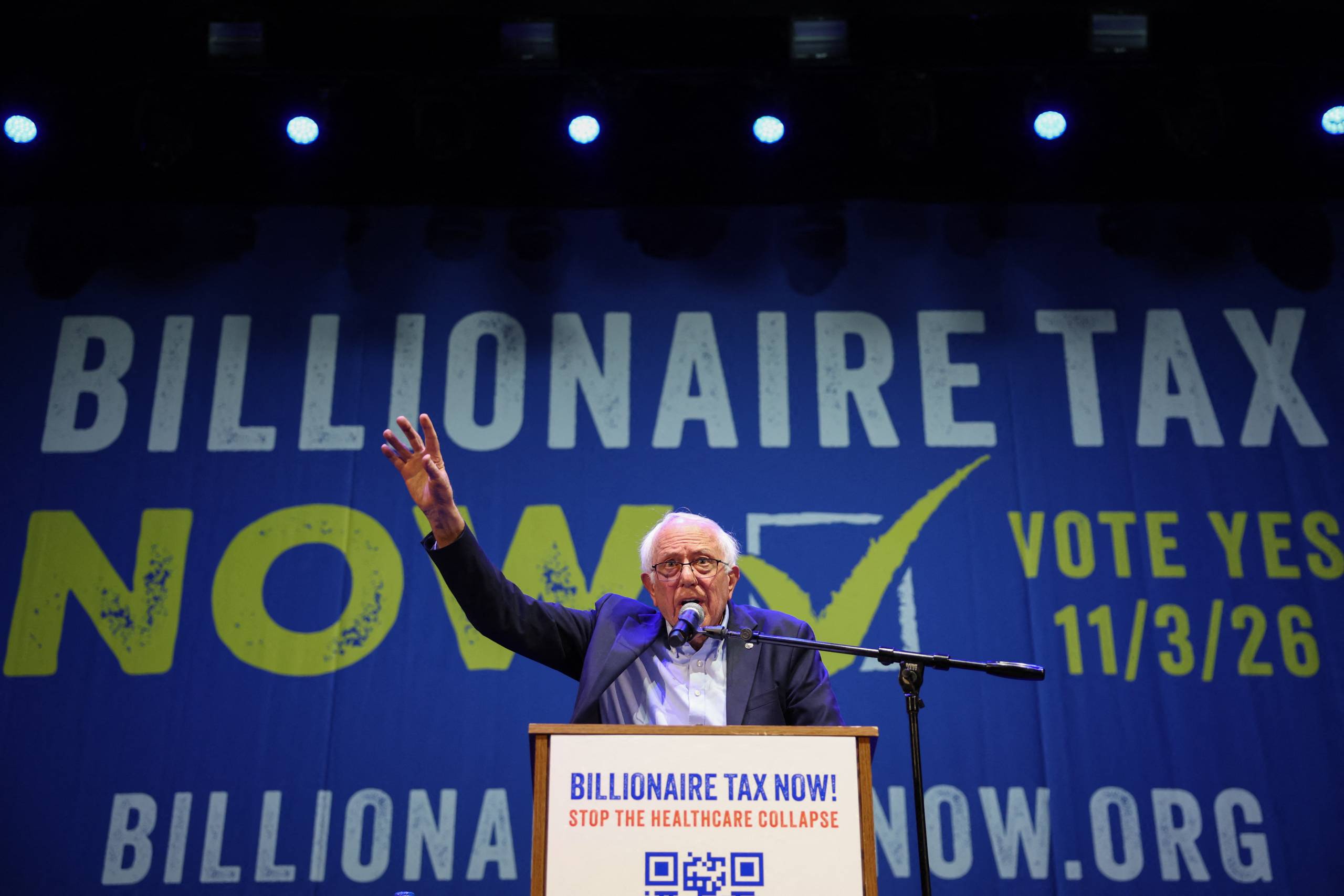
This November, Californians will vote on Proposition 40, a measure that would impose a one-time 5% tax on those whose net worth exceeded $1 billion at the beginning of 2026. While advocates argue it is time for the ultrawealthy to pay a larger share of taxes, opponents argue that Prop. 40 could drive billionaires out of the state and decrease future tax revenue. In this hour we’ll speak with KQED’s political correspondents about Prop. 40 — and the efforts to nullify it through propositions 41 and 42.
Guests:
- Marisa Lagos, politics correspondent, KQED; co-host of KQED’s Political Breakdown
- Guy Marzorati, Correspondent, KQED’s California Politics and Government Desk
Episode Transcript
This is a computer-generated transcript. While our team has reviewed it, there may be errors.
Mina Kim: Welcome to Forum. I’m Mina Kim. Voters are weighing in on what’s been one of the most divisive ballot measures, mainly for Democrats, and that’s Proposition 40, better known as the billionaire tax. The one-time 5% tax on billionaires to fund mainly health care in California may sound simple on its face, but it’s complicated. It’s ignited heated debate and counter-ballot measures, Props 41 and 42, that would nullify the billionaire tax even if it passes. We break it all down this hour with KQED’s political correspondents, Marisa Lagos and Guy Marzorati. Hey, you two.
Guy Marzorati: Hey, good morning.
Mina Kim: So let’s first review the nuts and bolts of this. Guy, what does Prop 40 do?
Guy Marzorati: So, yeah, a one-time 5% tax on the wealth of billionaires in California, with 90% of the money going toward health care, which could potentially backfill some of the federal cuts to Medicaid, and then 10% going to a mix of education and food assistance. There’s a lot of leeway, if this passes, for the state legislature to decide exactly how that money would get spent.
Mina Kim: So how many billionaires do we have, Guy?
Guy Marzorati: Over 200 in California, and that is an argument you’ve heard proponents make as to why this tax could potentially be easy to administer, because you’re working within a limited universe of people to whom this would actually apply, even though that limited universe is made up of folks with lots of money to hire lots of lawyers and potentially drag out enforcement, even if it were to pass.
Mina Kim: And based on where their net worth was on January 1st of this year, right, Marisa?
Marisa Lagos: Yeah. So, I mean, this is sort of part of the idea of structuring this by the backers, to avoid some of the pushback they knew would come. One of them was the idea that you could just avoid the tax by moving out of state. So they wrote into this that if you were a resident of California as of January 1st of this year, you are subject to this tax, regardless of whether you’ve moved since then.
Guy Marzorati: So if you’re reading it, it’s too late.
Marisa Lagos: Exactly. And also, the one-time nature. Now, that will be litigated if it’s passed, because as this was getting on the ballot in December and it was clear that they were moving forward with this, you did see some folks, including Sergey Brin, who’s been, I believe, the biggest single donor to the No on 40 effort, the Google co-founder. He claims that he moved his residency to Reno, Nevada, prior to that January 1st deadline. I would bet that will be litigated by the courts, because the state will say, “No, actually, you still live here.” And there’s been a lot of reporting that he is still in Mountain View every day, working on AI at Google. So, I don’t know. We’ll see. A lot of this might be litigated if it passes. Well, the other question —
Mina Kim: Can be a little confusing — what counts toward this net worth calculation of a billion dollars, Marisa? I mean, the —
Marisa Lagos: The bulk of it is going to be stocks, bonds, assets that are traded in the financial markets and are visible, essentially, because they have to be declared because they’re publicly traded. It also does include artwork, not most real estate, but properties, things like yachts. So, you know, our tax system broadly relies on people to essentially declare what they have — what they made, what they have. Obviously, there’s some, you know, your W-2 is a way the government can check that. But it is the honor system, and this would be no different. Essentially, when you file your taxes next year, there’s going to be a little question: Are you a billionaire? If you check yes, then you need to essentially file an affidavit attached to it, listing your assets. And so that is going to be at least the initial mechanism to sort of decide what the level is at which you would have to pay this tax if you are indeed a billionaire. I think most of us won’t have to worry about anything after checking that no box.
Mina Kim: Well, Guy, you mentioned how the money will be allocated. Talk about why so much of it will go to health care. It was really born out of the impacts of Trump’s so-called big, beautiful bill, right?
Guy Marzorati: Yeah. So proponents — and this was put on the ballot through a signature campaign by a health care union — have argued that the money is needed to backfill these cuts to Medi-Cal, which is our system of Medicaid in California. You hear two kinds of arguments in support of Proposition 40. One is specifically about what this would fund. So, this idea that Trump and Republicans in Congress passed a bill cutting taxes on many wealthy Americans and cutting Medicaid, the health care safety net, at the same time. The argument is that, by going after the wealth of billionaires, you’d be able to backfill some of these cuts.
There’s another, I think, broader argument being made in support of Proposition 40, which is that fundamentally, our tax system in California, even as it’s a progressive one, is progressive as it relates to the income tax. So there’s all this wealth that Marisa mentioned in the stock market and privately owned companies that is not being captured through our progressive income tax system. And so you hear both of those arguments being made in support of Prop 40.
Mina Kim: Right. Marisa, you actually sat down and spoke with an author of the bill, Dave Regan, head of SEIU-UHW, right? What did he tell you about why SEIU went for the overall wealth tax, and what do we need to understand about the way many billionaires can avoid paying the taxes the rest of us pay?
Marisa Lagos: Yeah, I mean, this has been really fascinating to dig into. And, you know, I want to say at the outset that there are very differing views among economists about this tax and basically everything in economics. But what Dave Regan is saying — Regan, excuse me — is that the wealth of billionaires has grown so quickly over, you know, really even just the past 10 years. They actually put out something recently showing that since this campaign started, or in the last few months, these billionaires’ wealth has grown far more than the taxes they would need to pay under this measure.
What Regan and the economist at UC Berkeley who helped him craft this measure say is that wealthy people, and billionaires especially — because I do think we need to make a distinction between being a millionaire and a billionaire. It is a big difference, right? — structure their wealth in ways that help them avoid taxes. Of course, all of us pay income taxes on the salary we make. UC Berkeley economists point out that Larry Page and Sergey Brin, co-founders of Google, had a three-year period over the last six years or so when they took $1 in income. So they were literally not paying any taxes on income in that way.
Most of them don’t sell their stocks and bonds in order to, say, buy a house, like you or I might need to if we had money in the market and needed to pull it out for something new. They just borrow against those assets, and they essentially qualify for low- or no-interest loans against their own wealth.
And so, yes, I want to be clear: Billionaires still pay a lot of taxes. There’s still money that they have to pay taxes on. Compared to the percentage that normal Americans, even people we would consider pretty wealthy millionaires who work at a lot of these tech companies and do take normal salaries, pay, it just pales in comparison on a percentage level.
And so, you know, Regan and backers of this say, look, inequality has grown hugely. The Trump administration paid for tax cuts for millionaires and billionaires by cutting health care for the poorest Americans. This is just a way to staunch the flow from those health care cuts temporarily while we figure out how, in their argument, to get a Democrat back in the White House, Democrats back in Congress, and reverse these cuts. So it’s really, you know, I think, to them, an argument of fairness. And we can get into what the other side thinks about that, because they have their own fairness arguments, for sure.
Mina Kim: Yeah, we definitely will get into that. First, let me remind listeners: We’re talking about Prop 40, California’s so-called billionaire tax, a one-time 5% tax on billionaires’ assets. We’re hearing from Marisa Lagos why it’s on overall wealth versus income, and also from Guy Marzorati. They’re both correspondents on KQED’s politics desk. Marisa’s also co-host of KQED’s podcast, Political Breakdown.
And you, our listeners, join the conversation. What questions do you have about Prop 40? Or how are you planning to vote on it, and why? Email [email protected]. Find us on Discord, Bluesky, Facebook, or Instagram at KQED Forum. Call us at 866-733-6786, 866-733-6786.
Sharon writes, “There’s so much misinformation out there. It’s hard to know what’s true. I just read yesterday that Prop 40 is not a one-time tax and that it could happen over again, including to non-billionaires. Is this true?” Marisa, you talked to Dave Regan about that. Tell me, how would you answer Sharon’s question?
Marisa Lagos: Look, the voters could always go back and approve more taxes, right? And so, like, yes, there’s always the chance that that happens. I think what Sharon’s talking about is really this argument we’re hearing on the No on 40 side, and it relates to some other ballot measures, Props 41 and 42, in particular 42. They’re essentially raising the idea that if this is allowed by voters, you could assess taxes on people’s financial assets before they cash them out.
So right now we have capital gains, right? If you have a stock and you sell it, you have to pay taxes based on the amount that it increased since you got the stock — what you made off of it. They’re saying that this sort of blows up that system and creates one where you can just tax those assets before they’re really realized. And then, if they can do it to billionaires, that’s going to happen again. I don’t think they’re saying that’s going to happen per se. Again, I think the slippery-slope argument is essentially what they’re making.
There is some language in there that does allow the legislature, like Guy said, to decide how this money is spent. And when I talk to folks who oppose Prop 40 and support Prop 42, which is one of two competing measures the billionaires put on the ballot in order to invalidate Prop 40 if all of them pass, I think that’s really important. Props 41 and 42 are really aimed at essentially making Prop 40 unenforceable if they pass with more votes than it.
Prop 42 is a strict ban on any taxes on these types of financial assets before they’re cashed out. And so that is why it’s being framed as something to protect your retirement. The 42 folks will say, well, there have been some proposals in the legislature in recent years to potentially tax some retirement accounts, things like that. I’ve never seen a serious conversation about this, and I’ve certainly never seen it move forward. And I don’t think, just in terms of the intentions of the people who wrote Prop 40, that that’s their intention in any way, shape, or form. They’re really focused on trying to save health care, and on doing so by taxing the richest folks in California.
Guy Marzorati: I would just quickly say, though, the flip side of that would be history. In so many cases, taxes that are billed as one-time or emergency, or just for this purpose — well, if we get five years down the line and the federal government has not restored its funding for Medi-Cal, then what? I think history would suggest that proponents of this would probably go back for an extension, as proponents of higher income taxes have done in California and are doing this year.
Marisa Lagos: For billionaires, likely, right? Yeah.
Guy Marzorati: Yeah, as proponents of higher income taxes have done in California and are doing this year.
Mina Kim: Right, they are doing that this year. But at the same time, and also on the other side of this, Marisa, there are people — and we are coming up on a break, so just set this idea out there — who have also wondered why it would have to be a one-time tax, or why SEIU decided to pursue this just as a one-time tax as well. So lots of different views about how people feel our tax structure needs to change. We’ll have more after the break.
I’m Mina Kim. You’re listening to Forum. We’re talking this hour about Proposition 40, California’s billionaire tax, a one-time 5% tax on billionaires’ assets. Here’s co-author Dave Regan, president of SEIU-UHW, on why an overall wealth tax is needed.
Dave Regan: The billionaires in California pay a tiny percentage of their financial holdings in income tax. They pay 2.5%. Seven years ago, in 2019, the aggregate wealth of California billionaires was $700 billion. Today, it’s $2.3 trillion. It has more than tripled in the last seven years. Your wages aren’t tripling. My wages aren’t tripling. I don’t know anybody whose salary is tripling. And 70% of that $2.3 trillion is in publicly traded stocks. When the value of that grows, it’s all beyond the reach of the tax system.
Mina Kim: That’s Regan in conversation with my guest, Marisa Lagos, KQED’s political correspondent and co-host of Political Breakdown. Also, Guy Marzorati is with us, correspondent on KQED’s California Politics and Government Desk.
And you, our listeners, are joining the conversation with your questions about Prop 40, its countermeasures, and the attempts to nullify it in Props 41 and 42. Tell us how you’re planning to vote on Prop 40, if you already know. You can email [email protected]. Find us on Discord, Bluesky, Facebook, or Instagram at KQED Forum. Call us at 866-733-6786, 866-733-6786.
Guy, before we get into the opposition, remind me: Who are the biggest supporters of Prop 40?
Guy Marzorati: So the biggest supporter is SEIU United Healthcare Workers West. That’s the union that organized to get this onto the ballot. They drove the signature-gathering campaign. They’ve been really the largest financial supporter of Proposition 40. And then you also have some leading progressives backing this idea, most notably Vermont Senator Bernie Sanders and, in California, Congressmember Ro Khanna in the South Bay.
Mina Kim: Yeah, and the California Democratic Party, right?
Guy Marzorati: Yeah. After a contentious vote process, the California Democratic Party is also supporting Proposition 40. And you honestly see a split within organized labor, where there are some unions who have gotten behind it that we can talk about, and others that haven’t. So there’s a split within, you know, the Teamsters and AFSCME. They’ve supported it. The California Teachers Association and the building trades are against it. So a real split in labor as well.
Mina Kim: Yeah. Who else is against it? A prominent Democrat, of course, is California Governor Gavin Newsom.
Guy Marzorati: Yeah, Governor Gavin Newsom, probably the most notable opponent of Proposition 40. But you’ve also seen a number of state lawmakers oppose it. There’s kind of unified opposition on the Republican side, with the California Republican Party against it. And, yeah, this is an issue that has really divided Democrats within California. Even though you mentioned the state Democratic Party endorsed Proposition 40, we’ve seen some local Democratic parties — one in San Francisco — split with the state. They opposed it. So it’s become a key issue that I would expect, honestly, to extend into the next presidential election, where you’ve seen Democrats really on either side of this.
Mina Kim: Yeah. Well, so, Marisa, sum up for me the argument against Prop 40. You already touched on it, but —
Marisa Lagos: Yeah. So, you know, I think there’s a couple of different ones. One is just what we’re hearing from the billionaires themselves and economists who support them: that we essentially rely on private capital to grow our economy, and these guys have most of their wealth not in cash, but in these companies and huge industries that are helping fuel the California economy. They argue that it would essentially be unfair to make them pay taxes on their overall wealth. That’s not the system that has worked, and it will actually create less innovation. It will drive not just billionaires, but potential billionaires, out of state. People who want to found companies will look toward places with lower tax burdens. Essentially, this will have a longer-term effect on the state budget.
That’s something we hear from someone like Gavin Newsom and some of the labor unions that have joined him in opposing it, like the California Teachers Association, and some other traditionally left-leaning groups like Planned Parenthood, who have also lined up with the governor. They say they’re worried that not only will this never get collected, even if it passes, because it’ll be litigated and you won’t really be able to get the money, but that in the longer term it will essentially have a detrimental effect on the state budget because it will result in less innovation, fewer companies being built here, and therefore a lower tax base overall.
We do have a progressive tax system, Mina, so it is true that the wealthiest folks do pay the most in terms of income and capital gains taxes.
Mina Kim: The other thing I understand is that at least Hoover Institution research suggests that the tax would not generate the $100 billion that proponents claim it will, and that it could be about $40 billion over five years.
Marisa Lagos: Yeah, I mean, they say the actual revenue would be between $55 billion at the top and $46 billion at the bottom. They’re relying on a couple of different things that the proponents of the tax disagree with. So they think, first of all, that someone like Sergey Brin absolutely would not have to pay it. They think there are people who have moved out of state. They’re saying that the proponents fail to exclude residential real estate from the estimates of $100 billion, so that reduces the taxable base. They say the tax’s authors wrongly calculated the number of billionaires in the state.
I mean, you never know exactly how much money something is going to bring in, right? And so I think, at the end of the day, if you look at the wealth of these 200 billionaires, like, if somebody is worth $200 billion, they’re going to pay $10 billion under this tax. I mean, it’s not nothing, right?
Mina Kim: Right. And then on the question of billionaires leaving, Michelle writes, “The billionaires threaten to leave California if Prop 40 passes. Would this be a great loss for California?” While another listener on Bluesky writes, “We forget how desirable California is to live in. People from everywhere around the world want to be here. Maybe some billionaires will leave. There are still plenty of rich people who will stay.”
So, Guy, is this exodus of billionaires actually happening? There was some reporting that a handful have already left.
Guy Marzorati: Yeah, I mean, a handful have left. We really don’t know. We can talk about comparisons to previous wealth taxes internationally, models based on how this would impact California. We simply do not know exactly how this will play out if voters approve Proposition 40 and it’s enacted. Even the proponents of this have called it an experiment. I think there really is no way to run the simulation and figure out how billionaires to whom this would apply actually respond, how many of them will leave, how many will take their businesses with them, and what impact this will have on future founders and startup creators in the state.
Mina Kim: Let me go to caller Andy in San Jose, who’s with us. Andy, go ahead. You’re on.
Andy Mattson: My name’s Andy Mattson. I’m the chair of CalCPA’s committee on taxation. I work in San Jose as a practicing CPA. I want to clarify one thing: The legislative text indicates that non-publicly traded private-company stock is subject to this tax. So one of the big issues is, if you’re a founder of a company and you get lucky and you’ve got private wealth — paper-company wealth that’s not publicly traded — where do you come up with the cash? That has not been clarified. In fact, RealCon, I believe, had a proposal where the government would loan — the federal government would loan money to pay the —
Marisa Lagos: Can I ask —
Andy Mattson: It’s a problem.
Marisa Lagos: Yeah, can I ask you a question? I’m curious, as a CPA. These guys can borrow against that wealth if they want to buy a house or a yacht or a private jet. Could you not do that for a tax? Sorry, I think —
Mina Kim: We just need to try to get him back. It’s okay.
Marisa Lagos: It’s okay. I’m just curious because I think, to me, as a non-billionaire, it’s an interesting question. It seems like there’s always money to invest in new companies, to invest in things that they want to buy. Is that not allowed? Are you not allowed to take out loans to pay taxes?
Andy Mattson: Andy? Am I back on now?
Mina Kim: You are now. Thanks.
Andy Mattson: Okay. Well, I mean, each situation is different, and it just depends on the relationship between a lender and a person, and a person’s financial situation. So, you know, it just kind of depends. I don’t think you can generalize. I think the other point —
Marisa Lagos: Well, but I’m asking legally. You could —
Marisa Lagos: Well, but I’m asking legally, like, could you legally ask a bank for a loan against your assets?
Guy Marzorati: Yeah, but I mean, I guess the flip side of that is that the wealth they have in these companies is based on a valuation. It’s not money that — and I think that’s the flaw with Ro Khanna’s idea of, “Oh, what if the government fronted these founders the money for them to pay the tax?” Well, what happens if the company doesn’t work out? Are we, as the state, now on the hook as an owner for these companies?
I think it’s an edge case, but in San Francisco, where you have more of these founders than anywhere else, it is an issue. If you founded a company that’s now worth, let’s say, $10 billion, and you own a third of that, you’re going to be on the hook for $150 million or $200 million next year. Do you have that money?
Marisa Lagos: Or if you own a sports team, for example. Yeah, but you have —
Guy Marzorati: Yeah, but you have that money right now. I mean, a sports team is printing money, though. So I think there’s that question. I will say that the tax in Proposition 40 does consider this, and there are ways for the tax to be deferred. Based on how much other wealth you have as one of these startup founders, if there are other assets you have that are publicly traded, you could potentially defer what you have to pay to the state. So it could be a situation, like the caller mentions, where all of a sudden one of these founders has a $200 million tax bill, but they might not have to pay that right away in 2027.
Mina Kim: The fact that there are all these unknowns really exemplifies that this is new. California is the first out of the gate, and I think even Dave sort of suggested this is an experiment, right, Marisa?
Marisa Lagos: Yeah. I mean, look, there have been calls for many years in this country for not just a wealth tax specifically, but reforms to our tax system to better capture the wealth that has grown. And I do want to underscore that in a way that did not exist when I was growing up. There were no billionaires, right? I mean, it is wild.
When you look at — I was referring to this earlier — I saw a tweet by Gabriel Zucman, who’s one of the UC Berkeley economists who helped frame and write this measure with SEIU-UHW. He’s saying that basically this wealth tax would bring Silicon Valley billionaires’ wealth back to where it was 31 days ago, because of how exponentially — and again, the wealth on paper is growing.
So I think, you know, I’ve been working on some reporting on this and talking to progressives, and they do see this as a test case for a national wealth tax. They would prefer it happen at the national level, just the way the governor says he would, because it wouldn’t allow people to move between states. It could be structured differently so that maybe it takes into account some of these issues. But, yeah, what Regan says is our system is not working, and we’re trying something new to help the people who are going to suffer the most in the coming years.
And I think you can argue maybe all legislation is somewhat of an experiment. This one is certainly something that has not happened in the U.S. before in really any way, shape, or form.
Guy Marzorati: And that’s why this feels like such a big one, right? It’s like once in a generation in California, it feels like we have these ballot measures —
Marisa Lagos: Like Prop 13, like, yeah.
Guy Marzorati: — that are a political earthquake, where the rest of the country wakes up the morning after the election and is like, “Why are the glasses and plates on the ground?” And I think the fact that this could be a test case going forward for Democrats, and the fact that you have this collision of incredible inequality with this incredible growth in Silicon Valley and artificial intelligence, is why, to Marisa’s point, there is so much at stake with this. It’s why it feels like, for the Democratic Party, for Silicon Valley, for the folks who could potentially gain from this, and for Gavin Newsom, there’s a reason this feels like the main event.
Marisa Lagos: But from a political perspective, it’s fascinating to me that the backers wrote this specifically to be a one-time tax to avoid some of the attacks they’re getting, and it doesn’t matter. It’s not happening anyway. And if you look at the way this campaign is going, the folks opposing Prop 40 have actually put more money into supporting Prop 42 — that’s the ballot measure that prohibits any taxes on retirement accounts and things in the stock market — than they have into No on 40. I think it’s $100 million versus $80 million between 42 and No on 40. But still, that tells you something. I think there’s a real concern among folks who oppose this that, whether it’s a slippery slope in terms of future taxes in California, it is a slippery slope in terms of taxing the wealthy, and that if this can happen in California, it could happen anywhere.
I think the flip side of that is, if progressives fail at this in California, is that a message nationally that means there isn’t as much of a debate about this in the 2028 Democratic primary, for example?
Mina Kim: Right. So there are a couple of things. I want to bring in a couple of things that listeners are saying. Corey writes, “I’m no fan of billionaires. I’m a tax-and-spend liberal, but this just feels like a cash grab. It doesn’t really fix the core problem. Tax how money is earned. Tax capital gains at the same rates as ordinary income. I am out of work, struggling with money, but I’m still not going to vote yes for Prop 40,” says Corey.
Neil writes, “I’m voting no because it will be another excuse for the legislature to avoid revamping California’s tax system. We’ve known for years that our tax system causes wide variations in revenue on a year-to-year basis, but the legislature doesn’t have the courage to do it.”
So, but the thing is, right, for people who are voting no on 40, it sure doesn’t sound like they should vote yes on 41 and 42, especially if they want the legislature to act. So let’s dig into this. You have touched on 42 several times, Marisa, so just remind us specifically what 42 would do and how it could change the ability of the legislature to do anything similar or better than 40, if that’s what these listeners are suggesting they want in the future.
Marisa Lagos: Yeah. So this is a ballot measure that essentially says you may not impose taxes on unrealized capital gains, basically, in any other way than what we have now, which is when you sell these things or take them out of your accounts. So it says stocks, retirement accounts, any asset ownership cannot be subject to state taxes. It also bans retroactive state taxes, which is the second kind of poison pill.
It basically outlaws the type of tax that’s being envisioned under Prop 40, but not just for billionaires — for anybody, longer term. So it does tie the hands of the state legislature, to your point, Mina. And then it bans retroactive state taxes like this one. So it was sort of doubly undercutting Prop 40.
The way California law works is that you have two competing ballot measures with conflicting language on the same ballot. The competing ballot measure that gets more votes is basically the one that takes precedence. So you could have a world where Prop 40 passes, but Prop 42 gets more votes, and it essentially nullifies the billionaire tax and the state’s ability to collect it.
Mina Kim: Right. And then remind us, Guy, what 41 does — the other —
Marisa Lagos: Oh, you take the Gann limit, guys.
Guy Marzorati: Another poison pill, yeah, another poison pill measure. This one would disqualify Prop 40 through another route by saying that any type of tax like this has to go under the state spending limit, which is known as the Gann limit. Prop 40 is written in a way that excludes the revenue from the Gann limit, so, again, putting it in direct conflict.
Now, what Prop 41 does on its face is require new audits for special taxes. I think that’s the pitch being made for it. Really, the purpose behind this is another way to nullify Proposition 40, almost like an insurance policy. If the opponents of Proposition 40 are unable to defeat it at the ballot, they have these two insurance policies in Prop 41 and 42 that, if they also pass, could end up nullifying the wealth tax.
Mina Kim: Right, depending on the margin by which they pass. So if all three technically pass, but these other measures get more votes, they would nullify the billionaire tax.
Marisa Lagos: I mean, we’re going to be in court no matter what.
Mina Kim: Yeah. Even if the billionaire tax passed cleanly, for lack of a better way of describing it, we would be in court. But I guess just to put a clear point on this for our listeners: If you are really against the billionaire tax, then you would vote no on 40 and probably yes on 41 and 42.
Marisa Lagos: Yeah, but if you’re really —
Mina Kim: Yeah, but if you’re a really big supporter of the billionaire tax, you’d vote yes on 40 and no on 41 and 42. But if you would like to see anything like this in the future, potentially levies on unrealized capital gains or whatever, but you don’t like the billionaire tax, you’d probably vote no on all three.
Guy Marzorati: Yeah, and let me tell you a secret: The opponents of Prop 40 would be totally fine if —
Marisa Lagos: No, if all of them went down. They don’t care. They just want to kill 40.
Mina Kim: We’ll have more with Marisa Lagos and Guy Marzorati as we really break down the games being played on the ballot with regard to the billionaire tax and the countermeasures to nullify it, but also the high stakes involved. Stay with us for more after the break.
I’m Mina Kim. This is Forum. Welcome back to Forum. I’m Mina Kim. We’re talking about Prop 40, California’s billionaire tax, and the efforts to nullify it with 41 and 42. Here’s opposition to the billionaire tax from Stanford economist Joshua Rauh, concerned about billionaires leaving California.
Joshua Rauh: If you look at where companies like Tesla and Oracle — their CEOs left California at various points in time. Musk left California some years ago. Larry Ellison left in 2020. If you look at where those companies, which still have a presence in California, are growing their jobs, it’s in other states. It’s in Austin, Texas, and Nashville, Tennessee.
So, much as we might like to shake our head and say, “Gee, we wish that they would just stay and pay these taxes,” it is within their legal rights to leave and go elsewhere. When they do that, it harms our economy. It harms ourselves. That’s what voters really have to ask.
Mina Kim: And we are asking you, voters, how you’re feeling about Prop 40 and 41 and 42, the two countermeasures to the billionaire tax, Prop 40. Also, how you’re talking about it in your circles, in your community; the messages you’re getting from the people who are backers of the measures; and how they’re being understood by you and the people helping you decide how to vote.
The email address is [email protected]. Find us on Discord, Bluesky, Facebook, or Instagram at KQED Forum. Call us at 866-733-6786, 866-733-6786.
Marisa Lagos and Guy Marzorati, KQED’s politics correspondents, are here to take your questions and comments. Marisa also co-hosts KQED’s podcast, Political Breakdown.
Mark writes, “While I’m all for the idea behind taxing billionaires and taking away loopholes, I’m a little put off that the benefit would go only to health care rather than California’s general fund. I would have expected it to benefit all Californians, not just a select group.” Who wants to take this one?
Marisa Lagos: Yeah, I think that’s a really interesting point. And I think this is one of many areas of the way this was crafted that raises very interesting questions. We already talked about the one-time nature of it, the retroactivity of it, and then walling it off for health care when it is a one-time tax for something that people obviously need on an ongoing basis and that continues to rise in price. I think that’s a really interesting policy question for folks.
Part of the reason the California Teachers Association is opposed to this is that this money would go into a special account that is essentially walled off from our general fund. Previous ballot measures — Prop 98 in particular — dictate that around 40% of general fund revenues must go to education. So this is money that the teachers see as really not helping broader programs other than health care.
And so I think that’s something that has raised a lot of concerns, especially if you believe the governor’s analysis that this could essentially harm state revenues in a meaningful way moving forward. That would harm all our programs, including schools, teachers, all that. So I think that’s something you see in the split. There are certainly a lot of labor groups supporting this, and then there are others that are not. I think that’s because of the way this money is going to be earmarked for something very specific.
Mina Kim: Well, Alvin writes, “Simply declaring that we need a national tax is vague and unconvincing while we are all bleeding to death, some literally, from health care cuts.” That has been the argument of some, including Gavin Newsom, who say, don’t do this at the state level. Do try to do this at the federal level.
Alvin goes on to say, “Prop 40 probably does have a hundred flaws, but at least it’s forcing the issue.”
Another listener, Curtis, writes, “It’s telling that all the No on 40 ads talk about literally everything but taxing billionaires. It’s clear that the vast majority of Californians want this to pass. The billionaires know this, and instead of making the issue taxing billionaires, they purposely obscure the issue.”
I wouldn’t say it’s just No on 40 that’s avoiding talking about billionaires, but also the countermeasures, 41 and 42, are avoiding it, too.
Sharon also writes, “I’m getting texts saying Proposition 42 will prevent our retirement savings from being taxed by the state. Is that true?” So what is the messaging that 42 is trying to get across if it’s not, you know, no one taxing us billionaires?
Guy Marzorati: I mean, I think the messaging for 42 is around protecting assets from being taxed beyond income — retirement accounts, stock accounts.
Mina Kim: But retirement accounts with a lot of money in them, right?
Guy Marzorati: Yeah, and it’s worth saying also that a lot of that is already exempted in Proposition 40. But I think the point is that the message for Proposition 42 is to appeal to folks who might be concerned about taxes on their stock accounts or their retirement accounts, when really, again, the purpose — the reason why Prop 42 was put on the ballot — was to combat the billionaire wealth tax.
Mina Kim: Let me go to caller Phil in Burlingame. Phil, thanks for waiting. Go ahead.
Phil: Well, you know, I thought I voted for it because I’m just so angry at the redistribution of billionaire wealth. But the whole thing is kind of crazy from an ardent capitalist, which means, why haven’t we been taxing them if they’ve been acquiring that? I mean, athletes are getting a hundred million dollars. Boards of directors are giving, you know, hundreds of millions of dollars. Why don’t we just pay no deduction for revenue of, you know, five million dollars, and then people at least get half of the revenue these billionaires have been getting?
By doing this on the asset side, a previous caller said you don’t even know what these assets are. You have to start getting appraisals, and it is socialist to start taking property away. We have property taxes, but that’s just because it costs us that much to run the property.
Mina Kim: Well, Phil, thanks for sharing where you’re at. And I think you are reflecting a lot of that — both the anger at the unfairness of the tax system, but also some concern about how this particularly would be enacted.
Marisa Lagos: Yeah, I mean, one of my other favorite data points from that UC Berkeley study — and I want to be clear, it’s written by economists who support this wealth tax, and he’s not a Californian, so he’s not directly affected — is that Jeff Bezos, Amazon’s CEO, at least one year recently took, I think, a $65,000 or $85,000 salary. So he qualified for the child tax credit. Obviously, he’s one of the richest men in the world.
But, you know, I think what opponents of Prop 40 say is, “This isn’t fair. We’ve worked within the system, we’ve built our wealth, and it has helped lift up the entire economy.” And what the other side says is, “Well, you have built your wealth and structured it in a way to avoid even the taxes that do exist. This is just a way to make things a little bit more fair.”
For people whose wealth does grow, even if it’s on paper, almost daily in the stock market, they can essentially afford to help the poorest Californians. So a lot of it, beyond the policy stuff, I think is a really philosophical argument. And I think that caller underscores what a lot of Democratic voters in this state are weighing: Even if I don’t love the details of this policy, do I want to essentially tax the rich? Or is this just a bad move that will set back the progressive movement? I don’t think we know the answer to that question.
Mina Kim: Well, Steve on Discord writes, “I’d much rather see us go back to a progressive tax code, eliminating all the loopholes. Everyone pays the same amount on the same slice of income. Higher slices just get taxed at higher rates.” I mean, I think that was, I don’t know, the original intent.
Guy Marzorati: You know, centuries — I don’t know. And we do have that in California. I mean, we have a progressive income tax on income —
Mina Kim: Yeah.
Guy Marzorati: — and a progressive capital gains tax as well. But, yes, it’s not getting at this kind of wealth.
Mina Kim: Exactly. Let me go to Dan in Santa Clara. Dan, go ahead.
Dan: Well, hey, great, great topic. I am not an economist. I am a Californian and an American. And I’ve been hearing stuff since 1980 about how, if we just let the rich people do what they do, we’re all going to get a bigger slice of the pie. I’m not seeing it. I’m with the guy from Burlingame. We’ve got to pass this thing and send a message.
Mina Kim: Well, Dan, thanks for sharing where you’re at as well. Let me see if I can get Michael in Berkeley on. Michael, you’re on.
Michael: Thank you. I listened to the excellent Political Breakdown show with Marisa and Dave Regan, and he literally indicated that someone has to go first. The point of my raising that is that this conversation about taxation of assets and unrealized gains is already underway, and Prop 40 has brought it to the top of our consciousness.
I’m within ten years or so of retiring, and it scares the death out of me to potentially face future taxes on wealth that has been put away in tax-deferred plans and investments that were not accounted for all along the way. The retroactive nature of potential future taxes is also problematic. No one wants taxes to be retroactive. Taxes increase, not —
Mina Kim: You voted against it, Michael, I’m assuming, then?
Michael: I will be voting against it.
Mina Kim: You will be voting against it.
Marisa Lagos: Yeah, I think it’s a valid concern. I mean, we do live in a really high-tax state. People, I think, have a lot of skepticism about our elected leaders and how they’ll respond.
I also think this is why we’re not having what maybe should be the conversation, which is an entirely new tax system. I mean, when you dig into a lot of the data points on both sides of this argument, on the economy side, you sort of realize that we are — I don’t know what analogy you want to use, but we’re on the edges here. We’re not getting to the fundamental problems of the fact that our economy, the way people make money, the way people spend money, has really changed over the last couple hundred years, and we’re not really capturing the true nature of our system in this moment.
Unfortunately, in my mind, it’s a bit of a feedback loop because the harder these types of things can be, the more that scares politicians from taking on hard questions. So there’s not a lot of incentive for either Congress or Sacramento to do what would probably be a really politically difficult thing and start from scratch.
Mina Kim: I think Mike in Pittsburgh would underscore your point about needing something entirely different. Mike, go ahead.
Mike: Hi, good morning, guys. Yeah, so basically, one thing that I’ve not heard at all in this discussion: Rich people don’t pay taxes. They move their assets into trusts, they move them overseas, they move them under a different name, they have loopholes. I don’t understand why we’re not talking about that aspect. You can have whatever tax breaks — if they’re not paying, it doesn’t matter.
Mina Kim: Yeah, we actually did detail that in the opening of the segment, but I really appreciate you bringing that back, because that is very much part of this discussion.
Eric writes, “What do California’s billionaires say? I read Jensen Huang is for it, CEO. What do we know about the billionaires who are for it? I know Tom Steyer said yes on the campaign trail.”
Marisa Lagos: Those are the only two I know.
Mina Kim: I don’t know if Jensen Huang is for it. I know he just said he’d be fine with it or something like that, and that was very early, before this even qualified for the ballot.
Marisa Lagos: So what we know is that the bulk of them, or at least the ones who have gotten involved, are very much opposed to this. Again, the amount that they have now put into their super PAC, Building a Better California, to oppose this is around $200 million. Almost half that comes from Sergey Brin alone.
And they’re not saying very much, I will say. I’m very excited to have Chris Larsen on my show tomorrow, who is, I think, one of the few folks in this class who’s been willing to sit down and answer questions. But when I’ve asked for interviews with every single other person who’s donated to this, there’s just been radio silence. There’s no interest. They’ve put up folks like Josh Rauh from Stanford and others on their behalf to be surrogates.
Mina Kim: Let me remind listeners, you’re listening to Forum. I’m Mina Kim. What do we know about how these measures are polling — 40, 41, and 42, Guy or Marisa?
Marisa Lagos: Yeah, IGS put out a poll. This came out on September 25th, so pretty recently. None of them are hitting the 50% threshold on the yes side. Prop 40 is slightly leading, 45% to 42% in that poll, with 13% undecided. So, very close.
Interestingly to me, Prop 41 only has 37% support. Prop 42 only has 43% support, with big chunks in both still undecided. To me, that says voters are kind of reading the fine print and thinking about those measures not just in a vacuum, based on the arguments proponents are making about retirement accounts or state spending limits, but probably understanding that there’s a link between those measures and the billionaire tax, and that they need to think about that when they cast their ballot.
Guy Marzorati: And the Public Policy Institute of California had Proposition 40 slightly higher in its September poll, I think just above 50%. The key thing for me is the percentage of Democrats who support this measure in the end. When polling started on this idea of a billionaire wealth tax in the spring and summer, you were looking at seven in 10, three-quarters of Democrats supporting the idea. That slipped, but in both surveys, PPIC had Democrats down to 72%. IGS had them down to 65%. I don’t see a way for this to pass without Democratic support behind this measure hitting 70% or more.
Marisa Lagos: It’s not surprising that the younger you are, the more likely you are to support the billionaire tax. I think that tracks with some of the calls we’ve gotten and the concern people have about the longer-term stability of their own accounts, and the state’s policy.
Mina Kim: Well, Brenno writes, “Opponents say that wealth taxes in other countries have mostly been repealed because they didn’t work.” Is this true? Guy, you want to start us off on that and tell us whether 40 addresses some of those things, or Marisa?
Guy Marzorati: Yeah, I mean, I would just say, on the other-country comparison, I don’t think it makes sense to compare it to a national wealth tax. The idea of moving between states to avoid taxation is just so different from moving between countries. But there are subnational governments that have tried this, both in Switzerland and in Spain.
When you look at the research related to that, basically, in Switzerland, they compared two different states. Both had made slight cuts to their wealth tax, one larger than the other. They found that the state that made the larger cut had more wealth. In Spain, Madrid is a state that had a zero wealth tax. They found migration there. They also found a lot of avoidance. I think if you take the research —
Marisa Lagos: I think you can make the argument that the EU is more akin to this. France had a wealth tax and it got repealed, and that’s one thing opponents of Prop 40 use a lot. They say, “Look.” And I think what proponents say is, well, it is easier within the European Union to move your location and business, making it more akin to moving between states. Also, the French one was way broader. It captured millionaires as well, so I think there was more of a revolt because we weren’t talking about people with such exorbitant wealth.
Guy Marzorati: And even the ones in Spain and Switzerland were not one-time taxes. So there is no one-to-one comparison you could look at for Prop 40 to say we know exactly how this is going to play out based on other states. But I think if you take the studies on these subnational wealth taxes together, you could conclude that they have an impact on the behavior of billionaires, either moving or trying to avoid the taxes. That in itself is not exactly shocking.
Mina Kim: You know, I feel for our voters, honestly. They have to decide on 40, and then they’ve got 41 and 42 on the ballot as well. And then there are two other tax-related measures on the ballot. You’ve got 3, right? Which is trying to make permanent the state’s higher income tax rate for the top 2% of earners. And then you’ve got 43, which is basically saying that you would need a two-thirds vote to pass any local tax measures for specific services. So there is just really a lot they’re going to have to weigh through this year.
Marisa Lagos: Yeah, as always, we have a long ballot that requires a lot of homework by voters. I want to shout out some resources here at KQED: our excellent voter guide, which you can find at kqed.org/voterguide, is going to have all these statewide races and a lot more information about local stuff.
We’ve also done deep dives on a lot of this on my show, Political Breakdown. We had folks on both sides of the Prop 43 debate. This is the one that would essentially make it a lot harder to raise local taxes. It’s sponsored by the Howard Jarvis Taxpayers Association, which, of course, wrote Prop 13 over 40 years ago. So we talked to them, and we talked to somebody on the other side of that.
We had Dave Regan on the show about Prop 40. We talked to Josh Rauh, the economist from Stanford on the No on 40 side. I think those conversations get you a little deeper than some of the voter guides and other stuff. So definitely, it’s going to be — yet again. I mean, and the other thing I want to note, we’ve talked about this on this show, Mina, quite recently, but because of how long the ballot is, and because of our system, it’s great to get ahead of the curve and start looking at that ballot now. Try not to wait until the last minute to turn it in, so we can get those votes counted.
Mina Kim: Well, thanks so much, Marisa, for your analysis and for being the author of so many of those great resources. And, Guy Marzorati, can’t thank you both enough. Appreciate you, too, Guy.
Guy Marzorati: Yeah, thanks.
Marisa Lagos: Thanks so much.
Mina Kim: And, as always, thanks to our listeners, who bring in such great, thoughtful questions and insights, and really reflect what I think a lot of people are feeling right now in California. You’ve been listening to Forum. My thanks as well to Ana de Almeida Amaral for producing this. I’m Mina Kim.