We examine worker safety, workplace regulation, employment trends and union organizing.
San Francisco General Hospital Fined for Serious Safety Violations After Social Worker Stabbing
A California Housing Bill Would Raise Wages to $28. Why Do Some Unions Hate It?
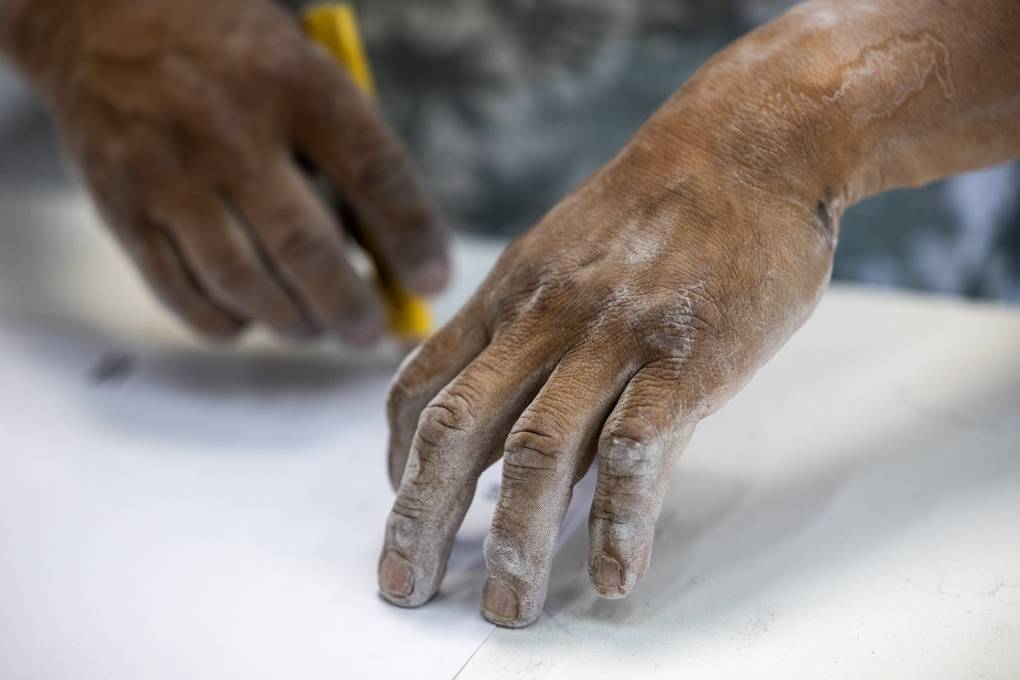
California Lawmaker Pushes Immunity for Stone Makers Amid Silicosis Epidemic
California Steps Closer to Ban on Engineered Stone After Silicosis Surge
After Meta Layoffs, Newsom Signs AI Order to ‘Protect Workers’ and Jobs
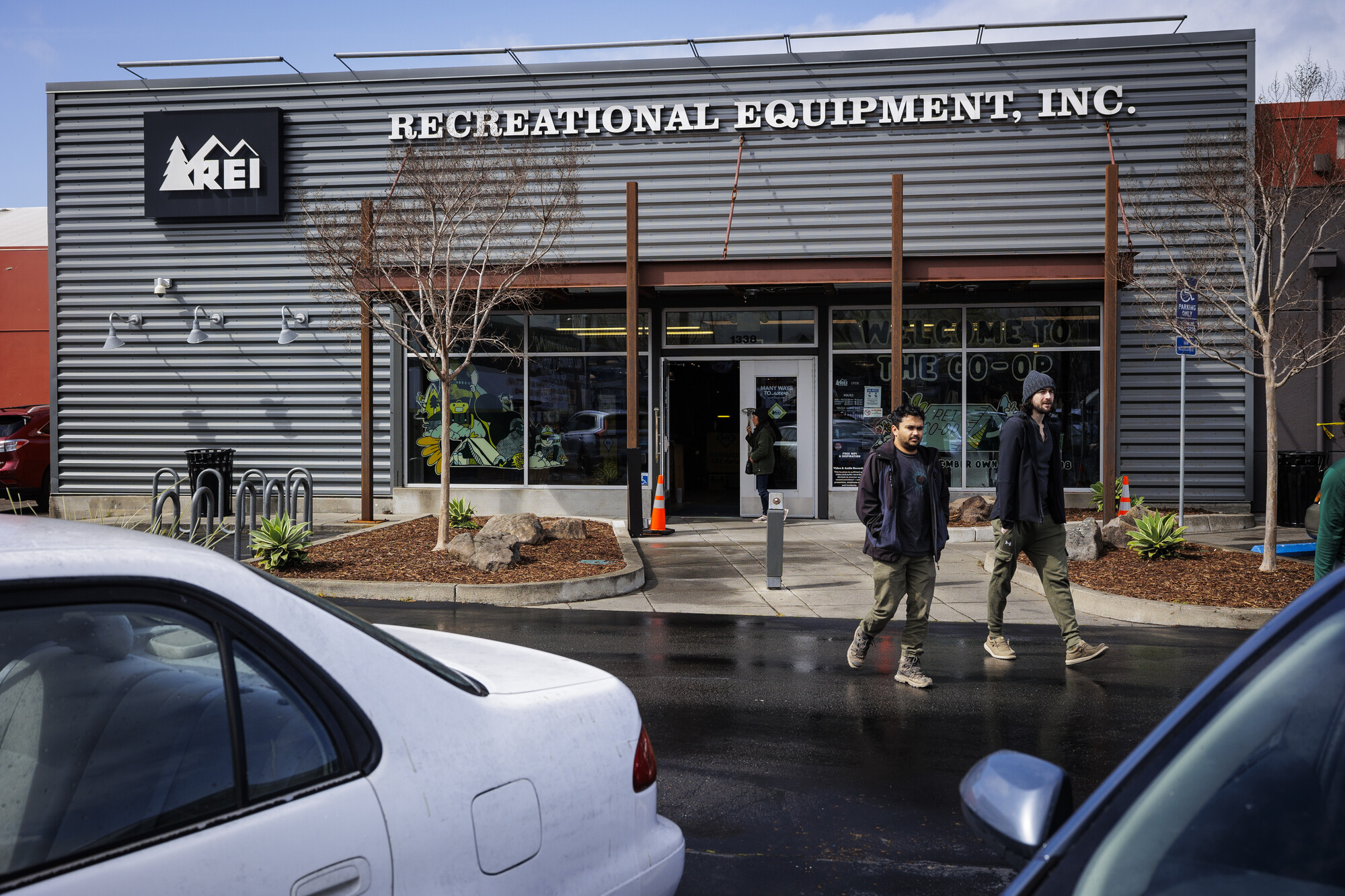
REI Union Workers Urge Boycott of Anniversary Sale Amid Contract Fight
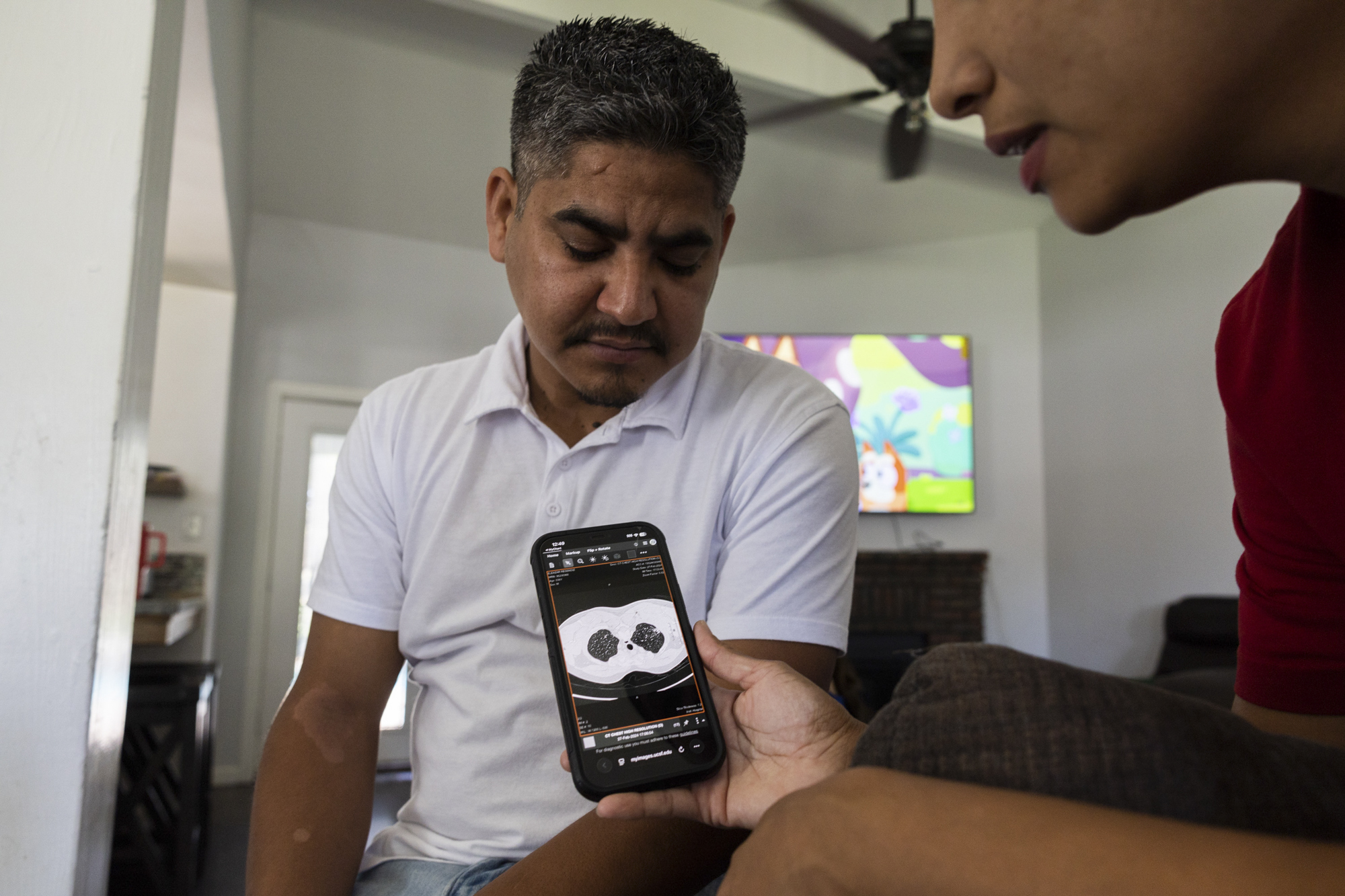
California Stoneworkers With Silicosis Struggle to Get Workers’ Comp
On CalFresh? What to Know About New June 1 Work Requirements
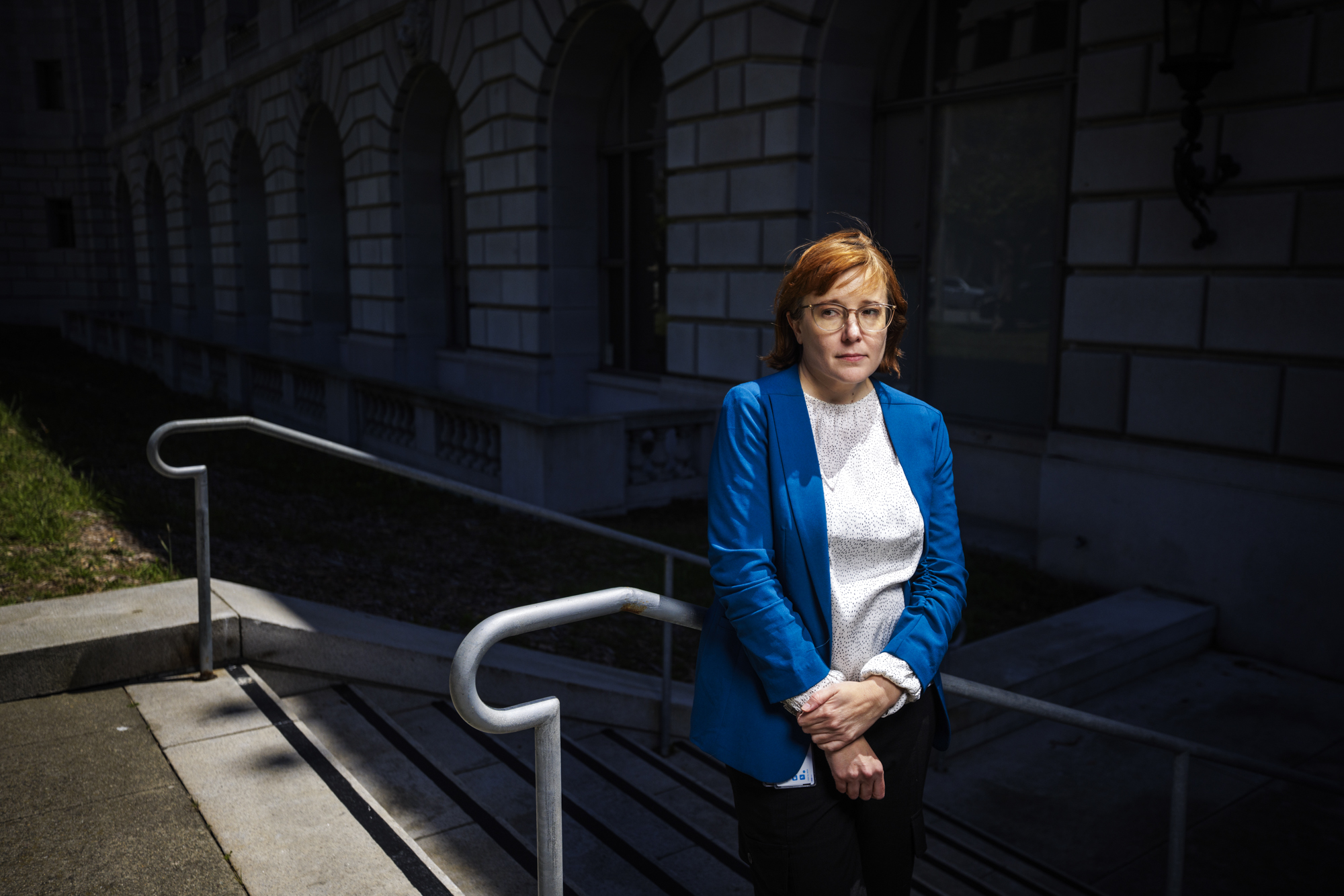
‘Disrespectful and Really Chaotic’: San Francisco Downsizes Public Arts Galleries Staff
Player sponsored by
window.__IS_SSR__=true
window.__INITIAL_STATE__={
"attachmentsReducer": {
"audio_0": {
"type": "attachments",
"id": "audio_0",
"imgSizes": {
"kqedFullSize": {
"file": "https://ww2.kqed.org/news/wp-content/themes/KQED-unified/img/audio_bgs/background0.jpg"
}
}
},
"audio_1": {
"type": "attachments",
"id": "audio_1",
"imgSizes": {
"kqedFullSize": {
"file": "https://ww2.kqed.org/news/wp-content/themes/KQED-unified/img/audio_bgs/background1.jpg"
}
}
},
"audio_2": {
"type": "attachments",
"id": "audio_2",
"imgSizes": {
"kqedFullSize": {
"file": "https://ww2.kqed.org/news/wp-content/themes/KQED-unified/img/audio_bgs/background2.jpg"
}
}
},
"audio_3": {
"type": "attachments",
"id": "audio_3",
"imgSizes": {
"kqedFullSize": {
"file": "https://ww2.kqed.org/news/wp-content/themes/KQED-unified/img/audio_bgs/background3.jpg"
}
}
},
"audio_4": {
"type": "attachments",
"id": "audio_4",
"imgSizes": {
"kqedFullSize": {
"file": "https://ww2.kqed.org/news/wp-content/themes/KQED-unified/img/audio_bgs/background4.jpg"
}
}
},
"placeholder": {
"type": "attachments",
"id": "placeholder",
"imgSizes": {
"thumbnail": {
"file": "https://cdn.kqed.org/wp-content/uploads/2024/12/KQED-Default-Image-816638274-2000x1333-1-160x107.jpg",
"width": 160,
"height": 107,
"mimeType": "image/jpeg"
},
"medium": {
"file": "https://cdn.kqed.org/wp-content/uploads/2024/12/KQED-Default-Image-816638274-2000x1333-1-800x533.jpg",
"width": 800,
"height": 533,
"mimeType": "image/jpeg"
},
"medium_large": {
"file": "https://cdn.kqed.org/wp-content/uploads/2024/12/KQED-Default-Image-816638274-2000x1333-1-768x512.jpg",
"width": 768,
"height": 512,
"mimeType": "image/jpeg"
},
"large": {
"file": "https://cdn.kqed.org/wp-content/uploads/2024/12/KQED-Default-Image-816638274-2000x1333-1-1020x680.jpg",
"width": 1020,
"height": 680,
"mimeType": "image/jpeg"
},
"1536x1536": {
"file": "https://cdn.kqed.org/wp-content/uploads/2024/12/KQED-Default-Image-816638274-2000x1333-1-1536x1024.jpg",
"width": 1536,
"height": 1024,
"mimeType": "image/jpeg"
},
"fd-lrg": {
"file": "https://cdn.kqed.org/wp-content/uploads/2024/12/KQED-Default-Image-816638274-2000x1333-1-1536x1024.jpg",
"width": 1536,
"height": 1024,
"mimeType": "image/jpeg"
},
"fd-med": {
"file": "https://cdn.kqed.org/wp-content/uploads/2024/12/KQED-Default-Image-816638274-2000x1333-1-1020x680.jpg",
"width": 1020,
"height": 680,
"mimeType": "image/jpeg"
},
"fd-sm": {
"file": "https://cdn.kqed.org/wp-content/uploads/2024/12/KQED-Default-Image-816638274-2000x1333-1-800x533.jpg",
"width": 800,
"height": 533,
"mimeType": "image/jpeg"
},
"post-thumbnail": {
"file": "https://cdn.kqed.org/wp-content/uploads/2024/12/KQED-Default-Image-816638274-2000x1333-1-672x372.jpg",
"width": 672,
"height": 372,
"mimeType": "image/jpeg"
},
"twentyfourteen-full-width": {
"file": "https://cdn.kqed.org/wp-content/uploads/2024/12/KQED-Default-Image-816638274-2000x1333-1-1038x576.jpg",
"width": 1038,
"height": 576,
"mimeType": "image/jpeg"
},
"xxsmall": {
"file": "https://cdn.kqed.org/wp-content/uploads/2024/12/KQED-Default-Image-816638274-2000x1333-1-160x107.jpg",
"width": 160,
"height": 107,
"mimeType": "image/jpeg"
},
"xsmall": {
"file": "https://cdn.kqed.org/wp-content/uploads/2024/12/KQED-Default-Image-816638274-2000x1333-1-672x372.jpg",
"width": 672,
"height": 372,
"mimeType": "image/jpeg"
},
"small": {
"file": "https://cdn.kqed.org/wp-content/uploads/2024/12/KQED-Default-Image-816638274-2000x1333-1-672x372.jpg",
"width": 672,
"height": 372,
"mimeType": "image/jpeg"
},
"xlarge": {
"file": "https://cdn.kqed.org/wp-content/uploads/2024/12/KQED-Default-Image-816638274-2000x1333-1-1020x680.jpg",
"width": 1020,
"height": 680,
"mimeType": "image/jpeg"
},
"full-width": {
"file": "https://cdn.kqed.org/wp-content/uploads/2024/12/KQED-Default-Image-816638274-2000x1333-1-1920x1280.jpg",
"width": 1920,
"height": 1280,
"mimeType": "image/jpeg"
},
"guest-author-32": {
"file": "https://cdn.kqed.org/wp-content/uploads/2025/01/KQED-Default-Image-816638274-1333x1333-1-160x160.jpg",
"width": 32,
"height": 32,
"mimeType": "image/jpeg"
},
"guest-author-50": {
"file": "https://cdn.kqed.org/wp-content/uploads/2025/01/KQED-Default-Image-816638274-1333x1333-1-160x160.jpg",
"width": 50,
"height": 50,
"mimeType": "image/jpeg"
},
"guest-author-64": {
"file": "https://cdn.kqed.org/wp-content/uploads/2025/01/KQED-Default-Image-816638274-1333x1333-1-160x160.jpg",
"width": 64,
"height": 64,
"mimeType": "image/jpeg"
},
"guest-author-96": {
"file": "https://cdn.kqed.org/wp-content/uploads/2025/01/KQED-Default-Image-816638274-1333x1333-1-160x160.jpg",
"width": 96,
"height": 96,
"mimeType": "image/jpeg"
},
"guest-author-128": {
"file": "https://cdn.kqed.org/wp-content/uploads/2025/01/KQED-Default-Image-816638274-1333x1333-1-160x160.jpg",
"width": 128,
"height": 128,
"mimeType": "image/jpeg"
},
"detail": {
"file": "https://cdn.kqed.org/wp-content/uploads/2025/01/KQED-Default-Image-816638274-1333x1333-1-160x160.jpg",
"width": 160,
"height": 160,
"mimeType": "image/jpeg"
},
"kqedFullSize": {
"file": "https://cdn.kqed.org/wp-content/uploads/2024/12/KQED-Default-Image-816638274-2000x1333-1.jpg",
"width": 2000,
"height": 1333
}
}
},
"news_12086559": {
"type": "attachments",
"id": "news_12086559",
"meta": {
"index": "attachments_1716263798",
"site": "news",
"id": "12086559",
"found": true
},
"title": "Zuckerberg Hospital Exterior",
"publishDate": 1780942968,
"status": "inherit",
"parent": 12086556,
"modified": 1780943057,
"caption": "The Zuckerberg San Francisco General Hospital and Trauma Center on May 20, 2026. ",
"credit": "Smith Collection/Gado via Getty Images",
"altTag": null,
"description": null,
"imgSizes": {
"thumbnail": {
"file": "https://cdn.kqed.org/wp-content/uploads/sites/10/2026/06/SFGeneralHospitalGetty-160x107.jpg",
"width": 160,
"height": 107,
"mimeType": "image/jpeg"
},
"1536x1536": {
"file": "https://cdn.kqed.org/wp-content/uploads/sites/10/2026/06/SFGeneralHospitalGetty-1536x1024.jpg",
"width": 1536,
"height": 1024,
"mimeType": "image/jpeg"
},
"post-thumbnail": {
"file": "https://cdn.kqed.org/wp-content/uploads/sites/10/2026/06/SFGeneralHospitalGetty-672x372.jpg",
"width": 672,
"height": 372,
"mimeType": "image/jpeg"
},
"twentyfourteen-full-width": {
"file": "https://cdn.kqed.org/wp-content/uploads/sites/10/2026/06/SFGeneralHospitalGetty-1038x576.jpg",
"width": 1038,
"height": 576,
"mimeType": "image/jpeg"
},
"npr-cds-wide": {
"file": "https://cdn.kqed.org/wp-content/uploads/sites/10/2026/06/SFGeneralHospitalGetty-1200x675.jpg",
"width": 1200,
"height": 675,
"mimeType": "image/jpeg"
},
"npr-cds-square": {
"file": "https://cdn.kqed.org/wp-content/uploads/sites/10/2026/06/SFGeneralHospitalGetty-600x600.jpg",
"width": 600,
"height": 600,
"mimeType": "image/jpeg"
},
"kqedFullSize": {
"file": "https://cdn.kqed.org/wp-content/uploads/sites/10/2026/06/SFGeneralHospitalGetty.jpg",
"width": 2000,
"height": 1333
}
},
"isLoading": false,
"fetchFailed": false
},
"news_12044986": {
"type": "attachments",
"id": "news_12044986",
"meta": {
"index": "attachments_1716263798",
"site": "news",
"id": "12044986",
"found": true
},
"title": "250618-NEWTEACHERHOUSING-25-BL-KQED",
"publishDate": 1750284876,
"status": "inherit",
"parent": 12056605,
"modified": 1758225514,
"caption": "Construction workers build at 750 Golden Gate Avenue in San Francisco on June 18, 2025, during a groundbreaking ceremony marking the start of two affordable housing projects. One will deliver 75 units prioritized for SFUSD and City College educators, and the other at 850 Turk will add 92 family apartments.",
"credit": "Beth LaBerge/KQED",
"altTag": null,
"description": null,
"imgSizes": {
"thumbnail": {
"file": "https://cdn.kqed.org/wp-content/uploads/sites/10/2025/06/250618-NEWTEACHERHOUSING-25-BL-KQED-160x107.jpg",
"width": 160,
"height": 107,
"mimeType": "image/jpeg"
},
"1536x1536": {
"file": "https://cdn.kqed.org/wp-content/uploads/sites/10/2025/06/250618-NEWTEACHERHOUSING-25-BL-KQED-1536x1024.jpg",
"width": 1536,
"height": 1024,
"mimeType": "image/jpeg"
},
"post-thumbnail": {
"file": "https://cdn.kqed.org/wp-content/uploads/sites/10/2025/06/250618-NEWTEACHERHOUSING-25-BL-KQED-672x372.jpg",
"width": 672,
"height": 372,
"mimeType": "image/jpeg"
},
"twentyfourteen-full-width": {
"file": "https://cdn.kqed.org/wp-content/uploads/sites/10/2025/06/250618-NEWTEACHERHOUSING-25-BL-KQED-1038x576.jpg",
"width": 1038,
"height": 576,
"mimeType": "image/jpeg"
},
"kqedFullSize": {
"file": "https://cdn.kqed.org/wp-content/uploads/sites/10/2025/06/250618-NEWTEACHERHOUSING-25-BL-KQED.jpg",
"width": 2000,
"height": 1333
}
},
"isLoading": false,
"fetchFailed": false
},
"news_12033303": {
"type": "attachments",
"id": "news_12033303",
"meta": {
"index": "attachments_1716263798",
"site": "news",
"id": "12033303",
"found": true
},
"title": "stone countertop fabricator's hands are covered in dust",
"publishDate": 1743096258,
"status": "inherit",
"parent": 12033036,
"modified": 1743099792,
"caption": "A stone countertop fabricator's hands are covered in dust at a shop on Oct. 31, 2023, in Sun Valley, California. Inhaling fine particles can contribute to silicosis.",
"credit": "Brian van der Brug/Los Angeles Times via Getty Images",
"altTag": null,
"description": null,
"imgSizes": {
"medium": {
"file": "https://cdn.kqed.org/wp-content/uploads/sites/10/2025/03/StonecutterGetty-800x533.jpg",
"width": 800,
"height": 533,
"mimeType": "image/jpeg"
},
"large": {
"file": "https://cdn.kqed.org/wp-content/uploads/sites/10/2025/03/StonecutterGetty-1020x680.jpg",
"width": 1020,
"height": 680,
"mimeType": "image/jpeg"
},
"thumbnail": {
"file": "https://cdn.kqed.org/wp-content/uploads/sites/10/2025/03/StonecutterGetty-160x107.jpg",
"width": 160,
"height": 107,
"mimeType": "image/jpeg"
},
"1536x1536": {
"file": "https://cdn.kqed.org/wp-content/uploads/sites/10/2025/03/StonecutterGetty-1536x1024.jpg",
"width": 1536,
"height": 1024,
"mimeType": "image/jpeg"
},
"post-thumbnail": {
"file": "https://cdn.kqed.org/wp-content/uploads/sites/10/2025/03/StonecutterGetty-672x372.jpg",
"width": 672,
"height": 372,
"mimeType": "image/jpeg"
},
"twentyfourteen-full-width": {
"file": "https://cdn.kqed.org/wp-content/uploads/sites/10/2025/03/StonecutterGetty-1038x576.jpg",
"width": 1038,
"height": 576,
"mimeType": "image/jpeg"
},
"full-width": {
"file": "https://cdn.kqed.org/wp-content/uploads/sites/10/2025/03/StonecutterGetty-1920x1280.jpg",
"width": 1920,
"height": 1280,
"mimeType": "image/jpeg"
},
"kqedFullSize": {
"file": "https://cdn.kqed.org/wp-content/uploads/sites/10/2025/03/StonecutterGetty.jpg",
"width": 2000,
"height": 1333
}
},
"isLoading": false,
"fetchFailed": false
},
"news_12080591": {
"type": "attachments",
"id": "news_12080591",
"meta": {
"index": "attachments_1716263798",
"site": "news",
"id": "12080591",
"found": true
},
"title": "20260416_SICKSTONECUTTERS_GC-5-KQED",
"publishDate": 1776705063,
"status": "inherit",
"parent": 0,
"modified": 1776705141,
"caption": "Jose Andrade Peña, stonecutter for 33 years diagnosed with advanced artificial stone silicosis, left, delivers a testimony about his illness during a presentation on silica at an Occupational Safety and Health Standards Board (OSHSB) meeting in Santa Rosa on April 16, 2026.",
"credit": "Gina Castro for KQED",
"altTag": null,
"description": null,
"imgSizes": {
"thumbnail": {
"file": "https://cdn.kqed.org/wp-content/uploads/sites/10/2026/04/20260416_SICKSTONECUTTERS_GC-5-KQED-160x107.jpg",
"width": 160,
"height": 107,
"mimeType": "image/jpeg"
},
"1536x1536": {
"file": "https://cdn.kqed.org/wp-content/uploads/sites/10/2026/04/20260416_SICKSTONECUTTERS_GC-5-KQED-1536x1024.jpg",
"width": 1536,
"height": 1024,
"mimeType": "image/jpeg"
},
"post-thumbnail": {
"file": "https://cdn.kqed.org/wp-content/uploads/sites/10/2026/04/20260416_SICKSTONECUTTERS_GC-5-KQED-672x372.jpg",
"width": 672,
"height": 372,
"mimeType": "image/jpeg"
},
"twentyfourteen-full-width": {
"file": "https://cdn.kqed.org/wp-content/uploads/sites/10/2026/04/20260416_SICKSTONECUTTERS_GC-5-KQED-1038x576.jpg",
"width": 1038,
"height": 576,
"mimeType": "image/jpeg"
},
"npr-cds-wide": {
"file": "https://cdn.kqed.org/wp-content/uploads/sites/10/2026/04/20260416_SICKSTONECUTTERS_GC-5-KQED-1200x675.jpg",
"width": 1200,
"height": 675,
"mimeType": "image/jpeg"
},
"npr-cds-square": {
"file": "https://cdn.kqed.org/wp-content/uploads/sites/10/2026/04/20260416_SICKSTONECUTTERS_GC-5-KQED-600x600.jpg",
"width": 600,
"height": 600,
"mimeType": "image/jpeg"
},
"kqedFullSize": {
"file": "https://cdn.kqed.org/wp-content/uploads/sites/10/2026/04/20260416_SICKSTONECUTTERS_GC-5-KQED.jpg",
"width": 2000,
"height": 1333
}
},
"isLoading": false,
"fetchFailed": false
},
"news_12084670": {
"type": "attachments",
"id": "news_12084670",
"meta": {
"index": "attachments_1716263798",
"site": "news",
"id": "12084670",
"found": true
},
"title": "California Budget",
"publishDate": 1779388606,
"status": "inherit",
"parent": 12084655,
"modified": 1779388640,
"caption": "California Gov. Gavin Newsom speaks about his state budget proposal on Thursday, May 14, 2026, in Sacramento, California. ",
"credit": "Jeff Chiu/AP Photo",
"altTag": null,
"description": null,
"imgSizes": {
"thumbnail": {
"file": "https://cdn.kqed.org/wp-content/uploads/sites/10/2026/05/GavinNewsomAP-160x107.jpg",
"width": 160,
"height": 107,
"mimeType": "image/jpeg"
},
"1536x1536": {
"file": "https://cdn.kqed.org/wp-content/uploads/sites/10/2026/05/GavinNewsomAP-1536x1024.jpg",
"width": 1536,
"height": 1024,
"mimeType": "image/jpeg"
},
"post-thumbnail": {
"file": "https://cdn.kqed.org/wp-content/uploads/sites/10/2026/05/GavinNewsomAP-672x372.jpg",
"width": 672,
"height": 372,
"mimeType": "image/jpeg"
},
"twentyfourteen-full-width": {
"file": "https://cdn.kqed.org/wp-content/uploads/sites/10/2026/05/GavinNewsomAP-1038x576.jpg",
"width": 1038,
"height": 576,
"mimeType": "image/jpeg"
},
"npr-cds-wide": {
"file": "https://cdn.kqed.org/wp-content/uploads/sites/10/2026/05/GavinNewsomAP-1200x675.jpg",
"width": 1200,
"height": 675,
"mimeType": "image/jpeg"
},
"npr-cds-square": {
"file": "https://cdn.kqed.org/wp-content/uploads/sites/10/2026/05/GavinNewsomAP-600x600.jpg",
"width": 600,
"height": 600,
"mimeType": "image/jpeg"
},
"kqedFullSize": {
"file": "https://cdn.kqed.org/wp-content/uploads/sites/10/2026/05/GavinNewsomAP.jpg",
"width": 2000,
"height": 1333
}
},
"isLoading": false,
"fetchFailed": false
},
"news_12084468": {
"type": "attachments",
"id": "news_12084468",
"meta": {
"index": "attachments_1716263798",
"site": "news",
"id": "12084468",
"found": true
},
"title": "The REI store in Berkeley on March 28, 2025.",
"publishDate": 1779293778,
"status": "inherit",
"parent": 12084465,
"modified": 1779293979,
"caption": "The REI store in Berkeley on March 28, 2025.",
"credit": "Martin do Nascimento/KQED",
"altTag": null,
"description": null,
"imgSizes": {
"thumbnail": {
"file": "https://cdn.kqed.org/wp-content/uploads/sites/10/2026/05/250328-REI-LABOR-DISPUTE-MD-09_qed-1-160x107.jpg",
"width": 160,
"height": 107,
"mimeType": "image/jpeg"
},
"1536x1536": {
"file": "https://cdn.kqed.org/wp-content/uploads/sites/10/2026/05/250328-REI-LABOR-DISPUTE-MD-09_qed-1-1536x1024.jpg",
"width": 1536,
"height": 1024,
"mimeType": "image/jpeg"
},
"post-thumbnail": {
"file": "https://cdn.kqed.org/wp-content/uploads/sites/10/2026/05/250328-REI-LABOR-DISPUTE-MD-09_qed-1-672x372.jpg",
"width": 672,
"height": 372,
"mimeType": "image/jpeg"
},
"twentyfourteen-full-width": {
"file": "https://cdn.kqed.org/wp-content/uploads/sites/10/2026/05/250328-REI-LABOR-DISPUTE-MD-09_qed-1-1038x576.jpg",
"width": 1038,
"height": 576,
"mimeType": "image/jpeg"
},
"npr-cds-wide": {
"file": "https://cdn.kqed.org/wp-content/uploads/sites/10/2026/05/250328-REI-LABOR-DISPUTE-MD-09_qed-1-1200x675.jpg",
"width": 1200,
"height": 675,
"mimeType": "image/jpeg"
},
"npr-cds-square": {
"file": "https://cdn.kqed.org/wp-content/uploads/sites/10/2026/05/250328-REI-LABOR-DISPUTE-MD-09_qed-1-600x600.jpg",
"width": 600,
"height": 600,
"mimeType": "image/jpeg"
},
"kqedFullSize": {
"file": "https://cdn.kqed.org/wp-content/uploads/sites/10/2026/05/250328-REI-LABOR-DISPUTE-MD-09_qed-1.jpg",
"width": 2000,
"height": 1333
}
},
"isLoading": false,
"fetchFailed": false
},
"news_12084040": {
"type": "attachments",
"id": "news_12084040",
"meta": {
"index": "attachments_1716263798",
"site": "news",
"id": "12084040",
"found": true
},
"title": "ELEAZAR-RESENDIZ-CORTES- KQED-LEOPO-2026-1438-KQED",
"publishDate": 1779122991,
"status": "inherit",
"parent": 0,
"modified": 1779149363,
"caption": "Eleazar Resendiz Cortes’ wife shows scans of his chest in their home on Thursday, May 14, 2026, in Bakersfield, California, that revealed particles around his lungs linked to his silicosis diagnosis. Cortes, a former stone worker, says the disease has left him unable to work.",
"credit": "Julie Leopo for KQED",
"altTag": null,
"description": null,
"imgSizes": {
"thumbnail": {
"file": "https://cdn.kqed.org/wp-content/uploads/sites/10/2026/05/ELEAZAR-RESENDIZ-CORTES-KQED-LEOPO-2026-1438-KQED-160x107.jpg",
"width": 160,
"height": 107,
"mimeType": "image/jpeg"
},
"1536x1536": {
"file": "https://cdn.kqed.org/wp-content/uploads/sites/10/2026/05/ELEAZAR-RESENDIZ-CORTES-KQED-LEOPO-2026-1438-KQED-1536x1024.jpg",
"width": 1536,
"height": 1024,
"mimeType": "image/jpeg"
},
"post-thumbnail": {
"file": "https://cdn.kqed.org/wp-content/uploads/sites/10/2026/05/ELEAZAR-RESENDIZ-CORTES-KQED-LEOPO-2026-1438-KQED-672x372.jpg",
"width": 672,
"height": 372,
"mimeType": "image/jpeg"
},
"twentyfourteen-full-width": {
"file": "https://cdn.kqed.org/wp-content/uploads/sites/10/2026/05/ELEAZAR-RESENDIZ-CORTES-KQED-LEOPO-2026-1438-KQED-1038x576.jpg",
"width": 1038,
"height": 576,
"mimeType": "image/jpeg"
},
"npr-cds-wide": {
"file": "https://cdn.kqed.org/wp-content/uploads/sites/10/2026/05/ELEAZAR-RESENDIZ-CORTES-KQED-LEOPO-2026-1438-KQED-1200x675.jpg",
"width": 1200,
"height": 675,
"mimeType": "image/jpeg"
},
"npr-cds-square": {
"file": "https://cdn.kqed.org/wp-content/uploads/sites/10/2026/05/ELEAZAR-RESENDIZ-CORTES-KQED-LEOPO-2026-1438-KQED-600x600.jpg",
"width": 600,
"height": 600,
"mimeType": "image/jpeg"
},
"kqedFullSize": {
"file": "https://cdn.kqed.org/wp-content/uploads/sites/10/2026/05/ELEAZAR-RESENDIZ-CORTES-KQED-LEOPO-2026-1438-KQED.jpg",
"width": 2000,
"height": 1333
}
},
"isLoading": false,
"fetchFailed": false
},
"news_12066124": {
"type": "attachments",
"id": "news_12066124",
"meta": {
"index": "attachments_1716263798",
"site": "news",
"id": "12066124",
"found": true
},
"title": "Young woman shopping vegetables in supermarket",
"publishDate": 1764878539,
"status": "inherit",
"parent": 12066120,
"modified": 1779134143,
"caption": "A cropped photo of a female hand carrying a shopping basket while choosing vegetables at a supermarket. Grocery shopping concept.",
"credit": "Oscar Wong/Getty Images",
"altTag": null,
"description": null,
"imgSizes": {
"thumbnail": {
"file": "https://cdn.kqed.org/wp-content/uploads/sites/10/2025/12/CalFreshGetty-160x107.jpg",
"width": 160,
"height": 107,
"mimeType": "image/jpeg"
},
"1536x1536": {
"file": "https://cdn.kqed.org/wp-content/uploads/sites/10/2025/12/CalFreshGetty-1536x1024.jpg",
"width": 1536,
"height": 1024,
"mimeType": "image/jpeg"
},
"post-thumbnail": {
"file": "https://cdn.kqed.org/wp-content/uploads/sites/10/2025/12/CalFreshGetty-672x372.jpg",
"width": 672,
"height": 372,
"mimeType": "image/jpeg"
},
"twentyfourteen-full-width": {
"file": "https://cdn.kqed.org/wp-content/uploads/sites/10/2025/12/CalFreshGetty-1038x576.jpg",
"width": 1038,
"height": 576,
"mimeType": "image/jpeg"
},
"npr-cds-wide": {
"file": "https://cdn.kqed.org/wp-content/uploads/sites/10/2025/12/CalFreshGetty-1200x675.jpg",
"width": 1200,
"height": 675,
"mimeType": "image/jpeg"
},
"kqedFullSize": {
"file": "https://cdn.kqed.org/wp-content/uploads/sites/10/2025/12/CalFreshGetty.jpg",
"width": 2000,
"height": 1333
}
},
"isLoading": false,
"fetchFailed": false
},
"news_12083586": {
"type": "attachments",
"id": "news_12083586",
"meta": {
"index": "attachments_1716263798",
"site": "news",
"id": "12083586",
"found": true
},
"title": "260513-SF ARTS LAYOFFS-MD-02-KQED",
"publishDate": 1778773411,
"status": "inherit",
"parent": 0,
"modified": 1778795814,
"caption": "Jen Atwood, who was recently laid off from her position with the San Francisco Arts Commission, stands outside the War Memorial building in San Francisco on May 13, 2026.",
"credit": "Martin do Nascimento/KQED",
"altTag": null,
"description": null,
"imgSizes": {
"thumbnail": {
"file": "https://cdn.kqed.org/wp-content/uploads/sites/10/2026/05/260513-SF-ARTS-LAYOFFS-MD-02-KQED-160x107.jpg",
"width": 160,
"height": 107,
"mimeType": "image/jpeg"
},
"1536x1536": {
"file": "https://cdn.kqed.org/wp-content/uploads/sites/10/2026/05/260513-SF-ARTS-LAYOFFS-MD-02-KQED-1536x1025.jpg",
"width": 1536,
"height": 1025,
"mimeType": "image/jpeg"
},
"post-thumbnail": {
"file": "https://cdn.kqed.org/wp-content/uploads/sites/10/2026/05/260513-SF-ARTS-LAYOFFS-MD-02-KQED-672x372.jpg",
"width": 672,
"height": 372,
"mimeType": "image/jpeg"
},
"twentyfourteen-full-width": {
"file": "https://cdn.kqed.org/wp-content/uploads/sites/10/2026/05/260513-SF-ARTS-LAYOFFS-MD-02-KQED-1038x576.jpg",
"width": 1038,
"height": 576,
"mimeType": "image/jpeg"
},
"npr-cds-wide": {
"file": "https://cdn.kqed.org/wp-content/uploads/sites/10/2026/05/260513-SF-ARTS-LAYOFFS-MD-02-KQED-1200x675.jpg",
"width": 1200,
"height": 675,
"mimeType": "image/jpeg"
},
"npr-cds-square": {
"file": "https://cdn.kqed.org/wp-content/uploads/sites/10/2026/05/260513-SF-ARTS-LAYOFFS-MD-02-KQED-600x600.jpg",
"width": 600,
"height": 600,
"mimeType": "image/jpeg"
},
"kqedFullSize": {
"file": "https://cdn.kqed.org/wp-content/uploads/sites/10/2026/05/260513-SF-ARTS-LAYOFFS-MD-02-KQED.jpg",
"width": 2000,
"height": 1334
}
},
"isLoading": false,
"fetchFailed": false
}
},
"audioPlayerReducer": {
"postId": "stream_live",
"isPaused": true,
"isPlaying": false,
"pfsActive": false,
"pledgeModalIsOpen": true,
"playerDrawerIsOpen": false
},
"authorsReducer": {
"byline_news_12086457": {
"type": "authors",
"id": "byline_news_12086457",
"meta": {
"override": true
},
"slug": "byline_news_12086457",
"name": "Ben Christopher, CalMatters",
"isLoading": false
},
"rachael-myrow": {
"type": "authors",
"id": "251",
"meta": {
"index": "authors_1716337520",
"id": "251",
"found": true
},
"name": "Rachael Myrow",
"firstName": "Rachael",
"lastName": "Myrow",
"slug": "rachael-myrow",
"email": "rmyrow@kqed.org",
"display_author_email": true,
"staff_mastheads": [
"news"
],
"title": "Senior Editor of KQED's Silicon Valley News Desk",
"bio": "• I write and edit stories about how Silicon Valley power and policies shape everyday life in California. I’m also passionate about making Bay Area history and culture more accessible to a broad public. • I’ve been a journalist for most of my life, starting in high school with The Franklin Press in Los Angeles, where I grew up. While earning my first degree in English at UC Berkeley, I got my start in public radio at KALX-FM. After completing a second degree in journalism at Cal, I landed my first professional job at Marketplace, then moved on to KPCC (now LAist), and then KQED, where I hosted The California Report for more than seven years. • My reporting has appeared on NPR, The World, WBUR’s \u003ci>Here & Now\u003c/i>, and the BBC. I also guest host for KQED’s \u003ci>Forum\u003c/i>, as well as the Commonwealth Club in San Francisco. • I speak periodically on media, democracy and technology issues, and do voiceover work for documentaries and educational video projects. • Outside of the studio, you'll find me hiking Bay Area trails and whipping up Insta-ready meals in my kitchen. • I do not accept gifts, money, or favors from anyone connected to my reporting, I don't pay people for information, and I do not support or donate to political causes. • I strive to treat the people I report on with fairness, honesty, and respect. I also recognize there are often multiple sides to a story and work to verify information through multiple sources and documentation. If I get something wrong, I correct it.",
"avatar": "https://secure.gravatar.com/avatar/87bf8cb5874e045cdff430523a6d48b1?s=600&d=blank&r=g",
"twitter": "rachaelmyrow",
"facebook": null,
"instagram": null,
"linkedin": "https://www.linkedin.com/in/rachaelmyrow/",
"sites": [
{
"site": "arts",
"roles": [
"administrator"
]
},
{
"site": "news",
"roles": [
"edit_others_posts",
"editor"
]
},
{
"site": "futureofyou",
"roles": [
"editor"
]
},
{
"site": "bayareabites",
"roles": [
"editor"
]
},
{
"site": "stateofhealth",
"roles": [
"editor"
]
},
{
"site": "science",
"roles": [
"editor"
]
},
{
"site": "food",
"roles": [
"editor"
]
},
{
"site": "forum",
"roles": [
"editor"
]
},
{
"site": "liveblog",
"roles": [
"author"
]
}
],
"headData": {
"title": "Rachael Myrow | KQED",
"description": "Senior Editor of KQED's Silicon Valley News Desk",
"ogImgSrc": "https://secure.gravatar.com/avatar/87bf8cb5874e045cdff430523a6d48b1?s=600&d=blank&r=g",
"twImgSrc": "https://secure.gravatar.com/avatar/87bf8cb5874e045cdff430523a6d48b1?s=600&d=blank&r=g"
},
"isLoading": false,
"link": "/author/rachael-myrow"
},
"fjhabvala": {
"type": "authors",
"id": "8659",
"meta": {
"index": "authors_1716337520",
"id": "8659",
"found": true
},
"name": "Farida Jhabvala Romero",
"firstName": "Farida",
"lastName": "Jhabvala Romero",
"slug": "fjhabvala",
"email": "fjhabvala@kqed.org",
"display_author_email": true,
"staff_mastheads": [
"news"
],
"title": "KQED Contributor",
"bio": "\u003cspan style=\"font-weight: 400;\">Farida Jhabvala Romero is a Labor Correspondent for KQED. She previously covered immigration. Farida was \u003ca href=\"https://www.ccnma.org/2022-most-influential-latina-journalists\">named\u003c/a> one of the 10 Most Influential Latina Journalists in California in 2022 by the California Chicano News Media Association. Her work has won awards from the Society of Professional Journalists (Northern California), as well as a national and regional Edward M. Murrow Award for the collaborative reporting projects “Dangerous Air” and “Graying California.” \u003c/span>\u003cspan style=\"font-weight: 400;\">Before joining KQED, Farida worked as a producer at Radio Bilingüe, a national public radio network. Farida earned her master’s degree in journalism from Stanford University.\u003c/span>",
"avatar": "https://secure.gravatar.com/avatar/c3ab27c5554b67b478f80971e515aa02?s=600&d=blank&r=g",
"twitter": "FaridaJhabvala",
"facebook": null,
"instagram": null,
"linkedin": "https://www.linkedin.com/in/faridajhabvala/",
"sites": [
{
"site": "news",
"roles": [
"editor"
]
},
{
"site": "stateofhealth",
"roles": [
"author"
]
}
],
"headData": {
"title": "Farida Jhabvala Romero | KQED",
"description": "KQED Contributor",
"ogImgSrc": "https://secure.gravatar.com/avatar/c3ab27c5554b67b478f80971e515aa02?s=600&d=blank&r=g",
"twImgSrc": "https://secure.gravatar.com/avatar/c3ab27c5554b67b478f80971e515aa02?s=600&d=blank&r=g"
},
"isLoading": false,
"link": "/author/fjhabvala"
},
"sjohnson": {
"type": "authors",
"id": "11840",
"meta": {
"index": "authors_1716337520",
"id": "11840",
"found": true
},
"name": "Sydney Johnson",
"firstName": "Sydney",
"lastName": "Johnson",
"slug": "sjohnson",
"email": "sjohnson@kqed.org",
"display_author_email": false,
"staff_mastheads": [
"news"
],
"title": "KQED Reporter",
"bio": "Sydney Johnson is a general assignment reporter at KQED. She previously reported on public health and city government at the San Francisco Examiner, and before that, she covered statewide education policy for EdSource. Her reporting has won multiple local, state and national awards. Sydney is a graduate of the University of California, Berkeley and lives in San Francisco.",
"avatar": "https://secure.gravatar.com/avatar/97855f2719b72ad6190b7c535fe642c8?s=600&d=blank&r=g",
"twitter": "sydneyfjohnson",
"facebook": null,
"instagram": null,
"linkedin": null,
"sites": [
{
"site": "news",
"roles": [
"editor"
]
}
],
"headData": {
"title": "Sydney Johnson | KQED",
"description": "KQED Reporter",
"ogImgSrc": "https://secure.gravatar.com/avatar/97855f2719b72ad6190b7c535fe642c8?s=600&d=blank&r=g",
"twImgSrc": "https://secure.gravatar.com/avatar/97855f2719b72ad6190b7c535fe642c8?s=600&d=blank&r=g"
},
"isLoading": false,
"link": "/author/sjohnson"
},
"nkhan": {
"type": "authors",
"id": "11867",
"meta": {
"index": "authors_1716337520",
"id": "11867",
"found": true
},
"name": "Nisa Khan",
"firstName": "Nisa",
"lastName": "Khan",
"slug": "nkhan",
"email": "nkhan@kqed.org",
"display_author_email": false,
"staff_mastheads": [],
"title": "KQED Contributor",
"bio": "Nisa Khan is a reporter for KQED's Audience News Desk. She was formerly a data reporter at Michigan Radio. She earned a Bachelor of Science in Information from the University of Michigan and a Master of Arts in Communication from Stanford University.",
"avatar": "https://secure.gravatar.com/avatar/a3bf1efcfbe7658d13a434cc54d0b2e3?s=600&d=blank&r=g",
"twitter": "mnisakhan",
"bluesky": null,
"facebook": null,
"instagram": null,
"linkedin": null,
"sites": [
{
"site": "arts",
"roles": [
"editor"
]
},
{
"site": "news",
"roles": [
"editor"
]
},
{
"site": "science",
"roles": [
"editor",
"author"
]
},
{
"site": "forum",
"roles": [
"editor"
]
},
{
"site": "liveblog",
"roles": [
"contributor"
]
}
],
"headData": {
"title": "Nisa Khan | KQED",
"description": "KQED Contributor",
"ogImgSrc": "https://secure.gravatar.com/avatar/a3bf1efcfbe7658d13a434cc54d0b2e3?s=600&d=blank&r=g",
"twImgSrc": "https://secure.gravatar.com/avatar/a3bf1efcfbe7658d13a434cc54d0b2e3?s=600&d=blank&r=g"
},
"isLoading": false,
"link": "/author/nkhan"
}
},
"breakingNewsReducer": {},
"pagesReducer": {},
"postsReducer": {
"stream_live": {
"type": "live",
"id": "stream_live",
"audioUrl": "https://streams.kqed.org/kqedradio",
"title": "Live Stream",
"excerpt": "Live Stream information currently unavailable.",
"link": "/radio",
"featImg": "",
"label": {
"name": "KQED Live",
"link": "/"
}
},
"stream_kqedNewscast": {
"type": "posts",
"id": "stream_kqedNewscast",
"audioUrl": "https://www.kqed.org/.stream/anon/radio/RDnews/newscast.mp3?_=1",
"title": "KQED Newscast",
"featImg": "",
"label": {
"name": "88.5 FM",
"link": "/"
}
},
"news_12086556": {
"type": "posts",
"id": "news_12086556",
"meta": {
"index": "posts_1716263798",
"site": "news",
"id": "12086556",
"score": null,
"sort": [
1780955076000
]
},
"guestAuthors": [],
"slug": "san-francisco-general-hospital-fined-for-serious-safety-violations-after-social-worker-stabbing",
"title": "San Francisco General Hospital Fined for Serious Safety Violations After Social Worker Stabbing",
"publishDate": 1780955076,
"format": "standard",
"headTitle": "San Francisco General Hospital Fined for Serious Safety Violations After Social Worker Stabbing | KQED",
"labelTerm": {
"site": "news"
},
"content": "\u003cp>California occupational safety officials have issued a $142,700 fine against the University of California, San Francisco, after documenting multiple “serious” safety violations surrounding the \u003ca href=\"https://www.kqed.org/news/12066248/stabbing-at-san-francisco-general-hospital-leaves-social-worker-in-critical-condition\">fatal stabbing of a social worker\u003c/a> in December, along with a record fine of $130,500 against the city’s primary public hospital.\u003c/p>\n\u003cp>The reports from California’s Division of Occupational Safety and Health arrive nearly six months after a patient allegedly stabbed and killed Alberto Rangel, a 51-year-old social worker at San Francisco General Hospital’s HIV clinic, Ward 86. The incident has \u003ca href=\"https://www.kqed.org/forum/2010101912297/fatal-ucsf-stabbing-heightens-concerns-about-health-worker-safety\">sparked tough conversations\u003c/a> between staff and leadership at the Department of Public Health and the University of California, San Francisco, which both oversee SF General, about \u003ca href=\"https://www.kqed.org/news/12075387/hospital-security-debate-swirls-after-san-francisco-social-worker-stabbing\">healthcare worker safety and security\u003c/a>.\u003c/p>\n\u003cp>It also comes on the heels of a city investigation into the incident, which found that another social worker at the clinic pulled the attacker off Rangel, contradicting claims from local law enforcement that a sheriff’s deputy was the first to intervene.\u003c/p>\n\u003cp>[ad fullwidth]\u003c/p>\n\u003cp>UCSF faces eight citations, with seven marked “serious.” Citations in the 38-page report say that the institution failed to immediately report the incident to Cal/OSHA and failed to provide records of workplace safety inspections and maintain violent incident logs.\u003c/p>\n\u003cp>UCSF did not immediately respond to a request for comment.\u003c/p>\n\u003cp>The Cal/OSHA report against SF General included seven citations, six of which were marked as “serious.” Those included that the hospital failed to develop a safety plan after the patient made threats of violence, no photo or physical description of the perpetrator was shared with clinical staff and the hospital did not notify staff about the threats of violence.\u003c/p>\n\u003cp>The report also pointed out that the clinic did not have security cameras or weapons screening at the building, and failed to provide security guards at all entrances to the building after threats were made. The suspect, Wilfredo Tortolero Arriechi, 35, was arrested at the hospital and has been charged with murder. He has pleaded not guilty.\u003c/p>\n\u003cfigure id=\"attachment_12068510\" class=\"wp-caption aligncenter\" style=\"max-width: 2000px\">\u003cimg loading=\"lazy\" decoding=\"async\" class=\"size-full wp-image-12068510\" src=\"https://cdn.kqed.org/wp-content/uploads/sites/10/2025/12/251230-SFSocialWorker-11-BL_qed.jpg\" alt=\"\" width=\"2000\" height=\"1333\" srcset=\"https://cdn.kqed.org/wp-content/uploads/sites/10/2025/12/251230-SFSocialWorker-11-BL_qed.jpg 2000w, https://cdn.kqed.org/wp-content/uploads/sites/10/2025/12/251230-SFSocialWorker-11-BL_qed-160x107.jpg 160w, https://cdn.kqed.org/wp-content/uploads/sites/10/2025/12/251230-SFSocialWorker-11-BL_qed-1536x1024.jpg 1536w\" sizes=\"auto, (max-width: 2000px) 100vw, 2000px\">\u003cfigcaption class=\"wp-caption-text\">Alex Alvarez, a clinical social worker, stands on a parking garage at UCSF Parnassus campus in San Francisco on Dec. 30, 2025. He said the view from the gym helps him recover, reflect and think following the fatal stabbing of his colleague Alberto Rangel at Zuckerberg San Francisco General Hospital on Dec. 4, 2025. \u003ccite>(Beth LaBerge/KQED)\u003c/cite>\u003c/figcaption>\u003c/figure>\n\u003cp>Alejandro Alvarez, the social worker who \u003ca href=\"https://www.kqed.org/news/12068599/salt-to-a-wound-social-workers-still-reeling-in-aftermath-of-ward-86-stabbing\">pulled the attacker off Rangel\u003c/a> the day of the stabbing, said the Cal/OSHA report findings were validating but unsurprising.\u003c/p>\n\u003cp>“It’s pretty upsetting to hear our security cameras weren’t working right in the hallway of the clinic,” Alvarez said. “The work is demanding, but at the same time, we still deserve to be working in a safe space.”\u003c/p>\n\u003cp>Alvarez added that the $130,500 fine against SF General, the largest so far from Cal/OSHA against the hospital, is “not accountability. It is a beginning.”\u003c/p>\n\u003cp>Officials at San Francisco’s Department of Public Health have responded to the incident with a number of safety changes at Ward 86. Those changes have so far included hiring more security staff, launching a threat management team to triage reported threats and installing metal detectors at entrances.[aside postID=news_12080895 hero='https://cdn.kqed.org/wp-content/uploads/sites/10/2026/04/006_KQED_SanFrancisco_GeneralHospital_03102020_6321_qed.jpg']“The safety for our staff, our patients and our community is not negotiable, and we will continue to keep staff and patients safe with a strengthened and modernized approach to safety and security,” a spokesperson for the department said. “Countless additional security measures have been initiated or expedited to strengthen workplace safety, including enhanced physical security measures, expanded security staffing, increased crisis prevention and response training, and a fundamental change in security structure governance to better connect leadership to frontline staff and their concerns.”\u003c/p>\n\u003cp>City officials have also \u003ca href=\"https://www.kqed.org/news/12080895/san-francisco-directs-15-million-to-health-department-security-after-fatal-stabbing\">committed $15 million annually\u003c/a> and $7.5 million in one-time infrastructure improvements for healthcare worker safety throughout the Department of Public Health.\u003c/p>\n\u003cp>Rangel’s husband, Stuart Moulder, meanwhile, plans to sue the city for his wrongful death and for failing to take necessary steps to protect workers after multiple reports of the alleged attacker’s violent behavior were reported to hospital management.\u003c/p>\n\u003cp>Nick Casper, the attorney representing Moulder, said the findings in the latest Cal/OSHA report dovetail with the allegations in their complaint.\u003c/p>\n\u003cp>“The findings really paint a picture of two specific-but-related failures,” Casper said. “There were longstanding systemic deficiencies involving security, training, coordination and workplace violence prevention. And there were specific failures about appropriately responding to a known and escalating threat posed by this patient.”\u003c/p>\n\u003cp>Casper pointed to previous workplace safety violations and resulting fines from Cal/OSHA at SF General, and a lack of proper recourse from the city.\u003c/p>\n\u003cfigure id=\"attachment_12066544\" class=\"wp-caption aligncenter\" style=\"max-width: 2000px\">\u003cimg loading=\"lazy\" decoding=\"async\" class=\"size-full wp-image-12066544\" src=\"https://cdn.kqed.org/wp-content/uploads/sites/10/2025/12/251209-SFGENERALMEMORIAL-01-BL-KQED.jpg\" alt=\"\" width=\"2000\" height=\"1333\" srcset=\"https://cdn.kqed.org/wp-content/uploads/sites/10/2025/12/251209-SFGENERALMEMORIAL-01-BL-KQED.jpg 2000w, https://cdn.kqed.org/wp-content/uploads/sites/10/2025/12/251209-SFGENERALMEMORIAL-01-BL-KQED-160x107.jpg 160w, https://cdn.kqed.org/wp-content/uploads/sites/10/2025/12/251209-SFGENERALMEMORIAL-01-BL-KQED-1536x1024.jpg 1536w\" sizes=\"auto, (max-width: 2000px) 100vw, 2000px\">\u003cfigcaption class=\"wp-caption-text\">A memorial for social worker Alberto Rangel, who was fatally stabbed on Dec. 4 at Zuckerberg San Francisco General Hospital, outside the hospital on Dec. 9, 2025. \u003ccite>(Beth LaBerge/KQED)\u003c/cite>\u003c/figcaption>\u003c/figure>\n\u003cp>In 2020, the hospital was fined more than $26,000 after a nurse was attacked and staff faced retaliation for complaining about a dangerous work environment.\u003c/p>\n\u003cp>“For years, there have been prior Cal/OSHA investigations and citations from violent attacks on their frontline healthcare workers. And many of the same deficiencies that were cited in this same report relating to Alberto Rangel were also cited in those citations,” Casper said. “There were all these years of notice to the city, and they failed to act until one of their frontline healthcare workers was killed.”\u003c/p>\n\u003cp>The institution’s failure to act on known deficiencies in the hospital’s safety response has haunted Alvarez, who remains on leave from his position.\u003c/p>\n\u003cp>“Their own leadership had already identified these exact deficiencies for Ward 86. Four years before Alberto was killed, someone inside that institution put it in writing. And nothing happened,” he said. I do not know how to sit with that. I am still trying.”\u003c/p>\n\u003cp>\u003c/p>\n",
"blocks": [],
"excerpt": "Cal/OSHA also issued a $142,700 fine against the University of California, San Francisco, for multiple citations and for lacking an adequate violence prevention plan. ",
"status": "publish",
"parent": 0,
"modified": 1780960015,
"stats": {
"hasAudio": false,
"hasVideo": false,
"hasChartOrMap": false,
"iframeSrcs": [],
"hasGoogleForm": false,
"hasGallery": false,
"hasHearkenModule": false,
"hasPolis": false,
"paragraphCount": 22,
"wordCount": 1024
},
"headData": {
"title": "San Francisco General Hospital Fined for Serious Safety Violations After Social Worker Stabbing | KQED",
"description": "Cal/OSHA also issued a $142,700 fine against the University of California, San Francisco, for multiple citations and for lacking an adequate violence prevention plan. ",
"ogTitle": "",
"ogDescription": "",
"ogImgId": "",
"twTitle": "",
"twDescription": "",
"twImgId": "",
"schema": {
"@context": "https://schema.org",
"@type": "NewsArticle",
"headline": "San Francisco General Hospital Fined for Serious Safety Violations After Social Worker Stabbing",
"datePublished": "2026-06-08T14:44:36-07:00",
"dateModified": "2026-06-08T16:06:55-07:00",
"image": "https://cdn.kqed.org/wp-content/uploads/2020/02/KQED-OG-Image@1x.png",
"isAccessibleForFree": "True",
"publisher": {
"@type": "NewsMediaOrganization",
"@id": "https://www.kqed.org/#organization",
"name": "KQED",
"logo": "https://cdn.kqed.org/wp-content/uploads/2020/02/KQED-OG-Image@1x.png",
"url": "https://www.kqed.org",
"sameAs": [
"https://www.facebook.com/KQED",
"https://twitter.com/KQED",
"https://www.instagram.com/kqed/",
"https://www.tiktok.com/@kqedofficial",
"https://www.linkedin.com/company/kqed",
"https://www.youtube.com/channel/UCeC0IOo7i1P_61zVUWbJ4nw"
]
}
}
},
"primaryCategory": {
"termId": 34551,
"slug": "labor",
"name": "Labor"
},
"sticky": false,
"nprStoryId": "kqed-12086556",
"templateType": "standard",
"featuredImageType": "standard",
"excludeFromSiteSearch": "Include",
"articleAge": "0",
"path": "/news/12086556/san-francisco-general-hospital-fined-for-serious-safety-violations-after-social-worker-stabbing",
"audioTrackLength": null,
"parsedContent": [
{
"type": "contentString",
"content": "\u003cdiv class=\"post-body\">\u003cp>\u003cp>California occupational safety officials have issued a $142,700 fine against the University of California, San Francisco, after documenting multiple “serious” safety violations surrounding the \u003ca href=\"https://www.kqed.org/news/12066248/stabbing-at-san-francisco-general-hospital-leaves-social-worker-in-critical-condition\">fatal stabbing of a social worker\u003c/a> in December, along with a record fine of $130,500 against the city’s primary public hospital.\u003c/p>\n\u003cp>The reports from California’s Division of Occupational Safety and Health arrive nearly six months after a patient allegedly stabbed and killed Alberto Rangel, a 51-year-old social worker at San Francisco General Hospital’s HIV clinic, Ward 86. The incident has \u003ca href=\"https://www.kqed.org/forum/2010101912297/fatal-ucsf-stabbing-heightens-concerns-about-health-worker-safety\">sparked tough conversations\u003c/a> between staff and leadership at the Department of Public Health and the University of California, San Francisco, which both oversee SF General, about \u003ca href=\"https://www.kqed.org/news/12075387/hospital-security-debate-swirls-after-san-francisco-social-worker-stabbing\">healthcare worker safety and security\u003c/a>.\u003c/p>\n\u003cp>It also comes on the heels of a city investigation into the incident, which found that another social worker at the clinic pulled the attacker off Rangel, contradicting claims from local law enforcement that a sheriff’s deputy was the first to intervene.\u003c/p>\n\u003cp>\u003c/p>\u003c/div>",
"attributes": {
"named": {},
"numeric": []
}
},
{
"type": "component",
"content": "",
"name": "ad",
"attributes": {
"named": {
"label": "fullwidth"
},
"numeric": [
"fullwidth"
]
}
},
{
"type": "contentString",
"content": "\u003cdiv class=\"post-body\">\u003cp>\u003c/p>\n\u003cp>UCSF faces eight citations, with seven marked “serious.” Citations in the 38-page report say that the institution failed to immediately report the incident to Cal/OSHA and failed to provide records of workplace safety inspections and maintain violent incident logs.\u003c/p>\n\u003cp>UCSF did not immediately respond to a request for comment.\u003c/p>\n\u003cp>The Cal/OSHA report against SF General included seven citations, six of which were marked as “serious.” Those included that the hospital failed to develop a safety plan after the patient made threats of violence, no photo or physical description of the perpetrator was shared with clinical staff and the hospital did not notify staff about the threats of violence.\u003c/p>\n\u003cp>The report also pointed out that the clinic did not have security cameras or weapons screening at the building, and failed to provide security guards at all entrances to the building after threats were made. The suspect, Wilfredo Tortolero Arriechi, 35, was arrested at the hospital and has been charged with murder. He has pleaded not guilty.\u003c/p>\n\u003cfigure id=\"attachment_12068510\" class=\"wp-caption aligncenter\" style=\"max-width: 2000px\">\u003cimg loading=\"lazy\" decoding=\"async\" class=\"size-full wp-image-12068510\" src=\"https://cdn.kqed.org/wp-content/uploads/sites/10/2025/12/251230-SFSocialWorker-11-BL_qed.jpg\" alt=\"\" width=\"2000\" height=\"1333\" srcset=\"https://cdn.kqed.org/wp-content/uploads/sites/10/2025/12/251230-SFSocialWorker-11-BL_qed.jpg 2000w, https://cdn.kqed.org/wp-content/uploads/sites/10/2025/12/251230-SFSocialWorker-11-BL_qed-160x107.jpg 160w, https://cdn.kqed.org/wp-content/uploads/sites/10/2025/12/251230-SFSocialWorker-11-BL_qed-1536x1024.jpg 1536w\" sizes=\"auto, (max-width: 2000px) 100vw, 2000px\">\u003cfigcaption class=\"wp-caption-text\">Alex Alvarez, a clinical social worker, stands on a parking garage at UCSF Parnassus campus in San Francisco on Dec. 30, 2025. He said the view from the gym helps him recover, reflect and think following the fatal stabbing of his colleague Alberto Rangel at Zuckerberg San Francisco General Hospital on Dec. 4, 2025. \u003ccite>(Beth LaBerge/KQED)\u003c/cite>\u003c/figcaption>\u003c/figure>\n\u003cp>Alejandro Alvarez, the social worker who \u003ca href=\"https://www.kqed.org/news/12068599/salt-to-a-wound-social-workers-still-reeling-in-aftermath-of-ward-86-stabbing\">pulled the attacker off Rangel\u003c/a> the day of the stabbing, said the Cal/OSHA report findings were validating but unsurprising.\u003c/p>\n\u003cp>“It’s pretty upsetting to hear our security cameras weren’t working right in the hallway of the clinic,” Alvarez said. “The work is demanding, but at the same time, we still deserve to be working in a safe space.”\u003c/p>\n\u003cp>Alvarez added that the $130,500 fine against SF General, the largest so far from Cal/OSHA against the hospital, is “not accountability. It is a beginning.”\u003c/p>\n\u003cp>Officials at San Francisco’s Department of Public Health have responded to the incident with a number of safety changes at Ward 86. Those changes have so far included hiring more security staff, launching a threat management team to triage reported threats and installing metal detectors at entrances.\u003c/p>\u003c/div>",
"attributes": {
"named": {},
"numeric": []
}
},
{
"type": "component",
"content": "",
"name": "aside",
"attributes": {
"named": {
"postid": "news_12080895",
"hero": "https://cdn.kqed.org/wp-content/uploads/sites/10/2026/04/006_KQED_SanFrancisco_GeneralHospital_03102020_6321_qed.jpg",
"label": ""
},
"numeric": []
}
},
{
"type": "contentString",
"content": "\u003cdiv class=\"post-body\">\u003cp>“The safety for our staff, our patients and our community is not negotiable, and we will continue to keep staff and patients safe with a strengthened and modernized approach to safety and security,” a spokesperson for the department said. “Countless additional security measures have been initiated or expedited to strengthen workplace safety, including enhanced physical security measures, expanded security staffing, increased crisis prevention and response training, and a fundamental change in security structure governance to better connect leadership to frontline staff and their concerns.”\u003c/p>\n\u003cp>City officials have also \u003ca href=\"https://www.kqed.org/news/12080895/san-francisco-directs-15-million-to-health-department-security-after-fatal-stabbing\">committed $15 million annually\u003c/a> and $7.5 million in one-time infrastructure improvements for healthcare worker safety throughout the Department of Public Health.\u003c/p>\n\u003cp>Rangel’s husband, Stuart Moulder, meanwhile, plans to sue the city for his wrongful death and for failing to take necessary steps to protect workers after multiple reports of the alleged attacker’s violent behavior were reported to hospital management.\u003c/p>\n\u003cp>Nick Casper, the attorney representing Moulder, said the findings in the latest Cal/OSHA report dovetail with the allegations in their complaint.\u003c/p>\n\u003cp>“The findings really paint a picture of two specific-but-related failures,” Casper said. “There were longstanding systemic deficiencies involving security, training, coordination and workplace violence prevention. And there were specific failures about appropriately responding to a known and escalating threat posed by this patient.”\u003c/p>\n\u003cp>Casper pointed to previous workplace safety violations and resulting fines from Cal/OSHA at SF General, and a lack of proper recourse from the city.\u003c/p>\n\u003cfigure id=\"attachment_12066544\" class=\"wp-caption aligncenter\" style=\"max-width: 2000px\">\u003cimg loading=\"lazy\" decoding=\"async\" class=\"size-full wp-image-12066544\" src=\"https://cdn.kqed.org/wp-content/uploads/sites/10/2025/12/251209-SFGENERALMEMORIAL-01-BL-KQED.jpg\" alt=\"\" width=\"2000\" height=\"1333\" srcset=\"https://cdn.kqed.org/wp-content/uploads/sites/10/2025/12/251209-SFGENERALMEMORIAL-01-BL-KQED.jpg 2000w, https://cdn.kqed.org/wp-content/uploads/sites/10/2025/12/251209-SFGENERALMEMORIAL-01-BL-KQED-160x107.jpg 160w, https://cdn.kqed.org/wp-content/uploads/sites/10/2025/12/251209-SFGENERALMEMORIAL-01-BL-KQED-1536x1024.jpg 1536w\" sizes=\"auto, (max-width: 2000px) 100vw, 2000px\">\u003cfigcaption class=\"wp-caption-text\">A memorial for social worker Alberto Rangel, who was fatally stabbed on Dec. 4 at Zuckerberg San Francisco General Hospital, outside the hospital on Dec. 9, 2025. \u003ccite>(Beth LaBerge/KQED)\u003c/cite>\u003c/figcaption>\u003c/figure>\n\u003cp>In 2020, the hospital was fined more than $26,000 after a nurse was attacked and staff faced retaliation for complaining about a dangerous work environment.\u003c/p>\n\u003cp>“For years, there have been prior Cal/OSHA investigations and citations from violent attacks on their frontline healthcare workers. And many of the same deficiencies that were cited in this same report relating to Alberto Rangel were also cited in those citations,” Casper said. “There were all these years of notice to the city, and they failed to act until one of their frontline healthcare workers was killed.”\u003c/p>\n\u003cp>The institution’s failure to act on known deficiencies in the hospital’s safety response has haunted Alvarez, who remains on leave from his position.\u003c/p>\n\u003cp>“Their own leadership had already identified these exact deficiencies for Ward 86. Four years before Alberto was killed, someone inside that institution put it in writing. And nothing happened,” he said. I do not know how to sit with that. I am still trying.”\u003c/p>\n\u003cp>\u003c/p>\n\u003c/div>\u003c/p>",
"attributes": {
"named": {},
"numeric": []
}
}
],
"link": "/news/12086556/san-francisco-general-hospital-fined-for-serious-safety-violations-after-social-worker-stabbing",
"authors": [
"11840"
],
"categories": [
"news_457",
"news_34551",
"news_28250",
"news_8"
],
"tags": [
"news_6145",
"news_22434",
"news_19904",
"news_38",
"news_20220",
"news_23007",
"news_23063"
],
"featImg": "news_12086559",
"label": "news"
},
"news_12086457": {
"type": "posts",
"id": "news_12086457",
"meta": {
"index": "posts_1716263798",
"site": "news",
"id": "12086457",
"score": null,
"sort": [
1780851608000
]
},
"guestAuthors": [],
"slug": "a-california-housing-bill-would-raise-wages-to-28-why-do-some-unions-hate-it",
"title": "A California Housing Bill Would Raise Wages to $28. Why Do Some Unions Hate It?",
"publishDate": 1780851608,
"format": "standard",
"headTitle": "A California Housing Bill Would Raise Wages to $28. Why Do Some Unions Hate It? | KQED",
"labelTerm": {},
"content": "\u003cp>\u003c!-- Creative Commons Attribution-NonCommercial-NoDerivatives https://creativecommons.org/licenses/by-nc-nd/4.0/ -->\u003c/p>\n\u003cp>\u003cem>This story was originally published by \u003ca href=\"https://calmatters.org/\">CalMatters\u003c/a>. \u003ca href=\"https://calmatters.org/subscribe-to-calmatters/\">Sign up\u003c/a> for their newsletters.\u003c/em>\u003c/p>\n\u003cp>When is a minimum \u003ca href=\"https://www.kqed.org/news/tag/wages\">wage hike\u003c/a> of more than $11 per hour actually a pay cut?\u003c/p>\n\u003cp>That question has dominated the debate over a current \u003ca href=\"https://calmatters.digitaldemocracy.org/bills/ca_202520260ab1751\">California housing bill\u003c/a> that has riven the state’s two most powerful construction worker unions and many state legislative Democrats reluctant to get on the wrong side of either group.\u003c/p>\n\u003cp>\u003ca href=\"https://calmatters.digitaldemocracy.org/bills/ca_202520260ab1751\">Assembly Bill 1751\u003c/a>, authored by Fullerton Democrat Sharon Quirk-Silva, would kick aside regulatory barriers to building townhouses — tightly clustered, multistory homes.\u003c/p>\n\u003cp>[ad fullwidth]\u003c/p>\n\u003cp>In exchange for this fast-tracked approval process, townhouse developers would be required to pay their workers at least $28 per hour.\u003c/p>\n\u003cp>That’s a significant pay bump over the statewide minimum wage of $16.90.\u003c/p>\n\u003cp>But the fiercest opposition to the bill has come from what might seem like an unexpected source: The State Building and Construction Trades Council, an umbrella organization that represents electricians, plumbers, sheet metal workers and other skilled construction trade unions.\u003c/p>\n\u003cfigure id=\"attachment_12072538\" class=\"wp-caption aligncenter\" style=\"max-width: 2000px\">\u003cimg loading=\"lazy\" decoding=\"async\" class=\"size-full wp-image-12072538\" src=\"https://cdn.kqed.org/wp-content/uploads/sites/10/2026/02/020526SJ-TINY-HOMES_GH_025-KQED.jpg\" alt=\"\" width=\"2000\" height=\"1333\" srcset=\"https://cdn.kqed.org/wp-content/uploads/sites/10/2026/02/020526SJ-TINY-HOMES_GH_025-KQED.jpg 2000w, https://cdn.kqed.org/wp-content/uploads/sites/10/2026/02/020526SJ-TINY-HOMES_GH_025-KQED-160x107.jpg 160w, https://cdn.kqed.org/wp-content/uploads/sites/10/2026/02/020526SJ-TINY-HOMES_GH_025-KQED-1536x1024.jpg 1536w\" sizes=\"auto, (max-width: 2000px) 100vw, 2000px\">\u003cfigcaption class=\"wp-caption-text\">Construction workers continue building units at the Cerone Interim Housing Community on Feb. 5, 2026, in San José. The interim housing site is expected to house up to 200 people. \u003ccite>(Gustavo Hernandez/KQED)\u003c/cite>\u003c/figcaption>\u003c/figure>\n\u003cp>The trades — as the council is colloquially known — argue that the new wage floor could have the paradoxical side-effect of driving down the “\u003ca href=\"https://www.latimes.com/politics/la-pol-sac-construction-workers-housing-20170512-htmlstory.html\">prevailing wages\u003c/a>” enjoyed by many of their members.\u003c/p>\n\u003cp>Prevailing wages are mandatory minimum pay rates for publicly-funded or supported construction projects, which include many affordable housing developments and \u003ca href=\"https://calmatters.org/housing/2023/04/california-housing-law-union-dispute-2/\">other projects\u003c/a> propelled forward by recent state law in California.\u003c/p>\n\u003cp>State and federal regulators set prevailing rates based on surveys of the most common wages in each field and geographic area. Because union pay scales can cover hundreds of similarly employed workers, those union-level wages often set the prevailing wage.[aside postID=news_12086113 hero='https://cdn.kqed.org/wp-content/uploads/sites/10/2025/03/StonecutterGetty.jpg']In a testy debate on the Assembly floor earlier this month, Quirk-Silva stressed — repeatedly — that the bill would in no way affect the state-set wage rates. “It does not replace prevailing wage,” she said. “It does not undercut prevailing wage. This bill leaves prevailing wage exactly where it stands in current law.”\u003c/p>\n\u003cp>The trades aren’t buying it, noting that the federal government sets its own rates for federally-supported projects. But the group’s bigger beef may boil down to precedent.\u003c/p>\n\u003cp>For years, the building trades have battled any legislation aimed at easing regulations on the construction of new housing unless it also included pro-union guarantees. Those are either union-level prevailing wage pay requirements or, in more recent years, even more restrictive “\u003ca href=\"https://calmatters.org/housing/2021/06/california-affordable-housing-unions/\">skilled and trained\u003c/a>” rules that require developers to hire apprenticeship program graduates, the vast majority of whom are union members.\u003c/p>\n\u003cp>Quirk-Silva’s townhouse streamlining bill introduces a new standard: a minimum wage far lower than what most trades members already make.\u003c/p>\n\u003cp>Making a meager minimum wage hike the new bone that pro-housing bills throw to construction workers would “signify the new norm,” said Chris Hannan, president of the Trades Council. “When you start a trend of doing a minimum wage, then that becomes the new go-to.”\u003c/p>\n\u003ch2>The trades and carpenters, at it again\u003c/h2>\n\u003cp>Standing on the other side of the debate, supporting the new wage standard, are California’s unionized carpenters.\u003c/p>\n\u003cp>The trades battling the carpenters is a \u003ca href=\"https://calmatters.org/politics/2025/07/california-construction-unions-housing/\">familiar face-off in Sacramento\u003c/a>. This isn’t even the first time the groups have publicly locked horns over this specific wage proposal.\u003c/p>\n\u003cp>Last summer, Assemblymember Buffy Wicks, an Oakland Democrat and \u003ca href=\"https://calmatters.org/housing/2022/05/california-housing-crisis-unions/\">longtime ally\u003c/a> of the carpenters, inserted residential construction worker minimum wage of between $28 and $40 per hour \u003ca href=\"https://calmatters.org/housing/2025/06/prevailing-wage-construction-california-ab130/\">into a budget bill\u003c/a> in the final hours of the fiscal year.\u003c/p>\n\u003cfigure id=\"attachment_12044982\" class=\"wp-caption aligncenter\" style=\"max-width: 2000px\">\u003cimg loading=\"lazy\" decoding=\"async\" class=\"size-full wp-image-12044982\" src=\"https://cdn.kqed.org/wp-content/uploads/sites/10/2025/06/250618-NEWTEACHERHOUSING-09-BL-KQED.jpg\" alt=\"\" width=\"2000\" height=\"1333\" srcset=\"https://cdn.kqed.org/wp-content/uploads/sites/10/2025/06/250618-NEWTEACHERHOUSING-09-BL-KQED.jpg 2000w, https://cdn.kqed.org/wp-content/uploads/sites/10/2025/06/250618-NEWTEACHERHOUSING-09-BL-KQED-160x107.jpg 160w, https://cdn.kqed.org/wp-content/uploads/sites/10/2025/06/250618-NEWTEACHERHOUSING-09-BL-KQED-1536x1024.jpg 1536w\" sizes=\"auto, (max-width: 2000px) 100vw, 2000px\">\u003cfigcaption class=\"wp-caption-text\">Construction workers build at 750 Golden Gate Avenue in San Francisco on June 18, 2025, during a groundbreaking ceremony marking the start of two affordable housing projects. One will deliver 75 units prioritized for SFUSD and City College educators, and the other at 850 Turk will add 92 family apartments. \u003ccite>(Beth LaBerge/KQED)\u003c/cite>\u003c/figcaption>\u003c/figure>\n\u003cp>Aside from high-rise construction developments where the use of steel and concrete tend to draw more specialized workers, unions represent relatively few laborers who build California homes, the carpenters argued at the time. The new wage standard would be a modest corrective for those non-union laborers whose current wage floor is the state minimum wage.\u003c/p>\n\u003cp>For years, carpenters union leaders have argued that improving working standards for low-wage workers presents an “\u003ca href=\"https://calmatters.org/housing/2023/04/california-housing-law-union-dispute-2/\">organizing opportunity\u003c/a>” for the union.\u003c/p>\n\u003cp>The trades were apoplectic. Dozens of union members crowded in the budget bill hearing to decry what they saw as an anti-union reversal of state labor policy. One representative likened the measure to \u003ca href=\"https://www.politico.com/news/2025/06/25/california-democrats-stage-intraparty-war-over-last-minute-push-to-build-more-housing-00425196\">“Jim Crow” laws\u003c/a>. Many labor-friendly Democrats on the committee recoiled; the proposal was shelved.\u003c/p>\n\u003cp>This year, the idea has been given a bit more time for debate, though the trades and some lawmakers have still complained of a process they see as rushed.\u003c/p>\n\u003cp>When Quirk-Silva’s bill was introduced in early February, it focused solely on townhouse regulations. The wage language was added only in time for its second committee hearing in late April. (Quirk-Silva’s staff declined to make her available for an interview to explain that delay or discuss the bill in general, citing personal family matters. On the Assembly floor, she explained the late addition in part by noting “severe health issues” among staff and family members.)\u003c/p>\n\u003cp>Since then the entirety of the legislative debate has been focused on the wage issue.\u003c/p>\n\u003cfigure id=\"attachment_12076525\" class=\"wp-caption aligncenter\" style=\"max-width: 2000px\">\u003cimg loading=\"lazy\" decoding=\"async\" class=\"size-full wp-image-12076525\" src=\"https://cdn.kqed.org/wp-content/uploads/sites/10/2026/03/260116-NewsomLuriePresser-33-BL_qed.jpg\" alt=\"\" width=\"2000\" height=\"1333\" srcset=\"https://cdn.kqed.org/wp-content/uploads/sites/10/2026/03/260116-NewsomLuriePresser-33-BL_qed.jpg 2000w, https://cdn.kqed.org/wp-content/uploads/sites/10/2026/03/260116-NewsomLuriePresser-33-BL_qed-160x107.jpg 160w, https://cdn.kqed.org/wp-content/uploads/sites/10/2026/03/260116-NewsomLuriePresser-33-BL_qed-1536x1024.jpg 1536w\" sizes=\"auto, (max-width: 2000px) 100vw, 2000px\">\u003cfigcaption class=\"wp-caption-text\">Gov. Gavin Newsom speaks during a press conference at the Friendship House Association of American Indians in San Francisco on Jan. 16, 2026.\u003c/figcaption>\u003c/figure>\n\u003cp>That itself is a notable development: The bill exempts the construction of townhomes from both environmental review and the jurisdiction of elected local city councils and planning boards. Just a few years ago, such a proposal would have made for a capitol-shaking, headline-grabbing fight. But a year after Gov. Gavin Newsom signed a law \u003ca href=\"https://calmatters.org/housing/2025/06/ceqa-urban-development-infill-budget/\">exempting most urban housing\u003c/a> developments from environmental litigation, the land-use implications appear to be an afterthought.\u003c/p>\n\u003cp>At an Assembly floor vote last month, San Diego Assemblymember Chris Ward referred to the minimum wage issue as the “900 pound gorilla.” He, like many Democrats who spoke on the bill, said that he supported the legislation in general, but that he remained wary of the “unresolved” questions about how the new wage rate would affect existing labor standards.\u003c/p>\n\u003cp>The bill needed 41 out of 80 “yes” votes to move onto the Senate. It passed with just 47.\u003c/p>\n\u003ch2>Hike or pay cut?\u003c/h2>\n\u003cp>Quirk-Silva’s office tried to get around the prevailing wage fight early on.\u003c/p>\n\u003cp>Prevailing wages are required of publicly funded works, including many affordable housing projects. They are set by the California Department of Industrial Relations, which sets its rates based on the \u003ca href=\"https://www.dir.ca.gov/oprl/FAQ_PrevailingWage.html#q1\">most common wage\u003c/a> for each job type in each region of the state.\u003c/p>\n\u003cp>Quirk-Silva’s bill specifically bars the state department from taking the new $28 per hour townhome wages into account when running those calculations, lest a glut of townhome builders inadvertently bring down the wages owed to union roofers and plumbers.\u003c/p>\n\u003cfigure id=\"attachment_12059484\" class=\"wp-caption aligncenter\" style=\"max-width: 2000px\">\u003cimg loading=\"lazy\" decoding=\"async\" class=\"size-full wp-image-12059484\" src=\"https://cdn.kqed.org/wp-content/uploads/sites/10/2025/10/251007-SACRAMENTOMIDDLEHOUSING_00145_TV-KQED.jpg\" alt=\"\" width=\"2000\" height=\"1333\" srcset=\"https://cdn.kqed.org/wp-content/uploads/sites/10/2025/10/251007-SACRAMENTOMIDDLEHOUSING_00145_TV-KQED.jpg 2000w, https://cdn.kqed.org/wp-content/uploads/sites/10/2025/10/251007-SACRAMENTOMIDDLEHOUSING_00145_TV-KQED-160x107.jpg 160w, https://cdn.kqed.org/wp-content/uploads/sites/10/2025/10/251007-SACRAMENTOMIDDLEHOUSING_00145_TV-KQED-1536x1024.jpg 1536w\" sizes=\"auto, (max-width: 2000px) 100vw, 2000px\">\u003cfigcaption class=\"wp-caption-text\">A construction worker operates machinery to move dirt at the site of new middle housing units at 2824 D Street in Sacramento on October 7, 2025. Developers are reviving “middle housing” such as duplexes and cottage clusters, but say California’s rollout of the new rules has been anything but smooth. \u003ccite>(Tâm Vũ/KQED)\u003c/cite>\u003c/figcaption>\u003c/figure>\n\u003cp>The trades aren’t satisfied with that concession. That’s because the federal government conducts its own wage surveys and set its own prevailing wage for federally-funded infrastructure projects.\u003c/p>\n\u003cp>The current federal prevailing wage required for a residential roofer in Sacramento, for example, is \u003ca href=\"https://sam.gov/wage-determination/CA20260019/5\">$46.73 per hour\u003c/a> plus benefits. That number is based on the \u003ca href=\"https://www.dol.gov/agencies/whd/government-contracts/construction/faq#23\">most common wage paid\u003c/a> for that job in the area or — if no single rate is paid to at least 30% of the workers in the survey — on the regional average.\u003c/p>\n\u003cp>“The federal government won’t give a rat’s ass about what this bill says,” Scott Wetch, a lobbyist for Trades-affiliated unions, said at the bill’s April hearing. “And they will set the prevailing wage rate for all the crafts at $28.”\u003c/p>\n\u003cp>The trades “have a case” in this argument, said Kevin Duncan, an economist at Colorado State University Pueblo who has studied prevailing wage policy’s effect on construction costs.\u003c/p>\n\u003cp>Imagine a smaller market with a relatively low unionization rate. If the bill uncorked a geyser of contractors paying all their low-wage workers exactly $28 per hour, “that would be the prevailing rate — and with zero benefits,” he said.\u003c/p>\n\u003cp>Backers of the bill dispute that, saying such a specific outcome is unlikely given how many contractors are likely to use this specific townhouse bill.\u003c/p>\n\u003cp>They also argue that vanishingly few residential roofers do federal public works jobs in Sacramento — or anywhere in California — so changes in the federal prevailing wage for residential projects aren’t likely to affect many workers anyway.\u003c/p>\n\u003cfigure id=\"attachment_12081535\" class=\"wp-caption aligncenter\" style=\"max-width: 2000px\">\u003cimg loading=\"lazy\" decoding=\"async\" class=\"size-full wp-image-12081535\" src=\"https://cdn.kqed.org/wp-content/uploads/sites/10/2026/04/260427-CONSTRUCTIONWORKERS-06-BL-KQED.jpg\" alt=\"\" width=\"2000\" height=\"1333\" srcset=\"https://cdn.kqed.org/wp-content/uploads/sites/10/2026/04/260427-CONSTRUCTIONWORKERS-06-BL-KQED.jpg 2000w, https://cdn.kqed.org/wp-content/uploads/sites/10/2026/04/260427-CONSTRUCTIONWORKERS-06-BL-KQED-160x107.jpg 160w, https://cdn.kqed.org/wp-content/uploads/sites/10/2026/04/260427-CONSTRUCTIONWORKERS-06-BL-KQED-1536x1024.jpg 1536w\" sizes=\"auto, (max-width: 2000px) 100vw, 2000px\">\u003cfigcaption class=\"wp-caption-text\">Construction workers and supporters march through Oakland to the Lion Creek Crossings, an affordable housing complex, on April 27, 2026, as part of a demonstration calling for more than $300,000 in unpaid wages from Bay Area contractors Milestone Roofing and Saarman Construction. \u003ccite>(Beth LaBerge/KQED)\u003c/cite>\u003c/figcaption>\u003c/figure>\n\u003cp>Instead, most roofers are non-union on privately-funded projects and many are being paid less than $28 per hour, said Danny Curtin, director of the California Council of Carpenters.\u003c/p>\n\u003cp>To say that raising those wages “will actually bring everybody else’s wages down, defies comprehension,” he said at the hearing.\u003c/p>\n\u003cp>\u003cem>This article was \u003ca href=\"https://calmatters.org/housing/2026/06/ab-1751-trades-carpenters-fight/\">originally published on CalMatters\u003c/a> and was republished under the \u003ca href=\"https://creativecommons.org/licenses/by-nc-nd/4.0/\">Creative Commons Attribution-NonCommercial-NoDerivatives\u003c/a> license.\u003c/em>\u003c/p>\n\u003cp>[ad floatright]\u003c/p>\n",
"blocks": [],
"excerpt": "This is just the latest spat between two rival construction unions over the future of California housing policy.",
"status": "publish",
"parent": 0,
"modified": 1780702173,
"stats": {
"hasAudio": false,
"hasVideo": false,
"hasChartOrMap": false,
"iframeSrcs": [],
"hasGoogleForm": false,
"hasGallery": false,
"hasHearkenModule": false,
"hasPolis": false,
"paragraphCount": 42,
"wordCount": 1718
},
"headData": {
"title": "A California Housing Bill Would Raise Wages to $28. Why Do Some Unions Hate It? | KQED",
"description": "This is just the latest spat between two rival construction unions over the future of California housing policy.",
"ogTitle": "",
"ogDescription": "",
"ogImgId": "",
"twTitle": "",
"twDescription": "",
"twImgId": "",
"schema": {
"@context": "https://schema.org",
"@type": "NewsArticle",
"headline": "A California Housing Bill Would Raise Wages to $28. Why Do Some Unions Hate It?",
"datePublished": "2026-06-07T10:00:08-07:00",
"dateModified": "2026-06-05T16:29:33-07:00",
"image": "https://cdn.kqed.org/wp-content/uploads/2020/02/KQED-OG-Image@1x.png",
"isAccessibleForFree": "True",
"publisher": {
"@type": "NewsMediaOrganization",
"@id": "https://www.kqed.org/#organization",
"name": "KQED",
"logo": "https://cdn.kqed.org/wp-content/uploads/2020/02/KQED-OG-Image@1x.png",
"url": "https://www.kqed.org",
"sameAs": [
"https://www.facebook.com/KQED",
"https://twitter.com/KQED",
"https://www.instagram.com/kqed/",
"https://www.tiktok.com/@kqedofficial",
"https://www.linkedin.com/company/kqed",
"https://www.youtube.com/channel/UCeC0IOo7i1P_61zVUWbJ4nw"
]
}
}
},
"primaryCategory": {
"termId": 6266,
"slug": "housing",
"name": "Housing"
},
"source": "CalMatters",
"sourceUrl": "https://calmatters.org/",
"sticky": false,
"nprByline": "Ben Christopher, CalMatters",
"templateType": "standard",
"featuredImageType": "standard",
"excludeFromSiteSearch": "Include",
"showOnAuthorArchivePages": "No",
"articleAge": "0",
"path": "/news/12086457/a-california-housing-bill-would-raise-wages-to-28-why-do-some-unions-hate-it",
"audioTrackLength": null,
"parsedContent": [
{
"type": "contentString",
"content": "\u003cdiv class=\"post-body\">\u003cp>\u003cp>\u003c!-- Creative Commons Attribution-NonCommercial-NoDerivatives https://creativecommons.org/licenses/by-nc-nd/4.0/ -->\u003c/p>\n\u003cp>\u003cem>This story was originally published by \u003ca href=\"https://calmatters.org/\">CalMatters\u003c/a>. \u003ca href=\"https://calmatters.org/subscribe-to-calmatters/\">Sign up\u003c/a> for their newsletters.\u003c/em>\u003c/p>\n\u003cp>When is a minimum \u003ca href=\"https://www.kqed.org/news/tag/wages\">wage hike\u003c/a> of more than $11 per hour actually a pay cut?\u003c/p>\n\u003cp>That question has dominated the debate over a current \u003ca href=\"https://calmatters.digitaldemocracy.org/bills/ca_202520260ab1751\">California housing bill\u003c/a> that has riven the state’s two most powerful construction worker unions and many state legislative Democrats reluctant to get on the wrong side of either group.\u003c/p>\n\u003cp>\u003ca href=\"https://calmatters.digitaldemocracy.org/bills/ca_202520260ab1751\">Assembly Bill 1751\u003c/a>, authored by Fullerton Democrat Sharon Quirk-Silva, would kick aside regulatory barriers to building townhouses — tightly clustered, multistory homes.\u003c/p>\n\u003cp>\u003c/p>\u003c/div>",
"attributes": {
"named": {},
"numeric": []
}
},
{
"type": "component",
"content": "",
"name": "ad",
"attributes": {
"named": {
"label": "fullwidth"
},
"numeric": [
"fullwidth"
]
}
},
{
"type": "contentString",
"content": "\u003cdiv class=\"post-body\">\u003cp>\u003c/p>\n\u003cp>In exchange for this fast-tracked approval process, townhouse developers would be required to pay their workers at least $28 per hour.\u003c/p>\n\u003cp>That’s a significant pay bump over the statewide minimum wage of $16.90.\u003c/p>\n\u003cp>But the fiercest opposition to the bill has come from what might seem like an unexpected source: The State Building and Construction Trades Council, an umbrella organization that represents electricians, plumbers, sheet metal workers and other skilled construction trade unions.\u003c/p>\n\u003cfigure id=\"attachment_12072538\" class=\"wp-caption aligncenter\" style=\"max-width: 2000px\">\u003cimg loading=\"lazy\" decoding=\"async\" class=\"size-full wp-image-12072538\" src=\"https://cdn.kqed.org/wp-content/uploads/sites/10/2026/02/020526SJ-TINY-HOMES_GH_025-KQED.jpg\" alt=\"\" width=\"2000\" height=\"1333\" srcset=\"https://cdn.kqed.org/wp-content/uploads/sites/10/2026/02/020526SJ-TINY-HOMES_GH_025-KQED.jpg 2000w, https://cdn.kqed.org/wp-content/uploads/sites/10/2026/02/020526SJ-TINY-HOMES_GH_025-KQED-160x107.jpg 160w, https://cdn.kqed.org/wp-content/uploads/sites/10/2026/02/020526SJ-TINY-HOMES_GH_025-KQED-1536x1024.jpg 1536w\" sizes=\"auto, (max-width: 2000px) 100vw, 2000px\">\u003cfigcaption class=\"wp-caption-text\">Construction workers continue building units at the Cerone Interim Housing Community on Feb. 5, 2026, in San José. The interim housing site is expected to house up to 200 people. \u003ccite>(Gustavo Hernandez/KQED)\u003c/cite>\u003c/figcaption>\u003c/figure>\n\u003cp>The trades — as the council is colloquially known — argue that the new wage floor could have the paradoxical side-effect of driving down the “\u003ca href=\"https://www.latimes.com/politics/la-pol-sac-construction-workers-housing-20170512-htmlstory.html\">prevailing wages\u003c/a>” enjoyed by many of their members.\u003c/p>\n\u003cp>Prevailing wages are mandatory minimum pay rates for publicly-funded or supported construction projects, which include many affordable housing developments and \u003ca href=\"https://calmatters.org/housing/2023/04/california-housing-law-union-dispute-2/\">other projects\u003c/a> propelled forward by recent state law in California.\u003c/p>\n\u003cp>State and federal regulators set prevailing rates based on surveys of the most common wages in each field and geographic area. Because union pay scales can cover hundreds of similarly employed workers, those union-level wages often set the prevailing wage.\u003c/p>\u003c/div>",
"attributes": {
"named": {},
"numeric": []
}
},
{
"type": "component",
"content": "",
"name": "aside",
"attributes": {
"named": {
"postid": "news_12086113",
"hero": "https://cdn.kqed.org/wp-content/uploads/sites/10/2025/03/StonecutterGetty.jpg",
"label": ""
},
"numeric": []
}
},
{
"type": "contentString",
"content": "\u003cdiv class=\"post-body\">\u003cp>In a testy debate on the Assembly floor earlier this month, Quirk-Silva stressed — repeatedly — that the bill would in no way affect the state-set wage rates. “It does not replace prevailing wage,” she said. “It does not undercut prevailing wage. This bill leaves prevailing wage exactly where it stands in current law.”\u003c/p>\n\u003cp>The trades aren’t buying it, noting that the federal government sets its own rates for federally-supported projects. But the group’s bigger beef may boil down to precedent.\u003c/p>\n\u003cp>For years, the building trades have battled any legislation aimed at easing regulations on the construction of new housing unless it also included pro-union guarantees. Those are either union-level prevailing wage pay requirements or, in more recent years, even more restrictive “\u003ca href=\"https://calmatters.org/housing/2021/06/california-affordable-housing-unions/\">skilled and trained\u003c/a>” rules that require developers to hire apprenticeship program graduates, the vast majority of whom are union members.\u003c/p>\n\u003cp>Quirk-Silva’s townhouse streamlining bill introduces a new standard: a minimum wage far lower than what most trades members already make.\u003c/p>\n\u003cp>Making a meager minimum wage hike the new bone that pro-housing bills throw to construction workers would “signify the new norm,” said Chris Hannan, president of the Trades Council. “When you start a trend of doing a minimum wage, then that becomes the new go-to.”\u003c/p>\n\u003ch2>The trades and carpenters, at it again\u003c/h2>\n\u003cp>Standing on the other side of the debate, supporting the new wage standard, are California’s unionized carpenters.\u003c/p>\n\u003cp>The trades battling the carpenters is a \u003ca href=\"https://calmatters.org/politics/2025/07/california-construction-unions-housing/\">familiar face-off in Sacramento\u003c/a>. This isn’t even the first time the groups have publicly locked horns over this specific wage proposal.\u003c/p>\n\u003cp>Last summer, Assemblymember Buffy Wicks, an Oakland Democrat and \u003ca href=\"https://calmatters.org/housing/2022/05/california-housing-crisis-unions/\">longtime ally\u003c/a> of the carpenters, inserted residential construction worker minimum wage of between $28 and $40 per hour \u003ca href=\"https://calmatters.org/housing/2025/06/prevailing-wage-construction-california-ab130/\">into a budget bill\u003c/a> in the final hours of the fiscal year.\u003c/p>\n\u003cfigure id=\"attachment_12044982\" class=\"wp-caption aligncenter\" style=\"max-width: 2000px\">\u003cimg loading=\"lazy\" decoding=\"async\" class=\"size-full wp-image-12044982\" src=\"https://cdn.kqed.org/wp-content/uploads/sites/10/2025/06/250618-NEWTEACHERHOUSING-09-BL-KQED.jpg\" alt=\"\" width=\"2000\" height=\"1333\" srcset=\"https://cdn.kqed.org/wp-content/uploads/sites/10/2025/06/250618-NEWTEACHERHOUSING-09-BL-KQED.jpg 2000w, https://cdn.kqed.org/wp-content/uploads/sites/10/2025/06/250618-NEWTEACHERHOUSING-09-BL-KQED-160x107.jpg 160w, https://cdn.kqed.org/wp-content/uploads/sites/10/2025/06/250618-NEWTEACHERHOUSING-09-BL-KQED-1536x1024.jpg 1536w\" sizes=\"auto, (max-width: 2000px) 100vw, 2000px\">\u003cfigcaption class=\"wp-caption-text\">Construction workers build at 750 Golden Gate Avenue in San Francisco on June 18, 2025, during a groundbreaking ceremony marking the start of two affordable housing projects. One will deliver 75 units prioritized for SFUSD and City College educators, and the other at 850 Turk will add 92 family apartments. \u003ccite>(Beth LaBerge/KQED)\u003c/cite>\u003c/figcaption>\u003c/figure>\n\u003cp>Aside from high-rise construction developments where the use of steel and concrete tend to draw more specialized workers, unions represent relatively few laborers who build California homes, the carpenters argued at the time. The new wage standard would be a modest corrective for those non-union laborers whose current wage floor is the state minimum wage.\u003c/p>\n\u003cp>For years, carpenters union leaders have argued that improving working standards for low-wage workers presents an “\u003ca href=\"https://calmatters.org/housing/2023/04/california-housing-law-union-dispute-2/\">organizing opportunity\u003c/a>” for the union.\u003c/p>\n\u003cp>The trades were apoplectic. Dozens of union members crowded in the budget bill hearing to decry what they saw as an anti-union reversal of state labor policy. One representative likened the measure to \u003ca href=\"https://www.politico.com/news/2025/06/25/california-democrats-stage-intraparty-war-over-last-minute-push-to-build-more-housing-00425196\">“Jim Crow” laws\u003c/a>. Many labor-friendly Democrats on the committee recoiled; the proposal was shelved.\u003c/p>\n\u003cp>This year, the idea has been given a bit more time for debate, though the trades and some lawmakers have still complained of a process they see as rushed.\u003c/p>\n\u003cp>When Quirk-Silva’s bill was introduced in early February, it focused solely on townhouse regulations. The wage language was added only in time for its second committee hearing in late April. (Quirk-Silva’s staff declined to make her available for an interview to explain that delay or discuss the bill in general, citing personal family matters. On the Assembly floor, she explained the late addition in part by noting “severe health issues” among staff and family members.)\u003c/p>\n\u003cp>Since then the entirety of the legislative debate has been focused on the wage issue.\u003c/p>\n\u003cfigure id=\"attachment_12076525\" class=\"wp-caption aligncenter\" style=\"max-width: 2000px\">\u003cimg loading=\"lazy\" decoding=\"async\" class=\"size-full wp-image-12076525\" src=\"https://cdn.kqed.org/wp-content/uploads/sites/10/2026/03/260116-NewsomLuriePresser-33-BL_qed.jpg\" alt=\"\" width=\"2000\" height=\"1333\" srcset=\"https://cdn.kqed.org/wp-content/uploads/sites/10/2026/03/260116-NewsomLuriePresser-33-BL_qed.jpg 2000w, https://cdn.kqed.org/wp-content/uploads/sites/10/2026/03/260116-NewsomLuriePresser-33-BL_qed-160x107.jpg 160w, https://cdn.kqed.org/wp-content/uploads/sites/10/2026/03/260116-NewsomLuriePresser-33-BL_qed-1536x1024.jpg 1536w\" sizes=\"auto, (max-width: 2000px) 100vw, 2000px\">\u003cfigcaption class=\"wp-caption-text\">Gov. Gavin Newsom speaks during a press conference at the Friendship House Association of American Indians in San Francisco on Jan. 16, 2026.\u003c/figcaption>\u003c/figure>\n\u003cp>That itself is a notable development: The bill exempts the construction of townhomes from both environmental review and the jurisdiction of elected local city councils and planning boards. Just a few years ago, such a proposal would have made for a capitol-shaking, headline-grabbing fight. But a year after Gov. Gavin Newsom signed a law \u003ca href=\"https://calmatters.org/housing/2025/06/ceqa-urban-development-infill-budget/\">exempting most urban housing\u003c/a> developments from environmental litigation, the land-use implications appear to be an afterthought.\u003c/p>\n\u003cp>At an Assembly floor vote last month, San Diego Assemblymember Chris Ward referred to the minimum wage issue as the “900 pound gorilla.” He, like many Democrats who spoke on the bill, said that he supported the legislation in general, but that he remained wary of the “unresolved” questions about how the new wage rate would affect existing labor standards.\u003c/p>\n\u003cp>The bill needed 41 out of 80 “yes” votes to move onto the Senate. It passed with just 47.\u003c/p>\n\u003ch2>Hike or pay cut?\u003c/h2>\n\u003cp>Quirk-Silva’s office tried to get around the prevailing wage fight early on.\u003c/p>\n\u003cp>Prevailing wages are required of publicly funded works, including many affordable housing projects. They are set by the California Department of Industrial Relations, which sets its rates based on the \u003ca href=\"https://www.dir.ca.gov/oprl/FAQ_PrevailingWage.html#q1\">most common wage\u003c/a> for each job type in each region of the state.\u003c/p>\n\u003cp>Quirk-Silva’s bill specifically bars the state department from taking the new $28 per hour townhome wages into account when running those calculations, lest a glut of townhome builders inadvertently bring down the wages owed to union roofers and plumbers.\u003c/p>\n\u003cfigure id=\"attachment_12059484\" class=\"wp-caption aligncenter\" style=\"max-width: 2000px\">\u003cimg loading=\"lazy\" decoding=\"async\" class=\"size-full wp-image-12059484\" src=\"https://cdn.kqed.org/wp-content/uploads/sites/10/2025/10/251007-SACRAMENTOMIDDLEHOUSING_00145_TV-KQED.jpg\" alt=\"\" width=\"2000\" height=\"1333\" srcset=\"https://cdn.kqed.org/wp-content/uploads/sites/10/2025/10/251007-SACRAMENTOMIDDLEHOUSING_00145_TV-KQED.jpg 2000w, https://cdn.kqed.org/wp-content/uploads/sites/10/2025/10/251007-SACRAMENTOMIDDLEHOUSING_00145_TV-KQED-160x107.jpg 160w, https://cdn.kqed.org/wp-content/uploads/sites/10/2025/10/251007-SACRAMENTOMIDDLEHOUSING_00145_TV-KQED-1536x1024.jpg 1536w\" sizes=\"auto, (max-width: 2000px) 100vw, 2000px\">\u003cfigcaption class=\"wp-caption-text\">A construction worker operates machinery to move dirt at the site of new middle housing units at 2824 D Street in Sacramento on October 7, 2025. Developers are reviving “middle housing” such as duplexes and cottage clusters, but say California’s rollout of the new rules has been anything but smooth. \u003ccite>(Tâm Vũ/KQED)\u003c/cite>\u003c/figcaption>\u003c/figure>\n\u003cp>The trades aren’t satisfied with that concession. That’s because the federal government conducts its own wage surveys and set its own prevailing wage for federally-funded infrastructure projects.\u003c/p>\n\u003cp>The current federal prevailing wage required for a residential roofer in Sacramento, for example, is \u003ca href=\"https://sam.gov/wage-determination/CA20260019/5\">$46.73 per hour\u003c/a> plus benefits. That number is based on the \u003ca href=\"https://www.dol.gov/agencies/whd/government-contracts/construction/faq#23\">most common wage paid\u003c/a> for that job in the area or — if no single rate is paid to at least 30% of the workers in the survey — on the regional average.\u003c/p>\n\u003cp>“The federal government won’t give a rat’s ass about what this bill says,” Scott Wetch, a lobbyist for Trades-affiliated unions, said at the bill’s April hearing. “And they will set the prevailing wage rate for all the crafts at $28.”\u003c/p>\n\u003cp>The trades “have a case” in this argument, said Kevin Duncan, an economist at Colorado State University Pueblo who has studied prevailing wage policy’s effect on construction costs.\u003c/p>\n\u003cp>Imagine a smaller market with a relatively low unionization rate. If the bill uncorked a geyser of contractors paying all their low-wage workers exactly $28 per hour, “that would be the prevailing rate — and with zero benefits,” he said.\u003c/p>\n\u003cp>Backers of the bill dispute that, saying such a specific outcome is unlikely given how many contractors are likely to use this specific townhouse bill.\u003c/p>\n\u003cp>They also argue that vanishingly few residential roofers do federal public works jobs in Sacramento — or anywhere in California — so changes in the federal prevailing wage for residential projects aren’t likely to affect many workers anyway.\u003c/p>\n\u003cfigure id=\"attachment_12081535\" class=\"wp-caption aligncenter\" style=\"max-width: 2000px\">\u003cimg loading=\"lazy\" decoding=\"async\" class=\"size-full wp-image-12081535\" src=\"https://cdn.kqed.org/wp-content/uploads/sites/10/2026/04/260427-CONSTRUCTIONWORKERS-06-BL-KQED.jpg\" alt=\"\" width=\"2000\" height=\"1333\" srcset=\"https://cdn.kqed.org/wp-content/uploads/sites/10/2026/04/260427-CONSTRUCTIONWORKERS-06-BL-KQED.jpg 2000w, https://cdn.kqed.org/wp-content/uploads/sites/10/2026/04/260427-CONSTRUCTIONWORKERS-06-BL-KQED-160x107.jpg 160w, https://cdn.kqed.org/wp-content/uploads/sites/10/2026/04/260427-CONSTRUCTIONWORKERS-06-BL-KQED-1536x1024.jpg 1536w\" sizes=\"auto, (max-width: 2000px) 100vw, 2000px\">\u003cfigcaption class=\"wp-caption-text\">Construction workers and supporters march through Oakland to the Lion Creek Crossings, an affordable housing complex, on April 27, 2026, as part of a demonstration calling for more than $300,000 in unpaid wages from Bay Area contractors Milestone Roofing and Saarman Construction. \u003ccite>(Beth LaBerge/KQED)\u003c/cite>\u003c/figcaption>\u003c/figure>\n\u003cp>Instead, most roofers are non-union on privately-funded projects and many are being paid less than $28 per hour, said Danny Curtin, director of the California Council of Carpenters.\u003c/p>\n\u003cp>To say that raising those wages “will actually bring everybody else’s wages down, defies comprehension,” he said at the hearing.\u003c/p>\n\u003cp>\u003cem>This article was \u003ca href=\"https://calmatters.org/housing/2026/06/ab-1751-trades-carpenters-fight/\">originally published on CalMatters\u003c/a> and was republished under the \u003ca href=\"https://creativecommons.org/licenses/by-nc-nd/4.0/\">Creative Commons Attribution-NonCommercial-NoDerivatives\u003c/a> license.\u003c/em>\u003c/p>\n\u003cp>\u003c/p>\u003c/div>",
"attributes": {
"named": {},
"numeric": []
}
},
{
"type": "component",
"content": "",
"name": "ad",
"attributes": {
"named": {
"label": "floatright"
},
"numeric": [
"floatright"
]
}
},
{
"type": "contentString",
"content": "\u003cdiv class=\"post-body\">\u003cp>\u003c/p>\n\u003c/div>\u003c/p>",
"attributes": {
"named": {},
"numeric": []
}
}
],
"link": "/news/12086457/a-california-housing-bill-would-raise-wages-to-28-why-do-some-unions-hate-it",
"authors": [
"byline_news_12086457"
],
"categories": [
"news_6266",
"news_34551",
"news_8"
],
"tags": [
"news_18538",
"news_27626",
"news_36587",
"news_19904",
"news_794",
"news_3733"
],
"affiliates": [
"news_18481"
],
"featImg": "news_12044986",
"label": "source_news_12086457"
},
"news_12086113": {
"type": "posts",
"id": "news_12086113",
"meta": {
"index": "posts_1716263798",
"site": "news",
"id": "12086113",
"score": null,
"sort": [
1780591357000
]
},
"guestAuthors": [],
"slug": "california-lawmaker-pushes-immunity-for-stone-makers-amid-silicosis-epidemic",
"title": "California Lawmaker Pushes Immunity for Stone Makers Amid Silicosis Epidemic",
"publishDate": 1780591357,
"format": "standard",
"headTitle": "California Lawmaker Pushes Immunity for Stone Makers Amid Silicosis Epidemic | KQED",
"labelTerm": {
"site": "news"
},
"content": "\u003cp>U.S. Republican lawmakers voted to advance a federal bill on Wednesday that would shield artificial stone manufacturers and distributors from liability as their products are increasingly linked to an incurable lung disease, \u003ca href=\"https://www.kqed.org/news/12084053/california-stoneworkers-with-silicosis-struggle-to-get-workers-comp\">disabling and killing stoneworkers in California\u003c/a> and other states.\u003c/p>\n\u003cp>\u003ca href=\"https://www.congress.gov/bill/119th-congress/house-bill/5437\">H.R. 5437\u003c/a>, authored by California Republican Rep. Tom McClintock, would dismiss about 500 filed lawsuits — and prohibit additional ones — by workers seeking monetary damages for injuries after inhaling toxic silica dust generated when cutting artificial stone to make kitchen and bathroom countertops. Most of the civil cases are from California.\u003c/p>\n\u003cp>The U.S. House Judiciary Committee’s vote along party lines on Wednesday recommended the proposed legislation for a full floor vote, over the objections of Democratic members who argued it would primarily benefit one major U.S. manufacturer and multiple foreign ones while denying recourse for young, ill workers in America.\u003c/p>\n\u003cp>[ad fullwidth]\u003c/p>\n\u003cp>“It is tragic that the Republican majority showed no interest in stopping this epidemic that is killing workers,” David Michaels, a former assistant secretary of labor at OSHA and an epidemiologist at the George Washington University Milken Institute School of Public Health, said in a statement. “Passage of this legislation will undoubtedly result in more workers being disabled by deadly dust.”\u003c/p>\n\u003cp>Growing scientific evidence shows that the crystalline silica dust released by artificial stone is uniquely toxic, and stonecutters get sick with often deadly silicosis even when following safety regulations in sophisticated fabrication shops.\u003c/p>\n\u003cp>Measures such as cutting slabs under a layer of water to suppress dust, ventilation systems and wearing masks are insufficient to protect people, according to multiple doctors and workplace safety experts, including those at agencies such as Cal/OSHA and the California Department of Public Health.\u003c/p>\n\u003cfigure id=\"attachment_12079665\" class=\"wp-caption aligncenter\" style=\"max-width: 2000px\">\u003cimg loading=\"lazy\" decoding=\"async\" class=\"size-full wp-image-12079665\" src=\"https://cdn.kqed.org/wp-content/uploads/sites/10/2026/04/StoneworkerGetty.jpg\" alt=\"\" width=\"2000\" height=\"1333\" srcset=\"https://cdn.kqed.org/wp-content/uploads/sites/10/2026/04/StoneworkerGetty.jpg 2000w, https://cdn.kqed.org/wp-content/uploads/sites/10/2026/04/StoneworkerGetty-160x107.jpg 160w, https://cdn.kqed.org/wp-content/uploads/sites/10/2026/04/StoneworkerGetty-1536x1024.jpg 1536w\" sizes=\"auto, (max-width: 2000px) 100vw, 2000px\">\u003cfigcaption class=\"wp-caption-text\">A stone countertop fabricator wears a mask to help protect against airborne particles which can contribute to silicosis at a shop on Tuesday, Oct. 31, 2023, in Sun Valley, California. \u003ccite>(Brian van der Brug/Los Angeles Times via Getty Images)\u003c/cite>\u003c/figcaption>\u003c/figure>\n\u003cp>But in his comments on Wednesday, McClintock \u003ca href=\"https://www.kqed.org/news/12069714/as-california-silicosis-cases-rise-engineered-stone-industry-seeks-immunity-in-dc\">echoed a main argument\u003c/a> by Cambria, a Minnesota-based company, and Cosentino, headquartered in Spain, that artificial stone slabs are safe to handle as long as countertop fabrication shops downstream in the supply chain follow proper measures. McClintock and other Republican committee members said the bill is needed to protect businesses targeted by what they called frivolous lawsuits and jobs in a multibillion-dollar industry.\u003c/p>\n\u003cp>“This legislation addresses a fundamental question of fairness in our civil justice system. Who should be held responsible when workplace safety laws are violated? Who is liable when an otherwise safe product is misused?” McClintock, whose congressional district covers parts of the Central Valley and Sierra foothills, said. “We’re now seeing crippling lawsuits that ignore the guilty fabricators and instead sue the manufacturers, because that’s where the money is.”\u003c/p>\n\u003cp>This comes as California took a key step last month \u003ca href=\"https://www.kqed.org/news/12084910/california-steps-closer-to-ban-on-engineered-stone-after-silicosis-surge\">toward a ban\u003c/a> on artificial stone with more than 1% crystalline silica, in an effort to prevent hundreds more workers from contracting an aggressive form of silicosis that has killed at least 31 people in the state’s industry since 2019.[aside postID=news_12084910 hero='https://cdn.kqed.org/wp-content/uploads/sites/10/2026/04/20260416_SICKSTONECUTTERS_GC-5-KQED.jpg']More than 560 people have been confirmed with silicosis in California, the only state \u003ca href=\"https://www.cdph.ca.gov/Programs/CCDPHP/DEODC/OHB/Pages/essdashboard.aspx\">actively tracking\u003c/a> the disease. Dozens have undergone lung transplants, while dozens more were found ineligible. The surge in silicosis coincides with a rise in popularity of artificial stone, which has become the top countertop material in the U.S.\u003c/p>\n\u003cp>Nearly all silicosis patients in California are low-income Latino men, many of them immigrants who said they didn’t know about the dangers of cutting and polishing artificial stone, also known as engineered stone or quartz, until they or co-workers got sick. The cost of their expensive medical treatment has been \u003ca href=\"https://www.kqed.org/news/12084053/california-stoneworkers-with-silicosis-struggle-to-get-workers-comp\">largely shouldered \u003c/a>by state taxpayers, and not by workers’ compensation benefits through employers’ insurance, even though silicosis is job-related.\u003c/p>\n\u003cp>Several lawsuits against manufacturers have led to settlements, said James Nevin, an attorney with Brayton-Purcell, a Novato-based law firm that represents workers in most silicosis claims. So far, two of the three cases that reached verdicts have resulted in jury awards: $52.4 million for a Los Angeles former stonecutter in 2024, which was appealed, and $17.4 million for a 28-year-old stoneworker in Colorado last month.\u003c/p>\n\u003cp>Nevin said only 1% of crystalline silica engineered stone is manufactured in the U.S., with Cambria as the largest domestic producer. The $500 million company employed \u003ca href=\"https://www.cambriausa.com/news-events/press-room/quartz-processing-shift\">1,800 workers \u003c/a>in 2022.\u003c/p>\n\u003cp>After Australia became the first country to ban artificial stone in 2024, several major manufacturers have started selling products in the U.S. with lower or no crystalline silica, but Cambria has not.\u003c/p>\n\u003cfigure id=\"attachment_12067172\" class=\"wp-caption aligncenter\" style=\"max-width: 2000px\">\u003cimg loading=\"lazy\" decoding=\"async\" class=\"size-full wp-image-12067172\" src=\"https://cdn.kqed.org/wp-content/uploads/sites/10/2025/12/StoneworkerGetty1.jpg\" alt=\"\" width=\"2000\" height=\"1334\" srcset=\"https://cdn.kqed.org/wp-content/uploads/sites/10/2025/12/StoneworkerGetty1.jpg 2000w, https://cdn.kqed.org/wp-content/uploads/sites/10/2025/12/StoneworkerGetty1-160x107.jpg 160w, https://cdn.kqed.org/wp-content/uploads/sites/10/2025/12/StoneworkerGetty1-1536x1025.jpg 1536w\" sizes=\"auto, (max-width: 2000px) 100vw, 2000px\">\u003cfigcaption class=\"wp-caption-text\">A stone countertop fabricator wears a mask to help protect against airborne particles, which can contribute to silicosis, at a shop on Oct. 31, 2023, in Sun Valley, California. \u003ccite>(Brian van der Brug/Los Angeles Times via Getty Images)\u003c/cite>\u003c/figcaption>\u003c/figure>\n\u003cp>A Cambria representative did not immediately respond to KQED’s request for comment on the bill’s progress. Cambria spent $250,000 on lobbying last year, and $50,000 in this year’s first quarter, according to \u003ca href=\"https://www.opensecrets.org/federal-lobbying/clients/summary?cycle=2025&id=D000095438\">Open Secrets\u003c/a>, a nonprofit tracking money in politics. \u003ca href=\"https://www.opensecrets.org/federal-lobbying/clients/summary?id=D000100492\">Cosentino\u003c/a> Group spent more than $350,000 on lobbying in 2025 and $80,000 during the first quarter of this year.\u003c/p>\n\u003cp>At the hearing, Maryland Rep. Jamie Raskin lambasted the proposed legislation as preferential treatment for Cambria’s CEO Marty Davis, a Trump supporter who has asked the federal government \u003ca href=\"https://www.npr.org/2026/05/17/nx-s1-5726366/ceo-trump-donor-quartz-kitchen-countertop-tariffs\">to impose significant tariffs\u003c/a> on imported engineered stone slabs. Raskin noted the bill does not address the growing silicosis epidemic or any solutions to it.\u003c/p>\n\u003cp>“Check out this legislation, which would protect one super-powerful, super-rich Donald Trump campaign donor from facing any accountability in the courts as young working men die from avoidable lung failure,” Raskin said.\u003c/p>\n\u003cp>\u003c/p>\n",
"blocks": [],
"excerpt": "A federal proposal by California Republican Rep. Tom McClintock could block hundreds of silicosis lawsuits, as California workers suffer a deadly lung disease linked to engineered stone countertops.",
"status": "publish",
"parent": 0,
"modified": 1780594767,
"stats": {
"hasAudio": false,
"hasVideo": false,
"hasChartOrMap": false,
"iframeSrcs": [],
"hasGoogleForm": false,
"hasGallery": false,
"hasHearkenModule": false,
"hasPolis": false,
"paragraphCount": 18,
"wordCount": 1018
},
"headData": {
"title": "California Lawmaker Pushes Immunity for Stone Makers Amid Silicosis Epidemic | KQED",
"description": "A federal proposal by California Republican Rep. Tom McClintock could block hundreds of silicosis lawsuits, as California workers suffer a deadly lung disease linked to engineered stone countertops.",
"ogTitle": "",
"ogDescription": "",
"ogImgId": "",
"twTitle": "",
"twDescription": "",
"twImgId": "",
"schema": {
"@context": "https://schema.org",
"@type": "NewsArticle",
"headline": "California Lawmaker Pushes Immunity for Stone Makers Amid Silicosis Epidemic",
"datePublished": "2026-06-04T09:42:37-07:00",
"dateModified": "2026-06-04T10:39:27-07:00",
"image": "https://cdn.kqed.org/wp-content/uploads/2020/02/KQED-OG-Image@1x.png",
"isAccessibleForFree": "True",
"publisher": {
"@type": "NewsMediaOrganization",
"@id": "https://www.kqed.org/#organization",
"name": "KQED",
"logo": "https://cdn.kqed.org/wp-content/uploads/2020/02/KQED-OG-Image@1x.png",
"url": "https://www.kqed.org",
"sameAs": [
"https://www.facebook.com/KQED",
"https://twitter.com/KQED",
"https://www.instagram.com/kqed/",
"https://www.tiktok.com/@kqedofficial",
"https://www.linkedin.com/company/kqed",
"https://www.youtube.com/channel/UCeC0IOo7i1P_61zVUWbJ4nw"
]
}
}
},
"primaryCategory": {
"termId": 34551,
"slug": "labor",
"name": "Labor"
},
"sticky": false,
"nprStoryId": "kqed-12086113",
"templateType": "standard",
"featuredImageType": "standard",
"excludeFromSiteSearch": "Include",
"articleAge": "0",
"path": "/news/12086113/california-lawmaker-pushes-immunity-for-stone-makers-amid-silicosis-epidemic",
"audioTrackLength": null,
"parsedContent": [
{
"type": "contentString",
"content": "\u003cdiv class=\"post-body\">\u003cp>\u003cp>U.S. Republican lawmakers voted to advance a federal bill on Wednesday that would shield artificial stone manufacturers and distributors from liability as their products are increasingly linked to an incurable lung disease, \u003ca href=\"https://www.kqed.org/news/12084053/california-stoneworkers-with-silicosis-struggle-to-get-workers-comp\">disabling and killing stoneworkers in California\u003c/a> and other states.\u003c/p>\n\u003cp>\u003ca href=\"https://www.congress.gov/bill/119th-congress/house-bill/5437\">H.R. 5437\u003c/a>, authored by California Republican Rep. Tom McClintock, would dismiss about 500 filed lawsuits — and prohibit additional ones — by workers seeking monetary damages for injuries after inhaling toxic silica dust generated when cutting artificial stone to make kitchen and bathroom countertops. Most of the civil cases are from California.\u003c/p>\n\u003cp>The U.S. House Judiciary Committee’s vote along party lines on Wednesday recommended the proposed legislation for a full floor vote, over the objections of Democratic members who argued it would primarily benefit one major U.S. manufacturer and multiple foreign ones while denying recourse for young, ill workers in America.\u003c/p>\n\u003cp>\u003c/p>\u003c/div>",
"attributes": {
"named": {},
"numeric": []
}
},
{
"type": "component",
"content": "",
"name": "ad",
"attributes": {
"named": {
"label": "fullwidth"
},
"numeric": [
"fullwidth"
]
}
},
{
"type": "contentString",
"content": "\u003cdiv class=\"post-body\">\u003cp>\u003c/p>\n\u003cp>“It is tragic that the Republican majority showed no interest in stopping this epidemic that is killing workers,” David Michaels, a former assistant secretary of labor at OSHA and an epidemiologist at the George Washington University Milken Institute School of Public Health, said in a statement. “Passage of this legislation will undoubtedly result in more workers being disabled by deadly dust.”\u003c/p>\n\u003cp>Growing scientific evidence shows that the crystalline silica dust released by artificial stone is uniquely toxic, and stonecutters get sick with often deadly silicosis even when following safety regulations in sophisticated fabrication shops.\u003c/p>\n\u003cp>Measures such as cutting slabs under a layer of water to suppress dust, ventilation systems and wearing masks are insufficient to protect people, according to multiple doctors and workplace safety experts, including those at agencies such as Cal/OSHA and the California Department of Public Health.\u003c/p>\n\u003cfigure id=\"attachment_12079665\" class=\"wp-caption aligncenter\" style=\"max-width: 2000px\">\u003cimg loading=\"lazy\" decoding=\"async\" class=\"size-full wp-image-12079665\" src=\"https://cdn.kqed.org/wp-content/uploads/sites/10/2026/04/StoneworkerGetty.jpg\" alt=\"\" width=\"2000\" height=\"1333\" srcset=\"https://cdn.kqed.org/wp-content/uploads/sites/10/2026/04/StoneworkerGetty.jpg 2000w, https://cdn.kqed.org/wp-content/uploads/sites/10/2026/04/StoneworkerGetty-160x107.jpg 160w, https://cdn.kqed.org/wp-content/uploads/sites/10/2026/04/StoneworkerGetty-1536x1024.jpg 1536w\" sizes=\"auto, (max-width: 2000px) 100vw, 2000px\">\u003cfigcaption class=\"wp-caption-text\">A stone countertop fabricator wears a mask to help protect against airborne particles which can contribute to silicosis at a shop on Tuesday, Oct. 31, 2023, in Sun Valley, California. \u003ccite>(Brian van der Brug/Los Angeles Times via Getty Images)\u003c/cite>\u003c/figcaption>\u003c/figure>\n\u003cp>But in his comments on Wednesday, McClintock \u003ca href=\"https://www.kqed.org/news/12069714/as-california-silicosis-cases-rise-engineered-stone-industry-seeks-immunity-in-dc\">echoed a main argument\u003c/a> by Cambria, a Minnesota-based company, and Cosentino, headquartered in Spain, that artificial stone slabs are safe to handle as long as countertop fabrication shops downstream in the supply chain follow proper measures. McClintock and other Republican committee members said the bill is needed to protect businesses targeted by what they called frivolous lawsuits and jobs in a multibillion-dollar industry.\u003c/p>\n\u003cp>“This legislation addresses a fundamental question of fairness in our civil justice system. Who should be held responsible when workplace safety laws are violated? Who is liable when an otherwise safe product is misused?” McClintock, whose congressional district covers parts of the Central Valley and Sierra foothills, said. “We’re now seeing crippling lawsuits that ignore the guilty fabricators and instead sue the manufacturers, because that’s where the money is.”\u003c/p>\n\u003cp>This comes as California took a key step last month \u003ca href=\"https://www.kqed.org/news/12084910/california-steps-closer-to-ban-on-engineered-stone-after-silicosis-surge\">toward a ban\u003c/a> on artificial stone with more than 1% crystalline silica, in an effort to prevent hundreds more workers from contracting an aggressive form of silicosis that has killed at least 31 people in the state’s industry since 2019.\u003c/p>\u003c/div>",
"attributes": {
"named": {},
"numeric": []
}
},
{
"type": "component",
"content": "",
"name": "aside",
"attributes": {
"named": {
"postid": "news_12084910",
"hero": "https://cdn.kqed.org/wp-content/uploads/sites/10/2026/04/20260416_SICKSTONECUTTERS_GC-5-KQED.jpg",
"label": ""
},
"numeric": []
}
},
{
"type": "contentString",
"content": "\u003cdiv class=\"post-body\">\u003cp>More than 560 people have been confirmed with silicosis in California, the only state \u003ca href=\"https://www.cdph.ca.gov/Programs/CCDPHP/DEODC/OHB/Pages/essdashboard.aspx\">actively tracking\u003c/a> the disease. Dozens have undergone lung transplants, while dozens more were found ineligible. The surge in silicosis coincides with a rise in popularity of artificial stone, which has become the top countertop material in the U.S.\u003c/p>\n\u003cp>Nearly all silicosis patients in California are low-income Latino men, many of them immigrants who said they didn’t know about the dangers of cutting and polishing artificial stone, also known as engineered stone or quartz, until they or co-workers got sick. The cost of their expensive medical treatment has been \u003ca href=\"https://www.kqed.org/news/12084053/california-stoneworkers-with-silicosis-struggle-to-get-workers-comp\">largely shouldered \u003c/a>by state taxpayers, and not by workers’ compensation benefits through employers’ insurance, even though silicosis is job-related.\u003c/p>\n\u003cp>Several lawsuits against manufacturers have led to settlements, said James Nevin, an attorney with Brayton-Purcell, a Novato-based law firm that represents workers in most silicosis claims. So far, two of the three cases that reached verdicts have resulted in jury awards: $52.4 million for a Los Angeles former stonecutter in 2024, which was appealed, and $17.4 million for a 28-year-old stoneworker in Colorado last month.\u003c/p>\n\u003cp>Nevin said only 1% of crystalline silica engineered stone is manufactured in the U.S., with Cambria as the largest domestic producer. The $500 million company employed \u003ca href=\"https://www.cambriausa.com/news-events/press-room/quartz-processing-shift\">1,800 workers \u003c/a>in 2022.\u003c/p>\n\u003cp>After Australia became the first country to ban artificial stone in 2024, several major manufacturers have started selling products in the U.S. with lower or no crystalline silica, but Cambria has not.\u003c/p>\n\u003cfigure id=\"attachment_12067172\" class=\"wp-caption aligncenter\" style=\"max-width: 2000px\">\u003cimg loading=\"lazy\" decoding=\"async\" class=\"size-full wp-image-12067172\" src=\"https://cdn.kqed.org/wp-content/uploads/sites/10/2025/12/StoneworkerGetty1.jpg\" alt=\"\" width=\"2000\" height=\"1334\" srcset=\"https://cdn.kqed.org/wp-content/uploads/sites/10/2025/12/StoneworkerGetty1.jpg 2000w, https://cdn.kqed.org/wp-content/uploads/sites/10/2025/12/StoneworkerGetty1-160x107.jpg 160w, https://cdn.kqed.org/wp-content/uploads/sites/10/2025/12/StoneworkerGetty1-1536x1025.jpg 1536w\" sizes=\"auto, (max-width: 2000px) 100vw, 2000px\">\u003cfigcaption class=\"wp-caption-text\">A stone countertop fabricator wears a mask to help protect against airborne particles, which can contribute to silicosis, at a shop on Oct. 31, 2023, in Sun Valley, California. \u003ccite>(Brian van der Brug/Los Angeles Times via Getty Images)\u003c/cite>\u003c/figcaption>\u003c/figure>\n\u003cp>A Cambria representative did not immediately respond to KQED’s request for comment on the bill’s progress. Cambria spent $250,000 on lobbying last year, and $50,000 in this year’s first quarter, according to \u003ca href=\"https://www.opensecrets.org/federal-lobbying/clients/summary?cycle=2025&id=D000095438\">Open Secrets\u003c/a>, a nonprofit tracking money in politics. \u003ca href=\"https://www.opensecrets.org/federal-lobbying/clients/summary?id=D000100492\">Cosentino\u003c/a> Group spent more than $350,000 on lobbying in 2025 and $80,000 during the first quarter of this year.\u003c/p>\n\u003cp>At the hearing, Maryland Rep. Jamie Raskin lambasted the proposed legislation as preferential treatment for Cambria’s CEO Marty Davis, a Trump supporter who has asked the federal government \u003ca href=\"https://www.npr.org/2026/05/17/nx-s1-5726366/ceo-trump-donor-quartz-kitchen-countertop-tariffs\">to impose significant tariffs\u003c/a> on imported engineered stone slabs. Raskin noted the bill does not address the growing silicosis epidemic or any solutions to it.\u003c/p>\n\u003cp>“Check out this legislation, which would protect one super-powerful, super-rich Donald Trump campaign donor from facing any accountability in the courts as young working men die from avoidable lung failure,” Raskin said.\u003c/p>\n\u003cp>\u003c/p>\n\u003c/div>\u003c/p>",
"attributes": {
"named": {},
"numeric": []
}
}
],
"link": "/news/12086113/california-lawmaker-pushes-immunity-for-stone-makers-amid-silicosis-epidemic",
"authors": [
"8659"
],
"categories": [
"news_31795",
"news_457",
"news_34551",
"news_8"
],
"tags": [
"news_18538",
"news_22307",
"news_18543",
"news_35825",
"news_19904",
"news_36127",
"news_32943",
"news_36842",
"news_36128"
],
"featImg": "news_12033303",
"label": "news"
},
"news_12084910": {
"type": "posts",
"id": "news_12084910",
"meta": {
"index": "posts_1716263798",
"site": "news",
"id": "12084910",
"score": null,
"sort": [
1779477552000
]
},
"guestAuthors": [],
"slug": "california-steps-closer-to-ban-on-engineered-stone-after-silicosis-surge",
"title": "California Steps Closer to Ban on Engineered Stone After Silicosis Surge",
"publishDate": 1779477552,
"format": "standard",
"headTitle": "California Steps Closer to Ban on Engineered Stone After Silicosis Surge | KQED",
"labelTerm": {
"site": "news"
},
"content": "\u003cp>California regulators voted Thursday to take a key step toward \u003ca href=\"https://www.kqed.org/news/12079653/california-fabricators-face-artificial-stone-ban-as-silicosis-cases-mount\">banning a popular countertop material\u003c/a> linked to a surging lung disease that is disabling and killing hundreds of stoneworkers.\u003c/p>\n\u003cp>The decision by the Occupational Safety and Health Standards Board came after dozens of physicians, job safety experts, and people gravely ill with silicosis testified that artificial stone’s unique toxicity is causing a public health emergency. Current workplace regulations, enforcement and education are insufficient to save lives, they said.\u003c/p>\n\u003cp>“We as a board have to recognize that we do not know better than the scientists, the physicians, the workers that we’re hearing from. And we have to take effective action to prevent further cases now,” said board member Derek Urwin, a UCLA chemistry professor and Los Angeles County Fire Department engineer. “Control measures are not working, and it’s not the fault of the workers.”\u003c/p>\n\u003cp>[ad fullwidth]\u003c/p>\n\u003cp>For months, major manufacturers of artificial stone, opposed to the move, argued that their factory-made product is not the problem, but countertop fabrication shops that fail to follow proper safety measures, such as covering stone slabs with water while cutting to suppress dust.\u003c/p>\n\u003cp>Representatives for Minnesota-based Cambria, Cosentino, headquartered in Spain, and other companies in the multi-billion dollar industry sought to cast doubt on the need for a prohibition, proposing a \u003ca href=\"https://www.kqed.org/news/12070138/stone-industry-proposes-self-policing-as-california-weighs-artificial-stone-ban\">fabricator certification\u003c/a> program and more enforcement instead.\u003c/p>\n\u003cp>“Banning a product to compensate for failed enforcement is irresponsible,” said Matt Thurston, regional director of Cosentino North America, during the marathon-length public testimony that preceded the vote in Los Angeles. “Allowing illegal fabricators to keep exposing workers to silica dust from other materials like natural stone is not worker protection. Number two, many shops already use these products safely and legally.”\u003c/p>\n\u003cfigure id=\"attachment_12080596\" class=\"wp-caption aligncenter\" style=\"max-width: 2000px\">\u003cimg loading=\"lazy\" decoding=\"async\" class=\"wp-image-12080596 size-full\" src=\"https://cdn.kqed.org/wp-content/uploads/sites/10/2026/04/20260416_SICKSTONECUTTERS_GC-16-KQED.jpg\" alt=\"\" width=\"2000\" height=\"1333\" srcset=\"https://cdn.kqed.org/wp-content/uploads/sites/10/2026/04/20260416_SICKSTONECUTTERS_GC-16-KQED.jpg 2000w, https://cdn.kqed.org/wp-content/uploads/sites/10/2026/04/20260416_SICKSTONECUTTERS_GC-16-KQED-160x107.jpg 160w, https://cdn.kqed.org/wp-content/uploads/sites/10/2026/04/20260416_SICKSTONECUTTERS_GC-16-KQED-1536x1024.jpg 1536w\" sizes=\"auto, (max-width: 2000px) 100vw, 2000px\">\u003cfigcaption class=\"wp-caption-text\">José Andrade Peña holds his wife Susana Sanchez’s hand during a presentation on silica at an Occupational Safety and Health Standards Board (OSHSB) meeting in Santa Rosa on April 16, 2026. \u003ccite>(Gina Castro for KQED)\u003c/cite>\u003c/figcaption>\u003c/figure>\n\u003cp>Statewide, more than \u003ca href=\"https://www.cdph.ca.gov/Programs/CCDPHP/DEODC/OHB/Pages/essdashboard.aspx\">560 stoneworkers\u003c/a> have contracted a more aggressive form of silicosis after inhaling toxic crystalline silica dust generated by artificial stone when it’s cut or polished. At least 31 people have died from the disease since 2019, and nearly 60 have undergone lung transplants.\u003c/p>\n\u003cp>About 75% of these cases were confirmed over the last three years. Nearly all of the patients are Latino men, many of them low-income immigrants who said they didn’t know about the hazards of working with artificial stone, also known as quartz or engineered stone, until they or their co-workers got sick.\u003c/p>\n\u003cp>The rapid rise of silicosis in the industry — with about 1,000 new cases expected in the state over the next two years — coincides with skyrocketing consumer demand for engineered stone countertops in the last two decades, according to officials at the California Department of Public Health and Cal/OSHA. The state is the only one in the U.S. actively tracking the disease, even though more than a hundred cases linked to artificial stone have been identified in Colorado, Texas, Illinois, Florida and other states.[aside postID=news_12084053 hero='https://cdn.kqed.org/wp-content/uploads/sites/10/2026/05/ELEAZAR-RESENDIZ-CORTES-KQED-LEOPO-2026-1438-KQED.jpg']“I’ve had a lot of suffering. Last time, I vomited a lot of blood, and my nightmare did not end there,” Demetrio Luna, a California silicosis survivor who recently underwent a lung transplant, said in Spanish as board members neared a vote. “You can stop this because it is not just the patient who suffers, but the entire family. And despite what they say about wearing masks and cutting with water, the particles are so tiny that they enter the lungs.”\u003c/p>\n\u003cp>Silicosis lung transplants among miners and all other occupations were relatively rare in the past three decades, with only 93 total nationwide between 1990 and 2022, said Dr. Betsey Noth, a senior industrial hygienist with Cal/OSHA. Since then, artificial stone workers in California have undergone 58 lung transplants, with additional patients found ineligible for the medical procedure because they were too sick.\u003c/p>\n\u003cp>Successful lung transplants, which cost $1 million or more each, extend patients’ lives by only a handful of years on average. Dr. Jane Fazio, a UCLA pulmonologist, told OSHSB board members that lung transplantation for the surge in engineered stone silicosis cases is a “very expensive band-aid.”\u003c/p>\n\u003cp>“It’s a terrible use of resources, and it is endless human suffering,” said Fazio, who has cared for most silicosis patients in the San Fernando Valley, in the U.S. silicosis epicenter. “Do we want to prolong a problem, or do we want a swift solution to a problem that is only getting worse unless we remove a dangerous product that’s really at the heart of the problem?”\u003c/p>\n\u003cfigure id=\"attachment_12080590\" class=\"wp-caption aligncenter\" style=\"max-width: 2000px\">\u003cimg loading=\"lazy\" decoding=\"async\" class=\"size-full wp-image-12080590\" src=\"https://cdn.kqed.org/wp-content/uploads/sites/10/2026/04/20260416_SICKSTONECUTTERS_GC-1-KQED.jpg\" alt=\"\" width=\"2000\" height=\"1333\" srcset=\"https://cdn.kqed.org/wp-content/uploads/sites/10/2026/04/20260416_SICKSTONECUTTERS_GC-1-KQED.jpg 2000w, https://cdn.kqed.org/wp-content/uploads/sites/10/2026/04/20260416_SICKSTONECUTTERS_GC-1-KQED-160x107.jpg 160w, https://cdn.kqed.org/wp-content/uploads/sites/10/2026/04/20260416_SICKSTONECUTTERS_GC-1-KQED-1536x1024.jpg 1536w\" sizes=\"auto, (max-width: 2000px) 100vw, 2000px\">\u003cfigcaption class=\"wp-caption-text\">Joseph M. Alioto Jr., chair of the Occupational Safety and Health Standards Board (OSHSB), speaks during a board meeting in Santa Rosa on April 16, 2026. \u003ccite>(Gina Castro for KQED)\u003c/cite>\u003c/figcaption>\u003c/figure>\n\u003cp>A medical association petitioned the state in December to start expedited rulemaking to prohibit the use of engineered stone with more than 1% crystalline silica to make and install countertops. As part of the petition’s review, a detailed Cal/OSHA evaluation and the board’s own staff determined that removing the product upstream in the distribution chain would be the quickest and most cost-effective way to stem the silicosis epidemic.\u003c/p>\n\u003cp>But the OSHSB proposed decision language released to the public last week seemed to require two committees to study the matter further, a path championed by chair Joseph Alioto Jr., a trial attorney who has advocated for the criminal prosecution of countertop fabrication shop employers found violating current silica rules. The move raised alarm bells among worker advocates who worried that the additional steps would create unnecessary delays — and derail a ban — in the face of an urgent occupational hazard.\u003c/p>\n\u003cp>Adding to the concerns, only three board members were present for the high-stakes vote, instead of seven. Gov. Gavin Newsom, responsible for appointments to the body that approves workplace safety rules, has left two seats vacant for months.\u003c/p>\n\u003cp>Ultimately, the active board members — Alioto, Urwin and industrial hygienist Nola Kennedy — decided to grant the physicians’ petition and kickstart a fast-track process for Cal/OSHA to develop a regulation prohibiting the use of artificial stone with crystalline silica, which would take several months and still require another vote before approval. In a parallel track, the agency was tasked with convening two additional advisory committees.\u003c/p>\n\u003cfigure id=\"attachment_12080597\" class=\"wp-caption aligncenter\" style=\"max-width: 2000px\">\u003cimg loading=\"lazy\" decoding=\"async\" class=\"size-full wp-image-12080597\" src=\"https://cdn.kqed.org/wp-content/uploads/sites/10/2026/04/20260416_SICKSTONECUTTERS_GC-19-KQED.jpg\" alt=\"\" width=\"2000\" height=\"1329\" srcset=\"https://cdn.kqed.org/wp-content/uploads/sites/10/2026/04/20260416_SICKSTONECUTTERS_GC-19-KQED.jpg 2000w, https://cdn.kqed.org/wp-content/uploads/sites/10/2026/04/20260416_SICKSTONECUTTERS_GC-19-KQED-160x106.jpg 160w, https://cdn.kqed.org/wp-content/uploads/sites/10/2026/04/20260416_SICKSTONECUTTERS_GC-19-KQED-1536x1021.jpg 1536w\" sizes=\"auto, (max-width: 2000px) 100vw, 2000px\">\u003cfigcaption class=\"wp-caption-text\">José Andrade Peña, left, sits with his wife Susana Sanchez, right, during a presentation on silica at an Occupational Safety and Health Standards Board (OSHSB) meeting in Santa Rosa on April 16, 2026. \u003ccite>(Gina Castro for KQED)\u003c/cite>\u003c/figcaption>\u003c/figure>\n\u003cp>José Andrade Peña, an Oakland resident who was diagnosed with advanced silicosis in 2024 and who testified in person before the board last month while carrying the oxygen machine he needs to breathe, applauded the decision.\u003c/p>\n\u003cp>“What great news,” Andrade Peña, 53, said in a text message. “It comes as a huge relief to me and to many of my colleagues that are still working with this highly dangerous material. God is great.”\u003c/p>\n\u003cp>The decadeslong countertop fabrication worker, who used to be proud of lifting 60-pound stone slabs and being his family’s main breadwinner, said he can no longer work and is mostly confined to his home. Coughing fits and exhaustion rule days filled with worry for his five children.\u003c/p>\n\u003cp>“It’s painful and frustrating to know that the government still allows these toxic products to continue being sold,” Andrade Peña said. “Artificial stone should have been removed from the market a long, long time ago.”\u003c/p>\n\u003cp>[ad floatright]\u003c/p>\n",
"blocks": [],
"excerpt": "California regulators advanced a proposal to ban artificial stone countertops linked to silicosis from toxic silica dust, beginning rulemaking to prohibit engineered stone with more than 1% crystalline silica tied to hundreds of California cases.",
"status": "publish",
"parent": 0,
"modified": 1779482068,
"stats": {
"hasAudio": false,
"hasVideo": false,
"hasChartOrMap": false,
"iframeSrcs": [],
"hasGoogleForm": false,
"hasGallery": false,
"hasHearkenModule": false,
"hasPolis": false,
"paragraphCount": 22,
"wordCount": 1347
},
"headData": {
"title": "California Steps Closer to Ban on Engineered Stone After Silicosis Surge | KQED",
"description": "California regulators advanced a proposal to ban artificial stone countertops linked to silicosis from toxic silica dust, beginning rulemaking to prohibit engineered stone with more than 1% crystalline silica tied to hundreds of California cases.",
"ogTitle": "",
"ogDescription": "",
"ogImgId": "",
"twTitle": "",
"twDescription": "",
"twImgId": "",
"schema": {
"@context": "https://schema.org",
"@type": "NewsArticle",
"headline": "California Steps Closer to Ban on Engineered Stone After Silicosis Surge",
"datePublished": "2026-05-22T12:19:12-07:00",
"dateModified": "2026-05-22T13:34:28-07:00",
"image": "https://cdn.kqed.org/wp-content/uploads/2020/02/KQED-OG-Image@1x.png",
"isAccessibleForFree": "True",
"publisher": {
"@type": "NewsMediaOrganization",
"@id": "https://www.kqed.org/#organization",
"name": "KQED",
"logo": "https://cdn.kqed.org/wp-content/uploads/2020/02/KQED-OG-Image@1x.png",
"url": "https://www.kqed.org",
"sameAs": [
"https://www.facebook.com/KQED",
"https://twitter.com/KQED",
"https://www.instagram.com/kqed/",
"https://www.tiktok.com/@kqedofficial",
"https://www.linkedin.com/company/kqed",
"https://www.youtube.com/channel/UCeC0IOo7i1P_61zVUWbJ4nw"
]
}
}
},
"primaryCategory": {
"termId": 34551,
"slug": "labor",
"name": "Labor"
},
"audioUrl": "https://traffic.omny.fm/d/clips/0af137ef-751e-4b19-a055-aaef00d2d578/ffca7e9f-6831-4[…]f-aaef00f5a073/3bc33553-2403-412f-bf9a-b452010cf06b/audio.mp3",
"sticky": false,
"nprStoryId": "kqed-12084910",
"templateType": "standard",
"featuredImageType": "standard",
"excludeFromSiteSearch": "Include",
"articleAge": "0",
"path": "/news/12084910/california-steps-closer-to-ban-on-engineered-stone-after-silicosis-surge",
"audioTrackLength": null,
"parsedContent": [
{
"type": "contentString",
"content": "\u003cdiv class=\"post-body\">\u003cp>\u003cp>California regulators voted Thursday to take a key step toward \u003ca href=\"https://www.kqed.org/news/12079653/california-fabricators-face-artificial-stone-ban-as-silicosis-cases-mount\">banning a popular countertop material\u003c/a> linked to a surging lung disease that is disabling and killing hundreds of stoneworkers.\u003c/p>\n\u003cp>The decision by the Occupational Safety and Health Standards Board came after dozens of physicians, job safety experts, and people gravely ill with silicosis testified that artificial stone’s unique toxicity is causing a public health emergency. Current workplace regulations, enforcement and education are insufficient to save lives, they said.\u003c/p>\n\u003cp>“We as a board have to recognize that we do not know better than the scientists, the physicians, the workers that we’re hearing from. And we have to take effective action to prevent further cases now,” said board member Derek Urwin, a UCLA chemistry professor and Los Angeles County Fire Department engineer. “Control measures are not working, and it’s not the fault of the workers.”\u003c/p>\n\u003cp>\u003c/p>\u003c/div>",
"attributes": {
"named": {},
"numeric": []
}
},
{
"type": "component",
"content": "",
"name": "ad",
"attributes": {
"named": {
"label": "fullwidth"
},
"numeric": [
"fullwidth"
]
}
},
{
"type": "contentString",
"content": "\u003cdiv class=\"post-body\">\u003cp>\u003c/p>\n\u003cp>For months, major manufacturers of artificial stone, opposed to the move, argued that their factory-made product is not the problem, but countertop fabrication shops that fail to follow proper safety measures, such as covering stone slabs with water while cutting to suppress dust.\u003c/p>\n\u003cp>Representatives for Minnesota-based Cambria, Cosentino, headquartered in Spain, and other companies in the multi-billion dollar industry sought to cast doubt on the need for a prohibition, proposing a \u003ca href=\"https://www.kqed.org/news/12070138/stone-industry-proposes-self-policing-as-california-weighs-artificial-stone-ban\">fabricator certification\u003c/a> program and more enforcement instead.\u003c/p>\n\u003cp>“Banning a product to compensate for failed enforcement is irresponsible,” said Matt Thurston, regional director of Cosentino North America, during the marathon-length public testimony that preceded the vote in Los Angeles. “Allowing illegal fabricators to keep exposing workers to silica dust from other materials like natural stone is not worker protection. Number two, many shops already use these products safely and legally.”\u003c/p>\n\u003cfigure id=\"attachment_12080596\" class=\"wp-caption aligncenter\" style=\"max-width: 2000px\">\u003cimg loading=\"lazy\" decoding=\"async\" class=\"wp-image-12080596 size-full\" src=\"https://cdn.kqed.org/wp-content/uploads/sites/10/2026/04/20260416_SICKSTONECUTTERS_GC-16-KQED.jpg\" alt=\"\" width=\"2000\" height=\"1333\" srcset=\"https://cdn.kqed.org/wp-content/uploads/sites/10/2026/04/20260416_SICKSTONECUTTERS_GC-16-KQED.jpg 2000w, https://cdn.kqed.org/wp-content/uploads/sites/10/2026/04/20260416_SICKSTONECUTTERS_GC-16-KQED-160x107.jpg 160w, https://cdn.kqed.org/wp-content/uploads/sites/10/2026/04/20260416_SICKSTONECUTTERS_GC-16-KQED-1536x1024.jpg 1536w\" sizes=\"auto, (max-width: 2000px) 100vw, 2000px\">\u003cfigcaption class=\"wp-caption-text\">José Andrade Peña holds his wife Susana Sanchez’s hand during a presentation on silica at an Occupational Safety and Health Standards Board (OSHSB) meeting in Santa Rosa on April 16, 2026. \u003ccite>(Gina Castro for KQED)\u003c/cite>\u003c/figcaption>\u003c/figure>\n\u003cp>Statewide, more than \u003ca href=\"https://www.cdph.ca.gov/Programs/CCDPHP/DEODC/OHB/Pages/essdashboard.aspx\">560 stoneworkers\u003c/a> have contracted a more aggressive form of silicosis after inhaling toxic crystalline silica dust generated by artificial stone when it’s cut or polished. At least 31 people have died from the disease since 2019, and nearly 60 have undergone lung transplants.\u003c/p>\n\u003cp>About 75% of these cases were confirmed over the last three years. Nearly all of the patients are Latino men, many of them low-income immigrants who said they didn’t know about the hazards of working with artificial stone, also known as quartz or engineered stone, until they or their co-workers got sick.\u003c/p>\n\u003cp>The rapid rise of silicosis in the industry — with about 1,000 new cases expected in the state over the next two years — coincides with skyrocketing consumer demand for engineered stone countertops in the last two decades, according to officials at the California Department of Public Health and Cal/OSHA. The state is the only one in the U.S. actively tracking the disease, even though more than a hundred cases linked to artificial stone have been identified in Colorado, Texas, Illinois, Florida and other states.\u003c/p>\u003c/div>",
"attributes": {
"named": {},
"numeric": []
}
},
{
"type": "component",
"content": "",
"name": "aside",
"attributes": {
"named": {
"postid": "news_12084053",
"hero": "https://cdn.kqed.org/wp-content/uploads/sites/10/2026/05/ELEAZAR-RESENDIZ-CORTES-KQED-LEOPO-2026-1438-KQED.jpg",
"label": ""
},
"numeric": []
}
},
{
"type": "contentString",
"content": "\u003cdiv class=\"post-body\">\u003cp>“I’ve had a lot of suffering. Last time, I vomited a lot of blood, and my nightmare did not end there,” Demetrio Luna, a California silicosis survivor who recently underwent a lung transplant, said in Spanish as board members neared a vote. “You can stop this because it is not just the patient who suffers, but the entire family. And despite what they say about wearing masks and cutting with water, the particles are so tiny that they enter the lungs.”\u003c/p>\n\u003cp>Silicosis lung transplants among miners and all other occupations were relatively rare in the past three decades, with only 93 total nationwide between 1990 and 2022, said Dr. Betsey Noth, a senior industrial hygienist with Cal/OSHA. Since then, artificial stone workers in California have undergone 58 lung transplants, with additional patients found ineligible for the medical procedure because they were too sick.\u003c/p>\n\u003cp>Successful lung transplants, which cost $1 million or more each, extend patients’ lives by only a handful of years on average. Dr. Jane Fazio, a UCLA pulmonologist, told OSHSB board members that lung transplantation for the surge in engineered stone silicosis cases is a “very expensive band-aid.”\u003c/p>\n\u003cp>“It’s a terrible use of resources, and it is endless human suffering,” said Fazio, who has cared for most silicosis patients in the San Fernando Valley, in the U.S. silicosis epicenter. “Do we want to prolong a problem, or do we want a swift solution to a problem that is only getting worse unless we remove a dangerous product that’s really at the heart of the problem?”\u003c/p>\n\u003cfigure id=\"attachment_12080590\" class=\"wp-caption aligncenter\" style=\"max-width: 2000px\">\u003cimg loading=\"lazy\" decoding=\"async\" class=\"size-full wp-image-12080590\" src=\"https://cdn.kqed.org/wp-content/uploads/sites/10/2026/04/20260416_SICKSTONECUTTERS_GC-1-KQED.jpg\" alt=\"\" width=\"2000\" height=\"1333\" srcset=\"https://cdn.kqed.org/wp-content/uploads/sites/10/2026/04/20260416_SICKSTONECUTTERS_GC-1-KQED.jpg 2000w, https://cdn.kqed.org/wp-content/uploads/sites/10/2026/04/20260416_SICKSTONECUTTERS_GC-1-KQED-160x107.jpg 160w, https://cdn.kqed.org/wp-content/uploads/sites/10/2026/04/20260416_SICKSTONECUTTERS_GC-1-KQED-1536x1024.jpg 1536w\" sizes=\"auto, (max-width: 2000px) 100vw, 2000px\">\u003cfigcaption class=\"wp-caption-text\">Joseph M. Alioto Jr., chair of the Occupational Safety and Health Standards Board (OSHSB), speaks during a board meeting in Santa Rosa on April 16, 2026. \u003ccite>(Gina Castro for KQED)\u003c/cite>\u003c/figcaption>\u003c/figure>\n\u003cp>A medical association petitioned the state in December to start expedited rulemaking to prohibit the use of engineered stone with more than 1% crystalline silica to make and install countertops. As part of the petition’s review, a detailed Cal/OSHA evaluation and the board’s own staff determined that removing the product upstream in the distribution chain would be the quickest and most cost-effective way to stem the silicosis epidemic.\u003c/p>\n\u003cp>But the OSHSB proposed decision language released to the public last week seemed to require two committees to study the matter further, a path championed by chair Joseph Alioto Jr., a trial attorney who has advocated for the criminal prosecution of countertop fabrication shop employers found violating current silica rules. The move raised alarm bells among worker advocates who worried that the additional steps would create unnecessary delays — and derail a ban — in the face of an urgent occupational hazard.\u003c/p>\n\u003cp>Adding to the concerns, only three board members were present for the high-stakes vote, instead of seven. Gov. Gavin Newsom, responsible for appointments to the body that approves workplace safety rules, has left two seats vacant for months.\u003c/p>\n\u003cp>Ultimately, the active board members — Alioto, Urwin and industrial hygienist Nola Kennedy — decided to grant the physicians’ petition and kickstart a fast-track process for Cal/OSHA to develop a regulation prohibiting the use of artificial stone with crystalline silica, which would take several months and still require another vote before approval. In a parallel track, the agency was tasked with convening two additional advisory committees.\u003c/p>\n\u003cfigure id=\"attachment_12080597\" class=\"wp-caption aligncenter\" style=\"max-width: 2000px\">\u003cimg loading=\"lazy\" decoding=\"async\" class=\"size-full wp-image-12080597\" src=\"https://cdn.kqed.org/wp-content/uploads/sites/10/2026/04/20260416_SICKSTONECUTTERS_GC-19-KQED.jpg\" alt=\"\" width=\"2000\" height=\"1329\" srcset=\"https://cdn.kqed.org/wp-content/uploads/sites/10/2026/04/20260416_SICKSTONECUTTERS_GC-19-KQED.jpg 2000w, https://cdn.kqed.org/wp-content/uploads/sites/10/2026/04/20260416_SICKSTONECUTTERS_GC-19-KQED-160x106.jpg 160w, https://cdn.kqed.org/wp-content/uploads/sites/10/2026/04/20260416_SICKSTONECUTTERS_GC-19-KQED-1536x1021.jpg 1536w\" sizes=\"auto, (max-width: 2000px) 100vw, 2000px\">\u003cfigcaption class=\"wp-caption-text\">José Andrade Peña, left, sits with his wife Susana Sanchez, right, during a presentation on silica at an Occupational Safety and Health Standards Board (OSHSB) meeting in Santa Rosa on April 16, 2026. \u003ccite>(Gina Castro for KQED)\u003c/cite>\u003c/figcaption>\u003c/figure>\n\u003cp>José Andrade Peña, an Oakland resident who was diagnosed with advanced silicosis in 2024 and who testified in person before the board last month while carrying the oxygen machine he needs to breathe, applauded the decision.\u003c/p>\n\u003cp>“What great news,” Andrade Peña, 53, said in a text message. “It comes as a huge relief to me and to many of my colleagues that are still working with this highly dangerous material. God is great.”\u003c/p>\n\u003cp>The decadeslong countertop fabrication worker, who used to be proud of lifting 60-pound stone slabs and being his family’s main breadwinner, said he can no longer work and is mostly confined to his home. Coughing fits and exhaustion rule days filled with worry for his five children.\u003c/p>\n\u003cp>“It’s painful and frustrating to know that the government still allows these toxic products to continue being sold,” Andrade Peña said. “Artificial stone should have been removed from the market a long, long time ago.”\u003c/p>\n\u003cp>\u003c/p>\u003c/div>",
"attributes": {
"named": {},
"numeric": []
}
},
{
"type": "component",
"content": "",
"name": "ad",
"attributes": {
"named": {
"label": "floatright"
},
"numeric": [
"floatright"
]
}
},
{
"type": "contentString",
"content": "\u003cdiv class=\"post-body\">\u003cp>\u003c/p>\n\u003c/div>\u003c/p>",
"attributes": {
"named": {},
"numeric": []
}
}
],
"link": "/news/12084910/california-steps-closer-to-ban-on-engineered-stone-after-silicosis-surge",
"authors": [
"8659"
],
"categories": [
"news_457",
"news_34551",
"news_8"
],
"tags": [
"news_18543",
"news_19904",
"news_29865",
"news_32943",
"news_36842"
],
"featImg": "news_12080591",
"label": "news"
},
"news_12084655": {
"type": "posts",
"id": "news_12084655",
"meta": {
"index": "posts_1716263798",
"site": "news",
"id": "12084655",
"score": null,
"sort": [
1779398365000
]
},
"guestAuthors": [],
"slug": "after-meta-layoffs-newsom-signs-ai-order-to-protect-workers-and-jobs",
"title": "After Meta Layoffs, Newsom Signs AI Order to ‘Protect Workers’ and Jobs",
"publishDate": 1779398365,
"format": "standard",
"headTitle": "After Meta Layoffs, Newsom Signs AI Order to ‘Protect Workers’ and Jobs | KQED",
"labelTerm": {
"site": "news"
},
"content": "\u003cp>\u003ca href=\"https://www.kqed.org/news/tag/gov-gavin-newsom\">Gov. Gavin Newsom\u003c/a> issued on Thursday what his office called a “first-of-its-kind”\u003ca href=\"https://www.gov.ca.gov/wp-content/uploads/2026/05/5.21.26-AI-Workforce-EO-FINAL-SIGNED.pdf\"> executive order\u003c/a> directing state agencies to prepare workers and businesses for artificial intelligence-driven workforce disruption.\u003c/p>\n\u003cp>“California has never sat back and watched as the future happened to us — and we won’t start now,” Newsom said, in a statement accompanying the order. “We have taken the lead on advancing innovation, safety, and transparency. But we must think bigger. This moment demands that we reimagine the entire system — how we work, how we govern, how we prepare people for the future.”\u003c/p>\n\u003cp>The order mandates agencies to explore a range of policy options, including severance standards, expanded unemployment insurance, job retraining programs aimed specifically at white-collar workers, worker ownership models and a concept the governor called “universal basic capital,” giving all residents a stake in assets such as corporate stocks, bonds or wealth funds.\u003c/p>\n\u003cp>[ad fullwidth]\u003c/p>\n\u003cp>The move reflects \u003ca href=\"https://www.kqed.org/news/12079472/stanford-study-ai-experts-are-optimistic-about-ai-the-rest-of-us-not-so-much\">growing tension among Americans\u003c/a> over how AI is disrupting their \u003ca href=\"https://www.kqed.org/news/12034490/ai-companions-seductive-risk-teens-senators-want-more-guardrails\">personal lives\u003c/a> and \u003ca href=\"https://www.kqed.org/news/12076726/ai-is-changing-tech-work-heres-why-it-matters-for-the-rest-of-us\">jobs\u003c/a>, even as many business leaders continue to express optimism about the technology’s capabilities. Layoffs tied to AI are snowballing across many sectors of the economy, including Silicon Valley, and labor leaders are growing increasingly impatient with the governor’s cautious approach to regulating the industry.\u003c/p>\n\u003cp>Earlier this week, Meta announced it was laying off roughly 8,000 workers, about 10% of its workforce, as the company accelerates its shift toward AI. Intel, Cisco, Amazon and other tech giants have also dramatically reduced their headcounts in recent months, citing the need to shift spending to AI-focused employees and data center construction.\u003c/p>\n\u003cp>Anthropic co-founder Dario Amodei has predicted that roughly half of all white-collar jobs could disappear within five years. Most other tech leaders disagree with the specific timeline but broadly agree that AI will displace white-collar workers in engineering, communications and law in the near future.\u003c/p>\n\u003cfigure id=\"attachment_12055158\" class=\"wp-caption aligncenter\" style=\"max-width: 2000px\">\u003cimg loading=\"lazy\" decoding=\"async\" class=\"size-full wp-image-12055158\" src=\"https://cdn.kqed.org/wp-content/uploads/sites/10/2025/09/AnthropicAIGetty.jpg\" alt=\"\" width=\"2000\" height=\"1333\" srcset=\"https://cdn.kqed.org/wp-content/uploads/sites/10/2025/09/AnthropicAIGetty.jpg 2000w, https://cdn.kqed.org/wp-content/uploads/sites/10/2025/09/AnthropicAIGetty-160x107.jpg 160w, https://cdn.kqed.org/wp-content/uploads/sites/10/2025/09/AnthropicAIGetty-1536x1024.jpg 1536w\" sizes=\"auto, (max-width: 2000px) 100vw, 2000px\">\u003cfigcaption class=\"wp-caption-text\">From left to right: Anthropic CEO Dario Amodei, Chief Product Officer Mike Krieger and Head of Communications Sasha de Marigny give a press conference during Anthropic’s first developer conference in San Francisco, California, on May 22, 2025. \u003ccite>(Julie Jammot/AFP via Getty Images)\u003c/cite>\u003c/figcaption>\u003c/figure>\n\u003cp>The economic logic driving those cuts has alarmed policymakers.\u003c/p>\n\u003cp>Newsom\u003ca href=\"https://x.com/CAgovernor/status/2057507319139750057\"> posted to the social media platform X\u003c/a> shortly after signing: “California will pursue new policies that make sure working Californians — not just Big Tech — benefit from the wealth and breakthroughs coming out of this space.”\u003c/p>\n\u003cp>Newsom telegraphed Thursday’s order earlier this week, when he appeared at the Center for American Progress IDEAS Conference in Washington. “Businesses are going to make a fortune, and that’s why you cannot continue to have a payroll tax system that taxes jobs and then subsidizes automation,” Newsom said.\u003c/p>\n\u003cp>Tom Kemp, executive director of the California Privacy Protection Agency, applauded the fact that the order named data privacy as a consumer protection concern and highlighted the CPPA’s automated decision-making technology regulations, which he called “the nation’s most comprehensive.”[aside postID=news_12084499 hero='https://cdn.kqed.org/wp-content/uploads/sites/10/2026/05/TeenagersMetaSocialMediaGetty.jpg']Others are more skeptical. “\u003cspan style=\"font-weight: 400\">Catastrophic job loss from AI is not inevitable, it’s a political choice\u003c/span>,” Lorena Gonzalez, president of the California Federation of Labor Unions, AFL-CIO, wrote in a statement.\u003c/p>\n\u003cp>However, Gonzalez noted one area of genuine agreement: the order’s emphasis on collective bargaining as a tool for protecting workers from AI displacement.\u003c/p>\n\u003cp>“That database of AI provisions in collective bargaining agreements exists, and we have introduced bills that mirror those protections over the past few years,” she wrote, going on to chide the governor for vetoing a number of them.\u003c/p>\n\u003cp>According to \u003ca href=\"https://www.kqed.org/news/12079472/stanford-study-ai-experts-are-optimistic-about-ai-the-rest-of-us-not-so-much\">Stanford HAI’s 2026 AI Index\u003c/a>, software developers ages 22 to 25 are among those most likely to see their skills made redundant earliest. This year, U.S. employment fell nearly 20% from 2024, even as headcount for older developers continued to grow.\u003c/p>\n\u003cp>Following the job cuts announced at Meta, a union of Alphabet workers in the U.S. and Canada released a statement that suggests Silicon Valley’s own labor force may seek to organize.\u003c/p>\n\u003cp>“As Big Tech companies attempt to nudge ahead of each other in the AI race, our daily work lives are shifting,” Alphabet Workers Union-CWA Local 9009 said in a statement. “It’s undeniable that our whole industry is being transformed by the corporate push to adopt new AI tools. It’s hard not to feel anxiety and fear when we can see more and more tech companies cutting huge portions of their workforce both in anticipation of replacing them with AI, and to fund their multi-billion-dollar bets on AI as the future of the industry.”\u003c/p>\n\u003cfigure id=\"attachment_12036125\" class=\"wp-caption aligncenter\" style=\"max-width: 2000px\">\u003cimg loading=\"lazy\" decoding=\"async\" class=\"size-full wp-image-12036125\" src=\"https://cdn.kqed.org/wp-content/uploads/sites/10/2025/04/MetaGetty2.jpg\" alt=\"\" width=\"2000\" height=\"1333\" srcset=\"https://cdn.kqed.org/wp-content/uploads/sites/10/2025/04/MetaGetty2.jpg 2000w, https://cdn.kqed.org/wp-content/uploads/sites/10/2025/04/MetaGetty2-800x533.jpg 800w, https://cdn.kqed.org/wp-content/uploads/sites/10/2025/04/MetaGetty2-1020x680.jpg 1020w, https://cdn.kqed.org/wp-content/uploads/sites/10/2025/04/MetaGetty2-160x107.jpg 160w, https://cdn.kqed.org/wp-content/uploads/sites/10/2025/04/MetaGetty2-1536x1024.jpg 1536w, https://cdn.kqed.org/wp-content/uploads/sites/10/2025/04/MetaGetty2-1920x1280.jpg 1920w\" sizes=\"auto, (max-width: 2000px) 100vw, 2000px\">\u003cfigcaption class=\"wp-caption-text\">The Meta, Facebook, Instagram, WhatsApp, Messenger and Threads logos are screened on a mobile phone on Jan. 25, 2025. \u003ccite>(Beata Zawrzel/NurPhoto via Getty Images)\u003c/cite>\u003c/figcaption>\u003c/figure>\n\u003cp>Meta declined to comment, and Anthropic, OpenAI, DeepMind and Amazon did not respond in time for this report.\u003c/p>\n\u003cp>In February, AFL-CIO President Liz Shuler and Gonzalez delivered what amounted to an ultimatum to Newsom: regulate AI or lose labor’s support for any future presidential run. Shuler called a potential AI-driven economic collapse a coming “crisis.”\u003c/p>\n\u003cp>In August 2025, Newsom announced a\u003ca href=\"https://www.kqed.org/news/12051433/california-teams-with-google-microsoft-ibm-adobe-to-prepare-students-for-ai-era\"> partnership with Google, Microsoft, IBM and Adobe\u003c/a> to expand AI education in California schools and community colleges, a workforce preparation push that now looks like a precursor to Thursday’s more sweeping order.\u003c/p>\n\u003cp>Newsom also announced the statewide expansion of Engaged California, a digital platform originally launched to help coordinate recovery after the 2025 Los Angeles wildfires, which will now be used to gather public input on AI’s impact on the workforce.\u003c/p>\n\u003ch2>A backdrop of federal inaction\u003c/h2>\n\u003cp>Newsom’s order comes as President Donald Trump on Thursday announced he was postponing signing a long-anticipated AI executive order, telling reporters, “I didn’t like what I was seeing.”\u003c/p>\n\u003cp>The planned federal order would have created a system for the government to vet powerful new AI models before public release, a process the administration had been negotiating with Anthropic, OpenAI, Google and xAI.\u003c/p>\n\u003cfigure id=\"attachment_12074482\" class=\"wp-caption aligncenter\" style=\"max-width: 2000px\">\u003cimg loading=\"lazy\" decoding=\"async\" class=\"size-full wp-image-12074482\" src=\"https://cdn.kqed.org/wp-content/uploads/sites/10/2026/02/GettyImages-2262729717-scaled-e1773182284895.jpg\" alt=\"\" width=\"2000\" height=\"1413\">\u003cfigcaption class=\"wp-caption-text\">President Donald Trump speaks during a press briefing at the White House on Feb. 20, 2026, in Washington, D.C. \u003ccite>(Chen Mengtong/China News Service/VCG via Getty Images)\u003c/cite>\u003c/figcaption>\u003c/figure>\n\u003cp>Trump has argued that aggressive AI oversight could hobble the United States in its technology competition with China, calling AI “a critical engine of the economy.” He told reporters he discussed AI safeguards with Chinese President Xi Jinping during a recent trip to China.\u003c/p>\n\u003cp>But it remains unclear whether the federal administration will allow California and other states to take dramatic action as AI reshapes the American labor force.\u003c/p>\n\u003cp>In December 2025, Trump faced\u003ca href=\"https://www.kqed.org/news/12066910/trumps-ai-order-provokes-pushback-from-california-officials-and-consumer-advocates\"> backlash\u003c/a> from California officials and consumer advocates after he issued an executive order curtailing states’ ability to regulate AI, though the order didn’t directly preempt state AI laws.\u003c/p>\n\u003cp>[ad floatright]\u003c/p>\n",
"blocks": [],
"excerpt": "The wide-ranging order directs California to explore new protections for workers displaced by artificial intelligence. ",
"status": "publish",
"parent": 0,
"modified": 1779412988,
"stats": {
"hasAudio": false,
"hasVideo": false,
"hasChartOrMap": false,
"iframeSrcs": [],
"hasGoogleForm": false,
"hasGallery": false,
"hasHearkenModule": false,
"hasPolis": false,
"paragraphCount": 26,
"wordCount": 1206
},
"headData": {
"title": "After Meta Layoffs, Newsom Signs AI Order to ‘Protect Workers’ and Jobs | KQED",
"description": "The wide-ranging order directs California to explore new protections for workers displaced by artificial intelligence. ",
"ogTitle": "",
"ogDescription": "",
"ogImgId": "",
"twTitle": "",
"twDescription": "",
"twImgId": "",
"schema": {
"@context": "https://schema.org",
"@type": "NewsArticle",
"headline": "After Meta Layoffs, Newsom Signs AI Order to ‘Protect Workers’ and Jobs",
"datePublished": "2026-05-21T14:19:25-07:00",
"dateModified": "2026-05-21T18:23:08-07:00",
"image": "https://cdn.kqed.org/wp-content/uploads/2020/02/KQED-OG-Image@1x.png",
"isAccessibleForFree": "True",
"publisher": {
"@type": "NewsMediaOrganization",
"@id": "https://www.kqed.org/#organization",
"name": "KQED",
"logo": "https://cdn.kqed.org/wp-content/uploads/2020/02/KQED-OG-Image@1x.png",
"url": "https://www.kqed.org",
"sameAs": [
"https://www.facebook.com/KQED",
"https://twitter.com/KQED",
"https://www.instagram.com/kqed/",
"https://www.tiktok.com/@kqedofficial",
"https://www.linkedin.com/company/kqed",
"https://www.youtube.com/channel/UCeC0IOo7i1P_61zVUWbJ4nw"
]
}
}
},
"primaryCategory": {
"termId": 248,
"slug": "technology",
"name": "Technology"
},
"sticky": false,
"nprStoryId": "kqed-12084655",
"templateType": "standard",
"featuredImageType": "standard",
"excludeFromSiteSearch": "Include",
"articleAge": "0",
"path": "/news/12084655/after-meta-layoffs-newsom-signs-ai-order-to-protect-workers-and-jobs",
"audioTrackLength": null,
"parsedContent": [
{
"type": "contentString",
"content": "\u003cdiv class=\"post-body\">\u003cp>\u003cp>\u003ca href=\"https://www.kqed.org/news/tag/gov-gavin-newsom\">Gov. Gavin Newsom\u003c/a> issued on Thursday what his office called a “first-of-its-kind”\u003ca href=\"https://www.gov.ca.gov/wp-content/uploads/2026/05/5.21.26-AI-Workforce-EO-FINAL-SIGNED.pdf\"> executive order\u003c/a> directing state agencies to prepare workers and businesses for artificial intelligence-driven workforce disruption.\u003c/p>\n\u003cp>“California has never sat back and watched as the future happened to us — and we won’t start now,” Newsom said, in a statement accompanying the order. “We have taken the lead on advancing innovation, safety, and transparency. But we must think bigger. This moment demands that we reimagine the entire system — how we work, how we govern, how we prepare people for the future.”\u003c/p>\n\u003cp>The order mandates agencies to explore a range of policy options, including severance standards, expanded unemployment insurance, job retraining programs aimed specifically at white-collar workers, worker ownership models and a concept the governor called “universal basic capital,” giving all residents a stake in assets such as corporate stocks, bonds or wealth funds.\u003c/p>\n\u003cp>\u003c/p>\u003c/div>",
"attributes": {
"named": {},
"numeric": []
}
},
{
"type": "component",
"content": "",
"name": "ad",
"attributes": {
"named": {
"label": "fullwidth"
},
"numeric": [
"fullwidth"
]
}
},
{
"type": "contentString",
"content": "\u003cdiv class=\"post-body\">\u003cp>\u003c/p>\n\u003cp>The move reflects \u003ca href=\"https://www.kqed.org/news/12079472/stanford-study-ai-experts-are-optimistic-about-ai-the-rest-of-us-not-so-much\">growing tension among Americans\u003c/a> over how AI is disrupting their \u003ca href=\"https://www.kqed.org/news/12034490/ai-companions-seductive-risk-teens-senators-want-more-guardrails\">personal lives\u003c/a> and \u003ca href=\"https://www.kqed.org/news/12076726/ai-is-changing-tech-work-heres-why-it-matters-for-the-rest-of-us\">jobs\u003c/a>, even as many business leaders continue to express optimism about the technology’s capabilities. Layoffs tied to AI are snowballing across many sectors of the economy, including Silicon Valley, and labor leaders are growing increasingly impatient with the governor’s cautious approach to regulating the industry.\u003c/p>\n\u003cp>Earlier this week, Meta announced it was laying off roughly 8,000 workers, about 10% of its workforce, as the company accelerates its shift toward AI. Intel, Cisco, Amazon and other tech giants have also dramatically reduced their headcounts in recent months, citing the need to shift spending to AI-focused employees and data center construction.\u003c/p>\n\u003cp>Anthropic co-founder Dario Amodei has predicted that roughly half of all white-collar jobs could disappear within five years. Most other tech leaders disagree with the specific timeline but broadly agree that AI will displace white-collar workers in engineering, communications and law in the near future.\u003c/p>\n\u003cfigure id=\"attachment_12055158\" class=\"wp-caption aligncenter\" style=\"max-width: 2000px\">\u003cimg loading=\"lazy\" decoding=\"async\" class=\"size-full wp-image-12055158\" src=\"https://cdn.kqed.org/wp-content/uploads/sites/10/2025/09/AnthropicAIGetty.jpg\" alt=\"\" width=\"2000\" height=\"1333\" srcset=\"https://cdn.kqed.org/wp-content/uploads/sites/10/2025/09/AnthropicAIGetty.jpg 2000w, https://cdn.kqed.org/wp-content/uploads/sites/10/2025/09/AnthropicAIGetty-160x107.jpg 160w, https://cdn.kqed.org/wp-content/uploads/sites/10/2025/09/AnthropicAIGetty-1536x1024.jpg 1536w\" sizes=\"auto, (max-width: 2000px) 100vw, 2000px\">\u003cfigcaption class=\"wp-caption-text\">From left to right: Anthropic CEO Dario Amodei, Chief Product Officer Mike Krieger and Head of Communications Sasha de Marigny give a press conference during Anthropic’s first developer conference in San Francisco, California, on May 22, 2025. \u003ccite>(Julie Jammot/AFP via Getty Images)\u003c/cite>\u003c/figcaption>\u003c/figure>\n\u003cp>The economic logic driving those cuts has alarmed policymakers.\u003c/p>\n\u003cp>Newsom\u003ca href=\"https://x.com/CAgovernor/status/2057507319139750057\"> posted to the social media platform X\u003c/a> shortly after signing: “California will pursue new policies that make sure working Californians — not just Big Tech — benefit from the wealth and breakthroughs coming out of this space.”\u003c/p>\n\u003cp>Newsom telegraphed Thursday’s order earlier this week, when he appeared at the Center for American Progress IDEAS Conference in Washington. “Businesses are going to make a fortune, and that’s why you cannot continue to have a payroll tax system that taxes jobs and then subsidizes automation,” Newsom said.\u003c/p>\n\u003cp>Tom Kemp, executive director of the California Privacy Protection Agency, applauded the fact that the order named data privacy as a consumer protection concern and highlighted the CPPA’s automated decision-making technology regulations, which he called “the nation’s most comprehensive.”\u003c/p>\u003c/div>",
"attributes": {
"named": {},
"numeric": []
}
},
{
"type": "component",
"content": "",
"name": "aside",
"attributes": {
"named": {
"postid": "news_12084499",
"hero": "https://cdn.kqed.org/wp-content/uploads/sites/10/2026/05/TeenagersMetaSocialMediaGetty.jpg",
"label": ""
},
"numeric": []
}
},
{
"type": "contentString",
"content": "\u003cdiv class=\"post-body\">\u003cp>Others are more skeptical. “\u003cspan style=\"font-weight: 400\">Catastrophic job loss from AI is not inevitable, it’s a political choice\u003c/span>,” Lorena Gonzalez, president of the California Federation of Labor Unions, AFL-CIO, wrote in a statement.\u003c/p>\n\u003cp>However, Gonzalez noted one area of genuine agreement: the order’s emphasis on collective bargaining as a tool for protecting workers from AI displacement.\u003c/p>\n\u003cp>“That database of AI provisions in collective bargaining agreements exists, and we have introduced bills that mirror those protections over the past few years,” she wrote, going on to chide the governor for vetoing a number of them.\u003c/p>\n\u003cp>According to \u003ca href=\"https://www.kqed.org/news/12079472/stanford-study-ai-experts-are-optimistic-about-ai-the-rest-of-us-not-so-much\">Stanford HAI’s 2026 AI Index\u003c/a>, software developers ages 22 to 25 are among those most likely to see their skills made redundant earliest. This year, U.S. employment fell nearly 20% from 2024, even as headcount for older developers continued to grow.\u003c/p>\n\u003cp>Following the job cuts announced at Meta, a union of Alphabet workers in the U.S. and Canada released a statement that suggests Silicon Valley’s own labor force may seek to organize.\u003c/p>\n\u003cp>“As Big Tech companies attempt to nudge ahead of each other in the AI race, our daily work lives are shifting,” Alphabet Workers Union-CWA Local 9009 said in a statement. “It’s undeniable that our whole industry is being transformed by the corporate push to adopt new AI tools. It’s hard not to feel anxiety and fear when we can see more and more tech companies cutting huge portions of their workforce both in anticipation of replacing them with AI, and to fund their multi-billion-dollar bets on AI as the future of the industry.”\u003c/p>\n\u003cfigure id=\"attachment_12036125\" class=\"wp-caption aligncenter\" style=\"max-width: 2000px\">\u003cimg loading=\"lazy\" decoding=\"async\" class=\"size-full wp-image-12036125\" src=\"https://cdn.kqed.org/wp-content/uploads/sites/10/2025/04/MetaGetty2.jpg\" alt=\"\" width=\"2000\" height=\"1333\" srcset=\"https://cdn.kqed.org/wp-content/uploads/sites/10/2025/04/MetaGetty2.jpg 2000w, https://cdn.kqed.org/wp-content/uploads/sites/10/2025/04/MetaGetty2-800x533.jpg 800w, https://cdn.kqed.org/wp-content/uploads/sites/10/2025/04/MetaGetty2-1020x680.jpg 1020w, https://cdn.kqed.org/wp-content/uploads/sites/10/2025/04/MetaGetty2-160x107.jpg 160w, https://cdn.kqed.org/wp-content/uploads/sites/10/2025/04/MetaGetty2-1536x1024.jpg 1536w, https://cdn.kqed.org/wp-content/uploads/sites/10/2025/04/MetaGetty2-1920x1280.jpg 1920w\" sizes=\"auto, (max-width: 2000px) 100vw, 2000px\">\u003cfigcaption class=\"wp-caption-text\">The Meta, Facebook, Instagram, WhatsApp, Messenger and Threads logos are screened on a mobile phone on Jan. 25, 2025. \u003ccite>(Beata Zawrzel/NurPhoto via Getty Images)\u003c/cite>\u003c/figcaption>\u003c/figure>\n\u003cp>Meta declined to comment, and Anthropic, OpenAI, DeepMind and Amazon did not respond in time for this report.\u003c/p>\n\u003cp>In February, AFL-CIO President Liz Shuler and Gonzalez delivered what amounted to an ultimatum to Newsom: regulate AI or lose labor’s support for any future presidential run. Shuler called a potential AI-driven economic collapse a coming “crisis.”\u003c/p>\n\u003cp>In August 2025, Newsom announced a\u003ca href=\"https://www.kqed.org/news/12051433/california-teams-with-google-microsoft-ibm-adobe-to-prepare-students-for-ai-era\"> partnership with Google, Microsoft, IBM and Adobe\u003c/a> to expand AI education in California schools and community colleges, a workforce preparation push that now looks like a precursor to Thursday’s more sweeping order.\u003c/p>\n\u003cp>Newsom also announced the statewide expansion of Engaged California, a digital platform originally launched to help coordinate recovery after the 2025 Los Angeles wildfires, which will now be used to gather public input on AI’s impact on the workforce.\u003c/p>\n\u003ch2>A backdrop of federal inaction\u003c/h2>\n\u003cp>Newsom’s order comes as President Donald Trump on Thursday announced he was postponing signing a long-anticipated AI executive order, telling reporters, “I didn’t like what I was seeing.”\u003c/p>\n\u003cp>The planned federal order would have created a system for the government to vet powerful new AI models before public release, a process the administration had been negotiating with Anthropic, OpenAI, Google and xAI.\u003c/p>\n\u003cfigure id=\"attachment_12074482\" class=\"wp-caption aligncenter\" style=\"max-width: 2000px\">\u003cimg loading=\"lazy\" decoding=\"async\" class=\"size-full wp-image-12074482\" src=\"https://cdn.kqed.org/wp-content/uploads/sites/10/2026/02/GettyImages-2262729717-scaled-e1773182284895.jpg\" alt=\"\" width=\"2000\" height=\"1413\">\u003cfigcaption class=\"wp-caption-text\">President Donald Trump speaks during a press briefing at the White House on Feb. 20, 2026, in Washington, D.C. \u003ccite>(Chen Mengtong/China News Service/VCG via Getty Images)\u003c/cite>\u003c/figcaption>\u003c/figure>\n\u003cp>Trump has argued that aggressive AI oversight could hobble the United States in its technology competition with China, calling AI “a critical engine of the economy.” He told reporters he discussed AI safeguards with Chinese President Xi Jinping during a recent trip to China.\u003c/p>\n\u003cp>But it remains unclear whether the federal administration will allow California and other states to take dramatic action as AI reshapes the American labor force.\u003c/p>\n\u003cp>In December 2025, Trump faced\u003ca href=\"https://www.kqed.org/news/12066910/trumps-ai-order-provokes-pushback-from-california-officials-and-consumer-advocates\"> backlash\u003c/a> from California officials and consumer advocates after he issued an executive order curtailing states’ ability to regulate AI, though the order didn’t directly preempt state AI laws.\u003c/p>\n\u003cp>\u003c/p>\u003c/div>",
"attributes": {
"named": {},
"numeric": []
}
},
{
"type": "component",
"content": "",
"name": "ad",
"attributes": {
"named": {
"label": "floatright"
},
"numeric": [
"floatright"
]
}
},
{
"type": "contentString",
"content": "\u003cdiv class=\"post-body\">\u003cp>\u003c/p>\n\u003c/div>\u003c/p>",
"attributes": {
"named": {},
"numeric": []
}
}
],
"link": "/news/12084655/after-meta-layoffs-newsom-signs-ai-order-to-protect-workers-and-jobs",
"authors": [
"251"
],
"categories": [
"news_31795",
"news_34551",
"news_8",
"news_13",
"news_248"
],
"tags": [
"news_34755",
"news_18538",
"news_22844",
"news_1323",
"news_16",
"news_19904",
"news_20482",
"news_2125",
"news_33542",
"news_34586",
"news_27734",
"news_1631"
],
"featImg": "news_12084670",
"label": "news"
},
"news_12084465": {
"type": "posts",
"id": "news_12084465",
"meta": {
"index": "posts_1716263798",
"site": "news",
"id": "12084465",
"score": null,
"sort": [
1779297309000
]
},
"guestAuthors": [],
"slug": "rei-union-workers-urge-boycott-of-anniversary-sale-amid-contract-fight",
"title": "REI Union Workers Urge Boycott of Anniversary Sale Amid Contract Fight",
"publishDate": 1779297309,
"format": "standard",
"headTitle": "REI Union Workers Urge Boycott of Anniversary Sale Amid Contract Fight | KQED",
"labelTerm": {
"site": "news"
},
"content": "\u003cp>Sales specialist Eli Inkelas helps outdoor enthusiasts shop at Recreational Equipment Inc. But on a recent day, the 28-year-old asked potential customers approaching \u003ca href=\"https://www.kqed.org/news/12037284/frustrated-berkeley-rei-workers-accuse-co-op-union-busting-straying-from-values\">REI’s Berkeley store\u003c/a> to boycott the retailer’s biggest sale of the year in support of unionized workers.\u003c/p>\n\u003cp>“We want REI corporate and their attorneys to treat us respectfully and to bargain in good faith and help us ratify this contract that we’ve been fighting for now for three years,” said Inkelas, a Berkeley native who has also worked at REI in Boston.\u003c/p>\n\u003cp>Hundreds of unionized REI workers are urging customers to boycott the retailer’s anniversary sale through Memorial Day as contract negotiations have stretched for more than three years, escalating pressure on the outdoor co-op to reach a deal while it works to recover from recent financial losses.\u003c/p>\n\u003cp>[ad fullwidth]\u003c/p>\n\u003cp>The company said the controversial tactic, also opposed by some employees at union stores, threatens jobs at a time when it’s trying to regain its financial footing.\u003c/p>\n\u003cp>“This is a disappointing move that targets the co‑op. It seems the union’s focus is on harming the financial wellbeing of the business, instead of advancing negotiations,” REI said in a \u003ca href=\"https://www.rei.com/newsroom/article/rei-co-op-statement-on-bargaining-status-and-union-s-planned-boycott\">statement\u003c/a>. “The union’s dedication to undermining the business puts jobs, wages, benefits, and future opportunity at risk, and pulls everyone further from the progress our employees deserve.”\u003c/p>\n\u003cp>REI, a values-based consumer co-op, said it remains committed to bargaining in good faith. The specialty outdoor retailer, headquartered near Seattle, has not finalized an agreement with workers at any of the 11 locations that have unionized since 2022.\u003c/p>\n\u003cfigure id=\"attachment_12084518\" class=\"wp-caption aligncenter\" style=\"max-width: 2000px\">\u003ca href=\"https://cdn.kqed.org/wp-content/uploads/sites/10/2026/05/IMG_5408-scaled-e1779300643537.jpeg\">\u003cimg loading=\"lazy\" decoding=\"async\" class=\"size-full wp-image-12084518\" src=\"https://cdn.kqed.org/wp-content/uploads/sites/10/2026/05/IMG_5408-scaled-e1779300643537.jpeg\" alt=\"\" width=\"2000\" height=\"1500\">\u003c/a>\u003cfigcaption class=\"wp-caption-text\">Eli Inkelas passes out flyers encouraging REI customers to boycott the outdoors retailer, outside the Berkeley store where he works on May 15, 2026. \u003ccite>(Farida Jhabvala Romero/KQED)\u003c/cite>\u003c/figcaption>\u003c/figure>\n\u003cp>REI has 195 stores across the U.S., employing about 14,000 people. Workers at a 12th store in San Diego are scheduled to vote on whether to join the union next week.\u003c/p>\n\u003cp>In North Berkeley, some shoppers entered the San Pablo Avenue store after declining flyers offered by workers in “REI Union” white T-shirts. Other customers chatted with the employees and their supporters, opting to leave without shopping.\u003c/p>\n\u003cp>“It was kind of a no-brainer. I wasn’t going to cross the line and go in and buy,” said Cristina Cano, a San Francisco public school teacher and union member who lives in Berkeley. “I can buy whatever I need at another place.”\u003c/p>\n\u003cp>In recent years, REI reported revenue of more than $3.5 billion annually, but also net losses of $311 million in \u003ca href=\"https://www.rei.com/newsroom/article/rei-co-op-releases-2023-impact-report-and-financials-reporting-3-76-billion-in-revenue\">2023\u003c/a> and $156.4 million in \u003ca href=\"https://www.rei.com/newsroom/article/rei-co-op-releases-2024-impact-report-and-financials-becoming-first-national-retailer-to-achieve-zero-waste\">2024\u003c/a>, even as it opened new stores. The co-op, which invests significantly in member rewards, nonprofit donations and employee incentives and retirement contributions, \u003ca href=\"https://www.rei.com/newsroom/article/2025-financials-impact\">posted\u003c/a> a narrower net loss of $54.3 million in 2025, citing “progress toward profitability.”[aside postID=news_12032259 hero='https://cdn.kqed.org/wp-content/uploads/sites/10/2025/03/REIDublinGetty-1020x680.jpg']Workers supporting the boycott pushed aside concerns that it risks alienating customers beyond the 10-day sale event. As a consumer co-op, REI’s 25 million members can make a difference in how the company approaches bargaining, they said.\u003c/p>\n\u003cp>“REI’s only tactic has been to delay and obfuscate and to make the process more difficult to convince us that we don’t need a union,” said Inkelas, who studies city planning and law at UC Berkeley and works part-time at REI, including as a cashier. “I just want them to come back to the table and negotiate fairly with us.”\u003c/p>\n\u003cp>The union said that company negotiators recently floated requiring the labor organization to make a $1 million charitable donation, and limit negative talk about the company — claims that REI said \u003ca href=\"https://www.rei.com/newsroom/document/some-straightforward-facts-about-rei-co-op-s-union-negotiations\">misrepresented\u003c/a> bargaining discussions that were ultimately not pursued.\u003c/p>\n\u003cp>Private-sector employees have a right to choose whether to organize and bargain collectively in the U.S. But labor experts said employers opposing a union can undermine those rights with little to no accountability, as federal law does not financially penalize violations.\u003c/p>\n\u003cp>Last year, investigators with the National Labor Relations Board \u003ca href=\"https://www.kqed.org/news/12032259/rei-punished-unionized-workers-in-berkeley-by-holding-back-raises-labor-board-alleges\">found evidence\u003c/a> that REI illegally withheld wage raises and bonuses from hundreds of employees — while continuing to give the benefits to nonunion employees — to discourage union membership. The company reached \u003ca href=\"https://www.kqed.org/news/12050938/unionized-berkeley-rei-workers-get-pay-raises-after-labor-board-alleged-they-were-shut-out\">a settlement agreement \u003c/a>on that complaint, paying impacted workers retroactive raises, in exchange for the union dropping dozens of unfair labor practice charges.\u003c/p>\n\u003cp>Samuel Wirt, a Berkeley REI employee who is part of the bargaining team, said workers can’t accept offers of lower pay increases and fewer benefits when compared to nonunion stores.\u003c/p>\n\u003cp>“This could be hashed out tomorrow if they’re willing to meet us on an offer that we can actually vote yes on,” he said. “We’re not asking for the sun and the stars here. We want to be able to continue working here in one of the most expensive real estate markets in the country.”\u003c/p>\n\u003cp>\u003c/p>\n",
"blocks": [],
"excerpt": "REI has not reached contracts with any unionized stores since bargaining began in 2022, as workers in Berkeley and other locations escalate a boycott of the anniversary sale, while the outdoor retailer insists it is negotiating in good faith.",
"status": "publish",
"parent": 0,
"modified": 1779300708,
"stats": {
"hasAudio": false,
"hasVideo": false,
"hasChartOrMap": false,
"iframeSrcs": [],
"hasGoogleForm": false,
"hasGallery": false,
"hasHearkenModule": false,
"hasPolis": false,
"paragraphCount": 18,
"wordCount": 871
},
"headData": {
"title": "REI Union Workers Urge Boycott of Anniversary Sale Amid Contract Fight | KQED",
"description": "REI has not reached contracts with any unionized stores since bargaining began in 2022, as workers in Berkeley and other locations escalate a boycott of the anniversary sale, while the outdoor retailer insists it is negotiating in good faith.",
"ogTitle": "",
"ogDescription": "",
"ogImgId": "",
"twTitle": "",
"twDescription": "",
"twImgId": "",
"schema": {
"@context": "https://schema.org",
"@type": "NewsArticle",
"headline": "REI Union Workers Urge Boycott of Anniversary Sale Amid Contract Fight",
"datePublished": "2026-05-20T10:15:09-07:00",
"dateModified": "2026-05-20T11:11:48-07:00",
"image": "https://cdn.kqed.org/wp-content/uploads/2020/02/KQED-OG-Image@1x.png",
"isAccessibleForFree": "True",
"publisher": {
"@type": "NewsMediaOrganization",
"@id": "https://www.kqed.org/#organization",
"name": "KQED",
"logo": "https://cdn.kqed.org/wp-content/uploads/2020/02/KQED-OG-Image@1x.png",
"url": "https://www.kqed.org",
"sameAs": [
"https://www.facebook.com/KQED",
"https://twitter.com/KQED",
"https://www.instagram.com/kqed/",
"https://www.tiktok.com/@kqedofficial",
"https://www.linkedin.com/company/kqed",
"https://www.youtube.com/channel/UCeC0IOo7i1P_61zVUWbJ4nw"
]
}
}
},
"primaryCategory": {
"termId": 34551,
"slug": "labor",
"name": "Labor"
},
"audioUrl": "https://traffic.omny.fm/d/clips/0af137ef-751e-4b19-a055-aaef00d2d578/ffca7e9f-6831-4[…]f-aaef00f5a073/b5a60d51-15f5-406a-bb62-b4500114dee5/audio.mp3",
"sticky": false,
"nprStoryId": "kqed-12084465",
"templateType": "standard",
"featuredImageType": "standard",
"excludeFromSiteSearch": "Include",
"articleAge": "0",
"path": "/news/12084465/rei-union-workers-urge-boycott-of-anniversary-sale-amid-contract-fight",
"audioTrackLength": null,
"parsedContent": [
{
"type": "contentString",
"content": "\u003cdiv class=\"post-body\">\u003cp>\u003cp>Sales specialist Eli Inkelas helps outdoor enthusiasts shop at Recreational Equipment Inc. But on a recent day, the 28-year-old asked potential customers approaching \u003ca href=\"https://www.kqed.org/news/12037284/frustrated-berkeley-rei-workers-accuse-co-op-union-busting-straying-from-values\">REI’s Berkeley store\u003c/a> to boycott the retailer’s biggest sale of the year in support of unionized workers.\u003c/p>\n\u003cp>“We want REI corporate and their attorneys to treat us respectfully and to bargain in good faith and help us ratify this contract that we’ve been fighting for now for three years,” said Inkelas, a Berkeley native who has also worked at REI in Boston.\u003c/p>\n\u003cp>Hundreds of unionized REI workers are urging customers to boycott the retailer’s anniversary sale through Memorial Day as contract negotiations have stretched for more than three years, escalating pressure on the outdoor co-op to reach a deal while it works to recover from recent financial losses.\u003c/p>\n\u003cp>\u003c/p>\u003c/div>",
"attributes": {
"named": {},
"numeric": []
}
},
{
"type": "component",
"content": "",
"name": "ad",
"attributes": {
"named": {
"label": "fullwidth"
},
"numeric": [
"fullwidth"
]
}
},
{
"type": "contentString",
"content": "\u003cdiv class=\"post-body\">\u003cp>\u003c/p>\n\u003cp>The company said the controversial tactic, also opposed by some employees at union stores, threatens jobs at a time when it’s trying to regain its financial footing.\u003c/p>\n\u003cp>“This is a disappointing move that targets the co‑op. It seems the union’s focus is on harming the financial wellbeing of the business, instead of advancing negotiations,” REI said in a \u003ca href=\"https://www.rei.com/newsroom/article/rei-co-op-statement-on-bargaining-status-and-union-s-planned-boycott\">statement\u003c/a>. “The union’s dedication to undermining the business puts jobs, wages, benefits, and future opportunity at risk, and pulls everyone further from the progress our employees deserve.”\u003c/p>\n\u003cp>REI, a values-based consumer co-op, said it remains committed to bargaining in good faith. The specialty outdoor retailer, headquartered near Seattle, has not finalized an agreement with workers at any of the 11 locations that have unionized since 2022.\u003c/p>\n\u003cfigure id=\"attachment_12084518\" class=\"wp-caption aligncenter\" style=\"max-width: 2000px\">\u003ca href=\"https://cdn.kqed.org/wp-content/uploads/sites/10/2026/05/IMG_5408-scaled-e1779300643537.jpeg\">\u003cimg loading=\"lazy\" decoding=\"async\" class=\"size-full wp-image-12084518\" src=\"https://cdn.kqed.org/wp-content/uploads/sites/10/2026/05/IMG_5408-scaled-e1779300643537.jpeg\" alt=\"\" width=\"2000\" height=\"1500\">\u003c/a>\u003cfigcaption class=\"wp-caption-text\">Eli Inkelas passes out flyers encouraging REI customers to boycott the outdoors retailer, outside the Berkeley store where he works on May 15, 2026. \u003ccite>(Farida Jhabvala Romero/KQED)\u003c/cite>\u003c/figcaption>\u003c/figure>\n\u003cp>REI has 195 stores across the U.S., employing about 14,000 people. Workers at a 12th store in San Diego are scheduled to vote on whether to join the union next week.\u003c/p>\n\u003cp>In North Berkeley, some shoppers entered the San Pablo Avenue store after declining flyers offered by workers in “REI Union” white T-shirts. Other customers chatted with the employees and their supporters, opting to leave without shopping.\u003c/p>\n\u003cp>“It was kind of a no-brainer. I wasn’t going to cross the line and go in and buy,” said Cristina Cano, a San Francisco public school teacher and union member who lives in Berkeley. “I can buy whatever I need at another place.”\u003c/p>\n\u003cp>In recent years, REI reported revenue of more than $3.5 billion annually, but also net losses of $311 million in \u003ca href=\"https://www.rei.com/newsroom/article/rei-co-op-releases-2023-impact-report-and-financials-reporting-3-76-billion-in-revenue\">2023\u003c/a> and $156.4 million in \u003ca href=\"https://www.rei.com/newsroom/article/rei-co-op-releases-2024-impact-report-and-financials-becoming-first-national-retailer-to-achieve-zero-waste\">2024\u003c/a>, even as it opened new stores. The co-op, which invests significantly in member rewards, nonprofit donations and employee incentives and retirement contributions, \u003ca href=\"https://www.rei.com/newsroom/article/2025-financials-impact\">posted\u003c/a> a narrower net loss of $54.3 million in 2025, citing “progress toward profitability.”\u003c/p>\u003c/div>",
"attributes": {
"named": {},
"numeric": []
}
},
{
"type": "component",
"content": "",
"name": "aside",
"attributes": {
"named": {
"postid": "news_12032259",
"hero": "https://cdn.kqed.org/wp-content/uploads/sites/10/2025/03/REIDublinGetty-1020x680.jpg",
"label": ""
},
"numeric": []
}
},
{
"type": "contentString",
"content": "\u003cdiv class=\"post-body\">\u003cp>Workers supporting the boycott pushed aside concerns that it risks alienating customers beyond the 10-day sale event. As a consumer co-op, REI’s 25 million members can make a difference in how the company approaches bargaining, they said.\u003c/p>\n\u003cp>“REI’s only tactic has been to delay and obfuscate and to make the process more difficult to convince us that we don’t need a union,” said Inkelas, who studies city planning and law at UC Berkeley and works part-time at REI, including as a cashier. “I just want them to come back to the table and negotiate fairly with us.”\u003c/p>\n\u003cp>The union said that company negotiators recently floated requiring the labor organization to make a $1 million charitable donation, and limit negative talk about the company — claims that REI said \u003ca href=\"https://www.rei.com/newsroom/document/some-straightforward-facts-about-rei-co-op-s-union-negotiations\">misrepresented\u003c/a> bargaining discussions that were ultimately not pursued.\u003c/p>\n\u003cp>Private-sector employees have a right to choose whether to organize and bargain collectively in the U.S. But labor experts said employers opposing a union can undermine those rights with little to no accountability, as federal law does not financially penalize violations.\u003c/p>\n\u003cp>Last year, investigators with the National Labor Relations Board \u003ca href=\"https://www.kqed.org/news/12032259/rei-punished-unionized-workers-in-berkeley-by-holding-back-raises-labor-board-alleges\">found evidence\u003c/a> that REI illegally withheld wage raises and bonuses from hundreds of employees — while continuing to give the benefits to nonunion employees — to discourage union membership. The company reached \u003ca href=\"https://www.kqed.org/news/12050938/unionized-berkeley-rei-workers-get-pay-raises-after-labor-board-alleged-they-were-shut-out\">a settlement agreement \u003c/a>on that complaint, paying impacted workers retroactive raises, in exchange for the union dropping dozens of unfair labor practice charges.\u003c/p>\n\u003cp>Samuel Wirt, a Berkeley REI employee who is part of the bargaining team, said workers can’t accept offers of lower pay increases and fewer benefits when compared to nonunion stores.\u003c/p>\n\u003cp>“This could be hashed out tomorrow if they’re willing to meet us on an offer that we can actually vote yes on,” he said. “We’re not asking for the sun and the stars here. We want to be able to continue working here in one of the most expensive real estate markets in the country.”\u003c/p>\n\u003cp>\u003c/p>\n\u003c/div>\u003c/p>",
"attributes": {
"named": {},
"numeric": []
}
}
],
"link": "/news/12084465/rei-union-workers-urge-boycott-of-anniversary-sale-amid-contract-fight",
"authors": [
"8659"
],
"categories": [
"news_34551",
"news_28250",
"news_8"
],
"tags": [
"news_1386",
"news_129",
"news_34240",
"news_19904",
"news_20482",
"news_18146"
],
"featImg": "news_12084468",
"label": "news"
},
"news_12084053": {
"type": "posts",
"id": "news_12084053",
"meta": {
"index": "posts_1716263798",
"site": "news",
"id": "12084053",
"score": null,
"sort": [
1779206447000
]
},
"guestAuthors": [],
"slug": "california-stoneworkers-with-silicosis-struggle-to-get-workers-comp",
"title": "California Stoneworkers With Silicosis Struggle to Get Workers’ Comp",
"publishDate": 1779206447,
"format": "standard",
"headTitle": "California Stoneworkers With Silicosis Struggle to Get Workers’ Comp | KQED",
"labelTerm": {
"site": "news"
},
"content": "\u003cp>Eleazar Resendiz Cortes has seen an \u003ca href=\"https://www.kqed.org/news/12064693/california-doctors-urge-ban-on-engineered-stone-as-silicosis-cases-surge\">incurable job-related lung disease\u003c/a> disable six of his coworkers in the countertop fabrication industry. Two of the men in their 50s needed oxygen machines to breathe before they had lung transplants, he said.\u003c/p>\n\u003cp>Resendiz Cortes, who was diagnosed with silicosis in 2024, fears a similar fate. The 38-year-old can no longer work. He pursued workers’ compensation insurance benefits that are meant to support people injured on the job, but has received no payment after two years.\u003c/p>\n\u003cp>“Things are really hard,” Resendiz Cortes, a Bakersfield resident who ran out of savings and has no income, told KQED in Spanish. “It’s terrible. As a worker, one wants to improve oneself. But then you are the one who gets sick, you are the one who ends up suffering and struggling.”\u003c/p>\n\u003cp>California’s silicosis epidemic is exposing deep failures in the state’s \u003ca href=\"https://www.dir.ca.gov/dwc/WCFaqIW.html\">workers’ compensation\u003c/a> system. As hundreds of countertop fabrication workers become gravely ill from inhaling dust generated by a factory-made stone, many say insurers are delaying or denying benefits meant to cover lost wages and medical care. The disputes are leaving some workers destitute while taxpayers shoulder the cost of expensive treatments, including lung transplants, even as state regulators consider restricting the material linked to the disease’s spread.\u003c/p>\n\u003cp>[ad fullwidth]\u003c/p>\n\u003cp>Occupational doctors are simultaneously \u003ca href=\"https://www.kqed.org/news/12067166/health-emergency-california-doctors-urge-ban-of-countertop-material-linked-to-deadly-disease\">pressing California regulators\u003c/a> to restrict engineered stone, the countertop material many physicians believe is driving the surge in silicosis cases, a claim disputed by manufacturers of the popular product in a multibillion-dollar industry.\u003c/p>\n\u003cp>The companies \u003ca href=\"https://www.kqed.org/news/12070138/stone-industry-proposes-self-policing-as-california-weighs-artificial-stone-ban\">oppose\u003c/a> the move to limit engineered stone, also known as quartz or artificial stone, arguing that it’s not their product that’s causing the problem, but fabrication shops that fail to follow proper safety measures.\u003c/p>\n\u003cp>Taxpayers are bearing the cost of lifesaving medical treatment for many sick stoneworkers, including lung transplants estimated at more than $1 million each. Medi-Cal, the state’s public health insurance program, was the main payer — not workers’ compensation — even though the disease is occupational, according to \u003ca href=\"https://academic.oup.com/ajrccm/article/211/Supplement_1/A6310/8338415#google_vignette\">a study\u003c/a> published last year.\u003c/p>\n\u003cfigure id=\"attachment_12084041\" class=\"wp-caption aligncenter\" style=\"max-width: 2000px\">\u003cimg loading=\"lazy\" decoding=\"async\" class=\"wp-image-12084041 size-full\" src=\"https://cdn.kqed.org/wp-content/uploads/sites/10/2026/05/ELEAZAR-RESENDIZ-CORTES-KQED-LEOPO-2026-1826-KQED.jpg\" alt=\"\" width=\"2000\" height=\"1333\" srcset=\"https://cdn.kqed.org/wp-content/uploads/sites/10/2026/05/ELEAZAR-RESENDIZ-CORTES-KQED-LEOPO-2026-1826-KQED.jpg 2000w, https://cdn.kqed.org/wp-content/uploads/sites/10/2026/05/ELEAZAR-RESENDIZ-CORTES-KQED-LEOPO-2026-1826-KQED-160x107.jpg 160w, https://cdn.kqed.org/wp-content/uploads/sites/10/2026/05/ELEAZAR-RESENDIZ-CORTES-KQED-LEOPO-2026-1826-KQED-1536x1024.jpg 1536w\" sizes=\"auto, (max-width: 2000px) 100vw, 2000px\">\u003cfigcaption class=\"wp-caption-text\">Eleazar Resendiz Cortes and his wife prepare lunch with ingredients from his garden on Thursday, May 14, 2026, in Bakersfield, California. Cortes says the garden has helped keep him busy after he could no longer work. \u003ccite>(Julie Leopo for KQED)\u003c/cite>\u003c/figcaption>\u003c/figure>\n\u003cp>“Ultimately, workers’ comp should be paying for these patients’ medical care, especially if they do not have some other form of insurance, because that is the goal of workers’ comp,” said Dr. Sheiphali Gandhi, a pulmonologist at UCSF, who co-authored the report. “Silicosis, there’s no other cause other than work exposure.”\u003c/p>\n\u003cp>The California Department of Insurance, which oversees insurer behavior and the workers’ compensation market, did not respond to multiple requests for comment. In 2024, Insurance Commissioner Ricardo Lara requested a \u003ca href=\"https://www.insurance.ca.gov/0400-news/0100-press-releases/2024/release030-2024.cfm\">detailed \u003c/a>analysis on silicosis claims to “ensure that affected workers receive the benefits they are entitled to.” But it’s unclear what the outcome was.\u003c/p>\n\u003cp>Lara called for an evaluation shortly after a \u003cem>Los Angeles Times\u003c/em> \u003ca href=\"https://www.latimes.com/california/story/2024-07-11/his-lungs-failed-doctors-blame-work-had-to-fight-workers-comp\">story\u003c/a> detailed the struggles of a lung transplant patient to get workers’ compensation from AmTrust North America, the same insurer that continues to deny Resendiz Cortes’ claim.\u003c/p>\n\u003cp>Mounting scientific evidence shows people get sick from inhaling toxic crystalline silica particles generated when cutting or polishing artificial stone, even when safety precautions are followed. The silica dust released by engineered stone is much more dangerous than that of granite and other natural stones, doctors say.[aside postID=news_12064693 hero='https://cdn.kqed.org/wp-content/uploads/sites/10/2025/11/251115-DEADLY-LUNG-DISEASE-MD-01-KQED-1.jpg']The Occupational Safety and Health Standards Board plans \u003ca href=\"https://www.dir.ca.gov/oshsb/documents/agendaMay2026.pdf\">to vote\u003c/a> Thursday on whether to advance a medical association’s petition to ban the fabrication and installation of artificial stone with more than 1% crystalline silica. In an \u003ca href=\"https://www.dir.ca.gov/oshsb/documents/petition-609-staffeval.pdf\">analysis\u003c/a> disclosed last week, the board’s staff concluded a prohibition may be the quickest and most cost-effective way to stem the industry’s silicosis epidemic.\u003c/p>\n\u003cp>“Why are we keeping a toxic product in our state that is costing taxpayers millions of dollars?” said Gandhi, who cares for dozens of silicosis patients. “It’s not benefiting the California population other than just the way people’s countertops look.”\u003c/p>\n\u003cp>Silicosis is an ancient illness afflicting stonemasons, sandblasters and miners that has resurfaced in the U.S. as artificial stone became the top countertop material. The global market for engineered stone, valued at $26.5 billion in 2025, is estimated to reach $45 billion by 2033.\u003c/p>\n\u003cp>Consumers prefer it to natural stones because it’s often cheaper, stain-resistant and available in beautiful designs and colors. But many ignore the risks the material brings to the workers who make and install their kitchen and bathroom countertops.\u003c/p>\n\u003cp>Australia became the first country to ban artificial stone in 2024, and some manufacturers have developed alternatives with lower crystalline silica.\u003c/p>\n\u003cp>In California, the only state \u003ca href=\"https://www.cdph.ca.gov/Programs/CCDPHP/DEODC/OHB/Pages/essdashboard.aspx\">actively tracking\u003c/a> silicosis linked to the material, 31 stoneworkers have died, and nearly 60 have undergone lung transplants since 2019. At least 560 people have been diagnosed with the disease, a figure that’s expected to balloon. Most of these cases, 75%, were confirmed over the last three years.\u003c/p>\n\u003cfigure id=\"attachment_12084036\" class=\"wp-caption aligncenter\" style=\"max-width: 2000px\">\u003cimg loading=\"lazy\" decoding=\"async\" class=\"size-full wp-image-12084036\" src=\"https://cdn.kqed.org/wp-content/uploads/sites/10/2026/05/ELEAZAR-RESENDIZ-CORTES-KQED-LEOPO-2026-0636-KQED.jpg\" alt=\"\" width=\"2000\" height=\"1333\" srcset=\"https://cdn.kqed.org/wp-content/uploads/sites/10/2026/05/ELEAZAR-RESENDIZ-CORTES-KQED-LEOPO-2026-0636-KQED.jpg 2000w, https://cdn.kqed.org/wp-content/uploads/sites/10/2026/05/ELEAZAR-RESENDIZ-CORTES-KQED-LEOPO-2026-0636-KQED-160x107.jpg 160w, https://cdn.kqed.org/wp-content/uploads/sites/10/2026/05/ELEAZAR-RESENDIZ-CORTES-KQED-LEOPO-2026-0636-KQED-1536x1024.jpg 1536w\" sizes=\"auto, (max-width: 2000px) 100vw, 2000px\">\u003cfigcaption class=\"wp-caption-text\">Eleazar Resendiz Cortes, 38, points to countertops in his Bakersfield, California, home made from artificial stone leftover from his previous jobs on Thursday, May 14, 2026. Cortes says the material serves as a harsh reminder of his silicosis diagnosis. \u003ccite>(Julie Leopo for KQED)\u003c/cite>\u003c/figcaption>\u003c/figure>\n\u003cp>Nearly all of those sick statewide are low-income Latino immigrants who didn’t know about the dangers of inhaling engineered stone dust until they or coworkers got sick.\u003c/p>\n\u003cp>Resendiz Cortes worked in countertop fabrication shops for a decade, first in the San Fernando Valley, which has become the U.S. silicosis epicenter, and then in Bakersfield. The father of three girls said a back injury, which he attributes to lifting heavy stone slabs on the job, also prevents him from returning to work.\u003c/p>\n\u003cp>He received state disability benefits for the maximum period of one year. His family now relies on help from relatives to survive. Resendiz Cortes worries about their economic uncertainty as well as the worsening shortness of breath that keeps him from biking or swimming with his children as he used to. He mourns that his entire life was transformed.\u003c/p>\n\u003cp>“I don’t see anything positive. Just negative things, and that doesn’t help much,” said Resendiz Cortes, who doesn’t leave his house most days. “What I want is for someone to take responsibility. In this case, the insurance companies.”\u003c/p>\n\u003cp>In California, all employers with more than one employee are required to have workers’ compensation insurance. Workers who suffer an injury or illness on the job should be technically eligible to receive compensation to cover medical care and long-term disability, but the system often does not function well for ill laborers.\u003c/p>\n\u003cfigure id=\"attachment_12084039\" class=\"wp-caption aligncenter\" style=\"max-width: 2000px\">\u003cimg loading=\"lazy\" decoding=\"async\" class=\"size-full wp-image-12084039\" src=\"https://cdn.kqed.org/wp-content/uploads/sites/10/2026/05/ELEAZAR-RESENDIZ-CORTES-KQED-LEOPO-2026-1289-KQED.jpg\" alt=\"\" width=\"2000\" height=\"1333\" srcset=\"https://cdn.kqed.org/wp-content/uploads/sites/10/2026/05/ELEAZAR-RESENDIZ-CORTES-KQED-LEOPO-2026-1289-KQED.jpg 2000w, https://cdn.kqed.org/wp-content/uploads/sites/10/2026/05/ELEAZAR-RESENDIZ-CORTES-KQED-LEOPO-2026-1289-KQED-160x107.jpg 160w, https://cdn.kqed.org/wp-content/uploads/sites/10/2026/05/ELEAZAR-RESENDIZ-CORTES-KQED-LEOPO-2026-1289-KQED-1536x1024.jpg 1536w\" sizes=\"auto, (max-width: 2000px) 100vw, 2000px\">\u003cfigcaption class=\"wp-caption-text\">Eleazar Resendiz Cortes’ wife shows scans of his chest in their home on Thursday, May 14, 2026, in Bakersfield, California, that revealed particles around his lungs linked to his silicosis diagnosis. \u003ccite>(Julie Leopo for KQED)\u003c/cite>\u003c/figcaption>\u003c/figure>\n\u003cp>AmTrust North America denied all liability in Resendiz Cortes’ case in an August 2024 letter viewed by KQED, citing “no substantial medical, legal or factual evidence to support the cumulative trauma claim.” The Cleveland, Ohio-based company did not respond to requests for comment.\u003c/p>\n\u003cp>A top executive for a second insurer, Omaha National, said the company could not comment on the specifics of Resendiz Cortes’ case but is investigating.\u003c/p>\n\u003cp>“We remain committed to handling every claim fairly and in accordance with policy terms and established processes,” said Chris LaMantia, Omaha National’s chief sales and marketing officer, in a statement.\u003c/p>\n\u003cp>Resendiz Cortes said his last place of employment, Custom Stone Interiors, dry-cut artificial stone slabs, and also used wet methods to tamp the dust down. Although he wore a filter respirator when polishing and cutting countertops, he said, he still found white dust over his face and nostrils at the end of the day. He would blow the dust out of his nose.\u003c/p>\n\u003cp>Custom Stone Interiors declined to comment.\u003c/p>\n\u003cfigure id=\"attachment_12084038\" class=\"wp-caption aligncenter\" style=\"max-width: 2000px\">\u003cimg loading=\"lazy\" decoding=\"async\" class=\"size-full wp-image-12084038\" src=\"https://cdn.kqed.org/wp-content/uploads/sites/10/2026/05/ELEAZAR-RESENDIZ-CORTES-KQED-LEOPO-2026-1088-KQED.jpg\" alt=\"\" width=\"2000\" height=\"1333\" srcset=\"https://cdn.kqed.org/wp-content/uploads/sites/10/2026/05/ELEAZAR-RESENDIZ-CORTES-KQED-LEOPO-2026-1088-KQED.jpg 2000w, https://cdn.kqed.org/wp-content/uploads/sites/10/2026/05/ELEAZAR-RESENDIZ-CORTES-KQED-LEOPO-2026-1088-KQED-160x107.jpg 160w, https://cdn.kqed.org/wp-content/uploads/sites/10/2026/05/ELEAZAR-RESENDIZ-CORTES-KQED-LEOPO-2026-1088-KQED-1536x1024.jpg 1536w\" sizes=\"auto, (max-width: 2000px) 100vw, 2000px\">\u003cfigcaption class=\"wp-caption-text\">Eleazar Resendiz Cortes, 38, stands in his garden on Thursday, May 14, 2026, in Bakersfield, California. Cortes started gardening after he could no longer work and now grows fresh vegetables for his family. \u003ccite>(Julie Leopo for KQED)\u003c/cite>\u003c/figcaption>\u003c/figure>\n\u003cp>“We saw your email but are not interested in a comment,” a company representative said when reached by phone before hanging up.\u003c/p>\n\u003cp>Statewide, at least 80 other sick stonecutters remain without workers’ comp payment after fighting for a year or longer for the benefits, according to Barry Rodich, whose L.A. law firm represents them and Resendiz Cortes. Insurers have an economic incentive to deny or delay the expensive claims, he said.\u003c/p>\n\u003cp>“They will always try to say, ‘Well, there’s a latency period, and it’s not my client that’s responsible. It’s somebody before us,’” said Rodich, whose firm specializes in silicosis cases. “These delays by the insurance company just make my clients worse.”\u003c/p>\n\u003cp>Laborers can challenge insurance denials at the state Division of Workers’ Compensation and the Workers’ Compensation Appeals Board, but obtaining a resolution can take months or years. About 460 cases were awaiting a judge’s decision at the appeals board last month, a smaller backlog than in recent years, according to the Department of Industrial Relations, which oversees the agencies.[aside postID=news_12070138 hero='https://cdn.kqed.org/wp-content/uploads/sites/10/2026/01/StoneWorkerGetty2.jpg']“Penalties related to unreasonable delays or refusals are addressed through the adjudication process on a case-by-case basis and depend on the facts and circumstances of each individual matter,” the spokesperson said in a statement.\u003c/p>\n\u003cp>Most of the hundreds of California stonecutters with silicosis don’t seek workers’ compensation benefits because they are self-employed or past workplaces lack the insurance. Others decline to apply for benefits that will likely increase costs for their former employers, according to Rodich.\u003c/p>\n\u003cp>“There’s a lot of loyalty,” he said. “Some of these individuals feel like they have an allegiance to these employers. And the reason why is because they helped get them a job, they may have helped them in other ways… And so when they find out that their insurance premiums could potentially be affected in the following year, they don’t want to do anything.”\u003cstrong> \u003c/strong>\u003c/p>\n\u003cp>Rodich’s firm has settled a handful of silicosis cases for amounts ranging between $1.5 million and $3 million each, usually when the workers’ disease is so advanced that a lung transplant is required, he said.\u003c/p>\n\u003cp>The high price tag likely elicits extra scrutiny from insurers, which aim to weed out any fraudulent claims. Insurers’ investigations aim to determine whether their client employer indeed hired the injured worker and is liable for illness.\u003c/p>\n\u003cp>But in the countertop fabrication industry, workers often have multiple employers over their careers, and job records might be missing, said Yvonne Lang, who has represented insurers on silicosis claims and helped settle one case recently.\u003c/p>\n\u003cfigure id=\"attachment_12084035\" class=\"wp-caption aligncenter\" style=\"max-width: 2000px\">\u003cimg loading=\"lazy\" decoding=\"async\" class=\"size-full wp-image-12084035\" src=\"https://cdn.kqed.org/wp-content/uploads/sites/10/2026/05/ELEAZAR-RESENDIZ-CORTES-KQED-LEOPO-2026-0557-KQED.jpg\" alt=\"\" width=\"2000\" height=\"1333\" srcset=\"https://cdn.kqed.org/wp-content/uploads/sites/10/2026/05/ELEAZAR-RESENDIZ-CORTES-KQED-LEOPO-2026-0557-KQED.jpg 2000w, https://cdn.kqed.org/wp-content/uploads/sites/10/2026/05/ELEAZAR-RESENDIZ-CORTES-KQED-LEOPO-2026-0557-KQED-160x107.jpg 160w, https://cdn.kqed.org/wp-content/uploads/sites/10/2026/05/ELEAZAR-RESENDIZ-CORTES-KQED-LEOPO-2026-0557-KQED-1536x1024.jpg 1536w\" sizes=\"auto, (max-width: 2000px) 100vw, 2000px\">\u003cfigcaption class=\"wp-caption-text\">Eleazar Resendiz Cortes, 38, points to countertops in his Bakersfield, California, home made from artificial stone leftover from his previous jobs on Thursday, May 14, 2026. \u003ccite>(Julie Leopo for KQED)\u003c/cite>\u003c/figcaption>\u003c/figure>\n\u003cp>“When there’s multiple employers, the employers are going to point the fingers at each other,” said Lang, a former president of the California Workers’ Compensation Defense Attorneys Association. “And if the employers are pointing the fingers at each other, the [insurance] carriers are going to point the fingers at each other.”\u003c/p>\n\u003cp>Insurance companies are more likely to deny claims for illnesses developed over time, when compared to physical injuries linked to a single accident, such as a ladder fall, according to experts. To fight the insurer’s denial, workers must often enlist an attorney willing to help on time-consuming and costly cases, which is another barrier.\u003c/p>\n\u003cp>Sick workers’ struggle to get compensation benefits has led the federal government to intervene and create separate programs to support some of them, such as for Virginia coal miners with black lung disease, and nuclear plant workers with cancer from radiation, said Glenn Shor, a retired public policy and research analyst with the California Department of Industrial Relations, Cal/OSHA, and Division of Workers’ Compensation.\u003c/p>\n\u003cp>For insurers, “denial is often the first step because they think some of those cases will go away,” said Shor. “If they’re denied, some people will contact a lawyer, but some people just say, I shouldn’t have worked at that place or I should have worn a mask more.”\u003c/p>\n\u003cp>[ad floatright]\u003c/p>\n",
"blocks": [],
"excerpt": "Many California countertop workers diagnosed with silicosis from engineered stone are struggling to obtain workers’ compensation benefits as insurers deny claims and taxpayers fund costly lung transplants through Medi-Cal.",
"status": "publish",
"parent": 0,
"modified": 1779151714,
"stats": {
"hasAudio": false,
"hasVideo": false,
"hasChartOrMap": false,
"iframeSrcs": [],
"hasGoogleForm": false,
"hasGallery": false,
"hasHearkenModule": false,
"hasPolis": false,
"paragraphCount": 41,
"wordCount": 2203
},
"headData": {
"title": "California Stoneworkers With Silicosis Struggle to Get Workers’ Comp | KQED",
"description": "Many California countertop workers diagnosed with silicosis from engineered stone are struggling to obtain workers’ compensation benefits as insurers deny claims and taxpayers fund costly lung transplants through Medi-Cal.",
"ogTitle": "",
"ogDescription": "",
"ogImgId": "",
"twTitle": "",
"twDescription": "",
"twImgId": "",
"schema": {
"@context": "https://schema.org",
"@type": "NewsArticle",
"headline": "California Stoneworkers With Silicosis Struggle to Get Workers’ Comp",
"datePublished": "2026-05-19T09:00:47-07:00",
"dateModified": "2026-05-18T17:48:34-07:00",
"image": "https://cdn.kqed.org/wp-content/uploads/2020/02/KQED-OG-Image@1x.png",
"isAccessibleForFree": "True",
"publisher": {
"@type": "NewsMediaOrganization",
"@id": "https://www.kqed.org/#organization",
"name": "KQED",
"logo": "https://cdn.kqed.org/wp-content/uploads/2020/02/KQED-OG-Image@1x.png",
"url": "https://www.kqed.org",
"sameAs": [
"https://www.facebook.com/KQED",
"https://twitter.com/KQED",
"https://www.instagram.com/kqed/",
"https://www.tiktok.com/@kqedofficial",
"https://www.linkedin.com/company/kqed",
"https://www.youtube.com/channel/UCeC0IOo7i1P_61zVUWbJ4nw"
]
}
}
},
"primaryCategory": {
"termId": 34551,
"slug": "labor",
"name": "Labor"
},
"audioUrl": "https://traffic.omny.fm/d/clips/0af137ef-751e-4b19-a055-aaef00d2d578/ffca7e9f-6831-41c5-bcaf-aaef00f5a073/9ce73d52-038e-4fa7-bc57-b44a01485cf3/audio.mp3",
"sticky": false,
"templateType": "standard",
"featuredImageType": "standard",
"excludeFromSiteSearch": "Include",
"articleAge": "0",
"path": "/news/12084053/california-stoneworkers-with-silicosis-struggle-to-get-workers-comp",
"audioTrackLength": null,
"parsedContent": [
{
"type": "contentString",
"content": "\u003cdiv class=\"post-body\">\u003cp>\u003cp>Eleazar Resendiz Cortes has seen an \u003ca href=\"https://www.kqed.org/news/12064693/california-doctors-urge-ban-on-engineered-stone-as-silicosis-cases-surge\">incurable job-related lung disease\u003c/a> disable six of his coworkers in the countertop fabrication industry. Two of the men in their 50s needed oxygen machines to breathe before they had lung transplants, he said.\u003c/p>\n\u003cp>Resendiz Cortes, who was diagnosed with silicosis in 2024, fears a similar fate. The 38-year-old can no longer work. He pursued workers’ compensation insurance benefits that are meant to support people injured on the job, but has received no payment after two years.\u003c/p>\n\u003cp>“Things are really hard,” Resendiz Cortes, a Bakersfield resident who ran out of savings and has no income, told KQED in Spanish. “It’s terrible. As a worker, one wants to improve oneself. But then you are the one who gets sick, you are the one who ends up suffering and struggling.”\u003c/p>\n\u003cp>California’s silicosis epidemic is exposing deep failures in the state’s \u003ca href=\"https://www.dir.ca.gov/dwc/WCFaqIW.html\">workers’ compensation\u003c/a> system. As hundreds of countertop fabrication workers become gravely ill from inhaling dust generated by a factory-made stone, many say insurers are delaying or denying benefits meant to cover lost wages and medical care. The disputes are leaving some workers destitute while taxpayers shoulder the cost of expensive treatments, including lung transplants, even as state regulators consider restricting the material linked to the disease’s spread.\u003c/p>\n\u003cp>\u003c/p>\u003c/div>",
"attributes": {
"named": {},
"numeric": []
}
},
{
"type": "component",
"content": "",
"name": "ad",
"attributes": {
"named": {
"label": "fullwidth"
},
"numeric": [
"fullwidth"
]
}
},
{
"type": "contentString",
"content": "\u003cdiv class=\"post-body\">\u003cp>\u003c/p>\n\u003cp>Occupational doctors are simultaneously \u003ca href=\"https://www.kqed.org/news/12067166/health-emergency-california-doctors-urge-ban-of-countertop-material-linked-to-deadly-disease\">pressing California regulators\u003c/a> to restrict engineered stone, the countertop material many physicians believe is driving the surge in silicosis cases, a claim disputed by manufacturers of the popular product in a multibillion-dollar industry.\u003c/p>\n\u003cp>The companies \u003ca href=\"https://www.kqed.org/news/12070138/stone-industry-proposes-self-policing-as-california-weighs-artificial-stone-ban\">oppose\u003c/a> the move to limit engineered stone, also known as quartz or artificial stone, arguing that it’s not their product that’s causing the problem, but fabrication shops that fail to follow proper safety measures.\u003c/p>\n\u003cp>Taxpayers are bearing the cost of lifesaving medical treatment for many sick stoneworkers, including lung transplants estimated at more than $1 million each. Medi-Cal, the state’s public health insurance program, was the main payer — not workers’ compensation — even though the disease is occupational, according to \u003ca href=\"https://academic.oup.com/ajrccm/article/211/Supplement_1/A6310/8338415#google_vignette\">a study\u003c/a> published last year.\u003c/p>\n\u003cfigure id=\"attachment_12084041\" class=\"wp-caption aligncenter\" style=\"max-width: 2000px\">\u003cimg loading=\"lazy\" decoding=\"async\" class=\"wp-image-12084041 size-full\" src=\"https://cdn.kqed.org/wp-content/uploads/sites/10/2026/05/ELEAZAR-RESENDIZ-CORTES-KQED-LEOPO-2026-1826-KQED.jpg\" alt=\"\" width=\"2000\" height=\"1333\" srcset=\"https://cdn.kqed.org/wp-content/uploads/sites/10/2026/05/ELEAZAR-RESENDIZ-CORTES-KQED-LEOPO-2026-1826-KQED.jpg 2000w, https://cdn.kqed.org/wp-content/uploads/sites/10/2026/05/ELEAZAR-RESENDIZ-CORTES-KQED-LEOPO-2026-1826-KQED-160x107.jpg 160w, https://cdn.kqed.org/wp-content/uploads/sites/10/2026/05/ELEAZAR-RESENDIZ-CORTES-KQED-LEOPO-2026-1826-KQED-1536x1024.jpg 1536w\" sizes=\"auto, (max-width: 2000px) 100vw, 2000px\">\u003cfigcaption class=\"wp-caption-text\">Eleazar Resendiz Cortes and his wife prepare lunch with ingredients from his garden on Thursday, May 14, 2026, in Bakersfield, California. Cortes says the garden has helped keep him busy after he could no longer work. \u003ccite>(Julie Leopo for KQED)\u003c/cite>\u003c/figcaption>\u003c/figure>\n\u003cp>“Ultimately, workers’ comp should be paying for these patients’ medical care, especially if they do not have some other form of insurance, because that is the goal of workers’ comp,” said Dr. Sheiphali Gandhi, a pulmonologist at UCSF, who co-authored the report. “Silicosis, there’s no other cause other than work exposure.”\u003c/p>\n\u003cp>The California Department of Insurance, which oversees insurer behavior and the workers’ compensation market, did not respond to multiple requests for comment. In 2024, Insurance Commissioner Ricardo Lara requested a \u003ca href=\"https://www.insurance.ca.gov/0400-news/0100-press-releases/2024/release030-2024.cfm\">detailed \u003c/a>analysis on silicosis claims to “ensure that affected workers receive the benefits they are entitled to.” But it’s unclear what the outcome was.\u003c/p>\n\u003cp>Lara called for an evaluation shortly after a \u003cem>Los Angeles Times\u003c/em> \u003ca href=\"https://www.latimes.com/california/story/2024-07-11/his-lungs-failed-doctors-blame-work-had-to-fight-workers-comp\">story\u003c/a> detailed the struggles of a lung transplant patient to get workers’ compensation from AmTrust North America, the same insurer that continues to deny Resendiz Cortes’ claim.\u003c/p>\n\u003cp>Mounting scientific evidence shows people get sick from inhaling toxic crystalline silica particles generated when cutting or polishing artificial stone, even when safety precautions are followed. The silica dust released by engineered stone is much more dangerous than that of granite and other natural stones, doctors say.\u003c/p>\u003c/div>",
"attributes": {
"named": {},
"numeric": []
}
},
{
"type": "component",
"content": "",
"name": "aside",
"attributes": {
"named": {
"postid": "news_12064693",
"hero": "https://cdn.kqed.org/wp-content/uploads/sites/10/2025/11/251115-DEADLY-LUNG-DISEASE-MD-01-KQED-1.jpg",
"label": ""
},
"numeric": []
}
},
{
"type": "contentString",
"content": "\u003cdiv class=\"post-body\">\u003cp>The Occupational Safety and Health Standards Board plans \u003ca href=\"https://www.dir.ca.gov/oshsb/documents/agendaMay2026.pdf\">to vote\u003c/a> Thursday on whether to advance a medical association’s petition to ban the fabrication and installation of artificial stone with more than 1% crystalline silica. In an \u003ca href=\"https://www.dir.ca.gov/oshsb/documents/petition-609-staffeval.pdf\">analysis\u003c/a> disclosed last week, the board’s staff concluded a prohibition may be the quickest and most cost-effective way to stem the industry’s silicosis epidemic.\u003c/p>\n\u003cp>“Why are we keeping a toxic product in our state that is costing taxpayers millions of dollars?” said Gandhi, who cares for dozens of silicosis patients. “It’s not benefiting the California population other than just the way people’s countertops look.”\u003c/p>\n\u003cp>Silicosis is an ancient illness afflicting stonemasons, sandblasters and miners that has resurfaced in the U.S. as artificial stone became the top countertop material. The global market for engineered stone, valued at $26.5 billion in 2025, is estimated to reach $45 billion by 2033.\u003c/p>\n\u003cp>Consumers prefer it to natural stones because it’s often cheaper, stain-resistant and available in beautiful designs and colors. But many ignore the risks the material brings to the workers who make and install their kitchen and bathroom countertops.\u003c/p>\n\u003cp>Australia became the first country to ban artificial stone in 2024, and some manufacturers have developed alternatives with lower crystalline silica.\u003c/p>\n\u003cp>In California, the only state \u003ca href=\"https://www.cdph.ca.gov/Programs/CCDPHP/DEODC/OHB/Pages/essdashboard.aspx\">actively tracking\u003c/a> silicosis linked to the material, 31 stoneworkers have died, and nearly 60 have undergone lung transplants since 2019. At least 560 people have been diagnosed with the disease, a figure that’s expected to balloon. Most of these cases, 75%, were confirmed over the last three years.\u003c/p>\n\u003cfigure id=\"attachment_12084036\" class=\"wp-caption aligncenter\" style=\"max-width: 2000px\">\u003cimg loading=\"lazy\" decoding=\"async\" class=\"size-full wp-image-12084036\" src=\"https://cdn.kqed.org/wp-content/uploads/sites/10/2026/05/ELEAZAR-RESENDIZ-CORTES-KQED-LEOPO-2026-0636-KQED.jpg\" alt=\"\" width=\"2000\" height=\"1333\" srcset=\"https://cdn.kqed.org/wp-content/uploads/sites/10/2026/05/ELEAZAR-RESENDIZ-CORTES-KQED-LEOPO-2026-0636-KQED.jpg 2000w, https://cdn.kqed.org/wp-content/uploads/sites/10/2026/05/ELEAZAR-RESENDIZ-CORTES-KQED-LEOPO-2026-0636-KQED-160x107.jpg 160w, https://cdn.kqed.org/wp-content/uploads/sites/10/2026/05/ELEAZAR-RESENDIZ-CORTES-KQED-LEOPO-2026-0636-KQED-1536x1024.jpg 1536w\" sizes=\"auto, (max-width: 2000px) 100vw, 2000px\">\u003cfigcaption class=\"wp-caption-text\">Eleazar Resendiz Cortes, 38, points to countertops in his Bakersfield, California, home made from artificial stone leftover from his previous jobs on Thursday, May 14, 2026. Cortes says the material serves as a harsh reminder of his silicosis diagnosis. \u003ccite>(Julie Leopo for KQED)\u003c/cite>\u003c/figcaption>\u003c/figure>\n\u003cp>Nearly all of those sick statewide are low-income Latino immigrants who didn’t know about the dangers of inhaling engineered stone dust until they or coworkers got sick.\u003c/p>\n\u003cp>Resendiz Cortes worked in countertop fabrication shops for a decade, first in the San Fernando Valley, which has become the U.S. silicosis epicenter, and then in Bakersfield. The father of three girls said a back injury, which he attributes to lifting heavy stone slabs on the job, also prevents him from returning to work.\u003c/p>\n\u003cp>He received state disability benefits for the maximum period of one year. His family now relies on help from relatives to survive. Resendiz Cortes worries about their economic uncertainty as well as the worsening shortness of breath that keeps him from biking or swimming with his children as he used to. He mourns that his entire life was transformed.\u003c/p>\n\u003cp>“I don’t see anything positive. Just negative things, and that doesn’t help much,” said Resendiz Cortes, who doesn’t leave his house most days. “What I want is for someone to take responsibility. In this case, the insurance companies.”\u003c/p>\n\u003cp>In California, all employers with more than one employee are required to have workers’ compensation insurance. Workers who suffer an injury or illness on the job should be technically eligible to receive compensation to cover medical care and long-term disability, but the system often does not function well for ill laborers.\u003c/p>\n\u003cfigure id=\"attachment_12084039\" class=\"wp-caption aligncenter\" style=\"max-width: 2000px\">\u003cimg loading=\"lazy\" decoding=\"async\" class=\"size-full wp-image-12084039\" src=\"https://cdn.kqed.org/wp-content/uploads/sites/10/2026/05/ELEAZAR-RESENDIZ-CORTES-KQED-LEOPO-2026-1289-KQED.jpg\" alt=\"\" width=\"2000\" height=\"1333\" srcset=\"https://cdn.kqed.org/wp-content/uploads/sites/10/2026/05/ELEAZAR-RESENDIZ-CORTES-KQED-LEOPO-2026-1289-KQED.jpg 2000w, https://cdn.kqed.org/wp-content/uploads/sites/10/2026/05/ELEAZAR-RESENDIZ-CORTES-KQED-LEOPO-2026-1289-KQED-160x107.jpg 160w, https://cdn.kqed.org/wp-content/uploads/sites/10/2026/05/ELEAZAR-RESENDIZ-CORTES-KQED-LEOPO-2026-1289-KQED-1536x1024.jpg 1536w\" sizes=\"auto, (max-width: 2000px) 100vw, 2000px\">\u003cfigcaption class=\"wp-caption-text\">Eleazar Resendiz Cortes’ wife shows scans of his chest in their home on Thursday, May 14, 2026, in Bakersfield, California, that revealed particles around his lungs linked to his silicosis diagnosis. \u003ccite>(Julie Leopo for KQED)\u003c/cite>\u003c/figcaption>\u003c/figure>\n\u003cp>AmTrust North America denied all liability in Resendiz Cortes’ case in an August 2024 letter viewed by KQED, citing “no substantial medical, legal or factual evidence to support the cumulative trauma claim.” The Cleveland, Ohio-based company did not respond to requests for comment.\u003c/p>\n\u003cp>A top executive for a second insurer, Omaha National, said the company could not comment on the specifics of Resendiz Cortes’ case but is investigating.\u003c/p>\n\u003cp>“We remain committed to handling every claim fairly and in accordance with policy terms and established processes,” said Chris LaMantia, Omaha National’s chief sales and marketing officer, in a statement.\u003c/p>\n\u003cp>Resendiz Cortes said his last place of employment, Custom Stone Interiors, dry-cut artificial stone slabs, and also used wet methods to tamp the dust down. Although he wore a filter respirator when polishing and cutting countertops, he said, he still found white dust over his face and nostrils at the end of the day. He would blow the dust out of his nose.\u003c/p>\n\u003cp>Custom Stone Interiors declined to comment.\u003c/p>\n\u003cfigure id=\"attachment_12084038\" class=\"wp-caption aligncenter\" style=\"max-width: 2000px\">\u003cimg loading=\"lazy\" decoding=\"async\" class=\"size-full wp-image-12084038\" src=\"https://cdn.kqed.org/wp-content/uploads/sites/10/2026/05/ELEAZAR-RESENDIZ-CORTES-KQED-LEOPO-2026-1088-KQED.jpg\" alt=\"\" width=\"2000\" height=\"1333\" srcset=\"https://cdn.kqed.org/wp-content/uploads/sites/10/2026/05/ELEAZAR-RESENDIZ-CORTES-KQED-LEOPO-2026-1088-KQED.jpg 2000w, https://cdn.kqed.org/wp-content/uploads/sites/10/2026/05/ELEAZAR-RESENDIZ-CORTES-KQED-LEOPO-2026-1088-KQED-160x107.jpg 160w, https://cdn.kqed.org/wp-content/uploads/sites/10/2026/05/ELEAZAR-RESENDIZ-CORTES-KQED-LEOPO-2026-1088-KQED-1536x1024.jpg 1536w\" sizes=\"auto, (max-width: 2000px) 100vw, 2000px\">\u003cfigcaption class=\"wp-caption-text\">Eleazar Resendiz Cortes, 38, stands in his garden on Thursday, May 14, 2026, in Bakersfield, California. Cortes started gardening after he could no longer work and now grows fresh vegetables for his family. \u003ccite>(Julie Leopo for KQED)\u003c/cite>\u003c/figcaption>\u003c/figure>\n\u003cp>“We saw your email but are not interested in a comment,” a company representative said when reached by phone before hanging up.\u003c/p>\n\u003cp>Statewide, at least 80 other sick stonecutters remain without workers’ comp payment after fighting for a year or longer for the benefits, according to Barry Rodich, whose L.A. law firm represents them and Resendiz Cortes. Insurers have an economic incentive to deny or delay the expensive claims, he said.\u003c/p>\n\u003cp>“They will always try to say, ‘Well, there’s a latency period, and it’s not my client that’s responsible. It’s somebody before us,’” said Rodich, whose firm specializes in silicosis cases. “These delays by the insurance company just make my clients worse.”\u003c/p>\n\u003cp>Laborers can challenge insurance denials at the state Division of Workers’ Compensation and the Workers’ Compensation Appeals Board, but obtaining a resolution can take months or years. About 460 cases were awaiting a judge’s decision at the appeals board last month, a smaller backlog than in recent years, according to the Department of Industrial Relations, which oversees the agencies.\u003c/p>\u003c/div>",
"attributes": {
"named": {},
"numeric": []
}
},
{
"type": "component",
"content": "",
"name": "aside",
"attributes": {
"named": {
"postid": "news_12070138",
"hero": "https://cdn.kqed.org/wp-content/uploads/sites/10/2026/01/StoneWorkerGetty2.jpg",
"label": ""
},
"numeric": []
}
},
{
"type": "contentString",
"content": "\u003cdiv class=\"post-body\">\u003cp>“Penalties related to unreasonable delays or refusals are addressed through the adjudication process on a case-by-case basis and depend on the facts and circumstances of each individual matter,” the spokesperson said in a statement.\u003c/p>\n\u003cp>Most of the hundreds of California stonecutters with silicosis don’t seek workers’ compensation benefits because they are self-employed or past workplaces lack the insurance. Others decline to apply for benefits that will likely increase costs for their former employers, according to Rodich.\u003c/p>\n\u003cp>“There’s a lot of loyalty,” he said. “Some of these individuals feel like they have an allegiance to these employers. And the reason why is because they helped get them a job, they may have helped them in other ways… And so when they find out that their insurance premiums could potentially be affected in the following year, they don’t want to do anything.”\u003cstrong> \u003c/strong>\u003c/p>\n\u003cp>Rodich’s firm has settled a handful of silicosis cases for amounts ranging between $1.5 million and $3 million each, usually when the workers’ disease is so advanced that a lung transplant is required, he said.\u003c/p>\n\u003cp>The high price tag likely elicits extra scrutiny from insurers, which aim to weed out any fraudulent claims. Insurers’ investigations aim to determine whether their client employer indeed hired the injured worker and is liable for illness.\u003c/p>\n\u003cp>But in the countertop fabrication industry, workers often have multiple employers over their careers, and job records might be missing, said Yvonne Lang, who has represented insurers on silicosis claims and helped settle one case recently.\u003c/p>\n\u003cfigure id=\"attachment_12084035\" class=\"wp-caption aligncenter\" style=\"max-width: 2000px\">\u003cimg loading=\"lazy\" decoding=\"async\" class=\"size-full wp-image-12084035\" src=\"https://cdn.kqed.org/wp-content/uploads/sites/10/2026/05/ELEAZAR-RESENDIZ-CORTES-KQED-LEOPO-2026-0557-KQED.jpg\" alt=\"\" width=\"2000\" height=\"1333\" srcset=\"https://cdn.kqed.org/wp-content/uploads/sites/10/2026/05/ELEAZAR-RESENDIZ-CORTES-KQED-LEOPO-2026-0557-KQED.jpg 2000w, https://cdn.kqed.org/wp-content/uploads/sites/10/2026/05/ELEAZAR-RESENDIZ-CORTES-KQED-LEOPO-2026-0557-KQED-160x107.jpg 160w, https://cdn.kqed.org/wp-content/uploads/sites/10/2026/05/ELEAZAR-RESENDIZ-CORTES-KQED-LEOPO-2026-0557-KQED-1536x1024.jpg 1536w\" sizes=\"auto, (max-width: 2000px) 100vw, 2000px\">\u003cfigcaption class=\"wp-caption-text\">Eleazar Resendiz Cortes, 38, points to countertops in his Bakersfield, California, home made from artificial stone leftover from his previous jobs on Thursday, May 14, 2026. \u003ccite>(Julie Leopo for KQED)\u003c/cite>\u003c/figcaption>\u003c/figure>\n\u003cp>“When there’s multiple employers, the employers are going to point the fingers at each other,” said Lang, a former president of the California Workers’ Compensation Defense Attorneys Association. “And if the employers are pointing the fingers at each other, the [insurance] carriers are going to point the fingers at each other.”\u003c/p>\n\u003cp>Insurance companies are more likely to deny claims for illnesses developed over time, when compared to physical injuries linked to a single accident, such as a ladder fall, according to experts. To fight the insurer’s denial, workers must often enlist an attorney willing to help on time-consuming and costly cases, which is another barrier.\u003c/p>\n\u003cp>Sick workers’ struggle to get compensation benefits has led the federal government to intervene and create separate programs to support some of them, such as for Virginia coal miners with black lung disease, and nuclear plant workers with cancer from radiation, said Glenn Shor, a retired public policy and research analyst with the California Department of Industrial Relations, Cal/OSHA, and Division of Workers’ Compensation.\u003c/p>\n\u003cp>For insurers, “denial is often the first step because they think some of those cases will go away,” said Shor. “If they’re denied, some people will contact a lawyer, but some people just say, I shouldn’t have worked at that place or I should have worn a mask more.”\u003c/p>\n\u003cp>\u003c/p>\u003c/div>",
"attributes": {
"named": {},
"numeric": []
}
},
{
"type": "component",
"content": "",
"name": "ad",
"attributes": {
"named": {
"label": "floatright"
},
"numeric": [
"floatright"
]
}
},
{
"type": "contentString",
"content": "\u003cdiv class=\"post-body\">\u003cp>\u003c/p>\n\u003c/div>\u003c/p>",
"attributes": {
"named": {},
"numeric": []
}
}
],
"link": "/news/12084053/california-stoneworkers-with-silicosis-struggle-to-get-workers-comp",
"authors": [
"8659"
],
"categories": [
"news_31795",
"news_457",
"news_34551",
"news_8"
],
"tags": [
"news_5563",
"news_6145",
"news_18538",
"news_5043",
"news_17617",
"news_36138",
"news_27626",
"news_18543",
"news_19904",
"news_36127",
"news_32943",
"news_36842",
"news_36128",
"news_19377",
"news_35754",
"news_23063"
],
"featImg": "news_12084040",
"label": "news"
},
"news_12083922": {
"type": "posts",
"id": "news_12083922",
"meta": {
"index": "posts_1716263798",
"site": "news",
"id": "12083922",
"score": null,
"sort": [
1779199210000
]
},
"guestAuthors": [],
"slug": "calfresh-snap-new-work-requirements-rules-2026-hr1-eligibility-who-is-exempt-food-stamps",
"title": "On CalFresh? What to Know About New June 1 Work Requirements",
"publishDate": 1779199210,
"format": "standard",
"headTitle": "On CalFresh? What to Know About New June 1 Work Requirements | KQED",
"labelTerm": {
"site": "news"
},
"content": "\u003cp>For the first time since the COVID-19 pandemic began, California will begin enforcing new and expanded federal guidelines that require some CalFresh recipients to \u003ca href=\"https://www.sfhsa.org/services/jobs/keep-benefits\">work 20 hours a week, or an average of 80 hours a month\u003c/a> — with a stark reduction in food benefits for those who don’t fulfill the requirements.\u003c/p>\n\u003cp>Approximately \u003ca href=\"https://lao.ca.gov/Publications/Report/5126\">5.5 million people\u003c/a> use CalFresh in California. And since 2020, California, like several other states, has exempted its residents from the federal government’s longstanding (and \u003ca href=\"https://frac.org/blog/history-shows-congress-should-end-snap-time-limits\">contentious) “time limit” policy\u003c/a>, which mandates that any Supplemental Nutrition Assistance Program (SNAP) recipients who don’t meet federal work requirements can only receive three months of food benefits in three years.\u003c/p>\n\u003cp>[ad fullwidth]\u003c/p>\n\u003cp>But now, due to H.R. 1 — \u003ca href=\"https://www.kqed.org/forum/2010101910533/what-the-big-beautiful-bill-means-for-california\">the so-called “One Big Beautiful Bill\u003c/a>” authored by President Donald Trump’s administration — California’s ability to waive work requirements for the entire state has been limited to only seven counties, none of them in the Bay Area.\u003c/p>\n\u003cp>The work requirements also now apply nationally to a wider range of people, including people up to 64 years old and parents with children 14 and older.\u003c/p>\n\u003cp>Using data from \u003ca href=\"https://www.kqed.org/news/12083881/heres-what-newsoms-revised-budget-means-for-education-in-california\">Gov. Gavin Newsom’s revised state budget\u003c/a> released in May, the California Department of Social Services estimates that 2.6 million Californians will be subject to these work requirements starting June 1 — and that as many as 562,000 CalFresh users could ultimately lose access to their food benefits after the new time limit rules are put in place.\u003c/p>\n\u003cul>\n\u003cli>\u003cstrong>Jump to: \u003ca href=\"#ImonCalFreshWhatdoIneedtoknowaboutthenewworkrequirements\"> I’m on CalFresh. What do I need to know about the new work requirements?\u003c/a>\u003c/strong>\u003c/li>\n\u003c/ul>\n\u003cfigure id=\"attachment_12073668\" class=\"wp-caption aligncenter\" style=\"max-width: 2000px\">\u003cimg loading=\"lazy\" decoding=\"async\" class=\"size-full wp-image-12073668\" src=\"https://cdn.kqed.org/wp-content/uploads/sites/10/2026/02/RamadanGetty.jpg\" alt=\"\" width=\"2000\" height=\"1333\" srcset=\"https://cdn.kqed.org/wp-content/uploads/sites/10/2026/02/RamadanGetty.jpg 2000w, https://cdn.kqed.org/wp-content/uploads/sites/10/2026/02/RamadanGetty-160x107.jpg 160w, https://cdn.kqed.org/wp-content/uploads/sites/10/2026/02/RamadanGetty-1536x1024.jpg 1536w\" sizes=\"auto, (max-width: 2000px) 100vw, 2000px\">\u003cfigcaption class=\"wp-caption-text\">Close-up shot of hands holding food. \u003ccite>(Tashdique Mehtaj Ahmed/Getty Images)\u003c/cite>\u003c/figcaption>\u003c/figure>\n\u003cp>“The changes that go into effect on June 1 make several unprecedented changes to this policy, which was already incredibly cruel, and decades of research have shown that it’s ineffectual,” said Andrew Cheyne, managing director at the County Welfare Directors Association.\u003c/p>\n\u003cp>The state has already started rolling out directives from the Trump administration that have impacted eligibility for CalFresh. For example, in April, California began to enforce a requirement that barred \u003ca href=\"https://www.kqed.org/news/12078168/april-1-snap-food-stamps-cal-fresh-eligibility-change-2026-immigrants-refugees-asylum-seekers-recertify-where-to-find-food-bank\">some humanitarian immigrants from signing up for food benefits\u003c/a>.\u003c/p>\n\u003cp>Advocates like Cheyne have expressed alarm about the barriers to food access that are being increased by these directives — additional “burdens for recipients who are experiencing poverty-related hunger,” he said.\u003c/p>\n\u003cp>“We’re seeing in other states’ data just devastating drops in the SNAP caseload,” he said. “Not because people are ineligible. Not because they are getting good jobs with good wages. But because of the inability to navigate the red tape that Congress enacted in H.R. 1.”\u003c/p>\n\u003cp>Cheyne warned that without significant investment in county workers to support residents through these changes, \u003ca href=\"https://www.cdss.ca.gov/Portals/9/Additional-Resources/Fiscal-and-Financial-Information/LOcal-Assistance-Estimates/2026-27/Revisions/2026-may-revision-estimate-methodologies.pdf\">hundreds of thousands of recipients could lose access to CalFresh\u003c/a> after the H.R. 1 updates.\u003c/p>\n\u003ch2>The coming impact of CalFresh changes in June\u003c/h2>\n\u003cp>California’s SNAP changes in June will not apply to everyone. And some people, like those who are pregnant, may be exempt from the work hours guidelines.\u003c/p>\n\u003cp>Trent Rhorer, executive director of the San Francisco Human Services Agency, said 112,000 people in the city receive CalFresh benefits. He estimated these new work requirements may apply to 18% of them: about 19,300 people.\u003c/p>\n\u003cfigure id=\"attachment_12078496\" class=\"wp-caption aligncenter\" style=\"max-width: 2000px\">\u003cimg loading=\"lazy\" decoding=\"async\" class=\"size-full wp-image-12078496\" src=\"https://cdn.kqed.org/wp-content/uploads/sites/10/2026/04/GroceriesAP.jpg\" alt=\"\" width=\"2000\" height=\"1333\" srcset=\"https://cdn.kqed.org/wp-content/uploads/sites/10/2026/04/GroceriesAP.jpg 2000w, https://cdn.kqed.org/wp-content/uploads/sites/10/2026/04/GroceriesAP-160x107.jpg 160w, https://cdn.kqed.org/wp-content/uploads/sites/10/2026/04/GroceriesAP-1536x1024.jpg 1536w\" sizes=\"auto, (max-width: 2000px) 100vw, 2000px\">\u003cfigcaption class=\"wp-caption-text\">A California SNAP benefits shopper pushes a cart through a supermarket in Bellflower, California, on Feb. 13, 2023. \u003ccite>(Allison Dinner/AP Photo)\u003c/cite>\u003c/figcaption>\u003c/figure>\n\u003cp>Rhorer said his office is aiming to reach out to SNAP users who might be impacted through community organizations, to provide them more information about the changes in eligibility and “make this requirement as easy as possible to fulfill for CalFresh recipients.”\u003c/p>\n\u003cp>“Safety net supports, such as food or healthcare, should be provided to low-income people unconditionally,” he said. “There shouldn’t be additional bureaucratic hoops to jump through. There shouldn’t be work requirements ascribed to services that we provide that meet basic human needs.”\u003c/p>\n\u003cp>But what \u003cem>are \u003c/em>these new CalFresh work requirements — and who will be most affected starting in June?\u003c/p>\n\u003cp>Keep reading for what we know. KQED also has \u003ca href=\"https://www.kqed.org/news/12078168/april-1-snap-food-stamps-cal-fresh-eligibility-change-2026-immigrants-refugees-asylum-seekers-recertify-where-to-find-food-bank\">an FAQ on the restrictions announced in April\u003c/a>, which barred some humanitarian immigrants from receiving CalFresh benefits, and a thorough \u003ca href=\"https://www.kqed.org/news/12061440/calfresh-snap-ebt-shutdown-find-food-banks-near-me-san-francisco-bay-area-alameda-oakland-contra-costa-newsom-national-guard\">guide on using food banks or food pantries\u003c/a> near you.\u003c/p>\n\u003cp>You can also jump straight to:\u003c/p>\n\u003cul>\n\u003cli>\u003cstrong>\u003ca href=\"#HowcanIfulfillthenewworkrequirements\">How can I fulfill the new work requirements?\u003c/a>\u003c/strong>\u003c/li>\n\u003cli>\u003cstrong>\u003ca href=\"#Whowillbeexemptfromworkrequirements\">Who will be exempt from work requirements?\u003c/a>\u003c/strong>\u003c/li>\n\u003c/ul>\n\u003ch2>\u003ca id=\"ImonCalFreshWhatdoIneedtoknowaboutthenewworkrequirements\">\u003c/a>What are the new CalFresh work requirements, and who will be affected?\u003c/h2>\n\u003cp>The major change: Starting June 1, CalFresh recipients between the ages of 18 and 64 who do \u003cem>not\u003c/em> live with a child under the age of 14 are required to fulfill a certain number of work hours.\u003c/p>\n\u003cp>(Nationally, the age threshold for federal SNAP work requirements was previously 55. Parents or caregivers with a child age 17 or younger were also exempt.)\u003c/p>\n\u003cfigure id=\"attachment_12064446\" class=\"wp-caption aligncenter\" style=\"max-width: 2000px\">\u003cimg loading=\"lazy\" decoding=\"async\" class=\"size-full wp-image-12064446\" src=\"https://cdn.kqed.org/wp-content/uploads/sites/10/2025/11/251113-SNAPDELAYSFEATURE00936_TV-KQED.jpg\" alt=\"\" width=\"2000\" height=\"1333\" srcset=\"https://cdn.kqed.org/wp-content/uploads/sites/10/2025/11/251113-SNAPDELAYSFEATURE00936_TV-KQED.jpg 2000w, https://cdn.kqed.org/wp-content/uploads/sites/10/2025/11/251113-SNAPDELAYSFEATURE00936_TV-KQED-160x107.jpg 160w, https://cdn.kqed.org/wp-content/uploads/sites/10/2025/11/251113-SNAPDELAYSFEATURE00936_TV-KQED-1536x1024.jpg 1536w\" sizes=\"auto, (max-width: 2000px) 100vw, 2000px\">\u003cfigcaption class=\"wp-caption-text\">Shopping carts are parked around the Alameda Food Bank on Nov. 14, 2025. \u003ccite>(Tâm Vũ/KQED)\u003c/cite>\u003c/figcaption>\u003c/figure>\n\u003cp>CalFresh recipients who are subject to work requirements must complete 20 hours of work-related activities a week, or an average of 80 hours a month.\u003c/p>\n\u003cp>If you’re not exempt (see below) and you’re not working or participating in the eligible work activities outlined below, you can only receive CalFresh benefits for three months out of 36 months, i.e., three years.\u003c/p>\n\u003cp>An important detail on timing: The eligibility guidelines will first apply to \u003cem>new\u003c/em> CalFresh applicants starting June 1. Current SNAP recipients in California will only be subject to these rules once they recertify their benefits, said Rhorer.\u003c/p>\n\u003cp>What if you’re \u003cem>applying \u003c/em>for CalFresh before June 1? “Applications that are submitted now are applied under the current rules,” Cheyne said.\u003c/p>\n\u003cp>This means that if you’re one of the people eligible for the CalFresh work requirements starting June 1, applying for SNAP before that date would mean you’d receive a year of food benefits \u003cem>without \u003c/em>being subject to the work rules, before you eventually recertify. (For most people, \u003ca href=\"https://www.sfhsa.org/services/food/calfresh/keep-calfresh\">recertifying is an annual process\u003c/a>.)\u003c/p>\n\u003ch2>\u003ca id=\"HowcanIfulfillthenewworkrequirements\">\u003c/a>How do I fulfill the new CalFresh work requirements?\u003c/h2>\n\u003cp>According to \u003ca href=\"https://www.sfhsa.org/services/jobs/keep-benefits\">the San Francisco HSA’s website\u003c/a>, work-related activities that satisfy these requirements include:\u003c/p>\n\u003cul>\n\u003cli>Working at a job\u003c/li>\n\u003cli>Volunteering or doing community service\u003c/li>\n\u003cli>Participating in a job training or employment program (in San Francisco, this could be through SFHSA)\u003c/li>\n\u003cli>Enrolled in school less than half-time or in a training program (which in San Francisco could include City College classes like GED or English as a second language, according to Rhorer).\u003c/li>\n\u003c/ul>\n\u003cp>On its website, \u003ca href=\"https://www.sfhsa.org/services/jobs/keep-benefits\">SFHSA said\u003c/a> that the “work activities also need to be documented and can be combined from different activities for a total of 80 hours per month.”\u003c/p>\n\u003cp>There are some positions — like a job at a nonprofit — where recipients can work \u003cem>fewer\u003c/em> than 80 hours per month.\u003c/p>\n\u003cfigure id=\"attachment_12064448\" class=\"wp-caption aligncenter\" style=\"max-width: 2000px\">\u003cimg loading=\"lazy\" decoding=\"async\" class=\"size-full wp-image-12064448\" src=\"https://cdn.kqed.org/wp-content/uploads/sites/10/2025/11/251113-SNAPDELAYSFEATURE01284_TV-KQED.jpg\" alt=\"\" width=\"2000\" height=\"1333\" srcset=\"https://cdn.kqed.org/wp-content/uploads/sites/10/2025/11/251113-SNAPDELAYSFEATURE01284_TV-KQED.jpg 2000w, https://cdn.kqed.org/wp-content/uploads/sites/10/2025/11/251113-SNAPDELAYSFEATURE01284_TV-KQED-160x107.jpg 160w, https://cdn.kqed.org/wp-content/uploads/sites/10/2025/11/251113-SNAPDELAYSFEATURE01284_TV-KQED-1536x1024.jpg 1536w\" sizes=\"auto, (max-width: 2000px) 100vw, 2000px\">\u003cfigcaption class=\"wp-caption-text\">A person stands across advertisements for CalFresh as she holds her groceries from the Alameda Food Bank at the 12th Street BART Station in Oakland on Nov. 14, 2025. \u003ccite>(Tâm Vũ/KQED)\u003c/cite>\u003c/figcaption>\u003c/figure>\n\u003cp>However, a CalFresh recipient would need to check with \u003ca href=\"https://calfresh.dss.ca.gov/food/officelocator/\">their Benefits Program\u003c/a> to see if they still qualify with these reduced work hours. A list of county offices can be found on \u003ca href=\"https://calfresh.dss.ca.gov/food/officelocator/\">an interactive map on CalFresh’s website\u003c/a>, and you can also call CalFresh at 1-877-847-3663.\u003c/p>\n\u003cp>If you’re on CalFresh, your county may have opportunities or referrals for work or job training. For example, San Francisco is “expanding available community work slots for our CalFresh clients,” according to Rhorer, and has \u003ca href=\"https://www.sfhsa.org/services/jobs/jobsnow\">a JobsNOW! Program to connect recipients to workplaces\u003c/a>.\u003c/p>\n\u003cp>San Francisco is partnering with community-based organizations to provide employment training for CalFresh users — from resume preparation to home healthcare for seniors — and pinpointing job opportunities in sectors that are hiring, like tech, construction, hospitality and home care.\u003c/p>\n\u003cp>The city is also developing “a community works program, which is really a way for nonprofit organizations to get volunteers who are on CalFresh to go ahead and work in their nonprofit agencies,” Rhorer said.\u003c/p>\n\u003ch2>\u003ca id=\"Whowillbeexemptfromworkrequirements\">\u003c/a>Which CalFresh recipients are exempt from work requirements?\u003c/h2>\n\u003cp>CalFresh recipients should \u003ca href=\"https://calfresh.dss.ca.gov/food/officelocator/\">check with the Benefits Program\u003c/a> to make sure the exceptions apply to them, but broadly, exemptions from the federal government include:\u003c/p>\n\u003cul>\n\u003cli>Being younger than 18\u003c/li>\n\u003cli>Being older than 64\u003c/li>\n\u003cli>Pregnancy\u003c/li>\n\u003cli>Having a \u003ca href=\"https://www.sfhsa.org/services/jobs/keep-benefits\">“physical or mental health condition that prevents you from working”\u003c/a>\u003c/li>\n\u003cli>Receiving other benefits, like unemployment insurance or Supplemental Security Income\u003c/li>\n\u003cli>In a substance use disorder program\u003c/li>\n\u003cli>Caregiving for a person with a disability\u003c/li>\n\u003cli>Member of a federally recognized tribe\u003c/li>\n\u003cli>Participating in a program like CalWORKS\u003c/li>\n\u003cli>Going to school at least part-time (and adhering to student eligibility requirements).\u003c/li>\n\u003c/ul>\n\u003cp>Veterans, some people experiencing homelessness and\u003ca href=\"https://imprintnews.org/top-stories/california-lawmakers-looking-to-avoid-foster-youth-going-hungry/274537\"> former foster youth\u003c/a> were previously also \u003ca href=\"https://www.cafoodbanks.org/what-we-do/policy/calfresh-changes-hr1/#work\">exempt \u003c/a>from federal work requirements to access SNAP, but may be newly subject to these rules starting June 1.[aside postID=news_12078168 hero='https://cdn.kqed.org/wp-content/uploads/sites/10/2025/10/251031-SFMARINFOODBANK-11-BL-KQED.jpg']\u003c/p>\n\u003ch2>What about those California counties that are still exempt from CalFresh work requirements?\u003c/h2>\n\u003cp>Both states and Congress have worked to waive benefit limits related to work requirements in times of economic distress, including the Great Recession of 2008 and the COVID-19 pandemic.\u003c/p>\n\u003cp>And before the Trump administration’s H.R.1 bill, \u003ca href=\"https://frac.org/blog/qa-how-does-the-new-snap-time-limits-policy-affect-you-what-states-and-families-need-to-know\">some states, including California, were able to get waivers\u003c/a> exempting some or all SNAP recipients from work requirements due to an insufficient number of job opportunities.\u003c/p>\n\u003cp>These waivers are now restricted to California counties with \u003ca href=\"https://frac.org/blog/qa-how-does-the-new-snap-time-limits-policy-affect-you-what-states-and-families-need-to-know\">an unemployment rate of 10% and greater\u003c/a> — which only applies to “very few areas,” Cheyne said. None of them is in the nine-county Bay Area.\u003c/p>\n\u003cp>Until Oct. 31 this year, SNAP recipients in these California counties will remain exempt from work requirements:\u003c/p>\n\u003cul>\n\u003cli>Alpine\u003c/li>\n\u003cli>Colusa\u003c/li>\n\u003cli>Imperial\u003c/li>\n\u003cli>Merced\u003c/li>\n\u003cli>Monterey\u003c/li>\n\u003cli>Plumas\u003c/li>\n\u003cli>Tulare.\u003c/li>\n\u003c/ul>\n\u003ch2>Where can CalFresh recipients go for more information or support?\u003c/h2>\n\u003cp>Cheyne reminded current CalFresh users that these new work requirements won’t apply to them until they recertify their SNAP benefits.\u003c/p>\n\u003cp>Once their case is up for renewal, people should look for information from their county on how to continue their food benefits. A list of county offices can be found on \u003ca href=\"https://calfresh.dss.ca.gov/food/officelocator/\">an interactive map on CalFresh’s website\u003c/a>. You can also call CalFresh at 1-877-847-3663.\u003c/p>\n\u003cp>But Cheyne warned CalFresh users that county workers likely see a higher volume of cases and paperwork, which could impact their ability to serve SNAP recipients like this.\u003c/p>\n\u003cfigure id=\"attachment_12078659\" class=\"wp-caption aligncenter\" style=\"max-width: 1999px\">\u003cimg loading=\"lazy\" decoding=\"async\" class=\"size-full wp-image-12078659\" src=\"https://cdn.kqed.org/wp-content/uploads/sites/10/2026/04/251031-SFMarinFoodBank-21-BL_qed.jpg\" alt=\"\" width=\"1999\" height=\"1333\" srcset=\"https://cdn.kqed.org/wp-content/uploads/sites/10/2026/04/251031-SFMarinFoodBank-21-BL_qed.jpg 1999w, https://cdn.kqed.org/wp-content/uploads/sites/10/2026/04/251031-SFMarinFoodBank-21-BL_qed-160x107.jpg 160w, https://cdn.kqed.org/wp-content/uploads/sites/10/2026/04/251031-SFMarinFoodBank-21-BL_qed-1536x1024.jpg 1536w\" sizes=\"auto, (max-width: 1999px) 100vw, 1999px\">\u003cfigcaption class=\"wp-caption-text\">Volunteers sort fresh produce into boxes at the San Francisco‑Marin Food Bank warehouse in San Francisco. \u003ccite>(Beth LaBerge/KQED)\u003c/cite>\u003c/figcaption>\u003c/figure>\n\u003cp>He recommended that CalFresh users call their usual SNAP office when the time for recertification is coming up. Because of California’s yearslong waiver on work requirements, “this is going to be new for everyone, all of the recipients and all of the workers,” he said.\u003c/p>\n\u003cp>Cheyne pointed to \u003ca href=\"https://www.bostonglobe.com/2026/05/01/metro/snap-benefits-lost-calls-disconnected/\">Massachusetts\u003c/a>, which has already implemented the new eligibility guidelines and has seen “a dramatic drop-off in eligible households … families who are trying to get through, who need assistance.”\u003c/p>\n\u003cp>“But the workers are simply overwhelmed by the volume of workload and can’t keep up with the cases.”\u003c/p>\n\u003cp>[ad floatright]\u003c/p>\n",
"blocks": [],
"excerpt": "Starting in June, California will start enforcing new federal guidelines that require some SNAP recipients to work 20 hours a week — or see their food benefits cut. Here’s what you need to know.",
"status": "publish",
"parent": 0,
"modified": 1780416873,
"stats": {
"hasAudio": false,
"hasVideo": false,
"hasChartOrMap": false,
"iframeSrcs": [],
"hasGoogleForm": false,
"hasGallery": false,
"hasHearkenModule": false,
"hasPolis": false,
"paragraphCount": 45,
"wordCount": 1925
},
"headData": {
"title": "On CalFresh? What to Know About New June 1 Work Requirements | KQED",
"description": "Starting in June, California will start enforcing new federal guidelines that require some SNAP recipients to work 20 hours a week — or see their food benefits cut. Here’s what you need to know.",
"ogTitle": "",
"ogDescription": "",
"ogImgId": "",
"twTitle": "",
"twDescription": "",
"twImgId": "",
"schema": {
"@context": "https://schema.org",
"@type": "NewsArticle",
"headline": "On CalFresh? What to Know About New June 1 Work Requirements",
"datePublished": "2026-05-19T07:00:10-07:00",
"dateModified": "2026-06-02T09:14:33-07:00",
"image": "https://cdn.kqed.org/wp-content/uploads/2020/02/KQED-OG-Image@1x.png",
"isAccessibleForFree": "True",
"publisher": {
"@type": "NewsMediaOrganization",
"@id": "https://www.kqed.org/#organization",
"name": "KQED",
"logo": "https://cdn.kqed.org/wp-content/uploads/2020/02/KQED-OG-Image@1x.png",
"url": "https://www.kqed.org",
"sameAs": [
"https://www.facebook.com/KQED",
"https://twitter.com/KQED",
"https://www.instagram.com/kqed/",
"https://www.tiktok.com/@kqedofficial",
"https://www.linkedin.com/company/kqed",
"https://www.youtube.com/channel/UCeC0IOo7i1P_61zVUWbJ4nw"
]
}
}
},
"primaryCategory": {
"termId": 34168,
"slug": "guides-and-explainers",
"name": "Guides and Explainers"
},
"audioUrl": "https://traffic.omny.fm/d/clips/0af137ef-751e-4b19-a055-aaef00d2d578/ffca7e9f-6831-41c5-bcaf-aaef00f5a073/70c89ce9-e4c1-4867-bac9-b45c01102405/audio.mp3",
"sticky": false,
"nprStoryId": "kqed-12083922",
"templateType": "standard",
"featuredImageType": "standard",
"excludeFromSiteSearch": "Include",
"articleAge": "0",
"path": "/news/12083922/calfresh-snap-new-work-requirements-rules-2026-hr1-eligibility-who-is-exempt-food-stamps",
"audioTrackLength": null,
"parsedContent": [
{
"type": "contentString",
"content": "\u003cdiv class=\"post-body\">\u003cp>\u003cp>For the first time since the COVID-19 pandemic began, California will begin enforcing new and expanded federal guidelines that require some CalFresh recipients to \u003ca href=\"https://www.sfhsa.org/services/jobs/keep-benefits\">work 20 hours a week, or an average of 80 hours a month\u003c/a> — with a stark reduction in food benefits for those who don’t fulfill the requirements.\u003c/p>\n\u003cp>Approximately \u003ca href=\"https://lao.ca.gov/Publications/Report/5126\">5.5 million people\u003c/a> use CalFresh in California. And since 2020, California, like several other states, has exempted its residents from the federal government’s longstanding (and \u003ca href=\"https://frac.org/blog/history-shows-congress-should-end-snap-time-limits\">contentious) “time limit” policy\u003c/a>, which mandates that any Supplemental Nutrition Assistance Program (SNAP) recipients who don’t meet federal work requirements can only receive three months of food benefits in three years.\u003c/p>\n\u003cp>\u003c/p>\u003c/div>",
"attributes": {
"named": {},
"numeric": []
}
},
{
"type": "component",
"content": "",
"name": "ad",
"attributes": {
"named": {
"label": "fullwidth"
},
"numeric": [
"fullwidth"
]
}
},
{
"type": "contentString",
"content": "\u003cdiv class=\"post-body\">\u003cp>\u003c/p>\n\u003cp>But now, due to H.R. 1 — \u003ca href=\"https://www.kqed.org/forum/2010101910533/what-the-big-beautiful-bill-means-for-california\">the so-called “One Big Beautiful Bill\u003c/a>” authored by President Donald Trump’s administration — California’s ability to waive work requirements for the entire state has been limited to only seven counties, none of them in the Bay Area.\u003c/p>\n\u003cp>The work requirements also now apply nationally to a wider range of people, including people up to 64 years old and parents with children 14 and older.\u003c/p>\n\u003cp>Using data from \u003ca href=\"https://www.kqed.org/news/12083881/heres-what-newsoms-revised-budget-means-for-education-in-california\">Gov. Gavin Newsom’s revised state budget\u003c/a> released in May, the California Department of Social Services estimates that 2.6 million Californians will be subject to these work requirements starting June 1 — and that as many as 562,000 CalFresh users could ultimately lose access to their food benefits after the new time limit rules are put in place.\u003c/p>\n\u003cul>\n\u003cli>\u003cstrong>Jump to: \u003ca href=\"#ImonCalFreshWhatdoIneedtoknowaboutthenewworkrequirements\"> I’m on CalFresh. What do I need to know about the new work requirements?\u003c/a>\u003c/strong>\u003c/li>\n\u003c/ul>\n\u003cfigure id=\"attachment_12073668\" class=\"wp-caption aligncenter\" style=\"max-width: 2000px\">\u003cimg loading=\"lazy\" decoding=\"async\" class=\"size-full wp-image-12073668\" src=\"https://cdn.kqed.org/wp-content/uploads/sites/10/2026/02/RamadanGetty.jpg\" alt=\"\" width=\"2000\" height=\"1333\" srcset=\"https://cdn.kqed.org/wp-content/uploads/sites/10/2026/02/RamadanGetty.jpg 2000w, https://cdn.kqed.org/wp-content/uploads/sites/10/2026/02/RamadanGetty-160x107.jpg 160w, https://cdn.kqed.org/wp-content/uploads/sites/10/2026/02/RamadanGetty-1536x1024.jpg 1536w\" sizes=\"auto, (max-width: 2000px) 100vw, 2000px\">\u003cfigcaption class=\"wp-caption-text\">Close-up shot of hands holding food. \u003ccite>(Tashdique Mehtaj Ahmed/Getty Images)\u003c/cite>\u003c/figcaption>\u003c/figure>\n\u003cp>“The changes that go into effect on June 1 make several unprecedented changes to this policy, which was already incredibly cruel, and decades of research have shown that it’s ineffectual,” said Andrew Cheyne, managing director at the County Welfare Directors Association.\u003c/p>\n\u003cp>The state has already started rolling out directives from the Trump administration that have impacted eligibility for CalFresh. For example, in April, California began to enforce a requirement that barred \u003ca href=\"https://www.kqed.org/news/12078168/april-1-snap-food-stamps-cal-fresh-eligibility-change-2026-immigrants-refugees-asylum-seekers-recertify-where-to-find-food-bank\">some humanitarian immigrants from signing up for food benefits\u003c/a>.\u003c/p>\n\u003cp>Advocates like Cheyne have expressed alarm about the barriers to food access that are being increased by these directives — additional “burdens for recipients who are experiencing poverty-related hunger,” he said.\u003c/p>\n\u003cp>“We’re seeing in other states’ data just devastating drops in the SNAP caseload,” he said. “Not because people are ineligible. Not because they are getting good jobs with good wages. But because of the inability to navigate the red tape that Congress enacted in H.R. 1.”\u003c/p>\n\u003cp>Cheyne warned that without significant investment in county workers to support residents through these changes, \u003ca href=\"https://www.cdss.ca.gov/Portals/9/Additional-Resources/Fiscal-and-Financial-Information/LOcal-Assistance-Estimates/2026-27/Revisions/2026-may-revision-estimate-methodologies.pdf\">hundreds of thousands of recipients could lose access to CalFresh\u003c/a> after the H.R. 1 updates.\u003c/p>\n\u003ch2>The coming impact of CalFresh changes in June\u003c/h2>\n\u003cp>California’s SNAP changes in June will not apply to everyone. And some people, like those who are pregnant, may be exempt from the work hours guidelines.\u003c/p>\n\u003cp>Trent Rhorer, executive director of the San Francisco Human Services Agency, said 112,000 people in the city receive CalFresh benefits. He estimated these new work requirements may apply to 18% of them: about 19,300 people.\u003c/p>\n\u003cfigure id=\"attachment_12078496\" class=\"wp-caption aligncenter\" style=\"max-width: 2000px\">\u003cimg loading=\"lazy\" decoding=\"async\" class=\"size-full wp-image-12078496\" src=\"https://cdn.kqed.org/wp-content/uploads/sites/10/2026/04/GroceriesAP.jpg\" alt=\"\" width=\"2000\" height=\"1333\" srcset=\"https://cdn.kqed.org/wp-content/uploads/sites/10/2026/04/GroceriesAP.jpg 2000w, https://cdn.kqed.org/wp-content/uploads/sites/10/2026/04/GroceriesAP-160x107.jpg 160w, https://cdn.kqed.org/wp-content/uploads/sites/10/2026/04/GroceriesAP-1536x1024.jpg 1536w\" sizes=\"auto, (max-width: 2000px) 100vw, 2000px\">\u003cfigcaption class=\"wp-caption-text\">A California SNAP benefits shopper pushes a cart through a supermarket in Bellflower, California, on Feb. 13, 2023. \u003ccite>(Allison Dinner/AP Photo)\u003c/cite>\u003c/figcaption>\u003c/figure>\n\u003cp>Rhorer said his office is aiming to reach out to SNAP users who might be impacted through community organizations, to provide them more information about the changes in eligibility and “make this requirement as easy as possible to fulfill for CalFresh recipients.”\u003c/p>\n\u003cp>“Safety net supports, such as food or healthcare, should be provided to low-income people unconditionally,” he said. “There shouldn’t be additional bureaucratic hoops to jump through. There shouldn’t be work requirements ascribed to services that we provide that meet basic human needs.”\u003c/p>\n\u003cp>But what \u003cem>are \u003c/em>these new CalFresh work requirements — and who will be most affected starting in June?\u003c/p>\n\u003cp>Keep reading for what we know. KQED also has \u003ca href=\"https://www.kqed.org/news/12078168/april-1-snap-food-stamps-cal-fresh-eligibility-change-2026-immigrants-refugees-asylum-seekers-recertify-where-to-find-food-bank\">an FAQ on the restrictions announced in April\u003c/a>, which barred some humanitarian immigrants from receiving CalFresh benefits, and a thorough \u003ca href=\"https://www.kqed.org/news/12061440/calfresh-snap-ebt-shutdown-find-food-banks-near-me-san-francisco-bay-area-alameda-oakland-contra-costa-newsom-national-guard\">guide on using food banks or food pantries\u003c/a> near you.\u003c/p>\n\u003cp>You can also jump straight to:\u003c/p>\n\u003cul>\n\u003cli>\u003cstrong>\u003ca href=\"#HowcanIfulfillthenewworkrequirements\">How can I fulfill the new work requirements?\u003c/a>\u003c/strong>\u003c/li>\n\u003cli>\u003cstrong>\u003ca href=\"#Whowillbeexemptfromworkrequirements\">Who will be exempt from work requirements?\u003c/a>\u003c/strong>\u003c/li>\n\u003c/ul>\n\u003ch2>\u003ca id=\"ImonCalFreshWhatdoIneedtoknowaboutthenewworkrequirements\">\u003c/a>What are the new CalFresh work requirements, and who will be affected?\u003c/h2>\n\u003cp>The major change: Starting June 1, CalFresh recipients between the ages of 18 and 64 who do \u003cem>not\u003c/em> live with a child under the age of 14 are required to fulfill a certain number of work hours.\u003c/p>\n\u003cp>(Nationally, the age threshold for federal SNAP work requirements was previously 55. Parents or caregivers with a child age 17 or younger were also exempt.)\u003c/p>\n\u003cfigure id=\"attachment_12064446\" class=\"wp-caption aligncenter\" style=\"max-width: 2000px\">\u003cimg loading=\"lazy\" decoding=\"async\" class=\"size-full wp-image-12064446\" src=\"https://cdn.kqed.org/wp-content/uploads/sites/10/2025/11/251113-SNAPDELAYSFEATURE00936_TV-KQED.jpg\" alt=\"\" width=\"2000\" height=\"1333\" srcset=\"https://cdn.kqed.org/wp-content/uploads/sites/10/2025/11/251113-SNAPDELAYSFEATURE00936_TV-KQED.jpg 2000w, https://cdn.kqed.org/wp-content/uploads/sites/10/2025/11/251113-SNAPDELAYSFEATURE00936_TV-KQED-160x107.jpg 160w, https://cdn.kqed.org/wp-content/uploads/sites/10/2025/11/251113-SNAPDELAYSFEATURE00936_TV-KQED-1536x1024.jpg 1536w\" sizes=\"auto, (max-width: 2000px) 100vw, 2000px\">\u003cfigcaption class=\"wp-caption-text\">Shopping carts are parked around the Alameda Food Bank on Nov. 14, 2025. \u003ccite>(Tâm Vũ/KQED)\u003c/cite>\u003c/figcaption>\u003c/figure>\n\u003cp>CalFresh recipients who are subject to work requirements must complete 20 hours of work-related activities a week, or an average of 80 hours a month.\u003c/p>\n\u003cp>If you’re not exempt (see below) and you’re not working or participating in the eligible work activities outlined below, you can only receive CalFresh benefits for three months out of 36 months, i.e., three years.\u003c/p>\n\u003cp>An important detail on timing: The eligibility guidelines will first apply to \u003cem>new\u003c/em> CalFresh applicants starting June 1. Current SNAP recipients in California will only be subject to these rules once they recertify their benefits, said Rhorer.\u003c/p>\n\u003cp>What if you’re \u003cem>applying \u003c/em>for CalFresh before June 1? “Applications that are submitted now are applied under the current rules,” Cheyne said.\u003c/p>\n\u003cp>This means that if you’re one of the people eligible for the CalFresh work requirements starting June 1, applying for SNAP before that date would mean you’d receive a year of food benefits \u003cem>without \u003c/em>being subject to the work rules, before you eventually recertify. (For most people, \u003ca href=\"https://www.sfhsa.org/services/food/calfresh/keep-calfresh\">recertifying is an annual process\u003c/a>.)\u003c/p>\n\u003ch2>\u003ca id=\"HowcanIfulfillthenewworkrequirements\">\u003c/a>How do I fulfill the new CalFresh work requirements?\u003c/h2>\n\u003cp>According to \u003ca href=\"https://www.sfhsa.org/services/jobs/keep-benefits\">the San Francisco HSA’s website\u003c/a>, work-related activities that satisfy these requirements include:\u003c/p>\n\u003cul>\n\u003cli>Working at a job\u003c/li>\n\u003cli>Volunteering or doing community service\u003c/li>\n\u003cli>Participating in a job training or employment program (in San Francisco, this could be through SFHSA)\u003c/li>\n\u003cli>Enrolled in school less than half-time or in a training program (which in San Francisco could include City College classes like GED or English as a second language, according to Rhorer).\u003c/li>\n\u003c/ul>\n\u003cp>On its website, \u003ca href=\"https://www.sfhsa.org/services/jobs/keep-benefits\">SFHSA said\u003c/a> that the “work activities also need to be documented and can be combined from different activities for a total of 80 hours per month.”\u003c/p>\n\u003cp>There are some positions — like a job at a nonprofit — where recipients can work \u003cem>fewer\u003c/em> than 80 hours per month.\u003c/p>\n\u003cfigure id=\"attachment_12064448\" class=\"wp-caption aligncenter\" style=\"max-width: 2000px\">\u003cimg loading=\"lazy\" decoding=\"async\" class=\"size-full wp-image-12064448\" src=\"https://cdn.kqed.org/wp-content/uploads/sites/10/2025/11/251113-SNAPDELAYSFEATURE01284_TV-KQED.jpg\" alt=\"\" width=\"2000\" height=\"1333\" srcset=\"https://cdn.kqed.org/wp-content/uploads/sites/10/2025/11/251113-SNAPDELAYSFEATURE01284_TV-KQED.jpg 2000w, https://cdn.kqed.org/wp-content/uploads/sites/10/2025/11/251113-SNAPDELAYSFEATURE01284_TV-KQED-160x107.jpg 160w, https://cdn.kqed.org/wp-content/uploads/sites/10/2025/11/251113-SNAPDELAYSFEATURE01284_TV-KQED-1536x1024.jpg 1536w\" sizes=\"auto, (max-width: 2000px) 100vw, 2000px\">\u003cfigcaption class=\"wp-caption-text\">A person stands across advertisements for CalFresh as she holds her groceries from the Alameda Food Bank at the 12th Street BART Station in Oakland on Nov. 14, 2025. \u003ccite>(Tâm Vũ/KQED)\u003c/cite>\u003c/figcaption>\u003c/figure>\n\u003cp>However, a CalFresh recipient would need to check with \u003ca href=\"https://calfresh.dss.ca.gov/food/officelocator/\">their Benefits Program\u003c/a> to see if they still qualify with these reduced work hours. A list of county offices can be found on \u003ca href=\"https://calfresh.dss.ca.gov/food/officelocator/\">an interactive map on CalFresh’s website\u003c/a>, and you can also call CalFresh at 1-877-847-3663.\u003c/p>\n\u003cp>If you’re on CalFresh, your county may have opportunities or referrals for work or job training. For example, San Francisco is “expanding available community work slots for our CalFresh clients,” according to Rhorer, and has \u003ca href=\"https://www.sfhsa.org/services/jobs/jobsnow\">a JobsNOW! Program to connect recipients to workplaces\u003c/a>.\u003c/p>\n\u003cp>San Francisco is partnering with community-based organizations to provide employment training for CalFresh users — from resume preparation to home healthcare for seniors — and pinpointing job opportunities in sectors that are hiring, like tech, construction, hospitality and home care.\u003c/p>\n\u003cp>The city is also developing “a community works program, which is really a way for nonprofit organizations to get volunteers who are on CalFresh to go ahead and work in their nonprofit agencies,” Rhorer said.\u003c/p>\n\u003ch2>\u003ca id=\"Whowillbeexemptfromworkrequirements\">\u003c/a>Which CalFresh recipients are exempt from work requirements?\u003c/h2>\n\u003cp>CalFresh recipients should \u003ca href=\"https://calfresh.dss.ca.gov/food/officelocator/\">check with the Benefits Program\u003c/a> to make sure the exceptions apply to them, but broadly, exemptions from the federal government include:\u003c/p>\n\u003cul>\n\u003cli>Being younger than 18\u003c/li>\n\u003cli>Being older than 64\u003c/li>\n\u003cli>Pregnancy\u003c/li>\n\u003cli>Having a \u003ca href=\"https://www.sfhsa.org/services/jobs/keep-benefits\">“physical or mental health condition that prevents you from working”\u003c/a>\u003c/li>\n\u003cli>Receiving other benefits, like unemployment insurance or Supplemental Security Income\u003c/li>\n\u003cli>In a substance use disorder program\u003c/li>\n\u003cli>Caregiving for a person with a disability\u003c/li>\n\u003cli>Member of a federally recognized tribe\u003c/li>\n\u003cli>Participating in a program like CalWORKS\u003c/li>\n\u003cli>Going to school at least part-time (and adhering to student eligibility requirements).\u003c/li>\n\u003c/ul>\n\u003cp>Veterans, some people experiencing homelessness and\u003ca href=\"https://imprintnews.org/top-stories/california-lawmakers-looking-to-avoid-foster-youth-going-hungry/274537\"> former foster youth\u003c/a> were previously also \u003ca href=\"https://www.cafoodbanks.org/what-we-do/policy/calfresh-changes-hr1/#work\">exempt \u003c/a>from federal work requirements to access SNAP, but may be newly subject to these rules starting June 1.\u003c/p>\u003c/div>",
"attributes": {
"named": {},
"numeric": []
}
},
{
"type": "component",
"content": "",
"name": "aside",
"attributes": {
"named": {
"postid": "news_12078168",
"hero": "https://cdn.kqed.org/wp-content/uploads/sites/10/2025/10/251031-SFMARINFOODBANK-11-BL-KQED.jpg",
"label": ""
},
"numeric": []
}
},
{
"type": "contentString",
"content": "\u003cdiv class=\"post-body\">\u003cp>\u003c/p>\n\u003ch2>What about those California counties that are still exempt from CalFresh work requirements?\u003c/h2>\n\u003cp>Both states and Congress have worked to waive benefit limits related to work requirements in times of economic distress, including the Great Recession of 2008 and the COVID-19 pandemic.\u003c/p>\n\u003cp>And before the Trump administration’s H.R.1 bill, \u003ca href=\"https://frac.org/blog/qa-how-does-the-new-snap-time-limits-policy-affect-you-what-states-and-families-need-to-know\">some states, including California, were able to get waivers\u003c/a> exempting some or all SNAP recipients from work requirements due to an insufficient number of job opportunities.\u003c/p>\n\u003cp>These waivers are now restricted to California counties with \u003ca href=\"https://frac.org/blog/qa-how-does-the-new-snap-time-limits-policy-affect-you-what-states-and-families-need-to-know\">an unemployment rate of 10% and greater\u003c/a> — which only applies to “very few areas,” Cheyne said. None of them is in the nine-county Bay Area.\u003c/p>\n\u003cp>Until Oct. 31 this year, SNAP recipients in these California counties will remain exempt from work requirements:\u003c/p>\n\u003cul>\n\u003cli>Alpine\u003c/li>\n\u003cli>Colusa\u003c/li>\n\u003cli>Imperial\u003c/li>\n\u003cli>Merced\u003c/li>\n\u003cli>Monterey\u003c/li>\n\u003cli>Plumas\u003c/li>\n\u003cli>Tulare.\u003c/li>\n\u003c/ul>\n\u003ch2>Where can CalFresh recipients go for more information or support?\u003c/h2>\n\u003cp>Cheyne reminded current CalFresh users that these new work requirements won’t apply to them until they recertify their SNAP benefits.\u003c/p>\n\u003cp>Once their case is up for renewal, people should look for information from their county on how to continue their food benefits. A list of county offices can be found on \u003ca href=\"https://calfresh.dss.ca.gov/food/officelocator/\">an interactive map on CalFresh’s website\u003c/a>. You can also call CalFresh at 1-877-847-3663.\u003c/p>\n\u003cp>But Cheyne warned CalFresh users that county workers likely see a higher volume of cases and paperwork, which could impact their ability to serve SNAP recipients like this.\u003c/p>\n\u003cfigure id=\"attachment_12078659\" class=\"wp-caption aligncenter\" style=\"max-width: 1999px\">\u003cimg loading=\"lazy\" decoding=\"async\" class=\"size-full wp-image-12078659\" src=\"https://cdn.kqed.org/wp-content/uploads/sites/10/2026/04/251031-SFMarinFoodBank-21-BL_qed.jpg\" alt=\"\" width=\"1999\" height=\"1333\" srcset=\"https://cdn.kqed.org/wp-content/uploads/sites/10/2026/04/251031-SFMarinFoodBank-21-BL_qed.jpg 1999w, https://cdn.kqed.org/wp-content/uploads/sites/10/2026/04/251031-SFMarinFoodBank-21-BL_qed-160x107.jpg 160w, https://cdn.kqed.org/wp-content/uploads/sites/10/2026/04/251031-SFMarinFoodBank-21-BL_qed-1536x1024.jpg 1536w\" sizes=\"auto, (max-width: 1999px) 100vw, 1999px\">\u003cfigcaption class=\"wp-caption-text\">Volunteers sort fresh produce into boxes at the San Francisco‑Marin Food Bank warehouse in San Francisco. \u003ccite>(Beth LaBerge/KQED)\u003c/cite>\u003c/figcaption>\u003c/figure>\n\u003cp>He recommended that CalFresh users call their usual SNAP office when the time for recertification is coming up. Because of California’s yearslong waiver on work requirements, “this is going to be new for everyone, all of the recipients and all of the workers,” he said.\u003c/p>\n\u003cp>Cheyne pointed to \u003ca href=\"https://www.bostonglobe.com/2026/05/01/metro/snap-benefits-lost-calls-disconnected/\">Massachusetts\u003c/a>, which has already implemented the new eligibility guidelines and has seen “a dramatic drop-off in eligible households … families who are trying to get through, who need assistance.”\u003c/p>\n\u003cp>“But the workers are simply overwhelmed by the volume of workload and can’t keep up with the cases.”\u003c/p>\n\u003cp>\u003c/p>\u003c/div>",
"attributes": {
"named": {},
"numeric": []
}
},
{
"type": "component",
"content": "",
"name": "ad",
"attributes": {
"named": {
"label": "floatright"
},
"numeric": [
"floatright"
]
}
},
{
"type": "contentString",
"content": "\u003cdiv class=\"post-body\">\u003cp>\u003c/p>\n\u003c/div>\u003c/p>",
"attributes": {
"named": {},
"numeric": []
}
}
],
"link": "/news/12083922/calfresh-snap-new-work-requirements-rules-2026-hr1-eligibility-who-is-exempt-food-stamps",
"authors": [
"11867"
],
"categories": [
"news_24114",
"news_34168",
"news_34551",
"news_8"
],
"tags": [
"news_32707",
"news_36078",
"news_22578",
"news_18545",
"news_35888",
"news_333",
"news_21602",
"news_19904"
],
"featImg": "news_12066124",
"label": "news"
},
"news_12083599": {
"type": "posts",
"id": "news_12083599",
"meta": {
"index": "posts_1716263798",
"site": "news",
"id": "12083599",
"score": null,
"sort": [
1778842857000
]
},
"guestAuthors": [],
"slug": "disrespectful-and-really-chaotic-san-francisco-downsizes-public-arts-galleries-staff",
"title": "‘Disrespectful and Really Chaotic’: San Francisco Downsizes Public Arts Galleries Staff",
"publishDate": 1778842857,
"format": "standard",
"headTitle": "‘Disrespectful and Really Chaotic’: San Francisco Downsizes Public Arts Galleries Staff | KQED",
"labelTerm": {
"site": "news"
},
"content": "\u003cp>The staffers who run \u003ca href=\"https://www.kqed.org/news/tag/san-francisco\">San Francisco\u003c/a>’s city-owned art galleries and grant programs for artists say they’ve been thrown into chaos as \u003ca href=\"https://www.kqed.org/news/tag/budget-cuts\">budget cuts\u003c/a> hit the Arts Commission while it is already navigating major restructuring and a broader shift toward privatizing arts funding.\u003c/p>\n\u003cp>San Francisco faces a nearly $600 million budget deficit over the next two years, and Mayor Daniel Lurie is asking departments across the city to reduce personnel spending in part by laying off hundreds of workers. One of those layoffs has targeted the San Francisco Arts Commission, the city’s agency charged with championing the arts, and other workers have been asked to move departments. The way those changes have been communicated has resulted in even more frustration and confusion for staff at the small city agency.\u003c/p>\n\u003cp>Jen Atwood, a program manager with the commission, received notice May 1 that she had been laid off after more than two years of overseeing grant-making programs. But it turned out that Atwood’s role was not going away. Instead, it had been offered to a more senior employee whose position will be eliminated.\u003c/p>\n\u003cp>[ad fullwidth]\u003c/p>\n\u003cp>“It’s very confusing for me. I’ve never gone through anything like this before,” Atwood said. “I take a lot of pride in my work, and that pride is a little hurt right now because, I mean, I really busted my ass for the commission, especially that week I received notice.”\u003c/p>\n\u003cp>Maysoun Wazwaz is the manager of exhibition and public programs with the commission’s galleries program and has worked for the city for nearly a decade. She also received a layoff notice just weeks ago and was told her position would be eliminated. But her layoff was later “rescinded,” she said, and the department offered to reassign her to another program within the agency.\u003c/p>\n\u003cp>The cuts come even as the mayor has repeatedly said the arts are critical to the city’s recovery, and promoted free concerts around the city with the help of philanthropic dollars and private funding through groups like the \u003ca href=\"https://www.kqed.org/news/12081975/the-civic-joy-fund-promises-to-help-revitalize-san-francisco-some-artists-want-no-part-in-it\">Civic Joy Fund\u003c/a>.\u003c/p>\n\u003cfigure id=\"attachment_12083530\" class=\"wp-caption aligncenter\" style=\"max-width: 2000px\">\u003cimg loading=\"lazy\" decoding=\"async\" class=\"size-full wp-image-12083530\" src=\"https://cdn.kqed.org/wp-content/uploads/sites/10/2026/05/260513-SF-ARTS-LAYOFFS-MD-08-KQED.jpg\" alt=\"\" width=\"2000\" height=\"1334\" srcset=\"https://cdn.kqed.org/wp-content/uploads/sites/10/2026/05/260513-SF-ARTS-LAYOFFS-MD-08-KQED.jpg 2000w, https://cdn.kqed.org/wp-content/uploads/sites/10/2026/05/260513-SF-ARTS-LAYOFFS-MD-08-KQED-160x107.jpg 160w, https://cdn.kqed.org/wp-content/uploads/sites/10/2026/05/260513-SF-ARTS-LAYOFFS-MD-08-KQED-1536x1025.jpg 1536w\" sizes=\"auto, (max-width: 2000px) 100vw, 2000px\">\u003cfigcaption class=\"wp-caption-text\">The San Francisco Arts Commission gallery in the War Memorial Building in San Francisco is preparing for a new exhibit on May 13, 2026. \u003ccite>(Martin do Nascimento/KQED)\u003c/cite>\u003c/figcaption>\u003c/figure>\n\u003cp>“San Francisco’s arts and culture ecosystem is the most vibrant in the country, and under my administration, we are working to do a better job supporting the artists and arts organizations who are driving our city’s economic recovery,” Lurie said in a statement on Wednesday, announcing two new arts grants. “In a moment when it’s more difficult than ever for our small arts organizations to thrive, we are stepping in to support our community groups and add two more grant opportunities.”\u003c/p>\n\u003cp>The team overseeing public galleries that Wazwaz was part of has been reduced by half. Even before these cuts, the San Francisco\u003ca href=\"https://www.kqed.org/arts/13984752/jack-fischer-gallery-closing-minnesota-street-project\"> arts landscape had been struggling\u003c/a>. Both nonprofit and commercial art spaces in the city have closed over the past year.\u003c/p>\n\u003cp>“We keep hearing how this mayor is an arts and culture mayor, and it just feels like someone who doesn’t know what we do well enough to be able to make a measured decision about where a cut can happen without impacting the core mission of the agency,” Wazwaz said.\u003c/p>\n\u003cp>Before the layoff notices, Wazwaz and other staff were screened and asked to report their qualifications for their position and other roles they could potentially be moved into if their current roles were cut.\u003c/p>\n\u003cfigure id=\"attachment_12083587\" class=\"wp-caption aligncenter\" style=\"max-width: 2000px\">\u003cimg loading=\"lazy\" decoding=\"async\" class=\"wp-image-12083587 size-full\" src=\"https://cdn.kqed.org/wp-content/uploads/sites/10/2026/05/260513-SF-ARTS-LAYOFFS-MD-06-KQED.jpg\" alt=\"\" width=\"2000\" height=\"1334\" srcset=\"https://cdn.kqed.org/wp-content/uploads/sites/10/2026/05/260513-SF-ARTS-LAYOFFS-MD-06-KQED.jpg 2000w, https://cdn.kqed.org/wp-content/uploads/sites/10/2026/05/260513-SF-ARTS-LAYOFFS-MD-06-KQED-160x107.jpg 160w, https://cdn.kqed.org/wp-content/uploads/sites/10/2026/05/260513-SF-ARTS-LAYOFFS-MD-06-KQED-1536x1025.jpg 1536w\" sizes=\"auto, (max-width: 2000px) 100vw, 2000px\">\u003cfigcaption class=\"wp-caption-text\">Maysoun Wazwaz, whose position with the San Francisco Arts Commission was recently eliminated, in San Francisco, on May 13, 2026. \u003ccite>(Martin do Nascimento/KQED)\u003c/cite>\u003c/figcaption>\u003c/figure>\n\u003cp>“People are stressed out, and that obviously has an impact on the work that they’re doing,” Wazwaz said. “In inconveniencing people to ask for proof of experience, it just feels very disrespectful and really chaotic.”\u003c/p>\n\u003cp>That process, sometimes called “bumping,” is intended to give employees with more public service experience more job security during budget deficit years like this one, and it is playing out across city departments.\u003c/p>\n\u003cp>Atwood and Wazwaz support the seniority protections, but said the process has felt like a game of musical chairs, sending staff into a frenzy about which positions could be cut next.\u003c/p>\n\u003cp>“It just feels icky,” said Atwood, who has been offered a lower-paying position at City College that she’s still considering whether to take. “We’re being pitted against each other for the position in a way.”[aside postID=news_12079126 hero='https://cdn.kqed.org/wp-content/uploads/sites/10/2026/04/230808-SanFranciscoCityHall-18-BL_qed.jpg']The mayor has stressed that the city must make difficult decisions to get on a stronger financial footing. The city has already issued 127 layoffs, and a total of 500 are expected to be cut around $100 million in personnel spending. Other departments, like public health, have seen several positions completely cut.\u003c/p>\n\u003cp>But the budget cuts at the Arts Commission also come during a time of dramatic change at the agency overall. This year, the city moved to merge the Arts Commission, Grants for the Arts, and the Film Commission into a single agency.\u003c/p>\n\u003cp>“I recognize how challenging this news is. Those impacted have made meaningful contributions to our work and mission in championing and supporting the arts,” Ralph Remington, Director of Cultural Affairs, wrote in an email to staff at the Arts Commission about the layoffs. “As the budget process continues over the coming months, it is possible that additional cuts and changes may be required before the final budget is adopted.”\u003c/p>\n\u003cp>Remington \u003ca href=\"https://www.kqed.org/arts/13986140/ralph-remington-director-of-cultural-affairs-retirement\">announced his retirement in February\u003c/a> and has since been serving in an advisory role. The city recently \u003ca href=\"https://www.kqed.org/arts/13988903/san-francisco-appoints-matthew-goudeau-to-top-arts-job\">tapped Matthew Goudeau\u003c/a> to serve as the city’s first executive director of arts and culture, steering the new superagency formed by the three merged arts agencies.\u003c/p>\n\u003cp>Atwood said there’s been a leadership vacuum in the arts during the budget process at a time of shifting priorities and a changing strategic approach to public arts in San Francisco.\u003c/p>\n\u003cp>“Leadership being absent and still taking a salary, and then having these layoffs take place, it’s especially demoralizing and frustrating,” Atwood said. “My worry with the merger and these layoffs is that it’s going to dilute this core focus on funding projects and organizations that represent the city’s diversity.”\u003c/p>\n\u003cfigure id=\"attachment_12083531\" class=\"wp-caption aligncenter\" style=\"max-width: 2000px\">\u003cimg loading=\"lazy\" decoding=\"async\" class=\"size-full wp-image-12083531\" src=\"https://cdn.kqed.org/wp-content/uploads/sites/10/2026/05/260513-SF-ARTS-LAYOFFS-MD-09-KQED.jpg\" alt=\"\" width=\"2000\" height=\"1334\" srcset=\"https://cdn.kqed.org/wp-content/uploads/sites/10/2026/05/260513-SF-ARTS-LAYOFFS-MD-09-KQED.jpg 2000w, https://cdn.kqed.org/wp-content/uploads/sites/10/2026/05/260513-SF-ARTS-LAYOFFS-MD-09-KQED-160x107.jpg 160w, https://cdn.kqed.org/wp-content/uploads/sites/10/2026/05/260513-SF-ARTS-LAYOFFS-MD-09-KQED-1536x1025.jpg 1536w\" sizes=\"auto, (max-width: 2000px) 100vw, 2000px\">\u003cfigcaption class=\"wp-caption-text\">The entry to the San Francisco Arts Commission gallery in the War Memorial Building in San Francisco on May 13, 2026. \u003ccite>(Martin do Nascimento/KQED)\u003c/cite>\u003c/figcaption>\u003c/figure>\n\u003cp>Jackie von Treskow, another arts agency staff member and shop steward for the local union, said the anxiety she’s heard from staff stemmed from the city’s handling of layoffs, not the bumping process itself.\u003c/p>\n\u003cp>“The union’s position is that the notices as issued bypassed the verification process required before anyone can be noticed, seniority wasn’t properly reviewed, and funding insufficiency wasn’t demonstrated as required under civil service rules,” she said. “The bumping that displaced one colleague from her position isn’t an abstract labor technicality. It’s the human cost of a process that wasn’t followed correctly.”\u003c/p>\n\u003cp>Officials for the Arts Commission said they could not comment on specific staffing changes or individual personnel cases.\u003c/p>\n\u003cp>“The Arts Commission remains committed to supporting artists, cultural organizations and creative workers across San Francisco,” said Edward Tom, spokesperson for the Arts Commission. “We also value the dedication and service of the employees who help carry out that mission every day.”\u003c/p>\n\u003cp>With budget negotiations still underway, von Treskow said she hopes the city will invest more public dollars in the arts through ways like tapping into reserves. Lurie’s budget proposal is due June 1.\u003cbr>\n“The layoffs and the merger make a lot more sense when you look at them alongside the administration’s broader approach to funding public services,” she said, “which is increasingly turning to private philanthropy to fill the void that public disinvestment creates.”\u003c/p>\n\u003cp>[ad floatright]\u003c/p>\n",
"blocks": [],
"excerpt": "Staff say arts management lacked transparency in its layoff process, creating a chaotic environment and concern over who could be let go next. ",
"status": "publish",
"parent": 0,
"modified": 1778865266,
"stats": {
"hasAudio": false,
"hasVideo": false,
"hasChartOrMap": false,
"iframeSrcs": [],
"hasGoogleForm": false,
"hasGallery": false,
"hasHearkenModule": false,
"hasPolis": false,
"paragraphCount": 26,
"wordCount": 1399
},
"headData": {
"title": "‘Disrespectful and Really Chaotic’: San Francisco Downsizes Public Arts Galleries Staff | KQED",
"description": "Staff say arts management lacked transparency in its layoff process, creating a chaotic environment and concern over who could be let go next. ",
"ogTitle": "",
"ogDescription": "",
"ogImgId": "",
"twTitle": "",
"twDescription": "",
"twImgId": "",
"schema": {
"@context": "https://schema.org",
"@type": "NewsArticle",
"headline": "‘Disrespectful and Really Chaotic’: San Francisco Downsizes Public Arts Galleries Staff",
"datePublished": "2026-05-15T04:00:57-07:00",
"dateModified": "2026-05-15T10:14:26-07:00",
"image": "https://cdn.kqed.org/wp-content/uploads/2020/02/KQED-OG-Image@1x.png",
"isAccessibleForFree": "True",
"publisher": {
"@type": "NewsMediaOrganization",
"@id": "https://www.kqed.org/#organization",
"name": "KQED",
"logo": "https://cdn.kqed.org/wp-content/uploads/2020/02/KQED-OG-Image@1x.png",
"url": "https://www.kqed.org",
"sameAs": [
"https://www.facebook.com/KQED",
"https://twitter.com/KQED",
"https://www.instagram.com/kqed/",
"https://www.tiktok.com/@kqedofficial",
"https://www.linkedin.com/company/kqed",
"https://www.youtube.com/channel/UCeC0IOo7i1P_61zVUWbJ4nw"
]
}
}
},
"primaryCategory": {
"termId": 34551,
"slug": "labor",
"name": "Labor"
},
"audioUrl": "https://traffic.omny.fm/d/clips/0af137ef-751e-4b19-a055-aaef00d2d578/ffca7e9f-6831-41c5-bcaf-aaef00f5a073/77a45cb8-7859-49de-a025-b44b01103bb7/audio.mp3",
"sticky": false,
"nprStoryId": "kqed-12083599",
"templateType": "standard",
"featuredImageType": "standard",
"excludeFromSiteSearch": "Include",
"articleAge": "0",
"path": "/news/12083599/disrespectful-and-really-chaotic-san-francisco-downsizes-public-arts-galleries-staff",
"audioTrackLength": null,
"parsedContent": [
{
"type": "contentString",
"content": "\u003cdiv class=\"post-body\">\u003cp>\u003cp>The staffers who run \u003ca href=\"https://www.kqed.org/news/tag/san-francisco\">San Francisco\u003c/a>’s city-owned art galleries and grant programs for artists say they’ve been thrown into chaos as \u003ca href=\"https://www.kqed.org/news/tag/budget-cuts\">budget cuts\u003c/a> hit the Arts Commission while it is already navigating major restructuring and a broader shift toward privatizing arts funding.\u003c/p>\n\u003cp>San Francisco faces a nearly $600 million budget deficit over the next two years, and Mayor Daniel Lurie is asking departments across the city to reduce personnel spending in part by laying off hundreds of workers. One of those layoffs has targeted the San Francisco Arts Commission, the city’s agency charged with championing the arts, and other workers have been asked to move departments. The way those changes have been communicated has resulted in even more frustration and confusion for staff at the small city agency.\u003c/p>\n\u003cp>Jen Atwood, a program manager with the commission, received notice May 1 that she had been laid off after more than two years of overseeing grant-making programs. But it turned out that Atwood’s role was not going away. Instead, it had been offered to a more senior employee whose position will be eliminated.\u003c/p>\n\u003cp>\u003c/p>\u003c/div>",
"attributes": {
"named": {},
"numeric": []
}
},
{
"type": "component",
"content": "",
"name": "ad",
"attributes": {
"named": {
"label": "fullwidth"
},
"numeric": [
"fullwidth"
]
}
},
{
"type": "contentString",
"content": "\u003cdiv class=\"post-body\">\u003cp>\u003c/p>\n\u003cp>“It’s very confusing for me. I’ve never gone through anything like this before,” Atwood said. “I take a lot of pride in my work, and that pride is a little hurt right now because, I mean, I really busted my ass for the commission, especially that week I received notice.”\u003c/p>\n\u003cp>Maysoun Wazwaz is the manager of exhibition and public programs with the commission’s galleries program and has worked for the city for nearly a decade. She also received a layoff notice just weeks ago and was told her position would be eliminated. But her layoff was later “rescinded,” she said, and the department offered to reassign her to another program within the agency.\u003c/p>\n\u003cp>The cuts come even as the mayor has repeatedly said the arts are critical to the city’s recovery, and promoted free concerts around the city with the help of philanthropic dollars and private funding through groups like the \u003ca href=\"https://www.kqed.org/news/12081975/the-civic-joy-fund-promises-to-help-revitalize-san-francisco-some-artists-want-no-part-in-it\">Civic Joy Fund\u003c/a>.\u003c/p>\n\u003cfigure id=\"attachment_12083530\" class=\"wp-caption aligncenter\" style=\"max-width: 2000px\">\u003cimg loading=\"lazy\" decoding=\"async\" class=\"size-full wp-image-12083530\" src=\"https://cdn.kqed.org/wp-content/uploads/sites/10/2026/05/260513-SF-ARTS-LAYOFFS-MD-08-KQED.jpg\" alt=\"\" width=\"2000\" height=\"1334\" srcset=\"https://cdn.kqed.org/wp-content/uploads/sites/10/2026/05/260513-SF-ARTS-LAYOFFS-MD-08-KQED.jpg 2000w, https://cdn.kqed.org/wp-content/uploads/sites/10/2026/05/260513-SF-ARTS-LAYOFFS-MD-08-KQED-160x107.jpg 160w, https://cdn.kqed.org/wp-content/uploads/sites/10/2026/05/260513-SF-ARTS-LAYOFFS-MD-08-KQED-1536x1025.jpg 1536w\" sizes=\"auto, (max-width: 2000px) 100vw, 2000px\">\u003cfigcaption class=\"wp-caption-text\">The San Francisco Arts Commission gallery in the War Memorial Building in San Francisco is preparing for a new exhibit on May 13, 2026. \u003ccite>(Martin do Nascimento/KQED)\u003c/cite>\u003c/figcaption>\u003c/figure>\n\u003cp>“San Francisco’s arts and culture ecosystem is the most vibrant in the country, and under my administration, we are working to do a better job supporting the artists and arts organizations who are driving our city’s economic recovery,” Lurie said in a statement on Wednesday, announcing two new arts grants. “In a moment when it’s more difficult than ever for our small arts organizations to thrive, we are stepping in to support our community groups and add two more grant opportunities.”\u003c/p>\n\u003cp>The team overseeing public galleries that Wazwaz was part of has been reduced by half. Even before these cuts, the San Francisco\u003ca href=\"https://www.kqed.org/arts/13984752/jack-fischer-gallery-closing-minnesota-street-project\"> arts landscape had been struggling\u003c/a>. Both nonprofit and commercial art spaces in the city have closed over the past year.\u003c/p>\n\u003cp>“We keep hearing how this mayor is an arts and culture mayor, and it just feels like someone who doesn’t know what we do well enough to be able to make a measured decision about where a cut can happen without impacting the core mission of the agency,” Wazwaz said.\u003c/p>\n\u003cp>Before the layoff notices, Wazwaz and other staff were screened and asked to report their qualifications for their position and other roles they could potentially be moved into if their current roles were cut.\u003c/p>\n\u003cfigure id=\"attachment_12083587\" class=\"wp-caption aligncenter\" style=\"max-width: 2000px\">\u003cimg loading=\"lazy\" decoding=\"async\" class=\"wp-image-12083587 size-full\" src=\"https://cdn.kqed.org/wp-content/uploads/sites/10/2026/05/260513-SF-ARTS-LAYOFFS-MD-06-KQED.jpg\" alt=\"\" width=\"2000\" height=\"1334\" srcset=\"https://cdn.kqed.org/wp-content/uploads/sites/10/2026/05/260513-SF-ARTS-LAYOFFS-MD-06-KQED.jpg 2000w, https://cdn.kqed.org/wp-content/uploads/sites/10/2026/05/260513-SF-ARTS-LAYOFFS-MD-06-KQED-160x107.jpg 160w, https://cdn.kqed.org/wp-content/uploads/sites/10/2026/05/260513-SF-ARTS-LAYOFFS-MD-06-KQED-1536x1025.jpg 1536w\" sizes=\"auto, (max-width: 2000px) 100vw, 2000px\">\u003cfigcaption class=\"wp-caption-text\">Maysoun Wazwaz, whose position with the San Francisco Arts Commission was recently eliminated, in San Francisco, on May 13, 2026. \u003ccite>(Martin do Nascimento/KQED)\u003c/cite>\u003c/figcaption>\u003c/figure>\n\u003cp>“People are stressed out, and that obviously has an impact on the work that they’re doing,” Wazwaz said. “In inconveniencing people to ask for proof of experience, it just feels very disrespectful and really chaotic.”\u003c/p>\n\u003cp>That process, sometimes called “bumping,” is intended to give employees with more public service experience more job security during budget deficit years like this one, and it is playing out across city departments.\u003c/p>\n\u003cp>Atwood and Wazwaz support the seniority protections, but said the process has felt like a game of musical chairs, sending staff into a frenzy about which positions could be cut next.\u003c/p>\n\u003cp>“It just feels icky,” said Atwood, who has been offered a lower-paying position at City College that she’s still considering whether to take. “We’re being pitted against each other for the position in a way.”\u003c/p>\u003c/div>",
"attributes": {
"named": {},
"numeric": []
}
},
{
"type": "component",
"content": "",
"name": "aside",
"attributes": {
"named": {
"postid": "news_12079126",
"hero": "https://cdn.kqed.org/wp-content/uploads/sites/10/2026/04/230808-SanFranciscoCityHall-18-BL_qed.jpg",
"label": ""
},
"numeric": []
}
},
{
"type": "contentString",
"content": "\u003cdiv class=\"post-body\">\u003cp>The mayor has stressed that the city must make difficult decisions to get on a stronger financial footing. The city has already issued 127 layoffs, and a total of 500 are expected to be cut around $100 million in personnel spending. Other departments, like public health, have seen several positions completely cut.\u003c/p>\n\u003cp>But the budget cuts at the Arts Commission also come during a time of dramatic change at the agency overall. This year, the city moved to merge the Arts Commission, Grants for the Arts, and the Film Commission into a single agency.\u003c/p>\n\u003cp>“I recognize how challenging this news is. Those impacted have made meaningful contributions to our work and mission in championing and supporting the arts,” Ralph Remington, Director of Cultural Affairs, wrote in an email to staff at the Arts Commission about the layoffs. “As the budget process continues over the coming months, it is possible that additional cuts and changes may be required before the final budget is adopted.”\u003c/p>\n\u003cp>Remington \u003ca href=\"https://www.kqed.org/arts/13986140/ralph-remington-director-of-cultural-affairs-retirement\">announced his retirement in February\u003c/a> and has since been serving in an advisory role. The city recently \u003ca href=\"https://www.kqed.org/arts/13988903/san-francisco-appoints-matthew-goudeau-to-top-arts-job\">tapped Matthew Goudeau\u003c/a> to serve as the city’s first executive director of arts and culture, steering the new superagency formed by the three merged arts agencies.\u003c/p>\n\u003cp>Atwood said there’s been a leadership vacuum in the arts during the budget process at a time of shifting priorities and a changing strategic approach to public arts in San Francisco.\u003c/p>\n\u003cp>“Leadership being absent and still taking a salary, and then having these layoffs take place, it’s especially demoralizing and frustrating,” Atwood said. “My worry with the merger and these layoffs is that it’s going to dilute this core focus on funding projects and organizations that represent the city’s diversity.”\u003c/p>\n\u003cfigure id=\"attachment_12083531\" class=\"wp-caption aligncenter\" style=\"max-width: 2000px\">\u003cimg loading=\"lazy\" decoding=\"async\" class=\"size-full wp-image-12083531\" src=\"https://cdn.kqed.org/wp-content/uploads/sites/10/2026/05/260513-SF-ARTS-LAYOFFS-MD-09-KQED.jpg\" alt=\"\" width=\"2000\" height=\"1334\" srcset=\"https://cdn.kqed.org/wp-content/uploads/sites/10/2026/05/260513-SF-ARTS-LAYOFFS-MD-09-KQED.jpg 2000w, https://cdn.kqed.org/wp-content/uploads/sites/10/2026/05/260513-SF-ARTS-LAYOFFS-MD-09-KQED-160x107.jpg 160w, https://cdn.kqed.org/wp-content/uploads/sites/10/2026/05/260513-SF-ARTS-LAYOFFS-MD-09-KQED-1536x1025.jpg 1536w\" sizes=\"auto, (max-width: 2000px) 100vw, 2000px\">\u003cfigcaption class=\"wp-caption-text\">The entry to the San Francisco Arts Commission gallery in the War Memorial Building in San Francisco on May 13, 2026. \u003ccite>(Martin do Nascimento/KQED)\u003c/cite>\u003c/figcaption>\u003c/figure>\n\u003cp>Jackie von Treskow, another arts agency staff member and shop steward for the local union, said the anxiety she’s heard from staff stemmed from the city’s handling of layoffs, not the bumping process itself.\u003c/p>\n\u003cp>“The union’s position is that the notices as issued bypassed the verification process required before anyone can be noticed, seniority wasn’t properly reviewed, and funding insufficiency wasn’t demonstrated as required under civil service rules,” she said. “The bumping that displaced one colleague from her position isn’t an abstract labor technicality. It’s the human cost of a process that wasn’t followed correctly.”\u003c/p>\n\u003cp>Officials for the Arts Commission said they could not comment on specific staffing changes or individual personnel cases.\u003c/p>\n\u003cp>“The Arts Commission remains committed to supporting artists, cultural organizations and creative workers across San Francisco,” said Edward Tom, spokesperson for the Arts Commission. “We also value the dedication and service of the employees who help carry out that mission every day.”\u003c/p>\n\u003cp>With budget negotiations still underway, von Treskow said she hopes the city will invest more public dollars in the arts through ways like tapping into reserves. Lurie’s budget proposal is due June 1.\u003cbr>\n“The layoffs and the merger make a lot more sense when you look at them alongside the administration’s broader approach to funding public services,” she said, “which is increasingly turning to private philanthropy to fill the void that public disinvestment creates.”\u003c/p>\n\u003cp>\u003c/p>\u003c/div>",
"attributes": {
"named": {},
"numeric": []
}
},
{
"type": "component",
"content": "",
"name": "ad",
"attributes": {
"named": {
"label": "floatright"
},
"numeric": [
"floatright"
]
}
},
{
"type": "contentString",
"content": "\u003cdiv class=\"post-body\">\u003cp>\u003c/p>\n\u003c/div>\u003c/p>",
"attributes": {
"named": {},
"numeric": []
}
}
],
"link": "/news/12083599/disrespectful-and-really-chaotic-san-francisco-downsizes-public-arts-galleries-staff",
"authors": [
"11840"
],
"categories": [
"news_29992",
"news_34551",
"news_28250",
"news_8"
],
"tags": [
"news_19133",
"news_34186",
"news_34055",
"news_27626",
"news_19904",
"news_352",
"news_38"
],
"featImg": "news_12083586",
"label": "news"
}
},
"programsReducer": {
"all-things-considered": {
"id": "all-things-considered",
"title": "All Things Considered",
"info": "Every weekday, \u003cem>All Things Considered\u003c/em> hosts Robert Siegel, Audie Cornish, Ari Shapiro, and Kelly McEvers present the program's trademark mix of news, interviews, commentaries, reviews, and offbeat features. Michel Martin hosts on the weekends.",
"airtime": "MON-FRI 1pm-2pm, 4:30pm-6:30pm\u003cbr />SAT-SUN 5pm-6pm",
"imageSrc": "https://cdn.kqed.org/wp-content/uploads/2024/04/All-Things-Considered-Podcast-Tile-360x360-1.jpg",
"officialWebsiteLink": "https://www.npr.org/programs/all-things-considered/",
"meta": {
"site": "news",
"source": "npr"
},
"link": "/radio/program/all-things-considered"
},
"american-suburb-podcast": {
"id": "american-suburb-podcast",
"title": "American Suburb: The Podcast",
"tagline": "The flip side of gentrification, told through one town",
"info": "Gentrification is changing cities across America, forcing people from neighborhoods they have long called home. Call them the displaced. Now those priced out of the Bay Area are looking for a better life in an unlikely place. American Suburb follows this migration to one California town along the Delta, 45 miles from San Francisco. But is this once sleepy suburb ready for them?",
"imageSrc": "https://cdn.kqed.org/wp-content/uploads/2024/04/American-Suburb-Podcast-Tile-703x703-1.jpg",
"officialWebsiteLink": "/news/series/american-suburb-podcast",
"meta": {
"site": "news",
"source": "kqed",
"order": 19
},
"link": "/news/series/american-suburb-podcast/",
"subscribe": {
"npr": "https://rpb3r.app.goo.gl/RBrW",
"apple": "https://itunes.apple.com/WebObjects/MZStore.woa/wa/viewPodcast?mt=2&id=1287748328",
"tuneIn": "https://tunein.com/radio/American-Suburb-p1086805/",
"rss": "https://ww2.kqed.org/news/series/american-suburb-podcast/feed/podcast",
"google": "https://podcasts.google.com/feed/aHR0cHM6Ly9mZWVkcy5tZWdhcGhvbmUuZm0vS1FJTkMzMDExODgxNjA5"
}
},
"baycurious": {
"id": "baycurious",
"title": "Bay Curious",
"tagline": "Exploring the Bay Area, one question at a time",
"info": "KQED’s new podcast, Bay Curious, gets to the bottom of the mysteries — both profound and peculiar — that give the Bay Area its unique identity. And we’ll do it with your help! You ask the questions. You decide what Bay Curious investigates. And you join us on the journey to find the answers.",
"imageSrc": "https://cdn.kqed.org/wp-content/uploads/2024/04/Bay-Curious-Podcast-Tile-703x703-1.jpg",
"imageAlt": "KQED Bay Curious",
"officialWebsiteLink": "/news/series/baycurious",
"meta": {
"site": "news",
"source": "kqed",
"order": 3
},
"link": "/podcasts/baycurious",
"subscribe": {
"apple": "https://podcasts.apple.com/us/podcast/bay-curious/id1172473406",
"npr": "https://www.npr.org/podcasts/500557090/bay-curious",
"rss": "https://ww2.kqed.org/news/category/bay-curious-podcast/feed/podcast",
"amazon": "https://music.amazon.com/podcasts/9a90d476-aa04-455d-9a4c-0871ed6216d4/bay-curious",
"stitcher": "https://www.stitcher.com/podcast/kqed/bay-curious",
"spotify": "https://open.spotify.com/show/6O76IdmhixfijmhTZLIJ8k"
}
},
"bbc-world-service": {
"id": "bbc-world-service",
"title": "BBC World Service",
"info": "The day's top stories from BBC News compiled twice daily in the week, once at weekends.",
"airtime": "MON-FRI 9pm-10pm, TUE-FRI 1am-2am",
"imageSrc": "https://cdn.kqed.org/wp-content/uploads/2024/04/BBC-World-Service-Podcast-Tile-360x360-1.jpg",
"officialWebsiteLink": "https://www.bbc.co.uk/sounds/play/live:bbc_world_service",
"meta": {
"site": "news",
"source": "BBC World Service"
},
"link": "/radio/program/bbc-world-service",
"subscribe": {
"apple": "https://itunes.apple.com/us/podcast/global-news-podcast/id135067274?mt=2",
"tuneIn": "https://tunein.com/radio/BBC-World-Service-p455581/",
"rss": "https://podcasts.files.bbci.co.uk/p02nq0gn.rss"
}
},
"californiareport": {
"id": "californiareport",
"title": "The California Report",
"tagline": "California, day by day",
"info": "KQED’s statewide radio news program providing daily coverage of issues, trends and public policy decisions.",
"imageSrc": "https://cdn.kqed.org/wp-content/uploads/2024/04/The-California-Report-Podcast-Tile-703x703-1.jpg",
"imageAlt": "KQED The California Report",
"officialWebsiteLink": "/californiareport",
"meta": {
"site": "news",
"source": "kqed",
"order": 8
},
"link": "/californiareport",
"subscribe": {
"apple": "https://podcasts.apple.com/us/podcast/kqeds-the-california-report/id79681292",
"amazon": "https://music.amazon.com/podcasts/26099305-72af-4542-9dde-ac1807fe36d5/kqed-s-the-california-report",
"npr": "https://www.npr.org/podcasts/432285393/the-california-report",
"stitcher": "https://www.stitcher.com/podcast/kqedfm-kqeds-the-california-report-podcast-8838",
"rss": "https://ww2.kqed.org/news/tag/tcram/feed/podcast"
}
},
"californiareportmagazine": {
"id": "californiareportmagazine",
"title": "The California Report Magazine",
"tagline": "Your state, your stories",
"info": "Every week, The California Report Magazine takes you on a road trip for the ears: to visit the places and meet the people who make California unique. The in-depth storytelling podcast from the California Report.",
"airtime": "FRI 4:30pm-5pm, 6:30pm-7pm, 11pm-11:30pm",
"imageSrc": "https://cdn.kqed.org/wp-content/uploads/2024/04/The-California-Report-Magazine-Podcast-Tile-703x703-1.jpg",
"imageAlt": "KQED The California Report Magazine",
"officialWebsiteLink": "/californiareportmagazine",
"meta": {
"site": "news",
"source": "kqed",
"order": 10
},
"link": "/californiareportmagazine",
"subscribe": {
"apple": "https://podcasts.apple.com/us/podcast/the-california-report-magazine/id1314750545",
"google": "https://podcasts.google.com/feed/aHR0cHM6Ly9mZWVkcy5tZWdhcGhvbmUuZm0vS1FJTkM3NjkwNjk1OTAz",
"npr": "https://www.npr.org/podcasts/564733126/the-california-report-magazine",
"stitcher": "https://www.stitcher.com/podcast/kqed/the-california-report-magazine",
"rss": "https://ww2.kqed.org/news/tag/tcrmag/feed/podcast"
}
},
"city-arts": {
"id": "city-arts",
"title": "City Arts & Lectures",
"info": "A one-hour radio program to hear celebrated writers, artists and thinkers address contemporary ideas and values, often discussing the creative process. Please note: tapes or transcripts are not available",
"imageSrc": "https://ww2.kqed.org/radio/wp-content/uploads/sites/50/2018/05/cityartsandlecture-300x300.jpg",
"officialWebsiteLink": "https://www.cityarts.net/",
"airtime": "SUN 1pm-2pm, TUE 10pm, WED 1am",
"meta": {
"site": "news",
"source": "City Arts & Lectures"
},
"link": "https://www.cityarts.net",
"subscribe": {
"tuneIn": "https://tunein.com/radio/City-Arts-and-Lectures-p692/",
"rss": "https://www.cityarts.net/feed/"
}
},
"closealltabs": {
"id": "closealltabs",
"title": "Close All Tabs",
"tagline": "Your irreverent guide to the trends redefining our world",
"info": "Close All Tabs breaks down how digital culture shapes our world through thoughtful insights and irreverent humor.",
"imageSrc": "https://cdn.kqed.org/wp-content/uploads/2025/02/CAT_2_Tile-scaled.jpg",
"imageAlt": "KQED Close All Tabs",
"officialWebsiteLink": "/podcasts/closealltabs",
"meta": {
"site": "news",
"source": "kqed",
"order": 1
},
"link": "/podcasts/closealltabs",
"subscribe": {
"apple": "https://podcasts.apple.com/us/podcast/close-all-tabs/id214663465",
"rss": "https://feeds.megaphone.fm/KQINC6993880386",
"amazon": "https://music.amazon.com/podcasts/92d9d4ac-67a3-4eed-b10a-fb45d45b1ef2/close-all-tabs",
"spotify": "https://open.spotify.com/show/6LAJFHnGK1pYXYzv6SIol6?si=deb0cae19813417c"
}
},
"code-switch-life-kit": {
"id": "code-switch-life-kit",
"title": "Code Switch / Life Kit",
"info": "\u003cem>Code Switch\u003c/em>, which listeners will hear in the first part of the hour, has fearless and much-needed conversations about race. Hosted by journalists of color, the show tackles the subject of race head-on, exploring how it impacts every part of society — from politics and pop culture to history, sports and more.\u003cbr />\u003cbr />\u003cem>Life Kit\u003c/em>, which will be in the second part of the hour, guides you through spaces and feelings no one prepares you for — from finances to mental health, from workplace microaggressions to imposter syndrome, from relationships to parenting. The show features experts with real world experience and shares their knowledge. Because everyone needs a little help being human.\u003cbr />\u003cbr />\u003ca href=\"https://www.npr.org/podcasts/510312/codeswitch\">\u003cem>Code Switch\u003c/em> offical site and podcast\u003c/a>\u003cbr />\u003ca href=\"https://www.npr.org/lifekit\">\u003cem>Life Kit\u003c/em> offical site and podcast\u003c/a>\u003cbr />",
"airtime": "SUN 9pm-10pm",
"imageSrc": "https://cdn.kqed.org/wp-content/uploads/2024/04/Code-Switch-Life-Kit-Podcast-Tile-360x360-1.jpg",
"meta": {
"site": "radio",
"source": "npr"
},
"link": "/radio/program/code-switch-life-kit",
"subscribe": {
"apple": "https://podcasts.apple.com/podcast/1112190608?mt=2&at=11l79Y&ct=nprdirectory",
"google": "https://podcasts.google.com/feed/aHR0cHM6Ly93d3cubnByLm9yZy9yc3MvcG9kY2FzdC5waHA_aWQ9NTEwMzEy",
"spotify": "https://open.spotify.com/show/3bExJ9JQpkwNhoHvaIIuyV",
"rss": "https://feeds.npr.org/510312/podcast.xml"
}
},
"commonwealth-club": {
"id": "commonwealth-club",
"title": "Commonwealth Club of California Podcast",
"info": "The Commonwealth Club of California is the nation's oldest and largest public affairs forum. As a non-partisan forum, The Club brings to the public airwaves diverse viewpoints on important topics. The Club's weekly radio broadcast - the oldest in the U.S., dating back to 1924 - is carried across the nation on public radio stations and is now podcasting. Our website archive features audio of our recent programs, as well as selected speeches from our long and distinguished history. This podcast feed is usually updated twice a week and is always un-edited.",
"airtime": "THU 10pm, FRI 1am",
"imageSrc": "https://cdn.kqed.org/wp-content/uploads/2024/04/Commonwealth-Club-Podcast-Tile-360x360-1.jpg",
"officialWebsiteLink": "https://www.commonwealthclub.org/podcasts",
"meta": {
"site": "news",
"source": "Commonwealth Club of California"
},
"link": "/radio/program/commonwealth-club",
"subscribe": {
"apple": "https://itunes.apple.com/us/podcast/commonwealth-club-of-california-podcast/id976334034?mt=2",
"google": "https://podcasts.google.com/feed/aHR0cDovL3d3dy5jb21tb253ZWFsdGhjbHViLm9yZy9hdWRpby9wb2RjYXN0L3dlZWtseS54bWw",
"tuneIn": "https://tunein.com/radio/Commonwealth-Club-of-California-p1060/"
}
},
"forum": {
"id": "forum",
"title": "Forum",
"tagline": "The conversation starts here",
"info": "KQED’s live call-in program discussing local, state, national and international issues, as well as in-depth interviews.",
"airtime": "MON-FRI 9am-11am, 10pm-11pm",
"imageSrc": "https://cdn.kqed.org/wp-content/uploads/2024/04/Forum-Podcast-Tile-703x703-1.jpg",
"imageAlt": "KQED Forum with Mina Kim and Alexis Madrigal",
"officialWebsiteLink": "/forum",
"meta": {
"site": "news",
"source": "kqed",
"order": 9
},
"link": "/forum",
"subscribe": {
"apple": "https://podcasts.apple.com/us/podcast/kqeds-forum/id73329719",
"google": "https://podcasts.google.com/feed/aHR0cHM6Ly9mZWVkcy5tZWdhcGhvbmUuZm0vS1FJTkM5NTU3MzgxNjMz",
"npr": "https://www.npr.org/podcasts/432307980/forum",
"stitcher": "https://www.stitcher.com/podcast/kqedfm-kqeds-forum-podcast",
"rss": "https://feeds.megaphone.fm/KQINC9557381633"
}
},
"freakonomics-radio": {
"id": "freakonomics-radio",
"title": "Freakonomics Radio",
"info": "Freakonomics Radio is a one-hour award-winning podcast and public-radio project hosted by Stephen Dubner, with co-author Steve Levitt as a regular guest. It is produced in partnership with WNYC.",
"imageSrc": "https://ww2.kqed.org/news/wp-content/uploads/sites/10/2018/05/freakonomicsRadio.png",
"officialWebsiteLink": "http://freakonomics.com/",
"airtime": "SUN 1am-2am, SAT 3pm-4pm",
"meta": {
"site": "radio",
"source": "WNYC"
},
"link": "/radio/program/freakonomics-radio",
"subscribe": {
"npr": "https://rpb3r.app.goo.gl/4s8b",
"apple": "https://itunes.apple.com/us/podcast/freakonomics-radio/id354668519",
"tuneIn": "https://tunein.com/podcasts/WNYC-Podcasts/Freakonomics-Radio-p272293/",
"rss": "https://feeds.feedburner.com/freakonomicsradio"
}
},
"fresh-air": {
"id": "fresh-air",
"title": "Fresh Air",
"info": "Hosted by Terry Gross, \u003cem>Fresh Air from WHYY\u003c/em> is the Peabody Award-winning weekday magazine of contemporary arts and issues. One of public radio's most popular programs, Fresh Air features intimate conversations with today's biggest luminaries.",
"airtime": "MON-FRI 7pm-8pm",
"imageSrc": "https://cdn.kqed.org/wp-content/uploads/2024/04/Fresh-Air-Podcast-Tile-360x360-1.jpg",
"officialWebsiteLink": "https://www.npr.org/programs/fresh-air/",
"meta": {
"site": "radio",
"source": "npr"
},
"link": "/radio/program/fresh-air",
"subscribe": {
"npr": "https://rpb3r.app.goo.gl/4s8b",
"apple": "https://itunes.apple.com/WebObjects/MZStore.woa/wa/viewPodcast?s=143441&mt=2&id=214089682&at=11l79Y&ct=nprdirectory",
"tuneIn": "https://tunein.com/radio/Fresh-Air-p17/",
"rss": "https://feeds.npr.org/381444908/podcast.xml"
}
},
"here-and-now": {
"id": "here-and-now",
"title": "Here & Now",
"info": "A live production of NPR and WBUR Boston, in collaboration with stations across the country, Here & Now reflects the fluid world of news as it's happening in the middle of the day, with timely, in-depth news, interviews and conversation. Hosted by Robin Young, Jeremy Hobson and Tonya Mosley.",
"airtime": "MON-THU 11am-12pm",
"imageSrc": "https://cdn.kqed.org/wp-content/uploads/2024/04/Here-And-Now-Podcast-Tile-360x360-1.jpg",
"officialWebsiteLink": "http://www.wbur.org/hereandnow",
"meta": {
"site": "news",
"source": "npr"
},
"link": "/radio/program/here-and-now",
"subsdcribe": {
"apple": "https://itunes.apple.com/WebObjects/MZStore.woa/wa/viewPodcast?mt=2&id=426698661",
"tuneIn": "https://tunein.com/radio/Here--Now-p211/",
"rss": "https://feeds.npr.org/510051/podcast.xml"
}
},
"hidden-brain": {
"id": "hidden-brain",
"title": "Hidden Brain",
"info": "Shankar Vedantam uses science and storytelling to reveal the unconscious patterns that drive human behavior, shape our choices and direct our relationships.",
"imageSrc": "https://ww2.kqed.org/radio/wp-content/uploads/sites/50/2018/05/hiddenbrain.jpg",
"officialWebsiteLink": "https://www.npr.org/series/423302056/hidden-brain",
"airtime": "SUN 7pm-8pm",
"meta": {
"site": "news",
"source": "NPR"
},
"link": "/radio/program/hidden-brain",
"subscribe": {
"apple": "https://itunes.apple.com/us/podcast/hidden-brain/id1028908750?mt=2",
"tuneIn": "https://tunein.com/podcasts/Science-Podcasts/Hidden-Brain-p787503/",
"rss": "https://feeds.npr.org/510308/podcast.xml"
}
},
"how-i-built-this": {
"id": "how-i-built-this",
"title": "How I Built This with Guy Raz",
"info": "Guy Raz dives into the stories behind some of the world's best known companies. How I Built This weaves a narrative journey about innovators, entrepreneurs and idealists—and the movements they built.",
"imageSrc": "https://ww2.kqed.org/news/wp-content/uploads/sites/10/2018/05/howIBuiltThis.png",
"officialWebsiteLink": "https://www.npr.org/podcasts/510313/how-i-built-this",
"airtime": "SUN 7:30pm-8pm",
"meta": {
"site": "news",
"source": "npr"
},
"link": "/radio/program/how-i-built-this",
"subscribe": {
"npr": "https://rpb3r.app.goo.gl/3zxy",
"apple": "https://itunes.apple.com/us/podcast/how-i-built-this-with-guy-raz/id1150510297?mt=2",
"tuneIn": "https://tunein.com/podcasts/Arts--Culture-Podcasts/How-I-Built-This-p910896/",
"rss": "https://feeds.npr.org/510313/podcast.xml"
}
},
"hyphenacion": {
"id": "hyphenacion",
"title": "Hyphenación",
"tagline": "Where conversation and cultura meet",
"info": "What kind of no sabo word is Hyphenación? For us, it’s about living within a hyphenation. Like being a third-gen Mexican-American from the Texas border now living that Bay Area Chicano life. Like Xorje! Each week we bring together a couple of hyphenated Latinos to talk all about personal life choices: family, careers, relationships, belonging … everything is on the table. ",
"imageSrc": "https://cdn.kqed.org/wp-content/uploads/2025/03/Hyphenacion_FinalAssets_PodcastTile.png",
"imageAlt": "KQED Hyphenación",
"officialWebsiteLink": "/podcasts/hyphenacion",
"meta": {
"site": "news",
"source": "kqed",
"order": 15
},
"link": "/podcasts/hyphenacion",
"subscribe": {
"apple": "https://podcasts.apple.com/us/podcast/hyphenaci%C3%B3n/id1191591838",
"spotify": "https://open.spotify.com/show/2p3Fifq96nw9BPcmFdIq0o?si=39209f7b25774f38",
"youtube": "https://www.youtube.com/c/kqedarts",
"amazon": "https://music.amazon.com/podcasts/6c3dd23c-93fb-4aab-97ba-1725fa6315f1/hyphenaci%C3%B3n",
"rss": "https://feeds.megaphone.fm/KQINC2275451163"
}
},
"jerrybrown": {
"id": "jerrybrown",
"title": "The Political Mind of Jerry Brown",
"tagline": "Lessons from a lifetime in politics",
"info": "The Political Mind of Jerry Brown brings listeners the wisdom of the former Governor, Mayor, and presidential candidate. Scott Shafer interviewed Brown for more than 40 hours, covering the former governor's life and half-century in the political game – and Brown has some lessons he'd like to share. ",
"imageSrc": "https://cdn.kqed.org/wp-content/uploads/2024/04/The-Political-Mind-of-Jerry-Brown-Podcast-Tile-703x703-1.jpg",
"imageAlt": "KQED The Political Mind of Jerry Brown",
"officialWebsiteLink": "/podcasts/jerrybrown",
"meta": {
"site": "news",
"source": "kqed",
"order": 18
},
"link": "/podcasts/jerrybrown",
"subscribe": {
"npr": "https://www.npr.org/podcasts/790253322/the-political-mind-of-jerry-brown",
"apple": "https://itunes.apple.com/us/podcast/id1492194549",
"rss": "https://ww2.kqed.org/news/series/jerrybrown/feed/podcast/",
"tuneIn": "http://tun.in/pjGcK",
"stitcher": "https://www.stitcher.com/podcast/kqed/the-political-mind-of-jerry-brown",
"spotify": "https://open.spotify.com/show/54C1dmuyFyKMFttY6X2j6r?si=K8SgRCoISNK6ZbjpXrX5-w",
"amazon": "https://music.amazon.com/podcasts/44420f75-3b0e-4301-ab3b-16da6b09e543/the-political-mind-of-jerry-brown"
}
},
"latino-usa": {
"id": "latino-usa",
"title": "Latino USA",
"airtime": "MON 1am-2am, SUN 6pm-7pm",
"info": "Latino USA, the radio journal of news and culture, is the only national, English-language radio program produced from a Latino perspective.",
"imageSrc": "https://ww2.kqed.org/radio/wp-content/uploads/sites/50/2018/04/latinoUsa.jpg",
"officialWebsiteLink": "http://latinousa.org/",
"meta": {
"site": "news",
"source": "npr"
},
"link": "/radio/program/latino-usa",
"subscribe": {
"npr": "https://rpb3r.app.goo.gl/xtTd",
"apple": "https://itunes.apple.com/WebObjects/MZStore.woa/wa/viewPodcast?s=143441&mt=2&id=79681317&at=11l79Y&ct=nprdirectory",
"tuneIn": "https://tunein.com/radio/Latino-USA-p621/",
"rss": "https://feeds.npr.org/510016/podcast.xml"
}
},
"marketplace": {
"id": "marketplace",
"title": "Marketplace",
"info": "Our flagship program, helmed by Kai Ryssdal, examines what the day in money delivered, through stories, conversations, newsworthy numbers and more. Updated Monday through Friday at about 3:30 p.m. PT.",
"airtime": "MON-FRI 4pm-4:30pm, MON-WED 6:30pm-7pm",
"imageSrc": "https://cdn.kqed.org/wp-content/uploads/2024/04/Marketplace-Podcast-Tile-360x360-1.jpg",
"officialWebsiteLink": "https://www.marketplace.org/",
"meta": {
"site": "news",
"source": "American Public Media"
},
"link": "/radio/program/marketplace",
"subscribe": {
"apple": "https://itunes.apple.com/WebObjects/MZStore.woa/wa/viewPodcast?s=143441&mt=2&id=201853034&at=11l79Y&ct=nprdirectory",
"tuneIn": "https://tunein.com/radio/APM-Marketplace-p88/",
"rss": "https://feeds.publicradio.org/public_feeds/marketplace-pm/rss/rss"
}
},
"masters-of-scale": {
"id": "masters-of-scale",
"title": "Masters of Scale",
"info": "Masters of Scale is an original podcast in which LinkedIn co-founder and Greylock Partner Reid Hoffman sets out to describe and prove theories that explain how great entrepreneurs take their companies from zero to a gazillion in ingenious fashion.",
"airtime": "Every other Wednesday June 12 through October 16 at 8pm (repeats Thursdays at 2am)",
"imageSrc": "https://cdn.kqed.org/wp-content/uploads/2024/04/Masters-of-Scale-Podcast-Tile-360x360-1.jpg",
"officialWebsiteLink": "https://mastersofscale.com/",
"meta": {
"site": "radio",
"source": "WaitWhat"
},
"link": "/radio/program/masters-of-scale",
"subscribe": {
"apple": "http://mastersofscale.app.link/",
"rss": "https://rss.art19.com/masters-of-scale"
}
},
"mindshift": {
"id": "mindshift",
"title": "MindShift",
"tagline": "A podcast about the future of learning and how we raise our kids",
"info": "The MindShift podcast explores the innovations in education that are shaping how kids learn. Hosts Ki Sung and Katrina Schwartz introduce listeners to educators, researchers, parents and students who are developing effective ways to improve how kids learn. We cover topics like how fed-up administrators are developing surprising tactics to deal with classroom disruptions; how listening to podcasts are helping kids develop reading skills; the consequences of overparenting; and why interdisciplinary learning can engage students on all ends of the traditional achievement spectrum. This podcast is part of the MindShift education site, a division of KQED News. KQED is an NPR/PBS member station based in San Francisco. You can also visit the MindShift website for episodes and supplemental blog posts or tweet us \u003ca href=\"https://twitter.com/MindShiftKQED\">@MindShiftKQED\u003c/a> or visit us at \u003ca href=\"/mindshift\">MindShift.KQED.org\u003c/a>",
"imageSrc": "https://cdn.kqed.org/wp-content/uploads/2024/04/Mindshift-Podcast-Tile-703x703-1.jpg",
"imageAlt": "KQED MindShift: How We Will Learn",
"officialWebsiteLink": "/mindshift/",
"meta": {
"site": "news",
"source": "kqed",
"order": 12
},
"link": "/podcasts/mindshift",
"subscribe": {
"apple": "https://podcasts.apple.com/us/podcast/mindshift-podcast/id1078765985",
"google": "https://podcasts.google.com/feed/aHR0cHM6Ly9mZWVkcy5tZWdhcGhvbmUuZm0vS1FJTkM1NzY0NjAwNDI5",
"npr": "https://www.npr.org/podcasts/464615685/mind-shift-podcast",
"stitcher": "https://www.stitcher.com/podcast/kqed/stories-teachers-share",
"spotify": "https://open.spotify.com/show/0MxSpNYZKNprFLCl7eEtyx"
}
},
"morning-edition": {
"id": "morning-edition",
"title": "Morning Edition",
"info": "\u003cem>Morning Edition\u003c/em> takes listeners around the country and the world with multi-faceted stories and commentaries every weekday. Hosts Steve Inskeep, David Greene and Rachel Martin bring you the latest breaking news and features to prepare you for the day.",
"airtime": "MON-FRI 3am-9am",
"imageSrc": "https://cdn.kqed.org/wp-content/uploads/2024/04/Morning-Edition-Podcast-Tile-360x360-1.jpg",
"officialWebsiteLink": "https://www.npr.org/programs/morning-edition/",
"meta": {
"site": "news",
"source": "npr"
},
"link": "/radio/program/morning-edition"
},
"onourwatch": {
"id": "onourwatch",
"title": "On Our Watch",
"tagline": "Deeply-reported investigative journalism",
"info": "For decades, the process for how police police themselves has been inconsistent – if not opaque. In some states, like California, these proceedings were completely hidden. After a new police transparency law unsealed scores of internal affairs files, our reporters set out to examine these cases and the shadow world of police discipline. On Our Watch brings listeners into the rooms where officers are questioned and witnesses are interrogated to find out who this system is really protecting. Is it the officers, or the public they've sworn to serve?",
"imageSrc": "https://cdn.kqed.org/wp-content/uploads/2024/04/On-Our-Watch-Podcast-Tile-703x703-1.jpg",
"imageAlt": "On Our Watch from NPR and KQED",
"officialWebsiteLink": "/podcasts/onourwatch",
"meta": {
"site": "news",
"source": "kqed",
"order": 11
},
"link": "/podcasts/onourwatch",
"subscribe": {
"apple": "https://podcasts.apple.com/podcast/id1567098962",
"google": "https://podcasts.google.com/feed/aHR0cHM6Ly9mZWVkcy5ucHIub3JnLzUxMDM2MC9wb2RjYXN0LnhtbD9zYz1nb29nbGVwb2RjYXN0cw",
"npr": "https://rpb3r.app.goo.gl/onourwatch",
"spotify": "https://open.spotify.com/show/0OLWoyizopu6tY1XiuX70x",
"tuneIn": "https://tunein.com/radio/On-Our-Watch-p1436229/",
"stitcher": "https://www.stitcher.com/show/on-our-watch",
"rss": "https://feeds.npr.org/510360/podcast.xml"
}
},
"on-the-media": {
"id": "on-the-media",
"title": "On The Media",
"info": "Our weekly podcast explores how the media 'sausage' is made, casts an incisive eye on fluctuations in the marketplace of ideas, and examines threats to the freedom of information and expression in America and abroad. For one hour a week, the show tries to lift the veil from the process of \"making media,\" especially news media, because it's through that lens that we see the world and the world sees us",
"airtime": "SUN 2pm-3pm, MON 12am-1am",
"imageSrc": "https://ww2.kqed.org/radio/wp-content/uploads/sites/50/2018/04/onTheMedia.png",
"officialWebsiteLink": "https://www.wnycstudios.org/shows/otm",
"meta": {
"site": "news",
"source": "wnyc"
},
"link": "/radio/program/on-the-media",
"subscribe": {
"apple": "https://itunes.apple.com/us/podcast/on-the-media/id73330715?mt=2",
"tuneIn": "https://tunein.com/radio/On-the-Media-p69/",
"rss": "http://feeds.wnyc.org/onthemedia"
}
},
"pbs-newshour": {
"id": "pbs-newshour",
"title": "PBS NewsHour",
"info": "Analysis, background reports and updates from the PBS NewsHour putting today's news in context.",
"airtime": "MON-FRI 3pm-4pm",
"imageSrc": "https://cdn.kqed.org/wp-content/uploads/2024/04/PBS-News-Hour-Podcast-Tile-360x360-1.jpg",
"officialWebsiteLink": "https://www.pbs.org/newshour/",
"meta": {
"site": "news",
"source": "pbs"
},
"link": "/radio/program/pbs-newshour",
"subscribe": {
"apple": "https://itunes.apple.com/us/podcast/pbs-newshour-full-show/id394432287?mt=2",
"tuneIn": "https://tunein.com/radio/PBS-NewsHour---Full-Show-p425698/",
"rss": "https://www.pbs.org/newshour/feeds/rss/podcasts/show"
}
},
"perspectives": {
"id": "perspectives",
"title": "Perspectives",
"tagline": "KQED's series of daily listener commentaries since 1991",
"info": "KQED's series of daily listener commentaries since 1991.",
"imageSrc": "https://cdn.kqed.org/wp-content/uploads/2025/01/Perspectives_Tile_Final.jpg",
"imageAlt": "KQED Perspectives",
"officialWebsiteLink": "/perspectives/",
"meta": {
"site": "radio",
"source": "kqed",
"order": 14
},
"link": "/perspectives",
"subscribe": {
"apple": "https://podcasts.apple.com/us/podcast/id73801135",
"npr": "https://www.npr.org/podcasts/432309616/perspectives",
"rss": "https://ww2.kqed.org/perspectives/category/perspectives/feed/",
"google": "https://podcasts.google.com/feed/aHR0cHM6Ly93dzIua3FlZC5vcmcvcGVyc3BlY3RpdmVzL2NhdGVnb3J5L3BlcnNwZWN0aXZlcy9mZWVkLw"
}
},
"planet-money": {
"id": "planet-money",
"title": "Planet Money",
"info": "The economy explained. Imagine you could call up a friend and say, Meet me at the bar and tell me what's going on with the economy. Now imagine that's actually a fun evening.",
"airtime": "SUN 3pm-4pm",
"imageSrc": "https://ww2.kqed.org/radio/wp-content/uploads/sites/50/2018/04/planetmoney.jpg",
"officialWebsiteLink": "https://www.npr.org/sections/money/",
"meta": {
"site": "news",
"source": "npr"
},
"link": "/radio/program/planet-money",
"subscribe": {
"npr": "https://rpb3r.app.goo.gl/M4f5",
"apple": "https://itunes.apple.com/us/podcast/planet-money/id290783428?mt=2",
"tuneIn": "https://tunein.com/podcasts/Business--Economics-Podcasts/Planet-Money-p164680/",
"rss": "https://feeds.npr.org/510289/podcast.xml"
}
},
"politicalbreakdown": {
"id": "politicalbreakdown",
"title": "Political Breakdown",
"tagline": "Politics from a personal perspective",
"info": "Political Breakdown is a new series that explores the political intersection of California and the nation. Each week hosts Scott Shafer and Marisa Lagos are joined with a new special guest to unpack politics -- with personality — and offer an insider’s glimpse at how politics happens.",
"airtime": "THU 6:30pm-7pm",
"imageSrc": "https://cdn.kqed.org/wp-content/uploads/2024/04/Political-Breakdown-2024-Podcast-Tile-703x703-1.jpg",
"imageAlt": "KQED Political Breakdown",
"officialWebsiteLink": "/podcasts/politicalbreakdown",
"meta": {
"site": "radio",
"source": "kqed",
"order": 5
},
"link": "/podcasts/politicalbreakdown",
"subscribe": {
"apple": "https://podcasts.apple.com/us/podcast/political-breakdown/id1327641087",
"amazon": "https://music.amazon.com/podcasts/e0c2d153-ad36-4c8d-901d-f1da6a724824/political-breakdown",
"npr": "https://www.npr.org/podcasts/572155894/political-breakdown",
"stitcher": "https://www.stitcher.com/podcast/kqed/political-breakdown",
"spotify": "https://open.spotify.com/show/07RVyIjIdk2WDuVehvBMoN",
"rss": "https://ww2.kqed.org/news/tag/political-breakdown/feed/podcast"
}
},
"possible": {
"id": "possible",
"title": "Possible",
"info": "Possible is hosted by entrepreneur Reid Hoffman and writer Aria Finger. Together in Possible, Hoffman and Finger lead enlightening discussions about building a brighter collective future. The show features interviews with visionary guests like Trevor Noah, Sam Altman and Janette Sadik-Khan. Possible paints an optimistic portrait of the world we can create through science, policy, business, art and our shared humanity. It asks: What if everything goes right for once? How can we get there? Each episode also includes a short fiction story generated by advanced AI GPT-4, serving as a thought-provoking springboard to speculate how humanity could leverage technology for good.",
"airtime": "SUN 2pm",
"imageSrc": "https://cdn.kqed.org/wp-content/uploads/2024/04/Possible-Podcast-Tile-360x360-1.jpg",
"officialWebsiteLink": "https://www.possible.fm/",
"meta": {
"site": "news",
"source": "Possible"
},
"link": "/radio/program/possible",
"subscribe": {
"apple": "https://podcasts.apple.com/us/podcast/possible/id1677184070",
"spotify": "https://open.spotify.com/show/730YpdUSNlMyPQwNnyjp4k"
}
},
"pri-the-world": {
"id": "pri-the-world",
"title": "PRI's The World: Latest Edition",
"info": "Each weekday, host Marco Werman and his team of producers bring you the world's most interesting stories in an hour of radio that reminds us just how small our planet really is.",
"airtime": "MON-FRI 2pm-3pm",
"imageSrc": "https://cdn.kqed.org/wp-content/uploads/2024/04/The-World-Podcast-Tile-360x360-1.jpg",
"officialWebsiteLink": "https://www.pri.org/programs/the-world",
"meta": {
"site": "news",
"source": "PRI"
},
"link": "/radio/program/pri-the-world",
"subscribe": {
"apple": "https://itunes.apple.com/us/podcast/pris-the-world-latest-edition/id278196007?mt=2",
"tuneIn": "https://tunein.com/podcasts/News--Politics-Podcasts/PRIs-The-World-p24/",
"rss": "http://feeds.feedburner.com/pri/theworld"
}
},
"radiolab": {
"id": "radiolab",
"title": "Radiolab",
"info": "A two-time Peabody Award-winner, Radiolab is an investigation told through sounds and stories, and centered around one big idea. In the Radiolab world, information sounds like music and science and culture collide. Hosted by Jad Abumrad and Robert Krulwich, the show is designed for listeners who demand skepticism, but appreciate wonder. WNYC Studios is the producer of other leading podcasts including Freakonomics Radio, Death, Sex & Money, On the Media and many more.",
"airtime": "SUN 12am-1am, SAT 2pm-3pm",
"imageSrc": "https://ww2.kqed.org/radio/wp-content/uploads/sites/50/2018/04/radiolab1400.png",
"officialWebsiteLink": "https://www.wnycstudios.org/shows/radiolab/",
"meta": {
"site": "science",
"source": "WNYC"
},
"link": "/radio/program/radiolab",
"subscribe": {
"apple": "https://itunes.apple.com/us/podcast/radiolab/id152249110?mt=2",
"tuneIn": "https://tunein.com/radio/RadioLab-p68032/",
"rss": "https://feeds.wnyc.org/radiolab"
}
},
"reveal": {
"id": "reveal",
"title": "Reveal",
"info": "Created by The Center for Investigative Reporting and PRX, Reveal is public radios first one-hour weekly radio show and podcast dedicated to investigative reporting. Credible, fact based and without a partisan agenda, Reveal combines the power and artistry of driveway moment storytelling with data-rich reporting on critically important issues. The result is stories that inform and inspire, arming our listeners with information to right injustices, hold the powerful accountable and improve lives.Reveal is hosted by Al Letson and showcases the award-winning work of CIR and newsrooms large and small across the nation. In a radio and podcast market crowded with choices, Reveal focuses on important and often surprising stories that illuminate the world for our listeners.",
"airtime": "SAT 4pm-5pm",
"imageSrc": "https://ww2.kqed.org/radio/wp-content/uploads/sites/50/2018/04/reveal300px.png",
"officialWebsiteLink": "https://www.revealnews.org/episodes/",
"meta": {
"site": "news",
"source": "npr"
},
"link": "/radio/program/reveal",
"subscribe": {
"apple": "https://itunes.apple.com/us/podcast/reveal/id886009669",
"tuneIn": "https://tunein.com/radio/Reveal-p679597/",
"rss": "http://feeds.revealradio.org/revealpodcast"
}
},
"rightnowish": {
"id": "rightnowish",
"title": "Rightnowish",
"tagline": "Art is where you find it",
"info": "Rightnowish digs into life in the Bay Area right now… ish. Journalist Pendarvis Harshaw takes us to galleries painted on the sides of liquor stores in West Oakland. We'll dance in warehouses in the Bayview, make smoothies with kids in South Berkeley, and listen to classical music in a 1984 Cutlass Supreme in Richmond. Every week, Pen talks to movers and shakers about how the Bay Area shapes what they create, and how they shape the place we call home.",
"imageSrc": "https://cdn.kqed.org/wp-content/uploads/2024/04/Rightnowish-Podcast-Tile-500x500-1.jpg",
"imageAlt": "KQED Rightnowish with Pendarvis Harshaw",
"officialWebsiteLink": "/podcasts/rightnowish",
"meta": {
"site": "arts",
"source": "kqed",
"order": 16
},
"link": "/podcasts/rightnowish",
"subscribe": {
"npr": "https://www.npr.org/podcasts/721590300/rightnowish",
"rss": "https://ww2.kqed.org/arts/programs/rightnowish/feed/podcast",
"apple": "https://podcasts.apple.com/us/podcast/rightnowish/id1482187648",
"stitcher": "https://www.stitcher.com/podcast/kqed/rightnowish",
"google": "https://podcasts.google.com/feed/aHR0cHM6Ly9mZWVkcy5tZWdhcGhvbmUuZm0vS1FJTkMxMjU5MTY3NDc4",
"spotify": "https://open.spotify.com/show/7kEJuafTzTVan7B78ttz1I"
}
},
"science-friday": {
"id": "science-friday",
"title": "Science Friday",
"info": "Science Friday is a weekly science talk show, broadcast live over public radio stations nationwide. Each week, the show focuses on science topics that are in the news and tries to bring an educated, balanced discussion to bear on the scientific issues at hand. Panels of expert guests join host Ira Flatow, a veteran science journalist, to discuss science and to take questions from listeners during the call-in portion of the program.",
"airtime": "FRI 11am-1pm",
"imageSrc": "https://cdn.kqed.org/wp-content/uploads/2024/04/Science-Friday-Podcast-Tile-360x360-1.jpg",
"officialWebsiteLink": "https://www.wnycstudios.org/shows/science-friday",
"meta": {
"site": "news",
"source": "npr"
},
"link": "/radio/program/science-friday",
"subscribe": {
"apple": "https://itunes.apple.com/WebObjects/MZStore.woa/wa/viewPodcast?s=143441&mt=2&id=73329284&at=11l79Y&ct=nprdirectory",
"tuneIn": "https://tunein.com/radio/Science-Friday-p394/",
"rss": "http://feeds.wnyc.org/science-friday"
}
},
"snap-judgment": {
"id": "snap-judgment",
"title": "Snap Judgment",
"tagline": "Real stories with killer beats",
"info": "The Snap Judgment radio show and podcast mixes real stories with killer beats to produce cinematic, dramatic radio. Snap's musical brand of storytelling dares listeners to see the world through the eyes of another. This is storytelling... with a BEAT!! Snap first aired on public radio stations nationwide in July 2010. Today, Snap Judgment airs on over 450 public radio stations and is brought to the airwaves by KQED & PRX.",
"airtime": "SAT 1pm-2pm, 9pm-10pm",
"imageSrc": "https://cdn.kqed.org/wp-content/uploads/2024/05/Snap-Judgment-Podcast-Tile-703x703-1.jpg",
"imageAlt": "KQED Snap Judgment",
"officialWebsiteLink": "https://snapjudgment.org",
"meta": {
"site": "arts",
"source": "kqed",
"order": 4
},
"link": "https://snapjudgment.org",
"subscribe": {
"apple": "https://podcasts.apple.com/us/podcast/snap-judgment/id283657561",
"npr": "https://www.npr.org/podcasts/449018144/snap-judgment",
"stitcher": "https://www.pandora.com/podcast/snap-judgment/PC:241?source=stitcher-sunset",
"spotify": "https://open.spotify.com/show/3Cct7ZWmxHNAtLgBTqjC5v",
"rss": "https://snap.feed.snapjudgment.org/"
}
},
"soldout": {
"id": "soldout",
"title": "SOLD OUT: Rethinking Housing in America",
"tagline": "A new future for housing",
"info": "Sold Out: Rethinking Housing in America",
"imageSrc": "https://cdn.kqed.org/wp-content/uploads/2024/04/Sold-Out-Podcast-Tile-703x703-1.jpg",
"imageAlt": "KQED Sold Out: Rethinking Housing in America",
"officialWebsiteLink": "/podcasts/soldout",
"meta": {
"site": "news",
"source": "kqed",
"order": 13
},
"link": "/podcasts/soldout",
"subscribe": {
"npr": "https://www.npr.org/podcasts/911586047/s-o-l-d-o-u-t-a-new-future-for-housing",
"apple": "https://podcasts.apple.com/us/podcast/introducing-sold-out-rethinking-housing-in-america/id1531354937",
"rss": "https://feeds.megaphone.fm/soldout",
"spotify": "https://open.spotify.com/show/38dTBSk2ISFoPiyYNoKn1X",
"stitcher": "https://www.stitcher.com/podcast/kqed/sold-out-rethinking-housing-in-america",
"tunein": "https://tunein.com/radio/SOLD-OUT-Rethinking-Housing-in-America-p1365871/"
}
},
"spooked": {
"id": "spooked",
"title": "Spooked",
"tagline": "True-life supernatural stories",
"info": "",
"imageSrc": "https://cdn.kqed.org/wp-content/uploads/2024/10/Spooked-Podcast-Tile-703x703-1.jpg",
"imageAlt": "KQED Spooked",
"officialWebsiteLink": "https://spookedpodcast.org/",
"meta": {
"site": "news",
"source": "kqed",
"order": 7
},
"link": "https://spookedpodcast.org/",
"subscribe": {
"apple": "https://podcasts.apple.com/us/podcast/spooked/id1279361017",
"npr": "https://www.npr.org/podcasts/549547848/snap-judgment-presents-spooked",
"spotify": "https://open.spotify.com/show/76571Rfl3m7PLJQZKQIGCT",
"rss": "https://feeds.simplecast.com/TBotaapn"
}
},
"tech-nation": {
"id": "tech-nation",
"title": "Tech Nation Radio Podcast",
"info": "Tech Nation is a weekly public radio program, hosted by Dr. Moira Gunn. Founded in 1993, it has grown from a simple interview show to a multi-faceted production, featuring conversations with noted technology and science leaders, and a weekly science and technology-related commentary.",
"airtime": "FRI 10pm",
"imageSrc": "https://cdn.kqed.org/wp-content/uploads/2024/04/Tech-Nation-Radio-Podcast-Tile-360x360-1.jpg",
"officialWebsiteLink": "http://technation.podomatic.com/",
"meta": {
"site": "science",
"source": "Tech Nation Media"
},
"link": "/radio/program/tech-nation",
"subscribe": {
"rss": "https://technation.podomatic.com/rss2.xml"
}
},
"ted-radio-hour": {
"id": "ted-radio-hour",
"title": "TED Radio Hour",
"info": "The TED Radio Hour is a journey through fascinating ideas, astonishing inventions, fresh approaches to old problems, and new ways to think and create.",
"airtime": "SUN 3pm-4pm, SAT 10pm-11pm",
"imageSrc": "https://ww2.kqed.org/radio/wp-content/uploads/sites/50/2018/04/tedRadioHour.jpg",
"officialWebsiteLink": "https://www.npr.org/programs/ted-radio-hour/?showDate=2018-06-22",
"meta": {
"site": "news",
"source": "npr"
},
"link": "/radio/program/ted-radio-hour",
"subscribe": {
"npr": "https://rpb3r.app.goo.gl/8vsS",
"apple": "https://itunes.apple.com/WebObjects/MZStore.woa/wa/viewPodcast?s=143441&mt=2&id=523121474&at=11l79Y&ct=nprdirectory",
"tuneIn": "https://tunein.com/radio/TED-Radio-Hour-p418021/",
"rss": "https://feeds.npr.org/510298/podcast.xml"
}
},
"thebay": {
"id": "thebay",
"title": "The Bay",
"tagline": "Local news to keep you rooted",
"info": "Host Devin Katayama walks you through the biggest story of the day with reporters and newsmakers.",
"imageSrc": "https://cdn.kqed.org/wp-content/uploads/2024/04/The-Bay-Podcast-Tile-703x703-1.jpg",
"imageAlt": "KQED The Bay",
"officialWebsiteLink": "/podcasts/thebay",
"meta": {
"site": "radio",
"source": "kqed",
"order": 2
},
"link": "/podcasts/thebay",
"subscribe": {
"apple": "https://podcasts.apple.com/us/podcast/the-bay/id1350043452",
"amazon": "https://music.amazon.com/podcasts/d800ea4c-7a2c-42f2-b861-edaf78a5db0b/the-bay",
"npr": "https://www.npr.org/podcasts/586725995/the-bay",
"stitcher": "https://www.stitcher.com/podcast/kqed/the-bay",
"spotify": "https://open.spotify.com/show/4BIKBKIujizLHlIlBNaAqQ",
"rss": "https://feeds.megaphone.fm/KQINC8259786327"
}
},
"thelatest": {
"id": "thelatest",
"title": "The Latest",
"tagline": "Trusted local news in real time",
"info": "",
"imageSrc": "https://cdn.kqed.org/wp-content/uploads/2025/05/The-Latest-2025-Podcast-Tile-703x703-1.jpg",
"imageAlt": "KQED The Latest",
"officialWebsiteLink": "/thelatest",
"meta": {
"site": "news",
"source": "kqed",
"order": 6
},
"link": "/thelatest",
"subscribe": {
"apple": "https://podcasts.apple.com/us/podcast/the-latest-from-kqed/id1197721799",
"npr": "https://www.npr.org/podcasts/1257949365/the-latest-from-k-q-e-d",
"spotify": "https://open.spotify.com/show/5KIIXMgM9GTi5AepwOYvIZ?si=bd3053fec7244dba",
"rss": "https://feeds.megaphone.fm/KQINC9137121918"
}
},
"theleap": {
"id": "theleap",
"title": "The Leap",
"tagline": "What if you closed your eyes, and jumped?",
"info": "Stories about people making dramatic, risky changes, told by award-winning public radio reporter Judy Campbell.",
"imageSrc": "https://cdn.kqed.org/wp-content/uploads/2024/04/The-Leap-Podcast-Tile-703x703-1.jpg",
"imageAlt": "KQED The Leap",
"officialWebsiteLink": "/podcasts/theleap",
"meta": {
"site": "news",
"source": "kqed",
"order": 17
},
"link": "/podcasts/theleap",
"subscribe": {
"apple": "https://podcasts.apple.com/us/podcast/the-leap/id1046668171",
"npr": "https://www.npr.org/podcasts/447248267/the-leap",
"stitcher": "https://www.stitcher.com/podcast/kqed/the-leap",
"spotify": "https://open.spotify.com/show/3sSlVHHzU0ytLwuGs1SD1U",
"rss": "https://ww2.kqed.org/news/programs/the-leap/feed/podcast"
}
},
"the-moth-radio-hour": {
"id": "the-moth-radio-hour",
"title": "The Moth Radio Hour",
"info": "Since its launch in 1997, The Moth has presented thousands of true stories, told live and without notes, to standing-room-only crowds worldwide. Moth storytellers stand alone, under a spotlight, with only a microphone and a roomful of strangers. The storyteller and the audience embark on a high-wire act of shared experience which is both terrifying and exhilarating. Since 2008, The Moth podcast has featured many of our favorite stories told live on Moth stages around the country. For information on all of our programs and live events, visit themoth.org.",
"airtime": "SAT 8pm-9pm and SUN 11am-12pm",
"imageSrc": "https://ww2.kqed.org/radio/wp-content/uploads/sites/50/2018/04/theMoth.jpg",
"officialWebsiteLink": "https://themoth.org/",
"meta": {
"site": "arts",
"source": "prx"
},
"link": "/radio/program/the-moth-radio-hour",
"subscribe": {
"apple": "https://itunes.apple.com/us/podcast/the-moth-podcast/id275699983?mt=2",
"tuneIn": "https://tunein.com/radio/The-Moth-p273888/",
"rss": "http://feeds.themoth.org/themothpodcast"
}
},
"the-new-yorker-radio-hour": {
"id": "the-new-yorker-radio-hour",
"title": "The New Yorker Radio Hour",
"info": "The New Yorker Radio Hour is a weekly program presented by the magazine's editor, David Remnick, and produced by WNYC Studios and The New Yorker. Each episode features a diverse mix of interviews, profiles, storytelling, and an occasional burst of humor inspired by the magazine, and shaped by its writers, artists, and editors. This isn't a radio version of a magazine, but something all its own, reflecting the rich possibilities of audio storytelling and conversation. Theme music for the show was composed and performed by Merrill Garbus of tUnE-YArDs.",
"airtime": "SAT 10am-11am",
"imageSrc": "https://cdn.kqed.org/wp-content/uploads/2024/04/The-New-Yorker-Podcast-Tile-360x360-1.jpg",
"officialWebsiteLink": "https://www.wnycstudios.org/shows/tnyradiohour",
"meta": {
"site": "arts",
"source": "WNYC"
},
"link": "/radio/program/the-new-yorker-radio-hour",
"subscribe": {
"apple": "https://itunes.apple.com/us/podcast/id1050430296",
"tuneIn": "https://tunein.com/podcasts/WNYC-Podcasts/New-Yorker-Radio-Hour-p803804/",
"rss": "https://feeds.feedburner.com/newyorkerradiohour"
}
},
"the-sam-sanders-show": {
"id": "the-sam-sanders-show",
"title": "The Sam Sanders Show",
"info": "One of public radio's most dynamic voices, Sam Sanders helped launch The NPR Politics Podcast and hosted NPR's hit show It's Been A Minute. Now, the award-winning host returns with something brand new, The Sam Sanders Show. Every week, Sam Sanders and friends dig into the culture that shapes our lives: what's driving the biggest trends, how artists really think, and even the memes you can't stop scrolling past. Sam is beloved for his way of unpacking the world and bringing you up close to fresh currents and engaging conversations. The Sam Sanders Show is smart, funny and always a good time.",
"airtime": "FRI 12-1pm AND SAT 11am-12pm",
"imageSrc": "https://cdn.kqed.org/wp-content/uploads/2025/11/The-Sam-Sanders-Show-Podcast-Tile-400x400-1.jpg",
"officialWebsiteLink": "https://www.kcrw.com/shows/the-sam-sanders-show/latest",
"meta": {
"site": "arts",
"source": "KCRW"
},
"link": "https://www.kcrw.com/shows/the-sam-sanders-show/latest",
"subscribe": {
"rss": "https://feed.cdnstream1.com/zjb/feed/download/ac/28/59/ac28594c-e1d0-4231-8728-61865cdc80e8.xml"
}
},
"the-splendid-table": {
"id": "the-splendid-table",
"title": "The Splendid Table",
"info": "\u003cem>The Splendid Table\u003c/em> hosts our nation's conversations about cooking, sustainability and food culture.",
"imageSrc": "https://cdn.kqed.org/wp-content/uploads/2024/04/The-Splendid-Table-Podcast-Tile-360x360-1.jpg",
"officialWebsiteLink": "https://www.splendidtable.org/",
"airtime": "SUN 10-11 pm",
"meta": {
"site": "radio",
"source": "npr"
},
"link": "/radio/program/the-splendid-table"
},
"this-american-life": {
"id": "this-american-life",
"title": "This American Life",
"info": "This American Life is a weekly public radio show, heard by 2.2 million people on more than 500 stations. Another 2.5 million people download the weekly podcast. It is hosted by Ira Glass, produced in collaboration with Chicago Public Media, delivered to stations by PRX The Public Radio Exchange, and has won all of the major broadcasting awards.",
"airtime": "SAT 12pm-1pm, 7pm-8pm",
"imageSrc": "https://ww2.kqed.org/radio/wp-content/uploads/sites/50/2018/04/thisAmericanLife.png",
"officialWebsiteLink": "https://www.thisamericanlife.org/",
"meta": {
"site": "news",
"source": "wbez"
},
"link": "/radio/program/this-american-life",
"subscribe": {
"apple": "https://itunes.apple.com/WebObjects/MZStore.woa/wa/viewPodcast?s=143441&mt=2&id=201671138&at=11l79Y&ct=nprdirectory",
"rss": "https://www.thisamericanlife.org/podcast/rss.xml"
}
},
"tinydeskradio": {
"id": "tinydeskradio",
"title": "Tiny Desk Radio",
"info": "We're bringing the best of Tiny Desk to the airwaves, only on public radio.",
"airtime": "SUN 8pm and SAT 9pm",
"imageSrc": "https://cdn.kqed.org/wp-content/uploads/2025/04/300x300-For-Member-Station-Logo-Tiny-Desk-Radio-@2x.png",
"officialWebsiteLink": "https://www.npr.org/series/g-s1-52030/tiny-desk-radio",
"meta": {
"site": "news",
"source": "npr"
},
"link": "/radio/program/tinydeskradio",
"subscribe": {
"rss": "https://feeds.npr.org/g-s1-52030/rss.xml"
}
},
"wait-wait-dont-tell-me": {
"id": "wait-wait-dont-tell-me",
"title": "Wait Wait... Don't Tell Me!",
"info": "Peter Sagal and Bill Kurtis host the weekly NPR News quiz show alongside some of the best and brightest news and entertainment personalities.",
"airtime": "SUN 10am-11am, SAT 11am-12pm, SAT 6pm-7pm",
"imageSrc": "https://cdn.kqed.org/wp-content/uploads/2024/04/Wait-Wait-Podcast-Tile-300x300-1.jpg",
"officialWebsiteLink": "https://www.npr.org/programs/wait-wait-dont-tell-me/",
"meta": {
"site": "news",
"source": "npr"
},
"link": "/radio/program/wait-wait-dont-tell-me",
"subscribe": {
"npr": "https://rpb3r.app.goo.gl/Xogv",
"apple": "https://itunes.apple.com/WebObjects/MZStore.woa/wa/viewPodcast?s=143441&mt=2&id=121493804&at=11l79Y&ct=nprdirectory",
"tuneIn": "https://tunein.com/radio/Wait-Wait-Dont-Tell-Me-p46/",
"rss": "https://feeds.npr.org/344098539/podcast.xml"
}
},
"weekend-edition-saturday": {
"id": "weekend-edition-saturday",
"title": "Weekend Edition Saturday",
"info": "Weekend Edition Saturday wraps up the week's news and offers a mix of analysis and features on a wide range of topics, including arts, sports, entertainment, and human interest stories. The two-hour program is hosted by NPR's Peabody Award-winning Scott Simon.",
"airtime": "SAT 5am-10am",
"imageSrc": "https://cdn.kqed.org/wp-content/uploads/2024/04/Weekend-Edition-Podcast-Tile-360x360-1.jpg",
"officialWebsiteLink": "https://www.npr.org/programs/weekend-edition-saturday/",
"meta": {
"site": "news",
"source": "npr"
},
"link": "/radio/program/weekend-edition-saturday"
},
"weekend-edition-sunday": {
"id": "weekend-edition-sunday",
"title": "Weekend Edition Sunday",
"info": "Weekend Edition Sunday features interviews with newsmakers, artists, scientists, politicians, musicians, writers, theologians and historians. The program has covered news events from Nelson Mandela's 1990 release from a South African prison to the capture of Saddam Hussein.",
"airtime": "SUN 5am-10am",
"imageSrc": "https://cdn.kqed.org/wp-content/uploads/2024/04/Weekend-Edition-Podcast-Tile-360x360-1.jpg",
"officialWebsiteLink": "https://www.npr.org/programs/weekend-edition-sunday/",
"meta": {
"site": "news",
"source": "npr"
},
"link": "/radio/program/weekend-edition-sunday"
}
},
"racesReducer": {},
"racesGenElectionReducer": {},
"racesGenElection2026Reducer": {},
"radioSchedulesReducer": {},
"listsReducer": {
"posts/news?category=labor": {
"isFetching": false,
"latestQuery": {
"from": 0,
"postsToRender": 9
},
"tag": null,
"vitalsOnly": true,
"totalRequested": 9,
"isLoading": false,
"isLoadingMore": true,
"total": {
"value": 398,
"relation": "eq"
},
"items": [
"news_12086556",
"news_12086457",
"news_12086113",
"news_12084910",
"news_12084655",
"news_12084465",
"news_12084053",
"news_12083922",
"news_12083599"
]
}
},
"recallGuideReducer": {
"intros": {},
"policy": {},
"candidates": {}
},
"savedArticleReducer": {
"articles": [],
"status": {}
},
"pfsSessionReducer": {},
"subscriptionsReducer": {},
"termsReducer": {
"about": {
"name": "About",
"type": "terms",
"id": "about",
"slug": "about",
"link": "/about",
"taxonomy": "site"
},
"arts": {
"name": "Arts & Culture",
"grouping": [
"arts",
"pop",
"trulyca"
],
"description": "KQED Arts provides daily in-depth coverage of the Bay Area's music, art, film, performing arts, literature and arts news, as well as cultural commentary and criticism.",
"type": "terms",
"id": "arts",
"slug": "arts",
"link": "/arts",
"taxonomy": "site"
},
"artschool": {
"name": "Art School",
"parent": "arts",
"type": "terms",
"id": "artschool",
"slug": "artschool",
"link": "/artschool",
"taxonomy": "site"
},
"bayareabites": {
"name": "KQED food",
"grouping": [
"food",
"bayareabites",
"checkplease"
],
"parent": "food",
"type": "terms",
"id": "bayareabites",
"slug": "bayareabites",
"link": "/food",
"taxonomy": "site"
},
"bayareahiphop": {
"name": "Bay Area Hiphop",
"type": "terms",
"id": "bayareahiphop",
"slug": "bayareahiphop",
"link": "/bayareahiphop",
"taxonomy": "site"
},
"campaign21": {
"name": "Campaign 21",
"type": "terms",
"id": "campaign21",
"slug": "campaign21",
"link": "/campaign21",
"taxonomy": "site"
},
"checkplease": {
"name": "KQED food",
"grouping": [
"food",
"bayareabites",
"checkplease"
],
"parent": "food",
"type": "terms",
"id": "checkplease",
"slug": "checkplease",
"link": "/food",
"taxonomy": "site"
},
"education": {
"name": "Education",
"grouping": [
"education"
],
"type": "terms",
"id": "education",
"slug": "education",
"link": "/education",
"taxonomy": "site"
},
"elections": {
"name": "Elections",
"type": "terms",
"id": "elections",
"slug": "elections",
"link": "/elections",
"taxonomy": "site"
},
"events": {
"name": "Events",
"type": "terms",
"id": "events",
"slug": "events",
"link": "/events",
"taxonomy": "site"
},
"event": {
"name": "Event",
"alias": "events",
"type": "terms",
"id": "event",
"slug": "event",
"link": "/event",
"taxonomy": "site"
},
"filmschoolshorts": {
"name": "Film School Shorts",
"type": "terms",
"id": "filmschoolshorts",
"slug": "filmschoolshorts",
"link": "/filmschoolshorts",
"taxonomy": "site"
},
"food": {
"name": "KQED food",
"grouping": [
"food",
"bayareabites",
"checkplease"
],
"type": "terms",
"id": "food",
"slug": "food",
"link": "/food",
"taxonomy": "site"
},
"forum": {
"name": "Forum",
"relatedContentQuery": "posts/forum?",
"parent": "news",
"type": "terms",
"id": "forum",
"slug": "forum",
"link": "/forum",
"taxonomy": "site"
},
"futureofyou": {
"name": "Future of You",
"grouping": [
"science",
"futureofyou"
],
"parent": "science",
"type": "terms",
"id": "futureofyou",
"slug": "futureofyou",
"link": "/futureofyou",
"taxonomy": "site"
},
"jpepinheart": {
"name": "KQED food",
"relatedContentQuery": "posts/food,bayareabites,checkplease",
"parent": "food",
"type": "terms",
"id": "jpepinheart",
"slug": "jpepinheart",
"link": "/food",
"taxonomy": "site"
},
"liveblog": {
"name": "Live Blog",
"type": "terms",
"id": "liveblog",
"slug": "liveblog",
"link": "/liveblog",
"taxonomy": "site"
},
"livetv": {
"name": "Live TV",
"parent": "tv",
"type": "terms",
"id": "livetv",
"slug": "livetv",
"link": "/livetv",
"taxonomy": "site"
},
"lowdown": {
"name": "The Lowdown",
"relatedContentQuery": "posts/lowdown?",
"parent": "news",
"type": "terms",
"id": "lowdown",
"slug": "lowdown",
"link": "/lowdown",
"taxonomy": "site"
},
"mindshift": {
"name": "Mindshift",
"parent": "news",
"description": "MindShift explores the future of education by highlighting the innovative – and sometimes counterintuitive – ways educators and parents are helping all children succeed.",
"type": "terms",
"id": "mindshift",
"slug": "mindshift",
"link": "/mindshift",
"taxonomy": "site"
},
"news": {
"name": "News",
"grouping": [
"news",
"forum"
],
"type": "terms",
"id": "news",
"slug": "news",
"link": "/news",
"taxonomy": "site"
},
"perspectives": {
"name": "Perspectives",
"parent": "radio",
"type": "terms",
"id": "perspectives",
"slug": "perspectives",
"link": "/perspectives",
"taxonomy": "site"
},
"podcasts": {
"name": "Podcasts",
"type": "terms",
"id": "podcasts",
"slug": "podcasts",
"link": "/podcasts",
"taxonomy": "site"
},
"pop": {
"name": "Pop",
"parent": "arts",
"type": "terms",
"id": "pop",
"slug": "pop",
"link": "/pop",
"taxonomy": "site"
},
"pressroom": {
"name": "Pressroom",
"type": "terms",
"id": "pressroom",
"slug": "pressroom",
"link": "/pressroom",
"taxonomy": "site"
},
"quest": {
"name": "Quest",
"parent": "science",
"type": "terms",
"id": "quest",
"slug": "quest",
"link": "/quest",
"taxonomy": "site"
},
"radio": {
"name": "Radio",
"grouping": [
"forum",
"perspectives"
],
"description": "Listen to KQED Public Radio – home of Forum and The California Report – on 88.5 FM in San Francisco, 89.3 FM in Sacramento, 88.3 FM in Santa Rosa and 88.1 FM in Martinez.",
"type": "terms",
"id": "radio",
"slug": "radio",
"link": "/radio",
"taxonomy": "site"
},
"root": {
"name": "KQED",
"image": "https://ww2.kqed.org/app/uploads/2020/02/KQED-OG-Image@1x.png",
"imageWidth": 1200,
"imageHeight": 630,
"headData": {
"title": "KQED | News, Radio, Podcasts, TV | Public Media for Northern California",
"description": "KQED provides public radio, television, and independent reporting on issues that matter to the Bay Area. We’re the NPR and PBS member station for Northern California."
},
"type": "terms",
"id": "root",
"slug": "root",
"link": "/root",
"taxonomy": "site"
},
"science": {
"name": "Science",
"grouping": [
"science",
"futureofyou"
],
"description": "KQED Science brings you award-winning science and environment coverage from the Bay Area and beyond.",
"type": "terms",
"id": "science",
"slug": "science",
"link": "/science",
"taxonomy": "site"
},
"stateofhealth": {
"name": "State of Health",
"parent": "science",
"type": "terms",
"id": "stateofhealth",
"slug": "stateofhealth",
"link": "/stateofhealth",
"taxonomy": "site"
},
"support": {
"name": "Support",
"type": "terms",
"id": "support",
"slug": "support",
"link": "/support",
"taxonomy": "site"
},
"thedolist": {
"name": "The Do List",
"parent": "arts",
"type": "terms",
"id": "thedolist",
"slug": "thedolist",
"link": "/thedolist",
"taxonomy": "site"
},
"trulyca": {
"name": "Truly CA",
"grouping": [
"arts",
"pop",
"trulyca"
],
"parent": "arts",
"type": "terms",
"id": "trulyca",
"slug": "trulyca",
"link": "/trulyca",
"taxonomy": "site"
},
"tv": {
"name": "TV",
"type": "terms",
"id": "tv",
"slug": "tv",
"link": "/tv",
"taxonomy": "site"
},
"voterguide": {
"name": "Voter Guide",
"parent": "elections",
"alias": "elections",
"type": "terms",
"id": "voterguide",
"slug": "voterguide",
"link": "/voterguide",
"taxonomy": "site"
},
"guiaelectoral": {
"name": "Guia Electoral",
"parent": "elections",
"alias": "elections",
"type": "terms",
"id": "guiaelectoral",
"slug": "guiaelectoral",
"link": "/guiaelectoral",
"taxonomy": "site"
},
"news_34551": {
"type": "terms",
"id": "news_34551",
"meta": {
"index": "terms_1716263798",
"site": "news",
"id": "34551",
"found": true
},
"relationships": {},
"name": "Labor",
"slug": "labor",
"taxonomy": "category",
"description": "We examine worker safety, workplace regulation, employment trends and union organizing.",
"featImg": null,
"headData": {
"title": "Labor | KQED News",
"description": "We examine worker safety, workplace regulation, employment trends and union organizing.",
"ogTitle": null,
"ogDescription": null,
"ogImgId": null,
"twTitle": null,
"twDescription": null,
"twImgId": null,
"imageData": {
"ogImageSize": {
"file": "https://cdn.kqed.org/wp-content/uploads/2020/02/KQED-OG-Image@1x.png",
"width": 1200,
"height": 630
},
"twImageSize": {
"file": "https://cdn.kqed.org/wp-content/uploads/2020/02/KQED-OG-Image@1x.png"
},
"twitterCard": "summary_large_image"
}
},
"ttid": 34568,
"isLoading": false,
"link": "/news/category/labor"
},
"source_news_12086457": {
"type": "terms",
"id": "source_news_12086457",
"meta": {
"override": true
},
"name": "CalMatters",
"link": "https://calmatters.org/",
"isLoading": false
},
"news_457": {
"type": "terms",
"id": "news_457",
"meta": {
"index": "terms_1716263798",
"site": "news",
"id": "457",
"found": true
},
"relationships": {},
"featImg": null,
"name": "Health",
"description": null,
"taxonomy": "category",
"headData": {
"twImgId": null,
"twTitle": null,
"ogTitle": null,
"ogImgId": null,
"twDescription": null,
"description": null,
"title": "Health Archives | KQED News",
"ogDescription": null
},
"ttid": 16998,
"slug": "health",
"isLoading": false,
"link": "/news/category/health"
},
"news_28250": {
"type": "terms",
"id": "news_28250",
"meta": {
"index": "terms_1716263798",
"site": "news",
"id": "28250",
"found": true
},
"relationships": {},
"featImg": null,
"name": "Local",
"description": null,
"taxonomy": "category",
"headData": {
"twImgId": null,
"twTitle": null,
"ogTitle": null,
"ogImgId": null,
"twDescription": null,
"description": null,
"title": "Local Archives | KQED News",
"ogDescription": null
},
"ttid": 28267,
"slug": "local",
"isLoading": false,
"link": "/news/category/local"
},
"news_8": {
"type": "terms",
"id": "news_8",
"meta": {
"index": "terms_1716263798",
"site": "news",
"id": "8",
"found": true
},
"relationships": {},
"featImg": null,
"name": "News",
"description": null,
"taxonomy": "category",
"headData": {
"twImgId": null,
"twTitle": null,
"ogTitle": null,
"ogImgId": null,
"twDescription": null,
"description": null,
"title": "News Archives | KQED News",
"ogDescription": null
},
"ttid": 8,
"slug": "news",
"isLoading": false,
"link": "/news/category/news"
},
"news_6145": {
"type": "terms",
"id": "news_6145",
"meta": {
"index": "terms_1716263798",
"site": "news",
"id": "6145",
"found": true
},
"relationships": {},
"featImg": null,
"name": "Cal-OSHA",
"description": null,
"taxonomy": "tag",
"headData": {
"twImgId": null,
"twTitle": null,
"ogTitle": null,
"ogImgId": null,
"twDescription": null,
"description": null,
"title": "Cal-OSHA Archives | KQED News",
"ogDescription": null
},
"ttid": 6169,
"slug": "cal-osha",
"isLoading": false,
"link": "/news/tag/cal-osha"
},
"news_22434": {
"type": "terms",
"id": "news_22434",
"meta": {
"index": "terms_1716263798",
"site": "news",
"id": "22434",
"found": true
},
"relationships": {},
"featImg": null,
"name": "death",
"description": null,
"taxonomy": "tag",
"headData": {
"twImgId": null,
"twTitle": null,
"ogTitle": null,
"ogImgId": null,
"twDescription": null,
"description": null,
"title": "death Archives | KQED News",
"ogDescription": null
},
"ttid": 22451,
"slug": "death",
"isLoading": false,
"link": "/news/tag/death"
},
"news_19904": {
"type": "terms",
"id": "news_19904",
"meta": {
"index": "terms_1716263798",
"site": "news",
"id": "19904",
"found": true
},
"relationships": {},
"name": "Labor",
"slug": "labor",
"taxonomy": "tag",
"description": null,
"featImg": null,
"headData": {
"title": "Labor | KQED News",
"description": null,
"ogTitle": null,
"ogDescription": null,
"ogImgId": null,
"twTitle": null,
"twDescription": null,
"twImgId": null
},
"ttid": 19921,
"isLoading": false,
"link": "/news/tag/labor"
},
"news_38": {
"type": "terms",
"id": "news_38",
"meta": {
"index": "terms_1716263798",
"site": "news",
"id": "38",
"found": true
},
"relationships": {},
"featImg": null,
"name": "San Francisco",
"description": null,
"taxonomy": "tag",
"headData": {
"twImgId": null,
"twTitle": null,
"ogTitle": null,
"ogImgId": null,
"twDescription": null,
"description": null,
"title": "San Francisco Archives | KQED News",
"ogDescription": null
},
"ttid": 58,
"slug": "san-francisco",
"isLoading": false,
"link": "/news/tag/san-francisco"
},
"news_20220": {
"type": "terms",
"id": "news_20220",
"meta": {
"index": "terms_1716263798",
"site": "news",
"id": "20220",
"found": true
},
"relationships": {},
"featImg": null,
"name": "San Francisco General Hospital",
"description": null,
"taxonomy": "tag",
"headData": {
"twImgId": null,
"twTitle": null,
"ogTitle": null,
"ogImgId": null,
"twDescription": null,
"description": null,
"title": "San Francisco General Hospital Archives | KQED News",
"ogDescription": null
},
"ttid": 20237,
"slug": "san-francisco-general-hospital",
"isLoading": false,
"link": "/news/tag/san-francisco-general-hospital"
},
"news_23007": {
"type": "terms",
"id": "news_23007",
"meta": {
"index": "terms_1716263798",
"site": "news",
"id": "23007",
"found": true
},
"relationships": {},
"featImg": null,
"name": "worker safety",
"description": null,
"taxonomy": "tag",
"headData": {
"twImgId": null,
"twTitle": null,
"ogTitle": null,
"ogImgId": null,
"twDescription": null,
"description": null,
"title": "worker safety Archives | KQED News",
"ogDescription": null
},
"ttid": 23024,
"slug": "worker-safety",
"isLoading": false,
"link": "/news/tag/worker-safety"
},
"news_23063": {
"type": "terms",
"id": "news_23063",
"meta": {
"index": "terms_1716263798",
"site": "news",
"id": "23063",
"found": true
},
"relationships": {},
"featImg": null,
"name": "workplace safety",
"description": null,
"taxonomy": "tag",
"headData": {
"twImgId": null,
"twTitle": null,
"ogTitle": null,
"ogImgId": null,
"twDescription": null,
"description": null,
"title": "workplace safety Archives | KQED News",
"ogDescription": null
},
"ttid": 23080,
"slug": "workplace-safety",
"isLoading": false,
"link": "/news/tag/workplace-safety"
},
"news_33747": {
"type": "terms",
"id": "news_33747",
"meta": {
"index": "terms_1716263798",
"site": "news",
"id": "33747",
"found": true
},
"relationships": {},
"featImg": null,
"name": "Health",
"description": null,
"taxonomy": "interest",
"headData": {
"twImgId": null,
"twTitle": null,
"ogTitle": null,
"ogImgId": null,
"twDescription": null,
"description": null,
"title": "Health Archives | KQED News",
"ogDescription": null
},
"ttid": 33764,
"slug": "health",
"isLoading": false,
"link": "/news/interest/health"
},
"news_33733": {
"type": "terms",
"id": "news_33733",
"meta": {
"index": "terms_1716263798",
"site": "news",
"id": "33733",
"found": true
},
"relationships": {},
"featImg": null,
"name": "News",
"description": null,
"taxonomy": "interest",
"headData": {
"twImgId": null,
"twTitle": null,
"ogTitle": null,
"ogImgId": null,
"twDescription": null,
"description": null,
"title": "News Archives | KQED News",
"ogDescription": null
},
"ttid": 33750,
"slug": "news",
"isLoading": false,
"link": "/news/interest/news"
},
"news_33729": {
"type": "terms",
"id": "news_33729",
"meta": {
"index": "terms_1716263798",
"site": "news",
"id": "33729",
"found": true
},
"relationships": {},
"featImg": null,
"name": "San Francisco",
"description": null,
"taxonomy": "interest",
"headData": {
"twImgId": null,
"twTitle": null,
"ogTitle": null,
"ogImgId": null,
"twDescription": null,
"description": null,
"title": "San Francisco Archives | KQED News",
"ogDescription": null
},
"ttid": 33746,
"slug": "san-francisco",
"isLoading": false,
"link": "/news/interest/san-francisco"
},
"news_6266": {
"type": "terms",
"id": "news_6266",
"meta": {
"index": "terms_1716263798",
"site": "news",
"id": "6266",
"found": true
},
"relationships": {},
"featImg": null,
"name": "Housing",
"description": null,
"taxonomy": "category",
"headData": {
"twImgId": null,
"twTitle": null,
"ogTitle": null,
"ogImgId": null,
"twDescription": null,
"description": null,
"title": "Housing Archives | KQED News",
"ogDescription": null
},
"ttid": 6290,
"slug": "housing",
"isLoading": false,
"link": "/news/category/housing"
},
"news_18538": {
"type": "terms",
"id": "news_18538",
"meta": {
"index": "terms_1716263798",
"site": "news",
"id": "18538",
"found": true
},
"relationships": {},
"featImg": null,
"name": "California",
"description": null,
"taxonomy": "tag",
"headData": {
"twImgId": null,
"twTitle": null,
"ogTitle": null,
"ogImgId": null,
"twDescription": null,
"description": null,
"title": "California Archives | KQED News",
"ogDescription": null
},
"ttid": 31,
"slug": "california",
"isLoading": false,
"link": "/news/tag/california"
},
"news_27626": {
"type": "terms",
"id": "news_27626",
"meta": {
"index": "terms_1716263798",
"site": "news",
"id": "27626",
"found": true
},
"relationships": {},
"featImg": null,
"name": "featured-news",
"description": null,
"taxonomy": "tag",
"headData": {
"twImgId": null,
"twTitle": null,
"ogTitle": null,
"ogImgId": null,
"twDescription": null,
"description": null,
"title": "featured-news Archives | KQED News",
"ogDescription": null
},
"ttid": 27643,
"slug": "featured-news",
"isLoading": false,
"link": "/news/tag/featured-news"
},
"news_36587": {
"type": "terms",
"id": "news_36587",
"meta": {
"index": "terms_1716263798",
"site": "news",
"id": "36587",
"found": true
},
"relationships": {},
"name": "housing construction",
"slug": "housing-construction",
"taxonomy": "tag",
"description": null,
"featImg": null,
"headData": {
"title": "housing construction | KQED News",
"description": null,
"ogTitle": null,
"ogDescription": null,
"ogImgId": null,
"twTitle": null,
"twDescription": null,
"twImgId": null
},
"ttid": 36604,
"isLoading": false,
"link": "/news/tag/housing-construction"
},
"news_794": {
"type": "terms",
"id": "news_794",
"meta": {
"index": "terms_1716263798",
"site": "news",
"id": "794",
"found": true
},
"relationships": {},
"name": "Unions",
"slug": "unions",
"taxonomy": "tag",
"description": null,
"featImg": null,
"headData": {
"title": "Unions | KQED News",
"description": null,
"ogTitle": null,
"ogDescription": null,
"ogImgId": null,
"twTitle": null,
"twDescription": null,
"twImgId": null
},
"ttid": 804,
"isLoading": false,
"link": "/news/tag/unions"
},
"news_3733": {
"type": "terms",
"id": "news_3733",
"meta": {
"index": "terms_1716263798",
"site": "news",
"id": "3733",
"found": true
},
"relationships": {},
"featImg": null,
"name": "wages",
"description": null,
"taxonomy": "tag",
"headData": {
"twImgId": null,
"twTitle": null,
"ogTitle": null,
"ogImgId": null,
"twDescription": null,
"description": null,
"title": "wages Archives | KQED News",
"ogDescription": null
},
"ttid": 3751,
"slug": "wages",
"isLoading": false,
"link": "/news/tag/wages"
},
"news_18481": {
"type": "terms",
"id": "news_18481",
"meta": {
"index": "terms_1716263798",
"site": "news",
"id": "18481",
"found": true
},
"relationships": {},
"featImg": null,
"name": "CALmatters",
"description": null,
"taxonomy": "affiliate",
"headData": {
"twImgId": null,
"twTitle": null,
"ogTitle": null,
"ogImgId": null,
"twDescription": null,
"description": null,
"title": "CALmatters Archives | KQED Arts",
"ogDescription": null
},
"ttid": 18515,
"slug": "calmatters",
"isLoading": false,
"link": "/news/affiliate/calmatters"
},
"news_33738": {
"type": "terms",
"id": "news_33738",
"meta": {
"index": "terms_1716263798",
"site": "news",
"id": "33738",
"found": true
},
"relationships": {},
"featImg": null,
"name": "California",
"description": null,
"taxonomy": "interest",
"headData": {
"twImgId": null,
"twTitle": null,
"ogTitle": null,
"ogImgId": null,
"twDescription": null,
"description": null,
"title": "California Archives | KQED News",
"ogDescription": null
},
"ttid": 33755,
"slug": "california",
"isLoading": false,
"link": "/news/interest/california"
},
"news_33739": {
"type": "terms",
"id": "news_33739",
"meta": {
"index": "terms_1716263798",
"site": "news",
"id": "33739",
"found": true
},
"relationships": {},
"featImg": null,
"name": "Housing",
"description": null,
"taxonomy": "interest",
"headData": {
"twImgId": null,
"twTitle": null,
"ogTitle": null,
"ogImgId": null,
"twDescription": null,
"description": null,
"title": "Housing Archives | KQED News",
"ogDescription": null
},
"ttid": 33756,
"slug": "housing",
"isLoading": false,
"link": "/news/interest/housing"
},
"news_31795": {
"type": "terms",
"id": "news_31795",
"meta": {
"index": "terms_1716263798",
"site": "news",
"id": "31795",
"found": true
},
"relationships": {},
"featImg": null,
"name": "California",
"description": null,
"taxonomy": "category",
"headData": {
"twImgId": null,
"twTitle": null,
"ogTitle": null,
"ogImgId": null,
"twDescription": null,
"description": null,
"title": "California Archives | KQED News",
"ogDescription": null
},
"ttid": 31812,
"slug": "california",
"isLoading": false,
"link": "/news/category/california"
},
"news_22307": {
"type": "terms",
"id": "news_22307",
"meta": {
"index": "terms_1716263798",
"site": "news",
"id": "22307",
"found": true
},
"relationships": {},
"featImg": null,
"name": "california laws",
"description": null,
"taxonomy": "tag",
"headData": {
"twImgId": null,
"twTitle": null,
"ogTitle": null,
"ogImgId": null,
"twDescription": null,
"description": null,
"title": "california laws Archives | KQED News",
"ogDescription": null
},
"ttid": 22324,
"slug": "california-laws",
"isLoading": false,
"link": "/news/tag/california-laws"
},
"news_18543": {
"type": "terms",
"id": "news_18543",
"meta": {
"index": "terms_1716263798",
"site": "news",
"id": "18543",
"found": true
},
"relationships": {},
"featImg": null,
"name": "Health",
"description": null,
"taxonomy": "tag",
"headData": {
"twImgId": null,
"twTitle": null,
"ogTitle": null,
"ogImgId": null,
"twDescription": null,
"description": null,
"title": "Health Archives | KQED News",
"ogDescription": null
},
"ttid": 466,
"slug": "health",
"isLoading": false,
"link": "/news/tag/health"
},
"news_35825": {
"type": "terms",
"id": "news_35825",
"meta": {
"index": "terms_1716263798",
"site": "news",
"id": "35825",
"found": true
},
"relationships": {},
"name": "immigrant workers",
"slug": "immigrant-workers",
"taxonomy": "tag",
"description": null,
"featImg": null,
"headData": {
"title": "immigrant workers | KQED News",
"description": null,
"ogTitle": null,
"ogDescription": null,
"ogImgId": null,
"twTitle": null,
"twDescription": null,
"twImgId": null
},
"ttid": 35842,
"isLoading": false,
"link": "/news/tag/immigrant-workers"
},
"news_36127": {
"type": "terms",
"id": "news_36127",
"meta": {
"index": "terms_1716263798",
"site": "news",
"id": "36127",
"found": true
},
"relationships": {},
"name": "lung disease",
"slug": "lung-disease",
"taxonomy": "tag",
"description": null,
"featImg": null,
"headData": {
"title": "lung disease | KQED News",
"description": null,
"ogTitle": null,
"ogDescription": null,
"ogImgId": null,
"twTitle": null,
"twDescription": null,
"twImgId": null
},
"ttid": 36144,
"isLoading": false,
"link": "/news/tag/lung-disease"
},
"news_32943": {
"type": "terms",
"id": "news_32943",
"meta": {
"index": "terms_1716263798",
"site": "news",
"id": "32943",
"found": true
},
"relationships": {},
"featImg": null,
"name": "silicosis",
"description": null,
"taxonomy": "tag",
"headData": {
"twImgId": null,
"twTitle": null,
"ogTitle": null,
"ogImgId": null,
"twDescription": null,
"description": null,
"title": "silicosis Archives | KQED News",
"ogDescription": null
},
"ttid": 32960,
"slug": "silicosis",
"isLoading": false,
"link": "/news/tag/silicosis"
},
"news_36842": {
"type": "terms",
"id": "news_36842",
"meta": {
"index": "terms_1716263798",
"site": "news",
"id": "36842",
"found": true
},
"relationships": {},
"name": "stonecutters",
"slug": "stonecutters",
"taxonomy": "tag",
"description": null,
"featImg": null,
"headData": {
"title": "stonecutters | KQED News",
"description": null,
"ogTitle": null,
"ogDescription": null,
"ogImgId": null,
"twTitle": null,
"twDescription": null,
"twImgId": null
},
"ttid": 36859,
"isLoading": false,
"link": "/news/tag/stonecutters"
},
"news_36128": {
"type": "terms",
"id": "news_36128",
"meta": {
"index": "terms_1716263798",
"site": "news",
"id": "36128",
"found": true
},
"relationships": {},
"name": "stoneworkers",
"slug": "stoneworkers",
"taxonomy": "tag",
"description": null,
"featImg": null,
"headData": {
"title": "stoneworkers | KQED News",
"description": null,
"ogTitle": null,
"ogDescription": null,
"ogImgId": null,
"twTitle": null,
"twDescription": null,
"twImgId": null
},
"ttid": 36145,
"isLoading": false,
"link": "/news/tag/stoneworkers"
},
"news_29865": {
"type": "terms",
"id": "news_29865",
"meta": {
"index": "terms_1716263798",
"site": "news",
"id": "29865",
"found": true
},
"relationships": {},
"featImg": null,
"name": "labor rights",
"description": null,
"taxonomy": "tag",
"headData": {
"twImgId": null,
"twTitle": null,
"ogTitle": null,
"ogImgId": null,
"twDescription": null,
"description": null,
"title": "labor rights Archives | KQED News",
"ogDescription": null
},
"ttid": 29882,
"slug": "labor-rights",
"isLoading": false,
"link": "/news/tag/labor-rights"
},
"news_13": {
"type": "terms",
"id": "news_13",
"meta": {
"index": "terms_1716263798",
"site": "news",
"id": "13",
"found": true
},
"relationships": {},
"name": "Politics",
"slug": "politics",
"taxonomy": "category",
"description": null,
"featImg": null,
"headData": {
"title": "Politics | KQED News",
"description": null,
"ogTitle": null,
"ogDescription": null,
"ogImgId": null,
"twTitle": null,
"twDescription": null,
"twImgId": null
},
"ttid": 13,
"isLoading": false,
"link": "/news/category/politics"
},
"news_248": {
"type": "terms",
"id": "news_248",
"meta": {
"index": "terms_1716263798",
"site": "news",
"id": "248",
"found": true
},
"relationships": {},
"featImg": null,
"name": "Technology",
"description": null,
"taxonomy": "category",
"headData": {
"twImgId": null,
"twTitle": null,
"ogTitle": null,
"ogImgId": null,
"twDescription": null,
"description": null,
"title": "Technology Archives | KQED News",
"ogDescription": null
},
"ttid": 256,
"slug": "technology",
"isLoading": false,
"link": "/news/category/technology"
},
"news_34755": {
"type": "terms",
"id": "news_34755",
"meta": {
"index": "terms_1716263798",
"site": "news",
"id": "34755",
"found": true
},
"relationships": {},
"name": "artificial intelligence",
"slug": "artificial-intelligence",
"taxonomy": "tag",
"description": null,
"featImg": null,
"headData": {
"title": "artificial intelligence | KQED News",
"description": null,
"ogTitle": null,
"ogDescription": null,
"ogImgId": null,
"twTitle": null,
"twDescription": null,
"twImgId": null
},
"ttid": 34772,
"isLoading": false,
"link": "/news/tag/artificial-intelligence"
},
"news_22844": {
"type": "terms",
"id": "news_22844",
"meta": {
"index": "terms_1716263798",
"site": "news",
"id": "22844",
"found": true
},
"relationships": {},
"featImg": null,
"name": "Data Privacy",
"description": null,
"taxonomy": "tag",
"headData": {
"twImgId": null,
"twTitle": null,
"ogTitle": null,
"ogImgId": null,
"twDescription": null,
"description": null,
"title": "Data Privacy Archives | KQED News",
"ogDescription": null
},
"ttid": 22861,
"slug": "data-privacy",
"isLoading": false,
"link": "/news/tag/data-privacy"
},
"news_1323": {
"type": "terms",
"id": "news_1323",
"meta": {
"index": "terms_1716263798",
"site": "news",
"id": "1323",
"found": true
},
"relationships": {},
"featImg": null,
"name": "Donald Trump",
"description": null,
"taxonomy": "tag",
"headData": {
"twImgId": null,
"twTitle": null,
"ogTitle": null,
"ogImgId": null,
"twDescription": null,
"description": null,
"title": "Donald Trump Archives | KQED News",
"ogDescription": null
},
"ttid": 1335,
"slug": "donald-trump",
"isLoading": false,
"link": "/news/tag/donald-trump"
},
"news_16": {
"type": "terms",
"id": "news_16",
"meta": {
"index": "terms_1716263798",
"site": "news",
"id": "16",
"found": true
},
"relationships": {},
"featImg": null,
"name": "Gavin Newsom",
"description": null,
"taxonomy": "tag",
"headData": {
"twImgId": null,
"twTitle": null,
"ogTitle": null,
"ogImgId": null,
"twDescription": null,
"description": null,
"title": "Gavin Newsom Archives | KQED News",
"ogDescription": null
},
"ttid": 16,
"slug": "gavin-newsom",
"isLoading": false,
"link": "/news/tag/gavin-newsom"
},
"news_20482": {
"type": "terms",
"id": "news_20482",
"meta": {
"index": "terms_1716263798",
"site": "news",
"id": "20482",
"found": true
},
"relationships": {},
"featImg": null,
"name": "labor unions",
"description": null,
"taxonomy": "tag",
"headData": {
"twImgId": null,
"twTitle": null,
"ogTitle": null,
"ogImgId": null,
"twDescription": null,
"description": null,
"title": "labor unions Archives | KQED News",
"ogDescription": null
},
"ttid": 20499,
"slug": "labor-unions",
"isLoading": false,
"link": "/news/tag/labor-unions"
},
"news_2125": {
"type": "terms",
"id": "news_2125",
"meta": {
"index": "terms_1716263798",
"site": "news",
"id": "2125",
"found": true
},
"relationships": {},
"featImg": null,
"name": "online privacy",
"description": null,
"taxonomy": "tag",
"headData": {
"twImgId": null,
"twTitle": null,
"ogTitle": null,
"ogImgId": null,
"twDescription": null,
"description": null,
"title": "online privacy Archives | KQED News",
"ogDescription": null
},
"ttid": 2140,
"slug": "online-privacy",
"isLoading": false,
"link": "/news/tag/online-privacy"
},
"news_33542": {
"type": "terms",
"id": "news_33542",
"meta": {
"index": "terms_1716263798",
"site": "news",
"id": "33542",
"found": true
},
"relationships": {},
"featImg": null,
"name": "OpenAI",
"description": null,
"taxonomy": "tag",
"headData": {
"twImgId": null,
"twTitle": null,
"ogTitle": null,
"ogImgId": null,
"twDescription": null,
"description": null,
"title": "OpenAI Archives | KQED News",
"ogDescription": null
},
"ttid": 33559,
"slug": "openai",
"isLoading": false,
"link": "/news/tag/openai"
},
"news_34586": {
"type": "terms",
"id": "news_34586",
"meta": {
"index": "terms_1716263798",
"site": "news",
"id": "34586",
"found": true
},
"relationships": {},
"name": "Silicon Valley",
"slug": "silicon-valley",
"taxonomy": "tag",
"description": null,
"featImg": null,
"headData": {
"title": "Silicon Valley | KQED News",
"description": null,
"ogTitle": null,
"ogDescription": null,
"ogImgId": null,
"twTitle": null,
"twDescription": null,
"twImgId": null
},
"ttid": 34603,
"isLoading": false,
"link": "/news/tag/silicon-valley"
},
"news_27734": {
"type": "terms",
"id": "news_27734",
"meta": {
"index": "terms_1716263798",
"site": "news",
"id": "27734",
"found": true
},
"relationships": {},
"featImg": null,
"name": "small businesses",
"description": null,
"taxonomy": "tag",
"headData": {
"twImgId": null,
"twTitle": null,
"ogTitle": null,
"ogImgId": null,
"twDescription": null,
"description": null,
"title": "small businesses Archives | KQED News",
"ogDescription": null
},
"ttid": 27751,
"slug": "small-businesses",
"isLoading": false,
"link": "/news/tag/small-businesses"
},
"news_1631": {
"type": "terms",
"id": "news_1631",
"meta": {
"index": "terms_1716263798",
"site": "news",
"id": "1631",
"found": true
},
"relationships": {},
"name": "Technology",
"slug": "technology",
"taxonomy": "tag",
"description": null,
"featImg": null,
"headData": {
"title": "Technology | KQED News",
"description": null,
"ogTitle": null,
"ogDescription": null,
"ogImgId": null,
"twTitle": null,
"twDescription": null,
"twImgId": null
},
"ttid": 1643,
"isLoading": false,
"link": "/news/tag/technology"
},
"news_33734": {
"type": "terms",
"id": "news_33734",
"meta": {
"index": "terms_1716263798",
"site": "news",
"id": "33734",
"found": true
},
"relationships": {},
"featImg": null,
"name": "Local Politics",
"description": null,
"taxonomy": "interest",
"headData": {
"twImgId": null,
"twTitle": null,
"ogTitle": null,
"ogImgId": null,
"twDescription": null,
"description": null,
"title": "Local Politics Archives | KQED News",
"ogDescription": null
},
"ttid": 33751,
"slug": "local-politics",
"isLoading": false,
"link": "/news/interest/local-politics"
},
"news_33732": {
"type": "terms",
"id": "news_33732",
"meta": {
"index": "terms_1716263798",
"site": "news",
"id": "33732",
"found": true
},
"relationships": {},
"featImg": null,
"name": "Technology",
"description": null,
"taxonomy": "interest",
"headData": {
"twImgId": null,
"twTitle": null,
"ogTitle": null,
"ogImgId": null,
"twDescription": null,
"description": null,
"title": "Technology Archives | KQED News",
"ogDescription": null
},
"ttid": 33749,
"slug": "technology",
"isLoading": false,
"link": "/news/interest/technology"
},
"news_1386": {
"type": "terms",
"id": "news_1386",
"meta": {
"index": "terms_1716263798",
"site": "news",
"id": "1386",
"found": true
},
"relationships": {},
"featImg": null,
"name": "Bay Area",
"description": null,
"taxonomy": "tag",
"headData": {
"twImgId": null,
"twTitle": null,
"ogTitle": null,
"ogImgId": null,
"twDescription": null,
"description": null,
"title": "Bay Area Archives | KQED News",
"ogDescription": null
},
"ttid": 1398,
"slug": "bay-area",
"isLoading": false,
"link": "/news/tag/bay-area"
},
"news_129": {
"type": "terms",
"id": "news_129",
"meta": {
"index": "terms_1716263798",
"site": "news",
"id": "129",
"found": true
},
"relationships": {},
"featImg": null,
"name": "Berkeley",
"description": null,
"taxonomy": "tag",
"headData": {
"twImgId": null,
"twTitle": null,
"ogTitle": null,
"ogImgId": null,
"twDescription": null,
"description": null,
"title": "Berkeley Archives | KQED News",
"ogDescription": null
},
"ttid": 133,
"slug": "berkeley",
"isLoading": false,
"link": "/news/tag/berkeley"
},
"news_34240": {
"type": "terms",
"id": "news_34240",
"meta": {
"index": "terms_1716263798",
"site": "news",
"id": "34240",
"found": true
},
"relationships": {},
"name": "boycott",
"slug": "boycott",
"taxonomy": "tag",
"description": null,
"featImg": null,
"headData": {
"title": "boycott | KQED News",
"description": null,
"ogTitle": null,
"ogDescription": null,
"ogImgId": null,
"twTitle": null,
"twDescription": null,
"twImgId": null,
"metaRobotsNoIndex": "noindex"
},
"ttid": 34257,
"isLoading": false,
"link": "/news/tag/boycott"
},
"news_18146": {
"type": "terms",
"id": "news_18146",
"meta": {
"index": "terms_1716263798",
"site": "news",
"id": "18146",
"found": true
},
"relationships": {},
"featImg": null,
"name": "Memorial Day",
"description": null,
"taxonomy": "tag",
"headData": {
"twImgId": null,
"twTitle": null,
"ogTitle": null,
"ogImgId": null,
"twDescription": null,
"description": null,
"title": "Memorial Day Archives | KQED News",
"ogDescription": null
},
"ttid": 18180,
"slug": "memorial-day",
"isLoading": false,
"link": "/news/tag/memorial-day"
},
"news_33742": {
"type": "terms",
"id": "news_33742",
"meta": {
"index": "terms_1716263798",
"site": "news",
"id": "33742",
"found": true
},
"relationships": {},
"featImg": null,
"name": "Berkeley",
"description": null,
"taxonomy": "interest",
"headData": {
"twImgId": null,
"twTitle": null,
"ogTitle": null,
"ogImgId": null,
"twDescription": null,
"description": null,
"title": "Berkeley Archives | KQED News",
"ogDescription": null
},
"ttid": 33759,
"slug": "berkeley",
"isLoading": false,
"link": "/news/interest/berkeley"
},
"news_33741": {
"type": "terms",
"id": "news_33741",
"meta": {
"index": "terms_1716263798",
"site": "news",
"id": "33741",
"found": true
},
"relationships": {},
"featImg": null,
"name": "East Bay",
"description": null,
"taxonomy": "interest",
"headData": {
"twImgId": null,
"twTitle": null,
"ogTitle": null,
"ogImgId": null,
"twDescription": null,
"description": null,
"title": "East Bay Archives | KQED News",
"ogDescription": null
},
"ttid": 33758,
"slug": "east-bay",
"isLoading": false,
"link": "/news/interest/east-bay"
},
"news_5563": {
"type": "terms",
"id": "news_5563",
"meta": {
"index": "terms_1716263798",
"site": "news",
"id": "5563",
"found": true
},
"relationships": {},
"featImg": null,
"name": "Bakersfield",
"description": null,
"taxonomy": "tag",
"headData": {
"twImgId": null,
"twTitle": null,
"ogTitle": null,
"ogImgId": null,
"twDescription": null,
"description": null,
"title": "Bakersfield Archives | KQED News",
"ogDescription": null
},
"ttid": 5587,
"slug": "bakersfield",
"isLoading": false,
"link": "/news/tag/bakersfield"
},
"news_5043": {
"type": "terms",
"id": "news_5043",
"meta": {
"index": "terms_1716263798",
"site": "news",
"id": "5043",
"found": true
},
"relationships": {},
"featImg": null,
"name": "CalOSHA",
"description": null,
"taxonomy": "tag",
"headData": {
"twImgId": null,
"twTitle": null,
"ogTitle": null,
"ogImgId": null,
"twDescription": null,
"description": null,
"title": "CalOSHA Archives | KQED News",
"ogDescription": null
},
"ttid": 5063,
"slug": "calosha",
"isLoading": false,
"link": "/news/tag/calosha"
},
"news_17617": {
"type": "terms",
"id": "news_17617",
"meta": {
"index": "terms_1716263798",
"site": "news",
"id": "17617",
"found": true
},
"relationships": {},
"featImg": null,
"name": "cancer",
"description": null,
"taxonomy": "tag",
"headData": {
"twImgId": null,
"twTitle": null,
"ogTitle": null,
"ogImgId": null,
"twDescription": null,
"description": null,
"title": "cancer Archives | KQED News",
"ogDescription": null
},
"ttid": 17651,
"slug": "cancer",
"isLoading": false,
"link": "/news/tag/cancer"
},
"news_36138": {
"type": "terms",
"id": "news_36138",
"meta": {
"index": "terms_1716263798",
"site": "news",
"id": "36138",
"found": true
},
"relationships": {},
"name": "engineered stone",
"slug": "engineered-stone",
"taxonomy": "tag",
"description": null,
"featImg": null,
"headData": {
"title": "engineered stone | KQED News",
"description": null,
"ogTitle": null,
"ogDescription": null,
"ogImgId": null,
"twTitle": null,
"twDescription": null,
"twImgId": null
},
"ttid": 36155,
"isLoading": false,
"link": "/news/tag/engineered-stone"
},
"news_19377": {
"type": "terms",
"id": "news_19377",
"meta": {
"index": "terms_1716263798",
"site": "news",
"id": "19377",
"found": true
},
"relationships": {},
"featImg": null,
"name": "workers comp",
"description": null,
"taxonomy": "tag",
"headData": {
"twImgId": null,
"twTitle": null,
"ogTitle": null,
"ogImgId": null,
"twDescription": null,
"description": null,
"title": "workers comp Archives | KQED News",
"ogDescription": null
},
"ttid": 19394,
"slug": "workers-comp",
"isLoading": false,
"link": "/news/tag/workers-comp"
},
"news_35754": {
"type": "terms",
"id": "news_35754",
"meta": {
"index": "terms_1716263798",
"site": "news",
"id": "35754",
"found": true
},
"relationships": {},
"name": "workplace protections",
"slug": "workplace-protections",
"taxonomy": "tag",
"description": null,
"featImg": null,
"headData": {
"title": "workplace protections | KQED News",
"description": null,
"ogTitle": null,
"ogDescription": null,
"ogImgId": null,
"twTitle": null,
"twDescription": null,
"twImgId": null
},
"ttid": 35771,
"isLoading": false,
"link": "/news/tag/workplace-protections"
},
"news_24114": {
"type": "terms",
"id": "news_24114",
"meta": {
"index": "terms_1716263798",
"site": "news",
"id": "24114",
"found": true
},
"relationships": {},
"featImg": null,
"name": "Food",
"description": null,
"taxonomy": "category",
"headData": {
"twImgId": null,
"twTitle": null,
"ogTitle": null,
"ogImgId": null,
"twDescription": null,
"description": null,
"title": "Food Archives | KQED News",
"ogDescription": null
},
"ttid": 24131,
"slug": "food",
"isLoading": false,
"link": "/news/category/food"
},
"news_34168": {
"type": "terms",
"id": "news_34168",
"meta": {
"index": "terms_1716263798",
"site": "news",
"id": "34168",
"found": true
},
"relationships": {},
"name": "Guides and Explainers",
"slug": "guides-and-explainers",
"taxonomy": "category",
"description": null,
"featImg": null,
"headData": {
"title": "Guides and Explainers Archives | KQED News",
"description": null,
"ogTitle": null,
"ogDescription": null,
"ogImgId": null,
"twTitle": null,
"twDescription": null,
"twImgId": null
},
"ttid": 34185,
"isLoading": false,
"link": "/news/category/guides-and-explainers"
},
"news_32707": {
"type": "terms",
"id": "news_32707",
"meta": {
"index": "terms_1716263798",
"site": "news",
"id": "32707",
"found": true
},
"relationships": {},
"featImg": null,
"name": "audience-news",
"description": null,
"taxonomy": "tag",
"headData": {
"twImgId": null,
"twTitle": null,
"ogTitle": null,
"ogImgId": null,
"twDescription": null,
"description": null,
"title": "audience-news Archives | KQED News",
"ogDescription": null
},
"ttid": 32724,
"slug": "audience-news",
"isLoading": false,
"link": "/news/tag/audience-news"
},
"news_36078": {
"type": "terms",
"id": "news_36078",
"meta": {
"index": "terms_1716263798",
"site": "news",
"id": "36078",
"found": true
},
"relationships": {},
"name": "Big Beautiful Bill",
"slug": "big-beautiful-bill",
"taxonomy": "tag",
"description": null,
"featImg": null,
"headData": {
"title": "Big Beautiful Bill | KQED News",
"description": null,
"ogTitle": null,
"ogDescription": null,
"ogImgId": null,
"twTitle": null,
"twDescription": null,
"twImgId": null
},
"ttid": 36095,
"isLoading": false,
"link": "/news/tag/big-beautiful-bill"
},
"news_22578": {
"type": "terms",
"id": "news_22578",
"meta": {
"index": "terms_1716263798",
"site": "news",
"id": "22578",
"found": true
},
"relationships": {},
"featImg": null,
"name": "CalFresh",
"description": null,
"taxonomy": "tag",
"headData": {
"twImgId": null,
"twTitle": null,
"ogTitle": null,
"ogImgId": null,
"twDescription": null,
"description": null,
"title": "CalFresh Archives | KQED News",
"ogDescription": null
},
"ttid": 22595,
"slug": "calfresh",
"isLoading": false,
"link": "/news/tag/calfresh"
},
"news_18545": {
"type": "terms",
"id": "news_18545",
"meta": {
"index": "terms_1716263798",
"site": "news",
"id": "18545",
"found": true
},
"relationships": {},
"featImg": null,
"name": "Economy",
"description": null,
"taxonomy": "tag",
"headData": {
"twImgId": null,
"twTitle": null,
"ogTitle": null,
"ogImgId": null,
"twDescription": null,
"description": null,
"title": "Economy Archives | KQED News",
"ogDescription": null
},
"ttid": 1771,
"slug": "economy",
"isLoading": false,
"link": "/news/tag/economy"
},
"news_35888": {
"type": "terms",
"id": "news_35888",
"meta": {
"index": "terms_1716263798",
"site": "news",
"id": "35888",
"found": true
},
"relationships": {},
"name": "featured-audience-news",
"slug": "featured-audience-news",
"taxonomy": "tag",
"description": null,
"featImg": null,
"headData": {
"title": "featured-audience-news | KQED News",
"description": null,
"ogTitle": null,
"ogDescription": null,
"ogImgId": null,
"twTitle": null,
"twDescription": null,
"twImgId": null
},
"ttid": 35905,
"isLoading": false,
"link": "/news/tag/featured-audience-news"
},
"news_333": {
"type": "terms",
"id": "news_333",
"meta": {
"index": "terms_1716263798",
"site": "news",
"id": "333",
"found": true
},
"relationships": {},
"featImg": null,
"name": "Food",
"description": null,
"taxonomy": "tag",
"headData": {
"twImgId": null,
"twTitle": null,
"ogTitle": null,
"ogImgId": null,
"twDescription": null,
"description": null,
"title": "Food Archives | KQED News",
"ogDescription": null
},
"ttid": 341,
"slug": "food",
"isLoading": false,
"link": "/news/tag/food"
},
"news_21602": {
"type": "terms",
"id": "news_21602",
"meta": {
"index": "terms_1716263798",
"site": "news",
"id": "21602",
"found": true
},
"relationships": {},
"featImg": null,
"name": "food insecurity",
"description": null,
"taxonomy": "tag",
"headData": {
"twImgId": null,
"twTitle": null,
"ogTitle": null,
"ogImgId": null,
"twDescription": null,
"description": null,
"title": "food insecurity Archives | KQED News",
"ogDescription": null
},
"ttid": 21619,
"slug": "food-insecurity",
"isLoading": false,
"link": "/news/tag/food-insecurity"
},
"news_29992": {
"type": "terms",
"id": "news_29992",
"meta": {
"index": "terms_1716263798",
"site": "news",
"id": "29992",
"found": true
},
"relationships": {},
"featImg": null,
"name": "Arts",
"description": null,
"taxonomy": "category",
"headData": {
"twImgId": null,
"twTitle": null,
"ogTitle": null,
"ogImgId": null,
"twDescription": null,
"description": null,
"title": "Arts Archives | KQED News",
"ogDescription": null
},
"ttid": 30009,
"slug": "arts",
"isLoading": false,
"link": "/news/category/arts"
},
"news_19133": {
"type": "terms",
"id": "news_19133",
"meta": {
"index": "terms_1716263798",
"site": "news",
"id": "19133",
"found": true
},
"relationships": {},
"featImg": null,
"name": "Arts",
"description": null,
"taxonomy": "tag",
"headData": {
"twImgId": null,
"twTitle": null,
"ogTitle": null,
"ogImgId": null,
"twDescription": null,
"description": null,
"title": "Arts Archives | KQED News",
"ogDescription": null
},
"ttid": 19150,
"slug": "arts",
"isLoading": false,
"link": "/news/tag/arts"
},
"news_34186": {
"type": "terms",
"id": "news_34186",
"meta": {
"index": "terms_1716263798",
"site": "news",
"id": "34186",
"found": true
},
"relationships": {},
"name": "budget deficit",
"slug": "budget-deficit",
"taxonomy": "tag",
"description": null,
"featImg": null,
"headData": {
"title": "budget deficit Archives | KQED News",
"description": null,
"ogTitle": null,
"ogDescription": null,
"ogImgId": null,
"twTitle": null,
"twDescription": null,
"twImgId": null
},
"ttid": 34203,
"isLoading": false,
"link": "/news/tag/budget-deficit"
},
"news_34055": {
"type": "terms",
"id": "news_34055",
"meta": {
"index": "terms_1716263798",
"site": "news",
"id": "34055",
"found": true
},
"relationships": {},
"name": "Daniel Lurie",
"slug": "daniel-lurie",
"taxonomy": "tag",
"description": null,
"featImg": null,
"headData": {
"title": "Daniel Lurie | KQED News",
"description": null,
"ogTitle": null,
"ogDescription": null,
"ogImgId": null,
"twTitle": null,
"twDescription": null,
"twImgId": null
},
"ttid": 34072,
"isLoading": false,
"link": "/news/tag/daniel-lurie"
},
"news_352": {
"type": "terms",
"id": "news_352",
"meta": {
"index": "terms_1716263798",
"site": "news",
"id": "352",
"found": true
},
"relationships": {},
"featImg": null,
"name": "layoffs",
"description": null,
"taxonomy": "tag",
"headData": {
"twImgId": null,
"twTitle": null,
"ogTitle": null,
"ogImgId": null,
"twDescription": null,
"description": null,
"title": "layoffs Archives | KQED News",
"ogDescription": null
},
"ttid": 360,
"slug": "layoffs",
"isLoading": false,
"link": "/news/tag/layoffs"
},
"news_33736": {
"type": "terms",
"id": "news_33736",
"meta": {
"index": "terms_1716263798",
"site": "news",
"id": "33736",
"found": true
},
"relationships": {},
"featImg": null,
"name": "Arts and Culture",
"description": null,
"taxonomy": "interest",
"headData": {
"twImgId": null,
"twTitle": null,
"ogTitle": null,
"ogImgId": null,
"twDescription": null,
"description": null,
"title": "Arts and Culture Archives | KQED News",
"ogDescription": null
},
"ttid": 33753,
"slug": "arts-and-culture",
"isLoading": false,
"link": "/news/interest/arts-and-culture"
}
},
"userAgentReducer": {
"userAgent": "Mozilla/5.0 AppleWebKit/537.36 (KHTML, like Gecko; compatible; ClaudeBot/1.0; +claudebot@anthropic.com)",
"isBot": true
},
"userPermissionsReducer": {
"wpLoggedIn": false
},
"localStorageReducer": {},
"browserHistoryReducer": [],
"eventsReducer": {},
"fssReducer": {},
"tvDailyScheduleReducer": {},
"tvWeeklyScheduleReducer": {},
"tvPrimetimeScheduleReducer": {},
"tvMonthlyScheduleReducer": {},
"userAccountReducer": {
"user": {
"email": null,
"emailStatus": "EMAIL_UNVALIDATED",
"loggedStatus": "LOGGED_OUT",
"loggingChecked": false,
"articles": [],
"firstName": null,
"lastName": null,
"phoneNumber": null,
"fetchingMembership": false,
"membershipError": false,
"memberships": [
{
"id": null,
"startDate": null,
"firstName": null,
"lastName": null,
"familyNumber": null,
"memberNumber": null,
"memberSince": null,
"expirationDate": null,
"pfsEligible": false,
"isSustaining": false,
"membershipLevel": "Prospect",
"membershipStatus": "Non Member",
"lastGiftDate": null,
"renewalDate": null,
"lastDonationAmount": null
}
]
},
"authModal": {
"isOpen": false,
"view": "LANDING_VIEW"
},
"error": null
},
"youthMediaReducer": {},
"checkPleaseReducer": {
"filterData": {
"region": {
"key": "Restaurant Region",
"filters": [
"Any Region"
]
},
"cuisine": {
"key": "Restaurant Cuisine",
"filters": [
"Any Cuisine"
]
}
},
"restaurantDataById": {},
"restaurantIdsSorted": [],
"error": null
},
"location": {
"pathname": "/news/category/labor",
"previousPathname": "/"
}
}