KQED aims to tell the story of how California got into a housing affordability crisis by exploring the history and regional policies of the Bay Area. We want to know how marginalized residents are affected.
Hot Rugs, Heat Pumps and Induction Cooktops: How Renters Can Go Electric
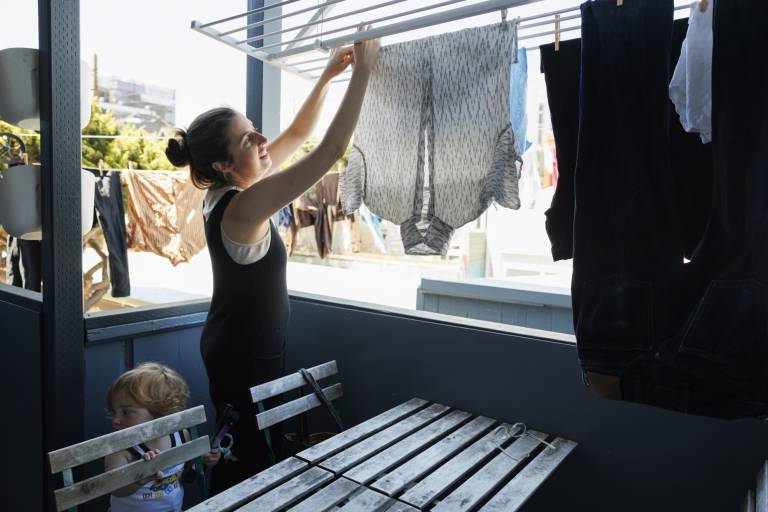
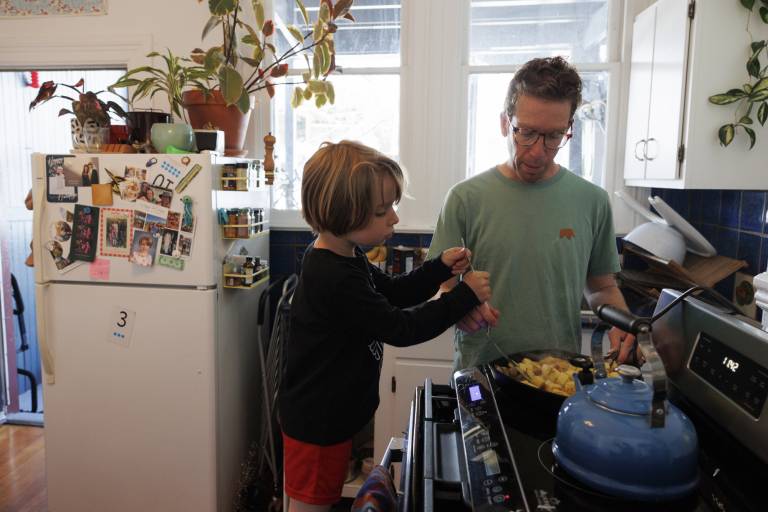
These Bay Area Renters Are Cutting Fossil Fuels From Their Homes and Commutes
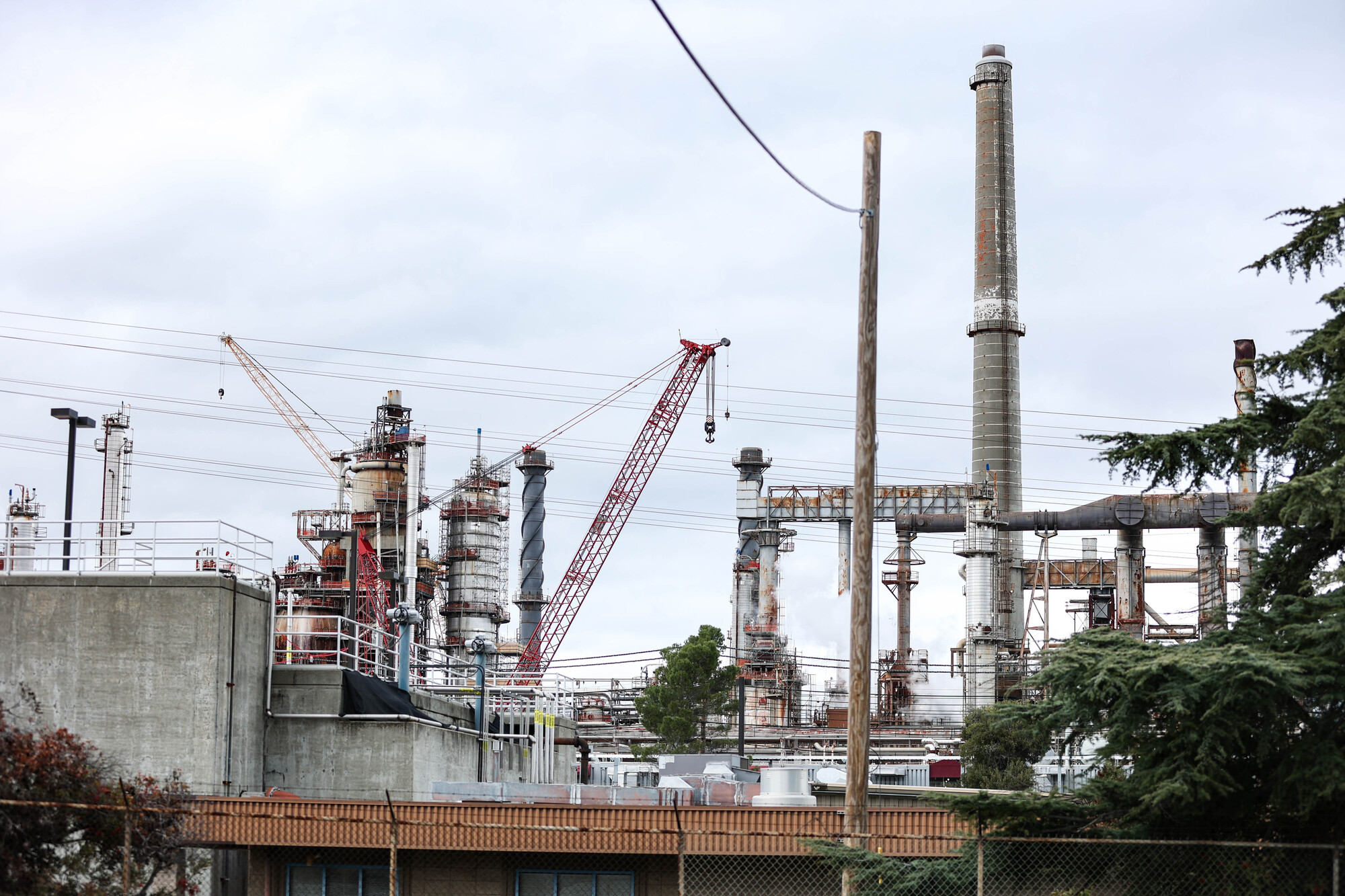
Amid Opposition, California Regulators Approve Major Changes To Cap-And-Trade Program
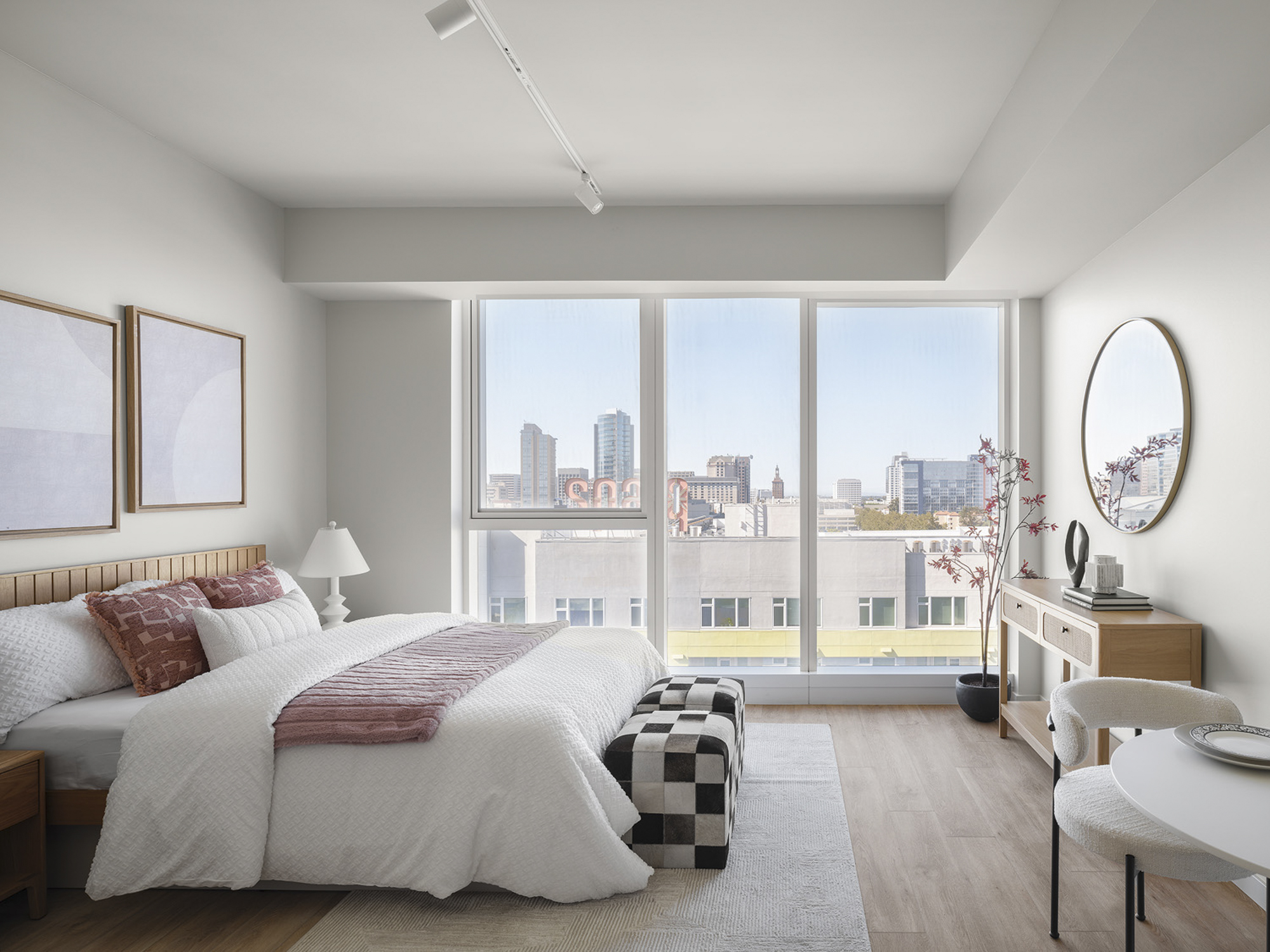
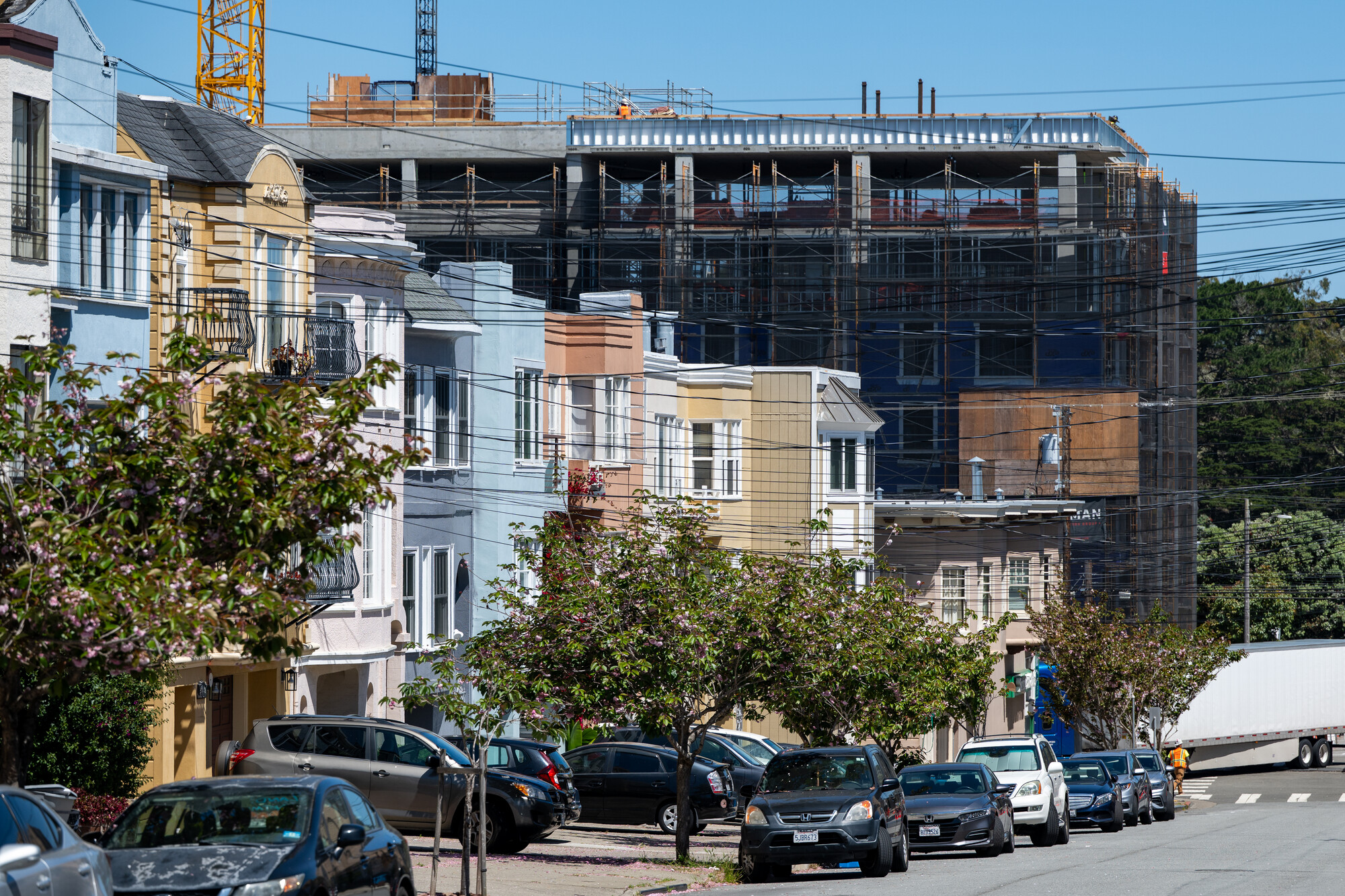
Downtown San José Tower to Offer Below-Market Rents for City Workers
California Gubernatorial Candidates Try to Distinguish Themselves on Housing Policies
How California’s Next Governor Would Tackle Rent, Insurance and Housing Costs
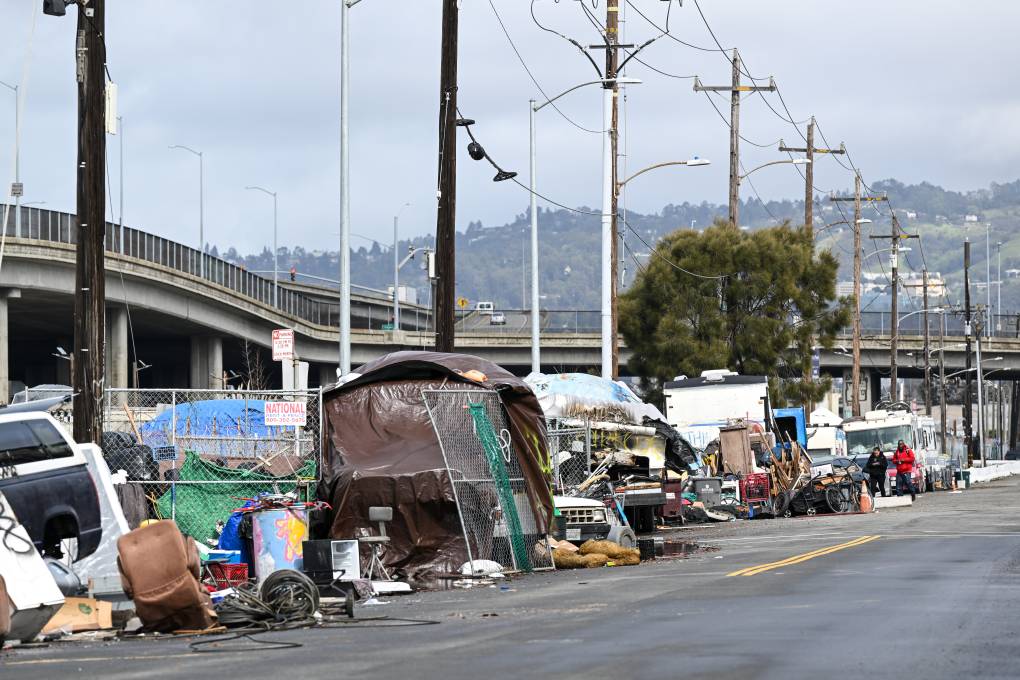
Homelessness Is Down in Alameda County. Can It Maintain That Progress?
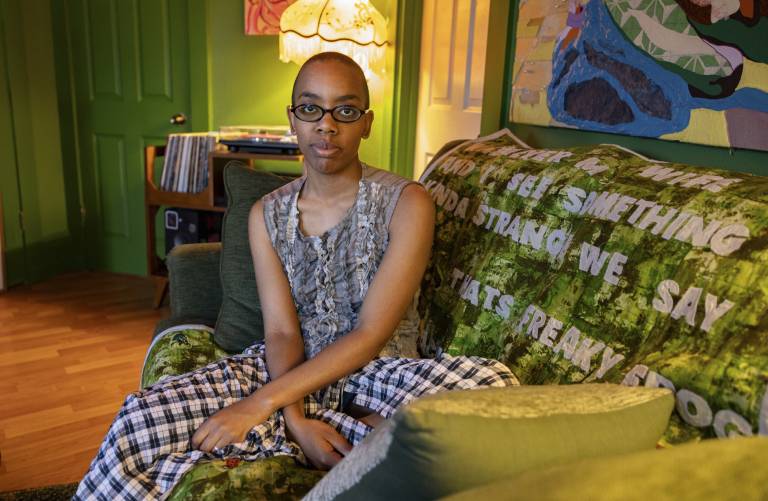
Artist Housing Advocates Eye a ‘Once-in-100-Year’ Opportunity
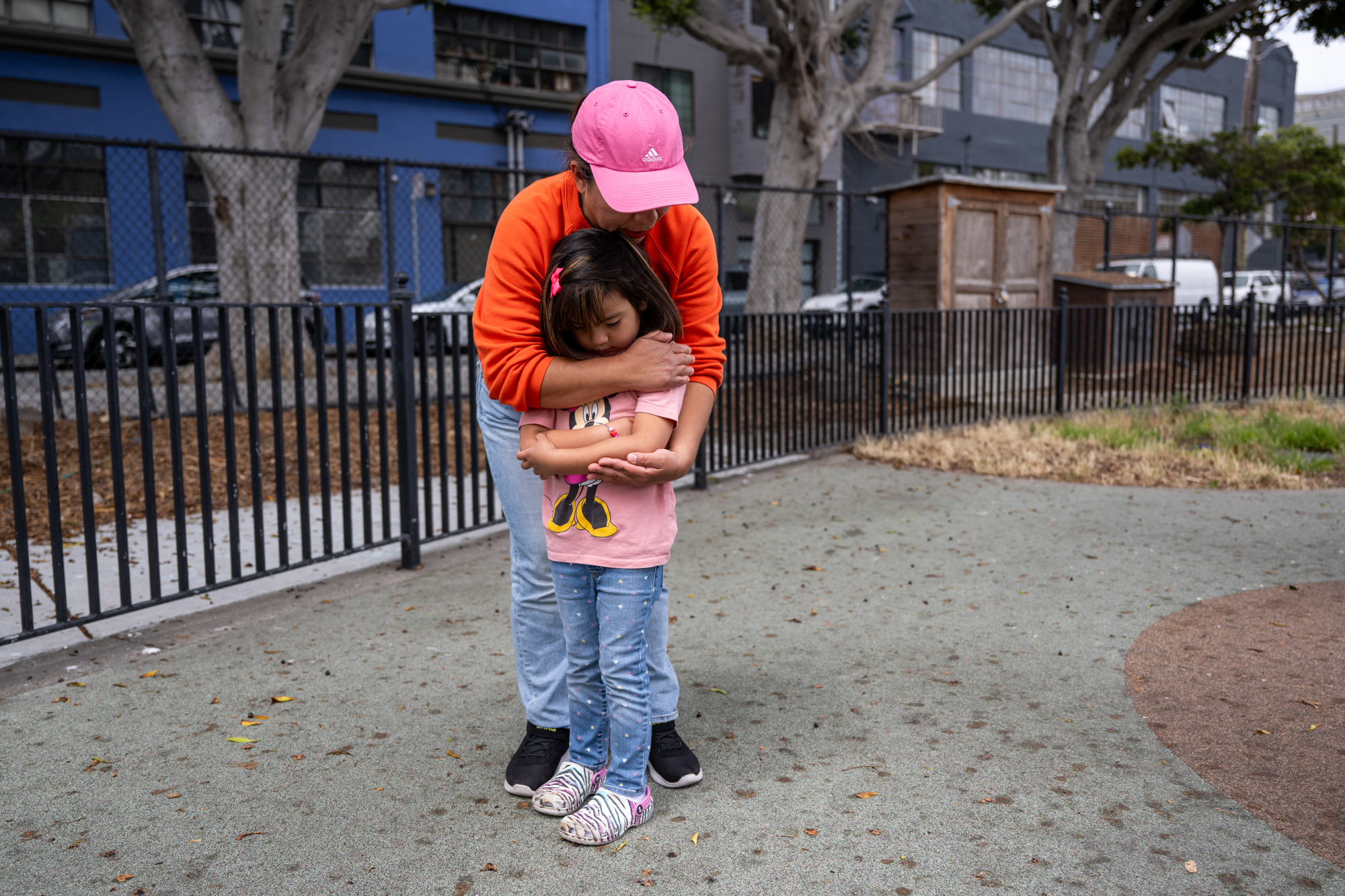
Homelessness Is Down in SF, But Not for Families
Funding for KQED housing coverage is provided by the San Francisco Foundation.
Player sponsored by
window.__IS_SSR__=true
window.__INITIAL_STATE__={
"attachmentsReducer": {
"audio_0": {
"type": "attachments",
"id": "audio_0",
"imgSizes": {
"kqedFullSize": {
"file": "https://ww2.kqed.org/news/wp-content/themes/KQED-unified/img/audio_bgs/background0.jpg"
}
}
},
"audio_1": {
"type": "attachments",
"id": "audio_1",
"imgSizes": {
"kqedFullSize": {
"file": "https://ww2.kqed.org/news/wp-content/themes/KQED-unified/img/audio_bgs/background1.jpg"
}
}
},
"audio_2": {
"type": "attachments",
"id": "audio_2",
"imgSizes": {
"kqedFullSize": {
"file": "https://ww2.kqed.org/news/wp-content/themes/KQED-unified/img/audio_bgs/background2.jpg"
}
}
},
"audio_3": {
"type": "attachments",
"id": "audio_3",
"imgSizes": {
"kqedFullSize": {
"file": "https://ww2.kqed.org/news/wp-content/themes/KQED-unified/img/audio_bgs/background3.jpg"
}
}
},
"audio_4": {
"type": "attachments",
"id": "audio_4",
"imgSizes": {
"kqedFullSize": {
"file": "https://ww2.kqed.org/news/wp-content/themes/KQED-unified/img/audio_bgs/background4.jpg"
}
}
},
"placeholder": {
"type": "attachments",
"id": "placeholder",
"imgSizes": {
"thumbnail": {
"file": "https://cdn.kqed.org/wp-content/uploads/2024/12/KQED-Default-Image-816638274-2000x1333-1-160x107.jpg",
"width": 160,
"height": 107,
"mimeType": "image/jpeg"
},
"medium": {
"file": "https://cdn.kqed.org/wp-content/uploads/2024/12/KQED-Default-Image-816638274-2000x1333-1-800x533.jpg",
"width": 800,
"height": 533,
"mimeType": "image/jpeg"
},
"medium_large": {
"file": "https://cdn.kqed.org/wp-content/uploads/2024/12/KQED-Default-Image-816638274-2000x1333-1-768x512.jpg",
"width": 768,
"height": 512,
"mimeType": "image/jpeg"
},
"large": {
"file": "https://cdn.kqed.org/wp-content/uploads/2024/12/KQED-Default-Image-816638274-2000x1333-1-1020x680.jpg",
"width": 1020,
"height": 680,
"mimeType": "image/jpeg"
},
"1536x1536": {
"file": "https://cdn.kqed.org/wp-content/uploads/2024/12/KQED-Default-Image-816638274-2000x1333-1-1536x1024.jpg",
"width": 1536,
"height": 1024,
"mimeType": "image/jpeg"
},
"fd-lrg": {
"file": "https://cdn.kqed.org/wp-content/uploads/2024/12/KQED-Default-Image-816638274-2000x1333-1-1536x1024.jpg",
"width": 1536,
"height": 1024,
"mimeType": "image/jpeg"
},
"fd-med": {
"file": "https://cdn.kqed.org/wp-content/uploads/2024/12/KQED-Default-Image-816638274-2000x1333-1-1020x680.jpg",
"width": 1020,
"height": 680,
"mimeType": "image/jpeg"
},
"fd-sm": {
"file": "https://cdn.kqed.org/wp-content/uploads/2024/12/KQED-Default-Image-816638274-2000x1333-1-800x533.jpg",
"width": 800,
"height": 533,
"mimeType": "image/jpeg"
},
"post-thumbnail": {
"file": "https://cdn.kqed.org/wp-content/uploads/2024/12/KQED-Default-Image-816638274-2000x1333-1-672x372.jpg",
"width": 672,
"height": 372,
"mimeType": "image/jpeg"
},
"twentyfourteen-full-width": {
"file": "https://cdn.kqed.org/wp-content/uploads/2024/12/KQED-Default-Image-816638274-2000x1333-1-1038x576.jpg",
"width": 1038,
"height": 576,
"mimeType": "image/jpeg"
},
"xxsmall": {
"file": "https://cdn.kqed.org/wp-content/uploads/2024/12/KQED-Default-Image-816638274-2000x1333-1-160x107.jpg",
"width": 160,
"height": 107,
"mimeType": "image/jpeg"
},
"xsmall": {
"file": "https://cdn.kqed.org/wp-content/uploads/2024/12/KQED-Default-Image-816638274-2000x1333-1-672x372.jpg",
"width": 672,
"height": 372,
"mimeType": "image/jpeg"
},
"small": {
"file": "https://cdn.kqed.org/wp-content/uploads/2024/12/KQED-Default-Image-816638274-2000x1333-1-672x372.jpg",
"width": 672,
"height": 372,
"mimeType": "image/jpeg"
},
"xlarge": {
"file": "https://cdn.kqed.org/wp-content/uploads/2024/12/KQED-Default-Image-816638274-2000x1333-1-1020x680.jpg",
"width": 1020,
"height": 680,
"mimeType": "image/jpeg"
},
"full-width": {
"file": "https://cdn.kqed.org/wp-content/uploads/2024/12/KQED-Default-Image-816638274-2000x1333-1-1920x1280.jpg",
"width": 1920,
"height": 1280,
"mimeType": "image/jpeg"
},
"guest-author-32": {
"file": "https://cdn.kqed.org/wp-content/uploads/2025/01/KQED-Default-Image-816638274-1333x1333-1-160x160.jpg",
"width": 32,
"height": 32,
"mimeType": "image/jpeg"
},
"guest-author-50": {
"file": "https://cdn.kqed.org/wp-content/uploads/2025/01/KQED-Default-Image-816638274-1333x1333-1-160x160.jpg",
"width": 50,
"height": 50,
"mimeType": "image/jpeg"
},
"guest-author-64": {
"file": "https://cdn.kqed.org/wp-content/uploads/2025/01/KQED-Default-Image-816638274-1333x1333-1-160x160.jpg",
"width": 64,
"height": 64,
"mimeType": "image/jpeg"
},
"guest-author-96": {
"file": "https://cdn.kqed.org/wp-content/uploads/2025/01/KQED-Default-Image-816638274-1333x1333-1-160x160.jpg",
"width": 96,
"height": 96,
"mimeType": "image/jpeg"
},
"guest-author-128": {
"file": "https://cdn.kqed.org/wp-content/uploads/2025/01/KQED-Default-Image-816638274-1333x1333-1-160x160.jpg",
"width": 128,
"height": 128,
"mimeType": "image/jpeg"
},
"detail": {
"file": "https://cdn.kqed.org/wp-content/uploads/2025/01/KQED-Default-Image-816638274-1333x1333-1-160x160.jpg",
"width": 160,
"height": 160,
"mimeType": "image/jpeg"
},
"kqedFullSize": {
"file": "https://cdn.kqed.org/wp-content/uploads/2024/12/KQED-Default-Image-816638274-2000x1333-1.jpg",
"width": 2000,
"height": 1333
}
}
},
"science_2001153": {
"type": "attachments",
"id": "science_2001153",
"meta": {
"index": "attachments_1716263798",
"site": "science",
"id": "2001153",
"found": true
},
"title": "20260531-RENTERSELECTRIFY-JY-01-KQED",
"publishDate": 1780319988,
"status": "inherit",
"parent": 0,
"modified": 1780511147,
"caption": "Karina van Schaardenburg hangs laundry to dry alongside her son Isaac at their home in San Francisco on Sunday, May 31, 2026.",
"credit": "Juliana Yamada for KQED",
"altTag": null,
"description": null,
"imgSizes": {
"thumbnail": {
"file": "https://cdn.kqed.org/wp-content/uploads/sites/35/2026/06/20260531-RENTERSELECTRIFY-JY-01-KQED-160x107.jpg",
"width": 160,
"height": 107,
"mimeType": "image/jpeg"
},
"medium_large": {
"file": "https://cdn.kqed.org/wp-content/uploads/sites/35/2026/06/20260531-RENTERSELECTRIFY-JY-01-KQED-768x512.jpg",
"width": 768,
"height": 512,
"mimeType": "image/jpeg"
},
"1536x1536": {
"file": "https://cdn.kqed.org/wp-content/uploads/sites/35/2026/06/20260531-RENTERSELECTRIFY-JY-01-KQED-1536x1024.jpg",
"width": 1536,
"height": 1024,
"mimeType": "image/jpeg"
},
"post-thumbnail": {
"file": "https://cdn.kqed.org/wp-content/uploads/sites/35/2026/06/20260531-RENTERSELECTRIFY-JY-01-KQED-672x372.jpg",
"width": 672,
"height": 372,
"mimeType": "image/jpeg"
},
"twentyfourteen-full-width": {
"file": "https://cdn.kqed.org/wp-content/uploads/sites/35/2026/06/20260531-RENTERSELECTRIFY-JY-01-KQED-1038x576.jpg",
"width": 1038,
"height": 576,
"mimeType": "image/jpeg"
},
"npr-cds-wide": {
"file": "https://cdn.kqed.org/wp-content/uploads/sites/35/2026/06/20260531-RENTERSELECTRIFY-JY-01-KQED-1200x675.jpg",
"width": 1200,
"height": 675,
"mimeType": "image/jpeg"
},
"npr-cds-square": {
"file": "https://cdn.kqed.org/wp-content/uploads/sites/35/2026/06/20260531-RENTERSELECTRIFY-JY-01-KQED-600x600.jpg",
"width": 600,
"height": 600,
"mimeType": "image/jpeg"
},
"kqedFullSize": {
"file": "https://cdn.kqed.org/wp-content/uploads/sites/35/2026/06/20260531-RENTERSELECTRIFY-JY-01-KQED.jpg",
"width": 2000,
"height": 1333
}
},
"isLoading": false,
"fetchFailed": false
},
"science_2001160": {
"type": "attachments",
"id": "science_2001160",
"meta": {
"index": "attachments_1716263798",
"site": "science",
"id": "2001160",
"found": true
},
"title": "20260531-RENTERSELECTRIFY-JY-15-KQED",
"publishDate": 1780320026,
"status": "inherit",
"parent": 0,
"modified": 1780510051,
"caption": "Jason Wexler and his son Ezra van Schaardenburg, 5, cook potatoes for brunch together on an induction cooktop at their home in San Francisco on Sunday, May 31, 2026. Wexler and his wife Karina van Schaardenburg cut down the usage of fossil fuels in their home and use electric appliances in substitution.",
"credit": "Juliana Yamada for KQED",
"altTag": null,
"description": null,
"imgSizes": {
"thumbnail": {
"file": "https://cdn.kqed.org/wp-content/uploads/sites/35/2026/06/20260531-RENTERSELECTRIFY-JY-15-KQED-160x107.jpg",
"width": 160,
"height": 107,
"mimeType": "image/jpeg"
},
"medium_large": {
"file": "https://cdn.kqed.org/wp-content/uploads/sites/35/2026/06/20260531-RENTERSELECTRIFY-JY-15-KQED-768x512.jpg",
"width": 768,
"height": 512,
"mimeType": "image/jpeg"
},
"1536x1536": {
"file": "https://cdn.kqed.org/wp-content/uploads/sites/35/2026/06/20260531-RENTERSELECTRIFY-JY-15-KQED-1536x1024.jpg",
"width": 1536,
"height": 1024,
"mimeType": "image/jpeg"
},
"post-thumbnail": {
"file": "https://cdn.kqed.org/wp-content/uploads/sites/35/2026/06/20260531-RENTERSELECTRIFY-JY-15-KQED-672x372.jpg",
"width": 672,
"height": 372,
"mimeType": "image/jpeg"
},
"twentyfourteen-full-width": {
"file": "https://cdn.kqed.org/wp-content/uploads/sites/35/2026/06/20260531-RENTERSELECTRIFY-JY-15-KQED-1038x576.jpg",
"width": 1038,
"height": 576,
"mimeType": "image/jpeg"
},
"npr-cds-wide": {
"file": "https://cdn.kqed.org/wp-content/uploads/sites/35/2026/06/20260531-RENTERSELECTRIFY-JY-15-KQED-1200x675.jpg",
"width": 1200,
"height": 675,
"mimeType": "image/jpeg"
},
"npr-cds-square": {
"file": "https://cdn.kqed.org/wp-content/uploads/sites/35/2026/06/20260531-RENTERSELECTRIFY-JY-15-KQED-600x600.jpg",
"width": 600,
"height": 600,
"mimeType": "image/jpeg"
},
"kqedFullSize": {
"file": "https://cdn.kqed.org/wp-content/uploads/sites/35/2026/06/20260531-RENTERSELECTRIFY-JY-15-KQED.jpg",
"width": 2000,
"height": 1333
}
},
"isLoading": false,
"fetchFailed": false
},
"news_12073791": {
"type": "attachments",
"id": "news_12073791",
"meta": {
"index": "attachments_1716263798",
"site": "news",
"id": "12073791",
"found": true
},
"title": "Martinez Refining Company in Martinez on Feb. 3, 2025.",
"publishDate": 1771462997,
"status": "inherit",
"parent": 12073784,
"modified": 1771463008,
"caption": "Martinez Refining Company in Martinez on Feb. 3, 2025.",
"credit": "Gina Castro/KQED",
"altTag": null,
"description": null,
"imgSizes": {
"thumbnail": {
"file": "https://cdn.kqed.org/wp-content/uploads/sites/10/2026/02/20250203_MartinezRefineryFolo_GC-51_qed-1-160x107.jpg",
"width": 160,
"height": 107,
"mimeType": "image/jpeg"
},
"1536x1536": {
"file": "https://cdn.kqed.org/wp-content/uploads/sites/10/2026/02/20250203_MartinezRefineryFolo_GC-51_qed-1-1536x1024.jpg",
"width": 1536,
"height": 1024,
"mimeType": "image/jpeg"
},
"post-thumbnail": {
"file": "https://cdn.kqed.org/wp-content/uploads/sites/10/2026/02/20250203_MartinezRefineryFolo_GC-51_qed-1-672x372.jpg",
"width": 672,
"height": 372,
"mimeType": "image/jpeg"
},
"twentyfourteen-full-width": {
"file": "https://cdn.kqed.org/wp-content/uploads/sites/10/2026/02/20250203_MartinezRefineryFolo_GC-51_qed-1-1038x576.jpg",
"width": 1038,
"height": 576,
"mimeType": "image/jpeg"
},
"npr-cds-wide": {
"file": "https://cdn.kqed.org/wp-content/uploads/sites/10/2026/02/20250203_MartinezRefineryFolo_GC-51_qed-1-1200x675.jpg",
"width": 1200,
"height": 675,
"mimeType": "image/jpeg"
},
"kqedFullSize": {
"file": "https://cdn.kqed.org/wp-content/uploads/sites/10/2026/02/20250203_MartinezRefineryFolo_GC-51_qed-1.jpg",
"width": 2000,
"height": 1333
}
},
"isLoading": false,
"fetchFailed": false
},
"news_12085243": {
"type": "attachments",
"id": "news_12085243",
"meta": {
"index": "attachments_1716263798",
"site": "news",
"id": "12085243",
"found": true
},
"title": "260526-San Jose Rent-01-KQED",
"publishDate": 1779836027,
"status": "inherit",
"parent": 0,
"modified": 1779836247,
"caption": "A bedroom inside The Fay, a downtown San José high-rise where the city has launched a first-of-its-kind program to offer reduced rents to public employees, on Tuesday, May 26, 2026.",
"credit": "Courtesy of City and County of San José ",
"altTag": null,
"description": null,
"imgSizes": {
"thumbnail": {
"file": "https://cdn.kqed.org/wp-content/uploads/sites/10/2026/05/260526-San-Jose-Rent-01-KQED-160x120.jpg",
"width": 160,
"height": 120,
"mimeType": "image/jpeg"
},
"1536x1536": {
"file": "https://cdn.kqed.org/wp-content/uploads/sites/10/2026/05/260526-San-Jose-Rent-01-KQED-1536x1152.jpg",
"width": 1536,
"height": 1152,
"mimeType": "image/jpeg"
},
"post-thumbnail": {
"file": "https://cdn.kqed.org/wp-content/uploads/sites/10/2026/05/260526-San-Jose-Rent-01-KQED-672x372.jpg",
"width": 672,
"height": 372,
"mimeType": "image/jpeg"
},
"twentyfourteen-full-width": {
"file": "https://cdn.kqed.org/wp-content/uploads/sites/10/2026/05/260526-San-Jose-Rent-01-KQED-1038x576.jpg",
"width": 1038,
"height": 576,
"mimeType": "image/jpeg"
},
"npr-cds-wide": {
"file": "https://cdn.kqed.org/wp-content/uploads/sites/10/2026/05/260526-San-Jose-Rent-01-KQED-1200x675.jpg",
"width": 1200,
"height": 675,
"mimeType": "image/jpeg"
},
"npr-cds-square": {
"file": "https://cdn.kqed.org/wp-content/uploads/sites/10/2026/05/260526-San-Jose-Rent-01-KQED-600x600.jpg",
"width": 600,
"height": 600,
"mimeType": "image/jpeg"
},
"kqedFullSize": {
"file": "https://cdn.kqed.org/wp-content/uploads/sites/10/2026/05/260526-San-Jose-Rent-01-KQED.jpg",
"width": 2000,
"height": 1500
}
},
"isLoading": false,
"fetchFailed": false
},
"news_12073370": {
"type": "attachments",
"id": "news_12073370",
"meta": {
"index": "attachments_1716263798",
"site": "news",
"id": "12073370",
"found": true
},
"title": "250519-AffordableHousingFile-04-BL_qed",
"publishDate": 1770935618,
"status": "inherit",
"parent": 12073193,
"modified": 1772759203,
"caption": "Construction is underway on an affordable housing apartment building at 2550 Irving St. in San Francisco’s Sunset District on May 19, 2025.",
"credit": "Beth LaBerge/KQED",
"altTag": null,
"description": null,
"imgSizes": {
"thumbnail": {
"file": "https://cdn.kqed.org/wp-content/uploads/sites/10/2026/02/250519-AffordableHousingFile-04-BL_qed-160x107.jpg",
"width": 160,
"height": 107,
"mimeType": "image/jpeg"
},
"1536x1536": {
"file": "https://cdn.kqed.org/wp-content/uploads/sites/10/2026/02/250519-AffordableHousingFile-04-BL_qed-1536x1024.jpg",
"width": 1536,
"height": 1024,
"mimeType": "image/jpeg"
},
"post-thumbnail": {
"file": "https://cdn.kqed.org/wp-content/uploads/sites/10/2026/02/250519-AffordableHousingFile-04-BL_qed-672x372.jpg",
"width": 672,
"height": 372,
"mimeType": "image/jpeg"
},
"twentyfourteen-full-width": {
"file": "https://cdn.kqed.org/wp-content/uploads/sites/10/2026/02/250519-AffordableHousingFile-04-BL_qed-1038x576.jpg",
"width": 1038,
"height": 576,
"mimeType": "image/jpeg"
},
"npr-cds-wide": {
"file": "https://cdn.kqed.org/wp-content/uploads/sites/10/2026/02/250519-AffordableHousingFile-04-BL_qed-1200x675.jpg",
"width": 1200,
"height": 675,
"mimeType": "image/jpeg"
},
"kqedFullSize": {
"file": "https://cdn.kqed.org/wp-content/uploads/sites/10/2026/02/250519-AffordableHousingFile-04-BL_qed.jpg",
"width": 2000,
"height": 1333
}
},
"isLoading": false,
"fetchFailed": false
},
"news_12075048": {
"type": "attachments",
"id": "news_12075048",
"meta": {
"index": "attachments_1716263798",
"site": "news",
"id": "12075048",
"found": true
},
"title": "251007-sacramentomiddlehousing_00077_TV_qed",
"publishDate": 1772473800,
"status": "inherit",
"parent": 0,
"modified": 1772473904,
"caption": "A construction worker operates machinery to move dirt at the site of new middle housing units in Sacramento, California, on Oct. 7, 2025. ",
"credit": "Tâm Vũ/KQED",
"altTag": null,
"description": null,
"imgSizes": {
"thumbnail": {
"file": "https://cdn.kqed.org/wp-content/uploads/sites/10/2026/03/251007-sacramentomiddlehousing_00077_TV_qed-160x107.jpg",
"width": 160,
"height": 107,
"mimeType": "image/jpeg"
},
"1536x1536": {
"file": "https://cdn.kqed.org/wp-content/uploads/sites/10/2026/03/251007-sacramentomiddlehousing_00077_TV_qed-1536x1024.jpg",
"width": 1536,
"height": 1024,
"mimeType": "image/jpeg"
},
"post-thumbnail": {
"file": "https://cdn.kqed.org/wp-content/uploads/sites/10/2026/03/251007-sacramentomiddlehousing_00077_TV_qed-672x372.jpg",
"width": 672,
"height": 372,
"mimeType": "image/jpeg"
},
"twentyfourteen-full-width": {
"file": "https://cdn.kqed.org/wp-content/uploads/sites/10/2026/03/251007-sacramentomiddlehousing_00077_TV_qed-1038x576.jpg",
"width": 1038,
"height": 576,
"mimeType": "image/jpeg"
},
"npr-cds-wide": {
"file": "https://cdn.kqed.org/wp-content/uploads/sites/10/2026/03/251007-sacramentomiddlehousing_00077_TV_qed-1200x675.jpg",
"width": 1200,
"height": 675,
"mimeType": "image/jpeg"
},
"kqedFullSize": {
"file": "https://cdn.kqed.org/wp-content/uploads/sites/10/2026/03/251007-sacramentomiddlehousing_00077_TV_qed.jpg",
"width": 1999,
"height": 1333
}
},
"isLoading": false,
"fetchFailed": false
},
"news_11986458": {
"type": "attachments",
"id": "news_11986458",
"meta": {
"index": "attachments_1716263798",
"site": "news",
"id": "11986458",
"found": true
},
"title": "Oakland federal judge rules city can clear Wood St.'s huge homeless camp",
"publishDate": 1715815949,
"status": "inherit",
"parent": 11986443,
"modified": 1776275241,
"caption": "A large tent encampment where people live in West Oakland in February 2023. ",
"credit": "Tayfun CoÅkun/Anadolu Agency via Getty Images",
"altTag": "Tents line a city street.",
"description": null,
"imgSizes": {
"medium": {
"file": "https://cdn.kqed.org/wp-content/uploads/sites/10/2024/05/GettyImages-1247572601-800x533.jpg",
"width": 800,
"height": 533,
"mimeType": "image/jpeg"
},
"large": {
"file": "https://cdn.kqed.org/wp-content/uploads/sites/10/2024/05/GettyImages-1247572601-1020x680.jpg",
"width": 1020,
"height": 680,
"mimeType": "image/jpeg"
},
"thumbnail": {
"file": "https://cdn.kqed.org/wp-content/uploads/sites/10/2024/05/GettyImages-1247572601-160x107.jpg",
"width": 160,
"height": 107,
"mimeType": "image/jpeg"
},
"1536x1536": {
"file": "https://cdn.kqed.org/wp-content/uploads/sites/10/2024/05/GettyImages-1247572601-1536x1024.jpg",
"width": 1536,
"height": 1024,
"mimeType": "image/jpeg"
},
"2048x2048": {
"file": "https://cdn.kqed.org/wp-content/uploads/sites/10/2024/05/GettyImages-1247572601-2048x1365.jpg",
"width": 2048,
"height": 1365,
"mimeType": "image/jpeg"
},
"post-thumbnail": {
"file": "https://cdn.kqed.org/wp-content/uploads/sites/10/2024/05/GettyImages-1247572601-672x372.jpg",
"width": 672,
"height": 372,
"mimeType": "image/jpeg"
},
"twentyfourteen-full-width": {
"file": "https://cdn.kqed.org/wp-content/uploads/sites/10/2024/05/GettyImages-1247572601-1038x576.jpg",
"width": 1038,
"height": 576,
"mimeType": "image/jpeg"
},
"full-width": {
"file": "https://cdn.kqed.org/wp-content/uploads/sites/10/2024/05/GettyImages-1247572601-1920x1280.jpg",
"width": 1920,
"height": 1280,
"mimeType": "image/jpeg"
},
"kqedFullSize": {
"file": "https://cdn.kqed.org/wp-content/uploads/sites/10/2024/05/GettyImages-1247572601-scaled-e1760372488675.jpg",
"width": 2000,
"height": 1334
}
},
"isLoading": false,
"fetchFailed": false
},
"arts_13989665": {
"type": "attachments",
"id": "arts_13989665",
"meta": {
"index": "attachments_1716263798",
"site": "arts",
"id": "13989665",
"found": true
},
"title": "20260511_ARTISTHOUSING_GC-10-KQED",
"publishDate": 1778862546,
"status": "inherit",
"parent": 0,
"modified": 1778862669,
"caption": "Jaelynn Walls, fiction writer and artist, poses for a portrait at their home in Oakland on May 11, 2026.",
"credit": "Gina Castro for KQED",
"altTag": null,
"description": null,
"imgSizes": {
"thumbnail": {
"file": "https://cdn.kqed.org/wp-content/uploads/sites/2/2026/05/20260511_ARTISTHOUSING_GC-10-KQED-160x104.jpg",
"width": 160,
"height": 104,
"mimeType": "image/jpeg"
},
"medium_large": {
"file": "https://cdn.kqed.org/wp-content/uploads/sites/2/2026/05/20260511_ARTISTHOUSING_GC-10-KQED-768x501.jpg",
"width": 768,
"height": 501,
"mimeType": "image/jpeg"
},
"1536x1536": {
"file": "https://cdn.kqed.org/wp-content/uploads/sites/2/2026/05/20260511_ARTISTHOUSING_GC-10-KQED-1536x1001.jpg",
"width": 1536,
"height": 1001,
"mimeType": "image/jpeg"
},
"post-thumbnail": {
"file": "https://cdn.kqed.org/wp-content/uploads/sites/2/2026/05/20260511_ARTISTHOUSING_GC-10-KQED-672x372.jpg",
"width": 672,
"height": 372,
"mimeType": "image/jpeg"
},
"twentyfourteen-full-width": {
"file": "https://cdn.kqed.org/wp-content/uploads/sites/2/2026/05/20260511_ARTISTHOUSING_GC-10-KQED-1038x576.jpg",
"width": 1038,
"height": 576,
"mimeType": "image/jpeg"
},
"npr-cds-wide": {
"file": "https://cdn.kqed.org/wp-content/uploads/sites/2/2026/05/20260511_ARTISTHOUSING_GC-10-KQED-1200x675.jpg",
"width": 1200,
"height": 675,
"mimeType": "image/jpeg"
},
"npr-cds-square": {
"file": "https://cdn.kqed.org/wp-content/uploads/sites/2/2026/05/20260511_ARTISTHOUSING_GC-10-KQED-600x600.jpg",
"width": 600,
"height": 600,
"mimeType": "image/jpeg"
},
"kqedFullSize": {
"file": "https://cdn.kqed.org/wp-content/uploads/sites/2/2026/05/20260511_ARTISTHOUSING_GC-10-KQED.jpg",
"width": 2000,
"height": 1304
}
},
"isLoading": false,
"fetchFailed": false
},
"news_12083903": {
"type": "attachments",
"id": "news_12083903",
"meta": {
"index": "attachments_1716263798",
"site": "news",
"id": "12083903",
"found": true
},
"title": "250723-SHELTERFAMILIES-06-BL-KQED",
"publishDate": 1778868364,
"status": "inherit",
"parent": 12083902,
"modified": 1778868380,
"caption": "Maritza Salinas hugs her daughter, Ranea, 4, at a playground in San Francisco on July 22, 2025.",
"credit": "Beth LaBerge/KQED",
"altTag": null,
"description": null,
"imgSizes": {
"thumbnail": {
"file": "https://cdn.kqed.org/wp-content/uploads/sites/10/2026/05/250723-SHELTERFAMILIES-06-BL-KQED-160x107.jpg",
"width": 160,
"height": 107,
"mimeType": "image/jpeg"
},
"1536x1536": {
"file": "https://cdn.kqed.org/wp-content/uploads/sites/10/2026/05/250723-SHELTERFAMILIES-06-BL-KQED-1536x1024.jpg",
"width": 1536,
"height": 1024,
"mimeType": "image/jpeg"
},
"post-thumbnail": {
"file": "https://cdn.kqed.org/wp-content/uploads/sites/10/2026/05/250723-SHELTERFAMILIES-06-BL-KQED-672x372.jpg",
"width": 672,
"height": 372,
"mimeType": "image/jpeg"
},
"twentyfourteen-full-width": {
"file": "https://cdn.kqed.org/wp-content/uploads/sites/10/2026/05/250723-SHELTERFAMILIES-06-BL-KQED-1038x576.jpg",
"width": 1038,
"height": 576,
"mimeType": "image/jpeg"
},
"npr-cds-wide": {
"file": "https://cdn.kqed.org/wp-content/uploads/sites/10/2026/05/250723-SHELTERFAMILIES-06-BL-KQED-1200x675.jpg",
"width": 1200,
"height": 675,
"mimeType": "image/jpeg"
},
"npr-cds-square": {
"file": "https://cdn.kqed.org/wp-content/uploads/sites/10/2026/05/250723-SHELTERFAMILIES-06-BL-KQED-600x600.jpg",
"width": 600,
"height": 600,
"mimeType": "image/jpeg"
},
"kqedFullSize": {
"file": "https://cdn.kqed.org/wp-content/uploads/sites/10/2026/05/250723-SHELTERFAMILIES-06-BL-KQED.jpg",
"width": 2000,
"height": 1333
}
},
"isLoading": false,
"fetchFailed": false
}
},
"audioPlayerReducer": {
"postId": "stream_live",
"isPaused": true,
"isPlaying": false,
"pfsActive": false,
"pledgeModalIsOpen": true,
"playerDrawerIsOpen": false
},
"authorsReducer": {
"lklivans": {
"type": "authors",
"id": "8648",
"meta": {
"index": "authors_1716337520",
"id": "8648",
"found": true
},
"name": "Laura Klivans",
"firstName": "Laura",
"lastName": "Klivans",
"slug": "lklivans",
"email": "lklivans@kqed.org",
"display_author_email": true,
"staff_mastheads": [
"news",
"science"
],
"title": "Reporter",
"bio": "Laura Klivans is an award-winning science reporter for KQED News, where she covers climate change with an eye on both groundbreaking progress and gaps in action. She is the former host of KQED's blockbuster video series about tiny, amazing animals, \u003cem>Deep Look\u003c/em>. Her work reaches national audiences through NPR, \u003cem>Here & Now, \u003c/em>PRI, and other major outlets. \r\n\r\nLaura’s won five Northern California Area Emmy Awards for Deep Look and First Place in the Greater Bay Area Journalism Awards for a podcast exploring how one Oakland neighborhood teamed up to reduce planet-heating pollution.\r\n\r\nBeyond her reporting, she hosts and moderates events. In the past, she taught audio storytelling at the UC Berkeley Graduate School of Journalism, led international education programs, worked with immigrants and refugees along the Thai-Burmese border, taught high schoolers sex ed, and was an actress. \r\n\r\nShe's a former UC Berkeley Human Rights Fellow, USC Center for Health Journalism's California Fellow and Coro Fellow in Public Affairs. Laura has a master’s in journalism from UC Berkeley, a master’s in education from Harvard, and an undergraduate degree from Northwestern University.\r\n\r\nShe loves trying to riddle the meaning out of vanity license plates.",
"avatar": "https://secure.gravatar.com/avatar/af8e757bb8ce7b7fee6160ba66e37327?s=600&d=blank&r=g",
"twitter": "lauraklivans",
"facebook": null,
"instagram": null,
"linkedin": null,
"sites": [
{
"site": "news",
"roles": [
"editor"
]
},
{
"site": "stateofhealth",
"roles": [
"contributor",
"editor"
]
},
{
"site": "science",
"roles": [
"editor"
]
},
{
"site": "forum",
"roles": [
"editor"
]
}
],
"headData": {
"title": "Laura Klivans | KQED",
"description": "Reporter",
"ogImgSrc": "https://secure.gravatar.com/avatar/af8e757bb8ce7b7fee6160ba66e37327?s=600&d=blank&r=g",
"twImgSrc": "https://secure.gravatar.com/avatar/af8e757bb8ce7b7fee6160ba66e37327?s=600&d=blank&r=g"
},
"isLoading": false,
"link": "/author/lklivans"
},
"ecruzguevarra": {
"type": "authors",
"id": "8654",
"meta": {
"index": "authors_1716337520",
"id": "8654",
"found": true
},
"name": "Ericka Cruz Guevarra",
"firstName": "Ericka",
"lastName": "Cruz Guevarra",
"slug": "ecruzguevarra",
"email": "ecruzguevarra@kqed.org",
"display_author_email": true,
"staff_mastheads": [
"news"
],
"title": "Producer, The Bay Podcast",
"bio": "Ericka Cruz Guevarra is host of \u003ca href=\"https://www.kqed.org/podcasts/thebay\">\u003cem>The Bay\u003c/em>\u003c/a> podcast at KQED. Before host, she was the show’s producer. Her work in that capacity includes a three-part reported series on policing in Vallejo, which won a 2020 excellence in journalism award from the Society of Professional Journalists. Ericka has worked as a breaking news reporter at Oregon Public Broadcasting, helped produce the Code Switch podcast, and was KQED’s inaugural Raul Ramirez Diversity Fund intern. She’s also an alumna of NPR’s Next Generation Radio program. Send her an email if you have strong feelings about whether Fairfield and Suisun City are the Bay. Ericka is represented by SAG-AFTRA.",
"avatar": "https://secure.gravatar.com/avatar/25e5ab8d3d53fad2dcc7bb2b5c506b1a?s=600&d=blank&r=g",
"twitter": "NotoriousECG",
"facebook": null,
"instagram": null,
"linkedin": null,
"sites": [
{
"site": "arts",
"roles": [
"subscriber"
]
},
{
"site": "news",
"roles": [
"editor",
"manage_categories"
]
},
{
"site": "futureofyou",
"roles": [
"subscriber"
]
},
{
"site": "stateofhealth",
"roles": [
"subscriber"
]
},
{
"site": "science",
"roles": [
"editor"
]
},
{
"site": "forum",
"roles": [
"subscriber"
]
}
],
"headData": {
"title": "Ericka Cruz Guevarra | KQED",
"description": "Producer, The Bay Podcast",
"ogImgSrc": "https://secure.gravatar.com/avatar/25e5ab8d3d53fad2dcc7bb2b5c506b1a?s=600&d=blank&r=g",
"twImgSrc": "https://secure.gravatar.com/avatar/25e5ab8d3d53fad2dcc7bb2b5c506b1a?s=600&d=blank&r=g"
},
"isLoading": false,
"link": "/author/ecruzguevarra"
},
"nvoynovskaya": {
"type": "authors",
"id": "11387",
"meta": {
"index": "authors_1716337520",
"id": "11387",
"found": true
},
"name": "Nastia Voynovskaya",
"firstName": "Nastia",
"lastName": "Voynovskaya",
"slug": "nvoynovskaya",
"email": "nvoynovskaya@kqed.org",
"display_author_email": false,
"staff_mastheads": [
"arts"
],
"title": "Editor and reporter",
"bio": "Nastia Voynovskaya is a reporter and editor at KQED Arts & Culture. She's been covering the arts in the Bay Area for over a decade, with a focus on music, queer culture, labor issues and grassroots organizing. She has edited KQED story series such as Trans Bay: A History of San Francisco's Gender-Diverse Community, and co-created KQED's Bay Area hip-hop history project, That's My Word. Nastia's work has been recognized by the Society of Professional Journalists and San Francisco Press Club. She holds a BA in comparative literature from UC Berkeley.",
"avatar": "https://secure.gravatar.com/avatar/310649817772dd2a98e5dfecb6b24842?s=600&d=blank&r=g",
"twitter": null,
"bluesky": null,
"facebook": null,
"instagram": "https://www.instagram.com/nananastia/",
"linkedin": null,
"sites": [
{
"site": "arts",
"roles": [
"administrator"
]
},
{
"site": "news",
"roles": [
"editor"
]
},
{
"site": "pop",
"roles": [
"administrator"
]
},
{
"site": "bayareabites",
"roles": [
"editor"
]
},
{
"site": "podcasts",
"roles": [
"editor"
]
},
{
"site": "hiphop",
"roles": [
"editor"
]
}
],
"headData": {
"title": "Nastia Voynovskaya | KQED",
"description": "Editor and reporter",
"ogImgSrc": "https://secure.gravatar.com/avatar/310649817772dd2a98e5dfecb6b24842?s=600&d=blank&r=g",
"twImgSrc": "https://secure.gravatar.com/avatar/310649817772dd2a98e5dfecb6b24842?s=600&d=blank&r=g"
},
"isLoading": false,
"link": "/author/nvoynovskaya"
},
"abandlamudi": {
"type": "authors",
"id": "11672",
"meta": {
"index": "authors_1716337520",
"id": "11672",
"found": true
},
"name": "Adhiti Bandlamudi",
"firstName": "Adhiti",
"lastName": "Bandlamudi",
"slug": "abandlamudi",
"email": "abandlamudi@kqed.org",
"display_author_email": false,
"staff_mastheads": [
"news"
],
"title": "KQED Housing Reporter",
"bio": "Adhiti Bandlamudi reports for KQED's Housing desk. She focuses on how housing gets built across the Bay Area. Before joining KQED in 2020, she reported for WUNC in Durham, North Carolina, WABE in Atlanta, Georgia and Capital Public Radio in Sacramento. In 2017, she was awarded a Kroc Fellowship at NPR where she reported on everything from sprinkles to the Golden State Killer's arrest. When she's not reporting, she's baking new recipes in her kitchen or watching movies with friends and family. She's originally from Georgia and has strong opinions about Great British Bake Off.",
"avatar": "https://secure.gravatar.com/avatar/868129c8b257bb99a3500e2c86a65400?s=600&d=mm&r=g",
"twitter": "oddity_adhiti",
"facebook": null,
"instagram": null,
"linkedin": null,
"sites": [
{
"site": "arts",
"roles": [
"author"
]
},
{
"site": "news",
"roles": [
"editor"
]
},
{
"site": "liveblog",
"roles": [
"author"
]
}
],
"headData": {
"title": "Adhiti Bandlamudi | KQED",
"description": "KQED Housing Reporter",
"ogImgSrc": "https://secure.gravatar.com/avatar/868129c8b257bb99a3500e2c86a65400?s=600&d=mm&r=g",
"twImgSrc": "https://secure.gravatar.com/avatar/868129c8b257bb99a3500e2c86a65400?s=600&d=mm&r=g"
},
"isLoading": false,
"link": "/author/abandlamudi"
},
"kmizuguchi": {
"type": "authors",
"id": "11739",
"meta": {
"index": "authors_1716337520",
"id": "11739",
"found": true
},
"name": "Keith Mizuguchi",
"firstName": "Keith",
"lastName": "Mizuguchi",
"slug": "kmizuguchi",
"email": "kmizuguchi@kqed.org",
"display_author_email": false,
"staff_mastheads": [],
"title": "KQED Contributor",
"bio": null,
"avatar": "https://secure.gravatar.com/avatar/ce1182f9924192ae5ea66d39a75cd7d1?s=600&d=blank&r=g",
"twitter": null,
"facebook": null,
"instagram": null,
"linkedin": null,
"sites": [
{
"site": "news",
"roles": [
"editor"
]
},
{
"site": "science",
"roles": [
"editor"
]
}
],
"headData": {
"title": "Keith Mizuguchi | KQED",
"description": "KQED Contributor",
"ogImgSrc": "https://secure.gravatar.com/avatar/ce1182f9924192ae5ea66d39a75cd7d1?s=600&d=blank&r=g",
"twImgSrc": "https://secure.gravatar.com/avatar/ce1182f9924192ae5ea66d39a75cd7d1?s=600&d=blank&r=g"
},
"isLoading": false,
"link": "/author/kmizuguchi"
},
"kdebenedetti": {
"type": "authors",
"id": "11913",
"meta": {
"index": "authors_1716337520",
"id": "11913",
"found": true
},
"name": "Katie DeBenedetti",
"firstName": "Katie",
"lastName": "DeBenedetti",
"slug": "kdebenedetti",
"email": "kdebenedetti@kqed.org",
"display_author_email": false,
"staff_mastheads": [
"news",
"science"
],
"title": "KQED Contributor",
"bio": "Katie DeBenedetti is a digital reporter covering daily news for the Express Desk. Prior to joining KQED as a culture reporting intern in January 2024, she covered education and city government for the Napa Valley Register.",
"avatar": "https://secure.gravatar.com/avatar/6e31073cb8f7e4214ab03f42771d0f45?s=600&d=blank&r=g",
"twitter": null,
"facebook": null,
"instagram": null,
"linkedin": null,
"sites": [
{
"site": "news",
"roles": [
"author"
]
},
{
"site": "science",
"roles": [
"author"
]
},
{
"site": "liveblog",
"roles": [
"author"
]
}
],
"headData": {
"title": "Katie DeBenedetti | KQED",
"description": "KQED Contributor",
"ogImgSrc": "https://secure.gravatar.com/avatar/6e31073cb8f7e4214ab03f42771d0f45?s=600&d=blank&r=g",
"twImgSrc": "https://secure.gravatar.com/avatar/6e31073cb8f7e4214ab03f42771d0f45?s=600&d=blank&r=g"
},
"isLoading": false,
"link": "/author/kdebenedetti"
},
"aaliahmad": {
"type": "authors",
"id": "11986",
"meta": {
"index": "authors_1716337520",
"id": "11986",
"found": true
},
"name": "Ayah Ali-Ahmad",
"firstName": "Ayah",
"lastName": "Ali-Ahmad",
"slug": "aaliahmad",
"email": "aaliahmad@KQED.org",
"display_author_email": false,
"staff_mastheads": [],
"title": "KQED Contributor",
"bio": null,
"avatar": "https://secure.gravatar.com/avatar/7f340465c69a2c816f6c07000137a3ee?s=600&d=blank&r=g",
"twitter": "ayahaliahmad",
"bluesky": null,
"facebook": null,
"instagram": null,
"linkedin": null,
"sites": [
{
"site": "news",
"roles": [
"author"
]
}
],
"headData": {
"title": "Ayah Ali-Ahmad | KQED",
"description": "KQED Contributor",
"ogImgSrc": "https://secure.gravatar.com/avatar/7f340465c69a2c816f6c07000137a3ee?s=600&d=blank&r=g",
"twImgSrc": "https://secure.gravatar.com/avatar/7f340465c69a2c816f6c07000137a3ee?s=600&d=blank&r=g"
},
"isLoading": false,
"link": "/author/aaliahmad"
}
},
"breakingNewsReducer": {},
"pagesReducer": {
"root-site_housing": {
"type": "pages",
"id": "root-site_15613",
"meta": {
"index": "pages_1716337520",
"site": "root-site",
"id": "15613",
"score": 0
},
"slug": "housing",
"title": "Housing",
"headTitle": "Housing | KQED",
"pagePath": "housing",
"pageMeta": {
"sticky": false,
"WpPageTemplate": "page-topic-editorial",
"adSlotOverride": "300x250_news",
"excludeFromSiteSearch": "Include"
},
"headData": {
"title": "Housing Updates in Bay Area | KQED",
"description": "Explore the roots and effects of the housing crisis in the Bay Area through KQED's Housing Updates.",
"ogTitle": "",
"ogDescription": "",
"ogImgId": "",
"twTitle": "",
"twDescription": "",
"twImgId": "",
"socialTitle": "Housing Updates in Bay Area | KQED",
"socialDescription": "Explore the roots and effects of the housing crisis in the Bay Area through KQED's Housing Updates.",
"imageData": {
"ogImageSize": {
"file": "https://cdn.kqed.org/wp-content/uploads/2020/02/KQED-OG-Image@1x.png",
"width": 1200,
"height": 630
},
"twImageSize": {
"file": "https://cdn.kqed.org/wp-content/uploads/2020/02/KQED-OG-Image@1x.png"
},
"twitterCard": "summary_large_image"
}
},
"labelTerm": {
"site": ""
},
"publishDate": 1581368331,
"content": "\u003cp>KQED aims to tell the story of how California got into a housing affordability crisis by exploring the history and regional policies of the Bay Area. We want to know how marginalized residents are affected.\u003c/p>\n\n\n\n\n\n\u003cdiv class=\"wp-block-kqed-blocksetter\">\n\u003cdiv class=\"wp-block-columns bgBlue is-layout-flex wp-container-core-columns-is-layout-2 wp-block-columns-is-layout-flex\">\n\u003cdiv class=\"wp-block-column is-layout-flow wp-block-column-is-layout-flow\">\n\u003cp class=\"has-text-align-center\">\u003cstrong>Funding for KQED housing coverage is provided by the San Francisco Foundation.\u003c/strong>\u003c/p>\n\u003c/div>\n\u003c/div>\n\u003c/div>\n\n\n\u003cdiv class=\"wp-block-image\">\n\u003cfigure class=\"aligncenter size-large is-resized\">\u003ca href=\"https://sff.org/\">\u003cimg loading=\"lazy\" decoding=\"async\" width=\"2000\" height=\"571\" src=\"https://cdn.kqed.org/wp-content/uploads/2026/05/2019-Visual-Identity-Launch-Post-Images93-2000x571.jpg\" alt=\"\" class=\"wp-image-28188\" style=\"width:250px\" srcset=\"https://cdn.kqed.org/wp-content/uploads/2026/05/2019-Visual-Identity-Launch-Post-Images93-2000x571.jpg 2000w, https://cdn.kqed.org/wp-content/uploads/2026/05/2019-Visual-Identity-Launch-Post-Images93-160x46.jpg 160w, https://cdn.kqed.org/wp-content/uploads/2026/05/2019-Visual-Identity-Launch-Post-Images93-768x219.jpg 768w, https://cdn.kqed.org/wp-content/uploads/2026/05/2019-Visual-Identity-Launch-Post-Images93-1536x439.jpg 1536w, https://cdn.kqed.org/wp-content/uploads/2026/05/2019-Visual-Identity-Launch-Post-Images93-2048x585.jpg 2048w\" sizes=\"auto, (max-width: 2000px) 100vw, 2000px\">\u003c/a>\u003c/figure>\u003c/div>\u003cp>[ad fullwidth]\u003c/p>\u003cp>\u003c/p>\n",
"blocks": [
{
"blockName": "core/paragraph",
"attrs": [],
"innerHTML": "\n\u003cp>KQED aims to tell the story of how California got into a housing affordability crisis by exploring the history and regional policies of the Bay Area. We want to know how marginalized residents are affected.\u003c/p>\n",
"innerContent": [
"\n\u003cp>KQED aims to tell the story of how California got into a housing affordability crisis by exploring the history and regional policies of the Bay Area. We want to know how marginalized residents are affected.\u003c/p>\n"
],
"innerBlocks": []
},
{
"blockName": "kqed/post-list",
"attrs": {
"layout": "cardArticle2",
"query": "posts/?tag=housing,housing-3,homelessness,affordable-housing,housing-affordability&queryId=101edd7f28d",
"useSSR": true,
"seeMore": true
},
"innerHTML": "",
"innerContent": [],
"innerBlocks": []
},
{
"blockName": "kqed/blocksetter",
"attrs": {
"blockName": "kqed/community-report"
},
"innerHTML": "\n\u003cdiv class=\"wp-block-kqed-blocksetter\">\u003c/div>\n",
"innerContent": [
"\n\u003cdiv class=\"wp-block-kqed-blocksetter\">",
null,
"\u003c/div>\n"
],
"innerBlocks": [
{
"blockName": "core/columns",
"attrs": {
"className": "bgBlue"
},
"innerBlocks": [
{
"blockName": "core/column",
"attrs": [],
"innerBlocks": [
{
"blockName": "core/paragraph",
"attrs": {
"align": "center"
},
"innerBlocks": [],
"innerHTML": "\n\u003cp class=\"has-text-align-center\">\u003cstrong>Funding for KQED housing coverage is provided by the San Francisco Foundation.\u003c/strong>\u003c/p>\n",
"innerContent": [
"\n\u003cp class=\"has-text-align-center\">\u003cstrong>Funding for KQED housing coverage is provided by the San Francisco Foundation.\u003c/strong>\u003c/p>\n"
]
}
],
"innerHTML": "\n\u003cdiv class=\"wp-block-column\">\u003c/div>\n",
"innerContent": [
"\n\u003cdiv class=\"wp-block-column\">",
null,
"\u003c/div>\n"
]
}
],
"innerHTML": "\n\u003cdiv class=\"wp-block-columns bgBlue\">\u003c/div>\n",
"innerContent": [
"\n\u003cdiv class=\"wp-block-columns bgBlue\">",
null,
"\u003c/div>\n"
]
}
]
},
{
"blockName": "core/image",
"attrs": {
"lightbox": {
"enabled": false
},
"id": 28188,
"width": "250px",
"sizeSlug": "large",
"linkDestination": "custom",
"align": "center"
},
"innerHTML": "\n\u003cfigure class=\"wp-block-image aligncenter size-large is-resized\">\u003ca href=\"https://sff.org/\">\u003cimg src=\"https://cdn.kqed.org/wp-content/uploads/2026/05/2019-Visual-Identity-Launch-Post-Images93-2000x571.jpg\" alt=\"\" class=\"wp-image-28188\" style=\"width:250px\"/>\u003c/a>\u003c/figure>\n",
"innerContent": [
"\n\u003cfigure class=\"wp-block-image aligncenter size-large is-resized\">\u003ca href=\"https://sff.org/\">\u003cimg src=\"https://cdn.kqed.org/wp-content/uploads/2026/05/2019-Visual-Identity-Launch-Post-Images93-2000x571.jpg\" alt=\"\" class=\"wp-image-28188\" style=\"width:250px\"/>\u003c/a>\u003c/figure>\n"
],
"innerBlocks": []
}
],
"status": "publish",
"parent": 0,
"modified": 1778022863,
"format": "standard",
"path": "/root-site/15613/housing",
"audioTrackLength": null,
"parsedContent": [
{
"type": "contentString",
"content": "\u003cdiv class=\"post-body\">\u003cp>\u003cp>KQED aims to tell the story of how California got into a housing affordability crisis by exploring the history and regional policies of the Bay Area. We want to know how marginalized residents are affected.\u003c/p>\n\n\n\n\n\n\u003cdiv class=\"wp-block-kqed-blocksetter\">\n\u003cdiv class=\"wp-block-columns bgBlue is-layout-flex wp-container-core-columns-is-layout-2 wp-block-columns-is-layout-flex\">\n\u003cdiv class=\"wp-block-column is-layout-flow wp-block-column-is-layout-flow\">\n\u003cp class=\"has-text-align-center\">\u003cstrong>Funding for KQED housing coverage is provided by the San Francisco Foundation.\u003c/strong>\u003c/p>\n\u003c/div>\n\u003c/div>\n\u003c/div>\n\n\n\u003cdiv class=\"wp-block-image\">\n\u003cfigure class=\"aligncenter size-large is-resized\">\u003ca href=\"https://sff.org/\">\u003cimg loading=\"lazy\" decoding=\"async\" width=\"2000\" height=\"571\" src=\"https://cdn.kqed.org/wp-content/uploads/2026/05/2019-Visual-Identity-Launch-Post-Images93-2000x571.jpg\" alt=\"\" class=\"wp-image-28188\" style=\"width:250px\" srcset=\"https://cdn.kqed.org/wp-content/uploads/2026/05/2019-Visual-Identity-Launch-Post-Images93-2000x571.jpg 2000w, https://cdn.kqed.org/wp-content/uploads/2026/05/2019-Visual-Identity-Launch-Post-Images93-160x46.jpg 160w, https://cdn.kqed.org/wp-content/uploads/2026/05/2019-Visual-Identity-Launch-Post-Images93-768x219.jpg 768w, https://cdn.kqed.org/wp-content/uploads/2026/05/2019-Visual-Identity-Launch-Post-Images93-1536x439.jpg 1536w, https://cdn.kqed.org/wp-content/uploads/2026/05/2019-Visual-Identity-Launch-Post-Images93-2048x585.jpg 2048w\" sizes=\"auto, (max-width: 2000px) 100vw, 2000px\">\u003c/a>\u003c/figure>\u003c/div>\u003cp>\u003c/p>\u003c/div>",
"attributes": {
"named": {},
"numeric": []
}
},
{
"type": "component",
"content": "",
"name": "ad",
"attributes": {
"named": {
"label": "fullwidth"
},
"numeric": [
"fullwidth"
]
}
},
{
"type": "contentString",
"content": "\u003cdiv class=\"post-body\">\u003cp>\u003c/p>\u003cp>\u003c/p>\n\u003c/div>\u003c/p>",
"attributes": {
"named": {},
"numeric": []
}
}
],
"label": "root-site",
"isLoading": false
}
},
"postsReducer": {
"stream_live": {
"type": "live",
"id": "stream_live",
"audioUrl": "https://streams.kqed.org/kqedradio",
"title": "Live Stream",
"excerpt": "Live Stream information currently unavailable.",
"link": "/radio",
"featImg": "",
"label": {
"name": "KQED Live",
"link": "/"
}
},
"stream_kqedNewscast": {
"type": "posts",
"id": "stream_kqedNewscast",
"audioUrl": "https://www.kqed.org/.stream/anon/radio/RDnews/newscast.mp3?_=1",
"title": "KQED Newscast",
"featImg": "",
"label": {
"name": "88.5 FM",
"link": "/"
}
},
"science_2001168": {
"type": "posts",
"id": "science_2001168",
"meta": {
"index": "posts_1716263798",
"site": "science",
"id": "2001168",
"score": null,
"sort": [
1780771591000
]
},
"guestAuthors": [],
"slug": "how-you-can-mostly-cut-using-fossil-fuels-as-a-renter-in-the-bay-area",
"title": "Hot Rugs, Heat Pumps and Induction Cooktops: How Renters Can Go Electric",
"publishDate": 1780771591,
"format": "standard",
"headTitle": "Hot Rugs, Heat Pumps and Induction Cooktops: How Renters Can Go Electric | KQED",
"labelTerm": {},
"content": "\u003cp>\u003cem>California is transitioning to clean energy. KQED is reporting on what that means for you. What works? What doesn’t? How much does it cost? Help us find these answers and more by \u003c/em>\u003ca href=\"http://donate.kqed.org/sojo?ms=W2510EANXXXX22\">\u003cem>donating today\u003c/em>\u003c/a>\u003cem>.\u003c/em>\u003c/p>\n\u003cp>An increasing number of people are swapping gas appliances for electric ones to improve their indoor air quality and to reduce their carbon footprint.\u003c/p>\n\u003cp>But for people who rent, making the switch can seem out of reach: they are not the ones deciding what new appliance will replace the last, or when to rewire a home.\u003c/p>\n\u003cp>Recent, creative uses of existing technologies are removing these barriers. A market is opening for renters, who comprise almost half of Bay Area households, to go electric. These solutions can also work for owners who want to cut fossil fuels without major electrical work or service upgrades.\u003c/p>\n\u003cp>[ad fullwidth]\u003c/p>\n\u003cp>Here’s your guide for how to do that.\u003c/p>\n\u003cp>\u003cstrong>Jump to:\u003c/strong>\u003c/p>\n\u003cp>\u003ca href=\"#Cooking\">Cooking\u003c/a>\u003c/p>\n\u003cp>\u003ca href=\"#Warmingandcoolingyourhome\">Warming and cooling your home\u003c/a>\u003c/p>\n\u003cp>\u003ca href=\"#Generatingsomeofyourownelectricity\">Generating some of your own electricity\u003c/a>\u003c/p>\n\u003cp>\u003ca href=\"#Storingenergy\">Storing energy\u003c/a>\u003c/p>\n\u003cp>\u003ca href=\"#Chargingyourcar\">Charging your car\u003c/a>\u003c/p>\n\u003cp>\u003ca href=\"#Dryingyourclothes\">Drying your clothes\u003c/a>\u003c/p>\n\u003cp>\u003ca href=\"#Talkingtoyourpropertyowner\">Talking to your property owner\u003c/a>\u003c/p>\n\u003cp>\u003ca href=\"#Payingforyourutilitybills\">Paying for your utility bills\u003c/a>\u003c/p>\n\u003ch2>\u003ca id=\"Cooking\">\u003c/a>Cooking\u003c/h2>\n\u003cp>Studies show gas stoves expose people to \u003ca href=\"https://news.stanford.edu/stories/2025/12/gas-propane-stoves-nitrogen-dioxide-exposure-health-risks-switching-electric\">unhealthy air\u003c/a> and emit \u003ca href=\"https://pubs.acs.org/doi/full/10.1021/acs.est.1c04707\">methane\u003c/a>, the main component in natural gas. Methane warms the climate at nearly 80 times the rate of carbon dioxide, although it stays in the atmosphere for a far shorter time.\u003c/p>\n\u003cp>Switching to an electric or induction stove can dramatically \u003ca href=\"https://academic.oup.com/pnasnexus/article/4/12/pgaf341/8361964?login=false\">cut pollution\u003c/a>. Induction appliances also tend to heat up faster and be more energy efficient.\u003c/p>\n\u003cp>There are two induction options: cooktops and stoves.\u003c/p>\n\u003cfigure id=\"attachment_2001207\" class=\"wp-caption aligncenter\" style=\"max-width: 2000px\">\u003cimg loading=\"lazy\" decoding=\"async\" class=\"size-full wp-image-2001207\" src=\"https://cdn.kqed.org/wp-content/uploads/sites/35/2026/06/260417-climatesolutionsinduction02210_TV_qed.jpg\" alt=\"\" width=\"2000\" height=\"1333\" srcset=\"https://cdn.kqed.org/wp-content/uploads/sites/35/2026/06/260417-climatesolutionsinduction02210_TV_qed.jpg 2000w, https://cdn.kqed.org/wp-content/uploads/sites/35/2026/06/260417-climatesolutionsinduction02210_TV_qed-160x107.jpg 160w, https://cdn.kqed.org/wp-content/uploads/sites/35/2026/06/260417-climatesolutionsinduction02210_TV_qed-768x512.jpg 768w, https://cdn.kqed.org/wp-content/uploads/sites/35/2026/06/260417-climatesolutionsinduction02210_TV_qed-1536x1024.jpg 1536w\" sizes=\"auto, (max-width: 2000px) 100vw, 2000px\">\u003cfigcaption class=\"wp-caption-text\">An induction stove available for checkout at the San Mateo Public Library in San Mateo on April 17, 2026. \u003ccite>(Tâm Vũ/KQED)\u003c/cite>\u003c/figcaption>\u003c/figure>\n\u003cp>\u003cstrong>Induction cooktops\u003c/strong>\u003c/p>\n\u003cp>Induction cooktops are fairly flat rectangles that can rest on any countertop or table. Many people simply place them on their gas stove (remember not to ignite your gas stove with the cooktop there).\u003c/p>\n\u003cp>Induction cooktops provide even heat and boil water quickly. They offer a kitchen upgrade without a remodel or thumbs up from a property owner. They’re portable and easy to pack when you move.\u003c/p>\n\u003cp>Large retailers like IKEA sell single, plug-in burners, and other companies offer four-burner cooktops.\u003c/p>\n\u003cp>\u003cstrong>Keep in mind:\u003c/strong> Buy an induction cooktop that plugs into a standard 120-volt outlet to avoid the need for wiring upgrades.\u003c/p>\n\u003cp>Induction requires compatible cookware like stainless steel and cast iron. Aluminum pots and pans do not work with induction — they simply won’t heat up. To test pots and pans to see if they are compatible, hold a fridge magnet up to them. If it sticks, they will work!\u003c/p>\n\u003cp>\u003cstrong>Cost:\u003c/strong> Induction cooktops start around $75 for a single burner.\u003c/p>\n\u003cp>\u003cstrong>Induction stoves that plug into a standard outlet \u003c/strong>\u003c/p>\n\u003cp>While many induction stoves require home rewiring to provide enough electricity, there’s a burgeoning market of stoves that plug into a standard 120-volt outlet. They have an internal battery that charges when not in use and provides extra oomph when needed.\u003c/p>\n\u003cp>This option is more appropriate for people planning to stay in their rental for a while.\u003c/p>\n\u003cfigure id=\"attachment_2001147\" class=\"wp-caption aligncenter\" style=\"max-width: 2000px\">\u003cimg loading=\"lazy\" decoding=\"async\" class=\"size-full wp-image-2001147\" src=\"https://cdn.kqed.org/wp-content/uploads/sites/35/2026/06/051826RENTERS-GOING-ELECTRIC-_GH_002-KQED.jpg\" alt=\"\" width=\"2000\" height=\"1333\" srcset=\"https://cdn.kqed.org/wp-content/uploads/sites/35/2026/06/051826RENTERS-GOING-ELECTRIC-_GH_002-KQED.jpg 2000w, https://cdn.kqed.org/wp-content/uploads/sites/35/2026/06/051826RENTERS-GOING-ELECTRIC-_GH_002-KQED-160x107.jpg 160w, https://cdn.kqed.org/wp-content/uploads/sites/35/2026/06/051826RENTERS-GOING-ELECTRIC-_GH_002-KQED-768x512.jpg 768w, https://cdn.kqed.org/wp-content/uploads/sites/35/2026/06/051826RENTERS-GOING-ELECTRIC-_GH_002-KQED-1536x1024.jpg 1536w\" sizes=\"auto, (max-width: 2000px) 100vw, 2000px\">\u003cfigcaption class=\"wp-caption-text\">Laura Fraser demonstrates the efficiency of boiling water on a Copper induction stove in the kitchen of her Haight-Ashbury apartment in San Francisco on May 18, 2026. \u003ccite>(Gustavo Hernandez/KQED)\u003c/cite>\u003c/figcaption>\u003c/figure>\n\u003cp>\u003cstrong>Keep in mind:\u003c/strong> A stove with a backup battery will allow you to keep cooking during a power outage, at least for a few meals.\u003c/p>\n\u003cp>Induction stoves also require compatible stainless steel and cast-iron cookware.\u003c/p>\n\u003cp>You’ll need to switch off the gas valve behind the old gas stove to prevent any gas from flowing into your home. It’s a good idea to talk to your property owner before making this kind of change, especially to be sure you’re properly dealing with the gas valve.\u003c/p>\n\u003cp>A large stove will be hard to take with you when you move. Some renters have reported storing the gas stove that came with the rental, and plan to take their induction stove to their next house.\u003c/p>\n\u003cp>\u003cstrong>Cost:\u003c/strong> Induction stoves range from \u003ca href=\"https://www.wattsipper.com/products\">$2,000\u003c/a>-$7,000. Bay Area author and celebrity chef Samin Nosrat loves \u003ca href=\"https://copperhome.com/products/charlie\">this one\u003c/a>.\u003c/p>\n\u003cp>\u003cstrong>Other kitchen appliances\u003c/strong>\u003c/p>\n\u003cp>Even if you don’t replace your gas cooktop, you can use it far less with the help of other appliances like electric water kettles, toaster ovens, slow cookers, microwaves, and air fryers.\u003c/p>\n\u003ch2>\u003ca id=\"Warmingandcoolingyourhome\">\u003c/a>Warming and cooling your home\u003c/h2>\n\u003cp>The median cost for an HVAC heat pump installation in California is \u003ca href=\"https://techcleanca.com/heat-pump-data/heat-pump-data-visuals/\">$18,816\u003c/a>, which includes equipment and upgrades to existing ductwork, labor, and removing the old appliance.\u003c/p>\n\u003cp>But a renter, or a homeowner for that matter, can pull this off for far less.\u003c/p>\n\u003cfigure id=\"attachment_2001149\" class=\"wp-caption aligncenter\" style=\"max-width: 2000px\">\u003cimg loading=\"lazy\" decoding=\"async\" class=\"size-full wp-image-2001149\" src=\"https://cdn.kqed.org/wp-content/uploads/sites/35/2026/06/051826RENTERS-GOING-ELECTRIC-_GH_005-KQED.jpg\" alt=\"\" width=\"2000\" height=\"1333\" srcset=\"https://cdn.kqed.org/wp-content/uploads/sites/35/2026/06/051826RENTERS-GOING-ELECTRIC-_GH_005-KQED.jpg 2000w, https://cdn.kqed.org/wp-content/uploads/sites/35/2026/06/051826RENTERS-GOING-ELECTRIC-_GH_005-KQED-160x107.jpg 160w, https://cdn.kqed.org/wp-content/uploads/sites/35/2026/06/051826RENTERS-GOING-ELECTRIC-_GH_005-KQED-768x512.jpg 768w, https://cdn.kqed.org/wp-content/uploads/sites/35/2026/06/051826RENTERS-GOING-ELECTRIC-_GH_005-KQED-1536x1024.jpg 1536w\" sizes=\"auto, (max-width: 2000px) 100vw, 2000px\">\u003cfigcaption class=\"wp-caption-text\">A Gradient plug-in heat pump window unit sits in a bedroom office space in the home of Laura Fraser and Peter Eckart in San Francisco on May 18, 2026. \u003ccite>(Gustavo Hernandez/KQED)\u003c/cite>\u003c/figcaption>\u003c/figure>\n\u003cp>Like recent innovations in stoves, there are now fairly portable, affordable window heat pumps that will plug into a standard outlet. They’re similar to AC units, but without the water drips and with far less noise.\u003c/p>\n\u003cp>\u003cstrong>Keep in mind: \u003c/strong>Most models are meant to warm or cool a single room, and most only work in sash windows that open up and down.\u003c/p>\n\u003cp>\u003cstrong>Cost: \u003c/strong>Popular models start at \u003ca href=\"https://www.geappliances.com/appliance/GE-ENERGY-STAR-8-000-BTU-Smart-Heat-Cool-with-Heat-Pump-Electronic-Window-Air-Conditioner-for-Medium-Rooms-up-to-350-sq-ft-AWGP08WWF\">$550\u003c/a>.\u003c/p>\n\u003ch2>\u003ca id=\"Generatingsomeofyourownelectricity\">\u003c/a>Generating some of your own electricity\u003c/h2>\n\u003cp>Plug-in solar consists of just a few panels that people set up themselves and connect to a wall outlet. In under an hour, people can start generating enough power to keep an efficient refrigerator humming. Panels can be propped in yards or hung from balconies or windows.\u003c/p>\n\u003cp>\u003cstrong>Keep in mind: \u003c/strong>According to safety certification organization UL Solutions, \u003ca href=\"https://www.technologyreview.com/2026/05/07/1136933/balcony-solar-boom/\">risks\u003c/a> with current plug-in solar systems include overloading a circuit and damaging equipment or even starting a fire, and a plug may shock a person if they touch it immediately after unplugging.\u003c/p>\n\u003cfigure id=\"attachment_2001208\" class=\"wp-caption aligncenter\" style=\"max-width: 1999px\">\u003cimg loading=\"lazy\" decoding=\"async\" class=\"size-full wp-image-2001208\" src=\"https://cdn.kqed.org/wp-content/uploads/sites/35/2026/06/250523-SOLAR-BALCONY-MD-12_qed.jpg\" alt=\"\" width=\"1999\" height=\"1333\" srcset=\"https://cdn.kqed.org/wp-content/uploads/sites/35/2026/06/250523-SOLAR-BALCONY-MD-12_qed.jpg 1999w, https://cdn.kqed.org/wp-content/uploads/sites/35/2026/06/250523-SOLAR-BALCONY-MD-12_qed-160x107.jpg 160w, https://cdn.kqed.org/wp-content/uploads/sites/35/2026/06/250523-SOLAR-BALCONY-MD-12_qed-768x512.jpg 768w, https://cdn.kqed.org/wp-content/uploads/sites/35/2026/06/250523-SOLAR-BALCONY-MD-12_qed-1536x1024.jpg 1536w\" sizes=\"auto, (max-width: 1999px) 100vw, 1999px\">\u003cfigcaption class=\"wp-caption-text\">Rupert Mayer installs power inverters on the solar panels at Matthew Milner’s home in Kensington on May 23, 2025. \u003ccite>(Martin do Nascimento/KQED)\u003c/cite>\u003c/figcaption>\u003c/figure>\n\u003cp>Distributors say they have solved these issues, however, and that their systems are safe. Some recommend dedicating a circuit specifically to plug-in solar panels to avoid any overloading issues.\u003c/p>\n\u003cp>In California, plug-in solar panels must be registered with your utility as if they were a full rooftop solar array. Proponents of the technology argue that this kind of registration process defeats the goal of plug-and-play systems, making them too expensive and slow to set up.\u003c/p>\n\u003cp>There is current \u003ca href=\"http://leginfo.legislature.ca.gov/faces/billNavClient.xhtml?bill_id=202520260SB868\">legislation\u003c/a> to change California’s plug-in solar registration; however, \u003ca href=\"https://www.kqed.org/science/1997918/forget-rooftops-bay-area-residents-are-plugging-solar-into-the-wall\">some people are already installing the panels without registering them\u003c/a>.\u003c/p>\n\u003cp>\u003cstrong>Cost:\u003c/strong> Smaller systems range in size and cost from around \u003ca href=\"https://www.brightsaver.org/product-page/flex180\">$500\u003c/a> to \u003ca href=\"https://www.ecoflow.com/us/stream-microinverter\">$1,900\u003c/a>.\u003c/p>\n\u003ch2>\u003ca id=\"Storingenergy\">\u003c/a>Storing energy\u003c/h2>\n\u003cp>While a whole-home battery system is out of the question for a renter, smaller \u003ca href=\"https://www.pilaenergy.com/products/mesh-home-battery\">portable batteries\u003c/a> are hitting the market. It’s a good option for people needing to keep medicines cool, or mobility devices charged in the case of a power outage.\u003c/p>\n\u003cp>\u003cstrong>Cost:\u003c/strong> $1,299\u003c/p>\n\u003ch2>\u003ca id=\"Chargingyourcar\">\u003c/a>Charging your car\u003c/h2>\n\u003cp>Should you go the electric vehicle route, you’d most likely want to charge where you park. While some dogged EV fans have made it work charging at public and fast chargers, this takes commitment and money. Fast chargers are more expensive than charging at home.\u003c/p>\n\u003cp>If you have a garage, many EV drivers use the method of “trickle charging,” which means just plugging into an existing 120-volt outlet. In EV-speak, this is considered “Level 1” charging and provides enough energy to meet the average Bay Area household commute of \u003ca href=\"https://vitalsigns.mtc.ca.gov/indicators/daily-miles-traveled\">20 miles per day\u003c/a>.\u003c/p>\n\u003cdiv class=\"mceTemp\">\u003c/div>\n\u003cfigure id=\"attachment_2001185\" class=\"wp-caption aligncenter\" style=\"max-width: 1999px\">\u003cimg loading=\"lazy\" decoding=\"async\" class=\"size-full wp-image-2001185\" src=\"https://cdn.kqed.org/wp-content/uploads/sites/35/2026/06/051826Renters-Going-Electric-_GH_014_qed.jpg\" alt=\"\" width=\"1999\" height=\"1333\" srcset=\"https://cdn.kqed.org/wp-content/uploads/sites/35/2026/06/051826Renters-Going-Electric-_GH_014_qed.jpg 1999w, https://cdn.kqed.org/wp-content/uploads/sites/35/2026/06/051826Renters-Going-Electric-_GH_014_qed-160x107.jpg 160w, https://cdn.kqed.org/wp-content/uploads/sites/35/2026/06/051826Renters-Going-Electric-_GH_014_qed-768x512.jpg 768w, https://cdn.kqed.org/wp-content/uploads/sites/35/2026/06/051826Renters-Going-Electric-_GH_014_qed-1536x1024.jpg 1536w\" sizes=\"auto, (max-width: 1999px) 100vw, 1999px\">\u003cfigcaption class=\"wp-caption-text\">A bumper sticker reading “This is my last gas car” is displayed on a vehicle owned by Laura Fraser and Peter Eckart in San Francisco on May 18, 2026. \u003ccite>(Gustavo Hernandez/KQED)\u003c/cite>\u003c/figcaption>\u003c/figure>\n\u003cp>A Level 1 charger adds about \u003ca href=\"https://www.energy.gov/energysaver/how-charge-electric-vehicles\">5 miles\u003c/a> to a car’s range in an hour, per the Department of Energy. Paying for this extra electricity is a conversation to have with your property owner.\u003c/p>\n\u003cp>For people with too few or no outlets in their garage, start-ups are popping up to solve this problem. \u003ca href=\"https://laist.com/news/climate-environment/ev-charging-multifamily-buildings\">Orange\u003c/a> can install Level 1 chargers in larger parking garages at each spot. The lower-level chargers make the upgrade faster and more affordable for the building owner. The start-up \u003ca href=\"https://www.moonfive.tech/\">Moon Five\u003c/a> promises to install an EV charger that the tenant pays back monthly, at no cost to the property owner.\u003c/p>\n\u003cp>\u003cstrong>Cost: \u003c/strong>This depends on each project.\u003c/p>\n\u003ch2>\u003ca id=\"Dryingyourclothes\">\u003c/a>Drying your clothes\u003c/h2>\n\u003cp>The majority of clothes dryers in California are powered by gas. Recently, several electric, heat-pump dryers have come out that do not require rewiring and can be plugged into a 120-volt outlet.\u003c/p>\n\u003cp>\u003cstrong>Keep in mind:\u003c/strong> The lower amount of electricity going into these dryers means the cycle will typically take longer than a gas dryer or one that plugs into a 240-volt outlet.\u003c/p>\n\u003cp>Some of these dryers are ventless, which means they collect water internally and do not require an outside steam vent. You’d need to dump out the water the machine collects each time.\u003c/p>\n\u003cp>\u003cstrong>Cost:\u003c/strong> Compact dryers go for a few hundred dollars, and fancier versions top $1,000.\u003c/p>\n\u003ch2>\u003ca id=\"Talkingtoyourpropertyowner\">\u003c/a>Talking to your property owner\u003c/h2>\n\u003cp>Some of the changes to cut planet-warming pollution from your home involve smaller appliances, and are a matter of personal choice, like a toaster oven.[aside postID=science_2000695 hero='https://cdn.kqed.org/wp-content/uploads/sites/35/2025/05/250523-SOLAR-BALCONY-MD-08-KQED.jpg']But some larger changes would be worth bringing up with your property owner, said Ted Tiffany, Senior Technical Lead for advocacy group the \u003ca href=\"https://www.switchison.org/electric-solutions/cooking/renters\">Building Decarbonization Coalition\u003c/a>.\u003c/p>\n\u003cp>If someone plans to turn off the gas valve behind their heater or stove, they’d want to be sure to do it right, Tiffany said. He also recommended people consult their property owner for more visible changes, like a heat pump, heater, and air conditioner window unit.\u003c/p>\n\u003cp>Here are some tips for talking to your property owner:\u003c/p>\n\u003col>\n\u003cli>Discuss health benefits. Gas that vents indoors, like a gas stove, emits unhealthy indoor air pollution. You can track your indoor air quality with air sensors that \u003ca href=\"https://lifebasis.com/products/lifebasis-10-in-1-air-quality-monitor-real-time-air-quality-tester\">start around $70\u003c/a> to document what changes you see when you turn on your gas appliances.\u003c/li>\n\u003cli>Propose cost sharing. For a larger appliance that may stay with the unit when you move, you could take on some of the cost, too.\u003c/li>\n\u003cli>Talk about climate benefits. Research shows that 42% of planet-warming emissions come from fossil fuels burned in our personal homes and vehicles.\u003c/li>\n\u003cli>Help find incentives. There are several websites that \u003ca href=\"https://www.switchison.org/incentive-finder\">identify incentives\u003c/a> depending on your address.\u003c/li>\n\u003cli>Talk about property value. There is \u003ca href=\"https://www.nature.com/articles/s41560-020-00706-4\">some research\u003c/a> showing that installing a heat pump can increase the value of your property significantly. Another advocacy group, Rewiring America, has \u003ca href=\"https://homes.rewiringamerica.org/projects/landlord/talk-to-your-landlord-about-electrification-renter\">more talking points\u003c/a> along these lines on its website.\u003c/li>\n\u003c/ol>\n\u003ch2>\u003ca id=\"Payingforyourutilitybills\">\u003c/a>Paying for your utility bills\u003c/h2>\n\u003cp>While swapping out gas appliances for electric ones will improve indoor air quality and reduce emissions, in most cases, it will increase your utility bill because electricity rates in California are higher than gas ones.\u003c/p>\n\u003cp>Replacing window air conditioners and/or plug-in space heaters with heat pumps may cut expenses, as heat pumps are more efficient.\u003c/p>\n\u003cp>[ad floatright]\u003c/p>\n",
"blocks": [],
"excerpt": "“Climate technology” — innovations that address the climate crisis — is exploding. Here’s how you can take advantage of the gadgets to improve your indoor air quality and lower your carbon emissions.",
"status": "publish",
"parent": 0,
"modified": 1780771823,
"stats": {
"hasAudio": false,
"hasVideo": false,
"hasChartOrMap": false,
"iframeSrcs": [],
"hasGoogleForm": false,
"hasGallery": false,
"hasHearkenModule": false,
"hasPolis": false,
"paragraphCount": 63,
"wordCount": 1893
},
"headData": {
"title": "Hot Rugs, Heat Pumps and Induction Cooktops: How Renters Can Go Electric | KQED",
"description": "“Climate technology” — innovations that address the climate crisis — is exploding. Here’s how you can take advantage of the gadgets to improve your indoor air quality and lower your carbon emissions.",
"ogTitle": "",
"ogDescription": "",
"ogImgId": "",
"twTitle": "",
"twDescription": "",
"twImgId": "",
"schema": {
"@context": "https://schema.org",
"@type": "Article",
"headline": "Hot Rugs, Heat Pumps and Induction Cooktops: How Renters Can Go Electric",
"datePublished": "2026-06-06T11:46:31-07:00",
"dateModified": "2026-06-06T11:50:23-07:00",
"image": "https://cdn.kqed.org/wp-content/uploads/2020/02/KQED-OG-Image@1x.png"
}
},
"primaryCategory": {
"termId": 31,
"slug": "climate",
"name": "Climate"
},
"source": "News",
"sticky": false,
"nprStoryId": "kqed-2001168",
"templateType": "standard",
"featuredImageType": "standard",
"excludeFromSiteSearch": "Include",
"articleAge": "0",
"path": "/science/2001168/how-you-can-mostly-cut-using-fossil-fuels-as-a-renter-in-the-bay-area",
"audioTrackLength": null,
"parsedContent": [
{
"type": "contentString",
"content": "\u003cdiv class=\"post-body\">\u003cp>\u003cp>\u003cem>California is transitioning to clean energy. KQED is reporting on what that means for you. What works? What doesn’t? How much does it cost? Help us find these answers and more by \u003c/em>\u003ca href=\"http://donate.kqed.org/sojo?ms=W2510EANXXXX22\">\u003cem>donating today\u003c/em>\u003c/a>\u003cem>.\u003c/em>\u003c/p>\n\u003cp>An increasing number of people are swapping gas appliances for electric ones to improve their indoor air quality and to reduce their carbon footprint.\u003c/p>\n\u003cp>But for people who rent, making the switch can seem out of reach: they are not the ones deciding what new appliance will replace the last, or when to rewire a home.\u003c/p>\n\u003cp>Recent, creative uses of existing technologies are removing these barriers. A market is opening for renters, who comprise almost half of Bay Area households, to go electric. These solutions can also work for owners who want to cut fossil fuels without major electrical work or service upgrades.\u003c/p>\n\u003cp>\u003c/p>\u003c/div>",
"attributes": {
"named": {},
"numeric": []
}
},
{
"type": "component",
"content": "",
"name": "ad",
"attributes": {
"named": {
"label": "fullwidth"
},
"numeric": [
"fullwidth"
]
}
},
{
"type": "contentString",
"content": "\u003cdiv class=\"post-body\">\u003cp>\u003c/p>\n\u003cp>Here’s your guide for how to do that.\u003c/p>\n\u003cp>\u003cstrong>Jump to:\u003c/strong>\u003c/p>\n\u003cp>\u003ca href=\"#Cooking\">Cooking\u003c/a>\u003c/p>\n\u003cp>\u003ca href=\"#Warmingandcoolingyourhome\">Warming and cooling your home\u003c/a>\u003c/p>\n\u003cp>\u003ca href=\"#Generatingsomeofyourownelectricity\">Generating some of your own electricity\u003c/a>\u003c/p>\n\u003cp>\u003ca href=\"#Storingenergy\">Storing energy\u003c/a>\u003c/p>\n\u003cp>\u003ca href=\"#Chargingyourcar\">Charging your car\u003c/a>\u003c/p>\n\u003cp>\u003ca href=\"#Dryingyourclothes\">Drying your clothes\u003c/a>\u003c/p>\n\u003cp>\u003ca href=\"#Talkingtoyourpropertyowner\">Talking to your property owner\u003c/a>\u003c/p>\n\u003cp>\u003ca href=\"#Payingforyourutilitybills\">Paying for your utility bills\u003c/a>\u003c/p>\n\u003ch2>\u003ca id=\"Cooking\">\u003c/a>Cooking\u003c/h2>\n\u003cp>Studies show gas stoves expose people to \u003ca href=\"https://news.stanford.edu/stories/2025/12/gas-propane-stoves-nitrogen-dioxide-exposure-health-risks-switching-electric\">unhealthy air\u003c/a> and emit \u003ca href=\"https://pubs.acs.org/doi/full/10.1021/acs.est.1c04707\">methane\u003c/a>, the main component in natural gas. Methane warms the climate at nearly 80 times the rate of carbon dioxide, although it stays in the atmosphere for a far shorter time.\u003c/p>\n\u003cp>Switching to an electric or induction stove can dramatically \u003ca href=\"https://academic.oup.com/pnasnexus/article/4/12/pgaf341/8361964?login=false\">cut pollution\u003c/a>. Induction appliances also tend to heat up faster and be more energy efficient.\u003c/p>\n\u003cp>There are two induction options: cooktops and stoves.\u003c/p>\n\u003cfigure id=\"attachment_2001207\" class=\"wp-caption aligncenter\" style=\"max-width: 2000px\">\u003cimg loading=\"lazy\" decoding=\"async\" class=\"size-full wp-image-2001207\" src=\"https://cdn.kqed.org/wp-content/uploads/sites/35/2026/06/260417-climatesolutionsinduction02210_TV_qed.jpg\" alt=\"\" width=\"2000\" height=\"1333\" srcset=\"https://cdn.kqed.org/wp-content/uploads/sites/35/2026/06/260417-climatesolutionsinduction02210_TV_qed.jpg 2000w, https://cdn.kqed.org/wp-content/uploads/sites/35/2026/06/260417-climatesolutionsinduction02210_TV_qed-160x107.jpg 160w, https://cdn.kqed.org/wp-content/uploads/sites/35/2026/06/260417-climatesolutionsinduction02210_TV_qed-768x512.jpg 768w, https://cdn.kqed.org/wp-content/uploads/sites/35/2026/06/260417-climatesolutionsinduction02210_TV_qed-1536x1024.jpg 1536w\" sizes=\"auto, (max-width: 2000px) 100vw, 2000px\">\u003cfigcaption class=\"wp-caption-text\">An induction stove available for checkout at the San Mateo Public Library in San Mateo on April 17, 2026. \u003ccite>(Tâm Vũ/KQED)\u003c/cite>\u003c/figcaption>\u003c/figure>\n\u003cp>\u003cstrong>Induction cooktops\u003c/strong>\u003c/p>\n\u003cp>Induction cooktops are fairly flat rectangles that can rest on any countertop or table. Many people simply place them on their gas stove (remember not to ignite your gas stove with the cooktop there).\u003c/p>\n\u003cp>Induction cooktops provide even heat and boil water quickly. They offer a kitchen upgrade without a remodel or thumbs up from a property owner. They’re portable and easy to pack when you move.\u003c/p>\n\u003cp>Large retailers like IKEA sell single, plug-in burners, and other companies offer four-burner cooktops.\u003c/p>\n\u003cp>\u003cstrong>Keep in mind:\u003c/strong> Buy an induction cooktop that plugs into a standard 120-volt outlet to avoid the need for wiring upgrades.\u003c/p>\n\u003cp>Induction requires compatible cookware like stainless steel and cast iron. Aluminum pots and pans do not work with induction — they simply won’t heat up. To test pots and pans to see if they are compatible, hold a fridge magnet up to them. If it sticks, they will work!\u003c/p>\n\u003cp>\u003cstrong>Cost:\u003c/strong> Induction cooktops start around $75 for a single burner.\u003c/p>\n\u003cp>\u003cstrong>Induction stoves that plug into a standard outlet \u003c/strong>\u003c/p>\n\u003cp>While many induction stoves require home rewiring to provide enough electricity, there’s a burgeoning market of stoves that plug into a standard 120-volt outlet. They have an internal battery that charges when not in use and provides extra oomph when needed.\u003c/p>\n\u003cp>This option is more appropriate for people planning to stay in their rental for a while.\u003c/p>\n\u003cfigure id=\"attachment_2001147\" class=\"wp-caption aligncenter\" style=\"max-width: 2000px\">\u003cimg loading=\"lazy\" decoding=\"async\" class=\"size-full wp-image-2001147\" src=\"https://cdn.kqed.org/wp-content/uploads/sites/35/2026/06/051826RENTERS-GOING-ELECTRIC-_GH_002-KQED.jpg\" alt=\"\" width=\"2000\" height=\"1333\" srcset=\"https://cdn.kqed.org/wp-content/uploads/sites/35/2026/06/051826RENTERS-GOING-ELECTRIC-_GH_002-KQED.jpg 2000w, https://cdn.kqed.org/wp-content/uploads/sites/35/2026/06/051826RENTERS-GOING-ELECTRIC-_GH_002-KQED-160x107.jpg 160w, https://cdn.kqed.org/wp-content/uploads/sites/35/2026/06/051826RENTERS-GOING-ELECTRIC-_GH_002-KQED-768x512.jpg 768w, https://cdn.kqed.org/wp-content/uploads/sites/35/2026/06/051826RENTERS-GOING-ELECTRIC-_GH_002-KQED-1536x1024.jpg 1536w\" sizes=\"auto, (max-width: 2000px) 100vw, 2000px\">\u003cfigcaption class=\"wp-caption-text\">Laura Fraser demonstrates the efficiency of boiling water on a Copper induction stove in the kitchen of her Haight-Ashbury apartment in San Francisco on May 18, 2026. \u003ccite>(Gustavo Hernandez/KQED)\u003c/cite>\u003c/figcaption>\u003c/figure>\n\u003cp>\u003cstrong>Keep in mind:\u003c/strong> A stove with a backup battery will allow you to keep cooking during a power outage, at least for a few meals.\u003c/p>\n\u003cp>Induction stoves also require compatible stainless steel and cast-iron cookware.\u003c/p>\n\u003cp>You’ll need to switch off the gas valve behind the old gas stove to prevent any gas from flowing into your home. It’s a good idea to talk to your property owner before making this kind of change, especially to be sure you’re properly dealing with the gas valve.\u003c/p>\n\u003cp>A large stove will be hard to take with you when you move. Some renters have reported storing the gas stove that came with the rental, and plan to take their induction stove to their next house.\u003c/p>\n\u003cp>\u003cstrong>Cost:\u003c/strong> Induction stoves range from \u003ca href=\"https://www.wattsipper.com/products\">$2,000\u003c/a>-$7,000. Bay Area author and celebrity chef Samin Nosrat loves \u003ca href=\"https://copperhome.com/products/charlie\">this one\u003c/a>.\u003c/p>\n\u003cp>\u003cstrong>Other kitchen appliances\u003c/strong>\u003c/p>\n\u003cp>Even if you don’t replace your gas cooktop, you can use it far less with the help of other appliances like electric water kettles, toaster ovens, slow cookers, microwaves, and air fryers.\u003c/p>\n\u003ch2>\u003ca id=\"Warmingandcoolingyourhome\">\u003c/a>Warming and cooling your home\u003c/h2>\n\u003cp>The median cost for an HVAC heat pump installation in California is \u003ca href=\"https://techcleanca.com/heat-pump-data/heat-pump-data-visuals/\">$18,816\u003c/a>, which includes equipment and upgrades to existing ductwork, labor, and removing the old appliance.\u003c/p>\n\u003cp>But a renter, or a homeowner for that matter, can pull this off for far less.\u003c/p>\n\u003cfigure id=\"attachment_2001149\" class=\"wp-caption aligncenter\" style=\"max-width: 2000px\">\u003cimg loading=\"lazy\" decoding=\"async\" class=\"size-full wp-image-2001149\" src=\"https://cdn.kqed.org/wp-content/uploads/sites/35/2026/06/051826RENTERS-GOING-ELECTRIC-_GH_005-KQED.jpg\" alt=\"\" width=\"2000\" height=\"1333\" srcset=\"https://cdn.kqed.org/wp-content/uploads/sites/35/2026/06/051826RENTERS-GOING-ELECTRIC-_GH_005-KQED.jpg 2000w, https://cdn.kqed.org/wp-content/uploads/sites/35/2026/06/051826RENTERS-GOING-ELECTRIC-_GH_005-KQED-160x107.jpg 160w, https://cdn.kqed.org/wp-content/uploads/sites/35/2026/06/051826RENTERS-GOING-ELECTRIC-_GH_005-KQED-768x512.jpg 768w, https://cdn.kqed.org/wp-content/uploads/sites/35/2026/06/051826RENTERS-GOING-ELECTRIC-_GH_005-KQED-1536x1024.jpg 1536w\" sizes=\"auto, (max-width: 2000px) 100vw, 2000px\">\u003cfigcaption class=\"wp-caption-text\">A Gradient plug-in heat pump window unit sits in a bedroom office space in the home of Laura Fraser and Peter Eckart in San Francisco on May 18, 2026. \u003ccite>(Gustavo Hernandez/KQED)\u003c/cite>\u003c/figcaption>\u003c/figure>\n\u003cp>Like recent innovations in stoves, there are now fairly portable, affordable window heat pumps that will plug into a standard outlet. They’re similar to AC units, but without the water drips and with far less noise.\u003c/p>\n\u003cp>\u003cstrong>Keep in mind: \u003c/strong>Most models are meant to warm or cool a single room, and most only work in sash windows that open up and down.\u003c/p>\n\u003cp>\u003cstrong>Cost: \u003c/strong>Popular models start at \u003ca href=\"https://www.geappliances.com/appliance/GE-ENERGY-STAR-8-000-BTU-Smart-Heat-Cool-with-Heat-Pump-Electronic-Window-Air-Conditioner-for-Medium-Rooms-up-to-350-sq-ft-AWGP08WWF\">$550\u003c/a>.\u003c/p>\n\u003ch2>\u003ca id=\"Generatingsomeofyourownelectricity\">\u003c/a>Generating some of your own electricity\u003c/h2>\n\u003cp>Plug-in solar consists of just a few panels that people set up themselves and connect to a wall outlet. In under an hour, people can start generating enough power to keep an efficient refrigerator humming. Panels can be propped in yards or hung from balconies or windows.\u003c/p>\n\u003cp>\u003cstrong>Keep in mind: \u003c/strong>According to safety certification organization UL Solutions, \u003ca href=\"https://www.technologyreview.com/2026/05/07/1136933/balcony-solar-boom/\">risks\u003c/a> with current plug-in solar systems include overloading a circuit and damaging equipment or even starting a fire, and a plug may shock a person if they touch it immediately after unplugging.\u003c/p>\n\u003cfigure id=\"attachment_2001208\" class=\"wp-caption aligncenter\" style=\"max-width: 1999px\">\u003cimg loading=\"lazy\" decoding=\"async\" class=\"size-full wp-image-2001208\" src=\"https://cdn.kqed.org/wp-content/uploads/sites/35/2026/06/250523-SOLAR-BALCONY-MD-12_qed.jpg\" alt=\"\" width=\"1999\" height=\"1333\" srcset=\"https://cdn.kqed.org/wp-content/uploads/sites/35/2026/06/250523-SOLAR-BALCONY-MD-12_qed.jpg 1999w, https://cdn.kqed.org/wp-content/uploads/sites/35/2026/06/250523-SOLAR-BALCONY-MD-12_qed-160x107.jpg 160w, https://cdn.kqed.org/wp-content/uploads/sites/35/2026/06/250523-SOLAR-BALCONY-MD-12_qed-768x512.jpg 768w, https://cdn.kqed.org/wp-content/uploads/sites/35/2026/06/250523-SOLAR-BALCONY-MD-12_qed-1536x1024.jpg 1536w\" sizes=\"auto, (max-width: 1999px) 100vw, 1999px\">\u003cfigcaption class=\"wp-caption-text\">Rupert Mayer installs power inverters on the solar panels at Matthew Milner’s home in Kensington on May 23, 2025. \u003ccite>(Martin do Nascimento/KQED)\u003c/cite>\u003c/figcaption>\u003c/figure>\n\u003cp>Distributors say they have solved these issues, however, and that their systems are safe. Some recommend dedicating a circuit specifically to plug-in solar panels to avoid any overloading issues.\u003c/p>\n\u003cp>In California, plug-in solar panels must be registered with your utility as if they were a full rooftop solar array. Proponents of the technology argue that this kind of registration process defeats the goal of plug-and-play systems, making them too expensive and slow to set up.\u003c/p>\n\u003cp>There is current \u003ca href=\"http://leginfo.legislature.ca.gov/faces/billNavClient.xhtml?bill_id=202520260SB868\">legislation\u003c/a> to change California’s plug-in solar registration; however, \u003ca href=\"https://www.kqed.org/science/1997918/forget-rooftops-bay-area-residents-are-plugging-solar-into-the-wall\">some people are already installing the panels without registering them\u003c/a>.\u003c/p>\n\u003cp>\u003cstrong>Cost:\u003c/strong> Smaller systems range in size and cost from around \u003ca href=\"https://www.brightsaver.org/product-page/flex180\">$500\u003c/a> to \u003ca href=\"https://www.ecoflow.com/us/stream-microinverter\">$1,900\u003c/a>.\u003c/p>\n\u003ch2>\u003ca id=\"Storingenergy\">\u003c/a>Storing energy\u003c/h2>\n\u003cp>While a whole-home battery system is out of the question for a renter, smaller \u003ca href=\"https://www.pilaenergy.com/products/mesh-home-battery\">portable batteries\u003c/a> are hitting the market. It’s a good option for people needing to keep medicines cool, or mobility devices charged in the case of a power outage.\u003c/p>\n\u003cp>\u003cstrong>Cost:\u003c/strong> $1,299\u003c/p>\n\u003ch2>\u003ca id=\"Chargingyourcar\">\u003c/a>Charging your car\u003c/h2>\n\u003cp>Should you go the electric vehicle route, you’d most likely want to charge where you park. While some dogged EV fans have made it work charging at public and fast chargers, this takes commitment and money. Fast chargers are more expensive than charging at home.\u003c/p>\n\u003cp>If you have a garage, many EV drivers use the method of “trickle charging,” which means just plugging into an existing 120-volt outlet. In EV-speak, this is considered “Level 1” charging and provides enough energy to meet the average Bay Area household commute of \u003ca href=\"https://vitalsigns.mtc.ca.gov/indicators/daily-miles-traveled\">20 miles per day\u003c/a>.\u003c/p>\n\u003cdiv class=\"mceTemp\">\u003c/div>\n\u003cfigure id=\"attachment_2001185\" class=\"wp-caption aligncenter\" style=\"max-width: 1999px\">\u003cimg loading=\"lazy\" decoding=\"async\" class=\"size-full wp-image-2001185\" src=\"https://cdn.kqed.org/wp-content/uploads/sites/35/2026/06/051826Renters-Going-Electric-_GH_014_qed.jpg\" alt=\"\" width=\"1999\" height=\"1333\" srcset=\"https://cdn.kqed.org/wp-content/uploads/sites/35/2026/06/051826Renters-Going-Electric-_GH_014_qed.jpg 1999w, https://cdn.kqed.org/wp-content/uploads/sites/35/2026/06/051826Renters-Going-Electric-_GH_014_qed-160x107.jpg 160w, https://cdn.kqed.org/wp-content/uploads/sites/35/2026/06/051826Renters-Going-Electric-_GH_014_qed-768x512.jpg 768w, https://cdn.kqed.org/wp-content/uploads/sites/35/2026/06/051826Renters-Going-Electric-_GH_014_qed-1536x1024.jpg 1536w\" sizes=\"auto, (max-width: 1999px) 100vw, 1999px\">\u003cfigcaption class=\"wp-caption-text\">A bumper sticker reading “This is my last gas car” is displayed on a vehicle owned by Laura Fraser and Peter Eckart in San Francisco on May 18, 2026. \u003ccite>(Gustavo Hernandez/KQED)\u003c/cite>\u003c/figcaption>\u003c/figure>\n\u003cp>A Level 1 charger adds about \u003ca href=\"https://www.energy.gov/energysaver/how-charge-electric-vehicles\">5 miles\u003c/a> to a car’s range in an hour, per the Department of Energy. Paying for this extra electricity is a conversation to have with your property owner.\u003c/p>\n\u003cp>For people with too few or no outlets in their garage, start-ups are popping up to solve this problem. \u003ca href=\"https://laist.com/news/climate-environment/ev-charging-multifamily-buildings\">Orange\u003c/a> can install Level 1 chargers in larger parking garages at each spot. The lower-level chargers make the upgrade faster and more affordable for the building owner. The start-up \u003ca href=\"https://www.moonfive.tech/\">Moon Five\u003c/a> promises to install an EV charger that the tenant pays back monthly, at no cost to the property owner.\u003c/p>\n\u003cp>\u003cstrong>Cost: \u003c/strong>This depends on each project.\u003c/p>\n\u003ch2>\u003ca id=\"Dryingyourclothes\">\u003c/a>Drying your clothes\u003c/h2>\n\u003cp>The majority of clothes dryers in California are powered by gas. Recently, several electric, heat-pump dryers have come out that do not require rewiring and can be plugged into a 120-volt outlet.\u003c/p>\n\u003cp>\u003cstrong>Keep in mind:\u003c/strong> The lower amount of electricity going into these dryers means the cycle will typically take longer than a gas dryer or one that plugs into a 240-volt outlet.\u003c/p>\n\u003cp>Some of these dryers are ventless, which means they collect water internally and do not require an outside steam vent. You’d need to dump out the water the machine collects each time.\u003c/p>\n\u003cp>\u003cstrong>Cost:\u003c/strong> Compact dryers go for a few hundred dollars, and fancier versions top $1,000.\u003c/p>\n\u003ch2>\u003ca id=\"Talkingtoyourpropertyowner\">\u003c/a>Talking to your property owner\u003c/h2>\n\u003cp>Some of the changes to cut planet-warming pollution from your home involve smaller appliances, and are a matter of personal choice, like a toaster oven.\u003c/p>\u003c/div>",
"attributes": {
"named": {},
"numeric": []
}
},
{
"type": "component",
"content": "",
"name": "aside",
"attributes": {
"named": {
"postid": "science_2000695",
"hero": "https://cdn.kqed.org/wp-content/uploads/sites/35/2025/05/250523-SOLAR-BALCONY-MD-08-KQED.jpg",
"label": ""
},
"numeric": []
}
},
{
"type": "contentString",
"content": "\u003cdiv class=\"post-body\">\u003cp>But some larger changes would be worth bringing up with your property owner, said Ted Tiffany, Senior Technical Lead for advocacy group the \u003ca href=\"https://www.switchison.org/electric-solutions/cooking/renters\">Building Decarbonization Coalition\u003c/a>.\u003c/p>\n\u003cp>If someone plans to turn off the gas valve behind their heater or stove, they’d want to be sure to do it right, Tiffany said. He also recommended people consult their property owner for more visible changes, like a heat pump, heater, and air conditioner window unit.\u003c/p>\n\u003cp>Here are some tips for talking to your property owner:\u003c/p>\n\u003col>\n\u003cli>Discuss health benefits. Gas that vents indoors, like a gas stove, emits unhealthy indoor air pollution. You can track your indoor air quality with air sensors that \u003ca href=\"https://lifebasis.com/products/lifebasis-10-in-1-air-quality-monitor-real-time-air-quality-tester\">start around $70\u003c/a> to document what changes you see when you turn on your gas appliances.\u003c/li>\n\u003cli>Propose cost sharing. For a larger appliance that may stay with the unit when you move, you could take on some of the cost, too.\u003c/li>\n\u003cli>Talk about climate benefits. Research shows that 42% of planet-warming emissions come from fossil fuels burned in our personal homes and vehicles.\u003c/li>\n\u003cli>Help find incentives. There are several websites that \u003ca href=\"https://www.switchison.org/incentive-finder\">identify incentives\u003c/a> depending on your address.\u003c/li>\n\u003cli>Talk about property value. There is \u003ca href=\"https://www.nature.com/articles/s41560-020-00706-4\">some research\u003c/a> showing that installing a heat pump can increase the value of your property significantly. Another advocacy group, Rewiring America, has \u003ca href=\"https://homes.rewiringamerica.org/projects/landlord/talk-to-your-landlord-about-electrification-renter\">more talking points\u003c/a> along these lines on its website.\u003c/li>\n\u003c/ol>\n\u003ch2>\u003ca id=\"Payingforyourutilitybills\">\u003c/a>Paying for your utility bills\u003c/h2>\n\u003cp>While swapping out gas appliances for electric ones will improve indoor air quality and reduce emissions, in most cases, it will increase your utility bill because electricity rates in California are higher than gas ones.\u003c/p>\n\u003cp>Replacing window air conditioners and/or plug-in space heaters with heat pumps may cut expenses, as heat pumps are more efficient.\u003c/p>\n\u003cp>\u003c/p>\u003c/div>",
"attributes": {
"named": {},
"numeric": []
}
},
{
"type": "component",
"content": "",
"name": "ad",
"attributes": {
"named": {
"label": "floatright"
},
"numeric": [
"floatright"
]
}
},
{
"type": "contentString",
"content": "\u003cdiv class=\"post-body\">\u003cp>\u003c/p>\n\u003c/div>\u003c/p>",
"attributes": {
"named": {},
"numeric": []
}
}
],
"link": "/science/2001168/how-you-can-mostly-cut-using-fossil-fuels-as-a-renter-in-the-bay-area",
"authors": [
"8648"
],
"categories": [
"science_31",
"science_40",
"science_4450"
],
"tags": [
"science_856",
"science_5178",
"science_182",
"science_194",
"science_5492",
"science_135",
"science_356",
"science_5507",
"science_4417",
"science_4414",
"science_3779",
"science_309",
"science_1066"
],
"featImg": "science_2001153",
"label": "source_science_2001168"
},
"science_2001163": {
"type": "posts",
"id": "science_2001163",
"meta": {
"index": "posts_1716263798",
"site": "science",
"id": "2001163",
"score": null,
"sort": [
1780588801000
]
},
"guestAuthors": [],
"slug": "these-bay-area-renters-are-cutting-fossil-fuels-from-their-homes-and-commutes",
"title": "These Bay Area Renters Are Cutting Fossil Fuels From Their Homes and Commutes",
"publishDate": 1780588801,
"format": "standard",
"headTitle": "These Bay Area Renters Are Cutting Fossil Fuels From Their Homes and Commutes | KQED",
"labelTerm": {},
"content": "\u003cp>\u003cem>California is transitioning to clean energy. KQED is reporting on what that means for you. What works? What doesn’t? How much does it cost? Help us find these answers and more by \u003c/em>\u003ca href=\"http://donate.kqed.org/sojo?ms=W2510EANXXXX22\">\u003cem>donating today\u003c/em>\u003c/a>\u003cem>. \u003c/em>\u003c/p>\n\u003cp>Writer Laura Fraser was interested in \u003ca href=\"https://www.kqed.org/science/2000695/california-is-transitioning-from-fossil-fuels-to-electric-power-its-going-to-get-messy\">climate change\u003c/a> but felt a sense of powerlessness.\u003c/p>\n\u003cp>“In the face of this enormous existential problem, what does recycling and riding a bicycle amount to?” Fraser said, sitting in her San Francisco apartment. “It just felt like nothing, just a drop in the ocean.”\u003c/p>\n\u003cp>Then, a few years ago, she was hired to edit a book called \u003cem>Electrify\u003c/em>, by Saul Griffith. Working through it, she changed her perspective.\u003c/p>\n\u003cp>[ad fullwidth]\u003c/p>\n\u003cp>The book points out that 42% of energy-related emissions in the U.S. come from our homes and the vehicles we drive. Its core argument is that swapping polluting appliances and cars for electric versions can meaningfully and quickly bring down emissions.\u003c/p>\n\u003cp>“People don’t understand how much power they have in the climate crisis to cut down on the amount of carbon that they as individuals are creating with their cars, their stoves, their heaters,” Fraser said.\u003c/p>\n\u003cp>But Fraser and her husband, Peter Eckart, faced an obstacle: they are renters.\u003c/p>\n\u003cfigure id=\"attachment_2001148\" class=\"wp-caption aligncenter\" style=\"max-width: 2000px\">\u003cimg loading=\"lazy\" decoding=\"async\" class=\"size-full wp-image-2001148\" src=\"https://cdn.kqed.org/wp-content/uploads/sites/35/2026/06/051826RENTERS-GOING-ELECTRIC-_GH_004-KQED.jpg\" alt=\"\" width=\"2000\" height=\"1333\" srcset=\"https://cdn.kqed.org/wp-content/uploads/sites/35/2026/06/051826RENTERS-GOING-ELECTRIC-_GH_004-KQED.jpg 2000w, https://cdn.kqed.org/wp-content/uploads/sites/35/2026/06/051826RENTERS-GOING-ELECTRIC-_GH_004-KQED-160x107.jpg 160w, https://cdn.kqed.org/wp-content/uploads/sites/35/2026/06/051826RENTERS-GOING-ELECTRIC-_GH_004-KQED-768x512.jpg 768w, https://cdn.kqed.org/wp-content/uploads/sites/35/2026/06/051826RENTERS-GOING-ELECTRIC-_GH_004-KQED-1536x1024.jpg 1536w\" sizes=\"auto, (max-width: 2000px) 100vw, 2000px\">\u003cfigcaption class=\"wp-caption-text\">A Copper induction stove in the kitchen of Laura Fraser and Peter Eckart’s Haight-Ashbury apartment in San Francisco on May 18, 2026. \u003ccite>(Gustavo Hernandez/KQED)\u003c/cite>\u003c/figcaption>\u003c/figure>\n\u003cp>Renters comprise \u003ca href=\"https://census.bayareametro.gov/households?location=bay_area&year=2020\">46% of Bay Area households\u003c/a>, according to the 2020 Census. For homeowners, changing out gas water heaters, HVAC systems, stoves and cars is doable, albeit expensive. Owners have the decision power to rewire homes and upgrade electric panels, while renters cannot make such large and permanent changes.\u003c/p>\n\u003cp>Recent innovations, however, are giving renters the power to substantially cut the pollution from their day-to-day routines.\u003c/p>\n\u003cp>After learning more about what’s called “electrification,” Fraser and her husband Peter Eckart looked around their Haight-Ashbury apartment, where Fraser’s lived for more than 40 years, with fresh eyes.\u003c/p>\n\u003cfigure id=\"attachment_2001149\" class=\"wp-caption aligncenter\" style=\"max-width: 2000px\">\u003cimg loading=\"lazy\" decoding=\"async\" class=\"size-full wp-image-2001149\" src=\"https://cdn.kqed.org/wp-content/uploads/sites/35/2026/06/051826RENTERS-GOING-ELECTRIC-_GH_005-KQED.jpg\" alt=\"\" width=\"2000\" height=\"1333\" srcset=\"https://cdn.kqed.org/wp-content/uploads/sites/35/2026/06/051826RENTERS-GOING-ELECTRIC-_GH_005-KQED.jpg 2000w, https://cdn.kqed.org/wp-content/uploads/sites/35/2026/06/051826RENTERS-GOING-ELECTRIC-_GH_005-KQED-160x107.jpg 160w, https://cdn.kqed.org/wp-content/uploads/sites/35/2026/06/051826RENTERS-GOING-ELECTRIC-_GH_005-KQED-768x512.jpg 768w, https://cdn.kqed.org/wp-content/uploads/sites/35/2026/06/051826RENTERS-GOING-ELECTRIC-_GH_005-KQED-1536x1024.jpg 1536w\" sizes=\"auto, (max-width: 2000px) 100vw, 2000px\">\u003cfigcaption class=\"wp-caption-text\">A Gradient plug-in heat pump window unit sits in a bedroom office space in the home of Laura Fraser and Peter Eckart in San Francisco on May 18, 2026. \u003ccite>(Gustavo Hernandez/KQED)\u003c/cite>\u003c/figcaption>\u003c/figure>\n\u003cp>They guessed the heating unit in front of the old living room fireplace was from the 1960s, and leaked gas, a hazard to both health and the environment.\u003c/p>\n\u003cp>Fraser tested this by turning off the gas, disconnecting the pipe from the appliance and placing a balloon tightly around it. The balloon inflated, confirming their suspicions.\u003c/p>\n\u003cp>Their six-burner Wolf gas stove emitted \u003ca href=\"https://www.kqed.org/science/1995336/heres-what-happened-when-scientists-tested-the-air-with-my-gas-stove-on\">gas when it was off, too\u003c/a>.\u003c/p>\n\u003cfigure id=\"attachment_2001151\" class=\"wp-caption aligncenter\" style=\"max-width: 2000px\">\u003cimg loading=\"lazy\" decoding=\"async\" class=\"size-full wp-image-2001151\" src=\"https://cdn.kqed.org/wp-content/uploads/sites/35/2026/06/051826RENTERS-GOING-ELECTRIC-_GH_009-KQED.jpg\" alt=\"\" width=\"2000\" height=\"1333\" srcset=\"https://cdn.kqed.org/wp-content/uploads/sites/35/2026/06/051826RENTERS-GOING-ELECTRIC-_GH_009-KQED.jpg 2000w, https://cdn.kqed.org/wp-content/uploads/sites/35/2026/06/051826RENTERS-GOING-ELECTRIC-_GH_009-KQED-160x107.jpg 160w, https://cdn.kqed.org/wp-content/uploads/sites/35/2026/06/051826RENTERS-GOING-ELECTRIC-_GH_009-KQED-768x512.jpg 768w, https://cdn.kqed.org/wp-content/uploads/sites/35/2026/06/051826RENTERS-GOING-ELECTRIC-_GH_009-KQED-1536x1024.jpg 1536w\" sizes=\"auto, (max-width: 2000px) 100vw, 2000px\">\u003cfigcaption class=\"wp-caption-text\">Peter Eckart lifts an ornate rug to show the Woo Warmer layer installed between the rug pad and the rug in his San Francisco home on May 18, 2026. \u003ccite>(Gustavo Hernandez/KQED)\u003c/cite>\u003c/figcaption>\u003c/figure>\n\u003cp>First, the couple swapped out their heating and cooling. They installed a portable heat pump in a window, which plugged right into the wall.\u003c/p>\n\u003cp>The unit was free as Fraser and Eckart were beta testers. They also put a $200 “hot carpet” — basically an electric blanket — beneath a living room rug to create radiant heating.\u003c/p>\n\u003cp>For cooking, the couple splurged and installed a high-end induction stove for around $7,000. It plugs into a standard wall outlet. Fraser and Eckart chose this stove over a portable induction cooktop because they never plan to move out.\u003c/p>\n\u003cfigure id=\"attachment_2001185\" class=\"wp-caption aligncenter\" style=\"max-width: 1999px\">\u003cimg loading=\"lazy\" decoding=\"async\" class=\"size-full wp-image-2001185\" src=\"https://cdn.kqed.org/wp-content/uploads/sites/35/2026/06/051826Renters-Going-Electric-_GH_014_qed.jpg\" alt=\"\" width=\"1999\" height=\"1333\" srcset=\"https://cdn.kqed.org/wp-content/uploads/sites/35/2026/06/051826Renters-Going-Electric-_GH_014_qed.jpg 1999w, https://cdn.kqed.org/wp-content/uploads/sites/35/2026/06/051826Renters-Going-Electric-_GH_014_qed-160x107.jpg 160w, https://cdn.kqed.org/wp-content/uploads/sites/35/2026/06/051826Renters-Going-Electric-_GH_014_qed-768x512.jpg 768w, https://cdn.kqed.org/wp-content/uploads/sites/35/2026/06/051826Renters-Going-Electric-_GH_014_qed-1536x1024.jpg 1536w\" sizes=\"auto, (max-width: 1999px) 100vw, 1999px\">\u003cfigcaption class=\"wp-caption-text\">A bumper sticker reading “This is my last gas car” is displayed on a vehicle owned by Laura Fraser and Peter Eckart in San Francisco on May 18, 2026. \u003ccite>(Gustavo Hernandez/KQED)\u003c/cite>\u003c/figcaption>\u003c/figure>\n\u003cfigure id=\"attachment_2001189\" class=\"wp-caption aligncenter\" style=\"max-width: 2000px\">\u003cimg loading=\"lazy\" decoding=\"async\" class=\"size-full wp-image-2001189\" src=\"https://cdn.kqed.org/wp-content/uploads/sites/35/2026/06/051826Renters-Going-Electric-_GH_011_qed.jpg\" alt=\"\" width=\"2000\" height=\"1333\" srcset=\"https://cdn.kqed.org/wp-content/uploads/sites/35/2026/06/051826Renters-Going-Electric-_GH_011_qed.jpg 2000w, https://cdn.kqed.org/wp-content/uploads/sites/35/2026/06/051826Renters-Going-Electric-_GH_011_qed-160x107.jpg 160w, https://cdn.kqed.org/wp-content/uploads/sites/35/2026/06/051826Renters-Going-Electric-_GH_011_qed-768x512.jpg 768w, https://cdn.kqed.org/wp-content/uploads/sites/35/2026/06/051826Renters-Going-Electric-_GH_011_qed-1536x1024.jpg 1536w\" sizes=\"auto, (max-width: 2000px) 100vw, 2000px\">\u003cfigcaption class=\"wp-caption-text\">Laura Fraser enters the garage of near her Haight-Ashbury apartment building in San Francisco on May 18, 2026, where the household stores bicycles and other forms of transportation. \u003ccite>(Gustavo Hernandez/KQED)\u003c/cite>\u003c/figcaption>\u003c/figure>\n\u003cp>To get around town, Fraser and Eckart take public transit and ride e-bikes. “We’ve had them for about five years and love them,” Fraser said. “I always say the best car for San Francisco is an e-bike.”\u003c/p>\n\u003cp>For longer trips, the couple hops into Fraser’s gas-powered 2005 Mini-Cooper, which sports a bumper sticker that reads, “This is my last gas car.” They’re not sure how they’ll charge an electric vehicle, as there is no outlet in the garage they rent across the street from their apartment, but that’s a challenge they’ll take on in time.\u003c/p>\n\u003cp>“Collectively, if we can make the switch to electricity, we will address the climate problem,” Fraser said. “That feels very empowering to me.”\u003c/p>\n\u003ch2>Everything but the water heater\u003c/h2>\n\u003cp>Jason Wexler and Karina van Schaardenburg live in a two-bedroom Mission apartment with their 5- and 1-year-old children.\u003c/p>\n\u003cp>They switched nearly all of their gas-powered appliances to electric ones, except the water heater, which would require a substantial modification to the apartment.\u003c/p>\n\u003cp>They are both motivated by climate change and work in clean energy and technology. But said they made these changes after reading about the \u003ca href=\"https://news.stanford.edu/stories/2025/12/gas-propane-stoves-nitrogen-dioxide-exposure-health-risks-switching-electric\">harmful health\u003c/a> \u003ca href=\"https://academic.oup.com/pnasnexus/article/4/12/pgaf341/8361964?login=false\">effects\u003c/a> from burning gas indoors, particularly for kids.\u003c/p>\n\u003cfigure id=\"attachment_2001154\" class=\"wp-caption aligncenter\" style=\"max-width: 2000px\">\u003cimg loading=\"lazy\" decoding=\"async\" class=\"size-full wp-image-2001154\" src=\"https://cdn.kqed.org/wp-content/uploads/sites/35/2026/06/20260531-RENTERSELECTRIFY-JY-04-KQED.jpg\" alt=\"\" width=\"2000\" height=\"1333\" srcset=\"https://cdn.kqed.org/wp-content/uploads/sites/35/2026/06/20260531-RENTERSELECTRIFY-JY-04-KQED.jpg 2000w, https://cdn.kqed.org/wp-content/uploads/sites/35/2026/06/20260531-RENTERSELECTRIFY-JY-04-KQED-160x107.jpg 160w, https://cdn.kqed.org/wp-content/uploads/sites/35/2026/06/20260531-RENTERSELECTRIFY-JY-04-KQED-768x512.jpg 768w, https://cdn.kqed.org/wp-content/uploads/sites/35/2026/06/20260531-RENTERSELECTRIFY-JY-04-KQED-1536x1024.jpg 1536w\" sizes=\"auto, (max-width: 2000px) 100vw, 2000px\">\u003cfigcaption class=\"wp-caption-text\">An air quality sensor at Jason Wexler and Karina van Schaardenburg’s home in San Francisco on Sunday, May 31, 2026. \u003ccite>(Juliana Yamada for KQED)\u003c/cite>\u003c/figcaption>\u003c/figure>\n\u003cp>Before switching appliances, they bought a $300 air quality \u003ca href=\"https://www.airthings.com/view-plus\">monitor\u003c/a>, which showed a spike in fine particulate matter and carbon dioxide when they used their gas wall furnace and stove.\u003c/p>\n\u003cp>Like Fraser and Eckart, they now use a window heat pump. But instead of replacing their gas stove, they’ve simply placed a $170, two-burner induction cooktop on its surface. They bake and roast food with a $130 small electric toaster oven.\u003c/p>\n\u003cp>While many clothes dryers are powered by gas, theirs is nonexistent: They line dry.\u003c/p>\n\u003cfigure id=\"attachment_2001153\" class=\"wp-caption aligncenter\" style=\"max-width: 2000px\">\u003cimg loading=\"lazy\" decoding=\"async\" class=\"size-full wp-image-2001153\" src=\"https://cdn.kqed.org/wp-content/uploads/sites/35/2026/06/20260531-RENTERSELECTRIFY-JY-01-KQED.jpg\" alt=\"\" width=\"2000\" height=\"1333\" srcset=\"https://cdn.kqed.org/wp-content/uploads/sites/35/2026/06/20260531-RENTERSELECTRIFY-JY-01-KQED.jpg 2000w, https://cdn.kqed.org/wp-content/uploads/sites/35/2026/06/20260531-RENTERSELECTRIFY-JY-01-KQED-160x107.jpg 160w, https://cdn.kqed.org/wp-content/uploads/sites/35/2026/06/20260531-RENTERSELECTRIFY-JY-01-KQED-768x512.jpg 768w, https://cdn.kqed.org/wp-content/uploads/sites/35/2026/06/20260531-RENTERSELECTRIFY-JY-01-KQED-1536x1024.jpg 1536w\" sizes=\"auto, (max-width: 2000px) 100vw, 2000px\">\u003cfigcaption class=\"wp-caption-text\">Karina van Schaardenburg hangs laundry to dry alongside her son Isaac at their home in San Francisco on Sunday, May 31, 2026. \u003ccite>(Juliana Yamada for KQED)\u003c/cite>\u003c/figcaption>\u003c/figure>\n\u003cp>“It took a little bit of getting used to,” van Schaardenburg said. They check the weather before hanging their wash. Their previous apartment had no washer and dryer at all, so “this actually just felt like an upgrade,” she said.\u003c/p>\n\u003cp>The couple has one e-bike and one Prius, which they use for kid drop-offs, grocery runs or other outings. They detach and charge their e-bike battery in their apartment.\u003c/p>\n\u003cp>While most California apartments have 40-100 amps of power available, Wexler and van Schaardenburg made all these changes on just 35 amps and two electrical circuits. Their setup works well, but with one limit: no microwaving while the induction burners are on high or a fuse blows.\u003c/p>\n\u003cfigure id=\"attachment_2001156\" class=\"wp-caption aligncenter\" style=\"max-width: 2000px\">\u003cimg loading=\"lazy\" decoding=\"async\" class=\"size-full wp-image-2001156\" src=\"https://cdn.kqed.org/wp-content/uploads/sites/35/2026/06/20260531-RENTERSELECTRIFY-JY-06-KQED.jpg\" alt=\"\" width=\"2000\" height=\"1333\" srcset=\"https://cdn.kqed.org/wp-content/uploads/sites/35/2026/06/20260531-RENTERSELECTRIFY-JY-06-KQED.jpg 2000w, https://cdn.kqed.org/wp-content/uploads/sites/35/2026/06/20260531-RENTERSELECTRIFY-JY-06-KQED-160x107.jpg 160w, https://cdn.kqed.org/wp-content/uploads/sites/35/2026/06/20260531-RENTERSELECTRIFY-JY-06-KQED-768x512.jpg 768w, https://cdn.kqed.org/wp-content/uploads/sites/35/2026/06/20260531-RENTERSELECTRIFY-JY-06-KQED-1536x1024.jpg 1536w\" sizes=\"auto, (max-width: 2000px) 100vw, 2000px\">\u003cfigcaption class=\"wp-caption-text\">Window inserts to keep the home warm in Jason Wexler and Karina van Schaardenburg’s flat in San Francisco on Sunday, May 31, 2026. \u003ccite>(Juliana Yamada for KQED)\u003c/cite>\u003c/figcaption>\u003c/figure>\n\u003cp>The couple also spent $1,500 to add customized, removable plexiglass to the front windows. The double panes block street noise and drafts from blowing in their 1899 Victorian apartment.\u003c/p>\n\u003cp>Although electricity is more expensive than gas in California, the couple spends slightly less on monthly utilities because they have been able to retire the inefficient space heaters they used to supplement their gas heating. They feel their investments have increased their comfort and keep their indoor air clean.\u003c/p>\n\u003cp>Plus, “everything that we have changed is completely reversible,” Wexler said. “When we move out, the apartment will be just as it was when we moved in.”\u003c/p>\n\u003cp>[ad floatright]\u003c/p>\n",
"blocks": [],
"excerpt": "Bay Area renters are getting creative about swapping their gas appliances for electric ones, like heat pumps, solar panels and induction stoves.",
"status": "publish",
"parent": 0,
"modified": 1780516185,
"stats": {
"hasAudio": false,
"hasVideo": false,
"hasChartOrMap": false,
"iframeSrcs": [],
"hasGoogleForm": false,
"hasGallery": false,
"hasHearkenModule": false,
"hasPolis": false,
"paragraphCount": 33,
"wordCount": 1277
},
"headData": {
"title": "These Bay Area Renters Are Cutting Fossil Fuels From Their Homes and Commutes | KQED",
"description": "Bay Area renters are getting creative about swapping their gas appliances for electric ones, like heat pumps, solar panels and induction stoves.",
"ogTitle": "",
"ogDescription": "",
"ogImgId": "",
"twTitle": "",
"twDescription": "",
"twImgId": "",
"schema": {
"@context": "https://schema.org",
"@type": "Article",
"headline": "These Bay Area Renters Are Cutting Fossil Fuels From Their Homes and Commutes",
"datePublished": "2026-06-04T09:00:01-07:00",
"dateModified": "2026-06-03T12:49:45-07:00",
"image": "https://cdn.kqed.org/wp-content/uploads/2020/02/KQED-OG-Image@1x.png"
}
},
"primaryCategory": {
"termId": 31,
"slug": "climate",
"name": "Climate"
},
"source": "News",
"sticky": false,
"templateType": "standard",
"featuredImageType": "standard",
"excludeFromSiteSearch": "Include",
"articleAge": "0",
"path": "/science/2001163/these-bay-area-renters-are-cutting-fossil-fuels-from-their-homes-and-commutes",
"audioTrackLength": null,
"parsedContent": [
{
"type": "contentString",
"content": "\u003cdiv class=\"post-body\">\u003cp>\u003cp>\u003cem>California is transitioning to clean energy. KQED is reporting on what that means for you. What works? What doesn’t? How much does it cost? Help us find these answers and more by \u003c/em>\u003ca href=\"http://donate.kqed.org/sojo?ms=W2510EANXXXX22\">\u003cem>donating today\u003c/em>\u003c/a>\u003cem>. \u003c/em>\u003c/p>\n\u003cp>Writer Laura Fraser was interested in \u003ca href=\"https://www.kqed.org/science/2000695/california-is-transitioning-from-fossil-fuels-to-electric-power-its-going-to-get-messy\">climate change\u003c/a> but felt a sense of powerlessness.\u003c/p>\n\u003cp>“In the face of this enormous existential problem, what does recycling and riding a bicycle amount to?” Fraser said, sitting in her San Francisco apartment. “It just felt like nothing, just a drop in the ocean.”\u003c/p>\n\u003cp>Then, a few years ago, she was hired to edit a book called \u003cem>Electrify\u003c/em>, by Saul Griffith. Working through it, she changed her perspective.\u003c/p>\n\u003cp>\u003c/p>\u003c/div>",
"attributes": {
"named": {},
"numeric": []
}
},
{
"type": "component",
"content": "",
"name": "ad",
"attributes": {
"named": {
"label": "fullwidth"
},
"numeric": [
"fullwidth"
]
}
},
{
"type": "contentString",
"content": "\u003cdiv class=\"post-body\">\u003cp>\u003c/p>\n\u003cp>The book points out that 42% of energy-related emissions in the U.S. come from our homes and the vehicles we drive. Its core argument is that swapping polluting appliances and cars for electric versions can meaningfully and quickly bring down emissions.\u003c/p>\n\u003cp>“People don’t understand how much power they have in the climate crisis to cut down on the amount of carbon that they as individuals are creating with their cars, their stoves, their heaters,” Fraser said.\u003c/p>\n\u003cp>But Fraser and her husband, Peter Eckart, faced an obstacle: they are renters.\u003c/p>\n\u003cfigure id=\"attachment_2001148\" class=\"wp-caption aligncenter\" style=\"max-width: 2000px\">\u003cimg loading=\"lazy\" decoding=\"async\" class=\"size-full wp-image-2001148\" src=\"https://cdn.kqed.org/wp-content/uploads/sites/35/2026/06/051826RENTERS-GOING-ELECTRIC-_GH_004-KQED.jpg\" alt=\"\" width=\"2000\" height=\"1333\" srcset=\"https://cdn.kqed.org/wp-content/uploads/sites/35/2026/06/051826RENTERS-GOING-ELECTRIC-_GH_004-KQED.jpg 2000w, https://cdn.kqed.org/wp-content/uploads/sites/35/2026/06/051826RENTERS-GOING-ELECTRIC-_GH_004-KQED-160x107.jpg 160w, https://cdn.kqed.org/wp-content/uploads/sites/35/2026/06/051826RENTERS-GOING-ELECTRIC-_GH_004-KQED-768x512.jpg 768w, https://cdn.kqed.org/wp-content/uploads/sites/35/2026/06/051826RENTERS-GOING-ELECTRIC-_GH_004-KQED-1536x1024.jpg 1536w\" sizes=\"auto, (max-width: 2000px) 100vw, 2000px\">\u003cfigcaption class=\"wp-caption-text\">A Copper induction stove in the kitchen of Laura Fraser and Peter Eckart’s Haight-Ashbury apartment in San Francisco on May 18, 2026. \u003ccite>(Gustavo Hernandez/KQED)\u003c/cite>\u003c/figcaption>\u003c/figure>\n\u003cp>Renters comprise \u003ca href=\"https://census.bayareametro.gov/households?location=bay_area&year=2020\">46% of Bay Area households\u003c/a>, according to the 2020 Census. For homeowners, changing out gas water heaters, HVAC systems, stoves and cars is doable, albeit expensive. Owners have the decision power to rewire homes and upgrade electric panels, while renters cannot make such large and permanent changes.\u003c/p>\n\u003cp>Recent innovations, however, are giving renters the power to substantially cut the pollution from their day-to-day routines.\u003c/p>\n\u003cp>After learning more about what’s called “electrification,” Fraser and her husband Peter Eckart looked around their Haight-Ashbury apartment, where Fraser’s lived for more than 40 years, with fresh eyes.\u003c/p>\n\u003cfigure id=\"attachment_2001149\" class=\"wp-caption aligncenter\" style=\"max-width: 2000px\">\u003cimg loading=\"lazy\" decoding=\"async\" class=\"size-full wp-image-2001149\" src=\"https://cdn.kqed.org/wp-content/uploads/sites/35/2026/06/051826RENTERS-GOING-ELECTRIC-_GH_005-KQED.jpg\" alt=\"\" width=\"2000\" height=\"1333\" srcset=\"https://cdn.kqed.org/wp-content/uploads/sites/35/2026/06/051826RENTERS-GOING-ELECTRIC-_GH_005-KQED.jpg 2000w, https://cdn.kqed.org/wp-content/uploads/sites/35/2026/06/051826RENTERS-GOING-ELECTRIC-_GH_005-KQED-160x107.jpg 160w, https://cdn.kqed.org/wp-content/uploads/sites/35/2026/06/051826RENTERS-GOING-ELECTRIC-_GH_005-KQED-768x512.jpg 768w, https://cdn.kqed.org/wp-content/uploads/sites/35/2026/06/051826RENTERS-GOING-ELECTRIC-_GH_005-KQED-1536x1024.jpg 1536w\" sizes=\"auto, (max-width: 2000px) 100vw, 2000px\">\u003cfigcaption class=\"wp-caption-text\">A Gradient plug-in heat pump window unit sits in a bedroom office space in the home of Laura Fraser and Peter Eckart in San Francisco on May 18, 2026. \u003ccite>(Gustavo Hernandez/KQED)\u003c/cite>\u003c/figcaption>\u003c/figure>\n\u003cp>They guessed the heating unit in front of the old living room fireplace was from the 1960s, and leaked gas, a hazard to both health and the environment.\u003c/p>\n\u003cp>Fraser tested this by turning off the gas, disconnecting the pipe from the appliance and placing a balloon tightly around it. The balloon inflated, confirming their suspicions.\u003c/p>\n\u003cp>Their six-burner Wolf gas stove emitted \u003ca href=\"https://www.kqed.org/science/1995336/heres-what-happened-when-scientists-tested-the-air-with-my-gas-stove-on\">gas when it was off, too\u003c/a>.\u003c/p>\n\u003cfigure id=\"attachment_2001151\" class=\"wp-caption aligncenter\" style=\"max-width: 2000px\">\u003cimg loading=\"lazy\" decoding=\"async\" class=\"size-full wp-image-2001151\" src=\"https://cdn.kqed.org/wp-content/uploads/sites/35/2026/06/051826RENTERS-GOING-ELECTRIC-_GH_009-KQED.jpg\" alt=\"\" width=\"2000\" height=\"1333\" srcset=\"https://cdn.kqed.org/wp-content/uploads/sites/35/2026/06/051826RENTERS-GOING-ELECTRIC-_GH_009-KQED.jpg 2000w, https://cdn.kqed.org/wp-content/uploads/sites/35/2026/06/051826RENTERS-GOING-ELECTRIC-_GH_009-KQED-160x107.jpg 160w, https://cdn.kqed.org/wp-content/uploads/sites/35/2026/06/051826RENTERS-GOING-ELECTRIC-_GH_009-KQED-768x512.jpg 768w, https://cdn.kqed.org/wp-content/uploads/sites/35/2026/06/051826RENTERS-GOING-ELECTRIC-_GH_009-KQED-1536x1024.jpg 1536w\" sizes=\"auto, (max-width: 2000px) 100vw, 2000px\">\u003cfigcaption class=\"wp-caption-text\">Peter Eckart lifts an ornate rug to show the Woo Warmer layer installed between the rug pad and the rug in his San Francisco home on May 18, 2026. \u003ccite>(Gustavo Hernandez/KQED)\u003c/cite>\u003c/figcaption>\u003c/figure>\n\u003cp>First, the couple swapped out their heating and cooling. They installed a portable heat pump in a window, which plugged right into the wall.\u003c/p>\n\u003cp>The unit was free as Fraser and Eckart were beta testers. They also put a $200 “hot carpet” — basically an electric blanket — beneath a living room rug to create radiant heating.\u003c/p>\n\u003cp>For cooking, the couple splurged and installed a high-end induction stove for around $7,000. It plugs into a standard wall outlet. Fraser and Eckart chose this stove over a portable induction cooktop because they never plan to move out.\u003c/p>\n\u003cfigure id=\"attachment_2001185\" class=\"wp-caption aligncenter\" style=\"max-width: 1999px\">\u003cimg loading=\"lazy\" decoding=\"async\" class=\"size-full wp-image-2001185\" src=\"https://cdn.kqed.org/wp-content/uploads/sites/35/2026/06/051826Renters-Going-Electric-_GH_014_qed.jpg\" alt=\"\" width=\"1999\" height=\"1333\" srcset=\"https://cdn.kqed.org/wp-content/uploads/sites/35/2026/06/051826Renters-Going-Electric-_GH_014_qed.jpg 1999w, https://cdn.kqed.org/wp-content/uploads/sites/35/2026/06/051826Renters-Going-Electric-_GH_014_qed-160x107.jpg 160w, https://cdn.kqed.org/wp-content/uploads/sites/35/2026/06/051826Renters-Going-Electric-_GH_014_qed-768x512.jpg 768w, https://cdn.kqed.org/wp-content/uploads/sites/35/2026/06/051826Renters-Going-Electric-_GH_014_qed-1536x1024.jpg 1536w\" sizes=\"auto, (max-width: 1999px) 100vw, 1999px\">\u003cfigcaption class=\"wp-caption-text\">A bumper sticker reading “This is my last gas car” is displayed on a vehicle owned by Laura Fraser and Peter Eckart in San Francisco on May 18, 2026. \u003ccite>(Gustavo Hernandez/KQED)\u003c/cite>\u003c/figcaption>\u003c/figure>\n\u003cfigure id=\"attachment_2001189\" class=\"wp-caption aligncenter\" style=\"max-width: 2000px\">\u003cimg loading=\"lazy\" decoding=\"async\" class=\"size-full wp-image-2001189\" src=\"https://cdn.kqed.org/wp-content/uploads/sites/35/2026/06/051826Renters-Going-Electric-_GH_011_qed.jpg\" alt=\"\" width=\"2000\" height=\"1333\" srcset=\"https://cdn.kqed.org/wp-content/uploads/sites/35/2026/06/051826Renters-Going-Electric-_GH_011_qed.jpg 2000w, https://cdn.kqed.org/wp-content/uploads/sites/35/2026/06/051826Renters-Going-Electric-_GH_011_qed-160x107.jpg 160w, https://cdn.kqed.org/wp-content/uploads/sites/35/2026/06/051826Renters-Going-Electric-_GH_011_qed-768x512.jpg 768w, https://cdn.kqed.org/wp-content/uploads/sites/35/2026/06/051826Renters-Going-Electric-_GH_011_qed-1536x1024.jpg 1536w\" sizes=\"auto, (max-width: 2000px) 100vw, 2000px\">\u003cfigcaption class=\"wp-caption-text\">Laura Fraser enters the garage of near her Haight-Ashbury apartment building in San Francisco on May 18, 2026, where the household stores bicycles and other forms of transportation. \u003ccite>(Gustavo Hernandez/KQED)\u003c/cite>\u003c/figcaption>\u003c/figure>\n\u003cp>To get around town, Fraser and Eckart take public transit and ride e-bikes. “We’ve had them for about five years and love them,” Fraser said. “I always say the best car for San Francisco is an e-bike.”\u003c/p>\n\u003cp>For longer trips, the couple hops into Fraser’s gas-powered 2005 Mini-Cooper, which sports a bumper sticker that reads, “This is my last gas car.” They’re not sure how they’ll charge an electric vehicle, as there is no outlet in the garage they rent across the street from their apartment, but that’s a challenge they’ll take on in time.\u003c/p>\n\u003cp>“Collectively, if we can make the switch to electricity, we will address the climate problem,” Fraser said. “That feels very empowering to me.”\u003c/p>\n\u003ch2>Everything but the water heater\u003c/h2>\n\u003cp>Jason Wexler and Karina van Schaardenburg live in a two-bedroom Mission apartment with their 5- and 1-year-old children.\u003c/p>\n\u003cp>They switched nearly all of their gas-powered appliances to electric ones, except the water heater, which would require a substantial modification to the apartment.\u003c/p>\n\u003cp>They are both motivated by climate change and work in clean energy and technology. But said they made these changes after reading about the \u003ca href=\"https://news.stanford.edu/stories/2025/12/gas-propane-stoves-nitrogen-dioxide-exposure-health-risks-switching-electric\">harmful health\u003c/a> \u003ca href=\"https://academic.oup.com/pnasnexus/article/4/12/pgaf341/8361964?login=false\">effects\u003c/a> from burning gas indoors, particularly for kids.\u003c/p>\n\u003cfigure id=\"attachment_2001154\" class=\"wp-caption aligncenter\" style=\"max-width: 2000px\">\u003cimg loading=\"lazy\" decoding=\"async\" class=\"size-full wp-image-2001154\" src=\"https://cdn.kqed.org/wp-content/uploads/sites/35/2026/06/20260531-RENTERSELECTRIFY-JY-04-KQED.jpg\" alt=\"\" width=\"2000\" height=\"1333\" srcset=\"https://cdn.kqed.org/wp-content/uploads/sites/35/2026/06/20260531-RENTERSELECTRIFY-JY-04-KQED.jpg 2000w, https://cdn.kqed.org/wp-content/uploads/sites/35/2026/06/20260531-RENTERSELECTRIFY-JY-04-KQED-160x107.jpg 160w, https://cdn.kqed.org/wp-content/uploads/sites/35/2026/06/20260531-RENTERSELECTRIFY-JY-04-KQED-768x512.jpg 768w, https://cdn.kqed.org/wp-content/uploads/sites/35/2026/06/20260531-RENTERSELECTRIFY-JY-04-KQED-1536x1024.jpg 1536w\" sizes=\"auto, (max-width: 2000px) 100vw, 2000px\">\u003cfigcaption class=\"wp-caption-text\">An air quality sensor at Jason Wexler and Karina van Schaardenburg’s home in San Francisco on Sunday, May 31, 2026. \u003ccite>(Juliana Yamada for KQED)\u003c/cite>\u003c/figcaption>\u003c/figure>\n\u003cp>Before switching appliances, they bought a $300 air quality \u003ca href=\"https://www.airthings.com/view-plus\">monitor\u003c/a>, which showed a spike in fine particulate matter and carbon dioxide when they used their gas wall furnace and stove.\u003c/p>\n\u003cp>Like Fraser and Eckart, they now use a window heat pump. But instead of replacing their gas stove, they’ve simply placed a $170, two-burner induction cooktop on its surface. They bake and roast food with a $130 small electric toaster oven.\u003c/p>\n\u003cp>While many clothes dryers are powered by gas, theirs is nonexistent: They line dry.\u003c/p>\n\u003cfigure id=\"attachment_2001153\" class=\"wp-caption aligncenter\" style=\"max-width: 2000px\">\u003cimg loading=\"lazy\" decoding=\"async\" class=\"size-full wp-image-2001153\" src=\"https://cdn.kqed.org/wp-content/uploads/sites/35/2026/06/20260531-RENTERSELECTRIFY-JY-01-KQED.jpg\" alt=\"\" width=\"2000\" height=\"1333\" srcset=\"https://cdn.kqed.org/wp-content/uploads/sites/35/2026/06/20260531-RENTERSELECTRIFY-JY-01-KQED.jpg 2000w, https://cdn.kqed.org/wp-content/uploads/sites/35/2026/06/20260531-RENTERSELECTRIFY-JY-01-KQED-160x107.jpg 160w, https://cdn.kqed.org/wp-content/uploads/sites/35/2026/06/20260531-RENTERSELECTRIFY-JY-01-KQED-768x512.jpg 768w, https://cdn.kqed.org/wp-content/uploads/sites/35/2026/06/20260531-RENTERSELECTRIFY-JY-01-KQED-1536x1024.jpg 1536w\" sizes=\"auto, (max-width: 2000px) 100vw, 2000px\">\u003cfigcaption class=\"wp-caption-text\">Karina van Schaardenburg hangs laundry to dry alongside her son Isaac at their home in San Francisco on Sunday, May 31, 2026. \u003ccite>(Juliana Yamada for KQED)\u003c/cite>\u003c/figcaption>\u003c/figure>\n\u003cp>“It took a little bit of getting used to,” van Schaardenburg said. They check the weather before hanging their wash. Their previous apartment had no washer and dryer at all, so “this actually just felt like an upgrade,” she said.\u003c/p>\n\u003cp>The couple has one e-bike and one Prius, which they use for kid drop-offs, grocery runs or other outings. They detach and charge their e-bike battery in their apartment.\u003c/p>\n\u003cp>While most California apartments have 40-100 amps of power available, Wexler and van Schaardenburg made all these changes on just 35 amps and two electrical circuits. Their setup works well, but with one limit: no microwaving while the induction burners are on high or a fuse blows.\u003c/p>\n\u003cfigure id=\"attachment_2001156\" class=\"wp-caption aligncenter\" style=\"max-width: 2000px\">\u003cimg loading=\"lazy\" decoding=\"async\" class=\"size-full wp-image-2001156\" src=\"https://cdn.kqed.org/wp-content/uploads/sites/35/2026/06/20260531-RENTERSELECTRIFY-JY-06-KQED.jpg\" alt=\"\" width=\"2000\" height=\"1333\" srcset=\"https://cdn.kqed.org/wp-content/uploads/sites/35/2026/06/20260531-RENTERSELECTRIFY-JY-06-KQED.jpg 2000w, https://cdn.kqed.org/wp-content/uploads/sites/35/2026/06/20260531-RENTERSELECTRIFY-JY-06-KQED-160x107.jpg 160w, https://cdn.kqed.org/wp-content/uploads/sites/35/2026/06/20260531-RENTERSELECTRIFY-JY-06-KQED-768x512.jpg 768w, https://cdn.kqed.org/wp-content/uploads/sites/35/2026/06/20260531-RENTERSELECTRIFY-JY-06-KQED-1536x1024.jpg 1536w\" sizes=\"auto, (max-width: 2000px) 100vw, 2000px\">\u003cfigcaption class=\"wp-caption-text\">Window inserts to keep the home warm in Jason Wexler and Karina van Schaardenburg’s flat in San Francisco on Sunday, May 31, 2026. \u003ccite>(Juliana Yamada for KQED)\u003c/cite>\u003c/figcaption>\u003c/figure>\n\u003cp>The couple also spent $1,500 to add customized, removable plexiglass to the front windows. The double panes block street noise and drafts from blowing in their 1899 Victorian apartment.\u003c/p>\n\u003cp>Although electricity is more expensive than gas in California, the couple spends slightly less on monthly utilities because they have been able to retire the inefficient space heaters they used to supplement their gas heating. They feel their investments have increased their comfort and keep their indoor air clean.\u003c/p>\n\u003cp>Plus, “everything that we have changed is completely reversible,” Wexler said. “When we move out, the apartment will be just as it was when we moved in.”\u003c/p>\n\u003cp>\u003c/p>\u003c/div>",
"attributes": {
"named": {},
"numeric": []
}
},
{
"type": "component",
"content": "",
"name": "ad",
"attributes": {
"named": {
"label": "floatright"
},
"numeric": [
"floatright"
]
}
},
{
"type": "contentString",
"content": "\u003cdiv class=\"post-body\">\u003cp>\u003c/p>\n\u003c/div>\u003c/p>",
"attributes": {
"named": {},
"numeric": []
}
}
],
"link": "/science/2001163/these-bay-area-renters-are-cutting-fossil-fuels-from-their-homes-and-commutes",
"authors": [
"8648"
],
"categories": [
"science_31",
"science_40",
"science_4450"
],
"tags": [
"science_856",
"science_5178",
"science_1627",
"science_2889",
"science_182",
"science_194",
"science_5492",
"science_135",
"science_4417",
"science_4414",
"science_3779",
"science_1041",
"science_309",
"science_1066"
],
"featImg": "science_2001160",
"label": "source_science_2001163"
},
"news_12085401": {
"type": "posts",
"id": "news_12085401",
"meta": {
"index": "posts_1716263798",
"site": "news",
"id": "12085401",
"score": null,
"sort": [
1780106812000
]
},
"guestAuthors": [],
"slug": "amid-opposition-california-regulators-approve-major-changes-to-cap-and-trade-program",
"title": "Amid Opposition, California Regulators Approve Major Changes To Cap-And-Trade Program",
"publishDate": 1780106812,
"format": "standard",
"headTitle": "Amid Opposition, California Regulators Approve Major Changes To Cap-And-Trade Program | KQED",
"labelTerm": {
"site": "news"
},
"content": "\u003cp>In a controversial move, state regulators on Friday approved major changes to California’s cap-and-invest program at a lengthy board meeting that transpired over the course of two days.\u003c/p>\n\u003cp>The California Air Resources Board (CARB) voted to create a $4 billion fund for big polluters to invest in \u003ca href=\"https://ww2.arb.ca.gov/sites/default/files/2026-04/nc-MDIF%20FAQ_April%202026.pdf\">decarbonization projects\u003c/a>. Climate, affordable housing and transit advocates, however, worry the move might mean significantly less money for their programs.\u003c/p>\n\u003cp>Gov. Gavin Newsom lauded the effort, saying it advances affordability while keeping the state on track to meet its climate targets.\u003c/p>\n\u003cp>[ad fullwidth]\u003c/p>\n\u003cp>“California’s nation-leading cap-and-invest program has proven that we can cut pollution, create jobs, and invest in a cleaner future at the same time,” he wrote. “These are real results that Californians can see and feel.”\u003c/p>\n\u003cp>Regulators said they were doing their best to strike a balance that also keeps oil and gas companies viable.\u003c/p>\n\u003cp>\u003cstrong>“\u003c/strong>There is no direction to us, as an agency, to maximize one trade-off versus another,” said Rajinder Sahota, deputy executive officer for climate change and research at CARB. “What we’re trying to do is balance all of the pieces that we’re getting.”\u003c/p>\n\u003cfigure id=\"attachment_12053871\" class=\"wp-caption aligncenter\" style=\"max-width: 1999px\">\u003cimg loading=\"lazy\" decoding=\"async\" class=\"size-full wp-image-12053871\" src=\"https://cdn.kqed.org/wp-content/uploads/sites/10/2025/08/250808-CAP-AND-TRADE-ENVIRO-JUSTICE-MD-03_qed.jpg\" alt=\"\" width=\"1999\" height=\"1333\" srcset=\"https://cdn.kqed.org/wp-content/uploads/sites/10/2025/08/250808-CAP-AND-TRADE-ENVIRO-JUSTICE-MD-03_qed.jpg 1999w, https://cdn.kqed.org/wp-content/uploads/sites/10/2025/08/250808-CAP-AND-TRADE-ENVIRO-JUSTICE-MD-03_qed-160x107.jpg 160w, https://cdn.kqed.org/wp-content/uploads/sites/10/2025/08/250808-CAP-AND-TRADE-ENVIRO-JUSTICE-MD-03_qed-1536x1024.jpg 1536w\" sizes=\"auto, (max-width: 1999px) 100vw, 1999px\">\u003cfigcaption class=\"wp-caption-text\">A sign for a petroleum pipeline in Richmond on Aug. 8, 2025. \u003ccite>(Martin do Nascimento/KQED)\u003c/cite>\u003c/figcaption>\u003c/figure>\n\u003cp>The vote comes months after the board faced pressure from the oil and gas industry, which warned that compliance with current rules would drive them out of California and increase energy prices. The war in Iran has sent gas prices soaring to \u003ca href=\"https://gasprices.aaa.com/?state=CA\">over $6 a gallon\u003c/a> in California, and in the past six months, two \u003ca href=\"https://www.kqed.org/science/2000877/californias-fuel-fears-threaten-benicias-just-transition-to-green-economy\">refineries\u003c/a> have closed.\u003c/p>\n\u003cp>Meanwhile, climate, housing and transit advocates argued they also face an uncertain future with cuts from the \u003ca href=\"https://www.kqed.org/news/12073333/trump-scraps-a-cornerstone-climate-finding-as-california-prepares-for-court\">federal government\u003c/a> and \u003ca href=\"https://www.kqed.org/news/12069177/newsoms-final-budget-disappoints-housing-homeless-advocates\">tightening state budgets\u003c/a>.\u003c/p>\n\u003cp>Adam Smith, with Southern California Edison, told regulators the proposal was the “most direct and substantial affordability action for electric customers this year and likely for years to come.”\u003c/p>\n\u003cp>“We think the overall proposal strikes the right balance between affordability and stringency to keep us on track for our shared climate goals,” he said.[aside postID=news_12037646 hero='https://cdn.kqed.org/wp-content/uploads/sites/10/2025/04/230928-EAGLE-ROCK-SETTLE-MD-09_qed.jpg']California’s \u003ca href=\"https://www.kqed.org/news/12040286/how-california-cap-and-trade-works-and-how-newsom-wants-to-change-it\">cap-and-invest\u003c/a> program currently works similarly to a carbon tax: It sets a cap on the amount of greenhouse gases oil refineries, steel and paper factories, cement plants and other big polluters are allowed to emit. Every year, the cap lowers, helping the state meet its ambitious goal to reduce greenhouse gas emissions by \u003ca href=\"https://www.gov.ca.gov/2022/11/16/california-releases-worlds-first-plan-to-achieve-net-zero-carbon-pollution/\">40% below 1990 levels by 2030 and 85% below 1990 levels\u003c/a> by 2045.\u003c/p>\n\u003cp>Regulators issue credits, or allowances, to companies for every ton of greenhouse gases they emit. Allowances are then sold to companies at auctions held four times a year.\u003c/p>\n\u003cp>The revenue generated from those auctions goes into California’s Greenhouse Gas Reduction Fund (GGRF), which has collected more than $31 billion since its first auction in 2013.\u003c/p>\n\u003cp>In January, CARB proposed dramatically lowering the number of allowances so the state could stay on track to meet its climate goals by 2030. Fewer allowances would have theoretically resulted in higher prices at auctions and potentially more money for the GGRF.\u003c/p>\n\u003cp>But leaders from the oil and gas industry pushed back on that proposal, warning that cutting too much, too quickly would lead to higher prices for consumers, especially at a time of market volatility.\u003c/p>\n\u003cfigure id=\"attachment_12032370\" class=\"wp-caption aligncenter\" style=\"max-width: 1440px\">\u003cimg loading=\"lazy\" decoding=\"async\" class=\"size-full wp-image-12032370\" src=\"https://cdn.kqed.org/wp-content/uploads/sites/10/2025/03/475966196_17941090172958161_4612211217959910985_n-e1738464480621.jpg\" alt=\"\" width=\"1440\" height=\"996\" srcset=\"https://cdn.kqed.org/wp-content/uploads/sites/10/2025/03/475966196_17941090172958161_4612211217959910985_n-e1738464480621.jpg 1440w, https://cdn.kqed.org/wp-content/uploads/sites/10/2025/03/475966196_17941090172958161_4612211217959910985_n-e1738464480621-800x553.jpg 800w, https://cdn.kqed.org/wp-content/uploads/sites/10/2025/03/475966196_17941090172958161_4612211217959910985_n-e1738464480621-1020x706.jpg 1020w, https://cdn.kqed.org/wp-content/uploads/sites/10/2025/03/475966196_17941090172958161_4612211217959910985_n-e1738464480621-160x111.jpg 160w\" sizes=\"auto, (max-width: 1440px) 100vw, 1440px\">\u003cfigcaption class=\"wp-caption-text\">Contra Costa County Fire Department firefighters outside the Martinez Refining Company as smoke billows from the refinery on Feb. 2, 2025, in Martinez. \u003ccite>(Courtesy of Contra Costa County Fire Department)\u003c/cite>\u003c/figcaption>\u003c/figure>\n\u003cp>In April, regulators returned with a new proposal to create a first-of-its-kind program called the \u003ca href=\"https://ww2.arb.ca.gov/sites/default/files/2026-04/nc-MDIF%20FAQ_April%202026.pdf\">Manufacturing Decarbonization Incentive \u003c/a>(MDI), which would offer back those allowances if the polluting companies invest in decarbonization projects, such as replacing fossil-fuel-powered equipment with clean alternatives, working on carbon sequestration, methane reduction, and other projects.\u003c/p>\n\u003cp>But climate, affordable housing and transit advocates are skeptical as to whether those projects will truly materialize. They also worry that this new program could lower the value of allowances at auction, potentially resulting in less money for GGRF programs.\u003c/p>\n\u003cp>While the state’s high-speed rail program is the largest recipient of the current GGRF funds, 20% goes towards the Affordable Housing and Sustainable Communities (AHSC) program, which provides grants and loans for affordable housing projects near public transit.\u003c/p>\n\u003cp>During Thursday’s public comment period, which lasted eight hours, Natalie Spivak, an advocate with nonprofit Housing California, pointed out that the program is the state’s largest ongoing source of funding for affordable housing.\u003c/p>\n\u003cp>“AHSC has an incredible track record of producing over \u003ca href=\"https://sgc.ca.gov/newsroom/press-releases/2025/06-13/\">22,000 affordable homes\u003c/a>, creating jobs, and reducing greenhouse gas emissions,” she said. “Increasing allowances to oil and gas companies without any guarantee that consumer prices will fall is not the way to create affordability.”\u003c/p>\n\u003cp>Transit agencies voiced concerns, too. Fifteen percent of the GGRF goes towards a variety of public transit programs and agencies. According to officials from the San Francisco Municipal Transit Agency, it has received more than $600 million in cap-and-invest funding since 2015. That has gone into replacing light rail vehicles and improving transit service.\u003c/p>\n\u003cp>Beverly Greene, chief government affairs officer for the Santa Clara Valley Transportation Authority, said the change could eliminate funding to support construction of the \u003ca href=\"https://www.kqed.org/news/12053738/bart-slams-vta-for-cost-cutting-secrecy-in-12-7b-silicon-valley-extension\">BART Silicon Valley extension project\u003c/a>.\u003c/p>\n\u003cp>“We respectfully urge you to oppose the proposed program changes and instead protect the Greenhouse Gas Reduction Fund programs,” she said at the meeting.\u003c/p>\n\u003cp>But regulators pushed back, arguing that the new decarbonization program might not dramatically lower funds for the GGRF. They also argued that the legislature controls where those GGRF funds go, not them.\u003c/p>\n\u003cfigure id=\"attachment_12051898\" class=\"wp-caption aligncenter\" style=\"max-width: 1999px\">\u003cimg loading=\"lazy\" decoding=\"async\" class=\"size-full wp-image-12051898\" src=\"https://cdn.kqed.org/wp-content/uploads/sites/10/2025/08/250623-VTAWESTPORTAL-JG-4_qed.jpg\" alt=\"\" width=\"1999\" height=\"1333\" srcset=\"https://cdn.kqed.org/wp-content/uploads/sites/10/2025/08/250623-VTAWESTPORTAL-JG-4_qed.jpg 1999w, https://cdn.kqed.org/wp-content/uploads/sites/10/2025/08/250623-VTAWESTPORTAL-JG-4_qed-160x107.jpg 160w, https://cdn.kqed.org/wp-content/uploads/sites/10/2025/08/250623-VTAWESTPORTAL-JG-4_qed-1536x1024.jpg 1536w\" sizes=\"auto, (max-width: 1999px) 100vw, 1999px\">\u003cfigcaption class=\"wp-caption-text\">An excavator operator moves material during early work on VTA’s BART to Silicon Valley Phase II Extension project at the West Portal construction site in San José on June 23, 2025. \u003ccite>(Joseph Geha/KQED)\u003c/cite>\u003c/figcaption>\u003c/figure>\n\u003cp>“Nothing that we’re doing here is setting the priority for how the legislature may decide to appropriate funds,” Sahota said.\u003c/p>\n\u003cp>Before voting on the measure, CARB members agreed to include an amendment requiring a vote to review the decarbonization projects before the allowances are issued to companies. Another amendment directed CARB staff to talk to the governor’s office about the importance of sustained funding for public transit and affordable housing programs.\u003c/p>\n\u003cp>Still, many are concerned about what the vote could mean for the future of funding for affordable housing, climate programs and transportation. Following the vote, San Francisco Mayor Daniel Lurie urged the board to reconsider.\u003c/p>\n\u003cp>“This decision puts our efforts to save transit, build affordable housing and drive our economic recovery at risk,” he said in an emailed statement. “Since that work helps achieve our emissions goals, those goals will be jeopardized, too.”\u003c/p>\n\u003cp>[ad floatright]\u003c/p>\n",
"blocks": [],
"excerpt": "Climate, transportation and affordable housing advocates worry the changes could result in a loss of funding.",
"status": "publish",
"parent": 0,
"modified": 1780334456,
"stats": {
"hasAudio": false,
"hasVideo": false,
"hasChartOrMap": false,
"iframeSrcs": [],
"hasGoogleForm": false,
"hasGallery": false,
"hasHearkenModule": false,
"hasPolis": false,
"paragraphCount": 29,
"wordCount": 1176
},
"headData": {
"title": "Amid Opposition, California Regulators Approve Major Changes To Cap-And-Trade Program | KQED",
"description": "Climate, transportation and affordable housing advocates worry the changes could result in a loss of funding.",
"ogTitle": "",
"ogDescription": "",
"ogImgId": "",
"twTitle": "",
"twDescription": "",
"twImgId": "",
"schema": {
"@context": "https://schema.org",
"@type": "NewsArticle",
"headline": "Amid Opposition, California Regulators Approve Major Changes To Cap-And-Trade Program",
"datePublished": "2026-05-29T19:06:52-07:00",
"dateModified": "2026-06-01T10:20:56-07:00",
"image": "https://cdn.kqed.org/wp-content/uploads/2020/02/KQED-OG-Image@1x.png",
"isAccessibleForFree": "True",
"publisher": {
"@type": "NewsMediaOrganization",
"@id": "https://www.kqed.org/#organization",
"name": "KQED",
"logo": "https://cdn.kqed.org/wp-content/uploads/2020/02/KQED-OG-Image@1x.png",
"url": "https://www.kqed.org",
"sameAs": [
"https://www.facebook.com/KQED",
"https://twitter.com/KQED",
"https://www.instagram.com/kqed/",
"https://www.tiktok.com/@kqedofficial",
"https://www.linkedin.com/company/kqed",
"https://www.youtube.com/channel/UCeC0IOo7i1P_61zVUWbJ4nw"
]
}
}
},
"primaryCategory": {
"termId": 28250,
"slug": "local",
"name": "Local"
},
"sticky": false,
"nprStoryId": "kqed-12085401",
"templateType": "standard",
"featuredImageType": "standard",
"excludeFromSiteSearch": "Include",
"articleAge": "0",
"path": "/news/12085401/amid-opposition-california-regulators-approve-major-changes-to-cap-and-trade-program",
"audioTrackLength": null,
"parsedContent": [
{
"type": "contentString",
"content": "\u003cdiv class=\"post-body\">\u003cp>\u003cp>In a controversial move, state regulators on Friday approved major changes to California’s cap-and-invest program at a lengthy board meeting that transpired over the course of two days.\u003c/p>\n\u003cp>The California Air Resources Board (CARB) voted to create a $4 billion fund for big polluters to invest in \u003ca href=\"https://ww2.arb.ca.gov/sites/default/files/2026-04/nc-MDIF%20FAQ_April%202026.pdf\">decarbonization projects\u003c/a>. Climate, affordable housing and transit advocates, however, worry the move might mean significantly less money for their programs.\u003c/p>\n\u003cp>Gov. Gavin Newsom lauded the effort, saying it advances affordability while keeping the state on track to meet its climate targets.\u003c/p>\n\u003cp>\u003c/p>\u003c/div>",
"attributes": {
"named": {},
"numeric": []
}
},
{
"type": "component",
"content": "",
"name": "ad",
"attributes": {
"named": {
"label": "fullwidth"
},
"numeric": [
"fullwidth"
]
}
},
{
"type": "contentString",
"content": "\u003cdiv class=\"post-body\">\u003cp>\u003c/p>\n\u003cp>“California’s nation-leading cap-and-invest program has proven that we can cut pollution, create jobs, and invest in a cleaner future at the same time,” he wrote. “These are real results that Californians can see and feel.”\u003c/p>\n\u003cp>Regulators said they were doing their best to strike a balance that also keeps oil and gas companies viable.\u003c/p>\n\u003cp>\u003cstrong>“\u003c/strong>There is no direction to us, as an agency, to maximize one trade-off versus another,” said Rajinder Sahota, deputy executive officer for climate change and research at CARB. “What we’re trying to do is balance all of the pieces that we’re getting.”\u003c/p>\n\u003cfigure id=\"attachment_12053871\" class=\"wp-caption aligncenter\" style=\"max-width: 1999px\">\u003cimg loading=\"lazy\" decoding=\"async\" class=\"size-full wp-image-12053871\" src=\"https://cdn.kqed.org/wp-content/uploads/sites/10/2025/08/250808-CAP-AND-TRADE-ENVIRO-JUSTICE-MD-03_qed.jpg\" alt=\"\" width=\"1999\" height=\"1333\" srcset=\"https://cdn.kqed.org/wp-content/uploads/sites/10/2025/08/250808-CAP-AND-TRADE-ENVIRO-JUSTICE-MD-03_qed.jpg 1999w, https://cdn.kqed.org/wp-content/uploads/sites/10/2025/08/250808-CAP-AND-TRADE-ENVIRO-JUSTICE-MD-03_qed-160x107.jpg 160w, https://cdn.kqed.org/wp-content/uploads/sites/10/2025/08/250808-CAP-AND-TRADE-ENVIRO-JUSTICE-MD-03_qed-1536x1024.jpg 1536w\" sizes=\"auto, (max-width: 1999px) 100vw, 1999px\">\u003cfigcaption class=\"wp-caption-text\">A sign for a petroleum pipeline in Richmond on Aug. 8, 2025. \u003ccite>(Martin do Nascimento/KQED)\u003c/cite>\u003c/figcaption>\u003c/figure>\n\u003cp>The vote comes months after the board faced pressure from the oil and gas industry, which warned that compliance with current rules would drive them out of California and increase energy prices. The war in Iran has sent gas prices soaring to \u003ca href=\"https://gasprices.aaa.com/?state=CA\">over $6 a gallon\u003c/a> in California, and in the past six months, two \u003ca href=\"https://www.kqed.org/science/2000877/californias-fuel-fears-threaten-benicias-just-transition-to-green-economy\">refineries\u003c/a> have closed.\u003c/p>\n\u003cp>Meanwhile, climate, housing and transit advocates argued they also face an uncertain future with cuts from the \u003ca href=\"https://www.kqed.org/news/12073333/trump-scraps-a-cornerstone-climate-finding-as-california-prepares-for-court\">federal government\u003c/a> and \u003ca href=\"https://www.kqed.org/news/12069177/newsoms-final-budget-disappoints-housing-homeless-advocates\">tightening state budgets\u003c/a>.\u003c/p>\n\u003cp>Adam Smith, with Southern California Edison, told regulators the proposal was the “most direct and substantial affordability action for electric customers this year and likely for years to come.”\u003c/p>\n\u003cp>“We think the overall proposal strikes the right balance between affordability and stringency to keep us on track for our shared climate goals,” he said.\u003c/p>\u003c/div>",
"attributes": {
"named": {},
"numeric": []
}
},
{
"type": "component",
"content": "",
"name": "aside",
"attributes": {
"named": {
"postid": "news_12037646",
"hero": "https://cdn.kqed.org/wp-content/uploads/sites/10/2025/04/230928-EAGLE-ROCK-SETTLE-MD-09_qed.jpg",
"label": ""
},
"numeric": []
}
},
{
"type": "contentString",
"content": "\u003cdiv class=\"post-body\">\u003cp>California’s \u003ca href=\"https://www.kqed.org/news/12040286/how-california-cap-and-trade-works-and-how-newsom-wants-to-change-it\">cap-and-invest\u003c/a> program currently works similarly to a carbon tax: It sets a cap on the amount of greenhouse gases oil refineries, steel and paper factories, cement plants and other big polluters are allowed to emit. Every year, the cap lowers, helping the state meet its ambitious goal to reduce greenhouse gas emissions by \u003ca href=\"https://www.gov.ca.gov/2022/11/16/california-releases-worlds-first-plan-to-achieve-net-zero-carbon-pollution/\">40% below 1990 levels by 2030 and 85% below 1990 levels\u003c/a> by 2045.\u003c/p>\n\u003cp>Regulators issue credits, or allowances, to companies for every ton of greenhouse gases they emit. Allowances are then sold to companies at auctions held four times a year.\u003c/p>\n\u003cp>The revenue generated from those auctions goes into California’s Greenhouse Gas Reduction Fund (GGRF), which has collected more than $31 billion since its first auction in 2013.\u003c/p>\n\u003cp>In January, CARB proposed dramatically lowering the number of allowances so the state could stay on track to meet its climate goals by 2030. Fewer allowances would have theoretically resulted in higher prices at auctions and potentially more money for the GGRF.\u003c/p>\n\u003cp>But leaders from the oil and gas industry pushed back on that proposal, warning that cutting too much, too quickly would lead to higher prices for consumers, especially at a time of market volatility.\u003c/p>\n\u003cfigure id=\"attachment_12032370\" class=\"wp-caption aligncenter\" style=\"max-width: 1440px\">\u003cimg loading=\"lazy\" decoding=\"async\" class=\"size-full wp-image-12032370\" src=\"https://cdn.kqed.org/wp-content/uploads/sites/10/2025/03/475966196_17941090172958161_4612211217959910985_n-e1738464480621.jpg\" alt=\"\" width=\"1440\" height=\"996\" srcset=\"https://cdn.kqed.org/wp-content/uploads/sites/10/2025/03/475966196_17941090172958161_4612211217959910985_n-e1738464480621.jpg 1440w, https://cdn.kqed.org/wp-content/uploads/sites/10/2025/03/475966196_17941090172958161_4612211217959910985_n-e1738464480621-800x553.jpg 800w, https://cdn.kqed.org/wp-content/uploads/sites/10/2025/03/475966196_17941090172958161_4612211217959910985_n-e1738464480621-1020x706.jpg 1020w, https://cdn.kqed.org/wp-content/uploads/sites/10/2025/03/475966196_17941090172958161_4612211217959910985_n-e1738464480621-160x111.jpg 160w\" sizes=\"auto, (max-width: 1440px) 100vw, 1440px\">\u003cfigcaption class=\"wp-caption-text\">Contra Costa County Fire Department firefighters outside the Martinez Refining Company as smoke billows from the refinery on Feb. 2, 2025, in Martinez. \u003ccite>(Courtesy of Contra Costa County Fire Department)\u003c/cite>\u003c/figcaption>\u003c/figure>\n\u003cp>In April, regulators returned with a new proposal to create a first-of-its-kind program called the \u003ca href=\"https://ww2.arb.ca.gov/sites/default/files/2026-04/nc-MDIF%20FAQ_April%202026.pdf\">Manufacturing Decarbonization Incentive \u003c/a>(MDI), which would offer back those allowances if the polluting companies invest in decarbonization projects, such as replacing fossil-fuel-powered equipment with clean alternatives, working on carbon sequestration, methane reduction, and other projects.\u003c/p>\n\u003cp>But climate, affordable housing and transit advocates are skeptical as to whether those projects will truly materialize. They also worry that this new program could lower the value of allowances at auction, potentially resulting in less money for GGRF programs.\u003c/p>\n\u003cp>While the state’s high-speed rail program is the largest recipient of the current GGRF funds, 20% goes towards the Affordable Housing and Sustainable Communities (AHSC) program, which provides grants and loans for affordable housing projects near public transit.\u003c/p>\n\u003cp>During Thursday’s public comment period, which lasted eight hours, Natalie Spivak, an advocate with nonprofit Housing California, pointed out that the program is the state’s largest ongoing source of funding for affordable housing.\u003c/p>\n\u003cp>“AHSC has an incredible track record of producing over \u003ca href=\"https://sgc.ca.gov/newsroom/press-releases/2025/06-13/\">22,000 affordable homes\u003c/a>, creating jobs, and reducing greenhouse gas emissions,” she said. “Increasing allowances to oil and gas companies without any guarantee that consumer prices will fall is not the way to create affordability.”\u003c/p>\n\u003cp>Transit agencies voiced concerns, too. Fifteen percent of the GGRF goes towards a variety of public transit programs and agencies. According to officials from the San Francisco Municipal Transit Agency, it has received more than $600 million in cap-and-invest funding since 2015. That has gone into replacing light rail vehicles and improving transit service.\u003c/p>\n\u003cp>Beverly Greene, chief government affairs officer for the Santa Clara Valley Transportation Authority, said the change could eliminate funding to support construction of the \u003ca href=\"https://www.kqed.org/news/12053738/bart-slams-vta-for-cost-cutting-secrecy-in-12-7b-silicon-valley-extension\">BART Silicon Valley extension project\u003c/a>.\u003c/p>\n\u003cp>“We respectfully urge you to oppose the proposed program changes and instead protect the Greenhouse Gas Reduction Fund programs,” she said at the meeting.\u003c/p>\n\u003cp>But regulators pushed back, arguing that the new decarbonization program might not dramatically lower funds for the GGRF. They also argued that the legislature controls where those GGRF funds go, not them.\u003c/p>\n\u003cfigure id=\"attachment_12051898\" class=\"wp-caption aligncenter\" style=\"max-width: 1999px\">\u003cimg loading=\"lazy\" decoding=\"async\" class=\"size-full wp-image-12051898\" src=\"https://cdn.kqed.org/wp-content/uploads/sites/10/2025/08/250623-VTAWESTPORTAL-JG-4_qed.jpg\" alt=\"\" width=\"1999\" height=\"1333\" srcset=\"https://cdn.kqed.org/wp-content/uploads/sites/10/2025/08/250623-VTAWESTPORTAL-JG-4_qed.jpg 1999w, https://cdn.kqed.org/wp-content/uploads/sites/10/2025/08/250623-VTAWESTPORTAL-JG-4_qed-160x107.jpg 160w, https://cdn.kqed.org/wp-content/uploads/sites/10/2025/08/250623-VTAWESTPORTAL-JG-4_qed-1536x1024.jpg 1536w\" sizes=\"auto, (max-width: 1999px) 100vw, 1999px\">\u003cfigcaption class=\"wp-caption-text\">An excavator operator moves material during early work on VTA’s BART to Silicon Valley Phase II Extension project at the West Portal construction site in San José on June 23, 2025. \u003ccite>(Joseph Geha/KQED)\u003c/cite>\u003c/figcaption>\u003c/figure>\n\u003cp>“Nothing that we’re doing here is setting the priority for how the legislature may decide to appropriate funds,” Sahota said.\u003c/p>\n\u003cp>Before voting on the measure, CARB members agreed to include an amendment requiring a vote to review the decarbonization projects before the allowances are issued to companies. Another amendment directed CARB staff to talk to the governor’s office about the importance of sustained funding for public transit and affordable housing programs.\u003c/p>\n\u003cp>Still, many are concerned about what the vote could mean for the future of funding for affordable housing, climate programs and transportation. Following the vote, San Francisco Mayor Daniel Lurie urged the board to reconsider.\u003c/p>\n\u003cp>“This decision puts our efforts to save transit, build affordable housing and drive our economic recovery at risk,” he said in an emailed statement. “Since that work helps achieve our emissions goals, those goals will be jeopardized, too.”\u003c/p>\n\u003cp>\u003c/p>\u003c/div>",
"attributes": {
"named": {},
"numeric": []
}
},
{
"type": "component",
"content": "",
"name": "ad",
"attributes": {
"named": {
"label": "floatright"
},
"numeric": [
"floatright"
]
}
},
{
"type": "contentString",
"content": "\u003cdiv class=\"post-body\">\u003cp>\u003c/p>\n\u003c/div>\u003c/p>",
"attributes": {
"named": {},
"numeric": []
}
}
],
"link": "/news/12085401/amid-opposition-california-regulators-approve-major-changes-to-cap-and-trade-program",
"authors": [
"11672"
],
"categories": [
"news_6266",
"news_28250",
"news_8",
"news_1397"
],
"tags": [
"news_3921",
"news_246",
"news_27626",
"news_1764"
],
"featImg": "news_12073791",
"label": "news"
},
"news_12085187": {
"type": "posts",
"id": "news_12085187",
"meta": {
"index": "posts_1716263798",
"site": "news",
"id": "12085187",
"score": null,
"sort": [
1779837040000
]
},
"guestAuthors": [],
"slug": "downtown-san-jose-tower-to-offer-below-market-rents-for-city-workers",
"title": "Downtown San José Tower to Offer Below-Market Rents for City Workers",
"publishDate": 1779837040,
"format": "standard",
"headTitle": "Downtown San José Tower to Offer Below-Market Rents for City Workers | KQED",
"labelTerm": {
"site": "news"
},
"content": "\u003cp>San José’s first-of-its-kind program will help public employees \u003ca href=\"https://www.kqed.org/affordability\">afford to live\u003c/a> in the city they serve, offering nearly 200 reduced-rent apartments in a downtown high-rise that has struggled with vacancies since it opened.\u003c/p>\n\u003cp>The city’s Lower Income Voucher and Equity program, known as LIVE, makes 197 one and two-bedroom units at The Fay, a 20-story building in the SoFA District, available at below-market rents for eligible public employees and other middle-income earners.\u003c/p>\n\u003cp>[ad fullwidth]\u003c/p>\n\u003cp>Mayor Matt Mahan said Tuesday the program is meant to support teachers, firefighters, police officers and other public servants who struggle to afford living in one of the country’s most expensive cities.\u003c/p>\n\u003cp>“This was an opportunity to invest in units that are available today,” Mahan said. “Buying affordability in existing buildings is an immediate way to get people into restricted affordable units faster and more cost-effectively — and because we’re taking an equity position in the building, we actually get paid back.”\u003c/p>\n\u003cp>The program comes as San José grapples with one of the most expensive rental markets in the country.\u003c/p>\n\u003cfigure id=\"attachment_12036938\" class=\"wp-caption aligncenter\" style=\"max-width: 2000px\">\u003cimg loading=\"lazy\" decoding=\"async\" class=\"size-full wp-image-12036938\" src=\"https://cdn.kqed.org/wp-content/uploads/sites/10/2025/04/230906-BERRYESSA-BART-URBAN-VILLAGE-MD-06_qed.jpg\" alt=\"\" width=\"2000\" height=\"1333\" srcset=\"https://cdn.kqed.org/wp-content/uploads/sites/10/2025/04/230906-BERRYESSA-BART-URBAN-VILLAGE-MD-06_qed.jpg 2000w, https://cdn.kqed.org/wp-content/uploads/sites/10/2025/04/230906-BERRYESSA-BART-URBAN-VILLAGE-MD-06_qed-800x533.jpg 800w, https://cdn.kqed.org/wp-content/uploads/sites/10/2025/04/230906-BERRYESSA-BART-URBAN-VILLAGE-MD-06_qed-1020x680.jpg 1020w, https://cdn.kqed.org/wp-content/uploads/sites/10/2025/04/230906-BERRYESSA-BART-URBAN-VILLAGE-MD-06_qed-160x107.jpg 160w, https://cdn.kqed.org/wp-content/uploads/sites/10/2025/04/230906-BERRYESSA-BART-URBAN-VILLAGE-MD-06_qed-1536x1024.jpg 1536w, https://cdn.kqed.org/wp-content/uploads/sites/10/2025/04/230906-BERRYESSA-BART-URBAN-VILLAGE-MD-06_qed-1920x1280.jpg 1920w\" sizes=\"auto, (max-width: 2000px) 100vw, 2000px\">\u003cfigcaption class=\"wp-caption-text\">Housing developments along Berryessa Road near the Berryessa BART station in San José on Sept. 6, 2023. \u003ccite>(Martin do Nascimento/KQED)\u003c/cite>\u003c/figcaption>\u003c/figure>\n\u003cp>The median rent for a one-bedroom apartment regularly exceeds $2,800, making it increasingly difficult for public sector workers to afford to live near where they work. Mahan said some city employees currently commute from as far as the Central Valley.\u003c/p>\n\u003cp>Eligibility is based on earning between 80 and 120 percent of the area median income and is not meant to target low-income residents.\u003c/p>\n\u003cp>Rather than constructing new affordable housing — which Mahan said could cost taxpayers $150 to $200 million for a comparable number of units — the city is investing $11.2 million to buy down rents in a portion of The Fay. The investment is structured as an equity position, meaning the city expects to be repaid with interest over a 15-year period.[aside postID=news_12084487 hero='https://cdn.kqed.org/wp-content/uploads/sites/10/2026/03/251007-sacramentomiddlehousing_00077_TV_qed.jpg']The program gives public employees preference but does not restrict units exclusively to them. If units go unfilled, they will be opened to the general public.\u003c/p>\n\u003cp>Councilmember Anthony Tordillos, who represents the district, said the structure reflects the city’s need to be creative with limited resources.\u003c/p>\n\u003cp>“Investing in affordable housing does not always mean new construction,” Tordillos said. “In this case, it means buying down the affordability of a recently completed and really world-class building, ensuring both stability and affordability. We are doing it while ensuring that the city not only recoups every public dollar invested, but also gains interest that can then be reinvested into additional affordable housing projects in the future.”\u003c/p>\n\u003cp>The Fay, located at 10 E. Reed St. near galleries, cafes and music venues in the SoFA District, is steps from VTA Light Rail and about a mile from Caltrain. The building features a rooftop pool with panoramic views, a fitness center, yoga studio and coworking spaces.\u003c/p>\n\u003cp>Despite its amenities, it has faced vacancy challenges since a previous ownership group ran into financial trouble unrelated to the property itself, according to development partner Andrew Jacobson of West Bank.\u003c/p>\n\u003cfigure id=\"attachment_12072537\" class=\"wp-caption aligncenter\" style=\"max-width: 2000px\">\u003cimg loading=\"lazy\" decoding=\"async\" class=\"size-full wp-image-12072537\" src=\"https://cdn.kqed.org/wp-content/uploads/sites/10/2026/02/020526SJ-TINY-HOMES_GH_024-KQED.jpg\" alt=\"\" width=\"2000\" height=\"1333\" srcset=\"https://cdn.kqed.org/wp-content/uploads/sites/10/2026/02/020526SJ-TINY-HOMES_GH_024-KQED.jpg 2000w, https://cdn.kqed.org/wp-content/uploads/sites/10/2026/02/020526SJ-TINY-HOMES_GH_024-KQED-160x107.jpg 160w, https://cdn.kqed.org/wp-content/uploads/sites/10/2026/02/020526SJ-TINY-HOMES_GH_024-KQED-1536x1024.jpg 1536w\" sizes=\"auto, (max-width: 2000px) 100vw, 2000px\">\u003cfigcaption class=\"wp-caption-text\">San José Mayor Matt Mahan addresses reporters and city leaders at the Cerone Interim Housing Community on Feb. 5, 2026, in San José. \u003ccite>(Gustavo Hernandez/KQED)\u003c/cite>\u003c/figcaption>\u003c/figure>\n\u003cp>“It has great bones to it, great amenities,” Jacobson said. “Not only will we be able to bring city employees and service members into the building, we will be investing more into it, enhancing it, rebranding in the future, and activating the ground floor. To us, this is the starting gate.”\u003c/p>\n\u003cp>More than two dozen people had already signed up through an interest form before Tuesday’s public announcement, according to Sarah Fields, deputy director of the city’s Housing Department. Applications are now open through the city’s housing department website.\u003c/p>\n\u003cp>“This pilot doesn’t solve our housing crisis on its own; no single program can,” Mahan said. “But it’s one more creative and bold attempt to create room for more people.”\u003c/p>\n\u003cp>\u003c/p>\n",
"blocks": [],
"excerpt": "San José’s new housing program offers reduced-rent apartments at The Fay downtown high-rise for teachers, police officers, firefighters and other middle-income public employees struggling with high Bay Area housing costs.",
"status": "publish",
"parent": 0,
"modified": 1779839311,
"stats": {
"hasAudio": false,
"hasVideo": false,
"hasChartOrMap": false,
"iframeSrcs": [],
"hasGoogleForm": false,
"hasGallery": false,
"hasHearkenModule": false,
"hasPolis": false,
"paragraphCount": 17,
"wordCount": 730
},
"headData": {
"title": "Downtown San José Tower to Offer Below-Market Rents for City Workers | KQED",
"description": "San José’s new housing program offers reduced-rent apartments at The Fay downtown high-rise for teachers, police officers, firefighters and other middle-income public employees struggling with high Bay Area housing costs.",
"ogTitle": "",
"ogDescription": "",
"ogImgId": "",
"twTitle": "",
"twDescription": "",
"twImgId": "",
"schema": {
"@context": "https://schema.org",
"@type": "NewsArticle",
"headline": "Downtown San José Tower to Offer Below-Market Rents for City Workers",
"datePublished": "2026-05-26T16:10:40-07:00",
"dateModified": "2026-05-26T16:48:31-07:00",
"image": "https://cdn.kqed.org/wp-content/uploads/2020/02/KQED-OG-Image@1x.png",
"isAccessibleForFree": "True",
"publisher": {
"@type": "NewsMediaOrganization",
"@id": "https://www.kqed.org/#organization",
"name": "KQED",
"logo": "https://cdn.kqed.org/wp-content/uploads/2020/02/KQED-OG-Image@1x.png",
"url": "https://www.kqed.org",
"sameAs": [
"https://www.facebook.com/KQED",
"https://twitter.com/KQED",
"https://www.instagram.com/kqed/",
"https://www.tiktok.com/@kqedofficial",
"https://www.linkedin.com/company/kqed",
"https://www.youtube.com/channel/UCeC0IOo7i1P_61zVUWbJ4nw"
]
}
}
},
"primaryCategory": {
"termId": 6266,
"slug": "housing",
"name": "Housing"
},
"sticky": false,
"nprStoryId": "kqed-12085187",
"templateType": "standard",
"featuredImageType": "standard",
"excludeFromSiteSearch": "Include",
"articleAge": "0",
"path": "/news/12085187/downtown-san-jose-tower-to-offer-below-market-rents-for-city-workers",
"audioTrackLength": null,
"parsedContent": [
{
"type": "contentString",
"content": "\u003cdiv class=\"post-body\">\u003cp>\u003cp>San José’s first-of-its-kind program will help public employees \u003ca href=\"https://www.kqed.org/affordability\">afford to live\u003c/a> in the city they serve, offering nearly 200 reduced-rent apartments in a downtown high-rise that has struggled with vacancies since it opened.\u003c/p>\n\u003cp>The city’s Lower Income Voucher and Equity program, known as LIVE, makes 197 one and two-bedroom units at The Fay, a 20-story building in the SoFA District, available at below-market rents for eligible public employees and other middle-income earners.\u003c/p>\n\u003cp>\u003c/p>\u003c/div>",
"attributes": {
"named": {},
"numeric": []
}
},
{
"type": "component",
"content": "",
"name": "ad",
"attributes": {
"named": {
"label": "fullwidth"
},
"numeric": [
"fullwidth"
]
}
},
{
"type": "contentString",
"content": "\u003cdiv class=\"post-body\">\u003cp>\u003c/p>\n\u003cp>Mayor Matt Mahan said Tuesday the program is meant to support teachers, firefighters, police officers and other public servants who struggle to afford living in one of the country’s most expensive cities.\u003c/p>\n\u003cp>“This was an opportunity to invest in units that are available today,” Mahan said. “Buying affordability in existing buildings is an immediate way to get people into restricted affordable units faster and more cost-effectively — and because we’re taking an equity position in the building, we actually get paid back.”\u003c/p>\n\u003cp>The program comes as San José grapples with one of the most expensive rental markets in the country.\u003c/p>\n\u003cfigure id=\"attachment_12036938\" class=\"wp-caption aligncenter\" style=\"max-width: 2000px\">\u003cimg loading=\"lazy\" decoding=\"async\" class=\"size-full wp-image-12036938\" src=\"https://cdn.kqed.org/wp-content/uploads/sites/10/2025/04/230906-BERRYESSA-BART-URBAN-VILLAGE-MD-06_qed.jpg\" alt=\"\" width=\"2000\" height=\"1333\" srcset=\"https://cdn.kqed.org/wp-content/uploads/sites/10/2025/04/230906-BERRYESSA-BART-URBAN-VILLAGE-MD-06_qed.jpg 2000w, https://cdn.kqed.org/wp-content/uploads/sites/10/2025/04/230906-BERRYESSA-BART-URBAN-VILLAGE-MD-06_qed-800x533.jpg 800w, https://cdn.kqed.org/wp-content/uploads/sites/10/2025/04/230906-BERRYESSA-BART-URBAN-VILLAGE-MD-06_qed-1020x680.jpg 1020w, https://cdn.kqed.org/wp-content/uploads/sites/10/2025/04/230906-BERRYESSA-BART-URBAN-VILLAGE-MD-06_qed-160x107.jpg 160w, https://cdn.kqed.org/wp-content/uploads/sites/10/2025/04/230906-BERRYESSA-BART-URBAN-VILLAGE-MD-06_qed-1536x1024.jpg 1536w, https://cdn.kqed.org/wp-content/uploads/sites/10/2025/04/230906-BERRYESSA-BART-URBAN-VILLAGE-MD-06_qed-1920x1280.jpg 1920w\" sizes=\"auto, (max-width: 2000px) 100vw, 2000px\">\u003cfigcaption class=\"wp-caption-text\">Housing developments along Berryessa Road near the Berryessa BART station in San José on Sept. 6, 2023. \u003ccite>(Martin do Nascimento/KQED)\u003c/cite>\u003c/figcaption>\u003c/figure>\n\u003cp>The median rent for a one-bedroom apartment regularly exceeds $2,800, making it increasingly difficult for public sector workers to afford to live near where they work. Mahan said some city employees currently commute from as far as the Central Valley.\u003c/p>\n\u003cp>Eligibility is based on earning between 80 and 120 percent of the area median income and is not meant to target low-income residents.\u003c/p>\n\u003cp>Rather than constructing new affordable housing — which Mahan said could cost taxpayers $150 to $200 million for a comparable number of units — the city is investing $11.2 million to buy down rents in a portion of The Fay. The investment is structured as an equity position, meaning the city expects to be repaid with interest over a 15-year period.\u003c/p>\u003c/div>",
"attributes": {
"named": {},
"numeric": []
}
},
{
"type": "component",
"content": "",
"name": "aside",
"attributes": {
"named": {
"postid": "news_12084487",
"hero": "https://cdn.kqed.org/wp-content/uploads/sites/10/2026/03/251007-sacramentomiddlehousing_00077_TV_qed.jpg",
"label": ""
},
"numeric": []
}
},
{
"type": "contentString",
"content": "\u003cdiv class=\"post-body\">\u003cp>The program gives public employees preference but does not restrict units exclusively to them. If units go unfilled, they will be opened to the general public.\u003c/p>\n\u003cp>Councilmember Anthony Tordillos, who represents the district, said the structure reflects the city’s need to be creative with limited resources.\u003c/p>\n\u003cp>“Investing in affordable housing does not always mean new construction,” Tordillos said. “In this case, it means buying down the affordability of a recently completed and really world-class building, ensuring both stability and affordability. We are doing it while ensuring that the city not only recoups every public dollar invested, but also gains interest that can then be reinvested into additional affordable housing projects in the future.”\u003c/p>\n\u003cp>The Fay, located at 10 E. Reed St. near galleries, cafes and music venues in the SoFA District, is steps from VTA Light Rail and about a mile from Caltrain. The building features a rooftop pool with panoramic views, a fitness center, yoga studio and coworking spaces.\u003c/p>\n\u003cp>Despite its amenities, it has faced vacancy challenges since a previous ownership group ran into financial trouble unrelated to the property itself, according to development partner Andrew Jacobson of West Bank.\u003c/p>\n\u003cfigure id=\"attachment_12072537\" class=\"wp-caption aligncenter\" style=\"max-width: 2000px\">\u003cimg loading=\"lazy\" decoding=\"async\" class=\"size-full wp-image-12072537\" src=\"https://cdn.kqed.org/wp-content/uploads/sites/10/2026/02/020526SJ-TINY-HOMES_GH_024-KQED.jpg\" alt=\"\" width=\"2000\" height=\"1333\" srcset=\"https://cdn.kqed.org/wp-content/uploads/sites/10/2026/02/020526SJ-TINY-HOMES_GH_024-KQED.jpg 2000w, https://cdn.kqed.org/wp-content/uploads/sites/10/2026/02/020526SJ-TINY-HOMES_GH_024-KQED-160x107.jpg 160w, https://cdn.kqed.org/wp-content/uploads/sites/10/2026/02/020526SJ-TINY-HOMES_GH_024-KQED-1536x1024.jpg 1536w\" sizes=\"auto, (max-width: 2000px) 100vw, 2000px\">\u003cfigcaption class=\"wp-caption-text\">San José Mayor Matt Mahan addresses reporters and city leaders at the Cerone Interim Housing Community on Feb. 5, 2026, in San José. \u003ccite>(Gustavo Hernandez/KQED)\u003c/cite>\u003c/figcaption>\u003c/figure>\n\u003cp>“It has great bones to it, great amenities,” Jacobson said. “Not only will we be able to bring city employees and service members into the building, we will be investing more into it, enhancing it, rebranding in the future, and activating the ground floor. To us, this is the starting gate.”\u003c/p>\n\u003cp>More than two dozen people had already signed up through an interest form before Tuesday’s public announcement, according to Sarah Fields, deputy director of the city’s Housing Department. Applications are now open through the city’s housing department website.\u003c/p>\n\u003cp>“This pilot doesn’t solve our housing crisis on its own; no single program can,” Mahan said. “But it’s one more creative and bold attempt to create room for more people.”\u003c/p>\n\u003cp>\u003c/p>\n\u003c/div>\u003c/p>",
"attributes": {
"named": {},
"numeric": []
}
}
],
"link": "/news/12085187/downtown-san-jose-tower-to-offer-below-market-rents-for-city-workers",
"authors": [
"11986"
],
"categories": [
"news_1758",
"news_6266",
"news_8"
],
"tags": [
"news_1775",
"news_31197",
"news_18541",
"news_36561"
],
"featImg": "news_12085243",
"label": "news"
},
"news_12084883": {
"type": "posts",
"id": "news_12084883",
"meta": {
"index": "posts_1716263798",
"site": "news",
"id": "12084883",
"score": null,
"sort": [
1779476530000
]
},
"guestAuthors": [],
"slug": "california-gubernatorial-candidates-try-to-distinguish-themselves-on-housing-policies",
"title": "California Gubernatorial Candidates Try to Distinguish Themselves on Housing Policies",
"publishDate": 1779476530,
"format": "standard",
"headTitle": "California Gubernatorial Candidates Try to Distinguish Themselves on Housing Policies | KQED",
"labelTerm": {},
"content": "\u003cp>\u003cb>Here are the morning’s top stories on Friday, May 22, 2026\u003c/b>\u003c/p>\n\u003cul>\n\u003cli style=\"font-weight: 400\">\u003cspan style=\"font-weight: 400\">In California’s crowded race for governor, almost every candidate has made \u003ca href=\"https://www.kqed.org/news/12084487/how-californias-next-governor-would-tackle-rent-insurance-and-housing-costs\">housing affordability\u003c/a> a central part of their campaign. While the candidates have varied approaches on this issue, and there’s a lot they agree on, there are also some key differences. \u003c/span>\u003c/li>\n\u003cli style=\"font-weight: 400\">\u003cspan style=\"font-weight: 400\">Data centers are expanding into water-stressed communities across California, like the Imperial Valley. At the same time, data center operators are using loopholes to hide \u003ca href=\"https://calmatters.org/environment/water/2026/05/california-data-centers-water-transparency/\">how much water these facilities are using.\u003c/a> These findings are from a new report backed by Santa Clara University and the think tank Next10.\u003c/span>\u003c/li>\n\u003c/ul>\n\u003ch2 class=\"routes-Site-routes-Post-Title-__Title__title\">\u003ca href=\"https://www.kqed.org/news/12084487/how-californias-next-governor-would-tackle-rent-insurance-and-housing-costs\">\u003cstrong>How California’s next governor would tackle rent, insurance and housing costs\u003c/strong>\u003c/a>\u003c/h2>\n\u003cp>When it comes to affording rent or a home mortgage in \u003ca href=\"https://www.kqed.org/news/tag/california\">California\u003c/a>, every candidate in the race for governor seems to have a personal stake. Katie Porter wants her three teenage children to eventually move off her couch. Antonio Villaraigosa wants reliable home insurance. Matt Mahan doesn’t want to fight with his wife over their mortgage, as his parents did.\u003c/p>\n\u003cp>As the affordability crisis literally drives \u003ca href=\"https://www.kqed.org/news/12078787/grass-is-really-greener-for-many-californians-leaving-the-state\">residents out\u003c/a> of the state, the candidates have made housing a central point of their campaigns. That’s a sea change from previous elections, said Laura Foote, executive director for YIMBY Action. “Everybody up there was expected to have a plan and demonstrate how they were going to execute on delivering more affordable housing in California,” she said. “That’s a crazily different place than we were eight years ago, 10 years ago.”\u003c/p>\n\u003cp>Each candidate is trying to stand out in the \u003ca href=\"https://www.kqed.org/news/12082125/inside-californias-billionaire-tax-fight-and-the-wide-open-governors-race\">most competitive primary\u003c/a> for California governor in two decades. But many are hitting the same broad talking points: lower the cost of construction, make homeownership more accessible and reduce homelessness. Where they differ is in the details of how they’ll get there. Meanwhile, some voters feel discouraged by key issues they say are missing. Katherine Peoples-McGill drove to Oakland from Altadena earlier this month to attend a debate sponsored by the Housing Action Coalition and other housing nonprofits. She runs the Rebuild Center for Altadenans, which assists survivors of the \u003ca href=\"https://www.kqed.org/news/tag/la-fires\">2025 Los Angeles wildfires\u003c/a>. She was disappointed none of the candidates had visited her center, much less mentioned wildfires in their comments. “Altadena can happen anywhere in this country, anywhere in the state of California,” she said, “and for [the candidates] to really not be involved in that was a little shattering.”\u003c/p>\n\u003cp>Here are some of the key points that candidates are focusing on – Democratic candidates Katie Porter, billionaire Tom Steyer and former state attorney general Xavier Becerra have all argued that modular and factory-built construction could hasten building timelines and streamline the process.\u003c/p>\n\u003cp>[ad fullwidth]\u003c/p>\n\u003cp>Other candidates are focusing on what the state can do now to incentivize and ease the path of traditional building methods. State Superintendent Tony Thurmond has campaigned on building 2 million affordable homes on school district-owned surplus property. Riverside County Sheriff Chad Bianco wants to end the “over-regulation of our building industry.”\u003c/p>\n\u003cp>British American political commentator Steve Hilton and Mahan, mayor of San Jose, have both talked about capping fees that cities often impose on developers to offset the impact of new development. A recent \u003ca href=\"https://ternercenter.berkeley.edu/wp-content/uploads/2026/01/LIHTCImpactFees2026.pdf\">study from UC Berkeley’s Terner Center for Housing Innovation\u003c/a> found that these “impact” fees contribute to less than 5% of total development costs, but can nonetheless deter it.\u003c/p>\n\u003cp>When it comes to protecting the interests of renters, the candidates are divided on the best course. Steyer, Becerra, Villaraigosa and Thurmond have said they are in favor of some form of government-imposed rent caps, including extending and enforcing the \u003ca href=\"https://www.kqed.org/news/12069513/tenants-crushed-after-california-renter-protections-bill-stalls-in-the-legislature\">Tenant Protections Act\u003c/a>, a 2019 law that limits annual rent increases and restricts evictions. It’s set to expire in 2030, within the next governor’s term. But Porter, a former state representative, has bucked that trend. In a \u003ca href=\"https://www.youtube.com/watch?v=9XO676pq-gg\">KQED Town Hall\u003c/a>, Porter said that she opposes rent control. And while she said she supports the Tenant Protection Act, she argued that it can slow down construction and force people to stay put, regardless of whether moving would benefit their family or lifestyle.\u003c/p>\n\u003ch2 class=\"entry-title \">\u003ca href=\"https://calmatters.org/environment/water/2026/05/california-data-centers-water-transparency/\">\u003cstrong>Data centers are guzzling California’s water. We have no idea how much\u003c/strong>\u003c/a>\u003c/h2>\n\u003cp class=\"wp-block-paragraph\">Data center builders don’t tell the public how much water they use, \u003ca href=\"https://www.next10.org/sites/default/files/2026-05/Data-Centers-Water-Use-Report_0.pdf\">according to a new report\u003c/a> — and the industry is encroaching into water-stressed and vulnerable communities.\u003c/p>\n\u003cp class=\"wp-block-paragraph\">The report, by the think tank Next10 and researchers at Santa Clara University, finds that planned data centers — the ganglia of artificial intelligence — are \u003ca href=\"https://investor.pgecorp.com/news-events/press-releases/press-release-details/2025/PGE-Data-Center-Demand-Pipeline-Swells-to-10-Gigawatts-with-Potential-to-Unlock-Billions-in-Benefits-for-California/default.aspx\">spreading\u003c/a> to regions reliant on overtapped groundwater and strained surface water, with potentially major effects in the Central and Imperial Valleys. But, reinforcing \u003ca href=\"https://www.law.berkeley.edu/wp-content/uploads/archive/2026/02/Regulating-Data-Center-Water-Use-in-CA_Report_CLEE-2026.pdf\">previous studies,\u003c/a> the researchers found that a patchwork of state, federal and local policies allow data center operators to avoid publicly disclosing their actual water use.\u003c/p>\n\u003cp class=\"wp-block-paragraph\">California lawmakers tried to \u003ca href=\"https://calmatters.digitaldemocracy.org/bills/ca_202520260ab93\">address\u003c/a> this last year, but California Gov. Gavin Newsom vetoed the measure. Now, the Legislature is trying again, with \u003ca href=\"https://calmatters.digitaldemocracy.org/bills/ca_202520260ab2619\">bills\u003c/a> \u003ca href=\"https://calmatters.digitaldemocracy.org/bills/ca_202520260ab2469\">mandating\u003c/a> disclosures about water use and planning. “We have this huge build out, and we have very little data,” said \u003ca href=\"https://www.scu.edu/ethics/about-the-center/people/irina-raicu/\">Irina Raicu\u003c/a>, who directs the Internet Ethics program at the Markkula Center for Applied Ethics at Santa Clara University.\u003c/p>\n\u003cp class=\"wp-block-paragraph\">Few environmental impact reports for California’s data centers were publicly available online, the researchers found. Raicu and a team led by \u003ca href=\"https://www.scu.edu/cas/ess/faculty-and-staff/iris-stewart-frey/\">Iris Stewart-Frey\u003c/a>, a professor of environmental science and the main author of the study, went looking for the reports, \u003ca href=\"https://www.usbr.gov/mp/sod/projects/sisk/docs/esm/what-is-eis-eir.pdf\">meant to assess and disclose\u003c/a> a project’s impacts for both nature and people under the landmark California Environmental Quality Act. They found almost none. The ones they did find were largely for facilities in the city of Santa Clara.\u003c/p>\n\u003cp>[ad floatright]\u003c/p>\n\u003cp class=\"wp-block-paragraph\">Through interviews with planning officials, they discovered that projects can slip through with little environmental review if they fall under certain size or water use thresholds, or if they meet a city or county’s criteria for other approval pathways. These include something \u003ca href=\"https://www.cityofimperial.org/sites/default/files/NOE-Grading-Permit-63316-Initial-Study-%2325-0041(110625).pdf\">called ministerial approval\u003c/a>, which requires planning agencies to approve a project that meets local zoning and other standards. Even for data centers that undergo more stringent environmental scrutiny, the researchers found that documentation is rarely available to the public. In the few cases the planning documents were posted publicly, the information — on the data center’s owner or operator, size, type of cooling system, the amount of water used, whether it’s recycled or potable — was often “missing, contradictory, or vague,” the report said. The researchers said they contacted water providers in areas where data centers cluster, seeking usage data. None responded.\u003c/p>\n\n",
"blocks": [],
"excerpt": "Housing affordability is one of the central issues of the governor's race.",
"status": "publish",
"parent": 0,
"modified": 1779476530,
"stats": {
"hasAudio": false,
"hasVideo": false,
"hasChartOrMap": false,
"iframeSrcs": [],
"hasGoogleForm": false,
"hasGallery": false,
"hasHearkenModule": false,
"hasPolis": false,
"paragraphCount": 10,
"wordCount": 1173
},
"headData": {
"title": "California Gubernatorial Candidates Try to Distinguish Themselves on Housing Policies | KQED",
"description": "Housing affordability is one of the central issues of the governor's race.",
"ogTitle": "",
"ogDescription": "",
"ogImgId": "",
"twTitle": "",
"twDescription": "",
"twImgId": "",
"schema": {
"@context": "https://schema.org",
"@type": "NewsArticle",
"headline": "California Gubernatorial Candidates Try to Distinguish Themselves on Housing Policies",
"datePublished": "2026-05-22T12:02:10-07:00",
"dateModified": "2026-05-22T12:02:10-07:00",
"image": "https://cdn.kqed.org/wp-content/uploads/2020/02/KQED-OG-Image@1x.png",
"isAccessibleForFree": "True",
"publisher": {
"@type": "NewsMediaOrganization",
"@id": "https://www.kqed.org/#organization",
"name": "KQED",
"logo": "https://cdn.kqed.org/wp-content/uploads/2020/02/KQED-OG-Image@1x.png",
"url": "https://www.kqed.org",
"sameAs": [
"https://www.facebook.com/KQED",
"https://twitter.com/KQED",
"https://www.instagram.com/kqed/",
"https://www.tiktok.com/@kqedofficial",
"https://www.linkedin.com/company/kqed",
"https://www.youtube.com/channel/UCeC0IOo7i1P_61zVUWbJ4nw"
]
}
}
},
"primaryCategory": {
"termId": 33520,
"slug": "podcast",
"name": "Podcast"
},
"source": "The California Report",
"sourceUrl": "https://www.kqed.org/news/tag/tcrarchive/",
"audioUrl": "https://www.podtrac.com/pts/redirect.mp3/traffic.megaphone.fm/KQINC1647872157.mp3",
"sticky": false,
"nprStoryId": "kqed-12084883",
"templateType": "standard",
"featuredImageType": "standard",
"excludeFromSiteSearch": "Include",
"articleAge": "0",
"path": "/news/12084883/california-gubernatorial-candidates-try-to-distinguish-themselves-on-housing-policies",
"audioTrackLength": null,
"parsedContent": [
{
"type": "contentString",
"content": "\u003cdiv class=\"post-body\">\u003cp>\u003cp>\u003cb>Here are the morning’s top stories on Friday, May 22, 2026\u003c/b>\u003c/p>\n\u003cul>\n\u003cli style=\"font-weight: 400\">\u003cspan style=\"font-weight: 400\">In California’s crowded race for governor, almost every candidate has made \u003ca href=\"https://www.kqed.org/news/12084487/how-californias-next-governor-would-tackle-rent-insurance-and-housing-costs\">housing affordability\u003c/a> a central part of their campaign. While the candidates have varied approaches on this issue, and there’s a lot they agree on, there are also some key differences. \u003c/span>\u003c/li>\n\u003cli style=\"font-weight: 400\">\u003cspan style=\"font-weight: 400\">Data centers are expanding into water-stressed communities across California, like the Imperial Valley. At the same time, data center operators are using loopholes to hide \u003ca href=\"https://calmatters.org/environment/water/2026/05/california-data-centers-water-transparency/\">how much water these facilities are using.\u003c/a> These findings are from a new report backed by Santa Clara University and the think tank Next10.\u003c/span>\u003c/li>\n\u003c/ul>\n\u003ch2 class=\"routes-Site-routes-Post-Title-__Title__title\">\u003ca href=\"https://www.kqed.org/news/12084487/how-californias-next-governor-would-tackle-rent-insurance-and-housing-costs\">\u003cstrong>How California’s next governor would tackle rent, insurance and housing costs\u003c/strong>\u003c/a>\u003c/h2>\n\u003cp>When it comes to affording rent or a home mortgage in \u003ca href=\"https://www.kqed.org/news/tag/california\">California\u003c/a>, every candidate in the race for governor seems to have a personal stake. Katie Porter wants her three teenage children to eventually move off her couch. Antonio Villaraigosa wants reliable home insurance. Matt Mahan doesn’t want to fight with his wife over their mortgage, as his parents did.\u003c/p>\n\u003cp>As the affordability crisis literally drives \u003ca href=\"https://www.kqed.org/news/12078787/grass-is-really-greener-for-many-californians-leaving-the-state\">residents out\u003c/a> of the state, the candidates have made housing a central point of their campaigns. That’s a sea change from previous elections, said Laura Foote, executive director for YIMBY Action. “Everybody up there was expected to have a plan and demonstrate how they were going to execute on delivering more affordable housing in California,” she said. “That’s a crazily different place than we were eight years ago, 10 years ago.”\u003c/p>\n\u003cp>Each candidate is trying to stand out in the \u003ca href=\"https://www.kqed.org/news/12082125/inside-californias-billionaire-tax-fight-and-the-wide-open-governors-race\">most competitive primary\u003c/a> for California governor in two decades. But many are hitting the same broad talking points: lower the cost of construction, make homeownership more accessible and reduce homelessness. Where they differ is in the details of how they’ll get there. Meanwhile, some voters feel discouraged by key issues they say are missing. Katherine Peoples-McGill drove to Oakland from Altadena earlier this month to attend a debate sponsored by the Housing Action Coalition and other housing nonprofits. She runs the Rebuild Center for Altadenans, which assists survivors of the \u003ca href=\"https://www.kqed.org/news/tag/la-fires\">2025 Los Angeles wildfires\u003c/a>. She was disappointed none of the candidates had visited her center, much less mentioned wildfires in their comments. “Altadena can happen anywhere in this country, anywhere in the state of California,” she said, “and for [the candidates] to really not be involved in that was a little shattering.”\u003c/p>\n\u003cp>Here are some of the key points that candidates are focusing on – Democratic candidates Katie Porter, billionaire Tom Steyer and former state attorney general Xavier Becerra have all argued that modular and factory-built construction could hasten building timelines and streamline the process.\u003c/p>\n\u003cp>\u003c/p>\u003c/div>",
"attributes": {
"named": {},
"numeric": []
}
},
{
"type": "component",
"content": "",
"name": "ad",
"attributes": {
"named": {
"label": "fullwidth"
},
"numeric": [
"fullwidth"
]
}
},
{
"type": "contentString",
"content": "\u003cdiv class=\"post-body\">\u003cp>\u003c/p>\n\u003cp>Other candidates are focusing on what the state can do now to incentivize and ease the path of traditional building methods. State Superintendent Tony Thurmond has campaigned on building 2 million affordable homes on school district-owned surplus property. Riverside County Sheriff Chad Bianco wants to end the “over-regulation of our building industry.”\u003c/p>\n\u003cp>British American political commentator Steve Hilton and Mahan, mayor of San Jose, have both talked about capping fees that cities often impose on developers to offset the impact of new development. A recent \u003ca href=\"https://ternercenter.berkeley.edu/wp-content/uploads/2026/01/LIHTCImpactFees2026.pdf\">study from UC Berkeley’s Terner Center for Housing Innovation\u003c/a> found that these “impact” fees contribute to less than 5% of total development costs, but can nonetheless deter it.\u003c/p>\n\u003cp>When it comes to protecting the interests of renters, the candidates are divided on the best course. Steyer, Becerra, Villaraigosa and Thurmond have said they are in favor of some form of government-imposed rent caps, including extending and enforcing the \u003ca href=\"https://www.kqed.org/news/12069513/tenants-crushed-after-california-renter-protections-bill-stalls-in-the-legislature\">Tenant Protections Act\u003c/a>, a 2019 law that limits annual rent increases and restricts evictions. It’s set to expire in 2030, within the next governor’s term. But Porter, a former state representative, has bucked that trend. In a \u003ca href=\"https://www.youtube.com/watch?v=9XO676pq-gg\">KQED Town Hall\u003c/a>, Porter said that she opposes rent control. And while she said she supports the Tenant Protection Act, she argued that it can slow down construction and force people to stay put, regardless of whether moving would benefit their family or lifestyle.\u003c/p>\n\u003ch2 class=\"entry-title \">\u003ca href=\"https://calmatters.org/environment/water/2026/05/california-data-centers-water-transparency/\">\u003cstrong>Data centers are guzzling California’s water. We have no idea how much\u003c/strong>\u003c/a>\u003c/h2>\n\u003cp class=\"wp-block-paragraph\">Data center builders don’t tell the public how much water they use, \u003ca href=\"https://www.next10.org/sites/default/files/2026-05/Data-Centers-Water-Use-Report_0.pdf\">according to a new report\u003c/a> — and the industry is encroaching into water-stressed and vulnerable communities.\u003c/p>\n\u003cp class=\"wp-block-paragraph\">The report, by the think tank Next10 and researchers at Santa Clara University, finds that planned data centers — the ganglia of artificial intelligence — are \u003ca href=\"https://investor.pgecorp.com/news-events/press-releases/press-release-details/2025/PGE-Data-Center-Demand-Pipeline-Swells-to-10-Gigawatts-with-Potential-to-Unlock-Billions-in-Benefits-for-California/default.aspx\">spreading\u003c/a> to regions reliant on overtapped groundwater and strained surface water, with potentially major effects in the Central and Imperial Valleys. But, reinforcing \u003ca href=\"https://www.law.berkeley.edu/wp-content/uploads/archive/2026/02/Regulating-Data-Center-Water-Use-in-CA_Report_CLEE-2026.pdf\">previous studies,\u003c/a> the researchers found that a patchwork of state, federal and local policies allow data center operators to avoid publicly disclosing their actual water use.\u003c/p>\n\u003cp class=\"wp-block-paragraph\">California lawmakers tried to \u003ca href=\"https://calmatters.digitaldemocracy.org/bills/ca_202520260ab93\">address\u003c/a> this last year, but California Gov. Gavin Newsom vetoed the measure. Now, the Legislature is trying again, with \u003ca href=\"https://calmatters.digitaldemocracy.org/bills/ca_202520260ab2619\">bills\u003c/a> \u003ca href=\"https://calmatters.digitaldemocracy.org/bills/ca_202520260ab2469\">mandating\u003c/a> disclosures about water use and planning. “We have this huge build out, and we have very little data,” said \u003ca href=\"https://www.scu.edu/ethics/about-the-center/people/irina-raicu/\">Irina Raicu\u003c/a>, who directs the Internet Ethics program at the Markkula Center for Applied Ethics at Santa Clara University.\u003c/p>\n\u003cp class=\"wp-block-paragraph\">Few environmental impact reports for California’s data centers were publicly available online, the researchers found. Raicu and a team led by \u003ca href=\"https://www.scu.edu/cas/ess/faculty-and-staff/iris-stewart-frey/\">Iris Stewart-Frey\u003c/a>, a professor of environmental science and the main author of the study, went looking for the reports, \u003ca href=\"https://www.usbr.gov/mp/sod/projects/sisk/docs/esm/what-is-eis-eir.pdf\">meant to assess and disclose\u003c/a> a project’s impacts for both nature and people under the landmark California Environmental Quality Act. They found almost none. The ones they did find were largely for facilities in the city of Santa Clara.\u003c/p>\n\u003cp>\u003c/p>\u003c/div>",
"attributes": {
"named": {},
"numeric": []
}
},
{
"type": "component",
"content": "",
"name": "ad",
"attributes": {
"named": {
"label": "floatright"
},
"numeric": [
"floatright"
]
}
},
{
"type": "contentString",
"content": "\u003cdiv class=\"post-body\">\u003cp>\u003c/p>\n\u003cp class=\"wp-block-paragraph\">Through interviews with planning officials, they discovered that projects can slip through with little environmental review if they fall under certain size or water use thresholds, or if they meet a city or county’s criteria for other approval pathways. These include something \u003ca href=\"https://www.cityofimperial.org/sites/default/files/NOE-Grading-Permit-63316-Initial-Study-%2325-0041(110625).pdf\">called ministerial approval\u003c/a>, which requires planning agencies to approve a project that meets local zoning and other standards. Even for data centers that undergo more stringent environmental scrutiny, the researchers found that documentation is rarely available to the public. In the few cases the planning documents were posted publicly, the information — on the data center’s owner or operator, size, type of cooling system, the amount of water used, whether it’s recycled or potable — was often “missing, contradictory, or vague,” the report said. The researchers said they contacted water providers in areas where data centers cluster, seeking usage data. None responded.\u003c/p>\n\n\u003c/div>\u003c/p>",
"attributes": {
"named": {},
"numeric": []
}
}
],
"link": "/news/12084883/california-gubernatorial-candidates-try-to-distinguish-themselves-on-housing-policies",
"authors": [
"11739"
],
"programs": [
"news_72"
],
"categories": [
"news_33520",
"news_34018"
],
"tags": [
"news_26598",
"news_34755",
"news_35699",
"news_36873",
"news_5892",
"news_34178",
"news_1775",
"news_36872",
"news_21998",
"news_21268",
"news_36285"
],
"featImg": "news_12073370",
"label": "source_news_12084883"
},
"news_12084487": {
"type": "posts",
"id": "news_12084487",
"meta": {
"index": "posts_1716263798",
"site": "news",
"id": "12084487",
"score": null,
"sort": [
1779372020000
]
},
"guestAuthors": [],
"slug": "how-californias-next-governor-would-tackle-rent-insurance-and-housing-costs",
"title": "How California’s Next Governor Would Tackle Rent, Insurance and Housing Costs",
"publishDate": 1779372020,
"format": "standard",
"headTitle": "How California’s Next Governor Would Tackle Rent, Insurance and Housing Costs | KQED",
"labelTerm": {
"site": "news"
},
"content": "\u003cp>When it comes to affording rent or a home mortgage in \u003ca href=\"https://www.kqed.org/news/tag/california\">California\u003c/a>, every candidate in the race for governor seems to have a personal stake.\u003c/p>\n\u003cp>Katie Porter wants her three teenage children to eventually move off her couch. Antonio Villaraigosa wants reliable home insurance. Matt Mahan doesn’t want to fight with his wife over their mortgage, as his parents did.\u003c/p>\n\u003cp>As the affordability crisis literally drives \u003ca href=\"https://www.kqed.org/news/12078787/grass-is-really-greener-for-many-californians-leaving-the-state\">residents out\u003c/a> of the state, the candidates have made housing a central point of their campaigns. That’s a sea change from previous elections, said Laura Foote, executive director for YIMBY Action.\u003c/p>\n\u003cp>[ad fullwidth]\u003c/p>\n\u003cp>“Everybody up there was expected to have a plan and demonstrate how they were going to execute on delivering more affordable housing in California,” she said. “That’s a crazily different place than we were eight years ago, 10 years ago.”\u003c/p>\n\u003cp>Each candidate is trying to stand out in the \u003ca href=\"https://www.kqed.org/news/12082125/inside-californias-billionaire-tax-fight-and-the-wide-open-governors-race\">most competitive primary\u003c/a> for California governor in two decades. But many are hitting the same broad talking points: lower the cost of construction, make homeownership more accessible and reduce homelessness. Where they differ is in the details of how they’ll get there. Meanwhile, some voters feel discouraged by key issues they say are missing.\u003c/p>\n\u003cp>Katherine Peoples-McGill drove to Oakland from Altadena earlier this month to attend a debate sponsored by the Housing Action Coalition and other housing nonprofits. She runs the Rebuild Center for Altadenans, which assists survivors of the \u003ca href=\"https://www.kqed.org/news/tag/la-fires\">2025 Los Angeles wildfires\u003c/a>. She was disappointed none of the candidates had visited her center, much less mentioned wildfires in their comments.\u003c/p>\n\u003cfigure id=\"attachment_12037128\" class=\"wp-caption aligncenter\" style=\"max-width: 2000px\">\u003cimg loading=\"lazy\" decoding=\"async\" class=\"wp-image-12037128 size-full\" src=\"https://cdn.kqed.org/wp-content/uploads/sites/10/2025/04/METTE.LAMPCOV.CHURCH.BELL-29-KQED.jpg\" alt=\"\" width=\"2000\" height=\"1334\" srcset=\"https://cdn.kqed.org/wp-content/uploads/sites/10/2025/04/METTE.LAMPCOV.CHURCH.BELL-29-KQED.jpg 2000w, https://cdn.kqed.org/wp-content/uploads/sites/10/2025/04/METTE.LAMPCOV.CHURCH.BELL-29-KQED-800x534.jpg 800w, https://cdn.kqed.org/wp-content/uploads/sites/10/2025/04/METTE.LAMPCOV.CHURCH.BELL-29-KQED-1020x680.jpg 1020w, https://cdn.kqed.org/wp-content/uploads/sites/10/2025/04/METTE.LAMPCOV.CHURCH.BELL-29-KQED-160x107.jpg 160w, https://cdn.kqed.org/wp-content/uploads/sites/10/2025/04/METTE.LAMPCOV.CHURCH.BELL-29-KQED-1536x1025.jpg 1536w, https://cdn.kqed.org/wp-content/uploads/sites/10/2025/04/METTE.LAMPCOV.CHURCH.BELL-29-KQED-1920x1281.jpg 1920w\" sizes=\"auto, (max-width: 2000px) 100vw, 2000px\">\u003cfigcaption class=\"wp-caption-text\">The burnt remains of St. Mark’s Church in Altadena, California, on April 20, 2025. \u003ccite>(Mette Lampcov for KQED)\u003c/cite>\u003c/figcaption>\u003c/figure>\n\u003cp>“Altadena can happen anywhere in this country, anywhere in the state of California,” she said, “and for [the candidates] to really not be involved in that was a little shattering.”\u003c/p>\n\u003cp>There have, however, been plenty of proposals about how to reform the state’s home insurance industry. As top insurance companies, including Allstate, State Farm and American International Group (AIG) have \u003ca href=\"https://www.kqed.org/science/1985175/insurance-in-california-is-changing-heres-how-it-may-affect-you\">left the state\u003c/a> or pulled back from offering new policies, more Californians are seeking coverage through the state’s FAIR Plan, a self-proclaimed “insurer of last resort.”\u003c/p>\n\u003cp>As of March, more than 684,000 homes and businesses across the state have policies under the FAIR Plan, \u003ca href=\"https://www.cfpnet.com/key-statistics-data/\">according to the insurer\u003c/a>. That’s a 152% increase in active policies compared to September 2022.\u003c/p>\n\u003cp>But insurance experts say it’s a dangerous sign. Last year, private insurance companies gave the FAIR Plan\u003ca href=\"https://www.kqed.org/news/12026808/fair-plan-bailout-from-insurance-companies-policyholders-following-la-fires\"> $1 billion\u003c/a> to stay solvent and help pay customer claims from the Los Angeles fires. Industry observers told KQED that a large fire could wipe out the FAIR Plan’s reserves.[aside postID=news_12082915 hero='https://cdn.kqed.org/wp-content/uploads/sites/10/2026/05/20260423_-XAVIERBECERRA_EG_039-KQED.jpg']“I’m on the un-FAIR plan,” former Los Angeles Mayor Antonio Villaraigosa said at a forum held by the California Association of Realtors in March. “If my house [burns] down, I won’t be able to get a fraction rebuilding that house.”\u003c/p>\n\u003cp>If homeowners do need to rebuild — the need to do it faster and cheaper, as well as to create new housing — is one issue candidates across the aisle agree upon. A \u003ca href=\"https://www.rand.org/pubs/research_reports/RRA3743-1.html\">study published\u003c/a> last year by the research group RAND showed California is the most expensive state to construct apartments. Candidates repeatedly mentioned that finding as an argument to bring down the cost to build market-rate and subsidized homes.\u003c/p>\n\u003cp>It’s also an issue that’s received interest from the California Legislature, as well as Congress. A \u003ca href=\"https://www.kqed.org/news/12076687/how-federal-housing-reform-could-impact-californians\">federal bill\u003c/a> with bipartisan support is slowly making its way to the White House, which would incentivize manufactured housing projects across the country. In California, lawmakers are working on a \u003ca href=\"https://www.kqed.org/news/12075043/its-expensive-to-build-housing-california-lawmakers-say-factory-built-is-the-future\">package of bills\u003c/a> that would support the industry locally.\u003c/p>\n\u003cp>Oakland Assemblymember Buffy Wicks is spearheading California’s bill package, which focuses on making it easier to get factory-built housing off the ground. The Democrat said it’s an innovation that hasn’t been widely successful because there hasn’t been steady support from the building industry.\u003c/p>\n\u003cp>“These fights are so hard politically,” she said. “I want someone, in terms of my next governor, who has the spine of steel to take those fights head on and to prioritize housing as where they are going to spend their political capital.”\u003c/p>\n\u003cp>Wick hasn’t endorsed any candidate in the race so far. But Democratic candidates Katie Porter, billionaire Tom Steyer and former state attorney general Xavier Becerra have all argued that modular and factory-built construction could hasten building timelines and streamline the process.\u003c/p>\n\u003cfigure id=\"attachment_12081061\" class=\"wp-caption aligncenter\" style=\"max-width: 1999px\">\u003cimg loading=\"lazy\" decoding=\"async\" class=\"size-full wp-image-12081061\" src=\"https://cdn.kqed.org/wp-content/uploads/sites/10/2026/04/FTP_9P3A3948_1_qed.jpg\" alt=\"\" width=\"1999\" height=\"1333\" srcset=\"https://cdn.kqed.org/wp-content/uploads/sites/10/2026/04/FTP_9P3A3948_1_qed.jpg 1999w, https://cdn.kqed.org/wp-content/uploads/sites/10/2026/04/FTP_9P3A3948_1_qed-160x107.jpg 160w, https://cdn.kqed.org/wp-content/uploads/sites/10/2026/04/FTP_9P3A3948_1_qed-1536x1024.jpg 1536w\" sizes=\"auto, (max-width: 1999px) 100vw, 1999px\">\u003cfigcaption class=\"wp-caption-text\">Tom Steyer, Democratic gubernatorial candidate for California, left, and Katie Porter, Democratic gubernatorial candidate for California, during a gubernatorial debate at KRON Studios in San Francisco, California, on April 22, 2026. California will hold its primary election on June 2, where the top two finishers advance to the general election in November regardless of party affiliation. \u003ccite>(Jason Henry/Nexstar via Bloomberg)\u003c/cite>\u003c/figcaption>\u003c/figure>\n\u003cp>Other candidates are focusing on what the state can do now to incentivize and ease the path of traditional building methods.\u003c/p>\n\u003cp>State Superintendent Tony Thurmond has campaigned on building 2 million affordable homes on school district-owned surplus property. Riverside County Sheriff Chad Bianco wants to end the “over-regulation of our building industry.”\u003c/p>\n\u003cp>British American political commentator Steve Hilton and Mahan, mayor of San Jose, have both talked about capping fees that cities often impose on developers to offset the impact of new development. A recent \u003ca href=\"https://ternercenter.berkeley.edu/wp-content/uploads/2026/01/LIHTCImpactFees2026.pdf\">study from UC Berkeley’s Terner Center for Housing Innovation\u003c/a> found that these “impact” fees contribute to less than 5% of total development costs, but can nonetheless deter it.\u003c/p>\n\u003cp>In recent years, the \u003ca href=\"https://www.kqed.org/news/12070650/these-fees-make-affordable-housing-more-expensive-developers-want-to-slash-them\">state legislature\u003c/a> has passed modest reforms, but Hilton has argued for a more straightforward fix: capping fees at 3% of a project’s construction costs.\u003c/p>\n\u003cp>“We’ve had hundreds of bills on this in the past few years, and it’s barely moved the needle,” Hilton said at a March forum. “A secret exemption here and a little incentive there, and it just makes it more and more complicated, more and more bureaucratic.”\u003c/p>\n\u003cfigure id=\"attachment_12072284\" class=\"wp-caption aligncenter\" style=\"max-width: 2000px\">\u003cimg loading=\"lazy\" decoding=\"async\" class=\"size-full wp-image-12072284\" src=\"https://cdn.kqed.org/wp-content/uploads/sites/10/2026/02/CAGovDebateAP2.jpg\" alt=\"\" width=\"2000\" height=\"1333\" srcset=\"https://cdn.kqed.org/wp-content/uploads/sites/10/2026/02/CAGovDebateAP2.jpg 2000w, https://cdn.kqed.org/wp-content/uploads/sites/10/2026/02/CAGovDebateAP2-160x107.jpg 160w, https://cdn.kqed.org/wp-content/uploads/sites/10/2026/02/CAGovDebateAP2-1536x1024.jpg 1536w\" sizes=\"auto, (max-width: 2000px) 100vw, 2000px\">\u003cfigcaption class=\"wp-caption-text\">Steve Hilton and Matt Mahan participate in the California gubernatorial candidate debate on Feb. 3, 2026, in San Francisco. \u003ccite>(Laure Andrillon/AP Photo)\u003c/cite>\u003c/figcaption>\u003c/figure>\n\u003cp>Bringing down the cost of construction may be critical in a state where it is now \u003ca href=\"https://www.lendingtree.com/home/mortgage/comparing-rent-vs-owning-a-home-in-nations-largest-metros/\">more expensive\u003c/a> to own than rent in many cities. Several of the gubernatorial candidates shared support for a $25 billion bond headed to the November ballot that would support more middle-class homeownership. Thurmond has supported existing state-sponsored down-payment assistance programs, including the California Dream For All program and CalHome, and talked about expanding funding for those programs — something \u003ca href=\"https://www.kqed.org/news/12066291/this-program-helps-californians-buy-affordable-homes-advocates-want-more-funding\">advocates have been calling for\u003c/a>.\u003c/p>\n\u003cp>But when it comes to protecting the interests of renters, the candidates are divided on the best course. Steyer, Becerra, Villaraigosa and Thurmond have said they are in favor of some form of government-imposed rent caps, including extending and enforcing the \u003ca href=\"https://www.kqed.org/news/12069513/tenants-crushed-after-california-renter-protections-bill-stalls-in-the-legislature\">Tenant Protections Act\u003c/a>, a 2019 law that limits annual rent increases and restricts evictions. It’s set to expire in 2030, within the next governor’s term.\u003c/p>\n\u003cp>But Porter, a former state representative, has bucked that trend. In a \u003ca href=\"https://www.youtube.com/watch?v=9XO676pq-gg\">KQED Town Hall\u003c/a>, Porter said that she opposes rent control. And while she said she supports the Tenant Protection Act, she argued that it can slow down construction and force people to stay put, regardless of whether moving would benefit their family or lifestyle.\u003c/p>\n\u003cp>“If you have a rent-controlled unit, it works really, really well for you — now, you’re stuck there,” she said. “Decide to have a couple kids, better get bunk beds because you can’t leave it, right?”[aside label=\"From the 2026 Voter Guide\" link1='https://www.kqed.org/voterguide/california/governor,Learn about the California Governor Election' hero=https://cdn.kqed.org/wp-content/uploads/sites/80/2026/04/Aside-California-Governor-2026-Primary-Election-1200x1200@2x.png]Zach Murray, statewide campaign coordinator for the tenants rights group, Alliance of Californians for Community Empowerment (ACCE), said he was unsatisfied with the conversation around the expiring Tenant Protection Act and how renters could be affected.\u003c/p>\n\u003cp>“Democrats are not seriously addressing the concrete [affordability] needs, the needs for affordable housing, the needs for utilities, the needs for greater cost reductions across the board,” he said. “When we get legislators and a governor who takes those needs seriously, then I think we’ll begin to see change in our state.”\u003c/p>\n\u003cp>Tenant advocates have argued that measures that limit evictions can also help prevent homelessness — an area where the state has recently been making strides. Unsheltered homelessness \u003ca href=\"https://www.gov.ca.gov/2026/01/16/following-9-drop-in-unsheltered-homelessness-governor-newsom-announces-new-investments-to-create-more-shelter-and-services-with-stronger-accountability/\">fell 9% last year,\u003c/a> according to preliminary data from the governor’s office.\u003c/p>\n\u003cp>A 2024 audit from the \u003ca href=\"https://information.auditor.ca.gov/reports/2023-102.1/index.html#section1\">Legislative Analyst’s Office\u003c/a> found that Gov. Gavin Newsom spent about $24 billion to address homelessness and housing during the previous five fiscal years. On \u003ca href=\"https://www.youtube.com/watch?v=KygOFVgDmPU&t=2s\">KQED’s Political Breakdown podcast\u003c/a>, Bianco said the current administration threw money at homelessness but didn’t show consistent results.\u003c/p>\n\u003cp>“[Newsom thinks] he’s so great because he gave more money than any other person in history to the homeless,” the Republican candidate said. “The amount of money means absolutely nothing. I’m going to measure [solving homelessness] by fewer tents on our sidewalks. That’s how you judge whether or not you’re doing something right.”\u003c/p>\n\u003cp>Bianco, Steyer, Mahan and Villaraigosa have advocated for emergency interim shelters as a more cost-effective way to get people off the streets. During the Housing Action Coalition’s forum in May, Mahan spoke about his experience as mayor, creating 23 interim housing sites with “no-encampment zones” surrounding the sites.\u003c/p>\n\u003cp>“Not everybody loves the idea of a no-encampment zone, but that’s how we got community buy-in,” he said. “When we built interim housing and got people stabilized indoors and connected to case management, calls for service for crime — 911 — for blight — 311— plummeted.”\u003c/p>\n\u003cfigure id=\"attachment_12073370\" class=\"wp-caption aligncenter\" style=\"max-width: 2000px\">\u003cimg loading=\"lazy\" decoding=\"async\" class=\"size-full wp-image-12073370\" src=\"https://cdn.kqed.org/wp-content/uploads/sites/10/2026/02/250519-AffordableHousingFile-04-BL_qed.jpg\" alt=\"\" width=\"2000\" height=\"1333\" srcset=\"https://cdn.kqed.org/wp-content/uploads/sites/10/2026/02/250519-AffordableHousingFile-04-BL_qed.jpg 2000w, https://cdn.kqed.org/wp-content/uploads/sites/10/2026/02/250519-AffordableHousingFile-04-BL_qed-160x107.jpg 160w, https://cdn.kqed.org/wp-content/uploads/sites/10/2026/02/250519-AffordableHousingFile-04-BL_qed-1536x1024.jpg 1536w\" sizes=\"auto, (max-width: 2000px) 100vw, 2000px\">\u003cfigcaption class=\"wp-caption-text\">Construction is underway on an affordable housing apartment building at 2550 Irving St. in San Francisco’s Sunset District on May 19, 2025. \u003ccite>(Beth LaBerge/KQED)\u003c/cite>\u003c/figcaption>\u003c/figure>\n\u003cp>To get more permanently affordable homes built, several candidates have proposed streamlining applications for state funding, so developers aren’t piecing together financing from various sources and can cut down construction costs by getting homes built faster.\u003c/p>\n\u003cp>That desire could come at an opportune time as the state prepares to consolidate its myriad agencies overseeing housing and homelessness programs into one department, called the California Housing and Homelessness Agency. It is set to open this summer.\u003c/p>\n\u003cp>At the Housing Action Coalition’s May forum in Oakland, land use expert Alex Schafran said he was amazed to see a governor’s debate focused exclusively on housing. However, it also struck him that there was consensus onstage and among many attendees, “including people who used to not get along 10 years ago and are now starting to find ways to work together.”\u003c/p>\n\u003cp>That will be critical, Shafran said, because the eventual governor will likely still need to work alongside his or her former rivals.\u003c/p>\n\u003cp>“Whoever wins still has a lot of work to do in a really difficult and expensive environment,” he said. “Now the hard part really begins.”\u003c/p>\n\u003cp>[ad floatright]\u003c/p>\n",
"blocks": [],
"excerpt": "Amid a crowded field, candidates for California’s next governor are trying to distinguish themselves on one of the biggest issues facing voters: the cost of housing.",
"status": "publish",
"parent": 0,
"modified": 1779309950,
"stats": {
"hasAudio": false,
"hasVideo": false,
"hasChartOrMap": false,
"iframeSrcs": [],
"hasGoogleForm": false,
"hasGallery": false,
"hasHearkenModule": false,
"hasPolis": false,
"paragraphCount": 37,
"wordCount": 1992
},
"headData": {
"title": "How California’s Next Governor Would Tackle Rent, Insurance and Housing Costs | KQED",
"description": "Amid a crowded field, candidates for California’s next governor are trying to distinguish themselves on one of the biggest issues facing voters: the cost of housing.",
"ogTitle": "",
"ogDescription": "",
"ogImgId": "",
"twTitle": "",
"twDescription": "",
"twImgId": "",
"schema": {
"@context": "https://schema.org",
"@type": "NewsArticle",
"headline": "How California’s Next Governor Would Tackle Rent, Insurance and Housing Costs",
"datePublished": "2026-05-21T07:00:20-07:00",
"dateModified": "2026-05-20T13:45:50-07:00",
"image": "https://cdn.kqed.org/wp-content/uploads/2020/02/KQED-OG-Image@1x.png",
"isAccessibleForFree": "True",
"publisher": {
"@type": "NewsMediaOrganization",
"@id": "https://www.kqed.org/#organization",
"name": "KQED",
"logo": "https://cdn.kqed.org/wp-content/uploads/2020/02/KQED-OG-Image@1x.png",
"url": "https://www.kqed.org",
"sameAs": [
"https://www.facebook.com/KQED",
"https://twitter.com/KQED",
"https://www.instagram.com/kqed/",
"https://www.tiktok.com/@kqedofficial",
"https://www.linkedin.com/company/kqed",
"https://www.youtube.com/channel/UCeC0IOo7i1P_61zVUWbJ4nw"
]
}
}
},
"primaryCategory": {
"termId": 6266,
"slug": "housing",
"name": "Housing"
},
"sticky": false,
"templateType": "standard",
"featuredImageType": "standard",
"excludeFromSiteSearch": "Include",
"articleAge": "0",
"path": "/news/12084487/how-californias-next-governor-would-tackle-rent-insurance-and-housing-costs",
"audioTrackLength": null,
"parsedContent": [
{
"type": "contentString",
"content": "\u003cdiv class=\"post-body\">\u003cp>\u003cp>When it comes to affording rent or a home mortgage in \u003ca href=\"https://www.kqed.org/news/tag/california\">California\u003c/a>, every candidate in the race for governor seems to have a personal stake.\u003c/p>\n\u003cp>Katie Porter wants her three teenage children to eventually move off her couch. Antonio Villaraigosa wants reliable home insurance. Matt Mahan doesn’t want to fight with his wife over their mortgage, as his parents did.\u003c/p>\n\u003cp>As the affordability crisis literally drives \u003ca href=\"https://www.kqed.org/news/12078787/grass-is-really-greener-for-many-californians-leaving-the-state\">residents out\u003c/a> of the state, the candidates have made housing a central point of their campaigns. That’s a sea change from previous elections, said Laura Foote, executive director for YIMBY Action.\u003c/p>\n\u003cp>\u003c/p>\u003c/div>",
"attributes": {
"named": {},
"numeric": []
}
},
{
"type": "component",
"content": "",
"name": "ad",
"attributes": {
"named": {
"label": "fullwidth"
},
"numeric": [
"fullwidth"
]
}
},
{
"type": "contentString",
"content": "\u003cdiv class=\"post-body\">\u003cp>\u003c/p>\n\u003cp>“Everybody up there was expected to have a plan and demonstrate how they were going to execute on delivering more affordable housing in California,” she said. “That’s a crazily different place than we were eight years ago, 10 years ago.”\u003c/p>\n\u003cp>Each candidate is trying to stand out in the \u003ca href=\"https://www.kqed.org/news/12082125/inside-californias-billionaire-tax-fight-and-the-wide-open-governors-race\">most competitive primary\u003c/a> for California governor in two decades. But many are hitting the same broad talking points: lower the cost of construction, make homeownership more accessible and reduce homelessness. Where they differ is in the details of how they’ll get there. Meanwhile, some voters feel discouraged by key issues they say are missing.\u003c/p>\n\u003cp>Katherine Peoples-McGill drove to Oakland from Altadena earlier this month to attend a debate sponsored by the Housing Action Coalition and other housing nonprofits. She runs the Rebuild Center for Altadenans, which assists survivors of the \u003ca href=\"https://www.kqed.org/news/tag/la-fires\">2025 Los Angeles wildfires\u003c/a>. She was disappointed none of the candidates had visited her center, much less mentioned wildfires in their comments.\u003c/p>\n\u003cfigure id=\"attachment_12037128\" class=\"wp-caption aligncenter\" style=\"max-width: 2000px\">\u003cimg loading=\"lazy\" decoding=\"async\" class=\"wp-image-12037128 size-full\" src=\"https://cdn.kqed.org/wp-content/uploads/sites/10/2025/04/METTE.LAMPCOV.CHURCH.BELL-29-KQED.jpg\" alt=\"\" width=\"2000\" height=\"1334\" srcset=\"https://cdn.kqed.org/wp-content/uploads/sites/10/2025/04/METTE.LAMPCOV.CHURCH.BELL-29-KQED.jpg 2000w, https://cdn.kqed.org/wp-content/uploads/sites/10/2025/04/METTE.LAMPCOV.CHURCH.BELL-29-KQED-800x534.jpg 800w, https://cdn.kqed.org/wp-content/uploads/sites/10/2025/04/METTE.LAMPCOV.CHURCH.BELL-29-KQED-1020x680.jpg 1020w, https://cdn.kqed.org/wp-content/uploads/sites/10/2025/04/METTE.LAMPCOV.CHURCH.BELL-29-KQED-160x107.jpg 160w, https://cdn.kqed.org/wp-content/uploads/sites/10/2025/04/METTE.LAMPCOV.CHURCH.BELL-29-KQED-1536x1025.jpg 1536w, https://cdn.kqed.org/wp-content/uploads/sites/10/2025/04/METTE.LAMPCOV.CHURCH.BELL-29-KQED-1920x1281.jpg 1920w\" sizes=\"auto, (max-width: 2000px) 100vw, 2000px\">\u003cfigcaption class=\"wp-caption-text\">The burnt remains of St. Mark’s Church in Altadena, California, on April 20, 2025. \u003ccite>(Mette Lampcov for KQED)\u003c/cite>\u003c/figcaption>\u003c/figure>\n\u003cp>“Altadena can happen anywhere in this country, anywhere in the state of California,” she said, “and for [the candidates] to really not be involved in that was a little shattering.”\u003c/p>\n\u003cp>There have, however, been plenty of proposals about how to reform the state’s home insurance industry. As top insurance companies, including Allstate, State Farm and American International Group (AIG) have \u003ca href=\"https://www.kqed.org/science/1985175/insurance-in-california-is-changing-heres-how-it-may-affect-you\">left the state\u003c/a> or pulled back from offering new policies, more Californians are seeking coverage through the state’s FAIR Plan, a self-proclaimed “insurer of last resort.”\u003c/p>\n\u003cp>As of March, more than 684,000 homes and businesses across the state have policies under the FAIR Plan, \u003ca href=\"https://www.cfpnet.com/key-statistics-data/\">according to the insurer\u003c/a>. That’s a 152% increase in active policies compared to September 2022.\u003c/p>\n\u003cp>But insurance experts say it’s a dangerous sign. Last year, private insurance companies gave the FAIR Plan\u003ca href=\"https://www.kqed.org/news/12026808/fair-plan-bailout-from-insurance-companies-policyholders-following-la-fires\"> $1 billion\u003c/a> to stay solvent and help pay customer claims from the Los Angeles fires. Industry observers told KQED that a large fire could wipe out the FAIR Plan’s reserves.\u003c/p>\u003c/div>",
"attributes": {
"named": {},
"numeric": []
}
},
{
"type": "component",
"content": "",
"name": "aside",
"attributes": {
"named": {
"postid": "news_12082915",
"hero": "https://cdn.kqed.org/wp-content/uploads/sites/10/2026/05/20260423_-XAVIERBECERRA_EG_039-KQED.jpg",
"label": ""
},
"numeric": []
}
},
{
"type": "contentString",
"content": "\u003cdiv class=\"post-body\">\u003cp>“I’m on the un-FAIR plan,” former Los Angeles Mayor Antonio Villaraigosa said at a forum held by the California Association of Realtors in March. “If my house [burns] down, I won’t be able to get a fraction rebuilding that house.”\u003c/p>\n\u003cp>If homeowners do need to rebuild — the need to do it faster and cheaper, as well as to create new housing — is one issue candidates across the aisle agree upon. A \u003ca href=\"https://www.rand.org/pubs/research_reports/RRA3743-1.html\">study published\u003c/a> last year by the research group RAND showed California is the most expensive state to construct apartments. Candidates repeatedly mentioned that finding as an argument to bring down the cost to build market-rate and subsidized homes.\u003c/p>\n\u003cp>It’s also an issue that’s received interest from the California Legislature, as well as Congress. A \u003ca href=\"https://www.kqed.org/news/12076687/how-federal-housing-reform-could-impact-californians\">federal bill\u003c/a> with bipartisan support is slowly making its way to the White House, which would incentivize manufactured housing projects across the country. In California, lawmakers are working on a \u003ca href=\"https://www.kqed.org/news/12075043/its-expensive-to-build-housing-california-lawmakers-say-factory-built-is-the-future\">package of bills\u003c/a> that would support the industry locally.\u003c/p>\n\u003cp>Oakland Assemblymember Buffy Wicks is spearheading California’s bill package, which focuses on making it easier to get factory-built housing off the ground. The Democrat said it’s an innovation that hasn’t been widely successful because there hasn’t been steady support from the building industry.\u003c/p>\n\u003cp>“These fights are so hard politically,” she said. “I want someone, in terms of my next governor, who has the spine of steel to take those fights head on and to prioritize housing as where they are going to spend their political capital.”\u003c/p>\n\u003cp>Wick hasn’t endorsed any candidate in the race so far. But Democratic candidates Katie Porter, billionaire Tom Steyer and former state attorney general Xavier Becerra have all argued that modular and factory-built construction could hasten building timelines and streamline the process.\u003c/p>\n\u003cfigure id=\"attachment_12081061\" class=\"wp-caption aligncenter\" style=\"max-width: 1999px\">\u003cimg loading=\"lazy\" decoding=\"async\" class=\"size-full wp-image-12081061\" src=\"https://cdn.kqed.org/wp-content/uploads/sites/10/2026/04/FTP_9P3A3948_1_qed.jpg\" alt=\"\" width=\"1999\" height=\"1333\" srcset=\"https://cdn.kqed.org/wp-content/uploads/sites/10/2026/04/FTP_9P3A3948_1_qed.jpg 1999w, https://cdn.kqed.org/wp-content/uploads/sites/10/2026/04/FTP_9P3A3948_1_qed-160x107.jpg 160w, https://cdn.kqed.org/wp-content/uploads/sites/10/2026/04/FTP_9P3A3948_1_qed-1536x1024.jpg 1536w\" sizes=\"auto, (max-width: 1999px) 100vw, 1999px\">\u003cfigcaption class=\"wp-caption-text\">Tom Steyer, Democratic gubernatorial candidate for California, left, and Katie Porter, Democratic gubernatorial candidate for California, during a gubernatorial debate at KRON Studios in San Francisco, California, on April 22, 2026. California will hold its primary election on June 2, where the top two finishers advance to the general election in November regardless of party affiliation. \u003ccite>(Jason Henry/Nexstar via Bloomberg)\u003c/cite>\u003c/figcaption>\u003c/figure>\n\u003cp>Other candidates are focusing on what the state can do now to incentivize and ease the path of traditional building methods.\u003c/p>\n\u003cp>State Superintendent Tony Thurmond has campaigned on building 2 million affordable homes on school district-owned surplus property. Riverside County Sheriff Chad Bianco wants to end the “over-regulation of our building industry.”\u003c/p>\n\u003cp>British American political commentator Steve Hilton and Mahan, mayor of San Jose, have both talked about capping fees that cities often impose on developers to offset the impact of new development. A recent \u003ca href=\"https://ternercenter.berkeley.edu/wp-content/uploads/2026/01/LIHTCImpactFees2026.pdf\">study from UC Berkeley’s Terner Center for Housing Innovation\u003c/a> found that these “impact” fees contribute to less than 5% of total development costs, but can nonetheless deter it.\u003c/p>\n\u003cp>In recent years, the \u003ca href=\"https://www.kqed.org/news/12070650/these-fees-make-affordable-housing-more-expensive-developers-want-to-slash-them\">state legislature\u003c/a> has passed modest reforms, but Hilton has argued for a more straightforward fix: capping fees at 3% of a project’s construction costs.\u003c/p>\n\u003cp>“We’ve had hundreds of bills on this in the past few years, and it’s barely moved the needle,” Hilton said at a March forum. “A secret exemption here and a little incentive there, and it just makes it more and more complicated, more and more bureaucratic.”\u003c/p>\n\u003cfigure id=\"attachment_12072284\" class=\"wp-caption aligncenter\" style=\"max-width: 2000px\">\u003cimg loading=\"lazy\" decoding=\"async\" class=\"size-full wp-image-12072284\" src=\"https://cdn.kqed.org/wp-content/uploads/sites/10/2026/02/CAGovDebateAP2.jpg\" alt=\"\" width=\"2000\" height=\"1333\" srcset=\"https://cdn.kqed.org/wp-content/uploads/sites/10/2026/02/CAGovDebateAP2.jpg 2000w, https://cdn.kqed.org/wp-content/uploads/sites/10/2026/02/CAGovDebateAP2-160x107.jpg 160w, https://cdn.kqed.org/wp-content/uploads/sites/10/2026/02/CAGovDebateAP2-1536x1024.jpg 1536w\" sizes=\"auto, (max-width: 2000px) 100vw, 2000px\">\u003cfigcaption class=\"wp-caption-text\">Steve Hilton and Matt Mahan participate in the California gubernatorial candidate debate on Feb. 3, 2026, in San Francisco. \u003ccite>(Laure Andrillon/AP Photo)\u003c/cite>\u003c/figcaption>\u003c/figure>\n\u003cp>Bringing down the cost of construction may be critical in a state where it is now \u003ca href=\"https://www.lendingtree.com/home/mortgage/comparing-rent-vs-owning-a-home-in-nations-largest-metros/\">more expensive\u003c/a> to own than rent in many cities. Several of the gubernatorial candidates shared support for a $25 billion bond headed to the November ballot that would support more middle-class homeownership. Thurmond has supported existing state-sponsored down-payment assistance programs, including the California Dream For All program and CalHome, and talked about expanding funding for those programs — something \u003ca href=\"https://www.kqed.org/news/12066291/this-program-helps-californians-buy-affordable-homes-advocates-want-more-funding\">advocates have been calling for\u003c/a>.\u003c/p>\n\u003cp>But when it comes to protecting the interests of renters, the candidates are divided on the best course. Steyer, Becerra, Villaraigosa and Thurmond have said they are in favor of some form of government-imposed rent caps, including extending and enforcing the \u003ca href=\"https://www.kqed.org/news/12069513/tenants-crushed-after-california-renter-protections-bill-stalls-in-the-legislature\">Tenant Protections Act\u003c/a>, a 2019 law that limits annual rent increases and restricts evictions. It’s set to expire in 2030, within the next governor’s term.\u003c/p>\n\u003cp>But Porter, a former state representative, has bucked that trend. In a \u003ca href=\"https://www.youtube.com/watch?v=9XO676pq-gg\">KQED Town Hall\u003c/a>, Porter said that she opposes rent control. And while she said she supports the Tenant Protection Act, she argued that it can slow down construction and force people to stay put, regardless of whether moving would benefit their family or lifestyle.\u003c/p>\n\u003cp>“If you have a rent-controlled unit, it works really, really well for you — now, you’re stuck there,” she said. “Decide to have a couple kids, better get bunk beds because you can’t leave it, right?”\u003c/p>\u003c/div>",
"attributes": {
"named": {},
"numeric": []
}
},
{
"type": "component",
"content": "",
"name": "aside",
"attributes": {
"named": {
"label": "From the 2026 Voter Guide ",
"link1": "https://www.kqed.org/voterguide/california/governor,Learn about the California Governor Election",
"hero": "https://cdn.kqed.org/wp-content/uploads/sites/80/2026/04/Aside-California-Governor-2026-Primary-Election-1200x1200@2x.png"
},
"numeric": []
}
},
{
"type": "contentString",
"content": "\u003cdiv class=\"post-body\">\u003cp>Zach Murray, statewide campaign coordinator for the tenants rights group, Alliance of Californians for Community Empowerment (ACCE), said he was unsatisfied with the conversation around the expiring Tenant Protection Act and how renters could be affected.\u003c/p>\n\u003cp>“Democrats are not seriously addressing the concrete [affordability] needs, the needs for affordable housing, the needs for utilities, the needs for greater cost reductions across the board,” he said. “When we get legislators and a governor who takes those needs seriously, then I think we’ll begin to see change in our state.”\u003c/p>\n\u003cp>Tenant advocates have argued that measures that limit evictions can also help prevent homelessness — an area where the state has recently been making strides. Unsheltered homelessness \u003ca href=\"https://www.gov.ca.gov/2026/01/16/following-9-drop-in-unsheltered-homelessness-governor-newsom-announces-new-investments-to-create-more-shelter-and-services-with-stronger-accountability/\">fell 9% last year,\u003c/a> according to preliminary data from the governor’s office.\u003c/p>\n\u003cp>A 2024 audit from the \u003ca href=\"https://information.auditor.ca.gov/reports/2023-102.1/index.html#section1\">Legislative Analyst’s Office\u003c/a> found that Gov. Gavin Newsom spent about $24 billion to address homelessness and housing during the previous five fiscal years. On \u003ca href=\"https://www.youtube.com/watch?v=KygOFVgDmPU&t=2s\">KQED’s Political Breakdown podcast\u003c/a>, Bianco said the current administration threw money at homelessness but didn’t show consistent results.\u003c/p>\n\u003cp>“[Newsom thinks] he’s so great because he gave more money than any other person in history to the homeless,” the Republican candidate said. “The amount of money means absolutely nothing. I’m going to measure [solving homelessness] by fewer tents on our sidewalks. That’s how you judge whether or not you’re doing something right.”\u003c/p>\n\u003cp>Bianco, Steyer, Mahan and Villaraigosa have advocated for emergency interim shelters as a more cost-effective way to get people off the streets. During the Housing Action Coalition’s forum in May, Mahan spoke about his experience as mayor, creating 23 interim housing sites with “no-encampment zones” surrounding the sites.\u003c/p>\n\u003cp>“Not everybody loves the idea of a no-encampment zone, but that’s how we got community buy-in,” he said. “When we built interim housing and got people stabilized indoors and connected to case management, calls for service for crime — 911 — for blight — 311— plummeted.”\u003c/p>\n\u003cfigure id=\"attachment_12073370\" class=\"wp-caption aligncenter\" style=\"max-width: 2000px\">\u003cimg loading=\"lazy\" decoding=\"async\" class=\"size-full wp-image-12073370\" src=\"https://cdn.kqed.org/wp-content/uploads/sites/10/2026/02/250519-AffordableHousingFile-04-BL_qed.jpg\" alt=\"\" width=\"2000\" height=\"1333\" srcset=\"https://cdn.kqed.org/wp-content/uploads/sites/10/2026/02/250519-AffordableHousingFile-04-BL_qed.jpg 2000w, https://cdn.kqed.org/wp-content/uploads/sites/10/2026/02/250519-AffordableHousingFile-04-BL_qed-160x107.jpg 160w, https://cdn.kqed.org/wp-content/uploads/sites/10/2026/02/250519-AffordableHousingFile-04-BL_qed-1536x1024.jpg 1536w\" sizes=\"auto, (max-width: 2000px) 100vw, 2000px\">\u003cfigcaption class=\"wp-caption-text\">Construction is underway on an affordable housing apartment building at 2550 Irving St. in San Francisco’s Sunset District on May 19, 2025. \u003ccite>(Beth LaBerge/KQED)\u003c/cite>\u003c/figcaption>\u003c/figure>\n\u003cp>To get more permanently affordable homes built, several candidates have proposed streamlining applications for state funding, so developers aren’t piecing together financing from various sources and can cut down construction costs by getting homes built faster.\u003c/p>\n\u003cp>That desire could come at an opportune time as the state prepares to consolidate its myriad agencies overseeing housing and homelessness programs into one department, called the California Housing and Homelessness Agency. It is set to open this summer.\u003c/p>\n\u003cp>At the Housing Action Coalition’s May forum in Oakland, land use expert Alex Schafran said he was amazed to see a governor’s debate focused exclusively on housing. However, it also struck him that there was consensus onstage and among many attendees, “including people who used to not get along 10 years ago and are now starting to find ways to work together.”\u003c/p>\n\u003cp>That will be critical, Shafran said, because the eventual governor will likely still need to work alongside his or her former rivals.\u003c/p>\n\u003cp>“Whoever wins still has a lot of work to do in a really difficult and expensive environment,” he said. “Now the hard part really begins.”\u003c/p>\n\u003cp>\u003c/p>\u003c/div>",
"attributes": {
"named": {},
"numeric": []
}
},
{
"type": "component",
"content": "",
"name": "ad",
"attributes": {
"named": {
"label": "floatright"
},
"numeric": [
"floatright"
]
}
},
{
"type": "contentString",
"content": "\u003cdiv class=\"post-body\">\u003cp>\u003c/p>\n\u003c/div>\u003c/p>",
"attributes": {
"named": {},
"numeric": []
}
}
],
"link": "/news/12084487/how-californias-next-governor-would-tackle-rent-insurance-and-housing-costs",
"authors": [
"11672"
],
"categories": [
"news_31795",
"news_6266",
"news_8",
"news_13"
],
"tags": [
"news_35700",
"news_3921",
"news_18538",
"news_35699",
"news_36336",
"news_27626",
"news_36335",
"news_1775",
"news_17968"
],
"featImg": "news_12075048",
"label": "news"
},
"news_12084262": {
"type": "posts",
"id": "news_12084262",
"meta": {
"index": "posts_1716263798",
"site": "news",
"id": "12084262",
"score": null,
"sort": [
1779235584000
]
},
"guestAuthors": [],
"slug": "homelessness-is-down-in-alameda-county-can-it-maintain-that-progress",
"title": "Homelessness Is Down in Alameda County. Can It Maintain That Progress?",
"publishDate": 1779235584,
"format": "standard",
"headTitle": "Homelessness Is Down in Alameda County. Can It Maintain That Progress? | KQED",
"labelTerm": {
"site": "news"
},
"content": "\u003cp>\u003ca href=\"https://www.kqed.org/news/tag/alameda-county\">Alameda County \u003c/a>saw its largest overall reduction in homelessness to date over the last two years, according to new data released by county officials on Tuesday.\u003c/p>\n\u003cp>The county’s biennial Point In Time count found a 13% drop in overall homelessness and 18% drop in unsheltered homelessness since 2024, bringing the proportion of unhoused people outside to its lowest point in more than a decade.\u003c/p>\n\u003cp>Jonathan Russell, the county’s director of Housing and Homelessness Services, said Tuesday that the preliminary data from this year’s tally is “a good sign that we know what works, that we can end this entrenched suffering, and that we need to do it together.”\u003c/p>\n\u003cp>[ad fullwidth]\u003c/p>\n\u003cp>The biggest decrease was in Oakland, which saw a 20% drop in its unhoused population. The result reverses a trend recorded in 2024, when the city’s homelessness rose 9% while the county overall saw a modest decline.\u003c/p>\n\u003cp>“Today’s proof is that we are doing the right thing,” Oakland Mayor Barbara Lee said Tuesday.\u003c/p>\n\u003cp>Still, Oakland, which accounts for more than half of the county’s unhoused individuals, despite representing just 22% of the population, is the “epicenter” of the county’s crisis, she said.\u003c/p>\n\u003cp>\u003c!-- iframe plugin v.4.3 wordpress.org/plugins/iframe/ -->\u003cbr>\n\u003ciframe loading=\"lazy\" title=\"Alameda County's Homeless Population\" aria-label=\"Line chart\" id=\"datawrapper-chart-VtVL3\" src=\"https://datawrapper.dwcdn.net/VtVL3/2/\" scrolling=\"no\" frameborder=\"0\" style=\"border: none;\" width=\"600\" height=\"527\" data-external=\"1\" class=\"iframe-class\">\u003c/iframe>\u003c/p>\n\u003cp>“The homelessness crisis in Alameda County, here in Oakland specifically, is at its root a racial equity crisis,” Lee said. “It’s a product of decades, and I mean decades, of redlining, disinvestment and displacement. We can’t sweep this under the rug.”\u003c/p>\n\u003cp>Lee said Oakland has the lofty goal of reducing homelessness by 50% in five years.\u003c/p>\n\u003cp>The city has 1,000 units of housing for formerly unhoused people that are already in construction or set to break ground next year, and 2,000 new affordable housing units in its pipeline, according to Lee.\u003c/p>\n\u003cp>But Oakland is also facing budget headwinds, and Lee warned that without additional funding, the city could have to cut about 190 shelter beds. In June, Oaklanders will vote on whether to pass \u003ca href=\"https://www.kqed.org/voterguide/alameda/measure-e\">Measure E\u003c/a>, an annual parcel tax that could raise $34 million for the city annually.\u003c/p>\n\u003cp>A daylong count of homelessness, the PIT is a federal survey conducted every other January in counties across the country. While the method is considered an imperfect measure of homelessness, it is useful for identifying trends.[aside postID=news_12083310 hero='https://cdn.kqed.org/wp-content/uploads/sites/10/2024/06/005_KQED_SanFrancisco_SafeSleepingVillage_05142020-1020x680.jpg']The 1,300 volunteers who walked Alameda County block by block in one morning this year found that the number of families with children and unaccompanied youth under 25 experiencing homelessness decreased, while veteran homelessness rose slightly. A few cities, including Berkeley, Fremont and Livermore, saw slight upticks in their total unhoused populations.\u003c/p>\n\u003cp>One of the survey’s biggest findings was a continued rise in the number of unhoused people who are sheltered in Alameda County, with 1,140 fewer people sleeping on the streets compared to 2024. Since 2019, that percentage has increased from 21% to 37%.\u003c/p>\n\u003cp>It’s not entirely clear whether the number of unsheltered unhoused people was impacted by policy shifts after the Supreme Court’s 2024 decision gave cities the right to enforce camping bans, though Oakland and Berkeley are among the cities that tightened encampment management policies that had been disallowed under a previous lower court order.\u003c/p>\n\u003cp>In neighboring \u003ca href=\"https://www.kqed.org/news/12083310/fewer-people-are-sleeping-on-san-francisco-streets-but-family-homelessness-is-up\">San Francisco\u003c/a>, which has focused aggressively on clearing encampments since the 2024 ruling, unsheltered homelessness plummeted 22%. More than 50% of the city’s homeless population is sheltered.\u003c/p>\n\u003cp>Heather Freinkel, the outreach team supervisor with Alameda County’s Homeless Action Center, said that after sweeps of larger encampments, “It’s likely that unsheltered residents are seeking solitary and scattered locations to avoid being targeted, which would make them harder for [Point In Time] volunteers to find.”\u003c/p>\n\u003cp>She said she does not believe that there has been a significant net increase in the number of unsheltered people being offered housing or shelter since the last count in 2024.\u003c/p>\n\u003cfigure id=\"attachment_12042903\" class=\"wp-caption aligncenter\" style=\"max-width: 2000px\">\u003cimg loading=\"lazy\" decoding=\"async\" class=\"size-full wp-image-12042903\" src=\"https://cdn.kqed.org/wp-content/uploads/sites/10/2025/06/20250529_OhloneParkEncampment_GC-16_qed.jpg\" alt=\"\" width=\"2000\" height=\"1333\" srcset=\"https://cdn.kqed.org/wp-content/uploads/sites/10/2025/06/20250529_OhloneParkEncampment_GC-16_qed.jpg 2000w, https://cdn.kqed.org/wp-content/uploads/sites/10/2025/06/20250529_OhloneParkEncampment_GC-16_qed-800x533.jpg 800w, https://cdn.kqed.org/wp-content/uploads/sites/10/2025/06/20250529_OhloneParkEncampment_GC-16_qed-1020x680.jpg 1020w, https://cdn.kqed.org/wp-content/uploads/sites/10/2025/06/20250529_OhloneParkEncampment_GC-16_qed-160x107.jpg 160w, https://cdn.kqed.org/wp-content/uploads/sites/10/2025/06/20250529_OhloneParkEncampment_GC-16_qed-1536x1024.jpg 1536w, https://cdn.kqed.org/wp-content/uploads/sites/10/2025/06/20250529_OhloneParkEncampment_GC-16_qed-1920x1280.jpg 1920w\" sizes=\"auto, (max-width: 2000px) 100vw, 2000px\">\u003cfigcaption class=\"wp-caption-text\">The homeless encampment at Ohlone Park in Berkeley on May 29, 2025. \u003ccite>(Gina Castro/KQED)\u003c/cite>\u003c/figcaption>\u003c/figure>\n\u003cp>Local leaders from across the county credited an influx of local policy to fund homelessness services and build new housing, including Measure W, a 0.5% sales tax passed in 2020 to generate about $150 million a year for rapid rehousing, rental subsidies and expanded emergency shelter and permanent supportive housing.\u003c/p>\n\u003cp>Earlier this year, the county \u003ca href=\"https://www.achcd.org/measure-w-home-together-fund/\">awarded $50 million\u003c/a> in Measure W revenue to 10 projects in various cities, which will provide 900 new housing units, including 346 for people experiencing homelessness.\u003c/p>\n\u003cp>Alameda County Supervisor Nate Miley, who represents parts of Oakland and Pleasanton and Castro Valley, said Measure W would allocate another $50 million to focus on homelessness prevention in the next year. For the first time on record, Alameda County saw more people move out of homelessness into housing than enter homelessness in 2025, Russell said.\u003c/p>\n\u003cp>“If we can turn off that spigot and stop people from becoming homeless, then we’ll eventually work our way out of this crisis,” Miley said.\u003c/p>\n\u003cp>\u003c/p>\n",
"blocks": [],
"excerpt": "Oakland saw a 20% drop in its unhoused population over the past two years. ",
"status": "publish",
"parent": 0,
"modified": 1779238199,
"stats": {
"hasAudio": false,
"hasVideo": false,
"hasChartOrMap": true,
"iframeSrcs": [
"https://datawrapper.dwcdn.net/VtVL3/2/"
],
"hasGoogleForm": false,
"hasGallery": false,
"hasHearkenModule": false,
"hasPolis": false,
"paragraphCount": 23,
"wordCount": 866
},
"headData": {
"title": "Homelessness Is Down in Alameda County. Can It Maintain That Progress? | KQED",
"description": "Oakland saw a 20% drop in its unhoused population over the past two years. ",
"ogTitle": "",
"ogDescription": "",
"ogImgId": "",
"twTitle": "",
"twDescription": "",
"twImgId": "",
"schema": {
"@context": "https://schema.org",
"@type": "NewsArticle",
"headline": "Homelessness Is Down in Alameda County. Can It Maintain That Progress?",
"datePublished": "2026-05-19T17:06:24-07:00",
"dateModified": "2026-05-19T17:49:59-07:00",
"image": "https://cdn.kqed.org/wp-content/uploads/2020/02/KQED-OG-Image@1x.png",
"isAccessibleForFree": "True",
"publisher": {
"@type": "NewsMediaOrganization",
"@id": "https://www.kqed.org/#organization",
"name": "KQED",
"logo": "https://cdn.kqed.org/wp-content/uploads/2020/02/KQED-OG-Image@1x.png",
"url": "https://www.kqed.org",
"sameAs": [
"https://www.facebook.com/KQED",
"https://twitter.com/KQED",
"https://www.instagram.com/kqed/",
"https://www.tiktok.com/@kqedofficial",
"https://www.linkedin.com/company/kqed",
"https://www.youtube.com/channel/UCeC0IOo7i1P_61zVUWbJ4nw"
]
}
}
},
"primaryCategory": {
"termId": 6266,
"slug": "housing",
"name": "Housing"
},
"sticky": false,
"nprStoryId": "kqed-12084262",
"templateType": "standard",
"featuredImageType": "standard",
"excludeFromSiteSearch": "Include",
"articleAge": "0",
"path": "/news/12084262/homelessness-is-down-in-alameda-county-can-it-maintain-that-progress",
"audioTrackLength": null,
"parsedContent": [
{
"type": "contentString",
"content": "\u003cdiv class=\"post-body\">\u003cp>\u003cp>\u003ca href=\"https://www.kqed.org/news/tag/alameda-county\">Alameda County \u003c/a>saw its largest overall reduction in homelessness to date over the last two years, according to new data released by county officials on Tuesday.\u003c/p>\n\u003cp>The county’s biennial Point In Time count found a 13% drop in overall homelessness and 18% drop in unsheltered homelessness since 2024, bringing the proportion of unhoused people outside to its lowest point in more than a decade.\u003c/p>\n\u003cp>Jonathan Russell, the county’s director of Housing and Homelessness Services, said Tuesday that the preliminary data from this year’s tally is “a good sign that we know what works, that we can end this entrenched suffering, and that we need to do it together.”\u003c/p>\n\u003cp>\u003c/p>\u003c/div>",
"attributes": {
"named": {},
"numeric": []
}
},
{
"type": "component",
"content": "",
"name": "ad",
"attributes": {
"named": {
"label": "fullwidth"
},
"numeric": [
"fullwidth"
]
}
},
{
"type": "contentString",
"content": "\u003cdiv class=\"post-body\">\u003cp>\u003c/p>\n\u003cp>The biggest decrease was in Oakland, which saw a 20% drop in its unhoused population. The result reverses a trend recorded in 2024, when the city’s homelessness rose 9% while the county overall saw a modest decline.\u003c/p>\n\u003cp>“Today’s proof is that we are doing the right thing,” Oakland Mayor Barbara Lee said Tuesday.\u003c/p>\n\u003cp>Still, Oakland, which accounts for more than half of the county’s unhoused individuals, despite representing just 22% of the population, is the “epicenter” of the county’s crisis, she said.\u003c/p>\n\u003cp>\u003c!-- iframe plugin v.4.3 wordpress.org/plugins/iframe/ -->\u003cbr>\n\u003ciframe loading=\"lazy\" title=\"Alameda County's Homeless Population\" aria-label=\"Line chart\" id=\"datawrapper-chart-VtVL3\" src=\"https://datawrapper.dwcdn.net/VtVL3/2/\" scrolling=\"no\" frameborder=\"0\" style=\"border: none;\" width=\"600\" height=\"527\" data-external=\"1\" class=\"iframe-class\">\u003c/iframe>\u003c/p>\n\u003cp>“The homelessness crisis in Alameda County, here in Oakland specifically, is at its root a racial equity crisis,” Lee said. “It’s a product of decades, and I mean decades, of redlining, disinvestment and displacement. We can’t sweep this under the rug.”\u003c/p>\n\u003cp>Lee said Oakland has the lofty goal of reducing homelessness by 50% in five years.\u003c/p>\n\u003cp>The city has 1,000 units of housing for formerly unhoused people that are already in construction or set to break ground next year, and 2,000 new affordable housing units in its pipeline, according to Lee.\u003c/p>\n\u003cp>But Oakland is also facing budget headwinds, and Lee warned that without additional funding, the city could have to cut about 190 shelter beds. In June, Oaklanders will vote on whether to pass \u003ca href=\"https://www.kqed.org/voterguide/alameda/measure-e\">Measure E\u003c/a>, an annual parcel tax that could raise $34 million for the city annually.\u003c/p>\n\u003cp>A daylong count of homelessness, the PIT is a federal survey conducted every other January in counties across the country. While the method is considered an imperfect measure of homelessness, it is useful for identifying trends.\u003c/p>\u003c/div>",
"attributes": {
"named": {},
"numeric": []
}
},
{
"type": "component",
"content": "",
"name": "aside",
"attributes": {
"named": {
"postid": "news_12083310",
"hero": "https://cdn.kqed.org/wp-content/uploads/sites/10/2024/06/005_KQED_SanFrancisco_SafeSleepingVillage_05142020-1020x680.jpg",
"label": ""
},
"numeric": []
}
},
{
"type": "contentString",
"content": "\u003cdiv class=\"post-body\">\u003cp>The 1,300 volunteers who walked Alameda County block by block in one morning this year found that the number of families with children and unaccompanied youth under 25 experiencing homelessness decreased, while veteran homelessness rose slightly. A few cities, including Berkeley, Fremont and Livermore, saw slight upticks in their total unhoused populations.\u003c/p>\n\u003cp>One of the survey’s biggest findings was a continued rise in the number of unhoused people who are sheltered in Alameda County, with 1,140 fewer people sleeping on the streets compared to 2024. Since 2019, that percentage has increased from 21% to 37%.\u003c/p>\n\u003cp>It’s not entirely clear whether the number of unsheltered unhoused people was impacted by policy shifts after the Supreme Court’s 2024 decision gave cities the right to enforce camping bans, though Oakland and Berkeley are among the cities that tightened encampment management policies that had been disallowed under a previous lower court order.\u003c/p>\n\u003cp>In neighboring \u003ca href=\"https://www.kqed.org/news/12083310/fewer-people-are-sleeping-on-san-francisco-streets-but-family-homelessness-is-up\">San Francisco\u003c/a>, which has focused aggressively on clearing encampments since the 2024 ruling, unsheltered homelessness plummeted 22%. More than 50% of the city’s homeless population is sheltered.\u003c/p>\n\u003cp>Heather Freinkel, the outreach team supervisor with Alameda County’s Homeless Action Center, said that after sweeps of larger encampments, “It’s likely that unsheltered residents are seeking solitary and scattered locations to avoid being targeted, which would make them harder for [Point In Time] volunteers to find.”\u003c/p>\n\u003cp>She said she does not believe that there has been a significant net increase in the number of unsheltered people being offered housing or shelter since the last count in 2024.\u003c/p>\n\u003cfigure id=\"attachment_12042903\" class=\"wp-caption aligncenter\" style=\"max-width: 2000px\">\u003cimg loading=\"lazy\" decoding=\"async\" class=\"size-full wp-image-12042903\" src=\"https://cdn.kqed.org/wp-content/uploads/sites/10/2025/06/20250529_OhloneParkEncampment_GC-16_qed.jpg\" alt=\"\" width=\"2000\" height=\"1333\" srcset=\"https://cdn.kqed.org/wp-content/uploads/sites/10/2025/06/20250529_OhloneParkEncampment_GC-16_qed.jpg 2000w, https://cdn.kqed.org/wp-content/uploads/sites/10/2025/06/20250529_OhloneParkEncampment_GC-16_qed-800x533.jpg 800w, https://cdn.kqed.org/wp-content/uploads/sites/10/2025/06/20250529_OhloneParkEncampment_GC-16_qed-1020x680.jpg 1020w, https://cdn.kqed.org/wp-content/uploads/sites/10/2025/06/20250529_OhloneParkEncampment_GC-16_qed-160x107.jpg 160w, https://cdn.kqed.org/wp-content/uploads/sites/10/2025/06/20250529_OhloneParkEncampment_GC-16_qed-1536x1024.jpg 1536w, https://cdn.kqed.org/wp-content/uploads/sites/10/2025/06/20250529_OhloneParkEncampment_GC-16_qed-1920x1280.jpg 1920w\" sizes=\"auto, (max-width: 2000px) 100vw, 2000px\">\u003cfigcaption class=\"wp-caption-text\">The homeless encampment at Ohlone Park in Berkeley on May 29, 2025. \u003ccite>(Gina Castro/KQED)\u003c/cite>\u003c/figcaption>\u003c/figure>\n\u003cp>Local leaders from across the county credited an influx of local policy to fund homelessness services and build new housing, including Measure W, a 0.5% sales tax passed in 2020 to generate about $150 million a year for rapid rehousing, rental subsidies and expanded emergency shelter and permanent supportive housing.\u003c/p>\n\u003cp>Earlier this year, the county \u003ca href=\"https://www.achcd.org/measure-w-home-together-fund/\">awarded $50 million\u003c/a> in Measure W revenue to 10 projects in various cities, which will provide 900 new housing units, including 346 for people experiencing homelessness.\u003c/p>\n\u003cp>Alameda County Supervisor Nate Miley, who represents parts of Oakland and Pleasanton and Castro Valley, said Measure W would allocate another $50 million to focus on homelessness prevention in the next year. For the first time on record, Alameda County saw more people move out of homelessness into housing than enter homelessness in 2025, Russell said.\u003c/p>\n\u003cp>“If we can turn off that spigot and stop people from becoming homeless, then we’ll eventually work our way out of this crisis,” Miley said.\u003c/p>\n\u003cp>\u003c/p>\n\u003c/div>\u003c/p>",
"attributes": {
"named": {},
"numeric": []
}
}
],
"link": "/news/12084262/homelessness-is-down-in-alameda-county-can-it-maintain-that-progress",
"authors": [
"11913"
],
"categories": [
"news_31795",
"news_6266",
"news_8"
],
"tags": [
"news_260",
"news_18352",
"news_18543",
"news_35213",
"news_4020",
"news_1775",
"news_34054"
],
"featImg": "news_11986458",
"label": "news"
},
"arts_13989682": {
"type": "posts",
"id": "arts_13989682",
"meta": {
"index": "posts_1716263798",
"site": "arts",
"id": "13989682",
"score": null,
"sort": [
1779138508000
]
},
"guestAuthors": [],
"slug": "artist-housing-advocates-eye-a-once-in-100-year-opportunity",
"title": "Artist Housing Advocates Eye a ‘Once-in-100-Year’ Opportunity",
"publishDate": 1779138508,
"format": "standard",
"headTitle": "Artist Housing Advocates Eye a ‘Once-in-100-Year’ Opportunity | KQED",
"labelTerm": {
"site": "arts"
},
"content": "\u003cp>\u003cem>This story is part of \u003c/em>\u003ca href=\"https://www.kqed.org/affordability\">\u003cem>How We Get By\u003c/em>\u003c/a>\u003cem>, a KQED series exploring how people are coping with rising costs in the Bay Area and California. Find the \u003c/em>\u003ca href=\"https://www.kqed.org/affordability\">\u003cem>full series here\u003c/em>\u003c/a>\u003cem>.\u003c/em>\u003c/p>\n\u003cp>Jaelynn Walls thought it would take years of saving before they could buy their own \u003ca href=\"https://www.kqed.org/housing\">home\u003c/a> in \u003ca href=\"https://www.kqed.org/arts/tag/oakland\">Oakland\u003c/a>. But after seeing an Instagram post from \u003ca href=\"https://www.artistspacetrust.org/\">Artist Space Trust\u003c/a>, home ownership went from dream to reality for the 27-year-old fiction writer, curator and visual artist.\u003c/p>\n\u003cp>Artist Space Trust, a new Bay Area organization that helps artists secure affordable housing, helped Walls secure $168,000 in downpayment assistance from CalHOME, a state program for first-time homebuyers. After a whirlwind three months of compiling financial paperwork and spending their free time at open houses, Walls and their wife got the keys to a cozy East Oakland three-bedroom.\u003c/p>\n\u003cp>“Just having a place to land, and not feeling like I could have the rug pulled out from under me at any moment by the greater powers that be, such as a landlord or a housing company, is very assuring,” Walls said during a video call from their fabric- and plant-filled home studio.\u003c/p>\n\u003cp>[ad fullwidth]\u003c/p>\n\u003cp>Walls used to live in a cramped Tenderloin studio apartment where most of their income went to rent. Now, a much smaller portion of their paycheck goes to their mortgage.\u003c/p>\n\u003cp>They have more space to focus on their next young-adult novel and quilting projects, and can even set aside some savings. Walls’ wife has a music studio where friends collaborate. Out-of-town artists sometimes crash with the couple when they’re in the Bay Area for gigs.\u003c/p>\n\u003cp>“This is pretty much the greatest thing that has ever happened to me in terms of my creative practice,” Walls said.\u003c/p>\n\u003cfigure id=\"attachment_13989670\" class=\"wp-caption aligncenter\" style=\"max-width: 2000px\">\u003cimg loading=\"lazy\" decoding=\"async\" class=\"size-full wp-image-13989670\" src=\"https://cdn.kqed.org/wp-content/uploads/sites/2/2026/05/20260511_ARTISTHOUSING_GC-11-KQED.jpg\" alt=\"\" width=\"2000\" height=\"1333\" srcset=\"https://cdn.kqed.org/wp-content/uploads/sites/2/2026/05/20260511_ARTISTHOUSING_GC-11-KQED.jpg 2000w, https://cdn.kqed.org/wp-content/uploads/sites/2/2026/05/20260511_ARTISTHOUSING_GC-11-KQED-160x107.jpg 160w, https://cdn.kqed.org/wp-content/uploads/sites/2/2026/05/20260511_ARTISTHOUSING_GC-11-KQED-768x512.jpg 768w, https://cdn.kqed.org/wp-content/uploads/sites/2/2026/05/20260511_ARTISTHOUSING_GC-11-KQED-1536x1024.jpg 1536w\" sizes=\"auto, (max-width: 2000px) 100vw, 2000px\">\u003cfigcaption class=\"wp-caption-text\">Jaelynn Walls, fiction writer and artist, holds their book “The Queer Girl is Going to be Okay” at their home in Oakland on May 11, 2026. \u003ccite>(Gina Castro for KQED)\u003c/cite>\u003c/figcaption>\u003c/figure>\n\u003cp>Bay Area artists have always been resilient, but in recent years, economic upheaval, the worldwide pandemic and federal funding cuts have put a financial strain on artists, and forced some to leave the region altogether.\u003c/p>\n\u003cp>As housing costs continue to rise, artists, policymakers and nonprofit leaders are testing new models to make sure the people who give the Bay Area its creative identity can afford to stay. Artist Space Trust uses a community land trust model to take homes off the for-profit real estate market and make them permanently affordable for artists. It’s part of a larger movement to create artist housing throughout the Bay Area, including projects underway in San Francisco, Berkeley and Oakland.\u003c/p>\n\u003cfigure id=\"attachment_13989671\" class=\"wp-caption aligncenter\" style=\"max-width: 2000px\">\u003cimg loading=\"lazy\" decoding=\"async\" class=\"size-full wp-image-13989671\" src=\"https://cdn.kqed.org/wp-content/uploads/sites/2/2026/05/20260511_ARTISTHOUSING_GC-17-KQED.jpg\" alt=\"\" width=\"2000\" height=\"1333\" srcset=\"https://cdn.kqed.org/wp-content/uploads/sites/2/2026/05/20260511_ARTISTHOUSING_GC-17-KQED.jpg 2000w, https://cdn.kqed.org/wp-content/uploads/sites/2/2026/05/20260511_ARTISTHOUSING_GC-17-KQED-160x107.jpg 160w, https://cdn.kqed.org/wp-content/uploads/sites/2/2026/05/20260511_ARTISTHOUSING_GC-17-KQED-768x512.jpg 768w, https://cdn.kqed.org/wp-content/uploads/sites/2/2026/05/20260511_ARTISTHOUSING_GC-17-KQED-1536x1024.jpg 1536w\" sizes=\"auto, (max-width: 2000px) 100vw, 2000px\">\u003cfigcaption class=\"wp-caption-text\">Jaelynn Walls’ handmade quilt at their home in Oakland on May 11, 2026. \u003ccite>(Gina Castro for KQED)\u003c/cite>\u003c/figcaption>\u003c/figure>\n\u003cp>Walls sees the Bay Area as their long-term home, and they’re relieved they can remain here. “I’m surrounded by artists who have unstable housing, who are not sure of \u003cem>where\u003c/em> they’re going to create, or \u003cem>how\u003c/em> they’re gonna create their work,” Walls said, “and even beyond that, where they’re going to live.”\u003c/p>\n\u003cp>Meg Shiffler, the director of Artist Space Trust, said her organization is looking generations ahead.\u003c/p>\n\u003cp>“If you lift up and look down at the Bay Area, 10, 20, 50, 100 years from now, there are gonna be artists permanently embedded all over the Bay Area,” Shiffler said.\u003c/p>\n\u003ch2>The Great Wealth Transfer creates an opening for artist housing\u003c/h2>\n\u003cp>While there isn’t enough recent data available to paint a complete picture of Bay Area artists as a workforce, it’s safe to say they’re struggling to get by.\u003c/p>\n\u003cp>The \u003ca href=\"https://www.kqed.org/arts/10960748/survey-confirms-market-forces-pushing-artists-out-of-san-francisco\">last large-scale survey of artists in San Francisco\u003c/a>, from 2015, found that 70% had been or were being displaced from their home, workspace or both. A \u003ca href=\"https://berkeleyca.gov/sites/default/files/2022-02/Berkeley%20Affordable%20Housing%20for%20Artists.pdf\">2021 survey of artists in Berkeley\u003c/a> found that the majority were low-income, and 77% were either “rent burdened” or “severely rent burdened.”\u003c/p>\n\u003cfigure id=\"attachment_13989668\" class=\"wp-caption aligncenter\" style=\"max-width: 2000px\">\u003cimg loading=\"lazy\" decoding=\"async\" class=\"size-full wp-image-13989668\" src=\"https://cdn.kqed.org/wp-content/uploads/sites/2/2026/05/20260514_ARTISTHOUSING_GC-19-KQED.jpg\" alt=\"\" width=\"2000\" height=\"1354\" srcset=\"https://cdn.kqed.org/wp-content/uploads/sites/2/2026/05/20260514_ARTISTHOUSING_GC-19-KQED.jpg 2000w, https://cdn.kqed.org/wp-content/uploads/sites/2/2026/05/20260514_ARTISTHOUSING_GC-19-KQED-160x108.jpg 160w, https://cdn.kqed.org/wp-content/uploads/sites/2/2026/05/20260514_ARTISTHOUSING_GC-19-KQED-768x520.jpg 768w, https://cdn.kqed.org/wp-content/uploads/sites/2/2026/05/20260514_ARTISTHOUSING_GC-19-KQED-1536x1040.jpg 1536w\" sizes=\"auto, (max-width: 2000px) 100vw, 2000px\">\u003cfigcaption class=\"wp-caption-text\">From left, Artist Space Trust team, Qiana Ellis, Programs Manager, and Meg Shiffler, Director, pose for a photo in Berkeley on May 14, 2026. \u003ccite>(Gina Castro for KQED)\u003c/cite>\u003c/figcaption>\u003c/figure>\n\u003cp>In the past decade, Bay Area artists have faced setback after setback. In 2016, the \u003ca href=\"https://www.kqed.org/ghostshipmemorial\">Ghost Ship fire\u003c/a> at a live-work artist warehouse in Oakland, during which 36 people died, prompted a wave of evictions from makeshift dwellings where artists lived because they couldn’t afford anything else.\u003c/p>\n\u003cp>Then came the 2020 pandemic shutdowns, which cut off performance income, and another wave of displacement when state and city governments lifted eviction moratoriums. In more recent years, surging gas, food and rent prices have kept artists and other workers stuck in financial precarity.[aside postID=arts_13989622 hero='https://cdn.kqed.org/wp-content/uploads/sites/2/2026/05/260512-FREE-PARKING-AT-MUSIC-VENUES-MD-03-KQED.jpg']Advocates say that securing permanently affordable housing for artists is key to ensuring that the Bay Area can remain a cultural hub. Qiana Ellis, Artist Space Trust’s programs manager, sees a rare opportunity for artists to secure a permanent place in the region. “They’re calling it the Great Wealth Transfer,” she said.\u003c/p>\n\u003cp>Over the next two decades, an estimated $124 trillion will change hands nationally as Baby Boomers and members of the Silent Generation die and pass on their assets, according to the consulting firm Cerulli Associates. “We’re really in this point that may not happen for another 100 years,” Ellis said.\u003c/p>\n\u003cp>It’s mostly members of these generations who are bequeathing their homes to Artist Space Trust. Some of them are artists and most aren’t wealthy themselves; they bought their homes decades ago, when \u003ca href=\"https://www.kqed.org/news/12078615/how-skyrocketing-housing-costs-and-policy-choices-reshaped-the-bay-area\">houses in the Bay Area went for around $23,000\u003c/a>. Today’s average home price is over $700,000 in Oakland and over $1.3 million in San Francisco.\u003c/p>\n\u003cp>“They’re looking back on their lives and saying, ‘Wow, I see how difficult it’s gotten for artists,’” Ellis said. “‘I’m in conversation with younger generations, and I know that they cannot make their work in the same way that I could and be able to afford housing anymore.’”\u003c/p>\n\u003ch2>Assessing artists’ needs\u003c/h2>\n\u003cp>Artist Space Trust is the first organization in the nation to use a community land trust model to create permanently affordable housing specifically for artists.\u003c/p>\n\u003cp>The Berkeley nonprofit takes properties off the for-profit real-estate market and sells them well below market rate. Prices are set so that an individual making 60% to 80% of the area median income — roughly $65,000 to $87,000 — would spend no more than 30% of their monthly income on housing expenses. The organization is also working to create other home ownership opportunities, such as tiny homes and condos, for artists making below 60% of the area’s median income.\u003c/p>\n\u003cfigure id=\"attachment_13989663\" class=\"wp-caption alignleft\" style=\"max-width: 1333px\">\u003cimg loading=\"lazy\" decoding=\"async\" class=\"size-full wp-image-13989663\" src=\"https://cdn.kqed.org/wp-content/uploads/sites/2/2026/05/20260511_ARTISTHOUSING_GC-2-KQED.jpg\" alt=\"\" width=\"1333\" height=\"2000\" srcset=\"https://cdn.kqed.org/wp-content/uploads/sites/2/2026/05/20260511_ARTISTHOUSING_GC-2-KQED.jpg 1333w, https://cdn.kqed.org/wp-content/uploads/sites/2/2026/05/20260511_ARTISTHOUSING_GC-2-KQED-160x240.jpg 160w, https://cdn.kqed.org/wp-content/uploads/sites/2/2026/05/20260511_ARTISTHOUSING_GC-2-KQED-768x1152.jpg 768w, https://cdn.kqed.org/wp-content/uploads/sites/2/2026/05/20260511_ARTISTHOUSING_GC-2-KQED-1024x1536.jpg 1024w\" sizes=\"auto, (max-width: 1333px) 100vw, 1333px\">\u003cfigcaption class=\"wp-caption-text\">Sharmi Basu, Vital Arts director, poses for a portrait in downtown Oakland on May 11, 2026. \u003ccite>(Gina Castro for KQED)\u003c/cite>\u003c/figcaption>\u003c/figure>\n\u003cp>Artist Space Trust has $15 million in properties that have either been donated or will be in the coming years. Some are single-family homes while others are more unconventional, including a property with a house, a warehouse and enough room to build another unit. So far, in partnership with the Northern California Land Trust (NCLT), the organization has helped artists purchase homes by helping them take advantage of the CalHOME downpayment-assistance program. This year, Artist Space Trust will sell the first property from its own portfolio: a duplex in San Francisco’s Mission District that will go to two artist households.\u003c/p>\n\u003cp>The nonprofit is currently doing outreach at community events to educate local artists on different pathways to affordable housing; their \u003ca href=\"https://www.eventbrite.com/e/holding-ground-models-for-artist-housing-in-a-time-of-displacement-tickets-1987660345600\">next resource fair\u003c/a> is on May 19. “The idea is that we start to get individuals, families and cooperatives ready for the opportunities that are coming,” Shiffler said.\u003c/p>\n\u003cp>Artist Space Trust is a partnership of NCLT and Vital Arts, an economic justice organization for artists that formed after the Ghost Ship fire. Vital Arts Director Sharmi Basu lost over a dozen friends in the tragedy; in the aftermath, they poured themself into organizing mutual aid for survivors.\u003c/p>\n\u003cp>Today, Vital Arts tackles affordability at several different levels. The organization helps artists cover basic living expenses through its \u003ca href=\"https://www.vitalarts.org/adpg\">Artist Displacement Prevention Grant\u003c/a>, which gives out $3,000 in emergency assistance to artists facing eviction, homelessness and sudden rent increases. At its free \u003ca href=\"https://www.vitalarts.org/alc\">Artist Legal Cafe\u003c/a>, next happening on May 19, lawyers advise artists on tenants’ rights and other issues.\u003c/p>\n\u003cp>For Basu, helping artists get permanent housing through Artist Space Trust is a crucial part of the solution. While Artist Space Trust helps artists navigate the complicated financial logistics, Vital Arts will come in when it’s time to select potential homeowners for each housing opportunity.\u003c/p>\n\u003cp>There are the features of the property to consider — ceramicists will be prioritized for a home with a pottery studio, for example — but Basu also sees this as an opportunity to address inequality. They want to make sure these housing opportunities don’t just reach people from well-off backgrounds, but go to people from Black and brown communities who have historically been locked out of homeownership because of redlining and other racist policies.\u003c/p>\n\u003cp>“[We’re] making sure that equity is built from the foundation up in that selection process,” Basu said.\u003c/p>\n\u003ch2>A movement for artist housing grows\u003c/h2>\n\u003cp>The need for artist housing is inspiring efforts across the Bay Area.\u003c/p>\n\u003cp>Artists Hub on Market and Mercy Housing of California, two nonprofits, will soon begin construction on an 100% affordable \u003ca href=\"https://www.kqed.org/arts/13957645/100-million-gift-affordable-artist-housing-mcroskey-mattress-san-francisco\">San Francisco apartment building for artists\u003c/a> that will include nearly 100 units, plus workspaces, a community center and a theater. Another nonprofit, Unity Council, has plans to develop the former Ghost Ship site in East Oakland into affordable housing, with 10% of the units set aside for artists.\u003c/p>\n\u003cfigure id=\"attachment_13989667\" class=\"wp-caption aligncenter\" style=\"max-width: 2000px\">\u003cimg loading=\"lazy\" decoding=\"async\" class=\"size-full wp-image-13989667\" src=\"https://cdn.kqed.org/wp-content/uploads/sites/2/2026/05/20260514_ARTISTHOUSING_GC-18-KQED.jpg\" alt=\"\" width=\"2000\" height=\"1307\" srcset=\"https://cdn.kqed.org/wp-content/uploads/sites/2/2026/05/20260514_ARTISTHOUSING_GC-18-KQED.jpg 2000w, https://cdn.kqed.org/wp-content/uploads/sites/2/2026/05/20260514_ARTISTHOUSING_GC-18-KQED-160x105.jpg 160w, https://cdn.kqed.org/wp-content/uploads/sites/2/2026/05/20260514_ARTISTHOUSING_GC-18-KQED-768x502.jpg 768w, https://cdn.kqed.org/wp-content/uploads/sites/2/2026/05/20260514_ARTISTHOUSING_GC-18-KQED-1536x1004.jpg 1536w\" sizes=\"auto, (max-width: 2000px) 100vw, 2000px\">\u003cfigcaption class=\"wp-caption-text\">Rashida Chase, board chair of Vital Arts and cultural strategist for the city of Oakland, poses for a portrait in downtown Oakland on May 11, 2026. \u003ccite>(Gina Castro for KQED)\u003c/cite>\u003c/figcaption>\u003c/figure>\n\u003cp>Artists Hub on Market is slated for completion in 2028, and the Unity Council building is projected to begin construction that year. But building from the ground up is a lengthy process, so arts advocates are also exploring how to create affordable artist housing in existing properties.\u003c/p>\n\u003cp>Rashida Chase, board chair of Vital Arts, is a cultural strategist in Oakland City Councilmember Carroll Fife’s office. Chase lobbied the state to designate downtown Oakland’s Black Arts Movement and Business District as a California Cultural District, which opens up more housing opportunities.\u003c/p>\n\u003cp>Thanks to the 2023 state law AB 812, city governments can set aside 10% of locally required affordable housing units for artists within and around state-designated cultural districts, as well as within local cultural districts.[aside postID=arts_13988685 hero='https://cdn.kqed.org/wp-content/uploads/sites/2/2026/04/jewelry-making-1536x1024.jpg']The \u003ca href=\"https://www.kqed.org/news/12016292/berkeley-wants-to-create-cultural-district-where-artists-afford-to-live\">city of Berkeley is using AB 812\u003c/a> to pursue similar strategies. Artist Space Trust is currently advising multiple housing developers building in cultural districts, with the goal of holding the master lease for the units designated for artists.\u003c/p>\n\u003cp>This summer, Chase is spearheading a survey to find out whether there are city-owned properties, foreclosed homes or vacant lots that could be converted into affordable housing.\u003c/p>\n\u003cp>Chase, who grew up in West Oakland, namechecks born-and-raised Oaklanders Ryan Coogler, Zendaya and Alysa Liu when she talks about the importance of creating policy that makes it easier for artists to stay in Oakland. “Culture is our main export,” she said.\u003c/p>\n\u003cp>“We can hope [the Bay Area] won’t keep skyrocketing, but prices typically don’t come down,” Chase said. “And so we just wanna make sure that there’s enough housing available for the artists who are still here, but also artists who wanna come back.”\u003c/p>\n\u003chr>\n\u003cp>\u003cem>Experts from Artist Space Trust and other nonprofits are hosting \u003c/em>\u003ca href=\"https://www.eventbrite.com/e/holding-ground-models-for-artist-housing-in-a-time-of-displacement-tickets-1987660345600\">\u003cem>Holding Ground\u003c/em>\u003c/a>\u003cem>, a panel discussion and resource fair, on May 19 at 6:30 p.m. at Root Division (1131 Mission St., San Francisco). Also on May 19, Vital Arts has its free \u003c/em>\u003ca href=\"https://www.theselc.org/legalcafe_20260519\">\u003cem>Artist Legal Cafe\u003c/em>\u003c/a>\u003cem> from 3:30-5:30 p.m. at Bandaloop Studios (1601 18th St., Oakland).\u003c/em>\u003c/p>\n\u003cp>[ad floatright]\u003c/p>\n",
"blocks": [],
"excerpt": "A community land trust for artists wants to make sure the Bay Area can remain a creative hub.",
"status": "publish",
"parent": 0,
"modified": 1779138526,
"stats": {
"hasAudio": false,
"hasVideo": false,
"hasChartOrMap": false,
"iframeSrcs": [],
"hasGoogleForm": false,
"hasGallery": false,
"hasHearkenModule": false,
"hasPolis": false,
"paragraphCount": 39,
"wordCount": 2108
},
"headData": {
"title": "Artist Housing Advocates Eye a ‘Once-in-100-Year’ Opportunity | KQED",
"description": "A community land trust for artists wants to make sure the Bay Area can remain a creative hub.",
"ogTitle": "",
"ogDescription": "",
"ogImgId": "",
"twTitle": "",
"twDescription": "",
"twImgId": "",
"schema": {
"@context": "https://schema.org",
"@type": "Article",
"headline": "Artist Housing Advocates Eye a ‘Once-in-100-Year’ Opportunity",
"datePublished": "2026-05-18T14:08:28-07:00",
"dateModified": "2026-05-18T14:08:46-07:00",
"image": "https://cdn.kqed.org/wp-content/uploads/2020/02/KQED-OG-Image@1x.png"
}
},
"primaryCategory": {
"termId": 1,
"slug": "arts",
"name": "Arts"
},
"audioUrl": "https://traffic.omny.fm/d/clips/0af137ef-751e-4b19-a055-aaef00d2d578/ffca7e9f-6831-41c5-bcaf-aaef00f5a073/40b8dd1c-ef44-4a72-9dd4-b44e0113fe08/audio.mp3",
"sticky": false,
"nprStoryId": "kqed-13989682",
"templateType": "standard",
"featuredImageType": "standard",
"excludeFromSiteSearch": "Include",
"articleAge": "0",
"path": "/arts/13989682/artist-housing-advocates-eye-a-once-in-100-year-opportunity",
"audioTrackLength": null,
"parsedContent": [
{
"type": "contentString",
"content": "\u003cdiv class=\"post-body\">\u003cp>\u003cp>\u003cem>This story is part of \u003c/em>\u003ca href=\"https://www.kqed.org/affordability\">\u003cem>How We Get By\u003c/em>\u003c/a>\u003cem>, a KQED series exploring how people are coping with rising costs in the Bay Area and California. Find the \u003c/em>\u003ca href=\"https://www.kqed.org/affordability\">\u003cem>full series here\u003c/em>\u003c/a>\u003cem>.\u003c/em>\u003c/p>\n\u003cp>Jaelynn Walls thought it would take years of saving before they could buy their own \u003ca href=\"https://www.kqed.org/housing\">home\u003c/a> in \u003ca href=\"https://www.kqed.org/arts/tag/oakland\">Oakland\u003c/a>. But after seeing an Instagram post from \u003ca href=\"https://www.artistspacetrust.org/\">Artist Space Trust\u003c/a>, home ownership went from dream to reality for the 27-year-old fiction writer, curator and visual artist.\u003c/p>\n\u003cp>Artist Space Trust, a new Bay Area organization that helps artists secure affordable housing, helped Walls secure $168,000 in downpayment assistance from CalHOME, a state program for first-time homebuyers. After a whirlwind three months of compiling financial paperwork and spending their free time at open houses, Walls and their wife got the keys to a cozy East Oakland three-bedroom.\u003c/p>\n\u003cp>“Just having a place to land, and not feeling like I could have the rug pulled out from under me at any moment by the greater powers that be, such as a landlord or a housing company, is very assuring,” Walls said during a video call from their fabric- and plant-filled home studio.\u003c/p>\n\u003cp>\u003c/p>\u003c/div>",
"attributes": {
"named": {},
"numeric": []
}
},
{
"type": "component",
"content": "",
"name": "ad",
"attributes": {
"named": {
"label": "fullwidth"
},
"numeric": [
"fullwidth"
]
}
},
{
"type": "contentString",
"content": "\u003cdiv class=\"post-body\">\u003cp>\u003c/p>\n\u003cp>Walls used to live in a cramped Tenderloin studio apartment where most of their income went to rent. Now, a much smaller portion of their paycheck goes to their mortgage.\u003c/p>\n\u003cp>They have more space to focus on their next young-adult novel and quilting projects, and can even set aside some savings. Walls’ wife has a music studio where friends collaborate. Out-of-town artists sometimes crash with the couple when they’re in the Bay Area for gigs.\u003c/p>\n\u003cp>“This is pretty much the greatest thing that has ever happened to me in terms of my creative practice,” Walls said.\u003c/p>\n\u003cfigure id=\"attachment_13989670\" class=\"wp-caption aligncenter\" style=\"max-width: 2000px\">\u003cimg loading=\"lazy\" decoding=\"async\" class=\"size-full wp-image-13989670\" src=\"https://cdn.kqed.org/wp-content/uploads/sites/2/2026/05/20260511_ARTISTHOUSING_GC-11-KQED.jpg\" alt=\"\" width=\"2000\" height=\"1333\" srcset=\"https://cdn.kqed.org/wp-content/uploads/sites/2/2026/05/20260511_ARTISTHOUSING_GC-11-KQED.jpg 2000w, https://cdn.kqed.org/wp-content/uploads/sites/2/2026/05/20260511_ARTISTHOUSING_GC-11-KQED-160x107.jpg 160w, https://cdn.kqed.org/wp-content/uploads/sites/2/2026/05/20260511_ARTISTHOUSING_GC-11-KQED-768x512.jpg 768w, https://cdn.kqed.org/wp-content/uploads/sites/2/2026/05/20260511_ARTISTHOUSING_GC-11-KQED-1536x1024.jpg 1536w\" sizes=\"auto, (max-width: 2000px) 100vw, 2000px\">\u003cfigcaption class=\"wp-caption-text\">Jaelynn Walls, fiction writer and artist, holds their book “The Queer Girl is Going to be Okay” at their home in Oakland on May 11, 2026. \u003ccite>(Gina Castro for KQED)\u003c/cite>\u003c/figcaption>\u003c/figure>\n\u003cp>Bay Area artists have always been resilient, but in recent years, economic upheaval, the worldwide pandemic and federal funding cuts have put a financial strain on artists, and forced some to leave the region altogether.\u003c/p>\n\u003cp>As housing costs continue to rise, artists, policymakers and nonprofit leaders are testing new models to make sure the people who give the Bay Area its creative identity can afford to stay. Artist Space Trust uses a community land trust model to take homes off the for-profit real estate market and make them permanently affordable for artists. It’s part of a larger movement to create artist housing throughout the Bay Area, including projects underway in San Francisco, Berkeley and Oakland.\u003c/p>\n\u003cfigure id=\"attachment_13989671\" class=\"wp-caption aligncenter\" style=\"max-width: 2000px\">\u003cimg loading=\"lazy\" decoding=\"async\" class=\"size-full wp-image-13989671\" src=\"https://cdn.kqed.org/wp-content/uploads/sites/2/2026/05/20260511_ARTISTHOUSING_GC-17-KQED.jpg\" alt=\"\" width=\"2000\" height=\"1333\" srcset=\"https://cdn.kqed.org/wp-content/uploads/sites/2/2026/05/20260511_ARTISTHOUSING_GC-17-KQED.jpg 2000w, https://cdn.kqed.org/wp-content/uploads/sites/2/2026/05/20260511_ARTISTHOUSING_GC-17-KQED-160x107.jpg 160w, https://cdn.kqed.org/wp-content/uploads/sites/2/2026/05/20260511_ARTISTHOUSING_GC-17-KQED-768x512.jpg 768w, https://cdn.kqed.org/wp-content/uploads/sites/2/2026/05/20260511_ARTISTHOUSING_GC-17-KQED-1536x1024.jpg 1536w\" sizes=\"auto, (max-width: 2000px) 100vw, 2000px\">\u003cfigcaption class=\"wp-caption-text\">Jaelynn Walls’ handmade quilt at their home in Oakland on May 11, 2026. \u003ccite>(Gina Castro for KQED)\u003c/cite>\u003c/figcaption>\u003c/figure>\n\u003cp>Walls sees the Bay Area as their long-term home, and they’re relieved they can remain here. “I’m surrounded by artists who have unstable housing, who are not sure of \u003cem>where\u003c/em> they’re going to create, or \u003cem>how\u003c/em> they’re gonna create their work,” Walls said, “and even beyond that, where they’re going to live.”\u003c/p>\n\u003cp>Meg Shiffler, the director of Artist Space Trust, said her organization is looking generations ahead.\u003c/p>\n\u003cp>“If you lift up and look down at the Bay Area, 10, 20, 50, 100 years from now, there are gonna be artists permanently embedded all over the Bay Area,” Shiffler said.\u003c/p>\n\u003ch2>The Great Wealth Transfer creates an opening for artist housing\u003c/h2>\n\u003cp>While there isn’t enough recent data available to paint a complete picture of Bay Area artists as a workforce, it’s safe to say they’re struggling to get by.\u003c/p>\n\u003cp>The \u003ca href=\"https://www.kqed.org/arts/10960748/survey-confirms-market-forces-pushing-artists-out-of-san-francisco\">last large-scale survey of artists in San Francisco\u003c/a>, from 2015, found that 70% had been or were being displaced from their home, workspace or both. A \u003ca href=\"https://berkeleyca.gov/sites/default/files/2022-02/Berkeley%20Affordable%20Housing%20for%20Artists.pdf\">2021 survey of artists in Berkeley\u003c/a> found that the majority were low-income, and 77% were either “rent burdened” or “severely rent burdened.”\u003c/p>\n\u003cfigure id=\"attachment_13989668\" class=\"wp-caption aligncenter\" style=\"max-width: 2000px\">\u003cimg loading=\"lazy\" decoding=\"async\" class=\"size-full wp-image-13989668\" src=\"https://cdn.kqed.org/wp-content/uploads/sites/2/2026/05/20260514_ARTISTHOUSING_GC-19-KQED.jpg\" alt=\"\" width=\"2000\" height=\"1354\" srcset=\"https://cdn.kqed.org/wp-content/uploads/sites/2/2026/05/20260514_ARTISTHOUSING_GC-19-KQED.jpg 2000w, https://cdn.kqed.org/wp-content/uploads/sites/2/2026/05/20260514_ARTISTHOUSING_GC-19-KQED-160x108.jpg 160w, https://cdn.kqed.org/wp-content/uploads/sites/2/2026/05/20260514_ARTISTHOUSING_GC-19-KQED-768x520.jpg 768w, https://cdn.kqed.org/wp-content/uploads/sites/2/2026/05/20260514_ARTISTHOUSING_GC-19-KQED-1536x1040.jpg 1536w\" sizes=\"auto, (max-width: 2000px) 100vw, 2000px\">\u003cfigcaption class=\"wp-caption-text\">From left, Artist Space Trust team, Qiana Ellis, Programs Manager, and Meg Shiffler, Director, pose for a photo in Berkeley on May 14, 2026. \u003ccite>(Gina Castro for KQED)\u003c/cite>\u003c/figcaption>\u003c/figure>\n\u003cp>In the past decade, Bay Area artists have faced setback after setback. In 2016, the \u003ca href=\"https://www.kqed.org/ghostshipmemorial\">Ghost Ship fire\u003c/a> at a live-work artist warehouse in Oakland, during which 36 people died, prompted a wave of evictions from makeshift dwellings where artists lived because they couldn’t afford anything else.\u003c/p>\n\u003cp>Then came the 2020 pandemic shutdowns, which cut off performance income, and another wave of displacement when state and city governments lifted eviction moratoriums. In more recent years, surging gas, food and rent prices have kept artists and other workers stuck in financial precarity.\u003c/p>\u003c/div>",
"attributes": {
"named": {},
"numeric": []
}
},
{
"type": "component",
"content": "",
"name": "aside",
"attributes": {
"named": {
"postid": "arts_13989622",
"hero": "https://cdn.kqed.org/wp-content/uploads/sites/2/2026/05/260512-FREE-PARKING-AT-MUSIC-VENUES-MD-03-KQED.jpg",
"label": ""
},
"numeric": []
}
},
{
"type": "contentString",
"content": "\u003cdiv class=\"post-body\">\u003cp>Advocates say that securing permanently affordable housing for artists is key to ensuring that the Bay Area can remain a cultural hub. Qiana Ellis, Artist Space Trust’s programs manager, sees a rare opportunity for artists to secure a permanent place in the region. “They’re calling it the Great Wealth Transfer,” she said.\u003c/p>\n\u003cp>Over the next two decades, an estimated $124 trillion will change hands nationally as Baby Boomers and members of the Silent Generation die and pass on their assets, according to the consulting firm Cerulli Associates. “We’re really in this point that may not happen for another 100 years,” Ellis said.\u003c/p>\n\u003cp>It’s mostly members of these generations who are bequeathing their homes to Artist Space Trust. Some of them are artists and most aren’t wealthy themselves; they bought their homes decades ago, when \u003ca href=\"https://www.kqed.org/news/12078615/how-skyrocketing-housing-costs-and-policy-choices-reshaped-the-bay-area\">houses in the Bay Area went for around $23,000\u003c/a>. Today’s average home price is over $700,000 in Oakland and over $1.3 million in San Francisco.\u003c/p>\n\u003cp>“They’re looking back on their lives and saying, ‘Wow, I see how difficult it’s gotten for artists,’” Ellis said. “‘I’m in conversation with younger generations, and I know that they cannot make their work in the same way that I could and be able to afford housing anymore.’”\u003c/p>\n\u003ch2>Assessing artists’ needs\u003c/h2>\n\u003cp>Artist Space Trust is the first organization in the nation to use a community land trust model to create permanently affordable housing specifically for artists.\u003c/p>\n\u003cp>The Berkeley nonprofit takes properties off the for-profit real-estate market and sells them well below market rate. Prices are set so that an individual making 60% to 80% of the area median income — roughly $65,000 to $87,000 — would spend no more than 30% of their monthly income on housing expenses. The organization is also working to create other home ownership opportunities, such as tiny homes and condos, for artists making below 60% of the area’s median income.\u003c/p>\n\u003cfigure id=\"attachment_13989663\" class=\"wp-caption alignleft\" style=\"max-width: 1333px\">\u003cimg loading=\"lazy\" decoding=\"async\" class=\"size-full wp-image-13989663\" src=\"https://cdn.kqed.org/wp-content/uploads/sites/2/2026/05/20260511_ARTISTHOUSING_GC-2-KQED.jpg\" alt=\"\" width=\"1333\" height=\"2000\" srcset=\"https://cdn.kqed.org/wp-content/uploads/sites/2/2026/05/20260511_ARTISTHOUSING_GC-2-KQED.jpg 1333w, https://cdn.kqed.org/wp-content/uploads/sites/2/2026/05/20260511_ARTISTHOUSING_GC-2-KQED-160x240.jpg 160w, https://cdn.kqed.org/wp-content/uploads/sites/2/2026/05/20260511_ARTISTHOUSING_GC-2-KQED-768x1152.jpg 768w, https://cdn.kqed.org/wp-content/uploads/sites/2/2026/05/20260511_ARTISTHOUSING_GC-2-KQED-1024x1536.jpg 1024w\" sizes=\"auto, (max-width: 1333px) 100vw, 1333px\">\u003cfigcaption class=\"wp-caption-text\">Sharmi Basu, Vital Arts director, poses for a portrait in downtown Oakland on May 11, 2026. \u003ccite>(Gina Castro for KQED)\u003c/cite>\u003c/figcaption>\u003c/figure>\n\u003cp>Artist Space Trust has $15 million in properties that have either been donated or will be in the coming years. Some are single-family homes while others are more unconventional, including a property with a house, a warehouse and enough room to build another unit. So far, in partnership with the Northern California Land Trust (NCLT), the organization has helped artists purchase homes by helping them take advantage of the CalHOME downpayment-assistance program. This year, Artist Space Trust will sell the first property from its own portfolio: a duplex in San Francisco’s Mission District that will go to two artist households.\u003c/p>\n\u003cp>The nonprofit is currently doing outreach at community events to educate local artists on different pathways to affordable housing; their \u003ca href=\"https://www.eventbrite.com/e/holding-ground-models-for-artist-housing-in-a-time-of-displacement-tickets-1987660345600\">next resource fair\u003c/a> is on May 19. “The idea is that we start to get individuals, families and cooperatives ready for the opportunities that are coming,” Shiffler said.\u003c/p>\n\u003cp>Artist Space Trust is a partnership of NCLT and Vital Arts, an economic justice organization for artists that formed after the Ghost Ship fire. Vital Arts Director Sharmi Basu lost over a dozen friends in the tragedy; in the aftermath, they poured themself into organizing mutual aid for survivors.\u003c/p>\n\u003cp>Today, Vital Arts tackles affordability at several different levels. The organization helps artists cover basic living expenses through its \u003ca href=\"https://www.vitalarts.org/adpg\">Artist Displacement Prevention Grant\u003c/a>, which gives out $3,000 in emergency assistance to artists facing eviction, homelessness and sudden rent increases. At its free \u003ca href=\"https://www.vitalarts.org/alc\">Artist Legal Cafe\u003c/a>, next happening on May 19, lawyers advise artists on tenants’ rights and other issues.\u003c/p>\n\u003cp>For Basu, helping artists get permanent housing through Artist Space Trust is a crucial part of the solution. While Artist Space Trust helps artists navigate the complicated financial logistics, Vital Arts will come in when it’s time to select potential homeowners for each housing opportunity.\u003c/p>\n\u003cp>There are the features of the property to consider — ceramicists will be prioritized for a home with a pottery studio, for example — but Basu also sees this as an opportunity to address inequality. They want to make sure these housing opportunities don’t just reach people from well-off backgrounds, but go to people from Black and brown communities who have historically been locked out of homeownership because of redlining and other racist policies.\u003c/p>\n\u003cp>“[We’re] making sure that equity is built from the foundation up in that selection process,” Basu said.\u003c/p>\n\u003ch2>A movement for artist housing grows\u003c/h2>\n\u003cp>The need for artist housing is inspiring efforts across the Bay Area.\u003c/p>\n\u003cp>Artists Hub on Market and Mercy Housing of California, two nonprofits, will soon begin construction on an 100% affordable \u003ca href=\"https://www.kqed.org/arts/13957645/100-million-gift-affordable-artist-housing-mcroskey-mattress-san-francisco\">San Francisco apartment building for artists\u003c/a> that will include nearly 100 units, plus workspaces, a community center and a theater. Another nonprofit, Unity Council, has plans to develop the former Ghost Ship site in East Oakland into affordable housing, with 10% of the units set aside for artists.\u003c/p>\n\u003cfigure id=\"attachment_13989667\" class=\"wp-caption aligncenter\" style=\"max-width: 2000px\">\u003cimg loading=\"lazy\" decoding=\"async\" class=\"size-full wp-image-13989667\" src=\"https://cdn.kqed.org/wp-content/uploads/sites/2/2026/05/20260514_ARTISTHOUSING_GC-18-KQED.jpg\" alt=\"\" width=\"2000\" height=\"1307\" srcset=\"https://cdn.kqed.org/wp-content/uploads/sites/2/2026/05/20260514_ARTISTHOUSING_GC-18-KQED.jpg 2000w, https://cdn.kqed.org/wp-content/uploads/sites/2/2026/05/20260514_ARTISTHOUSING_GC-18-KQED-160x105.jpg 160w, https://cdn.kqed.org/wp-content/uploads/sites/2/2026/05/20260514_ARTISTHOUSING_GC-18-KQED-768x502.jpg 768w, https://cdn.kqed.org/wp-content/uploads/sites/2/2026/05/20260514_ARTISTHOUSING_GC-18-KQED-1536x1004.jpg 1536w\" sizes=\"auto, (max-width: 2000px) 100vw, 2000px\">\u003cfigcaption class=\"wp-caption-text\">Rashida Chase, board chair of Vital Arts and cultural strategist for the city of Oakland, poses for a portrait in downtown Oakland on May 11, 2026. \u003ccite>(Gina Castro for KQED)\u003c/cite>\u003c/figcaption>\u003c/figure>\n\u003cp>Artists Hub on Market is slated for completion in 2028, and the Unity Council building is projected to begin construction that year. But building from the ground up is a lengthy process, so arts advocates are also exploring how to create affordable artist housing in existing properties.\u003c/p>\n\u003cp>Rashida Chase, board chair of Vital Arts, is a cultural strategist in Oakland City Councilmember Carroll Fife’s office. Chase lobbied the state to designate downtown Oakland’s Black Arts Movement and Business District as a California Cultural District, which opens up more housing opportunities.\u003c/p>\n\u003cp>Thanks to the 2023 state law AB 812, city governments can set aside 10% of locally required affordable housing units for artists within and around state-designated cultural districts, as well as within local cultural districts.\u003c/p>\u003c/div>",
"attributes": {
"named": {},
"numeric": []
}
},
{
"type": "component",
"content": "",
"name": "aside",
"attributes": {
"named": {
"postid": "arts_13988685",
"hero": "https://cdn.kqed.org/wp-content/uploads/sites/2/2026/04/jewelry-making-1536x1024.jpg",
"label": ""
},
"numeric": []
}
},
{
"type": "contentString",
"content": "\u003cdiv class=\"post-body\">\u003cp>The \u003ca href=\"https://www.kqed.org/news/12016292/berkeley-wants-to-create-cultural-district-where-artists-afford-to-live\">city of Berkeley is using AB 812\u003c/a> to pursue similar strategies. Artist Space Trust is currently advising multiple housing developers building in cultural districts, with the goal of holding the master lease for the units designated for artists.\u003c/p>\n\u003cp>This summer, Chase is spearheading a survey to find out whether there are city-owned properties, foreclosed homes or vacant lots that could be converted into affordable housing.\u003c/p>\n\u003cp>Chase, who grew up in West Oakland, namechecks born-and-raised Oaklanders Ryan Coogler, Zendaya and Alysa Liu when she talks about the importance of creating policy that makes it easier for artists to stay in Oakland. “Culture is our main export,” she said.\u003c/p>\n\u003cp>“We can hope [the Bay Area] won’t keep skyrocketing, but prices typically don’t come down,” Chase said. “And so we just wanna make sure that there’s enough housing available for the artists who are still here, but also artists who wanna come back.”\u003c/p>\n\u003chr>\n\u003cp>\u003cem>Experts from Artist Space Trust and other nonprofits are hosting \u003c/em>\u003ca href=\"https://www.eventbrite.com/e/holding-ground-models-for-artist-housing-in-a-time-of-displacement-tickets-1987660345600\">\u003cem>Holding Ground\u003c/em>\u003c/a>\u003cem>, a panel discussion and resource fair, on May 19 at 6:30 p.m. at Root Division (1131 Mission St., San Francisco). Also on May 19, Vital Arts has its free \u003c/em>\u003ca href=\"https://www.theselc.org/legalcafe_20260519\">\u003cem>Artist Legal Cafe\u003c/em>\u003c/a>\u003cem> from 3:30-5:30 p.m. at Bandaloop Studios (1601 18th St., Oakland).\u003c/em>\u003c/p>\n\u003cp>\u003c/p>\u003c/div>",
"attributes": {
"named": {},
"numeric": []
}
},
{
"type": "component",
"content": "",
"name": "ad",
"attributes": {
"named": {
"label": "floatright"
},
"numeric": [
"floatright"
]
}
},
{
"type": "contentString",
"content": "\u003cdiv class=\"post-body\">\u003cp>\u003c/p>\n\u003c/div>\u003c/p>",
"attributes": {
"named": {},
"numeric": []
}
}
],
"link": "/arts/13989682/artist-housing-advocates-eye-a-once-in-100-year-opportunity",
"authors": [
"11387"
],
"categories": [
"arts_1"
],
"tags": [
"arts_22185",
"arts_22040",
"arts_1331",
"arts_1270",
"arts_5016",
"arts_10342",
"arts_22608",
"arts_10278",
"arts_10422",
"arts_1627",
"arts_4544",
"arts_1143",
"arts_1146",
"arts_1020"
],
"featImg": "arts_13989665",
"label": "arts"
},
"news_12083902": {
"type": "posts",
"id": "news_12083902",
"meta": {
"index": "posts_1716263798",
"site": "news",
"id": "12083902",
"score": null,
"sort": [
1779098416000
]
},
"guestAuthors": [],
"slug": "homelessness-is-down-in-sf-but-not-for-families",
"title": "Homelessness Is Down in SF, But Not for Families",
"publishDate": 1779098416,
"format": "audio",
"headTitle": "Homelessness Is Down in SF, But Not for Families | KQED",
"labelTerm": {},
"content": "\u003cp>\u003cspan style=\"font-weight: 400;\">San Francisco has seen a 22% decrease in people sleeping on the streets, according to preliminary data from this year’s Point In Time count. But the number of families experiencing homelessness has gone up 15%. Recent changes have allowed families to stay longer in shelters, but securing affordable housing remains a challenge. In this episode, we meet one family caught up in the city’s shelter system as they wait for more permanent housing. \u003c/span>\u003c/p>\n\u003cp>\u003ca href=\"https://www.kqed.org/news/12050701/the-families-living-in-san-franciscos-homeless-shelters\">\u003ci>\u003cspan style=\"font-weight: 400;\">This episode originally aired Aug 4, 2025\u003c/span>\u003c/i>\u003c/a>\u003c/p>\n\u003cp>\u003cb>Links:\u003c/b>\u003c/p>\n\u003cul>\n\u003cli style=\"font-weight: 400;\">\u003ca href=\"https://www.kqed.org/news/12083310/fewer-people-are-sleeping-on-san-francisco-streets-but-family-homelessness-is-up\">\u003cspan style=\"font-weight: 400;\">Fewer People Are Sleeping on San Francisco Streets. But Family Homelessness Is Up\u003c/span>\u003c/a>\u003c/li>\n\u003cli style=\"font-weight: 400;\">\u003ca href=\"https://www.kqed.org/news/12049612/sf-families-win-shelter-extension-rights-still-face-long-waits-for-housing\">\u003cspan style=\"font-weight: 400;\">SF Families Win Shelter Extension Rights, Still Face Long Waits for Housing\u003c/span>\u003c/a>\u003c/li>\n\u003c/ul>\n\u003cp>\u003c!-- iframe plugin v.4.3 wordpress.org/plugins/iframe/ -->\u003cbr>\n\u003ciframe loading=\"lazy\" frameborder=\"0\" height=\"200\" scrolling=\"no\" src=\"https://playlist.megaphone.fm?e=KQINC2507479047\" width=\"100%\" class=\"iframe-class\">\u003c/iframe>\u003c/p>\n\u003cp>\u003ci>\u003cspan style=\"font-weight: 400;\">Some members of the KQED podcast team are represented by The Screen Actors Guild, American Federation of Television and Radio Artists, San Francisco-Northern California Local.\u003c/span>\u003c/i>\u003c/p>\n\u003cp>[ad fullwidth]\u003c/p>\u003cp>\u003c/p>\n",
"blocks": [],
"excerpt": "Recent changes have allowed families to stay longer in shelters, but securing affordable housing remains a challenge.",
"status": "publish",
"parent": 0,
"modified": 1778888345,
"stats": {
"hasAudio": true,
"hasVideo": false,
"hasChartOrMap": false,
"iframeSrcs": [],
"hasGoogleForm": false,
"hasGallery": false,
"hasHearkenModule": false,
"hasPolis": false,
"paragraphCount": 7,
"wordCount": 139
},
"headData": {
"title": "Homelessness Is Down in SF, But Not for Families | KQED",
"description": "Recent changes have allowed families to stay longer in shelters, but securing affordable housing remains a challenge.",
"ogTitle": "",
"ogDescription": "",
"ogImgId": "",
"twTitle": "",
"twDescription": "",
"twImgId": "",
"schema": {
"@context": "https://schema.org",
"@type": "NewsArticle",
"headline": "Homelessness Is Down in SF, But Not for Families",
"datePublished": "2026-05-18T03:00:16-07:00",
"dateModified": "2026-05-15T16:39:05-07:00",
"image": "https://cdn.kqed.org/wp-content/uploads/2020/02/KQED-OG-Image@1x.png",
"isAccessibleForFree": "True",
"publisher": {
"@type": "NewsMediaOrganization",
"@id": "https://www.kqed.org/#organization",
"name": "KQED",
"logo": "https://cdn.kqed.org/wp-content/uploads/2020/02/KQED-OG-Image@1x.png",
"url": "https://www.kqed.org",
"sameAs": [
"https://www.facebook.com/KQED",
"https://twitter.com/KQED",
"https://www.instagram.com/kqed/",
"https://www.tiktok.com/@kqedofficial",
"https://www.linkedin.com/company/kqed",
"https://www.youtube.com/channel/UCeC0IOo7i1P_61zVUWbJ4nw"
]
}
}
},
"primaryCategory": {
"termId": 6266,
"slug": "housing",
"name": "Housing"
},
"source": "The Bay",
"sourceUrl": "https://www.podtrac.com/pts/redirect.mp3/traffic.megaphone.fm/KQINC2507479047.mp3",
"sticky": false,
"templateType": "standard",
"featuredImageType": "standard",
"excludeFromSiteSearch": "Include",
"articleAge": "0",
"path": "/news/12083902/homelessness-is-down-in-sf-but-not-for-families",
"audioTrackLength": null,
"parsedContent": [
{
"type": "contentString",
"content": "\u003cdiv class=\"post-body\">\u003cp>\u003cp>\u003cspan style=\"font-weight: 400;\">San Francisco has seen a 22% decrease in people sleeping on the streets, according to preliminary data from this year’s Point In Time count. But the number of families experiencing homelessness has gone up 15%. Recent changes have allowed families to stay longer in shelters, but securing affordable housing remains a challenge. In this episode, we meet one family caught up in the city’s shelter system as they wait for more permanent housing. \u003c/span>\u003c/p>\n\u003cp>\u003ca href=\"https://www.kqed.org/news/12050701/the-families-living-in-san-franciscos-homeless-shelters\">\u003ci>\u003cspan style=\"font-weight: 400;\">This episode originally aired Aug 4, 2025\u003c/span>\u003c/i>\u003c/a>\u003c/p>\n\u003cp>\u003cb>Links:\u003c/b>\u003c/p>\n\u003cul>\n\u003cli style=\"font-weight: 400;\">\u003ca href=\"https://www.kqed.org/news/12083310/fewer-people-are-sleeping-on-san-francisco-streets-but-family-homelessness-is-up\">\u003cspan style=\"font-weight: 400;\">Fewer People Are Sleeping on San Francisco Streets. But Family Homelessness Is Up\u003c/span>\u003c/a>\u003c/li>\n\u003cli style=\"font-weight: 400;\">\u003ca href=\"https://www.kqed.org/news/12049612/sf-families-win-shelter-extension-rights-still-face-long-waits-for-housing\">\u003cspan style=\"font-weight: 400;\">SF Families Win Shelter Extension Rights, Still Face Long Waits for Housing\u003c/span>\u003c/a>\u003c/li>\n\u003c/ul>\n\u003cp>\u003c!-- iframe plugin v.4.3 wordpress.org/plugins/iframe/ -->\u003cbr>\n\u003ciframe loading=\"lazy\" frameborder=\"0\" height=\"200\" scrolling=\"no\" src=\"https://playlist.megaphone.fm?e=KQINC2507479047\" width=\"100%\" class=\"iframe-class\">\u003c/iframe>\u003c/p>\n\u003cp>\u003ci>\u003cspan style=\"font-weight: 400;\">Some members of the KQED podcast team are represented by The Screen Actors Guild, American Federation of Television and Radio Artists, San Francisco-Northern California Local.\u003c/span>\u003c/i>\u003c/p>\n\u003cp>\u003c/p>\u003c/div>",
"attributes": {
"named": {},
"numeric": []
}
},
{
"type": "component",
"content": "",
"name": "ad",
"attributes": {
"named": {
"label": "fullwidth"
},
"numeric": [
"fullwidth"
]
}
},
{
"type": "contentString",
"content": "\u003cdiv class=\"post-body\">\u003cp>\u003c/p>\u003cp>\u003c/p>\n\u003c/div>\u003c/p>",
"attributes": {
"named": {},
"numeric": []
}
}
],
"link": "/news/12083902/homelessness-is-down-in-sf-but-not-for-families",
"authors": [
"8654"
],
"categories": [
"news_6266",
"news_8"
],
"tags": [
"news_23333",
"news_35213",
"news_1775",
"news_33812",
"news_38",
"news_22598"
],
"featImg": "news_12083903",
"label": "source_news_12083902"
}
},
"programsReducer": {
"all-things-considered": {
"id": "all-things-considered",
"title": "All Things Considered",
"info": "Every weekday, \u003cem>All Things Considered\u003c/em> hosts Robert Siegel, Audie Cornish, Ari Shapiro, and Kelly McEvers present the program's trademark mix of news, interviews, commentaries, reviews, and offbeat features. Michel Martin hosts on the weekends.",
"airtime": "MON-FRI 1pm-2pm, 4:30pm-6:30pm\u003cbr />SAT-SUN 5pm-6pm",
"imageSrc": "https://cdn.kqed.org/wp-content/uploads/2024/04/All-Things-Considered-Podcast-Tile-360x360-1.jpg",
"officialWebsiteLink": "https://www.npr.org/programs/all-things-considered/",
"meta": {
"site": "news",
"source": "npr"
},
"link": "/radio/program/all-things-considered"
},
"american-suburb-podcast": {
"id": "american-suburb-podcast",
"title": "American Suburb: The Podcast",
"tagline": "The flip side of gentrification, told through one town",
"info": "Gentrification is changing cities across America, forcing people from neighborhoods they have long called home. Call them the displaced. Now those priced out of the Bay Area are looking for a better life in an unlikely place. American Suburb follows this migration to one California town along the Delta, 45 miles from San Francisco. But is this once sleepy suburb ready for them?",
"imageSrc": "https://cdn.kqed.org/wp-content/uploads/2024/04/American-Suburb-Podcast-Tile-703x703-1.jpg",
"officialWebsiteLink": "/news/series/american-suburb-podcast",
"meta": {
"site": "news",
"source": "kqed",
"order": 19
},
"link": "/news/series/american-suburb-podcast/",
"subscribe": {
"npr": "https://rpb3r.app.goo.gl/RBrW",
"apple": "https://itunes.apple.com/WebObjects/MZStore.woa/wa/viewPodcast?mt=2&id=1287748328",
"tuneIn": "https://tunein.com/radio/American-Suburb-p1086805/",
"rss": "https://ww2.kqed.org/news/series/american-suburb-podcast/feed/podcast",
"google": "https://podcasts.google.com/feed/aHR0cHM6Ly9mZWVkcy5tZWdhcGhvbmUuZm0vS1FJTkMzMDExODgxNjA5"
}
},
"baycurious": {
"id": "baycurious",
"title": "Bay Curious",
"tagline": "Exploring the Bay Area, one question at a time",
"info": "KQED’s new podcast, Bay Curious, gets to the bottom of the mysteries — both profound and peculiar — that give the Bay Area its unique identity. And we’ll do it with your help! You ask the questions. You decide what Bay Curious investigates. And you join us on the journey to find the answers.",
"imageSrc": "https://cdn.kqed.org/wp-content/uploads/2024/04/Bay-Curious-Podcast-Tile-703x703-1.jpg",
"imageAlt": "KQED Bay Curious",
"officialWebsiteLink": "/news/series/baycurious",
"meta": {
"site": "news",
"source": "kqed",
"order": 3
},
"link": "/podcasts/baycurious",
"subscribe": {
"apple": "https://podcasts.apple.com/us/podcast/bay-curious/id1172473406",
"npr": "https://www.npr.org/podcasts/500557090/bay-curious",
"rss": "https://ww2.kqed.org/news/category/bay-curious-podcast/feed/podcast",
"amazon": "https://music.amazon.com/podcasts/9a90d476-aa04-455d-9a4c-0871ed6216d4/bay-curious",
"stitcher": "https://www.stitcher.com/podcast/kqed/bay-curious",
"spotify": "https://open.spotify.com/show/6O76IdmhixfijmhTZLIJ8k"
}
},
"bbc-world-service": {
"id": "bbc-world-service",
"title": "BBC World Service",
"info": "The day's top stories from BBC News compiled twice daily in the week, once at weekends.",
"airtime": "MON-FRI 9pm-10pm, TUE-FRI 1am-2am",
"imageSrc": "https://cdn.kqed.org/wp-content/uploads/2024/04/BBC-World-Service-Podcast-Tile-360x360-1.jpg",
"officialWebsiteLink": "https://www.bbc.co.uk/sounds/play/live:bbc_world_service",
"meta": {
"site": "news",
"source": "BBC World Service"
},
"link": "/radio/program/bbc-world-service",
"subscribe": {
"apple": "https://itunes.apple.com/us/podcast/global-news-podcast/id135067274?mt=2",
"tuneIn": "https://tunein.com/radio/BBC-World-Service-p455581/",
"rss": "https://podcasts.files.bbci.co.uk/p02nq0gn.rss"
}
},
"californiareport": {
"id": "californiareport",
"title": "The California Report",
"tagline": "California, day by day",
"info": "KQED’s statewide radio news program providing daily coverage of issues, trends and public policy decisions.",
"imageSrc": "https://cdn.kqed.org/wp-content/uploads/2024/04/The-California-Report-Podcast-Tile-703x703-1.jpg",
"imageAlt": "KQED The California Report",
"officialWebsiteLink": "/californiareport",
"meta": {
"site": "news",
"source": "kqed",
"order": 8
},
"link": "/californiareport",
"subscribe": {
"apple": "https://podcasts.apple.com/us/podcast/kqeds-the-california-report/id79681292",
"amazon": "https://music.amazon.com/podcasts/26099305-72af-4542-9dde-ac1807fe36d5/kqed-s-the-california-report",
"npr": "https://www.npr.org/podcasts/432285393/the-california-report",
"stitcher": "https://www.stitcher.com/podcast/kqedfm-kqeds-the-california-report-podcast-8838",
"rss": "https://ww2.kqed.org/news/tag/tcram/feed/podcast"
}
},
"californiareportmagazine": {
"id": "californiareportmagazine",
"title": "The California Report Magazine",
"tagline": "Your state, your stories",
"info": "Every week, The California Report Magazine takes you on a road trip for the ears: to visit the places and meet the people who make California unique. The in-depth storytelling podcast from the California Report.",
"airtime": "FRI 4:30pm-5pm, 6:30pm-7pm, 11pm-11:30pm",
"imageSrc": "https://cdn.kqed.org/wp-content/uploads/2024/04/The-California-Report-Magazine-Podcast-Tile-703x703-1.jpg",
"imageAlt": "KQED The California Report Magazine",
"officialWebsiteLink": "/californiareportmagazine",
"meta": {
"site": "news",
"source": "kqed",
"order": 10
},
"link": "/californiareportmagazine",
"subscribe": {
"apple": "https://podcasts.apple.com/us/podcast/the-california-report-magazine/id1314750545",
"google": "https://podcasts.google.com/feed/aHR0cHM6Ly9mZWVkcy5tZWdhcGhvbmUuZm0vS1FJTkM3NjkwNjk1OTAz",
"npr": "https://www.npr.org/podcasts/564733126/the-california-report-magazine",
"stitcher": "https://www.stitcher.com/podcast/kqed/the-california-report-magazine",
"rss": "https://ww2.kqed.org/news/tag/tcrmag/feed/podcast"
}
},
"city-arts": {
"id": "city-arts",
"title": "City Arts & Lectures",
"info": "A one-hour radio program to hear celebrated writers, artists and thinkers address contemporary ideas and values, often discussing the creative process. Please note: tapes or transcripts are not available",
"imageSrc": "https://ww2.kqed.org/radio/wp-content/uploads/sites/50/2018/05/cityartsandlecture-300x300.jpg",
"officialWebsiteLink": "https://www.cityarts.net/",
"airtime": "SUN 1pm-2pm, TUE 10pm, WED 1am",
"meta": {
"site": "news",
"source": "City Arts & Lectures"
},
"link": "https://www.cityarts.net",
"subscribe": {
"tuneIn": "https://tunein.com/radio/City-Arts-and-Lectures-p692/",
"rss": "https://www.cityarts.net/feed/"
}
},
"closealltabs": {
"id": "closealltabs",
"title": "Close All Tabs",
"tagline": "Your irreverent guide to the trends redefining our world",
"info": "Close All Tabs breaks down how digital culture shapes our world through thoughtful insights and irreverent humor.",
"imageSrc": "https://cdn.kqed.org/wp-content/uploads/2025/02/CAT_2_Tile-scaled.jpg",
"imageAlt": "KQED Close All Tabs",
"officialWebsiteLink": "/podcasts/closealltabs",
"meta": {
"site": "news",
"source": "kqed",
"order": 1
},
"link": "/podcasts/closealltabs",
"subscribe": {
"apple": "https://podcasts.apple.com/us/podcast/close-all-tabs/id214663465",
"rss": "https://feeds.megaphone.fm/KQINC6993880386",
"amazon": "https://music.amazon.com/podcasts/92d9d4ac-67a3-4eed-b10a-fb45d45b1ef2/close-all-tabs",
"spotify": "https://open.spotify.com/show/6LAJFHnGK1pYXYzv6SIol6?si=deb0cae19813417c"
}
},
"code-switch-life-kit": {
"id": "code-switch-life-kit",
"title": "Code Switch / Life Kit",
"info": "\u003cem>Code Switch\u003c/em>, which listeners will hear in the first part of the hour, has fearless and much-needed conversations about race. Hosted by journalists of color, the show tackles the subject of race head-on, exploring how it impacts every part of society — from politics and pop culture to history, sports and more.\u003cbr />\u003cbr />\u003cem>Life Kit\u003c/em>, which will be in the second part of the hour, guides you through spaces and feelings no one prepares you for — from finances to mental health, from workplace microaggressions to imposter syndrome, from relationships to parenting. The show features experts with real world experience and shares their knowledge. Because everyone needs a little help being human.\u003cbr />\u003cbr />\u003ca href=\"https://www.npr.org/podcasts/510312/codeswitch\">\u003cem>Code Switch\u003c/em> offical site and podcast\u003c/a>\u003cbr />\u003ca href=\"https://www.npr.org/lifekit\">\u003cem>Life Kit\u003c/em> offical site and podcast\u003c/a>\u003cbr />",
"airtime": "SUN 9pm-10pm",
"imageSrc": "https://cdn.kqed.org/wp-content/uploads/2024/04/Code-Switch-Life-Kit-Podcast-Tile-360x360-1.jpg",
"meta": {
"site": "radio",
"source": "npr"
},
"link": "/radio/program/code-switch-life-kit",
"subscribe": {
"apple": "https://podcasts.apple.com/podcast/1112190608?mt=2&at=11l79Y&ct=nprdirectory",
"google": "https://podcasts.google.com/feed/aHR0cHM6Ly93d3cubnByLm9yZy9yc3MvcG9kY2FzdC5waHA_aWQ9NTEwMzEy",
"spotify": "https://open.spotify.com/show/3bExJ9JQpkwNhoHvaIIuyV",
"rss": "https://feeds.npr.org/510312/podcast.xml"
}
},
"commonwealth-club": {
"id": "commonwealth-club",
"title": "Commonwealth Club of California Podcast",
"info": "The Commonwealth Club of California is the nation's oldest and largest public affairs forum. As a non-partisan forum, The Club brings to the public airwaves diverse viewpoints on important topics. The Club's weekly radio broadcast - the oldest in the U.S., dating back to 1924 - is carried across the nation on public radio stations and is now podcasting. Our website archive features audio of our recent programs, as well as selected speeches from our long and distinguished history. This podcast feed is usually updated twice a week and is always un-edited.",
"airtime": "THU 10pm, FRI 1am",
"imageSrc": "https://cdn.kqed.org/wp-content/uploads/2024/04/Commonwealth-Club-Podcast-Tile-360x360-1.jpg",
"officialWebsiteLink": "https://www.commonwealthclub.org/podcasts",
"meta": {
"site": "news",
"source": "Commonwealth Club of California"
},
"link": "/radio/program/commonwealth-club",
"subscribe": {
"apple": "https://itunes.apple.com/us/podcast/commonwealth-club-of-california-podcast/id976334034?mt=2",
"google": "https://podcasts.google.com/feed/aHR0cDovL3d3dy5jb21tb253ZWFsdGhjbHViLm9yZy9hdWRpby9wb2RjYXN0L3dlZWtseS54bWw",
"tuneIn": "https://tunein.com/radio/Commonwealth-Club-of-California-p1060/"
}
},
"forum": {
"id": "forum",
"title": "Forum",
"tagline": "The conversation starts here",
"info": "KQED’s live call-in program discussing local, state, national and international issues, as well as in-depth interviews.",
"airtime": "MON-FRI 9am-11am, 10pm-11pm",
"imageSrc": "https://cdn.kqed.org/wp-content/uploads/2024/04/Forum-Podcast-Tile-703x703-1.jpg",
"imageAlt": "KQED Forum with Mina Kim and Alexis Madrigal",
"officialWebsiteLink": "/forum",
"meta": {
"site": "news",
"source": "kqed",
"order": 9
},
"link": "/forum",
"subscribe": {
"apple": "https://podcasts.apple.com/us/podcast/kqeds-forum/id73329719",
"google": "https://podcasts.google.com/feed/aHR0cHM6Ly9mZWVkcy5tZWdhcGhvbmUuZm0vS1FJTkM5NTU3MzgxNjMz",
"npr": "https://www.npr.org/podcasts/432307980/forum",
"stitcher": "https://www.stitcher.com/podcast/kqedfm-kqeds-forum-podcast",
"rss": "https://feeds.megaphone.fm/KQINC9557381633"
}
},
"freakonomics-radio": {
"id": "freakonomics-radio",
"title": "Freakonomics Radio",
"info": "Freakonomics Radio is a one-hour award-winning podcast and public-radio project hosted by Stephen Dubner, with co-author Steve Levitt as a regular guest. It is produced in partnership with WNYC.",
"imageSrc": "https://ww2.kqed.org/news/wp-content/uploads/sites/10/2018/05/freakonomicsRadio.png",
"officialWebsiteLink": "http://freakonomics.com/",
"airtime": "SUN 1am-2am, SAT 3pm-4pm",
"meta": {
"site": "radio",
"source": "WNYC"
},
"link": "/radio/program/freakonomics-radio",
"subscribe": {
"npr": "https://rpb3r.app.goo.gl/4s8b",
"apple": "https://itunes.apple.com/us/podcast/freakonomics-radio/id354668519",
"tuneIn": "https://tunein.com/podcasts/WNYC-Podcasts/Freakonomics-Radio-p272293/",
"rss": "https://feeds.feedburner.com/freakonomicsradio"
}
},
"fresh-air": {
"id": "fresh-air",
"title": "Fresh Air",
"info": "Hosted by Terry Gross, \u003cem>Fresh Air from WHYY\u003c/em> is the Peabody Award-winning weekday magazine of contemporary arts and issues. One of public radio's most popular programs, Fresh Air features intimate conversations with today's biggest luminaries.",
"airtime": "MON-FRI 7pm-8pm",
"imageSrc": "https://cdn.kqed.org/wp-content/uploads/2024/04/Fresh-Air-Podcast-Tile-360x360-1.jpg",
"officialWebsiteLink": "https://www.npr.org/programs/fresh-air/",
"meta": {
"site": "radio",
"source": "npr"
},
"link": "/radio/program/fresh-air",
"subscribe": {
"npr": "https://rpb3r.app.goo.gl/4s8b",
"apple": "https://itunes.apple.com/WebObjects/MZStore.woa/wa/viewPodcast?s=143441&mt=2&id=214089682&at=11l79Y&ct=nprdirectory",
"tuneIn": "https://tunein.com/radio/Fresh-Air-p17/",
"rss": "https://feeds.npr.org/381444908/podcast.xml"
}
},
"here-and-now": {
"id": "here-and-now",
"title": "Here & Now",
"info": "A live production of NPR and WBUR Boston, in collaboration with stations across the country, Here & Now reflects the fluid world of news as it's happening in the middle of the day, with timely, in-depth news, interviews and conversation. Hosted by Robin Young, Jeremy Hobson and Tonya Mosley.",
"airtime": "MON-THU 11am-12pm",
"imageSrc": "https://cdn.kqed.org/wp-content/uploads/2024/04/Here-And-Now-Podcast-Tile-360x360-1.jpg",
"officialWebsiteLink": "http://www.wbur.org/hereandnow",
"meta": {
"site": "news",
"source": "npr"
},
"link": "/radio/program/here-and-now",
"subsdcribe": {
"apple": "https://itunes.apple.com/WebObjects/MZStore.woa/wa/viewPodcast?mt=2&id=426698661",
"tuneIn": "https://tunein.com/radio/Here--Now-p211/",
"rss": "https://feeds.npr.org/510051/podcast.xml"
}
},
"hidden-brain": {
"id": "hidden-brain",
"title": "Hidden Brain",
"info": "Shankar Vedantam uses science and storytelling to reveal the unconscious patterns that drive human behavior, shape our choices and direct our relationships.",
"imageSrc": "https://ww2.kqed.org/radio/wp-content/uploads/sites/50/2018/05/hiddenbrain.jpg",
"officialWebsiteLink": "https://www.npr.org/series/423302056/hidden-brain",
"airtime": "SUN 7pm-8pm",
"meta": {
"site": "news",
"source": "NPR"
},
"link": "/radio/program/hidden-brain",
"subscribe": {
"apple": "https://itunes.apple.com/us/podcast/hidden-brain/id1028908750?mt=2",
"tuneIn": "https://tunein.com/podcasts/Science-Podcasts/Hidden-Brain-p787503/",
"rss": "https://feeds.npr.org/510308/podcast.xml"
}
},
"how-i-built-this": {
"id": "how-i-built-this",
"title": "How I Built This with Guy Raz",
"info": "Guy Raz dives into the stories behind some of the world's best known companies. How I Built This weaves a narrative journey about innovators, entrepreneurs and idealists—and the movements they built.",
"imageSrc": "https://ww2.kqed.org/news/wp-content/uploads/sites/10/2018/05/howIBuiltThis.png",
"officialWebsiteLink": "https://www.npr.org/podcasts/510313/how-i-built-this",
"airtime": "SUN 7:30pm-8pm",
"meta": {
"site": "news",
"source": "npr"
},
"link": "/radio/program/how-i-built-this",
"subscribe": {
"npr": "https://rpb3r.app.goo.gl/3zxy",
"apple": "https://itunes.apple.com/us/podcast/how-i-built-this-with-guy-raz/id1150510297?mt=2",
"tuneIn": "https://tunein.com/podcasts/Arts--Culture-Podcasts/How-I-Built-This-p910896/",
"rss": "https://feeds.npr.org/510313/podcast.xml"
}
},
"hyphenacion": {
"id": "hyphenacion",
"title": "Hyphenación",
"tagline": "Where conversation and cultura meet",
"info": "What kind of no sabo word is Hyphenación? For us, it’s about living within a hyphenation. Like being a third-gen Mexican-American from the Texas border now living that Bay Area Chicano life. Like Xorje! Each week we bring together a couple of hyphenated Latinos to talk all about personal life choices: family, careers, relationships, belonging … everything is on the table. ",
"imageSrc": "https://cdn.kqed.org/wp-content/uploads/2025/03/Hyphenacion_FinalAssets_PodcastTile.png",
"imageAlt": "KQED Hyphenación",
"officialWebsiteLink": "/podcasts/hyphenacion",
"meta": {
"site": "news",
"source": "kqed",
"order": 15
},
"link": "/podcasts/hyphenacion",
"subscribe": {
"apple": "https://podcasts.apple.com/us/podcast/hyphenaci%C3%B3n/id1191591838",
"spotify": "https://open.spotify.com/show/2p3Fifq96nw9BPcmFdIq0o?si=39209f7b25774f38",
"youtube": "https://www.youtube.com/c/kqedarts",
"amazon": "https://music.amazon.com/podcasts/6c3dd23c-93fb-4aab-97ba-1725fa6315f1/hyphenaci%C3%B3n",
"rss": "https://feeds.megaphone.fm/KQINC2275451163"
}
},
"jerrybrown": {
"id": "jerrybrown",
"title": "The Political Mind of Jerry Brown",
"tagline": "Lessons from a lifetime in politics",
"info": "The Political Mind of Jerry Brown brings listeners the wisdom of the former Governor, Mayor, and presidential candidate. Scott Shafer interviewed Brown for more than 40 hours, covering the former governor's life and half-century in the political game – and Brown has some lessons he'd like to share. ",
"imageSrc": "https://cdn.kqed.org/wp-content/uploads/2024/04/The-Political-Mind-of-Jerry-Brown-Podcast-Tile-703x703-1.jpg",
"imageAlt": "KQED The Political Mind of Jerry Brown",
"officialWebsiteLink": "/podcasts/jerrybrown",
"meta": {
"site": "news",
"source": "kqed",
"order": 18
},
"link": "/podcasts/jerrybrown",
"subscribe": {
"npr": "https://www.npr.org/podcasts/790253322/the-political-mind-of-jerry-brown",
"apple": "https://itunes.apple.com/us/podcast/id1492194549",
"rss": "https://ww2.kqed.org/news/series/jerrybrown/feed/podcast/",
"tuneIn": "http://tun.in/pjGcK",
"stitcher": "https://www.stitcher.com/podcast/kqed/the-political-mind-of-jerry-brown",
"spotify": "https://open.spotify.com/show/54C1dmuyFyKMFttY6X2j6r?si=K8SgRCoISNK6ZbjpXrX5-w",
"amazon": "https://music.amazon.com/podcasts/44420f75-3b0e-4301-ab3b-16da6b09e543/the-political-mind-of-jerry-brown"
}
},
"latino-usa": {
"id": "latino-usa",
"title": "Latino USA",
"airtime": "MON 1am-2am, SUN 6pm-7pm",
"info": "Latino USA, the radio journal of news and culture, is the only national, English-language radio program produced from a Latino perspective.",
"imageSrc": "https://ww2.kqed.org/radio/wp-content/uploads/sites/50/2018/04/latinoUsa.jpg",
"officialWebsiteLink": "http://latinousa.org/",
"meta": {
"site": "news",
"source": "npr"
},
"link": "/radio/program/latino-usa",
"subscribe": {
"npr": "https://rpb3r.app.goo.gl/xtTd",
"apple": "https://itunes.apple.com/WebObjects/MZStore.woa/wa/viewPodcast?s=143441&mt=2&id=79681317&at=11l79Y&ct=nprdirectory",
"tuneIn": "https://tunein.com/radio/Latino-USA-p621/",
"rss": "https://feeds.npr.org/510016/podcast.xml"
}
},
"marketplace": {
"id": "marketplace",
"title": "Marketplace",
"info": "Our flagship program, helmed by Kai Ryssdal, examines what the day in money delivered, through stories, conversations, newsworthy numbers and more. Updated Monday through Friday at about 3:30 p.m. PT.",
"airtime": "MON-FRI 4pm-4:30pm, MON-WED 6:30pm-7pm",
"imageSrc": "https://cdn.kqed.org/wp-content/uploads/2024/04/Marketplace-Podcast-Tile-360x360-1.jpg",
"officialWebsiteLink": "https://www.marketplace.org/",
"meta": {
"site": "news",
"source": "American Public Media"
},
"link": "/radio/program/marketplace",
"subscribe": {
"apple": "https://itunes.apple.com/WebObjects/MZStore.woa/wa/viewPodcast?s=143441&mt=2&id=201853034&at=11l79Y&ct=nprdirectory",
"tuneIn": "https://tunein.com/radio/APM-Marketplace-p88/",
"rss": "https://feeds.publicradio.org/public_feeds/marketplace-pm/rss/rss"
}
},
"masters-of-scale": {
"id": "masters-of-scale",
"title": "Masters of Scale",
"info": "Masters of Scale is an original podcast in which LinkedIn co-founder and Greylock Partner Reid Hoffman sets out to describe and prove theories that explain how great entrepreneurs take their companies from zero to a gazillion in ingenious fashion.",
"airtime": "Every other Wednesday June 12 through October 16 at 8pm (repeats Thursdays at 2am)",
"imageSrc": "https://cdn.kqed.org/wp-content/uploads/2024/04/Masters-of-Scale-Podcast-Tile-360x360-1.jpg",
"officialWebsiteLink": "https://mastersofscale.com/",
"meta": {
"site": "radio",
"source": "WaitWhat"
},
"link": "/radio/program/masters-of-scale",
"subscribe": {
"apple": "http://mastersofscale.app.link/",
"rss": "https://rss.art19.com/masters-of-scale"
}
},
"mindshift": {
"id": "mindshift",
"title": "MindShift",
"tagline": "A podcast about the future of learning and how we raise our kids",
"info": "The MindShift podcast explores the innovations in education that are shaping how kids learn. Hosts Ki Sung and Katrina Schwartz introduce listeners to educators, researchers, parents and students who are developing effective ways to improve how kids learn. We cover topics like how fed-up administrators are developing surprising tactics to deal with classroom disruptions; how listening to podcasts are helping kids develop reading skills; the consequences of overparenting; and why interdisciplinary learning can engage students on all ends of the traditional achievement spectrum. This podcast is part of the MindShift education site, a division of KQED News. KQED is an NPR/PBS member station based in San Francisco. You can also visit the MindShift website for episodes and supplemental blog posts or tweet us \u003ca href=\"https://twitter.com/MindShiftKQED\">@MindShiftKQED\u003c/a> or visit us at \u003ca href=\"/mindshift\">MindShift.KQED.org\u003c/a>",
"imageSrc": "https://cdn.kqed.org/wp-content/uploads/2024/04/Mindshift-Podcast-Tile-703x703-1.jpg",
"imageAlt": "KQED MindShift: How We Will Learn",
"officialWebsiteLink": "/mindshift/",
"meta": {
"site": "news",
"source": "kqed",
"order": 12
},
"link": "/podcasts/mindshift",
"subscribe": {
"apple": "https://podcasts.apple.com/us/podcast/mindshift-podcast/id1078765985",
"google": "https://podcasts.google.com/feed/aHR0cHM6Ly9mZWVkcy5tZWdhcGhvbmUuZm0vS1FJTkM1NzY0NjAwNDI5",
"npr": "https://www.npr.org/podcasts/464615685/mind-shift-podcast",
"stitcher": "https://www.stitcher.com/podcast/kqed/stories-teachers-share",
"spotify": "https://open.spotify.com/show/0MxSpNYZKNprFLCl7eEtyx"
}
},
"morning-edition": {
"id": "morning-edition",
"title": "Morning Edition",
"info": "\u003cem>Morning Edition\u003c/em> takes listeners around the country and the world with multi-faceted stories and commentaries every weekday. Hosts Steve Inskeep, David Greene and Rachel Martin bring you the latest breaking news and features to prepare you for the day.",
"airtime": "MON-FRI 3am-9am",
"imageSrc": "https://cdn.kqed.org/wp-content/uploads/2024/04/Morning-Edition-Podcast-Tile-360x360-1.jpg",
"officialWebsiteLink": "https://www.npr.org/programs/morning-edition/",
"meta": {
"site": "news",
"source": "npr"
},
"link": "/radio/program/morning-edition"
},
"onourwatch": {
"id": "onourwatch",
"title": "On Our Watch",
"tagline": "Deeply-reported investigative journalism",
"info": "For decades, the process for how police police themselves has been inconsistent – if not opaque. In some states, like California, these proceedings were completely hidden. After a new police transparency law unsealed scores of internal affairs files, our reporters set out to examine these cases and the shadow world of police discipline. On Our Watch brings listeners into the rooms where officers are questioned and witnesses are interrogated to find out who this system is really protecting. Is it the officers, or the public they've sworn to serve?",
"imageSrc": "https://cdn.kqed.org/wp-content/uploads/2024/04/On-Our-Watch-Podcast-Tile-703x703-1.jpg",
"imageAlt": "On Our Watch from NPR and KQED",
"officialWebsiteLink": "/podcasts/onourwatch",
"meta": {
"site": "news",
"source": "kqed",
"order": 11
},
"link": "/podcasts/onourwatch",
"subscribe": {
"apple": "https://podcasts.apple.com/podcast/id1567098962",
"google": "https://podcasts.google.com/feed/aHR0cHM6Ly9mZWVkcy5ucHIub3JnLzUxMDM2MC9wb2RjYXN0LnhtbD9zYz1nb29nbGVwb2RjYXN0cw",
"npr": "https://rpb3r.app.goo.gl/onourwatch",
"spotify": "https://open.spotify.com/show/0OLWoyizopu6tY1XiuX70x",
"tuneIn": "https://tunein.com/radio/On-Our-Watch-p1436229/",
"stitcher": "https://www.stitcher.com/show/on-our-watch",
"rss": "https://feeds.npr.org/510360/podcast.xml"
}
},
"on-the-media": {
"id": "on-the-media",
"title": "On The Media",
"info": "Our weekly podcast explores how the media 'sausage' is made, casts an incisive eye on fluctuations in the marketplace of ideas, and examines threats to the freedom of information and expression in America and abroad. For one hour a week, the show tries to lift the veil from the process of \"making media,\" especially news media, because it's through that lens that we see the world and the world sees us",
"airtime": "SUN 2pm-3pm, MON 12am-1am",
"imageSrc": "https://ww2.kqed.org/radio/wp-content/uploads/sites/50/2018/04/onTheMedia.png",
"officialWebsiteLink": "https://www.wnycstudios.org/shows/otm",
"meta": {
"site": "news",
"source": "wnyc"
},
"link": "/radio/program/on-the-media",
"subscribe": {
"apple": "https://itunes.apple.com/us/podcast/on-the-media/id73330715?mt=2",
"tuneIn": "https://tunein.com/radio/On-the-Media-p69/",
"rss": "http://feeds.wnyc.org/onthemedia"
}
},
"pbs-newshour": {
"id": "pbs-newshour",
"title": "PBS NewsHour",
"info": "Analysis, background reports and updates from the PBS NewsHour putting today's news in context.",
"airtime": "MON-FRI 3pm-4pm",
"imageSrc": "https://cdn.kqed.org/wp-content/uploads/2024/04/PBS-News-Hour-Podcast-Tile-360x360-1.jpg",
"officialWebsiteLink": "https://www.pbs.org/newshour/",
"meta": {
"site": "news",
"source": "pbs"
},
"link": "/radio/program/pbs-newshour",
"subscribe": {
"apple": "https://itunes.apple.com/us/podcast/pbs-newshour-full-show/id394432287?mt=2",
"tuneIn": "https://tunein.com/radio/PBS-NewsHour---Full-Show-p425698/",
"rss": "https://www.pbs.org/newshour/feeds/rss/podcasts/show"
}
},
"perspectives": {
"id": "perspectives",
"title": "Perspectives",
"tagline": "KQED's series of daily listener commentaries since 1991",
"info": "KQED's series of daily listener commentaries since 1991.",
"imageSrc": "https://cdn.kqed.org/wp-content/uploads/2025/01/Perspectives_Tile_Final.jpg",
"imageAlt": "KQED Perspectives",
"officialWebsiteLink": "/perspectives/",
"meta": {
"site": "radio",
"source": "kqed",
"order": 14
},
"link": "/perspectives",
"subscribe": {
"apple": "https://podcasts.apple.com/us/podcast/id73801135",
"npr": "https://www.npr.org/podcasts/432309616/perspectives",
"rss": "https://ww2.kqed.org/perspectives/category/perspectives/feed/",
"google": "https://podcasts.google.com/feed/aHR0cHM6Ly93dzIua3FlZC5vcmcvcGVyc3BlY3RpdmVzL2NhdGVnb3J5L3BlcnNwZWN0aXZlcy9mZWVkLw"
}
},
"planet-money": {
"id": "planet-money",
"title": "Planet Money",
"info": "The economy explained. Imagine you could call up a friend and say, Meet me at the bar and tell me what's going on with the economy. Now imagine that's actually a fun evening.",
"airtime": "SUN 3pm-4pm",
"imageSrc": "https://ww2.kqed.org/radio/wp-content/uploads/sites/50/2018/04/planetmoney.jpg",
"officialWebsiteLink": "https://www.npr.org/sections/money/",
"meta": {
"site": "news",
"source": "npr"
},
"link": "/radio/program/planet-money",
"subscribe": {
"npr": "https://rpb3r.app.goo.gl/M4f5",
"apple": "https://itunes.apple.com/us/podcast/planet-money/id290783428?mt=2",
"tuneIn": "https://tunein.com/podcasts/Business--Economics-Podcasts/Planet-Money-p164680/",
"rss": "https://feeds.npr.org/510289/podcast.xml"
}
},
"politicalbreakdown": {
"id": "politicalbreakdown",
"title": "Political Breakdown",
"tagline": "Politics from a personal perspective",
"info": "Political Breakdown is a new series that explores the political intersection of California and the nation. Each week hosts Scott Shafer and Marisa Lagos are joined with a new special guest to unpack politics -- with personality — and offer an insider’s glimpse at how politics happens.",
"airtime": "THU 6:30pm-7pm",
"imageSrc": "https://cdn.kqed.org/wp-content/uploads/2024/04/Political-Breakdown-2024-Podcast-Tile-703x703-1.jpg",
"imageAlt": "KQED Political Breakdown",
"officialWebsiteLink": "/podcasts/politicalbreakdown",
"meta": {
"site": "radio",
"source": "kqed",
"order": 5
},
"link": "/podcasts/politicalbreakdown",
"subscribe": {
"apple": "https://podcasts.apple.com/us/podcast/political-breakdown/id1327641087",
"amazon": "https://music.amazon.com/podcasts/e0c2d153-ad36-4c8d-901d-f1da6a724824/political-breakdown",
"npr": "https://www.npr.org/podcasts/572155894/political-breakdown",
"stitcher": "https://www.stitcher.com/podcast/kqed/political-breakdown",
"spotify": "https://open.spotify.com/show/07RVyIjIdk2WDuVehvBMoN",
"rss": "https://ww2.kqed.org/news/tag/political-breakdown/feed/podcast"
}
},
"possible": {
"id": "possible",
"title": "Possible",
"info": "Possible is hosted by entrepreneur Reid Hoffman and writer Aria Finger. Together in Possible, Hoffman and Finger lead enlightening discussions about building a brighter collective future. The show features interviews with visionary guests like Trevor Noah, Sam Altman and Janette Sadik-Khan. Possible paints an optimistic portrait of the world we can create through science, policy, business, art and our shared humanity. It asks: What if everything goes right for once? How can we get there? Each episode also includes a short fiction story generated by advanced AI GPT-4, serving as a thought-provoking springboard to speculate how humanity could leverage technology for good.",
"airtime": "SUN 2pm",
"imageSrc": "https://cdn.kqed.org/wp-content/uploads/2024/04/Possible-Podcast-Tile-360x360-1.jpg",
"officialWebsiteLink": "https://www.possible.fm/",
"meta": {
"site": "news",
"source": "Possible"
},
"link": "/radio/program/possible",
"subscribe": {
"apple": "https://podcasts.apple.com/us/podcast/possible/id1677184070",
"spotify": "https://open.spotify.com/show/730YpdUSNlMyPQwNnyjp4k"
}
},
"pri-the-world": {
"id": "pri-the-world",
"title": "PRI's The World: Latest Edition",
"info": "Each weekday, host Marco Werman and his team of producers bring you the world's most interesting stories in an hour of radio that reminds us just how small our planet really is.",
"airtime": "MON-FRI 2pm-3pm",
"imageSrc": "https://cdn.kqed.org/wp-content/uploads/2024/04/The-World-Podcast-Tile-360x360-1.jpg",
"officialWebsiteLink": "https://www.pri.org/programs/the-world",
"meta": {
"site": "news",
"source": "PRI"
},
"link": "/radio/program/pri-the-world",
"subscribe": {
"apple": "https://itunes.apple.com/us/podcast/pris-the-world-latest-edition/id278196007?mt=2",
"tuneIn": "https://tunein.com/podcasts/News--Politics-Podcasts/PRIs-The-World-p24/",
"rss": "http://feeds.feedburner.com/pri/theworld"
}
},
"radiolab": {
"id": "radiolab",
"title": "Radiolab",
"info": "A two-time Peabody Award-winner, Radiolab is an investigation told through sounds and stories, and centered around one big idea. In the Radiolab world, information sounds like music and science and culture collide. Hosted by Jad Abumrad and Robert Krulwich, the show is designed for listeners who demand skepticism, but appreciate wonder. WNYC Studios is the producer of other leading podcasts including Freakonomics Radio, Death, Sex & Money, On the Media and many more.",
"airtime": "SUN 12am-1am, SAT 2pm-3pm",
"imageSrc": "https://ww2.kqed.org/radio/wp-content/uploads/sites/50/2018/04/radiolab1400.png",
"officialWebsiteLink": "https://www.wnycstudios.org/shows/radiolab/",
"meta": {
"site": "science",
"source": "WNYC"
},
"link": "/radio/program/radiolab",
"subscribe": {
"apple": "https://itunes.apple.com/us/podcast/radiolab/id152249110?mt=2",
"tuneIn": "https://tunein.com/radio/RadioLab-p68032/",
"rss": "https://feeds.wnyc.org/radiolab"
}
},
"reveal": {
"id": "reveal",
"title": "Reveal",
"info": "Created by The Center for Investigative Reporting and PRX, Reveal is public radios first one-hour weekly radio show and podcast dedicated to investigative reporting. Credible, fact based and without a partisan agenda, Reveal combines the power and artistry of driveway moment storytelling with data-rich reporting on critically important issues. The result is stories that inform and inspire, arming our listeners with information to right injustices, hold the powerful accountable and improve lives.Reveal is hosted by Al Letson and showcases the award-winning work of CIR and newsrooms large and small across the nation. In a radio and podcast market crowded with choices, Reveal focuses on important and often surprising stories that illuminate the world for our listeners.",
"airtime": "SAT 4pm-5pm",
"imageSrc": "https://ww2.kqed.org/radio/wp-content/uploads/sites/50/2018/04/reveal300px.png",
"officialWebsiteLink": "https://www.revealnews.org/episodes/",
"meta": {
"site": "news",
"source": "npr"
},
"link": "/radio/program/reveal",
"subscribe": {
"apple": "https://itunes.apple.com/us/podcast/reveal/id886009669",
"tuneIn": "https://tunein.com/radio/Reveal-p679597/",
"rss": "http://feeds.revealradio.org/revealpodcast"
}
},
"rightnowish": {
"id": "rightnowish",
"title": "Rightnowish",
"tagline": "Art is where you find it",
"info": "Rightnowish digs into life in the Bay Area right now… ish. Journalist Pendarvis Harshaw takes us to galleries painted on the sides of liquor stores in West Oakland. We'll dance in warehouses in the Bayview, make smoothies with kids in South Berkeley, and listen to classical music in a 1984 Cutlass Supreme in Richmond. Every week, Pen talks to movers and shakers about how the Bay Area shapes what they create, and how they shape the place we call home.",
"imageSrc": "https://cdn.kqed.org/wp-content/uploads/2024/04/Rightnowish-Podcast-Tile-500x500-1.jpg",
"imageAlt": "KQED Rightnowish with Pendarvis Harshaw",
"officialWebsiteLink": "/podcasts/rightnowish",
"meta": {
"site": "arts",
"source": "kqed",
"order": 16
},
"link": "/podcasts/rightnowish",
"subscribe": {
"npr": "https://www.npr.org/podcasts/721590300/rightnowish",
"rss": "https://ww2.kqed.org/arts/programs/rightnowish/feed/podcast",
"apple": "https://podcasts.apple.com/us/podcast/rightnowish/id1482187648",
"stitcher": "https://www.stitcher.com/podcast/kqed/rightnowish",
"google": "https://podcasts.google.com/feed/aHR0cHM6Ly9mZWVkcy5tZWdhcGhvbmUuZm0vS1FJTkMxMjU5MTY3NDc4",
"spotify": "https://open.spotify.com/show/7kEJuafTzTVan7B78ttz1I"
}
},
"science-friday": {
"id": "science-friday",
"title": "Science Friday",
"info": "Science Friday is a weekly science talk show, broadcast live over public radio stations nationwide. Each week, the show focuses on science topics that are in the news and tries to bring an educated, balanced discussion to bear on the scientific issues at hand. Panels of expert guests join host Ira Flatow, a veteran science journalist, to discuss science and to take questions from listeners during the call-in portion of the program.",
"airtime": "FRI 11am-1pm",
"imageSrc": "https://cdn.kqed.org/wp-content/uploads/2024/04/Science-Friday-Podcast-Tile-360x360-1.jpg",
"officialWebsiteLink": "https://www.wnycstudios.org/shows/science-friday",
"meta": {
"site": "news",
"source": "npr"
},
"link": "/radio/program/science-friday",
"subscribe": {
"apple": "https://itunes.apple.com/WebObjects/MZStore.woa/wa/viewPodcast?s=143441&mt=2&id=73329284&at=11l79Y&ct=nprdirectory",
"tuneIn": "https://tunein.com/radio/Science-Friday-p394/",
"rss": "http://feeds.wnyc.org/science-friday"
}
},
"snap-judgment": {
"id": "snap-judgment",
"title": "Snap Judgment",
"tagline": "Real stories with killer beats",
"info": "The Snap Judgment radio show and podcast mixes real stories with killer beats to produce cinematic, dramatic radio. Snap's musical brand of storytelling dares listeners to see the world through the eyes of another. This is storytelling... with a BEAT!! Snap first aired on public radio stations nationwide in July 2010. Today, Snap Judgment airs on over 450 public radio stations and is brought to the airwaves by KQED & PRX.",
"airtime": "SAT 1pm-2pm, 9pm-10pm",
"imageSrc": "https://cdn.kqed.org/wp-content/uploads/2024/05/Snap-Judgment-Podcast-Tile-703x703-1.jpg",
"imageAlt": "KQED Snap Judgment",
"officialWebsiteLink": "https://snapjudgment.org",
"meta": {
"site": "arts",
"source": "kqed",
"order": 4
},
"link": "https://snapjudgment.org",
"subscribe": {
"apple": "https://podcasts.apple.com/us/podcast/snap-judgment/id283657561",
"npr": "https://www.npr.org/podcasts/449018144/snap-judgment",
"stitcher": "https://www.pandora.com/podcast/snap-judgment/PC:241?source=stitcher-sunset",
"spotify": "https://open.spotify.com/show/3Cct7ZWmxHNAtLgBTqjC5v",
"rss": "https://snap.feed.snapjudgment.org/"
}
},
"soldout": {
"id": "soldout",
"title": "SOLD OUT: Rethinking Housing in America",
"tagline": "A new future for housing",
"info": "Sold Out: Rethinking Housing in America",
"imageSrc": "https://cdn.kqed.org/wp-content/uploads/2024/04/Sold-Out-Podcast-Tile-703x703-1.jpg",
"imageAlt": "KQED Sold Out: Rethinking Housing in America",
"officialWebsiteLink": "/podcasts/soldout",
"meta": {
"site": "news",
"source": "kqed",
"order": 13
},
"link": "/podcasts/soldout",
"subscribe": {
"npr": "https://www.npr.org/podcasts/911586047/s-o-l-d-o-u-t-a-new-future-for-housing",
"apple": "https://podcasts.apple.com/us/podcast/introducing-sold-out-rethinking-housing-in-america/id1531354937",
"rss": "https://feeds.megaphone.fm/soldout",
"spotify": "https://open.spotify.com/show/38dTBSk2ISFoPiyYNoKn1X",
"stitcher": "https://www.stitcher.com/podcast/kqed/sold-out-rethinking-housing-in-america",
"tunein": "https://tunein.com/radio/SOLD-OUT-Rethinking-Housing-in-America-p1365871/"
}
},
"spooked": {
"id": "spooked",
"title": "Spooked",
"tagline": "True-life supernatural stories",
"info": "",
"imageSrc": "https://cdn.kqed.org/wp-content/uploads/2024/10/Spooked-Podcast-Tile-703x703-1.jpg",
"imageAlt": "KQED Spooked",
"officialWebsiteLink": "https://spookedpodcast.org/",
"meta": {
"site": "news",
"source": "kqed",
"order": 7
},
"link": "https://spookedpodcast.org/",
"subscribe": {
"apple": "https://podcasts.apple.com/us/podcast/spooked/id1279361017",
"npr": "https://www.npr.org/podcasts/549547848/snap-judgment-presents-spooked",
"spotify": "https://open.spotify.com/show/76571Rfl3m7PLJQZKQIGCT",
"rss": "https://feeds.simplecast.com/TBotaapn"
}
},
"tech-nation": {
"id": "tech-nation",
"title": "Tech Nation Radio Podcast",
"info": "Tech Nation is a weekly public radio program, hosted by Dr. Moira Gunn. Founded in 1993, it has grown from a simple interview show to a multi-faceted production, featuring conversations with noted technology and science leaders, and a weekly science and technology-related commentary.",
"airtime": "FRI 10pm",
"imageSrc": "https://cdn.kqed.org/wp-content/uploads/2024/04/Tech-Nation-Radio-Podcast-Tile-360x360-1.jpg",
"officialWebsiteLink": "http://technation.podomatic.com/",
"meta": {
"site": "science",
"source": "Tech Nation Media"
},
"link": "/radio/program/tech-nation",
"subscribe": {
"rss": "https://technation.podomatic.com/rss2.xml"
}
},
"ted-radio-hour": {
"id": "ted-radio-hour",
"title": "TED Radio Hour",
"info": "The TED Radio Hour is a journey through fascinating ideas, astonishing inventions, fresh approaches to old problems, and new ways to think and create.",
"airtime": "SUN 3pm-4pm, SAT 10pm-11pm",
"imageSrc": "https://ww2.kqed.org/radio/wp-content/uploads/sites/50/2018/04/tedRadioHour.jpg",
"officialWebsiteLink": "https://www.npr.org/programs/ted-radio-hour/?showDate=2018-06-22",
"meta": {
"site": "news",
"source": "npr"
},
"link": "/radio/program/ted-radio-hour",
"subscribe": {
"npr": "https://rpb3r.app.goo.gl/8vsS",
"apple": "https://itunes.apple.com/WebObjects/MZStore.woa/wa/viewPodcast?s=143441&mt=2&id=523121474&at=11l79Y&ct=nprdirectory",
"tuneIn": "https://tunein.com/radio/TED-Radio-Hour-p418021/",
"rss": "https://feeds.npr.org/510298/podcast.xml"
}
},
"thebay": {
"id": "thebay",
"title": "The Bay",
"tagline": "Local news to keep you rooted",
"info": "Host Devin Katayama walks you through the biggest story of the day with reporters and newsmakers.",
"imageSrc": "https://cdn.kqed.org/wp-content/uploads/2024/04/The-Bay-Podcast-Tile-703x703-1.jpg",
"imageAlt": "KQED The Bay",
"officialWebsiteLink": "/podcasts/thebay",
"meta": {
"site": "radio",
"source": "kqed",
"order": 2
},
"link": "/podcasts/thebay",
"subscribe": {
"apple": "https://podcasts.apple.com/us/podcast/the-bay/id1350043452",
"amazon": "https://music.amazon.com/podcasts/d800ea4c-7a2c-42f2-b861-edaf78a5db0b/the-bay",
"npr": "https://www.npr.org/podcasts/586725995/the-bay",
"stitcher": "https://www.stitcher.com/podcast/kqed/the-bay",
"spotify": "https://open.spotify.com/show/4BIKBKIujizLHlIlBNaAqQ",
"rss": "https://feeds.megaphone.fm/KQINC8259786327"
}
},
"thelatest": {
"id": "thelatest",
"title": "The Latest",
"tagline": "Trusted local news in real time",
"info": "",
"imageSrc": "https://cdn.kqed.org/wp-content/uploads/2025/05/The-Latest-2025-Podcast-Tile-703x703-1.jpg",
"imageAlt": "KQED The Latest",
"officialWebsiteLink": "/thelatest",
"meta": {
"site": "news",
"source": "kqed",
"order": 6
},
"link": "/thelatest",
"subscribe": {
"apple": "https://podcasts.apple.com/us/podcast/the-latest-from-kqed/id1197721799",
"npr": "https://www.npr.org/podcasts/1257949365/the-latest-from-k-q-e-d",
"spotify": "https://open.spotify.com/show/5KIIXMgM9GTi5AepwOYvIZ?si=bd3053fec7244dba",
"rss": "https://feeds.megaphone.fm/KQINC9137121918"
}
},
"theleap": {
"id": "theleap",
"title": "The Leap",
"tagline": "What if you closed your eyes, and jumped?",
"info": "Stories about people making dramatic, risky changes, told by award-winning public radio reporter Judy Campbell.",
"imageSrc": "https://cdn.kqed.org/wp-content/uploads/2024/04/The-Leap-Podcast-Tile-703x703-1.jpg",
"imageAlt": "KQED The Leap",
"officialWebsiteLink": "/podcasts/theleap",
"meta": {
"site": "news",
"source": "kqed",
"order": 17
},
"link": "/podcasts/theleap",
"subscribe": {
"apple": "https://podcasts.apple.com/us/podcast/the-leap/id1046668171",
"npr": "https://www.npr.org/podcasts/447248267/the-leap",
"stitcher": "https://www.stitcher.com/podcast/kqed/the-leap",
"spotify": "https://open.spotify.com/show/3sSlVHHzU0ytLwuGs1SD1U",
"rss": "https://ww2.kqed.org/news/programs/the-leap/feed/podcast"
}
},
"the-moth-radio-hour": {
"id": "the-moth-radio-hour",
"title": "The Moth Radio Hour",
"info": "Since its launch in 1997, The Moth has presented thousands of true stories, told live and without notes, to standing-room-only crowds worldwide. Moth storytellers stand alone, under a spotlight, with only a microphone and a roomful of strangers. The storyteller and the audience embark on a high-wire act of shared experience which is both terrifying and exhilarating. Since 2008, The Moth podcast has featured many of our favorite stories told live on Moth stages around the country. For information on all of our programs and live events, visit themoth.org.",
"airtime": "SAT 8pm-9pm and SUN 11am-12pm",
"imageSrc": "https://ww2.kqed.org/radio/wp-content/uploads/sites/50/2018/04/theMoth.jpg",
"officialWebsiteLink": "https://themoth.org/",
"meta": {
"site": "arts",
"source": "prx"
},
"link": "/radio/program/the-moth-radio-hour",
"subscribe": {
"apple": "https://itunes.apple.com/us/podcast/the-moth-podcast/id275699983?mt=2",
"tuneIn": "https://tunein.com/radio/The-Moth-p273888/",
"rss": "http://feeds.themoth.org/themothpodcast"
}
},
"the-new-yorker-radio-hour": {
"id": "the-new-yorker-radio-hour",
"title": "The New Yorker Radio Hour",
"info": "The New Yorker Radio Hour is a weekly program presented by the magazine's editor, David Remnick, and produced by WNYC Studios and The New Yorker. Each episode features a diverse mix of interviews, profiles, storytelling, and an occasional burst of humor inspired by the magazine, and shaped by its writers, artists, and editors. This isn't a radio version of a magazine, but something all its own, reflecting the rich possibilities of audio storytelling and conversation. Theme music for the show was composed and performed by Merrill Garbus of tUnE-YArDs.",
"airtime": "SAT 10am-11am",
"imageSrc": "https://cdn.kqed.org/wp-content/uploads/2024/04/The-New-Yorker-Podcast-Tile-360x360-1.jpg",
"officialWebsiteLink": "https://www.wnycstudios.org/shows/tnyradiohour",
"meta": {
"site": "arts",
"source": "WNYC"
},
"link": "/radio/program/the-new-yorker-radio-hour",
"subscribe": {
"apple": "https://itunes.apple.com/us/podcast/id1050430296",
"tuneIn": "https://tunein.com/podcasts/WNYC-Podcasts/New-Yorker-Radio-Hour-p803804/",
"rss": "https://feeds.feedburner.com/newyorkerradiohour"
}
},
"the-sam-sanders-show": {
"id": "the-sam-sanders-show",
"title": "The Sam Sanders Show",
"info": "One of public radio's most dynamic voices, Sam Sanders helped launch The NPR Politics Podcast and hosted NPR's hit show It's Been A Minute. Now, the award-winning host returns with something brand new, The Sam Sanders Show. Every week, Sam Sanders and friends dig into the culture that shapes our lives: what's driving the biggest trends, how artists really think, and even the memes you can't stop scrolling past. Sam is beloved for his way of unpacking the world and bringing you up close to fresh currents and engaging conversations. The Sam Sanders Show is smart, funny and always a good time.",
"airtime": "FRI 12-1pm AND SAT 11am-12pm",
"imageSrc": "https://cdn.kqed.org/wp-content/uploads/2025/11/The-Sam-Sanders-Show-Podcast-Tile-400x400-1.jpg",
"officialWebsiteLink": "https://www.kcrw.com/shows/the-sam-sanders-show/latest",
"meta": {
"site": "arts",
"source": "KCRW"
},
"link": "https://www.kcrw.com/shows/the-sam-sanders-show/latest",
"subscribe": {
"rss": "https://feed.cdnstream1.com/zjb/feed/download/ac/28/59/ac28594c-e1d0-4231-8728-61865cdc80e8.xml"
}
},
"the-splendid-table": {
"id": "the-splendid-table",
"title": "The Splendid Table",
"info": "\u003cem>The Splendid Table\u003c/em> hosts our nation's conversations about cooking, sustainability and food culture.",
"imageSrc": "https://cdn.kqed.org/wp-content/uploads/2024/04/The-Splendid-Table-Podcast-Tile-360x360-1.jpg",
"officialWebsiteLink": "https://www.splendidtable.org/",
"airtime": "SUN 10-11 pm",
"meta": {
"site": "radio",
"source": "npr"
},
"link": "/radio/program/the-splendid-table"
},
"this-american-life": {
"id": "this-american-life",
"title": "This American Life",
"info": "This American Life is a weekly public radio show, heard by 2.2 million people on more than 500 stations. Another 2.5 million people download the weekly podcast. It is hosted by Ira Glass, produced in collaboration with Chicago Public Media, delivered to stations by PRX The Public Radio Exchange, and has won all of the major broadcasting awards.",
"airtime": "SAT 12pm-1pm, 7pm-8pm",
"imageSrc": "https://ww2.kqed.org/radio/wp-content/uploads/sites/50/2018/04/thisAmericanLife.png",
"officialWebsiteLink": "https://www.thisamericanlife.org/",
"meta": {
"site": "news",
"source": "wbez"
},
"link": "/radio/program/this-american-life",
"subscribe": {
"apple": "https://itunes.apple.com/WebObjects/MZStore.woa/wa/viewPodcast?s=143441&mt=2&id=201671138&at=11l79Y&ct=nprdirectory",
"rss": "https://www.thisamericanlife.org/podcast/rss.xml"
}
},
"tinydeskradio": {
"id": "tinydeskradio",
"title": "Tiny Desk Radio",
"info": "We're bringing the best of Tiny Desk to the airwaves, only on public radio.",
"airtime": "SUN 8pm and SAT 9pm",
"imageSrc": "https://cdn.kqed.org/wp-content/uploads/2025/04/300x300-For-Member-Station-Logo-Tiny-Desk-Radio-@2x.png",
"officialWebsiteLink": "https://www.npr.org/series/g-s1-52030/tiny-desk-radio",
"meta": {
"site": "news",
"source": "npr"
},
"link": "/radio/program/tinydeskradio",
"subscribe": {
"rss": "https://feeds.npr.org/g-s1-52030/rss.xml"
}
},
"wait-wait-dont-tell-me": {
"id": "wait-wait-dont-tell-me",
"title": "Wait Wait... Don't Tell Me!",
"info": "Peter Sagal and Bill Kurtis host the weekly NPR News quiz show alongside some of the best and brightest news and entertainment personalities.",
"airtime": "SUN 10am-11am, SAT 11am-12pm, SAT 6pm-7pm",
"imageSrc": "https://cdn.kqed.org/wp-content/uploads/2024/04/Wait-Wait-Podcast-Tile-300x300-1.jpg",
"officialWebsiteLink": "https://www.npr.org/programs/wait-wait-dont-tell-me/",
"meta": {
"site": "news",
"source": "npr"
},
"link": "/radio/program/wait-wait-dont-tell-me",
"subscribe": {
"npr": "https://rpb3r.app.goo.gl/Xogv",
"apple": "https://itunes.apple.com/WebObjects/MZStore.woa/wa/viewPodcast?s=143441&mt=2&id=121493804&at=11l79Y&ct=nprdirectory",
"tuneIn": "https://tunein.com/radio/Wait-Wait-Dont-Tell-Me-p46/",
"rss": "https://feeds.npr.org/344098539/podcast.xml"
}
},
"weekend-edition-saturday": {
"id": "weekend-edition-saturday",
"title": "Weekend Edition Saturday",
"info": "Weekend Edition Saturday wraps up the week's news and offers a mix of analysis and features on a wide range of topics, including arts, sports, entertainment, and human interest stories. The two-hour program is hosted by NPR's Peabody Award-winning Scott Simon.",
"airtime": "SAT 5am-10am",
"imageSrc": "https://cdn.kqed.org/wp-content/uploads/2024/04/Weekend-Edition-Podcast-Tile-360x360-1.jpg",
"officialWebsiteLink": "https://www.npr.org/programs/weekend-edition-saturday/",
"meta": {
"site": "news",
"source": "npr"
},
"link": "/radio/program/weekend-edition-saturday"
},
"weekend-edition-sunday": {
"id": "weekend-edition-sunday",
"title": "Weekend Edition Sunday",
"info": "Weekend Edition Sunday features interviews with newsmakers, artists, scientists, politicians, musicians, writers, theologians and historians. The program has covered news events from Nelson Mandela's 1990 release from a South African prison to the capture of Saddam Hussein.",
"airtime": "SUN 5am-10am",
"imageSrc": "https://cdn.kqed.org/wp-content/uploads/2024/04/Weekend-Edition-Podcast-Tile-360x360-1.jpg",
"officialWebsiteLink": "https://www.npr.org/programs/weekend-edition-sunday/",
"meta": {
"site": "news",
"source": "npr"
},
"link": "/radio/program/weekend-edition-sunday"
}
},
"racesReducer": {},
"racesGenElectionReducer": {},
"racesGenElection2026Reducer": {},
"radioSchedulesReducer": {},
"listsReducer": {
"posts/?tag=housing,housing-3,homelessness,affordable-housing,housing-affordability&queryId=101edd7f28d": {
"isFetching": false,
"latestQuery": {
"from": 0,
"postsToRender": 9
},
"tag": null,
"vitalsOnly": true,
"totalRequested": 9,
"isLoading": false,
"isLoadingMore": true,
"total": {
"value": 1880,
"relation": "eq"
},
"items": [
"science_2001168",
"science_2001163",
"news_12085401",
"news_12085187",
"news_12084883",
"news_12084487",
"news_12084262",
"arts_13989682",
"news_12083902"
]
}
},
"recallGuideReducer": {
"intros": {},
"policy": {},
"candidates": {}
},
"savedArticleReducer": {
"articles": [],
"status": {}
},
"pfsSessionReducer": {},
"subscriptionsReducer": {},
"termsReducer": {
"about": {
"name": "About",
"type": "terms",
"id": "about",
"slug": "about",
"link": "/about",
"taxonomy": "site"
},
"arts": {
"name": "Arts & Culture",
"grouping": [
"arts",
"pop",
"trulyca"
],
"description": "KQED Arts provides daily in-depth coverage of the Bay Area's music, art, film, performing arts, literature and arts news, as well as cultural commentary and criticism.",
"type": "terms",
"id": "arts",
"slug": "arts",
"link": "/arts",
"taxonomy": "site"
},
"artschool": {
"name": "Art School",
"parent": "arts",
"type": "terms",
"id": "artschool",
"slug": "artschool",
"link": "/artschool",
"taxonomy": "site"
},
"bayareabites": {
"name": "KQED food",
"grouping": [
"food",
"bayareabites",
"checkplease"
],
"parent": "food",
"type": "terms",
"id": "bayareabites",
"slug": "bayareabites",
"link": "/food",
"taxonomy": "site"
},
"bayareahiphop": {
"name": "Bay Area Hiphop",
"type": "terms",
"id": "bayareahiphop",
"slug": "bayareahiphop",
"link": "/bayareahiphop",
"taxonomy": "site"
},
"campaign21": {
"name": "Campaign 21",
"type": "terms",
"id": "campaign21",
"slug": "campaign21",
"link": "/campaign21",
"taxonomy": "site"
},
"checkplease": {
"name": "KQED food",
"grouping": [
"food",
"bayareabites",
"checkplease"
],
"parent": "food",
"type": "terms",
"id": "checkplease",
"slug": "checkplease",
"link": "/food",
"taxonomy": "site"
},
"education": {
"name": "Education",
"grouping": [
"education"
],
"type": "terms",
"id": "education",
"slug": "education",
"link": "/education",
"taxonomy": "site"
},
"elections": {
"name": "Elections",
"type": "terms",
"id": "elections",
"slug": "elections",
"link": "/elections",
"taxonomy": "site"
},
"events": {
"name": "Events",
"type": "terms",
"id": "events",
"slug": "events",
"link": "/events",
"taxonomy": "site"
},
"event": {
"name": "Event",
"alias": "events",
"type": "terms",
"id": "event",
"slug": "event",
"link": "/event",
"taxonomy": "site"
},
"filmschoolshorts": {
"name": "Film School Shorts",
"type": "terms",
"id": "filmschoolshorts",
"slug": "filmschoolshorts",
"link": "/filmschoolshorts",
"taxonomy": "site"
},
"food": {
"name": "KQED food",
"grouping": [
"food",
"bayareabites",
"checkplease"
],
"type": "terms",
"id": "food",
"slug": "food",
"link": "/food",
"taxonomy": "site"
},
"forum": {
"name": "Forum",
"relatedContentQuery": "posts/forum?",
"parent": "news",
"type": "terms",
"id": "forum",
"slug": "forum",
"link": "/forum",
"taxonomy": "site"
},
"futureofyou": {
"name": "Future of You",
"grouping": [
"science",
"futureofyou"
],
"parent": "science",
"type": "terms",
"id": "futureofyou",
"slug": "futureofyou",
"link": "/futureofyou",
"taxonomy": "site"
},
"jpepinheart": {
"name": "KQED food",
"relatedContentQuery": "posts/food,bayareabites,checkplease",
"parent": "food",
"type": "terms",
"id": "jpepinheart",
"slug": "jpepinheart",
"link": "/food",
"taxonomy": "site"
},
"liveblog": {
"name": "Live Blog",
"type": "terms",
"id": "liveblog",
"slug": "liveblog",
"link": "/liveblog",
"taxonomy": "site"
},
"livetv": {
"name": "Live TV",
"parent": "tv",
"type": "terms",
"id": "livetv",
"slug": "livetv",
"link": "/livetv",
"taxonomy": "site"
},
"lowdown": {
"name": "The Lowdown",
"relatedContentQuery": "posts/lowdown?",
"parent": "news",
"type": "terms",
"id": "lowdown",
"slug": "lowdown",
"link": "/lowdown",
"taxonomy": "site"
},
"mindshift": {
"name": "Mindshift",
"parent": "news",
"description": "MindShift explores the future of education by highlighting the innovative – and sometimes counterintuitive – ways educators and parents are helping all children succeed.",
"type": "terms",
"id": "mindshift",
"slug": "mindshift",
"link": "/mindshift",
"taxonomy": "site"
},
"news": {
"name": "News",
"grouping": [
"news",
"forum"
],
"type": "terms",
"id": "news",
"slug": "news",
"link": "/news",
"taxonomy": "site"
},
"perspectives": {
"name": "Perspectives",
"parent": "radio",
"type": "terms",
"id": "perspectives",
"slug": "perspectives",
"link": "/perspectives",
"taxonomy": "site"
},
"podcasts": {
"name": "Podcasts",
"type": "terms",
"id": "podcasts",
"slug": "podcasts",
"link": "/podcasts",
"taxonomy": "site"
},
"pop": {
"name": "Pop",
"parent": "arts",
"type": "terms",
"id": "pop",
"slug": "pop",
"link": "/pop",
"taxonomy": "site"
},
"pressroom": {
"name": "Pressroom",
"type": "terms",
"id": "pressroom",
"slug": "pressroom",
"link": "/pressroom",
"taxonomy": "site"
},
"quest": {
"name": "Quest",
"parent": "science",
"type": "terms",
"id": "quest",
"slug": "quest",
"link": "/quest",
"taxonomy": "site"
},
"radio": {
"name": "Radio",
"grouping": [
"forum",
"perspectives"
],
"description": "Listen to KQED Public Radio – home of Forum and The California Report – on 88.5 FM in San Francisco, 89.3 FM in Sacramento, 88.3 FM in Santa Rosa and 88.1 FM in Martinez.",
"type": "terms",
"id": "radio",
"slug": "radio",
"link": "/radio",
"taxonomy": "site"
},
"root": {
"name": "KQED",
"image": "https://ww2.kqed.org/app/uploads/2020/02/KQED-OG-Image@1x.png",
"imageWidth": 1200,
"imageHeight": 630,
"headData": {
"title": "KQED | News, Radio, Podcasts, TV | Public Media for Northern California",
"description": "KQED provides public radio, television, and independent reporting on issues that matter to the Bay Area. We’re the NPR and PBS member station for Northern California."
},
"type": "terms",
"id": "root",
"slug": "root",
"link": "/root",
"taxonomy": "site"
},
"science": {
"name": "Science",
"grouping": [
"science",
"futureofyou"
],
"description": "KQED Science brings you award-winning science and environment coverage from the Bay Area and beyond.",
"type": "terms",
"id": "science",
"slug": "science",
"link": "/science",
"taxonomy": "site"
},
"stateofhealth": {
"name": "State of Health",
"parent": "science",
"type": "terms",
"id": "stateofhealth",
"slug": "stateofhealth",
"link": "/stateofhealth",
"taxonomy": "site"
},
"support": {
"name": "Support",
"type": "terms",
"id": "support",
"slug": "support",
"link": "/support",
"taxonomy": "site"
},
"thedolist": {
"name": "The Do List",
"parent": "arts",
"type": "terms",
"id": "thedolist",
"slug": "thedolist",
"link": "/thedolist",
"taxonomy": "site"
},
"trulyca": {
"name": "Truly CA",
"grouping": [
"arts",
"pop",
"trulyca"
],
"parent": "arts",
"type": "terms",
"id": "trulyca",
"slug": "trulyca",
"link": "/trulyca",
"taxonomy": "site"
},
"tv": {
"name": "TV",
"type": "terms",
"id": "tv",
"slug": "tv",
"link": "/tv",
"taxonomy": "site"
},
"voterguide": {
"name": "Voter Guide",
"parent": "elections",
"alias": "elections",
"type": "terms",
"id": "voterguide",
"slug": "voterguide",
"link": "/voterguide",
"taxonomy": "site"
},
"guiaelectoral": {
"name": "Guia Electoral",
"parent": "elections",
"alias": "elections",
"type": "terms",
"id": "guiaelectoral",
"slug": "guiaelectoral",
"link": "/guiaelectoral",
"taxonomy": "site"
},
"source_science_2001168": {
"type": "terms",
"id": "source_science_2001168",
"meta": {
"override": true
},
"name": "News",
"isLoading": false
},
"source_science_2001163": {
"type": "terms",
"id": "source_science_2001163",
"meta": {
"override": true
},
"name": "News",
"isLoading": false
},
"source_news_12084883": {
"type": "terms",
"id": "source_news_12084883",
"meta": {
"override": true
},
"name": "The California Report",
"link": "https://www.kqed.org/news/tag/tcrarchive/",
"isLoading": false
},
"source_news_12083902": {
"type": "terms",
"id": "source_news_12083902",
"meta": {
"override": true
},
"name": "The Bay",
"link": "https://www.podtrac.com/pts/redirect.mp3/traffic.megaphone.fm/KQINC2507479047.mp3",
"isLoading": false
},
"science_31": {
"type": "terms",
"id": "science_31",
"meta": {
"index": "terms_1716263798",
"site": "science",
"id": "31",
"found": true
},
"relationships": {},
"featImg": null,
"name": "Climate",
"description": null,
"taxonomy": "category",
"headData": {
"twImgId": null,
"twTitle": null,
"ogTitle": null,
"ogImgId": null,
"twDescription": null,
"description": null,
"title": "Climate Archives | KQED Science",
"ogDescription": null
},
"ttid": 33,
"slug": "climate",
"isLoading": false,
"link": "/science/category/climate"
},
"science_40": {
"type": "terms",
"id": "science_40",
"meta": {
"index": "terms_1716263798",
"site": "science",
"id": "40",
"found": true
},
"relationships": {},
"featImg": null,
"name": "News",
"description": null,
"taxonomy": "category",
"headData": {
"twImgId": null,
"twTitle": null,
"ogTitle": null,
"ogImgId": null,
"twDescription": null,
"description": null,
"title": "News Archives | KQED Science",
"ogDescription": null
},
"ttid": 42,
"slug": "news",
"isLoading": false,
"link": "/science/category/news"
},
"science_4450": {
"type": "terms",
"id": "science_4450",
"meta": {
"index": "terms_1716263798",
"site": "science",
"id": "4450",
"found": true
},
"relationships": {},
"featImg": null,
"name": "Science",
"description": null,
"taxonomy": "category",
"headData": {
"twImgId": null,
"twTitle": null,
"ogTitle": null,
"ogImgId": null,
"twDescription": null,
"description": null,
"title": "Science Archives | KQED Science",
"ogDescription": null
},
"ttid": 4450,
"slug": "science",
"isLoading": false,
"link": "/science/category/science"
},
"science_856": {
"type": "terms",
"id": "science_856",
"meta": {
"index": "terms_1716263798",
"site": "science",
"id": "856",
"found": true
},
"relationships": {},
"featImg": null,
"name": "bay area",
"description": null,
"taxonomy": "tag",
"headData": {
"twImgId": null,
"twTitle": null,
"ogTitle": null,
"ogImgId": null,
"twDescription": null,
"description": null,
"title": "bay area Archives | KQED Science",
"ogDescription": null
},
"ttid": 862,
"slug": "bay-area",
"isLoading": false,
"link": "/science/tag/bay-area"
},
"science_5178": {
"type": "terms",
"id": "science_5178",
"meta": {
"index": "terms_1716263798",
"site": "science",
"id": "5178",
"found": true
},
"relationships": {},
"featImg": null,
"name": "California",
"description": null,
"taxonomy": "tag",
"headData": {
"twImgId": null,
"twTitle": null,
"ogTitle": null,
"ogImgId": null,
"twDescription": null,
"description": null,
"title": "California Archives | KQED Science",
"ogDescription": null
},
"ttid": 5178,
"slug": "california",
"isLoading": false,
"link": "/science/tag/california"
},
"science_182": {
"type": "terms",
"id": "science_182",
"meta": {
"index": "terms_1716263798",
"site": "science",
"id": "182",
"found": true
},
"relationships": {},
"featImg": null,
"name": "climate",
"description": null,
"taxonomy": "tag",
"headData": {
"twImgId": null,
"twTitle": null,
"ogTitle": null,
"ogImgId": null,
"twDescription": null,
"description": null,
"title": "climate Archives | KQED Science",
"ogDescription": null
},
"ttid": 186,
"slug": "climate-2",
"isLoading": false,
"link": "/science/tag/climate-2"
},
"science_194": {
"type": "terms",
"id": "science_194",
"meta": {
"index": "terms_1716263798",
"site": "science",
"id": "194",
"found": true
},
"relationships": {},
"featImg": null,
"name": "climate change",
"description": null,
"taxonomy": "tag",
"headData": {
"twImgId": null,
"twTitle": null,
"ogTitle": null,
"ogImgId": null,
"twDescription": null,
"description": null,
"title": "climate change Archives | KQED Science",
"ogDescription": null
},
"ttid": 198,
"slug": "climate-change",
"isLoading": false,
"link": "/science/tag/climate-change"
},
"science_5492": {
"type": "terms",
"id": "science_5492",
"meta": {
"index": "terms_1716263798",
"site": "science",
"id": "5492",
"found": true
},
"relationships": {},
"name": "climate solutions",
"slug": "climate-solutions",
"taxonomy": "tag",
"description": null,
"featImg": null,
"headData": {
"title": "climate solutions | KQED Science",
"description": null,
"ogTitle": null,
"ogDescription": null,
"ogImgId": null,
"twTitle": null,
"twDescription": null,
"twImgId": null
},
"ttid": 5492,
"isLoading": false,
"link": "/science/tag/climate-solutions"
},
"science_135": {
"type": "terms",
"id": "science_135",
"meta": {
"index": "terms_1716263798",
"site": "science",
"id": "135",
"found": true
},
"relationships": {},
"featImg": null,
"name": "electricity",
"description": null,
"taxonomy": "tag",
"headData": {
"twImgId": null,
"twTitle": null,
"ogTitle": null,
"ogImgId": null,
"twDescription": null,
"description": null,
"title": "electricity Archives | KQED Science",
"ogDescription": null
},
"ttid": 139,
"slug": "electricity",
"isLoading": false,
"link": "/science/tag/electricity"
},
"science_356": {
"type": "terms",
"id": "science_356",
"meta": {
"index": "terms_1716263798",
"site": "science",
"id": "356",
"found": true
},
"relationships": {},
"featImg": null,
"name": "energy efficiency",
"description": null,
"taxonomy": "tag",
"headData": {
"twImgId": null,
"twTitle": null,
"ogTitle": null,
"ogImgId": null,
"twDescription": null,
"description": null,
"title": "energy efficiency Archives | KQED Science",
"ogDescription": null
},
"ttid": 362,
"slug": "energy-efficiency",
"isLoading": false,
"link": "/science/tag/energy-efficiency"
},
"science_5507": {
"type": "terms",
"id": "science_5507",
"meta": {
"index": "terms_1716263798",
"site": "science",
"id": "5507",
"found": true
},
"relationships": {},
"name": "featured-climate",
"slug": "featured-climate",
"taxonomy": "tag",
"description": null,
"featImg": null,
"headData": {
"title": "featured-climate | KQED Science",
"description": null,
"ogTitle": null,
"ogDescription": null,
"ogImgId": null,
"twTitle": null,
"twDescription": null,
"twImgId": null
},
"ttid": 5507,
"isLoading": false,
"link": "/science/tag/featured-climate"
},
"science_4417": {
"type": "terms",
"id": "science_4417",
"meta": {
"index": "terms_1716263798",
"site": "science",
"id": "4417",
"found": true
},
"relationships": {},
"featImg": null,
"name": "featured-news",
"description": null,
"taxonomy": "tag",
"headData": {
"twImgId": null,
"twTitle": null,
"ogTitle": null,
"ogImgId": null,
"twDescription": null,
"description": null,
"title": "featured-news Archives | KQED Science",
"ogDescription": null
},
"ttid": 4417,
"slug": "featured-news",
"isLoading": false,
"link": "/science/tag/featured-news"
},
"science_4414": {
"type": "terms",
"id": "science_4414",
"meta": {
"index": "terms_1716263798",
"site": "science",
"id": "4414",
"found": true
},
"relationships": {},
"featImg": null,
"name": "featured-science",
"description": null,
"taxonomy": "tag",
"headData": {
"twImgId": null,
"twTitle": null,
"ogTitle": null,
"ogImgId": null,
"twDescription": null,
"description": null,
"title": "featured-science Archives | KQED Science",
"ogDescription": null
},
"ttid": 4414,
"slug": "featured-science",
"isLoading": false,
"link": "/science/tag/featured-science"
},
"science_3779": {
"type": "terms",
"id": "science_3779",
"meta": {
"index": "terms_1716263798",
"site": "science",
"id": "3779",
"found": true
},
"relationships": {},
"featImg": null,
"name": "housing",
"description": null,
"taxonomy": "tag",
"headData": {
"twImgId": null,
"twTitle": null,
"ogTitle": null,
"ogImgId": null,
"twDescription": null,
"description": null,
"title": "housing Archives | KQED Science",
"ogDescription": null
},
"ttid": 3779,
"slug": "housing",
"isLoading": false,
"link": "/science/tag/housing"
},
"science_309": {
"type": "terms",
"id": "science_309",
"meta": {
"index": "terms_1716263798",
"site": "science",
"id": "309",
"found": true
},
"relationships": {},
"featImg": null,
"name": "science",
"description": null,
"taxonomy": "tag",
"headData": {
"twImgId": null,
"twTitle": null,
"ogTitle": null,
"ogImgId": null,
"twDescription": null,
"description": null,
"title": "science Archives | KQED Science",
"ogDescription": null
},
"ttid": 314,
"slug": "science",
"isLoading": false,
"link": "/science/tag/science"
},
"science_1066": {
"type": "terms",
"id": "science_1066",
"meta": {
"index": "terms_1716263798",
"site": "science",
"id": "1066",
"found": true
},
"relationships": {},
"featImg": null,
"name": "solar energy",
"description": null,
"taxonomy": "tag",
"headData": {
"twImgId": null,
"twTitle": null,
"ogTitle": null,
"ogImgId": null,
"twDescription": null,
"description": null,
"title": "solar energy Archives | KQED Science",
"ogDescription": null
},
"ttid": 1074,
"slug": "solar-energy",
"isLoading": false,
"link": "/science/tag/solar-energy"
},
"science_5229": {
"type": "terms",
"id": "science_5229",
"meta": {
"index": "terms_1716263798",
"site": "science",
"id": "5229",
"found": true
},
"relationships": {},
"featImg": null,
"name": "Climate",
"description": null,
"taxonomy": "interest",
"headData": {
"twImgId": null,
"twTitle": null,
"ogTitle": null,
"ogImgId": null,
"twDescription": null,
"description": null,
"title": "Climate Archives | KQED Science",
"ogDescription": null
},
"ttid": 5229,
"slug": "climate",
"isLoading": false,
"link": "/science/interest/climate"
},
"science_5218": {
"type": "terms",
"id": "science_5218",
"meta": {
"index": "terms_1716263798",
"site": "science",
"id": "5218",
"found": true
},
"relationships": {},
"featImg": null,
"name": "Housing",
"description": null,
"taxonomy": "interest",
"headData": {
"twImgId": null,
"twTitle": null,
"ogTitle": null,
"ogImgId": null,
"twDescription": null,
"description": null,
"title": "Housing Archives | KQED Science",
"ogDescription": null
},
"ttid": 5218,
"slug": "housing",
"isLoading": false,
"link": "/science/interest/housing"
},
"science_5212": {
"type": "terms",
"id": "science_5212",
"meta": {
"index": "terms_1716263798",
"site": "science",
"id": "5212",
"found": true
},
"relationships": {},
"featImg": null,
"name": "News",
"description": null,
"taxonomy": "interest",
"headData": {
"twImgId": null,
"twTitle": null,
"ogTitle": null,
"ogImgId": null,
"twDescription": null,
"description": null,
"title": "News Archives | KQED Science",
"ogDescription": null
},
"ttid": 5212,
"slug": "news",
"isLoading": false,
"link": "/science/interest/news"
},
"science_1627": {
"type": "terms",
"id": "science_1627",
"meta": {
"index": "terms_1716263798",
"site": "science",
"id": "1627",
"found": true
},
"relationships": {},
"featImg": null,
"name": "carbon emissions",
"description": null,
"taxonomy": "tag",
"headData": {
"twImgId": null,
"twTitle": null,
"ogTitle": null,
"ogImgId": null,
"twDescription": null,
"description": null,
"title": "carbon emissions Archives | KQED Science",
"ogDescription": null
},
"ttid": 1636,
"slug": "carbon-emissions",
"isLoading": false,
"link": "/science/tag/carbon-emissions"
},
"science_2889": {
"type": "terms",
"id": "science_2889",
"meta": {
"index": "terms_1716263798",
"site": "science",
"id": "2889",
"found": true
},
"relationships": {},
"featImg": null,
"name": "clean energy",
"description": null,
"taxonomy": "tag",
"headData": {
"twImgId": null,
"twTitle": null,
"ogTitle": null,
"ogImgId": null,
"twDescription": null,
"description": null,
"title": "clean energy Archives | KQED Science",
"ogDescription": null
},
"ttid": 2889,
"slug": "clean-energy",
"isLoading": false,
"link": "/science/tag/clean-energy"
},
"science_1041": {
"type": "terms",
"id": "science_1041",
"meta": {
"index": "terms_1716263798",
"site": "science",
"id": "1041",
"found": true
},
"relationships": {},
"featImg": null,
"name": "natural gas",
"description": null,
"taxonomy": "tag",
"headData": {
"twImgId": null,
"twTitle": null,
"ogTitle": null,
"ogImgId": null,
"twDescription": null,
"description": null,
"title": "natural gas Archives | KQED Science",
"ogDescription": null
},
"ttid": 1049,
"slug": "natural-gas",
"isLoading": false,
"link": "/science/tag/natural-gas"
},
"science_5217": {
"type": "terms",
"id": "science_5217",
"meta": {
"index": "terms_1716263798",
"site": "science",
"id": "5217",
"found": true
},
"relationships": {},
"featImg": null,
"name": "California",
"description": null,
"taxonomy": "interest",
"headData": {
"twImgId": null,
"twTitle": null,
"ogTitle": null,
"ogImgId": null,
"twDescription": null,
"description": null,
"title": "California Archives | KQED Science",
"ogDescription": null
},
"ttid": 5217,
"slug": "california",
"isLoading": false,
"link": "/science/interest/california"
},
"news_6266": {
"type": "terms",
"id": "news_6266",
"meta": {
"index": "terms_1716263798",
"site": "news",
"id": "6266",
"found": true
},
"relationships": {},
"featImg": null,
"name": "Housing",
"description": null,
"taxonomy": "category",
"headData": {
"twImgId": null,
"twTitle": null,
"ogTitle": null,
"ogImgId": null,
"twDescription": null,
"description": null,
"title": "Housing Archives | KQED News",
"ogDescription": null
},
"ttid": 6290,
"slug": "housing",
"isLoading": false,
"link": "/news/category/housing"
},
"news_28250": {
"type": "terms",
"id": "news_28250",
"meta": {
"index": "terms_1716263798",
"site": "news",
"id": "28250",
"found": true
},
"relationships": {},
"featImg": null,
"name": "Local",
"description": null,
"taxonomy": "category",
"headData": {
"twImgId": null,
"twTitle": null,
"ogTitle": null,
"ogImgId": null,
"twDescription": null,
"description": null,
"title": "Local Archives | KQED News",
"ogDescription": null
},
"ttid": 28267,
"slug": "local",
"isLoading": false,
"link": "/news/category/local"
},
"news_8": {
"type": "terms",
"id": "news_8",
"meta": {
"index": "terms_1716263798",
"site": "news",
"id": "8",
"found": true
},
"relationships": {},
"featImg": null,
"name": "News",
"description": null,
"taxonomy": "category",
"headData": {
"twImgId": null,
"twTitle": null,
"ogTitle": null,
"ogImgId": null,
"twDescription": null,
"description": null,
"title": "News Archives | KQED News",
"ogDescription": null
},
"ttid": 8,
"slug": "news",
"isLoading": false,
"link": "/news/category/news"
},
"news_1397": {
"type": "terms",
"id": "news_1397",
"meta": {
"index": "terms_1716263798",
"site": "news",
"id": "1397",
"found": true
},
"relationships": {},
"featImg": null,
"name": "Transportation",
"description": null,
"taxonomy": "category",
"headData": {
"twImgId": null,
"twTitle": null,
"ogTitle": null,
"ogImgId": null,
"twDescription": null,
"description": null,
"title": "Transportation Archives | KQED News",
"ogDescription": null
},
"ttid": 1409,
"slug": "transportation",
"isLoading": false,
"link": "/news/category/transportation"
},
"news_3921": {
"type": "terms",
"id": "news_3921",
"meta": {
"index": "terms_1716263798",
"site": "news",
"id": "3921",
"found": true
},
"relationships": {},
"featImg": null,
"name": "affordable housing",
"description": null,
"taxonomy": "tag",
"headData": {
"twImgId": null,
"twTitle": null,
"ogTitle": null,
"ogImgId": null,
"twDescription": null,
"description": null,
"title": "affordable housing Archives | KQED News",
"ogDescription": null
},
"ttid": 3940,
"slug": "affordable-housing",
"isLoading": false,
"link": "/news/tag/affordable-housing"
},
"news_246": {
"type": "terms",
"id": "news_246",
"meta": {
"index": "terms_1716263798",
"site": "news",
"id": "246",
"found": true
},
"relationships": {},
"featImg": null,
"name": "California Air Resources Board",
"description": null,
"taxonomy": "tag",
"headData": {
"twImgId": null,
"twTitle": null,
"ogTitle": null,
"ogImgId": null,
"twDescription": null,
"description": null,
"title": "California Air Resources Board Archives | KQED News",
"ogDescription": null
},
"ttid": 254,
"slug": "california-air-resources-board",
"isLoading": false,
"link": "/news/tag/california-air-resources-board"
},
"news_27626": {
"type": "terms",
"id": "news_27626",
"meta": {
"index": "terms_1716263798",
"site": "news",
"id": "27626",
"found": true
},
"relationships": {},
"featImg": null,
"name": "featured-news",
"description": null,
"taxonomy": "tag",
"headData": {
"twImgId": null,
"twTitle": null,
"ogTitle": null,
"ogImgId": null,
"twDescription": null,
"description": null,
"title": "featured-news Archives | KQED News",
"ogDescription": null
},
"ttid": 27643,
"slug": "featured-news",
"isLoading": false,
"link": "/news/tag/featured-news"
},
"news_1764": {
"type": "terms",
"id": "news_1764",
"meta": {
"index": "terms_1716263798",
"site": "news",
"id": "1764",
"found": true
},
"relationships": {},
"featImg": null,
"name": "public transit",
"description": null,
"taxonomy": "tag",
"headData": {
"twImgId": null,
"twTitle": null,
"ogTitle": null,
"ogImgId": null,
"twDescription": null,
"description": null,
"title": "public transit Archives | KQED News",
"ogDescription": null
},
"ttid": 1777,
"slug": "public-transit",
"isLoading": false,
"link": "/news/tag/public-transit"
},
"news_33738": {
"type": "terms",
"id": "news_33738",
"meta": {
"index": "terms_1716263798",
"site": "news",
"id": "33738",
"found": true
},
"relationships": {},
"featImg": null,
"name": "California",
"description": null,
"taxonomy": "interest",
"headData": {
"twImgId": null,
"twTitle": null,
"ogTitle": null,
"ogImgId": null,
"twDescription": null,
"description": null,
"title": "California Archives | KQED News",
"ogDescription": null
},
"ttid": 33755,
"slug": "california",
"isLoading": false,
"link": "/news/interest/california"
},
"news_33739": {
"type": "terms",
"id": "news_33739",
"meta": {
"index": "terms_1716263798",
"site": "news",
"id": "33739",
"found": true
},
"relationships": {},
"featImg": null,
"name": "Housing",
"description": null,
"taxonomy": "interest",
"headData": {
"twImgId": null,
"twTitle": null,
"ogTitle": null,
"ogImgId": null,
"twDescription": null,
"description": null,
"title": "Housing Archives | KQED News",
"ogDescription": null
},
"ttid": 33756,
"slug": "housing",
"isLoading": false,
"link": "/news/interest/housing"
},
"news_1758": {
"type": "terms",
"id": "news_1758",
"meta": {
"index": "terms_1716263798",
"site": "news",
"id": "1758",
"found": true
},
"relationships": {},
"featImg": null,
"name": "Economy",
"description": null,
"taxonomy": "category",
"headData": {
"twImgId": null,
"twTitle": null,
"ogTitle": null,
"ogImgId": null,
"twDescription": null,
"description": "Full coverage of the economy",
"title": "Economy Archives | KQED News",
"ogDescription": null
},
"ttid": 2648,
"slug": "economy",
"isLoading": false,
"link": "/news/category/economy"
},
"news_1775": {
"type": "terms",
"id": "news_1775",
"meta": {
"index": "terms_1716263798",
"site": "news",
"id": "1775",
"found": true
},
"relationships": {},
"featImg": null,
"name": "housing",
"description": null,
"taxonomy": "tag",
"headData": {
"twImgId": null,
"twTitle": null,
"ogTitle": null,
"ogImgId": null,
"twDescription": null,
"description": null,
"title": "housing Archives | KQED News",
"ogDescription": null
},
"ttid": 1790,
"slug": "housing",
"isLoading": false,
"link": "/news/tag/housing"
},
"news_31197": {
"type": "terms",
"id": "news_31197",
"meta": {
"index": "terms_1716263798",
"site": "news",
"id": "31197",
"found": true
},
"relationships": {},
"name": "Matt Mahan",
"slug": "matt-mahan",
"taxonomy": "tag",
"description": null,
"featImg": null,
"headData": {
"title": "Matt Mahan | KQED News",
"description": null,
"ogTitle": null,
"ogDescription": null,
"ogImgId": null,
"twTitle": null,
"twDescription": null,
"twImgId": null
},
"ttid": 31214,
"isLoading": false,
"link": "/news/tag/matt-mahan"
},
"news_18541": {
"type": "terms",
"id": "news_18541",
"meta": {
"index": "terms_1716263798",
"site": "news",
"id": "18541",
"found": true
},
"relationships": {},
"featImg": null,
"name": "San Jose",
"description": null,
"taxonomy": "tag",
"headData": {
"twImgId": null,
"twTitle": null,
"ogTitle": null,
"ogImgId": null,
"twDescription": null,
"description": null,
"title": "San Jose Archives | KQED News",
"ogDescription": null
},
"ttid": 91,
"slug": "san-jose",
"isLoading": false,
"link": "/news/tag/san-jose"
},
"news_36561": {
"type": "terms",
"id": "news_36561",
"meta": {
"index": "terms_1716263798",
"site": "news",
"id": "36561",
"found": true
},
"relationships": {},
"name": "subsidized housing",
"slug": "subsidized-housing",
"taxonomy": "tag",
"description": null,
"featImg": null,
"headData": {
"title": "subsidized housing | KQED News",
"description": null,
"ogTitle": null,
"ogDescription": null,
"ogImgId": null,
"twTitle": null,
"twDescription": null,
"twImgId": null
},
"ttid": 36578,
"isLoading": false,
"link": "/news/tag/subsidized-housing"
},
"news_33731": {
"type": "terms",
"id": "news_33731",
"meta": {
"index": "terms_1716263798",
"site": "news",
"id": "33731",
"found": true
},
"relationships": {},
"featImg": null,
"name": "South Bay",
"description": null,
"taxonomy": "interest",
"headData": {
"twImgId": null,
"twTitle": null,
"ogTitle": null,
"ogImgId": null,
"twDescription": null,
"description": null,
"title": "South Bay Archives | KQED News",
"ogDescription": null
},
"ttid": 33748,
"slug": "south-bay",
"isLoading": false,
"link": "/news/interest/south-bay"
},
"news_72": {
"type": "terms",
"id": "news_72",
"meta": {
"index": "terms_1716263798",
"site": "news",
"id": "72",
"found": true
},
"relationships": {},
"featImg": "https://ww2.kqed.org/app/uploads/sites/10/2014/10/TCR-2-Logo-Web-Banners-03.png",
"name": "The California Report",
"description": null,
"taxonomy": "program",
"headData": {
"twImgId": null,
"twTitle": null,
"ogTitle": null,
"ogImgId": null,
"twDescription": null,
"description": null,
"title": "The California Report Archives | KQED News",
"ogDescription": null
},
"ttid": 6969,
"slug": "the-california-report",
"isLoading": false,
"link": "/news/program/the-california-report"
},
"news_33520": {
"type": "terms",
"id": "news_33520",
"meta": {
"index": "terms_1716263798",
"site": "news",
"id": "33520",
"found": true
},
"relationships": {},
"featImg": null,
"name": "Podcast",
"description": null,
"taxonomy": "category",
"headData": {
"twImgId": null,
"twTitle": null,
"ogTitle": null,
"ogImgId": null,
"twDescription": null,
"description": null,
"title": "Podcast Archives | KQED News",
"ogDescription": null
},
"ttid": 33537,
"slug": "podcast",
"isLoading": false,
"link": "/news/category/podcast"
},
"news_34018": {
"type": "terms",
"id": "news_34018",
"meta": {
"index": "terms_1716263798",
"site": "news",
"id": "34018",
"found": true
},
"relationships": {},
"featImg": null,
"name": "tcr",
"description": null,
"taxonomy": "category",
"headData": {
"twImgId": null,
"twTitle": null,
"ogTitle": null,
"ogImgId": null,
"twDescription": null,
"description": null,
"title": "tcr Archives | KQED News",
"ogDescription": null
},
"ttid": 34035,
"slug": "tcr",
"isLoading": false,
"link": "/news/category/tcr"
},
"news_26598": {
"type": "terms",
"id": "news_26598",
"meta": {
"index": "terms_1716263798",
"site": "news",
"id": "26598",
"found": true
},
"relationships": {},
"name": "affordability",
"slug": "affordability",
"taxonomy": "tag",
"description": null,
"featImg": null,
"headData": {
"title": "affordability | KQED News",
"description": null,
"ogTitle": null,
"ogDescription": null,
"ogImgId": null,
"twTitle": null,
"twDescription": null,
"twImgId": null,
"metaRobotsNoIndex": "noindex"
},
"ttid": 26615,
"isLoading": false,
"link": "/news/tag/affordability"
},
"news_34755": {
"type": "terms",
"id": "news_34755",
"meta": {
"index": "terms_1716263798",
"site": "news",
"id": "34755",
"found": true
},
"relationships": {},
"name": "artificial intelligence",
"slug": "artificial-intelligence",
"taxonomy": "tag",
"description": null,
"featImg": null,
"headData": {
"title": "artificial intelligence | KQED News",
"description": null,
"ogTitle": null,
"ogDescription": null,
"ogImgId": null,
"twTitle": null,
"twDescription": null,
"twImgId": null
},
"ttid": 34772,
"isLoading": false,
"link": "/news/tag/artificial-intelligence"
},
"news_35699": {
"type": "terms",
"id": "news_35699",
"meta": {
"index": "terms_1716263798",
"site": "news",
"id": "35699",
"found": true
},
"relationships": {},
"name": "california governor's race",
"slug": "california-governors-race",
"taxonomy": "tag",
"description": null,
"featImg": null,
"headData": {
"title": "california governor's race | KQED News",
"description": null,
"ogTitle": null,
"ogDescription": null,
"ogImgId": null,
"twTitle": null,
"twDescription": null,
"twImgId": null
},
"ttid": 35716,
"isLoading": false,
"link": "/news/tag/california-governors-race"
},
"news_36873": {
"type": "terms",
"id": "news_36873",
"meta": {
"index": "terms_1716263798",
"site": "news",
"id": "36873",
"found": true
},
"relationships": {},
"name": "date centers",
"slug": "date-centers",
"taxonomy": "tag",
"description": null,
"featImg": null,
"headData": {
"title": "date centers | KQED News",
"description": null,
"ogTitle": null,
"ogDescription": null,
"ogImgId": null,
"twTitle": null,
"twDescription": null,
"twImgId": null
},
"ttid": 36890,
"isLoading": false,
"link": "/news/tag/date-centers"
},
"news_5892": {
"type": "terms",
"id": "news_5892",
"meta": {
"index": "terms_1716263798",
"site": "news",
"id": "5892",
"found": true
},
"relationships": {},
"featImg": null,
"name": "groundwater",
"description": null,
"taxonomy": "tag",
"headData": {
"twImgId": null,
"twTitle": null,
"ogTitle": null,
"ogImgId": null,
"twDescription": null,
"description": null,
"title": "groundwater Archives | KQED News",
"ogDescription": null
},
"ttid": 5916,
"slug": "groundwater",
"isLoading": false,
"link": "/news/tag/groundwater"
},
"news_34178": {
"type": "terms",
"id": "news_34178",
"meta": {
"index": "terms_1716263798",
"site": "news",
"id": "34178",
"found": true
},
"relationships": {},
"name": "home insurance",
"slug": "home-insurance",
"taxonomy": "tag",
"description": null,
"featImg": null,
"headData": {
"title": "home insurance Archives | KQED News",
"description": null,
"ogTitle": null,
"ogDescription": null,
"ogImgId": null,
"twTitle": null,
"twDescription": null,
"twImgId": null
},
"ttid": 34195,
"isLoading": false,
"link": "/news/tag/home-insurance"
},
"news_36872": {
"type": "terms",
"id": "news_36872",
"meta": {
"index": "terms_1716263798",
"site": "news",
"id": "36872",
"found": true
},
"relationships": {},
"name": "renters",
"slug": "renters",
"taxonomy": "tag",
"description": null,
"featImg": null,
"headData": {
"title": "renters | KQED News",
"description": null,
"ogTitle": null,
"ogDescription": null,
"ogImgId": null,
"twTitle": null,
"twDescription": null,
"twImgId": null
},
"ttid": 36889,
"isLoading": false,
"link": "/news/tag/renters"
},
"news_21998": {
"type": "terms",
"id": "news_21998",
"meta": {
"index": "terms_1716263798",
"site": "news",
"id": "21998",
"found": true
},
"relationships": {},
"featImg": null,
"name": "TCRAM",
"description": null,
"taxonomy": "tag",
"headData": {
"twImgId": null,
"twTitle": null,
"ogTitle": null,
"ogImgId": null,
"twDescription": null,
"description": null,
"title": "TCRAM Archives | KQED News",
"ogDescription": null
},
"ttid": 22015,
"slug": "tcram",
"isLoading": false,
"link": "/news/tag/tcram"
},
"news_21268": {
"type": "terms",
"id": "news_21268",
"meta": {
"index": "terms_1716263798",
"site": "news",
"id": "21268",
"found": true
},
"relationships": {},
"featImg": null,
"name": "tcrarchive",
"description": null,
"taxonomy": "tag",
"headData": {
"twImgId": null,
"twTitle": null,
"ogTitle": null,
"ogImgId": null,
"twDescription": null,
"description": null,
"title": "tcrarchive Archives | KQED News",
"ogDescription": null
},
"ttid": 21285,
"slug": "tcrarchive",
"isLoading": false,
"link": "/news/tag/tcrarchive"
},
"news_36285": {
"type": "terms",
"id": "news_36285",
"meta": {
"index": "terms_1716263798",
"site": "news",
"id": "36285",
"found": true
},
"relationships": {},
"name": "water use",
"slug": "water-use",
"taxonomy": "tag",
"description": null,
"featImg": null,
"headData": {
"title": "water use | KQED News",
"description": null,
"ogTitle": null,
"ogDescription": null,
"ogImgId": null,
"twTitle": null,
"twDescription": null,
"twImgId": null
},
"ttid": 36302,
"isLoading": false,
"link": "/news/tag/water-use"
},
"news_31795": {
"type": "terms",
"id": "news_31795",
"meta": {
"index": "terms_1716263798",
"site": "news",
"id": "31795",
"found": true
},
"relationships": {},
"featImg": null,
"name": "California",
"description": null,
"taxonomy": "category",
"headData": {
"twImgId": null,
"twTitle": null,
"ogTitle": null,
"ogImgId": null,
"twDescription": null,
"description": null,
"title": "California Archives | KQED News",
"ogDescription": null
},
"ttid": 31812,
"slug": "california",
"isLoading": false,
"link": "/news/category/california"
},
"news_13": {
"type": "terms",
"id": "news_13",
"meta": {
"index": "terms_1716263798",
"site": "news",
"id": "13",
"found": true
},
"relationships": {},
"name": "Politics",
"slug": "politics",
"taxonomy": "category",
"description": null,
"featImg": null,
"headData": {
"title": "Politics | KQED News",
"description": null,
"ogTitle": null,
"ogDescription": null,
"ogImgId": null,
"twTitle": null,
"twDescription": null,
"twImgId": null
},
"ttid": 13,
"isLoading": false,
"link": "/news/category/politics"
},
"news_35700": {
"type": "terms",
"id": "news_35700",
"meta": {
"index": "terms_1716263798",
"site": "news",
"id": "35700",
"found": true
},
"relationships": {},
"name": "2026 governor's race",
"slug": "2026-governors-race",
"taxonomy": "tag",
"description": null,
"featImg": null,
"headData": {
"title": "2026 governor's race | KQED News",
"description": null,
"ogTitle": null,
"ogDescription": null,
"ogImgId": null,
"twTitle": null,
"twDescription": null,
"twImgId": null
},
"ttid": 35717,
"isLoading": false,
"link": "/news/tag/2026-governors-race"
},
"news_18538": {
"type": "terms",
"id": "news_18538",
"meta": {
"index": "terms_1716263798",
"site": "news",
"id": "18538",
"found": true
},
"relationships": {},
"featImg": null,
"name": "California",
"description": null,
"taxonomy": "tag",
"headData": {
"twImgId": null,
"twTitle": null,
"ogTitle": null,
"ogImgId": null,
"twDescription": null,
"description": null,
"title": "California Archives | KQED News",
"ogDescription": null
},
"ttid": 31,
"slug": "california",
"isLoading": false,
"link": "/news/tag/california"
},
"news_36336": {
"type": "terms",
"id": "news_36336",
"meta": {
"index": "terms_1716263798",
"site": "news",
"id": "36336",
"found": true
},
"relationships": {},
"name": "Election 2026",
"slug": "election-2026",
"taxonomy": "tag",
"description": null,
"featImg": null,
"headData": {
"title": "Election 2026 | KQED News",
"description": null,
"ogTitle": null,
"ogDescription": null,
"ogImgId": null,
"twTitle": null,
"twDescription": null,
"twImgId": null
},
"ttid": 36353,
"isLoading": false,
"link": "/news/tag/election-2026"
},
"news_36335": {
"type": "terms",
"id": "news_36335",
"meta": {
"index": "terms_1716263798",
"site": "news",
"id": "36335",
"found": true
},
"relationships": {},
"name": "Governor 2026",
"slug": "governor-2026",
"taxonomy": "tag",
"description": null,
"featImg": null,
"headData": {
"title": "Governor 2026 | KQED News",
"description": null,
"ogTitle": null,
"ogDescription": null,
"ogImgId": null,
"twTitle": null,
"twDescription": null,
"twImgId": null
},
"ttid": 36352,
"isLoading": false,
"link": "/news/tag/governor-2026"
},
"news_17968": {
"type": "terms",
"id": "news_17968",
"meta": {
"index": "terms_1716263798",
"site": "news",
"id": "17968",
"found": true
},
"relationships": {},
"name": "Politics",
"slug": "politics",
"taxonomy": "tag",
"description": null,
"featImg": null,
"headData": {
"title": "Politics | KQED News",
"description": null,
"ogTitle": null,
"ogDescription": null,
"ogImgId": null,
"twTitle": null,
"twDescription": null,
"twImgId": null
},
"ttid": 18002,
"isLoading": false,
"link": "/news/tag/politics"
},
"news_33733": {
"type": "terms",
"id": "news_33733",
"meta": {
"index": "terms_1716263798",
"site": "news",
"id": "33733",
"found": true
},
"relationships": {},
"featImg": null,
"name": "News",
"description": null,
"taxonomy": "interest",
"headData": {
"twImgId": null,
"twTitle": null,
"ogTitle": null,
"ogImgId": null,
"twDescription": null,
"description": null,
"title": "News Archives | KQED News",
"ogDescription": null
},
"ttid": 33750,
"slug": "news",
"isLoading": false,
"link": "/news/interest/news"
},
"news_260": {
"type": "terms",
"id": "news_260",
"meta": {
"index": "terms_1716263798",
"site": "news",
"id": "260",
"found": true
},
"relationships": {},
"featImg": null,
"name": "Alameda County",
"description": null,
"taxonomy": "tag",
"headData": {
"twImgId": null,
"twTitle": null,
"ogTitle": null,
"ogImgId": null,
"twDescription": null,
"description": null,
"title": "Alameda County Archives | KQED News",
"ogDescription": null
},
"ttid": 268,
"slug": "alameda-county",
"isLoading": false,
"link": "/news/tag/alameda-county"
},
"news_18352": {
"type": "terms",
"id": "news_18352",
"meta": {
"index": "terms_1716263798",
"site": "news",
"id": "18352",
"found": true
},
"relationships": {},
"featImg": null,
"name": "East Bay",
"description": null,
"taxonomy": "tag",
"headData": {
"twImgId": null,
"twTitle": null,
"ogTitle": null,
"ogImgId": null,
"twDescription": null,
"description": null,
"title": "East Bay Archives | KQED News",
"ogDescription": null
},
"ttid": 18386,
"slug": "east-bay",
"isLoading": false,
"link": "/news/tag/east-bay"
},
"news_18543": {
"type": "terms",
"id": "news_18543",
"meta": {
"index": "terms_1716263798",
"site": "news",
"id": "18543",
"found": true
},
"relationships": {},
"featImg": null,
"name": "Health",
"description": null,
"taxonomy": "tag",
"headData": {
"twImgId": null,
"twTitle": null,
"ogTitle": null,
"ogImgId": null,
"twDescription": null,
"description": null,
"title": "Health Archives | KQED News",
"ogDescription": null
},
"ttid": 466,
"slug": "health",
"isLoading": false,
"link": "/news/tag/health"
},
"news_35213": {
"type": "terms",
"id": "news_35213",
"meta": {
"index": "terms_1716263798",
"site": "news",
"id": "35213",
"found": true
},
"relationships": {},
"name": "homeless shelters",
"slug": "homeless-shelters",
"taxonomy": "tag",
"description": null,
"featImg": null,
"headData": {
"title": "homeless shelters | KQED News",
"description": null,
"ogTitle": null,
"ogDescription": null,
"ogImgId": null,
"twTitle": null,
"twDescription": null,
"twImgId": null
},
"ttid": 35230,
"isLoading": false,
"link": "/news/tag/homeless-shelters"
},
"news_4020": {
"type": "terms",
"id": "news_4020",
"meta": {
"index": "terms_1716263798",
"site": "news",
"id": "4020",
"found": true
},
"relationships": {},
"name": "Homelessness",
"slug": "homelessness",
"taxonomy": "tag",
"description": null,
"featImg": null,
"headData": {
"title": "Homelessness | KQED News",
"description": null,
"ogTitle": null,
"ogDescription": null,
"ogImgId": null,
"twTitle": null,
"twDescription": null,
"twImgId": null,
"metaRobotsNoIndex": "index"
},
"ttid": 4039,
"isLoading": false,
"link": "/news/tag/homelessness"
},
"news_34054": {
"type": "terms",
"id": "news_34054",
"meta": {
"index": "terms_1716263798",
"site": "news",
"id": "34054",
"found": true
},
"relationships": {},
"featImg": null,
"name": "oakland",
"description": null,
"taxonomy": "tag",
"headData": {
"twImgId": null,
"twTitle": null,
"ogTitle": null,
"ogImgId": null,
"twDescription": null,
"description": null,
"title": "oakland Archives | KQED News",
"ogDescription": null
},
"ttid": 34071,
"slug": "oakland",
"isLoading": false,
"link": "/news/tag/oakland"
},
"news_33747": {
"type": "terms",
"id": "news_33747",
"meta": {
"index": "terms_1716263798",
"site": "news",
"id": "33747",
"found": true
},
"relationships": {},
"featImg": null,
"name": "Health",
"description": null,
"taxonomy": "interest",
"headData": {
"twImgId": null,
"twTitle": null,
"ogTitle": null,
"ogImgId": null,
"twDescription": null,
"description": null,
"title": "Health Archives | KQED News",
"ogDescription": null
},
"ttid": 33764,
"slug": "health",
"isLoading": false,
"link": "/news/interest/health"
},
"news_33730": {
"type": "terms",
"id": "news_33730",
"meta": {
"index": "terms_1716263798",
"site": "news",
"id": "33730",
"found": true
},
"relationships": {},
"featImg": null,
"name": "Oakland",
"description": null,
"taxonomy": "interest",
"headData": {
"twImgId": null,
"twTitle": null,
"ogTitle": null,
"ogImgId": null,
"twDescription": null,
"description": null,
"title": "Oakland Archives | KQED News",
"ogDescription": null
},
"ttid": 33747,
"slug": "oakland",
"isLoading": false,
"link": "/news/interest/oakland"
},
"arts_1": {
"type": "terms",
"id": "arts_1",
"meta": {
"index": "terms_1716263798",
"site": "arts",
"id": "1",
"found": true
},
"relationships": {},
"featImg": null,
"name": "Arts",
"description": null,
"taxonomy": "category",
"headData": {
"twImgId": null,
"twTitle": null,
"ogTitle": null,
"ogImgId": null,
"twDescription": null,
"description": null,
"title": "Arts Archives | KQED Arts",
"ogDescription": null
},
"ttid": 1,
"slug": "arts",
"isLoading": false,
"link": "/arts/category/arts"
},
"arts_22185": {
"type": "terms",
"id": "arts_22185",
"meta": {
"index": "terms_1716263798",
"site": "arts",
"id": "22185",
"found": true
},
"relationships": {},
"name": "affordability",
"slug": "affordability",
"taxonomy": "tag",
"description": null,
"featImg": null,
"headData": {
"title": "affordability Archives | KQED Arts",
"description": null,
"ogTitle": null,
"ogDescription": null,
"ogImgId": null,
"twTitle": null,
"twDescription": null,
"twImgId": null
},
"ttid": 22197,
"isLoading": false,
"link": "/arts/tag/affordability"
},
"arts_22040": {
"type": "terms",
"id": "arts_22040",
"meta": {
"index": "terms_1716263798",
"site": "arts",
"id": "22040",
"found": true
},
"relationships": {},
"featImg": null,
"name": "arts",
"description": null,
"taxonomy": "tag",
"headData": {
"twImgId": null,
"twTitle": null,
"ogTitle": null,
"ogImgId": null,
"twDescription": null,
"description": null,
"title": "arts Archives | KQED Arts",
"ogDescription": null
},
"ttid": 22052,
"slug": "arts",
"isLoading": false,
"link": "/arts/tag/arts"
},
"arts_1331": {
"type": "terms",
"id": "arts_1331",
"meta": {
"index": "terms_1716263798",
"site": "arts",
"id": "1331",
"found": true
},
"relationships": {},
"featImg": null,
"name": "bay area",
"description": null,
"taxonomy": "tag",
"headData": {
"twImgId": null,
"twTitle": null,
"ogTitle": null,
"ogImgId": null,
"twDescription": null,
"description": null,
"title": "bay area Archives | KQED Arts",
"ogDescription": null
},
"ttid": 1343,
"slug": "bay-area",
"isLoading": false,
"link": "/arts/tag/bay-area"
},
"arts_1270": {
"type": "terms",
"id": "arts_1270",
"meta": {
"index": "terms_1716263798",
"site": "arts",
"id": "1270",
"found": true
},
"relationships": {},
"featImg": null,
"name": "Berkeley",
"description": null,
"taxonomy": "tag",
"headData": {
"twImgId": null,
"twTitle": null,
"ogTitle": null,
"ogImgId": null,
"twDescription": null,
"description": null,
"title": "Berkeley Archives | KQED Arts",
"ogDescription": null
},
"ttid": 1282,
"slug": "berkeley",
"isLoading": false,
"link": "/arts/tag/berkeley"
},
"arts_5016": {
"type": "terms",
"id": "arts_5016",
"meta": {
"index": "terms_1716263798",
"site": "arts",
"id": "5016",
"found": true
},
"relationships": {},
"featImg": null,
"name": "east oakland",
"description": null,
"taxonomy": "tag",
"headData": {
"twImgId": null,
"twTitle": null,
"ogTitle": null,
"ogImgId": null,
"twDescription": null,
"description": null,
"title": "east oakland Archives | KQED Arts",
"ogDescription": null
},
"ttid": 5028,
"slug": "east-oakland",
"isLoading": false,
"link": "/arts/tag/east-oakland"
},
"arts_10342": {
"type": "terms",
"id": "arts_10342",
"meta": {
"index": "terms_1716263798",
"site": "arts",
"id": "10342",
"found": true
},
"relationships": {},
"featImg": null,
"name": "editorspick",
"description": null,
"taxonomy": "tag",
"headData": {
"twImgId": null,
"twTitle": null,
"ogTitle": null,
"ogImgId": null,
"twDescription": null,
"description": null,
"title": "editorspick Archives | KQED Arts",
"ogDescription": null
},
"ttid": 10354,
"slug": "editorspick",
"isLoading": false,
"link": "/arts/tag/editorspick"
},
"arts_22608": {
"type": "terms",
"id": "arts_22608",
"meta": {
"index": "terms_1716263798",
"site": "arts",
"id": "22608",
"found": true
},
"relationships": {},
"name": "featured-affordability",
"slug": "featured-affordability",
"taxonomy": "tag",
"description": null,
"featImg": null,
"headData": {
"title": "featured-affordability | KQED Arts",
"description": null,
"ogTitle": null,
"ogDescription": null,
"ogImgId": null,
"twTitle": null,
"twDescription": null,
"twImgId": null
},
"ttid": 22620,
"isLoading": false,
"link": "/arts/tag/featured-affordability"
},
"arts_10278": {
"type": "terms",
"id": "arts_10278",
"meta": {
"index": "terms_1716263798",
"site": "arts",
"id": "10278",
"found": true
},
"relationships": {},
"featImg": null,
"name": "featured-arts",
"description": null,
"taxonomy": "tag",
"headData": {
"twImgId": null,
"twTitle": null,
"ogTitle": null,
"ogImgId": null,
"twDescription": null,
"description": null,
"title": "featured-arts Archives | KQED Arts",
"ogDescription": null
},
"ttid": 10290,
"slug": "featured-arts",
"isLoading": false,
"link": "/arts/tag/featured-arts"
},
"arts_10422": {
"type": "terms",
"id": "arts_10422",
"meta": {
"index": "terms_1716263798",
"site": "arts",
"id": "10422",
"found": true
},
"relationships": {},
"featImg": null,
"name": "featured-news",
"description": null,
"taxonomy": "tag",
"headData": {
"twImgId": null,
"twTitle": null,
"ogTitle": null,
"ogImgId": null,
"twDescription": null,
"description": null,
"title": "featured-news Archives | KQED Arts",
"ogDescription": null
},
"ttid": 10434,
"slug": "featured-news",
"isLoading": false,
"link": "/arts/tag/featured-news"
},
"arts_1627": {
"type": "terms",
"id": "arts_1627",
"meta": {
"index": "terms_1716263798",
"site": "arts",
"id": "1627",
"found": true
},
"relationships": {},
"featImg": null,
"name": "Ghost Ship fire",
"description": null,
"taxonomy": "tag",
"headData": {
"twImgId": null,
"twTitle": null,
"ogTitle": null,
"ogImgId": null,
"twDescription": null,
"description": null,
"title": "Ghost Ship fire Archives | KQED Arts",
"ogDescription": null
},
"ttid": 1639,
"slug": "ghost-ship-fire",
"isLoading": false,
"link": "/arts/tag/ghost-ship-fire"
},
"arts_4544": {
"type": "terms",
"id": "arts_4544",
"meta": {
"index": "terms_1716263798",
"site": "arts",
"id": "4544",
"found": true
},
"relationships": {},
"featImg": null,
"name": "Housing",
"description": null,
"taxonomy": "tag",
"headData": {
"twImgId": null,
"twTitle": null,
"ogTitle": null,
"ogImgId": null,
"twDescription": null,
"description": null,
"title": "Housing Archives | KQED Arts",
"ogDescription": null
},
"ttid": 4556,
"slug": "housing",
"isLoading": false,
"link": "/arts/tag/housing"
},
"arts_1143": {
"type": "terms",
"id": "arts_1143",
"meta": {
"index": "terms_1716263798",
"site": "arts",
"id": "1143",
"found": true
},
"relationships": {},
"featImg": null,
"name": "Oakland",
"description": null,
"taxonomy": "tag",
"headData": {
"twImgId": null,
"twTitle": null,
"ogTitle": null,
"ogImgId": null,
"twDescription": null,
"description": null,
"title": "Oakland Archives | KQED Arts",
"ogDescription": null
},
"ttid": 692,
"slug": "oakland",
"isLoading": false,
"link": "/arts/tag/oakland"
},
"arts_1146": {
"type": "terms",
"id": "arts_1146",
"meta": {
"index": "terms_1716263798",
"site": "arts",
"id": "1146",
"found": true
},
"relationships": {},
"featImg": null,
"name": "San Francisco",
"description": null,
"taxonomy": "tag",
"headData": {
"twImgId": null,
"twTitle": null,
"ogTitle": null,
"ogImgId": null,
"twDescription": null,
"description": null,
"title": "San Francisco Archives | KQED Arts",
"ogDescription": null
},
"ttid": 701,
"slug": "san-francisco",
"isLoading": false,
"link": "/arts/tag/san-francisco"
},
"arts_1020": {
"type": "terms",
"id": "arts_1020",
"meta": {
"index": "terms_1716263798",
"site": "arts",
"id": "1020",
"found": true
},
"relationships": {},
"featImg": null,
"name": "Tenderloin",
"description": null,
"taxonomy": "tag",
"headData": {
"twImgId": null,
"twTitle": null,
"ogTitle": null,
"ogImgId": null,
"twDescription": null,
"description": null,
"title": "Tenderloin Archives | KQED Arts",
"ogDescription": null
},
"ttid": 1037,
"slug": "tenderloin",
"isLoading": false,
"link": "/arts/tag/tenderloin"
},
"arts_21866": {
"type": "terms",
"id": "arts_21866",
"meta": {
"index": "terms_1716263798",
"site": "arts",
"id": "21866",
"found": true
},
"relationships": {},
"featImg": null,
"name": "Arts and Culture",
"description": null,
"taxonomy": "interest",
"headData": {
"twImgId": null,
"twTitle": null,
"ogTitle": null,
"ogImgId": null,
"twDescription": null,
"description": null,
"title": "Arts and Culture Archives | KQED Arts",
"ogDescription": null
},
"ttid": 21878,
"slug": "arts-and-culture",
"isLoading": false,
"link": "/arts/interest/arts-and-culture"
},
"arts_21869": {
"type": "terms",
"id": "arts_21869",
"meta": {
"index": "terms_1716263798",
"site": "arts",
"id": "21869",
"found": true
},
"relationships": {},
"featImg": null,
"name": "Housing",
"description": null,
"taxonomy": "interest",
"headData": {
"twImgId": null,
"twTitle": null,
"ogTitle": null,
"ogImgId": null,
"twDescription": null,
"description": null,
"title": "Housing Archives | KQED Arts",
"ogDescription": null
},
"ttid": 21881,
"slug": "housing",
"isLoading": false,
"link": "/arts/interest/housing"
},
"arts_21863": {
"type": "terms",
"id": "arts_21863",
"meta": {
"index": "terms_1716263798",
"site": "arts",
"id": "21863",
"found": true
},
"relationships": {},
"featImg": null,
"name": "News",
"description": null,
"taxonomy": "interest",
"headData": {
"twImgId": null,
"twTitle": null,
"ogTitle": null,
"ogImgId": null,
"twDescription": null,
"description": null,
"title": "News Archives | KQED Arts",
"ogDescription": null
},
"ttid": 21875,
"slug": "news",
"isLoading": false,
"link": "/arts/interest/news"
},
"news_23333": {
"type": "terms",
"id": "news_23333",
"meta": {
"index": "terms_1716263798",
"site": "news",
"id": "23333",
"found": true
},
"relationships": {},
"featImg": null,
"name": "families",
"description": null,
"taxonomy": "tag",
"headData": {
"twImgId": null,
"twTitle": null,
"ogTitle": null,
"ogImgId": null,
"twDescription": null,
"description": null,
"title": "families Archives | KQED News",
"ogDescription": null
},
"ttid": 23350,
"slug": "families",
"isLoading": false,
"link": "/news/tag/families"
},
"news_33812": {
"type": "terms",
"id": "news_33812",
"meta": {
"index": "terms_1716263798",
"site": "news",
"id": "33812",
"found": true
},
"relationships": {},
"featImg": null,
"name": "Interests",
"description": null,
"taxonomy": "tag",
"headData": {
"twImgId": null,
"twTitle": null,
"ogTitle": null,
"ogImgId": null,
"twDescription": null,
"description": null,
"title": "Interests Archives | KQED News",
"ogDescription": null
},
"ttid": 33829,
"slug": "interests",
"isLoading": false,
"link": "/news/tag/interests"
},
"news_38": {
"type": "terms",
"id": "news_38",
"meta": {
"index": "terms_1716263798",
"site": "news",
"id": "38",
"found": true
},
"relationships": {},
"featImg": null,
"name": "San Francisco",
"description": null,
"taxonomy": "tag",
"headData": {
"twImgId": null,
"twTitle": null,
"ogTitle": null,
"ogImgId": null,
"twDescription": null,
"description": null,
"title": "San Francisco Archives | KQED News",
"ogDescription": null
},
"ttid": 58,
"slug": "san-francisco",
"isLoading": false,
"link": "/news/tag/san-francisco"
},
"news_22598": {
"type": "terms",
"id": "news_22598",
"meta": {
"index": "terms_1716263798",
"site": "news",
"id": "22598",
"found": true
},
"relationships": {},
"featImg": null,
"name": "The Bay",
"description": "\u003cimg class=\"alignnone size-medium wp-image-11638190\" src=\"https://ww2.kqed.org/news/wp-content/uploads/sites/10/2018/02/TheBay_1200x6301.png\" alt=\"\" />\r\n\u003cbr/>\r\n\r\nEvery good story starts local. So that’s where we start. \u003ci>The Bay\u003c/i> is storytelling for daily news. KQED host Devin Katayama talks with reporters to help us make sense of what’s happening in the Bay Area. One story. One conversation. One idea.\r\n\r\n\u003cstrong>Subscribe to The Bay:\u003c/strong>\r\n\r\n\u003ca href=\"https://itunes.apple.com/us/podcast/the-bay/id1350043452?mt=2\">\u003cimg src=\"https://ww2.kqed.org/news/wp-content/uploads/sites/10/2018/01/Listen_on_Apple_Podcasts_sRGB_US-e1515635079510.png\" />\u003c/a>",
"taxonomy": "tag",
"headData": {
"twImgId": null,
"twTitle": null,
"ogTitle": null,
"ogImgId": null,
"twDescription": null,
"description": "Every good story starts local. So that’s where we start. The Bay is storytelling for daily news. KQED host Devin Katayama talks with reporters to help us make sense of what’s happening in the Bay Area. One story. One conversation. One idea. Subscribe to The Bay:",
"title": "The Bay Archives | KQED News",
"ogDescription": null
},
"ttid": 22615,
"slug": "the-bay",
"isLoading": false,
"link": "/news/tag/the-bay"
},
"news_33729": {
"type": "terms",
"id": "news_33729",
"meta": {
"index": "terms_1716263798",
"site": "news",
"id": "33729",
"found": true
},
"relationships": {},
"featImg": null,
"name": "San Francisco",
"description": null,
"taxonomy": "interest",
"headData": {
"twImgId": null,
"twTitle": null,
"ogTitle": null,
"ogImgId": null,
"twDescription": null,
"description": null,
"title": "San Francisco Archives | KQED News",
"ogDescription": null
},
"ttid": 33746,
"slug": "san-francisco",
"isLoading": false,
"link": "/news/interest/san-francisco"
}
},
"userAgentReducer": {
"userAgent": "Mozilla/5.0 AppleWebKit/537.36 (KHTML, like Gecko; compatible; ClaudeBot/1.0; +claudebot@anthropic.com)",
"isBot": true
},
"userPermissionsReducer": {
"wpLoggedIn": false
},
"localStorageReducer": {},
"browserHistoryReducer": [],
"eventsReducer": {},
"fssReducer": {},
"tvDailyScheduleReducer": {},
"tvWeeklyScheduleReducer": {},
"tvPrimetimeScheduleReducer": {},
"tvMonthlyScheduleReducer": {},
"userAccountReducer": {
"user": {
"email": null,
"emailStatus": "EMAIL_UNVALIDATED",
"loggedStatus": "LOGGED_OUT",
"loggingChecked": false,
"articles": [],
"firstName": null,
"lastName": null,
"phoneNumber": null,
"fetchingMembership": false,
"membershipError": false,
"memberships": [
{
"id": null,
"startDate": null,
"firstName": null,
"lastName": null,
"familyNumber": null,
"memberNumber": null,
"memberSince": null,
"expirationDate": null,
"pfsEligible": false,
"isSustaining": false,
"membershipLevel": "Prospect",
"membershipStatus": "Non Member",
"lastGiftDate": null,
"renewalDate": null,
"lastDonationAmount": null
}
]
},
"authModal": {
"isOpen": false,
"view": "LANDING_VIEW"
},
"error": null
},
"youthMediaReducer": {},
"checkPleaseReducer": {
"filterData": {
"region": {
"key": "Restaurant Region",
"filters": [
"Any Region"
]
},
"cuisine": {
"key": "Restaurant Cuisine",
"filters": [
"Any Cuisine"
]
}
},
"restaurantDataById": {},
"restaurantIdsSorted": [],
"error": null
},
"location": {
"pathname": "/housing",
"previousPathname": "/"
}
}