Read and listen to immigration coverage from KQED’s reporters.
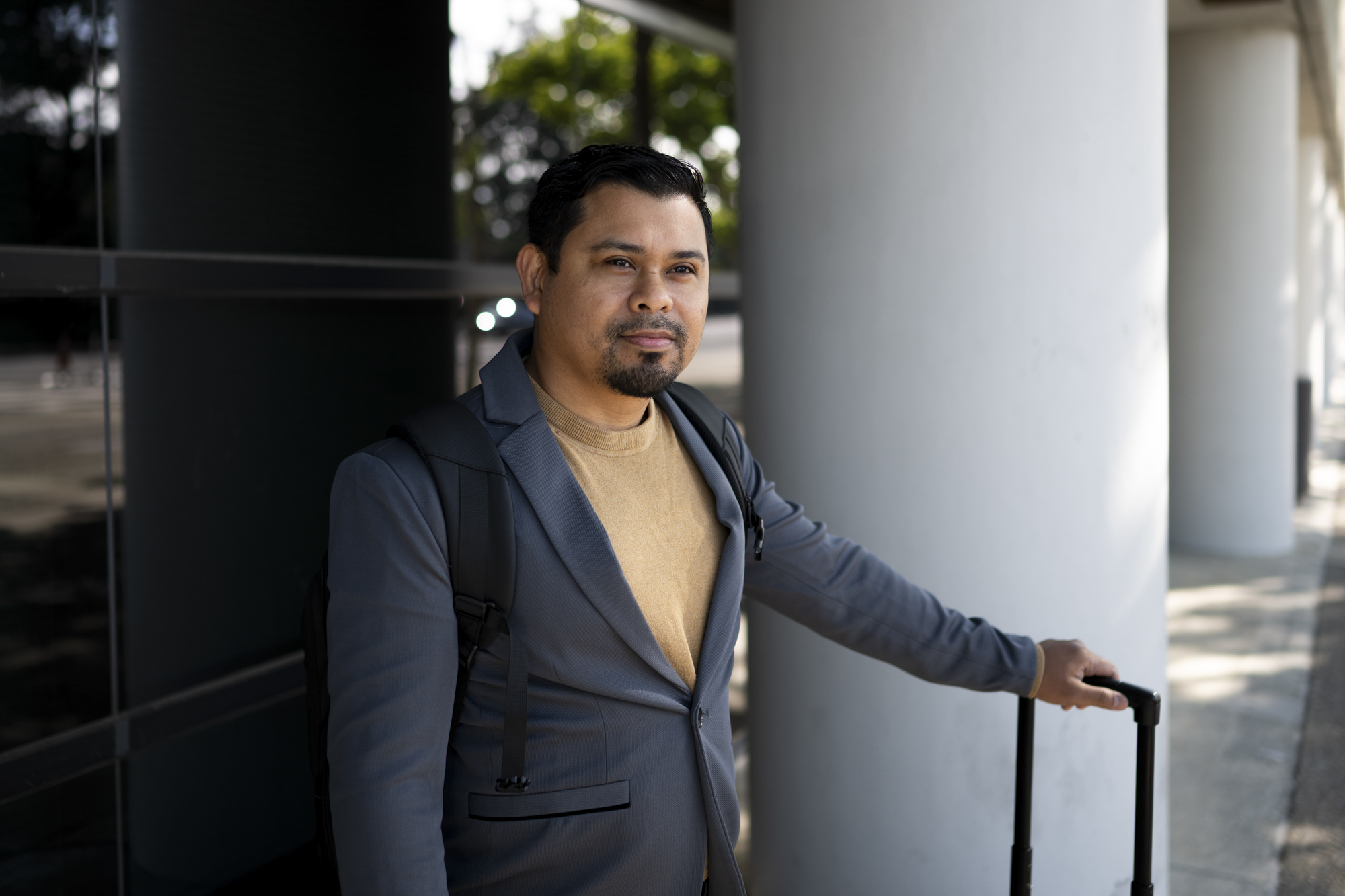
‘Like an Angel’: Meet the Helpers Working at Bay Area Immigration Court
Bay Area Leaders Say Visa, DACA Delays Threaten Tech Workforce
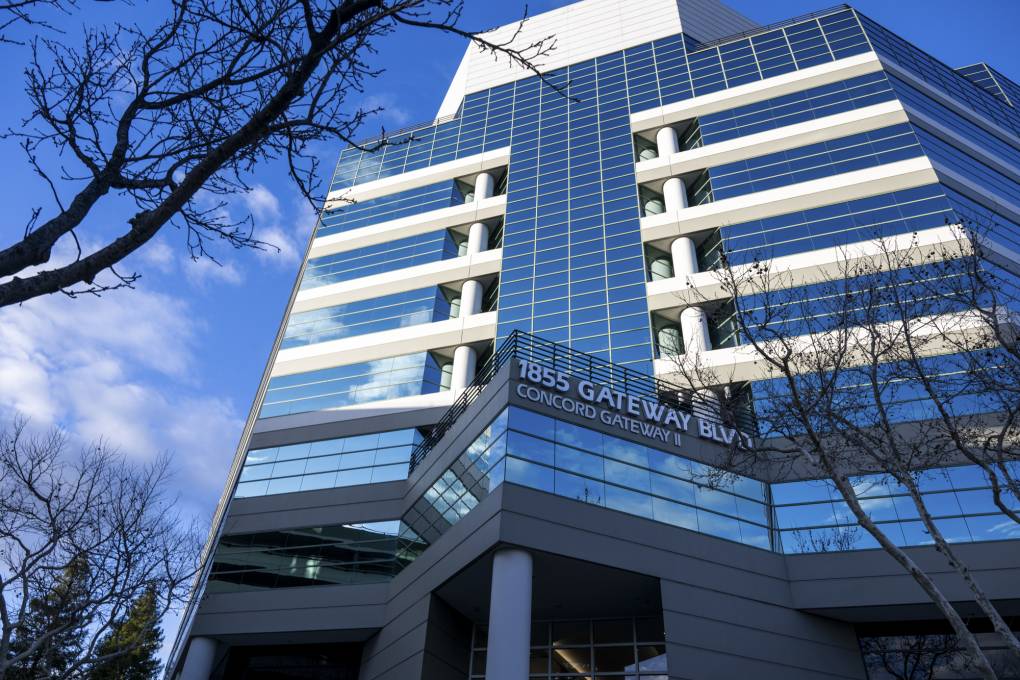
Immigration Courts Are Using a New Tactic to Speed Up Deportations
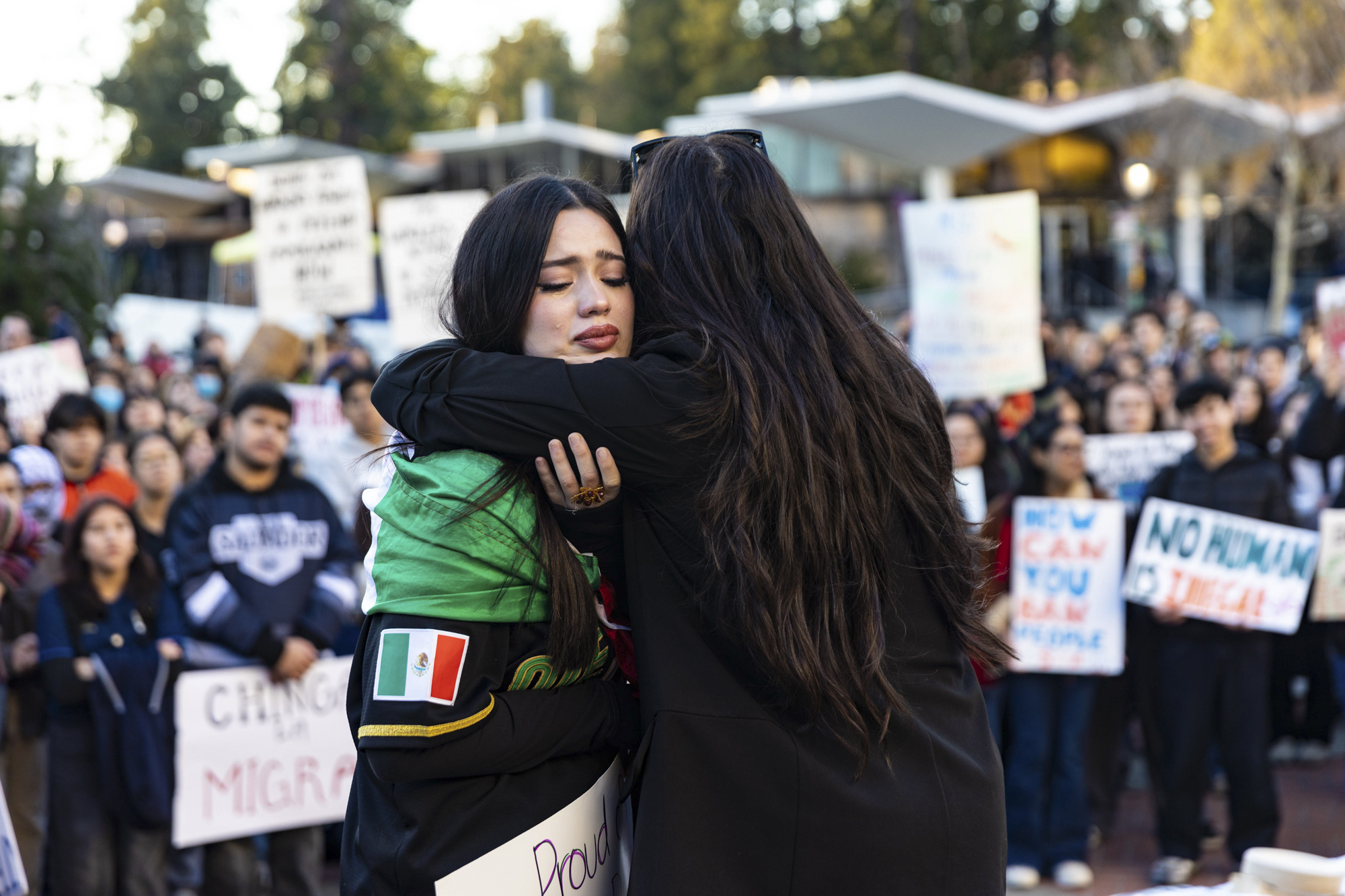
Bay Area Democrats Demand Answers on DACA Renewal Backlog
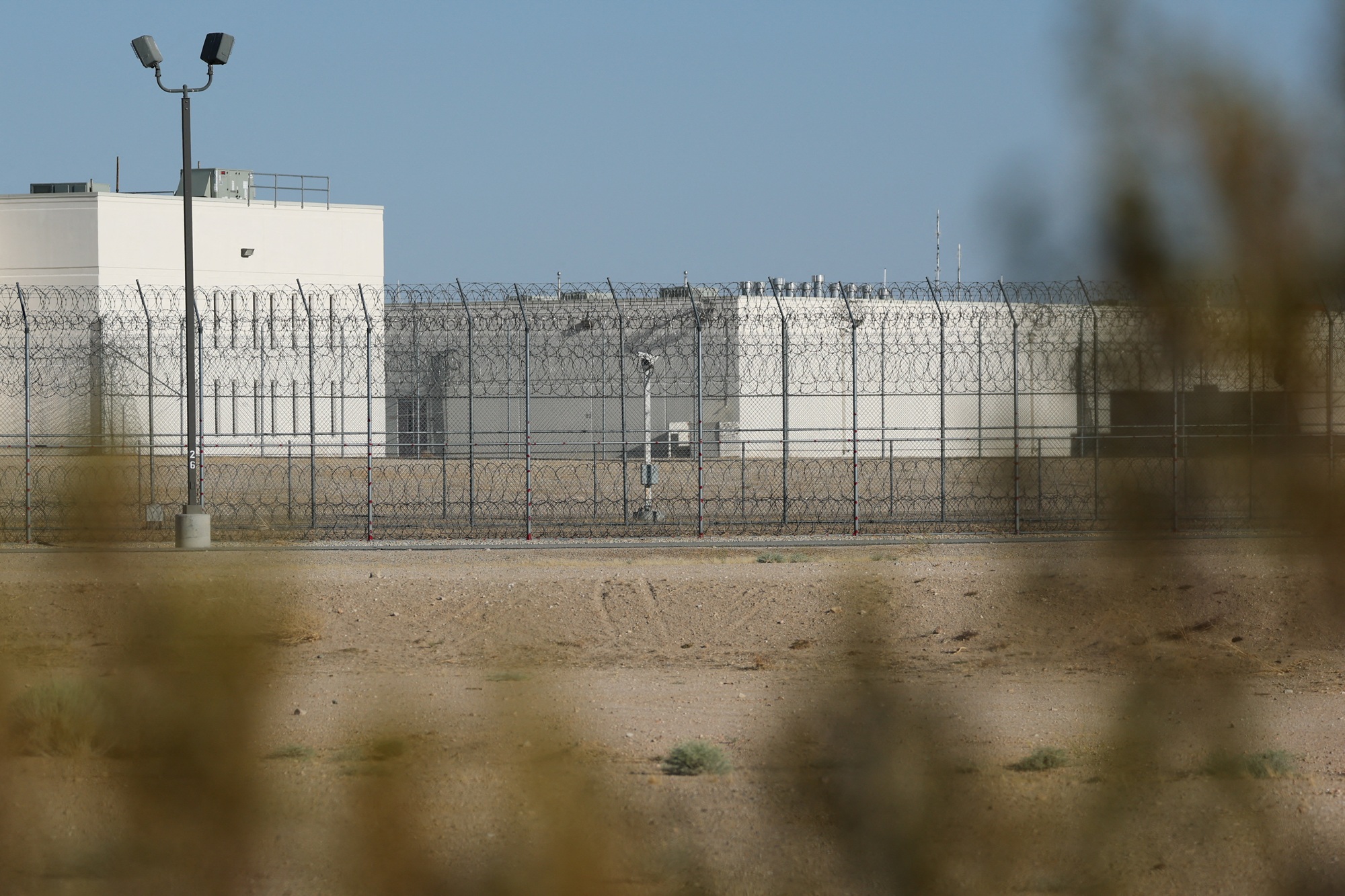
6 People Have Died in California ICE Detention Centers as Trump Deportations Soared
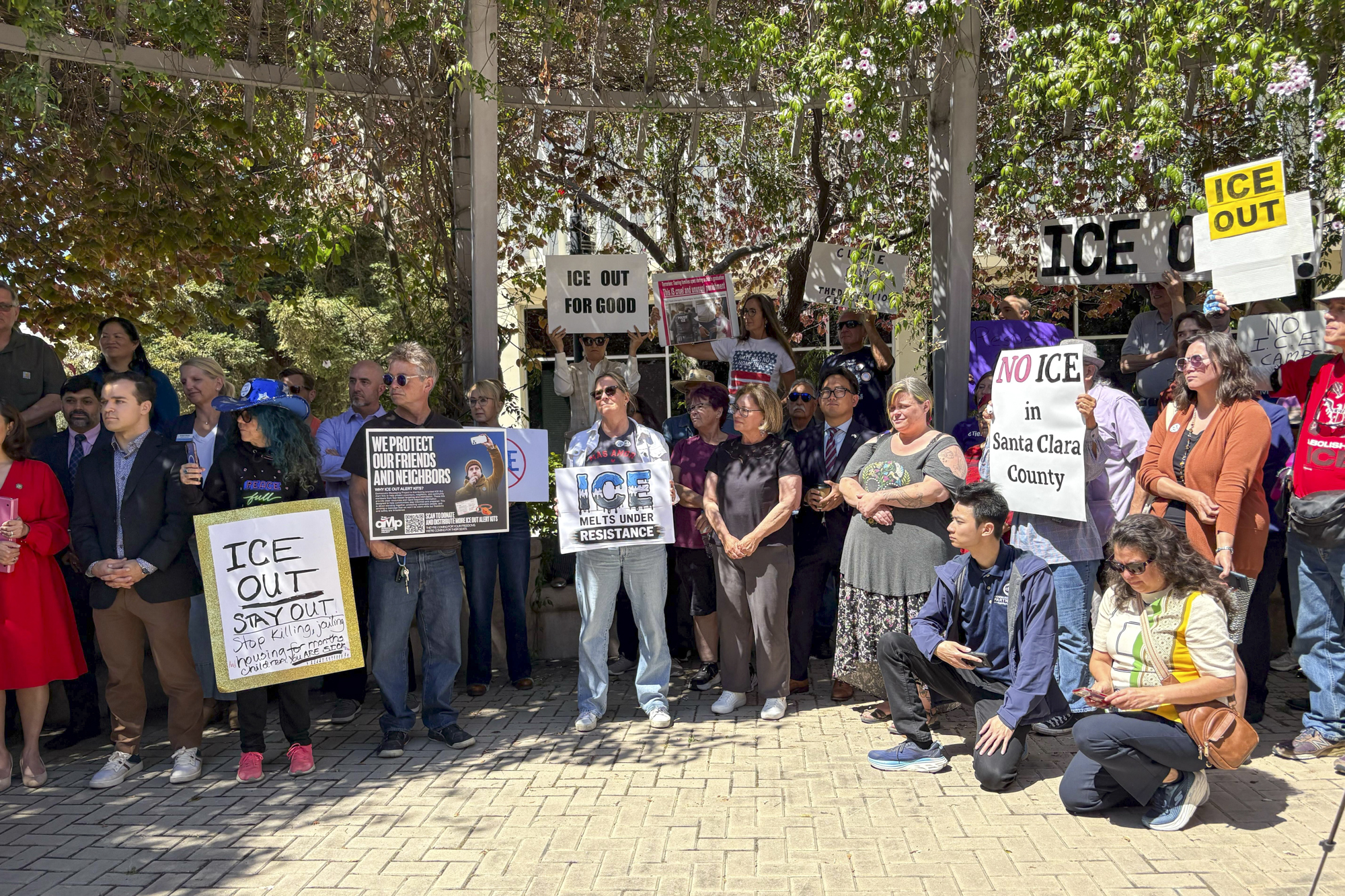
Santa Clara County Leaders Say They’ll Fight Planned ICE Facility in Gilroy
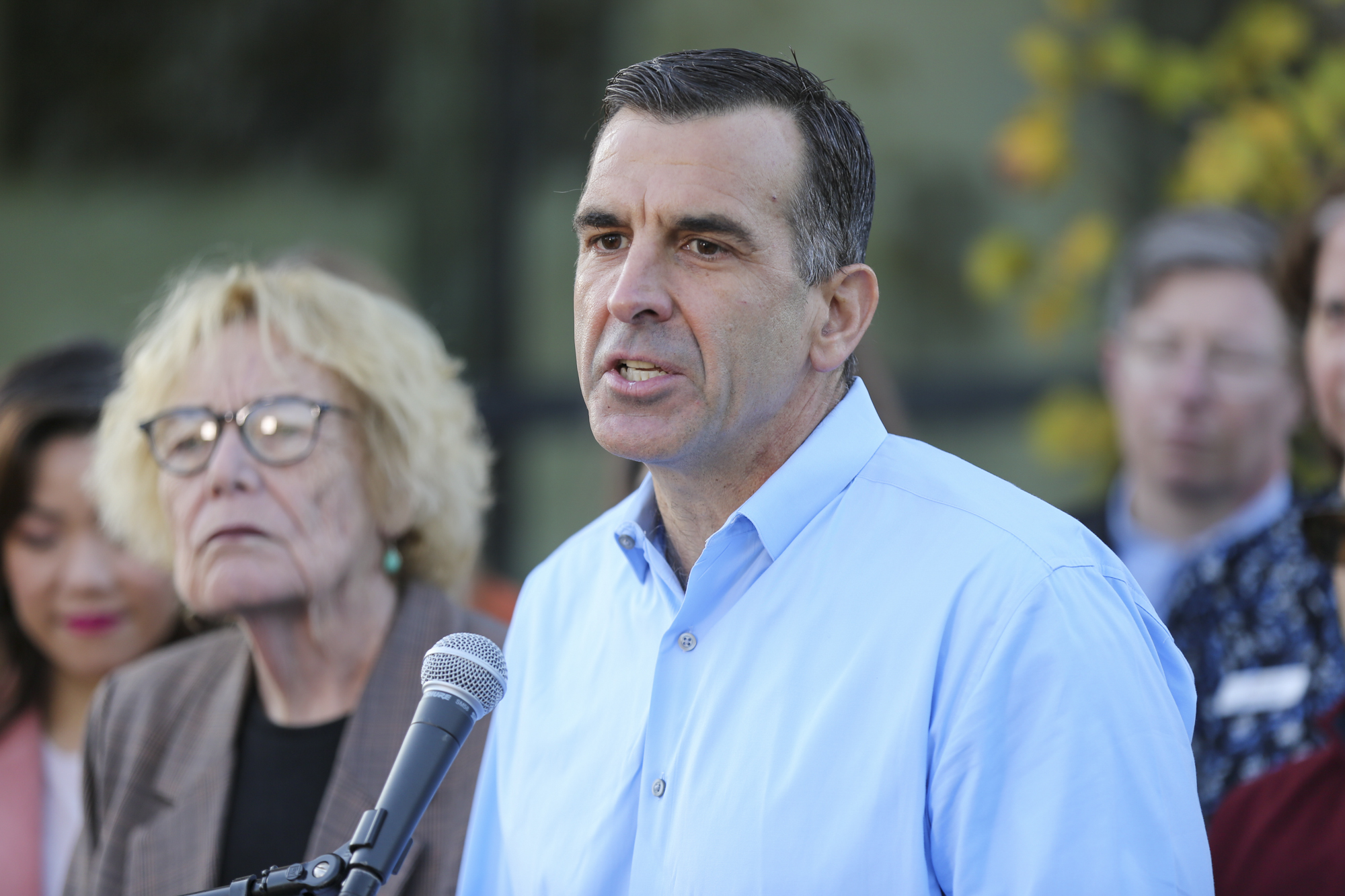
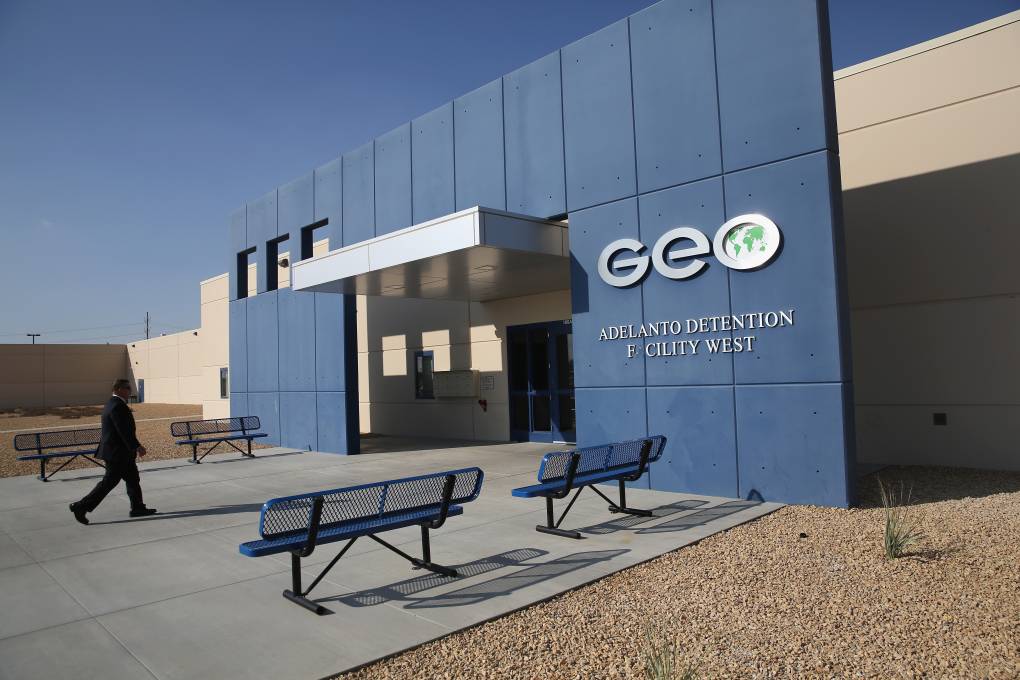
California Lawmakers Raise Alarms After Private Prison Official Named Acting ICE Chief
Chinese Laundrymen Won Equal Protections for All. San Francisco Wants to Tell Their Story
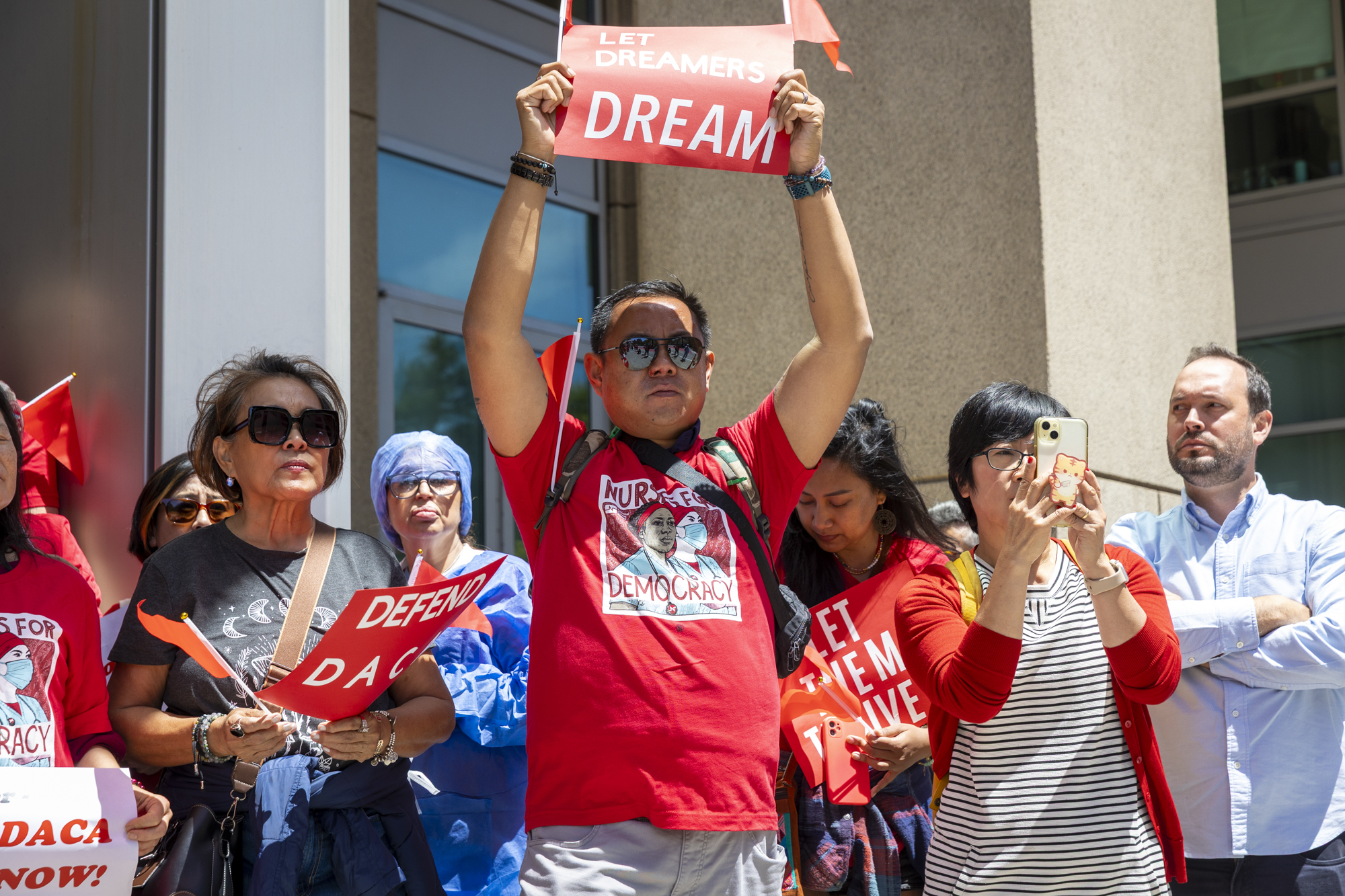
San Francisco Nurses Fight for Kaiser Employee Terminated Over DACA Status
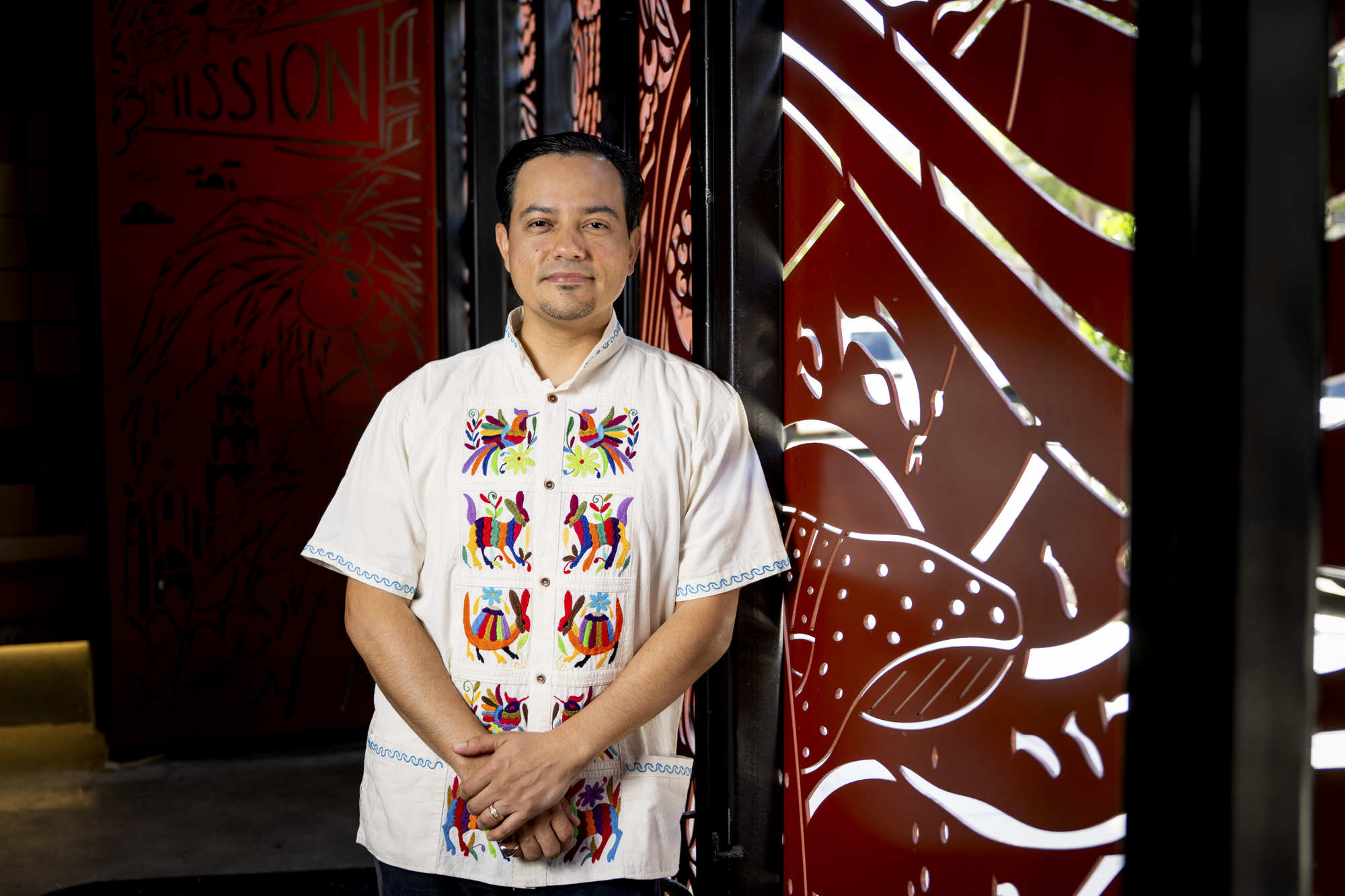
Carnaval San Francisco Turns Music, Memory and Resistance Into Celebration
Funding for KQED immigration coverage is provided by The California Endowment.
Player sponsored by
window.__IS_SSR__=true
window.__INITIAL_STATE__={
"attachmentsReducer": {
"audio_0": {
"type": "attachments",
"id": "audio_0",
"imgSizes": {
"kqedFullSize": {
"file": "https://ww2.kqed.org/news/wp-content/themes/KQED-unified/img/audio_bgs/background0.jpg"
}
}
},
"audio_1": {
"type": "attachments",
"id": "audio_1",
"imgSizes": {
"kqedFullSize": {
"file": "https://ww2.kqed.org/news/wp-content/themes/KQED-unified/img/audio_bgs/background1.jpg"
}
}
},
"audio_2": {
"type": "attachments",
"id": "audio_2",
"imgSizes": {
"kqedFullSize": {
"file": "https://ww2.kqed.org/news/wp-content/themes/KQED-unified/img/audio_bgs/background2.jpg"
}
}
},
"audio_3": {
"type": "attachments",
"id": "audio_3",
"imgSizes": {
"kqedFullSize": {
"file": "https://ww2.kqed.org/news/wp-content/themes/KQED-unified/img/audio_bgs/background3.jpg"
}
}
},
"audio_4": {
"type": "attachments",
"id": "audio_4",
"imgSizes": {
"kqedFullSize": {
"file": "https://ww2.kqed.org/news/wp-content/themes/KQED-unified/img/audio_bgs/background4.jpg"
}
}
},
"placeholder": {
"type": "attachments",
"id": "placeholder",
"imgSizes": {
"thumbnail": {
"file": "https://cdn.kqed.org/wp-content/uploads/2024/12/KQED-Default-Image-816638274-2000x1333-1-160x107.jpg",
"width": 160,
"height": 107,
"mimeType": "image/jpeg"
},
"medium": {
"file": "https://cdn.kqed.org/wp-content/uploads/2024/12/KQED-Default-Image-816638274-2000x1333-1-800x533.jpg",
"width": 800,
"height": 533,
"mimeType": "image/jpeg"
},
"medium_large": {
"file": "https://cdn.kqed.org/wp-content/uploads/2024/12/KQED-Default-Image-816638274-2000x1333-1-768x512.jpg",
"width": 768,
"height": 512,
"mimeType": "image/jpeg"
},
"large": {
"file": "https://cdn.kqed.org/wp-content/uploads/2024/12/KQED-Default-Image-816638274-2000x1333-1-1020x680.jpg",
"width": 1020,
"height": 680,
"mimeType": "image/jpeg"
},
"1536x1536": {
"file": "https://cdn.kqed.org/wp-content/uploads/2024/12/KQED-Default-Image-816638274-2000x1333-1-1536x1024.jpg",
"width": 1536,
"height": 1024,
"mimeType": "image/jpeg"
},
"fd-lrg": {
"file": "https://cdn.kqed.org/wp-content/uploads/2024/12/KQED-Default-Image-816638274-2000x1333-1-1536x1024.jpg",
"width": 1536,
"height": 1024,
"mimeType": "image/jpeg"
},
"fd-med": {
"file": "https://cdn.kqed.org/wp-content/uploads/2024/12/KQED-Default-Image-816638274-2000x1333-1-1020x680.jpg",
"width": 1020,
"height": 680,
"mimeType": "image/jpeg"
},
"fd-sm": {
"file": "https://cdn.kqed.org/wp-content/uploads/2024/12/KQED-Default-Image-816638274-2000x1333-1-800x533.jpg",
"width": 800,
"height": 533,
"mimeType": "image/jpeg"
},
"post-thumbnail": {
"file": "https://cdn.kqed.org/wp-content/uploads/2024/12/KQED-Default-Image-816638274-2000x1333-1-672x372.jpg",
"width": 672,
"height": 372,
"mimeType": "image/jpeg"
},
"twentyfourteen-full-width": {
"file": "https://cdn.kqed.org/wp-content/uploads/2024/12/KQED-Default-Image-816638274-2000x1333-1-1038x576.jpg",
"width": 1038,
"height": 576,
"mimeType": "image/jpeg"
},
"xxsmall": {
"file": "https://cdn.kqed.org/wp-content/uploads/2024/12/KQED-Default-Image-816638274-2000x1333-1-160x107.jpg",
"width": 160,
"height": 107,
"mimeType": "image/jpeg"
},
"xsmall": {
"file": "https://cdn.kqed.org/wp-content/uploads/2024/12/KQED-Default-Image-816638274-2000x1333-1-672x372.jpg",
"width": 672,
"height": 372,
"mimeType": "image/jpeg"
},
"small": {
"file": "https://cdn.kqed.org/wp-content/uploads/2024/12/KQED-Default-Image-816638274-2000x1333-1-672x372.jpg",
"width": 672,
"height": 372,
"mimeType": "image/jpeg"
},
"xlarge": {
"file": "https://cdn.kqed.org/wp-content/uploads/2024/12/KQED-Default-Image-816638274-2000x1333-1-1020x680.jpg",
"width": 1020,
"height": 680,
"mimeType": "image/jpeg"
},
"full-width": {
"file": "https://cdn.kqed.org/wp-content/uploads/2024/12/KQED-Default-Image-816638274-2000x1333-1-1920x1280.jpg",
"width": 1920,
"height": 1280,
"mimeType": "image/jpeg"
},
"guest-author-32": {
"file": "https://cdn.kqed.org/wp-content/uploads/2025/01/KQED-Default-Image-816638274-1333x1333-1-160x160.jpg",
"width": 32,
"height": 32,
"mimeType": "image/jpeg"
},
"guest-author-50": {
"file": "https://cdn.kqed.org/wp-content/uploads/2025/01/KQED-Default-Image-816638274-1333x1333-1-160x160.jpg",
"width": 50,
"height": 50,
"mimeType": "image/jpeg"
},
"guest-author-64": {
"file": "https://cdn.kqed.org/wp-content/uploads/2025/01/KQED-Default-Image-816638274-1333x1333-1-160x160.jpg",
"width": 64,
"height": 64,
"mimeType": "image/jpeg"
},
"guest-author-96": {
"file": "https://cdn.kqed.org/wp-content/uploads/2025/01/KQED-Default-Image-816638274-1333x1333-1-160x160.jpg",
"width": 96,
"height": 96,
"mimeType": "image/jpeg"
},
"guest-author-128": {
"file": "https://cdn.kqed.org/wp-content/uploads/2025/01/KQED-Default-Image-816638274-1333x1333-1-160x160.jpg",
"width": 128,
"height": 128,
"mimeType": "image/jpeg"
},
"detail": {
"file": "https://cdn.kqed.org/wp-content/uploads/2025/01/KQED-Default-Image-816638274-1333x1333-1-160x160.jpg",
"width": 160,
"height": 160,
"mimeType": "image/jpeg"
},
"kqedFullSize": {
"file": "https://cdn.kqed.org/wp-content/uploads/2024/12/KQED-Default-Image-816638274-2000x1333-1.jpg",
"width": 2000,
"height": 1333
}
}
},
"news_12084721": {
"type": "attachments",
"id": "news_12084721",
"meta": {
"index": "attachments_1716263798",
"site": "news",
"id": "12084721",
"found": true
},
"title": "260507-IMMIGRATIONCOURTVOLUNTEERS-02-BL-KQED",
"publishDate": 1779393694,
"status": "inherit",
"parent": 0,
"modified": 1780178250,
"caption": "Sergio Jaime Lopez, community defense program manager for the SAFE Center, outside the Concord immigration court on May 7, 2026. Jaime helps people in deportation proceedings navigate the court and connect with resources and legal representation.",
"credit": "Beth LaBerge/KQED",
"altTag": null,
"description": null,
"imgSizes": {
"thumbnail": {
"file": "https://cdn.kqed.org/wp-content/uploads/sites/10/2026/05/260507-IMMIGRATIONCOURTVOLUNTEERS-02-BL-KQED-160x107.jpg",
"width": 160,
"height": 107,
"mimeType": "image/jpeg"
},
"1536x1536": {
"file": "https://cdn.kqed.org/wp-content/uploads/sites/10/2026/05/260507-IMMIGRATIONCOURTVOLUNTEERS-02-BL-KQED-1536x1024.jpg",
"width": 1536,
"height": 1024,
"mimeType": "image/jpeg"
},
"post-thumbnail": {
"file": "https://cdn.kqed.org/wp-content/uploads/sites/10/2026/05/260507-IMMIGRATIONCOURTVOLUNTEERS-02-BL-KQED-672x372.jpg",
"width": 672,
"height": 372,
"mimeType": "image/jpeg"
},
"twentyfourteen-full-width": {
"file": "https://cdn.kqed.org/wp-content/uploads/sites/10/2026/05/260507-IMMIGRATIONCOURTVOLUNTEERS-02-BL-KQED-1038x576.jpg",
"width": 1038,
"height": 576,
"mimeType": "image/jpeg"
},
"npr-cds-wide": {
"file": "https://cdn.kqed.org/wp-content/uploads/sites/10/2026/05/260507-IMMIGRATIONCOURTVOLUNTEERS-02-BL-KQED-1200x675.jpg",
"width": 1200,
"height": 675,
"mimeType": "image/jpeg"
},
"npr-cds-square": {
"file": "https://cdn.kqed.org/wp-content/uploads/sites/10/2026/05/260507-IMMIGRATIONCOURTVOLUNTEERS-02-BL-KQED-600x600.jpg",
"width": 600,
"height": 600,
"mimeType": "image/jpeg"
},
"kqedFullSize": {
"file": "https://cdn.kqed.org/wp-content/uploads/sites/10/2026/05/260507-IMMIGRATIONCOURTVOLUNTEERS-02-BL-KQED.jpg",
"width": 2000,
"height": 1333
}
},
"isLoading": false,
"fetchFailed": false
},
"news_12065389": {
"type": "attachments",
"id": "news_12065389",
"meta": {
"index": "attachments_1716263798",
"site": "news",
"id": "12065389",
"found": true
},
"title": "251124-SJHUDCUTS-JG-07-KQED",
"publishDate": 1764111372,
"status": "inherit",
"parent": 12065271,
"modified": 1764112049,
"caption": "Rep. Sam Liccardo speaks during a press conference in San José about changes to a federal housing program’s funding by the Trump administration on Nov. 24, 2025.",
"credit": "Joseph Geha/KQED",
"altTag": null,
"description": null,
"imgSizes": {
"thumbnail": {
"file": "https://cdn.kqed.org/wp-content/uploads/sites/10/2025/11/251124-SJHUDCUTS-JG-07-KQED-160x107.jpg",
"width": 160,
"height": 107,
"mimeType": "image/jpeg"
},
"1536x1536": {
"file": "https://cdn.kqed.org/wp-content/uploads/sites/10/2025/11/251124-SJHUDCUTS-JG-07-KQED-1536x1024.jpg",
"width": 1536,
"height": 1024,
"mimeType": "image/jpeg"
},
"post-thumbnail": {
"file": "https://cdn.kqed.org/wp-content/uploads/sites/10/2025/11/251124-SJHUDCUTS-JG-07-KQED-672x372.jpg",
"width": 672,
"height": 372,
"mimeType": "image/jpeg"
},
"twentyfourteen-full-width": {
"file": "https://cdn.kqed.org/wp-content/uploads/sites/10/2025/11/251124-SJHUDCUTS-JG-07-KQED-1038x576.jpg",
"width": 1038,
"height": 576,
"mimeType": "image/jpeg"
},
"npr-cds-wide": {
"file": "https://cdn.kqed.org/wp-content/uploads/sites/10/2025/11/251124-SJHUDCUTS-JG-07-KQED-1200x675.jpg",
"width": 1200,
"height": 675,
"mimeType": "image/jpeg"
},
"kqedFullSize": {
"file": "https://cdn.kqed.org/wp-content/uploads/sites/10/2025/11/251124-SJHUDCUTS-JG-07-KQED.jpg",
"width": 2000,
"height": 1333
}
},
"isLoading": false,
"fetchFailed": false
},
"news_11975030": {
"type": "attachments",
"id": "news_11975030",
"meta": {
"index": "attachments_1716263798",
"site": "news",
"id": "11975030",
"found": true
},
"parent": 11975904,
"imgSizes": {
"twentyfourteen-full-width": {
"file": "https://cdn.kqed.org/wp-content/uploads/sites/10/2024/02/240206-IMMIGRATIONCOURT-26-BL-KQED-1038x576.jpg",
"width": 1038,
"mimeType": "image/jpeg",
"height": 576
},
"thumbnail": {
"file": "https://cdn.kqed.org/wp-content/uploads/sites/10/2024/02/240206-IMMIGRATIONCOURT-26-BL-KQED-160x107.jpg",
"width": 160,
"mimeType": "image/jpeg",
"height": 107
},
"post-thumbnail": {
"file": "https://cdn.kqed.org/wp-content/uploads/sites/10/2024/02/240206-IMMIGRATIONCOURT-26-BL-KQED-672x372.jpg",
"width": 672,
"mimeType": "image/jpeg",
"height": 372
},
"kqedFullSize": {
"file": "https://cdn.kqed.org/wp-content/uploads/sites/10/2024/02/240206-IMMIGRATIONCOURT-26-BL-KQED.jpg",
"width": 2000,
"height": 1333
},
"large": {
"file": "https://cdn.kqed.org/wp-content/uploads/sites/10/2024/02/240206-IMMIGRATIONCOURT-26-BL-KQED-1020x680.jpg",
"width": 1020,
"mimeType": "image/jpeg",
"height": 680
},
"1536x1536": {
"file": "https://cdn.kqed.org/wp-content/uploads/sites/10/2024/02/240206-IMMIGRATIONCOURT-26-BL-KQED-1536x1024.jpg",
"width": 1536,
"mimeType": "image/jpeg",
"height": 1024
},
"full-width": {
"file": "https://cdn.kqed.org/wp-content/uploads/sites/10/2024/02/240206-IMMIGRATIONCOURT-26-BL-KQED-1920x1280.jpg",
"width": 1920,
"mimeType": "image/jpeg",
"height": 1280
},
"medium": {
"file": "https://cdn.kqed.org/wp-content/uploads/sites/10/2024/02/240206-IMMIGRATIONCOURT-26-BL-KQED-800x533.jpg",
"width": 800,
"mimeType": "image/jpeg",
"height": 533
}
},
"publishDate": 1707340047,
"modified": 1707941989,
"caption": "The site of a new immigration court at 1855 Concord Gateway in Concord on Feb. 6, 2024.",
"description": null,
"title": "240206-IMMIGRATIONCOURT-26-BL-KQED",
"credit": "Beth LaBerge/KQED",
"status": "inherit",
"altTag": "A view looking up at a building.",
"isLoading": false,
"fetchFailed": false
},
"news_12067190": {
"type": "attachments",
"id": "news_12067190",
"meta": {
"index": "attachments_1716263798",
"site": "news",
"id": "12067190",
"found": true
},
"title": "20250129_UCBERKELEYRALLY_GC-44-KQED",
"publishDate": 1765829585,
"status": "inherit",
"parent": 12067662,
"modified": 1766421719,
"caption": "From left, second-year student Nicole Nuñez Rivera gets emotional and hugs DACA recipient Ana Rivera, right, during a rally against the Trump administration’s promises to carry out mass deportations, in Berkeley on Jan. 29, 2025.",
"credit": "Gina Castro/KQED",
"altTag": null,
"description": null,
"imgSizes": {
"thumbnail": {
"file": "https://cdn.kqed.org/wp-content/uploads/sites/10/2025/12/20250129_UCBERKELEYRALLY_GC-44-KQED-160x107.jpg",
"width": 160,
"height": 107,
"mimeType": "image/jpeg"
},
"1536x1536": {
"file": "https://cdn.kqed.org/wp-content/uploads/sites/10/2025/12/20250129_UCBERKELEYRALLY_GC-44-KQED-1536x1024.jpg",
"width": 1536,
"height": 1024,
"mimeType": "image/jpeg"
},
"post-thumbnail": {
"file": "https://cdn.kqed.org/wp-content/uploads/sites/10/2025/12/20250129_UCBERKELEYRALLY_GC-44-KQED-672x372.jpg",
"width": 672,
"height": 372,
"mimeType": "image/jpeg"
},
"twentyfourteen-full-width": {
"file": "https://cdn.kqed.org/wp-content/uploads/sites/10/2025/12/20250129_UCBERKELEYRALLY_GC-44-KQED-1038x576.jpg",
"width": 1038,
"height": 576,
"mimeType": "image/jpeg"
},
"npr-cds-wide": {
"file": "https://cdn.kqed.org/wp-content/uploads/sites/10/2025/12/20250129_UCBERKELEYRALLY_GC-44-KQED-1200x675.jpg",
"width": 1200,
"height": 675,
"mimeType": "image/jpeg"
},
"kqedFullSize": {
"file": "https://cdn.kqed.org/wp-content/uploads/sites/10/2025/12/20250129_UCBERKELEYRALLY_GC-44-KQED.jpg",
"width": 2000,
"height": 1333
}
},
"isLoading": false,
"fetchFailed": false
},
"news_12054567": {
"type": "attachments",
"id": "news_12054567",
"meta": {
"index": "attachments_1716263798",
"site": "news",
"id": "12054567",
"found": true
},
"title": "US-POLITICS-IMMIGRATION",
"publishDate": 1756941444,
"status": "inherit",
"parent": 12054544,
"modified": 1769006278,
"caption": "The CoreCivic, Inc. California City Immigration Processing Center stands in the Kern County desert on July 10, 2025.",
"credit": "Patrick T. Fallon/AFP via Getty Images",
"altTag": null,
"description": null,
"imgSizes": {
"thumbnail": {
"file": "https://cdn.kqed.org/wp-content/uploads/sites/10/2025/09/KernCountyICEDetentionGetty-160x107.jpg",
"width": 160,
"height": 107,
"mimeType": "image/jpeg"
},
"1536x1536": {
"file": "https://cdn.kqed.org/wp-content/uploads/sites/10/2025/09/KernCountyICEDetentionGetty-1536x1024.jpg",
"width": 1536,
"height": 1024,
"mimeType": "image/jpeg"
},
"post-thumbnail": {
"file": "https://cdn.kqed.org/wp-content/uploads/sites/10/2025/09/KernCountyICEDetentionGetty-672x372.jpg",
"width": 672,
"height": 372,
"mimeType": "image/jpeg"
},
"twentyfourteen-full-width": {
"file": "https://cdn.kqed.org/wp-content/uploads/sites/10/2025/09/KernCountyICEDetentionGetty-1038x576.jpg",
"width": 1038,
"height": 576,
"mimeType": "image/jpeg"
},
"kqedFullSize": {
"file": "https://cdn.kqed.org/wp-content/uploads/sites/10/2025/09/KernCountyICEDetentionGetty.jpg",
"width": 2000,
"height": 1333
}
},
"isLoading": false,
"fetchFailed": false
},
"news_12083769": {
"type": "attachments",
"id": "news_12083769",
"meta": {
"index": "attachments_1716263798",
"site": "news",
"id": "12083769",
"found": true
},
"title": "260514-GILROY ICE-ADE-02-KQED",
"publishDate": 1778798130,
"status": "inherit",
"parent": 0,
"modified": 1778798722,
"caption": "Supporters attend a rally in San José opposing a planned immigration detention center in Gilroy on May 14, 2026.",
"credit": "Azul Dahlstrom-Eckman/KQED",
"altTag": null,
"description": null,
"imgSizes": {
"thumbnail": {
"file": "https://cdn.kqed.org/wp-content/uploads/sites/10/2026/05/260514-GILROY-ICE-ADE-02-KQED-160x107.jpg",
"width": 160,
"height": 107,
"mimeType": "image/jpeg"
},
"1536x1536": {
"file": "https://cdn.kqed.org/wp-content/uploads/sites/10/2026/05/260514-GILROY-ICE-ADE-02-KQED-1536x1024.jpg",
"width": 1536,
"height": 1024,
"mimeType": "image/jpeg"
},
"post-thumbnail": {
"file": "https://cdn.kqed.org/wp-content/uploads/sites/10/2026/05/260514-GILROY-ICE-ADE-02-KQED-672x372.jpg",
"width": 672,
"height": 372,
"mimeType": "image/jpeg"
},
"twentyfourteen-full-width": {
"file": "https://cdn.kqed.org/wp-content/uploads/sites/10/2026/05/260514-GILROY-ICE-ADE-02-KQED-1038x576.jpg",
"width": 1038,
"height": 576,
"mimeType": "image/jpeg"
},
"npr-cds-wide": {
"file": "https://cdn.kqed.org/wp-content/uploads/sites/10/2026/05/260514-GILROY-ICE-ADE-02-KQED-1200x675.jpg",
"width": 1200,
"height": 675,
"mimeType": "image/jpeg"
},
"npr-cds-square": {
"file": "https://cdn.kqed.org/wp-content/uploads/sites/10/2026/05/260514-GILROY-ICE-ADE-02-KQED-600x600.jpg",
"width": 600,
"height": 600,
"mimeType": "image/jpeg"
},
"kqedFullSize": {
"file": "https://cdn.kqed.org/wp-content/uploads/sites/10/2026/05/260514-GILROY-ICE-ADE-02-KQED.jpg",
"width": 2000,
"height": 1333
}
},
"isLoading": false,
"fetchFailed": false
},
"news_11891235": {
"type": "attachments",
"id": "news_11891235",
"meta": {
"index": "attachments_1716263798",
"site": "news",
"id": "11891235",
"found": true
},
"title": "ICE Holds Immigrants At Adelanto Detention Facility",
"publishDate": 1633541835,
"status": "inherit",
"parent": 11891221,
"modified": 1633551042,
"caption": "This U.S. immigration processing center in Adelanto, California, is operated by GEO Group, a Florida-based company specializing in privatized corrections.",
"credit": "John Moore/Getty Images",
"altTag": "On a modern, low-slung building with no windows, a big sign reading 'GEO' hangs on an exterior wall.",
"description": "Field office director Dave Marin walks into the Adelanto Detention Facility on November 15, 2013 in Adelanto, California. The facility, the largest and newest Immigration and Customs Enforcement (ICE), detention center in California, houses an average of 1,100 immigrants in custody pending a decision in their immigration cases or awaiting deportation.",
"imgSizes": {
"medium": {
"file": "https://cdn.kqed.org/wp-content/uploads/sites/10/2021/10/GettyImages-450371215-800x533.jpg",
"width": 800,
"height": 533,
"mimeType": "image/jpeg"
},
"large": {
"file": "https://cdn.kqed.org/wp-content/uploads/sites/10/2021/10/GettyImages-450371215-1020x680.jpg",
"width": 1020,
"height": 680,
"mimeType": "image/jpeg"
},
"thumbnail": {
"file": "https://cdn.kqed.org/wp-content/uploads/sites/10/2021/10/GettyImages-450371215-160x107.jpg",
"width": 160,
"height": 107,
"mimeType": "image/jpeg"
},
"1536x1536": {
"file": "https://cdn.kqed.org/wp-content/uploads/sites/10/2021/10/GettyImages-450371215-1536x1024.jpg",
"width": 1536,
"height": 1024,
"mimeType": "image/jpeg"
},
"2048x2048": {
"file": "https://cdn.kqed.org/wp-content/uploads/sites/10/2021/10/GettyImages-450371215-2048x1365.jpg",
"width": 2048,
"height": 1365,
"mimeType": "image/jpeg"
},
"post-thumbnail": {
"file": "https://cdn.kqed.org/wp-content/uploads/sites/10/2021/10/GettyImages-450371215-672x372.jpg",
"width": 672,
"height": 372,
"mimeType": "image/jpeg"
},
"twentyfourteen-full-width": {
"file": "https://cdn.kqed.org/wp-content/uploads/sites/10/2021/10/GettyImages-450371215-1038x576.jpg",
"width": 1038,
"height": 576,
"mimeType": "image/jpeg"
},
"full-width": {
"file": "https://cdn.kqed.org/wp-content/uploads/sites/10/2021/10/GettyImages-450371215-1920x1280.jpg",
"width": 1920,
"height": 1280,
"mimeType": "image/jpeg"
},
"kqedFullSize": {
"file": "https://cdn.kqed.org/wp-content/uploads/sites/10/2021/10/GettyImages-450371215-scaled-e1769711263847.jpg",
"width": 2000,
"height": 1334
}
},
"isLoading": false,
"fetchFailed": false
},
"news_12083334": {
"type": "attachments",
"id": "news_12083334",
"meta": {
"index": "attachments_1716263798",
"site": "news",
"id": "12083334",
"found": true
},
"title": "20260511-YICKWOCOMMEMORATION-JY-08-KQED",
"publishDate": 1778615577,
"status": "inherit",
"parent": 0,
"modified": 1778618421,
"caption": "Yick Wo Alternative Elementary School student Lizzy Alexander, center, hugs her mom Ranee Kwong as they attend a press conference at the parking lot on Third and Harrison streets in San Francisco on Monday, May 11, 2026. Officials and community members gathered to commemorate the 140th anniversary of the landmark Supreme Court case Yick Wo v. Hopkins, which established that the 14th Amendment applied to all, even noncitizens.",
"credit": "Juliana Yamada for KQED",
"altTag": null,
"description": null,
"imgSizes": {
"thumbnail": {
"file": "https://cdn.kqed.org/wp-content/uploads/sites/10/2026/05/20260511-YICKWOCOMMEMORATION-JY-08-KQED-160x107.jpg",
"width": 160,
"height": 107,
"mimeType": "image/jpeg"
},
"1536x1536": {
"file": "https://cdn.kqed.org/wp-content/uploads/sites/10/2026/05/20260511-YICKWOCOMMEMORATION-JY-08-KQED-1536x1024.jpg",
"width": 1536,
"height": 1024,
"mimeType": "image/jpeg"
},
"post-thumbnail": {
"file": "https://cdn.kqed.org/wp-content/uploads/sites/10/2026/05/20260511-YICKWOCOMMEMORATION-JY-08-KQED-672x372.jpg",
"width": 672,
"height": 372,
"mimeType": "image/jpeg"
},
"twentyfourteen-full-width": {
"file": "https://cdn.kqed.org/wp-content/uploads/sites/10/2026/05/20260511-YICKWOCOMMEMORATION-JY-08-KQED-1038x576.jpg",
"width": 1038,
"height": 576,
"mimeType": "image/jpeg"
},
"npr-cds-wide": {
"file": "https://cdn.kqed.org/wp-content/uploads/sites/10/2026/05/20260511-YICKWOCOMMEMORATION-JY-08-KQED-1200x675.jpg",
"width": 1200,
"height": 675,
"mimeType": "image/jpeg"
},
"npr-cds-square": {
"file": "https://cdn.kqed.org/wp-content/uploads/sites/10/2026/05/20260511-YICKWOCOMMEMORATION-JY-08-KQED-600x600.jpg",
"width": 600,
"height": 600,
"mimeType": "image/jpeg"
},
"kqedFullSize": {
"file": "https://cdn.kqed.org/wp-content/uploads/sites/10/2026/05/20260511-YICKWOCOMMEMORATION-JY-08-KQED.jpg",
"width": 2000,
"height": 1333
}
},
"isLoading": false,
"fetchFailed": false
},
"news_12083228": {
"type": "attachments",
"id": "news_12083228",
"meta": {
"index": "attachments_1716263798",
"site": "news",
"id": "12083228",
"found": true
},
"title": "260511-KAISERDACA00192_TV-KQED",
"publishDate": 1778545168,
"status": "inherit",
"parent": 12085305,
"modified": 1779927344,
"caption": "Kevin Mann (center) rallies against Kaiser’s plans to terminate a DACA recipient registered nurse outside of Kaiser Permanente on Geary Street in San Francisco on May 11, 2026.",
"credit": "Tâm Vũ/KQED",
"altTag": null,
"description": null,
"imgSizes": {
"thumbnail": {
"file": "https://cdn.kqed.org/wp-content/uploads/sites/10/2026/05/260511-KAISERDACA00192_TV-KQED-160x107.jpg",
"width": 160,
"height": 107,
"mimeType": "image/jpeg"
},
"1536x1536": {
"file": "https://cdn.kqed.org/wp-content/uploads/sites/10/2026/05/260511-KAISERDACA00192_TV-KQED-1536x1024.jpg",
"width": 1536,
"height": 1024,
"mimeType": "image/jpeg"
},
"post-thumbnail": {
"file": "https://cdn.kqed.org/wp-content/uploads/sites/10/2026/05/260511-KAISERDACA00192_TV-KQED-672x372.jpg",
"width": 672,
"height": 372,
"mimeType": "image/jpeg"
},
"twentyfourteen-full-width": {
"file": "https://cdn.kqed.org/wp-content/uploads/sites/10/2026/05/260511-KAISERDACA00192_TV-KQED-1038x576.jpg",
"width": 1038,
"height": 576,
"mimeType": "image/jpeg"
},
"npr-cds-wide": {
"file": "https://cdn.kqed.org/wp-content/uploads/sites/10/2026/05/260511-KAISERDACA00192_TV-KQED-1200x675.jpg",
"width": 1200,
"height": 675,
"mimeType": "image/jpeg"
},
"npr-cds-square": {
"file": "https://cdn.kqed.org/wp-content/uploads/sites/10/2026/05/260511-KAISERDACA00192_TV-KQED-600x600.jpg",
"width": 600,
"height": 600,
"mimeType": "image/jpeg"
},
"kqedFullSize": {
"file": "https://cdn.kqed.org/wp-content/uploads/sites/10/2026/05/260511-KAISERDACA00192_TV-KQED.jpg",
"width": 2000,
"height": 1333
}
},
"isLoading": false,
"fetchFailed": false
},
"news_12083186": {
"type": "attachments",
"id": "news_12083186",
"meta": {
"index": "attachments_1716263798",
"site": "news",
"id": "12083186",
"found": true
},
"title": "260511-KONDAMAY-03-BL-KQED",
"publishDate": 1778535389,
"status": "inherit",
"parent": 0,
"modified": 1778535423,
"caption": "Rodrigo Duran, executive director of Carnaval San Francisco, at the organization’s offices in San Francisco’s Mission District on May 11, 2026.",
"credit": "Beth LaBerge/KQED",
"altTag": null,
"description": null,
"imgSizes": {
"thumbnail": {
"file": "https://cdn.kqed.org/wp-content/uploads/sites/10/2026/05/260511-KONDAMAY-03-BL-KQED-160x107.jpg",
"width": 160,
"height": 107,
"mimeType": "image/jpeg"
},
"1536x1536": {
"file": "https://cdn.kqed.org/wp-content/uploads/sites/10/2026/05/260511-KONDAMAY-03-BL-KQED-1536x1024.jpg",
"width": 1536,
"height": 1024,
"mimeType": "image/jpeg"
},
"post-thumbnail": {
"file": "https://cdn.kqed.org/wp-content/uploads/sites/10/2026/05/260511-KONDAMAY-03-BL-KQED-672x372.jpg",
"width": 672,
"height": 372,
"mimeType": "image/jpeg"
},
"twentyfourteen-full-width": {
"file": "https://cdn.kqed.org/wp-content/uploads/sites/10/2026/05/260511-KONDAMAY-03-BL-KQED-1038x576.jpg",
"width": 1038,
"height": 576,
"mimeType": "image/jpeg"
},
"npr-cds-wide": {
"file": "https://cdn.kqed.org/wp-content/uploads/sites/10/2026/05/260511-KONDAMAY-03-BL-KQED-1200x675.jpg",
"width": 1200,
"height": 675,
"mimeType": "image/jpeg"
},
"npr-cds-square": {
"file": "https://cdn.kqed.org/wp-content/uploads/sites/10/2026/05/260511-KONDAMAY-03-BL-KQED-600x600.jpg",
"width": 600,
"height": 600,
"mimeType": "image/jpeg"
},
"kqedFullSize": {
"file": "https://cdn.kqed.org/wp-content/uploads/sites/10/2026/05/260511-KONDAMAY-03-BL-KQED.jpg",
"width": 2000,
"height": 1333
}
},
"isLoading": false,
"fetchFailed": false
}
},
"audioPlayerReducer": {
"postId": "stream_live",
"isPaused": true,
"isPlaying": false,
"pfsActive": false,
"pledgeModalIsOpen": true,
"playerDrawerIsOpen": false
},
"authorsReducer": {
"byline_news_12085159": {
"type": "authors",
"id": "byline_news_12085159",
"meta": {
"override": true
},
"slug": "byline_news_12085159",
"name": "Ximena Bustillo",
"isLoading": false
},
"byline_news_12083908": {
"type": "authors",
"id": "byline_news_12083908",
"meta": {
"override": true
},
"slug": "byline_news_12083908",
"name": "Wendy Fry and Sergio Olmos, CalMatters",
"isLoading": false
},
"clei": {
"type": "authors",
"id": "8617",
"meta": {
"index": "authors_1716337520",
"id": "8617",
"found": true
},
"name": "Cecilia Lei",
"firstName": "Cecilia",
"lastName": "Lei",
"slug": "clei",
"email": "clei@KQED.org",
"display_author_email": false,
"staff_mastheads": [],
"title": "KQED Contributor",
"bio": "Cecilia Lei is an on-call host and producer for KQED News and Podcasts. Previously, she was the executive producer and host of the San Francisco Chronicle's daily news podcast, 'Fifth and Mission'. Cecilia is a graduate of UC Berkeley’s Graduate School of Journalism and the former president of the Asian American Journalists Association San Francisco Bay Area chapter.",
"avatar": "https://secure.gravatar.com/avatar/40975f1f88fccf628ee537bf6ffc2af8?s=600&d=blank&r=g",
"twitter": null,
"facebook": null,
"instagram": null,
"linkedin": null,
"sites": [
{
"site": "arts",
"roles": [
"contributor"
]
},
{
"site": "news",
"roles": [
"author",
"read_private_posts"
]
},
{
"site": "about",
"roles": [
"editor"
]
}
],
"headData": {
"title": "Cecilia Lei | KQED",
"description": "KQED Contributor",
"ogImgSrc": "https://secure.gravatar.com/avatar/40975f1f88fccf628ee537bf6ffc2af8?s=600&d=blank&r=g",
"twImgSrc": "https://secure.gravatar.com/avatar/40975f1f88fccf628ee537bf6ffc2af8?s=600&d=blank&r=g"
},
"isLoading": false,
"link": "/author/clei"
},
"vrancano": {
"type": "authors",
"id": "11276",
"meta": {
"index": "authors_1716337520",
"id": "11276",
"found": true
},
"name": "Vanessa Rancaño",
"firstName": "Vanessa",
"lastName": "Rancaño",
"slug": "vrancano",
"email": "vrancano@kqed.org",
"display_author_email": false,
"staff_mastheads": [
"news"
],
"title": "Reporter, Housing",
"bio": "Vanessa Rancaño reports on housing and homelessness for KQED. She’s also covered education for the station and reported from the Central Valley. Her work has aired across public radio, from flagship national news shows to longform narrative podcasts. Before taking up a mic, she worked as a freelance print journalist. She’s been recognized with a number of national and regional awards. Vanessa grew up in California's Central Valley. She's a former NPR Kroc Fellow, and a graduate of the UC Berkeley Graduate School of Journalism.",
"avatar": "https://secure.gravatar.com/avatar/f6c0fc5d391c78710bcfc723f0636ef6?s=600&d=blank&r=g",
"twitter": "vanessarancano",
"facebook": null,
"instagram": null,
"linkedin": null,
"sites": [
{
"site": "arts",
"roles": [
"editor"
]
},
{
"site": "news",
"roles": [
"editor"
]
}
],
"headData": {
"title": "Vanessa Rancaño | KQED",
"description": "Reporter, Housing",
"ogImgSrc": "https://secure.gravatar.com/avatar/f6c0fc5d391c78710bcfc723f0636ef6?s=600&d=blank&r=g",
"twImgSrc": "https://secure.gravatar.com/avatar/f6c0fc5d391c78710bcfc723f0636ef6?s=600&d=blank&r=g"
},
"isLoading": false,
"link": "/author/vrancano"
},
"btorres": {
"type": "authors",
"id": "11666",
"meta": {
"index": "authors_1716337520",
"id": "11666",
"found": true
},
"name": "Blanca Torres",
"firstName": "Blanca",
"lastName": "Torres",
"slug": "btorres",
"email": "btorres@kqed.org",
"display_author_email": true,
"staff_mastheads": [
"news"
],
"title": "Producer, Forum",
"bio": "Blanca Torres brings sharp news judgement and keen sense of lively conversation to her work as producer for Forum. She loves producing shows that leave listeners feeling like they heard distinctive voices, learned something new and gained a fresh perspective.\r\n\r\nShe joined KQED in January of 2020 after 16 years of working as a newspaper reporter most recently at the \u003cem>San Francisco Business Times,\u003c/em> where she wrote about real estate and economic development. Before that, she covered a variety of beats including crime, education, retail, workplace, the economy, consumer issues, and small business for the \u003cem>Contra Costa Times, Baltimore Sun\u003c/em> and\u003cem> The Seattle Times\u003c/em>. In addition to reporting, she worked as an editorial writer and columnist for the \u003cem>Seattle Times\u003c/em>. From 2017 to 2020, Blanca won a total of ten awards from the National Association of Real Estate Editors and won first place for land use reporting from the California News Publishers Association two years in a row. She is also a member and former board member for the National Association of Hispanic Journalists.\r\n\r\nA native of the Pacific Northwest, Blanca earned her bachelor's degree from Vanderbilt University in Nashville and a master's in fine arts in creative writing at Mills College. She lives in the East Bay with her family.",
"avatar": "https://secure.gravatar.com/avatar/f2322ff46076d337f7ba731ee6068cb1?s=600&d=blank&r=g",
"twitter": "@blancawrites",
"facebook": null,
"instagram": null,
"linkedin": null,
"sites": [
{
"site": "arts",
"roles": [
"editor"
]
},
{
"site": "news",
"roles": [
"editor"
]
},
{
"site": "forum",
"roles": [
"editor"
]
}
],
"headData": {
"title": "Blanca Torres | KQED",
"description": "Producer, Forum",
"ogImgSrc": "https://secure.gravatar.com/avatar/f2322ff46076d337f7ba731ee6068cb1?s=600&d=blank&r=g",
"twImgSrc": "https://secure.gravatar.com/avatar/f2322ff46076d337f7ba731ee6068cb1?s=600&d=blank&r=g"
},
"isLoading": false,
"link": "/author/btorres"
},
"adahlstromeckman": {
"type": "authors",
"id": "11785",
"meta": {
"index": "authors_1716337520",
"id": "11785",
"found": true
},
"name": "Azul Dahlstrom-Eckman",
"firstName": "Azul",
"lastName": "Dahlstrom-Eckman",
"slug": "adahlstromeckman",
"email": "adahlstrom-eckman@kqed.org",
"display_author_email": true,
"staff_mastheads": [],
"title": "Reporter",
"bio": "Azul is a reporter for KQED focusing on transportation and features. He joined KQED in 2021 as an alumna of KALW's Audio Academy radio journalism training program.",
"avatar": "https://secure.gravatar.com/avatar/9cb750298435add7815a777f55bf1f46845c1386bb8452555c60a7b820b5aba3?s=600&d=blank&r=g",
"twitter": "@zuliemann",
"bluesky": "@azul415.bsky.social",
"facebook": null,
"instagram": null,
"linkedin": null,
"sites": [
{
"site": "arts",
"roles": [
"editor"
]
},
{
"site": "news",
"roles": [
"editor"
]
},
{
"site": "science",
"roles": [
"editor"
]
},
{
"site": "liveblog",
"roles": [
"author"
]
}
],
"headData": {
"title": "Azul Dahlstrom-Eckman | KQED",
"description": "Reporter",
"ogImgSrc": "https://secure.gravatar.com/avatar/9cb750298435add7815a777f55bf1f46845c1386bb8452555c60a7b820b5aba3?s=600&d=blank&r=g",
"twImgSrc": "https://secure.gravatar.com/avatar/9cb750298435add7815a777f55bf1f46845c1386bb8452555c60a7b820b5aba3?s=600&d=blank&r=g"
},
"isLoading": false,
"link": "/author/adahlstromeckman"
},
"kdebenedetti": {
"type": "authors",
"id": "11913",
"meta": {
"index": "authors_1716337520",
"id": "11913",
"found": true
},
"name": "Katie DeBenedetti",
"firstName": "Katie",
"lastName": "DeBenedetti",
"slug": "kdebenedetti",
"email": "kdebenedetti@kqed.org",
"display_author_email": false,
"staff_mastheads": [
"news",
"science"
],
"title": "KQED Contributor",
"bio": "Katie DeBenedetti is a digital reporter covering daily news for the Express Desk. Prior to joining KQED as a culture reporting intern in January 2024, she covered education and city government for the Napa Valley Register.",
"avatar": "https://secure.gravatar.com/avatar/6e31073cb8f7e4214ab03f42771d0f45?s=600&d=blank&r=g",
"twitter": null,
"facebook": null,
"instagram": null,
"linkedin": null,
"sites": [
{
"site": "news",
"roles": [
"author"
]
},
{
"site": "science",
"roles": [
"author"
]
},
{
"site": "liveblog",
"roles": [
"author"
]
}
],
"headData": {
"title": "Katie DeBenedetti | KQED",
"description": "KQED Contributor",
"ogImgSrc": "https://secure.gravatar.com/avatar/6e31073cb8f7e4214ab03f42771d0f45?s=600&d=blank&r=g",
"twImgSrc": "https://secure.gravatar.com/avatar/6e31073cb8f7e4214ab03f42771d0f45?s=600&d=blank&r=g"
},
"isLoading": false,
"link": "/author/kdebenedetti"
},
"aaliahmad": {
"type": "authors",
"id": "11986",
"meta": {
"index": "authors_1716337520",
"id": "11986",
"found": true
},
"name": "Ayah Ali-Ahmad",
"firstName": "Ayah",
"lastName": "Ali-Ahmad",
"slug": "aaliahmad",
"email": "aaliahmad@KQED.org",
"display_author_email": false,
"staff_mastheads": [],
"title": "KQED Contributor",
"bio": null,
"avatar": "https://secure.gravatar.com/avatar/7f340465c69a2c816f6c07000137a3ee?s=600&d=blank&r=g",
"twitter": "ayahaliahmad",
"bluesky": null,
"facebook": null,
"instagram": null,
"linkedin": null,
"sites": [
{
"site": "news",
"roles": [
"author"
]
}
],
"headData": {
"title": "Ayah Ali-Ahmad | KQED",
"description": "KQED Contributor",
"ogImgSrc": "https://secure.gravatar.com/avatar/7f340465c69a2c816f6c07000137a3ee?s=600&d=blank&r=g",
"twImgSrc": "https://secure.gravatar.com/avatar/7f340465c69a2c816f6c07000137a3ee?s=600&d=blank&r=g"
},
"isLoading": false,
"link": "/author/aaliahmad"
}
},
"breakingNewsReducer": {},
"pagesReducer": {
"root-site_immigration": {
"type": "pages",
"id": "root-site_15617",
"meta": {
"index": "pages_1716337520",
"site": "root-site",
"id": "15617",
"score": 0
},
"slug": "immigration",
"title": "Immigration",
"headTitle": "Immigration | KQED",
"pagePath": "immigration",
"pageMeta": {
"sticky": false,
"WpPageTemplate": "page-topic-editorial",
"adSlotOverride": "300x250_news",
"excludeFromSiteSearch": "Include"
},
"headData": {
"title": "Immigration Coverage | KQED",
"description": "Explore the human stories behind immigration, and find a variety of resources to help you navigate our complex immigration system.",
"ogTitle": "",
"ogDescription": "",
"ogImgId": "",
"twTitle": "",
"twDescription": "",
"twImgId": "",
"socialTitle": "Immigration Coverage | KQED",
"socialDescription": "Explore the human stories behind immigration, and find a variety of resources to help you navigate our complex immigration system.",
"imageData": {
"ogImageSize": {
"file": "https://cdn.kqed.org/wp-content/uploads/2020/02/KQED-OG-Image@1x.png",
"width": 1200,
"height": 630
},
"twImageSize": {
"file": "https://cdn.kqed.org/wp-content/uploads/2020/02/KQED-OG-Image@1x.png"
},
"twitterCard": "summary_large_image"
}
},
"labelTerm": {
"site": ""
},
"publishDate": 1581369093,
"content": "\u003cp>Read and listen to immigration coverage from KQED’s reporters.\u003c/p>\n\n\n\n\n\n\u003cdiv class=\"wp-block-kqed-blocksetter\">\n\u003cdiv class=\"wp-block-columns bgBlue is-layout-flex wp-container-core-columns-is-layout-2 wp-block-columns-is-layout-flex\">\n\u003cdiv class=\"wp-block-column is-layout-flow wp-block-column-is-layout-flow\">\n\u003cp class=\"has-text-align-center\">\u003cstrong>Funding for KQED immigration coverage is provided by The California Endowment.\u003c/strong>\u003c/p>\n\u003c/div>\n\u003c/div>\n\u003c/div>\n\n\n\u003cdiv class=\"wp-block-image\">\n\u003cfigure class=\"aligncenter size-full is-resized\">\u003ca href=\"https://www.calendow.org\">\u003cimg loading=\"lazy\" decoding=\"async\" width=\"1020\" height=\"320\" src=\"https://cdn.kqed.org/wp-content/uploads/2026/05/the-california-endowment@2x.png\" alt=\"\" class=\"wp-image-28189\" style=\"width:250px\" srcset=\"https://cdn.kqed.org/wp-content/uploads/2026/05/the-california-endowment@2x.png 1020w, https://cdn.kqed.org/wp-content/uploads/2026/05/the-california-endowment@2x-160x50.png 160w, https://cdn.kqed.org/wp-content/uploads/2026/05/the-california-endowment@2x-768x241.png 768w\" sizes=\"auto, (max-width: 1020px) 100vw, 1020px\">\u003c/a>\u003c/figure>\u003c/div>\n\n\n\u003cp>\u003c/p>\n\u003cp>[ad fullwidth]\u003c/p>\u003cp>\u003c/p>\n",
"blocks": [
{
"blockName": "core/paragraph",
"attrs": [],
"innerHTML": "\n\u003cp>Read and listen to immigration coverage from KQED’s reporters.\u003c/p>\n",
"innerContent": [
"\n\u003cp>Read and listen to immigration coverage from KQED’s reporters.\u003c/p>\n"
],
"innerBlocks": []
},
{
"blockName": "kqed/post-list",
"attrs": {
"query": "posts/news,science,arts?tag=immigration&queryId=59652254f4",
"useSSR": true,
"seeMore": true
},
"innerHTML": "",
"innerContent": [],
"innerBlocks": []
},
{
"blockName": "kqed/blocksetter",
"attrs": {
"blockName": "kqed/community-report"
},
"innerHTML": "\n\u003cdiv class=\"wp-block-kqed-blocksetter\">\u003c/div>\n",
"innerContent": [
"\n\u003cdiv class=\"wp-block-kqed-blocksetter\">",
null,
"\u003c/div>\n"
],
"innerBlocks": [
{
"blockName": "core/columns",
"attrs": {
"className": "bgBlue"
},
"innerBlocks": [
{
"blockName": "core/column",
"attrs": [],
"innerBlocks": [
{
"blockName": "core/paragraph",
"attrs": {
"align": "center"
},
"innerBlocks": [],
"innerHTML": "\n\u003cp class=\"has-text-align-center\">\u003cstrong>Funding for KQED immigration coverage is provided by The California Endowment.\u003c/strong>\u003c/p>\n",
"innerContent": [
"\n\u003cp class=\"has-text-align-center\">\u003cstrong>Funding for KQED immigration coverage is provided by The California Endowment.\u003c/strong>\u003c/p>\n"
]
}
],
"innerHTML": "\n\u003cdiv class=\"wp-block-column\">\u003c/div>\n",
"innerContent": [
"\n\u003cdiv class=\"wp-block-column\">",
null,
"\u003c/div>\n"
]
}
],
"innerHTML": "\n\u003cdiv class=\"wp-block-columns bgBlue\">\u003c/div>\n",
"innerContent": [
"\n\u003cdiv class=\"wp-block-columns bgBlue\">",
null,
"\u003c/div>\n"
]
}
]
},
{
"blockName": "core/image",
"attrs": {
"lightbox": {
"enabled": false
},
"id": 28189,
"width": "250px",
"sizeSlug": "full",
"linkDestination": "custom",
"align": "center"
},
"innerHTML": "\n\u003cfigure class=\"wp-block-image aligncenter size-full is-resized\">\u003ca href=\"https://www.calendow.org\">\u003cimg src=\"https://cdn.kqed.org/wp-content/uploads/2026/05/the-california-endowment@2x.png\" alt=\"\" class=\"wp-image-28189\" style=\"width:250px\"/>\u003c/a>\u003c/figure>\n",
"innerContent": [
"\n\u003cfigure class=\"wp-block-image aligncenter size-full is-resized\">\u003ca href=\"https://www.calendow.org\">\u003cimg src=\"https://cdn.kqed.org/wp-content/uploads/2026/05/the-california-endowment@2x.png\" alt=\"\" class=\"wp-image-28189\" style=\"width:250px\"/>\u003c/a>\u003c/figure>\n"
],
"innerBlocks": []
},
{
"blockName": "core/paragraph",
"attrs": [],
"innerHTML": "\n\u003cp>\u003c/p>\n",
"innerContent": [
"\n\u003cp>\u003c/p>\n"
],
"innerBlocks": []
}
],
"status": "publish",
"parent": 0,
"modified": 1778022888,
"format": "standard",
"path": "/root-site/15617/immigration",
"audioTrackLength": null,
"parsedContent": [
{
"type": "contentString",
"content": "\u003cdiv class=\"post-body\">\u003cp>\u003cp>Read and listen to immigration coverage from KQED’s reporters.\u003c/p>\n\n\n\n\n\n\u003cdiv class=\"wp-block-kqed-blocksetter\">\n\u003cdiv class=\"wp-block-columns bgBlue is-layout-flex wp-container-core-columns-is-layout-2 wp-block-columns-is-layout-flex\">\n\u003cdiv class=\"wp-block-column is-layout-flow wp-block-column-is-layout-flow\">\n\u003cp class=\"has-text-align-center\">\u003cstrong>Funding for KQED immigration coverage is provided by The California Endowment.\u003c/strong>\u003c/p>\n\u003c/div>\n\u003c/div>\n\u003c/div>\n\n\n\u003cdiv class=\"wp-block-image\">\n\u003cfigure class=\"aligncenter size-full is-resized\">\u003ca href=\"https://www.calendow.org\">\u003cimg loading=\"lazy\" decoding=\"async\" width=\"1020\" height=\"320\" src=\"https://cdn.kqed.org/wp-content/uploads/2026/05/the-california-endowment@2x.png\" alt=\"\" class=\"wp-image-28189\" style=\"width:250px\" srcset=\"https://cdn.kqed.org/wp-content/uploads/2026/05/the-california-endowment@2x.png 1020w, https://cdn.kqed.org/wp-content/uploads/2026/05/the-california-endowment@2x-160x50.png 160w, https://cdn.kqed.org/wp-content/uploads/2026/05/the-california-endowment@2x-768x241.png 768w\" sizes=\"auto, (max-width: 1020px) 100vw, 1020px\">\u003c/a>\u003c/figure>\u003c/div>\n\n\n\u003cp>\u003c/p>\n\u003cp>\u003c/p>\u003c/div>",
"attributes": {
"named": {},
"numeric": []
}
},
{
"type": "component",
"content": "",
"name": "ad",
"attributes": {
"named": {
"label": "fullwidth"
},
"numeric": [
"fullwidth"
]
}
},
{
"type": "contentString",
"content": "\u003cdiv class=\"post-body\">\u003cp>\u003c/p>\u003cp>\u003c/p>\n\u003c/div>\u003c/p>",
"attributes": {
"named": {},
"numeric": []
}
}
],
"label": "root-site",
"isLoading": false
}
},
"postsReducer": {
"stream_live": {
"type": "live",
"id": "stream_live",
"audioUrl": "https://streams.kqed.org/kqedradio",
"title": "Live Stream",
"excerpt": "Live Stream information currently unavailable.",
"link": "/radio",
"featImg": "",
"label": {
"name": "KQED Live",
"link": "/"
}
},
"stream_kqedNewscast": {
"type": "posts",
"id": "stream_kqedNewscast",
"audioUrl": "https://www.kqed.org/.stream/anon/radio/RDnews/newscast.mp3?_=1",
"title": "KQED Newscast",
"featImg": "",
"label": {
"name": "88.5 FM",
"link": "/"
}
},
"news_12084687": {
"type": "posts",
"id": "news_12084687",
"meta": {
"index": "posts_1716263798",
"site": "news",
"id": "12084687",
"score": null,
"sort": [
1780149647000
]
},
"guestAuthors": [],
"slug": "like-an-angel-meet-the-helpers-working-at-bay-area-immigration-court",
"title": "‘Like an Angel’: Meet the Helpers Working at Bay Area Immigration Court",
"publishDate": 1780149647,
"format": "standard",
"headTitle": "‘Like an Angel’: Meet the Helpers Working at Bay Area Immigration Court | KQED",
"labelTerm": {
"site": "news"
},
"content": "\u003cp>The woman nodded nervously as the judge told her, through a Spanish interpreter, that this was her last chance to apply for \u003ca href=\"https://www.kqed.org/news/tag/asylum\">asylum\u003c/a>. She’d already been given two opportunities. Now she had until July.\u003c/p>\n\u003cp>“Thank you,” the woman said.\u003c/p>\n\u003cp>Outside the immigration courtroom in Concord, Sergio Jaime Lopez greeted her with a smile. Sharply dressed and warm, the 39-year-old explained he was there to help.\u003c/p>\n\u003cp>The woman, Rosaura, was from Mexico. Small, middle-aged and visibly flustered, she stumbled through an explanation in Spanish. “It’s just that sometimes — I mean, how would I know?” she said. “I told my daughters, but — well, no. So where do I go to apply for that, then? Or — I don’t know.”\u003c/p>\n\u003cp>[ad fullwidth]\u003c/p>\n\u003cp>“What I want is to help you,” Jaime said, handing her an asylum application.\u003c/p>\n\u003cp>Rosaura, who, like other asylum seekers KQED spoke to, asked to use only her first name for fear of retribution, told him she lived far away, in a small town near the southern end of the Central Valley. He handed her a packet listing free and low-cost legal resources by region, then offered to connect her with a volunteer who could help her fill out the paperwork — aware that, with most \u003ca href=\"https://www.kqed.org/news/12078868/as-legal-aid-groups-face-budget-cuts-san-francisco-awards-1-group-millions\">immigration legal aid groups\u003c/a> overwhelmed by calls, she’d be unlikely to get a lawyer in time.\u003c/p>\n\u003cp>“You have to show up with the application in hand,” he told her, referring to her next court date. “Otherwise, the judge told you, ‘I will deport you if you don’t bring me anything.’ OK?”\u003c/p>\n\u003cfigure id=\"attachment_12065491\" class=\"wp-caption aligncenter\" style=\"max-width: 2000px\">\u003cimg loading=\"lazy\" decoding=\"async\" class=\"size-full wp-image-12065491\" src=\"https://cdn.kqed.org/wp-content/uploads/sites/10/2025/11/112823_DACA-Students_AE_CM_20.jpeg\" alt=\"\" width=\"2000\" height=\"1333\" srcset=\"https://cdn.kqed.org/wp-content/uploads/sites/10/2025/11/112823_DACA-Students_AE_CM_20.jpeg 2000w, https://cdn.kqed.org/wp-content/uploads/sites/10/2025/11/112823_DACA-Students_AE_CM_20-160x107.jpeg 160w, https://cdn.kqed.org/wp-content/uploads/sites/10/2025/11/112823_DACA-Students_AE_CM_20-1536x1024.jpeg 1536w\" sizes=\"auto, (max-width: 2000px) 100vw, 2000px\">\u003cfigcaption class=\"wp-caption-text\">Stickers and flyers on a table in the Undocumented Community Center at the College of San Mateo in San Mateo, on Nov. 28, 2023. At this center, students without legal status can access financial and legal aid as well as guidance in navigating grant applications. \u003ccite>(Photo by Amaya Edwards for CalMatters)\u003c/cite>\u003c/figcaption>\u003c/figure>\n\u003cp>He took down her phone number and told her to expect a call.\u003c/p>\n\u003cp>Jaime’s days are filled with Rosauras — people navigating the complex bureaucracy of immigration court, often without attorneys, interpreters or a clear sense of what judges are asking of them.\u003c/p>\n\u003cp>“In my experience, people are too afraid in that courtroom to understand what is happening,” said Jaime, the community defense program manager for the \u003ca href=\"https://www.oursafecenter.org/\">SAFE Center\u003c/a> in Contra Costa County.\u003c/p>\n\u003cp>His work to help people understand has taken on new urgency as the Trump administration aggressively reshapes the nation’s immigration system, including by \u003ca href=\"https://www.kqed.org/news/12082287/trump-closes-san-franciscos-immigration-court-for-good\">shutting down San Francisco’s longtime immigration court\u003c/a>.\u003c/p>\n\u003cp>For decades, it was Northern California’s principal immigration court. Over time, advocates built around it one of the most extensive immigrant-defense networks in the U.S. — a web of nonprofit legal organizations, volunteer court companions, rapid-response groups and pro bono attorneys who help immigrants find their way through a system where they’re not guaranteed legal representation.\u003c/p>\n\u003cp>But by the end of this year, thousands of cases handled at the downtown courtroom on Montgomery Street are expected to be transferred to Concord, about 30 miles to the northeast, where \u003ca href=\"https://www.kqed.org/news/11975904/new-bay-area-immigration-court-opens-aims-to-tackle-deportation-backlog\">the immigration court is only a couple of years old\u003c/a> and the support infrastructure around it is still developing.\u003c/p>\n\u003cp>Jaime knows the importance of building up that network. He once stood in front of an immigration judge himself.\u003c/p>\n\u003ch2>A firsthand look at a complex system\u003c/h2>\n\u003cp>Growing up in Granada, a picturesque colonial city on the shores of Nicaragua’s largest lake, Jaime studied business administration, worked in sales, married and started a family. Then, he said, the political situation changed. “It was not safe.”\u003c/p>\n\u003cp>Out of concern for relatives still in Nicaragua, he spoke only cautiously about why he fled. “People in power … want to remain in power no matter what,” he said. “And that’s when it’s really dangerous for other people to speak against them.”\u003c/p>\n\u003cp>In 2019, he left behind his pregnant wife and began a six-month journey north through Honduras, Guatemala and Mexico. Along the way, he spent two weeks in a derelict jail in Chiapas and was slashed by a stranger with a knife.\u003c/p>\n\u003cfigure id=\"attachment_12011934\" class=\"wp-caption aligncenter\" style=\"max-width: 2000px\">\u003cimg loading=\"lazy\" decoding=\"async\" class=\"size-full wp-image-12011934\" src=\"https://cdn.kqed.org/wp-content/uploads/sites/10/2024/10/241031-BORDER-CROSSINGS-ZM-02-KQED.jpg\" alt=\"\" width=\"2000\" height=\"1333\" srcset=\"https://cdn.kqed.org/wp-content/uploads/sites/10/2024/10/241031-BORDER-CROSSINGS-ZM-02-KQED.jpg 2000w, https://cdn.kqed.org/wp-content/uploads/sites/10/2024/10/241031-BORDER-CROSSINGS-ZM-02-KQED-800x533.jpg 800w, https://cdn.kqed.org/wp-content/uploads/sites/10/2024/10/241031-BORDER-CROSSINGS-ZM-02-KQED-1020x680.jpg 1020w, https://cdn.kqed.org/wp-content/uploads/sites/10/2024/10/241031-BORDER-CROSSINGS-ZM-02-KQED-160x107.jpg 160w, https://cdn.kqed.org/wp-content/uploads/sites/10/2024/10/241031-BORDER-CROSSINGS-ZM-02-KQED-1536x1024.jpg 1536w, https://cdn.kqed.org/wp-content/uploads/sites/10/2024/10/241031-BORDER-CROSSINGS-ZM-02-KQED-1920x1280.jpg 1920w\" sizes=\"auto, (max-width: 2000px) 100vw, 2000px\">\u003cfigcaption class=\"wp-caption-text\">The heavily fortified U.S.-Mexico border fence ends in the Pacific Ocean between the Playas de Tijuana neighborhood and Border Field State Park in San Diego, Sept. 16, 2024. \u003ccite>(Zoë Meyers for KQED)\u003c/cite>\u003c/figcaption>\u003c/figure>\n\u003cp>At the U.S. border, he applied for asylum from Tijuana under the Trump administration’s \u003ca href=\"https://www.americanimmigrationcouncil.org/fact-sheet/migrant-protection-protocols/\">“Remain in Mexico” program\u003c/a>.\u003c/p>\n\u003cp>After one of his hearings, he was unexpectedly detained while returning to Tijuana and spent six months in a San Diego detention facility. There, he began teaching himself the intricacies of the U.S. immigration system, studying books and case law in the library.\u003c/p>\n\u003cp>“At that point I realized, oh my God, this is so complex,” he said. “Because even with my education level, I couldn’t understand much.”\u003c/p>\n\u003cp>He wrote letters to immigration legal aid organizations until one agreed to take his case. After his release, he moved to the Bay Area, where a woman with extra space in her Piedmont home offered him a place to stay through an immigrant support network.[aside postID=news_12082287 hero='https://cdn.kqed.org/wp-content/uploads/sites/10/2026/01/250820-ICEActivity-05_qed.jpg']He lived there until 2023, when he was granted asylum. “It felt so good … because I had the hope that I’m going to see my family soon,” he said. The following year, his wife and two children joined him in California. So when Jaime learned about a new job helping immigrants like him navigate the Concord court, he immediately felt drawn to it.\u003c/p>\n\u003cp>Today, he’s at the court nearly every day it’s open, helping people find their courtrooms, understand judges’ instructions and connect with services, while training a growing cohort of volunteers to do the same. He runs the volunteer \u003ca href=\"https://www.im4humanintegrity.org/2025/03/welcome-navigator-bienvenidos-navegadores/\">welcome navigator program\u003c/a> at the court, a collaboration between various community and legal services organizations.\u003c/p>\n\u003cp>Most of the people appearing in Concord immigration court were released into the United States after crossing the border and issued notices to appear before an immigration judge. Many are seeking asylum. Their first hearings are often brief procedural appearances where judges explain charges, deadlines and legal rights. Individual asylum hearings, where a judge decides whether someone can remain in the country, are typically scheduled years into the future.\u003c/p>\n\u003cp>According to the Transactional Records Access Clearinghouse, or TRAC, at Syracuse University, \u003ca href=\"https://tracreports.org/phptools/immigration/backlog/\">more than 3 million\u003c/a> cases are pending in immigration courts across the country. Concord alone already has nearly 60,000 such cases.\u003c/p>\n\u003cfigure id=\"attachment_12084722\" class=\"wp-caption aligncenter\" style=\"max-width: 2000px\">\u003cimg loading=\"lazy\" decoding=\"async\" class=\"wp-image-12084722 size-full\" src=\"https://cdn.kqed.org/wp-content/uploads/sites/10/2026/05/260507-IMMIGRATIONCOURTVOLUNTEERS-07-BL-KQED.jpg\" alt=\"\" width=\"2000\" height=\"1333\" srcset=\"https://cdn.kqed.org/wp-content/uploads/sites/10/2026/05/260507-IMMIGRATIONCOURTVOLUNTEERS-07-BL-KQED.jpg 2000w, https://cdn.kqed.org/wp-content/uploads/sites/10/2026/05/260507-IMMIGRATIONCOURTVOLUNTEERS-07-BL-KQED-160x107.jpg 160w, https://cdn.kqed.org/wp-content/uploads/sites/10/2026/05/260507-IMMIGRATIONCOURTVOLUNTEERS-07-BL-KQED-1536x1024.jpg 1536w\" sizes=\"auto, (max-width: 2000px) 100vw, 2000px\">\u003cfigcaption class=\"wp-caption-text\">The office building that houses the immigration court in Concord on May 7, 2026. \u003ccite>(Beth LaBerge/KQED)\u003c/cite>\u003c/figcaption>\u003c/figure>\n\u003cp>With thousands more cases coming from San Francisco, the backlog means “people are going to have longer and longer waits to actually have their day in court,” said Milli Atkinson, who runs the San Francisco Bar Association’s Immigrant Legal Defense Program.\u003c/p>\n\u003cp>Many immigration advocates and legal observers see the restructuring of the Bay Area courts as part of a \u003ca href=\"https://www.kqed.org/news/12068969/sf-immigration-courts-looming-closure-raises-concerns-about-path-to-asylum\">broader shift in the culture of the immigration court system\u003c/a> under the Trump administration.\u003c/p>\n\u003cp>“By closing courts and reassigning cases — and in this case, to Concord — the Executive Office for Immigration Review is thinking, ‘How do we change that pro-immigrant culture that we saw in the immigration courts for many years?’” UC Davis law professor Kevin Johnson said.\u003c/p>\n\u003ch2>‘The kids feel their fear’\u003c/h2>\n\u003cp>On a morning in late April, Jaime stood near the door of a packed courtroom. Next to him, a volunteer court observer took careful notes on the proceedings, sweat stippling his forehead.\u003c/p>\n\u003cp>The judge sat behind two computer screens, the top of her head barely visible above them. Lawyers from around the state appeared remotely on large monitors while their neatly dressed clients sat in person before the judge, one after another.\u003c/p>\n\u003cp>An hour in, it was hot, and the kids in the audience were starting to squirm. Jaime spotted a girl, maybe 5 years old, with dark bushy bangs, in the back row of the gallery, and he quietly squeezed through the aisle to hand her a picture book.\u003c/p>\n\u003cfigure id=\"attachment_12085604\" class=\"wp-caption aligncenter\" style=\"max-width: 1999px\">\u003cimg loading=\"lazy\" decoding=\"async\" class=\"wp-image-12085604 size-full\" src=\"https://cdn.kqed.org/wp-content/uploads/sites/10/2026/05/260507-ImmigrationCourtVolunteers-01-BL_qed.jpg\" alt=\"\" width=\"1999\" height=\"1333\" srcset=\"https://cdn.kqed.org/wp-content/uploads/sites/10/2026/05/260507-ImmigrationCourtVolunteers-01-BL_qed.jpg 1999w, https://cdn.kqed.org/wp-content/uploads/sites/10/2026/05/260507-ImmigrationCourtVolunteers-01-BL_qed-160x107.jpg 160w, https://cdn.kqed.org/wp-content/uploads/sites/10/2026/05/260507-ImmigrationCourtVolunteers-01-BL_qed-1536x1024.jpg 1536w\" sizes=\"auto, (max-width: 1999px) 100vw, 1999px\">\u003cfigcaption class=\"wp-caption-text\">Sergio Jaime Lopez, community defense program manager for the SAFE Center, outside the Concord immigration court on May 7, 2026. Jaime helps people in deportation proceedings navigate the court and connect with resources and legal representation. \u003ccite>(Beth LaBerge/KQED)\u003c/cite>\u003c/figcaption>\u003c/figure>\n\u003cp>The girl looked through the book a few times, then turned her attention to grooming her father’s hair.\u003c/p>\n\u003cp>For Jaime, seeing these children is one of the hardest parts of the work. “Sometimes they smile, they’re really happy, they don’t care about what is going on. But sometimes also, I can see the fathers are terrified,” he said. “The kids feel their fear.”\u003c/p>\n\u003cp>Soon, the young girl was lying on the floor between benches while a man in an orange jumpsuit appeared by video from a detention facility in Louisiana. Amid confusion about his arrest record, which appeared to include a conviction for leaving the scene of an accident, the government attorney asked for additional time to prepare.\u003c/p>\n\u003cp>The judge addressed the man: “Do you want more time to find an attorney?”\u003c/p>\n\u003cp>“Locked up in here, I can’t get one,” he said, explaining that he’d tried calling around, but nobody answered.\u003c/p>\n\u003cp>She repeated her question.\u003c/p>\n\u003cp>“No, I don’t want anything,” he said.\u003c/p>\n\u003cp>In the back of the room, Jaime’s colleague crouched down to offer the girl more books. When her family was finally called before the judge, alongside several other people without attorneys, she carried one with her to the front of the courtroom.\u003c/p>\n\u003cp>As the judge explained that the proceedings would determine whether the family had a right to remain in the United States, the girl sat cross-legged on the floor, paging through the comic book. Her parents took the judge up on her offer of more time to find an attorney.\u003c/p>\n\u003cfigure id=\"attachment_12024761\" class=\"wp-caption aligncenter\" style=\"max-width: 2000px\">\u003cimg loading=\"lazy\" decoding=\"async\" class=\"size-full wp-image-12024761\" src=\"https://cdn.kqed.org/wp-content/uploads/sites/10/2025/01/20250125_Immigration-Forum_DB_02022.jpg\" alt=\"\" width=\"2000\" height=\"1333\" srcset=\"https://cdn.kqed.org/wp-content/uploads/sites/10/2025/01/20250125_Immigration-Forum_DB_02022.jpg 2000w, https://cdn.kqed.org/wp-content/uploads/sites/10/2025/01/20250125_Immigration-Forum_DB_02022-800x533.jpg 800w, https://cdn.kqed.org/wp-content/uploads/sites/10/2025/01/20250125_Immigration-Forum_DB_02022-1020x680.jpg 1020w, https://cdn.kqed.org/wp-content/uploads/sites/10/2025/01/20250125_Immigration-Forum_DB_02022-160x107.jpg 160w, https://cdn.kqed.org/wp-content/uploads/sites/10/2025/01/20250125_Immigration-Forum_DB_02022-1536x1024.jpg 1536w, https://cdn.kqed.org/wp-content/uploads/sites/10/2025/01/20250125_Immigration-Forum_DB_02022-1920x1280.jpg 1920w\" sizes=\"auto, (max-width: 2000px) 100vw, 2000px\">\u003cfigcaption class=\"wp-caption-text\">Ixchel Barragán, left, and Maria Zavaleta, associate attorney with Bean, Lloyd, Mukherji, & Taylor, LLP, at an informational session about immigration services at Willow Cove Elementary in Pittsburg, California, Jan. 29, 2025. More than 300 people attended the event organized by Stand Together Contra Costa and the Pittsburg Unified School District, which offered free, private consultations with immigration attorneys, medical services and a resource fair. \u003ccite>(David M. Barreda/KQED)\u003c/cite>\u003c/figcaption>\u003c/figure>\n\u003cp>Afterward, Jaime walked them out of the courtroom and offered a free consultation with the attorney of the day — a position staffed by lawyers who volunteer their time and attorneys with \u003ca href=\"https://standtogethercontracosta.org/\">Stand Together Contra Costa\u003c/a>, a collaboration between the county and other organizations.\u003c/p>\n\u003cp>The Concord courthouse now has attorneys of the day on hand about 70% of the time, and advocates say they’re working to get to full-time coverage.\u003c/p>\n\u003cp>Volunteers who aren’t attorneys have also been trained to help people complete asylum applications when they have nowhere else to turn — as in Rosaura’s case.\u003c/p>\n\u003ch2>Reciprocating life-changing support\u003c/h2>\n\u003cp>The Concord immigration court is housed in a modern, mirrored office building near downtown. Often, a line forms outside before it opens at 8, serenaded by a makeshift chorus made up of congregants from around the region.\u003c/p>\n\u003cp>On a Tuesday morning, a small group from Kehilla Community Synagogue in Oakland and Mt. Diablo Unitarian Universalist Church in Walnut Creek stood on the sidewalk singing “This Little Light of Mine” in alternating Spanish and English verses.\u003c/p>\n\u003cp>They held signs that read “Keep families together,” “Don’t lose hope,” and “We are here with you.” Cars honked as they passed.\u003c/p>\n\u003cfigure id=\"attachment_12084723\" class=\"wp-caption aligncenter\" style=\"max-width: 2000px\">\u003cimg loading=\"lazy\" decoding=\"async\" class=\"wp-image-12084723 size-full\" src=\"https://cdn.kqed.org/wp-content/uploads/sites/10/2026/05/260508-IMMIGRATIONCOURTVOLUNTEERS-01-BL-KQED.jpg\" alt=\"\" width=\"2000\" height=\"1333\" srcset=\"https://cdn.kqed.org/wp-content/uploads/sites/10/2026/05/260508-IMMIGRATIONCOURTVOLUNTEERS-01-BL-KQED.jpg 2000w, https://cdn.kqed.org/wp-content/uploads/sites/10/2026/05/260508-IMMIGRATIONCOURTVOLUNTEERS-01-BL-KQED-160x107.jpg 160w, https://cdn.kqed.org/wp-content/uploads/sites/10/2026/05/260508-IMMIGRATIONCOURTVOLUNTEERS-01-BL-KQED-1536x1024.jpg 1536w\" sizes=\"auto, (max-width: 2000px) 100vw, 2000px\">\u003cfigcaption class=\"wp-caption-text\">Mary Rae, a volunteer at the Concord immigration court, at her home in Oakland on May 8, 2026. \u003ccite>(Beth LaBerge/KQED)\u003c/cite>\u003c/figcaption>\u003c/figure>\n\u003cp>“People have come up to us, hugged us, thanked us, sometimes in tears,” said Penny Rosenwasser, of Kehilla. “The lawyers come up, too, and just thank us, because it gives them support as well. We’re all part of it together, a team.”\u003c/p>\n\u003cp>Mary Rae, a volunteer in training, started her work at the court out on the sidewalk. Today, she stood in the lobby preparing to begin a day of learning alongside Jaime. She’d already watched the required videos and tagged along with other volunteers; now she was here to learn from the man in charge.\u003c/p>\n\u003cp>Rae, 73 with silver shoulder-length hair and metal-framed glasses, is a former emergency medicine doctor from Texas who moved to California after retiring in 2020. “I just feel the need to help these people. They’re coming here to start a better life,” she said.\u003c/p>\n\u003cp>The court occupies the top three floors of the 10-story building, also home to an urgent care center and various businesses. When Rae emerged on the top floor, she encountered a security line curled around the narrow elevator bank.\u003c/p>\n\u003cp>One by one, people fed their bags into the X-ray scanner and stepped through the metal detector. Rae, with her replacement hip and knee, got a thorough wanding.\u003c/p>\n\u003cp>“Much more rigorous than TSA,” she said.\u003c/p>\n\u003cp>Inside, the walls, ceiling and linoleum floors were white. Fluorescent lights blazed down on notices tacked to the walls with warnings about asylum fraud and the “benefits and consequences” of self-deportation.\u003c/p>\n\u003cfigure id=\"attachment_12024763\" class=\"wp-caption aligncenter\" style=\"max-width: 2000px\">\u003cimg loading=\"lazy\" decoding=\"async\" class=\"size-full wp-image-12024763\" src=\"https://cdn.kqed.org/wp-content/uploads/sites/10/2025/01/20250125_Immigration-Forum_DB_02190.jpg\" alt=\"\" width=\"2000\" height=\"1333\" srcset=\"https://cdn.kqed.org/wp-content/uploads/sites/10/2025/01/20250125_Immigration-Forum_DB_02190.jpg 2000w, https://cdn.kqed.org/wp-content/uploads/sites/10/2025/01/20250125_Immigration-Forum_DB_02190-800x533.jpg 800w, https://cdn.kqed.org/wp-content/uploads/sites/10/2025/01/20250125_Immigration-Forum_DB_02190-1020x680.jpg 1020w, https://cdn.kqed.org/wp-content/uploads/sites/10/2025/01/20250125_Immigration-Forum_DB_02190-160x107.jpg 160w, https://cdn.kqed.org/wp-content/uploads/sites/10/2025/01/20250125_Immigration-Forum_DB_02190-1536x1024.jpg 1536w, https://cdn.kqed.org/wp-content/uploads/sites/10/2025/01/20250125_Immigration-Forum_DB_02190-1920x1280.jpg 1920w\" sizes=\"auto, (max-width: 2000px) 100vw, 2000px\">\u003cfigcaption class=\"wp-caption-text\">Attorneys provide simultaneous translation for a member of the public attending an informational session about immigration services at Willow Cove Elementary in Pittsburg, California, Jan. 29, 2025. More than 300 people attended the event organized by Stand Together Contra Costa and the Pittsburg Unified School District, which offered free, private consultations with immigration attorneys, medical services and a resource fair. \u003ccite>(David M. Barreda/KQED)\u003c/cite>\u003c/figcaption>\u003c/figure>\n\u003cp>Jaime, in an azure blazer and black-rimmed glasses, greeted Rae and launched into a tutorial. He described the role of volunteers: Be present, supportive and smile; give people resource packets and connect them with the attorney of the day. He showed her where he stores the box of donated children’s books in various languages and explained that there’s limited grant funding available to cover the $100 annual asylum application fee. He reminded her not to give legal advice.\u003c/p>\n\u003cp>Every couple of minutes, he stopped to attend to a need, speaking in Spanish to people looking for help.\u003c/p>\n\u003cp>“Do you have court?” he asked a lost-looking woman, then showed her to courtroom 17.\u003c/p>\n\u003cp>Volunteers wearing baby blue lanyards or blue vests that read “Contra Costa Civil Rights Alliance” stepped in and out of courtrooms, ushering people to the pro bono attorney room and explaining judges’ instructions.\u003c/p>\n\u003cp>“What’s this?” a man asked Jaime upon emerging from the courtroom with a document in hand.\u003c/p>\n\u003cp>“The judge gave you more time to get an attorney,” Jaime said. “It’s not a requirement, but it helps.”\u003c/p>\n\u003cp>He offered the man a consultation with the attorney volunteering that day.\u003c/p>\n\u003cfigure id=\"attachment_12059883\" class=\"wp-caption aligncenter\" style=\"max-width: 2000px\">\u003cimg loading=\"lazy\" decoding=\"async\" class=\"size-full wp-image-12059883\" src=\"https://cdn.kqed.org/wp-content/uploads/sites/10/2025/10/251014-ANTIFAROUNDTABLEFOLO-20-BL-KQED.jpg\" alt=\"\" width=\"2000\" height=\"1333\" srcset=\"https://cdn.kqed.org/wp-content/uploads/sites/10/2025/10/251014-ANTIFAROUNDTABLEFOLO-20-BL-KQED.jpg 2000w, https://cdn.kqed.org/wp-content/uploads/sites/10/2025/10/251014-ANTIFAROUNDTABLEFOLO-20-BL-KQED-160x107.jpg 160w, https://cdn.kqed.org/wp-content/uploads/sites/10/2025/10/251014-ANTIFAROUNDTABLEFOLO-20-BL-KQED-1536x1024.jpg 1536w\" sizes=\"auto, (max-width: 2000px) 100vw, 2000px\">\u003cfigcaption class=\"wp-caption-text\">Ernesto Reyes holds a sign outside the San Francisco Immigration Court in downtown San Francisco on Oct. 14, 2025. \u003ccite>(Beth LaBerge/KQED)\u003c/cite>\u003c/figcaption>\u003c/figure>\n\u003cp>“Is it free?” the man said.\u003c/p>\n\u003cp>Jaime assured him it was and showed him to a waiting area.\u003c/p>\n\u003cp>“I have court in September. What should I do?” another man said.\u003c/p>\n\u003cp>Then a woman with a black ponytail reaching down her back asked: “Do I have to come back with an attorney?” He explained that she — like everyone else seeking asylum — would have to prove to the judge that she had a well-founded fear of persecution.\u003c/p>\n\u003cp>“You know it because you lived it, but the judge doesn’t know any of that. It’s up to you to explain it and provide evidence,” Jaime said. “An attorney can help with that.”\u003c/p>\n\u003cp>Rae stood beside him, doing her best to take notes.\u003c/p>\n\u003cp>“I don’t expect you to do all that,” Jaime said with a smile. He could tell Rae was a bit overwhelmed. “It’s a lot of information. You don’t need to know everything right now.”[aside postID=news_12085305 hero='https://cdn.kqed.org/wp-content/uploads/sites/10/2025/11/251124-SJHUDCUTS-JG-07-KQED.jpg']Rae is one of more than 100 volunteers Jaime has trained to do this work.\u003c/p>\n\u003cp>Many of them have provided life-changing support for the people they serve — among them a weary-eyed woman from El Salvador named Janet.\u003c/p>\n\u003cp>Shortly after arriving in the United States, Janet found someone she believed was an attorney and paid her about $4,500 to shepherd her asylum case. But when she went to court, the judge had no record of her application.\u003c/p>\n\u003cp>When Janet reached back out to the woman she had hired, the woman assured her she would resubmit the application before Janet’s next hearing. But that day, there was still no application on file.\u003c/p>\n\u003cp>A welcome navigator at the Concord court encouraged her to speak with the attorney of the day. Unable to reach the person Janet had hired, or find her online, the attorney delivered a hard truth: “‘I’m going to be honest with you, she’s a scammer,’” Janet said. “I didn’t know what to do, whether to cry or — I don’t know.”\u003c/p>\n\u003cp>The judge gave her one final opportunity to apply for asylum.\u003c/p>\n\u003cp>“That’s when I found a volunteer here,” Janet said. The volunteer helped her fill out the application, and Janet’s case is now back on track after the scam cost her a year and a half. She’s scheduled to return to court in 2029 for a decision on her asylum claim and can apply for a work permit in the meantime.\u003c/p>\n\u003cp>“She was like an angel placed in my path,” Janet said of the volunteer who worked with her.\u003c/p>\n\u003cfigure id=\"attachment_12085605\" class=\"wp-caption aligncenter\" style=\"max-width: 2000px\">\u003cimg loading=\"lazy\" decoding=\"async\" class=\"wp-image-12085605 size-full\" src=\"https://cdn.kqed.org/wp-content/uploads/sites/10/2026/05/260508-ImmigrationCourtVolunteers-03-BL_qed.jpg\" alt=\"\" width=\"2000\" height=\"1333\" srcset=\"https://cdn.kqed.org/wp-content/uploads/sites/10/2026/05/260508-ImmigrationCourtVolunteers-03-BL_qed.jpg 2000w, https://cdn.kqed.org/wp-content/uploads/sites/10/2026/05/260508-ImmigrationCourtVolunteers-03-BL_qed-160x107.jpg 160w, https://cdn.kqed.org/wp-content/uploads/sites/10/2026/05/260508-ImmigrationCourtVolunteers-03-BL_qed-1536x1024.jpg 1536w\" sizes=\"auto, (max-width: 2000px) 100vw, 2000px\">\u003cfigcaption class=\"wp-caption-text\">Mary Rae, a volunteer at the Concord immigration court, at her home in Oakland on May 8, 2026. \u003ccite>(Beth LaBerge/KQED)\u003c/cite>\u003c/figcaption>\u003c/figure>\n\u003cp>Jaime had his own angels helping him on his asylum journey. Now, his work is a way of honoring all the support he got and reciprocating it.\u003c/p>\n\u003cp>“As many people help me, I want to help too,” he said.\u003c/p>\n\u003cp>Even changing one life would make the effort worthwhile in his eyes. But it’s clear that the network of volunteers he’s empowered with the empathy and savvy required of the job has gone far beyond that.\u003c/p>\n\u003cp>Outside in the sunshine, he offered Rae a final piece of advice: “Be kind with everybody.” Not just people in deportation proceedings, but the guards, the judges and the government attorneys.\u003c/p>\n\u003cp>“The system is not perfect, but it’s the only one right now,” he said, and “people are still winning asylum, even in this really bad scenario.”\u003c/p>\n\u003cp>[ad floatright]\u003c/p>\n",
"blocks": [],
"excerpt": "After San Francisco’s immigration court closed, advocates are bracing for an influx of cases in Concord and building up a support system there — and one man is at the heart of the effort.",
"status": "publish",
"parent": 0,
"modified": 1780937728,
"stats": {
"hasAudio": false,
"hasVideo": false,
"hasChartOrMap": false,
"iframeSrcs": [],
"hasGoogleForm": false,
"hasGallery": false,
"hasHearkenModule": false,
"hasPolis": false,
"paragraphCount": 80,
"wordCount": 3266
},
"headData": {
"title": "‘Like an Angel’: Meet the Helpers Working at Bay Area Immigration Court | KQED",
"description": "After San Francisco’s immigration court closed, advocates are bracing for an influx of cases in Concord and building up a support system there — and one man is at the heart of the effort.",
"ogTitle": "",
"ogDescription": "",
"ogImgId": "",
"twTitle": "",
"twDescription": "",
"twImgId": "",
"schema": {
"@context": "https://schema.org",
"@type": "NewsArticle",
"headline": "‘Like an Angel’: Meet the Helpers Working at Bay Area Immigration Court",
"datePublished": "2026-05-30T07:00:47-07:00",
"dateModified": "2026-06-08T09:55:28-07:00",
"image": "https://cdn.kqed.org/wp-content/uploads/2020/02/KQED-OG-Image@1x.png",
"isAccessibleForFree": "True",
"publisher": {
"@type": "NewsMediaOrganization",
"@id": "https://www.kqed.org/#organization",
"name": "KQED",
"logo": "https://cdn.kqed.org/wp-content/uploads/2020/02/KQED-OG-Image@1x.png",
"url": "https://www.kqed.org",
"sameAs": [
"https://www.facebook.com/KQED",
"https://twitter.com/KQED",
"https://www.instagram.com/kqed/",
"https://www.tiktok.com/@kqedofficial",
"https://www.linkedin.com/company/kqed",
"https://www.youtube.com/channel/UCeC0IOo7i1P_61zVUWbJ4nw"
]
}
}
},
"primaryCategory": {
"termId": 1169,
"slug": "immigration",
"name": "Immigration"
},
"audioUrl": "https://traffic.omny.fm/d/clips/0af137ef-751e-4b19-a055-aaef00d2d578/ffca7e9f-6831-41c5-bcaf-aaef00f5a073/01d0413d-80d9-4fac-b134-b46301125d4e/audio.mp3",
"sticky": false,
"nprStoryId": "kqed-12084687",
"templateType": "standard",
"featuredImageType": "standard",
"excludeFromSiteSearch": "Include",
"articleAge": "0",
"path": "/news/12084687/like-an-angel-meet-the-helpers-working-at-bay-area-immigration-court",
"audioTrackLength": null,
"parsedContent": [
{
"type": "contentString",
"content": "\u003cdiv class=\"post-body\">\u003cp>\u003cp>The woman nodded nervously as the judge told her, through a Spanish interpreter, that this was her last chance to apply for \u003ca href=\"https://www.kqed.org/news/tag/asylum\">asylum\u003c/a>. She’d already been given two opportunities. Now she had until July.\u003c/p>\n\u003cp>“Thank you,” the woman said.\u003c/p>\n\u003cp>Outside the immigration courtroom in Concord, Sergio Jaime Lopez greeted her with a smile. Sharply dressed and warm, the 39-year-old explained he was there to help.\u003c/p>\n\u003cp>The woman, Rosaura, was from Mexico. Small, middle-aged and visibly flustered, she stumbled through an explanation in Spanish. “It’s just that sometimes — I mean, how would I know?” she said. “I told my daughters, but — well, no. So where do I go to apply for that, then? Or — I don’t know.”\u003c/p>\n\u003cp>\u003c/p>\u003c/div>",
"attributes": {
"named": {},
"numeric": []
}
},
{
"type": "component",
"content": "",
"name": "ad",
"attributes": {
"named": {
"label": "fullwidth"
},
"numeric": [
"fullwidth"
]
}
},
{
"type": "contentString",
"content": "\u003cdiv class=\"post-body\">\u003cp>\u003c/p>\n\u003cp>“What I want is to help you,” Jaime said, handing her an asylum application.\u003c/p>\n\u003cp>Rosaura, who, like other asylum seekers KQED spoke to, asked to use only her first name for fear of retribution, told him she lived far away, in a small town near the southern end of the Central Valley. He handed her a packet listing free and low-cost legal resources by region, then offered to connect her with a volunteer who could help her fill out the paperwork — aware that, with most \u003ca href=\"https://www.kqed.org/news/12078868/as-legal-aid-groups-face-budget-cuts-san-francisco-awards-1-group-millions\">immigration legal aid groups\u003c/a> overwhelmed by calls, she’d be unlikely to get a lawyer in time.\u003c/p>\n\u003cp>“You have to show up with the application in hand,” he told her, referring to her next court date. “Otherwise, the judge told you, ‘I will deport you if you don’t bring me anything.’ OK?”\u003c/p>\n\u003cfigure id=\"attachment_12065491\" class=\"wp-caption aligncenter\" style=\"max-width: 2000px\">\u003cimg loading=\"lazy\" decoding=\"async\" class=\"size-full wp-image-12065491\" src=\"https://cdn.kqed.org/wp-content/uploads/sites/10/2025/11/112823_DACA-Students_AE_CM_20.jpeg\" alt=\"\" width=\"2000\" height=\"1333\" srcset=\"https://cdn.kqed.org/wp-content/uploads/sites/10/2025/11/112823_DACA-Students_AE_CM_20.jpeg 2000w, https://cdn.kqed.org/wp-content/uploads/sites/10/2025/11/112823_DACA-Students_AE_CM_20-160x107.jpeg 160w, https://cdn.kqed.org/wp-content/uploads/sites/10/2025/11/112823_DACA-Students_AE_CM_20-1536x1024.jpeg 1536w\" sizes=\"auto, (max-width: 2000px) 100vw, 2000px\">\u003cfigcaption class=\"wp-caption-text\">Stickers and flyers on a table in the Undocumented Community Center at the College of San Mateo in San Mateo, on Nov. 28, 2023. At this center, students without legal status can access financial and legal aid as well as guidance in navigating grant applications. \u003ccite>(Photo by Amaya Edwards for CalMatters)\u003c/cite>\u003c/figcaption>\u003c/figure>\n\u003cp>He took down her phone number and told her to expect a call.\u003c/p>\n\u003cp>Jaime’s days are filled with Rosauras — people navigating the complex bureaucracy of immigration court, often without attorneys, interpreters or a clear sense of what judges are asking of them.\u003c/p>\n\u003cp>“In my experience, people are too afraid in that courtroom to understand what is happening,” said Jaime, the community defense program manager for the \u003ca href=\"https://www.oursafecenter.org/\">SAFE Center\u003c/a> in Contra Costa County.\u003c/p>\n\u003cp>His work to help people understand has taken on new urgency as the Trump administration aggressively reshapes the nation’s immigration system, including by \u003ca href=\"https://www.kqed.org/news/12082287/trump-closes-san-franciscos-immigration-court-for-good\">shutting down San Francisco’s longtime immigration court\u003c/a>.\u003c/p>\n\u003cp>For decades, it was Northern California’s principal immigration court. Over time, advocates built around it one of the most extensive immigrant-defense networks in the U.S. — a web of nonprofit legal organizations, volunteer court companions, rapid-response groups and pro bono attorneys who help immigrants find their way through a system where they’re not guaranteed legal representation.\u003c/p>\n\u003cp>But by the end of this year, thousands of cases handled at the downtown courtroom on Montgomery Street are expected to be transferred to Concord, about 30 miles to the northeast, where \u003ca href=\"https://www.kqed.org/news/11975904/new-bay-area-immigration-court-opens-aims-to-tackle-deportation-backlog\">the immigration court is only a couple of years old\u003c/a> and the support infrastructure around it is still developing.\u003c/p>\n\u003cp>Jaime knows the importance of building up that network. He once stood in front of an immigration judge himself.\u003c/p>\n\u003ch2>A firsthand look at a complex system\u003c/h2>\n\u003cp>Growing up in Granada, a picturesque colonial city on the shores of Nicaragua’s largest lake, Jaime studied business administration, worked in sales, married and started a family. Then, he said, the political situation changed. “It was not safe.”\u003c/p>\n\u003cp>Out of concern for relatives still in Nicaragua, he spoke only cautiously about why he fled. “People in power … want to remain in power no matter what,” he said. “And that’s when it’s really dangerous for other people to speak against them.”\u003c/p>\n\u003cp>In 2019, he left behind his pregnant wife and began a six-month journey north through Honduras, Guatemala and Mexico. Along the way, he spent two weeks in a derelict jail in Chiapas and was slashed by a stranger with a knife.\u003c/p>\n\u003cfigure id=\"attachment_12011934\" class=\"wp-caption aligncenter\" style=\"max-width: 2000px\">\u003cimg loading=\"lazy\" decoding=\"async\" class=\"size-full wp-image-12011934\" src=\"https://cdn.kqed.org/wp-content/uploads/sites/10/2024/10/241031-BORDER-CROSSINGS-ZM-02-KQED.jpg\" alt=\"\" width=\"2000\" height=\"1333\" srcset=\"https://cdn.kqed.org/wp-content/uploads/sites/10/2024/10/241031-BORDER-CROSSINGS-ZM-02-KQED.jpg 2000w, https://cdn.kqed.org/wp-content/uploads/sites/10/2024/10/241031-BORDER-CROSSINGS-ZM-02-KQED-800x533.jpg 800w, https://cdn.kqed.org/wp-content/uploads/sites/10/2024/10/241031-BORDER-CROSSINGS-ZM-02-KQED-1020x680.jpg 1020w, https://cdn.kqed.org/wp-content/uploads/sites/10/2024/10/241031-BORDER-CROSSINGS-ZM-02-KQED-160x107.jpg 160w, https://cdn.kqed.org/wp-content/uploads/sites/10/2024/10/241031-BORDER-CROSSINGS-ZM-02-KQED-1536x1024.jpg 1536w, https://cdn.kqed.org/wp-content/uploads/sites/10/2024/10/241031-BORDER-CROSSINGS-ZM-02-KQED-1920x1280.jpg 1920w\" sizes=\"auto, (max-width: 2000px) 100vw, 2000px\">\u003cfigcaption class=\"wp-caption-text\">The heavily fortified U.S.-Mexico border fence ends in the Pacific Ocean between the Playas de Tijuana neighborhood and Border Field State Park in San Diego, Sept. 16, 2024. \u003ccite>(Zoë Meyers for KQED)\u003c/cite>\u003c/figcaption>\u003c/figure>\n\u003cp>At the U.S. border, he applied for asylum from Tijuana under the Trump administration’s \u003ca href=\"https://www.americanimmigrationcouncil.org/fact-sheet/migrant-protection-protocols/\">“Remain in Mexico” program\u003c/a>.\u003c/p>\n\u003cp>After one of his hearings, he was unexpectedly detained while returning to Tijuana and spent six months in a San Diego detention facility. There, he began teaching himself the intricacies of the U.S. immigration system, studying books and case law in the library.\u003c/p>\n\u003cp>“At that point I realized, oh my God, this is so complex,” he said. “Because even with my education level, I couldn’t understand much.”\u003c/p>\n\u003cp>He wrote letters to immigration legal aid organizations until one agreed to take his case. After his release, he moved to the Bay Area, where a woman with extra space in her Piedmont home offered him a place to stay through an immigrant support network.\u003c/p>\u003c/div>",
"attributes": {
"named": {},
"numeric": []
}
},
{
"type": "component",
"content": "",
"name": "aside",
"attributes": {
"named": {
"postid": "news_12082287",
"hero": "https://cdn.kqed.org/wp-content/uploads/sites/10/2026/01/250820-ICEActivity-05_qed.jpg",
"label": ""
},
"numeric": []
}
},
{
"type": "contentString",
"content": "\u003cdiv class=\"post-body\">\u003cp>He lived there until 2023, when he was granted asylum. “It felt so good … because I had the hope that I’m going to see my family soon,” he said. The following year, his wife and two children joined him in California. So when Jaime learned about a new job helping immigrants like him navigate the Concord court, he immediately felt drawn to it.\u003c/p>\n\u003cp>Today, he’s at the court nearly every day it’s open, helping people find their courtrooms, understand judges’ instructions and connect with services, while training a growing cohort of volunteers to do the same. He runs the volunteer \u003ca href=\"https://www.im4humanintegrity.org/2025/03/welcome-navigator-bienvenidos-navegadores/\">welcome navigator program\u003c/a> at the court, a collaboration between various community and legal services organizations.\u003c/p>\n\u003cp>Most of the people appearing in Concord immigration court were released into the United States after crossing the border and issued notices to appear before an immigration judge. Many are seeking asylum. Their first hearings are often brief procedural appearances where judges explain charges, deadlines and legal rights. Individual asylum hearings, where a judge decides whether someone can remain in the country, are typically scheduled years into the future.\u003c/p>\n\u003cp>According to the Transactional Records Access Clearinghouse, or TRAC, at Syracuse University, \u003ca href=\"https://tracreports.org/phptools/immigration/backlog/\">more than 3 million\u003c/a> cases are pending in immigration courts across the country. Concord alone already has nearly 60,000 such cases.\u003c/p>\n\u003cfigure id=\"attachment_12084722\" class=\"wp-caption aligncenter\" style=\"max-width: 2000px\">\u003cimg loading=\"lazy\" decoding=\"async\" class=\"wp-image-12084722 size-full\" src=\"https://cdn.kqed.org/wp-content/uploads/sites/10/2026/05/260507-IMMIGRATIONCOURTVOLUNTEERS-07-BL-KQED.jpg\" alt=\"\" width=\"2000\" height=\"1333\" srcset=\"https://cdn.kqed.org/wp-content/uploads/sites/10/2026/05/260507-IMMIGRATIONCOURTVOLUNTEERS-07-BL-KQED.jpg 2000w, https://cdn.kqed.org/wp-content/uploads/sites/10/2026/05/260507-IMMIGRATIONCOURTVOLUNTEERS-07-BL-KQED-160x107.jpg 160w, https://cdn.kqed.org/wp-content/uploads/sites/10/2026/05/260507-IMMIGRATIONCOURTVOLUNTEERS-07-BL-KQED-1536x1024.jpg 1536w\" sizes=\"auto, (max-width: 2000px) 100vw, 2000px\">\u003cfigcaption class=\"wp-caption-text\">The office building that houses the immigration court in Concord on May 7, 2026. \u003ccite>(Beth LaBerge/KQED)\u003c/cite>\u003c/figcaption>\u003c/figure>\n\u003cp>With thousands more cases coming from San Francisco, the backlog means “people are going to have longer and longer waits to actually have their day in court,” said Milli Atkinson, who runs the San Francisco Bar Association’s Immigrant Legal Defense Program.\u003c/p>\n\u003cp>Many immigration advocates and legal observers see the restructuring of the Bay Area courts as part of a \u003ca href=\"https://www.kqed.org/news/12068969/sf-immigration-courts-looming-closure-raises-concerns-about-path-to-asylum\">broader shift in the culture of the immigration court system\u003c/a> under the Trump administration.\u003c/p>\n\u003cp>“By closing courts and reassigning cases — and in this case, to Concord — the Executive Office for Immigration Review is thinking, ‘How do we change that pro-immigrant culture that we saw in the immigration courts for many years?’” UC Davis law professor Kevin Johnson said.\u003c/p>\n\u003ch2>‘The kids feel their fear’\u003c/h2>\n\u003cp>On a morning in late April, Jaime stood near the door of a packed courtroom. Next to him, a volunteer court observer took careful notes on the proceedings, sweat stippling his forehead.\u003c/p>\n\u003cp>The judge sat behind two computer screens, the top of her head barely visible above them. Lawyers from around the state appeared remotely on large monitors while their neatly dressed clients sat in person before the judge, one after another.\u003c/p>\n\u003cp>An hour in, it was hot, and the kids in the audience were starting to squirm. Jaime spotted a girl, maybe 5 years old, with dark bushy bangs, in the back row of the gallery, and he quietly squeezed through the aisle to hand her a picture book.\u003c/p>\n\u003cfigure id=\"attachment_12085604\" class=\"wp-caption aligncenter\" style=\"max-width: 1999px\">\u003cimg loading=\"lazy\" decoding=\"async\" class=\"wp-image-12085604 size-full\" src=\"https://cdn.kqed.org/wp-content/uploads/sites/10/2026/05/260507-ImmigrationCourtVolunteers-01-BL_qed.jpg\" alt=\"\" width=\"1999\" height=\"1333\" srcset=\"https://cdn.kqed.org/wp-content/uploads/sites/10/2026/05/260507-ImmigrationCourtVolunteers-01-BL_qed.jpg 1999w, https://cdn.kqed.org/wp-content/uploads/sites/10/2026/05/260507-ImmigrationCourtVolunteers-01-BL_qed-160x107.jpg 160w, https://cdn.kqed.org/wp-content/uploads/sites/10/2026/05/260507-ImmigrationCourtVolunteers-01-BL_qed-1536x1024.jpg 1536w\" sizes=\"auto, (max-width: 1999px) 100vw, 1999px\">\u003cfigcaption class=\"wp-caption-text\">Sergio Jaime Lopez, community defense program manager for the SAFE Center, outside the Concord immigration court on May 7, 2026. Jaime helps people in deportation proceedings navigate the court and connect with resources and legal representation. \u003ccite>(Beth LaBerge/KQED)\u003c/cite>\u003c/figcaption>\u003c/figure>\n\u003cp>The girl looked through the book a few times, then turned her attention to grooming her father’s hair.\u003c/p>\n\u003cp>For Jaime, seeing these children is one of the hardest parts of the work. “Sometimes they smile, they’re really happy, they don’t care about what is going on. But sometimes also, I can see the fathers are terrified,” he said. “The kids feel their fear.”\u003c/p>\n\u003cp>Soon, the young girl was lying on the floor between benches while a man in an orange jumpsuit appeared by video from a detention facility in Louisiana. Amid confusion about his arrest record, which appeared to include a conviction for leaving the scene of an accident, the government attorney asked for additional time to prepare.\u003c/p>\n\u003cp>The judge addressed the man: “Do you want more time to find an attorney?”\u003c/p>\n\u003cp>“Locked up in here, I can’t get one,” he said, explaining that he’d tried calling around, but nobody answered.\u003c/p>\n\u003cp>She repeated her question.\u003c/p>\n\u003cp>“No, I don’t want anything,” he said.\u003c/p>\n\u003cp>In the back of the room, Jaime’s colleague crouched down to offer the girl more books. When her family was finally called before the judge, alongside several other people without attorneys, she carried one with her to the front of the courtroom.\u003c/p>\n\u003cp>As the judge explained that the proceedings would determine whether the family had a right to remain in the United States, the girl sat cross-legged on the floor, paging through the comic book. Her parents took the judge up on her offer of more time to find an attorney.\u003c/p>\n\u003cfigure id=\"attachment_12024761\" class=\"wp-caption aligncenter\" style=\"max-width: 2000px\">\u003cimg loading=\"lazy\" decoding=\"async\" class=\"size-full wp-image-12024761\" src=\"https://cdn.kqed.org/wp-content/uploads/sites/10/2025/01/20250125_Immigration-Forum_DB_02022.jpg\" alt=\"\" width=\"2000\" height=\"1333\" srcset=\"https://cdn.kqed.org/wp-content/uploads/sites/10/2025/01/20250125_Immigration-Forum_DB_02022.jpg 2000w, https://cdn.kqed.org/wp-content/uploads/sites/10/2025/01/20250125_Immigration-Forum_DB_02022-800x533.jpg 800w, https://cdn.kqed.org/wp-content/uploads/sites/10/2025/01/20250125_Immigration-Forum_DB_02022-1020x680.jpg 1020w, https://cdn.kqed.org/wp-content/uploads/sites/10/2025/01/20250125_Immigration-Forum_DB_02022-160x107.jpg 160w, https://cdn.kqed.org/wp-content/uploads/sites/10/2025/01/20250125_Immigration-Forum_DB_02022-1536x1024.jpg 1536w, https://cdn.kqed.org/wp-content/uploads/sites/10/2025/01/20250125_Immigration-Forum_DB_02022-1920x1280.jpg 1920w\" sizes=\"auto, (max-width: 2000px) 100vw, 2000px\">\u003cfigcaption class=\"wp-caption-text\">Ixchel Barragán, left, and Maria Zavaleta, associate attorney with Bean, Lloyd, Mukherji, & Taylor, LLP, at an informational session about immigration services at Willow Cove Elementary in Pittsburg, California, Jan. 29, 2025. More than 300 people attended the event organized by Stand Together Contra Costa and the Pittsburg Unified School District, which offered free, private consultations with immigration attorneys, medical services and a resource fair. \u003ccite>(David M. Barreda/KQED)\u003c/cite>\u003c/figcaption>\u003c/figure>\n\u003cp>Afterward, Jaime walked them out of the courtroom and offered a free consultation with the attorney of the day — a position staffed by lawyers who volunteer their time and attorneys with \u003ca href=\"https://standtogethercontracosta.org/\">Stand Together Contra Costa\u003c/a>, a collaboration between the county and other organizations.\u003c/p>\n\u003cp>The Concord courthouse now has attorneys of the day on hand about 70% of the time, and advocates say they’re working to get to full-time coverage.\u003c/p>\n\u003cp>Volunteers who aren’t attorneys have also been trained to help people complete asylum applications when they have nowhere else to turn — as in Rosaura’s case.\u003c/p>\n\u003ch2>Reciprocating life-changing support\u003c/h2>\n\u003cp>The Concord immigration court is housed in a modern, mirrored office building near downtown. Often, a line forms outside before it opens at 8, serenaded by a makeshift chorus made up of congregants from around the region.\u003c/p>\n\u003cp>On a Tuesday morning, a small group from Kehilla Community Synagogue in Oakland and Mt. Diablo Unitarian Universalist Church in Walnut Creek stood on the sidewalk singing “This Little Light of Mine” in alternating Spanish and English verses.\u003c/p>\n\u003cp>They held signs that read “Keep families together,” “Don’t lose hope,” and “We are here with you.” Cars honked as they passed.\u003c/p>\n\u003cfigure id=\"attachment_12084723\" class=\"wp-caption aligncenter\" style=\"max-width: 2000px\">\u003cimg loading=\"lazy\" decoding=\"async\" class=\"wp-image-12084723 size-full\" src=\"https://cdn.kqed.org/wp-content/uploads/sites/10/2026/05/260508-IMMIGRATIONCOURTVOLUNTEERS-01-BL-KQED.jpg\" alt=\"\" width=\"2000\" height=\"1333\" srcset=\"https://cdn.kqed.org/wp-content/uploads/sites/10/2026/05/260508-IMMIGRATIONCOURTVOLUNTEERS-01-BL-KQED.jpg 2000w, https://cdn.kqed.org/wp-content/uploads/sites/10/2026/05/260508-IMMIGRATIONCOURTVOLUNTEERS-01-BL-KQED-160x107.jpg 160w, https://cdn.kqed.org/wp-content/uploads/sites/10/2026/05/260508-IMMIGRATIONCOURTVOLUNTEERS-01-BL-KQED-1536x1024.jpg 1536w\" sizes=\"auto, (max-width: 2000px) 100vw, 2000px\">\u003cfigcaption class=\"wp-caption-text\">Mary Rae, a volunteer at the Concord immigration court, at her home in Oakland on May 8, 2026. \u003ccite>(Beth LaBerge/KQED)\u003c/cite>\u003c/figcaption>\u003c/figure>\n\u003cp>“People have come up to us, hugged us, thanked us, sometimes in tears,” said Penny Rosenwasser, of Kehilla. “The lawyers come up, too, and just thank us, because it gives them support as well. We’re all part of it together, a team.”\u003c/p>\n\u003cp>Mary Rae, a volunteer in training, started her work at the court out on the sidewalk. Today, she stood in the lobby preparing to begin a day of learning alongside Jaime. She’d already watched the required videos and tagged along with other volunteers; now she was here to learn from the man in charge.\u003c/p>\n\u003cp>Rae, 73 with silver shoulder-length hair and metal-framed glasses, is a former emergency medicine doctor from Texas who moved to California after retiring in 2020. “I just feel the need to help these people. They’re coming here to start a better life,” she said.\u003c/p>\n\u003cp>The court occupies the top three floors of the 10-story building, also home to an urgent care center and various businesses. When Rae emerged on the top floor, she encountered a security line curled around the narrow elevator bank.\u003c/p>\n\u003cp>One by one, people fed their bags into the X-ray scanner and stepped through the metal detector. Rae, with her replacement hip and knee, got a thorough wanding.\u003c/p>\n\u003cp>“Much more rigorous than TSA,” she said.\u003c/p>\n\u003cp>Inside, the walls, ceiling and linoleum floors were white. Fluorescent lights blazed down on notices tacked to the walls with warnings about asylum fraud and the “benefits and consequences” of self-deportation.\u003c/p>\n\u003cfigure id=\"attachment_12024763\" class=\"wp-caption aligncenter\" style=\"max-width: 2000px\">\u003cimg loading=\"lazy\" decoding=\"async\" class=\"size-full wp-image-12024763\" src=\"https://cdn.kqed.org/wp-content/uploads/sites/10/2025/01/20250125_Immigration-Forum_DB_02190.jpg\" alt=\"\" width=\"2000\" height=\"1333\" srcset=\"https://cdn.kqed.org/wp-content/uploads/sites/10/2025/01/20250125_Immigration-Forum_DB_02190.jpg 2000w, https://cdn.kqed.org/wp-content/uploads/sites/10/2025/01/20250125_Immigration-Forum_DB_02190-800x533.jpg 800w, https://cdn.kqed.org/wp-content/uploads/sites/10/2025/01/20250125_Immigration-Forum_DB_02190-1020x680.jpg 1020w, https://cdn.kqed.org/wp-content/uploads/sites/10/2025/01/20250125_Immigration-Forum_DB_02190-160x107.jpg 160w, https://cdn.kqed.org/wp-content/uploads/sites/10/2025/01/20250125_Immigration-Forum_DB_02190-1536x1024.jpg 1536w, https://cdn.kqed.org/wp-content/uploads/sites/10/2025/01/20250125_Immigration-Forum_DB_02190-1920x1280.jpg 1920w\" sizes=\"auto, (max-width: 2000px) 100vw, 2000px\">\u003cfigcaption class=\"wp-caption-text\">Attorneys provide simultaneous translation for a member of the public attending an informational session about immigration services at Willow Cove Elementary in Pittsburg, California, Jan. 29, 2025. More than 300 people attended the event organized by Stand Together Contra Costa and the Pittsburg Unified School District, which offered free, private consultations with immigration attorneys, medical services and a resource fair. \u003ccite>(David M. Barreda/KQED)\u003c/cite>\u003c/figcaption>\u003c/figure>\n\u003cp>Jaime, in an azure blazer and black-rimmed glasses, greeted Rae and launched into a tutorial. He described the role of volunteers: Be present, supportive and smile; give people resource packets and connect them with the attorney of the day. He showed her where he stores the box of donated children’s books in various languages and explained that there’s limited grant funding available to cover the $100 annual asylum application fee. He reminded her not to give legal advice.\u003c/p>\n\u003cp>Every couple of minutes, he stopped to attend to a need, speaking in Spanish to people looking for help.\u003c/p>\n\u003cp>“Do you have court?” he asked a lost-looking woman, then showed her to courtroom 17.\u003c/p>\n\u003cp>Volunteers wearing baby blue lanyards or blue vests that read “Contra Costa Civil Rights Alliance” stepped in and out of courtrooms, ushering people to the pro bono attorney room and explaining judges’ instructions.\u003c/p>\n\u003cp>“What’s this?” a man asked Jaime upon emerging from the courtroom with a document in hand.\u003c/p>\n\u003cp>“The judge gave you more time to get an attorney,” Jaime said. “It’s not a requirement, but it helps.”\u003c/p>\n\u003cp>He offered the man a consultation with the attorney volunteering that day.\u003c/p>\n\u003cfigure id=\"attachment_12059883\" class=\"wp-caption aligncenter\" style=\"max-width: 2000px\">\u003cimg loading=\"lazy\" decoding=\"async\" class=\"size-full wp-image-12059883\" src=\"https://cdn.kqed.org/wp-content/uploads/sites/10/2025/10/251014-ANTIFAROUNDTABLEFOLO-20-BL-KQED.jpg\" alt=\"\" width=\"2000\" height=\"1333\" srcset=\"https://cdn.kqed.org/wp-content/uploads/sites/10/2025/10/251014-ANTIFAROUNDTABLEFOLO-20-BL-KQED.jpg 2000w, https://cdn.kqed.org/wp-content/uploads/sites/10/2025/10/251014-ANTIFAROUNDTABLEFOLO-20-BL-KQED-160x107.jpg 160w, https://cdn.kqed.org/wp-content/uploads/sites/10/2025/10/251014-ANTIFAROUNDTABLEFOLO-20-BL-KQED-1536x1024.jpg 1536w\" sizes=\"auto, (max-width: 2000px) 100vw, 2000px\">\u003cfigcaption class=\"wp-caption-text\">Ernesto Reyes holds a sign outside the San Francisco Immigration Court in downtown San Francisco on Oct. 14, 2025. \u003ccite>(Beth LaBerge/KQED)\u003c/cite>\u003c/figcaption>\u003c/figure>\n\u003cp>“Is it free?” the man said.\u003c/p>\n\u003cp>Jaime assured him it was and showed him to a waiting area.\u003c/p>\n\u003cp>“I have court in September. What should I do?” another man said.\u003c/p>\n\u003cp>Then a woman with a black ponytail reaching down her back asked: “Do I have to come back with an attorney?” He explained that she — like everyone else seeking asylum — would have to prove to the judge that she had a well-founded fear of persecution.\u003c/p>\n\u003cp>“You know it because you lived it, but the judge doesn’t know any of that. It’s up to you to explain it and provide evidence,” Jaime said. “An attorney can help with that.”\u003c/p>\n\u003cp>Rae stood beside him, doing her best to take notes.\u003c/p>\n\u003cp>“I don’t expect you to do all that,” Jaime said with a smile. He could tell Rae was a bit overwhelmed. “It’s a lot of information. You don’t need to know everything right now.”\u003c/p>\u003c/div>",
"attributes": {
"named": {},
"numeric": []
}
},
{
"type": "component",
"content": "",
"name": "aside",
"attributes": {
"named": {
"postid": "news_12085305",
"hero": "https://cdn.kqed.org/wp-content/uploads/sites/10/2025/11/251124-SJHUDCUTS-JG-07-KQED.jpg",
"label": ""
},
"numeric": []
}
},
{
"type": "contentString",
"content": "\u003cdiv class=\"post-body\">\u003cp>Rae is one of more than 100 volunteers Jaime has trained to do this work.\u003c/p>\n\u003cp>Many of them have provided life-changing support for the people they serve — among them a weary-eyed woman from El Salvador named Janet.\u003c/p>\n\u003cp>Shortly after arriving in the United States, Janet found someone she believed was an attorney and paid her about $4,500 to shepherd her asylum case. But when she went to court, the judge had no record of her application.\u003c/p>\n\u003cp>When Janet reached back out to the woman she had hired, the woman assured her she would resubmit the application before Janet’s next hearing. But that day, there was still no application on file.\u003c/p>\n\u003cp>A welcome navigator at the Concord court encouraged her to speak with the attorney of the day. Unable to reach the person Janet had hired, or find her online, the attorney delivered a hard truth: “‘I’m going to be honest with you, she’s a scammer,’” Janet said. “I didn’t know what to do, whether to cry or — I don’t know.”\u003c/p>\n\u003cp>The judge gave her one final opportunity to apply for asylum.\u003c/p>\n\u003cp>“That’s when I found a volunteer here,” Janet said. The volunteer helped her fill out the application, and Janet’s case is now back on track after the scam cost her a year and a half. She’s scheduled to return to court in 2029 for a decision on her asylum claim and can apply for a work permit in the meantime.\u003c/p>\n\u003cp>“She was like an angel placed in my path,” Janet said of the volunteer who worked with her.\u003c/p>\n\u003cfigure id=\"attachment_12085605\" class=\"wp-caption aligncenter\" style=\"max-width: 2000px\">\u003cimg loading=\"lazy\" decoding=\"async\" class=\"wp-image-12085605 size-full\" src=\"https://cdn.kqed.org/wp-content/uploads/sites/10/2026/05/260508-ImmigrationCourtVolunteers-03-BL_qed.jpg\" alt=\"\" width=\"2000\" height=\"1333\" srcset=\"https://cdn.kqed.org/wp-content/uploads/sites/10/2026/05/260508-ImmigrationCourtVolunteers-03-BL_qed.jpg 2000w, https://cdn.kqed.org/wp-content/uploads/sites/10/2026/05/260508-ImmigrationCourtVolunteers-03-BL_qed-160x107.jpg 160w, https://cdn.kqed.org/wp-content/uploads/sites/10/2026/05/260508-ImmigrationCourtVolunteers-03-BL_qed-1536x1024.jpg 1536w\" sizes=\"auto, (max-width: 2000px) 100vw, 2000px\">\u003cfigcaption class=\"wp-caption-text\">Mary Rae, a volunteer at the Concord immigration court, at her home in Oakland on May 8, 2026. \u003ccite>(Beth LaBerge/KQED)\u003c/cite>\u003c/figcaption>\u003c/figure>\n\u003cp>Jaime had his own angels helping him on his asylum journey. Now, his work is a way of honoring all the support he got and reciprocating it.\u003c/p>\n\u003cp>“As many people help me, I want to help too,” he said.\u003c/p>\n\u003cp>Even changing one life would make the effort worthwhile in his eyes. But it’s clear that the network of volunteers he’s empowered with the empathy and savvy required of the job has gone far beyond that.\u003c/p>\n\u003cp>Outside in the sunshine, he offered Rae a final piece of advice: “Be kind with everybody.” Not just people in deportation proceedings, but the guards, the judges and the government attorneys.\u003c/p>\n\u003cp>“The system is not perfect, but it’s the only one right now,” he said, and “people are still winning asylum, even in this really bad scenario.”\u003c/p>\n\u003cp>\u003c/p>\u003c/div>",
"attributes": {
"named": {},
"numeric": []
}
},
{
"type": "component",
"content": "",
"name": "ad",
"attributes": {
"named": {
"label": "floatright"
},
"numeric": [
"floatright"
]
}
},
{
"type": "contentString",
"content": "\u003cdiv class=\"post-body\">\u003cp>\u003c/p>\n\u003c/div>\u003c/p>",
"attributes": {
"named": {},
"numeric": []
}
}
],
"link": "/news/12084687/like-an-angel-meet-the-helpers-working-at-bay-area-immigration-court",
"authors": [
"11276"
],
"categories": [
"news_31795",
"news_1169",
"news_6188",
"news_8"
],
"tags": [
"news_1386",
"news_18538",
"news_4750",
"news_27626",
"news_20579",
"news_20202",
"news_6883",
"news_19954",
"news_21221"
],
"featImg": "news_12084721",
"label": "news"
},
"news_12085305": {
"type": "posts",
"id": "news_12085305",
"meta": {
"index": "posts_1716263798",
"site": "news",
"id": "12085305",
"score": null,
"sort": [
1779973230000
]
},
"guestAuthors": [],
"slug": "bay-area-leaders-say-visa-daca-delays-threaten-tech-workforce",
"title": "Bay Area Leaders Say Visa, DACA Delays Threaten Tech Workforce",
"publishDate": 1779973230,
"format": "standard",
"headTitle": "Bay Area Leaders Say Visa, DACA Delays Threaten Tech Workforce | KQED",
"labelTerm": {
"site": "news"
},
"content": "\u003cp>South Bay \u003ca href=\"https://www.kqed.org/news/tag/sam-liccardo\">Rep. Sam Liccardo\u003c/a> gathered education leaders, business executives, international students and DACA recipients at Foothill College on Wednesday to push back against a wave of Trump administration immigration policies he said are dismantling Silicon Valley’s competitive edge.\u003c/p>\n\u003cp>Rep. Sam Liccardo, D-San José, called out three specific Trump administration policies: a proposed \u003ca href=\"https://www.federalregister.gov/documents/2025/08/28/2025-16554/establishing-a-fixed-time-period-of-admission-and-an-extension-of-stay-procedure-for-nonimmigrant\">four-year cap\u003c/a> on the duration of status for international students on F-1 and J-1 visas, \u003ca href=\"https://www.uscis.gov/sites/default/files/document/memos/PM-602-0199-AdjustmentOfStatusAndDiscretion-20260521.pdf\">new requirements\u003c/a> potentially forcing some green card applicants to leave the United States during processing and \u003ca href=\"https://www.kqed.org/news/12084545/bay-area-democrats-demand-answers-on-daca-processing-backlog\">growing delays\u003c/a> in DACA renewal applications that are already costing Bay Area workers their jobs.\u003c/p>\n\u003cp>“Donald Trump is pouring liquid Drano over the world’s greatest magnet for human genius,” Liccardo said. “And we’re going to pay the price for generations.”\u003c/p>\n\u003cp>[ad fullwidth]\u003c/p>\n\u003cp>The congressman said his office is seeing delays of more than five months in DACA renewals. He noted that in a nine-month period last year, more than 270 DACA recipients were arrested and 174 deported. In response, he has introduced the \u003ca href=\"https://www.congress.gov/bill/119th-congress/house-bill/8013/text\">Keep Innovators in America Act\u003c/a>, a bipartisan bill to protect Optional Practical Training, a program that allows foreign graduates to work in the United States after completing their degrees.\u003c/p>\n\u003cp>The effort has drawn support from Republican members of Congress, including Rep. María Salazar and Rep. Jay Obernolte.\u003c/p>\n\u003cp>The proposed four-year cap on student visa duration is particularly damaging for STEM fields, Liccardo said, where engineering and graduate programs routinely require more than four years to complete. Rightful Fong, a first-year international student from Kuala Lumpur, Malaysia, studying business economics at the junior college, said the stakes are personal.\u003c/p>\n\u003cfigure id=\"attachment_12083228\" class=\"wp-caption aligncenter\" style=\"max-width: 2000px\">\u003cimg loading=\"lazy\" decoding=\"async\" class=\"size-full wp-image-12083228\" src=\"https://cdn.kqed.org/wp-content/uploads/sites/10/2026/05/260511-KAISERDACA00192_TV-KQED.jpg\" alt=\"\" width=\"2000\" height=\"1333\" srcset=\"https://cdn.kqed.org/wp-content/uploads/sites/10/2026/05/260511-KAISERDACA00192_TV-KQED.jpg 2000w, https://cdn.kqed.org/wp-content/uploads/sites/10/2026/05/260511-KAISERDACA00192_TV-KQED-160x107.jpg 160w, https://cdn.kqed.org/wp-content/uploads/sites/10/2026/05/260511-KAISERDACA00192_TV-KQED-1536x1024.jpg 1536w\" sizes=\"auto, (max-width: 2000px) 100vw, 2000px\">\u003cfigcaption class=\"wp-caption-text\">Kevin Mann (center) rallies against Kaiser’s plans to terminate a DACA recipient registered nurse outside of Kaiser Permanente on Geary Street in San Francisco on May 11, 2026. \u003ccite>(Tâm Vũ/KQED)\u003c/cite>\u003c/figcaption>\u003c/figure>\n\u003cp>“I literally flew across the world just to be in the U.S.,” he said. “Giving international students more flexibility to learn and study here would allow us to make a better impact to the world and to the U.S. itself, and also result in economic growth.”\u003c/p>\n\u003cp>Foothill College President Kristina Whalen said the proposed rule would immediately disrupt 200 students in her district and affect 2,000 more over time. International students contribute about 9 percent of the college’s annual budget and generate an estimated $600 million for the local economy, she said.\u003c/p>\n\u003cp>“If we shorten students’ duration of status, you limit Americans’ duration of innovation,” Whalen said.[aside postID=news_12085145 hero='https://cdn.kqed.org/wp-content/uploads/sites/10/2026/05/GettyImages-2277513413-scaled.jpg']“If we make it harder for students like Rightful to come here, to stay here, to complete their education, we weaken the very institutions that drive American competitiveness.”\u003c/p>\n\u003cp>Libby Schaaf, former Oakland mayor and current CEO of the Bay Area Council, said the numbers make the business case plain. About 35% of Bay Area residents are immigrants, she said, and immigrants founded more than 40% of all tech startups in the region.\u003c/p>\n\u003cp>“Sensible immigration policies are not just a political or moral issue,” Schaaf said. “They are a business and economic issue. It makes good business sense, good economic sense.”\u003c/p>\n\u003cp>Research presented by entrepreneur Vivek Wadhwa showed that immigrant-founded startups in Silicon Valley peaked at 52 percent a decade ago before declining to 43 percent as visa access tightened.\u003c/p>\n\u003cp>Wadhwa said he has lived the consequences firsthand. Three years ago, he tried to build a medical diagnostics startup in Silicon Valley and could not find the biomedical engineers, plasma physicists or electrical engineers he needed because of visa barriers. He eventually moved the company to India, where he now employs 45 people — a number he expects to grow to several hundred by next year.\u003c/p>\n\u003cp>“Those jobs could have been here in Silicon Valley,” Wadhwa said. “This is the result of U.S. immigration policies, and this is the future unless we do something about it.”\u003c/p>\n\u003cfigure id=\"attachment_12044055\" class=\"wp-caption aligncenter\" style=\"max-width: 2000px\">\u003cimg loading=\"lazy\" decoding=\"async\" class=\"size-full wp-image-12044055\" src=\"https://cdn.kqed.org/wp-content/uploads/sites/10/2025/06/20250129_UCBerkeleyRally_GC-44_qed.jpg\" alt=\"\" width=\"2000\" height=\"1333\" srcset=\"https://cdn.kqed.org/wp-content/uploads/sites/10/2025/06/20250129_UCBerkeleyRally_GC-44_qed.jpg 2000w, https://cdn.kqed.org/wp-content/uploads/sites/10/2025/06/20250129_UCBerkeleyRally_GC-44_qed-160x107.jpg 160w, https://cdn.kqed.org/wp-content/uploads/sites/10/2025/06/20250129_UCBerkeleyRally_GC-44_qed-1536x1024.jpg 1536w\" sizes=\"auto, (max-width: 2000px) 100vw, 2000px\">\u003cfigcaption class=\"wp-caption-text\">A UC Berkeley student gets emotional and hugs a DACA recipient during a rally against the Trump administration’s promises to carry out mass deportations, in Berkeley, California, on Jan. 29, 2025. \u003ccite>(Beth LaBerge/KQED)\u003c/cite>\u003c/figcaption>\u003c/figure>\n\u003cp>Yadira Aldana, a licensed nursing home administrator at Channing House, a nonprofit retirement community in Palo Alto, is a DACA recipient. Aldana, who was brought to the United States from Mexico at age three, oversees care for nearly 300 older adults and 190 employees. Her employer has already lost seven staff members because their DACA permits expired before renewals came through, and 12 more are now at risk.\u003c/p>\n\u003cp>“We have exhausted every effort to support and retain our staff,” Aldana said. “But due to unavoidable USCIS delays, seven valued employees have had to leave us. This represents 10 percent of our workforce. This is not just a personal issue; it is a community issue.”\u003c/p>\n\u003cp>Aldana said she renewed her own permit seven months early and still does not know if it will arrive on time.\u003c/p>\n\u003cp>“My whole life that I’ve been on DACA, I’ve been living in two-year increments,” she said. “But it seems like now it’s becoming shorter, more like a 10- or 12-month increment. It is a very uncertain time for my family.”\u003c/p>\n\u003cp>The delays Aldana describes are consistent with what immigrant rights advocates have been tracking across the Bay Area. \u003ca href=\"https://www.kqed.org/news/12083142/san-francisco-nurses-fight-for-kaiser-employee-terminated-over-daca-status\">As KQED previously reported\u003c/a>, the East Bay Sanctuary Covenant, which serves more than 1,000 active DACA clients, said over half of renewal requests filed since November 2025 remain pending. Vanessa Rivas-Bernardy, a staff attorney at Justice Action Center, told KQED that the delays reflect a program under sustained administrative pressure.\u003c/p>\n\u003cfigure id=\"attachment_12065491\" class=\"wp-caption aligncenter\" style=\"max-width: 2000px\">\u003cimg loading=\"lazy\" decoding=\"async\" class=\"size-full wp-image-12065491\" src=\"https://cdn.kqed.org/wp-content/uploads/sites/10/2025/11/112823_DACA-Students_AE_CM_20.jpeg\" alt=\"\" width=\"2000\" height=\"1333\" srcset=\"https://cdn.kqed.org/wp-content/uploads/sites/10/2025/11/112823_DACA-Students_AE_CM_20.jpeg 2000w, https://cdn.kqed.org/wp-content/uploads/sites/10/2025/11/112823_DACA-Students_AE_CM_20-160x107.jpeg 160w, https://cdn.kqed.org/wp-content/uploads/sites/10/2025/11/112823_DACA-Students_AE_CM_20-1536x1024.jpeg 1536w\" sizes=\"auto, (max-width: 2000px) 100vw, 2000px\">\u003cfigcaption class=\"wp-caption-text\">Stickers and flyers on a table in the Undocumented Community Center at the College of San Mateo in San Mateo, on Nov. 28, 2023. At this center, students without legal status can access financial and legal aid as well as guidance in navigating grant applications. \u003ccite>(Photo by Amaya Edwards for CalMatters)\u003c/cite>\u003c/figcaption>\u003c/figure>\n\u003cp>“DACA recipients have been living in two-year increments — all their decisions, their whole lives are in these two-year chunks,” Rivas-Bernardy said. “This is just an exacerbation of that uncertainty and risk, but it’s been completely ramping up in recent months in a way we really haven’t seen before.”\u003c/p>\n\u003cp>Liccardo said international students contribute $43 billion to the U.S. economy annually, and that cutting even a third of foreign STEM graduates would result in a loss of a quarter of a trillion dollars in GDP each year. He called on the Bay Area to take immigration back from what he called “the pundits and the haters.”\u003c/p>\n\u003cp>“These students, researchers, achievers and perhaps most importantly, neighbors and friends have become essential threads in our distinctively American tapestry,” he said. “We denigrate our flag by pulling this tapestry apart.”\u003c/p>\n\u003cp>[ad floatright]\u003c/p>\n",
"blocks": [],
"excerpt": "Rep. Sam Liccardo joined Bay Area education and business leaders at Foothill College to criticize Trump administration immigration policies, warning that student visa restrictions and DACA renewal delays are hurting Silicon Valley’s workforce, economy and global competitiveness.",
"status": "publish",
"parent": 0,
"modified": 1779982397,
"stats": {
"hasAudio": false,
"hasVideo": false,
"hasChartOrMap": false,
"iframeSrcs": [],
"hasGoogleForm": false,
"hasGallery": false,
"hasHearkenModule": false,
"hasPolis": false,
"paragraphCount": 24,
"wordCount": 1202
},
"headData": {
"title": "Bay Area Leaders Say Visa, DACA Delays Threaten Tech Workforce | KQED",
"description": "Rep. Sam Liccardo joined Bay Area education and business leaders at Foothill College to criticize Trump administration immigration policies, warning that student visa restrictions and DACA renewal delays are hurting Silicon Valley’s workforce, economy and global competitiveness.",
"ogTitle": "",
"ogDescription": "",
"ogImgId": "",
"twTitle": "",
"twDescription": "",
"twImgId": "",
"schema": {
"@context": "https://schema.org",
"@type": "NewsArticle",
"headline": "Bay Area Leaders Say Visa, DACA Delays Threaten Tech Workforce",
"datePublished": "2026-05-28T06:00:30-07:00",
"dateModified": "2026-05-28T08:33:17-07:00",
"image": "https://cdn.kqed.org/wp-content/uploads/2020/02/KQED-OG-Image@1x.png",
"isAccessibleForFree": "True",
"publisher": {
"@type": "NewsMediaOrganization",
"@id": "https://www.kqed.org/#organization",
"name": "KQED",
"logo": "https://cdn.kqed.org/wp-content/uploads/2020/02/KQED-OG-Image@1x.png",
"url": "https://www.kqed.org",
"sameAs": [
"https://www.facebook.com/KQED",
"https://twitter.com/KQED",
"https://www.instagram.com/kqed/",
"https://www.tiktok.com/@kqedofficial",
"https://www.linkedin.com/company/kqed",
"https://www.youtube.com/channel/UCeC0IOo7i1P_61zVUWbJ4nw"
]
}
}
},
"primaryCategory": {
"termId": 1169,
"slug": "immigration",
"name": "Immigration"
},
"sticky": false,
"nprStoryId": "kqed-12085305",
"templateType": "standard",
"featuredImageType": "standard",
"excludeFromSiteSearch": "Include",
"articleAge": "0",
"path": "/news/12085305/bay-area-leaders-say-visa-daca-delays-threaten-tech-workforce",
"audioTrackLength": null,
"parsedContent": [
{
"type": "contentString",
"content": "\u003cdiv class=\"post-body\">\u003cp>\u003cp>South Bay \u003ca href=\"https://www.kqed.org/news/tag/sam-liccardo\">Rep. Sam Liccardo\u003c/a> gathered education leaders, business executives, international students and DACA recipients at Foothill College on Wednesday to push back against a wave of Trump administration immigration policies he said are dismantling Silicon Valley’s competitive edge.\u003c/p>\n\u003cp>Rep. Sam Liccardo, D-San José, called out three specific Trump administration policies: a proposed \u003ca href=\"https://www.federalregister.gov/documents/2025/08/28/2025-16554/establishing-a-fixed-time-period-of-admission-and-an-extension-of-stay-procedure-for-nonimmigrant\">four-year cap\u003c/a> on the duration of status for international students on F-1 and J-1 visas, \u003ca href=\"https://www.uscis.gov/sites/default/files/document/memos/PM-602-0199-AdjustmentOfStatusAndDiscretion-20260521.pdf\">new requirements\u003c/a> potentially forcing some green card applicants to leave the United States during processing and \u003ca href=\"https://www.kqed.org/news/12084545/bay-area-democrats-demand-answers-on-daca-processing-backlog\">growing delays\u003c/a> in DACA renewal applications that are already costing Bay Area workers their jobs.\u003c/p>\n\u003cp>“Donald Trump is pouring liquid Drano over the world’s greatest magnet for human genius,” Liccardo said. “And we’re going to pay the price for generations.”\u003c/p>\n\u003cp>\u003c/p>\u003c/div>",
"attributes": {
"named": {},
"numeric": []
}
},
{
"type": "component",
"content": "",
"name": "ad",
"attributes": {
"named": {
"label": "fullwidth"
},
"numeric": [
"fullwidth"
]
}
},
{
"type": "contentString",
"content": "\u003cdiv class=\"post-body\">\u003cp>\u003c/p>\n\u003cp>The congressman said his office is seeing delays of more than five months in DACA renewals. He noted that in a nine-month period last year, more than 270 DACA recipients were arrested and 174 deported. In response, he has introduced the \u003ca href=\"https://www.congress.gov/bill/119th-congress/house-bill/8013/text\">Keep Innovators in America Act\u003c/a>, a bipartisan bill to protect Optional Practical Training, a program that allows foreign graduates to work in the United States after completing their degrees.\u003c/p>\n\u003cp>The effort has drawn support from Republican members of Congress, including Rep. María Salazar and Rep. Jay Obernolte.\u003c/p>\n\u003cp>The proposed four-year cap on student visa duration is particularly damaging for STEM fields, Liccardo said, where engineering and graduate programs routinely require more than four years to complete. Rightful Fong, a first-year international student from Kuala Lumpur, Malaysia, studying business economics at the junior college, said the stakes are personal.\u003c/p>\n\u003cfigure id=\"attachment_12083228\" class=\"wp-caption aligncenter\" style=\"max-width: 2000px\">\u003cimg loading=\"lazy\" decoding=\"async\" class=\"size-full wp-image-12083228\" src=\"https://cdn.kqed.org/wp-content/uploads/sites/10/2026/05/260511-KAISERDACA00192_TV-KQED.jpg\" alt=\"\" width=\"2000\" height=\"1333\" srcset=\"https://cdn.kqed.org/wp-content/uploads/sites/10/2026/05/260511-KAISERDACA00192_TV-KQED.jpg 2000w, https://cdn.kqed.org/wp-content/uploads/sites/10/2026/05/260511-KAISERDACA00192_TV-KQED-160x107.jpg 160w, https://cdn.kqed.org/wp-content/uploads/sites/10/2026/05/260511-KAISERDACA00192_TV-KQED-1536x1024.jpg 1536w\" sizes=\"auto, (max-width: 2000px) 100vw, 2000px\">\u003cfigcaption class=\"wp-caption-text\">Kevin Mann (center) rallies against Kaiser’s plans to terminate a DACA recipient registered nurse outside of Kaiser Permanente on Geary Street in San Francisco on May 11, 2026. \u003ccite>(Tâm Vũ/KQED)\u003c/cite>\u003c/figcaption>\u003c/figure>\n\u003cp>“I literally flew across the world just to be in the U.S.,” he said. “Giving international students more flexibility to learn and study here would allow us to make a better impact to the world and to the U.S. itself, and also result in economic growth.”\u003c/p>\n\u003cp>Foothill College President Kristina Whalen said the proposed rule would immediately disrupt 200 students in her district and affect 2,000 more over time. International students contribute about 9 percent of the college’s annual budget and generate an estimated $600 million for the local economy, she said.\u003c/p>\n\u003cp>“If we shorten students’ duration of status, you limit Americans’ duration of innovation,” Whalen said.\u003c/p>\u003c/div>",
"attributes": {
"named": {},
"numeric": []
}
},
{
"type": "component",
"content": "",
"name": "aside",
"attributes": {
"named": {
"postid": "news_12085145",
"hero": "https://cdn.kqed.org/wp-content/uploads/sites/10/2026/05/GettyImages-2277513413-scaled.jpg",
"label": ""
},
"numeric": []
}
},
{
"type": "contentString",
"content": "\u003cdiv class=\"post-body\">\u003cp>“If we make it harder for students like Rightful to come here, to stay here, to complete their education, we weaken the very institutions that drive American competitiveness.”\u003c/p>\n\u003cp>Libby Schaaf, former Oakland mayor and current CEO of the Bay Area Council, said the numbers make the business case plain. About 35% of Bay Area residents are immigrants, she said, and immigrants founded more than 40% of all tech startups in the region.\u003c/p>\n\u003cp>“Sensible immigration policies are not just a political or moral issue,” Schaaf said. “They are a business and economic issue. It makes good business sense, good economic sense.”\u003c/p>\n\u003cp>Research presented by entrepreneur Vivek Wadhwa showed that immigrant-founded startups in Silicon Valley peaked at 52 percent a decade ago before declining to 43 percent as visa access tightened.\u003c/p>\n\u003cp>Wadhwa said he has lived the consequences firsthand. Three years ago, he tried to build a medical diagnostics startup in Silicon Valley and could not find the biomedical engineers, plasma physicists or electrical engineers he needed because of visa barriers. He eventually moved the company to India, where he now employs 45 people — a number he expects to grow to several hundred by next year.\u003c/p>\n\u003cp>“Those jobs could have been here in Silicon Valley,” Wadhwa said. “This is the result of U.S. immigration policies, and this is the future unless we do something about it.”\u003c/p>\n\u003cfigure id=\"attachment_12044055\" class=\"wp-caption aligncenter\" style=\"max-width: 2000px\">\u003cimg loading=\"lazy\" decoding=\"async\" class=\"size-full wp-image-12044055\" src=\"https://cdn.kqed.org/wp-content/uploads/sites/10/2025/06/20250129_UCBerkeleyRally_GC-44_qed.jpg\" alt=\"\" width=\"2000\" height=\"1333\" srcset=\"https://cdn.kqed.org/wp-content/uploads/sites/10/2025/06/20250129_UCBerkeleyRally_GC-44_qed.jpg 2000w, https://cdn.kqed.org/wp-content/uploads/sites/10/2025/06/20250129_UCBerkeleyRally_GC-44_qed-160x107.jpg 160w, https://cdn.kqed.org/wp-content/uploads/sites/10/2025/06/20250129_UCBerkeleyRally_GC-44_qed-1536x1024.jpg 1536w\" sizes=\"auto, (max-width: 2000px) 100vw, 2000px\">\u003cfigcaption class=\"wp-caption-text\">A UC Berkeley student gets emotional and hugs a DACA recipient during a rally against the Trump administration’s promises to carry out mass deportations, in Berkeley, California, on Jan. 29, 2025. \u003ccite>(Beth LaBerge/KQED)\u003c/cite>\u003c/figcaption>\u003c/figure>\n\u003cp>Yadira Aldana, a licensed nursing home administrator at Channing House, a nonprofit retirement community in Palo Alto, is a DACA recipient. Aldana, who was brought to the United States from Mexico at age three, oversees care for nearly 300 older adults and 190 employees. Her employer has already lost seven staff members because their DACA permits expired before renewals came through, and 12 more are now at risk.\u003c/p>\n\u003cp>“We have exhausted every effort to support and retain our staff,” Aldana said. “But due to unavoidable USCIS delays, seven valued employees have had to leave us. This represents 10 percent of our workforce. This is not just a personal issue; it is a community issue.”\u003c/p>\n\u003cp>Aldana said she renewed her own permit seven months early and still does not know if it will arrive on time.\u003c/p>\n\u003cp>“My whole life that I’ve been on DACA, I’ve been living in two-year increments,” she said. “But it seems like now it’s becoming shorter, more like a 10- or 12-month increment. It is a very uncertain time for my family.”\u003c/p>\n\u003cp>The delays Aldana describes are consistent with what immigrant rights advocates have been tracking across the Bay Area. \u003ca href=\"https://www.kqed.org/news/12083142/san-francisco-nurses-fight-for-kaiser-employee-terminated-over-daca-status\">As KQED previously reported\u003c/a>, the East Bay Sanctuary Covenant, which serves more than 1,000 active DACA clients, said over half of renewal requests filed since November 2025 remain pending. Vanessa Rivas-Bernardy, a staff attorney at Justice Action Center, told KQED that the delays reflect a program under sustained administrative pressure.\u003c/p>\n\u003cfigure id=\"attachment_12065491\" class=\"wp-caption aligncenter\" style=\"max-width: 2000px\">\u003cimg loading=\"lazy\" decoding=\"async\" class=\"size-full wp-image-12065491\" src=\"https://cdn.kqed.org/wp-content/uploads/sites/10/2025/11/112823_DACA-Students_AE_CM_20.jpeg\" alt=\"\" width=\"2000\" height=\"1333\" srcset=\"https://cdn.kqed.org/wp-content/uploads/sites/10/2025/11/112823_DACA-Students_AE_CM_20.jpeg 2000w, https://cdn.kqed.org/wp-content/uploads/sites/10/2025/11/112823_DACA-Students_AE_CM_20-160x107.jpeg 160w, https://cdn.kqed.org/wp-content/uploads/sites/10/2025/11/112823_DACA-Students_AE_CM_20-1536x1024.jpeg 1536w\" sizes=\"auto, (max-width: 2000px) 100vw, 2000px\">\u003cfigcaption class=\"wp-caption-text\">Stickers and flyers on a table in the Undocumented Community Center at the College of San Mateo in San Mateo, on Nov. 28, 2023. At this center, students without legal status can access financial and legal aid as well as guidance in navigating grant applications. \u003ccite>(Photo by Amaya Edwards for CalMatters)\u003c/cite>\u003c/figcaption>\u003c/figure>\n\u003cp>“DACA recipients have been living in two-year increments — all their decisions, their whole lives are in these two-year chunks,” Rivas-Bernardy said. “This is just an exacerbation of that uncertainty and risk, but it’s been completely ramping up in recent months in a way we really haven’t seen before.”\u003c/p>\n\u003cp>Liccardo said international students contribute $43 billion to the U.S. economy annually, and that cutting even a third of foreign STEM graduates would result in a loss of a quarter of a trillion dollars in GDP each year. He called on the Bay Area to take immigration back from what he called “the pundits and the haters.”\u003c/p>\n\u003cp>“These students, researchers, achievers and perhaps most importantly, neighbors and friends have become essential threads in our distinctively American tapestry,” he said. “We denigrate our flag by pulling this tapestry apart.”\u003c/p>\n\u003cp>\u003c/p>\u003c/div>",
"attributes": {
"named": {},
"numeric": []
}
},
{
"type": "component",
"content": "",
"name": "ad",
"attributes": {
"named": {
"label": "floatright"
},
"numeric": [
"floatright"
]
}
},
{
"type": "contentString",
"content": "\u003cdiv class=\"post-body\">\u003cp>\u003c/p>\n\u003c/div>\u003c/p>",
"attributes": {
"named": {},
"numeric": []
}
}
],
"link": "/news/12085305/bay-area-leaders-say-visa-daca-delays-threaten-tech-workforce",
"authors": [
"11986"
],
"categories": [
"news_18540",
"news_1169",
"news_8",
"news_13"
],
"tags": [
"news_20226",
"news_1323",
"news_20202",
"news_6413",
"news_34586"
],
"featImg": "news_12065389",
"label": "news"
},
"news_12085159": {
"type": "posts",
"id": "news_12085159",
"meta": {
"index": "posts_1716263798",
"site": "news",
"id": "12085159",
"score": null,
"sort": [
1779825650000
]
},
"guestAuthors": [],
"slug": "immigration-courts-are-using-a-new-tactic-to-speed-up-deportations",
"title": "Immigration Courts Are Using a New Tactic to Speed Up Deportations",
"publishDate": 1779825650,
"format": "standard",
"headTitle": "Immigration Courts Are Using a New Tactic to Speed Up Deportations | KQED",
"labelTerm": {},
"content": "\u003cp>Immigration courts inside the Justice Department are drastically accelerating \u003ca href=\"https://www.kqed.org/news/tag/immigration\">immigrants’\u003c/a> hearings and bunching them together with the goal of issuing more deportation orders.\u003c/p>\n\u003cp>The new and unprecedented tactic was shared with NPR by immigration attorneys and the American Immigration Lawyers Association, a trade association that tracks trends in these courts.\u003c/p>\n\u003cp>Immigrants are now being scheduled for massive master calendar hearings — or “mega masters” — that include 100 or more people at a time.\u003c/p>\n\u003cp>[ad fullwidth]\u003c/p>\n\u003cp>That’s up from two or three dozen people at a time, which had been typical before for a first hearing. For many immigrants, this is their first appearance in court to try to make their case to be able to stay in the U.S.\u003c/p>\n\u003cp>Attorneys say these new hearings largely target people without lawyers representing them. Those who show up late, or not at all, are receiving removal orders, further truncating the already-limited due process available to immigrants.\u003c/p>\n\u003cp>“The major concern is that [since] this is going to be a group of people without attorneys, that they’re not going to have gotten proper notice,” said Vanessa Dojaquez-Torres, practicing policy counsel at AILA, adding that courts often lack enough seats for hearings with so many people at once. “So it’s almost like they are being designed to increase” how many people get deportation orders automatically, she said.\u003c/p>\n\u003cfigure id=\"attachment_12003275\" class=\"wp-caption aligncenter\" style=\"max-width: 2000px\">\u003cimg loading=\"lazy\" decoding=\"async\" class=\"size-full wp-image-12003275\" src=\"https://cdn.kqed.org/wp-content/uploads/sites/10/2024/09/USDeptofJusticeGetty.jpg\" alt=\"\" width=\"2000\" height=\"1333\" srcset=\"https://cdn.kqed.org/wp-content/uploads/sites/10/2024/09/USDeptofJusticeGetty.jpg 2000w, https://cdn.kqed.org/wp-content/uploads/sites/10/2024/09/USDeptofJusticeGetty-800x533.jpg 800w, https://cdn.kqed.org/wp-content/uploads/sites/10/2024/09/USDeptofJusticeGetty-1020x680.jpg 1020w, https://cdn.kqed.org/wp-content/uploads/sites/10/2024/09/USDeptofJusticeGetty-160x107.jpg 160w, https://cdn.kqed.org/wp-content/uploads/sites/10/2024/09/USDeptofJusticeGetty-1536x1024.jpg 1536w, https://cdn.kqed.org/wp-content/uploads/sites/10/2024/09/USDeptofJusticeGetty-1920x1280.jpg 1920w\" sizes=\"auto, (max-width: 2000px) 100vw, 2000px\">\u003cfigcaption class=\"wp-caption-text\">The U.S. Department of Justice headquarters, pictured on Sept. 5, 2024. \u003ccite>(J. David Ake/Getty Images)\u003c/cite>\u003c/figcaption>\u003c/figure>\n\u003cp>The Executive Office for Immigration Review, the agency that runs the immigration courts at the DOJ, did not respond to a request for comment on this new strategy.\u003c/p>\n\u003cp>Lawyers said the practice had started in the Chicago, Boston and Chelmsford, Mass., courts and is soon to start in the Dallas Immigration Court.\u003c/p>\n\u003cp>The effort comes as President Trump seeks to deport a million people a year — much higher \u003ca href=\"https://www.dhs.gov/news/2025/12/10/thanks-president-trump-and-secretary-noem-more-25-million-illegal-aliens-left-us\" target=\"_blank\" rel=\"noopener\">than the 600,000 people\u003c/a> the administration deported in 2025. Trump has also complained about the backlogs of millions of cases inside immigration courts, pointing to courts \u003ca href=\"https://www.npr.org/2025/04/29/g-s1-63187/trump-courts-immigration-judges-due-process\" target=\"_blank\" rel=\"noopener\">as an obstacle\u003c/a> to rapid deportation.\u003c/p>\n\u003ch2>No notice, overwhelmed courthouses\u003c/h2>\n\u003cp>When someone does not appear for their scheduled hearing, even by mistake, the judge can issue an official removal order that allows immigration officers to detain and deport the person.\u003c/p>\n\u003cp>That’s been happening \u003ca href=\"https://www.npr.org/2025/12/22/nx-s1-5583971/trump-ice-immigration-arrests-deportation-no-shows\" target=\"_blank\" rel=\"noopener\">a lot more often\u003c/a> under this Trump administration, an NPR analysis found last year, with fewer people showing up in court for fear of being detained.\u003c/p>\n\u003cfigure id=\"attachment_12077504\" class=\"wp-caption aligncenter\" style=\"max-width: 2000px\">\u003cimg loading=\"lazy\" decoding=\"async\" class=\"size-full wp-image-12077504\" src=\"https://cdn.kqed.org/wp-content/uploads/sites/10/2026/03/GettyImages-2267571375-scaled-e1774462803299.jpg\" alt=\"\" width=\"2000\" height=\"1334\">\u003cfigcaption class=\"wp-caption-text\">CE agents stand next to the security line at Atlanta Hartsfield-Jackson International Airport on March 23, 2026 in Atlanta, Georgia. \u003ccite>(Megan Varner/Getty Images)\u003c/cite>\u003c/figcaption>\u003c/figure>\n\u003cp>Dojaquez-Torres and other immigration attorneys who spoke to NPR worry that immigrants, especially those without a lawyer, may not know that their hearing dates had been rescheduled for a sooner date, leaving them vulnerable to deportation.\u003c/p>\n\u003cp>She added that in some cases, little to no notice is being issued by the government by mail or electronically to immigrants or their lawyers, meaning those not regularly checking their online accounts could miss any changes.\u003c/p>\n\u003cp>These “mega masters” are made up of people whose original hearings were scheduled for 2027, 2028 or 2029.[aside postID=news_12084545 hero='https://cdn.kqed.org/wp-content/uploads/sites/10/2025/12/20250129_UCBERKELEYRALLY_GC-44-KQED.jpg']“They’re anticipating that the majority will not show up and they’ll just be able to say that they completed X number of cases because they’ll be in absentia orders of removal,” said one Texas-based immigration attorney.\u003c/p>\n\u003cp>The attorney spoke to NPR on the condition of anonymity out of fear of reprisals for their ability to practice in Texas courts.\u003c/p>\n\u003cp>The attorney noted that if people do show up to the massive hearings, it could overwhelm court staff and judges and overcrowd courtrooms.\u003c/p>\n\u003cp>In some cases, attorneys said their clients may benefit from cases getting scheduled sooner, even if it increases pressure and creates sudden legal filing deadlines. However, most people in immigration court do not have a lawyer and are unlikely to see these benefits.\u003c/p>\n\u003ch2>DOJ begins to staff up to take on cases\u003c/h2>\n\u003cp>This is not the first time the agency has pushed to streamline cases under Trump’s second term.\u003c/p>\n\u003cp>EOIR has also moved to quickly prioritize cases of people from specific nationalities, including \u003ca href=\"https://www.npr.org/2026/02/09/nx-s1-5707217/somali-asylum-cases-rescheduled\" target=\"_blank\" rel=\"noopener\">Somalis\u003c/a>, Syrians and Iranians. And, cases of juvenile immigrants are also being pushed up, their lawyers say.\u003c/p>\n\u003cp>The strategy of hosting mega masters comes as the DOJ announced its largest-ever class of new immigration judges. Last week, the agency onboarded \u003ca href=\"https://www.justice.gov/opa/pr/eoir-announces-77-immigration-judges-and-5-temporary-immigration-judges\" target=\"_blank\" rel=\"noopener\">77 judges and five temporary military lawyers\u003c/a> serving as judges. The agency has boasted hiring 153 immigration judges this fiscal year, \u003ca href=\"https://www.justice.gov/opa/pr/eoir-announces-77-immigration-judges-and-5-temporary-immigration-judges\" target=\"_blank\" rel=\"noopener\">the most in any year\u003c/a>.\u003c/p>\n\u003cfigure id=\"attachment_11729066\" class=\"wp-caption aligncenter\" style=\"max-width: 2048px\">\u003cimg loading=\"lazy\" decoding=\"async\" class=\"size-full wp-image-11729066\" src=\"https://cdn.kqed.org/wp-content/uploads/sites/10/2019/02/GettyImages-450371283.jpg\" alt=\"\" width=\"2048\" height=\"1365\" srcset=\"https://cdn.kqed.org/wp-content/uploads/sites/10/2019/02/GettyImages-450371283.jpg 2048w, https://cdn.kqed.org/wp-content/uploads/sites/10/2019/02/GettyImages-450371283-160x107.jpg 160w, https://cdn.kqed.org/wp-content/uploads/sites/10/2019/02/GettyImages-450371283-800x533.jpg 800w, https://cdn.kqed.org/wp-content/uploads/sites/10/2019/02/GettyImages-450371283-1020x680.jpg 1020w, https://cdn.kqed.org/wp-content/uploads/sites/10/2019/02/GettyImages-450371283-1200x800.jpg 1200w, https://cdn.kqed.org/wp-content/uploads/sites/10/2019/02/GettyImages-450371283-1920x1280.jpg 1920w\" sizes=\"auto, (max-width: 2048px) 100vw, 2048px\">\u003cfigcaption class=\"wp-caption-text\">Immigration detainees at the facility in Adelanto, California, which houses an average of 1,100 immigrants in custody pending a decision in their immigration cases or awaiting deportation. \u003ccite>(John Moore/Getty Images)\u003c/cite>\u003c/figcaption>\u003c/figure>\n\u003cp>“The Trump administration is committed to reestablishing an immigration judge corps that is dedicated to restoring the rule to the law in our nation’s immigration system,” Acting Attorney General Todd Blanche said in a statement.\u003c/p>\n\u003cp>The rapid hirings come after EOIR lost about a quarter of its \u003ca href=\"https://www.npr.org/2026/02/23/g-s1-110911/trump-immigration-judges-dismissals-numbers\" target=\"_blank\" rel=\"noopener\">immigration judges\u003c/a> last year, with more than 100 of them fired. And even as more judges were hired last week, several more were fired the same day, including in courts in New York and California.\u003c/p>\n\u003cp>An NPR analysis last year found that judges with \u003ca href=\"https://www.npr.org/2025/11/06/g-s1-96437/trump-immigration-judges-fired\" target=\"_blank\" rel=\"noopener\">backgrounds in representing immigrant\u003c/a> clients were more likely to be fired compared to those who only had prior experience working at the Department of Homeland Security.\u003c/p>\n\u003cp>\u003c/p>\n",
"blocks": [],
"excerpt": "The Justice Department is moving up the court hearings for hundreds of immigrants and scheduling them for mass hearings. If they don't show up, they could be ordered deported.",
"status": "publish",
"parent": 0,
"modified": 1779825711,
"stats": {
"hasAudio": false,
"hasVideo": false,
"hasChartOrMap": false,
"iframeSrcs": [],
"hasGoogleForm": false,
"hasGallery": false,
"hasHearkenModule": false,
"hasPolis": false,
"paragraphCount": 25,
"wordCount": 956
},
"headData": {
"title": "Immigration Courts Are Using a New Tactic to Speed Up Deportations | KQED",
"description": "The Justice Department is moving up the court hearings for hundreds of immigrants and scheduling them for mass hearings. If they don't show up, they could be ordered deported.",
"ogTitle": "",
"ogDescription": "",
"ogImgId": "",
"twTitle": "",
"twDescription": "",
"twImgId": "",
"schema": {
"@context": "https://schema.org",
"@type": "NewsArticle",
"headline": "Immigration Courts Are Using a New Tactic to Speed Up Deportations",
"datePublished": "2026-05-26T13:00:50-07:00",
"dateModified": "2026-05-26T13:01:51-07:00",
"image": "https://cdn.kqed.org/wp-content/uploads/2020/02/KQED-OG-Image@1x.png",
"isAccessibleForFree": "True",
"publisher": {
"@type": "NewsMediaOrganization",
"@id": "https://www.kqed.org/#organization",
"name": "KQED",
"logo": "https://cdn.kqed.org/wp-content/uploads/2020/02/KQED-OG-Image@1x.png",
"url": "https://www.kqed.org",
"sameAs": [
"https://www.facebook.com/KQED",
"https://twitter.com/KQED",
"https://www.instagram.com/kqed/",
"https://www.tiktok.com/@kqedofficial",
"https://www.linkedin.com/company/kqed",
"https://www.youtube.com/channel/UCeC0IOo7i1P_61zVUWbJ4nw"
]
}
}
},
"primaryCategory": {
"termId": 1169,
"slug": "immigration",
"name": "Immigration"
},
"source": "NPR",
"sourceUrl": "https://www.npr.org/",
"sticky": false,
"nprByline": "Ximena Bustillo",
"nprStoryId": "nx-s1-5830474",
"nprHtmlLink": "https://www.npr.org/2026/05/26/nx-s1-5830474/trump-immigration-courts-mega-masters",
"nprRetrievedStory": "1",
"nprPubDate": "2026-05-26T05:00:00-04:00",
"nprStoryDate": "2026-05-26T05:00:00-04:00",
"nprLastModifiedDate": "2026-05-26T08:10:49.275-04:00",
"templateType": "standard",
"featuredImageType": "standard",
"excludeFromSiteSearch": "Include",
"showOnAuthorArchivePages": "No",
"articleAge": "0",
"path": "/news/12085159/immigration-courts-are-using-a-new-tactic-to-speed-up-deportations",
"audioTrackLength": null,
"parsedContent": [
{
"type": "contentString",
"content": "\u003cdiv class=\"post-body\">\u003cp>\u003cp>Immigration courts inside the Justice Department are drastically accelerating \u003ca href=\"https://www.kqed.org/news/tag/immigration\">immigrants’\u003c/a> hearings and bunching them together with the goal of issuing more deportation orders.\u003c/p>\n\u003cp>The new and unprecedented tactic was shared with NPR by immigration attorneys and the American Immigration Lawyers Association, a trade association that tracks trends in these courts.\u003c/p>\n\u003cp>Immigrants are now being scheduled for massive master calendar hearings — or “mega masters” — that include 100 or more people at a time.\u003c/p>\n\u003cp>\u003c/p>\u003c/div>",
"attributes": {
"named": {},
"numeric": []
}
},
{
"type": "component",
"content": "",
"name": "ad",
"attributes": {
"named": {
"label": "fullwidth"
},
"numeric": [
"fullwidth"
]
}
},
{
"type": "contentString",
"content": "\u003cdiv class=\"post-body\">\u003cp>\u003c/p>\n\u003cp>That’s up from two or three dozen people at a time, which had been typical before for a first hearing. For many immigrants, this is their first appearance in court to try to make their case to be able to stay in the U.S.\u003c/p>\n\u003cp>Attorneys say these new hearings largely target people without lawyers representing them. Those who show up late, or not at all, are receiving removal orders, further truncating the already-limited due process available to immigrants.\u003c/p>\n\u003cp>“The major concern is that [since] this is going to be a group of people without attorneys, that they’re not going to have gotten proper notice,” said Vanessa Dojaquez-Torres, practicing policy counsel at AILA, adding that courts often lack enough seats for hearings with so many people at once. “So it’s almost like they are being designed to increase” how many people get deportation orders automatically, she said.\u003c/p>\n\u003cfigure id=\"attachment_12003275\" class=\"wp-caption aligncenter\" style=\"max-width: 2000px\">\u003cimg loading=\"lazy\" decoding=\"async\" class=\"size-full wp-image-12003275\" src=\"https://cdn.kqed.org/wp-content/uploads/sites/10/2024/09/USDeptofJusticeGetty.jpg\" alt=\"\" width=\"2000\" height=\"1333\" srcset=\"https://cdn.kqed.org/wp-content/uploads/sites/10/2024/09/USDeptofJusticeGetty.jpg 2000w, https://cdn.kqed.org/wp-content/uploads/sites/10/2024/09/USDeptofJusticeGetty-800x533.jpg 800w, https://cdn.kqed.org/wp-content/uploads/sites/10/2024/09/USDeptofJusticeGetty-1020x680.jpg 1020w, https://cdn.kqed.org/wp-content/uploads/sites/10/2024/09/USDeptofJusticeGetty-160x107.jpg 160w, https://cdn.kqed.org/wp-content/uploads/sites/10/2024/09/USDeptofJusticeGetty-1536x1024.jpg 1536w, https://cdn.kqed.org/wp-content/uploads/sites/10/2024/09/USDeptofJusticeGetty-1920x1280.jpg 1920w\" sizes=\"auto, (max-width: 2000px) 100vw, 2000px\">\u003cfigcaption class=\"wp-caption-text\">The U.S. Department of Justice headquarters, pictured on Sept. 5, 2024. \u003ccite>(J. David Ake/Getty Images)\u003c/cite>\u003c/figcaption>\u003c/figure>\n\u003cp>The Executive Office for Immigration Review, the agency that runs the immigration courts at the DOJ, did not respond to a request for comment on this new strategy.\u003c/p>\n\u003cp>Lawyers said the practice had started in the Chicago, Boston and Chelmsford, Mass., courts and is soon to start in the Dallas Immigration Court.\u003c/p>\n\u003cp>The effort comes as President Trump seeks to deport a million people a year — much higher \u003ca href=\"https://www.dhs.gov/news/2025/12/10/thanks-president-trump-and-secretary-noem-more-25-million-illegal-aliens-left-us\" target=\"_blank\" rel=\"noopener\">than the 600,000 people\u003c/a> the administration deported in 2025. Trump has also complained about the backlogs of millions of cases inside immigration courts, pointing to courts \u003ca href=\"https://www.npr.org/2025/04/29/g-s1-63187/trump-courts-immigration-judges-due-process\" target=\"_blank\" rel=\"noopener\">as an obstacle\u003c/a> to rapid deportation.\u003c/p>\n\u003ch2>No notice, overwhelmed courthouses\u003c/h2>\n\u003cp>When someone does not appear for their scheduled hearing, even by mistake, the judge can issue an official removal order that allows immigration officers to detain and deport the person.\u003c/p>\n\u003cp>That’s been happening \u003ca href=\"https://www.npr.org/2025/12/22/nx-s1-5583971/trump-ice-immigration-arrests-deportation-no-shows\" target=\"_blank\" rel=\"noopener\">a lot more often\u003c/a> under this Trump administration, an NPR analysis found last year, with fewer people showing up in court for fear of being detained.\u003c/p>\n\u003cfigure id=\"attachment_12077504\" class=\"wp-caption aligncenter\" style=\"max-width: 2000px\">\u003cimg loading=\"lazy\" decoding=\"async\" class=\"size-full wp-image-12077504\" src=\"https://cdn.kqed.org/wp-content/uploads/sites/10/2026/03/GettyImages-2267571375-scaled-e1774462803299.jpg\" alt=\"\" width=\"2000\" height=\"1334\">\u003cfigcaption class=\"wp-caption-text\">CE agents stand next to the security line at Atlanta Hartsfield-Jackson International Airport on March 23, 2026 in Atlanta, Georgia. \u003ccite>(Megan Varner/Getty Images)\u003c/cite>\u003c/figcaption>\u003c/figure>\n\u003cp>Dojaquez-Torres and other immigration attorneys who spoke to NPR worry that immigrants, especially those without a lawyer, may not know that their hearing dates had been rescheduled for a sooner date, leaving them vulnerable to deportation.\u003c/p>\n\u003cp>She added that in some cases, little to no notice is being issued by the government by mail or electronically to immigrants or their lawyers, meaning those not regularly checking their online accounts could miss any changes.\u003c/p>\n\u003cp>These “mega masters” are made up of people whose original hearings were scheduled for 2027, 2028 or 2029.\u003c/p>\u003c/div>",
"attributes": {
"named": {},
"numeric": []
}
},
{
"type": "component",
"content": "",
"name": "aside",
"attributes": {
"named": {
"postid": "news_12084545",
"hero": "https://cdn.kqed.org/wp-content/uploads/sites/10/2025/12/20250129_UCBERKELEYRALLY_GC-44-KQED.jpg",
"label": ""
},
"numeric": []
}
},
{
"type": "contentString",
"content": "\u003cdiv class=\"post-body\">\u003cp>“They’re anticipating that the majority will not show up and they’ll just be able to say that they completed X number of cases because they’ll be in absentia orders of removal,” said one Texas-based immigration attorney.\u003c/p>\n\u003cp>The attorney spoke to NPR on the condition of anonymity out of fear of reprisals for their ability to practice in Texas courts.\u003c/p>\n\u003cp>The attorney noted that if people do show up to the massive hearings, it could overwhelm court staff and judges and overcrowd courtrooms.\u003c/p>\n\u003cp>In some cases, attorneys said their clients may benefit from cases getting scheduled sooner, even if it increases pressure and creates sudden legal filing deadlines. However, most people in immigration court do not have a lawyer and are unlikely to see these benefits.\u003c/p>\n\u003ch2>DOJ begins to staff up to take on cases\u003c/h2>\n\u003cp>This is not the first time the agency has pushed to streamline cases under Trump’s second term.\u003c/p>\n\u003cp>EOIR has also moved to quickly prioritize cases of people from specific nationalities, including \u003ca href=\"https://www.npr.org/2026/02/09/nx-s1-5707217/somali-asylum-cases-rescheduled\" target=\"_blank\" rel=\"noopener\">Somalis\u003c/a>, Syrians and Iranians. And, cases of juvenile immigrants are also being pushed up, their lawyers say.\u003c/p>\n\u003cp>The strategy of hosting mega masters comes as the DOJ announced its largest-ever class of new immigration judges. Last week, the agency onboarded \u003ca href=\"https://www.justice.gov/opa/pr/eoir-announces-77-immigration-judges-and-5-temporary-immigration-judges\" target=\"_blank\" rel=\"noopener\">77 judges and five temporary military lawyers\u003c/a> serving as judges. The agency has boasted hiring 153 immigration judges this fiscal year, \u003ca href=\"https://www.justice.gov/opa/pr/eoir-announces-77-immigration-judges-and-5-temporary-immigration-judges\" target=\"_blank\" rel=\"noopener\">the most in any year\u003c/a>.\u003c/p>\n\u003cfigure id=\"attachment_11729066\" class=\"wp-caption aligncenter\" style=\"max-width: 2048px\">\u003cimg loading=\"lazy\" decoding=\"async\" class=\"size-full wp-image-11729066\" src=\"https://cdn.kqed.org/wp-content/uploads/sites/10/2019/02/GettyImages-450371283.jpg\" alt=\"\" width=\"2048\" height=\"1365\" srcset=\"https://cdn.kqed.org/wp-content/uploads/sites/10/2019/02/GettyImages-450371283.jpg 2048w, https://cdn.kqed.org/wp-content/uploads/sites/10/2019/02/GettyImages-450371283-160x107.jpg 160w, https://cdn.kqed.org/wp-content/uploads/sites/10/2019/02/GettyImages-450371283-800x533.jpg 800w, https://cdn.kqed.org/wp-content/uploads/sites/10/2019/02/GettyImages-450371283-1020x680.jpg 1020w, https://cdn.kqed.org/wp-content/uploads/sites/10/2019/02/GettyImages-450371283-1200x800.jpg 1200w, https://cdn.kqed.org/wp-content/uploads/sites/10/2019/02/GettyImages-450371283-1920x1280.jpg 1920w\" sizes=\"auto, (max-width: 2048px) 100vw, 2048px\">\u003cfigcaption class=\"wp-caption-text\">Immigration detainees at the facility in Adelanto, California, which houses an average of 1,100 immigrants in custody pending a decision in their immigration cases or awaiting deportation. \u003ccite>(John Moore/Getty Images)\u003c/cite>\u003c/figcaption>\u003c/figure>\n\u003cp>“The Trump administration is committed to reestablishing an immigration judge corps that is dedicated to restoring the rule to the law in our nation’s immigration system,” Acting Attorney General Todd Blanche said in a statement.\u003c/p>\n\u003cp>The rapid hirings come after EOIR lost about a quarter of its \u003ca href=\"https://www.npr.org/2026/02/23/g-s1-110911/trump-immigration-judges-dismissals-numbers\" target=\"_blank\" rel=\"noopener\">immigration judges\u003c/a> last year, with more than 100 of them fired. And even as more judges were hired last week, several more were fired the same day, including in courts in New York and California.\u003c/p>\n\u003cp>An NPR analysis last year found that judges with \u003ca href=\"https://www.npr.org/2025/11/06/g-s1-96437/trump-immigration-judges-fired\" target=\"_blank\" rel=\"noopener\">backgrounds in representing immigrant\u003c/a> clients were more likely to be fired compared to those who only had prior experience working at the Department of Homeland Security.\u003c/p>\n\u003cp>\u003c/p>\n\u003c/div>\u003c/p>",
"attributes": {
"named": {},
"numeric": []
}
}
],
"link": "/news/12085159/immigration-courts-are-using-a-new-tactic-to-speed-up-deportations",
"authors": [
"byline_news_12085159"
],
"categories": [
"news_1169",
"news_6188",
"news_8"
],
"tags": [
"news_4016",
"news_18123",
"news_1323",
"news_20202",
"news_6883"
],
"affiliates": [
"news_253"
],
"featImg": "news_11975030",
"label": "source_news_12085159"
},
"news_12084545": {
"type": "posts",
"id": "news_12084545",
"meta": {
"index": "posts_1716263798",
"site": "news",
"id": "12084545",
"score": null,
"sort": [
1779361246000
]
},
"guestAuthors": [],
"slug": "bay-area-democrats-demand-answers-on-daca-processing-backlog",
"title": "Bay Area Democrats Demand Answers on DACA Renewal Backlog",
"publishDate": 1779361246,
"format": "standard",
"headTitle": "Bay Area Democrats Demand Answers on DACA Renewal Backlog | KQED",
"labelTerm": {
"site": "news"
},
"content": "\u003cp>Bay Area congresspeople raised concerns on Tuesday about processing delays for DACA renewals, which have left some residents unable to attend school or work, and at risk of deportation, amid the federal government’s immigration crackdown.\u003c/p>\n\u003cp>In a letter to the Department of Homeland Security and U.S. Citizenship and Immigration Services leaders, the representatives said their constituents have experienced up to five-month processing times to renew Deferred Action for Childhood Arrival grants, which allow undocumented immigrants brought to the country as children to live in the U.S. without fear of deportation.\u003c/p>\n\u003cp>“When renewals lapse, DACA recipients face disruptions to employment, income stability, and daily life — effects that ripple beyond individual households into the broader regional economy,” the letter from Silicon Valley Rep. Sam Liccardo, Speaker Emerita Nancy Pelosi and the nine other Bay Area representatives said. “The consequences are already visible in our state: school districts are placing Dreamer educators on unpaid administrative leave mid-year, and other workers are missing shifts, because timely, properly filed renewals remain unadjudicated.”\u003c/p>\n\u003cp>[ad fullwidth]\u003c/p>\n\u003cp>DACA was created in 2012 and has never been considered a long-term solution — it isn’t a pathway to citizenship or legal status and requires renewal every two years. That renewal process has generally been considered fairly simple and quick, but Liccardo said that’s changed in recent months.\u003c/p>\n\u003cp>“This was a process that was very simple and took a couple of weeks before, and now it’s taking four or five months,” he told KQED.\u003c/p>\n\u003cp>USCIS data shows that the agency’s typical processing time has fluctuated between as few as 15 days last year and nearly 60 in 2019. Currently, it lists the processing time for DACA renewals as four months, though the Bay Area representatives wrote in their letter that some residents have waited even longer, leading to lapses in their work authorizations or protections and causing them to lose jobs and health insurance in some cases.[aside postID=news_12083142 hero='https://cdn.kqed.org/wp-content/uploads/sites/10/2026/05/260511-KAISERDACA00192_TV-KQED.jpg']Xochilt Cruz Lopez, a 27-year-old Richmond resident, told KQED’s Forum this week that she was let go from her job after her DACA status lapsed in February. Cruz Lopez, who has lived in the U.S. for 20 years and has been a DACA recipient for 10, said she submitted her renewal paperwork four months before it was set to expire in February. When her status lapsed, her job offered her a 60-day unpaid leave, but on April 15, she said they had to let her go.\u003c/p>\n\u003cp>“It offered a lot of protection,” Cruz Lopez said on Forum. “It also allowed me to work, and my job offered benefits: health insurance, vision, dental. All the basic necessities. That’s what I relied on.”\u003c/p>\n\u003cp>She also said DACA status offers protection from Immigration and Customs Enforcement — a growing concern as the Trump administration ramps up detention and deportation efforts across the country.\u003c/p>\n\u003cp>The letter said that between January and September 2025, at least 270 Dreamers were arrested, and 174 were deported.\u003c/p>\n\u003cp>“This administration, at a minimum, is exploiting bureaucratic sloth, but it could be much worse,” Liccardo said. “This could be deliberately stalling these DACA renewals to help DHS make its numbers for deportations.”\u003c/p>\n\u003cp>The letter asks USCIS to respond with a list of what, if any, data it shares with U.S. Immigration and Customs Enforcement. It also requests that DHS and USCIS provide the current processing times and pending application totals for each Bay Area district, as well as details about how any policy or procedural changes since the Trump administration took office might be affecting those timelines, and what steps are being taken to accelerate processing.\u003c/p>\n\u003cp>It requests responses in writing by next Friday.\u003c/p>\n\u003cp>“It is certainly my belief that sunlight is the best disinfectant,” Liccardo said. “If we’re able to force disclosure of this kind of information to the public, we may actually prod some better action in the bureaucracy.”\u003c/p>\n\u003cp>\u003c/p>\n",
"blocks": [],
"excerpt": "Bay Area lawmakers, including Sam Liccardo and Nancy Pelosi, are pressing federal immigration officials over lengthy DACA renewal delays that have caused some California Dreamers to lose jobs, health insurance and deportation protections.",
"status": "publish",
"parent": 0,
"modified": 1779384205,
"stats": {
"hasAudio": false,
"hasVideo": false,
"hasChartOrMap": false,
"iframeSrcs": [],
"hasGoogleForm": false,
"hasGallery": false,
"hasHearkenModule": false,
"hasPolis": false,
"paragraphCount": 15,
"wordCount": 701
},
"headData": {
"title": "Bay Area Democrats Demand Answers on DACA Renewal Backlog | KQED",
"description": "Bay Area lawmakers, including Sam Liccardo and Nancy Pelosi, are pressing federal immigration officials over lengthy DACA renewal delays that have caused some California Dreamers to lose jobs, health insurance and deportation protections.",
"ogTitle": "",
"ogDescription": "",
"ogImgId": "",
"twTitle": "",
"twDescription": "",
"twImgId": "",
"schema": {
"@context": "https://schema.org",
"@type": "NewsArticle",
"headline": "Bay Area Democrats Demand Answers on DACA Renewal Backlog",
"datePublished": "2026-05-21T04:00:46-07:00",
"dateModified": "2026-05-21T10:23:25-07:00",
"image": "https://cdn.kqed.org/wp-content/uploads/2020/02/KQED-OG-Image@1x.png",
"isAccessibleForFree": "True",
"publisher": {
"@type": "NewsMediaOrganization",
"@id": "https://www.kqed.org/#organization",
"name": "KQED",
"logo": "https://cdn.kqed.org/wp-content/uploads/2020/02/KQED-OG-Image@1x.png",
"url": "https://www.kqed.org",
"sameAs": [
"https://www.facebook.com/KQED",
"https://twitter.com/KQED",
"https://www.instagram.com/kqed/",
"https://www.tiktok.com/@kqedofficial",
"https://www.linkedin.com/company/kqed",
"https://www.youtube.com/channel/UCeC0IOo7i1P_61zVUWbJ4nw"
]
}
}
},
"primaryCategory": {
"termId": 1169,
"slug": "immigration",
"name": "Immigration"
},
"sticky": false,
"nprStoryId": "kqed-12084545",
"templateType": "standard",
"featuredImageType": "standard",
"excludeFromSiteSearch": "Include",
"articleAge": "0",
"path": "/news/12084545/bay-area-democrats-demand-answers-on-daca-processing-backlog",
"audioTrackLength": null,
"parsedContent": [
{
"type": "contentString",
"content": "\u003cdiv class=\"post-body\">\u003cp>\u003cp>Bay Area congresspeople raised concerns on Tuesday about processing delays for DACA renewals, which have left some residents unable to attend school or work, and at risk of deportation, amid the federal government’s immigration crackdown.\u003c/p>\n\u003cp>In a letter to the Department of Homeland Security and U.S. Citizenship and Immigration Services leaders, the representatives said their constituents have experienced up to five-month processing times to renew Deferred Action for Childhood Arrival grants, which allow undocumented immigrants brought to the country as children to live in the U.S. without fear of deportation.\u003c/p>\n\u003cp>“When renewals lapse, DACA recipients face disruptions to employment, income stability, and daily life — effects that ripple beyond individual households into the broader regional economy,” the letter from Silicon Valley Rep. Sam Liccardo, Speaker Emerita Nancy Pelosi and the nine other Bay Area representatives said. “The consequences are already visible in our state: school districts are placing Dreamer educators on unpaid administrative leave mid-year, and other workers are missing shifts, because timely, properly filed renewals remain unadjudicated.”\u003c/p>\n\u003cp>\u003c/p>\u003c/div>",
"attributes": {
"named": {},
"numeric": []
}
},
{
"type": "component",
"content": "",
"name": "ad",
"attributes": {
"named": {
"label": "fullwidth"
},
"numeric": [
"fullwidth"
]
}
},
{
"type": "contentString",
"content": "\u003cdiv class=\"post-body\">\u003cp>\u003c/p>\n\u003cp>DACA was created in 2012 and has never been considered a long-term solution — it isn’t a pathway to citizenship or legal status and requires renewal every two years. That renewal process has generally been considered fairly simple and quick, but Liccardo said that’s changed in recent months.\u003c/p>\n\u003cp>“This was a process that was very simple and took a couple of weeks before, and now it’s taking four or five months,” he told KQED.\u003c/p>\n\u003cp>USCIS data shows that the agency’s typical processing time has fluctuated between as few as 15 days last year and nearly 60 in 2019. Currently, it lists the processing time for DACA renewals as four months, though the Bay Area representatives wrote in their letter that some residents have waited even longer, leading to lapses in their work authorizations or protections and causing them to lose jobs and health insurance in some cases.\u003c/p>\u003c/div>",
"attributes": {
"named": {},
"numeric": []
}
},
{
"type": "component",
"content": "",
"name": "aside",
"attributes": {
"named": {
"postid": "news_12083142",
"hero": "https://cdn.kqed.org/wp-content/uploads/sites/10/2026/05/260511-KAISERDACA00192_TV-KQED.jpg",
"label": ""
},
"numeric": []
}
},
{
"type": "contentString",
"content": "\u003cdiv class=\"post-body\">\u003cp>Xochilt Cruz Lopez, a 27-year-old Richmond resident, told KQED’s Forum this week that she was let go from her job after her DACA status lapsed in February. Cruz Lopez, who has lived in the U.S. for 20 years and has been a DACA recipient for 10, said she submitted her renewal paperwork four months before it was set to expire in February. When her status lapsed, her job offered her a 60-day unpaid leave, but on April 15, she said they had to let her go.\u003c/p>\n\u003cp>“It offered a lot of protection,” Cruz Lopez said on Forum. “It also allowed me to work, and my job offered benefits: health insurance, vision, dental. All the basic necessities. That’s what I relied on.”\u003c/p>\n\u003cp>She also said DACA status offers protection from Immigration and Customs Enforcement — a growing concern as the Trump administration ramps up detention and deportation efforts across the country.\u003c/p>\n\u003cp>The letter said that between January and September 2025, at least 270 Dreamers were arrested, and 174 were deported.\u003c/p>\n\u003cp>“This administration, at a minimum, is exploiting bureaucratic sloth, but it could be much worse,” Liccardo said. “This could be deliberately stalling these DACA renewals to help DHS make its numbers for deportations.”\u003c/p>\n\u003cp>The letter asks USCIS to respond with a list of what, if any, data it shares with U.S. Immigration and Customs Enforcement. It also requests that DHS and USCIS provide the current processing times and pending application totals for each Bay Area district, as well as details about how any policy or procedural changes since the Trump administration took office might be affecting those timelines, and what steps are being taken to accelerate processing.\u003c/p>\n\u003cp>It requests responses in writing by next Friday.\u003c/p>\n\u003cp>“It is certainly my belief that sunlight is the best disinfectant,” Liccardo said. “If we’re able to force disclosure of this kind of information to the public, we may actually prod some better action in the bureaucracy.”\u003c/p>\n\u003cp>\u003c/p>\n\u003c/div>\u003c/p>",
"attributes": {
"named": {},
"numeric": []
}
}
],
"link": "/news/12084545/bay-area-democrats-demand-answers-on-daca-processing-backlog",
"authors": [
"11913"
],
"categories": [
"news_31795",
"news_1169",
"news_8",
"news_13"
],
"tags": [
"news_20226",
"news_21021",
"news_3716",
"news_34377",
"news_20202",
"news_17968",
"news_6413",
"news_21285",
"news_22226"
],
"featImg": "news_12067190",
"label": "news"
},
"news_12083908": {
"type": "posts",
"id": "news_12083908",
"meta": {
"index": "posts_1716263798",
"site": "news",
"id": "12083908",
"score": null,
"sort": [
1778874040000
]
},
"guestAuthors": [],
"slug": "6-people-have-died-in-california-ice-detention-centers-as-trump-deportations-soared",
"title": "6 People Have Died in California ICE Detention Centers as Trump Deportations Soared",
"publishDate": 1778874040,
"format": "standard",
"headTitle": "6 People Have Died in California ICE Detention Centers as Trump Deportations Soared | KQED",
"labelTerm": {},
"content": "\u003cp>\u003cem>This story was originally published by \u003ca href=\"https://calmatters.org/\">CalMatters\u003c/a>. \u003ca href=\"https://calmatters.org/subscribe-to-calmatters/\">Sign up\u003c/a> for their newsletters.\u003c/em>\u003c/p>\n\u003cp>Six people died in California immigration detention centers over the past year as the crowded sites struggled to provide basic medical care, \u003ca href=\"https://oag.ca.gov/system/files/media/immigration-detention-2026.pdf\">according to a new state investigation\u003c/a> detailing conditions inside the facilities.\u003c/p>\n\u003cp>The 175-page report released Friday offers the most detailed look to date inside the detention centers that are often in remote areas of the state and hard to access for attorneys, families, and advocates.\u003c/p>\n\u003cp>It documents the highest death toll since the state began conducting inspections of the centers seven years ago. In 2024, there were zero deaths in California detention centers, according to \u003ca href=\"https://www.aila.org/library/deaths-at-adult-detention-centers#2024\">the American Immigration Lawyers Association’s list\u003c/a> of Immigration and Customs Enforcement press releases tracking them, and the Attorney General’s office.\u003c/p>\n\u003cp>[ad fullwidth]\u003c/p>\n\u003cp>The deaths occurred as the Trump administration carried out a mass deportation campaign — starting in Los Angeles — that drove up the population inside detention centers by more than 150%.\u003c/p>\n\u003cp>Eighteen people have died in facilities this year across the country, around one person a week. Since the start of the Trump administration, 48 people have died in detention. A study published last month in the Journal of the American Medical Association found that \u003ca href=\"https://abcnews.com/US/death-rates-ice-detention-facilities-raise-concerns-health/story?id=132121020&fbclid=IwY2xjawRXSpdleHRuA2FlbQIxMQBicmlkETF3OGVjYm41aU9MWE9hbkJac3J0YwZhcHBfaWQQMjIyMDM5MTc4ODIwMDg5MgABHqpFKVbh67fbaU_KYip5crI7kGL6tZ4XWBOeVktgP5jX5_bFcCXZkspop7jA_aem_ltdTyAvHCtAmn9ZNK3mOyQ\">the current rate is nearly seven times higher than fiscal year 2023 levels\u003c/a> at 88.9 per 100,000 people.\u003c/p>\n\u003cp>In California, four of the deaths occurred at the Adelanto ICE Processing Center in San Bernardino County. Two other people died at the Imperial Regional Detention Facility near the U.S.-Mexico border in Calexico. In all four of the Adelanto cases, families of the deceased allege the facility failed to provide adequate medical care, the report states.\u003c/p>\n\u003cfigure id=\"attachment_11891235\" class=\"wp-caption aligncenter\" style=\"max-width: 2000px\">\u003cimg loading=\"lazy\" decoding=\"async\" class=\"size-full wp-image-11891235\" src=\"https://cdn.kqed.org/wp-content/uploads/sites/10/2021/10/GettyImages-450371215-scaled-e1769711263847.jpg\" alt=\"On a modern, low-slung building with no windows, a big sign reading 'GEO' hangs on an exterior wall.\" width=\"2000\" height=\"1334\">\u003cfigcaption class=\"wp-caption-text\">This U.S. immigration processing center in Adelanto, California, is operated by GEO Group, a Florida-based company specializing in privatized corrections. \u003ccite>(John Moore/Getty Images)\u003c/cite>\u003c/figcaption>\u003c/figure>\n\u003cp>The Department of Homeland Security called the allegations in the lawsuit about the conditions inside Adelanto false.\u003c/p>\n\u003cp>“ICE is regularly audited and inspected by external agencies to ensure that ICE facilities comply with performance-based national detention standards,” a then-spokesperson for DHS said when the lawsuit was filed.\u003c/p>\n\u003cp>CalMatters reached out to ICE and the three private prison companies that operate facilities in California. ICE, GEO Group, MTC and Core Civic did not immediately respond to a request for responses to the AG’s report.\u003c/p>\n\u003cp>The inspections by the California Department of Justice are required under \u003ca href=\"https://legiscan.com/CA/text/AB103/id/1637414\">a 2017 law enacted\u003c/a> in response to concerns about conditions. Investigators and medical experts did two-day site visits at each facility and interviewed 194 people from more than 120 countries.\u003c/p>\n\u003cp>State inspectors interviewed 194 detainees for the new report, making it one of the largest reviews of its kind, between July and November 2025.\u003c/p>\n\u003cp>Last year, inspectors focused on lapses in mental health care across the six facilities operating in California in the early months of the second Trump administration. This year, state investigators drilled in on how the dramatic surge in detainee populations strained conditions and access to medical care at all of the facilities now operating across California.\u003c/p>\n\u003cp>Some detainees described only having beans and bread to eat, which gave them diarrhea, and extremely cold temperatures that caused them to try to turn their socks into extra arm sleeves. At one facility, investigators documented not enough toilets to serve the population, with detainees reporting dirty bathrooms.\u003c/p>\n\u003cfigure id=\"attachment_12070623\" class=\"wp-caption aligncenter\" style=\"max-width: 2000px\">\u003cimg loading=\"lazy\" decoding=\"async\" class=\"wp-image-12070623 size-full\" src=\"https://cdn.kqed.org/wp-content/uploads/sites/10/2026/01/AP26020826398216-KQED.jpg\" alt=\"\" width=\"2000\" height=\"1333\" srcset=\"https://cdn.kqed.org/wp-content/uploads/sites/10/2026/01/AP26020826398216-KQED.jpg 2000w, https://cdn.kqed.org/wp-content/uploads/sites/10/2026/01/AP26020826398216-KQED-160x107.jpg 160w, https://cdn.kqed.org/wp-content/uploads/sites/10/2026/01/AP26020826398216-KQED-1536x1024.jpg 1536w\" sizes=\"auto, (max-width: 2000px) 100vw, 2000px\">\u003cfigcaption class=\"wp-caption-text\">A guard walks to the entrance of an immigration detention center on Jan. 20, 2026, in California City, California. \u003ccite>(Marcio Jose Sanchez/AP Photo)\u003c/cite>\u003c/figcaption>\u003c/figure>\n\u003cp>State investigators wrote that the detention centers had not increased medical staffing to match the dramatic rise in the number of detainees. At a new detention center that opened in a former state prison in California City last year, investigators described “crisis-level” medical staffing that contributed to delays in care. At the time, the center had only one physician for nearly 1,000 detainees.\u003c/p>\n\u003cp>Several detainees cried as they relayed the conditions of their confinement in California City to state investigators. Most of the people detained have not been convicted of any crime.\u003c/p>\n\u003cp>“This is cruel, inhumane, and unacceptable,” said California Attorney General Rob Bonta, adding that his office “worked tirelessly to shine a light” on the conditions.\u003c/p>\n\u003cp>All of the detention centers are managed by private companies under contracts with the federal government. State investigators wrote that the companies and the federal agency are failing to meet their own standards of care.\u003c/p>\n\u003cp>“The federal government and facility operators have a significant choice before them: to reform their practices and bring these facilities into compliance or to continue their noncompliant policy of prioritizing detention over safety, which likely will lead to dire human and legal consequences,” the state report said.\u003c/p>\n\u003ch2>Diminished civil rights protections\u003c/h2>\n\u003cp>State investigators also described in their report how the Trump administration is rolling back federal protections for detainees.\u003c/p>\n\u003cp>Since January 2025, the federal government has defunded legal programs to inform people of their rights, shut down Department of Homeland Security civil rights oversight offices, and stopped protections for transgender detainees, the report states.\u003c/p>\n\u003cp>Immigration and Customs Enforcement stopped including congressionally mandated data on transgender people in its biweekly statistical reports in February 2025, the report says. The agency also removed from its website a policy memo that committed the agency to creating a safe environment for transgender people.[aside postID=news_12083600 hero='https://cdn.kqed.org/wp-content/uploads/sites/10/2026/05/260514-GILROY-ICE-ADE-02-KQED.jpg']Loba, a transgender woman from El Salvador who was detained at California City for six months in 2025, told CalMatters she experienced traumatizing sexual harassment and intimidation from guards while being housed in the male dorms. She asked CalMatters to only identify her by her first name because she fears retaliation for speaking about the conditions and for her safety in her home country.\u003c/p>\n\u003cp>The situation was so stressful, she said, that she finally decided to sign her voluntary departure paperwork to go back home to El Salvador.\u003c/p>\n\u003cp>“That is absolutely the reason,” she said. “I have been fighting my immigration case for two years, and then after not being around my community and the lack of support for the LGBTQ+ community inside detention centers, and then being a victim of harassment, it was really intimidating. It was very traumatizing.”\u003c/p>\n\u003cp>The report also looked into other complaints raised by detainees and their families.\u003c/p>\n\u003cp>During one incident at Adelanto, a person reported to state inspectors that guards deployed pepper spray in a confined room holding about 50 people.\u003c/p>\n\u003cp>At the Otay Mesa Detention Center in San Diego, investigators flagged concerns about strip-searching. The report states Otay Mesa is the only facility in California that has a policy of strip-searching detainees after every visit they have with someone who is not a lawyer.\u003c/p>\n\u003cp>Women described the searches as “humiliating” and “denigrating” after being searched in front of male officers, sometimes even while menstruating. Both males and females described feeling “violated” by the practice. One person told inspectors they had stopped visiting their family altogether to avoid the searches.\u003c/p>\n\u003ch2>Two new detention centers\u003c/h2>\n\u003cp>At the time of the investigators’ visits, 6,028 people were held in immigration detention in California. That was up 162% from the 2,300 held during inspections in 2023. \u003ca href=\"https://tracreports.org/immigration/quickfacts/\">California has the third highest ICE detainee population, behind Texas and Louisiana. \u003c/a>\u003c/p>\n\u003cp>California is also home to two of the seven largest facilities nationwide. Detainees in California were mostly from Mexico, India, Guatemala, El Salvador, China, Russia, Cuba, Colombia, Venezuela, and Honduras.\u003c/p>\n\u003cfigure id=\"attachment_12054610\" class=\"wp-caption aligncenter\" style=\"max-width: 2000px\">\u003cimg loading=\"lazy\" decoding=\"async\" class=\"wp-image-12054610 size-full\" src=\"https://cdn.kqed.org/wp-content/uploads/sites/10/2025/09/CoreCivicKernCountyGetty.jpg\" alt=\"\" width=\"2000\" height=\"1333\" srcset=\"https://cdn.kqed.org/wp-content/uploads/sites/10/2025/09/CoreCivicKernCountyGetty.jpg 2000w, https://cdn.kqed.org/wp-content/uploads/sites/10/2025/09/CoreCivicKernCountyGetty-160x107.jpg 160w, https://cdn.kqed.org/wp-content/uploads/sites/10/2025/09/CoreCivicKernCountyGetty-1536x1024.jpg 1536w\" sizes=\"auto, (max-width: 2000px) 100vw, 2000px\">\u003cfigcaption class=\"wp-caption-text\">The CoreCivic, Inc. California City Immigration Processing Center stands in the Kern County desert in California City, California, on July 10, 2025. \u003ccite>(Patrick T. Fallon/AFP via Getty Images)\u003c/cite>\u003c/figcaption>\u003c/figure>\n\u003cp>California Democrats during both of Trump’s terms have adopted policies that were meant to block the detention centers from operating. In 2019, California tried to ban private for-profit detention centers from operating in the state, but GEO Group, one of the major private prison operators, successfully sued to stop it. The 9th Circuit Court of Appeals ruled the ban violates the Constitution’s Supremacy Clause by preventing the federal government from conducting immigration enforcement.\u003c/p>\n\u003cp>ICE opened two detention centers in California over the past year, first the one in California City and then one in McFarland called Central Valley Annex. It began receiving detainees in April 2026 while the report was being finalized, but the state says it will begin monitoring that detention center as well. Both of the sites were previously used to hold state prison inmates under contracts with California’s corrections system.\u003c/p>\n\u003cp>This year California Democrats are carrying a range of bills to push back against the Trump administration’s immigration crackdown. One by Assemblymember Matt Haney, a San Francisco Democrat, \u003ca href=\"https://calmatters.digitaldemocracy.org/bills/ca_202520260ab1633\">would tax detention facilities\u003c/a>, with the funds going towards immigrant rights groups, effectively making it unprofitable to keep detention centers in the state.\u003c/p>\n\u003cp>State Sen. María Elena Durazo, a Democrat from Los Angeles, also introduced a bill to extend the state Department of Justice’s authority to conduct inspections at the detention centers.\u003c/p>\n\u003cp>\u003cem>This article was \u003ca href=\"https://calmatters.org/justice/2026/05/ice-detention-centers-state-inspections/\">originally published on CalMatters\u003c/a> and was republished under the \u003ca href=\"https://creativecommons.org/licenses/by-nc-nd/4.0/\">Creative Commons Attribution-NonCommercial-NoDerivatives\u003c/a> license.\u003c/em>\u003c/p>\n\u003cp>[ad floatright]\u003c/p>\n",
"blocks": [],
"excerpt": "The Trump administration immigration crackdown swelled the population inside California’s immigrant detention centers. State investigators in a report described strained medical resources inside the sites.",
"status": "publish",
"parent": 0,
"modified": 1778874040,
"stats": {
"hasAudio": false,
"hasVideo": false,
"hasChartOrMap": false,
"iframeSrcs": [],
"hasGoogleForm": false,
"hasGallery": false,
"hasHearkenModule": false,
"hasPolis": false,
"paragraphCount": 37,
"wordCount": 1573
},
"headData": {
"title": "6 People Have Died in California ICE Detention Centers as Trump Deportations Soared | KQED",
"description": "The Trump administration immigration crackdown swelled the population inside California’s immigrant detention centers. State investigators in a report described strained medical resources inside the sites.",
"ogTitle": "",
"ogDescription": "",
"ogImgId": "",
"twTitle": "",
"twDescription": "",
"twImgId": "",
"schema": {
"@context": "https://schema.org",
"@type": "NewsArticle",
"headline": "6 People Have Died in California ICE Detention Centers as Trump Deportations Soared",
"datePublished": "2026-05-15T12:40:40-07:00",
"dateModified": "2026-05-15T12:40:40-07:00",
"image": "https://cdn.kqed.org/wp-content/uploads/2020/02/KQED-OG-Image@1x.png",
"isAccessibleForFree": "True",
"publisher": {
"@type": "NewsMediaOrganization",
"@id": "https://www.kqed.org/#organization",
"name": "KQED",
"logo": "https://cdn.kqed.org/wp-content/uploads/2020/02/KQED-OG-Image@1x.png",
"url": "https://www.kqed.org",
"sameAs": [
"https://www.facebook.com/KQED",
"https://twitter.com/KQED",
"https://www.instagram.com/kqed/",
"https://www.tiktok.com/@kqedofficial",
"https://www.linkedin.com/company/kqed",
"https://www.youtube.com/channel/UCeC0IOo7i1P_61zVUWbJ4nw"
]
}
}
},
"primaryCategory": {
"termId": 1169,
"slug": "immigration",
"name": "Immigration"
},
"source": "CalMatters",
"sourceUrl": "https://calmatters.org/",
"sticky": false,
"nprByline": "Wendy Fry and Sergio Olmos, CalMatters",
"nprStoryId": "kqed-12083908",
"templateType": "standard",
"featuredImageType": "standard",
"excludeFromSiteSearch": "Include",
"showOnAuthorArchivePages": "No",
"articleAge": "0",
"path": "/news/12083908/6-people-have-died-in-california-ice-detention-centers-as-trump-deportations-soared",
"audioTrackLength": null,
"parsedContent": [
{
"type": "contentString",
"content": "\u003cdiv class=\"post-body\">\u003cp>\u003cp>\u003cem>This story was originally published by \u003ca href=\"https://calmatters.org/\">CalMatters\u003c/a>. \u003ca href=\"https://calmatters.org/subscribe-to-calmatters/\">Sign up\u003c/a> for their newsletters.\u003c/em>\u003c/p>\n\u003cp>Six people died in California immigration detention centers over the past year as the crowded sites struggled to provide basic medical care, \u003ca href=\"https://oag.ca.gov/system/files/media/immigration-detention-2026.pdf\">according to a new state investigation\u003c/a> detailing conditions inside the facilities.\u003c/p>\n\u003cp>The 175-page report released Friday offers the most detailed look to date inside the detention centers that are often in remote areas of the state and hard to access for attorneys, families, and advocates.\u003c/p>\n\u003cp>It documents the highest death toll since the state began conducting inspections of the centers seven years ago. In 2024, there were zero deaths in California detention centers, according to \u003ca href=\"https://www.aila.org/library/deaths-at-adult-detention-centers#2024\">the American Immigration Lawyers Association’s list\u003c/a> of Immigration and Customs Enforcement press releases tracking them, and the Attorney General’s office.\u003c/p>\n\u003cp>\u003c/p>\u003c/div>",
"attributes": {
"named": {},
"numeric": []
}
},
{
"type": "component",
"content": "",
"name": "ad",
"attributes": {
"named": {
"label": "fullwidth"
},
"numeric": [
"fullwidth"
]
}
},
{
"type": "contentString",
"content": "\u003cdiv class=\"post-body\">\u003cp>\u003c/p>\n\u003cp>The deaths occurred as the Trump administration carried out a mass deportation campaign — starting in Los Angeles — that drove up the population inside detention centers by more than 150%.\u003c/p>\n\u003cp>Eighteen people have died in facilities this year across the country, around one person a week. Since the start of the Trump administration, 48 people have died in detention. A study published last month in the Journal of the American Medical Association found that \u003ca href=\"https://abcnews.com/US/death-rates-ice-detention-facilities-raise-concerns-health/story?id=132121020&fbclid=IwY2xjawRXSpdleHRuA2FlbQIxMQBicmlkETF3OGVjYm41aU9MWE9hbkJac3J0YwZhcHBfaWQQMjIyMDM5MTc4ODIwMDg5MgABHqpFKVbh67fbaU_KYip5crI7kGL6tZ4XWBOeVktgP5jX5_bFcCXZkspop7jA_aem_ltdTyAvHCtAmn9ZNK3mOyQ\">the current rate is nearly seven times higher than fiscal year 2023 levels\u003c/a> at 88.9 per 100,000 people.\u003c/p>\n\u003cp>In California, four of the deaths occurred at the Adelanto ICE Processing Center in San Bernardino County. Two other people died at the Imperial Regional Detention Facility near the U.S.-Mexico border in Calexico. In all four of the Adelanto cases, families of the deceased allege the facility failed to provide adequate medical care, the report states.\u003c/p>\n\u003cfigure id=\"attachment_11891235\" class=\"wp-caption aligncenter\" style=\"max-width: 2000px\">\u003cimg loading=\"lazy\" decoding=\"async\" class=\"size-full wp-image-11891235\" src=\"https://cdn.kqed.org/wp-content/uploads/sites/10/2021/10/GettyImages-450371215-scaled-e1769711263847.jpg\" alt=\"On a modern, low-slung building with no windows, a big sign reading 'GEO' hangs on an exterior wall.\" width=\"2000\" height=\"1334\">\u003cfigcaption class=\"wp-caption-text\">This U.S. immigration processing center in Adelanto, California, is operated by GEO Group, a Florida-based company specializing in privatized corrections. \u003ccite>(John Moore/Getty Images)\u003c/cite>\u003c/figcaption>\u003c/figure>\n\u003cp>The Department of Homeland Security called the allegations in the lawsuit about the conditions inside Adelanto false.\u003c/p>\n\u003cp>“ICE is regularly audited and inspected by external agencies to ensure that ICE facilities comply with performance-based national detention standards,” a then-spokesperson for DHS said when the lawsuit was filed.\u003c/p>\n\u003cp>CalMatters reached out to ICE and the three private prison companies that operate facilities in California. ICE, GEO Group, MTC and Core Civic did not immediately respond to a request for responses to the AG’s report.\u003c/p>\n\u003cp>The inspections by the California Department of Justice are required under \u003ca href=\"https://legiscan.com/CA/text/AB103/id/1637414\">a 2017 law enacted\u003c/a> in response to concerns about conditions. Investigators and medical experts did two-day site visits at each facility and interviewed 194 people from more than 120 countries.\u003c/p>\n\u003cp>State inspectors interviewed 194 detainees for the new report, making it one of the largest reviews of its kind, between July and November 2025.\u003c/p>\n\u003cp>Last year, inspectors focused on lapses in mental health care across the six facilities operating in California in the early months of the second Trump administration. This year, state investigators drilled in on how the dramatic surge in detainee populations strained conditions and access to medical care at all of the facilities now operating across California.\u003c/p>\n\u003cp>Some detainees described only having beans and bread to eat, which gave them diarrhea, and extremely cold temperatures that caused them to try to turn their socks into extra arm sleeves. At one facility, investigators documented not enough toilets to serve the population, with detainees reporting dirty bathrooms.\u003c/p>\n\u003cfigure id=\"attachment_12070623\" class=\"wp-caption aligncenter\" style=\"max-width: 2000px\">\u003cimg loading=\"lazy\" decoding=\"async\" class=\"wp-image-12070623 size-full\" src=\"https://cdn.kqed.org/wp-content/uploads/sites/10/2026/01/AP26020826398216-KQED.jpg\" alt=\"\" width=\"2000\" height=\"1333\" srcset=\"https://cdn.kqed.org/wp-content/uploads/sites/10/2026/01/AP26020826398216-KQED.jpg 2000w, https://cdn.kqed.org/wp-content/uploads/sites/10/2026/01/AP26020826398216-KQED-160x107.jpg 160w, https://cdn.kqed.org/wp-content/uploads/sites/10/2026/01/AP26020826398216-KQED-1536x1024.jpg 1536w\" sizes=\"auto, (max-width: 2000px) 100vw, 2000px\">\u003cfigcaption class=\"wp-caption-text\">A guard walks to the entrance of an immigration detention center on Jan. 20, 2026, in California City, California. \u003ccite>(Marcio Jose Sanchez/AP Photo)\u003c/cite>\u003c/figcaption>\u003c/figure>\n\u003cp>State investigators wrote that the detention centers had not increased medical staffing to match the dramatic rise in the number of detainees. At a new detention center that opened in a former state prison in California City last year, investigators described “crisis-level” medical staffing that contributed to delays in care. At the time, the center had only one physician for nearly 1,000 detainees.\u003c/p>\n\u003cp>Several detainees cried as they relayed the conditions of their confinement in California City to state investigators. Most of the people detained have not been convicted of any crime.\u003c/p>\n\u003cp>“This is cruel, inhumane, and unacceptable,” said California Attorney General Rob Bonta, adding that his office “worked tirelessly to shine a light” on the conditions.\u003c/p>\n\u003cp>All of the detention centers are managed by private companies under contracts with the federal government. State investigators wrote that the companies and the federal agency are failing to meet their own standards of care.\u003c/p>\n\u003cp>“The federal government and facility operators have a significant choice before them: to reform their practices and bring these facilities into compliance or to continue their noncompliant policy of prioritizing detention over safety, which likely will lead to dire human and legal consequences,” the state report said.\u003c/p>\n\u003ch2>Diminished civil rights protections\u003c/h2>\n\u003cp>State investigators also described in their report how the Trump administration is rolling back federal protections for detainees.\u003c/p>\n\u003cp>Since January 2025, the federal government has defunded legal programs to inform people of their rights, shut down Department of Homeland Security civil rights oversight offices, and stopped protections for transgender detainees, the report states.\u003c/p>\n\u003cp>Immigration and Customs Enforcement stopped including congressionally mandated data on transgender people in its biweekly statistical reports in February 2025, the report says. The agency also removed from its website a policy memo that committed the agency to creating a safe environment for transgender people.\u003c/p>\u003c/div>",
"attributes": {
"named": {},
"numeric": []
}
},
{
"type": "component",
"content": "",
"name": "aside",
"attributes": {
"named": {
"postid": "news_12083600",
"hero": "https://cdn.kqed.org/wp-content/uploads/sites/10/2026/05/260514-GILROY-ICE-ADE-02-KQED.jpg",
"label": ""
},
"numeric": []
}
},
{
"type": "contentString",
"content": "\u003cdiv class=\"post-body\">\u003cp>Loba, a transgender woman from El Salvador who was detained at California City for six months in 2025, told CalMatters she experienced traumatizing sexual harassment and intimidation from guards while being housed in the male dorms. She asked CalMatters to only identify her by her first name because she fears retaliation for speaking about the conditions and for her safety in her home country.\u003c/p>\n\u003cp>The situation was so stressful, she said, that she finally decided to sign her voluntary departure paperwork to go back home to El Salvador.\u003c/p>\n\u003cp>“That is absolutely the reason,” she said. “I have been fighting my immigration case for two years, and then after not being around my community and the lack of support for the LGBTQ+ community inside detention centers, and then being a victim of harassment, it was really intimidating. It was very traumatizing.”\u003c/p>\n\u003cp>The report also looked into other complaints raised by detainees and their families.\u003c/p>\n\u003cp>During one incident at Adelanto, a person reported to state inspectors that guards deployed pepper spray in a confined room holding about 50 people.\u003c/p>\n\u003cp>At the Otay Mesa Detention Center in San Diego, investigators flagged concerns about strip-searching. The report states Otay Mesa is the only facility in California that has a policy of strip-searching detainees after every visit they have with someone who is not a lawyer.\u003c/p>\n\u003cp>Women described the searches as “humiliating” and “denigrating” after being searched in front of male officers, sometimes even while menstruating. Both males and females described feeling “violated” by the practice. One person told inspectors they had stopped visiting their family altogether to avoid the searches.\u003c/p>\n\u003ch2>Two new detention centers\u003c/h2>\n\u003cp>At the time of the investigators’ visits, 6,028 people were held in immigration detention in California. That was up 162% from the 2,300 held during inspections in 2023. \u003ca href=\"https://tracreports.org/immigration/quickfacts/\">California has the third highest ICE detainee population, behind Texas and Louisiana. \u003c/a>\u003c/p>\n\u003cp>California is also home to two of the seven largest facilities nationwide. Detainees in California were mostly from Mexico, India, Guatemala, El Salvador, China, Russia, Cuba, Colombia, Venezuela, and Honduras.\u003c/p>\n\u003cfigure id=\"attachment_12054610\" class=\"wp-caption aligncenter\" style=\"max-width: 2000px\">\u003cimg loading=\"lazy\" decoding=\"async\" class=\"wp-image-12054610 size-full\" src=\"https://cdn.kqed.org/wp-content/uploads/sites/10/2025/09/CoreCivicKernCountyGetty.jpg\" alt=\"\" width=\"2000\" height=\"1333\" srcset=\"https://cdn.kqed.org/wp-content/uploads/sites/10/2025/09/CoreCivicKernCountyGetty.jpg 2000w, https://cdn.kqed.org/wp-content/uploads/sites/10/2025/09/CoreCivicKernCountyGetty-160x107.jpg 160w, https://cdn.kqed.org/wp-content/uploads/sites/10/2025/09/CoreCivicKernCountyGetty-1536x1024.jpg 1536w\" sizes=\"auto, (max-width: 2000px) 100vw, 2000px\">\u003cfigcaption class=\"wp-caption-text\">The CoreCivic, Inc. California City Immigration Processing Center stands in the Kern County desert in California City, California, on July 10, 2025. \u003ccite>(Patrick T. Fallon/AFP via Getty Images)\u003c/cite>\u003c/figcaption>\u003c/figure>\n\u003cp>California Democrats during both of Trump’s terms have adopted policies that were meant to block the detention centers from operating. In 2019, California tried to ban private for-profit detention centers from operating in the state, but GEO Group, one of the major private prison operators, successfully sued to stop it. The 9th Circuit Court of Appeals ruled the ban violates the Constitution’s Supremacy Clause by preventing the federal government from conducting immigration enforcement.\u003c/p>\n\u003cp>ICE opened two detention centers in California over the past year, first the one in California City and then one in McFarland called Central Valley Annex. It began receiving detainees in April 2026 while the report was being finalized, but the state says it will begin monitoring that detention center as well. Both of the sites were previously used to hold state prison inmates under contracts with California’s corrections system.\u003c/p>\n\u003cp>This year California Democrats are carrying a range of bills to push back against the Trump administration’s immigration crackdown. One by Assemblymember Matt Haney, a San Francisco Democrat, \u003ca href=\"https://calmatters.digitaldemocracy.org/bills/ca_202520260ab1633\">would tax detention facilities\u003c/a>, with the funds going towards immigrant rights groups, effectively making it unprofitable to keep detention centers in the state.\u003c/p>\n\u003cp>State Sen. María Elena Durazo, a Democrat from Los Angeles, also introduced a bill to extend the state Department of Justice’s authority to conduct inspections at the detention centers.\u003c/p>\n\u003cp>\u003cem>This article was \u003ca href=\"https://calmatters.org/justice/2026/05/ice-detention-centers-state-inspections/\">originally published on CalMatters\u003c/a> and was republished under the \u003ca href=\"https://creativecommons.org/licenses/by-nc-nd/4.0/\">Creative Commons Attribution-NonCommercial-NoDerivatives\u003c/a> license.\u003c/em>\u003c/p>\n\u003cp>\u003c/p>\u003c/div>",
"attributes": {
"named": {},
"numeric": []
}
},
{
"type": "component",
"content": "",
"name": "ad",
"attributes": {
"named": {
"label": "floatright"
},
"numeric": [
"floatright"
]
}
},
{
"type": "contentString",
"content": "\u003cdiv class=\"post-body\">\u003cp>\u003c/p>\n\u003c/div>\u003c/p>",
"attributes": {
"named": {},
"numeric": []
}
}
],
"link": "/news/12083908/6-people-have-died-in-california-ice-detention-centers-as-trump-deportations-soared",
"authors": [
"byline_news_12083908"
],
"categories": [
"news_31795",
"news_1169",
"news_6188",
"news_8",
"news_13"
],
"tags": [
"news_20901",
"news_35559",
"news_18538",
"news_35600",
"news_36430",
"news_22772",
"news_35598",
"news_3716",
"news_24239",
"news_24238",
"news_20202",
"news_20584",
"news_25468",
"news_23797",
"news_36601",
"news_3674",
"news_20529"
],
"affiliates": [
"news_18481"
],
"featImg": "news_12054567",
"label": "source_news_12083908"
},
"news_12083600": {
"type": "posts",
"id": "news_12083600",
"meta": {
"index": "posts_1716263798",
"site": "news",
"id": "12083600",
"score": null,
"sort": [
1778803971000
]
},
"guestAuthors": [],
"slug": "santa-clara-county-leaders-say-theyll-fight-planned-ice-facility-in-gilroy",
"title": "Santa Clara County Leaders Say They’ll Fight Planned ICE Facility in Gilroy",
"publishDate": 1778803971,
"format": "standard",
"headTitle": "Santa Clara County Leaders Say They’ll Fight Planned ICE Facility in Gilroy | KQED",
"labelTerm": {
"site": "news"
},
"content": "\u003cp>Elected leaders and community members in \u003ca href=\"https://www.kqed.org/news/tag/santa-clara-county\">Santa Clara County\u003c/a> said they weren’t notified in January 2025 when the federal government leased a swath of unincorporated land near Gilroy with the intent to build a detention center for U.S. Immigration and Customs Enforcement.\u003c/p>\n\u003cp>In fact, that information wasn’t publicly known until last month, after community members alerted the county, which conducted its own investigation.\u003c/p>\n\u003cp>On Thursday, Santa Clara County government officials and immigrant advocates held a rally at the Santa Clara County Government Center in San José, where they promised to defend immigrant communities and fight to stop a 4,000-square-foot ICE facility from being built.\u003c/p>\n\u003cp>[ad fullwidth]\u003c/p>\n\u003cp>“ The move to build a detention center in unincorporated Gilroy is an attack on the immigrant community, and it’s an attack on Santa Clara County,” Santa Clara County Counsel Tony LoPresti said. He added that his office is coordinating with state Attorney General Rob Bonta as it prepares a legal defense to block the detention center. Zoning laws in the area do not allow for a detention center, he said.\u003c/p>\n\u003cp>“ To our knowledge, there’s been no effort whatsoever to notice the county or any other local government that we’re aware of,” LoPresti said.\u003c/p>\n\u003cp>Little is known about the project at 7240 Holsclaw Road, east of Gilroy Premium Outlets. LoPresti said that the country has confirmed that the Department of Homeland Security secured a $26.5 million lease for 24.5 acres over a 20-year period, and that the land is being leased from Elmwood Capital Group, a Beverly Hills-based entity associated with other detention centers.\u003c/p>\n\u003cfigure id=\"attachment_12083771\" class=\"wp-caption aligncenter\" style=\"max-width: 2000px\">\u003cimg loading=\"lazy\" decoding=\"async\" class=\"size-full wp-image-12083771\" src=\"https://cdn.kqed.org/wp-content/uploads/sites/10/2026/05/260514-GILROY-ICE-ADE-03-KQED.jpg\" alt=\"\" width=\"2000\" height=\"1333\" srcset=\"https://cdn.kqed.org/wp-content/uploads/sites/10/2026/05/260514-GILROY-ICE-ADE-03-KQED.jpg 2000w, https://cdn.kqed.org/wp-content/uploads/sites/10/2026/05/260514-GILROY-ICE-ADE-03-KQED-160x107.jpg 160w, https://cdn.kqed.org/wp-content/uploads/sites/10/2026/05/260514-GILROY-ICE-ADE-03-KQED-1536x1024.jpg 1536w\" sizes=\"auto, (max-width: 2000px) 100vw, 2000px\">\u003cfigcaption class=\"wp-caption-text\">Santa Clara County County Counsel Tony LoPresti addresses a crowd at the Santa Clara County Government Center in San José on May 14, 2026. \u003ccite>(Azul Dahlstrom-Eckman/KQED)\u003c/cite>\u003c/figcaption>\u003c/figure>\n\u003cp>Rebeca Armendariz, the director of movement building with Working Partnerships USA, and a former Gilroy city council member, said she witnessed construction workers on the property knocking down greenhouses and putting up fences this week.\u003c/p>\n\u003cp>In a statement, a DHS spokesperson told KQED, “As with any transition, we are reviewing agency policies and proposals,” but did not respond directly to questions about whether the department is building an ICE facility there, and what its purpose would be.\u003c/p>\n\u003cp>The spokesperson quoted the newly minted U.S. Secretary of Homeland Security Markwayne Mullin.\u003c/p>\n\u003cp>During his recent confirmation hearings, Mullin said that he ‘will work with the community leaders and make sure that we are delivering for the American people what the President set out.”[aside postID=news_12081286 hero='https://cdn.kqed.org/wp-content/uploads/sites/10/2026/04/070824-McFarland-GEO-Facility-LV_09-CM.jpeg']“We want to work with community leaders,” Mullin added. “We want to be good partners.”\u003c/p>\n\u003cp>Santa Clara County Supervisor Sylvia Arenas, whose district includes the planned detention center, said she hasn’t personally seen the Trump administration work with her community.\u003c/p>\n\u003cp>“ I don’t know where working with our community is coming from when you’re actually targeting our community as scapegoats and rounding us up in this way,” Arenas said, adding that her district includes large populations of immigrant farmworkers.\u003c/p>\n\u003cp>Opponents of the facility said increased immigration enforcement by the Trump administration was already negatively impacting their community, and that an additional ICE facility would only worsen the situation. Approximately 41% of Santa Clara County residents are foreign-born, according to recent census \u003ca href=\"https://www.census.gov/quickfacts/fact/table/santaclaracountycalifornia/PST045224\">data\u003c/a>.\u003c/p>\n\u003cp>“ We have a lot of laborers and farm workers, and it scares them to death,” said Debbie Bradshaw, a 74-year-old resident of Gilroy who has lived in the city for 50 years. “They don’t wanna go to work. They don’t wanna send their kids to school. It’s horrible. It’s frightening to everybody.”\u003c/p>\n\u003cp>Karsen Fricke, a San José native and college student, said the arrival of a new ICE facility in his backyard has him on edge.\u003c/p>\n\u003cp>“ Why would I want something that’s going to be used to hurt my neighbors and my friends so close?” Fricke said.\u003c/p>\n\u003cfigure id=\"attachment_12083772\" class=\"wp-caption aligncenter\" style=\"max-width: 2000px\">\u003cimg loading=\"lazy\" decoding=\"async\" class=\"size-full wp-image-12083772\" src=\"https://cdn.kqed.org/wp-content/uploads/sites/10/2026/05/260514-GILROY-ICE-ADE-04-KQED.jpg\" alt=\"\" width=\"2000\" height=\"1333\" srcset=\"https://cdn.kqed.org/wp-content/uploads/sites/10/2026/05/260514-GILROY-ICE-ADE-04-KQED.jpg 2000w, https://cdn.kqed.org/wp-content/uploads/sites/10/2026/05/260514-GILROY-ICE-ADE-04-KQED-160x107.jpg 160w, https://cdn.kqed.org/wp-content/uploads/sites/10/2026/05/260514-GILROY-ICE-ADE-04-KQED-1536x1024.jpg 1536w\" sizes=\"auto, (max-width: 2000px) 100vw, 2000px\">\u003cfigcaption class=\"wp-caption-text\">Karsen Fricke of San José said a planned ICE facility in Gilroy has him on edge in San José on May 14, 2026. \u003ccite>(Azul Dahlstrom-Eckman/KQED)\u003c/cite>\u003c/figcaption>\u003c/figure>\n\u003cp>Immigrant advocates are also organizing to ensure that FCI Dublin, a recently shuttered women’s prison in Alameda County, isn’t converted into an\u003ca href=\"https://www.kqed.org/news/12082440/advocates-urge-demolition-of-fci-dublin-raising-worries-it-could-become-ice-jail\"> ICE detention facility\u003c/a>.\u003c/p>\n\u003cp>“ I’m terrified and anxious because I’ve experienced the heartbreaking pains of family separation,” said Kimberly Woo, a community organizer with SIREN, which is working to block ICE expansion in Gilroy and Dublin.\u003c/p>\n\u003cp>Woo said members of her family were detained last year, resulting in one being deported and the other self-deporting.\u003c/p>\n\u003cp>“ No one should experience this debilitating fear and gut-wrenching grief,” Woo said.\u003c/p>\n\u003cp>ICE already has a processing facility nearby in Morgan Hill. Residents have already protested that facility, and demonstrate weekly in the city against the Trump administration’s immigration policies, according to Morgan Hill City Councilwoman Yvonne Martínez Beltrán.\u003c/p>\n\u003cfigure id=\"attachment_12083768\" class=\"wp-caption aligncenter\" style=\"max-width: 2000px\">\u003cimg loading=\"lazy\" decoding=\"async\" class=\"size-full wp-image-12083768\" src=\"https://cdn.kqed.org/wp-content/uploads/sites/10/2026/05/260514-GILROY-ICE-ADE-01-KQED.jpg\" alt=\"\" width=\"2000\" height=\"1500\" srcset=\"https://cdn.kqed.org/wp-content/uploads/sites/10/2026/05/260514-GILROY-ICE-ADE-01-KQED.jpg 2000w, https://cdn.kqed.org/wp-content/uploads/sites/10/2026/05/260514-GILROY-ICE-ADE-01-KQED-160x120.jpg 160w, https://cdn.kqed.org/wp-content/uploads/sites/10/2026/05/260514-GILROY-ICE-ADE-01-KQED-1536x1152.jpg 1536w\" sizes=\"auto, (max-width: 2000px) 100vw, 2000px\">\u003cfigcaption class=\"wp-caption-text\">Debbie Bradshaw (right) and Marilyn Kalpin (left) of Gilroy attend a rally in San José opposing a planned immigration detention center in Gilroy on May 14, 2026. \u003ccite>(Azul Dahlstrom-Eckman/KQED)\u003c/cite>\u003c/figcaption>\u003c/figure>\n\u003cp>Martínez Beltrán said a detention center would hurt years of hard work aimed at bringing economic development to the area.\u003c/p>\n\u003cp>“ What fares better for a community, being known for tourism and agriculture, or being known for a detention center?” she said.\u003c/p>\n\u003cp>Ken Christopher, executive vice president of Christopher Ranch, a garlic farm that claims to be the largest employer in Gilroy, said the lack of communication by the federal government is causing confusion and fear.\u003c/p>\n\u003cp>“ Our community deserves better, and the fact that they weren’t part of the conversation, that’s the downfall,” Christopher said.\u003c/p>\n\u003cp>The rally’s organizers are planning a community briefing and organizing call on May 22.\u003c/p>\n\u003cp>\u003c/p>\n",
"blocks": [],
"excerpt": "County officials said they weren’t notified when the U.S. government purchased a swath of land near Gilroy to build an immigration detention center. ",
"status": "publish",
"parent": 0,
"modified": 1778876670,
"stats": {
"hasAudio": false,
"hasVideo": false,
"hasChartOrMap": false,
"iframeSrcs": [],
"hasGoogleForm": false,
"hasGallery": false,
"hasHearkenModule": false,
"hasPolis": false,
"paragraphCount": 28,
"wordCount": 1046
},
"headData": {
"title": "Santa Clara County Leaders Say They’ll Fight Planned ICE Facility in Gilroy | KQED",
"description": "County officials said they weren’t notified when the U.S. government purchased a swath of land near Gilroy to build an immigration detention center. ",
"ogTitle": "",
"ogDescription": "",
"ogImgId": "",
"twTitle": "",
"twDescription": "",
"twImgId": "",
"schema": {
"@context": "https://schema.org",
"@type": "NewsArticle",
"headline": "Santa Clara County Leaders Say They’ll Fight Planned ICE Facility in Gilroy",
"datePublished": "2026-05-14T17:12:51-07:00",
"dateModified": "2026-05-15T13:24:30-07:00",
"image": "https://cdn.kqed.org/wp-content/uploads/2020/02/KQED-OG-Image@1x.png",
"isAccessibleForFree": "True",
"publisher": {
"@type": "NewsMediaOrganization",
"@id": "https://www.kqed.org/#organization",
"name": "KQED",
"logo": "https://cdn.kqed.org/wp-content/uploads/2020/02/KQED-OG-Image@1x.png",
"url": "https://www.kqed.org",
"sameAs": [
"https://www.facebook.com/KQED",
"https://twitter.com/KQED",
"https://www.instagram.com/kqed/",
"https://www.tiktok.com/@kqedofficial",
"https://www.linkedin.com/company/kqed",
"https://www.youtube.com/channel/UCeC0IOo7i1P_61zVUWbJ4nw"
]
}
}
},
"primaryCategory": {
"termId": 1169,
"slug": "immigration",
"name": "Immigration"
},
"audioUrl": "https://traffic.omny.fm/d/clips/0af137ef-751e-4b19-a055-aaef00d2d578/ffca7e9f-6831-41c5-bcaf-aaef00f5a073/ca7a681d-89fa-4895-ac41-b44b014e7238/audio.mp3",
"sticky": false,
"nprStoryId": "kqed-12083600",
"templateType": "standard",
"featuredImageType": "standard",
"excludeFromSiteSearch": "Include",
"articleAge": "0",
"path": "/news/12083600/santa-clara-county-leaders-say-theyll-fight-planned-ice-facility-in-gilroy",
"audioTrackLength": null,
"parsedContent": [
{
"type": "contentString",
"content": "\u003cdiv class=\"post-body\">\u003cp>\u003cp>Elected leaders and community members in \u003ca href=\"https://www.kqed.org/news/tag/santa-clara-county\">Santa Clara County\u003c/a> said they weren’t notified in January 2025 when the federal government leased a swath of unincorporated land near Gilroy with the intent to build a detention center for U.S. Immigration and Customs Enforcement.\u003c/p>\n\u003cp>In fact, that information wasn’t publicly known until last month, after community members alerted the county, which conducted its own investigation.\u003c/p>\n\u003cp>On Thursday, Santa Clara County government officials and immigrant advocates held a rally at the Santa Clara County Government Center in San José, where they promised to defend immigrant communities and fight to stop a 4,000-square-foot ICE facility from being built.\u003c/p>\n\u003cp>\u003c/p>\u003c/div>",
"attributes": {
"named": {},
"numeric": []
}
},
{
"type": "component",
"content": "",
"name": "ad",
"attributes": {
"named": {
"label": "fullwidth"
},
"numeric": [
"fullwidth"
]
}
},
{
"type": "contentString",
"content": "\u003cdiv class=\"post-body\">\u003cp>\u003c/p>\n\u003cp>“ The move to build a detention center in unincorporated Gilroy is an attack on the immigrant community, and it’s an attack on Santa Clara County,” Santa Clara County Counsel Tony LoPresti said. He added that his office is coordinating with state Attorney General Rob Bonta as it prepares a legal defense to block the detention center. Zoning laws in the area do not allow for a detention center, he said.\u003c/p>\n\u003cp>“ To our knowledge, there’s been no effort whatsoever to notice the county or any other local government that we’re aware of,” LoPresti said.\u003c/p>\n\u003cp>Little is known about the project at 7240 Holsclaw Road, east of Gilroy Premium Outlets. LoPresti said that the country has confirmed that the Department of Homeland Security secured a $26.5 million lease for 24.5 acres over a 20-year period, and that the land is being leased from Elmwood Capital Group, a Beverly Hills-based entity associated with other detention centers.\u003c/p>\n\u003cfigure id=\"attachment_12083771\" class=\"wp-caption aligncenter\" style=\"max-width: 2000px\">\u003cimg loading=\"lazy\" decoding=\"async\" class=\"size-full wp-image-12083771\" src=\"https://cdn.kqed.org/wp-content/uploads/sites/10/2026/05/260514-GILROY-ICE-ADE-03-KQED.jpg\" alt=\"\" width=\"2000\" height=\"1333\" srcset=\"https://cdn.kqed.org/wp-content/uploads/sites/10/2026/05/260514-GILROY-ICE-ADE-03-KQED.jpg 2000w, https://cdn.kqed.org/wp-content/uploads/sites/10/2026/05/260514-GILROY-ICE-ADE-03-KQED-160x107.jpg 160w, https://cdn.kqed.org/wp-content/uploads/sites/10/2026/05/260514-GILROY-ICE-ADE-03-KQED-1536x1024.jpg 1536w\" sizes=\"auto, (max-width: 2000px) 100vw, 2000px\">\u003cfigcaption class=\"wp-caption-text\">Santa Clara County County Counsel Tony LoPresti addresses a crowd at the Santa Clara County Government Center in San José on May 14, 2026. \u003ccite>(Azul Dahlstrom-Eckman/KQED)\u003c/cite>\u003c/figcaption>\u003c/figure>\n\u003cp>Rebeca Armendariz, the director of movement building with Working Partnerships USA, and a former Gilroy city council member, said she witnessed construction workers on the property knocking down greenhouses and putting up fences this week.\u003c/p>\n\u003cp>In a statement, a DHS spokesperson told KQED, “As with any transition, we are reviewing agency policies and proposals,” but did not respond directly to questions about whether the department is building an ICE facility there, and what its purpose would be.\u003c/p>\n\u003cp>The spokesperson quoted the newly minted U.S. Secretary of Homeland Security Markwayne Mullin.\u003c/p>\n\u003cp>During his recent confirmation hearings, Mullin said that he ‘will work with the community leaders and make sure that we are delivering for the American people what the President set out.”\u003c/p>\u003c/div>",
"attributes": {
"named": {},
"numeric": []
}
},
{
"type": "component",
"content": "",
"name": "aside",
"attributes": {
"named": {
"postid": "news_12081286",
"hero": "https://cdn.kqed.org/wp-content/uploads/sites/10/2026/04/070824-McFarland-GEO-Facility-LV_09-CM.jpeg",
"label": ""
},
"numeric": []
}
},
{
"type": "contentString",
"content": "\u003cdiv class=\"post-body\">\u003cp>“We want to work with community leaders,” Mullin added. “We want to be good partners.”\u003c/p>\n\u003cp>Santa Clara County Supervisor Sylvia Arenas, whose district includes the planned detention center, said she hasn’t personally seen the Trump administration work with her community.\u003c/p>\n\u003cp>“ I don’t know where working with our community is coming from when you’re actually targeting our community as scapegoats and rounding us up in this way,” Arenas said, adding that her district includes large populations of immigrant farmworkers.\u003c/p>\n\u003cp>Opponents of the facility said increased immigration enforcement by the Trump administration was already negatively impacting their community, and that an additional ICE facility would only worsen the situation. Approximately 41% of Santa Clara County residents are foreign-born, according to recent census \u003ca href=\"https://www.census.gov/quickfacts/fact/table/santaclaracountycalifornia/PST045224\">data\u003c/a>.\u003c/p>\n\u003cp>“ We have a lot of laborers and farm workers, and it scares them to death,” said Debbie Bradshaw, a 74-year-old resident of Gilroy who has lived in the city for 50 years. “They don’t wanna go to work. They don’t wanna send their kids to school. It’s horrible. It’s frightening to everybody.”\u003c/p>\n\u003cp>Karsen Fricke, a San José native and college student, said the arrival of a new ICE facility in his backyard has him on edge.\u003c/p>\n\u003cp>“ Why would I want something that’s going to be used to hurt my neighbors and my friends so close?” Fricke said.\u003c/p>\n\u003cfigure id=\"attachment_12083772\" class=\"wp-caption aligncenter\" style=\"max-width: 2000px\">\u003cimg loading=\"lazy\" decoding=\"async\" class=\"size-full wp-image-12083772\" src=\"https://cdn.kqed.org/wp-content/uploads/sites/10/2026/05/260514-GILROY-ICE-ADE-04-KQED.jpg\" alt=\"\" width=\"2000\" height=\"1333\" srcset=\"https://cdn.kqed.org/wp-content/uploads/sites/10/2026/05/260514-GILROY-ICE-ADE-04-KQED.jpg 2000w, https://cdn.kqed.org/wp-content/uploads/sites/10/2026/05/260514-GILROY-ICE-ADE-04-KQED-160x107.jpg 160w, https://cdn.kqed.org/wp-content/uploads/sites/10/2026/05/260514-GILROY-ICE-ADE-04-KQED-1536x1024.jpg 1536w\" sizes=\"auto, (max-width: 2000px) 100vw, 2000px\">\u003cfigcaption class=\"wp-caption-text\">Karsen Fricke of San José said a planned ICE facility in Gilroy has him on edge in San José on May 14, 2026. \u003ccite>(Azul Dahlstrom-Eckman/KQED)\u003c/cite>\u003c/figcaption>\u003c/figure>\n\u003cp>Immigrant advocates are also organizing to ensure that FCI Dublin, a recently shuttered women’s prison in Alameda County, isn’t converted into an\u003ca href=\"https://www.kqed.org/news/12082440/advocates-urge-demolition-of-fci-dublin-raising-worries-it-could-become-ice-jail\"> ICE detention facility\u003c/a>.\u003c/p>\n\u003cp>“ I’m terrified and anxious because I’ve experienced the heartbreaking pains of family separation,” said Kimberly Woo, a community organizer with SIREN, which is working to block ICE expansion in Gilroy and Dublin.\u003c/p>\n\u003cp>Woo said members of her family were detained last year, resulting in one being deported and the other self-deporting.\u003c/p>\n\u003cp>“ No one should experience this debilitating fear and gut-wrenching grief,” Woo said.\u003c/p>\n\u003cp>ICE already has a processing facility nearby in Morgan Hill. Residents have already protested that facility, and demonstrate weekly in the city against the Trump administration’s immigration policies, according to Morgan Hill City Councilwoman Yvonne Martínez Beltrán.\u003c/p>\n\u003cfigure id=\"attachment_12083768\" class=\"wp-caption aligncenter\" style=\"max-width: 2000px\">\u003cimg loading=\"lazy\" decoding=\"async\" class=\"size-full wp-image-12083768\" src=\"https://cdn.kqed.org/wp-content/uploads/sites/10/2026/05/260514-GILROY-ICE-ADE-01-KQED.jpg\" alt=\"\" width=\"2000\" height=\"1500\" srcset=\"https://cdn.kqed.org/wp-content/uploads/sites/10/2026/05/260514-GILROY-ICE-ADE-01-KQED.jpg 2000w, https://cdn.kqed.org/wp-content/uploads/sites/10/2026/05/260514-GILROY-ICE-ADE-01-KQED-160x120.jpg 160w, https://cdn.kqed.org/wp-content/uploads/sites/10/2026/05/260514-GILROY-ICE-ADE-01-KQED-1536x1152.jpg 1536w\" sizes=\"auto, (max-width: 2000px) 100vw, 2000px\">\u003cfigcaption class=\"wp-caption-text\">Debbie Bradshaw (right) and Marilyn Kalpin (left) of Gilroy attend a rally in San José opposing a planned immigration detention center in Gilroy on May 14, 2026. \u003ccite>(Azul Dahlstrom-Eckman/KQED)\u003c/cite>\u003c/figcaption>\u003c/figure>\n\u003cp>Martínez Beltrán said a detention center would hurt years of hard work aimed at bringing economic development to the area.\u003c/p>\n\u003cp>“ What fares better for a community, being known for tourism and agriculture, or being known for a detention center?” she said.\u003c/p>\n\u003cp>Ken Christopher, executive vice president of Christopher Ranch, a garlic farm that claims to be the largest employer in Gilroy, said the lack of communication by the federal government is causing confusion and fear.\u003c/p>\n\u003cp>“ Our community deserves better, and the fact that they weren’t part of the conversation, that’s the downfall,” Christopher said.\u003c/p>\n\u003cp>The rally’s organizers are planning a community briefing and organizing call on May 22.\u003c/p>\n\u003cp>\u003c/p>\n\u003c/div>\u003c/p>",
"attributes": {
"named": {},
"numeric": []
}
}
],
"link": "/news/12083600/santa-clara-county-leaders-say-theyll-fight-planned-ice-facility-in-gilroy",
"authors": [
"11785"
],
"categories": [
"news_31795",
"news_1169",
"news_28250",
"news_8"
],
"tags": [
"news_3716",
"news_24239",
"news_25066",
"news_34944",
"news_20202",
"news_18188",
"news_21285",
"news_20529"
],
"featImg": "news_12083769",
"label": "news"
},
"news_12083603": {
"type": "posts",
"id": "news_12083603",
"meta": {
"index": "posts_1716263798",
"site": "news",
"id": "12083603",
"score": null,
"sort": [
1778785091000
]
},
"guestAuthors": [],
"slug": "california-lawmakers-raise-alarms-after-private-prison-official-named-acting-ice",
"title": "California Lawmakers Raise Alarms After Private Prison Official Named Acting ICE Chief",
"publishDate": 1778785091,
"format": "standard",
"headTitle": "California Lawmakers Raise Alarms After Private Prison Official Named Acting ICE Chief | KQED",
"labelTerm": {
"site": "news"
},
"content": "\u003cp>A former GEO Group executive is expected to serve as the next acting chief of \u003ca href=\"https://www.kqed.org/news/tag/u-s-immigration-and-customs-enforcement\">U.S. Immigration and Customs Enforcement\u003c/a>, revitalizing concerns from California lawmakers and immigration activists over conflicts of interest between private prison companies and high-level Trump administration officials.\u003c/p>\n\u003cp>David Venturella, who previously worked for the agency under the Obama and Bush administrations, and has spent the last year overseeing lucrative contracts between ICE and detention facilities, will replace Todd Lyons at the end of the month.\u003c/p>\n\u003cp>“Donald Trump is now moving to put his out-of-control ICE agency in the hands of yet another acting director — and this time, one with concerning ties to the private detention industry,” California Sen. Alex Padilla said in a statement. “Appointing a former GEO Group executive and ally of Stephen Miller only deepens our concerns about conflicts of interest, the expansion of for-profit detention facilities, and the inexcusable deaths that continue to mount.”\u003c/p>\n\u003cp>[ad fullwidth]\u003c/p>\n\u003cp>ICE has been rapidly growing its footprint since the Trump administration took office last year, leasing properties across the country and opening new detention facilities, including two operated by GEO Group in California.\u003c/p>\n\u003cp>Activists in the state have raised alarms about possible further expansion — including at the site of a \u003ca href=\"https://www.kqed.org/news/12082440/advocates-urge-demolition-of-fci-dublin-raising-worries-it-could-become-ice-jail\">shuttered East Bay women’s prison\u003c/a> and in Santa Clara County near Gilroy, where the Department of Homeland Security leased 24 acres of land last January, the \u003ca href=\"https://sanjosespotlight.com/federal-detention-center-planned-in-south-county/\">\u003cem>San José Spotlight\u003c/em>\u003c/a> first reported.\u003c/p>\n\u003cp>In July 2025, the agency was \u003ca href=\"https://www.kqed.org/forum/2010101910650/ices-budget-just-tripled-whats-next\">granted $75 billion in new funding\u003c/a>, more than half of which is earmarked for expanding detention capacity.\u003c/p>\n\u003cfigure id=\"attachment_11869381\" class=\"wp-caption aligncenter\" style=\"max-width: 2000px\">\u003cimg loading=\"lazy\" decoding=\"async\" class=\"wp-image-11869381 size-full\" src=\"https://cdn.kqed.org/wp-content/uploads/sites/10/2021/04/GettyImages-450371267-1-scaled-e1778784968650.jpg\" alt=\"\" width=\"2000\" height=\"1334\">\u003cfigcaption class=\"wp-caption-text\">The Adelanto Detention Facility is the largest U.S. Immigration and Customs Enforcement detention center in California. The private GEO Group manages the facility. \u003ccite>(John Moore/Getty Images)\u003c/cite>\u003c/figcaption>\u003c/figure>\n\u003cp>Venturella left GEO Group in late 2023 and has been working as an advisor aiding ICE’s rapid expansion, which has included multiple new contracts with GEO Group, one of the agency’s largest private prison contractors. Generally, government employees are barred from participating in contract deals that involve their former employers for a year, but \u003cem>The Washington Post\u003c/em> reported that Venturella was \u003ca href=\"https://www.washingtonpost.com/business/2025/08/01/ice-david-venturella-geo-immigration-detention/\">exempted\u003c/a> from the ethics rule.\u003c/p>\n\u003cp>In March, Democratic lawmakers raised corruption concerns over his and other senior officials’ ties to immigration contractors. Trump’s Border Czar, Tom Homan, was also previously an advisor for GEO Group.\u003c/p>\n\u003cp>“The secretive and uncompetitive nature of ICE’s warehouse contracting not only risks wasting billions in taxpayer dollars but also triggers corruption concerns — particularly because some senior Trump Administration officials have close ties to immigration contractors that could profit from the warehouse system,” more than 50 U.S. Representatives, including South Bay Rep. Zoe Lofgren, wrote in a letter to the CEO of private prison company CoreCivic.[aside postID=news_12083142 hero='https://cdn.kqed.org/wp-content/uploads/sites/10/2026/05/260511-KAISERDACA00192_TV-KQED.jpg']Stacy Suh, the program director of Detention Watch Network, a national group working to abolish immigration detention, said that there is a “revolving door” between ICE and the private prison industry that raises questions of influence over contracts.\u003c/p>\n\u003cp>“Venturella has spent his entire career on expanding immigration detention,” Suh told KQED. “I think it shows this conflict of interest where GEO Group and all these other private contractors are just so excited to cash in on this detention expansion plan and have an industry insider be at the helm of ICE.”\u003c/p>\n\u003cp>GEO Group announced in February that 2025 was its “most successful year for new business,” contracting with ICE to open four new detention centers and expanding other transportation and case management services for the agency. In April, it said first-quarter \u003ca href=\"https://investors.geogroup.com/news-releases/news-release-details/geo-group-reports-first-quarter-results-and-increases-full-year\">revenue was up 17%\u003c/a>, to more than $700 million.\u003c/p>\n\u003cp>“Venturella’s intimate knowledge of ICE will likely yield another spike of ICE detention facility openings in the coming months as the agency operates with impunity and unprecedented funding,” Silky Shah, Detention Watch Network’s executive director, said in a statement.\u003c/p>\n\u003cp>Venturella is expected to take over as ICE’s chief on June 1, when Lyons retires. Since 2017, the agency has been led by officials serving as “acting” director, avoiding the Senate confirmation process.\u003c/p>\n\u003cp>\u003c/p>\n",
"blocks": [],
"excerpt": "Officials and immigration advocates raised concerns that the Trump administration’s pick, David Venturella, has financial and professional ties to contractors profiting from the detention system. ",
"status": "publish",
"parent": 0,
"modified": 1778790846,
"stats": {
"hasAudio": false,
"hasVideo": false,
"hasChartOrMap": false,
"iframeSrcs": [],
"hasGoogleForm": false,
"hasGallery": false,
"hasHearkenModule": false,
"hasPolis": false,
"paragraphCount": 15,
"wordCount": 724
},
"headData": {
"title": "California Lawmakers Raise Alarms After Private Prison Official Named Acting ICE Chief | KQED",
"description": "Officials and immigration advocates raised concerns that the Trump administration’s pick, David Venturella, has financial and professional ties to contractors profiting from the detention system. ",
"ogTitle": "",
"ogDescription": "",
"ogImgId": "",
"twTitle": "",
"twDescription": "",
"twImgId": "",
"schema": {
"@context": "https://schema.org",
"@type": "NewsArticle",
"headline": "California Lawmakers Raise Alarms After Private Prison Official Named Acting ICE Chief",
"datePublished": "2026-05-14T11:58:11-07:00",
"dateModified": "2026-05-14T13:34:06-07:00",
"image": "https://cdn.kqed.org/wp-content/uploads/2020/02/KQED-OG-Image@1x.png",
"isAccessibleForFree": "True",
"publisher": {
"@type": "NewsMediaOrganization",
"@id": "https://www.kqed.org/#organization",
"name": "KQED",
"logo": "https://cdn.kqed.org/wp-content/uploads/2020/02/KQED-OG-Image@1x.png",
"url": "https://www.kqed.org",
"sameAs": [
"https://www.facebook.com/KQED",
"https://twitter.com/KQED",
"https://www.instagram.com/kqed/",
"https://www.tiktok.com/@kqedofficial",
"https://www.linkedin.com/company/kqed",
"https://www.youtube.com/channel/UCeC0IOo7i1P_61zVUWbJ4nw"
]
}
}
},
"primaryCategory": {
"termId": 1169,
"slug": "immigration",
"name": "Immigration"
},
"sticky": false,
"nprStoryId": "kqed-12083603",
"templateType": "standard",
"featuredImageType": "standard",
"excludeFromSiteSearch": "Include",
"articleAge": "0",
"path": "/news/12083603/california-lawmakers-raise-alarms-after-private-prison-official-named-acting-ice",
"audioTrackLength": null,
"parsedContent": [
{
"type": "contentString",
"content": "\u003cdiv class=\"post-body\">\u003cp>\u003cp>A former GEO Group executive is expected to serve as the next acting chief of \u003ca href=\"https://www.kqed.org/news/tag/u-s-immigration-and-customs-enforcement\">U.S. Immigration and Customs Enforcement\u003c/a>, revitalizing concerns from California lawmakers and immigration activists over conflicts of interest between private prison companies and high-level Trump administration officials.\u003c/p>\n\u003cp>David Venturella, who previously worked for the agency under the Obama and Bush administrations, and has spent the last year overseeing lucrative contracts between ICE and detention facilities, will replace Todd Lyons at the end of the month.\u003c/p>\n\u003cp>“Donald Trump is now moving to put his out-of-control ICE agency in the hands of yet another acting director — and this time, one with concerning ties to the private detention industry,” California Sen. Alex Padilla said in a statement. “Appointing a former GEO Group executive and ally of Stephen Miller only deepens our concerns about conflicts of interest, the expansion of for-profit detention facilities, and the inexcusable deaths that continue to mount.”\u003c/p>\n\u003cp>\u003c/p>\u003c/div>",
"attributes": {
"named": {},
"numeric": []
}
},
{
"type": "component",
"content": "",
"name": "ad",
"attributes": {
"named": {
"label": "fullwidth"
},
"numeric": [
"fullwidth"
]
}
},
{
"type": "contentString",
"content": "\u003cdiv class=\"post-body\">\u003cp>\u003c/p>\n\u003cp>ICE has been rapidly growing its footprint since the Trump administration took office last year, leasing properties across the country and opening new detention facilities, including two operated by GEO Group in California.\u003c/p>\n\u003cp>Activists in the state have raised alarms about possible further expansion — including at the site of a \u003ca href=\"https://www.kqed.org/news/12082440/advocates-urge-demolition-of-fci-dublin-raising-worries-it-could-become-ice-jail\">shuttered East Bay women’s prison\u003c/a> and in Santa Clara County near Gilroy, where the Department of Homeland Security leased 24 acres of land last January, the \u003ca href=\"https://sanjosespotlight.com/federal-detention-center-planned-in-south-county/\">\u003cem>San José Spotlight\u003c/em>\u003c/a> first reported.\u003c/p>\n\u003cp>In July 2025, the agency was \u003ca href=\"https://www.kqed.org/forum/2010101910650/ices-budget-just-tripled-whats-next\">granted $75 billion in new funding\u003c/a>, more than half of which is earmarked for expanding detention capacity.\u003c/p>\n\u003cfigure id=\"attachment_11869381\" class=\"wp-caption aligncenter\" style=\"max-width: 2000px\">\u003cimg loading=\"lazy\" decoding=\"async\" class=\"wp-image-11869381 size-full\" src=\"https://cdn.kqed.org/wp-content/uploads/sites/10/2021/04/GettyImages-450371267-1-scaled-e1778784968650.jpg\" alt=\"\" width=\"2000\" height=\"1334\">\u003cfigcaption class=\"wp-caption-text\">The Adelanto Detention Facility is the largest U.S. Immigration and Customs Enforcement detention center in California. The private GEO Group manages the facility. \u003ccite>(John Moore/Getty Images)\u003c/cite>\u003c/figcaption>\u003c/figure>\n\u003cp>Venturella left GEO Group in late 2023 and has been working as an advisor aiding ICE’s rapid expansion, which has included multiple new contracts with GEO Group, one of the agency’s largest private prison contractors. Generally, government employees are barred from participating in contract deals that involve their former employers for a year, but \u003cem>The Washington Post\u003c/em> reported that Venturella was \u003ca href=\"https://www.washingtonpost.com/business/2025/08/01/ice-david-venturella-geo-immigration-detention/\">exempted\u003c/a> from the ethics rule.\u003c/p>\n\u003cp>In March, Democratic lawmakers raised corruption concerns over his and other senior officials’ ties to immigration contractors. Trump’s Border Czar, Tom Homan, was also previously an advisor for GEO Group.\u003c/p>\n\u003cp>“The secretive and uncompetitive nature of ICE’s warehouse contracting not only risks wasting billions in taxpayer dollars but also triggers corruption concerns — particularly because some senior Trump Administration officials have close ties to immigration contractors that could profit from the warehouse system,” more than 50 U.S. Representatives, including South Bay Rep. Zoe Lofgren, wrote in a letter to the CEO of private prison company CoreCivic.\u003c/p>\u003c/div>",
"attributes": {
"named": {},
"numeric": []
}
},
{
"type": "component",
"content": "",
"name": "aside",
"attributes": {
"named": {
"postid": "news_12083142",
"hero": "https://cdn.kqed.org/wp-content/uploads/sites/10/2026/05/260511-KAISERDACA00192_TV-KQED.jpg",
"label": ""
},
"numeric": []
}
},
{
"type": "contentString",
"content": "\u003cdiv class=\"post-body\">\u003cp>Stacy Suh, the program director of Detention Watch Network, a national group working to abolish immigration detention, said that there is a “revolving door” between ICE and the private prison industry that raises questions of influence over contracts.\u003c/p>\n\u003cp>“Venturella has spent his entire career on expanding immigration detention,” Suh told KQED. “I think it shows this conflict of interest where GEO Group and all these other private contractors are just so excited to cash in on this detention expansion plan and have an industry insider be at the helm of ICE.”\u003c/p>\n\u003cp>GEO Group announced in February that 2025 was its “most successful year for new business,” contracting with ICE to open four new detention centers and expanding other transportation and case management services for the agency. In April, it said first-quarter \u003ca href=\"https://investors.geogroup.com/news-releases/news-release-details/geo-group-reports-first-quarter-results-and-increases-full-year\">revenue was up 17%\u003c/a>, to more than $700 million.\u003c/p>\n\u003cp>“Venturella’s intimate knowledge of ICE will likely yield another spike of ICE detention facility openings in the coming months as the agency operates with impunity and unprecedented funding,” Silky Shah, Detention Watch Network’s executive director, said in a statement.\u003c/p>\n\u003cp>Venturella is expected to take over as ICE’s chief on June 1, when Lyons retires. Since 2017, the agency has been led by officials serving as “acting” director, avoiding the Senate confirmation process.\u003c/p>\n\u003cp>\u003c/p>\n\u003c/div>\u003c/p>",
"attributes": {
"named": {},
"numeric": []
}
}
],
"link": "/news/12083603/california-lawmakers-raise-alarms-after-private-prison-official-named-acting-ice",
"authors": [
"11913"
],
"categories": [
"news_1169",
"news_8",
"news_13"
],
"tags": [
"news_1323",
"news_27626",
"news_34377",
"news_20202",
"news_17968",
"news_20529"
],
"featImg": "news_11891235",
"label": "news"
},
"news_12083091": {
"type": "posts",
"id": "news_12083091",
"meta": {
"index": "posts_1716263798",
"site": "news",
"id": "12083091",
"score": null,
"sort": [
1778616891000
]
},
"guestAuthors": [],
"slug": "he-won-equal-protections-for-all-san-francisco-residents-want-to-tell-his-story",
"title": "Chinese Laundrymen Won Equal Protections for All. San Francisco Wants to Tell Their Story",
"publishDate": 1778616891,
"format": "standard",
"headTitle": "Chinese Laundrymen Won Equal Protections for All. San Francisco Wants to Tell Their Story | KQED",
"labelTerm": {
"site": "news"
},
"content": "\u003cp>For many, the lot on the corner of Third and Harrison streets in \u003ca href=\"https://www.kqed.org/news/tag/san-francisco\">San Francisco\u003c/a> is just a place to park before heading to a Giants game or an event downtown.\u003c/p>\n\u003cp>On Monday, around 50 people gathered at the unremarkable concrete patch in the South of Market neighborhood for a different reason: to commemorate the 140th anniversary of \u003cem>Yick Wo v. Hopkins, \u003c/em>a late 19th-century \u003ca href=\"https://www.kqed.org/news/12050233/how-a-chinese-laundryman-shaped-us-civil-rights-from-san-francisco\">landmark U.S. Supreme Court decision\u003c/a>.\u003c/p>\n\u003cp>The crowd included longtime Asian American activists, Chinatown organizers, San Francisco City Attorney David Chiu and Supervisors Connie Chan, Chyanne Chen, Matt Dorsey, Rafael Mandelman and Danny Sauter.\u003c/p>\n\u003cp>[ad fullwidth]\u003c/p>\n\u003cp>“So often, we think about the times that San Francisco has done something … that has changed the country and the world,” said Dorsey, who represents the district where the lot is located. “We always think about 20th-century [contributions], but the reality is that it started in the 19th century with the Chinese American community in San Francisco.”\u003c/p>\n\u003cp>The site was once home to Yick Wo, a laundry business that was owned and operated by a Chinese immigrant named Lee Yick from 1864 to 1886. It was one of over 200 Chinese-owned laundries scattered across San Francisco, but this one holds particular significance: it was at the center of a consequential ruling that established that the 14th Amendment’s due process and equal protection clauses apply to all — even noncitizens.\u003c/p>\n\u003cfigure id=\"attachment_12083335\" class=\"wp-caption aligncenter\" style=\"max-width: 2000px\">\u003cimg loading=\"lazy\" decoding=\"async\" class=\"wp-image-12083335 size-full\" src=\"https://cdn.kqed.org/wp-content/uploads/sites/10/2026/05/20260511-YICKWOCOMMEMORATION-JY-15-KQED.jpg\" alt=\"\" width=\"2000\" height=\"1333\" srcset=\"https://cdn.kqed.org/wp-content/uploads/sites/10/2026/05/20260511-YICKWOCOMMEMORATION-JY-15-KQED.jpg 2000w, https://cdn.kqed.org/wp-content/uploads/sites/10/2026/05/20260511-YICKWOCOMMEMORATION-JY-15-KQED-160x107.jpg 160w, https://cdn.kqed.org/wp-content/uploads/sites/10/2026/05/20260511-YICKWOCOMMEMORATION-JY-15-KQED-1536x1024.jpg 1536w\" sizes=\"auto, (max-width: 2000px) 100vw, 2000px\">\u003cfigcaption class=\"wp-caption-text\">Historian and Chinese Historical Society board member David Lei attends a press conference at the parking lot on Third and Harrison streets to commemorate the 140th anniversary of the landmark Supreme Court case Yick Wo v. Hopkins in San Francisco on Monday, May 11, 2026. \u003ccite>(Juliana Yamada for KQED)\u003c/cite>\u003c/figcaption>\u003c/figure>\n\u003cp>David Lei, a local Chinese American community historian, said he has always believed the lot deserved substantial recognition. He tried to champion that effort over the past 15 years by speaking about Yick Wo’s history, but it was\u003ca href=\"https://www.kqed.org/news/12050233/how-a-chinese-laundryman-shaped-us-civil-rights-from-san-francisco\"> last year’s spotlight on the case\u003c/a> from KQED, as the Trump administration ramped up its \u003ca href=\"https://www.kqed.org/news/12077496/trumps-mass-deportations-could-cost-the-bay-area-67-billion-a-year-report-says\">massive deportation campaign\u003c/a> — often \u003ca href=\"https://www.kqed.org/news/12082287/trump-closes-san-franciscos-immigration-court-for-good\">without regard to immigrants’ rights\u003c/a> \u003ca href=\"https://www.kqed.org/news/12082287/trump-closes-san-franciscos-immigration-court-for-good\">to\u003c/a> a fair hearing — that the history began to resonate.\u003c/p>\n\u003cp>“I kind of [read] between the lines and it seemed like David was saying, ‘Oh, a little help here, please!’” said Karen Kai, a lawyer and board member of San Francisco Heritage, a nonprofit organization that helps preserve landmarks in the city. She helped kickstart an effort, along with other groups, including the Chinese Historical Society of America, to launch a campaign to establish a permanent marker at the site.\u003c/p>\n\u003cp>Doing so, they said, would help educate the public about a historical case that most people have never heard of outside of the legal community or people who study Asian American history. But this could soon change.[aside postID=news_12050233 hero='https://cdn.kqed.org/wp-content/uploads/sites/10/2025/08/250812-YICK-WO-ARCHIVAL-06-KQED.jpg']The Supreme Court decision arrived while an intense anti-Chinese crackdown was taking place in San Francisco during the late 1800s. Chinese immigrants were routinely subjected to mob violence, their homes and businesses were often destroyed, and they faced legal discrimination by city officials, which made it difficult for them to earn their livelihoods.\u003c/p>\n\u003cp>Though Chinese immigrants were initially welcomed during the Gold Rush, they eventually became reviled as their population numbers grew, and their roles in the industrial workforce expanded. In addition to working as miners and railroad laborers, Chinese immigrants quickly met a demand that others were not eager to fill: laundry service. They eventually dominated the industry throughout the rest of the 19th century — much to the dismay of city residents and leaders.\u003c/p>\n\u003cp>Discriminatory city ordinances were often passed to make operating businesses, like laundries, difficult for Chinese immigrants. One notorious law in particular was passed in 1880, which required permits for wooden laundries. It was a move that targeted most Chinese-owned businesses; though they met other regulations, almost every Chinese laundry owner was denied a permit, while white owners were approved.\u003c/p>\n\u003cp>In an extraordinary act of defiance, Yick, the laundry’s owner, continued operating his business anyway. He refused to pay the fine and was arrested. He and another fellow Chinese laundryman, Wo Lee, sued the city.\u003c/p>\n\u003cp>With the financial support of an influential community coalition called the Chinese Consolidated Benevolent Association, also known as the Chinese Six Companies, as well as other powerful groups in San Francisco Chinatown, they hired top white lawyers to fight their case. Eventually, it made its way to the Supreme Court.\u003c/p>\n\u003cfigure id=\"attachment_12083330\" class=\"wp-caption aligncenter\" style=\"max-width: 2000px\">\u003cimg loading=\"lazy\" decoding=\"async\" class=\"wp-image-12083330 size-full\" src=\"https://cdn.kqed.org/wp-content/uploads/sites/10/2026/05/20260511-YICKWOCOMMEMORATION-JY-04-KQED.jpg\" alt=\"\" width=\"2000\" height=\"1333\" srcset=\"https://cdn.kqed.org/wp-content/uploads/sites/10/2026/05/20260511-YICKWOCOMMEMORATION-JY-04-KQED.jpg 2000w, https://cdn.kqed.org/wp-content/uploads/sites/10/2026/05/20260511-YICKWOCOMMEMORATION-JY-04-KQED-160x107.jpg 160w, https://cdn.kqed.org/wp-content/uploads/sites/10/2026/05/20260511-YICKWOCOMMEMORATION-JY-04-KQED-1536x1024.jpg 1536w\" sizes=\"auto, (max-width: 2000px) 100vw, 2000px\">\u003cfigcaption class=\"wp-caption-text\">District 11 Supervisor Chyanne Chen, Historian and Chinese Historical Society board member David Lei, District 3 Supervisor Danny Sauter, and City Attorney David Chiu attend a press conference at the parking lot on Third and Harrison streets to commemorate the 140th anniversary of the landmark Supreme Court case Yick Wo v. Hopkins in San Francisco on Monday, May 11, 2026. \u003ccite>(Juliana Yamada for KQED)\u003c/cite>\u003c/figcaption>\u003c/figure>\n\u003cp>In a unanimous 1886 ruling in favor of the Chinese laundrymen, the court declared that even if a law appears to be race-neutral, “if it is applied and administered by public authority with an evil eye and an unequal hand,” then it violates the equal protection clause of the 14th Amendment.\u003c/p>\n\u003cp>And critically, the ruling said its protections “extend to all \u003cem>persons\u003c/em> within the territorial jurisdiction of the United States, without regard to differences of race, of color, or of nationality.”\u003c/p>\n\u003cp>Legal experts have said that \u003cem>Yick Wo\u003c/em> \u003cem>v. Hopkins \u003c/em>has been cited in “countless” ways, and provided the foundation for subsequent civil rights challenges that have shaped the modern-day legal system, including interracial marriage, school desegregation, voting rights and disability discrimination.\u003c/p>\n\u003cp>Chiu said he remembers reading the case as a law student and told the crowd that he’s parked at the lot each year to attend the Chinese New Year parade, without any idea that it was the site of Yick Wo\u003cem>.\u003c/em>\u003c/p>\n\u003cfigure id=\"attachment_12083331\" class=\"wp-caption aligncenter\" style=\"max-width: 2000px\">\u003cimg loading=\"lazy\" decoding=\"async\" class=\"size-full wp-image-12083331\" src=\"https://cdn.kqed.org/wp-content/uploads/sites/10/2026/05/20260511-YICKWOCOMMEMORATION-JY-05-KQED.jpg\" alt=\"\" width=\"2000\" height=\"1333\" srcset=\"https://cdn.kqed.org/wp-content/uploads/sites/10/2026/05/20260511-YICKWOCOMMEMORATION-JY-05-KQED.jpg 2000w, https://cdn.kqed.org/wp-content/uploads/sites/10/2026/05/20260511-YICKWOCOMMEMORATION-JY-05-KQED-160x107.jpg 160w, https://cdn.kqed.org/wp-content/uploads/sites/10/2026/05/20260511-YICKWOCOMMEMORATION-JY-05-KQED-1536x1024.jpg 1536w\" sizes=\"auto, (max-width: 2000px) 100vw, 2000px\">\u003cfigcaption class=\"wp-caption-text\">City Attorney David Chiu speaks during a press conference at the parking lot on Third and Harrison streets to commemorate the 140th anniversary of the landmark Supreme Court case Yick Wo v. Hopkins in San Francisco on Monday, May 11, 2026. \u003ccite>(Juliana Yamada for KQED)\u003c/cite>\u003c/figcaption>\u003c/figure>\n\u003cp>He reminded attendees that the case was just one of many brought forward by early Chinese immigrants — including \u003ca href=\"https://www.kqed.org/news/12078171/as-supreme-court-weighs-birthright-citizenship-sf-advocates-are-ready-to-stand-up\">Wong Kim Ark\u003c/a>, whose case established birthright citizenship in the U.S.\u003c/p>\n\u003cp>The Trump administration is currently looking to overturn it, and Chiu’s office is helping to fight that effort at the Supreme Court.\u003c/p>\n\u003cp>Chiu said placing a permanent marker at the parking lot is not just about preserving important American history.\u003c/p>\n\u003cfigure id=\"attachment_12083333\" class=\"wp-caption aligncenter\" style=\"max-width: 2000px\">\u003cimg loading=\"lazy\" decoding=\"async\" class=\"wp-image-12083333 size-full\" src=\"https://cdn.kqed.org/wp-content/uploads/sites/10/2026/05/20260511-YICKWOCOMMEMORATION-JY-07-KQED.jpg\" alt=\"\" width=\"2000\" height=\"1333\" srcset=\"https://cdn.kqed.org/wp-content/uploads/sites/10/2026/05/20260511-YICKWOCOMMEMORATION-JY-07-KQED.jpg 2000w, https://cdn.kqed.org/wp-content/uploads/sites/10/2026/05/20260511-YICKWOCOMMEMORATION-JY-07-KQED-160x107.jpg 160w, https://cdn.kqed.org/wp-content/uploads/sites/10/2026/05/20260511-YICKWOCOMMEMORATION-JY-07-KQED-1536x1024.jpg 1536w\" sizes=\"auto, (max-width: 2000px) 100vw, 2000px\">\u003cfigcaption class=\"wp-caption-text\">Michael Christman of San Francisco Heritage holds a print of the landmark Supreme Court case Yick Wo v. Hopkins during a press conference at the parking lot on Third and Harrison streets to commemorate the case’s 140th anniversary in San Francisco on Monday, May 11, 2026. \u003ccite>(Juliana Yamada for KQED)\u003c/cite>\u003c/figcaption>\u003c/figure>\n\u003cp>“This is a moment in time where we will remember, and we will continue to fight for our constitutional rights.”\u003c/p>\n\u003cp>For Lei, this galvanizing moment has been a long time in the making. He said he hopes to see a mural at the lot.\u003c/p>\n\u003cp>“I think people walk by plaques, but if you put in art with messaging, very impactful art … then it’ll bring a lot more attention.”\u003c/p>\n\u003cfigure id=\"attachment_12083332\" class=\"wp-caption aligncenter\" style=\"max-width: 2000px\">\u003cimg loading=\"lazy\" decoding=\"async\" class=\"wp-image-12083332 size-full\" src=\"https://cdn.kqed.org/wp-content/uploads/sites/10/2026/05/20260511-YICKWOCOMMEMORATION-JY-06-KQED.jpg\" alt=\"\" width=\"2000\" height=\"1333\" srcset=\"https://cdn.kqed.org/wp-content/uploads/sites/10/2026/05/20260511-YICKWOCOMMEMORATION-JY-06-KQED.jpg 2000w, https://cdn.kqed.org/wp-content/uploads/sites/10/2026/05/20260511-YICKWOCOMMEMORATION-JY-06-KQED-160x107.jpg 160w, https://cdn.kqed.org/wp-content/uploads/sites/10/2026/05/20260511-YICKWOCOMMEMORATION-JY-06-KQED-1536x1024.jpg 1536w\" sizes=\"auto, (max-width: 2000px) 100vw, 2000px\">\u003cfigcaption class=\"wp-caption-text\">San Francisco Heritage Vice Chair Karen Kai speaks to a crowd of community members and media at the parking lot on Third and Harrison streets to commemorate the 140th anniversary of the landmark Supreme Court case Yick Wo v. Hopkins in San Francisco on Monday, May 11, 2026. \u003ccite>(Juliana Yamada for KQED)\u003c/cite>\u003c/figcaption>\u003c/figure>\n\u003cp>Until that decision is made, SF Heritage and other partner advocates will start gathering community input to narrow down options to present to the city. It will be a process that requires fundraising, political will, and, certainly, red tape.\u003c/p>\n\u003cp>Kai said she felt energized by the intergenerational gathering and the growing momentum to recognize how early Chinese immigrants shaped constitutional protections that now benefit everyone in the country.\u003c/p>\n\u003cp>She said the commemoration honored their courage — and underscored the power of collective action: “We’re going to go for it. We’re just going to run with it now.”\u003c/p>\n\u003cp>[ad floatright]\u003c/p>\n",
"blocks": [],
"excerpt": "A U.S. Supreme Court ruling in 1886 became a landmark civil rights case because it extended equal protection to noncitizens.",
"status": "publish",
"parent": 0,
"modified": 1778621257,
"stats": {
"hasAudio": false,
"hasVideo": false,
"hasChartOrMap": false,
"iframeSrcs": [],
"hasGoogleForm": false,
"hasGallery": false,
"hasHearkenModule": false,
"hasPolis": false,
"paragraphCount": 27,
"wordCount": 1414
},
"headData": {
"title": "Chinese Laundrymen Won Equal Protections for All. San Francisco Wants to Tell Their Story | KQED",
"description": "A U.S. Supreme Court ruling in 1886 became a landmark civil rights case because it extended equal protection to noncitizens.",
"ogTitle": "",
"ogDescription": "",
"ogImgId": "",
"twTitle": "",
"twDescription": "",
"twImgId": "",
"schema": {
"@context": "https://schema.org",
"@type": "NewsArticle",
"headline": "Chinese Laundrymen Won Equal Protections for All. San Francisco Wants to Tell Their Story",
"datePublished": "2026-05-12T13:14:51-07:00",
"dateModified": "2026-05-12T14:27:37-07:00",
"image": "https://cdn.kqed.org/wp-content/uploads/2020/02/KQED-OG-Image@1x.png",
"isAccessibleForFree": "True",
"publisher": {
"@type": "NewsMediaOrganization",
"@id": "https://www.kqed.org/#organization",
"name": "KQED",
"logo": "https://cdn.kqed.org/wp-content/uploads/2020/02/KQED-OG-Image@1x.png",
"url": "https://www.kqed.org",
"sameAs": [
"https://www.facebook.com/KQED",
"https://twitter.com/KQED",
"https://www.instagram.com/kqed/",
"https://www.tiktok.com/@kqedofficial",
"https://www.linkedin.com/company/kqed",
"https://www.youtube.com/channel/UCeC0IOo7i1P_61zVUWbJ4nw"
]
}
}
},
"primaryCategory": {
"termId": 28250,
"slug": "local",
"name": "Local"
},
"sticky": false,
"nprStoryId": "kqed-12083091",
"templateType": "standard",
"featuredImageType": "standard",
"excludeFromSiteSearch": "Include",
"articleAge": "0",
"path": "/news/12083091/he-won-equal-protections-for-all-san-francisco-residents-want-to-tell-his-story",
"audioTrackLength": null,
"parsedContent": [
{
"type": "contentString",
"content": "\u003cdiv class=\"post-body\">\u003cp>\u003cp>For many, the lot on the corner of Third and Harrison streets in \u003ca href=\"https://www.kqed.org/news/tag/san-francisco\">San Francisco\u003c/a> is just a place to park before heading to a Giants game or an event downtown.\u003c/p>\n\u003cp>On Monday, around 50 people gathered at the unremarkable concrete patch in the South of Market neighborhood for a different reason: to commemorate the 140th anniversary of \u003cem>Yick Wo v. Hopkins, \u003c/em>a late 19th-century \u003ca href=\"https://www.kqed.org/news/12050233/how-a-chinese-laundryman-shaped-us-civil-rights-from-san-francisco\">landmark U.S. Supreme Court decision\u003c/a>.\u003c/p>\n\u003cp>The crowd included longtime Asian American activists, Chinatown organizers, San Francisco City Attorney David Chiu and Supervisors Connie Chan, Chyanne Chen, Matt Dorsey, Rafael Mandelman and Danny Sauter.\u003c/p>\n\u003cp>\u003c/p>\u003c/div>",
"attributes": {
"named": {},
"numeric": []
}
},
{
"type": "component",
"content": "",
"name": "ad",
"attributes": {
"named": {
"label": "fullwidth"
},
"numeric": [
"fullwidth"
]
}
},
{
"type": "contentString",
"content": "\u003cdiv class=\"post-body\">\u003cp>\u003c/p>\n\u003cp>“So often, we think about the times that San Francisco has done something … that has changed the country and the world,” said Dorsey, who represents the district where the lot is located. “We always think about 20th-century [contributions], but the reality is that it started in the 19th century with the Chinese American community in San Francisco.”\u003c/p>\n\u003cp>The site was once home to Yick Wo, a laundry business that was owned and operated by a Chinese immigrant named Lee Yick from 1864 to 1886. It was one of over 200 Chinese-owned laundries scattered across San Francisco, but this one holds particular significance: it was at the center of a consequential ruling that established that the 14th Amendment’s due process and equal protection clauses apply to all — even noncitizens.\u003c/p>\n\u003cfigure id=\"attachment_12083335\" class=\"wp-caption aligncenter\" style=\"max-width: 2000px\">\u003cimg loading=\"lazy\" decoding=\"async\" class=\"wp-image-12083335 size-full\" src=\"https://cdn.kqed.org/wp-content/uploads/sites/10/2026/05/20260511-YICKWOCOMMEMORATION-JY-15-KQED.jpg\" alt=\"\" width=\"2000\" height=\"1333\" srcset=\"https://cdn.kqed.org/wp-content/uploads/sites/10/2026/05/20260511-YICKWOCOMMEMORATION-JY-15-KQED.jpg 2000w, https://cdn.kqed.org/wp-content/uploads/sites/10/2026/05/20260511-YICKWOCOMMEMORATION-JY-15-KQED-160x107.jpg 160w, https://cdn.kqed.org/wp-content/uploads/sites/10/2026/05/20260511-YICKWOCOMMEMORATION-JY-15-KQED-1536x1024.jpg 1536w\" sizes=\"auto, (max-width: 2000px) 100vw, 2000px\">\u003cfigcaption class=\"wp-caption-text\">Historian and Chinese Historical Society board member David Lei attends a press conference at the parking lot on Third and Harrison streets to commemorate the 140th anniversary of the landmark Supreme Court case Yick Wo v. Hopkins in San Francisco on Monday, May 11, 2026. \u003ccite>(Juliana Yamada for KQED)\u003c/cite>\u003c/figcaption>\u003c/figure>\n\u003cp>David Lei, a local Chinese American community historian, said he has always believed the lot deserved substantial recognition. He tried to champion that effort over the past 15 years by speaking about Yick Wo’s history, but it was\u003ca href=\"https://www.kqed.org/news/12050233/how-a-chinese-laundryman-shaped-us-civil-rights-from-san-francisco\"> last year’s spotlight on the case\u003c/a> from KQED, as the Trump administration ramped up its \u003ca href=\"https://www.kqed.org/news/12077496/trumps-mass-deportations-could-cost-the-bay-area-67-billion-a-year-report-says\">massive deportation campaign\u003c/a> — often \u003ca href=\"https://www.kqed.org/news/12082287/trump-closes-san-franciscos-immigration-court-for-good\">without regard to immigrants’ rights\u003c/a> \u003ca href=\"https://www.kqed.org/news/12082287/trump-closes-san-franciscos-immigration-court-for-good\">to\u003c/a> a fair hearing — that the history began to resonate.\u003c/p>\n\u003cp>“I kind of [read] between the lines and it seemed like David was saying, ‘Oh, a little help here, please!’” said Karen Kai, a lawyer and board member of San Francisco Heritage, a nonprofit organization that helps preserve landmarks in the city. She helped kickstart an effort, along with other groups, including the Chinese Historical Society of America, to launch a campaign to establish a permanent marker at the site.\u003c/p>\n\u003cp>Doing so, they said, would help educate the public about a historical case that most people have never heard of outside of the legal community or people who study Asian American history. But this could soon change.\u003c/p>\u003c/div>",
"attributes": {
"named": {},
"numeric": []
}
},
{
"type": "component",
"content": "",
"name": "aside",
"attributes": {
"named": {
"postid": "news_12050233",
"hero": "https://cdn.kqed.org/wp-content/uploads/sites/10/2025/08/250812-YICK-WO-ARCHIVAL-06-KQED.jpg",
"label": ""
},
"numeric": []
}
},
{
"type": "contentString",
"content": "\u003cdiv class=\"post-body\">\u003cp>The Supreme Court decision arrived while an intense anti-Chinese crackdown was taking place in San Francisco during the late 1800s. Chinese immigrants were routinely subjected to mob violence, their homes and businesses were often destroyed, and they faced legal discrimination by city officials, which made it difficult for them to earn their livelihoods.\u003c/p>\n\u003cp>Though Chinese immigrants were initially welcomed during the Gold Rush, they eventually became reviled as their population numbers grew, and their roles in the industrial workforce expanded. In addition to working as miners and railroad laborers, Chinese immigrants quickly met a demand that others were not eager to fill: laundry service. They eventually dominated the industry throughout the rest of the 19th century — much to the dismay of city residents and leaders.\u003c/p>\n\u003cp>Discriminatory city ordinances were often passed to make operating businesses, like laundries, difficult for Chinese immigrants. One notorious law in particular was passed in 1880, which required permits for wooden laundries. It was a move that targeted most Chinese-owned businesses; though they met other regulations, almost every Chinese laundry owner was denied a permit, while white owners were approved.\u003c/p>\n\u003cp>In an extraordinary act of defiance, Yick, the laundry’s owner, continued operating his business anyway. He refused to pay the fine and was arrested. He and another fellow Chinese laundryman, Wo Lee, sued the city.\u003c/p>\n\u003cp>With the financial support of an influential community coalition called the Chinese Consolidated Benevolent Association, also known as the Chinese Six Companies, as well as other powerful groups in San Francisco Chinatown, they hired top white lawyers to fight their case. Eventually, it made its way to the Supreme Court.\u003c/p>\n\u003cfigure id=\"attachment_12083330\" class=\"wp-caption aligncenter\" style=\"max-width: 2000px\">\u003cimg loading=\"lazy\" decoding=\"async\" class=\"wp-image-12083330 size-full\" src=\"https://cdn.kqed.org/wp-content/uploads/sites/10/2026/05/20260511-YICKWOCOMMEMORATION-JY-04-KQED.jpg\" alt=\"\" width=\"2000\" height=\"1333\" srcset=\"https://cdn.kqed.org/wp-content/uploads/sites/10/2026/05/20260511-YICKWOCOMMEMORATION-JY-04-KQED.jpg 2000w, https://cdn.kqed.org/wp-content/uploads/sites/10/2026/05/20260511-YICKWOCOMMEMORATION-JY-04-KQED-160x107.jpg 160w, https://cdn.kqed.org/wp-content/uploads/sites/10/2026/05/20260511-YICKWOCOMMEMORATION-JY-04-KQED-1536x1024.jpg 1536w\" sizes=\"auto, (max-width: 2000px) 100vw, 2000px\">\u003cfigcaption class=\"wp-caption-text\">District 11 Supervisor Chyanne Chen, Historian and Chinese Historical Society board member David Lei, District 3 Supervisor Danny Sauter, and City Attorney David Chiu attend a press conference at the parking lot on Third and Harrison streets to commemorate the 140th anniversary of the landmark Supreme Court case Yick Wo v. Hopkins in San Francisco on Monday, May 11, 2026. \u003ccite>(Juliana Yamada for KQED)\u003c/cite>\u003c/figcaption>\u003c/figure>\n\u003cp>In a unanimous 1886 ruling in favor of the Chinese laundrymen, the court declared that even if a law appears to be race-neutral, “if it is applied and administered by public authority with an evil eye and an unequal hand,” then it violates the equal protection clause of the 14th Amendment.\u003c/p>\n\u003cp>And critically, the ruling said its protections “extend to all \u003cem>persons\u003c/em> within the territorial jurisdiction of the United States, without regard to differences of race, of color, or of nationality.”\u003c/p>\n\u003cp>Legal experts have said that \u003cem>Yick Wo\u003c/em> \u003cem>v. Hopkins \u003c/em>has been cited in “countless” ways, and provided the foundation for subsequent civil rights challenges that have shaped the modern-day legal system, including interracial marriage, school desegregation, voting rights and disability discrimination.\u003c/p>\n\u003cp>Chiu said he remembers reading the case as a law student and told the crowd that he’s parked at the lot each year to attend the Chinese New Year parade, without any idea that it was the site of Yick Wo\u003cem>.\u003c/em>\u003c/p>\n\u003cfigure id=\"attachment_12083331\" class=\"wp-caption aligncenter\" style=\"max-width: 2000px\">\u003cimg loading=\"lazy\" decoding=\"async\" class=\"size-full wp-image-12083331\" src=\"https://cdn.kqed.org/wp-content/uploads/sites/10/2026/05/20260511-YICKWOCOMMEMORATION-JY-05-KQED.jpg\" alt=\"\" width=\"2000\" height=\"1333\" srcset=\"https://cdn.kqed.org/wp-content/uploads/sites/10/2026/05/20260511-YICKWOCOMMEMORATION-JY-05-KQED.jpg 2000w, https://cdn.kqed.org/wp-content/uploads/sites/10/2026/05/20260511-YICKWOCOMMEMORATION-JY-05-KQED-160x107.jpg 160w, https://cdn.kqed.org/wp-content/uploads/sites/10/2026/05/20260511-YICKWOCOMMEMORATION-JY-05-KQED-1536x1024.jpg 1536w\" sizes=\"auto, (max-width: 2000px) 100vw, 2000px\">\u003cfigcaption class=\"wp-caption-text\">City Attorney David Chiu speaks during a press conference at the parking lot on Third and Harrison streets to commemorate the 140th anniversary of the landmark Supreme Court case Yick Wo v. Hopkins in San Francisco on Monday, May 11, 2026. \u003ccite>(Juliana Yamada for KQED)\u003c/cite>\u003c/figcaption>\u003c/figure>\n\u003cp>He reminded attendees that the case was just one of many brought forward by early Chinese immigrants — including \u003ca href=\"https://www.kqed.org/news/12078171/as-supreme-court-weighs-birthright-citizenship-sf-advocates-are-ready-to-stand-up\">Wong Kim Ark\u003c/a>, whose case established birthright citizenship in the U.S.\u003c/p>\n\u003cp>The Trump administration is currently looking to overturn it, and Chiu’s office is helping to fight that effort at the Supreme Court.\u003c/p>\n\u003cp>Chiu said placing a permanent marker at the parking lot is not just about preserving important American history.\u003c/p>\n\u003cfigure id=\"attachment_12083333\" class=\"wp-caption aligncenter\" style=\"max-width: 2000px\">\u003cimg loading=\"lazy\" decoding=\"async\" class=\"wp-image-12083333 size-full\" src=\"https://cdn.kqed.org/wp-content/uploads/sites/10/2026/05/20260511-YICKWOCOMMEMORATION-JY-07-KQED.jpg\" alt=\"\" width=\"2000\" height=\"1333\" srcset=\"https://cdn.kqed.org/wp-content/uploads/sites/10/2026/05/20260511-YICKWOCOMMEMORATION-JY-07-KQED.jpg 2000w, https://cdn.kqed.org/wp-content/uploads/sites/10/2026/05/20260511-YICKWOCOMMEMORATION-JY-07-KQED-160x107.jpg 160w, https://cdn.kqed.org/wp-content/uploads/sites/10/2026/05/20260511-YICKWOCOMMEMORATION-JY-07-KQED-1536x1024.jpg 1536w\" sizes=\"auto, (max-width: 2000px) 100vw, 2000px\">\u003cfigcaption class=\"wp-caption-text\">Michael Christman of San Francisco Heritage holds a print of the landmark Supreme Court case Yick Wo v. Hopkins during a press conference at the parking lot on Third and Harrison streets to commemorate the case’s 140th anniversary in San Francisco on Monday, May 11, 2026. \u003ccite>(Juliana Yamada for KQED)\u003c/cite>\u003c/figcaption>\u003c/figure>\n\u003cp>“This is a moment in time where we will remember, and we will continue to fight for our constitutional rights.”\u003c/p>\n\u003cp>For Lei, this galvanizing moment has been a long time in the making. He said he hopes to see a mural at the lot.\u003c/p>\n\u003cp>“I think people walk by plaques, but if you put in art with messaging, very impactful art … then it’ll bring a lot more attention.”\u003c/p>\n\u003cfigure id=\"attachment_12083332\" class=\"wp-caption aligncenter\" style=\"max-width: 2000px\">\u003cimg loading=\"lazy\" decoding=\"async\" class=\"wp-image-12083332 size-full\" src=\"https://cdn.kqed.org/wp-content/uploads/sites/10/2026/05/20260511-YICKWOCOMMEMORATION-JY-06-KQED.jpg\" alt=\"\" width=\"2000\" height=\"1333\" srcset=\"https://cdn.kqed.org/wp-content/uploads/sites/10/2026/05/20260511-YICKWOCOMMEMORATION-JY-06-KQED.jpg 2000w, https://cdn.kqed.org/wp-content/uploads/sites/10/2026/05/20260511-YICKWOCOMMEMORATION-JY-06-KQED-160x107.jpg 160w, https://cdn.kqed.org/wp-content/uploads/sites/10/2026/05/20260511-YICKWOCOMMEMORATION-JY-06-KQED-1536x1024.jpg 1536w\" sizes=\"auto, (max-width: 2000px) 100vw, 2000px\">\u003cfigcaption class=\"wp-caption-text\">San Francisco Heritage Vice Chair Karen Kai speaks to a crowd of community members and media at the parking lot on Third and Harrison streets to commemorate the 140th anniversary of the landmark Supreme Court case Yick Wo v. Hopkins in San Francisco on Monday, May 11, 2026. \u003ccite>(Juliana Yamada for KQED)\u003c/cite>\u003c/figcaption>\u003c/figure>\n\u003cp>Until that decision is made, SF Heritage and other partner advocates will start gathering community input to narrow down options to present to the city. It will be a process that requires fundraising, political will, and, certainly, red tape.\u003c/p>\n\u003cp>Kai said she felt energized by the intergenerational gathering and the growing momentum to recognize how early Chinese immigrants shaped constitutional protections that now benefit everyone in the country.\u003c/p>\n\u003cp>She said the commemoration honored their courage — and underscored the power of collective action: “We’re going to go for it. We’re just going to run with it now.”\u003c/p>\n\u003cp>\u003c/p>\u003c/div>",
"attributes": {
"named": {},
"numeric": []
}
},
{
"type": "component",
"content": "",
"name": "ad",
"attributes": {
"named": {
"label": "floatright"
},
"numeric": [
"floatright"
]
}
},
{
"type": "contentString",
"content": "\u003cdiv class=\"post-body\">\u003cp>\u003c/p>\n\u003c/div>\u003c/p>",
"attributes": {
"named": {},
"numeric": []
}
}
],
"link": "/news/12083091/he-won-equal-protections-for-all-san-francisco-residents-want-to-tell-his-story",
"authors": [
"8617"
],
"categories": [
"news_1169",
"news_6188",
"news_28250",
"news_8"
],
"tags": [
"news_4750",
"news_27626",
"news_20579",
"news_20202",
"news_19954",
"news_38",
"news_30076",
"news_6544"
],
"featImg": "news_12083334",
"label": "news"
},
"news_12083142": {
"type": "posts",
"id": "news_12083142",
"meta": {
"index": "posts_1716263798",
"site": "news",
"id": "12083142",
"score": null,
"sort": [
1778605933000
]
},
"guestAuthors": [],
"slug": "san-francisco-nurses-fight-for-kaiser-employee-terminated-over-daca-status",
"title": "San Francisco Nurses Fight for Kaiser Employee Terminated Over DACA Status",
"publishDate": 1778605933,
"format": "standard",
"headTitle": "San Francisco Nurses Fight for Kaiser Employee Terminated Over DACA Status | KQED",
"labelTerm": {
"site": "news"
},
"content": "\u003cp>Dozens of nurses rallied outside \u003ca href=\"https://www.kqed.org/news/tag/kaiser\">Kaiser\u003c/a> San Francisco on Monday to advocate for a San Francisco nurse who is set to lose her job — after the federal government did not process her temporary legal status in time.\u003c/p>\n\u003cp>The surgical nurse, who has lived in the U.S. for most of her life and will remain anonymous due to safety concerns, immigrated from the Philippines when she was two years old. As an employee of Kaiser Permanente San Francisco Medical Center on Geary Boulevard, the nurse filed her DACA, or Deferred Action for Childhood Arrivals, renewal application on Dec.1 — exactly 135 days before her status was set to expire on April 15. Despite applying well within the recommended window, she said she has not heard back.\u003c/p>\n\u003cp>When her status lapsed, Kaiser placed her on 30 days of unpaid leave. That window closes on May 14. In response to her inquiries, Kaiser wrote that “It is your responsibility to keep your work authorization current,” according to \u003ca href=\"https://missionlocal.org/2026/05/kaiser-nurse-daca-renewal-delay-san-francisco/\">\u003cem>Mission Local\u003c/em>\u003c/a>, which first reported her case.\u003c/p>\n\u003cp>[ad fullwidth]\u003c/p>\n\u003cp>In a statement, Kaiser said the organization was evaluating potential solutions. \u003c/p>\n\u003cp>“We have been working directly with our employee to support her through this as best we can. We have been working with the union as well, and appreciate their advocacy on behalf of our employee. We are currently evaluating what potential solutions are available,” a spokesperson said in a statement. \u003c/p>\n\u003cp>Outside of Kaiser on Monday, dozens of nurses chanted: “Defend DACA now,” calling on the hospital to extend the nurse’s unpaid leave. In a statement read aloud by fellow nurses at the rally, the soon-to-be-terminated nurse wrote: “I feel devastated and torn to pieces to be in a position where the fault lies with the innocent.”\u003c/p>\n\u003cp>“So, I ask Kaiser to extend my leave, because I want to thrive, too,” it said.\u003c/p>\n\u003cp>Hers is not an isolated case. According to the Migration Policy Institute, an estimated 500,000 immigrants currently hold DACA status, and many have been caught in a surge of federal processing delays — a trend that advocates told KQED accelerated this year.\u003c/p>\n\u003cfigure id=\"attachment_12083226\" class=\"wp-caption aligncenter\" style=\"max-width: 2000px\">\u003cimg loading=\"lazy\" decoding=\"async\" class=\"size-full wp-image-12083226\" src=\"https://cdn.kqed.org/wp-content/uploads/sites/10/2026/05/260511-KAISERDACA00122_TV-KQED.jpg\" alt=\"\" width=\"2000\" height=\"1334\" srcset=\"https://cdn.kqed.org/wp-content/uploads/sites/10/2026/05/260511-KAISERDACA00122_TV-KQED.jpg 2000w, https://cdn.kqed.org/wp-content/uploads/sites/10/2026/05/260511-KAISERDACA00122_TV-KQED-160x107.jpg 160w, https://cdn.kqed.org/wp-content/uploads/sites/10/2026/05/260511-KAISERDACA00122_TV-KQED-1536x1025.jpg 1536w\" sizes=\"auto, (max-width: 2000px) 100vw, 2000px\">\u003cfigcaption class=\"wp-caption-text\">Diana Alfaro, a registered nurse, rallies against Kaiser’s plans to terminate a DACA recipient registered nurse outside of Kaiser Permanente on Geary Street in San Francisco on May 11, 2026. \u003ccite>(Tâm Vũ/KQED)\u003c/cite>\u003c/figcaption>\u003c/figure>\n\u003cp>The East Bay Sanctuary Covenant, which serves more than 1,000 active DACA clients, said that over half of renewal requests filed since November 2025 remain pending.\u003c/p>\n\u003cp>Lisa Hoffman, the organization’s co-executive director, said delays of 150 days or more are now common.\u003c/p>\n\u003cp>“This is just the latest attack,” Hoffman said. “It feels like DACA is being chipped away at piece by piece every day.”\u003c/p>\n\u003cp>Sydney Simpson, a registered nurse at Kaiser San Francisco, said the hospital’s decision is both morally and practically wrong.[aside postID=news_12082440 hero='https://cdn.kqed.org/wp-content/uploads/sites/10/2024/04/240408-FCIDublin-018-BL_qut-1020x680.jpg']“To replace a nurse with her level of expertise is extremely painful for the organization — it’s expensive, it hurts our morale as nurses and it hurts patient quality of care,” Simpson said. “It seems like a really easy decision, but for whatever reason, they are holding their ground.”\u003c/p>\n\u003cp>Nurses pointed to a stark contrast with the University of California health system. Maureen Dugan, a UCSF registered nurse, said at Monday’s rally that the UC’s union contract explicitly protects DACA nurses from termination during renewal delays — and guarantees recall rights if they are temporarily let go.\u003c/p>\n\u003cp>“UC is committed to supporting DACA staff,” Dugan said. “We won that language in our last contract negotiations.”\u003c/p>\n\u003cp>Last week, a coalition of Bay Area immigrant rights groups — including Justice Action Center, East Bay Sanctuary Covenant, the Immigration Institute of the Bay Area and Cornell Law School’s Path2Papers — filed a Freedom of Information Act request, demanding the Trump administration release data on how it is processing DACA renewals and what, if any, policy changes are driving the delays.\u003c/p>\n\u003cp>Advocates say DACA recipients are now making major life decisions — about their jobs, their housing, their families — without knowing when or whether their renewals will come through.\u003c/p>\n\u003cp>Vanessa Rivas-Bernardy, a staff attorney at Justice Action Center, said the delays reflect a program under sustained administrative pressure.\u003c/p>\n\u003cfigure id=\"attachment_12083229\" class=\"wp-caption aligncenter\" style=\"max-width: 2000px\">\u003cimg loading=\"lazy\" decoding=\"async\" class=\"size-full wp-image-12083229\" src=\"https://cdn.kqed.org/wp-content/uploads/sites/10/2026/05/260511-KAISERDACA00360_TV-KQED.jpg\" alt=\"\" width=\"2000\" height=\"1333\" srcset=\"https://cdn.kqed.org/wp-content/uploads/sites/10/2026/05/260511-KAISERDACA00360_TV-KQED.jpg 2000w, https://cdn.kqed.org/wp-content/uploads/sites/10/2026/05/260511-KAISERDACA00360_TV-KQED-160x107.jpg 160w, https://cdn.kqed.org/wp-content/uploads/sites/10/2026/05/260511-KAISERDACA00360_TV-KQED-1536x1024.jpg 1536w\" sizes=\"auto, (max-width: 2000px) 100vw, 2000px\">\u003cfigcaption class=\"wp-caption-text\">Supervisor Connie Chan rallies against Kaiser’s plans to terminate a DACA recipient registered nurse outside of Kaiser Permanente on Geary Street in San Francisco on May 11, 2026. \u003ccite>(Tâm Vũ/KQED)\u003c/cite>\u003c/figcaption>\u003c/figure>\n\u003cp>“DACA recipients have been living in two-year increments — all their decisions, their whole lives are in these two-year chunks,” Rivas-Bernardy said. “This is just an exacerbation of that uncertainty and risk, but it’s been completely ramping up in recent months in a way we really haven’t seen before.”\u003c/p>\n\u003cp>If the government does not respond to the FOIA request within 20 calendar days, Rivas-Bernardy said the coalition is prepared to file a federal lawsuit to compel disclosure.\u003c/p>\n\u003cp>San Francisco Supervisor Connie Chan attended Monday’s rally and called on Kaiser to change course.\u003c/p>\n\u003cp>“Our nurses — DACA or otherwise — should not be punished for the Trump administration’s incompetence,” Chan said.\u003c/p>\n\u003cp>In her written statement, the nurse said she is still holding on to hope.\u003c/p>\n\u003cp>“I know I am worthy, good enough, an exceptional nurse and member of this society,” she wrote. “I am a DACA recipient — a dreamer.”\u003c/p>\n\u003cp>\u003c/p>\n",
"blocks": [],
"excerpt": "The Bay Area Kaiser employee is just one out of an estimated 500,000 immigrants who currently hold DACA status, with many of their applications for renewal slowed by federal processing delays. ",
"status": "publish",
"parent": 0,
"modified": 1778691944,
"stats": {
"hasAudio": false,
"hasVideo": false,
"hasChartOrMap": false,
"iframeSrcs": [],
"hasGoogleForm": false,
"hasGallery": false,
"hasHearkenModule": false,
"hasPolis": false,
"paragraphCount": 25,
"wordCount": 968
},
"headData": {
"title": "San Francisco Nurses Fight for Kaiser Employee Terminated Over DACA Status | KQED",
"description": "The Bay Area Kaiser employee is just one out of an estimated 500,000 immigrants who currently hold DACA status, with many of their applications for renewal slowed by federal processing delays. ",
"ogTitle": "",
"ogDescription": "",
"ogImgId": "",
"twTitle": "",
"twDescription": "",
"twImgId": "",
"schema": {
"@context": "https://schema.org",
"@type": "NewsArticle",
"headline": "San Francisco Nurses Fight for Kaiser Employee Terminated Over DACA Status",
"datePublished": "2026-05-12T10:12:13-07:00",
"dateModified": "2026-05-13T10:05:44-07:00",
"image": "https://cdn.kqed.org/wp-content/uploads/2020/02/KQED-OG-Image@1x.png",
"isAccessibleForFree": "True",
"publisher": {
"@type": "NewsMediaOrganization",
"@id": "https://www.kqed.org/#organization",
"name": "KQED",
"logo": "https://cdn.kqed.org/wp-content/uploads/2020/02/KQED-OG-Image@1x.png",
"url": "https://www.kqed.org",
"sameAs": [
"https://www.facebook.com/KQED",
"https://twitter.com/KQED",
"https://www.instagram.com/kqed/",
"https://www.tiktok.com/@kqedofficial",
"https://www.linkedin.com/company/kqed",
"https://www.youtube.com/channel/UCeC0IOo7i1P_61zVUWbJ4nw"
]
}
}
},
"primaryCategory": {
"termId": 34551,
"slug": "labor",
"name": "Labor"
},
"sticky": false,
"nprStoryId": "kqed-12083142",
"templateType": "standard",
"featuredImageType": "standard",
"excludeFromSiteSearch": "Include",
"articleAge": "0",
"path": "/news/12083142/san-francisco-nurses-fight-for-kaiser-employee-terminated-over-daca-status",
"audioTrackLength": null,
"parsedContent": [
{
"type": "contentString",
"content": "\u003cdiv class=\"post-body\">\u003cp>\u003cp>Dozens of nurses rallied outside \u003ca href=\"https://www.kqed.org/news/tag/kaiser\">Kaiser\u003c/a> San Francisco on Monday to advocate for a San Francisco nurse who is set to lose her job — after the federal government did not process her temporary legal status in time.\u003c/p>\n\u003cp>The surgical nurse, who has lived in the U.S. for most of her life and will remain anonymous due to safety concerns, immigrated from the Philippines when she was two years old. As an employee of Kaiser Permanente San Francisco Medical Center on Geary Boulevard, the nurse filed her DACA, or Deferred Action for Childhood Arrivals, renewal application on Dec.1 — exactly 135 days before her status was set to expire on April 15. Despite applying well within the recommended window, she said she has not heard back.\u003c/p>\n\u003cp>When her status lapsed, Kaiser placed her on 30 days of unpaid leave. That window closes on May 14. In response to her inquiries, Kaiser wrote that “It is your responsibility to keep your work authorization current,” according to \u003ca href=\"https://missionlocal.org/2026/05/kaiser-nurse-daca-renewal-delay-san-francisco/\">\u003cem>Mission Local\u003c/em>\u003c/a>, which first reported her case.\u003c/p>\n\u003cp>\u003c/p>\u003c/div>",
"attributes": {
"named": {},
"numeric": []
}
},
{
"type": "component",
"content": "",
"name": "ad",
"attributes": {
"named": {
"label": "fullwidth"
},
"numeric": [
"fullwidth"
]
}
},
{
"type": "contentString",
"content": "\u003cdiv class=\"post-body\">\u003cp>\u003c/p>\n\u003cp>In a statement, Kaiser said the organization was evaluating potential solutions. \u003c/p>\n\u003cp>“We have been working directly with our employee to support her through this as best we can. We have been working with the union as well, and appreciate their advocacy on behalf of our employee. We are currently evaluating what potential solutions are available,” a spokesperson said in a statement. \u003c/p>\n\u003cp>Outside of Kaiser on Monday, dozens of nurses chanted: “Defend DACA now,” calling on the hospital to extend the nurse’s unpaid leave. In a statement read aloud by fellow nurses at the rally, the soon-to-be-terminated nurse wrote: “I feel devastated and torn to pieces to be in a position where the fault lies with the innocent.”\u003c/p>\n\u003cp>“So, I ask Kaiser to extend my leave, because I want to thrive, too,” it said.\u003c/p>\n\u003cp>Hers is not an isolated case. According to the Migration Policy Institute, an estimated 500,000 immigrants currently hold DACA status, and many have been caught in a surge of federal processing delays — a trend that advocates told KQED accelerated this year.\u003c/p>\n\u003cfigure id=\"attachment_12083226\" class=\"wp-caption aligncenter\" style=\"max-width: 2000px\">\u003cimg loading=\"lazy\" decoding=\"async\" class=\"size-full wp-image-12083226\" src=\"https://cdn.kqed.org/wp-content/uploads/sites/10/2026/05/260511-KAISERDACA00122_TV-KQED.jpg\" alt=\"\" width=\"2000\" height=\"1334\" srcset=\"https://cdn.kqed.org/wp-content/uploads/sites/10/2026/05/260511-KAISERDACA00122_TV-KQED.jpg 2000w, https://cdn.kqed.org/wp-content/uploads/sites/10/2026/05/260511-KAISERDACA00122_TV-KQED-160x107.jpg 160w, https://cdn.kqed.org/wp-content/uploads/sites/10/2026/05/260511-KAISERDACA00122_TV-KQED-1536x1025.jpg 1536w\" sizes=\"auto, (max-width: 2000px) 100vw, 2000px\">\u003cfigcaption class=\"wp-caption-text\">Diana Alfaro, a registered nurse, rallies against Kaiser’s plans to terminate a DACA recipient registered nurse outside of Kaiser Permanente on Geary Street in San Francisco on May 11, 2026. \u003ccite>(Tâm Vũ/KQED)\u003c/cite>\u003c/figcaption>\u003c/figure>\n\u003cp>The East Bay Sanctuary Covenant, which serves more than 1,000 active DACA clients, said that over half of renewal requests filed since November 2025 remain pending.\u003c/p>\n\u003cp>Lisa Hoffman, the organization’s co-executive director, said delays of 150 days or more are now common.\u003c/p>\n\u003cp>“This is just the latest attack,” Hoffman said. “It feels like DACA is being chipped away at piece by piece every day.”\u003c/p>\n\u003cp>Sydney Simpson, a registered nurse at Kaiser San Francisco, said the hospital’s decision is both morally and practically wrong.\u003c/p>\u003c/div>",
"attributes": {
"named": {},
"numeric": []
}
},
{
"type": "component",
"content": "",
"name": "aside",
"attributes": {
"named": {
"postid": "news_12082440",
"hero": "https://cdn.kqed.org/wp-content/uploads/sites/10/2024/04/240408-FCIDublin-018-BL_qut-1020x680.jpg",
"label": ""
},
"numeric": []
}
},
{
"type": "contentString",
"content": "\u003cdiv class=\"post-body\">\u003cp>“To replace a nurse with her level of expertise is extremely painful for the organization — it’s expensive, it hurts our morale as nurses and it hurts patient quality of care,” Simpson said. “It seems like a really easy decision, but for whatever reason, they are holding their ground.”\u003c/p>\n\u003cp>Nurses pointed to a stark contrast with the University of California health system. Maureen Dugan, a UCSF registered nurse, said at Monday’s rally that the UC’s union contract explicitly protects DACA nurses from termination during renewal delays — and guarantees recall rights if they are temporarily let go.\u003c/p>\n\u003cp>“UC is committed to supporting DACA staff,” Dugan said. “We won that language in our last contract negotiations.”\u003c/p>\n\u003cp>Last week, a coalition of Bay Area immigrant rights groups — including Justice Action Center, East Bay Sanctuary Covenant, the Immigration Institute of the Bay Area and Cornell Law School’s Path2Papers — filed a Freedom of Information Act request, demanding the Trump administration release data on how it is processing DACA renewals and what, if any, policy changes are driving the delays.\u003c/p>\n\u003cp>Advocates say DACA recipients are now making major life decisions — about their jobs, their housing, their families — without knowing when or whether their renewals will come through.\u003c/p>\n\u003cp>Vanessa Rivas-Bernardy, a staff attorney at Justice Action Center, said the delays reflect a program under sustained administrative pressure.\u003c/p>\n\u003cfigure id=\"attachment_12083229\" class=\"wp-caption aligncenter\" style=\"max-width: 2000px\">\u003cimg loading=\"lazy\" decoding=\"async\" class=\"size-full wp-image-12083229\" src=\"https://cdn.kqed.org/wp-content/uploads/sites/10/2026/05/260511-KAISERDACA00360_TV-KQED.jpg\" alt=\"\" width=\"2000\" height=\"1333\" srcset=\"https://cdn.kqed.org/wp-content/uploads/sites/10/2026/05/260511-KAISERDACA00360_TV-KQED.jpg 2000w, https://cdn.kqed.org/wp-content/uploads/sites/10/2026/05/260511-KAISERDACA00360_TV-KQED-160x107.jpg 160w, https://cdn.kqed.org/wp-content/uploads/sites/10/2026/05/260511-KAISERDACA00360_TV-KQED-1536x1024.jpg 1536w\" sizes=\"auto, (max-width: 2000px) 100vw, 2000px\">\u003cfigcaption class=\"wp-caption-text\">Supervisor Connie Chan rallies against Kaiser’s plans to terminate a DACA recipient registered nurse outside of Kaiser Permanente on Geary Street in San Francisco on May 11, 2026. \u003ccite>(Tâm Vũ/KQED)\u003c/cite>\u003c/figcaption>\u003c/figure>\n\u003cp>“DACA recipients have been living in two-year increments — all their decisions, their whole lives are in these two-year chunks,” Rivas-Bernardy said. “This is just an exacerbation of that uncertainty and risk, but it’s been completely ramping up in recent months in a way we really haven’t seen before.”\u003c/p>\n\u003cp>If the government does not respond to the FOIA request within 20 calendar days, Rivas-Bernardy said the coalition is prepared to file a federal lawsuit to compel disclosure.\u003c/p>\n\u003cp>San Francisco Supervisor Connie Chan attended Monday’s rally and called on Kaiser to change course.\u003c/p>\n\u003cp>“Our nurses — DACA or otherwise — should not be punished for the Trump administration’s incompetence,” Chan said.\u003c/p>\n\u003cp>In her written statement, the nurse said she is still holding on to hope.\u003c/p>\n\u003cp>“I know I am worthy, good enough, an exceptional nurse and member of this society,” she wrote. “I am a DACA recipient — a dreamer.”\u003c/p>\n\u003cp>\u003c/p>\n\u003c/div>\u003c/p>",
"attributes": {
"named": {},
"numeric": []
}
}
],
"link": "/news/12083142/san-francisco-nurses-fight-for-kaiser-employee-terminated-over-daca-status",
"authors": [
"11986"
],
"categories": [
"news_457",
"news_1169",
"news_34551",
"news_8"
],
"tags": [
"news_18538",
"news_20226",
"news_21021",
"news_20415",
"news_18543",
"news_35118",
"news_20579",
"news_20202",
"news_21790",
"news_421",
"news_33310",
"news_19904",
"news_745",
"news_38"
],
"featImg": "news_12083228",
"label": "news"
},
"news_12083056": {
"type": "posts",
"id": "news_12083056",
"meta": {
"index": "posts_1716263798",
"site": "news",
"id": "12083056",
"score": null,
"sort": [
1778590834000
]
},
"guestAuthors": [],
"slug": "carnaval-san-francisco-turns-music-memory-and-resistance-into-celebration",
"title": "Carnaval San Francisco Turns Music, Memory and Resistance Into Celebration",
"publishDate": 1778590834,
"format": "standard",
"headTitle": "Carnaval San Francisco Turns Music, Memory and Resistance Into Celebration | KQED",
"labelTerm": {},
"content": "\u003cp>\u003cem>This story was reported for K Onda KQED, a monthly newsletter focused on the Bay Area’s Latinx community. \u003ca href=\"https://www.kqed.org/newsletters/k-onda\">Click here to subscribe\u003c/a>.\u003c/em>\u003c/p>\n\u003cp>Fabian Ramirez remembers going to \u003ca href=\"https://www.kqed.org/news/tag/carnaval\">Carnaval San Francisco\u003c/a> while growing up in the Mission District. He watched musicians perform throughout the festival and wanted to be just like them.\u003c/p>\n\u003cp>Ramirez is now the lead singer of Grupo 415, a regional Mexican music quartet that is among the 60 musical artists performing this year at Carnaval.\u003c/p>\n\u003cp>“Being from San Francisco, being from the Mission, performing at Carnaval means a lot,” the 19-year-old told me. “It’s an honor.”\u003c/p>\n\u003cp>[ad fullwidth]\u003c/p>\n\u003cp>Personal connections like Ramirez’s illustrate why Carnaval embodies the Bay Area. The concept originated in Latin America, but it has taken on distinctly San Franciscan attributes by showcasing local talent and highlighting the many countries of origin that make up the region’s Latine community, all while building on a global tradition.\u003c/p>\n\u003cp>That ethos is even more relevant this year as the federal government has targeted and terrorized immigrant communities.\u003c/p>\n\u003cp>“We’ve been through economic upturns and downturns, gentrification, the pandemic. We’ve gone through these types of anti-immigration policies in the ‘90s in California,” said Rodrigo Durán, executive director of Carnaval San Francisco. “Carnaval was always there, and we’ll still be there to support, to provide a space where people feel protected. And so we’re ready.”\u003c/p>\n\u003cfigure id=\"attachment_12083187\" class=\"wp-caption aligncenter\" style=\"max-width: 1999px\">\u003cimg loading=\"lazy\" decoding=\"async\" class=\"size-full wp-image-12083187\" src=\"https://cdn.kqed.org/wp-content/uploads/sites/10/2026/05/240526-Carnaval-090-BL_qed.jpg\" alt=\"\" width=\"1999\" height=\"1333\" srcset=\"https://cdn.kqed.org/wp-content/uploads/sites/10/2026/05/240526-Carnaval-090-BL_qed.jpg 1999w, https://cdn.kqed.org/wp-content/uploads/sites/10/2026/05/240526-Carnaval-090-BL_qed-160x107.jpg 160w, https://cdn.kqed.org/wp-content/uploads/sites/10/2026/05/240526-Carnaval-090-BL_qed-1536x1024.jpg 1536w\" sizes=\"auto, (max-width: 1999px) 100vw, 1999px\">\u003cfigcaption class=\"wp-caption-text\">Loco Bloco dancers perform during the Carnaval Grand Parade in San Francisco’s Mission District on May 26, 2024. \u003ccite>(Beth LaBerge/KQED)\u003c/cite>\u003c/figcaption>\u003c/figure>\n\u003cp>Carnaval draws about 500,000 people to the Mission each Memorial Day weekend for two days of music, food and arts. The festival, slated for 11 a.m.-6 p.m. May 23-24, will take over 17 city blocks and include a parade, five stages, a kid zone, 300 exhibitors and vendors, and a soccer pavilion to celebrate this year’s theme, “La Copa del Pueblo — The People’s Cup” in alignment with the upcoming World Cup.[aside postID=news_12072776 hero='https://cdn.kqed.org/wp-content/uploads/sites/10/2026/01/DULCETRICOLOR-10-JL-012526-KQED.jpg']The festival, now in its 48th year, is a celebration of Latino culture and immigrants who have infused the Bay Area with rich traditions, food and music. It’s the third-largest annual festival in San Francisco, following Pride and Lunar New Year.\u003c/p>\n\u003cp>This year’s headliner is Su Majestad Mi Banda El Mexicano de Casimiro, a group that popularized the “electrobanda” style of music in the 1990s.\u003c/p>\n\u003cp>“Selfishly, I’m reliving my childhood memories,” Durán said. “And then there’s this new generation that’s tapping into this vintage music and enjoying that rhythm that’s so energetic and that’s nostalgic at the same time.”\u003c/p>\n\u003cp>Mi Banda El Mexicano’s music blended various genres into danceable party bangers that I grew up listening to and still hit hard today. Songs include \u003cem>La Bota\u003c/em> (\u003cem>The Boot\u003c/em>), \u003cem>Feliz, Feliz\u003c/em> (\u003cem>Happy, Happy\u003c/em>) and \u003cem>Mambo Lupita\u003c/em>.\u003c/p>\n\u003cp>They were avant-garde for challenging social norms of the time and unapologetically pushing risqué dance styles such as “quebradita” and “caballito.” Their biggest hit is \u003cem>No Bailes de Caballito\u003c/em> (\u003cem>Don’t Dance to Caballito\u003c/em>), which includes the lyrics: “The king commands and orders you to dance the caballito — even if your mom gets mad!”\u003c/p>\n\u003cp>Banda El Mexicano “will give us a sense of liberty, a sense of freedom to breathe, to reflect, to enjoy, to have joy in a moment when we’re feeling so distressed and so antagonized,” Durán said.\u003c/p>\n\u003cfigure id=\"attachment_11987826\" class=\"wp-caption aligncenter\" style=\"max-width: 2000px\">\u003cimg loading=\"lazy\" decoding=\"async\" class=\"size-full wp-image-11987826\" src=\"https://cdn.kqed.org/wp-content/uploads/sites/10/2024/05/240526-CarnavalParade-02-BL.jpg\" alt=\"Two women dressed in decorative attire for a parade look at each other outside.\" width=\"2000\" height=\"1333\" srcset=\"https://cdn.kqed.org/wp-content/uploads/sites/10/2024/05/240526-CarnavalParade-02-BL.jpg 2000w, https://cdn.kqed.org/wp-content/uploads/sites/10/2024/05/240526-CarnavalParade-02-BL-800x533.jpg 800w, https://cdn.kqed.org/wp-content/uploads/sites/10/2024/05/240526-CarnavalParade-02-BL-1020x680.jpg 1020w, https://cdn.kqed.org/wp-content/uploads/sites/10/2024/05/240526-CarnavalParade-02-BL-160x107.jpg 160w, https://cdn.kqed.org/wp-content/uploads/sites/10/2024/05/240526-CarnavalParade-02-BL-1536x1024.jpg 1536w, https://cdn.kqed.org/wp-content/uploads/sites/10/2024/05/240526-CarnavalParade-02-BL-1920x1280.jpg 1920w\" sizes=\"auto, (max-width: 2000px) 100vw, 2000px\">\u003cfigcaption class=\"wp-caption-text\">Alma Mejia (left) and Sandra Sandoval, from the group Xiuhcoatl Danza Azteca, talk before the 2024 Carnaval Grand Parade in San Francisco’s Mission District. \u003ccite>(Beth LaBerge/KQED)\u003c/cite>\u003c/figcaption>\u003c/figure>\n\u003cp>Carnaval’s roots stretch deep into Latin America and Europe. The idea was to throw a big party and use up excess food and energy before Lent, a religious season promoting fasting and spiritual growth preceding Easter.\u003c/p>\n\u003cp>“In the 1970s, people found themselves realizing that there is this wealth of cultures that share similarities, but that have these distinct ways of expressing their traditions and their cultures,” Durán said.\u003c/p>\n\u003cp>Lent usually starts in February or March, which can be rainy in San Francisco, so early festival organizers decided Memorial Day weekend would be a better time of year, Durán said.[aside postID=news_12062734 hero='https://cdn.kqed.org/wp-content/uploads/sites/10/2025/11/231029_OAKDiadelosMuertosFestival_EG-38.jpg']Jose Carrasco, founder of San Francisco dance and arts organization Loco Bloco, started attending Carnaval as a spectator in the 1980s and organized his first parade performance in 1994. The festival brings back memories from his childhood growing up in Louisiana.\u003c/p>\n\u003cp>“My parents would take me and my siblings to the Mardi Gras parades in New Orleans,” he said. “Those were really astounding, especially as a child, to see these giant floats and the music that was playing and all the beads being thrown and the colors and the costumes. It left a lasting impression.”\u003c/p>\n\u003cp>For this year’s Carnaval, Loco Bloco has assembled about 150 dancers and performers, including a 12-piece band, 50 drummers and an elaborate float that will snake through 20 blocks in San Francisco’s Mission District.\u003c/p>\n\u003cp>Planning for the parade starts almost as soon as the previous parade ends. It takes several months to craft a theme, choreography and music followed by rehearsals.\u003c/p>\n\u003cp>Carnaval is about “expressing art and expressing joy and bringing community together and bringing together a lot of people, who aren’t necessarily professional artists or musicians or dancers,” Carrasco said. “It’s a community ritual in which everyone can participate or watch.”\u003c/p>\n\u003cfigure id=\"attachment_11987839\" class=\"wp-caption aligncenter\" style=\"max-width: 2000px\">\u003cimg loading=\"lazy\" decoding=\"async\" class=\"size-full wp-image-11987839\" src=\"https://cdn.kqed.org/wp-content/uploads/sites/10/2024/05/240526-CarnavalParade-33-BL.jpg\" alt=\"Several women dressed in colorful clothing dance and walk down the street during a parade.\" width=\"2000\" height=\"1333\" srcset=\"https://cdn.kqed.org/wp-content/uploads/sites/10/2024/05/240526-CarnavalParade-33-BL.jpg 2000w, https://cdn.kqed.org/wp-content/uploads/sites/10/2024/05/240526-CarnavalParade-33-BL-800x533.jpg 800w, https://cdn.kqed.org/wp-content/uploads/sites/10/2024/05/240526-CarnavalParade-33-BL-1020x680.jpg 1020w, https://cdn.kqed.org/wp-content/uploads/sites/10/2024/05/240526-CarnavalParade-33-BL-160x107.jpg 160w, https://cdn.kqed.org/wp-content/uploads/sites/10/2024/05/240526-CarnavalParade-33-BL-1536x1024.jpg 1536w, https://cdn.kqed.org/wp-content/uploads/sites/10/2024/05/240526-CarnavalParade-33-BL-1920x1280.jpg 1920w\" sizes=\"auto, (max-width: 2000px) 100vw, 2000px\">\u003cfigcaption class=\"wp-caption-text\">Cathedral City High School Ballet Folklórico performs during the Carnaval Grand Parade in San Francisco’s Mission District on May 26, 2024. \u003ccite>(Beth LaBerge/KQED)\u003c/cite>\u003c/figcaption>\u003c/figure>\n\u003cp>Loco Bloco’s parade theme this year is “Uprising,” drawing inspiration from the native people of Hawaii and volcanoes, Carrasco said.\u003c/p>\n\u003cp>“Uprising also represents what volcanoes do, and the magma exploding and the magma flowing underground is the lifeblood of the planet,” he said. “We’re trying to provide a vehicle to let the steam off as if it’s magma, the heat, the boiling blood. We’re going to channel it and feel joy and move in the street and feel our power, and say something super important while we’re moving our bodies and our hips, legs, hands and our butts.”\u003c/p>\n\u003cp>For Carrasco, the broader purpose of Carnaval is to preserve cultural identity, fight erasure and empower the community, especially young people.\u003c/p>\n\u003cp>That is certainly the case for Ramirez of Grupo 415, who started playing music at age 7. He connected with his bandmates via social media after the pandemic, when posting about music served as an outlet.\u003c/p>\n\u003cp>The group, which plans to release its first album this summer, is performing at Carnaval for the second time this year.\u003c/p>\n\u003cp>“That was a dream for me: to perform at Carnaval, and then I thought, how am I going to get there?” Ramirez said. “I was like, ‘You know what? Let me reach out to Carnaval and see who I could get in touch with to make this happen,’ because that was always a goal for me and the band to get to perform on a big stage, especially for Carnaval.”\u003c/p>\n\u003cp>[ad floatright]\u003c/p>\n",
"blocks": [],
"excerpt": "Carnaval San Francisco returns to the Mission District this Memorial Day weekend with live music, dance, food, a massive parade and celebrations of Latino culture, immigrant communities and Bay Area tradition.",
"status": "publish",
"parent": 0,
"modified": 1778783894,
"stats": {
"hasAudio": false,
"hasVideo": false,
"hasChartOrMap": false,
"iframeSrcs": [],
"hasGoogleForm": false,
"hasGallery": false,
"hasHearkenModule": false,
"hasPolis": false,
"paragraphCount": 28,
"wordCount": 1313
},
"headData": {
"title": "Carnaval San Francisco Turns Music, Memory and Resistance Into Celebration | KQED",
"description": "Carnaval San Francisco returns to the Mission District this Memorial Day weekend with live music, dance, food, a massive parade and celebrations of Latino culture, immigrant communities and Bay Area tradition.",
"ogTitle": "",
"ogDescription": "",
"ogImgId": "",
"twTitle": "",
"twDescription": "",
"twImgId": "",
"schema": {
"@context": "https://schema.org",
"@type": "NewsArticle",
"headline": "Carnaval San Francisco Turns Music, Memory and Resistance Into Celebration",
"datePublished": "2026-05-12T06:00:34-07:00",
"dateModified": "2026-05-14T11:38:14-07:00",
"image": "https://cdn.kqed.org/wp-content/uploads/2020/02/KQED-OG-Image@1x.png",
"isAccessibleForFree": "True",
"publisher": {
"@type": "NewsMediaOrganization",
"@id": "https://www.kqed.org/#organization",
"name": "KQED",
"logo": "https://cdn.kqed.org/wp-content/uploads/2020/02/KQED-OG-Image@1x.png",
"url": "https://www.kqed.org",
"sameAs": [
"https://www.facebook.com/KQED",
"https://twitter.com/KQED",
"https://www.instagram.com/kqed/",
"https://www.tiktok.com/@kqedofficial",
"https://www.linkedin.com/company/kqed",
"https://www.youtube.com/channel/UCeC0IOo7i1P_61zVUWbJ4nw"
]
}
}
},
"primaryCategory": {
"termId": 34169,
"slug": "cultural-commentary",
"name": "Cultural Commentary"
},
"source": "K Onda KQED",
"sourceUrl": "https://www.kqed.org/newsletters/k-onda",
"sticky": false,
"nprStoryId": "kqed-12083056",
"templateType": "standard",
"featuredImageType": "standard",
"excludeFromSiteSearch": "Include",
"articleAge": "0",
"path": "/news/12083056/carnaval-san-francisco-turns-music-memory-and-resistance-into-celebration",
"audioTrackLength": null,
"parsedContent": [
{
"type": "contentString",
"content": "\u003cdiv class=\"post-body\">\u003cp>\u003cp>\u003cem>This story was reported for K Onda KQED, a monthly newsletter focused on the Bay Area’s Latinx community. \u003ca href=\"https://www.kqed.org/newsletters/k-onda\">Click here to subscribe\u003c/a>.\u003c/em>\u003c/p>\n\u003cp>Fabian Ramirez remembers going to \u003ca href=\"https://www.kqed.org/news/tag/carnaval\">Carnaval San Francisco\u003c/a> while growing up in the Mission District. He watched musicians perform throughout the festival and wanted to be just like them.\u003c/p>\n\u003cp>Ramirez is now the lead singer of Grupo 415, a regional Mexican music quartet that is among the 60 musical artists performing this year at Carnaval.\u003c/p>\n\u003cp>“Being from San Francisco, being from the Mission, performing at Carnaval means a lot,” the 19-year-old told me. “It’s an honor.”\u003c/p>\n\u003cp>\u003c/p>\u003c/div>",
"attributes": {
"named": {},
"numeric": []
}
},
{
"type": "component",
"content": "",
"name": "ad",
"attributes": {
"named": {
"label": "fullwidth"
},
"numeric": [
"fullwidth"
]
}
},
{
"type": "contentString",
"content": "\u003cdiv class=\"post-body\">\u003cp>\u003c/p>\n\u003cp>Personal connections like Ramirez’s illustrate why Carnaval embodies the Bay Area. The concept originated in Latin America, but it has taken on distinctly San Franciscan attributes by showcasing local talent and highlighting the many countries of origin that make up the region’s Latine community, all while building on a global tradition.\u003c/p>\n\u003cp>That ethos is even more relevant this year as the federal government has targeted and terrorized immigrant communities.\u003c/p>\n\u003cp>“We’ve been through economic upturns and downturns, gentrification, the pandemic. We’ve gone through these types of anti-immigration policies in the ‘90s in California,” said Rodrigo Durán, executive director of Carnaval San Francisco. “Carnaval was always there, and we’ll still be there to support, to provide a space where people feel protected. And so we’re ready.”\u003c/p>\n\u003cfigure id=\"attachment_12083187\" class=\"wp-caption aligncenter\" style=\"max-width: 1999px\">\u003cimg loading=\"lazy\" decoding=\"async\" class=\"size-full wp-image-12083187\" src=\"https://cdn.kqed.org/wp-content/uploads/sites/10/2026/05/240526-Carnaval-090-BL_qed.jpg\" alt=\"\" width=\"1999\" height=\"1333\" srcset=\"https://cdn.kqed.org/wp-content/uploads/sites/10/2026/05/240526-Carnaval-090-BL_qed.jpg 1999w, https://cdn.kqed.org/wp-content/uploads/sites/10/2026/05/240526-Carnaval-090-BL_qed-160x107.jpg 160w, https://cdn.kqed.org/wp-content/uploads/sites/10/2026/05/240526-Carnaval-090-BL_qed-1536x1024.jpg 1536w\" sizes=\"auto, (max-width: 1999px) 100vw, 1999px\">\u003cfigcaption class=\"wp-caption-text\">Loco Bloco dancers perform during the Carnaval Grand Parade in San Francisco’s Mission District on May 26, 2024. \u003ccite>(Beth LaBerge/KQED)\u003c/cite>\u003c/figcaption>\u003c/figure>\n\u003cp>Carnaval draws about 500,000 people to the Mission each Memorial Day weekend for two days of music, food and arts. The festival, slated for 11 a.m.-6 p.m. May 23-24, will take over 17 city blocks and include a parade, five stages, a kid zone, 300 exhibitors and vendors, and a soccer pavilion to celebrate this year’s theme, “La Copa del Pueblo — The People’s Cup” in alignment with the upcoming World Cup.\u003c/p>\u003c/div>",
"attributes": {
"named": {},
"numeric": []
}
},
{
"type": "component",
"content": "",
"name": "aside",
"attributes": {
"named": {
"postid": "news_12072776",
"hero": "https://cdn.kqed.org/wp-content/uploads/sites/10/2026/01/DULCETRICOLOR-10-JL-012526-KQED.jpg",
"label": ""
},
"numeric": []
}
},
{
"type": "contentString",
"content": "\u003cdiv class=\"post-body\">\u003cp>The festival, now in its 48th year, is a celebration of Latino culture and immigrants who have infused the Bay Area with rich traditions, food and music. It’s the third-largest annual festival in San Francisco, following Pride and Lunar New Year.\u003c/p>\n\u003cp>This year’s headliner is Su Majestad Mi Banda El Mexicano de Casimiro, a group that popularized the “electrobanda” style of music in the 1990s.\u003c/p>\n\u003cp>“Selfishly, I’m reliving my childhood memories,” Durán said. “And then there’s this new generation that’s tapping into this vintage music and enjoying that rhythm that’s so energetic and that’s nostalgic at the same time.”\u003c/p>\n\u003cp>Mi Banda El Mexicano’s music blended various genres into danceable party bangers that I grew up listening to and still hit hard today. Songs include \u003cem>La Bota\u003c/em> (\u003cem>The Boot\u003c/em>), \u003cem>Feliz, Feliz\u003c/em> (\u003cem>Happy, Happy\u003c/em>) and \u003cem>Mambo Lupita\u003c/em>.\u003c/p>\n\u003cp>They were avant-garde for challenging social norms of the time and unapologetically pushing risqué dance styles such as “quebradita” and “caballito.” Their biggest hit is \u003cem>No Bailes de Caballito\u003c/em> (\u003cem>Don’t Dance to Caballito\u003c/em>), which includes the lyrics: “The king commands and orders you to dance the caballito — even if your mom gets mad!”\u003c/p>\n\u003cp>Banda El Mexicano “will give us a sense of liberty, a sense of freedom to breathe, to reflect, to enjoy, to have joy in a moment when we’re feeling so distressed and so antagonized,” Durán said.\u003c/p>\n\u003cfigure id=\"attachment_11987826\" class=\"wp-caption aligncenter\" style=\"max-width: 2000px\">\u003cimg loading=\"lazy\" decoding=\"async\" class=\"size-full wp-image-11987826\" src=\"https://cdn.kqed.org/wp-content/uploads/sites/10/2024/05/240526-CarnavalParade-02-BL.jpg\" alt=\"Two women dressed in decorative attire for a parade look at each other outside.\" width=\"2000\" height=\"1333\" srcset=\"https://cdn.kqed.org/wp-content/uploads/sites/10/2024/05/240526-CarnavalParade-02-BL.jpg 2000w, https://cdn.kqed.org/wp-content/uploads/sites/10/2024/05/240526-CarnavalParade-02-BL-800x533.jpg 800w, https://cdn.kqed.org/wp-content/uploads/sites/10/2024/05/240526-CarnavalParade-02-BL-1020x680.jpg 1020w, https://cdn.kqed.org/wp-content/uploads/sites/10/2024/05/240526-CarnavalParade-02-BL-160x107.jpg 160w, https://cdn.kqed.org/wp-content/uploads/sites/10/2024/05/240526-CarnavalParade-02-BL-1536x1024.jpg 1536w, https://cdn.kqed.org/wp-content/uploads/sites/10/2024/05/240526-CarnavalParade-02-BL-1920x1280.jpg 1920w\" sizes=\"auto, (max-width: 2000px) 100vw, 2000px\">\u003cfigcaption class=\"wp-caption-text\">Alma Mejia (left) and Sandra Sandoval, from the group Xiuhcoatl Danza Azteca, talk before the 2024 Carnaval Grand Parade in San Francisco’s Mission District. \u003ccite>(Beth LaBerge/KQED)\u003c/cite>\u003c/figcaption>\u003c/figure>\n\u003cp>Carnaval’s roots stretch deep into Latin America and Europe. The idea was to throw a big party and use up excess food and energy before Lent, a religious season promoting fasting and spiritual growth preceding Easter.\u003c/p>\n\u003cp>“In the 1970s, people found themselves realizing that there is this wealth of cultures that share similarities, but that have these distinct ways of expressing their traditions and their cultures,” Durán said.\u003c/p>\n\u003cp>Lent usually starts in February or March, which can be rainy in San Francisco, so early festival organizers decided Memorial Day weekend would be a better time of year, Durán said.\u003c/p>\u003c/div>",
"attributes": {
"named": {},
"numeric": []
}
},
{
"type": "component",
"content": "",
"name": "aside",
"attributes": {
"named": {
"postid": "news_12062734",
"hero": "https://cdn.kqed.org/wp-content/uploads/sites/10/2025/11/231029_OAKDiadelosMuertosFestival_EG-38.jpg",
"label": ""
},
"numeric": []
}
},
{
"type": "contentString",
"content": "\u003cdiv class=\"post-body\">\u003cp>Jose Carrasco, founder of San Francisco dance and arts organization Loco Bloco, started attending Carnaval as a spectator in the 1980s and organized his first parade performance in 1994. The festival brings back memories from his childhood growing up in Louisiana.\u003c/p>\n\u003cp>“My parents would take me and my siblings to the Mardi Gras parades in New Orleans,” he said. “Those were really astounding, especially as a child, to see these giant floats and the music that was playing and all the beads being thrown and the colors and the costumes. It left a lasting impression.”\u003c/p>\n\u003cp>For this year’s Carnaval, Loco Bloco has assembled about 150 dancers and performers, including a 12-piece band, 50 drummers and an elaborate float that will snake through 20 blocks in San Francisco’s Mission District.\u003c/p>\n\u003cp>Planning for the parade starts almost as soon as the previous parade ends. It takes several months to craft a theme, choreography and music followed by rehearsals.\u003c/p>\n\u003cp>Carnaval is about “expressing art and expressing joy and bringing community together and bringing together a lot of people, who aren’t necessarily professional artists or musicians or dancers,” Carrasco said. “It’s a community ritual in which everyone can participate or watch.”\u003c/p>\n\u003cfigure id=\"attachment_11987839\" class=\"wp-caption aligncenter\" style=\"max-width: 2000px\">\u003cimg loading=\"lazy\" decoding=\"async\" class=\"size-full wp-image-11987839\" src=\"https://cdn.kqed.org/wp-content/uploads/sites/10/2024/05/240526-CarnavalParade-33-BL.jpg\" alt=\"Several women dressed in colorful clothing dance and walk down the street during a parade.\" width=\"2000\" height=\"1333\" srcset=\"https://cdn.kqed.org/wp-content/uploads/sites/10/2024/05/240526-CarnavalParade-33-BL.jpg 2000w, https://cdn.kqed.org/wp-content/uploads/sites/10/2024/05/240526-CarnavalParade-33-BL-800x533.jpg 800w, https://cdn.kqed.org/wp-content/uploads/sites/10/2024/05/240526-CarnavalParade-33-BL-1020x680.jpg 1020w, https://cdn.kqed.org/wp-content/uploads/sites/10/2024/05/240526-CarnavalParade-33-BL-160x107.jpg 160w, https://cdn.kqed.org/wp-content/uploads/sites/10/2024/05/240526-CarnavalParade-33-BL-1536x1024.jpg 1536w, https://cdn.kqed.org/wp-content/uploads/sites/10/2024/05/240526-CarnavalParade-33-BL-1920x1280.jpg 1920w\" sizes=\"auto, (max-width: 2000px) 100vw, 2000px\">\u003cfigcaption class=\"wp-caption-text\">Cathedral City High School Ballet Folklórico performs during the Carnaval Grand Parade in San Francisco’s Mission District on May 26, 2024. \u003ccite>(Beth LaBerge/KQED)\u003c/cite>\u003c/figcaption>\u003c/figure>\n\u003cp>Loco Bloco’s parade theme this year is “Uprising,” drawing inspiration from the native people of Hawaii and volcanoes, Carrasco said.\u003c/p>\n\u003cp>“Uprising also represents what volcanoes do, and the magma exploding and the magma flowing underground is the lifeblood of the planet,” he said. “We’re trying to provide a vehicle to let the steam off as if it’s magma, the heat, the boiling blood. We’re going to channel it and feel joy and move in the street and feel our power, and say something super important while we’re moving our bodies and our hips, legs, hands and our butts.”\u003c/p>\n\u003cp>For Carrasco, the broader purpose of Carnaval is to preserve cultural identity, fight erasure and empower the community, especially young people.\u003c/p>\n\u003cp>That is certainly the case for Ramirez of Grupo 415, who started playing music at age 7. He connected with his bandmates via social media after the pandemic, when posting about music served as an outlet.\u003c/p>\n\u003cp>The group, which plans to release its first album this summer, is performing at Carnaval for the second time this year.\u003c/p>\n\u003cp>“That was a dream for me: to perform at Carnaval, and then I thought, how am I going to get there?” Ramirez said. “I was like, ‘You know what? Let me reach out to Carnaval and see who I could get in touch with to make this happen,’ because that was always a goal for me and the band to get to perform on a big stage, especially for Carnaval.”\u003c/p>\n\u003cp>\u003c/p>\u003c/div>",
"attributes": {
"named": {},
"numeric": []
}
},
{
"type": "component",
"content": "",
"name": "ad",
"attributes": {
"named": {
"label": "floatright"
},
"numeric": [
"floatright"
]
}
},
{
"type": "contentString",
"content": "\u003cdiv class=\"post-body\">\u003cp>\u003c/p>\n\u003c/div>\u003c/p>",
"attributes": {
"named": {},
"numeric": []
}
}
],
"link": "/news/12083056/carnaval-san-francisco-turns-music-memory-and-resistance-into-celebration",
"authors": [
"11666"
],
"categories": [
"news_223",
"news_31795",
"news_34169",
"news_1169",
"news_8"
],
"tags": [
"news_18538",
"news_1500",
"news_20202",
"news_25409",
"news_38"
],
"featImg": "news_12083186",
"label": "source_news_12083056"
}
},
"programsReducer": {
"all-things-considered": {
"id": "all-things-considered",
"title": "All Things Considered",
"info": "Every weekday, \u003cem>All Things Considered\u003c/em> hosts Robert Siegel, Audie Cornish, Ari Shapiro, and Kelly McEvers present the program's trademark mix of news, interviews, commentaries, reviews, and offbeat features. Michel Martin hosts on the weekends.",
"airtime": "MON-FRI 1pm-2pm, 4:30pm-6:30pm\u003cbr />SAT-SUN 5pm-6pm",
"imageSrc": "https://cdn.kqed.org/wp-content/uploads/2024/04/All-Things-Considered-Podcast-Tile-360x360-1.jpg",
"officialWebsiteLink": "https://www.npr.org/programs/all-things-considered/",
"meta": {
"site": "news",
"source": "npr"
},
"link": "/radio/program/all-things-considered"
},
"american-suburb-podcast": {
"id": "american-suburb-podcast",
"title": "American Suburb: The Podcast",
"tagline": "The flip side of gentrification, told through one town",
"info": "Gentrification is changing cities across America, forcing people from neighborhoods they have long called home. Call them the displaced. Now those priced out of the Bay Area are looking for a better life in an unlikely place. American Suburb follows this migration to one California town along the Delta, 45 miles from San Francisco. But is this once sleepy suburb ready for them?",
"imageSrc": "https://cdn.kqed.org/wp-content/uploads/2024/04/American-Suburb-Podcast-Tile-703x703-1.jpg",
"officialWebsiteLink": "/news/series/american-suburb-podcast",
"meta": {
"site": "news",
"source": "kqed",
"order": 19
},
"link": "/news/series/american-suburb-podcast/",
"subscribe": {
"npr": "https://rpb3r.app.goo.gl/RBrW",
"apple": "https://itunes.apple.com/WebObjects/MZStore.woa/wa/viewPodcast?mt=2&id=1287748328",
"tuneIn": "https://tunein.com/radio/American-Suburb-p1086805/",
"rss": "https://ww2.kqed.org/news/series/american-suburb-podcast/feed/podcast",
"google": "https://podcasts.google.com/feed/aHR0cHM6Ly9mZWVkcy5tZWdhcGhvbmUuZm0vS1FJTkMzMDExODgxNjA5"
}
},
"baycurious": {
"id": "baycurious",
"title": "Bay Curious",
"tagline": "Exploring the Bay Area, one question at a time",
"info": "KQED’s new podcast, Bay Curious, gets to the bottom of the mysteries — both profound and peculiar — that give the Bay Area its unique identity. And we’ll do it with your help! You ask the questions. You decide what Bay Curious investigates. And you join us on the journey to find the answers.",
"imageSrc": "https://cdn.kqed.org/wp-content/uploads/2024/04/Bay-Curious-Podcast-Tile-703x703-1.jpg",
"imageAlt": "KQED Bay Curious",
"officialWebsiteLink": "/news/series/baycurious",
"meta": {
"site": "news",
"source": "kqed",
"order": 3
},
"link": "/podcasts/baycurious",
"subscribe": {
"apple": "https://podcasts.apple.com/us/podcast/bay-curious/id1172473406",
"npr": "https://www.npr.org/podcasts/500557090/bay-curious",
"rss": "https://ww2.kqed.org/news/category/bay-curious-podcast/feed/podcast",
"amazon": "https://music.amazon.com/podcasts/9a90d476-aa04-455d-9a4c-0871ed6216d4/bay-curious",
"stitcher": "https://www.stitcher.com/podcast/kqed/bay-curious",
"spotify": "https://open.spotify.com/show/6O76IdmhixfijmhTZLIJ8k"
}
},
"bbc-world-service": {
"id": "bbc-world-service",
"title": "BBC World Service",
"info": "The day's top stories from BBC News compiled twice daily in the week, once at weekends.",
"airtime": "MON-FRI 9pm-10pm, TUE-FRI 1am-2am",
"imageSrc": "https://cdn.kqed.org/wp-content/uploads/2024/04/BBC-World-Service-Podcast-Tile-360x360-1.jpg",
"officialWebsiteLink": "https://www.bbc.co.uk/sounds/play/live:bbc_world_service",
"meta": {
"site": "news",
"source": "BBC World Service"
},
"link": "/radio/program/bbc-world-service",
"subscribe": {
"apple": "https://itunes.apple.com/us/podcast/global-news-podcast/id135067274?mt=2",
"tuneIn": "https://tunein.com/radio/BBC-World-Service-p455581/",
"rss": "https://podcasts.files.bbci.co.uk/p02nq0gn.rss"
}
},
"californiareport": {
"id": "californiareport",
"title": "The California Report",
"tagline": "California, day by day",
"info": "KQED’s statewide radio news program providing daily coverage of issues, trends and public policy decisions.",
"imageSrc": "https://cdn.kqed.org/wp-content/uploads/2024/04/The-California-Report-Podcast-Tile-703x703-1.jpg",
"imageAlt": "KQED The California Report",
"officialWebsiteLink": "/californiareport",
"meta": {
"site": "news",
"source": "kqed",
"order": 8
},
"link": "/californiareport",
"subscribe": {
"apple": "https://podcasts.apple.com/us/podcast/kqeds-the-california-report/id79681292",
"amazon": "https://music.amazon.com/podcasts/26099305-72af-4542-9dde-ac1807fe36d5/kqed-s-the-california-report",
"npr": "https://www.npr.org/podcasts/432285393/the-california-report",
"stitcher": "https://www.stitcher.com/podcast/kqedfm-kqeds-the-california-report-podcast-8838",
"rss": "https://ww2.kqed.org/news/tag/tcram/feed/podcast"
}
},
"californiareportmagazine": {
"id": "californiareportmagazine",
"title": "The California Report Magazine",
"tagline": "Your state, your stories",
"info": "Every week, The California Report Magazine takes you on a road trip for the ears: to visit the places and meet the people who make California unique. The in-depth storytelling podcast from the California Report.",
"airtime": "FRI 4:30pm-5pm, 6:30pm-7pm, 11pm-11:30pm",
"imageSrc": "https://cdn.kqed.org/wp-content/uploads/2024/04/The-California-Report-Magazine-Podcast-Tile-703x703-1.jpg",
"imageAlt": "KQED The California Report Magazine",
"officialWebsiteLink": "/californiareportmagazine",
"meta": {
"site": "news",
"source": "kqed",
"order": 10
},
"link": "/californiareportmagazine",
"subscribe": {
"apple": "https://podcasts.apple.com/us/podcast/the-california-report-magazine/id1314750545",
"google": "https://podcasts.google.com/feed/aHR0cHM6Ly9mZWVkcy5tZWdhcGhvbmUuZm0vS1FJTkM3NjkwNjk1OTAz",
"npr": "https://www.npr.org/podcasts/564733126/the-california-report-magazine",
"stitcher": "https://www.stitcher.com/podcast/kqed/the-california-report-magazine",
"rss": "https://ww2.kqed.org/news/tag/tcrmag/feed/podcast"
}
},
"city-arts": {
"id": "city-arts",
"title": "City Arts & Lectures",
"info": "A one-hour radio program to hear celebrated writers, artists and thinkers address contemporary ideas and values, often discussing the creative process. Please note: tapes or transcripts are not available",
"imageSrc": "https://ww2.kqed.org/radio/wp-content/uploads/sites/50/2018/05/cityartsandlecture-300x300.jpg",
"officialWebsiteLink": "https://www.cityarts.net/",
"airtime": "SUN 1pm-2pm, TUE 10pm, WED 1am",
"meta": {
"site": "news",
"source": "City Arts & Lectures"
},
"link": "https://www.cityarts.net",
"subscribe": {
"tuneIn": "https://tunein.com/radio/City-Arts-and-Lectures-p692/",
"rss": "https://www.cityarts.net/feed/"
}
},
"closealltabs": {
"id": "closealltabs",
"title": "Close All Tabs",
"tagline": "Your irreverent guide to the trends redefining our world",
"info": "Close All Tabs breaks down how digital culture shapes our world through thoughtful insights and irreverent humor.",
"imageSrc": "https://cdn.kqed.org/wp-content/uploads/2025/02/CAT_2_Tile-scaled.jpg",
"imageAlt": "KQED Close All Tabs",
"officialWebsiteLink": "/podcasts/closealltabs",
"meta": {
"site": "news",
"source": "kqed",
"order": 1
},
"link": "/podcasts/closealltabs",
"subscribe": {
"apple": "https://podcasts.apple.com/us/podcast/close-all-tabs/id214663465",
"rss": "https://feeds.megaphone.fm/KQINC6993880386",
"amazon": "https://music.amazon.com/podcasts/92d9d4ac-67a3-4eed-b10a-fb45d45b1ef2/close-all-tabs",
"spotify": "https://open.spotify.com/show/6LAJFHnGK1pYXYzv6SIol6?si=deb0cae19813417c"
}
},
"code-switch-life-kit": {
"id": "code-switch-life-kit",
"title": "Code Switch / Life Kit",
"info": "\u003cem>Code Switch\u003c/em>, which listeners will hear in the first part of the hour, has fearless and much-needed conversations about race. Hosted by journalists of color, the show tackles the subject of race head-on, exploring how it impacts every part of society — from politics and pop culture to history, sports and more.\u003cbr />\u003cbr />\u003cem>Life Kit\u003c/em>, which will be in the second part of the hour, guides you through spaces and feelings no one prepares you for — from finances to mental health, from workplace microaggressions to imposter syndrome, from relationships to parenting. The show features experts with real world experience and shares their knowledge. Because everyone needs a little help being human.\u003cbr />\u003cbr />\u003ca href=\"https://www.npr.org/podcasts/510312/codeswitch\">\u003cem>Code Switch\u003c/em> offical site and podcast\u003c/a>\u003cbr />\u003ca href=\"https://www.npr.org/lifekit\">\u003cem>Life Kit\u003c/em> offical site and podcast\u003c/a>\u003cbr />",
"airtime": "SUN 9pm-10pm",
"imageSrc": "https://cdn.kqed.org/wp-content/uploads/2024/04/Code-Switch-Life-Kit-Podcast-Tile-360x360-1.jpg",
"meta": {
"site": "radio",
"source": "npr"
},
"link": "/radio/program/code-switch-life-kit",
"subscribe": {
"apple": "https://podcasts.apple.com/podcast/1112190608?mt=2&at=11l79Y&ct=nprdirectory",
"google": "https://podcasts.google.com/feed/aHR0cHM6Ly93d3cubnByLm9yZy9yc3MvcG9kY2FzdC5waHA_aWQ9NTEwMzEy",
"spotify": "https://open.spotify.com/show/3bExJ9JQpkwNhoHvaIIuyV",
"rss": "https://feeds.npr.org/510312/podcast.xml"
}
},
"commonwealth-club": {
"id": "commonwealth-club",
"title": "Commonwealth Club of California Podcast",
"info": "The Commonwealth Club of California is the nation's oldest and largest public affairs forum. As a non-partisan forum, The Club brings to the public airwaves diverse viewpoints on important topics. The Club's weekly radio broadcast - the oldest in the U.S., dating back to 1924 - is carried across the nation on public radio stations and is now podcasting. Our website archive features audio of our recent programs, as well as selected speeches from our long and distinguished history. This podcast feed is usually updated twice a week and is always un-edited.",
"airtime": "THU 10pm, FRI 1am",
"imageSrc": "https://cdn.kqed.org/wp-content/uploads/2024/04/Commonwealth-Club-Podcast-Tile-360x360-1.jpg",
"officialWebsiteLink": "https://www.commonwealthclub.org/podcasts",
"meta": {
"site": "news",
"source": "Commonwealth Club of California"
},
"link": "/radio/program/commonwealth-club",
"subscribe": {
"apple": "https://itunes.apple.com/us/podcast/commonwealth-club-of-california-podcast/id976334034?mt=2",
"google": "https://podcasts.google.com/feed/aHR0cDovL3d3dy5jb21tb253ZWFsdGhjbHViLm9yZy9hdWRpby9wb2RjYXN0L3dlZWtseS54bWw",
"tuneIn": "https://tunein.com/radio/Commonwealth-Club-of-California-p1060/"
}
},
"forum": {
"id": "forum",
"title": "Forum",
"tagline": "The conversation starts here",
"info": "KQED’s live call-in program discussing local, state, national and international issues, as well as in-depth interviews.",
"airtime": "MON-FRI 9am-11am, 10pm-11pm",
"imageSrc": "https://cdn.kqed.org/wp-content/uploads/2024/04/Forum-Podcast-Tile-703x703-1.jpg",
"imageAlt": "KQED Forum with Mina Kim and Alexis Madrigal",
"officialWebsiteLink": "/forum",
"meta": {
"site": "news",
"source": "kqed",
"order": 9
},
"link": "/forum",
"subscribe": {
"apple": "https://podcasts.apple.com/us/podcast/kqeds-forum/id73329719",
"google": "https://podcasts.google.com/feed/aHR0cHM6Ly9mZWVkcy5tZWdhcGhvbmUuZm0vS1FJTkM5NTU3MzgxNjMz",
"npr": "https://www.npr.org/podcasts/432307980/forum",
"stitcher": "https://www.stitcher.com/podcast/kqedfm-kqeds-forum-podcast",
"rss": "https://feeds.megaphone.fm/KQINC9557381633"
}
},
"freakonomics-radio": {
"id": "freakonomics-radio",
"title": "Freakonomics Radio",
"info": "Freakonomics Radio is a one-hour award-winning podcast and public-radio project hosted by Stephen Dubner, with co-author Steve Levitt as a regular guest. It is produced in partnership with WNYC.",
"imageSrc": "https://ww2.kqed.org/news/wp-content/uploads/sites/10/2018/05/freakonomicsRadio.png",
"officialWebsiteLink": "http://freakonomics.com/",
"airtime": "SUN 1am-2am, SAT 3pm-4pm",
"meta": {
"site": "radio",
"source": "WNYC"
},
"link": "/radio/program/freakonomics-radio",
"subscribe": {
"npr": "https://rpb3r.app.goo.gl/4s8b",
"apple": "https://itunes.apple.com/us/podcast/freakonomics-radio/id354668519",
"tuneIn": "https://tunein.com/podcasts/WNYC-Podcasts/Freakonomics-Radio-p272293/",
"rss": "https://feeds.feedburner.com/freakonomicsradio"
}
},
"fresh-air": {
"id": "fresh-air",
"title": "Fresh Air",
"info": "Hosted by Terry Gross, \u003cem>Fresh Air from WHYY\u003c/em> is the Peabody Award-winning weekday magazine of contemporary arts and issues. One of public radio's most popular programs, Fresh Air features intimate conversations with today's biggest luminaries.",
"airtime": "MON-FRI 7pm-8pm",
"imageSrc": "https://cdn.kqed.org/wp-content/uploads/2024/04/Fresh-Air-Podcast-Tile-360x360-1.jpg",
"officialWebsiteLink": "https://www.npr.org/programs/fresh-air/",
"meta": {
"site": "radio",
"source": "npr"
},
"link": "/radio/program/fresh-air",
"subscribe": {
"npr": "https://rpb3r.app.goo.gl/4s8b",
"apple": "https://itunes.apple.com/WebObjects/MZStore.woa/wa/viewPodcast?s=143441&mt=2&id=214089682&at=11l79Y&ct=nprdirectory",
"tuneIn": "https://tunein.com/radio/Fresh-Air-p17/",
"rss": "https://feeds.npr.org/381444908/podcast.xml"
}
},
"here-and-now": {
"id": "here-and-now",
"title": "Here & Now",
"info": "A live production of NPR and WBUR Boston, in collaboration with stations across the country, Here & Now reflects the fluid world of news as it's happening in the middle of the day, with timely, in-depth news, interviews and conversation. Hosted by Robin Young, Jeremy Hobson and Tonya Mosley.",
"airtime": "MON-THU 11am-12pm",
"imageSrc": "https://cdn.kqed.org/wp-content/uploads/2024/04/Here-And-Now-Podcast-Tile-360x360-1.jpg",
"officialWebsiteLink": "http://www.wbur.org/hereandnow",
"meta": {
"site": "news",
"source": "npr"
},
"link": "/radio/program/here-and-now",
"subsdcribe": {
"apple": "https://itunes.apple.com/WebObjects/MZStore.woa/wa/viewPodcast?mt=2&id=426698661",
"tuneIn": "https://tunein.com/radio/Here--Now-p211/",
"rss": "https://feeds.npr.org/510051/podcast.xml"
}
},
"hidden-brain": {
"id": "hidden-brain",
"title": "Hidden Brain",
"info": "Shankar Vedantam uses science and storytelling to reveal the unconscious patterns that drive human behavior, shape our choices and direct our relationships.",
"imageSrc": "https://ww2.kqed.org/radio/wp-content/uploads/sites/50/2018/05/hiddenbrain.jpg",
"officialWebsiteLink": "https://www.npr.org/series/423302056/hidden-brain",
"airtime": "SUN 7pm-8pm",
"meta": {
"site": "news",
"source": "NPR"
},
"link": "/radio/program/hidden-brain",
"subscribe": {
"apple": "https://itunes.apple.com/us/podcast/hidden-brain/id1028908750?mt=2",
"tuneIn": "https://tunein.com/podcasts/Science-Podcasts/Hidden-Brain-p787503/",
"rss": "https://feeds.npr.org/510308/podcast.xml"
}
},
"how-i-built-this": {
"id": "how-i-built-this",
"title": "How I Built This with Guy Raz",
"info": "Guy Raz dives into the stories behind some of the world's best known companies. How I Built This weaves a narrative journey about innovators, entrepreneurs and idealists—and the movements they built.",
"imageSrc": "https://ww2.kqed.org/news/wp-content/uploads/sites/10/2018/05/howIBuiltThis.png",
"officialWebsiteLink": "https://www.npr.org/podcasts/510313/how-i-built-this",
"airtime": "SUN 7:30pm-8pm",
"meta": {
"site": "news",
"source": "npr"
},
"link": "/radio/program/how-i-built-this",
"subscribe": {
"npr": "https://rpb3r.app.goo.gl/3zxy",
"apple": "https://itunes.apple.com/us/podcast/how-i-built-this-with-guy-raz/id1150510297?mt=2",
"tuneIn": "https://tunein.com/podcasts/Arts--Culture-Podcasts/How-I-Built-This-p910896/",
"rss": "https://feeds.npr.org/510313/podcast.xml"
}
},
"hyphenacion": {
"id": "hyphenacion",
"title": "Hyphenación",
"tagline": "Where conversation and cultura meet",
"info": "What kind of no sabo word is Hyphenación? For us, it’s about living within a hyphenation. Like being a third-gen Mexican-American from the Texas border now living that Bay Area Chicano life. Like Xorje! Each week we bring together a couple of hyphenated Latinos to talk all about personal life choices: family, careers, relationships, belonging … everything is on the table. ",
"imageSrc": "https://cdn.kqed.org/wp-content/uploads/2025/03/Hyphenacion_FinalAssets_PodcastTile.png",
"imageAlt": "KQED Hyphenación",
"officialWebsiteLink": "/podcasts/hyphenacion",
"meta": {
"site": "news",
"source": "kqed",
"order": 15
},
"link": "/podcasts/hyphenacion",
"subscribe": {
"apple": "https://podcasts.apple.com/us/podcast/hyphenaci%C3%B3n/id1191591838",
"spotify": "https://open.spotify.com/show/2p3Fifq96nw9BPcmFdIq0o?si=39209f7b25774f38",
"youtube": "https://www.youtube.com/c/kqedarts",
"amazon": "https://music.amazon.com/podcasts/6c3dd23c-93fb-4aab-97ba-1725fa6315f1/hyphenaci%C3%B3n",
"rss": "https://feeds.megaphone.fm/KQINC2275451163"
}
},
"jerrybrown": {
"id": "jerrybrown",
"title": "The Political Mind of Jerry Brown",
"tagline": "Lessons from a lifetime in politics",
"info": "The Political Mind of Jerry Brown brings listeners the wisdom of the former Governor, Mayor, and presidential candidate. Scott Shafer interviewed Brown for more than 40 hours, covering the former governor's life and half-century in the political game – and Brown has some lessons he'd like to share. ",
"imageSrc": "https://cdn.kqed.org/wp-content/uploads/2024/04/The-Political-Mind-of-Jerry-Brown-Podcast-Tile-703x703-1.jpg",
"imageAlt": "KQED The Political Mind of Jerry Brown",
"officialWebsiteLink": "/podcasts/jerrybrown",
"meta": {
"site": "news",
"source": "kqed",
"order": 18
},
"link": "/podcasts/jerrybrown",
"subscribe": {
"npr": "https://www.npr.org/podcasts/790253322/the-political-mind-of-jerry-brown",
"apple": "https://itunes.apple.com/us/podcast/id1492194549",
"rss": "https://ww2.kqed.org/news/series/jerrybrown/feed/podcast/",
"tuneIn": "http://tun.in/pjGcK",
"stitcher": "https://www.stitcher.com/podcast/kqed/the-political-mind-of-jerry-brown",
"spotify": "https://open.spotify.com/show/54C1dmuyFyKMFttY6X2j6r?si=K8SgRCoISNK6ZbjpXrX5-w",
"amazon": "https://music.amazon.com/podcasts/44420f75-3b0e-4301-ab3b-16da6b09e543/the-political-mind-of-jerry-brown"
}
},
"latino-usa": {
"id": "latino-usa",
"title": "Latino USA",
"airtime": "MON 1am-2am, SUN 6pm-7pm",
"info": "Latino USA, the radio journal of news and culture, is the only national, English-language radio program produced from a Latino perspective.",
"imageSrc": "https://ww2.kqed.org/radio/wp-content/uploads/sites/50/2018/04/latinoUsa.jpg",
"officialWebsiteLink": "http://latinousa.org/",
"meta": {
"site": "news",
"source": "npr"
},
"link": "/radio/program/latino-usa",
"subscribe": {
"npr": "https://rpb3r.app.goo.gl/xtTd",
"apple": "https://itunes.apple.com/WebObjects/MZStore.woa/wa/viewPodcast?s=143441&mt=2&id=79681317&at=11l79Y&ct=nprdirectory",
"tuneIn": "https://tunein.com/radio/Latino-USA-p621/",
"rss": "https://feeds.npr.org/510016/podcast.xml"
}
},
"marketplace": {
"id": "marketplace",
"title": "Marketplace",
"info": "Our flagship program, helmed by Kai Ryssdal, examines what the day in money delivered, through stories, conversations, newsworthy numbers and more. Updated Monday through Friday at about 3:30 p.m. PT.",
"airtime": "MON-FRI 4pm-4:30pm, MON-WED 6:30pm-7pm",
"imageSrc": "https://cdn.kqed.org/wp-content/uploads/2024/04/Marketplace-Podcast-Tile-360x360-1.jpg",
"officialWebsiteLink": "https://www.marketplace.org/",
"meta": {
"site": "news",
"source": "American Public Media"
},
"link": "/radio/program/marketplace",
"subscribe": {
"apple": "https://itunes.apple.com/WebObjects/MZStore.woa/wa/viewPodcast?s=143441&mt=2&id=201853034&at=11l79Y&ct=nprdirectory",
"tuneIn": "https://tunein.com/radio/APM-Marketplace-p88/",
"rss": "https://feeds.publicradio.org/public_feeds/marketplace-pm/rss/rss"
}
},
"masters-of-scale": {
"id": "masters-of-scale",
"title": "Masters of Scale",
"info": "Masters of Scale is an original podcast in which LinkedIn co-founder and Greylock Partner Reid Hoffman sets out to describe and prove theories that explain how great entrepreneurs take their companies from zero to a gazillion in ingenious fashion.",
"airtime": "Every other Wednesday June 12 through October 16 at 8pm (repeats Thursdays at 2am)",
"imageSrc": "https://cdn.kqed.org/wp-content/uploads/2024/04/Masters-of-Scale-Podcast-Tile-360x360-1.jpg",
"officialWebsiteLink": "https://mastersofscale.com/",
"meta": {
"site": "radio",
"source": "WaitWhat"
},
"link": "/radio/program/masters-of-scale",
"subscribe": {
"apple": "http://mastersofscale.app.link/",
"rss": "https://rss.art19.com/masters-of-scale"
}
},
"mindshift": {
"id": "mindshift",
"title": "MindShift",
"tagline": "A podcast about the future of learning and how we raise our kids",
"info": "The MindShift podcast explores the innovations in education that are shaping how kids learn. Hosts Ki Sung and Katrina Schwartz introduce listeners to educators, researchers, parents and students who are developing effective ways to improve how kids learn. We cover topics like how fed-up administrators are developing surprising tactics to deal with classroom disruptions; how listening to podcasts are helping kids develop reading skills; the consequences of overparenting; and why interdisciplinary learning can engage students on all ends of the traditional achievement spectrum. This podcast is part of the MindShift education site, a division of KQED News. KQED is an NPR/PBS member station based in San Francisco. You can also visit the MindShift website for episodes and supplemental blog posts or tweet us \u003ca href=\"https://twitter.com/MindShiftKQED\">@MindShiftKQED\u003c/a> or visit us at \u003ca href=\"/mindshift\">MindShift.KQED.org\u003c/a>",
"imageSrc": "https://cdn.kqed.org/wp-content/uploads/2024/04/Mindshift-Podcast-Tile-703x703-1.jpg",
"imageAlt": "KQED MindShift: How We Will Learn",
"officialWebsiteLink": "/mindshift/",
"meta": {
"site": "news",
"source": "kqed",
"order": 12
},
"link": "/podcasts/mindshift",
"subscribe": {
"apple": "https://podcasts.apple.com/us/podcast/mindshift-podcast/id1078765985",
"google": "https://podcasts.google.com/feed/aHR0cHM6Ly9mZWVkcy5tZWdhcGhvbmUuZm0vS1FJTkM1NzY0NjAwNDI5",
"npr": "https://www.npr.org/podcasts/464615685/mind-shift-podcast",
"stitcher": "https://www.stitcher.com/podcast/kqed/stories-teachers-share",
"spotify": "https://open.spotify.com/show/0MxSpNYZKNprFLCl7eEtyx"
}
},
"morning-edition": {
"id": "morning-edition",
"title": "Morning Edition",
"info": "\u003cem>Morning Edition\u003c/em> takes listeners around the country and the world with multi-faceted stories and commentaries every weekday. Hosts Steve Inskeep, David Greene and Rachel Martin bring you the latest breaking news and features to prepare you for the day.",
"airtime": "MON-FRI 3am-9am",
"imageSrc": "https://cdn.kqed.org/wp-content/uploads/2024/04/Morning-Edition-Podcast-Tile-360x360-1.jpg",
"officialWebsiteLink": "https://www.npr.org/programs/morning-edition/",
"meta": {
"site": "news",
"source": "npr"
},
"link": "/radio/program/morning-edition"
},
"onourwatch": {
"id": "onourwatch",
"title": "On Our Watch",
"tagline": "Deeply-reported investigative journalism",
"info": "For decades, the process for how police police themselves has been inconsistent – if not opaque. In some states, like California, these proceedings were completely hidden. After a new police transparency law unsealed scores of internal affairs files, our reporters set out to examine these cases and the shadow world of police discipline. On Our Watch brings listeners into the rooms where officers are questioned and witnesses are interrogated to find out who this system is really protecting. Is it the officers, or the public they've sworn to serve?",
"imageSrc": "https://cdn.kqed.org/wp-content/uploads/2024/04/On-Our-Watch-Podcast-Tile-703x703-1.jpg",
"imageAlt": "On Our Watch from NPR and KQED",
"officialWebsiteLink": "/podcasts/onourwatch",
"meta": {
"site": "news",
"source": "kqed",
"order": 11
},
"link": "/podcasts/onourwatch",
"subscribe": {
"apple": "https://podcasts.apple.com/podcast/id1567098962",
"google": "https://podcasts.google.com/feed/aHR0cHM6Ly9mZWVkcy5ucHIub3JnLzUxMDM2MC9wb2RjYXN0LnhtbD9zYz1nb29nbGVwb2RjYXN0cw",
"npr": "https://rpb3r.app.goo.gl/onourwatch",
"spotify": "https://open.spotify.com/show/0OLWoyizopu6tY1XiuX70x",
"tuneIn": "https://tunein.com/radio/On-Our-Watch-p1436229/",
"stitcher": "https://www.stitcher.com/show/on-our-watch",
"rss": "https://feeds.npr.org/510360/podcast.xml"
}
},
"on-the-media": {
"id": "on-the-media",
"title": "On The Media",
"info": "Our weekly podcast explores how the media 'sausage' is made, casts an incisive eye on fluctuations in the marketplace of ideas, and examines threats to the freedom of information and expression in America and abroad. For one hour a week, the show tries to lift the veil from the process of \"making media,\" especially news media, because it's through that lens that we see the world and the world sees us",
"airtime": "SUN 2pm-3pm, MON 12am-1am",
"imageSrc": "https://ww2.kqed.org/radio/wp-content/uploads/sites/50/2018/04/onTheMedia.png",
"officialWebsiteLink": "https://www.wnycstudios.org/shows/otm",
"meta": {
"site": "news",
"source": "wnyc"
},
"link": "/radio/program/on-the-media",
"subscribe": {
"apple": "https://itunes.apple.com/us/podcast/on-the-media/id73330715?mt=2",
"tuneIn": "https://tunein.com/radio/On-the-Media-p69/",
"rss": "http://feeds.wnyc.org/onthemedia"
}
},
"pbs-newshour": {
"id": "pbs-newshour",
"title": "PBS NewsHour",
"info": "Analysis, background reports and updates from the PBS NewsHour putting today's news in context.",
"airtime": "MON-FRI 3pm-4pm",
"imageSrc": "https://cdn.kqed.org/wp-content/uploads/2024/04/PBS-News-Hour-Podcast-Tile-360x360-1.jpg",
"officialWebsiteLink": "https://www.pbs.org/newshour/",
"meta": {
"site": "news",
"source": "pbs"
},
"link": "/radio/program/pbs-newshour",
"subscribe": {
"apple": "https://itunes.apple.com/us/podcast/pbs-newshour-full-show/id394432287?mt=2",
"tuneIn": "https://tunein.com/radio/PBS-NewsHour---Full-Show-p425698/",
"rss": "https://www.pbs.org/newshour/feeds/rss/podcasts/show"
}
},
"perspectives": {
"id": "perspectives",
"title": "Perspectives",
"tagline": "KQED's series of daily listener commentaries since 1991",
"info": "KQED's series of daily listener commentaries since 1991.",
"imageSrc": "https://cdn.kqed.org/wp-content/uploads/2025/01/Perspectives_Tile_Final.jpg",
"imageAlt": "KQED Perspectives",
"officialWebsiteLink": "/perspectives/",
"meta": {
"site": "radio",
"source": "kqed",
"order": 14
},
"link": "/perspectives",
"subscribe": {
"apple": "https://podcasts.apple.com/us/podcast/id73801135",
"npr": "https://www.npr.org/podcasts/432309616/perspectives",
"rss": "https://ww2.kqed.org/perspectives/category/perspectives/feed/",
"google": "https://podcasts.google.com/feed/aHR0cHM6Ly93dzIua3FlZC5vcmcvcGVyc3BlY3RpdmVzL2NhdGVnb3J5L3BlcnNwZWN0aXZlcy9mZWVkLw"
}
},
"planet-money": {
"id": "planet-money",
"title": "Planet Money",
"info": "The economy explained. Imagine you could call up a friend and say, Meet me at the bar and tell me what's going on with the economy. Now imagine that's actually a fun evening.",
"airtime": "SUN 3pm-4pm",
"imageSrc": "https://ww2.kqed.org/radio/wp-content/uploads/sites/50/2018/04/planetmoney.jpg",
"officialWebsiteLink": "https://www.npr.org/sections/money/",
"meta": {
"site": "news",
"source": "npr"
},
"link": "/radio/program/planet-money",
"subscribe": {
"npr": "https://rpb3r.app.goo.gl/M4f5",
"apple": "https://itunes.apple.com/us/podcast/planet-money/id290783428?mt=2",
"tuneIn": "https://tunein.com/podcasts/Business--Economics-Podcasts/Planet-Money-p164680/",
"rss": "https://feeds.npr.org/510289/podcast.xml"
}
},
"politicalbreakdown": {
"id": "politicalbreakdown",
"title": "Political Breakdown",
"tagline": "Politics from a personal perspective",
"info": "Political Breakdown is a new series that explores the political intersection of California and the nation. Each week hosts Scott Shafer and Marisa Lagos are joined with a new special guest to unpack politics -- with personality — and offer an insider’s glimpse at how politics happens.",
"airtime": "THU 6:30pm-7pm",
"imageSrc": "https://cdn.kqed.org/wp-content/uploads/2024/04/Political-Breakdown-2024-Podcast-Tile-703x703-1.jpg",
"imageAlt": "KQED Political Breakdown",
"officialWebsiteLink": "/podcasts/politicalbreakdown",
"meta": {
"site": "radio",
"source": "kqed",
"order": 5
},
"link": "/podcasts/politicalbreakdown",
"subscribe": {
"apple": "https://podcasts.apple.com/us/podcast/political-breakdown/id1327641087",
"amazon": "https://music.amazon.com/podcasts/e0c2d153-ad36-4c8d-901d-f1da6a724824/political-breakdown",
"npr": "https://www.npr.org/podcasts/572155894/political-breakdown",
"stitcher": "https://www.stitcher.com/podcast/kqed/political-breakdown",
"spotify": "https://open.spotify.com/show/07RVyIjIdk2WDuVehvBMoN",
"rss": "https://ww2.kqed.org/news/tag/political-breakdown/feed/podcast"
}
},
"possible": {
"id": "possible",
"title": "Possible",
"info": "Possible is hosted by entrepreneur Reid Hoffman and writer Aria Finger. Together in Possible, Hoffman and Finger lead enlightening discussions about building a brighter collective future. The show features interviews with visionary guests like Trevor Noah, Sam Altman and Janette Sadik-Khan. Possible paints an optimistic portrait of the world we can create through science, policy, business, art and our shared humanity. It asks: What if everything goes right for once? How can we get there? Each episode also includes a short fiction story generated by advanced AI GPT-4, serving as a thought-provoking springboard to speculate how humanity could leverage technology for good.",
"airtime": "SUN 2pm",
"imageSrc": "https://cdn.kqed.org/wp-content/uploads/2024/04/Possible-Podcast-Tile-360x360-1.jpg",
"officialWebsiteLink": "https://www.possible.fm/",
"meta": {
"site": "news",
"source": "Possible"
},
"link": "/radio/program/possible",
"subscribe": {
"apple": "https://podcasts.apple.com/us/podcast/possible/id1677184070",
"spotify": "https://open.spotify.com/show/730YpdUSNlMyPQwNnyjp4k"
}
},
"pri-the-world": {
"id": "pri-the-world",
"title": "PRI's The World: Latest Edition",
"info": "Each weekday, host Marco Werman and his team of producers bring you the world's most interesting stories in an hour of radio that reminds us just how small our planet really is.",
"airtime": "MON-FRI 2pm-3pm",
"imageSrc": "https://cdn.kqed.org/wp-content/uploads/2024/04/The-World-Podcast-Tile-360x360-1.jpg",
"officialWebsiteLink": "https://www.pri.org/programs/the-world",
"meta": {
"site": "news",
"source": "PRI"
},
"link": "/radio/program/pri-the-world",
"subscribe": {
"apple": "https://itunes.apple.com/us/podcast/pris-the-world-latest-edition/id278196007?mt=2",
"tuneIn": "https://tunein.com/podcasts/News--Politics-Podcasts/PRIs-The-World-p24/",
"rss": "http://feeds.feedburner.com/pri/theworld"
}
},
"radiolab": {
"id": "radiolab",
"title": "Radiolab",
"info": "A two-time Peabody Award-winner, Radiolab is an investigation told through sounds and stories, and centered around one big idea. In the Radiolab world, information sounds like music and science and culture collide. Hosted by Jad Abumrad and Robert Krulwich, the show is designed for listeners who demand skepticism, but appreciate wonder. WNYC Studios is the producer of other leading podcasts including Freakonomics Radio, Death, Sex & Money, On the Media and many more.",
"airtime": "SUN 12am-1am, SAT 2pm-3pm",
"imageSrc": "https://ww2.kqed.org/radio/wp-content/uploads/sites/50/2018/04/radiolab1400.png",
"officialWebsiteLink": "https://www.wnycstudios.org/shows/radiolab/",
"meta": {
"site": "science",
"source": "WNYC"
},
"link": "/radio/program/radiolab",
"subscribe": {
"apple": "https://itunes.apple.com/us/podcast/radiolab/id152249110?mt=2",
"tuneIn": "https://tunein.com/radio/RadioLab-p68032/",
"rss": "https://feeds.wnyc.org/radiolab"
}
},
"reveal": {
"id": "reveal",
"title": "Reveal",
"info": "Created by The Center for Investigative Reporting and PRX, Reveal is public radios first one-hour weekly radio show and podcast dedicated to investigative reporting. Credible, fact based and without a partisan agenda, Reveal combines the power and artistry of driveway moment storytelling with data-rich reporting on critically important issues. The result is stories that inform and inspire, arming our listeners with information to right injustices, hold the powerful accountable and improve lives.Reveal is hosted by Al Letson and showcases the award-winning work of CIR and newsrooms large and small across the nation. In a radio and podcast market crowded with choices, Reveal focuses on important and often surprising stories that illuminate the world for our listeners.",
"airtime": "SAT 4pm-5pm",
"imageSrc": "https://ww2.kqed.org/radio/wp-content/uploads/sites/50/2018/04/reveal300px.png",
"officialWebsiteLink": "https://www.revealnews.org/episodes/",
"meta": {
"site": "news",
"source": "npr"
},
"link": "/radio/program/reveal",
"subscribe": {
"apple": "https://itunes.apple.com/us/podcast/reveal/id886009669",
"tuneIn": "https://tunein.com/radio/Reveal-p679597/",
"rss": "http://feeds.revealradio.org/revealpodcast"
}
},
"rightnowish": {
"id": "rightnowish",
"title": "Rightnowish",
"tagline": "Art is where you find it",
"info": "Rightnowish digs into life in the Bay Area right now… ish. Journalist Pendarvis Harshaw takes us to galleries painted on the sides of liquor stores in West Oakland. We'll dance in warehouses in the Bayview, make smoothies with kids in South Berkeley, and listen to classical music in a 1984 Cutlass Supreme in Richmond. Every week, Pen talks to movers and shakers about how the Bay Area shapes what they create, and how they shape the place we call home.",
"imageSrc": "https://cdn.kqed.org/wp-content/uploads/2024/04/Rightnowish-Podcast-Tile-500x500-1.jpg",
"imageAlt": "KQED Rightnowish with Pendarvis Harshaw",
"officialWebsiteLink": "/podcasts/rightnowish",
"meta": {
"site": "arts",
"source": "kqed",
"order": 16
},
"link": "/podcasts/rightnowish",
"subscribe": {
"npr": "https://www.npr.org/podcasts/721590300/rightnowish",
"rss": "https://ww2.kqed.org/arts/programs/rightnowish/feed/podcast",
"apple": "https://podcasts.apple.com/us/podcast/rightnowish/id1482187648",
"stitcher": "https://www.stitcher.com/podcast/kqed/rightnowish",
"google": "https://podcasts.google.com/feed/aHR0cHM6Ly9mZWVkcy5tZWdhcGhvbmUuZm0vS1FJTkMxMjU5MTY3NDc4",
"spotify": "https://open.spotify.com/show/7kEJuafTzTVan7B78ttz1I"
}
},
"science-friday": {
"id": "science-friday",
"title": "Science Friday",
"info": "Science Friday is a weekly science talk show, broadcast live over public radio stations nationwide. Each week, the show focuses on science topics that are in the news and tries to bring an educated, balanced discussion to bear on the scientific issues at hand. Panels of expert guests join host Ira Flatow, a veteran science journalist, to discuss science and to take questions from listeners during the call-in portion of the program.",
"airtime": "FRI 11am-1pm",
"imageSrc": "https://cdn.kqed.org/wp-content/uploads/2024/04/Science-Friday-Podcast-Tile-360x360-1.jpg",
"officialWebsiteLink": "https://www.wnycstudios.org/shows/science-friday",
"meta": {
"site": "news",
"source": "npr"
},
"link": "/radio/program/science-friday",
"subscribe": {
"apple": "https://itunes.apple.com/WebObjects/MZStore.woa/wa/viewPodcast?s=143441&mt=2&id=73329284&at=11l79Y&ct=nprdirectory",
"tuneIn": "https://tunein.com/radio/Science-Friday-p394/",
"rss": "http://feeds.wnyc.org/science-friday"
}
},
"snap-judgment": {
"id": "snap-judgment",
"title": "Snap Judgment",
"tagline": "Real stories with killer beats",
"info": "The Snap Judgment radio show and podcast mixes real stories with killer beats to produce cinematic, dramatic radio. Snap's musical brand of storytelling dares listeners to see the world through the eyes of another. This is storytelling... with a BEAT!! Snap first aired on public radio stations nationwide in July 2010. Today, Snap Judgment airs on over 450 public radio stations and is brought to the airwaves by KQED & PRX.",
"airtime": "SAT 1pm-2pm, 9pm-10pm",
"imageSrc": "https://cdn.kqed.org/wp-content/uploads/2024/05/Snap-Judgment-Podcast-Tile-703x703-1.jpg",
"imageAlt": "KQED Snap Judgment",
"officialWebsiteLink": "https://snapjudgment.org",
"meta": {
"site": "arts",
"source": "kqed",
"order": 4
},
"link": "https://snapjudgment.org",
"subscribe": {
"apple": "https://podcasts.apple.com/us/podcast/snap-judgment/id283657561",
"npr": "https://www.npr.org/podcasts/449018144/snap-judgment",
"stitcher": "https://www.pandora.com/podcast/snap-judgment/PC:241?source=stitcher-sunset",
"spotify": "https://open.spotify.com/show/3Cct7ZWmxHNAtLgBTqjC5v",
"rss": "https://snap.feed.snapjudgment.org/"
}
},
"soldout": {
"id": "soldout",
"title": "SOLD OUT: Rethinking Housing in America",
"tagline": "A new future for housing",
"info": "Sold Out: Rethinking Housing in America",
"imageSrc": "https://cdn.kqed.org/wp-content/uploads/2024/04/Sold-Out-Podcast-Tile-703x703-1.jpg",
"imageAlt": "KQED Sold Out: Rethinking Housing in America",
"officialWebsiteLink": "/podcasts/soldout",
"meta": {
"site": "news",
"source": "kqed",
"order": 13
},
"link": "/podcasts/soldout",
"subscribe": {
"npr": "https://www.npr.org/podcasts/911586047/s-o-l-d-o-u-t-a-new-future-for-housing",
"apple": "https://podcasts.apple.com/us/podcast/introducing-sold-out-rethinking-housing-in-america/id1531354937",
"rss": "https://feeds.megaphone.fm/soldout",
"spotify": "https://open.spotify.com/show/38dTBSk2ISFoPiyYNoKn1X",
"stitcher": "https://www.stitcher.com/podcast/kqed/sold-out-rethinking-housing-in-america",
"tunein": "https://tunein.com/radio/SOLD-OUT-Rethinking-Housing-in-America-p1365871/"
}
},
"spooked": {
"id": "spooked",
"title": "Spooked",
"tagline": "True-life supernatural stories",
"info": "",
"imageSrc": "https://cdn.kqed.org/wp-content/uploads/2024/10/Spooked-Podcast-Tile-703x703-1.jpg",
"imageAlt": "KQED Spooked",
"officialWebsiteLink": "https://spookedpodcast.org/",
"meta": {
"site": "news",
"source": "kqed",
"order": 7
},
"link": "https://spookedpodcast.org/",
"subscribe": {
"apple": "https://podcasts.apple.com/us/podcast/spooked/id1279361017",
"npr": "https://www.npr.org/podcasts/549547848/snap-judgment-presents-spooked",
"spotify": "https://open.spotify.com/show/76571Rfl3m7PLJQZKQIGCT",
"rss": "https://feeds.simplecast.com/TBotaapn"
}
},
"tech-nation": {
"id": "tech-nation",
"title": "Tech Nation Radio Podcast",
"info": "Tech Nation is a weekly public radio program, hosted by Dr. Moira Gunn. Founded in 1993, it has grown from a simple interview show to a multi-faceted production, featuring conversations with noted technology and science leaders, and a weekly science and technology-related commentary.",
"airtime": "FRI 10pm",
"imageSrc": "https://cdn.kqed.org/wp-content/uploads/2024/04/Tech-Nation-Radio-Podcast-Tile-360x360-1.jpg",
"officialWebsiteLink": "http://technation.podomatic.com/",
"meta": {
"site": "science",
"source": "Tech Nation Media"
},
"link": "/radio/program/tech-nation",
"subscribe": {
"rss": "https://technation.podomatic.com/rss2.xml"
}
},
"ted-radio-hour": {
"id": "ted-radio-hour",
"title": "TED Radio Hour",
"info": "The TED Radio Hour is a journey through fascinating ideas, astonishing inventions, fresh approaches to old problems, and new ways to think and create.",
"airtime": "SUN 3pm-4pm, SAT 10pm-11pm",
"imageSrc": "https://ww2.kqed.org/radio/wp-content/uploads/sites/50/2018/04/tedRadioHour.jpg",
"officialWebsiteLink": "https://www.npr.org/programs/ted-radio-hour/?showDate=2018-06-22",
"meta": {
"site": "news",
"source": "npr"
},
"link": "/radio/program/ted-radio-hour",
"subscribe": {
"npr": "https://rpb3r.app.goo.gl/8vsS",
"apple": "https://itunes.apple.com/WebObjects/MZStore.woa/wa/viewPodcast?s=143441&mt=2&id=523121474&at=11l79Y&ct=nprdirectory",
"tuneIn": "https://tunein.com/radio/TED-Radio-Hour-p418021/",
"rss": "https://feeds.npr.org/510298/podcast.xml"
}
},
"thebay": {
"id": "thebay",
"title": "The Bay",
"tagline": "Local news to keep you rooted",
"info": "Host Devin Katayama walks you through the biggest story of the day with reporters and newsmakers.",
"imageSrc": "https://cdn.kqed.org/wp-content/uploads/2024/04/The-Bay-Podcast-Tile-703x703-1.jpg",
"imageAlt": "KQED The Bay",
"officialWebsiteLink": "/podcasts/thebay",
"meta": {
"site": "radio",
"source": "kqed",
"order": 2
},
"link": "/podcasts/thebay",
"subscribe": {
"apple": "https://podcasts.apple.com/us/podcast/the-bay/id1350043452",
"amazon": "https://music.amazon.com/podcasts/d800ea4c-7a2c-42f2-b861-edaf78a5db0b/the-bay",
"npr": "https://www.npr.org/podcasts/586725995/the-bay",
"stitcher": "https://www.stitcher.com/podcast/kqed/the-bay",
"spotify": "https://open.spotify.com/show/4BIKBKIujizLHlIlBNaAqQ",
"rss": "https://feeds.megaphone.fm/KQINC8259786327"
}
},
"thelatest": {
"id": "thelatest",
"title": "The Latest",
"tagline": "Trusted local news in real time",
"info": "",
"imageSrc": "https://cdn.kqed.org/wp-content/uploads/2025/05/The-Latest-2025-Podcast-Tile-703x703-1.jpg",
"imageAlt": "KQED The Latest",
"officialWebsiteLink": "/thelatest",
"meta": {
"site": "news",
"source": "kqed",
"order": 6
},
"link": "/thelatest",
"subscribe": {
"apple": "https://podcasts.apple.com/us/podcast/the-latest-from-kqed/id1197721799",
"npr": "https://www.npr.org/podcasts/1257949365/the-latest-from-k-q-e-d",
"spotify": "https://open.spotify.com/show/5KIIXMgM9GTi5AepwOYvIZ?si=bd3053fec7244dba",
"rss": "https://feeds.megaphone.fm/KQINC9137121918"
}
},
"theleap": {
"id": "theleap",
"title": "The Leap",
"tagline": "What if you closed your eyes, and jumped?",
"info": "Stories about people making dramatic, risky changes, told by award-winning public radio reporter Judy Campbell.",
"imageSrc": "https://cdn.kqed.org/wp-content/uploads/2024/04/The-Leap-Podcast-Tile-703x703-1.jpg",
"imageAlt": "KQED The Leap",
"officialWebsiteLink": "/podcasts/theleap",
"meta": {
"site": "news",
"source": "kqed",
"order": 17
},
"link": "/podcasts/theleap",
"subscribe": {
"apple": "https://podcasts.apple.com/us/podcast/the-leap/id1046668171",
"npr": "https://www.npr.org/podcasts/447248267/the-leap",
"stitcher": "https://www.stitcher.com/podcast/kqed/the-leap",
"spotify": "https://open.spotify.com/show/3sSlVHHzU0ytLwuGs1SD1U",
"rss": "https://ww2.kqed.org/news/programs/the-leap/feed/podcast"
}
},
"the-moth-radio-hour": {
"id": "the-moth-radio-hour",
"title": "The Moth Radio Hour",
"info": "Since its launch in 1997, The Moth has presented thousands of true stories, told live and without notes, to standing-room-only crowds worldwide. Moth storytellers stand alone, under a spotlight, with only a microphone and a roomful of strangers. The storyteller and the audience embark on a high-wire act of shared experience which is both terrifying and exhilarating. Since 2008, The Moth podcast has featured many of our favorite stories told live on Moth stages around the country. For information on all of our programs and live events, visit themoth.org.",
"airtime": "SAT 8pm-9pm and SUN 11am-12pm",
"imageSrc": "https://ww2.kqed.org/radio/wp-content/uploads/sites/50/2018/04/theMoth.jpg",
"officialWebsiteLink": "https://themoth.org/",
"meta": {
"site": "arts",
"source": "prx"
},
"link": "/radio/program/the-moth-radio-hour",
"subscribe": {
"apple": "https://itunes.apple.com/us/podcast/the-moth-podcast/id275699983?mt=2",
"tuneIn": "https://tunein.com/radio/The-Moth-p273888/",
"rss": "http://feeds.themoth.org/themothpodcast"
}
},
"the-new-yorker-radio-hour": {
"id": "the-new-yorker-radio-hour",
"title": "The New Yorker Radio Hour",
"info": "The New Yorker Radio Hour is a weekly program presented by the magazine's editor, David Remnick, and produced by WNYC Studios and The New Yorker. Each episode features a diverse mix of interviews, profiles, storytelling, and an occasional burst of humor inspired by the magazine, and shaped by its writers, artists, and editors. This isn't a radio version of a magazine, but something all its own, reflecting the rich possibilities of audio storytelling and conversation. Theme music for the show was composed and performed by Merrill Garbus of tUnE-YArDs.",
"airtime": "SAT 10am-11am",
"imageSrc": "https://cdn.kqed.org/wp-content/uploads/2024/04/The-New-Yorker-Podcast-Tile-360x360-1.jpg",
"officialWebsiteLink": "https://www.wnycstudios.org/shows/tnyradiohour",
"meta": {
"site": "arts",
"source": "WNYC"
},
"link": "/radio/program/the-new-yorker-radio-hour",
"subscribe": {
"apple": "https://itunes.apple.com/us/podcast/id1050430296",
"tuneIn": "https://tunein.com/podcasts/WNYC-Podcasts/New-Yorker-Radio-Hour-p803804/",
"rss": "https://feeds.feedburner.com/newyorkerradiohour"
}
},
"the-sam-sanders-show": {
"id": "the-sam-sanders-show",
"title": "The Sam Sanders Show",
"info": "One of public radio's most dynamic voices, Sam Sanders helped launch The NPR Politics Podcast and hosted NPR's hit show It's Been A Minute. Now, the award-winning host returns with something brand new, The Sam Sanders Show. Every week, Sam Sanders and friends dig into the culture that shapes our lives: what's driving the biggest trends, how artists really think, and even the memes you can't stop scrolling past. Sam is beloved for his way of unpacking the world and bringing you up close to fresh currents and engaging conversations. The Sam Sanders Show is smart, funny and always a good time.",
"airtime": "FRI 12-1pm AND SAT 11am-12pm",
"imageSrc": "https://cdn.kqed.org/wp-content/uploads/2025/11/The-Sam-Sanders-Show-Podcast-Tile-400x400-1.jpg",
"officialWebsiteLink": "https://www.kcrw.com/shows/the-sam-sanders-show/latest",
"meta": {
"site": "arts",
"source": "KCRW"
},
"link": "https://www.kcrw.com/shows/the-sam-sanders-show/latest",
"subscribe": {
"rss": "https://feed.cdnstream1.com/zjb/feed/download/ac/28/59/ac28594c-e1d0-4231-8728-61865cdc80e8.xml"
}
},
"the-splendid-table": {
"id": "the-splendid-table",
"title": "The Splendid Table",
"info": "\u003cem>The Splendid Table\u003c/em> hosts our nation's conversations about cooking, sustainability and food culture.",
"imageSrc": "https://cdn.kqed.org/wp-content/uploads/2024/04/The-Splendid-Table-Podcast-Tile-360x360-1.jpg",
"officialWebsiteLink": "https://www.splendidtable.org/",
"airtime": "SUN 10-11 pm",
"meta": {
"site": "radio",
"source": "npr"
},
"link": "/radio/program/the-splendid-table"
},
"this-american-life": {
"id": "this-american-life",
"title": "This American Life",
"info": "This American Life is a weekly public radio show, heard by 2.2 million people on more than 500 stations. Another 2.5 million people download the weekly podcast. It is hosted by Ira Glass, produced in collaboration with Chicago Public Media, delivered to stations by PRX The Public Radio Exchange, and has won all of the major broadcasting awards.",
"airtime": "SAT 12pm-1pm, 7pm-8pm",
"imageSrc": "https://ww2.kqed.org/radio/wp-content/uploads/sites/50/2018/04/thisAmericanLife.png",
"officialWebsiteLink": "https://www.thisamericanlife.org/",
"meta": {
"site": "news",
"source": "wbez"
},
"link": "/radio/program/this-american-life",
"subscribe": {
"apple": "https://itunes.apple.com/WebObjects/MZStore.woa/wa/viewPodcast?s=143441&mt=2&id=201671138&at=11l79Y&ct=nprdirectory",
"rss": "https://www.thisamericanlife.org/podcast/rss.xml"
}
},
"tinydeskradio": {
"id": "tinydeskradio",
"title": "Tiny Desk Radio",
"info": "We're bringing the best of Tiny Desk to the airwaves, only on public radio.",
"airtime": "SUN 8pm and SAT 9pm",
"imageSrc": "https://cdn.kqed.org/wp-content/uploads/2025/04/300x300-For-Member-Station-Logo-Tiny-Desk-Radio-@2x.png",
"officialWebsiteLink": "https://www.npr.org/series/g-s1-52030/tiny-desk-radio",
"meta": {
"site": "news",
"source": "npr"
},
"link": "/radio/program/tinydeskradio",
"subscribe": {
"rss": "https://feeds.npr.org/g-s1-52030/rss.xml"
}
},
"wait-wait-dont-tell-me": {
"id": "wait-wait-dont-tell-me",
"title": "Wait Wait... Don't Tell Me!",
"info": "Peter Sagal and Bill Kurtis host the weekly NPR News quiz show alongside some of the best and brightest news and entertainment personalities.",
"airtime": "SUN 10am-11am, SAT 11am-12pm, SAT 6pm-7pm",
"imageSrc": "https://cdn.kqed.org/wp-content/uploads/2024/04/Wait-Wait-Podcast-Tile-300x300-1.jpg",
"officialWebsiteLink": "https://www.npr.org/programs/wait-wait-dont-tell-me/",
"meta": {
"site": "news",
"source": "npr"
},
"link": "/radio/program/wait-wait-dont-tell-me",
"subscribe": {
"npr": "https://rpb3r.app.goo.gl/Xogv",
"apple": "https://itunes.apple.com/WebObjects/MZStore.woa/wa/viewPodcast?s=143441&mt=2&id=121493804&at=11l79Y&ct=nprdirectory",
"tuneIn": "https://tunein.com/radio/Wait-Wait-Dont-Tell-Me-p46/",
"rss": "https://feeds.npr.org/344098539/podcast.xml"
}
},
"weekend-edition-saturday": {
"id": "weekend-edition-saturday",
"title": "Weekend Edition Saturday",
"info": "Weekend Edition Saturday wraps up the week's news and offers a mix of analysis and features on a wide range of topics, including arts, sports, entertainment, and human interest stories. The two-hour program is hosted by NPR's Peabody Award-winning Scott Simon.",
"airtime": "SAT 5am-10am",
"imageSrc": "https://cdn.kqed.org/wp-content/uploads/2024/04/Weekend-Edition-Podcast-Tile-360x360-1.jpg",
"officialWebsiteLink": "https://www.npr.org/programs/weekend-edition-saturday/",
"meta": {
"site": "news",
"source": "npr"
},
"link": "/radio/program/weekend-edition-saturday"
},
"weekend-edition-sunday": {
"id": "weekend-edition-sunday",
"title": "Weekend Edition Sunday",
"info": "Weekend Edition Sunday features interviews with newsmakers, artists, scientists, politicians, musicians, writers, theologians and historians. The program has covered news events from Nelson Mandela's 1990 release from a South African prison to the capture of Saddam Hussein.",
"airtime": "SUN 5am-10am",
"imageSrc": "https://cdn.kqed.org/wp-content/uploads/2024/04/Weekend-Edition-Podcast-Tile-360x360-1.jpg",
"officialWebsiteLink": "https://www.npr.org/programs/weekend-edition-sunday/",
"meta": {
"site": "news",
"source": "npr"
},
"link": "/radio/program/weekend-edition-sunday"
}
},
"racesReducer": {},
"racesGenElectionReducer": {},
"racesGenElection2026Reducer": {},
"radioSchedulesReducer": {},
"listsReducer": {
"posts/news,science,arts?tag=immigration&queryId=59652254f4": {
"isFetching": false,
"latestQuery": {
"from": 0,
"postsToRender": 10
},
"tag": null,
"vitalsOnly": true,
"totalRequested": 10,
"isLoading": false,
"isLoadingMore": true,
"total": {
"value": 1163,
"relation": "eq"
},
"items": [
"news_12084687",
"news_12085305",
"news_12085159",
"news_12084545",
"news_12083908",
"news_12083600",
"news_12083603",
"news_12083091",
"news_12083142",
"news_12083056"
]
}
},
"recallGuideReducer": {
"intros": {},
"policy": {},
"candidates": {}
},
"savedArticleReducer": {
"articles": [],
"status": {}
},
"pfsSessionReducer": {},
"subscriptionsReducer": {},
"termsReducer": {
"about": {
"name": "About",
"type": "terms",
"id": "about",
"slug": "about",
"link": "/about",
"taxonomy": "site"
},
"arts": {
"name": "Arts & Culture",
"grouping": [
"arts",
"pop",
"trulyca"
],
"description": "KQED Arts provides daily in-depth coverage of the Bay Area's music, art, film, performing arts, literature and arts news, as well as cultural commentary and criticism.",
"type": "terms",
"id": "arts",
"slug": "arts",
"link": "/arts",
"taxonomy": "site"
},
"artschool": {
"name": "Art School",
"parent": "arts",
"type": "terms",
"id": "artschool",
"slug": "artschool",
"link": "/artschool",
"taxonomy": "site"
},
"bayareabites": {
"name": "KQED food",
"grouping": [
"food",
"bayareabites",
"checkplease"
],
"parent": "food",
"type": "terms",
"id": "bayareabites",
"slug": "bayareabites",
"link": "/food",
"taxonomy": "site"
},
"bayareahiphop": {
"name": "Bay Area Hiphop",
"type": "terms",
"id": "bayareahiphop",
"slug": "bayareahiphop",
"link": "/bayareahiphop",
"taxonomy": "site"
},
"campaign21": {
"name": "Campaign 21",
"type": "terms",
"id": "campaign21",
"slug": "campaign21",
"link": "/campaign21",
"taxonomy": "site"
},
"checkplease": {
"name": "KQED food",
"grouping": [
"food",
"bayareabites",
"checkplease"
],
"parent": "food",
"type": "terms",
"id": "checkplease",
"slug": "checkplease",
"link": "/food",
"taxonomy": "site"
},
"education": {
"name": "Education",
"grouping": [
"education"
],
"type": "terms",
"id": "education",
"slug": "education",
"link": "/education",
"taxonomy": "site"
},
"elections": {
"name": "Elections",
"type": "terms",
"id": "elections",
"slug": "elections",
"link": "/elections",
"taxonomy": "site"
},
"events": {
"name": "Events",
"type": "terms",
"id": "events",
"slug": "events",
"link": "/events",
"taxonomy": "site"
},
"event": {
"name": "Event",
"alias": "events",
"type": "terms",
"id": "event",
"slug": "event",
"link": "/event",
"taxonomy": "site"
},
"filmschoolshorts": {
"name": "Film School Shorts",
"type": "terms",
"id": "filmschoolshorts",
"slug": "filmschoolshorts",
"link": "/filmschoolshorts",
"taxonomy": "site"
},
"food": {
"name": "KQED food",
"grouping": [
"food",
"bayareabites",
"checkplease"
],
"type": "terms",
"id": "food",
"slug": "food",
"link": "/food",
"taxonomy": "site"
},
"forum": {
"name": "Forum",
"relatedContentQuery": "posts/forum?",
"parent": "news",
"type": "terms",
"id": "forum",
"slug": "forum",
"link": "/forum",
"taxonomy": "site"
},
"futureofyou": {
"name": "Future of You",
"grouping": [
"science",
"futureofyou"
],
"parent": "science",
"type": "terms",
"id": "futureofyou",
"slug": "futureofyou",
"link": "/futureofyou",
"taxonomy": "site"
},
"jpepinheart": {
"name": "KQED food",
"relatedContentQuery": "posts/food,bayareabites,checkplease",
"parent": "food",
"type": "terms",
"id": "jpepinheart",
"slug": "jpepinheart",
"link": "/food",
"taxonomy": "site"
},
"liveblog": {
"name": "Live Blog",
"type": "terms",
"id": "liveblog",
"slug": "liveblog",
"link": "/liveblog",
"taxonomy": "site"
},
"livetv": {
"name": "Live TV",
"parent": "tv",
"type": "terms",
"id": "livetv",
"slug": "livetv",
"link": "/livetv",
"taxonomy": "site"
},
"lowdown": {
"name": "The Lowdown",
"relatedContentQuery": "posts/lowdown?",
"parent": "news",
"type": "terms",
"id": "lowdown",
"slug": "lowdown",
"link": "/lowdown",
"taxonomy": "site"
},
"mindshift": {
"name": "Mindshift",
"parent": "news",
"description": "MindShift explores the future of education by highlighting the innovative – and sometimes counterintuitive – ways educators and parents are helping all children succeed.",
"type": "terms",
"id": "mindshift",
"slug": "mindshift",
"link": "/mindshift",
"taxonomy": "site"
},
"news": {
"name": "News",
"grouping": [
"news",
"forum"
],
"type": "terms",
"id": "news",
"slug": "news",
"link": "/news",
"taxonomy": "site"
},
"perspectives": {
"name": "Perspectives",
"parent": "radio",
"type": "terms",
"id": "perspectives",
"slug": "perspectives",
"link": "/perspectives",
"taxonomy": "site"
},
"podcasts": {
"name": "Podcasts",
"type": "terms",
"id": "podcasts",
"slug": "podcasts",
"link": "/podcasts",
"taxonomy": "site"
},
"pop": {
"name": "Pop",
"parent": "arts",
"type": "terms",
"id": "pop",
"slug": "pop",
"link": "/pop",
"taxonomy": "site"
},
"pressroom": {
"name": "Pressroom",
"type": "terms",
"id": "pressroom",
"slug": "pressroom",
"link": "/pressroom",
"taxonomy": "site"
},
"quest": {
"name": "Quest",
"parent": "science",
"type": "terms",
"id": "quest",
"slug": "quest",
"link": "/quest",
"taxonomy": "site"
},
"radio": {
"name": "Radio",
"grouping": [
"forum",
"perspectives"
],
"description": "Listen to KQED Public Radio – home of Forum and The California Report – on 88.5 FM in San Francisco, 89.3 FM in Sacramento, 88.3 FM in Santa Rosa and 88.1 FM in Martinez.",
"type": "terms",
"id": "radio",
"slug": "radio",
"link": "/radio",
"taxonomy": "site"
},
"root": {
"name": "KQED",
"image": "https://ww2.kqed.org/app/uploads/2020/02/KQED-OG-Image@1x.png",
"imageWidth": 1200,
"imageHeight": 630,
"headData": {
"title": "KQED | News, Radio, Podcasts, TV | Public Media for Northern California",
"description": "KQED provides public radio, television, and independent reporting on issues that matter to the Bay Area. We’re the NPR and PBS member station for Northern California."
},
"type": "terms",
"id": "root",
"slug": "root",
"link": "/root",
"taxonomy": "site"
},
"science": {
"name": "Science",
"grouping": [
"science",
"futureofyou"
],
"description": "KQED Science brings you award-winning science and environment coverage from the Bay Area and beyond.",
"type": "terms",
"id": "science",
"slug": "science",
"link": "/science",
"taxonomy": "site"
},
"stateofhealth": {
"name": "State of Health",
"parent": "science",
"type": "terms",
"id": "stateofhealth",
"slug": "stateofhealth",
"link": "/stateofhealth",
"taxonomy": "site"
},
"support": {
"name": "Support",
"type": "terms",
"id": "support",
"slug": "support",
"link": "/support",
"taxonomy": "site"
},
"thedolist": {
"name": "The Do List",
"parent": "arts",
"type": "terms",
"id": "thedolist",
"slug": "thedolist",
"link": "/thedolist",
"taxonomy": "site"
},
"trulyca": {
"name": "Truly CA",
"grouping": [
"arts",
"pop",
"trulyca"
],
"parent": "arts",
"type": "terms",
"id": "trulyca",
"slug": "trulyca",
"link": "/trulyca",
"taxonomy": "site"
},
"tv": {
"name": "TV",
"type": "terms",
"id": "tv",
"slug": "tv",
"link": "/tv",
"taxonomy": "site"
},
"voterguide": {
"name": "Voter Guide",
"parent": "elections",
"alias": "elections",
"type": "terms",
"id": "voterguide",
"slug": "voterguide",
"link": "/voterguide",
"taxonomy": "site"
},
"guiaelectoral": {
"name": "Guia Electoral",
"parent": "elections",
"alias": "elections",
"type": "terms",
"id": "guiaelectoral",
"slug": "guiaelectoral",
"link": "/guiaelectoral",
"taxonomy": "site"
},
"source_news_12085159": {
"type": "terms",
"id": "source_news_12085159",
"meta": {
"override": true
},
"name": "NPR",
"link": "https://www.npr.org/",
"isLoading": false
},
"source_news_12083908": {
"type": "terms",
"id": "source_news_12083908",
"meta": {
"override": true
},
"name": "CalMatters",
"link": "https://calmatters.org/",
"isLoading": false
},
"source_news_12083056": {
"type": "terms",
"id": "source_news_12083056",
"meta": {
"override": true
},
"name": "K Onda KQED",
"link": "https://www.kqed.org/newsletters/k-onda",
"isLoading": false
},
"news_31795": {
"type": "terms",
"id": "news_31795",
"meta": {
"index": "terms_1716263798",
"site": "news",
"id": "31795",
"found": true
},
"relationships": {},
"featImg": null,
"name": "California",
"description": null,
"taxonomy": "category",
"headData": {
"twImgId": null,
"twTitle": null,
"ogTitle": null,
"ogImgId": null,
"twDescription": null,
"description": null,
"title": "California Archives | KQED News",
"ogDescription": null
},
"ttid": 31812,
"slug": "california",
"isLoading": false,
"link": "/news/category/california"
},
"news_1169": {
"type": "terms",
"id": "news_1169",
"meta": {
"index": "terms_1716263798",
"site": "news",
"id": "1169",
"found": true
},
"relationships": {},
"featImg": null,
"name": "Immigration",
"description": null,
"taxonomy": "category",
"headData": {
"twImgId": null,
"twTitle": null,
"ogTitle": null,
"ogImgId": null,
"twDescription": null,
"description": null,
"title": "Immigration Archives | KQED News",
"ogDescription": null
},
"ttid": 1180,
"slug": "immigration",
"isLoading": false,
"link": "/news/category/immigration"
},
"news_6188": {
"type": "terms",
"id": "news_6188",
"meta": {
"index": "terms_1716263798",
"site": "news",
"id": "6188",
"found": true
},
"relationships": {},
"featImg": null,
"name": "Law and Justice",
"description": null,
"taxonomy": "category",
"headData": {
"twImgId": null,
"twTitle": null,
"ogTitle": null,
"ogImgId": null,
"twDescription": null,
"description": null,
"title": "Law and Justice Archives | KQED News",
"ogDescription": null
},
"ttid": 6212,
"slug": "law-and-justice",
"isLoading": false,
"link": "/news/category/law-and-justice"
},
"news_8": {
"type": "terms",
"id": "news_8",
"meta": {
"index": "terms_1716263798",
"site": "news",
"id": "8",
"found": true
},
"relationships": {},
"featImg": null,
"name": "News",
"description": null,
"taxonomy": "category",
"headData": {
"twImgId": null,
"twTitle": null,
"ogTitle": null,
"ogImgId": null,
"twDescription": null,
"description": null,
"title": "News Archives | KQED News",
"ogDescription": null
},
"ttid": 8,
"slug": "news",
"isLoading": false,
"link": "/news/category/news"
},
"news_1386": {
"type": "terms",
"id": "news_1386",
"meta": {
"index": "terms_1716263798",
"site": "news",
"id": "1386",
"found": true
},
"relationships": {},
"featImg": null,
"name": "Bay Area",
"description": null,
"taxonomy": "tag",
"headData": {
"twImgId": null,
"twTitle": null,
"ogTitle": null,
"ogImgId": null,
"twDescription": null,
"description": null,
"title": "Bay Area Archives | KQED News",
"ogDescription": null
},
"ttid": 1398,
"slug": "bay-area",
"isLoading": false,
"link": "/news/tag/bay-area"
},
"news_18538": {
"type": "terms",
"id": "news_18538",
"meta": {
"index": "terms_1716263798",
"site": "news",
"id": "18538",
"found": true
},
"relationships": {},
"featImg": null,
"name": "California",
"description": null,
"taxonomy": "tag",
"headData": {
"twImgId": null,
"twTitle": null,
"ogTitle": null,
"ogImgId": null,
"twDescription": null,
"description": null,
"title": "California Archives | KQED News",
"ogDescription": null
},
"ttid": 31,
"slug": "california",
"isLoading": false,
"link": "/news/tag/california"
},
"news_4750": {
"type": "terms",
"id": "news_4750",
"meta": {
"index": "terms_1716263798",
"site": "news",
"id": "4750",
"found": true
},
"relationships": {},
"featImg": null,
"name": "civil rights",
"description": null,
"taxonomy": "tag",
"headData": {
"twImgId": null,
"twTitle": null,
"ogTitle": null,
"ogImgId": null,
"twDescription": null,
"description": null,
"title": "civil rights Archives | KQED News",
"ogDescription": null
},
"ttid": 4769,
"slug": "civil-rights",
"isLoading": false,
"link": "/news/tag/civil-rights"
},
"news_27626": {
"type": "terms",
"id": "news_27626",
"meta": {
"index": "terms_1716263798",
"site": "news",
"id": "27626",
"found": true
},
"relationships": {},
"featImg": null,
"name": "featured-news",
"description": null,
"taxonomy": "tag",
"headData": {
"twImgId": null,
"twTitle": null,
"ogTitle": null,
"ogImgId": null,
"twDescription": null,
"description": null,
"title": "featured-news Archives | KQED News",
"ogDescription": null
},
"ttid": 27643,
"slug": "featured-news",
"isLoading": false,
"link": "/news/tag/featured-news"
},
"news_20579": {
"type": "terms",
"id": "news_20579",
"meta": {
"index": "terms_1716263798",
"site": "news",
"id": "20579",
"found": true
},
"relationships": {},
"featImg": null,
"name": "immigrant rights",
"description": null,
"taxonomy": "tag",
"headData": {
"twImgId": null,
"twTitle": null,
"ogTitle": null,
"ogImgId": null,
"twDescription": null,
"description": null,
"title": "immigrant rights Archives | KQED News",
"ogDescription": null
},
"ttid": 20596,
"slug": "immigrant-rights",
"isLoading": false,
"link": "/news/tag/immigrant-rights"
},
"news_20202": {
"type": "terms",
"id": "news_20202",
"meta": {
"index": "terms_1716263798",
"site": "news",
"id": "20202",
"found": true
},
"relationships": {},
"featImg": null,
"name": "immigration",
"description": null,
"taxonomy": "tag",
"headData": {
"twImgId": null,
"twTitle": null,
"ogTitle": null,
"ogImgId": null,
"twDescription": null,
"description": null,
"title": "immigration Archives | KQED News",
"ogDescription": null
},
"ttid": 20219,
"slug": "immigration",
"isLoading": false,
"link": "/news/tag/immigration"
},
"news_6883": {
"type": "terms",
"id": "news_6883",
"meta": {
"index": "terms_1716263798",
"site": "news",
"id": "6883",
"found": true
},
"relationships": {},
"featImg": null,
"name": "immigration courts",
"description": null,
"taxonomy": "tag",
"headData": {
"twImgId": null,
"twTitle": null,
"ogTitle": null,
"ogImgId": null,
"twDescription": null,
"description": null,
"title": "immigration courts Archives | KQED News",
"ogDescription": null
},
"ttid": 6907,
"slug": "immigration-courts",
"isLoading": false,
"link": "/news/tag/immigration-courts"
},
"news_19954": {
"type": "terms",
"id": "news_19954",
"meta": {
"index": "terms_1716263798",
"site": "news",
"id": "19954",
"found": true
},
"relationships": {},
"featImg": null,
"name": "Law and Justice",
"description": null,
"taxonomy": "tag",
"headData": {
"twImgId": null,
"twTitle": null,
"ogTitle": null,
"ogImgId": null,
"twDescription": null,
"description": null,
"title": "Law and Justice Archives | KQED News",
"ogDescription": null
},
"ttid": 19971,
"slug": "law-and-justice",
"isLoading": false,
"link": "/news/tag/law-and-justice"
},
"news_21221": {
"type": "terms",
"id": "news_21221",
"meta": {
"index": "terms_1716263798",
"site": "news",
"id": "21221",
"found": true
},
"relationships": {},
"featImg": null,
"name": "volunteers",
"description": null,
"taxonomy": "tag",
"headData": {
"twImgId": null,
"twTitle": null,
"ogTitle": null,
"ogImgId": null,
"twDescription": null,
"description": null,
"title": "volunteers Archives | KQED News",
"ogDescription": null
},
"ttid": 21238,
"slug": "volunteers",
"isLoading": false,
"link": "/news/tag/volunteers"
},
"news_33738": {
"type": "terms",
"id": "news_33738",
"meta": {
"index": "terms_1716263798",
"site": "news",
"id": "33738",
"found": true
},
"relationships": {},
"featImg": null,
"name": "California",
"description": null,
"taxonomy": "interest",
"headData": {
"twImgId": null,
"twTitle": null,
"ogTitle": null,
"ogImgId": null,
"twDescription": null,
"description": null,
"title": "California Archives | KQED News",
"ogDescription": null
},
"ttid": 33755,
"slug": "california",
"isLoading": false,
"link": "/news/interest/california"
},
"news_33748": {
"type": "terms",
"id": "news_33748",
"meta": {
"index": "terms_1716263798",
"site": "news",
"id": "33748",
"found": true
},
"relationships": {},
"featImg": null,
"name": "Immigration",
"description": null,
"taxonomy": "interest",
"headData": {
"twImgId": null,
"twTitle": null,
"ogTitle": null,
"ogImgId": null,
"twDescription": null,
"description": null,
"title": "Immigration Archives | KQED News",
"ogDescription": null
},
"ttid": 33765,
"slug": "immigration",
"isLoading": false,
"link": "/news/interest/immigration"
},
"news_33733": {
"type": "terms",
"id": "news_33733",
"meta": {
"index": "terms_1716263798",
"site": "news",
"id": "33733",
"found": true
},
"relationships": {},
"featImg": null,
"name": "News",
"description": null,
"taxonomy": "interest",
"headData": {
"twImgId": null,
"twTitle": null,
"ogTitle": null,
"ogImgId": null,
"twDescription": null,
"description": null,
"title": "News Archives | KQED News",
"ogDescription": null
},
"ttid": 33750,
"slug": "news",
"isLoading": false,
"link": "/news/interest/news"
},
"news_18540": {
"type": "terms",
"id": "news_18540",
"meta": {
"index": "terms_1716263798",
"site": "news",
"id": "18540",
"found": true
},
"relationships": {},
"featImg": null,
"name": "Education",
"description": null,
"taxonomy": "category",
"headData": {
"twImgId": null,
"twTitle": null,
"ogTitle": null,
"ogImgId": null,
"twDescription": null,
"description": null,
"title": "Education Archives | KQED News",
"ogDescription": null
},
"ttid": 2595,
"slug": "education",
"isLoading": false,
"link": "/news/category/education"
},
"news_13": {
"type": "terms",
"id": "news_13",
"meta": {
"index": "terms_1716263798",
"site": "news",
"id": "13",
"found": true
},
"relationships": {},
"name": "Politics",
"slug": "politics",
"taxonomy": "category",
"description": null,
"featImg": null,
"headData": {
"title": "Politics | KQED News",
"description": null,
"ogTitle": null,
"ogDescription": null,
"ogImgId": null,
"twTitle": null,
"twDescription": null,
"twImgId": null
},
"ttid": 13,
"isLoading": false,
"link": "/news/category/politics"
},
"news_20226": {
"type": "terms",
"id": "news_20226",
"meta": {
"index": "terms_1716263798",
"site": "news",
"id": "20226",
"found": true
},
"relationships": {},
"featImg": null,
"name": "DACA",
"description": null,
"taxonomy": "tag",
"headData": {
"twImgId": null,
"twTitle": null,
"ogTitle": null,
"ogImgId": null,
"twDescription": null,
"description": null,
"title": "DACA Archives | KQED News",
"ogDescription": null
},
"ttid": 20243,
"slug": "daca",
"isLoading": false,
"link": "/news/tag/daca"
},
"news_1323": {
"type": "terms",
"id": "news_1323",
"meta": {
"index": "terms_1716263798",
"site": "news",
"id": "1323",
"found": true
},
"relationships": {},
"featImg": null,
"name": "Donald Trump",
"description": null,
"taxonomy": "tag",
"headData": {
"twImgId": null,
"twTitle": null,
"ogTitle": null,
"ogImgId": null,
"twDescription": null,
"description": null,
"title": "Donald Trump Archives | KQED News",
"ogDescription": null
},
"ttid": 1335,
"slug": "donald-trump",
"isLoading": false,
"link": "/news/tag/donald-trump"
},
"news_6413": {
"type": "terms",
"id": "news_6413",
"meta": {
"index": "terms_1716263798",
"site": "news",
"id": "6413",
"found": true
},
"relationships": {},
"featImg": null,
"name": "Sam Liccardo",
"description": null,
"taxonomy": "tag",
"headData": {
"twImgId": null,
"twTitle": null,
"ogTitle": null,
"ogImgId": null,
"twDescription": null,
"description": null,
"title": "Sam Liccardo Archives | KQED News",
"ogDescription": null
},
"ttid": 6437,
"slug": "sam-liccardo",
"isLoading": false,
"link": "/news/tag/sam-liccardo"
},
"news_34586": {
"type": "terms",
"id": "news_34586",
"meta": {
"index": "terms_1716263798",
"site": "news",
"id": "34586",
"found": true
},
"relationships": {},
"name": "Silicon Valley",
"slug": "silicon-valley",
"taxonomy": "tag",
"description": null,
"featImg": null,
"headData": {
"title": "Silicon Valley | KQED News",
"description": null,
"ogTitle": null,
"ogDescription": null,
"ogImgId": null,
"twTitle": null,
"twDescription": null,
"twImgId": null
},
"ttid": 34603,
"isLoading": false,
"link": "/news/tag/silicon-valley"
},
"news_4016": {
"type": "terms",
"id": "news_4016",
"meta": {
"index": "terms_1716263798",
"site": "news",
"id": "4016",
"found": true
},
"relationships": {},
"featImg": null,
"name": "Department of Justice",
"description": null,
"taxonomy": "tag",
"headData": {
"twImgId": null,
"twTitle": null,
"ogTitle": null,
"ogImgId": null,
"twDescription": null,
"description": null,
"title": "Department of Justice Archives | KQED News",
"ogDescription": null
},
"ttid": 4035,
"slug": "department-of-justice",
"isLoading": false,
"link": "/news/tag/department-of-justice"
},
"news_18123": {
"type": "terms",
"id": "news_18123",
"meta": {
"index": "terms_1716263798",
"site": "news",
"id": "18123",
"found": true
},
"relationships": {},
"featImg": null,
"name": "deportation",
"description": null,
"taxonomy": "tag",
"headData": {
"twImgId": null,
"twTitle": null,
"ogTitle": null,
"ogImgId": null,
"twDescription": null,
"description": null,
"title": "deportation Archives | KQED News",
"ogDescription": null
},
"ttid": 18157,
"slug": "deportation",
"isLoading": false,
"link": "/news/tag/deportation"
},
"news_253": {
"type": "terms",
"id": "news_253",
"meta": {
"index": "terms_1716263798",
"site": "news",
"id": "253",
"found": true
},
"relationships": {},
"featImg": null,
"name": "NPR",
"description": null,
"taxonomy": "affiliate",
"headData": {
"twImgId": null,
"twTitle": null,
"ogTitle": null,
"ogImgId": null,
"twDescription": null,
"description": "KQED is the NPR station for the Bay Area, providing award-winning news, programming, and community engagement.",
"title": "NPR Archives - Get the Latest News and Reports from California | KQED",
"ogDescription": null
},
"ttid": 7083,
"slug": "npr",
"isLoading": false,
"link": "/news/affiliate/npr"
},
"news_33734": {
"type": "terms",
"id": "news_33734",
"meta": {
"index": "terms_1716263798",
"site": "news",
"id": "33734",
"found": true
},
"relationships": {},
"featImg": null,
"name": "Local Politics",
"description": null,
"taxonomy": "interest",
"headData": {
"twImgId": null,
"twTitle": null,
"ogTitle": null,
"ogImgId": null,
"twDescription": null,
"description": null,
"title": "Local Politics Archives | KQED News",
"ogDescription": null
},
"ttid": 33751,
"slug": "local-politics",
"isLoading": false,
"link": "/news/interest/local-politics"
},
"news_21021": {
"type": "terms",
"id": "news_21021",
"meta": {
"index": "terms_1716263798",
"site": "news",
"id": "21021",
"found": true
},
"relationships": {},
"featImg": null,
"name": "Deferred Action for Childhood Arrivals",
"description": null,
"taxonomy": "tag",
"headData": {
"twImgId": null,
"twTitle": null,
"ogTitle": null,
"ogImgId": null,
"twDescription": null,
"description": null,
"title": "Deferred Action for Childhood Arrivals Archives | KQED News",
"ogDescription": null
},
"ttid": 21038,
"slug": "deferred-action-for-childhood-arrivals",
"isLoading": false,
"link": "/news/tag/deferred-action-for-childhood-arrivals"
},
"news_3716": {
"type": "terms",
"id": "news_3716",
"meta": {
"index": "terms_1716263798",
"site": "news",
"id": "3716",
"found": true
},
"relationships": {},
"featImg": null,
"name": "Department of Homeland Security",
"description": null,
"taxonomy": "tag",
"headData": {
"twImgId": null,
"twTitle": null,
"ogTitle": null,
"ogImgId": null,
"twDescription": null,
"description": null,
"title": "Department of Homeland Security Archives | KQED News",
"ogDescription": null
},
"ttid": 3734,
"slug": "department-of-homeland-security",
"isLoading": false,
"link": "/news/tag/department-of-homeland-security"
},
"news_34377": {
"type": "terms",
"id": "news_34377",
"meta": {
"index": "terms_1716263798",
"site": "news",
"id": "34377",
"found": true
},
"relationships": {},
"name": "featured-politics",
"slug": "featured-politics",
"taxonomy": "tag",
"description": null,
"featImg": null,
"headData": {
"title": "featured-politics Archives | KQED News",
"description": null,
"ogTitle": null,
"ogDescription": null,
"ogImgId": null,
"twTitle": null,
"twDescription": null,
"twImgId": null
},
"ttid": 34394,
"isLoading": false,
"link": "/news/tag/featured-politics"
},
"news_17968": {
"type": "terms",
"id": "news_17968",
"meta": {
"index": "terms_1716263798",
"site": "news",
"id": "17968",
"found": true
},
"relationships": {},
"name": "Politics",
"slug": "politics",
"taxonomy": "tag",
"description": null,
"featImg": null,
"headData": {
"title": "Politics | KQED News",
"description": null,
"ogTitle": null,
"ogDescription": null,
"ogImgId": null,
"twTitle": null,
"twDescription": null,
"twImgId": null
},
"ttid": 18002,
"isLoading": false,
"link": "/news/tag/politics"
},
"news_21285": {
"type": "terms",
"id": "news_21285",
"meta": {
"index": "terms_1716263798",
"site": "news",
"id": "21285",
"found": true
},
"relationships": {},
"featImg": null,
"name": "South Bay",
"description": null,
"taxonomy": "tag",
"headData": {
"twImgId": null,
"twTitle": null,
"ogTitle": null,
"ogImgId": null,
"twDescription": null,
"description": null,
"title": "South Bay Archives | KQED News",
"ogDescription": null
},
"ttid": 21302,
"slug": "south-bay",
"isLoading": false,
"link": "/news/tag/south-bay"
},
"news_22226": {
"type": "terms",
"id": "news_22226",
"meta": {
"index": "terms_1716263798",
"site": "news",
"id": "22226",
"found": true
},
"relationships": {},
"featImg": null,
"name": "U.S. Department of Homeland Security",
"description": null,
"taxonomy": "tag",
"headData": {
"twImgId": null,
"twTitle": null,
"ogTitle": null,
"ogImgId": null,
"twDescription": null,
"description": null,
"title": "U.S. Department of Homeland Security Archives | KQED News",
"ogDescription": null
},
"ttid": 22243,
"slug": "u-s-department-of-homeland-security",
"isLoading": false,
"link": "/news/tag/u-s-department-of-homeland-security"
},
"news_20901": {
"type": "terms",
"id": "news_20901",
"meta": {
"index": "terms_1716263798",
"site": "news",
"id": "20901",
"found": true
},
"relationships": {},
"name": "Adelanto",
"slug": "adelanto",
"taxonomy": "tag",
"description": null,
"featImg": null,
"headData": {
"title": "Adelanto | KQED News",
"description": null,
"ogTitle": null,
"ogDescription": null,
"ogImgId": null,
"twTitle": null,
"twDescription": null,
"twImgId": null,
"metaRobotsNoIndex": "noindex"
},
"ttid": 20918,
"isLoading": false,
"link": "/news/tag/adelanto"
},
"news_35559": {
"type": "terms",
"id": "news_35559",
"meta": {
"index": "terms_1716263798",
"site": "news",
"id": "35559",
"found": true
},
"relationships": {},
"name": "Adelanto Detention Facility",
"slug": "adelanto-detention-facility",
"taxonomy": "tag",
"description": null,
"featImg": null,
"headData": {
"title": "Adelanto Detention Facility | KQED News",
"description": null,
"ogTitle": null,
"ogDescription": null,
"ogImgId": null,
"twTitle": null,
"twDescription": null,
"twImgId": null
},
"ttid": 35576,
"isLoading": false,
"link": "/news/tag/adelanto-detention-facility"
},
"news_35600": {
"type": "terms",
"id": "news_35600",
"meta": {
"index": "terms_1716263798",
"site": "news",
"id": "35600",
"found": true
},
"relationships": {},
"name": "California City",
"slug": "california-city",
"taxonomy": "tag",
"description": null,
"featImg": null,
"headData": {
"title": "California City | KQED News",
"description": null,
"ogTitle": null,
"ogDescription": null,
"ogImgId": null,
"twTitle": null,
"twDescription": null,
"twImgId": null
},
"ttid": 35617,
"isLoading": false,
"link": "/news/tag/california-city"
},
"news_36430": {
"type": "terms",
"id": "news_36430",
"meta": {
"index": "terms_1716263798",
"site": "news",
"id": "36430",
"found": true
},
"relationships": {},
"name": "California City detention facility",
"slug": "california-city-detention-facility",
"taxonomy": "tag",
"description": null,
"featImg": null,
"headData": {
"title": "California City detention facility | KQED News",
"description": null,
"ogTitle": null,
"ogDescription": null,
"ogImgId": null,
"twTitle": null,
"twDescription": null,
"twImgId": null
},
"ttid": 36447,
"isLoading": false,
"link": "/news/tag/california-city-detention-facility"
},
"news_22772": {
"type": "terms",
"id": "news_22772",
"meta": {
"index": "terms_1716263798",
"site": "news",
"id": "22772",
"found": true
},
"relationships": {},
"featImg": null,
"name": "CALmatters",
"description": null,
"taxonomy": "tag",
"headData": {
"twImgId": null,
"twTitle": null,
"ogTitle": null,
"ogImgId": null,
"twDescription": null,
"description": null,
"title": "CALmatters Archives | KQED News",
"ogDescription": null
},
"ttid": 22789,
"slug": "calmatters",
"isLoading": false,
"link": "/news/tag/calmatters"
},
"news_35598": {
"type": "terms",
"id": "news_35598",
"meta": {
"index": "terms_1716263798",
"site": "news",
"id": "35598",
"found": true
},
"relationships": {},
"name": "CoreCivic",
"slug": "corecivic",
"taxonomy": "tag",
"description": null,
"featImg": null,
"headData": {
"title": "CoreCivic | KQED News",
"description": null,
"ogTitle": null,
"ogDescription": null,
"ogImgId": null,
"twTitle": null,
"twDescription": null,
"twImgId": null
},
"ttid": 35615,
"isLoading": false,
"link": "/news/tag/corecivic"
},
"news_24239": {
"type": "terms",
"id": "news_24239",
"meta": {
"index": "terms_1716263798",
"site": "news",
"id": "24239",
"found": true
},
"relationships": {},
"featImg": null,
"name": "DHS",
"description": null,
"taxonomy": "tag",
"headData": {
"twImgId": null,
"twTitle": null,
"ogTitle": null,
"ogImgId": null,
"twDescription": null,
"description": null,
"title": "DHS Archives | KQED News",
"ogDescription": null
},
"ttid": 24256,
"slug": "dhs",
"isLoading": false,
"link": "/news/tag/dhs"
},
"news_24238": {
"type": "terms",
"id": "news_24238",
"meta": {
"index": "terms_1716263798",
"site": "news",
"id": "24238",
"found": true
},
"relationships": {},
"featImg": null,
"name": "GEO Group",
"description": null,
"taxonomy": "tag",
"headData": {
"twImgId": null,
"twTitle": null,
"ogTitle": null,
"ogImgId": null,
"twDescription": null,
"description": null,
"title": "GEO Group Archives | KQED News",
"ogDescription": null
},
"ttid": 24255,
"slug": "geo-group",
"isLoading": false,
"link": "/news/tag/geo-group"
},
"news_20584": {
"type": "terms",
"id": "news_20584",
"meta": {
"index": "terms_1716263798",
"site": "news",
"id": "20584",
"found": true
},
"relationships": {},
"featImg": null,
"name": "immigration detention",
"description": null,
"taxonomy": "tag",
"headData": {
"twImgId": null,
"twTitle": null,
"ogTitle": null,
"ogImgId": null,
"twDescription": null,
"description": null,
"title": "immigration detention Archives | KQED News",
"ogDescription": null
},
"ttid": 20601,
"slug": "immigration-detention",
"isLoading": false,
"link": "/news/tag/immigration-detention"
},
"news_25468": {
"type": "terms",
"id": "news_25468",
"meta": {
"index": "terms_1716263798",
"site": "news",
"id": "25468",
"found": true
},
"relationships": {},
"featImg": null,
"name": "Matt Haney",
"description": null,
"taxonomy": "tag",
"headData": {
"twImgId": null,
"twTitle": null,
"ogTitle": null,
"ogImgId": null,
"twDescription": null,
"description": null,
"title": "Matt Haney Archives | KQED News",
"ogDescription": null
},
"ttid": 25485,
"slug": "matt-haney",
"isLoading": false,
"link": "/news/tag/matt-haney"
},
"news_23797": {
"type": "terms",
"id": "news_23797",
"meta": {
"index": "terms_1716263798",
"site": "news",
"id": "23797",
"found": true
},
"relationships": {},
"featImg": null,
"name": "Otay Mesa",
"description": null,
"taxonomy": "tag",
"headData": {
"twImgId": null,
"twTitle": null,
"ogTitle": null,
"ogImgId": null,
"twDescription": null,
"description": null,
"title": "Otay Mesa Archives | KQED News",
"ogDescription": null
},
"ttid": 23814,
"slug": "otay-mesa",
"isLoading": false,
"link": "/news/tag/otay-mesa"
},
"news_36601": {
"type": "terms",
"id": "news_36601",
"meta": {
"index": "terms_1716263798",
"site": "news",
"id": "36601",
"found": true
},
"relationships": {},
"name": "Otay Mesa detention center",
"slug": "otay-mesa-detention-center",
"taxonomy": "tag",
"description": null,
"featImg": null,
"headData": {
"title": "Otay Mesa detention center | KQED News",
"description": null,
"ogTitle": null,
"ogDescription": null,
"ogImgId": null,
"twTitle": null,
"twDescription": null,
"twImgId": null
},
"ttid": 36618,
"isLoading": false,
"link": "/news/tag/otay-mesa-detention-center"
},
"news_3674": {
"type": "terms",
"id": "news_3674",
"meta": {
"index": "terms_1716263798",
"site": "news",
"id": "3674",
"found": true
},
"relationships": {},
"featImg": null,
"name": "Rob Bonta",
"description": null,
"taxonomy": "tag",
"headData": {
"twImgId": null,
"twTitle": null,
"ogTitle": null,
"ogImgId": null,
"twDescription": null,
"description": null,
"title": "Rob Bonta Archives | KQED News",
"ogDescription": null
},
"ttid": 3692,
"slug": "rob-bonta",
"isLoading": false,
"link": "/news/tag/rob-bonta"
},
"news_20529": {
"type": "terms",
"id": "news_20529",
"meta": {
"index": "terms_1716263798",
"site": "news",
"id": "20529",
"found": true
},
"relationships": {},
"featImg": null,
"name": "U.S. Immigration and Customs Enforcement",
"description": null,
"taxonomy": "tag",
"headData": {
"twImgId": null,
"twTitle": null,
"ogTitle": null,
"ogImgId": null,
"twDescription": null,
"description": null,
"title": "U.S. Immigration and Customs Enforcement Archives | KQED News",
"ogDescription": null
},
"ttid": 20546,
"slug": "u-s-immigration-and-customs-enforcement",
"isLoading": false,
"link": "/news/tag/u-s-immigration-and-customs-enforcement"
},
"news_18481": {
"type": "terms",
"id": "news_18481",
"meta": {
"index": "terms_1716263798",
"site": "news",
"id": "18481",
"found": true
},
"relationships": {},
"featImg": null,
"name": "CALmatters",
"description": null,
"taxonomy": "affiliate",
"headData": {
"twImgId": null,
"twTitle": null,
"ogTitle": null,
"ogImgId": null,
"twDescription": null,
"description": null,
"title": "CALmatters Archives | KQED Arts",
"ogDescription": null
},
"ttid": 18515,
"slug": "calmatters",
"isLoading": false,
"link": "/news/affiliate/calmatters"
},
"news_28250": {
"type": "terms",
"id": "news_28250",
"meta": {
"index": "terms_1716263798",
"site": "news",
"id": "28250",
"found": true
},
"relationships": {},
"featImg": null,
"name": "Local",
"description": null,
"taxonomy": "category",
"headData": {
"twImgId": null,
"twTitle": null,
"ogTitle": null,
"ogImgId": null,
"twDescription": null,
"description": null,
"title": "Local Archives | KQED News",
"ogDescription": null
},
"ttid": 28267,
"slug": "local",
"isLoading": false,
"link": "/news/category/local"
},
"news_25066": {
"type": "terms",
"id": "news_25066",
"meta": {
"index": "terms_1716263798",
"site": "news",
"id": "25066",
"found": true
},
"relationships": {},
"featImg": null,
"name": "Gilroy",
"description": null,
"taxonomy": "tag",
"headData": {
"twImgId": null,
"twTitle": null,
"ogTitle": null,
"ogImgId": null,
"twDescription": null,
"description": null,
"title": "Gilroy Archives | KQED News",
"ogDescription": null
},
"ttid": 25083,
"slug": "gilroy",
"isLoading": false,
"link": "/news/tag/gilroy"
},
"news_34944": {
"type": "terms",
"id": "news_34944",
"meta": {
"index": "terms_1716263798",
"site": "news",
"id": "34944",
"found": true
},
"relationships": {},
"name": "ICE detention facility",
"slug": "ice-detention-facility",
"taxonomy": "tag",
"description": null,
"featImg": null,
"headData": {
"title": "ICE detention facility | KQED News",
"description": null,
"ogTitle": null,
"ogDescription": null,
"ogImgId": null,
"twTitle": null,
"twDescription": null,
"twImgId": null
},
"ttid": 34961,
"isLoading": false,
"link": "/news/tag/ice-detention-facility"
},
"news_18188": {
"type": "terms",
"id": "news_18188",
"meta": {
"index": "terms_1716263798",
"site": "news",
"id": "18188",
"found": true
},
"relationships": {},
"featImg": null,
"name": "Santa Clara County",
"description": null,
"taxonomy": "tag",
"headData": {
"twImgId": null,
"twTitle": null,
"ogTitle": null,
"ogImgId": null,
"twDescription": null,
"description": null,
"title": "Santa Clara County Archives | KQED News",
"ogDescription": null
},
"ttid": 18222,
"slug": "santa-clara-county",
"isLoading": false,
"link": "/news/tag/santa-clara-county"
},
"news_33731": {
"type": "terms",
"id": "news_33731",
"meta": {
"index": "terms_1716263798",
"site": "news",
"id": "33731",
"found": true
},
"relationships": {},
"featImg": null,
"name": "South Bay",
"description": null,
"taxonomy": "interest",
"headData": {
"twImgId": null,
"twTitle": null,
"ogTitle": null,
"ogImgId": null,
"twDescription": null,
"description": null,
"title": "South Bay Archives | KQED News",
"ogDescription": null
},
"ttid": 33748,
"slug": "south-bay",
"isLoading": false,
"link": "/news/interest/south-bay"
},
"news_38": {
"type": "terms",
"id": "news_38",
"meta": {
"index": "terms_1716263798",
"site": "news",
"id": "38",
"found": true
},
"relationships": {},
"featImg": null,
"name": "San Francisco",
"description": null,
"taxonomy": "tag",
"headData": {
"twImgId": null,
"twTitle": null,
"ogTitle": null,
"ogImgId": null,
"twDescription": null,
"description": null,
"title": "San Francisco Archives | KQED News",
"ogDescription": null
},
"ttid": 58,
"slug": "san-francisco",
"isLoading": false,
"link": "/news/tag/san-francisco"
},
"news_30076": {
"type": "terms",
"id": "news_30076",
"meta": {
"index": "terms_1716263798",
"site": "news",
"id": "30076",
"found": true
},
"relationships": {},
"featImg": null,
"name": "San Francisco Chinatown",
"description": null,
"taxonomy": "tag",
"headData": {
"twImgId": null,
"twTitle": null,
"ogTitle": null,
"ogImgId": null,
"twDescription": null,
"description": null,
"title": "San Francisco Chinatown Archives | KQED News",
"ogDescription": null
},
"ttid": 30093,
"slug": "san-francisco-chinatown",
"isLoading": false,
"link": "/news/tag/san-francisco-chinatown"
},
"news_6544": {
"type": "terms",
"id": "news_6544",
"meta": {
"index": "terms_1716263798",
"site": "news",
"id": "6544",
"found": true
},
"relationships": {},
"featImg": null,
"name": "SOMA",
"description": null,
"taxonomy": "tag",
"headData": {
"twImgId": null,
"twTitle": null,
"ogTitle": null,
"ogImgId": null,
"twDescription": null,
"description": null,
"title": "SOMA Archives | KQED News",
"ogDescription": null
},
"ttid": 6568,
"slug": "soma",
"isLoading": false,
"link": "/news/tag/soma"
},
"news_33729": {
"type": "terms",
"id": "news_33729",
"meta": {
"index": "terms_1716263798",
"site": "news",
"id": "33729",
"found": true
},
"relationships": {},
"featImg": null,
"name": "San Francisco",
"description": null,
"taxonomy": "interest",
"headData": {
"twImgId": null,
"twTitle": null,
"ogTitle": null,
"ogImgId": null,
"twDescription": null,
"description": null,
"title": "San Francisco Archives | KQED News",
"ogDescription": null
},
"ttid": 33746,
"slug": "san-francisco",
"isLoading": false,
"link": "/news/interest/san-francisco"
},
"news_457": {
"type": "terms",
"id": "news_457",
"meta": {
"index": "terms_1716263798",
"site": "news",
"id": "457",
"found": true
},
"relationships": {},
"featImg": null,
"name": "Health",
"description": null,
"taxonomy": "category",
"headData": {
"twImgId": null,
"twTitle": null,
"ogTitle": null,
"ogImgId": null,
"twDescription": null,
"description": null,
"title": "Health Archives | KQED News",
"ogDescription": null
},
"ttid": 16998,
"slug": "health",
"isLoading": false,
"link": "/news/category/health"
},
"news_34551": {
"type": "terms",
"id": "news_34551",
"meta": {
"index": "terms_1716263798",
"site": "news",
"id": "34551",
"found": true
},
"relationships": {},
"name": "Labor",
"slug": "labor",
"taxonomy": "category",
"description": "We examine worker safety, workplace regulation, employment trends and union organizing.",
"featImg": null,
"headData": {
"title": "Labor | KQED News",
"description": "We examine worker safety, workplace regulation, employment trends and union organizing.",
"ogTitle": null,
"ogDescription": null,
"ogImgId": null,
"twTitle": null,
"twDescription": null,
"twImgId": null
},
"ttid": 34568,
"isLoading": false,
"link": "/news/category/labor"
},
"news_20415": {
"type": "terms",
"id": "news_20415",
"meta": {
"index": "terms_1716263798",
"site": "news",
"id": "20415",
"found": true
},
"relationships": {},
"featImg": null,
"name": "dreamers",
"description": null,
"taxonomy": "tag",
"headData": {
"twImgId": null,
"twTitle": null,
"ogTitle": null,
"ogImgId": null,
"twDescription": null,
"description": null,
"title": "dreamers Archives | KQED News",
"ogDescription": null
},
"ttid": 20432,
"slug": "dreamers",
"isLoading": false,
"link": "/news/tag/dreamers"
},
"news_18543": {
"type": "terms",
"id": "news_18543",
"meta": {
"index": "terms_1716263798",
"site": "news",
"id": "18543",
"found": true
},
"relationships": {},
"featImg": null,
"name": "Health",
"description": null,
"taxonomy": "tag",
"headData": {
"twImgId": null,
"twTitle": null,
"ogTitle": null,
"ogImgId": null,
"twDescription": null,
"description": null,
"title": "Health Archives | KQED News",
"ogDescription": null
},
"ttid": 466,
"slug": "health",
"isLoading": false,
"link": "/news/tag/health"
},
"news_35118": {
"type": "terms",
"id": "news_35118",
"meta": {
"index": "terms_1716263798",
"site": "news",
"id": "35118",
"found": true
},
"relationships": {},
"name": "health care",
"slug": "health-care",
"taxonomy": "tag",
"description": null,
"featImg": null,
"headData": {
"title": "health care | KQED News",
"description": null,
"ogTitle": null,
"ogDescription": null,
"ogImgId": null,
"twTitle": null,
"twDescription": null,
"twImgId": null
},
"ttid": 35135,
"isLoading": false,
"link": "/news/tag/health-care"
},
"news_21790": {
"type": "terms",
"id": "news_21790",
"meta": {
"index": "terms_1716263798",
"site": "news",
"id": "21790",
"found": true
},
"relationships": {},
"featImg": null,
"name": "Kaiser",
"description": null,
"taxonomy": "tag",
"headData": {
"twImgId": null,
"twTitle": null,
"ogTitle": null,
"ogImgId": null,
"twDescription": null,
"description": null,
"title": "Kaiser Archives | KQED News",
"ogDescription": null
},
"ttid": 21807,
"slug": "kaiser",
"isLoading": false,
"link": "/news/tag/kaiser"
},
"news_421": {
"type": "terms",
"id": "news_421",
"meta": {
"index": "terms_1716263798",
"site": "news",
"id": "421",
"found": true
},
"relationships": {},
"featImg": null,
"name": "Kaiser Permanente",
"description": null,
"taxonomy": "tag",
"headData": {
"twImgId": null,
"twTitle": null,
"ogTitle": null,
"ogImgId": null,
"twDescription": null,
"description": null,
"title": "Kaiser Permanente Archives | KQED News",
"ogDescription": null
},
"ttid": 430,
"slug": "kaiser-permanente",
"isLoading": false,
"link": "/news/tag/kaiser-permanente"
},
"news_33310": {
"type": "terms",
"id": "news_33310",
"meta": {
"index": "terms_1716263798",
"site": "news",
"id": "33310",
"found": true
},
"relationships": {},
"name": "kaiser workers",
"slug": "kaiser-workers",
"taxonomy": "tag",
"description": null,
"featImg": null,
"headData": {
"title": "kaiser workers | KQED News",
"description": null,
"ogTitle": null,
"ogDescription": null,
"ogImgId": null,
"twTitle": null,
"twDescription": null,
"twImgId": null,
"metaRobotsNoIndex": "noindex"
},
"ttid": 33327,
"isLoading": false,
"link": "/news/tag/kaiser-workers"
},
"news_19904": {
"type": "terms",
"id": "news_19904",
"meta": {
"index": "terms_1716263798",
"site": "news",
"id": "19904",
"found": true
},
"relationships": {},
"name": "Labor",
"slug": "labor",
"taxonomy": "tag",
"description": null,
"featImg": null,
"headData": {
"title": "Labor | KQED News",
"description": null,
"ogTitle": null,
"ogDescription": null,
"ogImgId": null,
"twTitle": null,
"twDescription": null,
"twImgId": null
},
"ttid": 19921,
"isLoading": false,
"link": "/news/tag/labor"
},
"news_745": {
"type": "terms",
"id": "news_745",
"meta": {
"index": "terms_1716263798",
"site": "news",
"id": "745",
"found": true
},
"relationships": {},
"featImg": null,
"name": "protests",
"description": null,
"taxonomy": "tag",
"headData": {
"twImgId": null,
"twTitle": null,
"ogTitle": null,
"ogImgId": null,
"twDescription": null,
"description": null,
"title": "protests Archives | KQED News",
"ogDescription": null
},
"ttid": 754,
"slug": "protests",
"isLoading": false,
"link": "/news/tag/protests"
},
"news_33747": {
"type": "terms",
"id": "news_33747",
"meta": {
"index": "terms_1716263798",
"site": "news",
"id": "33747",
"found": true
},
"relationships": {},
"featImg": null,
"name": "Health",
"description": null,
"taxonomy": "interest",
"headData": {
"twImgId": null,
"twTitle": null,
"ogTitle": null,
"ogImgId": null,
"twDescription": null,
"description": null,
"title": "Health Archives | KQED News",
"ogDescription": null
},
"ttid": 33764,
"slug": "health",
"isLoading": false,
"link": "/news/interest/health"
},
"news_223": {
"type": "terms",
"id": "news_223",
"meta": {
"index": "terms_1716263798",
"site": "news",
"id": "223",
"found": true
},
"relationships": {},
"featImg": null,
"name": "Arts and Culture",
"description": null,
"taxonomy": "category",
"headData": {
"twImgId": null,
"twTitle": null,
"ogTitle": null,
"ogImgId": null,
"twDescription": null,
"description": null,
"title": "Arts and Culture Archives | KQED News",
"ogDescription": null
},
"ttid": 231,
"slug": "arts-and-culture",
"isLoading": false,
"link": "/news/category/arts-and-culture"
},
"news_34169": {
"type": "terms",
"id": "news_34169",
"meta": {
"index": "terms_1716263798",
"site": "news",
"id": "34169",
"found": true
},
"relationships": {},
"name": "Cultural Commentary",
"slug": "cultural-commentary",
"taxonomy": "category",
"description": null,
"featImg": null,
"headData": {
"title": "Cultural Commentary Archives | KQED News",
"description": null,
"ogTitle": null,
"ogDescription": null,
"ogImgId": null,
"twTitle": null,
"twDescription": null,
"twImgId": null
},
"ttid": 34186,
"isLoading": false,
"link": "/news/category/cultural-commentary"
},
"news_1500": {
"type": "terms",
"id": "news_1500",
"meta": {
"index": "terms_1716263798",
"site": "news",
"id": "1500",
"found": true
},
"relationships": {},
"featImg": null,
"name": "Carnaval",
"description": null,
"taxonomy": "tag",
"headData": {
"twImgId": null,
"twTitle": null,
"ogTitle": null,
"ogImgId": null,
"twDescription": null,
"description": null,
"title": "Carnaval Archives | KQED News",
"ogDescription": null
},
"ttid": 1512,
"slug": "carnaval",
"isLoading": false,
"link": "/news/tag/carnaval"
},
"news_25409": {
"type": "terms",
"id": "news_25409",
"meta": {
"index": "terms_1716263798",
"site": "news",
"id": "25409",
"found": true
},
"relationships": {},
"featImg": null,
"name": "Latinx",
"description": null,
"taxonomy": "tag",
"headData": {
"twImgId": null,
"twTitle": null,
"ogTitle": null,
"ogImgId": null,
"twDescription": null,
"description": null,
"title": "Latinx Archives | KQED News",
"ogDescription": null
},
"ttid": 25426,
"slug": "latinx",
"isLoading": false,
"link": "/news/tag/latinx"
},
"news_33736": {
"type": "terms",
"id": "news_33736",
"meta": {
"index": "terms_1716263798",
"site": "news",
"id": "33736",
"found": true
},
"relationships": {},
"featImg": null,
"name": "Arts and Culture",
"description": null,
"taxonomy": "interest",
"headData": {
"twImgId": null,
"twTitle": null,
"ogTitle": null,
"ogImgId": null,
"twDescription": null,
"description": null,
"title": "Arts and Culture Archives | KQED News",
"ogDescription": null
},
"ttid": 33753,
"slug": "arts-and-culture",
"isLoading": false,
"link": "/news/interest/arts-and-culture"
},
"news_33749": {
"type": "terms",
"id": "news_33749",
"meta": {
"index": "terms_1716263798",
"site": "news",
"id": "33749",
"found": true
},
"relationships": {},
"featImg": null,
"name": "Entertainment",
"description": null,
"taxonomy": "interest",
"headData": {
"twImgId": null,
"twTitle": null,
"ogTitle": null,
"ogImgId": null,
"twDescription": null,
"description": null,
"title": "Entertainment Archives | KQED News",
"ogDescription": null
},
"ttid": 33766,
"slug": "entertainment",
"isLoading": false,
"link": "/news/interest/entertainment"
}
},
"userAgentReducer": {
"userAgent": "Mozilla/5.0 AppleWebKit/537.36 (KHTML, like Gecko; compatible; ClaudeBot/1.0; +claudebot@anthropic.com)",
"isBot": true
},
"userPermissionsReducer": {
"wpLoggedIn": false
},
"localStorageReducer": {},
"browserHistoryReducer": [],
"eventsReducer": {},
"fssReducer": {},
"tvDailyScheduleReducer": {},
"tvWeeklyScheduleReducer": {},
"tvPrimetimeScheduleReducer": {},
"tvMonthlyScheduleReducer": {},
"userAccountReducer": {
"user": {
"email": null,
"emailStatus": "EMAIL_UNVALIDATED",
"loggedStatus": "LOGGED_OUT",
"loggingChecked": false,
"articles": [],
"firstName": null,
"lastName": null,
"phoneNumber": null,
"fetchingMembership": false,
"membershipError": false,
"memberships": [
{
"id": null,
"startDate": null,
"firstName": null,
"lastName": null,
"familyNumber": null,
"memberNumber": null,
"memberSince": null,
"expirationDate": null,
"pfsEligible": false,
"isSustaining": false,
"membershipLevel": "Prospect",
"membershipStatus": "Non Member",
"lastGiftDate": null,
"renewalDate": null,
"lastDonationAmount": null
}
]
},
"authModal": {
"isOpen": false,
"view": "LANDING_VIEW"
},
"error": null
},
"youthMediaReducer": {},
"checkPleaseReducer": {
"filterData": {
"region": {
"key": "Restaurant Region",
"filters": [
"Any Region"
]
},
"cuisine": {
"key": "Restaurant Cuisine",
"filters": [
"Any Cuisine"
]
}
},
"restaurantDataById": {},
"restaurantIdsSorted": [],
"error": null
},
"location": {
"pathname": "/immigration",
"previousPathname": "/"
}
}