Follow KQED’s reporting on criminal justice issues.
San Francisco Takes Anti-Abortion Activist Back to Court After Meme Mistrial
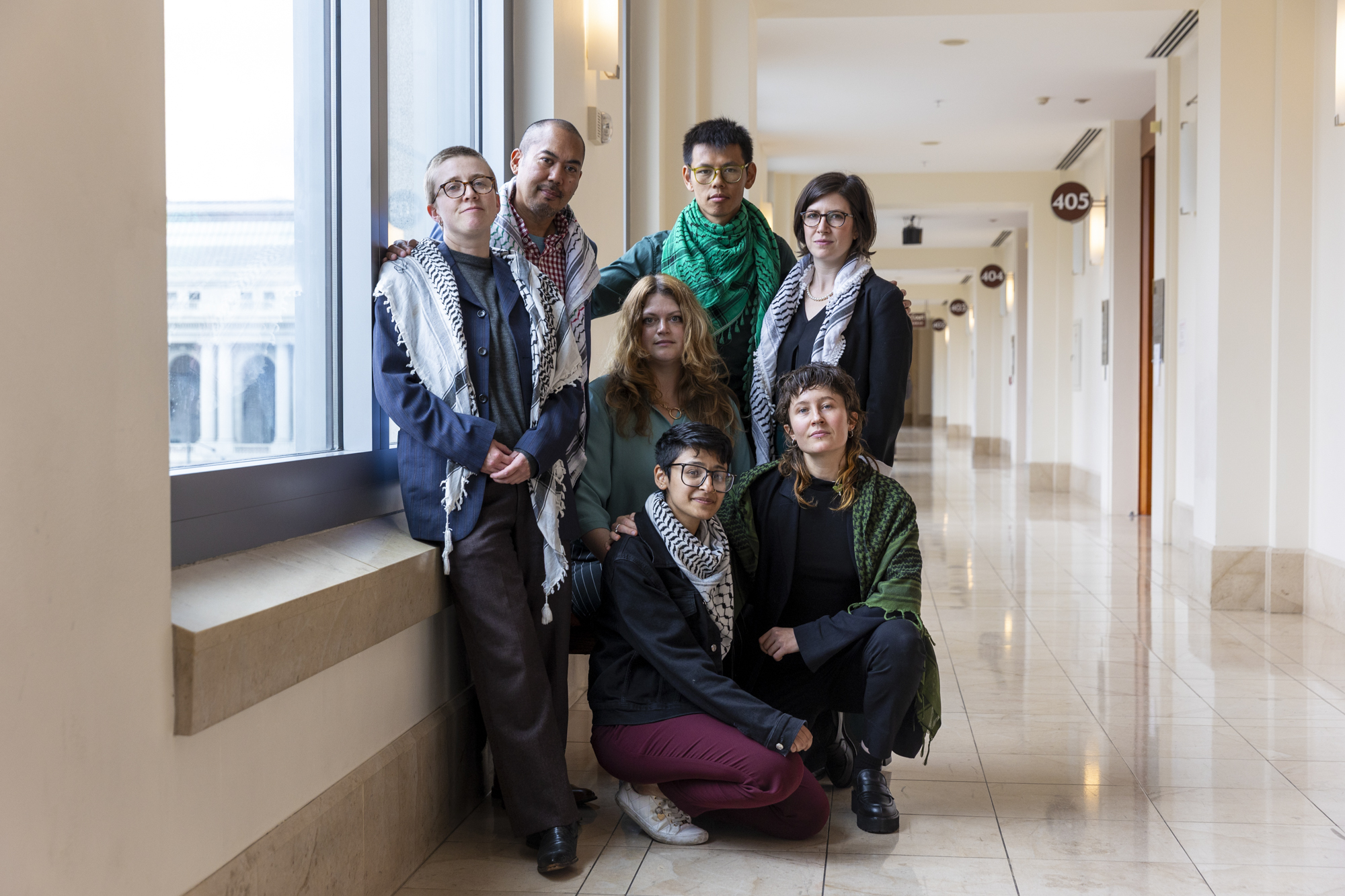
San Francisco’s Case Against Pro-Palestinian Activists Who Blocked Bridge Heads to Jury
I Got Access to Hundreds of Teacher Misconduct Complaints in California — and You Can Too
FBI Fatally Shoots a Man Holding Hostages in Bakersfield Office Building, Police Say
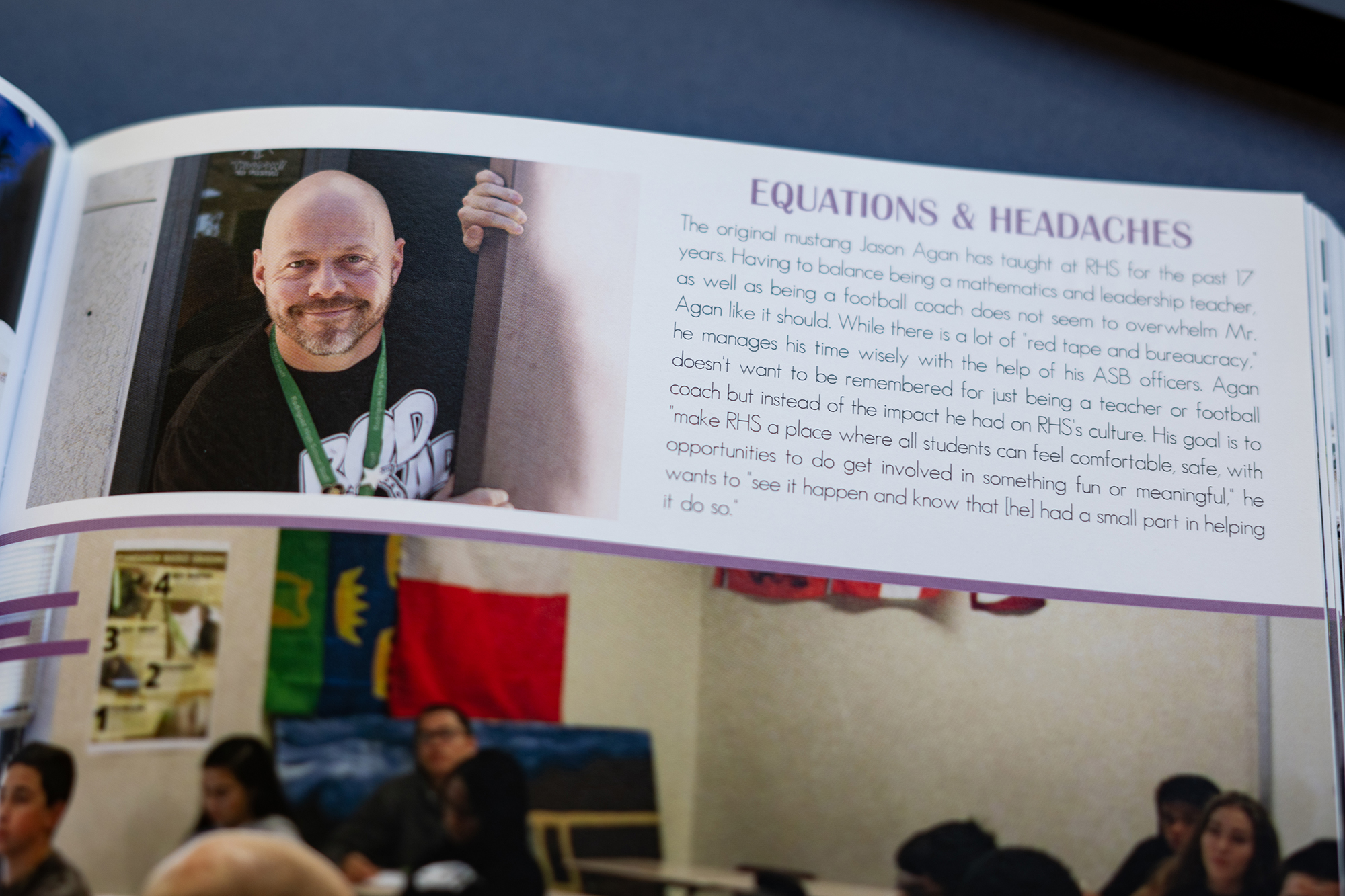
A Teacher Was Fired for Sexually Harassing Students. Why Did California Let Him Continue Teaching?
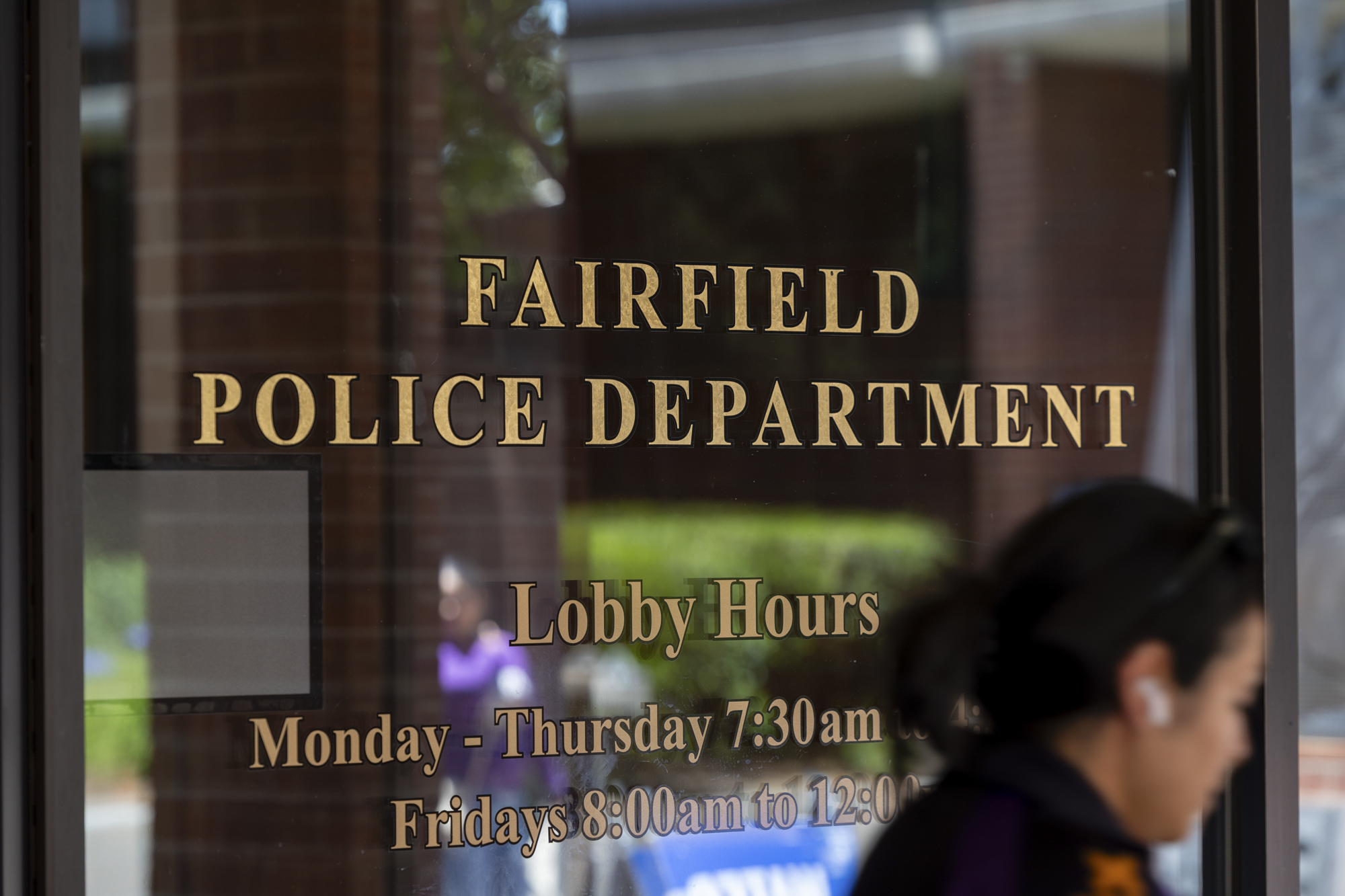
Family of Teen Punched by Fairfield Officer Files Claim With Bay Area Civil Rights Attorneys
San Francisco Police Officer and Suspect Shot in Bayview Chase
Activists Defend Golden Gate Bridge Shutdown in Gaza War Protest Trial
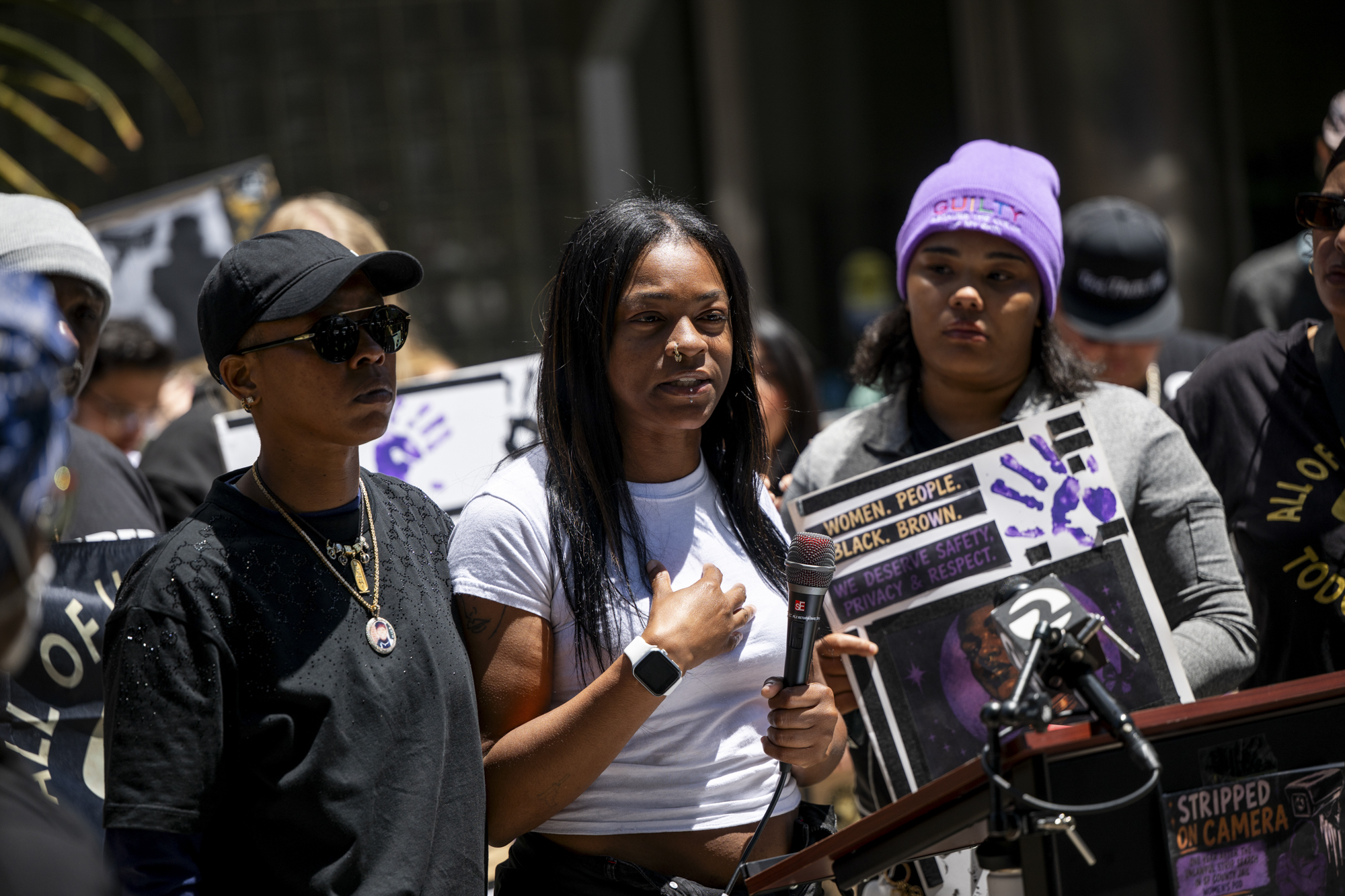
20 Women Sue SF Sheriff’s Office Over Alleged Mass Strip Search
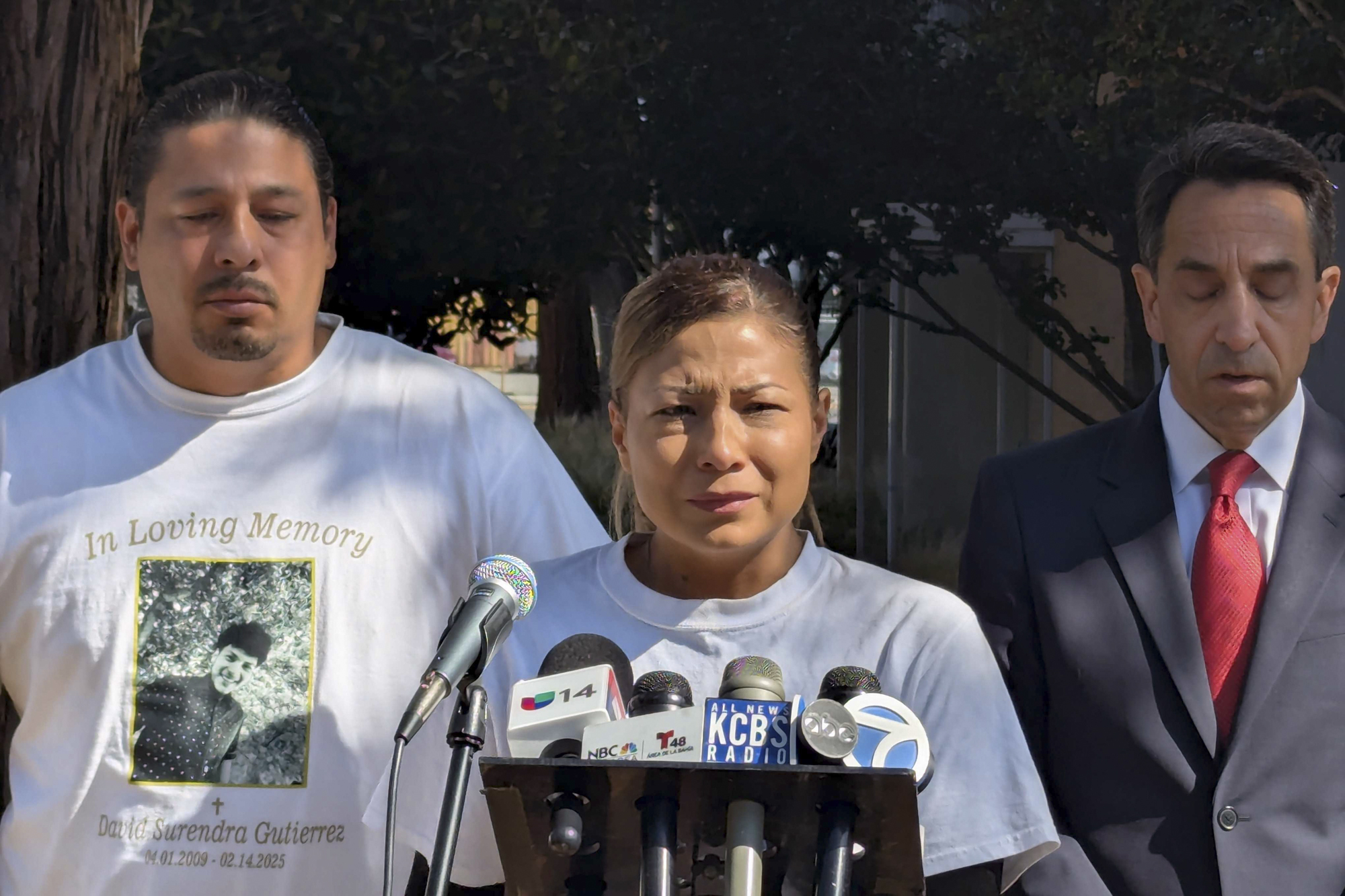
Santa Clara County Judge Finds Teenager Guilty of Murder in Valentine’s Day Stabbing
Player sponsored by
window.__IS_SSR__=true
window.__INITIAL_STATE__={
"attachmentsReducer": {
"audio_0": {
"type": "attachments",
"id": "audio_0",
"imgSizes": {
"kqedFullSize": {
"file": "https://ww2.kqed.org/news/wp-content/themes/KQED-unified/img/audio_bgs/background0.jpg"
}
}
},
"audio_1": {
"type": "attachments",
"id": "audio_1",
"imgSizes": {
"kqedFullSize": {
"file": "https://ww2.kqed.org/news/wp-content/themes/KQED-unified/img/audio_bgs/background1.jpg"
}
}
},
"audio_2": {
"type": "attachments",
"id": "audio_2",
"imgSizes": {
"kqedFullSize": {
"file": "https://ww2.kqed.org/news/wp-content/themes/KQED-unified/img/audio_bgs/background2.jpg"
}
}
},
"audio_3": {
"type": "attachments",
"id": "audio_3",
"imgSizes": {
"kqedFullSize": {
"file": "https://ww2.kqed.org/news/wp-content/themes/KQED-unified/img/audio_bgs/background3.jpg"
}
}
},
"audio_4": {
"type": "attachments",
"id": "audio_4",
"imgSizes": {
"kqedFullSize": {
"file": "https://ww2.kqed.org/news/wp-content/themes/KQED-unified/img/audio_bgs/background4.jpg"
}
}
},
"placeholder": {
"type": "attachments",
"id": "placeholder",
"imgSizes": {
"thumbnail": {
"file": "https://cdn.kqed.org/wp-content/uploads/2024/12/KQED-Default-Image-816638274-2000x1333-1-160x107.jpg",
"width": 160,
"height": 107,
"mimeType": "image/jpeg"
},
"medium": {
"file": "https://cdn.kqed.org/wp-content/uploads/2024/12/KQED-Default-Image-816638274-2000x1333-1-800x533.jpg",
"width": 800,
"height": 533,
"mimeType": "image/jpeg"
},
"medium_large": {
"file": "https://cdn.kqed.org/wp-content/uploads/2024/12/KQED-Default-Image-816638274-2000x1333-1-768x512.jpg",
"width": 768,
"height": 512,
"mimeType": "image/jpeg"
},
"large": {
"file": "https://cdn.kqed.org/wp-content/uploads/2024/12/KQED-Default-Image-816638274-2000x1333-1-1020x680.jpg",
"width": 1020,
"height": 680,
"mimeType": "image/jpeg"
},
"1536x1536": {
"file": "https://cdn.kqed.org/wp-content/uploads/2024/12/KQED-Default-Image-816638274-2000x1333-1-1536x1024.jpg",
"width": 1536,
"height": 1024,
"mimeType": "image/jpeg"
},
"fd-lrg": {
"file": "https://cdn.kqed.org/wp-content/uploads/2024/12/KQED-Default-Image-816638274-2000x1333-1-1536x1024.jpg",
"width": 1536,
"height": 1024,
"mimeType": "image/jpeg"
},
"fd-med": {
"file": "https://cdn.kqed.org/wp-content/uploads/2024/12/KQED-Default-Image-816638274-2000x1333-1-1020x680.jpg",
"width": 1020,
"height": 680,
"mimeType": "image/jpeg"
},
"fd-sm": {
"file": "https://cdn.kqed.org/wp-content/uploads/2024/12/KQED-Default-Image-816638274-2000x1333-1-800x533.jpg",
"width": 800,
"height": 533,
"mimeType": "image/jpeg"
},
"post-thumbnail": {
"file": "https://cdn.kqed.org/wp-content/uploads/2024/12/KQED-Default-Image-816638274-2000x1333-1-672x372.jpg",
"width": 672,
"height": 372,
"mimeType": "image/jpeg"
},
"twentyfourteen-full-width": {
"file": "https://cdn.kqed.org/wp-content/uploads/2024/12/KQED-Default-Image-816638274-2000x1333-1-1038x576.jpg",
"width": 1038,
"height": 576,
"mimeType": "image/jpeg"
},
"xxsmall": {
"file": "https://cdn.kqed.org/wp-content/uploads/2024/12/KQED-Default-Image-816638274-2000x1333-1-160x107.jpg",
"width": 160,
"height": 107,
"mimeType": "image/jpeg"
},
"xsmall": {
"file": "https://cdn.kqed.org/wp-content/uploads/2024/12/KQED-Default-Image-816638274-2000x1333-1-672x372.jpg",
"width": 672,
"height": 372,
"mimeType": "image/jpeg"
},
"small": {
"file": "https://cdn.kqed.org/wp-content/uploads/2024/12/KQED-Default-Image-816638274-2000x1333-1-672x372.jpg",
"width": 672,
"height": 372,
"mimeType": "image/jpeg"
},
"xlarge": {
"file": "https://cdn.kqed.org/wp-content/uploads/2024/12/KQED-Default-Image-816638274-2000x1333-1-1020x680.jpg",
"width": 1020,
"height": 680,
"mimeType": "image/jpeg"
},
"full-width": {
"file": "https://cdn.kqed.org/wp-content/uploads/2024/12/KQED-Default-Image-816638274-2000x1333-1-1920x1280.jpg",
"width": 1920,
"height": 1280,
"mimeType": "image/jpeg"
},
"guest-author-32": {
"file": "https://cdn.kqed.org/wp-content/uploads/2025/01/KQED-Default-Image-816638274-1333x1333-1-160x160.jpg",
"width": 32,
"height": 32,
"mimeType": "image/jpeg"
},
"guest-author-50": {
"file": "https://cdn.kqed.org/wp-content/uploads/2025/01/KQED-Default-Image-816638274-1333x1333-1-160x160.jpg",
"width": 50,
"height": 50,
"mimeType": "image/jpeg"
},
"guest-author-64": {
"file": "https://cdn.kqed.org/wp-content/uploads/2025/01/KQED-Default-Image-816638274-1333x1333-1-160x160.jpg",
"width": 64,
"height": 64,
"mimeType": "image/jpeg"
},
"guest-author-96": {
"file": "https://cdn.kqed.org/wp-content/uploads/2025/01/KQED-Default-Image-816638274-1333x1333-1-160x160.jpg",
"width": 96,
"height": 96,
"mimeType": "image/jpeg"
},
"guest-author-128": {
"file": "https://cdn.kqed.org/wp-content/uploads/2025/01/KQED-Default-Image-816638274-1333x1333-1-160x160.jpg",
"width": 128,
"height": 128,
"mimeType": "image/jpeg"
},
"detail": {
"file": "https://cdn.kqed.org/wp-content/uploads/2025/01/KQED-Default-Image-816638274-1333x1333-1-160x160.jpg",
"width": 160,
"height": 160,
"mimeType": "image/jpeg"
},
"kqedFullSize": {
"file": "https://cdn.kqed.org/wp-content/uploads/2024/12/KQED-Default-Image-816638274-2000x1333-1.jpg",
"width": 2000,
"height": 1333
}
}
},
"news_12086554": {
"type": "attachments",
"id": "news_12086554",
"meta": {
"index": "attachments_1716263798",
"site": "news",
"id": "12086554",
"found": true
},
"title": "Planned Parenthood Facade",
"publishDate": 1780942234,
"status": "inherit",
"parent": 12086530,
"modified": 1780942279,
"caption": "A Planned Parenthood Northern California health center in San Francisco, California, on Sept. 30, 2025. ",
"credit": "Smith Collection/Gado via Getty Images",
"altTag": null,
"description": null,
"imgSizes": {
"thumbnail": {
"file": "https://cdn.kqed.org/wp-content/uploads/sites/10/2026/06/PlannedParenthoodSF-160x107.jpg",
"width": 160,
"height": 107,
"mimeType": "image/jpeg"
},
"1536x1536": {
"file": "https://cdn.kqed.org/wp-content/uploads/sites/10/2026/06/PlannedParenthoodSF-1536x1024.jpg",
"width": 1536,
"height": 1024,
"mimeType": "image/jpeg"
},
"post-thumbnail": {
"file": "https://cdn.kqed.org/wp-content/uploads/sites/10/2026/06/PlannedParenthoodSF-672x372.jpg",
"width": 672,
"height": 372,
"mimeType": "image/jpeg"
},
"twentyfourteen-full-width": {
"file": "https://cdn.kqed.org/wp-content/uploads/sites/10/2026/06/PlannedParenthoodSF-1038x576.jpg",
"width": 1038,
"height": 576,
"mimeType": "image/jpeg"
},
"npr-cds-wide": {
"file": "https://cdn.kqed.org/wp-content/uploads/sites/10/2026/06/PlannedParenthoodSF-1200x675.jpg",
"width": 1200,
"height": 675,
"mimeType": "image/jpeg"
},
"npr-cds-square": {
"file": "https://cdn.kqed.org/wp-content/uploads/sites/10/2026/06/PlannedParenthoodSF-600x600.jpg",
"width": 600,
"height": 600,
"mimeType": "image/jpeg"
},
"kqedFullSize": {
"file": "https://cdn.kqed.org/wp-content/uploads/sites/10/2026/06/PlannedParenthoodSF.jpg",
"width": 2000,
"height": 1333
}
},
"isLoading": false,
"fetchFailed": false
},
"news_12086297": {
"type": "attachments",
"id": "news_12086297",
"meta": {
"index": "attachments_1716263798",
"site": "news",
"id": "12086297",
"found": true
},
"title": "260604-GGBTRIALCLOSING-01-BL-KQED",
"publishDate": 1780608288,
"status": "inherit",
"parent": 0,
"modified": 1780609475,
"caption": "Manan Kocher speaks during a rally across from the San Francisco Superior Courthouse on June 4, 2026, to support the \"Golden Gate 26\" ahead of closing arguments in their trial. The defendants are accused of blocking traffic on the Golden Gate Bridge during a 2024 protest against the war in Gaza.",
"credit": "Beth LaBerge/KQED",
"altTag": null,
"description": null,
"imgSizes": {
"thumbnail": {
"file": "https://cdn.kqed.org/wp-content/uploads/sites/10/2026/06/260604-GGBTRIALCLOSING-01-BL-KQED-160x107.jpg",
"width": 160,
"height": 107,
"mimeType": "image/jpeg"
},
"1536x1536": {
"file": "https://cdn.kqed.org/wp-content/uploads/sites/10/2026/06/260604-GGBTRIALCLOSING-01-BL-KQED-1536x1024.jpg",
"width": 1536,
"height": 1024,
"mimeType": "image/jpeg"
},
"post-thumbnail": {
"file": "https://cdn.kqed.org/wp-content/uploads/sites/10/2026/06/260604-GGBTRIALCLOSING-01-BL-KQED-672x372.jpg",
"width": 672,
"height": 372,
"mimeType": "image/jpeg"
},
"twentyfourteen-full-width": {
"file": "https://cdn.kqed.org/wp-content/uploads/sites/10/2026/06/260604-GGBTRIALCLOSING-01-BL-KQED-1038x576.jpg",
"width": 1038,
"height": 576,
"mimeType": "image/jpeg"
},
"npr-cds-wide": {
"file": "https://cdn.kqed.org/wp-content/uploads/sites/10/2026/06/260604-GGBTRIALCLOSING-01-BL-KQED-1200x675.jpg",
"width": 1200,
"height": 675,
"mimeType": "image/jpeg"
},
"npr-cds-square": {
"file": "https://cdn.kqed.org/wp-content/uploads/sites/10/2026/06/260604-GGBTRIALCLOSING-01-BL-KQED-600x600.jpg",
"width": 600,
"height": 600,
"mimeType": "image/jpeg"
},
"kqedFullSize": {
"file": "https://cdn.kqed.org/wp-content/uploads/sites/10/2026/06/260604-GGBTRIALCLOSING-01-BL-KQED.jpg",
"width": 2000,
"height": 1333
}
},
"isLoading": false,
"fetchFailed": false
},
"news_12086133": {
"type": "attachments",
"id": "news_12086133",
"meta": {
"index": "attachments_1716263798",
"site": "news",
"id": "12086133",
"found": true
},
"title": "CA Teacher Discipline Holly",
"publishDate": 1780513696,
"status": "inherit",
"parent": 0,
"modified": 1780530009,
"caption": null,
"credit": "Anna Vignet/KQED",
"altTag": null,
"description": null,
"imgSizes": {
"medium": {
"file": "https://cdn.kqed.org/wp-content/uploads/sites/10/2026/06/CA-Teacher-Discipline-Holly-2000x1500.jpg",
"width": 2000,
"height": 1500,
"mimeType": "image/jpeg"
},
"large": {
"file": "https://cdn.kqed.org/wp-content/uploads/sites/10/2026/06/CA-Teacher-Discipline-Holly-2000x1500.jpg",
"width": 2000,
"height": 1500,
"mimeType": "image/jpeg"
},
"thumbnail": {
"file": "https://cdn.kqed.org/wp-content/uploads/sites/10/2026/06/CA-Teacher-Discipline-Holly-160x120.jpg",
"width": 160,
"height": 120,
"mimeType": "image/jpeg"
},
"1536x1536": {
"file": "https://cdn.kqed.org/wp-content/uploads/sites/10/2026/06/CA-Teacher-Discipline-Holly-1536x1152.jpg",
"width": 1536,
"height": 1152,
"mimeType": "image/jpeg"
},
"2048x2048": {
"file": "https://cdn.kqed.org/wp-content/uploads/sites/10/2026/06/CA-Teacher-Discipline-Holly-2048x1536.jpg",
"width": 2048,
"height": 1536,
"mimeType": "image/jpeg"
},
"post-thumbnail": {
"file": "https://cdn.kqed.org/wp-content/uploads/sites/10/2026/06/CA-Teacher-Discipline-Holly-672x372.jpg",
"width": 672,
"height": 372,
"mimeType": "image/jpeg"
},
"twentyfourteen-full-width": {
"file": "https://cdn.kqed.org/wp-content/uploads/sites/10/2026/06/CA-Teacher-Discipline-Holly-1038x576.jpg",
"width": 1038,
"height": 576,
"mimeType": "image/jpeg"
},
"full-width": {
"file": "https://cdn.kqed.org/wp-content/uploads/sites/10/2026/06/CA-Teacher-Discipline-Holly-2000x1500.jpg",
"width": 2000,
"height": 1500,
"mimeType": "image/jpeg"
},
"npr-cds-wide": {
"file": "https://cdn.kqed.org/wp-content/uploads/sites/10/2026/06/CA-Teacher-Discipline-Holly-1200x675.jpg",
"width": 1200,
"height": 675,
"mimeType": "image/jpeg"
},
"npr-cds-square": {
"file": "https://cdn.kqed.org/wp-content/uploads/sites/10/2026/06/CA-Teacher-Discipline-Holly-600x600.jpg",
"width": 600,
"height": 600,
"mimeType": "image/jpeg"
},
"kqedFullSize": {
"file": "https://cdn.kqed.org/wp-content/uploads/sites/10/2026/06/CA-Teacher-Discipline-Holly.jpg",
"width": 2560,
"height": 1920
}
},
"isLoading": false,
"fetchFailed": false
},
"news_12086070": {
"type": "attachments",
"id": "news_12086070",
"meta": {
"index": "attachments_1716263798",
"site": "news",
"id": "12086070",
"found": true
},
"title": "APTOPIX California Man Barricaded",
"publishDate": 1780505782,
"status": "inherit",
"parent": 12086067,
"modified": 1780505821,
"caption": "FBI agents respond after a man barricaded himself inside a building with hostages Tuesday, June 2, 2026, in Bakersfield, Calif.",
"credit": "AP Photo/David Dennis",
"altTag": null,
"description": null,
"imgSizes": {
"medium": {
"file": "https://cdn.kqed.org/wp-content/uploads/sites/10/2026/06/AP26154188830083-2000x1333.jpg",
"width": 2000,
"height": 1333,
"mimeType": "image/jpeg"
},
"large": {
"file": "https://cdn.kqed.org/wp-content/uploads/sites/10/2026/06/AP26154188830083-2000x1333.jpg",
"width": 2000,
"height": 1333,
"mimeType": "image/jpeg"
},
"thumbnail": {
"file": "https://cdn.kqed.org/wp-content/uploads/sites/10/2026/06/AP26154188830083-160x107.jpg",
"width": 160,
"height": 107,
"mimeType": "image/jpeg"
},
"1536x1536": {
"file": "https://cdn.kqed.org/wp-content/uploads/sites/10/2026/06/AP26154188830083-1536x1024.jpg",
"width": 1536,
"height": 1024,
"mimeType": "image/jpeg"
},
"2048x2048": {
"file": "https://cdn.kqed.org/wp-content/uploads/sites/10/2026/06/AP26154188830083-2048x1365.jpg",
"width": 2048,
"height": 1365,
"mimeType": "image/jpeg"
},
"post-thumbnail": {
"file": "https://cdn.kqed.org/wp-content/uploads/sites/10/2026/06/AP26154188830083-672x372.jpg",
"width": 672,
"height": 372,
"mimeType": "image/jpeg"
},
"twentyfourteen-full-width": {
"file": "https://cdn.kqed.org/wp-content/uploads/sites/10/2026/06/AP26154188830083-1038x576.jpg",
"width": 1038,
"height": 576,
"mimeType": "image/jpeg"
},
"full-width": {
"file": "https://cdn.kqed.org/wp-content/uploads/sites/10/2026/06/AP26154188830083-2000x1333.jpg",
"width": 2000,
"height": 1333,
"mimeType": "image/jpeg"
},
"npr-cds-wide": {
"file": "https://cdn.kqed.org/wp-content/uploads/sites/10/2026/06/AP26154188830083-1200x675.jpg",
"width": 1200,
"height": 675,
"mimeType": "image/jpeg"
},
"npr-cds-square": {
"file": "https://cdn.kqed.org/wp-content/uploads/sites/10/2026/06/AP26154188830083-600x600.jpg",
"width": 600,
"height": 600,
"mimeType": "image/jpeg"
},
"kqedFullSize": {
"file": "https://cdn.kqed.org/wp-content/uploads/sites/10/2026/06/AP26154188830083-scaled-e1780505837414.jpg",
"width": 2000,
"height": 1334
}
},
"isLoading": false,
"fetchFailed": false
},
"news_12082860": {
"type": "attachments",
"id": "news_12082860",
"meta": {
"index": "attachments_1716263798",
"site": "news",
"id": "12082860",
"found": true
},
"title": "260324-ProPublica-CATeacherDiscipline-12",
"publishDate": 1778255865,
"status": "inherit",
"parent": 12082980,
"modified": 1778523390,
"caption": "Math teacher Jason Agan, in the 2017-2018 Rodriguez High School\nyearbook, said his goal is to “make RHS a place where all students can\nfeel comfortable and safe.” The school district fired him in 2019 for\nsexually harassing students.",
"credit": "Beth LaBerge/KQED",
"altTag": "A page in a yearbook that includes a photo of a man looking through a doorway and a feature on Jason Agan under the title, “Equations & Headaches.”",
"description": null,
"imgSizes": {
"thumbnail": {
"file": "https://cdn.kqed.org/wp-content/uploads/sites/10/2026/05/260324-ProPublica-CATeacherDiscipline-12-160x107.jpg",
"width": 160,
"height": 107,
"mimeType": "image/jpeg"
},
"1536x1536": {
"file": "https://cdn.kqed.org/wp-content/uploads/sites/10/2026/05/260324-ProPublica-CATeacherDiscipline-12-1536x1024.jpg",
"width": 1536,
"height": 1024,
"mimeType": "image/jpeg"
},
"post-thumbnail": {
"file": "https://cdn.kqed.org/wp-content/uploads/sites/10/2026/05/260324-ProPublica-CATeacherDiscipline-12-672x372.jpg",
"width": 672,
"height": 372,
"mimeType": "image/jpeg"
},
"twentyfourteen-full-width": {
"file": "https://cdn.kqed.org/wp-content/uploads/sites/10/2026/05/260324-ProPublica-CATeacherDiscipline-12-1038x576.jpg",
"width": 1038,
"height": 576,
"mimeType": "image/jpeg"
},
"npr-cds-wide": {
"file": "https://cdn.kqed.org/wp-content/uploads/sites/10/2026/05/260324-ProPublica-CATeacherDiscipline-12-1200x675.jpg",
"width": 1200,
"height": 675,
"mimeType": "image/jpeg"
},
"npr-cds-square": {
"file": "https://cdn.kqed.org/wp-content/uploads/sites/10/2026/05/260324-ProPublica-CATeacherDiscipline-12-600x600.jpg",
"width": 600,
"height": 600,
"mimeType": "image/jpeg"
},
"kqedFullSize": {
"file": "https://cdn.kqed.org/wp-content/uploads/sites/10/2026/05/260324-ProPublica-CATeacherDiscipline-12.jpg",
"width": 2000,
"height": 1333
}
},
"isLoading": false,
"fetchFailed": false
},
"news_12085747": {
"type": "attachments",
"id": "news_12085747",
"meta": {
"index": "attachments_1716263798",
"site": "news",
"id": "12085747",
"found": true
},
"title": "060126FAIRFIELD HIGH CLAIM_GH_003-KQED",
"publishDate": 1780347623,
"status": "inherit",
"parent": 0,
"modified": 1780347829,
"caption": "A person walks past the entrance to the Fairfield Police Department on June 1, 2026, in Fairfield.",
"credit": "Gustavo Hernandez/KQED",
"altTag": null,
"description": null,
"imgSizes": {
"thumbnail": {
"file": "https://cdn.kqed.org/wp-content/uploads/sites/10/2026/06/060126FAIRFIELD-HIGH-CLAIM_GH_003-KQED-160x107.jpg",
"width": 160,
"height": 107,
"mimeType": "image/jpeg"
},
"1536x1536": {
"file": "https://cdn.kqed.org/wp-content/uploads/sites/10/2026/06/060126FAIRFIELD-HIGH-CLAIM_GH_003-KQED-1536x1024.jpg",
"width": 1536,
"height": 1024,
"mimeType": "image/jpeg"
},
"post-thumbnail": {
"file": "https://cdn.kqed.org/wp-content/uploads/sites/10/2026/06/060126FAIRFIELD-HIGH-CLAIM_GH_003-KQED-672x372.jpg",
"width": 672,
"height": 372,
"mimeType": "image/jpeg"
},
"twentyfourteen-full-width": {
"file": "https://cdn.kqed.org/wp-content/uploads/sites/10/2026/06/060126FAIRFIELD-HIGH-CLAIM_GH_003-KQED-1038x576.jpg",
"width": 1038,
"height": 576,
"mimeType": "image/jpeg"
},
"npr-cds-wide": {
"file": "https://cdn.kqed.org/wp-content/uploads/sites/10/2026/06/060126FAIRFIELD-HIGH-CLAIM_GH_003-KQED-1200x675.jpg",
"width": 1200,
"height": 675,
"mimeType": "image/jpeg"
},
"npr-cds-square": {
"file": "https://cdn.kqed.org/wp-content/uploads/sites/10/2026/06/060126FAIRFIELD-HIGH-CLAIM_GH_003-KQED-600x600.jpg",
"width": 600,
"height": 600,
"mimeType": "image/jpeg"
},
"kqedFullSize": {
"file": "https://cdn.kqed.org/wp-content/uploads/sites/10/2026/06/060126FAIRFIELD-HIGH-CLAIM_GH_003-KQED.jpg",
"width": 2000,
"height": 1333
}
},
"isLoading": false,
"fetchFailed": false
},
"news_12047757": {
"type": "attachments",
"id": "news_12047757",
"meta": {
"index": "attachments_1716263798",
"site": "news",
"id": "12047757",
"found": true
},
"title": "250418-SFPDFile-39-BL_qed (1)",
"publishDate": 1752276321,
"status": "inherit",
"parent": 12047736,
"modified": 1752276344,
"caption": "A San Francisco Police Department officer in San Francisco on April 18, 2025.",
"credit": "Beth LaBerge/KQED",
"altTag": null,
"description": null,
"imgSizes": {
"thumbnail": {
"file": "https://cdn.kqed.org/wp-content/uploads/sites/10/2025/07/250418-SFPDFile-39-BL_qed-1-160x107.jpg",
"width": 160,
"height": 107,
"mimeType": "image/jpeg"
},
"1536x1536": {
"file": "https://cdn.kqed.org/wp-content/uploads/sites/10/2025/07/250418-SFPDFile-39-BL_qed-1-1536x1024.jpg",
"width": 1536,
"height": 1024,
"mimeType": "image/jpeg"
},
"post-thumbnail": {
"file": "https://cdn.kqed.org/wp-content/uploads/sites/10/2025/07/250418-SFPDFile-39-BL_qed-1-672x372.jpg",
"width": 672,
"height": 372,
"mimeType": "image/jpeg"
},
"twentyfourteen-full-width": {
"file": "https://cdn.kqed.org/wp-content/uploads/sites/10/2025/07/250418-SFPDFile-39-BL_qed-1-1038x576.jpg",
"width": 1038,
"height": 576,
"mimeType": "image/jpeg"
},
"kqedFullSize": {
"file": "https://cdn.kqed.org/wp-content/uploads/sites/10/2025/07/250418-SFPDFile-39-BL_qed-1.jpg",
"width": 2000,
"height": 1333
}
},
"isLoading": false,
"fetchFailed": false
},
"news_12085588": {
"type": "attachments",
"id": "news_12085588",
"meta": {
"index": "attachments_1716263798",
"site": "news",
"id": "12085588",
"found": true
},
"title": "260529-GGBTRIALTESTIMONY00089_TV-KQED",
"publishDate": 1780094766,
"status": "inherit",
"parent": 0,
"modified": 1780094885,
"caption": "From left, Em Tillotson, Conrad de Jesus, Sara Cantor, Rocky Chau, Sarah Ferrell, River Allen, and Bhavika Anandpura, the seven defendants on trial for blocking the Golden Gate Bridge for a pro-Palestinian protest, pose for a portrait at the San Francisco Superior Courthouse in San Francisco on May 29, 2026.",
"credit": "Tâm Vũ/KQED",
"altTag": null,
"description": null,
"imgSizes": {
"thumbnail": {
"file": "https://cdn.kqed.org/wp-content/uploads/sites/10/2026/05/260529-GGBTRIALTESTIMONY00089_TV-KQED-160x107.jpg",
"width": 160,
"height": 107,
"mimeType": "image/jpeg"
},
"1536x1536": {
"file": "https://cdn.kqed.org/wp-content/uploads/sites/10/2026/05/260529-GGBTRIALTESTIMONY00089_TV-KQED-1536x1024.jpg",
"width": 1536,
"height": 1024,
"mimeType": "image/jpeg"
},
"post-thumbnail": {
"file": "https://cdn.kqed.org/wp-content/uploads/sites/10/2026/05/260529-GGBTRIALTESTIMONY00089_TV-KQED-672x372.jpg",
"width": 672,
"height": 372,
"mimeType": "image/jpeg"
},
"twentyfourteen-full-width": {
"file": "https://cdn.kqed.org/wp-content/uploads/sites/10/2026/05/260529-GGBTRIALTESTIMONY00089_TV-KQED-1038x576.jpg",
"width": 1038,
"height": 576,
"mimeType": "image/jpeg"
},
"npr-cds-wide": {
"file": "https://cdn.kqed.org/wp-content/uploads/sites/10/2026/05/260529-GGBTRIALTESTIMONY00089_TV-KQED-1200x675.jpg",
"width": 1200,
"height": 675,
"mimeType": "image/jpeg"
},
"npr-cds-square": {
"file": "https://cdn.kqed.org/wp-content/uploads/sites/10/2026/05/260529-GGBTRIALTESTIMONY00089_TV-KQED-600x600.jpg",
"width": 600,
"height": 600,
"mimeType": "image/jpeg"
},
"kqedFullSize": {
"file": "https://cdn.kqed.org/wp-content/uploads/sites/10/2026/05/260529-GGBTRIALTESTIMONY00089_TV-KQED.jpg",
"width": 2000,
"height": 1333
}
},
"isLoading": false,
"fetchFailed": false
},
"news_12085078": {
"type": "attachments",
"id": "news_12085078",
"meta": {
"index": "attachments_1716263798",
"site": "news",
"id": "12085078",
"found": true
},
"title": "260522-JAILSEARCHSUIT-18-BL-KQED",
"publishDate": 1779492125,
"status": "inherit",
"parent": 0,
"modified": 1779492156,
"caption": "Taylor Ross (center), a formerly incarcerated advocate, speaks during a rally outside of San Francisco County Jail 2 on May 22, 2026, one year after women incarcerated at the jail alleged they were subjected to illegal strip searches by sheriff’s deputies in a women’s housing unit.",
"credit": "Beth LaBerge/KQED",
"altTag": null,
"description": null,
"imgSizes": {
"thumbnail": {
"file": "https://cdn.kqed.org/wp-content/uploads/sites/10/2026/05/260522-JAILSEARCHSUIT-18-BL-KQED-160x107.jpg",
"width": 160,
"height": 107,
"mimeType": "image/jpeg"
},
"1536x1536": {
"file": "https://cdn.kqed.org/wp-content/uploads/sites/10/2026/05/260522-JAILSEARCHSUIT-18-BL-KQED-1536x1024.jpg",
"width": 1536,
"height": 1024,
"mimeType": "image/jpeg"
},
"post-thumbnail": {
"file": "https://cdn.kqed.org/wp-content/uploads/sites/10/2026/05/260522-JAILSEARCHSUIT-18-BL-KQED-672x372.jpg",
"width": 672,
"height": 372,
"mimeType": "image/jpeg"
},
"twentyfourteen-full-width": {
"file": "https://cdn.kqed.org/wp-content/uploads/sites/10/2026/05/260522-JAILSEARCHSUIT-18-BL-KQED-1038x576.jpg",
"width": 1038,
"height": 576,
"mimeType": "image/jpeg"
},
"npr-cds-wide": {
"file": "https://cdn.kqed.org/wp-content/uploads/sites/10/2026/05/260522-JAILSEARCHSUIT-18-BL-KQED-1200x675.jpg",
"width": 1200,
"height": 675,
"mimeType": "image/jpeg"
},
"npr-cds-square": {
"file": "https://cdn.kqed.org/wp-content/uploads/sites/10/2026/05/260522-JAILSEARCHSUIT-18-BL-KQED-600x600.jpg",
"width": 600,
"height": 600,
"mimeType": "image/jpeg"
},
"kqedFullSize": {
"file": "https://cdn.kqed.org/wp-content/uploads/sites/10/2026/05/260522-JAILSEARCHSUIT-18-BL-KQED.jpg",
"width": 2000,
"height": 1333
}
},
"isLoading": false,
"fetchFailed": false
},
"news_12085045": {
"type": "attachments",
"id": "news_12085045",
"meta": {
"index": "attachments_1716263798",
"site": "news",
"id": "12085045",
"found": true
},
"title": "260522-Santana Row stabbing verdict-JG-01-KQED",
"publishDate": 1779483532,
"status": "inherit",
"parent": 0,
"modified": 1779483577,
"caption": "Victoria Gutierrez, David Gutierrez's mother, speaks during a press conference after a judge decided a 14-year-old was responsible for the stabbing murder of her son in a court hearing on Friday, May 22, 2026.",
"credit": "Joseph Geha/KQED",
"altTag": null,
"description": null,
"imgSizes": {
"thumbnail": {
"file": "https://cdn.kqed.org/wp-content/uploads/sites/10/2026/05/260522-Santana-Row-stabbing-verdict-JG-01-KQED-160x107.jpg",
"width": 160,
"height": 107,
"mimeType": "image/jpeg"
},
"1536x1536": {
"file": "https://cdn.kqed.org/wp-content/uploads/sites/10/2026/05/260522-Santana-Row-stabbing-verdict-JG-01-KQED-1536x1024.jpg",
"width": 1536,
"height": 1024,
"mimeType": "image/jpeg"
},
"post-thumbnail": {
"file": "https://cdn.kqed.org/wp-content/uploads/sites/10/2026/05/260522-Santana-Row-stabbing-verdict-JG-01-KQED-672x372.jpg",
"width": 672,
"height": 372,
"mimeType": "image/jpeg"
},
"twentyfourteen-full-width": {
"file": "https://cdn.kqed.org/wp-content/uploads/sites/10/2026/05/260522-Santana-Row-stabbing-verdict-JG-01-KQED-1038x576.jpg",
"width": 1038,
"height": 576,
"mimeType": "image/jpeg"
},
"npr-cds-wide": {
"file": "https://cdn.kqed.org/wp-content/uploads/sites/10/2026/05/260522-Santana-Row-stabbing-verdict-JG-01-KQED-1200x675.jpg",
"width": 1200,
"height": 675,
"mimeType": "image/jpeg"
},
"npr-cds-square": {
"file": "https://cdn.kqed.org/wp-content/uploads/sites/10/2026/05/260522-Santana-Row-stabbing-verdict-JG-01-KQED-600x600.jpg",
"width": 600,
"height": 600,
"mimeType": "image/jpeg"
},
"kqedFullSize": {
"file": "https://cdn.kqed.org/wp-content/uploads/sites/10/2026/05/260522-Santana-Row-stabbing-verdict-JG-01-KQED.jpg",
"width": 2000,
"height": 1333
}
},
"isLoading": false,
"fetchFailed": false
}
},
"audioPlayerReducer": {
"postId": "stream_live",
"isPaused": true,
"isPlaying": false,
"pfsActive": false,
"pledgeModalIsOpen": true,
"playerDrawerIsOpen": false
},
"authorsReducer": {
"byline_news_12086067": {
"type": "authors",
"id": "byline_news_12086067",
"meta": {
"override": true
},
"slug": "byline_news_12086067",
"name": "Julie Watson and John Seewer, The Associated Press",
"isLoading": false
},
"ecruzguevarra": {
"type": "authors",
"id": "8654",
"meta": {
"index": "authors_1716337520",
"id": "8654",
"found": true
},
"name": "Ericka Cruz Guevarra",
"firstName": "Ericka",
"lastName": "Cruz Guevarra",
"slug": "ecruzguevarra",
"email": "ecruzguevarra@kqed.org",
"display_author_email": true,
"staff_mastheads": [
"news"
],
"title": "Producer, The Bay Podcast",
"bio": "Ericka Cruz Guevarra is host of \u003ca href=\"https://www.kqed.org/podcasts/thebay\">\u003cem>The Bay\u003c/em>\u003c/a> podcast at KQED. Before host, she was the show’s producer. Her work in that capacity includes a three-part reported series on policing in Vallejo, which won a 2020 excellence in journalism award from the Society of Professional Journalists. Ericka has worked as a breaking news reporter at Oregon Public Broadcasting, helped produce the Code Switch podcast, and was KQED’s inaugural Raul Ramirez Diversity Fund intern. She’s also an alumna of NPR’s Next Generation Radio program. Send her an email if you have strong feelings about whether Fairfield and Suisun City are the Bay. Ericka is represented by SAG-AFTRA.",
"avatar": "https://secure.gravatar.com/avatar/25e5ab8d3d53fad2dcc7bb2b5c506b1a?s=600&d=blank&r=g",
"twitter": "NotoriousECG",
"facebook": null,
"instagram": null,
"linkedin": null,
"sites": [
{
"site": "arts",
"roles": [
"subscriber"
]
},
{
"site": "news",
"roles": [
"editor",
"manage_categories"
]
},
{
"site": "futureofyou",
"roles": [
"subscriber"
]
},
{
"site": "stateofhealth",
"roles": [
"subscriber"
]
},
{
"site": "science",
"roles": [
"editor"
]
},
{
"site": "forum",
"roles": [
"subscriber"
]
}
],
"headData": {
"title": "Ericka Cruz Guevarra | KQED",
"description": "Producer, The Bay Podcast",
"ogImgSrc": "https://secure.gravatar.com/avatar/25e5ab8d3d53fad2dcc7bb2b5c506b1a?s=600&d=blank&r=g",
"twImgSrc": "https://secure.gravatar.com/avatar/25e5ab8d3d53fad2dcc7bb2b5c506b1a?s=600&d=blank&r=g"
},
"isLoading": false,
"link": "/author/ecruzguevarra"
},
"hmcdede": {
"type": "authors",
"id": "11635",
"meta": {
"index": "authors_1716337520",
"id": "11635",
"found": true
},
"name": "Holly McDede",
"firstName": "Holly",
"lastName": "McDede",
"slug": "hmcdede",
"email": "hmcdede@KQED.org",
"display_author_email": false,
"staff_mastheads": [],
"title": "KQED Contributor",
"bio": null,
"avatar": "https://secure.gravatar.com/avatar/999d9bf31bb3a2f0511932d99526cb3e?s=600&d=blank&r=g",
"twitter": null,
"facebook": null,
"instagram": null,
"linkedin": null,
"sites": [
{
"site": "arts",
"roles": [
"editor"
]
},
{
"site": "news",
"roles": [
"edit_others_posts",
"editor"
]
},
{
"site": "science",
"roles": [
"editor"
]
},
{
"site": "forum",
"roles": [
"editor"
]
},
{
"site": "perspectives",
"roles": [
"administrator"
]
}
],
"headData": {
"title": "Holly McDede | KQED",
"description": "KQED Contributor",
"ogImgSrc": "https://secure.gravatar.com/avatar/999d9bf31bb3a2f0511932d99526cb3e?s=600&d=blank&r=g",
"twImgSrc": "https://secure.gravatar.com/avatar/999d9bf31bb3a2f0511932d99526cb3e?s=600&d=blank&r=g"
},
"isLoading": false,
"link": "/author/hmcdede"
},
"amontecillo": {
"type": "authors",
"id": "11649",
"meta": {
"index": "authors_1716337520",
"id": "11649",
"found": true
},
"name": "Alan Montecillo",
"firstName": "Alan",
"lastName": "Montecillo",
"slug": "amontecillo",
"email": "amontecillo@kqed.org",
"display_author_email": false,
"staff_mastheads": [
"news"
],
"title": "KQED Contributor",
"bio": "Alan Montecillo is the senior editor of \u003cem>\u003ca href=\"http://kqed.org/thebay\">The Bay\u003c/a>, \u003c/em> KQED's local news podcast. Before moving to the Bay Area, he worked as a senior talk show producer for WILL in Champaign-Urbana, Illinois and at Oregon Public Broadcasting in Portland, Oregon. He has won journalism awards from the Society of Professional Journalists Northern California, the Public Media Journalists Association, The Signal Awards, and has also received a regional Edward R. Murrow award. Alan is a Filipino American from Hong Kong and a graduate of Reed College.",
"avatar": "https://secure.gravatar.com/avatar/d5e4e7a76481969ccba76f4e2b5ccabc?s=600&d=blank&r=g",
"twitter": "alanmontecillo",
"facebook": null,
"instagram": null,
"linkedin": null,
"sites": [
{
"site": "",
"roles": [
"editor"
]
},
{
"site": "news",
"roles": [
"editor",
"manage_categories"
]
}
],
"headData": {
"title": "Alan Montecillo | KQED",
"description": "KQED Contributor",
"ogImgSrc": "https://secure.gravatar.com/avatar/d5e4e7a76481969ccba76f4e2b5ccabc?s=600&d=blank&r=g",
"twImgSrc": "https://secure.gravatar.com/avatar/d5e4e7a76481969ccba76f4e2b5ccabc?s=600&d=blank&r=g"
},
"isLoading": false,
"link": "/author/amontecillo"
},
"jlara": {
"type": "authors",
"id": "11761",
"meta": {
"index": "authors_1716337520",
"id": "11761",
"found": true
},
"name": "Juan Carlos Lara",
"firstName": "Juan Carlos",
"lastName": "Lara",
"slug": "jlara",
"email": "jlara@kqed.org",
"display_author_email": false,
"staff_mastheads": [],
"title": "KQED Contributor",
"bio": null,
"avatar": "https://secure.gravatar.com/avatar/19e2052b9b05657c5ff2af2121846e9c?s=600&d=blank&r=g",
"twitter": null,
"facebook": null,
"instagram": null,
"linkedin": null,
"sites": [
{
"site": "arts",
"roles": [
"editor"
]
},
{
"site": "news",
"roles": [
"editor"
]
},
{
"site": "forum",
"roles": [
"editor"
]
},
{
"site": "liveblog",
"roles": [
"contributor"
]
}
],
"headData": {
"title": "Juan Carlos Lara | KQED",
"description": "KQED Contributor",
"ogImgSrc": "https://secure.gravatar.com/avatar/19e2052b9b05657c5ff2af2121846e9c?s=600&d=blank&r=g",
"twImgSrc": "https://secure.gravatar.com/avatar/19e2052b9b05657c5ff2af2121846e9c?s=600&d=blank&r=g"
},
"isLoading": false,
"link": "/author/jlara"
},
"jessicakariisa": {
"type": "authors",
"id": "11831",
"meta": {
"index": "authors_1716337520",
"id": "11831",
"found": true
},
"name": "Jessica Kariisa",
"firstName": "Jessica",
"lastName": "Kariisa",
"slug": "jessicakariisa",
"email": "jkariisa@kqed.org",
"display_author_email": false,
"staff_mastheads": [
"news"
],
"title": "Producer, The Bay",
"bio": "Jessica Kariisa is the producer of The Bay. She first joined KQED as an intern for The California Report Magazine, after which she became an on-call producer. She reported a Bay Curious episode on the use of rap lyrics in criminal trials which won a Society of Professional Journalists award in 2023 for Excellence in Features Journalism and the 2023 Signal Award for Best Conversation Starter. She’s worked on podcasts for Snap Judgment and American Public Media. Before embarking on her audio career, she was a music journalist.\r\n\r\nJessica Kariisa is represented by SAG-AFTRA.",
"avatar": "https://secure.gravatar.com/avatar/4afd355fd24f5515aeab77fd6c72b671?s=600&d=blank&r=g",
"twitter": null,
"facebook": null,
"instagram": null,
"linkedin": null,
"sites": [
{
"site": "arts",
"roles": [
"author"
]
},
{
"site": "news",
"roles": [
"editor",
"manage_categories"
]
}
],
"headData": {
"title": "Jessica Kariisa | KQED",
"description": "Producer, The Bay",
"ogImgSrc": "https://secure.gravatar.com/avatar/4afd355fd24f5515aeab77fd6c72b671?s=600&d=blank&r=g",
"twImgSrc": "https://secure.gravatar.com/avatar/4afd355fd24f5515aeab77fd6c72b671?s=600&d=blank&r=g"
},
"isLoading": false,
"link": "/author/jessicakariisa"
},
"jgeha": {
"type": "authors",
"id": "11906",
"meta": {
"index": "authors_1716337520",
"id": "11906",
"found": true
},
"name": "Joseph Geha",
"firstName": "Joseph",
"lastName": "Geha",
"slug": "jgeha",
"email": "jgeha@kqed.org",
"display_author_email": false,
"staff_mastheads": [
"news",
"science"
],
"title": "KQED Contributor",
"bio": null,
"avatar": "https://secure.gravatar.com/avatar/06334764312afacae9c3d6cd48fd9fd7?s=600&d=blank&r=g",
"twitter": null,
"facebook": null,
"instagram": null,
"linkedin": null,
"sites": [
{
"site": "news",
"roles": [
"editor"
]
},
{
"site": "liveblog",
"roles": [
"author"
]
}
],
"headData": {
"title": "Joseph Geha | KQED",
"description": "KQED Contributor",
"ogImgSrc": "https://secure.gravatar.com/avatar/06334764312afacae9c3d6cd48fd9fd7?s=600&d=blank&r=g",
"twImgSrc": "https://secure.gravatar.com/avatar/06334764312afacae9c3d6cd48fd9fd7?s=600&d=blank&r=g"
},
"isLoading": false,
"link": "/author/jgeha"
},
"kdebenedetti": {
"type": "authors",
"id": "11913",
"meta": {
"index": "authors_1716337520",
"id": "11913",
"found": true
},
"name": "Katie DeBenedetti",
"firstName": "Katie",
"lastName": "DeBenedetti",
"slug": "kdebenedetti",
"email": "kdebenedetti@kqed.org",
"display_author_email": false,
"staff_mastheads": [
"news",
"science"
],
"title": "KQED Contributor",
"bio": "Katie DeBenedetti is a digital reporter covering daily news for the Express Desk. Prior to joining KQED as a culture reporting intern in January 2024, she covered education and city government for the Napa Valley Register.",
"avatar": "https://secure.gravatar.com/avatar/6e31073cb8f7e4214ab03f42771d0f45?s=600&d=blank&r=g",
"twitter": null,
"facebook": null,
"instagram": null,
"linkedin": null,
"sites": [
{
"site": "news",
"roles": [
"author"
]
},
{
"site": "science",
"roles": [
"author"
]
},
{
"site": "liveblog",
"roles": [
"author"
]
}
],
"headData": {
"title": "Katie DeBenedetti | KQED",
"description": "KQED Contributor",
"ogImgSrc": "https://secure.gravatar.com/avatar/6e31073cb8f7e4214ab03f42771d0f45?s=600&d=blank&r=g",
"twImgSrc": "https://secure.gravatar.com/avatar/6e31073cb8f7e4214ab03f42771d0f45?s=600&d=blank&r=g"
},
"isLoading": false,
"link": "/author/kdebenedetti"
}
},
"breakingNewsReducer": {},
"pagesReducer": {
"root-site_criminaljustice": {
"type": "pages",
"id": "root-site_15622",
"meta": {
"index": "pages_1716337520",
"site": "root-site",
"id": "15622",
"score": 0
},
"slug": "criminaljustice",
"title": "Criminal Justice",
"headTitle": "Criminal Justice | KQED",
"pagePath": "criminaljustice",
"pageMeta": {
"sticky": false,
"WpPageTemplate": "page-topic-editorial",
"adSlotOverride": "300x250_news",
"excludeFromSiteSearch": "Include"
},
"headData": {
"title": "Criminal Justice Reporting | KQED",
"description": "Explore the latest news and analysis on criminal justice in California - from police reform to mass incarceration with KQED's Criminal Justice Reporting.",
"ogTitle": "",
"ogDescription": "",
"ogImgId": "",
"twTitle": "",
"twDescription": "",
"twImgId": "",
"socialTitle": "Criminal Justice Reporting | KQED",
"socialDescription": "Explore the latest news and analysis on criminal justice in California - from police reform to mass incarceration with KQED's Criminal Justice Reporting.",
"imageData": {
"ogImageSize": {
"file": "https://cdn.kqed.org/wp-content/uploads/2020/02/KQED-OG-Image@1x.png",
"width": 1200,
"height": 630
},
"twImageSize": {
"file": "https://cdn.kqed.org/wp-content/uploads/2020/02/KQED-OG-Image@1x.png"
},
"twitterCard": "summary_large_image"
}
},
"labelTerm": {
"site": ""
},
"publishDate": 1581369306,
"content": "\u003cp>Follow KQED’s reporting on criminal justice issues.\u003c/p>\n\n\n\n\n\u003cp>[ad fullwidth]\u003c/p>\u003cp>\u003c/p>\n",
"blocks": [
{
"blockName": "core/paragraph",
"attrs": [],
"innerBlocks": [],
"innerHTML": "\n\u003cp>Follow KQED’s reporting on criminal justice issues.\u003c/p>\n",
"innerContent": [
"\n\u003cp>Follow KQED’s reporting on criminal justice issues.\u003c/p>\n"
]
},
{
"blockName": "kqed/post-list",
"attrs": {
"query": "posts/news?tag=criminal-justice&queryId=ad1197daaf",
"useSSR": true,
"seeMore": true
},
"innerBlocks": [],
"innerHTML": "",
"innerContent": []
},
{
"blockName": "kqed/ad",
"attrs": [],
"innerBlocks": [],
"innerHTML": "",
"innerContent": []
}
],
"status": "publish",
"parent": 0,
"modified": 1731535182,
"format": "standard",
"path": "/root-site/15622/criminaljustice",
"audioTrackLength": null,
"parsedContent": [
{
"type": "contentString",
"content": "\u003cdiv class=\"post-body\">\u003cp>\u003cp>Follow KQED’s reporting on criminal justice issues.\u003c/p>\n\n\n\n\n\u003cp>\u003c/p>\u003c/div>",
"attributes": {
"named": {},
"numeric": []
}
},
{
"type": "component",
"content": "",
"name": "ad",
"attributes": {
"named": {
"label": "fullwidth"
},
"numeric": [
"fullwidth"
]
}
},
{
"type": "contentString",
"content": "\u003cdiv class=\"post-body\">\u003cp>\u003c/p>\u003cp>\u003c/p>\n\u003c/div>\u003c/p>",
"attributes": {
"named": {},
"numeric": []
}
}
],
"label": "root-site",
"isLoading": false
}
},
"postsReducer": {
"stream_live": {
"type": "live",
"id": "stream_live",
"audioUrl": "https://streams.kqed.org/kqedradio",
"title": "Live Stream",
"excerpt": "Live Stream information currently unavailable.",
"link": "/radio",
"featImg": "",
"label": {
"name": "KQED Live",
"link": "/"
}
},
"stream_kqedNewscast": {
"type": "posts",
"id": "stream_kqedNewscast",
"audioUrl": "https://www.kqed.org/.stream/anon/radio/RDnews/newscast.mp3?_=1",
"title": "KQED Newscast",
"featImg": "",
"label": {
"name": "88.5 FM",
"link": "/"
}
},
"news_12086530": {
"type": "posts",
"id": "news_12086530",
"meta": {
"index": "posts_1716263798",
"site": "news",
"id": "12086530",
"score": null,
"sort": [
1780950395000
]
},
"guestAuthors": [],
"slug": "san-francisco-takes-anti-abortion-activist-back-to-court-after-meme-mistrial",
"title": "San Francisco Takes Anti-Abortion Activist Back to Court After Meme Mistrial",
"publishDate": 1780950395,
"format": "standard",
"headTitle": "San Francisco Takes Anti-Abortion Activist Back to Court After Meme Mistrial | KQED",
"labelTerm": {
"site": "news"
},
"content": "\u003cp>After a mistrial last week, a \u003ca href=\"https://www.kqed.org/news/tag/san-francisco\">San Francisco\u003c/a> judge has set a new trial date for an \u003ca href=\"https://www.kqed.org/news/12053319/how-the-anti-abortion-movement-is-impacting-california\">anti-abortion\u003c/a> activist who posted a video on social media allegedly threatening a Planned Parenthood clinic escort, raising questions about the limits of political speech online.\u003c/p>\n\u003cp>Anastasia Rogers, a member of the anti-abortion group \u003ca href=\"https://thesurvivors.us/\">The Survivors\u003c/a>, was charged with violating California’s version of the federal Freedom of Access to Clinic Entrances Act, which prohibits videotaping and distributing videos of reproductive health patients, employees or volunteers for the purpose of intimidating them from becoming or remaining in that role.\u003c/p>\n\u003cp>The district attorney’s office alleges that a video Rogers posted on social media, which features the words “Unalive them” over a clip of a San Francisco Planned Parenthood clinic escort, violated the FACES Act by threatening the person pictured. But Rogers’ attorneys argued in court that the clip was taken out of context, and her behavior was protected political speech.\u003c/p>\n\u003cp>[ad fullwidth]\u003c/p>\n\u003cp>Rogers’ criminal proceedings ended in a mistrial last week, after a jury failed to come to a unanimous decision. According to Rogers’ counsel, Michael Millen, the majority of jurors found her not guilty on both counts, citing a lack of evidence that her intention was to intimidate the volunteer.\u003c/p>\n\u003cp>He filed a motion asking the judge to dismiss the case on Monday. A pre-trial conference to discuss that motion is set for June 29, ahead of a new trial slated to begin June 30.\u003c/p>\n\u003cp>Millen said he believes under normal circumstances, the DA’s office would drop a case with such a seemingly low chance of success based on the initial jury’s leanings, but that this particular instance hasn’t been because of “political overtones.”\u003c/p>\n\u003cp>“If this was a robbery case, a carjacking case, and nine or 10 jurors said ‘not guilty,’ I assure you they would never retry the case,” he said.[aside postID=news_12071206 hero='https://cdn.kqed.org/wp-content/uploads/sites/10/2026/01/260122-STEVE-HILTON-ON-PB-MD-04-KQED-1.jpg']The case centers around a \u003ca href=\"https://www.instagram.com/reels/DND93rcPFRI/\">14-second video\u003c/a> Rogers posted on Instagram in August, mimicking an internet trend set to a Pinkpantheress song, that juxtaposed clinic volunteers and pro-life protesters’ methods of “help[ing] women entering Planned Parenthood.” The video features a clip of Rogers with the text “Unalive them with kindness,” followed by a clip of a volunteer in a ‘clinic escort’ vest with the text “Unalive them.”\u003c/p>\n\u003cp>“Unalive” is internet slang often used instead of “kill” to skirt some social media apps’ content guidelines.\u003c/p>\n\u003cp>The suit alleges that the post threatened the life of the escort pictured, but Millen said Rogers was referring to what happens to fetuses during an abortion.\u003c/p>\n\u003cp>“ What she was trying to communicate was what the escorts do is ‘unalive’ their children, and given complications that can result from abortions gone wrong, actually injure or sometimes even kill the women who are going in,” he told KQED.\u003c/p>\n\u003cp>The video has garnered nearly 400,000 views.\u003c/p>\n\u003cp>Rogers was arrested outside of the same clinic in December on a warrant tied to the video. She said at the time that she was arrested for “sidewalk counseling,” or handing out pregnancy resource pamphlets.\u003c/p>\n\u003cp>The district attorney’s office did not respond to a request for comment on the charges.\u003c/p>\n\u003cp>\u003cem>KQED’s Desmond Meagley contributed to this report. \u003c/em>\u003c/p>\n\u003cp>\u003c/p>\n",
"blocks": [],
"excerpt": "Anastasia Rogers faces criminal charges after using the words “Unalive them” in a video recorded outside a San Francisco Planned Parenthood. Her attorney said the phrase was taken out of context.",
"status": "publish",
"parent": 0,
"modified": 1780952088,
"stats": {
"hasAudio": false,
"hasVideo": false,
"hasChartOrMap": false,
"iframeSrcs": [],
"hasGoogleForm": false,
"hasGallery": false,
"hasHearkenModule": false,
"hasPolis": false,
"paragraphCount": 16,
"wordCount": 600
},
"headData": {
"title": "San Francisco Takes Anti-Abortion Activist Back to Court After Meme Mistrial | KQED",
"description": "Anastasia Rogers faces criminal charges after using the words “Unalive them” in a video recorded outside a San Francisco Planned Parenthood. Her attorney said the phrase was taken out of context.",
"ogTitle": "",
"ogDescription": "",
"ogImgId": "",
"twTitle": "",
"twDescription": "",
"twImgId": "",
"schema": {
"@context": "https://schema.org",
"@type": "NewsArticle",
"headline": "San Francisco Takes Anti-Abortion Activist Back to Court After Meme Mistrial",
"datePublished": "2026-06-08T13:26:35-07:00",
"dateModified": "2026-06-08T13:54:48-07:00",
"image": "https://cdn.kqed.org/wp-content/uploads/2020/02/KQED-OG-Image@1x.png",
"isAccessibleForFree": "True",
"publisher": {
"@type": "NewsMediaOrganization",
"@id": "https://www.kqed.org/#organization",
"name": "KQED",
"logo": "https://cdn.kqed.org/wp-content/uploads/2020/02/KQED-OG-Image@1x.png",
"url": "https://www.kqed.org",
"sameAs": [
"https://www.facebook.com/KQED",
"https://twitter.com/KQED",
"https://www.instagram.com/kqed/",
"https://www.tiktok.com/@kqedofficial",
"https://www.linkedin.com/company/kqed",
"https://www.youtube.com/channel/UCeC0IOo7i1P_61zVUWbJ4nw"
]
}
}
},
"primaryCategory": {
"termId": 28250,
"slug": "local",
"name": "Local"
},
"sticky": false,
"nprStoryId": "kqed-12086530",
"templateType": "standard",
"featuredImageType": "standard",
"excludeFromSiteSearch": "Include",
"articleAge": "0",
"path": "/news/12086530/san-francisco-takes-anti-abortion-activist-back-to-court-after-meme-mistrial",
"audioTrackLength": null,
"parsedContent": [
{
"type": "contentString",
"content": "\u003cdiv class=\"post-body\">\u003cp>\u003cp>After a mistrial last week, a \u003ca href=\"https://www.kqed.org/news/tag/san-francisco\">San Francisco\u003c/a> judge has set a new trial date for an \u003ca href=\"https://www.kqed.org/news/12053319/how-the-anti-abortion-movement-is-impacting-california\">anti-abortion\u003c/a> activist who posted a video on social media allegedly threatening a Planned Parenthood clinic escort, raising questions about the limits of political speech online.\u003c/p>\n\u003cp>Anastasia Rogers, a member of the anti-abortion group \u003ca href=\"https://thesurvivors.us/\">The Survivors\u003c/a>, was charged with violating California’s version of the federal Freedom of Access to Clinic Entrances Act, which prohibits videotaping and distributing videos of reproductive health patients, employees or volunteers for the purpose of intimidating them from becoming or remaining in that role.\u003c/p>\n\u003cp>The district attorney’s office alleges that a video Rogers posted on social media, which features the words “Unalive them” over a clip of a San Francisco Planned Parenthood clinic escort, violated the FACES Act by threatening the person pictured. But Rogers’ attorneys argued in court that the clip was taken out of context, and her behavior was protected political speech.\u003c/p>\n\u003cp>\u003c/p>\u003c/div>",
"attributes": {
"named": {},
"numeric": []
}
},
{
"type": "component",
"content": "",
"name": "ad",
"attributes": {
"named": {
"label": "fullwidth"
},
"numeric": [
"fullwidth"
]
}
},
{
"type": "contentString",
"content": "\u003cdiv class=\"post-body\">\u003cp>\u003c/p>\n\u003cp>Rogers’ criminal proceedings ended in a mistrial last week, after a jury failed to come to a unanimous decision. According to Rogers’ counsel, Michael Millen, the majority of jurors found her not guilty on both counts, citing a lack of evidence that her intention was to intimidate the volunteer.\u003c/p>\n\u003cp>He filed a motion asking the judge to dismiss the case on Monday. A pre-trial conference to discuss that motion is set for June 29, ahead of a new trial slated to begin June 30.\u003c/p>\n\u003cp>Millen said he believes under normal circumstances, the DA’s office would drop a case with such a seemingly low chance of success based on the initial jury’s leanings, but that this particular instance hasn’t been because of “political overtones.”\u003c/p>\n\u003cp>“If this was a robbery case, a carjacking case, and nine or 10 jurors said ‘not guilty,’ I assure you they would never retry the case,” he said.\u003c/p>\u003c/div>",
"attributes": {
"named": {},
"numeric": []
}
},
{
"type": "component",
"content": "",
"name": "aside",
"attributes": {
"named": {
"postid": "news_12071206",
"hero": "https://cdn.kqed.org/wp-content/uploads/sites/10/2026/01/260122-STEVE-HILTON-ON-PB-MD-04-KQED-1.jpg",
"label": ""
},
"numeric": []
}
},
{
"type": "contentString",
"content": "\u003cdiv class=\"post-body\">\u003cp>The case centers around a \u003ca href=\"https://www.instagram.com/reels/DND93rcPFRI/\">14-second video\u003c/a> Rogers posted on Instagram in August, mimicking an internet trend set to a Pinkpantheress song, that juxtaposed clinic volunteers and pro-life protesters’ methods of “help[ing] women entering Planned Parenthood.” The video features a clip of Rogers with the text “Unalive them with kindness,” followed by a clip of a volunteer in a ‘clinic escort’ vest with the text “Unalive them.”\u003c/p>\n\u003cp>“Unalive” is internet slang often used instead of “kill” to skirt some social media apps’ content guidelines.\u003c/p>\n\u003cp>The suit alleges that the post threatened the life of the escort pictured, but Millen said Rogers was referring to what happens to fetuses during an abortion.\u003c/p>\n\u003cp>“ What she was trying to communicate was what the escorts do is ‘unalive’ their children, and given complications that can result from abortions gone wrong, actually injure or sometimes even kill the women who are going in,” he told KQED.\u003c/p>\n\u003cp>The video has garnered nearly 400,000 views.\u003c/p>\n\u003cp>Rogers was arrested outside of the same clinic in December on a warrant tied to the video. She said at the time that she was arrested for “sidewalk counseling,” or handing out pregnancy resource pamphlets.\u003c/p>\n\u003cp>The district attorney’s office did not respond to a request for comment on the charges.\u003c/p>\n\u003cp>\u003cem>KQED’s Desmond Meagley contributed to this report. \u003c/em>\u003c/p>\n\u003cp>\u003c/p>\n\u003c/div>\u003c/p>",
"attributes": {
"named": {},
"numeric": []
}
}
],
"link": "/news/12086530/san-francisco-takes-anti-abortion-activist-back-to-court-after-meme-mistrial",
"authors": [
"11913"
],
"categories": [
"news_34167",
"news_6188",
"news_28250",
"news_8",
"news_13"
],
"tags": [
"news_22880",
"news_34389",
"news_1386",
"news_31298",
"news_30275",
"news_17725",
"news_18543",
"news_20296",
"news_17968",
"news_745",
"news_38",
"news_559",
"news_18077",
"news_1917"
],
"featImg": "news_12086554",
"label": "news"
},
"news_12086262": {
"type": "posts",
"id": "news_12086262",
"meta": {
"index": "posts_1716263798",
"site": "news",
"id": "12086262",
"score": null,
"sort": [
1780678653000
]
},
"guestAuthors": [],
"slug": "san-franciscos-case-against-pro-palestinian-activists-who-blocked-bridge-heads-to-jury",
"title": "San Francisco’s Case Against Pro-Palestinian Activists Who Blocked Bridge Heads to Jury",
"publishDate": 1780678653,
"format": "standard",
"headTitle": "San Francisco’s Case Against Pro-Palestinian Activists Who Blocked Bridge Heads to Jury | KQED",
"labelTerm": {
"site": "news"
},
"content": "\u003cp>A \u003ca href=\"https://www.kqed.org/news/tag/san-francisco\">San Francisco\u003c/a> jury will decide whether seven pro-Palestinian protesters who halted traffic on the Golden Gate Bridge for hours in 2024 should each spend more than a decade in jail.\u003c/p>\n\u003cp>Attorneys for the activists began closing arguments on Thursday, arguing that their clients believed their actions were necessary \u003ca href=\"https://www.kqed.org/news/12082743/activists-defend-golden-gate-bridge-shutdown-in-gaza-war-protest-trial\">to save the lives of Palestinians\u003c/a> amid Israel’s military strikes on Gaza.\u003c/p>\n\u003cp>“Necessary, urgent, lifesaving,” defense attorney Shaffy Moeel said during the trial. “Bhavika Anandpura showed up on the Golden Gate Bridge because she believed it was necessary. She showed up on that bridge because she believed it was urgent. She showed up on that bridge because she believed that it would help save lives.”\u003c/p>\n\u003cp>[ad fullwidth]\u003c/p>\n\u003cp>The seven Bay Area residents — Anandpura, River Allen, Sara Cantor, Rocky Chau, Conrad de Jesus, Sarah Ferrell and Em Tillotson — are charged with felony conspiracy and a slew of misdemeanors, including false imprisonment, for blocking the span of the bridge by chaining themselves to parked cars and each other in its southbound lanes on April 15, 2024.\u003c/p>\n\u003cp>The Tax Day demonstration was part of an international movement — activists also shut down traffic on Interstate-880 in Oakland, and staged similar protests in San Diego, Seattle, Philadelphia, San Antonio, Chicago and across Mexico, Vietnam and Australia.\u003c/p>\n\u003cfigure id=\"attachment_12086298\" class=\"wp-caption aligncenter\" style=\"max-width: 2000px\">\u003cimg loading=\"lazy\" decoding=\"async\" class=\"size-full wp-image-12086298\" src=\"https://cdn.kqed.org/wp-content/uploads/sites/10/2026/06/260604-GGBTRIALCLOSING-06-BL-KQED.jpg\" alt=\"\" width=\"2000\" height=\"1333\" srcset=\"https://cdn.kqed.org/wp-content/uploads/sites/10/2026/06/260604-GGBTRIALCLOSING-06-BL-KQED.jpg 2000w, https://cdn.kqed.org/wp-content/uploads/sites/10/2026/06/260604-GGBTRIALCLOSING-06-BL-KQED-160x107.jpg 160w, https://cdn.kqed.org/wp-content/uploads/sites/10/2026/06/260604-GGBTRIALCLOSING-06-BL-KQED-1536x1024.jpg 1536w\" sizes=\"auto, (max-width: 2000px) 100vw, 2000px\">\u003cfigcaption class=\"wp-caption-text\">River Allen holds a Palestinian flag during a rally across from the San Francisco Superior Courthouse on June 4, 2026, to support the “Golden Gate 26” ahead of closing arguments in their trial. The defendants are accused of blocking traffic on the Golden Gate Bridge during a 2024 protest against the war in Gaza. \u003ccite>(Beth LaBerge/KQED)\u003c/cite>\u003c/figcaption>\u003c/figure>\n\u003cp>In her final statement, Assistant District Attorney Angela Roze quoted a person who was stuck on the Golden Gate Bridge that day: “We all have a right to protest, but I should have had a right to leave,” she said. “In this case, the defendants unilaterally decided to take that right away from everyone on the road.”\u003c/p>\n\u003cp>She said between 8 a.m. and noon, no cars passed through the bridge’s toll plaza, which usually records 5,000 vehicles in that time.\u003c/p>\n\u003cp>“The evidence in this case is clear. These seven individuals broke the law, regardless of their message or beliefs,” she said.\u003c/p>\n\u003cp>Roze spent much of her closing focused on proving conspiracy — the most serious of the charges that carries the longest sentence.[aside postID=news_12082743 hero='https://cdn.kqed.org/wp-content/uploads/sites/10/2026/05/260529-GGBTRIALTESTIMONY00089_TV-KQED.jpg']She said that the night before the protest, six of the defendants met in Berkeley and devised the plan to block a thoroughfare.\u003c/p>\n\u003cp>“That’s when they became guilty of conspiracy to commit false imprisonment,” Roze said, adding that the seventh defendant received a call the same night telling him to meet at a BART station for the protest.\u003c/p>\n\u003cp>The defendants’ lawyers have focused throughout the trial on setting up a so called “necessity defense” — which requires attorneys to show that the protesters believed they were facing a real, specific and immediate threat to themselves or others; had no reasonable alternative to the action they took; did not create greater danger than the danger they avoided; and did not contribute to or cause the threat.\u003c/p>\n\u003cp>The attorneys said the protesters had tried expressing their concern through less disruptive means, like calling their local representatives and participating in marches. At the time, as Israel was weighing whether to invade Rafah, a city along Gaza’s southern border where 1 million displaced Palestinians were seeking refuge, they believed the escalation was necessary to save lives.\u003c/p>\n\u003cp>“When their words were ignored, they had to get louder. And when the invasion of Rafah was imminent, they had to get loudest of all,” defense attorney John Viola said. “They weren’t there to break the law; they were there to enforce the law.”\u003c/p>\n\u003cp>But ahead of closing arguments, Judge Teresa Caffese declined to give jurors special instructions to consider necessity in their deliberation.\u003c/p>\n\u003cfigure id=\"attachment_12086300\" class=\"wp-caption aligncenter\" style=\"max-width: 2000px\">\u003cimg loading=\"lazy\" decoding=\"async\" class=\"size-full wp-image-12086300\" src=\"https://cdn.kqed.org/wp-content/uploads/sites/10/2026/06/260604-GGBTRIALCLOSING-14-BL-KQED.jpg\" alt=\"\" width=\"2000\" height=\"1333\" srcset=\"https://cdn.kqed.org/wp-content/uploads/sites/10/2026/06/260604-GGBTRIALCLOSING-14-BL-KQED.jpg 2000w, https://cdn.kqed.org/wp-content/uploads/sites/10/2026/06/260604-GGBTRIALCLOSING-14-BL-KQED-160x107.jpg 160w, https://cdn.kqed.org/wp-content/uploads/sites/10/2026/06/260604-GGBTRIALCLOSING-14-BL-KQED-1536x1024.jpg 1536w\" sizes=\"auto, (max-width: 2000px) 100vw, 2000px\">\u003cfigcaption class=\"wp-caption-text\">Violette Mansour, with Palestinian Youth Movement, speaks during a rally across from the San Francisco Superior Courthouse on June 4, 2026, to support the “Golden Gate 26” ahead of closing arguments in their trial. The defendants are accused of blocking traffic on the Golden Gate Bridge during a 2024 protest against the war in Gaza. \u003ccite>(Beth LaBerge/KQED)\u003c/cite>\u003c/figcaption>\u003c/figure>\n\u003cp>Still, attorneys told the jury that because their clients believed they were protected by the legal justification — which has been used in the past to fight charges against animal activists involved in “open rescues” of animals from factory farms — and therefore should not be found guilty of conspiracy, which requires willfully breaking the law.\u003c/p>\n\u003cp>The felony conspiracy carries the longest sentence and is one of the harshest filed against activists in comparable cases. Six of the protesters could face 14 years in prison. Cantor could face 15.\u003c/p>\n\u003cp>“A reasonable doubt does not need to be substantial; it just needs to be reasonable, and if it exists, it means Ms. Tillotson and the rest are not guilty,” public defender Anthony Gedeon said during his closing statement on Thursday.\u003c/p>\n\u003cp>Closing arguments in the case are expected to wrap up Friday, and the jury could decide on the case as soon as the afternoon.\u003c/p>\n\u003cp>\u003c/p>\n",
"blocks": [],
"excerpt": "The seven Bay Area residents who shut down the Golden Gate Bridge on Tax Day in 2024 could each face 14 or more years behind bars for their role in the protest. ",
"status": "publish",
"parent": 0,
"modified": 1780680827,
"stats": {
"hasAudio": false,
"hasVideo": false,
"hasChartOrMap": false,
"iframeSrcs": [],
"hasGoogleForm": false,
"hasGallery": false,
"hasHearkenModule": false,
"hasPolis": false,
"paragraphCount": 20,
"wordCount": 910
},
"headData": {
"title": "San Francisco’s Case Against Pro-Palestinian Activists Who Blocked Bridge Heads to Jury | KQED",
"description": "The seven Bay Area residents who shut down the Golden Gate Bridge on Tax Day in 2024 could each face 14 or more years behind bars for their role in the protest. ",
"ogTitle": "",
"ogDescription": "",
"ogImgId": "",
"twTitle": "",
"twDescription": "",
"twImgId": "",
"schema": {
"@context": "https://schema.org",
"@type": "NewsArticle",
"headline": "San Francisco’s Case Against Pro-Palestinian Activists Who Blocked Bridge Heads to Jury",
"datePublished": "2026-06-05T09:57:33-07:00",
"dateModified": "2026-06-05T10:33:47-07:00",
"image": "https://cdn.kqed.org/wp-content/uploads/2020/02/KQED-OG-Image@1x.png",
"isAccessibleForFree": "True",
"publisher": {
"@type": "NewsMediaOrganization",
"@id": "https://www.kqed.org/#organization",
"name": "KQED",
"logo": "https://cdn.kqed.org/wp-content/uploads/2020/02/KQED-OG-Image@1x.png",
"url": "https://www.kqed.org",
"sameAs": [
"https://www.facebook.com/KQED",
"https://twitter.com/KQED",
"https://www.instagram.com/kqed/",
"https://www.tiktok.com/@kqedofficial",
"https://www.linkedin.com/company/kqed",
"https://www.youtube.com/channel/UCeC0IOo7i1P_61zVUWbJ4nw"
]
}
}
},
"primaryCategory": {
"termId": 28250,
"slug": "local",
"name": "Local"
},
"sticky": false,
"nprStoryId": "kqed-12086262",
"templateType": "standard",
"featuredImageType": "standard",
"excludeFromSiteSearch": "Include",
"articleAge": "0",
"path": "/news/12086262/san-franciscos-case-against-pro-palestinian-activists-who-blocked-bridge-heads-to-jury",
"audioTrackLength": null,
"parsedContent": [
{
"type": "contentString",
"content": "\u003cdiv class=\"post-body\">\u003cp>\u003cp>A \u003ca href=\"https://www.kqed.org/news/tag/san-francisco\">San Francisco\u003c/a> jury will decide whether seven pro-Palestinian protesters who halted traffic on the Golden Gate Bridge for hours in 2024 should each spend more than a decade in jail.\u003c/p>\n\u003cp>Attorneys for the activists began closing arguments on Thursday, arguing that their clients believed their actions were necessary \u003ca href=\"https://www.kqed.org/news/12082743/activists-defend-golden-gate-bridge-shutdown-in-gaza-war-protest-trial\">to save the lives of Palestinians\u003c/a> amid Israel’s military strikes on Gaza.\u003c/p>\n\u003cp>“Necessary, urgent, lifesaving,” defense attorney Shaffy Moeel said during the trial. “Bhavika Anandpura showed up on the Golden Gate Bridge because she believed it was necessary. She showed up on that bridge because she believed it was urgent. She showed up on that bridge because she believed that it would help save lives.”\u003c/p>\n\u003cp>\u003c/p>\u003c/div>",
"attributes": {
"named": {},
"numeric": []
}
},
{
"type": "component",
"content": "",
"name": "ad",
"attributes": {
"named": {
"label": "fullwidth"
},
"numeric": [
"fullwidth"
]
}
},
{
"type": "contentString",
"content": "\u003cdiv class=\"post-body\">\u003cp>\u003c/p>\n\u003cp>The seven Bay Area residents — Anandpura, River Allen, Sara Cantor, Rocky Chau, Conrad de Jesus, Sarah Ferrell and Em Tillotson — are charged with felony conspiracy and a slew of misdemeanors, including false imprisonment, for blocking the span of the bridge by chaining themselves to parked cars and each other in its southbound lanes on April 15, 2024.\u003c/p>\n\u003cp>The Tax Day demonstration was part of an international movement — activists also shut down traffic on Interstate-880 in Oakland, and staged similar protests in San Diego, Seattle, Philadelphia, San Antonio, Chicago and across Mexico, Vietnam and Australia.\u003c/p>\n\u003cfigure id=\"attachment_12086298\" class=\"wp-caption aligncenter\" style=\"max-width: 2000px\">\u003cimg loading=\"lazy\" decoding=\"async\" class=\"size-full wp-image-12086298\" src=\"https://cdn.kqed.org/wp-content/uploads/sites/10/2026/06/260604-GGBTRIALCLOSING-06-BL-KQED.jpg\" alt=\"\" width=\"2000\" height=\"1333\" srcset=\"https://cdn.kqed.org/wp-content/uploads/sites/10/2026/06/260604-GGBTRIALCLOSING-06-BL-KQED.jpg 2000w, https://cdn.kqed.org/wp-content/uploads/sites/10/2026/06/260604-GGBTRIALCLOSING-06-BL-KQED-160x107.jpg 160w, https://cdn.kqed.org/wp-content/uploads/sites/10/2026/06/260604-GGBTRIALCLOSING-06-BL-KQED-1536x1024.jpg 1536w\" sizes=\"auto, (max-width: 2000px) 100vw, 2000px\">\u003cfigcaption class=\"wp-caption-text\">River Allen holds a Palestinian flag during a rally across from the San Francisco Superior Courthouse on June 4, 2026, to support the “Golden Gate 26” ahead of closing arguments in their trial. The defendants are accused of blocking traffic on the Golden Gate Bridge during a 2024 protest against the war in Gaza. \u003ccite>(Beth LaBerge/KQED)\u003c/cite>\u003c/figcaption>\u003c/figure>\n\u003cp>In her final statement, Assistant District Attorney Angela Roze quoted a person who was stuck on the Golden Gate Bridge that day: “We all have a right to protest, but I should have had a right to leave,” she said. “In this case, the defendants unilaterally decided to take that right away from everyone on the road.”\u003c/p>\n\u003cp>She said between 8 a.m. and noon, no cars passed through the bridge’s toll plaza, which usually records 5,000 vehicles in that time.\u003c/p>\n\u003cp>“The evidence in this case is clear. These seven individuals broke the law, regardless of their message or beliefs,” she said.\u003c/p>\n\u003cp>Roze spent much of her closing focused on proving conspiracy — the most serious of the charges that carries the longest sentence.\u003c/p>\u003c/div>",
"attributes": {
"named": {},
"numeric": []
}
},
{
"type": "component",
"content": "",
"name": "aside",
"attributes": {
"named": {
"postid": "news_12082743",
"hero": "https://cdn.kqed.org/wp-content/uploads/sites/10/2026/05/260529-GGBTRIALTESTIMONY00089_TV-KQED.jpg",
"label": ""
},
"numeric": []
}
},
{
"type": "contentString",
"content": "\u003cdiv class=\"post-body\">\u003cp>She said that the night before the protest, six of the defendants met in Berkeley and devised the plan to block a thoroughfare.\u003c/p>\n\u003cp>“That’s when they became guilty of conspiracy to commit false imprisonment,” Roze said, adding that the seventh defendant received a call the same night telling him to meet at a BART station for the protest.\u003c/p>\n\u003cp>The defendants’ lawyers have focused throughout the trial on setting up a so called “necessity defense” — which requires attorneys to show that the protesters believed they were facing a real, specific and immediate threat to themselves or others; had no reasonable alternative to the action they took; did not create greater danger than the danger they avoided; and did not contribute to or cause the threat.\u003c/p>\n\u003cp>The attorneys said the protesters had tried expressing their concern through less disruptive means, like calling their local representatives and participating in marches. At the time, as Israel was weighing whether to invade Rafah, a city along Gaza’s southern border where 1 million displaced Palestinians were seeking refuge, they believed the escalation was necessary to save lives.\u003c/p>\n\u003cp>“When their words were ignored, they had to get louder. And when the invasion of Rafah was imminent, they had to get loudest of all,” defense attorney John Viola said. “They weren’t there to break the law; they were there to enforce the law.”\u003c/p>\n\u003cp>But ahead of closing arguments, Judge Teresa Caffese declined to give jurors special instructions to consider necessity in their deliberation.\u003c/p>\n\u003cfigure id=\"attachment_12086300\" class=\"wp-caption aligncenter\" style=\"max-width: 2000px\">\u003cimg loading=\"lazy\" decoding=\"async\" class=\"size-full wp-image-12086300\" src=\"https://cdn.kqed.org/wp-content/uploads/sites/10/2026/06/260604-GGBTRIALCLOSING-14-BL-KQED.jpg\" alt=\"\" width=\"2000\" height=\"1333\" srcset=\"https://cdn.kqed.org/wp-content/uploads/sites/10/2026/06/260604-GGBTRIALCLOSING-14-BL-KQED.jpg 2000w, https://cdn.kqed.org/wp-content/uploads/sites/10/2026/06/260604-GGBTRIALCLOSING-14-BL-KQED-160x107.jpg 160w, https://cdn.kqed.org/wp-content/uploads/sites/10/2026/06/260604-GGBTRIALCLOSING-14-BL-KQED-1536x1024.jpg 1536w\" sizes=\"auto, (max-width: 2000px) 100vw, 2000px\">\u003cfigcaption class=\"wp-caption-text\">Violette Mansour, with Palestinian Youth Movement, speaks during a rally across from the San Francisco Superior Courthouse on June 4, 2026, to support the “Golden Gate 26” ahead of closing arguments in their trial. The defendants are accused of blocking traffic on the Golden Gate Bridge during a 2024 protest against the war in Gaza. \u003ccite>(Beth LaBerge/KQED)\u003c/cite>\u003c/figcaption>\u003c/figure>\n\u003cp>Still, attorneys told the jury that because their clients believed they were protected by the legal justification — which has been used in the past to fight charges against animal activists involved in “open rescues” of animals from factory farms — and therefore should not be found guilty of conspiracy, which requires willfully breaking the law.\u003c/p>\n\u003cp>The felony conspiracy carries the longest sentence and is one of the harshest filed against activists in comparable cases. Six of the protesters could face 14 years in prison. Cantor could face 15.\u003c/p>\n\u003cp>“A reasonable doubt does not need to be substantial; it just needs to be reasonable, and if it exists, it means Ms. Tillotson and the rest are not guilty,” public defender Anthony Gedeon said during his closing statement on Thursday.\u003c/p>\n\u003cp>Closing arguments in the case are expected to wrap up Friday, and the jury could decide on the case as soon as the afternoon.\u003c/p>\n\u003cp>\u003c/p>\n\u003c/div>\u003c/p>",
"attributes": {
"named": {},
"numeric": []
}
}
],
"link": "/news/12086262/san-franciscos-case-against-pro-palestinian-activists-who-blocked-bridge-heads-to-jury",
"authors": [
"11913",
"11761"
],
"categories": [
"news_34167",
"news_6188",
"news_28250",
"news_8",
"news_13"
],
"tags": [
"news_1386",
"news_17725",
"news_27626",
"news_6631",
"news_1276",
"news_1741",
"news_33333",
"news_19954",
"news_29475",
"news_33440",
"news_17968",
"news_33647",
"news_745",
"news_38"
],
"featImg": "news_12086297",
"label": "news"
},
"news_12086091": {
"type": "posts",
"id": "news_12086091",
"meta": {
"index": "posts_1716263798",
"site": "news",
"id": "12086091",
"score": null,
"sort": [
1780578010000
]
},
"guestAuthors": [],
"slug": "i-got-access-to-hundreds-of-teacher-misconduct-complaints-in-california-and-you-can-too",
"title": "I Got Access to Hundreds of Teacher Misconduct Complaints in California — and You Can Too",
"publishDate": 1780578010,
"format": "standard",
"headTitle": "I Got Access to Hundreds of Teacher Misconduct Complaints in California — and You Can Too | KQED",
"labelTerm": {},
"content": "\u003cp>\u003cem>This article was produced for \u003ca href=\"https://www.propublica.org/local-reporting-network\">ProPublica’s Local Reporting Network\u003c/a> in partnership with KQED. \u003ca href=\"https://www.propublica.org/newsletters/dispatches\">Sign up for Dispatches\u003c/a> to get stories like this one as soon as they are published. \u003c/em>\u003c/p>\n\u003cp>I was a new reporter at KQED in 2021 when former elementary teacher Joseph Brian Houg was sentenced to more than three decades in prison for sexually abusing 10 students. He’d taught at the same San Francisco Bay Area school for more than two decades. Were there warning signs?\u003c/p>\n\u003cp>I soon discovered parents on social media saying they had complained to school administrators for years about Houg. I also knew that schools could release such complaints if they were substantiated or if teachers were disciplined. So I filed public records requests with Houg’s school — something anyone can do.\u003c/p>\n\u003cp>I received 43 pages of records within a few months showing that \u003ca href=\"https://www.kqed.org/news/11928350/they-knew-legal-battle-over-a-los-gatos-elementary-schools-failure-to-prevent-sexual-abuse-could-go-to-trial\">parents had reported Houg\u003c/a> to the principal at least four times since 2009. They complained about him for asking students to strip down to their underwear in his classroom in order to try on costumes for a play he was directing, and for coming into their changing room. They also complained about his touching boys’ chests or stomachs and tapping one boy on the butt. I learned that the principal had twice warned Houg to stop touching students. But he was allowed to keep teaching. (The principal said in a deposition that while Houg’s actions crossed professional boundaries, they were not reported to her as sexual.)\u003c/p>\n\u003cp>[ad fullwidth]\u003c/p>\n\u003cp>Over the next two years, I reported on similar cases of teachers remaining in the classroom after complaints of unwanted touching. Another Bay Area elementary school, in Benicia, reported a teacher to the state’s licensing body after he \u003ca href=\"https://www.vallejosun.com/benicia-unified-sued-over-alleged-sexual-abuse-by-former-teacher-with-previous-arrest/\">resigned due to accusations of misconduct\u003c/a>. Another school hired him, and his educator license remained in good standing until he was criminally charged. (He is currently fighting those charges.)\u003c/p>\n\u003cp>This raised a whole different set of questions for me: Should these teachers have been allowed to keep teaching in new schools? How much about a teacher’s disciplinary history did potential employers know? And what was the state’s responsibility for acting on, and sharing, the information it had about these teachers?[aside postID=news_12085808 hero='https://cdn.kqed.org/wp-content/uploads/sites/10/2026/05/260324-ProPublica-CATeacherDiscipline-12.jpg']After I entered journalism school at UC Berkeley in 2023, I wanted to investigate how common it was for teachers to continue working with kids after schools found that they had committed misconduct. California law bars the teacher licensing agency from releasing disciplinary records to the public, so my classmate and I requested records from the 300 largest school districts in California. We asked for complaints of teacher sexual misconduct made to schools in the five previous years. We also asked for any reports sent by schools to the state’s teacher licensing agency, which are required to be filed when public school educators are fired or resign due to alleged misconduct.\u003c/p>\n\u003cp>Dozens of districts responded within two months. We began building a spreadsheet of teachers against whom complaints were raised. Getting the records was slow: California requires public agencies to determine whether they have records to disclose within 10 days, and to release them promptly, but most dragged their feet. Whenever schools stopped responding, I copied school board members and attorneys on my emails, citing the law. By the time I graduated more than a year after filing the records requests, I had received more than 350 complaints, which I used in my \u003ca href=\"https://www.kqed.org/news/12082980/california-fired-teacher-sexual-harassment\">recent investigation\u003c/a> with KQED and \u003cem>ProPublica\u003c/em>.\u003c/p>\n\u003cp>To this day, Los Angeles Unified, the largest school district in California, still has not released any records pertaining to teacher misconduct cases that it reported to the state. Instead, the district said it would charge me $8,000 ($100 an hour for 80 hours of work) for it to “investigate approximately 2,500 potentially responsive personnel files.” The First Amendment Coalition, a California nonprofit that advocates for free speech and government transparency, is \u003ca href=\"https://firstamendmentcoalition.org/news/post/fac-sues-l-a-schools-for-concealing-teacher-misconduct-records/\">representing me in a lawsuit\u003c/a> filed in May. We argue that the Los Angeles school district is violating public records laws with its failure to release documents pertaining to alleged educator misconduct. A Los Angeles Unified spokesperson told me in a written statement this week that its policies balance the public’s right to access records with “responsible stewardship of public resources” and the law.\u003c/p>\n\u003cp>Districts slow-walking their responses isn’t the only obstacle to getting records from schools. Districts typically notify teachers before releasing complaints to give them the opportunity to block the documents’ release. The former Benicia teacher who was criminally charged with sexually abusing students in 2024 sued to block the release of complaints made against him at two school districts. The First Amendment Coalition represented me in that case, too, and we won. It took nine months to get the records. In another case in which I had requested records, the court granted an injunction preventing release of the teacher’s records, but the legal filings contained the details of the allegations against him, so the nature of the complaint became public anyway.\u003c/p>\n\u003cp>At least four teachers have called or emailed me directly to ask why I’m requesting their disciplinary records. They wanted to share their side of the story, which I was more than happy to hear, and some argued that their cases were not worth my time. One asked me to retract my request. (I did not.) Another sent a 1,700-word email saying that the allegations were only partially true and lamented that he did not have the money to defend himself.[aside postID=news_12084681 hero='https://cdn.kqed.org/wp-content/uploads/sites/10/2026/05/260324-ProPublica-CATeacherDiscipline-19-BL_qed.jpg']While I appreciated the complexity of individual cases, I believed that those misconduct complaints might contain important truths. Undeterred by school districts’ recalcitrance, I followed the public record-seekers’ mantra: If you can’t get records from one agency, the answers you’re looking for may exist somewhere else.\u003c/p>\n\u003cp>Records of state disciplinary hearings are presumed public when teachers object to their dismissals by school districts or appeal the suspension or revocation of their licenses. And those records reside in the Department of General Services, a state agency that houses another agency responsible for convening administrative hearings of public employees.\u003c/p>\n\u003cp>This agency proved helpful with the \u003ca href=\"https://www.kqed.org/news/12082980/california-fired-teacher-sexual-harassment\">case of Jason Agan\u003c/a>, a San Francisco Bay Area math teacher who KQED and \u003cem>ProPublica\u003c/em> reported on last month. Agan had been fired for sexually harassing high school students but went on to teach at two more schools, even after an independent panel convened by the Office of Administrative Hearings deemed him “unfit to teach.” Because he had asked for an outside hearing after the district moved to fire him, I requested those records.\u003c/p>\n\u003cp>I got them the next day. The documents contained summaries of testimony from students, administrators and Agan himself at his dismissal hearing. Agan, who has not been accused of a crime, admitted to touching students’ shoulders but denied any sexual motivation, stating during his dismissal hearing that he did so to offer them support and encouragement. He maintained his teaching license.\u003c/p>\n\u003cp>Getting a response from the Department of General Services was like discovering a secret portal to obtaining records quickly and easily.\u003c/p>\n\u003cp>So I requested five years’ worth of decisions about other teachers by independent panels from this agency, in search of further insights into how the state’s teacher disciplinary system works and where it falls short. I obtained a gold mine of documents in less than a week.\u003c/p>\n\u003cp>I had learned some important lessons: What seems to be secret isn’t always so. Sometimes you just need to know who to ask, and for what.\u003c/p>\n\u003ch2>Help us report on teacher misconduct in California\u003c/h2>\n\u003cp>If you have experience with the state’s opaque teacher disciplinary process, KQED and \u003cem>ProPublica\u003c/em> want to hear from you.\u003c/p>\n\u003cp>You can fill out a brief form or contact KQED reporter Holly McDede on Signal at hollymcdede.68 or via email at \u003ca href=\"mailto:hmcdede@kqed.org\">hmcdede@kqed.org\u003c/a>.\u003cbr>\n\u003ca href=\"https://airtable.com/app0AkyDo9b8r1mFR/pagLr7CSAR8lvPhQz/form\">Share Your Experience\u003c/a>\u003c/p>\n\u003cp>***\u003c/p>\n\u003cp>\u003cem>\u003ca href=\"https://www.propublica.org/people/mollie-simon\">ProPublica’s Mollie Simon\u003c/a> contributed research.\u003c/em>\u003c/p>\n\u003cp>\u003cem>\u003ca href=\"https://california-newsroom.beehiiv.com/\">The California Newsroom\u003c/a> is a statewide public media collaboration that includes NPR, CalMatters, KQED in San Francisco, LAist and KCRW in Los Angeles, KPBS in San Diego and other partner stations across California.\u003c/em>\u003c/p>\n\u003cp>[ad floatright]\u003c/p>\n",
"blocks": [],
"excerpt": "In her five years of investigating teacher misconduct in California schools, reporter Holly McDede learned an important lesson: What seems to be secret isn't always so — sometimes you just need to know who to ask, and for what.",
"status": "publish",
"parent": 0,
"modified": 1780588567,
"stats": {
"hasAudio": false,
"hasVideo": false,
"hasChartOrMap": false,
"iframeSrcs": [],
"hasGoogleForm": false,
"hasGallery": false,
"hasHearkenModule": false,
"hasPolis": false,
"paragraphCount": 23,
"wordCount": 1434
},
"headData": {
"title": "I Got Access to Hundreds of Teacher Misconduct Complaints in California — and You Can Too | KQED",
"description": "In her five years of investigating teacher misconduct in California schools, reporter Holly McDede learned an important lesson: What seems to be secret isn't always so — sometimes you just need to know who to ask, and for what.",
"ogTitle": "",
"ogDescription": "",
"ogImgId": "",
"twTitle": "",
"twDescription": "",
"twImgId": "",
"schema": {
"@context": "https://schema.org",
"@type": "NewsArticle",
"headline": "I Got Access to Hundreds of Teacher Misconduct Complaints in California — and You Can Too",
"datePublished": "2026-06-04T06:00:10-07:00",
"dateModified": "2026-06-04T08:56:07-07:00",
"image": "https://cdn.kqed.org/wp-content/uploads/2020/02/KQED-OG-Image@1x.png",
"isAccessibleForFree": "True",
"publisher": {
"@type": "NewsMediaOrganization",
"@id": "https://www.kqed.org/#organization",
"name": "KQED",
"logo": "https://cdn.kqed.org/wp-content/uploads/2020/02/KQED-OG-Image@1x.png",
"url": "https://www.kqed.org",
"sameAs": [
"https://www.facebook.com/KQED",
"https://twitter.com/KQED",
"https://www.instagram.com/kqed/",
"https://www.tiktok.com/@kqedofficial",
"https://www.linkedin.com/company/kqed",
"https://www.youtube.com/channel/UCeC0IOo7i1P_61zVUWbJ4nw"
]
}
}
},
"primaryCategory": {
"termId": 18540,
"slug": "education",
"name": "Education"
},
"source": "The California Newsroom",
"sourceUrl": "https://california-newsroom.beehiiv.com/",
"sticky": false,
"nprStoryId": "kqed-12086091",
"templateType": "standard",
"featuredImageType": "standard",
"excludeFromSiteSearch": "Include",
"articleAge": "0",
"path": "/news/12086091/i-got-access-to-hundreds-of-teacher-misconduct-complaints-in-california-and-you-can-too",
"audioTrackLength": null,
"parsedContent": [
{
"type": "contentString",
"content": "\u003cdiv class=\"post-body\">\u003cp>\u003cp>\u003cem>This article was produced for \u003ca href=\"https://www.propublica.org/local-reporting-network\">ProPublica’s Local Reporting Network\u003c/a> in partnership with KQED. \u003ca href=\"https://www.propublica.org/newsletters/dispatches\">Sign up for Dispatches\u003c/a> to get stories like this one as soon as they are published. \u003c/em>\u003c/p>\n\u003cp>I was a new reporter at KQED in 2021 when former elementary teacher Joseph Brian Houg was sentenced to more than three decades in prison for sexually abusing 10 students. He’d taught at the same San Francisco Bay Area school for more than two decades. Were there warning signs?\u003c/p>\n\u003cp>I soon discovered parents on social media saying they had complained to school administrators for years about Houg. I also knew that schools could release such complaints if they were substantiated or if teachers were disciplined. So I filed public records requests with Houg’s school — something anyone can do.\u003c/p>\n\u003cp>I received 43 pages of records within a few months showing that \u003ca href=\"https://www.kqed.org/news/11928350/they-knew-legal-battle-over-a-los-gatos-elementary-schools-failure-to-prevent-sexual-abuse-could-go-to-trial\">parents had reported Houg\u003c/a> to the principal at least four times since 2009. They complained about him for asking students to strip down to their underwear in his classroom in order to try on costumes for a play he was directing, and for coming into their changing room. They also complained about his touching boys’ chests or stomachs and tapping one boy on the butt. I learned that the principal had twice warned Houg to stop touching students. But he was allowed to keep teaching. (The principal said in a deposition that while Houg’s actions crossed professional boundaries, they were not reported to her as sexual.)\u003c/p>\n\u003cp>\u003c/p>\u003c/div>",
"attributes": {
"named": {},
"numeric": []
}
},
{
"type": "component",
"content": "",
"name": "ad",
"attributes": {
"named": {
"label": "fullwidth"
},
"numeric": [
"fullwidth"
]
}
},
{
"type": "contentString",
"content": "\u003cdiv class=\"post-body\">\u003cp>\u003c/p>\n\u003cp>Over the next two years, I reported on similar cases of teachers remaining in the classroom after complaints of unwanted touching. Another Bay Area elementary school, in Benicia, reported a teacher to the state’s licensing body after he \u003ca href=\"https://www.vallejosun.com/benicia-unified-sued-over-alleged-sexual-abuse-by-former-teacher-with-previous-arrest/\">resigned due to accusations of misconduct\u003c/a>. Another school hired him, and his educator license remained in good standing until he was criminally charged. (He is currently fighting those charges.)\u003c/p>\n\u003cp>This raised a whole different set of questions for me: Should these teachers have been allowed to keep teaching in new schools? How much about a teacher’s disciplinary history did potential employers know? And what was the state’s responsibility for acting on, and sharing, the information it had about these teachers?\u003c/p>\u003c/div>",
"attributes": {
"named": {},
"numeric": []
}
},
{
"type": "component",
"content": "",
"name": "aside",
"attributes": {
"named": {
"postid": "news_12085808",
"hero": "https://cdn.kqed.org/wp-content/uploads/sites/10/2026/05/260324-ProPublica-CATeacherDiscipline-12.jpg",
"label": ""
},
"numeric": []
}
},
{
"type": "contentString",
"content": "\u003cdiv class=\"post-body\">\u003cp>After I entered journalism school at UC Berkeley in 2023, I wanted to investigate how common it was for teachers to continue working with kids after schools found that they had committed misconduct. California law bars the teacher licensing agency from releasing disciplinary records to the public, so my classmate and I requested records from the 300 largest school districts in California. We asked for complaints of teacher sexual misconduct made to schools in the five previous years. We also asked for any reports sent by schools to the state’s teacher licensing agency, which are required to be filed when public school educators are fired or resign due to alleged misconduct.\u003c/p>\n\u003cp>Dozens of districts responded within two months. We began building a spreadsheet of teachers against whom complaints were raised. Getting the records was slow: California requires public agencies to determine whether they have records to disclose within 10 days, and to release them promptly, but most dragged their feet. Whenever schools stopped responding, I copied school board members and attorneys on my emails, citing the law. By the time I graduated more than a year after filing the records requests, I had received more than 350 complaints, which I used in my \u003ca href=\"https://www.kqed.org/news/12082980/california-fired-teacher-sexual-harassment\">recent investigation\u003c/a> with KQED and \u003cem>ProPublica\u003c/em>.\u003c/p>\n\u003cp>To this day, Los Angeles Unified, the largest school district in California, still has not released any records pertaining to teacher misconduct cases that it reported to the state. Instead, the district said it would charge me $8,000 ($100 an hour for 80 hours of work) for it to “investigate approximately 2,500 potentially responsive personnel files.” The First Amendment Coalition, a California nonprofit that advocates for free speech and government transparency, is \u003ca href=\"https://firstamendmentcoalition.org/news/post/fac-sues-l-a-schools-for-concealing-teacher-misconduct-records/\">representing me in a lawsuit\u003c/a> filed in May. We argue that the Los Angeles school district is violating public records laws with its failure to release documents pertaining to alleged educator misconduct. A Los Angeles Unified spokesperson told me in a written statement this week that its policies balance the public’s right to access records with “responsible stewardship of public resources” and the law.\u003c/p>\n\u003cp>Districts slow-walking their responses isn’t the only obstacle to getting records from schools. Districts typically notify teachers before releasing complaints to give them the opportunity to block the documents’ release. The former Benicia teacher who was criminally charged with sexually abusing students in 2024 sued to block the release of complaints made against him at two school districts. The First Amendment Coalition represented me in that case, too, and we won. It took nine months to get the records. In another case in which I had requested records, the court granted an injunction preventing release of the teacher’s records, but the legal filings contained the details of the allegations against him, so the nature of the complaint became public anyway.\u003c/p>\n\u003cp>At least four teachers have called or emailed me directly to ask why I’m requesting their disciplinary records. They wanted to share their side of the story, which I was more than happy to hear, and some argued that their cases were not worth my time. One asked me to retract my request. (I did not.) Another sent a 1,700-word email saying that the allegations were only partially true and lamented that he did not have the money to defend himself.\u003c/p>\u003c/div>",
"attributes": {
"named": {},
"numeric": []
}
},
{
"type": "component",
"content": "",
"name": "aside",
"attributes": {
"named": {
"postid": "news_12084681",
"hero": "https://cdn.kqed.org/wp-content/uploads/sites/10/2026/05/260324-ProPublica-CATeacherDiscipline-19-BL_qed.jpg",
"label": ""
},
"numeric": []
}
},
{
"type": "contentString",
"content": "\u003cdiv class=\"post-body\">\u003cp>While I appreciated the complexity of individual cases, I believed that those misconduct complaints might contain important truths. Undeterred by school districts’ recalcitrance, I followed the public record-seekers’ mantra: If you can’t get records from one agency, the answers you’re looking for may exist somewhere else.\u003c/p>\n\u003cp>Records of state disciplinary hearings are presumed public when teachers object to their dismissals by school districts or appeal the suspension or revocation of their licenses. And those records reside in the Department of General Services, a state agency that houses another agency responsible for convening administrative hearings of public employees.\u003c/p>\n\u003cp>This agency proved helpful with the \u003ca href=\"https://www.kqed.org/news/12082980/california-fired-teacher-sexual-harassment\">case of Jason Agan\u003c/a>, a San Francisco Bay Area math teacher who KQED and \u003cem>ProPublica\u003c/em> reported on last month. Agan had been fired for sexually harassing high school students but went on to teach at two more schools, even after an independent panel convened by the Office of Administrative Hearings deemed him “unfit to teach.” Because he had asked for an outside hearing after the district moved to fire him, I requested those records.\u003c/p>\n\u003cp>I got them the next day. The documents contained summaries of testimony from students, administrators and Agan himself at his dismissal hearing. Agan, who has not been accused of a crime, admitted to touching students’ shoulders but denied any sexual motivation, stating during his dismissal hearing that he did so to offer them support and encouragement. He maintained his teaching license.\u003c/p>\n\u003cp>Getting a response from the Department of General Services was like discovering a secret portal to obtaining records quickly and easily.\u003c/p>\n\u003cp>So I requested five years’ worth of decisions about other teachers by independent panels from this agency, in search of further insights into how the state’s teacher disciplinary system works and where it falls short. I obtained a gold mine of documents in less than a week.\u003c/p>\n\u003cp>I had learned some important lessons: What seems to be secret isn’t always so. Sometimes you just need to know who to ask, and for what.\u003c/p>\n\u003ch2>Help us report on teacher misconduct in California\u003c/h2>\n\u003cp>If you have experience with the state’s opaque teacher disciplinary process, KQED and \u003cem>ProPublica\u003c/em> want to hear from you.\u003c/p>\n\u003cp>You can fill out a brief form or contact KQED reporter Holly McDede on Signal at hollymcdede.68 or via email at \u003ca href=\"mailto:hmcdede@kqed.org\">hmcdede@kqed.org\u003c/a>.\u003cbr>\n\u003ca href=\"https://airtable.com/app0AkyDo9b8r1mFR/pagLr7CSAR8lvPhQz/form\">Share Your Experience\u003c/a>\u003c/p>\n\u003cp>***\u003c/p>\n\u003cp>\u003cem>\u003ca href=\"https://www.propublica.org/people/mollie-simon\">ProPublica’s Mollie Simon\u003c/a> contributed research.\u003c/em>\u003c/p>\n\u003cp>\u003cem>\u003ca href=\"https://california-newsroom.beehiiv.com/\">The California Newsroom\u003c/a> is a statewide public media collaboration that includes NPR, CalMatters, KQED in San Francisco, LAist and KCRW in Los Angeles, KPBS in San Diego and other partner stations across California.\u003c/em>\u003c/p>\n\u003cp>\u003c/p>\u003c/div>",
"attributes": {
"named": {},
"numeric": []
}
},
{
"type": "component",
"content": "",
"name": "ad",
"attributes": {
"named": {
"label": "floatright"
},
"numeric": [
"floatright"
]
}
},
{
"type": "contentString",
"content": "\u003cdiv class=\"post-body\">\u003cp>\u003c/p>\n\u003c/div>\u003c/p>",
"attributes": {
"named": {},
"numeric": []
}
}
],
"link": "/news/12086091/i-got-access-to-hundreds-of-teacher-misconduct-complaints-in-california-and-you-can-too",
"authors": [
"11635"
],
"categories": [
"news_31795",
"news_34167",
"news_18540",
"news_6188",
"news_8"
],
"tags": [
"news_18538",
"news_17725",
"news_20013",
"news_27626",
"news_19954",
"news_2044"
],
"featImg": "news_12086133",
"label": "source_news_12086091"
},
"news_12086067": {
"type": "posts",
"id": "news_12086067",
"meta": {
"index": "posts_1716263798",
"site": "news",
"id": "12086067",
"score": null,
"sort": [
1780506122000
]
},
"guestAuthors": [],
"slug": "fbi-fatally-shoots-a-man-holding-hostages-in-bakersfield-office-building-police-say",
"title": "FBI Fatally Shoots a Man Holding Hostages in Bakersfield Office Building, Police Say",
"publishDate": 1780506122,
"format": "standard",
"headTitle": "FBI Fatally Shoots a Man Holding Hostages in Bakersfield Office Building, Police Say | KQED",
"labelTerm": {
"site": "news"
},
"content": "\u003cp>A man who was holding hostages inside a downtown \u003ca href=\"https://www.kqed.org/news/tag/bakersfield\">Bakersfield\u003c/a> office building for about 12 hours was shot and killed by the FBI early Wednesday, police said.\u003c/p>\n\u003cp>The hostages were found unharmed inside the building that houses a bank and a school district office, the Bakersfield Police Department said in a statement.\u003c/p>\n\u003cp>The suspect was killed in “an officer-involved shooting” involving FBI personnel, the department said.\u003c/p>\n\u003cp>[ad fullwidth]\u003c/p>\n\u003cp>The standoff began Tuesday afternoon when officers responded to a call of a bomb threat at the Chase Bank building, a four-story office building with dark-tinted glass windows all around. Police said the man had barricaded himself inside with several people.\u003c/p>\n\u003cp>The department’s crisis negotiation team talked with the suspect by telephone and eventually two hostages were released Tuesday night, police said.\u003c/p>\n\u003cfigure id=\"attachment_12086073\" class=\"wp-caption aligncenter\" style=\"max-width: 2000px\">\u003ca href=\"https://cdn.kqed.org/wp-content/uploads/sites/10/2026/06/AP26154188927281-scaled-e1780505995833.jpg\">\u003cimg loading=\"lazy\" decoding=\"async\" class=\"size-full wp-image-12086073\" src=\"https://cdn.kqed.org/wp-content/uploads/sites/10/2026/06/AP26154188927281-scaled-e1780505995833.jpg\" alt=\"\" width=\"2000\" height=\"1334\">\u003c/a>\u003cfigcaption class=\"wp-caption-text\">FBI agents respond after a man barricaded himself inside a building with hostages Tuesday, June 2, 2026, in Bakersfield, Calif. \u003ccite>(AP Photo/David Dennis)\u003c/cite>\u003c/figcaption>\u003c/figure>\n\u003cp>Nearby buildings, including City Hall and the police headquarters that are just a block away, were evacuated and some roads were temporarily closed during the hostage situation. Bakersfield, a city of about 380,000 residents, is the seat of largely rural Kern County and is about 100 miles (160 kms) northeast of Los Angeles.\u003c/p>\n\u003cp>A spokesperson for JPMorgan Chase said the bank branch is on the ground floor.\u003c/p>\n\u003cp>Officers established a perimeter around the area and warned the public to stay away.\u003c/p>\n\u003cp>“We have every single resource at our disposal out here to bring this to the safest resolution possible,” Bakersfield police Sgt. Eric Celedon said Tuesday.\u003c/p>\n\u003cp>Jacob Davidson, a livestreamer known as Dad’s Gone Live, was a block from the bank at his family’s tattoo shop when he started getting calls about the bomb threat.\u003c/p>\n\u003cp>“I went into the bank’s parking garage and watched the cops enter the back of the bank. This is the biggest police presence I’ve ever seen in this town,” Davidson said.\u003c/p>\n\u003cp>His livestream captured through a window in the building a woman rocking back and forth Tuesday night before crouching below the window. Later, two hands could be seen waving.\u003c/p>\n\u003cp>\u003c/p>\n",
"blocks": [],
"excerpt": "The Bakersfield Police Department said that the suspect was shot and killed by the FBI early Wednesday morning. All the hostages are free and none were harmed. ",
"status": "publish",
"parent": 0,
"modified": 1780533482,
"stats": {
"hasAudio": false,
"hasVideo": false,
"hasChartOrMap": false,
"iframeSrcs": [],
"hasGoogleForm": false,
"hasGallery": false,
"hasHearkenModule": false,
"hasPolis": false,
"paragraphCount": 14,
"wordCount": 369
},
"headData": {
"title": "FBI Fatally Shoots a Man Holding Hostages in Bakersfield Office Building, Police Say | KQED",
"description": "The Bakersfield Police Department said that the suspect was shot and killed by the FBI early Wednesday morning. All the hostages are free and none were harmed. ",
"ogTitle": "",
"ogDescription": "",
"ogImgId": "",
"twTitle": "",
"twDescription": "",
"twImgId": "",
"schema": {
"@context": "https://schema.org",
"@type": "NewsArticle",
"headline": "FBI Fatally Shoots a Man Holding Hostages in Bakersfield Office Building, Police Say",
"datePublished": "2026-06-03T10:02:02-07:00",
"dateModified": "2026-06-03T17:38:02-07:00",
"image": "https://cdn.kqed.org/wp-content/uploads/2020/02/KQED-OG-Image@1x.png",
"isAccessibleForFree": "True",
"publisher": {
"@type": "NewsMediaOrganization",
"@id": "https://www.kqed.org/#organization",
"name": "KQED",
"logo": "https://cdn.kqed.org/wp-content/uploads/2020/02/KQED-OG-Image@1x.png",
"url": "https://www.kqed.org",
"sameAs": [
"https://www.facebook.com/KQED",
"https://twitter.com/KQED",
"https://www.instagram.com/kqed/",
"https://www.tiktok.com/@kqedofficial",
"https://www.linkedin.com/company/kqed",
"https://www.youtube.com/channel/UCeC0IOo7i1P_61zVUWbJ4nw"
]
}
}
},
"primaryCategory": {
"termId": 34167,
"slug": "criminal-justice",
"name": "Criminal Justice"
},
"sticky": false,
"nprByline": "Julie Watson and John Seewer, The Associated Press",
"nprStoryId": "kqed-12086067",
"templateType": "standard",
"featuredImageType": "standard",
"excludeFromSiteSearch": "Include",
"showOnAuthorArchivePages": "No",
"articleAge": "0",
"path": "/news/12086067/fbi-fatally-shoots-a-man-holding-hostages-in-bakersfield-office-building-police-say",
"audioTrackLength": null,
"parsedContent": [
{
"type": "contentString",
"content": "\u003cdiv class=\"post-body\">\u003cp>\u003cp>A man who was holding hostages inside a downtown \u003ca href=\"https://www.kqed.org/news/tag/bakersfield\">Bakersfield\u003c/a> office building for about 12 hours was shot and killed by the FBI early Wednesday, police said.\u003c/p>\n\u003cp>The hostages were found unharmed inside the building that houses a bank and a school district office, the Bakersfield Police Department said in a statement.\u003c/p>\n\u003cp>The suspect was killed in “an officer-involved shooting” involving FBI personnel, the department said.\u003c/p>\n\u003cp>\u003c/p>\u003c/div>",
"attributes": {
"named": {},
"numeric": []
}
},
{
"type": "component",
"content": "",
"name": "ad",
"attributes": {
"named": {
"label": "fullwidth"
},
"numeric": [
"fullwidth"
]
}
},
{
"type": "contentString",
"content": "\u003cdiv class=\"post-body\">\u003cp>\u003c/p>\n\u003cp>The standoff began Tuesday afternoon when officers responded to a call of a bomb threat at the Chase Bank building, a four-story office building with dark-tinted glass windows all around. Police said the man had barricaded himself inside with several people.\u003c/p>\n\u003cp>The department’s crisis negotiation team talked with the suspect by telephone and eventually two hostages were released Tuesday night, police said.\u003c/p>\n\u003cfigure id=\"attachment_12086073\" class=\"wp-caption aligncenter\" style=\"max-width: 2000px\">\u003ca href=\"https://cdn.kqed.org/wp-content/uploads/sites/10/2026/06/AP26154188927281-scaled-e1780505995833.jpg\">\u003cimg loading=\"lazy\" decoding=\"async\" class=\"size-full wp-image-12086073\" src=\"https://cdn.kqed.org/wp-content/uploads/sites/10/2026/06/AP26154188927281-scaled-e1780505995833.jpg\" alt=\"\" width=\"2000\" height=\"1334\">\u003c/a>\u003cfigcaption class=\"wp-caption-text\">FBI agents respond after a man barricaded himself inside a building with hostages Tuesday, June 2, 2026, in Bakersfield, Calif. \u003ccite>(AP Photo/David Dennis)\u003c/cite>\u003c/figcaption>\u003c/figure>\n\u003cp>Nearby buildings, including City Hall and the police headquarters that are just a block away, were evacuated and some roads were temporarily closed during the hostage situation. Bakersfield, a city of about 380,000 residents, is the seat of largely rural Kern County and is about 100 miles (160 kms) northeast of Los Angeles.\u003c/p>\n\u003cp>A spokesperson for JPMorgan Chase said the bank branch is on the ground floor.\u003c/p>\n\u003cp>Officers established a perimeter around the area and warned the public to stay away.\u003c/p>\n\u003cp>“We have every single resource at our disposal out here to bring this to the safest resolution possible,” Bakersfield police Sgt. Eric Celedon said Tuesday.\u003c/p>\n\u003cp>Jacob Davidson, a livestreamer known as Dad’s Gone Live, was a block from the bank at his family’s tattoo shop when he started getting calls about the bomb threat.\u003c/p>\n\u003cp>“I went into the bank’s parking garage and watched the cops enter the back of the bank. This is the biggest police presence I’ve ever seen in this town,” Davidson said.\u003c/p>\n\u003cp>His livestream captured through a window in the building a woman rocking back and forth Tuesday night before crouching below the window. Later, two hands could be seen waving.\u003c/p>\n\u003cp>\u003c/p>\n\u003c/div>\u003c/p>",
"attributes": {
"named": {},
"numeric": []
}
}
],
"link": "/news/12086067/fbi-fatally-shoots-a-man-holding-hostages-in-bakersfield-office-building-police-say",
"authors": [
"byline_news_12086067"
],
"categories": [
"news_31795",
"news_34167",
"news_8"
],
"tags": [
"news_5563",
"news_18538",
"news_17725",
"news_425",
"news_116"
],
"featImg": "news_12086070",
"label": "news"
},
"news_12085808": {
"type": "posts",
"id": "news_12085808",
"meta": {
"index": "posts_1716263798",
"site": "news",
"id": "12085808",
"score": null,
"sort": [
1780480852000
]
},
"guestAuthors": [],
"slug": "a-teacher-was-fired-for-sexually-harassing-students-why-did-california-let-him-continue-teaching",
"title": "A Teacher Was Fired for Sexually Harassing Students. Why Did California Let Him Continue Teaching?",
"publishDate": 1780480852,
"format": "audio",
"headTitle": "A Teacher Was Fired for Sexually Harassing Students. Why Did California Let Him Continue Teaching? | KQED",
"labelTerm": {},
"content": "\u003cp>\u003cspan style=\"font-weight: 400\">Jason Agan was a popular teacher at Angelo Rodriguez High School in Fairfield. But for years, students whispered about his behavior. He touched some of them in public in ways that made them uncomfortable, they said, including hugging students and massaging their shoulders. \u003c/span>\u003c/p>\n\u003cp>\u003cspan style=\"font-weight: 400\">In late 2019, after multiple written complaints and an administrative hearing, the school district fired Agan. But he never lost his teaching license, and went on to teach at two more schools in California.\u003c/span>\u003c/p>\n\u003cp>\u003cspan style=\"font-weight: 400\">Holly McDede, who reported this story for KQED and ProPublica’s Local Reporting Network, explains how a pattern of delays and a lack of transparency has allowed educators to continue teaching after school districts reported them to the state.\u003c/span>\u003c/p>\n\u003cp>\u003c!-- iframe plugin v.4.3 wordpress.org/plugins/iframe/ -->\u003cbr>\n\u003ciframe loading=\"lazy\" frameborder=\"0\" height=\"200\" scrolling=\"no\" src=\"https://playlist.megaphone.fm?e=KQINC1025625890\" width=\"100%\" class=\"iframe-class\">\u003c/iframe>\u003c/p>\n\u003cp>\u003cstrong>Links:\u003c/strong>\u003c/p>\n\u003cul>\n\u003cli style=\"font-weight: 400\">\u003ca href=\"https://www.kqed.org/news/12082980/california-fired-teacher-sexual-harassment\">\u003cspan style=\"font-weight: 400\">He Was Fired for Sexually Harassing Students. California Allowed Him to Keep Teaching Anyway | KQED\u003c/span>\u003c/a>\u003c/li>\n\u003cli style=\"font-weight: 400\">\u003ca href=\"https://www.kqed.org/news/12084681/california-teacher-previously-fired-for-sexual-harassment-is-no-longer-in-the-classroom-after-new-complaints\">\u003cspan style=\"font-weight: 400\">California Teacher Previously Fired for Sexual Harassment Is No Longer in the Classroom After New Complaints | KQED\u003c/span>\u003c/a>\u003c/li>\n\u003c/ul>\n\u003ch3>\u003cstrong>Episode Transcript\u003c/strong>\u003c/h3>\n\u003cp>\u003cem>This is a computer-generated transcript. While our team has reviewed it, there may be errors.\u003c/em>\u003c/p>\n\u003cp>[ad fullwidth]\u003c/p>\n\u003cp>\u003cb>Ericka Cruz Guevarra: \u003c/b>\u003cem>[00:00:00] \u003c/em>I’m Ericka Cruz Guevarra and welcome to The Bay, local news to keep you rooted.\u003c/p>\n\u003cp>When Kylie Tatom was a sophomore at Rodriguez High School in Fairfield, she started getting involved in student leadership. She helped organize things like pep rallies and prom, and through that, she worked with a popular teacher named Jason Agan.\u003c/p>\n\u003cp>\u003cb>Kylie Tatom: \u003c/b>\u003cem>[00:00:28] \u003c/em>Everybody knew him. As a teacher, he was good. People would want to get on his good side. He was a very charismatic, like the cool teacher.\u003c/p>\n\u003cp>\u003cb>Ericka Cruz Guevarra: \u003c/b>\u003cem>[00:00:41] \u003c/em>Agan had been on campus for years. He taught AP Calculus and ran student government. Some considered him a mentor, even a second father. But behind the scenes, some students also talked about how they felt uncomfortable around him. They say that Agan touched them in public in ways that felt inappropriate, including hugging students and massaging their shoulders unprompted.\u003c/p>\n\u003cp>\u003cb>Kylie Tatom: \u003c/b>\u003cem>[00:01:12] \u003c/em>As a kid, you don’t realize it’s bad, because it’s like, oh, this is a teacher, this is somebody that’s like supposed to be older than you that knows everything. Like that’s, like, you’re supposed to look up to\u003c/p>\n\u003cp>\u003cb>Ericka Cruz Guevarra: \u003c/b>\u003cem>[00:01:26] \u003c/em>Tatom graduated in 2017. The following year, on the heels of the Me Too movement, at least 11 other students and one parent submitted written complaints to school administrators about Agan’s behavior. And in 2019, Agan was fired by the Fairfield-Suisun Unified School District. But even though Agan was fired for sexually harassing students, he kept his license to teach in California, and he would go on to teach at two other schools. Kris Corey was the Fairfield-Suisun superintendent at the time.\u003c/p>\n\u003cp>\u003cb>Kris Corey: \u003c/b>\u003cem>[00:02:11] \u003c/em>I was just so angry about it. What a disservice it was to those girls. I was flabbergasted. I was like, how does this happen?\u003c/p>\n\u003cp>\u003cb>Ericka Cruz Guevarra: \u003c/b>\u003cem>[00:02:23] \u003c/em>According to reporting by KQED and ProPublica, Agan’s case is one of dozens where the state has not revoked the professional licenses of educators, even after school districts determined that they had sexually harassed students or committed other misconduct of a sexual nature. Today, how a Bay Area teacher was fired for sexually harassing students. And how California allowed him to keep teaching anyway.\u003c/p>\n\u003cp>\u003cb>Ericka Cruz Guevarra: \u003c/b>\u003cem>[00:02:59] \u003c/em>Your story starts with this teacher at my old high school, actually, Rodriguez High School in Fairfield. Mr. Jason Agan, and I remember him for being the teacher who led the student government. He was also the only teacher who taught AP calculus on campus, as I remember. But why did he become the focus of your reporting?\u003c/p>\n\u003cp>\u003cb>Holly McDede: \u003c/b>\u003cem>[00:03:26] \u003c/em>What happened was I had requested records from 300 of the largest school districts in California.\u003c/p>\n\u003cp>\u003cb>Ericka Cruz Guevarra: \u003c/b>\u003cem>[00:03:32] \u003c/em>Holly McDede is a reporter for KQED and ProPublica’s local reporting network.\u003c/p>\n\u003cp>\u003cb>Holly McDede: \u003c/b>\u003cem>[00:03:38] \u003c/em>I got these records from Fairfield-Suisun, which got my interest immediately because the records described how the school had taken steps to fire this teacher named Jason Agan who ultimately was fired.\u003c/p>\n\u003cp>So that got my attention immediately because it is very rare in California to fire teachers because it’s expensive, it’s also risky. So schools will often offer teachers settlements to allow them to resign instead. That way it’s a guarantee that the teacher won’t be back at your school. Whereas if you lose these dismissal cases, the teacher could end up back in the classroom all over again.\u003c/p>\n\u003cp>So Jason Agan had worked at Rodriguez High since 2001. He was there for almost the entirety of his teaching career. He called himself an “original Mustang” after the school’s mascot. And he was kind of this mathematician figure who you mentioned was in charge of leadership and student government. And so he describes himself as the man behind the curtain who organized things like pep rallies and prom. There were students who saw him as a mentor and a second father, and he was popular. But students had also talked for years about his behavior, making them uncomfortable.\u003c/p>\n\u003cp>\u003cb>Ericka Cruz Guevarra: \u003c/b>\u003cem>[00:05:04] \u003c/em>So, you spent time digging into these records on Jason Agan at Rodriguez High School. What exactly was he accused of?\u003c/p>\n\u003cp>\u003cb>Holly McDede: \u003c/b>\u003cem>[00:05:14] \u003c/em>The first documented complaint was by a student, a sophomore, who said that he took her cell phone out of her back pocket while she was sitting down. So she reported this to administration at the school, and she also told the school that Agan would massage students’ shoulders during class. So Agan is warned by an administrator at the school to stop touching students, that he’s making students uncomfortable by touching them when he walks around during class. That was the first complaint.\u003c/p>\n\u003cp>Then a father complained to the school when he wears a t-shirt with a pi sign that spells out “pimp”. And so he’s warned by another administrator to be mindful about how he talks to students and jokes. And again, that administrator warns him to also not touch students during class, Agan has said that he would touch students during class but only to support them while they’re doing their math work. The next school year, more students end up filing complaints related to his behavior. There’s one student in particular who says that he had massaged her neck underneath her hair during class, so she complains about that. She asks to transfer out of his class. She ends up having a panic attack soon after that. Ultimately, the school puts him on leave without pay and starts the long process to fire him.\u003c/p>\n\u003cp>\u003cb>Ericka Cruz Guevarra: \u003c/b>\u003cem>[00:06:47] \u003c/em>And this is happening in and around 2018, sort of the height of the MeToo movement, right? And many of these complaints coming from young women at the high school, is that right?\u003c/p>\n\u003cp>\u003cb>Holly McDede: \u003c/b>\u003cem>[00:07:02] \u003c/em>Yeah, this is soon after Me Too with the Harvey Weinstein allegations.\u003c/p>\n\u003cp>\u003cb>Julia Steed: \u003c/b>\u003cem>[00:07:10] \u003c/em>He was my math teacher for my sophomore year.\u003c/p>\n\u003cp>\u003cb>Holly McDede: \u003c/b>\u003cem>[00:07:16] \u003c/em>So I talked to Julia Steed and she was a sophomore, a 15 year old sophomore at the time. Now she’s 23.\u003c/p>\n\u003cp>\u003cb>Julia Steed: \u003c/b>\u003cem>[00:07:23] \u003c/em>I, to be honest, had already got in like, kind of like word of mouth, like, things from other students.\u003c/p>\n\u003cp>\u003cb>Holly McDede: \u003c/b>\u003cem>[00:07:32] \u003c/em>She had complained about Jason Egan. She said he had touched her head multiple times, and that she also saw him massage students’ shoulders during class.\u003c/p>\n\u003cp>\u003cb>Julia Steed: \u003c/b>\u003cem>[00:07:40] \u003c/em>I immediately was like, oh no, this is not feel good coming from a teacher that I was not close with whatsoever. I was like okay, this was very odd to me.\u003c/p>\n\u003cp>\u003cb>Holly McDede: \u003c/b>\u003cem>[00:07:55] \u003c/em>She and her classmates were definitely talking about MeToo and just boundaries and consent and were less afraid to enforce those boundaries and speak up about behavior that was making them uncomfortable. And Julia was one of the students who also filed a written complaint\u003c/p>\n\u003cp>\u003cb>Julia Steed: \u003c/b>\u003cem>[00:08:14] \u003c/em>I would have no desire whatsoever to do any of the actions that he did. Like, I don’t know, it’s like the older I get, the more messed up I realize it is.\u003c/p>\n\u003cp>\u003cb>Ericka Cruz Guevarra: \u003c/b>\u003cem>[00:08:28] \u003c/em>What happens with these formal complaints that these students are filing, Holly? Like, what is the process from there?\u003c/p>\n\u003cp>\u003cb>Holly McDede: \u003c/b>\u003cem>[00:08:36] \u003c/em>The school gathers all these complaints and moves to fire Agan, so they put him on leave without pay. Then that summer, so this is the summer of 2019, there is essentially a hearing. The superintendent of the school has recommended he be fired, but he objects to that. And in California, you can have a dismissal hearing, which means that Agan appoints a teacher, the school district appoints someone, and then there’s an administrative law judge. And so these three people here testimony from students, teachers, administrators, and then they have to make a decision whether to support the district’s effort to terminate him.\u003c/p>\n\u003cp>\u003cb>Ericka Cruz Guevarra: \u003c/b>\u003cem>[00:09:18] \u003c/em>And to be clear, this isn’t like a criminal trial. He’s not accused of a crime. And this is like a hearing, not a formal courtroom.\u003c/p>\n\u003cp>\u003cb>Holly McDede: \u003c/b>\u003cem>[00:09:27] \u003c/em>Yeah, that’s correct. So Agan has not been accused of a crime. This is an administrative process to decide whether he can keep his job or not.\u003c/p>\n\u003cp>\u003cb>Ericka Cruz Guevarra: \u003c/b>\u003cem>[00:09:36] \u003c/em>But there are people on both testifying on behalf of Agan, presumably positively and also students testifying against him. What are people saying in this hearing?\u003c/p>\n\u003cp>\u003cb>Holly McDede: \u003c/b>\u003cem>[00:09:49] \u003c/em>Yeah, so there were former students who testified on Agan’s behalf, and they all said that Agan would also squeeze, rub, or massage their shoulders, but they said that that behavior did not make them uncomfortable. I did speak to one student who testified on his behalf at the time, and she said that as an adult, she came to see that his behavior at the times was not appropriate, and tells me that now she would have switched to the other side. And then there were students who testified against him. They said that they would avoid raising their hand or speaking up in class, because they didn’t want to get his attention. There was a student who said she would try to sit against the wall, that way he could not massage her shoulders. And students who ultimately said that it was impacting their education and making them not want to take advanced math classes, because as you mentioned, she was the school’s AP calculus teacher.\u003c/p>\n\u003cp>\u003cb>Ericka Cruz Guevarra: \u003c/b>\u003cem>[00:10:57] \u003c/em>What did this panel find and what ultimately were the consequences?\u003c/p>\n\u003cp>\u003cb>Holly McDede: \u003c/b>\u003cem>[00:11:02] \u003c/em>So the panel found that he had sexually harassed female students. They found he had massaged student shoulders during class. And they also found that he continued this behavior despite warnings to stop. In their judgment, their determination in the records, they ultimately say that he is unfit to teach and that he should be fired.\u003c/p>\n\u003cp>\u003cb>Kris Corey: \u003c/b>\u003cem>[00:11:24] \u003c/em>The district did their case, the teacher was there. The students were remarkably brave. They testified with the teacher sitting there. They testified against the teacher.\u003c/p>\n\u003cp>\u003cb>Holly McDede: \u003c/b>\u003cem>[00:11:41] \u003c/em>Kris Corey was the superintendent of the Fairfield-Suisun School District at the time, and she talked to how rare it is to fire teachers and just how it was surprising really to have this panel of three people come to this unanimous decision.\u003c/p>\n\u003cp>\u003cb>Kris Corey: \u003c/b>\u003cem>[00:11:58] \u003c/em>Couldn’t believe it. I mean, we just, like, celebrated. And everyone was like, ‘What? How’d you do that?’ Because it just didn’t happen.\u003c/p>\n\u003cp>\u003cb>Ericka Cruz Guevarra: \u003c/b>\u003cem>[00:12:12] \u003c/em>Well, I want to zoom out from this one example, Holly, because I guess until you published this story, he was actually still teaching at another school district here in the Bay Area and, in fact, went on to teach at two more schools after Rodriguez, right?\u003c/p>\n\u003cp>\u003cb>Holly McDede: \u003c/b>\u003cem>[00:12:30] \u003c/em>Yeah, that’s correct. He’s fired December 2019 and by the next school year he already has a job teaching math at a middle school that’s about an hour away in Sacramento called Ephraim Williams College Prep. Even though he was fired he was able to keep his credential which allowed him to continue teaching.\u003c/p>\n\u003cp>\u003cb>Ericka Cruz Guevarra: \u003c/b>\u003cem>[00:12:55] \u003c/em>Coming up, how Jason Agan kept on teaching. If you appreciate these deep dives into local Bay Area news, consider becoming a KQED member. We can’t do this work without your support. So join your Bay Area neighbors and become a KQED member today at kqed.org slash donate. We’ll be right back.\u003c/p>\n\u003cp>\u003cem>[00:13:25] \u003c/em>Welcome back to The Bay. I’m Ericka Cruz Guevarra. In the first part of this episode, we learned about Jason Agan, a former teacher at Rodriguez High School in Fairfield. In late 2019, he was fired for sexually harassing students, but he still went on to teach at two more California schools. As reporter Holly McDede explains, despite Agan’s firing from Fairfield-Suisun, the state allowed him to keep his teaching credential.\u003c/p>\n\u003cp>\u003cb>Holly McDede: \u003c/b>\u003cem>[00:13:57] \u003c/em>One of the systems that is in place is this agency called the Commission on Teacher Credentialing, which is where any public school teacher who resigns or is fired due to misconduct is reported to this agency. And then that agency decides what to do with their license. So it’s the agency that can take away licenses from teachers. So Fairfield-Suisun, they report Agan to the Commission of Teacher Credentialing. They’re investigating, but they don’t make a determination on what to do with Agan’s case for nearly 500 days later. During that time, when Agan applies for this other job in Sacramento, that school and schools in general, they can’t learn from the state that it’s investigating. I mean, schools can ask the school that the teacher has left and in this case, Agan did put in his job application that he had been fired. He put that he has been accused of inappropriately touching students on the shoulders during class and he wrote that while he disagreed with the dismissal, he did not mean to make anyone feel unsafe and he was offering student support and encouragement.\u003c/p>\n\u003cp>\u003cb>Ericka Cruz Guevarra: \u003c/b>\u003cem>[00:15:16] \u003c/em>Administrators at Ephraim Williams did not respond to questions about how the school vetted Jason Agan. The former principal at Rodriguez High, the school Jason Agan was fired from, did not respond to questions about a reference check. We do know that Agan received stellar letters of recommendation from former colleagues. Meanwhile, in April, 2021, 500 days after the Fairfield-Suisun District sent their investigation to the state, California’s teacher licensing board finally made a decision. Jason Agan’s license would be suspended for just seven days. The reason for his suspension was not made public and ultimately Agan would continue teaching in Sacramento. But the complaints about his behavior didn’t go away.\u003c/p>\n\u003cp>Just so that I’m understanding, even if a teacher is fired for sexual harassment at a school, it doesn’t necessarily mean that they lose their credential in California.\u003c/p>\n\u003cp>\u003cb>Holly McDede: \u003c/b>\u003cem>[00:16:28] \u003c/em>Yeah, that’s correct. So there’s no guarantee that teachers who are fired for sexual harassment will lose their teaching licenses. Instead, cases like that, that are not necessarily criminal conduct, they go before a committee within the state that reviews cases case by case and makes a determination. They make a recommendation, and this is a committee of about seven volunteers and so. They meet in Sacramento three days once a month, they review cases and they decide what to do.\u003c/p>\n\u003cp>\u003cb>Ericka Cruz Guevarra: \u003c/b>\u003cem>[00:17:03] \u003c/em>So in this case, Agan goes on to get hired at another middle school in Sacramento. He has his credentials suspended for seven days, and presumably he’s still allowed to teach. What was his experience like teaching at this middle school?\u003c/p>\n\u003cp>\u003cb>Holly McDede: \u003c/b>\u003cem>[00:17:20] \u003c/em>Pretty early into the next school year, which is when students are going back to school for in-person learning, because this is all during the pandemic. So that fall, he ends up having another complaint from an eighth grader at his new school. That student had told her doctor during a routine physical that Agan had touched her lower back. She says she asked him to to stop, he went to the front of the classroom, and then he touched her shoulder. And she says in the records that it felt like asking him to stop didn’t matter. So he gets a written warning, is told that he should not be touching students.\u003c/p>\n\u003cp>And Agan, in his response to that in the record, he does deny touching her lower back and says that he would have remembered doing so based on his previous experience. Agan continues teaching at that school. The student, she told me that the rest of the school year was so difficult, she ends up leaving middle school before the school-year ends.\u003c/p>\n\u003cp>But Agan, he resigns by August, 2022. He ends up teaching at Clifford School in Redwood City. When Agan is hired at Redwood city, he does not put in his application that he had been fired. He said he left Rodriguez High because he was seeking new challenges and opportunities. Um, and I talked to the deputy superintendent at Redwood city, um, school district, Wendy Kelly, and she, she wouldn’t answer any questions related to his hiring, but she told me that the school district, they conduct reference checks and they also check credentialing statuses with the state’s teacher licensing agency. And she told me that schools rely on that agency to determine who’s fit to be in a classroom.\u003c/p>\n\u003cp>And by the time Redwood City had hired Agan, he has a teaching license. He’s deemed by the state fit to work in any school in California.\u003c/p>\n\u003cp>\u003cb>Ericka Cruz Guevarra: \u003c/b>\u003cem>[00:19:29] \u003c/em>How many examples like Jason Agan are there, do we know?\u003c/p>\n\u003cp>\u003cb>Holly McDede: \u003c/b>\u003cem>[00:19:33] \u003c/em>It is hard to quantify, but in putting in all these record requests from schools I did find at least 67 examples, including Agan’s case, of educators where the state has not revoked their licenses after a school district determined they had sexually harassed students or committed other types of sexual misconduct.\u003c/p>\n\u003cp>\u003cb>Ericka Cruz Guevarra: \u003c/b>\u003cem>[00:20:02] \u003c/em>It seems like for students and school communities in the meantime, that means we’re sort of left with this less than transparent system. I guess, how would you sum up the problems with this system and your takeaways from your reporting about how this system works?\u003cem> \u003c/em>\u003c/p>\n\u003cp>\u003cb>Holly McDede: \u003c/b>\u003cem>[00:20:21] \u003c/em>I think there are a few issues that I found through my reporting. I mean, there is this issue of delay. I mean in this case, it took nearly 500 days for the agency to make a determination. And once there was the seven-day suspension, you can’t see the reason behind it. Whereas in at least 12 other states around the country, when teachers, educators are disciplined, you can see the reason for the discipline. And then, I mean, then there is the question of why a seven-day suspension after a school found sexual harassment. So I think that it’s just hard to understand how the agency makes these decisions.\u003c/p>\n\u003cp>\u003cb>Alicia DeRollo: \u003c/b>\u003cem>[00:21:03] \u003c/em>There should be a higher level of transparency. We should have expectations, we should have guidelines, we should have rules by which we lead our profession.\u003c/p>\n\u003cp>\u003cb>Holly McDede: \u003c/b>\u003cem>[00:21:12] \u003c/em>So I talked to a former commissioner who had left by the time the Agan decision came down, but her name is Alicia DeRollo. For her, the big problem or shortcoming she sees is that she feels like teachers are treated differently than other professions.\u003c/p>\n\u003cp>\u003cb>Alicia DeRollo: \u003c/b>\u003cem>[00:21:29] \u003c/em>We cannot be given a license to have responsibility over children that we could potentially harm. We can’t.\u003c/p>\n\u003cp>\u003cb>Holly McDede: \u003c/b>\u003cem>[00:21:40] \u003c/em>For her, it doesn’t make sense and is not good that there isn’t this higher level of transparency. I mean, she thinks that if there’s this level of transparency where you can find out of why a dentist is disciplined, then the people who work in classrooms, you should be able access this basic information.\u003c/p>\n\u003cp>\u003cb>Alicia DeRollo: \u003c/b>\u003cem>[00:22:02] \u003c/em>Transparency would make it clear to teachers what they can’t get away with, would make clear to hiring agencies of what the person has done, and would set some higher standards for what we allow in the teaching profession.\u003c/p>\n\u003cp>\u003cb>Ericka Cruz Guevarra: \u003c/b>\u003cem>[00:22:26] \u003c/em>Has Jason Agan commented on this story or for this story at all?\u003c/p>\n\u003cp>\u003cb>Holly McDede: \u003c/b>\u003cem>[00:22:31] \u003c/em>No. So I sent Jason Agan a certified letter with a list of questions. I went outside his apartment and a person at his apartment answered when I rang the buzzer and then hung up. So, I haven’t been able to get in touch with Jason Agan, but in previous statements in the records, he has denied massaging students’ shoulders. He has said that he had no sexual motivation in touching students.\u003c/p>\n\u003cp>\u003cb>Ericka Cruz Guevarra: \u003c/b>\u003cem>[00:23:01] \u003c/em>What about anyone from the state credentialing agency? Did anyone comment on how someone like Agan has continued to be able to teach at other schools after what happened at Rodriguez?\u003c/p>\n\u003cp>\u003cb>Holly McDede: \u003c/b>\u003cem>[00:23:16] \u003c/em>A spokesperson said that the state’s credentialing agency is not in charge of deciding what type of offenses lead to mandatory revocation. So it would need to be lawmakers who would decide, say, for example, that sexual harassment of students should lead to revoking licenses. But the teacher licensing agency isn’t responsible for that. And they have said that they stand ready to implement any changes that the legislature wants to put forward.\u003c/p>\n\u003cp>\u003cb>Ericka Cruz Guevarra: \u003c/b>\u003cem>[00:23:53] \u003c/em>And as I understand it, Holly, there’s been some additional fallout since your story was published. What has been the impact since you published your story?\u003c/p>\n\u003cp>\u003cb>Holly McDede: \u003c/b>\u003cem>[00:24:04] \u003c/em>The impact was pretty immediate, which I think shows what information and public knowledge can do. So in the hours after the story published, some parents went to Clifford School and pulled their kids out of the school during the day.\u003c/p>\n\u003cp>\u003cb>Ericka Cruz Guevarra: \u003c/b>\u003cem>[00:24:21] \u003c/em>That’s the school that Agan was teaching at in Redwood City, right?\u003c/p>\n\u003cp>\u003cb>Holly McDede: \u003c/b>\u003cem>[00:24:24] \u003c/em>Yes. Parents went to the board meeting the next day. A parent there said he had filed a Title IX complaint against Agan, but he declined to talk to me about the specifics. Title IX is the federal law that prohibits sex-based discrimination and harassment in schools. I talked to another parent who also filed a complaint against Agan. He said his child reported seeing Agan touch students’ shoulders and yell during class. Agan has been replaced by a substitute and he’s no longer teaching at Clifford the rest of the school year. He didn’t respond to requests for comment about the new complaints.\u003c/p>\n\u003cp>\u003cb>Ericka Cruz Guevarra: \u003c/b>\u003cem>[00:25:01] \u003c/em>What are your takeaways from your reporting on this system and on this specific case?\u003c/p>\n\u003cp>\u003cb>Holly McDede: \u003c/b>\u003cem>[00:25:08] \u003c/em>This was an example worth reporting on because this teacher is not criminally accused of misconduct, but it was pretty clear in talking to students that he had made them uncomfortable over the years and it was impacting their education. There were students I talked to who at the time they tried to ignore it or looked away or didn’t say anything and regretted it.\u003c/p>\n\u003cp>And so they rely on. I mean, adults, administrators to do the right thing to protect them, but this case shows that a school can fire a teacher, but that doesn’t necessarily mean that they won’t go and teach somewhere else.\u003c/p>\n\u003cp>Students had talked among themselves about his behavior, making them uncomfortable, and some of the students I talked to didn’t necessarily think anything of it at the time, but then when they had left that experience, when they’d gone to college and when they were talking to other people, they started to see that that behavior at the time was not normal. And there were students I talked to who said that’s why they wanted to talk to me now, because they regretted not saying something sooner.\u003c/p>\n\u003cp>Schools have these policies in place that you should not touch students and things like that, but there were students I talked to who wish they had called it out.\u003c/p>\n\u003cp>\u003cb>Ericka Cruz Guevarra: \u003c/b>\u003cem>[00:26:36] \u003c/em>Well Holly, thank you so much for your reporting and for sharing it with us on the show. Appreciate it.\u003c/p>\n\u003cp>\u003cb>Holly McDede: \u003c/b>\u003cem>[00:26:41] \u003c/em>Thank you.\u003c/p>\n\u003cp>\u003ci>\u003cspan style=\"font-weight: 400\">KQED and ProPublica will continue reporting on how California handles cases of alleged teacher misconduct. We need your help to get the full picture, and we want to hear from you. You can share your experience with the state’s disciplinary process online at\u003c/span>\u003c/i>\u003ca href=\"http://propublica.org/kqed\"> \u003ci>\u003cspan style=\"font-weight: 400\">propublica.org/kqed\u003c/span>\u003c/i>\u003c/a>\u003ci>\u003cspan style=\"font-weight: 400\">.\u003c/span>\u003c/i>\u003cb>\u003ci> \u003c/i>\u003c/b>\u003c/p>\n\u003cp>[ad floatright]\u003c/p>\n\u003cp>\u003ci>\u003cspan style=\"font-weight: 400\">Some members of the KQED podcast team are represented by The Screen Actors Guild, American Federation of Television and Radio Artists, San Francisco-Northern California Local.\u003c/span>\u003c/i>\u003c/p>\n\n",
"blocks": [],
"excerpt": "Holly McDede explains how a pattern of delays and a lack of transparency has allowed educators to continue teaching after school districts reported them to the state.",
"status": "publish",
"parent": 0,
"modified": 1780601551,
"stats": {
"hasAudio": true,
"hasVideo": false,
"hasChartOrMap": false,
"iframeSrcs": [],
"hasGoogleForm": false,
"hasGallery": false,
"hasHearkenModule": false,
"hasPolis": false,
"paragraphCount": 84,
"wordCount": 4449
},
"headData": {
"title": "A Teacher Was Fired for Sexually Harassing Students. Why Did California Let Him Continue Teaching? | KQED",
"description": "Holly McDede explains how a pattern of delays and a lack of transparency has allowed educators to continue teaching after school districts reported them to the state.",
"ogTitle": "",
"ogDescription": "",
"ogImgId": "",
"twTitle": "",
"twDescription": "",
"twImgId": "",
"schema": {
"@context": "https://schema.org",
"@type": "NewsArticle",
"headline": "A Teacher Was Fired for Sexually Harassing Students. Why Did California Let Him Continue Teaching?",
"datePublished": "2026-06-03T03:00:52-07:00",
"dateModified": "2026-06-04T12:32:31-07:00",
"image": "https://cdn.kqed.org/wp-content/uploads/2020/02/KQED-OG-Image@1x.png",
"isAccessibleForFree": "True",
"publisher": {
"@type": "NewsMediaOrganization",
"@id": "https://www.kqed.org/#organization",
"name": "KQED",
"logo": "https://cdn.kqed.org/wp-content/uploads/2020/02/KQED-OG-Image@1x.png",
"url": "https://www.kqed.org",
"sameAs": [
"https://www.facebook.com/KQED",
"https://twitter.com/KQED",
"https://www.instagram.com/kqed/",
"https://www.tiktok.com/@kqedofficial",
"https://www.linkedin.com/company/kqed",
"https://www.youtube.com/channel/UCeC0IOo7i1P_61zVUWbJ4nw"
]
}
}
},
"primaryCategory": {
"termId": 33520,
"slug": "podcast",
"name": "Podcast"
},
"source": "The Bay",
"sourceUrl": "https://www.kqed.org/podcasts/thebay",
"audioUrl": "https://www.podtrac.com/pts/redirect.mp3/traffic.megaphone.fm/KQINC1025625890.mp3",
"sticky": false,
"nprStoryId": "kqed-12085808",
"templateType": "standard",
"featuredImageType": "standard",
"excludeFromSiteSearch": "Include",
"articleAge": "0",
"path": "/news/12085808/a-teacher-was-fired-for-sexually-harassing-students-why-did-california-let-him-continue-teaching",
"audioTrackLength": null,
"parsedContent": [
{
"type": "contentString",
"content": "\u003cdiv class=\"post-body\">\u003cp>\u003cp>\u003cspan style=\"font-weight: 400\">Jason Agan was a popular teacher at Angelo Rodriguez High School in Fairfield. But for years, students whispered about his behavior. He touched some of them in public in ways that made them uncomfortable, they said, including hugging students and massaging their shoulders. \u003c/span>\u003c/p>\n\u003cp>\u003cspan style=\"font-weight: 400\">In late 2019, after multiple written complaints and an administrative hearing, the school district fired Agan. But he never lost his teaching license, and went on to teach at two more schools in California.\u003c/span>\u003c/p>\n\u003cp>\u003cspan style=\"font-weight: 400\">Holly McDede, who reported this story for KQED and ProPublica’s Local Reporting Network, explains how a pattern of delays and a lack of transparency has allowed educators to continue teaching after school districts reported them to the state.\u003c/span>\u003c/p>\n\u003cp>\u003c!-- iframe plugin v.4.3 wordpress.org/plugins/iframe/ -->\u003cbr>\n\u003ciframe loading=\"lazy\" frameborder=\"0\" height=\"200\" scrolling=\"no\" src=\"https://playlist.megaphone.fm?e=KQINC1025625890\" width=\"100%\" class=\"iframe-class\">\u003c/iframe>\u003c/p>\n\u003cp>\u003cstrong>Links:\u003c/strong>\u003c/p>\n\u003cul>\n\u003cli style=\"font-weight: 400\">\u003ca href=\"https://www.kqed.org/news/12082980/california-fired-teacher-sexual-harassment\">\u003cspan style=\"font-weight: 400\">He Was Fired for Sexually Harassing Students. California Allowed Him to Keep Teaching Anyway | KQED\u003c/span>\u003c/a>\u003c/li>\n\u003cli style=\"font-weight: 400\">\u003ca href=\"https://www.kqed.org/news/12084681/california-teacher-previously-fired-for-sexual-harassment-is-no-longer-in-the-classroom-after-new-complaints\">\u003cspan style=\"font-weight: 400\">California Teacher Previously Fired for Sexual Harassment Is No Longer in the Classroom After New Complaints | KQED\u003c/span>\u003c/a>\u003c/li>\n\u003c/ul>\n\u003ch3>\u003cstrong>Episode Transcript\u003c/strong>\u003c/h3>\n\u003cp>\u003cem>This is a computer-generated transcript. While our team has reviewed it, there may be errors.\u003c/em>\u003c/p>\n\u003cp>\u003c/p>\u003c/div>",
"attributes": {
"named": {},
"numeric": []
}
},
{
"type": "component",
"content": "",
"name": "ad",
"attributes": {
"named": {
"label": "fullwidth"
},
"numeric": [
"fullwidth"
]
}
},
{
"type": "contentString",
"content": "\u003cdiv class=\"post-body\">\u003cp>\u003c/p>\n\u003cp>\u003cb>Ericka Cruz Guevarra: \u003c/b>\u003cem>[00:00:00] \u003c/em>I’m Ericka Cruz Guevarra and welcome to The Bay, local news to keep you rooted.\u003c/p>\n\u003cp>When Kylie Tatom was a sophomore at Rodriguez High School in Fairfield, she started getting involved in student leadership. She helped organize things like pep rallies and prom, and through that, she worked with a popular teacher named Jason Agan.\u003c/p>\n\u003cp>\u003cb>Kylie Tatom: \u003c/b>\u003cem>[00:00:28] \u003c/em>Everybody knew him. As a teacher, he was good. People would want to get on his good side. He was a very charismatic, like the cool teacher.\u003c/p>\n\u003cp>\u003cb>Ericka Cruz Guevarra: \u003c/b>\u003cem>[00:00:41] \u003c/em>Agan had been on campus for years. He taught AP Calculus and ran student government. Some considered him a mentor, even a second father. But behind the scenes, some students also talked about how they felt uncomfortable around him. They say that Agan touched them in public in ways that felt inappropriate, including hugging students and massaging their shoulders unprompted.\u003c/p>\n\u003cp>\u003cb>Kylie Tatom: \u003c/b>\u003cem>[00:01:12] \u003c/em>As a kid, you don’t realize it’s bad, because it’s like, oh, this is a teacher, this is somebody that’s like supposed to be older than you that knows everything. Like that’s, like, you’re supposed to look up to\u003c/p>\n\u003cp>\u003cb>Ericka Cruz Guevarra: \u003c/b>\u003cem>[00:01:26] \u003c/em>Tatom graduated in 2017. The following year, on the heels of the Me Too movement, at least 11 other students and one parent submitted written complaints to school administrators about Agan’s behavior. And in 2019, Agan was fired by the Fairfield-Suisun Unified School District. But even though Agan was fired for sexually harassing students, he kept his license to teach in California, and he would go on to teach at two other schools. Kris Corey was the Fairfield-Suisun superintendent at the time.\u003c/p>\n\u003cp>\u003cb>Kris Corey: \u003c/b>\u003cem>[00:02:11] \u003c/em>I was just so angry about it. What a disservice it was to those girls. I was flabbergasted. I was like, how does this happen?\u003c/p>\n\u003cp>\u003cb>Ericka Cruz Guevarra: \u003c/b>\u003cem>[00:02:23] \u003c/em>According to reporting by KQED and ProPublica, Agan’s case is one of dozens where the state has not revoked the professional licenses of educators, even after school districts determined that they had sexually harassed students or committed other misconduct of a sexual nature. Today, how a Bay Area teacher was fired for sexually harassing students. And how California allowed him to keep teaching anyway.\u003c/p>\n\u003cp>\u003cb>Ericka Cruz Guevarra: \u003c/b>\u003cem>[00:02:59] \u003c/em>Your story starts with this teacher at my old high school, actually, Rodriguez High School in Fairfield. Mr. Jason Agan, and I remember him for being the teacher who led the student government. He was also the only teacher who taught AP calculus on campus, as I remember. But why did he become the focus of your reporting?\u003c/p>\n\u003cp>\u003cb>Holly McDede: \u003c/b>\u003cem>[00:03:26] \u003c/em>What happened was I had requested records from 300 of the largest school districts in California.\u003c/p>\n\u003cp>\u003cb>Ericka Cruz Guevarra: \u003c/b>\u003cem>[00:03:32] \u003c/em>Holly McDede is a reporter for KQED and ProPublica’s local reporting network.\u003c/p>\n\u003cp>\u003cb>Holly McDede: \u003c/b>\u003cem>[00:03:38] \u003c/em>I got these records from Fairfield-Suisun, which got my interest immediately because the records described how the school had taken steps to fire this teacher named Jason Agan who ultimately was fired.\u003c/p>\n\u003cp>So that got my attention immediately because it is very rare in California to fire teachers because it’s expensive, it’s also risky. So schools will often offer teachers settlements to allow them to resign instead. That way it’s a guarantee that the teacher won’t be back at your school. Whereas if you lose these dismissal cases, the teacher could end up back in the classroom all over again.\u003c/p>\n\u003cp>So Jason Agan had worked at Rodriguez High since 2001. He was there for almost the entirety of his teaching career. He called himself an “original Mustang” after the school’s mascot. And he was kind of this mathematician figure who you mentioned was in charge of leadership and student government. And so he describes himself as the man behind the curtain who organized things like pep rallies and prom. There were students who saw him as a mentor and a second father, and he was popular. But students had also talked for years about his behavior, making them uncomfortable.\u003c/p>\n\u003cp>\u003cb>Ericka Cruz Guevarra: \u003c/b>\u003cem>[00:05:04] \u003c/em>So, you spent time digging into these records on Jason Agan at Rodriguez High School. What exactly was he accused of?\u003c/p>\n\u003cp>\u003cb>Holly McDede: \u003c/b>\u003cem>[00:05:14] \u003c/em>The first documented complaint was by a student, a sophomore, who said that he took her cell phone out of her back pocket while she was sitting down. So she reported this to administration at the school, and she also told the school that Agan would massage students’ shoulders during class. So Agan is warned by an administrator at the school to stop touching students, that he’s making students uncomfortable by touching them when he walks around during class. That was the first complaint.\u003c/p>\n\u003cp>Then a father complained to the school when he wears a t-shirt with a pi sign that spells out “pimp”. And so he’s warned by another administrator to be mindful about how he talks to students and jokes. And again, that administrator warns him to also not touch students during class, Agan has said that he would touch students during class but only to support them while they’re doing their math work. The next school year, more students end up filing complaints related to his behavior. There’s one student in particular who says that he had massaged her neck underneath her hair during class, so she complains about that. She asks to transfer out of his class. She ends up having a panic attack soon after that. Ultimately, the school puts him on leave without pay and starts the long process to fire him.\u003c/p>\n\u003cp>\u003cb>Ericka Cruz Guevarra: \u003c/b>\u003cem>[00:06:47] \u003c/em>And this is happening in and around 2018, sort of the height of the MeToo movement, right? And many of these complaints coming from young women at the high school, is that right?\u003c/p>\n\u003cp>\u003cb>Holly McDede: \u003c/b>\u003cem>[00:07:02] \u003c/em>Yeah, this is soon after Me Too with the Harvey Weinstein allegations.\u003c/p>\n\u003cp>\u003cb>Julia Steed: \u003c/b>\u003cem>[00:07:10] \u003c/em>He was my math teacher for my sophomore year.\u003c/p>\n\u003cp>\u003cb>Holly McDede: \u003c/b>\u003cem>[00:07:16] \u003c/em>So I talked to Julia Steed and she was a sophomore, a 15 year old sophomore at the time. Now she’s 23.\u003c/p>\n\u003cp>\u003cb>Julia Steed: \u003c/b>\u003cem>[00:07:23] \u003c/em>I, to be honest, had already got in like, kind of like word of mouth, like, things from other students.\u003c/p>\n\u003cp>\u003cb>Holly McDede: \u003c/b>\u003cem>[00:07:32] \u003c/em>She had complained about Jason Egan. She said he had touched her head multiple times, and that she also saw him massage students’ shoulders during class.\u003c/p>\n\u003cp>\u003cb>Julia Steed: \u003c/b>\u003cem>[00:07:40] \u003c/em>I immediately was like, oh no, this is not feel good coming from a teacher that I was not close with whatsoever. I was like okay, this was very odd to me.\u003c/p>\n\u003cp>\u003cb>Holly McDede: \u003c/b>\u003cem>[00:07:55] \u003c/em>She and her classmates were definitely talking about MeToo and just boundaries and consent and were less afraid to enforce those boundaries and speak up about behavior that was making them uncomfortable. And Julia was one of the students who also filed a written complaint\u003c/p>\n\u003cp>\u003cb>Julia Steed: \u003c/b>\u003cem>[00:08:14] \u003c/em>I would have no desire whatsoever to do any of the actions that he did. Like, I don’t know, it’s like the older I get, the more messed up I realize it is.\u003c/p>\n\u003cp>\u003cb>Ericka Cruz Guevarra: \u003c/b>\u003cem>[00:08:28] \u003c/em>What happens with these formal complaints that these students are filing, Holly? Like, what is the process from there?\u003c/p>\n\u003cp>\u003cb>Holly McDede: \u003c/b>\u003cem>[00:08:36] \u003c/em>The school gathers all these complaints and moves to fire Agan, so they put him on leave without pay. Then that summer, so this is the summer of 2019, there is essentially a hearing. The superintendent of the school has recommended he be fired, but he objects to that. And in California, you can have a dismissal hearing, which means that Agan appoints a teacher, the school district appoints someone, and then there’s an administrative law judge. And so these three people here testimony from students, teachers, administrators, and then they have to make a decision whether to support the district’s effort to terminate him.\u003c/p>\n\u003cp>\u003cb>Ericka Cruz Guevarra: \u003c/b>\u003cem>[00:09:18] \u003c/em>And to be clear, this isn’t like a criminal trial. He’s not accused of a crime. And this is like a hearing, not a formal courtroom.\u003c/p>\n\u003cp>\u003cb>Holly McDede: \u003c/b>\u003cem>[00:09:27] \u003c/em>Yeah, that’s correct. So Agan has not been accused of a crime. This is an administrative process to decide whether he can keep his job or not.\u003c/p>\n\u003cp>\u003cb>Ericka Cruz Guevarra: \u003c/b>\u003cem>[00:09:36] \u003c/em>But there are people on both testifying on behalf of Agan, presumably positively and also students testifying against him. What are people saying in this hearing?\u003c/p>\n\u003cp>\u003cb>Holly McDede: \u003c/b>\u003cem>[00:09:49] \u003c/em>Yeah, so there were former students who testified on Agan’s behalf, and they all said that Agan would also squeeze, rub, or massage their shoulders, but they said that that behavior did not make them uncomfortable. I did speak to one student who testified on his behalf at the time, and she said that as an adult, she came to see that his behavior at the times was not appropriate, and tells me that now she would have switched to the other side. And then there were students who testified against him. They said that they would avoid raising their hand or speaking up in class, because they didn’t want to get his attention. There was a student who said she would try to sit against the wall, that way he could not massage her shoulders. And students who ultimately said that it was impacting their education and making them not want to take advanced math classes, because as you mentioned, she was the school’s AP calculus teacher.\u003c/p>\n\u003cp>\u003cb>Ericka Cruz Guevarra: \u003c/b>\u003cem>[00:10:57] \u003c/em>What did this panel find and what ultimately were the consequences?\u003c/p>\n\u003cp>\u003cb>Holly McDede: \u003c/b>\u003cem>[00:11:02] \u003c/em>So the panel found that he had sexually harassed female students. They found he had massaged student shoulders during class. And they also found that he continued this behavior despite warnings to stop. In their judgment, their determination in the records, they ultimately say that he is unfit to teach and that he should be fired.\u003c/p>\n\u003cp>\u003cb>Kris Corey: \u003c/b>\u003cem>[00:11:24] \u003c/em>The district did their case, the teacher was there. The students were remarkably brave. They testified with the teacher sitting there. They testified against the teacher.\u003c/p>\n\u003cp>\u003cb>Holly McDede: \u003c/b>\u003cem>[00:11:41] \u003c/em>Kris Corey was the superintendent of the Fairfield-Suisun School District at the time, and she talked to how rare it is to fire teachers and just how it was surprising really to have this panel of three people come to this unanimous decision.\u003c/p>\n\u003cp>\u003cb>Kris Corey: \u003c/b>\u003cem>[00:11:58] \u003c/em>Couldn’t believe it. I mean, we just, like, celebrated. And everyone was like, ‘What? How’d you do that?’ Because it just didn’t happen.\u003c/p>\n\u003cp>\u003cb>Ericka Cruz Guevarra: \u003c/b>\u003cem>[00:12:12] \u003c/em>Well, I want to zoom out from this one example, Holly, because I guess until you published this story, he was actually still teaching at another school district here in the Bay Area and, in fact, went on to teach at two more schools after Rodriguez, right?\u003c/p>\n\u003cp>\u003cb>Holly McDede: \u003c/b>\u003cem>[00:12:30] \u003c/em>Yeah, that’s correct. He’s fired December 2019 and by the next school year he already has a job teaching math at a middle school that’s about an hour away in Sacramento called Ephraim Williams College Prep. Even though he was fired he was able to keep his credential which allowed him to continue teaching.\u003c/p>\n\u003cp>\u003cb>Ericka Cruz Guevarra: \u003c/b>\u003cem>[00:12:55] \u003c/em>Coming up, how Jason Agan kept on teaching. If you appreciate these deep dives into local Bay Area news, consider becoming a KQED member. We can’t do this work without your support. So join your Bay Area neighbors and become a KQED member today at kqed.org slash donate. We’ll be right back.\u003c/p>\n\u003cp>\u003cem>[00:13:25] \u003c/em>Welcome back to The Bay. I’m Ericka Cruz Guevarra. In the first part of this episode, we learned about Jason Agan, a former teacher at Rodriguez High School in Fairfield. In late 2019, he was fired for sexually harassing students, but he still went on to teach at two more California schools. As reporter Holly McDede explains, despite Agan’s firing from Fairfield-Suisun, the state allowed him to keep his teaching credential.\u003c/p>\n\u003cp>\u003cb>Holly McDede: \u003c/b>\u003cem>[00:13:57] \u003c/em>One of the systems that is in place is this agency called the Commission on Teacher Credentialing, which is where any public school teacher who resigns or is fired due to misconduct is reported to this agency. And then that agency decides what to do with their license. So it’s the agency that can take away licenses from teachers. So Fairfield-Suisun, they report Agan to the Commission of Teacher Credentialing. They’re investigating, but they don’t make a determination on what to do with Agan’s case for nearly 500 days later. During that time, when Agan applies for this other job in Sacramento, that school and schools in general, they can’t learn from the state that it’s investigating. I mean, schools can ask the school that the teacher has left and in this case, Agan did put in his job application that he had been fired. He put that he has been accused of inappropriately touching students on the shoulders during class and he wrote that while he disagreed with the dismissal, he did not mean to make anyone feel unsafe and he was offering student support and encouragement.\u003c/p>\n\u003cp>\u003cb>Ericka Cruz Guevarra: \u003c/b>\u003cem>[00:15:16] \u003c/em>Administrators at Ephraim Williams did not respond to questions about how the school vetted Jason Agan. The former principal at Rodriguez High, the school Jason Agan was fired from, did not respond to questions about a reference check. We do know that Agan received stellar letters of recommendation from former colleagues. Meanwhile, in April, 2021, 500 days after the Fairfield-Suisun District sent their investigation to the state, California’s teacher licensing board finally made a decision. Jason Agan’s license would be suspended for just seven days. The reason for his suspension was not made public and ultimately Agan would continue teaching in Sacramento. But the complaints about his behavior didn’t go away.\u003c/p>\n\u003cp>Just so that I’m understanding, even if a teacher is fired for sexual harassment at a school, it doesn’t necessarily mean that they lose their credential in California.\u003c/p>\n\u003cp>\u003cb>Holly McDede: \u003c/b>\u003cem>[00:16:28] \u003c/em>Yeah, that’s correct. So there’s no guarantee that teachers who are fired for sexual harassment will lose their teaching licenses. Instead, cases like that, that are not necessarily criminal conduct, they go before a committee within the state that reviews cases case by case and makes a determination. They make a recommendation, and this is a committee of about seven volunteers and so. They meet in Sacramento three days once a month, they review cases and they decide what to do.\u003c/p>\n\u003cp>\u003cb>Ericka Cruz Guevarra: \u003c/b>\u003cem>[00:17:03] \u003c/em>So in this case, Agan goes on to get hired at another middle school in Sacramento. He has his credentials suspended for seven days, and presumably he’s still allowed to teach. What was his experience like teaching at this middle school?\u003c/p>\n\u003cp>\u003cb>Holly McDede: \u003c/b>\u003cem>[00:17:20] \u003c/em>Pretty early into the next school year, which is when students are going back to school for in-person learning, because this is all during the pandemic. So that fall, he ends up having another complaint from an eighth grader at his new school. That student had told her doctor during a routine physical that Agan had touched her lower back. She says she asked him to to stop, he went to the front of the classroom, and then he touched her shoulder. And she says in the records that it felt like asking him to stop didn’t matter. So he gets a written warning, is told that he should not be touching students.\u003c/p>\n\u003cp>And Agan, in his response to that in the record, he does deny touching her lower back and says that he would have remembered doing so based on his previous experience. Agan continues teaching at that school. The student, she told me that the rest of the school year was so difficult, she ends up leaving middle school before the school-year ends.\u003c/p>\n\u003cp>But Agan, he resigns by August, 2022. He ends up teaching at Clifford School in Redwood City. When Agan is hired at Redwood city, he does not put in his application that he had been fired. He said he left Rodriguez High because he was seeking new challenges and opportunities. Um, and I talked to the deputy superintendent at Redwood city, um, school district, Wendy Kelly, and she, she wouldn’t answer any questions related to his hiring, but she told me that the school district, they conduct reference checks and they also check credentialing statuses with the state’s teacher licensing agency. And she told me that schools rely on that agency to determine who’s fit to be in a classroom.\u003c/p>\n\u003cp>And by the time Redwood City had hired Agan, he has a teaching license. He’s deemed by the state fit to work in any school in California.\u003c/p>\n\u003cp>\u003cb>Ericka Cruz Guevarra: \u003c/b>\u003cem>[00:19:29] \u003c/em>How many examples like Jason Agan are there, do we know?\u003c/p>\n\u003cp>\u003cb>Holly McDede: \u003c/b>\u003cem>[00:19:33] \u003c/em>It is hard to quantify, but in putting in all these record requests from schools I did find at least 67 examples, including Agan’s case, of educators where the state has not revoked their licenses after a school district determined they had sexually harassed students or committed other types of sexual misconduct.\u003c/p>\n\u003cp>\u003cb>Ericka Cruz Guevarra: \u003c/b>\u003cem>[00:20:02] \u003c/em>It seems like for students and school communities in the meantime, that means we’re sort of left with this less than transparent system. I guess, how would you sum up the problems with this system and your takeaways from your reporting about how this system works?\u003cem> \u003c/em>\u003c/p>\n\u003cp>\u003cb>Holly McDede: \u003c/b>\u003cem>[00:20:21] \u003c/em>I think there are a few issues that I found through my reporting. I mean, there is this issue of delay. I mean in this case, it took nearly 500 days for the agency to make a determination. And once there was the seven-day suspension, you can’t see the reason behind it. Whereas in at least 12 other states around the country, when teachers, educators are disciplined, you can see the reason for the discipline. And then, I mean, then there is the question of why a seven-day suspension after a school found sexual harassment. So I think that it’s just hard to understand how the agency makes these decisions.\u003c/p>\n\u003cp>\u003cb>Alicia DeRollo: \u003c/b>\u003cem>[00:21:03] \u003c/em>There should be a higher level of transparency. We should have expectations, we should have guidelines, we should have rules by which we lead our profession.\u003c/p>\n\u003cp>\u003cb>Holly McDede: \u003c/b>\u003cem>[00:21:12] \u003c/em>So I talked to a former commissioner who had left by the time the Agan decision came down, but her name is Alicia DeRollo. For her, the big problem or shortcoming she sees is that she feels like teachers are treated differently than other professions.\u003c/p>\n\u003cp>\u003cb>Alicia DeRollo: \u003c/b>\u003cem>[00:21:29] \u003c/em>We cannot be given a license to have responsibility over children that we could potentially harm. We can’t.\u003c/p>\n\u003cp>\u003cb>Holly McDede: \u003c/b>\u003cem>[00:21:40] \u003c/em>For her, it doesn’t make sense and is not good that there isn’t this higher level of transparency. I mean, she thinks that if there’s this level of transparency where you can find out of why a dentist is disciplined, then the people who work in classrooms, you should be able access this basic information.\u003c/p>\n\u003cp>\u003cb>Alicia DeRollo: \u003c/b>\u003cem>[00:22:02] \u003c/em>Transparency would make it clear to teachers what they can’t get away with, would make clear to hiring agencies of what the person has done, and would set some higher standards for what we allow in the teaching profession.\u003c/p>\n\u003cp>\u003cb>Ericka Cruz Guevarra: \u003c/b>\u003cem>[00:22:26] \u003c/em>Has Jason Agan commented on this story or for this story at all?\u003c/p>\n\u003cp>\u003cb>Holly McDede: \u003c/b>\u003cem>[00:22:31] \u003c/em>No. So I sent Jason Agan a certified letter with a list of questions. I went outside his apartment and a person at his apartment answered when I rang the buzzer and then hung up. So, I haven’t been able to get in touch with Jason Agan, but in previous statements in the records, he has denied massaging students’ shoulders. He has said that he had no sexual motivation in touching students.\u003c/p>\n\u003cp>\u003cb>Ericka Cruz Guevarra: \u003c/b>\u003cem>[00:23:01] \u003c/em>What about anyone from the state credentialing agency? Did anyone comment on how someone like Agan has continued to be able to teach at other schools after what happened at Rodriguez?\u003c/p>\n\u003cp>\u003cb>Holly McDede: \u003c/b>\u003cem>[00:23:16] \u003c/em>A spokesperson said that the state’s credentialing agency is not in charge of deciding what type of offenses lead to mandatory revocation. So it would need to be lawmakers who would decide, say, for example, that sexual harassment of students should lead to revoking licenses. But the teacher licensing agency isn’t responsible for that. And they have said that they stand ready to implement any changes that the legislature wants to put forward.\u003c/p>\n\u003cp>\u003cb>Ericka Cruz Guevarra: \u003c/b>\u003cem>[00:23:53] \u003c/em>And as I understand it, Holly, there’s been some additional fallout since your story was published. What has been the impact since you published your story?\u003c/p>\n\u003cp>\u003cb>Holly McDede: \u003c/b>\u003cem>[00:24:04] \u003c/em>The impact was pretty immediate, which I think shows what information and public knowledge can do. So in the hours after the story published, some parents went to Clifford School and pulled their kids out of the school during the day.\u003c/p>\n\u003cp>\u003cb>Ericka Cruz Guevarra: \u003c/b>\u003cem>[00:24:21] \u003c/em>That’s the school that Agan was teaching at in Redwood City, right?\u003c/p>\n\u003cp>\u003cb>Holly McDede: \u003c/b>\u003cem>[00:24:24] \u003c/em>Yes. Parents went to the board meeting the next day. A parent there said he had filed a Title IX complaint against Agan, but he declined to talk to me about the specifics. Title IX is the federal law that prohibits sex-based discrimination and harassment in schools. I talked to another parent who also filed a complaint against Agan. He said his child reported seeing Agan touch students’ shoulders and yell during class. Agan has been replaced by a substitute and he’s no longer teaching at Clifford the rest of the school year. He didn’t respond to requests for comment about the new complaints.\u003c/p>\n\u003cp>\u003cb>Ericka Cruz Guevarra: \u003c/b>\u003cem>[00:25:01] \u003c/em>What are your takeaways from your reporting on this system and on this specific case?\u003c/p>\n\u003cp>\u003cb>Holly McDede: \u003c/b>\u003cem>[00:25:08] \u003c/em>This was an example worth reporting on because this teacher is not criminally accused of misconduct, but it was pretty clear in talking to students that he had made them uncomfortable over the years and it was impacting their education. There were students I talked to who at the time they tried to ignore it or looked away or didn’t say anything and regretted it.\u003c/p>\n\u003cp>And so they rely on. I mean, adults, administrators to do the right thing to protect them, but this case shows that a school can fire a teacher, but that doesn’t necessarily mean that they won’t go and teach somewhere else.\u003c/p>\n\u003cp>Students had talked among themselves about his behavior, making them uncomfortable, and some of the students I talked to didn’t necessarily think anything of it at the time, but then when they had left that experience, when they’d gone to college and when they were talking to other people, they started to see that that behavior at the time was not normal. And there were students I talked to who said that’s why they wanted to talk to me now, because they regretted not saying something sooner.\u003c/p>\n\u003cp>Schools have these policies in place that you should not touch students and things like that, but there were students I talked to who wish they had called it out.\u003c/p>\n\u003cp>\u003cb>Ericka Cruz Guevarra: \u003c/b>\u003cem>[00:26:36] \u003c/em>Well Holly, thank you so much for your reporting and for sharing it with us on the show. Appreciate it.\u003c/p>\n\u003cp>\u003cb>Holly McDede: \u003c/b>\u003cem>[00:26:41] \u003c/em>Thank you.\u003c/p>\n\u003cp>\u003ci>\u003cspan style=\"font-weight: 400\">KQED and ProPublica will continue reporting on how California handles cases of alleged teacher misconduct. We need your help to get the full picture, and we want to hear from you. You can share your experience with the state’s disciplinary process online at\u003c/span>\u003c/i>\u003ca href=\"http://propublica.org/kqed\"> \u003ci>\u003cspan style=\"font-weight: 400\">propublica.org/kqed\u003c/span>\u003c/i>\u003c/a>\u003ci>\u003cspan style=\"font-weight: 400\">.\u003c/span>\u003c/i>\u003cb>\u003ci> \u003c/i>\u003c/b>\u003c/p>\n\u003cp>\u003c/p>\u003c/div>",
"attributes": {
"named": {},
"numeric": []
}
},
{
"type": "component",
"content": "",
"name": "ad",
"attributes": {
"named": {
"label": "floatright"
},
"numeric": [
"floatright"
]
}
},
{
"type": "contentString",
"content": "\u003cdiv class=\"post-body\">\u003cp>\u003c/p>\n\u003cp>\u003ci>\u003cspan style=\"font-weight: 400\">Some members of the KQED podcast team are represented by The Screen Actors Guild, American Federation of Television and Radio Artists, San Francisco-Northern California Local.\u003c/span>\u003c/i>\u003c/p>\n\n\u003c/div>\u003c/p>",
"attributes": {
"named": {},
"numeric": []
}
}
],
"link": "/news/12085808/a-teacher-was-fired-for-sexually-harassing-students-why-did-california-let-him-continue-teaching",
"authors": [
"8654",
"11635",
"11649",
"11831"
],
"categories": [
"news_34167",
"news_18540",
"news_8",
"news_33520"
],
"tags": [
"news_33597",
"news_17725",
"news_20013",
"news_36914",
"news_4922",
"news_33812",
"news_36915",
"news_2838",
"news_36916",
"news_36863",
"news_22598"
],
"featImg": "news_12082860",
"label": "source_news_12085808"
},
"news_12085704": {
"type": "posts",
"id": "news_12085704",
"meta": {
"index": "posts_1716263798",
"site": "news",
"id": "12085704",
"score": null,
"sort": [
1780355963000
]
},
"guestAuthors": [],
"slug": "family-of-teen-punched-by-fairfield-officer-files-claim-with-bay-area-civil-rights-attorneys",
"title": "Family of Teen Punched by Fairfield Officer Files Claim With Bay Area Civil Rights Attorneys",
"publishDate": 1780355963,
"format": "standard",
"headTitle": "Family of Teen Punched by Fairfield Officer Files Claim With Bay Area Civil Rights Attorneys | KQED",
"labelTerm": {
"site": "news"
},
"content": "\u003cp>Attorneys from a prominent \u003ca href=\"https://www.kqed.org/news/12077656/how-a-bay-area-attorney-aims-to-hold-us-agents-accountable-for-violence-in-minneapolis\">Bay Area civil rights law firm\u003c/a> said they plan to file a lawsuit on behalf of the 16-year-old who was repeatedly punched in the head by a police officer after an altercation at Fairfield High School last month.\u003c/p>\n\u003cp>Long-time \u003ca href=\"https://www.kqed.org/news/11658788/attorney-john-burris-on-how-to-turn-police-shootings-into-reforms\">police watchdog \u003c/a>John Burris said Monday his firm had filed a government claim against the city of Fairfield, the first step in initiating a lawsuit.\u003c/p>\n\u003cp>The legal action comes after viral video footage showed Fairfield Police Officer Bianca Camacho, who also goes by the name Bianca Brown, repeatedly striking 16-year-old Maurice Williams in the head after he’s been brought to the ground and is covering his face with his hands.\u003c/p>\n\u003cp>[ad fullwidth]\u003c/p>\n\u003cp>“This is an officer who should be terminated,” Ben Nisenbaum, another of the attorneys representing Williams, said at the firm’s Oakland headquarters. “If there is a criminal investigation, it should be into her and that she should be charged.”\u003c/p>\n\u003cp>Williams was arrested amidst a physical altercation involving multiple students on May 20, according to Fairfield Police. Williams’ attorneys said he had been in a verbal argument with another student, and that it “never escalated into a physical altercation.”\u003c/p>\n\u003cp>In video footage captured by Williams’ stepmother, Camacho tells Williams’ family that he was arrested for resisting and injuring a staff member at the school.\u003c/p>\n\u003cfigure id=\"attachment_12085749\" class=\"wp-caption aligncenter\" style=\"max-width: 2000px\">\u003cimg loading=\"lazy\" decoding=\"async\" class=\"size-full wp-image-12085749\" src=\"https://cdn.kqed.org/wp-content/uploads/sites/10/2026/06/060126FAIRFIELD-HIGH-CLAIM_GH_008-KQED.jpg\" alt=\"\" width=\"2000\" height=\"1333\" srcset=\"https://cdn.kqed.org/wp-content/uploads/sites/10/2026/06/060126FAIRFIELD-HIGH-CLAIM_GH_008-KQED.jpg 2000w, https://cdn.kqed.org/wp-content/uploads/sites/10/2026/06/060126FAIRFIELD-HIGH-CLAIM_GH_008-KQED-160x107.jpg 160w, https://cdn.kqed.org/wp-content/uploads/sites/10/2026/06/060126FAIRFIELD-HIGH-CLAIM_GH_008-KQED-1536x1024.jpg 1536w\" sizes=\"auto, (max-width: 2000px) 100vw, 2000px\">\u003cfigcaption class=\"wp-caption-text\">The Fairfield High School entrance sign is seen through foreground vegetation on June 1, 2026, in Fairfield. \u003ccite>(Gustavo Hernandez/KQED)\u003c/cite>\u003c/figcaption>\u003c/figure>\n\u003cp>She tells the family: “I punched him in the face. Yes, I did.”\u003c/p>\n\u003cp>“I used the necessary force to overcome his resistance to affect my arrest,” Camacho continued.\u003c/p>\n\u003cp>Fairfield Police released body-worn camera footage last month that shows Williams evading officers’ attempts to restrain him, at one point running into a crowd of other students in an outdoor hallway of the high school.\u003c/p>\n\u003cp>Williams was restrained by a school resource officer, James Lewis, before Camacho approached.[aside postID=news_12084968 hero='https://cdn.kqed.org/wp-content/uploads/sites/10/2026/05/260522-JAILSEARCHSUIT-18-BL-KQED.jpg']In video footage, she appears to throw the boy to the ground before punching him repeatedly in the side of the head, pulling his hair and handcuffing him.\u003c/p>\n\u003cp>“Give me your f— hands,” she yells multiple times.\u003c/p>\n\u003cp>The Fairfield Police Department said the hits were “distraction strikes.”\u003c/p>\n\u003cp>“You can call a punch a distraction strike. I guess you can call a gunshot fire a warning shot, but this distraction strike struck [Williams] in the head,” Nisenbaum said. “This use of force is the kind of thing that causes people to lose faith in the police that they see around them, and that is a damage especially to the person on whom it’s inflicted, a young man who doesn’t have a criminal history.”\u003c/p>\n\u003cp>Williams, who is a football player, said since the incident, he’s been worried about being recognized or harassed by police.\u003c/p>\n\u003cp>“I’m barely even able to go outside the house now,” he said at the press conference on Monday.\u003c/p>\n\u003cp>He has not been back to school, his family said.\u003c/p>\n\u003cfigure id=\"attachment_12085746\" class=\"wp-caption aligncenter\" style=\"max-width: 2000px\">\u003cimg loading=\"lazy\" decoding=\"async\" class=\"size-full wp-image-12085746\" src=\"https://cdn.kqed.org/wp-content/uploads/sites/10/2026/06/060126FAIRFIELD-HIGH-CLAIM_GH_001-KQED.jpg\" alt=\"\" width=\"2000\" height=\"1333\" srcset=\"https://cdn.kqed.org/wp-content/uploads/sites/10/2026/06/060126FAIRFIELD-HIGH-CLAIM_GH_001-KQED.jpg 2000w, https://cdn.kqed.org/wp-content/uploads/sites/10/2026/06/060126FAIRFIELD-HIGH-CLAIM_GH_001-KQED-160x107.jpg 160w, https://cdn.kqed.org/wp-content/uploads/sites/10/2026/06/060126FAIRFIELD-HIGH-CLAIM_GH_001-KQED-1536x1024.jpg 1536w\" sizes=\"auto, (max-width: 2000px) 100vw, 2000px\">\u003cfigcaption class=\"wp-caption-text\">The Fairfield Police Department lobby entrance is seen on June 1, 2026, in Fairfield. \u003ccite>(Gustavo Hernandez/KQED)\u003c/cite>\u003c/figcaption>\u003c/figure>\n\u003cp>“There’s a lot of concern about his mental health. There’s a lot of concern about his growth. There’s a lot of concern about his future,” Williams’ uncle, Rhamell Stevenson, said.\u003c/p>\n\u003cp>Williams’ attorneys said he sustained a concussion and had been suffering from headaches and dizzy spells since the incident.\u003c/p>\n\u003cp>Last week, a video showing Camacho pulling a teenager from a car in July 2025 compounded excessive force allegations against the officer.\u003c/p>\n\u003cp>In the video, posted by Bay City News, Myah Hamilton, then 18, is dragged from the vehicle by her hair after a traffic stop.\u003c/p>\n\u003cp>“Please don’t rip me out. Can you stop, please?” Hamilton said in the video, filmed by someone sitting in the passenger seat.\u003c/p>\n\u003cp>She was charged with reckless driving and resisting arrest. It’s not clear why Hamilton was asked to get out of her vehicle, or how many times Camacho asked her to get out of the vehicle prior to using force.\u003c/p>\n\u003cp>Fairfield Police said that Camacho was administratively reassigned following the May 20 incident. The department declined to comment on Monday.\u003c/p>\n\u003cfigure id=\"attachment_12085748\" class=\"wp-caption aligncenter\" style=\"max-width: 2000px\">\u003cimg loading=\"lazy\" decoding=\"async\" class=\"size-full wp-image-12085748\" src=\"https://cdn.kqed.org/wp-content/uploads/sites/10/2026/06/060126FAIRFIELD-HIGH-CLAIM_GH_004-KQED.jpg\" alt=\"\" width=\"2000\" height=\"1333\" srcset=\"https://cdn.kqed.org/wp-content/uploads/sites/10/2026/06/060126FAIRFIELD-HIGH-CLAIM_GH_004-KQED.jpg 2000w, https://cdn.kqed.org/wp-content/uploads/sites/10/2026/06/060126FAIRFIELD-HIGH-CLAIM_GH_004-KQED-160x107.jpg 160w, https://cdn.kqed.org/wp-content/uploads/sites/10/2026/06/060126FAIRFIELD-HIGH-CLAIM_GH_004-KQED-1536x1024.jpg 1536w\" sizes=\"auto, (max-width: 2000px) 100vw, 2000px\">\u003cfigcaption class=\"wp-caption-text\">The entrance sign for Fairfield High School is seen on June 1, 2026, in Fairfield. \u003ccite>(Gustavo Hernandez/KQED)\u003c/cite>\u003c/figcaption>\u003c/figure>\n\u003cp>Ilana Israel Samuels, Fairfield-Suisun Unified School District’s executive director of communications, said the district does not comment on active legal matters, but “recognizes the concerns and emotions being shared regarding the recent arrest of a student” on campus.\u003c/p>\n\u003cp>Williams’ family said they hope the officer is fired and faces criminal charges.\u003c/p>\n\u003cp>“I hope that at the least, that officer is gone, fired, but also that it prompts a conversation, a restorative conversation between Fairfield School District, the police department and the community to attempt to restore some type of cohesion, because our kids deserve that,” Stevenson said.\u003c/p>\n\u003cp>\u003cem>KQED’s \u003c/em>\u003ca href=\"https://www.kqed.org/author/shossaini\">\u003cem>Sara Hossaini\u003c/em>\u003c/a>\u003cem> contributed to this report.\u003c/em>\u003c/p>\n\u003cp>\u003c/p>\n",
"blocks": [],
"excerpt": "The family of 16-year-old high school student Maurice Williams filed a legal claim against the Solano County city after a viral video showed an officer repeatedly striking him in the head.",
"status": "publish",
"parent": 0,
"modified": 1780360267,
"stats": {
"hasAudio": false,
"hasVideo": false,
"hasChartOrMap": false,
"iframeSrcs": [],
"hasGoogleForm": false,
"hasGallery": false,
"hasHearkenModule": false,
"hasPolis": false,
"paragraphCount": 29,
"wordCount": 889
},
"headData": {
"title": "Family of Teen Punched by Fairfield Officer Files Claim With Bay Area Civil Rights Attorneys | KQED",
"description": "The family of 16-year-old high school student Maurice Williams filed a legal claim against the Solano County city after a viral video showed an officer repeatedly striking him in the head.",
"ogTitle": "",
"ogDescription": "",
"ogImgId": "",
"twTitle": "",
"twDescription": "",
"twImgId": "",
"schema": {
"@context": "https://schema.org",
"@type": "NewsArticle",
"headline": "Family of Teen Punched by Fairfield Officer Files Claim With Bay Area Civil Rights Attorneys",
"datePublished": "2026-06-01T16:19:23-07:00",
"dateModified": "2026-06-01T17:31:07-07:00",
"image": "https://cdn.kqed.org/wp-content/uploads/2020/02/KQED-OG-Image@1x.png",
"isAccessibleForFree": "True",
"publisher": {
"@type": "NewsMediaOrganization",
"@id": "https://www.kqed.org/#organization",
"name": "KQED",
"logo": "https://cdn.kqed.org/wp-content/uploads/2020/02/KQED-OG-Image@1x.png",
"url": "https://www.kqed.org",
"sameAs": [
"https://www.facebook.com/KQED",
"https://twitter.com/KQED",
"https://www.instagram.com/kqed/",
"https://www.tiktok.com/@kqedofficial",
"https://www.linkedin.com/company/kqed",
"https://www.youtube.com/channel/UCeC0IOo7i1P_61zVUWbJ4nw"
]
}
}
},
"primaryCategory": {
"termId": 34167,
"slug": "criminal-justice",
"name": "Criminal Justice"
},
"sticky": false,
"nprStoryId": "kqed-12085704",
"templateType": "standard",
"featuredImageType": "standard",
"excludeFromSiteSearch": "Include",
"articleAge": "0",
"path": "/news/12085704/family-of-teen-punched-by-fairfield-officer-files-claim-with-bay-area-civil-rights-attorneys",
"audioTrackLength": null,
"parsedContent": [
{
"type": "contentString",
"content": "\u003cdiv class=\"post-body\">\u003cp>\u003cp>Attorneys from a prominent \u003ca href=\"https://www.kqed.org/news/12077656/how-a-bay-area-attorney-aims-to-hold-us-agents-accountable-for-violence-in-minneapolis\">Bay Area civil rights law firm\u003c/a> said they plan to file a lawsuit on behalf of the 16-year-old who was repeatedly punched in the head by a police officer after an altercation at Fairfield High School last month.\u003c/p>\n\u003cp>Long-time \u003ca href=\"https://www.kqed.org/news/11658788/attorney-john-burris-on-how-to-turn-police-shootings-into-reforms\">police watchdog \u003c/a>John Burris said Monday his firm had filed a government claim against the city of Fairfield, the first step in initiating a lawsuit.\u003c/p>\n\u003cp>The legal action comes after viral video footage showed Fairfield Police Officer Bianca Camacho, who also goes by the name Bianca Brown, repeatedly striking 16-year-old Maurice Williams in the head after he’s been brought to the ground and is covering his face with his hands.\u003c/p>\n\u003cp>\u003c/p>\u003c/div>",
"attributes": {
"named": {},
"numeric": []
}
},
{
"type": "component",
"content": "",
"name": "ad",
"attributes": {
"named": {
"label": "fullwidth"
},
"numeric": [
"fullwidth"
]
}
},
{
"type": "contentString",
"content": "\u003cdiv class=\"post-body\">\u003cp>\u003c/p>\n\u003cp>“This is an officer who should be terminated,” Ben Nisenbaum, another of the attorneys representing Williams, said at the firm’s Oakland headquarters. “If there is a criminal investigation, it should be into her and that she should be charged.”\u003c/p>\n\u003cp>Williams was arrested amidst a physical altercation involving multiple students on May 20, according to Fairfield Police. Williams’ attorneys said he had been in a verbal argument with another student, and that it “never escalated into a physical altercation.”\u003c/p>\n\u003cp>In video footage captured by Williams’ stepmother, Camacho tells Williams’ family that he was arrested for resisting and injuring a staff member at the school.\u003c/p>\n\u003cfigure id=\"attachment_12085749\" class=\"wp-caption aligncenter\" style=\"max-width: 2000px\">\u003cimg loading=\"lazy\" decoding=\"async\" class=\"size-full wp-image-12085749\" src=\"https://cdn.kqed.org/wp-content/uploads/sites/10/2026/06/060126FAIRFIELD-HIGH-CLAIM_GH_008-KQED.jpg\" alt=\"\" width=\"2000\" height=\"1333\" srcset=\"https://cdn.kqed.org/wp-content/uploads/sites/10/2026/06/060126FAIRFIELD-HIGH-CLAIM_GH_008-KQED.jpg 2000w, https://cdn.kqed.org/wp-content/uploads/sites/10/2026/06/060126FAIRFIELD-HIGH-CLAIM_GH_008-KQED-160x107.jpg 160w, https://cdn.kqed.org/wp-content/uploads/sites/10/2026/06/060126FAIRFIELD-HIGH-CLAIM_GH_008-KQED-1536x1024.jpg 1536w\" sizes=\"auto, (max-width: 2000px) 100vw, 2000px\">\u003cfigcaption class=\"wp-caption-text\">The Fairfield High School entrance sign is seen through foreground vegetation on June 1, 2026, in Fairfield. \u003ccite>(Gustavo Hernandez/KQED)\u003c/cite>\u003c/figcaption>\u003c/figure>\n\u003cp>She tells the family: “I punched him in the face. Yes, I did.”\u003c/p>\n\u003cp>“I used the necessary force to overcome his resistance to affect my arrest,” Camacho continued.\u003c/p>\n\u003cp>Fairfield Police released body-worn camera footage last month that shows Williams evading officers’ attempts to restrain him, at one point running into a crowd of other students in an outdoor hallway of the high school.\u003c/p>\n\u003cp>Williams was restrained by a school resource officer, James Lewis, before Camacho approached.\u003c/p>\u003c/div>",
"attributes": {
"named": {},
"numeric": []
}
},
{
"type": "component",
"content": "",
"name": "aside",
"attributes": {
"named": {
"postid": "news_12084968",
"hero": "https://cdn.kqed.org/wp-content/uploads/sites/10/2026/05/260522-JAILSEARCHSUIT-18-BL-KQED.jpg",
"label": ""
},
"numeric": []
}
},
{
"type": "contentString",
"content": "\u003cdiv class=\"post-body\">\u003cp>In video footage, she appears to throw the boy to the ground before punching him repeatedly in the side of the head, pulling his hair and handcuffing him.\u003c/p>\n\u003cp>“Give me your f— hands,” she yells multiple times.\u003c/p>\n\u003cp>The Fairfield Police Department said the hits were “distraction strikes.”\u003c/p>\n\u003cp>“You can call a punch a distraction strike. I guess you can call a gunshot fire a warning shot, but this distraction strike struck [Williams] in the head,” Nisenbaum said. “This use of force is the kind of thing that causes people to lose faith in the police that they see around them, and that is a damage especially to the person on whom it’s inflicted, a young man who doesn’t have a criminal history.”\u003c/p>\n\u003cp>Williams, who is a football player, said since the incident, he’s been worried about being recognized or harassed by police.\u003c/p>\n\u003cp>“I’m barely even able to go outside the house now,” he said at the press conference on Monday.\u003c/p>\n\u003cp>He has not been back to school, his family said.\u003c/p>\n\u003cfigure id=\"attachment_12085746\" class=\"wp-caption aligncenter\" style=\"max-width: 2000px\">\u003cimg loading=\"lazy\" decoding=\"async\" class=\"size-full wp-image-12085746\" src=\"https://cdn.kqed.org/wp-content/uploads/sites/10/2026/06/060126FAIRFIELD-HIGH-CLAIM_GH_001-KQED.jpg\" alt=\"\" width=\"2000\" height=\"1333\" srcset=\"https://cdn.kqed.org/wp-content/uploads/sites/10/2026/06/060126FAIRFIELD-HIGH-CLAIM_GH_001-KQED.jpg 2000w, https://cdn.kqed.org/wp-content/uploads/sites/10/2026/06/060126FAIRFIELD-HIGH-CLAIM_GH_001-KQED-160x107.jpg 160w, https://cdn.kqed.org/wp-content/uploads/sites/10/2026/06/060126FAIRFIELD-HIGH-CLAIM_GH_001-KQED-1536x1024.jpg 1536w\" sizes=\"auto, (max-width: 2000px) 100vw, 2000px\">\u003cfigcaption class=\"wp-caption-text\">The Fairfield Police Department lobby entrance is seen on June 1, 2026, in Fairfield. \u003ccite>(Gustavo Hernandez/KQED)\u003c/cite>\u003c/figcaption>\u003c/figure>\n\u003cp>“There’s a lot of concern about his mental health. There’s a lot of concern about his growth. There’s a lot of concern about his future,” Williams’ uncle, Rhamell Stevenson, said.\u003c/p>\n\u003cp>Williams’ attorneys said he sustained a concussion and had been suffering from headaches and dizzy spells since the incident.\u003c/p>\n\u003cp>Last week, a video showing Camacho pulling a teenager from a car in July 2025 compounded excessive force allegations against the officer.\u003c/p>\n\u003cp>In the video, posted by Bay City News, Myah Hamilton, then 18, is dragged from the vehicle by her hair after a traffic stop.\u003c/p>\n\u003cp>“Please don’t rip me out. Can you stop, please?” Hamilton said in the video, filmed by someone sitting in the passenger seat.\u003c/p>\n\u003cp>She was charged with reckless driving and resisting arrest. It’s not clear why Hamilton was asked to get out of her vehicle, or how many times Camacho asked her to get out of the vehicle prior to using force.\u003c/p>\n\u003cp>Fairfield Police said that Camacho was administratively reassigned following the May 20 incident. The department declined to comment on Monday.\u003c/p>\n\u003cfigure id=\"attachment_12085748\" class=\"wp-caption aligncenter\" style=\"max-width: 2000px\">\u003cimg loading=\"lazy\" decoding=\"async\" class=\"size-full wp-image-12085748\" src=\"https://cdn.kqed.org/wp-content/uploads/sites/10/2026/06/060126FAIRFIELD-HIGH-CLAIM_GH_004-KQED.jpg\" alt=\"\" width=\"2000\" height=\"1333\" srcset=\"https://cdn.kqed.org/wp-content/uploads/sites/10/2026/06/060126FAIRFIELD-HIGH-CLAIM_GH_004-KQED.jpg 2000w, https://cdn.kqed.org/wp-content/uploads/sites/10/2026/06/060126FAIRFIELD-HIGH-CLAIM_GH_004-KQED-160x107.jpg 160w, https://cdn.kqed.org/wp-content/uploads/sites/10/2026/06/060126FAIRFIELD-HIGH-CLAIM_GH_004-KQED-1536x1024.jpg 1536w\" sizes=\"auto, (max-width: 2000px) 100vw, 2000px\">\u003cfigcaption class=\"wp-caption-text\">The entrance sign for Fairfield High School is seen on June 1, 2026, in Fairfield. \u003ccite>(Gustavo Hernandez/KQED)\u003c/cite>\u003c/figcaption>\u003c/figure>\n\u003cp>Ilana Israel Samuels, Fairfield-Suisun Unified School District’s executive director of communications, said the district does not comment on active legal matters, but “recognizes the concerns and emotions being shared regarding the recent arrest of a student” on campus.\u003c/p>\n\u003cp>Williams’ family said they hope the officer is fired and faces criminal charges.\u003c/p>\n\u003cp>“I hope that at the least, that officer is gone, fired, but also that it prompts a conversation, a restorative conversation between Fairfield School District, the police department and the community to attempt to restore some type of cohesion, because our kids deserve that,” Stevenson said.\u003c/p>\n\u003cp>\u003cem>KQED’s \u003c/em>\u003ca href=\"https://www.kqed.org/author/shossaini\">\u003cem>Sara Hossaini\u003c/em>\u003c/a>\u003cem> contributed to this report.\u003c/em>\u003c/p>\n\u003cp>\u003c/p>\n\u003c/div>\u003c/p>",
"attributes": {
"named": {},
"numeric": []
}
}
],
"link": "/news/12085704/family-of-teen-punched-by-fairfield-officer-files-claim-with-bay-area-civil-rights-attorneys",
"authors": [
"11913"
],
"categories": [
"news_34167",
"news_18540",
"news_8"
],
"tags": [
"news_1386",
"news_17725",
"news_20013",
"news_116",
"news_28780",
"news_22050"
],
"featImg": "news_12085747",
"label": "news"
},
"news_12085661": {
"type": "posts",
"id": "news_12085661",
"meta": {
"index": "posts_1716263798",
"site": "news",
"id": "12085661",
"score": null,
"sort": [
1780330246000
]
},
"guestAuthors": [],
"slug": "san-francisco-police-officer-shot-in-bayview-chase-suspect-wounded-in-custody",
"title": "San Francisco Police Officer and Suspect Shot in Bayview Chase",
"publishDate": 1780330246,
"format": "standard",
"headTitle": "San Francisco Police Officer and Suspect Shot in Bayview Chase | KQED",
"labelTerm": {
"site": "news"
},
"content": "\u003cp>\u003cspan style=\"font-weight: 400;\">A \u003c/span>\u003ca href=\"https://www.kqed.org/news/tag/san-francisco-police-department\">\u003cspan style=\"font-weight: 400;\">San Francisco police officer\u003c/span>\u003c/a>\u003cspan style=\"font-weight: 400;\"> and suspect were shot and hospitalized with life-threatening injuries Sunday night after a vehicle chase through city streets ended in gunfire in the Bayview neighborhood.\u003c/span>\u003c/p>\n\u003cp>\u003cspan style=\"font-weight: 400;\">The officer, who was shot multiple times, was in surgery Monday morning and is expected to survive, the San Francisco Police Officers Association said in a statement. \u003c/span>\u003c/p>\n\u003cp>\u003cspan style=\"font-weight: 400;\">“My thoughts are with the officer who was shot and her family during this time,” Mayor Daniel Lurie said during a press conference at SFPD headquarters Monday morning. “When anyone commits a crime in our city or comes to commit a crime in our city, we will use every tool at our disposal to keep our city safe. We will not tolerate violence of any kind.”\u003c/span>\u003c/p>\n\u003cp>[ad fullwidth]\u003c/p>\n\u003cp>A source connected to law enforcement identified the officer who was shot as \u003ca href=\"https://www.mealtrain.com/trains/7g5ngn\" target=\"_blank\" rel=\"noopener\">Brittney Taylor\u003c/a>.\u003c/p>\n\u003cp>Around 10:30 p.m., SFPD officers responded to reports that a vehicle associated with a robbery in the East Bay was entering San Francisco from the Bay Bridge. They attempted to stop the vehicle at Mission and First streets in the South of Market neighborhood, but the driver fled, leading to a pursuit.\u003c/p>\n\u003cp>\u003cspan style=\"font-weight: 400;\">According to Police Chief Derrick Lew, the vehicle crashed near Bayshore Boulevard and Jerrold Avenue. When officers arrived on the scene, the driver opened fire, shooting an officer multiple times. At least two officers opened fire, striking a person in the passenger seat of the suspect vehicle. \u003c/span>\u003c/p>\n\u003cp>\u003cspan style=\"font-weight: 400;\">The driver fled on foot before they were located by officers further down Jerrold Avenue and arrested, Lew said. SFPD officers recovered two firearms. \u003c/span>\u003c/p>\n\u003cp>Taylor, a member of SFPD since 2019, has been named “officer of the month” three times, including in November.\u003c/p>\n\u003cp>“She’s an extremely popular officer who’s known for her hard work and hard-nosed work ethic,” Lew said.\u003c/p>\n\u003cp>\u003cspan style=\"font-weight: 400;\">The incident is being investigated by the District Attorney’s Office, Department of Police Accountability and SFPD. \u003c/span>\u003c/p>\n\u003cp>\u003c/p>\n",
"blocks": [],
"excerpt": "The San Francisco Police Officers Association said their colleague was in surgery on Monday morning and expected to survive.",
"status": "publish",
"parent": 0,
"modified": 1780416471,
"stats": {
"hasAudio": false,
"hasVideo": false,
"hasChartOrMap": false,
"iframeSrcs": [],
"hasGoogleForm": false,
"hasGallery": false,
"hasHearkenModule": false,
"hasPolis": false,
"paragraphCount": 12,
"wordCount": 338
},
"headData": {
"title": "San Francisco Police Officer and Suspect Shot in Bayview Chase | KQED",
"description": "The San Francisco Police Officers Association said their colleague was in surgery on Monday morning and expected to survive.",
"ogTitle": "",
"ogDescription": "",
"ogImgId": "",
"twTitle": "",
"twDescription": "",
"twImgId": "",
"schema": {
"@context": "https://schema.org",
"@type": "NewsArticle",
"headline": "San Francisco Police Officer and Suspect Shot in Bayview Chase",
"datePublished": "2026-06-01T09:10:46-07:00",
"dateModified": "2026-06-02T09:07:51-07:00",
"image": "https://cdn.kqed.org/wp-content/uploads/2020/02/KQED-OG-Image@1x.png",
"isAccessibleForFree": "True",
"publisher": {
"@type": "NewsMediaOrganization",
"@id": "https://www.kqed.org/#organization",
"name": "KQED",
"logo": "https://cdn.kqed.org/wp-content/uploads/2020/02/KQED-OG-Image@1x.png",
"url": "https://www.kqed.org",
"sameAs": [
"https://www.facebook.com/KQED",
"https://twitter.com/KQED",
"https://www.instagram.com/kqed/",
"https://www.tiktok.com/@kqedofficial",
"https://www.linkedin.com/company/kqed",
"https://www.youtube.com/channel/UCeC0IOo7i1P_61zVUWbJ4nw"
]
}
}
},
"primaryCategory": {
"termId": 34167,
"slug": "criminal-justice",
"name": "Criminal Justice"
},
"sticky": false,
"nprStoryId": "kqed-12085661",
"templateType": "standard",
"featuredImageType": "standard",
"excludeFromSiteSearch": "Include",
"articleAge": "0",
"path": "/news/12085661/san-francisco-police-officer-shot-in-bayview-chase-suspect-wounded-in-custody",
"audioTrackLength": null,
"parsedContent": [
{
"type": "contentString",
"content": "\u003cdiv class=\"post-body\">\u003cp>\u003cp>\u003cspan style=\"font-weight: 400;\">A \u003c/span>\u003ca href=\"https://www.kqed.org/news/tag/san-francisco-police-department\">\u003cspan style=\"font-weight: 400;\">San Francisco police officer\u003c/span>\u003c/a>\u003cspan style=\"font-weight: 400;\"> and suspect were shot and hospitalized with life-threatening injuries Sunday night after a vehicle chase through city streets ended in gunfire in the Bayview neighborhood.\u003c/span>\u003c/p>\n\u003cp>\u003cspan style=\"font-weight: 400;\">The officer, who was shot multiple times, was in surgery Monday morning and is expected to survive, the San Francisco Police Officers Association said in a statement. \u003c/span>\u003c/p>\n\u003cp>\u003cspan style=\"font-weight: 400;\">“My thoughts are with the officer who was shot and her family during this time,” Mayor Daniel Lurie said during a press conference at SFPD headquarters Monday morning. “When anyone commits a crime in our city or comes to commit a crime in our city, we will use every tool at our disposal to keep our city safe. We will not tolerate violence of any kind.”\u003c/span>\u003c/p>\n\u003cp>\u003c/p>\u003c/div>",
"attributes": {
"named": {},
"numeric": []
}
},
{
"type": "component",
"content": "",
"name": "ad",
"attributes": {
"named": {
"label": "fullwidth"
},
"numeric": [
"fullwidth"
]
}
},
{
"type": "contentString",
"content": "\u003cdiv class=\"post-body\">\u003cp>\u003c/p>\n\u003cp>A source connected to law enforcement identified the officer who was shot as \u003ca href=\"https://www.mealtrain.com/trains/7g5ngn\" target=\"_blank\" rel=\"noopener\">Brittney Taylor\u003c/a>.\u003c/p>\n\u003cp>Around 10:30 p.m., SFPD officers responded to reports that a vehicle associated with a robbery in the East Bay was entering San Francisco from the Bay Bridge. They attempted to stop the vehicle at Mission and First streets in the South of Market neighborhood, but the driver fled, leading to a pursuit.\u003c/p>\n\u003cp>\u003cspan style=\"font-weight: 400;\">According to Police Chief Derrick Lew, the vehicle crashed near Bayshore Boulevard and Jerrold Avenue. When officers arrived on the scene, the driver opened fire, shooting an officer multiple times. At least two officers opened fire, striking a person in the passenger seat of the suspect vehicle. \u003c/span>\u003c/p>\n\u003cp>\u003cspan style=\"font-weight: 400;\">The driver fled on foot before they were located by officers further down Jerrold Avenue and arrested, Lew said. SFPD officers recovered two firearms. \u003c/span>\u003c/p>\n\u003cp>Taylor, a member of SFPD since 2019, has been named “officer of the month” three times, including in November.\u003c/p>\n\u003cp>“She’s an extremely popular officer who’s known for her hard work and hard-nosed work ethic,” Lew said.\u003c/p>\n\u003cp>\u003cspan style=\"font-weight: 400;\">The incident is being investigated by the District Attorney’s Office, Department of Police Accountability and SFPD. \u003c/span>\u003c/p>\n\u003cp>\u003c/p>\n\u003c/div>\u003c/p>",
"attributes": {
"named": {},
"numeric": []
}
}
],
"link": "/news/12085661/san-francisco-police-officer-shot-in-bayview-chase-suspect-wounded-in-custody",
"authors": [
"11913"
],
"categories": [
"news_31795",
"news_34167",
"news_8"
],
"tags": [
"news_17626",
"news_17725",
"news_22434",
"news_22456",
"news_35904",
"news_545",
"news_20331"
],
"featImg": "news_12047757",
"label": "news"
},
"news_12082743": {
"type": "posts",
"id": "news_12082743",
"meta": {
"index": "posts_1716263798",
"site": "news",
"id": "12082743",
"score": null,
"sort": [
1780096381000
]
},
"guestAuthors": [],
"slug": "activists-defend-golden-gate-bridge-shutdown-in-gaza-war-protest-trial",
"title": "Activists Defend Golden Gate Bridge Shutdown in Gaza War Protest Trial",
"publishDate": 1780096381,
"format": "standard",
"headTitle": "Activists Defend Golden Gate Bridge Shutdown in Gaza War Protest Trial | KQED",
"labelTerm": {
"site": "news"
},
"content": "\u003cp>Pro-Palestinian protesters who \u003ca href=\"https://www.kqed.org/news/12084403/golden-gate-bridge-protest-trial-opens-in-san-francisco\">halted traffic across the Golden Gate Bridge\u003c/a> in 2024 say they believed their actions were necessary to save lives amid Israel’s military strikes on Gaza.\u003c/p>\n\u003cp>Activists facing more than a decade in prison told a San Francisco court on Friday that they felt they had exhausted other options to oppose the U.S.’s involvement in the war.\u003c/p>\n\u003cp>“I believed that it was an emergency; we needed to act very quickly,” said Conrad de Jesus, one of the seven defendants charged in connection with an April 15, 2024, protest that shut down travel across the Golden Gate Bridge.\u003c/p>\n\u003cp>[ad fullwidth]\u003c/p>\n\u003cp>The defendants face felony conspiracy and several misdemeanors, including unlawful assembly, willful restriction of free movement and multiple counts of false imprisonment.\u003c/p>\n\u003cp>De Jesus’ testimony marked the first time he has spoken publicly about his involvement in the protest more than two years ago.\u003c/p>\n\u003cp>The San Francisco District Attorney’s Office argues that the defendants’ actions “clearly” broke the law: they planned to block traffic and trapped commuters when they chained themselves to parked vehicles and each other across the southbound lanes of the bridge.\u003c/p>\n\u003cfigure id=\"attachment_12085595\" class=\"wp-caption aligncenter\" style=\"max-width: 2000px\">\u003cimg loading=\"lazy\" decoding=\"async\" class=\"size-full wp-image-12085595\" src=\"https://cdn.kqed.org/wp-content/uploads/sites/10/2026/05/260529-GGBTRIALTESTIMONY00445_TV-KQED.jpg\" alt=\"\" width=\"2000\" height=\"1333\" srcset=\"https://cdn.kqed.org/wp-content/uploads/sites/10/2026/05/260529-GGBTRIALTESTIMONY00445_TV-KQED.jpg 2000w, https://cdn.kqed.org/wp-content/uploads/sites/10/2026/05/260529-GGBTRIALTESTIMONY00445_TV-KQED-160x107.jpg 160w, https://cdn.kqed.org/wp-content/uploads/sites/10/2026/05/260529-GGBTRIALTESTIMONY00445_TV-KQED-1536x1024.jpg 1536w\" sizes=\"auto, (max-width: 2000px) 100vw, 2000px\">\u003cfigcaption class=\"wp-caption-text\">The San Francisco Superior Courthouse in San Francisco on May 29, 2026. \u003ccite>(Tâm Vũ/KQED)\u003c/cite>\u003c/figcaption>\u003c/figure>\n\u003cp>The demonstration was part of a multi-city effort to disrupt local and global economies and put pressure on the U.S. government to halt support for Israel’s war in Gaza. Protesters \u003ca href=\"https://www.kqed.org/news/11982940/protesters-shut-down-880-freeway-in-oakland-as-part-of-economic-blockade-for-gaza\">shut down traffic on Interstate 880 in Oakland\u003c/a> and staged similar actions in San Diego, Seattle, Philadelphia, San Antonio, Chicago and Tallahassee, Florida.\u003c/p>\n\u003cp>Witnesses who took the stand earlier this week said that they were stalled in traffic trying to cross the Golden Gate Bridge, they missed shifts at work and went hours without access to bathrooms and water.\u003c/p>\n\u003cp>Regina Schneider said she was taking U.S. Interstate 101 from Marin into San Francisco for a doctor’s appointment. Sitting in her car, she was anxious and short of breath, she said.[aside postID=news_12084628 hero='https://cdn.kqed.org/wp-content/uploads/sites/10/2026/05/GlobalSumudFlotillaGetty-scaled.jpg']But attorneys for the protesters are trying to prove that their clients believed their actions were justified under a necessity defense.\u003c/p>\n\u003cp>They’ll need to show that the activists believed they were facing a real, specific and imminent threat to themselves or others; had no reasonable alternative to the action they took; did not create a greater danger than the danger they avoided; and did not contribute to or cause the threat.\u003c/p>\n\u003cp>De Jesus said that, at the time of the protest, he’d already been involved with pro-Palestinian activism and had “exhausted” other means of trying to get the attention of political forces, including attending marches and writing to his local U.S. representative.\u003c/p>\n\u003cp>He said at the time Israel was weighing whether to invade Rafah, a city along Gaza’s southern border where 1 million displaced Palestinians were seeking refuge.\u003c/p>\n\u003cp>“We knew there were talks in the Israeli government to attack Rafah, and we knew it was a good time to take action,” he said on the stand on Friday.\u003c/p>\n\u003cp>He said he understands people’s anger and that the protest was inconvenient, but believed his actions were justified “because it was to prevent a greater evil.\u003c/p>\n\u003cfigure id=\"attachment_12085589\" class=\"wp-caption aligncenter\" style=\"max-width: 2000px\">\u003cimg loading=\"lazy\" decoding=\"async\" class=\"size-full wp-image-12085589\" src=\"https://cdn.kqed.org/wp-content/uploads/sites/10/2026/05/260529-GGBTRIALTESTIMONY00210_TV-KQED.jpg\" alt=\"\" width=\"2000\" height=\"1333\" srcset=\"https://cdn.kqed.org/wp-content/uploads/sites/10/2026/05/260529-GGBTRIALTESTIMONY00210_TV-KQED.jpg 2000w, https://cdn.kqed.org/wp-content/uploads/sites/10/2026/05/260529-GGBTRIALTESTIMONY00210_TV-KQED-160x107.jpg 160w, https://cdn.kqed.org/wp-content/uploads/sites/10/2026/05/260529-GGBTRIALTESTIMONY00210_TV-KQED-1536x1024.jpg 1536w\" sizes=\"auto, (max-width: 2000px) 100vw, 2000px\">\u003cfigcaption class=\"wp-caption-text\">Manan Kocher, one of dozens of people who blocked the Golden Gate Bridge for a pro-Palestinian protest, poses for a portrait at the San Francisco Superior Courthouse in San Francisco on May 29, 2026. \u003ccite>(Tâm Vũ/KQED)\u003c/cite>\u003c/figcaption>\u003c/figure>\n\u003cp>“I believed that, in doing so, we would be saving lives,” he testified.\u003c/p>\n\u003cp>Sara Cantor, who faces the steepest sentence of the protesters for her role as their “police liaison,” testified that she believed her actions “would save at least one life, for at least one day.”\u003c/p>\n\u003cp>She said she believed the coordinated day of action had the possibility to be more impactful than any individual protest, and that she saw herself as a “lightning rod” in the operation.\u003c/p>\n\u003cp>“It felt important for me to try to keep people safe, and I knew as a white woman, I am typically treated with respect by the police,” she said.\u003c/p>\n\u003cp>The prosecution focused much of its cross-examination of the protesters, trying to clarify the timeline of events that led up to the protest on April 15, angling to develop a record of conspiracy by the defendants.\u003c/p>\n\u003cp>Assistant District Attorney Angela Roze asked de Jesus about a call he’d gotten from a friend the day prior to the protest, telling him where to meet in the morning. She asked if de Jesus knew where he would be going and what the action was going to be.\u003c/p>\n\u003cp>He testified that he didn’t recall and said the first time he knew he was going to the Golden Gate Bridge was that day, at the meeting location.\u003c/p>\n\u003cp>Cantor testified that protesters decided to target the bridge during a planning meeting in West Berkeley the night before the demonstration, attended by roughly 50 people, including all of the other defendants except de Jesus, where participants volunteered for specific roles.\u003c/p>\n\u003cfigure id=\"attachment_12085592\" class=\"wp-caption aligncenter\" style=\"max-width: 2000px\">\u003cimg loading=\"lazy\" decoding=\"async\" class=\"size-full wp-image-12085592\" src=\"https://cdn.kqed.org/wp-content/uploads/sites/10/2026/05/260529-GGBTRIALTESTIMONY00301_TV-KQED.jpg\" alt=\"\" width=\"2000\" height=\"1333\" srcset=\"https://cdn.kqed.org/wp-content/uploads/sites/10/2026/05/260529-GGBTRIALTESTIMONY00301_TV-KQED.jpg 2000w, https://cdn.kqed.org/wp-content/uploads/sites/10/2026/05/260529-GGBTRIALTESTIMONY00301_TV-KQED-160x107.jpg 160w, https://cdn.kqed.org/wp-content/uploads/sites/10/2026/05/260529-GGBTRIALTESTIMONY00301_TV-KQED-1536x1024.jpg 1536w\" sizes=\"auto, (max-width: 2000px) 100vw, 2000px\">\u003cfigcaption class=\"wp-caption-text\">People wait at the San Francisco Superior Courthouse in San Francisco on May 29, 2026. \u003ccite>(Tâm Vũ/KQED)\u003c/cite>\u003c/figcaption>\u003c/figure>\n\u003cp>The \u003ca href=\"https://www.kqed.org/news/12011165/felony-charges-against-golden-gate-bridge-protesters-can-go-to-trial-judge-rules\">felony conspiracy\u003c/a> carries the longest sentence and is one of the harshest brought against activists involved in similar actions in the past. Six of the protesters could face 14 years in prison. Cantor could face 15.\u003c/p>\n\u003cp>Dozens of pro-Palestinian protesters who shut down westbound travel on the Bay Bridge in November 2023 were charged with misdemeanors and reached a deal with the San Francisco DA’s office to avoid jail time.\u003c/p>\n\u003cp>Attorneys asked a judge last year to downgrade the felonies to misdemeanors, arguing that the protesters had been overcharged and targeted for their political beliefs, but the judge allowed the charges to stand.\u003c/p>\n\u003cp>Charges against another 19 protesters, who rounded out the group that refers to itself as the “Golden Gate 26,” have been dropped or thrown out over the last year and a half. Sixteen defendants’ cases were dismissed after they agreed to a diversion program, which included paying restitution.\u003c/p>\n\u003cp>\u003c/p>\n",
"blocks": [],
"excerpt": "Pro-Palestinian protesters charged in the 2024 Golden Gate Bridge shutdown testified in a San Francisco court that they believed blocking traffic was necessary to save lives during Israel’s military campaign in Gaza.",
"status": "publish",
"parent": 0,
"modified": 1780352865,
"stats": {
"hasAudio": false,
"hasVideo": false,
"hasChartOrMap": false,
"iframeSrcs": [],
"hasGoogleForm": false,
"hasGallery": false,
"hasHearkenModule": false,
"hasPolis": false,
"paragraphCount": 28,
"wordCount": 1069
},
"headData": {
"title": "Activists Defend Golden Gate Bridge Shutdown in Gaza War Protest Trial | KQED",
"description": "Pro-Palestinian protesters charged in the 2024 Golden Gate Bridge shutdown testified in a San Francisco court that they believed blocking traffic was necessary to save lives during Israel’s military campaign in Gaza.",
"ogTitle": "",
"ogDescription": "",
"ogImgId": "",
"twTitle": "",
"twDescription": "",
"twImgId": "",
"schema": {
"@context": "https://schema.org",
"@type": "NewsArticle",
"headline": "Activists Defend Golden Gate Bridge Shutdown in Gaza War Protest Trial",
"datePublished": "2026-05-29T16:13:01-07:00",
"dateModified": "2026-06-01T15:27:45-07:00",
"image": "https://cdn.kqed.org/wp-content/uploads/2020/02/KQED-OG-Image@1x.png",
"isAccessibleForFree": "True",
"publisher": {
"@type": "NewsMediaOrganization",
"@id": "https://www.kqed.org/#organization",
"name": "KQED",
"logo": "https://cdn.kqed.org/wp-content/uploads/2020/02/KQED-OG-Image@1x.png",
"url": "https://www.kqed.org",
"sameAs": [
"https://www.facebook.com/KQED",
"https://twitter.com/KQED",
"https://www.instagram.com/kqed/",
"https://www.tiktok.com/@kqedofficial",
"https://www.linkedin.com/company/kqed",
"https://www.youtube.com/channel/UCeC0IOo7i1P_61zVUWbJ4nw"
]
}
}
},
"primaryCategory": {
"termId": 28250,
"slug": "local",
"name": "Local"
},
"sticky": false,
"nprStoryId": "kqed-12082743",
"templateType": "standard",
"featuredImageType": "standard",
"excludeFromSiteSearch": "Include",
"articleAge": "0",
"path": "/news/12082743/activists-defend-golden-gate-bridge-shutdown-in-gaza-war-protest-trial",
"audioTrackLength": null,
"parsedContent": [
{
"type": "contentString",
"content": "\u003cdiv class=\"post-body\">\u003cp>\u003cp>Pro-Palestinian protesters who \u003ca href=\"https://www.kqed.org/news/12084403/golden-gate-bridge-protest-trial-opens-in-san-francisco\">halted traffic across the Golden Gate Bridge\u003c/a> in 2024 say they believed their actions were necessary to save lives amid Israel’s military strikes on Gaza.\u003c/p>\n\u003cp>Activists facing more than a decade in prison told a San Francisco court on Friday that they felt they had exhausted other options to oppose the U.S.’s involvement in the war.\u003c/p>\n\u003cp>“I believed that it was an emergency; we needed to act very quickly,” said Conrad de Jesus, one of the seven defendants charged in connection with an April 15, 2024, protest that shut down travel across the Golden Gate Bridge.\u003c/p>\n\u003cp>\u003c/p>\u003c/div>",
"attributes": {
"named": {},
"numeric": []
}
},
{
"type": "component",
"content": "",
"name": "ad",
"attributes": {
"named": {
"label": "fullwidth"
},
"numeric": [
"fullwidth"
]
}
},
{
"type": "contentString",
"content": "\u003cdiv class=\"post-body\">\u003cp>\u003c/p>\n\u003cp>The defendants face felony conspiracy and several misdemeanors, including unlawful assembly, willful restriction of free movement and multiple counts of false imprisonment.\u003c/p>\n\u003cp>De Jesus’ testimony marked the first time he has spoken publicly about his involvement in the protest more than two years ago.\u003c/p>\n\u003cp>The San Francisco District Attorney’s Office argues that the defendants’ actions “clearly” broke the law: they planned to block traffic and trapped commuters when they chained themselves to parked vehicles and each other across the southbound lanes of the bridge.\u003c/p>\n\u003cfigure id=\"attachment_12085595\" class=\"wp-caption aligncenter\" style=\"max-width: 2000px\">\u003cimg loading=\"lazy\" decoding=\"async\" class=\"size-full wp-image-12085595\" src=\"https://cdn.kqed.org/wp-content/uploads/sites/10/2026/05/260529-GGBTRIALTESTIMONY00445_TV-KQED.jpg\" alt=\"\" width=\"2000\" height=\"1333\" srcset=\"https://cdn.kqed.org/wp-content/uploads/sites/10/2026/05/260529-GGBTRIALTESTIMONY00445_TV-KQED.jpg 2000w, https://cdn.kqed.org/wp-content/uploads/sites/10/2026/05/260529-GGBTRIALTESTIMONY00445_TV-KQED-160x107.jpg 160w, https://cdn.kqed.org/wp-content/uploads/sites/10/2026/05/260529-GGBTRIALTESTIMONY00445_TV-KQED-1536x1024.jpg 1536w\" sizes=\"auto, (max-width: 2000px) 100vw, 2000px\">\u003cfigcaption class=\"wp-caption-text\">The San Francisco Superior Courthouse in San Francisco on May 29, 2026. \u003ccite>(Tâm Vũ/KQED)\u003c/cite>\u003c/figcaption>\u003c/figure>\n\u003cp>The demonstration was part of a multi-city effort to disrupt local and global economies and put pressure on the U.S. government to halt support for Israel’s war in Gaza. Protesters \u003ca href=\"https://www.kqed.org/news/11982940/protesters-shut-down-880-freeway-in-oakland-as-part-of-economic-blockade-for-gaza\">shut down traffic on Interstate 880 in Oakland\u003c/a> and staged similar actions in San Diego, Seattle, Philadelphia, San Antonio, Chicago and Tallahassee, Florida.\u003c/p>\n\u003cp>Witnesses who took the stand earlier this week said that they were stalled in traffic trying to cross the Golden Gate Bridge, they missed shifts at work and went hours without access to bathrooms and water.\u003c/p>\n\u003cp>Regina Schneider said she was taking U.S. Interstate 101 from Marin into San Francisco for a doctor’s appointment. Sitting in her car, she was anxious and short of breath, she said.\u003c/p>\u003c/div>",
"attributes": {
"named": {},
"numeric": []
}
},
{
"type": "component",
"content": "",
"name": "aside",
"attributes": {
"named": {
"postid": "news_12084628",
"hero": "https://cdn.kqed.org/wp-content/uploads/sites/10/2026/05/GlobalSumudFlotillaGetty-scaled.jpg",
"label": ""
},
"numeric": []
}
},
{
"type": "contentString",
"content": "\u003cdiv class=\"post-body\">\u003cp>But attorneys for the protesters are trying to prove that their clients believed their actions were justified under a necessity defense.\u003c/p>\n\u003cp>They’ll need to show that the activists believed they were facing a real, specific and imminent threat to themselves or others; had no reasonable alternative to the action they took; did not create a greater danger than the danger they avoided; and did not contribute to or cause the threat.\u003c/p>\n\u003cp>De Jesus said that, at the time of the protest, he’d already been involved with pro-Palestinian activism and had “exhausted” other means of trying to get the attention of political forces, including attending marches and writing to his local U.S. representative.\u003c/p>\n\u003cp>He said at the time Israel was weighing whether to invade Rafah, a city along Gaza’s southern border where 1 million displaced Palestinians were seeking refuge.\u003c/p>\n\u003cp>“We knew there were talks in the Israeli government to attack Rafah, and we knew it was a good time to take action,” he said on the stand on Friday.\u003c/p>\n\u003cp>He said he understands people’s anger and that the protest was inconvenient, but believed his actions were justified “because it was to prevent a greater evil.\u003c/p>\n\u003cfigure id=\"attachment_12085589\" class=\"wp-caption aligncenter\" style=\"max-width: 2000px\">\u003cimg loading=\"lazy\" decoding=\"async\" class=\"size-full wp-image-12085589\" src=\"https://cdn.kqed.org/wp-content/uploads/sites/10/2026/05/260529-GGBTRIALTESTIMONY00210_TV-KQED.jpg\" alt=\"\" width=\"2000\" height=\"1333\" srcset=\"https://cdn.kqed.org/wp-content/uploads/sites/10/2026/05/260529-GGBTRIALTESTIMONY00210_TV-KQED.jpg 2000w, https://cdn.kqed.org/wp-content/uploads/sites/10/2026/05/260529-GGBTRIALTESTIMONY00210_TV-KQED-160x107.jpg 160w, https://cdn.kqed.org/wp-content/uploads/sites/10/2026/05/260529-GGBTRIALTESTIMONY00210_TV-KQED-1536x1024.jpg 1536w\" sizes=\"auto, (max-width: 2000px) 100vw, 2000px\">\u003cfigcaption class=\"wp-caption-text\">Manan Kocher, one of dozens of people who blocked the Golden Gate Bridge for a pro-Palestinian protest, poses for a portrait at the San Francisco Superior Courthouse in San Francisco on May 29, 2026. \u003ccite>(Tâm Vũ/KQED)\u003c/cite>\u003c/figcaption>\u003c/figure>\n\u003cp>“I believed that, in doing so, we would be saving lives,” he testified.\u003c/p>\n\u003cp>Sara Cantor, who faces the steepest sentence of the protesters for her role as their “police liaison,” testified that she believed her actions “would save at least one life, for at least one day.”\u003c/p>\n\u003cp>She said she believed the coordinated day of action had the possibility to be more impactful than any individual protest, and that she saw herself as a “lightning rod” in the operation.\u003c/p>\n\u003cp>“It felt important for me to try to keep people safe, and I knew as a white woman, I am typically treated with respect by the police,” she said.\u003c/p>\n\u003cp>The prosecution focused much of its cross-examination of the protesters, trying to clarify the timeline of events that led up to the protest on April 15, angling to develop a record of conspiracy by the defendants.\u003c/p>\n\u003cp>Assistant District Attorney Angela Roze asked de Jesus about a call he’d gotten from a friend the day prior to the protest, telling him where to meet in the morning. She asked if de Jesus knew where he would be going and what the action was going to be.\u003c/p>\n\u003cp>He testified that he didn’t recall and said the first time he knew he was going to the Golden Gate Bridge was that day, at the meeting location.\u003c/p>\n\u003cp>Cantor testified that protesters decided to target the bridge during a planning meeting in West Berkeley the night before the demonstration, attended by roughly 50 people, including all of the other defendants except de Jesus, where participants volunteered for specific roles.\u003c/p>\n\u003cfigure id=\"attachment_12085592\" class=\"wp-caption aligncenter\" style=\"max-width: 2000px\">\u003cimg loading=\"lazy\" decoding=\"async\" class=\"size-full wp-image-12085592\" src=\"https://cdn.kqed.org/wp-content/uploads/sites/10/2026/05/260529-GGBTRIALTESTIMONY00301_TV-KQED.jpg\" alt=\"\" width=\"2000\" height=\"1333\" srcset=\"https://cdn.kqed.org/wp-content/uploads/sites/10/2026/05/260529-GGBTRIALTESTIMONY00301_TV-KQED.jpg 2000w, https://cdn.kqed.org/wp-content/uploads/sites/10/2026/05/260529-GGBTRIALTESTIMONY00301_TV-KQED-160x107.jpg 160w, https://cdn.kqed.org/wp-content/uploads/sites/10/2026/05/260529-GGBTRIALTESTIMONY00301_TV-KQED-1536x1024.jpg 1536w\" sizes=\"auto, (max-width: 2000px) 100vw, 2000px\">\u003cfigcaption class=\"wp-caption-text\">People wait at the San Francisco Superior Courthouse in San Francisco on May 29, 2026. \u003ccite>(Tâm Vũ/KQED)\u003c/cite>\u003c/figcaption>\u003c/figure>\n\u003cp>The \u003ca href=\"https://www.kqed.org/news/12011165/felony-charges-against-golden-gate-bridge-protesters-can-go-to-trial-judge-rules\">felony conspiracy\u003c/a> carries the longest sentence and is one of the harshest brought against activists involved in similar actions in the past. Six of the protesters could face 14 years in prison. Cantor could face 15.\u003c/p>\n\u003cp>Dozens of pro-Palestinian protesters who shut down westbound travel on the Bay Bridge in November 2023 were charged with misdemeanors and reached a deal with the San Francisco DA’s office to avoid jail time.\u003c/p>\n\u003cp>Attorneys asked a judge last year to downgrade the felonies to misdemeanors, arguing that the protesters had been overcharged and targeted for their political beliefs, but the judge allowed the charges to stand.\u003c/p>\n\u003cp>Charges against another 19 protesters, who rounded out the group that refers to itself as the “Golden Gate 26,” have been dropped or thrown out over the last year and a half. Sixteen defendants’ cases were dismissed after they agreed to a diversion program, which included paying restitution.\u003c/p>\n\u003cp>\u003c/p>\n\u003c/div>\u003c/p>",
"attributes": {
"named": {},
"numeric": []
}
}
],
"link": "/news/12082743/activists-defend-golden-gate-bridge-shutdown-in-gaza-war-protest-trial",
"authors": [
"11913",
"11761"
],
"categories": [
"news_34167",
"news_6188",
"news_28250",
"news_8",
"news_13"
],
"tags": [
"news_17725",
"news_36810",
"news_6631",
"news_1276",
"news_1741",
"news_33333",
"news_19954",
"news_29475",
"news_33440",
"news_17968",
"news_33647",
"news_38"
],
"featImg": "news_12085588",
"label": "news"
},
"news_12084968": {
"type": "posts",
"id": "news_12084968",
"meta": {
"index": "posts_1716263798",
"site": "news",
"id": "12084968",
"score": null,
"sort": [
1779493773000
]
},
"guestAuthors": [],
"slug": "20-women-sue-sf-sheriffs-office-over-alleged-mass-strip-search",
"title": "20 Women Sue SF Sheriff’s Office Over Alleged Mass Strip Search",
"publishDate": 1779493773,
"format": "standard",
"headTitle": "20 Women Sue SF Sheriff’s Office Over Alleged Mass Strip Search | KQED",
"labelTerm": {
"site": "news"
},
"content": "\u003cp>Twenty women incarcerated in\u003ca href=\"https://www.kqed.org/news/tag/san-francisco\"> San Francisco\u003c/a> sued the city and sheriff over alleged civil rights violations on Friday, one year after they were allegedly forced to participate in a \u003ca href=\"https://www.kqed.org/news/12065232/advocates-demand-investigation-after-women-say-sf-jail-deputies-recorded-strip-searches\">mass strip search\u003c/a> that they say was part of a coordinated pattern.\u003c/p>\n\u003cp>The class action claim in U.S. District Court accuses Sheriff Paul Miyamoto and multiple named deputies of a pattern of “deliberately degrading” and retaliatory strip searches, in violation of the First, Fourth and 14th amendments, as well as California state law.\u003c/p>\n\u003cp>“What happened one year ago did not happen in a vacuum,” San Francisco Public Defender Mano Raju said during a vigil in support of the victims. “It happened in a system with processes that dehumanize.”\u003c/p>\n\u003cp>[ad fullwidth]\u003c/p>\n\u003cp>“These are not bugs in the system, these are the system, and we are here today to challenge that system,” he said.\u003c/p>\n\u003cp>The complaint alleges that in May of 2025, 12 sheriff’s deputies entered the women’s housing unit at the San Francisco jail at 425 Seventh St. and ordered women into the common area, where they were instructed one by one to participate in a search under armed guard.\u003c/p>\n\u003cp>The women say they were forced to remove their clothing, lift their breasts and spread their buttocks in front of male deputies, who were stationed as “partitions” on the staircase and upper tier of the housing unit, and in other positions with direct views of the women being searched.\u003c/p>\n\u003cfigure id=\"attachment_12085076\" class=\"wp-caption aligncenter\" style=\"max-width: 2000px\">\u003cimg loading=\"lazy\" decoding=\"async\" class=\"size-full wp-image-12085076\" src=\"https://cdn.kqed.org/wp-content/uploads/sites/10/2026/05/260522-JAILSEARCHSUIT-10-BL-KQED.jpg\" alt=\"\" width=\"2000\" height=\"1333\" srcset=\"https://cdn.kqed.org/wp-content/uploads/sites/10/2026/05/260522-JAILSEARCHSUIT-10-BL-KQED.jpg 2000w, https://cdn.kqed.org/wp-content/uploads/sites/10/2026/05/260522-JAILSEARCHSUIT-10-BL-KQED-160x107.jpg 160w, https://cdn.kqed.org/wp-content/uploads/sites/10/2026/05/260522-JAILSEARCHSUIT-10-BL-KQED-1536x1024.jpg 1536w\" sizes=\"auto, (max-width: 2000px) 100vw, 2000px\">\u003cfigcaption class=\"wp-caption-text\">Formerly incarcerated people and advocates rally outside of San Francisco County Jail 2 on May 22, 2026, one year after women incarcerated at the jail alleged they were subjected to illegal strip searches by sheriff’s deputies in a women’s housing unit. \u003ccite>(Beth LaBerge/KQED)\u003c/cite>\u003c/figcaption>\u003c/figure>\n\u003cp>Multiple women allege that they heard the supervising officer, Sgt. Ibarra, instruct a deputy not to deactivate her body-worn camera during the searches. According to their reports, Ibarra told the women that the footage might be “used for training purposes,” but would blur their genitalia before the footage was “released publicly.”\u003c/p>\n\u003cp>The San Francisco sheriff’s policy manual \u003ca href=\"https://sfsheriff.com/sites/default/files/2025-08/2025%20August%20Custody%20and%20Court%20Operations%20Policy%20Manual.pdf\">states\u003c/a> that strip searches should be conducted in a private location, and that all employees present should be of the same gender identity as the person being searched, except in emergency situations. Department policy also prohibits body-worn cameras during such searches, the suit said.\u003c/p>\n\u003cp>“The Sheriff’s own policies forbid male staff during women’s strip searches and forbid body cameras during them. Both rules were broken on May 22, on a supervisor’s order,” said Anthony Label, one of the women’s lead attorneys.\u003c/p>\n\u003cp>“This is not rogue conduct. It is institutional policy, carried out by an agency that then punished the women who spoke up.”[aside postID=news_12084403 hero='https://cdn.kqed.org/wp-content/uploads/sites/10/2026/05/260520-GGB-PROTEST-01-KQED.jpg']The lawsuit follows an official claim the women filed with the city in November.\u003c/p>\n\u003cp>The Sheriff’s Office denied that male deputies strip-searched the women and said that the searches were conducted individually in a private setting. They said the Department of Police Accountability had conducted an investigation, and its findings were consistent with the Sheriff’s Office’s initial review. An administrative review process is ongoing.\u003c/p>\n\u003cp>“The Sheriff’s Office has continued to work collaboratively with the Department on the Status of Women, the Human Rights Commission, the Department of Police Accountability, the Sheriff’s Oversight Board, the Public Defender’s Office, and other community stakeholders to review services and resources available to female inmates and identify opportunities to expand access to supportive programming and city services,” the department said via email.\u003c/p>\n\u003cp>City attorney spokesperson Jen Kwart said the office would respond to the suit in court once it was filed.\u003c/p>\n\u003cp>The lawsuit alleges that women continued to be strip-searched following the May 22 incident, after court appearances, medical appointments and family visitation.\u003c/p>\n\u003cp>One woman alleges that in June 2025, she was subjected to an “orifice search,” and in July, women said that deputies used flashlights to illuminate the interior of their genitalia. Another plaintiff said that in September 2025, male deputies entered her hospital room while she received pelvic examinations and while she was breastfeeding her newborn son, despite medical personnel asking them to leave. According to the suit, the deputies said they were required to maintain a line of sight of the woman per the agency’s policy.\u003c/p>\n\u003cfigure id=\"attachment_12085080\" class=\"wp-caption aligncenter\" style=\"max-width: 2000px\">\u003cimg loading=\"lazy\" decoding=\"async\" class=\"size-full wp-image-12085080\" src=\"https://cdn.kqed.org/wp-content/uploads/sites/10/2026/05/260522-JAILSEARCHSUIT-25-BL-KQED.jpg\" alt=\"\" width=\"2000\" height=\"1333\" srcset=\"https://cdn.kqed.org/wp-content/uploads/sites/10/2026/05/260522-JAILSEARCHSUIT-25-BL-KQED.jpg 2000w, https://cdn.kqed.org/wp-content/uploads/sites/10/2026/05/260522-JAILSEARCHSUIT-25-BL-KQED-160x107.jpg 160w, https://cdn.kqed.org/wp-content/uploads/sites/10/2026/05/260522-JAILSEARCHSUIT-25-BL-KQED-1536x1024.jpg 1536w\" sizes=\"auto, (max-width: 2000px) 100vw, 2000px\">\u003cfigcaption class=\"wp-caption-text\">San Francisco Public Defender Mano Raju speaks during a rally outside of San Francisco County Jail 2 on May 22, 2026, one year after women incarcerated at the jail alleged they were subjected to illegal strip searches by sheriff’s deputies in a women’s housing unit. \u003ccite>(Beth LaBerge/KQED)\u003c/cite>\u003c/figcaption>\u003c/figure>\n\u003cp>According to the lawsuit, when two women organized others to file tort claims over the policy violations, they were placed in segregation, and that in November, Ibarra threatened to continue the searches if the women continued “disrespecting officers.”\u003c/p>\n\u003cp>“Despite their fear, despite the retaliation, despite the fact they have to be in the very county jail with the perpetrators who did this, they still are speaking out,” said Elizabeth Bertolino, another of the women’s attorneys.\u003c/p>\n\u003cp>“This is not going away,” she said. “This is not going to be slipped under the rug. We are not asking for apologies. We are asking for change.”\u003c/p>\n\u003cp>\u003cem>KQED’s \u003c/em>\u003ca href=\"https://www.kqed.org/author/skennedy\">\u003cem>Samantha Kennedy\u003c/em>\u003c/a>\u003cem> contributed to this report.\u003c/em>\u003c/p>\n\u003cp>\u003c/p>\n",
"blocks": [],
"excerpt": "The lawsuit accuses Sheriff Paul Miyamoto and individual deputies of “a pattern” of degrading behavior and of violating the women' s constitutional rights. ",
"status": "publish",
"parent": 0,
"modified": 1779495814,
"stats": {
"hasAudio": false,
"hasVideo": false,
"hasChartOrMap": false,
"iframeSrcs": [],
"hasGoogleForm": false,
"hasGallery": false,
"hasHearkenModule": false,
"hasPolis": false,
"paragraphCount": 21,
"wordCount": 949
},
"headData": {
"title": "20 Women Sue SF Sheriff’s Office Over Alleged Mass Strip Search | KQED",
"description": "The lawsuit accuses Sheriff Paul Miyamoto and individual deputies of “a pattern” of degrading behavior and of violating the women' s constitutional rights. ",
"ogTitle": "",
"ogDescription": "",
"ogImgId": "",
"twTitle": "",
"twDescription": "",
"twImgId": "",
"schema": {
"@context": "https://schema.org",
"@type": "NewsArticle",
"headline": "20 Women Sue SF Sheriff’s Office Over Alleged Mass Strip Search",
"datePublished": "2026-05-22T16:49:33-07:00",
"dateModified": "2026-05-22T17:23:34-07:00",
"image": "https://cdn.kqed.org/wp-content/uploads/2020/02/KQED-OG-Image@1x.png",
"isAccessibleForFree": "True",
"publisher": {
"@type": "NewsMediaOrganization",
"@id": "https://www.kqed.org/#organization",
"name": "KQED",
"logo": "https://cdn.kqed.org/wp-content/uploads/2020/02/KQED-OG-Image@1x.png",
"url": "https://www.kqed.org",
"sameAs": [
"https://www.facebook.com/KQED",
"https://twitter.com/KQED",
"https://www.instagram.com/kqed/",
"https://www.tiktok.com/@kqedofficial",
"https://www.linkedin.com/company/kqed",
"https://www.youtube.com/channel/UCeC0IOo7i1P_61zVUWbJ4nw"
]
}
}
},
"primaryCategory": {
"termId": 34167,
"slug": "criminal-justice",
"name": "Criminal Justice"
},
"sticky": false,
"nprStoryId": "kqed-12084968",
"templateType": "standard",
"featuredImageType": "standard",
"excludeFromSiteSearch": "Include",
"articleAge": "0",
"path": "/news/12084968/20-women-sue-sf-sheriffs-office-over-alleged-mass-strip-search",
"audioTrackLength": null,
"parsedContent": [
{
"type": "contentString",
"content": "\u003cdiv class=\"post-body\">\u003cp>\u003cp>Twenty women incarcerated in\u003ca href=\"https://www.kqed.org/news/tag/san-francisco\"> San Francisco\u003c/a> sued the city and sheriff over alleged civil rights violations on Friday, one year after they were allegedly forced to participate in a \u003ca href=\"https://www.kqed.org/news/12065232/advocates-demand-investigation-after-women-say-sf-jail-deputies-recorded-strip-searches\">mass strip search\u003c/a> that they say was part of a coordinated pattern.\u003c/p>\n\u003cp>The class action claim in U.S. District Court accuses Sheriff Paul Miyamoto and multiple named deputies of a pattern of “deliberately degrading” and retaliatory strip searches, in violation of the First, Fourth and 14th amendments, as well as California state law.\u003c/p>\n\u003cp>“What happened one year ago did not happen in a vacuum,” San Francisco Public Defender Mano Raju said during a vigil in support of the victims. “It happened in a system with processes that dehumanize.”\u003c/p>\n\u003cp>\u003c/p>\u003c/div>",
"attributes": {
"named": {},
"numeric": []
}
},
{
"type": "component",
"content": "",
"name": "ad",
"attributes": {
"named": {
"label": "fullwidth"
},
"numeric": [
"fullwidth"
]
}
},
{
"type": "contentString",
"content": "\u003cdiv class=\"post-body\">\u003cp>\u003c/p>\n\u003cp>“These are not bugs in the system, these are the system, and we are here today to challenge that system,” he said.\u003c/p>\n\u003cp>The complaint alleges that in May of 2025, 12 sheriff’s deputies entered the women’s housing unit at the San Francisco jail at 425 Seventh St. and ordered women into the common area, where they were instructed one by one to participate in a search under armed guard.\u003c/p>\n\u003cp>The women say they were forced to remove their clothing, lift their breasts and spread their buttocks in front of male deputies, who were stationed as “partitions” on the staircase and upper tier of the housing unit, and in other positions with direct views of the women being searched.\u003c/p>\n\u003cfigure id=\"attachment_12085076\" class=\"wp-caption aligncenter\" style=\"max-width: 2000px\">\u003cimg loading=\"lazy\" decoding=\"async\" class=\"size-full wp-image-12085076\" src=\"https://cdn.kqed.org/wp-content/uploads/sites/10/2026/05/260522-JAILSEARCHSUIT-10-BL-KQED.jpg\" alt=\"\" width=\"2000\" height=\"1333\" srcset=\"https://cdn.kqed.org/wp-content/uploads/sites/10/2026/05/260522-JAILSEARCHSUIT-10-BL-KQED.jpg 2000w, https://cdn.kqed.org/wp-content/uploads/sites/10/2026/05/260522-JAILSEARCHSUIT-10-BL-KQED-160x107.jpg 160w, https://cdn.kqed.org/wp-content/uploads/sites/10/2026/05/260522-JAILSEARCHSUIT-10-BL-KQED-1536x1024.jpg 1536w\" sizes=\"auto, (max-width: 2000px) 100vw, 2000px\">\u003cfigcaption class=\"wp-caption-text\">Formerly incarcerated people and advocates rally outside of San Francisco County Jail 2 on May 22, 2026, one year after women incarcerated at the jail alleged they were subjected to illegal strip searches by sheriff’s deputies in a women’s housing unit. \u003ccite>(Beth LaBerge/KQED)\u003c/cite>\u003c/figcaption>\u003c/figure>\n\u003cp>Multiple women allege that they heard the supervising officer, Sgt. Ibarra, instruct a deputy not to deactivate her body-worn camera during the searches. According to their reports, Ibarra told the women that the footage might be “used for training purposes,” but would blur their genitalia before the footage was “released publicly.”\u003c/p>\n\u003cp>The San Francisco sheriff’s policy manual \u003ca href=\"https://sfsheriff.com/sites/default/files/2025-08/2025%20August%20Custody%20and%20Court%20Operations%20Policy%20Manual.pdf\">states\u003c/a> that strip searches should be conducted in a private location, and that all employees present should be of the same gender identity as the person being searched, except in emergency situations. Department policy also prohibits body-worn cameras during such searches, the suit said.\u003c/p>\n\u003cp>“The Sheriff’s own policies forbid male staff during women’s strip searches and forbid body cameras during them. Both rules were broken on May 22, on a supervisor’s order,” said Anthony Label, one of the women’s lead attorneys.\u003c/p>\n\u003cp>“This is not rogue conduct. It is institutional policy, carried out by an agency that then punished the women who spoke up.”\u003c/p>\u003c/div>",
"attributes": {
"named": {},
"numeric": []
}
},
{
"type": "component",
"content": "",
"name": "aside",
"attributes": {
"named": {
"postid": "news_12084403",
"hero": "https://cdn.kqed.org/wp-content/uploads/sites/10/2026/05/260520-GGB-PROTEST-01-KQED.jpg",
"label": ""
},
"numeric": []
}
},
{
"type": "contentString",
"content": "\u003cdiv class=\"post-body\">\u003cp>The lawsuit follows an official claim the women filed with the city in November.\u003c/p>\n\u003cp>The Sheriff’s Office denied that male deputies strip-searched the women and said that the searches were conducted individually in a private setting. They said the Department of Police Accountability had conducted an investigation, and its findings were consistent with the Sheriff’s Office’s initial review. An administrative review process is ongoing.\u003c/p>\n\u003cp>“The Sheriff’s Office has continued to work collaboratively with the Department on the Status of Women, the Human Rights Commission, the Department of Police Accountability, the Sheriff’s Oversight Board, the Public Defender’s Office, and other community stakeholders to review services and resources available to female inmates and identify opportunities to expand access to supportive programming and city services,” the department said via email.\u003c/p>\n\u003cp>City attorney spokesperson Jen Kwart said the office would respond to the suit in court once it was filed.\u003c/p>\n\u003cp>The lawsuit alleges that women continued to be strip-searched following the May 22 incident, after court appearances, medical appointments and family visitation.\u003c/p>\n\u003cp>One woman alleges that in June 2025, she was subjected to an “orifice search,” and in July, women said that deputies used flashlights to illuminate the interior of their genitalia. Another plaintiff said that in September 2025, male deputies entered her hospital room while she received pelvic examinations and while she was breastfeeding her newborn son, despite medical personnel asking them to leave. According to the suit, the deputies said they were required to maintain a line of sight of the woman per the agency’s policy.\u003c/p>\n\u003cfigure id=\"attachment_12085080\" class=\"wp-caption aligncenter\" style=\"max-width: 2000px\">\u003cimg loading=\"lazy\" decoding=\"async\" class=\"size-full wp-image-12085080\" src=\"https://cdn.kqed.org/wp-content/uploads/sites/10/2026/05/260522-JAILSEARCHSUIT-25-BL-KQED.jpg\" alt=\"\" width=\"2000\" height=\"1333\" srcset=\"https://cdn.kqed.org/wp-content/uploads/sites/10/2026/05/260522-JAILSEARCHSUIT-25-BL-KQED.jpg 2000w, https://cdn.kqed.org/wp-content/uploads/sites/10/2026/05/260522-JAILSEARCHSUIT-25-BL-KQED-160x107.jpg 160w, https://cdn.kqed.org/wp-content/uploads/sites/10/2026/05/260522-JAILSEARCHSUIT-25-BL-KQED-1536x1024.jpg 1536w\" sizes=\"auto, (max-width: 2000px) 100vw, 2000px\">\u003cfigcaption class=\"wp-caption-text\">San Francisco Public Defender Mano Raju speaks during a rally outside of San Francisco County Jail 2 on May 22, 2026, one year after women incarcerated at the jail alleged they were subjected to illegal strip searches by sheriff’s deputies in a women’s housing unit. \u003ccite>(Beth LaBerge/KQED)\u003c/cite>\u003c/figcaption>\u003c/figure>\n\u003cp>According to the lawsuit, when two women organized others to file tort claims over the policy violations, they were placed in segregation, and that in November, Ibarra threatened to continue the searches if the women continued “disrespecting officers.”\u003c/p>\n\u003cp>“Despite their fear, despite the retaliation, despite the fact they have to be in the very county jail with the perpetrators who did this, they still are speaking out,” said Elizabeth Bertolino, another of the women’s attorneys.\u003c/p>\n\u003cp>“This is not going away,” she said. “This is not going to be slipped under the rug. We are not asking for apologies. We are asking for change.”\u003c/p>\n\u003cp>\u003cem>KQED’s \u003c/em>\u003ca href=\"https://www.kqed.org/author/skennedy\">\u003cem>Samantha Kennedy\u003c/em>\u003c/a>\u003cem> contributed to this report.\u003c/em>\u003c/p>\n\u003cp>\u003c/p>\n\u003c/div>\u003c/p>",
"attributes": {
"named": {},
"numeric": []
}
}
],
"link": "/news/12084968/20-women-sue-sf-sheriffs-office-over-alleged-mass-strip-search",
"authors": [
"11913"
],
"categories": [
"news_34167",
"news_28250",
"news_8"
],
"tags": [
"news_4750",
"news_17725",
"news_2069",
"news_21891",
"news_28780",
"news_24958",
"news_38",
"news_1973",
"news_34766",
"news_1917"
],
"featImg": "news_12085078",
"label": "news"
},
"news_12084730": {
"type": "posts",
"id": "news_12084730",
"meta": {
"index": "posts_1716263798",
"site": "news",
"id": "12084730",
"score": null,
"sort": [
1779468410000
]
},
"guestAuthors": [],
"slug": "santa-clara-county-judge-finds-teenager-guilty-of-murder-in-valentines-day-stabbing",
"title": "Santa Clara County Judge Finds Teenager Guilty of Murder in Valentine’s Day Stabbing",
"publishDate": 1779468410,
"format": "standard",
"headTitle": "Santa Clara County Judge Finds Teenager Guilty of Murder in Valentine’s Day Stabbing | KQED",
"labelTerm": {
"site": "news"
},
"content": "\u003cp>A \u003ca href=\"https://www.kqed.org/news/tag/santa-clara-county\">Santa Clara County\u003c/a> judge has ruled that a 14-year-old boy is responsible for second-degree murder in the fatal stabbing of a 15-year-old at the Santana Row shopping center in San José on Valentine’s Day 2025.\u003c/p>\n\u003cp>The teen, who was 13 at the time of the crime, stabbed 15-year-old David Gutierrez multiple times in NetApp Plaza on Olson Drive, while Gutierrez was on a date with his girlfriend. A judge will decide his sentence later. He has been in custody in juvenile hall during the case.\u003c/p>\n\u003cp>The decision Friday by Santa Clara County Superior Court Judge Andrea Flint follows a trial that ended Monday. During the trial, a public defender for the suspect argued the stabbing was self-defense, while prosecutors said the suspect is a gang member who was picking fights that evening at the high-end shopping center and the Westfield Valley Fair Mall across the street, according to reporting by \u003cem>\u003ca href=\"https://www.mercurynews.com/2026/05/18/defense-lawyers-in-santana-row-teen-murder-trial-say-suspect-was-frightened-teenager-defending-himself/\">The Mercury News\u003c/a>\u003c/em>.\u003c/p>\n\u003cp>[ad fullwidth]\u003c/p>\n\u003cp>Flint said there was not sufficient evidence to support a first-degree murder conviction because it wasn’t clear the suspect intended to kill David, but that the suspect “deliberately acted with conscious disregard for human life.”\u003c/p>\n\u003cp>Following the court hearing on Friday, District Attorney Jeff Rosen said he would ask the judge to sentence the suspect to seven years in a secure youth treatment facility at Juvenile Hall, despite state law that requires a child to be 14 years of age or older when committing a serious crime to be eligible for such a sentence. Younger defendants typically face months in a youth camp rather than years in juvenile hall.\u003c/p>\n\u003cp>“The minor who committed this horrible crime is now more than 14 years old. And we believe that the maximum commitment in juvenile is appropriate to provide the minor with an opportunity to rehabilitate himself and therefore an opportunity upon release to no longer be a danger to the community,” Rosen said.\u003c/p>\n\u003cfigure id=\"attachment_12085046\" class=\"wp-caption aligncenter\" style=\"max-width: 2000px\">\u003cimg loading=\"lazy\" decoding=\"async\" class=\"size-full wp-image-12085046\" src=\"https://cdn.kqed.org/wp-content/uploads/sites/10/2026/05/260522-Santana-Row-stabbing-verdict-JG-02-KQED.jpg\" alt=\"\" width=\"2000\" height=\"1333\" srcset=\"https://cdn.kqed.org/wp-content/uploads/sites/10/2026/05/260522-Santana-Row-stabbing-verdict-JG-02-KQED.jpg 2000w, https://cdn.kqed.org/wp-content/uploads/sites/10/2026/05/260522-Santana-Row-stabbing-verdict-JG-02-KQED-160x107.jpg 160w, https://cdn.kqed.org/wp-content/uploads/sites/10/2026/05/260522-Santana-Row-stabbing-verdict-JG-02-KQED-1536x1024.jpg 1536w\" sizes=\"auto, (max-width: 2000px) 100vw, 2000px\">\u003cfigcaption class=\"wp-caption-text\">Santa Clara County District Attorney Jeff Rosen speaks during a press conference on Friday, May 22, 2026, outside of the juvenile court in San José. \u003ccite>(Joseph Geha/KQED)\u003c/cite>\u003c/figcaption>\u003c/figure>\n\u003cp>“Otherwise, we’re looking at the minor being released in a matter of months. And that is unacceptable,” Rosen said. “There’s no way that the minor’s going to be rehabilitated in a few months.”\u003c/p>\n\u003cp>\u003cspan style=\"font-weight: 400\">Jennifer Redding, the deputy public defender in the case, said Friday the case is an “immense tragedy,” and split with Rosen’s view on the sentence. \u003c/span>\u003c/p>\n\u003cp>\u003cspan style=\"font-weight: 400\">“If we truly want safer communities, we need mentorship, mental health resources, positive role models and opportunities that help young people build lives rooted in stability, accountability and hope,” Redding said in an email. “We trust that the court will follow the law when deciding what is appropriate for our client who has been in juvenile hall since the date of incident.”[aside postID=news_12084364 hero='https://cdn.kqed.org/wp-content/uploads/sites/10/2025/12/251203-VALLEYFAIRCHARGE-JG-3_qed.jpg']\u003c/span>The stabbing came only minutes after David was confronted and beaten by the suspect and four other teenagers, including an 18-year-old, near El Jardin restaurant.\u003c/p>\n\u003cp>Police said David, who was wearing red shoes and a red jacket for Valentine’s Day, was not affiliated with gangs, but his attackers were, and they allegedly questioned him about why he was wearing red before the assault.\u003c/p>\n\u003cp>After a security guard broke up the fight, David and his girlfriend encountered the suspect again nearby, and David allegedly challenged the boy to fight one-on-one.\u003c/p>\n\u003cp>The suspect, whose name is not being reported because he is a minor, initially declined to fight, saying he already “got his hits in,” but when pressed, produced a knife and stabbed David before fleeing.\u003c/p>\n\u003cp>Both families were in court for the decision on Friday. David’s family has protested and called for harsher penalties for the suspect, asking for him to be treated as an adult for his crime. But state law prohibits a person who is younger than 16 at the time of a crime from being transferred to adult court.\u003c/p>\n\u003cp>During the press conference on Friday, David’s mother, Veronica Gutierrez, thanked prosecutors and police investigators for their work and remembered her son.\u003c/p>\n\u003cp>“He was a wonderful kid. A person full of love and happiness, and he was just taken too soon by a violent individual and his group of friends,” she said. “It’s a tragedy for me and my family, that I don’t know if we will ever be able to recover from. But I feel like today the judge did the right thing.”\u003c/p>\n\u003cfigure id=\"attachment_12085047\" class=\"wp-caption aligncenter\" style=\"max-width: 2000px\">\u003cimg loading=\"lazy\" decoding=\"async\" class=\"size-full wp-image-12085047\" src=\"https://cdn.kqed.org/wp-content/uploads/sites/10/2026/05/260522-Santana-Row-stabbing-verdict-JG-03-KQED.jpg\" alt=\"\" width=\"2000\" height=\"1333\" srcset=\"https://cdn.kqed.org/wp-content/uploads/sites/10/2026/05/260522-Santana-Row-stabbing-verdict-JG-03-KQED.jpg 2000w, https://cdn.kqed.org/wp-content/uploads/sites/10/2026/05/260522-Santana-Row-stabbing-verdict-JG-03-KQED-160x107.jpg 160w, https://cdn.kqed.org/wp-content/uploads/sites/10/2026/05/260522-Santana-Row-stabbing-verdict-JG-03-KQED-1536x1024.jpg 1536w\" sizes=\"auto, (max-width: 2000px) 100vw, 2000px\">\u003cfigcaption class=\"wp-caption-text\">Diana Gutierrez, David Gutierrez’s aunt, said her nephew was the “most beautiful person” in her life, while speaking to the media in San José on Friday, May 22, 2026. \u003ccite>(Joseph Geha/KQED)\u003c/cite>\u003c/figcaption>\u003c/figure>\n\u003cp>The 14-year-old was also found responsible for assault and robbery charges stemming from his actions at Valley Fair and the attack on David before the stabbing. He has a court hearing in July where his involvement in a separate case will be decided by a judge. Following that, a sentencing will be scheduled, officials said.\u003c/p>\n\u003cp>“You don’t have to be 16 and above to be evil and violent and reckless,” Diana Gutierrez, David’s aunt, said Friday about the suspect. “His actions prove that he is dangerous to our community, to men, women, kids. And we’re gonna fight because we’re not going to stop here. He needs to be put away for years.”\u003c/p>\n\u003cp>One 16-year-old suspect found responsible for the assault on David prior to the stabbing was sentenced last year to two years at Juvenile Hall, while another was given a lighter sentence of six to eight months at the juvenile ranch facility, according to \u003ca href=\"https://www.mercurynews.com/2025/08/13/first-juvenile-accused-in-santana-row-valentines-day-assault-learns-his-fate/\">\u003cem>The Mercury News\u003c/em>\u003c/a>.\u003c/p>\n\u003cp>One other teenager was deemed not responsible for the assault, while the 18-year-old, Emanuel Sanchez Damian, was charged in adult court, and his case is still pending.\u003c/p>\n\u003cp>\u003c/p>\n",
"blocks": [],
"excerpt": "A 14-year-old is responsible for the stabbing murder of a 15-year-old boy at Santana Row on Valentine’s Day 2025, a judge has decided.",
"status": "publish",
"parent": 0,
"modified": 1779486716,
"stats": {
"hasAudio": false,
"hasVideo": false,
"hasChartOrMap": false,
"iframeSrcs": [],
"hasGoogleForm": false,
"hasGallery": false,
"hasHearkenModule": false,
"hasPolis": false,
"paragraphCount": 21,
"wordCount": 1052
},
"headData": {
"title": "Santa Clara County Judge Finds Teenager Guilty of Murder in Valentine’s Day Stabbing | KQED",
"description": "A 14-year-old is responsible for the stabbing murder of a 15-year-old boy at Santana Row on Valentine’s Day 2025, a judge has decided.",
"ogTitle": "",
"ogDescription": "",
"ogImgId": "",
"twTitle": "",
"twDescription": "",
"twImgId": "",
"schema": {
"@context": "https://schema.org",
"@type": "NewsArticle",
"headline": "Santa Clara County Judge Finds Teenager Guilty of Murder in Valentine’s Day Stabbing",
"datePublished": "2026-05-22T09:46:50-07:00",
"dateModified": "2026-05-22T14:51:56-07:00",
"image": "https://cdn.kqed.org/wp-content/uploads/2020/02/KQED-OG-Image@1x.png",
"isAccessibleForFree": "True",
"publisher": {
"@type": "NewsMediaOrganization",
"@id": "https://www.kqed.org/#organization",
"name": "KQED",
"logo": "https://cdn.kqed.org/wp-content/uploads/2020/02/KQED-OG-Image@1x.png",
"url": "https://www.kqed.org",
"sameAs": [
"https://www.facebook.com/KQED",
"https://twitter.com/KQED",
"https://www.instagram.com/kqed/",
"https://www.tiktok.com/@kqedofficial",
"https://www.linkedin.com/company/kqed",
"https://www.youtube.com/channel/UCeC0IOo7i1P_61zVUWbJ4nw"
]
}
}
},
"primaryCategory": {
"termId": 34167,
"slug": "criminal-justice",
"name": "Criminal Justice"
},
"sticky": false,
"nprStoryId": "kqed-12084730",
"templateType": "standard",
"featuredImageType": "standard",
"excludeFromSiteSearch": "Include",
"articleAge": "0",
"path": "/news/12084730/santa-clara-county-judge-finds-teenager-guilty-of-murder-in-valentines-day-stabbing",
"audioTrackLength": null,
"parsedContent": [
{
"type": "contentString",
"content": "\u003cdiv class=\"post-body\">\u003cp>\u003cp>A \u003ca href=\"https://www.kqed.org/news/tag/santa-clara-county\">Santa Clara County\u003c/a> judge has ruled that a 14-year-old boy is responsible for second-degree murder in the fatal stabbing of a 15-year-old at the Santana Row shopping center in San José on Valentine’s Day 2025.\u003c/p>\n\u003cp>The teen, who was 13 at the time of the crime, stabbed 15-year-old David Gutierrez multiple times in NetApp Plaza on Olson Drive, while Gutierrez was on a date with his girlfriend. A judge will decide his sentence later. He has been in custody in juvenile hall during the case.\u003c/p>\n\u003cp>The decision Friday by Santa Clara County Superior Court Judge Andrea Flint follows a trial that ended Monday. During the trial, a public defender for the suspect argued the stabbing was self-defense, while prosecutors said the suspect is a gang member who was picking fights that evening at the high-end shopping center and the Westfield Valley Fair Mall across the street, according to reporting by \u003cem>\u003ca href=\"https://www.mercurynews.com/2026/05/18/defense-lawyers-in-santana-row-teen-murder-trial-say-suspect-was-frightened-teenager-defending-himself/\">The Mercury News\u003c/a>\u003c/em>.\u003c/p>\n\u003cp>\u003c/p>\u003c/div>",
"attributes": {
"named": {},
"numeric": []
}
},
{
"type": "component",
"content": "",
"name": "ad",
"attributes": {
"named": {
"label": "fullwidth"
},
"numeric": [
"fullwidth"
]
}
},
{
"type": "contentString",
"content": "\u003cdiv class=\"post-body\">\u003cp>\u003c/p>\n\u003cp>Flint said there was not sufficient evidence to support a first-degree murder conviction because it wasn’t clear the suspect intended to kill David, but that the suspect “deliberately acted with conscious disregard for human life.”\u003c/p>\n\u003cp>Following the court hearing on Friday, District Attorney Jeff Rosen said he would ask the judge to sentence the suspect to seven years in a secure youth treatment facility at Juvenile Hall, despite state law that requires a child to be 14 years of age or older when committing a serious crime to be eligible for such a sentence. Younger defendants typically face months in a youth camp rather than years in juvenile hall.\u003c/p>\n\u003cp>“The minor who committed this horrible crime is now more than 14 years old. And we believe that the maximum commitment in juvenile is appropriate to provide the minor with an opportunity to rehabilitate himself and therefore an opportunity upon release to no longer be a danger to the community,” Rosen said.\u003c/p>\n\u003cfigure id=\"attachment_12085046\" class=\"wp-caption aligncenter\" style=\"max-width: 2000px\">\u003cimg loading=\"lazy\" decoding=\"async\" class=\"size-full wp-image-12085046\" src=\"https://cdn.kqed.org/wp-content/uploads/sites/10/2026/05/260522-Santana-Row-stabbing-verdict-JG-02-KQED.jpg\" alt=\"\" width=\"2000\" height=\"1333\" srcset=\"https://cdn.kqed.org/wp-content/uploads/sites/10/2026/05/260522-Santana-Row-stabbing-verdict-JG-02-KQED.jpg 2000w, https://cdn.kqed.org/wp-content/uploads/sites/10/2026/05/260522-Santana-Row-stabbing-verdict-JG-02-KQED-160x107.jpg 160w, https://cdn.kqed.org/wp-content/uploads/sites/10/2026/05/260522-Santana-Row-stabbing-verdict-JG-02-KQED-1536x1024.jpg 1536w\" sizes=\"auto, (max-width: 2000px) 100vw, 2000px\">\u003cfigcaption class=\"wp-caption-text\">Santa Clara County District Attorney Jeff Rosen speaks during a press conference on Friday, May 22, 2026, outside of the juvenile court in San José. \u003ccite>(Joseph Geha/KQED)\u003c/cite>\u003c/figcaption>\u003c/figure>\n\u003cp>“Otherwise, we’re looking at the minor being released in a matter of months. And that is unacceptable,” Rosen said. “There’s no way that the minor’s going to be rehabilitated in a few months.”\u003c/p>\n\u003cp>\u003cspan style=\"font-weight: 400\">Jennifer Redding, the deputy public defender in the case, said Friday the case is an “immense tragedy,” and split with Rosen’s view on the sentence. \u003c/span>\u003c/p>\n\u003cp>\u003cspan style=\"font-weight: 400\">“If we truly want safer communities, we need mentorship, mental health resources, positive role models and opportunities that help young people build lives rooted in stability, accountability and hope,” Redding said in an email. “We trust that the court will follow the law when deciding what is appropriate for our client who has been in juvenile hall since the date of incident.”\u003c/p>\u003c/div>",
"attributes": {
"named": {},
"numeric": []
}
},
{
"type": "component",
"content": "",
"name": "aside",
"attributes": {
"named": {
"postid": "news_12084364",
"hero": "https://cdn.kqed.org/wp-content/uploads/sites/10/2025/12/251203-VALLEYFAIRCHARGE-JG-3_qed.jpg",
"label": ""
},
"numeric": []
}
},
{
"type": "contentString",
"content": "\u003cdiv class=\"post-body\">\u003cp>\u003c/span>The stabbing came only minutes after David was confronted and beaten by the suspect and four other teenagers, including an 18-year-old, near El Jardin restaurant.\u003c/p>\n\u003cp>Police said David, who was wearing red shoes and a red jacket for Valentine’s Day, was not affiliated with gangs, but his attackers were, and they allegedly questioned him about why he was wearing red before the assault.\u003c/p>\n\u003cp>After a security guard broke up the fight, David and his girlfriend encountered the suspect again nearby, and David allegedly challenged the boy to fight one-on-one.\u003c/p>\n\u003cp>The suspect, whose name is not being reported because he is a minor, initially declined to fight, saying he already “got his hits in,” but when pressed, produced a knife and stabbed David before fleeing.\u003c/p>\n\u003cp>Both families were in court for the decision on Friday. David’s family has protested and called for harsher penalties for the suspect, asking for him to be treated as an adult for his crime. But state law prohibits a person who is younger than 16 at the time of a crime from being transferred to adult court.\u003c/p>\n\u003cp>During the press conference on Friday, David’s mother, Veronica Gutierrez, thanked prosecutors and police investigators for their work and remembered her son.\u003c/p>\n\u003cp>“He was a wonderful kid. A person full of love and happiness, and he was just taken too soon by a violent individual and his group of friends,” she said. “It’s a tragedy for me and my family, that I don’t know if we will ever be able to recover from. But I feel like today the judge did the right thing.”\u003c/p>\n\u003cfigure id=\"attachment_12085047\" class=\"wp-caption aligncenter\" style=\"max-width: 2000px\">\u003cimg loading=\"lazy\" decoding=\"async\" class=\"size-full wp-image-12085047\" src=\"https://cdn.kqed.org/wp-content/uploads/sites/10/2026/05/260522-Santana-Row-stabbing-verdict-JG-03-KQED.jpg\" alt=\"\" width=\"2000\" height=\"1333\" srcset=\"https://cdn.kqed.org/wp-content/uploads/sites/10/2026/05/260522-Santana-Row-stabbing-verdict-JG-03-KQED.jpg 2000w, https://cdn.kqed.org/wp-content/uploads/sites/10/2026/05/260522-Santana-Row-stabbing-verdict-JG-03-KQED-160x107.jpg 160w, https://cdn.kqed.org/wp-content/uploads/sites/10/2026/05/260522-Santana-Row-stabbing-verdict-JG-03-KQED-1536x1024.jpg 1536w\" sizes=\"auto, (max-width: 2000px) 100vw, 2000px\">\u003cfigcaption class=\"wp-caption-text\">Diana Gutierrez, David Gutierrez’s aunt, said her nephew was the “most beautiful person” in her life, while speaking to the media in San José on Friday, May 22, 2026. \u003ccite>(Joseph Geha/KQED)\u003c/cite>\u003c/figcaption>\u003c/figure>\n\u003cp>The 14-year-old was also found responsible for assault and robbery charges stemming from his actions at Valley Fair and the attack on David before the stabbing. He has a court hearing in July where his involvement in a separate case will be decided by a judge. Following that, a sentencing will be scheduled, officials said.\u003c/p>\n\u003cp>“You don’t have to be 16 and above to be evil and violent and reckless,” Diana Gutierrez, David’s aunt, said Friday about the suspect. “His actions prove that he is dangerous to our community, to men, women, kids. And we’re gonna fight because we’re not going to stop here. He needs to be put away for years.”\u003c/p>\n\u003cp>One 16-year-old suspect found responsible for the assault on David prior to the stabbing was sentenced last year to two years at Juvenile Hall, while another was given a lighter sentence of six to eight months at the juvenile ranch facility, according to \u003ca href=\"https://www.mercurynews.com/2025/08/13/first-juvenile-accused-in-santana-row-valentines-day-assault-learns-his-fate/\">\u003cem>The Mercury News\u003c/em>\u003c/a>.\u003c/p>\n\u003cp>One other teenager was deemed not responsible for the assault, while the 18-year-old, Emanuel Sanchez Damian, was charged in adult court, and his case is still pending.\u003c/p>\n\u003cp>\u003c/p>\n\u003c/div>\u003c/p>",
"attributes": {
"named": {},
"numeric": []
}
}
],
"link": "/news/12084730/santa-clara-county-judge-finds-teenager-guilty-of-murder-in-valentines-day-stabbing",
"authors": [
"11906"
],
"categories": [
"news_34167",
"news_8"
],
"tags": [
"news_17626",
"news_17725",
"news_22434",
"news_18541",
"news_21285"
],
"featImg": "news_12085045",
"label": "news"
}
},
"programsReducer": {
"all-things-considered": {
"id": "all-things-considered",
"title": "All Things Considered",
"info": "Every weekday, \u003cem>All Things Considered\u003c/em> hosts Robert Siegel, Audie Cornish, Ari Shapiro, and Kelly McEvers present the program's trademark mix of news, interviews, commentaries, reviews, and offbeat features. Michel Martin hosts on the weekends.",
"airtime": "MON-FRI 1pm-2pm, 4:30pm-6:30pm\u003cbr />SAT-SUN 5pm-6pm",
"imageSrc": "https://cdn.kqed.org/wp-content/uploads/2024/04/All-Things-Considered-Podcast-Tile-360x360-1.jpg",
"officialWebsiteLink": "https://www.npr.org/programs/all-things-considered/",
"meta": {
"site": "news",
"source": "npr"
},
"link": "/radio/program/all-things-considered"
},
"american-suburb-podcast": {
"id": "american-suburb-podcast",
"title": "American Suburb: The Podcast",
"tagline": "The flip side of gentrification, told through one town",
"info": "Gentrification is changing cities across America, forcing people from neighborhoods they have long called home. Call them the displaced. Now those priced out of the Bay Area are looking for a better life in an unlikely place. American Suburb follows this migration to one California town along the Delta, 45 miles from San Francisco. But is this once sleepy suburb ready for them?",
"imageSrc": "https://cdn.kqed.org/wp-content/uploads/2024/04/American-Suburb-Podcast-Tile-703x703-1.jpg",
"officialWebsiteLink": "/news/series/american-suburb-podcast",
"meta": {
"site": "news",
"source": "kqed",
"order": 19
},
"link": "/news/series/american-suburb-podcast/",
"subscribe": {
"npr": "https://rpb3r.app.goo.gl/RBrW",
"apple": "https://itunes.apple.com/WebObjects/MZStore.woa/wa/viewPodcast?mt=2&id=1287748328",
"tuneIn": "https://tunein.com/radio/American-Suburb-p1086805/",
"rss": "https://ww2.kqed.org/news/series/american-suburb-podcast/feed/podcast",
"google": "https://podcasts.google.com/feed/aHR0cHM6Ly9mZWVkcy5tZWdhcGhvbmUuZm0vS1FJTkMzMDExODgxNjA5"
}
},
"baycurious": {
"id": "baycurious",
"title": "Bay Curious",
"tagline": "Exploring the Bay Area, one question at a time",
"info": "KQED’s new podcast, Bay Curious, gets to the bottom of the mysteries — both profound and peculiar — that give the Bay Area its unique identity. And we’ll do it with your help! You ask the questions. You decide what Bay Curious investigates. And you join us on the journey to find the answers.",
"imageSrc": "https://cdn.kqed.org/wp-content/uploads/2024/04/Bay-Curious-Podcast-Tile-703x703-1.jpg",
"imageAlt": "KQED Bay Curious",
"officialWebsiteLink": "/news/series/baycurious",
"meta": {
"site": "news",
"source": "kqed",
"order": 3
},
"link": "/podcasts/baycurious",
"subscribe": {
"apple": "https://podcasts.apple.com/us/podcast/bay-curious/id1172473406",
"npr": "https://www.npr.org/podcasts/500557090/bay-curious",
"rss": "https://ww2.kqed.org/news/category/bay-curious-podcast/feed/podcast",
"amazon": "https://music.amazon.com/podcasts/9a90d476-aa04-455d-9a4c-0871ed6216d4/bay-curious",
"stitcher": "https://www.stitcher.com/podcast/kqed/bay-curious",
"spotify": "https://open.spotify.com/show/6O76IdmhixfijmhTZLIJ8k"
}
},
"bbc-world-service": {
"id": "bbc-world-service",
"title": "BBC World Service",
"info": "The day's top stories from BBC News compiled twice daily in the week, once at weekends.",
"airtime": "MON-FRI 9pm-10pm, TUE-FRI 1am-2am",
"imageSrc": "https://cdn.kqed.org/wp-content/uploads/2024/04/BBC-World-Service-Podcast-Tile-360x360-1.jpg",
"officialWebsiteLink": "https://www.bbc.co.uk/sounds/play/live:bbc_world_service",
"meta": {
"site": "news",
"source": "BBC World Service"
},
"link": "/radio/program/bbc-world-service",
"subscribe": {
"apple": "https://itunes.apple.com/us/podcast/global-news-podcast/id135067274?mt=2",
"tuneIn": "https://tunein.com/radio/BBC-World-Service-p455581/",
"rss": "https://podcasts.files.bbci.co.uk/p02nq0gn.rss"
}
},
"californiareport": {
"id": "californiareport",
"title": "The California Report",
"tagline": "California, day by day",
"info": "KQED’s statewide radio news program providing daily coverage of issues, trends and public policy decisions.",
"imageSrc": "https://cdn.kqed.org/wp-content/uploads/2024/04/The-California-Report-Podcast-Tile-703x703-1.jpg",
"imageAlt": "KQED The California Report",
"officialWebsiteLink": "/californiareport",
"meta": {
"site": "news",
"source": "kqed",
"order": 8
},
"link": "/californiareport",
"subscribe": {
"apple": "https://podcasts.apple.com/us/podcast/kqeds-the-california-report/id79681292",
"amazon": "https://music.amazon.com/podcasts/26099305-72af-4542-9dde-ac1807fe36d5/kqed-s-the-california-report",
"npr": "https://www.npr.org/podcasts/432285393/the-california-report",
"stitcher": "https://www.stitcher.com/podcast/kqedfm-kqeds-the-california-report-podcast-8838",
"rss": "https://ww2.kqed.org/news/tag/tcram/feed/podcast"
}
},
"californiareportmagazine": {
"id": "californiareportmagazine",
"title": "The California Report Magazine",
"tagline": "Your state, your stories",
"info": "Every week, The California Report Magazine takes you on a road trip for the ears: to visit the places and meet the people who make California unique. The in-depth storytelling podcast from the California Report.",
"airtime": "FRI 4:30pm-5pm, 6:30pm-7pm, 11pm-11:30pm",
"imageSrc": "https://cdn.kqed.org/wp-content/uploads/2024/04/The-California-Report-Magazine-Podcast-Tile-703x703-1.jpg",
"imageAlt": "KQED The California Report Magazine",
"officialWebsiteLink": "/californiareportmagazine",
"meta": {
"site": "news",
"source": "kqed",
"order": 10
},
"link": "/californiareportmagazine",
"subscribe": {
"apple": "https://podcasts.apple.com/us/podcast/the-california-report-magazine/id1314750545",
"google": "https://podcasts.google.com/feed/aHR0cHM6Ly9mZWVkcy5tZWdhcGhvbmUuZm0vS1FJTkM3NjkwNjk1OTAz",
"npr": "https://www.npr.org/podcasts/564733126/the-california-report-magazine",
"stitcher": "https://www.stitcher.com/podcast/kqed/the-california-report-magazine",
"rss": "https://ww2.kqed.org/news/tag/tcrmag/feed/podcast"
}
},
"city-arts": {
"id": "city-arts",
"title": "City Arts & Lectures",
"info": "A one-hour radio program to hear celebrated writers, artists and thinkers address contemporary ideas and values, often discussing the creative process. Please note: tapes or transcripts are not available",
"imageSrc": "https://ww2.kqed.org/radio/wp-content/uploads/sites/50/2018/05/cityartsandlecture-300x300.jpg",
"officialWebsiteLink": "https://www.cityarts.net/",
"airtime": "SUN 1pm-2pm, TUE 10pm, WED 1am",
"meta": {
"site": "news",
"source": "City Arts & Lectures"
},
"link": "https://www.cityarts.net",
"subscribe": {
"tuneIn": "https://tunein.com/radio/City-Arts-and-Lectures-p692/",
"rss": "https://www.cityarts.net/feed/"
}
},
"closealltabs": {
"id": "closealltabs",
"title": "Close All Tabs",
"tagline": "Your irreverent guide to the trends redefining our world",
"info": "Close All Tabs breaks down how digital culture shapes our world through thoughtful insights and irreverent humor.",
"imageSrc": "https://cdn.kqed.org/wp-content/uploads/2025/02/CAT_2_Tile-scaled.jpg",
"imageAlt": "KQED Close All Tabs",
"officialWebsiteLink": "/podcasts/closealltabs",
"meta": {
"site": "news",
"source": "kqed",
"order": 1
},
"link": "/podcasts/closealltabs",
"subscribe": {
"apple": "https://podcasts.apple.com/us/podcast/close-all-tabs/id214663465",
"rss": "https://feeds.megaphone.fm/KQINC6993880386",
"amazon": "https://music.amazon.com/podcasts/92d9d4ac-67a3-4eed-b10a-fb45d45b1ef2/close-all-tabs",
"spotify": "https://open.spotify.com/show/6LAJFHnGK1pYXYzv6SIol6?si=deb0cae19813417c"
}
},
"code-switch-life-kit": {
"id": "code-switch-life-kit",
"title": "Code Switch / Life Kit",
"info": "\u003cem>Code Switch\u003c/em>, which listeners will hear in the first part of the hour, has fearless and much-needed conversations about race. Hosted by journalists of color, the show tackles the subject of race head-on, exploring how it impacts every part of society — from politics and pop culture to history, sports and more.\u003cbr />\u003cbr />\u003cem>Life Kit\u003c/em>, which will be in the second part of the hour, guides you through spaces and feelings no one prepares you for — from finances to mental health, from workplace microaggressions to imposter syndrome, from relationships to parenting. The show features experts with real world experience and shares their knowledge. Because everyone needs a little help being human.\u003cbr />\u003cbr />\u003ca href=\"https://www.npr.org/podcasts/510312/codeswitch\">\u003cem>Code Switch\u003c/em> offical site and podcast\u003c/a>\u003cbr />\u003ca href=\"https://www.npr.org/lifekit\">\u003cem>Life Kit\u003c/em> offical site and podcast\u003c/a>\u003cbr />",
"airtime": "SUN 9pm-10pm",
"imageSrc": "https://cdn.kqed.org/wp-content/uploads/2024/04/Code-Switch-Life-Kit-Podcast-Tile-360x360-1.jpg",
"meta": {
"site": "radio",
"source": "npr"
},
"link": "/radio/program/code-switch-life-kit",
"subscribe": {
"apple": "https://podcasts.apple.com/podcast/1112190608?mt=2&at=11l79Y&ct=nprdirectory",
"google": "https://podcasts.google.com/feed/aHR0cHM6Ly93d3cubnByLm9yZy9yc3MvcG9kY2FzdC5waHA_aWQ9NTEwMzEy",
"spotify": "https://open.spotify.com/show/3bExJ9JQpkwNhoHvaIIuyV",
"rss": "https://feeds.npr.org/510312/podcast.xml"
}
},
"commonwealth-club": {
"id": "commonwealth-club",
"title": "Commonwealth Club of California Podcast",
"info": "The Commonwealth Club of California is the nation's oldest and largest public affairs forum. As a non-partisan forum, The Club brings to the public airwaves diverse viewpoints on important topics. The Club's weekly radio broadcast - the oldest in the U.S., dating back to 1924 - is carried across the nation on public radio stations and is now podcasting. Our website archive features audio of our recent programs, as well as selected speeches from our long and distinguished history. This podcast feed is usually updated twice a week and is always un-edited.",
"airtime": "THU 10pm, FRI 1am",
"imageSrc": "https://cdn.kqed.org/wp-content/uploads/2024/04/Commonwealth-Club-Podcast-Tile-360x360-1.jpg",
"officialWebsiteLink": "https://www.commonwealthclub.org/podcasts",
"meta": {
"site": "news",
"source": "Commonwealth Club of California"
},
"link": "/radio/program/commonwealth-club",
"subscribe": {
"apple": "https://itunes.apple.com/us/podcast/commonwealth-club-of-california-podcast/id976334034?mt=2",
"google": "https://podcasts.google.com/feed/aHR0cDovL3d3dy5jb21tb253ZWFsdGhjbHViLm9yZy9hdWRpby9wb2RjYXN0L3dlZWtseS54bWw",
"tuneIn": "https://tunein.com/radio/Commonwealth-Club-of-California-p1060/"
}
},
"forum": {
"id": "forum",
"title": "Forum",
"tagline": "The conversation starts here",
"info": "KQED’s live call-in program discussing local, state, national and international issues, as well as in-depth interviews.",
"airtime": "MON-FRI 9am-11am, 10pm-11pm",
"imageSrc": "https://cdn.kqed.org/wp-content/uploads/2024/04/Forum-Podcast-Tile-703x703-1.jpg",
"imageAlt": "KQED Forum with Mina Kim and Alexis Madrigal",
"officialWebsiteLink": "/forum",
"meta": {
"site": "news",
"source": "kqed",
"order": 9
},
"link": "/forum",
"subscribe": {
"apple": "https://podcasts.apple.com/us/podcast/kqeds-forum/id73329719",
"google": "https://podcasts.google.com/feed/aHR0cHM6Ly9mZWVkcy5tZWdhcGhvbmUuZm0vS1FJTkM5NTU3MzgxNjMz",
"npr": "https://www.npr.org/podcasts/432307980/forum",
"stitcher": "https://www.stitcher.com/podcast/kqedfm-kqeds-forum-podcast",
"rss": "https://feeds.megaphone.fm/KQINC9557381633"
}
},
"freakonomics-radio": {
"id": "freakonomics-radio",
"title": "Freakonomics Radio",
"info": "Freakonomics Radio is a one-hour award-winning podcast and public-radio project hosted by Stephen Dubner, with co-author Steve Levitt as a regular guest. It is produced in partnership with WNYC.",
"imageSrc": "https://ww2.kqed.org/news/wp-content/uploads/sites/10/2018/05/freakonomicsRadio.png",
"officialWebsiteLink": "http://freakonomics.com/",
"airtime": "SUN 1am-2am, SAT 3pm-4pm",
"meta": {
"site": "radio",
"source": "WNYC"
},
"link": "/radio/program/freakonomics-radio",
"subscribe": {
"npr": "https://rpb3r.app.goo.gl/4s8b",
"apple": "https://itunes.apple.com/us/podcast/freakonomics-radio/id354668519",
"tuneIn": "https://tunein.com/podcasts/WNYC-Podcasts/Freakonomics-Radio-p272293/",
"rss": "https://feeds.feedburner.com/freakonomicsradio"
}
},
"fresh-air": {
"id": "fresh-air",
"title": "Fresh Air",
"info": "Hosted by Terry Gross, \u003cem>Fresh Air from WHYY\u003c/em> is the Peabody Award-winning weekday magazine of contemporary arts and issues. One of public radio's most popular programs, Fresh Air features intimate conversations with today's biggest luminaries.",
"airtime": "MON-FRI 7pm-8pm",
"imageSrc": "https://cdn.kqed.org/wp-content/uploads/2024/04/Fresh-Air-Podcast-Tile-360x360-1.jpg",
"officialWebsiteLink": "https://www.npr.org/programs/fresh-air/",
"meta": {
"site": "radio",
"source": "npr"
},
"link": "/radio/program/fresh-air",
"subscribe": {
"npr": "https://rpb3r.app.goo.gl/4s8b",
"apple": "https://itunes.apple.com/WebObjects/MZStore.woa/wa/viewPodcast?s=143441&mt=2&id=214089682&at=11l79Y&ct=nprdirectory",
"tuneIn": "https://tunein.com/radio/Fresh-Air-p17/",
"rss": "https://feeds.npr.org/381444908/podcast.xml"
}
},
"here-and-now": {
"id": "here-and-now",
"title": "Here & Now",
"info": "A live production of NPR and WBUR Boston, in collaboration with stations across the country, Here & Now reflects the fluid world of news as it's happening in the middle of the day, with timely, in-depth news, interviews and conversation. Hosted by Robin Young, Jeremy Hobson and Tonya Mosley.",
"airtime": "MON-THU 11am-12pm",
"imageSrc": "https://cdn.kqed.org/wp-content/uploads/2024/04/Here-And-Now-Podcast-Tile-360x360-1.jpg",
"officialWebsiteLink": "http://www.wbur.org/hereandnow",
"meta": {
"site": "news",
"source": "npr"
},
"link": "/radio/program/here-and-now",
"subsdcribe": {
"apple": "https://itunes.apple.com/WebObjects/MZStore.woa/wa/viewPodcast?mt=2&id=426698661",
"tuneIn": "https://tunein.com/radio/Here--Now-p211/",
"rss": "https://feeds.npr.org/510051/podcast.xml"
}
},
"hidden-brain": {
"id": "hidden-brain",
"title": "Hidden Brain",
"info": "Shankar Vedantam uses science and storytelling to reveal the unconscious patterns that drive human behavior, shape our choices and direct our relationships.",
"imageSrc": "https://ww2.kqed.org/radio/wp-content/uploads/sites/50/2018/05/hiddenbrain.jpg",
"officialWebsiteLink": "https://www.npr.org/series/423302056/hidden-brain",
"airtime": "SUN 7pm-8pm",
"meta": {
"site": "news",
"source": "NPR"
},
"link": "/radio/program/hidden-brain",
"subscribe": {
"apple": "https://itunes.apple.com/us/podcast/hidden-brain/id1028908750?mt=2",
"tuneIn": "https://tunein.com/podcasts/Science-Podcasts/Hidden-Brain-p787503/",
"rss": "https://feeds.npr.org/510308/podcast.xml"
}
},
"how-i-built-this": {
"id": "how-i-built-this",
"title": "How I Built This with Guy Raz",
"info": "Guy Raz dives into the stories behind some of the world's best known companies. How I Built This weaves a narrative journey about innovators, entrepreneurs and idealists—and the movements they built.",
"imageSrc": "https://ww2.kqed.org/news/wp-content/uploads/sites/10/2018/05/howIBuiltThis.png",
"officialWebsiteLink": "https://www.npr.org/podcasts/510313/how-i-built-this",
"airtime": "SUN 7:30pm-8pm",
"meta": {
"site": "news",
"source": "npr"
},
"link": "/radio/program/how-i-built-this",
"subscribe": {
"npr": "https://rpb3r.app.goo.gl/3zxy",
"apple": "https://itunes.apple.com/us/podcast/how-i-built-this-with-guy-raz/id1150510297?mt=2",
"tuneIn": "https://tunein.com/podcasts/Arts--Culture-Podcasts/How-I-Built-This-p910896/",
"rss": "https://feeds.npr.org/510313/podcast.xml"
}
},
"hyphenacion": {
"id": "hyphenacion",
"title": "Hyphenación",
"tagline": "Where conversation and cultura meet",
"info": "What kind of no sabo word is Hyphenación? For us, it’s about living within a hyphenation. Like being a third-gen Mexican-American from the Texas border now living that Bay Area Chicano life. Like Xorje! Each week we bring together a couple of hyphenated Latinos to talk all about personal life choices: family, careers, relationships, belonging … everything is on the table. ",
"imageSrc": "https://cdn.kqed.org/wp-content/uploads/2025/03/Hyphenacion_FinalAssets_PodcastTile.png",
"imageAlt": "KQED Hyphenación",
"officialWebsiteLink": "/podcasts/hyphenacion",
"meta": {
"site": "news",
"source": "kqed",
"order": 15
},
"link": "/podcasts/hyphenacion",
"subscribe": {
"apple": "https://podcasts.apple.com/us/podcast/hyphenaci%C3%B3n/id1191591838",
"spotify": "https://open.spotify.com/show/2p3Fifq96nw9BPcmFdIq0o?si=39209f7b25774f38",
"youtube": "https://www.youtube.com/c/kqedarts",
"amazon": "https://music.amazon.com/podcasts/6c3dd23c-93fb-4aab-97ba-1725fa6315f1/hyphenaci%C3%B3n",
"rss": "https://feeds.megaphone.fm/KQINC2275451163"
}
},
"jerrybrown": {
"id": "jerrybrown",
"title": "The Political Mind of Jerry Brown",
"tagline": "Lessons from a lifetime in politics",
"info": "The Political Mind of Jerry Brown brings listeners the wisdom of the former Governor, Mayor, and presidential candidate. Scott Shafer interviewed Brown for more than 40 hours, covering the former governor's life and half-century in the political game – and Brown has some lessons he'd like to share. ",
"imageSrc": "https://cdn.kqed.org/wp-content/uploads/2024/04/The-Political-Mind-of-Jerry-Brown-Podcast-Tile-703x703-1.jpg",
"imageAlt": "KQED The Political Mind of Jerry Brown",
"officialWebsiteLink": "/podcasts/jerrybrown",
"meta": {
"site": "news",
"source": "kqed",
"order": 18
},
"link": "/podcasts/jerrybrown",
"subscribe": {
"npr": "https://www.npr.org/podcasts/790253322/the-political-mind-of-jerry-brown",
"apple": "https://itunes.apple.com/us/podcast/id1492194549",
"rss": "https://ww2.kqed.org/news/series/jerrybrown/feed/podcast/",
"tuneIn": "http://tun.in/pjGcK",
"stitcher": "https://www.stitcher.com/podcast/kqed/the-political-mind-of-jerry-brown",
"spotify": "https://open.spotify.com/show/54C1dmuyFyKMFttY6X2j6r?si=K8SgRCoISNK6ZbjpXrX5-w",
"amazon": "https://music.amazon.com/podcasts/44420f75-3b0e-4301-ab3b-16da6b09e543/the-political-mind-of-jerry-brown"
}
},
"latino-usa": {
"id": "latino-usa",
"title": "Latino USA",
"airtime": "MON 1am-2am, SUN 6pm-7pm",
"info": "Latino USA, the radio journal of news and culture, is the only national, English-language radio program produced from a Latino perspective.",
"imageSrc": "https://ww2.kqed.org/radio/wp-content/uploads/sites/50/2018/04/latinoUsa.jpg",
"officialWebsiteLink": "http://latinousa.org/",
"meta": {
"site": "news",
"source": "npr"
},
"link": "/radio/program/latino-usa",
"subscribe": {
"npr": "https://rpb3r.app.goo.gl/xtTd",
"apple": "https://itunes.apple.com/WebObjects/MZStore.woa/wa/viewPodcast?s=143441&mt=2&id=79681317&at=11l79Y&ct=nprdirectory",
"tuneIn": "https://tunein.com/radio/Latino-USA-p621/",
"rss": "https://feeds.npr.org/510016/podcast.xml"
}
},
"marketplace": {
"id": "marketplace",
"title": "Marketplace",
"info": "Our flagship program, helmed by Kai Ryssdal, examines what the day in money delivered, through stories, conversations, newsworthy numbers and more. Updated Monday through Friday at about 3:30 p.m. PT.",
"airtime": "MON-FRI 4pm-4:30pm, MON-WED 6:30pm-7pm",
"imageSrc": "https://cdn.kqed.org/wp-content/uploads/2024/04/Marketplace-Podcast-Tile-360x360-1.jpg",
"officialWebsiteLink": "https://www.marketplace.org/",
"meta": {
"site": "news",
"source": "American Public Media"
},
"link": "/radio/program/marketplace",
"subscribe": {
"apple": "https://itunes.apple.com/WebObjects/MZStore.woa/wa/viewPodcast?s=143441&mt=2&id=201853034&at=11l79Y&ct=nprdirectory",
"tuneIn": "https://tunein.com/radio/APM-Marketplace-p88/",
"rss": "https://feeds.publicradio.org/public_feeds/marketplace-pm/rss/rss"
}
},
"masters-of-scale": {
"id": "masters-of-scale",
"title": "Masters of Scale",
"info": "Masters of Scale is an original podcast in which LinkedIn co-founder and Greylock Partner Reid Hoffman sets out to describe and prove theories that explain how great entrepreneurs take their companies from zero to a gazillion in ingenious fashion.",
"airtime": "Every other Wednesday June 12 through October 16 at 8pm (repeats Thursdays at 2am)",
"imageSrc": "https://cdn.kqed.org/wp-content/uploads/2024/04/Masters-of-Scale-Podcast-Tile-360x360-1.jpg",
"officialWebsiteLink": "https://mastersofscale.com/",
"meta": {
"site": "radio",
"source": "WaitWhat"
},
"link": "/radio/program/masters-of-scale",
"subscribe": {
"apple": "http://mastersofscale.app.link/",
"rss": "https://rss.art19.com/masters-of-scale"
}
},
"mindshift": {
"id": "mindshift",
"title": "MindShift",
"tagline": "A podcast about the future of learning and how we raise our kids",
"info": "The MindShift podcast explores the innovations in education that are shaping how kids learn. Hosts Ki Sung and Katrina Schwartz introduce listeners to educators, researchers, parents and students who are developing effective ways to improve how kids learn. We cover topics like how fed-up administrators are developing surprising tactics to deal with classroom disruptions; how listening to podcasts are helping kids develop reading skills; the consequences of overparenting; and why interdisciplinary learning can engage students on all ends of the traditional achievement spectrum. This podcast is part of the MindShift education site, a division of KQED News. KQED is an NPR/PBS member station based in San Francisco. You can also visit the MindShift website for episodes and supplemental blog posts or tweet us \u003ca href=\"https://twitter.com/MindShiftKQED\">@MindShiftKQED\u003c/a> or visit us at \u003ca href=\"/mindshift\">MindShift.KQED.org\u003c/a>",
"imageSrc": "https://cdn.kqed.org/wp-content/uploads/2024/04/Mindshift-Podcast-Tile-703x703-1.jpg",
"imageAlt": "KQED MindShift: How We Will Learn",
"officialWebsiteLink": "/mindshift/",
"meta": {
"site": "news",
"source": "kqed",
"order": 12
},
"link": "/podcasts/mindshift",
"subscribe": {
"apple": "https://podcasts.apple.com/us/podcast/mindshift-podcast/id1078765985",
"google": "https://podcasts.google.com/feed/aHR0cHM6Ly9mZWVkcy5tZWdhcGhvbmUuZm0vS1FJTkM1NzY0NjAwNDI5",
"npr": "https://www.npr.org/podcasts/464615685/mind-shift-podcast",
"stitcher": "https://www.stitcher.com/podcast/kqed/stories-teachers-share",
"spotify": "https://open.spotify.com/show/0MxSpNYZKNprFLCl7eEtyx"
}
},
"morning-edition": {
"id": "morning-edition",
"title": "Morning Edition",
"info": "\u003cem>Morning Edition\u003c/em> takes listeners around the country and the world with multi-faceted stories and commentaries every weekday. Hosts Steve Inskeep, David Greene and Rachel Martin bring you the latest breaking news and features to prepare you for the day.",
"airtime": "MON-FRI 3am-9am",
"imageSrc": "https://cdn.kqed.org/wp-content/uploads/2024/04/Morning-Edition-Podcast-Tile-360x360-1.jpg",
"officialWebsiteLink": "https://www.npr.org/programs/morning-edition/",
"meta": {
"site": "news",
"source": "npr"
},
"link": "/radio/program/morning-edition"
},
"onourwatch": {
"id": "onourwatch",
"title": "On Our Watch",
"tagline": "Deeply-reported investigative journalism",
"info": "For decades, the process for how police police themselves has been inconsistent – if not opaque. In some states, like California, these proceedings were completely hidden. After a new police transparency law unsealed scores of internal affairs files, our reporters set out to examine these cases and the shadow world of police discipline. On Our Watch brings listeners into the rooms where officers are questioned and witnesses are interrogated to find out who this system is really protecting. Is it the officers, or the public they've sworn to serve?",
"imageSrc": "https://cdn.kqed.org/wp-content/uploads/2024/04/On-Our-Watch-Podcast-Tile-703x703-1.jpg",
"imageAlt": "On Our Watch from NPR and KQED",
"officialWebsiteLink": "/podcasts/onourwatch",
"meta": {
"site": "news",
"source": "kqed",
"order": 11
},
"link": "/podcasts/onourwatch",
"subscribe": {
"apple": "https://podcasts.apple.com/podcast/id1567098962",
"google": "https://podcasts.google.com/feed/aHR0cHM6Ly9mZWVkcy5ucHIub3JnLzUxMDM2MC9wb2RjYXN0LnhtbD9zYz1nb29nbGVwb2RjYXN0cw",
"npr": "https://rpb3r.app.goo.gl/onourwatch",
"spotify": "https://open.spotify.com/show/0OLWoyizopu6tY1XiuX70x",
"tuneIn": "https://tunein.com/radio/On-Our-Watch-p1436229/",
"stitcher": "https://www.stitcher.com/show/on-our-watch",
"rss": "https://feeds.npr.org/510360/podcast.xml"
}
},
"on-the-media": {
"id": "on-the-media",
"title": "On The Media",
"info": "Our weekly podcast explores how the media 'sausage' is made, casts an incisive eye on fluctuations in the marketplace of ideas, and examines threats to the freedom of information and expression in America and abroad. For one hour a week, the show tries to lift the veil from the process of \"making media,\" especially news media, because it's through that lens that we see the world and the world sees us",
"airtime": "SUN 2pm-3pm, MON 12am-1am",
"imageSrc": "https://ww2.kqed.org/radio/wp-content/uploads/sites/50/2018/04/onTheMedia.png",
"officialWebsiteLink": "https://www.wnycstudios.org/shows/otm",
"meta": {
"site": "news",
"source": "wnyc"
},
"link": "/radio/program/on-the-media",
"subscribe": {
"apple": "https://itunes.apple.com/us/podcast/on-the-media/id73330715?mt=2",
"tuneIn": "https://tunein.com/radio/On-the-Media-p69/",
"rss": "http://feeds.wnyc.org/onthemedia"
}
},
"pbs-newshour": {
"id": "pbs-newshour",
"title": "PBS NewsHour",
"info": "Analysis, background reports and updates from the PBS NewsHour putting today's news in context.",
"airtime": "MON-FRI 3pm-4pm",
"imageSrc": "https://cdn.kqed.org/wp-content/uploads/2024/04/PBS-News-Hour-Podcast-Tile-360x360-1.jpg",
"officialWebsiteLink": "https://www.pbs.org/newshour/",
"meta": {
"site": "news",
"source": "pbs"
},
"link": "/radio/program/pbs-newshour",
"subscribe": {
"apple": "https://itunes.apple.com/us/podcast/pbs-newshour-full-show/id394432287?mt=2",
"tuneIn": "https://tunein.com/radio/PBS-NewsHour---Full-Show-p425698/",
"rss": "https://www.pbs.org/newshour/feeds/rss/podcasts/show"
}
},
"perspectives": {
"id": "perspectives",
"title": "Perspectives",
"tagline": "KQED's series of daily listener commentaries since 1991",
"info": "KQED's series of daily listener commentaries since 1991.",
"imageSrc": "https://cdn.kqed.org/wp-content/uploads/2025/01/Perspectives_Tile_Final.jpg",
"imageAlt": "KQED Perspectives",
"officialWebsiteLink": "/perspectives/",
"meta": {
"site": "radio",
"source": "kqed",
"order": 14
},
"link": "/perspectives",
"subscribe": {
"apple": "https://podcasts.apple.com/us/podcast/id73801135",
"npr": "https://www.npr.org/podcasts/432309616/perspectives",
"rss": "https://ww2.kqed.org/perspectives/category/perspectives/feed/",
"google": "https://podcasts.google.com/feed/aHR0cHM6Ly93dzIua3FlZC5vcmcvcGVyc3BlY3RpdmVzL2NhdGVnb3J5L3BlcnNwZWN0aXZlcy9mZWVkLw"
}
},
"planet-money": {
"id": "planet-money",
"title": "Planet Money",
"info": "The economy explained. Imagine you could call up a friend and say, Meet me at the bar and tell me what's going on with the economy. Now imagine that's actually a fun evening.",
"airtime": "SUN 3pm-4pm",
"imageSrc": "https://ww2.kqed.org/radio/wp-content/uploads/sites/50/2018/04/planetmoney.jpg",
"officialWebsiteLink": "https://www.npr.org/sections/money/",
"meta": {
"site": "news",
"source": "npr"
},
"link": "/radio/program/planet-money",
"subscribe": {
"npr": "https://rpb3r.app.goo.gl/M4f5",
"apple": "https://itunes.apple.com/us/podcast/planet-money/id290783428?mt=2",
"tuneIn": "https://tunein.com/podcasts/Business--Economics-Podcasts/Planet-Money-p164680/",
"rss": "https://feeds.npr.org/510289/podcast.xml"
}
},
"politicalbreakdown": {
"id": "politicalbreakdown",
"title": "Political Breakdown",
"tagline": "Politics from a personal perspective",
"info": "Political Breakdown is a new series that explores the political intersection of California and the nation. Each week hosts Scott Shafer and Marisa Lagos are joined with a new special guest to unpack politics -- with personality — and offer an insider’s glimpse at how politics happens.",
"airtime": "THU 6:30pm-7pm",
"imageSrc": "https://cdn.kqed.org/wp-content/uploads/2024/04/Political-Breakdown-2024-Podcast-Tile-703x703-1.jpg",
"imageAlt": "KQED Political Breakdown",
"officialWebsiteLink": "/podcasts/politicalbreakdown",
"meta": {
"site": "radio",
"source": "kqed",
"order": 5
},
"link": "/podcasts/politicalbreakdown",
"subscribe": {
"apple": "https://podcasts.apple.com/us/podcast/political-breakdown/id1327641087",
"amazon": "https://music.amazon.com/podcasts/e0c2d153-ad36-4c8d-901d-f1da6a724824/political-breakdown",
"npr": "https://www.npr.org/podcasts/572155894/political-breakdown",
"stitcher": "https://www.stitcher.com/podcast/kqed/political-breakdown",
"spotify": "https://open.spotify.com/show/07RVyIjIdk2WDuVehvBMoN",
"rss": "https://ww2.kqed.org/news/tag/political-breakdown/feed/podcast"
}
},
"possible": {
"id": "possible",
"title": "Possible",
"info": "Possible is hosted by entrepreneur Reid Hoffman and writer Aria Finger. Together in Possible, Hoffman and Finger lead enlightening discussions about building a brighter collective future. The show features interviews with visionary guests like Trevor Noah, Sam Altman and Janette Sadik-Khan. Possible paints an optimistic portrait of the world we can create through science, policy, business, art and our shared humanity. It asks: What if everything goes right for once? How can we get there? Each episode also includes a short fiction story generated by advanced AI GPT-4, serving as a thought-provoking springboard to speculate how humanity could leverage technology for good.",
"airtime": "SUN 2pm",
"imageSrc": "https://cdn.kqed.org/wp-content/uploads/2024/04/Possible-Podcast-Tile-360x360-1.jpg",
"officialWebsiteLink": "https://www.possible.fm/",
"meta": {
"site": "news",
"source": "Possible"
},
"link": "/radio/program/possible",
"subscribe": {
"apple": "https://podcasts.apple.com/us/podcast/possible/id1677184070",
"spotify": "https://open.spotify.com/show/730YpdUSNlMyPQwNnyjp4k"
}
},
"pri-the-world": {
"id": "pri-the-world",
"title": "PRI's The World: Latest Edition",
"info": "Each weekday, host Marco Werman and his team of producers bring you the world's most interesting stories in an hour of radio that reminds us just how small our planet really is.",
"airtime": "MON-FRI 2pm-3pm",
"imageSrc": "https://cdn.kqed.org/wp-content/uploads/2024/04/The-World-Podcast-Tile-360x360-1.jpg",
"officialWebsiteLink": "https://www.pri.org/programs/the-world",
"meta": {
"site": "news",
"source": "PRI"
},
"link": "/radio/program/pri-the-world",
"subscribe": {
"apple": "https://itunes.apple.com/us/podcast/pris-the-world-latest-edition/id278196007?mt=2",
"tuneIn": "https://tunein.com/podcasts/News--Politics-Podcasts/PRIs-The-World-p24/",
"rss": "http://feeds.feedburner.com/pri/theworld"
}
},
"radiolab": {
"id": "radiolab",
"title": "Radiolab",
"info": "A two-time Peabody Award-winner, Radiolab is an investigation told through sounds and stories, and centered around one big idea. In the Radiolab world, information sounds like music and science and culture collide. Hosted by Jad Abumrad and Robert Krulwich, the show is designed for listeners who demand skepticism, but appreciate wonder. WNYC Studios is the producer of other leading podcasts including Freakonomics Radio, Death, Sex & Money, On the Media and many more.",
"airtime": "SUN 12am-1am, SAT 2pm-3pm",
"imageSrc": "https://ww2.kqed.org/radio/wp-content/uploads/sites/50/2018/04/radiolab1400.png",
"officialWebsiteLink": "https://www.wnycstudios.org/shows/radiolab/",
"meta": {
"site": "science",
"source": "WNYC"
},
"link": "/radio/program/radiolab",
"subscribe": {
"apple": "https://itunes.apple.com/us/podcast/radiolab/id152249110?mt=2",
"tuneIn": "https://tunein.com/radio/RadioLab-p68032/",
"rss": "https://feeds.wnyc.org/radiolab"
}
},
"reveal": {
"id": "reveal",
"title": "Reveal",
"info": "Created by The Center for Investigative Reporting and PRX, Reveal is public radios first one-hour weekly radio show and podcast dedicated to investigative reporting. Credible, fact based and without a partisan agenda, Reveal combines the power and artistry of driveway moment storytelling with data-rich reporting on critically important issues. The result is stories that inform and inspire, arming our listeners with information to right injustices, hold the powerful accountable and improve lives.Reveal is hosted by Al Letson and showcases the award-winning work of CIR and newsrooms large and small across the nation. In a radio and podcast market crowded with choices, Reveal focuses on important and often surprising stories that illuminate the world for our listeners.",
"airtime": "SAT 4pm-5pm",
"imageSrc": "https://ww2.kqed.org/radio/wp-content/uploads/sites/50/2018/04/reveal300px.png",
"officialWebsiteLink": "https://www.revealnews.org/episodes/",
"meta": {
"site": "news",
"source": "npr"
},
"link": "/radio/program/reveal",
"subscribe": {
"apple": "https://itunes.apple.com/us/podcast/reveal/id886009669",
"tuneIn": "https://tunein.com/radio/Reveal-p679597/",
"rss": "http://feeds.revealradio.org/revealpodcast"
}
},
"rightnowish": {
"id": "rightnowish",
"title": "Rightnowish",
"tagline": "Art is where you find it",
"info": "Rightnowish digs into life in the Bay Area right now… ish. Journalist Pendarvis Harshaw takes us to galleries painted on the sides of liquor stores in West Oakland. We'll dance in warehouses in the Bayview, make smoothies with kids in South Berkeley, and listen to classical music in a 1984 Cutlass Supreme in Richmond. Every week, Pen talks to movers and shakers about how the Bay Area shapes what they create, and how they shape the place we call home.",
"imageSrc": "https://cdn.kqed.org/wp-content/uploads/2024/04/Rightnowish-Podcast-Tile-500x500-1.jpg",
"imageAlt": "KQED Rightnowish with Pendarvis Harshaw",
"officialWebsiteLink": "/podcasts/rightnowish",
"meta": {
"site": "arts",
"source": "kqed",
"order": 16
},
"link": "/podcasts/rightnowish",
"subscribe": {
"npr": "https://www.npr.org/podcasts/721590300/rightnowish",
"rss": "https://ww2.kqed.org/arts/programs/rightnowish/feed/podcast",
"apple": "https://podcasts.apple.com/us/podcast/rightnowish/id1482187648",
"stitcher": "https://www.stitcher.com/podcast/kqed/rightnowish",
"google": "https://podcasts.google.com/feed/aHR0cHM6Ly9mZWVkcy5tZWdhcGhvbmUuZm0vS1FJTkMxMjU5MTY3NDc4",
"spotify": "https://open.spotify.com/show/7kEJuafTzTVan7B78ttz1I"
}
},
"science-friday": {
"id": "science-friday",
"title": "Science Friday",
"info": "Science Friday is a weekly science talk show, broadcast live over public radio stations nationwide. Each week, the show focuses on science topics that are in the news and tries to bring an educated, balanced discussion to bear on the scientific issues at hand. Panels of expert guests join host Ira Flatow, a veteran science journalist, to discuss science and to take questions from listeners during the call-in portion of the program.",
"airtime": "FRI 11am-1pm",
"imageSrc": "https://cdn.kqed.org/wp-content/uploads/2024/04/Science-Friday-Podcast-Tile-360x360-1.jpg",
"officialWebsiteLink": "https://www.wnycstudios.org/shows/science-friday",
"meta": {
"site": "news",
"source": "npr"
},
"link": "/radio/program/science-friday",
"subscribe": {
"apple": "https://itunes.apple.com/WebObjects/MZStore.woa/wa/viewPodcast?s=143441&mt=2&id=73329284&at=11l79Y&ct=nprdirectory",
"tuneIn": "https://tunein.com/radio/Science-Friday-p394/",
"rss": "http://feeds.wnyc.org/science-friday"
}
},
"snap-judgment": {
"id": "snap-judgment",
"title": "Snap Judgment",
"tagline": "Real stories with killer beats",
"info": "The Snap Judgment radio show and podcast mixes real stories with killer beats to produce cinematic, dramatic radio. Snap's musical brand of storytelling dares listeners to see the world through the eyes of another. This is storytelling... with a BEAT!! Snap first aired on public radio stations nationwide in July 2010. Today, Snap Judgment airs on over 450 public radio stations and is brought to the airwaves by KQED & PRX.",
"airtime": "SAT 1pm-2pm, 9pm-10pm",
"imageSrc": "https://cdn.kqed.org/wp-content/uploads/2024/05/Snap-Judgment-Podcast-Tile-703x703-1.jpg",
"imageAlt": "KQED Snap Judgment",
"officialWebsiteLink": "https://snapjudgment.org",
"meta": {
"site": "arts",
"source": "kqed",
"order": 4
},
"link": "https://snapjudgment.org",
"subscribe": {
"apple": "https://podcasts.apple.com/us/podcast/snap-judgment/id283657561",
"npr": "https://www.npr.org/podcasts/449018144/snap-judgment",
"stitcher": "https://www.pandora.com/podcast/snap-judgment/PC:241?source=stitcher-sunset",
"spotify": "https://open.spotify.com/show/3Cct7ZWmxHNAtLgBTqjC5v",
"rss": "https://snap.feed.snapjudgment.org/"
}
},
"soldout": {
"id": "soldout",
"title": "SOLD OUT: Rethinking Housing in America",
"tagline": "A new future for housing",
"info": "Sold Out: Rethinking Housing in America",
"imageSrc": "https://cdn.kqed.org/wp-content/uploads/2024/04/Sold-Out-Podcast-Tile-703x703-1.jpg",
"imageAlt": "KQED Sold Out: Rethinking Housing in America",
"officialWebsiteLink": "/podcasts/soldout",
"meta": {
"site": "news",
"source": "kqed",
"order": 13
},
"link": "/podcasts/soldout",
"subscribe": {
"npr": "https://www.npr.org/podcasts/911586047/s-o-l-d-o-u-t-a-new-future-for-housing",
"apple": "https://podcasts.apple.com/us/podcast/introducing-sold-out-rethinking-housing-in-america/id1531354937",
"rss": "https://feeds.megaphone.fm/soldout",
"spotify": "https://open.spotify.com/show/38dTBSk2ISFoPiyYNoKn1X",
"stitcher": "https://www.stitcher.com/podcast/kqed/sold-out-rethinking-housing-in-america",
"tunein": "https://tunein.com/radio/SOLD-OUT-Rethinking-Housing-in-America-p1365871/"
}
},
"spooked": {
"id": "spooked",
"title": "Spooked",
"tagline": "True-life supernatural stories",
"info": "",
"imageSrc": "https://cdn.kqed.org/wp-content/uploads/2024/10/Spooked-Podcast-Tile-703x703-1.jpg",
"imageAlt": "KQED Spooked",
"officialWebsiteLink": "https://spookedpodcast.org/",
"meta": {
"site": "news",
"source": "kqed",
"order": 7
},
"link": "https://spookedpodcast.org/",
"subscribe": {
"apple": "https://podcasts.apple.com/us/podcast/spooked/id1279361017",
"npr": "https://www.npr.org/podcasts/549547848/snap-judgment-presents-spooked",
"spotify": "https://open.spotify.com/show/76571Rfl3m7PLJQZKQIGCT",
"rss": "https://feeds.simplecast.com/TBotaapn"
}
},
"tech-nation": {
"id": "tech-nation",
"title": "Tech Nation Radio Podcast",
"info": "Tech Nation is a weekly public radio program, hosted by Dr. Moira Gunn. Founded in 1993, it has grown from a simple interview show to a multi-faceted production, featuring conversations with noted technology and science leaders, and a weekly science and technology-related commentary.",
"airtime": "FRI 10pm",
"imageSrc": "https://cdn.kqed.org/wp-content/uploads/2024/04/Tech-Nation-Radio-Podcast-Tile-360x360-1.jpg",
"officialWebsiteLink": "http://technation.podomatic.com/",
"meta": {
"site": "science",
"source": "Tech Nation Media"
},
"link": "/radio/program/tech-nation",
"subscribe": {
"rss": "https://technation.podomatic.com/rss2.xml"
}
},
"ted-radio-hour": {
"id": "ted-radio-hour",
"title": "TED Radio Hour",
"info": "The TED Radio Hour is a journey through fascinating ideas, astonishing inventions, fresh approaches to old problems, and new ways to think and create.",
"airtime": "SUN 3pm-4pm, SAT 10pm-11pm",
"imageSrc": "https://ww2.kqed.org/radio/wp-content/uploads/sites/50/2018/04/tedRadioHour.jpg",
"officialWebsiteLink": "https://www.npr.org/programs/ted-radio-hour/?showDate=2018-06-22",
"meta": {
"site": "news",
"source": "npr"
},
"link": "/radio/program/ted-radio-hour",
"subscribe": {
"npr": "https://rpb3r.app.goo.gl/8vsS",
"apple": "https://itunes.apple.com/WebObjects/MZStore.woa/wa/viewPodcast?s=143441&mt=2&id=523121474&at=11l79Y&ct=nprdirectory",
"tuneIn": "https://tunein.com/radio/TED-Radio-Hour-p418021/",
"rss": "https://feeds.npr.org/510298/podcast.xml"
}
},
"thebay": {
"id": "thebay",
"title": "The Bay",
"tagline": "Local news to keep you rooted",
"info": "Host Devin Katayama walks you through the biggest story of the day with reporters and newsmakers.",
"imageSrc": "https://cdn.kqed.org/wp-content/uploads/2024/04/The-Bay-Podcast-Tile-703x703-1.jpg",
"imageAlt": "KQED The Bay",
"officialWebsiteLink": "/podcasts/thebay",
"meta": {
"site": "radio",
"source": "kqed",
"order": 2
},
"link": "/podcasts/thebay",
"subscribe": {
"apple": "https://podcasts.apple.com/us/podcast/the-bay/id1350043452",
"amazon": "https://music.amazon.com/podcasts/d800ea4c-7a2c-42f2-b861-edaf78a5db0b/the-bay",
"npr": "https://www.npr.org/podcasts/586725995/the-bay",
"stitcher": "https://www.stitcher.com/podcast/kqed/the-bay",
"spotify": "https://open.spotify.com/show/4BIKBKIujizLHlIlBNaAqQ",
"rss": "https://feeds.megaphone.fm/KQINC8259786327"
}
},
"thelatest": {
"id": "thelatest",
"title": "The Latest",
"tagline": "Trusted local news in real time",
"info": "",
"imageSrc": "https://cdn.kqed.org/wp-content/uploads/2025/05/The-Latest-2025-Podcast-Tile-703x703-1.jpg",
"imageAlt": "KQED The Latest",
"officialWebsiteLink": "/thelatest",
"meta": {
"site": "news",
"source": "kqed",
"order": 6
},
"link": "/thelatest",
"subscribe": {
"apple": "https://podcasts.apple.com/us/podcast/the-latest-from-kqed/id1197721799",
"npr": "https://www.npr.org/podcasts/1257949365/the-latest-from-k-q-e-d",
"spotify": "https://open.spotify.com/show/5KIIXMgM9GTi5AepwOYvIZ?si=bd3053fec7244dba",
"rss": "https://feeds.megaphone.fm/KQINC9137121918"
}
},
"theleap": {
"id": "theleap",
"title": "The Leap",
"tagline": "What if you closed your eyes, and jumped?",
"info": "Stories about people making dramatic, risky changes, told by award-winning public radio reporter Judy Campbell.",
"imageSrc": "https://cdn.kqed.org/wp-content/uploads/2024/04/The-Leap-Podcast-Tile-703x703-1.jpg",
"imageAlt": "KQED The Leap",
"officialWebsiteLink": "/podcasts/theleap",
"meta": {
"site": "news",
"source": "kqed",
"order": 17
},
"link": "/podcasts/theleap",
"subscribe": {
"apple": "https://podcasts.apple.com/us/podcast/the-leap/id1046668171",
"npr": "https://www.npr.org/podcasts/447248267/the-leap",
"stitcher": "https://www.stitcher.com/podcast/kqed/the-leap",
"spotify": "https://open.spotify.com/show/3sSlVHHzU0ytLwuGs1SD1U",
"rss": "https://ww2.kqed.org/news/programs/the-leap/feed/podcast"
}
},
"the-moth-radio-hour": {
"id": "the-moth-radio-hour",
"title": "The Moth Radio Hour",
"info": "Since its launch in 1997, The Moth has presented thousands of true stories, told live and without notes, to standing-room-only crowds worldwide. Moth storytellers stand alone, under a spotlight, with only a microphone and a roomful of strangers. The storyteller and the audience embark on a high-wire act of shared experience which is both terrifying and exhilarating. Since 2008, The Moth podcast has featured many of our favorite stories told live on Moth stages around the country. For information on all of our programs and live events, visit themoth.org.",
"airtime": "SAT 8pm-9pm and SUN 11am-12pm",
"imageSrc": "https://ww2.kqed.org/radio/wp-content/uploads/sites/50/2018/04/theMoth.jpg",
"officialWebsiteLink": "https://themoth.org/",
"meta": {
"site": "arts",
"source": "prx"
},
"link": "/radio/program/the-moth-radio-hour",
"subscribe": {
"apple": "https://itunes.apple.com/us/podcast/the-moth-podcast/id275699983?mt=2",
"tuneIn": "https://tunein.com/radio/The-Moth-p273888/",
"rss": "http://feeds.themoth.org/themothpodcast"
}
},
"the-new-yorker-radio-hour": {
"id": "the-new-yorker-radio-hour",
"title": "The New Yorker Radio Hour",
"info": "The New Yorker Radio Hour is a weekly program presented by the magazine's editor, David Remnick, and produced by WNYC Studios and The New Yorker. Each episode features a diverse mix of interviews, profiles, storytelling, and an occasional burst of humor inspired by the magazine, and shaped by its writers, artists, and editors. This isn't a radio version of a magazine, but something all its own, reflecting the rich possibilities of audio storytelling and conversation. Theme music for the show was composed and performed by Merrill Garbus of tUnE-YArDs.",
"airtime": "SAT 10am-11am",
"imageSrc": "https://cdn.kqed.org/wp-content/uploads/2024/04/The-New-Yorker-Podcast-Tile-360x360-1.jpg",
"officialWebsiteLink": "https://www.wnycstudios.org/shows/tnyradiohour",
"meta": {
"site": "arts",
"source": "WNYC"
},
"link": "/radio/program/the-new-yorker-radio-hour",
"subscribe": {
"apple": "https://itunes.apple.com/us/podcast/id1050430296",
"tuneIn": "https://tunein.com/podcasts/WNYC-Podcasts/New-Yorker-Radio-Hour-p803804/",
"rss": "https://feeds.feedburner.com/newyorkerradiohour"
}
},
"the-sam-sanders-show": {
"id": "the-sam-sanders-show",
"title": "The Sam Sanders Show",
"info": "One of public radio's most dynamic voices, Sam Sanders helped launch The NPR Politics Podcast and hosted NPR's hit show It's Been A Minute. Now, the award-winning host returns with something brand new, The Sam Sanders Show. Every week, Sam Sanders and friends dig into the culture that shapes our lives: what's driving the biggest trends, how artists really think, and even the memes you can't stop scrolling past. Sam is beloved for his way of unpacking the world and bringing you up close to fresh currents and engaging conversations. The Sam Sanders Show is smart, funny and always a good time.",
"airtime": "FRI 12-1pm AND SAT 11am-12pm",
"imageSrc": "https://cdn.kqed.org/wp-content/uploads/2025/11/The-Sam-Sanders-Show-Podcast-Tile-400x400-1.jpg",
"officialWebsiteLink": "https://www.kcrw.com/shows/the-sam-sanders-show/latest",
"meta": {
"site": "arts",
"source": "KCRW"
},
"link": "https://www.kcrw.com/shows/the-sam-sanders-show/latest",
"subscribe": {
"rss": "https://feed.cdnstream1.com/zjb/feed/download/ac/28/59/ac28594c-e1d0-4231-8728-61865cdc80e8.xml"
}
},
"the-splendid-table": {
"id": "the-splendid-table",
"title": "The Splendid Table",
"info": "\u003cem>The Splendid Table\u003c/em> hosts our nation's conversations about cooking, sustainability and food culture.",
"imageSrc": "https://cdn.kqed.org/wp-content/uploads/2024/04/The-Splendid-Table-Podcast-Tile-360x360-1.jpg",
"officialWebsiteLink": "https://www.splendidtable.org/",
"airtime": "SUN 10-11 pm",
"meta": {
"site": "radio",
"source": "npr"
},
"link": "/radio/program/the-splendid-table"
},
"this-american-life": {
"id": "this-american-life",
"title": "This American Life",
"info": "This American Life is a weekly public radio show, heard by 2.2 million people on more than 500 stations. Another 2.5 million people download the weekly podcast. It is hosted by Ira Glass, produced in collaboration with Chicago Public Media, delivered to stations by PRX The Public Radio Exchange, and has won all of the major broadcasting awards.",
"airtime": "SAT 12pm-1pm, 7pm-8pm",
"imageSrc": "https://ww2.kqed.org/radio/wp-content/uploads/sites/50/2018/04/thisAmericanLife.png",
"officialWebsiteLink": "https://www.thisamericanlife.org/",
"meta": {
"site": "news",
"source": "wbez"
},
"link": "/radio/program/this-american-life",
"subscribe": {
"apple": "https://itunes.apple.com/WebObjects/MZStore.woa/wa/viewPodcast?s=143441&mt=2&id=201671138&at=11l79Y&ct=nprdirectory",
"rss": "https://www.thisamericanlife.org/podcast/rss.xml"
}
},
"tinydeskradio": {
"id": "tinydeskradio",
"title": "Tiny Desk Radio",
"info": "We're bringing the best of Tiny Desk to the airwaves, only on public radio.",
"airtime": "SUN 8pm and SAT 9pm",
"imageSrc": "https://cdn.kqed.org/wp-content/uploads/2025/04/300x300-For-Member-Station-Logo-Tiny-Desk-Radio-@2x.png",
"officialWebsiteLink": "https://www.npr.org/series/g-s1-52030/tiny-desk-radio",
"meta": {
"site": "news",
"source": "npr"
},
"link": "/radio/program/tinydeskradio",
"subscribe": {
"rss": "https://feeds.npr.org/g-s1-52030/rss.xml"
}
},
"wait-wait-dont-tell-me": {
"id": "wait-wait-dont-tell-me",
"title": "Wait Wait... Don't Tell Me!",
"info": "Peter Sagal and Bill Kurtis host the weekly NPR News quiz show alongside some of the best and brightest news and entertainment personalities.",
"airtime": "SUN 10am-11am, SAT 11am-12pm, SAT 6pm-7pm",
"imageSrc": "https://cdn.kqed.org/wp-content/uploads/2024/04/Wait-Wait-Podcast-Tile-300x300-1.jpg",
"officialWebsiteLink": "https://www.npr.org/programs/wait-wait-dont-tell-me/",
"meta": {
"site": "news",
"source": "npr"
},
"link": "/radio/program/wait-wait-dont-tell-me",
"subscribe": {
"npr": "https://rpb3r.app.goo.gl/Xogv",
"apple": "https://itunes.apple.com/WebObjects/MZStore.woa/wa/viewPodcast?s=143441&mt=2&id=121493804&at=11l79Y&ct=nprdirectory",
"tuneIn": "https://tunein.com/radio/Wait-Wait-Dont-Tell-Me-p46/",
"rss": "https://feeds.npr.org/344098539/podcast.xml"
}
},
"weekend-edition-saturday": {
"id": "weekend-edition-saturday",
"title": "Weekend Edition Saturday",
"info": "Weekend Edition Saturday wraps up the week's news and offers a mix of analysis and features on a wide range of topics, including arts, sports, entertainment, and human interest stories. The two-hour program is hosted by NPR's Peabody Award-winning Scott Simon.",
"airtime": "SAT 5am-10am",
"imageSrc": "https://cdn.kqed.org/wp-content/uploads/2024/04/Weekend-Edition-Podcast-Tile-360x360-1.jpg",
"officialWebsiteLink": "https://www.npr.org/programs/weekend-edition-saturday/",
"meta": {
"site": "news",
"source": "npr"
},
"link": "/radio/program/weekend-edition-saturday"
},
"weekend-edition-sunday": {
"id": "weekend-edition-sunday",
"title": "Weekend Edition Sunday",
"info": "Weekend Edition Sunday features interviews with newsmakers, artists, scientists, politicians, musicians, writers, theologians and historians. The program has covered news events from Nelson Mandela's 1990 release from a South African prison to the capture of Saddam Hussein.",
"airtime": "SUN 5am-10am",
"imageSrc": "https://cdn.kqed.org/wp-content/uploads/2024/04/Weekend-Edition-Podcast-Tile-360x360-1.jpg",
"officialWebsiteLink": "https://www.npr.org/programs/weekend-edition-sunday/",
"meta": {
"site": "news",
"source": "npr"
},
"link": "/radio/program/weekend-edition-sunday"
}
},
"racesReducer": {},
"racesGenElectionReducer": {},
"racesGenElection2026Reducer": {},
"radioSchedulesReducer": {},
"listsReducer": {
"posts/news?tag=criminal-justice&queryId=ad1197daaf": {
"isFetching": false,
"latestQuery": {
"from": 0,
"postsToRender": 10
},
"tag": null,
"vitalsOnly": true,
"totalRequested": 10,
"isLoading": false,
"isLoadingMore": true,
"total": {
"value": 897,
"relation": "eq"
},
"items": [
"news_12086530",
"news_12086262",
"news_12086091",
"news_12086067",
"news_12085808",
"news_12085704",
"news_12085661",
"news_12082743",
"news_12084968",
"news_12084730"
]
}
},
"recallGuideReducer": {
"intros": {},
"policy": {},
"candidates": {}
},
"savedArticleReducer": {
"articles": [],
"status": {}
},
"pfsSessionReducer": {},
"subscriptionsReducer": {},
"termsReducer": {
"about": {
"name": "About",
"type": "terms",
"id": "about",
"slug": "about",
"link": "/about",
"taxonomy": "site"
},
"arts": {
"name": "Arts & Culture",
"grouping": [
"arts",
"pop",
"trulyca"
],
"description": "KQED Arts provides daily in-depth coverage of the Bay Area's music, art, film, performing arts, literature and arts news, as well as cultural commentary and criticism.",
"type": "terms",
"id": "arts",
"slug": "arts",
"link": "/arts",
"taxonomy": "site"
},
"artschool": {
"name": "Art School",
"parent": "arts",
"type": "terms",
"id": "artschool",
"slug": "artschool",
"link": "/artschool",
"taxonomy": "site"
},
"bayareabites": {
"name": "KQED food",
"grouping": [
"food",
"bayareabites",
"checkplease"
],
"parent": "food",
"type": "terms",
"id": "bayareabites",
"slug": "bayareabites",
"link": "/food",
"taxonomy": "site"
},
"bayareahiphop": {
"name": "Bay Area Hiphop",
"type": "terms",
"id": "bayareahiphop",
"slug": "bayareahiphop",
"link": "/bayareahiphop",
"taxonomy": "site"
},
"campaign21": {
"name": "Campaign 21",
"type": "terms",
"id": "campaign21",
"slug": "campaign21",
"link": "/campaign21",
"taxonomy": "site"
},
"checkplease": {
"name": "KQED food",
"grouping": [
"food",
"bayareabites",
"checkplease"
],
"parent": "food",
"type": "terms",
"id": "checkplease",
"slug": "checkplease",
"link": "/food",
"taxonomy": "site"
},
"education": {
"name": "Education",
"grouping": [
"education"
],
"type": "terms",
"id": "education",
"slug": "education",
"link": "/education",
"taxonomy": "site"
},
"elections": {
"name": "Elections",
"type": "terms",
"id": "elections",
"slug": "elections",
"link": "/elections",
"taxonomy": "site"
},
"events": {
"name": "Events",
"type": "terms",
"id": "events",
"slug": "events",
"link": "/events",
"taxonomy": "site"
},
"event": {
"name": "Event",
"alias": "events",
"type": "terms",
"id": "event",
"slug": "event",
"link": "/event",
"taxonomy": "site"
},
"filmschoolshorts": {
"name": "Film School Shorts",
"type": "terms",
"id": "filmschoolshorts",
"slug": "filmschoolshorts",
"link": "/filmschoolshorts",
"taxonomy": "site"
},
"food": {
"name": "KQED food",
"grouping": [
"food",
"bayareabites",
"checkplease"
],
"type": "terms",
"id": "food",
"slug": "food",
"link": "/food",
"taxonomy": "site"
},
"forum": {
"name": "Forum",
"relatedContentQuery": "posts/forum?",
"parent": "news",
"type": "terms",
"id": "forum",
"slug": "forum",
"link": "/forum",
"taxonomy": "site"
},
"futureofyou": {
"name": "Future of You",
"grouping": [
"science",
"futureofyou"
],
"parent": "science",
"type": "terms",
"id": "futureofyou",
"slug": "futureofyou",
"link": "/futureofyou",
"taxonomy": "site"
},
"jpepinheart": {
"name": "KQED food",
"relatedContentQuery": "posts/food,bayareabites,checkplease",
"parent": "food",
"type": "terms",
"id": "jpepinheart",
"slug": "jpepinheart",
"link": "/food",
"taxonomy": "site"
},
"liveblog": {
"name": "Live Blog",
"type": "terms",
"id": "liveblog",
"slug": "liveblog",
"link": "/liveblog",
"taxonomy": "site"
},
"livetv": {
"name": "Live TV",
"parent": "tv",
"type": "terms",
"id": "livetv",
"slug": "livetv",
"link": "/livetv",
"taxonomy": "site"
},
"lowdown": {
"name": "The Lowdown",
"relatedContentQuery": "posts/lowdown?",
"parent": "news",
"type": "terms",
"id": "lowdown",
"slug": "lowdown",
"link": "/lowdown",
"taxonomy": "site"
},
"mindshift": {
"name": "Mindshift",
"parent": "news",
"description": "MindShift explores the future of education by highlighting the innovative – and sometimes counterintuitive – ways educators and parents are helping all children succeed.",
"type": "terms",
"id": "mindshift",
"slug": "mindshift",
"link": "/mindshift",
"taxonomy": "site"
},
"news": {
"name": "News",
"grouping": [
"news",
"forum"
],
"type": "terms",
"id": "news",
"slug": "news",
"link": "/news",
"taxonomy": "site"
},
"perspectives": {
"name": "Perspectives",
"parent": "radio",
"type": "terms",
"id": "perspectives",
"slug": "perspectives",
"link": "/perspectives",
"taxonomy": "site"
},
"podcasts": {
"name": "Podcasts",
"type": "terms",
"id": "podcasts",
"slug": "podcasts",
"link": "/podcasts",
"taxonomy": "site"
},
"pop": {
"name": "Pop",
"parent": "arts",
"type": "terms",
"id": "pop",
"slug": "pop",
"link": "/pop",
"taxonomy": "site"
},
"pressroom": {
"name": "Pressroom",
"type": "terms",
"id": "pressroom",
"slug": "pressroom",
"link": "/pressroom",
"taxonomy": "site"
},
"quest": {
"name": "Quest",
"parent": "science",
"type": "terms",
"id": "quest",
"slug": "quest",
"link": "/quest",
"taxonomy": "site"
},
"radio": {
"name": "Radio",
"grouping": [
"forum",
"perspectives"
],
"description": "Listen to KQED Public Radio – home of Forum and The California Report – on 88.5 FM in San Francisco, 89.3 FM in Sacramento, 88.3 FM in Santa Rosa and 88.1 FM in Martinez.",
"type": "terms",
"id": "radio",
"slug": "radio",
"link": "/radio",
"taxonomy": "site"
},
"root": {
"name": "KQED",
"image": "https://ww2.kqed.org/app/uploads/2020/02/KQED-OG-Image@1x.png",
"imageWidth": 1200,
"imageHeight": 630,
"headData": {
"title": "KQED | News, Radio, Podcasts, TV | Public Media for Northern California",
"description": "KQED provides public radio, television, and independent reporting on issues that matter to the Bay Area. We’re the NPR and PBS member station for Northern California."
},
"type": "terms",
"id": "root",
"slug": "root",
"link": "/root",
"taxonomy": "site"
},
"science": {
"name": "Science",
"grouping": [
"science",
"futureofyou"
],
"description": "KQED Science brings you award-winning science and environment coverage from the Bay Area and beyond.",
"type": "terms",
"id": "science",
"slug": "science",
"link": "/science",
"taxonomy": "site"
},
"stateofhealth": {
"name": "State of Health",
"parent": "science",
"type": "terms",
"id": "stateofhealth",
"slug": "stateofhealth",
"link": "/stateofhealth",
"taxonomy": "site"
},
"support": {
"name": "Support",
"type": "terms",
"id": "support",
"slug": "support",
"link": "/support",
"taxonomy": "site"
},
"thedolist": {
"name": "The Do List",
"parent": "arts",
"type": "terms",
"id": "thedolist",
"slug": "thedolist",
"link": "/thedolist",
"taxonomy": "site"
},
"trulyca": {
"name": "Truly CA",
"grouping": [
"arts",
"pop",
"trulyca"
],
"parent": "arts",
"type": "terms",
"id": "trulyca",
"slug": "trulyca",
"link": "/trulyca",
"taxonomy": "site"
},
"tv": {
"name": "TV",
"type": "terms",
"id": "tv",
"slug": "tv",
"link": "/tv",
"taxonomy": "site"
},
"voterguide": {
"name": "Voter Guide",
"parent": "elections",
"alias": "elections",
"type": "terms",
"id": "voterguide",
"slug": "voterguide",
"link": "/voterguide",
"taxonomy": "site"
},
"guiaelectoral": {
"name": "Guia Electoral",
"parent": "elections",
"alias": "elections",
"type": "terms",
"id": "guiaelectoral",
"slug": "guiaelectoral",
"link": "/guiaelectoral",
"taxonomy": "site"
},
"source_news_12086091": {
"type": "terms",
"id": "source_news_12086091",
"meta": {
"override": true
},
"name": "The California Newsroom",
"link": "https://california-newsroom.beehiiv.com/",
"isLoading": false
},
"source_news_12085808": {
"type": "terms",
"id": "source_news_12085808",
"meta": {
"override": true
},
"name": "The Bay",
"link": "https://www.kqed.org/podcasts/thebay",
"isLoading": false
},
"news_34167": {
"type": "terms",
"id": "news_34167",
"meta": {
"index": "terms_1716263798",
"site": "news",
"id": "34167",
"found": true
},
"relationships": {},
"name": "Criminal Justice",
"slug": "criminal-justice",
"taxonomy": "category",
"description": null,
"featImg": null,
"headData": {
"title": "Criminal Justice Archives | KQED News",
"description": null,
"ogTitle": null,
"ogDescription": null,
"ogImgId": null,
"twTitle": null,
"twDescription": null,
"twImgId": null
},
"ttid": 34184,
"isLoading": false,
"link": "/news/category/criminal-justice"
},
"news_6188": {
"type": "terms",
"id": "news_6188",
"meta": {
"index": "terms_1716263798",
"site": "news",
"id": "6188",
"found": true
},
"relationships": {},
"featImg": null,
"name": "Law and Justice",
"description": null,
"taxonomy": "category",
"headData": {
"twImgId": null,
"twTitle": null,
"ogTitle": null,
"ogImgId": null,
"twDescription": null,
"description": null,
"title": "Law and Justice Archives | KQED News",
"ogDescription": null
},
"ttid": 6212,
"slug": "law-and-justice",
"isLoading": false,
"link": "/news/category/law-and-justice"
},
"news_28250": {
"type": "terms",
"id": "news_28250",
"meta": {
"index": "terms_1716263798",
"site": "news",
"id": "28250",
"found": true
},
"relationships": {},
"featImg": null,
"name": "Local",
"description": null,
"taxonomy": "category",
"headData": {
"twImgId": null,
"twTitle": null,
"ogTitle": null,
"ogImgId": null,
"twDescription": null,
"description": null,
"title": "Local Archives | KQED News",
"ogDescription": null
},
"ttid": 28267,
"slug": "local",
"isLoading": false,
"link": "/news/category/local"
},
"news_8": {
"type": "terms",
"id": "news_8",
"meta": {
"index": "terms_1716263798",
"site": "news",
"id": "8",
"found": true
},
"relationships": {},
"featImg": null,
"name": "News",
"description": null,
"taxonomy": "category",
"headData": {
"twImgId": null,
"twTitle": null,
"ogTitle": null,
"ogImgId": null,
"twDescription": null,
"description": null,
"title": "News Archives | KQED News",
"ogDescription": null
},
"ttid": 8,
"slug": "news",
"isLoading": false,
"link": "/news/category/news"
},
"news_13": {
"type": "terms",
"id": "news_13",
"meta": {
"index": "terms_1716263798",
"site": "news",
"id": "13",
"found": true
},
"relationships": {},
"name": "Politics",
"slug": "politics",
"taxonomy": "category",
"description": null,
"featImg": null,
"headData": {
"title": "Politics | KQED News",
"description": null,
"ogTitle": null,
"ogDescription": null,
"ogImgId": null,
"twTitle": null,
"twDescription": null,
"twImgId": null
},
"ttid": 13,
"isLoading": false,
"link": "/news/category/politics"
},
"news_22880": {
"type": "terms",
"id": "news_22880",
"meta": {
"index": "terms_1716263798",
"site": "news",
"id": "22880",
"found": true
},
"relationships": {},
"featImg": null,
"name": "abortion rights",
"description": null,
"taxonomy": "tag",
"headData": {
"twImgId": null,
"twTitle": null,
"ogTitle": null,
"ogImgId": null,
"twDescription": null,
"description": null,
"title": "abortion rights Archives | KQED News",
"ogDescription": null
},
"ttid": 22897,
"slug": "abortion-rights",
"isLoading": false,
"link": "/news/tag/abortion-rights"
},
"news_34389": {
"type": "terms",
"id": "news_34389",
"meta": {
"index": "terms_1716263798",
"site": "news",
"id": "34389",
"found": true
},
"relationships": {},
"name": "abortions",
"slug": "abortions",
"taxonomy": "tag",
"description": null,
"featImg": null,
"headData": {
"title": "abortions | KQED News",
"description": null,
"ogTitle": null,
"ogDescription": null,
"ogImgId": null,
"twTitle": null,
"twDescription": null,
"twImgId": null,
"metaRobotsNoIndex": "noindex"
},
"ttid": 34406,
"isLoading": false,
"link": "/news/tag/abortions"
},
"news_1386": {
"type": "terms",
"id": "news_1386",
"meta": {
"index": "terms_1716263798",
"site": "news",
"id": "1386",
"found": true
},
"relationships": {},
"featImg": null,
"name": "Bay Area",
"description": null,
"taxonomy": "tag",
"headData": {
"twImgId": null,
"twTitle": null,
"ogTitle": null,
"ogImgId": null,
"twDescription": null,
"description": null,
"title": "Bay Area Archives | KQED News",
"ogDescription": null
},
"ttid": 1398,
"slug": "bay-area",
"isLoading": false,
"link": "/news/tag/bay-area"
},
"news_31298": {
"type": "terms",
"id": "news_31298",
"meta": {
"index": "terms_1716263798",
"site": "news",
"id": "31298",
"found": true
},
"relationships": {},
"name": "Brooke Jenkins",
"slug": "brooke-jenkins",
"taxonomy": "tag",
"description": null,
"featImg": null,
"headData": {
"title": "Brooke Jenkins | KQED News",
"description": null,
"ogTitle": null,
"ogDescription": null,
"ogImgId": null,
"twTitle": null,
"twDescription": null,
"twImgId": null,
"metaRobotsNoIndex": "index"
},
"ttid": 31315,
"isLoading": false,
"link": "/news/tag/brooke-jenkins"
},
"news_30275": {
"type": "terms",
"id": "news_30275",
"meta": {
"index": "terms_1716263798",
"site": "news",
"id": "30275",
"found": true
},
"relationships": {},
"featImg": null,
"name": "California abortion laws",
"description": null,
"taxonomy": "tag",
"headData": {
"twImgId": null,
"twTitle": null,
"ogTitle": null,
"ogImgId": null,
"twDescription": null,
"description": null,
"title": "California abortion laws Archives | KQED News",
"ogDescription": null
},
"ttid": 30292,
"slug": "california-abortion-laws",
"isLoading": false,
"link": "/news/tag/california-abortion-laws"
},
"news_17725": {
"type": "terms",
"id": "news_17725",
"meta": {
"index": "terms_1716263798",
"site": "news",
"id": "17725",
"found": true
},
"relationships": {},
"featImg": null,
"name": "criminal justice",
"description": null,
"taxonomy": "tag",
"headData": {
"twImgId": null,
"twTitle": null,
"ogTitle": null,
"ogImgId": null,
"twDescription": null,
"description": null,
"title": "criminal justice Archives | KQED News",
"ogDescription": null
},
"ttid": 17759,
"slug": "criminal-justice",
"isLoading": false,
"link": "/news/tag/criminal-justice"
},
"news_18543": {
"type": "terms",
"id": "news_18543",
"meta": {
"index": "terms_1716263798",
"site": "news",
"id": "18543",
"found": true
},
"relationships": {},
"featImg": null,
"name": "Health",
"description": null,
"taxonomy": "tag",
"headData": {
"twImgId": null,
"twTitle": null,
"ogTitle": null,
"ogImgId": null,
"twDescription": null,
"description": null,
"title": "Health Archives | KQED News",
"ogDescription": null
},
"ttid": 466,
"slug": "health",
"isLoading": false,
"link": "/news/tag/health"
},
"news_20296": {
"type": "terms",
"id": "news_20296",
"meta": {
"index": "terms_1716263798",
"site": "news",
"id": "20296",
"found": true
},
"relationships": {},
"featImg": null,
"name": "planned parenthood",
"description": null,
"taxonomy": "tag",
"headData": {
"twImgId": null,
"twTitle": null,
"ogTitle": null,
"ogImgId": null,
"twDescription": null,
"description": null,
"title": "planned parenthood Archives | KQED News",
"ogDescription": null
},
"ttid": 20313,
"slug": "planned-parenthood",
"isLoading": false,
"link": "/news/tag/planned-parenthood"
},
"news_17968": {
"type": "terms",
"id": "news_17968",
"meta": {
"index": "terms_1716263798",
"site": "news",
"id": "17968",
"found": true
},
"relationships": {},
"name": "Politics",
"slug": "politics",
"taxonomy": "tag",
"description": null,
"featImg": null,
"headData": {
"title": "Politics | KQED News",
"description": null,
"ogTitle": null,
"ogDescription": null,
"ogImgId": null,
"twTitle": null,
"twDescription": null,
"twImgId": null
},
"ttid": 18002,
"isLoading": false,
"link": "/news/tag/politics"
},
"news_745": {
"type": "terms",
"id": "news_745",
"meta": {
"index": "terms_1716263798",
"site": "news",
"id": "745",
"found": true
},
"relationships": {},
"featImg": null,
"name": "protests",
"description": null,
"taxonomy": "tag",
"headData": {
"twImgId": null,
"twTitle": null,
"ogTitle": null,
"ogImgId": null,
"twDescription": null,
"description": null,
"title": "protests Archives | KQED News",
"ogDescription": null
},
"ttid": 754,
"slug": "protests",
"isLoading": false,
"link": "/news/tag/protests"
},
"news_38": {
"type": "terms",
"id": "news_38",
"meta": {
"index": "terms_1716263798",
"site": "news",
"id": "38",
"found": true
},
"relationships": {},
"featImg": null,
"name": "San Francisco",
"description": null,
"taxonomy": "tag",
"headData": {
"twImgId": null,
"twTitle": null,
"ogTitle": null,
"ogImgId": null,
"twDescription": null,
"description": null,
"title": "San Francisco Archives | KQED News",
"ogDescription": null
},
"ttid": 58,
"slug": "san-francisco",
"isLoading": false,
"link": "/news/tag/san-francisco"
},
"news_559": {
"type": "terms",
"id": "news_559",
"meta": {
"index": "terms_1716263798",
"site": "news",
"id": "559",
"found": true
},
"relationships": {},
"featImg": null,
"name": "San Francisco District Attorney",
"description": null,
"taxonomy": "tag",
"headData": {
"twImgId": null,
"twTitle": null,
"ogTitle": null,
"ogImgId": null,
"twDescription": null,
"description": null,
"title": "San Francisco District Attorney Archives | KQED News",
"ogDescription": null
},
"ttid": 568,
"slug": "san-francisco-district-attorney",
"isLoading": false,
"link": "/news/tag/san-francisco-district-attorney"
},
"news_18077": {
"type": "terms",
"id": "news_18077",
"meta": {
"index": "terms_1716263798",
"site": "news",
"id": "18077",
"found": true
},
"relationships": {},
"featImg": null,
"name": "Women's Health",
"description": null,
"taxonomy": "tag",
"headData": {
"twImgId": null,
"twTitle": null,
"ogTitle": null,
"ogImgId": null,
"twDescription": null,
"description": null,
"title": "Women's Health Archives | KQED News",
"ogDescription": null
},
"ttid": 18111,
"slug": "womens-health",
"isLoading": false,
"link": "/news/tag/womens-health"
},
"news_1917": {
"type": "terms",
"id": "news_1917",
"meta": {
"index": "terms_1716263798",
"site": "news",
"id": "1917",
"found": true
},
"relationships": {},
"featImg": null,
"name": "women's rights",
"description": null,
"taxonomy": "tag",
"headData": {
"twImgId": null,
"twTitle": null,
"ogTitle": null,
"ogImgId": null,
"twDescription": null,
"description": null,
"title": "women's rights Archives | KQED News",
"ogDescription": null
},
"ttid": 1932,
"slug": "womens-rights",
"isLoading": false,
"link": "/news/tag/womens-rights"
},
"news_33745": {
"type": "terms",
"id": "news_33745",
"meta": {
"index": "terms_1716263798",
"site": "news",
"id": "33745",
"found": true
},
"relationships": {},
"featImg": null,
"name": "Criminal Justice",
"description": null,
"taxonomy": "interest",
"headData": {
"twImgId": null,
"twTitle": null,
"ogTitle": null,
"ogImgId": null,
"twDescription": null,
"description": null,
"title": "Criminal Justice Archives | KQED News",
"ogDescription": null
},
"ttid": 33762,
"slug": "criminal-justice",
"isLoading": false,
"link": "/news/interest/criminal-justice"
},
"news_33733": {
"type": "terms",
"id": "news_33733",
"meta": {
"index": "terms_1716263798",
"site": "news",
"id": "33733",
"found": true
},
"relationships": {},
"featImg": null,
"name": "News",
"description": null,
"taxonomy": "interest",
"headData": {
"twImgId": null,
"twTitle": null,
"ogTitle": null,
"ogImgId": null,
"twDescription": null,
"description": null,
"title": "News Archives | KQED News",
"ogDescription": null
},
"ttid": 33750,
"slug": "news",
"isLoading": false,
"link": "/news/interest/news"
},
"news_33729": {
"type": "terms",
"id": "news_33729",
"meta": {
"index": "terms_1716263798",
"site": "news",
"id": "33729",
"found": true
},
"relationships": {},
"featImg": null,
"name": "San Francisco",
"description": null,
"taxonomy": "interest",
"headData": {
"twImgId": null,
"twTitle": null,
"ogTitle": null,
"ogImgId": null,
"twDescription": null,
"description": null,
"title": "San Francisco Archives | KQED News",
"ogDescription": null
},
"ttid": 33746,
"slug": "san-francisco",
"isLoading": false,
"link": "/news/interest/san-francisco"
},
"news_27626": {
"type": "terms",
"id": "news_27626",
"meta": {
"index": "terms_1716263798",
"site": "news",
"id": "27626",
"found": true
},
"relationships": {},
"featImg": null,
"name": "featured-news",
"description": null,
"taxonomy": "tag",
"headData": {
"twImgId": null,
"twTitle": null,
"ogTitle": null,
"ogImgId": null,
"twDescription": null,
"description": null,
"title": "featured-news Archives | KQED News",
"ogDescription": null
},
"ttid": 27643,
"slug": "featured-news",
"isLoading": false,
"link": "/news/tag/featured-news"
},
"news_6631": {
"type": "terms",
"id": "news_6631",
"meta": {
"index": "terms_1716263798",
"site": "news",
"id": "6631",
"found": true
},
"relationships": {},
"featImg": null,
"name": "Gaza",
"description": null,
"taxonomy": "tag",
"headData": {
"twImgId": null,
"twTitle": null,
"ogTitle": null,
"ogImgId": null,
"twDescription": null,
"description": null,
"title": "Gaza Archives | KQED News",
"ogDescription": null
},
"ttid": 6655,
"slug": "gaza",
"isLoading": false,
"link": "/news/tag/gaza"
},
"news_1276": {
"type": "terms",
"id": "news_1276",
"meta": {
"index": "terms_1716263798",
"site": "news",
"id": "1276",
"found": true
},
"relationships": {},
"featImg": null,
"name": "Golden Gate Bridge",
"description": null,
"taxonomy": "tag",
"headData": {
"twImgId": null,
"twTitle": null,
"ogTitle": null,
"ogImgId": null,
"twDescription": null,
"description": null,
"title": "Golden Gate Bridge Archives | KQED News",
"ogDescription": null
},
"ttid": 1288,
"slug": "golden-gate-bridge",
"isLoading": false,
"link": "/news/tag/golden-gate-bridge"
},
"news_1741": {
"type": "terms",
"id": "news_1741",
"meta": {
"index": "terms_1716263798",
"site": "news",
"id": "1741",
"found": true
},
"relationships": {},
"featImg": null,
"name": "Israel",
"description": null,
"taxonomy": "tag",
"headData": {
"twImgId": null,
"twTitle": null,
"ogTitle": null,
"ogImgId": null,
"twDescription": null,
"description": null,
"title": "Israel Archives | KQED News",
"ogDescription": null
},
"ttid": 1753,
"slug": "israel",
"isLoading": false,
"link": "/news/tag/israel"
},
"news_33333": {
"type": "terms",
"id": "news_33333",
"meta": {
"index": "terms_1716263798",
"site": "news",
"id": "33333",
"found": true
},
"relationships": {},
"featImg": null,
"name": "Israel-Hamas War",
"description": null,
"taxonomy": "tag",
"headData": {
"twImgId": null,
"twTitle": null,
"ogTitle": null,
"ogImgId": null,
"twDescription": null,
"description": null,
"title": "Israel-Hamas War Archives | KQED News",
"ogDescription": null
},
"ttid": 33350,
"slug": "israel-hamas-war",
"isLoading": false,
"link": "/news/tag/israel-hamas-war"
},
"news_19954": {
"type": "terms",
"id": "news_19954",
"meta": {
"index": "terms_1716263798",
"site": "news",
"id": "19954",
"found": true
},
"relationships": {},
"featImg": null,
"name": "Law and Justice",
"description": null,
"taxonomy": "tag",
"headData": {
"twImgId": null,
"twTitle": null,
"ogTitle": null,
"ogImgId": null,
"twDescription": null,
"description": null,
"title": "Law and Justice Archives | KQED News",
"ogDescription": null
},
"ttid": 19971,
"slug": "law-and-justice",
"isLoading": false,
"link": "/news/tag/law-and-justice"
},
"news_29475": {
"type": "terms",
"id": "news_29475",
"meta": {
"index": "terms_1716263798",
"site": "news",
"id": "29475",
"found": true
},
"relationships": {},
"featImg": null,
"name": "palestine",
"description": null,
"taxonomy": "tag",
"headData": {
"twImgId": null,
"twTitle": null,
"ogTitle": null,
"ogImgId": null,
"twDescription": null,
"description": null,
"title": "palestine Archives | KQED News",
"ogDescription": null
},
"ttid": 29492,
"slug": "palestine",
"isLoading": false,
"link": "/news/tag/palestine"
},
"news_33440": {
"type": "terms",
"id": "news_33440",
"meta": {
"index": "terms_1716263798",
"site": "news",
"id": "33440",
"found": true
},
"relationships": {},
"featImg": null,
"name": "Palestinians",
"description": null,
"taxonomy": "tag",
"headData": {
"twImgId": null,
"twTitle": null,
"ogTitle": null,
"ogImgId": null,
"twDescription": null,
"description": null,
"title": "Palestinians Archives | KQED News",
"ogDescription": null
},
"ttid": 33457,
"slug": "palestinians",
"isLoading": false,
"link": "/news/tag/palestinians"
},
"news_33647": {
"type": "terms",
"id": "news_33647",
"meta": {
"index": "terms_1716263798",
"site": "news",
"id": "33647",
"found": true
},
"relationships": {},
"featImg": null,
"name": "pro-palestinian protest",
"description": null,
"taxonomy": "tag",
"headData": {
"twImgId": null,
"twTitle": null,
"ogTitle": null,
"ogImgId": null,
"twDescription": null,
"description": null,
"title": "pro-palestinian protest Archives | KQED News",
"ogDescription": null
},
"ttid": 33664,
"slug": "pro-palestinian-protest",
"isLoading": false,
"link": "/news/tag/pro-palestinian-protest"
},
"news_33734": {
"type": "terms",
"id": "news_33734",
"meta": {
"index": "terms_1716263798",
"site": "news",
"id": "33734",
"found": true
},
"relationships": {},
"featImg": null,
"name": "Local Politics",
"description": null,
"taxonomy": "interest",
"headData": {
"twImgId": null,
"twTitle": null,
"ogTitle": null,
"ogImgId": null,
"twDescription": null,
"description": null,
"title": "Local Politics Archives | KQED News",
"ogDescription": null
},
"ttid": 33751,
"slug": "local-politics",
"isLoading": false,
"link": "/news/interest/local-politics"
},
"news_31795": {
"type": "terms",
"id": "news_31795",
"meta": {
"index": "terms_1716263798",
"site": "news",
"id": "31795",
"found": true
},
"relationships": {},
"featImg": null,
"name": "California",
"description": null,
"taxonomy": "category",
"headData": {
"twImgId": null,
"twTitle": null,
"ogTitle": null,
"ogImgId": null,
"twDescription": null,
"description": null,
"title": "California Archives | KQED News",
"ogDescription": null
},
"ttid": 31812,
"slug": "california",
"isLoading": false,
"link": "/news/category/california"
},
"news_18540": {
"type": "terms",
"id": "news_18540",
"meta": {
"index": "terms_1716263798",
"site": "news",
"id": "18540",
"found": true
},
"relationships": {},
"featImg": null,
"name": "Education",
"description": null,
"taxonomy": "category",
"headData": {
"twImgId": null,
"twTitle": null,
"ogTitle": null,
"ogImgId": null,
"twDescription": null,
"description": null,
"title": "Education Archives | KQED News",
"ogDescription": null
},
"ttid": 2595,
"slug": "education",
"isLoading": false,
"link": "/news/category/education"
},
"news_18538": {
"type": "terms",
"id": "news_18538",
"meta": {
"index": "terms_1716263798",
"site": "news",
"id": "18538",
"found": true
},
"relationships": {},
"featImg": null,
"name": "California",
"description": null,
"taxonomy": "tag",
"headData": {
"twImgId": null,
"twTitle": null,
"ogTitle": null,
"ogImgId": null,
"twDescription": null,
"description": null,
"title": "California Archives | KQED News",
"ogDescription": null
},
"ttid": 31,
"slug": "california",
"isLoading": false,
"link": "/news/tag/california"
},
"news_20013": {
"type": "terms",
"id": "news_20013",
"meta": {
"index": "terms_1716263798",
"site": "news",
"id": "20013",
"found": true
},
"relationships": {},
"featImg": null,
"name": "education",
"description": null,
"taxonomy": "tag",
"headData": {
"twImgId": null,
"twTitle": null,
"ogTitle": null,
"ogImgId": null,
"twDescription": null,
"description": null,
"title": "education Archives | KQED News",
"ogDescription": null
},
"ttid": 20030,
"slug": "education",
"isLoading": false,
"link": "/news/tag/education"
},
"news_2044": {
"type": "terms",
"id": "news_2044",
"meta": {
"index": "terms_1716263798",
"site": "news",
"id": "2044",
"found": true
},
"relationships": {},
"featImg": null,
"name": "teachers",
"description": null,
"taxonomy": "tag",
"headData": {
"twImgId": null,
"twTitle": null,
"ogTitle": null,
"ogImgId": null,
"twDescription": null,
"description": null,
"title": "teachers Archives | KQED News",
"ogDescription": null
},
"ttid": 2059,
"slug": "teachers",
"isLoading": false,
"link": "/news/tag/teachers"
},
"news_33746": {
"type": "terms",
"id": "news_33746",
"meta": {
"index": "terms_1716263798",
"site": "news",
"id": "33746",
"found": true
},
"relationships": {},
"featImg": null,
"name": "Education",
"description": null,
"taxonomy": "interest",
"headData": {
"twImgId": null,
"twTitle": null,
"ogTitle": null,
"ogImgId": null,
"twDescription": null,
"description": null,
"title": "Education Archives | KQED News",
"ogDescription": null
},
"ttid": 33763,
"slug": "education",
"isLoading": false,
"link": "/news/interest/education"
},
"news_5563": {
"type": "terms",
"id": "news_5563",
"meta": {
"index": "terms_1716263798",
"site": "news",
"id": "5563",
"found": true
},
"relationships": {},
"featImg": null,
"name": "Bakersfield",
"description": null,
"taxonomy": "tag",
"headData": {
"twImgId": null,
"twTitle": null,
"ogTitle": null,
"ogImgId": null,
"twDescription": null,
"description": null,
"title": "Bakersfield Archives | KQED News",
"ogDescription": null
},
"ttid": 5587,
"slug": "bakersfield",
"isLoading": false,
"link": "/news/tag/bakersfield"
},
"news_425": {
"type": "terms",
"id": "news_425",
"meta": {
"index": "terms_1716263798",
"site": "news",
"id": "425",
"found": true
},
"relationships": {},
"featImg": null,
"name": "FBI",
"description": null,
"taxonomy": "tag",
"headData": {
"twImgId": null,
"twTitle": null,
"ogTitle": null,
"ogImgId": null,
"twDescription": null,
"description": null,
"title": "FBI Archives | KQED News",
"ogDescription": null
},
"ttid": 434,
"slug": "fbi",
"isLoading": false,
"link": "/news/tag/fbi"
},
"news_116": {
"type": "terms",
"id": "news_116",
"meta": {
"index": "terms_1716263798",
"site": "news",
"id": "116",
"found": true
},
"relationships": {},
"featImg": null,
"name": "police",
"description": null,
"taxonomy": "tag",
"headData": {
"twImgId": null,
"twTitle": null,
"ogTitle": null,
"ogImgId": null,
"twDescription": null,
"description": null,
"title": "police Archives | KQED News",
"ogDescription": null
},
"ttid": 120,
"slug": "police",
"isLoading": false,
"link": "/news/tag/police"
},
"news_33738": {
"type": "terms",
"id": "news_33738",
"meta": {
"index": "terms_1716263798",
"site": "news",
"id": "33738",
"found": true
},
"relationships": {},
"featImg": null,
"name": "California",
"description": null,
"taxonomy": "interest",
"headData": {
"twImgId": null,
"twTitle": null,
"ogTitle": null,
"ogImgId": null,
"twDescription": null,
"description": null,
"title": "California Archives | KQED News",
"ogDescription": null
},
"ttid": 33755,
"slug": "california",
"isLoading": false,
"link": "/news/interest/california"
},
"news_33520": {
"type": "terms",
"id": "news_33520",
"meta": {
"index": "terms_1716263798",
"site": "news",
"id": "33520",
"found": true
},
"relationships": {},
"featImg": null,
"name": "Podcast",
"description": null,
"taxonomy": "category",
"headData": {
"twImgId": null,
"twTitle": null,
"ogTitle": null,
"ogImgId": null,
"twDescription": null,
"description": null,
"title": "Podcast Archives | KQED News",
"ogDescription": null
},
"ttid": 33537,
"slug": "podcast",
"isLoading": false,
"link": "/news/category/podcast"
},
"news_33597": {
"type": "terms",
"id": "news_33597",
"meta": {
"index": "terms_1716263798",
"site": "news",
"id": "33597",
"found": true
},
"relationships": {},
"name": "california school district",
"slug": "california-school-district",
"taxonomy": "tag",
"description": null,
"featImg": null,
"headData": {
"title": "california school district | KQED News",
"description": null,
"ogTitle": null,
"ogDescription": null,
"ogImgId": null,
"twTitle": null,
"twDescription": null,
"twImgId": null,
"metaRobotsNoIndex": "noindex"
},
"ttid": 33614,
"isLoading": false,
"link": "/news/tag/california-school-district"
},
"news_36914": {
"type": "terms",
"id": "news_36914",
"meta": {
"index": "terms_1716263798",
"site": "news",
"id": "36914",
"found": true
},
"relationships": {},
"name": "fairfield",
"slug": "fairfield",
"taxonomy": "tag",
"description": null,
"featImg": null,
"headData": {
"title": "fairfield | KQED News",
"description": null,
"ogTitle": null,
"ogDescription": null,
"ogImgId": null,
"twTitle": null,
"twDescription": null,
"twImgId": null
},
"ttid": 36931,
"isLoading": false,
"link": "/news/tag/fairfield"
},
"news_4922": {
"type": "terms",
"id": "news_4922",
"meta": {
"index": "terms_1716263798",
"site": "news",
"id": "4922",
"found": true
},
"relationships": {},
"featImg": null,
"name": "high school",
"description": null,
"taxonomy": "tag",
"headData": {
"twImgId": null,
"twTitle": null,
"ogTitle": null,
"ogImgId": null,
"twDescription": null,
"description": null,
"title": "high school Archives | KQED News",
"ogDescription": null
},
"ttid": 4941,
"slug": "high-school",
"isLoading": false,
"link": "/news/tag/high-school"
},
"news_33812": {
"type": "terms",
"id": "news_33812",
"meta": {
"index": "terms_1716263798",
"site": "news",
"id": "33812",
"found": true
},
"relationships": {},
"featImg": null,
"name": "Interests",
"description": null,
"taxonomy": "tag",
"headData": {
"twImgId": null,
"twTitle": null,
"ogTitle": null,
"ogImgId": null,
"twDescription": null,
"description": null,
"title": "Interests Archives | KQED News",
"ogDescription": null
},
"ttid": 33829,
"slug": "interests",
"isLoading": false,
"link": "/news/tag/interests"
},
"news_36915": {
"type": "terms",
"id": "news_36915",
"meta": {
"index": "terms_1716263798",
"site": "news",
"id": "36915",
"found": true
},
"relationships": {},
"name": "Rodriguez High School",
"slug": "rodriguez-high-school",
"taxonomy": "tag",
"description": null,
"featImg": null,
"headData": {
"title": "Rodriguez High School | KQED News",
"description": null,
"ogTitle": null,
"ogDescription": null,
"ogImgId": null,
"twTitle": null,
"twDescription": null,
"twImgId": null
},
"ttid": 36932,
"isLoading": false,
"link": "/news/tag/rodriguez-high-school"
},
"news_2838": {
"type": "terms",
"id": "news_2838",
"meta": {
"index": "terms_1716263798",
"site": "news",
"id": "2838",
"found": true
},
"relationships": {},
"featImg": null,
"name": "sexual harassment",
"description": null,
"taxonomy": "tag",
"headData": {
"twImgId": null,
"twTitle": null,
"ogTitle": null,
"ogImgId": null,
"twDescription": null,
"description": null,
"title": "sexual harassment Archives | KQED News",
"ogDescription": null
},
"ttid": 2856,
"slug": "sexual-harassment",
"isLoading": false,
"link": "/news/tag/sexual-harassment"
},
"news_36916": {
"type": "terms",
"id": "news_36916",
"meta": {
"index": "terms_1716263798",
"site": "news",
"id": "36916",
"found": true
},
"relationships": {},
"name": "suisun",
"slug": "suisun",
"taxonomy": "tag",
"description": null,
"featImg": null,
"headData": {
"title": "suisun | KQED News",
"description": null,
"ogTitle": null,
"ogDescription": null,
"ogImgId": null,
"twTitle": null,
"twDescription": null,
"twImgId": null
},
"ttid": 36933,
"isLoading": false,
"link": "/news/tag/suisun"
},
"news_36863": {
"type": "terms",
"id": "news_36863",
"meta": {
"index": "terms_1716263798",
"site": "news",
"id": "36863",
"found": true
},
"relationships": {},
"name": "teacher misconduct",
"slug": "teacher-misconduct",
"taxonomy": "tag",
"description": null,
"featImg": null,
"headData": {
"title": "teacher misconduct | KQED News",
"description": null,
"ogTitle": null,
"ogDescription": null,
"ogImgId": null,
"twTitle": null,
"twDescription": null,
"twImgId": null
},
"ttid": 36880,
"isLoading": false,
"link": "/news/tag/teacher-misconduct"
},
"news_22598": {
"type": "terms",
"id": "news_22598",
"meta": {
"index": "terms_1716263798",
"site": "news",
"id": "22598",
"found": true
},
"relationships": {},
"featImg": null,
"name": "The Bay",
"description": "\u003cimg class=\"alignnone size-medium wp-image-11638190\" src=\"https://ww2.kqed.org/news/wp-content/uploads/sites/10/2018/02/TheBay_1200x6301.png\" alt=\"\" />\r\n\u003cbr/>\r\n\r\nEvery good story starts local. So that’s where we start. \u003ci>The Bay\u003c/i> is storytelling for daily news. KQED host Devin Katayama talks with reporters to help us make sense of what’s happening in the Bay Area. One story. One conversation. One idea.\r\n\r\n\u003cstrong>Subscribe to The Bay:\u003c/strong>\r\n\r\n\u003ca href=\"https://itunes.apple.com/us/podcast/the-bay/id1350043452?mt=2\">\u003cimg src=\"https://ww2.kqed.org/news/wp-content/uploads/sites/10/2018/01/Listen_on_Apple_Podcasts_sRGB_US-e1515635079510.png\" />\u003c/a>",
"taxonomy": "tag",
"headData": {
"twImgId": null,
"twTitle": null,
"ogTitle": null,
"ogImgId": null,
"twDescription": null,
"description": "Every good story starts local. So that’s where we start. The Bay is storytelling for daily news. KQED host Devin Katayama talks with reporters to help us make sense of what’s happening in the Bay Area. One story. One conversation. One idea. Subscribe to The Bay:",
"title": "The Bay Archives | KQED News",
"ogDescription": null
},
"ttid": 22615,
"slug": "the-bay",
"isLoading": false,
"link": "/news/tag/the-bay"
},
"news_28780": {
"type": "terms",
"id": "news_28780",
"meta": {
"index": "terms_1716263798",
"site": "news",
"id": "28780",
"found": true
},
"relationships": {},
"featImg": null,
"name": "police accountability",
"description": null,
"taxonomy": "tag",
"headData": {
"twImgId": null,
"twTitle": null,
"ogTitle": null,
"ogImgId": null,
"twDescription": null,
"description": null,
"title": "police accountability Archives | KQED News",
"ogDescription": null
},
"ttid": 28797,
"slug": "police-accountability",
"isLoading": false,
"link": "/news/tag/police-accountability"
},
"news_22050": {
"type": "terms",
"id": "news_22050",
"meta": {
"index": "terms_1716263798",
"site": "news",
"id": "22050",
"found": true
},
"relationships": {},
"featImg": null,
"name": "police brutality",
"description": null,
"taxonomy": "tag",
"headData": {
"twImgId": null,
"twTitle": null,
"ogTitle": null,
"ogImgId": null,
"twDescription": null,
"description": null,
"title": "police brutality Archives | KQED News",
"ogDescription": null
},
"ttid": 22067,
"slug": "police-brutality",
"isLoading": false,
"link": "/news/tag/police-brutality"
},
"news_17626": {
"type": "terms",
"id": "news_17626",
"meta": {
"index": "terms_1716263798",
"site": "news",
"id": "17626",
"found": true
},
"relationships": {},
"featImg": null,
"name": "crime",
"description": null,
"taxonomy": "tag",
"headData": {
"twImgId": null,
"twTitle": null,
"ogTitle": null,
"ogImgId": null,
"twDescription": null,
"description": null,
"title": "crime Archives | KQED News",
"ogDescription": null
},
"ttid": 17660,
"slug": "crime",
"isLoading": false,
"link": "/news/tag/crime"
},
"news_22434": {
"type": "terms",
"id": "news_22434",
"meta": {
"index": "terms_1716263798",
"site": "news",
"id": "22434",
"found": true
},
"relationships": {},
"featImg": null,
"name": "death",
"description": null,
"taxonomy": "tag",
"headData": {
"twImgId": null,
"twTitle": null,
"ogTitle": null,
"ogImgId": null,
"twDescription": null,
"description": null,
"title": "death Archives | KQED News",
"ogDescription": null
},
"ttid": 22451,
"slug": "death",
"isLoading": false,
"link": "/news/tag/death"
},
"news_22456": {
"type": "terms",
"id": "news_22456",
"meta": {
"index": "terms_1716263798",
"site": "news",
"id": "22456",
"found": true
},
"relationships": {},
"featImg": null,
"name": "public safety",
"description": null,
"taxonomy": "tag",
"headData": {
"twImgId": null,
"twTitle": null,
"ogTitle": null,
"ogImgId": null,
"twDescription": null,
"description": null,
"title": "public safety Archives | KQED News",
"ogDescription": null
},
"ttid": 22473,
"slug": "public-safety",
"isLoading": false,
"link": "/news/tag/public-safety"
},
"news_35904": {
"type": "terms",
"id": "news_35904",
"meta": {
"index": "terms_1716263798",
"site": "news",
"id": "35904",
"found": true
},
"relationships": {},
"name": "recruitment",
"slug": "recruitment",
"taxonomy": "tag",
"description": null,
"featImg": null,
"headData": {
"title": "recruitment | KQED News",
"description": null,
"ogTitle": null,
"ogDescription": null,
"ogImgId": null,
"twTitle": null,
"twDescription": null,
"twImgId": null
},
"ttid": 35921,
"isLoading": false,
"link": "/news/tag/recruitment"
},
"news_545": {
"type": "terms",
"id": "news_545",
"meta": {
"index": "terms_1716263798",
"site": "news",
"id": "545",
"found": true
},
"relationships": {},
"featImg": null,
"name": "San Francisco Police Department",
"description": null,
"taxonomy": "tag",
"headData": {
"twImgId": null,
"twTitle": null,
"ogTitle": null,
"ogImgId": null,
"twDescription": null,
"description": null,
"title": "San Francisco Police Department Archives | KQED News",
"ogDescription": null
},
"ttid": 554,
"slug": "san-francisco-police-department",
"isLoading": false,
"link": "/news/tag/san-francisco-police-department"
},
"news_20331": {
"type": "terms",
"id": "news_20331",
"meta": {
"index": "terms_1716263798",
"site": "news",
"id": "20331",
"found": true
},
"relationships": {},
"featImg": null,
"name": "SFPD",
"description": null,
"taxonomy": "tag",
"headData": {
"twImgId": null,
"twTitle": null,
"ogTitle": null,
"ogImgId": null,
"twDescription": null,
"description": null,
"title": "SFPD Archives | KQED News",
"ogDescription": null
},
"ttid": 20348,
"slug": "sfpd",
"isLoading": false,
"link": "/news/tag/sfpd"
},
"news_36810": {
"type": "terms",
"id": "news_36810",
"meta": {
"index": "terms_1716263798",
"site": "news",
"id": "36810",
"found": true
},
"relationships": {},
"name": "federal trial",
"slug": "federal-trial",
"taxonomy": "tag",
"description": null,
"featImg": null,
"headData": {
"title": "federal trial | KQED News",
"description": null,
"ogTitle": null,
"ogDescription": null,
"ogImgId": null,
"twTitle": null,
"twDescription": null,
"twImgId": null
},
"ttid": 36827,
"isLoading": false,
"link": "/news/tag/federal-trial"
},
"news_4750": {
"type": "terms",
"id": "news_4750",
"meta": {
"index": "terms_1716263798",
"site": "news",
"id": "4750",
"found": true
},
"relationships": {},
"featImg": null,
"name": "civil rights",
"description": null,
"taxonomy": "tag",
"headData": {
"twImgId": null,
"twTitle": null,
"ogTitle": null,
"ogImgId": null,
"twDescription": null,
"description": null,
"title": "civil rights Archives | KQED News",
"ogDescription": null
},
"ttid": 4769,
"slug": "civil-rights",
"isLoading": false,
"link": "/news/tag/civil-rights"
},
"news_2069": {
"type": "terms",
"id": "news_2069",
"meta": {
"index": "terms_1716263798",
"site": "news",
"id": "2069",
"found": true
},
"relationships": {},
"featImg": null,
"name": "Jails",
"description": null,
"taxonomy": "tag",
"headData": {
"twImgId": null,
"twTitle": null,
"ogTitle": null,
"ogImgId": null,
"twDescription": null,
"description": null,
"title": "Jails Archives | KQED News",
"ogDescription": null
},
"ttid": 2084,
"slug": "jails",
"isLoading": false,
"link": "/news/tag/jails"
},
"news_21891": {
"type": "terms",
"id": "news_21891",
"meta": {
"index": "terms_1716263798",
"site": "news",
"id": "21891",
"found": true
},
"relationships": {},
"featImg": null,
"name": "lawsuits",
"description": null,
"taxonomy": "tag",
"headData": {
"twImgId": null,
"twTitle": null,
"ogTitle": null,
"ogImgId": null,
"twDescription": null,
"description": null,
"title": "lawsuits Archives | KQED News",
"ogDescription": null
},
"ttid": 21908,
"slug": "lawsuits",
"isLoading": false,
"link": "/news/tag/lawsuits"
},
"news_24958": {
"type": "terms",
"id": "news_24958",
"meta": {
"index": "terms_1716263798",
"site": "news",
"id": "24958",
"found": true
},
"relationships": {},
"featImg": null,
"name": "police misconduct",
"description": null,
"taxonomy": "tag",
"headData": {
"twImgId": null,
"twTitle": null,
"ogTitle": null,
"ogImgId": null,
"twDescription": null,
"description": null,
"title": "police misconduct Archives | KQED News",
"ogDescription": null
},
"ttid": 24975,
"slug": "police-misconduct",
"isLoading": false,
"link": "/news/tag/police-misconduct"
},
"news_1973": {
"type": "terms",
"id": "news_1973",
"meta": {
"index": "terms_1716263798",
"site": "news",
"id": "1973",
"found": true
},
"relationships": {},
"featImg": null,
"name": "San Francisco Sheriff",
"description": null,
"taxonomy": "tag",
"headData": {
"twImgId": null,
"twTitle": null,
"ogTitle": null,
"ogImgId": null,
"twDescription": null,
"description": null,
"title": "San Francisco Sheriff Archives | KQED News",
"ogDescription": null
},
"ttid": 1988,
"slug": "san-francisco-sheriff",
"isLoading": false,
"link": "/news/tag/san-francisco-sheriff"
},
"news_34766": {
"type": "terms",
"id": "news_34766",
"meta": {
"index": "terms_1716263798",
"site": "news",
"id": "34766",
"found": true
},
"relationships": {},
"name": "san francisco sheriff's department",
"slug": "san-francisco-sheriffs-department",
"taxonomy": "tag",
"description": null,
"featImg": null,
"headData": {
"title": "san francisco sheriff's department | KQED News",
"description": null,
"ogTitle": null,
"ogDescription": null,
"ogImgId": null,
"twTitle": null,
"twDescription": null,
"twImgId": null
},
"ttid": 34783,
"isLoading": false,
"link": "/news/tag/san-francisco-sheriffs-department"
},
"news_18541": {
"type": "terms",
"id": "news_18541",
"meta": {
"index": "terms_1716263798",
"site": "news",
"id": "18541",
"found": true
},
"relationships": {},
"featImg": null,
"name": "San Jose",
"description": null,
"taxonomy": "tag",
"headData": {
"twImgId": null,
"twTitle": null,
"ogTitle": null,
"ogImgId": null,
"twDescription": null,
"description": null,
"title": "San Jose Archives | KQED News",
"ogDescription": null
},
"ttid": 91,
"slug": "san-jose",
"isLoading": false,
"link": "/news/tag/san-jose"
},
"news_21285": {
"type": "terms",
"id": "news_21285",
"meta": {
"index": "terms_1716263798",
"site": "news",
"id": "21285",
"found": true
},
"relationships": {},
"featImg": null,
"name": "South Bay",
"description": null,
"taxonomy": "tag",
"headData": {
"twImgId": null,
"twTitle": null,
"ogTitle": null,
"ogImgId": null,
"twDescription": null,
"description": null,
"title": "South Bay Archives | KQED News",
"ogDescription": null
},
"ttid": 21302,
"slug": "south-bay",
"isLoading": false,
"link": "/news/tag/south-bay"
},
"news_33731": {
"type": "terms",
"id": "news_33731",
"meta": {
"index": "terms_1716263798",
"site": "news",
"id": "33731",
"found": true
},
"relationships": {},
"featImg": null,
"name": "South Bay",
"description": null,
"taxonomy": "interest",
"headData": {
"twImgId": null,
"twTitle": null,
"ogTitle": null,
"ogImgId": null,
"twDescription": null,
"description": null,
"title": "South Bay Archives | KQED News",
"ogDescription": null
},
"ttid": 33748,
"slug": "south-bay",
"isLoading": false,
"link": "/news/interest/south-bay"
}
},
"userAgentReducer": {
"userAgent": "Mozilla/5.0 AppleWebKit/537.36 (KHTML, like Gecko; compatible; ClaudeBot/1.0; +claudebot@anthropic.com)",
"isBot": true
},
"userPermissionsReducer": {
"wpLoggedIn": false
},
"localStorageReducer": {},
"browserHistoryReducer": [],
"eventsReducer": {},
"fssReducer": {},
"tvDailyScheduleReducer": {},
"tvWeeklyScheduleReducer": {},
"tvPrimetimeScheduleReducer": {},
"tvMonthlyScheduleReducer": {},
"userAccountReducer": {
"user": {
"email": null,
"emailStatus": "EMAIL_UNVALIDATED",
"loggedStatus": "LOGGED_OUT",
"loggingChecked": false,
"articles": [],
"firstName": null,
"lastName": null,
"phoneNumber": null,
"fetchingMembership": false,
"membershipError": false,
"memberships": [
{
"id": null,
"startDate": null,
"firstName": null,
"lastName": null,
"familyNumber": null,
"memberNumber": null,
"memberSince": null,
"expirationDate": null,
"pfsEligible": false,
"isSustaining": false,
"membershipLevel": "Prospect",
"membershipStatus": "Non Member",
"lastGiftDate": null,
"renewalDate": null,
"lastDonationAmount": null
}
]
},
"authModal": {
"isOpen": false,
"view": "LANDING_VIEW"
},
"error": null
},
"youthMediaReducer": {},
"checkPleaseReducer": {
"filterData": {
"region": {
"key": "Restaurant Region",
"filters": [
"Any Region"
]
},
"cuisine": {
"key": "Restaurant Cuisine",
"filters": [
"Any Cuisine"
]
}
},
"restaurantDataById": {},
"restaurantIdsSorted": [],
"error": null
},
"location": {
"pathname": "/criminaljustice",
"previousPathname": "/"
}
}