What if Transit Ballot Measures Fail? Plus, Solar Panels Built Over Irrigation Canals and a Valkyries Playoff Preview
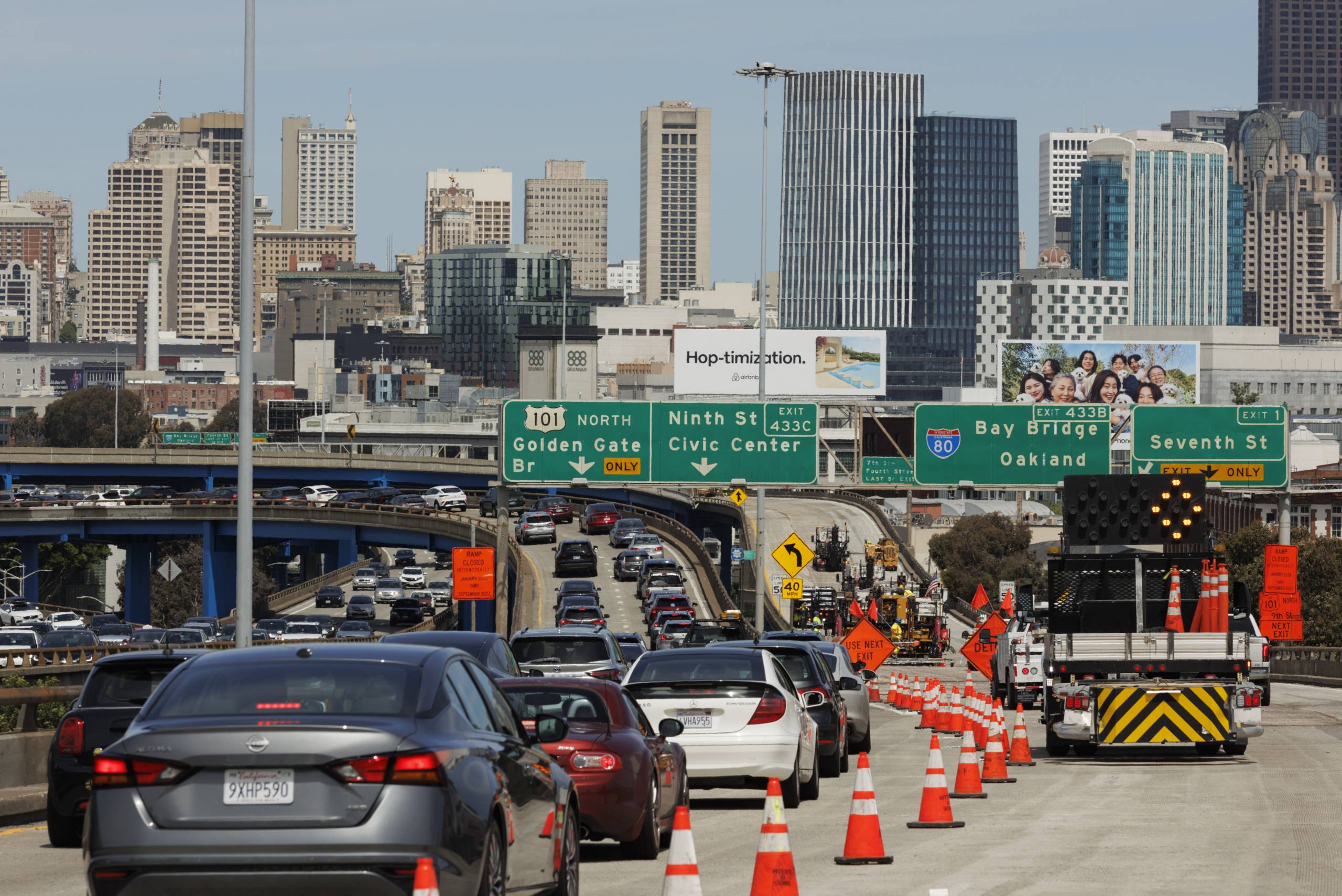
In this edition of The Bay’s monthly news roundup, we discuss a new report that found traffic delays could double if voters reject two public transit-related ballot measures. We also discuss a pilot program that builds solar panels over irrigation canals and preview the Golden State Valkyries return to the playoffs. Plus, we say goodbye to The Bay’s senior editor, Alan Montecillo.
Links:
- Bay Bridge Traffic Delays Would Double if Transit Tax Measures Fail, Report Finds (KQED)
- Here’s What California Is Learning From Solar Panels Built Over Irrigation Canals (KQED)
- The Valkyries aren’t just an impressive expansion team. This is an all-time season (SF Standard)
Episode transcript
This transcript is computer-generated. While our team has reviewed it, there may be errors.
Ericka Cruz Guevarra: I’m Ericka Cruz Guevarra and welcome to The Bay’s September News Roundup where we sit down and talk about some of the other stories on our radars this month. Today I’m joined by the Bay Senior Editor, Alan Montecillo. Hey, Alan.
Alan Montecillo: Hello, good morning.
Ericka Cruz Guevarra: And our very special guest this month is Erika Kelly, KQED’s interim managing editor. Hey, Erika.
Erika Kelly: Hello, Ericka. Two Erikas.
Ericka Cruz Guevarra: That’s right.
Erika Kelly: Lots of Erikas.
Ericka Cruz Guevarra: Well, Erika, folks might not be familiar with your voice and your name, but can you tell us a little bit more about what you do here?
Erika Kelly: Yeah, I usually am behind the scenes, and one of the things I really love about my job is that I get to work with teams across the newsroom covering all kinds of things from arts to housing to politics to labor and to health and climate, which is what I’m gonna talk about here today.
Ericka Cruz Guevarra: I can’t believe it but fall is finally here, though it doesn’t really feel like it this week. It’s a little hot.
Alan Montecillo: It’s Bay Area summer in September.
Ericka Cruz Guevarra: It is Bay Area summer, but that means the election is very near and our newsroom is gearing up and so are we, Alan. We’re working on Prop Fest, folks might remember that.
Alan Montecillo: Prop Fest is a collaboration between us and our friends at Bay Curious. So starting Monday, September 28th, every weekday until Friday, October 9th, expect daily drops in your feed about all 14 ballot measures on the ballot at the state level in this election.
Ericka Cruz Guevarra: If you’re in need of some help this November, I mean, there are 14 props, way too many.
Alan Montecillo: And they’re really complicated at times, too. Sometimes they’re simple, they’re like, should we do this or that? And sometimes they’re about process. Sometimes they are about some insidery fight between political factions. So there’s a lot to talk about with many of these.
Ericka Cruz Guevarra: Let’s dive in then. We’re actually gonna start with my story here about a forecast report on what traffic would look like in the Bay Area if voters reject two ballot measures to fund BART, AC Transit, Muni, and Caltrain. And the forecast report is not pretty. It just is expected to get way worse than we already see it right now if voters reject this year’s regional transit measure and Prop H in San Francisco.
Erika Kelly: There are actually two measures you’re talking about. What would they actually do?
Ericka Cruz Guevarra: So the regional transit measure affects five Bay Area counties. It’s a half cent sales tax in Alameda, Contra Costa, San Mateo, and Santa Clara counties. For voters in San Francisco it’s one cent sales that is expected to generate about a billion dollars annually. Our colleague Azul Dahlstrom-Eckman reported on some new research published by the San Francisco Bay Area Planning and Urban Research Association, or SPUR. It’s a nonpartisan, non-profit public policy think tank. I should mention though that SPUR is a sponsor of one of the tax measures in question, but SPUR actually hired this engineering and infrastructure consulting firm to do this analysis. And it found that traffic in the Bay Area would more than double.
Erika Kelly: That sounds apocalyptic for people who are already sitting in a lot of really bad Bay Area traffic. What are the things that are going to drive that? Does it mean fewer BART trains, fewer Muni trains, all those kinds of things?
Ericka Cruz Guevarra: Yeah, it might be helpful to step back a little bit and talk about, I guess, really like the stakes of these transit measures on the ballot this November. So, BART, AC Transit, Muni, Caltrain, all really struggling since the pandemic to get people back riding their busses and trains. BART has been operating at 50% of ridership since the pandemic and each of these agencies face I mean, massive, massive budget deficits because of these pandemic era drops. And so these agencies are basically planning really big cuts if voters reject this regional transit measure. BART plans to close up to 15 stations. Caltrain plans to closed up to 10 stations. Muni stands to eliminate like 20 routes on their lines, and what this report shows is that without transit agencies operating at the same capacity that they are now, that’s just going to mean way, way, more traffic.
Alan Montecillo: Right, because presumably all these people who used to take BART into the city will have to figure out something else, probably drive more.
Ericka Cruz Guevarra: Exactly.
Alan Montecillo: When we say traffic is projected to double in the Bay Area, what do we mean by that? Does the report focus on specific crowded, you know, congested commute areas like the Bay Bridge, for instance?
Ericka Cruz Guevarra: Oh absolutely, I mean we all already know, it’s absolutely crazy on the Bay Bridge.
Alan Montecillo: Didn’t you drive in this morning?
Ericka Cruz Guevarra: I did drive in this morning and it was horrendous, which is why I never really do drive in, but it just is expected to get, yeah, way worse than we already see it right now. And it’s especially gonna be hard for commuters in the East Bay who might hit multiple bottlenecks along the way into San Francisco, for example, so the Bay Bridge is expected to see delays from 30 minutes during the morning and afternoon rush to something more like 63 minutes in the morning and 73 minutes in the afternoon. And our colleague Azul Dahlstrom-Eckman actually talked with Laura Tolkoff, she’s the transportation policy director at SPUR, just about some of these findings.
Laura Tolkoff Even if you don’t ride transit every day, your life is better because there is transit in the Bay Area.
Alan Montecillo: So, this report was published by SPUR, which is supporting the regional measure and then Prop H in San Francisco. Is there anyone out there saying, like, this is overblown, it’s not a big deal, these agencies just need to spend their money better, because there are groups opposing these measures to raise taxes to fund transit, right?
Ericka Cruz Guevarra: There is a campaign launched by the Contra Costa Taxpayers Association, who is opposed to the regional transit measure. And yeah, our colleague Azul has reported that this group is really arguing that these transit agencies should use their money better. And by that, they mean maybe reallocating money from certain projects to reduce their budget deficits. They also have argued that some of these agencies should increase efficiencies, so maybe try and reduce pay for some of their highest paid employees and stop construction on some of these ongoing projects to maybe fund day-to-day operations.
Ericka Cruz Guevarra: And that is it for my story. We’re gonna take a quick break, but when we come back, we’ll dig into some of the other stories that we’ve been following this month. By the way, if you appreciate the local deep dives that we bring you on the bay, please consider becoming a sustaining KQED member. We can’t do this work without you. Just go to donate.kqed.org/podcasts. We’ll be right back. And we’re back with The Bay’s September News Roundup. Erika Kelly, what story did you bring for us today?
Erika Kelly: So the story that has been ticking over my brain this week is called, Here’s What California Is Learning From Solar Panels Built Over Irrigation Canals. And it is by our tremendous intern, Ella Jackson. So this story is part of a series we’re called Flipping the Switch, and it is all about California’s effort to transition to clean and renewable energy by 2045. So I have a question for you. Have you ever driven down I-5 and seen the canals with all the water flowing in them?
Ericka Cruz Guevarra: Mm-hmm.
Erika Kelly: So California has thousands of miles of these things that carry water all over the state. So Ella went out to Turlock in the Central Valley to get a look at a pilot project where they have built solar panels over a small section of the canal. And the idea is to see whether building these solar panels over the canal can provide energy and also protect the canals from evaporation.
Alan Montecillo: So the story is what California is learning from this. So what do these solar panels do? What are we learning from?
Erika Kelly: So the pilot project is a collaboration between a firm called Solar AquaGrid, the local Turlock Irrigation District, UC Merced, and the California Department of Water Resources. And they have a lot of questions. And one of the things the researchers have learned is that if the state put panels over 100 miles of its canals, depending on the size, it could save enough water for 11,000 households, it could save that much water from evaporating into the atmosphere. It could also generate 1,400 megawatts of energy. Now, I don’t think much in megawatths, but that translates into enough power for 304,000 household. So really what we’re looking at is like a possible win-win for these like two thorny environmental problems, which is loss of water and also the need for clean energy. One of the other reasons it is potentially good is like, you need a lot of space to build solar panels, but to be able to build solar farms on undeveloped land, research shows that the permitting process can be up to two years, and much longer than if you’re trying to build it on something that’s already developed. So, that is like sort of the, third win in this win-win-win situation where you can build this on land that’s already being used and so you don’t come up against a lot of the resistance that could come from folks who are concerned about either wildlife in open areas or about concerns nearby to homes.
Ericka Cruz Guevarra: Looking at the picture of just like what this even looks like I mean it looks massive like a huge solar panel over like a canal of water I can imagine this being maybe really expensive to do. I mean you mentioned this is just a pilot project, are there any limits to this?
Erika Kelly: Right now, yes, there is a question about cost, and the state at the moment is not committing to do more of it. It’s also, this can’t work everywhere. Ella spoke to somebody in Contra Costa County who oversees the the irrigation canals there, and their canals sit, instead of sitting out in the middle of fields and by a big highway, they run through people’s backyards and they run by parks. And so there is not the access and the space to be able to build a structure like this. So it might work some places, but it’s not gonna work everywhere. And actually this story has been read by a ton of people online. It’s actually generating a lot of conversation. Some of it is about the cost. Some of is about, about the costs of the steel, the like the feasibility of all of it. And so I think that’s really interesting about this story is like on the surface, this seems like a perfect solution to these big problems. But then you really have to dig down into the nitty gritty and say, how does it actually get done?
Alan Montecillo: Isn’t this one of the most read stories on the website right now?
Erika Kelly: Not only is it number one on our website this week, but it is about to surpass every other story we have published over the last year.
Alan Montecillo: Wow. Why do you think that is?
Erika Kelly: I’ve been thinking about this a lot. And I think it really has captured people’s imaginations about what is possible when we are dealing with these huge, like I said, these huge environmental problems. How do we generate clean energy in order to wean ourselves off of fossil fuels? How do save water in a state that is famous for not having enough water? People love a solution. They love an idea of a solution and the idea that it could be win-win. You know, a lot of things seem hard or impossible and I think on the face of it, this seems like, oh, but of course.
Ericka Cruz Guevarra: It kind of feels like, duh, like the solution has sort of been right under our noses this whole time and maybe that’s what’s also capturing people’s imagination with this story.
Erika Kelly: Right, like why not?
Ericka Cruz Guevarra: Yeah. Well, Erika Kelly, this was such an interesting story. Thank you so much for bringing it today.
Erika Kelly: Thank you for having me. I love talking about it.
Ericka Cruz Guevarra: And last but not least, senior editor Alan Montecillo, what story have you been following this month?
Alan Montecillo: So last year, the Golden State Valkyries made the playoffs in their inaugural season. They surprised everybody. They sold out all other games with a record of 23 and 21. But this year they are back in the playoffs, which start on Sunday, and they’re one of the best teams in the league.
Ericka Cruz Guevarra: I know when they first started out, no one really expected them to be good, but then they were. And then after that, I think there was maybe an expectation that things would get harder over time. But it seems like they’re just still riding this wave.
Alan Montecillo: Yeah, I mean, I’ll say it’s probably not a surprise to the coach, Natalie Nakase, and the owner, Joe Lacob, who said that he wanted a championship within the first five years of starting the franchise. So just for some context, last year, like you said, first-year teams are not supposed to be very good. They defied expectations and just squeaked into the playoffs, which was already a huge accomplishment. No team in the WNBA had ever made it to the playoffs in their first year. This time, as of this taping, they are 31 and 12, and we’ll finish with either the second or third best record in the league. So we are officially out of the, oh, this is all gravy, oh my gosh, no expectations. We’re officially in like, oh this could end in disappointment or this could end in, dare I say, a championship?
Erika Kelly: You’re a true fan because you know that those are the different ways things could go.
Alan Montecillo: Yeah, it’s too late. I already opened my heart to elation or disappointment. That’s how it goes.
Ericka Cruz Guevarra: I mean, Alan, can you talk a little bit about what makes this team so good and what has made them so good?
Alan Montecillo: A lot of the things that made the team impressive last year have gotten even better this year. The most important thing to know is defense. The Valkyries have the best defense in the league. They play together, they play hard. But I think the key thing to note about their defense, even if you’re not super into basketball, is that they play connected. Basketball is a very fast-moving sport. The ball moves around a lot, people dribble into the paint, they try and kick it out for three. So, what matters a lot is togetherness and quickness. The ability to recover if someone beats you, this team is elite at that. So it’s not just one individual defender, two individual defenders, it’s five people, no matter who’s on the floor, kind of playing on a string. The other thing I would say is the team’s depth. Those of you listening who were around for the 2015 Golden State Warriors know that the motto for that team was strength in numbers. I would that applies equally as much to this year’s edition of the Valkyries. So by depth, I mean, they can play lots of good players off their bench. It means that even when the starters are off the floor, this team is a threat to make a run. The other thing I’ll say is home court advantage. Chase Center, AKA Ballhalla, is loud. It’s sold out every single game over two seasons. And in multiple surveys across the league, players and coaches and other teams have said that the Valkyries have the best home court advantage in the league. Wow.
Ericka Cruz Guevarra: Not surprising at all. Have you been to Valkyrie’s game, Erika?
Erika Kelly: Yes, I went last season and it was so much fun. The music is loud, people are dressed up, everyone’s wearing purple. The people, you can see that there are people who come to all the games or a lot of the games who are just, you know, already die-hard fans.
Ericka Cruz Guevarra: It’s also very. I feel like intergenerational, like there’s so many kids, but also a lot of older people too, a lot women, which is which is very nice to see.
Erika Kelly: Yes absolutely and yeah and it’s really part of this whole like growth in women’s sports in the Bay Area. I also go see Bay FC the women’s soccer team down in the South Bay and again it’s like it’s very intergenerational a lot of women a lot and just a lot a love for the team. So when do the playoffs start and do you think they could actually win it?
Alan Montecillo: So we don’t know who they’re playing yet as of this taping. By the time this airs, we might know who their first round opponent is. But we do know that game one is going to be at Chase Center on Sunday. The WNBA playoffs are three rounds. As to their chances, I would say they are not the favorites, but they have a real shot. They do not necessarily have the superstar power of other teams like Minnesota or Las Vegas. But the things that I mentioned earlier in terms of this team’s defense, their togetherness, their toughness. Especially if the three-pointers are going in too, I think they could do it. I mean, it would be a surprise, but this team has surpassed expectations before.
Ericka Cruz Guevarra: And before we go, this is actually our senior editor, Alan Montecillo:’s very last news roundup with us here at The Bay. Alan, you’re leaving the Bay, the show, but you’re also leaving the Bay Area. Where are you going?
Alan Montecillo: I am moving to St. Louis with my partner who started a graduate program there. So next week I will be leaving KQED after nearly seven years with the show and hundreds of episodes later. Mm, definitely. Yeah, hard to count. And so it’s bittersweet. Excited for the new opportunity, but also I will miss the team very much and just all the work we’ve done.
Ericka Cruz Guevarra: I remember when you first started on the Bay, right before actually the pandemic. I think I mentioned this to you the other day. You’re like the longest colleague I’ve ever had. I’ve never been a coworker with someone for as long as I’ve been on a team with you. And it’s been a pleasure and we’re gonna miss you. We’re gonna to miss you on the bay.
Alan Montecillo: Thank you, ECG. It’s been so much fun working on this team. And I’m grateful to have worked at KQED and also with everyone who’s ever worked on The Bay.
Ericka Cruz Guevarra: Alan Montecillo, senior editor of The Bay, for the last time, thank you so much.
Alan Montecillo: My pleasure.
Ericka Cruz Guevarra: And Erika Kelly, Interim Managing Editor for KQED. Thank you as well.
Erika Kelly: You, Erika.
Ericka Cruz Guevarra: This episode was produced by Gabriela Glueck, music courtesy of Audio Network and APM. The base of production of listener supported KQED public media in San Francisco. Support is provided in part by the Osher Production Fund. Some members of the KQE podcast team are represented by the Screen Actors Guild, American Federation of Television and Radio Artists, San Francisco, Northern California Local. And I’m Ericka Cruz Guevarra. Thank you so much for listening. Peace.
Some members of the KQED podcast team are represented by The Screen Actors Guild, American Federation of Television and Radio Artists, San Francisco-Northern California Local.