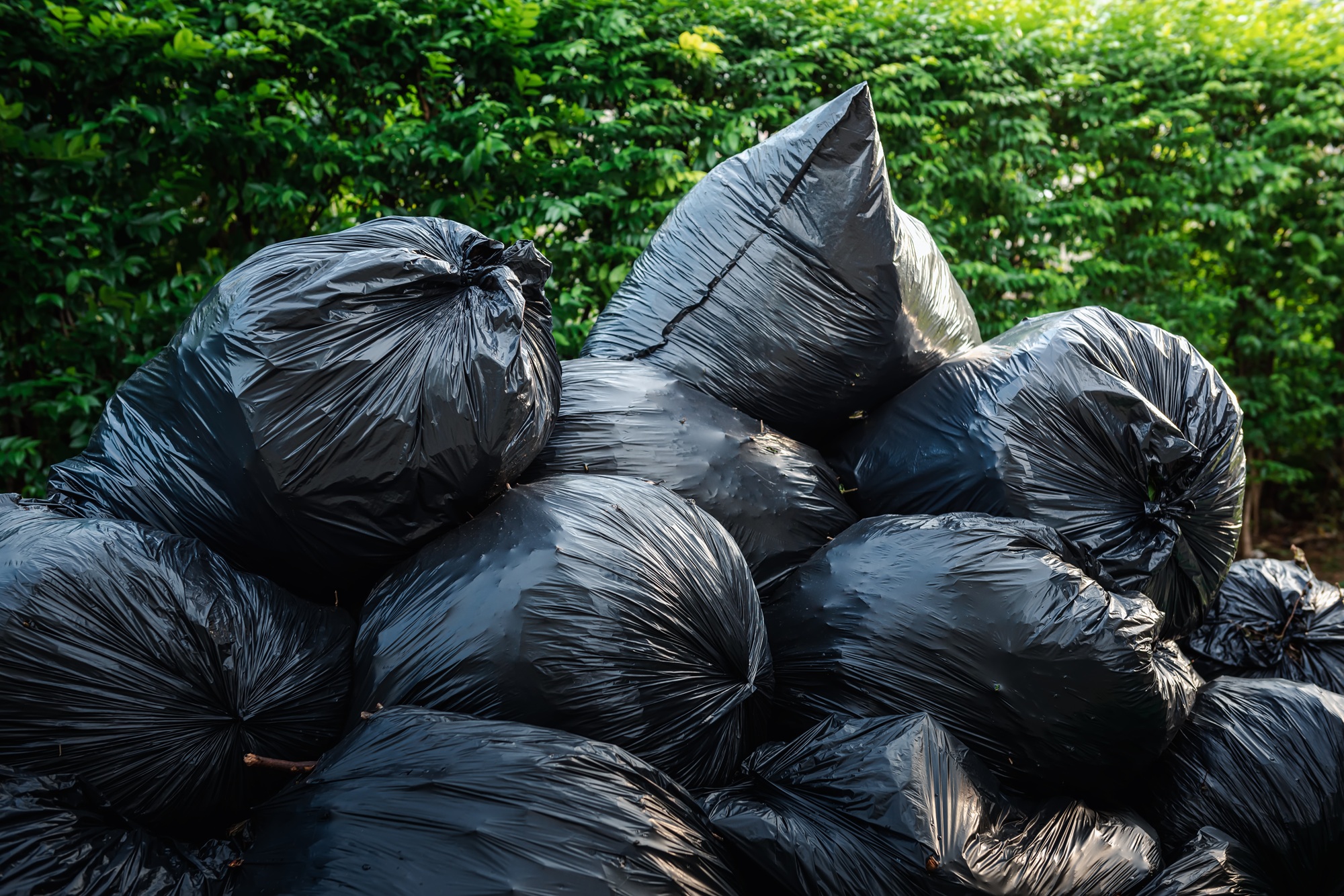
Bay Area Trash Pickups Stall as Republic Services Workers Join Nationwide Strike
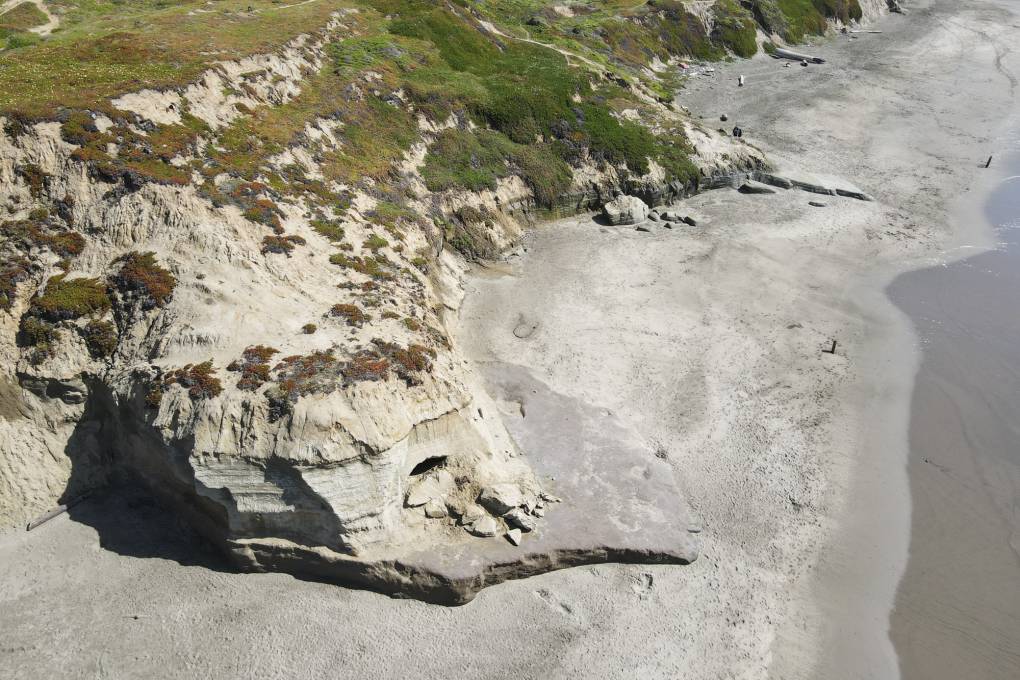
What Is That Massive Tunnel on the Beach South of Fort Funston?
Fake Flyer Warning of SF Area ICE Raids Shows How False Rumors Spread Fear
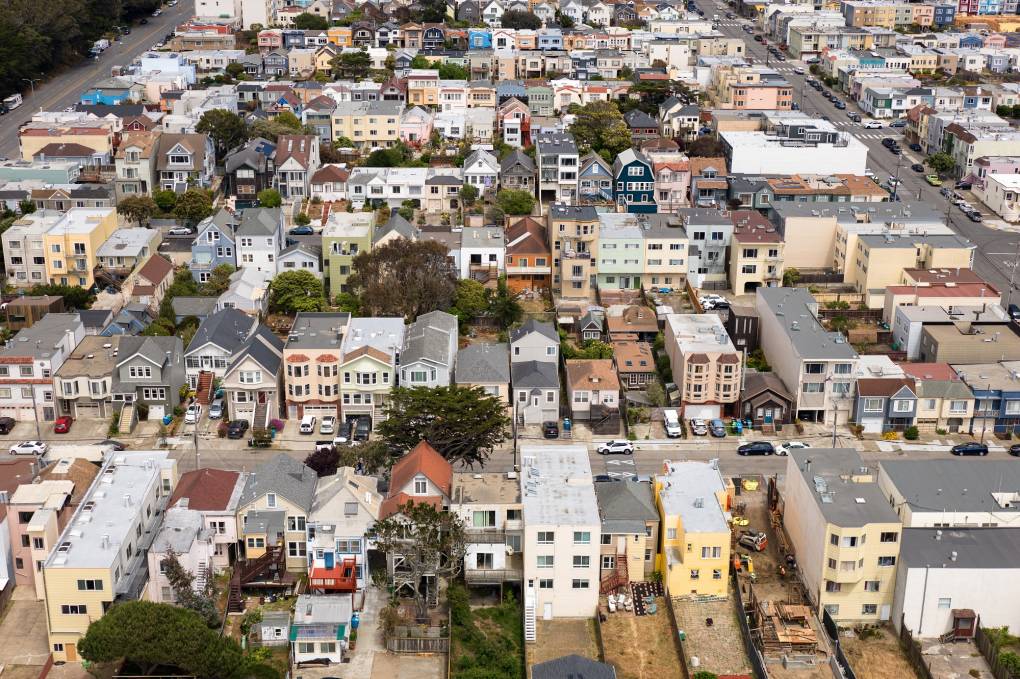
Largest Affordable Housing Project in San Mateo County History Clears Key Funding Step
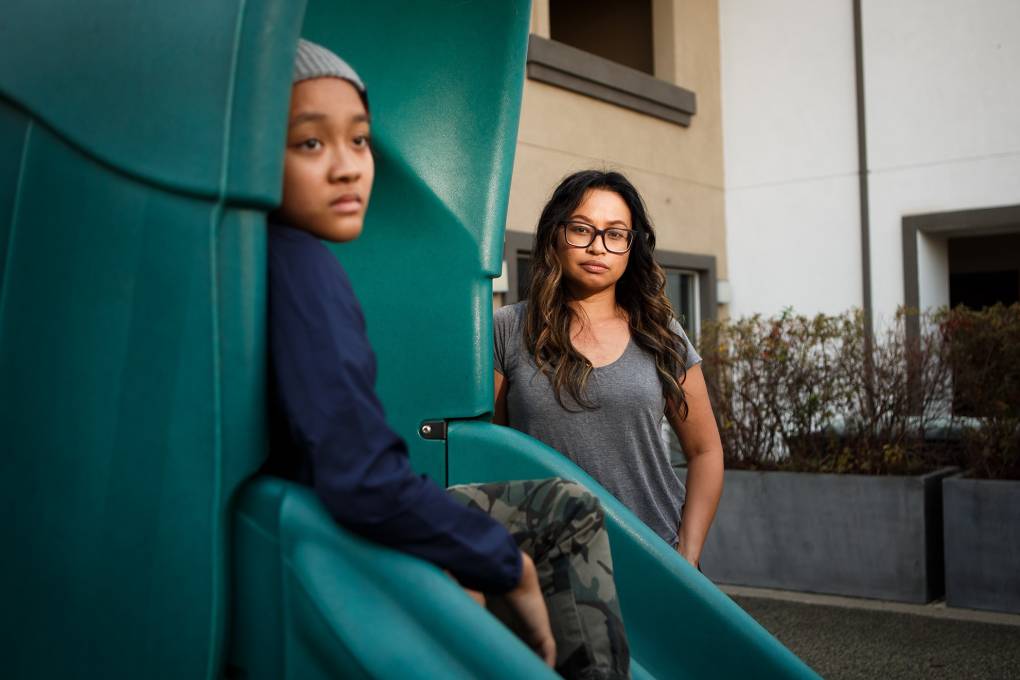
How the Pandemic Drowned a Bay Area Mom in Debt — and What She's Doing to Stay Afloat
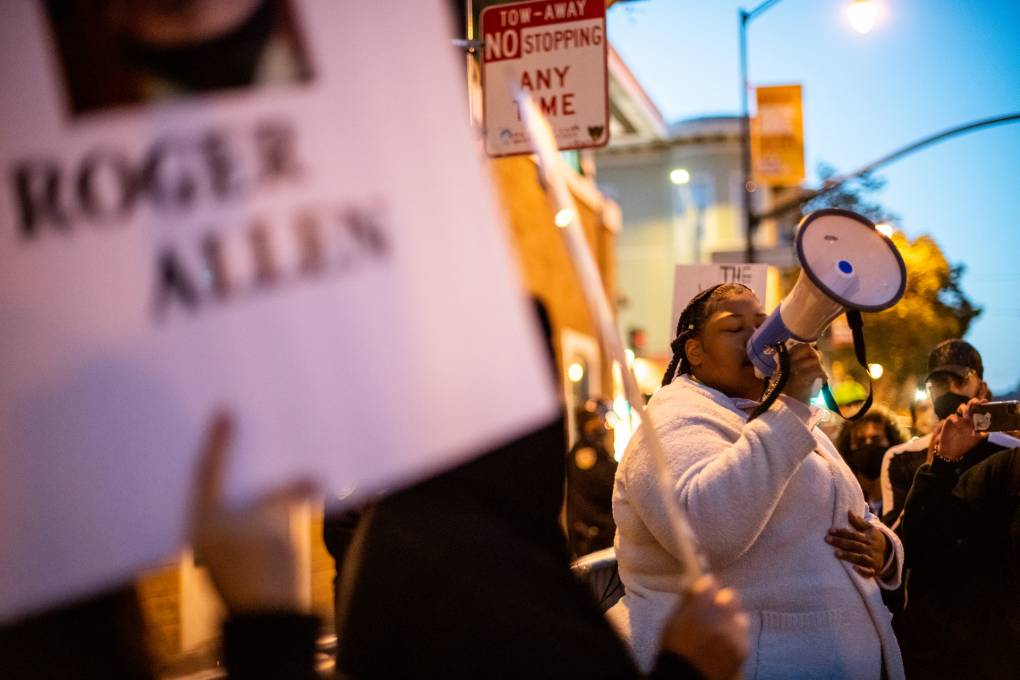
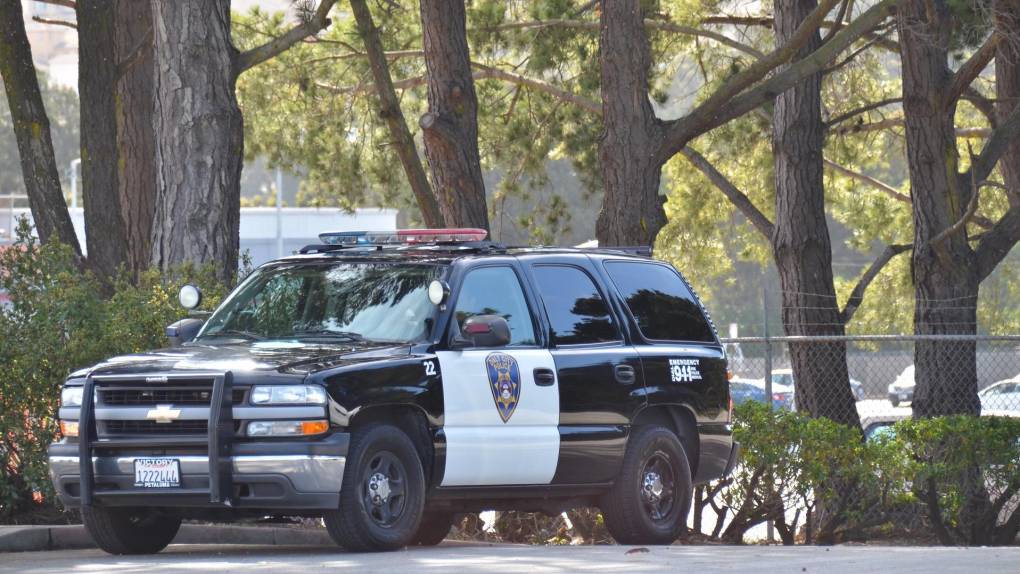
DA Says Daly City Police Killing of Roger Allen Was Lawful
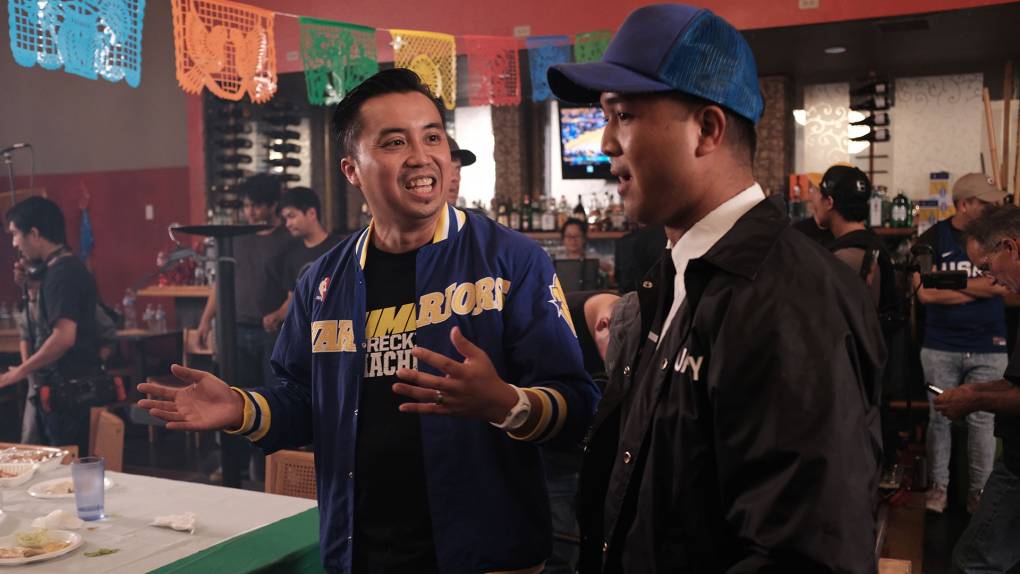
How Growing Up in Daly City Influenced Filmmaker Patricio Ginelsa
In Wake of Roger Allen Killing, Daly City Plans Body Camera Program — After Four Year Delay
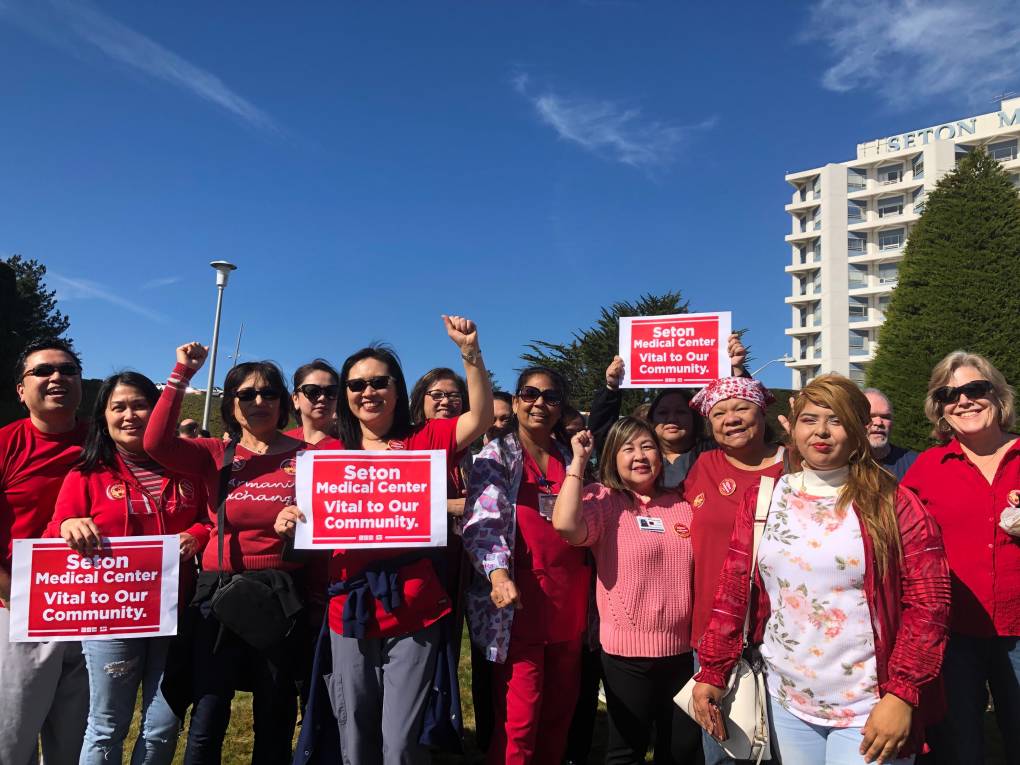
Will Daly City's Only Hospital Survive?
Sponsored
Player sponsored by
window.__IS_SSR__=true
window.__INITIAL_STATE__={
"attachmentsReducer": {
"audio_0": {
"type": "attachments",
"id": "audio_0",
"imgSizes": {
"kqedFullSize": {
"file": "https://ww2.kqed.org/news/wp-content/themes/KQED-unified/img/audio_bgs/background0.jpg"
}
}
},
"audio_1": {
"type": "attachments",
"id": "audio_1",
"imgSizes": {
"kqedFullSize": {
"file": "https://ww2.kqed.org/news/wp-content/themes/KQED-unified/img/audio_bgs/background1.jpg"
}
}
},
"audio_2": {
"type": "attachments",
"id": "audio_2",
"imgSizes": {
"kqedFullSize": {
"file": "https://ww2.kqed.org/news/wp-content/themes/KQED-unified/img/audio_bgs/background2.jpg"
}
}
},
"audio_3": {
"type": "attachments",
"id": "audio_3",
"imgSizes": {
"kqedFullSize": {
"file": "https://ww2.kqed.org/news/wp-content/themes/KQED-unified/img/audio_bgs/background3.jpg"
}
}
},
"audio_4": {
"type": "attachments",
"id": "audio_4",
"imgSizes": {
"kqedFullSize": {
"file": "https://ww2.kqed.org/news/wp-content/themes/KQED-unified/img/audio_bgs/background4.jpg"
}
}
},
"placeholder": {
"type": "attachments",
"id": "placeholder",
"imgSizes": {
"thumbnail": {
"file": "https://cdn.kqed.org/wp-content/uploads/2024/12/KQED-Default-Image-816638274-2000x1333-1-160x107.jpg",
"width": 160,
"height": 107,
"mimeType": "image/jpeg"
},
"medium": {
"file": "https://cdn.kqed.org/wp-content/uploads/2024/12/KQED-Default-Image-816638274-2000x1333-1-800x533.jpg",
"width": 800,
"height": 533,
"mimeType": "image/jpeg"
},
"medium_large": {
"file": "https://cdn.kqed.org/wp-content/uploads/2024/12/KQED-Default-Image-816638274-2000x1333-1-768x512.jpg",
"width": 768,
"height": 512,
"mimeType": "image/jpeg"
},
"large": {
"file": "https://cdn.kqed.org/wp-content/uploads/2024/12/KQED-Default-Image-816638274-2000x1333-1-1020x680.jpg",
"width": 1020,
"height": 680,
"mimeType": "image/jpeg"
},
"1536x1536": {
"file": "https://cdn.kqed.org/wp-content/uploads/2024/12/KQED-Default-Image-816638274-2000x1333-1-1536x1024.jpg",
"width": 1536,
"height": 1024,
"mimeType": "image/jpeg"
},
"fd-lrg": {
"file": "https://cdn.kqed.org/wp-content/uploads/2024/12/KQED-Default-Image-816638274-2000x1333-1-1536x1024.jpg",
"width": 1536,
"height": 1024,
"mimeType": "image/jpeg"
},
"fd-med": {
"file": "https://cdn.kqed.org/wp-content/uploads/2024/12/KQED-Default-Image-816638274-2000x1333-1-1020x680.jpg",
"width": 1020,
"height": 680,
"mimeType": "image/jpeg"
},
"fd-sm": {
"file": "https://cdn.kqed.org/wp-content/uploads/2024/12/KQED-Default-Image-816638274-2000x1333-1-800x533.jpg",
"width": 800,
"height": 533,
"mimeType": "image/jpeg"
},
"post-thumbnail": {
"file": "https://cdn.kqed.org/wp-content/uploads/2024/12/KQED-Default-Image-816638274-2000x1333-1-672x372.jpg",
"width": 672,
"height": 372,
"mimeType": "image/jpeg"
},
"twentyfourteen-full-width": {
"file": "https://cdn.kqed.org/wp-content/uploads/2024/12/KQED-Default-Image-816638274-2000x1333-1-1038x576.jpg",
"width": 1038,
"height": 576,
"mimeType": "image/jpeg"
},
"xxsmall": {
"file": "https://cdn.kqed.org/wp-content/uploads/2024/12/KQED-Default-Image-816638274-2000x1333-1-160x107.jpg",
"width": 160,
"height": 107,
"mimeType": "image/jpeg"
},
"xsmall": {
"file": "https://cdn.kqed.org/wp-content/uploads/2024/12/KQED-Default-Image-816638274-2000x1333-1-672x372.jpg",
"width": 672,
"height": 372,
"mimeType": "image/jpeg"
},
"small": {
"file": "https://cdn.kqed.org/wp-content/uploads/2024/12/KQED-Default-Image-816638274-2000x1333-1-672x372.jpg",
"width": 672,
"height": 372,
"mimeType": "image/jpeg"
},
"xlarge": {
"file": "https://cdn.kqed.org/wp-content/uploads/2024/12/KQED-Default-Image-816638274-2000x1333-1-1020x680.jpg",
"width": 1020,
"height": 680,
"mimeType": "image/jpeg"
},
"full-width": {
"file": "https://cdn.kqed.org/wp-content/uploads/2024/12/KQED-Default-Image-816638274-2000x1333-1-1920x1280.jpg",
"width": 1920,
"height": 1280,
"mimeType": "image/jpeg"
},
"guest-author-32": {
"file": "https://cdn.kqed.org/wp-content/uploads/2025/01/KQED-Default-Image-816638274-1333x1333-1-160x160.jpg",
"width": 32,
"height": 32,
"mimeType": "image/jpeg"
},
"guest-author-50": {
"file": "https://cdn.kqed.org/wp-content/uploads/2025/01/KQED-Default-Image-816638274-1333x1333-1-160x160.jpg",
"width": 50,
"height": 50,
"mimeType": "image/jpeg"
},
"guest-author-64": {
"file": "https://cdn.kqed.org/wp-content/uploads/2025/01/KQED-Default-Image-816638274-1333x1333-1-160x160.jpg",
"width": 64,
"height": 64,
"mimeType": "image/jpeg"
},
"guest-author-96": {
"file": "https://cdn.kqed.org/wp-content/uploads/2025/01/KQED-Default-Image-816638274-1333x1333-1-160x160.jpg",
"width": 96,
"height": 96,
"mimeType": "image/jpeg"
},
"guest-author-128": {
"file": "https://cdn.kqed.org/wp-content/uploads/2025/01/KQED-Default-Image-816638274-1333x1333-1-160x160.jpg",
"width": 128,
"height": 128,
"mimeType": "image/jpeg"
},
"detail": {
"file": "https://cdn.kqed.org/wp-content/uploads/2025/01/KQED-Default-Image-816638274-1333x1333-1-160x160.jpg",
"width": 160,
"height": 160,
"mimeType": "image/jpeg"
},
"kqedFullSize": {
"file": "https://cdn.kqed.org/wp-content/uploads/2024/12/KQED-Default-Image-816638274-2000x1333-1.jpg",
"width": 2000,
"height": 1333
}
}
},
"news_12047919": {
"type": "attachments",
"id": "news_12047919",
"meta": {
"index": "attachments_1716263798",
"site": "news",
"id": "12047919",
"found": true
},
"title": "Concepts Save The World and Environmental Issues, Garbage Bags Stacking Storage Against Green Trees Backgrounds. Waste Management",
"publishDate": 1752515742,
"status": "inherit",
"parent": 12047597,
"modified": 1752515766,
"caption": "Three days after Bay Area workers joined their East Coast counterparts in a nationwide strike, garbage pickups across several counties have been on pause, causing trash pileups.",
"credit": "KDP/iStock via Getty Images",
"altTag": null,
"description": null,
"imgSizes": {
"thumbnail": {
"file": "https://cdn.kqed.org/wp-content/uploads/sites/10/2025/07/GarbageBagsGetty-160x107.jpg",
"width": 160,
"height": 107,
"mimeType": "image/jpeg"
},
"1536x1536": {
"file": "https://cdn.kqed.org/wp-content/uploads/sites/10/2025/07/GarbageBagsGetty-1536x1025.jpg",
"width": 1536,
"height": 1025,
"mimeType": "image/jpeg"
},
"post-thumbnail": {
"file": "https://cdn.kqed.org/wp-content/uploads/sites/10/2025/07/GarbageBagsGetty-672x372.jpg",
"width": 672,
"height": 372,
"mimeType": "image/jpeg"
},
"twentyfourteen-full-width": {
"file": "https://cdn.kqed.org/wp-content/uploads/sites/10/2025/07/GarbageBagsGetty-1038x576.jpg",
"width": 1038,
"height": 576,
"mimeType": "image/jpeg"
},
"kqedFullSize": {
"file": "https://cdn.kqed.org/wp-content/uploads/sites/10/2025/07/GarbageBagsGetty.jpg",
"width": 2000,
"height": 1334
}
},
"fetchFailed": false,
"isLoading": false
},
"news_12032816": {
"type": "attachments",
"id": "news_12032816",
"meta": {
"index": "attachments_1716263798",
"site": "news",
"id": "12032816",
"found": true
},
"title": "250320-THORNTONBEACH-06-BL-KQED",
"publishDate": 1742853402,
"status": "inherit",
"parent": 0,
"modified": 1742854875,
"caption": "Rocks cover a tunnel entrance at Phillip Burton Memorial Beach, located between Thornton State Beach and Fort Funston Beach, in San Francisco on March 21, 2025.",
"credit": "Beth LaBerge/KQED",
"altTag": null,
"description": null,
"imgSizes": {
"medium": {
"file": "https://cdn.kqed.org/wp-content/uploads/sites/10/2025/03/250320-THORNTONBEACH-06-BL-KQED-800x534.jpg",
"width": 800,
"height": 534,
"mimeType": "image/jpeg"
},
"large": {
"file": "https://cdn.kqed.org/wp-content/uploads/sites/10/2025/03/250320-THORNTONBEACH-06-BL-KQED-1020x680.jpg",
"width": 1020,
"height": 680,
"mimeType": "image/jpeg"
},
"thumbnail": {
"file": "https://cdn.kqed.org/wp-content/uploads/sites/10/2025/03/250320-THORNTONBEACH-06-BL-KQED-160x107.jpg",
"width": 160,
"height": 107,
"mimeType": "image/jpeg"
},
"1536x1536": {
"file": "https://cdn.kqed.org/wp-content/uploads/sites/10/2025/03/250320-THORNTONBEACH-06-BL-KQED-1536x1025.jpg",
"width": 1536,
"height": 1025,
"mimeType": "image/jpeg"
},
"post-thumbnail": {
"file": "https://cdn.kqed.org/wp-content/uploads/sites/10/2025/03/250320-THORNTONBEACH-06-BL-KQED-672x372.jpg",
"width": 672,
"height": 372,
"mimeType": "image/jpeg"
},
"twentyfourteen-full-width": {
"file": "https://cdn.kqed.org/wp-content/uploads/sites/10/2025/03/250320-THORNTONBEACH-06-BL-KQED-1038x576.jpg",
"width": 1038,
"height": 576,
"mimeType": "image/jpeg"
},
"full-width": {
"file": "https://cdn.kqed.org/wp-content/uploads/sites/10/2025/03/250320-THORNTONBEACH-06-BL-KQED-1920x1281.jpg",
"width": 1920,
"height": 1281,
"mimeType": "image/jpeg"
},
"kqedFullSize": {
"file": "https://cdn.kqed.org/wp-content/uploads/sites/10/2025/03/250320-THORNTONBEACH-06-BL-KQED.jpg",
"width": 2000,
"height": 1334
}
},
"fetchFailed": false,
"isLoading": false
},
"news_12024430": {
"type": "attachments",
"id": "news_12024430",
"meta": {
"index": "attachments_1716263798",
"site": "news",
"id": "12024430",
"found": true
},
"title": "250128-SFImmigration-08-BL",
"publishDate": 1738105102,
"status": "inherit",
"parent": 12024325,
"modified": 1742325555,
"caption": "A group of elected and public safety officials, labor leaders, and community members fill the steps in front of City Hall in San Francisco on Jan. 28, 2025, during a press conference to reaffirm San Francisco’s commitment to being a Sanctuary City.",
"credit": "Beth LaBerge/KQED",
"altTag": null,
"description": null,
"imgSizes": {
"medium": {
"file": "https://cdn.kqed.org/wp-content/uploads/sites/10/2025/01/250128-SFImmigration-08-BL-800x533.jpg",
"width": 800,
"height": 533,
"mimeType": "image/jpeg"
},
"large": {
"file": "https://cdn.kqed.org/wp-content/uploads/sites/10/2025/01/250128-SFImmigration-08-BL-1020x680.jpg",
"width": 1020,
"height": 680,
"mimeType": "image/jpeg"
},
"thumbnail": {
"file": "https://cdn.kqed.org/wp-content/uploads/sites/10/2025/01/250128-SFImmigration-08-BL-160x107.jpg",
"width": 160,
"height": 107,
"mimeType": "image/jpeg"
},
"1536x1536": {
"file": "https://cdn.kqed.org/wp-content/uploads/sites/10/2025/01/250128-SFImmigration-08-BL-1536x1024.jpg",
"width": 1536,
"height": 1024,
"mimeType": "image/jpeg"
},
"post-thumbnail": {
"file": "https://cdn.kqed.org/wp-content/uploads/sites/10/2025/01/250128-SFImmigration-08-BL-672x372.jpg",
"width": 672,
"height": 372,
"mimeType": "image/jpeg"
},
"twentyfourteen-full-width": {
"file": "https://cdn.kqed.org/wp-content/uploads/sites/10/2025/01/250128-SFImmigration-08-BL-1038x576.jpg",
"width": 1038,
"height": 576,
"mimeType": "image/jpeg"
},
"full-width": {
"file": "https://cdn.kqed.org/wp-content/uploads/sites/10/2025/01/250128-SFImmigration-08-BL-1920x1280.jpg",
"width": 1920,
"height": 1280,
"mimeType": "image/jpeg"
},
"kqedFullSize": {
"file": "https://cdn.kqed.org/wp-content/uploads/sites/10/2025/01/250128-SFImmigration-08-BL.jpg",
"width": 2000,
"height": 1333
}
},
"fetchFailed": false,
"isLoading": false
},
"news_12002137": {
"type": "attachments",
"id": "news_12002137",
"meta": {
"index": "attachments_1716263798",
"site": "news",
"id": "12002137",
"found": true
},
"title": "Residential Streets in Daly City, CA - Drone Shot",
"publishDate": 1724868581,
"status": "inherit",
"parent": 12002130,
"modified": 1724868882,
"caption": "San Mateo County supervisors approved a $14 million loan for the largest affordable housing project in the county's history — a 555-unit complex near the Cow Palace in Daly City. ",
"credit": "Hal Bergman/Getty Images",
"altTag": null,
"description": null,
"imgSizes": {
"medium": {
"file": "https://cdn.kqed.org/wp-content/uploads/sites/10/2024/08/DalyCityGetty1-800x533.jpg",
"width": 800,
"height": 533,
"mimeType": "image/jpeg"
},
"large": {
"file": "https://cdn.kqed.org/wp-content/uploads/sites/10/2024/08/DalyCityGetty1-1020x679.jpg",
"width": 1020,
"height": 679,
"mimeType": "image/jpeg"
},
"thumbnail": {
"file": "https://cdn.kqed.org/wp-content/uploads/sites/10/2024/08/DalyCityGetty1-160x107.jpg",
"width": 160,
"height": 107,
"mimeType": "image/jpeg"
},
"1536x1536": {
"file": "https://cdn.kqed.org/wp-content/uploads/sites/10/2024/08/DalyCityGetty1-1536x1023.jpg",
"width": 1536,
"height": 1023,
"mimeType": "image/jpeg"
},
"post-thumbnail": {
"file": "https://cdn.kqed.org/wp-content/uploads/sites/10/2024/08/DalyCityGetty1-672x372.jpg",
"width": 672,
"height": 372,
"mimeType": "image/jpeg"
},
"twentyfourteen-full-width": {
"file": "https://cdn.kqed.org/wp-content/uploads/sites/10/2024/08/DalyCityGetty1-1038x576.jpg",
"width": 1038,
"height": 576,
"mimeType": "image/jpeg"
},
"full-width": {
"file": "https://cdn.kqed.org/wp-content/uploads/sites/10/2024/08/DalyCityGetty1-1920x1279.jpg",
"width": 1920,
"height": 1279,
"mimeType": "image/jpeg"
},
"kqedFullSize": {
"file": "https://cdn.kqed.org/wp-content/uploads/sites/10/2024/08/DalyCityGetty1.jpg",
"width": 2000,
"height": 1332
}
},
"fetchFailed": false,
"isLoading": false
},
"news_11895096": {
"type": "attachments",
"id": "news_11895096",
"meta": {
"index": "attachments_1716263798",
"site": "news",
"id": "11895096",
"found": true
},
"parent": 11895075,
"imgSizes": {
"twentyfourteen-full-width": {
"file": "https://ww2.kqed.org/app/uploads/sites/10/2021/11/102521-SJM-REALISTATE-CM-01-1038x576.jpg",
"width": 1038,
"mimeType": "image/jpeg",
"height": 576
},
"thumbnail": {
"file": "https://ww2.kqed.org/app/uploads/sites/10/2021/11/102521-SJM-REALISTATE-CM-01-160x107.jpg",
"width": 160,
"mimeType": "image/jpeg",
"height": 107
},
"post-thumbnail": {
"file": "https://ww2.kqed.org/app/uploads/sites/10/2021/11/102521-SJM-REALISTATE-CM-01-672x372.jpg",
"width": 672,
"mimeType": "image/jpeg",
"height": 372
},
"kqedFullSize": {
"file": "https://ww2.kqed.org/app/uploads/sites/10/2021/11/102521-SJM-REALISTATE-CM-01.jpg",
"width": 1982,
"height": 1321
},
"large": {
"file": "https://ww2.kqed.org/app/uploads/sites/10/2021/11/102521-SJM-REALISTATE-CM-01-1020x680.jpg",
"width": 1020,
"mimeType": "image/jpeg",
"height": 680
},
"1536x1536": {
"file": "https://ww2.kqed.org/app/uploads/sites/10/2021/11/102521-SJM-REALISTATE-CM-01-1536x1024.jpg",
"width": 1536,
"mimeType": "image/jpeg",
"height": 1024
},
"full-width": {
"file": "https://ww2.kqed.org/app/uploads/sites/10/2021/11/102521-SJM-REALISTATE-CM-01-1920x1280.jpg",
"width": 1920,
"mimeType": "image/jpeg",
"height": 1280
},
"medium": {
"file": "https://ww2.kqed.org/app/uploads/sites/10/2021/11/102521-SJM-REALISTATE-CM-01-800x533.jpg",
"width": 800,
"mimeType": "image/jpeg",
"height": 533
}
},
"publishDate": 1635989865,
"modified": 1636068407,
"caption": "Maybelle Manio, right, and her son, Jake Cruz, at their new apartment in San Mateo on Oct. 4, 2021. They moved into the new place in August.",
"description": "Maybelle Manio, right, and her son, Jake Cruz at their new apartment in San Mateo on Oct. 4, 2021.",
"title": "102521-SJM-REALISTATE-CM-01",
"credit": "Dai Sugano/Bay Area News Group",
"status": "inherit",
"altTag": "A preteen wearing a hoodie sits at the top of a green, hard-plastic slide looking into the distance. Beyond him, a woman with long brown hair, glasses, and a gray T-shirt looks at the camera.",
"fetchFailed": false,
"isLoading": false
},
"news_11885872": {
"type": "attachments",
"id": "news_11885872",
"meta": {
"index": "attachments_1716263798",
"site": "news",
"id": "11885872",
"found": true
},
"parent": 11885846,
"imgSizes": {
"twentyfourteen-full-width": {
"file": "https://ww2.kqed.org/app/uploads/sites/10/2021/08/RS48605_051_SanFrancisco_DefundSFPDMarch_04152021-qut-1038x576.jpg",
"width": 1038,
"mimeType": "image/jpeg",
"height": 576
},
"thumbnail": {
"file": "https://ww2.kqed.org/app/uploads/sites/10/2021/08/RS48605_051_SanFrancisco_DefundSFPDMarch_04152021-qut-160x107.jpg",
"width": 160,
"mimeType": "image/jpeg",
"height": 107
},
"post-thumbnail": {
"file": "https://ww2.kqed.org/app/uploads/sites/10/2021/08/RS48605_051_SanFrancisco_DefundSFPDMarch_04152021-qut-672x372.jpg",
"width": 672,
"mimeType": "image/jpeg",
"height": 372
},
"kqedFullSize": {
"file": "https://ww2.kqed.org/app/uploads/sites/10/2021/08/RS48605_051_SanFrancisco_DefundSFPDMarch_04152021-qut.jpg",
"width": 1920,
"height": 1280
},
"large": {
"file": "https://ww2.kqed.org/app/uploads/sites/10/2021/08/RS48605_051_SanFrancisco_DefundSFPDMarch_04152021-qut-1020x680.jpg",
"width": 1020,
"mimeType": "image/jpeg",
"height": 680
},
"1536x1536": {
"file": "https://ww2.kqed.org/app/uploads/sites/10/2021/08/RS48605_051_SanFrancisco_DefundSFPDMarch_04152021-qut-1536x1024.jpg",
"width": 1536,
"mimeType": "image/jpeg",
"height": 1024
},
"medium": {
"file": "https://ww2.kqed.org/app/uploads/sites/10/2021/08/RS48605_051_SanFrancisco_DefundSFPDMarch_04152021-qut-800x533.jpg",
"width": 800,
"mimeType": "image/jpeg",
"height": 533
}
},
"publishDate": 1629506816,
"modified": 1629506868,
"caption": "Talika Fletcher, Roger Allen's sister, speaks outside of the Mission Police Station in San Francisco on April 15, 2021, during a rally in her brother’s honor and those killed by police violence. Roger Allen was shot and killed by Daly City police on April 7.",
"description": "Talika Fletcher, Roger Allen's sister, speaks outside of the Mission Police Station in San Francisco on April 15, 2021, during a rally in her brother’s honor and those killed by police violence. Roger Allen was shot and killed by Daly City police on April 7.",
"title": "RS48605_051_SanFrancisco_DefundSFPDMarch_04152021-qut",
"credit": "Beth LaBerge/KQED",
"status": "inherit",
"altTag": null,
"fetchFailed": false,
"isLoading": false
},
"news_11883786": {
"type": "attachments",
"id": "news_11883786",
"meta": {
"index": "attachments_1716263798",
"site": "news",
"id": "11883786",
"found": true
},
"parent": 11883780,
"imgSizes": {
"twentyfourteen-full-width": {
"file": "https://ww2.kqed.org/app/uploads/sites/10/2021/08/PG_FrancisCustodio-sized-1038x576.jpg",
"width": 1038,
"mimeType": "image/jpeg",
"height": 576
},
"thumbnail": {
"file": "https://ww2.kqed.org/app/uploads/sites/10/2021/08/PG_FrancisCustodio-sized-160x90.jpg",
"width": 160,
"mimeType": "image/jpeg",
"height": 90
},
"post-thumbnail": {
"file": "https://ww2.kqed.org/app/uploads/sites/10/2021/08/PG_FrancisCustodio-sized-672x372.jpg",
"width": 672,
"mimeType": "image/jpeg",
"height": 372
},
"kqedFullSize": {
"file": "https://ww2.kqed.org/app/uploads/sites/10/2021/08/PG_FrancisCustodio-sized.jpg",
"width": 1920,
"height": 1080
},
"large": {
"file": "https://ww2.kqed.org/app/uploads/sites/10/2021/08/PG_FrancisCustodio-sized-1020x574.jpg",
"width": 1020,
"mimeType": "image/jpeg",
"height": 574
},
"1536x1536": {
"file": "https://ww2.kqed.org/app/uploads/sites/10/2021/08/PG_FrancisCustodio-sized-1536x864.jpg",
"width": 1536,
"mimeType": "image/jpeg",
"height": 864
},
"medium": {
"file": "https://ww2.kqed.org/app/uploads/sites/10/2021/08/PG_FrancisCustodio-sized-800x450.jpg",
"width": 800,
"mimeType": "image/jpeg",
"height": 450
}
},
"publishDate": 1628119836,
"modified": 1628271775,
"caption": "Patricio Ginelsa (left) directs childhood friend Francis Custodio in \u003ci>Lumpia With a Vengeance\u003c/i>.",
"description": "Patricio Ginelsa (left) directs childhood friend Francis Custodio in \u003ci>Lumpia With a Vengeance\u003c/i>.",
"title": "PG_FrancisCustodio-sized",
"credit": "\u003ca href=\"https://jcasasphotography.com/\">J.J Casas\u003c/a>/Courtesy \u003ca href=\"https://www.kidheroes.net/\">Kid Heroes Productions\u003c/a>",
"status": "inherit",
"altTag": "Patricio Ginelsa (left) directs childhood friend Francis Custodio in \"Lumpia With a Vengeance.\"",
"fetchFailed": false,
"isLoading": false
},
"news_11872739": {
"type": "attachments",
"id": "news_11872739",
"meta": {
"index": "attachments_1716263798",
"site": "news",
"id": "11872739",
"found": true
},
"parent": 11872712,
"imgSizes": {
"twentyfourteen-full-width": {
"file": "https://ww2.kqed.org/app/uploads/sites/10/2021/05/Daly_City_Police-1038x576.jpg",
"width": 1038,
"mimeType": "image/jpeg",
"height": 576
},
"thumbnail": {
"file": "https://ww2.kqed.org/app/uploads/sites/10/2021/05/Daly_City_Police-160x90.jpg",
"width": 160,
"mimeType": "image/jpeg",
"height": 90
},
"post-thumbnail": {
"file": "https://ww2.kqed.org/app/uploads/sites/10/2021/05/Daly_City_Police-672x372.jpg",
"width": 672,
"mimeType": "image/jpeg",
"height": 372
},
"kqedFullSize": {
"file": "https://ww2.kqed.org/app/uploads/sites/10/2021/05/Daly_City_Police.jpg",
"width": 1916,
"height": 1078
},
"large": {
"file": "https://ww2.kqed.org/app/uploads/sites/10/2021/05/Daly_City_Police-1020x574.jpg",
"width": 1020,
"mimeType": "image/jpeg",
"height": 574
},
"1536x1536": {
"file": "https://ww2.kqed.org/app/uploads/sites/10/2021/05/Daly_City_Police-1536x864.jpg",
"width": 1536,
"mimeType": "image/jpeg",
"height": 864
},
"medium": {
"file": "https://ww2.kqed.org/app/uploads/sites/10/2021/05/Daly_City_Police-800x450.jpg",
"width": 800,
"mimeType": "image/jpeg",
"height": 450
}
},
"publishDate": 1620412663,
"modified": 1620414681,
"caption": "Daly City police at the Cow Palace.",
"description": null,
"title": "Daly_City_Police",
"credit": "Steve Rhodes/ Creative Commons",
"status": "inherit",
"altTag": "Daly City police at the Cow Palace.",
"fetchFailed": false,
"isLoading": false
},
"news_11806761": {
"type": "attachments",
"id": "news_11806761",
"meta": {
"index": "attachments_1716263798",
"site": "news",
"id": "11806761",
"found": true
},
"parent": 11806706,
"imgSizes": {
"apple_news_ca_landscape_5_5": {
"file": "https://ww2.kqed.org/app/uploads/sites/10/2020/03/Image-from-iOS-1-1-1044x783.jpg",
"width": 1044,
"mimeType": "image/jpeg",
"height": 783
},
"apple_news_ca_square_4_0": {
"file": "https://ww2.kqed.org/app/uploads/sites/10/2020/03/Image-from-iOS-1-1-470x470.jpg",
"width": 470,
"mimeType": "image/jpeg",
"height": 470
},
"twentyfourteen-full-width": {
"file": "https://ww2.kqed.org/app/uploads/sites/10/2020/03/Image-from-iOS-1-1-1038x576.jpg",
"width": 1038,
"mimeType": "image/jpeg",
"height": 576
},
"thumbnail": {
"file": "https://ww2.kqed.org/app/uploads/sites/10/2020/03/Image-from-iOS-1-1-160x120.jpg",
"width": 160,
"mimeType": "image/jpeg",
"height": 120
},
"post-thumbnail": {
"file": "https://ww2.kqed.org/app/uploads/sites/10/2020/03/Image-from-iOS-1-1-672x372.jpg",
"width": 672,
"mimeType": "image/jpeg",
"height": 372
},
"kqedFullSize": {
"file": "https://ww2.kqed.org/app/uploads/sites/10/2020/03/Image-from-iOS-1-1.jpg",
"width": 4032,
"height": 3024
},
"apple_news_ca_landscape_4_7": {
"file": "https://ww2.kqed.org/app/uploads/sites/10/2020/03/Image-from-iOS-1-1-632x474.jpg",
"width": 632,
"mimeType": "image/jpeg",
"height": 474
},
"large": {
"file": "https://ww2.kqed.org/app/uploads/sites/10/2020/03/Image-from-iOS-1-1-1020x765.jpg",
"width": 1020,
"mimeType": "image/jpeg",
"height": 765
},
"apple_news_ca_landscape_4_0": {
"file": "https://ww2.kqed.org/app/uploads/sites/10/2020/03/Image-from-iOS-1-1-536x402.jpg",
"width": 536,
"mimeType": "image/jpeg",
"height": 402
},
"apple_news_ca_portrait_12_9": {
"file": "https://ww2.kqed.org/app/uploads/sites/10/2020/03/Image-from-iOS-1-1-1122x1496.jpg",
"width": 1122,
"mimeType": "image/jpeg",
"height": 1496
},
"medium": {
"file": "https://ww2.kqed.org/app/uploads/sites/10/2020/03/Image-from-iOS-1-1-800x600.jpg",
"width": 800,
"mimeType": "image/jpeg",
"height": 600
},
"apple_news_ca_portrait_4_0": {
"file": "https://ww2.kqed.org/app/uploads/sites/10/2020/03/Image-from-iOS-1-1-354x472.jpg",
"width": 354,
"mimeType": "image/jpeg",
"height": 472
},
"apple_news_ca_portrait_9_7": {
"file": "https://ww2.kqed.org/app/uploads/sites/10/2020/03/Image-from-iOS-1-1-840x1120.jpg",
"width": 840,
"mimeType": "image/jpeg",
"height": 1120
},
"apple_news_ca_landscape_12_9": {
"file": "https://ww2.kqed.org/app/uploads/sites/10/2020/03/Image-from-iOS-1-1-1832x1374.jpg",
"width": 1832,
"mimeType": "image/jpeg",
"height": 1374
},
"apple_news_ca_square_9_7": {
"file": "https://ww2.kqed.org/app/uploads/sites/10/2020/03/Image-from-iOS-1-1-1104x1104.jpg",
"width": 1104,
"mimeType": "image/jpeg",
"height": 1104
},
"apple_news_ca_portrait_4_7": {
"file": "https://ww2.kqed.org/app/uploads/sites/10/2020/03/Image-from-iOS-1-1-414x552.jpg",
"width": 414,
"mimeType": "image/jpeg",
"height": 552
},
"apple_news_ca_square_12_9": {
"file": "https://ww2.kqed.org/app/uploads/sites/10/2020/03/Image-from-iOS-1-1-1472x1472.jpg",
"width": 1472,
"mimeType": "image/jpeg",
"height": 1472
},
"apple_news_ca_portrait_5_5": {
"file": "https://ww2.kqed.org/app/uploads/sites/10/2020/03/Image-from-iOS-1-1-687x916.jpg",
"width": 687,
"mimeType": "image/jpeg",
"height": 916
},
"full-width": {
"file": "https://ww2.kqed.org/app/uploads/sites/10/2020/03/Image-from-iOS-1-1-1920x1440.jpg",
"width": 1920,
"mimeType": "image/jpeg",
"height": 1440
},
"apple_news_ca_square_4_7": {
"file": "https://ww2.kqed.org/app/uploads/sites/10/2020/03/Image-from-iOS-1-1-550x550.jpg",
"width": 550,
"mimeType": "image/jpeg",
"height": 550
},
"apple_news_ca_landscape_9_7": {
"file": "https://ww2.kqed.org/app/uploads/sites/10/2020/03/Image-from-iOS-1-1-1376x1032.jpg",
"width": 1376,
"mimeType": "image/jpeg",
"height": 1032
},
"apple_news_ca_square_5_5": {
"file": "https://ww2.kqed.org/app/uploads/sites/10/2020/03/Image-from-iOS-1-1-912x912.jpg",
"width": 912,
"mimeType": "image/jpeg",
"height": 912
}
},
"publishDate": 1584143243,
"modified": 1584143451,
"caption": "Healthcare workers protesting the possible closure of Seton Medical Center in Daly City.",
"description": null,
"title": "Image from iOS (1)",
"credit": "Courtesy of Ida Mojadad",
"status": "inherit",
"fetchFailed": false,
"isLoading": false
}
},
"audioPlayerReducer": {
"postId": "stream_live",
"isPaused": true,
"isPlaying": false,
"pfsActive": false,
"pledgeModalIsOpen": true,
"playerDrawerIsOpen": false
},
"authorsReducer": {
"byline_news_11895075": {
"type": "authors",
"id": "byline_news_11895075",
"meta": {
"override": true
},
"slug": "byline_news_11895075",
"name": "\u003ca href=\"https://calmatters.org/author/jesse-bedayn/\">Jesse Bedayn\u003c/a>",
"isLoading": false
},
"katrinaschwartz": {
"type": "authors",
"id": "234",
"meta": {
"index": "authors_1716337520",
"id": "234",
"found": true
},
"name": "Katrina Schwartz",
"firstName": "Katrina",
"lastName": "Schwartz",
"slug": "katrinaschwartz",
"email": "kschwartz@kqed.org",
"display_author_email": false,
"staff_mastheads": [
"news"
],
"title": "Producer",
"bio": "Katrina Schwartz is a journalist based in San Francisco. She's worked at KPCC public radio in LA and has reported on air and online for KQED since 2010. She covered how teaching and learning is changing for MindShift between 2012 and 2020. She is the co-host of the MindShift podcast and now produces KQED's Bay Curious podcast.",
"avatar": "https://secure.gravatar.com/avatar/a6a567574dafefa959593925eead665c?s=600&d=blank&r=g",
"twitter": "kschwart",
"facebook": null,
"instagram": null,
"linkedin": null,
"sites": [
{
"site": "news",
"roles": [
"editor"
]
},
{
"site": "mindshift",
"roles": [
"administrator"
]
},
{
"site": "stateofhealth",
"roles": [
"author"
]
},
{
"site": "science",
"roles": [
"editor"
]
}
],
"headData": {
"title": "Katrina Schwartz | KQED",
"description": "Producer",
"ogImgSrc": "https://secure.gravatar.com/avatar/a6a567574dafefa959593925eead665c?s=600&d=blank&r=g",
"twImgSrc": "https://secure.gravatar.com/avatar/a6a567574dafefa959593925eead665c?s=600&d=blank&r=g"
},
"isLoading": false,
"link": "/author/katrinaschwartz"
},
"aemslie": {
"type": "authors",
"id": "3206",
"meta": {
"index": "authors_1716337520",
"id": "3206",
"found": true
},
"name": "Alex Emslie",
"firstName": "Alex",
"lastName": "Emslie",
"slug": "aemslie",
"email": "aemslie@kqed.org",
"display_author_email": true,
"staff_mastheads": [
"news"
],
"title": "KQED Senior Editor",
"bio": "Alex Emslie is senior editor of talent and development at KQED, where he manages dozens of early career journalists and oversees news department internships.\r\n\r\nHe is a former carpenter and proud graduate of City College of San Francisco and San Francisco State University, where he studied journalism and criminal justice before joining KQED in 2013.\r\n\r\nAlex produced investigative journalism focused on \u003ca href=\"https://www.kqed.org/news/11667594/the-trials-of-marvin-mutch-video\">criminal justice\u003c/a> and policing for most of a decade. He has broken major stories about \u003ca href=\"https://www.kqed.org/news/135682/amid-a-series-of-vallejo-police-shootings-one-officers-name-stands-out\">police use of deadly force\u003c/a>, \u003ca href=\"https://www.kqed.org/news/10454955/racist-texts-prompt-sfpd-internal-investigation\">officer misconduct\u003c/a> and \u003ca href=\"https://www.kqed.org/news/11712239/terrorist-or-troll-judge-to-weigh-whether-oakland-man-really-intended-to-attack-bay-area\">other\u003c/a> \u003ca href=\"https://www.kqed.org/news/11221414/hayward-paid-159000-to-husband-of-retired-police-chief-documents-show\">high\u003c/a>-\u003ca href=\"https://www.kqed.org/news/10622762/the-forgotten-tracking-two-homicides-in-san-francisco-public-housing\">profile\u003c/a> \u003ca href=\"https://www.kqed.org/news/11624516/federal-agency-promoted-ranger-just-months-after-his-gun-was-stolen-and-used-in-steinle-killing\">cases\u003c/a>. He co-founded the \u003ca href=\"https://projects.scpr.org/california-reporting-project/\">California Reporting Project\u003c/a> in 2019 to obtain and report on previously confidential police internal investigations. The effort produced well over 100 original stories and changed the course of multiple criminal cases.\r\n\r\nHis work has been recognized with numerous journalism awards, including a national Edward R. Murrow award for several years of \u003ca href=\"https://www.kqed.org/news/11688481/sfpd-officers-in-mario-woods-case-recount-shooting-in-newly-filed-depositions\">reporting\u003c/a> on the San Francisco Police shooting of Mario Woods. His \u003ca href=\"https://www.kqed.org/news/147854/half-of-those-killed-by-san-francisco-police-are-mentally-ill\">reporting\u003c/a> on police killings of people in psychiatric crisis was cited in amicus briefs before the U.S. Supreme Court.\r\n\r\nAlex now enjoys mentoring the next generation of journalists at KQED.",
"avatar": "https://secure.gravatar.com/avatar/e691e65209f20e9da202bd730ead5663?s=600&d=blank&r=g",
"twitter": "SFNewsReporter",
"facebook": null,
"instagram": null,
"linkedin": null,
"sites": [
{
"site": "arts",
"roles": [
"editor"
]
},
{
"site": "news",
"roles": [
"editor"
]
},
{
"site": "mindshift",
"roles": [
"editor"
]
},
{
"site": "stateofhealth",
"roles": [
"editor"
]
},
{
"site": "science",
"roles": [
"administrator"
]
}
],
"headData": {
"title": "Alex Emslie | KQED",
"description": "KQED Senior Editor",
"ogImgSrc": "https://secure.gravatar.com/avatar/e691e65209f20e9da202bd730ead5663?s=600&d=blank&r=g",
"twImgSrc": "https://secure.gravatar.com/avatar/e691e65209f20e9da202bd730ead5663?s=600&d=blank&r=g"
},
"isLoading": false,
"link": "/author/aemslie"
},
"ecruzguevarra": {
"type": "authors",
"id": "8654",
"meta": {
"index": "authors_1716337520",
"id": "8654",
"found": true
},
"name": "Ericka Cruz Guevarra",
"firstName": "Ericka",
"lastName": "Cruz Guevarra",
"slug": "ecruzguevarra",
"email": "ecruzguevarra@kqed.org",
"display_author_email": true,
"staff_mastheads": [
"news"
],
"title": "Producer, The Bay Podcast",
"bio": "Ericka Cruz Guevarra is host of \u003ca href=\"https://www.kqed.org/podcasts/thebay\">\u003cem>The Bay\u003c/em>\u003c/a> podcast at KQED. Before host, she was the show’s producer. Her work in that capacity includes a three-part reported series on policing in Vallejo, which won a 2020 excellence in journalism award from the Society of Professional Journalists. Ericka has worked as a breaking news reporter at Oregon Public Broadcasting, helped produce the Code Switch podcast, and was KQED’s inaugural Raul Ramirez Diversity Fund intern. She’s also an alumna of NPR’s Next Generation Radio program. Send her an email if you have strong feelings about whether Fairfield and Suisun City are the Bay. Ericka is represented by SAG-AFTRA.",
"avatar": "https://secure.gravatar.com/avatar/25e5ab8d3d53fad2dcc7bb2b5c506b1a?s=600&d=blank&r=g",
"twitter": "NotoriousECG",
"facebook": null,
"instagram": null,
"linkedin": null,
"sites": [
{
"site": "arts",
"roles": [
"subscriber"
]
},
{
"site": "news",
"roles": [
"editor",
"manage_categories"
]
},
{
"site": "futureofyou",
"roles": [
"subscriber"
]
},
{
"site": "stateofhealth",
"roles": [
"subscriber"
]
},
{
"site": "science",
"roles": [
"editor"
]
},
{
"site": "forum",
"roles": [
"subscriber"
]
}
],
"headData": {
"title": "Ericka Cruz Guevarra | KQED",
"description": "Producer, The Bay Podcast",
"ogImgSrc": "https://secure.gravatar.com/avatar/25e5ab8d3d53fad2dcc7bb2b5c506b1a?s=600&d=blank&r=g",
"twImgSrc": "https://secure.gravatar.com/avatar/25e5ab8d3d53fad2dcc7bb2b5c506b1a?s=600&d=blank&r=g"
},
"isLoading": false,
"link": "/author/ecruzguevarra"
},
"mmedina": {
"type": "authors",
"id": "11528",
"meta": {
"index": "authors_1716337520",
"id": "11528",
"found": true
},
"name": "Marisol Medina-Cadena",
"firstName": "Marisol",
"lastName": "Medina-Cadena",
"slug": "mmedina",
"email": "mmedina@KQED.org",
"display_author_email": true,
"staff_mastheads": [],
"title": "Producer, Rightnowish Podcast",
"bio": "Marisol Medina-Cadena is a radio reporter and podcast producer. Before working at KQED, she produced for PBS member station, KCET, in Los Angeles. In 2017, Marisol won an Emmy Award for her work on the televised documentary, \u003cem>City Rising\u003c/em>, examining California's affordable housing crisis and the historical roots of gentrification.",
"avatar": "https://secure.gravatar.com/avatar/6c3db46a1cabb5e1fe9a365b5f4e681e?s=600&d=blank&r=g",
"twitter": "marisolreports",
"facebook": null,
"instagram": null,
"linkedin": null,
"sites": [
{
"site": "arts",
"roles": []
},
{
"site": "news",
"roles": [
"edit_others_posts"
]
}
],
"headData": {
"title": "Marisol Medina-Cadena | KQED",
"description": "Producer, Rightnowish Podcast",
"ogImgSrc": "https://secure.gravatar.com/avatar/6c3db46a1cabb5e1fe9a365b5f4e681e?s=600&d=blank&r=g",
"twImgSrc": "https://secure.gravatar.com/avatar/6c3db46a1cabb5e1fe9a365b5f4e681e?s=600&d=blank&r=g"
},
"isLoading": false,
"link": "/author/mmedina"
},
"amontecillo": {
"type": "authors",
"id": "11649",
"meta": {
"index": "authors_1716337520",
"id": "11649",
"found": true
},
"name": "Alan Montecillo",
"firstName": "Alan",
"lastName": "Montecillo",
"slug": "amontecillo",
"email": "amontecillo@kqed.org",
"display_author_email": false,
"staff_mastheads": [
"news"
],
"title": "KQED Contributor",
"bio": "Alan Montecillo is the senior editor of \u003cem>\u003ca href=\"http://kqed.org/thebay\">The Bay\u003c/a>, \u003c/em> KQED's local news podcast. Before moving to the Bay Area, he worked as a senior talk show producer for WILL in Champaign-Urbana, Illinois and at Oregon Public Broadcasting in Portland, Oregon. He has won journalism awards from the Society of Professional Journalists Northern California, the Public Media Journalists Association, The Signal Awards, and has also received a regional Edward R. Murrow award. Alan is a Filipino American from Hong Kong and a graduate of Reed College.",
"avatar": "https://secure.gravatar.com/avatar/d5e4e7a76481969ccba76f4e2b5ccabc?s=600&d=blank&r=g",
"twitter": "alanmontecillo",
"facebook": null,
"instagram": null,
"linkedin": null,
"sites": [
{
"site": "",
"roles": [
"editor"
]
},
{
"site": "news",
"roles": [
"editor",
"manage_categories"
]
}
],
"headData": {
"title": "Alan Montecillo | KQED",
"description": "KQED Contributor",
"ogImgSrc": "https://secure.gravatar.com/avatar/d5e4e7a76481969ccba76f4e2b5ccabc?s=600&d=blank&r=g",
"twImgSrc": "https://secure.gravatar.com/avatar/d5e4e7a76481969ccba76f4e2b5ccabc?s=600&d=blank&r=g"
},
"isLoading": false,
"link": "/author/amontecillo"
},
"abandlamudi": {
"type": "authors",
"id": "11672",
"meta": {
"index": "authors_1716337520",
"id": "11672",
"found": true
},
"name": "Adhiti Bandlamudi",
"firstName": "Adhiti",
"lastName": "Bandlamudi",
"slug": "abandlamudi",
"email": "abandlamudi@kqed.org",
"display_author_email": false,
"staff_mastheads": [
"news"
],
"title": "KQED Housing Reporter",
"bio": "Adhiti Bandlamudi reports for KQED's Housing desk. She focuses on how housing gets built across the Bay Area. Before joining KQED in 2020, she reported for WUNC in Durham, North Carolina, WABE in Atlanta, Georgia and Capital Public Radio in Sacramento. In 2017, she was awarded a Kroc Fellowship at NPR where she reported on everything from sprinkles to the Golden State Killer's arrest. When she's not reporting, she's baking new recipes in her kitchen or watching movies with friends and family. She's originally from Georgia and has strong opinions about Great British Bake Off.",
"avatar": "https://secure.gravatar.com/avatar/868129c8b257bb99a3500e2c86a65400?s=600&d=mm&r=g",
"twitter": "oddity_adhiti",
"facebook": null,
"instagram": null,
"linkedin": null,
"sites": [
{
"site": "arts",
"roles": [
"author"
]
},
{
"site": "news",
"roles": [
"editor"
]
},
{
"site": "liveblog",
"roles": [
"author"
]
}
],
"headData": {
"title": "Adhiti Bandlamudi | KQED",
"description": "KQED Housing Reporter",
"ogImgSrc": "https://secure.gravatar.com/avatar/868129c8b257bb99a3500e2c86a65400?s=600&d=mm&r=g",
"twImgSrc": "https://secure.gravatar.com/avatar/868129c8b257bb99a3500e2c86a65400?s=600&d=mm&r=g"
},
"isLoading": false,
"link": "/author/abandlamudi"
},
"kdebenedetti": {
"type": "authors",
"id": "11913",
"meta": {
"index": "authors_1716337520",
"id": "11913",
"found": true
},
"name": "Katie DeBenedetti",
"firstName": "Katie",
"lastName": "DeBenedetti",
"slug": "kdebenedetti",
"email": "kdebenedetti@kqed.org",
"display_author_email": false,
"staff_mastheads": [
"news",
"science"
],
"title": "KQED Contributor",
"bio": "Katie DeBenedetti is a digital reporter covering daily news for the Express Desk. Prior to joining KQED as a culture reporting intern in January 2024, she covered education and city government for the Napa Valley Register.",
"avatar": "https://secure.gravatar.com/avatar/6e31073cb8f7e4214ab03f42771d0f45?s=600&d=blank&r=g",
"twitter": null,
"facebook": null,
"instagram": null,
"linkedin": null,
"sites": [
{
"site": "news",
"roles": [
"author"
]
},
{
"site": "science",
"roles": [
"author"
]
},
{
"site": "liveblog",
"roles": [
"author"
]
}
],
"headData": {
"title": "Katie DeBenedetti | KQED",
"description": "KQED Contributor",
"ogImgSrc": "https://secure.gravatar.com/avatar/6e31073cb8f7e4214ab03f42771d0f45?s=600&d=blank&r=g",
"twImgSrc": "https://secure.gravatar.com/avatar/6e31073cb8f7e4214ab03f42771d0f45?s=600&d=blank&r=g"
},
"isLoading": false,
"link": "/author/kdebenedetti"
},
"gzada": {
"type": "authors",
"id": "11929",
"meta": {
"index": "authors_1716337520",
"id": "11929",
"found": true
},
"name": "Gilare Zada",
"firstName": "Gilare",
"lastName": "Zada",
"slug": "gzada",
"email": "gzada@kqed.org",
"display_author_email": true,
"staff_mastheads": [
"news"
],
"title": "KQED Contributor",
"bio": "Gilare Zada is a Kurdish-American from San Diego, CA. Storytelling, fitness, and binge reading are some of her passions outside of news reporting. Her work has appeared in Mission Local, the Peninsula Press, the Stanford Magazine, and more. She's a proud Stanford alum - Go Card!",
"avatar": "https://secure.gravatar.com/avatar/c0a76135699193aca2ae5a053ec2fb98?s=600&d=blank&r=g",
"twitter": null,
"facebook": null,
"instagram": null,
"linkedin": null,
"sites": [
{
"site": "arts",
"roles": [
"editor"
]
},
{
"site": "news",
"roles": [
"editor",
"contributor"
]
},
{
"site": "science",
"roles": [
"editor"
]
}
],
"headData": {
"title": "Gilare Zada | KQED",
"description": "KQED Contributor",
"ogImgSrc": "https://secure.gravatar.com/avatar/c0a76135699193aca2ae5a053ec2fb98?s=600&d=blank&r=g",
"twImgSrc": "https://secure.gravatar.com/avatar/c0a76135699193aca2ae5a053ec2fb98?s=600&d=blank&r=g"
},
"isLoading": false,
"link": "/author/gzada"
}
},
"breakingNewsReducer": {},
"pagesReducer": {},
"postsReducer": {
"stream_live": {
"type": "live",
"id": "stream_live",
"audioUrl": "https://streams.kqed.org/kqedradio",
"title": "Live Stream",
"excerpt": "Live Stream information currently unavailable.",
"link": "/radio",
"featImg": "",
"label": {
"name": "KQED Live",
"link": "/"
}
},
"stream_kqedNewscast": {
"type": "posts",
"id": "stream_kqedNewscast",
"audioUrl": "https://www.kqed.org/.stream/anon/radio/RDnews/newscast.mp3?_=1",
"title": "KQED Newscast",
"featImg": "",
"label": {
"name": "88.5 FM",
"link": "/"
}
},
"news_12047597": {
"type": "posts",
"id": "news_12047597",
"meta": {
"index": "posts_1716263798",
"site": "news",
"id": "12047597",
"score": null,
"sort": [
1752187300000
]
},
"guestAuthors": [],
"slug": "bay-area-trash-pickups-stall-as-republic-services-workers-join-nationwide-strike",
"title": "Bay Area Trash Pickups Stall as Republic Services Workers Join Nationwide Strike",
"publishDate": 1752187300,
"format": "standard",
"headTitle": "Bay Area Trash Pickups Stall as Republic Services Workers Join Nationwide Strike | KQED",
"labelTerm": {
"site": "news"
},
"content": "\u003cp>After months of negotiations failed to produce a new contract, workers for Republic Services, the waste company servicing cities in the \u003ca href=\"https://www.kqed.org/news/tag/bay-area\">Bay Area\u003c/a>, have gone on a solidarity strike.\u003c/p>\n\u003cp>The International Brotherhood of Teamsters Union, which represents nearly 8,000 Republic Services workers nationwide, last week overwhelmingly \u003ca href=\"https://teamster.org/2025/07/teamsters-to-republic-services-end-subpar-compensation-to-resolve-strike/\">voted\u003c/a> in favor of walking the picket line to protest what it called “subpar compensation.”\u003c/p>\n\u003cp>Around 2,000 of those represented workers are actively on strike across five cities nationwide: Stockton, Boston, Atlanta, Ottawa, Illinois and Lacey, Washington.\u003c/p>\n\u003cp>[ad fullwidth]\u003c/p>\n\u003cp>According to the Teamsters, the strike vote, which passed by more than 90%, was fueled by Republic Services’ refusal to match workers’ wages and benefits to those offered by their competitors, like Capitol Waste and Star Waste Systems.\u003c/p>\n\u003cp>This week, Bay Area workers joined their East Coast counterparts in solidarity, causing a three-day pileup outside of countless homes and businesses.\u003c/p>\n\u003cp>“They drag for months, then they come back and offer nothing,” said Gilbert Gomez, a representative for Teamsters Local 439 in Stockton.\u003c/p>\n\u003cp>Gomez said watching the garbage service company rake in record profits, all while negotiations continue to stall, has only exacerbated workers’ frustration. Republic Services \u003ca href=\"https://investor.republicservices.com/news-releases/news-release-details/republic-services-inc-reports-fourth-quarter-and-full-year-2024\">reported\u003c/a> a net income of around $500 million for the first three months of 2025 alone.[aside postID=news_12046134 hero='https://cdn.kqed.org/wp-content/uploads/sites/10/2025/06/250626-SJBBB-JG-5-KQED.jpg']“Your management is getting these big bonuses and these guys want to come in and lowball you,” Gomez said. “And it’s pretty much like a slap in the face.”\u003c/p>\n\u003cp>A spokesperson for Republic Services responded in a statement, apologizing for “this inconvenience,” also stating that the company is “ready to continue discussions with the union to reach an agreement.”\u003c/p>\n\u003cp>Affected areas include Half Moon Bay, Daly City, San José and many cities in the East Bay, like Piedmont and Richmond.\u003c/p>\n\u003cp>Gomez said tangible impacts of the strike aren’t just from the absence of trash pickups alone, but also from drivers who are honoring the picket line by abstaining from transporting waste to landfills.\u003c/p>\n\u003cp>“The Bay Area is pretty solid when it comes to labor workers, and they’re real supportive,” Gomez said.\u003c/p>\n\u003cp>Regarding residents’ reactions to the garbage buildup, Gomez said, despite expressing concern, they have been supportive of the workers’ strike overall.\u003c/p>\n\u003cp>“I hope they get what they’re asking for,” said Michael Chang, a Daly City resident. His street’s regular trash pickup day is Wednesday.\u003c/p>\n\u003cp>Chang admitted his surprise when Thursday morning rolled around and his street was still lined with trash bins. But he believes “the real fundamental issue is with the company.”\u003c/p>\n\u003cp>“If there’s a strike or anything like that, I think it just kind of breaks the system,” Chang said. “And there’s no alternative option.”\u003c/p>\n\u003cp>Chang said that although the trash buildup hasn’t caused any significant smells or inconveniences, he can expect that to change should the strike persist through the week.\u003c/p>\n\u003cp>“It’s also going to start causing some parking issues, maybe people will have to start moving neighbors’ trash cans to park their cars,” Chang said.\u003c/p>\n\u003cp>He said he may end up taking his trash out to the landfill himself, but he’s trying to avoid that.\u003c/p>\n\u003cp>Brenda Muñoz is the UC Berkeley Labor Center’s executive director. She said this effort sheds an important light on the role that essential workers play, but also on the broader implications of private companies leveraging power over those workers.\u003c/p>\n\u003cp>She asked, “How do you boast about your company doing well if workers are being left behind, and not keeping up with the pace of that growth from the company?”\u003c/p>\n\u003cp>Muñoz emphasized the increasingly steep costs of living in California, particularly the Bay Area, as a driving force behind the necessity of striking.\u003c/p>\n\u003cp>She said that where essential workers are otherwise invisible, actions like this one bring their significance to light, and there exists the “valid concern that they should be making more in the face of increasing costs of living and the company making a good profit.”\u003c/p>\n\u003cp>Muñoz, like Chang, has also been directly impacted by the strike. She lives in Hercules, and said her area, rife with raccoons, has experienced trash pileup this week.\u003c/p>\n\u003cp>“Trash picked up is a benefit that we get,” Muñoz said. “But it doesn’t come to us without also seeing that the workers get their fair share.”\u003c/p>\n\u003cp>\u003c/p>\n",
"blocks": [],
"excerpt": "Three days after Bay Area workers joined their East Coast counterparts in a nationwide strike, garbage pickups across several counties have been on pause, causing trash pileups.",
"status": "publish",
"parent": 0,
"modified": 1752515780,
"stats": {
"hasAudio": false,
"hasVideo": false,
"hasChartOrMap": false,
"iframeSrcs": [],
"hasGoogleForm": false,
"hasGallery": false,
"hasHearkenModule": false,
"hasPolis": false,
"paragraphCount": 26,
"wordCount": 794
},
"headData": {
"title": "Bay Area Trash Pickups Stall as Republic Services Workers Join Nationwide Strike | KQED",
"description": "Three days after Bay Area workers joined their East Coast counterparts in a nationwide strike, garbage pickups across several counties have been on pause, causing trash pileups.",
"ogTitle": "",
"ogDescription": "",
"ogImgId": "",
"twTitle": "",
"twDescription": "",
"twImgId": "",
"schema": {
"@context": "https://schema.org",
"@type": "NewsArticle",
"headline": "Bay Area Trash Pickups Stall as Republic Services Workers Join Nationwide Strike",
"datePublished": "2025-07-10T15:41:40-07:00",
"dateModified": "2025-07-14T10:56:20-07:00",
"image": "https://cdn.kqed.org/wp-content/uploads/2020/02/KQED-OG-Image@1x.png",
"isAccessibleForFree": "True",
"publisher": {
"@type": "NewsMediaOrganization",
"@id": "https://www.kqed.org/#organization",
"name": "KQED",
"logo": "https://cdn.kqed.org/wp-content/uploads/2020/02/KQED-OG-Image@1x.png",
"url": "https://www.kqed.org",
"sameAs": [
"https://www.facebook.com/KQED",
"https://twitter.com/KQED",
"https://www.instagram.com/kqed/",
"https://www.tiktok.com/@kqedofficial",
"https://www.linkedin.com/company/kqed",
"https://www.youtube.com/channel/UCeC0IOo7i1P_61zVUWbJ4nw"
]
}
}
},
"primaryCategory": {
"termId": 8,
"slug": "news",
"name": "News"
},
"sticky": false,
"nprStoryId": "kqed-12047597",
"templateType": "standard",
"featuredImageType": "standard",
"excludeFromSiteSearch": "Include",
"articleAge": "0",
"path": "/news/12047597/bay-area-trash-pickups-stall-as-republic-services-workers-join-nationwide-strike",
"audioTrackLength": null,
"parsedContent": [
{
"type": "contentString",
"content": "\u003cdiv class=\"post-body\">\u003cp>\u003cp>After months of negotiations failed to produce a new contract, workers for Republic Services, the waste company servicing cities in the \u003ca href=\"https://www.kqed.org/news/tag/bay-area\">Bay Area\u003c/a>, have gone on a solidarity strike.\u003c/p>\n\u003cp>The International Brotherhood of Teamsters Union, which represents nearly 8,000 Republic Services workers nationwide, last week overwhelmingly \u003ca href=\"https://teamster.org/2025/07/teamsters-to-republic-services-end-subpar-compensation-to-resolve-strike/\">voted\u003c/a> in favor of walking the picket line to protest what it called “subpar compensation.”\u003c/p>\n\u003cp>Around 2,000 of those represented workers are actively on strike across five cities nationwide: Stockton, Boston, Atlanta, Ottawa, Illinois and Lacey, Washington.\u003c/p>\n\u003cp>\u003c/p>\u003c/div>",
"attributes": {
"named": {},
"numeric": []
}
},
{
"type": "component",
"content": "",
"name": "ad",
"attributes": {
"named": {
"label": "fullwidth"
},
"numeric": [
"fullwidth"
]
}
},
{
"type": "contentString",
"content": "\u003cdiv class=\"post-body\">\u003cp>\u003c/p>\n\u003cp>According to the Teamsters, the strike vote, which passed by more than 90%, was fueled by Republic Services’ refusal to match workers’ wages and benefits to those offered by their competitors, like Capitol Waste and Star Waste Systems.\u003c/p>\n\u003cp>This week, Bay Area workers joined their East Coast counterparts in solidarity, causing a three-day pileup outside of countless homes and businesses.\u003c/p>\n\u003cp>“They drag for months, then they come back and offer nothing,” said Gilbert Gomez, a representative for Teamsters Local 439 in Stockton.\u003c/p>\n\u003cp>Gomez said watching the garbage service company rake in record profits, all while negotiations continue to stall, has only exacerbated workers’ frustration. Republic Services \u003ca href=\"https://investor.republicservices.com/news-releases/news-release-details/republic-services-inc-reports-fourth-quarter-and-full-year-2024\">reported\u003c/a> a net income of around $500 million for the first three months of 2025 alone.\u003c/p>\u003c/div>",
"attributes": {
"named": {},
"numeric": []
}
},
{
"type": "component",
"content": "",
"name": "aside",
"attributes": {
"named": {
"postid": "news_12046134",
"hero": "https://cdn.kqed.org/wp-content/uploads/sites/10/2025/06/250626-SJBBB-JG-5-KQED.jpg",
"label": ""
},
"numeric": []
}
},
{
"type": "contentString",
"content": "\u003cdiv class=\"post-body\">\u003cp>“Your management is getting these big bonuses and these guys want to come in and lowball you,” Gomez said. “And it’s pretty much like a slap in the face.”\u003c/p>\n\u003cp>A spokesperson for Republic Services responded in a statement, apologizing for “this inconvenience,” also stating that the company is “ready to continue discussions with the union to reach an agreement.”\u003c/p>\n\u003cp>Affected areas include Half Moon Bay, Daly City, San José and many cities in the East Bay, like Piedmont and Richmond.\u003c/p>\n\u003cp>Gomez said tangible impacts of the strike aren’t just from the absence of trash pickups alone, but also from drivers who are honoring the picket line by abstaining from transporting waste to landfills.\u003c/p>\n\u003cp>“The Bay Area is pretty solid when it comes to labor workers, and they’re real supportive,” Gomez said.\u003c/p>\n\u003cp>Regarding residents’ reactions to the garbage buildup, Gomez said, despite expressing concern, they have been supportive of the workers’ strike overall.\u003c/p>\n\u003cp>“I hope they get what they’re asking for,” said Michael Chang, a Daly City resident. His street’s regular trash pickup day is Wednesday.\u003c/p>\n\u003cp>Chang admitted his surprise when Thursday morning rolled around and his street was still lined with trash bins. But he believes “the real fundamental issue is with the company.”\u003c/p>\n\u003cp>“If there’s a strike or anything like that, I think it just kind of breaks the system,” Chang said. “And there’s no alternative option.”\u003c/p>\n\u003cp>Chang said that although the trash buildup hasn’t caused any significant smells or inconveniences, he can expect that to change should the strike persist through the week.\u003c/p>\n\u003cp>“It’s also going to start causing some parking issues, maybe people will have to start moving neighbors’ trash cans to park their cars,” Chang said.\u003c/p>\n\u003cp>He said he may end up taking his trash out to the landfill himself, but he’s trying to avoid that.\u003c/p>\n\u003cp>Brenda Muñoz is the UC Berkeley Labor Center’s executive director. She said this effort sheds an important light on the role that essential workers play, but also on the broader implications of private companies leveraging power over those workers.\u003c/p>\n\u003cp>She asked, “How do you boast about your company doing well if workers are being left behind, and not keeping up with the pace of that growth from the company?”\u003c/p>\n\u003cp>Muñoz emphasized the increasingly steep costs of living in California, particularly the Bay Area, as a driving force behind the necessity of striking.\u003c/p>\n\u003cp>She said that where essential workers are otherwise invisible, actions like this one bring their significance to light, and there exists the “valid concern that they should be making more in the face of increasing costs of living and the company making a good profit.”\u003c/p>\n\u003cp>Muñoz, like Chang, has also been directly impacted by the strike. She lives in Hercules, and said her area, rife with raccoons, has experienced trash pileup this week.\u003c/p>\n\u003cp>“Trash picked up is a benefit that we get,” Muñoz said. “But it doesn’t come to us without also seeing that the workers get their fair share.”\u003c/p>\n\u003cp>\u003c/p>\n\u003c/div>\u003c/p>",
"attributes": {
"named": {},
"numeric": []
}
}
],
"link": "/news/12047597/bay-area-trash-pickups-stall-as-republic-services-workers-join-nationwide-strike",
"authors": [
"11929"
],
"categories": [
"news_31795",
"news_34551",
"news_28250",
"news_8"
],
"tags": [
"news_1386",
"news_18538",
"news_2567",
"news_4265",
"news_1164",
"news_19904",
"news_24590",
"news_20482",
"news_1749",
"news_18188",
"news_6579"
],
"featImg": "news_12047919",
"label": "news"
},
"news_12041355": {
"type": "posts",
"id": "news_12041355",
"meta": {
"index": "posts_1716263798",
"site": "news",
"id": "12041355",
"score": null,
"sort": [
1749117637000
]
},
"guestAuthors": [],
"slug": "what-is-that-massive-tunnel-on-the-beach-south-of-fort-funston",
"title": "What Is That Massive Tunnel on the Beach South of Fort Funston?",
"publishDate": 1749117637,
"format": "standard",
"headTitle": "What Is That Massive Tunnel on the Beach South of Fort Funston? | KQED",
"labelTerm": {
"term": 33523,
"site": "news"
},
"content": "\u003cp>\u003cem>\u003ca href=\"#A\">View the full episode transcript.\u003c/a>\u003c/em>\u003c/p>\n\u003cp>The beach just south of Fort Funston looks like many in Northern California: a wide swath of sand stretches to the surf on one side, while on the other, steep sandy bluffs with succulents rise above. But walking along \u003ca href=\"https://www.californiabeaches.com/beach/phillip-burton-memorial-beach/\">Phillip Burton Memorial Beach\u003c/a>, sandwiched between Fort Funston and Thornton Beach access points, walkers may notice something unusual.\u003c/p>\n\u003cp>[baycuriousbug]\u003c/p>\n\u003cp>“It’s a tunnel coming out of the hillside in the middle of the beach, kind of not close to anything,” said Francisco Alvarado.\u003c/p>\n\u003cp>Alvarado spotted this mysterious tunnel one day while walking his chihuahua, Little Bean, on the beach. The opening is etched into the cliff, with its floor at about head height. When Alvarado climbed up to look inside, he realized the tunnel was big, about three feet across. The roof was smooth and flat.\u003c/p>\n\u003cp>“It’s just a very mysterious tunnel and I want to know what it was used for,” he said.\u003c/p>\n\u003cp>Near the tunnel, old wood pilings jut out of the ocean. They look like the remnants of a pier, so Alvarado wondered if this tunnel could be from an old train line. Or, maybe it’s got something to do with drainage?\u003c/p>\n\u003cp>[ad fullwidth]\u003c/p>\n\u003ch2>Finding the tunnel\u003c/h2>\n\u003cp>To get to the bottom of this tunnel mystery, I enlist Katryn Wiese, a professor of geology, oceanography and paleontology at College of San Mateo.\u003c/p>\n\u003cp>She’s very familiar with this beach and regularly brings her students here on field trips.\u003c/p>\n\u003cp>“Basically this whole section of the coastline is very soft rock and it slides all the time,” says Wiese, in reference to \u003ca href=\"https://baynature.org/article/down-to-the-sea-again/\">the section of beach between San Francisco and Pacifica\u003c/a>.\u003c/p>\n\u003cp>She says most people are unaware of the landslide risk, and don’t know that beaches like this can change with the seasons.\u003c/p>\n\u003cfigure id=\"attachment_12041385\" class=\"wp-caption aligncenter\" style=\"max-width: 2000px\">\u003cimg loading=\"lazy\" decoding=\"async\" class=\"size-full wp-image-12041385\" src=\"https://cdn.kqed.org/wp-content/uploads/sites/10/2025/06/20250228_TUNNEL_DMB_0090-KQED.jpg\" alt=\"\" width=\"2000\" height=\"1334\" srcset=\"https://cdn.kqed.org/wp-content/uploads/sites/10/2025/06/20250228_TUNNEL_DMB_0090-KQED.jpg 2000w, https://cdn.kqed.org/wp-content/uploads/sites/10/2025/06/20250228_TUNNEL_DMB_0090-KQED-800x534.jpg 800w, https://cdn.kqed.org/wp-content/uploads/sites/10/2025/06/20250228_TUNNEL_DMB_0090-KQED-1020x680.jpg 1020w, https://cdn.kqed.org/wp-content/uploads/sites/10/2025/06/20250228_TUNNEL_DMB_0090-KQED-160x107.jpg 160w, https://cdn.kqed.org/wp-content/uploads/sites/10/2025/06/20250228_TUNNEL_DMB_0090-KQED-1536x1025.jpg 1536w, https://cdn.kqed.org/wp-content/uploads/sites/10/2025/06/20250228_TUNNEL_DMB_0090-KQED-1920x1281.jpg 1920w\" sizes=\"auto, (max-width: 2000px) 100vw, 2000px\">\u003cfigcaption class=\"wp-caption-text\">Philip Burton Memorial Beach in San Francisco, on Friday, Feb. 28, 2025. \u003ccite>(David Barreda/KQED)\u003c/cite>\u003c/figcaption>\u003c/figure>\n\u003cp>“So the sand piles up in the summer, and then throughout the winter, the heavier waves start excavating it,” pulling the sand back out to the ocean and uncovering rocks hidden below.\u003c/p>\n\u003cp>This means spring is the best time to see hidden treasures embedded in the rock cliff.\u003c/p>\n\u003cp>“There’s all these beautiful fossil-rich rocks right at the base of the cliff” on the north side of the stairs that take you down to the beach from the main Fort Funston parking lot, she said. “But you only can see them in the spring. Otherwise they’re covered with sand.”\u003c/p>\n\u003cp>If you look closely at the bottom of the cliff there, you can see clam fossils dating back almost a million years, Wiese says.\u003c/p>\n\u003cp>I meet Wiese at low tide, the best time to see as much of the rocky cliff as possible and hopefully reveal more clues about what this tunnel might be. We walk south down the beach in search of the mysterious tunnel. In the distance, the wood pilings Alvarado described poke out of the surf.\u003c/p>\n\u003cp>And then, we see it: a dark, cavernous opening in a part of the cliffside that juts out further than the rest. With our feet in the beach sand, looking up at the cliff, we see several layers of rock. The lowest layer is dark red and provides a slope we can climb up, like a welcome mat at the cliff’s base.\u003c/p>\n\u003cfigure id=\"attachment_12032817\" class=\"wp-caption aligncenter\" style=\"max-width: 2000px\">\u003cimg loading=\"lazy\" decoding=\"async\" class=\"size-full wp-image-12032817\" src=\"https://cdn.kqed.org/wp-content/uploads/sites/10/2025/03/250320-THORNTONBEACH-12-BL-KQED.jpg\" alt=\"\" width=\"2000\" height=\"1333\" srcset=\"https://cdn.kqed.org/wp-content/uploads/sites/10/2025/03/250320-THORNTONBEACH-12-BL-KQED.jpg 2000w, https://cdn.kqed.org/wp-content/uploads/sites/10/2025/03/250320-THORNTONBEACH-12-BL-KQED-800x533.jpg 800w, https://cdn.kqed.org/wp-content/uploads/sites/10/2025/03/250320-THORNTONBEACH-12-BL-KQED-1020x680.jpg 1020w, https://cdn.kqed.org/wp-content/uploads/sites/10/2025/03/250320-THORNTONBEACH-12-BL-KQED-160x107.jpg 160w, https://cdn.kqed.org/wp-content/uploads/sites/10/2025/03/250320-THORNTONBEACH-12-BL-KQED-1536x1024.jpg 1536w, https://cdn.kqed.org/wp-content/uploads/sites/10/2025/03/250320-THORNTONBEACH-12-BL-KQED-1920x1280.jpg 1920w\" sizes=\"auto, (max-width: 2000px) 100vw, 2000px\">\u003cfigcaption class=\"wp-caption-text\">A group of people pass by a tunnel entrance covered in rocks at Phillip Burton Memorial Beach, located between Thornton State Beach and Fort Funston Beach, in San Francisco on March 21, 2025. \u003ccite>(Beth LaBerge/KQED)\u003c/cite>\u003c/figcaption>\u003c/figure>\n\u003cp>“Whenever something sticks out on a coastline, away from everything else, it’s because it’s made of more resistant rock,” Wiese explains. “As the waves come in, they’re going to naturally excavate the softest stuff [and] leave the hardest stuff behind.”\u003c/p>\n\u003cp>While all the rock in this region is fairly sandy, some of it is denser because it was compressed over time.\u003c/p>\n\u003cp>She points out three distinct types of rock in front of us. They look like a layer cake, with the tunnel carved into the middle tier.\u003c/p>\n\u003cp>The tunnel’s mouth has partially caved in, so we scramble closer for a better view.\u003c/p>\n\u003cfigure id=\"attachment_12041336\" class=\"wp-caption aligncenter\" style=\"max-width: 1333px\">\u003cimg loading=\"lazy\" decoding=\"async\" class=\"size-full wp-image-12041336\" src=\"https://cdn.kqed.org/wp-content/uploads/sites/10/2025/05/THORNTONBEACHTUNNEL1-KQED.jpg\" alt=\"\" width=\"1333\" height=\"2000\" srcset=\"https://cdn.kqed.org/wp-content/uploads/sites/10/2025/05/THORNTONBEACHTUNNEL1-KQED.jpg 1333w, https://cdn.kqed.org/wp-content/uploads/sites/10/2025/05/THORNTONBEACHTUNNEL1-KQED-800x1200.jpg 800w, https://cdn.kqed.org/wp-content/uploads/sites/10/2025/05/THORNTONBEACHTUNNEL1-KQED-1020x1530.jpg 1020w, https://cdn.kqed.org/wp-content/uploads/sites/10/2025/05/THORNTONBEACHTUNNEL1-KQED-160x240.jpg 160w, https://cdn.kqed.org/wp-content/uploads/sites/10/2025/05/THORNTONBEACHTUNNEL1-KQED-1024x1536.jpg 1024w\" sizes=\"auto, (max-width: 1333px) 100vw, 1333px\">\u003cfigcaption class=\"wp-caption-text\">A large tunnel in the cliffside is visible from Phillip Burton Memorial Beach, just south of Fort Funston. When this photo was taken, on May 5, 2024, the tunnel mouth was unobstructed. Later, a cave-in would partially block the opening. \u003ccite>(Courtesy of Francisco Alvarado)\u003c/cite>\u003c/figcaption>\u003c/figure>\n\u003cp>We see round marks on the sides of the tunnel’s entrance, like someone took a large ice cream scooper to the walls. Wiese says that it looks like the work of a human — she’s seen similar markings at man-made tunnels near Sutro Baths.\u003c/p>\n\u003cp>But she’s puzzled by how large the tunnel is — not likely the work of locals out for some fun.\u003c/p>\n\u003cp>As we peer into the tunnel, it’s hard to see where, or if, it stops. So, I climb over the cave-in and slide down a short drop into the tunnel, where the crashing wave sounds from outside are much quieter.\u003c/p>\n\u003cp>Several feet inside, the walls of the tunnel are round and smooth. I can stand — hunched over — near the mouth, but as I go deeper into the cliffside, the tunnel narrows and I drop to my hands and knees. The tunnel’s end is roughly 30 feet from its start.\u003c/p>\n\u003cfigure id=\"attachment_12041382\" class=\"wp-caption aligncenter\" style=\"max-width: 2000px\">\u003cimg loading=\"lazy\" decoding=\"async\" class=\"size-full wp-image-12041382\" src=\"https://cdn.kqed.org/wp-content/uploads/sites/10/2025/06/IMG_5487-KQED.jpg\" alt=\"\" width=\"2000\" height=\"1333\" srcset=\"https://cdn.kqed.org/wp-content/uploads/sites/10/2025/06/IMG_5487-KQED.jpg 2000w, https://cdn.kqed.org/wp-content/uploads/sites/10/2025/06/IMG_5487-KQED-800x533.jpg 800w, https://cdn.kqed.org/wp-content/uploads/sites/10/2025/06/IMG_5487-KQED-1020x680.jpg 1020w, https://cdn.kqed.org/wp-content/uploads/sites/10/2025/06/IMG_5487-KQED-160x107.jpg 160w, https://cdn.kqed.org/wp-content/uploads/sites/10/2025/06/IMG_5487-KQED-1536x1024.jpg 1536w, https://cdn.kqed.org/wp-content/uploads/sites/10/2025/06/IMG_5487-KQED-1920x1280.jpg 1920w\" sizes=\"auto, (max-width: 2000px) 100vw, 2000px\">\u003cfigcaption class=\"wp-caption-text\">Bay Curious producer and editor Katrina Schwartz took her microphone into a tunnel on Phillip Burton Memorial Beach to see how far back it goes. \u003ccite>(Courtesy of Katryn Wiese)\u003c/cite>\u003c/figcaption>\u003c/figure>\n\u003cfigure id=\"attachment_12041409\" class=\"wp-caption aligncenter\" style=\"max-width: 2500px\">\u003cimg loading=\"lazy\" decoding=\"async\" class=\"size-full wp-image-12041409\" src=\"https://cdn.kqed.org/wp-content/uploads/sites/10/2025/06/Side-by-side-Downpage.jpg\" alt=\"\" width=\"2500\" height=\"833\" srcset=\"https://cdn.kqed.org/wp-content/uploads/sites/10/2025/06/Side-by-side-Downpage.jpg 2500w, https://cdn.kqed.org/wp-content/uploads/sites/10/2025/06/Side-by-side-Downpage-800x267.jpg 800w, https://cdn.kqed.org/wp-content/uploads/sites/10/2025/06/Side-by-side-Downpage-1020x340.jpg 1020w, https://cdn.kqed.org/wp-content/uploads/sites/10/2025/06/Side-by-side-Downpage-160x53.jpg 160w, https://cdn.kqed.org/wp-content/uploads/sites/10/2025/06/Side-by-side-Downpage-1536x512.jpg 1536w, https://cdn.kqed.org/wp-content/uploads/sites/10/2025/06/Side-by-side-Downpage-2048x682.jpg 2048w, https://cdn.kqed.org/wp-content/uploads/sites/10/2025/06/Side-by-side-Downpage-1920x640.jpg 1920w\" sizes=\"auto, (max-width: 2500px) 100vw, 2500px\">\u003cfigcaption class=\"wp-caption-text\">A tunnel on Philip Burton Memorial Beach seen from the beach (right) and up close (left) in San Francisco, on Friday, Feb. 28, 2025. \u003ccite>(David M. Barreda/KQED)\u003c/cite>\u003c/figcaption>\u003c/figure>\n\u003ch2>The tale of a beach over time\u003c/h2>\n\u003cp>Wiese immediately had a theory about the tunnel’s origins, but wanted to check it by looking at older photos of the same spot. She clicked through the many she’s taken when she brings her students there.\u003c/p>\n\u003cp>“The tunnel was not there back in 2021,” she said. But she does spot it in her 2024 photos, and believes it probably started to form naturally in 2022 or 2023.\u003c/p>\n\u003cp>“When I saw how smooth the inside was, and I felt the rock is very, very soft, I realized that the waves have actually been smoothing it out throughout this storm season,” Wiese said. “If the waves have a hole and they can go in it, they’re gonna just start digging that hole deeper and deeper. That is a typical aspect of coastal erosion.”\u003c/p>\n\u003cfigure id=\"attachment_12041337\" class=\"wp-caption aligncenter\" style=\"max-width: 1333px\">\u003cimg loading=\"lazy\" decoding=\"async\" class=\"size-full wp-image-12041337\" src=\"https://cdn.kqed.org/wp-content/uploads/sites/10/2025/05/THORNTONBEACHTUNNEL2-KQED.jpg\" alt=\"\" width=\"1333\" height=\"2000\" srcset=\"https://cdn.kqed.org/wp-content/uploads/sites/10/2025/05/THORNTONBEACHTUNNEL2-KQED.jpg 1333w, https://cdn.kqed.org/wp-content/uploads/sites/10/2025/05/THORNTONBEACHTUNNEL2-KQED-800x1200.jpg 800w, https://cdn.kqed.org/wp-content/uploads/sites/10/2025/05/THORNTONBEACHTUNNEL2-KQED-1020x1530.jpg 1020w, https://cdn.kqed.org/wp-content/uploads/sites/10/2025/05/THORNTONBEACHTUNNEL2-KQED-160x240.jpg 160w, https://cdn.kqed.org/wp-content/uploads/sites/10/2025/05/THORNTONBEACHTUNNEL2-KQED-1024x1536.jpg 1024w\" sizes=\"auto, (max-width: 1333px) 100vw, 1333px\">\u003cfigcaption class=\"wp-caption-text\">A large tunnel in the cliffside is visible from Phillip Burton Memorial Beach, just south of Fort Funston, May 5, 2024. After this photo was taken, a cave-in made the tunnel less accessible. (Courtesy Francisco Alvarado) \u003ccite>(Courtesy of Francisco Alvarado)\u003c/cite>\u003c/figcaption>\u003c/figure>\n\u003cp>In one photo from January 2021, she pointed out where the first small indentation began. Over several winters, heavy waves battered the same spot in a soft rock layer, gradually excavating it, and creating the startlingly large tunnel I scurried through.\u003c/p>\n\u003cp>“It’s excavating this softer layer, which is between two harder layers,” Wiese said. “That’s not a thin layer, it’s about 6 or 7 feet tall, so you get a large tunnel.”\u003c/p>\n\u003cp>In the end, there were no pirate lairs, no long lost railroad tunnel used to smuggle Prohibition-era booze into San Francisco (I know you were thinking it). But the tunnel’s builder — the ocean — was an equally surprising culprit. It reminds us that the beach is constantly changing. Maybe the next time Alvarado walks Little Bean here, there will be no tunnel at all.\u003c/p>\n\u003cp>[baycuriousquestion]\u003c/p>\n\u003ch2>\u003ca id=\"A\">\u003c/a>Episode Transcript\u003c/h2>\n\u003cp>\u003cem>This is a computer-generated transcript. While our team has reviewed it, there may be errors.\u003c/em>\u003c/p>\n\u003cp>\u003cstrong>Katrina Schwartz:\u003c/strong> Francisco Alvarado likes to walk his Chihuahua, Little Bean, on the beach near Fort Funston, right on the border with Daly City.\u003c/p>\n\u003cp>\u003cstrong>Francisco Alvarado: \u003c/strong>He is 13 years old. Brown big ears and we’ve been going to the beach his entire life, but he loves it down there.\u003c/p>\n\u003cp>\u003cstrong>Katrina Schwartz: \u003c/strong>One day, they strolled along a beach that will look familiar to Northern Californians: dramatic bluffs covered in sand and succulents. But then, Francisco saw something unusual.\u003c/p>\n\u003cp>\u003cstrong>Francisco Alvarado: \u003c/strong>It’s a tunnel coming out of the hillside in the middle of the beach, kind of not close to anything.\u003c/p>\n\u003cp>\u003cstrong>Katrina Schwartz: \u003c/strong>If you stand on the beach at low tide, with your back to the ocean, he says you’ll see this elevated cave-like thing in the middle of a cliff. Its floor is around head-height. He climbed up to get a better look inside. It was bigger than he thought, maybe 3-feet wide, and it’s roof is smooth and flat.\u003c/p>\n\u003cp>\u003cstrong>Francisco Alvarado: \u003c/strong>It’s just a very mysterious tunnel and I want to know what it was used for.\u003c/p>\n\u003cp>\u003cstrong>Katrina Schwartz: \u003c/strong>Since Francisco first saw this tunnel, his curiosity has consumed him. And he’s got some guesses about it.\u003c/p>\n\u003cp>\u003cstrong>Francisco Alvarado: \u003c/strong>And it has some, like, poles or maybe we used to be a platform on, on the beach. I think the tunnel is like an old train tunnel or something from way back in the day. My sister who was with me that day, she thinks it’s an old like a storm drain runoff or something.\u003c/p>\n\u003cp>\u003cem>Theme starts\u003c/em>\u003c/p>\n\u003cp>\u003cstrong>Katrina Schwartz: \u003c/strong>So we’ve got some theories. Today on Bay Curious we’ll visit Phillip Burton Memorial Beach, as it’s technically called, to see if we can find clues that tell us more about this mysterious tunnel. I’m Katrina Schwartz, you’re listening to Bay Curious. Stay with us.\u003c/p>\n\u003cp>\u003cstrong>Katrina Schwartz: \u003c/strong>Today we’re on a mission to find out more about a large tunnel carved into a cliff on the beach between Fort Funston and Thornton Beach. \u003cem>(Sounds of the beach) \u003c/em>To find some answers, I meet up with Katryn Wiese, a geology professor at College of San Mateo. We start at the large Fort Funston parking lot and pick our way down what looks to me like a huge sandy cliff.\u003c/p>\n\u003cp>\u003cstrong>Katryn Wiese: \u003c/strong>We’re walking down the massive landslide that is Fort Funston. So this, up at the top there, was the original surface of this cliff, and this whole area we’re walking down here was a big landslide.\u003c/p>\n\u003cp>\u003cstrong>Katrina Schwartz: \u003c/strong>There are logs hammered into the slope — almost like a ladder — to help hikers navigate the sliding sand.\u003c/p>\n\u003cp>\u003cstrong>Katryn Wiese: \u003c/strong>Basically this whole section of the coastline is very soft rock and it slides all the time.\u003c/p>\n\u003cp>\u003cstrong>Katrina Schwartz: \u003c/strong>Katryn tells me this beach can change dramatically depending on the season.\u003c/p>\n\u003cp>\u003cstrong>Katryn Wiese:\u003c/strong> So the sand piles up in the summer, and then throughout the winter, the heavier waves start excavating it.\u003c/p>\n\u003cp>\u003cstrong>Katrina Schwartz: \u003c/strong>That means there are hidden treasures here that can only be seen at certain times of the year.\u003c/p>\n\u003cp>\u003cstrong>Katryn Wiese: \u003c/strong>Back where we first came in at Fort Funston, there’s all these beautiful fossil-rich rocks right at the base of the cliff. But you only can see them in the spring. otherwise they’re covered with sand.\u003c/p>\n\u003cp>\u003cstrong>Katrina Schwartz: \u003c/strong>Look closely at the bottom of the cliff and you can see clam fossils dating back almost a million years, Katryn says.\u003c/p>\n\u003cp>But today, we’re on the hunt for a tunnel, not fossils. Neither Katryn nor I have seen this tunnel yet, so as we amble south down the beach we keep our eyes peeled for what Francisco described.\u003c/p>\n\u003cp>\u003cstrong>Katrina Schwartz (in tape):\u003c/strong> I wonder if this is it coming up\u003c/p>\n\u003cp>\u003cstrong>Katryn Wiese: \u003c/strong>Let’s take a look.\u003c/p>\n\u003cp>\u003cstrong>Katrina Schwartz: \u003c/strong>It’s definitely the right place. Francisco told us to look for two things: wood pilings sticking out of the nearby surf, and a cliff that juts farther into the Pacific than surrounding bluffs. Katryn and I walk over to get a closer look.\u003c/p>\n\u003cp>\u003cstrong>Katryn Wiese: \u003c/strong>When you touch it, what do you feel?\u003c/p>\n\u003cp>\u003cstrong>Katrina Schwartz (in tape): \u003c/strong>It’s pretty hard and it’s definitely very rough.\u003c/p>\n\u003cp>\u003cstrong>Katryn Wiese: \u003c/strong>What grain size would you associate with that?\u003cstrong> \u003c/strong>\u003c/p>\n\u003cp>\u003cstrong>Katrina Schwartz (in tape): \u003c/strong>Feels like sand to me.\u003c/p>\n\u003cp>\u003cstrong>Katryn Wiese: \u003c/strong>It’s very sandy, isn’t it? Yeah, so this is a sandstone.\u003c/p>\n\u003cp>\u003cstrong>Katrina Schwartz: \u003c/strong>Little sand particles brush off when we rub the stone.\u003c/p>\n\u003cp>\u003cstrong>Katryn Wiese: \u003c/strong>So whenever something sticks out on a coastline, away from everything else, it’s because it’s made of more resistant rock. So as the waves come in, they’re going to naturally excavate the softest stuff, leave the hardest stuff behind.\u003c/p>\n\u003cp>\u003cstrong>Katrina Schwartz: \u003c/strong>Katryn says with soft rock like this, any little divet in the surface of the bluff can quickly become larger as the waves crash against it.\u003c/p>\n\u003cp>\u003cstrong>Katryn Wiese: \u003c/strong>When the waves come in they’re going hit that same indentation. It’s going to funnel the water into that indentation. And it’s just going to get deeper and deeper and deeper.\u003c/p>\n\u003cp>\u003cstrong>Katrina Schwartz: \u003c/strong>Looking up the cliff, we spot it! The mouth of the tunnel is barely visible about eight feet off the sand where we stand. When Francisco first saw it, the opening was much more obvious, but since then it looks like the mouth of the tunnel has collapsed, partially blocking the entrance.\u003c/p>\n\u003cp>\u003cstrong>Katryn Wiese: \u003c/strong>I’m going to go up and take a look.\u003c/p>\n\u003cp>\u003cstrong>Katrina Schwartz: \u003c/strong>We climb up a rocky shelf that gets us close enough to peer in, over the sandy rubble. It really is big — large enough for me to stand up hunched over. And it’s deep. We debate whether it’s safe to go inside.\u003c/p>\n\u003cp>\u003cstrong>Katrina Schwartz (in tape): \u003c/strong>Well, and it certainly goes back, I mean, 12, 15 feet, from what we can even see. So, like, if you were 15 feet back and then it caved in, that would be really bad.\u003c/p>\n\u003cp>\u003cstrong>Katryn Wiese: \u003c/strong>It’s so tempting, though. And it’s not so much that I’m worried about the tunnel caving in. I’m worried about the collapse of the entrance. So this collapsed, we don’t know when, but it was recent.\u003c/p>\n\u003cp>\u003cstrong>Katrina Schwartz: \u003c/strong>Katryn admits to being let’s say \u003cem>wary\u003c/em> of confined spaces.\u003c/p>\n\u003cp>\u003cstrong>Katryn Wiese: \u003c/strong>You need to get someone who’s braver than me, because I don’t want to go back in there.\u003c/p>\n\u003cp>\u003cstrong>Katrina Schwartz: \u003c/strong>But the allure of solving this mystery is just too much for me.\u003c/p>\n\u003cp>\u003cstrong>Katrina Schwartz (in tape): \u003c/strong>I’m going into this tunnel.\u003c/p>\n\u003cp>\u003cstrong>Katrina Schwartz: \u003c/strong>I hand Katryn my backpack and clutch my recorder as I climb over the cave-in and slide down several feet of sand into near darkness.\u003c/p>\n\u003cp>\u003cstrong>Katrina Schwartz (in tape): \u003c/strong>Ok, so I’m down in here. You can hear it’s a lot quieter.\u003c/p>\n\u003cp>\u003cstrong>Katrina Schwartz: \u003c/strong>It looks like someone has used a big ice cream scoop on the side of the tunnel near the entrance. The marks look similar to ones in a tunnel from the 1800s at Sutro Baths, so Katryn’s wondering if this tunnel really could be from back then.\u003c/p>\n\u003cp>\u003cstrong>Katrina Schwartz (in tape): \u003c/strong>I’m going to go a little further back and see.\u003c/p>\n\u003cp>\u003cstrong>Katrina Schwartz: \u003c/strong>But further in, the sides of the tunnel are smooth, a strike against the 1800s theory.\u003c/p>\n\u003cp>\u003cstrong>Katrina Schwartz (in tape): \u003c/strong>It gets smaller and smaller. I think it only goes 20 or 30 feet back.\u003c/p>\n\u003cp>\u003cstrong>Katrina Schwartz: \u003c/strong>I also noticed that although the sides of the tunnel are round and smooth, the top is flat, so from the outside, the tunnel opening looks something like a trapezoid.\u003c/p>\n\u003cp>\u003cstrong>Katrina Schwartz (in tape): \u003c/strong>The top is a little flatter.\u003c/p>\n\u003cp>\u003cstrong>Katryn Wiese:\u003c/strong> I’m noticing that too.\u003c/p>\n\u003cp>\u003cstrong>Katrina Schwartz: \u003c/strong>By this time, I’d been in the tunnel for five or six minutes and to be honest, I got a little spooked. I figured the less time in there the better and made my way out.\u003c/p>\n\u003cp>\u003cstrong>Katryn Wiese: \u003c/strong>I’m glad you did it. It needed to be done. Nice one.\u003c/p>\n\u003cp>\u003cstrong>Katrina Schwartz: \u003c/strong>After examining the rock formation up close — and taking photos of me inside it — Katryn heads back to her computer. She wants to compare today’s shots with some photographs she’s taken of the same spot on the beach going back several years.\u003c/p>\n\u003cp>Later, I hopped on a call to talk about what she’d found.\u003c/p>\n\u003cp>\u003cstrong>Katryn Wiese: \u003c/strong>The tunnel was not there back in 2021.\u003c/p>\n\u003cp>\u003cstrong>Katrina Schwartz: \u003c/strong>So just four years ago, there was no tunnel.\u003c/p>\n\u003cp>\u003cstrong>Katryn Wiese: \u003c/strong>And it does appear a year ago in ’24. You know, somewhere around ’23, probably year ’22–’23 is when it started to get excavated.\u003c/p>\n\u003cp>\u003cstrong>Katrina Schwartz: \u003c/strong>That means it’s probably not an old tunnel from the 1800s. And there isn’t a lot of evidence for it being a drainage outlet either.\u003c/p>\n\u003cp>\u003cstrong>Katryn Wiese: \u003c/strong>But then when I saw how smooth the inside was, and of course, how I felt the rock is very, very soft, I realized that, well, the waves have actually been smoothing it out throughout this storm season. And of course if the waves have a hole and they can go in it, they’re gonna just start digging that hole deeper and deeper. That is a typical aspect of coastal erosion.\u003c/p>\n\u003cp>\u003cstrong>Katrina Schwartz: \u003c/strong>And in the winter, those waves are especially powerful, reaching all the way up to, and inside of, the tunnel.\u003c/p>\n\u003cp>From a photo she took in January of 2021, Katryn can even see where she thinks the first indentation started.\u003c/p>\n\u003cp>\u003cstrong>Katryn Wiese: \u003c/strong>There’s no tunnel yet, but there’s more rock on the top of it right here. But you can kind of see what looks like a little bit of an indentation.\u003c/p>\n\u003cp>\u003cstrong>Katrina Schwartz: \u003c/strong>But why is the roof so perfectly flat? The geologist has an explanation for that too. The cliff is composed of different layers of rock. The layer just above the cave is dense, but the ocean has scoured away with the rock below.\u003c/p>\n\u003cp>\u003cstrong>Katryn Wiese: \u003c/strong>So, it’s because it’s excavating this softer layer, which is between two harder layers. And it just so happens that’s not a thin layer, it’s about six or seven feet tall, so you get a large tunnel.\u003c/p>\n\u003cp>\u003cstrong>Katrina Schwartz: \u003c/strong>The marks at the opening of the tunnel that made Katryn originally think humans might have dug it — those ice cream scoops — likely are the work of curious people. But they probably didn’t dig the whole tunnel, they just widened the mouth. Their digging may have even caused the cave-in we saw.\u003c/p>\n\u003cp>\u003cstrong>Katryn Wiese: \u003c/strong>And it ends up being a natural answer, which is sort of what you would have guessed from the beginning, but it’s nice to have it confirmed.\u003c/p>\n\u003cp>\u003cstrong>Katrina Schwartz: \u003c/strong>I know, I was hoping this cave was some kind of secret rumrunners tunnel.\u003c/p>\n\u003cp>But the truth is more surprising in some ways. In a few more years this massive tunnel might no longer exist. As landslides shift the cliffs and strong waves buffet them, this beach is constantly changing.\u003c/p>\n\u003cp>So the next time Francisco brings his dog Little Bean to walk here, it could look completely different.\u003c/p>\n\u003cp>If listening to this story really made you want to see what this tunnel looks like for yourself, go check out our website … kqed.org/bay curious. We’ll put a link in our show notes too. We’ve got photos of what the tunnel looked like when Francisco saw it AND ones from after the cave in, when I was there. Honestly, it’s pretty cool.\u003c/p>\n\u003cp>Thanks to Francisco for asking this week’s question. It actually won a Bay Curious voting round. And we’ve got three new questions up on our website now, ready for you to go vote. Here are your options:\u003c/p>\n\u003cp>\u003cstrong>Question 1: \u003c/strong>The Nimitz House — an abandoned, but still-stunning 6,000 square foot mansion located literally under the Bay Bridge on Yerba Buena — is something even long-time San Francisco residents know nothing about. What’s the story of the mansion?\u003c/p>\n\u003cp>\u003cstrong>Question 2:\u003c/strong> What were the navigational trees in Oakland and how did they help sailors avoid Blossom Rock in the bay? And also, what’s the story of Blossom Rock being blown up?\u003c/p>\n\u003cp>\u003cstrong>Question 3:\u003c/strong> What the story with the “art” (read: eyesore) installation just west of the Ferry Building in San Francisco? It’s the large concrete structure with flowing, moldy mildew water (on Google maps it’s called the Vaillancourt Fountain).\u003c/p>\n\u003cp>\u003cstrong>Katrina Schwartz:\u003c/strong> Head over to kqed dot org slash bay curious to cast your vote. And, while you’re there, scroll down a little ways and sign up for our newsletter. We only send it once and month and in it we answer even more of your questions!\u003c/p>\n\u003cp>\u003cstrong>Francisco Alvarado:\u003c/strong> Bay Curious is made in San Francisco at member-supported KQED.\u003c/p>\n\u003cp>\u003cstrong>Katrina Schwartz:\u003c/strong> Our show is produced by Gabriela Glueck, Christopher Beale and me, Katrina Schwartz. With extra support from Conner, Vicky Chung, Mark Jones, Alana Walker, Maha Sanad, Katie Springer, Jen Chien, Holly Kernan and everyone at team KQED.\u003c/p>\n\u003cp>Some members of the KQED podcast team are represented by The Screen Actors Guild, American Federation of Television and Radio Artists. San Francisco Northern California Local.\u003c/p>\n\u003cp>Have a great week.\u003c/p>\n\u003cp> \u003c/p>\n\u003cp> \u003c/p>\n\u003cp> \u003c/p>\n\u003cp>[ad floatright]\u003c/p>\n",
"blocks": [],
"excerpt": "There’s a tunnel large enough for a human to stand up in on a Daly City beach just south of San Francisco’s Fort Funston. How did it get there?",
"status": "publish",
"parent": 0,
"modified": 1748541077,
"stats": {
"hasAudio": false,
"hasVideo": false,
"hasChartOrMap": false,
"iframeSrcs": [],
"hasGoogleForm": false,
"hasGallery": false,
"hasHearkenModule": true,
"hasPolis": false,
"paragraphCount": 114,
"wordCount": 3724
},
"headData": {
"title": "What Is That Massive Tunnel on the Beach South of Fort Funston? | KQED",
"description": "There’s a tunnel large enough for a human to stand up in on a Daly City beach just south of San Francisco’s Fort Funston. How did it get there?",
"ogTitle": "",
"ogDescription": "",
"ogImgId": "",
"twTitle": "",
"twDescription": "",
"twImgId": "",
"schema": {
"@context": "https://schema.org",
"@type": "NewsArticle",
"headline": "What Is That Massive Tunnel on the Beach South of Fort Funston?",
"datePublished": "2025-06-05T03:00:37-07:00",
"dateModified": "2025-05-29T10:51:17-07:00",
"image": "https://cdn.kqed.org/wp-content/uploads/2020/02/KQED-OG-Image@1x.png",
"isAccessibleForFree": "True",
"publisher": {
"@type": "NewsMediaOrganization",
"@id": "https://www.kqed.org/#organization",
"name": "KQED",
"logo": "https://cdn.kqed.org/wp-content/uploads/2020/02/KQED-OG-Image@1x.png",
"url": "https://www.kqed.org",
"sameAs": [
"https://www.facebook.com/KQED",
"https://twitter.com/KQED",
"https://www.instagram.com/kqed/",
"https://www.tiktok.com/@kqedofficial",
"https://www.linkedin.com/company/kqed",
"https://www.youtube.com/channel/UCeC0IOo7i1P_61zVUWbJ4nw"
]
}
}
},
"audioUrl": "https://www.podtrac.com/pts/redirect.mp3/pdst.fm/e/chrt.fm/track/G6C7C3/traffic.megaphone.fm/KQINC2459582816.mp3?updated=1748474117",
"sticky": false,
"templateType": "standard",
"featuredImageType": "standard",
"excludeFromSiteSearch": "Include",
"articleAge": "0",
"path": "/news/12041355/what-is-that-massive-tunnel-on-the-beach-south-of-fort-funston",
"audioTrackLength": null,
"parsedContent": [
{
"type": "contentString",
"content": "\u003cdiv class=\"post-body\">\u003cp>\u003cp>\u003cem>\u003ca href=\"#A\">View the full episode transcript.\u003c/a>\u003c/em>\u003c/p>\n\u003cp>The beach just south of Fort Funston looks like many in Northern California: a wide swath of sand stretches to the surf on one side, while on the other, steep sandy bluffs with succulents rise above. But walking along \u003ca href=\"https://www.californiabeaches.com/beach/phillip-burton-memorial-beach/\">Phillip Burton Memorial Beach\u003c/a>, sandwiched between Fort Funston and Thornton Beach access points, walkers may notice something unusual.\u003c/p>\n\u003cp>\u003c/p>\u003cp>\u003caside class=\"alignleft utils-parseShortcode-shortcodes-__bayCuriousPodcastShortcode__bayCurious\">\u003cimg src=https://cdn.kqed.org/wp-content/uploads/2023/02/bayCuriousLogo.png alt=\"Bay Curious Podcast\" loading=\"lazy\" />\n What do you wonder about the Bay Area, its culture or people that you want KQED to investigate?\n \u003ca href=\"/news/series/baycurious\">Ask Bay Curious.\u003c/a>\u003c/aside>\u003c/p>\u003cp>\u003c/p>\n\u003cp>“It’s a tunnel coming out of the hillside in the middle of the beach, kind of not close to anything,” said Francisco Alvarado.\u003c/p>\n\u003cp>Alvarado spotted this mysterious tunnel one day while walking his chihuahua, Little Bean, on the beach. The opening is etched into the cliff, with its floor at about head height. When Alvarado climbed up to look inside, he realized the tunnel was big, about three feet across. The roof was smooth and flat.\u003c/p>\n\u003cp>“It’s just a very mysterious tunnel and I want to know what it was used for,” he said.\u003c/p>\n\u003cp>Near the tunnel, old wood pilings jut out of the ocean. They look like the remnants of a pier, so Alvarado wondered if this tunnel could be from an old train line. Or, maybe it’s got something to do with drainage?\u003c/p>\n\u003cp>\u003c/p>\u003c/div>",
"attributes": {
"named": {},
"numeric": []
}
},
{
"type": "component",
"content": "",
"name": "ad",
"attributes": {
"named": {
"label": "fullwidth"
},
"numeric": [
"fullwidth"
]
}
},
{
"type": "contentString",
"content": "\u003cdiv class=\"post-body\">\u003cp>\u003c/p>\n\u003ch2>Finding the tunnel\u003c/h2>\n\u003cp>To get to the bottom of this tunnel mystery, I enlist Katryn Wiese, a professor of geology, oceanography and paleontology at College of San Mateo.\u003c/p>\n\u003cp>She’s very familiar with this beach and regularly brings her students here on field trips.\u003c/p>\n\u003cp>“Basically this whole section of the coastline is very soft rock and it slides all the time,” says Wiese, in reference to \u003ca href=\"https://baynature.org/article/down-to-the-sea-again/\">the section of beach between San Francisco and Pacifica\u003c/a>.\u003c/p>\n\u003cp>She says most people are unaware of the landslide risk, and don’t know that beaches like this can change with the seasons.\u003c/p>\n\u003cfigure id=\"attachment_12041385\" class=\"wp-caption aligncenter\" style=\"max-width: 2000px\">\u003cimg loading=\"lazy\" decoding=\"async\" class=\"size-full wp-image-12041385\" src=\"https://cdn.kqed.org/wp-content/uploads/sites/10/2025/06/20250228_TUNNEL_DMB_0090-KQED.jpg\" alt=\"\" width=\"2000\" height=\"1334\" srcset=\"https://cdn.kqed.org/wp-content/uploads/sites/10/2025/06/20250228_TUNNEL_DMB_0090-KQED.jpg 2000w, https://cdn.kqed.org/wp-content/uploads/sites/10/2025/06/20250228_TUNNEL_DMB_0090-KQED-800x534.jpg 800w, https://cdn.kqed.org/wp-content/uploads/sites/10/2025/06/20250228_TUNNEL_DMB_0090-KQED-1020x680.jpg 1020w, https://cdn.kqed.org/wp-content/uploads/sites/10/2025/06/20250228_TUNNEL_DMB_0090-KQED-160x107.jpg 160w, https://cdn.kqed.org/wp-content/uploads/sites/10/2025/06/20250228_TUNNEL_DMB_0090-KQED-1536x1025.jpg 1536w, https://cdn.kqed.org/wp-content/uploads/sites/10/2025/06/20250228_TUNNEL_DMB_0090-KQED-1920x1281.jpg 1920w\" sizes=\"auto, (max-width: 2000px) 100vw, 2000px\">\u003cfigcaption class=\"wp-caption-text\">Philip Burton Memorial Beach in San Francisco, on Friday, Feb. 28, 2025. \u003ccite>(David Barreda/KQED)\u003c/cite>\u003c/figcaption>\u003c/figure>\n\u003cp>“So the sand piles up in the summer, and then throughout the winter, the heavier waves start excavating it,” pulling the sand back out to the ocean and uncovering rocks hidden below.\u003c/p>\n\u003cp>This means spring is the best time to see hidden treasures embedded in the rock cliff.\u003c/p>\n\u003cp>“There’s all these beautiful fossil-rich rocks right at the base of the cliff” on the north side of the stairs that take you down to the beach from the main Fort Funston parking lot, she said. “But you only can see them in the spring. Otherwise they’re covered with sand.”\u003c/p>\n\u003cp>If you look closely at the bottom of the cliff there, you can see clam fossils dating back almost a million years, Wiese says.\u003c/p>\n\u003cp>I meet Wiese at low tide, the best time to see as much of the rocky cliff as possible and hopefully reveal more clues about what this tunnel might be. We walk south down the beach in search of the mysterious tunnel. In the distance, the wood pilings Alvarado described poke out of the surf.\u003c/p>\n\u003cp>And then, we see it: a dark, cavernous opening in a part of the cliffside that juts out further than the rest. With our feet in the beach sand, looking up at the cliff, we see several layers of rock. The lowest layer is dark red and provides a slope we can climb up, like a welcome mat at the cliff’s base.\u003c/p>\n\u003cfigure id=\"attachment_12032817\" class=\"wp-caption aligncenter\" style=\"max-width: 2000px\">\u003cimg loading=\"lazy\" decoding=\"async\" class=\"size-full wp-image-12032817\" src=\"https://cdn.kqed.org/wp-content/uploads/sites/10/2025/03/250320-THORNTONBEACH-12-BL-KQED.jpg\" alt=\"\" width=\"2000\" height=\"1333\" srcset=\"https://cdn.kqed.org/wp-content/uploads/sites/10/2025/03/250320-THORNTONBEACH-12-BL-KQED.jpg 2000w, https://cdn.kqed.org/wp-content/uploads/sites/10/2025/03/250320-THORNTONBEACH-12-BL-KQED-800x533.jpg 800w, https://cdn.kqed.org/wp-content/uploads/sites/10/2025/03/250320-THORNTONBEACH-12-BL-KQED-1020x680.jpg 1020w, https://cdn.kqed.org/wp-content/uploads/sites/10/2025/03/250320-THORNTONBEACH-12-BL-KQED-160x107.jpg 160w, https://cdn.kqed.org/wp-content/uploads/sites/10/2025/03/250320-THORNTONBEACH-12-BL-KQED-1536x1024.jpg 1536w, https://cdn.kqed.org/wp-content/uploads/sites/10/2025/03/250320-THORNTONBEACH-12-BL-KQED-1920x1280.jpg 1920w\" sizes=\"auto, (max-width: 2000px) 100vw, 2000px\">\u003cfigcaption class=\"wp-caption-text\">A group of people pass by a tunnel entrance covered in rocks at Phillip Burton Memorial Beach, located between Thornton State Beach and Fort Funston Beach, in San Francisco on March 21, 2025. \u003ccite>(Beth LaBerge/KQED)\u003c/cite>\u003c/figcaption>\u003c/figure>\n\u003cp>“Whenever something sticks out on a coastline, away from everything else, it’s because it’s made of more resistant rock,” Wiese explains. “As the waves come in, they’re going to naturally excavate the softest stuff [and] leave the hardest stuff behind.”\u003c/p>\n\u003cp>While all the rock in this region is fairly sandy, some of it is denser because it was compressed over time.\u003c/p>\n\u003cp>She points out three distinct types of rock in front of us. They look like a layer cake, with the tunnel carved into the middle tier.\u003c/p>\n\u003cp>The tunnel’s mouth has partially caved in, so we scramble closer for a better view.\u003c/p>\n\u003cfigure id=\"attachment_12041336\" class=\"wp-caption aligncenter\" style=\"max-width: 1333px\">\u003cimg loading=\"lazy\" decoding=\"async\" class=\"size-full wp-image-12041336\" src=\"https://cdn.kqed.org/wp-content/uploads/sites/10/2025/05/THORNTONBEACHTUNNEL1-KQED.jpg\" alt=\"\" width=\"1333\" height=\"2000\" srcset=\"https://cdn.kqed.org/wp-content/uploads/sites/10/2025/05/THORNTONBEACHTUNNEL1-KQED.jpg 1333w, https://cdn.kqed.org/wp-content/uploads/sites/10/2025/05/THORNTONBEACHTUNNEL1-KQED-800x1200.jpg 800w, https://cdn.kqed.org/wp-content/uploads/sites/10/2025/05/THORNTONBEACHTUNNEL1-KQED-1020x1530.jpg 1020w, https://cdn.kqed.org/wp-content/uploads/sites/10/2025/05/THORNTONBEACHTUNNEL1-KQED-160x240.jpg 160w, https://cdn.kqed.org/wp-content/uploads/sites/10/2025/05/THORNTONBEACHTUNNEL1-KQED-1024x1536.jpg 1024w\" sizes=\"auto, (max-width: 1333px) 100vw, 1333px\">\u003cfigcaption class=\"wp-caption-text\">A large tunnel in the cliffside is visible from Phillip Burton Memorial Beach, just south of Fort Funston. When this photo was taken, on May 5, 2024, the tunnel mouth was unobstructed. Later, a cave-in would partially block the opening. \u003ccite>(Courtesy of Francisco Alvarado)\u003c/cite>\u003c/figcaption>\u003c/figure>\n\u003cp>We see round marks on the sides of the tunnel’s entrance, like someone took a large ice cream scooper to the walls. Wiese says that it looks like the work of a human — she’s seen similar markings at man-made tunnels near Sutro Baths.\u003c/p>\n\u003cp>But she’s puzzled by how large the tunnel is — not likely the work of locals out for some fun.\u003c/p>\n\u003cp>As we peer into the tunnel, it’s hard to see where, or if, it stops. So, I climb over the cave-in and slide down a short drop into the tunnel, where the crashing wave sounds from outside are much quieter.\u003c/p>\n\u003cp>Several feet inside, the walls of the tunnel are round and smooth. I can stand — hunched over — near the mouth, but as I go deeper into the cliffside, the tunnel narrows and I drop to my hands and knees. The tunnel’s end is roughly 30 feet from its start.\u003c/p>\n\u003cfigure id=\"attachment_12041382\" class=\"wp-caption aligncenter\" style=\"max-width: 2000px\">\u003cimg loading=\"lazy\" decoding=\"async\" class=\"size-full wp-image-12041382\" src=\"https://cdn.kqed.org/wp-content/uploads/sites/10/2025/06/IMG_5487-KQED.jpg\" alt=\"\" width=\"2000\" height=\"1333\" srcset=\"https://cdn.kqed.org/wp-content/uploads/sites/10/2025/06/IMG_5487-KQED.jpg 2000w, https://cdn.kqed.org/wp-content/uploads/sites/10/2025/06/IMG_5487-KQED-800x533.jpg 800w, https://cdn.kqed.org/wp-content/uploads/sites/10/2025/06/IMG_5487-KQED-1020x680.jpg 1020w, https://cdn.kqed.org/wp-content/uploads/sites/10/2025/06/IMG_5487-KQED-160x107.jpg 160w, https://cdn.kqed.org/wp-content/uploads/sites/10/2025/06/IMG_5487-KQED-1536x1024.jpg 1536w, https://cdn.kqed.org/wp-content/uploads/sites/10/2025/06/IMG_5487-KQED-1920x1280.jpg 1920w\" sizes=\"auto, (max-width: 2000px) 100vw, 2000px\">\u003cfigcaption class=\"wp-caption-text\">Bay Curious producer and editor Katrina Schwartz took her microphone into a tunnel on Phillip Burton Memorial Beach to see how far back it goes. \u003ccite>(Courtesy of Katryn Wiese)\u003c/cite>\u003c/figcaption>\u003c/figure>\n\u003cfigure id=\"attachment_12041409\" class=\"wp-caption aligncenter\" style=\"max-width: 2500px\">\u003cimg loading=\"lazy\" decoding=\"async\" class=\"size-full wp-image-12041409\" src=\"https://cdn.kqed.org/wp-content/uploads/sites/10/2025/06/Side-by-side-Downpage.jpg\" alt=\"\" width=\"2500\" height=\"833\" srcset=\"https://cdn.kqed.org/wp-content/uploads/sites/10/2025/06/Side-by-side-Downpage.jpg 2500w, https://cdn.kqed.org/wp-content/uploads/sites/10/2025/06/Side-by-side-Downpage-800x267.jpg 800w, https://cdn.kqed.org/wp-content/uploads/sites/10/2025/06/Side-by-side-Downpage-1020x340.jpg 1020w, https://cdn.kqed.org/wp-content/uploads/sites/10/2025/06/Side-by-side-Downpage-160x53.jpg 160w, https://cdn.kqed.org/wp-content/uploads/sites/10/2025/06/Side-by-side-Downpage-1536x512.jpg 1536w, https://cdn.kqed.org/wp-content/uploads/sites/10/2025/06/Side-by-side-Downpage-2048x682.jpg 2048w, https://cdn.kqed.org/wp-content/uploads/sites/10/2025/06/Side-by-side-Downpage-1920x640.jpg 1920w\" sizes=\"auto, (max-width: 2500px) 100vw, 2500px\">\u003cfigcaption class=\"wp-caption-text\">A tunnel on Philip Burton Memorial Beach seen from the beach (right) and up close (left) in San Francisco, on Friday, Feb. 28, 2025. \u003ccite>(David M. Barreda/KQED)\u003c/cite>\u003c/figcaption>\u003c/figure>\n\u003ch2>The tale of a beach over time\u003c/h2>\n\u003cp>Wiese immediately had a theory about the tunnel’s origins, but wanted to check it by looking at older photos of the same spot. She clicked through the many she’s taken when she brings her students there.\u003c/p>\n\u003cp>“The tunnel was not there back in 2021,” she said. But she does spot it in her 2024 photos, and believes it probably started to form naturally in 2022 or 2023.\u003c/p>\n\u003cp>“When I saw how smooth the inside was, and I felt the rock is very, very soft, I realized that the waves have actually been smoothing it out throughout this storm season,” Wiese said. “If the waves have a hole and they can go in it, they’re gonna just start digging that hole deeper and deeper. That is a typical aspect of coastal erosion.”\u003c/p>\n\u003cfigure id=\"attachment_12041337\" class=\"wp-caption aligncenter\" style=\"max-width: 1333px\">\u003cimg loading=\"lazy\" decoding=\"async\" class=\"size-full wp-image-12041337\" src=\"https://cdn.kqed.org/wp-content/uploads/sites/10/2025/05/THORNTONBEACHTUNNEL2-KQED.jpg\" alt=\"\" width=\"1333\" height=\"2000\" srcset=\"https://cdn.kqed.org/wp-content/uploads/sites/10/2025/05/THORNTONBEACHTUNNEL2-KQED.jpg 1333w, https://cdn.kqed.org/wp-content/uploads/sites/10/2025/05/THORNTONBEACHTUNNEL2-KQED-800x1200.jpg 800w, https://cdn.kqed.org/wp-content/uploads/sites/10/2025/05/THORNTONBEACHTUNNEL2-KQED-1020x1530.jpg 1020w, https://cdn.kqed.org/wp-content/uploads/sites/10/2025/05/THORNTONBEACHTUNNEL2-KQED-160x240.jpg 160w, https://cdn.kqed.org/wp-content/uploads/sites/10/2025/05/THORNTONBEACHTUNNEL2-KQED-1024x1536.jpg 1024w\" sizes=\"auto, (max-width: 1333px) 100vw, 1333px\">\u003cfigcaption class=\"wp-caption-text\">A large tunnel in the cliffside is visible from Phillip Burton Memorial Beach, just south of Fort Funston, May 5, 2024. After this photo was taken, a cave-in made the tunnel less accessible. (Courtesy Francisco Alvarado) \u003ccite>(Courtesy of Francisco Alvarado)\u003c/cite>\u003c/figcaption>\u003c/figure>\n\u003cp>In one photo from January 2021, she pointed out where the first small indentation began. Over several winters, heavy waves battered the same spot in a soft rock layer, gradually excavating it, and creating the startlingly large tunnel I scurried through.\u003c/p>\n\u003cp>“It’s excavating this softer layer, which is between two harder layers,” Wiese said. “That’s not a thin layer, it’s about 6 or 7 feet tall, so you get a large tunnel.”\u003c/p>\n\u003cp>In the end, there were no pirate lairs, no long lost railroad tunnel used to smuggle Prohibition-era booze into San Francisco (I know you were thinking it). But the tunnel’s builder — the ocean — was an equally surprising culprit. It reminds us that the beach is constantly changing. Maybe the next time Alvarado walks Little Bean here, there will be no tunnel at all.\u003c/p>\n\u003cp>\u003c/p>\u003c/div>",
"attributes": {
"named": {},
"numeric": []
}
},
{
"type": "component",
"content": "",
"name": "baycuriousquestion",
"attributes": {
"named": {
"label": ""
},
"numeric": []
}
},
{
"type": "contentString",
"content": "\u003cdiv class=\"post-body\">\u003cp>\u003c/p>\n\u003ch2>\u003ca id=\"A\">\u003c/a>Episode Transcript\u003c/h2>\n\u003cp>\u003cem>This is a computer-generated transcript. While our team has reviewed it, there may be errors.\u003c/em>\u003c/p>\n\u003cp>\u003cstrong>Katrina Schwartz:\u003c/strong> Francisco Alvarado likes to walk his Chihuahua, Little Bean, on the beach near Fort Funston, right on the border with Daly City.\u003c/p>\n\u003cp>\u003cstrong>Francisco Alvarado: \u003c/strong>He is 13 years old. Brown big ears and we’ve been going to the beach his entire life, but he loves it down there.\u003c/p>\n\u003cp>\u003cstrong>Katrina Schwartz: \u003c/strong>One day, they strolled along a beach that will look familiar to Northern Californians: dramatic bluffs covered in sand and succulents. But then, Francisco saw something unusual.\u003c/p>\n\u003cp>\u003cstrong>Francisco Alvarado: \u003c/strong>It’s a tunnel coming out of the hillside in the middle of the beach, kind of not close to anything.\u003c/p>\n\u003cp>\u003cstrong>Katrina Schwartz: \u003c/strong>If you stand on the beach at low tide, with your back to the ocean, he says you’ll see this elevated cave-like thing in the middle of a cliff. Its floor is around head-height. He climbed up to get a better look inside. It was bigger than he thought, maybe 3-feet wide, and it’s roof is smooth and flat.\u003c/p>\n\u003cp>\u003cstrong>Francisco Alvarado: \u003c/strong>It’s just a very mysterious tunnel and I want to know what it was used for.\u003c/p>\n\u003cp>\u003cstrong>Katrina Schwartz: \u003c/strong>Since Francisco first saw this tunnel, his curiosity has consumed him. And he’s got some guesses about it.\u003c/p>\n\u003cp>\u003cstrong>Francisco Alvarado: \u003c/strong>And it has some, like, poles or maybe we used to be a platform on, on the beach. I think the tunnel is like an old train tunnel or something from way back in the day. My sister who was with me that day, she thinks it’s an old like a storm drain runoff or something.\u003c/p>\n\u003cp>\u003cem>Theme starts\u003c/em>\u003c/p>\n\u003cp>\u003cstrong>Katrina Schwartz: \u003c/strong>So we’ve got some theories. Today on Bay Curious we’ll visit Phillip Burton Memorial Beach, as it’s technically called, to see if we can find clues that tell us more about this mysterious tunnel. I’m Katrina Schwartz, you’re listening to Bay Curious. Stay with us.\u003c/p>\n\u003cp>\u003cstrong>Katrina Schwartz: \u003c/strong>Today we’re on a mission to find out more about a large tunnel carved into a cliff on the beach between Fort Funston and Thornton Beach. \u003cem>(Sounds of the beach) \u003c/em>To find some answers, I meet up with Katryn Wiese, a geology professor at College of San Mateo. We start at the large Fort Funston parking lot and pick our way down what looks to me like a huge sandy cliff.\u003c/p>\n\u003cp>\u003cstrong>Katryn Wiese: \u003c/strong>We’re walking down the massive landslide that is Fort Funston. So this, up at the top there, was the original surface of this cliff, and this whole area we’re walking down here was a big landslide.\u003c/p>\n\u003cp>\u003cstrong>Katrina Schwartz: \u003c/strong>There are logs hammered into the slope — almost like a ladder — to help hikers navigate the sliding sand.\u003c/p>\n\u003cp>\u003cstrong>Katryn Wiese: \u003c/strong>Basically this whole section of the coastline is very soft rock and it slides all the time.\u003c/p>\n\u003cp>\u003cstrong>Katrina Schwartz: \u003c/strong>Katryn tells me this beach can change dramatically depending on the season.\u003c/p>\n\u003cp>\u003cstrong>Katryn Wiese:\u003c/strong> So the sand piles up in the summer, and then throughout the winter, the heavier waves start excavating it.\u003c/p>\n\u003cp>\u003cstrong>Katrina Schwartz: \u003c/strong>That means there are hidden treasures here that can only be seen at certain times of the year.\u003c/p>\n\u003cp>\u003cstrong>Katryn Wiese: \u003c/strong>Back where we first came in at Fort Funston, there’s all these beautiful fossil-rich rocks right at the base of the cliff. But you only can see them in the spring. otherwise they’re covered with sand.\u003c/p>\n\u003cp>\u003cstrong>Katrina Schwartz: \u003c/strong>Look closely at the bottom of the cliff and you can see clam fossils dating back almost a million years, Katryn says.\u003c/p>\n\u003cp>But today, we’re on the hunt for a tunnel, not fossils. Neither Katryn nor I have seen this tunnel yet, so as we amble south down the beach we keep our eyes peeled for what Francisco described.\u003c/p>\n\u003cp>\u003cstrong>Katrina Schwartz (in tape):\u003c/strong> I wonder if this is it coming up\u003c/p>\n\u003cp>\u003cstrong>Katryn Wiese: \u003c/strong>Let’s take a look.\u003c/p>\n\u003cp>\u003cstrong>Katrina Schwartz: \u003c/strong>It’s definitely the right place. Francisco told us to look for two things: wood pilings sticking out of the nearby surf, and a cliff that juts farther into the Pacific than surrounding bluffs. Katryn and I walk over to get a closer look.\u003c/p>\n\u003cp>\u003cstrong>Katryn Wiese: \u003c/strong>When you touch it, what do you feel?\u003c/p>\n\u003cp>\u003cstrong>Katrina Schwartz (in tape): \u003c/strong>It’s pretty hard and it’s definitely very rough.\u003c/p>\n\u003cp>\u003cstrong>Katryn Wiese: \u003c/strong>What grain size would you associate with that?\u003cstrong> \u003c/strong>\u003c/p>\n\u003cp>\u003cstrong>Katrina Schwartz (in tape): \u003c/strong>Feels like sand to me.\u003c/p>\n\u003cp>\u003cstrong>Katryn Wiese: \u003c/strong>It’s very sandy, isn’t it? Yeah, so this is a sandstone.\u003c/p>\n\u003cp>\u003cstrong>Katrina Schwartz: \u003c/strong>Little sand particles brush off when we rub the stone.\u003c/p>\n\u003cp>\u003cstrong>Katryn Wiese: \u003c/strong>So whenever something sticks out on a coastline, away from everything else, it’s because it’s made of more resistant rock. So as the waves come in, they’re going to naturally excavate the softest stuff, leave the hardest stuff behind.\u003c/p>\n\u003cp>\u003cstrong>Katrina Schwartz: \u003c/strong>Katryn says with soft rock like this, any little divet in the surface of the bluff can quickly become larger as the waves crash against it.\u003c/p>\n\u003cp>\u003cstrong>Katryn Wiese: \u003c/strong>When the waves come in they’re going hit that same indentation. It’s going to funnel the water into that indentation. And it’s just going to get deeper and deeper and deeper.\u003c/p>\n\u003cp>\u003cstrong>Katrina Schwartz: \u003c/strong>Looking up the cliff, we spot it! The mouth of the tunnel is barely visible about eight feet off the sand where we stand. When Francisco first saw it, the opening was much more obvious, but since then it looks like the mouth of the tunnel has collapsed, partially blocking the entrance.\u003c/p>\n\u003cp>\u003cstrong>Katryn Wiese: \u003c/strong>I’m going to go up and take a look.\u003c/p>\n\u003cp>\u003cstrong>Katrina Schwartz: \u003c/strong>We climb up a rocky shelf that gets us close enough to peer in, over the sandy rubble. It really is big — large enough for me to stand up hunched over. And it’s deep. We debate whether it’s safe to go inside.\u003c/p>\n\u003cp>\u003cstrong>Katrina Schwartz (in tape): \u003c/strong>Well, and it certainly goes back, I mean, 12, 15 feet, from what we can even see. So, like, if you were 15 feet back and then it caved in, that would be really bad.\u003c/p>\n\u003cp>\u003cstrong>Katryn Wiese: \u003c/strong>It’s so tempting, though. And it’s not so much that I’m worried about the tunnel caving in. I’m worried about the collapse of the entrance. So this collapsed, we don’t know when, but it was recent.\u003c/p>\n\u003cp>\u003cstrong>Katrina Schwartz: \u003c/strong>Katryn admits to being let’s say \u003cem>wary\u003c/em> of confined spaces.\u003c/p>\n\u003cp>\u003cstrong>Katryn Wiese: \u003c/strong>You need to get someone who’s braver than me, because I don’t want to go back in there.\u003c/p>\n\u003cp>\u003cstrong>Katrina Schwartz: \u003c/strong>But the allure of solving this mystery is just too much for me.\u003c/p>\n\u003cp>\u003cstrong>Katrina Schwartz (in tape): \u003c/strong>I’m going into this tunnel.\u003c/p>\n\u003cp>\u003cstrong>Katrina Schwartz: \u003c/strong>I hand Katryn my backpack and clutch my recorder as I climb over the cave-in and slide down several feet of sand into near darkness.\u003c/p>\n\u003cp>\u003cstrong>Katrina Schwartz (in tape): \u003c/strong>Ok, so I’m down in here. You can hear it’s a lot quieter.\u003c/p>\n\u003cp>\u003cstrong>Katrina Schwartz: \u003c/strong>It looks like someone has used a big ice cream scoop on the side of the tunnel near the entrance. The marks look similar to ones in a tunnel from the 1800s at Sutro Baths, so Katryn’s wondering if this tunnel really could be from back then.\u003c/p>\n\u003cp>\u003cstrong>Katrina Schwartz (in tape): \u003c/strong>I’m going to go a little further back and see.\u003c/p>\n\u003cp>\u003cstrong>Katrina Schwartz: \u003c/strong>But further in, the sides of the tunnel are smooth, a strike against the 1800s theory.\u003c/p>\n\u003cp>\u003cstrong>Katrina Schwartz (in tape): \u003c/strong>It gets smaller and smaller. I think it only goes 20 or 30 feet back.\u003c/p>\n\u003cp>\u003cstrong>Katrina Schwartz: \u003c/strong>I also noticed that although the sides of the tunnel are round and smooth, the top is flat, so from the outside, the tunnel opening looks something like a trapezoid.\u003c/p>\n\u003cp>\u003cstrong>Katrina Schwartz (in tape): \u003c/strong>The top is a little flatter.\u003c/p>\n\u003cp>\u003cstrong>Katryn Wiese:\u003c/strong> I’m noticing that too.\u003c/p>\n\u003cp>\u003cstrong>Katrina Schwartz: \u003c/strong>By this time, I’d been in the tunnel for five or six minutes and to be honest, I got a little spooked. I figured the less time in there the better and made my way out.\u003c/p>\n\u003cp>\u003cstrong>Katryn Wiese: \u003c/strong>I’m glad you did it. It needed to be done. Nice one.\u003c/p>\n\u003cp>\u003cstrong>Katrina Schwartz: \u003c/strong>After examining the rock formation up close — and taking photos of me inside it — Katryn heads back to her computer. She wants to compare today’s shots with some photographs she’s taken of the same spot on the beach going back several years.\u003c/p>\n\u003cp>Later, I hopped on a call to talk about what she’d found.\u003c/p>\n\u003cp>\u003cstrong>Katryn Wiese: \u003c/strong>The tunnel was not there back in 2021.\u003c/p>\n\u003cp>\u003cstrong>Katrina Schwartz: \u003c/strong>So just four years ago, there was no tunnel.\u003c/p>\n\u003cp>\u003cstrong>Katryn Wiese: \u003c/strong>And it does appear a year ago in ’24. You know, somewhere around ’23, probably year ’22–’23 is when it started to get excavated.\u003c/p>\n\u003cp>\u003cstrong>Katrina Schwartz: \u003c/strong>That means it’s probably not an old tunnel from the 1800s. And there isn’t a lot of evidence for it being a drainage outlet either.\u003c/p>\n\u003cp>\u003cstrong>Katryn Wiese: \u003c/strong>But then when I saw how smooth the inside was, and of course, how I felt the rock is very, very soft, I realized that, well, the waves have actually been smoothing it out throughout this storm season. And of course if the waves have a hole and they can go in it, they’re gonna just start digging that hole deeper and deeper. That is a typical aspect of coastal erosion.\u003c/p>\n\u003cp>\u003cstrong>Katrina Schwartz: \u003c/strong>And in the winter, those waves are especially powerful, reaching all the way up to, and inside of, the tunnel.\u003c/p>\n\u003cp>From a photo she took in January of 2021, Katryn can even see where she thinks the first indentation started.\u003c/p>\n\u003cp>\u003cstrong>Katryn Wiese: \u003c/strong>There’s no tunnel yet, but there’s more rock on the top of it right here. But you can kind of see what looks like a little bit of an indentation.\u003c/p>\n\u003cp>\u003cstrong>Katrina Schwartz: \u003c/strong>But why is the roof so perfectly flat? The geologist has an explanation for that too. The cliff is composed of different layers of rock. The layer just above the cave is dense, but the ocean has scoured away with the rock below.\u003c/p>\n\u003cp>\u003cstrong>Katryn Wiese: \u003c/strong>So, it’s because it’s excavating this softer layer, which is between two harder layers. And it just so happens that’s not a thin layer, it’s about six or seven feet tall, so you get a large tunnel.\u003c/p>\n\u003cp>\u003cstrong>Katrina Schwartz: \u003c/strong>The marks at the opening of the tunnel that made Katryn originally think humans might have dug it — those ice cream scoops — likely are the work of curious people. But they probably didn’t dig the whole tunnel, they just widened the mouth. Their digging may have even caused the cave-in we saw.\u003c/p>\n\u003cp>\u003cstrong>Katryn Wiese: \u003c/strong>And it ends up being a natural answer, which is sort of what you would have guessed from the beginning, but it’s nice to have it confirmed.\u003c/p>\n\u003cp>\u003cstrong>Katrina Schwartz: \u003c/strong>I know, I was hoping this cave was some kind of secret rumrunners tunnel.\u003c/p>\n\u003cp>But the truth is more surprising in some ways. In a few more years this massive tunnel might no longer exist. As landslides shift the cliffs and strong waves buffet them, this beach is constantly changing.\u003c/p>\n\u003cp>So the next time Francisco brings his dog Little Bean to walk here, it could look completely different.\u003c/p>\n\u003cp>If listening to this story really made you want to see what this tunnel looks like for yourself, go check out our website … kqed.org/bay curious. We’ll put a link in our show notes too. We’ve got photos of what the tunnel looked like when Francisco saw it AND ones from after the cave in, when I was there. Honestly, it’s pretty cool.\u003c/p>\n\u003cp>Thanks to Francisco for asking this week’s question. It actually won a Bay Curious voting round. And we’ve got three new questions up on our website now, ready for you to go vote. Here are your options:\u003c/p>\n\u003cp>\u003cstrong>Question 1: \u003c/strong>The Nimitz House — an abandoned, but still-stunning 6,000 square foot mansion located literally under the Bay Bridge on Yerba Buena — is something even long-time San Francisco residents know nothing about. What’s the story of the mansion?\u003c/p>\n\u003cp>\u003cstrong>Question 2:\u003c/strong> What were the navigational trees in Oakland and how did they help sailors avoid Blossom Rock in the bay? And also, what’s the story of Blossom Rock being blown up?\u003c/p>\n\u003cp>\u003cstrong>Question 3:\u003c/strong> What the story with the “art” (read: eyesore) installation just west of the Ferry Building in San Francisco? It’s the large concrete structure with flowing, moldy mildew water (on Google maps it’s called the Vaillancourt Fountain).\u003c/p>\n\u003cp>\u003cstrong>Katrina Schwartz:\u003c/strong> Head over to kqed dot org slash bay curious to cast your vote. And, while you’re there, scroll down a little ways and sign up for our newsletter. We only send it once and month and in it we answer even more of your questions!\u003c/p>\n\u003cp>\u003cstrong>Francisco Alvarado:\u003c/strong> Bay Curious is made in San Francisco at member-supported KQED.\u003c/p>\n\u003cp>\u003cstrong>Katrina Schwartz:\u003c/strong> Our show is produced by Gabriela Glueck, Christopher Beale and me, Katrina Schwartz. With extra support from Conner, Vicky Chung, Mark Jones, Alana Walker, Maha Sanad, Katie Springer, Jen Chien, Holly Kernan and everyone at team KQED.\u003c/p>\n\u003cp>Some members of the KQED podcast team are represented by The Screen Actors Guild, American Federation of Television and Radio Artists. San Francisco Northern California Local.\u003c/p>\n\u003cp>Have a great week.\u003c/p>\n\u003cp> \u003c/p>\n\u003cp> \u003c/p>\n\u003cp> \u003c/p>\n\u003cp>\u003c/p>\u003c/div>",
"attributes": {
"named": {},
"numeric": []
}
},
{
"type": "component",
"content": "",
"name": "ad",
"attributes": {
"named": {
"label": "floatright"
},
"numeric": [
"floatright"
]
}
},
{
"type": "contentString",
"content": "\u003cdiv class=\"post-body\">\u003cp>\u003c/p>\n\u003c/div>\u003c/p>",
"attributes": {
"named": {},
"numeric": []
}
}
],
"link": "/news/12041355/what-is-that-massive-tunnel-on-the-beach-south-of-fort-funston",
"authors": [
"234"
],
"programs": [
"news_33523"
],
"series": [
"news_17986"
],
"categories": [
"news_34168",
"news_8",
"news_356"
],
"tags": [
"news_18426",
"news_2567",
"news_38"
],
"featImg": "news_12032816",
"label": "news_33523"
},
"news_12026582": {
"type": "posts",
"id": "news_12026582",
"meta": {
"index": "posts_1716263798",
"site": "news",
"id": "12026582",
"score": null,
"sort": [
1739309028000
]
},
"guestAuthors": [],
"slug": "fake-flyer-warning-sf-area-ice-raids-shows-how-false-rumors-spread-fear",
"title": "Fake Flyer Warning of SF Area ICE Raids Shows How False Rumors Spread Fear",
"publishDate": 1739309028,
"format": "standard",
"headTitle": "Fake Flyer Warning of SF Area ICE Raids Shows How False Rumors Spread Fear | KQED",
"labelTerm": {
"site": "news"
},
"content": "\u003cp>Over the weekend, a flyer on a supposed Department of Homeland Security letterhead spread through social channels, warning of impending \u003ca href=\"https://www.kqed.org/news/12025647/what-to-do-if-you-encounter-ice\">ICE raids\u003c/a> around the Bay Area.\u003c/p>\n\u003cp>According to the undated notice, immigration officials would be visiting five locations — \u003ca href=\"https://www.kqed.org/news/12025930/keeping-ice-out-of-classrooms-how-california-leaders-are-stepping-up-efforts\">three schools\u003c/a> and two malls in San Francisco and San Mateo County — at 1:30 p.m. “tomorrow,” looking for people who remained in the U.S. past their visa expiration and “jobs that smuggle immigrants.”\u003c/p>\n\u003cp>The \u003ca href=\"https://www.instagram.com/p/DFydy_nSNLU/?img_index=1\">notice was fake\u003c/a>, but the rippling panic it spread through fearful immigrant communities wasn’t.\u003c/p>\n\u003cp>“It’s physically very draining for a lot of folks and mentally draining for a lot of folks to have to respond or get panicked by false reports,” said Gabriel Medina, the executive director of La Raza Community Resource Center. The center is one of 21 partner organizations that form the \u003ca href=\"https://sfildc.org/our-work/rapid-response/\">San Francisco Rapid Response Network\u003c/a>, which verifies and responds to reports of immigration enforcement.\u003c/p>\n\u003cp>[ad fullwidth]\u003c/p>\n\u003cp>Medina said the number of calls coming into the network’s 24-hour hotline has soared since President Trump took office, calling for mass deportations and crackdowns on \u003ca href=\"https://www.kqed.org/news/12026179/san-francisco-leads-lawsuit-against-trumps-threats-to-punish-sanctuary-cities\">sanctuary cities such as San Francisco\u003c/a>. On a day when the network might usually get five calls, it’s answering 50, he said.\u003c/p>\n\u003cp>The flyer that circulated over the weekend, which warned that so-called “415-650 Worksite Inspections” were coming, said agents would target Stonestown Galleria in San Francisco, Westlake Shopping Center in Daly City, and three San Mateo County schools. At the bottom, it said it was signed by Donald Trump, using a cursive typeface but not his actual signature.\u003c/p>\n\u003cfigure id=\"attachment_12023242\" class=\"wp-caption aligncenter\" style=\"max-width: 2000px\">\u003cimg loading=\"lazy\" decoding=\"async\" class=\"size-full wp-image-12023242\" src=\"https://cdn.kqed.org/wp-content/uploads/sites/10/2025/01/Presser_IMG_5746.jpg\" alt=\"\" width=\"2000\" height=\"1500\" srcset=\"https://cdn.kqed.org/wp-content/uploads/sites/10/2025/01/Presser_IMG_5746.jpg 2000w, https://cdn.kqed.org/wp-content/uploads/sites/10/2025/01/Presser_IMG_5746-800x600.jpg 800w, https://cdn.kqed.org/wp-content/uploads/sites/10/2025/01/Presser_IMG_5746-1020x765.jpg 1020w, https://cdn.kqed.org/wp-content/uploads/sites/10/2025/01/Presser_IMG_5746-160x120.jpg 160w, https://cdn.kqed.org/wp-content/uploads/sites/10/2025/01/Presser_IMG_5746-1536x1152.jpg 1536w, https://cdn.kqed.org/wp-content/uploads/sites/10/2025/01/Presser_IMG_5746-1920x1440.jpg 1920w\" sizes=\"auto, (max-width: 2000px) 100vw, 2000px\">\u003cfigcaption class=\"wp-caption-text\">Attorney General Rob Bonta (second from right), City Attorney David Chiu (center), Gabriel Medina from La Raza immigration services and others, at a press conference on Tuesday, Jan. 21, 2025, to announce preliminary injunction against President Donald Trump’s birthright citizenship order. \u003ccite>(Gilare Zada/KQED)\u003c/cite>\u003c/figcaption>\u003c/figure>\n\u003cp>A San Francisco Rapid Response Network infographic on Instagram debunked the message.\u003c/p>\n\u003cp>Some fake reports have been born of legitimate concern — the rapid response team hears from concerned residents every day, including when a San Francisco public school student told school officials they had seen an ICE agent on the 29 Sunset Muni bus last month. Though quickly squashed, the rumor prompted a \u003ca href=\"https://www.instagram.com/p/DFL1mQ5y4vg/?igsh=NTc4MTIwNjQ2YQ%3D%3D\">district email to some school communities\u003c/a> and a \u003ca href=\"https://sfstandard.com/2025/01/23/ice-agent-muni-bus-visitacion-valley/\">media frenzy\u003c/a>.\u003c/p>\n\u003cp>Others have had more questionable intentions. Last week, a man wearing a windbreaker with “ICE Immigration” across the back and chest and a red baseball hat embroidered with “Trump Won” was spotted eating at a taqueria in the Mission District, which has significant Latinx and immigrant communities. The \u003cem>San Francisco Standard \u003c/em>\u003ca href=\"https://sfstandard.com/2025/02/07/daniel-goodwyn-ice-impersonator-mission-taqueria/\">identified the man\u003c/a> as Daniel Goodwyn — among those Trump \u003ca href=\"https://www.kqed.org/news/12023252/2-californians-on-fbis-most-wanted-list-among-capitol-rioters-pardoned-by-trump\">pardoned in connection with the Jan. 6 riot\u003c/a>, and a leader of a San Francisco conservative group — who also \u003ca href=\"https://www.instagram.com/p/DFtynSmJw_a/\">posted a photo on his Instagram account wearing the outfit\u003c/a> in front of City Hall at a Lunar New Year event.\u003c/p>\n\u003cp>“This is a terrorist seeking to intimidate our immigrant community,” Supervisor Jackie Fielder, who represents the Mission, \u003ca href=\"https://www.instagram.com/p/DFyul7wywsK/?img_index=2\">wrote on Instagram\u003c/a> after the man’s visit to the taqueria.\u003c/p>\n\u003cp>[aside postID=news_12025647 hero='https://cdn.kqed.org/wp-content/uploads/sites/10/2025/01/GettyImages-1243312873-1020x680.jpg']\u003c/p>\n\u003cp>“Folks are trying to stoke fear with flyers, with jackets, with phone calls to different agencies, to different emails, letters,” Medina said. “That is their ultimate tool that has the most capacity, but it’s also the one that can be most easily defeated.”\u003c/p>\n\u003cp>While there has been some authenticated ICE activity around the Bay Area since Trump took office — including attempts to \u003ca href=\"https://www.kqed.org/news/12024442/ice-agents-tried-to-enter-downtown-sf-office-buildings-janitors-union-says\">enter downtown San Francisco office buildings\u003c/a> that Democrats and union officials said were in search of janitorial workers, as well as operations in San José — most of the reports haven’t been true. Medina said that during La Raza’s week on call for San Francisco’s rapid response hotline at the end of January, there were seven warrants issued and five arrests.\u003c/p>\n\u003cp>“These are all individual warrants for individual folks, specific locations, specific person. To date, no raid has taken place,” he told KQED.\u003c/p>\n\u003cp>Medina said people who think they see ICE activity should first inform the network so its trained workers can sift through and verify apparent sightings. \u003ca href=\"https://www.kqed.org/news/12024332/ice-raids-in-california-how-to-sort-fact-from-rumor-online#what-does-ice-look-like\">Advocates say\u003c/a> this is a better option than posting on social media or communicating through personal channels right away since that can cause unnecessary panic.\u003c/p>\n\u003cp>“We all have to take a little bit of a deep breath when we hear any of these calls and assess them,” Medina said. “We’re all impacted by it, but we also have to keep in mind who we represent, who we’re fighting for, and make sure to verify and give out good information and be extra careful and understand the impact of any information we share.”\u003c/p>\n\u003cp>\u003c/p>\n",
"blocks": [],
"excerpt": "A flyer shared on social media warned of worksite enforcement in San Francisco and San Mateo County. It was fake, but the panic it sent through immigrant communities wasn’t.",
"status": "publish",
"parent": 0,
"modified": 1739314982,
"stats": {
"hasAudio": false,
"hasVideo": false,
"hasChartOrMap": false,
"iframeSrcs": [],
"hasGoogleForm": false,
"hasGallery": false,
"hasHearkenModule": false,
"hasPolis": false,
"paragraphCount": 18,
"wordCount": 843
},
"headData": {
"title": "Fake Flyer Warning of SF Area ICE Raids Shows How False Rumors Spread Fear | KQED",
"description": "A flyer shared on social media warned of worksite enforcement in San Francisco and San Mateo County. It was fake, but the panic it sent through immigrant communities wasn’t.",
"ogTitle": "",
"ogDescription": "",
"ogImgId": "",
"twTitle": "",
"twDescription": "",
"twImgId": "",
"schema": {
"@context": "https://schema.org",
"@type": "NewsArticle",
"headline": "Fake Flyer Warning of SF Area ICE Raids Shows How False Rumors Spread Fear",
"datePublished": "2025-02-11T13:23:48-08:00",
"dateModified": "2025-02-11T15:03:02-08:00",
"image": "https://cdn.kqed.org/wp-content/uploads/2020/02/KQED-OG-Image@1x.png",
"isAccessibleForFree": "True",
"publisher": {
"@type": "NewsMediaOrganization",
"@id": "https://www.kqed.org/#organization",
"name": "KQED",
"logo": "https://cdn.kqed.org/wp-content/uploads/2020/02/KQED-OG-Image@1x.png",
"url": "https://www.kqed.org",
"sameAs": [
"https://www.facebook.com/KQED",
"https://twitter.com/KQED",
"https://www.instagram.com/kqed/",
"https://www.tiktok.com/@kqedofficial",
"https://www.linkedin.com/company/kqed",
"https://www.youtube.com/channel/UCeC0IOo7i1P_61zVUWbJ4nw"
]
}
}
},
"sticky": false,
"nprStoryId": "kqed-12026582",
"excludeFromSiteSearch": "Include",
"articleAge": "0",
"path": "/news/12026582/fake-flyer-warning-sf-area-ice-raids-shows-how-false-rumors-spread-fear",
"audioTrackLength": null,
"parsedContent": [
{
"type": "contentString",
"content": "\u003cdiv class=\"post-body\">\u003cp>\u003cp>Over the weekend, a flyer on a supposed Department of Homeland Security letterhead spread through social channels, warning of impending \u003ca href=\"https://www.kqed.org/news/12025647/what-to-do-if-you-encounter-ice\">ICE raids\u003c/a> around the Bay Area.\u003c/p>\n\u003cp>According to the undated notice, immigration officials would be visiting five locations — \u003ca href=\"https://www.kqed.org/news/12025930/keeping-ice-out-of-classrooms-how-california-leaders-are-stepping-up-efforts\">three schools\u003c/a> and two malls in San Francisco and San Mateo County — at 1:30 p.m. “tomorrow,” looking for people who remained in the U.S. past their visa expiration and “jobs that smuggle immigrants.”\u003c/p>\n\u003cp>The \u003ca href=\"https://www.instagram.com/p/DFydy_nSNLU/?img_index=1\">notice was fake\u003c/a>, but the rippling panic it spread through fearful immigrant communities wasn’t.\u003c/p>\n\u003cp>“It’s physically very draining for a lot of folks and mentally draining for a lot of folks to have to respond or get panicked by false reports,” said Gabriel Medina, the executive director of La Raza Community Resource Center. The center is one of 21 partner organizations that form the \u003ca href=\"https://sfildc.org/our-work/rapid-response/\">San Francisco Rapid Response Network\u003c/a>, which verifies and responds to reports of immigration enforcement.\u003c/p>\n\u003cp>\u003c/p>\u003c/div>",
"attributes": {
"named": {},
"numeric": []
}
},
{
"type": "component",
"content": "",
"name": "ad",
"attributes": {
"named": {
"label": "fullwidth"
},
"numeric": [
"fullwidth"
]
}
},
{
"type": "contentString",
"content": "\u003cdiv class=\"post-body\">\u003cp>\u003c/p>\n\u003cp>Medina said the number of calls coming into the network’s 24-hour hotline has soared since President Trump took office, calling for mass deportations and crackdowns on \u003ca href=\"https://www.kqed.org/news/12026179/san-francisco-leads-lawsuit-against-trumps-threats-to-punish-sanctuary-cities\">sanctuary cities such as San Francisco\u003c/a>. On a day when the network might usually get five calls, it’s answering 50, he said.\u003c/p>\n\u003cp>The flyer that circulated over the weekend, which warned that so-called “415-650 Worksite Inspections” were coming, said agents would target Stonestown Galleria in San Francisco, Westlake Shopping Center in Daly City, and three San Mateo County schools. At the bottom, it said it was signed by Donald Trump, using a cursive typeface but not his actual signature.\u003c/p>\n\u003cfigure id=\"attachment_12023242\" class=\"wp-caption aligncenter\" style=\"max-width: 2000px\">\u003cimg loading=\"lazy\" decoding=\"async\" class=\"size-full wp-image-12023242\" src=\"https://cdn.kqed.org/wp-content/uploads/sites/10/2025/01/Presser_IMG_5746.jpg\" alt=\"\" width=\"2000\" height=\"1500\" srcset=\"https://cdn.kqed.org/wp-content/uploads/sites/10/2025/01/Presser_IMG_5746.jpg 2000w, https://cdn.kqed.org/wp-content/uploads/sites/10/2025/01/Presser_IMG_5746-800x600.jpg 800w, https://cdn.kqed.org/wp-content/uploads/sites/10/2025/01/Presser_IMG_5746-1020x765.jpg 1020w, https://cdn.kqed.org/wp-content/uploads/sites/10/2025/01/Presser_IMG_5746-160x120.jpg 160w, https://cdn.kqed.org/wp-content/uploads/sites/10/2025/01/Presser_IMG_5746-1536x1152.jpg 1536w, https://cdn.kqed.org/wp-content/uploads/sites/10/2025/01/Presser_IMG_5746-1920x1440.jpg 1920w\" sizes=\"auto, (max-width: 2000px) 100vw, 2000px\">\u003cfigcaption class=\"wp-caption-text\">Attorney General Rob Bonta (second from right), City Attorney David Chiu (center), Gabriel Medina from La Raza immigration services and others, at a press conference on Tuesday, Jan. 21, 2025, to announce preliminary injunction against President Donald Trump’s birthright citizenship order. \u003ccite>(Gilare Zada/KQED)\u003c/cite>\u003c/figcaption>\u003c/figure>\n\u003cp>A San Francisco Rapid Response Network infographic on Instagram debunked the message.\u003c/p>\n\u003cp>Some fake reports have been born of legitimate concern — the rapid response team hears from concerned residents every day, including when a San Francisco public school student told school officials they had seen an ICE agent on the 29 Sunset Muni bus last month. Though quickly squashed, the rumor prompted a \u003ca href=\"https://www.instagram.com/p/DFL1mQ5y4vg/?igsh=NTc4MTIwNjQ2YQ%3D%3D\">district email to some school communities\u003c/a> and a \u003ca href=\"https://sfstandard.com/2025/01/23/ice-agent-muni-bus-visitacion-valley/\">media frenzy\u003c/a>.\u003c/p>\n\u003cp>Others have had more questionable intentions. Last week, a man wearing a windbreaker with “ICE Immigration” across the back and chest and a red baseball hat embroidered with “Trump Won” was spotted eating at a taqueria in the Mission District, which has significant Latinx and immigrant communities. The \u003cem>San Francisco Standard \u003c/em>\u003ca href=\"https://sfstandard.com/2025/02/07/daniel-goodwyn-ice-impersonator-mission-taqueria/\">identified the man\u003c/a> as Daniel Goodwyn — among those Trump \u003ca href=\"https://www.kqed.org/news/12023252/2-californians-on-fbis-most-wanted-list-among-capitol-rioters-pardoned-by-trump\">pardoned in connection with the Jan. 6 riot\u003c/a>, and a leader of a San Francisco conservative group — who also \u003ca href=\"https://www.instagram.com/p/DFtynSmJw_a/\">posted a photo on his Instagram account wearing the outfit\u003c/a> in front of City Hall at a Lunar New Year event.\u003c/p>\n\u003cp>“This is a terrorist seeking to intimidate our immigrant community,” Supervisor Jackie Fielder, who represents the Mission, \u003ca href=\"https://www.instagram.com/p/DFyul7wywsK/?img_index=2\">wrote on Instagram\u003c/a> after the man’s visit to the taqueria.\u003c/p>\n\u003cp>\u003c/p>\u003c/div>",
"attributes": {
"named": {},
"numeric": []
}
},
{
"type": "component",
"content": "",
"name": "aside",
"attributes": {
"named": {
"postid": "news_12025647",
"hero": "https://cdn.kqed.org/wp-content/uploads/sites/10/2025/01/GettyImages-1243312873-1020x680.jpg",
"label": ""
},
"numeric": []
}
},
{
"type": "contentString",
"content": "\u003cdiv class=\"post-body\">\u003cp>\u003c/p>\n\u003cp>“Folks are trying to stoke fear with flyers, with jackets, with phone calls to different agencies, to different emails, letters,” Medina said. “That is their ultimate tool that has the most capacity, but it’s also the one that can be most easily defeated.”\u003c/p>\n\u003cp>While there has been some authenticated ICE activity around the Bay Area since Trump took office — including attempts to \u003ca href=\"https://www.kqed.org/news/12024442/ice-agents-tried-to-enter-downtown-sf-office-buildings-janitors-union-says\">enter downtown San Francisco office buildings\u003c/a> that Democrats and union officials said were in search of janitorial workers, as well as operations in San José — most of the reports haven’t been true. Medina said that during La Raza’s week on call for San Francisco’s rapid response hotline at the end of January, there were seven warrants issued and five arrests.\u003c/p>\n\u003cp>“These are all individual warrants for individual folks, specific locations, specific person. To date, no raid has taken place,” he told KQED.\u003c/p>\n\u003cp>Medina said people who think they see ICE activity should first inform the network so its trained workers can sift through and verify apparent sightings. \u003ca href=\"https://www.kqed.org/news/12024332/ice-raids-in-california-how-to-sort-fact-from-rumor-online#what-does-ice-look-like\">Advocates say\u003c/a> this is a better option than posting on social media or communicating through personal channels right away since that can cause unnecessary panic.\u003c/p>\n\u003cp>“We all have to take a little bit of a deep breath when we hear any of these calls and assess them,” Medina said. “We’re all impacted by it, but we also have to keep in mind who we represent, who we’re fighting for, and make sure to verify and give out good information and be extra careful and understand the impact of any information we share.”\u003c/p>\n\u003cp>\u003c/p>\n\u003c/div>\u003c/p>",
"attributes": {
"named": {},
"numeric": []
}
}
],
"link": "/news/12026582/fake-flyer-warning-sf-area-ice-raids-shows-how-false-rumors-spread-fear",
"authors": [
"11913"
],
"categories": [
"news_31795",
"news_1169",
"news_8"
],
"tags": [
"news_2567",
"news_27626",
"news_20202",
"news_38",
"news_551",
"news_20529"
],
"featImg": "news_12024430",
"label": "news"
},
"news_12002130": {
"type": "posts",
"id": "news_12002130",
"meta": {
"index": "posts_1716263798",
"site": "news",
"id": "12002130",
"score": null,
"sort": [
1724884917000
]
},
"guestAuthors": [],
"slug": "largest-affordable-housing-project-in-san-mateo-county-history-clears-key-funding-step",
"title": "Largest Affordable Housing Project in San Mateo County History Clears Key Funding Step",
"publishDate": 1724884917,
"format": "standard",
"headTitle": "Largest Affordable Housing Project in San Mateo County History Clears Key Funding Step | KQED",
"labelTerm": {
"site": "news"
},
"content": "\u003cp>\u003ca href=\"https://www.kqed.org/news/tag/san-mateo-county\">San Mateo County\u003c/a>’s largest affordable housing development to date is set to rise on a 16-acre site with a long history in Daly City after supervisors on Tuesday approved a $14 million loan to continue construction.\u003c/p>\n\u003cp>The funding represents a key step for Midway Village, a 555-unit housing project that will include a childcare facility and a new park for the Bayshore neighborhood.\u003c/p>\n\u003cp>“This area in particular needs a lot of help,” board vice president David Canepa, whose district includes the development, said in a statement. “We’ve talked about the needs for affordable housing. This is really going to do that.”\u003c/p>\n\u003cp>[ad fullwidth]\u003c/p>\n\u003cp>The Midway Village property was originally used for a manufactured gas plant that was later relocated directly north of the project site. During World War II, the federal government used some of the land to house naval officers.\u003c/p>\n\u003cp>In 1977, the Midway Village housing complex was built in its place, with 150 homes for low-income families. \u003ca href=\"https://www.midpen-housing.org/property/midway-village-i/\">The current plan \u003c/a>will redevelop those homes, which are now outdated and falling into disrepair, and will add 405 new ones.\u003c/p>\n\u003cfigure id=\"attachment_12002181\" class=\"wp-caption aligncenter\" style=\"max-width: 2000px\">\u003cimg loading=\"lazy\" decoding=\"async\" class=\"size-full wp-image-12002181\" src=\"https://cdn.kqed.org/wp-content/uploads/sites/10/2024/08/DalyCityRendering1.jpg\" alt=\"\" width=\"2000\" height=\"1125\" srcset=\"https://cdn.kqed.org/wp-content/uploads/sites/10/2024/08/DalyCityRendering1.jpg 2000w, https://cdn.kqed.org/wp-content/uploads/sites/10/2024/08/DalyCityRendering1-800x450.jpg 800w, https://cdn.kqed.org/wp-content/uploads/sites/10/2024/08/DalyCityRendering1-1020x574.jpg 1020w, https://cdn.kqed.org/wp-content/uploads/sites/10/2024/08/DalyCityRendering1-160x90.jpg 160w, https://cdn.kqed.org/wp-content/uploads/sites/10/2024/08/DalyCityRendering1-1536x864.jpg 1536w, https://cdn.kqed.org/wp-content/uploads/sites/10/2024/08/DalyCityRendering1-1920x1080.jpg 1920w\" sizes=\"(max-width: 2000px) 100vw, 2000px\">\u003cfigcaption class=\"wp-caption-text\">San Mateo County supervisors approved a $14 million loan to go toward constructing Phase 2 of Midway Village, an affordable housing development with 555 units. MidPen Housing will construct 113 of those units and a child care center starting in March 2025. \u003ccite>(Courtesy David Baker Architects)\u003c/cite>\u003c/figcaption>\u003c/figure>\n\u003cp>“This is obviously an aggressive intensification of the use of this site — we’re going from 150 to 555 homes,” said Matt Franklin, CEO of affordable housing developer MidPen Housing. “Daly City has been a tremendous supporter of this development.”\u003c/p>\n\u003cp>Officials are relying on Midway Village to help Daly City reach its share of 4,838 new homes, part of the state’s mandate for San Mateo County cities to build more than 47,000 new homes by 2031.\u003c/p>\n\u003cp>The project, broken up into phases, has already completed construction on its first stage of 147 homes held for people who earn 15% to 60% of the area median income, or $114,910 per year.\u003c/p>\n\u003cp>Tenants, many of whom were living in the 1970s-era housing, moved into the refurbished units in May. Construction on the next phase, which will commence in March, will include 113 affordable homes, along with a childcare center that can serve more than 100 children.\u003c/p>\n\u003cp>[aside postID=news_12002010 hero='https://cdn.kqed.org/wp-content/uploads/sites/10/2024/08/014_Richmond_JeanStanley_07152021_qed-1020x680.jpg']\u003c/p>\n\u003cp>Franklin said the funding for Phase 2 includes $60 million in federal tax credits, but that funding was contingent on the county chipping in its share.\u003c/p>\n\u003cp>“This last $14 million is the last piece of the financial puzzle,” he said.\u003c/p>\n\u003cp>Once fully built out, the project will also include townhomes available for purchase, behavioral healthcare services and a large public park with athletic fields and a playground operated by the city.\u003c/p>\n\u003cp>San Mateo County officials are pursuing other options for affordable housing, including using \u003ca href=\"https://homeforallsmc.org/progress/department-of-housing/homekey/\">Gov. Gavin Newsom’s Homekey grant\u003c/a> program to convert hotels into permanent supportive housing.\u003c/p>\n\u003cp>\u003ca href=\"https://www.hcd.ca.gov/about-hcd/newsroom/california-awards-nine-homekey-projects-to-create-533-new-permanent-supportive-homes\">In early August\u003c/a>, the county was awarded $13 million to convert a Ramada Inn near San Francisco International Airport into a 45-unit permanent supportive housing facility. Another project in Millbrae, \u003ca href=\"https://www.kqed.org/news/11997219/millbrae-voters-recall-council-members-who-didnt-oppose-affordable-housing\">currently facing legal challenges\u003c/a> from the city and neighbors opposing the project, seeks to transform a sleepy La Quinta Inn into a 75-unit complex.\u003c/p>\n\u003cp>Unlike the Millbrae project, which does not have support from local officials, Franklin said Daly City embraced the new apartments and homes Midway Village will bring.\u003c/p>\n\u003cp>“They were unflinching in really wanting to put this site to a much greater use to serve the community than it had in the past,” he said. “That’s what we need — we need more municipalities with that posture if we’re going to work our way out of the hole we’ve dug when it comes to housing in the region.”\u003c/p>\n\u003cp>\u003c/p>\n",
"blocks": [],
"excerpt": "San Mateo County supervisors approved a $14 million loan for Midway Village, which could help the county reach its goal of building nearly 47,000 new homes by 2031.",
"status": "publish",
"parent": 0,
"modified": 1724890648,
"stats": {
"hasAudio": false,
"hasVideo": false,
"hasChartOrMap": false,
"iframeSrcs": [],
"hasGoogleForm": false,
"hasGallery": false,
"hasHearkenModule": false,
"hasPolis": false,
"paragraphCount": 19,
"wordCount": 674
},
"headData": {
"title": "Largest Affordable Housing Project in San Mateo County History Clears Key Funding Step | KQED",
"description": "San Mateo County supervisors approved a $14 million loan for Midway Village, which could help the county reach its goal of building nearly 47,000 new homes by 2031.",
"ogTitle": "",
"ogDescription": "",
"ogImgId": "",
"twTitle": "",
"twDescription": "",
"twImgId": "",
"schema": {
"@context": "https://schema.org",
"@type": "NewsArticle",
"headline": "Largest Affordable Housing Project in San Mateo County History Clears Key Funding Step",
"datePublished": "2024-08-28T15:41:57-07:00",
"dateModified": "2024-08-28T17:17:28-07:00",
"image": "https://cdn.kqed.org/wp-content/uploads/2020/02/KQED-OG-Image@1x.png",
"isAccessibleForFree": "True",
"publisher": {
"@type": "NewsMediaOrganization",
"@id": "https://www.kqed.org/#organization",
"name": "KQED",
"logo": "https://cdn.kqed.org/wp-content/uploads/2020/02/KQED-OG-Image@1x.png",
"url": "https://www.kqed.org",
"sameAs": [
"https://www.facebook.com/KQED",
"https://twitter.com/KQED",
"https://www.instagram.com/kqed/",
"https://www.tiktok.com/@kqedofficial",
"https://www.linkedin.com/company/kqed",
"https://www.youtube.com/channel/UCeC0IOo7i1P_61zVUWbJ4nw"
]
}
}
},
"sticky": false,
"nprStoryId": "kqed-12002130",
"excludeFromSiteSearch": "Include",
"articleAge": "0",
"path": "/news/12002130/largest-affordable-housing-project-in-san-mateo-county-history-clears-key-funding-step",
"audioTrackLength": null,
"parsedContent": [
{
"type": "contentString",
"content": "\u003cdiv class=\"post-body\">\u003cp>\u003cp>\u003ca href=\"https://www.kqed.org/news/tag/san-mateo-county\">San Mateo County\u003c/a>’s largest affordable housing development to date is set to rise on a 16-acre site with a long history in Daly City after supervisors on Tuesday approved a $14 million loan to continue construction.\u003c/p>\n\u003cp>The funding represents a key step for Midway Village, a 555-unit housing project that will include a childcare facility and a new park for the Bayshore neighborhood.\u003c/p>\n\u003cp>“This area in particular needs a lot of help,” board vice president David Canepa, whose district includes the development, said in a statement. “We’ve talked about the needs for affordable housing. This is really going to do that.”\u003c/p>\n\u003cp>\u003c/p>\u003c/div>",
"attributes": {
"named": {},
"numeric": []
}
},
{
"type": "component",
"content": "",
"name": "ad",
"attributes": {
"named": {
"label": "fullwidth"
},
"numeric": [
"fullwidth"
]
}
},
{
"type": "contentString",
"content": "\u003cdiv class=\"post-body\">\u003cp>\u003c/p>\n\u003cp>The Midway Village property was originally used for a manufactured gas plant that was later relocated directly north of the project site. During World War II, the federal government used some of the land to house naval officers.\u003c/p>\n\u003cp>In 1977, the Midway Village housing complex was built in its place, with 150 homes for low-income families. \u003ca href=\"https://www.midpen-housing.org/property/midway-village-i/\">The current plan \u003c/a>will redevelop those homes, which are now outdated and falling into disrepair, and will add 405 new ones.\u003c/p>\n\u003cfigure id=\"attachment_12002181\" class=\"wp-caption aligncenter\" style=\"max-width: 2000px\">\u003cimg loading=\"lazy\" decoding=\"async\" class=\"size-full wp-image-12002181\" src=\"https://cdn.kqed.org/wp-content/uploads/sites/10/2024/08/DalyCityRendering1.jpg\" alt=\"\" width=\"2000\" height=\"1125\" srcset=\"https://cdn.kqed.org/wp-content/uploads/sites/10/2024/08/DalyCityRendering1.jpg 2000w, https://cdn.kqed.org/wp-content/uploads/sites/10/2024/08/DalyCityRendering1-800x450.jpg 800w, https://cdn.kqed.org/wp-content/uploads/sites/10/2024/08/DalyCityRendering1-1020x574.jpg 1020w, https://cdn.kqed.org/wp-content/uploads/sites/10/2024/08/DalyCityRendering1-160x90.jpg 160w, https://cdn.kqed.org/wp-content/uploads/sites/10/2024/08/DalyCityRendering1-1536x864.jpg 1536w, https://cdn.kqed.org/wp-content/uploads/sites/10/2024/08/DalyCityRendering1-1920x1080.jpg 1920w\" sizes=\"(max-width: 2000px) 100vw, 2000px\">\u003cfigcaption class=\"wp-caption-text\">San Mateo County supervisors approved a $14 million loan to go toward constructing Phase 2 of Midway Village, an affordable housing development with 555 units. MidPen Housing will construct 113 of those units and a child care center starting in March 2025. \u003ccite>(Courtesy David Baker Architects)\u003c/cite>\u003c/figcaption>\u003c/figure>\n\u003cp>“This is obviously an aggressive intensification of the use of this site — we’re going from 150 to 555 homes,” said Matt Franklin, CEO of affordable housing developer MidPen Housing. “Daly City has been a tremendous supporter of this development.”\u003c/p>\n\u003cp>Officials are relying on Midway Village to help Daly City reach its share of 4,838 new homes, part of the state’s mandate for San Mateo County cities to build more than 47,000 new homes by 2031.\u003c/p>\n\u003cp>The project, broken up into phases, has already completed construction on its first stage of 147 homes held for people who earn 15% to 60% of the area median income, or $114,910 per year.\u003c/p>\n\u003cp>Tenants, many of whom were living in the 1970s-era housing, moved into the refurbished units in May. Construction on the next phase, which will commence in March, will include 113 affordable homes, along with a childcare center that can serve more than 100 children.\u003c/p>\n\u003cp>\u003c/p>\u003c/div>",
"attributes": {
"named": {},
"numeric": []
}
},
{
"type": "component",
"content": "",
"name": "aside",
"attributes": {
"named": {
"postid": "news_12002010",
"hero": "https://cdn.kqed.org/wp-content/uploads/sites/10/2024/08/014_Richmond_JeanStanley_07152021_qed-1020x680.jpg",
"label": ""
},
"numeric": []
}
},
{
"type": "contentString",
"content": "\u003cdiv class=\"post-body\">\u003cp>\u003c/p>\n\u003cp>Franklin said the funding for Phase 2 includes $60 million in federal tax credits, but that funding was contingent on the county chipping in its share.\u003c/p>\n\u003cp>“This last $14 million is the last piece of the financial puzzle,” he said.\u003c/p>\n\u003cp>Once fully built out, the project will also include townhomes available for purchase, behavioral healthcare services and a large public park with athletic fields and a playground operated by the city.\u003c/p>\n\u003cp>San Mateo County officials are pursuing other options for affordable housing, including using \u003ca href=\"https://homeforallsmc.org/progress/department-of-housing/homekey/\">Gov. Gavin Newsom’s Homekey grant\u003c/a> program to convert hotels into permanent supportive housing.\u003c/p>\n\u003cp>\u003ca href=\"https://www.hcd.ca.gov/about-hcd/newsroom/california-awards-nine-homekey-projects-to-create-533-new-permanent-supportive-homes\">In early August\u003c/a>, the county was awarded $13 million to convert a Ramada Inn near San Francisco International Airport into a 45-unit permanent supportive housing facility. Another project in Millbrae, \u003ca href=\"https://www.kqed.org/news/11997219/millbrae-voters-recall-council-members-who-didnt-oppose-affordable-housing\">currently facing legal challenges\u003c/a> from the city and neighbors opposing the project, seeks to transform a sleepy La Quinta Inn into a 75-unit complex.\u003c/p>\n\u003cp>Unlike the Millbrae project, which does not have support from local officials, Franklin said Daly City embraced the new apartments and homes Midway Village will bring.\u003c/p>\n\u003cp>“They were unflinching in really wanting to put this site to a much greater use to serve the community than it had in the past,” he said. “That’s what we need — we need more municipalities with that posture if we’re going to work our way out of the hole we’ve dug when it comes to housing in the region.”\u003c/p>\n\u003cp>\u003c/p>\n\u003c/div>\u003c/p>",
"attributes": {
"named": {},
"numeric": []
}
}
],
"link": "/news/12002130/largest-affordable-housing-project-in-san-mateo-county-history-clears-key-funding-step",
"authors": [
"11672"
],
"categories": [
"news_31795",
"news_6266",
"news_8"
],
"tags": [
"news_3921",
"news_2567",
"news_27626",
"news_1775",
"news_19192",
"news_551",
"news_33628"
],
"featImg": "news_12002137",
"label": "news"
},
"news_11895075": {
"type": "posts",
"id": "news_11895075",
"meta": {
"index": "posts_1716263798",
"site": "news",
"id": "11895075",
"score": null,
"sort": [
1636045255000
]
},
"guestAuthors": [],
"slug": "how-the-pandemic-drowned-a-bay-area-working-mom-in-debt-and-what-shes-doing-to-stay-afloat",
"title": "How the Pandemic Drowned a Bay Area Mom in Debt — and What She's Doing to Stay Afloat",
"publishDate": 1636045255,
"format": "standard",
"headTitle": "How the Pandemic Drowned a Bay Area Mom in Debt — and What She’s Doing to Stay Afloat | KQED",
"labelTerm": {
"term": 18481,
"site": "news"
},
"content": "\u003cp>\u003cem>\u003ca href=\"https://calmatters.org/calmatters-en-espanol/2021/11/ya-no-me-reconozco-como-la-pandemia-ahogo-en-deudas-a-una-madre-trabajadora/\">Leer en español.\u003c/a>\u003c/em>\u003c/p>\n\u003cp>As president of a San Mateo County school board, Maybelle Manio had the privilege of delivering some lighthearted remarks at her son Jake Cruz’s eighth grade graduation.\u003c/p>\n\u003cp>“Today is a celebration. Today is an accomplishment,” she said during the ceremony earlier this year. “Today is a good day to ask for some money.”\u003c/p>\n\u003cp>The crowd laughed.\u003c/p>\n\u003cp>When Manio returned home, she found a white piece of paper labeled “Eviction Notice” tacked to her door. She had 15 days to leave her Daly City apartment. Manio, who had recently started a new career in commercial real estate, an industry devastated by the pandemic, recognized the irony of what she had told the audience. Suddenly, she was staring at her own financial abyss.\u003c/p>\n\u003cp>[ad fullwidth]\u003c/p>\n\u003cp>While the economic fallout from the COVID-19 pandemic devastated lower-income families, middle-class households were not immune. Manio was one of many who turned to the government and friends and family for assistance for the first time in their lives, seeking help wherever she could.\u003c/p>\n\u003cp>[aside postID=\"news_11888843\" hero=\"https://ww2.kqed.org/app/uploads/sites/10/2021/09/EDD-UNEMPLOYMENT-1020x680.jpg\"]\u003ca href=\"https://samaritanhousesanmateo.org/\">Samaritan House, a San Mateo charity offering food, rental assistance and counseling services\u003c/a>, saw food distribution lines double, while rental assistance applications jumped fivefold. Manio was among those who got rental assistance.\u003c/p>\n\u003cp>“There were an awful lot of middle-class and lower middle-class folks,” said Bart Charlow, CEO of Samaritan House. Some “apologized as if it was their fault,” he said. Others avoided eye contact. More than a few broke into tears. Many experienced “complete bewilderment and loss of pride in suddenly not being able to be independent.”\u003c/p>\n\u003cp>The pandemic caps 40 years of a middle-class squeeze in California, where \u003ca href=\"https://www.ppic.org/wp-content/uploads/incoming-inequality-and-economic-opportunity-in-california-december-2020.pdf\">the income of the state’s top earners has far outpaced that of the middle class\u003c/a>, according to a 2020 report from the Public Policy Institute of California. The Golden State’s billionaires \u003ca href=\"https://ips-dc.org/a-year-of-billionaire-pandemic-gains/\">added $551.2 billion to their net worth\u003c/a>, while more than 25 million Californians \u003ca href=\"https://edd.ca.gov/Newsroom/facts-and-stats/dashboard.htm#TotalUnemploymentClaims\">filed unemployment claims since March 1, 2020\u003c/a>.\u003c/p>\n\u003cp>When the state shut down last spring, Manio was inundated with phone calls as clients cut and ran. It was Manio’s first year in commercial realty, and she had no clue what to do. She scrambled to retain business by offering to review contracts for companies trying to get out of leases and even delivered groceries and medications for her elderly clients. But by early April, deals froze. “I was running on a track,” Manio said, “and then stepped in molasses.”\u003c/p>\n\u003cp>Like many Californians, Manio’s biggest cost was her $3,225 monthly rent. Manio knew she could move in with her mother in the Central Valley in an emergency. But it was a last resort.\u003c/p>\n\u003cp>[aside postID=\"news_11847203\" hero=\"https://ww2.kqed.org/app/uploads/sites/10/2020/11/1920_GettyImages-1227684396-copy-1020x574.jpg\"]Manio, a first-generation Filipina who had spent the last two years of high school in Los Angeles public housing, had managed a nonprofit assisting marginalized youth in San Francisco, patented environmentally friendly food packaging and had been making $90,000 in hospital finance before 2019. She moved into commercial real estate hoping to earn more and help pay for her son’s eventual college tuition.\u003c/p>\n\u003cp>“I’ve always been independent and self-sufficient,” she said, and going to friends with open hands “was a very hard pill to swallow.”\u003c/p>\n\u003cp>A few thousand dollars in loans from friends helped her pay the rent, her car loan and professional expenses. But with nearly $6,000 a month in expenses, Manio felt like Alice in Wonderland.\u003c/p>\n\u003cp>“I’m falling deep into this financial hole,” she said. “I have no idea how I’m going to get back, and I have no idea where this is going to lead me.”\u003c/p>\n\u003cp>In April 2020, she turned to food stamps, which provided about $200 a month, then unemployment.\u003c/p>\n\u003cp>Manio, who now had drawn over $10,000 in loans from friends, began to dip into a college fund that her father had left for her son. Expecting the pandemic to subside, Manio strained her credit cards to attend extra real estate certifications, trainings and pay her annual licensing fees. But the lockdowns dragged on.\u003c/p>\n\u003cp>Early this year, she applied to Cornell University’s commercial real estate certification program in commercial real estate development. She paid half-off tuition — $6,000 that she put on her credit card in installments — and emptied her child’s college fund. Manio told her son it would help them bounce back, promising to put all of it back and then some.\u003c/p>\n\u003cp>By January, the loans from one friend had reached $30,000, and her credit cards were stuffed with $40,000 in additional debt. Manio was now paying only 25% rent in keeping with the state’s eviction moratorium, but the back rent was growing.\u003c/p>\n\u003cp>Manio put on a stoic face in public meetings in March and April while other board members spoke and shed tears over lost family members due to COVID-19. She couldn’t bring herself to air her problems publicly: What if voters thought she was unable to run a district, city or county, she thought, if she couldn’t get her finances in order?\u003c/p>\n\u003cp>“It was a lot of saving face,” she said, and “having to hide the real me.”\u003c/p>\n\u003cp>[pullquote align=\"right\" size=\"medium\" citation=\"Bart Charlow, CEO of Samaritan House\"]‘That’s part of the great American dream and the great American culture … the idea that we’re fiercely independent.’[/pullquote]At night, when the public comments were over, her homework from Cornell completed, her son fed and the house cleaned, she would lie in bed with her own thoughts and shed tears. The breakdowns spilled into the mornings when she’d stare at herself in the mirror. “I didn’t recognize myself anymore,” she said. Manio’s hair was thinned by stress, with clumps falling out in the shower.\u003c/p>\n\u003cp>With $70,000 in debt, she questioned her capabilities.\u003c/p>\n\u003cp>“That’s part of the great American dream and the great American culture,” Charlow said, “the idea that we’re fiercely independent, we take care of ourselves. In point of fact, throughout our history, it’s the community that’s often needed to take care of many of its members.”\u003c/p>\n\u003cp>On the June day she was served the eviction notice, Manio’s mother had come to help celebrate Jake’s graduation with balloons, flowers and gifts. But the stress of eviction was too much. Manio yelled and didn’t speak to anyone that evening. She later learned her son cried that night.\u003c/p>\n\u003cp>[aside postID=\"news_11889738\" hero=\"https://ww2.kqed.org/app/uploads/sites/10/2021/09/pexels-andrew-neel-4134784-1020x679.jpg\"]The following week, Manio’s mother paid the deposit and co-signed on a new apartment for Manio and Jake. It offered two months of free rent, and Samaritan House provided rental assistance. She also received government relief to help pay her debt to her former landlord. But the move meant she gave up her position as school board president.\u003c/p>\n\u003cp>Clients began to come back, and she closed a deal for a gym, with 20% of her commission going to pay back friends. It’s a slow recovery, she says, and she tries to stay positive.\u003c/p>\n\u003cp>She can’t control the pandemic or commercial real estate market, “but I can control my own spirit,” Manio said. While stuffing clothes into the laundry machine, she dances, singing the chorus of “Break my Stride” by Matthew Wilder.\u003c/p>\n\u003cp>\u003cem>Ain’t nothin’ gonna break my stride\u003c/em>\u003c/p>\n\u003cp>\u003cem>Nobody gonna slow me down\u003c/em>\u003c/p>\n\u003cp>[ad floatright]\u003c/p>\n\u003cp>\u003cem>Oh no, I got to keep on movin’\u003c/em>\u003c/p>\n\n",
"blocks": [],
"excerpt": "Maybelle Manio is one of many middle-class Californians who found themselves financially stranded by the pandemic. The 42-year-old commercial real estate agent turned to public support for the first time in her life.",
"status": "publish",
"parent": 0,
"modified": 1721156216,
"stats": {
"hasAudio": false,
"hasVideo": false,
"hasChartOrMap": false,
"iframeSrcs": [],
"hasGoogleForm": false,
"hasGallery": false,
"hasHearkenModule": false,
"hasPolis": false,
"paragraphCount": 33,
"wordCount": 1365
},
"headData": {
"title": "How the Pandemic Drowned a Bay Area Mom in Debt — and What She's Doing to Stay Afloat | KQED",
"description": "Maybelle Manio is one of many middle-class Californians who found themselves financially stranded by the pandemic. The 42-year-old commercial real estate agent turned to public support for the first time in her life.",
"ogTitle": "",
"ogDescription": "",
"ogImgId": "",
"twTitle": "",
"twDescription": "",
"twImgId": "",
"schema": {
"@context": "https://schema.org",
"@type": "NewsArticle",
"headline": "How the Pandemic Drowned a Bay Area Mom in Debt — and What She's Doing to Stay Afloat",
"datePublished": "2021-11-04T10:00:55-07:00",
"dateModified": "2024-07-16T11:56:56-07:00",
"image": "https://cdn.kqed.org/wp-content/uploads/2020/02/KQED-OG-Image@1x.png",
"isAccessibleForFree": "True",
"publisher": {
"@type": "NewsMediaOrganization",
"@id": "https://www.kqed.org/#organization",
"name": "KQED",
"logo": "https://cdn.kqed.org/wp-content/uploads/2020/02/KQED-OG-Image@1x.png",
"url": "https://www.kqed.org",
"sameAs": [
"https://www.facebook.com/KQED",
"https://twitter.com/KQED",
"https://www.instagram.com/kqed/",
"https://www.tiktok.com/@kqedofficial",
"https://www.linkedin.com/company/kqed",
"https://www.youtube.com/channel/UCeC0IOo7i1P_61zVUWbJ4nw"
]
}
}
},
"sticky": false,
"nprByline": "\u003ca href=\"https://calmatters.org/author/jesse-bedayn/\">Jesse Bedayn\u003c/a>",
"excludeFromSiteSearch": "Include",
"path": "/news/11895075/how-the-pandemic-drowned-a-bay-area-working-mom-in-debt-and-what-shes-doing-to-stay-afloat",
"audioTrackLength": null,
"parsedContent": [
{
"type": "contentString",
"content": "\u003cdiv class=\"post-body\">\u003cp>\u003cp>\u003cem>\u003ca href=\"https://calmatters.org/calmatters-en-espanol/2021/11/ya-no-me-reconozco-como-la-pandemia-ahogo-en-deudas-a-una-madre-trabajadora/\">Leer en español.\u003c/a>\u003c/em>\u003c/p>\n\u003cp>As president of a San Mateo County school board, Maybelle Manio had the privilege of delivering some lighthearted remarks at her son Jake Cruz’s eighth grade graduation.\u003c/p>\n\u003cp>“Today is a celebration. Today is an accomplishment,” she said during the ceremony earlier this year. “Today is a good day to ask for some money.”\u003c/p>\n\u003cp>The crowd laughed.\u003c/p>\n\u003cp>When Manio returned home, she found a white piece of paper labeled “Eviction Notice” tacked to her door. She had 15 days to leave her Daly City apartment. Manio, who had recently started a new career in commercial real estate, an industry devastated by the pandemic, recognized the irony of what she had told the audience. Suddenly, she was staring at her own financial abyss.\u003c/p>\n\u003cp>\u003c/p>\u003c/div>",
"attributes": {
"named": {},
"numeric": []
}
},
{
"type": "component",
"content": "",
"name": "ad",
"attributes": {
"named": {
"label": "fullwidth"
},
"numeric": [
"fullwidth"
]
}
},
{
"type": "contentString",
"content": "\u003cdiv class=\"post-body\">\u003cp>\u003c/p>\n\u003cp>While the economic fallout from the COVID-19 pandemic devastated lower-income families, middle-class households were not immune. Manio was one of many who turned to the government and friends and family for assistance for the first time in their lives, seeking help wherever she could.\u003c/p>\n\u003cp>\u003c/p>\u003c/div>",
"attributes": {
"named": {},
"numeric": []
}
},
{
"type": "component",
"content": "",
"name": "aside",
"attributes": {
"named": {
"postid": "news_11888843",
"hero": "https://ww2.kqed.org/app/uploads/sites/10/2021/09/EDD-UNEMPLOYMENT-1020x680.jpg",
"label": ""
},
"numeric": []
}
},
{
"type": "contentString",
"content": "\u003cdiv class=\"post-body\">\u003cp>\u003ca href=\"https://samaritanhousesanmateo.org/\">Samaritan House, a San Mateo charity offering food, rental assistance and counseling services\u003c/a>, saw food distribution lines double, while rental assistance applications jumped fivefold. Manio was among those who got rental assistance.\u003c/p>\n\u003cp>“There were an awful lot of middle-class and lower middle-class folks,” said Bart Charlow, CEO of Samaritan House. Some “apologized as if it was their fault,” he said. Others avoided eye contact. More than a few broke into tears. Many experienced “complete bewilderment and loss of pride in suddenly not being able to be independent.”\u003c/p>\n\u003cp>The pandemic caps 40 years of a middle-class squeeze in California, where \u003ca href=\"https://www.ppic.org/wp-content/uploads/incoming-inequality-and-economic-opportunity-in-california-december-2020.pdf\">the income of the state’s top earners has far outpaced that of the middle class\u003c/a>, according to a 2020 report from the Public Policy Institute of California. The Golden State’s billionaires \u003ca href=\"https://ips-dc.org/a-year-of-billionaire-pandemic-gains/\">added $551.2 billion to their net worth\u003c/a>, while more than 25 million Californians \u003ca href=\"https://edd.ca.gov/Newsroom/facts-and-stats/dashboard.htm#TotalUnemploymentClaims\">filed unemployment claims since March 1, 2020\u003c/a>.\u003c/p>\n\u003cp>When the state shut down last spring, Manio was inundated with phone calls as clients cut and ran. It was Manio’s first year in commercial realty, and she had no clue what to do. She scrambled to retain business by offering to review contracts for companies trying to get out of leases and even delivered groceries and medications for her elderly clients. But by early April, deals froze. “I was running on a track,” Manio said, “and then stepped in molasses.”\u003c/p>\n\u003cp>Like many Californians, Manio’s biggest cost was her $3,225 monthly rent. Manio knew she could move in with her mother in the Central Valley in an emergency. But it was a last resort.\u003c/p>\n\u003cp>\u003c/p>\u003c/div>",
"attributes": {
"named": {},
"numeric": []
}
},
{
"type": "component",
"content": "",
"name": "aside",
"attributes": {
"named": {
"postid": "news_11847203",
"hero": "https://ww2.kqed.org/app/uploads/sites/10/2020/11/1920_GettyImages-1227684396-copy-1020x574.jpg",
"label": ""
},
"numeric": []
}
},
{
"type": "contentString",
"content": "\u003cdiv class=\"post-body\">\u003cp>Manio, a first-generation Filipina who had spent the last two years of high school in Los Angeles public housing, had managed a nonprofit assisting marginalized youth in San Francisco, patented environmentally friendly food packaging and had been making $90,000 in hospital finance before 2019. She moved into commercial real estate hoping to earn more and help pay for her son’s eventual college tuition.\u003c/p>\n\u003cp>“I’ve always been independent and self-sufficient,” she said, and going to friends with open hands “was a very hard pill to swallow.”\u003c/p>\n\u003cp>A few thousand dollars in loans from friends helped her pay the rent, her car loan and professional expenses. But with nearly $6,000 a month in expenses, Manio felt like Alice in Wonderland.\u003c/p>\n\u003cp>“I’m falling deep into this financial hole,” she said. “I have no idea how I’m going to get back, and I have no idea where this is going to lead me.”\u003c/p>\n\u003cp>In April 2020, she turned to food stamps, which provided about $200 a month, then unemployment.\u003c/p>\n\u003cp>Manio, who now had drawn over $10,000 in loans from friends, began to dip into a college fund that her father had left for her son. Expecting the pandemic to subside, Manio strained her credit cards to attend extra real estate certifications, trainings and pay her annual licensing fees. But the lockdowns dragged on.\u003c/p>\n\u003cp>Early this year, she applied to Cornell University’s commercial real estate certification program in commercial real estate development. She paid half-off tuition — $6,000 that she put on her credit card in installments — and emptied her child’s college fund. Manio told her son it would help them bounce back, promising to put all of it back and then some.\u003c/p>\n\u003cp>By January, the loans from one friend had reached $30,000, and her credit cards were stuffed with $40,000 in additional debt. Manio was now paying only 25% rent in keeping with the state’s eviction moratorium, but the back rent was growing.\u003c/p>\n\u003cp>Manio put on a stoic face in public meetings in March and April while other board members spoke and shed tears over lost family members due to COVID-19. She couldn’t bring herself to air her problems publicly: What if voters thought she was unable to run a district, city or county, she thought, if she couldn’t get her finances in order?\u003c/p>\n\u003cp>“It was a lot of saving face,” she said, and “having to hide the real me.”\u003c/p>\n\u003cp>\u003c/p>\u003c/div>",
"attributes": {
"named": {},
"numeric": []
}
},
{
"type": "component",
"content": "‘That’s part of the great American dream and the great American culture … the idea that we’re fiercely independent.’",
"name": "pullquote",
"attributes": {
"named": {
"align": "right",
"size": "medium",
"citation": "Bart Charlow, CEO of Samaritan House",
"label": ""
},
"numeric": []
}
},
{
"type": "contentString",
"content": "\u003cdiv class=\"post-body\">\u003cp>At night, when the public comments were over, her homework from Cornell completed, her son fed and the house cleaned, she would lie in bed with her own thoughts and shed tears. The breakdowns spilled into the mornings when she’d stare at herself in the mirror. “I didn’t recognize myself anymore,” she said. Manio’s hair was thinned by stress, with clumps falling out in the shower.\u003c/p>\n\u003cp>With $70,000 in debt, she questioned her capabilities.\u003c/p>\n\u003cp>“That’s part of the great American dream and the great American culture,” Charlow said, “the idea that we’re fiercely independent, we take care of ourselves. In point of fact, throughout our history, it’s the community that’s often needed to take care of many of its members.”\u003c/p>\n\u003cp>On the June day she was served the eviction notice, Manio’s mother had come to help celebrate Jake’s graduation with balloons, flowers and gifts. But the stress of eviction was too much. Manio yelled and didn’t speak to anyone that evening. She later learned her son cried that night.\u003c/p>\n\u003cp>\u003c/p>\u003c/div>",
"attributes": {
"named": {},
"numeric": []
}
},
{
"type": "component",
"content": "",
"name": "aside",
"attributes": {
"named": {
"postid": "news_11889738",
"hero": "https://ww2.kqed.org/app/uploads/sites/10/2021/09/pexels-andrew-neel-4134784-1020x679.jpg",
"label": ""
},
"numeric": []
}
},
{
"type": "contentString",
"content": "\u003cdiv class=\"post-body\">\u003cp>The following week, Manio’s mother paid the deposit and co-signed on a new apartment for Manio and Jake. It offered two months of free rent, and Samaritan House provided rental assistance. She also received government relief to help pay her debt to her former landlord. But the move meant she gave up her position as school board president.\u003c/p>\n\u003cp>Clients began to come back, and she closed a deal for a gym, with 20% of her commission going to pay back friends. It’s a slow recovery, she says, and she tries to stay positive.\u003c/p>\n\u003cp>She can’t control the pandemic or commercial real estate market, “but I can control my own spirit,” Manio said. While stuffing clothes into the laundry machine, she dances, singing the chorus of “Break my Stride” by Matthew Wilder.\u003c/p>\n\u003cp>\u003cem>Ain’t nothin’ gonna break my stride\u003c/em>\u003c/p>\n\u003cp>\u003cem>Nobody gonna slow me down\u003c/em>\u003c/p>\n\u003cp>\u003c/p>\u003c/div>",
"attributes": {
"named": {},
"numeric": []
}
},
{
"type": "component",
"content": "",
"name": "ad",
"attributes": {
"named": {
"label": "floatright"
},
"numeric": [
"floatright"
]
}
},
{
"type": "contentString",
"content": "\u003cdiv class=\"post-body\">\u003cp>\u003c/p>\n\u003cp>\u003cem>Oh no, I got to keep on movin’\u003c/em>\u003c/p>\n\n\u003c/div>\u003c/p>",
"attributes": {
"named": {},
"numeric": []
}
}
],
"link": "/news/11895075/how-the-pandemic-drowned-a-bay-area-working-mom-in-debt-and-what-shes-doing-to-stay-afloat",
"authors": [
"byline_news_11895075"
],
"categories": [
"news_1758",
"news_8"
],
"tags": [
"news_2567",
"news_21405",
"news_21883",
"news_18372"
],
"affiliates": [
"news_18481"
],
"featImg": "news_11895096",
"label": "news_18481"
},
"news_11885846": {
"type": "posts",
"id": "news_11885846",
"meta": {
"index": "posts_1716263798",
"site": "news",
"id": "11885846",
"score": null,
"sort": [
1629756234000
]
},
"guestAuthors": [],
"slug": "da-says-daly-city-police-killing-of-roger-allen-was-lawful",
"title": "DA Says Daly City Police Killing of Roger Allen Was Lawful",
"publishDate": 1629756234,
"format": "standard",
"headTitle": "DA Says Daly City Police Killing of Roger Allen Was Lawful | KQED",
"labelTerm": {
"site": "news"
},
"content": "\u003cp>A Daly City police officer’s fatal shooting of a 44-year-old man in April was legally justified, according to an investigation by the San Mateo County district attorney made public on August 20.\u003c/p>\n\u003cp>On April 7 detective Cameron Newton fired twice into the truck of Roger Allen. One shot hit Allen in the chest.\u003c/p>\n\u003cp>The killing of Allen, a Black man, drew attention to the Daly City Police Department’s long-stalled body camera program. Allen’s family and advocates questioned how what began with a flat tire ended in a deadly shooting.\u003c/p>\n\u003cp>Officers “reasonably believed they were in a struggle for their lives over control of a gun that, had it been real, could have been used to shoot both of them,” District Attorney Steve Wagstaffe wrote in a letter accompanying his office’s investigation.\u003c/p>\n\u003cp>In an interview Friday evening about her brother, Talika Fletcher said she was “numb” in response to the announcement. Fletcher plans to sue Daly City, but doesn’t yet have a lawyer. “I will get justice,” Fletcher said.\u003c/p>\n\u003cp>[ad fullwidth]\u003c/p>\n\u003cp>Fletcher said Black people like her brother are often fearful when stopped by police. “Are we going to get shot or go to jail when we get pulled over?” she asked. “These are the things we think about.”\u003c/p>\n\u003cp>A \u003ca href=\"https://www.mercurynews.com/2020/06/28/110-deaths-police-killings-in-the-bay-area-since-2015-result-in-no-prosecutions-of-cops-and-little-discipline/\" target=\"_blank\" rel=\"noopener noreferrer\">2020 Bay Area News Group study\u003c/a> of 110 law enforcement-involved deaths since 2015 found an outsized percentage of Black people had been killed — even when they were unarmed.\u003c/p>\n\u003cp>In the absence of body camera video, the DA’s investigation reconstructed the incident from interviews and physical evidence. According to the DA’s report, Officer Nicholas McCarthy said he saw a truck pulled over with a flat tire on the 700 block of Niantic Avenue, just east of Highway 280 in Daly City. It was a few minutes before 2 p.m. He decided to check on the driver, and pulled behind the truck without his lights or sirens on.\u003c/p>\n\u003cp>McCarthy told investigators he saw Allen, who was in the truck’s passenger seat, trying to hide a pipe. He asked the driver, James Colangelo, to step out of the vehicle. Officer Rosa Brenes arrived, followed closely by Lt. Michael Brennan and detective Cameron Newton, who approached the passenger side of the truck.\u003c/p>\n\u003cp>McCarthy said he then noticed that Allen was holding what looked like a semiautomatic handgun in his lap.\u003c/p>\n\u003cp>The officer yelled “Gun, gun, gun!” and drew his own firearm, according to the DA’s report, as Allen raised the weapon and began to yell, pointing it at McCarthy’s face. As he prepared to fire, the officer said he felt a “pinch” on his forehead. He said he feared shooting could hit the other officers and decided to retreat.\u003c/p>\n\u003cp>“Had Mr. Allen’s gun been an actual firearm, officer McCarthy would have been shot in the head and likely suffered a fatal wound instead of only suffering a graze wound from a BB,” Wagstaffe wrote.\u003c/p>\n\u003cp>Brennan had opened the passenger side door and was struggling with Allen, officers and witnesses told DA’s investigators. Detective Cameron Newton reached around Brennan and fired two shots at Allen, hitting him once fatally in the chest.\u003c/p>\n\u003cp>“There was a feeling of being terrified that the subject was going to kill the Lieutenant right in front of me, kill me, whoever else was in the vehicle,” Newton told investigators.\u003c/p>\n\u003cp>Colangelo and another witness in the truck’s back seat told investigators Allen pointed what looked like a gun at police officers, according to the DA’s report. [aside tag=\"police, police-violence\" label=\"More Related Stories\"]\u003c/p>\n\u003cp>Colangelo said the primary officer jumped into the driver’s side of the car to try to wrestle for the gun, and the struggle lasted for 30 to 40 seconds before he heard the first and then second gunshot.\u003c/p>\n\u003cp>An additional witness was in the back seat and said the struggle for the gun lasted “only seconds” before shots were fired, according to the DA’s report.\u003c/p>\n\u003cp>Daly City’s long-stalled plan to implement body cameras was \u003ca href=\"https://www.kqed.org/news/11872712/in-wake-of-roger-allen-killing-daly-city-plans-body-camera-program-after-four-year-delay\">restarted after Allen’s death\u003c/a>. The police department has purchased 100 body cameras and 32 in-car cameras and is training officers to use them, according to a statement from the city.\u003c/p>\n\u003cp>Over the summer, Daly City hired former Oakland police chief Howard Jordan’s consulting firm to investigate the shooting to see whether the officers violated the department’s use-of-force policies.\u003c/p>\n\u003cp>\u003c/p>\n\u003cp>District Attorney Wagstaffe said he believed his office examined all evidence in the case, but also said he would be open to new evidence if the independent investigation discovered something new.\u003c/p>\n\n",
"blocks": [],
"excerpt": "The San Mateo County district attorney found officers reasonably believed a Glock 19 replica BB gun was real when a Daly City detective fatally shot Roger Allen.",
"status": "publish",
"parent": 0,
"modified": 1721157150,
"stats": {
"hasAudio": false,
"hasVideo": false,
"hasChartOrMap": false,
"iframeSrcs": [],
"hasGoogleForm": false,
"hasGallery": false,
"hasHearkenModule": false,
"hasPolis": false,
"paragraphCount": 22,
"wordCount": 817
},
"headData": {
"title": "DA Says Daly City Police Killing of Roger Allen Was Lawful | KQED",
"description": "The San Mateo County district attorney found officers reasonably believed a Glock 19 replica BB gun was real when a Daly City detective fatally shot Roger Allen.",
"ogTitle": "",
"ogDescription": "",
"ogImgId": "",
"twTitle": "",
"twDescription": "",
"twImgId": "",
"schema": {
"@context": "https://schema.org",
"@type": "NewsArticle",
"headline": "DA Says Daly City Police Killing of Roger Allen Was Lawful",
"datePublished": "2021-08-23T15:03:54-07:00",
"dateModified": "2024-07-16T12:12:30-07:00",
"image": "https://cdn.kqed.org/wp-content/uploads/2020/02/KQED-OG-Image@1x.png",
"isAccessibleForFree": "True",
"publisher": {
"@type": "NewsMediaOrganization",
"@id": "https://www.kqed.org/#organization",
"name": "KQED",
"logo": "https://cdn.kqed.org/wp-content/uploads/2020/02/KQED-OG-Image@1x.png",
"url": "https://www.kqed.org",
"sameAs": [
"https://www.facebook.com/KQED",
"https://twitter.com/KQED",
"https://www.instagram.com/kqed/",
"https://www.tiktok.com/@kqedofficial",
"https://www.linkedin.com/company/kqed",
"https://www.youtube.com/channel/UCeC0IOo7i1P_61zVUWbJ4nw"
]
}
}
},
"sticky": false,
"path": "/news/11885846/da-says-daly-city-police-killing-of-roger-allen-was-lawful",
"audioTrackLength": null,
"parsedContent": [
{
"type": "contentString",
"content": "\u003cdiv class=\"post-body\">\u003cp>\u003cp>A Daly City police officer’s fatal shooting of a 44-year-old man in April was legally justified, according to an investigation by the San Mateo County district attorney made public on August 20.\u003c/p>\n\u003cp>On April 7 detective Cameron Newton fired twice into the truck of Roger Allen. One shot hit Allen in the chest.\u003c/p>\n\u003cp>The killing of Allen, a Black man, drew attention to the Daly City Police Department’s long-stalled body camera program. Allen’s family and advocates questioned how what began with a flat tire ended in a deadly shooting.\u003c/p>\n\u003cp>Officers “reasonably believed they were in a struggle for their lives over control of a gun that, had it been real, could have been used to shoot both of them,” District Attorney Steve Wagstaffe wrote in a letter accompanying his office’s investigation.\u003c/p>\n\u003cp>In an interview Friday evening about her brother, Talika Fletcher said she was “numb” in response to the announcement. Fletcher plans to sue Daly City, but doesn’t yet have a lawyer. “I will get justice,” Fletcher said.\u003c/p>\n\u003cp>\u003c/p>\u003c/div>",
"attributes": {
"named": {},
"numeric": []
}
},
{
"type": "component",
"content": "",
"name": "ad",
"attributes": {
"named": {
"label": "fullwidth"
},
"numeric": [
"fullwidth"
]
}
},
{
"type": "contentString",
"content": "\u003cdiv class=\"post-body\">\u003cp>\u003c/p>\n\u003cp>Fletcher said Black people like her brother are often fearful when stopped by police. “Are we going to get shot or go to jail when we get pulled over?” she asked. “These are the things we think about.”\u003c/p>\n\u003cp>A \u003ca href=\"https://www.mercurynews.com/2020/06/28/110-deaths-police-killings-in-the-bay-area-since-2015-result-in-no-prosecutions-of-cops-and-little-discipline/\" target=\"_blank\" rel=\"noopener noreferrer\">2020 Bay Area News Group study\u003c/a> of 110 law enforcement-involved deaths since 2015 found an outsized percentage of Black people had been killed — even when they were unarmed.\u003c/p>\n\u003cp>In the absence of body camera video, the DA’s investigation reconstructed the incident from interviews and physical evidence. According to the DA’s report, Officer Nicholas McCarthy said he saw a truck pulled over with a flat tire on the 700 block of Niantic Avenue, just east of Highway 280 in Daly City. It was a few minutes before 2 p.m. He decided to check on the driver, and pulled behind the truck without his lights or sirens on.\u003c/p>\n\u003cp>McCarthy told investigators he saw Allen, who was in the truck’s passenger seat, trying to hide a pipe. He asked the driver, James Colangelo, to step out of the vehicle. Officer Rosa Brenes arrived, followed closely by Lt. Michael Brennan and detective Cameron Newton, who approached the passenger side of the truck.\u003c/p>\n\u003cp>McCarthy said he then noticed that Allen was holding what looked like a semiautomatic handgun in his lap.\u003c/p>\n\u003cp>The officer yelled “Gun, gun, gun!” and drew his own firearm, according to the DA’s report, as Allen raised the weapon and began to yell, pointing it at McCarthy’s face. As he prepared to fire, the officer said he felt a “pinch” on his forehead. He said he feared shooting could hit the other officers and decided to retreat.\u003c/p>\n\u003cp>“Had Mr. Allen’s gun been an actual firearm, officer McCarthy would have been shot in the head and likely suffered a fatal wound instead of only suffering a graze wound from a BB,” Wagstaffe wrote.\u003c/p>\n\u003cp>Brennan had opened the passenger side door and was struggling with Allen, officers and witnesses told DA’s investigators. Detective Cameron Newton reached around Brennan and fired two shots at Allen, hitting him once fatally in the chest.\u003c/p>\n\u003cp>“There was a feeling of being terrified that the subject was going to kill the Lieutenant right in front of me, kill me, whoever else was in the vehicle,” Newton told investigators.\u003c/p>\n\u003cp>Colangelo and another witness in the truck’s back seat told investigators Allen pointed what looked like a gun at police officers, according to the DA’s report. \u003c/p>\u003c/div>",
"attributes": {
"named": {},
"numeric": []
}
},
{
"type": "component",
"content": "",
"name": "aside",
"attributes": {
"named": {
"tag": "police, police-violence",
"label": "More Related Stories "
},
"numeric": []
}
},
{
"type": "contentString",
"content": "\u003cdiv class=\"post-body\">\u003cp>\u003c/p>\n\u003cp>Colangelo said the primary officer jumped into the driver’s side of the car to try to wrestle for the gun, and the struggle lasted for 30 to 40 seconds before he heard the first and then second gunshot.\u003c/p>\n\u003cp>An additional witness was in the back seat and said the struggle for the gun lasted “only seconds” before shots were fired, according to the DA’s report.\u003c/p>\n\u003cp>Daly City’s long-stalled plan to implement body cameras was \u003ca href=\"https://www.kqed.org/news/11872712/in-wake-of-roger-allen-killing-daly-city-plans-body-camera-program-after-four-year-delay\">restarted after Allen’s death\u003c/a>. The police department has purchased 100 body cameras and 32 in-car cameras and is training officers to use them, according to a statement from the city.\u003c/p>\n\u003cp>Over the summer, Daly City hired former Oakland police chief Howard Jordan’s consulting firm to investigate the shooting to see whether the officers violated the department’s use-of-force policies.\u003c/p>\n\u003cp>\u003c/p>\n\u003cp>District Attorney Wagstaffe said he believed his office examined all evidence in the case, but also said he would be open to new evidence if the independent investigation discovered something new.\u003c/p>\n\n\u003c/div>\u003c/p>",
"attributes": {
"named": {},
"numeric": []
}
}
],
"link": "/news/11885846/da-says-daly-city-police-killing-of-roger-allen-was-lawful",
"authors": [
"3206"
],
"categories": [
"news_6188",
"news_8"
],
"tags": [
"news_2567",
"news_28089",
"news_4379"
],
"featImg": "news_11885872",
"label": "news"
},
"news_11883780": {
"type": "posts",
"id": "news_11883780",
"meta": {
"index": "posts_1716263798",
"site": "news",
"id": "11883780",
"score": null,
"sort": [
1628244028000
]
},
"parent": 0,
"labelTerm": {},
"blocks": [],
"publishDate": 1628244028,
"format": "standard",
"title": "How Growing Up in Daly City Influenced Filmmaker Patricio Ginelsa",
"headTitle": "How Growing Up in Daly City Influenced Filmmaker Patricio Ginelsa | KQED",
"content": "\u003cp>I met up with \u003ca href=\"http://www.patricioginelsa.com/\">Patricio Ginelsa\u003c/a> at his alma mater, Jefferson High School in Daly City. There’s a flagpole out front, a big box of a gymnasium, and a central courtyard where Ginelsa said “the cool kids” hung out. From the outside, it looks like a lot of Bay Area high schools. But for Ginelsa, it’s more than that. It’s where he fell in love with filmmaking.\u003c/p>\n\u003cp>Ginelsa pointed to a ground-level outdoor walkway at the front of the school: “We definitely shot around this area here.” Ginelsa is best known for his feature-length film “Lumpia,” first filmed in 1996 when he was home for summer break from the University of Southern California’s film school and completed in 2003.\u003c/p>\n\u003cp>“This is where we first meet the protagonist, when he trips,” he said. “It does bring back memories.”\u003c/p>\n\u003cp>[baycuriouspodcastinfo]\u003c/p>\n\u003cp>The film’s fictional Fogtown is Ginelsa’s hometown of Daly City, where \u003ca href=\"https://www.kqed.org/news/11883382/in-daly-city-the-bayanihan-spirit-is-alive-and-well\">about 30% of the population is Filipino\u003c/a>, like he is. “Lumpia,” a fun action-comedy, deals with discrimination against newer immigrants within the Filipino community.\u003c/p>\n\u003cp>[ad fullwidth]\u003c/p>\n\u003cp>“I’m a nerd at heart and I just felt it would be so much cooler and wackier to have a Filipino American as the central hero in this comic book world,” Ginelsa said. “And also some of the things I tackle are very serious in tone and I wanted to kind of make it more lighthearted and fun.”\u003c/p>\n\u003cfigure id=\"attachment_11883795\" class=\"wp-caption aligncenter\" style=\"max-width: 900px\">\u003cimg decoding=\"async\" loading=\"lazy\" class=\"size-full wp-image-11883795\" src=\"https://ww2.kqed.org/app/uploads/sites/10/2021/08/LUMPIA_MoviePoster-sm-1.jpg\" alt=\"A life-long comic book fan, Patricio Ginelsa featured a Filipino American hero in his first movie, making the weapon of choice the Filipino food staple lumpia.\" width=\"900\" height=\"1184\" srcset=\"https://ww2.kqed.org/app/uploads/sites/10/2021/08/LUMPIA_MoviePoster-sm-1.jpg 900w, https://ww2.kqed.org/app/uploads/sites/10/2021/08/LUMPIA_MoviePoster-sm-1-800x1052.jpg 800w, https://ww2.kqed.org/app/uploads/sites/10/2021/08/LUMPIA_MoviePoster-sm-1-160x210.jpg 160w\" sizes=\"(max-width: 900px) 100vw, 900px\">\u003cfigcaption class=\"wp-caption-text\">A life-long comic book fan, Patricio Ginelsa featured a Filipino American hero in his first movie, making the weapon of choice the Filipino food staple lumpia. \u003ccite>(Courtesy Kid Heroes Productions)\u003c/cite>\u003c/figcaption>\u003c/figure>\n\u003cp>Ginelsa said that, growing up in Daly City, he didn’t realize how special it was to be surrounded by such a large and vibrant Filipino community. All the student body officers he remembers were Filipino, and “the most popular person in high school was never the football jock — it was the Filipino deejay that would get you into the dance parties.”\u003c/p>\n\u003cp>It was only after Ginelsa left for film school that he understood what he’d taken for granted. At USC, he joined some Filipino student groups, something he’d never felt the need to do before, to try to build a similar community.\u003c/p>\n\u003ch3>Ginelsa’s Filmmaking Goes Way Back\u003c/h3>\n\u003cp>Ginelsa grew up near Hillside Park surrounded by other families with kids. He says that, more than any other place in his life, that park represents community. He and his friends would play baseball, then run to one of their houses for a snack. One summer, Ginelsa coordinated his friends to make a superhero movie they called “Kid Heroes.” Moviemaking soon became a summer tradition.\u003c/p>\n\u003cp>“And these superhero movies we would do during the summer started becoming popular,” Ginelsa said.\u003c/p>\n\u003cfigure id=\"attachment_11883799\" class=\"wp-caption aligncenter\" style=\"max-width: 1920px\">\u003cimg decoding=\"async\" loading=\"lazy\" class=\"size-full wp-image-11883799\" src=\"https://ww2.kqed.org/app/uploads/sites/10/2021/08/LumpiaVengeance_JeffersonHS.jpg\" alt=\"The cast and crew shot scenes at Ginelsa's alma mater, Jefferson High School in Daly City, for both the first "Lumpia" movie and "Lumpia With a Vengeance."\" width=\"1920\" height=\"1080\" srcset=\"https://ww2.kqed.org/app/uploads/sites/10/2021/08/LumpiaVengeance_JeffersonHS.jpg 1920w, https://ww2.kqed.org/app/uploads/sites/10/2021/08/LumpiaVengeance_JeffersonHS-800x450.jpg 800w, https://ww2.kqed.org/app/uploads/sites/10/2021/08/LumpiaVengeance_JeffersonHS-1020x574.jpg 1020w, https://ww2.kqed.org/app/uploads/sites/10/2021/08/LumpiaVengeance_JeffersonHS-160x90.jpg 160w, https://ww2.kqed.org/app/uploads/sites/10/2021/08/LumpiaVengeance_JeffersonHS-1536x864.jpg 1536w\" sizes=\"(max-width: 1920px) 100vw, 1920px\">\u003cfigcaption class=\"wp-caption-text\">The cast and crew shot scenes at Ginelsa’s alma mater, Jefferson High School in Daly City, for both the first “Lumpia” movie and “Lumpia With a Vengeance.” \u003ccite>(\u003ca href=\"https://www.jdbcreativity.com/\">Jamison Boyer\u003c/a>/Courtesy Kid Heroes Productions)\u003c/cite>\u003c/figcaption>\u003c/figure>\n\u003cp>They’d premier the movie on VHS at his house at the end of the summer and then pass it around to friends once school started in the fall. Each kid who watched had to sign a “slam book” where they wrote their favorite scenes and gave feedback on how Ginelsa and his friends could improve. By the end of the school year, everyone wanted to be in the next film.\u003c/p>\n\u003cp>So, when Ginelsa came home from USC, he and his friends decided to create a reunion summer movie — footage that was eventually added to the final cut of “Lumpia.”\u003c/p>\n\u003cp>“It started out with a bunch of Filipino kids in the neighborhood just making movies together. And now we’re playing on a playground that’s just a little bit bigger,” Ginelsa said.\u003c/p>\n\u003ch3>Fighting for Representation\u003c/h3>\n\u003cp>Ginelsa said that when he first showed up at USC, he felt pressure to make things that were more mainstream. It was hard to push back against critiques that no one would want to watch movies about Filipino characters.\u003c/p>\n\u003cp>“I didn’t find my voice until I got involved with the movie called ‘The Debut’,” he said. Ginelsa interned on the independent feature-length film starring Dante Basco (of “Hook” fame), the first Filipino American film to be released theatrically nationwide.\u003c/p>\n\u003cp>Working on that film, touring with it, meeting pockets of Filipino Americans around the country and selling the film to business people: “That was my real film school,” Ginelsa said. “Seeing what it takes to make a Filipino American film and getting it out there. And that gave me the confidence to put out this homemade movie I shot [“Lumpia”] and to finish it.”\u003c/p>\n\u003cp>Energized by what he’d learned on tour with “The Debut,” Ginelsa rewrote the third act of “Lumpia” and reconvened his friends and neighbors to shoot the end seven years after capturing the original scenes at Jefferson High.\u003c/p>\n\u003ch3>Infusing Filipino Heritage Into Other Projects\u003c/h3>\n\u003cp>“Lumpia” became a cult classic, and Ginelsa went on to work on some other big projects, including directing two music videos for the Black Eyed Peas, including “Bebot.”\u003c/p>\n\u003cp>https://www.youtube.com/watch?v=sV_Jh51XyBo\u003c/p>\n\u003cp>“I set it in Stockton, California,” he said of “Bebot.” “There’s a whole history of this where, you know, back in the ’30s, that’s where asparagus farmers came in. I felt like even though it’s a commercial to sell music for the Black Eyed Peas, at least I feel like I did some part to shine a light on that history that you don’t normally read in history books.”\u003c/p>\n\u003cp>In 2013, to honor the 10-year anniversary of “Lumpia,” Ginelsa started crowdfunding to make a sequel — what would eventually become “Lumpia With a Vengeance.” He raised $50,000 to make the movie and started shooting it in 2017. Now, he’s touring the country screening it at film festivals and seeking a distributor.\u003c/p>\n\u003cp>https://www.youtube.com/watch?v=IjiRMHszDJk\u003c/p>\n\u003ch3>On His Daly City Roots\u003c/h3>\n\u003cp>Ginelsa has come a long way from the “Kid Heroes” summer movie project, but Daly City has left an indelible stamp on his identity and his art. He lives in Los Angeles now, but when he returns to Daly City to visit family, he revels in the fog and makes sure to visit his old stomping grounds — Hillside Park, Jefferson High, and, of course, the Serramonte mall.\u003c/p>\n\u003cp>“Growing up here, I just felt like it boosted my pride in terms of being Fil-Am,” Ginelsa said. “As a filmmaker, it became almost like a responsibility to use my platform to tell my stories.”\u003c/p>\n\u003cp>[ad floatright]\u003c/p>\n\u003cp>[baycuriousquestion]\u003c/p>\n\n",
"stats": {
"hasVideo": true,
"hasChartOrMap": false,
"hasAudio": false,
"hasPolis": false,
"wordCount": 1201,
"hasGoogleForm": false,
"hasGallery": false,
"hasHearkenModule": true,
"iframeSrcs": [],
"paragraphCount": 25
},
"modified": 1700588155,
"excerpt": "Patricio Ginelsa draws inspiration for his movies from his experiences growing up in Daly City's large Filipino community.",
"headData": {
"twImgId": "",
"twTitle": "",
"ogTitle": "",
"ogImgId": "",
"twDescription": "",
"description": "Patricio Ginelsa draws inspiration for his movies from his experiences growing up in Daly City's large Filipino community.",
"title": "How Growing Up in Daly City Influenced Filmmaker Patricio Ginelsa | KQED",
"ogDescription": "",
"schema": {
"@context": "https://schema.org",
"@type": "NewsArticle",
"headline": "How Growing Up in Daly City Influenced Filmmaker Patricio Ginelsa",
"datePublished": "2021-08-06T03:00:28-07:00",
"dateModified": "2023-11-21T09:35:55-08:00",
"image": "https://cdn.kqed.org/wp-content/uploads/2020/02/KQED-OG-Image@1x.png",
"isAccessibleForFree": "True",
"publisher": {
"@type": "NewsMediaOrganization",
"@id": "https://www.kqed.org/#organization",
"name": "KQED",
"logo": "https://cdn.kqed.org/wp-content/uploads/2020/02/KQED-OG-Image@1x.png",
"url": "https://www.kqed.org",
"sameAs": [
"https://www.facebook.com/KQED",
"https://twitter.com/KQED",
"https://www.instagram.com/kqed/",
"https://www.tiktok.com/@kqedofficial",
"https://www.linkedin.com/company/kqed",
"https://www.youtube.com/channel/UCeC0IOo7i1P_61zVUWbJ4nw"
]
}
}
},
"guestAuthors": [],
"slug": "how-growing-up-in-daly-city-influenced-filmmaker-patricio-ginelsa",
"status": "publish",
"sourceUrl": "https://www.kqed.org/podcasts/baycurious",
"audioUrl": "https://www.podtrac.com/pts/redirect.mp3/traffic.megaphone.fm/KQINC1406853302.mp3?updated=1627082759",
"source": "Bay Curious",
"path": "/news/11883780/how-growing-up-in-daly-city-influenced-filmmaker-patricio-ginelsa",
"audioTrackLength": null,
"parsedContent": [
{
"type": "contentString",
"content": "\u003cdiv class=\"post-body\">\u003cp>\u003cp>I met up with \u003ca href=\"http://www.patricioginelsa.com/\">Patricio Ginelsa\u003c/a> at his alma mater, Jefferson High School in Daly City. There’s a flagpole out front, a big box of a gymnasium, and a central courtyard where Ginelsa said “the cool kids” hung out. From the outside, it looks like a lot of Bay Area high schools. But for Ginelsa, it’s more than that. It’s where he fell in love with filmmaking.\u003c/p>\n\u003cp>Ginelsa pointed to a ground-level outdoor walkway at the front of the school: “We definitely shot around this area here.” Ginelsa is best known for his feature-length film “Lumpia,” first filmed in 1996 when he was home for summer break from the University of Southern California’s film school and completed in 2003.\u003c/p>\n\u003cp>“This is where we first meet the protagonist, when he trips,” he said. “It does bring back memories.”\u003c/p>\n\u003cp>\u003c/p>\u003cp>\u003caside class=\"alignleft utils-parseShortcode-shortcodes-__bayCuriousPodcastShortcode__bayCurious\">\u003cimg src=https://cdn.kqed.org/wp-content/uploads/2023/02/bayCuriousLogo.png alt=\"Bay Curious Podcast\" loading=\"lazy\" />\n \u003ca href=\"/news/series/baycurious\">Bay Curious\u003c/a> is a podcast that answers your questions about the Bay Area.\n Subscribe on \u003ca href=\"https://itunes.apple.com/us/podcast/bay-curious/id1172473406\" target=\"_blank\" rel=\"noopener noreferrer\">Apple Podcasts\u003c/a>,\n \u003ca href=\"http://www.npr.org/podcasts/500557090/bay-curious\" target=\"_blank\" rel=\"noopener noreferrer\">NPR One\u003c/a> or your favorite podcast platform.\u003c/aside>\u003c/p>\u003cp>\u003c/p>\n\u003cp>The film’s fictional Fogtown is Ginelsa’s hometown of Daly City, where \u003ca href=\"https://www.kqed.org/news/11883382/in-daly-city-the-bayanihan-spirit-is-alive-and-well\">about 30% of the population is Filipino\u003c/a>, like he is. “Lumpia,” a fun action-comedy, deals with discrimination against newer immigrants within the Filipino community.\u003c/p>\n\u003cp>\u003c/p>\u003c/div>",
"attributes": {
"named": {},
"numeric": []
}
},
{
"type": "component",
"content": "",
"name": "ad",
"attributes": {
"named": {
"label": "fullwidth"
},
"numeric": [
"fullwidth"
]
}
},
{
"type": "contentString",
"content": "\u003cdiv class=\"post-body\">\u003cp>\u003c/p>\n\u003cp>“I’m a nerd at heart and I just felt it would be so much cooler and wackier to have a Filipino American as the central hero in this comic book world,” Ginelsa said. “And also some of the things I tackle are very serious in tone and I wanted to kind of make it more lighthearted and fun.”\u003c/p>\n\u003cfigure id=\"attachment_11883795\" class=\"wp-caption aligncenter\" style=\"max-width: 900px\">\u003cimg decoding=\"async\" loading=\"lazy\" class=\"size-full wp-image-11883795\" src=\"https://ww2.kqed.org/app/uploads/sites/10/2021/08/LUMPIA_MoviePoster-sm-1.jpg\" alt=\"A life-long comic book fan, Patricio Ginelsa featured a Filipino American hero in his first movie, making the weapon of choice the Filipino food staple lumpia.\" width=\"900\" height=\"1184\" srcset=\"https://ww2.kqed.org/app/uploads/sites/10/2021/08/LUMPIA_MoviePoster-sm-1.jpg 900w, https://ww2.kqed.org/app/uploads/sites/10/2021/08/LUMPIA_MoviePoster-sm-1-800x1052.jpg 800w, https://ww2.kqed.org/app/uploads/sites/10/2021/08/LUMPIA_MoviePoster-sm-1-160x210.jpg 160w\" sizes=\"(max-width: 900px) 100vw, 900px\">\u003cfigcaption class=\"wp-caption-text\">A life-long comic book fan, Patricio Ginelsa featured a Filipino American hero in his first movie, making the weapon of choice the Filipino food staple lumpia. \u003ccite>(Courtesy Kid Heroes Productions)\u003c/cite>\u003c/figcaption>\u003c/figure>\n\u003cp>Ginelsa said that, growing up in Daly City, he didn’t realize how special it was to be surrounded by such a large and vibrant Filipino community. All the student body officers he remembers were Filipino, and “the most popular person in high school was never the football jock — it was the Filipino deejay that would get you into the dance parties.”\u003c/p>\n\u003cp>It was only after Ginelsa left for film school that he understood what he’d taken for granted. At USC, he joined some Filipino student groups, something he’d never felt the need to do before, to try to build a similar community.\u003c/p>\n\u003ch3>Ginelsa’s Filmmaking Goes Way Back\u003c/h3>\n\u003cp>Ginelsa grew up near Hillside Park surrounded by other families with kids. He says that, more than any other place in his life, that park represents community. He and his friends would play baseball, then run to one of their houses for a snack. One summer, Ginelsa coordinated his friends to make a superhero movie they called “Kid Heroes.” Moviemaking soon became a summer tradition.\u003c/p>\n\u003cp>“And these superhero movies we would do during the summer started becoming popular,” Ginelsa said.\u003c/p>\n\u003cfigure id=\"attachment_11883799\" class=\"wp-caption aligncenter\" style=\"max-width: 1920px\">\u003cimg decoding=\"async\" loading=\"lazy\" class=\"size-full wp-image-11883799\" src=\"https://ww2.kqed.org/app/uploads/sites/10/2021/08/LumpiaVengeance_JeffersonHS.jpg\" alt=\"The cast and crew shot scenes at Ginelsa's alma mater, Jefferson High School in Daly City, for both the first "Lumpia" movie and "Lumpia With a Vengeance."\" width=\"1920\" height=\"1080\" srcset=\"https://ww2.kqed.org/app/uploads/sites/10/2021/08/LumpiaVengeance_JeffersonHS.jpg 1920w, https://ww2.kqed.org/app/uploads/sites/10/2021/08/LumpiaVengeance_JeffersonHS-800x450.jpg 800w, https://ww2.kqed.org/app/uploads/sites/10/2021/08/LumpiaVengeance_JeffersonHS-1020x574.jpg 1020w, https://ww2.kqed.org/app/uploads/sites/10/2021/08/LumpiaVengeance_JeffersonHS-160x90.jpg 160w, https://ww2.kqed.org/app/uploads/sites/10/2021/08/LumpiaVengeance_JeffersonHS-1536x864.jpg 1536w\" sizes=\"(max-width: 1920px) 100vw, 1920px\">\u003cfigcaption class=\"wp-caption-text\">The cast and crew shot scenes at Ginelsa’s alma mater, Jefferson High School in Daly City, for both the first “Lumpia” movie and “Lumpia With a Vengeance.” \u003ccite>(\u003ca href=\"https://www.jdbcreativity.com/\">Jamison Boyer\u003c/a>/Courtesy Kid Heroes Productions)\u003c/cite>\u003c/figcaption>\u003c/figure>\n\u003cp>They’d premier the movie on VHS at his house at the end of the summer and then pass it around to friends once school started in the fall. Each kid who watched had to sign a “slam book” where they wrote their favorite scenes and gave feedback on how Ginelsa and his friends could improve. By the end of the school year, everyone wanted to be in the next film.\u003c/p>\n\u003cp>So, when Ginelsa came home from USC, he and his friends decided to create a reunion summer movie — footage that was eventually added to the final cut of “Lumpia.”\u003c/p>\n\u003cp>“It started out with a bunch of Filipino kids in the neighborhood just making movies together. And now we’re playing on a playground that’s just a little bit bigger,” Ginelsa said.\u003c/p>\n\u003ch3>Fighting for Representation\u003c/h3>\n\u003cp>Ginelsa said that when he first showed up at USC, he felt pressure to make things that were more mainstream. It was hard to push back against critiques that no one would want to watch movies about Filipino characters.\u003c/p>\n\u003cp>“I didn’t find my voice until I got involved with the movie called ‘The Debut’,” he said. Ginelsa interned on the independent feature-length film starring Dante Basco (of “Hook” fame), the first Filipino American film to be released theatrically nationwide.\u003c/p>\n\u003cp>Working on that film, touring with it, meeting pockets of Filipino Americans around the country and selling the film to business people: “That was my real film school,” Ginelsa said. “Seeing what it takes to make a Filipino American film and getting it out there. And that gave me the confidence to put out this homemade movie I shot [“Lumpia”] and to finish it.”\u003c/p>\n\u003cp>Energized by what he’d learned on tour with “The Debut,” Ginelsa rewrote the third act of “Lumpia” and reconvened his friends and neighbors to shoot the end seven years after capturing the original scenes at Jefferson High.\u003c/p>\n\u003ch3>Infusing Filipino Heritage Into Other Projects\u003c/h3>\n\u003cp>“Lumpia” became a cult classic, and Ginelsa went on to work on some other big projects, including directing two music videos for the Black Eyed Peas, including “Bebot.”\u003c/p>\u003c/p>\u003cp>\u003cspan class='utils-parseShortcode-shortcodes-__youtubeShortcode__embedYoutube'>\n \u003cspan class='utils-parseShortcode-shortcodes-__youtubeShortcode__embedYoutubeInside'>\n \u003ciframe\n loading='lazy'\n class='utils-parseShortcode-shortcodes-__youtubeShortcode__youtubePlayer'\n type='text/html'\n src='//www.youtube.com/embed/sV_Jh51XyBo'\n title='//www.youtube.com/embed/sV_Jh51XyBo'\n allowfullscreen='true'\n style='border:0;'>\u003c/iframe>\n \u003c/span>\n \u003c/span>\u003c/p>\u003cp>\u003cp>“I set it in Stockton, California,” he said of “Bebot.” “There’s a whole history of this where, you know, back in the ’30s, that’s where asparagus farmers came in. I felt like even though it’s a commercial to sell music for the Black Eyed Peas, at least I feel like I did some part to shine a light on that history that you don’t normally read in history books.”\u003c/p>\n\u003cp>In 2013, to honor the 10-year anniversary of “Lumpia,” Ginelsa started crowdfunding to make a sequel — what would eventually become “Lumpia With a Vengeance.” He raised $50,000 to make the movie and started shooting it in 2017. Now, he’s touring the country screening it at film festivals and seeking a distributor.\u003c/p>\u003c/p>\u003cp>\u003cspan class='utils-parseShortcode-shortcodes-__youtubeShortcode__embedYoutube'>\n \u003cspan class='utils-parseShortcode-shortcodes-__youtubeShortcode__embedYoutubeInside'>\n \u003ciframe\n loading='lazy'\n class='utils-parseShortcode-shortcodes-__youtubeShortcode__youtubePlayer'\n type='text/html'\n src='//www.youtube.com/embed/IjiRMHszDJk'\n title='//www.youtube.com/embed/IjiRMHszDJk'\n allowfullscreen='true'\n style='border:0;'>\u003c/iframe>\n \u003c/span>\n \u003c/span>\u003c/p>\u003cp>\u003ch3>On His Daly City Roots\u003c/h3>\n\u003cp>Ginelsa has come a long way from the “Kid Heroes” summer movie project, but Daly City has left an indelible stamp on his identity and his art. He lives in Los Angeles now, but when he returns to Daly City to visit family, he revels in the fog and makes sure to visit his old stomping grounds — Hillside Park, Jefferson High, and, of course, the Serramonte mall.\u003c/p>\n\u003cp>“Growing up here, I just felt like it boosted my pride in terms of being Fil-Am,” Ginelsa said. “As a filmmaker, it became almost like a responsibility to use my platform to tell my stories.”\u003c/p>\n\u003cp>\u003c/p>\u003c/div>",
"attributes": {
"named": {},
"numeric": []
}
},
{
"type": "component",
"content": "",
"name": "ad",
"attributes": {
"named": {
"label": "floatright"
},
"numeric": [
"floatright"
]
}
},
{
"type": "contentString",
"content": "\u003cdiv class=\"post-body\">\u003cp>\u003c/p>\n\u003cp>\u003c/p>\u003c/div>",
"attributes": {
"named": {},
"numeric": []
}
},
{
"type": "component",
"content": "",
"name": "baycuriousquestion",
"attributes": {
"named": {
"label": ""
},
"numeric": []
}
},
{
"type": "contentString",
"content": "\u003cdiv class=\"post-body\">\u003cp>\u003c/p>\n\n\u003c/div>\u003c/p>",
"attributes": {
"named": {},
"numeric": []
}
}
],
"link": "/news/11883780/how-growing-up-in-daly-city-influenced-filmmaker-patricio-ginelsa",
"authors": [
"234"
],
"programs": [
"news_33523"
],
"series": [
"news_17986"
],
"categories": [
"news_223",
"news_8",
"news_33520"
],
"tags": [
"news_2567",
"news_5056",
"news_701"
],
"featImg": "news_11883786",
"label": "source_news_11883780"
},
"news_11872712": {
"type": "posts",
"id": "news_11872712",
"meta": {
"index": "posts_1716263798",
"site": "news",
"id": "11872712",
"score": null,
"sort": [
1620418661000
]
},
"guestAuthors": [],
"slug": "in-wake-of-roger-allen-killing-daly-city-plans-body-camera-program-after-four-year-delay",
"title": "In Wake of Roger Allen Killing, Daly City Plans Body Camera Program — After Four Year Delay",
"publishDate": 1620418661,
"format": "standard",
"headTitle": "In Wake of Roger Allen Killing, Daly City Plans Body Camera Program — After Four Year Delay | KQED",
"labelTerm": {
"site": "news"
},
"content": "\u003cp>Daly City plans to equip police officers with body and in-car video cameras by October — in what will be a four-year delay in rolling out the devices.\u003c/p>\n\u003cp>The renewed urgency follows the police killing of 44-year-old Roger Allen on April 7. Officers encountered Allen and another man fixing a flat tire on Niantic Avenue, a few blocks south of John Daly Boulevard. Officers said they stopped to help.\u003c/p>\n\u003cp>Four officers struggled with Allen over a BB gun, the San Mateo County district attorney said, and one of the officers shot Allen in the chest.\u003c/p>\n\u003cp>Daly City identified the officers involved in the incident last week as Lt. Michael Brennan and officers Rosa Brenes, Nicholas McCarthy and Cameron Newton, but the city has not confirmed which officer fired. According to District Attorney Steve Wagstaffe, there is no police or surveillance video of the shooting.\u003c/p>\n\u003cp>A San Mateo County Civil Grand Jury Report in 2016 recommended all law enforcement agencies in the county implement body cameras by late 2017, and Daly City agreed — once funding was available.\u003c/p>\n\u003cp>[ad fullwidth]\u003c/p>\n\u003cp>The City Council approved $1.5 million for the program Wednesday, allocating funding from Measure Q — a half-cent sales tax passed by voters in November.\u003c/p>\n\u003cp>The long delay in funding body cameras makes Daly City an extremely late adopter of the devices. [aside tag=\"police, justice\" label=\"More Related Stories\"]\u003c/p>\n\u003cp>“The one fortunate part of being one of the last agencies to implement body-worn cameras is many agencies have already figured out what works and what doesn’t work,” police chief Patrick Hensley told the city council Wednesday.\u003c/p>\n\u003cp>Still, it will take four to six more months to purchase and install infrastructure for the cameras, craft policies around them and train officers to use them, Hensley said.\u003c/p>\n\u003cp>The city plans to purchase 100 body cameras and 32 in-car cameras — enough to outfit every officer and squad car.\u003c/p>\n\u003cp>\u003c/p>\n\u003cp>For some, the move comes too late. Talika Fletcher, Allen’s sister, criticized Daly City’s lack of body cameras. “They need to tell the whole entire truth,” she said. “I want the person that shot my brother, I want justice.”\u003c/p>\n\n",
"blocks": [],
"excerpt": "Daly City plans to equip police officers with body and in-car video cameras by October — in what will be a four-year delay in rolling out the devices.",
"status": "publish",
"parent": 0,
"modified": 1721157155,
"stats": {
"hasAudio": false,
"hasVideo": false,
"hasChartOrMap": false,
"iframeSrcs": [],
"hasGoogleForm": false,
"hasGallery": false,
"hasHearkenModule": false,
"hasPolis": false,
"paragraphCount": 13,
"wordCount": 375
},
"headData": {
"title": "In Wake of Roger Allen Killing, Daly City Plans Body Camera Program — After Four Year Delay | KQED",
"description": "Daly City plans to equip police officers with body and in-car video cameras by October — in what will be a four-year delay in rolling out the devices.",
"ogTitle": "",
"ogDescription": "",
"ogImgId": "",
"twTitle": "",
"twDescription": "",
"twImgId": "",
"schema": {
"@context": "https://schema.org",
"@type": "NewsArticle",
"headline": "In Wake of Roger Allen Killing, Daly City Plans Body Camera Program — After Four Year Delay",
"datePublished": "2021-05-07T13:17:41-07:00",
"dateModified": "2024-07-16T12:12:35-07:00",
"image": "https://cdn.kqed.org/wp-content/uploads/2020/02/KQED-OG-Image@1x.png",
"isAccessibleForFree": "True",
"publisher": {
"@type": "NewsMediaOrganization",
"@id": "https://www.kqed.org/#organization",
"name": "KQED",
"logo": "https://cdn.kqed.org/wp-content/uploads/2020/02/KQED-OG-Image@1x.png",
"url": "https://www.kqed.org",
"sameAs": [
"https://www.facebook.com/KQED",
"https://twitter.com/KQED",
"https://www.instagram.com/kqed/",
"https://www.tiktok.com/@kqedofficial",
"https://www.linkedin.com/company/kqed",
"https://www.youtube.com/channel/UCeC0IOo7i1P_61zVUWbJ4nw"
]
}
}
},
"sticky": false,
"path": "/news/11872712/in-wake-of-roger-allen-killing-daly-city-plans-body-camera-program-after-four-year-delay",
"audioTrackLength": null,
"parsedContent": [
{
"type": "contentString",
"content": "\u003cdiv class=\"post-body\">\u003cp>\u003cp>Daly City plans to equip police officers with body and in-car video cameras by October — in what will be a four-year delay in rolling out the devices.\u003c/p>\n\u003cp>The renewed urgency follows the police killing of 44-year-old Roger Allen on April 7. Officers encountered Allen and another man fixing a flat tire on Niantic Avenue, a few blocks south of John Daly Boulevard. Officers said they stopped to help.\u003c/p>\n\u003cp>Four officers struggled with Allen over a BB gun, the San Mateo County district attorney said, and one of the officers shot Allen in the chest.\u003c/p>\n\u003cp>Daly City identified the officers involved in the incident last week as Lt. Michael Brennan and officers Rosa Brenes, Nicholas McCarthy and Cameron Newton, but the city has not confirmed which officer fired. According to District Attorney Steve Wagstaffe, there is no police or surveillance video of the shooting.\u003c/p>\n\u003cp>A San Mateo County Civil Grand Jury Report in 2016 recommended all law enforcement agencies in the county implement body cameras by late 2017, and Daly City agreed — once funding was available.\u003c/p>\n\u003cp>\u003c/p>\u003c/div>",
"attributes": {
"named": {},
"numeric": []
}
},
{
"type": "component",
"content": "",
"name": "ad",
"attributes": {
"named": {
"label": "fullwidth"
},
"numeric": [
"fullwidth"
]
}
},
{
"type": "contentString",
"content": "\u003cdiv class=\"post-body\">\u003cp>\u003c/p>\n\u003cp>The City Council approved $1.5 million for the program Wednesday, allocating funding from Measure Q — a half-cent sales tax passed by voters in November.\u003c/p>\n\u003cp>The long delay in funding body cameras makes Daly City an extremely late adopter of the devices. \u003c/p>\u003c/div>",
"attributes": {
"named": {},
"numeric": []
}
},
{
"type": "component",
"content": "",
"name": "aside",
"attributes": {
"named": {
"tag": "police, justice",
"label": "More Related Stories "
},
"numeric": []
}
},
{
"type": "contentString",
"content": "\u003cdiv class=\"post-body\">\u003cp>\u003c/p>\n\u003cp>“The one fortunate part of being one of the last agencies to implement body-worn cameras is many agencies have already figured out what works and what doesn’t work,” police chief Patrick Hensley told the city council Wednesday.\u003c/p>\n\u003cp>Still, it will take four to six more months to purchase and install infrastructure for the cameras, craft policies around them and train officers to use them, Hensley said.\u003c/p>\n\u003cp>The city plans to purchase 100 body cameras and 32 in-car cameras — enough to outfit every officer and squad car.\u003c/p>\n\u003cp>\u003c/p>\n\u003cp>For some, the move comes too late. Talika Fletcher, Allen’s sister, criticized Daly City’s lack of body cameras. “They need to tell the whole entire truth,” she said. “I want the person that shot my brother, I want justice.”\u003c/p>\n\n\u003c/div>\u003c/p>",
"attributes": {
"named": {},
"numeric": []
}
}
],
"link": "/news/11872712/in-wake-of-roger-allen-killing-daly-city-plans-body-camera-program-after-four-year-delay",
"authors": [
"3206"
],
"categories": [
"news_6188",
"news_8"
],
"tags": [
"news_2567",
"news_116",
"news_18046",
"news_25418"
],
"featImg": "news_11872739",
"label": "news"
},
"news_11806706": {
"type": "posts",
"id": "news_11806706",
"meta": {
"index": "posts_1716263798",
"site": "news",
"id": "11806706",
"score": null,
"sort": [
1584352835000
]
},
"parent": 0,
"labelTerm": {},
"blocks": [],
"publishDate": 1584352835,
"format": "audio",
"title": "Will Daly City's Only Hospital Survive?",
"headTitle": "Will Daly City’s Only Hospital Survive? | KQED",
"content": "\u003cp>Seton Medical Center in Daly City has been around for more than 125 years and serves mostly older, low-income residents and immigrants.\u003c/p>\n\u003cp>It doesn’t make much money, but recently it’s been at risk of closing outright because its owner, Verity Health Systems, is in bankruptcy.\u003c/p>\n\u003cp>Longtime staff and residents want to keep the hospital from closing, fearing it would leave northern San Mateo County in a health desert. This fear was there before the coronavirus pandemic, but now the need is even more urgent.\u003c/p>\n\u003cp>\u003cstrong>Guest:\u003c/strong> \u003ca href=\"https://twitter.com/idamoj?ref_src=twsrc%5Egoogle%7Ctwcamp%5Eserp%7Ctwgr%5Eauthor\">Ida Mojadad\u003c/a>, reporter for the San Francisco Examiner\u003c/p>\n\u003cp>\u003cem>To read more of Ida’s reporting on Seton, \u003ca href=\"https://www.sfexaminer.com/news/san-mateo-county-supervisors-approve-20-million-to-stop-closure-of-daly-city-hospital/\">click here.\u003c/a>\u003c/em>\u003c/p>\n\u003cp>[ad fullwidth]\u003c/p>\u003cp>\u003c/p>\n",
"stats": {
"hasVideo": false,
"hasChartOrMap": false,
"hasAudio": false,
"hasPolis": false,
"wordCount": 112,
"hasGoogleForm": false,
"hasGallery": false,
"hasHearkenModule": false,
"iframeSrcs": [],
"paragraphCount": 7
},
"modified": 1700694382,
"excerpt": "Seton Medical Center is in financial trouble. But closing the hospital could put many vulnerable people at risk.",
"headData": {
"twImgId": "",
"twTitle": "",
"ogTitle": "",
"ogImgId": "",
"twDescription": "",
"description": "Seton Medical Center is in financial trouble. But closing the hospital could put many vulnerable people at risk.",
"title": "Will Daly City's Only Hospital Survive? | KQED",
"ogDescription": "",
"schema": {
"@context": "https://schema.org",
"@type": "NewsArticle",
"headline": "Will Daly City's Only Hospital Survive?",
"datePublished": "2020-03-16T03:00:35-07:00",
"dateModified": "2023-11-22T15:06:22-08:00",
"image": "https://cdn.kqed.org/wp-content/uploads/2020/02/KQED-OG-Image@1x.png",
"isAccessibleForFree": "True",
"publisher": {
"@type": "NewsMediaOrganization",
"@id": "https://www.kqed.org/#organization",
"name": "KQED",
"logo": "https://cdn.kqed.org/wp-content/uploads/2020/02/KQED-OG-Image@1x.png",
"url": "https://www.kqed.org",
"sameAs": [
"https://www.facebook.com/KQED",
"https://twitter.com/KQED",
"https://www.instagram.com/kqed/",
"https://www.tiktok.com/@kqedofficial",
"https://www.linkedin.com/company/kqed",
"https://www.youtube.com/channel/UCeC0IOo7i1P_61zVUWbJ4nw"
]
}
}
},
"guestAuthors": [],
"slug": "will-daly-citys-biggest-hospital-survive",
"status": "publish",
"sourceUrl": "https://www.kqed.org/podcasts/thebay",
"audioUrl": "https://www.kqed.org/.stream/anon/radio/thebay/2020/03/SetonMedical4mixdown.mp3",
"source": "The Bay",
"path": "/news/11806706/will-daly-citys-biggest-hospital-survive",
"audioDuration": 776000,
"audioTrackLength": null,
"parsedContent": [
{
"type": "contentString",
"content": "\u003cdiv class=\"post-body\">\u003cp>\u003cp>Seton Medical Center in Daly City has been around for more than 125 years and serves mostly older, low-income residents and immigrants.\u003c/p>\n\u003cp>It doesn’t make much money, but recently it’s been at risk of closing outright because its owner, Verity Health Systems, is in bankruptcy.\u003c/p>\n\u003cp>Longtime staff and residents want to keep the hospital from closing, fearing it would leave northern San Mateo County in a health desert. This fear was there before the coronavirus pandemic, but now the need is even more urgent.\u003c/p>\n\u003cp>\u003cstrong>Guest:\u003c/strong> \u003ca href=\"https://twitter.com/idamoj?ref_src=twsrc%5Egoogle%7Ctwcamp%5Eserp%7Ctwgr%5Eauthor\">Ida Mojadad\u003c/a>, reporter for the San Francisco Examiner\u003c/p>\n\u003cp>\u003cem>To read more of Ida’s reporting on Seton, \u003ca href=\"https://www.sfexaminer.com/news/san-mateo-county-supervisors-approve-20-million-to-stop-closure-of-daly-city-hospital/\">click here.\u003c/a>\u003c/em>\u003c/p>\n\u003cp>\u003c/p>\u003c/div>",
"attributes": {
"named": {},
"numeric": []
}
},
{
"type": "component",
"content": "",
"name": "ad",
"attributes": {
"named": {
"label": "fullwidth"
},
"numeric": [
"fullwidth"
]
}
},
{
"type": "contentString",
"content": "\u003cdiv class=\"post-body\">\u003cp>\u003c/p>\u003cp>\u003c/p>\n\u003c/div>\u003c/p>",
"attributes": {
"named": {},
"numeric": []
}
}
],
"link": "/news/11806706/will-daly-citys-biggest-hospital-survive",
"authors": [
"8654",
"11528",
"11649"
],
"programs": [
"news_28779"
],
"categories": [
"news_8",
"news_33520"
],
"tags": [
"news_27350",
"news_2567",
"news_22598"
],
"featImg": "news_11806761",
"label": "source_news_11806706"
}
},
"programsReducer": {
"all-things-considered": {
"id": "all-things-considered",
"title": "All Things Considered",
"info": "Every weekday, \u003cem>All Things Considered\u003c/em> hosts Robert Siegel, Audie Cornish, Ari Shapiro, and Kelly McEvers present the program's trademark mix of news, interviews, commentaries, reviews, and offbeat features. Michel Martin hosts on the weekends.",
"airtime": "MON-FRI 1pm-2pm, 4:30pm-6:30pm\u003cbr />SAT-SUN 5pm-6pm",
"imageSrc": "https://cdn.kqed.org/wp-content/uploads/2024/04/All-Things-Considered-Podcast-Tile-360x360-1.jpg",
"officialWebsiteLink": "https://www.npr.org/programs/all-things-considered/",
"meta": {
"site": "news",
"source": "npr"
},
"link": "/radio/program/all-things-considered"
},
"american-suburb-podcast": {
"id": "american-suburb-podcast",
"title": "American Suburb: The Podcast",
"tagline": "The flip side of gentrification, told through one town",
"info": "Gentrification is changing cities across America, forcing people from neighborhoods they have long called home. Call them the displaced. Now those priced out of the Bay Area are looking for a better life in an unlikely place. American Suburb follows this migration to one California town along the Delta, 45 miles from San Francisco. But is this once sleepy suburb ready for them?",
"imageSrc": "https://cdn.kqed.org/wp-content/uploads/2024/04/American-Suburb-Podcast-Tile-703x703-1.jpg",
"officialWebsiteLink": "/news/series/american-suburb-podcast",
"meta": {
"site": "news",
"source": "kqed",
"order": 19
},
"link": "/news/series/american-suburb-podcast/",
"subscribe": {
"npr": "https://rpb3r.app.goo.gl/RBrW",
"apple": "https://itunes.apple.com/WebObjects/MZStore.woa/wa/viewPodcast?mt=2&id=1287748328",
"tuneIn": "https://tunein.com/radio/American-Suburb-p1086805/",
"rss": "https://ww2.kqed.org/news/series/american-suburb-podcast/feed/podcast",
"google": "https://podcasts.google.com/feed/aHR0cHM6Ly9mZWVkcy5tZWdhcGhvbmUuZm0vS1FJTkMzMDExODgxNjA5"
}
},
"baycurious": {
"id": "baycurious",
"title": "Bay Curious",
"tagline": "Exploring the Bay Area, one question at a time",
"info": "KQED’s new podcast, Bay Curious, gets to the bottom of the mysteries — both profound and peculiar — that give the Bay Area its unique identity. And we’ll do it with your help! You ask the questions. You decide what Bay Curious investigates. And you join us on the journey to find the answers.",
"imageSrc": "https://cdn.kqed.org/wp-content/uploads/2024/04/Bay-Curious-Podcast-Tile-703x703-1.jpg",
"imageAlt": "\"KQED Bay Curious",
"officialWebsiteLink": "/news/series/baycurious",
"meta": {
"site": "news",
"source": "kqed",
"order": 3
},
"link": "/podcasts/baycurious",
"subscribe": {
"apple": "https://podcasts.apple.com/us/podcast/bay-curious/id1172473406",
"npr": "https://www.npr.org/podcasts/500557090/bay-curious",
"rss": "https://ww2.kqed.org/news/category/bay-curious-podcast/feed/podcast",
"google": "https://podcasts.google.com/feed/aHR0cHM6Ly93dzIua3FlZC5vcmcvbmV3cy9jYXRlZ29yeS9iYXktY3VyaW91cy1wb2RjYXN0L2ZlZWQvcG9kY2FzdA",
"stitcher": "https://www.stitcher.com/podcast/kqed/bay-curious",
"spotify": "https://open.spotify.com/show/6O76IdmhixfijmhTZLIJ8k"
}
},
"bbc-world-service": {
"id": "bbc-world-service",
"title": "BBC World Service",
"info": "The day's top stories from BBC News compiled twice daily in the week, once at weekends.",
"airtime": "MON-FRI 9pm-10pm, TUE-FRI 1am-2am",
"imageSrc": "https://cdn.kqed.org/wp-content/uploads/2024/04/BBC-World-Service-Podcast-Tile-360x360-1.jpg",
"officialWebsiteLink": "https://www.bbc.co.uk/sounds/play/live:bbc_world_service",
"meta": {
"site": "news",
"source": "BBC World Service"
},
"link": "/radio/program/bbc-world-service",
"subscribe": {
"apple": "https://itunes.apple.com/us/podcast/global-news-podcast/id135067274?mt=2",
"tuneIn": "https://tunein.com/radio/BBC-World-Service-p455581/",
"rss": "https://podcasts.files.bbci.co.uk/p02nq0gn.rss"
}
},
"californiareport": {
"id": "californiareport",
"title": "The California Report",
"tagline": "California, day by day",
"info": "KQED’s statewide radio news program providing daily coverage of issues, trends and public policy decisions.",
"imageSrc": "https://cdn.kqed.org/wp-content/uploads/2024/04/The-California-Report-Podcast-Tile-703x703-1.jpg",
"imageAlt": "KQED The California Report",
"officialWebsiteLink": "/californiareport",
"meta": {
"site": "news",
"source": "kqed",
"order": 8
},
"link": "/californiareport",
"subscribe": {
"apple": "https://podcasts.apple.com/us/podcast/kqeds-the-california-report/id79681292",
"google": "https://podcasts.google.com/feed/aHR0cHM6Ly9mZWVkcy5tZWdhcGhvbmUuZm0vS1FJTkM1MDAyODE4NTgz",
"npr": "https://www.npr.org/podcasts/432285393/the-california-report",
"stitcher": "https://www.stitcher.com/podcast/kqedfm-kqeds-the-california-report-podcast-8838",
"rss": "https://ww2.kqed.org/news/tag/tcram/feed/podcast"
}
},
"californiareportmagazine": {
"id": "californiareportmagazine",
"title": "The California Report Magazine",
"tagline": "Your state, your stories",
"info": "Every week, The California Report Magazine takes you on a road trip for the ears: to visit the places and meet the people who make California unique. The in-depth storytelling podcast from the California Report.",
"airtime": "FRI 4:30pm-5pm, 6:30pm-7pm, 11pm-11:30pm",
"imageSrc": "https://cdn.kqed.org/wp-content/uploads/2024/04/The-California-Report-Magazine-Podcast-Tile-703x703-1.jpg",
"imageAlt": "KQED The California Report Magazine",
"officialWebsiteLink": "/californiareportmagazine",
"meta": {
"site": "news",
"source": "kqed",
"order": 10
},
"link": "/californiareportmagazine",
"subscribe": {
"apple": "https://podcasts.apple.com/us/podcast/the-california-report-magazine/id1314750545",
"google": "https://podcasts.google.com/feed/aHR0cHM6Ly9mZWVkcy5tZWdhcGhvbmUuZm0vS1FJTkM3NjkwNjk1OTAz",
"npr": "https://www.npr.org/podcasts/564733126/the-california-report-magazine",
"stitcher": "https://www.stitcher.com/podcast/kqed/the-california-report-magazine",
"rss": "https://ww2.kqed.org/news/tag/tcrmag/feed/podcast"
}
},
"city-arts": {
"id": "city-arts",
"title": "City Arts & Lectures",
"info": "A one-hour radio program to hear celebrated writers, artists and thinkers address contemporary ideas and values, often discussing the creative process. Please note: tapes or transcripts are not available",
"imageSrc": "https://ww2.kqed.org/radio/wp-content/uploads/sites/50/2018/05/cityartsandlecture-300x300.jpg",
"officialWebsiteLink": "https://www.cityarts.net/",
"airtime": "SUN 1pm-2pm, TUE 10pm, WED 1am",
"meta": {
"site": "news",
"source": "City Arts & Lectures"
},
"link": "https://www.cityarts.net",
"subscribe": {
"tuneIn": "https://tunein.com/radio/City-Arts-and-Lectures-p692/",
"rss": "https://www.cityarts.net/feed/"
}
},
"closealltabs": {
"id": "closealltabs",
"title": "Close All Tabs",
"tagline": "Your irreverent guide to the trends redefining our world",
"info": "Close All Tabs breaks down how digital culture shapes our world through thoughtful insights and irreverent humor.",
"imageSrc": "https://cdn.kqed.org/wp-content/uploads/2025/02/CAT_2_Tile-scaled.jpg",
"imageAlt": "\"KQED Close All Tabs",
"officialWebsiteLink": "/podcasts/closealltabs",
"meta": {
"site": "news",
"source": "kqed",
"order": 1
},
"link": "/podcasts/closealltabs",
"subscribe": {
"apple": "https://podcasts.apple.com/us/podcast/close-all-tabs/id214663465",
"rss": "https://feeds.megaphone.fm/KQINC6993880386",
"amazon": "https://music.amazon.com/podcasts/92d9d4ac-67a3-4eed-b10a-fb45d45b1ef2/close-all-tabs",
"spotify": "https://open.spotify.com/show/6LAJFHnGK1pYXYzv6SIol6?si=deb0cae19813417c"
}
},
"code-switch-life-kit": {
"id": "code-switch-life-kit",
"title": "Code Switch / Life Kit",
"info": "\u003cem>Code Switch\u003c/em>, which listeners will hear in the first part of the hour, has fearless and much-needed conversations about race. Hosted by journalists of color, the show tackles the subject of race head-on, exploring how it impacts every part of society — from politics and pop culture to history, sports and more.\u003cbr />\u003cbr />\u003cem>Life Kit\u003c/em>, which will be in the second part of the hour, guides you through spaces and feelings no one prepares you for — from finances to mental health, from workplace microaggressions to imposter syndrome, from relationships to parenting. The show features experts with real world experience and shares their knowledge. Because everyone needs a little help being human.\u003cbr />\u003cbr />\u003ca href=\"https://www.npr.org/podcasts/510312/codeswitch\">\u003cem>Code Switch\u003c/em> offical site and podcast\u003c/a>\u003cbr />\u003ca href=\"https://www.npr.org/lifekit\">\u003cem>Life Kit\u003c/em> offical site and podcast\u003c/a>\u003cbr />",
"airtime": "SUN 9pm-10pm",
"imageSrc": "https://cdn.kqed.org/wp-content/uploads/2024/04/Code-Switch-Life-Kit-Podcast-Tile-360x360-1.jpg",
"meta": {
"site": "radio",
"source": "npr"
},
"link": "/radio/program/code-switch-life-kit",
"subscribe": {
"apple": "https://podcasts.apple.com/podcast/1112190608?mt=2&at=11l79Y&ct=nprdirectory",
"google": "https://podcasts.google.com/feed/aHR0cHM6Ly93d3cubnByLm9yZy9yc3MvcG9kY2FzdC5waHA_aWQ9NTEwMzEy",
"spotify": "https://open.spotify.com/show/3bExJ9JQpkwNhoHvaIIuyV",
"rss": "https://feeds.npr.org/510312/podcast.xml"
}
},
"commonwealth-club": {
"id": "commonwealth-club",
"title": "Commonwealth Club of California Podcast",
"info": "The Commonwealth Club of California is the nation's oldest and largest public affairs forum. As a non-partisan forum, The Club brings to the public airwaves diverse viewpoints on important topics. The Club's weekly radio broadcast - the oldest in the U.S., dating back to 1924 - is carried across the nation on public radio stations and is now podcasting. Our website archive features audio of our recent programs, as well as selected speeches from our long and distinguished history. This podcast feed is usually updated twice a week and is always un-edited.",
"airtime": "THU 10pm, FRI 1am",
"imageSrc": "https://cdn.kqed.org/wp-content/uploads/2024/04/Commonwealth-Club-Podcast-Tile-360x360-1.jpg",
"officialWebsiteLink": "https://www.commonwealthclub.org/podcasts",
"meta": {
"site": "news",
"source": "Commonwealth Club of California"
},
"link": "/radio/program/commonwealth-club",
"subscribe": {
"apple": "https://itunes.apple.com/us/podcast/commonwealth-club-of-california-podcast/id976334034?mt=2",
"google": "https://podcasts.google.com/feed/aHR0cDovL3d3dy5jb21tb253ZWFsdGhjbHViLm9yZy9hdWRpby9wb2RjYXN0L3dlZWtseS54bWw",
"tuneIn": "https://tunein.com/radio/Commonwealth-Club-of-California-p1060/"
}
},
"forum": {
"id": "forum",
"title": "Forum",
"tagline": "The conversation starts here",
"info": "KQED’s live call-in program discussing local, state, national and international issues, as well as in-depth interviews.",
"airtime": "MON-FRI 9am-11am, 10pm-11pm",
"imageSrc": "https://cdn.kqed.org/wp-content/uploads/2024/04/Forum-Podcast-Tile-703x703-1.jpg",
"imageAlt": "KQED Forum with Mina Kim and Alexis Madrigal",
"officialWebsiteLink": "/forum",
"meta": {
"site": "news",
"source": "kqed",
"order": 9
},
"link": "/forum",
"subscribe": {
"apple": "https://podcasts.apple.com/us/podcast/kqeds-forum/id73329719",
"google": "https://podcasts.google.com/feed/aHR0cHM6Ly9mZWVkcy5tZWdhcGhvbmUuZm0vS1FJTkM5NTU3MzgxNjMz",
"npr": "https://www.npr.org/podcasts/432307980/forum",
"stitcher": "https://www.stitcher.com/podcast/kqedfm-kqeds-forum-podcast",
"rss": "https://feeds.megaphone.fm/KQINC9557381633"
}
},
"freakonomics-radio": {
"id": "freakonomics-radio",
"title": "Freakonomics Radio",
"info": "Freakonomics Radio is a one-hour award-winning podcast and public-radio project hosted by Stephen Dubner, with co-author Steve Levitt as a regular guest. It is produced in partnership with WNYC.",
"imageSrc": "https://ww2.kqed.org/news/wp-content/uploads/sites/10/2018/05/freakonomicsRadio.png",
"officialWebsiteLink": "http://freakonomics.com/",
"airtime": "SUN 1am-2am, SAT 3pm-4pm",
"meta": {
"site": "radio",
"source": "WNYC"
},
"link": "/radio/program/freakonomics-radio",
"subscribe": {
"npr": "https://rpb3r.app.goo.gl/4s8b",
"apple": "https://itunes.apple.com/us/podcast/freakonomics-radio/id354668519",
"tuneIn": "https://tunein.com/podcasts/WNYC-Podcasts/Freakonomics-Radio-p272293/",
"rss": "https://feeds.feedburner.com/freakonomicsradio"
}
},
"fresh-air": {
"id": "fresh-air",
"title": "Fresh Air",
"info": "Hosted by Terry Gross, \u003cem>Fresh Air from WHYY\u003c/em> is the Peabody Award-winning weekday magazine of contemporary arts and issues. One of public radio's most popular programs, Fresh Air features intimate conversations with today's biggest luminaries.",
"airtime": "MON-FRI 7pm-8pm",
"imageSrc": "https://cdn.kqed.org/wp-content/uploads/2024/04/Fresh-Air-Podcast-Tile-360x360-1.jpg",
"officialWebsiteLink": "https://www.npr.org/programs/fresh-air/",
"meta": {
"site": "radio",
"source": "npr"
},
"link": "/radio/program/fresh-air",
"subscribe": {
"npr": "https://rpb3r.app.goo.gl/4s8b",
"apple": "https://itunes.apple.com/WebObjects/MZStore.woa/wa/viewPodcast?s=143441&mt=2&id=214089682&at=11l79Y&ct=nprdirectory",
"tuneIn": "https://tunein.com/radio/Fresh-Air-p17/",
"rss": "https://feeds.npr.org/381444908/podcast.xml"
}
},
"here-and-now": {
"id": "here-and-now",
"title": "Here & Now",
"info": "A live production of NPR and WBUR Boston, in collaboration with stations across the country, Here & Now reflects the fluid world of news as it's happening in the middle of the day, with timely, in-depth news, interviews and conversation. Hosted by Robin Young, Jeremy Hobson and Tonya Mosley.",
"airtime": "MON-THU 11am-12pm",
"imageSrc": "https://cdn.kqed.org/wp-content/uploads/2024/04/Here-And-Now-Podcast-Tile-360x360-1.jpg",
"officialWebsiteLink": "http://www.wbur.org/hereandnow",
"meta": {
"site": "news",
"source": "npr"
},
"link": "/radio/program/here-and-now",
"subsdcribe": {
"apple": "https://itunes.apple.com/WebObjects/MZStore.woa/wa/viewPodcast?mt=2&id=426698661",
"tuneIn": "https://tunein.com/radio/Here--Now-p211/",
"rss": "https://feeds.npr.org/510051/podcast.xml"
}
},
"hidden-brain": {
"id": "hidden-brain",
"title": "Hidden Brain",
"info": "Shankar Vedantam uses science and storytelling to reveal the unconscious patterns that drive human behavior, shape our choices and direct our relationships.",
"imageSrc": "https://ww2.kqed.org/radio/wp-content/uploads/sites/50/2018/05/hiddenbrain.jpg",
"officialWebsiteLink": "https://www.npr.org/series/423302056/hidden-brain",
"airtime": "SUN 7pm-8pm",
"meta": {
"site": "news",
"source": "NPR"
},
"link": "/radio/program/hidden-brain",
"subscribe": {
"apple": "https://itunes.apple.com/us/podcast/hidden-brain/id1028908750?mt=2",
"tuneIn": "https://tunein.com/podcasts/Science-Podcasts/Hidden-Brain-p787503/",
"rss": "https://feeds.npr.org/510308/podcast.xml"
}
},
"how-i-built-this": {
"id": "how-i-built-this",
"title": "How I Built This with Guy Raz",
"info": "Guy Raz dives into the stories behind some of the world's best known companies. How I Built This weaves a narrative journey about innovators, entrepreneurs and idealists—and the movements they built.",
"imageSrc": "https://ww2.kqed.org/news/wp-content/uploads/sites/10/2018/05/howIBuiltThis.png",
"officialWebsiteLink": "https://www.npr.org/podcasts/510313/how-i-built-this",
"airtime": "SUN 7:30pm-8pm",
"meta": {
"site": "news",
"source": "npr"
},
"link": "/radio/program/how-i-built-this",
"subscribe": {
"npr": "https://rpb3r.app.goo.gl/3zxy",
"apple": "https://itunes.apple.com/us/podcast/how-i-built-this-with-guy-raz/id1150510297?mt=2",
"tuneIn": "https://tunein.com/podcasts/Arts--Culture-Podcasts/How-I-Built-This-p910896/",
"rss": "https://feeds.npr.org/510313/podcast.xml"
}
},
"hyphenacion": {
"id": "hyphenacion",
"title": "Hyphenación",
"tagline": "Where conversation and cultura meet",
"info": "What kind of no sabo word is Hyphenación? For us, it’s about living within a hyphenation. Like being a third-gen Mexican-American from the Texas border now living that Bay Area Chicano life. Like Xorje! Each week we bring together a couple of hyphenated Latinos to talk all about personal life choices: family, careers, relationships, belonging … everything is on the table. ",
"imageSrc": "https://cdn.kqed.org/wp-content/uploads/2025/03/Hyphenacion_FinalAssets_PodcastTile.png",
"imageAlt": "KQED Hyphenación",
"officialWebsiteLink": "/podcasts/hyphenacion",
"meta": {
"site": "news",
"source": "kqed",
"order": 15
},
"link": "/podcasts/hyphenacion",
"subscribe": {
"apple": "https://podcasts.apple.com/us/podcast/hyphenaci%C3%B3n/id1191591838",
"spotify": "https://open.spotify.com/show/2p3Fifq96nw9BPcmFdIq0o?si=39209f7b25774f38",
"youtube": "https://www.youtube.com/c/kqedarts",
"amazon": "https://music.amazon.com/podcasts/6c3dd23c-93fb-4aab-97ba-1725fa6315f1/hyphenaci%C3%B3n",
"rss": "https://feeds.megaphone.fm/KQINC2275451163"
}
},
"jerrybrown": {
"id": "jerrybrown",
"title": "The Political Mind of Jerry Brown",
"tagline": "Lessons from a lifetime in politics",
"info": "The Political Mind of Jerry Brown brings listeners the wisdom of the former Governor, Mayor, and presidential candidate. Scott Shafer interviewed Brown for more than 40 hours, covering the former governor's life and half-century in the political game – and Brown has some lessons he'd like to share. ",
"imageSrc": "https://cdn.kqed.org/wp-content/uploads/2024/04/The-Political-Mind-of-Jerry-Brown-Podcast-Tile-703x703-1.jpg",
"imageAlt": "KQED The Political Mind of Jerry Brown",
"officialWebsiteLink": "/podcasts/jerrybrown",
"meta": {
"site": "news",
"source": "kqed",
"order": 18
},
"link": "/podcasts/jerrybrown",
"subscribe": {
"npr": "https://www.npr.org/podcasts/790253322/the-political-mind-of-jerry-brown",
"apple": "https://itunes.apple.com/us/podcast/id1492194549",
"rss": "https://ww2.kqed.org/news/series/jerrybrown/feed/podcast/",
"tuneIn": "http://tun.in/pjGcK",
"stitcher": "https://www.stitcher.com/podcast/kqed/the-political-mind-of-jerry-brown",
"spotify": "https://open.spotify.com/show/54C1dmuyFyKMFttY6X2j6r?si=K8SgRCoISNK6ZbjpXrX5-w",
"google": "https://podcasts.google.com/feed/aHR0cHM6Ly93dzIua3FlZC5vcmcvbmV3cy9zZXJpZXMvamVycnlicm93bi9mZWVkL3BvZGNhc3Qv"
}
},
"latino-usa": {
"id": "latino-usa",
"title": "Latino USA",
"airtime": "MON 1am-2am, SUN 6pm-7pm",
"info": "Latino USA, the radio journal of news and culture, is the only national, English-language radio program produced from a Latino perspective.",
"imageSrc": "https://ww2.kqed.org/radio/wp-content/uploads/sites/50/2018/04/latinoUsa.jpg",
"officialWebsiteLink": "http://latinousa.org/",
"meta": {
"site": "news",
"source": "npr"
},
"link": "/radio/program/latino-usa",
"subscribe": {
"npr": "https://rpb3r.app.goo.gl/xtTd",
"apple": "https://itunes.apple.com/WebObjects/MZStore.woa/wa/viewPodcast?s=143441&mt=2&id=79681317&at=11l79Y&ct=nprdirectory",
"tuneIn": "https://tunein.com/radio/Latino-USA-p621/",
"rss": "https://feeds.npr.org/510016/podcast.xml"
}
},
"marketplace": {
"id": "marketplace",
"title": "Marketplace",
"info": "Our flagship program, helmed by Kai Ryssdal, examines what the day in money delivered, through stories, conversations, newsworthy numbers and more. Updated Monday through Friday at about 3:30 p.m. PT.",
"airtime": "MON-FRI 4pm-4:30pm, MON-WED 6:30pm-7pm",
"imageSrc": "https://cdn.kqed.org/wp-content/uploads/2024/04/Marketplace-Podcast-Tile-360x360-1.jpg",
"officialWebsiteLink": "https://www.marketplace.org/",
"meta": {
"site": "news",
"source": "American Public Media"
},
"link": "/radio/program/marketplace",
"subscribe": {
"apple": "https://itunes.apple.com/WebObjects/MZStore.woa/wa/viewPodcast?s=143441&mt=2&id=201853034&at=11l79Y&ct=nprdirectory",
"tuneIn": "https://tunein.com/radio/APM-Marketplace-p88/",
"rss": "https://feeds.publicradio.org/public_feeds/marketplace-pm/rss/rss"
}
},
"masters-of-scale": {
"id": "masters-of-scale",
"title": "Masters of Scale",
"info": "Masters of Scale is an original podcast in which LinkedIn co-founder and Greylock Partner Reid Hoffman sets out to describe and prove theories that explain how great entrepreneurs take their companies from zero to a gazillion in ingenious fashion.",
"airtime": "Every other Wednesday June 12 through October 16 at 8pm (repeats Thursdays at 2am)",
"imageSrc": "https://cdn.kqed.org/wp-content/uploads/2024/04/Masters-of-Scale-Podcast-Tile-360x360-1.jpg",
"officialWebsiteLink": "https://mastersofscale.com/",
"meta": {
"site": "radio",
"source": "WaitWhat"
},
"link": "/radio/program/masters-of-scale",
"subscribe": {
"apple": "http://mastersofscale.app.link/",
"rss": "https://rss.art19.com/masters-of-scale"
}
},
"mindshift": {
"id": "mindshift",
"title": "MindShift",
"tagline": "A podcast about the future of learning and how we raise our kids",
"info": "The MindShift podcast explores the innovations in education that are shaping how kids learn. Hosts Ki Sung and Katrina Schwartz introduce listeners to educators, researchers, parents and students who are developing effective ways to improve how kids learn. We cover topics like how fed-up administrators are developing surprising tactics to deal with classroom disruptions; how listening to podcasts are helping kids develop reading skills; the consequences of overparenting; and why interdisciplinary learning can engage students on all ends of the traditional achievement spectrum. This podcast is part of the MindShift education site, a division of KQED News. KQED is an NPR/PBS member station based in San Francisco. You can also visit the MindShift website for episodes and supplemental blog posts or tweet us \u003ca href=\"https://twitter.com/MindShiftKQED\">@MindShiftKQED\u003c/a> or visit us at \u003ca href=\"/mindshift\">MindShift.KQED.org\u003c/a>",
"imageSrc": "https://cdn.kqed.org/wp-content/uploads/2024/04/Mindshift-Podcast-Tile-703x703-1.jpg",
"imageAlt": "KQED MindShift: How We Will Learn",
"officialWebsiteLink": "/mindshift/",
"meta": {
"site": "news",
"source": "kqed",
"order": 12
},
"link": "/podcasts/mindshift",
"subscribe": {
"apple": "https://podcasts.apple.com/us/podcast/mindshift-podcast/id1078765985",
"google": "https://podcasts.google.com/feed/aHR0cHM6Ly9mZWVkcy5tZWdhcGhvbmUuZm0vS1FJTkM1NzY0NjAwNDI5",
"npr": "https://www.npr.org/podcasts/464615685/mind-shift-podcast",
"stitcher": "https://www.stitcher.com/podcast/kqed/stories-teachers-share",
"spotify": "https://open.spotify.com/show/0MxSpNYZKNprFLCl7eEtyx"
}
},
"morning-edition": {
"id": "morning-edition",
"title": "Morning Edition",
"info": "\u003cem>Morning Edition\u003c/em> takes listeners around the country and the world with multi-faceted stories and commentaries every weekday. Hosts Steve Inskeep, David Greene and Rachel Martin bring you the latest breaking news and features to prepare you for the day.",
"airtime": "MON-FRI 3am-9am",
"imageSrc": "https://cdn.kqed.org/wp-content/uploads/2024/04/Morning-Edition-Podcast-Tile-360x360-1.jpg",
"officialWebsiteLink": "https://www.npr.org/programs/morning-edition/",
"meta": {
"site": "news",
"source": "npr"
},
"link": "/radio/program/morning-edition"
},
"onourwatch": {
"id": "onourwatch",
"title": "On Our Watch",
"tagline": "Deeply-reported investigative journalism",
"info": "For decades, the process for how police police themselves has been inconsistent – if not opaque. In some states, like California, these proceedings were completely hidden. After a new police transparency law unsealed scores of internal affairs files, our reporters set out to examine these cases and the shadow world of police discipline. On Our Watch brings listeners into the rooms where officers are questioned and witnesses are interrogated to find out who this system is really protecting. Is it the officers, or the public they've sworn to serve?",
"imageSrc": "https://cdn.kqed.org/wp-content/uploads/2024/04/On-Our-Watch-Podcast-Tile-703x703-1.jpg",
"imageAlt": "On Our Watch from NPR and KQED",
"officialWebsiteLink": "/podcasts/onourwatch",
"meta": {
"site": "news",
"source": "kqed",
"order": 11
},
"link": "/podcasts/onourwatch",
"subscribe": {
"apple": "https://podcasts.apple.com/podcast/id1567098962",
"google": "https://podcasts.google.com/feed/aHR0cHM6Ly9mZWVkcy5ucHIub3JnLzUxMDM2MC9wb2RjYXN0LnhtbD9zYz1nb29nbGVwb2RjYXN0cw",
"npr": "https://rpb3r.app.goo.gl/onourwatch",
"spotify": "https://open.spotify.com/show/0OLWoyizopu6tY1XiuX70x",
"tuneIn": "https://tunein.com/radio/On-Our-Watch-p1436229/",
"stitcher": "https://www.stitcher.com/show/on-our-watch",
"rss": "https://feeds.npr.org/510360/podcast.xml"
}
},
"on-the-media": {
"id": "on-the-media",
"title": "On The Media",
"info": "Our weekly podcast explores how the media 'sausage' is made, casts an incisive eye on fluctuations in the marketplace of ideas, and examines threats to the freedom of information and expression in America and abroad. For one hour a week, the show tries to lift the veil from the process of \"making media,\" especially news media, because it's through that lens that we see the world and the world sees us",
"airtime": "SUN 2pm-3pm, MON 12am-1am",
"imageSrc": "https://ww2.kqed.org/radio/wp-content/uploads/sites/50/2018/04/onTheMedia.png",
"officialWebsiteLink": "https://www.wnycstudios.org/shows/otm",
"meta": {
"site": "news",
"source": "wnyc"
},
"link": "/radio/program/on-the-media",
"subscribe": {
"apple": "https://itunes.apple.com/us/podcast/on-the-media/id73330715?mt=2",
"tuneIn": "https://tunein.com/radio/On-the-Media-p69/",
"rss": "http://feeds.wnyc.org/onthemedia"
}
},
"pbs-newshour": {
"id": "pbs-newshour",
"title": "PBS NewsHour",
"info": "Analysis, background reports and updates from the PBS NewsHour putting today's news in context.",
"airtime": "MON-FRI 3pm-4pm",
"imageSrc": "https://cdn.kqed.org/wp-content/uploads/2024/04/PBS-News-Hour-Podcast-Tile-360x360-1.jpg",
"officialWebsiteLink": "https://www.pbs.org/newshour/",
"meta": {
"site": "news",
"source": "pbs"
},
"link": "/radio/program/pbs-newshour",
"subscribe": {
"apple": "https://itunes.apple.com/us/podcast/pbs-newshour-full-show/id394432287?mt=2",
"tuneIn": "https://tunein.com/radio/PBS-NewsHour---Full-Show-p425698/",
"rss": "https://www.pbs.org/newshour/feeds/rss/podcasts/show"
}
},
"perspectives": {
"id": "perspectives",
"title": "Perspectives",
"tagline": "KQED's series of daily listener commentaries since 1991",
"info": "KQED's series of daily listener commentaries since 1991.",
"imageSrc": "https://cdn.kqed.org/wp-content/uploads/2025/01/Perspectives_Tile_Final.jpg",
"officialWebsiteLink": "/perspectives/",
"meta": {
"site": "radio",
"source": "kqed",
"order": 14
},
"link": "/perspectives",
"subscribe": {
"apple": "https://podcasts.apple.com/us/podcast/id73801135",
"npr": "https://www.npr.org/podcasts/432309616/perspectives",
"rss": "https://ww2.kqed.org/perspectives/category/perspectives/feed/",
"google": "https://podcasts.google.com/feed/aHR0cHM6Ly93dzIua3FlZC5vcmcvcGVyc3BlY3RpdmVzL2NhdGVnb3J5L3BlcnNwZWN0aXZlcy9mZWVkLw"
}
},
"planet-money": {
"id": "planet-money",
"title": "Planet Money",
"info": "The economy explained. Imagine you could call up a friend and say, Meet me at the bar and tell me what's going on with the economy. Now imagine that's actually a fun evening.",
"airtime": "SUN 3pm-4pm",
"imageSrc": "https://ww2.kqed.org/radio/wp-content/uploads/sites/50/2018/04/planetmoney.jpg",
"officialWebsiteLink": "https://www.npr.org/sections/money/",
"meta": {
"site": "news",
"source": "npr"
},
"link": "/radio/program/planet-money",
"subscribe": {
"npr": "https://rpb3r.app.goo.gl/M4f5",
"apple": "https://itunes.apple.com/us/podcast/planet-money/id290783428?mt=2",
"tuneIn": "https://tunein.com/podcasts/Business--Economics-Podcasts/Planet-Money-p164680/",
"rss": "https://feeds.npr.org/510289/podcast.xml"
}
},
"politicalbreakdown": {
"id": "politicalbreakdown",
"title": "Political Breakdown",
"tagline": "Politics from a personal perspective",
"info": "Political Breakdown is a new series that explores the political intersection of California and the nation. Each week hosts Scott Shafer and Marisa Lagos are joined with a new special guest to unpack politics -- with personality — and offer an insider’s glimpse at how politics happens.",
"airtime": "THU 6:30pm-7pm",
"imageSrc": "https://cdn.kqed.org/wp-content/uploads/2024/04/Political-Breakdown-2024-Podcast-Tile-703x703-1.jpg",
"imageAlt": "KQED Political Breakdown",
"officialWebsiteLink": "/podcasts/politicalbreakdown",
"meta": {
"site": "radio",
"source": "kqed",
"order": 5
},
"link": "/podcasts/politicalbreakdown",
"subscribe": {
"apple": "https://podcasts.apple.com/us/podcast/political-breakdown/id1327641087",
"google": "https://podcasts.google.com/feed/aHR0cHM6Ly9mZWVkcy5tZWdhcGhvbmUuZm0vS1FJTkM5Nzk2MzI2MTEx",
"npr": "https://www.npr.org/podcasts/572155894/political-breakdown",
"stitcher": "https://www.stitcher.com/podcast/kqed/political-breakdown",
"spotify": "https://open.spotify.com/show/07RVyIjIdk2WDuVehvBMoN",
"rss": "https://ww2.kqed.org/news/tag/political-breakdown/feed/podcast"
}
},
"possible": {
"id": "possible",
"title": "Possible",
"info": "Possible is hosted by entrepreneur Reid Hoffman and writer Aria Finger. Together in Possible, Hoffman and Finger lead enlightening discussions about building a brighter collective future. The show features interviews with visionary guests like Trevor Noah, Sam Altman and Janette Sadik-Khan. Possible paints an optimistic portrait of the world we can create through science, policy, business, art and our shared humanity. It asks: What if everything goes right for once? How can we get there? Each episode also includes a short fiction story generated by advanced AI GPT-4, serving as a thought-provoking springboard to speculate how humanity could leverage technology for good.",
"airtime": "SUN 2pm",
"imageSrc": "https://cdn.kqed.org/wp-content/uploads/2024/04/Possible-Podcast-Tile-360x360-1.jpg",
"officialWebsiteLink": "https://www.possible.fm/",
"meta": {
"site": "news",
"source": "Possible"
},
"link": "/radio/program/possible",
"subscribe": {
"apple": "https://podcasts.apple.com/us/podcast/possible/id1677184070",
"spotify": "https://open.spotify.com/show/730YpdUSNlMyPQwNnyjp4k"
}
},
"pri-the-world": {
"id": "pri-the-world",
"title": "PRI's The World: Latest Edition",
"info": "Each weekday, host Marco Werman and his team of producers bring you the world's most interesting stories in an hour of radio that reminds us just how small our planet really is.",
"airtime": "MON-FRI 2pm-3pm",
"imageSrc": "https://cdn.kqed.org/wp-content/uploads/2024/04/The-World-Podcast-Tile-360x360-1.jpg",
"officialWebsiteLink": "https://www.pri.org/programs/the-world",
"meta": {
"site": "news",
"source": "PRI"
},
"link": "/radio/program/pri-the-world",
"subscribe": {
"apple": "https://itunes.apple.com/us/podcast/pris-the-world-latest-edition/id278196007?mt=2",
"tuneIn": "https://tunein.com/podcasts/News--Politics-Podcasts/PRIs-The-World-p24/",
"rss": "http://feeds.feedburner.com/pri/theworld"
}
},
"radiolab": {
"id": "radiolab",
"title": "Radiolab",
"info": "A two-time Peabody Award-winner, Radiolab is an investigation told through sounds and stories, and centered around one big idea. In the Radiolab world, information sounds like music and science and culture collide. Hosted by Jad Abumrad and Robert Krulwich, the show is designed for listeners who demand skepticism, but appreciate wonder. WNYC Studios is the producer of other leading podcasts including Freakonomics Radio, Death, Sex & Money, On the Media and many more.",
"airtime": "SUN 12am-1am, SAT 2pm-3pm",
"imageSrc": "https://ww2.kqed.org/radio/wp-content/uploads/sites/50/2018/04/radiolab1400.png",
"officialWebsiteLink": "https://www.wnycstudios.org/shows/radiolab/",
"meta": {
"site": "science",
"source": "WNYC"
},
"link": "/radio/program/radiolab",
"subscribe": {
"apple": "https://itunes.apple.com/us/podcast/radiolab/id152249110?mt=2",
"tuneIn": "https://tunein.com/radio/RadioLab-p68032/",
"rss": "https://feeds.wnyc.org/radiolab"
}
},
"reveal": {
"id": "reveal",
"title": "Reveal",
"info": "Created by The Center for Investigative Reporting and PRX, Reveal is public radios first one-hour weekly radio show and podcast dedicated to investigative reporting. Credible, fact based and without a partisan agenda, Reveal combines the power and artistry of driveway moment storytelling with data-rich reporting on critically important issues. The result is stories that inform and inspire, arming our listeners with information to right injustices, hold the powerful accountable and improve lives.Reveal is hosted by Al Letson and showcases the award-winning work of CIR and newsrooms large and small across the nation. In a radio and podcast market crowded with choices, Reveal focuses on important and often surprising stories that illuminate the world for our listeners.",
"airtime": "SAT 4pm-5pm",
"imageSrc": "https://ww2.kqed.org/radio/wp-content/uploads/sites/50/2018/04/reveal300px.png",
"officialWebsiteLink": "https://www.revealnews.org/episodes/",
"meta": {
"site": "news",
"source": "npr"
},
"link": "/radio/program/reveal",
"subscribe": {
"apple": "https://itunes.apple.com/us/podcast/reveal/id886009669",
"tuneIn": "https://tunein.com/radio/Reveal-p679597/",
"rss": "http://feeds.revealradio.org/revealpodcast"
}
},
"rightnowish": {
"id": "rightnowish",
"title": "Rightnowish",
"tagline": "Art is where you find it",
"info": "Rightnowish digs into life in the Bay Area right now… ish. Journalist Pendarvis Harshaw takes us to galleries painted on the sides of liquor stores in West Oakland. We'll dance in warehouses in the Bayview, make smoothies with kids in South Berkeley, and listen to classical music in a 1984 Cutlass Supreme in Richmond. Every week, Pen talks to movers and shakers about how the Bay Area shapes what they create, and how they shape the place we call home.",
"imageSrc": "https://cdn.kqed.org/wp-content/uploads/2024/04/Rightnowish-Podcast-Tile-500x500-1.jpg",
"imageAlt": "KQED Rightnowish with Pendarvis Harshaw",
"officialWebsiteLink": "/podcasts/rightnowish",
"meta": {
"site": "arts",
"source": "kqed",
"order": 16
},
"link": "/podcasts/rightnowish",
"subscribe": {
"npr": "https://www.npr.org/podcasts/721590300/rightnowish",
"rss": "https://ww2.kqed.org/arts/programs/rightnowish/feed/podcast",
"apple": "https://podcasts.apple.com/us/podcast/rightnowish/id1482187648",
"stitcher": "https://www.stitcher.com/podcast/kqed/rightnowish",
"google": "https://podcasts.google.com/feed/aHR0cHM6Ly9mZWVkcy5tZWdhcGhvbmUuZm0vS1FJTkMxMjU5MTY3NDc4",
"spotify": "https://open.spotify.com/show/7kEJuafTzTVan7B78ttz1I"
}
},
"science-friday": {
"id": "science-friday",
"title": "Science Friday",
"info": "Science Friday is a weekly science talk show, broadcast live over public radio stations nationwide. Each week, the show focuses on science topics that are in the news and tries to bring an educated, balanced discussion to bear on the scientific issues at hand. Panels of expert guests join host Ira Flatow, a veteran science journalist, to discuss science and to take questions from listeners during the call-in portion of the program.",
"airtime": "FRI 11am-1pm",
"imageSrc": "https://cdn.kqed.org/wp-content/uploads/2024/04/Science-Friday-Podcast-Tile-360x360-1.jpg",
"officialWebsiteLink": "https://www.wnycstudios.org/shows/science-friday",
"meta": {
"site": "news",
"source": "npr"
},
"link": "/radio/program/science-friday",
"subscribe": {
"apple": "https://itunes.apple.com/WebObjects/MZStore.woa/wa/viewPodcast?s=143441&mt=2&id=73329284&at=11l79Y&ct=nprdirectory",
"tuneIn": "https://tunein.com/radio/Science-Friday-p394/",
"rss": "http://feeds.wnyc.org/science-friday"
}
},
"snap-judgment": {
"id": "snap-judgment",
"title": "Snap Judgment",
"tagline": "Real stories with killer beats",
"info": "The Snap Judgment radio show and podcast mixes real stories with killer beats to produce cinematic, dramatic radio. Snap's musical brand of storytelling dares listeners to see the world through the eyes of another. This is storytelling... with a BEAT!! Snap first aired on public radio stations nationwide in July 2010. Today, Snap Judgment airs on over 450 public radio stations and is brought to the airwaves by KQED & PRX.",
"airtime": "SAT 1pm-2pm, 9pm-10pm",
"imageSrc": "https://cdn.kqed.org/wp-content/uploads/2024/05/Snap-Judgment-Podcast-Tile-703x703-1.jpg",
"officialWebsiteLink": "https://snapjudgment.org",
"meta": {
"site": "arts",
"source": "kqed",
"order": 4
},
"link": "https://snapjudgment.org",
"subscribe": {
"apple": "https://podcasts.apple.com/us/podcast/snap-judgment/id283657561",
"npr": "https://www.npr.org/podcasts/449018144/snap-judgment",
"stitcher": "https://www.pandora.com/podcast/snap-judgment/PC:241?source=stitcher-sunset",
"spotify": "https://open.spotify.com/show/3Cct7ZWmxHNAtLgBTqjC5v",
"rss": "https://snap.feed.snapjudgment.org/"
}
},
"soldout": {
"id": "soldout",
"title": "SOLD OUT: Rethinking Housing in America",
"tagline": "A new future for housing",
"info": "Sold Out: Rethinking Housing in America",
"imageSrc": "https://cdn.kqed.org/wp-content/uploads/2024/04/Sold-Out-Podcast-Tile-703x703-1.jpg",
"imageAlt": "KQED Sold Out: Rethinking Housing in America",
"officialWebsiteLink": "/podcasts/soldout",
"meta": {
"site": "news",
"source": "kqed",
"order": 13
},
"link": "/podcasts/soldout",
"subscribe": {
"npr": "https://www.npr.org/podcasts/911586047/s-o-l-d-o-u-t-a-new-future-for-housing",
"apple": "https://podcasts.apple.com/us/podcast/introducing-sold-out-rethinking-housing-in-america/id1531354937",
"rss": "https://feeds.megaphone.fm/soldout",
"spotify": "https://open.spotify.com/show/38dTBSk2ISFoPiyYNoKn1X",
"stitcher": "https://www.stitcher.com/podcast/kqed/sold-out-rethinking-housing-in-america",
"tunein": "https://tunein.com/radio/SOLD-OUT-Rethinking-Housing-in-America-p1365871/",
"google": "https://podcasts.google.com/feed/aHR0cHM6Ly9mZWVkcy5tZWdhcGhvbmUuZm0vc29sZG91dA"
}
},
"spooked": {
"id": "spooked",
"title": "Spooked",
"tagline": "True-life supernatural stories",
"info": "",
"imageSrc": "https://cdn.kqed.org/wp-content/uploads/2024/10/Spooked-Podcast-Tile-703x703-1.jpg",
"imageAlt": "",
"officialWebsiteLink": "https://spookedpodcast.org/",
"meta": {
"site": "news",
"source": "kqed",
"order": 7
},
"link": "https://spookedpodcast.org/",
"subscribe": {
"apple": "https://podcasts.apple.com/us/podcast/spooked/id1279361017",
"npr": "https://www.npr.org/podcasts/549547848/snap-judgment-presents-spooked",
"spotify": "https://open.spotify.com/show/76571Rfl3m7PLJQZKQIGCT",
"rss": "https://feeds.simplecast.com/TBotaapn"
}
},
"tech-nation": {
"id": "tech-nation",
"title": "Tech Nation Radio Podcast",
"info": "Tech Nation is a weekly public radio program, hosted by Dr. Moira Gunn. Founded in 1993, it has grown from a simple interview show to a multi-faceted production, featuring conversations with noted technology and science leaders, and a weekly science and technology-related commentary.",
"airtime": "FRI 10pm",
"imageSrc": "https://cdn.kqed.org/wp-content/uploads/2024/04/Tech-Nation-Radio-Podcast-Tile-360x360-1.jpg",
"officialWebsiteLink": "http://technation.podomatic.com/",
"meta": {
"site": "science",
"source": "Tech Nation Media"
},
"link": "/radio/program/tech-nation",
"subscribe": {
"rss": "https://technation.podomatic.com/rss2.xml"
}
},
"ted-radio-hour": {
"id": "ted-radio-hour",
"title": "TED Radio Hour",
"info": "The TED Radio Hour is a journey through fascinating ideas, astonishing inventions, fresh approaches to old problems, and new ways to think and create.",
"airtime": "SUN 3pm-4pm, SAT 10pm-11pm",
"imageSrc": "https://ww2.kqed.org/radio/wp-content/uploads/sites/50/2018/04/tedRadioHour.jpg",
"officialWebsiteLink": "https://www.npr.org/programs/ted-radio-hour/?showDate=2018-06-22",
"meta": {
"site": "news",
"source": "npr"
},
"link": "/radio/program/ted-radio-hour",
"subscribe": {
"npr": "https://rpb3r.app.goo.gl/8vsS",
"apple": "https://itunes.apple.com/WebObjects/MZStore.woa/wa/viewPodcast?s=143441&mt=2&id=523121474&at=11l79Y&ct=nprdirectory",
"tuneIn": "https://tunein.com/radio/TED-Radio-Hour-p418021/",
"rss": "https://feeds.npr.org/510298/podcast.xml"
}
},
"thebay": {
"id": "thebay",
"title": "The Bay",
"tagline": "Local news to keep you rooted",
"info": "Host Devin Katayama walks you through the biggest story of the day with reporters and newsmakers.",
"imageSrc": "https://cdn.kqed.org/wp-content/uploads/2024/04/The-Bay-Podcast-Tile-703x703-1.jpg",
"imageAlt": "KQED The Bay",
"officialWebsiteLink": "/podcasts/thebay",
"meta": {
"site": "radio",
"source": "kqed",
"order": 2
},
"link": "/podcasts/thebay",
"subscribe": {
"apple": "https://podcasts.apple.com/us/podcast/the-bay/id1350043452",
"google": "https://podcasts.google.com/feed/aHR0cHM6Ly9mZWVkcy5tZWdhcGhvbmUuZm0vS1FJTkM4MjU5Nzg2MzI3",
"npr": "https://www.npr.org/podcasts/586725995/the-bay",
"stitcher": "https://www.stitcher.com/podcast/kqed/the-bay",
"spotify": "https://open.spotify.com/show/4BIKBKIujizLHlIlBNaAqQ",
"rss": "https://feeds.megaphone.fm/KQINC8259786327"
}
},
"thelatest": {
"id": "thelatest",
"title": "The Latest",
"tagline": "Trusted local news in real time",
"info": "",
"imageSrc": "https://cdn.kqed.org/wp-content/uploads/2025/05/The-Latest-2025-Podcast-Tile-703x703-1.jpg",
"imageAlt": "KQED The Latest",
"officialWebsiteLink": "/thelatest",
"meta": {
"site": "news",
"source": "kqed",
"order": 6
},
"link": "/thelatest",
"subscribe": {
"apple": "https://podcasts.apple.com/us/podcast/the-latest-from-kqed/id1197721799",
"npr": "https://www.npr.org/podcasts/1257949365/the-latest-from-k-q-e-d",
"spotify": "https://open.spotify.com/show/5KIIXMgM9GTi5AepwOYvIZ?si=bd3053fec7244dba",
"rss": "https://feeds.megaphone.fm/KQINC9137121918"
}
},
"theleap": {
"id": "theleap",
"title": "The Leap",
"tagline": "What if you closed your eyes, and jumped?",
"info": "Stories about people making dramatic, risky changes, told by award-winning public radio reporter Judy Campbell.",
"imageSrc": "https://cdn.kqed.org/wp-content/uploads/2024/04/The-Leap-Podcast-Tile-703x703-1.jpg",
"imageAlt": "KQED The Leap",
"officialWebsiteLink": "/podcasts/theleap",
"meta": {
"site": "news",
"source": "kqed",
"order": 17
},
"link": "/podcasts/theleap",
"subscribe": {
"apple": "https://podcasts.apple.com/us/podcast/the-leap/id1046668171",
"google": "https://podcasts.google.com/feed/aHR0cHM6Ly9mZWVkcy5tZWdhcGhvbmUuZm0vS1FJTkM0NTcwODQ2MjY2",
"npr": "https://www.npr.org/podcasts/447248267/the-leap",
"stitcher": "https://www.stitcher.com/podcast/kqed/the-leap",
"spotify": "https://open.spotify.com/show/3sSlVHHzU0ytLwuGs1SD1U",
"rss": "https://ww2.kqed.org/news/programs/the-leap/feed/podcast"
}
},
"the-moth-radio-hour": {
"id": "the-moth-radio-hour",
"title": "The Moth Radio Hour",
"info": "Since its launch in 1997, The Moth has presented thousands of true stories, told live and without notes, to standing-room-only crowds worldwide. Moth storytellers stand alone, under a spotlight, with only a microphone and a roomful of strangers. The storyteller and the audience embark on a high-wire act of shared experience which is both terrifying and exhilarating. Since 2008, The Moth podcast has featured many of our favorite stories told live on Moth stages around the country. For information on all of our programs and live events, visit themoth.org.",
"airtime": "SAT 8pm-9pm and SUN 11am-12pm",
"imageSrc": "https://ww2.kqed.org/radio/wp-content/uploads/sites/50/2018/04/theMoth.jpg",
"officialWebsiteLink": "https://themoth.org/",
"meta": {
"site": "arts",
"source": "prx"
},
"link": "/radio/program/the-moth-radio-hour",
"subscribe": {
"apple": "https://itunes.apple.com/us/podcast/the-moth-podcast/id275699983?mt=2",
"tuneIn": "https://tunein.com/radio/The-Moth-p273888/",
"rss": "http://feeds.themoth.org/themothpodcast"
}
},
"the-new-yorker-radio-hour": {
"id": "the-new-yorker-radio-hour",
"title": "The New Yorker Radio Hour",
"info": "The New Yorker Radio Hour is a weekly program presented by the magazine's editor, David Remnick, and produced by WNYC Studios and The New Yorker. Each episode features a diverse mix of interviews, profiles, storytelling, and an occasional burst of humor inspired by the magazine, and shaped by its writers, artists, and editors. This isn't a radio version of a magazine, but something all its own, reflecting the rich possibilities of audio storytelling and conversation. Theme music for the show was composed and performed by Merrill Garbus of tUnE-YArDs.",
"airtime": "SAT 10am-11am",
"imageSrc": "https://cdn.kqed.org/wp-content/uploads/2024/04/The-New-Yorker-Podcast-Tile-360x360-1.jpg",
"officialWebsiteLink": "https://www.wnycstudios.org/shows/tnyradiohour",
"meta": {
"site": "arts",
"source": "WNYC"
},
"link": "/radio/program/the-new-yorker-radio-hour",
"subscribe": {
"apple": "https://itunes.apple.com/us/podcast/id1050430296",
"tuneIn": "https://tunein.com/podcasts/WNYC-Podcasts/New-Yorker-Radio-Hour-p803804/",
"rss": "https://feeds.feedburner.com/newyorkerradiohour"
}
},
"the-sam-sanders-show": {
"id": "the-sam-sanders-show",
"title": "The Sam Sanders Show",
"info": "One of public radio's most dynamic voices, Sam Sanders helped launch The NPR Politics Podcast and hosted NPR's hit show It's Been A Minute. Now, the award-winning host returns with something brand new, The Sam Sanders Show. Every week, Sam Sanders and friends dig into the culture that shapes our lives: what's driving the biggest trends, how artists really think, and even the memes you can't stop scrolling past. Sam is beloved for his way of unpacking the world and bringing you up close to fresh currents and engaging conversations. The Sam Sanders Show is smart, funny and always a good time.",
"airtime": "FRI 12-1pm AND SAT 11am-12pm",
"imageSrc": "https://cdn.kqed.org/wp-content/uploads/2025/11/The-Sam-Sanders-Show-Podcast-Tile-400x400-1.jpg",
"officialWebsiteLink": "https://www.kcrw.com/shows/the-sam-sanders-show/latest",
"meta": {
"site": "arts",
"source": "KCRW"
},
"link": "https://www.kcrw.com/shows/the-sam-sanders-show/latest",
"subscribe": {
"rss": "https://feed.cdnstream1.com/zjb/feed/download/ac/28/59/ac28594c-e1d0-4231-8728-61865cdc80e8.xml"
}
},
"the-splendid-table": {
"id": "the-splendid-table",
"title": "The Splendid Table",
"info": "\u003cem>The Splendid Table\u003c/em> hosts our nation's conversations about cooking, sustainability and food culture.",
"imageSrc": "https://cdn.kqed.org/wp-content/uploads/2024/04/The-Splendid-Table-Podcast-Tile-360x360-1.jpg",
"officialWebsiteLink": "https://www.splendidtable.org/",
"airtime": "SUN 10-11 pm",
"meta": {
"site": "radio",
"source": "npr"
},
"link": "/radio/program/the-splendid-table"
},
"this-american-life": {
"id": "this-american-life",
"title": "This American Life",
"info": "This American Life is a weekly public radio show, heard by 2.2 million people on more than 500 stations. Another 2.5 million people download the weekly podcast. It is hosted by Ira Glass, produced in collaboration with Chicago Public Media, delivered to stations by PRX The Public Radio Exchange, and has won all of the major broadcasting awards.",
"airtime": "SAT 12pm-1pm, 7pm-8pm",
"imageSrc": "https://ww2.kqed.org/radio/wp-content/uploads/sites/50/2018/04/thisAmericanLife.png",
"officialWebsiteLink": "https://www.thisamericanlife.org/",
"meta": {
"site": "news",
"source": "wbez"
},
"link": "/radio/program/this-american-life",
"subscribe": {
"apple": "https://itunes.apple.com/WebObjects/MZStore.woa/wa/viewPodcast?s=143441&mt=2&id=201671138&at=11l79Y&ct=nprdirectory",
"rss": "https://www.thisamericanlife.org/podcast/rss.xml"
}
},
"tinydeskradio": {
"id": "tinydeskradio",
"title": "Tiny Desk Radio",
"info": "We're bringing the best of Tiny Desk to the airwaves, only on public radio.",
"airtime": "SUN 8pm and SAT 9pm",
"imageSrc": "https://cdn.kqed.org/wp-content/uploads/2025/04/300x300-For-Member-Station-Logo-Tiny-Desk-Radio-@2x.png",
"officialWebsiteLink": "https://www.npr.org/series/g-s1-52030/tiny-desk-radio",
"meta": {
"site": "news",
"source": "npr"
},
"link": "/radio/program/tinydeskradio",
"subscribe": {
"rss": "https://feeds.npr.org/g-s1-52030/rss.xml"
}
},
"wait-wait-dont-tell-me": {
"id": "wait-wait-dont-tell-me",
"title": "Wait Wait... Don't Tell Me!",
"info": "Peter Sagal and Bill Kurtis host the weekly NPR News quiz show alongside some of the best and brightest news and entertainment personalities.",
"airtime": "SUN 10am-11am, SAT 11am-12pm, SAT 6pm-7pm",
"imageSrc": "https://cdn.kqed.org/wp-content/uploads/2024/04/Wait-Wait-Podcast-Tile-300x300-1.jpg",
"officialWebsiteLink": "https://www.npr.org/programs/wait-wait-dont-tell-me/",
"meta": {
"site": "news",
"source": "npr"
},
"link": "/radio/program/wait-wait-dont-tell-me",
"subscribe": {
"npr": "https://rpb3r.app.goo.gl/Xogv",
"apple": "https://itunes.apple.com/WebObjects/MZStore.woa/wa/viewPodcast?s=143441&mt=2&id=121493804&at=11l79Y&ct=nprdirectory",
"tuneIn": "https://tunein.com/radio/Wait-Wait-Dont-Tell-Me-p46/",
"rss": "https://feeds.npr.org/344098539/podcast.xml"
}
},
"weekend-edition-saturday": {
"id": "weekend-edition-saturday",
"title": "Weekend Edition Saturday",
"info": "Weekend Edition Saturday wraps up the week's news and offers a mix of analysis and features on a wide range of topics, including arts, sports, entertainment, and human interest stories. The two-hour program is hosted by NPR's Peabody Award-winning Scott Simon.",
"airtime": "SAT 5am-10am",
"imageSrc": "https://cdn.kqed.org/wp-content/uploads/2024/04/Weekend-Edition-Podcast-Tile-360x360-1.jpg",
"officialWebsiteLink": "https://www.npr.org/programs/weekend-edition-saturday/",
"meta": {
"site": "news",
"source": "npr"
},
"link": "/radio/program/weekend-edition-saturday"
},
"weekend-edition-sunday": {
"id": "weekend-edition-sunday",
"title": "Weekend Edition Sunday",
"info": "Weekend Edition Sunday features interviews with newsmakers, artists, scientists, politicians, musicians, writers, theologians and historians. The program has covered news events from Nelson Mandela's 1990 release from a South African prison to the capture of Saddam Hussein.",
"airtime": "SUN 5am-10am",
"imageSrc": "https://cdn.kqed.org/wp-content/uploads/2024/04/Weekend-Edition-Podcast-Tile-360x360-1.jpg",
"officialWebsiteLink": "https://www.npr.org/programs/weekend-edition-sunday/",
"meta": {
"site": "news",
"source": "npr"
},
"link": "/radio/program/weekend-edition-sunday"
}
},
"racesReducer": {},
"racesGenElectionReducer": {},
"radioSchedulesReducer": {},
"listsReducer": {
"posts/news?tag=daly-city": {
"isFetching": false,
"latestQuery": {
"from": 0,
"postsToRender": 9
},
"tag": null,
"vitalsOnly": true,
"totalRequested": 9,
"isLoading": false,
"isLoadingMore": true,
"total": {
"value": 16,
"relation": "eq"
},
"items": [
"news_12047597",
"news_12041355",
"news_12026582",
"news_12002130",
"news_11895075",
"news_11885846",
"news_11883780",
"news_11872712",
"news_11806706"
]
}
},
"recallGuideReducer": {
"intros": {},
"policy": {},
"candidates": {}
},
"savedArticleReducer": {
"articles": [],
"status": {}
},
"pfsSessionReducer": {},
"subscriptionsReducer": {},
"termsReducer": {
"about": {
"name": "About",
"type": "terms",
"id": "about",
"slug": "about",
"link": "/about",
"taxonomy": "site"
},
"arts": {
"name": "Arts & Culture",
"grouping": [
"arts",
"pop",
"trulyca"
],
"description": "KQED Arts provides daily in-depth coverage of the Bay Area's music, art, film, performing arts, literature and arts news, as well as cultural commentary and criticism.",
"type": "terms",
"id": "arts",
"slug": "arts",
"link": "/arts",
"taxonomy": "site"
},
"artschool": {
"name": "Art School",
"parent": "arts",
"type": "terms",
"id": "artschool",
"slug": "artschool",
"link": "/artschool",
"taxonomy": "site"
},
"bayareabites": {
"name": "KQED food",
"grouping": [
"food",
"bayareabites",
"checkplease"
],
"parent": "food",
"type": "terms",
"id": "bayareabites",
"slug": "bayareabites",
"link": "/food",
"taxonomy": "site"
},
"bayareahiphop": {
"name": "Bay Area Hiphop",
"type": "terms",
"id": "bayareahiphop",
"slug": "bayareahiphop",
"link": "/bayareahiphop",
"taxonomy": "site"
},
"campaign21": {
"name": "Campaign 21",
"type": "terms",
"id": "campaign21",
"slug": "campaign21",
"link": "/campaign21",
"taxonomy": "site"
},
"checkplease": {
"name": "KQED food",
"grouping": [
"food",
"bayareabites",
"checkplease"
],
"parent": "food",
"type": "terms",
"id": "checkplease",
"slug": "checkplease",
"link": "/food",
"taxonomy": "site"
},
"education": {
"name": "Education",
"grouping": [
"education"
],
"type": "terms",
"id": "education",
"slug": "education",
"link": "/education",
"taxonomy": "site"
},
"elections": {
"name": "Elections",
"type": "terms",
"id": "elections",
"slug": "elections",
"link": "/elections",
"taxonomy": "site"
},
"events": {
"name": "Events",
"type": "terms",
"id": "events",
"slug": "events",
"link": "/events",
"taxonomy": "site"
},
"event": {
"name": "Event",
"alias": "events",
"type": "terms",
"id": "event",
"slug": "event",
"link": "/event",
"taxonomy": "site"
},
"filmschoolshorts": {
"name": "Film School Shorts",
"type": "terms",
"id": "filmschoolshorts",
"slug": "filmschoolshorts",
"link": "/filmschoolshorts",
"taxonomy": "site"
},
"food": {
"name": "KQED food",
"grouping": [
"food",
"bayareabites",
"checkplease"
],
"type": "terms",
"id": "food",
"slug": "food",
"link": "/food",
"taxonomy": "site"
},
"forum": {
"name": "Forum",
"relatedContentQuery": "posts/forum?",
"parent": "news",
"type": "terms",
"id": "forum",
"slug": "forum",
"link": "/forum",
"taxonomy": "site"
},
"futureofyou": {
"name": "Future of You",
"grouping": [
"science",
"futureofyou"
],
"parent": "science",
"type": "terms",
"id": "futureofyou",
"slug": "futureofyou",
"link": "/futureofyou",
"taxonomy": "site"
},
"jpepinheart": {
"name": "KQED food",
"relatedContentQuery": "posts/food,bayareabites,checkplease",
"parent": "food",
"type": "terms",
"id": "jpepinheart",
"slug": "jpepinheart",
"link": "/food",
"taxonomy": "site"
},
"liveblog": {
"name": "Live Blog",
"type": "terms",
"id": "liveblog",
"slug": "liveblog",
"link": "/liveblog",
"taxonomy": "site"
},
"livetv": {
"name": "Live TV",
"parent": "tv",
"type": "terms",
"id": "livetv",
"slug": "livetv",
"link": "/livetv",
"taxonomy": "site"
},
"lowdown": {
"name": "The Lowdown",
"relatedContentQuery": "posts/lowdown?",
"parent": "news",
"type": "terms",
"id": "lowdown",
"slug": "lowdown",
"link": "/lowdown",
"taxonomy": "site"
},
"mindshift": {
"name": "Mindshift",
"parent": "news",
"description": "MindShift explores the future of education by highlighting the innovative – and sometimes counterintuitive – ways educators and parents are helping all children succeed.",
"type": "terms",
"id": "mindshift",
"slug": "mindshift",
"link": "/mindshift",
"taxonomy": "site"
},
"news": {
"name": "News",
"grouping": [
"news",
"forum"
],
"type": "terms",
"id": "news",
"slug": "news",
"link": "/news",
"taxonomy": "site"
},
"perspectives": {
"name": "Perspectives",
"parent": "radio",
"type": "terms",
"id": "perspectives",
"slug": "perspectives",
"link": "/perspectives",
"taxonomy": "site"
},
"podcasts": {
"name": "Podcasts",
"type": "terms",
"id": "podcasts",
"slug": "podcasts",
"link": "/podcasts",
"taxonomy": "site"
},
"pop": {
"name": "Pop",
"parent": "arts",
"type": "terms",
"id": "pop",
"slug": "pop",
"link": "/pop",
"taxonomy": "site"
},
"pressroom": {
"name": "Pressroom",
"type": "terms",
"id": "pressroom",
"slug": "pressroom",
"link": "/pressroom",
"taxonomy": "site"
},
"quest": {
"name": "Quest",
"parent": "science",
"type": "terms",
"id": "quest",
"slug": "quest",
"link": "/quest",
"taxonomy": "site"
},
"radio": {
"name": "Radio",
"grouping": [
"forum",
"perspectives"
],
"description": "Listen to KQED Public Radio – home of Forum and The California Report – on 88.5 FM in San Francisco, 89.3 FM in Sacramento, 88.3 FM in Santa Rosa and 88.1 FM in Martinez.",
"type": "terms",
"id": "radio",
"slug": "radio",
"link": "/radio",
"taxonomy": "site"
},
"root": {
"name": "KQED",
"image": "https://ww2.kqed.org/app/uploads/2020/02/KQED-OG-Image@1x.png",
"imageWidth": 1200,
"imageHeight": 630,
"headData": {
"title": "KQED | News, Radio, Podcasts, TV | Public Media for Northern California",
"description": "KQED provides public radio, television, and independent reporting on issues that matter to the Bay Area. We’re the NPR and PBS member station for Northern California."
},
"type": "terms",
"id": "root",
"slug": "root",
"link": "/root",
"taxonomy": "site"
},
"science": {
"name": "Science",
"grouping": [
"science",
"futureofyou"
],
"description": "KQED Science brings you award-winning science and environment coverage from the Bay Area and beyond.",
"type": "terms",
"id": "science",
"slug": "science",
"link": "/science",
"taxonomy": "site"
},
"stateofhealth": {
"name": "State of Health",
"parent": "science",
"type": "terms",
"id": "stateofhealth",
"slug": "stateofhealth",
"link": "/stateofhealth",
"taxonomy": "site"
},
"support": {
"name": "Support",
"type": "terms",
"id": "support",
"slug": "support",
"link": "/support",
"taxonomy": "site"
},
"thedolist": {
"name": "The Do List",
"parent": "arts",
"type": "terms",
"id": "thedolist",
"slug": "thedolist",
"link": "/thedolist",
"taxonomy": "site"
},
"trulyca": {
"name": "Truly CA",
"grouping": [
"arts",
"pop",
"trulyca"
],
"parent": "arts",
"type": "terms",
"id": "trulyca",
"slug": "trulyca",
"link": "/trulyca",
"taxonomy": "site"
},
"tv": {
"name": "TV",
"type": "terms",
"id": "tv",
"slug": "tv",
"link": "/tv",
"taxonomy": "site"
},
"voterguide": {
"name": "Voter Guide",
"parent": "elections",
"alias": "elections",
"type": "terms",
"id": "voterguide",
"slug": "voterguide",
"link": "/voterguide",
"taxonomy": "site"
},
"guiaelectoral": {
"name": "Guia Electoral",
"parent": "elections",
"alias": "elections",
"type": "terms",
"id": "guiaelectoral",
"slug": "guiaelectoral",
"link": "/guiaelectoral",
"taxonomy": "site"
},
"news_2567": {
"type": "terms",
"id": "news_2567",
"meta": {
"index": "terms_1716263798",
"site": "news",
"id": "2567",
"found": true
},
"relationships": {},
"featImg": null,
"name": "Daly City",
"description": null,
"taxonomy": "tag",
"headData": {
"twImgId": null,
"twTitle": null,
"ogTitle": null,
"ogImgId": null,
"twDescription": null,
"description": null,
"title": "Daly City Archives | KQED News",
"ogDescription": null,
"imageData": {
"ogImageSize": {
"file": "https://cdn.kqed.org/wp-content/uploads/2020/02/KQED-OG-Image@1x.png",
"width": 1200,
"height": 630
},
"twImageSize": {
"file": "https://cdn.kqed.org/wp-content/uploads/2020/02/KQED-OG-Image@1x.png"
},
"twitterCard": "summary_large_image"
}
},
"ttid": 2582,
"slug": "daly-city",
"isLoading": false,
"link": "/news/tag/daly-city"
},
"source_news_11883780": {
"type": "terms",
"id": "source_news_11883780",
"meta": {
"override": true
},
"name": "Bay Curious",
"link": "https://www.kqed.org/podcasts/baycurious",
"isLoading": false
},
"source_news_11806706": {
"type": "terms",
"id": "source_news_11806706",
"meta": {
"override": true
},
"name": "The Bay",
"link": "https://www.kqed.org/podcasts/thebay",
"isLoading": false
},
"news_31795": {
"type": "terms",
"id": "news_31795",
"meta": {
"index": "terms_1716263798",
"site": "news",
"id": "31795",
"found": true
},
"relationships": {},
"featImg": null,
"name": "California",
"description": null,
"taxonomy": "category",
"headData": {
"twImgId": null,
"twTitle": null,
"ogTitle": null,
"ogImgId": null,
"twDescription": null,
"description": null,
"title": "California Archives | KQED News",
"ogDescription": null
},
"ttid": 31812,
"slug": "california",
"isLoading": false,
"link": "/news/category/california"
},
"news_34551": {
"type": "terms",
"id": "news_34551",
"meta": {
"index": "terms_1716263798",
"site": "news",
"id": "34551",
"found": true
},
"relationships": {},
"name": "Labor",
"slug": "labor",
"taxonomy": "category",
"description": "We examine worker safety, workplace regulation, employment trends and union organizing.",
"featImg": null,
"headData": {
"title": "Labor | KQED News",
"description": "We examine worker safety, workplace regulation, employment trends and union organizing.",
"ogTitle": null,
"ogDescription": null,
"ogImgId": null,
"twTitle": null,
"twDescription": null,
"twImgId": null
},
"ttid": 34568,
"isLoading": false,
"link": "/news/category/labor"
},
"news_28250": {
"type": "terms",
"id": "news_28250",
"meta": {
"index": "terms_1716263798",
"site": "news",
"id": "28250",
"found": true
},
"relationships": {},
"featImg": null,
"name": "Local",
"description": null,
"taxonomy": "category",
"headData": {
"twImgId": null,
"twTitle": null,
"ogTitle": null,
"ogImgId": null,
"twDescription": null,
"description": null,
"title": "Local Archives | KQED News",
"ogDescription": null
},
"ttid": 28267,
"slug": "local",
"isLoading": false,
"link": "/news/category/local"
},
"news_8": {
"type": "terms",
"id": "news_8",
"meta": {
"index": "terms_1716263798",
"site": "news",
"id": "8",
"found": true
},
"relationships": {},
"featImg": null,
"name": "News",
"description": null,
"taxonomy": "category",
"headData": {
"twImgId": null,
"twTitle": null,
"ogTitle": null,
"ogImgId": null,
"twDescription": null,
"description": null,
"title": "News Archives | KQED News",
"ogDescription": null
},
"ttid": 8,
"slug": "news",
"isLoading": false,
"link": "/news/category/news"
},
"news_1386": {
"type": "terms",
"id": "news_1386",
"meta": {
"index": "terms_1716263798",
"site": "news",
"id": "1386",
"found": true
},
"relationships": {},
"featImg": null,
"name": "Bay Area",
"description": null,
"taxonomy": "tag",
"headData": {
"twImgId": null,
"twTitle": null,
"ogTitle": null,
"ogImgId": null,
"twDescription": null,
"description": null,
"title": "Bay Area Archives | KQED News",
"ogDescription": null
},
"ttid": 1398,
"slug": "bay-area",
"isLoading": false,
"link": "/news/tag/bay-area"
},
"news_18538": {
"type": "terms",
"id": "news_18538",
"meta": {
"index": "terms_1716263798",
"site": "news",
"id": "18538",
"found": true
},
"relationships": {},
"featImg": null,
"name": "California",
"description": null,
"taxonomy": "tag",
"headData": {
"twImgId": null,
"twTitle": null,
"ogTitle": null,
"ogImgId": null,
"twDescription": null,
"description": null,
"title": "California Archives | KQED News",
"ogDescription": null
},
"ttid": 31,
"slug": "california",
"isLoading": false,
"link": "/news/tag/california"
},
"news_4265": {
"type": "terms",
"id": "news_4265",
"meta": {
"index": "terms_1716263798",
"site": "news",
"id": "4265",
"found": true
},
"relationships": {},
"featImg": null,
"name": "garbage",
"description": null,
"taxonomy": "tag",
"headData": {
"twImgId": null,
"twTitle": null,
"ogTitle": null,
"ogImgId": null,
"twDescription": null,
"description": null,
"title": "garbage Archives | KQED News",
"ogDescription": null
},
"ttid": 4284,
"slug": "garbage",
"isLoading": false,
"link": "/news/tag/garbage"
},
"news_1164": {
"type": "terms",
"id": "news_1164",
"meta": {
"index": "terms_1716263798",
"site": "news",
"id": "1164",
"found": true
},
"relationships": {},
"featImg": null,
"name": "Half Moon Bay",
"description": null,
"taxonomy": "tag",
"headData": {
"twImgId": null,
"twTitle": null,
"ogTitle": null,
"ogImgId": null,
"twDescription": null,
"description": null,
"title": "Half Moon Bay Archives | KQED News",
"ogDescription": null
},
"ttid": 1175,
"slug": "half-moon-bay",
"isLoading": false,
"link": "/news/tag/half-moon-bay"
},
"news_19904": {
"type": "terms",
"id": "news_19904",
"meta": {
"index": "terms_1716263798",
"site": "news",
"id": "19904",
"found": true
},
"relationships": {},
"name": "Labor",
"slug": "labor",
"taxonomy": "tag",
"description": null,
"featImg": null,
"headData": {
"title": "Labor | KQED News",
"description": null,
"ogTitle": null,
"ogDescription": null,
"ogImgId": null,
"twTitle": null,
"twDescription": null,
"twImgId": null
},
"ttid": 19921,
"isLoading": false,
"link": "/news/tag/labor"
},
"news_24590": {
"type": "terms",
"id": "news_24590",
"meta": {
"index": "terms_1716263798",
"site": "news",
"id": "24590",
"found": true
},
"relationships": {},
"featImg": null,
"name": "labor strikes",
"description": null,
"taxonomy": "tag",
"headData": {
"twImgId": null,
"twTitle": null,
"ogTitle": null,
"ogImgId": null,
"twDescription": null,
"description": null,
"title": "labor strikes Archives | KQED News",
"ogDescription": null
},
"ttid": 24607,
"slug": "labor-strikes",
"isLoading": false,
"link": "/news/tag/labor-strikes"
},
"news_20482": {
"type": "terms",
"id": "news_20482",
"meta": {
"index": "terms_1716263798",
"site": "news",
"id": "20482",
"found": true
},
"relationships": {},
"featImg": null,
"name": "labor unions",
"description": null,
"taxonomy": "tag",
"headData": {
"twImgId": null,
"twTitle": null,
"ogTitle": null,
"ogImgId": null,
"twDescription": null,
"description": null,
"title": "labor unions Archives | KQED News",
"ogDescription": null
},
"ttid": 20499,
"slug": "labor-unions",
"isLoading": false,
"link": "/news/tag/labor-unions"
},
"news_1749": {
"type": "terms",
"id": "news_1749",
"meta": {
"index": "terms_1716263798",
"site": "news",
"id": "1749",
"found": true
},
"relationships": {},
"featImg": null,
"name": "Santa Clara",
"description": null,
"taxonomy": "tag",
"headData": {
"twImgId": null,
"twTitle": null,
"ogTitle": null,
"ogImgId": null,
"twDescription": null,
"description": null,
"title": "Santa Clara Archives | KQED News",
"ogDescription": null
},
"ttid": 1761,
"slug": "santa-clara",
"isLoading": false,
"link": "/news/tag/santa-clara"
},
"news_18188": {
"type": "terms",
"id": "news_18188",
"meta": {
"index": "terms_1716263798",
"site": "news",
"id": "18188",
"found": true
},
"relationships": {},
"featImg": null,
"name": "Santa Clara County",
"description": null,
"taxonomy": "tag",
"headData": {
"twImgId": null,
"twTitle": null,
"ogTitle": null,
"ogImgId": null,
"twDescription": null,
"description": null,
"title": "Santa Clara County Archives | KQED News",
"ogDescription": null
},
"ttid": 18222,
"slug": "santa-clara-county",
"isLoading": false,
"link": "/news/tag/santa-clara-county"
},
"news_6579": {
"type": "terms",
"id": "news_6579",
"meta": {
"index": "terms_1716263798",
"site": "news",
"id": "6579",
"found": true
},
"relationships": {},
"featImg": null,
"name": "Waste Disposal",
"description": null,
"taxonomy": "tag",
"headData": {
"twImgId": null,
"twTitle": null,
"ogTitle": null,
"ogImgId": null,
"twDescription": null,
"description": null,
"title": "Waste Disposal Archives | KQED News",
"ogDescription": null
},
"ttid": 6603,
"slug": "waste-disposal",
"isLoading": false,
"link": "/news/tag/waste-disposal"
},
"news_33738": {
"type": "terms",
"id": "news_33738",
"meta": {
"index": "terms_1716263798",
"site": "news",
"id": "33738",
"found": true
},
"relationships": {},
"featImg": null,
"name": "California",
"description": null,
"taxonomy": "interest",
"headData": {
"twImgId": null,
"twTitle": null,
"ogTitle": null,
"ogImgId": null,
"twDescription": null,
"description": null,
"title": "California Archives | KQED News",
"ogDescription": null
},
"ttid": 33755,
"slug": "california",
"isLoading": false,
"link": "/news/interest/california"
},
"news_33733": {
"type": "terms",
"id": "news_33733",
"meta": {
"index": "terms_1716263798",
"site": "news",
"id": "33733",
"found": true
},
"relationships": {},
"featImg": null,
"name": "News",
"description": null,
"taxonomy": "interest",
"headData": {
"twImgId": null,
"twTitle": null,
"ogTitle": null,
"ogImgId": null,
"twDescription": null,
"description": null,
"title": "News Archives | KQED News",
"ogDescription": null
},
"ttid": 33750,
"slug": "news",
"isLoading": false,
"link": "/news/interest/news"
},
"news_33731": {
"type": "terms",
"id": "news_33731",
"meta": {
"index": "terms_1716263798",
"site": "news",
"id": "33731",
"found": true
},
"relationships": {},
"featImg": null,
"name": "South Bay",
"description": null,
"taxonomy": "interest",
"headData": {
"twImgId": null,
"twTitle": null,
"ogTitle": null,
"ogImgId": null,
"twDescription": null,
"description": null,
"title": "South Bay Archives | KQED News",
"ogDescription": null
},
"ttid": 33748,
"slug": "south-bay",
"isLoading": false,
"link": "/news/interest/south-bay"
},
"news_33523": {
"type": "terms",
"id": "news_33523",
"meta": {
"index": "terms_1716263798",
"site": "news",
"id": "33523",
"found": true
},
"relationships": {},
"featImg": null,
"name": "Bay Curious",
"description": null,
"taxonomy": "program",
"headData": {
"twImgId": null,
"twTitle": null,
"ogTitle": null,
"ogImgId": null,
"twDescription": null,
"description": null,
"title": "Bay Curious Archives | KQED News",
"ogDescription": null
},
"ttid": 33540,
"slug": "bay-curious",
"isLoading": false,
"link": "/news/program/bay-curious"
},
"news_17986": {
"type": "terms",
"id": "news_17986",
"meta": {
"index": "terms_1716263798",
"site": "news",
"id": "17986",
"found": true
},
"relationships": {},
"featImg": "https://ww2.kqed.org/app/uploads/sites/10/2016/11/BayCuriousLogoFinal01-e1493662037229.png",
"name": "Bay Curious",
"description": "\u003ch2>A podcast exploring the Bay Area one question at a time\u003c/h2>\r\n\r\n\u003caside>\r\n\u003cdiv style=\"width: 100%; padding-right: 20px;\">\r\n\r\nKQED’s \u003cstrong>Bay Curious\u003c/strong> gets to the bottom of the mysteries — both profound and peculiar — that give the Bay Area its unique identity. And we’ll do it with your help! You ask the questions. You decide what Bay Curious investigates. And you join us on the journey to find the answers.\r\n\u003cbr />\r\n\u003cspan class=\"alignleft\">\u003ca href=\"https://itunes.apple.com/us/podcast/id1172473406\">\u003cimg width=\"75px\" src=\"https://ww2.kqed.org/news/wp-content/uploads/sites/10/2016/11/DownloadOniTunes_100x100.png\">\u003c/a> \u003ca href=\"https://goo.gl/app/playmusic?ibi=com.google.PlayMusic&isi=691797987&ius=googleplaymusic&link=https://play.google.com/music/m/Ipi2mc5aqfen4nr2daayiziiyuy?t%3DBay_Curious\">\u003cimg width=\"75px\" src=\"https://ww2.kqed.org/news/wp-content/uploads/sites/10/2016/11/Google_Play_100x100.png\">\u003c/a>\u003c/span>\u003c/div>\r\n\u003c/aside> \r\n\u003ch2>What's your question?\u003c/h2>\r\n\u003cdiv id=\"huxq6\" class=\"curiosity-module\" data-pym-src=\"//modules.wearehearken.com/kqed/curiosity_modules/133\">\u003c/div>\r\n\u003cscript src=\"//assets.wearehearken.com/production/thirdparty/p.m.js\">\u003c/script>\r\n\u003ch2>Bay Curious monthly newsletter\u003c/h2>\r\nWe're launching it soon! \u003ca href=\"https://docs.google.com/forms/d/e/1FAIpQLSdEtzbyNbSQkRHCCAkKhoGiAl3Bd0zWxhk0ZseJ1KH_o_ZDjQ/viewform\" target=\"_blank\">Sign up\u003c/a> so you don't miss it when it drops.\r\n",
"taxonomy": "series",
"headData": {
"twImgId": null,
"twTitle": null,
"ogTitle": null,
"ogImgId": null,
"twDescription": null,
"description": "A podcast exploring the Bay Area one question at a time KQED’s Bay Curious gets to the bottom of the mysteries — both profound and peculiar — that give the Bay Area its unique identity. And we’ll do it with your help! You ask the questions. You decide what Bay Curious investigates. And you join us on the journey to find the answers. What's your question? Bay Curious monthly newsletter We're launching it soon! Sign up so you don't miss it when it drops.",
"title": "Bay Curious Archives | KQED News",
"ogDescription": null
},
"ttid": 18020,
"slug": "baycurious",
"isLoading": false,
"link": "/news/series/baycurious"
},
"news_34168": {
"type": "terms",
"id": "news_34168",
"meta": {
"index": "terms_1716263798",
"site": "news",
"id": "34168",
"found": true
},
"relationships": {},
"name": "Guides and Explainers",
"slug": "guides-and-explainers",
"taxonomy": "category",
"description": null,
"featImg": null,
"headData": {
"title": "Guides and Explainers Archives | KQED News",
"description": null,
"ogTitle": null,
"ogDescription": null,
"ogImgId": null,
"twTitle": null,
"twDescription": null,
"twImgId": null
},
"ttid": 34185,
"isLoading": false,
"link": "/news/category/guides-and-explainers"
},
"news_356": {
"type": "terms",
"id": "news_356",
"meta": {
"index": "terms_1716263798",
"site": "news",
"id": "356",
"found": true
},
"relationships": {},
"featImg": null,
"name": "Science",
"description": null,
"taxonomy": "category",
"headData": {
"twImgId": null,
"twTitle": null,
"ogTitle": null,
"ogImgId": null,
"twDescription": null,
"description": null,
"title": "Science Archives | KQED News",
"ogDescription": null
},
"ttid": 364,
"slug": "science",
"isLoading": false,
"link": "/news/category/science"
},
"news_18426": {
"type": "terms",
"id": "news_18426",
"meta": {
"index": "terms_1716263798",
"site": "news",
"id": "18426",
"found": true
},
"relationships": {},
"featImg": null,
"name": "Bay Curious",
"description": null,
"taxonomy": "tag",
"headData": {
"twImgId": null,
"twTitle": null,
"ogTitle": null,
"ogImgId": null,
"twDescription": null,
"description": null,
"title": "Bay Curious Archives | KQED News",
"ogDescription": null
},
"ttid": 18460,
"slug": "bay-curious",
"isLoading": false,
"link": "/news/tag/bay-curious"
},
"news_38": {
"type": "terms",
"id": "news_38",
"meta": {
"index": "terms_1716263798",
"site": "news",
"id": "38",
"found": true
},
"relationships": {},
"featImg": null,
"name": "San Francisco",
"description": null,
"taxonomy": "tag",
"headData": {
"twImgId": null,
"twTitle": null,
"ogTitle": null,
"ogImgId": null,
"twDescription": null,
"description": null,
"title": "San Francisco Archives | KQED News",
"ogDescription": null
},
"ttid": 58,
"slug": "san-francisco",
"isLoading": false,
"link": "/news/tag/san-francisco"
},
"news_33744": {
"type": "terms",
"id": "news_33744",
"meta": {
"index": "terms_1716263798",
"site": "news",
"id": "33744",
"found": true
},
"relationships": {},
"featImg": null,
"name": "Peninsula",
"description": null,
"taxonomy": "interest",
"headData": {
"twImgId": null,
"twTitle": null,
"ogTitle": null,
"ogImgId": null,
"twDescription": null,
"description": null,
"title": "Peninsula Archives | KQED News",
"ogDescription": null
},
"ttid": 33761,
"slug": "peninsula",
"isLoading": false,
"link": "/news/interest/peninsula"
},
"news_33729": {
"type": "terms",
"id": "news_33729",
"meta": {
"index": "terms_1716263798",
"site": "news",
"id": "33729",
"found": true
},
"relationships": {},
"featImg": null,
"name": "San Francisco",
"description": null,
"taxonomy": "interest",
"headData": {
"twImgId": null,
"twTitle": null,
"ogTitle": null,
"ogImgId": null,
"twDescription": null,
"description": null,
"title": "San Francisco Archives | KQED News",
"ogDescription": null
},
"ttid": 33746,
"slug": "san-francisco",
"isLoading": false,
"link": "/news/interest/san-francisco"
},
"news_1169": {
"type": "terms",
"id": "news_1169",
"meta": {
"index": "terms_1716263798",
"site": "news",
"id": "1169",
"found": true
},
"relationships": {},
"featImg": null,
"name": "Immigration",
"description": null,
"taxonomy": "category",
"headData": {
"twImgId": null,
"twTitle": null,
"ogTitle": null,
"ogImgId": null,
"twDescription": null,
"description": null,
"title": "Immigration Archives | KQED News",
"ogDescription": null
},
"ttid": 1180,
"slug": "immigration",
"isLoading": false,
"link": "/news/category/immigration"
},
"news_27626": {
"type": "terms",
"id": "news_27626",
"meta": {
"index": "terms_1716263798",
"site": "news",
"id": "27626",
"found": true
},
"relationships": {},
"featImg": null,
"name": "featured-news",
"description": null,
"taxonomy": "tag",
"headData": {
"twImgId": null,
"twTitle": null,
"ogTitle": null,
"ogImgId": null,
"twDescription": null,
"description": null,
"title": "featured-news Archives | KQED News",
"ogDescription": null
},
"ttid": 27643,
"slug": "featured-news",
"isLoading": false,
"link": "/news/tag/featured-news"
},
"news_20202": {
"type": "terms",
"id": "news_20202",
"meta": {
"index": "terms_1716263798",
"site": "news",
"id": "20202",
"found": true
},
"relationships": {},
"featImg": null,
"name": "immigration",
"description": null,
"taxonomy": "tag",
"headData": {
"twImgId": null,
"twTitle": null,
"ogTitle": null,
"ogImgId": null,
"twDescription": null,
"description": null,
"title": "immigration Archives | KQED News",
"ogDescription": null
},
"ttid": 20219,
"slug": "immigration",
"isLoading": false,
"link": "/news/tag/immigration"
},
"news_551": {
"type": "terms",
"id": "news_551",
"meta": {
"index": "terms_1716263798",
"site": "news",
"id": "551",
"found": true
},
"relationships": {},
"featImg": null,
"name": "San Mateo County",
"description": null,
"taxonomy": "tag",
"headData": {
"twImgId": null,
"twTitle": null,
"ogTitle": null,
"ogImgId": null,
"twDescription": null,
"description": null,
"title": "San Mateo County Archives | KQED News",
"ogDescription": null
},
"ttid": 560,
"slug": "san-mateo-county",
"isLoading": false,
"link": "/news/tag/san-mateo-county"
},
"news_20529": {
"type": "terms",
"id": "news_20529",
"meta": {
"index": "terms_1716263798",
"site": "news",
"id": "20529",
"found": true
},
"relationships": {},
"featImg": null,
"name": "U.S. Immigration and Customs Enforcement",
"description": null,
"taxonomy": "tag",
"headData": {
"twImgId": null,
"twTitle": null,
"ogTitle": null,
"ogImgId": null,
"twDescription": null,
"description": null,
"title": "U.S. Immigration and Customs Enforcement Archives | KQED News",
"ogDescription": null
},
"ttid": 20546,
"slug": "u-s-immigration-and-customs-enforcement",
"isLoading": false,
"link": "/news/tag/u-s-immigration-and-customs-enforcement"
},
"news_33748": {
"type": "terms",
"id": "news_33748",
"meta": {
"index": "terms_1716263798",
"site": "news",
"id": "33748",
"found": true
},
"relationships": {},
"featImg": null,
"name": "Immigration",
"description": null,
"taxonomy": "interest",
"headData": {
"twImgId": null,
"twTitle": null,
"ogTitle": null,
"ogImgId": null,
"twDescription": null,
"description": null,
"title": "Immigration Archives | KQED News",
"ogDescription": null
},
"ttid": 33765,
"slug": "immigration",
"isLoading": false,
"link": "/news/interest/immigration"
},
"news_6266": {
"type": "terms",
"id": "news_6266",
"meta": {
"index": "terms_1716263798",
"site": "news",
"id": "6266",
"found": true
},
"relationships": {},
"featImg": null,
"name": "Housing",
"description": null,
"taxonomy": "category",
"headData": {
"twImgId": null,
"twTitle": null,
"ogTitle": null,
"ogImgId": null,
"twDescription": null,
"description": null,
"title": "Housing Archives | KQED News",
"ogDescription": null
},
"ttid": 6290,
"slug": "housing",
"isLoading": false,
"link": "/news/category/housing"
},
"news_3921": {
"type": "terms",
"id": "news_3921",
"meta": {
"index": "terms_1716263798",
"site": "news",
"id": "3921",
"found": true
},
"relationships": {},
"featImg": null,
"name": "affordable housing",
"description": null,
"taxonomy": "tag",
"headData": {
"twImgId": null,
"twTitle": null,
"ogTitle": null,
"ogImgId": null,
"twDescription": null,
"description": null,
"title": "affordable housing Archives | KQED News",
"ogDescription": null
},
"ttid": 3940,
"slug": "affordable-housing",
"isLoading": false,
"link": "/news/tag/affordable-housing"
},
"news_1775": {
"type": "terms",
"id": "news_1775",
"meta": {
"index": "terms_1716263798",
"site": "news",
"id": "1775",
"found": true
},
"relationships": {},
"featImg": null,
"name": "housing",
"description": null,
"taxonomy": "tag",
"headData": {
"twImgId": null,
"twTitle": null,
"ogTitle": null,
"ogImgId": null,
"twDescription": null,
"description": null,
"title": "housing Archives | KQED News",
"ogDescription": null
},
"ttid": 1790,
"slug": "housing",
"isLoading": false,
"link": "/news/tag/housing"
},
"news_19192": {
"type": "terms",
"id": "news_19192",
"meta": {
"index": "terms_1716263798",
"site": "news",
"id": "19192",
"found": true
},
"relationships": {},
"featImg": null,
"name": "San Mateo",
"description": null,
"taxonomy": "tag",
"headData": {
"twImgId": null,
"twTitle": null,
"ogTitle": null,
"ogImgId": null,
"twDescription": null,
"description": null,
"title": "San Mateo Archives | KQED News",
"ogDescription": null
},
"ttid": 19209,
"slug": "san-mateo",
"isLoading": false,
"link": "/news/tag/san-mateo"
},
"news_33628": {
"type": "terms",
"id": "news_33628",
"meta": {
"index": "terms_1716263798",
"site": "news",
"id": "33628",
"found": true
},
"relationships": {},
"featImg": null,
"name": "San Mateo County Board of Supervisors",
"description": null,
"taxonomy": "tag",
"headData": {
"twImgId": null,
"twTitle": null,
"ogTitle": null,
"ogImgId": null,
"twDescription": null,
"description": null,
"title": "San Mateo County Board of Supervisors Archives | KQED News",
"ogDescription": null
},
"ttid": 33645,
"slug": "san-mateo-county-board-of-supervisors",
"isLoading": false,
"link": "/news/tag/san-mateo-county-board-of-supervisors"
},
"news_33739": {
"type": "terms",
"id": "news_33739",
"meta": {
"index": "terms_1716263798",
"site": "news",
"id": "33739",
"found": true
},
"relationships": {},
"featImg": null,
"name": "Housing",
"description": null,
"taxonomy": "interest",
"headData": {
"twImgId": null,
"twTitle": null,
"ogTitle": null,
"ogImgId": null,
"twDescription": null,
"description": null,
"title": "Housing Archives | KQED News",
"ogDescription": null
},
"ttid": 33756,
"slug": "housing",
"isLoading": false,
"link": "/news/interest/housing"
},
"news_1758": {
"type": "terms",
"id": "news_1758",
"meta": {
"index": "terms_1716263798",
"site": "news",
"id": "1758",
"found": true
},
"relationships": {},
"featImg": null,
"name": "Economy",
"description": null,
"taxonomy": "category",
"headData": {
"twImgId": null,
"twTitle": null,
"ogTitle": null,
"ogImgId": null,
"twDescription": null,
"description": "Full coverage of the economy",
"title": "Economy Archives | KQED News",
"ogDescription": null
},
"ttid": 2648,
"slug": "economy",
"isLoading": false,
"link": "/news/category/economy"
},
"news_21405": {
"type": "terms",
"id": "news_21405",
"meta": {
"index": "terms_1716263798",
"site": "news",
"id": "21405",
"found": true
},
"relationships": {},
"featImg": null,
"name": "equity",
"description": null,
"taxonomy": "tag",
"headData": {
"twImgId": null,
"twTitle": null,
"ogTitle": null,
"ogImgId": null,
"twDescription": null,
"description": null,
"title": "equity Archives | KQED News",
"ogDescription": null
},
"ttid": 21422,
"slug": "equity",
"isLoading": false,
"link": "/news/tag/equity"
},
"news_21883": {
"type": "terms",
"id": "news_21883",
"meta": {
"index": "terms_1716263798",
"site": "news",
"id": "21883",
"found": true
},
"relationships": {},
"featImg": null,
"name": "eviction",
"description": null,
"taxonomy": "tag",
"headData": {
"twImgId": null,
"twTitle": null,
"ogTitle": null,
"ogImgId": null,
"twDescription": null,
"description": null,
"title": "eviction Archives | KQED News",
"ogDescription": null
},
"ttid": 21900,
"slug": "eviction",
"isLoading": false,
"link": "/news/tag/eviction"
},
"news_18372": {
"type": "terms",
"id": "news_18372",
"meta": {
"index": "terms_1716263798",
"site": "news",
"id": "18372",
"found": true
},
"relationships": {},
"featImg": null,
"name": "evictions",
"description": null,
"taxonomy": "tag",
"headData": {
"twImgId": null,
"twTitle": null,
"ogTitle": null,
"ogImgId": null,
"twDescription": null,
"description": null,
"title": "evictions Archives | KQED News",
"ogDescription": null
},
"ttid": 18406,
"slug": "evictions",
"isLoading": false,
"link": "/news/tag/evictions"
},
"news_18481": {
"type": "terms",
"id": "news_18481",
"meta": {
"index": "terms_1716263798",
"site": "news",
"id": "18481",
"found": true
},
"relationships": {},
"featImg": null,
"name": "CALmatters",
"description": null,
"taxonomy": "affiliate",
"headData": {
"twImgId": null,
"twTitle": null,
"ogTitle": null,
"ogImgId": null,
"twDescription": null,
"description": null,
"title": "CALmatters Archives | KQED Arts",
"ogDescription": null
},
"ttid": 18515,
"slug": "calmatters",
"isLoading": false,
"link": "/news/affiliate/calmatters"
},
"news_6188": {
"type": "terms",
"id": "news_6188",
"meta": {
"index": "terms_1716263798",
"site": "news",
"id": "6188",
"found": true
},
"relationships": {},
"featImg": null,
"name": "Law and Justice",
"description": null,
"taxonomy": "category",
"headData": {
"twImgId": null,
"twTitle": null,
"ogTitle": null,
"ogImgId": null,
"twDescription": null,
"description": null,
"title": "Law and Justice Archives | KQED News",
"ogDescription": null
},
"ttid": 6212,
"slug": "law-and-justice",
"isLoading": false,
"link": "/news/category/law-and-justice"
},
"news_28089": {
"type": "terms",
"id": "news_28089",
"meta": {
"index": "terms_1716263798",
"site": "news",
"id": "28089",
"found": true
},
"relationships": {},
"featImg": null,
"name": "police killings",
"description": null,
"taxonomy": "tag",
"headData": {
"twImgId": null,
"twTitle": null,
"ogTitle": null,
"ogImgId": null,
"twDescription": null,
"description": null,
"title": "police killings Archives | KQED News",
"ogDescription": null
},
"ttid": 28106,
"slug": "police-killings",
"isLoading": false,
"link": "/news/tag/police-killings"
},
"news_4379": {
"type": "terms",
"id": "news_4379",
"meta": {
"index": "terms_1716263798",
"site": "news",
"id": "4379",
"found": true
},
"relationships": {},
"featImg": null,
"name": "police shootings",
"description": null,
"taxonomy": "tag",
"headData": {
"twImgId": null,
"twTitle": null,
"ogTitle": null,
"ogImgId": null,
"twDescription": null,
"description": null,
"title": "police shootings Archives | KQED News",
"ogDescription": null
},
"ttid": 4398,
"slug": "police-shootings",
"isLoading": false,
"link": "/news/tag/police-shootings"
},
"news_223": {
"type": "terms",
"id": "news_223",
"meta": {
"index": "terms_1716263798",
"site": "news",
"id": "223",
"found": true
},
"relationships": {},
"featImg": null,
"name": "Arts and Culture",
"description": null,
"taxonomy": "category",
"headData": {
"twImgId": null,
"twTitle": null,
"ogTitle": null,
"ogImgId": null,
"twDescription": null,
"description": null,
"title": "Arts and Culture Archives | KQED News",
"ogDescription": null
},
"ttid": 231,
"slug": "arts-and-culture",
"isLoading": false,
"link": "/news/category/arts-and-culture"
},
"news_33520": {
"type": "terms",
"id": "news_33520",
"meta": {
"index": "terms_1716263798",
"site": "news",
"id": "33520",
"found": true
},
"relationships": {},
"featImg": null,
"name": "Podcast",
"description": null,
"taxonomy": "category",
"headData": {
"twImgId": null,
"twTitle": null,
"ogTitle": null,
"ogImgId": null,
"twDescription": null,
"description": null,
"title": "Podcast Archives | KQED News",
"ogDescription": null
},
"ttid": 33537,
"slug": "podcast",
"isLoading": false,
"link": "/news/category/podcast"
},
"news_5056": {
"type": "terms",
"id": "news_5056",
"meta": {
"index": "terms_1716263798",
"site": "news",
"id": "5056",
"found": true
},
"relationships": {},
"featImg": null,
"name": "Filipino Americans",
"description": null,
"taxonomy": "tag",
"headData": {
"twImgId": null,
"twTitle": null,
"ogTitle": null,
"ogImgId": null,
"twDescription": null,
"description": null,
"title": "Filipino Americans Archives | KQED News",
"ogDescription": null
},
"ttid": 5077,
"slug": "filipino-americans",
"isLoading": false,
"link": "/news/tag/filipino-americans"
},
"news_701": {
"type": "terms",
"id": "news_701",
"meta": {
"index": "terms_1716263798",
"site": "news",
"id": "701",
"found": true
},
"relationships": {},
"featImg": null,
"name": "movies",
"description": null,
"taxonomy": "tag",
"headData": {
"twImgId": null,
"twTitle": null,
"ogTitle": null,
"ogImgId": null,
"twDescription": null,
"description": null,
"title": "movies Archives | KQED News",
"ogDescription": null
},
"ttid": 710,
"slug": "movies",
"isLoading": false,
"link": "/news/tag/movies"
},
"news_116": {
"type": "terms",
"id": "news_116",
"meta": {
"index": "terms_1716263798",
"site": "news",
"id": "116",
"found": true
},
"relationships": {},
"featImg": null,
"name": "police",
"description": null,
"taxonomy": "tag",
"headData": {
"twImgId": null,
"twTitle": null,
"ogTitle": null,
"ogImgId": null,
"twDescription": null,
"description": null,
"title": "police Archives | KQED News",
"ogDescription": null
},
"ttid": 120,
"slug": "police",
"isLoading": false,
"link": "/news/tag/police"
},
"news_18046": {
"type": "terms",
"id": "news_18046",
"meta": {
"index": "terms_1716263798",
"site": "news",
"id": "18046",
"found": true
},
"relationships": {},
"featImg": null,
"name": "police violence",
"description": null,
"taxonomy": "tag",
"headData": {
"twImgId": null,
"twTitle": null,
"ogTitle": null,
"ogImgId": null,
"twDescription": null,
"description": null,
"title": "police violence Archives | KQED News",
"ogDescription": null
},
"ttid": 18080,
"slug": "police-violence",
"isLoading": false,
"link": "/news/tag/police-violence"
},
"news_25418": {
"type": "terms",
"id": "news_25418",
"meta": {
"index": "terms_1716263798",
"site": "news",
"id": "25418",
"found": true
},
"relationships": {},
"featImg": null,
"name": "Use of Force",
"description": null,
"taxonomy": "tag",
"headData": {
"twImgId": null,
"twTitle": null,
"ogTitle": null,
"ogImgId": null,
"twDescription": null,
"description": null,
"title": "Use of Force Archives | KQED News",
"ogDescription": null
},
"ttid": 25435,
"slug": "use-of-force",
"isLoading": false,
"link": "/news/tag/use-of-force"
},
"news_28779": {
"type": "terms",
"id": "news_28779",
"meta": {
"index": "terms_1716263798",
"site": "news",
"id": "28779",
"found": true
},
"relationships": {},
"featImg": null,
"name": "The Bay",
"description": null,
"taxonomy": "program",
"headData": {
"twImgId": null,
"twTitle": null,
"ogTitle": null,
"ogImgId": null,
"twDescription": null,
"description": "The Bay is a daily news and culture program from KQED that covers the latest headlines, trends, and stories that matter to the Bay Area.",
"title": "The Bay Area Archives | KQED",
"ogDescription": null
},
"ttid": 28796,
"slug": "the-bay",
"isLoading": false,
"link": "/news/program/the-bay"
},
"news_27350": {
"type": "terms",
"id": "news_27350",
"meta": {
"index": "terms_1716263798",
"site": "news",
"id": "27350",
"found": true
},
"relationships": {},
"featImg": null,
"name": "coronavirus",
"description": null,
"taxonomy": "tag",
"headData": {
"twImgId": null,
"twTitle": null,
"ogTitle": null,
"ogImgId": null,
"twDescription": null,
"description": null,
"title": "coronavirus Archives | KQED News",
"ogDescription": null
},
"ttid": 27367,
"slug": "coronavirus",
"isLoading": false,
"link": "/news/tag/coronavirus"
},
"news_22598": {
"type": "terms",
"id": "news_22598",
"meta": {
"index": "terms_1716263798",
"site": "news",
"id": "22598",
"found": true
},
"relationships": {},
"featImg": null,
"name": "The Bay",
"description": "\u003cimg class=\"alignnone size-medium wp-image-11638190\" src=\"https://ww2.kqed.org/news/wp-content/uploads/sites/10/2018/02/TheBay_1200x6301.png\" alt=\"\" />\r\n\u003cbr/>\r\n\r\nEvery good story starts local. So that’s where we start. \u003ci>The Bay\u003c/i> is storytelling for daily news. KQED host Devin Katayama talks with reporters to help us make sense of what’s happening in the Bay Area. One story. One conversation. One idea.\r\n\r\n\u003cstrong>Subscribe to The Bay:\u003c/strong>\r\n\r\n\u003ca href=\"https://itunes.apple.com/us/podcast/the-bay/id1350043452?mt=2\">\u003cimg src=\"https://ww2.kqed.org/news/wp-content/uploads/sites/10/2018/01/Listen_on_Apple_Podcasts_sRGB_US-e1515635079510.png\" />\u003c/a>",
"taxonomy": "tag",
"headData": {
"twImgId": null,
"twTitle": null,
"ogTitle": null,
"ogImgId": null,
"twDescription": null,
"description": "Every good story starts local. So that’s where we start. The Bay is storytelling for daily news. KQED host Devin Katayama talks with reporters to help us make sense of what’s happening in the Bay Area. One story. One conversation. One idea. Subscribe to The Bay:",
"title": "The Bay Archives | KQED News",
"ogDescription": null
},
"ttid": 22615,
"slug": "the-bay",
"isLoading": false,
"link": "/news/tag/the-bay"
}
},
"userAgentReducer": {
"userAgent": "Mozilla/5.0 AppleWebKit/537.36 (KHTML, like Gecko; compatible; ClaudeBot/1.0; +claudebot@anthropic.com)",
"isBot": true
},
"userPermissionsReducer": {
"wpLoggedIn": false
},
"localStorageReducer": {},
"browserHistoryReducer": [],
"eventsReducer": {},
"fssReducer": {},
"tvDailyScheduleReducer": {},
"tvWeeklyScheduleReducer": {},
"tvPrimetimeScheduleReducer": {},
"tvMonthlyScheduleReducer": {},
"userAccountReducer": {
"user": {
"email": null,
"emailStatus": "EMAIL_UNVALIDATED",
"loggedStatus": "LOGGED_OUT",
"loggingChecked": false,
"articles": [],
"firstName": null,
"lastName": null,
"phoneNumber": null,
"fetchingMembership": false,
"membershipError": false,
"memberships": [
{
"id": null,
"startDate": null,
"firstName": null,
"lastName": null,
"familyNumber": null,
"memberNumber": null,
"memberSince": null,
"expirationDate": null,
"pfsEligible": false,
"isSustaining": false,
"membershipLevel": "Prospect",
"membershipStatus": "Non Member",
"lastGiftDate": null,
"renewalDate": null,
"lastDonationAmount": null
}
]
},
"authModal": {
"isOpen": false,
"view": "LANDING_VIEW"
},
"error": null
},
"youthMediaReducer": {},
"checkPleaseReducer": {
"filterData": {},
"restaurantData": []
},
"location": {
"pathname": "/news/tag/daly-city",
"previousPathname": "/"
}
}