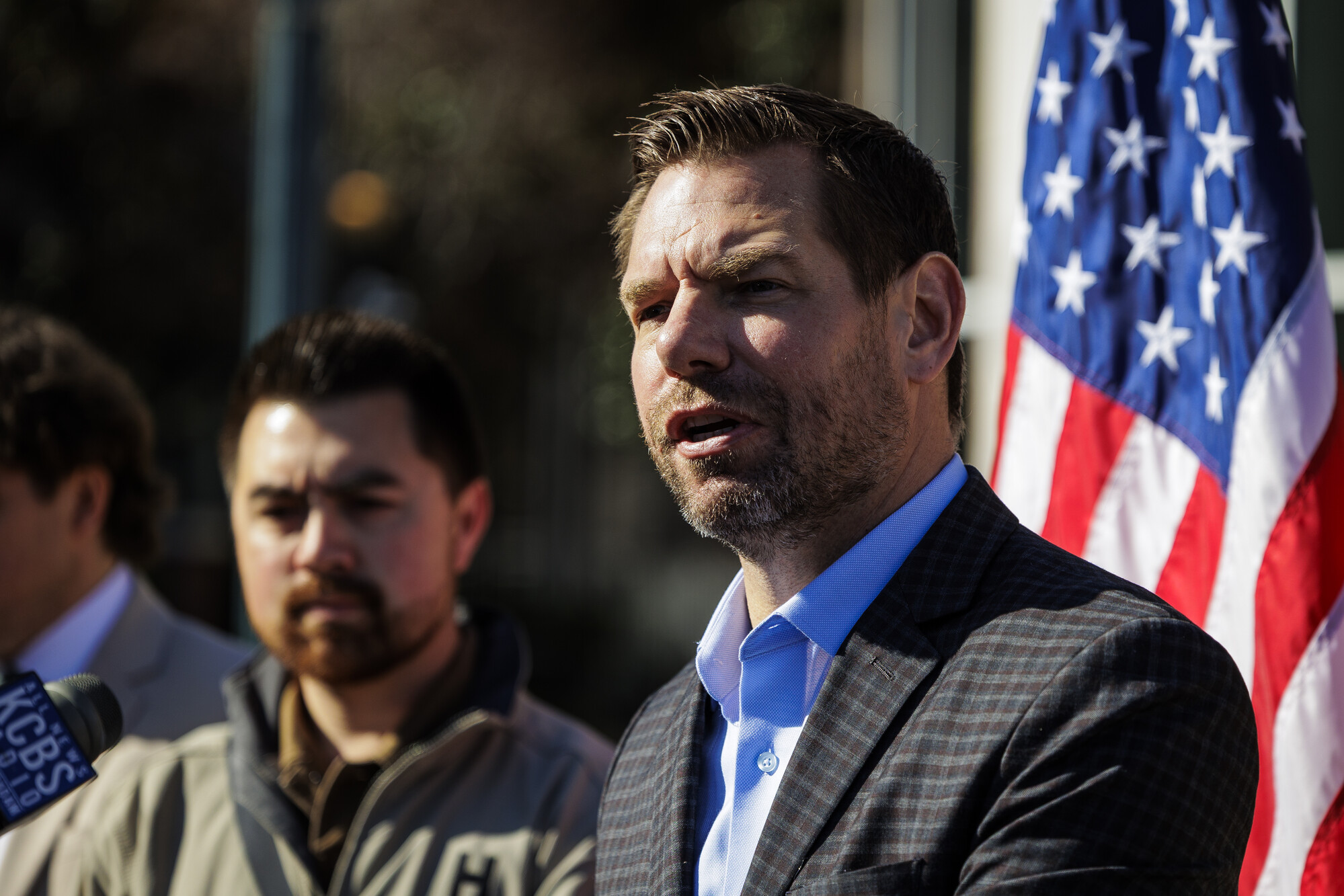
Why Are Some East Bay Voters Receiving 2 Election Ballots?
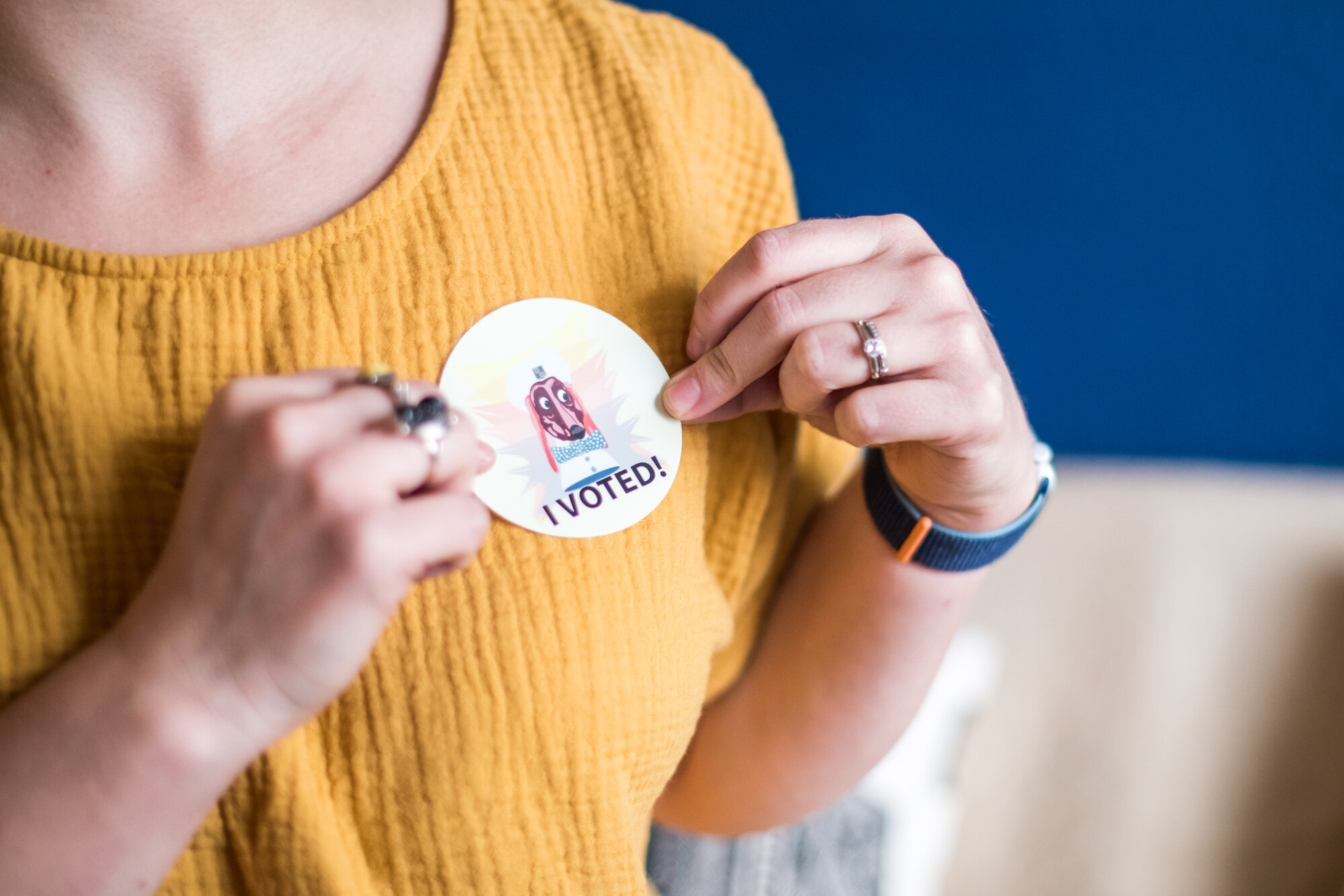
Primary 2026: Monday Is Your Last Day to Register Online to Vote. What if You Miss It?
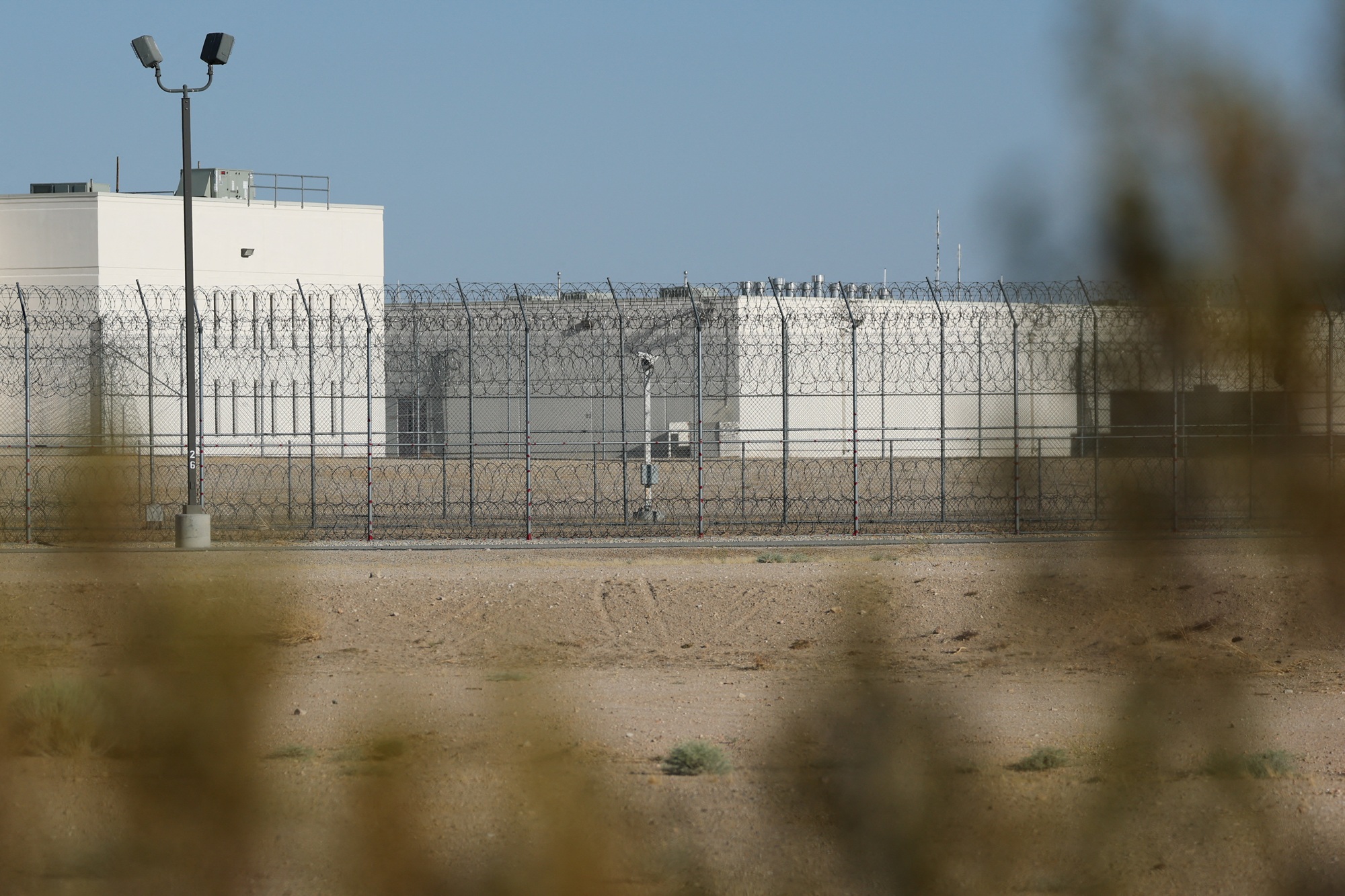
6 People Have Died in California ICE Detention Centers as Trump Deportations Soared
What Is California's ‘Jungle Primary’ — and Why Does It Matter so Much for the Governor’s Race?
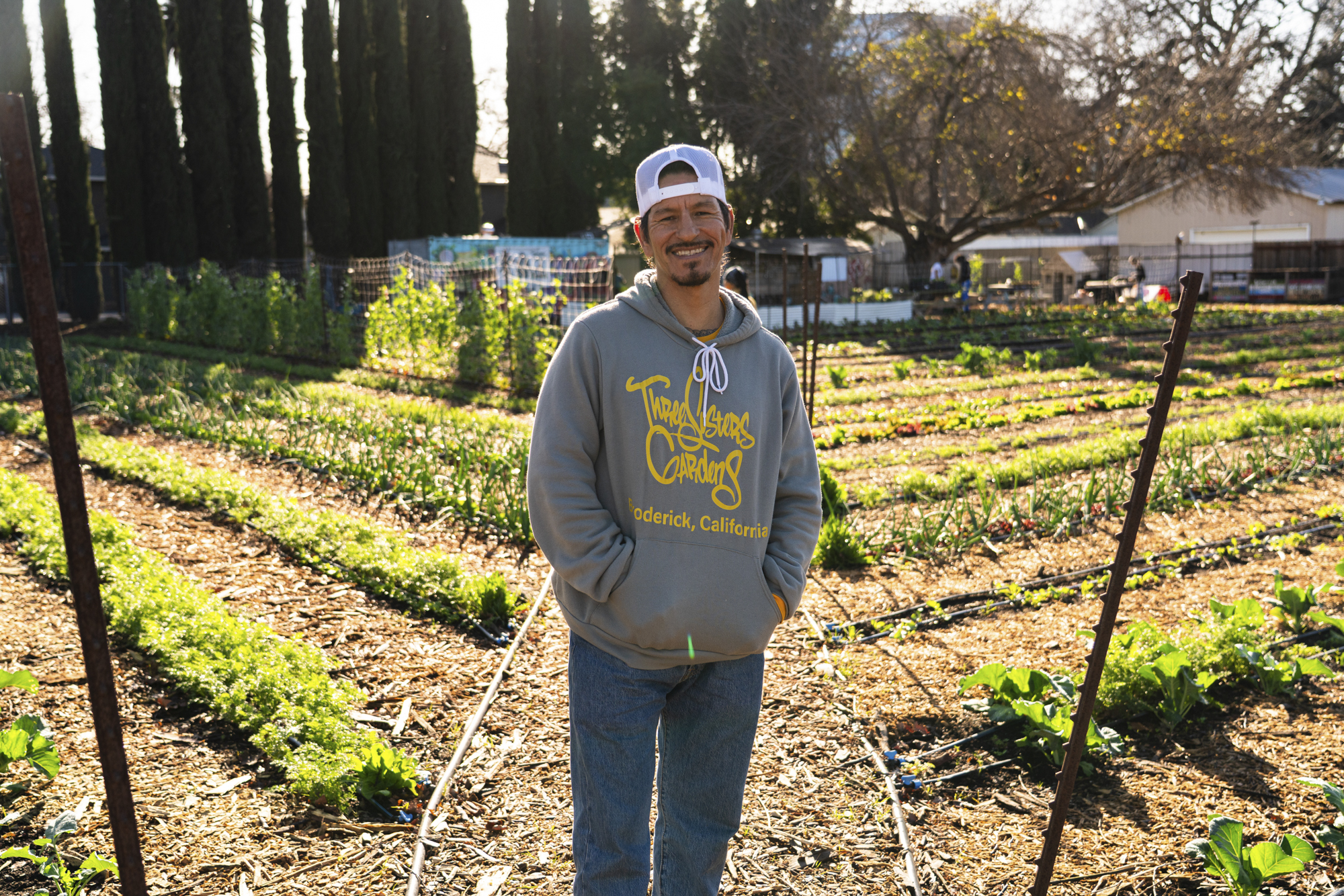
Who's the Bear on California's Flag?; Visit the West Sacramento Garden Growing Community
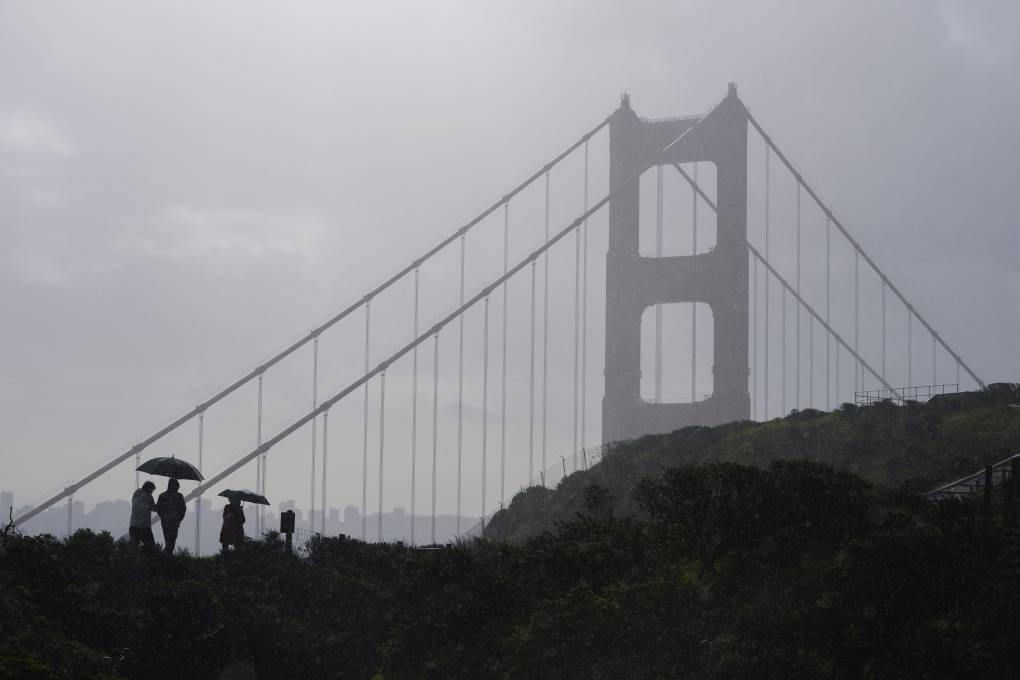
An Incoming ‘Super El Niño’ May Bring California a Wet, Hot Winter
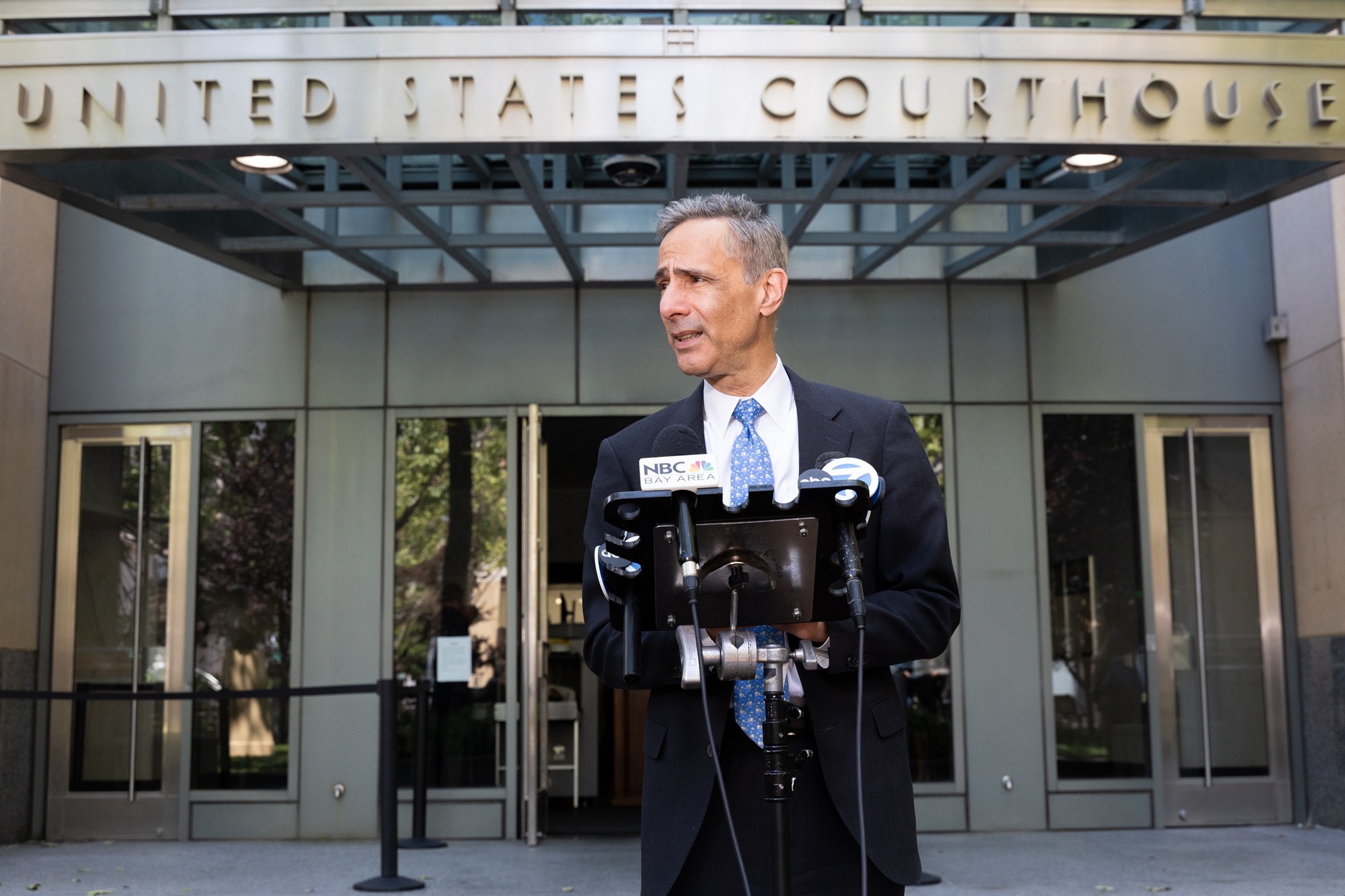
Lawyers for Elon Musk and Sam Altman Make Their Final Case in OpenAI Trial
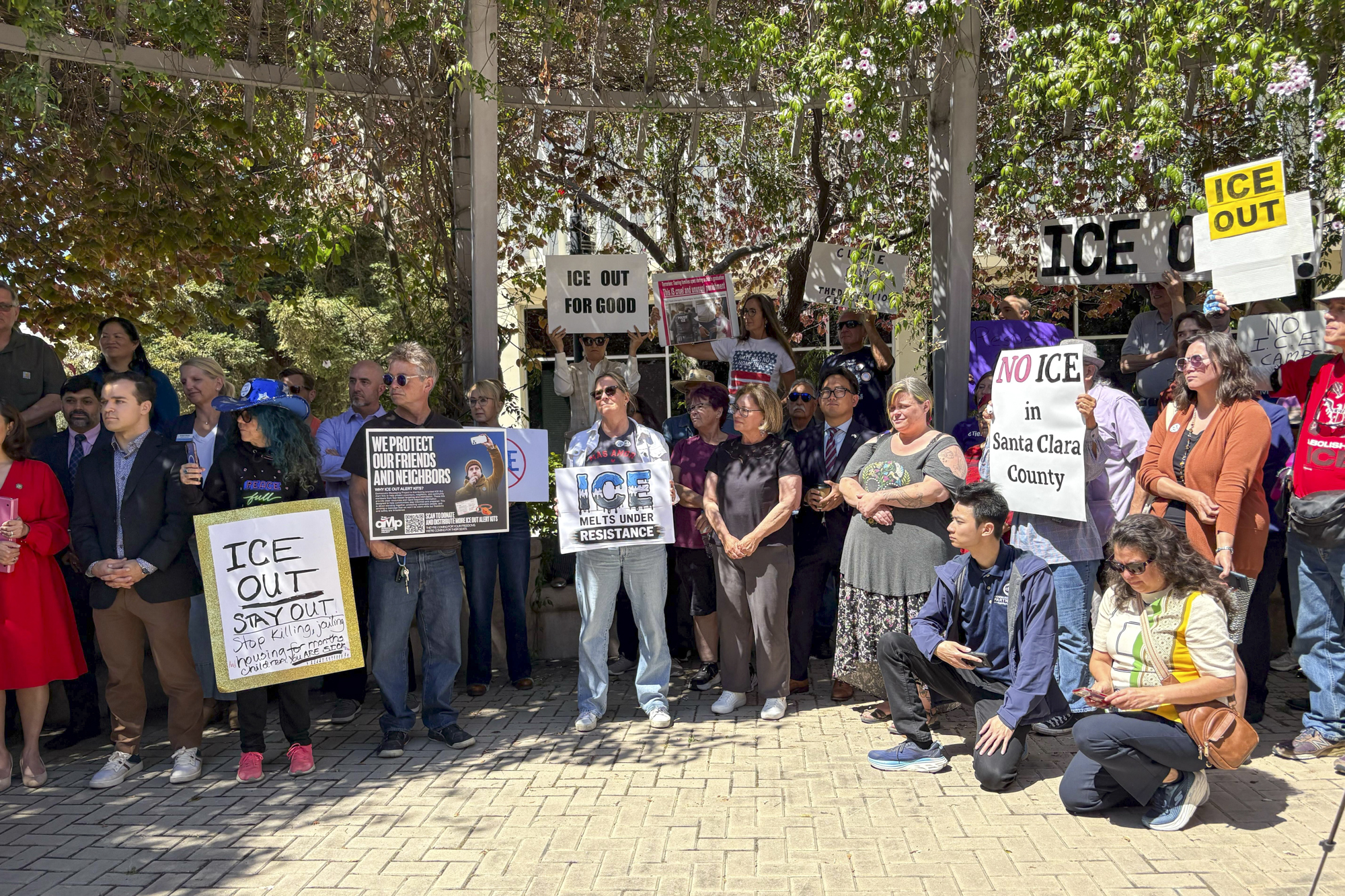
Santa Clara County Leaders Say They’ll Fight Planned ICE Facility in Gilroy
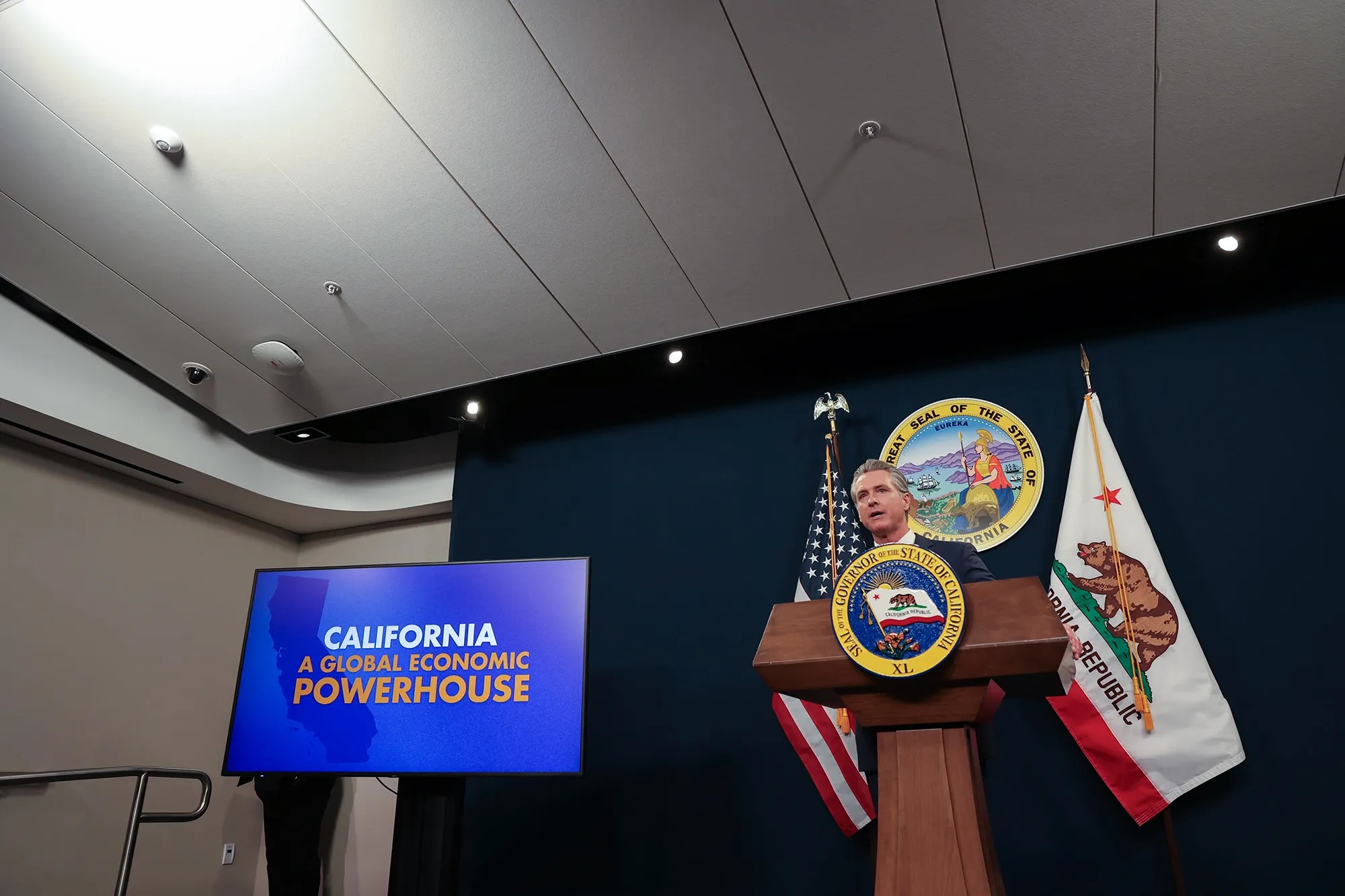
Newsom Unveils Final State Budget Proposal Amid Deep Federal Spending Cuts
Player sponsored by
window.__IS_SSR__=true
window.__INITIAL_STATE__={
"attachmentsReducer": {
"audio_0": {
"type": "attachments",
"id": "audio_0",
"imgSizes": {
"kqedFullSize": {
"file": "https://ww2.kqed.org/news/wp-content/themes/KQED-unified/img/audio_bgs/background0.jpg"
}
}
},
"audio_1": {
"type": "attachments",
"id": "audio_1",
"imgSizes": {
"kqedFullSize": {
"file": "https://ww2.kqed.org/news/wp-content/themes/KQED-unified/img/audio_bgs/background1.jpg"
}
}
},
"audio_2": {
"type": "attachments",
"id": "audio_2",
"imgSizes": {
"kqedFullSize": {
"file": "https://ww2.kqed.org/news/wp-content/themes/KQED-unified/img/audio_bgs/background2.jpg"
}
}
},
"audio_3": {
"type": "attachments",
"id": "audio_3",
"imgSizes": {
"kqedFullSize": {
"file": "https://ww2.kqed.org/news/wp-content/themes/KQED-unified/img/audio_bgs/background3.jpg"
}
}
},
"audio_4": {
"type": "attachments",
"id": "audio_4",
"imgSizes": {
"kqedFullSize": {
"file": "https://ww2.kqed.org/news/wp-content/themes/KQED-unified/img/audio_bgs/background4.jpg"
}
}
},
"placeholder": {
"type": "attachments",
"id": "placeholder",
"imgSizes": {
"thumbnail": {
"file": "https://cdn.kqed.org/wp-content/uploads/2024/12/KQED-Default-Image-816638274-2000x1333-1-160x107.jpg",
"width": 160,
"height": 107,
"mimeType": "image/jpeg"
},
"medium": {
"file": "https://cdn.kqed.org/wp-content/uploads/2024/12/KQED-Default-Image-816638274-2000x1333-1-800x533.jpg",
"width": 800,
"height": 533,
"mimeType": "image/jpeg"
},
"medium_large": {
"file": "https://cdn.kqed.org/wp-content/uploads/2024/12/KQED-Default-Image-816638274-2000x1333-1-768x512.jpg",
"width": 768,
"height": 512,
"mimeType": "image/jpeg"
},
"large": {
"file": "https://cdn.kqed.org/wp-content/uploads/2024/12/KQED-Default-Image-816638274-2000x1333-1-1020x680.jpg",
"width": 1020,
"height": 680,
"mimeType": "image/jpeg"
},
"1536x1536": {
"file": "https://cdn.kqed.org/wp-content/uploads/2024/12/KQED-Default-Image-816638274-2000x1333-1-1536x1024.jpg",
"width": 1536,
"height": 1024,
"mimeType": "image/jpeg"
},
"fd-lrg": {
"file": "https://cdn.kqed.org/wp-content/uploads/2024/12/KQED-Default-Image-816638274-2000x1333-1-1536x1024.jpg",
"width": 1536,
"height": 1024,
"mimeType": "image/jpeg"
},
"fd-med": {
"file": "https://cdn.kqed.org/wp-content/uploads/2024/12/KQED-Default-Image-816638274-2000x1333-1-1020x680.jpg",
"width": 1020,
"height": 680,
"mimeType": "image/jpeg"
},
"fd-sm": {
"file": "https://cdn.kqed.org/wp-content/uploads/2024/12/KQED-Default-Image-816638274-2000x1333-1-800x533.jpg",
"width": 800,
"height": 533,
"mimeType": "image/jpeg"
},
"post-thumbnail": {
"file": "https://cdn.kqed.org/wp-content/uploads/2024/12/KQED-Default-Image-816638274-2000x1333-1-672x372.jpg",
"width": 672,
"height": 372,
"mimeType": "image/jpeg"
},
"twentyfourteen-full-width": {
"file": "https://cdn.kqed.org/wp-content/uploads/2024/12/KQED-Default-Image-816638274-2000x1333-1-1038x576.jpg",
"width": 1038,
"height": 576,
"mimeType": "image/jpeg"
},
"xxsmall": {
"file": "https://cdn.kqed.org/wp-content/uploads/2024/12/KQED-Default-Image-816638274-2000x1333-1-160x107.jpg",
"width": 160,
"height": 107,
"mimeType": "image/jpeg"
},
"xsmall": {
"file": "https://cdn.kqed.org/wp-content/uploads/2024/12/KQED-Default-Image-816638274-2000x1333-1-672x372.jpg",
"width": 672,
"height": 372,
"mimeType": "image/jpeg"
},
"small": {
"file": "https://cdn.kqed.org/wp-content/uploads/2024/12/KQED-Default-Image-816638274-2000x1333-1-672x372.jpg",
"width": 672,
"height": 372,
"mimeType": "image/jpeg"
},
"xlarge": {
"file": "https://cdn.kqed.org/wp-content/uploads/2024/12/KQED-Default-Image-816638274-2000x1333-1-1020x680.jpg",
"width": 1020,
"height": 680,
"mimeType": "image/jpeg"
},
"full-width": {
"file": "https://cdn.kqed.org/wp-content/uploads/2024/12/KQED-Default-Image-816638274-2000x1333-1-1920x1280.jpg",
"width": 1920,
"height": 1280,
"mimeType": "image/jpeg"
},
"guest-author-32": {
"file": "https://cdn.kqed.org/wp-content/uploads/2025/01/KQED-Default-Image-816638274-1333x1333-1-160x160.jpg",
"width": 32,
"height": 32,
"mimeType": "image/jpeg"
},
"guest-author-50": {
"file": "https://cdn.kqed.org/wp-content/uploads/2025/01/KQED-Default-Image-816638274-1333x1333-1-160x160.jpg",
"width": 50,
"height": 50,
"mimeType": "image/jpeg"
},
"guest-author-64": {
"file": "https://cdn.kqed.org/wp-content/uploads/2025/01/KQED-Default-Image-816638274-1333x1333-1-160x160.jpg",
"width": 64,
"height": 64,
"mimeType": "image/jpeg"
},
"guest-author-96": {
"file": "https://cdn.kqed.org/wp-content/uploads/2025/01/KQED-Default-Image-816638274-1333x1333-1-160x160.jpg",
"width": 96,
"height": 96,
"mimeType": "image/jpeg"
},
"guest-author-128": {
"file": "https://cdn.kqed.org/wp-content/uploads/2025/01/KQED-Default-Image-816638274-1333x1333-1-160x160.jpg",
"width": 128,
"height": 128,
"mimeType": "image/jpeg"
},
"detail": {
"file": "https://cdn.kqed.org/wp-content/uploads/2025/01/KQED-Default-Image-816638274-1333x1333-1-160x160.jpg",
"width": 160,
"height": 160,
"mimeType": "image/jpeg"
},
"kqedFullSize": {
"file": "https://cdn.kqed.org/wp-content/uploads/2024/12/KQED-Default-Image-816638274-2000x1333-1.jpg",
"width": 2000,
"height": 1333
}
}
},
"news_12083964": {
"type": "attachments",
"id": "news_12083964",
"meta": {
"index": "attachments_1716263798",
"site": "news",
"id": "12083964",
"found": true
},
"title": "Rep. Eric Swalwell addresses the press event in Hayward on Mar. 9, 2026.",
"publishDate": 1778874929,
"status": "inherit",
"parent": 12083627,
"modified": 1778884113,
"caption": "Former Rep. Eric Swalwell addresses a press event in Hayward on March 9, 2026. A June 16 special election for Congress in the 14th District was scheduled after Swalwell resigned from office. ",
"credit": "Martin do Nascimento/KQED",
"altTag": null,
"description": null,
"imgSizes": {
"thumbnail": {
"file": "https://cdn.kqed.org/wp-content/uploads/sites/10/2026/05/260309-DEAF-DEPORTEE-MD-05_qed-160x107.jpg",
"width": 160,
"height": 107,
"mimeType": "image/jpeg"
},
"1536x1536": {
"file": "https://cdn.kqed.org/wp-content/uploads/sites/10/2026/05/260309-DEAF-DEPORTEE-MD-05_qed-1536x1024.jpg",
"width": 1536,
"height": 1024,
"mimeType": "image/jpeg"
},
"post-thumbnail": {
"file": "https://cdn.kqed.org/wp-content/uploads/sites/10/2026/05/260309-DEAF-DEPORTEE-MD-05_qed-672x372.jpg",
"width": 672,
"height": 372,
"mimeType": "image/jpeg"
},
"twentyfourteen-full-width": {
"file": "https://cdn.kqed.org/wp-content/uploads/sites/10/2026/05/260309-DEAF-DEPORTEE-MD-05_qed-1038x576.jpg",
"width": 1038,
"height": 576,
"mimeType": "image/jpeg"
},
"npr-cds-wide": {
"file": "https://cdn.kqed.org/wp-content/uploads/sites/10/2026/05/260309-DEAF-DEPORTEE-MD-05_qed-1200x675.jpg",
"width": 1200,
"height": 675,
"mimeType": "image/jpeg"
},
"npr-cds-square": {
"file": "https://cdn.kqed.org/wp-content/uploads/sites/10/2026/05/260309-DEAF-DEPORTEE-MD-05_qed-600x600.jpg",
"width": 600,
"height": 600,
"mimeType": "image/jpeg"
},
"kqedFullSize": {
"file": "https://cdn.kqed.org/wp-content/uploads/sites/10/2026/05/260309-DEAF-DEPORTEE-MD-05_qed.jpg",
"width": 1999,
"height": 1333
}
},
"fetchFailed": false,
"isLoading": false
},
"news_12083854": {
"type": "attachments",
"id": "news_12083854",
"meta": {
"index": "attachments_1716263798",
"site": "news",
"id": "12083854",
"found": true
},
"title": "017_KQED_SanFrancisco_Election2020_TanyaYule_10092020_qed",
"publishDate": 1778864441,
"status": "inherit",
"parent": 12083100,
"modified": 1778873924,
"caption": "Tanya Yule puts on a sticker that reads, \"I Voted!\" in San Francisco on Oct. 9, 2020. The sticker, which features the Dogie Diner mascot, was made by her husband, Josh Yule.",
"credit": "Beth LaBerge/KQED",
"altTag": null,
"description": null,
"imgSizes": {
"thumbnail": {
"file": "https://cdn.kqed.org/wp-content/uploads/sites/10/2026/05/017_KQED_SanFrancisco_Election2020_TanyaYule_10092020_qed-160x107.jpg",
"width": 160,
"height": 107,
"mimeType": "image/jpeg"
},
"1536x1536": {
"file": "https://cdn.kqed.org/wp-content/uploads/sites/10/2026/05/017_KQED_SanFrancisco_Election2020_TanyaYule_10092020_qed-1536x1024.jpg",
"width": 1536,
"height": 1024,
"mimeType": "image/jpeg"
},
"post-thumbnail": {
"file": "https://cdn.kqed.org/wp-content/uploads/sites/10/2026/05/017_KQED_SanFrancisco_Election2020_TanyaYule_10092020_qed-672x372.jpg",
"width": 672,
"height": 372,
"mimeType": "image/jpeg"
},
"twentyfourteen-full-width": {
"file": "https://cdn.kqed.org/wp-content/uploads/sites/10/2026/05/017_KQED_SanFrancisco_Election2020_TanyaYule_10092020_qed-1038x576.jpg",
"width": 1038,
"height": 576,
"mimeType": "image/jpeg"
},
"npr-cds-wide": {
"file": "https://cdn.kqed.org/wp-content/uploads/sites/10/2026/05/017_KQED_SanFrancisco_Election2020_TanyaYule_10092020_qed-1200x675.jpg",
"width": 1200,
"height": 675,
"mimeType": "image/jpeg"
},
"npr-cds-square": {
"file": "https://cdn.kqed.org/wp-content/uploads/sites/10/2026/05/017_KQED_SanFrancisco_Election2020_TanyaYule_10092020_qed-600x600.jpg",
"width": 600,
"height": 600,
"mimeType": "image/jpeg"
},
"kqedFullSize": {
"file": "https://cdn.kqed.org/wp-content/uploads/sites/10/2026/05/017_KQED_SanFrancisco_Election2020_TanyaYule_10092020_qed.jpg",
"width": 1999,
"height": 1333
}
},
"fetchFailed": false,
"isLoading": false
},
"news_12054567": {
"type": "attachments",
"id": "news_12054567",
"meta": {
"index": "attachments_1716263798",
"site": "news",
"id": "12054567",
"found": true
},
"title": "US-POLITICS-IMMIGRATION",
"publishDate": 1756941444,
"status": "inherit",
"parent": 12054544,
"modified": 1769006278,
"caption": "The CoreCivic, Inc. California City Immigration Processing Center stands in the Kern County desert on July 10, 2025.",
"credit": "Patrick T. Fallon/AFP via Getty Images",
"altTag": null,
"description": null,
"imgSizes": {
"thumbnail": {
"file": "https://cdn.kqed.org/wp-content/uploads/sites/10/2025/09/KernCountyICEDetentionGetty-160x107.jpg",
"width": 160,
"height": 107,
"mimeType": "image/jpeg"
},
"1536x1536": {
"file": "https://cdn.kqed.org/wp-content/uploads/sites/10/2025/09/KernCountyICEDetentionGetty-1536x1024.jpg",
"width": 1536,
"height": 1024,
"mimeType": "image/jpeg"
},
"post-thumbnail": {
"file": "https://cdn.kqed.org/wp-content/uploads/sites/10/2025/09/KernCountyICEDetentionGetty-672x372.jpg",
"width": 672,
"height": 372,
"mimeType": "image/jpeg"
},
"twentyfourteen-full-width": {
"file": "https://cdn.kqed.org/wp-content/uploads/sites/10/2025/09/KernCountyICEDetentionGetty-1038x576.jpg",
"width": 1038,
"height": 576,
"mimeType": "image/jpeg"
},
"kqedFullSize": {
"file": "https://cdn.kqed.org/wp-content/uploads/sites/10/2025/09/KernCountyICEDetentionGetty.jpg",
"width": 2000,
"height": 1333
}
},
"fetchFailed": false,
"isLoading": false
},
"news_12081064": {
"type": "attachments",
"id": "news_12081064",
"meta": {
"index": "attachments_1716263798",
"site": "news",
"id": "12081064",
"found": true
},
"title": "FTP_9P3A3319_1_qed",
"publishDate": 1776915743,
"status": "inherit",
"parent": 12082059,
"modified": 1778868137,
"caption": "Matt Mahan, Democratic gubernatorial candidate for California, from left, Xavier Becerra, Democratic gubernatorial candidate for California, Chad Bianco, Republican gubernatorial candidate for California, Steve Hilton, Republican gubernatorial candidate for California, Tom Steyer, Democratic gubernatorial candidate for California, and Katie Porter, Democratic gubernatorial candidate for California, during a gubernatorial debate at KRON Studios in San Francisco, California, on April 22, 2026. California will hold its primary election on June 2, where the top two finishers advance to the general election in November regardless of party affiliation. ",
"credit": "Jason Henry/Nexstar/Bloomberg",
"altTag": null,
"description": null,
"imgSizes": {
"thumbnail": {
"file": "https://cdn.kqed.org/wp-content/uploads/sites/10/2026/04/FTP_9P3A3319_1_qed-160x107.jpg",
"width": 160,
"height": 107,
"mimeType": "image/jpeg"
},
"1536x1536": {
"file": "https://cdn.kqed.org/wp-content/uploads/sites/10/2026/04/FTP_9P3A3319_1_qed-1536x1024.jpg",
"width": 1536,
"height": 1024,
"mimeType": "image/jpeg"
},
"post-thumbnail": {
"file": "https://cdn.kqed.org/wp-content/uploads/sites/10/2026/04/FTP_9P3A3319_1_qed-672x372.jpg",
"width": 672,
"height": 372,
"mimeType": "image/jpeg"
},
"twentyfourteen-full-width": {
"file": "https://cdn.kqed.org/wp-content/uploads/sites/10/2026/04/FTP_9P3A3319_1_qed-1038x576.jpg",
"width": 1038,
"height": 576,
"mimeType": "image/jpeg"
},
"npr-cds-wide": {
"file": "https://cdn.kqed.org/wp-content/uploads/sites/10/2026/04/FTP_9P3A3319_1_qed-1200x675.jpg",
"width": 1200,
"height": 675,
"mimeType": "image/jpeg"
},
"npr-cds-square": {
"file": "https://cdn.kqed.org/wp-content/uploads/sites/10/2026/04/FTP_9P3A3319_1_qed-600x600.jpg",
"width": 600,
"height": 600,
"mimeType": "image/jpeg"
},
"kqedFullSize": {
"file": "https://cdn.kqed.org/wp-content/uploads/sites/10/2026/04/FTP_9P3A3319_1_qed.jpg",
"width": 1999,
"height": 1333
}
},
"fetchFailed": false,
"isLoading": false
},
"news_12073468": {
"type": "attachments",
"id": "news_12073468",
"meta": {
"index": "attachments_1716263798",
"site": "news",
"id": "12073468",
"found": true
},
"title": "Alfred Melbourne who founded the indigenous education farming operation called the Three Sisters Garden. It was founded in 2018 by Alfred Melbourne with a goal to give back to the community by inspiring and empowering youth through gardening, with a focus",
"publishDate": 1771006049,
"status": "inherit",
"parent": 12083595,
"modified": 1778785203,
"caption": "Alfred Melbourne, founder and director of Three Sisters Garden, at the garden in West Sacramento on Sept. 12, 2026. ",
"credit": "Louis Bryant III for KQED",
"altTag": null,
"description": null,
"imgSizes": {
"thumbnail": {
"file": "https://cdn.kqed.org/wp-content/uploads/sites/10/2026/02/02122026_LBR3_3SISGDN-192-KQED-160x107.jpg",
"width": 160,
"height": 107,
"mimeType": "image/jpeg"
},
"1536x1536": {
"file": "https://cdn.kqed.org/wp-content/uploads/sites/10/2026/02/02122026_LBR3_3SISGDN-192-KQED-1536x1025.jpg",
"width": 1536,
"height": 1025,
"mimeType": "image/jpeg"
},
"post-thumbnail": {
"file": "https://cdn.kqed.org/wp-content/uploads/sites/10/2026/02/02122026_LBR3_3SISGDN-192-KQED-672x372.jpg",
"width": 672,
"height": 372,
"mimeType": "image/jpeg"
},
"twentyfourteen-full-width": {
"file": "https://cdn.kqed.org/wp-content/uploads/sites/10/2026/02/02122026_LBR3_3SISGDN-192-KQED-1038x576.jpg",
"width": 1038,
"height": 576,
"mimeType": "image/jpeg"
},
"npr-cds-wide": {
"file": "https://cdn.kqed.org/wp-content/uploads/sites/10/2026/02/02122026_LBR3_3SISGDN-192-KQED-1200x675.jpg",
"width": 1200,
"height": 675,
"mimeType": "image/jpeg"
},
"kqedFullSize": {
"file": "https://cdn.kqed.org/wp-content/uploads/sites/10/2026/02/02122026_LBR3_3SISGDN-192-KQED.jpg",
"width": 2000,
"height": 1334
}
},
"fetchFailed": false,
"isLoading": false
},
"news_11974719": {
"type": "attachments",
"id": "news_11974719",
"meta": {
"index": "attachments_1716263798",
"site": "news",
"id": "11974719",
"found": true
},
"title": "California Storms",
"publishDate": 1707161263,
"status": "inherit",
"parent": 11974714,
"modified": 1778800665,
"caption": "People walk in the rain as a storm moves through with the Golden Gate Bridge in the background near Sausalito, California, Monday, Feb. 5, 2024.",
"credit": "Eric Risberg/AP Photo",
"altTag": "People walk in the rain as a storm moves through, with the Golden Gate Bridge in the background.",
"description": null,
"imgSizes": {
"medium": {
"file": "https://cdn.kqed.org/wp-content/uploads/sites/10/2024/02/AP24036658778995-800x533.jpg",
"width": 800,
"height": 533,
"mimeType": "image/jpeg"
},
"large": {
"file": "https://cdn.kqed.org/wp-content/uploads/sites/10/2024/02/AP24036658778995-1020x680.jpg",
"width": 1020,
"height": 680,
"mimeType": "image/jpeg"
},
"thumbnail": {
"file": "https://cdn.kqed.org/wp-content/uploads/sites/10/2024/02/AP24036658778995-160x107.jpg",
"width": 160,
"height": 107,
"mimeType": "image/jpeg"
},
"1536x1536": {
"file": "https://cdn.kqed.org/wp-content/uploads/sites/10/2024/02/AP24036658778995-1536x1024.jpg",
"width": 1536,
"height": 1024,
"mimeType": "image/jpeg"
},
"2048x2048": {
"file": "https://cdn.kqed.org/wp-content/uploads/sites/10/2024/02/AP24036658778995-2048x1365.jpg",
"width": 2048,
"height": 1365,
"mimeType": "image/jpeg"
},
"post-thumbnail": {
"file": "https://cdn.kqed.org/wp-content/uploads/sites/10/2024/02/AP24036658778995-672x372.jpg",
"width": 672,
"height": 372,
"mimeType": "image/jpeg"
},
"twentyfourteen-full-width": {
"file": "https://cdn.kqed.org/wp-content/uploads/sites/10/2024/02/AP24036658778995-1038x576.jpg",
"width": 1038,
"height": 576,
"mimeType": "image/jpeg"
},
"full-width": {
"file": "https://cdn.kqed.org/wp-content/uploads/sites/10/2024/02/AP24036658778995-1920x1280.jpg",
"width": 1920,
"height": 1280,
"mimeType": "image/jpeg"
},
"kqedFullSize": {
"file": "https://cdn.kqed.org/wp-content/uploads/sites/10/2024/02/AP24036658778995-scaled.jpg",
"width": 2560,
"height": 1707
}
},
"fetchFailed": false,
"isLoading": false
},
"news_12083803": {
"type": "attachments",
"id": "news_12083803",
"meta": {
"index": "attachments_1716263798",
"site": "news",
"id": "12083803",
"found": true
},
"title": "Elon Musk v. OpenAI Trial Continues In California",
"publishDate": 1778804683,
"status": "inherit",
"parent": 12083612,
"modified": 1778805456,
"caption": "OpenAI's attorney William Savitt makes remarks during a press conference outside the courthouse at the Ronald V. Dellums Federal Building on May 6, 2026, in Oakland, California. Elon Musk invested in OpenAI early on, believing it would be a non-profit, but is now suing OpenAI and its CEO, Sam Altman, for allegedly deceiving him by developing OpenAI into a for-profit company. ",
"credit": "Benjamin Fanjoy/Getty Images",
"altTag": null,
"description": null,
"imgSizes": {
"thumbnail": {
"file": "https://cdn.kqed.org/wp-content/uploads/sites/10/2026/05/OpenAILawyerGetty-160x107.jpg",
"width": 160,
"height": 107,
"mimeType": "image/jpeg"
},
"1536x1536": {
"file": "https://cdn.kqed.org/wp-content/uploads/sites/10/2026/05/OpenAILawyerGetty-1536x1024.jpg",
"width": 1536,
"height": 1024,
"mimeType": "image/jpeg"
},
"post-thumbnail": {
"file": "https://cdn.kqed.org/wp-content/uploads/sites/10/2026/05/OpenAILawyerGetty-672x372.jpg",
"width": 672,
"height": 372,
"mimeType": "image/jpeg"
},
"twentyfourteen-full-width": {
"file": "https://cdn.kqed.org/wp-content/uploads/sites/10/2026/05/OpenAILawyerGetty-1038x576.jpg",
"width": 1038,
"height": 576,
"mimeType": "image/jpeg"
},
"npr-cds-wide": {
"file": "https://cdn.kqed.org/wp-content/uploads/sites/10/2026/05/OpenAILawyerGetty-1200x675.jpg",
"width": 1200,
"height": 675,
"mimeType": "image/jpeg"
},
"npr-cds-square": {
"file": "https://cdn.kqed.org/wp-content/uploads/sites/10/2026/05/OpenAILawyerGetty-600x600.jpg",
"width": 600,
"height": 600,
"mimeType": "image/jpeg"
},
"kqedFullSize": {
"file": "https://cdn.kqed.org/wp-content/uploads/sites/10/2026/05/OpenAILawyerGetty.jpg",
"width": 2000,
"height": 1333
}
},
"fetchFailed": false,
"isLoading": false
},
"news_12083769": {
"type": "attachments",
"id": "news_12083769",
"meta": {
"index": "attachments_1716263798",
"site": "news",
"id": "12083769",
"found": true
},
"title": "260514-GILROY ICE-ADE-02-KQED",
"publishDate": 1778798130,
"status": "inherit",
"parent": 0,
"modified": 1778798722,
"caption": "Supporters attend a rally in San José opposing a planned immigration detention center in Gilroy on May 14, 2026.",
"credit": "Azul Dahlstrom-Eckman/KQED",
"altTag": null,
"description": null,
"imgSizes": {
"thumbnail": {
"file": "https://cdn.kqed.org/wp-content/uploads/sites/10/2026/05/260514-GILROY-ICE-ADE-02-KQED-160x107.jpg",
"width": 160,
"height": 107,
"mimeType": "image/jpeg"
},
"1536x1536": {
"file": "https://cdn.kqed.org/wp-content/uploads/sites/10/2026/05/260514-GILROY-ICE-ADE-02-KQED-1536x1024.jpg",
"width": 1536,
"height": 1024,
"mimeType": "image/jpeg"
},
"post-thumbnail": {
"file": "https://cdn.kqed.org/wp-content/uploads/sites/10/2026/05/260514-GILROY-ICE-ADE-02-KQED-672x372.jpg",
"width": 672,
"height": 372,
"mimeType": "image/jpeg"
},
"twentyfourteen-full-width": {
"file": "https://cdn.kqed.org/wp-content/uploads/sites/10/2026/05/260514-GILROY-ICE-ADE-02-KQED-1038x576.jpg",
"width": 1038,
"height": 576,
"mimeType": "image/jpeg"
},
"npr-cds-wide": {
"file": "https://cdn.kqed.org/wp-content/uploads/sites/10/2026/05/260514-GILROY-ICE-ADE-02-KQED-1200x675.jpg",
"width": 1200,
"height": 675,
"mimeType": "image/jpeg"
},
"npr-cds-square": {
"file": "https://cdn.kqed.org/wp-content/uploads/sites/10/2026/05/260514-GILROY-ICE-ADE-02-KQED-600x600.jpg",
"width": 600,
"height": 600,
"mimeType": "image/jpeg"
},
"kqedFullSize": {
"file": "https://cdn.kqed.org/wp-content/uploads/sites/10/2026/05/260514-GILROY-ICE-ADE-02-KQED.jpg",
"width": 2000,
"height": 1333
}
},
"fetchFailed": false,
"isLoading": false
},
"news_12083761": {
"type": "attachments",
"id": "news_12083761",
"meta": {
"index": "attachments_1716263798",
"site": "news",
"id": "12083761",
"found": true
},
"title": "051426_Newsom-Budget_MG_CM_05",
"publishDate": 1778796548,
"status": "inherit",
"parent": 12083623,
"modified": 1778796571,
"caption": "Gov. Gavin Newsom addresses the media during a press conference unveiling his revised 2026-27 budget proposal at the Capitol Annex Swing Space in Sacramento on May 14, 2026.",
"credit": "Miguel Gutierrez Jr., CalMatters",
"altTag": null,
"description": null,
"imgSizes": {
"thumbnail": {
"file": "https://cdn.kqed.org/wp-content/uploads/sites/10/2026/05/051426_Newsom-Budget_MG_CM_05-160x107.jpeg",
"width": 160,
"height": 107,
"mimeType": "image/jpeg"
},
"1536x1536": {
"file": "https://cdn.kqed.org/wp-content/uploads/sites/10/2026/05/051426_Newsom-Budget_MG_CM_05-1536x1024.jpeg",
"width": 1536,
"height": 1024,
"mimeType": "image/jpeg"
},
"post-thumbnail": {
"file": "https://cdn.kqed.org/wp-content/uploads/sites/10/2026/05/051426_Newsom-Budget_MG_CM_05-672x372.jpeg",
"width": 672,
"height": 372,
"mimeType": "image/jpeg"
},
"twentyfourteen-full-width": {
"file": "https://cdn.kqed.org/wp-content/uploads/sites/10/2026/05/051426_Newsom-Budget_MG_CM_05-1038x576.jpeg",
"width": 1038,
"height": 576,
"mimeType": "image/jpeg"
},
"npr-cds-wide": {
"file": "https://cdn.kqed.org/wp-content/uploads/sites/10/2026/05/051426_Newsom-Budget_MG_CM_05-1200x675.jpeg",
"width": 1200,
"height": 675,
"mimeType": "image/jpeg"
},
"npr-cds-square": {
"file": "https://cdn.kqed.org/wp-content/uploads/sites/10/2026/05/051426_Newsom-Budget_MG_CM_05-600x600.jpeg",
"width": 600,
"height": 600,
"mimeType": "image/jpeg"
},
"kqedFullSize": {
"file": "https://cdn.kqed.org/wp-content/uploads/sites/10/2026/05/051426_Newsom-Budget_MG_CM_05.jpeg",
"width": 2000,
"height": 1333
}
},
"fetchFailed": false,
"isLoading": false
}
},
"audioPlayerReducer": {
"postId": "stream_live",
"isPaused": true,
"isPlaying": false,
"pfsActive": false,
"pledgeModalIsOpen": true,
"playerDrawerIsOpen": false
},
"authorsReducer": {
"byline_news_12083908": {
"type": "authors",
"id": "byline_news_12083908",
"meta": {
"override": true
},
"slug": "byline_news_12083908",
"name": "Wendy Fry and Sergio Olmos, CalMatters",
"isLoading": false
},
"byline_news_12083376": {
"type": "authors",
"id": "byline_news_12083376",
"meta": {
"override": true
},
"slug": "byline_news_12083376",
"name": "Ella Jackson",
"isLoading": false
},
"gmarzorati": {
"type": "authors",
"id": "227",
"meta": {
"index": "authors_1716337520",
"id": "227",
"found": true
},
"name": "Guy Marzorati",
"firstName": "Guy",
"lastName": "Marzorati",
"slug": "gmarzorati",
"email": "gmarzorati@KQED.org",
"display_author_email": true,
"staff_mastheads": [
"news"
],
"title": "Correspondent",
"bio": "Guy Marzorati is a correspondent on KQED's California Politics and Government Desk, based in San Jose. A graduate of Santa Clara University, Guy joined KQED in 2013. He reports on state and local politics and produces KQED's digital voter guide.",
"avatar": "https://secure.gravatar.com/avatar/e7038b8dbfd55b104369b76b1cd0b9de?s=600&d=blank&r=g",
"twitter": "guymarzorati",
"facebook": null,
"instagram": null,
"linkedin": null,
"sites": [
{
"site": "",
"roles": [
"editor"
]
},
{
"site": "news",
"roles": [
"editor"
]
},
{
"site": "science",
"roles": [
"editor"
]
},
{
"site": "forum",
"roles": [
"editor"
]
},
{
"site": "elections",
"roles": [
"editor"
]
},
{
"site": "liveblog",
"roles": [
"editor"
]
}
],
"headData": {
"title": "Guy Marzorati | KQED",
"description": "Correspondent",
"ogImgSrc": "https://secure.gravatar.com/avatar/e7038b8dbfd55b104369b76b1cd0b9de?s=600&d=blank&r=g",
"twImgSrc": "https://secure.gravatar.com/avatar/e7038b8dbfd55b104369b76b1cd0b9de?s=600&d=blank&r=g"
},
"isLoading": false,
"link": "/author/gmarzorati"
},
"kqed": {
"type": "authors",
"id": "236",
"meta": {
"index": "authors_1716337520",
"id": "236",
"found": true
},
"name": "KQED News Staff",
"firstName": "KQED News Staff",
"lastName": null,
"slug": "kqed",
"email": "faq@kqed.org",
"display_author_email": false,
"staff_mastheads": [],
"title": null,
"bio": null,
"avatar": "https://secure.gravatar.com/avatar/ef0e801a68c4c54afa9180db14084167?s=600&d=blank&r=g",
"twitter": null,
"facebook": null,
"instagram": null,
"linkedin": null,
"sites": [
{
"site": "arts",
"roles": [
"contributor"
]
},
{
"site": "news",
"roles": [
"editor"
]
},
{
"site": "futureofyou",
"roles": [
"author"
]
}
],
"headData": {
"title": "KQED News Staff | KQED",
"description": null,
"ogImgSrc": "https://secure.gravatar.com/avatar/ef0e801a68c4c54afa9180db14084167?s=600&d=blank&r=g",
"twImgSrc": "https://secure.gravatar.com/avatar/ef0e801a68c4c54afa9180db14084167?s=600&d=blank&r=g"
},
"isLoading": false,
"link": "/author/kqed"
},
"rachael-myrow": {
"type": "authors",
"id": "251",
"meta": {
"index": "authors_1716337520",
"id": "251",
"found": true
},
"name": "Rachael Myrow",
"firstName": "Rachael",
"lastName": "Myrow",
"slug": "rachael-myrow",
"email": "rmyrow@kqed.org",
"display_author_email": true,
"staff_mastheads": [
"news"
],
"title": "Senior Editor of KQED's Silicon Valley News Desk",
"bio": "• I write and edit stories about how Silicon Valley power and policies shape everyday life in California. I’m also passionate about making Bay Area history and culture more accessible to a broad public. • I’ve been a journalist for most of my life, starting in high school with The Franklin Press in Los Angeles, where I grew up. While earning my first degree in English at UC Berkeley, I got my start in public radio at KALX-FM. After completing a second degree in journalism at Cal, I landed my first professional job at Marketplace, then moved on to KPCC (now LAist), and then KQED, where I hosted The California Report for more than seven years. • My reporting has appeared on NPR, The World, WBUR’s \u003ci>Here & Now\u003c/i>, and the BBC. I also guest host for KQED’s \u003ci>Forum\u003c/i>, as well as the Commonwealth Club in San Francisco. • I speak periodically on media, democracy and technology issues, and do voiceover work for documentaries and educational video projects. • Outside of the studio, you'll find me hiking Bay Area trails and whipping up Insta-ready meals in my kitchen. • I do not accept gifts, money, or favors from anyone connected to my reporting, I don't pay people for information, and I do not support or donate to political causes. • I strive to treat the people I report on with fairness, honesty, and respect. I also recognize there are often multiple sides to a story and work to verify information through multiple sources and documentation. If I get something wrong, I correct it.",
"avatar": "https://secure.gravatar.com/avatar/87bf8cb5874e045cdff430523a6d48b1?s=600&d=blank&r=g",
"twitter": "rachaelmyrow",
"facebook": null,
"instagram": null,
"linkedin": "https://www.linkedin.com/in/rachaelmyrow/",
"sites": [
{
"site": "arts",
"roles": [
"administrator"
]
},
{
"site": "news",
"roles": [
"edit_others_posts",
"editor"
]
},
{
"site": "futureofyou",
"roles": [
"editor"
]
},
{
"site": "bayareabites",
"roles": [
"editor"
]
},
{
"site": "stateofhealth",
"roles": [
"editor"
]
},
{
"site": "science",
"roles": [
"editor"
]
},
{
"site": "food",
"roles": [
"editor"
]
},
{
"site": "forum",
"roles": [
"editor"
]
},
{
"site": "liveblog",
"roles": [
"author"
]
}
],
"headData": {
"title": "Rachael Myrow | KQED",
"description": "Senior Editor of KQED's Silicon Valley News Desk",
"ogImgSrc": "https://secure.gravatar.com/avatar/87bf8cb5874e045cdff430523a6d48b1?s=600&d=blank&r=g",
"twImgSrc": "https://secure.gravatar.com/avatar/87bf8cb5874e045cdff430523a6d48b1?s=600&d=blank&r=g"
},
"isLoading": false,
"link": "/author/rachael-myrow"
},
"mlagos": {
"type": "authors",
"id": "3239",
"meta": {
"index": "authors_1716337520",
"id": "3239",
"found": true
},
"name": "Marisa Lagos",
"firstName": "Marisa",
"lastName": "Lagos",
"slug": "mlagos",
"email": "mlagos@kqed.org",
"display_author_email": false,
"staff_mastheads": [
"news"
],
"title": "KQED Contributor",
"bio": "Marisa Lagos is a correspondent for KQED’s California Politics and Government Desk and co-hosts the award-winning show and podcast, Political Breakdown. At KQED, Lagos also conducts reporting, analysis and investigations into state, local and national politics for radio, TV, online and onstage. In 2022, she and co-host, Scott Shafer, moderated the only gubernatorial debate in California. In 2020, the \u003ci>Washington Post\u003c/i> named her one of the top political journalists in California; she was nominated for a Peabody and won several other awards for her work investigating the 2017 California wildfires. She has worked at the \u003ci>San Francisco Chronicle\u003c/i>, \u003ci>San Francisco Examiner\u003c/i> and \u003ci>Los Angeles Times\u003c/i>. A UC Santa Barbara graduate, she lives in San Francisco with her two sons and husband.",
"avatar": "https://secure.gravatar.com/avatar/a261a0d3696fc066871ef96b85b5e7d2?s=600&d=blank&r=g",
"twitter": "@mlagos",
"facebook": null,
"instagram": null,
"linkedin": null,
"sites": [
{
"site": "arts",
"roles": [
"author"
]
},
{
"site": "news",
"roles": [
"editor"
]
},
{
"site": "science",
"roles": [
"editor"
]
},
{
"site": "forum",
"roles": [
"author"
]
},
{
"site": "liveblog",
"roles": [
"author"
]
}
],
"headData": {
"title": "Marisa Lagos | KQED",
"description": "KQED Contributor",
"ogImgSrc": "https://secure.gravatar.com/avatar/a261a0d3696fc066871ef96b85b5e7d2?s=600&d=blank&r=g",
"twImgSrc": "https://secure.gravatar.com/avatar/a261a0d3696fc066871ef96b85b5e7d2?s=600&d=blank&r=g"
},
"isLoading": false,
"link": "/author/mlagos"
},
"carlysevern": {
"type": "authors",
"id": "3243",
"meta": {
"index": "authors_1716337520",
"id": "3243",
"found": true
},
"name": "Carly Severn",
"firstName": "Carly",
"lastName": "Severn",
"slug": "carlysevern",
"email": "csevern@kqed.org",
"display_author_email": false,
"staff_mastheads": [
"news"
],
"title": "Senior Editor, Audience News ",
"bio": "Carly is KQED's Senior Editor of Audience News on the Digital News team, and has reported for the California Report Magazine, Bay Curious and KQED Arts. She's formerly the host of \u003ca href=\"http://ww2.kqed.org/pop/category/the-cooler/\" rel=\"noopener noreferrer\">The Cooler\u003c/a> podcast.",
"avatar": "https://secure.gravatar.com/avatar/2d8d6765f186e64c798cf7f0c8088a41?s=600&d=blank&r=g",
"twitter": "teacupinthebay",
"facebook": null,
"instagram": null,
"linkedin": null,
"sites": [
{
"site": "",
"roles": [
"editor"
]
},
{
"site": "arts",
"roles": [
"editor"
]
},
{
"site": "news",
"roles": [
"administrator"
]
},
{
"site": "pop",
"roles": [
"editor"
]
},
{
"site": "futureofyou",
"roles": [
"editor"
]
},
{
"site": "about",
"roles": [
"administrator"
]
},
{
"site": "mindshift",
"roles": [
"editor"
]
},
{
"site": "bayareabites",
"roles": [
"editor"
]
},
{
"site": "stateofhealth",
"roles": [
"editor"
]
},
{
"site": "science",
"roles": [
"editor"
]
},
{
"site": "food",
"roles": [
"contributor"
]
},
{
"site": "forum",
"roles": [
"editor"
]
},
{
"site": "perspectives",
"roles": [
"administrator"
]
},
{
"site": "liveblog",
"roles": [
"editor"
]
}
],
"headData": {
"title": "Carly Severn | KQED",
"description": "Senior Editor, Audience News ",
"ogImgSrc": "https://secure.gravatar.com/avatar/2d8d6765f186e64c798cf7f0c8088a41?s=600&d=blank&r=g",
"twImgSrc": "https://secure.gravatar.com/avatar/2d8d6765f186e64c798cf7f0c8088a41?s=600&d=blank&r=g"
},
"isLoading": false,
"link": "/author/carlysevern"
},
"adahlstromeckman": {
"type": "authors",
"id": "11785",
"meta": {
"index": "authors_1716337520",
"id": "11785",
"found": true
},
"name": "Azul Dahlstrom-Eckman",
"firstName": "Azul",
"lastName": "Dahlstrom-Eckman",
"slug": "adahlstromeckman",
"email": "adahlstrom-eckman@kqed.org",
"display_author_email": true,
"staff_mastheads": [],
"title": "Reporter",
"bio": "Azul is a reporter for KQED who focuses on producing sound-rich audio features for KQED's Morning Edition segment and digital features for KQED's online audiences. He previously worked as the Weekend News Editor at KQED, responsible for overseeing radio and digital news on the weekends. He joined KQED in 2021 as an alumna of KALW's Audio Academy radio journalism training program. He was born and raised on Potrero Hill in San Francisco and holds a B.A. in Environmental Studies from the University of Oregon.",
"avatar": "https://secure.gravatar.com/avatar/99c0cfc680078897572931b34e941e1e?s=600&d=blank&r=g",
"twitter": "@zuliemann",
"facebook": null,
"instagram": null,
"linkedin": null,
"sites": [
{
"site": "arts",
"roles": [
"editor"
]
},
{
"site": "news",
"roles": [
"editor"
]
},
{
"site": "science",
"roles": [
"editor"
]
}
],
"headData": {
"title": "Azul Dahlstrom-Eckman | KQED",
"description": "Reporter",
"ogImgSrc": "https://secure.gravatar.com/avatar/99c0cfc680078897572931b34e941e1e?s=600&d=blank&r=g",
"twImgSrc": "https://secure.gravatar.com/avatar/99c0cfc680078897572931b34e941e1e?s=600&d=blank&r=g"
},
"isLoading": false,
"link": "/author/adahlstromeckman"
},
"ibloom": {
"type": "authors",
"id": "11805",
"meta": {
"index": "authors_1716337520",
"id": "11805",
"found": true
},
"name": "Izzy Bloom",
"firstName": "Izzy",
"lastName": "Bloom",
"slug": "ibloom",
"email": "ibloom@kqed.org",
"display_author_email": false,
"staff_mastheads": [],
"title": "KQED Reporter & Producer",
"bio": "Izzy is a reporter and producer on KQED's California Politics & Government Desk. She joined the desk in 2024 to produce Political Breakdown, covering local and national elections and attending the RNC and DNC in Milwaukee and Chicago. \r\n\r\nBefore that, Izzy was a producer on The California Report and reported long-form stories for The California Report Magazine. She was a finalist for the Third Coast/Richard H. Driehaus Foundation Competition and was awarded for her reporting on indigenous land back by the Society of Professional Journalists. Izzy received her master's in journalism from the University of California, Berkeley.",
"avatar": "https://secure.gravatar.com/avatar/c318d55506fa162aaca4e542df149485?s=600&d=blank&r=g",
"twitter": null,
"facebook": null,
"instagram": null,
"linkedin": null,
"sites": [
{
"site": "news",
"roles": [
"editor"
]
},
{
"site": "perspectives",
"roles": [
"editor"
]
}
],
"headData": {
"title": "Izzy Bloom | KQED",
"description": "KQED Reporter & Producer",
"ogImgSrc": "https://secure.gravatar.com/avatar/c318d55506fa162aaca4e542df149485?s=600&d=blank&r=g",
"twImgSrc": "https://secure.gravatar.com/avatar/c318d55506fa162aaca4e542df149485?s=600&d=blank&r=g"
},
"isLoading": false,
"link": "/author/ibloom"
},
"kdebenedetti": {
"type": "authors",
"id": "11913",
"meta": {
"index": "authors_1716337520",
"id": "11913",
"found": true
},
"name": "Katie DeBenedetti",
"firstName": "Katie",
"lastName": "DeBenedetti",
"slug": "kdebenedetti",
"email": "kdebenedetti@kqed.org",
"display_author_email": false,
"staff_mastheads": [
"news",
"science"
],
"title": "KQED Contributor",
"bio": "Katie DeBenedetti is a digital reporter covering daily news for the Express Desk. Prior to joining KQED as a culture reporting intern in January 2024, she covered education and city government for the Napa Valley Register.",
"avatar": "https://secure.gravatar.com/avatar/6e31073cb8f7e4214ab03f42771d0f45?s=600&d=blank&r=g",
"twitter": null,
"facebook": null,
"instagram": null,
"linkedin": null,
"sites": [
{
"site": "news",
"roles": [
"author"
]
},
{
"site": "science",
"roles": [
"author"
]
},
{
"site": "liveblog",
"roles": [
"author"
]
}
],
"headData": {
"title": "Katie DeBenedetti | KQED",
"description": "KQED Contributor",
"ogImgSrc": "https://secure.gravatar.com/avatar/6e31073cb8f7e4214ab03f42771d0f45?s=600&d=blank&r=g",
"twImgSrc": "https://secure.gravatar.com/avatar/6e31073cb8f7e4214ab03f42771d0f45?s=600&d=blank&r=g"
},
"isLoading": false,
"link": "/author/kdebenedetti"
}
},
"breakingNewsReducer": {},
"pagesReducer": {},
"postsReducer": {
"stream_live": {
"type": "live",
"id": "stream_live",
"audioUrl": "https://streams.kqed.org/kqedradio",
"title": "Live Stream",
"excerpt": "Live Stream information currently unavailable.",
"link": "/radio",
"featImg": "",
"label": {
"name": "KQED Live",
"link": "/"
}
},
"stream_kqedNewscast": {
"type": "posts",
"id": "stream_kqedNewscast",
"audioUrl": "https://www.kqed.org/.stream/anon/radio/RDnews/newscast.mp3?_=1",
"title": "KQED Newscast",
"featImg": "",
"label": {
"name": "88.5 FM",
"link": "/"
}
},
"news_12083627": {
"type": "posts",
"id": "news_12083627",
"meta": {
"index": "posts_1716263798",
"site": "news",
"id": "12083627",
"score": null,
"sort": [
1778940056000
]
},
"guestAuthors": [],
"slug": "eric-swalwell-special-election-california-governor-two-ballots-14th-district",
"title": "Why Are Some East Bay Voters Receiving 2 Election Ballots?",
"publishDate": 1778940056,
"format": "standard",
"headTitle": "Why Are Some East Bay Voters Receiving 2 Election Ballots? | KQED",
"labelTerm": {
"site": "news"
},
"content": "\u003cp>Every registered voter in \u003ca href=\"https://www.kqed.org/news/tag/california\">California\u003c/a> should by now have received their ballot for the state’s June 2 primary election.\u003c/p>\n\u003cp>But why are voters in the East Bay cities of Fremont, Hayward, Livermore and Pleasanton about to receive \u003cem>another \u003c/em>ballot in their mailbox?\u003c/p>\n\u003cp>It’s because the sudden resignation of former Rep. Eric Swalwell \u003ca href=\"https://www.kqed.org/news/12079746/rep-eric-swalwell-says-he-is-resigning-from-congress-amid-sexual-assault-allegations\">following sexual assault allegations\u003c/a> created a vacancy in California’s 14th Congressional District, where these voters live. A special primary election to fill that seat will be held on June 16, just two weeks after California’s regularly scheduled primary.\u003c/p>\n\u003cp>[ad fullwidth]\u003c/p>\n\u003cp>But as a result of California’s monthlong window of early voting, there will be two weeks of overlap between voting in the primary election and special election — meaning thousands of voters in this district might be juggling two different ballots during that time.\u003c/p>\n\u003cp>Here’s a guide to help East Bay voters sort through the unexpected election wrinkle.\u003c/p>\n\u003cp>Jump straight to:\u003c/p>\n\u003cul>\n\u003cli>\u003cstrong>\u003ca href=\"#WhoisrunninginthespecialelectiontoreplaceSwalwell\">Who is running in the special election to replace Swalwell? \u003c/a>\u003c/strong>\u003c/li>\n\u003cli>\u003cstrong>\u003ca href=\"#IfSwalwellwasmyrepresentativehowcanIcastmyballot\">If Swalwell was my representative, how can I cast my ballot?\u003c/a>\u003c/strong>\u003c/li>\n\u003c/ul>\n\u003ch2>Why is there a special election for Congress in the 14th District?\u003c/h2>\n\u003cp>Swalwell decided last year to run for governor instead of seeking another term in Congress. A crowded field of candidates jumped into the primary to succeed him in representing the 14th District — with the top two finishers in the June 2 primary, regardless of party, advancing to the November general election.\u003c/p>\n\u003cp>But on April 10, Swalwell was accused of sexual assault by a former staff member in reports published by the\u003cem> San Francisco Chronicle\u003c/em> and CNN. Since then, more women have come forward with sexual assault and misconduct allegations, which Swalwell has denied.\u003c/p>\n\u003cfigure id=\"attachment_12078891\" class=\"wp-caption aligncenter\" style=\"max-width: 2000px\">\u003cimg loading=\"lazy\" decoding=\"async\" class=\"size-full wp-image-12078891\" src=\"https://cdn.kqed.org/wp-content/uploads/sites/10/2026/04/260406-ERIC-SWALWELL-ON-PB-MD-03-KQED.jpg\" alt=\"\" width=\"2000\" height=\"1334\" srcset=\"https://cdn.kqed.org/wp-content/uploads/sites/10/2026/04/260406-ERIC-SWALWELL-ON-PB-MD-03-KQED.jpg 2000w, https://cdn.kqed.org/wp-content/uploads/sites/10/2026/04/260406-ERIC-SWALWELL-ON-PB-MD-03-KQED-160x107.jpg 160w, https://cdn.kqed.org/wp-content/uploads/sites/10/2026/04/260406-ERIC-SWALWELL-ON-PB-MD-03-KQED-1536x1025.jpg 1536w\" sizes=\"auto, (max-width: 2000px) 100vw, 2000px\">\u003cfigcaption class=\"wp-caption-text\">Eric Swalwell is interviewed on Political Breakdown by Marisa Lagos and Scott Shafer at KQED in San Francisco on April 6, 2026. \u003ccite>(Martin do Nascimento/KQED)\u003c/cite>\u003c/figcaption>\u003c/figure>\n\u003cp>On April 12, Swalwell \u003ca href=\"https://www.kqed.org/news/12079583\">suspended\u003c/a> his campaign for governor. A day later, he announced he was \u003ca href=\"https://www.kqed.org/news/12079746/rep-eric-swalwell-says-he-is-resigning-from-congress-amid-sexual-assault-allegations\">resigning\u003c/a> from Congress — a position he’d have otherwise continued to serve in for the rest of the year.\u003c/p>\n\u003cp>Swalwell’s departure leaves a vacancy in a district that includes Castro Valley, Hayward, Livermore, Pleasanton and Union City, and parts of Dublin, Fremont, and San Leandro.\u003c/p>\n\u003cp>On April 14, Gov. Gavin Newsom \u003ca href=\"https://www.gov.ca.gov/wp-content/uploads/2026/04/2026.04-Special-Election-Proclamation-CA-District-14-SIGNED-1.pdf\">called\u003c/a> a special election to fill the seat as soon as possible during the few months between Swalwell’s resignation and when his East Bay seat would change hands.\u003c/p>\n\u003ch2>Why isn’t this special election being held \u003cem>with \u003c/em>the June primary?\u003c/h2>\n\u003cp>First off, combining the special election vote with the June 2 primary would not have been legal.\u003c/p>\n\u003cp>But with an election already underway to succeed Swalwell, Newsom could have chosen to leave the seat open until January.\u003c/p>\n\u003cfigure id=\"attachment_12075788\" class=\"wp-caption aligncenter\" style=\"max-width: 2000px\">\u003cimg loading=\"lazy\" decoding=\"async\" class=\"wp-image-12075788 size-full\" src=\"https://cdn.kqed.org/wp-content/uploads/sites/10/2026/03/260309-DEAF-DEPORTEE-MD-04-KQED.jpg\" alt=\"\" width=\"2000\" height=\"1334\" srcset=\"https://cdn.kqed.org/wp-content/uploads/sites/10/2026/03/260309-DEAF-DEPORTEE-MD-04-KQED.jpg 2000w, https://cdn.kqed.org/wp-content/uploads/sites/10/2026/03/260309-DEAF-DEPORTEE-MD-04-KQED-160x107.jpg 160w, https://cdn.kqed.org/wp-content/uploads/sites/10/2026/03/260309-DEAF-DEPORTEE-MD-04-KQED-1536x1025.jpg 1536w\" sizes=\"auto, (max-width: 2000px) 100vw, 2000px\">\u003cfigcaption class=\"wp-caption-text\">Former Rep. Eric Swalwell addresses the press in Hayward on March 9, 2026. \u003ccite>(Martin do Nascimento/KQED)\u003c/cite>\u003c/figcaption>\u003c/figure>\n\u003cp>Instead, he called the special election within hours of Swalwell’s resignation and scheduled it for Aug. 18, the earliest date allowed under state law, which requires at least 126 days between the governor’s proclamation and an election.\u003c/p>\n\u003cp>But this vote to replace Swalwell in the 14th District first needed a \u003cem>primary \u003c/em>election. And since California election rules require a primary to be held nine Tuesdays before the special election, this has resulted in the June 16 primary special election date.\u003c/p>\n\u003cp>With control of the House of Representatives separated by just a handful of votes, Newsom moved quickly to get a representative in the safely Democratic 14th District. For comparison, when Republican Rep. \u003ca href=\"https://www.kqed.org/news/12068742/northern-california-republican-congressman-doug-lamalfa-dies-at-65\">Doug LaMalfa died in January\u003c/a>, Newsom waited 10 days before calling a special election.\u003c/p>\n\u003ch2>\u003ca id=\"WhoisrunninginthespecialelectiontoreplaceSwalwell\">\u003c/a>Who is running in the special election to replace Swalwell in his East Bay congressional district?\u003c/h2>\n\u003cp>Eleven candidates are on the special election ballot. State Sen. Aisha Wahab, former BART Director Melissa Hernandez and educator Rakhi Israni are the most notable Democrats in the race.\u003c/p>\n\u003cp>Also on the ballot: Democrats Alisha Cordes, a business administrator, administrative law judge Sheriene Ridenour and businessman Jot Thiara.\u003c/p>\n\u003cp>The Republicans running are real estate investor Wendy Huang, florist Dena Maldonado, businessman Tom Wong and educator Jack Wu. Victor Zevallos, a financial business strategist, is running as an independent.[aside label=\"From the 2026 Voter Guide\" link1='https://www.kqed.org/voterguide/alameda,Alameda County: Your Voter Guide to Navigate the Candidates and Issues on Your Ballot' hero=https://cdn.kqed.org/wp-content/uploads/sites/80/2026/04/Aside-Voter-Guide-2026-Local-Elections-Alameda-County-1200x1200@2x.png]\u003c/p>\n\u003ch2>\u003cstrong>What about the ‘regular’ June 2 primary election that was already planned to fill Swalwell’s seat as of January?\u003c/strong>\u003c/h2>\n\u003cp>Hernandez, Huang, Israni, Maldonado and Wahab are also running in a field of nine candidates seeking a full term on the June 2 state primary ballot. Essentially, they want to not only fill Swalwell’s seat in January, but also to start earlier, thanks to the special election.\u003c/p>\n\u003cp>Other candidates are only running in the regularly scheduled June 2 primary. You can learn more about the field, their supporters and where they stand on key issues in the \u003ca href=\"https://www.kqed.org/voterguide/alameda/congress-14th-district\">KQED Primary Voter Guide.\u003c/a>\u003c/p>\n\u003cp>The June 2 primary will take place under \u003ca href=\"https://www.kqed.org/news/12064834/how-prop-50-just-rewrote-californias-2026-congressional-map\">new congressional district lines approved by California voters last year through Proposition 50\u003c/a>, while the special election will take place under the current district lines.\u003c/p>\n\u003cp>The differences are subtle: the current district includes all of Castro Valley, while the new district splits the city and takes in a greater number of voters from Dublin.\u003c/p>\n\u003cp>So not all East Bay voters who receive a special election ballot — to decide who’ll fill Swalwell’s seat for several months in 2026 — will get to vote on his long-term replacement.\u003c/p>\n\u003ch2>\u003ca id=\"IfSwalwellwasmyrepresentativehowcanIcastmyballot\">\u003c/a>Swalwell was my representative. How can I cast my ballot in the special election?\u003c/h2>\n\u003cp>All voters in the 14th District under the current lines will receive a special election ballot in the mail beginning on May 18.\u003c/p>\n\u003cp>Voters can \u003ca href=\"https://www.kqed.org/news/12082074/california-primary-2026-dropbox-near-me-san-francisco-bay-area-find-my-polling-place-election-day-voter-guide\">return or cast their ballots at the same drop boxes and voting locations\u003c/a> already open for the June 2 primary.\u003c/p>\n\u003cp>On June 3, the day after the primary, 28 drop boxes will remain open around the 14th Congressional District for the area’s voters to use, according to Cynthia Cornejo, Alameda County’s interim registrar of voters.\u003c/p>\n\u003cp>Additional vote centers for the special election will open their doors on June 6.\u003c/p>\n\u003cp>\u003ca href=\"https://www.kqed.org/news/12082075/california-primary-elections-2026-faq-governors-race-vote-ballot-signature-how-to-correct-mistake\">\u003cstrong>\u003cem>Read more about tips for filling out your vote-by-mail ballot, including how to correct a mistake. \u003c/em>\u003c/strong>\u003c/a>\u003c/p>\n\u003ch2>When does the winner of the special election take office?\u003c/h2>\n\u003cp>If one candidate receives a majority of the votes in the June 16 election, they win the election outright and head to Washington to be sworn into Congress.\u003c/p>\n\u003cfigure id=\"attachment_12062766\" class=\"wp-caption aligncenter\" style=\"max-width: 2000px\">\u003cimg loading=\"lazy\" decoding=\"async\" class=\"wp-image-12062766 size-full\" src=\"https://cdn.kqed.org/wp-content/uploads/sites/10/2025/11/GettyImages-2244994619-scaled-e1778879389849.jpg\" alt=\"\" width=\"2000\" height=\"1327\">\u003cfigcaption class=\"wp-caption-text\">A voter drops his ballot in a drop box inside of San Francisco City Hall on Nov. 4, 2025 in San Francisco, California. \u003ccite>(Justin Sullivan/Getty Images)\u003c/cite>\u003c/figcaption>\u003c/figure>\n\u003cp>But if no candidate receives a majority, the top two finishers advance to a runoff on Aug. 18. Ballots for that runoff would be mailed out to voters in mid-July. The winner of that race will be sworn in with just a couple of months to serve until the term ends in January.\u003c/p>\n\u003cp>The June 16 special election will cost Alameda County approximately $6 million, Cornejo said. If the race heads to a runoff in August, the county would be on the hook for another $6 million in election costs.\u003c/p>\n\u003ch2>Is Swalwell still running for governor?\u003c/h2>\n\u003cp>Swalwell’s name is still on the June 2 primary ballot for governor, even though he has suspended his campaign and disappeared from public view.\u003c/p>\n\u003cp>Swalwell’s exit from the governor’s race came after the deadline for candidates to remove their names from the ballot.\u003c/p>\n\u003cp>As a result, the disgraced former Congress member remains one of the 61 names on the ballot for California’s top job.\u003c/p>\n\u003cp>[ad floatright]\u003c/p>\n",
"blocks": [],
"excerpt": "A June 16 special election for Congress in the 14th District was scheduled after former Rep. Eric Swalwell resigned from office. ",
"status": "publish",
"parent": 0,
"modified": 1778884625,
"stats": {
"hasAudio": false,
"hasVideo": false,
"hasChartOrMap": false,
"iframeSrcs": [],
"hasGoogleForm": false,
"hasGallery": false,
"hasHearkenModule": false,
"hasPolis": false,
"paragraphCount": 37,
"wordCount": 1334
},
"headData": {
"title": "Why Are Some East Bay Voters Receiving 2 Election Ballots? | KQED",
"description": "A June 16 special election for Congress in the 14th District was scheduled after former Rep. Eric Swalwell resigned from office. ",
"ogTitle": "",
"ogDescription": "",
"ogImgId": "",
"twTitle": "",
"twDescription": "",
"twImgId": "",
"schema": {
"@context": "https://schema.org",
"@type": "NewsArticle",
"headline": "Why Are Some East Bay Voters Receiving 2 Election Ballots?",
"datePublished": "2026-05-16T07:00:56-07:00",
"dateModified": "2026-05-15T15:37:05-07:00",
"image": "https://cdn.kqed.org/wp-content/uploads/2020/02/KQED-OG-Image@1x.png",
"isAccessibleForFree": "True",
"publisher": {
"@type": "NewsMediaOrganization",
"@id": "https://www.kqed.org/#organization",
"name": "KQED",
"logo": "https://cdn.kqed.org/wp-content/uploads/2020/02/KQED-OG-Image@1x.png",
"url": "https://www.kqed.org",
"sameAs": [
"https://www.facebook.com/KQED",
"https://twitter.com/KQED",
"https://www.instagram.com/kqed/",
"https://www.tiktok.com/@kqedofficial",
"https://www.linkedin.com/company/kqed",
"https://www.youtube.com/channel/UCeC0IOo7i1P_61zVUWbJ4nw"
]
}
}
},
"primaryCategory": {
"termId": 34168,
"slug": "guides-and-explainers",
"name": "Guides and Explainers"
},
"sticky": false,
"templateType": "standard",
"featuredImageType": "standard",
"excludeFromSiteSearch": "Include",
"articleAge": "0",
"path": "/news/12083627/eric-swalwell-special-election-california-governor-two-ballots-14th-district",
"audioTrackLength": null,
"parsedContent": [
{
"type": "contentString",
"content": "\u003cdiv class=\"post-body\">\u003cp>\u003cp>Every registered voter in \u003ca href=\"https://www.kqed.org/news/tag/california\">California\u003c/a> should by now have received their ballot for the state’s June 2 primary election.\u003c/p>\n\u003cp>But why are voters in the East Bay cities of Fremont, Hayward, Livermore and Pleasanton about to receive \u003cem>another \u003c/em>ballot in their mailbox?\u003c/p>\n\u003cp>It’s because the sudden resignation of former Rep. Eric Swalwell \u003ca href=\"https://www.kqed.org/news/12079746/rep-eric-swalwell-says-he-is-resigning-from-congress-amid-sexual-assault-allegations\">following sexual assault allegations\u003c/a> created a vacancy in California’s 14th Congressional District, where these voters live. A special primary election to fill that seat will be held on June 16, just two weeks after California’s regularly scheduled primary.\u003c/p>\n\u003cp>\u003c/p>\u003c/div>",
"attributes": {
"named": {},
"numeric": []
}
},
{
"type": "component",
"content": "",
"name": "ad",
"attributes": {
"named": {
"label": "fullwidth"
},
"numeric": [
"fullwidth"
]
}
},
{
"type": "contentString",
"content": "\u003cdiv class=\"post-body\">\u003cp>\u003c/p>\n\u003cp>But as a result of California’s monthlong window of early voting, there will be two weeks of overlap between voting in the primary election and special election — meaning thousands of voters in this district might be juggling two different ballots during that time.\u003c/p>\n\u003cp>Here’s a guide to help East Bay voters sort through the unexpected election wrinkle.\u003c/p>\n\u003cp>Jump straight to:\u003c/p>\n\u003cul>\n\u003cli>\u003cstrong>\u003ca href=\"#WhoisrunninginthespecialelectiontoreplaceSwalwell\">Who is running in the special election to replace Swalwell? \u003c/a>\u003c/strong>\u003c/li>\n\u003cli>\u003cstrong>\u003ca href=\"#IfSwalwellwasmyrepresentativehowcanIcastmyballot\">If Swalwell was my representative, how can I cast my ballot?\u003c/a>\u003c/strong>\u003c/li>\n\u003c/ul>\n\u003ch2>Why is there a special election for Congress in the 14th District?\u003c/h2>\n\u003cp>Swalwell decided last year to run for governor instead of seeking another term in Congress. A crowded field of candidates jumped into the primary to succeed him in representing the 14th District — with the top two finishers in the June 2 primary, regardless of party, advancing to the November general election.\u003c/p>\n\u003cp>But on April 10, Swalwell was accused of sexual assault by a former staff member in reports published by the\u003cem> San Francisco Chronicle\u003c/em> and CNN. Since then, more women have come forward with sexual assault and misconduct allegations, which Swalwell has denied.\u003c/p>\n\u003cfigure id=\"attachment_12078891\" class=\"wp-caption aligncenter\" style=\"max-width: 2000px\">\u003cimg loading=\"lazy\" decoding=\"async\" class=\"size-full wp-image-12078891\" src=\"https://cdn.kqed.org/wp-content/uploads/sites/10/2026/04/260406-ERIC-SWALWELL-ON-PB-MD-03-KQED.jpg\" alt=\"\" width=\"2000\" height=\"1334\" srcset=\"https://cdn.kqed.org/wp-content/uploads/sites/10/2026/04/260406-ERIC-SWALWELL-ON-PB-MD-03-KQED.jpg 2000w, https://cdn.kqed.org/wp-content/uploads/sites/10/2026/04/260406-ERIC-SWALWELL-ON-PB-MD-03-KQED-160x107.jpg 160w, https://cdn.kqed.org/wp-content/uploads/sites/10/2026/04/260406-ERIC-SWALWELL-ON-PB-MD-03-KQED-1536x1025.jpg 1536w\" sizes=\"auto, (max-width: 2000px) 100vw, 2000px\">\u003cfigcaption class=\"wp-caption-text\">Eric Swalwell is interviewed on Political Breakdown by Marisa Lagos and Scott Shafer at KQED in San Francisco on April 6, 2026. \u003ccite>(Martin do Nascimento/KQED)\u003c/cite>\u003c/figcaption>\u003c/figure>\n\u003cp>On April 12, Swalwell \u003ca href=\"https://www.kqed.org/news/12079583\">suspended\u003c/a> his campaign for governor. A day later, he announced he was \u003ca href=\"https://www.kqed.org/news/12079746/rep-eric-swalwell-says-he-is-resigning-from-congress-amid-sexual-assault-allegations\">resigning\u003c/a> from Congress — a position he’d have otherwise continued to serve in for the rest of the year.\u003c/p>\n\u003cp>Swalwell’s departure leaves a vacancy in a district that includes Castro Valley, Hayward, Livermore, Pleasanton and Union City, and parts of Dublin, Fremont, and San Leandro.\u003c/p>\n\u003cp>On April 14, Gov. Gavin Newsom \u003ca href=\"https://www.gov.ca.gov/wp-content/uploads/2026/04/2026.04-Special-Election-Proclamation-CA-District-14-SIGNED-1.pdf\">called\u003c/a> a special election to fill the seat as soon as possible during the few months between Swalwell’s resignation and when his East Bay seat would change hands.\u003c/p>\n\u003ch2>Why isn’t this special election being held \u003cem>with \u003c/em>the June primary?\u003c/h2>\n\u003cp>First off, combining the special election vote with the June 2 primary would not have been legal.\u003c/p>\n\u003cp>But with an election already underway to succeed Swalwell, Newsom could have chosen to leave the seat open until January.\u003c/p>\n\u003cfigure id=\"attachment_12075788\" class=\"wp-caption aligncenter\" style=\"max-width: 2000px\">\u003cimg loading=\"lazy\" decoding=\"async\" class=\"wp-image-12075788 size-full\" src=\"https://cdn.kqed.org/wp-content/uploads/sites/10/2026/03/260309-DEAF-DEPORTEE-MD-04-KQED.jpg\" alt=\"\" width=\"2000\" height=\"1334\" srcset=\"https://cdn.kqed.org/wp-content/uploads/sites/10/2026/03/260309-DEAF-DEPORTEE-MD-04-KQED.jpg 2000w, https://cdn.kqed.org/wp-content/uploads/sites/10/2026/03/260309-DEAF-DEPORTEE-MD-04-KQED-160x107.jpg 160w, https://cdn.kqed.org/wp-content/uploads/sites/10/2026/03/260309-DEAF-DEPORTEE-MD-04-KQED-1536x1025.jpg 1536w\" sizes=\"auto, (max-width: 2000px) 100vw, 2000px\">\u003cfigcaption class=\"wp-caption-text\">Former Rep. Eric Swalwell addresses the press in Hayward on March 9, 2026. \u003ccite>(Martin do Nascimento/KQED)\u003c/cite>\u003c/figcaption>\u003c/figure>\n\u003cp>Instead, he called the special election within hours of Swalwell’s resignation and scheduled it for Aug. 18, the earliest date allowed under state law, which requires at least 126 days between the governor’s proclamation and an election.\u003c/p>\n\u003cp>But this vote to replace Swalwell in the 14th District first needed a \u003cem>primary \u003c/em>election. And since California election rules require a primary to be held nine Tuesdays before the special election, this has resulted in the June 16 primary special election date.\u003c/p>\n\u003cp>With control of the House of Representatives separated by just a handful of votes, Newsom moved quickly to get a representative in the safely Democratic 14th District. For comparison, when Republican Rep. \u003ca href=\"https://www.kqed.org/news/12068742/northern-california-republican-congressman-doug-lamalfa-dies-at-65\">Doug LaMalfa died in January\u003c/a>, Newsom waited 10 days before calling a special election.\u003c/p>\n\u003ch2>\u003ca id=\"WhoisrunninginthespecialelectiontoreplaceSwalwell\">\u003c/a>Who is running in the special election to replace Swalwell in his East Bay congressional district?\u003c/h2>\n\u003cp>Eleven candidates are on the special election ballot. State Sen. Aisha Wahab, former BART Director Melissa Hernandez and educator Rakhi Israni are the most notable Democrats in the race.\u003c/p>\n\u003cp>Also on the ballot: Democrats Alisha Cordes, a business administrator, administrative law judge Sheriene Ridenour and businessman Jot Thiara.\u003c/p>\n\u003cp>The Republicans running are real estate investor Wendy Huang, florist Dena Maldonado, businessman Tom Wong and educator Jack Wu. Victor Zevallos, a financial business strategist, is running as an independent.\u003c/p>\u003c/div>",
"attributes": {
"named": {},
"numeric": []
}
},
{
"type": "component",
"content": "",
"name": "aside",
"attributes": {
"named": {
"label": "From the 2026 Voter Guide ",
"link1": "https://www.kqed.org/voterguide/alameda,Alameda County: Your Voter Guide to Navigate the Candidates and Issues on Your Ballot",
"hero": "https://cdn.kqed.org/wp-content/uploads/sites/80/2026/04/Aside-Voter-Guide-2026-Local-Elections-Alameda-County-1200x1200@2x.png"
},
"numeric": []
}
},
{
"type": "contentString",
"content": "\u003cdiv class=\"post-body\">\u003cp>\u003c/p>\n\u003ch2>\u003cstrong>What about the ‘regular’ June 2 primary election that was already planned to fill Swalwell’s seat as of January?\u003c/strong>\u003c/h2>\n\u003cp>Hernandez, Huang, Israni, Maldonado and Wahab are also running in a field of nine candidates seeking a full term on the June 2 state primary ballot. Essentially, they want to not only fill Swalwell’s seat in January, but also to start earlier, thanks to the special election.\u003c/p>\n\u003cp>Other candidates are only running in the regularly scheduled June 2 primary. You can learn more about the field, their supporters and where they stand on key issues in the \u003ca href=\"https://www.kqed.org/voterguide/alameda/congress-14th-district\">KQED Primary Voter Guide.\u003c/a>\u003c/p>\n\u003cp>The June 2 primary will take place under \u003ca href=\"https://www.kqed.org/news/12064834/how-prop-50-just-rewrote-californias-2026-congressional-map\">new congressional district lines approved by California voters last year through Proposition 50\u003c/a>, while the special election will take place under the current district lines.\u003c/p>\n\u003cp>The differences are subtle: the current district includes all of Castro Valley, while the new district splits the city and takes in a greater number of voters from Dublin.\u003c/p>\n\u003cp>So not all East Bay voters who receive a special election ballot — to decide who’ll fill Swalwell’s seat for several months in 2026 — will get to vote on his long-term replacement.\u003c/p>\n\u003ch2>\u003ca id=\"IfSwalwellwasmyrepresentativehowcanIcastmyballot\">\u003c/a>Swalwell was my representative. How can I cast my ballot in the special election?\u003c/h2>\n\u003cp>All voters in the 14th District under the current lines will receive a special election ballot in the mail beginning on May 18.\u003c/p>\n\u003cp>Voters can \u003ca href=\"https://www.kqed.org/news/12082074/california-primary-2026-dropbox-near-me-san-francisco-bay-area-find-my-polling-place-election-day-voter-guide\">return or cast their ballots at the same drop boxes and voting locations\u003c/a> already open for the June 2 primary.\u003c/p>\n\u003cp>On June 3, the day after the primary, 28 drop boxes will remain open around the 14th Congressional District for the area’s voters to use, according to Cynthia Cornejo, Alameda County’s interim registrar of voters.\u003c/p>\n\u003cp>Additional vote centers for the special election will open their doors on June 6.\u003c/p>\n\u003cp>\u003ca href=\"https://www.kqed.org/news/12082075/california-primary-elections-2026-faq-governors-race-vote-ballot-signature-how-to-correct-mistake\">\u003cstrong>\u003cem>Read more about tips for filling out your vote-by-mail ballot, including how to correct a mistake. \u003c/em>\u003c/strong>\u003c/a>\u003c/p>\n\u003ch2>When does the winner of the special election take office?\u003c/h2>\n\u003cp>If one candidate receives a majority of the votes in the June 16 election, they win the election outright and head to Washington to be sworn into Congress.\u003c/p>\n\u003cfigure id=\"attachment_12062766\" class=\"wp-caption aligncenter\" style=\"max-width: 2000px\">\u003cimg loading=\"lazy\" decoding=\"async\" class=\"wp-image-12062766 size-full\" src=\"https://cdn.kqed.org/wp-content/uploads/sites/10/2025/11/GettyImages-2244994619-scaled-e1778879389849.jpg\" alt=\"\" width=\"2000\" height=\"1327\">\u003cfigcaption class=\"wp-caption-text\">A voter drops his ballot in a drop box inside of San Francisco City Hall on Nov. 4, 2025 in San Francisco, California. \u003ccite>(Justin Sullivan/Getty Images)\u003c/cite>\u003c/figcaption>\u003c/figure>\n\u003cp>But if no candidate receives a majority, the top two finishers advance to a runoff on Aug. 18. Ballots for that runoff would be mailed out to voters in mid-July. The winner of that race will be sworn in with just a couple of months to serve until the term ends in January.\u003c/p>\n\u003cp>The June 16 special election will cost Alameda County approximately $6 million, Cornejo said. If the race heads to a runoff in August, the county would be on the hook for another $6 million in election costs.\u003c/p>\n\u003ch2>Is Swalwell still running for governor?\u003c/h2>\n\u003cp>Swalwell’s name is still on the June 2 primary ballot for governor, even though he has suspended his campaign and disappeared from public view.\u003c/p>\n\u003cp>Swalwell’s exit from the governor’s race came after the deadline for candidates to remove their names from the ballot.\u003c/p>\n\u003cp>As a result, the disgraced former Congress member remains one of the 61 names on the ballot for California’s top job.\u003c/p>\n\u003cp>\u003c/p>\u003c/div>",
"attributes": {
"named": {},
"numeric": []
}
},
{
"type": "component",
"content": "",
"name": "ad",
"attributes": {
"named": {
"label": "floatright"
},
"numeric": [
"floatright"
]
}
},
{
"type": "contentString",
"content": "\u003cdiv class=\"post-body\">\u003cp>\u003c/p>\n\u003c/div>\u003c/p>",
"attributes": {
"named": {},
"numeric": []
}
}
],
"link": "/news/12083627/eric-swalwell-special-election-california-governor-two-ballots-14th-district",
"authors": [
"227"
],
"categories": [
"news_31795",
"news_34168",
"news_28250",
"news_8",
"news_13"
],
"tags": [
"news_24191",
"news_32707",
"news_18538",
"news_5012",
"news_3543",
"news_18352",
"news_36336",
"news_20910",
"news_35888",
"news_34377",
"news_66",
"news_804",
"news_22503",
"news_17968",
"news_23276",
"news_36045"
],
"featImg": "news_12083964",
"label": "news"
},
"news_12083100": {
"type": "posts",
"id": "news_12083100",
"meta": {
"index": "posts_1716263798",
"site": "news",
"id": "12083100",
"score": null,
"sort": [
1778929205000
]
},
"guestAuthors": [],
"slug": "am-i-registered-to-vote-california-primary-2026-voting-for-governor-check-voter-registration",
"title": "Primary 2026: Monday Is Your Last Day to Register Online to Vote. What if You Miss It?",
"publishDate": 1778929205,
"format": "standard",
"headTitle": "Primary 2026: Monday Is Your Last Day to Register Online to Vote. What if You Miss It? | KQED",
"labelTerm": {
"site": "news"
},
"content": "\u003cp>Monday — May 18 — is the last day to register online to\u003ca href=\"https://www.kqed.org/news/12082074/california-primary-2026-dropbox-near-me-san-francisco-bay-area-find-my-polling-place-election-day-voter-guide\"> vote in the June 2 state primary election\u003c/a>. It’s also your last chance to \u003cem>re\u003c/em>-register online if you need to update your voter registration details.\u003c/p>\n\u003cp>But if you miss this deadline, don’t worry. You have several options for registering or re-registering in person all the way through June 2, your last day to vote.\u003c/p>\n\u003cp>Here’s what to know about checking your voter registration, from the May 18 deadline to how to make sure election officials have your correct mailing address. You can also jump straight to:\u003c/p>\n\u003cp>[ad fullwidth]\u003c/p>\n\u003cul>\n\u003cli>\u003cstrong>\u003ca href=\"#Iwanttoregistertovoteforthefirsttime\">I want to register to vote for the first time\u003c/a>\u003c/strong>\u003c/li>\n\u003cli>\u003cstrong>\u003ca href=\"#WhatshouldIdoifIvemovedtoanewaddressorchangedmyname\">What should I do if I’ve moved to a new address or changed my name?\u003c/a>\u003c/strong>\u003c/li>\n\u003cli>\u003cstrong>\u003ca href=\"#WhatifIhaventreceivedmyballotyet\">What if I haven’t received my ballot yet?\u003c/a>\u003c/strong>\u003c/li>\n\u003c/ul>\n\u003ch2>I’m almost certain I’m registered to vote … but how can I check?\u003c/h2>\n\u003cp>You can check your voter registration status at\u003ca href=\"https://voterstatus.sos.ca.gov/\"> voterstatus.sos.ca.gov\u003c/a>, which will show whether you’re registered to vote and the address associated with your registration.\u003c/p>\n\u003cp>If your voter registration is active and your address and name are up to date, your ballot should have arrived by now. You can use\u003ca href=\"https://voterstatus.sos.ca.gov/\"> voterstatus.sos.ca.gov\u003c/a> to check when your ballot was mailed.\u003c/p>\n\u003cp>You can also use\u003ca href=\"https://california.ballottrax.net/voter/\"> the Where’s My Ballot?\u003c/a> tool to check whether your ballot was sent out, and read\u003ca href=\"https://www.kqed.org/news/12060171/ballot-missing-election-2025-hasnt-arrived-yet-replacement\"> our guide on what to do if your ballot never showed up.\u003c/a>\u003c/p>\n\u003ch2>What are some reasons I might need to update my voter registration?\u003c/h2>\n\u003cp>Updating your voter registration is also known as “re-registering” to vote — because to update elements of your voter record at\u003ca href=\"https://registertovote.ca.gov/\"> registertovote.ca.gov\u003c/a>, you’ll need to register to vote \u003cem>again\u003c/em> as if you were making a new application.\u003c/p>\n\u003cp>As a general rule, you’ll definitely need to re-register if your name or address has changed. But if registering to vote when you know you’re already registered feels weird, don’t worry: this won’t be seen as you trying to fraudulently register to vote twice or anything like that.\u003c/p>\n\u003cfigure id=\"attachment_12082778\" class=\"wp-caption aligncenter\" style=\"max-width: 2000px\">\u003cimg loading=\"lazy\" decoding=\"async\" class=\"wp-image-12082778 size-full\" src=\"https://cdn.kqed.org/wp-content/uploads/sites/10/2026/05/GettyImages-2274165052-scaled-e1778866234143.jpg\" alt=\"\" width=\"2000\" height=\"1334\">\u003cfigcaption class=\"wp-caption-text\">The June 2 state primary election is approaching quickly. Stay informed with KQED’s voter guide. \u003ccite>(Jay L Clendenin/Getty Images)\u003c/cite>\u003c/figcaption>\u003c/figure>\n\u003cp>Because your voter registration is tied to your social security number and your driver’s license/state ID card number, your new voter registration will be matched with your \u003cem>existing\u003c/em> voter registration and your details will be updated. There will also be a section on the form where you can provide any previous addresses and names you’ve been registered to vote under.\u003c/p>\n\u003cp>If you want to change your party preference, you’ll also need to re-register to do that.\u003c/p>\n\u003cp>For smaller changes, your county may allow you to submit a Voter Action Form by mail or online. For example, if San Francisco residents want to make minor changes to their voter registration, they can use\u003ca href=\"https://www.sfelections.org/tools/regupdate/regupd.php\"> a form from the San Francisco Department of Elections\u003c/a> to determine whether they can do so online. \u003cstrong>\u003ca href=\"#FindyourBayAreacountyelectionsofficeswebsiteandcontactdetails\">Find your Bay Area county elections office’s website and contact details.\u003c/a>\u003c/strong>\u003c/p>\n\u003cp>You should update your voter registration if:\u003c/p>\n\u003cp>\u003cstrong>\u003ca id=\"WhatshouldIdoifIvemovedtoanewaddressorchangedmyname\">\u003c/a>If you have moved to a new address within California\u003c/strong>\u003c/p>\n\u003cp>If your old address is on your voter registration, then your mail-in ballot will automatically be sent to that address — not your new one. Your voter registration will only reflect your new address if you’ve manually updated it or\u003ca href=\"https://www.sos.ca.gov/elections/frequently-asked-questions\"> if you’ve updated your address with the DMV.\u003c/a>[aside postID=news_12082074 hero='https://cdn.kqed.org/wp-content/uploads/sites/10/2026/05/007_Oakland_ItzelDiazandFamily_09092021_qed.jpg']Register to vote with your new address at\u003ca href=\"https://registertovote.ca.gov/\"> registertovote.ca.gov\u003c/a>.\u003c/p>\n\u003cp>The state says that you can also send a signed letter to your current county elections official to let them know you’ve moved, along with your date of birth and current address. Find your Bay Area county elections office’s website and contact details.\u003c/p>\n\u003cp>\u003cstrong>If you have legally changed your name\u003c/strong>\u003c/p>\n\u003cp>You’ll need to re-register to vote with your new name. One important thing: Before you do that, the Secretary of State recommends that you\u003ca href=\"https://www.sos.ca.gov/elections/frequently-asked-questions\"> update your California driver’s license or identification card with the DMV \u003cem>first.\u003c/em>\u003c/a>\u003c/p>\n\u003cp>This is because when you register to vote online, your county elections office electronically requests a copy of the signature the DMV currently has for you. And if you haven’t updated your signature with the DMV, the signature the agency sends to your county elections office will be the signature for your previous name, not your new one, and your registration will be rejected.\u003ca href=\"https://www.dmv.ca.gov/portal/driver-licenses-identification-cards/updating-information-on-your-driver-license-or-identification-dl-id-card/\"> Read how to update your signature with the DMV.\u003c/a>\u003c/p>\n\u003cp>What if you aren’t able to update your details with the DMV first? The state recommends you select “decline” on the application when asked to use your DMV signature to register to vote — but you’ll have to hit “print” and sign the paper application, which you’ll mail.\u003c/p>\n\u003cp>Register to vote with your new name at\u003ca href=\"https://registertovote.ca.gov/\"> registertovote.ca.gov\u003c/a>.\u003c/p>\n\u003cp>\u003cstrong>If you haven’t voted in a while\u003c/strong>\u003c/p>\n\u003cp>“In general,” the Secretary of State’s office says, you’ll stay registered to vote for as long as you remain at the same address you’re registered with — but “\u003ca href=\"https://www.sos.ca.gov/elections/frequently-asked-questions\">there are cases in which voter registration can be canceled\u003c/a> if a voter has not voted in several consecutive general elections.”\u003c/p>\n\u003cp>So if your ballot hasn’t arrived in May, and you suspect it might be because you haven’t voted in many years, contact your county’s elections office ASAP. Jump straight to our list of Bay Area county elections offices.\u003c/p>\n\u003ch2>When is my last chance to update my voter registration?\u003c/h2>\n\u003cp>If you forget to re-register with your new address or name, and your ballot is sent out in May to the wrong address or without your current name, don’t worry.\u003c/p>\n\u003cp>As long as you update your voter registration online at\u003ca href=\"https://registertovote.ca.gov/\"> registertovote.ca.gov\u003c/a> before the May 18 deadline, your county will just cancel the ballot that went to your old address and send you a new one.\u003c/p>\n\u003cfigure id=\"attachment_12062372\" class=\"wp-caption aligncenter\" style=\"max-width: 2000px\">\u003cimg loading=\"lazy\" decoding=\"async\" class=\"size-full wp-image-12062372\" src=\"https://cdn.kqed.org/wp-content/uploads/sites/10/2025/10/251030-BAYAREAVOTERS-33-BL-KQED.jpg\" alt=\"\" width=\"2000\" height=\"1333\" srcset=\"https://cdn.kqed.org/wp-content/uploads/sites/10/2025/10/251030-BAYAREAVOTERS-33-BL-KQED.jpg 2000w, https://cdn.kqed.org/wp-content/uploads/sites/10/2025/10/251030-BAYAREAVOTERS-33-BL-KQED-160x107.jpg 160w, https://cdn.kqed.org/wp-content/uploads/sites/10/2025/10/251030-BAYAREAVOTERS-33-BL-KQED-1536x1024.jpg 1536w\" sizes=\"auto, (max-width: 2000px) 100vw, 2000px\">\u003cfigcaption class=\"wp-caption-text\">A voter drops off a ballot at the City Hall Voting Center in San Francisco on Oct. 30, 2025, ahead of the statewide special election. \u003ccite>(Beth LaBerge/KQED)\u003c/cite>\u003c/figcaption>\u003c/figure>\n\u003cp>And if things get hectic this month and you miss the May 18 deadline, you can still update your voter registration — you’ll just have to do it in person at that stage. \u003ca href=\"https://www.kqed.org/news/12082074/california-primary-2026-dropbox-near-me-san-francisco-bay-area-find-my-polling-place-election-day-voter-guide\">Vote centers will open in most Bay Area counties on May 23. \u003c/a>\u003c/p>\n\u003cp>Go to your county elections office or an open voting location and ask to register in person via Same Day Registration (also called conditional registration). You can do this up until when polls close at 8 p.m. on Election Day, June 2.\u003c/p>\n\u003ch2>\u003ca id=\"Iwanttoregistertovoteforthefirsttime\">\u003c/a>How can I register to vote for the \u003cem>first\u003c/em> time?\u003c/h2>\n\u003cp>You can register to vote if you’re:[aside label=\"2026 California Voter Guide\" link1='https://www.kqed.org/voterguide,Learn everything you need to cast an informed ballot for the 2026 primary election' hero=https://cdn.kqed.org/wp-content/uploads/sites/80/2026/04/Aside-California-Voter-Guide-2026-Primary-Election-1200x1200@2x.png]\u003c/p>\n\u003cul>\n\u003cli>A United States citizen and a resident of California,\u003c/li>\n\u003cli>18 years old or older on Election Day\u003c/li>\n\u003c/ul>\n\u003cp>People who are currently serving a state or federal prison term for a felony conviction cannot vote or register to vote.\u003c/p>\n\u003cp>You can register to vote online at\u003ca href=\"https://registertovote.ca.gov/\"> registertovote.ca.gov\u003c/a> before the May 18 deadline. After that, you can register to vote in person at your county elections office or an open voting location, where you can register through Same Day Registration (also called conditional registration). You can do this up until when polls close at 8 p.m. on Election Day.\u003c/p>\n\u003cp>If you’re unhoused or have no fixed address, you can still register to vote by describing the place where you spend most of your time, if you don’t have a street address, including cross streets. You can \u003ca href=\"https://registertovote.ca.gov/\">register to vote this way via online application\u003c/a> before May 18, or on the paper voter registration application you can pick up at any Department of Motor Vehicles field office, or many post offices, public libraries, government offices or\u003ca href=\"https://www.sos.ca.gov/elections/voting-resources/county-elections-offices\"> your county elections office\u003c/a> by request (where you can also use Same Day Registration in person).\u003c/p>\n\u003ch2>\u003ca id=\"WhatifIhaventreceivedmyballotyet\">\u003c/a>When will my ballot arrive?\u003c/h2>\n\u003cp>Every registered voter in California will automatically receive a ballot in the mail, and by this point, you should have received yours if you were correctly registered to vote.\u003c/p>\n\u003cp>May 4 was the deadline for Bay Area counties to \u003cem>start\u003c/em> mailing ballots, though many started several days earlier. This means your ballot will most likely have arrived in early to mid-May.\u003c/p>\n\u003cfigure id=\"attachment_12082112\" class=\"wp-caption aligncenter\" style=\"max-width: 2000px\">\u003cimg loading=\"lazy\" decoding=\"async\" class=\"size-full wp-image-12082112\" src=\"https://cdn.kqed.org/wp-content/uploads/sites/10/2026/05/004_Oakland_ItzelDiazandFamily_09092021_qed.jpg\" alt=\"\" width=\"2000\" height=\"1333\" srcset=\"https://cdn.kqed.org/wp-content/uploads/sites/10/2026/05/004_Oakland_ItzelDiazandFamily_09092021_qed.jpg 2000w, https://cdn.kqed.org/wp-content/uploads/sites/10/2026/05/004_Oakland_ItzelDiazandFamily_09092021_qed-160x107.jpg 160w, https://cdn.kqed.org/wp-content/uploads/sites/10/2026/05/004_Oakland_ItzelDiazandFamily_09092021_qed-1536x1024.jpg 1536w\" sizes=\"auto, (max-width: 2000px) 100vw, 2000px\">\u003cfigcaption class=\"wp-caption-text\">Porfirio Diaz fills out his mail-in ballot for California’s gubernatorial recall election at his home in Oakland on Sept. 9, 2021. \u003ccite>(Beth LaBerge/KQED)\u003c/cite>\u003c/figcaption>\u003c/figure>\n\u003cp>You can use both\u003ca href=\"https://voterstatus.sos.ca.gov/\"> voterstatus.sos.ca.gov\u003c/a> and the state’s\u003ca href=\"https://california.ballottrax.net/voter/\"> Where’s My Ballot?\u003c/a> A tool to check whether your ballot has been sent out. And if your ballot is still missing, don’t worry: You have options.\u003ca href=\"https://www.kqed.org/news/12060171/ballot-missing-election-2025-hasnt-arrived-yet-replacement\"> Read our 2025 guide for what to do if your ballot doesn’t show up.\u003c/a>\u003c/p>\n\u003cp>You can use the ballot to cast your vote, or you can forget it and request a fresh one at a voting location. The one that arrived in the mail will be canceled.\u003c/p>\n\u003ch2>\u003ca id=\"FindyourBayAreacountyelectionsofficeswebsiteandcontactdetails\">\u003c/a>How can I contact my county directly about voting?\u003c/h2>\n\u003cp>Across the Bay Area, elections officials are encouraging voters to reach out — early — with any questions or concerns. Here’s the contact information for your county:\u003c/p>\n\u003cul>\n\u003cli>\u003ca href=\"https://acvote.alamedacountyca.gov/index\">\u003cstrong>Alameda\u003c/strong>\u003c/a>: For information about voting by mail, registration and polling place lookup, call 510-267-8683.\u003c/li>\n\u003c/ul>\n\u003cul>\n\u003cli>\u003ca href=\"https://www.contracostavote.gov/elections/\">\u003cstrong>Contra Costa\u003c/strong>\u003c/a>: Call 925-335-7800 or email voter.services@vote.cccounty.us.\u003c/li>\n\u003c/ul>\n\u003cul>\n\u003cli>\u003ca href=\"https://www.marincounty.org/depts/rv\">\u003cstrong>Marin\u003c/strong>\u003c/a>: Call 415-473-6456 or go to the Marin County elections webpage to\u003ca href=\"https://www.marincounty.org/depts/rv/contact-us\"> send a form email\u003c/a>.\u003c/li>\n\u003c/ul>\n\u003cul>\n\u003cli>\u003ca href=\"https://www.countyofnapa.org/396/Elections\">\u003cstrong>Napa\u003c/strong>\u003c/a>: Call 707-253-4321 or email the elections office at elections@countyofnapa.org.\u003c/li>\n\u003c/ul>\n\u003cul>\n\u003cli>\u003ca href=\"https://sfelections.sfgov.org/\">\u003cstrong>San Francisco\u003c/strong>\u003c/a>: Call 415-554-4375 or email sfvote@sfgov.org.\u003c/li>\n\u003c/ul>\n\u003cul>\n\u003cli>\u003ca href=\"https://www.smcacre.org/elections\">\u003cstrong>San Mateo\u003c/strong>\u003c/a>: Call 888-762-8683 or email registrar@smcacre.org.\u003c/li>\n\u003c/ul>\n\u003cul>\n\u003cli>\u003ca href=\"https://www.sccgov.org/sites/rov/Pages/Registrar-of-Voters.aspx\">\u003cstrong>Santa Clara\u003c/strong>\u003c/a>: Call toll-free at 866-430-VOTE (8683) or email registrar@rov.sccgov.org.\u003c/li>\n\u003c/ul>\n\u003cul>\n\u003cli>\u003ca href=\"https://www.solanocounty.com/depts/rov/default.asp\">\u003cstrong>Solano\u003c/strong>\u003c/a>\u003cstrong>: \u003c/strong>Call 707-784-6675 or 888-933-VOTE (8683). You can also email elections@solanocounty.com.\u003c/li>\n\u003c/ul>\n\u003cul>\n\u003cli>\u003ca href=\"https://sonomacounty.ca.gov/CRA/Registrar-of-Voters/\">\u003cstrong>Sonoma\u003c/strong>\u003c/a>: Call 707-565-6800 or toll-free at 800-750-8683.\u003c/li>\n\u003c/ul>\n\u003cp>The state also has a full list of \u003ca href=\"https://www.sos.ca.gov/elections/voting-resources/county-elections-offices/\">every county elections office in California\u003c/a>.\u003c/p>\n\u003cp>[ad floatright]\u003c/p>\n",
"blocks": [],
"excerpt": "How to make sure you’re registered — correctly — to vote in the June 2 state primary election.",
"status": "publish",
"parent": 0,
"modified": 1778875311,
"stats": {
"hasAudio": false,
"hasVideo": false,
"hasChartOrMap": false,
"iframeSrcs": [],
"hasGoogleForm": false,
"hasGallery": false,
"hasHearkenModule": false,
"hasPolis": false,
"paragraphCount": 39,
"wordCount": 1828
},
"headData": {
"title": "Primary 2026: Monday Is Your Last Day to Register Online to Vote. What if You Miss It? | KQED",
"description": "How to make sure you’re registered — correctly — to vote in the June 2 state primary election.",
"ogTitle": "",
"ogDescription": "",
"ogImgId": "",
"twTitle": "",
"twDescription": "",
"twImgId": "",
"schema": {
"@context": "https://schema.org",
"@type": "NewsArticle",
"headline": "Primary 2026: Monday Is Your Last Day to Register Online to Vote. What if You Miss It?",
"datePublished": "2026-05-16T04:00:05-07:00",
"dateModified": "2026-05-15T13:01:51-07:00",
"image": "https://cdn.kqed.org/wp-content/uploads/2020/02/KQED-OG-Image@1x.png",
"isAccessibleForFree": "True",
"publisher": {
"@type": "NewsMediaOrganization",
"@id": "https://www.kqed.org/#organization",
"name": "KQED",
"logo": "https://cdn.kqed.org/wp-content/uploads/2020/02/KQED-OG-Image@1x.png",
"url": "https://www.kqed.org",
"sameAs": [
"https://www.facebook.com/KQED",
"https://twitter.com/KQED",
"https://www.instagram.com/kqed/",
"https://www.tiktok.com/@kqedofficial",
"https://www.linkedin.com/company/kqed",
"https://www.youtube.com/channel/UCeC0IOo7i1P_61zVUWbJ4nw"
]
}
}
},
"primaryCategory": {
"termId": 13,
"slug": "politics",
"name": "Politics"
},
"sticky": false,
"templateType": "standard",
"featuredImageType": "standard",
"excludeFromSiteSearch": "Include",
"articleAge": "0",
"path": "/news/12083100/am-i-registered-to-vote-california-primary-2026-voting-for-governor-check-voter-registration",
"audioTrackLength": null,
"parsedContent": [
{
"type": "contentString",
"content": "\u003cdiv class=\"post-body\">\u003cp>\u003cp>Monday — May 18 — is the last day to register online to\u003ca href=\"https://www.kqed.org/news/12082074/california-primary-2026-dropbox-near-me-san-francisco-bay-area-find-my-polling-place-election-day-voter-guide\"> vote in the June 2 state primary election\u003c/a>. It’s also your last chance to \u003cem>re\u003c/em>-register online if you need to update your voter registration details.\u003c/p>\n\u003cp>But if you miss this deadline, don’t worry. You have several options for registering or re-registering in person all the way through June 2, your last day to vote.\u003c/p>\n\u003cp>Here’s what to know about checking your voter registration, from the May 18 deadline to how to make sure election officials have your correct mailing address. You can also jump straight to:\u003c/p>\n\u003cp>\u003c/p>\u003c/div>",
"attributes": {
"named": {},
"numeric": []
}
},
{
"type": "component",
"content": "",
"name": "ad",
"attributes": {
"named": {
"label": "fullwidth"
},
"numeric": [
"fullwidth"
]
}
},
{
"type": "contentString",
"content": "\u003cdiv class=\"post-body\">\u003cp>\u003c/p>\n\u003cul>\n\u003cli>\u003cstrong>\u003ca href=\"#Iwanttoregistertovoteforthefirsttime\">I want to register to vote for the first time\u003c/a>\u003c/strong>\u003c/li>\n\u003cli>\u003cstrong>\u003ca href=\"#WhatshouldIdoifIvemovedtoanewaddressorchangedmyname\">What should I do if I’ve moved to a new address or changed my name?\u003c/a>\u003c/strong>\u003c/li>\n\u003cli>\u003cstrong>\u003ca href=\"#WhatifIhaventreceivedmyballotyet\">What if I haven’t received my ballot yet?\u003c/a>\u003c/strong>\u003c/li>\n\u003c/ul>\n\u003ch2>I’m almost certain I’m registered to vote … but how can I check?\u003c/h2>\n\u003cp>You can check your voter registration status at\u003ca href=\"https://voterstatus.sos.ca.gov/\"> voterstatus.sos.ca.gov\u003c/a>, which will show whether you’re registered to vote and the address associated with your registration.\u003c/p>\n\u003cp>If your voter registration is active and your address and name are up to date, your ballot should have arrived by now. You can use\u003ca href=\"https://voterstatus.sos.ca.gov/\"> voterstatus.sos.ca.gov\u003c/a> to check when your ballot was mailed.\u003c/p>\n\u003cp>You can also use\u003ca href=\"https://california.ballottrax.net/voter/\"> the Where’s My Ballot?\u003c/a> tool to check whether your ballot was sent out, and read\u003ca href=\"https://www.kqed.org/news/12060171/ballot-missing-election-2025-hasnt-arrived-yet-replacement\"> our guide on what to do if your ballot never showed up.\u003c/a>\u003c/p>\n\u003ch2>What are some reasons I might need to update my voter registration?\u003c/h2>\n\u003cp>Updating your voter registration is also known as “re-registering” to vote — because to update elements of your voter record at\u003ca href=\"https://registertovote.ca.gov/\"> registertovote.ca.gov\u003c/a>, you’ll need to register to vote \u003cem>again\u003c/em> as if you were making a new application.\u003c/p>\n\u003cp>As a general rule, you’ll definitely need to re-register if your name or address has changed. But if registering to vote when you know you’re already registered feels weird, don’t worry: this won’t be seen as you trying to fraudulently register to vote twice or anything like that.\u003c/p>\n\u003cfigure id=\"attachment_12082778\" class=\"wp-caption aligncenter\" style=\"max-width: 2000px\">\u003cimg loading=\"lazy\" decoding=\"async\" class=\"wp-image-12082778 size-full\" src=\"https://cdn.kqed.org/wp-content/uploads/sites/10/2026/05/GettyImages-2274165052-scaled-e1778866234143.jpg\" alt=\"\" width=\"2000\" height=\"1334\">\u003cfigcaption class=\"wp-caption-text\">The June 2 state primary election is approaching quickly. Stay informed with KQED’s voter guide. \u003ccite>(Jay L Clendenin/Getty Images)\u003c/cite>\u003c/figcaption>\u003c/figure>\n\u003cp>Because your voter registration is tied to your social security number and your driver’s license/state ID card number, your new voter registration will be matched with your \u003cem>existing\u003c/em> voter registration and your details will be updated. There will also be a section on the form where you can provide any previous addresses and names you’ve been registered to vote under.\u003c/p>\n\u003cp>If you want to change your party preference, you’ll also need to re-register to do that.\u003c/p>\n\u003cp>For smaller changes, your county may allow you to submit a Voter Action Form by mail or online. For example, if San Francisco residents want to make minor changes to their voter registration, they can use\u003ca href=\"https://www.sfelections.org/tools/regupdate/regupd.php\"> a form from the San Francisco Department of Elections\u003c/a> to determine whether they can do so online. \u003cstrong>\u003ca href=\"#FindyourBayAreacountyelectionsofficeswebsiteandcontactdetails\">Find your Bay Area county elections office’s website and contact details.\u003c/a>\u003c/strong>\u003c/p>\n\u003cp>You should update your voter registration if:\u003c/p>\n\u003cp>\u003cstrong>\u003ca id=\"WhatshouldIdoifIvemovedtoanewaddressorchangedmyname\">\u003c/a>If you have moved to a new address within California\u003c/strong>\u003c/p>\n\u003cp>If your old address is on your voter registration, then your mail-in ballot will automatically be sent to that address — not your new one. Your voter registration will only reflect your new address if you’ve manually updated it or\u003ca href=\"https://www.sos.ca.gov/elections/frequently-asked-questions\"> if you’ve updated your address with the DMV.\u003c/a>\u003c/p>\u003c/div>",
"attributes": {
"named": {},
"numeric": []
}
},
{
"type": "component",
"content": "",
"name": "aside",
"attributes": {
"named": {
"postid": "news_12082074",
"hero": "https://cdn.kqed.org/wp-content/uploads/sites/10/2026/05/007_Oakland_ItzelDiazandFamily_09092021_qed.jpg",
"label": ""
},
"numeric": []
}
},
{
"type": "contentString",
"content": "\u003cdiv class=\"post-body\">\u003cp>Register to vote with your new address at\u003ca href=\"https://registertovote.ca.gov/\"> registertovote.ca.gov\u003c/a>.\u003c/p>\n\u003cp>The state says that you can also send a signed letter to your current county elections official to let them know you’ve moved, along with your date of birth and current address. Find your Bay Area county elections office’s website and contact details.\u003c/p>\n\u003cp>\u003cstrong>If you have legally changed your name\u003c/strong>\u003c/p>\n\u003cp>You’ll need to re-register to vote with your new name. One important thing: Before you do that, the Secretary of State recommends that you\u003ca href=\"https://www.sos.ca.gov/elections/frequently-asked-questions\"> update your California driver’s license or identification card with the DMV \u003cem>first.\u003c/em>\u003c/a>\u003c/p>\n\u003cp>This is because when you register to vote online, your county elections office electronically requests a copy of the signature the DMV currently has for you. And if you haven’t updated your signature with the DMV, the signature the agency sends to your county elections office will be the signature for your previous name, not your new one, and your registration will be rejected.\u003ca href=\"https://www.dmv.ca.gov/portal/driver-licenses-identification-cards/updating-information-on-your-driver-license-or-identification-dl-id-card/\"> Read how to update your signature with the DMV.\u003c/a>\u003c/p>\n\u003cp>What if you aren’t able to update your details with the DMV first? The state recommends you select “decline” on the application when asked to use your DMV signature to register to vote — but you’ll have to hit “print” and sign the paper application, which you’ll mail.\u003c/p>\n\u003cp>Register to vote with your new name at\u003ca href=\"https://registertovote.ca.gov/\"> registertovote.ca.gov\u003c/a>.\u003c/p>\n\u003cp>\u003cstrong>If you haven’t voted in a while\u003c/strong>\u003c/p>\n\u003cp>“In general,” the Secretary of State’s office says, you’ll stay registered to vote for as long as you remain at the same address you’re registered with — but “\u003ca href=\"https://www.sos.ca.gov/elections/frequently-asked-questions\">there are cases in which voter registration can be canceled\u003c/a> if a voter has not voted in several consecutive general elections.”\u003c/p>\n\u003cp>So if your ballot hasn’t arrived in May, and you suspect it might be because you haven’t voted in many years, contact your county’s elections office ASAP. Jump straight to our list of Bay Area county elections offices.\u003c/p>\n\u003ch2>When is my last chance to update my voter registration?\u003c/h2>\n\u003cp>If you forget to re-register with your new address or name, and your ballot is sent out in May to the wrong address or without your current name, don’t worry.\u003c/p>\n\u003cp>As long as you update your voter registration online at\u003ca href=\"https://registertovote.ca.gov/\"> registertovote.ca.gov\u003c/a> before the May 18 deadline, your county will just cancel the ballot that went to your old address and send you a new one.\u003c/p>\n\u003cfigure id=\"attachment_12062372\" class=\"wp-caption aligncenter\" style=\"max-width: 2000px\">\u003cimg loading=\"lazy\" decoding=\"async\" class=\"size-full wp-image-12062372\" src=\"https://cdn.kqed.org/wp-content/uploads/sites/10/2025/10/251030-BAYAREAVOTERS-33-BL-KQED.jpg\" alt=\"\" width=\"2000\" height=\"1333\" srcset=\"https://cdn.kqed.org/wp-content/uploads/sites/10/2025/10/251030-BAYAREAVOTERS-33-BL-KQED.jpg 2000w, https://cdn.kqed.org/wp-content/uploads/sites/10/2025/10/251030-BAYAREAVOTERS-33-BL-KQED-160x107.jpg 160w, https://cdn.kqed.org/wp-content/uploads/sites/10/2025/10/251030-BAYAREAVOTERS-33-BL-KQED-1536x1024.jpg 1536w\" sizes=\"auto, (max-width: 2000px) 100vw, 2000px\">\u003cfigcaption class=\"wp-caption-text\">A voter drops off a ballot at the City Hall Voting Center in San Francisco on Oct. 30, 2025, ahead of the statewide special election. \u003ccite>(Beth LaBerge/KQED)\u003c/cite>\u003c/figcaption>\u003c/figure>\n\u003cp>And if things get hectic this month and you miss the May 18 deadline, you can still update your voter registration — you’ll just have to do it in person at that stage. \u003ca href=\"https://www.kqed.org/news/12082074/california-primary-2026-dropbox-near-me-san-francisco-bay-area-find-my-polling-place-election-day-voter-guide\">Vote centers will open in most Bay Area counties on May 23. \u003c/a>\u003c/p>\n\u003cp>Go to your county elections office or an open voting location and ask to register in person via Same Day Registration (also called conditional registration). You can do this up until when polls close at 8 p.m. on Election Day, June 2.\u003c/p>\n\u003ch2>\u003ca id=\"Iwanttoregistertovoteforthefirsttime\">\u003c/a>How can I register to vote for the \u003cem>first\u003c/em> time?\u003c/h2>\n\u003cp>You can register to vote if you’re:\u003c/p>\u003c/div>",
"attributes": {
"named": {},
"numeric": []
}
},
{
"type": "component",
"content": "",
"name": "aside",
"attributes": {
"named": {
"label": "2026 California Voter Guide ",
"link1": "https://www.kqed.org/voterguide,Learn everything you need to cast an informed ballot for the 2026 primary election",
"hero": "https://cdn.kqed.org/wp-content/uploads/sites/80/2026/04/Aside-California-Voter-Guide-2026-Primary-Election-1200x1200@2x.png"
},
"numeric": []
}
},
{
"type": "contentString",
"content": "\u003cdiv class=\"post-body\">\u003cp>\u003c/p>\n\u003cul>\n\u003cli>A United States citizen and a resident of California,\u003c/li>\n\u003cli>18 years old or older on Election Day\u003c/li>\n\u003c/ul>\n\u003cp>People who are currently serving a state or federal prison term for a felony conviction cannot vote or register to vote.\u003c/p>\n\u003cp>You can register to vote online at\u003ca href=\"https://registertovote.ca.gov/\"> registertovote.ca.gov\u003c/a> before the May 18 deadline. After that, you can register to vote in person at your county elections office or an open voting location, where you can register through Same Day Registration (also called conditional registration). You can do this up until when polls close at 8 p.m. on Election Day.\u003c/p>\n\u003cp>If you’re unhoused or have no fixed address, you can still register to vote by describing the place where you spend most of your time, if you don’t have a street address, including cross streets. You can \u003ca href=\"https://registertovote.ca.gov/\">register to vote this way via online application\u003c/a> before May 18, or on the paper voter registration application you can pick up at any Department of Motor Vehicles field office, or many post offices, public libraries, government offices or\u003ca href=\"https://www.sos.ca.gov/elections/voting-resources/county-elections-offices\"> your county elections office\u003c/a> by request (where you can also use Same Day Registration in person).\u003c/p>\n\u003ch2>\u003ca id=\"WhatifIhaventreceivedmyballotyet\">\u003c/a>When will my ballot arrive?\u003c/h2>\n\u003cp>Every registered voter in California will automatically receive a ballot in the mail, and by this point, you should have received yours if you were correctly registered to vote.\u003c/p>\n\u003cp>May 4 was the deadline for Bay Area counties to \u003cem>start\u003c/em> mailing ballots, though many started several days earlier. This means your ballot will most likely have arrived in early to mid-May.\u003c/p>\n\u003cfigure id=\"attachment_12082112\" class=\"wp-caption aligncenter\" style=\"max-width: 2000px\">\u003cimg loading=\"lazy\" decoding=\"async\" class=\"size-full wp-image-12082112\" src=\"https://cdn.kqed.org/wp-content/uploads/sites/10/2026/05/004_Oakland_ItzelDiazandFamily_09092021_qed.jpg\" alt=\"\" width=\"2000\" height=\"1333\" srcset=\"https://cdn.kqed.org/wp-content/uploads/sites/10/2026/05/004_Oakland_ItzelDiazandFamily_09092021_qed.jpg 2000w, https://cdn.kqed.org/wp-content/uploads/sites/10/2026/05/004_Oakland_ItzelDiazandFamily_09092021_qed-160x107.jpg 160w, https://cdn.kqed.org/wp-content/uploads/sites/10/2026/05/004_Oakland_ItzelDiazandFamily_09092021_qed-1536x1024.jpg 1536w\" sizes=\"auto, (max-width: 2000px) 100vw, 2000px\">\u003cfigcaption class=\"wp-caption-text\">Porfirio Diaz fills out his mail-in ballot for California’s gubernatorial recall election at his home in Oakland on Sept. 9, 2021. \u003ccite>(Beth LaBerge/KQED)\u003c/cite>\u003c/figcaption>\u003c/figure>\n\u003cp>You can use both\u003ca href=\"https://voterstatus.sos.ca.gov/\"> voterstatus.sos.ca.gov\u003c/a> and the state’s\u003ca href=\"https://california.ballottrax.net/voter/\"> Where’s My Ballot?\u003c/a> A tool to check whether your ballot has been sent out. And if your ballot is still missing, don’t worry: You have options.\u003ca href=\"https://www.kqed.org/news/12060171/ballot-missing-election-2025-hasnt-arrived-yet-replacement\"> Read our 2025 guide for what to do if your ballot doesn’t show up.\u003c/a>\u003c/p>\n\u003cp>You can use the ballot to cast your vote, or you can forget it and request a fresh one at a voting location. The one that arrived in the mail will be canceled.\u003c/p>\n\u003ch2>\u003ca id=\"FindyourBayAreacountyelectionsofficeswebsiteandcontactdetails\">\u003c/a>How can I contact my county directly about voting?\u003c/h2>\n\u003cp>Across the Bay Area, elections officials are encouraging voters to reach out — early — with any questions or concerns. Here’s the contact information for your county:\u003c/p>\n\u003cul>\n\u003cli>\u003ca href=\"https://acvote.alamedacountyca.gov/index\">\u003cstrong>Alameda\u003c/strong>\u003c/a>: For information about voting by mail, registration and polling place lookup, call 510-267-8683.\u003c/li>\n\u003c/ul>\n\u003cul>\n\u003cli>\u003ca href=\"https://www.contracostavote.gov/elections/\">\u003cstrong>Contra Costa\u003c/strong>\u003c/a>: Call 925-335-7800 or email voter.services@vote.cccounty.us.\u003c/li>\n\u003c/ul>\n\u003cul>\n\u003cli>\u003ca href=\"https://www.marincounty.org/depts/rv\">\u003cstrong>Marin\u003c/strong>\u003c/a>: Call 415-473-6456 or go to the Marin County elections webpage to\u003ca href=\"https://www.marincounty.org/depts/rv/contact-us\"> send a form email\u003c/a>.\u003c/li>\n\u003c/ul>\n\u003cul>\n\u003cli>\u003ca href=\"https://www.countyofnapa.org/396/Elections\">\u003cstrong>Napa\u003c/strong>\u003c/a>: Call 707-253-4321 or email the elections office at elections@countyofnapa.org.\u003c/li>\n\u003c/ul>\n\u003cul>\n\u003cli>\u003ca href=\"https://sfelections.sfgov.org/\">\u003cstrong>San Francisco\u003c/strong>\u003c/a>: Call 415-554-4375 or email sfvote@sfgov.org.\u003c/li>\n\u003c/ul>\n\u003cul>\n\u003cli>\u003ca href=\"https://www.smcacre.org/elections\">\u003cstrong>San Mateo\u003c/strong>\u003c/a>: Call 888-762-8683 or email registrar@smcacre.org.\u003c/li>\n\u003c/ul>\n\u003cul>\n\u003cli>\u003ca href=\"https://www.sccgov.org/sites/rov/Pages/Registrar-of-Voters.aspx\">\u003cstrong>Santa Clara\u003c/strong>\u003c/a>: Call toll-free at 866-430-VOTE (8683) or email registrar@rov.sccgov.org.\u003c/li>\n\u003c/ul>\n\u003cul>\n\u003cli>\u003ca href=\"https://www.solanocounty.com/depts/rov/default.asp\">\u003cstrong>Solano\u003c/strong>\u003c/a>\u003cstrong>: \u003c/strong>Call 707-784-6675 or 888-933-VOTE (8683). You can also email elections@solanocounty.com.\u003c/li>\n\u003c/ul>\n\u003cul>\n\u003cli>\u003ca href=\"https://sonomacounty.ca.gov/CRA/Registrar-of-Voters/\">\u003cstrong>Sonoma\u003c/strong>\u003c/a>: Call 707-565-6800 or toll-free at 800-750-8683.\u003c/li>\n\u003c/ul>\n\u003cp>The state also has a full list of \u003ca href=\"https://www.sos.ca.gov/elections/voting-resources/county-elections-offices/\">every county elections office in California\u003c/a>.\u003c/p>\n\u003cp>\u003c/p>\u003c/div>",
"attributes": {
"named": {},
"numeric": []
}
},
{
"type": "component",
"content": "",
"name": "ad",
"attributes": {
"named": {
"label": "floatright"
},
"numeric": [
"floatright"
]
}
},
{
"type": "contentString",
"content": "\u003cdiv class=\"post-body\">\u003cp>\u003c/p>\n\u003c/div>\u003c/p>",
"attributes": {
"named": {},
"numeric": []
}
}
],
"link": "/news/12083100/am-i-registered-to-vote-california-primary-2026-voting-for-governor-check-voter-registration",
"authors": [
"3243"
],
"categories": [
"news_31795",
"news_8",
"news_13"
],
"tags": [
"news_35700",
"news_32707",
"news_18538",
"news_6317",
"news_27166",
"news_36336",
"news_35888",
"news_27626",
"news_34377",
"news_36335",
"news_17968",
"news_20147"
],
"featImg": "news_12083854",
"label": "news"
},
"news_12083908": {
"type": "posts",
"id": "news_12083908",
"meta": {
"index": "posts_1716263798",
"site": "news",
"id": "12083908",
"score": null,
"sort": [
1778874040000
]
},
"guestAuthors": [],
"slug": "6-people-have-died-in-california-ice-detention-centers-as-trump-deportations-soared",
"title": "6 People Have Died in California ICE Detention Centers as Trump Deportations Soared",
"publishDate": 1778874040,
"format": "standard",
"headTitle": "6 People Have Died in California ICE Detention Centers as Trump Deportations Soared | KQED",
"labelTerm": {},
"content": "\u003cp>\u003cem>This story was originally published by \u003ca href=\"https://calmatters.org/\">CalMatters\u003c/a>. \u003ca href=\"https://calmatters.org/subscribe-to-calmatters/\">Sign up\u003c/a> for their newsletters.\u003c/em>\u003c/p>\n\u003cp>Six people died in California immigration detention centers over the past year as the crowded sites struggled to provide basic medical care, \u003ca href=\"https://oag.ca.gov/system/files/media/immigration-detention-2026.pdf\">according to a new state investigation\u003c/a> detailing conditions inside the facilities.\u003c/p>\n\u003cp>The 175-page report released Friday offers the most detailed look to date inside the detention centers that are often in remote areas of the state and hard to access for attorneys, families, and advocates.\u003c/p>\n\u003cp>It documents the highest death toll since the state began conducting inspections of the centers seven years ago. In 2024, there were zero deaths in California detention centers, according to \u003ca href=\"https://www.aila.org/library/deaths-at-adult-detention-centers#2024\">the American Immigration Lawyers Association’s list\u003c/a> of Immigration and Customs Enforcement press releases tracking them, and the Attorney General’s office.\u003c/p>\n\u003cp>[ad fullwidth]\u003c/p>\n\u003cp>The deaths occurred as the Trump administration carried out a mass deportation campaign — starting in Los Angeles — that drove up the population inside detention centers by more than 150%.\u003c/p>\n\u003cp>Eighteen people have died in facilities this year across the country, around one person a week. Since the start of the Trump administration, 48 people have died in detention. A study published last month in the Journal of the American Medical Association found that \u003ca href=\"https://abcnews.com/US/death-rates-ice-detention-facilities-raise-concerns-health/story?id=132121020&fbclid=IwY2xjawRXSpdleHRuA2FlbQIxMQBicmlkETF3OGVjYm41aU9MWE9hbkJac3J0YwZhcHBfaWQQMjIyMDM5MTc4ODIwMDg5MgABHqpFKVbh67fbaU_KYip5crI7kGL6tZ4XWBOeVktgP5jX5_bFcCXZkspop7jA_aem_ltdTyAvHCtAmn9ZNK3mOyQ\">the current rate is nearly seven times higher than fiscal year 2023 levels\u003c/a> at 88.9 per 100,000 people.\u003c/p>\n\u003cp>In California, four of the deaths occurred at the Adelanto ICE Processing Center in San Bernardino County. Two other people died at the Imperial Regional Detention Facility near the U.S.-Mexico border in Calexico. In all four of the Adelanto cases, families of the deceased allege the facility failed to provide adequate medical care, the report states.\u003c/p>\n\u003cfigure id=\"attachment_11891235\" class=\"wp-caption aligncenter\" style=\"max-width: 2000px\">\u003cimg loading=\"lazy\" decoding=\"async\" class=\"size-full wp-image-11891235\" src=\"https://cdn.kqed.org/wp-content/uploads/sites/10/2021/10/GettyImages-450371215-scaled-e1769711263847.jpg\" alt=\"On a modern, low-slung building with no windows, a big sign reading 'GEO' hangs on an exterior wall.\" width=\"2000\" height=\"1334\">\u003cfigcaption class=\"wp-caption-text\">This U.S. immigration processing center in Adelanto, California, is operated by GEO Group, a Florida-based company specializing in privatized corrections. \u003ccite>(John Moore/Getty Images)\u003c/cite>\u003c/figcaption>\u003c/figure>\n\u003cp>The Department of Homeland Security called the allegations in the lawsuit about the conditions inside Adelanto false.\u003c/p>\n\u003cp>“ICE is regularly audited and inspected by external agencies to ensure that ICE facilities comply with performance-based national detention standards,” a then-spokesperson for DHS said when the lawsuit was filed.\u003c/p>\n\u003cp>CalMatters reached out to ICE and the three private prison companies that operate facilities in California. ICE, GEO Group, MTC and Core Civic did not immediately respond to a request for responses to the AG’s report.\u003c/p>\n\u003cp>The inspections by the California Department of Justice are required under \u003ca href=\"https://legiscan.com/CA/text/AB103/id/1637414\">a 2017 law enacted\u003c/a> in response to concerns about conditions. Investigators and medical experts did two-day site visits at each facility and interviewed 194 people from more than 120 countries.\u003c/p>\n\u003cp>State inspectors interviewed 194 detainees for the new report, making it one of the largest reviews of its kind, between July and November 2025.\u003c/p>\n\u003cp>Last year, inspectors focused on lapses in mental health care across the six facilities operating in California in the early months of the second Trump administration. This year, state investigators drilled in on how the dramatic surge in detainee populations strained conditions and access to medical care at all of the facilities now operating across California.\u003c/p>\n\u003cp>Some detainees described only having beans and bread to eat, which gave them diarrhea, and extremely cold temperatures that caused them to try to turn their socks into extra arm sleeves. At one facility, investigators documented not enough toilets to serve the population, with detainees reporting dirty bathrooms.\u003c/p>\n\u003cfigure id=\"attachment_12070623\" class=\"wp-caption aligncenter\" style=\"max-width: 2000px\">\u003cimg loading=\"lazy\" decoding=\"async\" class=\"wp-image-12070623 size-full\" src=\"https://cdn.kqed.org/wp-content/uploads/sites/10/2026/01/AP26020826398216-KQED.jpg\" alt=\"\" width=\"2000\" height=\"1333\" srcset=\"https://cdn.kqed.org/wp-content/uploads/sites/10/2026/01/AP26020826398216-KQED.jpg 2000w, https://cdn.kqed.org/wp-content/uploads/sites/10/2026/01/AP26020826398216-KQED-160x107.jpg 160w, https://cdn.kqed.org/wp-content/uploads/sites/10/2026/01/AP26020826398216-KQED-1536x1024.jpg 1536w\" sizes=\"auto, (max-width: 2000px) 100vw, 2000px\">\u003cfigcaption class=\"wp-caption-text\">A guard walks to the entrance of an immigration detention center on Jan. 20, 2026, in California City, California. \u003ccite>(Marcio Jose Sanchez/AP Photo)\u003c/cite>\u003c/figcaption>\u003c/figure>\n\u003cp>State investigators wrote that the detention centers had not increased medical staffing to match the dramatic rise in the number of detainees. At a new detention center that opened in a former state prison in California City last year, investigators described “crisis-level” medical staffing that contributed to delays in care. At the time, the center had only one physician for nearly 1,000 detainees.\u003c/p>\n\u003cp>Several detainees cried as they relayed the conditions of their confinement in California City to state investigators. Most of the people detained have not been convicted of any crime.\u003c/p>\n\u003cp>“This is cruel, inhumane, and unacceptable,” said California Attorney General Rob Bonta, adding that his office “worked tirelessly to shine a light” on the conditions.\u003c/p>\n\u003cp>All of the detention centers are managed by private companies under contracts with the federal government. State investigators wrote that the companies and the federal agency are failing to meet their own standards of care.\u003c/p>\n\u003cp>“The federal government and facility operators have a significant choice before them: to reform their practices and bring these facilities into compliance or to continue their noncompliant policy of prioritizing detention over safety, which likely will lead to dire human and legal consequences,” the state report said.\u003c/p>\n\u003ch2>Diminished civil rights protections\u003c/h2>\n\u003cp>State investigators also described in their report how the Trump administration is rolling back federal protections for detainees.\u003c/p>\n\u003cp>Since January 2025, the federal government has defunded legal programs to inform people of their rights, shut down Department of Homeland Security civil rights oversight offices, and stopped protections for transgender detainees, the report states.\u003c/p>\n\u003cp>Immigration and Customs Enforcement stopped including congressionally mandated data on transgender people in its biweekly statistical reports in February 2025, the report says. The agency also removed from its website a policy memo that committed the agency to creating a safe environment for transgender people.[aside postID=news_12083600 hero='https://cdn.kqed.org/wp-content/uploads/sites/10/2026/05/260514-GILROY-ICE-ADE-02-KQED.jpg']Loba, a transgender woman from El Salvador who was detained at California City for six months in 2025, told CalMatters she experienced traumatizing sexual harassment and intimidation from guards while being housed in the male dorms. She asked CalMatters to only identify her by her first name because she fears retaliation for speaking about the conditions and for her safety in her home country.\u003c/p>\n\u003cp>The situation was so stressful, she said, that she finally decided to sign her voluntary departure paperwork to go back home to El Salvador.\u003c/p>\n\u003cp>“That is absolutely the reason,” she said. “I have been fighting my immigration case for two years, and then after not being around my community and the lack of support for the LGBTQ+ community inside detention centers, and then being a victim of harassment, it was really intimidating. It was very traumatizing.”\u003c/p>\n\u003cp>The report also looked into other complaints raised by detainees and their families.\u003c/p>\n\u003cp>During one incident at Adelanto, a person reported to state inspectors that guards deployed pepper spray in a confined room holding about 50 people.\u003c/p>\n\u003cp>At the Otay Mesa Detention Center in San Diego, investigators flagged concerns about strip-searching. The report states Otay Mesa is the only facility in California that has a policy of strip-searching detainees after every visit they have with someone who is not a lawyer.\u003c/p>\n\u003cp>Women described the searches as “humiliating” and “denigrating” after being searched in front of male officers, sometimes even while menstruating. Both males and females described feeling “violated” by the practice. One person told inspectors they had stopped visiting their family altogether to avoid the searches.\u003c/p>\n\u003ch2>Two new detention centers\u003c/h2>\n\u003cp>At the time of the investigators’ visits, 6,028 people were held in immigration detention in California. That was up 162% from the 2,300 held during inspections in 2023. \u003ca href=\"https://tracreports.org/immigration/quickfacts/\">California has the third highest ICE detainee population, behind Texas and Louisiana. \u003c/a>\u003c/p>\n\u003cp>California is also home to two of the seven largest facilities nationwide. Detainees in California were mostly from Mexico, India, Guatemala, El Salvador, China, Russia, Cuba, Colombia, Venezuela, and Honduras.\u003c/p>\n\u003cfigure id=\"attachment_12054610\" class=\"wp-caption aligncenter\" style=\"max-width: 2000px\">\u003cimg loading=\"lazy\" decoding=\"async\" class=\"wp-image-12054610 size-full\" src=\"https://cdn.kqed.org/wp-content/uploads/sites/10/2025/09/CoreCivicKernCountyGetty.jpg\" alt=\"\" width=\"2000\" height=\"1333\" srcset=\"https://cdn.kqed.org/wp-content/uploads/sites/10/2025/09/CoreCivicKernCountyGetty.jpg 2000w, https://cdn.kqed.org/wp-content/uploads/sites/10/2025/09/CoreCivicKernCountyGetty-160x107.jpg 160w, https://cdn.kqed.org/wp-content/uploads/sites/10/2025/09/CoreCivicKernCountyGetty-1536x1024.jpg 1536w\" sizes=\"auto, (max-width: 2000px) 100vw, 2000px\">\u003cfigcaption class=\"wp-caption-text\">The CoreCivic, Inc. California City Immigration Processing Center stands in the Kern County desert in California City, California, on July 10, 2025. \u003ccite>(Patrick T. Fallon/AFP via Getty Images)\u003c/cite>\u003c/figcaption>\u003c/figure>\n\u003cp>California Democrats during both of Trump’s terms have adopted policies that were meant to block the detention centers from operating. In 2019, California tried to ban private for-profit detention centers from operating in the state, but GEO Group, one of the major private prison operators, successfully sued to stop it. The 9th Circuit Court of Appeals ruled the ban violates the Constitution’s Supremacy Clause by preventing the federal government from conducting immigration enforcement.\u003c/p>\n\u003cp>ICE opened two detention centers in California over the past year, first the one in California City and then one in McFarland called Central Valley Annex. It began receiving detainees in April 2026 while the report was being finalized, but the state says it will begin monitoring that detention center as well. Both of the sites were previously used to hold state prison inmates under contracts with California’s corrections system.\u003c/p>\n\u003cp>This year California Democrats are carrying a range of bills to push back against the Trump administration’s immigration crackdown. One by Assemblymember Matt Haney, a San Francisco Democrat, \u003ca href=\"https://calmatters.digitaldemocracy.org/bills/ca_202520260ab1633\">would tax detention facilities\u003c/a>, with the funds going towards immigrant rights groups, effectively making it unprofitable to keep detention centers in the state.\u003c/p>\n\u003cp>State Sen. María Elena Durazo, a Democrat from Los Angeles, also introduced a bill to extend the state Department of Justice’s authority to conduct inspections at the detention centers.\u003c/p>\n\u003cp>\u003cem>This article was \u003ca href=\"https://calmatters.org/justice/2026/05/ice-detention-centers-state-inspections/\">originally published on CalMatters\u003c/a> and was republished under the \u003ca href=\"https://creativecommons.org/licenses/by-nc-nd/4.0/\">Creative Commons Attribution-NonCommercial-NoDerivatives\u003c/a> license.\u003c/em>\u003c/p>\n\u003cp>[ad floatright]\u003c/p>\n",
"blocks": [],
"excerpt": "The Trump administration immigration crackdown swelled the population inside California’s immigrant detention centers. State investigators in a report described strained medical resources inside the sites.",
"status": "publish",
"parent": 0,
"modified": 1778874040,
"stats": {
"hasAudio": false,
"hasVideo": false,
"hasChartOrMap": false,
"iframeSrcs": [],
"hasGoogleForm": false,
"hasGallery": false,
"hasHearkenModule": false,
"hasPolis": false,
"paragraphCount": 37,
"wordCount": 1573
},
"headData": {
"title": "6 People Have Died in California ICE Detention Centers as Trump Deportations Soared | KQED",
"description": "The Trump administration immigration crackdown swelled the population inside California’s immigrant detention centers. State investigators in a report described strained medical resources inside the sites.",
"ogTitle": "",
"ogDescription": "",
"ogImgId": "",
"twTitle": "",
"twDescription": "",
"twImgId": "",
"schema": {
"@context": "https://schema.org",
"@type": "NewsArticle",
"headline": "6 People Have Died in California ICE Detention Centers as Trump Deportations Soared",
"datePublished": "2026-05-15T12:40:40-07:00",
"dateModified": "2026-05-15T12:40:40-07:00",
"image": "https://cdn.kqed.org/wp-content/uploads/2020/02/KQED-OG-Image@1x.png",
"isAccessibleForFree": "True",
"publisher": {
"@type": "NewsMediaOrganization",
"@id": "https://www.kqed.org/#organization",
"name": "KQED",
"logo": "https://cdn.kqed.org/wp-content/uploads/2020/02/KQED-OG-Image@1x.png",
"url": "https://www.kqed.org",
"sameAs": [
"https://www.facebook.com/KQED",
"https://twitter.com/KQED",
"https://www.instagram.com/kqed/",
"https://www.tiktok.com/@kqedofficial",
"https://www.linkedin.com/company/kqed",
"https://www.youtube.com/channel/UCeC0IOo7i1P_61zVUWbJ4nw"
]
}
}
},
"primaryCategory": {
"termId": 1169,
"slug": "immigration",
"name": "Immigration"
},
"source": "CalMatters",
"sourceUrl": "https://calmatters.org/",
"sticky": false,
"nprByline": "Wendy Fry and Sergio Olmos, CalMatters",
"nprStoryId": "kqed-12083908",
"templateType": "standard",
"featuredImageType": "standard",
"excludeFromSiteSearch": "Include",
"showOnAuthorArchivePages": "No",
"articleAge": "0",
"path": "/news/12083908/6-people-have-died-in-california-ice-detention-centers-as-trump-deportations-soared",
"audioTrackLength": null,
"parsedContent": [
{
"type": "contentString",
"content": "\u003cdiv class=\"post-body\">\u003cp>\u003cp>\u003cem>This story was originally published by \u003ca href=\"https://calmatters.org/\">CalMatters\u003c/a>. \u003ca href=\"https://calmatters.org/subscribe-to-calmatters/\">Sign up\u003c/a> for their newsletters.\u003c/em>\u003c/p>\n\u003cp>Six people died in California immigration detention centers over the past year as the crowded sites struggled to provide basic medical care, \u003ca href=\"https://oag.ca.gov/system/files/media/immigration-detention-2026.pdf\">according to a new state investigation\u003c/a> detailing conditions inside the facilities.\u003c/p>\n\u003cp>The 175-page report released Friday offers the most detailed look to date inside the detention centers that are often in remote areas of the state and hard to access for attorneys, families, and advocates.\u003c/p>\n\u003cp>It documents the highest death toll since the state began conducting inspections of the centers seven years ago. In 2024, there were zero deaths in California detention centers, according to \u003ca href=\"https://www.aila.org/library/deaths-at-adult-detention-centers#2024\">the American Immigration Lawyers Association’s list\u003c/a> of Immigration and Customs Enforcement press releases tracking them, and the Attorney General’s office.\u003c/p>\n\u003cp>\u003c/p>\u003c/div>",
"attributes": {
"named": {},
"numeric": []
}
},
{
"type": "component",
"content": "",
"name": "ad",
"attributes": {
"named": {
"label": "fullwidth"
},
"numeric": [
"fullwidth"
]
}
},
{
"type": "contentString",
"content": "\u003cdiv class=\"post-body\">\u003cp>\u003c/p>\n\u003cp>The deaths occurred as the Trump administration carried out a mass deportation campaign — starting in Los Angeles — that drove up the population inside detention centers by more than 150%.\u003c/p>\n\u003cp>Eighteen people have died in facilities this year across the country, around one person a week. Since the start of the Trump administration, 48 people have died in detention. A study published last month in the Journal of the American Medical Association found that \u003ca href=\"https://abcnews.com/US/death-rates-ice-detention-facilities-raise-concerns-health/story?id=132121020&fbclid=IwY2xjawRXSpdleHRuA2FlbQIxMQBicmlkETF3OGVjYm41aU9MWE9hbkJac3J0YwZhcHBfaWQQMjIyMDM5MTc4ODIwMDg5MgABHqpFKVbh67fbaU_KYip5crI7kGL6tZ4XWBOeVktgP5jX5_bFcCXZkspop7jA_aem_ltdTyAvHCtAmn9ZNK3mOyQ\">the current rate is nearly seven times higher than fiscal year 2023 levels\u003c/a> at 88.9 per 100,000 people.\u003c/p>\n\u003cp>In California, four of the deaths occurred at the Adelanto ICE Processing Center in San Bernardino County. Two other people died at the Imperial Regional Detention Facility near the U.S.-Mexico border in Calexico. In all four of the Adelanto cases, families of the deceased allege the facility failed to provide adequate medical care, the report states.\u003c/p>\n\u003cfigure id=\"attachment_11891235\" class=\"wp-caption aligncenter\" style=\"max-width: 2000px\">\u003cimg loading=\"lazy\" decoding=\"async\" class=\"size-full wp-image-11891235\" src=\"https://cdn.kqed.org/wp-content/uploads/sites/10/2021/10/GettyImages-450371215-scaled-e1769711263847.jpg\" alt=\"On a modern, low-slung building with no windows, a big sign reading 'GEO' hangs on an exterior wall.\" width=\"2000\" height=\"1334\">\u003cfigcaption class=\"wp-caption-text\">This U.S. immigration processing center in Adelanto, California, is operated by GEO Group, a Florida-based company specializing in privatized corrections. \u003ccite>(John Moore/Getty Images)\u003c/cite>\u003c/figcaption>\u003c/figure>\n\u003cp>The Department of Homeland Security called the allegations in the lawsuit about the conditions inside Adelanto false.\u003c/p>\n\u003cp>“ICE is regularly audited and inspected by external agencies to ensure that ICE facilities comply with performance-based national detention standards,” a then-spokesperson for DHS said when the lawsuit was filed.\u003c/p>\n\u003cp>CalMatters reached out to ICE and the three private prison companies that operate facilities in California. ICE, GEO Group, MTC and Core Civic did not immediately respond to a request for responses to the AG’s report.\u003c/p>\n\u003cp>The inspections by the California Department of Justice are required under \u003ca href=\"https://legiscan.com/CA/text/AB103/id/1637414\">a 2017 law enacted\u003c/a> in response to concerns about conditions. Investigators and medical experts did two-day site visits at each facility and interviewed 194 people from more than 120 countries.\u003c/p>\n\u003cp>State inspectors interviewed 194 detainees for the new report, making it one of the largest reviews of its kind, between July and November 2025.\u003c/p>\n\u003cp>Last year, inspectors focused on lapses in mental health care across the six facilities operating in California in the early months of the second Trump administration. This year, state investigators drilled in on how the dramatic surge in detainee populations strained conditions and access to medical care at all of the facilities now operating across California.\u003c/p>\n\u003cp>Some detainees described only having beans and bread to eat, which gave them diarrhea, and extremely cold temperatures that caused them to try to turn their socks into extra arm sleeves. At one facility, investigators documented not enough toilets to serve the population, with detainees reporting dirty bathrooms.\u003c/p>\n\u003cfigure id=\"attachment_12070623\" class=\"wp-caption aligncenter\" style=\"max-width: 2000px\">\u003cimg loading=\"lazy\" decoding=\"async\" class=\"wp-image-12070623 size-full\" src=\"https://cdn.kqed.org/wp-content/uploads/sites/10/2026/01/AP26020826398216-KQED.jpg\" alt=\"\" width=\"2000\" height=\"1333\" srcset=\"https://cdn.kqed.org/wp-content/uploads/sites/10/2026/01/AP26020826398216-KQED.jpg 2000w, https://cdn.kqed.org/wp-content/uploads/sites/10/2026/01/AP26020826398216-KQED-160x107.jpg 160w, https://cdn.kqed.org/wp-content/uploads/sites/10/2026/01/AP26020826398216-KQED-1536x1024.jpg 1536w\" sizes=\"auto, (max-width: 2000px) 100vw, 2000px\">\u003cfigcaption class=\"wp-caption-text\">A guard walks to the entrance of an immigration detention center on Jan. 20, 2026, in California City, California. \u003ccite>(Marcio Jose Sanchez/AP Photo)\u003c/cite>\u003c/figcaption>\u003c/figure>\n\u003cp>State investigators wrote that the detention centers had not increased medical staffing to match the dramatic rise in the number of detainees. At a new detention center that opened in a former state prison in California City last year, investigators described “crisis-level” medical staffing that contributed to delays in care. At the time, the center had only one physician for nearly 1,000 detainees.\u003c/p>\n\u003cp>Several detainees cried as they relayed the conditions of their confinement in California City to state investigators. Most of the people detained have not been convicted of any crime.\u003c/p>\n\u003cp>“This is cruel, inhumane, and unacceptable,” said California Attorney General Rob Bonta, adding that his office “worked tirelessly to shine a light” on the conditions.\u003c/p>\n\u003cp>All of the detention centers are managed by private companies under contracts with the federal government. State investigators wrote that the companies and the federal agency are failing to meet their own standards of care.\u003c/p>\n\u003cp>“The federal government and facility operators have a significant choice before them: to reform their practices and bring these facilities into compliance or to continue their noncompliant policy of prioritizing detention over safety, which likely will lead to dire human and legal consequences,” the state report said.\u003c/p>\n\u003ch2>Diminished civil rights protections\u003c/h2>\n\u003cp>State investigators also described in their report how the Trump administration is rolling back federal protections for detainees.\u003c/p>\n\u003cp>Since January 2025, the federal government has defunded legal programs to inform people of their rights, shut down Department of Homeland Security civil rights oversight offices, and stopped protections for transgender detainees, the report states.\u003c/p>\n\u003cp>Immigration and Customs Enforcement stopped including congressionally mandated data on transgender people in its biweekly statistical reports in February 2025, the report says. The agency also removed from its website a policy memo that committed the agency to creating a safe environment for transgender people.\u003c/p>\u003c/div>",
"attributes": {
"named": {},
"numeric": []
}
},
{
"type": "component",
"content": "",
"name": "aside",
"attributes": {
"named": {
"postid": "news_12083600",
"hero": "https://cdn.kqed.org/wp-content/uploads/sites/10/2026/05/260514-GILROY-ICE-ADE-02-KQED.jpg",
"label": ""
},
"numeric": []
}
},
{
"type": "contentString",
"content": "\u003cdiv class=\"post-body\">\u003cp>Loba, a transgender woman from El Salvador who was detained at California City for six months in 2025, told CalMatters she experienced traumatizing sexual harassment and intimidation from guards while being housed in the male dorms. She asked CalMatters to only identify her by her first name because she fears retaliation for speaking about the conditions and for her safety in her home country.\u003c/p>\n\u003cp>The situation was so stressful, she said, that she finally decided to sign her voluntary departure paperwork to go back home to El Salvador.\u003c/p>\n\u003cp>“That is absolutely the reason,” she said. “I have been fighting my immigration case for two years, and then after not being around my community and the lack of support for the LGBTQ+ community inside detention centers, and then being a victim of harassment, it was really intimidating. It was very traumatizing.”\u003c/p>\n\u003cp>The report also looked into other complaints raised by detainees and their families.\u003c/p>\n\u003cp>During one incident at Adelanto, a person reported to state inspectors that guards deployed pepper spray in a confined room holding about 50 people.\u003c/p>\n\u003cp>At the Otay Mesa Detention Center in San Diego, investigators flagged concerns about strip-searching. The report states Otay Mesa is the only facility in California that has a policy of strip-searching detainees after every visit they have with someone who is not a lawyer.\u003c/p>\n\u003cp>Women described the searches as “humiliating” and “denigrating” after being searched in front of male officers, sometimes even while menstruating. Both males and females described feeling “violated” by the practice. One person told inspectors they had stopped visiting their family altogether to avoid the searches.\u003c/p>\n\u003ch2>Two new detention centers\u003c/h2>\n\u003cp>At the time of the investigators’ visits, 6,028 people were held in immigration detention in California. That was up 162% from the 2,300 held during inspections in 2023. \u003ca href=\"https://tracreports.org/immigration/quickfacts/\">California has the third highest ICE detainee population, behind Texas and Louisiana. \u003c/a>\u003c/p>\n\u003cp>California is also home to two of the seven largest facilities nationwide. Detainees in California were mostly from Mexico, India, Guatemala, El Salvador, China, Russia, Cuba, Colombia, Venezuela, and Honduras.\u003c/p>\n\u003cfigure id=\"attachment_12054610\" class=\"wp-caption aligncenter\" style=\"max-width: 2000px\">\u003cimg loading=\"lazy\" decoding=\"async\" class=\"wp-image-12054610 size-full\" src=\"https://cdn.kqed.org/wp-content/uploads/sites/10/2025/09/CoreCivicKernCountyGetty.jpg\" alt=\"\" width=\"2000\" height=\"1333\" srcset=\"https://cdn.kqed.org/wp-content/uploads/sites/10/2025/09/CoreCivicKernCountyGetty.jpg 2000w, https://cdn.kqed.org/wp-content/uploads/sites/10/2025/09/CoreCivicKernCountyGetty-160x107.jpg 160w, https://cdn.kqed.org/wp-content/uploads/sites/10/2025/09/CoreCivicKernCountyGetty-1536x1024.jpg 1536w\" sizes=\"auto, (max-width: 2000px) 100vw, 2000px\">\u003cfigcaption class=\"wp-caption-text\">The CoreCivic, Inc. California City Immigration Processing Center stands in the Kern County desert in California City, California, on July 10, 2025. \u003ccite>(Patrick T. Fallon/AFP via Getty Images)\u003c/cite>\u003c/figcaption>\u003c/figure>\n\u003cp>California Democrats during both of Trump’s terms have adopted policies that were meant to block the detention centers from operating. In 2019, California tried to ban private for-profit detention centers from operating in the state, but GEO Group, one of the major private prison operators, successfully sued to stop it. The 9th Circuit Court of Appeals ruled the ban violates the Constitution’s Supremacy Clause by preventing the federal government from conducting immigration enforcement.\u003c/p>\n\u003cp>ICE opened two detention centers in California over the past year, first the one in California City and then one in McFarland called Central Valley Annex. It began receiving detainees in April 2026 while the report was being finalized, but the state says it will begin monitoring that detention center as well. Both of the sites were previously used to hold state prison inmates under contracts with California’s corrections system.\u003c/p>\n\u003cp>This year California Democrats are carrying a range of bills to push back against the Trump administration’s immigration crackdown. One by Assemblymember Matt Haney, a San Francisco Democrat, \u003ca href=\"https://calmatters.digitaldemocracy.org/bills/ca_202520260ab1633\">would tax detention facilities\u003c/a>, with the funds going towards immigrant rights groups, effectively making it unprofitable to keep detention centers in the state.\u003c/p>\n\u003cp>State Sen. María Elena Durazo, a Democrat from Los Angeles, also introduced a bill to extend the state Department of Justice’s authority to conduct inspections at the detention centers.\u003c/p>\n\u003cp>\u003cem>This article was \u003ca href=\"https://calmatters.org/justice/2026/05/ice-detention-centers-state-inspections/\">originally published on CalMatters\u003c/a> and was republished under the \u003ca href=\"https://creativecommons.org/licenses/by-nc-nd/4.0/\">Creative Commons Attribution-NonCommercial-NoDerivatives\u003c/a> license.\u003c/em>\u003c/p>\n\u003cp>\u003c/p>\u003c/div>",
"attributes": {
"named": {},
"numeric": []
}
},
{
"type": "component",
"content": "",
"name": "ad",
"attributes": {
"named": {
"label": "floatright"
},
"numeric": [
"floatright"
]
}
},
{
"type": "contentString",
"content": "\u003cdiv class=\"post-body\">\u003cp>\u003c/p>\n\u003c/div>\u003c/p>",
"attributes": {
"named": {},
"numeric": []
}
}
],
"link": "/news/12083908/6-people-have-died-in-california-ice-detention-centers-as-trump-deportations-soared",
"authors": [
"byline_news_12083908"
],
"categories": [
"news_31795",
"news_1169",
"news_6188",
"news_8",
"news_13"
],
"tags": [
"news_20901",
"news_35559",
"news_18538",
"news_35600",
"news_36430",
"news_22772",
"news_35598",
"news_3716",
"news_24239",
"news_24238",
"news_20202",
"news_20584",
"news_25468",
"news_23797",
"news_36601",
"news_3674",
"news_20529"
],
"affiliates": [
"news_18481"
],
"featImg": "news_12054567",
"label": "source_news_12083908"
},
"news_12083839": {
"type": "posts",
"id": "news_12083839",
"meta": {
"index": "posts_1716263798",
"site": "news",
"id": "12083839",
"score": null,
"sort": [
1778868834000
]
},
"guestAuthors": [],
"slug": "what-is-californias-jungle-primary-and-why-does-it-matter-so-much-for-the-governors-race",
"title": "What Is California's ‘Jungle Primary’ — and Why Does It Matter so Much for the Governor’s Race?",
"publishDate": 1778868834,
"format": "standard",
"headTitle": "What Is California’s ‘Jungle Primary’ — and Why Does It Matter so Much for the Governor’s Race? | KQED",
"labelTerm": {
"site": "news"
},
"content": "\u003cp>In California’s upcoming \u003ca href=\"https://www.kqed.org/voterguide\">June primary election\u003c/a>, you’ll have the opportunity to cast your ballot for any of the candidates for governor, regardless of which party you’re registered with. The top two vote-getters advance to the general election.\u003c/p>\n\u003cp>Known as a “jungle primary,” this system is different from how most states handle their primary elections.\u003c/p>\n\u003cp>This year,\u003ca href=\"https://www.kqed.org/news/12075174/democratic-candidates-for-california-governor-defy-pressure-to-end-campaigns\"> Democrats raised the alarm\u003c/a> that two Republican gubernatorial candidates may move to the general election, locking out Democrats despite outnumbering Republican registered voters almost two to one. That’s because the crowded field of Democratic candidates threatens to split the party’s vote. Until recently, multiple polls have shown the two Republicans, former Fox News host Steve Hilton and Riverside County Sheriff Chad Bianco, polling at the top of the race.\u003c/p>\n\u003cp>[ad fullwidth]\u003c/p>\n\u003cp>Driven in part by these concerns, critics of the top-two primary have now filed a ballot initiative that would repeal this system and return California to party-based primaries, potentially as early as 2030.\u003c/p>\n\u003cp>But how does this top-two arrangement work? Why does California do things this way? And what are the chances of voters choosing between two GOP candidates for governor in November?\u003c/p>\n\u003ch2>How does California’s top-two primary system work?\u003c/h2>\n\u003cp>In a traditional closed primary, such as in presidential races, voters can only choose among candidates from their own party: That is, say, registered Democrats could only vote for Democratic candidates.\u003c/p>\n\u003cp>But in a top-two primary, all candidates from all parties appear on a single ballot open to any registered voter. The two candidates with the most votes in that primary then move on to the general election, even if they’re from the same party.\u003c/p>\n\u003cfigure id=\"attachment_12070752\" class=\"wp-caption aligncenter\" style=\"max-width: 2000px\">\u003cimg loading=\"lazy\" decoding=\"async\" class=\"size-full wp-image-12070752\" src=\"https://cdn.kqed.org/wp-content/uploads/sites/10/2026/01/GettyImages-2255038550-scaled-e1775501165458.jpg\" alt=\"\" width=\"2000\" height=\"1586\">\u003cfigcaption class=\"wp-caption-text\">Candidates for California’s next governor listen to a question from a union worker during the 2026 Gubernatorial Candidate Forum in Los Angeles on Jan. 10, 2026. \u003ccite>(Christina House/Los Angeles Times via Getty Images)\u003c/cite>\u003c/figcaption>\u003c/figure>\n\u003cp>Kim Alexander, president and founder of the California Voter Foundation, said this is an even bigger concern for third parties in the state.\u003c/p>\n\u003cp>“One of the unfortunate byproducts” of California’s jungle primary system, Alexander said, is how “it’s really shut out a lot of minor parties from the general election and they run the risk of being kicked off the ballot altogether.”\u003c/p>\n\u003cp>“Because if you don’t have candidates appearing on ballots at a certain pace, then you can’t remain an official party,” she said.\u003c/p>\n\u003ch2>Does this really mean Californians might not get a Republican vs. Democrat race for governor in November?\u003c/h2>\n\u003cp>That’s correct: Under the top-two primary system, the November contest could be an intraparty fight.\u003c/p>\n\u003cp>That scenario has worried many California Democrats. With seven top Democrats crowding the field, there’s a risk of fracturing their party’s vote. Meanwhile, if enough Republican voters back both Hilton and Bianco to push them both into the top two, California could be locked into an all-Republican general election for governor.\u003c/p>\n\u003cfigure id=\"attachment_12081068\" class=\"wp-caption aligncenter\" style=\"max-width: 1999px\">\u003cimg loading=\"lazy\" decoding=\"async\" class=\"size-full wp-image-12081068\" src=\"https://cdn.kqed.org/wp-content/uploads/sites/10/2026/04/FTP_9P3A3287_1_qed.jpg\" alt=\"\" width=\"1999\" height=\"1333\" srcset=\"https://cdn.kqed.org/wp-content/uploads/sites/10/2026/04/FTP_9P3A3287_1_qed.jpg 1999w, https://cdn.kqed.org/wp-content/uploads/sites/10/2026/04/FTP_9P3A3287_1_qed-160x107.jpg 160w, https://cdn.kqed.org/wp-content/uploads/sites/10/2026/04/FTP_9P3A3287_1_qed-1536x1024.jpg 1536w\" sizes=\"auto, (max-width: 1999px) 100vw, 1999px\">\u003cfigcaption class=\"wp-caption-text\">Steve Hilton, Republican gubernatorial candidate for California, left, and Tom Steyer, Democratic gubernatorial candidate for California, fist-bump prior to a gubernatorial debate at KRON Studios in San Francisco, California, on April 22, 2026. California will hold its primary election on June 2, where the top two finishers advance to the general election in November regardless of party affiliation. \u003ccite>(Jason Henry/Nexstar via Bloomberg)\u003c/cite>\u003c/figcaption>\u003c/figure>\n\u003cp>In March, state Democratic Party Chair Rusty Hicks urged politicians in his party to take a hard look at the viability of their campaigns and drop out before the filing deadline.\u003c/p>\n\u003cp>“California’s leadership on the world stage is significantly harder if a Democrat is not elected as our next Governor,” Hicks wrote in an \u003ca href=\"https://cadem.org/open-letter-to-the-democratic-candidates-for-governor/\">open letter\u003c/a>.\u003c/p>\n\u003cp>None of the contenders heeded his plea.\u003c/p>\n\u003cfigure id=\"attachment_12071100\" class=\"wp-caption aligncenter\" style=\"max-width: 2000px\">\u003cimg loading=\"lazy\" decoding=\"async\" class=\"size-full wp-image-12071100\" src=\"https://cdn.kqed.org/wp-content/uploads/sites/10/2026/01/260226-GOVRACEFORUM-04-BL-KQED.jpg\" alt=\"\" width=\"2000\" height=\"1333\" srcset=\"https://cdn.kqed.org/wp-content/uploads/sites/10/2026/01/260226-GOVRACEFORUM-04-BL-KQED.jpg 2000w, https://cdn.kqed.org/wp-content/uploads/sites/10/2026/01/260226-GOVRACEFORUM-04-BL-KQED-160x107.jpg 160w, https://cdn.kqed.org/wp-content/uploads/sites/10/2026/01/260226-GOVRACEFORUM-04-BL-KQED-1536x1024.jpg 1536w\" sizes=\"auto, (max-width: 2000px) 100vw, 2000px\">\u003cfigcaption class=\"wp-caption-text\">Former U.S. Secretary of Health and Human Services Xavier Becerra speaks during a gubernatorial candidate forum at the UCSF Mission Bay campus in San Francisco on Jan. 26, 2026. \u003ccite>(Beth LaBerge/KQED)\u003c/cite>\u003c/figcaption>\u003c/figure>\n\u003cp>However, the likelihood of Republicans shutting Democrats out of the November election \u003cem>has \u003c/em>decreased since President Donald \u003ca href=\"https://www.kqed.org/news/12078793/trump-endorses-steve-hilton-for-california-governor-giving-gop-a-front-runner\">Trump endorsed Hilton\u003c/a> in April. A clear front-runner could unify Republican voters behind Hilton and open the door for a Democrat to claim the second spot in the runoff.\u003c/p>\n\u003cp>Plus, the most \u003ca href=\"https://emersoncollegepolling.com/california-2026-poll-becerra-continues-to-surge-steyer-and-hilton-compete-for-second-spot/\">recent Emerson poll\u003c/a> now shows former Health and Human Services Secretary Xavier Becerra in the lead with 19% of likely voters for the first time in the race. Hilton and Democrat Tom Steyer are tied for second with 17%.\u003c/p>\n\u003cp>Becerra’s surge came after former East Bay Rep. Eric Swalwell — who was regarded as a front-runner for the gubernatorial primary — \u003ca href=\"https://www.kqed.org/news/12079583/eric-swalwell-ends-california-governor-campaign-after-sexual-assault-allegations\">exited the race \u003c/a>last month amid sexual assault and misconduct allegations.\u003c/p>\n\u003ch2>Why does California have this top-two system?\u003c/h2>\n\u003cp>Historically, California required a two-thirds vote in the Legislature to pass the state budget instead of a simple majority vote.[aside label=\"From the 2026 Voter Guide\" link1='https://www.kqed.org/voterguide/governor,Learn about the California Governor Election' hero=https://cdn.kqed.org/wp-content/uploads/sites/80/2026/04/Aside-California-Governor-2026-Primary-Election-1200x1200@2x.png]In 2009, Democrats needed to court Republican votes to pass the state budget. Then-state Sen. Abel Maldonado, a Republican, agreed to vote yes — but only if the Legislature put a measure on the ballot to create the top-two primary system.\u003c/p>\n\u003cp>Voters approved that measure, \u003ca href=\"https://lao.ca.gov/ballot/2010/14_06_2010.aspx\">Proposition 14\u003c/a>, in 2010, amending the state constitution.\u003c/p>\n\u003cp>Then-Gov. Arnold Schwarzenegger backed the measure as a way to transform state politics, forcing candidates to appeal to voters across party lines and ultimately boost more moderate politicians.\u003c/p>\n\u003cp>“He liked to talk about living in a post-partisan political climate,” Alexander said. “He liked the idea of candidates having to appeal to more voters than just voters of their own party, and to face competition.”\u003c/p>\n\u003cp>The system was also designed to give more influence to California’s \u003ca href=\"https://elections.cdn.sos.ca.gov/ror/60day-primary-2026/historical-reg-stats.pdf\">no party preference\u003c/a> voters, who make up 23% of registered voters in the state, just behind Republicans at 25%.\u003c/p>\n\u003ch2>Which political offices in California are decided using this system?\u003c/h2>\n\u003cp>The top-two primary applies to \u003ca href=\"https://www.sos.ca.gov/elections/primary-elections-california\">“voter-nominated”\u003c/a> offices: governor and other statewide positions like lieutenant governor, attorney general, secretary of state, state treasurer, state controller, insurance commissioner and state board of equalization members.\u003c/p>\n\u003cp>It also covers state Senate and Assembly seats and U.S. congressional offices.\u003c/p>\n\u003cp>The jungle primary system does not apply to presidential elections, local and nonpartisan offices such as city council, school boards, judges, district attorneys or the superintendent of public instruction.\u003c/p>\n\u003ch2>Which other states use this system?\u003c/h2>\n\u003cp>Washington state was the first to adopt a top-two primary for congressional and state-level elections in 2004, but not for governor.[aside postID=news_12082926 hero='https://cdn.kqed.org/wp-content/uploads/sites/10/2026/03/260326-KATIE-PORTER-ON-PB-MD-03-KQED.jpg']Unlike California, Washington allows write-in candidates in the general election — a safety valve for scenarios where one party is locked out.\u003c/p>\n\u003cp>A handful of other states use variations of the system. Nebraska’s legislature is nonpartisan, so it uses a top-two primary for state legislative races.\u003c/p>\n\u003cp>Louisiana uses a majority-vote system for statewide executive offices, state legislative seats and local offices. If a candidate receives a majority of the vote in the primary, they win outright. If not, there is a second round of voting with the top two vote-getters in November.\u003c/p>\n\u003cp>Alaska adopted a top-four primary in 2020 for state executive, state legislative and congressional races. An effort to \u003ca href=\"https://ballotpedia.org/Alaska_Ballot_Measure_2,_Repeal_Top-Four_Ranked-Choice_Voting_Initiative_(2024)\">repeal\u003c/a> the state’s top-four primaries was narrowly defeated by voters in 2024 but will be on the \u003ca href=\"https://ballotpedia.org/Alaska_Repeal_Top-Four_Ranked-Choice_Voting_Initiative_(2026)\">ballot again\u003c/a> this year.\u003c/p>\n\u003ch2>If I’m a ‘no party preference’ voter, can I even vote in the California primary?\u003c/h2>\n\u003cp>Yes: Any registered voter, including those with no party preference, can vote for any candidate in voter-nominated races like the governor’s contest.\u003c/p>\n\u003cp>The top-two primary system draws no distinction based on a voter’s party registration.\u003c/p>\n\u003ch2>Are there any efforts to get rid of California’s jungle primary?\u003c/h2>\n\u003cp>Driven in part by concerns that Democrats could be locked out of this year’s governor’s race, a new ballot initiative seeks to repeal California’s top-two primary system.\u003c/p>\n\u003cp>Democratic strategist Steven Maviglio \u003ca href=\"https://oag.ca.gov/system/files/initiatives/pdfs/26-0004%20%28%26quot%3BUndo%20the%20Top-Two%26quot%3B%29.pdf\">filed the initiative\u003c/a>, called “Undo the Top Two,” with the attorney general on May 8.\u003c/p>\n\u003cfigure id=\"attachment_12079476\" class=\"wp-caption aligncenter\" style=\"max-width: 2000px\">\u003cimg loading=\"lazy\" decoding=\"async\" class=\"size-full wp-image-12079476\" src=\"https://cdn.kqed.org/wp-content/uploads/sites/10/2026/04/260226-GovRaceForum-49-BL_qed.jpg\" alt=\"\" width=\"2000\" height=\"1333\" srcset=\"https://cdn.kqed.org/wp-content/uploads/sites/10/2026/04/260226-GovRaceForum-49-BL_qed.jpg 2000w, https://cdn.kqed.org/wp-content/uploads/sites/10/2026/04/260226-GovRaceForum-49-BL_qed-160x107.jpg 160w, https://cdn.kqed.org/wp-content/uploads/sites/10/2026/04/260226-GovRaceForum-49-BL_qed-1536x1024.jpg 1536w\" sizes=\"auto, (max-width: 2000px) 100vw, 2000px\">\u003cfigcaption class=\"wp-caption-text\">A state gubernatorial candidate forum at the UCSF Mission Bay campus in San Francisco on Jan. 26, 2026. The Urban League of the Bay Area hosted the forum. \u003ccite>(Beth LaBerge/KQED)\u003c/cite>\u003c/figcaption>\u003c/figure>\n\u003cp>He called the jungle primary a “failed experiment.”\u003c/p>\n\u003cp>“The prospect of having to vote for a candidate who’s not from your party in November has really woken up a lot of voters in the state about the dangers of the top-two primary,” Maviglio said. “The chance that a Democrat would have to choose between Chad Bianco or Steve Hilton is sending a chill up the spine of a lot of Democrats.”\u003c/p>\n\u003cp>However, even if successful, Maviglio’s initiative won’t impact the 2026 election — since he hopes to place the measure on the 2028 ballot, with any changes taking effect no earlier than the 2030 elections.\u003c/p>\n\u003cp>[ad floatright]\u003c/p>\n",
"blocks": [],
"excerpt": "The top-two primary means that, despite Democrats’ voter registration advantage in the state, California could have an all-Republican governor’s race in November.",
"status": "publish",
"parent": 0,
"modified": 1778872794,
"stats": {
"hasAudio": false,
"hasVideo": false,
"hasChartOrMap": false,
"iframeSrcs": [],
"hasGoogleForm": false,
"hasGallery": false,
"hasHearkenModule": false,
"hasPolis": false,
"paragraphCount": 39,
"wordCount": 1596
},
"headData": {
"title": "What Is California's ‘Jungle Primary’ — and Why Does It Matter so Much for the Governor’s Race? | KQED",
"description": "The top-two primary means that, despite Democrats’ voter registration advantage in the state, California could have an all-Republican governor’s race in November.",
"ogTitle": "",
"ogDescription": "",
"ogImgId": "",
"twTitle": "",
"twDescription": "",
"twImgId": "",
"schema": {
"@context": "https://schema.org",
"@type": "NewsArticle",
"headline": "What Is California's ‘Jungle Primary’ — and Why Does It Matter so Much for the Governor’s Race?",
"datePublished": "2026-05-15T11:13:54-07:00",
"dateModified": "2026-05-15T12:19:54-07:00",
"image": "https://cdn.kqed.org/wp-content/uploads/2020/02/KQED-OG-Image@1x.png",
"isAccessibleForFree": "True",
"publisher": {
"@type": "NewsMediaOrganization",
"@id": "https://www.kqed.org/#organization",
"name": "KQED",
"logo": "https://cdn.kqed.org/wp-content/uploads/2020/02/KQED-OG-Image@1x.png",
"url": "https://www.kqed.org",
"sameAs": [
"https://www.facebook.com/KQED",
"https://twitter.com/KQED",
"https://www.instagram.com/kqed/",
"https://www.tiktok.com/@kqedofficial",
"https://www.linkedin.com/company/kqed",
"https://www.youtube.com/channel/UCeC0IOo7i1P_61zVUWbJ4nw"
]
}
}
},
"primaryCategory": {
"termId": 34168,
"slug": "guides-and-explainers",
"name": "Guides and Explainers"
},
"sticky": false,
"nprStoryId": "kqed-12083839",
"templateType": "standard",
"featuredImageType": "standard",
"excludeFromSiteSearch": "Include",
"articleAge": "0",
"path": "/news/12083839/what-is-californias-jungle-primary-and-why-does-it-matter-so-much-for-the-governors-race",
"audioTrackLength": null,
"parsedContent": [
{
"type": "contentString",
"content": "\u003cdiv class=\"post-body\">\u003cp>\u003cp>In California’s upcoming \u003ca href=\"https://www.kqed.org/voterguide\">June primary election\u003c/a>, you’ll have the opportunity to cast your ballot for any of the candidates for governor, regardless of which party you’re registered with. The top two vote-getters advance to the general election.\u003c/p>\n\u003cp>Known as a “jungle primary,” this system is different from how most states handle their primary elections.\u003c/p>\n\u003cp>This year,\u003ca href=\"https://www.kqed.org/news/12075174/democratic-candidates-for-california-governor-defy-pressure-to-end-campaigns\"> Democrats raised the alarm\u003c/a> that two Republican gubernatorial candidates may move to the general election, locking out Democrats despite outnumbering Republican registered voters almost two to one. That’s because the crowded field of Democratic candidates threatens to split the party’s vote. Until recently, multiple polls have shown the two Republicans, former Fox News host Steve Hilton and Riverside County Sheriff Chad Bianco, polling at the top of the race.\u003c/p>\n\u003cp>\u003c/p>\u003c/div>",
"attributes": {
"named": {},
"numeric": []
}
},
{
"type": "component",
"content": "",
"name": "ad",
"attributes": {
"named": {
"label": "fullwidth"
},
"numeric": [
"fullwidth"
]
}
},
{
"type": "contentString",
"content": "\u003cdiv class=\"post-body\">\u003cp>\u003c/p>\n\u003cp>Driven in part by these concerns, critics of the top-two primary have now filed a ballot initiative that would repeal this system and return California to party-based primaries, potentially as early as 2030.\u003c/p>\n\u003cp>But how does this top-two arrangement work? Why does California do things this way? And what are the chances of voters choosing between two GOP candidates for governor in November?\u003c/p>\n\u003ch2>How does California’s top-two primary system work?\u003c/h2>\n\u003cp>In a traditional closed primary, such as in presidential races, voters can only choose among candidates from their own party: That is, say, registered Democrats could only vote for Democratic candidates.\u003c/p>\n\u003cp>But in a top-two primary, all candidates from all parties appear on a single ballot open to any registered voter. The two candidates with the most votes in that primary then move on to the general election, even if they’re from the same party.\u003c/p>\n\u003cfigure id=\"attachment_12070752\" class=\"wp-caption aligncenter\" style=\"max-width: 2000px\">\u003cimg loading=\"lazy\" decoding=\"async\" class=\"size-full wp-image-12070752\" src=\"https://cdn.kqed.org/wp-content/uploads/sites/10/2026/01/GettyImages-2255038550-scaled-e1775501165458.jpg\" alt=\"\" width=\"2000\" height=\"1586\">\u003cfigcaption class=\"wp-caption-text\">Candidates for California’s next governor listen to a question from a union worker during the 2026 Gubernatorial Candidate Forum in Los Angeles on Jan. 10, 2026. \u003ccite>(Christina House/Los Angeles Times via Getty Images)\u003c/cite>\u003c/figcaption>\u003c/figure>\n\u003cp>Kim Alexander, president and founder of the California Voter Foundation, said this is an even bigger concern for third parties in the state.\u003c/p>\n\u003cp>“One of the unfortunate byproducts” of California’s jungle primary system, Alexander said, is how “it’s really shut out a lot of minor parties from the general election and they run the risk of being kicked off the ballot altogether.”\u003c/p>\n\u003cp>“Because if you don’t have candidates appearing on ballots at a certain pace, then you can’t remain an official party,” she said.\u003c/p>\n\u003ch2>Does this really mean Californians might not get a Republican vs. Democrat race for governor in November?\u003c/h2>\n\u003cp>That’s correct: Under the top-two primary system, the November contest could be an intraparty fight.\u003c/p>\n\u003cp>That scenario has worried many California Democrats. With seven top Democrats crowding the field, there’s a risk of fracturing their party’s vote. Meanwhile, if enough Republican voters back both Hilton and Bianco to push them both into the top two, California could be locked into an all-Republican general election for governor.\u003c/p>\n\u003cfigure id=\"attachment_12081068\" class=\"wp-caption aligncenter\" style=\"max-width: 1999px\">\u003cimg loading=\"lazy\" decoding=\"async\" class=\"size-full wp-image-12081068\" src=\"https://cdn.kqed.org/wp-content/uploads/sites/10/2026/04/FTP_9P3A3287_1_qed.jpg\" alt=\"\" width=\"1999\" height=\"1333\" srcset=\"https://cdn.kqed.org/wp-content/uploads/sites/10/2026/04/FTP_9P3A3287_1_qed.jpg 1999w, https://cdn.kqed.org/wp-content/uploads/sites/10/2026/04/FTP_9P3A3287_1_qed-160x107.jpg 160w, https://cdn.kqed.org/wp-content/uploads/sites/10/2026/04/FTP_9P3A3287_1_qed-1536x1024.jpg 1536w\" sizes=\"auto, (max-width: 1999px) 100vw, 1999px\">\u003cfigcaption class=\"wp-caption-text\">Steve Hilton, Republican gubernatorial candidate for California, left, and Tom Steyer, Democratic gubernatorial candidate for California, fist-bump prior to a gubernatorial debate at KRON Studios in San Francisco, California, on April 22, 2026. California will hold its primary election on June 2, where the top two finishers advance to the general election in November regardless of party affiliation. \u003ccite>(Jason Henry/Nexstar via Bloomberg)\u003c/cite>\u003c/figcaption>\u003c/figure>\n\u003cp>In March, state Democratic Party Chair Rusty Hicks urged politicians in his party to take a hard look at the viability of their campaigns and drop out before the filing deadline.\u003c/p>\n\u003cp>“California’s leadership on the world stage is significantly harder if a Democrat is not elected as our next Governor,” Hicks wrote in an \u003ca href=\"https://cadem.org/open-letter-to-the-democratic-candidates-for-governor/\">open letter\u003c/a>.\u003c/p>\n\u003cp>None of the contenders heeded his plea.\u003c/p>\n\u003cfigure id=\"attachment_12071100\" class=\"wp-caption aligncenter\" style=\"max-width: 2000px\">\u003cimg loading=\"lazy\" decoding=\"async\" class=\"size-full wp-image-12071100\" src=\"https://cdn.kqed.org/wp-content/uploads/sites/10/2026/01/260226-GOVRACEFORUM-04-BL-KQED.jpg\" alt=\"\" width=\"2000\" height=\"1333\" srcset=\"https://cdn.kqed.org/wp-content/uploads/sites/10/2026/01/260226-GOVRACEFORUM-04-BL-KQED.jpg 2000w, https://cdn.kqed.org/wp-content/uploads/sites/10/2026/01/260226-GOVRACEFORUM-04-BL-KQED-160x107.jpg 160w, https://cdn.kqed.org/wp-content/uploads/sites/10/2026/01/260226-GOVRACEFORUM-04-BL-KQED-1536x1024.jpg 1536w\" sizes=\"auto, (max-width: 2000px) 100vw, 2000px\">\u003cfigcaption class=\"wp-caption-text\">Former U.S. Secretary of Health and Human Services Xavier Becerra speaks during a gubernatorial candidate forum at the UCSF Mission Bay campus in San Francisco on Jan. 26, 2026. \u003ccite>(Beth LaBerge/KQED)\u003c/cite>\u003c/figcaption>\u003c/figure>\n\u003cp>However, the likelihood of Republicans shutting Democrats out of the November election \u003cem>has \u003c/em>decreased since President Donald \u003ca href=\"https://www.kqed.org/news/12078793/trump-endorses-steve-hilton-for-california-governor-giving-gop-a-front-runner\">Trump endorsed Hilton\u003c/a> in April. A clear front-runner could unify Republican voters behind Hilton and open the door for a Democrat to claim the second spot in the runoff.\u003c/p>\n\u003cp>Plus, the most \u003ca href=\"https://emersoncollegepolling.com/california-2026-poll-becerra-continues-to-surge-steyer-and-hilton-compete-for-second-spot/\">recent Emerson poll\u003c/a> now shows former Health and Human Services Secretary Xavier Becerra in the lead with 19% of likely voters for the first time in the race. Hilton and Democrat Tom Steyer are tied for second with 17%.\u003c/p>\n\u003cp>Becerra’s surge came after former East Bay Rep. Eric Swalwell — who was regarded as a front-runner for the gubernatorial primary — \u003ca href=\"https://www.kqed.org/news/12079583/eric-swalwell-ends-california-governor-campaign-after-sexual-assault-allegations\">exited the race \u003c/a>last month amid sexual assault and misconduct allegations.\u003c/p>\n\u003ch2>Why does California have this top-two system?\u003c/h2>\n\u003cp>Historically, California required a two-thirds vote in the Legislature to pass the state budget instead of a simple majority vote.\u003c/p>\u003c/div>",
"attributes": {
"named": {},
"numeric": []
}
},
{
"type": "component",
"content": "",
"name": "aside",
"attributes": {
"named": {
"label": "From the 2026 Voter Guide ",
"link1": "https://www.kqed.org/voterguide/governor,Learn about the California Governor Election",
"hero": "https://cdn.kqed.org/wp-content/uploads/sites/80/2026/04/Aside-California-Governor-2026-Primary-Election-1200x1200@2x.png"
},
"numeric": []
}
},
{
"type": "contentString",
"content": "\u003cdiv class=\"post-body\">\u003cp>In 2009, Democrats needed to court Republican votes to pass the state budget. Then-state Sen. Abel Maldonado, a Republican, agreed to vote yes — but only if the Legislature put a measure on the ballot to create the top-two primary system.\u003c/p>\n\u003cp>Voters approved that measure, \u003ca href=\"https://lao.ca.gov/ballot/2010/14_06_2010.aspx\">Proposition 14\u003c/a>, in 2010, amending the state constitution.\u003c/p>\n\u003cp>Then-Gov. Arnold Schwarzenegger backed the measure as a way to transform state politics, forcing candidates to appeal to voters across party lines and ultimately boost more moderate politicians.\u003c/p>\n\u003cp>“He liked to talk about living in a post-partisan political climate,” Alexander said. “He liked the idea of candidates having to appeal to more voters than just voters of their own party, and to face competition.”\u003c/p>\n\u003cp>The system was also designed to give more influence to California’s \u003ca href=\"https://elections.cdn.sos.ca.gov/ror/60day-primary-2026/historical-reg-stats.pdf\">no party preference\u003c/a> voters, who make up 23% of registered voters in the state, just behind Republicans at 25%.\u003c/p>\n\u003ch2>Which political offices in California are decided using this system?\u003c/h2>\n\u003cp>The top-two primary applies to \u003ca href=\"https://www.sos.ca.gov/elections/primary-elections-california\">“voter-nominated”\u003c/a> offices: governor and other statewide positions like lieutenant governor, attorney general, secretary of state, state treasurer, state controller, insurance commissioner and state board of equalization members.\u003c/p>\n\u003cp>It also covers state Senate and Assembly seats and U.S. congressional offices.\u003c/p>\n\u003cp>The jungle primary system does not apply to presidential elections, local and nonpartisan offices such as city council, school boards, judges, district attorneys or the superintendent of public instruction.\u003c/p>\n\u003ch2>Which other states use this system?\u003c/h2>\n\u003cp>Washington state was the first to adopt a top-two primary for congressional and state-level elections in 2004, but not for governor.\u003c/p>\u003c/div>",
"attributes": {
"named": {},
"numeric": []
}
},
{
"type": "component",
"content": "",
"name": "aside",
"attributes": {
"named": {
"postid": "news_12082926",
"hero": "https://cdn.kqed.org/wp-content/uploads/sites/10/2026/03/260326-KATIE-PORTER-ON-PB-MD-03-KQED.jpg",
"label": ""
},
"numeric": []
}
},
{
"type": "contentString",
"content": "\u003cdiv class=\"post-body\">\u003cp>Unlike California, Washington allows write-in candidates in the general election — a safety valve for scenarios where one party is locked out.\u003c/p>\n\u003cp>A handful of other states use variations of the system. Nebraska’s legislature is nonpartisan, so it uses a top-two primary for state legislative races.\u003c/p>\n\u003cp>Louisiana uses a majority-vote system for statewide executive offices, state legislative seats and local offices. If a candidate receives a majority of the vote in the primary, they win outright. If not, there is a second round of voting with the top two vote-getters in November.\u003c/p>\n\u003cp>Alaska adopted a top-four primary in 2020 for state executive, state legislative and congressional races. An effort to \u003ca href=\"https://ballotpedia.org/Alaska_Ballot_Measure_2,_Repeal_Top-Four_Ranked-Choice_Voting_Initiative_(2024)\">repeal\u003c/a> the state’s top-four primaries was narrowly defeated by voters in 2024 but will be on the \u003ca href=\"https://ballotpedia.org/Alaska_Repeal_Top-Four_Ranked-Choice_Voting_Initiative_(2026)\">ballot again\u003c/a> this year.\u003c/p>\n\u003ch2>If I’m a ‘no party preference’ voter, can I even vote in the California primary?\u003c/h2>\n\u003cp>Yes: Any registered voter, including those with no party preference, can vote for any candidate in voter-nominated races like the governor’s contest.\u003c/p>\n\u003cp>The top-two primary system draws no distinction based on a voter’s party registration.\u003c/p>\n\u003ch2>Are there any efforts to get rid of California’s jungle primary?\u003c/h2>\n\u003cp>Driven in part by concerns that Democrats could be locked out of this year’s governor’s race, a new ballot initiative seeks to repeal California’s top-two primary system.\u003c/p>\n\u003cp>Democratic strategist Steven Maviglio \u003ca href=\"https://oag.ca.gov/system/files/initiatives/pdfs/26-0004%20%28%26quot%3BUndo%20the%20Top-Two%26quot%3B%29.pdf\">filed the initiative\u003c/a>, called “Undo the Top Two,” with the attorney general on May 8.\u003c/p>\n\u003cfigure id=\"attachment_12079476\" class=\"wp-caption aligncenter\" style=\"max-width: 2000px\">\u003cimg loading=\"lazy\" decoding=\"async\" class=\"size-full wp-image-12079476\" src=\"https://cdn.kqed.org/wp-content/uploads/sites/10/2026/04/260226-GovRaceForum-49-BL_qed.jpg\" alt=\"\" width=\"2000\" height=\"1333\" srcset=\"https://cdn.kqed.org/wp-content/uploads/sites/10/2026/04/260226-GovRaceForum-49-BL_qed.jpg 2000w, https://cdn.kqed.org/wp-content/uploads/sites/10/2026/04/260226-GovRaceForum-49-BL_qed-160x107.jpg 160w, https://cdn.kqed.org/wp-content/uploads/sites/10/2026/04/260226-GovRaceForum-49-BL_qed-1536x1024.jpg 1536w\" sizes=\"auto, (max-width: 2000px) 100vw, 2000px\">\u003cfigcaption class=\"wp-caption-text\">A state gubernatorial candidate forum at the UCSF Mission Bay campus in San Francisco on Jan. 26, 2026. The Urban League of the Bay Area hosted the forum. \u003ccite>(Beth LaBerge/KQED)\u003c/cite>\u003c/figcaption>\u003c/figure>\n\u003cp>He called the jungle primary a “failed experiment.”\u003c/p>\n\u003cp>“The prospect of having to vote for a candidate who’s not from your party in November has really woken up a lot of voters in the state about the dangers of the top-two primary,” Maviglio said. “The chance that a Democrat would have to choose between Chad Bianco or Steve Hilton is sending a chill up the spine of a lot of Democrats.”\u003c/p>\n\u003cp>However, even if successful, Maviglio’s initiative won’t impact the 2026 election — since he hopes to place the measure on the 2028 ballot, with any changes taking effect no earlier than the 2030 elections.\u003c/p>\n\u003cp>\u003c/p>\u003c/div>",
"attributes": {
"named": {},
"numeric": []
}
},
{
"type": "component",
"content": "",
"name": "ad",
"attributes": {
"named": {
"label": "floatright"
},
"numeric": [
"floatright"
]
}
},
{
"type": "contentString",
"content": "\u003cdiv class=\"post-body\">\u003cp>\u003c/p>\n\u003c/div>\u003c/p>",
"attributes": {
"named": {},
"numeric": []
}
}
],
"link": "/news/12083839/what-is-californias-jungle-primary-and-why-does-it-matter-so-much-for-the-governors-race",
"authors": [
"11805"
],
"categories": [
"news_31795",
"news_34168",
"news_8",
"news_13"
],
"tags": [
"news_35700",
"news_32707",
"news_18538",
"news_6317",
"news_35040",
"news_36046",
"news_36336",
"news_28639",
"news_20910",
"news_35888",
"news_27626",
"news_34377",
"news_36335",
"news_24206",
"news_31197",
"news_17968",
"news_35821",
"news_19930",
"news_2027",
"news_20378"
],
"featImg": "news_12081064",
"label": "news"
},
"news_12082186": {
"type": "posts",
"id": "news_12082186",
"meta": {
"index": "posts_1716263798",
"site": "news",
"id": "12082186",
"score": null,
"sort": [
1778865356000
]
},
"guestAuthors": [],
"slug": "whos-the-bear-on-californias-flag-visit-the-west-sacramento-garden-growing-community",
"title": "Who's the Bear on California's Flag?; Visit the West Sacramento Garden Growing Community",
"publishDate": 1778865356,
"format": "standard",
"headTitle": "Who’s the Bear on California’s Flag?; Visit the West Sacramento Garden Growing Community | KQED",
"labelTerm": {},
"content": "\u003cp>\u003cem>\u003ca href=\"http://itunes.apple.com/us/podcast/the-california-report-magazine/id1314750545?mt=2\" target=\"_blank\" rel=\"noopener noreferrer\">Listen to this and more in-depth storytelling by subscribing to The California Report Magazine podcast.\u003c/a>\u003c/em>\u003c/p>\n\u003ch2>\u003ca href=\"https://www.kqed.org/news/12076973/who-is-the-bear-on-the-california-flag-a-story-bigger-than-one-legend\">\u003cb>Who Is the Bear on the California Flag? A Story Bigger Than One Legend\u003c/b>\u003c/a>\u003c/h2>\n\u003cp>\u003cspan style=\"font-weight: 400\">The grizzly bear on California’s state flag makes it distinctive and recognizable. Many people believe the bear is Monarch, one of the last California grizzlies. Captured in the mountains in 1889, he was held in captivity and displayed to the public for the last 22 years of his life. The KQED podcast Bay Curious wanted to find out if it really \u003c/span>\u003ci>\u003cspan style=\"font-weight: 400\">was \u003c/span>\u003c/i>\u003cspan style=\"font-weight: 400\">Monarch on the flag, and to sort through some of the other legends around the bear. They sent KQED’s Katherine Monahan to find out. \u003c/span>\u003c/p>\n\u003ch2 class=\"routes-Site-routes-Post-Title-__Title__title\">\u003ca href=\"https://www.kqed.org/news/12083595/west-sacramentos-indigenous-urban-farms-grow-fresh-food-and-community\">West Sacramento’s Indigenous Urban Farms Grow Fresh Food and Community\u003c/a>\u003c/h2>\n\u003cp>\u003cspan style=\"font-weight: 400\">In West Sacramento, Three Sisters Gardens is a place where neighbors grow food and community. Founded by Alfred Melbourne, the garden is rooted in Indigenous growing practices and the idea that people, plants, and land thrive through cooperation. Local youth play a central role, learning how to plant, harvest, and distribute food while working alongside adults and elders. In a city long shaped by food deserts, the space has become both a source of fresh produce and a place for hands-on learning and mentorship. The California Report’s intern Srishti Prabha takes us there.\u003c/span>\u003c/p>\n\u003ch2> \u003cspan style=\"font-size: 16px;font-weight: 400\">[ad fullwidth]\u003c/span>\u003c/h2>\n\u003cp>\u003c/p>\n",
"blocks": [],
"excerpt": "Who is the bear on California's flag? Plus, we visit a farm where the produce is free and the work goes far beyond what’s planted.\r\n",
"status": "publish",
"parent": 0,
"modified": 1778869072,
"stats": {
"hasAudio": false,
"hasVideo": false,
"hasChartOrMap": false,
"iframeSrcs": [],
"hasGoogleForm": false,
"hasGallery": false,
"hasHearkenModule": false,
"hasPolis": false,
"paragraphCount": 4,
"wordCount": 232
},
"headData": {
"title": "Who's the Bear on California's Flag?; Visit the West Sacramento Garden Growing Community | KQED",
"description": "Who is the bear on California's flag? Plus, we visit a farm where the produce is free and the work goes far beyond what’s planted.\r\n",
"ogTitle": "",
"ogDescription": "",
"ogImgId": "",
"twTitle": "",
"twDescription": "",
"twImgId": "",
"schema": {
"@context": "https://schema.org",
"@type": "NewsArticle",
"headline": "Who's the Bear on California's Flag?; Visit the West Sacramento Garden Growing Community",
"datePublished": "2026-05-15T10:15:56-07:00",
"dateModified": "2026-05-15T11:17:52-07:00",
"image": "https://cdn.kqed.org/wp-content/uploads/2020/02/KQED-OG-Image@1x.png",
"isAccessibleForFree": "True",
"publisher": {
"@type": "NewsMediaOrganization",
"@id": "https://www.kqed.org/#organization",
"name": "KQED",
"logo": "https://cdn.kqed.org/wp-content/uploads/2020/02/KQED-OG-Image@1x.png",
"url": "https://www.kqed.org",
"sameAs": [
"https://www.facebook.com/KQED",
"https://twitter.com/KQED",
"https://www.instagram.com/kqed/",
"https://www.tiktok.com/@kqedofficial",
"https://www.linkedin.com/company/kqed",
"https://www.youtube.com/channel/UCeC0IOo7i1P_61zVUWbJ4nw"
]
}
}
},
"primaryCategory": {
"termId": 31795,
"slug": "california",
"name": "California"
},
"source": "The California Report Magazine",
"sourceUrl": "https://www.kqed.org/news/tag/tcrmag/ ",
"audioUrl": "https://www.podtrac.com/pts/redirect.mp3/traffic.megaphone.fm/KQINC3886160740.mp3",
"sticky": false,
"templateType": "standard",
"featuredImageType": "standard",
"excludeFromSiteSearch": "Include",
"articleAge": "0",
"path": "/news/12082186/whos-the-bear-on-californias-flag-visit-the-west-sacramento-garden-growing-community",
"audioTrackLength": null,
"parsedContent": [
{
"type": "contentString",
"content": "\u003cdiv class=\"post-body\">\u003cp>\u003cp>\u003cem>\u003ca href=\"http://itunes.apple.com/us/podcast/the-california-report-magazine/id1314750545?mt=2\" target=\"_blank\" rel=\"noopener noreferrer\">Listen to this and more in-depth storytelling by subscribing to The California Report Magazine podcast.\u003c/a>\u003c/em>\u003c/p>\n\u003ch2>\u003ca href=\"https://www.kqed.org/news/12076973/who-is-the-bear-on-the-california-flag-a-story-bigger-than-one-legend\">\u003cb>Who Is the Bear on the California Flag? A Story Bigger Than One Legend\u003c/b>\u003c/a>\u003c/h2>\n\u003cp>\u003cspan style=\"font-weight: 400\">The grizzly bear on California’s state flag makes it distinctive and recognizable. Many people believe the bear is Monarch, one of the last California grizzlies. Captured in the mountains in 1889, he was held in captivity and displayed to the public for the last 22 years of his life. The KQED podcast Bay Curious wanted to find out if it really \u003c/span>\u003ci>\u003cspan style=\"font-weight: 400\">was \u003c/span>\u003c/i>\u003cspan style=\"font-weight: 400\">Monarch on the flag, and to sort through some of the other legends around the bear. They sent KQED’s Katherine Monahan to find out. \u003c/span>\u003c/p>\n\u003ch2 class=\"routes-Site-routes-Post-Title-__Title__title\">\u003ca href=\"https://www.kqed.org/news/12083595/west-sacramentos-indigenous-urban-farms-grow-fresh-food-and-community\">West Sacramento’s Indigenous Urban Farms Grow Fresh Food and Community\u003c/a>\u003c/h2>\n\u003cp>\u003cspan style=\"font-weight: 400\">In West Sacramento, Three Sisters Gardens is a place where neighbors grow food and community. Founded by Alfred Melbourne, the garden is rooted in Indigenous growing practices and the idea that people, plants, and land thrive through cooperation. Local youth play a central role, learning how to plant, harvest, and distribute food while working alongside adults and elders. In a city long shaped by food deserts, the space has become both a source of fresh produce and a place for hands-on learning and mentorship. The California Report’s intern Srishti Prabha takes us there.\u003c/span>\u003c/p>\n\u003ch2> \u003cspan style=\"font-size: 16px;font-weight: 400\">\u003c/p>\u003c/div>",
"attributes": {
"named": {},
"numeric": []
}
},
{
"type": "component",
"content": "",
"name": "ad",
"attributes": {
"named": {
"label": "fullwidth"
},
"numeric": [
"fullwidth"
]
}
},
{
"type": "contentString",
"content": "\u003cdiv class=\"post-body\">\u003cp>\u003c/span>\u003c/h2>\n\u003cp>\u003c/p>\n\u003c/div>\u003c/p>",
"attributes": {
"named": {},
"numeric": []
}
}
],
"link": "/news/12082186/whos-the-bear-on-californias-flag-visit-the-west-sacramento-garden-growing-community",
"authors": [
"236"
],
"programs": [
"news_72",
"news_26731"
],
"categories": [
"news_31795",
"news_33520"
],
"tags": [
"news_18538"
],
"featImg": "news_12073468",
"label": "source_news_12082186"
},
"news_12083376": {
"type": "posts",
"id": "news_12083376",
"meta": {
"index": "posts_1716263798",
"site": "news",
"id": "12083376",
"score": null,
"sort": [
1778853641000
]
},
"guestAuthors": [],
"slug": "an-incoming-super-el-nino-may-bring-california-a-wet-hot-winter",
"title": "An Incoming ‘Super El Niño’ May Bring California a Wet, Hot Winter",
"publishDate": 1778853641,
"format": "standard",
"headTitle": "An Incoming ‘Super El Niño’ May Bring California a Wet, Hot Winter | KQED",
"labelTerm": {
"site": "news"
},
"content": "\u003cp>Scientists predict that an upcoming \u003ca href=\"https://www.kqed.org/forum/2010101913837/a-monster-el-nino-is-brewing-in-the-pacific\">“Super El Niño”\u003c/a> will make 2026 to 2027 the hottest years on record and bring significant sea level rise to the Bay.\u003c/p>\n\u003cp>An update on Thursday from the National Weather Service’s Climate Prediction Center said that El Niño is likely to emerge as soon as May and persist through the end of winter.\u003c/p>\n\u003cp>While El Niño, a warming of the ocean, and La Niña, a cooling of the ocean, are natural patterns that come and go every 2 to 7 years, this year’s El Niño could be one of the strongest on record — and may give Bay Area residents a preview of what life on the coast will be like in just a decade or two if global warming continues at its current pace.\u003c/p>\n\u003cp>[ad fullwidth]\u003c/p>\n\u003cp>Daniel Swain, a climate scientist with UC Agriculture and Natural Resources, said the term “Super El Niño” is just a colloquial way to describe a “more extreme than merely strong” climate pattern.\u003c/p>\n\u003cp>“Super El Niño is not something magical, it’s not something new, that’s never happened before,” Swain said this week during his live-streamed “office-hours” series.\u003c/p>\n\u003cp>Swain said El Niños in 1982, 1997, and 2015 each resulted in “very different global effects” — ranging from record rainfall, which caused some \u003ca href=\"https://www.whoi.edu/science/b/people/kamaral/1982-1983ElNino.html\">Peruvian\u003c/a> rivers to carry 1,000 times their normal flow in 1983, to severe drought in \u003ca href=\"https://www.climate.gov/news-features/understanding-climate/2015-state-climate-el-ni%C3%B1o-came-saw-and-conquered\">Ethiopia\u003c/a> in 2015.\u003c/p>\n\u003cfigure id=\"attachment_10898113\" class=\"wp-caption aligncenter\" style=\"max-width: 1920px\">\u003cimg loading=\"lazy\" decoding=\"async\" class=\"wp-image-10898113 size-full\" src=\"https://cdn.kqed.org/wp-content/uploads/sites/10/2016/03/ElNino.jpg\" alt=\"A downed tree in Oakland after last weekend's El Niño-fueled storms.\" width=\"1920\" height=\"1224\" srcset=\"https://cdn.kqed.org/wp-content/uploads/sites/10/2016/03/ElNino.jpg 1920w, https://cdn.kqed.org/wp-content/uploads/sites/10/2016/03/ElNino-400x255.jpg 400w, https://cdn.kqed.org/wp-content/uploads/sites/10/2016/03/ElNino-800x510.jpg 800w, https://cdn.kqed.org/wp-content/uploads/sites/10/2016/03/ElNino-1180x752.jpg 1180w, https://cdn.kqed.org/wp-content/uploads/sites/10/2016/03/ElNino-960x612.jpg 960w\" sizes=\"auto, (max-width: 1920px) 100vw, 1920px\">\u003cfigcaption class=\"wp-caption-text\">A downed tree in Oakland after El Niño-fueled storms in 2016. Scientists warned the climate pattern could be the strongest on record, and result in a temporary sea level rise of around 6 inches in California. \u003ccite>(Andrea Kissack/KQED)\u003c/cite>\u003c/figcaption>\u003c/figure>\n\u003cp>This year’s “Super El Niño,” Swain said, will result in a temporary sea level rise of around 6 inches in California.\u003c/p>\n\u003cp>“You have to add that number to climate change-caused sea level rise, which — depending on where you are in California — ranges from about 6 inches to a foot over the past century,” Swain said.\u003c/p>\n\u003cp>Beyond sustained sea level rise, scientists expect major storms and flooding starting this winter. They predict that these storms will be particularly strong as the effects of El Niño compound with the effects of climate change.\u003c/p>\n\u003cp>Bay Area residents should expect “significant implications for coastal flooding [and] for wind and surf damage along the coast,” Swain said, pointing to the large \u003ca href=\"https://www.kqed.org/news/12019798/repair-work-left-santa-cruz-wharf-vulnerable-to-collapse-a-rebuild-is-uncertain\">wave events in Santa Cruz \u003c/a>and the \u003ca href=\"https://www.kqed.org/science/1999871/after-king-tides-swamp-marin-san-rafael-weighs-billion-dollar-defenses-against-the-bay\">king tide flooding in Marin\u003c/a> last year as examples of what may be in store.[aside postID=news_12069118 hero='https://cdn.kqed.org/wp-content/uploads/sites/10/2026/01/MarinCountyFloodingAP3.jpg']On KQED’s Forum on Thursday, science writer David Wallace-Wells and climate activist Bill McKibben compared this El Niño to a particularly deadly event in 1877. The main difference between then and now?\u003c/p>\n\u003cp>“People in the 1870s had no idea what was happening to them, whereas in this case, scientists from across the planet have given us timely warning that we should be using to prepare for what’s ahead,” McKibben said.\u003c/p>\n\u003cp>This preparedness, however, will likely be impacted by federal cuts to science and weather programs, he warned: “We’re not doing a great job of heeding the wonderful warning that science has been able to provide us. We’re not doing a great job of heeding the wonderful warning that science has been able to provide us.”\u003c/p>\n\u003cp>San Francisco’s Department of Emergency Management said that the possibility of a strong El Niño is part of the city’s preparedness planning. In the coastal city, El Niño can mean a higher potential for heavy rain, localized flooding, and storm-related disruptions.\u003c/p>\n\u003cp>“Our focus is on coordinating closely with partner agencies, preparing our response systems, and encouraging the public to take preparedness steps before severe weather arrives,” a spokesperson said in a statement on Thursday.\u003c/p>\n\u003cp>McKibben reminded listeners that winter is coming: “Don’t let your insurance lapse this year,” he said. “We’re headed into a very, very interesting season, I’m afraid.”\u003c/p>\n\u003cp>\u003c/p>\n",
"blocks": [],
"excerpt": "Scientists warned the climate pattern could be the strongest on record, and result in a temporary sea level rise of around 6 inches in California. ",
"status": "publish",
"parent": 0,
"modified": 1778802028,
"stats": {
"hasAudio": false,
"hasVideo": false,
"hasChartOrMap": false,
"iframeSrcs": [],
"hasGoogleForm": false,
"hasGallery": false,
"hasHearkenModule": false,
"hasPolis": false,
"paragraphCount": 17,
"wordCount": 742
},
"headData": {
"title": "An Incoming ‘Super El Niño’ May Bring California a Wet, Hot Winter | KQED",
"description": "Scientists warned the climate pattern could be the strongest on record, and result in a temporary sea level rise of around 6 inches in California. ",
"ogTitle": "",
"ogDescription": "",
"ogImgId": "",
"twTitle": "",
"twDescription": "",
"twImgId": "",
"schema": {
"@context": "https://schema.org",
"@type": "NewsArticle",
"headline": "An Incoming ‘Super El Niño’ May Bring California a Wet, Hot Winter",
"datePublished": "2026-05-15T07:00:41-07:00",
"dateModified": "2026-05-14T16:40:28-07:00",
"image": "https://cdn.kqed.org/wp-content/uploads/2020/02/KQED-OG-Image@1x.png",
"isAccessibleForFree": "True",
"publisher": {
"@type": "NewsMediaOrganization",
"@id": "https://www.kqed.org/#organization",
"name": "KQED",
"logo": "https://cdn.kqed.org/wp-content/uploads/2020/02/KQED-OG-Image@1x.png",
"url": "https://www.kqed.org",
"sameAs": [
"https://www.facebook.com/KQED",
"https://twitter.com/KQED",
"https://www.instagram.com/kqed/",
"https://www.tiktok.com/@kqedofficial",
"https://www.linkedin.com/company/kqed",
"https://www.youtube.com/channel/UCeC0IOo7i1P_61zVUWbJ4nw"
]
}
}
},
"primaryCategory": {
"termId": 34165,
"slug": "climate",
"name": "Climate"
},
"sticky": false,
"nprByline": "Ella Jackson",
"templateType": "standard",
"featuredImageType": "standard",
"excludeFromSiteSearch": "Include",
"showOnAuthorArchivePages": "No",
"articleAge": "0",
"path": "/news/12083376/an-incoming-super-el-nino-may-bring-california-a-wet-hot-winter",
"audioTrackLength": null,
"parsedContent": [
{
"type": "contentString",
"content": "\u003cdiv class=\"post-body\">\u003cp>\u003cp>Scientists predict that an upcoming \u003ca href=\"https://www.kqed.org/forum/2010101913837/a-monster-el-nino-is-brewing-in-the-pacific\">“Super El Niño”\u003c/a> will make 2026 to 2027 the hottest years on record and bring significant sea level rise to the Bay.\u003c/p>\n\u003cp>An update on Thursday from the National Weather Service’s Climate Prediction Center said that El Niño is likely to emerge as soon as May and persist through the end of winter.\u003c/p>\n\u003cp>While El Niño, a warming of the ocean, and La Niña, a cooling of the ocean, are natural patterns that come and go every 2 to 7 years, this year’s El Niño could be one of the strongest on record — and may give Bay Area residents a preview of what life on the coast will be like in just a decade or two if global warming continues at its current pace.\u003c/p>\n\u003cp>\u003c/p>\u003c/div>",
"attributes": {
"named": {},
"numeric": []
}
},
{
"type": "component",
"content": "",
"name": "ad",
"attributes": {
"named": {
"label": "fullwidth"
},
"numeric": [
"fullwidth"
]
}
},
{
"type": "contentString",
"content": "\u003cdiv class=\"post-body\">\u003cp>\u003c/p>\n\u003cp>Daniel Swain, a climate scientist with UC Agriculture and Natural Resources, said the term “Super El Niño” is just a colloquial way to describe a “more extreme than merely strong” climate pattern.\u003c/p>\n\u003cp>“Super El Niño is not something magical, it’s not something new, that’s never happened before,” Swain said this week during his live-streamed “office-hours” series.\u003c/p>\n\u003cp>Swain said El Niños in 1982, 1997, and 2015 each resulted in “very different global effects” — ranging from record rainfall, which caused some \u003ca href=\"https://www.whoi.edu/science/b/people/kamaral/1982-1983ElNino.html\">Peruvian\u003c/a> rivers to carry 1,000 times their normal flow in 1983, to severe drought in \u003ca href=\"https://www.climate.gov/news-features/understanding-climate/2015-state-climate-el-ni%C3%B1o-came-saw-and-conquered\">Ethiopia\u003c/a> in 2015.\u003c/p>\n\u003cfigure id=\"attachment_10898113\" class=\"wp-caption aligncenter\" style=\"max-width: 1920px\">\u003cimg loading=\"lazy\" decoding=\"async\" class=\"wp-image-10898113 size-full\" src=\"https://cdn.kqed.org/wp-content/uploads/sites/10/2016/03/ElNino.jpg\" alt=\"A downed tree in Oakland after last weekend's El Niño-fueled storms.\" width=\"1920\" height=\"1224\" srcset=\"https://cdn.kqed.org/wp-content/uploads/sites/10/2016/03/ElNino.jpg 1920w, https://cdn.kqed.org/wp-content/uploads/sites/10/2016/03/ElNino-400x255.jpg 400w, https://cdn.kqed.org/wp-content/uploads/sites/10/2016/03/ElNino-800x510.jpg 800w, https://cdn.kqed.org/wp-content/uploads/sites/10/2016/03/ElNino-1180x752.jpg 1180w, https://cdn.kqed.org/wp-content/uploads/sites/10/2016/03/ElNino-960x612.jpg 960w\" sizes=\"auto, (max-width: 1920px) 100vw, 1920px\">\u003cfigcaption class=\"wp-caption-text\">A downed tree in Oakland after El Niño-fueled storms in 2016. Scientists warned the climate pattern could be the strongest on record, and result in a temporary sea level rise of around 6 inches in California. \u003ccite>(Andrea Kissack/KQED)\u003c/cite>\u003c/figcaption>\u003c/figure>\n\u003cp>This year’s “Super El Niño,” Swain said, will result in a temporary sea level rise of around 6 inches in California.\u003c/p>\n\u003cp>“You have to add that number to climate change-caused sea level rise, which — depending on where you are in California — ranges from about 6 inches to a foot over the past century,” Swain said.\u003c/p>\n\u003cp>Beyond sustained sea level rise, scientists expect major storms and flooding starting this winter. They predict that these storms will be particularly strong as the effects of El Niño compound with the effects of climate change.\u003c/p>\n\u003cp>Bay Area residents should expect “significant implications for coastal flooding [and] for wind and surf damage along the coast,” Swain said, pointing to the large \u003ca href=\"https://www.kqed.org/news/12019798/repair-work-left-santa-cruz-wharf-vulnerable-to-collapse-a-rebuild-is-uncertain\">wave events in Santa Cruz \u003c/a>and the \u003ca href=\"https://www.kqed.org/science/1999871/after-king-tides-swamp-marin-san-rafael-weighs-billion-dollar-defenses-against-the-bay\">king tide flooding in Marin\u003c/a> last year as examples of what may be in store.\u003c/p>\u003c/div>",
"attributes": {
"named": {},
"numeric": []
}
},
{
"type": "component",
"content": "",
"name": "aside",
"attributes": {
"named": {
"postid": "news_12069118",
"hero": "https://cdn.kqed.org/wp-content/uploads/sites/10/2026/01/MarinCountyFloodingAP3.jpg",
"label": ""
},
"numeric": []
}
},
{
"type": "contentString",
"content": "\u003cdiv class=\"post-body\">\u003cp>On KQED’s Forum on Thursday, science writer David Wallace-Wells and climate activist Bill McKibben compared this El Niño to a particularly deadly event in 1877. The main difference between then and now?\u003c/p>\n\u003cp>“People in the 1870s had no idea what was happening to them, whereas in this case, scientists from across the planet have given us timely warning that we should be using to prepare for what’s ahead,” McKibben said.\u003c/p>\n\u003cp>This preparedness, however, will likely be impacted by federal cuts to science and weather programs, he warned: “We’re not doing a great job of heeding the wonderful warning that science has been able to provide us. We’re not doing a great job of heeding the wonderful warning that science has been able to provide us.”\u003c/p>\n\u003cp>San Francisco’s Department of Emergency Management said that the possibility of a strong El Niño is part of the city’s preparedness planning. In the coastal city, El Niño can mean a higher potential for heavy rain, localized flooding, and storm-related disruptions.\u003c/p>\n\u003cp>“Our focus is on coordinating closely with partner agencies, preparing our response systems, and encouraging the public to take preparedness steps before severe weather arrives,” a spokesperson said in a statement on Thursday.\u003c/p>\n\u003cp>McKibben reminded listeners that winter is coming: “Don’t let your insurance lapse this year,” he said. “We’re headed into a very, very interesting season, I’m afraid.”\u003c/p>\n\u003cp>\u003c/p>\n\u003c/div>\u003c/p>",
"attributes": {
"named": {},
"numeric": []
}
}
],
"link": "/news/12083376/an-incoming-super-el-nino-may-bring-california-a-wet-hot-winter",
"authors": [
"byline_news_12083376"
],
"categories": [
"news_31795",
"news_34165",
"news_19906",
"news_8",
"news_356"
],
"tags": [
"news_1386",
"news_18538",
"news_19204",
"news_6217",
"news_27626",
"news_28199",
"news_3187",
"news_35370",
"news_3"
],
"featImg": "news_11974719",
"label": "news"
},
"news_12083612": {
"type": "posts",
"id": "news_12083612",
"meta": {
"index": "posts_1716263798",
"site": "news",
"id": "12083612",
"score": null,
"sort": [
1778805082000
]
},
"guestAuthors": [],
"slug": "lawyers-for-elon-musk-and-sam-altman-make-their-final-case-in-openai-trial",
"title": "Lawyers for Elon Musk and Sam Altman Make Their Final Case in OpenAI Trial",
"publishDate": 1778805082,
"format": "standard",
"headTitle": "Lawyers for Elon Musk and Sam Altman Make Their Final Case in OpenAI Trial | KQED",
"labelTerm": {
"site": "news"
},
"content": "\u003cp>Whether \u003ca href=\"https://www.kqed.org/news/tag/openai\">OpenAI\u003c/a> CEO \u003ca href=\"https://www.kqed.org/news/tag/sam-altman\">Sam Altman\u003c/a> and other executives betrayed their commitment to building a safe, open-source artificial intelligence, slighting billionaire Elon Musk in the process, will be decided by an Oakland jury and judge.\u003c/p>\n\u003cp>For weeks, the tech executives have sparred in federal court over whether the startup, first proposed by Altman to Musk as a sort of AI “Manhattan Project,” has abandoned its original mission to enrich itself. Musk, who provided $38 million in early funding, has accused his former OpenAI co-founders Altman and Greg Brockman of “stealing a charity.”\u003c/p>\n\u003cp>OpenAI’s executives, on the other hand, have said Musk only sued after he brought his own AI competitor, xAI, onto the market.\u003c/p>\n\u003cp>[ad fullwidth]\u003c/p>\n\u003cp>During his closing statement, Musk’s lead counsel, Steven Molo, focused on Altman’s credibility. He asked the jury to consider hypothetically what they would do if they came upon a bridge, suspended 150 feet above a river, and built on Altman’s “version of the truth.”\u003c/p>\n\u003cp>“Would you walk across that bridge?” He asked. “I don’t think many people would.”\u003c/p>\n\u003cp>Molo said that in the early years of OpenAI, the intent was to create a technology “for the good of the world.” He pointed to Musk’s early fears of the dangers of artificial general intelligence, or AGI, an early mission statement that said OpenAI would not be constrained by a need to generate financial return and correspondence between Altman and Musk that expressed support by both of them for a nonprofit structure and safety-focused mission.\u003c/p>\n\u003cfigure id=\"attachment_12081686\" class=\"wp-caption aligncenter\" style=\"max-width: 2000px\">\u003cimg loading=\"lazy\" decoding=\"async\" class=\"size-full wp-image-12081686\" src=\"https://cdn.kqed.org/wp-content/uploads/sites/10/2026/04/260428-MUSK-ALTMAN-VB-04-KQED.jpg\" alt=\"\" width=\"2000\" height=\"1125\" srcset=\"https://cdn.kqed.org/wp-content/uploads/sites/10/2026/04/260428-MUSK-ALTMAN-VB-04-KQED.jpg 2000w, https://cdn.kqed.org/wp-content/uploads/sites/10/2026/04/260428-MUSK-ALTMAN-VB-04-KQED-160x90.jpg 160w, https://cdn.kqed.org/wp-content/uploads/sites/10/2026/04/260428-MUSK-ALTMAN-VB-04-KQED-1536x864.jpg 1536w, https://cdn.kqed.org/wp-content/uploads/sites/10/2026/04/260428-MUSK-ALTMAN-VB-04-KQED-1200x675.jpg 1200w\" sizes=\"auto, (max-width: 2000px) 100vw, 2000px\">\u003cfigcaption class=\"wp-caption-text\">Steve Molo, Elon Musk’s attorney, presents opening statements in the trial in which Elon Musk (center-right) claims that Sam Altman (right) and OpenAI abandoned their founding promise to develop AI for the benefit of humanity, rather than solely for profit, in Oakland on April 28, 2026. \u003ccite>(Vicki Behringer for KQED)\u003c/cite>\u003c/figcaption>\u003c/figure>\n\u003cp>“There was no disagreement over the core mission,” Molo said.\u003c/p>\n\u003cp>But, he said, since OpenAI launched a for-profit subsidiary in 2019 — after Musk departed — Altman and his fellow executives have treated the nonprofit as a “shell,” transferring intellectual property and the vast majority of employees to the for-profit arm of the company. In 2023, Molo continued, after OpenAI made a $10 billion deal with Microsoft, the company failed to prioritize safety, abandoned its commitment to open sourcing and “enriched investors and insiders.”\u003c/p>\n\u003cp>“They’re motivated by money: Microsoft and Altman,” Molo said.\u003c/p>\n\u003cp>Microsoft CEO Satya Nadella testified that the company had invested $13 billion and expects to see a return of about $92 billion. Molo also pointed out that other executives, including Brockman and founding OpenAI computer scientist Ilya Sutskever, testified to having billions in equity, despite not investing in the company.[aside postID=news_12083278 hero='https://cdn.kqed.org/wp-content/uploads/sites/10/2026/05/260512-MUSK-ALTMAN-TRIAL-VB-03-KQED.jpg']Altman’s attorneys argued that Musk’s case was baseless: not only was Molo’s characterization false, but they argued, the larger issue is that Musk’s contributions to OpenAI — in the form of rent payments, Tesla Model 3 cars and $25 million in quarterly donations — were never accompanied by specific promises for their use.\u003c/p>\n\u003cp>“If the donations came with no strings attached, then Mr. Musk does not have a charitable trust to enforce,” Sarah Eddy, an attorney for OpenAI’s defendants, said.\u003c/p>\n\u003cp>She and Altman’s lead counsel, William Savitt, also spent much of their closing arguments painting Musk as not wanting to protect humanity from AGI, as he’s suggested, but wanting to be the one who controls it.\u003c/p>\n\u003cp>They allege Musk brought his suit after he tried to wrest control of a potential for-profit arm of OpenAI, and later absorb the organization into Tesla, in 2017. The executives had begun discussing a for-profit expansion that year to solicit more funding for top talent and “compute” to compete with other industry leaders.\u003c/p>\n\u003cp>Musk departed OpenAI in February 2018, after a falling-out with the other executives over those discussions.\u003c/p>\n\u003cfigure id=\"attachment_12075382\" class=\"wp-caption aligncenter\" style=\"max-width: 2000px\">\u003cimg loading=\"lazy\" decoding=\"async\" class=\"size-full wp-image-12075382\" src=\"https://cdn.kqed.org/wp-content/uploads/sites/10/2026/03/260304-Elon-Musk-Trial-01-KQED.jpg\" alt=\"\" width=\"2000\" height=\"1333\" srcset=\"https://cdn.kqed.org/wp-content/uploads/sites/10/2026/03/260304-Elon-Musk-Trial-01-KQED.jpg 2000w, https://cdn.kqed.org/wp-content/uploads/sites/10/2026/03/260304-Elon-Musk-Trial-01-KQED-160x107.jpg 160w, https://cdn.kqed.org/wp-content/uploads/sites/10/2026/03/260304-Elon-Musk-Trial-01-KQED-1536x1024.jpg 1536w\" sizes=\"auto, (max-width: 2000px) 100vw, 2000px\">\u003cfigcaption class=\"wp-caption-text\">A courtroom sketch of Elon Musk on the stand as he’s questioned by the plaintiff’s attorney, Aaron P. Arnzen, on March 4, 2026. Musk is accused of making false and misleading statements that drove down Twitter’s stock price before he bought the social media platform for $44 billion in 2022. \u003ccite>(Vicki Behringer for KQED)\u003c/cite>\u003c/figcaption>\u003c/figure>\n\u003cp>Shortly after, OpenAI decided to introduce a for-profit public benefit corporation. It has since become a $850 billion company, and is considering an initial public offering estimated at up to a trillion dollars.\u003c/p>\n\u003cp>OpenAI’s attorneys alleged that Musk saw OpenAI’s skyrocketing success and filed his suit to destroy a competitor in the field.\u003c/p>\n\u003cp>“The truth is that Mr. Musk wanted a for-profit AI, and he wanted to dominate it,” Eddy said.\u003c/p>\n\u003cp>The jury is set to begin deliberations on Monday. If they side with Musk, OpenAI and Microsoft could owe $150 billion in damages to be redirected to the nonprofit foundation, along with a court order dismantling OpenAI’s for-profit structure and removal of Altman and Brockman from their posts.\u003c/p>\n\u003cfigure id=\"attachment_12083616\" class=\"wp-caption aligncenter\" style=\"max-width: 2000px\">\u003cimg loading=\"lazy\" decoding=\"async\" class=\"size-full wp-image-12083616\" src=\"https://cdn.kqed.org/wp-content/uploads/sites/10/2026/05/Gonzalez-Rogers-Yvonne.jpg\" alt=\"\" width=\"2000\" height=\"1334\" srcset=\"https://cdn.kqed.org/wp-content/uploads/sites/10/2026/05/Gonzalez-Rogers-Yvonne.jpg 2000w, https://cdn.kqed.org/wp-content/uploads/sites/10/2026/05/Gonzalez-Rogers-Yvonne-160x107.jpg 160w, https://cdn.kqed.org/wp-content/uploads/sites/10/2026/05/Gonzalez-Rogers-Yvonne-1536x1025.jpg 1536w\" sizes=\"auto, (max-width: 2000px) 100vw, 2000px\">\u003cfigcaption class=\"wp-caption-text\">Judge Yvonne Gonzalez Rogers of the U.S. District Court for the Northern District of California. \u003ccite>(Courtesy of Daily Journal)\u003c/cite>\u003c/figcaption>\u003c/figure>\n\u003cp>The jury will not have the final say, though. In a rare, but not unprecedented, move, U.S. District Judge Yvonne Gonzalez Rogers will have the ultimate right to rule on the claims.\u003c/p>\n\u003cp>According to Charlie Bullock, a senior research fellow at the Institute for Law and AI, this is because most times, “equitable claims” — breach of charitable trust and unjust enrichment — which involve non-monetary remedies, are decided by a judge.\u003c/p>\n\u003cp>In this case, Gonzalez Rogers elected to have an advisory jury, and Bullock said that typically, judges choose to go along with their decision.\u003c/p>\n\u003cp>\u003c/p>\n",
"blocks": [],
"excerpt": "An Oakland judge and jury will decide whether the company behind ChatGPT betrayed its mission of developing a safer, less risky AI. ",
"status": "publish",
"parent": 0,
"modified": 1778813223,
"stats": {
"hasAudio": false,
"hasVideo": false,
"hasChartOrMap": false,
"iframeSrcs": [],
"hasGoogleForm": false,
"hasGallery": false,
"hasHearkenModule": false,
"hasPolis": false,
"paragraphCount": 23,
"wordCount": 1022
},
"headData": {
"title": "Lawyers for Elon Musk and Sam Altman Make Their Final Case in OpenAI Trial | KQED",
"description": "An Oakland judge and jury will decide whether the company behind ChatGPT betrayed its mission of developing a safer, less risky AI. ",
"ogTitle": "",
"ogDescription": "",
"ogImgId": "",
"twTitle": "",
"twDescription": "",
"twImgId": "",
"schema": {
"@context": "https://schema.org",
"@type": "NewsArticle",
"headline": "Lawyers for Elon Musk and Sam Altman Make Their Final Case in OpenAI Trial",
"datePublished": "2026-05-14T17:31:22-07:00",
"dateModified": "2026-05-14T19:47:03-07:00",
"image": "https://cdn.kqed.org/wp-content/uploads/2020/02/KQED-OG-Image@1x.png",
"isAccessibleForFree": "True",
"publisher": {
"@type": "NewsMediaOrganization",
"@id": "https://www.kqed.org/#organization",
"name": "KQED",
"logo": "https://cdn.kqed.org/wp-content/uploads/2020/02/KQED-OG-Image@1x.png",
"url": "https://www.kqed.org",
"sameAs": [
"https://www.facebook.com/KQED",
"https://twitter.com/KQED",
"https://www.instagram.com/kqed/",
"https://www.tiktok.com/@kqedofficial",
"https://www.linkedin.com/company/kqed",
"https://www.youtube.com/channel/UCeC0IOo7i1P_61zVUWbJ4nw"
]
}
}
},
"primaryCategory": {
"termId": 248,
"slug": "technology",
"name": "Technology"
},
"sticky": false,
"nprStoryId": "kqed-12083612",
"templateType": "standard",
"featuredImageType": "standard",
"excludeFromSiteSearch": "Include",
"articleAge": "0",
"path": "/news/12083612/lawyers-for-elon-musk-and-sam-altman-make-their-final-case-in-openai-trial",
"audioTrackLength": null,
"parsedContent": [
{
"type": "contentString",
"content": "\u003cdiv class=\"post-body\">\u003cp>\u003cp>Whether \u003ca href=\"https://www.kqed.org/news/tag/openai\">OpenAI\u003c/a> CEO \u003ca href=\"https://www.kqed.org/news/tag/sam-altman\">Sam Altman\u003c/a> and other executives betrayed their commitment to building a safe, open-source artificial intelligence, slighting billionaire Elon Musk in the process, will be decided by an Oakland jury and judge.\u003c/p>\n\u003cp>For weeks, the tech executives have sparred in federal court over whether the startup, first proposed by Altman to Musk as a sort of AI “Manhattan Project,” has abandoned its original mission to enrich itself. Musk, who provided $38 million in early funding, has accused his former OpenAI co-founders Altman and Greg Brockman of “stealing a charity.”\u003c/p>\n\u003cp>OpenAI’s executives, on the other hand, have said Musk only sued after he brought his own AI competitor, xAI, onto the market.\u003c/p>\n\u003cp>\u003c/p>\u003c/div>",
"attributes": {
"named": {},
"numeric": []
}
},
{
"type": "component",
"content": "",
"name": "ad",
"attributes": {
"named": {
"label": "fullwidth"
},
"numeric": [
"fullwidth"
]
}
},
{
"type": "contentString",
"content": "\u003cdiv class=\"post-body\">\u003cp>\u003c/p>\n\u003cp>During his closing statement, Musk’s lead counsel, Steven Molo, focused on Altman’s credibility. He asked the jury to consider hypothetically what they would do if they came upon a bridge, suspended 150 feet above a river, and built on Altman’s “version of the truth.”\u003c/p>\n\u003cp>“Would you walk across that bridge?” He asked. “I don’t think many people would.”\u003c/p>\n\u003cp>Molo said that in the early years of OpenAI, the intent was to create a technology “for the good of the world.” He pointed to Musk’s early fears of the dangers of artificial general intelligence, or AGI, an early mission statement that said OpenAI would not be constrained by a need to generate financial return and correspondence between Altman and Musk that expressed support by both of them for a nonprofit structure and safety-focused mission.\u003c/p>\n\u003cfigure id=\"attachment_12081686\" class=\"wp-caption aligncenter\" style=\"max-width: 2000px\">\u003cimg loading=\"lazy\" decoding=\"async\" class=\"size-full wp-image-12081686\" src=\"https://cdn.kqed.org/wp-content/uploads/sites/10/2026/04/260428-MUSK-ALTMAN-VB-04-KQED.jpg\" alt=\"\" width=\"2000\" height=\"1125\" srcset=\"https://cdn.kqed.org/wp-content/uploads/sites/10/2026/04/260428-MUSK-ALTMAN-VB-04-KQED.jpg 2000w, https://cdn.kqed.org/wp-content/uploads/sites/10/2026/04/260428-MUSK-ALTMAN-VB-04-KQED-160x90.jpg 160w, https://cdn.kqed.org/wp-content/uploads/sites/10/2026/04/260428-MUSK-ALTMAN-VB-04-KQED-1536x864.jpg 1536w, https://cdn.kqed.org/wp-content/uploads/sites/10/2026/04/260428-MUSK-ALTMAN-VB-04-KQED-1200x675.jpg 1200w\" sizes=\"auto, (max-width: 2000px) 100vw, 2000px\">\u003cfigcaption class=\"wp-caption-text\">Steve Molo, Elon Musk’s attorney, presents opening statements in the trial in which Elon Musk (center-right) claims that Sam Altman (right) and OpenAI abandoned their founding promise to develop AI for the benefit of humanity, rather than solely for profit, in Oakland on April 28, 2026. \u003ccite>(Vicki Behringer for KQED)\u003c/cite>\u003c/figcaption>\u003c/figure>\n\u003cp>“There was no disagreement over the core mission,” Molo said.\u003c/p>\n\u003cp>But, he said, since OpenAI launched a for-profit subsidiary in 2019 — after Musk departed — Altman and his fellow executives have treated the nonprofit as a “shell,” transferring intellectual property and the vast majority of employees to the for-profit arm of the company. In 2023, Molo continued, after OpenAI made a $10 billion deal with Microsoft, the company failed to prioritize safety, abandoned its commitment to open sourcing and “enriched investors and insiders.”\u003c/p>\n\u003cp>“They’re motivated by money: Microsoft and Altman,” Molo said.\u003c/p>\n\u003cp>Microsoft CEO Satya Nadella testified that the company had invested $13 billion and expects to see a return of about $92 billion. Molo also pointed out that other executives, including Brockman and founding OpenAI computer scientist Ilya Sutskever, testified to having billions in equity, despite not investing in the company.\u003c/p>\u003c/div>",
"attributes": {
"named": {},
"numeric": []
}
},
{
"type": "component",
"content": "",
"name": "aside",
"attributes": {
"named": {
"postid": "news_12083278",
"hero": "https://cdn.kqed.org/wp-content/uploads/sites/10/2026/05/260512-MUSK-ALTMAN-TRIAL-VB-03-KQED.jpg",
"label": ""
},
"numeric": []
}
},
{
"type": "contentString",
"content": "\u003cdiv class=\"post-body\">\u003cp>Altman’s attorneys argued that Musk’s case was baseless: not only was Molo’s characterization false, but they argued, the larger issue is that Musk’s contributions to OpenAI — in the form of rent payments, Tesla Model 3 cars and $25 million in quarterly donations — were never accompanied by specific promises for their use.\u003c/p>\n\u003cp>“If the donations came with no strings attached, then Mr. Musk does not have a charitable trust to enforce,” Sarah Eddy, an attorney for OpenAI’s defendants, said.\u003c/p>\n\u003cp>She and Altman’s lead counsel, William Savitt, also spent much of their closing arguments painting Musk as not wanting to protect humanity from AGI, as he’s suggested, but wanting to be the one who controls it.\u003c/p>\n\u003cp>They allege Musk brought his suit after he tried to wrest control of a potential for-profit arm of OpenAI, and later absorb the organization into Tesla, in 2017. The executives had begun discussing a for-profit expansion that year to solicit more funding for top talent and “compute” to compete with other industry leaders.\u003c/p>\n\u003cp>Musk departed OpenAI in February 2018, after a falling-out with the other executives over those discussions.\u003c/p>\n\u003cfigure id=\"attachment_12075382\" class=\"wp-caption aligncenter\" style=\"max-width: 2000px\">\u003cimg loading=\"lazy\" decoding=\"async\" class=\"size-full wp-image-12075382\" src=\"https://cdn.kqed.org/wp-content/uploads/sites/10/2026/03/260304-Elon-Musk-Trial-01-KQED.jpg\" alt=\"\" width=\"2000\" height=\"1333\" srcset=\"https://cdn.kqed.org/wp-content/uploads/sites/10/2026/03/260304-Elon-Musk-Trial-01-KQED.jpg 2000w, https://cdn.kqed.org/wp-content/uploads/sites/10/2026/03/260304-Elon-Musk-Trial-01-KQED-160x107.jpg 160w, https://cdn.kqed.org/wp-content/uploads/sites/10/2026/03/260304-Elon-Musk-Trial-01-KQED-1536x1024.jpg 1536w\" sizes=\"auto, (max-width: 2000px) 100vw, 2000px\">\u003cfigcaption class=\"wp-caption-text\">A courtroom sketch of Elon Musk on the stand as he’s questioned by the plaintiff’s attorney, Aaron P. Arnzen, on March 4, 2026. Musk is accused of making false and misleading statements that drove down Twitter’s stock price before he bought the social media platform for $44 billion in 2022. \u003ccite>(Vicki Behringer for KQED)\u003c/cite>\u003c/figcaption>\u003c/figure>\n\u003cp>Shortly after, OpenAI decided to introduce a for-profit public benefit corporation. It has since become a $850 billion company, and is considering an initial public offering estimated at up to a trillion dollars.\u003c/p>\n\u003cp>OpenAI’s attorneys alleged that Musk saw OpenAI’s skyrocketing success and filed his suit to destroy a competitor in the field.\u003c/p>\n\u003cp>“The truth is that Mr. Musk wanted a for-profit AI, and he wanted to dominate it,” Eddy said.\u003c/p>\n\u003cp>The jury is set to begin deliberations on Monday. If they side with Musk, OpenAI and Microsoft could owe $150 billion in damages to be redirected to the nonprofit foundation, along with a court order dismantling OpenAI’s for-profit structure and removal of Altman and Brockman from their posts.\u003c/p>\n\u003cfigure id=\"attachment_12083616\" class=\"wp-caption aligncenter\" style=\"max-width: 2000px\">\u003cimg loading=\"lazy\" decoding=\"async\" class=\"size-full wp-image-12083616\" src=\"https://cdn.kqed.org/wp-content/uploads/sites/10/2026/05/Gonzalez-Rogers-Yvonne.jpg\" alt=\"\" width=\"2000\" height=\"1334\" srcset=\"https://cdn.kqed.org/wp-content/uploads/sites/10/2026/05/Gonzalez-Rogers-Yvonne.jpg 2000w, https://cdn.kqed.org/wp-content/uploads/sites/10/2026/05/Gonzalez-Rogers-Yvonne-160x107.jpg 160w, https://cdn.kqed.org/wp-content/uploads/sites/10/2026/05/Gonzalez-Rogers-Yvonne-1536x1025.jpg 1536w\" sizes=\"auto, (max-width: 2000px) 100vw, 2000px\">\u003cfigcaption class=\"wp-caption-text\">Judge Yvonne Gonzalez Rogers of the U.S. District Court for the Northern District of California. \u003ccite>(Courtesy of Daily Journal)\u003c/cite>\u003c/figcaption>\u003c/figure>\n\u003cp>The jury will not have the final say, though. In a rare, but not unprecedented, move, U.S. District Judge Yvonne Gonzalez Rogers will have the ultimate right to rule on the claims.\u003c/p>\n\u003cp>According to Charlie Bullock, a senior research fellow at the Institute for Law and AI, this is because most times, “equitable claims” — breach of charitable trust and unjust enrichment — which involve non-monetary remedies, are decided by a judge.\u003c/p>\n\u003cp>In this case, Gonzalez Rogers elected to have an advisory jury, and Bullock said that typically, judges choose to go along with their decision.\u003c/p>\n\u003cp>\u003c/p>\n\u003c/div>\u003c/p>",
"attributes": {
"named": {},
"numeric": []
}
}
],
"link": "/news/12083612/lawyers-for-elon-musk-and-sam-altman-make-their-final-case-in-openai-trial",
"authors": [
"11913",
"251"
],
"categories": [
"news_31795",
"news_28250",
"news_8",
"news_248"
],
"tags": [
"news_34755",
"news_1386",
"news_32668",
"news_3897",
"news_21891",
"news_34054",
"news_33542",
"news_33543",
"news_34586",
"news_1631"
],
"featImg": "news_12083803",
"label": "news"
},
"news_12083600": {
"type": "posts",
"id": "news_12083600",
"meta": {
"index": "posts_1716263798",
"site": "news",
"id": "12083600",
"score": null,
"sort": [
1778803971000
]
},
"guestAuthors": [],
"slug": "santa-clara-county-leaders-say-theyll-fight-planned-ice-facility-in-gilroy",
"title": "Santa Clara County Leaders Say They’ll Fight Planned ICE Facility in Gilroy",
"publishDate": 1778803971,
"format": "standard",
"headTitle": "Santa Clara County Leaders Say They’ll Fight Planned ICE Facility in Gilroy | KQED",
"labelTerm": {
"site": "news"
},
"content": "\u003cp>Elected leaders and community members in \u003ca href=\"https://www.kqed.org/news/tag/santa-clara-county\">Santa Clara County\u003c/a> said they weren’t notified in January 2025 when the federal government leased a swath of unincorporated land near Gilroy with the intent to build a detention center for U.S. Immigration and Customs Enforcement.\u003c/p>\n\u003cp>In fact, that information wasn’t publicly known until last month, after community members alerted the county, which conducted its own investigation.\u003c/p>\n\u003cp>On Thursday, Santa Clara County government officials and immigrant advocates held a rally at the Santa Clara County Government Center in San José, where they promised to defend immigrant communities and fight to stop a 4,000-square-foot ICE facility from being built.\u003c/p>\n\u003cp>[ad fullwidth]\u003c/p>\n\u003cp>“ The move to build a detention center in unincorporated Gilroy is an attack on the immigrant community, and it’s an attack on Santa Clara County,” Santa Clara County Counsel Tony LoPresti said. He added that his office is coordinating with state Attorney General Rob Bonta as it prepares a legal defense to block the detention center. Zoning laws in the area do not allow for a detention center, he said.\u003c/p>\n\u003cp>“ To our knowledge, there’s been no effort whatsoever to notice the county or any other local government that we’re aware of,” LoPresti said.\u003c/p>\n\u003cp>Little is known about the project at 7240 Holsclaw Road, east of Gilroy Premium Outlets. LoPresti said that the country has confirmed that the Department of Homeland Security secured a $26.5 million lease for 24.5 acres over a 20-year period, and that the land is being leased from Elmwood Capital Group, a Beverly Hills-based entity associated with other detention centers.\u003c/p>\n\u003cfigure id=\"attachment_12083771\" class=\"wp-caption aligncenter\" style=\"max-width: 2000px\">\u003cimg loading=\"lazy\" decoding=\"async\" class=\"size-full wp-image-12083771\" src=\"https://cdn.kqed.org/wp-content/uploads/sites/10/2026/05/260514-GILROY-ICE-ADE-03-KQED.jpg\" alt=\"\" width=\"2000\" height=\"1333\" srcset=\"https://cdn.kqed.org/wp-content/uploads/sites/10/2026/05/260514-GILROY-ICE-ADE-03-KQED.jpg 2000w, https://cdn.kqed.org/wp-content/uploads/sites/10/2026/05/260514-GILROY-ICE-ADE-03-KQED-160x107.jpg 160w, https://cdn.kqed.org/wp-content/uploads/sites/10/2026/05/260514-GILROY-ICE-ADE-03-KQED-1536x1024.jpg 1536w\" sizes=\"auto, (max-width: 2000px) 100vw, 2000px\">\u003cfigcaption class=\"wp-caption-text\">Santa Clara County County Counsel Tony LoPresti addresses a crowd at the Santa Clara County Government Center in San José on May 14, 2026. \u003ccite>(Azul Dahlstrom-Eckman/KQED)\u003c/cite>\u003c/figcaption>\u003c/figure>\n\u003cp>Rebeca Armendariz, the director of movement building with Working Partnerships USA, and a former Gilroy city council member, said she witnessed construction workers on the property knocking down greenhouses and putting up fences this week.\u003c/p>\n\u003cp>In a statement, a DHS spokesperson told KQED, “As with any transition, we are reviewing agency policies and proposals,” but did not respond directly to questions about whether the department is building an ICE facility there, and what its purpose would be.\u003c/p>\n\u003cp>The spokesperson quoted the newly minted U.S. Secretary of Homeland Security Markwayne Mullin.\u003c/p>\n\u003cp>During his recent confirmation hearings, Mullin said that he ‘will work with the community leaders and make sure that we are delivering for the American people what the President set out.”[aside postID=news_12081286 hero='https://cdn.kqed.org/wp-content/uploads/sites/10/2026/04/070824-McFarland-GEO-Facility-LV_09-CM.jpeg']“We want to work with community leaders,” Mullin added. “We want to be good partners.”\u003c/p>\n\u003cp>Santa Clara County Supervisor Sylvia Arenas, whose district includes the planned detention center, said she hasn’t personally seen the Trump administration work with her community.\u003c/p>\n\u003cp>“ I don’t know where working with our community is coming from when you’re actually targeting our community as scapegoats and rounding us up in this way,” Arenas said, adding that her district includes large populations of immigrant farmworkers.\u003c/p>\n\u003cp>Opponents of the facility said increased immigration enforcement by the Trump administration was already negatively impacting their community, and that an additional ICE facility would only worsen the situation. Approximately 41% of Santa Clara County residents are foreign-born, according to recent census \u003ca href=\"https://www.census.gov/quickfacts/fact/table/santaclaracountycalifornia/PST045224\">data\u003c/a>.\u003c/p>\n\u003cp>“ We have a lot of laborers and farm workers, and it scares them to death,” said Debbie Bradshaw, a 74-year-old resident of Gilroy who has lived in the city for 50 years. “They don’t wanna go to work. They don’t wanna send their kids to school. It’s horrible. It’s frightening to everybody.”\u003c/p>\n\u003cp>Karsen Fricke, a San José native and college student, said the arrival of a new ICE facility in his backyard has him on edge.\u003c/p>\n\u003cp>“ Why would I want something that’s going to be used to hurt my neighbors and my friends so close?” Fricke said.\u003c/p>\n\u003cfigure id=\"attachment_12083772\" class=\"wp-caption aligncenter\" style=\"max-width: 2000px\">\u003cimg loading=\"lazy\" decoding=\"async\" class=\"size-full wp-image-12083772\" src=\"https://cdn.kqed.org/wp-content/uploads/sites/10/2026/05/260514-GILROY-ICE-ADE-04-KQED.jpg\" alt=\"\" width=\"2000\" height=\"1333\" srcset=\"https://cdn.kqed.org/wp-content/uploads/sites/10/2026/05/260514-GILROY-ICE-ADE-04-KQED.jpg 2000w, https://cdn.kqed.org/wp-content/uploads/sites/10/2026/05/260514-GILROY-ICE-ADE-04-KQED-160x107.jpg 160w, https://cdn.kqed.org/wp-content/uploads/sites/10/2026/05/260514-GILROY-ICE-ADE-04-KQED-1536x1024.jpg 1536w\" sizes=\"auto, (max-width: 2000px) 100vw, 2000px\">\u003cfigcaption class=\"wp-caption-text\">Karsen Fricke of San José said a planned ICE facility in Gilroy has him on edge in San José on May 14, 2026. \u003ccite>(Azul Dahlstrom-Eckman/KQED)\u003c/cite>\u003c/figcaption>\u003c/figure>\n\u003cp>Immigrant advocates are also organizing to ensure that FCI Dublin, a recently shuttered women’s prison in Alameda County, isn’t converted into an\u003ca href=\"https://www.kqed.org/news/12082440/advocates-urge-demolition-of-fci-dublin-raising-worries-it-could-become-ice-jail\"> ICE detention facility\u003c/a>.\u003c/p>\n\u003cp>“ I’m terrified and anxious because I’ve experienced the heartbreaking pains of family separation,” said Kimberly Woo, a community organizer with SIREN, which is working to block ICE expansion in Gilroy and Dublin.\u003c/p>\n\u003cp>Woo said members of her family were detained last year, resulting in one being deported and the other self-deporting.\u003c/p>\n\u003cp>“ No one should experience this debilitating fear and gut-wrenching grief,” Woo said.\u003c/p>\n\u003cp>ICE already has a processing facility nearby in Morgan Hill. Residents have already protested that facility, and demonstrate weekly in the city against the Trump administration’s immigration policies, according to Morgan Hill City Councilwoman Yvonne Martínez Beltrán.\u003c/p>\n\u003cfigure id=\"attachment_12083768\" class=\"wp-caption aligncenter\" style=\"max-width: 2000px\">\u003cimg loading=\"lazy\" decoding=\"async\" class=\"size-full wp-image-12083768\" src=\"https://cdn.kqed.org/wp-content/uploads/sites/10/2026/05/260514-GILROY-ICE-ADE-01-KQED.jpg\" alt=\"\" width=\"2000\" height=\"1500\" srcset=\"https://cdn.kqed.org/wp-content/uploads/sites/10/2026/05/260514-GILROY-ICE-ADE-01-KQED.jpg 2000w, https://cdn.kqed.org/wp-content/uploads/sites/10/2026/05/260514-GILROY-ICE-ADE-01-KQED-160x120.jpg 160w, https://cdn.kqed.org/wp-content/uploads/sites/10/2026/05/260514-GILROY-ICE-ADE-01-KQED-1536x1152.jpg 1536w\" sizes=\"auto, (max-width: 2000px) 100vw, 2000px\">\u003cfigcaption class=\"wp-caption-text\">Debbie Bradshaw (right) and Marilyn Kalpin (left) of Gilroy attend a rally in San José opposing a planned immigration detention center in Gilroy on May 14, 2026. \u003ccite>(Azul Dahlstrom-Eckman/KQED)\u003c/cite>\u003c/figcaption>\u003c/figure>\n\u003cp>Martínez Beltrán said a detention center would hurt years of hard work aimed at bringing economic development to the area.\u003c/p>\n\u003cp>“ What fares better for a community, being known for tourism and agriculture, or being known for a detention center?” she said.\u003c/p>\n\u003cp>Ken Christopher, executive vice president of Christopher Ranch, a garlic farm that claims to be the largest employer in Gilroy, said the lack of communication by the federal government is causing confusion and fear.\u003c/p>\n\u003cp>“ Our community deserves better, and the fact that they weren’t part of the conversation, that’s the downfall,” Christopher said.\u003c/p>\n\u003cp>The rally’s organizers are planning a community briefing and organizing call on May 22.\u003c/p>\n\u003cp>\u003c/p>\n",
"blocks": [],
"excerpt": "County officials said they weren’t notified when the U.S. government purchased a swath of land near Gilroy to build an immigration detention center. ",
"status": "publish",
"parent": 0,
"modified": 1778876670,
"stats": {
"hasAudio": false,
"hasVideo": false,
"hasChartOrMap": false,
"iframeSrcs": [],
"hasGoogleForm": false,
"hasGallery": false,
"hasHearkenModule": false,
"hasPolis": false,
"paragraphCount": 28,
"wordCount": 1046
},
"headData": {
"title": "Santa Clara County Leaders Say They’ll Fight Planned ICE Facility in Gilroy | KQED",
"description": "County officials said they weren’t notified when the U.S. government purchased a swath of land near Gilroy to build an immigration detention center. ",
"ogTitle": "",
"ogDescription": "",
"ogImgId": "",
"twTitle": "",
"twDescription": "",
"twImgId": "",
"schema": {
"@context": "https://schema.org",
"@type": "NewsArticle",
"headline": "Santa Clara County Leaders Say They’ll Fight Planned ICE Facility in Gilroy",
"datePublished": "2026-05-14T17:12:51-07:00",
"dateModified": "2026-05-15T13:24:30-07:00",
"image": "https://cdn.kqed.org/wp-content/uploads/2020/02/KQED-OG-Image@1x.png",
"isAccessibleForFree": "True",
"publisher": {
"@type": "NewsMediaOrganization",
"@id": "https://www.kqed.org/#organization",
"name": "KQED",
"logo": "https://cdn.kqed.org/wp-content/uploads/2020/02/KQED-OG-Image@1x.png",
"url": "https://www.kqed.org",
"sameAs": [
"https://www.facebook.com/KQED",
"https://twitter.com/KQED",
"https://www.instagram.com/kqed/",
"https://www.tiktok.com/@kqedofficial",
"https://www.linkedin.com/company/kqed",
"https://www.youtube.com/channel/UCeC0IOo7i1P_61zVUWbJ4nw"
]
}
}
},
"primaryCategory": {
"termId": 1169,
"slug": "immigration",
"name": "Immigration"
},
"audioUrl": "https://traffic.omny.fm/d/clips/0af137ef-751e-4b19-a055-aaef00d2d578/ffca7e9f-6831-41c5-bcaf-aaef00f5a073/ca7a681d-89fa-4895-ac41-b44b014e7238/audio.mp3",
"sticky": false,
"nprStoryId": "kqed-12083600",
"templateType": "standard",
"featuredImageType": "standard",
"excludeFromSiteSearch": "Include",
"articleAge": "0",
"path": "/news/12083600/santa-clara-county-leaders-say-theyll-fight-planned-ice-facility-in-gilroy",
"audioTrackLength": null,
"parsedContent": [
{
"type": "contentString",
"content": "\u003cdiv class=\"post-body\">\u003cp>\u003cp>Elected leaders and community members in \u003ca href=\"https://www.kqed.org/news/tag/santa-clara-county\">Santa Clara County\u003c/a> said they weren’t notified in January 2025 when the federal government leased a swath of unincorporated land near Gilroy with the intent to build a detention center for U.S. Immigration and Customs Enforcement.\u003c/p>\n\u003cp>In fact, that information wasn’t publicly known until last month, after community members alerted the county, which conducted its own investigation.\u003c/p>\n\u003cp>On Thursday, Santa Clara County government officials and immigrant advocates held a rally at the Santa Clara County Government Center in San José, where they promised to defend immigrant communities and fight to stop a 4,000-square-foot ICE facility from being built.\u003c/p>\n\u003cp>\u003c/p>\u003c/div>",
"attributes": {
"named": {},
"numeric": []
}
},
{
"type": "component",
"content": "",
"name": "ad",
"attributes": {
"named": {
"label": "fullwidth"
},
"numeric": [
"fullwidth"
]
}
},
{
"type": "contentString",
"content": "\u003cdiv class=\"post-body\">\u003cp>\u003c/p>\n\u003cp>“ The move to build a detention center in unincorporated Gilroy is an attack on the immigrant community, and it’s an attack on Santa Clara County,” Santa Clara County Counsel Tony LoPresti said. He added that his office is coordinating with state Attorney General Rob Bonta as it prepares a legal defense to block the detention center. Zoning laws in the area do not allow for a detention center, he said.\u003c/p>\n\u003cp>“ To our knowledge, there’s been no effort whatsoever to notice the county or any other local government that we’re aware of,” LoPresti said.\u003c/p>\n\u003cp>Little is known about the project at 7240 Holsclaw Road, east of Gilroy Premium Outlets. LoPresti said that the country has confirmed that the Department of Homeland Security secured a $26.5 million lease for 24.5 acres over a 20-year period, and that the land is being leased from Elmwood Capital Group, a Beverly Hills-based entity associated with other detention centers.\u003c/p>\n\u003cfigure id=\"attachment_12083771\" class=\"wp-caption aligncenter\" style=\"max-width: 2000px\">\u003cimg loading=\"lazy\" decoding=\"async\" class=\"size-full wp-image-12083771\" src=\"https://cdn.kqed.org/wp-content/uploads/sites/10/2026/05/260514-GILROY-ICE-ADE-03-KQED.jpg\" alt=\"\" width=\"2000\" height=\"1333\" srcset=\"https://cdn.kqed.org/wp-content/uploads/sites/10/2026/05/260514-GILROY-ICE-ADE-03-KQED.jpg 2000w, https://cdn.kqed.org/wp-content/uploads/sites/10/2026/05/260514-GILROY-ICE-ADE-03-KQED-160x107.jpg 160w, https://cdn.kqed.org/wp-content/uploads/sites/10/2026/05/260514-GILROY-ICE-ADE-03-KQED-1536x1024.jpg 1536w\" sizes=\"auto, (max-width: 2000px) 100vw, 2000px\">\u003cfigcaption class=\"wp-caption-text\">Santa Clara County County Counsel Tony LoPresti addresses a crowd at the Santa Clara County Government Center in San José on May 14, 2026. \u003ccite>(Azul Dahlstrom-Eckman/KQED)\u003c/cite>\u003c/figcaption>\u003c/figure>\n\u003cp>Rebeca Armendariz, the director of movement building with Working Partnerships USA, and a former Gilroy city council member, said she witnessed construction workers on the property knocking down greenhouses and putting up fences this week.\u003c/p>\n\u003cp>In a statement, a DHS spokesperson told KQED, “As with any transition, we are reviewing agency policies and proposals,” but did not respond directly to questions about whether the department is building an ICE facility there, and what its purpose would be.\u003c/p>\n\u003cp>The spokesperson quoted the newly minted U.S. Secretary of Homeland Security Markwayne Mullin.\u003c/p>\n\u003cp>During his recent confirmation hearings, Mullin said that he ‘will work with the community leaders and make sure that we are delivering for the American people what the President set out.”\u003c/p>\u003c/div>",
"attributes": {
"named": {},
"numeric": []
}
},
{
"type": "component",
"content": "",
"name": "aside",
"attributes": {
"named": {
"postid": "news_12081286",
"hero": "https://cdn.kqed.org/wp-content/uploads/sites/10/2026/04/070824-McFarland-GEO-Facility-LV_09-CM.jpeg",
"label": ""
},
"numeric": []
}
},
{
"type": "contentString",
"content": "\u003cdiv class=\"post-body\">\u003cp>“We want to work with community leaders,” Mullin added. “We want to be good partners.”\u003c/p>\n\u003cp>Santa Clara County Supervisor Sylvia Arenas, whose district includes the planned detention center, said she hasn’t personally seen the Trump administration work with her community.\u003c/p>\n\u003cp>“ I don’t know where working with our community is coming from when you’re actually targeting our community as scapegoats and rounding us up in this way,” Arenas said, adding that her district includes large populations of immigrant farmworkers.\u003c/p>\n\u003cp>Opponents of the facility said increased immigration enforcement by the Trump administration was already negatively impacting their community, and that an additional ICE facility would only worsen the situation. Approximately 41% of Santa Clara County residents are foreign-born, according to recent census \u003ca href=\"https://www.census.gov/quickfacts/fact/table/santaclaracountycalifornia/PST045224\">data\u003c/a>.\u003c/p>\n\u003cp>“ We have a lot of laborers and farm workers, and it scares them to death,” said Debbie Bradshaw, a 74-year-old resident of Gilroy who has lived in the city for 50 years. “They don’t wanna go to work. They don’t wanna send their kids to school. It’s horrible. It’s frightening to everybody.”\u003c/p>\n\u003cp>Karsen Fricke, a San José native and college student, said the arrival of a new ICE facility in his backyard has him on edge.\u003c/p>\n\u003cp>“ Why would I want something that’s going to be used to hurt my neighbors and my friends so close?” Fricke said.\u003c/p>\n\u003cfigure id=\"attachment_12083772\" class=\"wp-caption aligncenter\" style=\"max-width: 2000px\">\u003cimg loading=\"lazy\" decoding=\"async\" class=\"size-full wp-image-12083772\" src=\"https://cdn.kqed.org/wp-content/uploads/sites/10/2026/05/260514-GILROY-ICE-ADE-04-KQED.jpg\" alt=\"\" width=\"2000\" height=\"1333\" srcset=\"https://cdn.kqed.org/wp-content/uploads/sites/10/2026/05/260514-GILROY-ICE-ADE-04-KQED.jpg 2000w, https://cdn.kqed.org/wp-content/uploads/sites/10/2026/05/260514-GILROY-ICE-ADE-04-KQED-160x107.jpg 160w, https://cdn.kqed.org/wp-content/uploads/sites/10/2026/05/260514-GILROY-ICE-ADE-04-KQED-1536x1024.jpg 1536w\" sizes=\"auto, (max-width: 2000px) 100vw, 2000px\">\u003cfigcaption class=\"wp-caption-text\">Karsen Fricke of San José said a planned ICE facility in Gilroy has him on edge in San José on May 14, 2026. \u003ccite>(Azul Dahlstrom-Eckman/KQED)\u003c/cite>\u003c/figcaption>\u003c/figure>\n\u003cp>Immigrant advocates are also organizing to ensure that FCI Dublin, a recently shuttered women’s prison in Alameda County, isn’t converted into an\u003ca href=\"https://www.kqed.org/news/12082440/advocates-urge-demolition-of-fci-dublin-raising-worries-it-could-become-ice-jail\"> ICE detention facility\u003c/a>.\u003c/p>\n\u003cp>“ I’m terrified and anxious because I’ve experienced the heartbreaking pains of family separation,” said Kimberly Woo, a community organizer with SIREN, which is working to block ICE expansion in Gilroy and Dublin.\u003c/p>\n\u003cp>Woo said members of her family were detained last year, resulting in one being deported and the other self-deporting.\u003c/p>\n\u003cp>“ No one should experience this debilitating fear and gut-wrenching grief,” Woo said.\u003c/p>\n\u003cp>ICE already has a processing facility nearby in Morgan Hill. Residents have already protested that facility, and demonstrate weekly in the city against the Trump administration’s immigration policies, according to Morgan Hill City Councilwoman Yvonne Martínez Beltrán.\u003c/p>\n\u003cfigure id=\"attachment_12083768\" class=\"wp-caption aligncenter\" style=\"max-width: 2000px\">\u003cimg loading=\"lazy\" decoding=\"async\" class=\"size-full wp-image-12083768\" src=\"https://cdn.kqed.org/wp-content/uploads/sites/10/2026/05/260514-GILROY-ICE-ADE-01-KQED.jpg\" alt=\"\" width=\"2000\" height=\"1500\" srcset=\"https://cdn.kqed.org/wp-content/uploads/sites/10/2026/05/260514-GILROY-ICE-ADE-01-KQED.jpg 2000w, https://cdn.kqed.org/wp-content/uploads/sites/10/2026/05/260514-GILROY-ICE-ADE-01-KQED-160x120.jpg 160w, https://cdn.kqed.org/wp-content/uploads/sites/10/2026/05/260514-GILROY-ICE-ADE-01-KQED-1536x1152.jpg 1536w\" sizes=\"auto, (max-width: 2000px) 100vw, 2000px\">\u003cfigcaption class=\"wp-caption-text\">Debbie Bradshaw (right) and Marilyn Kalpin (left) of Gilroy attend a rally in San José opposing a planned immigration detention center in Gilroy on May 14, 2026. \u003ccite>(Azul Dahlstrom-Eckman/KQED)\u003c/cite>\u003c/figcaption>\u003c/figure>\n\u003cp>Martínez Beltrán said a detention center would hurt years of hard work aimed at bringing economic development to the area.\u003c/p>\n\u003cp>“ What fares better for a community, being known for tourism and agriculture, or being known for a detention center?” she said.\u003c/p>\n\u003cp>Ken Christopher, executive vice president of Christopher Ranch, a garlic farm that claims to be the largest employer in Gilroy, said the lack of communication by the federal government is causing confusion and fear.\u003c/p>\n\u003cp>“ Our community deserves better, and the fact that they weren’t part of the conversation, that’s the downfall,” Christopher said.\u003c/p>\n\u003cp>The rally’s organizers are planning a community briefing and organizing call on May 22.\u003c/p>\n\u003cp>\u003c/p>\n\u003c/div>\u003c/p>",
"attributes": {
"named": {},
"numeric": []
}
}
],
"link": "/news/12083600/santa-clara-county-leaders-say-theyll-fight-planned-ice-facility-in-gilroy",
"authors": [
"11785"
],
"categories": [
"news_31795",
"news_1169",
"news_28250",
"news_8"
],
"tags": [
"news_3716",
"news_24239",
"news_25066",
"news_34944",
"news_20202",
"news_18188",
"news_21285",
"news_20529"
],
"featImg": "news_12083769",
"label": "news"
},
"news_12083623": {
"type": "posts",
"id": "news_12083623",
"meta": {
"index": "posts_1716263798",
"site": "news",
"id": "12083623",
"score": null,
"sort": [
1778801744000
]
},
"guestAuthors": [],
"slug": "newsom-unveils-final-state-budget-proposal-amid-deep-federal-spending-cuts",
"title": "Newsom Unveils Final State Budget Proposal Amid Deep Federal Spending Cuts",
"publishDate": 1778801744,
"format": "audio",
"headTitle": "Newsom Unveils Final State Budget Proposal Amid Deep Federal Spending Cuts | KQED",
"labelTerm": {},
"content": "\u003cp>Gov. Gavin Newsom unveiled his eighth and final \u003ca href=\"https://www.kqed.org/news/12083617/newsom-touts-dominance-of-california-in-final-budget-proposal\">budget proposal\u003c/a> today, with a possible presidential bid on the horizon and a crowded field of candidates jockeying to succeed him. His proposal is fully balanced, seeking to offset significant federal spending cuts, but does not introduce major new spending.\u003c/p>\n\u003cp>After opening with sharp criticism of the president’s agenda and promoting California’s economic strength, Newsom laid out several targeted proposals including help for Californians facing higher Affordable Care Act premiums and Medi-Cal cuts, tax relief for new businesses and increased funding for K-12 education and universities.\u003c/p>\n\u003cp>Marisa and Guy are joined by KFF Health News senior correspondent Angela Hart to unpack the details of Newsom’s plan and what it signals about his priorities in his last stretch as governor.\u003c/p>\n\u003cp>Check out \u003ca href=\"https://www.kqed.org/newsletters/political-breakdown\">Political Breakdown’s weekly newsletter\u003c/a>, delivered straight to your inbox.\u003c/p>\n\u003cp>[ad fullwidth]\u003c/p>\u003cp>\u003c/p>\n",
"blocks": [],
"excerpt": "What does Gov. Gavin Newsom’s final budget proposal say about his priorities in his last stretch as governor? ",
"status": "publish",
"parent": 0,
"modified": 1778803169,
"stats": {
"hasAudio": false,
"hasVideo": false,
"hasChartOrMap": false,
"iframeSrcs": [],
"hasGoogleForm": false,
"hasGallery": false,
"hasHearkenModule": false,
"hasPolis": false,
"paragraphCount": 6,
"wordCount": 158
},
"headData": {
"title": "Newsom Unveils Final State Budget Proposal Amid Deep Federal Spending Cuts | KQED",
"description": "What does Gov. Gavin Newsom’s final budget proposal say about his priorities in his last stretch as governor? ",
"ogTitle": "",
"ogDescription": "",
"ogImgId": "",
"twTitle": "",
"twDescription": "",
"twImgId": "",
"schema": {
"@context": "https://schema.org",
"@type": "NewsArticle",
"headline": "Newsom Unveils Final State Budget Proposal Amid Deep Federal Spending Cuts",
"datePublished": "2026-05-14T16:35:44-07:00",
"dateModified": "2026-05-14T16:59:29-07:00",
"image": "https://cdn.kqed.org/wp-content/uploads/2020/02/KQED-OG-Image@1x.png",
"isAccessibleForFree": "True",
"publisher": {
"@type": "NewsMediaOrganization",
"@id": "https://www.kqed.org/#organization",
"name": "KQED",
"logo": "https://cdn.kqed.org/wp-content/uploads/2020/02/KQED-OG-Image@1x.png",
"url": "https://www.kqed.org",
"sameAs": [
"https://www.facebook.com/KQED",
"https://twitter.com/KQED",
"https://www.instagram.com/kqed/",
"https://www.tiktok.com/@kqedofficial",
"https://www.linkedin.com/company/kqed",
"https://www.youtube.com/channel/UCeC0IOo7i1P_61zVUWbJ4nw"
]
}
}
},
"primaryCategory": {
"termId": 13,
"slug": "politics",
"name": "Politics"
},
"source": "Political Breakdown",
"audioUrl": "https://www.podtrac.com/pts/redirect.mp3/traffic.megaphone.fm/KQINC2649927708.mp3?updated=1778797537",
"sticky": false,
"nprStoryId": "kqed-12083623",
"templateType": "standard",
"featuredImageType": "standard",
"excludeFromSiteSearch": "Include",
"articleAge": "0",
"path": "/news/12083623/newsom-unveils-final-state-budget-proposal-amid-deep-federal-spending-cuts",
"audioTrackLength": null,
"parsedContent": [
{
"type": "contentString",
"content": "\u003cdiv class=\"post-body\">\u003cp>\u003cp>Gov. Gavin Newsom unveiled his eighth and final \u003ca href=\"https://www.kqed.org/news/12083617/newsom-touts-dominance-of-california-in-final-budget-proposal\">budget proposal\u003c/a> today, with a possible presidential bid on the horizon and a crowded field of candidates jockeying to succeed him. His proposal is fully balanced, seeking to offset significant federal spending cuts, but does not introduce major new spending.\u003c/p>\n\u003cp>After opening with sharp criticism of the president’s agenda and promoting California’s economic strength, Newsom laid out several targeted proposals including help for Californians facing higher Affordable Care Act premiums and Medi-Cal cuts, tax relief for new businesses and increased funding for K-12 education and universities.\u003c/p>\n\u003cp>Marisa and Guy are joined by KFF Health News senior correspondent Angela Hart to unpack the details of Newsom’s plan and what it signals about his priorities in his last stretch as governor.\u003c/p>\n\u003cp>Check out \u003ca href=\"https://www.kqed.org/newsletters/political-breakdown\">Political Breakdown’s weekly newsletter\u003c/a>, delivered straight to your inbox.\u003c/p>\n\u003cp>\u003c/p>\u003c/div>",
"attributes": {
"named": {},
"numeric": []
}
},
{
"type": "component",
"content": "",
"name": "ad",
"attributes": {
"named": {
"label": "fullwidth"
},
"numeric": [
"fullwidth"
]
}
},
{
"type": "contentString",
"content": "\u003cdiv class=\"post-body\">\u003cp>\u003c/p>\u003cp>\u003c/p>\n\u003c/div>\u003c/p>",
"attributes": {
"named": {},
"numeric": []
}
}
],
"link": "/news/12083623/newsom-unveils-final-state-budget-proposal-amid-deep-federal-spending-cuts",
"authors": [
"3239",
"227"
],
"programs": [
"news_33544"
],
"categories": [
"news_31795",
"news_8",
"news_13"
],
"tags": [
"news_34377",
"news_16",
"news_36051",
"news_22235",
"news_17968"
],
"featImg": "news_12083761",
"label": "source_news_12083623"
}
},
"programsReducer": {
"all-things-considered": {
"id": "all-things-considered",
"title": "All Things Considered",
"info": "Every weekday, \u003cem>All Things Considered\u003c/em> hosts Robert Siegel, Audie Cornish, Ari Shapiro, and Kelly McEvers present the program's trademark mix of news, interviews, commentaries, reviews, and offbeat features. Michel Martin hosts on the weekends.",
"airtime": "MON-FRI 1pm-2pm, 4:30pm-6:30pm\u003cbr />SAT-SUN 5pm-6pm",
"imageSrc": "https://cdn.kqed.org/wp-content/uploads/2024/04/All-Things-Considered-Podcast-Tile-360x360-1.jpg",
"officialWebsiteLink": "https://www.npr.org/programs/all-things-considered/",
"meta": {
"site": "news",
"source": "npr"
},
"link": "/radio/program/all-things-considered"
},
"american-suburb-podcast": {
"id": "american-suburb-podcast",
"title": "American Suburb: The Podcast",
"tagline": "The flip side of gentrification, told through one town",
"info": "Gentrification is changing cities across America, forcing people from neighborhoods they have long called home. Call them the displaced. Now those priced out of the Bay Area are looking for a better life in an unlikely place. American Suburb follows this migration to one California town along the Delta, 45 miles from San Francisco. But is this once sleepy suburb ready for them?",
"imageSrc": "https://cdn.kqed.org/wp-content/uploads/2024/04/American-Suburb-Podcast-Tile-703x703-1.jpg",
"officialWebsiteLink": "/news/series/american-suburb-podcast",
"meta": {
"site": "news",
"source": "kqed",
"order": 19
},
"link": "/news/series/american-suburb-podcast/",
"subscribe": {
"npr": "https://rpb3r.app.goo.gl/RBrW",
"apple": "https://itunes.apple.com/WebObjects/MZStore.woa/wa/viewPodcast?mt=2&id=1287748328",
"tuneIn": "https://tunein.com/radio/American-Suburb-p1086805/",
"rss": "https://ww2.kqed.org/news/series/american-suburb-podcast/feed/podcast",
"google": "https://podcasts.google.com/feed/aHR0cHM6Ly9mZWVkcy5tZWdhcGhvbmUuZm0vS1FJTkMzMDExODgxNjA5"
}
},
"baycurious": {
"id": "baycurious",
"title": "Bay Curious",
"tagline": "Exploring the Bay Area, one question at a time",
"info": "KQED’s new podcast, Bay Curious, gets to the bottom of the mysteries — both profound and peculiar — that give the Bay Area its unique identity. And we’ll do it with your help! You ask the questions. You decide what Bay Curious investigates. And you join us on the journey to find the answers.",
"imageSrc": "https://cdn.kqed.org/wp-content/uploads/2024/04/Bay-Curious-Podcast-Tile-703x703-1.jpg",
"imageAlt": "KQED Bay Curious",
"officialWebsiteLink": "/news/series/baycurious",
"meta": {
"site": "news",
"source": "kqed",
"order": 3
},
"link": "/podcasts/baycurious",
"subscribe": {
"apple": "https://podcasts.apple.com/us/podcast/bay-curious/id1172473406",
"npr": "https://www.npr.org/podcasts/500557090/bay-curious",
"rss": "https://ww2.kqed.org/news/category/bay-curious-podcast/feed/podcast",
"amazon": "https://music.amazon.com/podcasts/9a90d476-aa04-455d-9a4c-0871ed6216d4/bay-curious",
"stitcher": "https://www.stitcher.com/podcast/kqed/bay-curious",
"spotify": "https://open.spotify.com/show/6O76IdmhixfijmhTZLIJ8k"
}
},
"bbc-world-service": {
"id": "bbc-world-service",
"title": "BBC World Service",
"info": "The day's top stories from BBC News compiled twice daily in the week, once at weekends.",
"airtime": "MON-FRI 9pm-10pm, TUE-FRI 1am-2am",
"imageSrc": "https://cdn.kqed.org/wp-content/uploads/2024/04/BBC-World-Service-Podcast-Tile-360x360-1.jpg",
"officialWebsiteLink": "https://www.bbc.co.uk/sounds/play/live:bbc_world_service",
"meta": {
"site": "news",
"source": "BBC World Service"
},
"link": "/radio/program/bbc-world-service",
"subscribe": {
"apple": "https://itunes.apple.com/us/podcast/global-news-podcast/id135067274?mt=2",
"tuneIn": "https://tunein.com/radio/BBC-World-Service-p455581/",
"rss": "https://podcasts.files.bbci.co.uk/p02nq0gn.rss"
}
},
"californiareport": {
"id": "californiareport",
"title": "The California Report",
"tagline": "California, day by day",
"info": "KQED’s statewide radio news program providing daily coverage of issues, trends and public policy decisions.",
"imageSrc": "https://cdn.kqed.org/wp-content/uploads/2024/04/The-California-Report-Podcast-Tile-703x703-1.jpg",
"imageAlt": "KQED The California Report",
"officialWebsiteLink": "/californiareport",
"meta": {
"site": "news",
"source": "kqed",
"order": 8
},
"link": "/californiareport",
"subscribe": {
"apple": "https://podcasts.apple.com/us/podcast/kqeds-the-california-report/id79681292",
"amazon": "https://music.amazon.com/podcasts/26099305-72af-4542-9dde-ac1807fe36d5/kqed-s-the-california-report",
"npr": "https://www.npr.org/podcasts/432285393/the-california-report",
"stitcher": "https://www.stitcher.com/podcast/kqedfm-kqeds-the-california-report-podcast-8838",
"rss": "https://ww2.kqed.org/news/tag/tcram/feed/podcast"
}
},
"californiareportmagazine": {
"id": "californiareportmagazine",
"title": "The California Report Magazine",
"tagline": "Your state, your stories",
"info": "Every week, The California Report Magazine takes you on a road trip for the ears: to visit the places and meet the people who make California unique. The in-depth storytelling podcast from the California Report.",
"airtime": "FRI 4:30pm-5pm, 6:30pm-7pm, 11pm-11:30pm",
"imageSrc": "https://cdn.kqed.org/wp-content/uploads/2024/04/The-California-Report-Magazine-Podcast-Tile-703x703-1.jpg",
"imageAlt": "KQED The California Report Magazine",
"officialWebsiteLink": "/californiareportmagazine",
"meta": {
"site": "news",
"source": "kqed",
"order": 10
},
"link": "/californiareportmagazine",
"subscribe": {
"apple": "https://podcasts.apple.com/us/podcast/the-california-report-magazine/id1314750545",
"google": "https://podcasts.google.com/feed/aHR0cHM6Ly9mZWVkcy5tZWdhcGhvbmUuZm0vS1FJTkM3NjkwNjk1OTAz",
"npr": "https://www.npr.org/podcasts/564733126/the-california-report-magazine",
"stitcher": "https://www.stitcher.com/podcast/kqed/the-california-report-magazine",
"rss": "https://ww2.kqed.org/news/tag/tcrmag/feed/podcast"
}
},
"city-arts": {
"id": "city-arts",
"title": "City Arts & Lectures",
"info": "A one-hour radio program to hear celebrated writers, artists and thinkers address contemporary ideas and values, often discussing the creative process. Please note: tapes or transcripts are not available",
"imageSrc": "https://ww2.kqed.org/radio/wp-content/uploads/sites/50/2018/05/cityartsandlecture-300x300.jpg",
"officialWebsiteLink": "https://www.cityarts.net/",
"airtime": "SUN 1pm-2pm, TUE 10pm, WED 1am",
"meta": {
"site": "news",
"source": "City Arts & Lectures"
},
"link": "https://www.cityarts.net",
"subscribe": {
"tuneIn": "https://tunein.com/radio/City-Arts-and-Lectures-p692/",
"rss": "https://www.cityarts.net/feed/"
}
},
"closealltabs": {
"id": "closealltabs",
"title": "Close All Tabs",
"tagline": "Your irreverent guide to the trends redefining our world",
"info": "Close All Tabs breaks down how digital culture shapes our world through thoughtful insights and irreverent humor.",
"imageSrc": "https://cdn.kqed.org/wp-content/uploads/2025/02/CAT_2_Tile-scaled.jpg",
"imageAlt": "KQED Close All Tabs",
"officialWebsiteLink": "/podcasts/closealltabs",
"meta": {
"site": "news",
"source": "kqed",
"order": 1
},
"link": "/podcasts/closealltabs",
"subscribe": {
"apple": "https://podcasts.apple.com/us/podcast/close-all-tabs/id214663465",
"rss": "https://feeds.megaphone.fm/KQINC6993880386",
"amazon": "https://music.amazon.com/podcasts/92d9d4ac-67a3-4eed-b10a-fb45d45b1ef2/close-all-tabs",
"spotify": "https://open.spotify.com/show/6LAJFHnGK1pYXYzv6SIol6?si=deb0cae19813417c"
}
},
"code-switch-life-kit": {
"id": "code-switch-life-kit",
"title": "Code Switch / Life Kit",
"info": "\u003cem>Code Switch\u003c/em>, which listeners will hear in the first part of the hour, has fearless and much-needed conversations about race. Hosted by journalists of color, the show tackles the subject of race head-on, exploring how it impacts every part of society — from politics and pop culture to history, sports and more.\u003cbr />\u003cbr />\u003cem>Life Kit\u003c/em>, which will be in the second part of the hour, guides you through spaces and feelings no one prepares you for — from finances to mental health, from workplace microaggressions to imposter syndrome, from relationships to parenting. The show features experts with real world experience and shares their knowledge. Because everyone needs a little help being human.\u003cbr />\u003cbr />\u003ca href=\"https://www.npr.org/podcasts/510312/codeswitch\">\u003cem>Code Switch\u003c/em> offical site and podcast\u003c/a>\u003cbr />\u003ca href=\"https://www.npr.org/lifekit\">\u003cem>Life Kit\u003c/em> offical site and podcast\u003c/a>\u003cbr />",
"airtime": "SUN 9pm-10pm",
"imageSrc": "https://cdn.kqed.org/wp-content/uploads/2024/04/Code-Switch-Life-Kit-Podcast-Tile-360x360-1.jpg",
"meta": {
"site": "radio",
"source": "npr"
},
"link": "/radio/program/code-switch-life-kit",
"subscribe": {
"apple": "https://podcasts.apple.com/podcast/1112190608?mt=2&at=11l79Y&ct=nprdirectory",
"google": "https://podcasts.google.com/feed/aHR0cHM6Ly93d3cubnByLm9yZy9yc3MvcG9kY2FzdC5waHA_aWQ9NTEwMzEy",
"spotify": "https://open.spotify.com/show/3bExJ9JQpkwNhoHvaIIuyV",
"rss": "https://feeds.npr.org/510312/podcast.xml"
}
},
"commonwealth-club": {
"id": "commonwealth-club",
"title": "Commonwealth Club of California Podcast",
"info": "The Commonwealth Club of California is the nation's oldest and largest public affairs forum. As a non-partisan forum, The Club brings to the public airwaves diverse viewpoints on important topics. The Club's weekly radio broadcast - the oldest in the U.S., dating back to 1924 - is carried across the nation on public radio stations and is now podcasting. Our website archive features audio of our recent programs, as well as selected speeches from our long and distinguished history. This podcast feed is usually updated twice a week and is always un-edited.",
"airtime": "THU 10pm, FRI 1am",
"imageSrc": "https://cdn.kqed.org/wp-content/uploads/2024/04/Commonwealth-Club-Podcast-Tile-360x360-1.jpg",
"officialWebsiteLink": "https://www.commonwealthclub.org/podcasts",
"meta": {
"site": "news",
"source": "Commonwealth Club of California"
},
"link": "/radio/program/commonwealth-club",
"subscribe": {
"apple": "https://itunes.apple.com/us/podcast/commonwealth-club-of-california-podcast/id976334034?mt=2",
"google": "https://podcasts.google.com/feed/aHR0cDovL3d3dy5jb21tb253ZWFsdGhjbHViLm9yZy9hdWRpby9wb2RjYXN0L3dlZWtseS54bWw",
"tuneIn": "https://tunein.com/radio/Commonwealth-Club-of-California-p1060/"
}
},
"forum": {
"id": "forum",
"title": "Forum",
"tagline": "The conversation starts here",
"info": "KQED’s live call-in program discussing local, state, national and international issues, as well as in-depth interviews.",
"airtime": "MON-FRI 9am-11am, 10pm-11pm",
"imageSrc": "https://cdn.kqed.org/wp-content/uploads/2024/04/Forum-Podcast-Tile-703x703-1.jpg",
"imageAlt": "KQED Forum with Mina Kim and Alexis Madrigal",
"officialWebsiteLink": "/forum",
"meta": {
"site": "news",
"source": "kqed",
"order": 9
},
"link": "/forum",
"subscribe": {
"apple": "https://podcasts.apple.com/us/podcast/kqeds-forum/id73329719",
"google": "https://podcasts.google.com/feed/aHR0cHM6Ly9mZWVkcy5tZWdhcGhvbmUuZm0vS1FJTkM5NTU3MzgxNjMz",
"npr": "https://www.npr.org/podcasts/432307980/forum",
"stitcher": "https://www.stitcher.com/podcast/kqedfm-kqeds-forum-podcast",
"rss": "https://feeds.megaphone.fm/KQINC9557381633"
}
},
"freakonomics-radio": {
"id": "freakonomics-radio",
"title": "Freakonomics Radio",
"info": "Freakonomics Radio is a one-hour award-winning podcast and public-radio project hosted by Stephen Dubner, with co-author Steve Levitt as a regular guest. It is produced in partnership with WNYC.",
"imageSrc": "https://ww2.kqed.org/news/wp-content/uploads/sites/10/2018/05/freakonomicsRadio.png",
"officialWebsiteLink": "http://freakonomics.com/",
"airtime": "SUN 1am-2am, SAT 3pm-4pm",
"meta": {
"site": "radio",
"source": "WNYC"
},
"link": "/radio/program/freakonomics-radio",
"subscribe": {
"npr": "https://rpb3r.app.goo.gl/4s8b",
"apple": "https://itunes.apple.com/us/podcast/freakonomics-radio/id354668519",
"tuneIn": "https://tunein.com/podcasts/WNYC-Podcasts/Freakonomics-Radio-p272293/",
"rss": "https://feeds.feedburner.com/freakonomicsradio"
}
},
"fresh-air": {
"id": "fresh-air",
"title": "Fresh Air",
"info": "Hosted by Terry Gross, \u003cem>Fresh Air from WHYY\u003c/em> is the Peabody Award-winning weekday magazine of contemporary arts and issues. One of public radio's most popular programs, Fresh Air features intimate conversations with today's biggest luminaries.",
"airtime": "MON-FRI 7pm-8pm",
"imageSrc": "https://cdn.kqed.org/wp-content/uploads/2024/04/Fresh-Air-Podcast-Tile-360x360-1.jpg",
"officialWebsiteLink": "https://www.npr.org/programs/fresh-air/",
"meta": {
"site": "radio",
"source": "npr"
},
"link": "/radio/program/fresh-air",
"subscribe": {
"npr": "https://rpb3r.app.goo.gl/4s8b",
"apple": "https://itunes.apple.com/WebObjects/MZStore.woa/wa/viewPodcast?s=143441&mt=2&id=214089682&at=11l79Y&ct=nprdirectory",
"tuneIn": "https://tunein.com/radio/Fresh-Air-p17/",
"rss": "https://feeds.npr.org/381444908/podcast.xml"
}
},
"here-and-now": {
"id": "here-and-now",
"title": "Here & Now",
"info": "A live production of NPR and WBUR Boston, in collaboration with stations across the country, Here & Now reflects the fluid world of news as it's happening in the middle of the day, with timely, in-depth news, interviews and conversation. Hosted by Robin Young, Jeremy Hobson and Tonya Mosley.",
"airtime": "MON-THU 11am-12pm",
"imageSrc": "https://cdn.kqed.org/wp-content/uploads/2024/04/Here-And-Now-Podcast-Tile-360x360-1.jpg",
"officialWebsiteLink": "http://www.wbur.org/hereandnow",
"meta": {
"site": "news",
"source": "npr"
},
"link": "/radio/program/here-and-now",
"subsdcribe": {
"apple": "https://itunes.apple.com/WebObjects/MZStore.woa/wa/viewPodcast?mt=2&id=426698661",
"tuneIn": "https://tunein.com/radio/Here--Now-p211/",
"rss": "https://feeds.npr.org/510051/podcast.xml"
}
},
"hidden-brain": {
"id": "hidden-brain",
"title": "Hidden Brain",
"info": "Shankar Vedantam uses science and storytelling to reveal the unconscious patterns that drive human behavior, shape our choices and direct our relationships.",
"imageSrc": "https://ww2.kqed.org/radio/wp-content/uploads/sites/50/2018/05/hiddenbrain.jpg",
"officialWebsiteLink": "https://www.npr.org/series/423302056/hidden-brain",
"airtime": "SUN 7pm-8pm",
"meta": {
"site": "news",
"source": "NPR"
},
"link": "/radio/program/hidden-brain",
"subscribe": {
"apple": "https://itunes.apple.com/us/podcast/hidden-brain/id1028908750?mt=2",
"tuneIn": "https://tunein.com/podcasts/Science-Podcasts/Hidden-Brain-p787503/",
"rss": "https://feeds.npr.org/510308/podcast.xml"
}
},
"how-i-built-this": {
"id": "how-i-built-this",
"title": "How I Built This with Guy Raz",
"info": "Guy Raz dives into the stories behind some of the world's best known companies. How I Built This weaves a narrative journey about innovators, entrepreneurs and idealists—and the movements they built.",
"imageSrc": "https://ww2.kqed.org/news/wp-content/uploads/sites/10/2018/05/howIBuiltThis.png",
"officialWebsiteLink": "https://www.npr.org/podcasts/510313/how-i-built-this",
"airtime": "SUN 7:30pm-8pm",
"meta": {
"site": "news",
"source": "npr"
},
"link": "/radio/program/how-i-built-this",
"subscribe": {
"npr": "https://rpb3r.app.goo.gl/3zxy",
"apple": "https://itunes.apple.com/us/podcast/how-i-built-this-with-guy-raz/id1150510297?mt=2",
"tuneIn": "https://tunein.com/podcasts/Arts--Culture-Podcasts/How-I-Built-This-p910896/",
"rss": "https://feeds.npr.org/510313/podcast.xml"
}
},
"hyphenacion": {
"id": "hyphenacion",
"title": "Hyphenación",
"tagline": "Where conversation and cultura meet",
"info": "What kind of no sabo word is Hyphenación? For us, it’s about living within a hyphenation. Like being a third-gen Mexican-American from the Texas border now living that Bay Area Chicano life. Like Xorje! Each week we bring together a couple of hyphenated Latinos to talk all about personal life choices: family, careers, relationships, belonging … everything is on the table. ",
"imageSrc": "https://cdn.kqed.org/wp-content/uploads/2025/03/Hyphenacion_FinalAssets_PodcastTile.png",
"imageAlt": "KQED Hyphenación",
"officialWebsiteLink": "/podcasts/hyphenacion",
"meta": {
"site": "news",
"source": "kqed",
"order": 15
},
"link": "/podcasts/hyphenacion",
"subscribe": {
"apple": "https://podcasts.apple.com/us/podcast/hyphenaci%C3%B3n/id1191591838",
"spotify": "https://open.spotify.com/show/2p3Fifq96nw9BPcmFdIq0o?si=39209f7b25774f38",
"youtube": "https://www.youtube.com/c/kqedarts",
"amazon": "https://music.amazon.com/podcasts/6c3dd23c-93fb-4aab-97ba-1725fa6315f1/hyphenaci%C3%B3n",
"rss": "https://feeds.megaphone.fm/KQINC2275451163"
}
},
"jerrybrown": {
"id": "jerrybrown",
"title": "The Political Mind of Jerry Brown",
"tagline": "Lessons from a lifetime in politics",
"info": "The Political Mind of Jerry Brown brings listeners the wisdom of the former Governor, Mayor, and presidential candidate. Scott Shafer interviewed Brown for more than 40 hours, covering the former governor's life and half-century in the political game – and Brown has some lessons he'd like to share. ",
"imageSrc": "https://cdn.kqed.org/wp-content/uploads/2024/04/The-Political-Mind-of-Jerry-Brown-Podcast-Tile-703x703-1.jpg",
"imageAlt": "KQED The Political Mind of Jerry Brown",
"officialWebsiteLink": "/podcasts/jerrybrown",
"meta": {
"site": "news",
"source": "kqed",
"order": 18
},
"link": "/podcasts/jerrybrown",
"subscribe": {
"npr": "https://www.npr.org/podcasts/790253322/the-political-mind-of-jerry-brown",
"apple": "https://itunes.apple.com/us/podcast/id1492194549",
"rss": "https://ww2.kqed.org/news/series/jerrybrown/feed/podcast/",
"tuneIn": "http://tun.in/pjGcK",
"stitcher": "https://www.stitcher.com/podcast/kqed/the-political-mind-of-jerry-brown",
"spotify": "https://open.spotify.com/show/54C1dmuyFyKMFttY6X2j6r?si=K8SgRCoISNK6ZbjpXrX5-w",
"amazon": "https://music.amazon.com/podcasts/44420f75-3b0e-4301-ab3b-16da6b09e543/the-political-mind-of-jerry-brown"
}
},
"latino-usa": {
"id": "latino-usa",
"title": "Latino USA",
"airtime": "MON 1am-2am, SUN 6pm-7pm",
"info": "Latino USA, the radio journal of news and culture, is the only national, English-language radio program produced from a Latino perspective.",
"imageSrc": "https://ww2.kqed.org/radio/wp-content/uploads/sites/50/2018/04/latinoUsa.jpg",
"officialWebsiteLink": "http://latinousa.org/",
"meta": {
"site": "news",
"source": "npr"
},
"link": "/radio/program/latino-usa",
"subscribe": {
"npr": "https://rpb3r.app.goo.gl/xtTd",
"apple": "https://itunes.apple.com/WebObjects/MZStore.woa/wa/viewPodcast?s=143441&mt=2&id=79681317&at=11l79Y&ct=nprdirectory",
"tuneIn": "https://tunein.com/radio/Latino-USA-p621/",
"rss": "https://feeds.npr.org/510016/podcast.xml"
}
},
"marketplace": {
"id": "marketplace",
"title": "Marketplace",
"info": "Our flagship program, helmed by Kai Ryssdal, examines what the day in money delivered, through stories, conversations, newsworthy numbers and more. Updated Monday through Friday at about 3:30 p.m. PT.",
"airtime": "MON-FRI 4pm-4:30pm, MON-WED 6:30pm-7pm",
"imageSrc": "https://cdn.kqed.org/wp-content/uploads/2024/04/Marketplace-Podcast-Tile-360x360-1.jpg",
"officialWebsiteLink": "https://www.marketplace.org/",
"meta": {
"site": "news",
"source": "American Public Media"
},
"link": "/radio/program/marketplace",
"subscribe": {
"apple": "https://itunes.apple.com/WebObjects/MZStore.woa/wa/viewPodcast?s=143441&mt=2&id=201853034&at=11l79Y&ct=nprdirectory",
"tuneIn": "https://tunein.com/radio/APM-Marketplace-p88/",
"rss": "https://feeds.publicradio.org/public_feeds/marketplace-pm/rss/rss"
}
},
"masters-of-scale": {
"id": "masters-of-scale",
"title": "Masters of Scale",
"info": "Masters of Scale is an original podcast in which LinkedIn co-founder and Greylock Partner Reid Hoffman sets out to describe and prove theories that explain how great entrepreneurs take their companies from zero to a gazillion in ingenious fashion.",
"airtime": "Every other Wednesday June 12 through October 16 at 8pm (repeats Thursdays at 2am)",
"imageSrc": "https://cdn.kqed.org/wp-content/uploads/2024/04/Masters-of-Scale-Podcast-Tile-360x360-1.jpg",
"officialWebsiteLink": "https://mastersofscale.com/",
"meta": {
"site": "radio",
"source": "WaitWhat"
},
"link": "/radio/program/masters-of-scale",
"subscribe": {
"apple": "http://mastersofscale.app.link/",
"rss": "https://rss.art19.com/masters-of-scale"
}
},
"mindshift": {
"id": "mindshift",
"title": "MindShift",
"tagline": "A podcast about the future of learning and how we raise our kids",
"info": "The MindShift podcast explores the innovations in education that are shaping how kids learn. Hosts Ki Sung and Katrina Schwartz introduce listeners to educators, researchers, parents and students who are developing effective ways to improve how kids learn. We cover topics like how fed-up administrators are developing surprising tactics to deal with classroom disruptions; how listening to podcasts are helping kids develop reading skills; the consequences of overparenting; and why interdisciplinary learning can engage students on all ends of the traditional achievement spectrum. This podcast is part of the MindShift education site, a division of KQED News. KQED is an NPR/PBS member station based in San Francisco. You can also visit the MindShift website for episodes and supplemental blog posts or tweet us \u003ca href=\"https://twitter.com/MindShiftKQED\">@MindShiftKQED\u003c/a> or visit us at \u003ca href=\"/mindshift\">MindShift.KQED.org\u003c/a>",
"imageSrc": "https://cdn.kqed.org/wp-content/uploads/2024/04/Mindshift-Podcast-Tile-703x703-1.jpg",
"imageAlt": "KQED MindShift: How We Will Learn",
"officialWebsiteLink": "/mindshift/",
"meta": {
"site": "news",
"source": "kqed",
"order": 12
},
"link": "/podcasts/mindshift",
"subscribe": {
"apple": "https://podcasts.apple.com/us/podcast/mindshift-podcast/id1078765985",
"google": "https://podcasts.google.com/feed/aHR0cHM6Ly9mZWVkcy5tZWdhcGhvbmUuZm0vS1FJTkM1NzY0NjAwNDI5",
"npr": "https://www.npr.org/podcasts/464615685/mind-shift-podcast",
"stitcher": "https://www.stitcher.com/podcast/kqed/stories-teachers-share",
"spotify": "https://open.spotify.com/show/0MxSpNYZKNprFLCl7eEtyx"
}
},
"morning-edition": {
"id": "morning-edition",
"title": "Morning Edition",
"info": "\u003cem>Morning Edition\u003c/em> takes listeners around the country and the world with multi-faceted stories and commentaries every weekday. Hosts Steve Inskeep, David Greene and Rachel Martin bring you the latest breaking news and features to prepare you for the day.",
"airtime": "MON-FRI 3am-9am",
"imageSrc": "https://cdn.kqed.org/wp-content/uploads/2024/04/Morning-Edition-Podcast-Tile-360x360-1.jpg",
"officialWebsiteLink": "https://www.npr.org/programs/morning-edition/",
"meta": {
"site": "news",
"source": "npr"
},
"link": "/radio/program/morning-edition"
},
"onourwatch": {
"id": "onourwatch",
"title": "On Our Watch",
"tagline": "Deeply-reported investigative journalism",
"info": "For decades, the process for how police police themselves has been inconsistent – if not opaque. In some states, like California, these proceedings were completely hidden. After a new police transparency law unsealed scores of internal affairs files, our reporters set out to examine these cases and the shadow world of police discipline. On Our Watch brings listeners into the rooms where officers are questioned and witnesses are interrogated to find out who this system is really protecting. Is it the officers, or the public they've sworn to serve?",
"imageSrc": "https://cdn.kqed.org/wp-content/uploads/2024/04/On-Our-Watch-Podcast-Tile-703x703-1.jpg",
"imageAlt": "On Our Watch from NPR and KQED",
"officialWebsiteLink": "/podcasts/onourwatch",
"meta": {
"site": "news",
"source": "kqed",
"order": 11
},
"link": "/podcasts/onourwatch",
"subscribe": {
"apple": "https://podcasts.apple.com/podcast/id1567098962",
"google": "https://podcasts.google.com/feed/aHR0cHM6Ly9mZWVkcy5ucHIub3JnLzUxMDM2MC9wb2RjYXN0LnhtbD9zYz1nb29nbGVwb2RjYXN0cw",
"npr": "https://rpb3r.app.goo.gl/onourwatch",
"spotify": "https://open.spotify.com/show/0OLWoyizopu6tY1XiuX70x",
"tuneIn": "https://tunein.com/radio/On-Our-Watch-p1436229/",
"stitcher": "https://www.stitcher.com/show/on-our-watch",
"rss": "https://feeds.npr.org/510360/podcast.xml"
}
},
"on-the-media": {
"id": "on-the-media",
"title": "On The Media",
"info": "Our weekly podcast explores how the media 'sausage' is made, casts an incisive eye on fluctuations in the marketplace of ideas, and examines threats to the freedom of information and expression in America and abroad. For one hour a week, the show tries to lift the veil from the process of \"making media,\" especially news media, because it's through that lens that we see the world and the world sees us",
"airtime": "SUN 2pm-3pm, MON 12am-1am",
"imageSrc": "https://ww2.kqed.org/radio/wp-content/uploads/sites/50/2018/04/onTheMedia.png",
"officialWebsiteLink": "https://www.wnycstudios.org/shows/otm",
"meta": {
"site": "news",
"source": "wnyc"
},
"link": "/radio/program/on-the-media",
"subscribe": {
"apple": "https://itunes.apple.com/us/podcast/on-the-media/id73330715?mt=2",
"tuneIn": "https://tunein.com/radio/On-the-Media-p69/",
"rss": "http://feeds.wnyc.org/onthemedia"
}
},
"pbs-newshour": {
"id": "pbs-newshour",
"title": "PBS NewsHour",
"info": "Analysis, background reports and updates from the PBS NewsHour putting today's news in context.",
"airtime": "MON-FRI 3pm-4pm",
"imageSrc": "https://cdn.kqed.org/wp-content/uploads/2024/04/PBS-News-Hour-Podcast-Tile-360x360-1.jpg",
"officialWebsiteLink": "https://www.pbs.org/newshour/",
"meta": {
"site": "news",
"source": "pbs"
},
"link": "/radio/program/pbs-newshour",
"subscribe": {
"apple": "https://itunes.apple.com/us/podcast/pbs-newshour-full-show/id394432287?mt=2",
"tuneIn": "https://tunein.com/radio/PBS-NewsHour---Full-Show-p425698/",
"rss": "https://www.pbs.org/newshour/feeds/rss/podcasts/show"
}
},
"perspectives": {
"id": "perspectives",
"title": "Perspectives",
"tagline": "KQED's series of daily listener commentaries since 1991",
"info": "KQED's series of daily listener commentaries since 1991.",
"imageSrc": "https://cdn.kqed.org/wp-content/uploads/2025/01/Perspectives_Tile_Final.jpg",
"imageAlt": "KQED Perspectives",
"officialWebsiteLink": "/perspectives/",
"meta": {
"site": "radio",
"source": "kqed",
"order": 14
},
"link": "/perspectives",
"subscribe": {
"apple": "https://podcasts.apple.com/us/podcast/id73801135",
"npr": "https://www.npr.org/podcasts/432309616/perspectives",
"rss": "https://ww2.kqed.org/perspectives/category/perspectives/feed/",
"google": "https://podcasts.google.com/feed/aHR0cHM6Ly93dzIua3FlZC5vcmcvcGVyc3BlY3RpdmVzL2NhdGVnb3J5L3BlcnNwZWN0aXZlcy9mZWVkLw"
}
},
"planet-money": {
"id": "planet-money",
"title": "Planet Money",
"info": "The economy explained. Imagine you could call up a friend and say, Meet me at the bar and tell me what's going on with the economy. Now imagine that's actually a fun evening.",
"airtime": "SUN 3pm-4pm",
"imageSrc": "https://ww2.kqed.org/radio/wp-content/uploads/sites/50/2018/04/planetmoney.jpg",
"officialWebsiteLink": "https://www.npr.org/sections/money/",
"meta": {
"site": "news",
"source": "npr"
},
"link": "/radio/program/planet-money",
"subscribe": {
"npr": "https://rpb3r.app.goo.gl/M4f5",
"apple": "https://itunes.apple.com/us/podcast/planet-money/id290783428?mt=2",
"tuneIn": "https://tunein.com/podcasts/Business--Economics-Podcasts/Planet-Money-p164680/",
"rss": "https://feeds.npr.org/510289/podcast.xml"
}
},
"politicalbreakdown": {
"id": "politicalbreakdown",
"title": "Political Breakdown",
"tagline": "Politics from a personal perspective",
"info": "Political Breakdown is a new series that explores the political intersection of California and the nation. Each week hosts Scott Shafer and Marisa Lagos are joined with a new special guest to unpack politics -- with personality — and offer an insider’s glimpse at how politics happens.",
"airtime": "THU 6:30pm-7pm",
"imageSrc": "https://cdn.kqed.org/wp-content/uploads/2024/04/Political-Breakdown-2024-Podcast-Tile-703x703-1.jpg",
"imageAlt": "KQED Political Breakdown",
"officialWebsiteLink": "/podcasts/politicalbreakdown",
"meta": {
"site": "radio",
"source": "kqed",
"order": 5
},
"link": "/podcasts/politicalbreakdown",
"subscribe": {
"apple": "https://podcasts.apple.com/us/podcast/political-breakdown/id1327641087",
"amazon": "https://music.amazon.com/podcasts/e0c2d153-ad36-4c8d-901d-f1da6a724824/political-breakdown",
"npr": "https://www.npr.org/podcasts/572155894/political-breakdown",
"stitcher": "https://www.stitcher.com/podcast/kqed/political-breakdown",
"spotify": "https://open.spotify.com/show/07RVyIjIdk2WDuVehvBMoN",
"rss": "https://ww2.kqed.org/news/tag/political-breakdown/feed/podcast"
}
},
"possible": {
"id": "possible",
"title": "Possible",
"info": "Possible is hosted by entrepreneur Reid Hoffman and writer Aria Finger. Together in Possible, Hoffman and Finger lead enlightening discussions about building a brighter collective future. The show features interviews with visionary guests like Trevor Noah, Sam Altman and Janette Sadik-Khan. Possible paints an optimistic portrait of the world we can create through science, policy, business, art and our shared humanity. It asks: What if everything goes right for once? How can we get there? Each episode also includes a short fiction story generated by advanced AI GPT-4, serving as a thought-provoking springboard to speculate how humanity could leverage technology for good.",
"airtime": "SUN 2pm",
"imageSrc": "https://cdn.kqed.org/wp-content/uploads/2024/04/Possible-Podcast-Tile-360x360-1.jpg",
"officialWebsiteLink": "https://www.possible.fm/",
"meta": {
"site": "news",
"source": "Possible"
},
"link": "/radio/program/possible",
"subscribe": {
"apple": "https://podcasts.apple.com/us/podcast/possible/id1677184070",
"spotify": "https://open.spotify.com/show/730YpdUSNlMyPQwNnyjp4k"
}
},
"pri-the-world": {
"id": "pri-the-world",
"title": "PRI's The World: Latest Edition",
"info": "Each weekday, host Marco Werman and his team of producers bring you the world's most interesting stories in an hour of radio that reminds us just how small our planet really is.",
"airtime": "MON-FRI 2pm-3pm",
"imageSrc": "https://cdn.kqed.org/wp-content/uploads/2024/04/The-World-Podcast-Tile-360x360-1.jpg",
"officialWebsiteLink": "https://www.pri.org/programs/the-world",
"meta": {
"site": "news",
"source": "PRI"
},
"link": "/radio/program/pri-the-world",
"subscribe": {
"apple": "https://itunes.apple.com/us/podcast/pris-the-world-latest-edition/id278196007?mt=2",
"tuneIn": "https://tunein.com/podcasts/News--Politics-Podcasts/PRIs-The-World-p24/",
"rss": "http://feeds.feedburner.com/pri/theworld"
}
},
"radiolab": {
"id": "radiolab",
"title": "Radiolab",
"info": "A two-time Peabody Award-winner, Radiolab is an investigation told through sounds and stories, and centered around one big idea. In the Radiolab world, information sounds like music and science and culture collide. Hosted by Jad Abumrad and Robert Krulwich, the show is designed for listeners who demand skepticism, but appreciate wonder. WNYC Studios is the producer of other leading podcasts including Freakonomics Radio, Death, Sex & Money, On the Media and many more.",
"airtime": "SUN 12am-1am, SAT 2pm-3pm",
"imageSrc": "https://ww2.kqed.org/radio/wp-content/uploads/sites/50/2018/04/radiolab1400.png",
"officialWebsiteLink": "https://www.wnycstudios.org/shows/radiolab/",
"meta": {
"site": "science",
"source": "WNYC"
},
"link": "/radio/program/radiolab",
"subscribe": {
"apple": "https://itunes.apple.com/us/podcast/radiolab/id152249110?mt=2",
"tuneIn": "https://tunein.com/radio/RadioLab-p68032/",
"rss": "https://feeds.wnyc.org/radiolab"
}
},
"reveal": {
"id": "reveal",
"title": "Reveal",
"info": "Created by The Center for Investigative Reporting and PRX, Reveal is public radios first one-hour weekly radio show and podcast dedicated to investigative reporting. Credible, fact based and without a partisan agenda, Reveal combines the power and artistry of driveway moment storytelling with data-rich reporting on critically important issues. The result is stories that inform and inspire, arming our listeners with information to right injustices, hold the powerful accountable and improve lives.Reveal is hosted by Al Letson and showcases the award-winning work of CIR and newsrooms large and small across the nation. In a radio and podcast market crowded with choices, Reveal focuses on important and often surprising stories that illuminate the world for our listeners.",
"airtime": "SAT 4pm-5pm",
"imageSrc": "https://ww2.kqed.org/radio/wp-content/uploads/sites/50/2018/04/reveal300px.png",
"officialWebsiteLink": "https://www.revealnews.org/episodes/",
"meta": {
"site": "news",
"source": "npr"
},
"link": "/radio/program/reveal",
"subscribe": {
"apple": "https://itunes.apple.com/us/podcast/reveal/id886009669",
"tuneIn": "https://tunein.com/radio/Reveal-p679597/",
"rss": "http://feeds.revealradio.org/revealpodcast"
}
},
"rightnowish": {
"id": "rightnowish",
"title": "Rightnowish",
"tagline": "Art is where you find it",
"info": "Rightnowish digs into life in the Bay Area right now… ish. Journalist Pendarvis Harshaw takes us to galleries painted on the sides of liquor stores in West Oakland. We'll dance in warehouses in the Bayview, make smoothies with kids in South Berkeley, and listen to classical music in a 1984 Cutlass Supreme in Richmond. Every week, Pen talks to movers and shakers about how the Bay Area shapes what they create, and how they shape the place we call home.",
"imageSrc": "https://cdn.kqed.org/wp-content/uploads/2024/04/Rightnowish-Podcast-Tile-500x500-1.jpg",
"imageAlt": "KQED Rightnowish with Pendarvis Harshaw",
"officialWebsiteLink": "/podcasts/rightnowish",
"meta": {
"site": "arts",
"source": "kqed",
"order": 16
},
"link": "/podcasts/rightnowish",
"subscribe": {
"npr": "https://www.npr.org/podcasts/721590300/rightnowish",
"rss": "https://ww2.kqed.org/arts/programs/rightnowish/feed/podcast",
"apple": "https://podcasts.apple.com/us/podcast/rightnowish/id1482187648",
"stitcher": "https://www.stitcher.com/podcast/kqed/rightnowish",
"google": "https://podcasts.google.com/feed/aHR0cHM6Ly9mZWVkcy5tZWdhcGhvbmUuZm0vS1FJTkMxMjU5MTY3NDc4",
"spotify": "https://open.spotify.com/show/7kEJuafTzTVan7B78ttz1I"
}
},
"science-friday": {
"id": "science-friday",
"title": "Science Friday",
"info": "Science Friday is a weekly science talk show, broadcast live over public radio stations nationwide. Each week, the show focuses on science topics that are in the news and tries to bring an educated, balanced discussion to bear on the scientific issues at hand. Panels of expert guests join host Ira Flatow, a veteran science journalist, to discuss science and to take questions from listeners during the call-in portion of the program.",
"airtime": "FRI 11am-1pm",
"imageSrc": "https://cdn.kqed.org/wp-content/uploads/2024/04/Science-Friday-Podcast-Tile-360x360-1.jpg",
"officialWebsiteLink": "https://www.wnycstudios.org/shows/science-friday",
"meta": {
"site": "news",
"source": "npr"
},
"link": "/radio/program/science-friday",
"subscribe": {
"apple": "https://itunes.apple.com/WebObjects/MZStore.woa/wa/viewPodcast?s=143441&mt=2&id=73329284&at=11l79Y&ct=nprdirectory",
"tuneIn": "https://tunein.com/radio/Science-Friday-p394/",
"rss": "http://feeds.wnyc.org/science-friday"
}
},
"snap-judgment": {
"id": "snap-judgment",
"title": "Snap Judgment",
"tagline": "Real stories with killer beats",
"info": "The Snap Judgment radio show and podcast mixes real stories with killer beats to produce cinematic, dramatic radio. Snap's musical brand of storytelling dares listeners to see the world through the eyes of another. This is storytelling... with a BEAT!! Snap first aired on public radio stations nationwide in July 2010. Today, Snap Judgment airs on over 450 public radio stations and is brought to the airwaves by KQED & PRX.",
"airtime": "SAT 1pm-2pm, 9pm-10pm",
"imageSrc": "https://cdn.kqed.org/wp-content/uploads/2024/05/Snap-Judgment-Podcast-Tile-703x703-1.jpg",
"imageAlt": "KQED Snap Judgment",
"officialWebsiteLink": "https://snapjudgment.org",
"meta": {
"site": "arts",
"source": "kqed",
"order": 4
},
"link": "https://snapjudgment.org",
"subscribe": {
"apple": "https://podcasts.apple.com/us/podcast/snap-judgment/id283657561",
"npr": "https://www.npr.org/podcasts/449018144/snap-judgment",
"stitcher": "https://www.pandora.com/podcast/snap-judgment/PC:241?source=stitcher-sunset",
"spotify": "https://open.spotify.com/show/3Cct7ZWmxHNAtLgBTqjC5v",
"rss": "https://snap.feed.snapjudgment.org/"
}
},
"soldout": {
"id": "soldout",
"title": "SOLD OUT: Rethinking Housing in America",
"tagline": "A new future for housing",
"info": "Sold Out: Rethinking Housing in America",
"imageSrc": "https://cdn.kqed.org/wp-content/uploads/2024/04/Sold-Out-Podcast-Tile-703x703-1.jpg",
"imageAlt": "KQED Sold Out: Rethinking Housing in America",
"officialWebsiteLink": "/podcasts/soldout",
"meta": {
"site": "news",
"source": "kqed",
"order": 13
},
"link": "/podcasts/soldout",
"subscribe": {
"npr": "https://www.npr.org/podcasts/911586047/s-o-l-d-o-u-t-a-new-future-for-housing",
"apple": "https://podcasts.apple.com/us/podcast/introducing-sold-out-rethinking-housing-in-america/id1531354937",
"rss": "https://feeds.megaphone.fm/soldout",
"spotify": "https://open.spotify.com/show/38dTBSk2ISFoPiyYNoKn1X",
"stitcher": "https://www.stitcher.com/podcast/kqed/sold-out-rethinking-housing-in-america",
"tunein": "https://tunein.com/radio/SOLD-OUT-Rethinking-Housing-in-America-p1365871/"
}
},
"spooked": {
"id": "spooked",
"title": "Spooked",
"tagline": "True-life supernatural stories",
"info": "",
"imageSrc": "https://cdn.kqed.org/wp-content/uploads/2024/10/Spooked-Podcast-Tile-703x703-1.jpg",
"imageAlt": "KQED Spooked",
"officialWebsiteLink": "https://spookedpodcast.org/",
"meta": {
"site": "news",
"source": "kqed",
"order": 7
},
"link": "https://spookedpodcast.org/",
"subscribe": {
"apple": "https://podcasts.apple.com/us/podcast/spooked/id1279361017",
"npr": "https://www.npr.org/podcasts/549547848/snap-judgment-presents-spooked",
"spotify": "https://open.spotify.com/show/76571Rfl3m7PLJQZKQIGCT",
"rss": "https://feeds.simplecast.com/TBotaapn"
}
},
"tech-nation": {
"id": "tech-nation",
"title": "Tech Nation Radio Podcast",
"info": "Tech Nation is a weekly public radio program, hosted by Dr. Moira Gunn. Founded in 1993, it has grown from a simple interview show to a multi-faceted production, featuring conversations with noted technology and science leaders, and a weekly science and technology-related commentary.",
"airtime": "FRI 10pm",
"imageSrc": "https://cdn.kqed.org/wp-content/uploads/2024/04/Tech-Nation-Radio-Podcast-Tile-360x360-1.jpg",
"officialWebsiteLink": "http://technation.podomatic.com/",
"meta": {
"site": "science",
"source": "Tech Nation Media"
},
"link": "/radio/program/tech-nation",
"subscribe": {
"rss": "https://technation.podomatic.com/rss2.xml"
}
},
"ted-radio-hour": {
"id": "ted-radio-hour",
"title": "TED Radio Hour",
"info": "The TED Radio Hour is a journey through fascinating ideas, astonishing inventions, fresh approaches to old problems, and new ways to think and create.",
"airtime": "SUN 3pm-4pm, SAT 10pm-11pm",
"imageSrc": "https://ww2.kqed.org/radio/wp-content/uploads/sites/50/2018/04/tedRadioHour.jpg",
"officialWebsiteLink": "https://www.npr.org/programs/ted-radio-hour/?showDate=2018-06-22",
"meta": {
"site": "news",
"source": "npr"
},
"link": "/radio/program/ted-radio-hour",
"subscribe": {
"npr": "https://rpb3r.app.goo.gl/8vsS",
"apple": "https://itunes.apple.com/WebObjects/MZStore.woa/wa/viewPodcast?s=143441&mt=2&id=523121474&at=11l79Y&ct=nprdirectory",
"tuneIn": "https://tunein.com/radio/TED-Radio-Hour-p418021/",
"rss": "https://feeds.npr.org/510298/podcast.xml"
}
},
"thebay": {
"id": "thebay",
"title": "The Bay",
"tagline": "Local news to keep you rooted",
"info": "Host Devin Katayama walks you through the biggest story of the day with reporters and newsmakers.",
"imageSrc": "https://cdn.kqed.org/wp-content/uploads/2024/04/The-Bay-Podcast-Tile-703x703-1.jpg",
"imageAlt": "KQED The Bay",
"officialWebsiteLink": "/podcasts/thebay",
"meta": {
"site": "radio",
"source": "kqed",
"order": 2
},
"link": "/podcasts/thebay",
"subscribe": {
"apple": "https://podcasts.apple.com/us/podcast/the-bay/id1350043452",
"amazon": "https://music.amazon.com/podcasts/d800ea4c-7a2c-42f2-b861-edaf78a5db0b/the-bay",
"npr": "https://www.npr.org/podcasts/586725995/the-bay",
"stitcher": "https://www.stitcher.com/podcast/kqed/the-bay",
"spotify": "https://open.spotify.com/show/4BIKBKIujizLHlIlBNaAqQ",
"rss": "https://feeds.megaphone.fm/KQINC8259786327"
}
},
"thelatest": {
"id": "thelatest",
"title": "The Latest",
"tagline": "Trusted local news in real time",
"info": "",
"imageSrc": "https://cdn.kqed.org/wp-content/uploads/2025/05/The-Latest-2025-Podcast-Tile-703x703-1.jpg",
"imageAlt": "KQED The Latest",
"officialWebsiteLink": "/thelatest",
"meta": {
"site": "news",
"source": "kqed",
"order": 6
},
"link": "/thelatest",
"subscribe": {
"apple": "https://podcasts.apple.com/us/podcast/the-latest-from-kqed/id1197721799",
"npr": "https://www.npr.org/podcasts/1257949365/the-latest-from-k-q-e-d",
"spotify": "https://open.spotify.com/show/5KIIXMgM9GTi5AepwOYvIZ?si=bd3053fec7244dba",
"rss": "https://feeds.megaphone.fm/KQINC9137121918"
}
},
"theleap": {
"id": "theleap",
"title": "The Leap",
"tagline": "What if you closed your eyes, and jumped?",
"info": "Stories about people making dramatic, risky changes, told by award-winning public radio reporter Judy Campbell.",
"imageSrc": "https://cdn.kqed.org/wp-content/uploads/2024/04/The-Leap-Podcast-Tile-703x703-1.jpg",
"imageAlt": "KQED The Leap",
"officialWebsiteLink": "/podcasts/theleap",
"meta": {
"site": "news",
"source": "kqed",
"order": 17
},
"link": "/podcasts/theleap",
"subscribe": {
"apple": "https://podcasts.apple.com/us/podcast/the-leap/id1046668171",
"npr": "https://www.npr.org/podcasts/447248267/the-leap",
"stitcher": "https://www.stitcher.com/podcast/kqed/the-leap",
"spotify": "https://open.spotify.com/show/3sSlVHHzU0ytLwuGs1SD1U",
"rss": "https://ww2.kqed.org/news/programs/the-leap/feed/podcast"
}
},
"the-moth-radio-hour": {
"id": "the-moth-radio-hour",
"title": "The Moth Radio Hour",
"info": "Since its launch in 1997, The Moth has presented thousands of true stories, told live and without notes, to standing-room-only crowds worldwide. Moth storytellers stand alone, under a spotlight, with only a microphone and a roomful of strangers. The storyteller and the audience embark on a high-wire act of shared experience which is both terrifying and exhilarating. Since 2008, The Moth podcast has featured many of our favorite stories told live on Moth stages around the country. For information on all of our programs and live events, visit themoth.org.",
"airtime": "SAT 8pm-9pm and SUN 11am-12pm",
"imageSrc": "https://ww2.kqed.org/radio/wp-content/uploads/sites/50/2018/04/theMoth.jpg",
"officialWebsiteLink": "https://themoth.org/",
"meta": {
"site": "arts",
"source": "prx"
},
"link": "/radio/program/the-moth-radio-hour",
"subscribe": {
"apple": "https://itunes.apple.com/us/podcast/the-moth-podcast/id275699983?mt=2",
"tuneIn": "https://tunein.com/radio/The-Moth-p273888/",
"rss": "http://feeds.themoth.org/themothpodcast"
}
},
"the-new-yorker-radio-hour": {
"id": "the-new-yorker-radio-hour",
"title": "The New Yorker Radio Hour",
"info": "The New Yorker Radio Hour is a weekly program presented by the magazine's editor, David Remnick, and produced by WNYC Studios and The New Yorker. Each episode features a diverse mix of interviews, profiles, storytelling, and an occasional burst of humor inspired by the magazine, and shaped by its writers, artists, and editors. This isn't a radio version of a magazine, but something all its own, reflecting the rich possibilities of audio storytelling and conversation. Theme music for the show was composed and performed by Merrill Garbus of tUnE-YArDs.",
"airtime": "SAT 10am-11am",
"imageSrc": "https://cdn.kqed.org/wp-content/uploads/2024/04/The-New-Yorker-Podcast-Tile-360x360-1.jpg",
"officialWebsiteLink": "https://www.wnycstudios.org/shows/tnyradiohour",
"meta": {
"site": "arts",
"source": "WNYC"
},
"link": "/radio/program/the-new-yorker-radio-hour",
"subscribe": {
"apple": "https://itunes.apple.com/us/podcast/id1050430296",
"tuneIn": "https://tunein.com/podcasts/WNYC-Podcasts/New-Yorker-Radio-Hour-p803804/",
"rss": "https://feeds.feedburner.com/newyorkerradiohour"
}
},
"the-sam-sanders-show": {
"id": "the-sam-sanders-show",
"title": "The Sam Sanders Show",
"info": "One of public radio's most dynamic voices, Sam Sanders helped launch The NPR Politics Podcast and hosted NPR's hit show It's Been A Minute. Now, the award-winning host returns with something brand new, The Sam Sanders Show. Every week, Sam Sanders and friends dig into the culture that shapes our lives: what's driving the biggest trends, how artists really think, and even the memes you can't stop scrolling past. Sam is beloved for his way of unpacking the world and bringing you up close to fresh currents and engaging conversations. The Sam Sanders Show is smart, funny and always a good time.",
"airtime": "FRI 12-1pm AND SAT 11am-12pm",
"imageSrc": "https://cdn.kqed.org/wp-content/uploads/2025/11/The-Sam-Sanders-Show-Podcast-Tile-400x400-1.jpg",
"officialWebsiteLink": "https://www.kcrw.com/shows/the-sam-sanders-show/latest",
"meta": {
"site": "arts",
"source": "KCRW"
},
"link": "https://www.kcrw.com/shows/the-sam-sanders-show/latest",
"subscribe": {
"rss": "https://feed.cdnstream1.com/zjb/feed/download/ac/28/59/ac28594c-e1d0-4231-8728-61865cdc80e8.xml"
}
},
"the-splendid-table": {
"id": "the-splendid-table",
"title": "The Splendid Table",
"info": "\u003cem>The Splendid Table\u003c/em> hosts our nation's conversations about cooking, sustainability and food culture.",
"imageSrc": "https://cdn.kqed.org/wp-content/uploads/2024/04/The-Splendid-Table-Podcast-Tile-360x360-1.jpg",
"officialWebsiteLink": "https://www.splendidtable.org/",
"airtime": "SUN 10-11 pm",
"meta": {
"site": "radio",
"source": "npr"
},
"link": "/radio/program/the-splendid-table"
},
"this-american-life": {
"id": "this-american-life",
"title": "This American Life",
"info": "This American Life is a weekly public radio show, heard by 2.2 million people on more than 500 stations. Another 2.5 million people download the weekly podcast. It is hosted by Ira Glass, produced in collaboration with Chicago Public Media, delivered to stations by PRX The Public Radio Exchange, and has won all of the major broadcasting awards.",
"airtime": "SAT 12pm-1pm, 7pm-8pm",
"imageSrc": "https://ww2.kqed.org/radio/wp-content/uploads/sites/50/2018/04/thisAmericanLife.png",
"officialWebsiteLink": "https://www.thisamericanlife.org/",
"meta": {
"site": "news",
"source": "wbez"
},
"link": "/radio/program/this-american-life",
"subscribe": {
"apple": "https://itunes.apple.com/WebObjects/MZStore.woa/wa/viewPodcast?s=143441&mt=2&id=201671138&at=11l79Y&ct=nprdirectory",
"rss": "https://www.thisamericanlife.org/podcast/rss.xml"
}
},
"tinydeskradio": {
"id": "tinydeskradio",
"title": "Tiny Desk Radio",
"info": "We're bringing the best of Tiny Desk to the airwaves, only on public radio.",
"airtime": "SUN 8pm and SAT 9pm",
"imageSrc": "https://cdn.kqed.org/wp-content/uploads/2025/04/300x300-For-Member-Station-Logo-Tiny-Desk-Radio-@2x.png",
"officialWebsiteLink": "https://www.npr.org/series/g-s1-52030/tiny-desk-radio",
"meta": {
"site": "news",
"source": "npr"
},
"link": "/radio/program/tinydeskradio",
"subscribe": {
"rss": "https://feeds.npr.org/g-s1-52030/rss.xml"
}
},
"wait-wait-dont-tell-me": {
"id": "wait-wait-dont-tell-me",
"title": "Wait Wait... Don't Tell Me!",
"info": "Peter Sagal and Bill Kurtis host the weekly NPR News quiz show alongside some of the best and brightest news and entertainment personalities.",
"airtime": "SUN 10am-11am, SAT 11am-12pm, SAT 6pm-7pm",
"imageSrc": "https://cdn.kqed.org/wp-content/uploads/2024/04/Wait-Wait-Podcast-Tile-300x300-1.jpg",
"officialWebsiteLink": "https://www.npr.org/programs/wait-wait-dont-tell-me/",
"meta": {
"site": "news",
"source": "npr"
},
"link": "/radio/program/wait-wait-dont-tell-me",
"subscribe": {
"npr": "https://rpb3r.app.goo.gl/Xogv",
"apple": "https://itunes.apple.com/WebObjects/MZStore.woa/wa/viewPodcast?s=143441&mt=2&id=121493804&at=11l79Y&ct=nprdirectory",
"tuneIn": "https://tunein.com/radio/Wait-Wait-Dont-Tell-Me-p46/",
"rss": "https://feeds.npr.org/344098539/podcast.xml"
}
},
"weekend-edition-saturday": {
"id": "weekend-edition-saturday",
"title": "Weekend Edition Saturday",
"info": "Weekend Edition Saturday wraps up the week's news and offers a mix of analysis and features on a wide range of topics, including arts, sports, entertainment, and human interest stories. The two-hour program is hosted by NPR's Peabody Award-winning Scott Simon.",
"airtime": "SAT 5am-10am",
"imageSrc": "https://cdn.kqed.org/wp-content/uploads/2024/04/Weekend-Edition-Podcast-Tile-360x360-1.jpg",
"officialWebsiteLink": "https://www.npr.org/programs/weekend-edition-saturday/",
"meta": {
"site": "news",
"source": "npr"
},
"link": "/radio/program/weekend-edition-saturday"
},
"weekend-edition-sunday": {
"id": "weekend-edition-sunday",
"title": "Weekend Edition Sunday",
"info": "Weekend Edition Sunday features interviews with newsmakers, artists, scientists, politicians, musicians, writers, theologians and historians. The program has covered news events from Nelson Mandela's 1990 release from a South African prison to the capture of Saddam Hussein.",
"airtime": "SUN 5am-10am",
"imageSrc": "https://cdn.kqed.org/wp-content/uploads/2024/04/Weekend-Edition-Podcast-Tile-360x360-1.jpg",
"officialWebsiteLink": "https://www.npr.org/programs/weekend-edition-sunday/",
"meta": {
"site": "news",
"source": "npr"
},
"link": "/radio/program/weekend-edition-sunday"
}
},
"racesReducer": {},
"racesGenElectionReducer": {},
"radioSchedulesReducer": {},
"listsReducer": {
"posts/news?category=california": {
"isFetching": false,
"latestQuery": {
"from": 0,
"postsToRender": 9
},
"tag": null,
"vitalsOnly": true,
"totalRequested": 9,
"isLoading": false,
"isLoadingMore": true,
"total": {
"value": 2391,
"relation": "eq"
},
"items": [
"news_12083627",
"news_12083100",
"news_12083908",
"news_12083839",
"news_12082186",
"news_12083376",
"news_12083612",
"news_12083600",
"news_12083623"
]
}
},
"recallGuideReducer": {
"intros": {},
"policy": {},
"candidates": {}
},
"savedArticleReducer": {
"articles": [],
"status": {}
},
"pfsSessionReducer": {},
"subscriptionsReducer": {},
"termsReducer": {
"about": {
"name": "About",
"type": "terms",
"id": "about",
"slug": "about",
"link": "/about",
"taxonomy": "site"
},
"arts": {
"name": "Arts & Culture",
"grouping": [
"arts",
"pop",
"trulyca"
],
"description": "KQED Arts provides daily in-depth coverage of the Bay Area's music, art, film, performing arts, literature and arts news, as well as cultural commentary and criticism.",
"type": "terms",
"id": "arts",
"slug": "arts",
"link": "/arts",
"taxonomy": "site"
},
"artschool": {
"name": "Art School",
"parent": "arts",
"type": "terms",
"id": "artschool",
"slug": "artschool",
"link": "/artschool",
"taxonomy": "site"
},
"bayareabites": {
"name": "KQED food",
"grouping": [
"food",
"bayareabites",
"checkplease"
],
"parent": "food",
"type": "terms",
"id": "bayareabites",
"slug": "bayareabites",
"link": "/food",
"taxonomy": "site"
},
"bayareahiphop": {
"name": "Bay Area Hiphop",
"type": "terms",
"id": "bayareahiphop",
"slug": "bayareahiphop",
"link": "/bayareahiphop",
"taxonomy": "site"
},
"campaign21": {
"name": "Campaign 21",
"type": "terms",
"id": "campaign21",
"slug": "campaign21",
"link": "/campaign21",
"taxonomy": "site"
},
"checkplease": {
"name": "KQED food",
"grouping": [
"food",
"bayareabites",
"checkplease"
],
"parent": "food",
"type": "terms",
"id": "checkplease",
"slug": "checkplease",
"link": "/food",
"taxonomy": "site"
},
"education": {
"name": "Education",
"grouping": [
"education"
],
"type": "terms",
"id": "education",
"slug": "education",
"link": "/education",
"taxonomy": "site"
},
"elections": {
"name": "Elections",
"type": "terms",
"id": "elections",
"slug": "elections",
"link": "/elections",
"taxonomy": "site"
},
"events": {
"name": "Events",
"type": "terms",
"id": "events",
"slug": "events",
"link": "/events",
"taxonomy": "site"
},
"event": {
"name": "Event",
"alias": "events",
"type": "terms",
"id": "event",
"slug": "event",
"link": "/event",
"taxonomy": "site"
},
"filmschoolshorts": {
"name": "Film School Shorts",
"type": "terms",
"id": "filmschoolshorts",
"slug": "filmschoolshorts",
"link": "/filmschoolshorts",
"taxonomy": "site"
},
"food": {
"name": "KQED food",
"grouping": [
"food",
"bayareabites",
"checkplease"
],
"type": "terms",
"id": "food",
"slug": "food",
"link": "/food",
"taxonomy": "site"
},
"forum": {
"name": "Forum",
"relatedContentQuery": "posts/forum?",
"parent": "news",
"type": "terms",
"id": "forum",
"slug": "forum",
"link": "/forum",
"taxonomy": "site"
},
"futureofyou": {
"name": "Future of You",
"grouping": [
"science",
"futureofyou"
],
"parent": "science",
"type": "terms",
"id": "futureofyou",
"slug": "futureofyou",
"link": "/futureofyou",
"taxonomy": "site"
},
"jpepinheart": {
"name": "KQED food",
"relatedContentQuery": "posts/food,bayareabites,checkplease",
"parent": "food",
"type": "terms",
"id": "jpepinheart",
"slug": "jpepinheart",
"link": "/food",
"taxonomy": "site"
},
"liveblog": {
"name": "Live Blog",
"type": "terms",
"id": "liveblog",
"slug": "liveblog",
"link": "/liveblog",
"taxonomy": "site"
},
"livetv": {
"name": "Live TV",
"parent": "tv",
"type": "terms",
"id": "livetv",
"slug": "livetv",
"link": "/livetv",
"taxonomy": "site"
},
"lowdown": {
"name": "The Lowdown",
"relatedContentQuery": "posts/lowdown?",
"parent": "news",
"type": "terms",
"id": "lowdown",
"slug": "lowdown",
"link": "/lowdown",
"taxonomy": "site"
},
"mindshift": {
"name": "Mindshift",
"parent": "news",
"description": "MindShift explores the future of education by highlighting the innovative – and sometimes counterintuitive – ways educators and parents are helping all children succeed.",
"type": "terms",
"id": "mindshift",
"slug": "mindshift",
"link": "/mindshift",
"taxonomy": "site"
},
"news": {
"name": "News",
"grouping": [
"news",
"forum"
],
"type": "terms",
"id": "news",
"slug": "news",
"link": "/news",
"taxonomy": "site"
},
"perspectives": {
"name": "Perspectives",
"parent": "radio",
"type": "terms",
"id": "perspectives",
"slug": "perspectives",
"link": "/perspectives",
"taxonomy": "site"
},
"podcasts": {
"name": "Podcasts",
"type": "terms",
"id": "podcasts",
"slug": "podcasts",
"link": "/podcasts",
"taxonomy": "site"
},
"pop": {
"name": "Pop",
"parent": "arts",
"type": "terms",
"id": "pop",
"slug": "pop",
"link": "/pop",
"taxonomy": "site"
},
"pressroom": {
"name": "Pressroom",
"type": "terms",
"id": "pressroom",
"slug": "pressroom",
"link": "/pressroom",
"taxonomy": "site"
},
"quest": {
"name": "Quest",
"parent": "science",
"type": "terms",
"id": "quest",
"slug": "quest",
"link": "/quest",
"taxonomy": "site"
},
"radio": {
"name": "Radio",
"grouping": [
"forum",
"perspectives"
],
"description": "Listen to KQED Public Radio – home of Forum and The California Report – on 88.5 FM in San Francisco, 89.3 FM in Sacramento, 88.3 FM in Santa Rosa and 88.1 FM in Martinez.",
"type": "terms",
"id": "radio",
"slug": "radio",
"link": "/radio",
"taxonomy": "site"
},
"root": {
"name": "KQED",
"image": "https://ww2.kqed.org/app/uploads/2020/02/KQED-OG-Image@1x.png",
"imageWidth": 1200,
"imageHeight": 630,
"headData": {
"title": "KQED | News, Radio, Podcasts, TV | Public Media for Northern California",
"description": "KQED provides public radio, television, and independent reporting on issues that matter to the Bay Area. We’re the NPR and PBS member station for Northern California."
},
"type": "terms",
"id": "root",
"slug": "root",
"link": "/root",
"taxonomy": "site"
},
"science": {
"name": "Science",
"grouping": [
"science",
"futureofyou"
],
"description": "KQED Science brings you award-winning science and environment coverage from the Bay Area and beyond.",
"type": "terms",
"id": "science",
"slug": "science",
"link": "/science",
"taxonomy": "site"
},
"stateofhealth": {
"name": "State of Health",
"parent": "science",
"type": "terms",
"id": "stateofhealth",
"slug": "stateofhealth",
"link": "/stateofhealth",
"taxonomy": "site"
},
"support": {
"name": "Support",
"type": "terms",
"id": "support",
"slug": "support",
"link": "/support",
"taxonomy": "site"
},
"thedolist": {
"name": "The Do List",
"parent": "arts",
"type": "terms",
"id": "thedolist",
"slug": "thedolist",
"link": "/thedolist",
"taxonomy": "site"
},
"trulyca": {
"name": "Truly CA",
"grouping": [
"arts",
"pop",
"trulyca"
],
"parent": "arts",
"type": "terms",
"id": "trulyca",
"slug": "trulyca",
"link": "/trulyca",
"taxonomy": "site"
},
"tv": {
"name": "TV",
"type": "terms",
"id": "tv",
"slug": "tv",
"link": "/tv",
"taxonomy": "site"
},
"voterguide": {
"name": "Voter Guide",
"parent": "elections",
"alias": "elections",
"type": "terms",
"id": "voterguide",
"slug": "voterguide",
"link": "/voterguide",
"taxonomy": "site"
},
"guiaelectoral": {
"name": "Guia Electoral",
"parent": "elections",
"alias": "elections",
"type": "terms",
"id": "guiaelectoral",
"slug": "guiaelectoral",
"link": "/guiaelectoral",
"taxonomy": "site"
},
"news_31795": {
"type": "terms",
"id": "news_31795",
"meta": {
"index": "terms_1716263798",
"site": "news",
"id": "31795",
"found": true
},
"relationships": {},
"featImg": null,
"name": "California",
"description": null,
"taxonomy": "category",
"headData": {
"twImgId": null,
"twTitle": null,
"ogTitle": null,
"ogImgId": null,
"twDescription": null,
"description": null,
"title": "California Archives | KQED News",
"ogDescription": null,
"imageData": {
"ogImageSize": {
"file": "https://cdn.kqed.org/wp-content/uploads/2020/02/KQED-OG-Image@1x.png",
"width": 1200,
"height": 630
},
"twImageSize": {
"file": "https://cdn.kqed.org/wp-content/uploads/2020/02/KQED-OG-Image@1x.png"
},
"twitterCard": "summary_large_image"
}
},
"ttid": 31812,
"slug": "california",
"isLoading": false,
"link": "/news/category/california"
},
"source_news_12083908": {
"type": "terms",
"id": "source_news_12083908",
"meta": {
"override": true
},
"name": "CalMatters",
"link": "https://calmatters.org/",
"isLoading": false
},
"source_news_12082186": {
"type": "terms",
"id": "source_news_12082186",
"meta": {
"override": true
},
"name": "The California Report Magazine",
"link": "https://www.kqed.org/news/tag/tcrmag/ ",
"isLoading": false
},
"source_news_12083623": {
"type": "terms",
"id": "source_news_12083623",
"meta": {
"override": true
},
"name": "Political Breakdown",
"isLoading": false
},
"news_34168": {
"type": "terms",
"id": "news_34168",
"meta": {
"index": "terms_1716263798",
"site": "news",
"id": "34168",
"found": true
},
"relationships": {},
"name": "Guides and Explainers",
"slug": "guides-and-explainers",
"taxonomy": "category",
"description": null,
"featImg": null,
"headData": {
"title": "Guides and Explainers Archives | KQED News",
"description": null,
"ogTitle": null,
"ogDescription": null,
"ogImgId": null,
"twTitle": null,
"twDescription": null,
"twImgId": null
},
"ttid": 34185,
"isLoading": false,
"link": "/news/category/guides-and-explainers"
},
"news_28250": {
"type": "terms",
"id": "news_28250",
"meta": {
"index": "terms_1716263798",
"site": "news",
"id": "28250",
"found": true
},
"relationships": {},
"featImg": null,
"name": "Local",
"description": null,
"taxonomy": "category",
"headData": {
"twImgId": null,
"twTitle": null,
"ogTitle": null,
"ogImgId": null,
"twDescription": null,
"description": null,
"title": "Local Archives | KQED News",
"ogDescription": null
},
"ttid": 28267,
"slug": "local",
"isLoading": false,
"link": "/news/category/local"
},
"news_8": {
"type": "terms",
"id": "news_8",
"meta": {
"index": "terms_1716263798",
"site": "news",
"id": "8",
"found": true
},
"relationships": {},
"featImg": null,
"name": "News",
"description": null,
"taxonomy": "category",
"headData": {
"twImgId": null,
"twTitle": null,
"ogTitle": null,
"ogImgId": null,
"twDescription": null,
"description": null,
"title": "News Archives | KQED News",
"ogDescription": null
},
"ttid": 8,
"slug": "news",
"isLoading": false,
"link": "/news/category/news"
},
"news_13": {
"type": "terms",
"id": "news_13",
"meta": {
"index": "terms_1716263798",
"site": "news",
"id": "13",
"found": true
},
"relationships": {},
"name": "Politics",
"slug": "politics",
"taxonomy": "category",
"description": null,
"featImg": null,
"headData": {
"title": "Politics | KQED News",
"description": null,
"ogTitle": null,
"ogDescription": null,
"ogImgId": null,
"twTitle": null,
"twDescription": null,
"twImgId": null
},
"ttid": 13,
"isLoading": false,
"link": "/news/category/politics"
},
"news_24191": {
"type": "terms",
"id": "news_24191",
"meta": {
"index": "terms_1716263798",
"site": "news",
"id": "24191",
"found": true
},
"relationships": {},
"name": "Aisha Wahab",
"slug": "aisha-wahab",
"taxonomy": "tag",
"description": null,
"featImg": null,
"headData": {
"title": "Aisha Wahab | KQED News",
"description": null,
"ogTitle": null,
"ogDescription": null,
"ogImgId": null,
"twTitle": null,
"twDescription": null,
"twImgId": null,
"metaRobotsNoIndex": "noindex"
},
"ttid": 24208,
"isLoading": false,
"link": "/news/tag/aisha-wahab"
},
"news_32707": {
"type": "terms",
"id": "news_32707",
"meta": {
"index": "terms_1716263798",
"site": "news",
"id": "32707",
"found": true
},
"relationships": {},
"featImg": null,
"name": "audience-news",
"description": null,
"taxonomy": "tag",
"headData": {
"twImgId": null,
"twTitle": null,
"ogTitle": null,
"ogImgId": null,
"twDescription": null,
"description": null,
"title": "audience-news Archives | KQED News",
"ogDescription": null
},
"ttid": 32724,
"slug": "audience-news",
"isLoading": false,
"link": "/news/tag/audience-news"
},
"news_18538": {
"type": "terms",
"id": "news_18538",
"meta": {
"index": "terms_1716263798",
"site": "news",
"id": "18538",
"found": true
},
"relationships": {},
"featImg": null,
"name": "California",
"description": null,
"taxonomy": "tag",
"headData": {
"twImgId": null,
"twTitle": null,
"ogTitle": null,
"ogImgId": null,
"twDescription": null,
"description": null,
"title": "California Archives | KQED News",
"ogDescription": null
},
"ttid": 31,
"slug": "california",
"isLoading": false,
"link": "/news/tag/california"
},
"news_5012": {
"type": "terms",
"id": "news_5012",
"meta": {
"index": "terms_1716263798",
"site": "news",
"id": "5012",
"found": true
},
"relationships": {},
"name": "Castro Valley",
"slug": "castro-valley",
"taxonomy": "tag",
"description": null,
"featImg": null,
"headData": {
"title": "Castro Valley | KQED News",
"description": null,
"ogTitle": null,
"ogDescription": null,
"ogImgId": null,
"twTitle": null,
"twDescription": null,
"twImgId": null,
"metaRobotsNoIndex": "noindex"
},
"ttid": 5031,
"isLoading": false,
"link": "/news/tag/castro-valley"
},
"news_3543": {
"type": "terms",
"id": "news_3543",
"meta": {
"index": "terms_1716263798",
"site": "news",
"id": "3543",
"found": true
},
"relationships": {},
"featImg": null,
"name": "Dublin",
"description": null,
"taxonomy": "tag",
"headData": {
"twImgId": null,
"twTitle": null,
"ogTitle": null,
"ogImgId": null,
"twDescription": null,
"description": null,
"title": "Dublin Archives | KQED News",
"ogDescription": null
},
"ttid": 3561,
"slug": "dublin",
"isLoading": false,
"link": "/news/tag/dublin"
},
"news_18352": {
"type": "terms",
"id": "news_18352",
"meta": {
"index": "terms_1716263798",
"site": "news",
"id": "18352",
"found": true
},
"relationships": {},
"featImg": null,
"name": "East Bay",
"description": null,
"taxonomy": "tag",
"headData": {
"twImgId": null,
"twTitle": null,
"ogTitle": null,
"ogImgId": null,
"twDescription": null,
"description": null,
"title": "East Bay Archives | KQED News",
"ogDescription": null
},
"ttid": 18386,
"slug": "east-bay",
"isLoading": false,
"link": "/news/tag/east-bay"
},
"news_36336": {
"type": "terms",
"id": "news_36336",
"meta": {
"index": "terms_1716263798",
"site": "news",
"id": "36336",
"found": true
},
"relationships": {},
"name": "Election 2026",
"slug": "election-2026",
"taxonomy": "tag",
"description": null,
"featImg": null,
"headData": {
"title": "Election 2026 | KQED News",
"description": null,
"ogTitle": null,
"ogDescription": null,
"ogImgId": null,
"twTitle": null,
"twDescription": null,
"twImgId": null
},
"ttid": 36353,
"isLoading": false,
"link": "/news/tag/election-2026"
},
"news_20910": {
"type": "terms",
"id": "news_20910",
"meta": {
"index": "terms_1716263798",
"site": "news",
"id": "20910",
"found": true
},
"relationships": {},
"featImg": null,
"name": "Eric Swalwell",
"description": null,
"taxonomy": "tag",
"headData": {
"twImgId": null,
"twTitle": null,
"ogTitle": null,
"ogImgId": null,
"twDescription": null,
"description": null,
"title": "Eric Swalwell Archives | KQED News",
"ogDescription": null
},
"ttid": 20927,
"slug": "eric-swalwell",
"isLoading": false,
"link": "/news/tag/eric-swalwell"
},
"news_35888": {
"type": "terms",
"id": "news_35888",
"meta": {
"index": "terms_1716263798",
"site": "news",
"id": "35888",
"found": true
},
"relationships": {},
"name": "featured-audience-news",
"slug": "featured-audience-news",
"taxonomy": "tag",
"description": null,
"featImg": null,
"headData": {
"title": "featured-audience-news | KQED News",
"description": null,
"ogTitle": null,
"ogDescription": null,
"ogImgId": null,
"twTitle": null,
"twDescription": null,
"twImgId": null
},
"ttid": 35905,
"isLoading": false,
"link": "/news/tag/featured-audience-news"
},
"news_34377": {
"type": "terms",
"id": "news_34377",
"meta": {
"index": "terms_1716263798",
"site": "news",
"id": "34377",
"found": true
},
"relationships": {},
"name": "featured-politics",
"slug": "featured-politics",
"taxonomy": "tag",
"description": null,
"featImg": null,
"headData": {
"title": "featured-politics Archives | KQED News",
"description": null,
"ogTitle": null,
"ogDescription": null,
"ogImgId": null,
"twTitle": null,
"twDescription": null,
"twImgId": null
},
"ttid": 34394,
"isLoading": false,
"link": "/news/tag/featured-politics"
},
"news_66": {
"type": "terms",
"id": "news_66",
"meta": {
"index": "terms_1716263798",
"site": "news",
"id": "66",
"found": true
},
"relationships": {},
"featImg": null,
"name": "Fremont",
"description": null,
"taxonomy": "tag",
"headData": {
"twImgId": null,
"twTitle": null,
"ogTitle": null,
"ogImgId": null,
"twDescription": null,
"description": null,
"title": "Fremont Archives | KQED News",
"ogDescription": null
},
"ttid": 67,
"slug": "fremont",
"isLoading": false,
"link": "/news/tag/fremont"
},
"news_804": {
"type": "terms",
"id": "news_804",
"meta": {
"index": "terms_1716263798",
"site": "news",
"id": "804",
"found": true
},
"relationships": {},
"featImg": null,
"name": "Livermore",
"description": null,
"taxonomy": "tag",
"headData": {
"twImgId": null,
"twTitle": null,
"ogTitle": null,
"ogImgId": null,
"twDescription": null,
"description": null,
"title": "Livermore Archives | KQED News",
"ogDescription": null
},
"ttid": 814,
"slug": "livermore",
"isLoading": false,
"link": "/news/tag/livermore"
},
"news_22503": {
"type": "terms",
"id": "news_22503",
"meta": {
"index": "terms_1716263798",
"site": "news",
"id": "22503",
"found": true
},
"relationships": {},
"name": "Pleasanton",
"slug": "pleasanton",
"taxonomy": "tag",
"description": null,
"featImg": null,
"headData": {
"title": "Pleasanton | KQED News",
"description": null,
"ogTitle": null,
"ogDescription": null,
"ogImgId": null,
"twTitle": null,
"twDescription": null,
"twImgId": null,
"metaRobotsNoIndex": "noindex"
},
"ttid": 22520,
"isLoading": false,
"link": "/news/tag/pleasanton"
},
"news_17968": {
"type": "terms",
"id": "news_17968",
"meta": {
"index": "terms_1716263798",
"site": "news",
"id": "17968",
"found": true
},
"relationships": {},
"name": "Politics",
"slug": "politics",
"taxonomy": "tag",
"description": null,
"featImg": null,
"headData": {
"title": "Politics | KQED News",
"description": null,
"ogTitle": null,
"ogDescription": null,
"ogImgId": null,
"twTitle": null,
"twDescription": null,
"twImgId": null
},
"ttid": 18002,
"isLoading": false,
"link": "/news/tag/politics"
},
"news_23276": {
"type": "terms",
"id": "news_23276",
"meta": {
"index": "terms_1716263798",
"site": "news",
"id": "23276",
"found": true
},
"relationships": {},
"featImg": null,
"name": "San Leandro",
"description": null,
"taxonomy": "tag",
"headData": {
"twImgId": null,
"twTitle": null,
"ogTitle": null,
"ogImgId": null,
"twDescription": null,
"description": null,
"title": "San Leandro Archives | KQED News",
"ogDescription": null
},
"ttid": 23293,
"slug": "san-leandro",
"isLoading": false,
"link": "/news/tag/san-leandro"
},
"news_36045": {
"type": "terms",
"id": "news_36045",
"meta": {
"index": "terms_1716263798",
"site": "news",
"id": "36045",
"found": true
},
"relationships": {},
"name": "Special Election",
"slug": "special-election",
"taxonomy": "tag",
"description": null,
"featImg": null,
"headData": {
"title": "Special Election | KQED News",
"description": null,
"ogTitle": null,
"ogDescription": null,
"ogImgId": null,
"twTitle": null,
"twDescription": null,
"twImgId": null
},
"ttid": 36062,
"isLoading": false,
"link": "/news/tag/special-election"
},
"news_33738": {
"type": "terms",
"id": "news_33738",
"meta": {
"index": "terms_1716263798",
"site": "news",
"id": "33738",
"found": true
},
"relationships": {},
"featImg": null,
"name": "California",
"description": null,
"taxonomy": "interest",
"headData": {
"twImgId": null,
"twTitle": null,
"ogTitle": null,
"ogImgId": null,
"twDescription": null,
"description": null,
"title": "California Archives | KQED News",
"ogDescription": null
},
"ttid": 33755,
"slug": "california",
"isLoading": false,
"link": "/news/interest/california"
},
"news_33734": {
"type": "terms",
"id": "news_33734",
"meta": {
"index": "terms_1716263798",
"site": "news",
"id": "33734",
"found": true
},
"relationships": {},
"featImg": null,
"name": "Local Politics",
"description": null,
"taxonomy": "interest",
"headData": {
"twImgId": null,
"twTitle": null,
"ogTitle": null,
"ogImgId": null,
"twDescription": null,
"description": null,
"title": "Local Politics Archives | KQED News",
"ogDescription": null
},
"ttid": 33751,
"slug": "local-politics",
"isLoading": false,
"link": "/news/interest/local-politics"
},
"news_33733": {
"type": "terms",
"id": "news_33733",
"meta": {
"index": "terms_1716263798",
"site": "news",
"id": "33733",
"found": true
},
"relationships": {},
"featImg": null,
"name": "News",
"description": null,
"taxonomy": "interest",
"headData": {
"twImgId": null,
"twTitle": null,
"ogTitle": null,
"ogImgId": null,
"twDescription": null,
"description": null,
"title": "News Archives | KQED News",
"ogDescription": null
},
"ttid": 33750,
"slug": "news",
"isLoading": false,
"link": "/news/interest/news"
},
"news_35700": {
"type": "terms",
"id": "news_35700",
"meta": {
"index": "terms_1716263798",
"site": "news",
"id": "35700",
"found": true
},
"relationships": {},
"name": "2026 governor's race",
"slug": "2026-governors-race",
"taxonomy": "tag",
"description": null,
"featImg": null,
"headData": {
"title": "2026 governor's race | KQED News",
"description": null,
"ogTitle": null,
"ogDescription": null,
"ogImgId": null,
"twTitle": null,
"twDescription": null,
"twImgId": null
},
"ttid": 35717,
"isLoading": false,
"link": "/news/tag/2026-governors-race"
},
"news_6317": {
"type": "terms",
"id": "news_6317",
"meta": {
"index": "terms_1716263798",
"site": "news",
"id": "6317",
"found": true
},
"relationships": {},
"featImg": null,
"name": "California primary",
"description": null,
"taxonomy": "tag",
"headData": {
"twImgId": null,
"twTitle": null,
"ogTitle": null,
"ogImgId": null,
"twDescription": null,
"description": null,
"title": "California primary Archives | KQED News",
"ogDescription": null
},
"ttid": 6341,
"slug": "california-primary",
"isLoading": false,
"link": "/news/tag/california-primary"
},
"news_27166": {
"type": "terms",
"id": "news_27166",
"meta": {
"index": "terms_1716263798",
"site": "news",
"id": "27166",
"found": true
},
"relationships": {},
"featImg": null,
"name": "california voters",
"description": null,
"taxonomy": "tag",
"headData": {
"twImgId": null,
"twTitle": null,
"ogTitle": null,
"ogImgId": null,
"twDescription": null,
"description": null,
"title": "california voters Archives | KQED News",
"ogDescription": null
},
"ttid": 27183,
"slug": "california-voters",
"isLoading": false,
"link": "/news/tag/california-voters"
},
"news_27626": {
"type": "terms",
"id": "news_27626",
"meta": {
"index": "terms_1716263798",
"site": "news",
"id": "27626",
"found": true
},
"relationships": {},
"featImg": null,
"name": "featured-news",
"description": null,
"taxonomy": "tag",
"headData": {
"twImgId": null,
"twTitle": null,
"ogTitle": null,
"ogImgId": null,
"twDescription": null,
"description": null,
"title": "featured-news Archives | KQED News",
"ogDescription": null
},
"ttid": 27643,
"slug": "featured-news",
"isLoading": false,
"link": "/news/tag/featured-news"
},
"news_36335": {
"type": "terms",
"id": "news_36335",
"meta": {
"index": "terms_1716263798",
"site": "news",
"id": "36335",
"found": true
},
"relationships": {},
"name": "Governor 2026",
"slug": "governor-2026",
"taxonomy": "tag",
"description": null,
"featImg": null,
"headData": {
"title": "Governor 2026 | KQED News",
"description": null,
"ogTitle": null,
"ogDescription": null,
"ogImgId": null,
"twTitle": null,
"twDescription": null,
"twImgId": null
},
"ttid": 36352,
"isLoading": false,
"link": "/news/tag/governor-2026"
},
"news_20147": {
"type": "terms",
"id": "news_20147",
"meta": {
"index": "terms_1716263798",
"site": "news",
"id": "20147",
"found": true
},
"relationships": {},
"featImg": null,
"name": "voters",
"description": null,
"taxonomy": "tag",
"headData": {
"twImgId": null,
"twTitle": null,
"ogTitle": null,
"ogImgId": null,
"twDescription": null,
"description": null,
"title": "voters Archives | KQED News",
"ogDescription": null
},
"ttid": 20164,
"slug": "voters",
"isLoading": false,
"link": "/news/tag/voters"
},
"news_1169": {
"type": "terms",
"id": "news_1169",
"meta": {
"index": "terms_1716263798",
"site": "news",
"id": "1169",
"found": true
},
"relationships": {},
"featImg": null,
"name": "Immigration",
"description": null,
"taxonomy": "category",
"headData": {
"twImgId": null,
"twTitle": null,
"ogTitle": null,
"ogImgId": null,
"twDescription": null,
"description": null,
"title": "Immigration Archives | KQED News",
"ogDescription": null
},
"ttid": 1180,
"slug": "immigration",
"isLoading": false,
"link": "/news/category/immigration"
},
"news_6188": {
"type": "terms",
"id": "news_6188",
"meta": {
"index": "terms_1716263798",
"site": "news",
"id": "6188",
"found": true
},
"relationships": {},
"featImg": null,
"name": "Law and Justice",
"description": null,
"taxonomy": "category",
"headData": {
"twImgId": null,
"twTitle": null,
"ogTitle": null,
"ogImgId": null,
"twDescription": null,
"description": null,
"title": "Law and Justice Archives | KQED News",
"ogDescription": null
},
"ttid": 6212,
"slug": "law-and-justice",
"isLoading": false,
"link": "/news/category/law-and-justice"
},
"news_20901": {
"type": "terms",
"id": "news_20901",
"meta": {
"index": "terms_1716263798",
"site": "news",
"id": "20901",
"found": true
},
"relationships": {},
"name": "Adelanto",
"slug": "adelanto",
"taxonomy": "tag",
"description": null,
"featImg": null,
"headData": {
"title": "Adelanto | KQED News",
"description": null,
"ogTitle": null,
"ogDescription": null,
"ogImgId": null,
"twTitle": null,
"twDescription": null,
"twImgId": null,
"metaRobotsNoIndex": "noindex"
},
"ttid": 20918,
"isLoading": false,
"link": "/news/tag/adelanto"
},
"news_35559": {
"type": "terms",
"id": "news_35559",
"meta": {
"index": "terms_1716263798",
"site": "news",
"id": "35559",
"found": true
},
"relationships": {},
"name": "Adelanto Detention Facility",
"slug": "adelanto-detention-facility",
"taxonomy": "tag",
"description": null,
"featImg": null,
"headData": {
"title": "Adelanto Detention Facility | KQED News",
"description": null,
"ogTitle": null,
"ogDescription": null,
"ogImgId": null,
"twTitle": null,
"twDescription": null,
"twImgId": null
},
"ttid": 35576,
"isLoading": false,
"link": "/news/tag/adelanto-detention-facility"
},
"news_35600": {
"type": "terms",
"id": "news_35600",
"meta": {
"index": "terms_1716263798",
"site": "news",
"id": "35600",
"found": true
},
"relationships": {},
"name": "California City",
"slug": "california-city",
"taxonomy": "tag",
"description": null,
"featImg": null,
"headData": {
"title": "California City | KQED News",
"description": null,
"ogTitle": null,
"ogDescription": null,
"ogImgId": null,
"twTitle": null,
"twDescription": null,
"twImgId": null
},
"ttid": 35617,
"isLoading": false,
"link": "/news/tag/california-city"
},
"news_36430": {
"type": "terms",
"id": "news_36430",
"meta": {
"index": "terms_1716263798",
"site": "news",
"id": "36430",
"found": true
},
"relationships": {},
"name": "California City detention facility",
"slug": "california-city-detention-facility",
"taxonomy": "tag",
"description": null,
"featImg": null,
"headData": {
"title": "California City detention facility | KQED News",
"description": null,
"ogTitle": null,
"ogDescription": null,
"ogImgId": null,
"twTitle": null,
"twDescription": null,
"twImgId": null
},
"ttid": 36447,
"isLoading": false,
"link": "/news/tag/california-city-detention-facility"
},
"news_22772": {
"type": "terms",
"id": "news_22772",
"meta": {
"index": "terms_1716263798",
"site": "news",
"id": "22772",
"found": true
},
"relationships": {},
"featImg": null,
"name": "CALmatters",
"description": null,
"taxonomy": "tag",
"headData": {
"twImgId": null,
"twTitle": null,
"ogTitle": null,
"ogImgId": null,
"twDescription": null,
"description": null,
"title": "CALmatters Archives | KQED News",
"ogDescription": null
},
"ttid": 22789,
"slug": "calmatters",
"isLoading": false,
"link": "/news/tag/calmatters"
},
"news_35598": {
"type": "terms",
"id": "news_35598",
"meta": {
"index": "terms_1716263798",
"site": "news",
"id": "35598",
"found": true
},
"relationships": {},
"name": "CoreCivic",
"slug": "corecivic",
"taxonomy": "tag",
"description": null,
"featImg": null,
"headData": {
"title": "CoreCivic | KQED News",
"description": null,
"ogTitle": null,
"ogDescription": null,
"ogImgId": null,
"twTitle": null,
"twDescription": null,
"twImgId": null
},
"ttid": 35615,
"isLoading": false,
"link": "/news/tag/corecivic"
},
"news_3716": {
"type": "terms",
"id": "news_3716",
"meta": {
"index": "terms_1716263798",
"site": "news",
"id": "3716",
"found": true
},
"relationships": {},
"featImg": null,
"name": "Department of Homeland Security",
"description": null,
"taxonomy": "tag",
"headData": {
"twImgId": null,
"twTitle": null,
"ogTitle": null,
"ogImgId": null,
"twDescription": null,
"description": null,
"title": "Department of Homeland Security Archives | KQED News",
"ogDescription": null
},
"ttid": 3734,
"slug": "department-of-homeland-security",
"isLoading": false,
"link": "/news/tag/department-of-homeland-security"
},
"news_24239": {
"type": "terms",
"id": "news_24239",
"meta": {
"index": "terms_1716263798",
"site": "news",
"id": "24239",
"found": true
},
"relationships": {},
"featImg": null,
"name": "DHS",
"description": null,
"taxonomy": "tag",
"headData": {
"twImgId": null,
"twTitle": null,
"ogTitle": null,
"ogImgId": null,
"twDescription": null,
"description": null,
"title": "DHS Archives | KQED News",
"ogDescription": null
},
"ttid": 24256,
"slug": "dhs",
"isLoading": false,
"link": "/news/tag/dhs"
},
"news_24238": {
"type": "terms",
"id": "news_24238",
"meta": {
"index": "terms_1716263798",
"site": "news",
"id": "24238",
"found": true
},
"relationships": {},
"featImg": null,
"name": "GEO Group",
"description": null,
"taxonomy": "tag",
"headData": {
"twImgId": null,
"twTitle": null,
"ogTitle": null,
"ogImgId": null,
"twDescription": null,
"description": null,
"title": "GEO Group Archives | KQED News",
"ogDescription": null
},
"ttid": 24255,
"slug": "geo-group",
"isLoading": false,
"link": "/news/tag/geo-group"
},
"news_20202": {
"type": "terms",
"id": "news_20202",
"meta": {
"index": "terms_1716263798",
"site": "news",
"id": "20202",
"found": true
},
"relationships": {},
"featImg": null,
"name": "immigration",
"description": null,
"taxonomy": "tag",
"headData": {
"twImgId": null,
"twTitle": null,
"ogTitle": null,
"ogImgId": null,
"twDescription": null,
"description": null,
"title": "immigration Archives | KQED News",
"ogDescription": null
},
"ttid": 20219,
"slug": "immigration",
"isLoading": false,
"link": "/news/tag/immigration"
},
"news_20584": {
"type": "terms",
"id": "news_20584",
"meta": {
"index": "terms_1716263798",
"site": "news",
"id": "20584",
"found": true
},
"relationships": {},
"featImg": null,
"name": "immigration detention",
"description": null,
"taxonomy": "tag",
"headData": {
"twImgId": null,
"twTitle": null,
"ogTitle": null,
"ogImgId": null,
"twDescription": null,
"description": null,
"title": "immigration detention Archives | KQED News",
"ogDescription": null
},
"ttid": 20601,
"slug": "immigration-detention",
"isLoading": false,
"link": "/news/tag/immigration-detention"
},
"news_25468": {
"type": "terms",
"id": "news_25468",
"meta": {
"index": "terms_1716263798",
"site": "news",
"id": "25468",
"found": true
},
"relationships": {},
"featImg": null,
"name": "Matt Haney",
"description": null,
"taxonomy": "tag",
"headData": {
"twImgId": null,
"twTitle": null,
"ogTitle": null,
"ogImgId": null,
"twDescription": null,
"description": null,
"title": "Matt Haney Archives | KQED News",
"ogDescription": null
},
"ttid": 25485,
"slug": "matt-haney",
"isLoading": false,
"link": "/news/tag/matt-haney"
},
"news_23797": {
"type": "terms",
"id": "news_23797",
"meta": {
"index": "terms_1716263798",
"site": "news",
"id": "23797",
"found": true
},
"relationships": {},
"featImg": null,
"name": "Otay Mesa",
"description": null,
"taxonomy": "tag",
"headData": {
"twImgId": null,
"twTitle": null,
"ogTitle": null,
"ogImgId": null,
"twDescription": null,
"description": null,
"title": "Otay Mesa Archives | KQED News",
"ogDescription": null
},
"ttid": 23814,
"slug": "otay-mesa",
"isLoading": false,
"link": "/news/tag/otay-mesa"
},
"news_36601": {
"type": "terms",
"id": "news_36601",
"meta": {
"index": "terms_1716263798",
"site": "news",
"id": "36601",
"found": true
},
"relationships": {},
"name": "Otay Mesa detention center",
"slug": "otay-mesa-detention-center",
"taxonomy": "tag",
"description": null,
"featImg": null,
"headData": {
"title": "Otay Mesa detention center | KQED News",
"description": null,
"ogTitle": null,
"ogDescription": null,
"ogImgId": null,
"twTitle": null,
"twDescription": null,
"twImgId": null
},
"ttid": 36618,
"isLoading": false,
"link": "/news/tag/otay-mesa-detention-center"
},
"news_3674": {
"type": "terms",
"id": "news_3674",
"meta": {
"index": "terms_1716263798",
"site": "news",
"id": "3674",
"found": true
},
"relationships": {},
"featImg": null,
"name": "Rob Bonta",
"description": null,
"taxonomy": "tag",
"headData": {
"twImgId": null,
"twTitle": null,
"ogTitle": null,
"ogImgId": null,
"twDescription": null,
"description": null,
"title": "Rob Bonta Archives | KQED News",
"ogDescription": null
},
"ttid": 3692,
"slug": "rob-bonta",
"isLoading": false,
"link": "/news/tag/rob-bonta"
},
"news_20529": {
"type": "terms",
"id": "news_20529",
"meta": {
"index": "terms_1716263798",
"site": "news",
"id": "20529",
"found": true
},
"relationships": {},
"featImg": null,
"name": "U.S. Immigration and Customs Enforcement",
"description": null,
"taxonomy": "tag",
"headData": {
"twImgId": null,
"twTitle": null,
"ogTitle": null,
"ogImgId": null,
"twDescription": null,
"description": null,
"title": "U.S. Immigration and Customs Enforcement Archives | KQED News",
"ogDescription": null
},
"ttid": 20546,
"slug": "u-s-immigration-and-customs-enforcement",
"isLoading": false,
"link": "/news/tag/u-s-immigration-and-customs-enforcement"
},
"news_18481": {
"type": "terms",
"id": "news_18481",
"meta": {
"index": "terms_1716263798",
"site": "news",
"id": "18481",
"found": true
},
"relationships": {},
"featImg": null,
"name": "CALmatters",
"description": null,
"taxonomy": "affiliate",
"headData": {
"twImgId": null,
"twTitle": null,
"ogTitle": null,
"ogImgId": null,
"twDescription": null,
"description": null,
"title": "CALmatters Archives | KQED Arts",
"ogDescription": null
},
"ttid": 18515,
"slug": "calmatters",
"isLoading": false,
"link": "/news/affiliate/calmatters"
},
"news_33748": {
"type": "terms",
"id": "news_33748",
"meta": {
"index": "terms_1716263798",
"site": "news",
"id": "33748",
"found": true
},
"relationships": {},
"featImg": null,
"name": "Immigration",
"description": null,
"taxonomy": "interest",
"headData": {
"twImgId": null,
"twTitle": null,
"ogTitle": null,
"ogImgId": null,
"twDescription": null,
"description": null,
"title": "Immigration Archives | KQED News",
"ogDescription": null
},
"ttid": 33765,
"slug": "immigration",
"isLoading": false,
"link": "/news/interest/immigration"
},
"news_35040": {
"type": "terms",
"id": "news_35040",
"meta": {
"index": "terms_1716263798",
"site": "news",
"id": "35040",
"found": true
},
"relationships": {},
"name": "chad bianco",
"slug": "chad-bianco",
"taxonomy": "tag",
"description": null,
"featImg": null,
"headData": {
"title": "chad bianco | KQED News",
"description": null,
"ogTitle": null,
"ogDescription": null,
"ogImgId": null,
"twTitle": null,
"twDescription": null,
"twImgId": null
},
"ttid": 35057,
"isLoading": false,
"link": "/news/tag/chad-bianco"
},
"news_36046": {
"type": "terms",
"id": "news_36046",
"meta": {
"index": "terms_1716263798",
"site": "news",
"id": "36046",
"found": true
},
"relationships": {},
"name": "election",
"slug": "election",
"taxonomy": "tag",
"description": null,
"featImg": null,
"headData": {
"title": "election | KQED News",
"description": null,
"ogTitle": null,
"ogDescription": null,
"ogImgId": null,
"twTitle": null,
"twDescription": null,
"twImgId": null
},
"ttid": 36063,
"isLoading": false,
"link": "/news/tag/election"
},
"news_28639": {
"type": "terms",
"id": "news_28639",
"meta": {
"index": "terms_1716263798",
"site": "news",
"id": "28639",
"found": true
},
"relationships": {},
"featImg": null,
"name": "Election Explainers",
"description": null,
"taxonomy": "tag",
"headData": {
"twImgId": null,
"twTitle": null,
"ogTitle": null,
"ogImgId": null,
"twDescription": null,
"description": null,
"title": "Election Explainers Archives | KQED News",
"ogDescription": null
},
"ttid": 28656,
"slug": "election-explainers",
"isLoading": false,
"link": "/news/tag/election-explainers"
},
"news_24206": {
"type": "terms",
"id": "news_24206",
"meta": {
"index": "terms_1716263798",
"site": "news",
"id": "24206",
"found": true
},
"relationships": {},
"featImg": null,
"name": "Katie Porter",
"description": null,
"taxonomy": "tag",
"headData": {
"twImgId": null,
"twTitle": null,
"ogTitle": null,
"ogImgId": null,
"twDescription": null,
"description": null,
"title": "Katie Porter Archives | KQED News",
"ogDescription": null
},
"ttid": 24223,
"slug": "katie-porter",
"isLoading": false,
"link": "/news/tag/katie-porter"
},
"news_31197": {
"type": "terms",
"id": "news_31197",
"meta": {
"index": "terms_1716263798",
"site": "news",
"id": "31197",
"found": true
},
"relationships": {},
"name": "Matt Mahan",
"slug": "matt-mahan",
"taxonomy": "tag",
"description": null,
"featImg": null,
"headData": {
"title": "Matt Mahan | KQED News",
"description": null,
"ogTitle": null,
"ogDescription": null,
"ogImgId": null,
"twTitle": null,
"twDescription": null,
"twImgId": null
},
"ttid": 31214,
"isLoading": false,
"link": "/news/tag/matt-mahan"
},
"news_35821": {
"type": "terms",
"id": "news_35821",
"meta": {
"index": "terms_1716263798",
"site": "news",
"id": "35821",
"found": true
},
"relationships": {},
"name": "Steve Hilton",
"slug": "steve-hilton",
"taxonomy": "tag",
"description": null,
"featImg": null,
"headData": {
"title": "Steve Hilton | KQED News",
"description": null,
"ogTitle": null,
"ogDescription": null,
"ogImgId": null,
"twTitle": null,
"twDescription": null,
"twImgId": null
},
"ttid": 35838,
"isLoading": false,
"link": "/news/tag/steve-hilton"
},
"news_19930": {
"type": "terms",
"id": "news_19930",
"meta": {
"index": "terms_1716263798",
"site": "news",
"id": "19930",
"found": true
},
"relationships": {},
"featImg": null,
"name": "Tom Steyer",
"description": null,
"taxonomy": "tag",
"headData": {
"twImgId": null,
"twTitle": null,
"ogTitle": null,
"ogImgId": null,
"twDescription": null,
"description": null,
"title": "Tom Steyer Archives | KQED News",
"ogDescription": null
},
"ttid": 19947,
"slug": "tom-steyer",
"isLoading": false,
"link": "/news/tag/tom-steyer"
},
"news_2027": {
"type": "terms",
"id": "news_2027",
"meta": {
"index": "terms_1716263798",
"site": "news",
"id": "2027",
"found": true
},
"relationships": {},
"featImg": null,
"name": "voting",
"description": null,
"taxonomy": "tag",
"headData": {
"twImgId": null,
"twTitle": null,
"ogTitle": null,
"ogImgId": null,
"twDescription": null,
"description": null,
"title": "voting Archives | KQED News",
"ogDescription": null
},
"ttid": 2042,
"slug": "voting",
"isLoading": false,
"link": "/news/tag/voting"
},
"news_20378": {
"type": "terms",
"id": "news_20378",
"meta": {
"index": "terms_1716263798",
"site": "news",
"id": "20378",
"found": true
},
"relationships": {},
"featImg": null,
"name": "Xavier Becerra",
"description": null,
"taxonomy": "tag",
"headData": {
"twImgId": null,
"twTitle": null,
"ogTitle": null,
"ogImgId": null,
"twDescription": null,
"description": null,
"title": "Xavier Becerra Archives | KQED News",
"ogDescription": null
},
"ttid": 20395,
"slug": "xavier-becerra",
"isLoading": false,
"link": "/news/tag/xavier-becerra"
},
"news_72": {
"type": "terms",
"id": "news_72",
"meta": {
"index": "terms_1716263798",
"site": "news",
"id": "72",
"found": true
},
"relationships": {},
"featImg": "https://ww2.kqed.org/app/uploads/sites/10/2014/10/TCR-2-Logo-Web-Banners-03.png",
"name": "The California Report",
"description": null,
"taxonomy": "program",
"headData": {
"twImgId": null,
"twTitle": null,
"ogTitle": null,
"ogImgId": null,
"twDescription": null,
"description": null,
"title": "The California Report Archives | KQED News",
"ogDescription": null
},
"ttid": 6969,
"slug": "the-california-report",
"isLoading": false,
"link": "/news/program/the-california-report"
},
"news_26731": {
"type": "terms",
"id": "news_26731",
"meta": {
"index": "terms_1716263798",
"site": "news",
"id": "26731",
"found": true
},
"relationships": {},
"featImg": null,
"name": "The California Report Magazine",
"description": null,
"taxonomy": "program",
"headData": {
"twImgId": null,
"twTitle": null,
"ogTitle": null,
"ogImgId": null,
"twDescription": null,
"description": null,
"title": "The California Report Magazine Archives | KQED News",
"ogDescription": null
},
"ttid": 26748,
"slug": "the-california-report-magazine",
"isLoading": false,
"link": "/news/program/the-california-report-magazine"
},
"news_33520": {
"type": "terms",
"id": "news_33520",
"meta": {
"index": "terms_1716263798",
"site": "news",
"id": "33520",
"found": true
},
"relationships": {},
"featImg": null,
"name": "Podcast",
"description": null,
"taxonomy": "category",
"headData": {
"twImgId": null,
"twTitle": null,
"ogTitle": null,
"ogImgId": null,
"twDescription": null,
"description": null,
"title": "Podcast Archives | KQED News",
"ogDescription": null
},
"ttid": 33537,
"slug": "podcast",
"isLoading": false,
"link": "/news/category/podcast"
},
"news_34165": {
"type": "terms",
"id": "news_34165",
"meta": {
"index": "terms_1716263798",
"site": "news",
"id": "34165",
"found": true
},
"relationships": {},
"name": "Climate",
"slug": "climate",
"taxonomy": "category",
"description": null,
"featImg": null,
"headData": {
"title": "Climate Archives | KQED News",
"description": null,
"ogTitle": null,
"ogDescription": null,
"ogImgId": null,
"twTitle": null,
"twDescription": null,
"twImgId": null
},
"ttid": 34182,
"isLoading": false,
"link": "/news/category/climate"
},
"news_19906": {
"type": "terms",
"id": "news_19906",
"meta": {
"index": "terms_1716263798",
"site": "news",
"id": "19906",
"found": true
},
"relationships": {},
"featImg": null,
"name": "Environment",
"description": null,
"taxonomy": "category",
"headData": {
"twImgId": null,
"twTitle": null,
"ogTitle": null,
"ogImgId": null,
"twDescription": null,
"description": null,
"title": "Environment Archives | KQED News",
"ogDescription": null
},
"ttid": 19923,
"slug": "environment",
"isLoading": false,
"link": "/news/category/environment"
},
"news_356": {
"type": "terms",
"id": "news_356",
"meta": {
"index": "terms_1716263798",
"site": "news",
"id": "356",
"found": true
},
"relationships": {},
"featImg": null,
"name": "Science",
"description": null,
"taxonomy": "category",
"headData": {
"twImgId": null,
"twTitle": null,
"ogTitle": null,
"ogImgId": null,
"twDescription": null,
"description": null,
"title": "Science Archives | KQED News",
"ogDescription": null
},
"ttid": 364,
"slug": "science",
"isLoading": false,
"link": "/news/category/science"
},
"news_1386": {
"type": "terms",
"id": "news_1386",
"meta": {
"index": "terms_1716263798",
"site": "news",
"id": "1386",
"found": true
},
"relationships": {},
"featImg": null,
"name": "Bay Area",
"description": null,
"taxonomy": "tag",
"headData": {
"twImgId": null,
"twTitle": null,
"ogTitle": null,
"ogImgId": null,
"twDescription": null,
"description": null,
"title": "Bay Area Archives | KQED News",
"ogDescription": null
},
"ttid": 1398,
"slug": "bay-area",
"isLoading": false,
"link": "/news/tag/bay-area"
},
"news_19204": {
"type": "terms",
"id": "news_19204",
"meta": {
"index": "terms_1716263798",
"site": "news",
"id": "19204",
"found": true
},
"relationships": {},
"featImg": null,
"name": "climate",
"description": null,
"taxonomy": "tag",
"headData": {
"twImgId": null,
"twTitle": null,
"ogTitle": null,
"ogImgId": null,
"twDescription": null,
"description": null,
"title": "climate Archives | KQED News",
"ogDescription": null
},
"ttid": 19221,
"slug": "climate",
"isLoading": false,
"link": "/news/tag/climate"
},
"news_6217": {
"type": "terms",
"id": "news_6217",
"meta": {
"index": "terms_1716263798",
"site": "news",
"id": "6217",
"found": true
},
"relationships": {},
"featImg": null,
"name": "El Niño",
"description": null,
"taxonomy": "tag",
"headData": {
"twImgId": null,
"twTitle": null,
"ogTitle": null,
"ogImgId": null,
"twDescription": null,
"description": null,
"title": "El Niño Archives | KQED News",
"ogDescription": null
},
"ttid": 6241,
"slug": "el-nino",
"isLoading": false,
"link": "/news/tag/el-nino"
},
"news_28199": {
"type": "terms",
"id": "news_28199",
"meta": {
"index": "terms_1716263798",
"site": "news",
"id": "28199",
"found": true
},
"relationships": {},
"featImg": null,
"name": "featured-science",
"description": null,
"taxonomy": "tag",
"headData": {
"twImgId": null,
"twTitle": null,
"ogTitle": null,
"ogImgId": null,
"twDescription": null,
"description": null,
"title": "featured-science Archives | KQED News",
"ogDescription": null
},
"ttid": 28216,
"slug": "featured-science",
"isLoading": false,
"link": "/news/tag/featured-science"
},
"news_3187": {
"type": "terms",
"id": "news_3187",
"meta": {
"index": "terms_1716263798",
"site": "news",
"id": "3187",
"found": true
},
"relationships": {},
"featImg": null,
"name": "science",
"description": null,
"taxonomy": "tag",
"headData": {
"twImgId": null,
"twTitle": null,
"ogTitle": null,
"ogImgId": null,
"twDescription": null,
"description": null,
"title": "science Archives | KQED News",
"ogDescription": null
},
"ttid": 3205,
"slug": "science-2",
"isLoading": false,
"link": "/news/tag/science-2"
},
"news_35370": {
"type": "terms",
"id": "news_35370",
"meta": {
"index": "terms_1716263798",
"site": "news",
"id": "35370",
"found": true
},
"relationships": {},
"name": "storms",
"slug": "storms",
"taxonomy": "tag",
"description": null,
"featImg": null,
"headData": {
"title": "storms | KQED News",
"description": null,
"ogTitle": null,
"ogDescription": null,
"ogImgId": null,
"twTitle": null,
"twDescription": null,
"twImgId": null
},
"ttid": 35387,
"isLoading": false,
"link": "/news/tag/storms"
},
"news_3": {
"type": "terms",
"id": "news_3",
"meta": {
"index": "terms_1716263798",
"site": "news",
"id": "3",
"found": true
},
"relationships": {},
"featImg": null,
"name": "weather",
"description": null,
"taxonomy": "tag",
"headData": {
"twImgId": null,
"twTitle": null,
"ogTitle": null,
"ogImgId": null,
"twDescription": null,
"description": null,
"title": "weather Archives | KQED News",
"ogDescription": null
},
"ttid": 3,
"slug": "weather",
"isLoading": false,
"link": "/news/tag/weather"
},
"news_33750": {
"type": "terms",
"id": "news_33750",
"meta": {
"index": "terms_1716263798",
"site": "news",
"id": "33750",
"found": true
},
"relationships": {},
"featImg": null,
"name": "Climate",
"description": null,
"taxonomy": "interest",
"headData": {
"twImgId": null,
"twTitle": null,
"ogTitle": null,
"ogImgId": null,
"twDescription": null,
"description": null,
"title": "Climate Archives | KQED News",
"ogDescription": null
},
"ttid": 33767,
"slug": "climate",
"isLoading": false,
"link": "/news/interest/climate"
},
"news_33737": {
"type": "terms",
"id": "news_33737",
"meta": {
"index": "terms_1716263798",
"site": "news",
"id": "33737",
"found": true
},
"relationships": {},
"featImg": null,
"name": "Science",
"description": null,
"taxonomy": "interest",
"headData": {
"twImgId": null,
"twTitle": null,
"ogTitle": null,
"ogImgId": null,
"twDescription": null,
"description": null,
"title": "Science Archives | KQED News",
"ogDescription": null
},
"ttid": 33754,
"slug": "science",
"isLoading": false,
"link": "/news/interest/science"
},
"news_248": {
"type": "terms",
"id": "news_248",
"meta": {
"index": "terms_1716263798",
"site": "news",
"id": "248",
"found": true
},
"relationships": {},
"featImg": null,
"name": "Technology",
"description": null,
"taxonomy": "category",
"headData": {
"twImgId": null,
"twTitle": null,
"ogTitle": null,
"ogImgId": null,
"twDescription": null,
"description": null,
"title": "Technology Archives | KQED News",
"ogDescription": null
},
"ttid": 256,
"slug": "technology",
"isLoading": false,
"link": "/news/category/technology"
},
"news_34755": {
"type": "terms",
"id": "news_34755",
"meta": {
"index": "terms_1716263798",
"site": "news",
"id": "34755",
"found": true
},
"relationships": {},
"name": "artificial intelligence",
"slug": "artificial-intelligence",
"taxonomy": "tag",
"description": null,
"featImg": null,
"headData": {
"title": "artificial intelligence | KQED News",
"description": null,
"ogTitle": null,
"ogDescription": null,
"ogImgId": null,
"twTitle": null,
"twDescription": null,
"twImgId": null
},
"ttid": 34772,
"isLoading": false,
"link": "/news/tag/artificial-intelligence"
},
"news_32668": {
"type": "terms",
"id": "news_32668",
"meta": {
"index": "terms_1716263798",
"site": "news",
"id": "32668",
"found": true
},
"relationships": {},
"featImg": null,
"name": "ChatGPT",
"description": null,
"taxonomy": "tag",
"headData": {
"twImgId": null,
"twTitle": null,
"ogTitle": null,
"ogImgId": null,
"twDescription": null,
"description": null,
"title": "ChatGPT Archives | KQED News",
"ogDescription": null
},
"ttid": 32685,
"slug": "chatgpt",
"isLoading": false,
"link": "/news/tag/chatgpt"
},
"news_3897": {
"type": "terms",
"id": "news_3897",
"meta": {
"index": "terms_1716263798",
"site": "news",
"id": "3897",
"found": true
},
"relationships": {},
"featImg": null,
"name": "Elon Musk",
"description": null,
"taxonomy": "tag",
"headData": {
"twImgId": null,
"twTitle": null,
"ogTitle": null,
"ogImgId": null,
"twDescription": null,
"description": null,
"title": "Elon Musk Archives | KQED News",
"ogDescription": null
},
"ttid": 3916,
"slug": "elon-musk",
"isLoading": false,
"link": "/news/tag/elon-musk"
},
"news_21891": {
"type": "terms",
"id": "news_21891",
"meta": {
"index": "terms_1716263798",
"site": "news",
"id": "21891",
"found": true
},
"relationships": {},
"featImg": null,
"name": "lawsuits",
"description": null,
"taxonomy": "tag",
"headData": {
"twImgId": null,
"twTitle": null,
"ogTitle": null,
"ogImgId": null,
"twDescription": null,
"description": null,
"title": "lawsuits Archives | KQED News",
"ogDescription": null
},
"ttid": 21908,
"slug": "lawsuits",
"isLoading": false,
"link": "/news/tag/lawsuits"
},
"news_34054": {
"type": "terms",
"id": "news_34054",
"meta": {
"index": "terms_1716263798",
"site": "news",
"id": "34054",
"found": true
},
"relationships": {},
"featImg": null,
"name": "oakland",
"description": null,
"taxonomy": "tag",
"headData": {
"twImgId": null,
"twTitle": null,
"ogTitle": null,
"ogImgId": null,
"twDescription": null,
"description": null,
"title": "oakland Archives | KQED News",
"ogDescription": null
},
"ttid": 34071,
"slug": "oakland",
"isLoading": false,
"link": "/news/tag/oakland"
},
"news_33542": {
"type": "terms",
"id": "news_33542",
"meta": {
"index": "terms_1716263798",
"site": "news",
"id": "33542",
"found": true
},
"relationships": {},
"featImg": null,
"name": "OpenAI",
"description": null,
"taxonomy": "tag",
"headData": {
"twImgId": null,
"twTitle": null,
"ogTitle": null,
"ogImgId": null,
"twDescription": null,
"description": null,
"title": "OpenAI Archives | KQED News",
"ogDescription": null
},
"ttid": 33559,
"slug": "openai",
"isLoading": false,
"link": "/news/tag/openai"
},
"news_33543": {
"type": "terms",
"id": "news_33543",
"meta": {
"index": "terms_1716263798",
"site": "news",
"id": "33543",
"found": true
},
"relationships": {},
"name": "Sam Altman",
"slug": "sam-altman",
"taxonomy": "tag",
"description": null,
"featImg": null,
"headData": {
"title": "Sam Altman | KQED News",
"description": null,
"ogTitle": null,
"ogDescription": null,
"ogImgId": null,
"twTitle": null,
"twDescription": null,
"twImgId": null,
"metaRobotsNoIndex": "noindex"
},
"ttid": 33560,
"isLoading": false,
"link": "/news/tag/sam-altman"
},
"news_34586": {
"type": "terms",
"id": "news_34586",
"meta": {
"index": "terms_1716263798",
"site": "news",
"id": "34586",
"found": true
},
"relationships": {},
"name": "Silicon Valley",
"slug": "silicon-valley",
"taxonomy": "tag",
"description": null,
"featImg": null,
"headData": {
"title": "Silicon Valley | KQED News",
"description": null,
"ogTitle": null,
"ogDescription": null,
"ogImgId": null,
"twTitle": null,
"twDescription": null,
"twImgId": null
},
"ttid": 34603,
"isLoading": false,
"link": "/news/tag/silicon-valley"
},
"news_1631": {
"type": "terms",
"id": "news_1631",
"meta": {
"index": "terms_1716263798",
"site": "news",
"id": "1631",
"found": true
},
"relationships": {},
"name": "Technology",
"slug": "technology",
"taxonomy": "tag",
"description": null,
"featImg": null,
"headData": {
"title": "Technology | KQED News",
"description": null,
"ogTitle": null,
"ogDescription": null,
"ogImgId": null,
"twTitle": null,
"twDescription": null,
"twImgId": null
},
"ttid": 1643,
"isLoading": false,
"link": "/news/tag/technology"
},
"news_33730": {
"type": "terms",
"id": "news_33730",
"meta": {
"index": "terms_1716263798",
"site": "news",
"id": "33730",
"found": true
},
"relationships": {},
"featImg": null,
"name": "Oakland",
"description": null,
"taxonomy": "interest",
"headData": {
"twImgId": null,
"twTitle": null,
"ogTitle": null,
"ogImgId": null,
"twDescription": null,
"description": null,
"title": "Oakland Archives | KQED News",
"ogDescription": null
},
"ttid": 33747,
"slug": "oakland",
"isLoading": false,
"link": "/news/interest/oakland"
},
"news_33732": {
"type": "terms",
"id": "news_33732",
"meta": {
"index": "terms_1716263798",
"site": "news",
"id": "33732",
"found": true
},
"relationships": {},
"featImg": null,
"name": "Technology",
"description": null,
"taxonomy": "interest",
"headData": {
"twImgId": null,
"twTitle": null,
"ogTitle": null,
"ogImgId": null,
"twDescription": null,
"description": null,
"title": "Technology Archives | KQED News",
"ogDescription": null
},
"ttid": 33749,
"slug": "technology",
"isLoading": false,
"link": "/news/interest/technology"
},
"news_25066": {
"type": "terms",
"id": "news_25066",
"meta": {
"index": "terms_1716263798",
"site": "news",
"id": "25066",
"found": true
},
"relationships": {},
"featImg": null,
"name": "Gilroy",
"description": null,
"taxonomy": "tag",
"headData": {
"twImgId": null,
"twTitle": null,
"ogTitle": null,
"ogImgId": null,
"twDescription": null,
"description": null,
"title": "Gilroy Archives | KQED News",
"ogDescription": null
},
"ttid": 25083,
"slug": "gilroy",
"isLoading": false,
"link": "/news/tag/gilroy"
},
"news_34944": {
"type": "terms",
"id": "news_34944",
"meta": {
"index": "terms_1716263798",
"site": "news",
"id": "34944",
"found": true
},
"relationships": {},
"name": "ICE detention facility",
"slug": "ice-detention-facility",
"taxonomy": "tag",
"description": null,
"featImg": null,
"headData": {
"title": "ICE detention facility | KQED News",
"description": null,
"ogTitle": null,
"ogDescription": null,
"ogImgId": null,
"twTitle": null,
"twDescription": null,
"twImgId": null
},
"ttid": 34961,
"isLoading": false,
"link": "/news/tag/ice-detention-facility"
},
"news_18188": {
"type": "terms",
"id": "news_18188",
"meta": {
"index": "terms_1716263798",
"site": "news",
"id": "18188",
"found": true
},
"relationships": {},
"featImg": null,
"name": "Santa Clara County",
"description": null,
"taxonomy": "tag",
"headData": {
"twImgId": null,
"twTitle": null,
"ogTitle": null,
"ogImgId": null,
"twDescription": null,
"description": null,
"title": "Santa Clara County Archives | KQED News",
"ogDescription": null
},
"ttid": 18222,
"slug": "santa-clara-county",
"isLoading": false,
"link": "/news/tag/santa-clara-county"
},
"news_21285": {
"type": "terms",
"id": "news_21285",
"meta": {
"index": "terms_1716263798",
"site": "news",
"id": "21285",
"found": true
},
"relationships": {},
"featImg": null,
"name": "South Bay",
"description": null,
"taxonomy": "tag",
"headData": {
"twImgId": null,
"twTitle": null,
"ogTitle": null,
"ogImgId": null,
"twDescription": null,
"description": null,
"title": "South Bay Archives | KQED News",
"ogDescription": null
},
"ttid": 21302,
"slug": "south-bay",
"isLoading": false,
"link": "/news/tag/south-bay"
},
"news_33731": {
"type": "terms",
"id": "news_33731",
"meta": {
"index": "terms_1716263798",
"site": "news",
"id": "33731",
"found": true
},
"relationships": {},
"featImg": null,
"name": "South Bay",
"description": null,
"taxonomy": "interest",
"headData": {
"twImgId": null,
"twTitle": null,
"ogTitle": null,
"ogImgId": null,
"twDescription": null,
"description": null,
"title": "South Bay Archives | KQED News",
"ogDescription": null
},
"ttid": 33748,
"slug": "south-bay",
"isLoading": false,
"link": "/news/interest/south-bay"
},
"news_33544": {
"type": "terms",
"id": "news_33544",
"meta": {
"index": "terms_1716263798",
"site": "news",
"id": "33544",
"found": true
},
"relationships": {},
"featImg": null,
"name": "Political Breakdown",
"description": null,
"taxonomy": "program",
"headData": {
"twImgId": null,
"twTitle": null,
"ogTitle": null,
"ogImgId": null,
"twDescription": null,
"description": null,
"title": "Political Breakdown Archives | KQED News",
"ogDescription": null
},
"ttid": 33561,
"slug": "political-breakdown",
"isLoading": false,
"link": "/news/program/political-breakdown"
},
"news_16": {
"type": "terms",
"id": "news_16",
"meta": {
"index": "terms_1716263798",
"site": "news",
"id": "16",
"found": true
},
"relationships": {},
"featImg": null,
"name": "Gavin Newsom",
"description": null,
"taxonomy": "tag",
"headData": {
"twImgId": null,
"twTitle": null,
"ogTitle": null,
"ogImgId": null,
"twDescription": null,
"description": null,
"title": "Gavin Newsom Archives | KQED News",
"ogDescription": null
},
"ttid": 16,
"slug": "gavin-newsom",
"isLoading": false,
"link": "/news/tag/gavin-newsom"
},
"news_36051": {
"type": "terms",
"id": "news_36051",
"meta": {
"index": "terms_1716263798",
"site": "news",
"id": "36051",
"found": true
},
"relationships": {},
"name": "Governor Gavin Newsom",
"slug": "governor-gavin-newsom",
"taxonomy": "tag",
"description": null,
"featImg": null,
"headData": {
"title": "Governor Gavin Newsom | KQED News",
"description": null,
"ogTitle": null,
"ogDescription": null,
"ogImgId": null,
"twTitle": null,
"twDescription": null,
"twImgId": null
},
"ttid": 36068,
"isLoading": false,
"link": "/news/tag/governor-gavin-newsom"
},
"news_22235": {
"type": "terms",
"id": "news_22235",
"meta": {
"index": "terms_1716263798",
"site": "news",
"id": "22235",
"found": true
},
"relationships": {},
"featImg": null,
"name": "Political Breakdown",
"description": "\u003cimg class=\"alignnone size-medium wp-image-11638190\" src=\"https://ww2.kqed.org/news/wp-content/uploads/sites/10/2018/01/PB-for-FB-links.png\" alt=\"\" />\r\n\r\nJoin hosts\u003cstrong> Scott Shafer\u003c/strong> and \u003cstrong>Marisa Lagos\u003c/strong> as they unpack the week in politics with a California perspective. Featuring interviews with reporters and other insiders involved in the craft of politics—including elected officials, candidates, pollsters, campaign managers, fundraisers, and other political players—\u003ci>Political Breakdown \u003c/i>pulls back the curtain to offer an insider’s glimpse at how politics works today.\r\n\r\n\u003ca href=\"https://itunes.apple.com/us/podcast/political-breakdown/id1327641087?mt=2\">\u003cimg src=\"https://ww2.kqed.org/news/wp-content/uploads/sites/10/2018/01/Listen_on_Apple_Podcasts_sRGB_US-e1515635079510.png\" />\u003c/a>",
"taxonomy": "tag",
"headData": {
"twImgId": null,
"twTitle": null,
"ogTitle": null,
"ogImgId": null,
"twDescription": null,
"description": "Join hosts Scott Shafer and Marisa Lagos as they unpack the week in politics with a California perspective. Featuring interviews with reporters and other insiders involved in the craft of politics—including elected officials, candidates, pollsters, campaign managers, fundraisers, and other political players—Political Breakdown pulls back the curtain to offer an insider’s glimpse at how politics works today.",
"title": "Political Breakdown Archives | KQED News",
"ogDescription": null
},
"ttid": 22252,
"slug": "political-breakdown",
"isLoading": false,
"link": "/news/tag/political-breakdown"
}
},
"userAgentReducer": {
"userAgent": "Mozilla/5.0 AppleWebKit/537.36 (KHTML, like Gecko; compatible; ClaudeBot/1.0; +claudebot@anthropic.com)",
"isBot": true
},
"userPermissionsReducer": {
"wpLoggedIn": false
},
"localStorageReducer": {},
"browserHistoryReducer": [],
"eventsReducer": {},
"fssReducer": {},
"tvDailyScheduleReducer": {},
"tvWeeklyScheduleReducer": {},
"tvPrimetimeScheduleReducer": {},
"tvMonthlyScheduleReducer": {},
"userAccountReducer": {
"user": {
"email": null,
"emailStatus": "EMAIL_UNVALIDATED",
"loggedStatus": "LOGGED_OUT",
"loggingChecked": false,
"articles": [],
"firstName": null,
"lastName": null,
"phoneNumber": null,
"fetchingMembership": false,
"membershipError": false,
"memberships": [
{
"id": null,
"startDate": null,
"firstName": null,
"lastName": null,
"familyNumber": null,
"memberNumber": null,
"memberSince": null,
"expirationDate": null,
"pfsEligible": false,
"isSustaining": false,
"membershipLevel": "Prospect",
"membershipStatus": "Non Member",
"lastGiftDate": null,
"renewalDate": null,
"lastDonationAmount": null
}
]
},
"authModal": {
"isOpen": false,
"view": "LANDING_VIEW"
},
"error": null
},
"youthMediaReducer": {},
"checkPleaseReducer": {
"filterData": {
"region": {
"key": "Restaurant Region",
"filters": [
"Any Region"
]
},
"cuisine": {
"key": "Restaurant Cuisine",
"filters": [
"Any Cuisine"
]
}
},
"restaurantDataById": {},
"restaurantIdsSorted": [],
"error": null
},
"location": {
"pathname": "/news/category/california",
"previousPathname": "/"
}
}