6 People Have Died in California ICE Detention Centers as Trump Deportations Soared
Santa Clara County Leaders Say They’ll Fight Planned ICE Facility in Gilroy
California Lawmakers Raise Alarms After Private Prison Official Named Acting ICE Chief
Chinese Laundrymen Won Equal Protections for All. San Francisco Wants to Tell Their Story
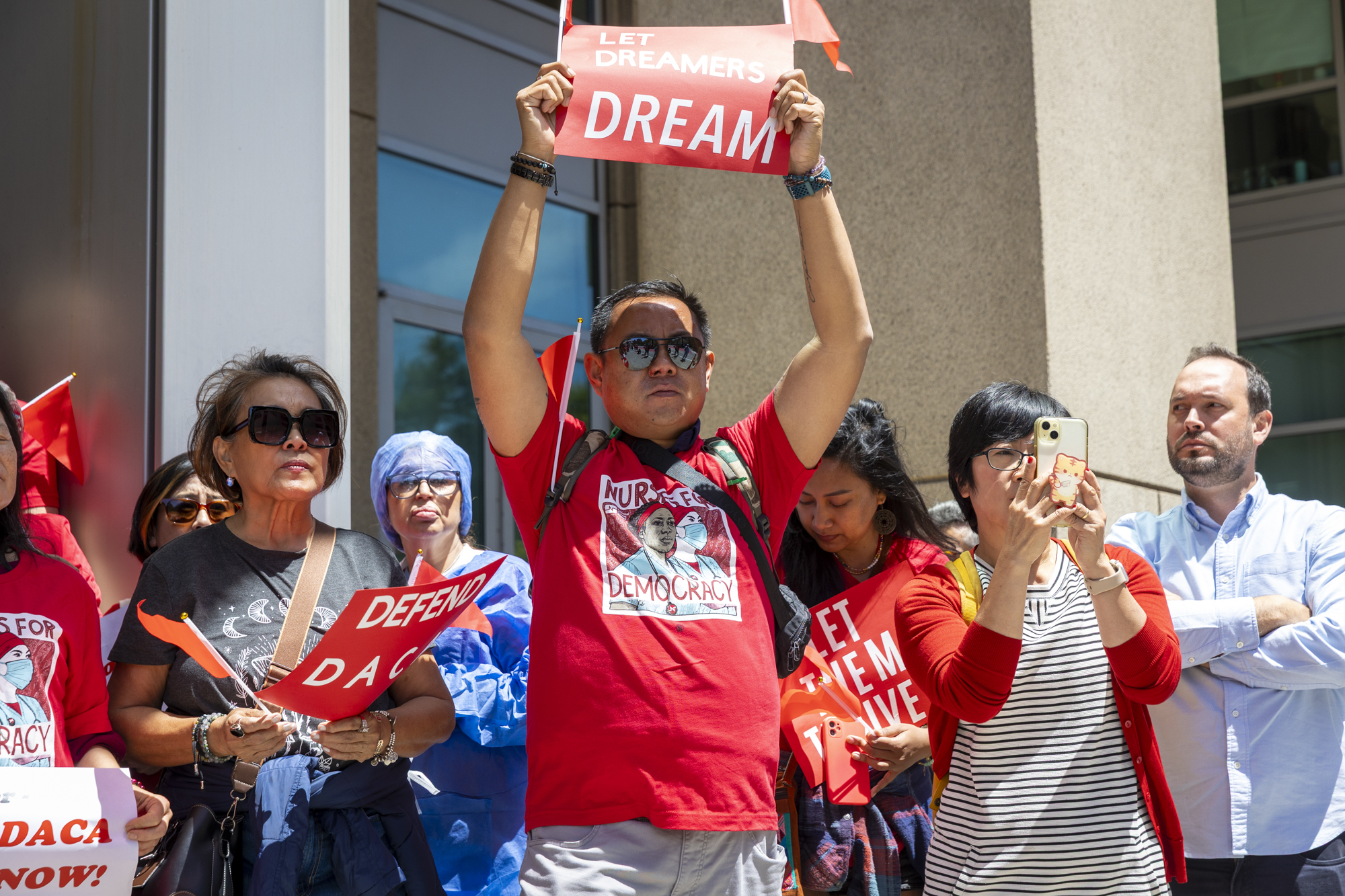
San Francisco Nurses Fight for Kaiser Employee Terminated Over DACA Status
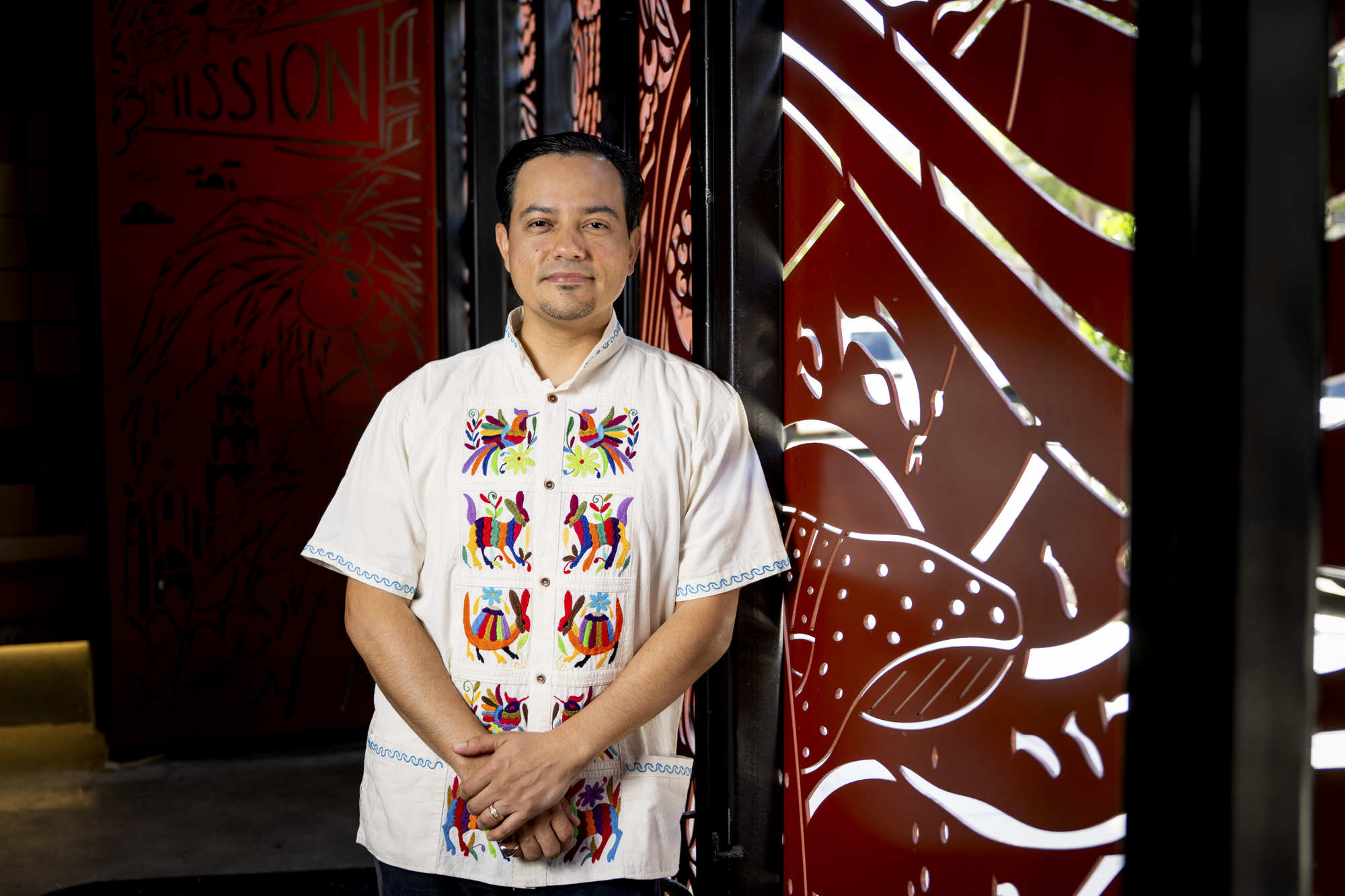
Carnaval San Francisco Turns Music, Memory and Resistance Into Celebration
Berkeley Extends Surveillance Contract With Flock Safety but Rejects Major Expansion
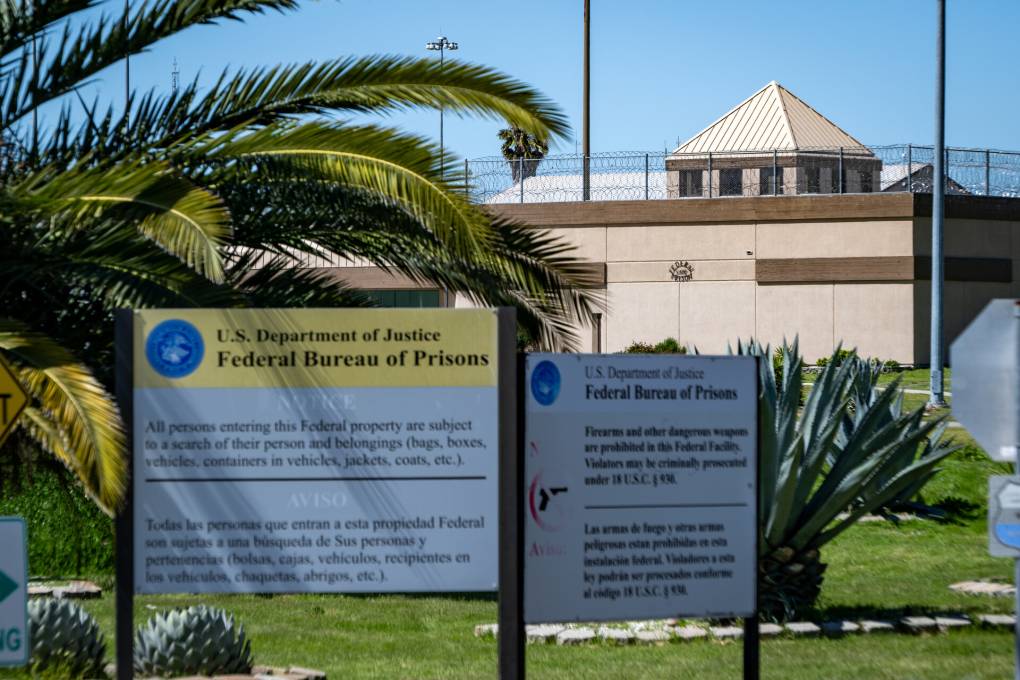
Advocates Urge Demolition of FCI Dublin, Raising Worries It Could Become ICE Jail
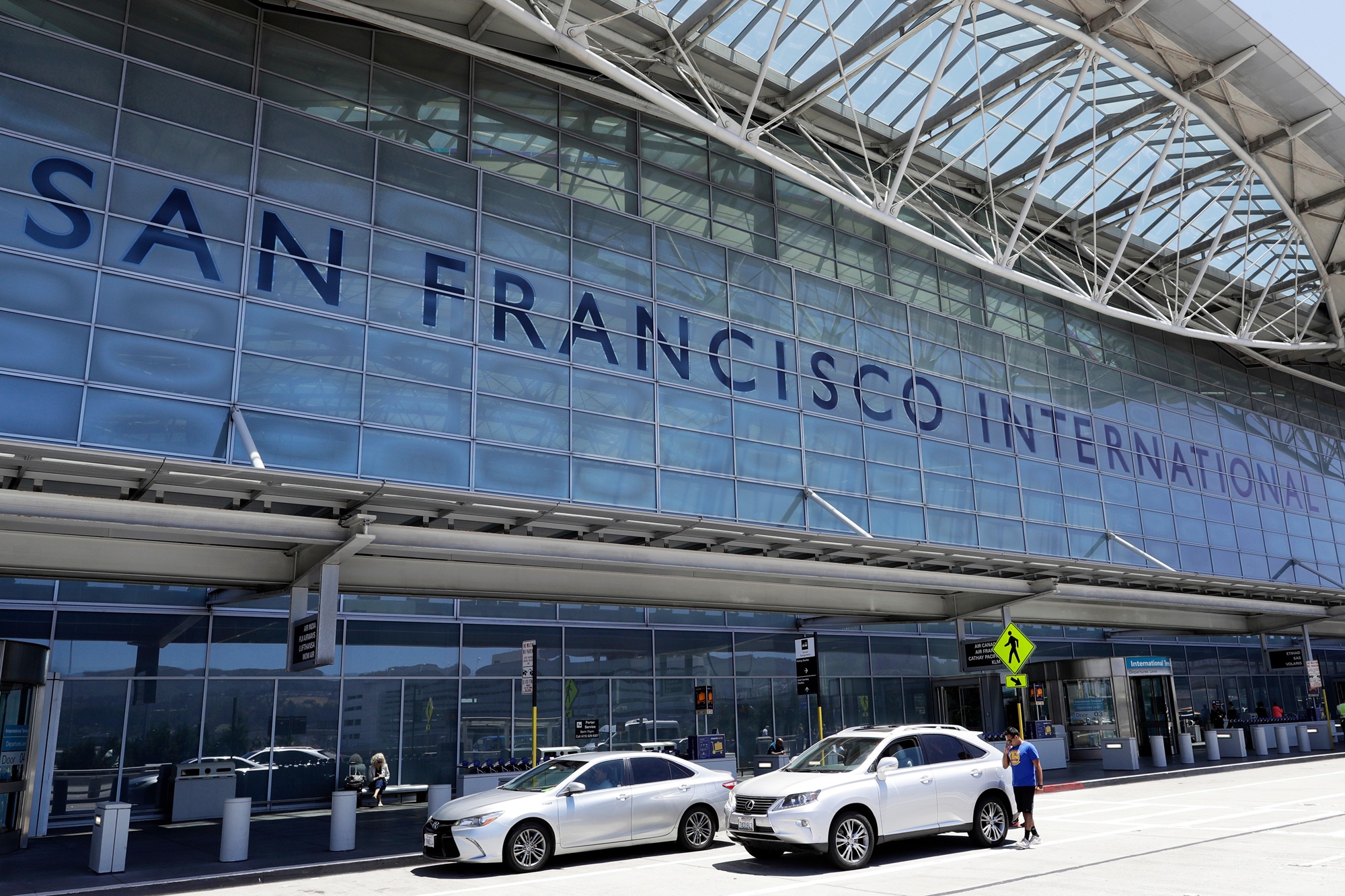
San Francisco Condemns Immigration and Customs Enforcement Actions at SFO Airport
Player sponsored by
window.__IS_SSR__=true
window.__INITIAL_STATE__={
"attachmentsReducer": {
"audio_0": {
"type": "attachments",
"id": "audio_0",
"imgSizes": {
"kqedFullSize": {
"file": "https://ww2.kqed.org/news/wp-content/themes/KQED-unified/img/audio_bgs/background0.jpg"
}
}
},
"audio_1": {
"type": "attachments",
"id": "audio_1",
"imgSizes": {
"kqedFullSize": {
"file": "https://ww2.kqed.org/news/wp-content/themes/KQED-unified/img/audio_bgs/background1.jpg"
}
}
},
"audio_2": {
"type": "attachments",
"id": "audio_2",
"imgSizes": {
"kqedFullSize": {
"file": "https://ww2.kqed.org/news/wp-content/themes/KQED-unified/img/audio_bgs/background2.jpg"
}
}
},
"audio_3": {
"type": "attachments",
"id": "audio_3",
"imgSizes": {
"kqedFullSize": {
"file": "https://ww2.kqed.org/news/wp-content/themes/KQED-unified/img/audio_bgs/background3.jpg"
}
}
},
"audio_4": {
"type": "attachments",
"id": "audio_4",
"imgSizes": {
"kqedFullSize": {
"file": "https://ww2.kqed.org/news/wp-content/themes/KQED-unified/img/audio_bgs/background4.jpg"
}
}
},
"placeholder": {
"type": "attachments",
"id": "placeholder",
"imgSizes": {
"thumbnail": {
"file": "https://cdn.kqed.org/wp-content/uploads/2024/12/KQED-Default-Image-816638274-2000x1333-1-160x107.jpg",
"width": 160,
"height": 107,
"mimeType": "image/jpeg"
},
"medium": {
"file": "https://cdn.kqed.org/wp-content/uploads/2024/12/KQED-Default-Image-816638274-2000x1333-1-800x533.jpg",
"width": 800,
"height": 533,
"mimeType": "image/jpeg"
},
"medium_large": {
"file": "https://cdn.kqed.org/wp-content/uploads/2024/12/KQED-Default-Image-816638274-2000x1333-1-768x512.jpg",
"width": 768,
"height": 512,
"mimeType": "image/jpeg"
},
"large": {
"file": "https://cdn.kqed.org/wp-content/uploads/2024/12/KQED-Default-Image-816638274-2000x1333-1-1020x680.jpg",
"width": 1020,
"height": 680,
"mimeType": "image/jpeg"
},
"1536x1536": {
"file": "https://cdn.kqed.org/wp-content/uploads/2024/12/KQED-Default-Image-816638274-2000x1333-1-1536x1024.jpg",
"width": 1536,
"height": 1024,
"mimeType": "image/jpeg"
},
"fd-lrg": {
"file": "https://cdn.kqed.org/wp-content/uploads/2024/12/KQED-Default-Image-816638274-2000x1333-1-1536x1024.jpg",
"width": 1536,
"height": 1024,
"mimeType": "image/jpeg"
},
"fd-med": {
"file": "https://cdn.kqed.org/wp-content/uploads/2024/12/KQED-Default-Image-816638274-2000x1333-1-1020x680.jpg",
"width": 1020,
"height": 680,
"mimeType": "image/jpeg"
},
"fd-sm": {
"file": "https://cdn.kqed.org/wp-content/uploads/2024/12/KQED-Default-Image-816638274-2000x1333-1-800x533.jpg",
"width": 800,
"height": 533,
"mimeType": "image/jpeg"
},
"post-thumbnail": {
"file": "https://cdn.kqed.org/wp-content/uploads/2024/12/KQED-Default-Image-816638274-2000x1333-1-672x372.jpg",
"width": 672,
"height": 372,
"mimeType": "image/jpeg"
},
"twentyfourteen-full-width": {
"file": "https://cdn.kqed.org/wp-content/uploads/2024/12/KQED-Default-Image-816638274-2000x1333-1-1038x576.jpg",
"width": 1038,
"height": 576,
"mimeType": "image/jpeg"
},
"xxsmall": {
"file": "https://cdn.kqed.org/wp-content/uploads/2024/12/KQED-Default-Image-816638274-2000x1333-1-160x107.jpg",
"width": 160,
"height": 107,
"mimeType": "image/jpeg"
},
"xsmall": {
"file": "https://cdn.kqed.org/wp-content/uploads/2024/12/KQED-Default-Image-816638274-2000x1333-1-672x372.jpg",
"width": 672,
"height": 372,
"mimeType": "image/jpeg"
},
"small": {
"file": "https://cdn.kqed.org/wp-content/uploads/2024/12/KQED-Default-Image-816638274-2000x1333-1-672x372.jpg",
"width": 672,
"height": 372,
"mimeType": "image/jpeg"
},
"xlarge": {
"file": "https://cdn.kqed.org/wp-content/uploads/2024/12/KQED-Default-Image-816638274-2000x1333-1-1020x680.jpg",
"width": 1020,
"height": 680,
"mimeType": "image/jpeg"
},
"full-width": {
"file": "https://cdn.kqed.org/wp-content/uploads/2024/12/KQED-Default-Image-816638274-2000x1333-1-1920x1280.jpg",
"width": 1920,
"height": 1280,
"mimeType": "image/jpeg"
},
"guest-author-32": {
"file": "https://cdn.kqed.org/wp-content/uploads/2025/01/KQED-Default-Image-816638274-1333x1333-1-160x160.jpg",
"width": 32,
"height": 32,
"mimeType": "image/jpeg"
},
"guest-author-50": {
"file": "https://cdn.kqed.org/wp-content/uploads/2025/01/KQED-Default-Image-816638274-1333x1333-1-160x160.jpg",
"width": 50,
"height": 50,
"mimeType": "image/jpeg"
},
"guest-author-64": {
"file": "https://cdn.kqed.org/wp-content/uploads/2025/01/KQED-Default-Image-816638274-1333x1333-1-160x160.jpg",
"width": 64,
"height": 64,
"mimeType": "image/jpeg"
},
"guest-author-96": {
"file": "https://cdn.kqed.org/wp-content/uploads/2025/01/KQED-Default-Image-816638274-1333x1333-1-160x160.jpg",
"width": 96,
"height": 96,
"mimeType": "image/jpeg"
},
"guest-author-128": {
"file": "https://cdn.kqed.org/wp-content/uploads/2025/01/KQED-Default-Image-816638274-1333x1333-1-160x160.jpg",
"width": 128,
"height": 128,
"mimeType": "image/jpeg"
},
"detail": {
"file": "https://cdn.kqed.org/wp-content/uploads/2025/01/KQED-Default-Image-816638274-1333x1333-1-160x160.jpg",
"width": 160,
"height": 160,
"mimeType": "image/jpeg"
},
"kqedFullSize": {
"file": "https://cdn.kqed.org/wp-content/uploads/2024/12/KQED-Default-Image-816638274-2000x1333-1.jpg",
"width": 2000,
"height": 1333
}
}
},
"news_12054567": {
"type": "attachments",
"id": "news_12054567",
"meta": {
"index": "attachments_1716263798",
"site": "news",
"id": "12054567",
"found": true
},
"title": "US-POLITICS-IMMIGRATION",
"publishDate": 1756941444,
"status": "inherit",
"parent": 12054544,
"modified": 1769006278,
"caption": "The CoreCivic, Inc. California City Immigration Processing Center stands in the Kern County desert on July 10, 2025. The Trump administration immigration crackdown swelled the population inside California’s immigrant detention centers. State investigators in a report described strained medical resources inside the sites.",
"credit": "Patrick T. Fallon/AFP via Getty Images",
"altTag": null,
"description": null,
"imgSizes": {
"thumbnail": {
"file": "https://cdn.kqed.org/wp-content/uploads/sites/10/2025/09/KernCountyICEDetentionGetty-160x107.jpg",
"width": 160,
"height": 107,
"mimeType": "image/jpeg"
},
"1536x1536": {
"file": "https://cdn.kqed.org/wp-content/uploads/sites/10/2025/09/KernCountyICEDetentionGetty-1536x1024.jpg",
"width": 1536,
"height": 1024,
"mimeType": "image/jpeg"
},
"post-thumbnail": {
"file": "https://cdn.kqed.org/wp-content/uploads/sites/10/2025/09/KernCountyICEDetentionGetty-672x372.jpg",
"width": 672,
"height": 372,
"mimeType": "image/jpeg"
},
"twentyfourteen-full-width": {
"file": "https://cdn.kqed.org/wp-content/uploads/sites/10/2025/09/KernCountyICEDetentionGetty-1038x576.jpg",
"width": 1038,
"height": 576,
"mimeType": "image/jpeg"
},
"kqedFullSize": {
"file": "https://cdn.kqed.org/wp-content/uploads/sites/10/2025/09/KernCountyICEDetentionGetty.jpg",
"width": 2000,
"height": 1333
}
},
"fetchFailed": false,
"isLoading": false
},
"news_12083769": {
"type": "attachments",
"id": "news_12083769",
"meta": {
"index": "attachments_1716263798",
"site": "news",
"id": "12083769",
"found": true
},
"title": "260514-GILROY ICE-ADE-02-KQED",
"publishDate": 1778798130,
"status": "inherit",
"parent": 0,
"modified": 1778798722,
"caption": "Supporters attend a rally in San José opposing a planned immigration detention center in Gilroy on May 14, 2026.",
"credit": "Azul Dahlstrom-Eckman/KQED",
"altTag": null,
"description": null,
"imgSizes": {
"thumbnail": {
"file": "https://cdn.kqed.org/wp-content/uploads/sites/10/2026/05/260514-GILROY-ICE-ADE-02-KQED-160x107.jpg",
"width": 160,
"height": 107,
"mimeType": "image/jpeg"
},
"1536x1536": {
"file": "https://cdn.kqed.org/wp-content/uploads/sites/10/2026/05/260514-GILROY-ICE-ADE-02-KQED-1536x1024.jpg",
"width": 1536,
"height": 1024,
"mimeType": "image/jpeg"
},
"post-thumbnail": {
"file": "https://cdn.kqed.org/wp-content/uploads/sites/10/2026/05/260514-GILROY-ICE-ADE-02-KQED-672x372.jpg",
"width": 672,
"height": 372,
"mimeType": "image/jpeg"
},
"twentyfourteen-full-width": {
"file": "https://cdn.kqed.org/wp-content/uploads/sites/10/2026/05/260514-GILROY-ICE-ADE-02-KQED-1038x576.jpg",
"width": 1038,
"height": 576,
"mimeType": "image/jpeg"
},
"npr-cds-wide": {
"file": "https://cdn.kqed.org/wp-content/uploads/sites/10/2026/05/260514-GILROY-ICE-ADE-02-KQED-1200x675.jpg",
"width": 1200,
"height": 675,
"mimeType": "image/jpeg"
},
"npr-cds-square": {
"file": "https://cdn.kqed.org/wp-content/uploads/sites/10/2026/05/260514-GILROY-ICE-ADE-02-KQED-600x600.jpg",
"width": 600,
"height": 600,
"mimeType": "image/jpeg"
},
"kqedFullSize": {
"file": "https://cdn.kqed.org/wp-content/uploads/sites/10/2026/05/260514-GILROY-ICE-ADE-02-KQED.jpg",
"width": 2000,
"height": 1333
}
},
"fetchFailed": false,
"isLoading": false
},
"news_11891235": {
"type": "attachments",
"id": "news_11891235",
"meta": {
"index": "attachments_1716263798",
"site": "news",
"id": "11891235",
"found": true
},
"title": "ICE Holds Immigrants At Adelanto Detention Facility",
"publishDate": 1633541835,
"status": "inherit",
"parent": 11891221,
"modified": 1633551042,
"caption": "This U.S. immigration processing center in Adelanto, California, is operated by GEO Group, a Florida-based company specializing in privatized corrections.",
"credit": "John Moore/Getty Images",
"altTag": "On a modern, low-slung building with no windows, a big sign reading 'GEO' hangs on an exterior wall.",
"description": "Field office director Dave Marin walks into the Adelanto Detention Facility on November 15, 2013 in Adelanto, California. The facility, the largest and newest Immigration and Customs Enforcement (ICE), detention center in California, houses an average of 1,100 immigrants in custody pending a decision in their immigration cases or awaiting deportation.",
"imgSizes": {
"medium": {
"file": "https://cdn.kqed.org/wp-content/uploads/sites/10/2021/10/GettyImages-450371215-800x533.jpg",
"width": 800,
"height": 533,
"mimeType": "image/jpeg"
},
"large": {
"file": "https://cdn.kqed.org/wp-content/uploads/sites/10/2021/10/GettyImages-450371215-1020x680.jpg",
"width": 1020,
"height": 680,
"mimeType": "image/jpeg"
},
"thumbnail": {
"file": "https://cdn.kqed.org/wp-content/uploads/sites/10/2021/10/GettyImages-450371215-160x107.jpg",
"width": 160,
"height": 107,
"mimeType": "image/jpeg"
},
"1536x1536": {
"file": "https://cdn.kqed.org/wp-content/uploads/sites/10/2021/10/GettyImages-450371215-1536x1024.jpg",
"width": 1536,
"height": 1024,
"mimeType": "image/jpeg"
},
"2048x2048": {
"file": "https://cdn.kqed.org/wp-content/uploads/sites/10/2021/10/GettyImages-450371215-2048x1365.jpg",
"width": 2048,
"height": 1365,
"mimeType": "image/jpeg"
},
"post-thumbnail": {
"file": "https://cdn.kqed.org/wp-content/uploads/sites/10/2021/10/GettyImages-450371215-672x372.jpg",
"width": 672,
"height": 372,
"mimeType": "image/jpeg"
},
"twentyfourteen-full-width": {
"file": "https://cdn.kqed.org/wp-content/uploads/sites/10/2021/10/GettyImages-450371215-1038x576.jpg",
"width": 1038,
"height": 576,
"mimeType": "image/jpeg"
},
"full-width": {
"file": "https://cdn.kqed.org/wp-content/uploads/sites/10/2021/10/GettyImages-450371215-1920x1280.jpg",
"width": 1920,
"height": 1280,
"mimeType": "image/jpeg"
},
"kqedFullSize": {
"file": "https://cdn.kqed.org/wp-content/uploads/sites/10/2021/10/GettyImages-450371215-scaled-e1769711263847.jpg",
"width": 2000,
"height": 1334
}
},
"fetchFailed": false,
"isLoading": false
},
"news_12083334": {
"type": "attachments",
"id": "news_12083334",
"meta": {
"index": "attachments_1716263798",
"site": "news",
"id": "12083334",
"found": true
},
"title": "20260511-YICKWOCOMMEMORATION-JY-08-KQED",
"publishDate": 1778615577,
"status": "inherit",
"parent": 0,
"modified": 1778618421,
"caption": "Yick Wo Alternative Elementary School student Lizzy Alexander, center, hugs her mom Ranee Kwong as they attend a press conference at the parking lot on Third and Harrison streets in San Francisco on Monday, May 11, 2026. Officials and community members gathered to commemorate the 140th anniversary of the landmark Supreme Court case Yick Wo v. Hopkins, which established that the 14th Amendment applied to all, even noncitizens.",
"credit": "Juliana Yamada for KQED",
"altTag": null,
"description": null,
"imgSizes": {
"thumbnail": {
"file": "https://cdn.kqed.org/wp-content/uploads/sites/10/2026/05/20260511-YICKWOCOMMEMORATION-JY-08-KQED-160x107.jpg",
"width": 160,
"height": 107,
"mimeType": "image/jpeg"
},
"1536x1536": {
"file": "https://cdn.kqed.org/wp-content/uploads/sites/10/2026/05/20260511-YICKWOCOMMEMORATION-JY-08-KQED-1536x1024.jpg",
"width": 1536,
"height": 1024,
"mimeType": "image/jpeg"
},
"post-thumbnail": {
"file": "https://cdn.kqed.org/wp-content/uploads/sites/10/2026/05/20260511-YICKWOCOMMEMORATION-JY-08-KQED-672x372.jpg",
"width": 672,
"height": 372,
"mimeType": "image/jpeg"
},
"twentyfourteen-full-width": {
"file": "https://cdn.kqed.org/wp-content/uploads/sites/10/2026/05/20260511-YICKWOCOMMEMORATION-JY-08-KQED-1038x576.jpg",
"width": 1038,
"height": 576,
"mimeType": "image/jpeg"
},
"npr-cds-wide": {
"file": "https://cdn.kqed.org/wp-content/uploads/sites/10/2026/05/20260511-YICKWOCOMMEMORATION-JY-08-KQED-1200x675.jpg",
"width": 1200,
"height": 675,
"mimeType": "image/jpeg"
},
"npr-cds-square": {
"file": "https://cdn.kqed.org/wp-content/uploads/sites/10/2026/05/20260511-YICKWOCOMMEMORATION-JY-08-KQED-600x600.jpg",
"width": 600,
"height": 600,
"mimeType": "image/jpeg"
},
"kqedFullSize": {
"file": "https://cdn.kqed.org/wp-content/uploads/sites/10/2026/05/20260511-YICKWOCOMMEMORATION-JY-08-KQED.jpg",
"width": 2000,
"height": 1333
}
},
"fetchFailed": false,
"isLoading": false
},
"news_12083228": {
"type": "attachments",
"id": "news_12083228",
"meta": {
"index": "attachments_1716263798",
"site": "news",
"id": "12083228",
"found": true
},
"title": "260511-KAISERDACA00192_TV-KQED",
"publishDate": 1778545168,
"status": "inherit",
"parent": 0,
"modified": 1778545188,
"caption": "Kevin Mann (center) rallies against Kaiser’s plans to terminate a DACA recipient registered nurse outside of Kaiser Permanente on Geary Street in San Francisco on May 11, 2026.",
"credit": "Tâm Vũ/KQED",
"altTag": null,
"description": null,
"imgSizes": {
"thumbnail": {
"file": "https://cdn.kqed.org/wp-content/uploads/sites/10/2026/05/260511-KAISERDACA00192_TV-KQED-160x107.jpg",
"width": 160,
"height": 107,
"mimeType": "image/jpeg"
},
"1536x1536": {
"file": "https://cdn.kqed.org/wp-content/uploads/sites/10/2026/05/260511-KAISERDACA00192_TV-KQED-1536x1024.jpg",
"width": 1536,
"height": 1024,
"mimeType": "image/jpeg"
},
"post-thumbnail": {
"file": "https://cdn.kqed.org/wp-content/uploads/sites/10/2026/05/260511-KAISERDACA00192_TV-KQED-672x372.jpg",
"width": 672,
"height": 372,
"mimeType": "image/jpeg"
},
"twentyfourteen-full-width": {
"file": "https://cdn.kqed.org/wp-content/uploads/sites/10/2026/05/260511-KAISERDACA00192_TV-KQED-1038x576.jpg",
"width": 1038,
"height": 576,
"mimeType": "image/jpeg"
},
"npr-cds-wide": {
"file": "https://cdn.kqed.org/wp-content/uploads/sites/10/2026/05/260511-KAISERDACA00192_TV-KQED-1200x675.jpg",
"width": 1200,
"height": 675,
"mimeType": "image/jpeg"
},
"npr-cds-square": {
"file": "https://cdn.kqed.org/wp-content/uploads/sites/10/2026/05/260511-KAISERDACA00192_TV-KQED-600x600.jpg",
"width": 600,
"height": 600,
"mimeType": "image/jpeg"
},
"kqedFullSize": {
"file": "https://cdn.kqed.org/wp-content/uploads/sites/10/2026/05/260511-KAISERDACA00192_TV-KQED.jpg",
"width": 2000,
"height": 1333
}
},
"fetchFailed": false,
"isLoading": false
},
"news_12083186": {
"type": "attachments",
"id": "news_12083186",
"meta": {
"index": "attachments_1716263798",
"site": "news",
"id": "12083186",
"found": true
},
"title": "260511-KONDAMAY-03-BL-KQED",
"publishDate": 1778535389,
"status": "inherit",
"parent": 0,
"modified": 1778535423,
"caption": "Rodrigo Duran, executive director of Carnaval San Francisco, at the organization’s offices in San Francisco’s Mission District on May 11, 2026.",
"credit": "Beth LaBerge/KQED",
"altTag": null,
"description": null,
"imgSizes": {
"thumbnail": {
"file": "https://cdn.kqed.org/wp-content/uploads/sites/10/2026/05/260511-KONDAMAY-03-BL-KQED-160x107.jpg",
"width": 160,
"height": 107,
"mimeType": "image/jpeg"
},
"1536x1536": {
"file": "https://cdn.kqed.org/wp-content/uploads/sites/10/2026/05/260511-KONDAMAY-03-BL-KQED-1536x1024.jpg",
"width": 1536,
"height": 1024,
"mimeType": "image/jpeg"
},
"post-thumbnail": {
"file": "https://cdn.kqed.org/wp-content/uploads/sites/10/2026/05/260511-KONDAMAY-03-BL-KQED-672x372.jpg",
"width": 672,
"height": 372,
"mimeType": "image/jpeg"
},
"twentyfourteen-full-width": {
"file": "https://cdn.kqed.org/wp-content/uploads/sites/10/2026/05/260511-KONDAMAY-03-BL-KQED-1038x576.jpg",
"width": 1038,
"height": 576,
"mimeType": "image/jpeg"
},
"npr-cds-wide": {
"file": "https://cdn.kqed.org/wp-content/uploads/sites/10/2026/05/260511-KONDAMAY-03-BL-KQED-1200x675.jpg",
"width": 1200,
"height": 675,
"mimeType": "image/jpeg"
},
"npr-cds-square": {
"file": "https://cdn.kqed.org/wp-content/uploads/sites/10/2026/05/260511-KONDAMAY-03-BL-KQED-600x600.jpg",
"width": 600,
"height": 600,
"mimeType": "image/jpeg"
},
"kqedFullSize": {
"file": "https://cdn.kqed.org/wp-content/uploads/sites/10/2026/05/260511-KONDAMAY-03-BL-KQED.jpg",
"width": 2000,
"height": 1333
}
},
"fetchFailed": false,
"isLoading": false
},
"news_12082871": {
"type": "attachments",
"id": "news_12082871",
"meta": {
"index": "attachments_1716263798",
"site": "news",
"id": "12082871",
"found": true
},
"title": "050726BERKELEY FLOCK RALLY_GH_010-KQED",
"publishDate": 1778258324,
"status": "inherit",
"parent": 0,
"modified": 1778258362,
"caption": "A protester holds a sign during a rally opposing Berkeley’s proposed contract expansion with surveillance company Flock Safety outside the Berkeley Unified School District boardroom in Berkeley on May 7, 2026.",
"credit": "Gustavo Hernandez/KQED",
"altTag": null,
"description": null,
"imgSizes": {
"thumbnail": {
"file": "https://cdn.kqed.org/wp-content/uploads/sites/10/2026/05/050726BERKELEY-FLOCK-RALLY_GH_010-KQED-160x107.jpg",
"width": 160,
"height": 107,
"mimeType": "image/jpeg"
},
"1536x1536": {
"file": "https://cdn.kqed.org/wp-content/uploads/sites/10/2026/05/050726BERKELEY-FLOCK-RALLY_GH_010-KQED-1536x1024.jpg",
"width": 1536,
"height": 1024,
"mimeType": "image/jpeg"
},
"post-thumbnail": {
"file": "https://cdn.kqed.org/wp-content/uploads/sites/10/2026/05/050726BERKELEY-FLOCK-RALLY_GH_010-KQED-672x372.jpg",
"width": 672,
"height": 372,
"mimeType": "image/jpeg"
},
"twentyfourteen-full-width": {
"file": "https://cdn.kqed.org/wp-content/uploads/sites/10/2026/05/050726BERKELEY-FLOCK-RALLY_GH_010-KQED-1038x576.jpg",
"width": 1038,
"height": 576,
"mimeType": "image/jpeg"
},
"npr-cds-wide": {
"file": "https://cdn.kqed.org/wp-content/uploads/sites/10/2026/05/050726BERKELEY-FLOCK-RALLY_GH_010-KQED-1200x675.jpg",
"width": 1200,
"height": 675,
"mimeType": "image/jpeg"
},
"npr-cds-square": {
"file": "https://cdn.kqed.org/wp-content/uploads/sites/10/2026/05/050726BERKELEY-FLOCK-RALLY_GH_010-KQED-600x600.jpg",
"width": 600,
"height": 600,
"mimeType": "image/jpeg"
},
"kqedFullSize": {
"file": "https://cdn.kqed.org/wp-content/uploads/sites/10/2026/05/050726BERKELEY-FLOCK-RALLY_GH_010-KQED.jpg",
"width": 2000,
"height": 1333
}
},
"fetchFailed": false,
"isLoading": false
},
"news_11983294": {
"type": "attachments",
"id": "news_11983294",
"meta": {
"index": "attachments_1716263798",
"site": "news",
"id": "11983294",
"found": true
},
"parent": 11983285,
"imgSizes": {
"twentyfourteen-full-width": {
"file": "https://cdn.kqed.org/wp-content/uploads/sites/10/2024/04/240408-FCIDublin-018-BL_qut-1038x576.jpg",
"width": 1038,
"mimeType": "image/jpeg",
"height": 576
},
"thumbnail": {
"file": "https://cdn.kqed.org/wp-content/uploads/sites/10/2024/04/240408-FCIDublin-018-BL_qut-160x107.jpg",
"width": 160,
"mimeType": "image/jpeg",
"height": 107
},
"post-thumbnail": {
"file": "https://cdn.kqed.org/wp-content/uploads/sites/10/2024/04/240408-FCIDublin-018-BL_qut-672x372.jpg",
"width": 672,
"mimeType": "image/jpeg",
"height": 372
},
"kqedFullSize": {
"file": "https://cdn.kqed.org/wp-content/uploads/sites/10/2024/04/240408-FCIDublin-018-BL_qut.jpg",
"width": 1920,
"height": 1280
},
"large": {
"file": "https://cdn.kqed.org/wp-content/uploads/sites/10/2024/04/240408-FCIDublin-018-BL_qut-1020x680.jpg",
"width": 1020,
"mimeType": "image/jpeg",
"height": 680
},
"1536x1536": {
"file": "https://cdn.kqed.org/wp-content/uploads/sites/10/2024/04/240408-FCIDublin-018-BL_qut-1536x1024.jpg",
"width": 1536,
"mimeType": "image/jpeg",
"height": 1024
},
"medium": {
"file": "https://cdn.kqed.org/wp-content/uploads/sites/10/2024/04/240408-FCIDublin-018-BL_qut-800x533.jpg",
"width": 800,
"mimeType": "image/jpeg",
"height": 533
}
},
"publishDate": 1713395313,
"modified": 1713398577,
"caption": "The Federal Correctional Institution, Dublin, a prison for women on April 8, 2024.",
"description": null,
"title": "240408-FCIDublin-018-BL_qut",
"credit": "Beth LaBerge/KQED",
"status": "inherit",
"altTag": "A photo of a large prison behind a fence.",
"fetchFailed": false,
"isLoading": false
},
"news_12063854": {
"type": "attachments",
"id": "news_12063854",
"meta": {
"index": "attachments_1716263798",
"site": "news",
"id": "12063854",
"found": true
},
"title": "Immigration Commentator Detained",
"publishDate": 1762977194,
"status": "inherit",
"parent": 12063851,
"modified": 1762977232,
"caption": "Vehicles wait outside the international terminal at San Francisco International Airport in San Francisco, California, on July 11, 2017. ",
"credit": "Marcio Jose Sanchez/AP Photo",
"altTag": null,
"description": null,
"imgSizes": {
"thumbnail": {
"file": "https://cdn.kqed.org/wp-content/uploads/sites/10/2025/11/SFInternationalAirportAP-160x107.jpg",
"width": 160,
"height": 107,
"mimeType": "image/jpeg"
},
"1536x1536": {
"file": "https://cdn.kqed.org/wp-content/uploads/sites/10/2025/11/SFInternationalAirportAP-1536x1024.jpg",
"width": 1536,
"height": 1024,
"mimeType": "image/jpeg"
},
"post-thumbnail": {
"file": "https://cdn.kqed.org/wp-content/uploads/sites/10/2025/11/SFInternationalAirportAP-672x372.jpg",
"width": 672,
"height": 372,
"mimeType": "image/jpeg"
},
"twentyfourteen-full-width": {
"file": "https://cdn.kqed.org/wp-content/uploads/sites/10/2025/11/SFInternationalAirportAP-1038x576.jpg",
"width": 1038,
"height": 576,
"mimeType": "image/jpeg"
},
"npr-cds-wide": {
"file": "https://cdn.kqed.org/wp-content/uploads/sites/10/2025/11/SFInternationalAirportAP-1200x675.jpg",
"width": 1200,
"height": 675,
"mimeType": "image/jpeg"
},
"kqedFullSize": {
"file": "https://cdn.kqed.org/wp-content/uploads/sites/10/2025/11/SFInternationalAirportAP.jpg",
"width": 2000,
"height": 1333
}
},
"fetchFailed": false,
"isLoading": false
}
},
"audioPlayerReducer": {
"postId": "stream_live",
"isPaused": true,
"isPlaying": false,
"pfsActive": false,
"pledgeModalIsOpen": true,
"playerDrawerIsOpen": false
},
"authorsReducer": {
"byline_news_12083908": {
"type": "authors",
"id": "byline_news_12083908",
"meta": {
"override": true
},
"slug": "byline_news_12083908",
"name": "Wendy Fry and Sergio Olmos, CalMatters",
"isLoading": false
},
"clei": {
"type": "authors",
"id": "8617",
"meta": {
"index": "authors_1716337520",
"id": "8617",
"found": true
},
"name": "Cecilia Lei",
"firstName": "Cecilia",
"lastName": "Lei",
"slug": "clei",
"email": "clei@KQED.org",
"display_author_email": false,
"staff_mastheads": [],
"title": "KQED Contributor",
"bio": "Cecilia Lei is an on-call host and producer for KQED News and Podcasts. Previously, she was the executive producer and host of the San Francisco Chronicle's daily news podcast, 'Fifth and Mission'. Cecilia is a graduate of UC Berkeley’s Graduate School of Journalism and the former president of the Asian American Journalists Association San Francisco Bay Area chapter.",
"avatar": "https://secure.gravatar.com/avatar/40975f1f88fccf628ee537bf6ffc2af8?s=600&d=blank&r=g",
"twitter": null,
"facebook": null,
"instagram": null,
"linkedin": null,
"sites": [
{
"site": "arts",
"roles": [
"contributor"
]
},
{
"site": "news",
"roles": [
"author",
"read_private_posts"
]
},
{
"site": "about",
"roles": [
"editor"
]
}
],
"headData": {
"title": "Cecilia Lei | KQED",
"description": "KQED Contributor",
"ogImgSrc": "https://secure.gravatar.com/avatar/40975f1f88fccf628ee537bf6ffc2af8?s=600&d=blank&r=g",
"twImgSrc": "https://secure.gravatar.com/avatar/40975f1f88fccf628ee537bf6ffc2af8?s=600&d=blank&r=g"
},
"isLoading": false,
"link": "/author/clei"
},
"btorres": {
"type": "authors",
"id": "11666",
"meta": {
"index": "authors_1716337520",
"id": "11666",
"found": true
},
"name": "Blanca Torres",
"firstName": "Blanca",
"lastName": "Torres",
"slug": "btorres",
"email": "btorres@kqed.org",
"display_author_email": true,
"staff_mastheads": [
"news"
],
"title": "Producer, Forum",
"bio": "Blanca Torres brings sharp news judgement and keen sense of lively conversation to her work as producer for Forum. She loves producing shows that leave listeners feeling like they heard distinctive voices, learned something new and gained a fresh perspective.\r\n\r\nShe joined KQED in January of 2020 after 16 years of working as a newspaper reporter most recently at the \u003cem>San Francisco Business Times,\u003c/em> where she wrote about real estate and economic development. Before that, she covered a variety of beats including crime, education, retail, workplace, the economy, consumer issues, and small business for the \u003cem>Contra Costa Times, Baltimore Sun\u003c/em> and\u003cem> The Seattle Times\u003c/em>. In addition to reporting, she worked as an editorial writer and columnist for the \u003cem>Seattle Times\u003c/em>. From 2017 to 2020, Blanca won a total of ten awards from the National Association of Real Estate Editors and won first place for land use reporting from the California News Publishers Association two years in a row. She is also a member and former board member for the National Association of Hispanic Journalists.\r\n\r\nA native of the Pacific Northwest, Blanca earned her bachelor's degree from Vanderbilt University in Nashville and a master's in fine arts in creative writing at Mills College. She lives in the East Bay with her family.",
"avatar": "https://secure.gravatar.com/avatar/f2322ff46076d337f7ba731ee6068cb1?s=600&d=blank&r=g",
"twitter": "@blancawrites",
"facebook": null,
"instagram": null,
"linkedin": null,
"sites": [
{
"site": "arts",
"roles": [
"editor"
]
},
{
"site": "news",
"roles": [
"editor"
]
},
{
"site": "forum",
"roles": [
"editor"
]
}
],
"headData": {
"title": "Blanca Torres | KQED",
"description": "Producer, Forum",
"ogImgSrc": "https://secure.gravatar.com/avatar/f2322ff46076d337f7ba731ee6068cb1?s=600&d=blank&r=g",
"twImgSrc": "https://secure.gravatar.com/avatar/f2322ff46076d337f7ba731ee6068cb1?s=600&d=blank&r=g"
},
"isLoading": false,
"link": "/author/btorres"
},
"adahlstromeckman": {
"type": "authors",
"id": "11785",
"meta": {
"index": "authors_1716337520",
"id": "11785",
"found": true
},
"name": "Azul Dahlstrom-Eckman",
"firstName": "Azul",
"lastName": "Dahlstrom-Eckman",
"slug": "adahlstromeckman",
"email": "adahlstrom-eckman@kqed.org",
"display_author_email": true,
"staff_mastheads": [],
"title": "Reporter",
"bio": "Azul is a reporter for KQED who focuses on producing sound-rich audio features for KQED's Morning Edition segment and digital features for KQED's online audiences. He previously worked as the Weekend News Editor at KQED, responsible for overseeing radio and digital news on the weekends. He joined KQED in 2021 as an alumna of KALW's Audio Academy radio journalism training program. He was born and raised on Potrero Hill in San Francisco and holds a B.A. in Environmental Studies from the University of Oregon.",
"avatar": "https://secure.gravatar.com/avatar/99c0cfc680078897572931b34e941e1e?s=600&d=blank&r=g",
"twitter": "@zuliemann",
"facebook": null,
"instagram": null,
"linkedin": null,
"sites": [
{
"site": "arts",
"roles": [
"editor"
]
},
{
"site": "news",
"roles": [
"editor"
]
},
{
"site": "science",
"roles": [
"editor"
]
}
],
"headData": {
"title": "Azul Dahlstrom-Eckman | KQED",
"description": "Reporter",
"ogImgSrc": "https://secure.gravatar.com/avatar/99c0cfc680078897572931b34e941e1e?s=600&d=blank&r=g",
"twImgSrc": "https://secure.gravatar.com/avatar/99c0cfc680078897572931b34e941e1e?s=600&d=blank&r=g"
},
"isLoading": false,
"link": "/author/adahlstromeckman"
},
"sjohnson": {
"type": "authors",
"id": "11840",
"meta": {
"index": "authors_1716337520",
"id": "11840",
"found": true
},
"name": "Sydney Johnson",
"firstName": "Sydney",
"lastName": "Johnson",
"slug": "sjohnson",
"email": "sjohnson@kqed.org",
"display_author_email": false,
"staff_mastheads": [
"news"
],
"title": "KQED Reporter",
"bio": "Sydney Johnson is a general assignment reporter at KQED. She previously reported on public health and city government at the San Francisco Examiner, and before that, she covered statewide education policy for EdSource. Her reporting has won multiple local, state and national awards. Sydney is a graduate of the University of California, Berkeley and lives in San Francisco.",
"avatar": "https://secure.gravatar.com/avatar/97855f2719b72ad6190b7c535fe642c8?s=600&d=blank&r=g",
"twitter": "sydneyfjohnson",
"facebook": null,
"instagram": null,
"linkedin": null,
"sites": [
{
"site": "news",
"roles": [
"editor"
]
}
],
"headData": {
"title": "Sydney Johnson | KQED",
"description": "KQED Reporter",
"ogImgSrc": "https://secure.gravatar.com/avatar/97855f2719b72ad6190b7c535fe642c8?s=600&d=blank&r=g",
"twImgSrc": "https://secure.gravatar.com/avatar/97855f2719b72ad6190b7c535fe642c8?s=600&d=blank&r=g"
},
"isLoading": false,
"link": "/author/sjohnson"
},
"kdebenedetti": {
"type": "authors",
"id": "11913",
"meta": {
"index": "authors_1716337520",
"id": "11913",
"found": true
},
"name": "Katie DeBenedetti",
"firstName": "Katie",
"lastName": "DeBenedetti",
"slug": "kdebenedetti",
"email": "kdebenedetti@kqed.org",
"display_author_email": false,
"staff_mastheads": [
"news",
"science"
],
"title": "KQED Contributor",
"bio": "Katie DeBenedetti is a digital reporter covering daily news for the Express Desk. Prior to joining KQED as a culture reporting intern in January 2024, she covered education and city government for the Napa Valley Register.",
"avatar": "https://secure.gravatar.com/avatar/6e31073cb8f7e4214ab03f42771d0f45?s=600&d=blank&r=g",
"twitter": null,
"facebook": null,
"instagram": null,
"linkedin": null,
"sites": [
{
"site": "news",
"roles": [
"author"
]
},
{
"site": "science",
"roles": [
"author"
]
},
{
"site": "liveblog",
"roles": [
"author"
]
}
],
"headData": {
"title": "Katie DeBenedetti | KQED",
"description": "KQED Contributor",
"ogImgSrc": "https://secure.gravatar.com/avatar/6e31073cb8f7e4214ab03f42771d0f45?s=600&d=blank&r=g",
"twImgSrc": "https://secure.gravatar.com/avatar/6e31073cb8f7e4214ab03f42771d0f45?s=600&d=blank&r=g"
},
"isLoading": false,
"link": "/author/kdebenedetti"
},
"aaliahmad": {
"type": "authors",
"id": "11986",
"meta": {
"index": "authors_1716337520",
"id": "11986",
"found": true
},
"name": "Ayah Ali-Ahmad",
"firstName": "Ayah",
"lastName": "Ali-Ahmad",
"slug": "aaliahmad",
"email": "aaliahmad@KQED.org",
"display_author_email": false,
"staff_mastheads": [],
"title": "KQED Contributor",
"bio": null,
"avatar": "https://secure.gravatar.com/avatar/7f340465c69a2c816f6c07000137a3ee?s=600&d=blank&r=g",
"twitter": "ayahaliahmad",
"bluesky": null,
"facebook": null,
"instagram": null,
"linkedin": null,
"sites": [
{
"site": "news",
"roles": [
"author"
]
}
],
"headData": {
"title": "Ayah Ali-Ahmad | KQED",
"description": "KQED Contributor",
"ogImgSrc": "https://secure.gravatar.com/avatar/7f340465c69a2c816f6c07000137a3ee?s=600&d=blank&r=g",
"twImgSrc": "https://secure.gravatar.com/avatar/7f340465c69a2c816f6c07000137a3ee?s=600&d=blank&r=g"
},
"isLoading": false,
"link": "/author/aaliahmad"
}
},
"breakingNewsReducer": {},
"pagesReducer": {},
"postsReducer": {
"stream_live": {
"type": "live",
"id": "stream_live",
"audioUrl": "https://streams.kqed.org/kqedradio",
"title": "Live Stream",
"excerpt": "Live Stream information currently unavailable.",
"link": "/radio",
"featImg": "",
"label": {
"name": "KQED Live",
"link": "/"
}
},
"stream_kqedNewscast": {
"type": "posts",
"id": "stream_kqedNewscast",
"audioUrl": "https://www.kqed.org/.stream/anon/radio/RDnews/newscast.mp3?_=1",
"title": "KQED Newscast",
"featImg": "",
"label": {
"name": "88.5 FM",
"link": "/"
}
},
"news_12083908": {
"type": "posts",
"id": "news_12083908",
"meta": {
"index": "posts_1716263798",
"site": "news",
"id": "12083908",
"score": null,
"sort": [
1778874040000
]
},
"guestAuthors": [],
"slug": "6-people-have-died-in-california-ice-detention-centers-as-trump-deportations-soared",
"title": "6 People Have Died in California ICE Detention Centers as Trump Deportations Soared",
"publishDate": 1778874040,
"format": "standard",
"headTitle": "6 People Have Died in California ICE Detention Centers as Trump Deportations Soared | KQED",
"labelTerm": {},
"content": "\u003cp>\u003cem>This story was originally published by \u003ca href=\"https://calmatters.org/\">CalMatters\u003c/a>. \u003ca href=\"https://calmatters.org/subscribe-to-calmatters/\">Sign up\u003c/a> for their newsletters.\u003c/em>\u003c/p>\n\u003cp>Six people died in California immigration detention centers over the past year as the crowded sites struggled to provide basic medical care, \u003ca href=\"https://oag.ca.gov/system/files/media/immigration-detention-2026.pdf\">according to a new state investigation\u003c/a> detailing conditions inside the facilities.\u003c/p>\n\u003cp>The 175-page report released Friday offers the most detailed look to date inside the detention centers that are often in remote areas of the state and hard to access for attorneys, families, and advocates.\u003c/p>\n\u003cp>It documents the highest death toll since the state began conducting inspections of the centers seven years ago. In 2024, there were zero deaths in California detention centers, according to \u003ca href=\"https://www.aila.org/library/deaths-at-adult-detention-centers#2024\">the American Immigration Lawyers Association’s list\u003c/a> of Immigration and Customs Enforcement press releases tracking them, and the Attorney General’s office.\u003c/p>\n\u003cp>[ad fullwidth]\u003c/p>\n\u003cp>The deaths occurred as the Trump administration carried out a mass deportation campaign — starting in Los Angeles — that drove up the population inside detention centers by more than 150%.\u003c/p>\n\u003cp>Eighteen people have died in facilities this year across the country, around one person a week. Since the start of the Trump administration, 48 people have died in detention. A study published last month in the Journal of the American Medical Association found that \u003ca href=\"https://abcnews.com/US/death-rates-ice-detention-facilities-raise-concerns-health/story?id=132121020&fbclid=IwY2xjawRXSpdleHRuA2FlbQIxMQBicmlkETF3OGVjYm41aU9MWE9hbkJac3J0YwZhcHBfaWQQMjIyMDM5MTc4ODIwMDg5MgABHqpFKVbh67fbaU_KYip5crI7kGL6tZ4XWBOeVktgP5jX5_bFcCXZkspop7jA_aem_ltdTyAvHCtAmn9ZNK3mOyQ\">the current rate is nearly seven times higher than fiscal year 2023 levels\u003c/a> at 88.9 per 100,000 people.\u003c/p>\n\u003cp>In California, four of the deaths occurred at the Adelanto ICE Processing Center in San Bernardino County. Two other people died at the Imperial Regional Detention Facility near the U.S.-Mexico border in Calexico. In all four of the Adelanto cases, families of the deceased allege the facility failed to provide adequate medical care, the report states.\u003c/p>\n\u003cfigure id=\"attachment_11891235\" class=\"wp-caption aligncenter\" style=\"max-width: 2000px\">\u003cimg loading=\"lazy\" decoding=\"async\" class=\"size-full wp-image-11891235\" src=\"https://cdn.kqed.org/wp-content/uploads/sites/10/2021/10/GettyImages-450371215-scaled-e1769711263847.jpg\" alt=\"On a modern, low-slung building with no windows, a big sign reading 'GEO' hangs on an exterior wall.\" width=\"2000\" height=\"1334\">\u003cfigcaption class=\"wp-caption-text\">This U.S. immigration processing center in Adelanto, California, is operated by GEO Group, a Florida-based company specializing in privatized corrections. \u003ccite>(John Moore/Getty Images)\u003c/cite>\u003c/figcaption>\u003c/figure>\n\u003cp>The Department of Homeland Security called the allegations in the lawsuit about the conditions inside Adelanto false.\u003c/p>\n\u003cp>“ICE is regularly audited and inspected by external agencies to ensure that ICE facilities comply with performance-based national detention standards,” a then-spokesperson for DHS said when the lawsuit was filed.\u003c/p>\n\u003cp>CalMatters reached out to ICE and the three private prison companies that operate facilities in California. ICE, GEO Group, MTC and Core Civic did not immediately respond to a request for responses to the AG’s report.\u003c/p>\n\u003cp>The inspections by the California Department of Justice are required under \u003ca href=\"https://legiscan.com/CA/text/AB103/id/1637414\">a 2017 law enacted\u003c/a> in response to concerns about conditions. Investigators and medical experts did two-day site visits at each facility and interviewed 194 people from more than 120 countries.\u003c/p>\n\u003cp>State inspectors interviewed 194 detainees for the new report, making it one of the largest reviews of its kind, between July and November 2025.\u003c/p>\n\u003cp>Last year, inspectors focused on lapses in mental health care across the six facilities operating in California in the early months of the second Trump administration. This year, state investigators drilled in on how the dramatic surge in detainee populations strained conditions and access to medical care at all of the facilities now operating across California.\u003c/p>\n\u003cp>Some detainees described only having beans and bread to eat, which gave them diarrhea, and extremely cold temperatures that caused them to try to turn their socks into extra arm sleeves. At one facility, investigators documented not enough toilets to serve the population, with detainees reporting dirty bathrooms.\u003c/p>\n\u003cfigure id=\"attachment_12070623\" class=\"wp-caption aligncenter\" style=\"max-width: 2000px\">\u003cimg loading=\"lazy\" decoding=\"async\" class=\"wp-image-12070623 size-full\" src=\"https://cdn.kqed.org/wp-content/uploads/sites/10/2026/01/AP26020826398216-KQED.jpg\" alt=\"\" width=\"2000\" height=\"1333\" srcset=\"https://cdn.kqed.org/wp-content/uploads/sites/10/2026/01/AP26020826398216-KQED.jpg 2000w, https://cdn.kqed.org/wp-content/uploads/sites/10/2026/01/AP26020826398216-KQED-160x107.jpg 160w, https://cdn.kqed.org/wp-content/uploads/sites/10/2026/01/AP26020826398216-KQED-1536x1024.jpg 1536w\" sizes=\"auto, (max-width: 2000px) 100vw, 2000px\">\u003cfigcaption class=\"wp-caption-text\">A guard walks to the entrance of an immigration detention center on Jan. 20, 2026, in California City, California. \u003ccite>(Marcio Jose Sanchez/AP Photo)\u003c/cite>\u003c/figcaption>\u003c/figure>\n\u003cp>State investigators wrote that the detention centers had not increased medical staffing to match the dramatic rise in the number of detainees. At a new detention center that opened in a former state prison in California City last year, investigators described “crisis-level” medical staffing that contributed to delays in care. At the time, the center had only one physician for nearly 1,000 detainees.\u003c/p>\n\u003cp>Several detainees cried as they relayed the conditions of their confinement in California City to state investigators. Most of the people detained have not been convicted of any crime.\u003c/p>\n\u003cp>“This is cruel, inhumane, and unacceptable,” said California Attorney General Rob Bonta, adding that his office “worked tirelessly to shine a light” on the conditions.\u003c/p>\n\u003cp>All of the detention centers are managed by private companies under contracts with the federal government. State investigators wrote that the companies and the federal agency are failing to meet their own standards of care.\u003c/p>\n\u003cp>“The federal government and facility operators have a significant choice before them: to reform their practices and bring these facilities into compliance or to continue their noncompliant policy of prioritizing detention over safety, which likely will lead to dire human and legal consequences,” the state report said.\u003c/p>\n\u003ch2>Diminished civil rights protections\u003c/h2>\n\u003cp>State investigators also described in their report how the Trump administration is rolling back federal protections for detainees.\u003c/p>\n\u003cp>Since January 2025, the federal government has defunded legal programs to inform people of their rights, shut down Department of Homeland Security civil rights oversight offices, and stopped protections for transgender detainees, the report states.\u003c/p>\n\u003cp>Immigration and Customs Enforcement stopped including congressionally mandated data on transgender people in its biweekly statistical reports in February 2025, the report says. The agency also removed from its website a policy memo that committed the agency to creating a safe environment for transgender people.[aside postID=news_12083600 hero='https://cdn.kqed.org/wp-content/uploads/sites/10/2026/05/260514-GILROY-ICE-ADE-02-KQED.jpg']Loba, a transgender woman from El Salvador who was detained at California City for six months in 2025, told CalMatters she experienced traumatizing sexual harassment and intimidation from guards while being housed in the male dorms. She asked CalMatters to only identify her by her first name because she fears retaliation for speaking about the conditions and for her safety in her home country.\u003c/p>\n\u003cp>The situation was so stressful, she said, that she finally decided to sign her voluntary departure paperwork to go back home to El Salvador.\u003c/p>\n\u003cp>“That is absolutely the reason,” she said. “I have been fighting my immigration case for two years, and then after not being around my community and the lack of support for the LGBTQ+ community inside detention centers, and then being a victim of harassment, it was really intimidating. It was very traumatizing.”\u003c/p>\n\u003cp>The report also looked into other complaints raised by detainees and their families.\u003c/p>\n\u003cp>During one incident at Adelanto, a person reported to state inspectors that guards deployed pepper spray in a confined room holding about 50 people.\u003c/p>\n\u003cp>At the Otay Mesa Detention Center in San Diego, investigators flagged concerns about strip-searching. The report states Otay Mesa is the only facility in California that has a policy of strip-searching detainees after every visit they have with someone who is not a lawyer.\u003c/p>\n\u003cp>Women described the searches as “humiliating” and “denigrating” after being searched in front of male officers, sometimes even while menstruating. Both males and females described feeling “violated” by the practice. One person told inspectors they had stopped visiting their family altogether to avoid the searches.\u003c/p>\n\u003ch2>Two new detention centers\u003c/h2>\n\u003cp>At the time of the investigators’ visits, 6,028 people were held in immigration detention in California. That was up 162% from the 2,300 held during inspections in 2023. \u003ca href=\"https://tracreports.org/immigration/quickfacts/\">California has the third highest ICE detainee population, behind Texas and Louisiana. \u003c/a>\u003c/p>\n\u003cp>California is also home to two of the seven largest facilities nationwide. Detainees in California were mostly from Mexico, India, Guatemala, El Salvador, China, Russia, Cuba, Colombia, Venezuela, and Honduras.\u003c/p>\n\u003cfigure id=\"attachment_12054610\" class=\"wp-caption aligncenter\" style=\"max-width: 2000px\">\u003cimg loading=\"lazy\" decoding=\"async\" class=\"wp-image-12054610 size-full\" src=\"https://cdn.kqed.org/wp-content/uploads/sites/10/2025/09/CoreCivicKernCountyGetty.jpg\" alt=\"\" width=\"2000\" height=\"1333\" srcset=\"https://cdn.kqed.org/wp-content/uploads/sites/10/2025/09/CoreCivicKernCountyGetty.jpg 2000w, https://cdn.kqed.org/wp-content/uploads/sites/10/2025/09/CoreCivicKernCountyGetty-160x107.jpg 160w, https://cdn.kqed.org/wp-content/uploads/sites/10/2025/09/CoreCivicKernCountyGetty-1536x1024.jpg 1536w\" sizes=\"auto, (max-width: 2000px) 100vw, 2000px\">\u003cfigcaption class=\"wp-caption-text\">The CoreCivic, Inc. California City Immigration Processing Center stands in the Kern County desert in California City, California, on July 10, 2025. \u003ccite>(Patrick T. Fallon/AFP via Getty Images)\u003c/cite>\u003c/figcaption>\u003c/figure>\n\u003cp>California Democrats during both of Trump’s terms have adopted policies that were meant to block the detention centers from operating. In 2019, California tried to ban private for-profit detention centers from operating in the state, but GEO Group, one of the major private prison operators, successfully sued to stop it. The 9th Circuit Court of Appeals ruled the ban violates the Constitution’s Supremacy Clause by preventing the federal government from conducting immigration enforcement.\u003c/p>\n\u003cp>ICE opened two detention centers in California over the past year, first the one in California City and then one in McFarland called Central Valley Annex. It began receiving detainees in April 2026 while the report was being finalized, but the state says it will begin monitoring that detention center as well. Both of the sites were previously used to hold state prison inmates under contracts with California’s corrections system.\u003c/p>\n\u003cp>This year California Democrats are carrying a range of bills to push back against the Trump administration’s immigration crackdown. One by Assemblymember Matt Haney, a San Francisco Democrat, \u003ca href=\"https://calmatters.digitaldemocracy.org/bills/ca_202520260ab1633\">would tax detention facilities\u003c/a>, with the funds going towards immigrant rights groups, effectively making it unprofitable to keep detention centers in the state.\u003c/p>\n\u003cp>State Sen. María Elena Durazo, a Democrat from Los Angeles, also introduced a bill to extend the state Department of Justice’s authority to conduct inspections at the detention centers.\u003c/p>\n\u003cp>\u003cem>This article was \u003ca href=\"https://calmatters.org/justice/2026/05/ice-detention-centers-state-inspections/\">originally published on CalMatters\u003c/a> and was republished under the \u003ca href=\"https://creativecommons.org/licenses/by-nc-nd/4.0/\">Creative Commons Attribution-NonCommercial-NoDerivatives\u003c/a> license.\u003c/em>\u003c/p>\n\u003cp>[ad floatright]\u003c/p>\n",
"blocks": [],
"excerpt": "The Trump administration immigration crackdown swelled the population inside California’s immigrant detention centers. State investigators in a report described strained medical resources inside the sites.",
"status": "publish",
"parent": 0,
"modified": 1778874040,
"stats": {
"hasAudio": false,
"hasVideo": false,
"hasChartOrMap": false,
"iframeSrcs": [],
"hasGoogleForm": false,
"hasGallery": false,
"hasHearkenModule": false,
"hasPolis": false,
"paragraphCount": 37,
"wordCount": 1573
},
"headData": {
"title": "6 People Have Died in California ICE Detention Centers as Trump Deportations Soared | KQED",
"description": "The Trump administration immigration crackdown swelled the population inside California’s immigrant detention centers. State investigators in a report described strained medical resources inside the sites.",
"ogTitle": "",
"ogDescription": "",
"ogImgId": "",
"twTitle": "",
"twDescription": "",
"twImgId": "",
"schema": {
"@context": "https://schema.org",
"@type": "NewsArticle",
"headline": "6 People Have Died in California ICE Detention Centers as Trump Deportations Soared",
"datePublished": "2026-05-15T12:40:40-07:00",
"dateModified": "2026-05-15T12:40:40-07:00",
"image": "https://cdn.kqed.org/wp-content/uploads/2020/02/KQED-OG-Image@1x.png",
"isAccessibleForFree": "True",
"publisher": {
"@type": "NewsMediaOrganization",
"@id": "https://www.kqed.org/#organization",
"name": "KQED",
"logo": "https://cdn.kqed.org/wp-content/uploads/2020/02/KQED-OG-Image@1x.png",
"url": "https://www.kqed.org",
"sameAs": [
"https://www.facebook.com/KQED",
"https://twitter.com/KQED",
"https://www.instagram.com/kqed/",
"https://www.tiktok.com/@kqedofficial",
"https://www.linkedin.com/company/kqed",
"https://www.youtube.com/channel/UCeC0IOo7i1P_61zVUWbJ4nw"
]
}
}
},
"primaryCategory": {
"termId": 1169,
"slug": "immigration",
"name": "Immigration"
},
"source": "CalMatters",
"sourceUrl": "https://calmatters.org/",
"sticky": false,
"nprByline": "Wendy Fry and Sergio Olmos, CalMatters",
"nprStoryId": "kqed-12083908",
"templateType": "standard",
"featuredImageType": "standard",
"excludeFromSiteSearch": "Include",
"showOnAuthorArchivePages": "No",
"articleAge": "0",
"path": "/news/12083908/6-people-have-died-in-california-ice-detention-centers-as-trump-deportations-soared",
"audioTrackLength": null,
"parsedContent": [
{
"type": "contentString",
"content": "\u003cdiv class=\"post-body\">\u003cp>\u003cp>\u003cem>This story was originally published by \u003ca href=\"https://calmatters.org/\">CalMatters\u003c/a>. \u003ca href=\"https://calmatters.org/subscribe-to-calmatters/\">Sign up\u003c/a> for their newsletters.\u003c/em>\u003c/p>\n\u003cp>Six people died in California immigration detention centers over the past year as the crowded sites struggled to provide basic medical care, \u003ca href=\"https://oag.ca.gov/system/files/media/immigration-detention-2026.pdf\">according to a new state investigation\u003c/a> detailing conditions inside the facilities.\u003c/p>\n\u003cp>The 175-page report released Friday offers the most detailed look to date inside the detention centers that are often in remote areas of the state and hard to access for attorneys, families, and advocates.\u003c/p>\n\u003cp>It documents the highest death toll since the state began conducting inspections of the centers seven years ago. In 2024, there were zero deaths in California detention centers, according to \u003ca href=\"https://www.aila.org/library/deaths-at-adult-detention-centers#2024\">the American Immigration Lawyers Association’s list\u003c/a> of Immigration and Customs Enforcement press releases tracking them, and the Attorney General’s office.\u003c/p>\n\u003cp>\u003c/p>\u003c/div>",
"attributes": {
"named": {},
"numeric": []
}
},
{
"type": "component",
"content": "",
"name": "ad",
"attributes": {
"named": {
"label": "fullwidth"
},
"numeric": [
"fullwidth"
]
}
},
{
"type": "contentString",
"content": "\u003cdiv class=\"post-body\">\u003cp>\u003c/p>\n\u003cp>The deaths occurred as the Trump administration carried out a mass deportation campaign — starting in Los Angeles — that drove up the population inside detention centers by more than 150%.\u003c/p>\n\u003cp>Eighteen people have died in facilities this year across the country, around one person a week. Since the start of the Trump administration, 48 people have died in detention. A study published last month in the Journal of the American Medical Association found that \u003ca href=\"https://abcnews.com/US/death-rates-ice-detention-facilities-raise-concerns-health/story?id=132121020&fbclid=IwY2xjawRXSpdleHRuA2FlbQIxMQBicmlkETF3OGVjYm41aU9MWE9hbkJac3J0YwZhcHBfaWQQMjIyMDM5MTc4ODIwMDg5MgABHqpFKVbh67fbaU_KYip5crI7kGL6tZ4XWBOeVktgP5jX5_bFcCXZkspop7jA_aem_ltdTyAvHCtAmn9ZNK3mOyQ\">the current rate is nearly seven times higher than fiscal year 2023 levels\u003c/a> at 88.9 per 100,000 people.\u003c/p>\n\u003cp>In California, four of the deaths occurred at the Adelanto ICE Processing Center in San Bernardino County. Two other people died at the Imperial Regional Detention Facility near the U.S.-Mexico border in Calexico. In all four of the Adelanto cases, families of the deceased allege the facility failed to provide adequate medical care, the report states.\u003c/p>\n\u003cfigure id=\"attachment_11891235\" class=\"wp-caption aligncenter\" style=\"max-width: 2000px\">\u003cimg loading=\"lazy\" decoding=\"async\" class=\"size-full wp-image-11891235\" src=\"https://cdn.kqed.org/wp-content/uploads/sites/10/2021/10/GettyImages-450371215-scaled-e1769711263847.jpg\" alt=\"On a modern, low-slung building with no windows, a big sign reading 'GEO' hangs on an exterior wall.\" width=\"2000\" height=\"1334\">\u003cfigcaption class=\"wp-caption-text\">This U.S. immigration processing center in Adelanto, California, is operated by GEO Group, a Florida-based company specializing in privatized corrections. \u003ccite>(John Moore/Getty Images)\u003c/cite>\u003c/figcaption>\u003c/figure>\n\u003cp>The Department of Homeland Security called the allegations in the lawsuit about the conditions inside Adelanto false.\u003c/p>\n\u003cp>“ICE is regularly audited and inspected by external agencies to ensure that ICE facilities comply with performance-based national detention standards,” a then-spokesperson for DHS said when the lawsuit was filed.\u003c/p>\n\u003cp>CalMatters reached out to ICE and the three private prison companies that operate facilities in California. ICE, GEO Group, MTC and Core Civic did not immediately respond to a request for responses to the AG’s report.\u003c/p>\n\u003cp>The inspections by the California Department of Justice are required under \u003ca href=\"https://legiscan.com/CA/text/AB103/id/1637414\">a 2017 law enacted\u003c/a> in response to concerns about conditions. Investigators and medical experts did two-day site visits at each facility and interviewed 194 people from more than 120 countries.\u003c/p>\n\u003cp>State inspectors interviewed 194 detainees for the new report, making it one of the largest reviews of its kind, between July and November 2025.\u003c/p>\n\u003cp>Last year, inspectors focused on lapses in mental health care across the six facilities operating in California in the early months of the second Trump administration. This year, state investigators drilled in on how the dramatic surge in detainee populations strained conditions and access to medical care at all of the facilities now operating across California.\u003c/p>\n\u003cp>Some detainees described only having beans and bread to eat, which gave them diarrhea, and extremely cold temperatures that caused them to try to turn their socks into extra arm sleeves. At one facility, investigators documented not enough toilets to serve the population, with detainees reporting dirty bathrooms.\u003c/p>\n\u003cfigure id=\"attachment_12070623\" class=\"wp-caption aligncenter\" style=\"max-width: 2000px\">\u003cimg loading=\"lazy\" decoding=\"async\" class=\"wp-image-12070623 size-full\" src=\"https://cdn.kqed.org/wp-content/uploads/sites/10/2026/01/AP26020826398216-KQED.jpg\" alt=\"\" width=\"2000\" height=\"1333\" srcset=\"https://cdn.kqed.org/wp-content/uploads/sites/10/2026/01/AP26020826398216-KQED.jpg 2000w, https://cdn.kqed.org/wp-content/uploads/sites/10/2026/01/AP26020826398216-KQED-160x107.jpg 160w, https://cdn.kqed.org/wp-content/uploads/sites/10/2026/01/AP26020826398216-KQED-1536x1024.jpg 1536w\" sizes=\"auto, (max-width: 2000px) 100vw, 2000px\">\u003cfigcaption class=\"wp-caption-text\">A guard walks to the entrance of an immigration detention center on Jan. 20, 2026, in California City, California. \u003ccite>(Marcio Jose Sanchez/AP Photo)\u003c/cite>\u003c/figcaption>\u003c/figure>\n\u003cp>State investigators wrote that the detention centers had not increased medical staffing to match the dramatic rise in the number of detainees. At a new detention center that opened in a former state prison in California City last year, investigators described “crisis-level” medical staffing that contributed to delays in care. At the time, the center had only one physician for nearly 1,000 detainees.\u003c/p>\n\u003cp>Several detainees cried as they relayed the conditions of their confinement in California City to state investigators. Most of the people detained have not been convicted of any crime.\u003c/p>\n\u003cp>“This is cruel, inhumane, and unacceptable,” said California Attorney General Rob Bonta, adding that his office “worked tirelessly to shine a light” on the conditions.\u003c/p>\n\u003cp>All of the detention centers are managed by private companies under contracts with the federal government. State investigators wrote that the companies and the federal agency are failing to meet their own standards of care.\u003c/p>\n\u003cp>“The federal government and facility operators have a significant choice before them: to reform their practices and bring these facilities into compliance or to continue their noncompliant policy of prioritizing detention over safety, which likely will lead to dire human and legal consequences,” the state report said.\u003c/p>\n\u003ch2>Diminished civil rights protections\u003c/h2>\n\u003cp>State investigators also described in their report how the Trump administration is rolling back federal protections for detainees.\u003c/p>\n\u003cp>Since January 2025, the federal government has defunded legal programs to inform people of their rights, shut down Department of Homeland Security civil rights oversight offices, and stopped protections for transgender detainees, the report states.\u003c/p>\n\u003cp>Immigration and Customs Enforcement stopped including congressionally mandated data on transgender people in its biweekly statistical reports in February 2025, the report says. The agency also removed from its website a policy memo that committed the agency to creating a safe environment for transgender people.\u003c/p>\u003c/div>",
"attributes": {
"named": {},
"numeric": []
}
},
{
"type": "component",
"content": "",
"name": "aside",
"attributes": {
"named": {
"postid": "news_12083600",
"hero": "https://cdn.kqed.org/wp-content/uploads/sites/10/2026/05/260514-GILROY-ICE-ADE-02-KQED.jpg",
"label": ""
},
"numeric": []
}
},
{
"type": "contentString",
"content": "\u003cdiv class=\"post-body\">\u003cp>Loba, a transgender woman from El Salvador who was detained at California City for six months in 2025, told CalMatters she experienced traumatizing sexual harassment and intimidation from guards while being housed in the male dorms. She asked CalMatters to only identify her by her first name because she fears retaliation for speaking about the conditions and for her safety in her home country.\u003c/p>\n\u003cp>The situation was so stressful, she said, that she finally decided to sign her voluntary departure paperwork to go back home to El Salvador.\u003c/p>\n\u003cp>“That is absolutely the reason,” she said. “I have been fighting my immigration case for two years, and then after not being around my community and the lack of support for the LGBTQ+ community inside detention centers, and then being a victim of harassment, it was really intimidating. It was very traumatizing.”\u003c/p>\n\u003cp>The report also looked into other complaints raised by detainees and their families.\u003c/p>\n\u003cp>During one incident at Adelanto, a person reported to state inspectors that guards deployed pepper spray in a confined room holding about 50 people.\u003c/p>\n\u003cp>At the Otay Mesa Detention Center in San Diego, investigators flagged concerns about strip-searching. The report states Otay Mesa is the only facility in California that has a policy of strip-searching detainees after every visit they have with someone who is not a lawyer.\u003c/p>\n\u003cp>Women described the searches as “humiliating” and “denigrating” after being searched in front of male officers, sometimes even while menstruating. Both males and females described feeling “violated” by the practice. One person told inspectors they had stopped visiting their family altogether to avoid the searches.\u003c/p>\n\u003ch2>Two new detention centers\u003c/h2>\n\u003cp>At the time of the investigators’ visits, 6,028 people were held in immigration detention in California. That was up 162% from the 2,300 held during inspections in 2023. \u003ca href=\"https://tracreports.org/immigration/quickfacts/\">California has the third highest ICE detainee population, behind Texas and Louisiana. \u003c/a>\u003c/p>\n\u003cp>California is also home to two of the seven largest facilities nationwide. Detainees in California were mostly from Mexico, India, Guatemala, El Salvador, China, Russia, Cuba, Colombia, Venezuela, and Honduras.\u003c/p>\n\u003cfigure id=\"attachment_12054610\" class=\"wp-caption aligncenter\" style=\"max-width: 2000px\">\u003cimg loading=\"lazy\" decoding=\"async\" class=\"wp-image-12054610 size-full\" src=\"https://cdn.kqed.org/wp-content/uploads/sites/10/2025/09/CoreCivicKernCountyGetty.jpg\" alt=\"\" width=\"2000\" height=\"1333\" srcset=\"https://cdn.kqed.org/wp-content/uploads/sites/10/2025/09/CoreCivicKernCountyGetty.jpg 2000w, https://cdn.kqed.org/wp-content/uploads/sites/10/2025/09/CoreCivicKernCountyGetty-160x107.jpg 160w, https://cdn.kqed.org/wp-content/uploads/sites/10/2025/09/CoreCivicKernCountyGetty-1536x1024.jpg 1536w\" sizes=\"auto, (max-width: 2000px) 100vw, 2000px\">\u003cfigcaption class=\"wp-caption-text\">The CoreCivic, Inc. California City Immigration Processing Center stands in the Kern County desert in California City, California, on July 10, 2025. \u003ccite>(Patrick T. Fallon/AFP via Getty Images)\u003c/cite>\u003c/figcaption>\u003c/figure>\n\u003cp>California Democrats during both of Trump’s terms have adopted policies that were meant to block the detention centers from operating. In 2019, California tried to ban private for-profit detention centers from operating in the state, but GEO Group, one of the major private prison operators, successfully sued to stop it. The 9th Circuit Court of Appeals ruled the ban violates the Constitution’s Supremacy Clause by preventing the federal government from conducting immigration enforcement.\u003c/p>\n\u003cp>ICE opened two detention centers in California over the past year, first the one in California City and then one in McFarland called Central Valley Annex. It began receiving detainees in April 2026 while the report was being finalized, but the state says it will begin monitoring that detention center as well. Both of the sites were previously used to hold state prison inmates under contracts with California’s corrections system.\u003c/p>\n\u003cp>This year California Democrats are carrying a range of bills to push back against the Trump administration’s immigration crackdown. One by Assemblymember Matt Haney, a San Francisco Democrat, \u003ca href=\"https://calmatters.digitaldemocracy.org/bills/ca_202520260ab1633\">would tax detention facilities\u003c/a>, with the funds going towards immigrant rights groups, effectively making it unprofitable to keep detention centers in the state.\u003c/p>\n\u003cp>State Sen. María Elena Durazo, a Democrat from Los Angeles, also introduced a bill to extend the state Department of Justice’s authority to conduct inspections at the detention centers.\u003c/p>\n\u003cp>\u003cem>This article was \u003ca href=\"https://calmatters.org/justice/2026/05/ice-detention-centers-state-inspections/\">originally published on CalMatters\u003c/a> and was republished under the \u003ca href=\"https://creativecommons.org/licenses/by-nc-nd/4.0/\">Creative Commons Attribution-NonCommercial-NoDerivatives\u003c/a> license.\u003c/em>\u003c/p>\n\u003cp>\u003c/p>\u003c/div>",
"attributes": {
"named": {},
"numeric": []
}
},
{
"type": "component",
"content": "",
"name": "ad",
"attributes": {
"named": {
"label": "floatright"
},
"numeric": [
"floatright"
]
}
},
{
"type": "contentString",
"content": "\u003cdiv class=\"post-body\">\u003cp>\u003c/p>\n\u003c/div>\u003c/p>",
"attributes": {
"named": {},
"numeric": []
}
}
],
"link": "/news/12083908/6-people-have-died-in-california-ice-detention-centers-as-trump-deportations-soared",
"authors": [
"byline_news_12083908"
],
"categories": [
"news_31795",
"news_1169",
"news_6188",
"news_8",
"news_13"
],
"tags": [
"news_20901",
"news_35559",
"news_18538",
"news_35600",
"news_36430",
"news_22772",
"news_35598",
"news_3716",
"news_24239",
"news_24238",
"news_20202",
"news_20584",
"news_25468",
"news_23797",
"news_36601",
"news_3674",
"news_20529"
],
"affiliates": [
"news_18481"
],
"featImg": "news_12054567",
"label": "source_news_12083908"
},
"news_12083600": {
"type": "posts",
"id": "news_12083600",
"meta": {
"index": "posts_1716263798",
"site": "news",
"id": "12083600",
"score": null,
"sort": [
1778803971000
]
},
"guestAuthors": [],
"slug": "santa-clara-county-leaders-say-theyll-fight-planned-ice-facility-in-gilroy",
"title": "Santa Clara County Leaders Say They’ll Fight Planned ICE Facility in Gilroy",
"publishDate": 1778803971,
"format": "standard",
"headTitle": "Santa Clara County Leaders Say They’ll Fight Planned ICE Facility in Gilroy | KQED",
"labelTerm": {
"site": "news"
},
"content": "\u003cp>Elected leaders and community members in \u003ca href=\"https://www.kqed.org/news/tag/santa-clara-county\">Santa Clara County\u003c/a> said they weren’t notified in January 2025 when the federal government leased a swath of unincorporated land near Gilroy with the intent to build a detention center for U.S. Immigration and Customs Enforcement.\u003c/p>\n\u003cp>In fact, that information wasn’t publicly known until last month, after community members alerted the county, which conducted its own investigation.\u003c/p>\n\u003cp>On Thursday, Santa Clara County government officials and immigrant advocates held a rally at the Santa Clara County Government Center in San José, where they promised to defend immigrant communities and fight to stop a 4,000-square-foot ICE facility from being built.\u003c/p>\n\u003cp>[ad fullwidth]\u003c/p>\n\u003cp>“ The move to build a detention center in unincorporated Gilroy is an attack on the immigrant community, and it’s an attack on Santa Clara County,” Santa Clara County Counsel Tony LoPresti said. He added that his office is coordinating with state Attorney General Rob Bonta as it prepares a legal defense to block the detention center. Zoning laws in the area do not allow for a detention center, he said.\u003c/p>\n\u003cp>“ To our knowledge, there’s been no effort whatsoever to notice the county or any other local government that we’re aware of,” LoPresti said.\u003c/p>\n\u003cp>Little is known about the project at 7240 Holsclaw Road, east of Gilroy Premium Outlets. LoPresti said that the country has confirmed that the Department of Homeland Security secured a $26.5 million lease for 24.5 acres over a 20-year period, and that the land is being leased from Elmwood Capital Group, a Beverly Hills-based entity associated with other detention centers.\u003c/p>\n\u003cfigure id=\"attachment_12083771\" class=\"wp-caption aligncenter\" style=\"max-width: 2000px\">\u003cimg loading=\"lazy\" decoding=\"async\" class=\"size-full wp-image-12083771\" src=\"https://cdn.kqed.org/wp-content/uploads/sites/10/2026/05/260514-GILROY-ICE-ADE-03-KQED.jpg\" alt=\"\" width=\"2000\" height=\"1333\" srcset=\"https://cdn.kqed.org/wp-content/uploads/sites/10/2026/05/260514-GILROY-ICE-ADE-03-KQED.jpg 2000w, https://cdn.kqed.org/wp-content/uploads/sites/10/2026/05/260514-GILROY-ICE-ADE-03-KQED-160x107.jpg 160w, https://cdn.kqed.org/wp-content/uploads/sites/10/2026/05/260514-GILROY-ICE-ADE-03-KQED-1536x1024.jpg 1536w\" sizes=\"auto, (max-width: 2000px) 100vw, 2000px\">\u003cfigcaption class=\"wp-caption-text\">Santa Clara County County Counsel Tony LoPresti addresses a crowd at the Santa Clara County Government Center in San José on May 14, 2026. \u003ccite>(Azul Dahlstrom-Eckman/KQED)\u003c/cite>\u003c/figcaption>\u003c/figure>\n\u003cp>Rebeca Armendariz, the director of movement building with Working Partnerships USA, and a former Gilroy city council member, said she witnessed construction workers on the property knocking down greenhouses and putting up fences this week.\u003c/p>\n\u003cp>In a statement, a DHS spokesperson told KQED, “As with any transition, we are reviewing agency policies and proposals,” but did not respond directly to questions about whether the department is building an ICE facility there, and what its purpose would be.\u003c/p>\n\u003cp>The spokesperson quoted the newly minted U.S. Secretary of Homeland Security Markwayne Mullin.\u003c/p>\n\u003cp>During his recent confirmation hearings, Mullin said that he ‘will work with the community leaders and make sure that we are delivering for the American people what the President set out.”[aside postID=news_12081286 hero='https://cdn.kqed.org/wp-content/uploads/sites/10/2026/04/070824-McFarland-GEO-Facility-LV_09-CM.jpeg']“We want to work with community leaders,” Mullin added. “We want to be good partners.”\u003c/p>\n\u003cp>Santa Clara County Supervisor Sylvia Arenas, whose district includes the planned detention center, said she hasn’t personally seen the Trump administration work with her community.\u003c/p>\n\u003cp>“ I don’t know where working with our community is coming from when you’re actually targeting our community as scapegoats and rounding us up in this way,” Arenas said, adding that her district includes large populations of immigrant farmworkers.\u003c/p>\n\u003cp>Opponents of the facility said increased immigration enforcement by the Trump administration was already negatively impacting their community, and that an additional ICE facility would only worsen the situation. Approximately 41% of Santa Clara County residents are foreign-born, according to recent census \u003ca href=\"https://www.census.gov/quickfacts/fact/table/santaclaracountycalifornia/PST045224\">data\u003c/a>.\u003c/p>\n\u003cp>“ We have a lot of laborers and farm workers, and it scares them to death,” said Debbie Bradshaw, a 74-year-old resident of Gilroy who has lived in the city for 50 years. “They don’t wanna go to work. They don’t wanna send their kids to school. It’s horrible. It’s frightening to everybody.”\u003c/p>\n\u003cp>Karsen Fricke, a San José native and college student, said the arrival of a new ICE facility in his backyard has him on edge.\u003c/p>\n\u003cp>“ Why would I want something that’s going to be used to hurt my neighbors and my friends so close?” Fricke said.\u003c/p>\n\u003cfigure id=\"attachment_12083772\" class=\"wp-caption aligncenter\" style=\"max-width: 2000px\">\u003cimg loading=\"lazy\" decoding=\"async\" class=\"size-full wp-image-12083772\" src=\"https://cdn.kqed.org/wp-content/uploads/sites/10/2026/05/260514-GILROY-ICE-ADE-04-KQED.jpg\" alt=\"\" width=\"2000\" height=\"1333\" srcset=\"https://cdn.kqed.org/wp-content/uploads/sites/10/2026/05/260514-GILROY-ICE-ADE-04-KQED.jpg 2000w, https://cdn.kqed.org/wp-content/uploads/sites/10/2026/05/260514-GILROY-ICE-ADE-04-KQED-160x107.jpg 160w, https://cdn.kqed.org/wp-content/uploads/sites/10/2026/05/260514-GILROY-ICE-ADE-04-KQED-1536x1024.jpg 1536w\" sizes=\"auto, (max-width: 2000px) 100vw, 2000px\">\u003cfigcaption class=\"wp-caption-text\">Karsen Fricke of San José said a planned ICE facility in Gilroy has him on edge in San José on May 14, 2026. \u003ccite>(Azul Dahlstrom-Eckman/KQED)\u003c/cite>\u003c/figcaption>\u003c/figure>\n\u003cp>Immigrant advocates are also organizing to ensure that FCI Dublin, a recently shuttered women’s prison in Alameda County, isn’t converted into an\u003ca href=\"https://www.kqed.org/news/12082440/advocates-urge-demolition-of-fci-dublin-raising-worries-it-could-become-ice-jail\"> ICE detention facility\u003c/a>.\u003c/p>\n\u003cp>“ I’m terrified and anxious because I’ve experienced the heartbreaking pains of family separation,” said Kimberly Woo, a community organizer with SIREN, which is working to block ICE expansion in Gilroy and Dublin.\u003c/p>\n\u003cp>Woo said members of her family were detained last year, resulting in one being deported and the other self-deporting.\u003c/p>\n\u003cp>“ No one should experience this debilitating fear and gut-wrenching grief,” Woo said.\u003c/p>\n\u003cp>ICE already has a processing facility nearby in Morgan Hill. Residents have already protested that facility, and demonstrate weekly in the city against the Trump administration’s immigration policies, according to Morgan Hill City Councilwoman Yvonne Martínez Beltrán.\u003c/p>\n\u003cfigure id=\"attachment_12083768\" class=\"wp-caption aligncenter\" style=\"max-width: 2000px\">\u003cimg loading=\"lazy\" decoding=\"async\" class=\"size-full wp-image-12083768\" src=\"https://cdn.kqed.org/wp-content/uploads/sites/10/2026/05/260514-GILROY-ICE-ADE-01-KQED.jpg\" alt=\"\" width=\"2000\" height=\"1500\" srcset=\"https://cdn.kqed.org/wp-content/uploads/sites/10/2026/05/260514-GILROY-ICE-ADE-01-KQED.jpg 2000w, https://cdn.kqed.org/wp-content/uploads/sites/10/2026/05/260514-GILROY-ICE-ADE-01-KQED-160x120.jpg 160w, https://cdn.kqed.org/wp-content/uploads/sites/10/2026/05/260514-GILROY-ICE-ADE-01-KQED-1536x1152.jpg 1536w\" sizes=\"auto, (max-width: 2000px) 100vw, 2000px\">\u003cfigcaption class=\"wp-caption-text\">Debbie Bradshaw (right) and Marilyn Kalpin (left) of Gilroy attend a rally in San José opposing a planned immigration detention center in Gilroy on May 14, 2026. \u003ccite>(Azul Dahlstrom-Eckman/KQED)\u003c/cite>\u003c/figcaption>\u003c/figure>\n\u003cp>Martínez Beltrán said a detention center would hurt years of hard work aimed at bringing economic development to the area.\u003c/p>\n\u003cp>“ What fares better for a community, being known for tourism and agriculture, or being known for a detention center?” she said.\u003c/p>\n\u003cp>Ken Christopher, executive vice president of Christopher Ranch, a garlic farm that claims to be the largest employer in Gilroy, said the lack of communication by the federal government is causing confusion and fear.\u003c/p>\n\u003cp>“ Our community deserves better, and the fact that they weren’t part of the conversation, that’s the downfall,” Christopher said.\u003c/p>\n\u003cp>The rally’s organizers are planning a community briefing and organizing call on May 22.\u003c/p>\n\u003cp>\u003c/p>\n",
"blocks": [],
"excerpt": "County officials said they weren’t notified when the U.S. government purchased a swath of land near Gilroy to build an immigration detention center. ",
"status": "publish",
"parent": 0,
"modified": 1778876670,
"stats": {
"hasAudio": false,
"hasVideo": false,
"hasChartOrMap": false,
"iframeSrcs": [],
"hasGoogleForm": false,
"hasGallery": false,
"hasHearkenModule": false,
"hasPolis": false,
"paragraphCount": 28,
"wordCount": 1046
},
"headData": {
"title": "Santa Clara County Leaders Say They’ll Fight Planned ICE Facility in Gilroy | KQED",
"description": "County officials said they weren’t notified when the U.S. government purchased a swath of land near Gilroy to build an immigration detention center. ",
"ogTitle": "",
"ogDescription": "",
"ogImgId": "",
"twTitle": "",
"twDescription": "",
"twImgId": "",
"schema": {
"@context": "https://schema.org",
"@type": "NewsArticle",
"headline": "Santa Clara County Leaders Say They’ll Fight Planned ICE Facility in Gilroy",
"datePublished": "2026-05-14T17:12:51-07:00",
"dateModified": "2026-05-15T13:24:30-07:00",
"image": "https://cdn.kqed.org/wp-content/uploads/2020/02/KQED-OG-Image@1x.png",
"isAccessibleForFree": "True",
"publisher": {
"@type": "NewsMediaOrganization",
"@id": "https://www.kqed.org/#organization",
"name": "KQED",
"logo": "https://cdn.kqed.org/wp-content/uploads/2020/02/KQED-OG-Image@1x.png",
"url": "https://www.kqed.org",
"sameAs": [
"https://www.facebook.com/KQED",
"https://twitter.com/KQED",
"https://www.instagram.com/kqed/",
"https://www.tiktok.com/@kqedofficial",
"https://www.linkedin.com/company/kqed",
"https://www.youtube.com/channel/UCeC0IOo7i1P_61zVUWbJ4nw"
]
}
}
},
"primaryCategory": {
"termId": 1169,
"slug": "immigration",
"name": "Immigration"
},
"audioUrl": "https://traffic.omny.fm/d/clips/0af137ef-751e-4b19-a055-aaef00d2d578/ffca7e9f-6831-41c5-bcaf-aaef00f5a073/ca7a681d-89fa-4895-ac41-b44b014e7238/audio.mp3",
"sticky": false,
"nprStoryId": "kqed-12083600",
"templateType": "standard",
"featuredImageType": "standard",
"excludeFromSiteSearch": "Include",
"articleAge": "0",
"path": "/news/12083600/santa-clara-county-leaders-say-theyll-fight-planned-ice-facility-in-gilroy",
"audioTrackLength": null,
"parsedContent": [
{
"type": "contentString",
"content": "\u003cdiv class=\"post-body\">\u003cp>\u003cp>Elected leaders and community members in \u003ca href=\"https://www.kqed.org/news/tag/santa-clara-county\">Santa Clara County\u003c/a> said they weren’t notified in January 2025 when the federal government leased a swath of unincorporated land near Gilroy with the intent to build a detention center for U.S. Immigration and Customs Enforcement.\u003c/p>\n\u003cp>In fact, that information wasn’t publicly known until last month, after community members alerted the county, which conducted its own investigation.\u003c/p>\n\u003cp>On Thursday, Santa Clara County government officials and immigrant advocates held a rally at the Santa Clara County Government Center in San José, where they promised to defend immigrant communities and fight to stop a 4,000-square-foot ICE facility from being built.\u003c/p>\n\u003cp>\u003c/p>\u003c/div>",
"attributes": {
"named": {},
"numeric": []
}
},
{
"type": "component",
"content": "",
"name": "ad",
"attributes": {
"named": {
"label": "fullwidth"
},
"numeric": [
"fullwidth"
]
}
},
{
"type": "contentString",
"content": "\u003cdiv class=\"post-body\">\u003cp>\u003c/p>\n\u003cp>“ The move to build a detention center in unincorporated Gilroy is an attack on the immigrant community, and it’s an attack on Santa Clara County,” Santa Clara County Counsel Tony LoPresti said. He added that his office is coordinating with state Attorney General Rob Bonta as it prepares a legal defense to block the detention center. Zoning laws in the area do not allow for a detention center, he said.\u003c/p>\n\u003cp>“ To our knowledge, there’s been no effort whatsoever to notice the county or any other local government that we’re aware of,” LoPresti said.\u003c/p>\n\u003cp>Little is known about the project at 7240 Holsclaw Road, east of Gilroy Premium Outlets. LoPresti said that the country has confirmed that the Department of Homeland Security secured a $26.5 million lease for 24.5 acres over a 20-year period, and that the land is being leased from Elmwood Capital Group, a Beverly Hills-based entity associated with other detention centers.\u003c/p>\n\u003cfigure id=\"attachment_12083771\" class=\"wp-caption aligncenter\" style=\"max-width: 2000px\">\u003cimg loading=\"lazy\" decoding=\"async\" class=\"size-full wp-image-12083771\" src=\"https://cdn.kqed.org/wp-content/uploads/sites/10/2026/05/260514-GILROY-ICE-ADE-03-KQED.jpg\" alt=\"\" width=\"2000\" height=\"1333\" srcset=\"https://cdn.kqed.org/wp-content/uploads/sites/10/2026/05/260514-GILROY-ICE-ADE-03-KQED.jpg 2000w, https://cdn.kqed.org/wp-content/uploads/sites/10/2026/05/260514-GILROY-ICE-ADE-03-KQED-160x107.jpg 160w, https://cdn.kqed.org/wp-content/uploads/sites/10/2026/05/260514-GILROY-ICE-ADE-03-KQED-1536x1024.jpg 1536w\" sizes=\"auto, (max-width: 2000px) 100vw, 2000px\">\u003cfigcaption class=\"wp-caption-text\">Santa Clara County County Counsel Tony LoPresti addresses a crowd at the Santa Clara County Government Center in San José on May 14, 2026. \u003ccite>(Azul Dahlstrom-Eckman/KQED)\u003c/cite>\u003c/figcaption>\u003c/figure>\n\u003cp>Rebeca Armendariz, the director of movement building with Working Partnerships USA, and a former Gilroy city council member, said she witnessed construction workers on the property knocking down greenhouses and putting up fences this week.\u003c/p>\n\u003cp>In a statement, a DHS spokesperson told KQED, “As with any transition, we are reviewing agency policies and proposals,” but did not respond directly to questions about whether the department is building an ICE facility there, and what its purpose would be.\u003c/p>\n\u003cp>The spokesperson quoted the newly minted U.S. Secretary of Homeland Security Markwayne Mullin.\u003c/p>\n\u003cp>During his recent confirmation hearings, Mullin said that he ‘will work with the community leaders and make sure that we are delivering for the American people what the President set out.”\u003c/p>\u003c/div>",
"attributes": {
"named": {},
"numeric": []
}
},
{
"type": "component",
"content": "",
"name": "aside",
"attributes": {
"named": {
"postid": "news_12081286",
"hero": "https://cdn.kqed.org/wp-content/uploads/sites/10/2026/04/070824-McFarland-GEO-Facility-LV_09-CM.jpeg",
"label": ""
},
"numeric": []
}
},
{
"type": "contentString",
"content": "\u003cdiv class=\"post-body\">\u003cp>“We want to work with community leaders,” Mullin added. “We want to be good partners.”\u003c/p>\n\u003cp>Santa Clara County Supervisor Sylvia Arenas, whose district includes the planned detention center, said she hasn’t personally seen the Trump administration work with her community.\u003c/p>\n\u003cp>“ I don’t know where working with our community is coming from when you’re actually targeting our community as scapegoats and rounding us up in this way,” Arenas said, adding that her district includes large populations of immigrant farmworkers.\u003c/p>\n\u003cp>Opponents of the facility said increased immigration enforcement by the Trump administration was already negatively impacting their community, and that an additional ICE facility would only worsen the situation. Approximately 41% of Santa Clara County residents are foreign-born, according to recent census \u003ca href=\"https://www.census.gov/quickfacts/fact/table/santaclaracountycalifornia/PST045224\">data\u003c/a>.\u003c/p>\n\u003cp>“ We have a lot of laborers and farm workers, and it scares them to death,” said Debbie Bradshaw, a 74-year-old resident of Gilroy who has lived in the city for 50 years. “They don’t wanna go to work. They don’t wanna send their kids to school. It’s horrible. It’s frightening to everybody.”\u003c/p>\n\u003cp>Karsen Fricke, a San José native and college student, said the arrival of a new ICE facility in his backyard has him on edge.\u003c/p>\n\u003cp>“ Why would I want something that’s going to be used to hurt my neighbors and my friends so close?” Fricke said.\u003c/p>\n\u003cfigure id=\"attachment_12083772\" class=\"wp-caption aligncenter\" style=\"max-width: 2000px\">\u003cimg loading=\"lazy\" decoding=\"async\" class=\"size-full wp-image-12083772\" src=\"https://cdn.kqed.org/wp-content/uploads/sites/10/2026/05/260514-GILROY-ICE-ADE-04-KQED.jpg\" alt=\"\" width=\"2000\" height=\"1333\" srcset=\"https://cdn.kqed.org/wp-content/uploads/sites/10/2026/05/260514-GILROY-ICE-ADE-04-KQED.jpg 2000w, https://cdn.kqed.org/wp-content/uploads/sites/10/2026/05/260514-GILROY-ICE-ADE-04-KQED-160x107.jpg 160w, https://cdn.kqed.org/wp-content/uploads/sites/10/2026/05/260514-GILROY-ICE-ADE-04-KQED-1536x1024.jpg 1536w\" sizes=\"auto, (max-width: 2000px) 100vw, 2000px\">\u003cfigcaption class=\"wp-caption-text\">Karsen Fricke of San José said a planned ICE facility in Gilroy has him on edge in San José on May 14, 2026. \u003ccite>(Azul Dahlstrom-Eckman/KQED)\u003c/cite>\u003c/figcaption>\u003c/figure>\n\u003cp>Immigrant advocates are also organizing to ensure that FCI Dublin, a recently shuttered women’s prison in Alameda County, isn’t converted into an\u003ca href=\"https://www.kqed.org/news/12082440/advocates-urge-demolition-of-fci-dublin-raising-worries-it-could-become-ice-jail\"> ICE detention facility\u003c/a>.\u003c/p>\n\u003cp>“ I’m terrified and anxious because I’ve experienced the heartbreaking pains of family separation,” said Kimberly Woo, a community organizer with SIREN, which is working to block ICE expansion in Gilroy and Dublin.\u003c/p>\n\u003cp>Woo said members of her family were detained last year, resulting in one being deported and the other self-deporting.\u003c/p>\n\u003cp>“ No one should experience this debilitating fear and gut-wrenching grief,” Woo said.\u003c/p>\n\u003cp>ICE already has a processing facility nearby in Morgan Hill. Residents have already protested that facility, and demonstrate weekly in the city against the Trump administration’s immigration policies, according to Morgan Hill City Councilwoman Yvonne Martínez Beltrán.\u003c/p>\n\u003cfigure id=\"attachment_12083768\" class=\"wp-caption aligncenter\" style=\"max-width: 2000px\">\u003cimg loading=\"lazy\" decoding=\"async\" class=\"size-full wp-image-12083768\" src=\"https://cdn.kqed.org/wp-content/uploads/sites/10/2026/05/260514-GILROY-ICE-ADE-01-KQED.jpg\" alt=\"\" width=\"2000\" height=\"1500\" srcset=\"https://cdn.kqed.org/wp-content/uploads/sites/10/2026/05/260514-GILROY-ICE-ADE-01-KQED.jpg 2000w, https://cdn.kqed.org/wp-content/uploads/sites/10/2026/05/260514-GILROY-ICE-ADE-01-KQED-160x120.jpg 160w, https://cdn.kqed.org/wp-content/uploads/sites/10/2026/05/260514-GILROY-ICE-ADE-01-KQED-1536x1152.jpg 1536w\" sizes=\"auto, (max-width: 2000px) 100vw, 2000px\">\u003cfigcaption class=\"wp-caption-text\">Debbie Bradshaw (right) and Marilyn Kalpin (left) of Gilroy attend a rally in San José opposing a planned immigration detention center in Gilroy on May 14, 2026. \u003ccite>(Azul Dahlstrom-Eckman/KQED)\u003c/cite>\u003c/figcaption>\u003c/figure>\n\u003cp>Martínez Beltrán said a detention center would hurt years of hard work aimed at bringing economic development to the area.\u003c/p>\n\u003cp>“ What fares better for a community, being known for tourism and agriculture, or being known for a detention center?” she said.\u003c/p>\n\u003cp>Ken Christopher, executive vice president of Christopher Ranch, a garlic farm that claims to be the largest employer in Gilroy, said the lack of communication by the federal government is causing confusion and fear.\u003c/p>\n\u003cp>“ Our community deserves better, and the fact that they weren’t part of the conversation, that’s the downfall,” Christopher said.\u003c/p>\n\u003cp>The rally’s organizers are planning a community briefing and organizing call on May 22.\u003c/p>\n\u003cp>\u003c/p>\n\u003c/div>\u003c/p>",
"attributes": {
"named": {},
"numeric": []
}
}
],
"link": "/news/12083600/santa-clara-county-leaders-say-theyll-fight-planned-ice-facility-in-gilroy",
"authors": [
"11785"
],
"categories": [
"news_31795",
"news_1169",
"news_28250",
"news_8"
],
"tags": [
"news_3716",
"news_24239",
"news_25066",
"news_34944",
"news_20202",
"news_18188",
"news_21285",
"news_20529"
],
"featImg": "news_12083769",
"label": "news"
},
"news_12083603": {
"type": "posts",
"id": "news_12083603",
"meta": {
"index": "posts_1716263798",
"site": "news",
"id": "12083603",
"score": null,
"sort": [
1778785091000
]
},
"guestAuthors": [],
"slug": "california-lawmakers-raise-alarms-after-private-prison-official-named-acting-ice",
"title": "California Lawmakers Raise Alarms After Private Prison Official Named Acting ICE Chief",
"publishDate": 1778785091,
"format": "standard",
"headTitle": "California Lawmakers Raise Alarms After Private Prison Official Named Acting ICE Chief | KQED",
"labelTerm": {
"site": "news"
},
"content": "\u003cp>A former GEO Group executive is expected to serve as the next acting chief of \u003ca href=\"https://www.kqed.org/news/tag/u-s-immigration-and-customs-enforcement\">U.S. Immigration and Customs Enforcement\u003c/a>, revitalizing concerns from California lawmakers and immigration activists over conflicts of interest between private prison companies and high-level Trump administration officials.\u003c/p>\n\u003cp>David Venturella, who previously worked for the agency under the Obama and Bush administrations, and has spent the last year overseeing lucrative contracts between ICE and detention facilities, will replace Todd Lyons at the end of the month.\u003c/p>\n\u003cp>“Donald Trump is now moving to put his out-of-control ICE agency in the hands of yet another acting director — and this time, one with concerning ties to the private detention industry,” California Sen. Alex Padilla said in a statement. “Appointing a former GEO Group executive and ally of Stephen Miller only deepens our concerns about conflicts of interest, the expansion of for-profit detention facilities, and the inexcusable deaths that continue to mount.”\u003c/p>\n\u003cp>[ad fullwidth]\u003c/p>\n\u003cp>ICE has been rapidly growing its footprint since the Trump administration took office last year, leasing properties across the country and opening new detention facilities, including two operated by GEO Group in California.\u003c/p>\n\u003cp>Activists in the state have raised alarms about possible further expansion — including at the site of a \u003ca href=\"https://www.kqed.org/news/12082440/advocates-urge-demolition-of-fci-dublin-raising-worries-it-could-become-ice-jail\">shuttered East Bay women’s prison\u003c/a> and in Santa Clara County near Gilroy, where the Department of Homeland Security leased 24 acres of land last January, the \u003ca href=\"https://sanjosespotlight.com/federal-detention-center-planned-in-south-county/\">\u003cem>San José Spotlight\u003c/em>\u003c/a> first reported.\u003c/p>\n\u003cp>In July 2025, the agency was \u003ca href=\"https://www.kqed.org/forum/2010101910650/ices-budget-just-tripled-whats-next\">granted $75 billion in new funding\u003c/a>, more than half of which is earmarked for expanding detention capacity.\u003c/p>\n\u003cfigure id=\"attachment_11869381\" class=\"wp-caption aligncenter\" style=\"max-width: 2000px\">\u003cimg loading=\"lazy\" decoding=\"async\" class=\"wp-image-11869381 size-full\" src=\"https://cdn.kqed.org/wp-content/uploads/sites/10/2021/04/GettyImages-450371267-1-scaled-e1778784968650.jpg\" alt=\"\" width=\"2000\" height=\"1334\">\u003cfigcaption class=\"wp-caption-text\">The Adelanto Detention Facility is the largest U.S. Immigration and Customs Enforcement detention center in California. The private GEO Group manages the facility. \u003ccite>(John Moore/Getty Images)\u003c/cite>\u003c/figcaption>\u003c/figure>\n\u003cp>Venturella left GEO Group in late 2023 and has been working as an advisor aiding ICE’s rapid expansion, which has included multiple new contracts with GEO Group, one of the agency’s largest private prison contractors. Generally, government employees are barred from participating in contract deals that involve their former employers for a year, but \u003cem>The Washington Post\u003c/em> reported that Venturella was \u003ca href=\"https://www.washingtonpost.com/business/2025/08/01/ice-david-venturella-geo-immigration-detention/\">exempted\u003c/a> from the ethics rule.\u003c/p>\n\u003cp>In March, Democratic lawmakers raised corruption concerns over his and other senior officials’ ties to immigration contractors. Trump’s Border Czar, Tom Homan, was also previously an advisor for GEO Group.\u003c/p>\n\u003cp>“The secretive and uncompetitive nature of ICE’s warehouse contracting not only risks wasting billions in taxpayer dollars but also triggers corruption concerns — particularly because some senior Trump Administration officials have close ties to immigration contractors that could profit from the warehouse system,” more than 50 U.S. Representatives, including South Bay Rep. Zoe Lofgren, wrote in a letter to the CEO of private prison company CoreCivic.[aside postID=news_12083142 hero='https://cdn.kqed.org/wp-content/uploads/sites/10/2026/05/260511-KAISERDACA00192_TV-KQED.jpg']Stacy Suh, the program director of Detention Watch Network, a national group working to abolish immigration detention, said that there is a “revolving door” between ICE and the private prison industry that raises questions of influence over contracts.\u003c/p>\n\u003cp>“Venturella has spent his entire career on expanding immigration detention,” Suh told KQED. “I think it shows this conflict of interest where GEO Group and all these other private contractors are just so excited to cash in on this detention expansion plan and have an industry insider be at the helm of ICE.”\u003c/p>\n\u003cp>GEO Group announced in February that 2025 was its “most successful year for new business,” contracting with ICE to open four new detention centers and expanding other transportation and case management services for the agency. In April, it said first-quarter \u003ca href=\"https://investors.geogroup.com/news-releases/news-release-details/geo-group-reports-first-quarter-results-and-increases-full-year\">revenue was up 17%\u003c/a>, to more than $700 million.\u003c/p>\n\u003cp>“Venturella’s intimate knowledge of ICE will likely yield another spike of ICE detention facility openings in the coming months as the agency operates with impunity and unprecedented funding,” Silky Shah, Detention Watch Network’s executive director, said in a statement.\u003c/p>\n\u003cp>Venturella is expected to take over as ICE’s chief on June 1, when Lyons retires. Since 2017, the agency has been led by officials serving as “acting” director, avoiding the Senate confirmation process.\u003c/p>\n\u003cp>\u003c/p>\n",
"blocks": [],
"excerpt": "Officials and immigration advocates raised concerns that the Trump administration’s pick, David Venturella, has financial and professional ties to contractors profiting from the detention system. ",
"status": "publish",
"parent": 0,
"modified": 1778790846,
"stats": {
"hasAudio": false,
"hasVideo": false,
"hasChartOrMap": false,
"iframeSrcs": [],
"hasGoogleForm": false,
"hasGallery": false,
"hasHearkenModule": false,
"hasPolis": false,
"paragraphCount": 15,
"wordCount": 724
},
"headData": {
"title": "California Lawmakers Raise Alarms After Private Prison Official Named Acting ICE Chief | KQED",
"description": "Officials and immigration advocates raised concerns that the Trump administration’s pick, David Venturella, has financial and professional ties to contractors profiting from the detention system. ",
"ogTitle": "",
"ogDescription": "",
"ogImgId": "",
"twTitle": "",
"twDescription": "",
"twImgId": "",
"schema": {
"@context": "https://schema.org",
"@type": "NewsArticle",
"headline": "California Lawmakers Raise Alarms After Private Prison Official Named Acting ICE Chief",
"datePublished": "2026-05-14T11:58:11-07:00",
"dateModified": "2026-05-14T13:34:06-07:00",
"image": "https://cdn.kqed.org/wp-content/uploads/2020/02/KQED-OG-Image@1x.png",
"isAccessibleForFree": "True",
"publisher": {
"@type": "NewsMediaOrganization",
"@id": "https://www.kqed.org/#organization",
"name": "KQED",
"logo": "https://cdn.kqed.org/wp-content/uploads/2020/02/KQED-OG-Image@1x.png",
"url": "https://www.kqed.org",
"sameAs": [
"https://www.facebook.com/KQED",
"https://twitter.com/KQED",
"https://www.instagram.com/kqed/",
"https://www.tiktok.com/@kqedofficial",
"https://www.linkedin.com/company/kqed",
"https://www.youtube.com/channel/UCeC0IOo7i1P_61zVUWbJ4nw"
]
}
}
},
"primaryCategory": {
"termId": 1169,
"slug": "immigration",
"name": "Immigration"
},
"sticky": false,
"nprStoryId": "kqed-12083603",
"templateType": "standard",
"featuredImageType": "standard",
"excludeFromSiteSearch": "Include",
"articleAge": "0",
"path": "/news/12083603/california-lawmakers-raise-alarms-after-private-prison-official-named-acting-ice",
"audioTrackLength": null,
"parsedContent": [
{
"type": "contentString",
"content": "\u003cdiv class=\"post-body\">\u003cp>\u003cp>A former GEO Group executive is expected to serve as the next acting chief of \u003ca href=\"https://www.kqed.org/news/tag/u-s-immigration-and-customs-enforcement\">U.S. Immigration and Customs Enforcement\u003c/a>, revitalizing concerns from California lawmakers and immigration activists over conflicts of interest between private prison companies and high-level Trump administration officials.\u003c/p>\n\u003cp>David Venturella, who previously worked for the agency under the Obama and Bush administrations, and has spent the last year overseeing lucrative contracts between ICE and detention facilities, will replace Todd Lyons at the end of the month.\u003c/p>\n\u003cp>“Donald Trump is now moving to put his out-of-control ICE agency in the hands of yet another acting director — and this time, one with concerning ties to the private detention industry,” California Sen. Alex Padilla said in a statement. “Appointing a former GEO Group executive and ally of Stephen Miller only deepens our concerns about conflicts of interest, the expansion of for-profit detention facilities, and the inexcusable deaths that continue to mount.”\u003c/p>\n\u003cp>\u003c/p>\u003c/div>",
"attributes": {
"named": {},
"numeric": []
}
},
{
"type": "component",
"content": "",
"name": "ad",
"attributes": {
"named": {
"label": "fullwidth"
},
"numeric": [
"fullwidth"
]
}
},
{
"type": "contentString",
"content": "\u003cdiv class=\"post-body\">\u003cp>\u003c/p>\n\u003cp>ICE has been rapidly growing its footprint since the Trump administration took office last year, leasing properties across the country and opening new detention facilities, including two operated by GEO Group in California.\u003c/p>\n\u003cp>Activists in the state have raised alarms about possible further expansion — including at the site of a \u003ca href=\"https://www.kqed.org/news/12082440/advocates-urge-demolition-of-fci-dublin-raising-worries-it-could-become-ice-jail\">shuttered East Bay women’s prison\u003c/a> and in Santa Clara County near Gilroy, where the Department of Homeland Security leased 24 acres of land last January, the \u003ca href=\"https://sanjosespotlight.com/federal-detention-center-planned-in-south-county/\">\u003cem>San José Spotlight\u003c/em>\u003c/a> first reported.\u003c/p>\n\u003cp>In July 2025, the agency was \u003ca href=\"https://www.kqed.org/forum/2010101910650/ices-budget-just-tripled-whats-next\">granted $75 billion in new funding\u003c/a>, more than half of which is earmarked for expanding detention capacity.\u003c/p>\n\u003cfigure id=\"attachment_11869381\" class=\"wp-caption aligncenter\" style=\"max-width: 2000px\">\u003cimg loading=\"lazy\" decoding=\"async\" class=\"wp-image-11869381 size-full\" src=\"https://cdn.kqed.org/wp-content/uploads/sites/10/2021/04/GettyImages-450371267-1-scaled-e1778784968650.jpg\" alt=\"\" width=\"2000\" height=\"1334\">\u003cfigcaption class=\"wp-caption-text\">The Adelanto Detention Facility is the largest U.S. Immigration and Customs Enforcement detention center in California. The private GEO Group manages the facility. \u003ccite>(John Moore/Getty Images)\u003c/cite>\u003c/figcaption>\u003c/figure>\n\u003cp>Venturella left GEO Group in late 2023 and has been working as an advisor aiding ICE’s rapid expansion, which has included multiple new contracts with GEO Group, one of the agency’s largest private prison contractors. Generally, government employees are barred from participating in contract deals that involve their former employers for a year, but \u003cem>The Washington Post\u003c/em> reported that Venturella was \u003ca href=\"https://www.washingtonpost.com/business/2025/08/01/ice-david-venturella-geo-immigration-detention/\">exempted\u003c/a> from the ethics rule.\u003c/p>\n\u003cp>In March, Democratic lawmakers raised corruption concerns over his and other senior officials’ ties to immigration contractors. Trump’s Border Czar, Tom Homan, was also previously an advisor for GEO Group.\u003c/p>\n\u003cp>“The secretive and uncompetitive nature of ICE’s warehouse contracting not only risks wasting billions in taxpayer dollars but also triggers corruption concerns — particularly because some senior Trump Administration officials have close ties to immigration contractors that could profit from the warehouse system,” more than 50 U.S. Representatives, including South Bay Rep. Zoe Lofgren, wrote in a letter to the CEO of private prison company CoreCivic.\u003c/p>\u003c/div>",
"attributes": {
"named": {},
"numeric": []
}
},
{
"type": "component",
"content": "",
"name": "aside",
"attributes": {
"named": {
"postid": "news_12083142",
"hero": "https://cdn.kqed.org/wp-content/uploads/sites/10/2026/05/260511-KAISERDACA00192_TV-KQED.jpg",
"label": ""
},
"numeric": []
}
},
{
"type": "contentString",
"content": "\u003cdiv class=\"post-body\">\u003cp>Stacy Suh, the program director of Detention Watch Network, a national group working to abolish immigration detention, said that there is a “revolving door” between ICE and the private prison industry that raises questions of influence over contracts.\u003c/p>\n\u003cp>“Venturella has spent his entire career on expanding immigration detention,” Suh told KQED. “I think it shows this conflict of interest where GEO Group and all these other private contractors are just so excited to cash in on this detention expansion plan and have an industry insider be at the helm of ICE.”\u003c/p>\n\u003cp>GEO Group announced in February that 2025 was its “most successful year for new business,” contracting with ICE to open four new detention centers and expanding other transportation and case management services for the agency. In April, it said first-quarter \u003ca href=\"https://investors.geogroup.com/news-releases/news-release-details/geo-group-reports-first-quarter-results-and-increases-full-year\">revenue was up 17%\u003c/a>, to more than $700 million.\u003c/p>\n\u003cp>“Venturella’s intimate knowledge of ICE will likely yield another spike of ICE detention facility openings in the coming months as the agency operates with impunity and unprecedented funding,” Silky Shah, Detention Watch Network’s executive director, said in a statement.\u003c/p>\n\u003cp>Venturella is expected to take over as ICE’s chief on June 1, when Lyons retires. Since 2017, the agency has been led by officials serving as “acting” director, avoiding the Senate confirmation process.\u003c/p>\n\u003cp>\u003c/p>\n\u003c/div>\u003c/p>",
"attributes": {
"named": {},
"numeric": []
}
}
],
"link": "/news/12083603/california-lawmakers-raise-alarms-after-private-prison-official-named-acting-ice",
"authors": [
"11913"
],
"categories": [
"news_1169",
"news_8",
"news_13"
],
"tags": [
"news_1323",
"news_27626",
"news_34377",
"news_20202",
"news_17968",
"news_20529"
],
"featImg": "news_11891235",
"label": "news"
},
"news_12083091": {
"type": "posts",
"id": "news_12083091",
"meta": {
"index": "posts_1716263798",
"site": "news",
"id": "12083091",
"score": null,
"sort": [
1778616891000
]
},
"guestAuthors": [],
"slug": "he-won-equal-protections-for-all-san-francisco-residents-want-to-tell-his-story",
"title": "Chinese Laundrymen Won Equal Protections for All. San Francisco Wants to Tell Their Story",
"publishDate": 1778616891,
"format": "standard",
"headTitle": "Chinese Laundrymen Won Equal Protections for All. San Francisco Wants to Tell Their Story | KQED",
"labelTerm": {
"site": "news"
},
"content": "\u003cp>For many, the lot on the corner of Third and Harrison streets in \u003ca href=\"https://www.kqed.org/news/tag/san-francisco\">San Francisco\u003c/a> is just a place to park before heading to a Giants game or an event downtown.\u003c/p>\n\u003cp>On Monday, around 50 people gathered at the unremarkable concrete patch in the South of Market neighborhood for a different reason: to commemorate the 140th anniversary of \u003cem>Yick Wo v. Hopkins, \u003c/em>a late 19th-century \u003ca href=\"https://www.kqed.org/news/12050233/how-a-chinese-laundryman-shaped-us-civil-rights-from-san-francisco\">landmark U.S. Supreme Court decision\u003c/a>.\u003c/p>\n\u003cp>The crowd included longtime Asian American activists, Chinatown organizers, San Francisco City Attorney David Chiu and Supervisors Connie Chan, Chyanne Chen, Matt Dorsey, Rafael Mandelman and Danny Sauter.\u003c/p>\n\u003cp>[ad fullwidth]\u003c/p>\n\u003cp>“So often, we think about the times that San Francisco has done something … that has changed the country and the world,” said Dorsey, who represents the district where the lot is located. “We always think about 20th-century [contributions], but the reality is that it started in the 19th century with the Chinese American community in San Francisco.”\u003c/p>\n\u003cp>The site was once home to Yick Wo, a laundry business that was owned and operated by a Chinese immigrant named Lee Yick from 1864 to 1886. It was one of over 200 Chinese-owned laundries scattered across San Francisco, but this one holds particular significance: it was at the center of a consequential ruling that established that the 14th Amendment’s due process and equal protection clauses apply to all — even noncitizens.\u003c/p>\n\u003cfigure id=\"attachment_12083335\" class=\"wp-caption aligncenter\" style=\"max-width: 2000px\">\u003cimg loading=\"lazy\" decoding=\"async\" class=\"wp-image-12083335 size-full\" src=\"https://cdn.kqed.org/wp-content/uploads/sites/10/2026/05/20260511-YICKWOCOMMEMORATION-JY-15-KQED.jpg\" alt=\"\" width=\"2000\" height=\"1333\" srcset=\"https://cdn.kqed.org/wp-content/uploads/sites/10/2026/05/20260511-YICKWOCOMMEMORATION-JY-15-KQED.jpg 2000w, https://cdn.kqed.org/wp-content/uploads/sites/10/2026/05/20260511-YICKWOCOMMEMORATION-JY-15-KQED-160x107.jpg 160w, https://cdn.kqed.org/wp-content/uploads/sites/10/2026/05/20260511-YICKWOCOMMEMORATION-JY-15-KQED-1536x1024.jpg 1536w\" sizes=\"auto, (max-width: 2000px) 100vw, 2000px\">\u003cfigcaption class=\"wp-caption-text\">Historian and Chinese Historical Society board member David Lei attends a press conference at the parking lot on Third and Harrison streets to commemorate the 140th anniversary of the landmark Supreme Court case Yick Wo v. Hopkins in San Francisco on Monday, May 11, 2026. \u003ccite>(Juliana Yamada for KQED)\u003c/cite>\u003c/figcaption>\u003c/figure>\n\u003cp>David Lei, a local Chinese American community historian, said he has always believed the lot deserved substantial recognition. He tried to champion that effort over the past 15 years by speaking about Yick Wo’s history, but it was\u003ca href=\"https://www.kqed.org/news/12050233/how-a-chinese-laundryman-shaped-us-civil-rights-from-san-francisco\"> last year’s spotlight on the case\u003c/a> from KQED, as the Trump administration ramped up its \u003ca href=\"https://www.kqed.org/news/12077496/trumps-mass-deportations-could-cost-the-bay-area-67-billion-a-year-report-says\">massive deportation campaign\u003c/a> — often \u003ca href=\"https://www.kqed.org/news/12082287/trump-closes-san-franciscos-immigration-court-for-good\">without regard to immigrants’ rights\u003c/a> \u003ca href=\"https://www.kqed.org/news/12082287/trump-closes-san-franciscos-immigration-court-for-good\">to\u003c/a> a fair hearing — that the history began to resonate.\u003c/p>\n\u003cp>“I kind of [read] between the lines and it seemed like David was saying, ‘Oh, a little help here, please!’” said Karen Kai, a lawyer and board member of San Francisco Heritage, a nonprofit organization that helps preserve landmarks in the city. She helped kickstart an effort, along with other groups, including the Chinese Historical Society of America, to launch a campaign to establish a permanent marker at the site.\u003c/p>\n\u003cp>Doing so, they said, would help educate the public about a historical case that most people have never heard of outside of the legal community or people who study Asian American history. But this could soon change.[aside postID=news_12050233 hero='https://cdn.kqed.org/wp-content/uploads/sites/10/2025/08/250812-YICK-WO-ARCHIVAL-06-KQED.jpg']The Supreme Court decision arrived while an intense anti-Chinese crackdown was taking place in San Francisco during the late 1800s. Chinese immigrants were routinely subjected to mob violence, their homes and businesses were often destroyed, and they faced legal discrimination by city officials, which made it difficult for them to earn their livelihoods.\u003c/p>\n\u003cp>Though Chinese immigrants were initially welcomed during the Gold Rush, they eventually became reviled as their population numbers grew, and their roles in the industrial workforce expanded. In addition to working as miners and railroad laborers, Chinese immigrants quickly met a demand that others were not eager to fill: laundry service. They eventually dominated the industry throughout the rest of the 19th century — much to the dismay of city residents and leaders.\u003c/p>\n\u003cp>Discriminatory city ordinances were often passed to make operating businesses, like laundries, difficult for Chinese immigrants. One notorious law in particular was passed in 1880, which required permits for wooden laundries. It was a move that targeted most Chinese-owned businesses; though they met other regulations, almost every Chinese laundry owner was denied a permit, while white owners were approved.\u003c/p>\n\u003cp>In an extraordinary act of defiance, Yick, the laundry’s owner, continued operating his business anyway. He refused to pay the fine and was arrested. He and another fellow Chinese laundryman, Wo Lee, sued the city.\u003c/p>\n\u003cp>With the financial support of an influential community coalition called the Chinese Consolidated Benevolent Association, also known as the Chinese Six Companies, as well as other powerful groups in San Francisco Chinatown, they hired top white lawyers to fight their case. Eventually, it made its way to the Supreme Court.\u003c/p>\n\u003cfigure id=\"attachment_12083330\" class=\"wp-caption aligncenter\" style=\"max-width: 2000px\">\u003cimg loading=\"lazy\" decoding=\"async\" class=\"wp-image-12083330 size-full\" src=\"https://cdn.kqed.org/wp-content/uploads/sites/10/2026/05/20260511-YICKWOCOMMEMORATION-JY-04-KQED.jpg\" alt=\"\" width=\"2000\" height=\"1333\" srcset=\"https://cdn.kqed.org/wp-content/uploads/sites/10/2026/05/20260511-YICKWOCOMMEMORATION-JY-04-KQED.jpg 2000w, https://cdn.kqed.org/wp-content/uploads/sites/10/2026/05/20260511-YICKWOCOMMEMORATION-JY-04-KQED-160x107.jpg 160w, https://cdn.kqed.org/wp-content/uploads/sites/10/2026/05/20260511-YICKWOCOMMEMORATION-JY-04-KQED-1536x1024.jpg 1536w\" sizes=\"auto, (max-width: 2000px) 100vw, 2000px\">\u003cfigcaption class=\"wp-caption-text\">District 11 Supervisor Chyanne Chen, Historian and Chinese Historical Society board member David Lei, District 3 Supervisor Danny Sauter, and City Attorney David Chiu attend a press conference at the parking lot on Third and Harrison streets to commemorate the 140th anniversary of the landmark Supreme Court case Yick Wo v. Hopkins in San Francisco on Monday, May 11, 2026. \u003ccite>(Juliana Yamada for KQED)\u003c/cite>\u003c/figcaption>\u003c/figure>\n\u003cp>In a unanimous 1886 ruling in favor of the Chinese laundrymen, the court declared that even if a law appears to be race-neutral, “if it is applied and administered by public authority with an evil eye and an unequal hand,” then it violates the equal protection clause of the 14th Amendment.\u003c/p>\n\u003cp>And critically, the ruling said its protections “extend to all \u003cem>persons\u003c/em> within the territorial jurisdiction of the United States, without regard to differences of race, of color, or of nationality.”\u003c/p>\n\u003cp>Legal experts have said that \u003cem>Yick Wo\u003c/em> \u003cem>v. Hopkins \u003c/em>has been cited in “countless” ways, and provided the foundation for subsequent civil rights challenges that have shaped the modern-day legal system, including interracial marriage, school desegregation, voting rights and disability discrimination.\u003c/p>\n\u003cp>Chiu said he remembers reading the case as a law student and told the crowd that he’s parked at the lot each year to attend the Chinese New Year parade, without any idea that it was the site of Yick Wo\u003cem>.\u003c/em>\u003c/p>\n\u003cfigure id=\"attachment_12083331\" class=\"wp-caption aligncenter\" style=\"max-width: 2000px\">\u003cimg loading=\"lazy\" decoding=\"async\" class=\"size-full wp-image-12083331\" src=\"https://cdn.kqed.org/wp-content/uploads/sites/10/2026/05/20260511-YICKWOCOMMEMORATION-JY-05-KQED.jpg\" alt=\"\" width=\"2000\" height=\"1333\" srcset=\"https://cdn.kqed.org/wp-content/uploads/sites/10/2026/05/20260511-YICKWOCOMMEMORATION-JY-05-KQED.jpg 2000w, https://cdn.kqed.org/wp-content/uploads/sites/10/2026/05/20260511-YICKWOCOMMEMORATION-JY-05-KQED-160x107.jpg 160w, https://cdn.kqed.org/wp-content/uploads/sites/10/2026/05/20260511-YICKWOCOMMEMORATION-JY-05-KQED-1536x1024.jpg 1536w\" sizes=\"auto, (max-width: 2000px) 100vw, 2000px\">\u003cfigcaption class=\"wp-caption-text\">City Attorney David Chiu speaks during a press conference at the parking lot on Third and Harrison streets to commemorate the 140th anniversary of the landmark Supreme Court case Yick Wo v. Hopkins in San Francisco on Monday, May 11, 2026. \u003ccite>(Juliana Yamada for KQED)\u003c/cite>\u003c/figcaption>\u003c/figure>\n\u003cp>He reminded attendees that the case was just one of many brought forward by early Chinese immigrants — including \u003ca href=\"https://www.kqed.org/news/12078171/as-supreme-court-weighs-birthright-citizenship-sf-advocates-are-ready-to-stand-up\">Wong Kim Ark\u003c/a>, whose case established birthright citizenship in the U.S.\u003c/p>\n\u003cp>The Trump administration is currently looking to overturn it, and Chiu’s office is helping to fight that effort at the Supreme Court.\u003c/p>\n\u003cp>Chiu said placing a permanent marker at the parking lot is not just about preserving important American history.\u003c/p>\n\u003cfigure id=\"attachment_12083333\" class=\"wp-caption aligncenter\" style=\"max-width: 2000px\">\u003cimg loading=\"lazy\" decoding=\"async\" class=\"wp-image-12083333 size-full\" src=\"https://cdn.kqed.org/wp-content/uploads/sites/10/2026/05/20260511-YICKWOCOMMEMORATION-JY-07-KQED.jpg\" alt=\"\" width=\"2000\" height=\"1333\" srcset=\"https://cdn.kqed.org/wp-content/uploads/sites/10/2026/05/20260511-YICKWOCOMMEMORATION-JY-07-KQED.jpg 2000w, https://cdn.kqed.org/wp-content/uploads/sites/10/2026/05/20260511-YICKWOCOMMEMORATION-JY-07-KQED-160x107.jpg 160w, https://cdn.kqed.org/wp-content/uploads/sites/10/2026/05/20260511-YICKWOCOMMEMORATION-JY-07-KQED-1536x1024.jpg 1536w\" sizes=\"auto, (max-width: 2000px) 100vw, 2000px\">\u003cfigcaption class=\"wp-caption-text\">Michael Christman of San Francisco Heritage holds a print of the landmark Supreme Court case Yick Wo v. Hopkins during a press conference at the parking lot on Third and Harrison streets to commemorate the case’s 140th anniversary in San Francisco on Monday, May 11, 2026. \u003ccite>(Juliana Yamada for KQED)\u003c/cite>\u003c/figcaption>\u003c/figure>\n\u003cp>“This is a moment in time where we will remember, and we will continue to fight for our constitutional rights.”\u003c/p>\n\u003cp>For Lei, this galvanizing moment has been a long time in the making. He said he hopes to see a mural at the lot.\u003c/p>\n\u003cp>“I think people walk by plaques, but if you put in art with messaging, very impactful art … then it’ll bring a lot more attention.”\u003c/p>\n\u003cfigure id=\"attachment_12083332\" class=\"wp-caption aligncenter\" style=\"max-width: 2000px\">\u003cimg loading=\"lazy\" decoding=\"async\" class=\"wp-image-12083332 size-full\" src=\"https://cdn.kqed.org/wp-content/uploads/sites/10/2026/05/20260511-YICKWOCOMMEMORATION-JY-06-KQED.jpg\" alt=\"\" width=\"2000\" height=\"1333\" srcset=\"https://cdn.kqed.org/wp-content/uploads/sites/10/2026/05/20260511-YICKWOCOMMEMORATION-JY-06-KQED.jpg 2000w, https://cdn.kqed.org/wp-content/uploads/sites/10/2026/05/20260511-YICKWOCOMMEMORATION-JY-06-KQED-160x107.jpg 160w, https://cdn.kqed.org/wp-content/uploads/sites/10/2026/05/20260511-YICKWOCOMMEMORATION-JY-06-KQED-1536x1024.jpg 1536w\" sizes=\"auto, (max-width: 2000px) 100vw, 2000px\">\u003cfigcaption class=\"wp-caption-text\">San Francisco Heritage Vice Chair Karen Kai speaks to a crowd of community members and media at the parking lot on Third and Harrison streets to commemorate the 140th anniversary of the landmark Supreme Court case Yick Wo v. Hopkins in San Francisco on Monday, May 11, 2026. \u003ccite>(Juliana Yamada for KQED)\u003c/cite>\u003c/figcaption>\u003c/figure>\n\u003cp>Until that decision is made, SF Heritage and other partner advocates will start gathering community input to narrow down options to present to the city. It will be a process that requires fundraising, political will, and, certainly, red tape.\u003c/p>\n\u003cp>Kai said she felt energized by the intergenerational gathering and the growing momentum to recognize how early Chinese immigrants shaped constitutional protections that now benefit everyone in the country.\u003c/p>\n\u003cp>She said the commemoration honored their courage — and underscored the power of collective action: “We’re going to go for it. We’re just going to run with it now.”\u003c/p>\n\u003cp>[ad floatright]\u003c/p>\n",
"blocks": [],
"excerpt": "A U.S. Supreme Court ruling in 1886 became a landmark civil rights case because it extended equal protection to noncitizens.",
"status": "publish",
"parent": 0,
"modified": 1778621257,
"stats": {
"hasAudio": false,
"hasVideo": false,
"hasChartOrMap": false,
"iframeSrcs": [],
"hasGoogleForm": false,
"hasGallery": false,
"hasHearkenModule": false,
"hasPolis": false,
"paragraphCount": 27,
"wordCount": 1414
},
"headData": {
"title": "Chinese Laundrymen Won Equal Protections for All. San Francisco Wants to Tell Their Story | KQED",
"description": "A U.S. Supreme Court ruling in 1886 became a landmark civil rights case because it extended equal protection to noncitizens.",
"ogTitle": "",
"ogDescription": "",
"ogImgId": "",
"twTitle": "",
"twDescription": "",
"twImgId": "",
"schema": {
"@context": "https://schema.org",
"@type": "NewsArticle",
"headline": "Chinese Laundrymen Won Equal Protections for All. San Francisco Wants to Tell Their Story",
"datePublished": "2026-05-12T13:14:51-07:00",
"dateModified": "2026-05-12T14:27:37-07:00",
"image": "https://cdn.kqed.org/wp-content/uploads/2020/02/KQED-OG-Image@1x.png",
"isAccessibleForFree": "True",
"publisher": {
"@type": "NewsMediaOrganization",
"@id": "https://www.kqed.org/#organization",
"name": "KQED",
"logo": "https://cdn.kqed.org/wp-content/uploads/2020/02/KQED-OG-Image@1x.png",
"url": "https://www.kqed.org",
"sameAs": [
"https://www.facebook.com/KQED",
"https://twitter.com/KQED",
"https://www.instagram.com/kqed/",
"https://www.tiktok.com/@kqedofficial",
"https://www.linkedin.com/company/kqed",
"https://www.youtube.com/channel/UCeC0IOo7i1P_61zVUWbJ4nw"
]
}
}
},
"primaryCategory": {
"termId": 28250,
"slug": "local",
"name": "Local"
},
"sticky": false,
"nprStoryId": "kqed-12083091",
"templateType": "standard",
"featuredImageType": "standard",
"excludeFromSiteSearch": "Include",
"articleAge": "0",
"path": "/news/12083091/he-won-equal-protections-for-all-san-francisco-residents-want-to-tell-his-story",
"audioTrackLength": null,
"parsedContent": [
{
"type": "contentString",
"content": "\u003cdiv class=\"post-body\">\u003cp>\u003cp>For many, the lot on the corner of Third and Harrison streets in \u003ca href=\"https://www.kqed.org/news/tag/san-francisco\">San Francisco\u003c/a> is just a place to park before heading to a Giants game or an event downtown.\u003c/p>\n\u003cp>On Monday, around 50 people gathered at the unremarkable concrete patch in the South of Market neighborhood for a different reason: to commemorate the 140th anniversary of \u003cem>Yick Wo v. Hopkins, \u003c/em>a late 19th-century \u003ca href=\"https://www.kqed.org/news/12050233/how-a-chinese-laundryman-shaped-us-civil-rights-from-san-francisco\">landmark U.S. Supreme Court decision\u003c/a>.\u003c/p>\n\u003cp>The crowd included longtime Asian American activists, Chinatown organizers, San Francisco City Attorney David Chiu and Supervisors Connie Chan, Chyanne Chen, Matt Dorsey, Rafael Mandelman and Danny Sauter.\u003c/p>\n\u003cp>\u003c/p>\u003c/div>",
"attributes": {
"named": {},
"numeric": []
}
},
{
"type": "component",
"content": "",
"name": "ad",
"attributes": {
"named": {
"label": "fullwidth"
},
"numeric": [
"fullwidth"
]
}
},
{
"type": "contentString",
"content": "\u003cdiv class=\"post-body\">\u003cp>\u003c/p>\n\u003cp>“So often, we think about the times that San Francisco has done something … that has changed the country and the world,” said Dorsey, who represents the district where the lot is located. “We always think about 20th-century [contributions], but the reality is that it started in the 19th century with the Chinese American community in San Francisco.”\u003c/p>\n\u003cp>The site was once home to Yick Wo, a laundry business that was owned and operated by a Chinese immigrant named Lee Yick from 1864 to 1886. It was one of over 200 Chinese-owned laundries scattered across San Francisco, but this one holds particular significance: it was at the center of a consequential ruling that established that the 14th Amendment’s due process and equal protection clauses apply to all — even noncitizens.\u003c/p>\n\u003cfigure id=\"attachment_12083335\" class=\"wp-caption aligncenter\" style=\"max-width: 2000px\">\u003cimg loading=\"lazy\" decoding=\"async\" class=\"wp-image-12083335 size-full\" src=\"https://cdn.kqed.org/wp-content/uploads/sites/10/2026/05/20260511-YICKWOCOMMEMORATION-JY-15-KQED.jpg\" alt=\"\" width=\"2000\" height=\"1333\" srcset=\"https://cdn.kqed.org/wp-content/uploads/sites/10/2026/05/20260511-YICKWOCOMMEMORATION-JY-15-KQED.jpg 2000w, https://cdn.kqed.org/wp-content/uploads/sites/10/2026/05/20260511-YICKWOCOMMEMORATION-JY-15-KQED-160x107.jpg 160w, https://cdn.kqed.org/wp-content/uploads/sites/10/2026/05/20260511-YICKWOCOMMEMORATION-JY-15-KQED-1536x1024.jpg 1536w\" sizes=\"auto, (max-width: 2000px) 100vw, 2000px\">\u003cfigcaption class=\"wp-caption-text\">Historian and Chinese Historical Society board member David Lei attends a press conference at the parking lot on Third and Harrison streets to commemorate the 140th anniversary of the landmark Supreme Court case Yick Wo v. Hopkins in San Francisco on Monday, May 11, 2026. \u003ccite>(Juliana Yamada for KQED)\u003c/cite>\u003c/figcaption>\u003c/figure>\n\u003cp>David Lei, a local Chinese American community historian, said he has always believed the lot deserved substantial recognition. He tried to champion that effort over the past 15 years by speaking about Yick Wo’s history, but it was\u003ca href=\"https://www.kqed.org/news/12050233/how-a-chinese-laundryman-shaped-us-civil-rights-from-san-francisco\"> last year’s spotlight on the case\u003c/a> from KQED, as the Trump administration ramped up its \u003ca href=\"https://www.kqed.org/news/12077496/trumps-mass-deportations-could-cost-the-bay-area-67-billion-a-year-report-says\">massive deportation campaign\u003c/a> — often \u003ca href=\"https://www.kqed.org/news/12082287/trump-closes-san-franciscos-immigration-court-for-good\">without regard to immigrants’ rights\u003c/a> \u003ca href=\"https://www.kqed.org/news/12082287/trump-closes-san-franciscos-immigration-court-for-good\">to\u003c/a> a fair hearing — that the history began to resonate.\u003c/p>\n\u003cp>“I kind of [read] between the lines and it seemed like David was saying, ‘Oh, a little help here, please!’” said Karen Kai, a lawyer and board member of San Francisco Heritage, a nonprofit organization that helps preserve landmarks in the city. She helped kickstart an effort, along with other groups, including the Chinese Historical Society of America, to launch a campaign to establish a permanent marker at the site.\u003c/p>\n\u003cp>Doing so, they said, would help educate the public about a historical case that most people have never heard of outside of the legal community or people who study Asian American history. But this could soon change.\u003c/p>\u003c/div>",
"attributes": {
"named": {},
"numeric": []
}
},
{
"type": "component",
"content": "",
"name": "aside",
"attributes": {
"named": {
"postid": "news_12050233",
"hero": "https://cdn.kqed.org/wp-content/uploads/sites/10/2025/08/250812-YICK-WO-ARCHIVAL-06-KQED.jpg",
"label": ""
},
"numeric": []
}
},
{
"type": "contentString",
"content": "\u003cdiv class=\"post-body\">\u003cp>The Supreme Court decision arrived while an intense anti-Chinese crackdown was taking place in San Francisco during the late 1800s. Chinese immigrants were routinely subjected to mob violence, their homes and businesses were often destroyed, and they faced legal discrimination by city officials, which made it difficult for them to earn their livelihoods.\u003c/p>\n\u003cp>Though Chinese immigrants were initially welcomed during the Gold Rush, they eventually became reviled as their population numbers grew, and their roles in the industrial workforce expanded. In addition to working as miners and railroad laborers, Chinese immigrants quickly met a demand that others were not eager to fill: laundry service. They eventually dominated the industry throughout the rest of the 19th century — much to the dismay of city residents and leaders.\u003c/p>\n\u003cp>Discriminatory city ordinances were often passed to make operating businesses, like laundries, difficult for Chinese immigrants. One notorious law in particular was passed in 1880, which required permits for wooden laundries. It was a move that targeted most Chinese-owned businesses; though they met other regulations, almost every Chinese laundry owner was denied a permit, while white owners were approved.\u003c/p>\n\u003cp>In an extraordinary act of defiance, Yick, the laundry’s owner, continued operating his business anyway. He refused to pay the fine and was arrested. He and another fellow Chinese laundryman, Wo Lee, sued the city.\u003c/p>\n\u003cp>With the financial support of an influential community coalition called the Chinese Consolidated Benevolent Association, also known as the Chinese Six Companies, as well as other powerful groups in San Francisco Chinatown, they hired top white lawyers to fight their case. Eventually, it made its way to the Supreme Court.\u003c/p>\n\u003cfigure id=\"attachment_12083330\" class=\"wp-caption aligncenter\" style=\"max-width: 2000px\">\u003cimg loading=\"lazy\" decoding=\"async\" class=\"wp-image-12083330 size-full\" src=\"https://cdn.kqed.org/wp-content/uploads/sites/10/2026/05/20260511-YICKWOCOMMEMORATION-JY-04-KQED.jpg\" alt=\"\" width=\"2000\" height=\"1333\" srcset=\"https://cdn.kqed.org/wp-content/uploads/sites/10/2026/05/20260511-YICKWOCOMMEMORATION-JY-04-KQED.jpg 2000w, https://cdn.kqed.org/wp-content/uploads/sites/10/2026/05/20260511-YICKWOCOMMEMORATION-JY-04-KQED-160x107.jpg 160w, https://cdn.kqed.org/wp-content/uploads/sites/10/2026/05/20260511-YICKWOCOMMEMORATION-JY-04-KQED-1536x1024.jpg 1536w\" sizes=\"auto, (max-width: 2000px) 100vw, 2000px\">\u003cfigcaption class=\"wp-caption-text\">District 11 Supervisor Chyanne Chen, Historian and Chinese Historical Society board member David Lei, District 3 Supervisor Danny Sauter, and City Attorney David Chiu attend a press conference at the parking lot on Third and Harrison streets to commemorate the 140th anniversary of the landmark Supreme Court case Yick Wo v. Hopkins in San Francisco on Monday, May 11, 2026. \u003ccite>(Juliana Yamada for KQED)\u003c/cite>\u003c/figcaption>\u003c/figure>\n\u003cp>In a unanimous 1886 ruling in favor of the Chinese laundrymen, the court declared that even if a law appears to be race-neutral, “if it is applied and administered by public authority with an evil eye and an unequal hand,” then it violates the equal protection clause of the 14th Amendment.\u003c/p>\n\u003cp>And critically, the ruling said its protections “extend to all \u003cem>persons\u003c/em> within the territorial jurisdiction of the United States, without regard to differences of race, of color, or of nationality.”\u003c/p>\n\u003cp>Legal experts have said that \u003cem>Yick Wo\u003c/em> \u003cem>v. Hopkins \u003c/em>has been cited in “countless” ways, and provided the foundation for subsequent civil rights challenges that have shaped the modern-day legal system, including interracial marriage, school desegregation, voting rights and disability discrimination.\u003c/p>\n\u003cp>Chiu said he remembers reading the case as a law student and told the crowd that he’s parked at the lot each year to attend the Chinese New Year parade, without any idea that it was the site of Yick Wo\u003cem>.\u003c/em>\u003c/p>\n\u003cfigure id=\"attachment_12083331\" class=\"wp-caption aligncenter\" style=\"max-width: 2000px\">\u003cimg loading=\"lazy\" decoding=\"async\" class=\"size-full wp-image-12083331\" src=\"https://cdn.kqed.org/wp-content/uploads/sites/10/2026/05/20260511-YICKWOCOMMEMORATION-JY-05-KQED.jpg\" alt=\"\" width=\"2000\" height=\"1333\" srcset=\"https://cdn.kqed.org/wp-content/uploads/sites/10/2026/05/20260511-YICKWOCOMMEMORATION-JY-05-KQED.jpg 2000w, https://cdn.kqed.org/wp-content/uploads/sites/10/2026/05/20260511-YICKWOCOMMEMORATION-JY-05-KQED-160x107.jpg 160w, https://cdn.kqed.org/wp-content/uploads/sites/10/2026/05/20260511-YICKWOCOMMEMORATION-JY-05-KQED-1536x1024.jpg 1536w\" sizes=\"auto, (max-width: 2000px) 100vw, 2000px\">\u003cfigcaption class=\"wp-caption-text\">City Attorney David Chiu speaks during a press conference at the parking lot on Third and Harrison streets to commemorate the 140th anniversary of the landmark Supreme Court case Yick Wo v. Hopkins in San Francisco on Monday, May 11, 2026. \u003ccite>(Juliana Yamada for KQED)\u003c/cite>\u003c/figcaption>\u003c/figure>\n\u003cp>He reminded attendees that the case was just one of many brought forward by early Chinese immigrants — including \u003ca href=\"https://www.kqed.org/news/12078171/as-supreme-court-weighs-birthright-citizenship-sf-advocates-are-ready-to-stand-up\">Wong Kim Ark\u003c/a>, whose case established birthright citizenship in the U.S.\u003c/p>\n\u003cp>The Trump administration is currently looking to overturn it, and Chiu’s office is helping to fight that effort at the Supreme Court.\u003c/p>\n\u003cp>Chiu said placing a permanent marker at the parking lot is not just about preserving important American history.\u003c/p>\n\u003cfigure id=\"attachment_12083333\" class=\"wp-caption aligncenter\" style=\"max-width: 2000px\">\u003cimg loading=\"lazy\" decoding=\"async\" class=\"wp-image-12083333 size-full\" src=\"https://cdn.kqed.org/wp-content/uploads/sites/10/2026/05/20260511-YICKWOCOMMEMORATION-JY-07-KQED.jpg\" alt=\"\" width=\"2000\" height=\"1333\" srcset=\"https://cdn.kqed.org/wp-content/uploads/sites/10/2026/05/20260511-YICKWOCOMMEMORATION-JY-07-KQED.jpg 2000w, https://cdn.kqed.org/wp-content/uploads/sites/10/2026/05/20260511-YICKWOCOMMEMORATION-JY-07-KQED-160x107.jpg 160w, https://cdn.kqed.org/wp-content/uploads/sites/10/2026/05/20260511-YICKWOCOMMEMORATION-JY-07-KQED-1536x1024.jpg 1536w\" sizes=\"auto, (max-width: 2000px) 100vw, 2000px\">\u003cfigcaption class=\"wp-caption-text\">Michael Christman of San Francisco Heritage holds a print of the landmark Supreme Court case Yick Wo v. Hopkins during a press conference at the parking lot on Third and Harrison streets to commemorate the case’s 140th anniversary in San Francisco on Monday, May 11, 2026. \u003ccite>(Juliana Yamada for KQED)\u003c/cite>\u003c/figcaption>\u003c/figure>\n\u003cp>“This is a moment in time where we will remember, and we will continue to fight for our constitutional rights.”\u003c/p>\n\u003cp>For Lei, this galvanizing moment has been a long time in the making. He said he hopes to see a mural at the lot.\u003c/p>\n\u003cp>“I think people walk by plaques, but if you put in art with messaging, very impactful art … then it’ll bring a lot more attention.”\u003c/p>\n\u003cfigure id=\"attachment_12083332\" class=\"wp-caption aligncenter\" style=\"max-width: 2000px\">\u003cimg loading=\"lazy\" decoding=\"async\" class=\"wp-image-12083332 size-full\" src=\"https://cdn.kqed.org/wp-content/uploads/sites/10/2026/05/20260511-YICKWOCOMMEMORATION-JY-06-KQED.jpg\" alt=\"\" width=\"2000\" height=\"1333\" srcset=\"https://cdn.kqed.org/wp-content/uploads/sites/10/2026/05/20260511-YICKWOCOMMEMORATION-JY-06-KQED.jpg 2000w, https://cdn.kqed.org/wp-content/uploads/sites/10/2026/05/20260511-YICKWOCOMMEMORATION-JY-06-KQED-160x107.jpg 160w, https://cdn.kqed.org/wp-content/uploads/sites/10/2026/05/20260511-YICKWOCOMMEMORATION-JY-06-KQED-1536x1024.jpg 1536w\" sizes=\"auto, (max-width: 2000px) 100vw, 2000px\">\u003cfigcaption class=\"wp-caption-text\">San Francisco Heritage Vice Chair Karen Kai speaks to a crowd of community members and media at the parking lot on Third and Harrison streets to commemorate the 140th anniversary of the landmark Supreme Court case Yick Wo v. Hopkins in San Francisco on Monday, May 11, 2026. \u003ccite>(Juliana Yamada for KQED)\u003c/cite>\u003c/figcaption>\u003c/figure>\n\u003cp>Until that decision is made, SF Heritage and other partner advocates will start gathering community input to narrow down options to present to the city. It will be a process that requires fundraising, political will, and, certainly, red tape.\u003c/p>\n\u003cp>Kai said she felt energized by the intergenerational gathering and the growing momentum to recognize how early Chinese immigrants shaped constitutional protections that now benefit everyone in the country.\u003c/p>\n\u003cp>She said the commemoration honored their courage — and underscored the power of collective action: “We’re going to go for it. We’re just going to run with it now.”\u003c/p>\n\u003cp>\u003c/p>\u003c/div>",
"attributes": {
"named": {},
"numeric": []
}
},
{
"type": "component",
"content": "",
"name": "ad",
"attributes": {
"named": {
"label": "floatright"
},
"numeric": [
"floatright"
]
}
},
{
"type": "contentString",
"content": "\u003cdiv class=\"post-body\">\u003cp>\u003c/p>\n\u003c/div>\u003c/p>",
"attributes": {
"named": {},
"numeric": []
}
}
],
"link": "/news/12083091/he-won-equal-protections-for-all-san-francisco-residents-want-to-tell-his-story",
"authors": [
"8617"
],
"categories": [
"news_1169",
"news_6188",
"news_28250",
"news_8"
],
"tags": [
"news_4750",
"news_27626",
"news_20579",
"news_20202",
"news_19954",
"news_38",
"news_30076",
"news_6544"
],
"featImg": "news_12083334",
"label": "news"
},
"news_12083142": {
"type": "posts",
"id": "news_12083142",
"meta": {
"index": "posts_1716263798",
"site": "news",
"id": "12083142",
"score": null,
"sort": [
1778605933000
]
},
"guestAuthors": [],
"slug": "san-francisco-nurses-fight-for-kaiser-employee-terminated-over-daca-status",
"title": "San Francisco Nurses Fight for Kaiser Employee Terminated Over DACA Status",
"publishDate": 1778605933,
"format": "standard",
"headTitle": "San Francisco Nurses Fight for Kaiser Employee Terminated Over DACA Status | KQED",
"labelTerm": {
"site": "news"
},
"content": "\u003cp>Dozens of nurses rallied outside \u003ca href=\"https://www.kqed.org/news/tag/kaiser\">Kaiser\u003c/a> San Francisco on Monday to advocate for a San Francisco nurse who is set to lose her job — after the federal government did not process her temporary legal status in time.\u003c/p>\n\u003cp>The surgical nurse, who has lived in the U.S. for most of her life and will remain anonymous due to safety concerns, immigrated from the Philippines when she was two years old. As an employee of Kaiser Permanente San Francisco Medical Center on Geary Boulevard, the nurse filed her DACA, or Deferred Action for Childhood Arrivals, renewal application on Dec.1 — exactly 135 days before her status was set to expire on April 15. Despite applying well within the recommended window, she said she has not heard back.\u003c/p>\n\u003cp>When her status lapsed, Kaiser placed her on 30 days of unpaid leave. That window closes on May 14. In response to her inquiries, Kaiser wrote that “It is your responsibility to keep your work authorization current,” according to \u003ca href=\"https://missionlocal.org/2026/05/kaiser-nurse-daca-renewal-delay-san-francisco/\">\u003cem>Mission Local\u003c/em>\u003c/a>, which first reported her case.\u003c/p>\n\u003cp>[ad fullwidth]\u003c/p>\n\u003cp>In a statement, Kaiser said the organization was evaluating potential solutions. \u003c/p>\n\u003cp>“We have been working directly with our employee to support her through this as best we can. We have been working with the union as well, and appreciate their advocacy on behalf of our employee. We are currently evaluating what potential solutions are available,” a spokesperson said in a statement. \u003c/p>\n\u003cp>Outside of Kaiser on Monday, dozens of nurses chanted: “Defend DACA now,” calling on the hospital to extend the nurse’s unpaid leave. In a statement read aloud by fellow nurses at the rally, the soon-to-be-terminated nurse wrote: “I feel devastated and torn to pieces to be in a position where the fault lies with the innocent.”\u003c/p>\n\u003cp>“So, I ask Kaiser to extend my leave, because I want to thrive, too,” it said.\u003c/p>\n\u003cp>Hers is not an isolated case. According to the Migration Policy Institute, an estimated 500,000 immigrants currently hold DACA status, and many have been caught in a surge of federal processing delays — a trend that advocates told KQED accelerated this year.\u003c/p>\n\u003cfigure id=\"attachment_12083226\" class=\"wp-caption aligncenter\" style=\"max-width: 2000px\">\u003cimg loading=\"lazy\" decoding=\"async\" class=\"size-full wp-image-12083226\" src=\"https://cdn.kqed.org/wp-content/uploads/sites/10/2026/05/260511-KAISERDACA00122_TV-KQED.jpg\" alt=\"\" width=\"2000\" height=\"1334\" srcset=\"https://cdn.kqed.org/wp-content/uploads/sites/10/2026/05/260511-KAISERDACA00122_TV-KQED.jpg 2000w, https://cdn.kqed.org/wp-content/uploads/sites/10/2026/05/260511-KAISERDACA00122_TV-KQED-160x107.jpg 160w, https://cdn.kqed.org/wp-content/uploads/sites/10/2026/05/260511-KAISERDACA00122_TV-KQED-1536x1025.jpg 1536w\" sizes=\"auto, (max-width: 2000px) 100vw, 2000px\">\u003cfigcaption class=\"wp-caption-text\">Diana Alfaro, a registered nurse, rallies against Kaiser’s plans to terminate a DACA recipient registered nurse outside of Kaiser Permanente on Geary Street in San Francisco on May 11, 2026. \u003ccite>(Tâm Vũ/KQED)\u003c/cite>\u003c/figcaption>\u003c/figure>\n\u003cp>The East Bay Sanctuary Covenant, which serves more than 1,000 active DACA clients, said that over half of renewal requests filed since November 2025 remain pending.\u003c/p>\n\u003cp>Lisa Hoffman, the organization’s co-executive director, said delays of 150 days or more are now common.\u003c/p>\n\u003cp>“This is just the latest attack,” Hoffman said. “It feels like DACA is being chipped away at piece by piece every day.”\u003c/p>\n\u003cp>Sydney Simpson, a registered nurse at Kaiser San Francisco, said the hospital’s decision is both morally and practically wrong.[aside postID=news_12082440 hero='https://cdn.kqed.org/wp-content/uploads/sites/10/2024/04/240408-FCIDublin-018-BL_qut-1020x680.jpg']“To replace a nurse with her level of expertise is extremely painful for the organization — it’s expensive, it hurts our morale as nurses and it hurts patient quality of care,” Simpson said. “It seems like a really easy decision, but for whatever reason, they are holding their ground.”\u003c/p>\n\u003cp>Nurses pointed to a stark contrast with the University of California health system. Maureen Dugan, a UCSF registered nurse, said at Monday’s rally that the UC’s union contract explicitly protects DACA nurses from termination during renewal delays — and guarantees recall rights if they are temporarily let go.\u003c/p>\n\u003cp>“UC is committed to supporting DACA staff,” Dugan said. “We won that language in our last contract negotiations.”\u003c/p>\n\u003cp>Last week, a coalition of Bay Area immigrant rights groups — including Justice Action Center, East Bay Sanctuary Covenant, the Immigration Institute of the Bay Area and Cornell Law School’s Path2Papers — filed a Freedom of Information Act request, demanding the Trump administration release data on how it is processing DACA renewals and what, if any, policy changes are driving the delays.\u003c/p>\n\u003cp>Advocates say DACA recipients are now making major life decisions — about their jobs, their housing, their families — without knowing when or whether their renewals will come through.\u003c/p>\n\u003cp>Vanessa Rivas-Bernardy, a staff attorney at Justice Action Center, said the delays reflect a program under sustained administrative pressure.\u003c/p>\n\u003cfigure id=\"attachment_12083229\" class=\"wp-caption aligncenter\" style=\"max-width: 2000px\">\u003cimg loading=\"lazy\" decoding=\"async\" class=\"size-full wp-image-12083229\" src=\"https://cdn.kqed.org/wp-content/uploads/sites/10/2026/05/260511-KAISERDACA00360_TV-KQED.jpg\" alt=\"\" width=\"2000\" height=\"1333\" srcset=\"https://cdn.kqed.org/wp-content/uploads/sites/10/2026/05/260511-KAISERDACA00360_TV-KQED.jpg 2000w, https://cdn.kqed.org/wp-content/uploads/sites/10/2026/05/260511-KAISERDACA00360_TV-KQED-160x107.jpg 160w, https://cdn.kqed.org/wp-content/uploads/sites/10/2026/05/260511-KAISERDACA00360_TV-KQED-1536x1024.jpg 1536w\" sizes=\"auto, (max-width: 2000px) 100vw, 2000px\">\u003cfigcaption class=\"wp-caption-text\">Supervisor Connie Chan rallies against Kaiser’s plans to terminate a DACA recipient registered nurse outside of Kaiser Permanente on Geary Street in San Francisco on May 11, 2026. \u003ccite>(Tâm Vũ/KQED)\u003c/cite>\u003c/figcaption>\u003c/figure>\n\u003cp>“DACA recipients have been living in two-year increments — all their decisions, their whole lives are in these two-year chunks,” Rivas-Bernardy said. “This is just an exacerbation of that uncertainty and risk, but it’s been completely ramping up in recent months in a way we really haven’t seen before.”\u003c/p>\n\u003cp>If the government does not respond to the FOIA request within 20 calendar days, Rivas-Bernardy said the coalition is prepared to file a federal lawsuit to compel disclosure.\u003c/p>\n\u003cp>San Francisco Supervisor Connie Chan attended Monday’s rally and called on Kaiser to change course.\u003c/p>\n\u003cp>“Our nurses — DACA or otherwise — should not be punished for the Trump administration’s incompetence,” Chan said.\u003c/p>\n\u003cp>In her written statement, the nurse said she is still holding on to hope.\u003c/p>\n\u003cp>“I know I am worthy, good enough, an exceptional nurse and member of this society,” she wrote. “I am a DACA recipient — a dreamer.”\u003c/p>\n\u003cp>\u003c/p>\n",
"blocks": [],
"excerpt": "The Bay Area Kaiser employee is just one out of an estimated 500,000 immigrants who currently hold DACA status, with many of their applications for renewal slowed by federal processing delays. ",
"status": "publish",
"parent": 0,
"modified": 1778691944,
"stats": {
"hasAudio": false,
"hasVideo": false,
"hasChartOrMap": false,
"iframeSrcs": [],
"hasGoogleForm": false,
"hasGallery": false,
"hasHearkenModule": false,
"hasPolis": false,
"paragraphCount": 25,
"wordCount": 968
},
"headData": {
"title": "San Francisco Nurses Fight for Kaiser Employee Terminated Over DACA Status | KQED",
"description": "The Bay Area Kaiser employee is just one out of an estimated 500,000 immigrants who currently hold DACA status, with many of their applications for renewal slowed by federal processing delays. ",
"ogTitle": "",
"ogDescription": "",
"ogImgId": "",
"twTitle": "",
"twDescription": "",
"twImgId": "",
"schema": {
"@context": "https://schema.org",
"@type": "NewsArticle",
"headline": "San Francisco Nurses Fight for Kaiser Employee Terminated Over DACA Status",
"datePublished": "2026-05-12T10:12:13-07:00",
"dateModified": "2026-05-13T10:05:44-07:00",
"image": "https://cdn.kqed.org/wp-content/uploads/2020/02/KQED-OG-Image@1x.png",
"isAccessibleForFree": "True",
"publisher": {
"@type": "NewsMediaOrganization",
"@id": "https://www.kqed.org/#organization",
"name": "KQED",
"logo": "https://cdn.kqed.org/wp-content/uploads/2020/02/KQED-OG-Image@1x.png",
"url": "https://www.kqed.org",
"sameAs": [
"https://www.facebook.com/KQED",
"https://twitter.com/KQED",
"https://www.instagram.com/kqed/",
"https://www.tiktok.com/@kqedofficial",
"https://www.linkedin.com/company/kqed",
"https://www.youtube.com/channel/UCeC0IOo7i1P_61zVUWbJ4nw"
]
}
}
},
"primaryCategory": {
"termId": 34551,
"slug": "labor",
"name": "Labor"
},
"sticky": false,
"nprStoryId": "kqed-12083142",
"templateType": "standard",
"featuredImageType": "standard",
"excludeFromSiteSearch": "Include",
"articleAge": "0",
"path": "/news/12083142/san-francisco-nurses-fight-for-kaiser-employee-terminated-over-daca-status",
"audioTrackLength": null,
"parsedContent": [
{
"type": "contentString",
"content": "\u003cdiv class=\"post-body\">\u003cp>\u003cp>Dozens of nurses rallied outside \u003ca href=\"https://www.kqed.org/news/tag/kaiser\">Kaiser\u003c/a> San Francisco on Monday to advocate for a San Francisco nurse who is set to lose her job — after the federal government did not process her temporary legal status in time.\u003c/p>\n\u003cp>The surgical nurse, who has lived in the U.S. for most of her life and will remain anonymous due to safety concerns, immigrated from the Philippines when she was two years old. As an employee of Kaiser Permanente San Francisco Medical Center on Geary Boulevard, the nurse filed her DACA, or Deferred Action for Childhood Arrivals, renewal application on Dec.1 — exactly 135 days before her status was set to expire on April 15. Despite applying well within the recommended window, she said she has not heard back.\u003c/p>\n\u003cp>When her status lapsed, Kaiser placed her on 30 days of unpaid leave. That window closes on May 14. In response to her inquiries, Kaiser wrote that “It is your responsibility to keep your work authorization current,” according to \u003ca href=\"https://missionlocal.org/2026/05/kaiser-nurse-daca-renewal-delay-san-francisco/\">\u003cem>Mission Local\u003c/em>\u003c/a>, which first reported her case.\u003c/p>\n\u003cp>\u003c/p>\u003c/div>",
"attributes": {
"named": {},
"numeric": []
}
},
{
"type": "component",
"content": "",
"name": "ad",
"attributes": {
"named": {
"label": "fullwidth"
},
"numeric": [
"fullwidth"
]
}
},
{
"type": "contentString",
"content": "\u003cdiv class=\"post-body\">\u003cp>\u003c/p>\n\u003cp>In a statement, Kaiser said the organization was evaluating potential solutions. \u003c/p>\n\u003cp>“We have been working directly with our employee to support her through this as best we can. We have been working with the union as well, and appreciate their advocacy on behalf of our employee. We are currently evaluating what potential solutions are available,” a spokesperson said in a statement. \u003c/p>\n\u003cp>Outside of Kaiser on Monday, dozens of nurses chanted: “Defend DACA now,” calling on the hospital to extend the nurse’s unpaid leave. In a statement read aloud by fellow nurses at the rally, the soon-to-be-terminated nurse wrote: “I feel devastated and torn to pieces to be in a position where the fault lies with the innocent.”\u003c/p>\n\u003cp>“So, I ask Kaiser to extend my leave, because I want to thrive, too,” it said.\u003c/p>\n\u003cp>Hers is not an isolated case. According to the Migration Policy Institute, an estimated 500,000 immigrants currently hold DACA status, and many have been caught in a surge of federal processing delays — a trend that advocates told KQED accelerated this year.\u003c/p>\n\u003cfigure id=\"attachment_12083226\" class=\"wp-caption aligncenter\" style=\"max-width: 2000px\">\u003cimg loading=\"lazy\" decoding=\"async\" class=\"size-full wp-image-12083226\" src=\"https://cdn.kqed.org/wp-content/uploads/sites/10/2026/05/260511-KAISERDACA00122_TV-KQED.jpg\" alt=\"\" width=\"2000\" height=\"1334\" srcset=\"https://cdn.kqed.org/wp-content/uploads/sites/10/2026/05/260511-KAISERDACA00122_TV-KQED.jpg 2000w, https://cdn.kqed.org/wp-content/uploads/sites/10/2026/05/260511-KAISERDACA00122_TV-KQED-160x107.jpg 160w, https://cdn.kqed.org/wp-content/uploads/sites/10/2026/05/260511-KAISERDACA00122_TV-KQED-1536x1025.jpg 1536w\" sizes=\"auto, (max-width: 2000px) 100vw, 2000px\">\u003cfigcaption class=\"wp-caption-text\">Diana Alfaro, a registered nurse, rallies against Kaiser’s plans to terminate a DACA recipient registered nurse outside of Kaiser Permanente on Geary Street in San Francisco on May 11, 2026. \u003ccite>(Tâm Vũ/KQED)\u003c/cite>\u003c/figcaption>\u003c/figure>\n\u003cp>The East Bay Sanctuary Covenant, which serves more than 1,000 active DACA clients, said that over half of renewal requests filed since November 2025 remain pending.\u003c/p>\n\u003cp>Lisa Hoffman, the organization’s co-executive director, said delays of 150 days or more are now common.\u003c/p>\n\u003cp>“This is just the latest attack,” Hoffman said. “It feels like DACA is being chipped away at piece by piece every day.”\u003c/p>\n\u003cp>Sydney Simpson, a registered nurse at Kaiser San Francisco, said the hospital’s decision is both morally and practically wrong.\u003c/p>\u003c/div>",
"attributes": {
"named": {},
"numeric": []
}
},
{
"type": "component",
"content": "",
"name": "aside",
"attributes": {
"named": {
"postid": "news_12082440",
"hero": "https://cdn.kqed.org/wp-content/uploads/sites/10/2024/04/240408-FCIDublin-018-BL_qut-1020x680.jpg",
"label": ""
},
"numeric": []
}
},
{
"type": "contentString",
"content": "\u003cdiv class=\"post-body\">\u003cp>“To replace a nurse with her level of expertise is extremely painful for the organization — it’s expensive, it hurts our morale as nurses and it hurts patient quality of care,” Simpson said. “It seems like a really easy decision, but for whatever reason, they are holding their ground.”\u003c/p>\n\u003cp>Nurses pointed to a stark contrast with the University of California health system. Maureen Dugan, a UCSF registered nurse, said at Monday’s rally that the UC’s union contract explicitly protects DACA nurses from termination during renewal delays — and guarantees recall rights if they are temporarily let go.\u003c/p>\n\u003cp>“UC is committed to supporting DACA staff,” Dugan said. “We won that language in our last contract negotiations.”\u003c/p>\n\u003cp>Last week, a coalition of Bay Area immigrant rights groups — including Justice Action Center, East Bay Sanctuary Covenant, the Immigration Institute of the Bay Area and Cornell Law School’s Path2Papers — filed a Freedom of Information Act request, demanding the Trump administration release data on how it is processing DACA renewals and what, if any, policy changes are driving the delays.\u003c/p>\n\u003cp>Advocates say DACA recipients are now making major life decisions — about their jobs, their housing, their families — without knowing when or whether their renewals will come through.\u003c/p>\n\u003cp>Vanessa Rivas-Bernardy, a staff attorney at Justice Action Center, said the delays reflect a program under sustained administrative pressure.\u003c/p>\n\u003cfigure id=\"attachment_12083229\" class=\"wp-caption aligncenter\" style=\"max-width: 2000px\">\u003cimg loading=\"lazy\" decoding=\"async\" class=\"size-full wp-image-12083229\" src=\"https://cdn.kqed.org/wp-content/uploads/sites/10/2026/05/260511-KAISERDACA00360_TV-KQED.jpg\" alt=\"\" width=\"2000\" height=\"1333\" srcset=\"https://cdn.kqed.org/wp-content/uploads/sites/10/2026/05/260511-KAISERDACA00360_TV-KQED.jpg 2000w, https://cdn.kqed.org/wp-content/uploads/sites/10/2026/05/260511-KAISERDACA00360_TV-KQED-160x107.jpg 160w, https://cdn.kqed.org/wp-content/uploads/sites/10/2026/05/260511-KAISERDACA00360_TV-KQED-1536x1024.jpg 1536w\" sizes=\"auto, (max-width: 2000px) 100vw, 2000px\">\u003cfigcaption class=\"wp-caption-text\">Supervisor Connie Chan rallies against Kaiser’s plans to terminate a DACA recipient registered nurse outside of Kaiser Permanente on Geary Street in San Francisco on May 11, 2026. \u003ccite>(Tâm Vũ/KQED)\u003c/cite>\u003c/figcaption>\u003c/figure>\n\u003cp>“DACA recipients have been living in two-year increments — all their decisions, their whole lives are in these two-year chunks,” Rivas-Bernardy said. “This is just an exacerbation of that uncertainty and risk, but it’s been completely ramping up in recent months in a way we really haven’t seen before.”\u003c/p>\n\u003cp>If the government does not respond to the FOIA request within 20 calendar days, Rivas-Bernardy said the coalition is prepared to file a federal lawsuit to compel disclosure.\u003c/p>\n\u003cp>San Francisco Supervisor Connie Chan attended Monday’s rally and called on Kaiser to change course.\u003c/p>\n\u003cp>“Our nurses — DACA or otherwise — should not be punished for the Trump administration’s incompetence,” Chan said.\u003c/p>\n\u003cp>In her written statement, the nurse said she is still holding on to hope.\u003c/p>\n\u003cp>“I know I am worthy, good enough, an exceptional nurse and member of this society,” she wrote. “I am a DACA recipient — a dreamer.”\u003c/p>\n\u003cp>\u003c/p>\n\u003c/div>\u003c/p>",
"attributes": {
"named": {},
"numeric": []
}
}
],
"link": "/news/12083142/san-francisco-nurses-fight-for-kaiser-employee-terminated-over-daca-status",
"authors": [
"11986"
],
"categories": [
"news_457",
"news_1169",
"news_34551",
"news_8"
],
"tags": [
"news_18538",
"news_20226",
"news_21021",
"news_20415",
"news_18543",
"news_35118",
"news_20579",
"news_20202",
"news_21790",
"news_421",
"news_33310",
"news_19904",
"news_745",
"news_38"
],
"featImg": "news_12083228",
"label": "news"
},
"news_12083056": {
"type": "posts",
"id": "news_12083056",
"meta": {
"index": "posts_1716263798",
"site": "news",
"id": "12083056",
"score": null,
"sort": [
1778590834000
]
},
"guestAuthors": [],
"slug": "carnaval-san-francisco-turns-music-memory-and-resistance-into-celebration",
"title": "Carnaval San Francisco Turns Music, Memory and Resistance Into Celebration",
"publishDate": 1778590834,
"format": "standard",
"headTitle": "Carnaval San Francisco Turns Music, Memory and Resistance Into Celebration | KQED",
"labelTerm": {},
"content": "\u003cp>\u003cem>This story was reported for K Onda KQED, a monthly newsletter focused on the Bay Area’s Latinx community. \u003ca href=\"https://www.kqed.org/newsletters/k-onda\">Click here to subscribe\u003c/a>.\u003c/em>\u003c/p>\n\u003cp>Fabian Ramirez remembers going to \u003ca href=\"https://www.kqed.org/news/tag/carnaval\">Carnaval San Francisco\u003c/a> while growing up in the Mission District. He watched musicians perform throughout the festival and wanted to be just like them.\u003c/p>\n\u003cp>Ramirez is now the lead singer of Grupo 415, a regional Mexican music quartet that is among the 60 musical artists performing this year at Carnaval.\u003c/p>\n\u003cp>“Being from San Francisco, being from the Mission, performing at Carnaval means a lot,” the 19-year-old told me. “It’s an honor.”\u003c/p>\n\u003cp>[ad fullwidth]\u003c/p>\n\u003cp>Personal connections like Ramirez’s illustrate why Carnaval embodies the Bay Area. The concept originated in Latin America, but it has taken on distinctly San Franciscan attributes by showcasing local talent and highlighting the many countries of origin that make up the region’s Latine community, all while building on a global tradition.\u003c/p>\n\u003cp>That ethos is even more relevant this year as the federal government has targeted and terrorized immigrant communities.\u003c/p>\n\u003cp>“We’ve been through economic upturns and downturns, gentrification, the pandemic. We’ve gone through these types of anti-immigration policies in the ‘90s in California,” said Rodrigo Durán, executive director of Carnaval San Francisco. “Carnaval was always there, and we’ll still be there to support, to provide a space where people feel protected. And so we’re ready.”\u003c/p>\n\u003cfigure id=\"attachment_12083187\" class=\"wp-caption aligncenter\" style=\"max-width: 1999px\">\u003cimg loading=\"lazy\" decoding=\"async\" class=\"size-full wp-image-12083187\" src=\"https://cdn.kqed.org/wp-content/uploads/sites/10/2026/05/240526-Carnaval-090-BL_qed.jpg\" alt=\"\" width=\"1999\" height=\"1333\" srcset=\"https://cdn.kqed.org/wp-content/uploads/sites/10/2026/05/240526-Carnaval-090-BL_qed.jpg 1999w, https://cdn.kqed.org/wp-content/uploads/sites/10/2026/05/240526-Carnaval-090-BL_qed-160x107.jpg 160w, https://cdn.kqed.org/wp-content/uploads/sites/10/2026/05/240526-Carnaval-090-BL_qed-1536x1024.jpg 1536w\" sizes=\"auto, (max-width: 1999px) 100vw, 1999px\">\u003cfigcaption class=\"wp-caption-text\">Loco Bloco dancers perform during the Carnaval Grand Parade in San Francisco’s Mission District on May 26, 2024. \u003ccite>(Beth LaBerge/KQED)\u003c/cite>\u003c/figcaption>\u003c/figure>\n\u003cp>Carnaval draws about 500,000 people to the Mission each Memorial Day weekend for two days of music, food and arts. The festival, slated for 11 a.m.-6 p.m. May 23-24, will take over 17 city blocks and include a parade, five stages, a kid zone, 300 exhibitors and vendors, and a soccer pavilion to celebrate this year’s theme, “La Copa del Pueblo — The People’s Cup” in alignment with the upcoming World Cup.[aside postID=news_12072776 hero='https://cdn.kqed.org/wp-content/uploads/sites/10/2026/01/DULCETRICOLOR-10-JL-012526-KQED.jpg']The festival, now in its 48th year, is a celebration of Latino culture and immigrants who have infused the Bay Area with rich traditions, food and music. It’s the third-largest annual festival in San Francisco, following Pride and Lunar New Year.\u003c/p>\n\u003cp>This year’s headliner is Su Majestad Mi Banda El Mexicano de Casimiro, a group that popularized the “electrobanda” style of music in the 1990s.\u003c/p>\n\u003cp>“Selfishly, I’m reliving my childhood memories,” Durán said. “And then there’s this new generation that’s tapping into this vintage music and enjoying that rhythm that’s so energetic and that’s nostalgic at the same time.”\u003c/p>\n\u003cp>Mi Banda El Mexicano’s music blended various genres into danceable party bangers that I grew up listening to and still hit hard today. Songs include \u003cem>La Bota\u003c/em> (\u003cem>The Boot\u003c/em>), \u003cem>Feliz, Feliz\u003c/em> (\u003cem>Happy, Happy\u003c/em>) and \u003cem>Mambo Lupita\u003c/em>.\u003c/p>\n\u003cp>They were avant-garde for challenging social norms of the time and unapologetically pushing risqué dance styles such as “quebradita” and “caballito.” Their biggest hit is \u003cem>No Bailes de Caballito\u003c/em> (\u003cem>Don’t Dance to Caballito\u003c/em>), which includes the lyrics: “The king commands and orders you to dance the caballito — even if your mom gets mad!”\u003c/p>\n\u003cp>Banda El Mexicano “will give us a sense of liberty, a sense of freedom to breathe, to reflect, to enjoy, to have joy in a moment when we’re feeling so distressed and so antagonized,” Durán said.\u003c/p>\n\u003cfigure id=\"attachment_11987826\" class=\"wp-caption aligncenter\" style=\"max-width: 2000px\">\u003cimg loading=\"lazy\" decoding=\"async\" class=\"size-full wp-image-11987826\" src=\"https://cdn.kqed.org/wp-content/uploads/sites/10/2024/05/240526-CarnavalParade-02-BL.jpg\" alt=\"Two women dressed in decorative attire for a parade look at each other outside.\" width=\"2000\" height=\"1333\" srcset=\"https://cdn.kqed.org/wp-content/uploads/sites/10/2024/05/240526-CarnavalParade-02-BL.jpg 2000w, https://cdn.kqed.org/wp-content/uploads/sites/10/2024/05/240526-CarnavalParade-02-BL-800x533.jpg 800w, https://cdn.kqed.org/wp-content/uploads/sites/10/2024/05/240526-CarnavalParade-02-BL-1020x680.jpg 1020w, https://cdn.kqed.org/wp-content/uploads/sites/10/2024/05/240526-CarnavalParade-02-BL-160x107.jpg 160w, https://cdn.kqed.org/wp-content/uploads/sites/10/2024/05/240526-CarnavalParade-02-BL-1536x1024.jpg 1536w, https://cdn.kqed.org/wp-content/uploads/sites/10/2024/05/240526-CarnavalParade-02-BL-1920x1280.jpg 1920w\" sizes=\"auto, (max-width: 2000px) 100vw, 2000px\">\u003cfigcaption class=\"wp-caption-text\">Alma Mejia (left) and Sandra Sandoval, from the group Xiuhcoatl Danza Azteca, talk before the 2024 Carnaval Grand Parade in San Francisco’s Mission District. \u003ccite>(Beth LaBerge/KQED)\u003c/cite>\u003c/figcaption>\u003c/figure>\n\u003cp>Carnaval’s roots stretch deep into Latin America and Europe. The idea was to throw a big party and use up excess food and energy before Lent, a religious season promoting fasting and spiritual growth preceding Easter.\u003c/p>\n\u003cp>“In the 1970s, people found themselves realizing that there is this wealth of cultures that share similarities, but that have these distinct ways of expressing their traditions and their cultures,” Durán said.\u003c/p>\n\u003cp>Lent usually starts in February or March, which can be rainy in San Francisco, so early festival organizers decided Memorial Day weekend would be a better time of year, Durán said.[aside postID=news_12062734 hero='https://cdn.kqed.org/wp-content/uploads/sites/10/2025/11/231029_OAKDiadelosMuertosFestival_EG-38.jpg']Jose Carrasco, founder of San Francisco dance and arts organization Loco Bloco, started attending Carnaval as a spectator in the 1980s and organized his first parade performance in 1994. The festival brings back memories from his childhood growing up in Louisiana.\u003c/p>\n\u003cp>“My parents would take me and my siblings to the Mardi Gras parades in New Orleans,” he said. “Those were really astounding, especially as a child, to see these giant floats and the music that was playing and all the beads being thrown and the colors and the costumes. It left a lasting impression.”\u003c/p>\n\u003cp>For this year’s Carnaval, Loco Bloco has assembled about 150 dancers and performers, including a 12-piece band, 50 drummers and an elaborate float that will snake through 20 blocks in San Francisco’s Mission District.\u003c/p>\n\u003cp>Planning for the parade starts almost as soon as the previous parade ends. It takes several months to craft a theme, choreography and music followed by rehearsals.\u003c/p>\n\u003cp>Carnaval is about “expressing art and expressing joy and bringing community together and bringing together a lot of people, who aren’t necessarily professional artists or musicians or dancers,” Carrasco said. “It’s a community ritual in which everyone can participate or watch.”\u003c/p>\n\u003cfigure id=\"attachment_11987839\" class=\"wp-caption aligncenter\" style=\"max-width: 2000px\">\u003cimg loading=\"lazy\" decoding=\"async\" class=\"size-full wp-image-11987839\" src=\"https://cdn.kqed.org/wp-content/uploads/sites/10/2024/05/240526-CarnavalParade-33-BL.jpg\" alt=\"Several women dressed in colorful clothing dance and walk down the street during a parade.\" width=\"2000\" height=\"1333\" srcset=\"https://cdn.kqed.org/wp-content/uploads/sites/10/2024/05/240526-CarnavalParade-33-BL.jpg 2000w, https://cdn.kqed.org/wp-content/uploads/sites/10/2024/05/240526-CarnavalParade-33-BL-800x533.jpg 800w, https://cdn.kqed.org/wp-content/uploads/sites/10/2024/05/240526-CarnavalParade-33-BL-1020x680.jpg 1020w, https://cdn.kqed.org/wp-content/uploads/sites/10/2024/05/240526-CarnavalParade-33-BL-160x107.jpg 160w, https://cdn.kqed.org/wp-content/uploads/sites/10/2024/05/240526-CarnavalParade-33-BL-1536x1024.jpg 1536w, https://cdn.kqed.org/wp-content/uploads/sites/10/2024/05/240526-CarnavalParade-33-BL-1920x1280.jpg 1920w\" sizes=\"auto, (max-width: 2000px) 100vw, 2000px\">\u003cfigcaption class=\"wp-caption-text\">Cathedral City High School Ballet Folklórico performs during the Carnaval Grand Parade in San Francisco’s Mission District on May 26, 2024. \u003ccite>(Beth LaBerge/KQED)\u003c/cite>\u003c/figcaption>\u003c/figure>\n\u003cp>Loco Bloco’s parade theme this year is “Uprising,” drawing inspiration from the native people of Hawaii and volcanoes, Carrasco said.\u003c/p>\n\u003cp>“Uprising also represents what volcanoes do, and the magma exploding and the magma flowing underground is the lifeblood of the planet,” he said. “We’re trying to provide a vehicle to let the steam off as if it’s magma, the heat, the boiling blood. We’re going to channel it and feel joy and move in the street and feel our power, and say something super important while we’re moving our bodies and our hips, legs, hands and our butts.”\u003c/p>\n\u003cp>For Carrasco, the broader purpose of Carnaval is to preserve cultural identity, fight erasure and empower the community, especially young people.\u003c/p>\n\u003cp>That is certainly the case for Ramirez of Grupo 415, who started playing music at age 7. He connected with his bandmates via social media after the pandemic, when posting about music served as an outlet.\u003c/p>\n\u003cp>The group, which plans to release its first album this summer, is performing at Carnaval for the second time this year.\u003c/p>\n\u003cp>“That was a dream for me: to perform at Carnaval, and then I thought, how am I going to get there?” Ramirez said. “I was like, ‘You know what? Let me reach out to Carnaval and see who I could get in touch with to make this happen,’ because that was always a goal for me and the band to get to perform on a big stage, especially for Carnaval.”\u003c/p>\n\u003cp>[ad floatright]\u003c/p>\n",
"blocks": [],
"excerpt": "Carnaval San Francisco returns to the Mission District this Memorial Day weekend with live music, dance, food, a massive parade and celebrations of Latino culture, immigrant communities and Bay Area tradition.",
"status": "publish",
"parent": 0,
"modified": 1778783894,
"stats": {
"hasAudio": false,
"hasVideo": false,
"hasChartOrMap": false,
"iframeSrcs": [],
"hasGoogleForm": false,
"hasGallery": false,
"hasHearkenModule": false,
"hasPolis": false,
"paragraphCount": 28,
"wordCount": 1313
},
"headData": {
"title": "Carnaval San Francisco Turns Music, Memory and Resistance Into Celebration | KQED",
"description": "Carnaval San Francisco returns to the Mission District this Memorial Day weekend with live music, dance, food, a massive parade and celebrations of Latino culture, immigrant communities and Bay Area tradition.",
"ogTitle": "",
"ogDescription": "",
"ogImgId": "",
"twTitle": "",
"twDescription": "",
"twImgId": "",
"schema": {
"@context": "https://schema.org",
"@type": "NewsArticle",
"headline": "Carnaval San Francisco Turns Music, Memory and Resistance Into Celebration",
"datePublished": "2026-05-12T06:00:34-07:00",
"dateModified": "2026-05-14T11:38:14-07:00",
"image": "https://cdn.kqed.org/wp-content/uploads/2020/02/KQED-OG-Image@1x.png",
"isAccessibleForFree": "True",
"publisher": {
"@type": "NewsMediaOrganization",
"@id": "https://www.kqed.org/#organization",
"name": "KQED",
"logo": "https://cdn.kqed.org/wp-content/uploads/2020/02/KQED-OG-Image@1x.png",
"url": "https://www.kqed.org",
"sameAs": [
"https://www.facebook.com/KQED",
"https://twitter.com/KQED",
"https://www.instagram.com/kqed/",
"https://www.tiktok.com/@kqedofficial",
"https://www.linkedin.com/company/kqed",
"https://www.youtube.com/channel/UCeC0IOo7i1P_61zVUWbJ4nw"
]
}
}
},
"primaryCategory": {
"termId": 34169,
"slug": "cultural-commentary",
"name": "Cultural Commentary"
},
"source": "K Onda KQED",
"sourceUrl": "https://www.kqed.org/newsletters/k-onda",
"sticky": false,
"nprStoryId": "kqed-12083056",
"templateType": "standard",
"featuredImageType": "standard",
"excludeFromSiteSearch": "Include",
"articleAge": "0",
"path": "/news/12083056/carnaval-san-francisco-turns-music-memory-and-resistance-into-celebration",
"audioTrackLength": null,
"parsedContent": [
{
"type": "contentString",
"content": "\u003cdiv class=\"post-body\">\u003cp>\u003cp>\u003cem>This story was reported for K Onda KQED, a monthly newsletter focused on the Bay Area’s Latinx community. \u003ca href=\"https://www.kqed.org/newsletters/k-onda\">Click here to subscribe\u003c/a>.\u003c/em>\u003c/p>\n\u003cp>Fabian Ramirez remembers going to \u003ca href=\"https://www.kqed.org/news/tag/carnaval\">Carnaval San Francisco\u003c/a> while growing up in the Mission District. He watched musicians perform throughout the festival and wanted to be just like them.\u003c/p>\n\u003cp>Ramirez is now the lead singer of Grupo 415, a regional Mexican music quartet that is among the 60 musical artists performing this year at Carnaval.\u003c/p>\n\u003cp>“Being from San Francisco, being from the Mission, performing at Carnaval means a lot,” the 19-year-old told me. “It’s an honor.”\u003c/p>\n\u003cp>\u003c/p>\u003c/div>",
"attributes": {
"named": {},
"numeric": []
}
},
{
"type": "component",
"content": "",
"name": "ad",
"attributes": {
"named": {
"label": "fullwidth"
},
"numeric": [
"fullwidth"
]
}
},
{
"type": "contentString",
"content": "\u003cdiv class=\"post-body\">\u003cp>\u003c/p>\n\u003cp>Personal connections like Ramirez’s illustrate why Carnaval embodies the Bay Area. The concept originated in Latin America, but it has taken on distinctly San Franciscan attributes by showcasing local talent and highlighting the many countries of origin that make up the region’s Latine community, all while building on a global tradition.\u003c/p>\n\u003cp>That ethos is even more relevant this year as the federal government has targeted and terrorized immigrant communities.\u003c/p>\n\u003cp>“We’ve been through economic upturns and downturns, gentrification, the pandemic. We’ve gone through these types of anti-immigration policies in the ‘90s in California,” said Rodrigo Durán, executive director of Carnaval San Francisco. “Carnaval was always there, and we’ll still be there to support, to provide a space where people feel protected. And so we’re ready.”\u003c/p>\n\u003cfigure id=\"attachment_12083187\" class=\"wp-caption aligncenter\" style=\"max-width: 1999px\">\u003cimg loading=\"lazy\" decoding=\"async\" class=\"size-full wp-image-12083187\" src=\"https://cdn.kqed.org/wp-content/uploads/sites/10/2026/05/240526-Carnaval-090-BL_qed.jpg\" alt=\"\" width=\"1999\" height=\"1333\" srcset=\"https://cdn.kqed.org/wp-content/uploads/sites/10/2026/05/240526-Carnaval-090-BL_qed.jpg 1999w, https://cdn.kqed.org/wp-content/uploads/sites/10/2026/05/240526-Carnaval-090-BL_qed-160x107.jpg 160w, https://cdn.kqed.org/wp-content/uploads/sites/10/2026/05/240526-Carnaval-090-BL_qed-1536x1024.jpg 1536w\" sizes=\"auto, (max-width: 1999px) 100vw, 1999px\">\u003cfigcaption class=\"wp-caption-text\">Loco Bloco dancers perform during the Carnaval Grand Parade in San Francisco’s Mission District on May 26, 2024. \u003ccite>(Beth LaBerge/KQED)\u003c/cite>\u003c/figcaption>\u003c/figure>\n\u003cp>Carnaval draws about 500,000 people to the Mission each Memorial Day weekend for two days of music, food and arts. The festival, slated for 11 a.m.-6 p.m. May 23-24, will take over 17 city blocks and include a parade, five stages, a kid zone, 300 exhibitors and vendors, and a soccer pavilion to celebrate this year’s theme, “La Copa del Pueblo — The People’s Cup” in alignment with the upcoming World Cup.\u003c/p>\u003c/div>",
"attributes": {
"named": {},
"numeric": []
}
},
{
"type": "component",
"content": "",
"name": "aside",
"attributes": {
"named": {
"postid": "news_12072776",
"hero": "https://cdn.kqed.org/wp-content/uploads/sites/10/2026/01/DULCETRICOLOR-10-JL-012526-KQED.jpg",
"label": ""
},
"numeric": []
}
},
{
"type": "contentString",
"content": "\u003cdiv class=\"post-body\">\u003cp>The festival, now in its 48th year, is a celebration of Latino culture and immigrants who have infused the Bay Area with rich traditions, food and music. It’s the third-largest annual festival in San Francisco, following Pride and Lunar New Year.\u003c/p>\n\u003cp>This year’s headliner is Su Majestad Mi Banda El Mexicano de Casimiro, a group that popularized the “electrobanda” style of music in the 1990s.\u003c/p>\n\u003cp>“Selfishly, I’m reliving my childhood memories,” Durán said. “And then there’s this new generation that’s tapping into this vintage music and enjoying that rhythm that’s so energetic and that’s nostalgic at the same time.”\u003c/p>\n\u003cp>Mi Banda El Mexicano’s music blended various genres into danceable party bangers that I grew up listening to and still hit hard today. Songs include \u003cem>La Bota\u003c/em> (\u003cem>The Boot\u003c/em>), \u003cem>Feliz, Feliz\u003c/em> (\u003cem>Happy, Happy\u003c/em>) and \u003cem>Mambo Lupita\u003c/em>.\u003c/p>\n\u003cp>They were avant-garde for challenging social norms of the time and unapologetically pushing risqué dance styles such as “quebradita” and “caballito.” Their biggest hit is \u003cem>No Bailes de Caballito\u003c/em> (\u003cem>Don’t Dance to Caballito\u003c/em>), which includes the lyrics: “The king commands and orders you to dance the caballito — even if your mom gets mad!”\u003c/p>\n\u003cp>Banda El Mexicano “will give us a sense of liberty, a sense of freedom to breathe, to reflect, to enjoy, to have joy in a moment when we’re feeling so distressed and so antagonized,” Durán said.\u003c/p>\n\u003cfigure id=\"attachment_11987826\" class=\"wp-caption aligncenter\" style=\"max-width: 2000px\">\u003cimg loading=\"lazy\" decoding=\"async\" class=\"size-full wp-image-11987826\" src=\"https://cdn.kqed.org/wp-content/uploads/sites/10/2024/05/240526-CarnavalParade-02-BL.jpg\" alt=\"Two women dressed in decorative attire for a parade look at each other outside.\" width=\"2000\" height=\"1333\" srcset=\"https://cdn.kqed.org/wp-content/uploads/sites/10/2024/05/240526-CarnavalParade-02-BL.jpg 2000w, https://cdn.kqed.org/wp-content/uploads/sites/10/2024/05/240526-CarnavalParade-02-BL-800x533.jpg 800w, https://cdn.kqed.org/wp-content/uploads/sites/10/2024/05/240526-CarnavalParade-02-BL-1020x680.jpg 1020w, https://cdn.kqed.org/wp-content/uploads/sites/10/2024/05/240526-CarnavalParade-02-BL-160x107.jpg 160w, https://cdn.kqed.org/wp-content/uploads/sites/10/2024/05/240526-CarnavalParade-02-BL-1536x1024.jpg 1536w, https://cdn.kqed.org/wp-content/uploads/sites/10/2024/05/240526-CarnavalParade-02-BL-1920x1280.jpg 1920w\" sizes=\"auto, (max-width: 2000px) 100vw, 2000px\">\u003cfigcaption class=\"wp-caption-text\">Alma Mejia (left) and Sandra Sandoval, from the group Xiuhcoatl Danza Azteca, talk before the 2024 Carnaval Grand Parade in San Francisco’s Mission District. \u003ccite>(Beth LaBerge/KQED)\u003c/cite>\u003c/figcaption>\u003c/figure>\n\u003cp>Carnaval’s roots stretch deep into Latin America and Europe. The idea was to throw a big party and use up excess food and energy before Lent, a religious season promoting fasting and spiritual growth preceding Easter.\u003c/p>\n\u003cp>“In the 1970s, people found themselves realizing that there is this wealth of cultures that share similarities, but that have these distinct ways of expressing their traditions and their cultures,” Durán said.\u003c/p>\n\u003cp>Lent usually starts in February or March, which can be rainy in San Francisco, so early festival organizers decided Memorial Day weekend would be a better time of year, Durán said.\u003c/p>\u003c/div>",
"attributes": {
"named": {},
"numeric": []
}
},
{
"type": "component",
"content": "",
"name": "aside",
"attributes": {
"named": {
"postid": "news_12062734",
"hero": "https://cdn.kqed.org/wp-content/uploads/sites/10/2025/11/231029_OAKDiadelosMuertosFestival_EG-38.jpg",
"label": ""
},
"numeric": []
}
},
{
"type": "contentString",
"content": "\u003cdiv class=\"post-body\">\u003cp>Jose Carrasco, founder of San Francisco dance and arts organization Loco Bloco, started attending Carnaval as a spectator in the 1980s and organized his first parade performance in 1994. The festival brings back memories from his childhood growing up in Louisiana.\u003c/p>\n\u003cp>“My parents would take me and my siblings to the Mardi Gras parades in New Orleans,” he said. “Those were really astounding, especially as a child, to see these giant floats and the music that was playing and all the beads being thrown and the colors and the costumes. It left a lasting impression.”\u003c/p>\n\u003cp>For this year’s Carnaval, Loco Bloco has assembled about 150 dancers and performers, including a 12-piece band, 50 drummers and an elaborate float that will snake through 20 blocks in San Francisco’s Mission District.\u003c/p>\n\u003cp>Planning for the parade starts almost as soon as the previous parade ends. It takes several months to craft a theme, choreography and music followed by rehearsals.\u003c/p>\n\u003cp>Carnaval is about “expressing art and expressing joy and bringing community together and bringing together a lot of people, who aren’t necessarily professional artists or musicians or dancers,” Carrasco said. “It’s a community ritual in which everyone can participate or watch.”\u003c/p>\n\u003cfigure id=\"attachment_11987839\" class=\"wp-caption aligncenter\" style=\"max-width: 2000px\">\u003cimg loading=\"lazy\" decoding=\"async\" class=\"size-full wp-image-11987839\" src=\"https://cdn.kqed.org/wp-content/uploads/sites/10/2024/05/240526-CarnavalParade-33-BL.jpg\" alt=\"Several women dressed in colorful clothing dance and walk down the street during a parade.\" width=\"2000\" height=\"1333\" srcset=\"https://cdn.kqed.org/wp-content/uploads/sites/10/2024/05/240526-CarnavalParade-33-BL.jpg 2000w, https://cdn.kqed.org/wp-content/uploads/sites/10/2024/05/240526-CarnavalParade-33-BL-800x533.jpg 800w, https://cdn.kqed.org/wp-content/uploads/sites/10/2024/05/240526-CarnavalParade-33-BL-1020x680.jpg 1020w, https://cdn.kqed.org/wp-content/uploads/sites/10/2024/05/240526-CarnavalParade-33-BL-160x107.jpg 160w, https://cdn.kqed.org/wp-content/uploads/sites/10/2024/05/240526-CarnavalParade-33-BL-1536x1024.jpg 1536w, https://cdn.kqed.org/wp-content/uploads/sites/10/2024/05/240526-CarnavalParade-33-BL-1920x1280.jpg 1920w\" sizes=\"auto, (max-width: 2000px) 100vw, 2000px\">\u003cfigcaption class=\"wp-caption-text\">Cathedral City High School Ballet Folklórico performs during the Carnaval Grand Parade in San Francisco’s Mission District on May 26, 2024. \u003ccite>(Beth LaBerge/KQED)\u003c/cite>\u003c/figcaption>\u003c/figure>\n\u003cp>Loco Bloco’s parade theme this year is “Uprising,” drawing inspiration from the native people of Hawaii and volcanoes, Carrasco said.\u003c/p>\n\u003cp>“Uprising also represents what volcanoes do, and the magma exploding and the magma flowing underground is the lifeblood of the planet,” he said. “We’re trying to provide a vehicle to let the steam off as if it’s magma, the heat, the boiling blood. We’re going to channel it and feel joy and move in the street and feel our power, and say something super important while we’re moving our bodies and our hips, legs, hands and our butts.”\u003c/p>\n\u003cp>For Carrasco, the broader purpose of Carnaval is to preserve cultural identity, fight erasure and empower the community, especially young people.\u003c/p>\n\u003cp>That is certainly the case for Ramirez of Grupo 415, who started playing music at age 7. He connected with his bandmates via social media after the pandemic, when posting about music served as an outlet.\u003c/p>\n\u003cp>The group, which plans to release its first album this summer, is performing at Carnaval for the second time this year.\u003c/p>\n\u003cp>“That was a dream for me: to perform at Carnaval, and then I thought, how am I going to get there?” Ramirez said. “I was like, ‘You know what? Let me reach out to Carnaval and see who I could get in touch with to make this happen,’ because that was always a goal for me and the band to get to perform on a big stage, especially for Carnaval.”\u003c/p>\n\u003cp>\u003c/p>\u003c/div>",
"attributes": {
"named": {},
"numeric": []
}
},
{
"type": "component",
"content": "",
"name": "ad",
"attributes": {
"named": {
"label": "floatright"
},
"numeric": [
"floatright"
]
}
},
{
"type": "contentString",
"content": "\u003cdiv class=\"post-body\">\u003cp>\u003c/p>\n\u003c/div>\u003c/p>",
"attributes": {
"named": {},
"numeric": []
}
}
],
"link": "/news/12083056/carnaval-san-francisco-turns-music-memory-and-resistance-into-celebration",
"authors": [
"11666"
],
"categories": [
"news_223",
"news_31795",
"news_34169",
"news_1169",
"news_8"
],
"tags": [
"news_18538",
"news_1500",
"news_20202",
"news_25409",
"news_38"
],
"featImg": "news_12083186",
"label": "source_news_12083056"
},
"news_12082887": {
"type": "posts",
"id": "news_12082887",
"meta": {
"index": "posts_1716263798",
"site": "news",
"id": "12082887",
"score": null,
"sort": [
1778282066000
]
},
"guestAuthors": [],
"slug": "berkeley-extends-surveillance-contract-with-flock-safety-but-rejects-major-expansion",
"title": "Berkeley Extends Surveillance Contract With Flock Safety but Rejects Major Expansion",
"publishDate": 1778282066,
"format": "standard",
"headTitle": "Berkeley Extends Surveillance Contract With Flock Safety but Rejects Major Expansion | KQED",
"labelTerm": {
"site": "news"
},
"content": "\u003cp>\u003ca href=\"https://www.kqed.org/news/tag/berkeley\">Berkeley\u003c/a> is extending its contract with the surveillance company Flock Safety but halting a proposed major expansion that would have added drones and more cameras to the city’s system.\u003c/p>\n\u003cp>The City Council’s vote Thursday night comes after a leaked memo from the city attorney’s office pointing to high-profile instances in other cities where data from Flock’s automated license plate readers was \u003ca href=\"https://www.kqed.org/news/12072077/as-california-cities-grow-wary-of-flock-safety-cameras-mountain-views-shuts-its-off\">shared with outside agencies\u003c/a>. The memo warned council members that Flock might not be able to comply with contractual obligations not to share their data with other customers, including federal immigration enforcement and out-of-state agencies.\u003c/p>\n\u003cp>“Flock’s track record raises serious concerns about data sharing, accountability and oversight,” Mayor Adena Ishii said ahead of the meeting. “One, I do not trust Flock as a company, and two, I don’t trust our current federal government.”\u003c/p>\n\u003cp>[ad fullwidth]\u003c/p>\n\u003cp>The council voted 5 to 4 to approve an extension of up to 12 months of its existing contract with Flock, which was initially approved in 2023 and provides 52 automatic license plate readers. The cameras are used to track down suspects and stolen vehicles, streamline police department coordination and aid investigations.\u003c/p>\n\u003cp>Council members, however, overwhelmingly rejected the Berkeley Police Department’s request to grow its Flock fleet, introducing new drone technology, investigative software and additional fixed surveillance cameras that would have cost an additional $1.4 million over the next four years. Instead, the council directed the city to engage in a competitive bidding process with other vendors who could offer that surveillance software.\u003c/p>\n\u003cp>Ishii, along with Councilmembers Igor Tregub, Cecilia Lunaparra and Ben Bartlett, voted against the extension of the city’s current contract. The expanded package was rejected on an 8–1 vote, with only Bartlett opposed. He said his district’s residents opposed any contract that could be awarded to Flock.\u003c/p>\n\u003cfigure id=\"attachment_12082869\" class=\"wp-caption aligncenter\" style=\"max-width: 2000px\">\u003cimg loading=\"lazy\" decoding=\"async\" class=\"size-full wp-image-12082869\" src=\"https://cdn.kqed.org/wp-content/uploads/sites/10/2026/05/050726BERKELEY-FLOCK-RALLY_GH_004-KQED.jpg\" alt=\"\" width=\"2000\" height=\"1333\" srcset=\"https://cdn.kqed.org/wp-content/uploads/sites/10/2026/05/050726BERKELEY-FLOCK-RALLY_GH_004-KQED.jpg 2000w, https://cdn.kqed.org/wp-content/uploads/sites/10/2026/05/050726BERKELEY-FLOCK-RALLY_GH_004-KQED-160x107.jpg 160w, https://cdn.kqed.org/wp-content/uploads/sites/10/2026/05/050726BERKELEY-FLOCK-RALLY_GH_004-KQED-1536x1024.jpg 1536w\" sizes=\"auto, (max-width: 2000px) 100vw, 2000px\">\u003cfigcaption class=\"wp-caption-text\">Protesters gather outside the Berkeley Unified School District boardroom ahead of a Berkeley City Council meeting on a proposed expansion of the city’s contract with surveillance company Flock Safety in Berkeley on May 7, 2026. \u003ccite>(Gustavo Hernandez/KQED)\u003c/cite>\u003c/figcaption>\u003c/figure>\n\u003cp>Berkeley is one of many Bay Area cities that have contracted with Flock to operate automatic license plate reading cameras in recent years, as police officials and the company have hailed the technology as an effective tool to find suspects and stolen vehicles, and even curb dangerous collisions by reducing the need for pursuits.\u003c/p>\n\u003cp>However, municipalities have started to rethink or \u003ca href=\"https://www.kqed.org/news/12069705/santa-cruz-the-first-in-california-to-terminate-its-contract-with-flock-safety\">terminate\u003c/a> their contracts with Flock after reports that some customers’ data had been accessed by out-of-state agencies, including U.S. Immigration and Customs Enforcement, without their knowledge and in violation of California law. Separately, \u003ca href=\"https://www.kqed.org/news/12080233/san-jose-residents-sue-city-saying-flock-safety-cameras-allow-mass-surveillance\">San José is facing lawsuits in state and district courts\u003c/a> from civil liberties organizations alleging that the technology creates an unconstitutional “mass surveillance system.”\u003c/p>\n\u003cp>Under a 2015 state law, California public agencies are barred from sharing license plate reader data with federal and out-of-state agencies, and they are subject to strict privacy policies on such information.\u003c/p>\n\u003cp>Flock advertises data sharing as part of its offerings, providing options for its customers to share their camera data with other contracted agencies on either a national, state or one-to-one sharing level.[aside postID=news_12080233 hero='https://cdn.kqed.org/wp-content/uploads/sites/10/2026/04/260402-FLOCK-SECURITY-CAMERA-FILE-MD-04_qed.jpg']While many Bay Area agencies have said that they do not participate in the “National Lookup,” and instead share their data on a one-to-one basis with neighboring departments, some have alleged that the wider sharing setting was reactivated by Flock without their knowledge, allowing out-of-state agencies to access their information.\u003c/p>\n\u003cp>Flock spokesperson Trevor Chandler told the council at Thursday’s meeting that the company has made it possible for cities to opt out of data sharing and “could have communicated the compliance features better.”\u003c/p>\n\u003cp>“We take full responsibility for that,” he said.\u003c/p>\n\u003cp>Public officials and activists say the data collected by Flock’s systems could be used against immigrants and women seeking reproductive care, as the Trump administration moves to expand deportations and limit abortion access.\u003c/p>\n\u003cp>“Our data not only could be, but has been accessed time and time again and used by federal agencies in ways that have undermined other commitments elsewhere, and could and would undermine Berkeley Sanctuary City commitments here,” Tregub said. “There is a real anxiety among our immigrant residents. And safety that does not include our immigrant community is not true public safety.”\u003c/p>\n\u003cp>In 2025, Flock began a pilot program with the U.S. Border Patrol that allowed the agency to search its “National Lookup” database without alerting affected jurisdictions, according to the memo from Berkeley’s city attorney. Berkeley — and the state of California — have sanctuary policy protections that prevent local law enforcement from aiding in federal immigration enforcement operations.\u003c/p>\n\u003cfigure id=\"attachment_12082870\" class=\"wp-caption aligncenter\" style=\"max-width: 2000px\">\u003cimg loading=\"lazy\" decoding=\"async\" class=\"size-full wp-image-12082870\" src=\"https://cdn.kqed.org/wp-content/uploads/sites/10/2026/05/050726BERKELEY-FLOCK-RALLY_GH_007-KQED.jpg\" alt=\"\" width=\"2000\" height=\"1333\" srcset=\"https://cdn.kqed.org/wp-content/uploads/sites/10/2026/05/050726BERKELEY-FLOCK-RALLY_GH_007-KQED.jpg 2000w, https://cdn.kqed.org/wp-content/uploads/sites/10/2026/05/050726BERKELEY-FLOCK-RALLY_GH_007-KQED-160x107.jpg 160w, https://cdn.kqed.org/wp-content/uploads/sites/10/2026/05/050726BERKELEY-FLOCK-RALLY_GH_007-KQED-1536x1024.jpg 1536w\" sizes=\"auto, (max-width: 2000px) 100vw, 2000px\">\u003cfigcaption class=\"wp-caption-text\">Protesters gather outside the Berkeley Unified School District boardroom before a Berkeley City Council meeting on Berkeley’s proposed contract expansion with surveillance company Flock Safety in Berkeley on May 7, 2026. \u003ccite>(Gustavo Hernandez/KQED)\u003c/cite>\u003c/figcaption>\u003c/figure>\n\u003cp>Allowing Border Patrol to access California agencies’ data, the city attorney said, “raises concerns among civil liberty groups that Flock is either intentionally violating or recklessly disregarding local sanctuary policies.”\u003c/p>\n\u003cp>Data from departments that aren’t opted in to the National Lookup could also be at risk if it is shared with other local jurisdictions that then share the information nationally themselves.\u003c/p>\n\u003cp>An \u003ca href=\"https://calmatters.org/economy/technology/2025/06/california-police-sharing-license-plate-reader-data/\">investigation by \u003cem>CalMatters\u003c/em>\u003c/a> last summer revealed that multiple law enforcement departments in Southern California had carried out searches of data from other agencies in the state on behalf of ICE and Customs and Border Protection.\u003c/p>\n\u003cfigure id=\"attachment_12082873\" class=\"wp-caption aligncenter\" style=\"max-width: 2000px\">\u003cimg loading=\"lazy\" decoding=\"async\" class=\"size-full wp-image-12082873\" src=\"https://cdn.kqed.org/wp-content/uploads/sites/10/2026/05/050726BERKELEY-FLOCK-RALLY_GH_023-KQED.jpg\" alt=\"\" width=\"2000\" height=\"1333\" srcset=\"https://cdn.kqed.org/wp-content/uploads/sites/10/2026/05/050726BERKELEY-FLOCK-RALLY_GH_023-KQED.jpg 2000w, https://cdn.kqed.org/wp-content/uploads/sites/10/2026/05/050726BERKELEY-FLOCK-RALLY_GH_023-KQED-160x107.jpg 160w, https://cdn.kqed.org/wp-content/uploads/sites/10/2026/05/050726BERKELEY-FLOCK-RALLY_GH_023-KQED-1536x1024.jpg 1536w\" sizes=\"auto, (max-width: 2000px) 100vw, 2000px\">\u003cfigcaption class=\"wp-caption-text\">Organizers speak during a rally opposing Berkeley’s proposed contract expansion with surveillance company Flock Safety outside the Berkeley Unified School District boardroom in Berkeley on May 7, 2026. \u003ccite>(Gustavo Hernandez/KQED)\u003c/cite>\u003c/figcaption>\u003c/figure>\n\u003cp>In the fall, California Attorney General Rob Bonta also sued the city of El Cajon, alleging it had shared data with more than 100 agencies, including in Texas, Florida and Georgia — all states with stricter limitations on abortion access. The \u003ca href=\"https://www.kpbs.org/news/border-immigration/2025/10/08/records-el-cajon-license-plate-data-used-in-nationwide-immigration-searches\">city’s data\u003c/a> was used in immigration-related searches more than 500 times last year, according to KPBS.\u003c/p>\n\u003cp>Federal agencies have accessed data from Flock cameras in Oakland, and the city of Richmond earlier this year deactivated its own camera network after discovering that federal officials could search its database.\u003c/p>\n\u003cp>“When the city can map who attends a place of worship or who seeks immigration help, people fear the worst,” said Musa Tariq, the policy coordinator for the Bay Area’s chapter of the Council on American-Islamic Relations. “They fear that by simply showing up to pray, by seeking legal help, or by standing up for justice, that they or their kids will be violently kidnapped or worse.”\u003c/p>\n\u003cp>\u003cem>KQED’s \u003c/em>\u003ca href=\"https://www.kqed.org/author/kmonahan\">\u003cem>Katherine Monahan\u003c/em>\u003c/a>\u003cem> contributed to this report.\u003c/em>\u003c/p>\n\u003cp>[ad floatright]\u003c/p>\n",
"blocks": [],
"excerpt": "Although the City Council approved up to 12 more months of Flock’s automated license plate readers, it voted against the Berkeley Police Department’s request to add drones, more cameras and new technology. ",
"status": "publish",
"parent": 0,
"modified": 1778525561,
"stats": {
"hasAudio": false,
"hasVideo": false,
"hasChartOrMap": false,
"iframeSrcs": [],
"hasGoogleForm": false,
"hasGallery": false,
"hasHearkenModule": false,
"hasPolis": false,
"paragraphCount": 24,
"wordCount": 1195
},
"headData": {
"title": "Berkeley Extends Surveillance Contract With Flock Safety but Rejects Major Expansion | KQED",
"description": "Although the City Council approved up to 12 more months of Flock’s automated license plate readers, it voted against the Berkeley Police Department’s request to add drones, more cameras and new technology. ",
"ogTitle": "",
"ogDescription": "",
"ogImgId": "",
"twTitle": "",
"twDescription": "",
"twImgId": "",
"schema": {
"@context": "https://schema.org",
"@type": "NewsArticle",
"headline": "Berkeley Extends Surveillance Contract With Flock Safety but Rejects Major Expansion",
"datePublished": "2026-05-08T16:14:26-07:00",
"dateModified": "2026-05-11T11:52:41-07:00",
"image": "https://cdn.kqed.org/wp-content/uploads/2020/02/KQED-OG-Image@1x.png",
"isAccessibleForFree": "True",
"publisher": {
"@type": "NewsMediaOrganization",
"@id": "https://www.kqed.org/#organization",
"name": "KQED",
"logo": "https://cdn.kqed.org/wp-content/uploads/2020/02/KQED-OG-Image@1x.png",
"url": "https://www.kqed.org",
"sameAs": [
"https://www.facebook.com/KQED",
"https://twitter.com/KQED",
"https://www.instagram.com/kqed/",
"https://www.tiktok.com/@kqedofficial",
"https://www.linkedin.com/company/kqed",
"https://www.youtube.com/channel/UCeC0IOo7i1P_61zVUWbJ4nw"
]
}
}
},
"primaryCategory": {
"termId": 28250,
"slug": "local",
"name": "Local"
},
"audioUrl": "https://traffic.omny.fm/d/clips/0af137ef-751e-4b19-a055-aaef00d2d578/ffca7e9f-6831-41c5-bcaf-aaef00f5a073/12814251-fbdc-4c26-a9b1-b445000af424/audio.mp3",
"sticky": false,
"nprStoryId": "kqed-12082887",
"templateType": "standard",
"featuredImageType": "standard",
"excludeFromSiteSearch": "Include",
"articleAge": "0",
"path": "/news/12082887/berkeley-extends-surveillance-contract-with-flock-safety-but-rejects-major-expansion",
"audioTrackLength": null,
"parsedContent": [
{
"type": "contentString",
"content": "\u003cdiv class=\"post-body\">\u003cp>\u003cp>\u003ca href=\"https://www.kqed.org/news/tag/berkeley\">Berkeley\u003c/a> is extending its contract with the surveillance company Flock Safety but halting a proposed major expansion that would have added drones and more cameras to the city’s system.\u003c/p>\n\u003cp>The City Council’s vote Thursday night comes after a leaked memo from the city attorney’s office pointing to high-profile instances in other cities where data from Flock’s automated license plate readers was \u003ca href=\"https://www.kqed.org/news/12072077/as-california-cities-grow-wary-of-flock-safety-cameras-mountain-views-shuts-its-off\">shared with outside agencies\u003c/a>. The memo warned council members that Flock might not be able to comply with contractual obligations not to share their data with other customers, including federal immigration enforcement and out-of-state agencies.\u003c/p>\n\u003cp>“Flock’s track record raises serious concerns about data sharing, accountability and oversight,” Mayor Adena Ishii said ahead of the meeting. “One, I do not trust Flock as a company, and two, I don’t trust our current federal government.”\u003c/p>\n\u003cp>\u003c/p>\u003c/div>",
"attributes": {
"named": {},
"numeric": []
}
},
{
"type": "component",
"content": "",
"name": "ad",
"attributes": {
"named": {
"label": "fullwidth"
},
"numeric": [
"fullwidth"
]
}
},
{
"type": "contentString",
"content": "\u003cdiv class=\"post-body\">\u003cp>\u003c/p>\n\u003cp>The council voted 5 to 4 to approve an extension of up to 12 months of its existing contract with Flock, which was initially approved in 2023 and provides 52 automatic license plate readers. The cameras are used to track down suspects and stolen vehicles, streamline police department coordination and aid investigations.\u003c/p>\n\u003cp>Council members, however, overwhelmingly rejected the Berkeley Police Department’s request to grow its Flock fleet, introducing new drone technology, investigative software and additional fixed surveillance cameras that would have cost an additional $1.4 million over the next four years. Instead, the council directed the city to engage in a competitive bidding process with other vendors who could offer that surveillance software.\u003c/p>\n\u003cp>Ishii, along with Councilmembers Igor Tregub, Cecilia Lunaparra and Ben Bartlett, voted against the extension of the city’s current contract. The expanded package was rejected on an 8–1 vote, with only Bartlett opposed. He said his district’s residents opposed any contract that could be awarded to Flock.\u003c/p>\n\u003cfigure id=\"attachment_12082869\" class=\"wp-caption aligncenter\" style=\"max-width: 2000px\">\u003cimg loading=\"lazy\" decoding=\"async\" class=\"size-full wp-image-12082869\" src=\"https://cdn.kqed.org/wp-content/uploads/sites/10/2026/05/050726BERKELEY-FLOCK-RALLY_GH_004-KQED.jpg\" alt=\"\" width=\"2000\" height=\"1333\" srcset=\"https://cdn.kqed.org/wp-content/uploads/sites/10/2026/05/050726BERKELEY-FLOCK-RALLY_GH_004-KQED.jpg 2000w, https://cdn.kqed.org/wp-content/uploads/sites/10/2026/05/050726BERKELEY-FLOCK-RALLY_GH_004-KQED-160x107.jpg 160w, https://cdn.kqed.org/wp-content/uploads/sites/10/2026/05/050726BERKELEY-FLOCK-RALLY_GH_004-KQED-1536x1024.jpg 1536w\" sizes=\"auto, (max-width: 2000px) 100vw, 2000px\">\u003cfigcaption class=\"wp-caption-text\">Protesters gather outside the Berkeley Unified School District boardroom ahead of a Berkeley City Council meeting on a proposed expansion of the city’s contract with surveillance company Flock Safety in Berkeley on May 7, 2026. \u003ccite>(Gustavo Hernandez/KQED)\u003c/cite>\u003c/figcaption>\u003c/figure>\n\u003cp>Berkeley is one of many Bay Area cities that have contracted with Flock to operate automatic license plate reading cameras in recent years, as police officials and the company have hailed the technology as an effective tool to find suspects and stolen vehicles, and even curb dangerous collisions by reducing the need for pursuits.\u003c/p>\n\u003cp>However, municipalities have started to rethink or \u003ca href=\"https://www.kqed.org/news/12069705/santa-cruz-the-first-in-california-to-terminate-its-contract-with-flock-safety\">terminate\u003c/a> their contracts with Flock after reports that some customers’ data had been accessed by out-of-state agencies, including U.S. Immigration and Customs Enforcement, without their knowledge and in violation of California law. Separately, \u003ca href=\"https://www.kqed.org/news/12080233/san-jose-residents-sue-city-saying-flock-safety-cameras-allow-mass-surveillance\">San José is facing lawsuits in state and district courts\u003c/a> from civil liberties organizations alleging that the technology creates an unconstitutional “mass surveillance system.”\u003c/p>\n\u003cp>Under a 2015 state law, California public agencies are barred from sharing license plate reader data with federal and out-of-state agencies, and they are subject to strict privacy policies on such information.\u003c/p>\n\u003cp>Flock advertises data sharing as part of its offerings, providing options for its customers to share their camera data with other contracted agencies on either a national, state or one-to-one sharing level.\u003c/p>\u003c/div>",
"attributes": {
"named": {},
"numeric": []
}
},
{
"type": "component",
"content": "",
"name": "aside",
"attributes": {
"named": {
"postid": "news_12080233",
"hero": "https://cdn.kqed.org/wp-content/uploads/sites/10/2026/04/260402-FLOCK-SECURITY-CAMERA-FILE-MD-04_qed.jpg",
"label": ""
},
"numeric": []
}
},
{
"type": "contentString",
"content": "\u003cdiv class=\"post-body\">\u003cp>While many Bay Area agencies have said that they do not participate in the “National Lookup,” and instead share their data on a one-to-one basis with neighboring departments, some have alleged that the wider sharing setting was reactivated by Flock without their knowledge, allowing out-of-state agencies to access their information.\u003c/p>\n\u003cp>Flock spokesperson Trevor Chandler told the council at Thursday’s meeting that the company has made it possible for cities to opt out of data sharing and “could have communicated the compliance features better.”\u003c/p>\n\u003cp>“We take full responsibility for that,” he said.\u003c/p>\n\u003cp>Public officials and activists say the data collected by Flock’s systems could be used against immigrants and women seeking reproductive care, as the Trump administration moves to expand deportations and limit abortion access.\u003c/p>\n\u003cp>“Our data not only could be, but has been accessed time and time again and used by federal agencies in ways that have undermined other commitments elsewhere, and could and would undermine Berkeley Sanctuary City commitments here,” Tregub said. “There is a real anxiety among our immigrant residents. And safety that does not include our immigrant community is not true public safety.”\u003c/p>\n\u003cp>In 2025, Flock began a pilot program with the U.S. Border Patrol that allowed the agency to search its “National Lookup” database without alerting affected jurisdictions, according to the memo from Berkeley’s city attorney. Berkeley — and the state of California — have sanctuary policy protections that prevent local law enforcement from aiding in federal immigration enforcement operations.\u003c/p>\n\u003cfigure id=\"attachment_12082870\" class=\"wp-caption aligncenter\" style=\"max-width: 2000px\">\u003cimg loading=\"lazy\" decoding=\"async\" class=\"size-full wp-image-12082870\" src=\"https://cdn.kqed.org/wp-content/uploads/sites/10/2026/05/050726BERKELEY-FLOCK-RALLY_GH_007-KQED.jpg\" alt=\"\" width=\"2000\" height=\"1333\" srcset=\"https://cdn.kqed.org/wp-content/uploads/sites/10/2026/05/050726BERKELEY-FLOCK-RALLY_GH_007-KQED.jpg 2000w, https://cdn.kqed.org/wp-content/uploads/sites/10/2026/05/050726BERKELEY-FLOCK-RALLY_GH_007-KQED-160x107.jpg 160w, https://cdn.kqed.org/wp-content/uploads/sites/10/2026/05/050726BERKELEY-FLOCK-RALLY_GH_007-KQED-1536x1024.jpg 1536w\" sizes=\"auto, (max-width: 2000px) 100vw, 2000px\">\u003cfigcaption class=\"wp-caption-text\">Protesters gather outside the Berkeley Unified School District boardroom before a Berkeley City Council meeting on Berkeley’s proposed contract expansion with surveillance company Flock Safety in Berkeley on May 7, 2026. \u003ccite>(Gustavo Hernandez/KQED)\u003c/cite>\u003c/figcaption>\u003c/figure>\n\u003cp>Allowing Border Patrol to access California agencies’ data, the city attorney said, “raises concerns among civil liberty groups that Flock is either intentionally violating or recklessly disregarding local sanctuary policies.”\u003c/p>\n\u003cp>Data from departments that aren’t opted in to the National Lookup could also be at risk if it is shared with other local jurisdictions that then share the information nationally themselves.\u003c/p>\n\u003cp>An \u003ca href=\"https://calmatters.org/economy/technology/2025/06/california-police-sharing-license-plate-reader-data/\">investigation by \u003cem>CalMatters\u003c/em>\u003c/a> last summer revealed that multiple law enforcement departments in Southern California had carried out searches of data from other agencies in the state on behalf of ICE and Customs and Border Protection.\u003c/p>\n\u003cfigure id=\"attachment_12082873\" class=\"wp-caption aligncenter\" style=\"max-width: 2000px\">\u003cimg loading=\"lazy\" decoding=\"async\" class=\"size-full wp-image-12082873\" src=\"https://cdn.kqed.org/wp-content/uploads/sites/10/2026/05/050726BERKELEY-FLOCK-RALLY_GH_023-KQED.jpg\" alt=\"\" width=\"2000\" height=\"1333\" srcset=\"https://cdn.kqed.org/wp-content/uploads/sites/10/2026/05/050726BERKELEY-FLOCK-RALLY_GH_023-KQED.jpg 2000w, https://cdn.kqed.org/wp-content/uploads/sites/10/2026/05/050726BERKELEY-FLOCK-RALLY_GH_023-KQED-160x107.jpg 160w, https://cdn.kqed.org/wp-content/uploads/sites/10/2026/05/050726BERKELEY-FLOCK-RALLY_GH_023-KQED-1536x1024.jpg 1536w\" sizes=\"auto, (max-width: 2000px) 100vw, 2000px\">\u003cfigcaption class=\"wp-caption-text\">Organizers speak during a rally opposing Berkeley’s proposed contract expansion with surveillance company Flock Safety outside the Berkeley Unified School District boardroom in Berkeley on May 7, 2026. \u003ccite>(Gustavo Hernandez/KQED)\u003c/cite>\u003c/figcaption>\u003c/figure>\n\u003cp>In the fall, California Attorney General Rob Bonta also sued the city of El Cajon, alleging it had shared data with more than 100 agencies, including in Texas, Florida and Georgia — all states with stricter limitations on abortion access. The \u003ca href=\"https://www.kpbs.org/news/border-immigration/2025/10/08/records-el-cajon-license-plate-data-used-in-nationwide-immigration-searches\">city’s data\u003c/a> was used in immigration-related searches more than 500 times last year, according to KPBS.\u003c/p>\n\u003cp>Federal agencies have accessed data from Flock cameras in Oakland, and the city of Richmond earlier this year deactivated its own camera network after discovering that federal officials could search its database.\u003c/p>\n\u003cp>“When the city can map who attends a place of worship or who seeks immigration help, people fear the worst,” said Musa Tariq, the policy coordinator for the Bay Area’s chapter of the Council on American-Islamic Relations. “They fear that by simply showing up to pray, by seeking legal help, or by standing up for justice, that they or their kids will be violently kidnapped or worse.”\u003c/p>\n\u003cp>\u003cem>KQED’s \u003c/em>\u003ca href=\"https://www.kqed.org/author/kmonahan\">\u003cem>Katherine Monahan\u003c/em>\u003c/a>\u003cem> contributed to this report.\u003c/em>\u003c/p>\n\u003cp>\u003c/p>\u003c/div>",
"attributes": {
"named": {},
"numeric": []
}
},
{
"type": "component",
"content": "",
"name": "ad",
"attributes": {
"named": {
"label": "floatright"
},
"numeric": [
"floatright"
]
}
},
{
"type": "contentString",
"content": "\u003cdiv class=\"post-body\">\u003cp>\u003c/p>\n\u003c/div>\u003c/p>",
"attributes": {
"named": {},
"numeric": []
}
}
],
"link": "/news/12082887/berkeley-extends-surveillance-contract-with-flock-safety-but-rejects-major-expansion",
"authors": [
"11913"
],
"categories": [
"news_1169",
"news_28250",
"news_8",
"news_248"
],
"tags": [
"news_36200",
"news_1386",
"news_129",
"news_673",
"news_36204",
"news_4750",
"news_22844",
"news_36742",
"news_27626",
"news_36201",
"news_20202",
"news_4289"
],
"featImg": "news_12082871",
"label": "news"
},
"news_12082440": {
"type": "posts",
"id": "news_12082440",
"meta": {
"index": "posts_1716263798",
"site": "news",
"id": "12082440",
"score": null,
"sort": [
1778022888000
]
},
"guestAuthors": [],
"slug": "advocates-urge-demolition-of-fci-dublin-raising-worries-it-could-become-ice-jail",
"title": "Advocates Urge Demolition of FCI Dublin, Raising Worries It Could Become ICE Jail",
"publishDate": 1778022888,
"format": "standard",
"headTitle": "Advocates Urge Demolition of FCI Dublin, Raising Worries It Could Become ICE Jail | KQED",
"labelTerm": {
"site": "news"
},
"content": "\u003cp>Advocates who have been pushing for the demolition of a former East Bay prison site doubled down on their calls Tuesday, citing escalating concerns that it could be repurposed into an \u003ca href=\"https://www.kqed.org/immigration\">immigration\u003c/a> detention facility.\u003c/p>\n\u003cp>The fate of \u003ca href=\"https://www.kqed.org/news/tag/federal-correctional-institution-in-dublin\">FCI Dublin\u003c/a> has been in question since the correctional facility, which operated as a women’s prison for decades, was shuttered in 2024 over widespread sexual abuse and unsafe living conditions. Now, as the Federal Bureau of Prisons prepares to transfer ownership of the site, a group of residents, faith leaders and community organizations representing formerly incarcerated women and immigrants is speaking out.\u003c/p>\n\u003cp>“The ICE detention system is plagued by the very same kinds of abuses and neglect that folks survived at FCI Dublin,” Susan Beaty, an attorney with the California Collaborative for Immigrant Justice, said during a press conference held by the ICE Out of Dublin Coalition. “Demolishing the facility is the only way to mitigate the really serious environmental dangers that are present and ensure that these unsafe buildings [and this] property isn’t used to incarcerate people in the future.”\u003c/p>\n\u003cp>[ad fullwidth]\u003c/p>\n\u003cp>On Friday, the Bureau of Prisons issued an environmental assessment of the site, marking the first step in transferring it to the General Services Administration, a federal agency that manages government-owned assets. The GSA will make a final determination on what to do with the Dublin site — including whether to hand it over to another interested federal agency.\u003c/p>\n\u003cp>While there’s no firm timeline on when the transfer might happen, Beaty said last week’s report kicked off a minimum 30-day period for public comments. BOP will be required to publish and review that feedback before making its final decision.\u003c/p>\n\u003cp>For months, the ICE Out of Dublin Coalition has expressed concerns that the GSA might transfer the property to the Department of Homeland Security as part of its efforts to expand Immigration and Customs Enforcement detention capacity across the U.S.\u003c/p>\n\u003cfigure id=\"attachment_11655009\" class=\"wp-caption aligncenter\" style=\"max-width: 2000px\">\u003cimg loading=\"lazy\" decoding=\"async\" class=\"wp-image-11655009 size-full\" src=\"https://cdn.kqed.org/wp-content/uploads/sites/10/2018/03/GettyImages-95655181-e1778022473831.jpg\" alt=\"\" width=\"2000\" height=\"1332\">\u003cfigcaption class=\"wp-caption-text\">The Department of Homeland Security main office is shown Jan. 8, 2010, in Washington, D.C. \u003ccite>(Win McNamee/Getty Images)\u003c/cite>\u003c/figcaption>\u003c/figure>\n\u003cp>An ICE spokesperson told KQED on Tuesday that the agency does not have plans to convert Dublin into a detention facility. Advocates, however, said the Bureau of Prisons has not disavowed the possibility.\u003c/p>\n\u003cp>The advocates believe the site should not be used for any carceral use, citing unsafe conditions and infrastructure hazards. The environmental assessment cited a range of environmental hazards, including a leaking sewer system, diesel fuel contamination, asbestos and mold.\u003c/p>\n\u003cp>Aimee Chavira, who was previously incarcerated at FCI Dublin, said that when she worked in the prison’s safety department, she and other women were told to paint over mold ahead of facility inspections, and that brown water sometimes came out of spigots meant for drinking.\u003c/p>\n\u003cp>“This prison is not livable for anyone, not ICE detention, not immigrants,” she said during Tuesday’s press conference. “Girls started getting sick, I got sick.”[aside postID=news_12082287 hero='https://cdn.kqed.org/wp-content/uploads/sites/10/2026/01/250820-ICEActivity-05_qed.jpg']Dublin’s correctional facility was shut down in April 2024 amid a major \u003ca href=\"https://www.kqed.org/news/12064817/after-2-mistrials-in-east-bay-prison-abuse-case-federal-prosecutors-wont-try-again\">sexual abuse scandal\u003c/a>, in which at least eight former staffers, including the former warden and chaplain, have been sentenced.\u003c/p>\n\u003cp>“For the government to say ‘We want another facility or an ICE facility,’ that would mean more issues at hand,” Chavira said. “If our rights were violated under these circumstances, what gives anybody the thought [that] it’s going to change?”\u003c/p>\n\u003cp>Since Trump took office in January 2025, ICE has \u003ca href=\"https://calmatters.org/justice/2026/04/new-ice-detention-center-mcfarland/\">opened two detention centers\u003c/a> in California — the Central Valley Annex and California City Detention Facility — both on former state prison sites. The president’s landmark “One Big Beautiful Bill Act” last summer provided \u003ca href=\"https://www.npr.org/2026/01/21/nx-s1-5674887/ice-budget-funding-congress-trump\">$45 billion to expand ICE detention\u003c/a>, in order to “help ICE law enforcement carry out the largest deportation effort in American history,” an ICE spokesperson said via email.\u003c/p>\n\u003cp>Beaty said GSA is actively pursuing additional properties for ICE and has created an “ICE Surge Team.”\u003c/p>\n\u003cp>She said the Dublin site is vulnerable because CCIJ believes the agency is specifically targeting Northern California, where there aren’t any active detention centers — the farthest north of California’s eight ICE detention centers is in Bakersfield.\u003c/p>\n\u003cp>“ICE is specifically eyeing Northern California because thanks to many years of successful community organizing, the ICE contracts in the region were ended,” Beaty said.\u003c/p>\n\u003cfigure id=\"attachment_12070625\" class=\"wp-caption aligncenter\" style=\"max-width: 2000px\">\u003cimg loading=\"lazy\" decoding=\"async\" class=\"size-full wp-image-12070625\" src=\"https://cdn.kqed.org/wp-content/uploads/sites/10/2026/01/AP26020828446819-KQED.jpg\" alt=\"\" width=\"2000\" height=\"1333\" srcset=\"https://cdn.kqed.org/wp-content/uploads/sites/10/2026/01/AP26020828446819-KQED.jpg 2000w, https://cdn.kqed.org/wp-content/uploads/sites/10/2026/01/AP26020828446819-KQED-160x107.jpg 160w, https://cdn.kqed.org/wp-content/uploads/sites/10/2026/01/AP26020828446819-KQED-1536x1024.jpg 1536w\" sizes=\"auto, (max-width: 2000px) 100vw, 2000px\">\u003cfigcaption class=\"wp-caption-text\">Sen. Adam Schiff, D-California, right, and Sen. Alex Padilla, D-California, field questions after a visit to an immigration detention center on Jan. 20, 2026, in California City, California. \u003ccite>(Marcio Jose Sanchez/AP Photo)\u003c/cite>\u003c/figcaption>\u003c/figure>\n\u003cp>“This limits ICE’s ability to conduct mass enforcement in the region, and it’s part of why we here in the Bay Area have not seen the level of ICE terror that other parts of California have seen,” she continued.\u003c/p>\n\u003cp>In February, California Sens. Adam Schiff and Alex Padilla, along with East Bay Rep. Mark DeSaulnier, sent a letter to then-Department of Homeland Security head Kristi Noem urging her not to repurpose the Dublin facility as an immigration jail, and asking questions about whether there were plans to do so in the works.\u003c/p>\n\u003cp>At the time, Padilla told KQED he found conditions at the new \u003ca href=\"https://www.kqed.org/news/12070519/california-senators-visit-immigration-jail-ahead-of-looming-ice-funding-bill-deadline\">California City facility, where he’d just visited\u003c/a>, “deplorable.”\u003c/p>\n\u003cp>Dublin’s City Council and the Alameda County Board of Supervisors have also both passed resolutions opposing reopening or repurposing the site for any detention or correctional use in the future, citing staff misconduct and dangerous infrastructure issues.\u003c/p>\n\u003cp>“There can be no doubt about the will of the people. We do not want an ICE detention facility in our community,” said the Rev. Kelly Miller-Sanchez, the pastor of Resurrection Lutheran Church in Dublin. “FCI Dublin is a site where horrific human rights abuses occurred. It is stained with the blood of its survivors, and it is a blot upon the history of our beautiful city. Turning this site into an ICE detention facility would compound the injuries, both physical and moral, that this site has already caused.”\u003c/p>\n\u003cp>\u003c/p>\n",
"blocks": [],
"excerpt": "A new report from the Federal Bureau of Prisons marks the first step in transferring the East Bay site, potentially to another agency like the Department of Homeland Security.",
"status": "publish",
"parent": 0,
"modified": 1778022888,
"stats": {
"hasAudio": false,
"hasVideo": false,
"hasChartOrMap": false,
"iframeSrcs": [],
"hasGoogleForm": false,
"hasGallery": false,
"hasHearkenModule": false,
"hasPolis": false,
"paragraphCount": 22,
"wordCount": 1060
},
"headData": {
"title": "Advocates Urge Demolition of FCI Dublin, Raising Worries It Could Become ICE Jail | KQED",
"description": "A new report from the Federal Bureau of Prisons marks the first step in transferring the East Bay site, potentially to another agency like the Department of Homeland Security.",
"ogTitle": "",
"ogDescription": "",
"ogImgId": "",
"twTitle": "",
"twDescription": "",
"twImgId": "",
"schema": {
"@context": "https://schema.org",
"@type": "NewsArticle",
"headline": "Advocates Urge Demolition of FCI Dublin, Raising Worries It Could Become ICE Jail",
"datePublished": "2026-05-05T16:14:48-07:00",
"dateModified": "2026-05-05T16:14:48-07:00",
"image": "https://cdn.kqed.org/wp-content/uploads/2020/02/KQED-OG-Image@1x.png",
"isAccessibleForFree": "True",
"publisher": {
"@type": "NewsMediaOrganization",
"@id": "https://www.kqed.org/#organization",
"name": "KQED",
"logo": "https://cdn.kqed.org/wp-content/uploads/2020/02/KQED-OG-Image@1x.png",
"url": "https://www.kqed.org",
"sameAs": [
"https://www.facebook.com/KQED",
"https://twitter.com/KQED",
"https://www.instagram.com/kqed/",
"https://www.tiktok.com/@kqedofficial",
"https://www.linkedin.com/company/kqed",
"https://www.youtube.com/channel/UCeC0IOo7i1P_61zVUWbJ4nw"
]
}
}
},
"primaryCategory": {
"termId": 1169,
"slug": "immigration",
"name": "Immigration"
},
"sticky": false,
"nprStoryId": "kqed-12082440",
"templateType": "standard",
"featuredImageType": "standard",
"excludeFromSiteSearch": "Include",
"articleAge": "0",
"path": "/news/12082440/advocates-urge-demolition-of-fci-dublin-raising-worries-it-could-become-ice-jail",
"audioTrackLength": null,
"parsedContent": [
{
"type": "contentString",
"content": "\u003cdiv class=\"post-body\">\u003cp>\u003cp>Advocates who have been pushing for the demolition of a former East Bay prison site doubled down on their calls Tuesday, citing escalating concerns that it could be repurposed into an \u003ca href=\"https://www.kqed.org/immigration\">immigration\u003c/a> detention facility.\u003c/p>\n\u003cp>The fate of \u003ca href=\"https://www.kqed.org/news/tag/federal-correctional-institution-in-dublin\">FCI Dublin\u003c/a> has been in question since the correctional facility, which operated as a women’s prison for decades, was shuttered in 2024 over widespread sexual abuse and unsafe living conditions. Now, as the Federal Bureau of Prisons prepares to transfer ownership of the site, a group of residents, faith leaders and community organizations representing formerly incarcerated women and immigrants is speaking out.\u003c/p>\n\u003cp>“The ICE detention system is plagued by the very same kinds of abuses and neglect that folks survived at FCI Dublin,” Susan Beaty, an attorney with the California Collaborative for Immigrant Justice, said during a press conference held by the ICE Out of Dublin Coalition. “Demolishing the facility is the only way to mitigate the really serious environmental dangers that are present and ensure that these unsafe buildings [and this] property isn’t used to incarcerate people in the future.”\u003c/p>\n\u003cp>\u003c/p>\u003c/div>",
"attributes": {
"named": {},
"numeric": []
}
},
{
"type": "component",
"content": "",
"name": "ad",
"attributes": {
"named": {
"label": "fullwidth"
},
"numeric": [
"fullwidth"
]
}
},
{
"type": "contentString",
"content": "\u003cdiv class=\"post-body\">\u003cp>\u003c/p>\n\u003cp>On Friday, the Bureau of Prisons issued an environmental assessment of the site, marking the first step in transferring it to the General Services Administration, a federal agency that manages government-owned assets. The GSA will make a final determination on what to do with the Dublin site — including whether to hand it over to another interested federal agency.\u003c/p>\n\u003cp>While there’s no firm timeline on when the transfer might happen, Beaty said last week’s report kicked off a minimum 30-day period for public comments. BOP will be required to publish and review that feedback before making its final decision.\u003c/p>\n\u003cp>For months, the ICE Out of Dublin Coalition has expressed concerns that the GSA might transfer the property to the Department of Homeland Security as part of its efforts to expand Immigration and Customs Enforcement detention capacity across the U.S.\u003c/p>\n\u003cfigure id=\"attachment_11655009\" class=\"wp-caption aligncenter\" style=\"max-width: 2000px\">\u003cimg loading=\"lazy\" decoding=\"async\" class=\"wp-image-11655009 size-full\" src=\"https://cdn.kqed.org/wp-content/uploads/sites/10/2018/03/GettyImages-95655181-e1778022473831.jpg\" alt=\"\" width=\"2000\" height=\"1332\">\u003cfigcaption class=\"wp-caption-text\">The Department of Homeland Security main office is shown Jan. 8, 2010, in Washington, D.C. \u003ccite>(Win McNamee/Getty Images)\u003c/cite>\u003c/figcaption>\u003c/figure>\n\u003cp>An ICE spokesperson told KQED on Tuesday that the agency does not have plans to convert Dublin into a detention facility. Advocates, however, said the Bureau of Prisons has not disavowed the possibility.\u003c/p>\n\u003cp>The advocates believe the site should not be used for any carceral use, citing unsafe conditions and infrastructure hazards. The environmental assessment cited a range of environmental hazards, including a leaking sewer system, diesel fuel contamination, asbestos and mold.\u003c/p>\n\u003cp>Aimee Chavira, who was previously incarcerated at FCI Dublin, said that when she worked in the prison’s safety department, she and other women were told to paint over mold ahead of facility inspections, and that brown water sometimes came out of spigots meant for drinking.\u003c/p>\n\u003cp>“This prison is not livable for anyone, not ICE detention, not immigrants,” she said during Tuesday’s press conference. “Girls started getting sick, I got sick.”\u003c/p>\u003c/div>",
"attributes": {
"named": {},
"numeric": []
}
},
{
"type": "component",
"content": "",
"name": "aside",
"attributes": {
"named": {
"postid": "news_12082287",
"hero": "https://cdn.kqed.org/wp-content/uploads/sites/10/2026/01/250820-ICEActivity-05_qed.jpg",
"label": ""
},
"numeric": []
}
},
{
"type": "contentString",
"content": "\u003cdiv class=\"post-body\">\u003cp>Dublin’s correctional facility was shut down in April 2024 amid a major \u003ca href=\"https://www.kqed.org/news/12064817/after-2-mistrials-in-east-bay-prison-abuse-case-federal-prosecutors-wont-try-again\">sexual abuse scandal\u003c/a>, in which at least eight former staffers, including the former warden and chaplain, have been sentenced.\u003c/p>\n\u003cp>“For the government to say ‘We want another facility or an ICE facility,’ that would mean more issues at hand,” Chavira said. “If our rights were violated under these circumstances, what gives anybody the thought [that] it’s going to change?”\u003c/p>\n\u003cp>Since Trump took office in January 2025, ICE has \u003ca href=\"https://calmatters.org/justice/2026/04/new-ice-detention-center-mcfarland/\">opened two detention centers\u003c/a> in California — the Central Valley Annex and California City Detention Facility — both on former state prison sites. The president’s landmark “One Big Beautiful Bill Act” last summer provided \u003ca href=\"https://www.npr.org/2026/01/21/nx-s1-5674887/ice-budget-funding-congress-trump\">$45 billion to expand ICE detention\u003c/a>, in order to “help ICE law enforcement carry out the largest deportation effort in American history,” an ICE spokesperson said via email.\u003c/p>\n\u003cp>Beaty said GSA is actively pursuing additional properties for ICE and has created an “ICE Surge Team.”\u003c/p>\n\u003cp>She said the Dublin site is vulnerable because CCIJ believes the agency is specifically targeting Northern California, where there aren’t any active detention centers — the farthest north of California’s eight ICE detention centers is in Bakersfield.\u003c/p>\n\u003cp>“ICE is specifically eyeing Northern California because thanks to many years of successful community organizing, the ICE contracts in the region were ended,” Beaty said.\u003c/p>\n\u003cfigure id=\"attachment_12070625\" class=\"wp-caption aligncenter\" style=\"max-width: 2000px\">\u003cimg loading=\"lazy\" decoding=\"async\" class=\"size-full wp-image-12070625\" src=\"https://cdn.kqed.org/wp-content/uploads/sites/10/2026/01/AP26020828446819-KQED.jpg\" alt=\"\" width=\"2000\" height=\"1333\" srcset=\"https://cdn.kqed.org/wp-content/uploads/sites/10/2026/01/AP26020828446819-KQED.jpg 2000w, https://cdn.kqed.org/wp-content/uploads/sites/10/2026/01/AP26020828446819-KQED-160x107.jpg 160w, https://cdn.kqed.org/wp-content/uploads/sites/10/2026/01/AP26020828446819-KQED-1536x1024.jpg 1536w\" sizes=\"auto, (max-width: 2000px) 100vw, 2000px\">\u003cfigcaption class=\"wp-caption-text\">Sen. Adam Schiff, D-California, right, and Sen. Alex Padilla, D-California, field questions after a visit to an immigration detention center on Jan. 20, 2026, in California City, California. \u003ccite>(Marcio Jose Sanchez/AP Photo)\u003c/cite>\u003c/figcaption>\u003c/figure>\n\u003cp>“This limits ICE’s ability to conduct mass enforcement in the region, and it’s part of why we here in the Bay Area have not seen the level of ICE terror that other parts of California have seen,” she continued.\u003c/p>\n\u003cp>In February, California Sens. Adam Schiff and Alex Padilla, along with East Bay Rep. Mark DeSaulnier, sent a letter to then-Department of Homeland Security head Kristi Noem urging her not to repurpose the Dublin facility as an immigration jail, and asking questions about whether there were plans to do so in the works.\u003c/p>\n\u003cp>At the time, Padilla told KQED he found conditions at the new \u003ca href=\"https://www.kqed.org/news/12070519/california-senators-visit-immigration-jail-ahead-of-looming-ice-funding-bill-deadline\">California City facility, where he’d just visited\u003c/a>, “deplorable.”\u003c/p>\n\u003cp>Dublin’s City Council and the Alameda County Board of Supervisors have also both passed resolutions opposing reopening or repurposing the site for any detention or correctional use in the future, citing staff misconduct and dangerous infrastructure issues.\u003c/p>\n\u003cp>“There can be no doubt about the will of the people. We do not want an ICE detention facility in our community,” said the Rev. Kelly Miller-Sanchez, the pastor of Resurrection Lutheran Church in Dublin. “FCI Dublin is a site where horrific human rights abuses occurred. It is stained with the blood of its survivors, and it is a blot upon the history of our beautiful city. Turning this site into an ICE detention facility would compound the injuries, both physical and moral, that this site has already caused.”\u003c/p>\n\u003cp>\u003c/p>\n\u003c/div>\u003c/p>",
"attributes": {
"named": {},
"numeric": []
}
}
],
"link": "/news/12082440/advocates-urge-demolition-of-fci-dublin-raising-worries-it-could-become-ice-jail",
"authors": [
"11913"
],
"categories": [
"news_1169",
"news_8",
"news_13"
],
"tags": [
"news_32044",
"news_616",
"news_27240",
"news_3543",
"news_33723",
"news_33888",
"news_22215",
"news_20202",
"news_36435",
"news_1471",
"news_22226",
"news_20529"
],
"featImg": "news_11983294",
"label": "news"
},
"news_12082395": {
"type": "posts",
"id": "news_12082395",
"meta": {
"index": "posts_1716263798",
"site": "news",
"id": "12082395",
"score": null,
"sort": [
1778021661000
]
},
"guestAuthors": [],
"slug": "san-francisco-condemns-immigration-and-customs-enforcement-actions-at-sfo-airport",
"title": "San Francisco Condemns Immigration and Customs Enforcement Actions at SFO Airport",
"publishDate": 1778021661,
"format": "standard",
"headTitle": "San Francisco Condemns Immigration and Customs Enforcement Actions at SFO Airport | KQED",
"labelTerm": {
"site": "news"
},
"content": "\u003cp>San Francisco supervisors this week uniformly decried local Immigration and Customs Enforcement (ICE) actions in March, when the agency forcibly \u003ca href=\"https://www.kqed.org/news/12077292/is-ice-at-sfo-heres-what-we-know-about-videos-of-woman-being-forcefully-detained\">detained a woman\u003c/a> at San Francisco International Airport.\u003c/p>\n\u003cp>The Board of Supervisors on Tuesday adopted a \u003ca href=\"https://sfgov.legistar.com/View.ashx?M=F&ID=15415210&GUID=07BF3D55-6A67-45A9-AE71-BA6842A1641F\">resolution\u003c/a> condemning the incident “and any further enforcement” in San Francisco.\u003c/p>\n\u003cp>The vote comes amid a widespread immigration crackdown nationwide and simmering tensions over the city’s sanctuary policies, which prevent local law enforcement from assisting in federal immigration enforcement.\u003c/p>\n\u003cp>[ad fullwidth]\u003c/p>\n\u003cp>“When there are public incidents that might alter public perception, it is important for the board and us as a city to clarify and double down on our intent… to ensure that residents, immigrants and refugees around San Francisco know that we are a sanctuary city,” Supervisor Bilal Mahmood, a sponsor of the resolution, said at a recent public meeting.\u003c/p>\n\u003cp>On the evening of March 22, Angelina Lopez-Jimenez was traveling from SFO to Miami with her young daughter. Video footage from bystanders shows ICE agents in plain clothes aggressively handcuffing Lopez-Jimenez, who lived in Contra Costa County with her child and was born in Guatemala.\u003c/p>\n\u003cfigure id=\"attachment_12077588\" class=\"wp-caption aligncenter\" style=\"max-width: 2560px\">\u003cimg loading=\"lazy\" decoding=\"async\" class=\"size-full wp-image-12077588\" src=\"https://cdn.kqed.org/wp-content/uploads/sites/10/2026/03/GettyImages-2267820367-scaled.jpg\" alt='Two people speak into news microphones as a crowd of protesters surrounds them. A sign says \"ICE out of SF\"' width=\"2560\" height=\"1707\" srcset=\"https://cdn.kqed.org/wp-content/uploads/sites/10/2026/03/GettyImages-2267820367-scaled.jpg 2560w, https://cdn.kqed.org/wp-content/uploads/sites/10/2026/03/GettyImages-2267820367-2000x1333.jpg 2000w, https://cdn.kqed.org/wp-content/uploads/sites/10/2026/03/GettyImages-2267820367-160x107.jpg 160w, https://cdn.kqed.org/wp-content/uploads/sites/10/2026/03/GettyImages-2267820367-1536x1024.jpg 1536w, https://cdn.kqed.org/wp-content/uploads/sites/10/2026/03/GettyImages-2267820367-2048x1365.jpg 2048w\" sizes=\"auto, (max-width: 2560px) 100vw, 2560px\">\u003cfigcaption class=\"wp-caption-text\">Laura Valdez, left, executive director of Mission Action, and Angela Chan, assistant chief attorney at the San Francisco public defender’s office, speak as protesters gather outside the San Francisco Police Department headquarters on March 25, 2026. They criticized the SFPD’s presence at the scene where ICE officers arrested a mother at San Francisco International Airport. \u003ccite>(Tayfun Coskun /Anadolu via Getty Images)\u003c/cite>\u003c/figcaption>\u003c/figure>\n\u003cp>The video shows the mother on the ground crying before agents force her into a wheelchair. Within two days after the arrest, Lopez-Jimenez and her daughter were deported to Guatemala.\u003c/p>\n\u003cp>The Department of Homeland Security said that the mother and daughter had received a final order of removal from an immigration judge in 2019.\u003c/p>\n\u003cp>“While being escorted to the international terminal for processing, Lopez-Jimenez attempted to flee and resisted law enforcement officers. ICE is working as quickly as possible to repatriate the family unit to their home country of Guatemala,” the agency said in a \u003ca href=\"https://x.com/DHSgov/status/2036158826341077203\">post\u003c/a> on social media shortly after the incident.[aside postID=news_12082287 hero='https://cdn.kqed.org/wp-content/uploads/sites/10/2026/01/250820-ICEActivity-05_qed.jpg']The new resolution urges Congress to fully fund the Transportation and Security Agency (TSA) and withhold funding to ICE. Around the country, TSA agents went without pay during a partial government shutdown and the Trump Administration responded by sending ICE agents to airports to conduct security.\u003c/p>\n\u003cp>SFO works with a private contractor for security screening rather than government-paid TSA agents, so ICE agents did not replace security officials there. But that security structure does not prevent ICE from being at the airport and supervisors cannot bar them.\u003c/p>\n\u003cp>Government officials across the Bay Area have \u003ca href=\"https://www.kqed.org/news/12077581/bay-area-officials-raise-privacy-concerns-after-ice-arrest-at-sfo\">raised safety and privacy concerns\u003c/a> since the March 22 arrest at SFO, which reporting from the \u003ca href=\"https://www.nytimes.com/2026/03/24/us/tsa-data-ice-deportation-san-francisco-airport.html\">\u003cem>New York Times\u003c/em>\u003c/a> revealed was prompted after TSA tipped off ICE about Lopez-Jimenez’s travel plans.\u003c/p>\n\u003cp>The arrest also sparked criticism of San Francisco police, who are shown in the video in significant numbers blocking bystanders from interfering with ICE agents.\u003c/p>\n\u003cp>“Officers were present solely in a public safety capacity, and their positioning on scene was for crowd management and deescalation only,” SFPD Chief Derrick Lew said in a letter to Supervisor Matt Dorsey, who chairs the Public Safety and Neighborhood Services Committee. “To be clear, there was no planning or coordination with federal agencies.”\u003c/p>\n\u003cfigure id=\"attachment_12080227\" class=\"wp-caption aligncenter\" style=\"max-width: 2000px\">\u003cimg loading=\"lazy\" decoding=\"async\" class=\"size-full wp-image-12080227\" src=\"https://cdn.kqed.org/wp-content/uploads/sites/10/2026/04/260203-Teen-Shooting-Arrest-MD-04_qed.jpg\" alt=\"\" width=\"2000\" height=\"1333\" srcset=\"https://cdn.kqed.org/wp-content/uploads/sites/10/2026/04/260203-Teen-Shooting-Arrest-MD-04_qed.jpg 2000w, https://cdn.kqed.org/wp-content/uploads/sites/10/2026/04/260203-Teen-Shooting-Arrest-MD-04_qed-160x107.jpg 160w, https://cdn.kqed.org/wp-content/uploads/sites/10/2026/04/260203-Teen-Shooting-Arrest-MD-04_qed-1536x1024.jpg 1536w\" sizes=\"auto, (max-width: 2000px) 100vw, 2000px\">\u003cfigcaption class=\"wp-caption-text\">San Francisco Police Department Chief Derrick Lew addresses the press at SFPD Headquarters in San Francisco on Feb. 3, 2026. \u003ccite>(Martin do Nascimento/KQED)\u003c/cite>\u003c/figcaption>\u003c/figure>\n\u003cp>The resolution adopted on Tuesday was an amended version of an original proposal, which previously stated that SFPD “formed a barrier around the ICE agents, without requesting to see proper documentation.”\u003c/p>\n\u003cp>After pushback from law enforcement officials who described that framing as a mischaracterization, supervisors on the public safety committee pushed forward the amended version, which changed the language to say that officers “responded to a 911 call for service, made contact with the involved parties and confirmed the individuals were ICE agents.”\u003c/p>\n\u003cp>Dorsey, who put forward the amendments, urged his colleagues on the board to be cautious with the language in the resolution.\u003c/p>\n\u003cp>“We still have a legal obligation to do the work that police departments have to do. That doesn’t mean that we are facilitating or doing the federal government’s job,” he said at a recent Public Safety and Neighborhood Services Committee meeting. “So we have to walk a fine line on this.”\u003c/p>\n\u003cp>Last year, San Francisco avoided an immigration enforcement crackdown.\u003c/p>\n\u003cp>President Donald Trump \u003ca href=\"https://www.kqed.org/news/12060033/trump-calls-out-san-francisco-as-next-target-for-national-guard-deployment\">planned to send National Guard troops\u003c/a> to the Bay Area, but later pivoted after saying he had conversations with tech billionaires Nvidia CEO Jensen Huang, Salesforce CEO Marc Benioff (\u003ca href=\"https://www.kqed.org/news/12060384/salesforce-ceo-marc-benioff-walks-back-call-for-national-guard-to-san-francisco\">who walked back his previous support for the deployment\u003c/a>) and Mayor Daniel Lurie. Still, ICE has continued to make arrests in the city and broader Bay Area.\u003c/p>\n\u003cfigure id=\"attachment_12082139\" class=\"wp-caption aligncenter\" style=\"max-width: 2000px\">\u003cimg loading=\"lazy\" decoding=\"async\" class=\"size-full wp-image-12082139\" src=\"https://cdn.kqed.org/wp-content/uploads/sites/10/2026/05/MayDaySFGetty2.jpg\" alt=\"\" width=\"2000\" height=\"1333\" srcset=\"https://cdn.kqed.org/wp-content/uploads/sites/10/2026/05/MayDaySFGetty2.jpg 2000w, https://cdn.kqed.org/wp-content/uploads/sites/10/2026/05/MayDaySFGetty2-160x107.jpg 160w, https://cdn.kqed.org/wp-content/uploads/sites/10/2026/05/MayDaySFGetty2-1536x1024.jpg 1536w\" sizes=\"auto, (max-width: 2000px) 100vw, 2000px\">\u003cfigcaption class=\"wp-caption-text\">Supervisor Rafael Mandelman is arrested as he stands with other demonstrators blocking the road in front of San Francisco International terminal during ICE Out of San Francisco protest at SFO on May Day at San Francisco International Airport on Friday, May 1, 2026, in San Francisco. \u003ccite>(Lea Suzuki/San Francisco Chronicle via Getty Images)\u003c/cite>\u003c/figcaption>\u003c/figure>\n\u003cp>Protests against ICE actions in San Francisco have taken place alongside increased enforcement. Multiple current and former \u003ca href=\"https://www.kqed.org/news/12082129/bay-area-elected-officials-among-several-arrested-at-may-day-protest-at-sfo\">supervisors were arrested at SFO\u003c/a> during a May Day rally where demonstrators holding signs, some reading “support workers not ICE,” blocked off a roadway.\u003c/p>\n\u003cp>Mahmood said at a later May Day rally that he appreciated seeing his colleagues in leadership positions supporting airport employees and other protestors demanding protections for workers and immigrants.\u003c/p>\n\u003cp>“You can’t divorce workers’ rights, inequality, immigration and the federal government. They’re all intertwined,” Mahmood said. “You can’t have justice on one issue without justice on another.”\u003c/p>\n\u003cp>\u003c/p>\n",
"blocks": [],
"excerpt": "The Board of Supervisors passed a resolution on Tuesday urging the city to uphold its sanctuary policies after a woman was detained by ICE at San Francisco International Airport in March.",
"status": "publish",
"parent": 0,
"modified": 1778021661,
"stats": {
"hasAudio": false,
"hasVideo": false,
"hasChartOrMap": false,
"iframeSrcs": [],
"hasGoogleForm": false,
"hasGallery": false,
"hasHearkenModule": false,
"hasPolis": false,
"paragraphCount": 23,
"wordCount": 1017
},
"headData": {
"title": "San Francisco Condemns Immigration and Customs Enforcement Actions at SFO Airport | KQED",
"description": "The Board of Supervisors passed a resolution on Tuesday urging the city to uphold its sanctuary policies after a woman was detained by ICE at San Francisco International Airport in March.",
"ogTitle": "",
"ogDescription": "",
"ogImgId": "",
"twTitle": "",
"twDescription": "",
"twImgId": "",
"schema": {
"@context": "https://schema.org",
"@type": "NewsArticle",
"headline": "San Francisco Condemns Immigration and Customs Enforcement Actions at SFO Airport",
"datePublished": "2026-05-05T15:54:21-07:00",
"dateModified": "2026-05-05T15:54:21-07:00",
"image": "https://cdn.kqed.org/wp-content/uploads/2020/02/KQED-OG-Image@1x.png",
"isAccessibleForFree": "True",
"publisher": {
"@type": "NewsMediaOrganization",
"@id": "https://www.kqed.org/#organization",
"name": "KQED",
"logo": "https://cdn.kqed.org/wp-content/uploads/2020/02/KQED-OG-Image@1x.png",
"url": "https://www.kqed.org",
"sameAs": [
"https://www.facebook.com/KQED",
"https://twitter.com/KQED",
"https://www.instagram.com/kqed/",
"https://www.tiktok.com/@kqedofficial",
"https://www.linkedin.com/company/kqed",
"https://www.youtube.com/channel/UCeC0IOo7i1P_61zVUWbJ4nw"
]
}
}
},
"primaryCategory": {
"termId": 1169,
"slug": "immigration",
"name": "Immigration"
},
"sticky": false,
"nprStoryId": "kqed-12082395",
"templateType": "standard",
"featuredImageType": "standard",
"excludeFromSiteSearch": "Include",
"articleAge": "0",
"path": "/news/12082395/san-francisco-condemns-immigration-and-customs-enforcement-actions-at-sfo-airport",
"audioTrackLength": null,
"parsedContent": [
{
"type": "contentString",
"content": "\u003cdiv class=\"post-body\">\u003cp>\u003cp>San Francisco supervisors this week uniformly decried local Immigration and Customs Enforcement (ICE) actions in March, when the agency forcibly \u003ca href=\"https://www.kqed.org/news/12077292/is-ice-at-sfo-heres-what-we-know-about-videos-of-woman-being-forcefully-detained\">detained a woman\u003c/a> at San Francisco International Airport.\u003c/p>\n\u003cp>The Board of Supervisors on Tuesday adopted a \u003ca href=\"https://sfgov.legistar.com/View.ashx?M=F&ID=15415210&GUID=07BF3D55-6A67-45A9-AE71-BA6842A1641F\">resolution\u003c/a> condemning the incident “and any further enforcement” in San Francisco.\u003c/p>\n\u003cp>The vote comes amid a widespread immigration crackdown nationwide and simmering tensions over the city’s sanctuary policies, which prevent local law enforcement from assisting in federal immigration enforcement.\u003c/p>\n\u003cp>\u003c/p>\u003c/div>",
"attributes": {
"named": {},
"numeric": []
}
},
{
"type": "component",
"content": "",
"name": "ad",
"attributes": {
"named": {
"label": "fullwidth"
},
"numeric": [
"fullwidth"
]
}
},
{
"type": "contentString",
"content": "\u003cdiv class=\"post-body\">\u003cp>\u003c/p>\n\u003cp>“When there are public incidents that might alter public perception, it is important for the board and us as a city to clarify and double down on our intent… to ensure that residents, immigrants and refugees around San Francisco know that we are a sanctuary city,” Supervisor Bilal Mahmood, a sponsor of the resolution, said at a recent public meeting.\u003c/p>\n\u003cp>On the evening of March 22, Angelina Lopez-Jimenez was traveling from SFO to Miami with her young daughter. Video footage from bystanders shows ICE agents in plain clothes aggressively handcuffing Lopez-Jimenez, who lived in Contra Costa County with her child and was born in Guatemala.\u003c/p>\n\u003cfigure id=\"attachment_12077588\" class=\"wp-caption aligncenter\" style=\"max-width: 2560px\">\u003cimg loading=\"lazy\" decoding=\"async\" class=\"size-full wp-image-12077588\" src=\"https://cdn.kqed.org/wp-content/uploads/sites/10/2026/03/GettyImages-2267820367-scaled.jpg\" alt='Two people speak into news microphones as a crowd of protesters surrounds them. A sign says \"ICE out of SF\"' width=\"2560\" height=\"1707\" srcset=\"https://cdn.kqed.org/wp-content/uploads/sites/10/2026/03/GettyImages-2267820367-scaled.jpg 2560w, https://cdn.kqed.org/wp-content/uploads/sites/10/2026/03/GettyImages-2267820367-2000x1333.jpg 2000w, https://cdn.kqed.org/wp-content/uploads/sites/10/2026/03/GettyImages-2267820367-160x107.jpg 160w, https://cdn.kqed.org/wp-content/uploads/sites/10/2026/03/GettyImages-2267820367-1536x1024.jpg 1536w, https://cdn.kqed.org/wp-content/uploads/sites/10/2026/03/GettyImages-2267820367-2048x1365.jpg 2048w\" sizes=\"auto, (max-width: 2560px) 100vw, 2560px\">\u003cfigcaption class=\"wp-caption-text\">Laura Valdez, left, executive director of Mission Action, and Angela Chan, assistant chief attorney at the San Francisco public defender’s office, speak as protesters gather outside the San Francisco Police Department headquarters on March 25, 2026. They criticized the SFPD’s presence at the scene where ICE officers arrested a mother at San Francisco International Airport. \u003ccite>(Tayfun Coskun /Anadolu via Getty Images)\u003c/cite>\u003c/figcaption>\u003c/figure>\n\u003cp>The video shows the mother on the ground crying before agents force her into a wheelchair. Within two days after the arrest, Lopez-Jimenez and her daughter were deported to Guatemala.\u003c/p>\n\u003cp>The Department of Homeland Security said that the mother and daughter had received a final order of removal from an immigration judge in 2019.\u003c/p>\n\u003cp>“While being escorted to the international terminal for processing, Lopez-Jimenez attempted to flee and resisted law enforcement officers. ICE is working as quickly as possible to repatriate the family unit to their home country of Guatemala,” the agency said in a \u003ca href=\"https://x.com/DHSgov/status/2036158826341077203\">post\u003c/a> on social media shortly after the incident.\u003c/p>\u003c/div>",
"attributes": {
"named": {},
"numeric": []
}
},
{
"type": "component",
"content": "",
"name": "aside",
"attributes": {
"named": {
"postid": "news_12082287",
"hero": "https://cdn.kqed.org/wp-content/uploads/sites/10/2026/01/250820-ICEActivity-05_qed.jpg",
"label": ""
},
"numeric": []
}
},
{
"type": "contentString",
"content": "\u003cdiv class=\"post-body\">\u003cp>The new resolution urges Congress to fully fund the Transportation and Security Agency (TSA) and withhold funding to ICE. Around the country, TSA agents went without pay during a partial government shutdown and the Trump Administration responded by sending ICE agents to airports to conduct security.\u003c/p>\n\u003cp>SFO works with a private contractor for security screening rather than government-paid TSA agents, so ICE agents did not replace security officials there. But that security structure does not prevent ICE from being at the airport and supervisors cannot bar them.\u003c/p>\n\u003cp>Government officials across the Bay Area have \u003ca href=\"https://www.kqed.org/news/12077581/bay-area-officials-raise-privacy-concerns-after-ice-arrest-at-sfo\">raised safety and privacy concerns\u003c/a> since the March 22 arrest at SFO, which reporting from the \u003ca href=\"https://www.nytimes.com/2026/03/24/us/tsa-data-ice-deportation-san-francisco-airport.html\">\u003cem>New York Times\u003c/em>\u003c/a> revealed was prompted after TSA tipped off ICE about Lopez-Jimenez’s travel plans.\u003c/p>\n\u003cp>The arrest also sparked criticism of San Francisco police, who are shown in the video in significant numbers blocking bystanders from interfering with ICE agents.\u003c/p>\n\u003cp>“Officers were present solely in a public safety capacity, and their positioning on scene was for crowd management and deescalation only,” SFPD Chief Derrick Lew said in a letter to Supervisor Matt Dorsey, who chairs the Public Safety and Neighborhood Services Committee. “To be clear, there was no planning or coordination with federal agencies.”\u003c/p>\n\u003cfigure id=\"attachment_12080227\" class=\"wp-caption aligncenter\" style=\"max-width: 2000px\">\u003cimg loading=\"lazy\" decoding=\"async\" class=\"size-full wp-image-12080227\" src=\"https://cdn.kqed.org/wp-content/uploads/sites/10/2026/04/260203-Teen-Shooting-Arrest-MD-04_qed.jpg\" alt=\"\" width=\"2000\" height=\"1333\" srcset=\"https://cdn.kqed.org/wp-content/uploads/sites/10/2026/04/260203-Teen-Shooting-Arrest-MD-04_qed.jpg 2000w, https://cdn.kqed.org/wp-content/uploads/sites/10/2026/04/260203-Teen-Shooting-Arrest-MD-04_qed-160x107.jpg 160w, https://cdn.kqed.org/wp-content/uploads/sites/10/2026/04/260203-Teen-Shooting-Arrest-MD-04_qed-1536x1024.jpg 1536w\" sizes=\"auto, (max-width: 2000px) 100vw, 2000px\">\u003cfigcaption class=\"wp-caption-text\">San Francisco Police Department Chief Derrick Lew addresses the press at SFPD Headquarters in San Francisco on Feb. 3, 2026. \u003ccite>(Martin do Nascimento/KQED)\u003c/cite>\u003c/figcaption>\u003c/figure>\n\u003cp>The resolution adopted on Tuesday was an amended version of an original proposal, which previously stated that SFPD “formed a barrier around the ICE agents, without requesting to see proper documentation.”\u003c/p>\n\u003cp>After pushback from law enforcement officials who described that framing as a mischaracterization, supervisors on the public safety committee pushed forward the amended version, which changed the language to say that officers “responded to a 911 call for service, made contact with the involved parties and confirmed the individuals were ICE agents.”\u003c/p>\n\u003cp>Dorsey, who put forward the amendments, urged his colleagues on the board to be cautious with the language in the resolution.\u003c/p>\n\u003cp>“We still have a legal obligation to do the work that police departments have to do. That doesn’t mean that we are facilitating or doing the federal government’s job,” he said at a recent Public Safety and Neighborhood Services Committee meeting. “So we have to walk a fine line on this.”\u003c/p>\n\u003cp>Last year, San Francisco avoided an immigration enforcement crackdown.\u003c/p>\n\u003cp>President Donald Trump \u003ca href=\"https://www.kqed.org/news/12060033/trump-calls-out-san-francisco-as-next-target-for-national-guard-deployment\">planned to send National Guard troops\u003c/a> to the Bay Area, but later pivoted after saying he had conversations with tech billionaires Nvidia CEO Jensen Huang, Salesforce CEO Marc Benioff (\u003ca href=\"https://www.kqed.org/news/12060384/salesforce-ceo-marc-benioff-walks-back-call-for-national-guard-to-san-francisco\">who walked back his previous support for the deployment\u003c/a>) and Mayor Daniel Lurie. Still, ICE has continued to make arrests in the city and broader Bay Area.\u003c/p>\n\u003cfigure id=\"attachment_12082139\" class=\"wp-caption aligncenter\" style=\"max-width: 2000px\">\u003cimg loading=\"lazy\" decoding=\"async\" class=\"size-full wp-image-12082139\" src=\"https://cdn.kqed.org/wp-content/uploads/sites/10/2026/05/MayDaySFGetty2.jpg\" alt=\"\" width=\"2000\" height=\"1333\" srcset=\"https://cdn.kqed.org/wp-content/uploads/sites/10/2026/05/MayDaySFGetty2.jpg 2000w, https://cdn.kqed.org/wp-content/uploads/sites/10/2026/05/MayDaySFGetty2-160x107.jpg 160w, https://cdn.kqed.org/wp-content/uploads/sites/10/2026/05/MayDaySFGetty2-1536x1024.jpg 1536w\" sizes=\"auto, (max-width: 2000px) 100vw, 2000px\">\u003cfigcaption class=\"wp-caption-text\">Supervisor Rafael Mandelman is arrested as he stands with other demonstrators blocking the road in front of San Francisco International terminal during ICE Out of San Francisco protest at SFO on May Day at San Francisco International Airport on Friday, May 1, 2026, in San Francisco. \u003ccite>(Lea Suzuki/San Francisco Chronicle via Getty Images)\u003c/cite>\u003c/figcaption>\u003c/figure>\n\u003cp>Protests against ICE actions in San Francisco have taken place alongside increased enforcement. Multiple current and former \u003ca href=\"https://www.kqed.org/news/12082129/bay-area-elected-officials-among-several-arrested-at-may-day-protest-at-sfo\">supervisors were arrested at SFO\u003c/a> during a May Day rally where demonstrators holding signs, some reading “support workers not ICE,” blocked off a roadway.\u003c/p>\n\u003cp>Mahmood said at a later May Day rally that he appreciated seeing his colleagues in leadership positions supporting airport employees and other protestors demanding protections for workers and immigrants.\u003c/p>\n\u003cp>“You can’t divorce workers’ rights, inequality, immigration and the federal government. They’re all intertwined,” Mahmood said. “You can’t have justice on one issue without justice on another.”\u003c/p>\n\u003cp>\u003c/p>\n\u003c/div>\u003c/p>",
"attributes": {
"named": {},
"numeric": []
}
}
],
"link": "/news/12082395/san-francisco-condemns-immigration-and-customs-enforcement-actions-at-sfo-airport",
"authors": [
"11840"
],
"categories": [
"news_1169",
"news_8",
"news_13"
],
"tags": [
"news_1323",
"news_2494",
"news_196",
"news_20331",
"news_20529",
"news_21616"
],
"featImg": "news_12063854",
"label": "news"
}
},
"programsReducer": {
"all-things-considered": {
"id": "all-things-considered",
"title": "All Things Considered",
"info": "Every weekday, \u003cem>All Things Considered\u003c/em> hosts Robert Siegel, Audie Cornish, Ari Shapiro, and Kelly McEvers present the program's trademark mix of news, interviews, commentaries, reviews, and offbeat features. Michel Martin hosts on the weekends.",
"airtime": "MON-FRI 1pm-2pm, 4:30pm-6:30pm\u003cbr />SAT-SUN 5pm-6pm",
"imageSrc": "https://cdn.kqed.org/wp-content/uploads/2024/04/All-Things-Considered-Podcast-Tile-360x360-1.jpg",
"officialWebsiteLink": "https://www.npr.org/programs/all-things-considered/",
"meta": {
"site": "news",
"source": "npr"
},
"link": "/radio/program/all-things-considered"
},
"american-suburb-podcast": {
"id": "american-suburb-podcast",
"title": "American Suburb: The Podcast",
"tagline": "The flip side of gentrification, told through one town",
"info": "Gentrification is changing cities across America, forcing people from neighborhoods they have long called home. Call them the displaced. Now those priced out of the Bay Area are looking for a better life in an unlikely place. American Suburb follows this migration to one California town along the Delta, 45 miles from San Francisco. But is this once sleepy suburb ready for them?",
"imageSrc": "https://cdn.kqed.org/wp-content/uploads/2024/04/American-Suburb-Podcast-Tile-703x703-1.jpg",
"officialWebsiteLink": "/news/series/american-suburb-podcast",
"meta": {
"site": "news",
"source": "kqed",
"order": 19
},
"link": "/news/series/american-suburb-podcast/",
"subscribe": {
"npr": "https://rpb3r.app.goo.gl/RBrW",
"apple": "https://itunes.apple.com/WebObjects/MZStore.woa/wa/viewPodcast?mt=2&id=1287748328",
"tuneIn": "https://tunein.com/radio/American-Suburb-p1086805/",
"rss": "https://ww2.kqed.org/news/series/american-suburb-podcast/feed/podcast",
"google": "https://podcasts.google.com/feed/aHR0cHM6Ly9mZWVkcy5tZWdhcGhvbmUuZm0vS1FJTkMzMDExODgxNjA5"
}
},
"baycurious": {
"id": "baycurious",
"title": "Bay Curious",
"tagline": "Exploring the Bay Area, one question at a time",
"info": "KQED’s new podcast, Bay Curious, gets to the bottom of the mysteries — both profound and peculiar — that give the Bay Area its unique identity. And we’ll do it with your help! You ask the questions. You decide what Bay Curious investigates. And you join us on the journey to find the answers.",
"imageSrc": "https://cdn.kqed.org/wp-content/uploads/2024/04/Bay-Curious-Podcast-Tile-703x703-1.jpg",
"imageAlt": "KQED Bay Curious",
"officialWebsiteLink": "/news/series/baycurious",
"meta": {
"site": "news",
"source": "kqed",
"order": 3
},
"link": "/podcasts/baycurious",
"subscribe": {
"apple": "https://podcasts.apple.com/us/podcast/bay-curious/id1172473406",
"npr": "https://www.npr.org/podcasts/500557090/bay-curious",
"rss": "https://ww2.kqed.org/news/category/bay-curious-podcast/feed/podcast",
"amazon": "https://music.amazon.com/podcasts/9a90d476-aa04-455d-9a4c-0871ed6216d4/bay-curious",
"stitcher": "https://www.stitcher.com/podcast/kqed/bay-curious",
"spotify": "https://open.spotify.com/show/6O76IdmhixfijmhTZLIJ8k"
}
},
"bbc-world-service": {
"id": "bbc-world-service",
"title": "BBC World Service",
"info": "The day's top stories from BBC News compiled twice daily in the week, once at weekends.",
"airtime": "MON-FRI 9pm-10pm, TUE-FRI 1am-2am",
"imageSrc": "https://cdn.kqed.org/wp-content/uploads/2024/04/BBC-World-Service-Podcast-Tile-360x360-1.jpg",
"officialWebsiteLink": "https://www.bbc.co.uk/sounds/play/live:bbc_world_service",
"meta": {
"site": "news",
"source": "BBC World Service"
},
"link": "/radio/program/bbc-world-service",
"subscribe": {
"apple": "https://itunes.apple.com/us/podcast/global-news-podcast/id135067274?mt=2",
"tuneIn": "https://tunein.com/radio/BBC-World-Service-p455581/",
"rss": "https://podcasts.files.bbci.co.uk/p02nq0gn.rss"
}
},
"californiareport": {
"id": "californiareport",
"title": "The California Report",
"tagline": "California, day by day",
"info": "KQED’s statewide radio news program providing daily coverage of issues, trends and public policy decisions.",
"imageSrc": "https://cdn.kqed.org/wp-content/uploads/2024/04/The-California-Report-Podcast-Tile-703x703-1.jpg",
"imageAlt": "KQED The California Report",
"officialWebsiteLink": "/californiareport",
"meta": {
"site": "news",
"source": "kqed",
"order": 8
},
"link": "/californiareport",
"subscribe": {
"apple": "https://podcasts.apple.com/us/podcast/kqeds-the-california-report/id79681292",
"amazon": "https://music.amazon.com/podcasts/26099305-72af-4542-9dde-ac1807fe36d5/kqed-s-the-california-report",
"npr": "https://www.npr.org/podcasts/432285393/the-california-report",
"stitcher": "https://www.stitcher.com/podcast/kqedfm-kqeds-the-california-report-podcast-8838",
"rss": "https://ww2.kqed.org/news/tag/tcram/feed/podcast"
}
},
"californiareportmagazine": {
"id": "californiareportmagazine",
"title": "The California Report Magazine",
"tagline": "Your state, your stories",
"info": "Every week, The California Report Magazine takes you on a road trip for the ears: to visit the places and meet the people who make California unique. The in-depth storytelling podcast from the California Report.",
"airtime": "FRI 4:30pm-5pm, 6:30pm-7pm, 11pm-11:30pm",
"imageSrc": "https://cdn.kqed.org/wp-content/uploads/2024/04/The-California-Report-Magazine-Podcast-Tile-703x703-1.jpg",
"imageAlt": "KQED The California Report Magazine",
"officialWebsiteLink": "/californiareportmagazine",
"meta": {
"site": "news",
"source": "kqed",
"order": 10
},
"link": "/californiareportmagazine",
"subscribe": {
"apple": "https://podcasts.apple.com/us/podcast/the-california-report-magazine/id1314750545",
"google": "https://podcasts.google.com/feed/aHR0cHM6Ly9mZWVkcy5tZWdhcGhvbmUuZm0vS1FJTkM3NjkwNjk1OTAz",
"npr": "https://www.npr.org/podcasts/564733126/the-california-report-magazine",
"stitcher": "https://www.stitcher.com/podcast/kqed/the-california-report-magazine",
"rss": "https://ww2.kqed.org/news/tag/tcrmag/feed/podcast"
}
},
"city-arts": {
"id": "city-arts",
"title": "City Arts & Lectures",
"info": "A one-hour radio program to hear celebrated writers, artists and thinkers address contemporary ideas and values, often discussing the creative process. Please note: tapes or transcripts are not available",
"imageSrc": "https://ww2.kqed.org/radio/wp-content/uploads/sites/50/2018/05/cityartsandlecture-300x300.jpg",
"officialWebsiteLink": "https://www.cityarts.net/",
"airtime": "SUN 1pm-2pm, TUE 10pm, WED 1am",
"meta": {
"site": "news",
"source": "City Arts & Lectures"
},
"link": "https://www.cityarts.net",
"subscribe": {
"tuneIn": "https://tunein.com/radio/City-Arts-and-Lectures-p692/",
"rss": "https://www.cityarts.net/feed/"
}
},
"closealltabs": {
"id": "closealltabs",
"title": "Close All Tabs",
"tagline": "Your irreverent guide to the trends redefining our world",
"info": "Close All Tabs breaks down how digital culture shapes our world through thoughtful insights and irreverent humor.",
"imageSrc": "https://cdn.kqed.org/wp-content/uploads/2025/02/CAT_2_Tile-scaled.jpg",
"imageAlt": "KQED Close All Tabs",
"officialWebsiteLink": "/podcasts/closealltabs",
"meta": {
"site": "news",
"source": "kqed",
"order": 1
},
"link": "/podcasts/closealltabs",
"subscribe": {
"apple": "https://podcasts.apple.com/us/podcast/close-all-tabs/id214663465",
"rss": "https://feeds.megaphone.fm/KQINC6993880386",
"amazon": "https://music.amazon.com/podcasts/92d9d4ac-67a3-4eed-b10a-fb45d45b1ef2/close-all-tabs",
"spotify": "https://open.spotify.com/show/6LAJFHnGK1pYXYzv6SIol6?si=deb0cae19813417c"
}
},
"code-switch-life-kit": {
"id": "code-switch-life-kit",
"title": "Code Switch / Life Kit",
"info": "\u003cem>Code Switch\u003c/em>, which listeners will hear in the first part of the hour, has fearless and much-needed conversations about race. Hosted by journalists of color, the show tackles the subject of race head-on, exploring how it impacts every part of society — from politics and pop culture to history, sports and more.\u003cbr />\u003cbr />\u003cem>Life Kit\u003c/em>, which will be in the second part of the hour, guides you through spaces and feelings no one prepares you for — from finances to mental health, from workplace microaggressions to imposter syndrome, from relationships to parenting. The show features experts with real world experience and shares their knowledge. Because everyone needs a little help being human.\u003cbr />\u003cbr />\u003ca href=\"https://www.npr.org/podcasts/510312/codeswitch\">\u003cem>Code Switch\u003c/em> offical site and podcast\u003c/a>\u003cbr />\u003ca href=\"https://www.npr.org/lifekit\">\u003cem>Life Kit\u003c/em> offical site and podcast\u003c/a>\u003cbr />",
"airtime": "SUN 9pm-10pm",
"imageSrc": "https://cdn.kqed.org/wp-content/uploads/2024/04/Code-Switch-Life-Kit-Podcast-Tile-360x360-1.jpg",
"meta": {
"site": "radio",
"source": "npr"
},
"link": "/radio/program/code-switch-life-kit",
"subscribe": {
"apple": "https://podcasts.apple.com/podcast/1112190608?mt=2&at=11l79Y&ct=nprdirectory",
"google": "https://podcasts.google.com/feed/aHR0cHM6Ly93d3cubnByLm9yZy9yc3MvcG9kY2FzdC5waHA_aWQ9NTEwMzEy",
"spotify": "https://open.spotify.com/show/3bExJ9JQpkwNhoHvaIIuyV",
"rss": "https://feeds.npr.org/510312/podcast.xml"
}
},
"commonwealth-club": {
"id": "commonwealth-club",
"title": "Commonwealth Club of California Podcast",
"info": "The Commonwealth Club of California is the nation's oldest and largest public affairs forum. As a non-partisan forum, The Club brings to the public airwaves diverse viewpoints on important topics. The Club's weekly radio broadcast - the oldest in the U.S., dating back to 1924 - is carried across the nation on public radio stations and is now podcasting. Our website archive features audio of our recent programs, as well as selected speeches from our long and distinguished history. This podcast feed is usually updated twice a week and is always un-edited.",
"airtime": "THU 10pm, FRI 1am",
"imageSrc": "https://cdn.kqed.org/wp-content/uploads/2024/04/Commonwealth-Club-Podcast-Tile-360x360-1.jpg",
"officialWebsiteLink": "https://www.commonwealthclub.org/podcasts",
"meta": {
"site": "news",
"source": "Commonwealth Club of California"
},
"link": "/radio/program/commonwealth-club",
"subscribe": {
"apple": "https://itunes.apple.com/us/podcast/commonwealth-club-of-california-podcast/id976334034?mt=2",
"google": "https://podcasts.google.com/feed/aHR0cDovL3d3dy5jb21tb253ZWFsdGhjbHViLm9yZy9hdWRpby9wb2RjYXN0L3dlZWtseS54bWw",
"tuneIn": "https://tunein.com/radio/Commonwealth-Club-of-California-p1060/"
}
},
"forum": {
"id": "forum",
"title": "Forum",
"tagline": "The conversation starts here",
"info": "KQED’s live call-in program discussing local, state, national and international issues, as well as in-depth interviews.",
"airtime": "MON-FRI 9am-11am, 10pm-11pm",
"imageSrc": "https://cdn.kqed.org/wp-content/uploads/2024/04/Forum-Podcast-Tile-703x703-1.jpg",
"imageAlt": "KQED Forum with Mina Kim and Alexis Madrigal",
"officialWebsiteLink": "/forum",
"meta": {
"site": "news",
"source": "kqed",
"order": 9
},
"link": "/forum",
"subscribe": {
"apple": "https://podcasts.apple.com/us/podcast/kqeds-forum/id73329719",
"google": "https://podcasts.google.com/feed/aHR0cHM6Ly9mZWVkcy5tZWdhcGhvbmUuZm0vS1FJTkM5NTU3MzgxNjMz",
"npr": "https://www.npr.org/podcasts/432307980/forum",
"stitcher": "https://www.stitcher.com/podcast/kqedfm-kqeds-forum-podcast",
"rss": "https://feeds.megaphone.fm/KQINC9557381633"
}
},
"freakonomics-radio": {
"id": "freakonomics-radio",
"title": "Freakonomics Radio",
"info": "Freakonomics Radio is a one-hour award-winning podcast and public-radio project hosted by Stephen Dubner, with co-author Steve Levitt as a regular guest. It is produced in partnership with WNYC.",
"imageSrc": "https://ww2.kqed.org/news/wp-content/uploads/sites/10/2018/05/freakonomicsRadio.png",
"officialWebsiteLink": "http://freakonomics.com/",
"airtime": "SUN 1am-2am, SAT 3pm-4pm",
"meta": {
"site": "radio",
"source": "WNYC"
},
"link": "/radio/program/freakonomics-radio",
"subscribe": {
"npr": "https://rpb3r.app.goo.gl/4s8b",
"apple": "https://itunes.apple.com/us/podcast/freakonomics-radio/id354668519",
"tuneIn": "https://tunein.com/podcasts/WNYC-Podcasts/Freakonomics-Radio-p272293/",
"rss": "https://feeds.feedburner.com/freakonomicsradio"
}
},
"fresh-air": {
"id": "fresh-air",
"title": "Fresh Air",
"info": "Hosted by Terry Gross, \u003cem>Fresh Air from WHYY\u003c/em> is the Peabody Award-winning weekday magazine of contemporary arts and issues. One of public radio's most popular programs, Fresh Air features intimate conversations with today's biggest luminaries.",
"airtime": "MON-FRI 7pm-8pm",
"imageSrc": "https://cdn.kqed.org/wp-content/uploads/2024/04/Fresh-Air-Podcast-Tile-360x360-1.jpg",
"officialWebsiteLink": "https://www.npr.org/programs/fresh-air/",
"meta": {
"site": "radio",
"source": "npr"
},
"link": "/radio/program/fresh-air",
"subscribe": {
"npr": "https://rpb3r.app.goo.gl/4s8b",
"apple": "https://itunes.apple.com/WebObjects/MZStore.woa/wa/viewPodcast?s=143441&mt=2&id=214089682&at=11l79Y&ct=nprdirectory",
"tuneIn": "https://tunein.com/radio/Fresh-Air-p17/",
"rss": "https://feeds.npr.org/381444908/podcast.xml"
}
},
"here-and-now": {
"id": "here-and-now",
"title": "Here & Now",
"info": "A live production of NPR and WBUR Boston, in collaboration with stations across the country, Here & Now reflects the fluid world of news as it's happening in the middle of the day, with timely, in-depth news, interviews and conversation. Hosted by Robin Young, Jeremy Hobson and Tonya Mosley.",
"airtime": "MON-THU 11am-12pm",
"imageSrc": "https://cdn.kqed.org/wp-content/uploads/2024/04/Here-And-Now-Podcast-Tile-360x360-1.jpg",
"officialWebsiteLink": "http://www.wbur.org/hereandnow",
"meta": {
"site": "news",
"source": "npr"
},
"link": "/radio/program/here-and-now",
"subsdcribe": {
"apple": "https://itunes.apple.com/WebObjects/MZStore.woa/wa/viewPodcast?mt=2&id=426698661",
"tuneIn": "https://tunein.com/radio/Here--Now-p211/",
"rss": "https://feeds.npr.org/510051/podcast.xml"
}
},
"hidden-brain": {
"id": "hidden-brain",
"title": "Hidden Brain",
"info": "Shankar Vedantam uses science and storytelling to reveal the unconscious patterns that drive human behavior, shape our choices and direct our relationships.",
"imageSrc": "https://ww2.kqed.org/radio/wp-content/uploads/sites/50/2018/05/hiddenbrain.jpg",
"officialWebsiteLink": "https://www.npr.org/series/423302056/hidden-brain",
"airtime": "SUN 7pm-8pm",
"meta": {
"site": "news",
"source": "NPR"
},
"link": "/radio/program/hidden-brain",
"subscribe": {
"apple": "https://itunes.apple.com/us/podcast/hidden-brain/id1028908750?mt=2",
"tuneIn": "https://tunein.com/podcasts/Science-Podcasts/Hidden-Brain-p787503/",
"rss": "https://feeds.npr.org/510308/podcast.xml"
}
},
"how-i-built-this": {
"id": "how-i-built-this",
"title": "How I Built This with Guy Raz",
"info": "Guy Raz dives into the stories behind some of the world's best known companies. How I Built This weaves a narrative journey about innovators, entrepreneurs and idealists—and the movements they built.",
"imageSrc": "https://ww2.kqed.org/news/wp-content/uploads/sites/10/2018/05/howIBuiltThis.png",
"officialWebsiteLink": "https://www.npr.org/podcasts/510313/how-i-built-this",
"airtime": "SUN 7:30pm-8pm",
"meta": {
"site": "news",
"source": "npr"
},
"link": "/radio/program/how-i-built-this",
"subscribe": {
"npr": "https://rpb3r.app.goo.gl/3zxy",
"apple": "https://itunes.apple.com/us/podcast/how-i-built-this-with-guy-raz/id1150510297?mt=2",
"tuneIn": "https://tunein.com/podcasts/Arts--Culture-Podcasts/How-I-Built-This-p910896/",
"rss": "https://feeds.npr.org/510313/podcast.xml"
}
},
"hyphenacion": {
"id": "hyphenacion",
"title": "Hyphenación",
"tagline": "Where conversation and cultura meet",
"info": "What kind of no sabo word is Hyphenación? For us, it’s about living within a hyphenation. Like being a third-gen Mexican-American from the Texas border now living that Bay Area Chicano life. Like Xorje! Each week we bring together a couple of hyphenated Latinos to talk all about personal life choices: family, careers, relationships, belonging … everything is on the table. ",
"imageSrc": "https://cdn.kqed.org/wp-content/uploads/2025/03/Hyphenacion_FinalAssets_PodcastTile.png",
"imageAlt": "KQED Hyphenación",
"officialWebsiteLink": "/podcasts/hyphenacion",
"meta": {
"site": "news",
"source": "kqed",
"order": 15
},
"link": "/podcasts/hyphenacion",
"subscribe": {
"apple": "https://podcasts.apple.com/us/podcast/hyphenaci%C3%B3n/id1191591838",
"spotify": "https://open.spotify.com/show/2p3Fifq96nw9BPcmFdIq0o?si=39209f7b25774f38",
"youtube": "https://www.youtube.com/c/kqedarts",
"amazon": "https://music.amazon.com/podcasts/6c3dd23c-93fb-4aab-97ba-1725fa6315f1/hyphenaci%C3%B3n",
"rss": "https://feeds.megaphone.fm/KQINC2275451163"
}
},
"jerrybrown": {
"id": "jerrybrown",
"title": "The Political Mind of Jerry Brown",
"tagline": "Lessons from a lifetime in politics",
"info": "The Political Mind of Jerry Brown brings listeners the wisdom of the former Governor, Mayor, and presidential candidate. Scott Shafer interviewed Brown for more than 40 hours, covering the former governor's life and half-century in the political game – and Brown has some lessons he'd like to share. ",
"imageSrc": "https://cdn.kqed.org/wp-content/uploads/2024/04/The-Political-Mind-of-Jerry-Brown-Podcast-Tile-703x703-1.jpg",
"imageAlt": "KQED The Political Mind of Jerry Brown",
"officialWebsiteLink": "/podcasts/jerrybrown",
"meta": {
"site": "news",
"source": "kqed",
"order": 18
},
"link": "/podcasts/jerrybrown",
"subscribe": {
"npr": "https://www.npr.org/podcasts/790253322/the-political-mind-of-jerry-brown",
"apple": "https://itunes.apple.com/us/podcast/id1492194549",
"rss": "https://ww2.kqed.org/news/series/jerrybrown/feed/podcast/",
"tuneIn": "http://tun.in/pjGcK",
"stitcher": "https://www.stitcher.com/podcast/kqed/the-political-mind-of-jerry-brown",
"spotify": "https://open.spotify.com/show/54C1dmuyFyKMFttY6X2j6r?si=K8SgRCoISNK6ZbjpXrX5-w",
"amazon": "https://music.amazon.com/podcasts/44420f75-3b0e-4301-ab3b-16da6b09e543/the-political-mind-of-jerry-brown"
}
},
"latino-usa": {
"id": "latino-usa",
"title": "Latino USA",
"airtime": "MON 1am-2am, SUN 6pm-7pm",
"info": "Latino USA, the radio journal of news and culture, is the only national, English-language radio program produced from a Latino perspective.",
"imageSrc": "https://ww2.kqed.org/radio/wp-content/uploads/sites/50/2018/04/latinoUsa.jpg",
"officialWebsiteLink": "http://latinousa.org/",
"meta": {
"site": "news",
"source": "npr"
},
"link": "/radio/program/latino-usa",
"subscribe": {
"npr": "https://rpb3r.app.goo.gl/xtTd",
"apple": "https://itunes.apple.com/WebObjects/MZStore.woa/wa/viewPodcast?s=143441&mt=2&id=79681317&at=11l79Y&ct=nprdirectory",
"tuneIn": "https://tunein.com/radio/Latino-USA-p621/",
"rss": "https://feeds.npr.org/510016/podcast.xml"
}
},
"marketplace": {
"id": "marketplace",
"title": "Marketplace",
"info": "Our flagship program, helmed by Kai Ryssdal, examines what the day in money delivered, through stories, conversations, newsworthy numbers and more. Updated Monday through Friday at about 3:30 p.m. PT.",
"airtime": "MON-FRI 4pm-4:30pm, MON-WED 6:30pm-7pm",
"imageSrc": "https://cdn.kqed.org/wp-content/uploads/2024/04/Marketplace-Podcast-Tile-360x360-1.jpg",
"officialWebsiteLink": "https://www.marketplace.org/",
"meta": {
"site": "news",
"source": "American Public Media"
},
"link": "/radio/program/marketplace",
"subscribe": {
"apple": "https://itunes.apple.com/WebObjects/MZStore.woa/wa/viewPodcast?s=143441&mt=2&id=201853034&at=11l79Y&ct=nprdirectory",
"tuneIn": "https://tunein.com/radio/APM-Marketplace-p88/",
"rss": "https://feeds.publicradio.org/public_feeds/marketplace-pm/rss/rss"
}
},
"masters-of-scale": {
"id": "masters-of-scale",
"title": "Masters of Scale",
"info": "Masters of Scale is an original podcast in which LinkedIn co-founder and Greylock Partner Reid Hoffman sets out to describe and prove theories that explain how great entrepreneurs take their companies from zero to a gazillion in ingenious fashion.",
"airtime": "Every other Wednesday June 12 through October 16 at 8pm (repeats Thursdays at 2am)",
"imageSrc": "https://cdn.kqed.org/wp-content/uploads/2024/04/Masters-of-Scale-Podcast-Tile-360x360-1.jpg",
"officialWebsiteLink": "https://mastersofscale.com/",
"meta": {
"site": "radio",
"source": "WaitWhat"
},
"link": "/radio/program/masters-of-scale",
"subscribe": {
"apple": "http://mastersofscale.app.link/",
"rss": "https://rss.art19.com/masters-of-scale"
}
},
"mindshift": {
"id": "mindshift",
"title": "MindShift",
"tagline": "A podcast about the future of learning and how we raise our kids",
"info": "The MindShift podcast explores the innovations in education that are shaping how kids learn. Hosts Ki Sung and Katrina Schwartz introduce listeners to educators, researchers, parents and students who are developing effective ways to improve how kids learn. We cover topics like how fed-up administrators are developing surprising tactics to deal with classroom disruptions; how listening to podcasts are helping kids develop reading skills; the consequences of overparenting; and why interdisciplinary learning can engage students on all ends of the traditional achievement spectrum. This podcast is part of the MindShift education site, a division of KQED News. KQED is an NPR/PBS member station based in San Francisco. You can also visit the MindShift website for episodes and supplemental blog posts or tweet us \u003ca href=\"https://twitter.com/MindShiftKQED\">@MindShiftKQED\u003c/a> or visit us at \u003ca href=\"/mindshift\">MindShift.KQED.org\u003c/a>",
"imageSrc": "https://cdn.kqed.org/wp-content/uploads/2024/04/Mindshift-Podcast-Tile-703x703-1.jpg",
"imageAlt": "KQED MindShift: How We Will Learn",
"officialWebsiteLink": "/mindshift/",
"meta": {
"site": "news",
"source": "kqed",
"order": 12
},
"link": "/podcasts/mindshift",
"subscribe": {
"apple": "https://podcasts.apple.com/us/podcast/mindshift-podcast/id1078765985",
"google": "https://podcasts.google.com/feed/aHR0cHM6Ly9mZWVkcy5tZWdhcGhvbmUuZm0vS1FJTkM1NzY0NjAwNDI5",
"npr": "https://www.npr.org/podcasts/464615685/mind-shift-podcast",
"stitcher": "https://www.stitcher.com/podcast/kqed/stories-teachers-share",
"spotify": "https://open.spotify.com/show/0MxSpNYZKNprFLCl7eEtyx"
}
},
"morning-edition": {
"id": "morning-edition",
"title": "Morning Edition",
"info": "\u003cem>Morning Edition\u003c/em> takes listeners around the country and the world with multi-faceted stories and commentaries every weekday. Hosts Steve Inskeep, David Greene and Rachel Martin bring you the latest breaking news and features to prepare you for the day.",
"airtime": "MON-FRI 3am-9am",
"imageSrc": "https://cdn.kqed.org/wp-content/uploads/2024/04/Morning-Edition-Podcast-Tile-360x360-1.jpg",
"officialWebsiteLink": "https://www.npr.org/programs/morning-edition/",
"meta": {
"site": "news",
"source": "npr"
},
"link": "/radio/program/morning-edition"
},
"onourwatch": {
"id": "onourwatch",
"title": "On Our Watch",
"tagline": "Deeply-reported investigative journalism",
"info": "For decades, the process for how police police themselves has been inconsistent – if not opaque. In some states, like California, these proceedings were completely hidden. After a new police transparency law unsealed scores of internal affairs files, our reporters set out to examine these cases and the shadow world of police discipline. On Our Watch brings listeners into the rooms where officers are questioned and witnesses are interrogated to find out who this system is really protecting. Is it the officers, or the public they've sworn to serve?",
"imageSrc": "https://cdn.kqed.org/wp-content/uploads/2024/04/On-Our-Watch-Podcast-Tile-703x703-1.jpg",
"imageAlt": "On Our Watch from NPR and KQED",
"officialWebsiteLink": "/podcasts/onourwatch",
"meta": {
"site": "news",
"source": "kqed",
"order": 11
},
"link": "/podcasts/onourwatch",
"subscribe": {
"apple": "https://podcasts.apple.com/podcast/id1567098962",
"google": "https://podcasts.google.com/feed/aHR0cHM6Ly9mZWVkcy5ucHIub3JnLzUxMDM2MC9wb2RjYXN0LnhtbD9zYz1nb29nbGVwb2RjYXN0cw",
"npr": "https://rpb3r.app.goo.gl/onourwatch",
"spotify": "https://open.spotify.com/show/0OLWoyizopu6tY1XiuX70x",
"tuneIn": "https://tunein.com/radio/On-Our-Watch-p1436229/",
"stitcher": "https://www.stitcher.com/show/on-our-watch",
"rss": "https://feeds.npr.org/510360/podcast.xml"
}
},
"on-the-media": {
"id": "on-the-media",
"title": "On The Media",
"info": "Our weekly podcast explores how the media 'sausage' is made, casts an incisive eye on fluctuations in the marketplace of ideas, and examines threats to the freedom of information and expression in America and abroad. For one hour a week, the show tries to lift the veil from the process of \"making media,\" especially news media, because it's through that lens that we see the world and the world sees us",
"airtime": "SUN 2pm-3pm, MON 12am-1am",
"imageSrc": "https://ww2.kqed.org/radio/wp-content/uploads/sites/50/2018/04/onTheMedia.png",
"officialWebsiteLink": "https://www.wnycstudios.org/shows/otm",
"meta": {
"site": "news",
"source": "wnyc"
},
"link": "/radio/program/on-the-media",
"subscribe": {
"apple": "https://itunes.apple.com/us/podcast/on-the-media/id73330715?mt=2",
"tuneIn": "https://tunein.com/radio/On-the-Media-p69/",
"rss": "http://feeds.wnyc.org/onthemedia"
}
},
"pbs-newshour": {
"id": "pbs-newshour",
"title": "PBS NewsHour",
"info": "Analysis, background reports and updates from the PBS NewsHour putting today's news in context.",
"airtime": "MON-FRI 3pm-4pm",
"imageSrc": "https://cdn.kqed.org/wp-content/uploads/2024/04/PBS-News-Hour-Podcast-Tile-360x360-1.jpg",
"officialWebsiteLink": "https://www.pbs.org/newshour/",
"meta": {
"site": "news",
"source": "pbs"
},
"link": "/radio/program/pbs-newshour",
"subscribe": {
"apple": "https://itunes.apple.com/us/podcast/pbs-newshour-full-show/id394432287?mt=2",
"tuneIn": "https://tunein.com/radio/PBS-NewsHour---Full-Show-p425698/",
"rss": "https://www.pbs.org/newshour/feeds/rss/podcasts/show"
}
},
"perspectives": {
"id": "perspectives",
"title": "Perspectives",
"tagline": "KQED's series of daily listener commentaries since 1991",
"info": "KQED's series of daily listener commentaries since 1991.",
"imageSrc": "https://cdn.kqed.org/wp-content/uploads/2025/01/Perspectives_Tile_Final.jpg",
"imageAlt": "KQED Perspectives",
"officialWebsiteLink": "/perspectives/",
"meta": {
"site": "radio",
"source": "kqed",
"order": 14
},
"link": "/perspectives",
"subscribe": {
"apple": "https://podcasts.apple.com/us/podcast/id73801135",
"npr": "https://www.npr.org/podcasts/432309616/perspectives",
"rss": "https://ww2.kqed.org/perspectives/category/perspectives/feed/",
"google": "https://podcasts.google.com/feed/aHR0cHM6Ly93dzIua3FlZC5vcmcvcGVyc3BlY3RpdmVzL2NhdGVnb3J5L3BlcnNwZWN0aXZlcy9mZWVkLw"
}
},
"planet-money": {
"id": "planet-money",
"title": "Planet Money",
"info": "The economy explained. Imagine you could call up a friend and say, Meet me at the bar and tell me what's going on with the economy. Now imagine that's actually a fun evening.",
"airtime": "SUN 3pm-4pm",
"imageSrc": "https://ww2.kqed.org/radio/wp-content/uploads/sites/50/2018/04/planetmoney.jpg",
"officialWebsiteLink": "https://www.npr.org/sections/money/",
"meta": {
"site": "news",
"source": "npr"
},
"link": "/radio/program/planet-money",
"subscribe": {
"npr": "https://rpb3r.app.goo.gl/M4f5",
"apple": "https://itunes.apple.com/us/podcast/planet-money/id290783428?mt=2",
"tuneIn": "https://tunein.com/podcasts/Business--Economics-Podcasts/Planet-Money-p164680/",
"rss": "https://feeds.npr.org/510289/podcast.xml"
}
},
"politicalbreakdown": {
"id": "politicalbreakdown",
"title": "Political Breakdown",
"tagline": "Politics from a personal perspective",
"info": "Political Breakdown is a new series that explores the political intersection of California and the nation. Each week hosts Scott Shafer and Marisa Lagos are joined with a new special guest to unpack politics -- with personality — and offer an insider’s glimpse at how politics happens.",
"airtime": "THU 6:30pm-7pm",
"imageSrc": "https://cdn.kqed.org/wp-content/uploads/2024/04/Political-Breakdown-2024-Podcast-Tile-703x703-1.jpg",
"imageAlt": "KQED Political Breakdown",
"officialWebsiteLink": "/podcasts/politicalbreakdown",
"meta": {
"site": "radio",
"source": "kqed",
"order": 5
},
"link": "/podcasts/politicalbreakdown",
"subscribe": {
"apple": "https://podcasts.apple.com/us/podcast/political-breakdown/id1327641087",
"amazon": "https://music.amazon.com/podcasts/e0c2d153-ad36-4c8d-901d-f1da6a724824/political-breakdown",
"npr": "https://www.npr.org/podcasts/572155894/political-breakdown",
"stitcher": "https://www.stitcher.com/podcast/kqed/political-breakdown",
"spotify": "https://open.spotify.com/show/07RVyIjIdk2WDuVehvBMoN",
"rss": "https://ww2.kqed.org/news/tag/political-breakdown/feed/podcast"
}
},
"possible": {
"id": "possible",
"title": "Possible",
"info": "Possible is hosted by entrepreneur Reid Hoffman and writer Aria Finger. Together in Possible, Hoffman and Finger lead enlightening discussions about building a brighter collective future. The show features interviews with visionary guests like Trevor Noah, Sam Altman and Janette Sadik-Khan. Possible paints an optimistic portrait of the world we can create through science, policy, business, art and our shared humanity. It asks: What if everything goes right for once? How can we get there? Each episode also includes a short fiction story generated by advanced AI GPT-4, serving as a thought-provoking springboard to speculate how humanity could leverage technology for good.",
"airtime": "SUN 2pm",
"imageSrc": "https://cdn.kqed.org/wp-content/uploads/2024/04/Possible-Podcast-Tile-360x360-1.jpg",
"officialWebsiteLink": "https://www.possible.fm/",
"meta": {
"site": "news",
"source": "Possible"
},
"link": "/radio/program/possible",
"subscribe": {
"apple": "https://podcasts.apple.com/us/podcast/possible/id1677184070",
"spotify": "https://open.spotify.com/show/730YpdUSNlMyPQwNnyjp4k"
}
},
"pri-the-world": {
"id": "pri-the-world",
"title": "PRI's The World: Latest Edition",
"info": "Each weekday, host Marco Werman and his team of producers bring you the world's most interesting stories in an hour of radio that reminds us just how small our planet really is.",
"airtime": "MON-FRI 2pm-3pm",
"imageSrc": "https://cdn.kqed.org/wp-content/uploads/2024/04/The-World-Podcast-Tile-360x360-1.jpg",
"officialWebsiteLink": "https://www.pri.org/programs/the-world",
"meta": {
"site": "news",
"source": "PRI"
},
"link": "/radio/program/pri-the-world",
"subscribe": {
"apple": "https://itunes.apple.com/us/podcast/pris-the-world-latest-edition/id278196007?mt=2",
"tuneIn": "https://tunein.com/podcasts/News--Politics-Podcasts/PRIs-The-World-p24/",
"rss": "http://feeds.feedburner.com/pri/theworld"
}
},
"radiolab": {
"id": "radiolab",
"title": "Radiolab",
"info": "A two-time Peabody Award-winner, Radiolab is an investigation told through sounds and stories, and centered around one big idea. In the Radiolab world, information sounds like music and science and culture collide. Hosted by Jad Abumrad and Robert Krulwich, the show is designed for listeners who demand skepticism, but appreciate wonder. WNYC Studios is the producer of other leading podcasts including Freakonomics Radio, Death, Sex & Money, On the Media and many more.",
"airtime": "SUN 12am-1am, SAT 2pm-3pm",
"imageSrc": "https://ww2.kqed.org/radio/wp-content/uploads/sites/50/2018/04/radiolab1400.png",
"officialWebsiteLink": "https://www.wnycstudios.org/shows/radiolab/",
"meta": {
"site": "science",
"source": "WNYC"
},
"link": "/radio/program/radiolab",
"subscribe": {
"apple": "https://itunes.apple.com/us/podcast/radiolab/id152249110?mt=2",
"tuneIn": "https://tunein.com/radio/RadioLab-p68032/",
"rss": "https://feeds.wnyc.org/radiolab"
}
},
"reveal": {
"id": "reveal",
"title": "Reveal",
"info": "Created by The Center for Investigative Reporting and PRX, Reveal is public radios first one-hour weekly radio show and podcast dedicated to investigative reporting. Credible, fact based and without a partisan agenda, Reveal combines the power and artistry of driveway moment storytelling with data-rich reporting on critically important issues. The result is stories that inform and inspire, arming our listeners with information to right injustices, hold the powerful accountable and improve lives.Reveal is hosted by Al Letson and showcases the award-winning work of CIR and newsrooms large and small across the nation. In a radio and podcast market crowded with choices, Reveal focuses on important and often surprising stories that illuminate the world for our listeners.",
"airtime": "SAT 4pm-5pm",
"imageSrc": "https://ww2.kqed.org/radio/wp-content/uploads/sites/50/2018/04/reveal300px.png",
"officialWebsiteLink": "https://www.revealnews.org/episodes/",
"meta": {
"site": "news",
"source": "npr"
},
"link": "/radio/program/reveal",
"subscribe": {
"apple": "https://itunes.apple.com/us/podcast/reveal/id886009669",
"tuneIn": "https://tunein.com/radio/Reveal-p679597/",
"rss": "http://feeds.revealradio.org/revealpodcast"
}
},
"rightnowish": {
"id": "rightnowish",
"title": "Rightnowish",
"tagline": "Art is where you find it",
"info": "Rightnowish digs into life in the Bay Area right now… ish. Journalist Pendarvis Harshaw takes us to galleries painted on the sides of liquor stores in West Oakland. We'll dance in warehouses in the Bayview, make smoothies with kids in South Berkeley, and listen to classical music in a 1984 Cutlass Supreme in Richmond. Every week, Pen talks to movers and shakers about how the Bay Area shapes what they create, and how they shape the place we call home.",
"imageSrc": "https://cdn.kqed.org/wp-content/uploads/2024/04/Rightnowish-Podcast-Tile-500x500-1.jpg",
"imageAlt": "KQED Rightnowish with Pendarvis Harshaw",
"officialWebsiteLink": "/podcasts/rightnowish",
"meta": {
"site": "arts",
"source": "kqed",
"order": 16
},
"link": "/podcasts/rightnowish",
"subscribe": {
"npr": "https://www.npr.org/podcasts/721590300/rightnowish",
"rss": "https://ww2.kqed.org/arts/programs/rightnowish/feed/podcast",
"apple": "https://podcasts.apple.com/us/podcast/rightnowish/id1482187648",
"stitcher": "https://www.stitcher.com/podcast/kqed/rightnowish",
"google": "https://podcasts.google.com/feed/aHR0cHM6Ly9mZWVkcy5tZWdhcGhvbmUuZm0vS1FJTkMxMjU5MTY3NDc4",
"spotify": "https://open.spotify.com/show/7kEJuafTzTVan7B78ttz1I"
}
},
"science-friday": {
"id": "science-friday",
"title": "Science Friday",
"info": "Science Friday is a weekly science talk show, broadcast live over public radio stations nationwide. Each week, the show focuses on science topics that are in the news and tries to bring an educated, balanced discussion to bear on the scientific issues at hand. Panels of expert guests join host Ira Flatow, a veteran science journalist, to discuss science and to take questions from listeners during the call-in portion of the program.",
"airtime": "FRI 11am-1pm",
"imageSrc": "https://cdn.kqed.org/wp-content/uploads/2024/04/Science-Friday-Podcast-Tile-360x360-1.jpg",
"officialWebsiteLink": "https://www.wnycstudios.org/shows/science-friday",
"meta": {
"site": "news",
"source": "npr"
},
"link": "/radio/program/science-friday",
"subscribe": {
"apple": "https://itunes.apple.com/WebObjects/MZStore.woa/wa/viewPodcast?s=143441&mt=2&id=73329284&at=11l79Y&ct=nprdirectory",
"tuneIn": "https://tunein.com/radio/Science-Friday-p394/",
"rss": "http://feeds.wnyc.org/science-friday"
}
},
"snap-judgment": {
"id": "snap-judgment",
"title": "Snap Judgment",
"tagline": "Real stories with killer beats",
"info": "The Snap Judgment radio show and podcast mixes real stories with killer beats to produce cinematic, dramatic radio. Snap's musical brand of storytelling dares listeners to see the world through the eyes of another. This is storytelling... with a BEAT!! Snap first aired on public radio stations nationwide in July 2010. Today, Snap Judgment airs on over 450 public radio stations and is brought to the airwaves by KQED & PRX.",
"airtime": "SAT 1pm-2pm, 9pm-10pm",
"imageSrc": "https://cdn.kqed.org/wp-content/uploads/2024/05/Snap-Judgment-Podcast-Tile-703x703-1.jpg",
"imageAlt": "KQED Snap Judgment",
"officialWebsiteLink": "https://snapjudgment.org",
"meta": {
"site": "arts",
"source": "kqed",
"order": 4
},
"link": "https://snapjudgment.org",
"subscribe": {
"apple": "https://podcasts.apple.com/us/podcast/snap-judgment/id283657561",
"npr": "https://www.npr.org/podcasts/449018144/snap-judgment",
"stitcher": "https://www.pandora.com/podcast/snap-judgment/PC:241?source=stitcher-sunset",
"spotify": "https://open.spotify.com/show/3Cct7ZWmxHNAtLgBTqjC5v",
"rss": "https://snap.feed.snapjudgment.org/"
}
},
"soldout": {
"id": "soldout",
"title": "SOLD OUT: Rethinking Housing in America",
"tagline": "A new future for housing",
"info": "Sold Out: Rethinking Housing in America",
"imageSrc": "https://cdn.kqed.org/wp-content/uploads/2024/04/Sold-Out-Podcast-Tile-703x703-1.jpg",
"imageAlt": "KQED Sold Out: Rethinking Housing in America",
"officialWebsiteLink": "/podcasts/soldout",
"meta": {
"site": "news",
"source": "kqed",
"order": 13
},
"link": "/podcasts/soldout",
"subscribe": {
"npr": "https://www.npr.org/podcasts/911586047/s-o-l-d-o-u-t-a-new-future-for-housing",
"apple": "https://podcasts.apple.com/us/podcast/introducing-sold-out-rethinking-housing-in-america/id1531354937",
"rss": "https://feeds.megaphone.fm/soldout",
"spotify": "https://open.spotify.com/show/38dTBSk2ISFoPiyYNoKn1X",
"stitcher": "https://www.stitcher.com/podcast/kqed/sold-out-rethinking-housing-in-america",
"tunein": "https://tunein.com/radio/SOLD-OUT-Rethinking-Housing-in-America-p1365871/"
}
},
"spooked": {
"id": "spooked",
"title": "Spooked",
"tagline": "True-life supernatural stories",
"info": "",
"imageSrc": "https://cdn.kqed.org/wp-content/uploads/2024/10/Spooked-Podcast-Tile-703x703-1.jpg",
"imageAlt": "KQED Spooked",
"officialWebsiteLink": "https://spookedpodcast.org/",
"meta": {
"site": "news",
"source": "kqed",
"order": 7
},
"link": "https://spookedpodcast.org/",
"subscribe": {
"apple": "https://podcasts.apple.com/us/podcast/spooked/id1279361017",
"npr": "https://www.npr.org/podcasts/549547848/snap-judgment-presents-spooked",
"spotify": "https://open.spotify.com/show/76571Rfl3m7PLJQZKQIGCT",
"rss": "https://feeds.simplecast.com/TBotaapn"
}
},
"tech-nation": {
"id": "tech-nation",
"title": "Tech Nation Radio Podcast",
"info": "Tech Nation is a weekly public radio program, hosted by Dr. Moira Gunn. Founded in 1993, it has grown from a simple interview show to a multi-faceted production, featuring conversations with noted technology and science leaders, and a weekly science and technology-related commentary.",
"airtime": "FRI 10pm",
"imageSrc": "https://cdn.kqed.org/wp-content/uploads/2024/04/Tech-Nation-Radio-Podcast-Tile-360x360-1.jpg",
"officialWebsiteLink": "http://technation.podomatic.com/",
"meta": {
"site": "science",
"source": "Tech Nation Media"
},
"link": "/radio/program/tech-nation",
"subscribe": {
"rss": "https://technation.podomatic.com/rss2.xml"
}
},
"ted-radio-hour": {
"id": "ted-radio-hour",
"title": "TED Radio Hour",
"info": "The TED Radio Hour is a journey through fascinating ideas, astonishing inventions, fresh approaches to old problems, and new ways to think and create.",
"airtime": "SUN 3pm-4pm, SAT 10pm-11pm",
"imageSrc": "https://ww2.kqed.org/radio/wp-content/uploads/sites/50/2018/04/tedRadioHour.jpg",
"officialWebsiteLink": "https://www.npr.org/programs/ted-radio-hour/?showDate=2018-06-22",
"meta": {
"site": "news",
"source": "npr"
},
"link": "/radio/program/ted-radio-hour",
"subscribe": {
"npr": "https://rpb3r.app.goo.gl/8vsS",
"apple": "https://itunes.apple.com/WebObjects/MZStore.woa/wa/viewPodcast?s=143441&mt=2&id=523121474&at=11l79Y&ct=nprdirectory",
"tuneIn": "https://tunein.com/radio/TED-Radio-Hour-p418021/",
"rss": "https://feeds.npr.org/510298/podcast.xml"
}
},
"thebay": {
"id": "thebay",
"title": "The Bay",
"tagline": "Local news to keep you rooted",
"info": "Host Devin Katayama walks you through the biggest story of the day with reporters and newsmakers.",
"imageSrc": "https://cdn.kqed.org/wp-content/uploads/2024/04/The-Bay-Podcast-Tile-703x703-1.jpg",
"imageAlt": "KQED The Bay",
"officialWebsiteLink": "/podcasts/thebay",
"meta": {
"site": "radio",
"source": "kqed",
"order": 2
},
"link": "/podcasts/thebay",
"subscribe": {
"apple": "https://podcasts.apple.com/us/podcast/the-bay/id1350043452",
"amazon": "https://music.amazon.com/podcasts/d800ea4c-7a2c-42f2-b861-edaf78a5db0b/the-bay",
"npr": "https://www.npr.org/podcasts/586725995/the-bay",
"stitcher": "https://www.stitcher.com/podcast/kqed/the-bay",
"spotify": "https://open.spotify.com/show/4BIKBKIujizLHlIlBNaAqQ",
"rss": "https://feeds.megaphone.fm/KQINC8259786327"
}
},
"thelatest": {
"id": "thelatest",
"title": "The Latest",
"tagline": "Trusted local news in real time",
"info": "",
"imageSrc": "https://cdn.kqed.org/wp-content/uploads/2025/05/The-Latest-2025-Podcast-Tile-703x703-1.jpg",
"imageAlt": "KQED The Latest",
"officialWebsiteLink": "/thelatest",
"meta": {
"site": "news",
"source": "kqed",
"order": 6
},
"link": "/thelatest",
"subscribe": {
"apple": "https://podcasts.apple.com/us/podcast/the-latest-from-kqed/id1197721799",
"npr": "https://www.npr.org/podcasts/1257949365/the-latest-from-k-q-e-d",
"spotify": "https://open.spotify.com/show/5KIIXMgM9GTi5AepwOYvIZ?si=bd3053fec7244dba",
"rss": "https://feeds.megaphone.fm/KQINC9137121918"
}
},
"theleap": {
"id": "theleap",
"title": "The Leap",
"tagline": "What if you closed your eyes, and jumped?",
"info": "Stories about people making dramatic, risky changes, told by award-winning public radio reporter Judy Campbell.",
"imageSrc": "https://cdn.kqed.org/wp-content/uploads/2024/04/The-Leap-Podcast-Tile-703x703-1.jpg",
"imageAlt": "KQED The Leap",
"officialWebsiteLink": "/podcasts/theleap",
"meta": {
"site": "news",
"source": "kqed",
"order": 17
},
"link": "/podcasts/theleap",
"subscribe": {
"apple": "https://podcasts.apple.com/us/podcast/the-leap/id1046668171",
"npr": "https://www.npr.org/podcasts/447248267/the-leap",
"stitcher": "https://www.stitcher.com/podcast/kqed/the-leap",
"spotify": "https://open.spotify.com/show/3sSlVHHzU0ytLwuGs1SD1U",
"rss": "https://ww2.kqed.org/news/programs/the-leap/feed/podcast"
}
},
"the-moth-radio-hour": {
"id": "the-moth-radio-hour",
"title": "The Moth Radio Hour",
"info": "Since its launch in 1997, The Moth has presented thousands of true stories, told live and without notes, to standing-room-only crowds worldwide. Moth storytellers stand alone, under a spotlight, with only a microphone and a roomful of strangers. The storyteller and the audience embark on a high-wire act of shared experience which is both terrifying and exhilarating. Since 2008, The Moth podcast has featured many of our favorite stories told live on Moth stages around the country. For information on all of our programs and live events, visit themoth.org.",
"airtime": "SAT 8pm-9pm and SUN 11am-12pm",
"imageSrc": "https://ww2.kqed.org/radio/wp-content/uploads/sites/50/2018/04/theMoth.jpg",
"officialWebsiteLink": "https://themoth.org/",
"meta": {
"site": "arts",
"source": "prx"
},
"link": "/radio/program/the-moth-radio-hour",
"subscribe": {
"apple": "https://itunes.apple.com/us/podcast/the-moth-podcast/id275699983?mt=2",
"tuneIn": "https://tunein.com/radio/The-Moth-p273888/",
"rss": "http://feeds.themoth.org/themothpodcast"
}
},
"the-new-yorker-radio-hour": {
"id": "the-new-yorker-radio-hour",
"title": "The New Yorker Radio Hour",
"info": "The New Yorker Radio Hour is a weekly program presented by the magazine's editor, David Remnick, and produced by WNYC Studios and The New Yorker. Each episode features a diverse mix of interviews, profiles, storytelling, and an occasional burst of humor inspired by the magazine, and shaped by its writers, artists, and editors. This isn't a radio version of a magazine, but something all its own, reflecting the rich possibilities of audio storytelling and conversation. Theme music for the show was composed and performed by Merrill Garbus of tUnE-YArDs.",
"airtime": "SAT 10am-11am",
"imageSrc": "https://cdn.kqed.org/wp-content/uploads/2024/04/The-New-Yorker-Podcast-Tile-360x360-1.jpg",
"officialWebsiteLink": "https://www.wnycstudios.org/shows/tnyradiohour",
"meta": {
"site": "arts",
"source": "WNYC"
},
"link": "/radio/program/the-new-yorker-radio-hour",
"subscribe": {
"apple": "https://itunes.apple.com/us/podcast/id1050430296",
"tuneIn": "https://tunein.com/podcasts/WNYC-Podcasts/New-Yorker-Radio-Hour-p803804/",
"rss": "https://feeds.feedburner.com/newyorkerradiohour"
}
},
"the-sam-sanders-show": {
"id": "the-sam-sanders-show",
"title": "The Sam Sanders Show",
"info": "One of public radio's most dynamic voices, Sam Sanders helped launch The NPR Politics Podcast and hosted NPR's hit show It's Been A Minute. Now, the award-winning host returns with something brand new, The Sam Sanders Show. Every week, Sam Sanders and friends dig into the culture that shapes our lives: what's driving the biggest trends, how artists really think, and even the memes you can't stop scrolling past. Sam is beloved for his way of unpacking the world and bringing you up close to fresh currents and engaging conversations. The Sam Sanders Show is smart, funny and always a good time.",
"airtime": "FRI 12-1pm AND SAT 11am-12pm",
"imageSrc": "https://cdn.kqed.org/wp-content/uploads/2025/11/The-Sam-Sanders-Show-Podcast-Tile-400x400-1.jpg",
"officialWebsiteLink": "https://www.kcrw.com/shows/the-sam-sanders-show/latest",
"meta": {
"site": "arts",
"source": "KCRW"
},
"link": "https://www.kcrw.com/shows/the-sam-sanders-show/latest",
"subscribe": {
"rss": "https://feed.cdnstream1.com/zjb/feed/download/ac/28/59/ac28594c-e1d0-4231-8728-61865cdc80e8.xml"
}
},
"the-splendid-table": {
"id": "the-splendid-table",
"title": "The Splendid Table",
"info": "\u003cem>The Splendid Table\u003c/em> hosts our nation's conversations about cooking, sustainability and food culture.",
"imageSrc": "https://cdn.kqed.org/wp-content/uploads/2024/04/The-Splendid-Table-Podcast-Tile-360x360-1.jpg",
"officialWebsiteLink": "https://www.splendidtable.org/",
"airtime": "SUN 10-11 pm",
"meta": {
"site": "radio",
"source": "npr"
},
"link": "/radio/program/the-splendid-table"
},
"this-american-life": {
"id": "this-american-life",
"title": "This American Life",
"info": "This American Life is a weekly public radio show, heard by 2.2 million people on more than 500 stations. Another 2.5 million people download the weekly podcast. It is hosted by Ira Glass, produced in collaboration with Chicago Public Media, delivered to stations by PRX The Public Radio Exchange, and has won all of the major broadcasting awards.",
"airtime": "SAT 12pm-1pm, 7pm-8pm",
"imageSrc": "https://ww2.kqed.org/radio/wp-content/uploads/sites/50/2018/04/thisAmericanLife.png",
"officialWebsiteLink": "https://www.thisamericanlife.org/",
"meta": {
"site": "news",
"source": "wbez"
},
"link": "/radio/program/this-american-life",
"subscribe": {
"apple": "https://itunes.apple.com/WebObjects/MZStore.woa/wa/viewPodcast?s=143441&mt=2&id=201671138&at=11l79Y&ct=nprdirectory",
"rss": "https://www.thisamericanlife.org/podcast/rss.xml"
}
},
"tinydeskradio": {
"id": "tinydeskradio",
"title": "Tiny Desk Radio",
"info": "We're bringing the best of Tiny Desk to the airwaves, only on public radio.",
"airtime": "SUN 8pm and SAT 9pm",
"imageSrc": "https://cdn.kqed.org/wp-content/uploads/2025/04/300x300-For-Member-Station-Logo-Tiny-Desk-Radio-@2x.png",
"officialWebsiteLink": "https://www.npr.org/series/g-s1-52030/tiny-desk-radio",
"meta": {
"site": "news",
"source": "npr"
},
"link": "/radio/program/tinydeskradio",
"subscribe": {
"rss": "https://feeds.npr.org/g-s1-52030/rss.xml"
}
},
"wait-wait-dont-tell-me": {
"id": "wait-wait-dont-tell-me",
"title": "Wait Wait... Don't Tell Me!",
"info": "Peter Sagal and Bill Kurtis host the weekly NPR News quiz show alongside some of the best and brightest news and entertainment personalities.",
"airtime": "SUN 10am-11am, SAT 11am-12pm, SAT 6pm-7pm",
"imageSrc": "https://cdn.kqed.org/wp-content/uploads/2024/04/Wait-Wait-Podcast-Tile-300x300-1.jpg",
"officialWebsiteLink": "https://www.npr.org/programs/wait-wait-dont-tell-me/",
"meta": {
"site": "news",
"source": "npr"
},
"link": "/radio/program/wait-wait-dont-tell-me",
"subscribe": {
"npr": "https://rpb3r.app.goo.gl/Xogv",
"apple": "https://itunes.apple.com/WebObjects/MZStore.woa/wa/viewPodcast?s=143441&mt=2&id=121493804&at=11l79Y&ct=nprdirectory",
"tuneIn": "https://tunein.com/radio/Wait-Wait-Dont-Tell-Me-p46/",
"rss": "https://feeds.npr.org/344098539/podcast.xml"
}
},
"weekend-edition-saturday": {
"id": "weekend-edition-saturday",
"title": "Weekend Edition Saturday",
"info": "Weekend Edition Saturday wraps up the week's news and offers a mix of analysis and features on a wide range of topics, including arts, sports, entertainment, and human interest stories. The two-hour program is hosted by NPR's Peabody Award-winning Scott Simon.",
"airtime": "SAT 5am-10am",
"imageSrc": "https://cdn.kqed.org/wp-content/uploads/2024/04/Weekend-Edition-Podcast-Tile-360x360-1.jpg",
"officialWebsiteLink": "https://www.npr.org/programs/weekend-edition-saturday/",
"meta": {
"site": "news",
"source": "npr"
},
"link": "/radio/program/weekend-edition-saturday"
},
"weekend-edition-sunday": {
"id": "weekend-edition-sunday",
"title": "Weekend Edition Sunday",
"info": "Weekend Edition Sunday features interviews with newsmakers, artists, scientists, politicians, musicians, writers, theologians and historians. The program has covered news events from Nelson Mandela's 1990 release from a South African prison to the capture of Saddam Hussein.",
"airtime": "SUN 5am-10am",
"imageSrc": "https://cdn.kqed.org/wp-content/uploads/2024/04/Weekend-Edition-Podcast-Tile-360x360-1.jpg",
"officialWebsiteLink": "https://www.npr.org/programs/weekend-edition-sunday/",
"meta": {
"site": "news",
"source": "npr"
},
"link": "/radio/program/weekend-edition-sunday"
}
},
"racesReducer": {},
"racesGenElectionReducer": {},
"radioSchedulesReducer": {},
"listsReducer": {
"posts/news?category=immigration": {
"isFetching": false,
"latestQuery": {
"from": 0,
"postsToRender": 9
},
"tag": null,
"vitalsOnly": true,
"totalRequested": 9,
"isLoading": false,
"isLoadingMore": true,
"total": {
"value": 2323,
"relation": "eq"
},
"items": [
"news_12083908",
"news_12083600",
"news_12083603",
"news_12083091",
"news_12083142",
"news_12083056",
"news_12082887",
"news_12082440",
"news_12082395"
]
}
},
"recallGuideReducer": {
"intros": {},
"policy": {},
"candidates": {}
},
"savedArticleReducer": {
"articles": [],
"status": {}
},
"pfsSessionReducer": {},
"subscriptionsReducer": {},
"termsReducer": {
"about": {
"name": "About",
"type": "terms",
"id": "about",
"slug": "about",
"link": "/about",
"taxonomy": "site"
},
"arts": {
"name": "Arts & Culture",
"grouping": [
"arts",
"pop",
"trulyca"
],
"description": "KQED Arts provides daily in-depth coverage of the Bay Area's music, art, film, performing arts, literature and arts news, as well as cultural commentary and criticism.",
"type": "terms",
"id": "arts",
"slug": "arts",
"link": "/arts",
"taxonomy": "site"
},
"artschool": {
"name": "Art School",
"parent": "arts",
"type": "terms",
"id": "artschool",
"slug": "artschool",
"link": "/artschool",
"taxonomy": "site"
},
"bayareabites": {
"name": "KQED food",
"grouping": [
"food",
"bayareabites",
"checkplease"
],
"parent": "food",
"type": "terms",
"id": "bayareabites",
"slug": "bayareabites",
"link": "/food",
"taxonomy": "site"
},
"bayareahiphop": {
"name": "Bay Area Hiphop",
"type": "terms",
"id": "bayareahiphop",
"slug": "bayareahiphop",
"link": "/bayareahiphop",
"taxonomy": "site"
},
"campaign21": {
"name": "Campaign 21",
"type": "terms",
"id": "campaign21",
"slug": "campaign21",
"link": "/campaign21",
"taxonomy": "site"
},
"checkplease": {
"name": "KQED food",
"grouping": [
"food",
"bayareabites",
"checkplease"
],
"parent": "food",
"type": "terms",
"id": "checkplease",
"slug": "checkplease",
"link": "/food",
"taxonomy": "site"
},
"education": {
"name": "Education",
"grouping": [
"education"
],
"type": "terms",
"id": "education",
"slug": "education",
"link": "/education",
"taxonomy": "site"
},
"elections": {
"name": "Elections",
"type": "terms",
"id": "elections",
"slug": "elections",
"link": "/elections",
"taxonomy": "site"
},
"events": {
"name": "Events",
"type": "terms",
"id": "events",
"slug": "events",
"link": "/events",
"taxonomy": "site"
},
"event": {
"name": "Event",
"alias": "events",
"type": "terms",
"id": "event",
"slug": "event",
"link": "/event",
"taxonomy": "site"
},
"filmschoolshorts": {
"name": "Film School Shorts",
"type": "terms",
"id": "filmschoolshorts",
"slug": "filmschoolshorts",
"link": "/filmschoolshorts",
"taxonomy": "site"
},
"food": {
"name": "KQED food",
"grouping": [
"food",
"bayareabites",
"checkplease"
],
"type": "terms",
"id": "food",
"slug": "food",
"link": "/food",
"taxonomy": "site"
},
"forum": {
"name": "Forum",
"relatedContentQuery": "posts/forum?",
"parent": "news",
"type": "terms",
"id": "forum",
"slug": "forum",
"link": "/forum",
"taxonomy": "site"
},
"futureofyou": {
"name": "Future of You",
"grouping": [
"science",
"futureofyou"
],
"parent": "science",
"type": "terms",
"id": "futureofyou",
"slug": "futureofyou",
"link": "/futureofyou",
"taxonomy": "site"
},
"jpepinheart": {
"name": "KQED food",
"relatedContentQuery": "posts/food,bayareabites,checkplease",
"parent": "food",
"type": "terms",
"id": "jpepinheart",
"slug": "jpepinheart",
"link": "/food",
"taxonomy": "site"
},
"liveblog": {
"name": "Live Blog",
"type": "terms",
"id": "liveblog",
"slug": "liveblog",
"link": "/liveblog",
"taxonomy": "site"
},
"livetv": {
"name": "Live TV",
"parent": "tv",
"type": "terms",
"id": "livetv",
"slug": "livetv",
"link": "/livetv",
"taxonomy": "site"
},
"lowdown": {
"name": "The Lowdown",
"relatedContentQuery": "posts/lowdown?",
"parent": "news",
"type": "terms",
"id": "lowdown",
"slug": "lowdown",
"link": "/lowdown",
"taxonomy": "site"
},
"mindshift": {
"name": "Mindshift",
"parent": "news",
"description": "MindShift explores the future of education by highlighting the innovative – and sometimes counterintuitive – ways educators and parents are helping all children succeed.",
"type": "terms",
"id": "mindshift",
"slug": "mindshift",
"link": "/mindshift",
"taxonomy": "site"
},
"news": {
"name": "News",
"grouping": [
"news",
"forum"
],
"type": "terms",
"id": "news",
"slug": "news",
"link": "/news",
"taxonomy": "site"
},
"perspectives": {
"name": "Perspectives",
"parent": "radio",
"type": "terms",
"id": "perspectives",
"slug": "perspectives",
"link": "/perspectives",
"taxonomy": "site"
},
"podcasts": {
"name": "Podcasts",
"type": "terms",
"id": "podcasts",
"slug": "podcasts",
"link": "/podcasts",
"taxonomy": "site"
},
"pop": {
"name": "Pop",
"parent": "arts",
"type": "terms",
"id": "pop",
"slug": "pop",
"link": "/pop",
"taxonomy": "site"
},
"pressroom": {
"name": "Pressroom",
"type": "terms",
"id": "pressroom",
"slug": "pressroom",
"link": "/pressroom",
"taxonomy": "site"
},
"quest": {
"name": "Quest",
"parent": "science",
"type": "terms",
"id": "quest",
"slug": "quest",
"link": "/quest",
"taxonomy": "site"
},
"radio": {
"name": "Radio",
"grouping": [
"forum",
"perspectives"
],
"description": "Listen to KQED Public Radio – home of Forum and The California Report – on 88.5 FM in San Francisco, 89.3 FM in Sacramento, 88.3 FM in Santa Rosa and 88.1 FM in Martinez.",
"type": "terms",
"id": "radio",
"slug": "radio",
"link": "/radio",
"taxonomy": "site"
},
"root": {
"name": "KQED",
"image": "https://ww2.kqed.org/app/uploads/2020/02/KQED-OG-Image@1x.png",
"imageWidth": 1200,
"imageHeight": 630,
"headData": {
"title": "KQED | News, Radio, Podcasts, TV | Public Media for Northern California",
"description": "KQED provides public radio, television, and independent reporting on issues that matter to the Bay Area. We’re the NPR and PBS member station for Northern California."
},
"type": "terms",
"id": "root",
"slug": "root",
"link": "/root",
"taxonomy": "site"
},
"science": {
"name": "Science",
"grouping": [
"science",
"futureofyou"
],
"description": "KQED Science brings you award-winning science and environment coverage from the Bay Area and beyond.",
"type": "terms",
"id": "science",
"slug": "science",
"link": "/science",
"taxonomy": "site"
},
"stateofhealth": {
"name": "State of Health",
"parent": "science",
"type": "terms",
"id": "stateofhealth",
"slug": "stateofhealth",
"link": "/stateofhealth",
"taxonomy": "site"
},
"support": {
"name": "Support",
"type": "terms",
"id": "support",
"slug": "support",
"link": "/support",
"taxonomy": "site"
},
"thedolist": {
"name": "The Do List",
"parent": "arts",
"type": "terms",
"id": "thedolist",
"slug": "thedolist",
"link": "/thedolist",
"taxonomy": "site"
},
"trulyca": {
"name": "Truly CA",
"grouping": [
"arts",
"pop",
"trulyca"
],
"parent": "arts",
"type": "terms",
"id": "trulyca",
"slug": "trulyca",
"link": "/trulyca",
"taxonomy": "site"
},
"tv": {
"name": "TV",
"type": "terms",
"id": "tv",
"slug": "tv",
"link": "/tv",
"taxonomy": "site"
},
"voterguide": {
"name": "Voter Guide",
"parent": "elections",
"alias": "elections",
"type": "terms",
"id": "voterguide",
"slug": "voterguide",
"link": "/voterguide",
"taxonomy": "site"
},
"guiaelectoral": {
"name": "Guia Electoral",
"parent": "elections",
"alias": "elections",
"type": "terms",
"id": "guiaelectoral",
"slug": "guiaelectoral",
"link": "/guiaelectoral",
"taxonomy": "site"
},
"news_1169": {
"type": "terms",
"id": "news_1169",
"meta": {
"index": "terms_1716263798",
"site": "news",
"id": "1169",
"found": true
},
"relationships": {},
"featImg": null,
"name": "Immigration",
"description": null,
"taxonomy": "category",
"headData": {
"twImgId": null,
"twTitle": null,
"ogTitle": null,
"ogImgId": null,
"twDescription": null,
"description": null,
"title": "Immigration Archives | KQED News",
"ogDescription": null,
"imageData": {
"ogImageSize": {
"file": "https://cdn.kqed.org/wp-content/uploads/2020/02/KQED-OG-Image@1x.png",
"width": 1200,
"height": 630
},
"twImageSize": {
"file": "https://cdn.kqed.org/wp-content/uploads/2020/02/KQED-OG-Image@1x.png"
},
"twitterCard": "summary_large_image"
}
},
"ttid": 1180,
"slug": "immigration",
"isLoading": false,
"link": "/news/category/immigration"
},
"source_news_12083908": {
"type": "terms",
"id": "source_news_12083908",
"meta": {
"override": true
},
"name": "CalMatters",
"link": "https://calmatters.org/",
"isLoading": false
},
"source_news_12083056": {
"type": "terms",
"id": "source_news_12083056",
"meta": {
"override": true
},
"name": "K Onda KQED",
"link": "https://www.kqed.org/newsletters/k-onda",
"isLoading": false
},
"news_31795": {
"type": "terms",
"id": "news_31795",
"meta": {
"index": "terms_1716263798",
"site": "news",
"id": "31795",
"found": true
},
"relationships": {},
"featImg": null,
"name": "California",
"description": null,
"taxonomy": "category",
"headData": {
"twImgId": null,
"twTitle": null,
"ogTitle": null,
"ogImgId": null,
"twDescription": null,
"description": null,
"title": "California Archives | KQED News",
"ogDescription": null
},
"ttid": 31812,
"slug": "california",
"isLoading": false,
"link": "/news/category/california"
},
"news_6188": {
"type": "terms",
"id": "news_6188",
"meta": {
"index": "terms_1716263798",
"site": "news",
"id": "6188",
"found": true
},
"relationships": {},
"featImg": null,
"name": "Law and Justice",
"description": null,
"taxonomy": "category",
"headData": {
"twImgId": null,
"twTitle": null,
"ogTitle": null,
"ogImgId": null,
"twDescription": null,
"description": null,
"title": "Law and Justice Archives | KQED News",
"ogDescription": null
},
"ttid": 6212,
"slug": "law-and-justice",
"isLoading": false,
"link": "/news/category/law-and-justice"
},
"news_8": {
"type": "terms",
"id": "news_8",
"meta": {
"index": "terms_1716263798",
"site": "news",
"id": "8",
"found": true
},
"relationships": {},
"featImg": null,
"name": "News",
"description": null,
"taxonomy": "category",
"headData": {
"twImgId": null,
"twTitle": null,
"ogTitle": null,
"ogImgId": null,
"twDescription": null,
"description": null,
"title": "News Archives | KQED News",
"ogDescription": null
},
"ttid": 8,
"slug": "news",
"isLoading": false,
"link": "/news/category/news"
},
"news_13": {
"type": "terms",
"id": "news_13",
"meta": {
"index": "terms_1716263798",
"site": "news",
"id": "13",
"found": true
},
"relationships": {},
"name": "Politics",
"slug": "politics",
"taxonomy": "category",
"description": null,
"featImg": null,
"headData": {
"title": "Politics | KQED News",
"description": null,
"ogTitle": null,
"ogDescription": null,
"ogImgId": null,
"twTitle": null,
"twDescription": null,
"twImgId": null
},
"ttid": 13,
"isLoading": false,
"link": "/news/category/politics"
},
"news_20901": {
"type": "terms",
"id": "news_20901",
"meta": {
"index": "terms_1716263798",
"site": "news",
"id": "20901",
"found": true
},
"relationships": {},
"name": "Adelanto",
"slug": "adelanto",
"taxonomy": "tag",
"description": null,
"featImg": null,
"headData": {
"title": "Adelanto | KQED News",
"description": null,
"ogTitle": null,
"ogDescription": null,
"ogImgId": null,
"twTitle": null,
"twDescription": null,
"twImgId": null,
"metaRobotsNoIndex": "noindex"
},
"ttid": 20918,
"isLoading": false,
"link": "/news/tag/adelanto"
},
"news_35559": {
"type": "terms",
"id": "news_35559",
"meta": {
"index": "terms_1716263798",
"site": "news",
"id": "35559",
"found": true
},
"relationships": {},
"name": "Adelanto Detention Facility",
"slug": "adelanto-detention-facility",
"taxonomy": "tag",
"description": null,
"featImg": null,
"headData": {
"title": "Adelanto Detention Facility | KQED News",
"description": null,
"ogTitle": null,
"ogDescription": null,
"ogImgId": null,
"twTitle": null,
"twDescription": null,
"twImgId": null
},
"ttid": 35576,
"isLoading": false,
"link": "/news/tag/adelanto-detention-facility"
},
"news_18538": {
"type": "terms",
"id": "news_18538",
"meta": {
"index": "terms_1716263798",
"site": "news",
"id": "18538",
"found": true
},
"relationships": {},
"featImg": null,
"name": "California",
"description": null,
"taxonomy": "tag",
"headData": {
"twImgId": null,
"twTitle": null,
"ogTitle": null,
"ogImgId": null,
"twDescription": null,
"description": null,
"title": "California Archives | KQED News",
"ogDescription": null
},
"ttid": 31,
"slug": "california",
"isLoading": false,
"link": "/news/tag/california"
},
"news_35600": {
"type": "terms",
"id": "news_35600",
"meta": {
"index": "terms_1716263798",
"site": "news",
"id": "35600",
"found": true
},
"relationships": {},
"name": "California City",
"slug": "california-city",
"taxonomy": "tag",
"description": null,
"featImg": null,
"headData": {
"title": "California City | KQED News",
"description": null,
"ogTitle": null,
"ogDescription": null,
"ogImgId": null,
"twTitle": null,
"twDescription": null,
"twImgId": null
},
"ttid": 35617,
"isLoading": false,
"link": "/news/tag/california-city"
},
"news_36430": {
"type": "terms",
"id": "news_36430",
"meta": {
"index": "terms_1716263798",
"site": "news",
"id": "36430",
"found": true
},
"relationships": {},
"name": "California City detention facility",
"slug": "california-city-detention-facility",
"taxonomy": "tag",
"description": null,
"featImg": null,
"headData": {
"title": "California City detention facility | KQED News",
"description": null,
"ogTitle": null,
"ogDescription": null,
"ogImgId": null,
"twTitle": null,
"twDescription": null,
"twImgId": null
},
"ttid": 36447,
"isLoading": false,
"link": "/news/tag/california-city-detention-facility"
},
"news_22772": {
"type": "terms",
"id": "news_22772",
"meta": {
"index": "terms_1716263798",
"site": "news",
"id": "22772",
"found": true
},
"relationships": {},
"featImg": null,
"name": "CALmatters",
"description": null,
"taxonomy": "tag",
"headData": {
"twImgId": null,
"twTitle": null,
"ogTitle": null,
"ogImgId": null,
"twDescription": null,
"description": null,
"title": "CALmatters Archives | KQED News",
"ogDescription": null
},
"ttid": 22789,
"slug": "calmatters",
"isLoading": false,
"link": "/news/tag/calmatters"
},
"news_35598": {
"type": "terms",
"id": "news_35598",
"meta": {
"index": "terms_1716263798",
"site": "news",
"id": "35598",
"found": true
},
"relationships": {},
"name": "CoreCivic",
"slug": "corecivic",
"taxonomy": "tag",
"description": null,
"featImg": null,
"headData": {
"title": "CoreCivic | KQED News",
"description": null,
"ogTitle": null,
"ogDescription": null,
"ogImgId": null,
"twTitle": null,
"twDescription": null,
"twImgId": null
},
"ttid": 35615,
"isLoading": false,
"link": "/news/tag/corecivic"
},
"news_3716": {
"type": "terms",
"id": "news_3716",
"meta": {
"index": "terms_1716263798",
"site": "news",
"id": "3716",
"found": true
},
"relationships": {},
"featImg": null,
"name": "Department of Homeland Security",
"description": null,
"taxonomy": "tag",
"headData": {
"twImgId": null,
"twTitle": null,
"ogTitle": null,
"ogImgId": null,
"twDescription": null,
"description": null,
"title": "Department of Homeland Security Archives | KQED News",
"ogDescription": null
},
"ttid": 3734,
"slug": "department-of-homeland-security",
"isLoading": false,
"link": "/news/tag/department-of-homeland-security"
},
"news_24239": {
"type": "terms",
"id": "news_24239",
"meta": {
"index": "terms_1716263798",
"site": "news",
"id": "24239",
"found": true
},
"relationships": {},
"featImg": null,
"name": "DHS",
"description": null,
"taxonomy": "tag",
"headData": {
"twImgId": null,
"twTitle": null,
"ogTitle": null,
"ogImgId": null,
"twDescription": null,
"description": null,
"title": "DHS Archives | KQED News",
"ogDescription": null
},
"ttid": 24256,
"slug": "dhs",
"isLoading": false,
"link": "/news/tag/dhs"
},
"news_24238": {
"type": "terms",
"id": "news_24238",
"meta": {
"index": "terms_1716263798",
"site": "news",
"id": "24238",
"found": true
},
"relationships": {},
"featImg": null,
"name": "GEO Group",
"description": null,
"taxonomy": "tag",
"headData": {
"twImgId": null,
"twTitle": null,
"ogTitle": null,
"ogImgId": null,
"twDescription": null,
"description": null,
"title": "GEO Group Archives | KQED News",
"ogDescription": null
},
"ttid": 24255,
"slug": "geo-group",
"isLoading": false,
"link": "/news/tag/geo-group"
},
"news_20202": {
"type": "terms",
"id": "news_20202",
"meta": {
"index": "terms_1716263798",
"site": "news",
"id": "20202",
"found": true
},
"relationships": {},
"featImg": null,
"name": "immigration",
"description": null,
"taxonomy": "tag",
"headData": {
"twImgId": null,
"twTitle": null,
"ogTitle": null,
"ogImgId": null,
"twDescription": null,
"description": null,
"title": "immigration Archives | KQED News",
"ogDescription": null
},
"ttid": 20219,
"slug": "immigration",
"isLoading": false,
"link": "/news/tag/immigration"
},
"news_20584": {
"type": "terms",
"id": "news_20584",
"meta": {
"index": "terms_1716263798",
"site": "news",
"id": "20584",
"found": true
},
"relationships": {},
"featImg": null,
"name": "immigration detention",
"description": null,
"taxonomy": "tag",
"headData": {
"twImgId": null,
"twTitle": null,
"ogTitle": null,
"ogImgId": null,
"twDescription": null,
"description": null,
"title": "immigration detention Archives | KQED News",
"ogDescription": null
},
"ttid": 20601,
"slug": "immigration-detention",
"isLoading": false,
"link": "/news/tag/immigration-detention"
},
"news_25468": {
"type": "terms",
"id": "news_25468",
"meta": {
"index": "terms_1716263798",
"site": "news",
"id": "25468",
"found": true
},
"relationships": {},
"featImg": null,
"name": "Matt Haney",
"description": null,
"taxonomy": "tag",
"headData": {
"twImgId": null,
"twTitle": null,
"ogTitle": null,
"ogImgId": null,
"twDescription": null,
"description": null,
"title": "Matt Haney Archives | KQED News",
"ogDescription": null
},
"ttid": 25485,
"slug": "matt-haney",
"isLoading": false,
"link": "/news/tag/matt-haney"
},
"news_23797": {
"type": "terms",
"id": "news_23797",
"meta": {
"index": "terms_1716263798",
"site": "news",
"id": "23797",
"found": true
},
"relationships": {},
"featImg": null,
"name": "Otay Mesa",
"description": null,
"taxonomy": "tag",
"headData": {
"twImgId": null,
"twTitle": null,
"ogTitle": null,
"ogImgId": null,
"twDescription": null,
"description": null,
"title": "Otay Mesa Archives | KQED News",
"ogDescription": null
},
"ttid": 23814,
"slug": "otay-mesa",
"isLoading": false,
"link": "/news/tag/otay-mesa"
},
"news_36601": {
"type": "terms",
"id": "news_36601",
"meta": {
"index": "terms_1716263798",
"site": "news",
"id": "36601",
"found": true
},
"relationships": {},
"name": "Otay Mesa detention center",
"slug": "otay-mesa-detention-center",
"taxonomy": "tag",
"description": null,
"featImg": null,
"headData": {
"title": "Otay Mesa detention center | KQED News",
"description": null,
"ogTitle": null,
"ogDescription": null,
"ogImgId": null,
"twTitle": null,
"twDescription": null,
"twImgId": null
},
"ttid": 36618,
"isLoading": false,
"link": "/news/tag/otay-mesa-detention-center"
},
"news_3674": {
"type": "terms",
"id": "news_3674",
"meta": {
"index": "terms_1716263798",
"site": "news",
"id": "3674",
"found": true
},
"relationships": {},
"featImg": null,
"name": "Rob Bonta",
"description": null,
"taxonomy": "tag",
"headData": {
"twImgId": null,
"twTitle": null,
"ogTitle": null,
"ogImgId": null,
"twDescription": null,
"description": null,
"title": "Rob Bonta Archives | KQED News",
"ogDescription": null
},
"ttid": 3692,
"slug": "rob-bonta",
"isLoading": false,
"link": "/news/tag/rob-bonta"
},
"news_20529": {
"type": "terms",
"id": "news_20529",
"meta": {
"index": "terms_1716263798",
"site": "news",
"id": "20529",
"found": true
},
"relationships": {},
"featImg": null,
"name": "U.S. Immigration and Customs Enforcement",
"description": null,
"taxonomy": "tag",
"headData": {
"twImgId": null,
"twTitle": null,
"ogTitle": null,
"ogImgId": null,
"twDescription": null,
"description": null,
"title": "U.S. Immigration and Customs Enforcement Archives | KQED News",
"ogDescription": null
},
"ttid": 20546,
"slug": "u-s-immigration-and-customs-enforcement",
"isLoading": false,
"link": "/news/tag/u-s-immigration-and-customs-enforcement"
},
"news_18481": {
"type": "terms",
"id": "news_18481",
"meta": {
"index": "terms_1716263798",
"site": "news",
"id": "18481",
"found": true
},
"relationships": {},
"featImg": null,
"name": "CALmatters",
"description": null,
"taxonomy": "affiliate",
"headData": {
"twImgId": null,
"twTitle": null,
"ogTitle": null,
"ogImgId": null,
"twDescription": null,
"description": null,
"title": "CALmatters Archives | KQED Arts",
"ogDescription": null
},
"ttid": 18515,
"slug": "calmatters",
"isLoading": false,
"link": "/news/affiliate/calmatters"
},
"news_33738": {
"type": "terms",
"id": "news_33738",
"meta": {
"index": "terms_1716263798",
"site": "news",
"id": "33738",
"found": true
},
"relationships": {},
"featImg": null,
"name": "California",
"description": null,
"taxonomy": "interest",
"headData": {
"twImgId": null,
"twTitle": null,
"ogTitle": null,
"ogImgId": null,
"twDescription": null,
"description": null,
"title": "California Archives | KQED News",
"ogDescription": null
},
"ttid": 33755,
"slug": "california",
"isLoading": false,
"link": "/news/interest/california"
},
"news_33748": {
"type": "terms",
"id": "news_33748",
"meta": {
"index": "terms_1716263798",
"site": "news",
"id": "33748",
"found": true
},
"relationships": {},
"featImg": null,
"name": "Immigration",
"description": null,
"taxonomy": "interest",
"headData": {
"twImgId": null,
"twTitle": null,
"ogTitle": null,
"ogImgId": null,
"twDescription": null,
"description": null,
"title": "Immigration Archives | KQED News",
"ogDescription": null
},
"ttid": 33765,
"slug": "immigration",
"isLoading": false,
"link": "/news/interest/immigration"
},
"news_33733": {
"type": "terms",
"id": "news_33733",
"meta": {
"index": "terms_1716263798",
"site": "news",
"id": "33733",
"found": true
},
"relationships": {},
"featImg": null,
"name": "News",
"description": null,
"taxonomy": "interest",
"headData": {
"twImgId": null,
"twTitle": null,
"ogTitle": null,
"ogImgId": null,
"twDescription": null,
"description": null,
"title": "News Archives | KQED News",
"ogDescription": null
},
"ttid": 33750,
"slug": "news",
"isLoading": false,
"link": "/news/interest/news"
},
"news_28250": {
"type": "terms",
"id": "news_28250",
"meta": {
"index": "terms_1716263798",
"site": "news",
"id": "28250",
"found": true
},
"relationships": {},
"featImg": null,
"name": "Local",
"description": null,
"taxonomy": "category",
"headData": {
"twImgId": null,
"twTitle": null,
"ogTitle": null,
"ogImgId": null,
"twDescription": null,
"description": null,
"title": "Local Archives | KQED News",
"ogDescription": null
},
"ttid": 28267,
"slug": "local",
"isLoading": false,
"link": "/news/category/local"
},
"news_25066": {
"type": "terms",
"id": "news_25066",
"meta": {
"index": "terms_1716263798",
"site": "news",
"id": "25066",
"found": true
},
"relationships": {},
"featImg": null,
"name": "Gilroy",
"description": null,
"taxonomy": "tag",
"headData": {
"twImgId": null,
"twTitle": null,
"ogTitle": null,
"ogImgId": null,
"twDescription": null,
"description": null,
"title": "Gilroy Archives | KQED News",
"ogDescription": null
},
"ttid": 25083,
"slug": "gilroy",
"isLoading": false,
"link": "/news/tag/gilroy"
},
"news_34944": {
"type": "terms",
"id": "news_34944",
"meta": {
"index": "terms_1716263798",
"site": "news",
"id": "34944",
"found": true
},
"relationships": {},
"name": "ICE detention facility",
"slug": "ice-detention-facility",
"taxonomy": "tag",
"description": null,
"featImg": null,
"headData": {
"title": "ICE detention facility | KQED News",
"description": null,
"ogTitle": null,
"ogDescription": null,
"ogImgId": null,
"twTitle": null,
"twDescription": null,
"twImgId": null
},
"ttid": 34961,
"isLoading": false,
"link": "/news/tag/ice-detention-facility"
},
"news_18188": {
"type": "terms",
"id": "news_18188",
"meta": {
"index": "terms_1716263798",
"site": "news",
"id": "18188",
"found": true
},
"relationships": {},
"featImg": null,
"name": "Santa Clara County",
"description": null,
"taxonomy": "tag",
"headData": {
"twImgId": null,
"twTitle": null,
"ogTitle": null,
"ogImgId": null,
"twDescription": null,
"description": null,
"title": "Santa Clara County Archives | KQED News",
"ogDescription": null
},
"ttid": 18222,
"slug": "santa-clara-county",
"isLoading": false,
"link": "/news/tag/santa-clara-county"
},
"news_21285": {
"type": "terms",
"id": "news_21285",
"meta": {
"index": "terms_1716263798",
"site": "news",
"id": "21285",
"found": true
},
"relationships": {},
"featImg": null,
"name": "South Bay",
"description": null,
"taxonomy": "tag",
"headData": {
"twImgId": null,
"twTitle": null,
"ogTitle": null,
"ogImgId": null,
"twDescription": null,
"description": null,
"title": "South Bay Archives | KQED News",
"ogDescription": null
},
"ttid": 21302,
"slug": "south-bay",
"isLoading": false,
"link": "/news/tag/south-bay"
},
"news_33731": {
"type": "terms",
"id": "news_33731",
"meta": {
"index": "terms_1716263798",
"site": "news",
"id": "33731",
"found": true
},
"relationships": {},
"featImg": null,
"name": "South Bay",
"description": null,
"taxonomy": "interest",
"headData": {
"twImgId": null,
"twTitle": null,
"ogTitle": null,
"ogImgId": null,
"twDescription": null,
"description": null,
"title": "South Bay Archives | KQED News",
"ogDescription": null
},
"ttid": 33748,
"slug": "south-bay",
"isLoading": false,
"link": "/news/interest/south-bay"
},
"news_1323": {
"type": "terms",
"id": "news_1323",
"meta": {
"index": "terms_1716263798",
"site": "news",
"id": "1323",
"found": true
},
"relationships": {},
"featImg": null,
"name": "Donald Trump",
"description": null,
"taxonomy": "tag",
"headData": {
"twImgId": null,
"twTitle": null,
"ogTitle": null,
"ogImgId": null,
"twDescription": null,
"description": null,
"title": "Donald Trump Archives | KQED News",
"ogDescription": null
},
"ttid": 1335,
"slug": "donald-trump",
"isLoading": false,
"link": "/news/tag/donald-trump"
},
"news_27626": {
"type": "terms",
"id": "news_27626",
"meta": {
"index": "terms_1716263798",
"site": "news",
"id": "27626",
"found": true
},
"relationships": {},
"featImg": null,
"name": "featured-news",
"description": null,
"taxonomy": "tag",
"headData": {
"twImgId": null,
"twTitle": null,
"ogTitle": null,
"ogImgId": null,
"twDescription": null,
"description": null,
"title": "featured-news Archives | KQED News",
"ogDescription": null
},
"ttid": 27643,
"slug": "featured-news",
"isLoading": false,
"link": "/news/tag/featured-news"
},
"news_34377": {
"type": "terms",
"id": "news_34377",
"meta": {
"index": "terms_1716263798",
"site": "news",
"id": "34377",
"found": true
},
"relationships": {},
"name": "featured-politics",
"slug": "featured-politics",
"taxonomy": "tag",
"description": null,
"featImg": null,
"headData": {
"title": "featured-politics Archives | KQED News",
"description": null,
"ogTitle": null,
"ogDescription": null,
"ogImgId": null,
"twTitle": null,
"twDescription": null,
"twImgId": null
},
"ttid": 34394,
"isLoading": false,
"link": "/news/tag/featured-politics"
},
"news_17968": {
"type": "terms",
"id": "news_17968",
"meta": {
"index": "terms_1716263798",
"site": "news",
"id": "17968",
"found": true
},
"relationships": {},
"name": "Politics",
"slug": "politics",
"taxonomy": "tag",
"description": null,
"featImg": null,
"headData": {
"title": "Politics | KQED News",
"description": null,
"ogTitle": null,
"ogDescription": null,
"ogImgId": null,
"twTitle": null,
"twDescription": null,
"twImgId": null
},
"ttid": 18002,
"isLoading": false,
"link": "/news/tag/politics"
},
"news_33734": {
"type": "terms",
"id": "news_33734",
"meta": {
"index": "terms_1716263798",
"site": "news",
"id": "33734",
"found": true
},
"relationships": {},
"featImg": null,
"name": "Local Politics",
"description": null,
"taxonomy": "interest",
"headData": {
"twImgId": null,
"twTitle": null,
"ogTitle": null,
"ogImgId": null,
"twDescription": null,
"description": null,
"title": "Local Politics Archives | KQED News",
"ogDescription": null
},
"ttid": 33751,
"slug": "local-politics",
"isLoading": false,
"link": "/news/interest/local-politics"
},
"news_4750": {
"type": "terms",
"id": "news_4750",
"meta": {
"index": "terms_1716263798",
"site": "news",
"id": "4750",
"found": true
},
"relationships": {},
"featImg": null,
"name": "civil rights",
"description": null,
"taxonomy": "tag",
"headData": {
"twImgId": null,
"twTitle": null,
"ogTitle": null,
"ogImgId": null,
"twDescription": null,
"description": null,
"title": "civil rights Archives | KQED News",
"ogDescription": null
},
"ttid": 4769,
"slug": "civil-rights",
"isLoading": false,
"link": "/news/tag/civil-rights"
},
"news_20579": {
"type": "terms",
"id": "news_20579",
"meta": {
"index": "terms_1716263798",
"site": "news",
"id": "20579",
"found": true
},
"relationships": {},
"featImg": null,
"name": "immigrant rights",
"description": null,
"taxonomy": "tag",
"headData": {
"twImgId": null,
"twTitle": null,
"ogTitle": null,
"ogImgId": null,
"twDescription": null,
"description": null,
"title": "immigrant rights Archives | KQED News",
"ogDescription": null
},
"ttid": 20596,
"slug": "immigrant-rights",
"isLoading": false,
"link": "/news/tag/immigrant-rights"
},
"news_19954": {
"type": "terms",
"id": "news_19954",
"meta": {
"index": "terms_1716263798",
"site": "news",
"id": "19954",
"found": true
},
"relationships": {},
"featImg": null,
"name": "Law and Justice",
"description": null,
"taxonomy": "tag",
"headData": {
"twImgId": null,
"twTitle": null,
"ogTitle": null,
"ogImgId": null,
"twDescription": null,
"description": null,
"title": "Law and Justice Archives | KQED News",
"ogDescription": null
},
"ttid": 19971,
"slug": "law-and-justice",
"isLoading": false,
"link": "/news/tag/law-and-justice"
},
"news_38": {
"type": "terms",
"id": "news_38",
"meta": {
"index": "terms_1716263798",
"site": "news",
"id": "38",
"found": true
},
"relationships": {},
"featImg": null,
"name": "San Francisco",
"description": null,
"taxonomy": "tag",
"headData": {
"twImgId": null,
"twTitle": null,
"ogTitle": null,
"ogImgId": null,
"twDescription": null,
"description": null,
"title": "San Francisco Archives | KQED News",
"ogDescription": null
},
"ttid": 58,
"slug": "san-francisco",
"isLoading": false,
"link": "/news/tag/san-francisco"
},
"news_30076": {
"type": "terms",
"id": "news_30076",
"meta": {
"index": "terms_1716263798",
"site": "news",
"id": "30076",
"found": true
},
"relationships": {},
"featImg": null,
"name": "San Francisco Chinatown",
"description": null,
"taxonomy": "tag",
"headData": {
"twImgId": null,
"twTitle": null,
"ogTitle": null,
"ogImgId": null,
"twDescription": null,
"description": null,
"title": "San Francisco Chinatown Archives | KQED News",
"ogDescription": null
},
"ttid": 30093,
"slug": "san-francisco-chinatown",
"isLoading": false,
"link": "/news/tag/san-francisco-chinatown"
},
"news_6544": {
"type": "terms",
"id": "news_6544",
"meta": {
"index": "terms_1716263798",
"site": "news",
"id": "6544",
"found": true
},
"relationships": {},
"featImg": null,
"name": "SOMA",
"description": null,
"taxonomy": "tag",
"headData": {
"twImgId": null,
"twTitle": null,
"ogTitle": null,
"ogImgId": null,
"twDescription": null,
"description": null,
"title": "SOMA Archives | KQED News",
"ogDescription": null
},
"ttid": 6568,
"slug": "soma",
"isLoading": false,
"link": "/news/tag/soma"
},
"news_33729": {
"type": "terms",
"id": "news_33729",
"meta": {
"index": "terms_1716263798",
"site": "news",
"id": "33729",
"found": true
},
"relationships": {},
"featImg": null,
"name": "San Francisco",
"description": null,
"taxonomy": "interest",
"headData": {
"twImgId": null,
"twTitle": null,
"ogTitle": null,
"ogImgId": null,
"twDescription": null,
"description": null,
"title": "San Francisco Archives | KQED News",
"ogDescription": null
},
"ttid": 33746,
"slug": "san-francisco",
"isLoading": false,
"link": "/news/interest/san-francisco"
},
"news_457": {
"type": "terms",
"id": "news_457",
"meta": {
"index": "terms_1716263798",
"site": "news",
"id": "457",
"found": true
},
"relationships": {},
"featImg": null,
"name": "Health",
"description": null,
"taxonomy": "category",
"headData": {
"twImgId": null,
"twTitle": null,
"ogTitle": null,
"ogImgId": null,
"twDescription": null,
"description": null,
"title": "Health Archives | KQED News",
"ogDescription": null
},
"ttid": 16998,
"slug": "health",
"isLoading": false,
"link": "/news/category/health"
},
"news_34551": {
"type": "terms",
"id": "news_34551",
"meta": {
"index": "terms_1716263798",
"site": "news",
"id": "34551",
"found": true
},
"relationships": {},
"name": "Labor",
"slug": "labor",
"taxonomy": "category",
"description": "We examine worker safety, workplace regulation, employment trends and union organizing.",
"featImg": null,
"headData": {
"title": "Labor | KQED News",
"description": "We examine worker safety, workplace regulation, employment trends and union organizing.",
"ogTitle": null,
"ogDescription": null,
"ogImgId": null,
"twTitle": null,
"twDescription": null,
"twImgId": null
},
"ttid": 34568,
"isLoading": false,
"link": "/news/category/labor"
},
"news_20226": {
"type": "terms",
"id": "news_20226",
"meta": {
"index": "terms_1716263798",
"site": "news",
"id": "20226",
"found": true
},
"relationships": {},
"featImg": null,
"name": "DACA",
"description": null,
"taxonomy": "tag",
"headData": {
"twImgId": null,
"twTitle": null,
"ogTitle": null,
"ogImgId": null,
"twDescription": null,
"description": null,
"title": "DACA Archives | KQED News",
"ogDescription": null
},
"ttid": 20243,
"slug": "daca",
"isLoading": false,
"link": "/news/tag/daca"
},
"news_21021": {
"type": "terms",
"id": "news_21021",
"meta": {
"index": "terms_1716263798",
"site": "news",
"id": "21021",
"found": true
},
"relationships": {},
"featImg": null,
"name": "Deferred Action for Childhood Arrivals",
"description": null,
"taxonomy": "tag",
"headData": {
"twImgId": null,
"twTitle": null,
"ogTitle": null,
"ogImgId": null,
"twDescription": null,
"description": null,
"title": "Deferred Action for Childhood Arrivals Archives | KQED News",
"ogDescription": null
},
"ttid": 21038,
"slug": "deferred-action-for-childhood-arrivals",
"isLoading": false,
"link": "/news/tag/deferred-action-for-childhood-arrivals"
},
"news_20415": {
"type": "terms",
"id": "news_20415",
"meta": {
"index": "terms_1716263798",
"site": "news",
"id": "20415",
"found": true
},
"relationships": {},
"featImg": null,
"name": "dreamers",
"description": null,
"taxonomy": "tag",
"headData": {
"twImgId": null,
"twTitle": null,
"ogTitle": null,
"ogImgId": null,
"twDescription": null,
"description": null,
"title": "dreamers Archives | KQED News",
"ogDescription": null
},
"ttid": 20432,
"slug": "dreamers",
"isLoading": false,
"link": "/news/tag/dreamers"
},
"news_18543": {
"type": "terms",
"id": "news_18543",
"meta": {
"index": "terms_1716263798",
"site": "news",
"id": "18543",
"found": true
},
"relationships": {},
"featImg": null,
"name": "Health",
"description": null,
"taxonomy": "tag",
"headData": {
"twImgId": null,
"twTitle": null,
"ogTitle": null,
"ogImgId": null,
"twDescription": null,
"description": null,
"title": "Health Archives | KQED News",
"ogDescription": null
},
"ttid": 466,
"slug": "health",
"isLoading": false,
"link": "/news/tag/health"
},
"news_35118": {
"type": "terms",
"id": "news_35118",
"meta": {
"index": "terms_1716263798",
"site": "news",
"id": "35118",
"found": true
},
"relationships": {},
"name": "health care",
"slug": "health-care",
"taxonomy": "tag",
"description": null,
"featImg": null,
"headData": {
"title": "health care | KQED News",
"description": null,
"ogTitle": null,
"ogDescription": null,
"ogImgId": null,
"twTitle": null,
"twDescription": null,
"twImgId": null
},
"ttid": 35135,
"isLoading": false,
"link": "/news/tag/health-care"
},
"news_21790": {
"type": "terms",
"id": "news_21790",
"meta": {
"index": "terms_1716263798",
"site": "news",
"id": "21790",
"found": true
},
"relationships": {},
"featImg": null,
"name": "Kaiser",
"description": null,
"taxonomy": "tag",
"headData": {
"twImgId": null,
"twTitle": null,
"ogTitle": null,
"ogImgId": null,
"twDescription": null,
"description": null,
"title": "Kaiser Archives | KQED News",
"ogDescription": null
},
"ttid": 21807,
"slug": "kaiser",
"isLoading": false,
"link": "/news/tag/kaiser"
},
"news_421": {
"type": "terms",
"id": "news_421",
"meta": {
"index": "terms_1716263798",
"site": "news",
"id": "421",
"found": true
},
"relationships": {},
"featImg": null,
"name": "Kaiser Permanente",
"description": null,
"taxonomy": "tag",
"headData": {
"twImgId": null,
"twTitle": null,
"ogTitle": null,
"ogImgId": null,
"twDescription": null,
"description": null,
"title": "Kaiser Permanente Archives | KQED News",
"ogDescription": null
},
"ttid": 430,
"slug": "kaiser-permanente",
"isLoading": false,
"link": "/news/tag/kaiser-permanente"
},
"news_33310": {
"type": "terms",
"id": "news_33310",
"meta": {
"index": "terms_1716263798",
"site": "news",
"id": "33310",
"found": true
},
"relationships": {},
"name": "kaiser workers",
"slug": "kaiser-workers",
"taxonomy": "tag",
"description": null,
"featImg": null,
"headData": {
"title": "kaiser workers | KQED News",
"description": null,
"ogTitle": null,
"ogDescription": null,
"ogImgId": null,
"twTitle": null,
"twDescription": null,
"twImgId": null,
"metaRobotsNoIndex": "noindex"
},
"ttid": 33327,
"isLoading": false,
"link": "/news/tag/kaiser-workers"
},
"news_19904": {
"type": "terms",
"id": "news_19904",
"meta": {
"index": "terms_1716263798",
"site": "news",
"id": "19904",
"found": true
},
"relationships": {},
"name": "Labor",
"slug": "labor",
"taxonomy": "tag",
"description": null,
"featImg": null,
"headData": {
"title": "Labor | KQED News",
"description": null,
"ogTitle": null,
"ogDescription": null,
"ogImgId": null,
"twTitle": null,
"twDescription": null,
"twImgId": null
},
"ttid": 19921,
"isLoading": false,
"link": "/news/tag/labor"
},
"news_745": {
"type": "terms",
"id": "news_745",
"meta": {
"index": "terms_1716263798",
"site": "news",
"id": "745",
"found": true
},
"relationships": {},
"featImg": null,
"name": "protests",
"description": null,
"taxonomy": "tag",
"headData": {
"twImgId": null,
"twTitle": null,
"ogTitle": null,
"ogImgId": null,
"twDescription": null,
"description": null,
"title": "protests Archives | KQED News",
"ogDescription": null
},
"ttid": 754,
"slug": "protests",
"isLoading": false,
"link": "/news/tag/protests"
},
"news_33747": {
"type": "terms",
"id": "news_33747",
"meta": {
"index": "terms_1716263798",
"site": "news",
"id": "33747",
"found": true
},
"relationships": {},
"featImg": null,
"name": "Health",
"description": null,
"taxonomy": "interest",
"headData": {
"twImgId": null,
"twTitle": null,
"ogTitle": null,
"ogImgId": null,
"twDescription": null,
"description": null,
"title": "Health Archives | KQED News",
"ogDescription": null
},
"ttid": 33764,
"slug": "health",
"isLoading": false,
"link": "/news/interest/health"
},
"news_223": {
"type": "terms",
"id": "news_223",
"meta": {
"index": "terms_1716263798",
"site": "news",
"id": "223",
"found": true
},
"relationships": {},
"featImg": null,
"name": "Arts and Culture",
"description": null,
"taxonomy": "category",
"headData": {
"twImgId": null,
"twTitle": null,
"ogTitle": null,
"ogImgId": null,
"twDescription": null,
"description": null,
"title": "Arts and Culture Archives | KQED News",
"ogDescription": null
},
"ttid": 231,
"slug": "arts-and-culture",
"isLoading": false,
"link": "/news/category/arts-and-culture"
},
"news_34169": {
"type": "terms",
"id": "news_34169",
"meta": {
"index": "terms_1716263798",
"site": "news",
"id": "34169",
"found": true
},
"relationships": {},
"name": "Cultural Commentary",
"slug": "cultural-commentary",
"taxonomy": "category",
"description": null,
"featImg": null,
"headData": {
"title": "Cultural Commentary Archives | KQED News",
"description": null,
"ogTitle": null,
"ogDescription": null,
"ogImgId": null,
"twTitle": null,
"twDescription": null,
"twImgId": null
},
"ttid": 34186,
"isLoading": false,
"link": "/news/category/cultural-commentary"
},
"news_1500": {
"type": "terms",
"id": "news_1500",
"meta": {
"index": "terms_1716263798",
"site": "news",
"id": "1500",
"found": true
},
"relationships": {},
"featImg": null,
"name": "Carnaval",
"description": null,
"taxonomy": "tag",
"headData": {
"twImgId": null,
"twTitle": null,
"ogTitle": null,
"ogImgId": null,
"twDescription": null,
"description": null,
"title": "Carnaval Archives | KQED News",
"ogDescription": null
},
"ttid": 1512,
"slug": "carnaval",
"isLoading": false,
"link": "/news/tag/carnaval"
},
"news_25409": {
"type": "terms",
"id": "news_25409",
"meta": {
"index": "terms_1716263798",
"site": "news",
"id": "25409",
"found": true
},
"relationships": {},
"featImg": null,
"name": "Latinx",
"description": null,
"taxonomy": "tag",
"headData": {
"twImgId": null,
"twTitle": null,
"ogTitle": null,
"ogImgId": null,
"twDescription": null,
"description": null,
"title": "Latinx Archives | KQED News",
"ogDescription": null
},
"ttid": 25426,
"slug": "latinx",
"isLoading": false,
"link": "/news/tag/latinx"
},
"news_33736": {
"type": "terms",
"id": "news_33736",
"meta": {
"index": "terms_1716263798",
"site": "news",
"id": "33736",
"found": true
},
"relationships": {},
"featImg": null,
"name": "Arts and Culture",
"description": null,
"taxonomy": "interest",
"headData": {
"twImgId": null,
"twTitle": null,
"ogTitle": null,
"ogImgId": null,
"twDescription": null,
"description": null,
"title": "Arts and Culture Archives | KQED News",
"ogDescription": null
},
"ttid": 33753,
"slug": "arts-and-culture",
"isLoading": false,
"link": "/news/interest/arts-and-culture"
},
"news_33749": {
"type": "terms",
"id": "news_33749",
"meta": {
"index": "terms_1716263798",
"site": "news",
"id": "33749",
"found": true
},
"relationships": {},
"featImg": null,
"name": "Entertainment",
"description": null,
"taxonomy": "interest",
"headData": {
"twImgId": null,
"twTitle": null,
"ogTitle": null,
"ogImgId": null,
"twDescription": null,
"description": null,
"title": "Entertainment Archives | KQED News",
"ogDescription": null
},
"ttid": 33766,
"slug": "entertainment",
"isLoading": false,
"link": "/news/interest/entertainment"
},
"news_248": {
"type": "terms",
"id": "news_248",
"meta": {
"index": "terms_1716263798",
"site": "news",
"id": "248",
"found": true
},
"relationships": {},
"featImg": null,
"name": "Technology",
"description": null,
"taxonomy": "category",
"headData": {
"twImgId": null,
"twTitle": null,
"ogTitle": null,
"ogImgId": null,
"twDescription": null,
"description": null,
"title": "Technology Archives | KQED News",
"ogDescription": null
},
"ttid": 256,
"slug": "technology",
"isLoading": false,
"link": "/news/category/technology"
},
"news_36200": {
"type": "terms",
"id": "news_36200",
"meta": {
"index": "terms_1716263798",
"site": "news",
"id": "36200",
"found": true
},
"relationships": {},
"name": "automated license plate readers",
"slug": "automated-license-plate-readers",
"taxonomy": "tag",
"description": null,
"featImg": null,
"headData": {
"title": "automated license plate readers | KQED News",
"description": null,
"ogTitle": null,
"ogDescription": null,
"ogImgId": null,
"twTitle": null,
"twDescription": null,
"twImgId": null
},
"ttid": 36217,
"isLoading": false,
"link": "/news/tag/automated-license-plate-readers"
},
"news_1386": {
"type": "terms",
"id": "news_1386",
"meta": {
"index": "terms_1716263798",
"site": "news",
"id": "1386",
"found": true
},
"relationships": {},
"featImg": null,
"name": "Bay Area",
"description": null,
"taxonomy": "tag",
"headData": {
"twImgId": null,
"twTitle": null,
"ogTitle": null,
"ogImgId": null,
"twDescription": null,
"description": null,
"title": "Bay Area Archives | KQED News",
"ogDescription": null
},
"ttid": 1398,
"slug": "bay-area",
"isLoading": false,
"link": "/news/tag/bay-area"
},
"news_129": {
"type": "terms",
"id": "news_129",
"meta": {
"index": "terms_1716263798",
"site": "news",
"id": "129",
"found": true
},
"relationships": {},
"featImg": null,
"name": "Berkeley",
"description": null,
"taxonomy": "tag",
"headData": {
"twImgId": null,
"twTitle": null,
"ogTitle": null,
"ogImgId": null,
"twDescription": null,
"description": null,
"title": "Berkeley Archives | KQED News",
"ogDescription": null
},
"ttid": 133,
"slug": "berkeley",
"isLoading": false,
"link": "/news/tag/berkeley"
},
"news_673": {
"type": "terms",
"id": "news_673",
"meta": {
"index": "terms_1716263798",
"site": "news",
"id": "673",
"found": true
},
"relationships": {},
"featImg": null,
"name": "Berkeley City Council",
"description": null,
"taxonomy": "tag",
"headData": {
"twImgId": null,
"twTitle": null,
"ogTitle": null,
"ogImgId": null,
"twDescription": null,
"description": null,
"title": "Berkeley City Council Archives | KQED News",
"ogDescription": null
},
"ttid": 682,
"slug": "berkeley-city-council",
"isLoading": false,
"link": "/news/tag/berkeley-city-council"
},
"news_36204": {
"type": "terms",
"id": "news_36204",
"meta": {
"index": "terms_1716263798",
"site": "news",
"id": "36204",
"found": true
},
"relationships": {},
"name": "cameras",
"slug": "cameras",
"taxonomy": "tag",
"description": null,
"featImg": null,
"headData": {
"title": "cameras | KQED News",
"description": null,
"ogTitle": null,
"ogDescription": null,
"ogImgId": null,
"twTitle": null,
"twDescription": null,
"twImgId": null
},
"ttid": 36221,
"isLoading": false,
"link": "/news/tag/cameras"
},
"news_22844": {
"type": "terms",
"id": "news_22844",
"meta": {
"index": "terms_1716263798",
"site": "news",
"id": "22844",
"found": true
},
"relationships": {},
"featImg": null,
"name": "Data Privacy",
"description": null,
"taxonomy": "tag",
"headData": {
"twImgId": null,
"twTitle": null,
"ogTitle": null,
"ogImgId": null,
"twDescription": null,
"description": null,
"title": "Data Privacy Archives | KQED News",
"ogDescription": null
},
"ttid": 22861,
"slug": "data-privacy",
"isLoading": false,
"link": "/news/tag/data-privacy"
},
"news_36742": {
"type": "terms",
"id": "news_36742",
"meta": {
"index": "terms_1716263798",
"site": "news",
"id": "36742",
"found": true
},
"relationships": {},
"name": "data sharing",
"slug": "data-sharing",
"taxonomy": "tag",
"description": null,
"featImg": null,
"headData": {
"title": "data sharing | KQED News",
"description": null,
"ogTitle": null,
"ogDescription": null,
"ogImgId": null,
"twTitle": null,
"twDescription": null,
"twImgId": null
},
"ttid": 36759,
"isLoading": false,
"link": "/news/tag/data-sharing"
},
"news_36201": {
"type": "terms",
"id": "news_36201",
"meta": {
"index": "terms_1716263798",
"site": "news",
"id": "36201",
"found": true
},
"relationships": {},
"name": "Flock Safety",
"slug": "flock-safety",
"taxonomy": "tag",
"description": null,
"featImg": null,
"headData": {
"title": "Flock Safety | KQED News",
"description": null,
"ogTitle": null,
"ogDescription": null,
"ogImgId": null,
"twTitle": null,
"twDescription": null,
"twImgId": null
},
"ttid": 36218,
"isLoading": false,
"link": "/news/tag/flock-safety"
},
"news_4289": {
"type": "terms",
"id": "news_4289",
"meta": {
"index": "terms_1716263798",
"site": "news",
"id": "4289",
"found": true
},
"relationships": {},
"featImg": null,
"name": "surveillance",
"description": null,
"taxonomy": "tag",
"headData": {
"twImgId": null,
"twTitle": null,
"ogTitle": null,
"ogImgId": null,
"twDescription": null,
"description": null,
"title": "surveillance Archives | KQED News",
"ogDescription": null
},
"ttid": 4308,
"slug": "surveillance",
"isLoading": false,
"link": "/news/tag/surveillance"
},
"news_33742": {
"type": "terms",
"id": "news_33742",
"meta": {
"index": "terms_1716263798",
"site": "news",
"id": "33742",
"found": true
},
"relationships": {},
"featImg": null,
"name": "Berkeley",
"description": null,
"taxonomy": "interest",
"headData": {
"twImgId": null,
"twTitle": null,
"ogTitle": null,
"ogImgId": null,
"twDescription": null,
"description": null,
"title": "Berkeley Archives | KQED News",
"ogDescription": null
},
"ttid": 33759,
"slug": "berkeley",
"isLoading": false,
"link": "/news/interest/berkeley"
},
"news_32044": {
"type": "terms",
"id": "news_32044",
"meta": {
"index": "terms_1716263798",
"site": "news",
"id": "32044",
"found": true
},
"relationships": {},
"name": "bureau of prisons",
"slug": "bureau-of-prisons",
"taxonomy": "tag",
"description": null,
"featImg": null,
"headData": {
"title": "bureau of prisons | KQED News",
"description": null,
"ogTitle": null,
"ogDescription": null,
"ogImgId": null,
"twTitle": null,
"twDescription": null,
"twImgId": null,
"metaRobotsNoIndex": "noindex"
},
"ttid": 32061,
"isLoading": false,
"link": "/news/tag/bureau-of-prisons"
},
"news_616": {
"type": "terms",
"id": "news_616",
"meta": {
"index": "terms_1716263798",
"site": "news",
"id": "616",
"found": true
},
"relationships": {},
"featImg": null,
"name": "California prisons",
"description": null,
"taxonomy": "tag",
"headData": {
"twImgId": null,
"twTitle": null,
"ogTitle": null,
"ogImgId": null,
"twDescription": null,
"description": null,
"title": "California prisons Archives | KQED News",
"ogDescription": null
},
"ttid": 625,
"slug": "california-prisons",
"isLoading": false,
"link": "/news/tag/california-prisons"
},
"news_27240": {
"type": "terms",
"id": "news_27240",
"meta": {
"index": "terms_1716263798",
"site": "news",
"id": "27240",
"found": true
},
"relationships": {},
"featImg": null,
"name": "detention centers",
"description": null,
"taxonomy": "tag",
"headData": {
"twImgId": null,
"twTitle": null,
"ogTitle": null,
"ogImgId": null,
"twDescription": null,
"description": null,
"title": "detention centers Archives | KQED News",
"ogDescription": null
},
"ttid": 27257,
"slug": "detention-centers",
"isLoading": false,
"link": "/news/tag/detention-centers"
},
"news_3543": {
"type": "terms",
"id": "news_3543",
"meta": {
"index": "terms_1716263798",
"site": "news",
"id": "3543",
"found": true
},
"relationships": {},
"featImg": null,
"name": "Dublin",
"description": null,
"taxonomy": "tag",
"headData": {
"twImgId": null,
"twTitle": null,
"ogTitle": null,
"ogImgId": null,
"twDescription": null,
"description": null,
"title": "Dublin Archives | KQED News",
"ogDescription": null
},
"ttid": 3561,
"slug": "dublin",
"isLoading": false,
"link": "/news/tag/dublin"
},
"news_33723": {
"type": "terms",
"id": "news_33723",
"meta": {
"index": "terms_1716263798",
"site": "news",
"id": "33723",
"found": true
},
"relationships": {},
"featImg": null,
"name": "fci dublin",
"description": null,
"taxonomy": "tag",
"headData": {
"twImgId": null,
"twTitle": null,
"ogTitle": null,
"ogImgId": null,
"twDescription": null,
"description": null,
"title": "fci dublin Archives | KQED News",
"ogDescription": null
},
"ttid": 33740,
"slug": "fci-dublin",
"isLoading": false,
"link": "/news/tag/fci-dublin"
},
"news_33888": {
"type": "terms",
"id": "news_33888",
"meta": {
"index": "terms_1716263798",
"site": "news",
"id": "33888",
"found": true
},
"relationships": {},
"featImg": null,
"name": "Federal Correctional Institution in Dublin",
"description": null,
"taxonomy": "tag",
"headData": {
"twImgId": null,
"twTitle": null,
"ogTitle": null,
"ogImgId": null,
"twDescription": null,
"description": null,
"title": "Federal Correctional Institution in Dublin Archives | KQED News",
"ogDescription": null
},
"ttid": 33905,
"slug": "federal-correctional-institution-in-dublin",
"isLoading": false,
"link": "/news/tag/federal-correctional-institution-in-dublin"
},
"news_22215": {
"type": "terms",
"id": "news_22215",
"meta": {
"index": "terms_1716263798",
"site": "news",
"id": "22215",
"found": true
},
"relationships": {},
"featImg": null,
"name": "immigrant detention centers",
"description": null,
"taxonomy": "tag",
"headData": {
"twImgId": null,
"twTitle": null,
"ogTitle": null,
"ogImgId": null,
"twDescription": null,
"description": null,
"title": "immigrant detention centers Archives | KQED News",
"ogDescription": null
},
"ttid": 22232,
"slug": "immigrant-detention-centers",
"isLoading": false,
"link": "/news/tag/immigrant-detention-centers"
},
"news_36435": {
"type": "terms",
"id": "news_36435",
"meta": {
"index": "terms_1716263798",
"site": "news",
"id": "36435",
"found": true
},
"relationships": {},
"name": "immigration detention centers",
"slug": "immigration-detention-centers",
"taxonomy": "tag",
"description": null,
"featImg": null,
"headData": {
"title": "immigration detention centers | KQED News",
"description": null,
"ogTitle": null,
"ogDescription": null,
"ogImgId": null,
"twTitle": null,
"twDescription": null,
"twImgId": null
},
"ttid": 36452,
"isLoading": false,
"link": "/news/tag/immigration-detention-centers"
},
"news_1471": {
"type": "terms",
"id": "news_1471",
"meta": {
"index": "terms_1716263798",
"site": "news",
"id": "1471",
"found": true
},
"relationships": {},
"featImg": null,
"name": "prisons",
"description": null,
"taxonomy": "tag",
"headData": {
"twImgId": null,
"twTitle": null,
"ogTitle": null,
"ogImgId": null,
"twDescription": null,
"description": null,
"title": "prisons Archives | KQED News",
"ogDescription": null
},
"ttid": 1483,
"slug": "prisons",
"isLoading": false,
"link": "/news/tag/prisons"
},
"news_22226": {
"type": "terms",
"id": "news_22226",
"meta": {
"index": "terms_1716263798",
"site": "news",
"id": "22226",
"found": true
},
"relationships": {},
"featImg": null,
"name": "U.S. Department of Homeland Security",
"description": null,
"taxonomy": "tag",
"headData": {
"twImgId": null,
"twTitle": null,
"ogTitle": null,
"ogImgId": null,
"twDescription": null,
"description": null,
"title": "U.S. Department of Homeland Security Archives | KQED News",
"ogDescription": null
},
"ttid": 22243,
"slug": "u-s-department-of-homeland-security",
"isLoading": false,
"link": "/news/tag/u-s-department-of-homeland-security"
},
"news_2494": {
"type": "terms",
"id": "news_2494",
"meta": {
"index": "terms_1716263798",
"site": "news",
"id": "2494",
"found": true
},
"relationships": {},
"featImg": null,
"name": "May Day",
"description": null,
"taxonomy": "tag",
"headData": {
"twImgId": null,
"twTitle": null,
"ogTitle": null,
"ogImgId": null,
"twDescription": null,
"description": null,
"title": "May Day Archives | KQED News",
"ogDescription": null
},
"ttid": 2509,
"slug": "may-day",
"isLoading": false,
"link": "/news/tag/may-day"
},
"news_196": {
"type": "terms",
"id": "news_196",
"meta": {
"index": "terms_1716263798",
"site": "news",
"id": "196",
"found": true
},
"relationships": {},
"featImg": null,
"name": "San Francisco Board of Supervisors",
"description": null,
"taxonomy": "tag",
"headData": {
"twImgId": null,
"twTitle": null,
"ogTitle": null,
"ogImgId": null,
"twDescription": null,
"description": null,
"title": "San Francisco Board of Supervisors Archives | KQED News",
"ogDescription": null
},
"ttid": 204,
"slug": "san-francisco-board-of-supervisors",
"isLoading": false,
"link": "/news/tag/san-francisco-board-of-supervisors"
},
"news_20331": {
"type": "terms",
"id": "news_20331",
"meta": {
"index": "terms_1716263798",
"site": "news",
"id": "20331",
"found": true
},
"relationships": {},
"featImg": null,
"name": "SFPD",
"description": null,
"taxonomy": "tag",
"headData": {
"twImgId": null,
"twTitle": null,
"ogTitle": null,
"ogImgId": null,
"twDescription": null,
"description": null,
"title": "SFPD Archives | KQED News",
"ogDescription": null
},
"ttid": 20348,
"slug": "sfpd",
"isLoading": false,
"link": "/news/tag/sfpd"
},
"news_21616": {
"type": "terms",
"id": "news_21616",
"meta": {
"index": "terms_1716263798",
"site": "news",
"id": "21616",
"found": true
},
"relationships": {},
"featImg": null,
"name": "vote",
"description": null,
"taxonomy": "tag",
"headData": {
"twImgId": null,
"twTitle": null,
"ogTitle": null,
"ogImgId": null,
"twDescription": null,
"description": null,
"title": "vote Archives | KQED News",
"ogDescription": null
},
"ttid": 21633,
"slug": "vote",
"isLoading": false,
"link": "/news/tag/vote"
}
},
"userAgentReducer": {
"userAgent": "Mozilla/5.0 AppleWebKit/537.36 (KHTML, like Gecko; compatible; ClaudeBot/1.0; +claudebot@anthropic.com)",
"isBot": true
},
"userPermissionsReducer": {
"wpLoggedIn": false
},
"localStorageReducer": {},
"browserHistoryReducer": [],
"eventsReducer": {},
"fssReducer": {},
"tvDailyScheduleReducer": {},
"tvWeeklyScheduleReducer": {},
"tvPrimetimeScheduleReducer": {},
"tvMonthlyScheduleReducer": {},
"userAccountReducer": {
"user": {
"email": null,
"emailStatus": "EMAIL_UNVALIDATED",
"loggedStatus": "LOGGED_OUT",
"loggingChecked": false,
"articles": [],
"firstName": null,
"lastName": null,
"phoneNumber": null,
"fetchingMembership": false,
"membershipError": false,
"memberships": [
{
"id": null,
"startDate": null,
"firstName": null,
"lastName": null,
"familyNumber": null,
"memberNumber": null,
"memberSince": null,
"expirationDate": null,
"pfsEligible": false,
"isSustaining": false,
"membershipLevel": "Prospect",
"membershipStatus": "Non Member",
"lastGiftDate": null,
"renewalDate": null,
"lastDonationAmount": null
}
]
},
"authModal": {
"isOpen": false,
"view": "LANDING_VIEW"
},
"error": null
},
"youthMediaReducer": {},
"checkPleaseReducer": {
"filterData": {
"region": {
"key": "Restaurant Region",
"filters": [
"Any Region"
]
},
"cuisine": {
"key": "Restaurant Cuisine",
"filters": [
"Any Cuisine"
]
}
},
"restaurantDataById": {},
"restaurantIdsSorted": [],
"error": null
},
"location": {
"pathname": "/news/category/immigration",
"previousPathname": "/"
}
}