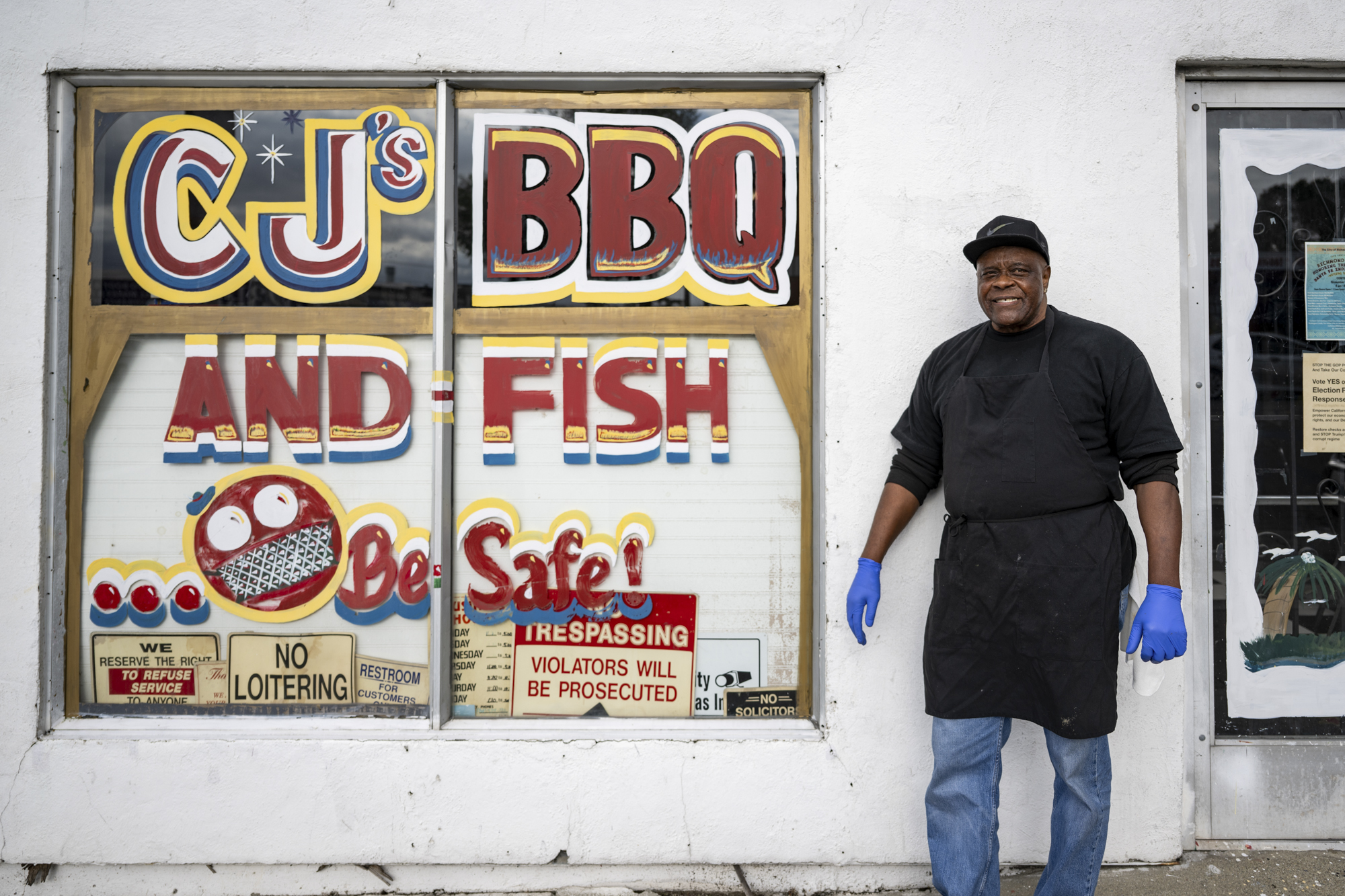
Richmond's 'Minister of Food' Serves the Bay Area Southern BBQ, California Style
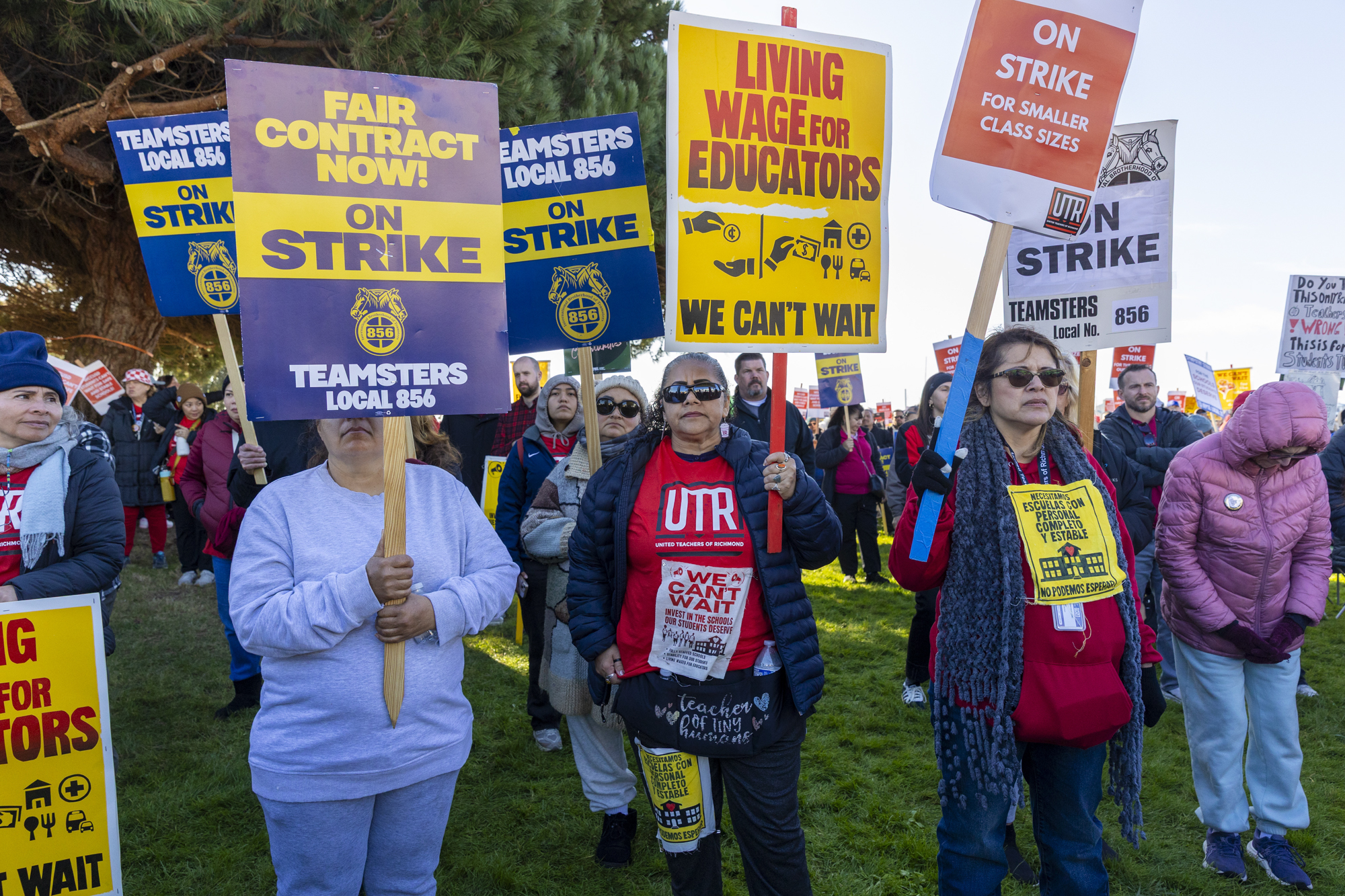
West Contra Costa Teachers Agree to End Strike and Return to Class After a Week
West Contra Costa Teachers Strike Continues as Support Staff Return to Work
As West Contra Costa Teachers Strike, Negotiations Seem to Show Little Progress
West Contra Costa Teachers and Staff Go On Strike
West Contra Costa Teachers Are Near a Pivotal Moment in Their Potential Strike
Richmond Police Protest Reforms to Public Communications After Police Shootings
During Mental Health Crises, California Police Are Still First Responders. It’s Not Working
The Gangster’s Scholar: Richmond’s Shanice Robinson on Loving a Man Serving Life
Sponsored
Player sponsored by
window.__IS_SSR__=true
window.__INITIAL_STATE__={
"attachmentsReducer": {
"audio_0": {
"type": "attachments",
"id": "audio_0",
"imgSizes": {
"kqedFullSize": {
"file": "https://ww2.kqed.org/news/wp-content/themes/KQED-unified/img/audio_bgs/background0.jpg"
}
}
},
"audio_1": {
"type": "attachments",
"id": "audio_1",
"imgSizes": {
"kqedFullSize": {
"file": "https://ww2.kqed.org/news/wp-content/themes/KQED-unified/img/audio_bgs/background1.jpg"
}
}
},
"audio_2": {
"type": "attachments",
"id": "audio_2",
"imgSizes": {
"kqedFullSize": {
"file": "https://ww2.kqed.org/news/wp-content/themes/KQED-unified/img/audio_bgs/background2.jpg"
}
}
},
"audio_3": {
"type": "attachments",
"id": "audio_3",
"imgSizes": {
"kqedFullSize": {
"file": "https://ww2.kqed.org/news/wp-content/themes/KQED-unified/img/audio_bgs/background3.jpg"
}
}
},
"audio_4": {
"type": "attachments",
"id": "audio_4",
"imgSizes": {
"kqedFullSize": {
"file": "https://ww2.kqed.org/news/wp-content/themes/KQED-unified/img/audio_bgs/background4.jpg"
}
}
},
"placeholder": {
"type": "attachments",
"id": "placeholder",
"imgSizes": {
"thumbnail": {
"file": "https://cdn.kqed.org/wp-content/uploads/2024/12/KQED-Default-Image-816638274-2000x1333-1-160x107.jpg",
"width": 160,
"height": 107,
"mimeType": "image/jpeg"
},
"medium": {
"file": "https://cdn.kqed.org/wp-content/uploads/2024/12/KQED-Default-Image-816638274-2000x1333-1-800x533.jpg",
"width": 800,
"height": 533,
"mimeType": "image/jpeg"
},
"medium_large": {
"file": "https://cdn.kqed.org/wp-content/uploads/2024/12/KQED-Default-Image-816638274-2000x1333-1-768x512.jpg",
"width": 768,
"height": 512,
"mimeType": "image/jpeg"
},
"large": {
"file": "https://cdn.kqed.org/wp-content/uploads/2024/12/KQED-Default-Image-816638274-2000x1333-1-1020x680.jpg",
"width": 1020,
"height": 680,
"mimeType": "image/jpeg"
},
"1536x1536": {
"file": "https://cdn.kqed.org/wp-content/uploads/2024/12/KQED-Default-Image-816638274-2000x1333-1-1536x1024.jpg",
"width": 1536,
"height": 1024,
"mimeType": "image/jpeg"
},
"fd-lrg": {
"file": "https://cdn.kqed.org/wp-content/uploads/2024/12/KQED-Default-Image-816638274-2000x1333-1-1536x1024.jpg",
"width": 1536,
"height": 1024,
"mimeType": "image/jpeg"
},
"fd-med": {
"file": "https://cdn.kqed.org/wp-content/uploads/2024/12/KQED-Default-Image-816638274-2000x1333-1-1020x680.jpg",
"width": 1020,
"height": 680,
"mimeType": "image/jpeg"
},
"fd-sm": {
"file": "https://cdn.kqed.org/wp-content/uploads/2024/12/KQED-Default-Image-816638274-2000x1333-1-800x533.jpg",
"width": 800,
"height": 533,
"mimeType": "image/jpeg"
},
"post-thumbnail": {
"file": "https://cdn.kqed.org/wp-content/uploads/2024/12/KQED-Default-Image-816638274-2000x1333-1-672x372.jpg",
"width": 672,
"height": 372,
"mimeType": "image/jpeg"
},
"twentyfourteen-full-width": {
"file": "https://cdn.kqed.org/wp-content/uploads/2024/12/KQED-Default-Image-816638274-2000x1333-1-1038x576.jpg",
"width": 1038,
"height": 576,
"mimeType": "image/jpeg"
},
"xxsmall": {
"file": "https://cdn.kqed.org/wp-content/uploads/2024/12/KQED-Default-Image-816638274-2000x1333-1-160x107.jpg",
"width": 160,
"height": 107,
"mimeType": "image/jpeg"
},
"xsmall": {
"file": "https://cdn.kqed.org/wp-content/uploads/2024/12/KQED-Default-Image-816638274-2000x1333-1-672x372.jpg",
"width": 672,
"height": 372,
"mimeType": "image/jpeg"
},
"small": {
"file": "https://cdn.kqed.org/wp-content/uploads/2024/12/KQED-Default-Image-816638274-2000x1333-1-672x372.jpg",
"width": 672,
"height": 372,
"mimeType": "image/jpeg"
},
"xlarge": {
"file": "https://cdn.kqed.org/wp-content/uploads/2024/12/KQED-Default-Image-816638274-2000x1333-1-1020x680.jpg",
"width": 1020,
"height": 680,
"mimeType": "image/jpeg"
},
"full-width": {
"file": "https://cdn.kqed.org/wp-content/uploads/2024/12/KQED-Default-Image-816638274-2000x1333-1-1920x1280.jpg",
"width": 1920,
"height": 1280,
"mimeType": "image/jpeg"
},
"guest-author-32": {
"file": "https://cdn.kqed.org/wp-content/uploads/2025/01/KQED-Default-Image-816638274-1333x1333-1-160x160.jpg",
"width": 32,
"height": 32,
"mimeType": "image/jpeg"
},
"guest-author-50": {
"file": "https://cdn.kqed.org/wp-content/uploads/2025/01/KQED-Default-Image-816638274-1333x1333-1-160x160.jpg",
"width": 50,
"height": 50,
"mimeType": "image/jpeg"
},
"guest-author-64": {
"file": "https://cdn.kqed.org/wp-content/uploads/2025/01/KQED-Default-Image-816638274-1333x1333-1-160x160.jpg",
"width": 64,
"height": 64,
"mimeType": "image/jpeg"
},
"guest-author-96": {
"file": "https://cdn.kqed.org/wp-content/uploads/2025/01/KQED-Default-Image-816638274-1333x1333-1-160x160.jpg",
"width": 96,
"height": 96,
"mimeType": "image/jpeg"
},
"guest-author-128": {
"file": "https://cdn.kqed.org/wp-content/uploads/2025/01/KQED-Default-Image-816638274-1333x1333-1-160x160.jpg",
"width": 128,
"height": 128,
"mimeType": "image/jpeg"
},
"detail": {
"file": "https://cdn.kqed.org/wp-content/uploads/2025/01/KQED-Default-Image-816638274-1333x1333-1-160x160.jpg",
"width": 160,
"height": 160,
"mimeType": "image/jpeg"
},
"kqedFullSize": {
"file": "https://cdn.kqed.org/wp-content/uploads/2024/12/KQED-Default-Image-816638274-2000x1333-1.jpg",
"width": 2000,
"height": 1333
}
}
},
"news_12065458": {
"type": "attachments",
"id": "news_12065458",
"meta": {
"index": "attachments_1716263798",
"site": "news",
"id": "12065458",
"found": true
},
"title": "251119-CJSBBQANDFISH-45-BL-KQED",
"publishDate": 1764179032,
"status": "inherit",
"parent": 0,
"modified": 1765402426,
"caption": "Charles “CJ” Evans stands outside CJ’s BBQ and Fish in Richmond on Nov. 19, 2025, which serves barbecue, seafood and Southern-style comfort food. ",
"credit": "Beth LaBerge/KQED",
"altTag": null,
"description": null,
"imgSizes": {
"thumbnail": {
"file": "https://cdn.kqed.org/wp-content/uploads/sites/10/2025/11/251119-CJSBBQANDFISH-45-BL-KQED-160x107.jpg",
"width": 160,
"height": 107,
"mimeType": "image/jpeg"
},
"1536x1536": {
"file": "https://cdn.kqed.org/wp-content/uploads/sites/10/2025/11/251119-CJSBBQANDFISH-45-BL-KQED-1536x1024.jpg",
"width": 1536,
"height": 1024,
"mimeType": "image/jpeg"
},
"post-thumbnail": {
"file": "https://cdn.kqed.org/wp-content/uploads/sites/10/2025/11/251119-CJSBBQANDFISH-45-BL-KQED-672x372.jpg",
"width": 672,
"height": 372,
"mimeType": "image/jpeg"
},
"twentyfourteen-full-width": {
"file": "https://cdn.kqed.org/wp-content/uploads/sites/10/2025/11/251119-CJSBBQANDFISH-45-BL-KQED-1038x576.jpg",
"width": 1038,
"height": 576,
"mimeType": "image/jpeg"
},
"npr-cds-wide": {
"file": "https://cdn.kqed.org/wp-content/uploads/sites/10/2025/11/251119-CJSBBQANDFISH-45-BL-KQED-1200x675.jpg",
"width": 1200,
"height": 675,
"mimeType": "image/jpeg"
},
"kqedFullSize": {
"file": "https://cdn.kqed.org/wp-content/uploads/sites/10/2025/11/251119-CJSBBQANDFISH-45-BL-KQED.jpg",
"width": 2000,
"height": 1333
}
},
"fetchFailed": false,
"isLoading": false
},
"news_12066308": {
"type": "attachments",
"id": "news_12066308",
"meta": {
"index": "attachments_1716263798",
"site": "news",
"id": "12066308",
"found": true
},
"title": "251205-WCCUSDSTRIKERALLY00960_TV-KQED",
"publishDate": 1764976014,
"status": "inherit",
"parent": 12066401,
"modified": 1765242482,
"caption": "West Contra Costa Unified School District teachers and families continue their strike at Marina Bay Park in Richmond on Dec. 5, 2025.",
"credit": "Tâm Vũ/KQED",
"altTag": null,
"description": null,
"imgSizes": {
"thumbnail": {
"file": "https://cdn.kqed.org/wp-content/uploads/sites/10/2025/12/251205-WCCUSDSTRIKERALLY00960_TV-KQED-160x107.jpg",
"width": 160,
"height": 107,
"mimeType": "image/jpeg"
},
"1536x1536": {
"file": "https://cdn.kqed.org/wp-content/uploads/sites/10/2025/12/251205-WCCUSDSTRIKERALLY00960_TV-KQED-1536x1024.jpg",
"width": 1536,
"height": 1024,
"mimeType": "image/jpeg"
},
"post-thumbnail": {
"file": "https://cdn.kqed.org/wp-content/uploads/sites/10/2025/12/251205-WCCUSDSTRIKERALLY00960_TV-KQED-672x372.jpg",
"width": 672,
"height": 372,
"mimeType": "image/jpeg"
},
"twentyfourteen-full-width": {
"file": "https://cdn.kqed.org/wp-content/uploads/sites/10/2025/12/251205-WCCUSDSTRIKERALLY00960_TV-KQED-1038x576.jpg",
"width": 1038,
"height": 576,
"mimeType": "image/jpeg"
},
"npr-cds-wide": {
"file": "https://cdn.kqed.org/wp-content/uploads/sites/10/2025/12/251205-WCCUSDSTRIKERALLY00960_TV-KQED-1200x675.jpg",
"width": 1200,
"height": 675,
"mimeType": "image/jpeg"
},
"kqedFullSize": {
"file": "https://cdn.kqed.org/wp-content/uploads/sites/10/2025/12/251205-WCCUSDSTRIKERALLY00960_TV-KQED.jpg",
"width": 2000,
"height": 1333
}
},
"fetchFailed": false,
"isLoading": false
},
"news_12066307": {
"type": "attachments",
"id": "news_12066307",
"meta": {
"index": "attachments_1716263798",
"site": "news",
"id": "12066307",
"found": true
},
"title": "251205-WCCUSDSTRIKERALLY00616_TV-KQED",
"publishDate": 1764976010,
"status": "inherit",
"parent": 12066054,
"modified": 1764979984,
"caption": "West Contra Costa Unified School District teachers and families continue their strike at Marina Bay Park in Richmond on Dec. 5, 2025.",
"credit": "Tâm Vũ/KQED",
"altTag": null,
"description": null,
"imgSizes": {
"thumbnail": {
"file": "https://cdn.kqed.org/wp-content/uploads/sites/10/2025/12/251205-WCCUSDSTRIKERALLY00616_TV-KQED-160x107.jpg",
"width": 160,
"height": 107,
"mimeType": "image/jpeg"
},
"1536x1536": {
"file": "https://cdn.kqed.org/wp-content/uploads/sites/10/2025/12/251205-WCCUSDSTRIKERALLY00616_TV-KQED-1536x1024.jpg",
"width": 1536,
"height": 1024,
"mimeType": "image/jpeg"
},
"post-thumbnail": {
"file": "https://cdn.kqed.org/wp-content/uploads/sites/10/2025/12/251205-WCCUSDSTRIKERALLY00616_TV-KQED-672x372.jpg",
"width": 672,
"height": 372,
"mimeType": "image/jpeg"
},
"twentyfourteen-full-width": {
"file": "https://cdn.kqed.org/wp-content/uploads/sites/10/2025/12/251205-WCCUSDSTRIKERALLY00616_TV-KQED-1038x576.jpg",
"width": 1038,
"height": 576,
"mimeType": "image/jpeg"
},
"npr-cds-wide": {
"file": "https://cdn.kqed.org/wp-content/uploads/sites/10/2025/12/251205-WCCUSDSTRIKERALLY00616_TV-KQED-1200x675.jpg",
"width": 1200,
"height": 675,
"mimeType": "image/jpeg"
},
"kqedFullSize": {
"file": "https://cdn.kqed.org/wp-content/uploads/sites/10/2025/12/251205-WCCUSDSTRIKERALLY00616_TV-KQED.jpg",
"width": 2000,
"height": 1333
}
},
"fetchFailed": false,
"isLoading": false
},
"news_12066309": {
"type": "attachments",
"id": "news_12066309",
"meta": {
"index": "attachments_1716263798",
"site": "news",
"id": "12066309",
"found": true
},
"title": "251205-WCCUSDSTRIKERALLY01085_TV-KQED",
"publishDate": 1764976018,
"status": "inherit",
"parent": 0,
"modified": 1764976079,
"caption": "West Contra Costa Unified School District teachers and families continue their strike at Marina Bay Park in Richmond on December 5, 2025.",
"credit": "Tâm Vũ/KQED",
"altTag": null,
"description": null,
"imgSizes": {
"thumbnail": {
"file": "https://cdn.kqed.org/wp-content/uploads/sites/10/2025/12/251205-WCCUSDSTRIKERALLY01085_TV-KQED-160x107.jpg",
"width": 160,
"height": 107,
"mimeType": "image/jpeg"
},
"1536x1536": {
"file": "https://cdn.kqed.org/wp-content/uploads/sites/10/2025/12/251205-WCCUSDSTRIKERALLY01085_TV-KQED-1536x1024.jpg",
"width": 1536,
"height": 1024,
"mimeType": "image/jpeg"
},
"post-thumbnail": {
"file": "https://cdn.kqed.org/wp-content/uploads/sites/10/2025/12/251205-WCCUSDSTRIKERALLY01085_TV-KQED-672x372.jpg",
"width": 672,
"height": 372,
"mimeType": "image/jpeg"
},
"twentyfourteen-full-width": {
"file": "https://cdn.kqed.org/wp-content/uploads/sites/10/2025/12/251205-WCCUSDSTRIKERALLY01085_TV-KQED-1038x576.jpg",
"width": 1038,
"height": 576,
"mimeType": "image/jpeg"
},
"npr-cds-wide": {
"file": "https://cdn.kqed.org/wp-content/uploads/sites/10/2025/12/251205-WCCUSDSTRIKERALLY01085_TV-KQED-1200x675.jpg",
"width": 1200,
"height": 675,
"mimeType": "image/jpeg"
},
"kqedFullSize": {
"file": "https://cdn.kqed.org/wp-content/uploads/sites/10/2025/12/251205-WCCUSDSTRIKERALLY01085_TV-KQED.jpg",
"width": 2000,
"height": 1333
}
},
"fetchFailed": false,
"isLoading": false
},
"news_12066196": {
"type": "attachments",
"id": "news_12066196",
"meta": {
"index": "attachments_1716263798",
"site": "news",
"id": "12066196",
"found": true
},
"title": "20251204_RT_Strike_XZ_06_qed",
"publishDate": 1764887281,
"status": "inherit",
"parent": 12066136,
"modified": 1764887294,
"caption": "West Contra Costa Unified School District teachers strike at Nystrom Elementary School in Richmond, Thursday morning.",
"credit": "Xavier Zamora/KQED",
"altTag": null,
"description": null,
"imgSizes": {
"thumbnail": {
"file": "https://cdn.kqed.org/wp-content/uploads/sites/10/2025/12/20251204_RT_Strike_XZ_06_qed-160x107.jpg",
"width": 160,
"height": 107,
"mimeType": "image/jpeg"
},
"1536x1536": {
"file": "https://cdn.kqed.org/wp-content/uploads/sites/10/2025/12/20251204_RT_Strike_XZ_06_qed-1536x1024.jpg",
"width": 1536,
"height": 1024,
"mimeType": "image/jpeg"
},
"post-thumbnail": {
"file": "https://cdn.kqed.org/wp-content/uploads/sites/10/2025/12/20251204_RT_Strike_XZ_06_qed-672x372.jpg",
"width": 672,
"height": 372,
"mimeType": "image/jpeg"
},
"twentyfourteen-full-width": {
"file": "https://cdn.kqed.org/wp-content/uploads/sites/10/2025/12/20251204_RT_Strike_XZ_06_qed-1038x576.jpg",
"width": 1038,
"height": 576,
"mimeType": "image/jpeg"
},
"npr-cds-wide": {
"file": "https://cdn.kqed.org/wp-content/uploads/sites/10/2025/12/20251204_RT_Strike_XZ_06_qed-1200x675.jpg",
"width": 1200,
"height": 675,
"mimeType": "image/jpeg"
},
"kqedFullSize": {
"file": "https://cdn.kqed.org/wp-content/uploads/sites/10/2025/12/20251204_RT_Strike_XZ_06_qed.jpg",
"width": 1999,
"height": 1333
}
},
"fetchFailed": false,
"isLoading": false
},
"news_12049404": {
"type": "attachments",
"id": "news_12049404",
"meta": {
"index": "attachments_1716263798",
"site": "news",
"id": "12049404",
"found": true
},
"title": "240312-RICHMOND WALKOUT-MD-02_qed",
"publishDate": 1753305254,
"status": "inherit",
"parent": 0,
"modified": 1753305289,
"caption": "Students from Richmond's John F. Kennedy High School stage a walkout and marched to the West Contra Costa Unified School District Offices to protest impending layoffs as part of cuts to the district's budget in Richmond on March 12, 2025.",
"credit": "Martin do Nascimento/KQED",
"altTag": null,
"description": null,
"imgSizes": {
"thumbnail": {
"file": "https://cdn.kqed.org/wp-content/uploads/sites/10/2025/07/240312-RICHMOND-WALKOUT-MD-02_qed-160x107.jpg",
"width": 160,
"height": 107,
"mimeType": "image/jpeg"
},
"1536x1536": {
"file": "https://cdn.kqed.org/wp-content/uploads/sites/10/2025/07/240312-RICHMOND-WALKOUT-MD-02_qed-1536x1024.jpg",
"width": 1536,
"height": 1024,
"mimeType": "image/jpeg"
},
"post-thumbnail": {
"file": "https://cdn.kqed.org/wp-content/uploads/sites/10/2025/07/240312-RICHMOND-WALKOUT-MD-02_qed-672x372.jpg",
"width": 672,
"height": 372,
"mimeType": "image/jpeg"
},
"twentyfourteen-full-width": {
"file": "https://cdn.kqed.org/wp-content/uploads/sites/10/2025/07/240312-RICHMOND-WALKOUT-MD-02_qed-1038x576.jpg",
"width": 1038,
"height": 576,
"mimeType": "image/jpeg"
},
"kqedFullSize": {
"file": "https://cdn.kqed.org/wp-content/uploads/sites/10/2025/07/240312-RICHMOND-WALKOUT-MD-02_qed.jpg",
"width": 2000,
"height": 1333
}
},
"fetchFailed": false,
"isLoading": false
},
"news_12051142": {
"type": "attachments",
"id": "news_12051142",
"meta": {
"index": "attachments_1716263798",
"site": "news",
"id": "12051142",
"found": true
},
"title": "The Richmond Police Department Offices in Richmond on Aug. 6, 2025.",
"publishDate": 1754512038,
"status": "inherit",
"parent": 12051256,
"modified": 1754674458,
"caption": "The Richmond Police Department in Richmond on Aug. 6, 2025.",
"credit": "Martin do Nascimento/KQED",
"altTag": null,
"description": null,
"imgSizes": {
"thumbnail": {
"file": "https://cdn.kqed.org/wp-content/uploads/sites/10/2025/08/250806-RICHMOND-POLICE-FILE-MD-02-KQED-160x107.jpg",
"width": 160,
"height": 107,
"mimeType": "image/jpeg"
},
"1536x1536": {
"file": "https://cdn.kqed.org/wp-content/uploads/sites/10/2025/08/250806-RICHMOND-POLICE-FILE-MD-02-KQED-1536x1025.jpg",
"width": 1536,
"height": 1025,
"mimeType": "image/jpeg"
},
"post-thumbnail": {
"file": "https://cdn.kqed.org/wp-content/uploads/sites/10/2025/08/250806-RICHMOND-POLICE-FILE-MD-02-KQED-672x372.jpg",
"width": 672,
"height": 372,
"mimeType": "image/jpeg"
},
"twentyfourteen-full-width": {
"file": "https://cdn.kqed.org/wp-content/uploads/sites/10/2025/08/250806-RICHMOND-POLICE-FILE-MD-02-KQED-1038x576.jpg",
"width": 1038,
"height": 576,
"mimeType": "image/jpeg"
},
"kqedFullSize": {
"file": "https://cdn.kqed.org/wp-content/uploads/sites/10/2025/08/250806-RICHMOND-POLICE-FILE-MD-02-KQED.jpg",
"width": 2000,
"height": 1334
}
},
"fetchFailed": false,
"isLoading": false
},
"news_12051233": {
"type": "attachments",
"id": "news_12051233",
"meta": {
"index": "attachments_1716263798",
"site": "news",
"id": "12051233",
"found": true
},
"title": "AngelMontano",
"publishDate": 1754583423,
"status": "inherit",
"parent": 12051256,
"modified": 1754674142,
"caption": "Photos from the GoFundMe account of Angel Montaño.",
"credit": "Courtesy of the Montaño Family",
"altTag": null,
"description": null,
"imgSizes": {
"thumbnail": {
"file": "https://cdn.kqed.org/wp-content/uploads/sites/10/2025/08/AngelMontano-160x90.jpg",
"width": 160,
"height": 90,
"mimeType": "image/jpeg"
},
"post-thumbnail": {
"file": "https://cdn.kqed.org/wp-content/uploads/sites/10/2025/08/AngelMontano-672x372.jpg",
"width": 672,
"height": 372,
"mimeType": "image/jpeg"
},
"kqedFullSize": {
"file": "https://cdn.kqed.org/wp-content/uploads/sites/10/2025/08/AngelMontano.jpg",
"width": 720,
"height": 405
}
},
"fetchFailed": false,
"isLoading": false
},
"news_12051419": {
"type": "attachments",
"id": "news_12051419",
"meta": {
"index": "attachments_1716263798",
"site": "news",
"id": "12051419",
"found": true
},
"title": "250806-SHANICEROBINSONRESILIENCE_00065_TV-KQED",
"publishDate": 1754660895,
"status": "inherit",
"parent": 0,
"modified": 1754956305,
"caption": "Shanice Robinson poses for a portrait in her bedroom in Richmond on August 6, 2025. Shanice Robinson, who is a visiting assistant professor at San Francisco State University, a teacher for incarcerated people and an author of “Gangster’s Scholar: Love Behind Bars,\" works to advocate for those affected by the prison system.",
"credit": "Tâm Vũ/KQED",
"altTag": null,
"description": null,
"imgSizes": {
"thumbnail": {
"file": "https://cdn.kqed.org/wp-content/uploads/sites/10/2025/08/250806-SHANICEROBINSONRESILIENCE_00065_TV-KQED-160x107.jpg",
"width": 160,
"height": 107,
"mimeType": "image/jpeg"
},
"1536x1536": {
"file": "https://cdn.kqed.org/wp-content/uploads/sites/10/2025/08/250806-SHANICEROBINSONRESILIENCE_00065_TV-KQED-1536x1024.jpg",
"width": 1536,
"height": 1024,
"mimeType": "image/jpeg"
},
"post-thumbnail": {
"file": "https://cdn.kqed.org/wp-content/uploads/sites/10/2025/08/250806-SHANICEROBINSONRESILIENCE_00065_TV-KQED-672x372.jpg",
"width": 672,
"height": 372,
"mimeType": "image/jpeg"
},
"twentyfourteen-full-width": {
"file": "https://cdn.kqed.org/wp-content/uploads/sites/10/2025/08/250806-SHANICEROBINSONRESILIENCE_00065_TV-KQED-1038x576.jpg",
"width": 1038,
"height": 576,
"mimeType": "image/jpeg"
},
"kqedFullSize": {
"file": "https://cdn.kqed.org/wp-content/uploads/sites/10/2025/08/250806-SHANICEROBINSONRESILIENCE_00065_TV-KQED.jpg",
"width": 2000,
"height": 1333
}
},
"fetchFailed": false,
"isLoading": false
}
},
"audioPlayerReducer": {
"postId": "stream_live",
"isPaused": true,
"isPlaying": false,
"pfsActive": false,
"pledgeModalIsOpen": true,
"playerDrawerIsOpen": false
},
"authorsReducer": {
"byline_news_12066054": {
"type": "authors",
"id": "byline_news_12066054",
"meta": {
"override": true
},
"slug": "byline_news_12066054",
"name": "Meghan Crebbin-Coates and Juan Carlos Lara",
"isLoading": false
},
"byline_news_12051769": {
"type": "authors",
"id": "byline_news_12051769",
"meta": {
"override": true
},
"slug": "byline_news_12051769",
"name": "Srishti Prabha",
"isLoading": false
},
"lmorehouse": {
"type": "authors",
"id": "3229",
"meta": {
"index": "authors_1716337520",
"id": "3229",
"found": true
},
"name": "Lisa Morehouse",
"firstName": "Lisa",
"lastName": "Morehouse",
"slug": "lmorehouse",
"email": "morehouse.lisa@gmail.com",
"display_author_email": false,
"staff_mastheads": [],
"title": "KQED Contributor",
"bio": "Lisa Morehouse is an award-winning public radio and print journalist, who has filed for National Public Radio, American Public Media, KQED Public Radio, Edutopia, and McSweeney’s. Her reporting has taken her from Samoan traveling circuses to Mississippi Delta classrooms to the homes of Lao refugees in rural Iowa. In addition to reporting, she teaches radio production to at-risk youth in the Bay Area. Her series \u003ca href=\"http://afterthegoldrushradio.com/\">After the Gold Rush\u003c/a> featured the changing industries, populations and identities of rural towns throughout California. She’s now producing \u003ca href=\"http://www.californiafoodways.com/\">California Foodways\u003c/a>, a series exploring the intersections of food, culture, economics, history and labor. Follow along on the \u003ca href=\"https://www.facebook.com/californiafoodways?ref=hl\">Facebook page\u003c/a> or on Twitter @cafoodways.",
"avatar": "https://secure.gravatar.com/avatar/dae74b002a6e256f39abb19d6f5acaea?s=600&d=blank&r=g",
"twitter": null,
"facebook": null,
"instagram": null,
"linkedin": null,
"sites": [
{
"site": "",
"roles": [
"editor"
]
},
{
"site": "news",
"roles": [
"author"
]
}
],
"headData": {
"title": "Lisa Morehouse | KQED",
"description": "KQED Contributor",
"ogImgSrc": "https://secure.gravatar.com/avatar/dae74b002a6e256f39abb19d6f5acaea?s=600&d=blank&r=g",
"twImgSrc": "https://secure.gravatar.com/avatar/dae74b002a6e256f39abb19d6f5acaea?s=600&d=blank&r=g"
},
"isLoading": false,
"link": "/author/lmorehouse"
},
"ecruzguevarra": {
"type": "authors",
"id": "8654",
"meta": {
"index": "authors_1716337520",
"id": "8654",
"found": true
},
"name": "Ericka Cruz Guevarra",
"firstName": "Ericka",
"lastName": "Cruz Guevarra",
"slug": "ecruzguevarra",
"email": "ecruzguevarra@kqed.org",
"display_author_email": true,
"staff_mastheads": [
"news"
],
"title": "Producer, The Bay Podcast",
"bio": "Ericka Cruz Guevarra is host of \u003ca href=\"https://www.kqed.org/podcasts/thebay\">\u003cem>The Bay\u003c/em>\u003c/a> podcast at KQED. Before host, she was the show’s producer. Her work in that capacity includes a three-part reported series on policing in Vallejo, which won a 2020 excellence in journalism award from the Society of Professional Journalists. Ericka has worked as a breaking news reporter at Oregon Public Broadcasting, helped produce the Code Switch podcast, and was KQED’s inaugural Raul Ramirez Diversity Fund intern. She’s also an alumna of NPR’s Next Generation Radio program. Send her an email if you have strong feelings about whether Fairfield and Suisun City are the Bay. Ericka is represented by SAG-AFTRA.",
"avatar": "https://secure.gravatar.com/avatar/25e5ab8d3d53fad2dcc7bb2b5c506b1a?s=600&d=blank&r=g",
"twitter": "NotoriousECG",
"facebook": null,
"instagram": null,
"linkedin": null,
"sites": [
{
"site": "arts",
"roles": [
"subscriber"
]
},
{
"site": "news",
"roles": [
"editor",
"manage_categories"
]
},
{
"site": "futureofyou",
"roles": [
"subscriber"
]
},
{
"site": "stateofhealth",
"roles": [
"subscriber"
]
},
{
"site": "science",
"roles": [
"editor"
]
},
{
"site": "forum",
"roles": [
"subscriber"
]
}
],
"headData": {
"title": "Ericka Cruz Guevarra | KQED",
"description": "Producer, The Bay Podcast",
"ogImgSrc": "https://secure.gravatar.com/avatar/25e5ab8d3d53fad2dcc7bb2b5c506b1a?s=600&d=blank&r=g",
"twImgSrc": "https://secure.gravatar.com/avatar/25e5ab8d3d53fad2dcc7bb2b5c506b1a?s=600&d=blank&r=g"
},
"isLoading": false,
"link": "/author/ecruzguevarra"
},
"amontecillo": {
"type": "authors",
"id": "11649",
"meta": {
"index": "authors_1716337520",
"id": "11649",
"found": true
},
"name": "Alan Montecillo",
"firstName": "Alan",
"lastName": "Montecillo",
"slug": "amontecillo",
"email": "amontecillo@kqed.org",
"display_author_email": false,
"staff_mastheads": [
"news"
],
"title": "KQED Contributor",
"bio": "Alan Montecillo is the senior editor of \u003cem>\u003ca href=\"http://kqed.org/thebay\">The Bay\u003c/a>, \u003c/em> KQED's local news podcast. Before moving to the Bay Area, he worked as a senior talk show producer for WILL in Champaign-Urbana, Illinois and at Oregon Public Broadcasting in Portland, Oregon. He has won journalism awards from the Society of Professional Journalists Northern California, the Public Media Journalists Association, The Signal Awards, and has also received a regional Edward R. Murrow award. Alan is a Filipino American from Hong Kong and a graduate of Reed College.",
"avatar": "https://secure.gravatar.com/avatar/d5e4e7a76481969ccba76f4e2b5ccabc?s=600&d=blank&r=g",
"twitter": "alanmontecillo",
"facebook": null,
"instagram": null,
"linkedin": null,
"sites": [
{
"site": "",
"roles": [
"editor"
]
},
{
"site": "news",
"roles": [
"editor",
"manage_categories"
]
}
],
"headData": {
"title": "Alan Montecillo | KQED",
"description": "KQED Contributor",
"ogImgSrc": "https://secure.gravatar.com/avatar/d5e4e7a76481969ccba76f4e2b5ccabc?s=600&d=blank&r=g",
"twImgSrc": "https://secure.gravatar.com/avatar/d5e4e7a76481969ccba76f4e2b5ccabc?s=600&d=blank&r=g"
},
"isLoading": false,
"link": "/author/amontecillo"
},
"ibloom": {
"type": "authors",
"id": "11805",
"meta": {
"index": "authors_1716337520",
"id": "11805",
"found": true
},
"name": "Izzy Bloom",
"firstName": "Izzy",
"lastName": "Bloom",
"slug": "ibloom",
"email": "ibloom@kqed.org",
"display_author_email": false,
"staff_mastheads": [],
"title": "KQED Reporter & Producer",
"bio": "Izzy is a reporter and producer on KQED's California Politics & Government Desk. She joined the desk in 2024 to produce Political Breakdown, covering local and national elections and attending the RNC and DNC in Milwaukee and Chicago. \r\n\r\nBefore that, Izzy was a producer on The California Report and reported long-form stories for The California Report Magazine. She was a finalist for the Third Coast/Richard H. Driehaus Foundation Competition and was awarded for her reporting on indigenous land back by the Society of Professional Journalists. Izzy received her master's in journalism from the University of California, Berkeley.",
"avatar": "https://secure.gravatar.com/avatar/c318d55506fa162aaca4e542df149485?s=600&d=blank&r=g",
"twitter": null,
"facebook": null,
"instagram": null,
"linkedin": null,
"sites": [
{
"site": "news",
"roles": [
"editor"
]
},
{
"site": "perspectives",
"roles": [
"editor"
]
}
],
"headData": {
"title": "Izzy Bloom | KQED",
"description": "KQED Reporter & Producer",
"ogImgSrc": "https://secure.gravatar.com/avatar/c318d55506fa162aaca4e542df149485?s=600&d=blank&r=g",
"twImgSrc": "https://secure.gravatar.com/avatar/c318d55506fa162aaca4e542df149485?s=600&d=blank&r=g"
},
"isLoading": false,
"link": "/author/ibloom"
},
"jessicakariisa": {
"type": "authors",
"id": "11831",
"meta": {
"index": "authors_1716337520",
"id": "11831",
"found": true
},
"name": "Jessica Kariisa",
"firstName": "Jessica",
"lastName": "Kariisa",
"slug": "jessicakariisa",
"email": "jkariisa@kqed.org",
"display_author_email": false,
"staff_mastheads": [
"news"
],
"title": "Producer, The Bay",
"bio": "Jessica Kariisa is the producer of The Bay. She first joined KQED as an intern for The California Report Magazine, after which she became an on-call producer. She reported a Bay Curious episode on the use of rap lyrics in criminal trials which won a Society of Professional Journalists award in 2023 for Excellence in Features Journalism and the 2023 Signal Award for Best Conversation Starter. She’s worked on podcasts for Snap Judgment and American Public Media. Before embarking on her audio career, she was a music journalist.\r\n\r\nJessica Kariisa is represented by SAG-AFTRA.",
"avatar": "https://secure.gravatar.com/avatar/4afd355fd24f5515aeab77fd6c72b671?s=600&d=blank&r=g",
"twitter": null,
"facebook": null,
"instagram": null,
"linkedin": null,
"sites": [
{
"site": "arts",
"roles": [
"author"
]
},
{
"site": "news",
"roles": [
"editor",
"manage_categories"
]
}
],
"headData": {
"title": "Jessica Kariisa | KQED",
"description": "Producer, The Bay",
"ogImgSrc": "https://secure.gravatar.com/avatar/4afd355fd24f5515aeab77fd6c72b671?s=600&d=blank&r=g",
"twImgSrc": "https://secure.gravatar.com/avatar/4afd355fd24f5515aeab77fd6c72b671?s=600&d=blank&r=g"
},
"isLoading": false,
"link": "/author/jessicakariisa"
},
"kdebenedetti": {
"type": "authors",
"id": "11913",
"meta": {
"index": "authors_1716337520",
"id": "11913",
"found": true
},
"name": "Katie DeBenedetti",
"firstName": "Katie",
"lastName": "DeBenedetti",
"slug": "kdebenedetti",
"email": "kdebenedetti@kqed.org",
"display_author_email": false,
"staff_mastheads": [
"news",
"science"
],
"title": "KQED Contributor",
"bio": "Katie DeBenedetti is a digital reporter covering daily news for the Express Desk. Prior to joining KQED as a culture reporting intern in January 2024, she covered education and city government for the Napa Valley Register.",
"avatar": "https://secure.gravatar.com/avatar/6e31073cb8f7e4214ab03f42771d0f45?s=600&d=blank&r=g",
"twitter": null,
"facebook": null,
"instagram": null,
"linkedin": null,
"sites": [
{
"site": "news",
"roles": [
"author"
]
},
{
"site": "science",
"roles": [
"author"
]
},
{
"site": "liveblog",
"roles": [
"author"
]
}
],
"headData": {
"title": "Katie DeBenedetti | KQED",
"description": "KQED Contributor",
"ogImgSrc": "https://secure.gravatar.com/avatar/6e31073cb8f7e4214ab03f42771d0f45?s=600&d=blank&r=g",
"twImgSrc": "https://secure.gravatar.com/avatar/6e31073cb8f7e4214ab03f42771d0f45?s=600&d=blank&r=g"
},
"isLoading": false,
"link": "/author/kdebenedetti"
},
"skennedy": {
"type": "authors",
"id": "11935",
"meta": {
"index": "authors_1716337520",
"id": "11935",
"found": true
},
"name": "Samantha Kennedy",
"firstName": "Samantha",
"lastName": "Kennedy",
"slug": "skennedy",
"email": "SKennedy@kqed.org",
"display_author_email": false,
"staff_mastheads": [],
"title": "KQED Contributor",
"bio": null,
"avatar": "https://secure.gravatar.com/avatar/43c08445062d04cdb6776b73517064c6?s=600&d=blank&r=g",
"twitter": null,
"facebook": null,
"instagram": null,
"linkedin": null,
"sites": [
{
"site": "news",
"roles": [
"author"
]
}
],
"headData": {
"title": "Samantha Kennedy | KQED",
"description": "KQED Contributor",
"ogImgSrc": "https://secure.gravatar.com/avatar/43c08445062d04cdb6776b73517064c6?s=600&d=blank&r=g",
"twImgSrc": "https://secure.gravatar.com/avatar/43c08445062d04cdb6776b73517064c6?s=600&d=blank&r=g"
},
"isLoading": false,
"link": "/author/skennedy"
},
"aaliahmad": {
"type": "authors",
"id": "11986",
"meta": {
"index": "authors_1716337520",
"id": "11986",
"found": true
},
"name": "Ayah Ali-Ahmad",
"firstName": "Ayah",
"lastName": "Ali-Ahmad",
"slug": "aaliahmad",
"email": "aaliahmad@KQED.org",
"display_author_email": false,
"staff_mastheads": [],
"title": "KQED Contributor",
"bio": null,
"avatar": "https://secure.gravatar.com/avatar/7f340465c69a2c816f6c07000137a3ee?s=600&d=blank&r=g",
"twitter": null,
"facebook": null,
"instagram": null,
"linkedin": null,
"sites": [
{
"site": "news",
"roles": [
"author"
]
}
],
"headData": {
"title": "Ayah Ali-Ahmad | KQED",
"description": "KQED Contributor",
"ogImgSrc": "https://secure.gravatar.com/avatar/7f340465c69a2c816f6c07000137a3ee?s=600&d=blank&r=g",
"twImgSrc": "https://secure.gravatar.com/avatar/7f340465c69a2c816f6c07000137a3ee?s=600&d=blank&r=g"
},
"isLoading": false,
"link": "/author/aaliahmad"
}
},
"breakingNewsReducer": {},
"pagesReducer": {},
"postsReducer": {
"stream_live": {
"type": "live",
"id": "stream_live",
"audioUrl": "https://streams.kqed.org/kqedradio",
"title": "Live Stream",
"excerpt": "Live Stream information currently unavailable.",
"link": "/radio",
"featImg": "",
"label": {
"name": "KQED Live",
"link": "/"
}
},
"stream_kqedNewscast": {
"type": "posts",
"id": "stream_kqedNewscast",
"audioUrl": "https://www.kqed.org/.stream/anon/radio/RDnews/newscast.mp3?_=1",
"title": "KQED Newscast",
"featImg": "",
"label": {
"name": "88.5 FM",
"link": "/"
}
},
"news_12065744": {
"type": "posts",
"id": "news_12065744",
"meta": {
"index": "posts_1716263798",
"site": "news",
"id": "12065744",
"score": null,
"sort": [
1765558839000
]
},
"guestAuthors": [],
"slug": "richmonds-minister-of-food-serves-the-bay-area-southern-bbq-california-style",
"title": "Richmond's 'Minister of Food' Serves the Bay Area Southern BBQ, California Style",
"publishDate": 1765558839,
"format": "standard",
"headTitle": "Richmond’s ‘Minister of Food’ Serves the Bay Area Southern BBQ, California Style | KQED",
"labelTerm": {
"term": 26731,
"site": "news"
},
"content": "\u003cp>\u003cem>For her series \u003ca href=\"https://www.kqed.org/californiafoodways\">California Foodways\u003c/a>, Lisa Morehouse is reporting a story about food and farming from each of California’s 58 counties.\u003c/em>\u003c/p>\n\u003cp>On a corner in Richmond, California, there’s a business that has celebrated the city’s Black history and Southern roots for 30 years.\u003c/p>\n\u003cp>The building is bright white with a hand-painted, red sign: “CJ’s BBQ and Fish.”\u003c/p>\n\u003cp>Inside, on a recent Monday morning, the small, efficient crew was busy prepping for the week. It was clear they’ve had years on the job, and with each other.\u003c/p>\n\u003cp>[ad fullwidth]\u003c/p>\n\u003cp>Mike Reddick, who’s worked at CJ’s for about five years, sharpened knives. Larry Turner trimmed, rinsed and seasoned slabs of ribs, the way he’s done for more than 15 years. Nick Gamble took inventory of the freezers.\u003c/p>\n\u003cp>Watching and managing it all was Gamble’s uncle, Charles Evans — CJ himself — who’s nearly 80.\u003c/p>\n\u003cfigure id=\"attachment_12065457\" class=\"wp-caption aligncenter\" style=\"max-width: 2000px\">\u003ca href=\"https://cdn.kqed.org/wp-content/uploads/sites/10/2025/11/251119-CJSBBQANDFISH-37-BL-KQED.jpg\">\u003cimg loading=\"lazy\" decoding=\"async\" class=\"size-full wp-image-12065457\" src=\"https://cdn.kqed.org/wp-content/uploads/sites/10/2025/11/251119-CJSBBQANDFISH-37-BL-KQED.jpg\" alt=\"\" width=\"2000\" height=\"1333\" srcset=\"https://cdn.kqed.org/wp-content/uploads/sites/10/2025/11/251119-CJSBBQANDFISH-37-BL-KQED.jpg 2000w, https://cdn.kqed.org/wp-content/uploads/sites/10/2025/11/251119-CJSBBQANDFISH-37-BL-KQED-160x107.jpg 160w, https://cdn.kqed.org/wp-content/uploads/sites/10/2025/11/251119-CJSBBQANDFISH-37-BL-KQED-1536x1024.jpg 1536w\" sizes=\"auto, (max-width: 2000px) 100vw, 2000px\">\u003c/a>\u003cfigcaption class=\"wp-caption-text\">Nick Gamble barbeques ribs at CJ’s BBQ and Fish in Richmond on Nov. 19, 2025, serving barbecue, seafood and Southern-style comfort food. \u003ccite>(Beth LaBerge/KQED)\u003c/cite>\u003c/figcaption>\u003c/figure>\n\u003cp>“They try to keep me out of here, but they can’t,” Evans said, with a twinkle in his eye. “They can’t do what I do. I show them all how to do everything: cook, clean, repair, fix. I mean, that’s the running of the restaurant. It ain’t just one thing. You’ve got to do it all.”\u003c/p>\n\u003cp>CJ’s has a brick cooker inside, but Evans prefers to cook outdoors in portable pits, in a lot surrounded by a chain link fence. He pointed to an enormous one he calls “Big Black,” which he uses for busy summer days or off-site catering jobs for clients like Chevron and the University of California. He can feed up to 800 people and safely cook four different meats — ribs, chicken, links and beef — all at the same time.\u003c/p>\n\u003cp>Cooking outside and filling the air with a meaty aroma is great marketing.\u003c/p>\n\u003cp>“You’d be surprised how many people stop when they get that smell,” he said. “They smell it, you give them a taste. Bam, you got ’em.”\u003c/p>\n\u003cp>Inside, above the few tables and small counter, a TV plays soap operas all day long. Evans loves his stories, which is fitting of the staff’s dynamic, Reddick noted.\u003c/p>\n\u003cp>“We’re like a soap opera. We’re one big soap opera family. We’re all his children,” he said, laughing.[aside postID=news_12058556 hero='https://cdn.kqed.org/wp-content/uploads/sites/10/2025/10/20251002_REDWOODEMPIRE_GC-28-KQED.jpg']Shaking his head, Evans said, “Yeah, they’re all mine.”\u003c/p>\n\u003cp>The restaurant could be a soap opera, or maybe a church. While everyone worked, Gamble quietly sang hymns to himself. Evans referred to Reddick as “Rev” — for Reverend.\u003c/p>\n\u003cp>“The Rev knows he keeps us in order,” Evans said. “He gives us the word. He has to quote the Bible on us a couple times a day.”\u003c/p>\n\u003cp>They joke around a lot here, Evans said, “but I don’t play with God.”\u003c/p>\n\u003cp>“All my friends are preachers. I know every minister in town comes through here. But they call me the Minister of Food. They give ’em the word, and I give ’em the bread.”\u003c/p>\n\u003cp>Although he shares the word, too.\u003c/p>\n\u003cp>“I’ve got a lot of young nephews, cousins, friends, people. I preach to them,” Evans said.\u003c/p>\n\u003cp>That includes the guys hanging out on the street corner. Evans pointed out of the window, across the street: “They come out there and drink a little bit and do whatever they do, and then they’re gone. They don’t bother us.”\u003c/p>\n\u003cp>They actually look out for CJ’s, he said. The shop doesn’t get tagged, customers aren’t bothered. The one time he was burgled, the guys on the corner identified the perpetrators.\u003c/p>\n\u003cp>As Reddick prepped a plate of oxtails for a regular customer, Princess Crockett, Evans told him to add a little more food.\u003c/p>\n\u003cfigure id=\"attachment_12065454\" class=\"wp-caption aligncenter\" style=\"max-width: 2000px\">\u003ca href=\"https://cdn.kqed.org/wp-content/uploads/sites/10/2025/11/251119-CJSBBQANDFISH-22-BL-KQED.jpg\">\u003cimg loading=\"lazy\" decoding=\"async\" class=\"size-full wp-image-12065454\" src=\"https://cdn.kqed.org/wp-content/uploads/sites/10/2025/11/251119-CJSBBQANDFISH-22-BL-KQED.jpg\" alt=\"\" width=\"2000\" height=\"1333\" srcset=\"https://cdn.kqed.org/wp-content/uploads/sites/10/2025/11/251119-CJSBBQANDFISH-22-BL-KQED.jpg 2000w, https://cdn.kqed.org/wp-content/uploads/sites/10/2025/11/251119-CJSBBQANDFISH-22-BL-KQED-160x107.jpg 160w, https://cdn.kqed.org/wp-content/uploads/sites/10/2025/11/251119-CJSBBQANDFISH-22-BL-KQED-1536x1024.jpg 1536w\" sizes=\"auto, (max-width: 2000px) 100vw, 2000px\">\u003c/a>\u003cfigcaption class=\"wp-caption-text\">Mike Reddick takes an order from a customer at CJ’s BBQ and Fish in Richmond on Nov. 19, 2025. \u003ccite>(Beth LaBerge/KQED)\u003c/cite>\u003c/figcaption>\u003c/figure>\n\u003cp>“She comes around in her little walker,” Evans said. “I try to take care of my seniors.”\u003c/p>\n\u003cp>“I like everything he got in there,” said Crockett, but she likes oxtails the best. Crockett has lived in Richmond since 1945, when, as a 5-year-old, she and her family arrived on a Greyhound bus from St. Louis, Missouri. She lives in senior housing around the corner and comes to CJ’s at least once a week.\u003c/p>\n\u003cp>“Okay, Princess, here you go, baby,” Evans said, handing Crockett her order.\u003c/p>\n\u003cp>Back at the pit, Turner checked on the links and put down some ribs. He adjusted the height of the metal grid where the meat cooks so it’s just the right distance from the charcoal, and he watched carefully, making sure the charcoal didn’t flame up and burn the meat.\u003c/p>\n\u003cp>“We cook by heat, not by fire,” he said.\u003c/p>\n\u003cp>It’s tiring work, raising the pit all day, but Turner said it’s worth it for the smiles he sees on the faces of customers enjoying the food. “It gives me a rush. And I love it,” he continued.[aside postID=news_12047368 hero='https://cdn.kqed.org/wp-content/uploads/sites/10/2025/07/250702-OaklandProduceMarket-13-BL_qed.jpg']Cooking meat with smoke on a fire is something done all over the world, but in the U.S., there are lots of nuances, broad regional differences.\u003c/p>\n\u003cp>“North Carolina, Georgia — they got that vinegary taste. Memphis has a taste of its own. You know, with the sauces and the rubs. Mid-Texas, they have theirs in between,” Evans said. “So, I came up with California -Southern barbecue because we’re from Arkansas.”\u003c/p>\n\u003cp>The Evans family hails from Lewisville, population 1,280, between Hope and Texarkana.\u003c/p>\n\u003cp>“My grandpa bought some land in Arkansas. We still have 200 acres,” he said. “He used to grow sugar cane, make sugar cane syrup. And he grew cucumbers,” for making pickles. Evans and his family went back every summer to help with the crops.\u003c/p>\n\u003cp>The family moved to Richmond to work in the shipyards for World War II, Evans explained.\u003c/p>\n\u003cp>In the early 1940s, Henry J. Kaiser developed four ship-building facilities in the city, where nearly 750 ships were built. The population of Richmond nearly quadrupled as women, African Americans and out-of-state workers were recruited for the war effort. Evans’s father worked as a welder. His aunt had a job here, too.\u003c/p>\n\u003cp>“She was a Rosie the Riveter,” he said.\u003c/p>\n\u003cp>Evans was a “wartime baby,” one of 11 kids of Joseph and Flora Evans. His mom just died last year at the age of 105.\u003c/p>\n\u003cfigure id=\"attachment_12065453\" class=\"wp-caption aligncenter\" style=\"max-width: 2000px\">\u003ca href=\"https://cdn.kqed.org/wp-content/uploads/sites/10/2025/11/251119-CJSBBQANDFISH-21-BL-KQED.jpg\">\u003cimg loading=\"lazy\" decoding=\"async\" class=\"size-full wp-image-12065453\" src=\"https://cdn.kqed.org/wp-content/uploads/sites/10/2025/11/251119-CJSBBQANDFISH-21-BL-KQED.jpg\" alt=\"\" width=\"2000\" height=\"1333\" srcset=\"https://cdn.kqed.org/wp-content/uploads/sites/10/2025/11/251119-CJSBBQANDFISH-21-BL-KQED.jpg 2000w, https://cdn.kqed.org/wp-content/uploads/sites/10/2025/11/251119-CJSBBQANDFISH-21-BL-KQED-160x107.jpg 160w, https://cdn.kqed.org/wp-content/uploads/sites/10/2025/11/251119-CJSBBQANDFISH-21-BL-KQED-1536x1024.jpg 1536w\" sizes=\"auto, (max-width: 2000px) 100vw, 2000px\">\u003c/a>\u003cfigcaption class=\"wp-caption-text\">Charles “CJ” Evans stands in the doorway at CJ’s BBQ and Fish in Richmond on Nov. 19, 2025. \u003ccite>(Beth LaBerge/KQED)\u003c/cite>\u003c/figcaption>\u003c/figure>\n\u003cp>“Everybody in Richmond knew her. Everybody talks so highly of her. They had her funeral at the auditorium around here and packed it,” he said.\u003c/p>\n\u003cp>When her kids were growing up, Flora Evans made sure they knew the basics. “She taught us to cook, sew and clean,” he said. Evans learned Southern soul food recipes from her. His dad was the barbecue guy.\u003c/p>\n\u003cp>“He used to cook it in the backyard. He had made a pit out of an old washing machine, took the side out, took his torch, cut a hole in it. Let it smoke. He took an old refrigerator, gutted it, and put him some racks in there. They were inventive back then.”\u003c/p>\n\u003cp>Evans never planned on starting a restaurant. He drove for the East Bay’s public bus system.“I was driving a bus for AC Transit, routes 72P, 72M, from here to Oakland, 105 stops going and 105 stops coming back. Then I drove the school bus in the afternoon, picking up school kids.”\u003c/p>\n\u003cp>When a back injury ended that career, he turned to the food he’d been taught to make his whole life. He took cooking classes at Contra Costa College and a meat-cutting course in Southern California before opening a (now closed) place in Fairfield and then this spot in Richmond 30 years ago.[aside postID=news_12042713 hero='https://cdn.kqed.org/wp-content/uploads/sites/10/2025/03/250301-ANDERSONVALLEYGRANGE-01-BL-KQED-1020x680.jpg']He said he started off small, with only two or three slabs of ribs a day. Today, he works with up to 400 slabs a week between his two locations in Richmond and Vallejo. He added fish and Southern soul food favorites. And he’s super hands-on.\u003c/p>\n\u003cp>“I’m not just [a] sit-down boss, I’m a working boss,” he said, prepping what he calls the “chop chop” for CJ’s macaroni salad, which he makes 10 gallons of on an average Monday.\u003c/p>\n\u003cp>“We call it chop chop — that’s the onion, bell pepper, celery. Chop chop! ‘Cause we’ve gotta chop it.”\u003c/p>\n\u003cp>Evans played with the seasonings until he was satisfied with the flavors.\u003cem> “\u003c/em>I know that’s right. I know nothing’s wrong with that,” he said, sampling the batch in front of him.\u003c/p>\n\u003cp>This obsessiveness may be the key to the longevity of this shop.\u003c/p>\n\u003cp>“A lot of people actually try to change their recipes or take shortcuts,” Evans said, “but people are funny. They can tell when you change anything. They can tell when I didn’t make something.”\u003c/p>\n\u003cp>Reddick nodded his head in agreement.\u003c/p>\n\u003cp>It’s important to Evans to be consistent, to be a reliable spot in Richmond, a city that’s had a lot of good times and a lot of hard times.\u003c/p>\n\u003cp>“Back in the day of the wartime, everybody was bustling out here,” he said. “Shipyards, everything during the war. Everybody had a job. I’ve seen Richmond grow and go downhill and come back uphill.”\u003c/p>\n\u003cfigure id=\"attachment_12065452\" class=\"wp-caption aligncenter\" style=\"max-width: 2000px\">\u003ca href=\"https://cdn.kqed.org/wp-content/uploads/sites/10/2025/11/251119-CJSBBQANDFISH-17-BL-KQED.jpg\">\u003cimg loading=\"lazy\" decoding=\"async\" class=\"size-full wp-image-12065452\" src=\"https://cdn.kqed.org/wp-content/uploads/sites/10/2025/11/251119-CJSBBQANDFISH-17-BL-KQED.jpg\" alt=\"\" width=\"2000\" height=\"1333\" srcset=\"https://cdn.kqed.org/wp-content/uploads/sites/10/2025/11/251119-CJSBBQANDFISH-17-BL-KQED.jpg 2000w, https://cdn.kqed.org/wp-content/uploads/sites/10/2025/11/251119-CJSBBQANDFISH-17-BL-KQED-160x107.jpg 160w, https://cdn.kqed.org/wp-content/uploads/sites/10/2025/11/251119-CJSBBQANDFISH-17-BL-KQED-1536x1024.jpg 1536w\" sizes=\"auto, (max-width: 2000px) 100vw, 2000px\">\u003c/a>\u003cfigcaption class=\"wp-caption-text\">Evans, Reddick and Nate Miles work in the kitchen at CJ’s BBQ and Fish in Richmond on Nov. 19, 2025. \u003ccite>(Beth LaBerge/KQED)\u003c/cite>\u003c/figcaption>\u003c/figure>\n\u003cp>And he said, he’s seen the racial makeup of Richmond change a lot, too.\u003c/p>\n\u003cp>Once predominantly Black, many of Richmond’s families moved to places like Stockton, Antioch and Sacramento. Now, Richmond — and Evans’ family — is really diverse. Half of his customers are Latino, and his menu is printed in both English and Spanish.\u003c/p>\n\u003cp>But he also wants CJ’s to be a place the Black community with ties to Richmond can return to connect with their roots, even folks who’ve moved away.\u003c/p>\n\u003cp>“I’m the first place in town that they hit. ‘Charles, where’s so-and-so? Where’s Miss So-and-so? Where’s the kids at?’ I try to keep up with everybody. If I don’t know, somebody in here knows.”\u003c/p>\n\u003cp>After all, Evans has a reputation in Richmond as the Minister of Food.\u003c/p>\n\u003cp>“All my roots are here. \u003cem>Everybody\u003c/em> in here knows me,” he said. “Where else I’m gonna go and get the recognition?”\u003c/p>\n\u003cp>[ad floatright]\u003c/p>\n",
"blocks": [],
"excerpt": "For 30 years, Charles Evans has served the community Southern-style home cooking that pays homage to the city’s roots.",
"status": "publish",
"parent": 0,
"modified": 1765559117,
"stats": {
"hasAudio": false,
"hasVideo": false,
"hasChartOrMap": false,
"iframeSrcs": [],
"hasGoogleForm": false,
"hasGallery": false,
"hasHearkenModule": false,
"hasPolis": false,
"paragraphCount": 55,
"wordCount": 2009
},
"headData": {
"title": "Richmond's 'Minister of Food' Serves the Bay Area Southern BBQ, California Style | KQED",
"description": "For 30 years, Charles Evans has served the community Southern-style home cooking that pays homage to the city’s roots.",
"ogTitle": "",
"ogDescription": "",
"ogImgId": "",
"twTitle": "",
"twDescription": "",
"twImgId": "",
"schema": {
"@context": "https://schema.org",
"@type": "NewsArticle",
"headline": "Richmond's 'Minister of Food' Serves the Bay Area Southern BBQ, California Style",
"datePublished": "2025-12-12T09:00:39-08:00",
"dateModified": "2025-12-12T09:05:17-08:00",
"image": "https://cdn.kqed.org/wp-content/uploads/2020/02/KQED-OG-Image@1x.png",
"isAccessibleForFree": "True",
"publisher": {
"@type": "NewsMediaOrganization",
"@id": "https://www.kqed.org/#organization",
"name": "KQED",
"logo": "https://cdn.kqed.org/wp-content/uploads/2020/02/KQED-OG-Image@1x.png",
"url": "https://www.kqed.org",
"sameAs": [
"https://www.facebook.com/KQED",
"https://twitter.com/KQED",
"https://www.instagram.com/kqed/",
"https://www.tiktok.com/@kqedofficial",
"https://www.linkedin.com/company/kqed",
"https://www.youtube.com/channel/UCeC0IOo7i1P_61zVUWbJ4nw"
]
}
}
},
"primaryCategory": {
"termId": 24114,
"slug": "food",
"name": "Food"
},
"audioUrl": "https://traffic.omny.fm/d/clips/0af137ef-751e-4b19-a055-aaef00d2d578/ffca7e9f-6831-41c5-bcaf-aaef00f5a073/bf4cbeb2-8c1f-4743-a01a-b3af0155bc91/audio.mp3",
"sticky": false,
"WpOldSlug": "the-eaton-fire-hit-caltech-scientists-close-to-home-now-theyre-studying-the-toxic-aftermath-2",
"nprStoryId": "kqed-12065744",
"templateType": "standard",
"featuredImageType": "standard",
"excludeFromSiteSearch": "Include",
"showOnAuthorArchivePages": "No",
"articleAge": "0",
"path": "/news/12065744/richmonds-minister-of-food-serves-the-bay-area-southern-bbq-california-style",
"audioTrackLength": null,
"parsedContent": [
{
"type": "contentString",
"content": "\u003cdiv class=\"post-body\">\u003cp>\u003cp>\u003cem>For her series \u003ca href=\"https://www.kqed.org/californiafoodways\">California Foodways\u003c/a>, Lisa Morehouse is reporting a story about food and farming from each of California’s 58 counties.\u003c/em>\u003c/p>\n\u003cp>On a corner in Richmond, California, there’s a business that has celebrated the city’s Black history and Southern roots for 30 years.\u003c/p>\n\u003cp>The building is bright white with a hand-painted, red sign: “CJ’s BBQ and Fish.”\u003c/p>\n\u003cp>Inside, on a recent Monday morning, the small, efficient crew was busy prepping for the week. It was clear they’ve had years on the job, and with each other.\u003c/p>\n\u003cp>\u003c/p>\u003c/div>",
"attributes": {
"named": {},
"numeric": []
}
},
{
"type": "component",
"content": "",
"name": "ad",
"attributes": {
"named": {
"label": "fullwidth"
},
"numeric": [
"fullwidth"
]
}
},
{
"type": "contentString",
"content": "\u003cdiv class=\"post-body\">\u003cp>\u003c/p>\n\u003cp>Mike Reddick, who’s worked at CJ’s for about five years, sharpened knives. Larry Turner trimmed, rinsed and seasoned slabs of ribs, the way he’s done for more than 15 years. Nick Gamble took inventory of the freezers.\u003c/p>\n\u003cp>Watching and managing it all was Gamble’s uncle, Charles Evans — CJ himself — who’s nearly 80.\u003c/p>\n\u003cfigure id=\"attachment_12065457\" class=\"wp-caption aligncenter\" style=\"max-width: 2000px\">\u003ca href=\"https://cdn.kqed.org/wp-content/uploads/sites/10/2025/11/251119-CJSBBQANDFISH-37-BL-KQED.jpg\">\u003cimg loading=\"lazy\" decoding=\"async\" class=\"size-full wp-image-12065457\" src=\"https://cdn.kqed.org/wp-content/uploads/sites/10/2025/11/251119-CJSBBQANDFISH-37-BL-KQED.jpg\" alt=\"\" width=\"2000\" height=\"1333\" srcset=\"https://cdn.kqed.org/wp-content/uploads/sites/10/2025/11/251119-CJSBBQANDFISH-37-BL-KQED.jpg 2000w, https://cdn.kqed.org/wp-content/uploads/sites/10/2025/11/251119-CJSBBQANDFISH-37-BL-KQED-160x107.jpg 160w, https://cdn.kqed.org/wp-content/uploads/sites/10/2025/11/251119-CJSBBQANDFISH-37-BL-KQED-1536x1024.jpg 1536w\" sizes=\"auto, (max-width: 2000px) 100vw, 2000px\">\u003c/a>\u003cfigcaption class=\"wp-caption-text\">Nick Gamble barbeques ribs at CJ’s BBQ and Fish in Richmond on Nov. 19, 2025, serving barbecue, seafood and Southern-style comfort food. \u003ccite>(Beth LaBerge/KQED)\u003c/cite>\u003c/figcaption>\u003c/figure>\n\u003cp>“They try to keep me out of here, but they can’t,” Evans said, with a twinkle in his eye. “They can’t do what I do. I show them all how to do everything: cook, clean, repair, fix. I mean, that’s the running of the restaurant. It ain’t just one thing. You’ve got to do it all.”\u003c/p>\n\u003cp>CJ’s has a brick cooker inside, but Evans prefers to cook outdoors in portable pits, in a lot surrounded by a chain link fence. He pointed to an enormous one he calls “Big Black,” which he uses for busy summer days or off-site catering jobs for clients like Chevron and the University of California. He can feed up to 800 people and safely cook four different meats — ribs, chicken, links and beef — all at the same time.\u003c/p>\n\u003cp>Cooking outside and filling the air with a meaty aroma is great marketing.\u003c/p>\n\u003cp>“You’d be surprised how many people stop when they get that smell,” he said. “They smell it, you give them a taste. Bam, you got ’em.”\u003c/p>\n\u003cp>Inside, above the few tables and small counter, a TV plays soap operas all day long. Evans loves his stories, which is fitting of the staff’s dynamic, Reddick noted.\u003c/p>\n\u003cp>“We’re like a soap opera. We’re one big soap opera family. We’re all his children,” he said, laughing.\u003c/p>\u003c/div>",
"attributes": {
"named": {},
"numeric": []
}
},
{
"type": "component",
"content": "",
"name": "aside",
"attributes": {
"named": {
"postid": "news_12058556",
"hero": "https://cdn.kqed.org/wp-content/uploads/sites/10/2025/10/20251002_REDWOODEMPIRE_GC-28-KQED.jpg",
"label": ""
},
"numeric": []
}
},
{
"type": "contentString",
"content": "\u003cdiv class=\"post-body\">\u003cp>Shaking his head, Evans said, “Yeah, they’re all mine.”\u003c/p>\n\u003cp>The restaurant could be a soap opera, or maybe a church. While everyone worked, Gamble quietly sang hymns to himself. Evans referred to Reddick as “Rev” — for Reverend.\u003c/p>\n\u003cp>“The Rev knows he keeps us in order,” Evans said. “He gives us the word. He has to quote the Bible on us a couple times a day.”\u003c/p>\n\u003cp>They joke around a lot here, Evans said, “but I don’t play with God.”\u003c/p>\n\u003cp>“All my friends are preachers. I know every minister in town comes through here. But they call me the Minister of Food. They give ’em the word, and I give ’em the bread.”\u003c/p>\n\u003cp>Although he shares the word, too.\u003c/p>\n\u003cp>“I’ve got a lot of young nephews, cousins, friends, people. I preach to them,” Evans said.\u003c/p>\n\u003cp>That includes the guys hanging out on the street corner. Evans pointed out of the window, across the street: “They come out there and drink a little bit and do whatever they do, and then they’re gone. They don’t bother us.”\u003c/p>\n\u003cp>They actually look out for CJ’s, he said. The shop doesn’t get tagged, customers aren’t bothered. The one time he was burgled, the guys on the corner identified the perpetrators.\u003c/p>\n\u003cp>As Reddick prepped a plate of oxtails for a regular customer, Princess Crockett, Evans told him to add a little more food.\u003c/p>\n\u003cfigure id=\"attachment_12065454\" class=\"wp-caption aligncenter\" style=\"max-width: 2000px\">\u003ca href=\"https://cdn.kqed.org/wp-content/uploads/sites/10/2025/11/251119-CJSBBQANDFISH-22-BL-KQED.jpg\">\u003cimg loading=\"lazy\" decoding=\"async\" class=\"size-full wp-image-12065454\" src=\"https://cdn.kqed.org/wp-content/uploads/sites/10/2025/11/251119-CJSBBQANDFISH-22-BL-KQED.jpg\" alt=\"\" width=\"2000\" height=\"1333\" srcset=\"https://cdn.kqed.org/wp-content/uploads/sites/10/2025/11/251119-CJSBBQANDFISH-22-BL-KQED.jpg 2000w, https://cdn.kqed.org/wp-content/uploads/sites/10/2025/11/251119-CJSBBQANDFISH-22-BL-KQED-160x107.jpg 160w, https://cdn.kqed.org/wp-content/uploads/sites/10/2025/11/251119-CJSBBQANDFISH-22-BL-KQED-1536x1024.jpg 1536w\" sizes=\"auto, (max-width: 2000px) 100vw, 2000px\">\u003c/a>\u003cfigcaption class=\"wp-caption-text\">Mike Reddick takes an order from a customer at CJ’s BBQ and Fish in Richmond on Nov. 19, 2025. \u003ccite>(Beth LaBerge/KQED)\u003c/cite>\u003c/figcaption>\u003c/figure>\n\u003cp>“She comes around in her little walker,” Evans said. “I try to take care of my seniors.”\u003c/p>\n\u003cp>“I like everything he got in there,” said Crockett, but she likes oxtails the best. Crockett has lived in Richmond since 1945, when, as a 5-year-old, she and her family arrived on a Greyhound bus from St. Louis, Missouri. She lives in senior housing around the corner and comes to CJ’s at least once a week.\u003c/p>\n\u003cp>“Okay, Princess, here you go, baby,” Evans said, handing Crockett her order.\u003c/p>\n\u003cp>Back at the pit, Turner checked on the links and put down some ribs. He adjusted the height of the metal grid where the meat cooks so it’s just the right distance from the charcoal, and he watched carefully, making sure the charcoal didn’t flame up and burn the meat.\u003c/p>\n\u003cp>“We cook by heat, not by fire,” he said.\u003c/p>\n\u003cp>It’s tiring work, raising the pit all day, but Turner said it’s worth it for the smiles he sees on the faces of customers enjoying the food. “It gives me a rush. And I love it,” he continued.\u003c/p>\u003c/div>",
"attributes": {
"named": {},
"numeric": []
}
},
{
"type": "component",
"content": "",
"name": "aside",
"attributes": {
"named": {
"postid": "news_12047368",
"hero": "https://cdn.kqed.org/wp-content/uploads/sites/10/2025/07/250702-OaklandProduceMarket-13-BL_qed.jpg",
"label": ""
},
"numeric": []
}
},
{
"type": "contentString",
"content": "\u003cdiv class=\"post-body\">\u003cp>Cooking meat with smoke on a fire is something done all over the world, but in the U.S., there are lots of nuances, broad regional differences.\u003c/p>\n\u003cp>“North Carolina, Georgia — they got that vinegary taste. Memphis has a taste of its own. You know, with the sauces and the rubs. Mid-Texas, they have theirs in between,” Evans said. “So, I came up with California -Southern barbecue because we’re from Arkansas.”\u003c/p>\n\u003cp>The Evans family hails from Lewisville, population 1,280, between Hope and Texarkana.\u003c/p>\n\u003cp>“My grandpa bought some land in Arkansas. We still have 200 acres,” he said. “He used to grow sugar cane, make sugar cane syrup. And he grew cucumbers,” for making pickles. Evans and his family went back every summer to help with the crops.\u003c/p>\n\u003cp>The family moved to Richmond to work in the shipyards for World War II, Evans explained.\u003c/p>\n\u003cp>In the early 1940s, Henry J. Kaiser developed four ship-building facilities in the city, where nearly 750 ships were built. The population of Richmond nearly quadrupled as women, African Americans and out-of-state workers were recruited for the war effort. Evans’s father worked as a welder. His aunt had a job here, too.\u003c/p>\n\u003cp>“She was a Rosie the Riveter,” he said.\u003c/p>\n\u003cp>Evans was a “wartime baby,” one of 11 kids of Joseph and Flora Evans. His mom just died last year at the age of 105.\u003c/p>\n\u003cfigure id=\"attachment_12065453\" class=\"wp-caption aligncenter\" style=\"max-width: 2000px\">\u003ca href=\"https://cdn.kqed.org/wp-content/uploads/sites/10/2025/11/251119-CJSBBQANDFISH-21-BL-KQED.jpg\">\u003cimg loading=\"lazy\" decoding=\"async\" class=\"size-full wp-image-12065453\" src=\"https://cdn.kqed.org/wp-content/uploads/sites/10/2025/11/251119-CJSBBQANDFISH-21-BL-KQED.jpg\" alt=\"\" width=\"2000\" height=\"1333\" srcset=\"https://cdn.kqed.org/wp-content/uploads/sites/10/2025/11/251119-CJSBBQANDFISH-21-BL-KQED.jpg 2000w, https://cdn.kqed.org/wp-content/uploads/sites/10/2025/11/251119-CJSBBQANDFISH-21-BL-KQED-160x107.jpg 160w, https://cdn.kqed.org/wp-content/uploads/sites/10/2025/11/251119-CJSBBQANDFISH-21-BL-KQED-1536x1024.jpg 1536w\" sizes=\"auto, (max-width: 2000px) 100vw, 2000px\">\u003c/a>\u003cfigcaption class=\"wp-caption-text\">Charles “CJ” Evans stands in the doorway at CJ’s BBQ and Fish in Richmond on Nov. 19, 2025. \u003ccite>(Beth LaBerge/KQED)\u003c/cite>\u003c/figcaption>\u003c/figure>\n\u003cp>“Everybody in Richmond knew her. Everybody talks so highly of her. They had her funeral at the auditorium around here and packed it,” he said.\u003c/p>\n\u003cp>When her kids were growing up, Flora Evans made sure they knew the basics. “She taught us to cook, sew and clean,” he said. Evans learned Southern soul food recipes from her. His dad was the barbecue guy.\u003c/p>\n\u003cp>“He used to cook it in the backyard. He had made a pit out of an old washing machine, took the side out, took his torch, cut a hole in it. Let it smoke. He took an old refrigerator, gutted it, and put him some racks in there. They were inventive back then.”\u003c/p>\n\u003cp>Evans never planned on starting a restaurant. He drove for the East Bay’s public bus system.“I was driving a bus for AC Transit, routes 72P, 72M, from here to Oakland, 105 stops going and 105 stops coming back. Then I drove the school bus in the afternoon, picking up school kids.”\u003c/p>\n\u003cp>When a back injury ended that career, he turned to the food he’d been taught to make his whole life. He took cooking classes at Contra Costa College and a meat-cutting course in Southern California before opening a (now closed) place in Fairfield and then this spot in Richmond 30 years ago.\u003c/p>\u003c/div>",
"attributes": {
"named": {},
"numeric": []
}
},
{
"type": "component",
"content": "",
"name": "aside",
"attributes": {
"named": {
"postid": "news_12042713",
"hero": "https://cdn.kqed.org/wp-content/uploads/sites/10/2025/03/250301-ANDERSONVALLEYGRANGE-01-BL-KQED-1020x680.jpg",
"label": ""
},
"numeric": []
}
},
{
"type": "contentString",
"content": "\u003cdiv class=\"post-body\">\u003cp>He said he started off small, with only two or three slabs of ribs a day. Today, he works with up to 400 slabs a week between his two locations in Richmond and Vallejo. He added fish and Southern soul food favorites. And he’s super hands-on.\u003c/p>\n\u003cp>“I’m not just [a] sit-down boss, I’m a working boss,” he said, prepping what he calls the “chop chop” for CJ’s macaroni salad, which he makes 10 gallons of on an average Monday.\u003c/p>\n\u003cp>“We call it chop chop — that’s the onion, bell pepper, celery. Chop chop! ‘Cause we’ve gotta chop it.”\u003c/p>\n\u003cp>Evans played with the seasonings until he was satisfied with the flavors.\u003cem> “\u003c/em>I know that’s right. I know nothing’s wrong with that,” he said, sampling the batch in front of him.\u003c/p>\n\u003cp>This obsessiveness may be the key to the longevity of this shop.\u003c/p>\n\u003cp>“A lot of people actually try to change their recipes or take shortcuts,” Evans said, “but people are funny. They can tell when you change anything. They can tell when I didn’t make something.”\u003c/p>\n\u003cp>Reddick nodded his head in agreement.\u003c/p>\n\u003cp>It’s important to Evans to be consistent, to be a reliable spot in Richmond, a city that’s had a lot of good times and a lot of hard times.\u003c/p>\n\u003cp>“Back in the day of the wartime, everybody was bustling out here,” he said. “Shipyards, everything during the war. Everybody had a job. I’ve seen Richmond grow and go downhill and come back uphill.”\u003c/p>\n\u003cfigure id=\"attachment_12065452\" class=\"wp-caption aligncenter\" style=\"max-width: 2000px\">\u003ca href=\"https://cdn.kqed.org/wp-content/uploads/sites/10/2025/11/251119-CJSBBQANDFISH-17-BL-KQED.jpg\">\u003cimg loading=\"lazy\" decoding=\"async\" class=\"size-full wp-image-12065452\" src=\"https://cdn.kqed.org/wp-content/uploads/sites/10/2025/11/251119-CJSBBQANDFISH-17-BL-KQED.jpg\" alt=\"\" width=\"2000\" height=\"1333\" srcset=\"https://cdn.kqed.org/wp-content/uploads/sites/10/2025/11/251119-CJSBBQANDFISH-17-BL-KQED.jpg 2000w, https://cdn.kqed.org/wp-content/uploads/sites/10/2025/11/251119-CJSBBQANDFISH-17-BL-KQED-160x107.jpg 160w, https://cdn.kqed.org/wp-content/uploads/sites/10/2025/11/251119-CJSBBQANDFISH-17-BL-KQED-1536x1024.jpg 1536w\" sizes=\"auto, (max-width: 2000px) 100vw, 2000px\">\u003c/a>\u003cfigcaption class=\"wp-caption-text\">Evans, Reddick and Nate Miles work in the kitchen at CJ’s BBQ and Fish in Richmond on Nov. 19, 2025. \u003ccite>(Beth LaBerge/KQED)\u003c/cite>\u003c/figcaption>\u003c/figure>\n\u003cp>And he said, he’s seen the racial makeup of Richmond change a lot, too.\u003c/p>\n\u003cp>Once predominantly Black, many of Richmond’s families moved to places like Stockton, Antioch and Sacramento. Now, Richmond — and Evans’ family — is really diverse. Half of his customers are Latino, and his menu is printed in both English and Spanish.\u003c/p>\n\u003cp>But he also wants CJ’s to be a place the Black community with ties to Richmond can return to connect with their roots, even folks who’ve moved away.\u003c/p>\n\u003cp>“I’m the first place in town that they hit. ‘Charles, where’s so-and-so? Where’s Miss So-and-so? Where’s the kids at?’ I try to keep up with everybody. If I don’t know, somebody in here knows.”\u003c/p>\n\u003cp>After all, Evans has a reputation in Richmond as the Minister of Food.\u003c/p>\n\u003cp>“All my roots are here. \u003cem>Everybody\u003c/em> in here knows me,” he said. “Where else I’m gonna go and get the recognition?”\u003c/p>\n\u003cp>\u003c/p>\u003c/div>",
"attributes": {
"named": {},
"numeric": []
}
},
{
"type": "component",
"content": "",
"name": "ad",
"attributes": {
"named": {
"label": "floatright"
},
"numeric": [
"floatright"
]
}
},
{
"type": "contentString",
"content": "\u003cdiv class=\"post-body\">\u003cp>\u003c/p>\n\u003c/div>\u003c/p>",
"attributes": {
"named": {},
"numeric": []
}
}
],
"link": "/news/12065744/richmonds-minister-of-food-serves-the-bay-area-southern-bbq-california-style",
"authors": [
"3229"
],
"programs": [
"news_72",
"news_26731"
],
"series": [
"news_17045"
],
"categories": [
"news_31795",
"news_24114",
"news_8",
"news_33520",
"news_34018"
],
"tags": [
"news_1386",
"news_29600",
"news_18538",
"news_17886",
"news_27626",
"news_333",
"news_17996",
"news_579",
"news_20851",
"news_30162"
],
"featImg": "news_12065458",
"label": "news_26731"
},
"news_12066588": {
"type": "posts",
"id": "news_12066588",
"meta": {
"index": "posts_1716263798",
"site": "news",
"id": "12066588",
"score": null,
"sort": [
1765389527000
]
},
"guestAuthors": [],
"slug": "west-contra-costa-teachers-agree-to-end-strike-and-return-to-class-after-a-week",
"title": "West Contra Costa Teachers Agree to End Strike and Return to Class After a Week",
"publishDate": 1765389527,
"format": "standard",
"headTitle": "West Contra Costa Teachers Agree to End Strike and Return to Class After a Week | KQED",
"labelTerm": {
"site": "news"
},
"content": "\u003cp>\u003ca href=\"https://www.kqed.org/news/tag/west-contra-costa-unified-school-district\">West Contra Costa County teachers\u003c/a> agreed to end their \u003ca href=\"https://www.kqed.org/news/12066054/after-west-contra-costa-teachers-launch-strike-both-sides-will-return-to-the-table\">first-ever strike\u003c/a> early Wednesday, after reaching a tentative contract agreement with the school district overnight.\u003c/p>\n\u003cp>Educators will return to regular classroom instruction on Thursday, a week after they first walked off the job, according to the United Teachers of Richmond and the school district.\u003c/p>\n\u003cp>“Our fight for stability and respect was not easy and is not over. But make no mistake, our historic strike has broken a vicious cycle of neglect and disinvestment,” union president Francisco Ortiz said in a statement. “We are committed now, more than ever, to improving learning conditions for our students, because when they thrive, our communities thrive.”\u003c/p>\n\u003cp>[ad fullwidth]\u003c/p>\n\u003cp>The two-year agreement includes 8% raises over that period for all members, and additional wage increases for special education teachers. The West Contra Costa Unified School District will offer a 100% employer-paid family health care benefit by June 2027 and commit to other provisions that improve classroom conditions and protect international teachers from the threat of changing immigration regulations, such as new high price tags for H-1B visas.\u003c/p>\n\u003cp>The tentative agreement, which the district said is framed around a proposal from the school board, still needs to be ratified by the union and formally ratified by the board.\u003c/p>\n\u003cfigure id=\"attachment_12066306\" class=\"wp-caption aligncenter\" style=\"max-width: 2000px\">\u003cimg loading=\"lazy\" decoding=\"async\" class=\"size-full wp-image-12066306\" src=\"https://cdn.kqed.org/wp-content/uploads/sites/10/2025/12/251205-WCCUSDSTRIKERALLY00410_TV-KQED.jpg\" alt=\"\" width=\"2000\" height=\"1333\" srcset=\"https://cdn.kqed.org/wp-content/uploads/sites/10/2025/12/251205-WCCUSDSTRIKERALLY00410_TV-KQED.jpg 2000w, https://cdn.kqed.org/wp-content/uploads/sites/10/2025/12/251205-WCCUSDSTRIKERALLY00410_TV-KQED-160x107.jpg 160w, https://cdn.kqed.org/wp-content/uploads/sites/10/2025/12/251205-WCCUSDSTRIKERALLY00410_TV-KQED-1536x1024.jpg 1536w\" sizes=\"auto, (max-width: 2000px) 100vw, 2000px\">\u003cfigcaption class=\"wp-caption-text\">West Contra Costa Unified School District teachers and families play with a parachute as children run under during a strike rally at Marina Bay Park in Richmond on December 5, 2025. \u003ccite>(Tâm Vũ/KQED)\u003c/cite>\u003c/figcaption>\u003c/figure>\n\u003cp>“This contract is a strong foundation for us to continue to build the learning environments our students deserve,” said Gabrielle Micheletti, union vice president and co-bargaining chair.\u003c/p>\n\u003cp>Ortiz told KQED that the union was “encouraged and excited” that the board was aligning with their vision for district schools.\u003c/p>\n\u003cp>UTR and the school district \u003ca href=\"https://www.kqed.org/news/12065732/west-contra-costa-teachers-are-set-to-strike-across-the-bay-area-more-could-follow\">began negotiating for a contract\u003c/a> to span the current and next school year eight months ago. Over more than a dozen bargaining sessions, the parties failed to reach a consensus on wages and health care coverage, among other issues.\u003c/p>\n\u003cp>The union’s initial ask was a 10% raise over two years and full benefit coverage, while the district’s final offer came out to just a 3% salary increase during that time and some additional benefit coverage.\u003c/p>\n\u003cp>WCCUSD said it made that offer despite a budget shortfall. The union said it could, and must, offer more, prompting the work stoppage that began last week.[aside postID=news_12066401 hero='https://cdn.kqed.org/wp-content/uploads/sites/10/2025/12/251205-WCCUSDSTRIKERALLY00616_TV-KQED.jpg']The strike disrupted instruction across WCCUSD’s 56 schools as many families kept their students home. On the first day of the strike, more than 1,300 of the district’s 28,000 students registered for an independent study curriculum they could complete for attendance credit as an alternative to coming in person.\u003c/p>\n\u003cp>During the first two days of the strike, \u003ca href=\"https://www.kqed.org/news/12066401/west-contra-costa-teachers-strike-continues-as-support-staff-return-to-work\">teachers were joined\u003c/a> by 1,400 district custodians, food service workers and bus drivers represented by Teamsters Local 856, who had also been in unfruitful contract negotiations with the district.\u003c/p>\n\u003cp>They reached a tentative agreement on a three-year contract over the weekend, allowing some school operations to resume on Monday, but classroom interruptions continued through the start of this week.\u003c/p>\n\u003cp>Throughout the strike, Superintendent Cheryl Cotton said that schools would “provide safe and supportive classrooms and learning activities” and continue to provide meals for students. She noted, though, that it would not feel like normal days.\u003c/p>\n\u003cp>Still, Ortiz said on the picket lines, the union received strong support from families and elected leaders. State Superintendent Tony Thurmond urged the parties to return to the negotiating table Sunday, offering to convene bargaining teams the following day.\u003c/p>\n\u003cp>“They see our students go disinvested in for far too long, and they know that change is necessary,” Ortiz said.\u003c/p>\n\u003cfigure id=\"attachment_12066311\" class=\"wp-caption aligncenter\" style=\"max-width: 2000px\">\u003cimg loading=\"lazy\" decoding=\"async\" class=\"size-full wp-image-12066311\" src=\"https://cdn.kqed.org/wp-content/uploads/sites/10/2025/12/251205-WCCUSDSTRIKERALLY01296_TV-KQED.jpg\" alt=\"\" width=\"2000\" height=\"1333\" srcset=\"https://cdn.kqed.org/wp-content/uploads/sites/10/2025/12/251205-WCCUSDSTRIKERALLY01296_TV-KQED.jpg 2000w, https://cdn.kqed.org/wp-content/uploads/sites/10/2025/12/251205-WCCUSDSTRIKERALLY01296_TV-KQED-160x107.jpg 160w, https://cdn.kqed.org/wp-content/uploads/sites/10/2025/12/251205-WCCUSDSTRIKERALLY01296_TV-KQED-1536x1024.jpg 1536w\" sizes=\"auto, (max-width: 2000px) 100vw, 2000px\">\u003cfigcaption class=\"wp-caption-text\">Francisco Ortiz speaks at a rally during the West Contra Costa United School District rally at Marina Bay Park in Richmond on Dec. 5, 2025. \u003ccite>(Tâm Vũ/KQED)\u003c/cite>\u003c/figcaption>\u003c/figure>\n\u003cp>He said the union will continue to push for smaller class sizes and improvements to special education programs in the future. According to Ortiz, the district’s special education director and superintendent were not present in bargaining sessions.\u003c/p>\n\u003cp>“We know that that’s a bigger fight ahead for special education, when we have leadership that is actually engaged in these processes,” he said.\u003c/p>\n\u003cp>Since bargaining continued past 2 a.m., Wednesday, the day will be an optional classroom preparation day for teachers before classes resume on Thursday. Schools will remain open, as they have throughout the strike.\u003c/p>\n\u003cp>“We are relieved that the strike is over and our students and teachers will be reunited,” the district said in a statement.\u003c/p>\n\u003cp>\u003cem>KQED’s \u003c/em>\u003ca href=\"https://www.kqed.org/author/aaliahmad\">\u003cem>Ayah Ali-Ahmad\u003c/em>\u003c/a>\u003cem> contributed to this report.\u003c/em>\u003c/p>\n\u003cp>\u003c/p>\n",
"blocks": [],
"excerpt": "After one of the largest school districts in the Bay Area was gripped by its first-ever teachers' strike, regular classroom instruction will resume on Thursday. ",
"status": "publish",
"parent": 0,
"modified": 1765409070,
"stats": {
"hasAudio": false,
"hasVideo": false,
"hasChartOrMap": false,
"iframeSrcs": [],
"hasGoogleForm": false,
"hasGallery": false,
"hasHearkenModule": false,
"hasPolis": false,
"paragraphCount": 22,
"wordCount": 828
},
"headData": {
"title": "West Contra Costa Teachers Agree to End Strike and Return to Class After a Week | KQED",
"description": "After one of the largest school districts in the Bay Area was gripped by its first-ever teachers' strike, regular classroom instruction will resume on Thursday. ",
"ogTitle": "",
"ogDescription": "",
"ogImgId": "",
"twTitle": "",
"twDescription": "",
"twImgId": "",
"schema": {
"@context": "https://schema.org",
"@type": "NewsArticle",
"headline": "West Contra Costa Teachers Agree to End Strike and Return to Class After a Week",
"datePublished": "2025-12-10T09:58:47-08:00",
"dateModified": "2025-12-10T15:24:30-08:00",
"image": "https://cdn.kqed.org/wp-content/uploads/2020/02/KQED-OG-Image@1x.png",
"isAccessibleForFree": "True",
"publisher": {
"@type": "NewsMediaOrganization",
"@id": "https://www.kqed.org/#organization",
"name": "KQED",
"logo": "https://cdn.kqed.org/wp-content/uploads/2020/02/KQED-OG-Image@1x.png",
"url": "https://www.kqed.org",
"sameAs": [
"https://www.facebook.com/KQED",
"https://twitter.com/KQED",
"https://www.instagram.com/kqed/",
"https://www.tiktok.com/@kqedofficial",
"https://www.linkedin.com/company/kqed",
"https://www.youtube.com/channel/UCeC0IOo7i1P_61zVUWbJ4nw"
]
}
}
},
"primaryCategory": {
"termId": 34551,
"slug": "labor",
"name": "Labor"
},
"sticky": false,
"nprStoryId": "kqed-12066588",
"templateType": "standard",
"featuredImageType": "standard",
"excludeFromSiteSearch": "Include",
"articleAge": "0",
"path": "/news/12066588/west-contra-costa-teachers-agree-to-end-strike-and-return-to-class-after-a-week",
"audioTrackLength": null,
"parsedContent": [
{
"type": "contentString",
"content": "\u003cdiv class=\"post-body\">\u003cp>\u003cp>\u003ca href=\"https://www.kqed.org/news/tag/west-contra-costa-unified-school-district\">West Contra Costa County teachers\u003c/a> agreed to end their \u003ca href=\"https://www.kqed.org/news/12066054/after-west-contra-costa-teachers-launch-strike-both-sides-will-return-to-the-table\">first-ever strike\u003c/a> early Wednesday, after reaching a tentative contract agreement with the school district overnight.\u003c/p>\n\u003cp>Educators will return to regular classroom instruction on Thursday, a week after they first walked off the job, according to the United Teachers of Richmond and the school district.\u003c/p>\n\u003cp>“Our fight for stability and respect was not easy and is not over. But make no mistake, our historic strike has broken a vicious cycle of neglect and disinvestment,” union president Francisco Ortiz said in a statement. “We are committed now, more than ever, to improving learning conditions for our students, because when they thrive, our communities thrive.”\u003c/p>\n\u003cp>\u003c/p>\u003c/div>",
"attributes": {
"named": {},
"numeric": []
}
},
{
"type": "component",
"content": "",
"name": "ad",
"attributes": {
"named": {
"label": "fullwidth"
},
"numeric": [
"fullwidth"
]
}
},
{
"type": "contentString",
"content": "\u003cdiv class=\"post-body\">\u003cp>\u003c/p>\n\u003cp>The two-year agreement includes 8% raises over that period for all members, and additional wage increases for special education teachers. The West Contra Costa Unified School District will offer a 100% employer-paid family health care benefit by June 2027 and commit to other provisions that improve classroom conditions and protect international teachers from the threat of changing immigration regulations, such as new high price tags for H-1B visas.\u003c/p>\n\u003cp>The tentative agreement, which the district said is framed around a proposal from the school board, still needs to be ratified by the union and formally ratified by the board.\u003c/p>\n\u003cfigure id=\"attachment_12066306\" class=\"wp-caption aligncenter\" style=\"max-width: 2000px\">\u003cimg loading=\"lazy\" decoding=\"async\" class=\"size-full wp-image-12066306\" src=\"https://cdn.kqed.org/wp-content/uploads/sites/10/2025/12/251205-WCCUSDSTRIKERALLY00410_TV-KQED.jpg\" alt=\"\" width=\"2000\" height=\"1333\" srcset=\"https://cdn.kqed.org/wp-content/uploads/sites/10/2025/12/251205-WCCUSDSTRIKERALLY00410_TV-KQED.jpg 2000w, https://cdn.kqed.org/wp-content/uploads/sites/10/2025/12/251205-WCCUSDSTRIKERALLY00410_TV-KQED-160x107.jpg 160w, https://cdn.kqed.org/wp-content/uploads/sites/10/2025/12/251205-WCCUSDSTRIKERALLY00410_TV-KQED-1536x1024.jpg 1536w\" sizes=\"auto, (max-width: 2000px) 100vw, 2000px\">\u003cfigcaption class=\"wp-caption-text\">West Contra Costa Unified School District teachers and families play with a parachute as children run under during a strike rally at Marina Bay Park in Richmond on December 5, 2025. \u003ccite>(Tâm Vũ/KQED)\u003c/cite>\u003c/figcaption>\u003c/figure>\n\u003cp>“This contract is a strong foundation for us to continue to build the learning environments our students deserve,” said Gabrielle Micheletti, union vice president and co-bargaining chair.\u003c/p>\n\u003cp>Ortiz told KQED that the union was “encouraged and excited” that the board was aligning with their vision for district schools.\u003c/p>\n\u003cp>UTR and the school district \u003ca href=\"https://www.kqed.org/news/12065732/west-contra-costa-teachers-are-set-to-strike-across-the-bay-area-more-could-follow\">began negotiating for a contract\u003c/a> to span the current and next school year eight months ago. Over more than a dozen bargaining sessions, the parties failed to reach a consensus on wages and health care coverage, among other issues.\u003c/p>\n\u003cp>The union’s initial ask was a 10% raise over two years and full benefit coverage, while the district’s final offer came out to just a 3% salary increase during that time and some additional benefit coverage.\u003c/p>\n\u003cp>WCCUSD said it made that offer despite a budget shortfall. The union said it could, and must, offer more, prompting the work stoppage that began last week.\u003c/p>\u003c/div>",
"attributes": {
"named": {},
"numeric": []
}
},
{
"type": "component",
"content": "",
"name": "aside",
"attributes": {
"named": {
"postid": "news_12066401",
"hero": "https://cdn.kqed.org/wp-content/uploads/sites/10/2025/12/251205-WCCUSDSTRIKERALLY00616_TV-KQED.jpg",
"label": ""
},
"numeric": []
}
},
{
"type": "contentString",
"content": "\u003cdiv class=\"post-body\">\u003cp>The strike disrupted instruction across WCCUSD’s 56 schools as many families kept their students home. On the first day of the strike, more than 1,300 of the district’s 28,000 students registered for an independent study curriculum they could complete for attendance credit as an alternative to coming in person.\u003c/p>\n\u003cp>During the first two days of the strike, \u003ca href=\"https://www.kqed.org/news/12066401/west-contra-costa-teachers-strike-continues-as-support-staff-return-to-work\">teachers were joined\u003c/a> by 1,400 district custodians, food service workers and bus drivers represented by Teamsters Local 856, who had also been in unfruitful contract negotiations with the district.\u003c/p>\n\u003cp>They reached a tentative agreement on a three-year contract over the weekend, allowing some school operations to resume on Monday, but classroom interruptions continued through the start of this week.\u003c/p>\n\u003cp>Throughout the strike, Superintendent Cheryl Cotton said that schools would “provide safe and supportive classrooms and learning activities” and continue to provide meals for students. She noted, though, that it would not feel like normal days.\u003c/p>\n\u003cp>Still, Ortiz said on the picket lines, the union received strong support from families and elected leaders. State Superintendent Tony Thurmond urged the parties to return to the negotiating table Sunday, offering to convene bargaining teams the following day.\u003c/p>\n\u003cp>“They see our students go disinvested in for far too long, and they know that change is necessary,” Ortiz said.\u003c/p>\n\u003cfigure id=\"attachment_12066311\" class=\"wp-caption aligncenter\" style=\"max-width: 2000px\">\u003cimg loading=\"lazy\" decoding=\"async\" class=\"size-full wp-image-12066311\" src=\"https://cdn.kqed.org/wp-content/uploads/sites/10/2025/12/251205-WCCUSDSTRIKERALLY01296_TV-KQED.jpg\" alt=\"\" width=\"2000\" height=\"1333\" srcset=\"https://cdn.kqed.org/wp-content/uploads/sites/10/2025/12/251205-WCCUSDSTRIKERALLY01296_TV-KQED.jpg 2000w, https://cdn.kqed.org/wp-content/uploads/sites/10/2025/12/251205-WCCUSDSTRIKERALLY01296_TV-KQED-160x107.jpg 160w, https://cdn.kqed.org/wp-content/uploads/sites/10/2025/12/251205-WCCUSDSTRIKERALLY01296_TV-KQED-1536x1024.jpg 1536w\" sizes=\"auto, (max-width: 2000px) 100vw, 2000px\">\u003cfigcaption class=\"wp-caption-text\">Francisco Ortiz speaks at a rally during the West Contra Costa United School District rally at Marina Bay Park in Richmond on Dec. 5, 2025. \u003ccite>(Tâm Vũ/KQED)\u003c/cite>\u003c/figcaption>\u003c/figure>\n\u003cp>He said the union will continue to push for smaller class sizes and improvements to special education programs in the future. According to Ortiz, the district’s special education director and superintendent were not present in bargaining sessions.\u003c/p>\n\u003cp>“We know that that’s a bigger fight ahead for special education, when we have leadership that is actually engaged in these processes,” he said.\u003c/p>\n\u003cp>Since bargaining continued past 2 a.m., Wednesday, the day will be an optional classroom preparation day for teachers before classes resume on Thursday. Schools will remain open, as they have throughout the strike.\u003c/p>\n\u003cp>“We are relieved that the strike is over and our students and teachers will be reunited,” the district said in a statement.\u003c/p>\n\u003cp>\u003cem>KQED’s \u003c/em>\u003ca href=\"https://www.kqed.org/author/aaliahmad\">\u003cem>Ayah Ali-Ahmad\u003c/em>\u003c/a>\u003cem> contributed to this report.\u003c/em>\u003c/p>\n\u003cp>\u003c/p>\n\u003c/div>\u003c/p>",
"attributes": {
"named": {},
"numeric": []
}
}
],
"link": "/news/12066588/west-contra-costa-teachers-agree-to-end-strike-and-return-to-class-after-a-week",
"authors": [
"11913"
],
"categories": [
"news_18540",
"news_34551",
"news_28250",
"news_8"
],
"tags": [
"news_1386",
"news_18352",
"news_20013",
"news_32885",
"news_19904",
"news_24590",
"news_579",
"news_24807",
"news_31988",
"news_3733",
"news_27458"
],
"featImg": "news_12066308",
"label": "news"
},
"news_12066401": {
"type": "posts",
"id": "news_12066401",
"meta": {
"index": "posts_1716263798",
"site": "news",
"id": "12066401",
"score": null,
"sort": [
1765242765000
]
},
"guestAuthors": [],
"slug": "west-contra-costa-teachers-strike-continues-as-support-staff-return-to-work",
"title": "West Contra Costa Teachers Strike Continues as Support Staff Return to Work",
"publishDate": 1765242765,
"format": "standard",
"headTitle": "West Contra Costa Teachers Strike Continues as Support Staff Return to Work | KQED",
"labelTerm": {
"site": "news"
},
"content": "\u003cp>Teachers in the \u003ca href=\"https://www.kqed.org/news/tag/west-contra-costa-unified-school-district\">West Contra Costa Unified School District\u003c/a> entered their third day of a strike on Monday, with some maintenance and service workers returning to work.\u003c/p>\n\u003cp>While teachers rallied at the Richmond Civic Center, calling for higher wages, smaller class sizes and better benefit coverage, the union representing custodians, food service workers and bus drivers reached a tentative agreement with the district over the weekend.\u003c/p>\n\u003cp>The split marked a significant development in the 10-month-long labor dispute simmering in the district’s 56 school sites. Teamsters Local 856 \u003ca href=\"https://teamsters856.org/wccusd/\">announced\u003c/a> Sunday evening that they had secured a three-year contract that includes a 3% retroactive raise for 2025, a 4% raise for 2026, and fully paid medical benefits starting in January 2026.\u003c/p>\n\u003cp>[ad fullwidth]\u003c/p>\n\u003cp>With support staff back on the job, some school operations resumed Monday, even as instruction remained disrupted by the absence of the United Teachers of Richmond, which represents roughly 1,500 educators.\u003c/p>\n\u003cp>At the community rally, Christina Baronian, a teacher at Lake Elementary and a member of the bargaining team, told the crowd that UTR worked late into Saturday night to provide a comprehensive counterproposal, only to be met with silence.\u003c/p>\n\u003cp>“We should be back in our classrooms right now,” Baronian said. “But because the district decided that they didn’t need to show up yesterday and continue negotiating with us, here we are.”\u003c/p>\n\u003cfigure id=\"attachment_12066308\" class=\"wp-caption aligncenter\" style=\"max-width: 2000px\">\u003cimg loading=\"lazy\" decoding=\"async\" class=\"size-full wp-image-12066308\" src=\"https://cdn.kqed.org/wp-content/uploads/sites/10/2025/12/251205-WCCUSDSTRIKERALLY00960_TV-KQED.jpg\" alt=\"\" width=\"2000\" height=\"1333\" srcset=\"https://cdn.kqed.org/wp-content/uploads/sites/10/2025/12/251205-WCCUSDSTRIKERALLY00960_TV-KQED.jpg 2000w, https://cdn.kqed.org/wp-content/uploads/sites/10/2025/12/251205-WCCUSDSTRIKERALLY00960_TV-KQED-160x107.jpg 160w, https://cdn.kqed.org/wp-content/uploads/sites/10/2025/12/251205-WCCUSDSTRIKERALLY00960_TV-KQED-1536x1024.jpg 1536w\" sizes=\"auto, (max-width: 2000px) 100vw, 2000px\">\u003cfigcaption class=\"wp-caption-text\">West Contra Costa Unified School District teachers and families continue their strike at Marina Bay Park in Richmond on Dec. 5, 2025. \u003ccite>(Tâm Vũ/KQED)\u003c/cite>\u003c/figcaption>\u003c/figure>\n\u003cp>In particular, staff expressed frustrations over the timeline of negotiations, with both sides offering conflicting narratives about the schedule. In a statement issued Monday morning, UTR leadership claimed they were notified that the district was “refusing to return to the bargaining table until sometime next week.”\u003c/p>\n\u003cp>“The District’s lack of urgency and refusal to bargain in good faith is the wrong message to send to our community,” the union said in a statement.\u003c/p>\n\u003cp>However, WCCUSD officials said the district had explicitly invited the union to continue negotiations on Dec. 9.\u003c/p>\n\u003cp>“The District’s fiscal team, with the assistance of statewide fiscal experts, are thoroughly yet promptly evaluating the counterproposal,” the district said in a statement. “We are making some progress toward resolution and hope to return to regular school operations this week.”[aside postID=news_12066054 hero='https://cdn.kqed.org/wp-content/uploads/sites/10/2025/12/251205-WCCUSDSTRIKERALLY01085_TV-KQED.jpg']The district has argued it is facing tight budget constraints and must ensure it can meet long-term financial obligations while maintaining core services. But the union said the district can afford its ask.\u003c/p>\n\u003cp>At Richmond’s Civic Center, educators and students spoke passionately about the daily realities of the classroom, describing a “staffing crisis” caused by low retention. They argued this has resulted in overcrowded classes, a reliance on long-term substitutes and poor facilities.\u003c/p>\n\u003cp>Students described having to sometimes sit on classroom floors due to a lack of desks or endure classrooms that are freezing cold or overheating due to crumbling infrastructure.\u003c/p>\n\u003cp>“We’re here one more day because the district has failed to provide our teachers with an offer that respects their work,” said Sasha Hahn, a student at El Cerrito High School and the student member of the Board of Education. “Every day that the district doesn’t negotiate with our teachers is another day that us as students are being neglected.”\u003c/p>\n\u003cp>The rally drew support from local politicians and labor leaders from across the state. Cecily Myart-Cruz, president of United Teachers Los Angeles, told the crowd that districts rely on “fear, uncertainty and doubt” to break strikes.\u003c/p>\n\u003cfigure id=\"attachment_12066164\" class=\"wp-caption aligncenter\" style=\"max-width: 2000px\">\u003cimg loading=\"lazy\" decoding=\"async\" class=\"size-full wp-image-12066164\" src=\"https://cdn.kqed.org/wp-content/uploads/sites/10/2025/12/20251204_RT_STRIKE_XZ_09-KQED.jpg\" alt=\"\" width=\"2000\" height=\"1333\" srcset=\"https://cdn.kqed.org/wp-content/uploads/sites/10/2025/12/20251204_RT_STRIKE_XZ_09-KQED.jpg 2000w, https://cdn.kqed.org/wp-content/uploads/sites/10/2025/12/20251204_RT_STRIKE_XZ_09-KQED-160x107.jpg 160w, https://cdn.kqed.org/wp-content/uploads/sites/10/2025/12/20251204_RT_STRIKE_XZ_09-KQED-1536x1024.jpg 1536w\" sizes=\"auto, (max-width: 2000px) 100vw, 2000px\">\u003cfigcaption class=\"wp-caption-text\">Teacher Jackie Reyes and her daughter Adelina join other West Contra Costa Unified School District teachers on strike at El Cerrito High School in Richmond on Dec. 4, 2025. \u003ccite>(Xavier Zamora for KQED)\u003c/cite>\u003c/figcaption>\u003c/figure>\n\u003cp>Local officials, including Richmond City Councilmember Soheila Bana and Contra Costa County Supervisor John Gioia, also urged the district and WCCUSD Superintendent Cheryl Cotton to act faster to work out a solution.\u003c/p>\n\u003cp>“I had a chance this morning to reach out and communicate with the superintendent to encourage her to encourage the district bargaining team to get back to the table today,” Gioia said. “There is nothing more important than getting schools back.”\u003c/p>\n\u003cp>Eryka Cheval, a parent of two daughters at Montalvin Manor Elementary, questioned the district’s budgeting priorities and echoed the union’s sentiment that money is being mismanaged.\u003c/p>\n\u003cp>“Our teachers want to be back with our students. And the district is the only thing getting in the way,” Cheval said to the crowd. “Enough is enough.”\u003c/p>\n\u003cp>State Superintendent of Public Instruction Tony Thurmond said he is monitoring the situation. According to the district, Thurmond has “urged the Parties to continue working toward a resolution that will end the strike.”\u003c/p>\n\u003cp>\u003c/p>\n",
"blocks": [],
"excerpt": "School district officials and United Teachers of Richmond representatives are expected to return to the negotiating table on Tuesday. ",
"status": "publish",
"parent": 0,
"modified": 1765244245,
"stats": {
"hasAudio": false,
"hasVideo": false,
"hasChartOrMap": false,
"iframeSrcs": [],
"hasGoogleForm": false,
"hasGallery": false,
"hasHearkenModule": false,
"hasPolis": false,
"paragraphCount": 21,
"wordCount": 846
},
"headData": {
"title": "West Contra Costa Teachers Strike Continues as Support Staff Return to Work | KQED",
"description": "School district officials and United Teachers of Richmond representatives are expected to return to the negotiating table on Tuesday. ",
"ogTitle": "",
"ogDescription": "",
"ogImgId": "",
"twTitle": "",
"twDescription": "",
"twImgId": "",
"schema": {
"@context": "https://schema.org",
"@type": "NewsArticle",
"headline": "West Contra Costa Teachers Strike Continues as Support Staff Return to Work",
"datePublished": "2025-12-08T17:12:45-08:00",
"dateModified": "2025-12-08T17:37:25-08:00",
"image": "https://cdn.kqed.org/wp-content/uploads/2020/02/KQED-OG-Image@1x.png",
"isAccessibleForFree": "True",
"publisher": {
"@type": "NewsMediaOrganization",
"@id": "https://www.kqed.org/#organization",
"name": "KQED",
"logo": "https://cdn.kqed.org/wp-content/uploads/2020/02/KQED-OG-Image@1x.png",
"url": "https://www.kqed.org",
"sameAs": [
"https://www.facebook.com/KQED",
"https://twitter.com/KQED",
"https://www.instagram.com/kqed/",
"https://www.tiktok.com/@kqedofficial",
"https://www.linkedin.com/company/kqed",
"https://www.youtube.com/channel/UCeC0IOo7i1P_61zVUWbJ4nw"
]
}
}
},
"primaryCategory": {
"termId": 34551,
"slug": "labor",
"name": "Labor"
},
"sticky": false,
"nprStoryId": "kqed-12066401",
"templateType": "standard",
"featuredImageType": "standard",
"excludeFromSiteSearch": "Include",
"articleAge": "0",
"path": "/news/12066401/west-contra-costa-teachers-strike-continues-as-support-staff-return-to-work",
"audioTrackLength": null,
"parsedContent": [
{
"type": "contentString",
"content": "\u003cdiv class=\"post-body\">\u003cp>\u003cp>Teachers in the \u003ca href=\"https://www.kqed.org/news/tag/west-contra-costa-unified-school-district\">West Contra Costa Unified School District\u003c/a> entered their third day of a strike on Monday, with some maintenance and service workers returning to work.\u003c/p>\n\u003cp>While teachers rallied at the Richmond Civic Center, calling for higher wages, smaller class sizes and better benefit coverage, the union representing custodians, food service workers and bus drivers reached a tentative agreement with the district over the weekend.\u003c/p>\n\u003cp>The split marked a significant development in the 10-month-long labor dispute simmering in the district’s 56 school sites. Teamsters Local 856 \u003ca href=\"https://teamsters856.org/wccusd/\">announced\u003c/a> Sunday evening that they had secured a three-year contract that includes a 3% retroactive raise for 2025, a 4% raise for 2026, and fully paid medical benefits starting in January 2026.\u003c/p>\n\u003cp>\u003c/p>\u003c/div>",
"attributes": {
"named": {},
"numeric": []
}
},
{
"type": "component",
"content": "",
"name": "ad",
"attributes": {
"named": {
"label": "fullwidth"
},
"numeric": [
"fullwidth"
]
}
},
{
"type": "contentString",
"content": "\u003cdiv class=\"post-body\">\u003cp>\u003c/p>\n\u003cp>With support staff back on the job, some school operations resumed Monday, even as instruction remained disrupted by the absence of the United Teachers of Richmond, which represents roughly 1,500 educators.\u003c/p>\n\u003cp>At the community rally, Christina Baronian, a teacher at Lake Elementary and a member of the bargaining team, told the crowd that UTR worked late into Saturday night to provide a comprehensive counterproposal, only to be met with silence.\u003c/p>\n\u003cp>“We should be back in our classrooms right now,” Baronian said. “But because the district decided that they didn’t need to show up yesterday and continue negotiating with us, here we are.”\u003c/p>\n\u003cfigure id=\"attachment_12066308\" class=\"wp-caption aligncenter\" style=\"max-width: 2000px\">\u003cimg loading=\"lazy\" decoding=\"async\" class=\"size-full wp-image-12066308\" src=\"https://cdn.kqed.org/wp-content/uploads/sites/10/2025/12/251205-WCCUSDSTRIKERALLY00960_TV-KQED.jpg\" alt=\"\" width=\"2000\" height=\"1333\" srcset=\"https://cdn.kqed.org/wp-content/uploads/sites/10/2025/12/251205-WCCUSDSTRIKERALLY00960_TV-KQED.jpg 2000w, https://cdn.kqed.org/wp-content/uploads/sites/10/2025/12/251205-WCCUSDSTRIKERALLY00960_TV-KQED-160x107.jpg 160w, https://cdn.kqed.org/wp-content/uploads/sites/10/2025/12/251205-WCCUSDSTRIKERALLY00960_TV-KQED-1536x1024.jpg 1536w\" sizes=\"auto, (max-width: 2000px) 100vw, 2000px\">\u003cfigcaption class=\"wp-caption-text\">West Contra Costa Unified School District teachers and families continue their strike at Marina Bay Park in Richmond on Dec. 5, 2025. \u003ccite>(Tâm Vũ/KQED)\u003c/cite>\u003c/figcaption>\u003c/figure>\n\u003cp>In particular, staff expressed frustrations over the timeline of negotiations, with both sides offering conflicting narratives about the schedule. In a statement issued Monday morning, UTR leadership claimed they were notified that the district was “refusing to return to the bargaining table until sometime next week.”\u003c/p>\n\u003cp>“The District’s lack of urgency and refusal to bargain in good faith is the wrong message to send to our community,” the union said in a statement.\u003c/p>\n\u003cp>However, WCCUSD officials said the district had explicitly invited the union to continue negotiations on Dec. 9.\u003c/p>\n\u003cp>“The District’s fiscal team, with the assistance of statewide fiscal experts, are thoroughly yet promptly evaluating the counterproposal,” the district said in a statement. “We are making some progress toward resolution and hope to return to regular school operations this week.”\u003c/p>\u003c/div>",
"attributes": {
"named": {},
"numeric": []
}
},
{
"type": "component",
"content": "",
"name": "aside",
"attributes": {
"named": {
"postid": "news_12066054",
"hero": "https://cdn.kqed.org/wp-content/uploads/sites/10/2025/12/251205-WCCUSDSTRIKERALLY01085_TV-KQED.jpg",
"label": ""
},
"numeric": []
}
},
{
"type": "contentString",
"content": "\u003cdiv class=\"post-body\">\u003cp>The district has argued it is facing tight budget constraints and must ensure it can meet long-term financial obligations while maintaining core services. But the union said the district can afford its ask.\u003c/p>\n\u003cp>At Richmond’s Civic Center, educators and students spoke passionately about the daily realities of the classroom, describing a “staffing crisis” caused by low retention. They argued this has resulted in overcrowded classes, a reliance on long-term substitutes and poor facilities.\u003c/p>\n\u003cp>Students described having to sometimes sit on classroom floors due to a lack of desks or endure classrooms that are freezing cold or overheating due to crumbling infrastructure.\u003c/p>\n\u003cp>“We’re here one more day because the district has failed to provide our teachers with an offer that respects their work,” said Sasha Hahn, a student at El Cerrito High School and the student member of the Board of Education. “Every day that the district doesn’t negotiate with our teachers is another day that us as students are being neglected.”\u003c/p>\n\u003cp>The rally drew support from local politicians and labor leaders from across the state. Cecily Myart-Cruz, president of United Teachers Los Angeles, told the crowd that districts rely on “fear, uncertainty and doubt” to break strikes.\u003c/p>\n\u003cfigure id=\"attachment_12066164\" class=\"wp-caption aligncenter\" style=\"max-width: 2000px\">\u003cimg loading=\"lazy\" decoding=\"async\" class=\"size-full wp-image-12066164\" src=\"https://cdn.kqed.org/wp-content/uploads/sites/10/2025/12/20251204_RT_STRIKE_XZ_09-KQED.jpg\" alt=\"\" width=\"2000\" height=\"1333\" srcset=\"https://cdn.kqed.org/wp-content/uploads/sites/10/2025/12/20251204_RT_STRIKE_XZ_09-KQED.jpg 2000w, https://cdn.kqed.org/wp-content/uploads/sites/10/2025/12/20251204_RT_STRIKE_XZ_09-KQED-160x107.jpg 160w, https://cdn.kqed.org/wp-content/uploads/sites/10/2025/12/20251204_RT_STRIKE_XZ_09-KQED-1536x1024.jpg 1536w\" sizes=\"auto, (max-width: 2000px) 100vw, 2000px\">\u003cfigcaption class=\"wp-caption-text\">Teacher Jackie Reyes and her daughter Adelina join other West Contra Costa Unified School District teachers on strike at El Cerrito High School in Richmond on Dec. 4, 2025. \u003ccite>(Xavier Zamora for KQED)\u003c/cite>\u003c/figcaption>\u003c/figure>\n\u003cp>Local officials, including Richmond City Councilmember Soheila Bana and Contra Costa County Supervisor John Gioia, also urged the district and WCCUSD Superintendent Cheryl Cotton to act faster to work out a solution.\u003c/p>\n\u003cp>“I had a chance this morning to reach out and communicate with the superintendent to encourage her to encourage the district bargaining team to get back to the table today,” Gioia said. “There is nothing more important than getting schools back.”\u003c/p>\n\u003cp>Eryka Cheval, a parent of two daughters at Montalvin Manor Elementary, questioned the district’s budgeting priorities and echoed the union’s sentiment that money is being mismanaged.\u003c/p>\n\u003cp>“Our teachers want to be back with our students. And the district is the only thing getting in the way,” Cheval said to the crowd. “Enough is enough.”\u003c/p>\n\u003cp>State Superintendent of Public Instruction Tony Thurmond said he is monitoring the situation. According to the district, Thurmond has “urged the Parties to continue working toward a resolution that will end the strike.”\u003c/p>\n\u003cp>\u003c/p>\n\u003c/div>\u003c/p>",
"attributes": {
"named": {},
"numeric": []
}
}
],
"link": "/news/12066401/west-contra-costa-teachers-strike-continues-as-support-staff-return-to-work",
"authors": [
"11986"
],
"categories": [
"news_18540",
"news_34551",
"news_28250",
"news_8"
],
"tags": [
"news_1386",
"news_20013",
"news_32885",
"news_19904",
"news_579",
"news_24807",
"news_31988",
"news_3733",
"news_27458"
],
"featImg": "news_12066307",
"label": "news"
},
"news_12066054": {
"type": "posts",
"id": "news_12066054",
"meta": {
"index": "posts_1716263798",
"site": "news",
"id": "12066054",
"score": null,
"sort": [
1764980175000
]
},
"guestAuthors": [],
"slug": "after-west-contra-costa-teachers-launch-strike-both-sides-will-return-to-the-table",
"title": "As West Contra Costa Teachers Strike, Negotiations Seem to Show Little Progress",
"publishDate": 1764980175,
"format": "standard",
"headTitle": "As West Contra Costa Teachers Strike, Negotiations Seem to Show Little Progress | KQED",
"labelTerm": {
"site": "news"
},
"content": "\u003cp>\u003cstrong>Update, Dec. 5:\u003c/strong> Striking teachers and West Contra Costa Unified School District officials reunited for bargaining Thursday afternoon after the first day of the walkout, but the two sides came away with strikingly contradictory descriptions of the meeting.\u003c/p>\n\u003cp>“I am pleased to share that the district and UTR negotiations teams met this afternoon, and we are making progress on our negotiations,” Superintendent Cheryl Cotton said in a video message Thursday night. “It was a productive discussion, and we are making our way forward.”\u003c/p>\n\u003cp>Meanwhile, during a Friday morning rally, union president Francisco Ortiz said the meeting was brief, district officials were 30 minutes late and they had no written proposals to offer.\u003c/p>\n\u003cp>[ad fullwidth]\u003c/p>\n\u003cp>“We let them know that we’re prepared to negotiate with them when they have something written down that we can consider,” Ortiz said. “Right now, there doesn’t seem to be any urgency regarding the settling of the contract.”\u003c/p>\n\u003cp>The district did not respond to questions about the conflicting messaging or attendance figures for the first day of the strike.\u003c/p>\n\u003cp>Both sides have said they’re open to continued negotiations in the hopes of reaching a deal and ending the strike.\u003c/p>\n\u003cfigure id=\"attachment_12066311\" class=\"wp-caption aligncenter\" style=\"max-width: 2000px\">\u003cimg loading=\"lazy\" decoding=\"async\" class=\"size-full wp-image-12066311\" src=\"https://cdn.kqed.org/wp-content/uploads/sites/10/2025/12/251205-WCCUSDSTRIKERALLY01296_TV-KQED.jpg\" alt=\"\" width=\"2000\" height=\"1333\" srcset=\"https://cdn.kqed.org/wp-content/uploads/sites/10/2025/12/251205-WCCUSDSTRIKERALLY01296_TV-KQED.jpg 2000w, https://cdn.kqed.org/wp-content/uploads/sites/10/2025/12/251205-WCCUSDSTRIKERALLY01296_TV-KQED-160x107.jpg 160w, https://cdn.kqed.org/wp-content/uploads/sites/10/2025/12/251205-WCCUSDSTRIKERALLY01296_TV-KQED-1536x1024.jpg 1536w\" sizes=\"auto, (max-width: 2000px) 100vw, 2000px\">\u003cfigcaption class=\"wp-caption-text\">Francisco Ortiz speaks at a rally during the West Contra Costa United School District rally at Marina Bay Park in Richmond on Dec. 5, 2025. \u003ccite>(Tâm Vũ/KQED)\u003c/cite>\u003c/figcaption>\u003c/figure>\n\u003cp>\u003cstrong>Original story, Dec. 4 \u003c/strong>\u003c/p>\n\u003cp>Bundled against the morning cold, teachers marched outside the Nystrom Elementary School entrance in \u003ca href=\"https://www.kqed.org/news/tag/richmond\">Richmond\u003c/a> early Thursday, cheering as passing cars honked, and carrying yellow and red picket signs reading “We Can’t Wait.”\u003c/p>\n\u003cp>Educators at all 56 West Contra Costa Unified School District sites picketed before and during school drop-off on the first day of \u003ca href=\"https://www.kqed.org/news/12065732/west-contra-costa-teachers-are-set-to-strike-across-the-bay-area-more-could-follow\">an open-ended strike\u003c/a>, marching for higher pay, smaller class sizes and a reduction of the use of long-term substitute teachers and outside contractors.\u003c/p>\n\u003cp>Months of negotiations and a mediation process have \u003ca href=\"https://www.kqed.org/news/12065486/west-contra-costa-teachers-are-near-a-pivotal-moment-in-their-potential-strike\">failed to yield an agreement\u003c/a> on a new three-year teaching contract. But Thursday afternoon, Superintendent Cheryl Cotton announced that the district and union had agreed to renegotiate and would meet at 4 p.m.\u003c/p>\n\u003cfigure id=\"attachment_12066164\" class=\"wp-caption aligncenter\" style=\"max-width: 2000px\">\u003cimg loading=\"lazy\" decoding=\"async\" class=\"size-full wp-image-12066164\" src=\"https://cdn.kqed.org/wp-content/uploads/sites/10/2025/12/20251204_RT_STRIKE_XZ_09-KQED.jpg\" alt=\"\" width=\"2000\" height=\"1333\" srcset=\"https://cdn.kqed.org/wp-content/uploads/sites/10/2025/12/20251204_RT_STRIKE_XZ_09-KQED.jpg 2000w, https://cdn.kqed.org/wp-content/uploads/sites/10/2025/12/20251204_RT_STRIKE_XZ_09-KQED-160x107.jpg 160w, https://cdn.kqed.org/wp-content/uploads/sites/10/2025/12/20251204_RT_STRIKE_XZ_09-KQED-1536x1024.jpg 1536w\" sizes=\"auto, (max-width: 2000px) 100vw, 2000px\">\u003cfigcaption class=\"wp-caption-text\">Teacher Jackie Reyes and her daughter Adelina join other West Contra Costa Unified School District teachers on strike at El Cerrito High School in Richmond on Dec. 4, 2025. \u003ccite>(Xavier Zamora for KQED)\u003c/cite>\u003c/figcaption>\u003c/figure>\n\u003cp>“My hope is that we can reach agreement on salary and benefits and then turn our attention to collaboratively outline an action plan to address the deep-rooted, systemic issues that exist in our organization,” Cotton said.\u003c/p>\n\u003cp>The district is facing a projected deficit and has maintained that its budget cannot support additional raises for teachers without risking a state takeover. Union members have argued that the district overspends on outside contractors rather than investing in district educators.\u003c/p>\n\u003cp>Outside Nystrom Elementary on Thursday morning, striking teachers chanted slogans such as “Education is a right, that is why we have to fight.”[aside postID=news_12065732 hero='https://cdn.kqed.org/wp-content/uploads/sites/10/2025/07/250723-WEST-CO-CO-ICE-MD-04-KQED.jpg']“I’ve been here for 13 years and seen a lot of teachers come and go and the impact that has on our kids,” said Jocelyn Rohan, a sixth-grade teacher at Nystrom Elementary. “It’s hard to want to stay somewhere when you’re not being paid.”\u003c/p>\n\u003cp>Many families chose to keep their children home as the strike began. Of about 440 students enrolled at Nystrom Elementary, just 87 attended class on Thursday, according to the district.\u003c/p>\n\u003cp>Missing school to support the strike is not considered an excused absence by the district. For families that did not want to come to school, the district offered an alternative independent study curriculum that students could do at home and still receive school attendance credit. About 1,300 students registered for the curriculum out of the 28,000 in the district.\u003c/p>\n\u003cp>“When people work, they ask for raises so they can support their families,” Nystrom Elementary parent Nidia Lopez said in Spanish, through a teacher interpreter. “If they don’t get a raise, they’ll find work somewhere else.”\u003c/p>\n\u003cp>Lopez brought her children to school, but she decided to take them home once she realized there was a strike, saying that there wasn’t a point to having her children in school if the teachers weren’t there.\u003c/p>\n\u003cfigure id=\"attachment_12066163\" class=\"wp-caption aligncenter\" style=\"max-width: 2000px\">\u003cimg loading=\"lazy\" decoding=\"async\" class=\"size-full wp-image-12066163\" src=\"https://cdn.kqed.org/wp-content/uploads/sites/10/2025/12/20251204_RT_STRIKE_XZ_05-KQED.jpg\" alt=\"\" width=\"2000\" height=\"1333\" srcset=\"https://cdn.kqed.org/wp-content/uploads/sites/10/2025/12/20251204_RT_STRIKE_XZ_05-KQED.jpg 2000w, https://cdn.kqed.org/wp-content/uploads/sites/10/2025/12/20251204_RT_STRIKE_XZ_05-KQED-160x107.jpg 160w, https://cdn.kqed.org/wp-content/uploads/sites/10/2025/12/20251204_RT_STRIKE_XZ_05-KQED-1536x1024.jpg 1536w\" sizes=\"auto, (max-width: 2000px) 100vw, 2000px\">\u003cfigcaption class=\"wp-caption-text\">Nedea Lopez walks her children to school as West Contra Costa Unified School District teachers strike outside Nystrom Elementary School in Richmond on Dec. 4, 2025. \u003ccite>(Xavier Zamora for KQED)\u003c/cite>\u003c/figcaption>\u003c/figure>\n\u003cp>Other parents brought their children to school.\u003c/p>\n\u003cp>Harrishiana Lee, parent of three children in the district, told KQED over a phone call as her children were being dropped off by their father that she supported the union but was frustrated with the strike. All of her children have special needs, she said, and she didn’t have an alternative for the services they needed.\u003c/p>\n\u003cp>“With the strike, my baby can’t go to school,” Lee said.\u003c/p>\n\u003cp>For weeks, the district has been planning to keep schools open in the case of a strike. In October, the school board voted to pay up to $550 per day for substitute teachers during the strike period, up from the regular day rate of up to $280.\u003c/p>\n\u003cfigure id=\"attachment_12066306\" class=\"wp-caption aligncenter\" style=\"max-width: 2000px\">\u003cimg loading=\"lazy\" decoding=\"async\" class=\"size-full wp-image-12066306\" src=\"https://cdn.kqed.org/wp-content/uploads/sites/10/2025/12/251205-WCCUSDSTRIKERALLY00410_TV-KQED.jpg\" alt=\"\" width=\"2000\" height=\"1333\" srcset=\"https://cdn.kqed.org/wp-content/uploads/sites/10/2025/12/251205-WCCUSDSTRIKERALLY00410_TV-KQED.jpg 2000w, https://cdn.kqed.org/wp-content/uploads/sites/10/2025/12/251205-WCCUSDSTRIKERALLY00410_TV-KQED-160x107.jpg 160w, https://cdn.kqed.org/wp-content/uploads/sites/10/2025/12/251205-WCCUSDSTRIKERALLY00410_TV-KQED-1536x1024.jpg 1536w\" sizes=\"auto, (max-width: 2000px) 100vw, 2000px\">\u003cfigcaption class=\"wp-caption-text\">West Contra Costa Unified School District teachers and families play with a parachute as children run under during a strike rally at Marina Bay Park in Richmond on December 5, 2025. \u003ccite>(Tâm Vũ/KQED)\u003c/cite>\u003c/figcaption>\u003c/figure>\n\u003cp>In an email to parents and the school community on Wednesday, Superintendent Cotton said that schools would “provide safe and supportive classrooms and learning activities” and that meals would continue to be served to students.\u003c/p>\n\u003cp>Cotton has expressed empathy for the union’s demands, but she has maintained that the district’s budget cannot afford them and that the strike is harmful to students.\u003c/p>\n\u003cp>“The strike will not fix these problems,” Cotton said in an email statement on Wednesday. “A strike takes teachers out of classrooms, harms relationships, and makes it harder to recruit and retain strong educators. … We are heartbroken for our students. They deserve stability, care, and a learning environment where adults work together.”\u003c/p>\n\u003cp>\u003cem>Meghan Crebbin-Coates is a student at the UC Berkeley Graduate School of Journalism and a contributor to KQED.\u003c/em>\u003c/p>\n\u003cp>[ad floatright]\u003c/p>\n",
"blocks": [],
"excerpt": "After teachers from all of the district’s 56 school sites picketed on Thursday, the district and the teachers' union gave strikingly contradictory descriptions of a meeting between negotiating teams.",
"status": "publish",
"parent": 0,
"modified": 1764980200,
"stats": {
"hasAudio": false,
"hasVideo": false,
"hasChartOrMap": false,
"iframeSrcs": [],
"hasGoogleForm": false,
"hasGallery": false,
"hasHearkenModule": false,
"hasPolis": false,
"paragraphCount": 27,
"wordCount": 1104
},
"headData": {
"title": "As West Contra Costa Teachers Strike, Negotiations Seem to Show Little Progress | KQED",
"description": "After teachers from all of the district’s 56 school sites picketed on Thursday, the district and the teachers' union gave strikingly contradictory descriptions of a meeting between negotiating teams.",
"ogTitle": "",
"ogDescription": "",
"ogImgId": "",
"twTitle": "",
"twDescription": "",
"twImgId": "",
"schema": {
"@context": "https://schema.org",
"@type": "NewsArticle",
"headline": "As West Contra Costa Teachers Strike, Negotiations Seem to Show Little Progress",
"datePublished": "2025-12-05T16:16:15-08:00",
"dateModified": "2025-12-05T16:16:40-08:00",
"image": "https://cdn.kqed.org/wp-content/uploads/2020/02/KQED-OG-Image@1x.png",
"isAccessibleForFree": "True",
"publisher": {
"@type": "NewsMediaOrganization",
"@id": "https://www.kqed.org/#organization",
"name": "KQED",
"logo": "https://cdn.kqed.org/wp-content/uploads/2020/02/KQED-OG-Image@1x.png",
"url": "https://www.kqed.org",
"sameAs": [
"https://www.facebook.com/KQED",
"https://twitter.com/KQED",
"https://www.instagram.com/kqed/",
"https://www.tiktok.com/@kqedofficial",
"https://www.linkedin.com/company/kqed",
"https://www.youtube.com/channel/UCeC0IOo7i1P_61zVUWbJ4nw"
]
}
}
},
"primaryCategory": {
"termId": 34551,
"slug": "labor",
"name": "Labor"
},
"sticky": false,
"nprByline": "Meghan Crebbin-Coates and Juan Carlos Lara",
"nprStoryId": "kqed-12066054",
"templateType": "standard",
"featuredImageType": "standard",
"excludeFromSiteSearch": "Include",
"showOnAuthorArchivePages": "No",
"articleAge": "0",
"path": "/news/12066054/after-west-contra-costa-teachers-launch-strike-both-sides-will-return-to-the-table",
"audioTrackLength": null,
"parsedContent": [
{
"type": "contentString",
"content": "\u003cdiv class=\"post-body\">\u003cp>\u003cp>\u003cstrong>Update, Dec. 5:\u003c/strong> Striking teachers and West Contra Costa Unified School District officials reunited for bargaining Thursday afternoon after the first day of the walkout, but the two sides came away with strikingly contradictory descriptions of the meeting.\u003c/p>\n\u003cp>“I am pleased to share that the district and UTR negotiations teams met this afternoon, and we are making progress on our negotiations,” Superintendent Cheryl Cotton said in a video message Thursday night. “It was a productive discussion, and we are making our way forward.”\u003c/p>\n\u003cp>Meanwhile, during a Friday morning rally, union president Francisco Ortiz said the meeting was brief, district officials were 30 minutes late and they had no written proposals to offer.\u003c/p>\n\u003cp>\u003c/p>\u003c/div>",
"attributes": {
"named": {},
"numeric": []
}
},
{
"type": "component",
"content": "",
"name": "ad",
"attributes": {
"named": {
"label": "fullwidth"
},
"numeric": [
"fullwidth"
]
}
},
{
"type": "contentString",
"content": "\u003cdiv class=\"post-body\">\u003cp>\u003c/p>\n\u003cp>“We let them know that we’re prepared to negotiate with them when they have something written down that we can consider,” Ortiz said. “Right now, there doesn’t seem to be any urgency regarding the settling of the contract.”\u003c/p>\n\u003cp>The district did not respond to questions about the conflicting messaging or attendance figures for the first day of the strike.\u003c/p>\n\u003cp>Both sides have said they’re open to continued negotiations in the hopes of reaching a deal and ending the strike.\u003c/p>\n\u003cfigure id=\"attachment_12066311\" class=\"wp-caption aligncenter\" style=\"max-width: 2000px\">\u003cimg loading=\"lazy\" decoding=\"async\" class=\"size-full wp-image-12066311\" src=\"https://cdn.kqed.org/wp-content/uploads/sites/10/2025/12/251205-WCCUSDSTRIKERALLY01296_TV-KQED.jpg\" alt=\"\" width=\"2000\" height=\"1333\" srcset=\"https://cdn.kqed.org/wp-content/uploads/sites/10/2025/12/251205-WCCUSDSTRIKERALLY01296_TV-KQED.jpg 2000w, https://cdn.kqed.org/wp-content/uploads/sites/10/2025/12/251205-WCCUSDSTRIKERALLY01296_TV-KQED-160x107.jpg 160w, https://cdn.kqed.org/wp-content/uploads/sites/10/2025/12/251205-WCCUSDSTRIKERALLY01296_TV-KQED-1536x1024.jpg 1536w\" sizes=\"auto, (max-width: 2000px) 100vw, 2000px\">\u003cfigcaption class=\"wp-caption-text\">Francisco Ortiz speaks at a rally during the West Contra Costa United School District rally at Marina Bay Park in Richmond on Dec. 5, 2025. \u003ccite>(Tâm Vũ/KQED)\u003c/cite>\u003c/figcaption>\u003c/figure>\n\u003cp>\u003cstrong>Original story, Dec. 4 \u003c/strong>\u003c/p>\n\u003cp>Bundled against the morning cold, teachers marched outside the Nystrom Elementary School entrance in \u003ca href=\"https://www.kqed.org/news/tag/richmond\">Richmond\u003c/a> early Thursday, cheering as passing cars honked, and carrying yellow and red picket signs reading “We Can’t Wait.”\u003c/p>\n\u003cp>Educators at all 56 West Contra Costa Unified School District sites picketed before and during school drop-off on the first day of \u003ca href=\"https://www.kqed.org/news/12065732/west-contra-costa-teachers-are-set-to-strike-across-the-bay-area-more-could-follow\">an open-ended strike\u003c/a>, marching for higher pay, smaller class sizes and a reduction of the use of long-term substitute teachers and outside contractors.\u003c/p>\n\u003cp>Months of negotiations and a mediation process have \u003ca href=\"https://www.kqed.org/news/12065486/west-contra-costa-teachers-are-near-a-pivotal-moment-in-their-potential-strike\">failed to yield an agreement\u003c/a> on a new three-year teaching contract. But Thursday afternoon, Superintendent Cheryl Cotton announced that the district and union had agreed to renegotiate and would meet at 4 p.m.\u003c/p>\n\u003cfigure id=\"attachment_12066164\" class=\"wp-caption aligncenter\" style=\"max-width: 2000px\">\u003cimg loading=\"lazy\" decoding=\"async\" class=\"size-full wp-image-12066164\" src=\"https://cdn.kqed.org/wp-content/uploads/sites/10/2025/12/20251204_RT_STRIKE_XZ_09-KQED.jpg\" alt=\"\" width=\"2000\" height=\"1333\" srcset=\"https://cdn.kqed.org/wp-content/uploads/sites/10/2025/12/20251204_RT_STRIKE_XZ_09-KQED.jpg 2000w, https://cdn.kqed.org/wp-content/uploads/sites/10/2025/12/20251204_RT_STRIKE_XZ_09-KQED-160x107.jpg 160w, https://cdn.kqed.org/wp-content/uploads/sites/10/2025/12/20251204_RT_STRIKE_XZ_09-KQED-1536x1024.jpg 1536w\" sizes=\"auto, (max-width: 2000px) 100vw, 2000px\">\u003cfigcaption class=\"wp-caption-text\">Teacher Jackie Reyes and her daughter Adelina join other West Contra Costa Unified School District teachers on strike at El Cerrito High School in Richmond on Dec. 4, 2025. \u003ccite>(Xavier Zamora for KQED)\u003c/cite>\u003c/figcaption>\u003c/figure>\n\u003cp>“My hope is that we can reach agreement on salary and benefits and then turn our attention to collaboratively outline an action plan to address the deep-rooted, systemic issues that exist in our organization,” Cotton said.\u003c/p>\n\u003cp>The district is facing a projected deficit and has maintained that its budget cannot support additional raises for teachers without risking a state takeover. Union members have argued that the district overspends on outside contractors rather than investing in district educators.\u003c/p>\n\u003cp>Outside Nystrom Elementary on Thursday morning, striking teachers chanted slogans such as “Education is a right, that is why we have to fight.”\u003c/p>\u003c/div>",
"attributes": {
"named": {},
"numeric": []
}
},
{
"type": "component",
"content": "",
"name": "aside",
"attributes": {
"named": {
"postid": "news_12065732",
"hero": "https://cdn.kqed.org/wp-content/uploads/sites/10/2025/07/250723-WEST-CO-CO-ICE-MD-04-KQED.jpg",
"label": ""
},
"numeric": []
}
},
{
"type": "contentString",
"content": "\u003cdiv class=\"post-body\">\u003cp>“I’ve been here for 13 years and seen a lot of teachers come and go and the impact that has on our kids,” said Jocelyn Rohan, a sixth-grade teacher at Nystrom Elementary. “It’s hard to want to stay somewhere when you’re not being paid.”\u003c/p>\n\u003cp>Many families chose to keep their children home as the strike began. Of about 440 students enrolled at Nystrom Elementary, just 87 attended class on Thursday, according to the district.\u003c/p>\n\u003cp>Missing school to support the strike is not considered an excused absence by the district. For families that did not want to come to school, the district offered an alternative independent study curriculum that students could do at home and still receive school attendance credit. About 1,300 students registered for the curriculum out of the 28,000 in the district.\u003c/p>\n\u003cp>“When people work, they ask for raises so they can support their families,” Nystrom Elementary parent Nidia Lopez said in Spanish, through a teacher interpreter. “If they don’t get a raise, they’ll find work somewhere else.”\u003c/p>\n\u003cp>Lopez brought her children to school, but she decided to take them home once she realized there was a strike, saying that there wasn’t a point to having her children in school if the teachers weren’t there.\u003c/p>\n\u003cfigure id=\"attachment_12066163\" class=\"wp-caption aligncenter\" style=\"max-width: 2000px\">\u003cimg loading=\"lazy\" decoding=\"async\" class=\"size-full wp-image-12066163\" src=\"https://cdn.kqed.org/wp-content/uploads/sites/10/2025/12/20251204_RT_STRIKE_XZ_05-KQED.jpg\" alt=\"\" width=\"2000\" height=\"1333\" srcset=\"https://cdn.kqed.org/wp-content/uploads/sites/10/2025/12/20251204_RT_STRIKE_XZ_05-KQED.jpg 2000w, https://cdn.kqed.org/wp-content/uploads/sites/10/2025/12/20251204_RT_STRIKE_XZ_05-KQED-160x107.jpg 160w, https://cdn.kqed.org/wp-content/uploads/sites/10/2025/12/20251204_RT_STRIKE_XZ_05-KQED-1536x1024.jpg 1536w\" sizes=\"auto, (max-width: 2000px) 100vw, 2000px\">\u003cfigcaption class=\"wp-caption-text\">Nedea Lopez walks her children to school as West Contra Costa Unified School District teachers strike outside Nystrom Elementary School in Richmond on Dec. 4, 2025. \u003ccite>(Xavier Zamora for KQED)\u003c/cite>\u003c/figcaption>\u003c/figure>\n\u003cp>Other parents brought their children to school.\u003c/p>\n\u003cp>Harrishiana Lee, parent of three children in the district, told KQED over a phone call as her children were being dropped off by their father that she supported the union but was frustrated with the strike. All of her children have special needs, she said, and she didn’t have an alternative for the services they needed.\u003c/p>\n\u003cp>“With the strike, my baby can’t go to school,” Lee said.\u003c/p>\n\u003cp>For weeks, the district has been planning to keep schools open in the case of a strike. In October, the school board voted to pay up to $550 per day for substitute teachers during the strike period, up from the regular day rate of up to $280.\u003c/p>\n\u003cfigure id=\"attachment_12066306\" class=\"wp-caption aligncenter\" style=\"max-width: 2000px\">\u003cimg loading=\"lazy\" decoding=\"async\" class=\"size-full wp-image-12066306\" src=\"https://cdn.kqed.org/wp-content/uploads/sites/10/2025/12/251205-WCCUSDSTRIKERALLY00410_TV-KQED.jpg\" alt=\"\" width=\"2000\" height=\"1333\" srcset=\"https://cdn.kqed.org/wp-content/uploads/sites/10/2025/12/251205-WCCUSDSTRIKERALLY00410_TV-KQED.jpg 2000w, https://cdn.kqed.org/wp-content/uploads/sites/10/2025/12/251205-WCCUSDSTRIKERALLY00410_TV-KQED-160x107.jpg 160w, https://cdn.kqed.org/wp-content/uploads/sites/10/2025/12/251205-WCCUSDSTRIKERALLY00410_TV-KQED-1536x1024.jpg 1536w\" sizes=\"auto, (max-width: 2000px) 100vw, 2000px\">\u003cfigcaption class=\"wp-caption-text\">West Contra Costa Unified School District teachers and families play with a parachute as children run under during a strike rally at Marina Bay Park in Richmond on December 5, 2025. \u003ccite>(Tâm Vũ/KQED)\u003c/cite>\u003c/figcaption>\u003c/figure>\n\u003cp>In an email to parents and the school community on Wednesday, Superintendent Cotton said that schools would “provide safe and supportive classrooms and learning activities” and that meals would continue to be served to students.\u003c/p>\n\u003cp>Cotton has expressed empathy for the union’s demands, but she has maintained that the district’s budget cannot afford them and that the strike is harmful to students.\u003c/p>\n\u003cp>“The strike will not fix these problems,” Cotton said in an email statement on Wednesday. “A strike takes teachers out of classrooms, harms relationships, and makes it harder to recruit and retain strong educators. … We are heartbroken for our students. They deserve stability, care, and a learning environment where adults work together.”\u003c/p>\n\u003cp>\u003cem>Meghan Crebbin-Coates is a student at the UC Berkeley Graduate School of Journalism and a contributor to KQED.\u003c/em>\u003c/p>\n\u003cp>\u003c/p>\u003c/div>",
"attributes": {
"named": {},
"numeric": []
}
},
{
"type": "component",
"content": "",
"name": "ad",
"attributes": {
"named": {
"label": "floatright"
},
"numeric": [
"floatright"
]
}
},
{
"type": "contentString",
"content": "\u003cdiv class=\"post-body\">\u003cp>\u003c/p>\n\u003c/div>\u003c/p>",
"attributes": {
"named": {},
"numeric": []
}
}
],
"link": "/news/12066054/after-west-contra-costa-teachers-launch-strike-both-sides-will-return-to-the-table",
"authors": [
"byline_news_12066054"
],
"categories": [
"news_18540",
"news_34551",
"news_28250",
"news_8"
],
"tags": [
"news_1386",
"news_18352",
"news_20013",
"news_19904",
"news_579",
"news_24807",
"news_31988",
"news_27458"
],
"featImg": "news_12066309",
"label": "news"
},
"news_12066136": {
"type": "posts",
"id": "news_12066136",
"meta": {
"index": "posts_1716263798",
"site": "news",
"id": "12066136",
"score": null,
"sort": [
1764932455000
]
},
"guestAuthors": [],
"slug": "west-contra-costa-teachers-and-staff-go-on-strike",
"title": "West Contra Costa Teachers and Staff Go On Strike",
"publishDate": 1764932455,
"format": "audio",
"headTitle": "West Contra Costa Teachers and Staff Go On Strike | KQED",
"labelTerm": {},
"content": "\u003cp>Nearly 3,000 teachers and staff from the West Contra Costa Unified School district went on strike Thursday morning after negotiations with the district broke down. It’s the latest in a series of labor disputes between educators and districts \u003ca href=\"https://edsource.org/2025/west-contra-costa-teachers-strike/745896?amp=1\">across California\u003c/a>. Today, Jana Kadah, education reporter with Richmondside, talks to us from the field about why West Contra Costa educators walked off the job for the first time in the district’s history.\u003c/p>\n\u003cp>\u003cstrong>Links:\u003c/strong>\u003c/p>\n\u003cul>\n\u003cli>\u003ca href=\"https://richmondside.org/2025/12/02/wccusd-strike-guide-faq-for-parents/\">Richmondside: Is your family prepared for WCCUSD teachers strike? Here’s what to know\u003c/a>\u003c/li>\n\u003c/ul>\n\u003cp>\u003c!-- iframe plugin v.4.3 wordpress.org/plugins/iframe/ -->\u003cbr>\n\u003ciframe loading=\"lazy\" frameborder=\"0\" height=\"200\" scrolling=\"no\" src=\"https://playlist.megaphone.fm?e=KQINC8523906778\" width=\"100%\" class=\"iframe-class\">\u003c/iframe>\u003c/p>\n\u003cp>\u003ci>Some members of the KQED podcast team are represented by The Screen Actors Guild, American Federation of Television and Radio Artists, San Francisco-Northern California Local.\u003c/i>\u003c/p>\n\u003cp>\u003cb>\u003cem>This is a computer-generated transcript. While our team has reviewed it, there may be errors.\u003c/em>\u003c/b>\u003c/p>\n\u003cp>[ad fullwidth]\u003c/p>\n\u003cp>\u003cstrong>Ericka Cruz Guevarra \u003c/strong>[00:00:00] I’m Ericka Cruz Guevarra and welcome to the Bay, local news to keep you rooted.\u003c/p>\n\u003cp>\u003cstrong>Chanting \u003c/strong>[00:00:09] When I say union, you say power, union.\u003c/p>\n\u003cp>\u003cstrong>Ericka Cruz Guevarra \u003c/strong>[00:00:14] Three thousand teachers and school staff began a strike at the West Contra Costa Unified School District yesterday morning. And it’s the first time that teachers at this district have gone on strike.\u003c/p>\n\u003cp>\u003cstrong>Teacher \u003c/strong>[00:00:30] We are united, we are strong when we’re together, and we’re gonna get this.\u003c/p>\n\u003cp>\u003cstrong>Ericka Cruz Guevarra \u003c/strong>[00:00:36] West Contra Costa has struggled for years with its budget, and teachers say they’ve been sounding the alarm about a staffing crisis made worse by low wages. Today, why West Contra Costa teachers are on strike and what it means for the district’s roughly 25,000 students.\u003c/p>\n\u003cp>\u003cstrong>Ericka Cruz Guevarra \u003c/strong>[00:01:08] Jana, can you tell us where you are right now?\u003c/p>\n\u003cp>\u003cstrong>Jana Kadah \u003c/strong>[00:01:11] Yeah, I’m standing right outside of El Cerrito High School, where there are more than 150 people picketing from staff, educators to a lot of students and parents.\u003c/p>\n\u003cp>\u003cstrong>Ericka Cruz Guevarra \u003c/strong>[00:01:25] Jana Kadah, she’s an education reporter for Richmondside.\u003c/p>\n\u003cp>\u003cstrong>Jana Kadah \u003c/strong>[00:01:30] It is very lively. It is loud. People are chanting. It has a really kind of community neighborhood feel. There are kids in the neighborhood coming, passing out snacks to those who are picketing. Overall, I think like a excited, passionate energy from the people there.\u003c/p>\n\u003cp>\u003cstrong>Ericka Cruz Guevarra \u003c/strong>[00:01:49] Jana, you cover this district. Can you tell me a little bit more about it? I mean, it it covers quite a a range of cities. Tell me a little bit more about this district that you cover.\u003c/p>\n\u003cp>\u003cstrong>Jana Kadah \u003c/strong>[00:02:00] Yeah, West Contra Costa is a pretty big district, 56 different campuses, around 25,000 students all across West Contra Costa. So Richmond, El Sobrante, all the way to Hercules, Pinol, and El Cerrito. So it’s a pretty diverse community from ethnicity to languages and income levels. But what seems to be consistent are the frustrations from the community around the quality of education that they are receiving. The teachers and the Teamsters are striking right now because of pay concerns, but it’s not just about whether or not they can afford to live here. It’s about if they can re recruit and retain teachers. They say the pay is just too low for people to stay in the district.\u003c/p>\n\u003cp>\u003cstrong>Ericka Cruz Guevarra \u003c/strong>[00:03:00] And give me a brief timeline, Jana. They’ve been in negotiations for several months now. When did things really break down?\u003c/p>\n\u003cp>\u003cstrong>Jana Kadah \u003c/strong>[00:03:07] From my understanding, actually, this has been a years long issue. I mean, in 2022, the teachers union did authorize a strike and the district came back with an offer, so it they averted a strike. But the bigger issues that they’ve been trying to resolve have not been sorted out in in their perspective.\u003c/p>\n\u003cp>\u003cstrong>Ericka Cruz Guevarra \u003c/strong>[00:03:30] And what have the biggest sticking points been leading up to this strike? I understand that these two sides are pretty far apart on wages.\u003c/p>\n\u003cp>\u003cstrong>Jana Kadah \u003c/strong>[00:03:40] The teachers were originally asking for 10% over two years. The district in October offered them two percent. They declined it. The state recommended that the district offer them six percent over two years. After that, the district came back and offered them three percent. 99% of the teachers’ union voted, more than 98% basically said yes, we’re ready to strike. Aside from salary increases, some of the biggest concerns are reducing class sizes, addressing the issues in special education staffing. There’s also facility upgrades and security for their international educators.\u003c/p>\n\u003cp>\u003cstrong>Ericka Cruz Guevarra \u003c/strong>[00:04:32] I mean, what does the school district say about all of this and w and where things stand right now?\u003c/p>\n\u003cp>\u003cstrong>Jana Kadah \u003c/strong>[00:04:37] They have gone on a tour throughout the community to basically break down their finances and show that they cannot afford to meet the union’s demands. The superintendent has repeatedly said that she understands the concerns of the teachers and the community members, but that the financial situation that the district is in makes it impossible. This year alone they have to make seven point seven million dollars of cuts and there are more cuts coming in the years ahead to try to balance their budget. And so she has kind of centered this message of like we are one, let’s stick together, let’s unify, let’s let’s solve these problems together.\u003c/p>\n\u003cp>\u003cstrong>Ericka Cruz Guevarra \u003c/strong>[00:05:23] I I mean, it’s interesting, you say that the the superintendent is on a a sort of tour to to really show the financial situation that the district is in. Why is the district in such financial trouble right now?\u003c/p>\n\u003cp>\u003cstrong>Jana Kadah \u003c/strong>[00:05:37] That’s a great question. And a lot of people would tell you a lot of different things. One is that the state funding is not enough. West Contra Costa is a district that does serve a lot more students with special education needs. And they also have a huge immigrant community. At Richmond High School, for example, 50% of the students are English language learners. And so you can imagine that this requires more resources. On the other hand, you know, some would point to mismanagement of funds. The district has contracted out a lot of its services. It has contracted out a lot of special education positions, primarily. And it comes at a higher cost to the district. So it’s issues like that where the money in the in the teachers union’s perspective, it’s not used properly.\u003c/p>\n\u003cp>\u003cstrong>Ericka Cruz Guevarra \u003c/strong>[00:06:36] And as I understand it as well, this is a district that is also, like many others across the state, dealing with under enrollment, which also has an impact on on its budget.\u003c/p>\n\u003cp>\u003cstrong>Jana Kadah \u003c/strong>[00:06:48] Yeah, thanks for bringing that up. I think in the last three years the enrollment has gone down from 28,000 to 25,000. And a lot of families are choosing to go to charter schools and there are a lot nearby.\u003c/p>\n\u003cp>\u003cstrong>Ericka Cruz Guevarra \u003c/strong>[00:07:06] Well I do want to ask you, Jenna, what this means for families and students. Are people still sending their kids to school? I mean, what are you hearing from the school communities out there right now?\u003c/p>\n\u003cp>\u003cstrong>Jana Kadah \u003c/strong>[00:07:18] Yeah. So I went to two high schools so far. And the students are telling me that the only kids who are in school are there because their families are forcing them to be there, right? They’re worried about what this means for their education. But at El Cerrito, for example, a student told me that there were only 20 seniors who showed up, 20 juniors who showed up, and then couldn’t give a number for freshmen and sophomores. But the last update I got, the district was able to hire 200 substitute teachers, but there are 1500 teachers going on strike.\u003c/p>\n\u003cp>\u003cstrong>Ericka Cruz Guevarra \u003c/strong>[00:07:53] Right. And what about school services? Are are those still running?\u003c/p>\n\u003cp>\u003cstrong>Jana Kadah \u003c/strong>[00:07:59] The district did hire a company to provide meals. Students have access to free breakfast and lunch. And so the district is trying to maintain that. Special education transportation is still going. The district has also hired companies for security.\u003c/p>\n\u003cp>\u003cstrong>Ericka Cruz Guevarra \u003c/strong>[00:08:16] I mean, is this ending any time soon, you think, or or what do you think it’s gonna take for this strike to end?\u003c/p>\n\u003cp>\u003cstrong>Jana Kadah \u003c/strong>[00:08:22] It’s hard to say how long it’s going to last. The the sense from the teachers is they are willing to go as long as they need to. One teacher is hopeful that, you know, the district and the union will meet over the weekend and the strike can be called off by next week. But really, it needs to be an offer that addresses their compensation concerns and moves the needle to address the issues that they’re they’re bringing up. And the primarily it is recruiting and retaining educators. I think it’s been really interesting to be to be where the picket lines are happening and seeing the community support. People are driving by, everyone is honking, they’re cheering. The students at Kennedy High School walked out on Tuesday in support of their teachers in solidarity to the district office, a two mile walk that they did. Every single person along the way cheered them on, right? Whether it’s people standing at a gas station or a fire truck passing them by.\u003c/p>\n\u003cp>\u003cstrong>Ericka Cruz Guevarra \u003c/strong>[00:09:29] I mean, West Contra Costa is not the only school district that has been struggling in the Bay Area in the last year. I mean, you know, there’s news of San Francisco unified teachers possibly walking out soon. Berkeley Unified District as well just announced an impasse. I mean, how do you think what’s happening in West Contra Costa, how does that fit into to what’s happening just across the region when it comes to schools and and even the state?\u003c/p>\n\u003cp>\u003cstrong>Jana Kadah \u003c/strong>[00:09:57] Yeah, I mean it’s expensive to live here and the cost of living has increased far more than salaries have increased. This represents a larger issue. We were seeing this across the state, but it seems like the Bay Area is feeling it more. And it’s I think it’s just because it’s so expensive.\u003c/p>\n\u003cp>\u003cstrong>Ericka Cruz Guevarra \u003c/strong>[00:10:18] Well, Jana, thank you so so much for stepping aside for a little bit. I know you’ve had a really, really busy morning, so thank you so much for your time.\u003c/p>\n\u003cp>[ad floatright]\u003c/p>\n\u003cp>\u003cstrong>Jana Kadah \u003c/strong>[00:10:27] Yeah, thank you so much for having me.\u003c/p>\n\n",
"blocks": [],
"excerpt": "Jana Kadah, education reporter with Richmondside, talks to us from the field about why West Contra Costa educators walked off the job for the first time in the district’s history.",
"status": "publish",
"parent": 0,
"modified": 1764979450,
"stats": {
"hasAudio": true,
"hasVideo": false,
"hasChartOrMap": false,
"iframeSrcs": [],
"hasGoogleForm": false,
"hasGallery": false,
"hasHearkenModule": false,
"hasPolis": false,
"paragraphCount": 38,
"wordCount": 1900
},
"headData": {
"title": "West Contra Costa Teachers and Staff Go On Strike | KQED",
"description": "Jana Kadah, education reporter with Richmondside, talks to us from the field about why West Contra Costa educators walked off the job for the first time in the district’s history.",
"ogTitle": "",
"ogDescription": "",
"ogImgId": "",
"twTitle": "",
"twDescription": "",
"twImgId": "",
"schema": {
"@context": "https://schema.org",
"@type": "NewsArticle",
"headline": "West Contra Costa Teachers and Staff Go On Strike",
"datePublished": "2025-12-05T03:00:55-08:00",
"dateModified": "2025-12-05T16:04:10-08:00",
"image": "https://cdn.kqed.org/wp-content/uploads/2020/02/KQED-OG-Image@1x.png",
"isAccessibleForFree": "True",
"publisher": {
"@type": "NewsMediaOrganization",
"@id": "https://www.kqed.org/#organization",
"name": "KQED",
"logo": "https://cdn.kqed.org/wp-content/uploads/2020/02/KQED-OG-Image@1x.png",
"url": "https://www.kqed.org",
"sameAs": [
"https://www.facebook.com/KQED",
"https://twitter.com/KQED",
"https://www.instagram.com/kqed/",
"https://www.tiktok.com/@kqedofficial",
"https://www.linkedin.com/company/kqed",
"https://www.youtube.com/channel/UCeC0IOo7i1P_61zVUWbJ4nw"
]
}
}
},
"primaryCategory": {
"termId": 8,
"slug": "news",
"name": "News"
},
"source": "The Bay",
"sourceUrl": "https://www.kqed.org/podcasts/thebay",
"audioUrl": "https://www.podtrac.com/pts/redirect.mp3/chrt.fm/track/G6C7C3/traffic.megaphone.fm/KQINC8523906778.mp3",
"sticky": false,
"nprStoryId": "kqed-12066136",
"templateType": "standard",
"featuredImageType": "standard",
"excludeFromSiteSearch": "Include",
"articleAge": "0",
"path": "/news/12066136/west-contra-costa-teachers-and-staff-go-on-strike",
"audioTrackLength": null,
"parsedContent": [
{
"type": "contentString",
"content": "\u003cdiv class=\"post-body\">\u003cp>\u003cp>Nearly 3,000 teachers and staff from the West Contra Costa Unified School district went on strike Thursday morning after negotiations with the district broke down. It’s the latest in a series of labor disputes between educators and districts \u003ca href=\"https://edsource.org/2025/west-contra-costa-teachers-strike/745896?amp=1\">across California\u003c/a>. Today, Jana Kadah, education reporter with Richmondside, talks to us from the field about why West Contra Costa educators walked off the job for the first time in the district’s history.\u003c/p>\n\u003cp>\u003cstrong>Links:\u003c/strong>\u003c/p>\n\u003cul>\n\u003cli>\u003ca href=\"https://richmondside.org/2025/12/02/wccusd-strike-guide-faq-for-parents/\">Richmondside: Is your family prepared for WCCUSD teachers strike? Here’s what to know\u003c/a>\u003c/li>\n\u003c/ul>\n\u003cp>\u003c!-- iframe plugin v.4.3 wordpress.org/plugins/iframe/ -->\u003cbr>\n\u003ciframe loading=\"lazy\" frameborder=\"0\" height=\"200\" scrolling=\"no\" src=\"https://playlist.megaphone.fm?e=KQINC8523906778\" width=\"100%\" class=\"iframe-class\">\u003c/iframe>\u003c/p>\n\u003cp>\u003ci>Some members of the KQED podcast team are represented by The Screen Actors Guild, American Federation of Television and Radio Artists, San Francisco-Northern California Local.\u003c/i>\u003c/p>\n\u003cp>\u003cb>\u003cem>This is a computer-generated transcript. While our team has reviewed it, there may be errors.\u003c/em>\u003c/b>\u003c/p>\n\u003cp>\u003c/p>\u003c/div>",
"attributes": {
"named": {},
"numeric": []
}
},
{
"type": "component",
"content": "",
"name": "ad",
"attributes": {
"named": {
"label": "fullwidth"
},
"numeric": [
"fullwidth"
]
}
},
{
"type": "contentString",
"content": "\u003cdiv class=\"post-body\">\u003cp>\u003c/p>\n\u003cp>\u003cstrong>Ericka Cruz Guevarra \u003c/strong>[00:00:00] I’m Ericka Cruz Guevarra and welcome to the Bay, local news to keep you rooted.\u003c/p>\n\u003cp>\u003cstrong>Chanting \u003c/strong>[00:00:09] When I say union, you say power, union.\u003c/p>\n\u003cp>\u003cstrong>Ericka Cruz Guevarra \u003c/strong>[00:00:14] Three thousand teachers and school staff began a strike at the West Contra Costa Unified School District yesterday morning. And it’s the first time that teachers at this district have gone on strike.\u003c/p>\n\u003cp>\u003cstrong>Teacher \u003c/strong>[00:00:30] We are united, we are strong when we’re together, and we’re gonna get this.\u003c/p>\n\u003cp>\u003cstrong>Ericka Cruz Guevarra \u003c/strong>[00:00:36] West Contra Costa has struggled for years with its budget, and teachers say they’ve been sounding the alarm about a staffing crisis made worse by low wages. Today, why West Contra Costa teachers are on strike and what it means for the district’s roughly 25,000 students.\u003c/p>\n\u003cp>\u003cstrong>Ericka Cruz Guevarra \u003c/strong>[00:01:08] Jana, can you tell us where you are right now?\u003c/p>\n\u003cp>\u003cstrong>Jana Kadah \u003c/strong>[00:01:11] Yeah, I’m standing right outside of El Cerrito High School, where there are more than 150 people picketing from staff, educators to a lot of students and parents.\u003c/p>\n\u003cp>\u003cstrong>Ericka Cruz Guevarra \u003c/strong>[00:01:25] Jana Kadah, she’s an education reporter for Richmondside.\u003c/p>\n\u003cp>\u003cstrong>Jana Kadah \u003c/strong>[00:01:30] It is very lively. It is loud. People are chanting. It has a really kind of community neighborhood feel. There are kids in the neighborhood coming, passing out snacks to those who are picketing. Overall, I think like a excited, passionate energy from the people there.\u003c/p>\n\u003cp>\u003cstrong>Ericka Cruz Guevarra \u003c/strong>[00:01:49] Jana, you cover this district. Can you tell me a little bit more about it? I mean, it it covers quite a a range of cities. Tell me a little bit more about this district that you cover.\u003c/p>\n\u003cp>\u003cstrong>Jana Kadah \u003c/strong>[00:02:00] Yeah, West Contra Costa is a pretty big district, 56 different campuses, around 25,000 students all across West Contra Costa. So Richmond, El Sobrante, all the way to Hercules, Pinol, and El Cerrito. So it’s a pretty diverse community from ethnicity to languages and income levels. But what seems to be consistent are the frustrations from the community around the quality of education that they are receiving. The teachers and the Teamsters are striking right now because of pay concerns, but it’s not just about whether or not they can afford to live here. It’s about if they can re recruit and retain teachers. They say the pay is just too low for people to stay in the district.\u003c/p>\n\u003cp>\u003cstrong>Ericka Cruz Guevarra \u003c/strong>[00:03:00] And give me a brief timeline, Jana. They’ve been in negotiations for several months now. When did things really break down?\u003c/p>\n\u003cp>\u003cstrong>Jana Kadah \u003c/strong>[00:03:07] From my understanding, actually, this has been a years long issue. I mean, in 2022, the teachers union did authorize a strike and the district came back with an offer, so it they averted a strike. But the bigger issues that they’ve been trying to resolve have not been sorted out in in their perspective.\u003c/p>\n\u003cp>\u003cstrong>Ericka Cruz Guevarra \u003c/strong>[00:03:30] And what have the biggest sticking points been leading up to this strike? I understand that these two sides are pretty far apart on wages.\u003c/p>\n\u003cp>\u003cstrong>Jana Kadah \u003c/strong>[00:03:40] The teachers were originally asking for 10% over two years. The district in October offered them two percent. They declined it. The state recommended that the district offer them six percent over two years. After that, the district came back and offered them three percent. 99% of the teachers’ union voted, more than 98% basically said yes, we’re ready to strike. Aside from salary increases, some of the biggest concerns are reducing class sizes, addressing the issues in special education staffing. There’s also facility upgrades and security for their international educators.\u003c/p>\n\u003cp>\u003cstrong>Ericka Cruz Guevarra \u003c/strong>[00:04:32] I mean, what does the school district say about all of this and w and where things stand right now?\u003c/p>\n\u003cp>\u003cstrong>Jana Kadah \u003c/strong>[00:04:37] They have gone on a tour throughout the community to basically break down their finances and show that they cannot afford to meet the union’s demands. The superintendent has repeatedly said that she understands the concerns of the teachers and the community members, but that the financial situation that the district is in makes it impossible. This year alone they have to make seven point seven million dollars of cuts and there are more cuts coming in the years ahead to try to balance their budget. And so she has kind of centered this message of like we are one, let’s stick together, let’s unify, let’s let’s solve these problems together.\u003c/p>\n\u003cp>\u003cstrong>Ericka Cruz Guevarra \u003c/strong>[00:05:23] I I mean, it’s interesting, you say that the the superintendent is on a a sort of tour to to really show the financial situation that the district is in. Why is the district in such financial trouble right now?\u003c/p>\n\u003cp>\u003cstrong>Jana Kadah \u003c/strong>[00:05:37] That’s a great question. And a lot of people would tell you a lot of different things. One is that the state funding is not enough. West Contra Costa is a district that does serve a lot more students with special education needs. And they also have a huge immigrant community. At Richmond High School, for example, 50% of the students are English language learners. And so you can imagine that this requires more resources. On the other hand, you know, some would point to mismanagement of funds. The district has contracted out a lot of its services. It has contracted out a lot of special education positions, primarily. And it comes at a higher cost to the district. So it’s issues like that where the money in the in the teachers union’s perspective, it’s not used properly.\u003c/p>\n\u003cp>\u003cstrong>Ericka Cruz Guevarra \u003c/strong>[00:06:36] And as I understand it as well, this is a district that is also, like many others across the state, dealing with under enrollment, which also has an impact on on its budget.\u003c/p>\n\u003cp>\u003cstrong>Jana Kadah \u003c/strong>[00:06:48] Yeah, thanks for bringing that up. I think in the last three years the enrollment has gone down from 28,000 to 25,000. And a lot of families are choosing to go to charter schools and there are a lot nearby.\u003c/p>\n\u003cp>\u003cstrong>Ericka Cruz Guevarra \u003c/strong>[00:07:06] Well I do want to ask you, Jenna, what this means for families and students. Are people still sending their kids to school? I mean, what are you hearing from the school communities out there right now?\u003c/p>\n\u003cp>\u003cstrong>Jana Kadah \u003c/strong>[00:07:18] Yeah. So I went to two high schools so far. And the students are telling me that the only kids who are in school are there because their families are forcing them to be there, right? They’re worried about what this means for their education. But at El Cerrito, for example, a student told me that there were only 20 seniors who showed up, 20 juniors who showed up, and then couldn’t give a number for freshmen and sophomores. But the last update I got, the district was able to hire 200 substitute teachers, but there are 1500 teachers going on strike.\u003c/p>\n\u003cp>\u003cstrong>Ericka Cruz Guevarra \u003c/strong>[00:07:53] Right. And what about school services? Are are those still running?\u003c/p>\n\u003cp>\u003cstrong>Jana Kadah \u003c/strong>[00:07:59] The district did hire a company to provide meals. Students have access to free breakfast and lunch. And so the district is trying to maintain that. Special education transportation is still going. The district has also hired companies for security.\u003c/p>\n\u003cp>\u003cstrong>Ericka Cruz Guevarra \u003c/strong>[00:08:16] I mean, is this ending any time soon, you think, or or what do you think it’s gonna take for this strike to end?\u003c/p>\n\u003cp>\u003cstrong>Jana Kadah \u003c/strong>[00:08:22] It’s hard to say how long it’s going to last. The the sense from the teachers is they are willing to go as long as they need to. One teacher is hopeful that, you know, the district and the union will meet over the weekend and the strike can be called off by next week. But really, it needs to be an offer that addresses their compensation concerns and moves the needle to address the issues that they’re they’re bringing up. And the primarily it is recruiting and retaining educators. I think it’s been really interesting to be to be where the picket lines are happening and seeing the community support. People are driving by, everyone is honking, they’re cheering. The students at Kennedy High School walked out on Tuesday in support of their teachers in solidarity to the district office, a two mile walk that they did. Every single person along the way cheered them on, right? Whether it’s people standing at a gas station or a fire truck passing them by.\u003c/p>\n\u003cp>\u003cstrong>Ericka Cruz Guevarra \u003c/strong>[00:09:29] I mean, West Contra Costa is not the only school district that has been struggling in the Bay Area in the last year. I mean, you know, there’s news of San Francisco unified teachers possibly walking out soon. Berkeley Unified District as well just announced an impasse. I mean, how do you think what’s happening in West Contra Costa, how does that fit into to what’s happening just across the region when it comes to schools and and even the state?\u003c/p>\n\u003cp>\u003cstrong>Jana Kadah \u003c/strong>[00:09:57] Yeah, I mean it’s expensive to live here and the cost of living has increased far more than salaries have increased. This represents a larger issue. We were seeing this across the state, but it seems like the Bay Area is feeling it more. And it’s I think it’s just because it’s so expensive.\u003c/p>\n\u003cp>\u003cstrong>Ericka Cruz Guevarra \u003c/strong>[00:10:18] Well, Jana, thank you so so much for stepping aside for a little bit. I know you’ve had a really, really busy morning, so thank you so much for your time.\u003c/p>\n\u003cp>\u003c/p>\u003c/div>",
"attributes": {
"named": {},
"numeric": []
}
},
{
"type": "component",
"content": "",
"name": "ad",
"attributes": {
"named": {
"label": "floatright"
},
"numeric": [
"floatright"
]
}
},
{
"type": "contentString",
"content": "\u003cdiv class=\"post-body\">\u003cp>\u003c/p>\n\u003cp>\u003cstrong>Jana Kadah \u003c/strong>[00:10:27] Yeah, thank you so much for having me.\u003c/p>\n\n\u003c/div>\u003c/p>",
"attributes": {
"named": {},
"numeric": []
}
}
],
"link": "/news/12066136/west-contra-costa-teachers-and-staff-go-on-strike",
"authors": [
"8654",
"11649",
"11831"
],
"categories": [
"news_8"
],
"tags": [
"news_20013",
"news_33812",
"news_35401",
"news_19904",
"news_20516",
"news_579",
"news_22598",
"news_27458"
],
"featImg": "news_12066196",
"label": "source_news_12066136"
},
"news_12065486": {
"type": "posts",
"id": "news_12065486",
"meta": {
"index": "posts_1716263798",
"site": "news",
"id": "12065486",
"score": null,
"sort": [
1764195793000
]
},
"guestAuthors": [],
"slug": "west-contra-costa-teachers-are-near-a-pivotal-moment-in-their-potential-strike",
"title": "West Contra Costa Teachers Are Near a Pivotal Moment in Their Potential Strike",
"publishDate": 1764195793,
"format": "standard",
"headTitle": "West Contra Costa Teachers Are Near a Pivotal Moment in Their Potential Strike | KQED",
"labelTerm": {
"site": "news"
},
"content": "\u003cp>\u003ca href=\"https://www.kqed.org/news/tag/west-contra-costa-unified-school-district\">West Contra Costa Unified School District\u003c/a> educators are days away from receiving a report that could put to rest the threat of a strike — or make it official.\u003c/p>\n\u003cp>A mediator appointed by the California Public Employment Relations Board is expected to issue recommendations to the district and its teachers union by Friday in an effort to resolve the months-long contract negotiations that could push more than 1,500 educators to strike.\u003c/p>\n\u003cp>If the two sides can’t come to an agreement after the recommendations are issued, United Teachers of Richmond can then go on strike after a 48-hour notice.\u003c/p>\n\u003cp>[ad fullwidth]\u003c/p>\n\u003cp>Negotiations between the district and the union have been stalled for months over pay, health coverage, class sizes and services for students with disabilities. That led the union to declare an impasse in August, which kicked off a required process through PERB before the union could legally begin a work stoppage.\u003c/p>\n\u003cp>“We’re fighting because we love our students, because we refuse to let another generation of our kiddos experience a system that’s crumbling all around them,” union president Francisco Ortiz told KQED.\u003c/p>\n\u003cfigure id=\"attachment_12022073\" class=\"wp-caption aligncenter\" style=\"max-width: 1280px\">\u003ca href=\"https://cdn.kqed.org/wp-content/uploads/sites/10/2025/01/Stege-Elementary34-1280x765-1.jpg\">\u003cimg loading=\"lazy\" decoding=\"async\" class=\"size-full wp-image-12022073\" src=\"https://cdn.kqed.org/wp-content/uploads/sites/10/2025/01/Stege-Elementary34-1280x765-1.jpg\" alt=\"\" width=\"1280\" height=\"765\" srcset=\"https://cdn.kqed.org/wp-content/uploads/sites/10/2025/01/Stege-Elementary34-1280x765-1.jpg 1280w, https://cdn.kqed.org/wp-content/uploads/sites/10/2025/01/Stege-Elementary34-1280x765-1-800x478.jpg 800w, https://cdn.kqed.org/wp-content/uploads/sites/10/2025/01/Stege-Elementary34-1280x765-1-1020x610.jpg 1020w, https://cdn.kqed.org/wp-content/uploads/sites/10/2025/01/Stege-Elementary34-1280x765-1-160x96.jpg 160w\" sizes=\"auto, (max-width: 1280px) 100vw, 1280px\">\u003c/a>\u003cfigcaption class=\"wp-caption-text\">West Contra Costa Unified’s Stege Elementary School in Richmond. \u003ccite>(Andrew Reed/EdSource)\u003c/cite>\u003c/figcaption>\u003c/figure>\n\u003cp>UTR has proposed a 10% pay raise over the next two years and full health coverage. The district’s most recent counterproposal included a 2% pay raise for the 2025-26 school year.\u003c/p>\n\u003cp>The union argues that an increase in compensation will attract and maintain quality educators to help the district address its staffing shortage. For this year alone in special education services, Ortiz said more than 255 students have gone without a speech-language pathologist assigned to them for five weeks.\u003c/p>\n\u003cp>But the district has said that it can only afford to do so much. District officials \u003ca href=\"https://www.kqed.org/news/12030935/our-education-matters-richmond-high-schoolers-rally-against-teacher-layoffs\">cut millions of dollars\u003c/a> from their budget to stay solvent this year, and they still face additional cuts.\u003c/p>\n\u003cp>The district did not respond to a request for comment from KQED, but in a Monday night letter to community members, it said that its representatives on the state fact-finding panel have been meeting with the chairperson since the last hearings on Nov. 17 and Nov. 18.\u003c/p>\n\u003cp>“We are committed to continuing these discussions into next week and through the break — whatever it takes — to try to reach a fair resolution and avert a strike that would only hurt our students,” wrote Raechelle Forrest, director of district communications.[aside postID=news_12030935 hero='https://cdn.kqed.org/wp-content/uploads/sites/10/2025/03/240312-RICHMOND-WALKOUT-MD-01-KQED-1-1020x680.jpg']Officials have also begun preparing for a potential strike, saying that the district is “committed to keeping our schools open.” WCCUSD’s school board \u003ca href=\"https://ccpulse.org/2025/10/16/wccusd-prepares-for-potential-strikes-by-upping-temporary-educators-pay/\">voted to increase pay\u003c/a> for substitute teachers last month, bumping the usual daily pay from $280 to up to $550 if the union goes on strike.\u003c/p>\n\u003cp>In addition to UTR’s members, more than a thousand other district staff members were set to strike soon after the teachers union.\u003c/p>\n\u003cp>If UTR does go on strike, it could trigger a sympathy strike by IFPTE Local 21, which represents school supervisors.\u003c/p>\n\u003cp>Teamsters Local 856, which includes paraprofessionals and clerical staff, came to a tentative agreement with the district on Wednesday after \u003ca href=\"https://teamster.org/2025/10/teamsters-at-west-contra-costa-unified-school-district-authorize-strike/\">authorizing a strike\u003c/a> only days after UTR’s authorization. Local 856 also cited staffing and pay concerns as reasons for a potential strike.\u003c/p>\n\u003cp>“The gains achieved by UTR and Teamsters Local 856 directly affect the compensation of our unit through our ‘me too’ clause. When they secure a higher wage increase, we will also benefit if the increase they secure is more than what we secured,” IFPTE \u003ca href=\"https://ifpte21.org/wp-content/uploads/2025/10/Sympathy-Strike-FAQ-WCCUSD-102725.pdf\">said \u003c/a>when recommending the strike.\u003c/p>\n\u003cp>The mediator’s report this week isn’t binding, so the district isn’t required to offer the union a new proposal after its release.\u003c/p>\n\u003cp>“If the district is unwilling to [accept those recommendations], then we’re also ready to take that next step,” Ortiz said. “We’re ready to do our part, and the district needs to do theirs.”\u003c/p>\n\u003cp>\u003c/p>\n",
"blocks": [],
"excerpt": "A state-appointed mediator is expected to weigh in by Friday in an impasse between West Contra Costa Unified and its teachers union. If they can’t agree, a strike could be next.",
"status": "publish",
"parent": 0,
"modified": 1764630508,
"stats": {
"hasAudio": false,
"hasVideo": false,
"hasChartOrMap": false,
"iframeSrcs": [],
"hasGoogleForm": false,
"hasGallery": false,
"hasHearkenModule": false,
"hasPolis": false,
"paragraphCount": 18,
"wordCount": 704
},
"headData": {
"title": "West Contra Costa Teachers Are Near a Pivotal Moment in Their Potential Strike | KQED",
"description": "A state-appointed mediator is expected to weigh in by Friday in an impasse between West Contra Costa Unified and its teachers union. If they can’t agree, a strike could be next.",
"ogTitle": "",
"ogDescription": "",
"ogImgId": "",
"twTitle": "",
"twDescription": "",
"twImgId": "",
"schema": {
"@context": "https://schema.org",
"@type": "NewsArticle",
"headline": "West Contra Costa Teachers Are Near a Pivotal Moment in Their Potential Strike",
"datePublished": "2025-11-26T14:23:13-08:00",
"dateModified": "2025-12-01T15:08:28-08:00",
"image": "https://cdn.kqed.org/wp-content/uploads/2020/02/KQED-OG-Image@1x.png",
"isAccessibleForFree": "True",
"publisher": {
"@type": "NewsMediaOrganization",
"@id": "https://www.kqed.org/#organization",
"name": "KQED",
"logo": "https://cdn.kqed.org/wp-content/uploads/2020/02/KQED-OG-Image@1x.png",
"url": "https://www.kqed.org",
"sameAs": [
"https://www.facebook.com/KQED",
"https://twitter.com/KQED",
"https://www.instagram.com/kqed/",
"https://www.tiktok.com/@kqedofficial",
"https://www.linkedin.com/company/kqed",
"https://www.youtube.com/channel/UCeC0IOo7i1P_61zVUWbJ4nw"
]
}
}
},
"primaryCategory": {
"termId": 18540,
"slug": "education",
"name": "Education"
},
"sticky": false,
"nprStoryId": "kqed-12065486",
"templateType": "standard",
"featuredImageType": "standard",
"excludeFromSiteSearch": "Include",
"articleAge": "0",
"path": "/news/12065486/west-contra-costa-teachers-are-near-a-pivotal-moment-in-their-potential-strike",
"audioTrackLength": null,
"parsedContent": [
{
"type": "contentString",
"content": "\u003cdiv class=\"post-body\">\u003cp>\u003cp>\u003ca href=\"https://www.kqed.org/news/tag/west-contra-costa-unified-school-district\">West Contra Costa Unified School District\u003c/a> educators are days away from receiving a report that could put to rest the threat of a strike — or make it official.\u003c/p>\n\u003cp>A mediator appointed by the California Public Employment Relations Board is expected to issue recommendations to the district and its teachers union by Friday in an effort to resolve the months-long contract negotiations that could push more than 1,500 educators to strike.\u003c/p>\n\u003cp>If the two sides can’t come to an agreement after the recommendations are issued, United Teachers of Richmond can then go on strike after a 48-hour notice.\u003c/p>\n\u003cp>\u003c/p>\u003c/div>",
"attributes": {
"named": {},
"numeric": []
}
},
{
"type": "component",
"content": "",
"name": "ad",
"attributes": {
"named": {
"label": "fullwidth"
},
"numeric": [
"fullwidth"
]
}
},
{
"type": "contentString",
"content": "\u003cdiv class=\"post-body\">\u003cp>\u003c/p>\n\u003cp>Negotiations between the district and the union have been stalled for months over pay, health coverage, class sizes and services for students with disabilities. That led the union to declare an impasse in August, which kicked off a required process through PERB before the union could legally begin a work stoppage.\u003c/p>\n\u003cp>“We’re fighting because we love our students, because we refuse to let another generation of our kiddos experience a system that’s crumbling all around them,” union president Francisco Ortiz told KQED.\u003c/p>\n\u003cfigure id=\"attachment_12022073\" class=\"wp-caption aligncenter\" style=\"max-width: 1280px\">\u003ca href=\"https://cdn.kqed.org/wp-content/uploads/sites/10/2025/01/Stege-Elementary34-1280x765-1.jpg\">\u003cimg loading=\"lazy\" decoding=\"async\" class=\"size-full wp-image-12022073\" src=\"https://cdn.kqed.org/wp-content/uploads/sites/10/2025/01/Stege-Elementary34-1280x765-1.jpg\" alt=\"\" width=\"1280\" height=\"765\" srcset=\"https://cdn.kqed.org/wp-content/uploads/sites/10/2025/01/Stege-Elementary34-1280x765-1.jpg 1280w, https://cdn.kqed.org/wp-content/uploads/sites/10/2025/01/Stege-Elementary34-1280x765-1-800x478.jpg 800w, https://cdn.kqed.org/wp-content/uploads/sites/10/2025/01/Stege-Elementary34-1280x765-1-1020x610.jpg 1020w, https://cdn.kqed.org/wp-content/uploads/sites/10/2025/01/Stege-Elementary34-1280x765-1-160x96.jpg 160w\" sizes=\"auto, (max-width: 1280px) 100vw, 1280px\">\u003c/a>\u003cfigcaption class=\"wp-caption-text\">West Contra Costa Unified’s Stege Elementary School in Richmond. \u003ccite>(Andrew Reed/EdSource)\u003c/cite>\u003c/figcaption>\u003c/figure>\n\u003cp>UTR has proposed a 10% pay raise over the next two years and full health coverage. The district’s most recent counterproposal included a 2% pay raise for the 2025-26 school year.\u003c/p>\n\u003cp>The union argues that an increase in compensation will attract and maintain quality educators to help the district address its staffing shortage. For this year alone in special education services, Ortiz said more than 255 students have gone without a speech-language pathologist assigned to them for five weeks.\u003c/p>\n\u003cp>But the district has said that it can only afford to do so much. District officials \u003ca href=\"https://www.kqed.org/news/12030935/our-education-matters-richmond-high-schoolers-rally-against-teacher-layoffs\">cut millions of dollars\u003c/a> from their budget to stay solvent this year, and they still face additional cuts.\u003c/p>\n\u003cp>The district did not respond to a request for comment from KQED, but in a Monday night letter to community members, it said that its representatives on the state fact-finding panel have been meeting with the chairperson since the last hearings on Nov. 17 and Nov. 18.\u003c/p>\n\u003cp>“We are committed to continuing these discussions into next week and through the break — whatever it takes — to try to reach a fair resolution and avert a strike that would only hurt our students,” wrote Raechelle Forrest, director of district communications.\u003c/p>\u003c/div>",
"attributes": {
"named": {},
"numeric": []
}
},
{
"type": "component",
"content": "",
"name": "aside",
"attributes": {
"named": {
"postid": "news_12030935",
"hero": "https://cdn.kqed.org/wp-content/uploads/sites/10/2025/03/240312-RICHMOND-WALKOUT-MD-01-KQED-1-1020x680.jpg",
"label": ""
},
"numeric": []
}
},
{
"type": "contentString",
"content": "\u003cdiv class=\"post-body\">\u003cp>Officials have also begun preparing for a potential strike, saying that the district is “committed to keeping our schools open.” WCCUSD’s school board \u003ca href=\"https://ccpulse.org/2025/10/16/wccusd-prepares-for-potential-strikes-by-upping-temporary-educators-pay/\">voted to increase pay\u003c/a> for substitute teachers last month, bumping the usual daily pay from $280 to up to $550 if the union goes on strike.\u003c/p>\n\u003cp>In addition to UTR’s members, more than a thousand other district staff members were set to strike soon after the teachers union.\u003c/p>\n\u003cp>If UTR does go on strike, it could trigger a sympathy strike by IFPTE Local 21, which represents school supervisors.\u003c/p>\n\u003cp>Teamsters Local 856, which includes paraprofessionals and clerical staff, came to a tentative agreement with the district on Wednesday after \u003ca href=\"https://teamster.org/2025/10/teamsters-at-west-contra-costa-unified-school-district-authorize-strike/\">authorizing a strike\u003c/a> only days after UTR’s authorization. Local 856 also cited staffing and pay concerns as reasons for a potential strike.\u003c/p>\n\u003cp>“The gains achieved by UTR and Teamsters Local 856 directly affect the compensation of our unit through our ‘me too’ clause. When they secure a higher wage increase, we will also benefit if the increase they secure is more than what we secured,” IFPTE \u003ca href=\"https://ifpte21.org/wp-content/uploads/2025/10/Sympathy-Strike-FAQ-WCCUSD-102725.pdf\">said \u003c/a>when recommending the strike.\u003c/p>\n\u003cp>The mediator’s report this week isn’t binding, so the district isn’t required to offer the union a new proposal after its release.\u003c/p>\n\u003cp>“If the district is unwilling to [accept those recommendations], then we’re also ready to take that next step,” Ortiz said. “We’re ready to do our part, and the district needs to do theirs.”\u003c/p>\n\u003cp>\u003c/p>\n\u003c/div>\u003c/p>",
"attributes": {
"named": {},
"numeric": []
}
}
],
"link": "/news/12065486/west-contra-costa-teachers-are-near-a-pivotal-moment-in-their-potential-strike",
"authors": [
"11935"
],
"categories": [
"news_31795",
"news_18540",
"news_8"
],
"tags": [
"news_3854",
"news_1467",
"news_20013",
"news_19904",
"news_745",
"news_579",
"news_2044",
"news_27458"
],
"featImg": "news_12049404",
"label": "news"
},
"news_12056280": {
"type": "posts",
"id": "news_12056280",
"meta": {
"index": "posts_1716263798",
"site": "news",
"id": "12056280",
"score": null,
"sort": [
1758151831000
]
},
"guestAuthors": [],
"slug": "richmond-police-protest-reforms-to-public-communications-after-police-shootings",
"title": "Richmond Police Protest Reforms to Public Communications After Police Shootings",
"publishDate": 1758151831,
"format": "standard",
"headTitle": "Richmond Police Protest Reforms to Public Communications After Police Shootings | KQED",
"labelTerm": {
"site": "news"
},
"content": "\u003cp>At least a dozen police officers protested a \u003ca href=\"https://www.kqed.org/news/tag/richmond\">Richmond\u003c/a> City Council meeting on Tuesday, calling for the reinstatement of two officers involved in \u003ca href=\"https://www.kqed.org/news/12051745/richmond-police-release-details-in-fatal-shooting-of-man-in-mental-health-crisis\">a fatal shooting\u003c/a> last month and demanding more staffing and higher wages.\u003c/p>\n\u003cp>Officers Nicholas Remick and Colton Stocking have been on administrative leave following the Aug. 4 shooting of 27-year-old Angel Montaño, a father and reserve officer with the U.S. Marines. Montaño was armed with a knife and threatening to kill members of his family during a mental health crisis at his family’s home when police shot and killed him.\u003c/p>\n\u003cp>The meeting came to a head after an officer accused the city of delaying the officers’ return after the department’s psych evaluations cleared them both, and they remained in good standing.\u003c/p>\n\u003cp>[ad fullwidth]\u003c/p>\n\u003cp>“That is not policy, it’s politics, and every officer at the Richmond Police Department sees that,” Officer George McGloughlin said. “If you can do your jobs, follow the law and still be sidelined for political reasons, then no officer in this city is safe from unfair treatment.”\u003c/p>\n\u003cp>The Contra Costa County District Attorney’s investigation into Montaño’s killing is ongoing, and the officers have not been officially cleared of charges. Remick was also involved in the fatal shooting of 51-year-old Jose Mendez-Rios in February.\u003c/p>\n\u003cp>Following McGloughlin’s comment, the meeting was disrupted by a group of people yelling out demands for the officers to face more penalties and chanting “jail killer cops.”\u003c/p>\n\u003cfigure id=\"attachment_12051259\" class=\"wp-caption alignnone\" style=\"max-width: 1777px\">\u003cimg loading=\"lazy\" decoding=\"async\" class=\"size-full wp-image-12051259\" src=\"https://cdn.kqed.org/wp-content/uploads/sites/10/2025/08/20160901_115600_qed.jpg\" alt=\"\" width=\"1777\" height=\"1333\" srcset=\"https://cdn.kqed.org/wp-content/uploads/sites/10/2025/08/20160901_115600_qed.jpg 1777w, https://cdn.kqed.org/wp-content/uploads/sites/10/2025/08/20160901_115600_qed-160x120.jpg 160w, https://cdn.kqed.org/wp-content/uploads/sites/10/2025/08/20160901_115600_qed-1536x1152.jpg 1536w\" sizes=\"auto, (max-width: 1777px) 100vw, 1777px\">\u003cfigcaption class=\"wp-caption-text\">A Richmond Police vehicle on Sept. 1, 2016. \u003ccite>(Alex Emslie/KQED)\u003c/cite>\u003c/figcaption>\u003c/figure>\n\u003cp>Mayor Eduardo Martinez asked the counter-protestors for decorum. “If we cannot act civilly, we need to leave,” he said.\u003c/p>\n\u003cp>“I don’t know how we can behave civilly when the police department is willing to shoot someone … that has mental health problems,” an unidentified attendee said.\u003c/p>\n\u003cp>Martinez then called for a five-minute recess to de-escalate the meeting.\u003c/p>\n\u003cp>Officials also discussed a proposal to change the city’s protocols around communicating with the public about “critical incidents,” defined as police shootings or uses of force leading to great bodily injury or death.[aside postID=news_12051745 hero='https://cdn.kqed.org/wp-content/uploads/sites/10/2025/08/250811_RICHMOND-PD-SHOOTING-UPDATE-_GH-KQED.jpg']The proposal would require the city manager, instead of police, to issue a press release within 24 hours of a critical incident with a statement, explanation and timeline of the investigation process and access to trauma-informed mental health services for families and witnesses. Currently, the Richmond Police Department does not have a timeframe under which it must respond publicly.\u003c/p>\n\u003cp>Councilmember Sue Wilson, one of the proposal’s authors, told KQED that Richmond’s policy is not unlike other cities but could still be improved.\u003c/p>\n\u003cp>“We’ve had families of people who have been affected by officer-involved shootings come to the meetings and repeatedly say, ‘We don’t understand what’s going on,’” she said. “As a way to sort of remedy that, I am proposing that we hold ourselves to a higher communication standard.”\u003c/p>\n\u003cp>Members of the Richmond Police Officers Association pushed back against the proposal, criticizing Wilson and Councilmember Claudia Jimenez, who co-introduced the initiative, for undermining the department by questioning its integrity.\u003c/p>\n\u003cp>“You need to respect the process, what our subject matter experts do and how they do it,” said Sgt. Ben Therriault, president of the police union. “You’re playing politics. You’re not actually doing any governance.”\u003c/p>\n\u003cp>The city would also be required to release unedited body camera footage, unless redactions are needed to protect privacy. A California law passed in 2018 mandates police departments to release body camera footage within 45 days of a critical incident, but often these videos are \u003ca href=\"https://calmatters.org/justice/2023/04/california-police-shooting-videos/\">heavily edited by private contractors\u003c/a> hired by the department.\u003c/p>\n\u003cp>“They edit it to have a particular narrative attached, usually one that exonerates the police officer,” Wilson said. “They seem to be encouraging the viewer to draw certain conclusions that I don’t think is fair for any city worker to be leading people towards.”\u003c/p>\n\u003cp>Police Chief Bisa French said the department provides context for the videos to prevent misinformation and edits to help viewers identify what’s important in the video.\u003c/p>\n\u003cp>“We take great care to ensure that the releases are fair, transparent and comply with California law,” French said. “At the same time, the individuals in the video also have privacy considerations that we must consider.”\u003c/p>\n\u003cp>Montaño’s friends and relatives who attended the meeting urged the council to approve the proposal.\u003c/p>\n\u003cp>“You are listening to your constituents when we ask you to pass these types of proposals,” said Jesus Pedraza, a childhood friend of Montaño. “We’re scared of the police, but we want to bridge that gap.”\u003c/p>\n\u003cp>The council didn’t get enough votes to extend their meeting and finish voting on the proposal. They will revisit it at next week’s meeting.\u003c/p>\n\u003cp>\u003c/p>\n",
"blocks": [],
"excerpt": "A Richmond City Council meeting erupted into a shouting match over demands for more transparency after police shootings. ",
"status": "publish",
"parent": 0,
"modified": 1758154816,
"stats": {
"hasAudio": false,
"hasVideo": false,
"hasChartOrMap": false,
"iframeSrcs": [],
"hasGoogleForm": false,
"hasGallery": false,
"hasHearkenModule": false,
"hasPolis": false,
"paragraphCount": 23,
"wordCount": 887
},
"headData": {
"title": "Richmond Police Protest Reforms to Public Communications After Police Shootings | KQED",
"description": "A Richmond City Council meeting erupted into a shouting match over demands for more transparency after police shootings. ",
"ogTitle": "",
"ogDescription": "",
"ogImgId": "",
"twTitle": "",
"twDescription": "",
"twImgId": "",
"schema": {
"@context": "https://schema.org",
"@type": "NewsArticle",
"headline": "Richmond Police Protest Reforms to Public Communications After Police Shootings",
"datePublished": "2025-09-17T16:30:31-07:00",
"dateModified": "2025-09-17T17:20:16-07:00",
"image": "https://cdn.kqed.org/wp-content/uploads/2020/02/KQED-OG-Image@1x.png",
"isAccessibleForFree": "True",
"publisher": {
"@type": "NewsMediaOrganization",
"@id": "https://www.kqed.org/#organization",
"name": "KQED",
"logo": "https://cdn.kqed.org/wp-content/uploads/2020/02/KQED-OG-Image@1x.png",
"url": "https://www.kqed.org",
"sameAs": [
"https://www.facebook.com/KQED",
"https://twitter.com/KQED",
"https://www.instagram.com/kqed/",
"https://www.tiktok.com/@kqedofficial",
"https://www.linkedin.com/company/kqed",
"https://www.youtube.com/channel/UCeC0IOo7i1P_61zVUWbJ4nw"
]
}
}
},
"primaryCategory": {
"termId": 34167,
"slug": "criminal-justice",
"name": "Criminal Justice"
},
"sticky": false,
"nprStoryId": "kqed-12056280",
"templateType": "standard",
"featuredImageType": "standard",
"excludeFromSiteSearch": "Include",
"articleAge": "0",
"path": "/news/12056280/richmond-police-protest-reforms-to-public-communications-after-police-shootings",
"audioTrackLength": null,
"parsedContent": [
{
"type": "contentString",
"content": "\u003cdiv class=\"post-body\">\u003cp>\u003cp>At least a dozen police officers protested a \u003ca href=\"https://www.kqed.org/news/tag/richmond\">Richmond\u003c/a> City Council meeting on Tuesday, calling for the reinstatement of two officers involved in \u003ca href=\"https://www.kqed.org/news/12051745/richmond-police-release-details-in-fatal-shooting-of-man-in-mental-health-crisis\">a fatal shooting\u003c/a> last month and demanding more staffing and higher wages.\u003c/p>\n\u003cp>Officers Nicholas Remick and Colton Stocking have been on administrative leave following the Aug. 4 shooting of 27-year-old Angel Montaño, a father and reserve officer with the U.S. Marines. Montaño was armed with a knife and threatening to kill members of his family during a mental health crisis at his family’s home when police shot and killed him.\u003c/p>\n\u003cp>The meeting came to a head after an officer accused the city of delaying the officers’ return after the department’s psych evaluations cleared them both, and they remained in good standing.\u003c/p>\n\u003cp>\u003c/p>\u003c/div>",
"attributes": {
"named": {},
"numeric": []
}
},
{
"type": "component",
"content": "",
"name": "ad",
"attributes": {
"named": {
"label": "fullwidth"
},
"numeric": [
"fullwidth"
]
}
},
{
"type": "contentString",
"content": "\u003cdiv class=\"post-body\">\u003cp>\u003c/p>\n\u003cp>“That is not policy, it’s politics, and every officer at the Richmond Police Department sees that,” Officer George McGloughlin said. “If you can do your jobs, follow the law and still be sidelined for political reasons, then no officer in this city is safe from unfair treatment.”\u003c/p>\n\u003cp>The Contra Costa County District Attorney’s investigation into Montaño’s killing is ongoing, and the officers have not been officially cleared of charges. Remick was also involved in the fatal shooting of 51-year-old Jose Mendez-Rios in February.\u003c/p>\n\u003cp>Following McGloughlin’s comment, the meeting was disrupted by a group of people yelling out demands for the officers to face more penalties and chanting “jail killer cops.”\u003c/p>\n\u003cfigure id=\"attachment_12051259\" class=\"wp-caption alignnone\" style=\"max-width: 1777px\">\u003cimg loading=\"lazy\" decoding=\"async\" class=\"size-full wp-image-12051259\" src=\"https://cdn.kqed.org/wp-content/uploads/sites/10/2025/08/20160901_115600_qed.jpg\" alt=\"\" width=\"1777\" height=\"1333\" srcset=\"https://cdn.kqed.org/wp-content/uploads/sites/10/2025/08/20160901_115600_qed.jpg 1777w, https://cdn.kqed.org/wp-content/uploads/sites/10/2025/08/20160901_115600_qed-160x120.jpg 160w, https://cdn.kqed.org/wp-content/uploads/sites/10/2025/08/20160901_115600_qed-1536x1152.jpg 1536w\" sizes=\"auto, (max-width: 1777px) 100vw, 1777px\">\u003cfigcaption class=\"wp-caption-text\">A Richmond Police vehicle on Sept. 1, 2016. \u003ccite>(Alex Emslie/KQED)\u003c/cite>\u003c/figcaption>\u003c/figure>\n\u003cp>Mayor Eduardo Martinez asked the counter-protestors for decorum. “If we cannot act civilly, we need to leave,” he said.\u003c/p>\n\u003cp>“I don’t know how we can behave civilly when the police department is willing to shoot someone … that has mental health problems,” an unidentified attendee said.\u003c/p>\n\u003cp>Martinez then called for a five-minute recess to de-escalate the meeting.\u003c/p>\n\u003cp>Officials also discussed a proposal to change the city’s protocols around communicating with the public about “critical incidents,” defined as police shootings or uses of force leading to great bodily injury or death.\u003c/p>\u003c/div>",
"attributes": {
"named": {},
"numeric": []
}
},
{
"type": "component",
"content": "",
"name": "aside",
"attributes": {
"named": {
"postid": "news_12051745",
"hero": "https://cdn.kqed.org/wp-content/uploads/sites/10/2025/08/250811_RICHMOND-PD-SHOOTING-UPDATE-_GH-KQED.jpg",
"label": ""
},
"numeric": []
}
},
{
"type": "contentString",
"content": "\u003cdiv class=\"post-body\">\u003cp>The proposal would require the city manager, instead of police, to issue a press release within 24 hours of a critical incident with a statement, explanation and timeline of the investigation process and access to trauma-informed mental health services for families and witnesses. Currently, the Richmond Police Department does not have a timeframe under which it must respond publicly.\u003c/p>\n\u003cp>Councilmember Sue Wilson, one of the proposal’s authors, told KQED that Richmond’s policy is not unlike other cities but could still be improved.\u003c/p>\n\u003cp>“We’ve had families of people who have been affected by officer-involved shootings come to the meetings and repeatedly say, ‘We don’t understand what’s going on,’” she said. “As a way to sort of remedy that, I am proposing that we hold ourselves to a higher communication standard.”\u003c/p>\n\u003cp>Members of the Richmond Police Officers Association pushed back against the proposal, criticizing Wilson and Councilmember Claudia Jimenez, who co-introduced the initiative, for undermining the department by questioning its integrity.\u003c/p>\n\u003cp>“You need to respect the process, what our subject matter experts do and how they do it,” said Sgt. Ben Therriault, president of the police union. “You’re playing politics. You’re not actually doing any governance.”\u003c/p>\n\u003cp>The city would also be required to release unedited body camera footage, unless redactions are needed to protect privacy. A California law passed in 2018 mandates police departments to release body camera footage within 45 days of a critical incident, but often these videos are \u003ca href=\"https://calmatters.org/justice/2023/04/california-police-shooting-videos/\">heavily edited by private contractors\u003c/a> hired by the department.\u003c/p>\n\u003cp>“They edit it to have a particular narrative attached, usually one that exonerates the police officer,” Wilson said. “They seem to be encouraging the viewer to draw certain conclusions that I don’t think is fair for any city worker to be leading people towards.”\u003c/p>\n\u003cp>Police Chief Bisa French said the department provides context for the videos to prevent misinformation and edits to help viewers identify what’s important in the video.\u003c/p>\n\u003cp>“We take great care to ensure that the releases are fair, transparent and comply with California law,” French said. “At the same time, the individuals in the video also have privacy considerations that we must consider.”\u003c/p>\n\u003cp>Montaño’s friends and relatives who attended the meeting urged the council to approve the proposal.\u003c/p>\n\u003cp>“You are listening to your constituents when we ask you to pass these types of proposals,” said Jesus Pedraza, a childhood friend of Montaño. “We’re scared of the police, but we want to bridge that gap.”\u003c/p>\n\u003cp>The council didn’t get enough votes to extend their meeting and finish voting on the proposal. They will revisit it at next week’s meeting.\u003c/p>\n\u003cp>\u003c/p>\n\u003c/div>\u003c/p>",
"attributes": {
"named": {},
"numeric": []
}
}
],
"link": "/news/12056280/richmond-police-protest-reforms-to-public-communications-after-police-shootings",
"authors": [
"11805"
],
"categories": [
"news_34167",
"news_6188",
"news_28250",
"news_8"
],
"tags": [
"news_17725",
"news_2109",
"news_116",
"news_4379",
"news_579",
"news_19662"
],
"featImg": "news_12051142",
"label": "news"
},
"news_12054383": {
"type": "posts",
"id": "news_12054383",
"meta": {
"index": "posts_1716263798",
"site": "news",
"id": "12054383",
"score": null,
"sort": [
1756933665000
]
},
"guestAuthors": [],
"slug": "during-mental-health-crises-california-police-are-still-first-responders-its-not-working",
"title": "During Mental Health Crises, California Police Are Still First Responders. It’s Not Working",
"publishDate": 1756933665,
"format": "standard",
"headTitle": "During Mental Health Crises, California Police Are Still First Responders. It’s Not Working | KQED",
"labelTerm": {
"site": "news"
},
"content": "\u003cp>In August, a Richmond man called 911 for assistance: \u003ca href=\"https://www.kqed.org/news/12051745/richmond-police-release-details-in-fatal-shooting-of-man-in-mental-health-crisis\">his brother, Angel Montaño, was armed with a knife\u003c/a> in the family home, threatening to kill members of his family.\u003c/p>\n\u003cp>“My brother became aggressive. He has mental issues,” Montaño’s brother, whose name has been redacted, told the emergency dispatcher in an audio recording released by the Richmond Police Department.\u003c/p>\n\u003cp>Responding officers rushed to the scene, waiting out of view for less-lethal weapons as Montaño’s family tried to de-escalate the situation. But when the caller said Angel, 27, had grabbed a second knife, they rushed to the door and shot him. Montaño, a U.S. Marine reserve officer, died of his wounds on the scene.\u003c/p>\n\u003cp>[ad fullwidth]\u003c/p>\n\u003cp>Following the shooting, Richmond Police Chief Bisa French had a clear message about mental health and public safety: “Something has to change.”\u003c/p>\n\u003cp>“This is an extremely unfortunate and tragic event,” French said at a press conference the week after the shooting. “I don’t have the answers of what can be done differently, but I do hope that there will be some conversation around legislation and laws to get the people that actually need some mental health assistance the help that they need so that we do not end up in these types of situations.”\u003c/p>\n\u003cfigure id=\"attachment_12051143\" class=\"wp-caption aligncenter\" style=\"max-width: 2000px\">\u003ca href=\"https://cdn.kqed.org/wp-content/uploads/sites/10/2025/08/250806-RICHMOND-POLICE-FILE-MD-03-KQED.jpg\">\u003cimg loading=\"lazy\" decoding=\"async\" class=\"size-full wp-image-12051143\" src=\"https://cdn.kqed.org/wp-content/uploads/sites/10/2025/08/250806-RICHMOND-POLICE-FILE-MD-03-KQED.jpg\" alt=\"\" width=\"2000\" height=\"1334\" srcset=\"https://cdn.kqed.org/wp-content/uploads/sites/10/2025/08/250806-RICHMOND-POLICE-FILE-MD-03-KQED.jpg 2000w, https://cdn.kqed.org/wp-content/uploads/sites/10/2025/08/250806-RICHMOND-POLICE-FILE-MD-03-KQED-160x107.jpg 160w, https://cdn.kqed.org/wp-content/uploads/sites/10/2025/08/250806-RICHMOND-POLICE-FILE-MD-03-KQED-1536x1025.jpg 1536w\" sizes=\"auto, (max-width: 2000px) 100vw, 2000px\">\u003c/a>\u003cfigcaption class=\"wp-caption-text\">The Richmond Police Department in Richmond on Aug. 6, 2025. \u003ccite>(Martin do Nascimento/KQED)\u003c/cite>\u003c/figcaption>\u003c/figure>\n\u003cp>The sentiment isn’t a new one. Experts have debated how to more effectively respond to mental health crises for decades, and most recently, a movement to move away from law enforcement responses entirely gained momentum after \u003ca href=\"http://v\">George Floyd’s murder in 2020\u003c/a>.\u003c/p>\n\u003cp>While police remain the de facto responders to mental health emergencies in many places, including Richmond, experts say there are still a number of reforms law enforcement agencies could implement to improve their responses. Many, though, remain sluggish or stagnant.\u003c/p>\n\u003cp>“What kind of precedent are we setting when families of individuals experiencing a mental health crisis are now afraid to call 911 because they’re forced to weigh the impossible decision between getting help or keeping their loved ones alive,” asked one of Montaño’s former classmates at a Richmond City Council meeting shortly after Montaño’s death.\u003c/p>\n\u003cp>Since 2020, jurisdictions nationwide have piloted mental health response teams based on a program out of Eugene, Oregon known as CAHOOTS, or Crisis Assistance Helping Out On The Streets.\u003c/p>\n\u003cp>If a nonviolent mental health call came in, 911 dispatchers in the city could send a two-person team made up of a medic and mental health worker to respond instead of police.[aside postID=news_12051745 hero='https://cdn.kqed.org/wp-content/uploads/sites/10/2025/08/250811_RICHMOND-PD-SHOOTING-UPDATE-_GH-KQED.jpg']None of these teams’ responders carried weapons or had law enforcement training.\u003c/p>\n\u003cp>Richmond was one of the cities inspired by CAHOOTS, but its version, the Community Crisis Response Program, still isn’t operational. While some residents blamed the City Council for not activating the program more quickly, Richmond police spokesperson Lt. Donald Patchin said even if the civilian-led team was operational, it would have passed Montaño’s case to the police, since he was armed.\u003c/p>\n\u003cp>Because “the civilian was already exhibiting a threat of deadly force, that means that there’s a better argument for the police at that point coming in with potential deadly force,” said Robert Weisberg, who heads Stanford’s Criminal Justice Center.\u003c/p>\n\u003cp>“These are often very scary, very heated, intense situations,” said Jen Skeem, a UC Berkeley psychologist who studies mental health and criminal justice. “[Citizen-led] programs usually get just a very small assortment of the calls that have already been triaged, they don’t involve any risk and they’re not going to get responded to [by police] because there’s no, as they say, ‘blood and bullets.’”\u003c/p>\n\u003cp>Still, Skeem said there are other reforms within police departments that could improve their mental health responses. \u003ca href=\"https://www.nami.org/advocacy/crisis-intervention/crisis-intervention-team-cit-programs/#:~:text=In%20over%202%2C700%20communities%20nationwide,ensures%20officer%20and%20community%20safety.\">More than 2,700 departments\u003c/a> nationwide have units whose officers complete crisis intervention training and others have piloted programs that embed a mental health counselor into an existing police squad.\u003c/p>\n\u003cp>More than 70% of officers in San Francisco’s police department have taken a 40-hour crisis intervention training course, \u003ca href=\"https://www.sanfranciscopolice.org/your-sfpd/explore-department/crisis-intervention-team-cit-program\">according to department data\u003c/a>. SFPD said that the training led to a 68% decrease in officer use of force and 18 consecutive months without a police shooting between 2016 and 2020.\u003c/p>\n\u003cp>The training, first developed in 1988, focuses on expanding officers’ understanding of mental health conditions, emphasizing de-escalation and creating connections between officers and people with relevant lived experiences, according to the \u003ca href=\"https://bja.ojp.gov/events/crisis-response-and-intervention-training-crit\">Department of Justice\u003c/a>.[aside postID=news_11964307 hero='https://ww2.kqed.org/app/uploads/sites/10/2022/10/RS12714_491213158_af42d77b95_o-qut-1020x627.jpg']Richmond police did not respond to questions about whether its officers underwent crisis intervention training. The city’s website said that it has a \u003ca href=\"https://www.ci.richmond.ca.us/4705/Community-Crisis-Response-Program\">crisis negotiation team\u003c/a> trained in “negotiating with armed subjects, barricaded subjects, suicidal subjects and incidents where hostages have been taken.”\u003c/p>\n\u003cp>Some cities, including Mobile, Alabama, now hire mental health clinicians who ride along with police officers to the scene of the crisis.\u003c/p>\n\u003cp>“You have a clinician who’s trained in, hopefully, dealing appropriately with people and de-escalating situations, along with a police officer who’s really trained to respond to situations that can involve danger,” Skeem said.\u003c/p>\n\u003cp>Experts are also studying how providing mental health training to 911 dispatchers affects outcomes.\u003c/p>\n\u003cp>Skeem said she and other researchers are assessing the efficacy of training dispatchers to convey information to officers or other responders “in a way that will not trigger a lot of stigma or fear … that can make the response ineffective or involve more force than maybe it needs to.”\u003c/p>\n\u003cp>Dispatchers also learn how to ask questions to extract better information from callers and more accurately assess how much imminent risk is involved.\u003c/p>\n\u003cp>Skeem said she’s observed that when a mental health clinician responds, they tend to treat the caller as an expert in the situation, since they are usually a friend or family member of the person in crisis.\u003c/p>\n\u003cp>“They can get more information about what’s helped in the past, what might be helpful now, if there’s someone in the house that has the most positive relationship with the person that might try some way of approaching the issue,” Skeem said. “It’s leveraging the expertise of the caller to really inform the way that the response goes.”\u003c/p>\n\u003cp>Richmond’s police department did not respond to questions about whether it had implemented any of these alternative response methods prior to Montaño’s death, or if it is considering further reform moving forward.\u003c/p>\n\u003cp>All U.S.residents can call the \u003ca href=\"https://www.kqed.org/news/11919553/a-new-mental-health-crisis-line-launches-on-saturday-is-california-ready-to-operate-it\">988 crisis line,\u003c/a> an alternative to 911 that connects people having psychiatric emergencies with non-police options where they’re available.\u003c/p>\n\u003cp>Richmond’s Community Crisis Response Program, which the City Council approved in 2023, hopes to begin responding to incidents later this year\u003ca href=\"https://www.grandviewindependent.com/richmond-opens-applications-for-crisis-intervention-positions/\"> after opening applications for crisis intervention specialists in May\u003c/a>. When it launches, the team will only respond to nonviolent incidents.\u003c/p>\n\u003cp>[ad floatright]\u003c/p>\n",
"blocks": [],
"excerpt": "The death of 27-year-old Richmond resident Angel Montaño has prompted renewed discussions over the role of police in responding to calls about people in psychiatric distress. ",
"status": "publish",
"parent": 0,
"modified": 1756935607,
"stats": {
"hasAudio": false,
"hasVideo": false,
"hasChartOrMap": false,
"iframeSrcs": [],
"hasGoogleForm": false,
"hasGallery": false,
"hasHearkenModule": false,
"hasPolis": false,
"paragraphCount": 28,
"wordCount": 1256
},
"headData": {
"title": "During Mental Health Crises, California Police Are Still First Responders. It’s Not Working | KQED",
"description": "The death of 27-year-old Richmond resident Angel Montaño has prompted renewed discussions over the role of police in responding to calls about people in psychiatric distress. ",
"ogTitle": "",
"ogDescription": "",
"ogImgId": "",
"twTitle": "",
"twDescription": "",
"twImgId": "",
"schema": {
"@context": "https://schema.org",
"@type": "NewsArticle",
"headline": "During Mental Health Crises, California Police Are Still First Responders. It’s Not Working",
"datePublished": "2025-09-03T14:07:45-07:00",
"dateModified": "2025-09-03T14:40:07-07:00",
"image": "https://cdn.kqed.org/wp-content/uploads/2020/02/KQED-OG-Image@1x.png",
"isAccessibleForFree": "True",
"publisher": {
"@type": "NewsMediaOrganization",
"@id": "https://www.kqed.org/#organization",
"name": "KQED",
"logo": "https://cdn.kqed.org/wp-content/uploads/2020/02/KQED-OG-Image@1x.png",
"url": "https://www.kqed.org",
"sameAs": [
"https://www.facebook.com/KQED",
"https://twitter.com/KQED",
"https://www.instagram.com/kqed/",
"https://www.tiktok.com/@kqedofficial",
"https://www.linkedin.com/company/kqed",
"https://www.youtube.com/channel/UCeC0IOo7i1P_61zVUWbJ4nw"
]
}
}
},
"primaryCategory": {
"termId": 34167,
"slug": "criminal-justice",
"name": "Criminal Justice"
},
"audioUrl": "https://traffic.omny.fm/d/clips/0af137ef-751e-4b19-a055-aaef00d2d578/ffca7e9f-6831-4[…]f-aaef00f5a073/4019d8dc-0c97-47b3-83ad-b34d010e11af/audio.mp3",
"sticky": false,
"nprStoryId": "kqed-12054383",
"templateType": "standard",
"featuredImageType": "standard",
"excludeFromSiteSearch": "Include",
"articleAge": "0",
"path": "/news/12054383/during-mental-health-crises-california-police-are-still-first-responders-its-not-working",
"audioTrackLength": null,
"parsedContent": [
{
"type": "contentString",
"content": "\u003cdiv class=\"post-body\">\u003cp>\u003cp>In August, a Richmond man called 911 for assistance: \u003ca href=\"https://www.kqed.org/news/12051745/richmond-police-release-details-in-fatal-shooting-of-man-in-mental-health-crisis\">his brother, Angel Montaño, was armed with a knife\u003c/a> in the family home, threatening to kill members of his family.\u003c/p>\n\u003cp>“My brother became aggressive. He has mental issues,” Montaño’s brother, whose name has been redacted, told the emergency dispatcher in an audio recording released by the Richmond Police Department.\u003c/p>\n\u003cp>Responding officers rushed to the scene, waiting out of view for less-lethal weapons as Montaño’s family tried to de-escalate the situation. But when the caller said Angel, 27, had grabbed a second knife, they rushed to the door and shot him. Montaño, a U.S. Marine reserve officer, died of his wounds on the scene.\u003c/p>\n\u003cp>\u003c/p>\u003c/div>",
"attributes": {
"named": {},
"numeric": []
}
},
{
"type": "component",
"content": "",
"name": "ad",
"attributes": {
"named": {
"label": "fullwidth"
},
"numeric": [
"fullwidth"
]
}
},
{
"type": "contentString",
"content": "\u003cdiv class=\"post-body\">\u003cp>\u003c/p>\n\u003cp>Following the shooting, Richmond Police Chief Bisa French had a clear message about mental health and public safety: “Something has to change.”\u003c/p>\n\u003cp>“This is an extremely unfortunate and tragic event,” French said at a press conference the week after the shooting. “I don’t have the answers of what can be done differently, but I do hope that there will be some conversation around legislation and laws to get the people that actually need some mental health assistance the help that they need so that we do not end up in these types of situations.”\u003c/p>\n\u003cfigure id=\"attachment_12051143\" class=\"wp-caption aligncenter\" style=\"max-width: 2000px\">\u003ca href=\"https://cdn.kqed.org/wp-content/uploads/sites/10/2025/08/250806-RICHMOND-POLICE-FILE-MD-03-KQED.jpg\">\u003cimg loading=\"lazy\" decoding=\"async\" class=\"size-full wp-image-12051143\" src=\"https://cdn.kqed.org/wp-content/uploads/sites/10/2025/08/250806-RICHMOND-POLICE-FILE-MD-03-KQED.jpg\" alt=\"\" width=\"2000\" height=\"1334\" srcset=\"https://cdn.kqed.org/wp-content/uploads/sites/10/2025/08/250806-RICHMOND-POLICE-FILE-MD-03-KQED.jpg 2000w, https://cdn.kqed.org/wp-content/uploads/sites/10/2025/08/250806-RICHMOND-POLICE-FILE-MD-03-KQED-160x107.jpg 160w, https://cdn.kqed.org/wp-content/uploads/sites/10/2025/08/250806-RICHMOND-POLICE-FILE-MD-03-KQED-1536x1025.jpg 1536w\" sizes=\"auto, (max-width: 2000px) 100vw, 2000px\">\u003c/a>\u003cfigcaption class=\"wp-caption-text\">The Richmond Police Department in Richmond on Aug. 6, 2025. \u003ccite>(Martin do Nascimento/KQED)\u003c/cite>\u003c/figcaption>\u003c/figure>\n\u003cp>The sentiment isn’t a new one. Experts have debated how to more effectively respond to mental health crises for decades, and most recently, a movement to move away from law enforcement responses entirely gained momentum after \u003ca href=\"http://v\">George Floyd’s murder in 2020\u003c/a>.\u003c/p>\n\u003cp>While police remain the de facto responders to mental health emergencies in many places, including Richmond, experts say there are still a number of reforms law enforcement agencies could implement to improve their responses. Many, though, remain sluggish or stagnant.\u003c/p>\n\u003cp>“What kind of precedent are we setting when families of individuals experiencing a mental health crisis are now afraid to call 911 because they’re forced to weigh the impossible decision between getting help or keeping their loved ones alive,” asked one of Montaño’s former classmates at a Richmond City Council meeting shortly after Montaño’s death.\u003c/p>\n\u003cp>Since 2020, jurisdictions nationwide have piloted mental health response teams based on a program out of Eugene, Oregon known as CAHOOTS, or Crisis Assistance Helping Out On The Streets.\u003c/p>\n\u003cp>If a nonviolent mental health call came in, 911 dispatchers in the city could send a two-person team made up of a medic and mental health worker to respond instead of police.\u003c/p>\u003c/div>",
"attributes": {
"named": {},
"numeric": []
}
},
{
"type": "component",
"content": "",
"name": "aside",
"attributes": {
"named": {
"postid": "news_12051745",
"hero": "https://cdn.kqed.org/wp-content/uploads/sites/10/2025/08/250811_RICHMOND-PD-SHOOTING-UPDATE-_GH-KQED.jpg",
"label": ""
},
"numeric": []
}
},
{
"type": "contentString",
"content": "\u003cdiv class=\"post-body\">\u003cp>None of these teams’ responders carried weapons or had law enforcement training.\u003c/p>\n\u003cp>Richmond was one of the cities inspired by CAHOOTS, but its version, the Community Crisis Response Program, still isn’t operational. While some residents blamed the City Council for not activating the program more quickly, Richmond police spokesperson Lt. Donald Patchin said even if the civilian-led team was operational, it would have passed Montaño’s case to the police, since he was armed.\u003c/p>\n\u003cp>Because “the civilian was already exhibiting a threat of deadly force, that means that there’s a better argument for the police at that point coming in with potential deadly force,” said Robert Weisberg, who heads Stanford’s Criminal Justice Center.\u003c/p>\n\u003cp>“These are often very scary, very heated, intense situations,” said Jen Skeem, a UC Berkeley psychologist who studies mental health and criminal justice. “[Citizen-led] programs usually get just a very small assortment of the calls that have already been triaged, they don’t involve any risk and they’re not going to get responded to [by police] because there’s no, as they say, ‘blood and bullets.’”\u003c/p>\n\u003cp>Still, Skeem said there are other reforms within police departments that could improve their mental health responses. \u003ca href=\"https://www.nami.org/advocacy/crisis-intervention/crisis-intervention-team-cit-programs/#:~:text=In%20over%202%2C700%20communities%20nationwide,ensures%20officer%20and%20community%20safety.\">More than 2,700 departments\u003c/a> nationwide have units whose officers complete crisis intervention training and others have piloted programs that embed a mental health counselor into an existing police squad.\u003c/p>\n\u003cp>More than 70% of officers in San Francisco’s police department have taken a 40-hour crisis intervention training course, \u003ca href=\"https://www.sanfranciscopolice.org/your-sfpd/explore-department/crisis-intervention-team-cit-program\">according to department data\u003c/a>. SFPD said that the training led to a 68% decrease in officer use of force and 18 consecutive months without a police shooting between 2016 and 2020.\u003c/p>\n\u003cp>The training, first developed in 1988, focuses on expanding officers’ understanding of mental health conditions, emphasizing de-escalation and creating connections between officers and people with relevant lived experiences, according to the \u003ca href=\"https://bja.ojp.gov/events/crisis-response-and-intervention-training-crit\">Department of Justice\u003c/a>.\u003c/p>\u003c/div>",
"attributes": {
"named": {},
"numeric": []
}
},
{
"type": "component",
"content": "",
"name": "aside",
"attributes": {
"named": {
"postid": "news_11964307",
"hero": "https://ww2.kqed.org/app/uploads/sites/10/2022/10/RS12714_491213158_af42d77b95_o-qut-1020x627.jpg",
"label": ""
},
"numeric": []
}
},
{
"type": "contentString",
"content": "\u003cdiv class=\"post-body\">\u003cp>Richmond police did not respond to questions about whether its officers underwent crisis intervention training. The city’s website said that it has a \u003ca href=\"https://www.ci.richmond.ca.us/4705/Community-Crisis-Response-Program\">crisis negotiation team\u003c/a> trained in “negotiating with armed subjects, barricaded subjects, suicidal subjects and incidents where hostages have been taken.”\u003c/p>\n\u003cp>Some cities, including Mobile, Alabama, now hire mental health clinicians who ride along with police officers to the scene of the crisis.\u003c/p>\n\u003cp>“You have a clinician who’s trained in, hopefully, dealing appropriately with people and de-escalating situations, along with a police officer who’s really trained to respond to situations that can involve danger,” Skeem said.\u003c/p>\n\u003cp>Experts are also studying how providing mental health training to 911 dispatchers affects outcomes.\u003c/p>\n\u003cp>Skeem said she and other researchers are assessing the efficacy of training dispatchers to convey information to officers or other responders “in a way that will not trigger a lot of stigma or fear … that can make the response ineffective or involve more force than maybe it needs to.”\u003c/p>\n\u003cp>Dispatchers also learn how to ask questions to extract better information from callers and more accurately assess how much imminent risk is involved.\u003c/p>\n\u003cp>Skeem said she’s observed that when a mental health clinician responds, they tend to treat the caller as an expert in the situation, since they are usually a friend or family member of the person in crisis.\u003c/p>\n\u003cp>“They can get more information about what’s helped in the past, what might be helpful now, if there’s someone in the house that has the most positive relationship with the person that might try some way of approaching the issue,” Skeem said. “It’s leveraging the expertise of the caller to really inform the way that the response goes.”\u003c/p>\n\u003cp>Richmond’s police department did not respond to questions about whether it had implemented any of these alternative response methods prior to Montaño’s death, or if it is considering further reform moving forward.\u003c/p>\n\u003cp>All U.S.residents can call the \u003ca href=\"https://www.kqed.org/news/11919553/a-new-mental-health-crisis-line-launches-on-saturday-is-california-ready-to-operate-it\">988 crisis line,\u003c/a> an alternative to 911 that connects people having psychiatric emergencies with non-police options where they’re available.\u003c/p>\n\u003cp>Richmond’s Community Crisis Response Program, which the City Council approved in 2023, hopes to begin responding to incidents later this year\u003ca href=\"https://www.grandviewindependent.com/richmond-opens-applications-for-crisis-intervention-positions/\"> after opening applications for crisis intervention specialists in May\u003c/a>. When it launches, the team will only respond to nonviolent incidents.\u003c/p>\n\u003cp>\u003c/p>\u003c/div>",
"attributes": {
"named": {},
"numeric": []
}
},
{
"type": "component",
"content": "",
"name": "ad",
"attributes": {
"named": {
"label": "floatright"
},
"numeric": [
"floatright"
]
}
},
{
"type": "contentString",
"content": "\u003cdiv class=\"post-body\">\u003cp>\u003c/p>\n\u003c/div>\u003c/p>",
"attributes": {
"named": {},
"numeric": []
}
}
],
"link": "/news/12054383/during-mental-health-crises-california-police-are-still-first-responders-its-not-working",
"authors": [
"11913"
],
"categories": [
"news_34167",
"news_457",
"news_8"
],
"tags": [
"news_1386",
"news_17725",
"news_27626",
"news_18543",
"news_2109",
"news_4379",
"news_579",
"news_19662"
],
"featImg": "news_12051233",
"label": "news"
},
"news_12051769": {
"type": "posts",
"id": "news_12051769",
"meta": {
"index": "posts_1716263798",
"site": "news",
"id": "12051769",
"score": null,
"sort": [
1755093640000
]
},
"guestAuthors": [],
"slug": "the-gangsters-scholar-richmonds-shanice-robinson-on-loving-a-man-serving-life",
"title": "The Gangster’s Scholar: Richmond’s Shanice Robinson on Loving a Man Serving Life",
"publishDate": 1755093640,
"format": "standard",
"headTitle": "The Gangster’s Scholar: Richmond’s Shanice Robinson on Loving a Man Serving Life | KQED",
"labelTerm": {
"term": 26731,
"site": "news"
},
"content": "\u003cp>\u003cem>This story is part of The California Report Magazine’s \u003ca href=\"https://www.kqed.org/news/tag/resilience\">series about resilient Californians\u003c/a>, and what lessons they may have for the rest of us.\u003c/em>\u003c/p>\n\u003cp>Shanice Robinson grew up in \u003ca href=\"https://www.kqed.org/arts/tag/richmond\">Richmond\u003c/a>, where she first met her future husband, Joe “Fatter” Blacknell.\u003c/p>\n\u003cp>“I didn’t even like my husband growing up,” she recalled. “I thought that he was just like a very obnoxious, flamboyant person.”\u003c/p>\n\u003cp>Years later, while Blacknell was incarcerated and serving multiple life sentences, their lives converged again — this time bound by the shared grief over losing loved ones. Their marriage, carried across prison walls and sustained through letters and short visits, has led Robinson to question the boundaries society draws around love and redemption.\u003c/p>\n\u003cp>[ad fullwidth]\u003c/p>\n\u003cp>In April, Robinson released her memoir — \u003ca href=\"https://bookshop.org/p/books/the-gangsters-scholar-love-behind-bars-shanice-nicole-robinson/22508568\">\u003cem>The Gangster’s Scholar: Love Behind Bars\u003c/em>\u003c/a> — which details her experience and practical insight around stigmas surrounding prison culture and the critical role families play in the rehabilitation process.\u003c/p>\n\u003cp>An educator, author and mother, Robinson earned her Ph.D. in Educational Leadership from San Francisco State University while raising two children and navigating unstable housing, financial strain and a long-distance marriage with an incarcerated spouse.\u003c/p>\n\u003cfigure id=\"attachment_12051423\" class=\"wp-caption aligncenter\" style=\"max-width: 2000px\">\u003ca href=\"https://cdn.kqed.org/wp-content/uploads/sites/10/2025/08/250806-SHANICEROBINSONRESILIENCE_00295_TV-KQED.jpg\">\u003cimg loading=\"lazy\" decoding=\"async\" class=\"size-full wp-image-12051423\" src=\"https://cdn.kqed.org/wp-content/uploads/sites/10/2025/08/250806-SHANICEROBINSONRESILIENCE_00295_TV-KQED.jpg\" alt=\"\" width=\"2000\" height=\"1333\" srcset=\"https://cdn.kqed.org/wp-content/uploads/sites/10/2025/08/250806-SHANICEROBINSONRESILIENCE_00295_TV-KQED.jpg 2000w, https://cdn.kqed.org/wp-content/uploads/sites/10/2025/08/250806-SHANICEROBINSONRESILIENCE_00295_TV-KQED-160x107.jpg 160w, https://cdn.kqed.org/wp-content/uploads/sites/10/2025/08/250806-SHANICEROBINSONRESILIENCE_00295_TV-KQED-1536x1024.jpg 1536w\" sizes=\"auto, (max-width: 2000px) 100vw, 2000px\">\u003c/a>\u003cfigcaption class=\"wp-caption-text\">Photos of Joe ‘Fatter’ Blacknell (left) and Shanice Robinson (right) hang on Robinson’s wall in Richmond on August 6, 2025. Shanice Robinson, who is a visiting assistant professor at San Francisco State University, a teacher for incarcerated people and an author of “Gangster’s Scholar: Love Behind Bars”, works to advocate for those affected by the prison system. \u003ccite>(Tâm Vũ/KQED)\u003c/cite>\u003c/figcaption>\u003c/figure>\n\u003cp>Today, as Senior Director of Culture and Social Justice at SF State, she teaches in university classrooms and inside correctional facilities. Her work focuses on dismantling the school-to-prison pipeline and amplifying the voices of Black students and incarcerated people — a mission shaped as much by her scholarship as by the life she leads at home.\u003c/p>\n\u003cp>Robinson spoke with \u003ca href=\"https://www.kqed.org/californiareportmagazine\">The California Report Magazine\u003c/a>’s \u003ca href=\"https://www.kqed.org/author/vrancano\">Vanessa Rancaño\u003c/a> as part of our series on resilience. Below are excerpts from their conversation, edited for brevity and clarity. For the full interview, listen to the audio linked at the top of this story.\u003c/p>\n\u003ch2>On becoming a scholar and a mother\u003c/h2>\n\u003cp>My mom and dad worked really hard to provide a decent life for me. My dad’s a retired police officer, my mom’s a retired teacher, but they set aside money for me to go to school.\u003c/p>\n\u003cp>Everything they worked really hard to prevent me from becoming a walking statistic, I became that unintentionally, unconsciously, because I was making poor life choices as a young adult, and that culminated into me having two young kids.\u003c/p>\n\u003cp>My mom and dad said, “It’s either you go to school and you finish or we’re gonna put you out.” When I had my kids, that gave me a sense of life purpose and a greater motivation to finish school.\u003c/p>\n\u003ch2>On meeting her husband and confronting his experience\u003c/h2>\n\u003cp>His dad passed away, and I learned about it through an article that popped up on my newsfeed. Once I saw it, I instantly called my mom, and then I reached out to him, and I said, “Hey, I heard about your dad — just want to offer my condolences.[aside postID=news_12049545 hero='https://cdn.kqed.org/wp-content/uploads/sites/10/2025/07/GettyImages-1290177307-2000x1280.jpg']I was able to go visit him, and we just stayed connected. I feel like we were bonded through grief because I also was going through losing my grandmother the year before. And I feel grief is what kind of brought us back together full circle.\u003c/p>\n\u003cp>I went to private school, but Joe didn’t have that opportunity. And because there was a lack of intervention from the school side, not only did he have diagnosed learning disabilities, but he had undiagnosed mental health issues.\u003c/p>\n\u003cp>Prison or jail, in general, doesn’t help people. I think that we need some trauma-informed, restorative approaches to support people who are struggling with PTSD, struggling with abandonment issues, trust issues, child neglect. That’s where I utilize my resilience to help him. It’s almost like having to re-raise a child because I’m teaching him things that I feel like he should have learned from his family, and that’s what sometimes makes the relationship hard.\u003c/p>\n\u003ch2>On maintaining love while apart\u003c/h2>\n\u003cp>Because we were friends first, it’s easy for him and I to adapt to our circumstances. If I’m on my way to work, we use that as an opportunity to talk, to joke, he’s able to video call me, and I’m able to see him three days a week.\u003c/p>\n\u003cp>I think what keeps us really close is we treat our marriage like any other marriage. Some people have stigmatized prison relationships, but love is love, and our marriage isn’t any less valid than someone who’s having a traditional marriage.\u003c/p>\n\u003cfigure id=\"attachment_12051420\" class=\"wp-caption aligncenter\" style=\"max-width: 2000px\">\u003ca href=\"https://cdn.kqed.org/wp-content/uploads/sites/10/2025/08/250806-SHANICEROBINSONRESILIENCE_00139_TV-KQED.jpg\">\u003cimg loading=\"lazy\" decoding=\"async\" class=\"size-full wp-image-12051420\" src=\"https://cdn.kqed.org/wp-content/uploads/sites/10/2025/08/250806-SHANICEROBINSONRESILIENCE_00139_TV-KQED.jpg\" alt=\"\" width=\"2000\" height=\"1333\" srcset=\"https://cdn.kqed.org/wp-content/uploads/sites/10/2025/08/250806-SHANICEROBINSONRESILIENCE_00139_TV-KQED.jpg 2000w, https://cdn.kqed.org/wp-content/uploads/sites/10/2025/08/250806-SHANICEROBINSONRESILIENCE_00139_TV-KQED-160x107.jpg 160w, https://cdn.kqed.org/wp-content/uploads/sites/10/2025/08/250806-SHANICEROBINSONRESILIENCE_00139_TV-KQED-1536x1024.jpg 1536w\" sizes=\"auto, (max-width: 2000px) 100vw, 2000px\">\u003c/a>\u003cfigcaption class=\"wp-caption-text\">Shanice Robinson holds a Build-A-Bear that contains a recorded voice message from her husband, Joe ‘Fatter’ Blacknell, who is incarcerated, in her Richmond bedroom on August 6, 2025. Shanice Robinson, who is a visiting assistant professor at San Francisco State University, a teacher for incarcerated people, and an author of “Gangster’s Scholar: Love Behind Bars”, works to advocate for those affected by the prison system. \u003ccite>(Tâm Vũ/KQED)\u003c/cite>\u003c/figcaption>\u003c/figure>\n\u003cp>On visiting days, we treat it like a date. There’s board games, there’s puzzles, we can take pictures, watch movies, and we just try to humanize that experience as much as possible.\u003c/p>\n\u003cp>[Joe] was like, “Why don’t you record my voice and you put it in a Build-a-Bear? So when you miss me, you can just hold on to the Build-a-Bear.” I go to sleep with my bear, especially like when I’m really sad and I just need to hear his voice.\u003c/p>\n\u003ch2>On the weight of judgment\u003c/h2>\n\u003cp>It’s really hurtful when people don’t give me a chance to show who I am as a person outside of my husband. I’m an individual, but now that I’m married to him, I feel like I live in the shadow of his headline — I live the shadow of his life sentence.\u003c/p>\n\u003cp>And I feel it’s unfair to me to not be able to be who I truly am as a full person. And that’s part of who I am, being married to this man.\u003c/p>\n\u003cp>It’s also hard to try to be there and support him while I feel my character is being assassinated just for loving this person.\u003c/p>\n\u003ch2>On resilience as part of the Black experience\u003c/h2>\n\u003cp>As a Black person, we are born with a bull’s-eye on our back. We often have to code-switch and shift our identities just to coexist and adapt to what the mainstream society says we have to be.[aside postID=news_12040453 hero='https://cdn.kqed.org/wp-content/uploads/sites/10/2025/05/250509-JOHN-POWELL-MD-02-KQED-3-1020x680.jpg']I would say resilience to me is not about the absence of struggle, it’s having the audacity to dream beyond it.\u003c/p>\n\u003cp>Finding hope in the most unlikely of places, I think that that’s super important. To be able to teach within the carceral system, I utilize my lived experience that’s rooted in love, rooted in loss, but also rooted in resilience to empower other people looking for that sense of hope.\u003c/p>\n\u003cp>I actually got the idea to do that through my husband. He told me, “Since you love doing all this research and obviously you like helping me, why don’t you use your superpower to help people beyond me?”\u003c/p>\n\u003ch2>On her husband’s resilience\u003c/h2>\n\u003cp>Seeing him have so much resilience, even from where he is, [he is] not letting life get him down. He’s in a GED program and doing a lot of self-help programs. He wants to mentor children who are also system-impacted through Juvenile Hall, so they can learn from his lived experience, so that way they won’t make the same life choices that he’s made. I think it’s super cool that he is trying to use himself as a resource to say, “don’t do this.”\u003c/p>\n\u003cfigure id=\"attachment_12051421\" class=\"wp-caption aligncenter\" style=\"max-width: 2000px\">\u003ca href=\"https://cdn.kqed.org/wp-content/uploads/sites/10/2025/08/250806-SHANICEROBINSONRESILIENCE_00212_TV-KQED.jpg\">\u003cimg loading=\"lazy\" decoding=\"async\" class=\"size-full wp-image-12051421\" src=\"https://cdn.kqed.org/wp-content/uploads/sites/10/2025/08/250806-SHANICEROBINSONRESILIENCE_00212_TV-KQED.jpg\" alt=\"\" width=\"2000\" height=\"1333\" srcset=\"https://cdn.kqed.org/wp-content/uploads/sites/10/2025/08/250806-SHANICEROBINSONRESILIENCE_00212_TV-KQED.jpg 2000w, https://cdn.kqed.org/wp-content/uploads/sites/10/2025/08/250806-SHANICEROBINSONRESILIENCE_00212_TV-KQED-160x107.jpg 160w, https://cdn.kqed.org/wp-content/uploads/sites/10/2025/08/250806-SHANICEROBINSONRESILIENCE_00212_TV-KQED-1536x1024.jpg 1536w\" sizes=\"auto, (max-width: 2000px) 100vw, 2000px\">\u003c/a>\u003cfigcaption class=\"wp-caption-text\">Shanice Robinson points to childhood photos of her and her husband, Joe ‘Fatter’ Blacknell, who is incarcerated, in the book she wrote, “Gangster’s Scholar: Love Behind Bars, in her Richmond bedroom on August 6, 2025.” \u003ccite>(Tâm Vũ/KQED)\u003c/cite>\u003c/figcaption>\u003c/figure>\n\u003ch2>On how to love from behind bars\u003c/h2>\n\u003cp>I would encourage people to focus on things that are tangible. While you can’t be Superman or Superwoman to change the circumstances of individuals, speak life into them through positive affirmations.\u003c/p>\n\u003cp>Write nice letters for them so they can hold it near and dear to them, so when they’re thinking of you, they can pull out that letter, they can put out that card or look at those pictures.\u003c/p>\n\u003cp>Me and my husband, we have matching necklaces with our pictures in a locket. And so when we’re together, he has the other half of the heart. I have his face, he has mine. We put it together, and that way, we still have a piece of each other.\u003c/p>\n\u003cp>Don’t give up hope, pray, because there’s always light at the end of the tunnel. There’s always new laws, there’s always organizations that are trying to help people.\u003c/p>\n\u003cp>[ad floatright]\u003c/p>\n",
"blocks": [],
"excerpt": "Bay Area educator Shanice Robinson shares what she discovered writing Love Behind Bars, a memoir about romantic relationships, America’s prison system and resilience. ",
"status": "publish",
"parent": 0,
"modified": 1758141586,
"stats": {
"hasAudio": false,
"hasVideo": false,
"hasChartOrMap": false,
"iframeSrcs": [],
"hasGoogleForm": false,
"hasGallery": false,
"hasHearkenModule": false,
"hasPolis": false,
"paragraphCount": 31,
"wordCount": 1679
},
"headData": {
"title": "The Gangster’s Scholar: Richmond’s Shanice Robinson on Loving a Man Serving Life | KQED",
"description": "Bay Area educator Shanice Robinson shares what she discovered writing Love Behind Bars, a memoir about romantic relationships, America’s prison system and resilience. ",
"ogTitle": "",
"ogDescription": "",
"ogImgId": "",
"twTitle": "",
"twDescription": "",
"twImgId": "",
"schema": {
"@context": "https://schema.org",
"@type": "NewsArticle",
"headline": "The Gangster’s Scholar: Richmond’s Shanice Robinson on Loving a Man Serving Life",
"datePublished": "2025-08-13T07:00:40-07:00",
"dateModified": "2025-09-17T13:39:46-07:00",
"image": "https://cdn.kqed.org/wp-content/uploads/2020/02/KQED-OG-Image@1x.png",
"isAccessibleForFree": "True",
"publisher": {
"@type": "NewsMediaOrganization",
"@id": "https://www.kqed.org/#organization",
"name": "KQED",
"logo": "https://cdn.kqed.org/wp-content/uploads/2020/02/KQED-OG-Image@1x.png",
"url": "https://www.kqed.org",
"sameAs": [
"https://www.facebook.com/KQED",
"https://twitter.com/KQED",
"https://www.instagram.com/kqed/",
"https://www.tiktok.com/@kqedofficial",
"https://www.linkedin.com/company/kqed",
"https://www.youtube.com/channel/UCeC0IOo7i1P_61zVUWbJ4nw"
]
}
}
},
"primaryCategory": {
"termId": 8,
"slug": "news",
"name": "News"
},
"audioUrl": "https://traffic.omny.fm/d/clips/0af137ef-751e-4b19-a055-aaef00d2d578/ffca7e9f-6831-41c5-bcaf-aaef00f5a073/5c4d3c99-1e17-4182-bbad-b3310177fb64/audio.mp3",
"sticky": false,
"WpOldSlug": "the-eaton-fire-hit-caltech-scientists-close-to-home-now-theyre-studying-the-toxic-aftermath-2",
"nprByline": "Srishti Prabha",
"nprStoryId": "kqed-12051769",
"templateType": "standard",
"featuredImageType": "standard",
"excludeFromSiteSearch": "Include",
"showOnAuthorArchivePages": "No",
"articleAge": "0",
"path": "/news/12051769/the-gangsters-scholar-richmonds-shanice-robinson-on-loving-a-man-serving-life",
"audioTrackLength": null,
"parsedContent": [
{
"type": "contentString",
"content": "\u003cdiv class=\"post-body\">\u003cp>\u003cp>\u003cem>This story is part of The California Report Magazine’s \u003ca href=\"https://www.kqed.org/news/tag/resilience\">series about resilient Californians\u003c/a>, and what lessons they may have for the rest of us.\u003c/em>\u003c/p>\n\u003cp>Shanice Robinson grew up in \u003ca href=\"https://www.kqed.org/arts/tag/richmond\">Richmond\u003c/a>, where she first met her future husband, Joe “Fatter” Blacknell.\u003c/p>\n\u003cp>“I didn’t even like my husband growing up,” she recalled. “I thought that he was just like a very obnoxious, flamboyant person.”\u003c/p>\n\u003cp>Years later, while Blacknell was incarcerated and serving multiple life sentences, their lives converged again — this time bound by the shared grief over losing loved ones. Their marriage, carried across prison walls and sustained through letters and short visits, has led Robinson to question the boundaries society draws around love and redemption.\u003c/p>\n\u003cp>\u003c/p>\u003c/div>",
"attributes": {
"named": {},
"numeric": []
}
},
{
"type": "component",
"content": "",
"name": "ad",
"attributes": {
"named": {
"label": "fullwidth"
},
"numeric": [
"fullwidth"
]
}
},
{
"type": "contentString",
"content": "\u003cdiv class=\"post-body\">\u003cp>\u003c/p>\n\u003cp>In April, Robinson released her memoir — \u003ca href=\"https://bookshop.org/p/books/the-gangsters-scholar-love-behind-bars-shanice-nicole-robinson/22508568\">\u003cem>The Gangster’s Scholar: Love Behind Bars\u003c/em>\u003c/a> — which details her experience and practical insight around stigmas surrounding prison culture and the critical role families play in the rehabilitation process.\u003c/p>\n\u003cp>An educator, author and mother, Robinson earned her Ph.D. in Educational Leadership from San Francisco State University while raising two children and navigating unstable housing, financial strain and a long-distance marriage with an incarcerated spouse.\u003c/p>\n\u003cfigure id=\"attachment_12051423\" class=\"wp-caption aligncenter\" style=\"max-width: 2000px\">\u003ca href=\"https://cdn.kqed.org/wp-content/uploads/sites/10/2025/08/250806-SHANICEROBINSONRESILIENCE_00295_TV-KQED.jpg\">\u003cimg loading=\"lazy\" decoding=\"async\" class=\"size-full wp-image-12051423\" src=\"https://cdn.kqed.org/wp-content/uploads/sites/10/2025/08/250806-SHANICEROBINSONRESILIENCE_00295_TV-KQED.jpg\" alt=\"\" width=\"2000\" height=\"1333\" srcset=\"https://cdn.kqed.org/wp-content/uploads/sites/10/2025/08/250806-SHANICEROBINSONRESILIENCE_00295_TV-KQED.jpg 2000w, https://cdn.kqed.org/wp-content/uploads/sites/10/2025/08/250806-SHANICEROBINSONRESILIENCE_00295_TV-KQED-160x107.jpg 160w, https://cdn.kqed.org/wp-content/uploads/sites/10/2025/08/250806-SHANICEROBINSONRESILIENCE_00295_TV-KQED-1536x1024.jpg 1536w\" sizes=\"auto, (max-width: 2000px) 100vw, 2000px\">\u003c/a>\u003cfigcaption class=\"wp-caption-text\">Photos of Joe ‘Fatter’ Blacknell (left) and Shanice Robinson (right) hang on Robinson’s wall in Richmond on August 6, 2025. Shanice Robinson, who is a visiting assistant professor at San Francisco State University, a teacher for incarcerated people and an author of “Gangster’s Scholar: Love Behind Bars”, works to advocate for those affected by the prison system. \u003ccite>(Tâm Vũ/KQED)\u003c/cite>\u003c/figcaption>\u003c/figure>\n\u003cp>Today, as Senior Director of Culture and Social Justice at SF State, she teaches in university classrooms and inside correctional facilities. Her work focuses on dismantling the school-to-prison pipeline and amplifying the voices of Black students and incarcerated people — a mission shaped as much by her scholarship as by the life she leads at home.\u003c/p>\n\u003cp>Robinson spoke with \u003ca href=\"https://www.kqed.org/californiareportmagazine\">The California Report Magazine\u003c/a>’s \u003ca href=\"https://www.kqed.org/author/vrancano\">Vanessa Rancaño\u003c/a> as part of our series on resilience. Below are excerpts from their conversation, edited for brevity and clarity. For the full interview, listen to the audio linked at the top of this story.\u003c/p>\n\u003ch2>On becoming a scholar and a mother\u003c/h2>\n\u003cp>My mom and dad worked really hard to provide a decent life for me. My dad’s a retired police officer, my mom’s a retired teacher, but they set aside money for me to go to school.\u003c/p>\n\u003cp>Everything they worked really hard to prevent me from becoming a walking statistic, I became that unintentionally, unconsciously, because I was making poor life choices as a young adult, and that culminated into me having two young kids.\u003c/p>\n\u003cp>My mom and dad said, “It’s either you go to school and you finish or we’re gonna put you out.” When I had my kids, that gave me a sense of life purpose and a greater motivation to finish school.\u003c/p>\n\u003ch2>On meeting her husband and confronting his experience\u003c/h2>\n\u003cp>His dad passed away, and I learned about it through an article that popped up on my newsfeed. Once I saw it, I instantly called my mom, and then I reached out to him, and I said, “Hey, I heard about your dad — just want to offer my condolences.\u003c/p>\u003c/div>",
"attributes": {
"named": {},
"numeric": []
}
},
{
"type": "component",
"content": "",
"name": "aside",
"attributes": {
"named": {
"postid": "news_12049545",
"hero": "https://cdn.kqed.org/wp-content/uploads/sites/10/2025/07/GettyImages-1290177307-2000x1280.jpg",
"label": ""
},
"numeric": []
}
},
{
"type": "contentString",
"content": "\u003cdiv class=\"post-body\">\u003cp>I was able to go visit him, and we just stayed connected. I feel like we were bonded through grief because I also was going through losing my grandmother the year before. And I feel grief is what kind of brought us back together full circle.\u003c/p>\n\u003cp>I went to private school, but Joe didn’t have that opportunity. And because there was a lack of intervention from the school side, not only did he have diagnosed learning disabilities, but he had undiagnosed mental health issues.\u003c/p>\n\u003cp>Prison or jail, in general, doesn’t help people. I think that we need some trauma-informed, restorative approaches to support people who are struggling with PTSD, struggling with abandonment issues, trust issues, child neglect. That’s where I utilize my resilience to help him. It’s almost like having to re-raise a child because I’m teaching him things that I feel like he should have learned from his family, and that’s what sometimes makes the relationship hard.\u003c/p>\n\u003ch2>On maintaining love while apart\u003c/h2>\n\u003cp>Because we were friends first, it’s easy for him and I to adapt to our circumstances. If I’m on my way to work, we use that as an opportunity to talk, to joke, he’s able to video call me, and I’m able to see him three days a week.\u003c/p>\n\u003cp>I think what keeps us really close is we treat our marriage like any other marriage. Some people have stigmatized prison relationships, but love is love, and our marriage isn’t any less valid than someone who’s having a traditional marriage.\u003c/p>\n\u003cfigure id=\"attachment_12051420\" class=\"wp-caption aligncenter\" style=\"max-width: 2000px\">\u003ca href=\"https://cdn.kqed.org/wp-content/uploads/sites/10/2025/08/250806-SHANICEROBINSONRESILIENCE_00139_TV-KQED.jpg\">\u003cimg loading=\"lazy\" decoding=\"async\" class=\"size-full wp-image-12051420\" src=\"https://cdn.kqed.org/wp-content/uploads/sites/10/2025/08/250806-SHANICEROBINSONRESILIENCE_00139_TV-KQED.jpg\" alt=\"\" width=\"2000\" height=\"1333\" srcset=\"https://cdn.kqed.org/wp-content/uploads/sites/10/2025/08/250806-SHANICEROBINSONRESILIENCE_00139_TV-KQED.jpg 2000w, https://cdn.kqed.org/wp-content/uploads/sites/10/2025/08/250806-SHANICEROBINSONRESILIENCE_00139_TV-KQED-160x107.jpg 160w, https://cdn.kqed.org/wp-content/uploads/sites/10/2025/08/250806-SHANICEROBINSONRESILIENCE_00139_TV-KQED-1536x1024.jpg 1536w\" sizes=\"auto, (max-width: 2000px) 100vw, 2000px\">\u003c/a>\u003cfigcaption class=\"wp-caption-text\">Shanice Robinson holds a Build-A-Bear that contains a recorded voice message from her husband, Joe ‘Fatter’ Blacknell, who is incarcerated, in her Richmond bedroom on August 6, 2025. Shanice Robinson, who is a visiting assistant professor at San Francisco State University, a teacher for incarcerated people, and an author of “Gangster’s Scholar: Love Behind Bars”, works to advocate for those affected by the prison system. \u003ccite>(Tâm Vũ/KQED)\u003c/cite>\u003c/figcaption>\u003c/figure>\n\u003cp>On visiting days, we treat it like a date. There’s board games, there’s puzzles, we can take pictures, watch movies, and we just try to humanize that experience as much as possible.\u003c/p>\n\u003cp>[Joe] was like, “Why don’t you record my voice and you put it in a Build-a-Bear? So when you miss me, you can just hold on to the Build-a-Bear.” I go to sleep with my bear, especially like when I’m really sad and I just need to hear his voice.\u003c/p>\n\u003ch2>On the weight of judgment\u003c/h2>\n\u003cp>It’s really hurtful when people don’t give me a chance to show who I am as a person outside of my husband. I’m an individual, but now that I’m married to him, I feel like I live in the shadow of his headline — I live the shadow of his life sentence.\u003c/p>\n\u003cp>And I feel it’s unfair to me to not be able to be who I truly am as a full person. And that’s part of who I am, being married to this man.\u003c/p>\n\u003cp>It’s also hard to try to be there and support him while I feel my character is being assassinated just for loving this person.\u003c/p>\n\u003ch2>On resilience as part of the Black experience\u003c/h2>\n\u003cp>As a Black person, we are born with a bull’s-eye on our back. We often have to code-switch and shift our identities just to coexist and adapt to what the mainstream society says we have to be.\u003c/p>\u003c/div>",
"attributes": {
"named": {},
"numeric": []
}
},
{
"type": "component",
"content": "",
"name": "aside",
"attributes": {
"named": {
"postid": "news_12040453",
"hero": "https://cdn.kqed.org/wp-content/uploads/sites/10/2025/05/250509-JOHN-POWELL-MD-02-KQED-3-1020x680.jpg",
"label": ""
},
"numeric": []
}
},
{
"type": "contentString",
"content": "\u003cdiv class=\"post-body\">\u003cp>I would say resilience to me is not about the absence of struggle, it’s having the audacity to dream beyond it.\u003c/p>\n\u003cp>Finding hope in the most unlikely of places, I think that that’s super important. To be able to teach within the carceral system, I utilize my lived experience that’s rooted in love, rooted in loss, but also rooted in resilience to empower other people looking for that sense of hope.\u003c/p>\n\u003cp>I actually got the idea to do that through my husband. He told me, “Since you love doing all this research and obviously you like helping me, why don’t you use your superpower to help people beyond me?”\u003c/p>\n\u003ch2>On her husband’s resilience\u003c/h2>\n\u003cp>Seeing him have so much resilience, even from where he is, [he is] not letting life get him down. He’s in a GED program and doing a lot of self-help programs. He wants to mentor children who are also system-impacted through Juvenile Hall, so they can learn from his lived experience, so that way they won’t make the same life choices that he’s made. I think it’s super cool that he is trying to use himself as a resource to say, “don’t do this.”\u003c/p>\n\u003cfigure id=\"attachment_12051421\" class=\"wp-caption aligncenter\" style=\"max-width: 2000px\">\u003ca href=\"https://cdn.kqed.org/wp-content/uploads/sites/10/2025/08/250806-SHANICEROBINSONRESILIENCE_00212_TV-KQED.jpg\">\u003cimg loading=\"lazy\" decoding=\"async\" class=\"size-full wp-image-12051421\" src=\"https://cdn.kqed.org/wp-content/uploads/sites/10/2025/08/250806-SHANICEROBINSONRESILIENCE_00212_TV-KQED.jpg\" alt=\"\" width=\"2000\" height=\"1333\" srcset=\"https://cdn.kqed.org/wp-content/uploads/sites/10/2025/08/250806-SHANICEROBINSONRESILIENCE_00212_TV-KQED.jpg 2000w, https://cdn.kqed.org/wp-content/uploads/sites/10/2025/08/250806-SHANICEROBINSONRESILIENCE_00212_TV-KQED-160x107.jpg 160w, https://cdn.kqed.org/wp-content/uploads/sites/10/2025/08/250806-SHANICEROBINSONRESILIENCE_00212_TV-KQED-1536x1024.jpg 1536w\" sizes=\"auto, (max-width: 2000px) 100vw, 2000px\">\u003c/a>\u003cfigcaption class=\"wp-caption-text\">Shanice Robinson points to childhood photos of her and her husband, Joe ‘Fatter’ Blacknell, who is incarcerated, in the book she wrote, “Gangster’s Scholar: Love Behind Bars, in her Richmond bedroom on August 6, 2025.” \u003ccite>(Tâm Vũ/KQED)\u003c/cite>\u003c/figcaption>\u003c/figure>\n\u003ch2>On how to love from behind bars\u003c/h2>\n\u003cp>I would encourage people to focus on things that are tangible. While you can’t be Superman or Superwoman to change the circumstances of individuals, speak life into them through positive affirmations.\u003c/p>\n\u003cp>Write nice letters for them so they can hold it near and dear to them, so when they’re thinking of you, they can pull out that letter, they can put out that card or look at those pictures.\u003c/p>\n\u003cp>Me and my husband, we have matching necklaces with our pictures in a locket. And so when we’re together, he has the other half of the heart. I have his face, he has mine. We put it together, and that way, we still have a piece of each other.\u003c/p>\n\u003cp>Don’t give up hope, pray, because there’s always light at the end of the tunnel. There’s always new laws, there’s always organizations that are trying to help people.\u003c/p>\n\u003cp>\u003c/p>\u003c/div>",
"attributes": {
"named": {},
"numeric": []
}
},
{
"type": "component",
"content": "",
"name": "ad",
"attributes": {
"named": {
"label": "floatright"
},
"numeric": [
"floatright"
]
}
},
{
"type": "contentString",
"content": "\u003cdiv class=\"post-body\">\u003cp>\u003c/p>\n\u003c/div>\u003c/p>",
"attributes": {
"named": {},
"numeric": []
}
}
],
"link": "/news/12051769/the-gangsters-scholar-richmonds-shanice-robinson-on-loving-a-man-serving-life",
"authors": [
"byline_news_12051769"
],
"programs": [
"news_72",
"news_26731"
],
"categories": [
"news_31795",
"news_8",
"news_34018"
],
"tags": [
"news_32662",
"news_18538",
"news_616",
"news_27626",
"news_17996",
"news_35872",
"news_35871",
"news_18365",
"news_579",
"news_20851",
"news_30162"
],
"featImg": "news_12051419",
"label": "news_26731"
}
},
"programsReducer": {
"all-things-considered": {
"id": "all-things-considered",
"title": "All Things Considered",
"info": "Every weekday, \u003cem>All Things Considered\u003c/em> hosts Robert Siegel, Audie Cornish, Ari Shapiro, and Kelly McEvers present the program's trademark mix of news, interviews, commentaries, reviews, and offbeat features. Michel Martin hosts on the weekends.",
"airtime": "MON-FRI 1pm-2pm, 4:30pm-6:30pm\u003cbr />SAT-SUN 5pm-6pm",
"imageSrc": "https://cdn.kqed.org/wp-content/uploads/2024/04/All-Things-Considered-Podcast-Tile-360x360-1.jpg",
"officialWebsiteLink": "https://www.npr.org/programs/all-things-considered/",
"meta": {
"site": "news",
"source": "npr"
},
"link": "/radio/program/all-things-considered"
},
"american-suburb-podcast": {
"id": "american-suburb-podcast",
"title": "American Suburb: The Podcast",
"tagline": "The flip side of gentrification, told through one town",
"info": "Gentrification is changing cities across America, forcing people from neighborhoods they have long called home. Call them the displaced. Now those priced out of the Bay Area are looking for a better life in an unlikely place. American Suburb follows this migration to one California town along the Delta, 45 miles from San Francisco. But is this once sleepy suburb ready for them?",
"imageSrc": "https://cdn.kqed.org/wp-content/uploads/2024/04/American-Suburb-Podcast-Tile-703x703-1.jpg",
"officialWebsiteLink": "/news/series/american-suburb-podcast",
"meta": {
"site": "news",
"source": "kqed",
"order": 19
},
"link": "/news/series/american-suburb-podcast/",
"subscribe": {
"npr": "https://rpb3r.app.goo.gl/RBrW",
"apple": "https://itunes.apple.com/WebObjects/MZStore.woa/wa/viewPodcast?mt=2&id=1287748328",
"tuneIn": "https://tunein.com/radio/American-Suburb-p1086805/",
"rss": "https://ww2.kqed.org/news/series/american-suburb-podcast/feed/podcast",
"google": "https://podcasts.google.com/feed/aHR0cHM6Ly9mZWVkcy5tZWdhcGhvbmUuZm0vS1FJTkMzMDExODgxNjA5"
}
},
"baycurious": {
"id": "baycurious",
"title": "Bay Curious",
"tagline": "Exploring the Bay Area, one question at a time",
"info": "KQED’s new podcast, Bay Curious, gets to the bottom of the mysteries — both profound and peculiar — that give the Bay Area its unique identity. And we’ll do it with your help! You ask the questions. You decide what Bay Curious investigates. And you join us on the journey to find the answers.",
"imageSrc": "https://cdn.kqed.org/wp-content/uploads/2024/04/Bay-Curious-Podcast-Tile-703x703-1.jpg",
"imageAlt": "\"KQED Bay Curious",
"officialWebsiteLink": "/news/series/baycurious",
"meta": {
"site": "news",
"source": "kqed",
"order": 3
},
"link": "/podcasts/baycurious",
"subscribe": {
"apple": "https://podcasts.apple.com/us/podcast/bay-curious/id1172473406",
"npr": "https://www.npr.org/podcasts/500557090/bay-curious",
"rss": "https://ww2.kqed.org/news/category/bay-curious-podcast/feed/podcast",
"google": "https://podcasts.google.com/feed/aHR0cHM6Ly93dzIua3FlZC5vcmcvbmV3cy9jYXRlZ29yeS9iYXktY3VyaW91cy1wb2RjYXN0L2ZlZWQvcG9kY2FzdA",
"stitcher": "https://www.stitcher.com/podcast/kqed/bay-curious",
"spotify": "https://open.spotify.com/show/6O76IdmhixfijmhTZLIJ8k"
}
},
"bbc-world-service": {
"id": "bbc-world-service",
"title": "BBC World Service",
"info": "The day's top stories from BBC News compiled twice daily in the week, once at weekends.",
"airtime": "MON-FRI 9pm-10pm, TUE-FRI 1am-2am",
"imageSrc": "https://cdn.kqed.org/wp-content/uploads/2024/04/BBC-World-Service-Podcast-Tile-360x360-1.jpg",
"officialWebsiteLink": "https://www.bbc.co.uk/sounds/play/live:bbc_world_service",
"meta": {
"site": "news",
"source": "BBC World Service"
},
"link": "/radio/program/bbc-world-service",
"subscribe": {
"apple": "https://itunes.apple.com/us/podcast/global-news-podcast/id135067274?mt=2",
"tuneIn": "https://tunein.com/radio/BBC-World-Service-p455581/",
"rss": "https://podcasts.files.bbci.co.uk/p02nq0gn.rss"
}
},
"californiareport": {
"id": "californiareport",
"title": "The California Report",
"tagline": "California, day by day",
"info": "KQED’s statewide radio news program providing daily coverage of issues, trends and public policy decisions.",
"imageSrc": "https://cdn.kqed.org/wp-content/uploads/2024/04/The-California-Report-Podcast-Tile-703x703-1.jpg",
"imageAlt": "KQED The California Report",
"officialWebsiteLink": "/californiareport",
"meta": {
"site": "news",
"source": "kqed",
"order": 8
},
"link": "/californiareport",
"subscribe": {
"apple": "https://podcasts.apple.com/us/podcast/kqeds-the-california-report/id79681292",
"google": "https://podcasts.google.com/feed/aHR0cHM6Ly9mZWVkcy5tZWdhcGhvbmUuZm0vS1FJTkM1MDAyODE4NTgz",
"npr": "https://www.npr.org/podcasts/432285393/the-california-report",
"stitcher": "https://www.stitcher.com/podcast/kqedfm-kqeds-the-california-report-podcast-8838",
"rss": "https://ww2.kqed.org/news/tag/tcram/feed/podcast"
}
},
"californiareportmagazine": {
"id": "californiareportmagazine",
"title": "The California Report Magazine",
"tagline": "Your state, your stories",
"info": "Every week, The California Report Magazine takes you on a road trip for the ears: to visit the places and meet the people who make California unique. The in-depth storytelling podcast from the California Report.",
"airtime": "FRI 4:30pm-5pm, 6:30pm-7pm, 11pm-11:30pm",
"imageSrc": "https://cdn.kqed.org/wp-content/uploads/2024/04/The-California-Report-Magazine-Podcast-Tile-703x703-1.jpg",
"imageAlt": "KQED The California Report Magazine",
"officialWebsiteLink": "/californiareportmagazine",
"meta": {
"site": "news",
"source": "kqed",
"order": 10
},
"link": "/californiareportmagazine",
"subscribe": {
"apple": "https://podcasts.apple.com/us/podcast/the-california-report-magazine/id1314750545",
"google": "https://podcasts.google.com/feed/aHR0cHM6Ly9mZWVkcy5tZWdhcGhvbmUuZm0vS1FJTkM3NjkwNjk1OTAz",
"npr": "https://www.npr.org/podcasts/564733126/the-california-report-magazine",
"stitcher": "https://www.stitcher.com/podcast/kqed/the-california-report-magazine",
"rss": "https://ww2.kqed.org/news/tag/tcrmag/feed/podcast"
}
},
"city-arts": {
"id": "city-arts",
"title": "City Arts & Lectures",
"info": "A one-hour radio program to hear celebrated writers, artists and thinkers address contemporary ideas and values, often discussing the creative process. Please note: tapes or transcripts are not available",
"imageSrc": "https://ww2.kqed.org/radio/wp-content/uploads/sites/50/2018/05/cityartsandlecture-300x300.jpg",
"officialWebsiteLink": "https://www.cityarts.net/",
"airtime": "SUN 1pm-2pm, TUE 10pm, WED 1am",
"meta": {
"site": "news",
"source": "City Arts & Lectures"
},
"link": "https://www.cityarts.net",
"subscribe": {
"tuneIn": "https://tunein.com/radio/City-Arts-and-Lectures-p692/",
"rss": "https://www.cityarts.net/feed/"
}
},
"closealltabs": {
"id": "closealltabs",
"title": "Close All Tabs",
"tagline": "Your irreverent guide to the trends redefining our world",
"info": "Close All Tabs breaks down how digital culture shapes our world through thoughtful insights and irreverent humor.",
"imageSrc": "https://cdn.kqed.org/wp-content/uploads/2025/02/CAT_2_Tile-scaled.jpg",
"imageAlt": "\"KQED Close All Tabs",
"officialWebsiteLink": "/podcasts/closealltabs",
"meta": {
"site": "news",
"source": "kqed",
"order": 1
},
"link": "/podcasts/closealltabs",
"subscribe": {
"apple": "https://podcasts.apple.com/us/podcast/close-all-tabs/id214663465",
"rss": "https://feeds.megaphone.fm/KQINC6993880386",
"amazon": "https://music.amazon.com/podcasts/92d9d4ac-67a3-4eed-b10a-fb45d45b1ef2/close-all-tabs",
"spotify": "https://open.spotify.com/show/6LAJFHnGK1pYXYzv6SIol6?si=deb0cae19813417c"
}
},
"code-switch-life-kit": {
"id": "code-switch-life-kit",
"title": "Code Switch / Life Kit",
"info": "\u003cem>Code Switch\u003c/em>, which listeners will hear in the first part of the hour, has fearless and much-needed conversations about race. Hosted by journalists of color, the show tackles the subject of race head-on, exploring how it impacts every part of society — from politics and pop culture to history, sports and more.\u003cbr />\u003cbr />\u003cem>Life Kit\u003c/em>, which will be in the second part of the hour, guides you through spaces and feelings no one prepares you for — from finances to mental health, from workplace microaggressions to imposter syndrome, from relationships to parenting. The show features experts with real world experience and shares their knowledge. Because everyone needs a little help being human.\u003cbr />\u003cbr />\u003ca href=\"https://www.npr.org/podcasts/510312/codeswitch\">\u003cem>Code Switch\u003c/em> offical site and podcast\u003c/a>\u003cbr />\u003ca href=\"https://www.npr.org/lifekit\">\u003cem>Life Kit\u003c/em> offical site and podcast\u003c/a>\u003cbr />",
"airtime": "SUN 9pm-10pm",
"imageSrc": "https://cdn.kqed.org/wp-content/uploads/2024/04/Code-Switch-Life-Kit-Podcast-Tile-360x360-1.jpg",
"meta": {
"site": "radio",
"source": "npr"
},
"link": "/radio/program/code-switch-life-kit",
"subscribe": {
"apple": "https://podcasts.apple.com/podcast/1112190608?mt=2&at=11l79Y&ct=nprdirectory",
"google": "https://podcasts.google.com/feed/aHR0cHM6Ly93d3cubnByLm9yZy9yc3MvcG9kY2FzdC5waHA_aWQ9NTEwMzEy",
"spotify": "https://open.spotify.com/show/3bExJ9JQpkwNhoHvaIIuyV",
"rss": "https://feeds.npr.org/510312/podcast.xml"
}
},
"commonwealth-club": {
"id": "commonwealth-club",
"title": "Commonwealth Club of California Podcast",
"info": "The Commonwealth Club of California is the nation's oldest and largest public affairs forum. As a non-partisan forum, The Club brings to the public airwaves diverse viewpoints on important topics. The Club's weekly radio broadcast - the oldest in the U.S., dating back to 1924 - is carried across the nation on public radio stations and is now podcasting. Our website archive features audio of our recent programs, as well as selected speeches from our long and distinguished history. This podcast feed is usually updated twice a week and is always un-edited.",
"airtime": "THU 10pm, FRI 1am",
"imageSrc": "https://cdn.kqed.org/wp-content/uploads/2024/04/Commonwealth-Club-Podcast-Tile-360x360-1.jpg",
"officialWebsiteLink": "https://www.commonwealthclub.org/podcasts",
"meta": {
"site": "news",
"source": "Commonwealth Club of California"
},
"link": "/radio/program/commonwealth-club",
"subscribe": {
"apple": "https://itunes.apple.com/us/podcast/commonwealth-club-of-california-podcast/id976334034?mt=2",
"google": "https://podcasts.google.com/feed/aHR0cDovL3d3dy5jb21tb253ZWFsdGhjbHViLm9yZy9hdWRpby9wb2RjYXN0L3dlZWtseS54bWw",
"tuneIn": "https://tunein.com/radio/Commonwealth-Club-of-California-p1060/"
}
},
"forum": {
"id": "forum",
"title": "Forum",
"tagline": "The conversation starts here",
"info": "KQED’s live call-in program discussing local, state, national and international issues, as well as in-depth interviews.",
"airtime": "MON-FRI 9am-11am, 10pm-11pm",
"imageSrc": "https://cdn.kqed.org/wp-content/uploads/2024/04/Forum-Podcast-Tile-703x703-1.jpg",
"imageAlt": "KQED Forum with Mina Kim and Alexis Madrigal",
"officialWebsiteLink": "/forum",
"meta": {
"site": "news",
"source": "kqed",
"order": 9
},
"link": "/forum",
"subscribe": {
"apple": "https://podcasts.apple.com/us/podcast/kqeds-forum/id73329719",
"google": "https://podcasts.google.com/feed/aHR0cHM6Ly9mZWVkcy5tZWdhcGhvbmUuZm0vS1FJTkM5NTU3MzgxNjMz",
"npr": "https://www.npr.org/podcasts/432307980/forum",
"stitcher": "https://www.stitcher.com/podcast/kqedfm-kqeds-forum-podcast",
"rss": "https://feeds.megaphone.fm/KQINC9557381633"
}
},
"freakonomics-radio": {
"id": "freakonomics-radio",
"title": "Freakonomics Radio",
"info": "Freakonomics Radio is a one-hour award-winning podcast and public-radio project hosted by Stephen Dubner, with co-author Steve Levitt as a regular guest. It is produced in partnership with WNYC.",
"imageSrc": "https://ww2.kqed.org/news/wp-content/uploads/sites/10/2018/05/freakonomicsRadio.png",
"officialWebsiteLink": "http://freakonomics.com/",
"airtime": "SUN 1am-2am, SAT 3pm-4pm",
"meta": {
"site": "radio",
"source": "WNYC"
},
"link": "/radio/program/freakonomics-radio",
"subscribe": {
"npr": "https://rpb3r.app.goo.gl/4s8b",
"apple": "https://itunes.apple.com/us/podcast/freakonomics-radio/id354668519",
"tuneIn": "https://tunein.com/podcasts/WNYC-Podcasts/Freakonomics-Radio-p272293/",
"rss": "https://feeds.feedburner.com/freakonomicsradio"
}
},
"fresh-air": {
"id": "fresh-air",
"title": "Fresh Air",
"info": "Hosted by Terry Gross, \u003cem>Fresh Air from WHYY\u003c/em> is the Peabody Award-winning weekday magazine of contemporary arts and issues. One of public radio's most popular programs, Fresh Air features intimate conversations with today's biggest luminaries.",
"airtime": "MON-FRI 7pm-8pm",
"imageSrc": "https://cdn.kqed.org/wp-content/uploads/2024/04/Fresh-Air-Podcast-Tile-360x360-1.jpg",
"officialWebsiteLink": "https://www.npr.org/programs/fresh-air/",
"meta": {
"site": "radio",
"source": "npr"
},
"link": "/radio/program/fresh-air",
"subscribe": {
"npr": "https://rpb3r.app.goo.gl/4s8b",
"apple": "https://itunes.apple.com/WebObjects/MZStore.woa/wa/viewPodcast?s=143441&mt=2&id=214089682&at=11l79Y&ct=nprdirectory",
"tuneIn": "https://tunein.com/radio/Fresh-Air-p17/",
"rss": "https://feeds.npr.org/381444908/podcast.xml"
}
},
"here-and-now": {
"id": "here-and-now",
"title": "Here & Now",
"info": "A live production of NPR and WBUR Boston, in collaboration with stations across the country, Here & Now reflects the fluid world of news as it's happening in the middle of the day, with timely, in-depth news, interviews and conversation. Hosted by Robin Young, Jeremy Hobson and Tonya Mosley.",
"airtime": "MON-THU 11am-12pm",
"imageSrc": "https://cdn.kqed.org/wp-content/uploads/2024/04/Here-And-Now-Podcast-Tile-360x360-1.jpg",
"officialWebsiteLink": "http://www.wbur.org/hereandnow",
"meta": {
"site": "news",
"source": "npr"
},
"link": "/radio/program/here-and-now",
"subsdcribe": {
"apple": "https://itunes.apple.com/WebObjects/MZStore.woa/wa/viewPodcast?mt=2&id=426698661",
"tuneIn": "https://tunein.com/radio/Here--Now-p211/",
"rss": "https://feeds.npr.org/510051/podcast.xml"
}
},
"hidden-brain": {
"id": "hidden-brain",
"title": "Hidden Brain",
"info": "Shankar Vedantam uses science and storytelling to reveal the unconscious patterns that drive human behavior, shape our choices and direct our relationships.",
"imageSrc": "https://ww2.kqed.org/radio/wp-content/uploads/sites/50/2018/05/hiddenbrain.jpg",
"officialWebsiteLink": "https://www.npr.org/series/423302056/hidden-brain",
"airtime": "SUN 7pm-8pm",
"meta": {
"site": "news",
"source": "NPR"
},
"link": "/radio/program/hidden-brain",
"subscribe": {
"apple": "https://itunes.apple.com/us/podcast/hidden-brain/id1028908750?mt=2",
"tuneIn": "https://tunein.com/podcasts/Science-Podcasts/Hidden-Brain-p787503/",
"rss": "https://feeds.npr.org/510308/podcast.xml"
}
},
"how-i-built-this": {
"id": "how-i-built-this",
"title": "How I Built This with Guy Raz",
"info": "Guy Raz dives into the stories behind some of the world's best known companies. How I Built This weaves a narrative journey about innovators, entrepreneurs and idealists—and the movements they built.",
"imageSrc": "https://ww2.kqed.org/news/wp-content/uploads/sites/10/2018/05/howIBuiltThis.png",
"officialWebsiteLink": "https://www.npr.org/podcasts/510313/how-i-built-this",
"airtime": "SUN 7:30pm-8pm",
"meta": {
"site": "news",
"source": "npr"
},
"link": "/radio/program/how-i-built-this",
"subscribe": {
"npr": "https://rpb3r.app.goo.gl/3zxy",
"apple": "https://itunes.apple.com/us/podcast/how-i-built-this-with-guy-raz/id1150510297?mt=2",
"tuneIn": "https://tunein.com/podcasts/Arts--Culture-Podcasts/How-I-Built-This-p910896/",
"rss": "https://feeds.npr.org/510313/podcast.xml"
}
},
"hyphenacion": {
"id": "hyphenacion",
"title": "Hyphenación",
"tagline": "Where conversation and cultura meet",
"info": "What kind of no sabo word is Hyphenación? For us, it’s about living within a hyphenation. Like being a third-gen Mexican-American from the Texas border now living that Bay Area Chicano life. Like Xorje! Each week we bring together a couple of hyphenated Latinos to talk all about personal life choices: family, careers, relationships, belonging … everything is on the table. ",
"imageSrc": "https://cdn.kqed.org/wp-content/uploads/2025/03/Hyphenacion_FinalAssets_PodcastTile.png",
"imageAlt": "KQED Hyphenación",
"officialWebsiteLink": "/podcasts/hyphenacion",
"meta": {
"site": "news",
"source": "kqed",
"order": 15
},
"link": "/podcasts/hyphenacion",
"subscribe": {
"apple": "https://podcasts.apple.com/us/podcast/hyphenaci%C3%B3n/id1191591838",
"spotify": "https://open.spotify.com/show/2p3Fifq96nw9BPcmFdIq0o?si=39209f7b25774f38",
"youtube": "https://www.youtube.com/c/kqedarts",
"amazon": "https://music.amazon.com/podcasts/6c3dd23c-93fb-4aab-97ba-1725fa6315f1/hyphenaci%C3%B3n",
"rss": "https://feeds.megaphone.fm/KQINC2275451163"
}
},
"jerrybrown": {
"id": "jerrybrown",
"title": "The Political Mind of Jerry Brown",
"tagline": "Lessons from a lifetime in politics",
"info": "The Political Mind of Jerry Brown brings listeners the wisdom of the former Governor, Mayor, and presidential candidate. Scott Shafer interviewed Brown for more than 40 hours, covering the former governor's life and half-century in the political game – and Brown has some lessons he'd like to share. ",
"imageSrc": "https://cdn.kqed.org/wp-content/uploads/2024/04/The-Political-Mind-of-Jerry-Brown-Podcast-Tile-703x703-1.jpg",
"imageAlt": "KQED The Political Mind of Jerry Brown",
"officialWebsiteLink": "/podcasts/jerrybrown",
"meta": {
"site": "news",
"source": "kqed",
"order": 18
},
"link": "/podcasts/jerrybrown",
"subscribe": {
"npr": "https://www.npr.org/podcasts/790253322/the-political-mind-of-jerry-brown",
"apple": "https://itunes.apple.com/us/podcast/id1492194549",
"rss": "https://ww2.kqed.org/news/series/jerrybrown/feed/podcast/",
"tuneIn": "http://tun.in/pjGcK",
"stitcher": "https://www.stitcher.com/podcast/kqed/the-political-mind-of-jerry-brown",
"spotify": "https://open.spotify.com/show/54C1dmuyFyKMFttY6X2j6r?si=K8SgRCoISNK6ZbjpXrX5-w",
"google": "https://podcasts.google.com/feed/aHR0cHM6Ly93dzIua3FlZC5vcmcvbmV3cy9zZXJpZXMvamVycnlicm93bi9mZWVkL3BvZGNhc3Qv"
}
},
"latino-usa": {
"id": "latino-usa",
"title": "Latino USA",
"airtime": "MON 1am-2am, SUN 6pm-7pm",
"info": "Latino USA, the radio journal of news and culture, is the only national, English-language radio program produced from a Latino perspective.",
"imageSrc": "https://ww2.kqed.org/radio/wp-content/uploads/sites/50/2018/04/latinoUsa.jpg",
"officialWebsiteLink": "http://latinousa.org/",
"meta": {
"site": "news",
"source": "npr"
},
"link": "/radio/program/latino-usa",
"subscribe": {
"npr": "https://rpb3r.app.goo.gl/xtTd",
"apple": "https://itunes.apple.com/WebObjects/MZStore.woa/wa/viewPodcast?s=143441&mt=2&id=79681317&at=11l79Y&ct=nprdirectory",
"tuneIn": "https://tunein.com/radio/Latino-USA-p621/",
"rss": "https://feeds.npr.org/510016/podcast.xml"
}
},
"marketplace": {
"id": "marketplace",
"title": "Marketplace",
"info": "Our flagship program, helmed by Kai Ryssdal, examines what the day in money delivered, through stories, conversations, newsworthy numbers and more. Updated Monday through Friday at about 3:30 p.m. PT.",
"airtime": "MON-FRI 4pm-4:30pm, MON-WED 6:30pm-7pm",
"imageSrc": "https://cdn.kqed.org/wp-content/uploads/2024/04/Marketplace-Podcast-Tile-360x360-1.jpg",
"officialWebsiteLink": "https://www.marketplace.org/",
"meta": {
"site": "news",
"source": "American Public Media"
},
"link": "/radio/program/marketplace",
"subscribe": {
"apple": "https://itunes.apple.com/WebObjects/MZStore.woa/wa/viewPodcast?s=143441&mt=2&id=201853034&at=11l79Y&ct=nprdirectory",
"tuneIn": "https://tunein.com/radio/APM-Marketplace-p88/",
"rss": "https://feeds.publicradio.org/public_feeds/marketplace-pm/rss/rss"
}
},
"masters-of-scale": {
"id": "masters-of-scale",
"title": "Masters of Scale",
"info": "Masters of Scale is an original podcast in which LinkedIn co-founder and Greylock Partner Reid Hoffman sets out to describe and prove theories that explain how great entrepreneurs take their companies from zero to a gazillion in ingenious fashion.",
"airtime": "Every other Wednesday June 12 through October 16 at 8pm (repeats Thursdays at 2am)",
"imageSrc": "https://cdn.kqed.org/wp-content/uploads/2024/04/Masters-of-Scale-Podcast-Tile-360x360-1.jpg",
"officialWebsiteLink": "https://mastersofscale.com/",
"meta": {
"site": "radio",
"source": "WaitWhat"
},
"link": "/radio/program/masters-of-scale",
"subscribe": {
"apple": "http://mastersofscale.app.link/",
"rss": "https://rss.art19.com/masters-of-scale"
}
},
"mindshift": {
"id": "mindshift",
"title": "MindShift",
"tagline": "A podcast about the future of learning and how we raise our kids",
"info": "The MindShift podcast explores the innovations in education that are shaping how kids learn. Hosts Ki Sung and Katrina Schwartz introduce listeners to educators, researchers, parents and students who are developing effective ways to improve how kids learn. We cover topics like how fed-up administrators are developing surprising tactics to deal with classroom disruptions; how listening to podcasts are helping kids develop reading skills; the consequences of overparenting; and why interdisciplinary learning can engage students on all ends of the traditional achievement spectrum. This podcast is part of the MindShift education site, a division of KQED News. KQED is an NPR/PBS member station based in San Francisco. You can also visit the MindShift website for episodes and supplemental blog posts or tweet us \u003ca href=\"https://twitter.com/MindShiftKQED\">@MindShiftKQED\u003c/a> or visit us at \u003ca href=\"/mindshift\">MindShift.KQED.org\u003c/a>",
"imageSrc": "https://cdn.kqed.org/wp-content/uploads/2024/04/Mindshift-Podcast-Tile-703x703-1.jpg",
"imageAlt": "KQED MindShift: How We Will Learn",
"officialWebsiteLink": "/mindshift/",
"meta": {
"site": "news",
"source": "kqed",
"order": 12
},
"link": "/podcasts/mindshift",
"subscribe": {
"apple": "https://podcasts.apple.com/us/podcast/mindshift-podcast/id1078765985",
"google": "https://podcasts.google.com/feed/aHR0cHM6Ly9mZWVkcy5tZWdhcGhvbmUuZm0vS1FJTkM1NzY0NjAwNDI5",
"npr": "https://www.npr.org/podcasts/464615685/mind-shift-podcast",
"stitcher": "https://www.stitcher.com/podcast/kqed/stories-teachers-share",
"spotify": "https://open.spotify.com/show/0MxSpNYZKNprFLCl7eEtyx"
}
},
"morning-edition": {
"id": "morning-edition",
"title": "Morning Edition",
"info": "\u003cem>Morning Edition\u003c/em> takes listeners around the country and the world with multi-faceted stories and commentaries every weekday. Hosts Steve Inskeep, David Greene and Rachel Martin bring you the latest breaking news and features to prepare you for the day.",
"airtime": "MON-FRI 3am-9am",
"imageSrc": "https://cdn.kqed.org/wp-content/uploads/2024/04/Morning-Edition-Podcast-Tile-360x360-1.jpg",
"officialWebsiteLink": "https://www.npr.org/programs/morning-edition/",
"meta": {
"site": "news",
"source": "npr"
},
"link": "/radio/program/morning-edition"
},
"onourwatch": {
"id": "onourwatch",
"title": "On Our Watch",
"tagline": "Deeply-reported investigative journalism",
"info": "For decades, the process for how police police themselves has been inconsistent – if not opaque. In some states, like California, these proceedings were completely hidden. After a new police transparency law unsealed scores of internal affairs files, our reporters set out to examine these cases and the shadow world of police discipline. On Our Watch brings listeners into the rooms where officers are questioned and witnesses are interrogated to find out who this system is really protecting. Is it the officers, or the public they've sworn to serve?",
"imageSrc": "https://cdn.kqed.org/wp-content/uploads/2024/04/On-Our-Watch-Podcast-Tile-703x703-1.jpg",
"imageAlt": "On Our Watch from NPR and KQED",
"officialWebsiteLink": "/podcasts/onourwatch",
"meta": {
"site": "news",
"source": "kqed",
"order": 11
},
"link": "/podcasts/onourwatch",
"subscribe": {
"apple": "https://podcasts.apple.com/podcast/id1567098962",
"google": "https://podcasts.google.com/feed/aHR0cHM6Ly9mZWVkcy5ucHIub3JnLzUxMDM2MC9wb2RjYXN0LnhtbD9zYz1nb29nbGVwb2RjYXN0cw",
"npr": "https://rpb3r.app.goo.gl/onourwatch",
"spotify": "https://open.spotify.com/show/0OLWoyizopu6tY1XiuX70x",
"tuneIn": "https://tunein.com/radio/On-Our-Watch-p1436229/",
"stitcher": "https://www.stitcher.com/show/on-our-watch",
"rss": "https://feeds.npr.org/510360/podcast.xml"
}
},
"on-the-media": {
"id": "on-the-media",
"title": "On The Media",
"info": "Our weekly podcast explores how the media 'sausage' is made, casts an incisive eye on fluctuations in the marketplace of ideas, and examines threats to the freedom of information and expression in America and abroad. For one hour a week, the show tries to lift the veil from the process of \"making media,\" especially news media, because it's through that lens that we see the world and the world sees us",
"airtime": "SUN 2pm-3pm, MON 12am-1am",
"imageSrc": "https://ww2.kqed.org/radio/wp-content/uploads/sites/50/2018/04/onTheMedia.png",
"officialWebsiteLink": "https://www.wnycstudios.org/shows/otm",
"meta": {
"site": "news",
"source": "wnyc"
},
"link": "/radio/program/on-the-media",
"subscribe": {
"apple": "https://itunes.apple.com/us/podcast/on-the-media/id73330715?mt=2",
"tuneIn": "https://tunein.com/radio/On-the-Media-p69/",
"rss": "http://feeds.wnyc.org/onthemedia"
}
},
"pbs-newshour": {
"id": "pbs-newshour",
"title": "PBS NewsHour",
"info": "Analysis, background reports and updates from the PBS NewsHour putting today's news in context.",
"airtime": "MON-FRI 3pm-4pm",
"imageSrc": "https://cdn.kqed.org/wp-content/uploads/2024/04/PBS-News-Hour-Podcast-Tile-360x360-1.jpg",
"officialWebsiteLink": "https://www.pbs.org/newshour/",
"meta": {
"site": "news",
"source": "pbs"
},
"link": "/radio/program/pbs-newshour",
"subscribe": {
"apple": "https://itunes.apple.com/us/podcast/pbs-newshour-full-show/id394432287?mt=2",
"tuneIn": "https://tunein.com/radio/PBS-NewsHour---Full-Show-p425698/",
"rss": "https://www.pbs.org/newshour/feeds/rss/podcasts/show"
}
},
"perspectives": {
"id": "perspectives",
"title": "Perspectives",
"tagline": "KQED's series of daily listener commentaries since 1991",
"info": "KQED's series of daily listener commentaries since 1991.",
"imageSrc": "https://cdn.kqed.org/wp-content/uploads/2025/01/Perspectives_Tile_Final.jpg",
"officialWebsiteLink": "/perspectives/",
"meta": {
"site": "radio",
"source": "kqed",
"order": 14
},
"link": "/perspectives",
"subscribe": {
"apple": "https://podcasts.apple.com/us/podcast/id73801135",
"npr": "https://www.npr.org/podcasts/432309616/perspectives",
"rss": "https://ww2.kqed.org/perspectives/category/perspectives/feed/",
"google": "https://podcasts.google.com/feed/aHR0cHM6Ly93dzIua3FlZC5vcmcvcGVyc3BlY3RpdmVzL2NhdGVnb3J5L3BlcnNwZWN0aXZlcy9mZWVkLw"
}
},
"planet-money": {
"id": "planet-money",
"title": "Planet Money",
"info": "The economy explained. Imagine you could call up a friend and say, Meet me at the bar and tell me what's going on with the economy. Now imagine that's actually a fun evening.",
"airtime": "SUN 3pm-4pm",
"imageSrc": "https://ww2.kqed.org/radio/wp-content/uploads/sites/50/2018/04/planetmoney.jpg",
"officialWebsiteLink": "https://www.npr.org/sections/money/",
"meta": {
"site": "news",
"source": "npr"
},
"link": "/radio/program/planet-money",
"subscribe": {
"npr": "https://rpb3r.app.goo.gl/M4f5",
"apple": "https://itunes.apple.com/us/podcast/planet-money/id290783428?mt=2",
"tuneIn": "https://tunein.com/podcasts/Business--Economics-Podcasts/Planet-Money-p164680/",
"rss": "https://feeds.npr.org/510289/podcast.xml"
}
},
"politicalbreakdown": {
"id": "politicalbreakdown",
"title": "Political Breakdown",
"tagline": "Politics from a personal perspective",
"info": "Political Breakdown is a new series that explores the political intersection of California and the nation. Each week hosts Scott Shafer and Marisa Lagos are joined with a new special guest to unpack politics -- with personality — and offer an insider’s glimpse at how politics happens.",
"airtime": "THU 6:30pm-7pm",
"imageSrc": "https://cdn.kqed.org/wp-content/uploads/2024/04/Political-Breakdown-2024-Podcast-Tile-703x703-1.jpg",
"imageAlt": "KQED Political Breakdown",
"officialWebsiteLink": "/podcasts/politicalbreakdown",
"meta": {
"site": "radio",
"source": "kqed",
"order": 5
},
"link": "/podcasts/politicalbreakdown",
"subscribe": {
"apple": "https://podcasts.apple.com/us/podcast/political-breakdown/id1327641087",
"google": "https://podcasts.google.com/feed/aHR0cHM6Ly9mZWVkcy5tZWdhcGhvbmUuZm0vS1FJTkM5Nzk2MzI2MTEx",
"npr": "https://www.npr.org/podcasts/572155894/political-breakdown",
"stitcher": "https://www.stitcher.com/podcast/kqed/political-breakdown",
"spotify": "https://open.spotify.com/show/07RVyIjIdk2WDuVehvBMoN",
"rss": "https://ww2.kqed.org/news/tag/political-breakdown/feed/podcast"
}
},
"possible": {
"id": "possible",
"title": "Possible",
"info": "Possible is hosted by entrepreneur Reid Hoffman and writer Aria Finger. Together in Possible, Hoffman and Finger lead enlightening discussions about building a brighter collective future. The show features interviews with visionary guests like Trevor Noah, Sam Altman and Janette Sadik-Khan. Possible paints an optimistic portrait of the world we can create through science, policy, business, art and our shared humanity. It asks: What if everything goes right for once? How can we get there? Each episode also includes a short fiction story generated by advanced AI GPT-4, serving as a thought-provoking springboard to speculate how humanity could leverage technology for good.",
"airtime": "SUN 2pm",
"imageSrc": "https://cdn.kqed.org/wp-content/uploads/2024/04/Possible-Podcast-Tile-360x360-1.jpg",
"officialWebsiteLink": "https://www.possible.fm/",
"meta": {
"site": "news",
"source": "Possible"
},
"link": "/radio/program/possible",
"subscribe": {
"apple": "https://podcasts.apple.com/us/podcast/possible/id1677184070",
"spotify": "https://open.spotify.com/show/730YpdUSNlMyPQwNnyjp4k"
}
},
"pri-the-world": {
"id": "pri-the-world",
"title": "PRI's The World: Latest Edition",
"info": "Each weekday, host Marco Werman and his team of producers bring you the world's most interesting stories in an hour of radio that reminds us just how small our planet really is.",
"airtime": "MON-FRI 2pm-3pm",
"imageSrc": "https://cdn.kqed.org/wp-content/uploads/2024/04/The-World-Podcast-Tile-360x360-1.jpg",
"officialWebsiteLink": "https://www.pri.org/programs/the-world",
"meta": {
"site": "news",
"source": "PRI"
},
"link": "/radio/program/pri-the-world",
"subscribe": {
"apple": "https://itunes.apple.com/us/podcast/pris-the-world-latest-edition/id278196007?mt=2",
"tuneIn": "https://tunein.com/podcasts/News--Politics-Podcasts/PRIs-The-World-p24/",
"rss": "http://feeds.feedburner.com/pri/theworld"
}
},
"radiolab": {
"id": "radiolab",
"title": "Radiolab",
"info": "A two-time Peabody Award-winner, Radiolab is an investigation told through sounds and stories, and centered around one big idea. In the Radiolab world, information sounds like music and science and culture collide. Hosted by Jad Abumrad and Robert Krulwich, the show is designed for listeners who demand skepticism, but appreciate wonder. WNYC Studios is the producer of other leading podcasts including Freakonomics Radio, Death, Sex & Money, On the Media and many more.",
"airtime": "SUN 12am-1am, SAT 2pm-3pm",
"imageSrc": "https://ww2.kqed.org/radio/wp-content/uploads/sites/50/2018/04/radiolab1400.png",
"officialWebsiteLink": "https://www.wnycstudios.org/shows/radiolab/",
"meta": {
"site": "science",
"source": "WNYC"
},
"link": "/radio/program/radiolab",
"subscribe": {
"apple": "https://itunes.apple.com/us/podcast/radiolab/id152249110?mt=2",
"tuneIn": "https://tunein.com/radio/RadioLab-p68032/",
"rss": "https://feeds.wnyc.org/radiolab"
}
},
"reveal": {
"id": "reveal",
"title": "Reveal",
"info": "Created by The Center for Investigative Reporting and PRX, Reveal is public radios first one-hour weekly radio show and podcast dedicated to investigative reporting. Credible, fact based and without a partisan agenda, Reveal combines the power and artistry of driveway moment storytelling with data-rich reporting on critically important issues. The result is stories that inform and inspire, arming our listeners with information to right injustices, hold the powerful accountable and improve lives.Reveal is hosted by Al Letson and showcases the award-winning work of CIR and newsrooms large and small across the nation. In a radio and podcast market crowded with choices, Reveal focuses on important and often surprising stories that illuminate the world for our listeners.",
"airtime": "SAT 4pm-5pm",
"imageSrc": "https://ww2.kqed.org/radio/wp-content/uploads/sites/50/2018/04/reveal300px.png",
"officialWebsiteLink": "https://www.revealnews.org/episodes/",
"meta": {
"site": "news",
"source": "npr"
},
"link": "/radio/program/reveal",
"subscribe": {
"apple": "https://itunes.apple.com/us/podcast/reveal/id886009669",
"tuneIn": "https://tunein.com/radio/Reveal-p679597/",
"rss": "http://feeds.revealradio.org/revealpodcast"
}
},
"rightnowish": {
"id": "rightnowish",
"title": "Rightnowish",
"tagline": "Art is where you find it",
"info": "Rightnowish digs into life in the Bay Area right now… ish. Journalist Pendarvis Harshaw takes us to galleries painted on the sides of liquor stores in West Oakland. We'll dance in warehouses in the Bayview, make smoothies with kids in South Berkeley, and listen to classical music in a 1984 Cutlass Supreme in Richmond. Every week, Pen talks to movers and shakers about how the Bay Area shapes what they create, and how they shape the place we call home.",
"imageSrc": "https://cdn.kqed.org/wp-content/uploads/2024/04/Rightnowish-Podcast-Tile-500x500-1.jpg",
"imageAlt": "KQED Rightnowish with Pendarvis Harshaw",
"officialWebsiteLink": "/podcasts/rightnowish",
"meta": {
"site": "arts",
"source": "kqed",
"order": 16
},
"link": "/podcasts/rightnowish",
"subscribe": {
"npr": "https://www.npr.org/podcasts/721590300/rightnowish",
"rss": "https://ww2.kqed.org/arts/programs/rightnowish/feed/podcast",
"apple": "https://podcasts.apple.com/us/podcast/rightnowish/id1482187648",
"stitcher": "https://www.stitcher.com/podcast/kqed/rightnowish",
"google": "https://podcasts.google.com/feed/aHR0cHM6Ly9mZWVkcy5tZWdhcGhvbmUuZm0vS1FJTkMxMjU5MTY3NDc4",
"spotify": "https://open.spotify.com/show/7kEJuafTzTVan7B78ttz1I"
}
},
"science-friday": {
"id": "science-friday",
"title": "Science Friday",
"info": "Science Friday is a weekly science talk show, broadcast live over public radio stations nationwide. Each week, the show focuses on science topics that are in the news and tries to bring an educated, balanced discussion to bear on the scientific issues at hand. Panels of expert guests join host Ira Flatow, a veteran science journalist, to discuss science and to take questions from listeners during the call-in portion of the program.",
"airtime": "FRI 11am-1pm",
"imageSrc": "https://cdn.kqed.org/wp-content/uploads/2024/04/Science-Friday-Podcast-Tile-360x360-1.jpg",
"officialWebsiteLink": "https://www.wnycstudios.org/shows/science-friday",
"meta": {
"site": "news",
"source": "npr"
},
"link": "/radio/program/science-friday",
"subscribe": {
"apple": "https://itunes.apple.com/WebObjects/MZStore.woa/wa/viewPodcast?s=143441&mt=2&id=73329284&at=11l79Y&ct=nprdirectory",
"tuneIn": "https://tunein.com/radio/Science-Friday-p394/",
"rss": "http://feeds.wnyc.org/science-friday"
}
},
"snap-judgment": {
"id": "snap-judgment",
"title": "Snap Judgment",
"tagline": "Real stories with killer beats",
"info": "The Snap Judgment radio show and podcast mixes real stories with killer beats to produce cinematic, dramatic radio. Snap's musical brand of storytelling dares listeners to see the world through the eyes of another. This is storytelling... with a BEAT!! Snap first aired on public radio stations nationwide in July 2010. Today, Snap Judgment airs on over 450 public radio stations and is brought to the airwaves by KQED & PRX.",
"airtime": "SAT 1pm-2pm, 9pm-10pm",
"imageSrc": "https://cdn.kqed.org/wp-content/uploads/2024/05/Snap-Judgment-Podcast-Tile-703x703-1.jpg",
"officialWebsiteLink": "https://snapjudgment.org",
"meta": {
"site": "arts",
"source": "kqed",
"order": 4
},
"link": "https://snapjudgment.org",
"subscribe": {
"apple": "https://podcasts.apple.com/us/podcast/snap-judgment/id283657561",
"npr": "https://www.npr.org/podcasts/449018144/snap-judgment",
"stitcher": "https://www.pandora.com/podcast/snap-judgment/PC:241?source=stitcher-sunset",
"spotify": "https://open.spotify.com/show/3Cct7ZWmxHNAtLgBTqjC5v",
"rss": "https://snap.feed.snapjudgment.org/"
}
},
"soldout": {
"id": "soldout",
"title": "SOLD OUT: Rethinking Housing in America",
"tagline": "A new future for housing",
"info": "Sold Out: Rethinking Housing in America",
"imageSrc": "https://cdn.kqed.org/wp-content/uploads/2024/04/Sold-Out-Podcast-Tile-703x703-1.jpg",
"imageAlt": "KQED Sold Out: Rethinking Housing in America",
"officialWebsiteLink": "/podcasts/soldout",
"meta": {
"site": "news",
"source": "kqed",
"order": 13
},
"link": "/podcasts/soldout",
"subscribe": {
"npr": "https://www.npr.org/podcasts/911586047/s-o-l-d-o-u-t-a-new-future-for-housing",
"apple": "https://podcasts.apple.com/us/podcast/introducing-sold-out-rethinking-housing-in-america/id1531354937",
"rss": "https://feeds.megaphone.fm/soldout",
"spotify": "https://open.spotify.com/show/38dTBSk2ISFoPiyYNoKn1X",
"stitcher": "https://www.stitcher.com/podcast/kqed/sold-out-rethinking-housing-in-america",
"tunein": "https://tunein.com/radio/SOLD-OUT-Rethinking-Housing-in-America-p1365871/",
"google": "https://podcasts.google.com/feed/aHR0cHM6Ly9mZWVkcy5tZWdhcGhvbmUuZm0vc29sZG91dA"
}
},
"spooked": {
"id": "spooked",
"title": "Spooked",
"tagline": "True-life supernatural stories",
"info": "",
"imageSrc": "https://cdn.kqed.org/wp-content/uploads/2024/10/Spooked-Podcast-Tile-703x703-1.jpg",
"imageAlt": "",
"officialWebsiteLink": "https://spookedpodcast.org/",
"meta": {
"site": "news",
"source": "kqed",
"order": 7
},
"link": "https://spookedpodcast.org/",
"subscribe": {
"apple": "https://podcasts.apple.com/us/podcast/spooked/id1279361017",
"npr": "https://www.npr.org/podcasts/549547848/snap-judgment-presents-spooked",
"spotify": "https://open.spotify.com/show/76571Rfl3m7PLJQZKQIGCT",
"rss": "https://feeds.simplecast.com/TBotaapn"
}
},
"tech-nation": {
"id": "tech-nation",
"title": "Tech Nation Radio Podcast",
"info": "Tech Nation is a weekly public radio program, hosted by Dr. Moira Gunn. Founded in 1993, it has grown from a simple interview show to a multi-faceted production, featuring conversations with noted technology and science leaders, and a weekly science and technology-related commentary.",
"airtime": "FRI 10pm",
"imageSrc": "https://cdn.kqed.org/wp-content/uploads/2024/04/Tech-Nation-Radio-Podcast-Tile-360x360-1.jpg",
"officialWebsiteLink": "http://technation.podomatic.com/",
"meta": {
"site": "science",
"source": "Tech Nation Media"
},
"link": "/radio/program/tech-nation",
"subscribe": {
"rss": "https://technation.podomatic.com/rss2.xml"
}
},
"ted-radio-hour": {
"id": "ted-radio-hour",
"title": "TED Radio Hour",
"info": "The TED Radio Hour is a journey through fascinating ideas, astonishing inventions, fresh approaches to old problems, and new ways to think and create.",
"airtime": "SUN 3pm-4pm, SAT 10pm-11pm",
"imageSrc": "https://ww2.kqed.org/radio/wp-content/uploads/sites/50/2018/04/tedRadioHour.jpg",
"officialWebsiteLink": "https://www.npr.org/programs/ted-radio-hour/?showDate=2018-06-22",
"meta": {
"site": "news",
"source": "npr"
},
"link": "/radio/program/ted-radio-hour",
"subscribe": {
"npr": "https://rpb3r.app.goo.gl/8vsS",
"apple": "https://itunes.apple.com/WebObjects/MZStore.woa/wa/viewPodcast?s=143441&mt=2&id=523121474&at=11l79Y&ct=nprdirectory",
"tuneIn": "https://tunein.com/radio/TED-Radio-Hour-p418021/",
"rss": "https://feeds.npr.org/510298/podcast.xml"
}
},
"thebay": {
"id": "thebay",
"title": "The Bay",
"tagline": "Local news to keep you rooted",
"info": "Host Devin Katayama walks you through the biggest story of the day with reporters and newsmakers.",
"imageSrc": "https://cdn.kqed.org/wp-content/uploads/2024/04/The-Bay-Podcast-Tile-703x703-1.jpg",
"imageAlt": "KQED The Bay",
"officialWebsiteLink": "/podcasts/thebay",
"meta": {
"site": "radio",
"source": "kqed",
"order": 2
},
"link": "/podcasts/thebay",
"subscribe": {
"apple": "https://podcasts.apple.com/us/podcast/the-bay/id1350043452",
"google": "https://podcasts.google.com/feed/aHR0cHM6Ly9mZWVkcy5tZWdhcGhvbmUuZm0vS1FJTkM4MjU5Nzg2MzI3",
"npr": "https://www.npr.org/podcasts/586725995/the-bay",
"stitcher": "https://www.stitcher.com/podcast/kqed/the-bay",
"spotify": "https://open.spotify.com/show/4BIKBKIujizLHlIlBNaAqQ",
"rss": "https://feeds.megaphone.fm/KQINC8259786327"
}
},
"thelatest": {
"id": "thelatest",
"title": "The Latest",
"tagline": "Trusted local news in real time",
"info": "",
"imageSrc": "https://cdn.kqed.org/wp-content/uploads/2025/05/The-Latest-2025-Podcast-Tile-703x703-1.jpg",
"imageAlt": "KQED The Latest",
"officialWebsiteLink": "/thelatest",
"meta": {
"site": "news",
"source": "kqed",
"order": 6
},
"link": "/thelatest",
"subscribe": {
"apple": "https://podcasts.apple.com/us/podcast/the-latest-from-kqed/id1197721799",
"npr": "https://www.npr.org/podcasts/1257949365/the-latest-from-k-q-e-d",
"spotify": "https://open.spotify.com/show/5KIIXMgM9GTi5AepwOYvIZ?si=bd3053fec7244dba",
"rss": "https://feeds.megaphone.fm/KQINC9137121918"
}
},
"theleap": {
"id": "theleap",
"title": "The Leap",
"tagline": "What if you closed your eyes, and jumped?",
"info": "Stories about people making dramatic, risky changes, told by award-winning public radio reporter Judy Campbell.",
"imageSrc": "https://cdn.kqed.org/wp-content/uploads/2024/04/The-Leap-Podcast-Tile-703x703-1.jpg",
"imageAlt": "KQED The Leap",
"officialWebsiteLink": "/podcasts/theleap",
"meta": {
"site": "news",
"source": "kqed",
"order": 17
},
"link": "/podcasts/theleap",
"subscribe": {
"apple": "https://podcasts.apple.com/us/podcast/the-leap/id1046668171",
"google": "https://podcasts.google.com/feed/aHR0cHM6Ly9mZWVkcy5tZWdhcGhvbmUuZm0vS1FJTkM0NTcwODQ2MjY2",
"npr": "https://www.npr.org/podcasts/447248267/the-leap",
"stitcher": "https://www.stitcher.com/podcast/kqed/the-leap",
"spotify": "https://open.spotify.com/show/3sSlVHHzU0ytLwuGs1SD1U",
"rss": "https://ww2.kqed.org/news/programs/the-leap/feed/podcast"
}
},
"the-moth-radio-hour": {
"id": "the-moth-radio-hour",
"title": "The Moth Radio Hour",
"info": "Since its launch in 1997, The Moth has presented thousands of true stories, told live and without notes, to standing-room-only crowds worldwide. Moth storytellers stand alone, under a spotlight, with only a microphone and a roomful of strangers. The storyteller and the audience embark on a high-wire act of shared experience which is both terrifying and exhilarating. Since 2008, The Moth podcast has featured many of our favorite stories told live on Moth stages around the country. For information on all of our programs and live events, visit themoth.org.",
"airtime": "SAT 8pm-9pm and SUN 11am-12pm",
"imageSrc": "https://ww2.kqed.org/radio/wp-content/uploads/sites/50/2018/04/theMoth.jpg",
"officialWebsiteLink": "https://themoth.org/",
"meta": {
"site": "arts",
"source": "prx"
},
"link": "/radio/program/the-moth-radio-hour",
"subscribe": {
"apple": "https://itunes.apple.com/us/podcast/the-moth-podcast/id275699983?mt=2",
"tuneIn": "https://tunein.com/radio/The-Moth-p273888/",
"rss": "http://feeds.themoth.org/themothpodcast"
}
},
"the-new-yorker-radio-hour": {
"id": "the-new-yorker-radio-hour",
"title": "The New Yorker Radio Hour",
"info": "The New Yorker Radio Hour is a weekly program presented by the magazine's editor, David Remnick, and produced by WNYC Studios and The New Yorker. Each episode features a diverse mix of interviews, profiles, storytelling, and an occasional burst of humor inspired by the magazine, and shaped by its writers, artists, and editors. This isn't a radio version of a magazine, but something all its own, reflecting the rich possibilities of audio storytelling and conversation. Theme music for the show was composed and performed by Merrill Garbus of tUnE-YArDs.",
"airtime": "SAT 10am-11am",
"imageSrc": "https://cdn.kqed.org/wp-content/uploads/2024/04/The-New-Yorker-Podcast-Tile-360x360-1.jpg",
"officialWebsiteLink": "https://www.wnycstudios.org/shows/tnyradiohour",
"meta": {
"site": "arts",
"source": "WNYC"
},
"link": "/radio/program/the-new-yorker-radio-hour",
"subscribe": {
"apple": "https://itunes.apple.com/us/podcast/id1050430296",
"tuneIn": "https://tunein.com/podcasts/WNYC-Podcasts/New-Yorker-Radio-Hour-p803804/",
"rss": "https://feeds.feedburner.com/newyorkerradiohour"
}
},
"the-sam-sanders-show": {
"id": "the-sam-sanders-show",
"title": "The Sam Sanders Show",
"info": "One of public radio's most dynamic voices, Sam Sanders helped launch The NPR Politics Podcast and hosted NPR's hit show It's Been A Minute. Now, the award-winning host returns with something brand new, The Sam Sanders Show. Every week, Sam Sanders and friends dig into the culture that shapes our lives: what's driving the biggest trends, how artists really think, and even the memes you can't stop scrolling past. Sam is beloved for his way of unpacking the world and bringing you up close to fresh currents and engaging conversations. The Sam Sanders Show is smart, funny and always a good time.",
"airtime": "FRI 12-1pm AND SAT 11am-12pm",
"imageSrc": "https://cdn.kqed.org/wp-content/uploads/2025/11/The-Sam-Sanders-Show-Podcast-Tile-400x400-1.jpg",
"officialWebsiteLink": "https://www.kcrw.com/shows/the-sam-sanders-show/latest",
"meta": {
"site": "arts",
"source": "KCRW"
},
"link": "https://www.kcrw.com/shows/the-sam-sanders-show/latest",
"subscribe": {
"rss": "https://feed.cdnstream1.com/zjb/feed/download/ac/28/59/ac28594c-e1d0-4231-8728-61865cdc80e8.xml"
}
},
"the-splendid-table": {
"id": "the-splendid-table",
"title": "The Splendid Table",
"info": "\u003cem>The Splendid Table\u003c/em> hosts our nation's conversations about cooking, sustainability and food culture.",
"imageSrc": "https://cdn.kqed.org/wp-content/uploads/2024/04/The-Splendid-Table-Podcast-Tile-360x360-1.jpg",
"officialWebsiteLink": "https://www.splendidtable.org/",
"airtime": "SUN 10-11 pm",
"meta": {
"site": "radio",
"source": "npr"
},
"link": "/radio/program/the-splendid-table"
},
"this-american-life": {
"id": "this-american-life",
"title": "This American Life",
"info": "This American Life is a weekly public radio show, heard by 2.2 million people on more than 500 stations. Another 2.5 million people download the weekly podcast. It is hosted by Ira Glass, produced in collaboration with Chicago Public Media, delivered to stations by PRX The Public Radio Exchange, and has won all of the major broadcasting awards.",
"airtime": "SAT 12pm-1pm, 7pm-8pm",
"imageSrc": "https://ww2.kqed.org/radio/wp-content/uploads/sites/50/2018/04/thisAmericanLife.png",
"officialWebsiteLink": "https://www.thisamericanlife.org/",
"meta": {
"site": "news",
"source": "wbez"
},
"link": "/radio/program/this-american-life",
"subscribe": {
"apple": "https://itunes.apple.com/WebObjects/MZStore.woa/wa/viewPodcast?s=143441&mt=2&id=201671138&at=11l79Y&ct=nprdirectory",
"rss": "https://www.thisamericanlife.org/podcast/rss.xml"
}
},
"tinydeskradio": {
"id": "tinydeskradio",
"title": "Tiny Desk Radio",
"info": "We're bringing the best of Tiny Desk to the airwaves, only on public radio.",
"airtime": "SUN 8pm and SAT 9pm",
"imageSrc": "https://cdn.kqed.org/wp-content/uploads/2025/04/300x300-For-Member-Station-Logo-Tiny-Desk-Radio-@2x.png",
"officialWebsiteLink": "https://www.npr.org/series/g-s1-52030/tiny-desk-radio",
"meta": {
"site": "news",
"source": "npr"
},
"link": "/radio/program/tinydeskradio",
"subscribe": {
"rss": "https://feeds.npr.org/g-s1-52030/rss.xml"
}
},
"wait-wait-dont-tell-me": {
"id": "wait-wait-dont-tell-me",
"title": "Wait Wait... Don't Tell Me!",
"info": "Peter Sagal and Bill Kurtis host the weekly NPR News quiz show alongside some of the best and brightest news and entertainment personalities.",
"airtime": "SUN 10am-11am, SAT 11am-12pm, SAT 6pm-7pm",
"imageSrc": "https://cdn.kqed.org/wp-content/uploads/2024/04/Wait-Wait-Podcast-Tile-300x300-1.jpg",
"officialWebsiteLink": "https://www.npr.org/programs/wait-wait-dont-tell-me/",
"meta": {
"site": "news",
"source": "npr"
},
"link": "/radio/program/wait-wait-dont-tell-me",
"subscribe": {
"npr": "https://rpb3r.app.goo.gl/Xogv",
"apple": "https://itunes.apple.com/WebObjects/MZStore.woa/wa/viewPodcast?s=143441&mt=2&id=121493804&at=11l79Y&ct=nprdirectory",
"tuneIn": "https://tunein.com/radio/Wait-Wait-Dont-Tell-Me-p46/",
"rss": "https://feeds.npr.org/344098539/podcast.xml"
}
},
"weekend-edition-saturday": {
"id": "weekend-edition-saturday",
"title": "Weekend Edition Saturday",
"info": "Weekend Edition Saturday wraps up the week's news and offers a mix of analysis and features on a wide range of topics, including arts, sports, entertainment, and human interest stories. The two-hour program is hosted by NPR's Peabody Award-winning Scott Simon.",
"airtime": "SAT 5am-10am",
"imageSrc": "https://cdn.kqed.org/wp-content/uploads/2024/04/Weekend-Edition-Podcast-Tile-360x360-1.jpg",
"officialWebsiteLink": "https://www.npr.org/programs/weekend-edition-saturday/",
"meta": {
"site": "news",
"source": "npr"
},
"link": "/radio/program/weekend-edition-saturday"
},
"weekend-edition-sunday": {
"id": "weekend-edition-sunday",
"title": "Weekend Edition Sunday",
"info": "Weekend Edition Sunday features interviews with newsmakers, artists, scientists, politicians, musicians, writers, theologians and historians. The program has covered news events from Nelson Mandela's 1990 release from a South African prison to the capture of Saddam Hussein.",
"airtime": "SUN 5am-10am",
"imageSrc": "https://cdn.kqed.org/wp-content/uploads/2024/04/Weekend-Edition-Podcast-Tile-360x360-1.jpg",
"officialWebsiteLink": "https://www.npr.org/programs/weekend-edition-sunday/",
"meta": {
"site": "news",
"source": "npr"
},
"link": "/radio/program/weekend-edition-sunday"
}
},
"racesReducer": {},
"racesGenElectionReducer": {},
"radioSchedulesReducer": {},
"listsReducer": {
"posts/news?tag=richmond": {
"isFetching": false,
"latestQuery": {
"from": 0,
"postsToRender": 9
},
"tag": null,
"vitalsOnly": true,
"totalRequested": 9,
"isLoading": false,
"isLoadingMore": true,
"total": {
"value": 266,
"relation": "eq"
},
"items": [
"news_12065744",
"news_12066588",
"news_12066401",
"news_12066054",
"news_12066136",
"news_12065486",
"news_12056280",
"news_12054383",
"news_12051769"
]
}
},
"recallGuideReducer": {
"intros": {},
"policy": {},
"candidates": {}
},
"savedArticleReducer": {
"articles": [],
"status": {}
},
"pfsSessionReducer": {},
"subscriptionsReducer": {},
"termsReducer": {
"about": {
"name": "About",
"type": "terms",
"id": "about",
"slug": "about",
"link": "/about",
"taxonomy": "site"
},
"arts": {
"name": "Arts & Culture",
"grouping": [
"arts",
"pop",
"trulyca"
],
"description": "KQED Arts provides daily in-depth coverage of the Bay Area's music, art, film, performing arts, literature and arts news, as well as cultural commentary and criticism.",
"type": "terms",
"id": "arts",
"slug": "arts",
"link": "/arts",
"taxonomy": "site"
},
"artschool": {
"name": "Art School",
"parent": "arts",
"type": "terms",
"id": "artschool",
"slug": "artschool",
"link": "/artschool",
"taxonomy": "site"
},
"bayareabites": {
"name": "KQED food",
"grouping": [
"food",
"bayareabites",
"checkplease"
],
"parent": "food",
"type": "terms",
"id": "bayareabites",
"slug": "bayareabites",
"link": "/food",
"taxonomy": "site"
},
"bayareahiphop": {
"name": "Bay Area Hiphop",
"type": "terms",
"id": "bayareahiphop",
"slug": "bayareahiphop",
"link": "/bayareahiphop",
"taxonomy": "site"
},
"campaign21": {
"name": "Campaign 21",
"type": "terms",
"id": "campaign21",
"slug": "campaign21",
"link": "/campaign21",
"taxonomy": "site"
},
"checkplease": {
"name": "KQED food",
"grouping": [
"food",
"bayareabites",
"checkplease"
],
"parent": "food",
"type": "terms",
"id": "checkplease",
"slug": "checkplease",
"link": "/food",
"taxonomy": "site"
},
"education": {
"name": "Education",
"grouping": [
"education"
],
"type": "terms",
"id": "education",
"slug": "education",
"link": "/education",
"taxonomy": "site"
},
"elections": {
"name": "Elections",
"type": "terms",
"id": "elections",
"slug": "elections",
"link": "/elections",
"taxonomy": "site"
},
"events": {
"name": "Events",
"type": "terms",
"id": "events",
"slug": "events",
"link": "/events",
"taxonomy": "site"
},
"event": {
"name": "Event",
"alias": "events",
"type": "terms",
"id": "event",
"slug": "event",
"link": "/event",
"taxonomy": "site"
},
"filmschoolshorts": {
"name": "Film School Shorts",
"type": "terms",
"id": "filmschoolshorts",
"slug": "filmschoolshorts",
"link": "/filmschoolshorts",
"taxonomy": "site"
},
"food": {
"name": "KQED food",
"grouping": [
"food",
"bayareabites",
"checkplease"
],
"type": "terms",
"id": "food",
"slug": "food",
"link": "/food",
"taxonomy": "site"
},
"forum": {
"name": "Forum",
"relatedContentQuery": "posts/forum?",
"parent": "news",
"type": "terms",
"id": "forum",
"slug": "forum",
"link": "/forum",
"taxonomy": "site"
},
"futureofyou": {
"name": "Future of You",
"grouping": [
"science",
"futureofyou"
],
"parent": "science",
"type": "terms",
"id": "futureofyou",
"slug": "futureofyou",
"link": "/futureofyou",
"taxonomy": "site"
},
"jpepinheart": {
"name": "KQED food",
"relatedContentQuery": "posts/food,bayareabites,checkplease",
"parent": "food",
"type": "terms",
"id": "jpepinheart",
"slug": "jpepinheart",
"link": "/food",
"taxonomy": "site"
},
"liveblog": {
"name": "Live Blog",
"type": "terms",
"id": "liveblog",
"slug": "liveblog",
"link": "/liveblog",
"taxonomy": "site"
},
"livetv": {
"name": "Live TV",
"parent": "tv",
"type": "terms",
"id": "livetv",
"slug": "livetv",
"link": "/livetv",
"taxonomy": "site"
},
"lowdown": {
"name": "The Lowdown",
"relatedContentQuery": "posts/lowdown?",
"parent": "news",
"type": "terms",
"id": "lowdown",
"slug": "lowdown",
"link": "/lowdown",
"taxonomy": "site"
},
"mindshift": {
"name": "Mindshift",
"parent": "news",
"description": "MindShift explores the future of education by highlighting the innovative – and sometimes counterintuitive – ways educators and parents are helping all children succeed.",
"type": "terms",
"id": "mindshift",
"slug": "mindshift",
"link": "/mindshift",
"taxonomy": "site"
},
"news": {
"name": "News",
"grouping": [
"news",
"forum"
],
"type": "terms",
"id": "news",
"slug": "news",
"link": "/news",
"taxonomy": "site"
},
"perspectives": {
"name": "Perspectives",
"parent": "radio",
"type": "terms",
"id": "perspectives",
"slug": "perspectives",
"link": "/perspectives",
"taxonomy": "site"
},
"podcasts": {
"name": "Podcasts",
"type": "terms",
"id": "podcasts",
"slug": "podcasts",
"link": "/podcasts",
"taxonomy": "site"
},
"pop": {
"name": "Pop",
"parent": "arts",
"type": "terms",
"id": "pop",
"slug": "pop",
"link": "/pop",
"taxonomy": "site"
},
"pressroom": {
"name": "Pressroom",
"type": "terms",
"id": "pressroom",
"slug": "pressroom",
"link": "/pressroom",
"taxonomy": "site"
},
"quest": {
"name": "Quest",
"parent": "science",
"type": "terms",
"id": "quest",
"slug": "quest",
"link": "/quest",
"taxonomy": "site"
},
"radio": {
"name": "Radio",
"grouping": [
"forum",
"perspectives"
],
"description": "Listen to KQED Public Radio – home of Forum and The California Report – on 88.5 FM in San Francisco, 89.3 FM in Sacramento, 88.3 FM in Santa Rosa and 88.1 FM in Martinez.",
"type": "terms",
"id": "radio",
"slug": "radio",
"link": "/radio",
"taxonomy": "site"
},
"root": {
"name": "KQED",
"image": "https://ww2.kqed.org/app/uploads/2020/02/KQED-OG-Image@1x.png",
"imageWidth": 1200,
"imageHeight": 630,
"headData": {
"title": "KQED | News, Radio, Podcasts, TV | Public Media for Northern California",
"description": "KQED provides public radio, television, and independent reporting on issues that matter to the Bay Area. We’re the NPR and PBS member station for Northern California."
},
"type": "terms",
"id": "root",
"slug": "root",
"link": "/root",
"taxonomy": "site"
},
"science": {
"name": "Science",
"grouping": [
"science",
"futureofyou"
],
"description": "KQED Science brings you award-winning science and environment coverage from the Bay Area and beyond.",
"type": "terms",
"id": "science",
"slug": "science",
"link": "/science",
"taxonomy": "site"
},
"stateofhealth": {
"name": "State of Health",
"parent": "science",
"type": "terms",
"id": "stateofhealth",
"slug": "stateofhealth",
"link": "/stateofhealth",
"taxonomy": "site"
},
"support": {
"name": "Support",
"type": "terms",
"id": "support",
"slug": "support",
"link": "/support",
"taxonomy": "site"
},
"thedolist": {
"name": "The Do List",
"parent": "arts",
"type": "terms",
"id": "thedolist",
"slug": "thedolist",
"link": "/thedolist",
"taxonomy": "site"
},
"trulyca": {
"name": "Truly CA",
"grouping": [
"arts",
"pop",
"trulyca"
],
"parent": "arts",
"type": "terms",
"id": "trulyca",
"slug": "trulyca",
"link": "/trulyca",
"taxonomy": "site"
},
"tv": {
"name": "TV",
"type": "terms",
"id": "tv",
"slug": "tv",
"link": "/tv",
"taxonomy": "site"
},
"voterguide": {
"name": "Voter Guide",
"parent": "elections",
"alias": "elections",
"type": "terms",
"id": "voterguide",
"slug": "voterguide",
"link": "/voterguide",
"taxonomy": "site"
},
"guiaelectoral": {
"name": "Guia Electoral",
"parent": "elections",
"alias": "elections",
"type": "terms",
"id": "guiaelectoral",
"slug": "guiaelectoral",
"link": "/guiaelectoral",
"taxonomy": "site"
},
"news_579": {
"type": "terms",
"id": "news_579",
"meta": {
"index": "terms_1716263798",
"site": "news",
"id": "579",
"found": true
},
"relationships": {},
"featImg": null,
"name": "Richmond",
"description": null,
"taxonomy": "tag",
"headData": {
"twImgId": null,
"twTitle": null,
"ogTitle": null,
"ogImgId": null,
"twDescription": null,
"description": null,
"title": "Richmond Archives | KQED News",
"ogDescription": null,
"imageData": {
"ogImageSize": {
"file": "https://cdn.kqed.org/wp-content/uploads/2020/02/KQED-OG-Image@1x.png",
"width": 1200,
"height": 630
},
"twImageSize": {
"file": "https://cdn.kqed.org/wp-content/uploads/2020/02/KQED-OG-Image@1x.png"
},
"twitterCard": "summary_large_image"
}
},
"ttid": 2717,
"slug": "richmond",
"isLoading": false,
"link": "/news/tag/richmond"
},
"source_news_12066136": {
"type": "terms",
"id": "source_news_12066136",
"meta": {
"override": true
},
"name": "The Bay",
"link": "https://www.kqed.org/podcasts/thebay",
"isLoading": false
},
"news_72": {
"type": "terms",
"id": "news_72",
"meta": {
"index": "terms_1716263798",
"site": "news",
"id": "72",
"found": true
},
"relationships": {},
"featImg": "https://ww2.kqed.org/app/uploads/sites/10/2014/10/TCR-2-Logo-Web-Banners-03.png",
"name": "The California Report",
"description": null,
"taxonomy": "program",
"headData": {
"twImgId": null,
"twTitle": null,
"ogTitle": null,
"ogImgId": null,
"twDescription": null,
"description": null,
"title": "The California Report Archives | KQED News",
"ogDescription": null
},
"ttid": 6969,
"slug": "the-california-report",
"isLoading": false,
"link": "/news/program/the-california-report"
},
"news_26731": {
"type": "terms",
"id": "news_26731",
"meta": {
"index": "terms_1716263798",
"site": "news",
"id": "26731",
"found": true
},
"relationships": {},
"featImg": null,
"name": "The California Report Magazine",
"description": null,
"taxonomy": "program",
"headData": {
"twImgId": null,
"twTitle": null,
"ogTitle": null,
"ogImgId": null,
"twDescription": null,
"description": null,
"title": "The California Report Magazine Archives | KQED News",
"ogDescription": null
},
"ttid": 26748,
"slug": "the-california-report-magazine",
"isLoading": false,
"link": "/news/program/the-california-report-magazine"
},
"news_17045": {
"type": "terms",
"id": "news_17045",
"meta": {
"index": "terms_1716263798",
"site": "news",
"id": "17045",
"found": true
},
"relationships": {},
"featImg": null,
"name": "California Foodways",
"description": "\u003ca href=\"http://www.californiafoodways.com/\" target=\"_blank\">California Foodways\u003c/a> is a series by independent producer Lisa Morehouse. She's traveling county by county reporting on people and places at the intersection of food, culture, history and economy.\r\n\r\nFollow the series on \u003ca href=\"https://www.facebook.com/californiafoodways\">Facebook\u003c/a> and Twitter \u003ca href=\"https://twitter.com/cafoodways\">@cafoodways.\r\n\u003c/a>\r\n\u003cem>Funded in part by \u003ca href=\"http://www.calhum.org/\">Cal Humanities\u003c/a>.\u003c/em>",
"taxonomy": "series",
"headData": {
"twImgId": null,
"twTitle": null,
"ogTitle": null,
"ogImgId": null,
"twDescription": null,
"description": "California Foodways is a series by independent producer Lisa Morehouse. She's traveling county by county reporting on people and places at the intersection of food, culture, history and economy. Follow the series on Facebook and Twitter @cafoodways. Funded in part by Cal Humanities.",
"title": "California Foodways Archives | KQED News",
"ogDescription": null
},
"ttid": 17073,
"slug": "california-foodways",
"isLoading": false,
"link": "/news/series/california-foodways"
},
"news_31795": {
"type": "terms",
"id": "news_31795",
"meta": {
"index": "terms_1716263798",
"site": "news",
"id": "31795",
"found": true
},
"relationships": {},
"featImg": null,
"name": "California",
"description": null,
"taxonomy": "category",
"headData": {
"twImgId": null,
"twTitle": null,
"ogTitle": null,
"ogImgId": null,
"twDescription": null,
"description": null,
"title": "California Archives | KQED News",
"ogDescription": null
},
"ttid": 31812,
"slug": "california",
"isLoading": false,
"link": "/news/category/california"
},
"news_24114": {
"type": "terms",
"id": "news_24114",
"meta": {
"index": "terms_1716263798",
"site": "news",
"id": "24114",
"found": true
},
"relationships": {},
"featImg": null,
"name": "Food",
"description": null,
"taxonomy": "category",
"headData": {
"twImgId": null,
"twTitle": null,
"ogTitle": null,
"ogImgId": null,
"twDescription": null,
"description": null,
"title": "Food Archives | KQED News",
"ogDescription": null
},
"ttid": 24131,
"slug": "food",
"isLoading": false,
"link": "/news/category/food"
},
"news_8": {
"type": "terms",
"id": "news_8",
"meta": {
"index": "terms_1716263798",
"site": "news",
"id": "8",
"found": true
},
"relationships": {},
"featImg": null,
"name": "News",
"description": null,
"taxonomy": "category",
"headData": {
"twImgId": null,
"twTitle": null,
"ogTitle": null,
"ogImgId": null,
"twDescription": null,
"description": null,
"title": "News Archives | KQED News",
"ogDescription": null
},
"ttid": 8,
"slug": "news",
"isLoading": false,
"link": "/news/category/news"
},
"news_33520": {
"type": "terms",
"id": "news_33520",
"meta": {
"index": "terms_1716263798",
"site": "news",
"id": "33520",
"found": true
},
"relationships": {},
"featImg": null,
"name": "Podcast",
"description": null,
"taxonomy": "category",
"headData": {
"twImgId": null,
"twTitle": null,
"ogTitle": null,
"ogImgId": null,
"twDescription": null,
"description": null,
"title": "Podcast Archives | KQED News",
"ogDescription": null
},
"ttid": 33537,
"slug": "podcast",
"isLoading": false,
"link": "/news/category/podcast"
},
"news_34018": {
"type": "terms",
"id": "news_34018",
"meta": {
"index": "terms_1716263798",
"site": "news",
"id": "34018",
"found": true
},
"relationships": {},
"featImg": null,
"name": "tcr",
"description": null,
"taxonomy": "category",
"headData": {
"twImgId": null,
"twTitle": null,
"ogTitle": null,
"ogImgId": null,
"twDescription": null,
"description": null,
"title": "tcr Archives | KQED News",
"ogDescription": null
},
"ttid": 34035,
"slug": "tcr",
"isLoading": false,
"link": "/news/category/tcr"
},
"news_1386": {
"type": "terms",
"id": "news_1386",
"meta": {
"index": "terms_1716263798",
"site": "news",
"id": "1386",
"found": true
},
"relationships": {},
"featImg": null,
"name": "Bay Area",
"description": null,
"taxonomy": "tag",
"headData": {
"twImgId": null,
"twTitle": null,
"ogTitle": null,
"ogImgId": null,
"twDescription": null,
"description": null,
"title": "Bay Area Archives | KQED News",
"ogDescription": null
},
"ttid": 1398,
"slug": "bay-area",
"isLoading": false,
"link": "/news/tag/bay-area"
},
"news_29600": {
"type": "terms",
"id": "news_29600",
"meta": {
"index": "terms_1716263798",
"site": "news",
"id": "29600",
"found": true
},
"relationships": {},
"featImg": null,
"name": "black history",
"description": null,
"taxonomy": "tag",
"headData": {
"twImgId": null,
"twTitle": null,
"ogTitle": null,
"ogImgId": null,
"twDescription": null,
"description": null,
"title": "black history Archives | KQED News",
"ogDescription": null
},
"ttid": 29617,
"slug": "black-history",
"isLoading": false,
"link": "/news/tag/black-history"
},
"news_18538": {
"type": "terms",
"id": "news_18538",
"meta": {
"index": "terms_1716263798",
"site": "news",
"id": "18538",
"found": true
},
"relationships": {},
"featImg": null,
"name": "California",
"description": null,
"taxonomy": "tag",
"headData": {
"twImgId": null,
"twTitle": null,
"ogTitle": null,
"ogImgId": null,
"twDescription": null,
"description": null,
"title": "California Archives | KQED News",
"ogDescription": null
},
"ttid": 31,
"slug": "california",
"isLoading": false,
"link": "/news/tag/california"
},
"news_17886": {
"type": "terms",
"id": "news_17886",
"meta": {
"index": "terms_1716263798",
"site": "news",
"id": "17886",
"found": true
},
"relationships": {},
"featImg": null,
"name": "California Foodways",
"description": null,
"taxonomy": "tag",
"headData": {
"twImgId": null,
"twTitle": null,
"ogTitle": null,
"ogImgId": null,
"twDescription": null,
"description": null,
"title": "California Foodways Archives | KQED News",
"ogDescription": null
},
"ttid": 17920,
"slug": "california-foodways",
"isLoading": false,
"link": "/news/tag/california-foodways"
},
"news_27626": {
"type": "terms",
"id": "news_27626",
"meta": {
"index": "terms_1716263798",
"site": "news",
"id": "27626",
"found": true
},
"relationships": {},
"featImg": null,
"name": "featured-news",
"description": null,
"taxonomy": "tag",
"headData": {
"twImgId": null,
"twTitle": null,
"ogTitle": null,
"ogImgId": null,
"twDescription": null,
"description": null,
"title": "featured-news Archives | KQED News",
"ogDescription": null
},
"ttid": 27643,
"slug": "featured-news",
"isLoading": false,
"link": "/news/tag/featured-news"
},
"news_333": {
"type": "terms",
"id": "news_333",
"meta": {
"index": "terms_1716263798",
"site": "news",
"id": "333",
"found": true
},
"relationships": {},
"featImg": null,
"name": "Food",
"description": null,
"taxonomy": "tag",
"headData": {
"twImgId": null,
"twTitle": null,
"ogTitle": null,
"ogImgId": null,
"twDescription": null,
"description": null,
"title": "Food Archives | KQED News",
"ogDescription": null
},
"ttid": 341,
"slug": "food",
"isLoading": false,
"link": "/news/tag/food"
},
"news_17996": {
"type": "terms",
"id": "news_17996",
"meta": {
"index": "terms_1716263798",
"site": "news",
"id": "17996",
"found": true
},
"relationships": {},
"featImg": null,
"name": "News",
"description": null,
"taxonomy": "tag",
"headData": {
"twImgId": null,
"twTitle": null,
"ogTitle": null,
"ogImgId": null,
"twDescription": null,
"description": null,
"title": "News Archives | KQED News",
"ogDescription": null
},
"ttid": 18030,
"slug": "news",
"isLoading": false,
"link": "/news/tag/news"
},
"news_20851": {
"type": "terms",
"id": "news_20851",
"meta": {
"index": "terms_1716263798",
"site": "news",
"id": "20851",
"found": true
},
"relationships": {},
"featImg": null,
"name": "The California Report",
"description": null,
"taxonomy": "tag",
"headData": {
"twImgId": null,
"twTitle": null,
"ogTitle": null,
"ogImgId": null,
"twDescription": null,
"description": null,
"title": "The California Report Archives | KQED News",
"ogDescription": null
},
"ttid": 20868,
"slug": "the-california-report",
"isLoading": false,
"link": "/news/tag/the-california-report"
},
"news_30162": {
"type": "terms",
"id": "news_30162",
"meta": {
"index": "terms_1716263798",
"site": "news",
"id": "30162",
"found": true
},
"relationships": {},
"featImg": null,
"name": "The California Report Magazine",
"description": null,
"taxonomy": "tag",
"headData": {
"twImgId": null,
"twTitle": null,
"ogTitle": null,
"ogImgId": null,
"twDescription": null,
"description": null,
"title": "The California Report Magazine Archives | KQED News",
"ogDescription": null
},
"ttid": 30179,
"slug": "the-california-report-magazine",
"isLoading": false,
"link": "/news/tag/the-california-report-magazine"
},
"news_33738": {
"type": "terms",
"id": "news_33738",
"meta": {
"index": "terms_1716263798",
"site": "news",
"id": "33738",
"found": true
},
"relationships": {},
"featImg": null,
"name": "California",
"description": null,
"taxonomy": "interest",
"headData": {
"twImgId": null,
"twTitle": null,
"ogTitle": null,
"ogImgId": null,
"twDescription": null,
"description": null,
"title": "California Archives | KQED News",
"ogDescription": null
},
"ttid": 33755,
"slug": "california",
"isLoading": false,
"link": "/news/interest/california"
},
"news_33735": {
"type": "terms",
"id": "news_33735",
"meta": {
"index": "terms_1716263798",
"site": "news",
"id": "33735",
"found": true
},
"relationships": {},
"featImg": null,
"name": "Food and Drink",
"description": null,
"taxonomy": "interest",
"headData": {
"twImgId": null,
"twTitle": null,
"ogTitle": null,
"ogImgId": null,
"twDescription": null,
"description": null,
"title": "Food and Drink Archives | KQED News",
"ogDescription": null
},
"ttid": 33752,
"slug": "food-and-drink",
"isLoading": false,
"link": "/news/interest/food-and-drink"
},
"news_33733": {
"type": "terms",
"id": "news_33733",
"meta": {
"index": "terms_1716263798",
"site": "news",
"id": "33733",
"found": true
},
"relationships": {},
"featImg": null,
"name": "News",
"description": null,
"taxonomy": "interest",
"headData": {
"twImgId": null,
"twTitle": null,
"ogTitle": null,
"ogImgId": null,
"twDescription": null,
"description": null,
"title": "News Archives | KQED News",
"ogDescription": null
},
"ttid": 33750,
"slug": "news",
"isLoading": false,
"link": "/news/interest/news"
},
"news_18540": {
"type": "terms",
"id": "news_18540",
"meta": {
"index": "terms_1716263798",
"site": "news",
"id": "18540",
"found": true
},
"relationships": {},
"featImg": null,
"name": "Education",
"description": null,
"taxonomy": "category",
"headData": {
"twImgId": null,
"twTitle": null,
"ogTitle": null,
"ogImgId": null,
"twDescription": null,
"description": null,
"title": "Education Archives | KQED News",
"ogDescription": null
},
"ttid": 2595,
"slug": "education",
"isLoading": false,
"link": "/news/category/education"
},
"news_34551": {
"type": "terms",
"id": "news_34551",
"meta": {
"index": "terms_1716263798",
"site": "news",
"id": "34551",
"found": true
},
"relationships": {},
"name": "Labor",
"slug": "labor",
"taxonomy": "category",
"description": "We examine worker safety, workplace regulation, employment trends and union organizing.",
"featImg": null,
"headData": {
"title": "Labor | KQED News",
"description": "We examine worker safety, workplace regulation, employment trends and union organizing.",
"ogTitle": null,
"ogDescription": null,
"ogImgId": null,
"twTitle": null,
"twDescription": null,
"twImgId": null
},
"ttid": 34568,
"isLoading": false,
"link": "/news/category/labor"
},
"news_28250": {
"type": "terms",
"id": "news_28250",
"meta": {
"index": "terms_1716263798",
"site": "news",
"id": "28250",
"found": true
},
"relationships": {},
"featImg": null,
"name": "Local",
"description": null,
"taxonomy": "category",
"headData": {
"twImgId": null,
"twTitle": null,
"ogTitle": null,
"ogImgId": null,
"twDescription": null,
"description": null,
"title": "Local Archives | KQED News",
"ogDescription": null
},
"ttid": 28267,
"slug": "local",
"isLoading": false,
"link": "/news/category/local"
},
"news_18352": {
"type": "terms",
"id": "news_18352",
"meta": {
"index": "terms_1716263798",
"site": "news",
"id": "18352",
"found": true
},
"relationships": {},
"featImg": null,
"name": "East Bay",
"description": null,
"taxonomy": "tag",
"headData": {
"twImgId": null,
"twTitle": null,
"ogTitle": null,
"ogImgId": null,
"twDescription": null,
"description": null,
"title": "East Bay Archives | KQED News",
"ogDescription": null
},
"ttid": 18386,
"slug": "east-bay",
"isLoading": false,
"link": "/news/tag/east-bay"
},
"news_20013": {
"type": "terms",
"id": "news_20013",
"meta": {
"index": "terms_1716263798",
"site": "news",
"id": "20013",
"found": true
},
"relationships": {},
"featImg": null,
"name": "education",
"description": null,
"taxonomy": "tag",
"headData": {
"twImgId": null,
"twTitle": null,
"ogTitle": null,
"ogImgId": null,
"twDescription": null,
"description": null,
"title": "education Archives | KQED News",
"ogDescription": null
},
"ttid": 20030,
"slug": "education",
"isLoading": false,
"link": "/news/tag/education"
},
"news_32885": {
"type": "terms",
"id": "news_32885",
"meta": {
"index": "terms_1716263798",
"site": "news",
"id": "32885",
"found": true
},
"relationships": {},
"featImg": null,
"name": "higher wages",
"description": null,
"taxonomy": "tag",
"headData": {
"twImgId": null,
"twTitle": null,
"ogTitle": null,
"ogImgId": null,
"twDescription": null,
"description": null,
"title": "higher wages Archives | KQED News",
"ogDescription": null
},
"ttid": 32902,
"slug": "higher-wages",
"isLoading": false,
"link": "/news/tag/higher-wages"
},
"news_19904": {
"type": "terms",
"id": "news_19904",
"meta": {
"index": "terms_1716263798",
"site": "news",
"id": "19904",
"found": true
},
"relationships": {},
"name": "Labor",
"slug": "labor",
"taxonomy": "tag",
"description": null,
"featImg": null,
"headData": {
"title": "Labor | KQED News",
"description": null,
"ogTitle": null,
"ogDescription": null,
"ogImgId": null,
"twTitle": null,
"twDescription": null,
"twImgId": null
},
"ttid": 19921,
"isLoading": false,
"link": "/news/tag/labor"
},
"news_24590": {
"type": "terms",
"id": "news_24590",
"meta": {
"index": "terms_1716263798",
"site": "news",
"id": "24590",
"found": true
},
"relationships": {},
"featImg": null,
"name": "labor strikes",
"description": null,
"taxonomy": "tag",
"headData": {
"twImgId": null,
"twTitle": null,
"ogTitle": null,
"ogImgId": null,
"twDescription": null,
"description": null,
"title": "labor strikes Archives | KQED News",
"ogDescription": null
},
"ttid": 24607,
"slug": "labor-strikes",
"isLoading": false,
"link": "/news/tag/labor-strikes"
},
"news_24807": {
"type": "terms",
"id": "news_24807",
"meta": {
"index": "terms_1716263798",
"site": "news",
"id": "24807",
"found": true
},
"relationships": {},
"featImg": null,
"name": "teachers strike",
"description": null,
"taxonomy": "tag",
"headData": {
"twImgId": null,
"twTitle": null,
"ogTitle": null,
"ogImgId": null,
"twDescription": null,
"description": null,
"title": "teachers strike Archives | KQED News",
"ogDescription": null
},
"ttid": 24824,
"slug": "teachers-strike",
"isLoading": false,
"link": "/news/tag/teachers-strike"
},
"news_31988": {
"type": "terms",
"id": "news_31988",
"meta": {
"index": "terms_1716263798",
"site": "news",
"id": "31988",
"found": true
},
"relationships": {},
"featImg": null,
"name": "teachers union",
"description": null,
"taxonomy": "tag",
"headData": {
"twImgId": null,
"twTitle": null,
"ogTitle": null,
"ogImgId": null,
"twDescription": null,
"description": null,
"title": "teachers union Archives | KQED News",
"ogDescription": null
},
"ttid": 32005,
"slug": "teachers-union",
"isLoading": false,
"link": "/news/tag/teachers-union"
},
"news_3733": {
"type": "terms",
"id": "news_3733",
"meta": {
"index": "terms_1716263798",
"site": "news",
"id": "3733",
"found": true
},
"relationships": {},
"featImg": null,
"name": "wages",
"description": null,
"taxonomy": "tag",
"headData": {
"twImgId": null,
"twTitle": null,
"ogTitle": null,
"ogImgId": null,
"twDescription": null,
"description": null,
"title": "wages Archives | KQED News",
"ogDescription": null
},
"ttid": 3751,
"slug": "wages",
"isLoading": false,
"link": "/news/tag/wages"
},
"news_27458": {
"type": "terms",
"id": "news_27458",
"meta": {
"index": "terms_1716263798",
"site": "news",
"id": "27458",
"found": true
},
"relationships": {},
"featImg": null,
"name": "West Contra Costa Unified School District",
"description": null,
"taxonomy": "tag",
"headData": {
"twImgId": null,
"twTitle": null,
"ogTitle": null,
"ogImgId": null,
"twDescription": null,
"description": null,
"title": "West Contra Costa Unified School District Archives | KQED News",
"ogDescription": null
},
"ttid": 27475,
"slug": "west-contra-costa-unified-school-district",
"isLoading": false,
"link": "/news/tag/west-contra-costa-unified-school-district"
},
"news_33741": {
"type": "terms",
"id": "news_33741",
"meta": {
"index": "terms_1716263798",
"site": "news",
"id": "33741",
"found": true
},
"relationships": {},
"featImg": null,
"name": "East Bay",
"description": null,
"taxonomy": "interest",
"headData": {
"twImgId": null,
"twTitle": null,
"ogTitle": null,
"ogImgId": null,
"twDescription": null,
"description": null,
"title": "East Bay Archives | KQED News",
"ogDescription": null
},
"ttid": 33758,
"slug": "east-bay",
"isLoading": false,
"link": "/news/interest/east-bay"
},
"news_33746": {
"type": "terms",
"id": "news_33746",
"meta": {
"index": "terms_1716263798",
"site": "news",
"id": "33746",
"found": true
},
"relationships": {},
"featImg": null,
"name": "Education",
"description": null,
"taxonomy": "interest",
"headData": {
"twImgId": null,
"twTitle": null,
"ogTitle": null,
"ogImgId": null,
"twDescription": null,
"description": null,
"title": "Education Archives | KQED News",
"ogDescription": null
},
"ttid": 33763,
"slug": "education",
"isLoading": false,
"link": "/news/interest/education"
},
"news_33812": {
"type": "terms",
"id": "news_33812",
"meta": {
"index": "terms_1716263798",
"site": "news",
"id": "33812",
"found": true
},
"relationships": {},
"featImg": null,
"name": "Interests",
"description": null,
"taxonomy": "tag",
"headData": {
"twImgId": null,
"twTitle": null,
"ogTitle": null,
"ogImgId": null,
"twDescription": null,
"description": null,
"title": "Interests Archives | KQED News",
"ogDescription": null
},
"ttid": 33829,
"slug": "interests",
"isLoading": false,
"link": "/news/tag/interests"
},
"news_35401": {
"type": "terms",
"id": "news_35401",
"meta": {
"index": "terms_1716263798",
"site": "news",
"id": "35401",
"found": true
},
"relationships": {},
"name": "k-12",
"slug": "k-12",
"taxonomy": "tag",
"description": null,
"featImg": null,
"headData": {
"title": "k-12 | KQED News",
"description": null,
"ogTitle": null,
"ogDescription": null,
"ogImgId": null,
"twTitle": null,
"twDescription": null,
"twImgId": null
},
"ttid": 35418,
"isLoading": false,
"link": "/news/tag/k-12"
},
"news_20516": {
"type": "terms",
"id": "news_20516",
"meta": {
"index": "terms_1716263798",
"site": "news",
"id": "20516",
"found": true
},
"relationships": {},
"featImg": null,
"name": "public schools",
"description": null,
"taxonomy": "tag",
"headData": {
"twImgId": null,
"twTitle": null,
"ogTitle": null,
"ogImgId": null,
"twDescription": null,
"description": null,
"title": "public schools Archives | KQED News",
"ogDescription": null
},
"ttid": 20533,
"slug": "public-schools",
"isLoading": false,
"link": "/news/tag/public-schools"
},
"news_22598": {
"type": "terms",
"id": "news_22598",
"meta": {
"index": "terms_1716263798",
"site": "news",
"id": "22598",
"found": true
},
"relationships": {},
"featImg": null,
"name": "The Bay",
"description": "\u003cimg class=\"alignnone size-medium wp-image-11638190\" src=\"https://ww2.kqed.org/news/wp-content/uploads/sites/10/2018/02/TheBay_1200x6301.png\" alt=\"\" />\r\n\u003cbr/>\r\n\r\nEvery good story starts local. So that’s where we start. \u003ci>The Bay\u003c/i> is storytelling for daily news. KQED host Devin Katayama talks with reporters to help us make sense of what’s happening in the Bay Area. One story. One conversation. One idea.\r\n\r\n\u003cstrong>Subscribe to The Bay:\u003c/strong>\r\n\r\n\u003ca href=\"https://itunes.apple.com/us/podcast/the-bay/id1350043452?mt=2\">\u003cimg src=\"https://ww2.kqed.org/news/wp-content/uploads/sites/10/2018/01/Listen_on_Apple_Podcasts_sRGB_US-e1515635079510.png\" />\u003c/a>",
"taxonomy": "tag",
"headData": {
"twImgId": null,
"twTitle": null,
"ogTitle": null,
"ogImgId": null,
"twDescription": null,
"description": "Every good story starts local. So that’s where we start. The Bay is storytelling for daily news. KQED host Devin Katayama talks with reporters to help us make sense of what’s happening in the Bay Area. One story. One conversation. One idea. Subscribe to The Bay:",
"title": "The Bay Archives | KQED News",
"ogDescription": null
},
"ttid": 22615,
"slug": "the-bay",
"isLoading": false,
"link": "/news/tag/the-bay"
},
"news_3854": {
"type": "terms",
"id": "news_3854",
"meta": {
"index": "terms_1716263798",
"site": "news",
"id": "3854",
"found": true
},
"relationships": {},
"featImg": null,
"name": "budget cuts",
"description": null,
"taxonomy": "tag",
"headData": {
"twImgId": null,
"twTitle": null,
"ogTitle": null,
"ogImgId": null,
"twDescription": null,
"description": null,
"title": "budget cuts Archives | KQED News",
"ogDescription": null
},
"ttid": 3873,
"slug": "budget-cuts",
"isLoading": false,
"link": "/news/tag/budget-cuts"
},
"news_1467": {
"type": "terms",
"id": "news_1467",
"meta": {
"index": "terms_1716263798",
"site": "news",
"id": "1467",
"found": true
},
"relationships": {},
"featImg": null,
"name": "Contra Costa County",
"description": null,
"taxonomy": "tag",
"headData": {
"twImgId": null,
"twTitle": null,
"ogTitle": null,
"ogImgId": null,
"twDescription": null,
"description": null,
"title": "Contra Costa County Archives | KQED News",
"ogDescription": null
},
"ttid": 1479,
"slug": "contra-costa-county",
"isLoading": false,
"link": "/news/tag/contra-costa-county"
},
"news_745": {
"type": "terms",
"id": "news_745",
"meta": {
"index": "terms_1716263798",
"site": "news",
"id": "745",
"found": true
},
"relationships": {},
"featImg": null,
"name": "protests",
"description": null,
"taxonomy": "tag",
"headData": {
"twImgId": null,
"twTitle": null,
"ogTitle": null,
"ogImgId": null,
"twDescription": null,
"description": null,
"title": "protests Archives | KQED News",
"ogDescription": null
},
"ttid": 754,
"slug": "protests",
"isLoading": false,
"link": "/news/tag/protests"
},
"news_2044": {
"type": "terms",
"id": "news_2044",
"meta": {
"index": "terms_1716263798",
"site": "news",
"id": "2044",
"found": true
},
"relationships": {},
"featImg": null,
"name": "teachers",
"description": null,
"taxonomy": "tag",
"headData": {
"twImgId": null,
"twTitle": null,
"ogTitle": null,
"ogImgId": null,
"twDescription": null,
"description": null,
"title": "teachers Archives | KQED News",
"ogDescription": null
},
"ttid": 2059,
"slug": "teachers",
"isLoading": false,
"link": "/news/tag/teachers"
},
"news_34167": {
"type": "terms",
"id": "news_34167",
"meta": {
"index": "terms_1716263798",
"site": "news",
"id": "34167",
"found": true
},
"relationships": {},
"name": "Criminal Justice",
"slug": "criminal-justice",
"taxonomy": "category",
"description": null,
"featImg": null,
"headData": {
"title": "Criminal Justice Archives | KQED News",
"description": null,
"ogTitle": null,
"ogDescription": null,
"ogImgId": null,
"twTitle": null,
"twDescription": null,
"twImgId": null
},
"ttid": 34184,
"isLoading": false,
"link": "/news/category/criminal-justice"
},
"news_6188": {
"type": "terms",
"id": "news_6188",
"meta": {
"index": "terms_1716263798",
"site": "news",
"id": "6188",
"found": true
},
"relationships": {},
"featImg": null,
"name": "Law and Justice",
"description": null,
"taxonomy": "category",
"headData": {
"twImgId": null,
"twTitle": null,
"ogTitle": null,
"ogImgId": null,
"twDescription": null,
"description": null,
"title": "Law and Justice Archives | KQED News",
"ogDescription": null
},
"ttid": 6212,
"slug": "law-and-justice",
"isLoading": false,
"link": "/news/category/law-and-justice"
},
"news_17725": {
"type": "terms",
"id": "news_17725",
"meta": {
"index": "terms_1716263798",
"site": "news",
"id": "17725",
"found": true
},
"relationships": {},
"featImg": null,
"name": "criminal justice",
"description": null,
"taxonomy": "tag",
"headData": {
"twImgId": null,
"twTitle": null,
"ogTitle": null,
"ogImgId": null,
"twDescription": null,
"description": null,
"title": "criminal justice Archives | KQED News",
"ogDescription": null
},
"ttid": 17759,
"slug": "criminal-justice",
"isLoading": false,
"link": "/news/tag/criminal-justice"
},
"news_2109": {
"type": "terms",
"id": "news_2109",
"meta": {
"index": "terms_1716263798",
"site": "news",
"id": "2109",
"found": true
},
"relationships": {},
"featImg": null,
"name": "mental health",
"description": null,
"taxonomy": "tag",
"headData": {
"twImgId": null,
"twTitle": null,
"ogTitle": null,
"ogImgId": null,
"twDescription": null,
"description": null,
"title": "mental health Archives | KQED News",
"ogDescription": null
},
"ttid": 2124,
"slug": "mental-health",
"isLoading": false,
"link": "/news/tag/mental-health"
},
"news_116": {
"type": "terms",
"id": "news_116",
"meta": {
"index": "terms_1716263798",
"site": "news",
"id": "116",
"found": true
},
"relationships": {},
"featImg": null,
"name": "police",
"description": null,
"taxonomy": "tag",
"headData": {
"twImgId": null,
"twTitle": null,
"ogTitle": null,
"ogImgId": null,
"twDescription": null,
"description": null,
"title": "police Archives | KQED News",
"ogDescription": null
},
"ttid": 120,
"slug": "police",
"isLoading": false,
"link": "/news/tag/police"
},
"news_4379": {
"type": "terms",
"id": "news_4379",
"meta": {
"index": "terms_1716263798",
"site": "news",
"id": "4379",
"found": true
},
"relationships": {},
"featImg": null,
"name": "police shootings",
"description": null,
"taxonomy": "tag",
"headData": {
"twImgId": null,
"twTitle": null,
"ogTitle": null,
"ogImgId": null,
"twDescription": null,
"description": null,
"title": "police shootings Archives | KQED News",
"ogDescription": null
},
"ttid": 4398,
"slug": "police-shootings",
"isLoading": false,
"link": "/news/tag/police-shootings"
},
"news_19662": {
"type": "terms",
"id": "news_19662",
"meta": {
"index": "terms_1716263798",
"site": "news",
"id": "19662",
"found": true
},
"relationships": {},
"featImg": null,
"name": "Richmond Police Department",
"description": null,
"taxonomy": "tag",
"headData": {
"twImgId": null,
"twTitle": null,
"ogTitle": null,
"ogImgId": null,
"twDescription": null,
"description": null,
"title": "Richmond Police Department Archives | KQED News",
"ogDescription": null
},
"ttid": 19679,
"slug": "richmond-police-department",
"isLoading": false,
"link": "/news/tag/richmond-police-department"
},
"news_33745": {
"type": "terms",
"id": "news_33745",
"meta": {
"index": "terms_1716263798",
"site": "news",
"id": "33745",
"found": true
},
"relationships": {},
"featImg": null,
"name": "Criminal Justice",
"description": null,
"taxonomy": "interest",
"headData": {
"twImgId": null,
"twTitle": null,
"ogTitle": null,
"ogImgId": null,
"twDescription": null,
"description": null,
"title": "Criminal Justice Archives | KQED News",
"ogDescription": null
},
"ttid": 33762,
"slug": "criminal-justice",
"isLoading": false,
"link": "/news/interest/criminal-justice"
},
"news_457": {
"type": "terms",
"id": "news_457",
"meta": {
"index": "terms_1716263798",
"site": "news",
"id": "457",
"found": true
},
"relationships": {},
"featImg": null,
"name": "Health",
"description": null,
"taxonomy": "category",
"headData": {
"twImgId": null,
"twTitle": null,
"ogTitle": null,
"ogImgId": null,
"twDescription": null,
"description": null,
"title": "Health Archives | KQED News",
"ogDescription": null
},
"ttid": 16998,
"slug": "health",
"isLoading": false,
"link": "/news/category/health"
},
"news_18543": {
"type": "terms",
"id": "news_18543",
"meta": {
"index": "terms_1716263798",
"site": "news",
"id": "18543",
"found": true
},
"relationships": {},
"featImg": null,
"name": "Health",
"description": null,
"taxonomy": "tag",
"headData": {
"twImgId": null,
"twTitle": null,
"ogTitle": null,
"ogImgId": null,
"twDescription": null,
"description": null,
"title": "Health Archives | KQED News",
"ogDescription": null
},
"ttid": 466,
"slug": "health",
"isLoading": false,
"link": "/news/tag/health"
},
"news_33747": {
"type": "terms",
"id": "news_33747",
"meta": {
"index": "terms_1716263798",
"site": "news",
"id": "33747",
"found": true
},
"relationships": {},
"featImg": null,
"name": "Health",
"description": null,
"taxonomy": "interest",
"headData": {
"twImgId": null,
"twTitle": null,
"ogTitle": null,
"ogImgId": null,
"twDescription": null,
"description": null,
"title": "Health Archives | KQED News",
"ogDescription": null
},
"ttid": 33764,
"slug": "health",
"isLoading": false,
"link": "/news/interest/health"
},
"news_32662": {
"type": "terms",
"id": "news_32662",
"meta": {
"index": "terms_1716263798",
"site": "news",
"id": "32662",
"found": true
},
"relationships": {},
"featImg": null,
"name": "arts and culture",
"description": null,
"taxonomy": "tag",
"headData": {
"twImgId": null,
"twTitle": null,
"ogTitle": null,
"ogImgId": null,
"twDescription": null,
"description": null,
"title": "arts and culture Archives | KQED News",
"ogDescription": null
},
"ttid": 32679,
"slug": "arts-and-culture",
"isLoading": false,
"link": "/news/tag/arts-and-culture"
},
"news_616": {
"type": "terms",
"id": "news_616",
"meta": {
"index": "terms_1716263798",
"site": "news",
"id": "616",
"found": true
},
"relationships": {},
"featImg": null,
"name": "California prisons",
"description": null,
"taxonomy": "tag",
"headData": {
"twImgId": null,
"twTitle": null,
"ogTitle": null,
"ogImgId": null,
"twDescription": null,
"description": null,
"title": "California prisons Archives | KQED News",
"ogDescription": null
},
"ttid": 625,
"slug": "california-prisons",
"isLoading": false,
"link": "/news/tag/california-prisons"
},
"news_35872": {
"type": "terms",
"id": "news_35872",
"meta": {
"index": "terms_1716263798",
"site": "news",
"id": "35872",
"found": true
},
"relationships": {},
"name": "Resilience",
"slug": "resilience",
"taxonomy": "tag",
"description": "This story is part of The California Report Magazine’s series about resilient Californians, and what lessons they may have for the rest of us.",
"featImg": null,
"headData": {
"title": "Resilience | KQED News",
"description": "This story is part of The California Report Magazine’s series about resilient Californians, and what lessons they may have for the rest of us.",
"ogTitle": null,
"ogDescription": null,
"ogImgId": null,
"twTitle": null,
"twDescription": null,
"twImgId": null
},
"ttid": 35889,
"isLoading": false,
"link": "/news/tag/resilience"
},
"news_35871": {
"type": "terms",
"id": "news_35871",
"meta": {
"index": "terms_1716263798",
"site": "news",
"id": "35871",
"found": true
},
"relationships": {},
"name": "ResilientCA",
"slug": "resilientca",
"taxonomy": "tag",
"description": null,
"featImg": null,
"headData": {
"title": "ResilientCA | KQED News",
"description": null,
"ogTitle": null,
"ogDescription": null,
"ogImgId": null,
"twTitle": null,
"twDescription": null,
"twImgId": null
},
"ttid": 35888,
"isLoading": false,
"link": "/news/tag/resilientca"
},
"news_18365": {
"type": "terms",
"id": "news_18365",
"meta": {
"index": "terms_1716263798",
"site": "news",
"id": "18365",
"found": true
},
"relationships": {},
"featImg": null,
"name": "restorative justice",
"description": null,
"taxonomy": "tag",
"headData": {
"twImgId": null,
"twTitle": null,
"ogTitle": null,
"ogImgId": null,
"twDescription": null,
"description": null,
"title": "restorative justice Archives | KQED News",
"ogDescription": null
},
"ttid": 18399,
"slug": "restorative-justice",
"isLoading": false,
"link": "/news/tag/restorative-justice"
}
},
"userAgentReducer": {
"userAgent": "Mozilla/5.0 AppleWebKit/537.36 (KHTML, like Gecko; compatible; ClaudeBot/1.0; +claudebot@anthropic.com)",
"isBot": true
},
"userPermissionsReducer": {
"wpLoggedIn": false
},
"localStorageReducer": {},
"browserHistoryReducer": [],
"eventsReducer": {},
"fssReducer": {},
"tvDailyScheduleReducer": {},
"tvWeeklyScheduleReducer": {},
"tvPrimetimeScheduleReducer": {},
"tvMonthlyScheduleReducer": {},
"userAccountReducer": {
"user": {
"email": null,
"emailStatus": "EMAIL_UNVALIDATED",
"loggedStatus": "LOGGED_OUT",
"loggingChecked": false,
"articles": [],
"firstName": null,
"lastName": null,
"phoneNumber": null,
"fetchingMembership": false,
"membershipError": false,
"memberships": [
{
"id": null,
"startDate": null,
"firstName": null,
"lastName": null,
"familyNumber": null,
"memberNumber": null,
"memberSince": null,
"expirationDate": null,
"pfsEligible": false,
"isSustaining": false,
"membershipLevel": "Prospect",
"membershipStatus": "Non Member",
"lastGiftDate": null,
"renewalDate": null,
"lastDonationAmount": null
}
]
},
"authModal": {
"isOpen": false,
"view": "LANDING_VIEW"
},
"error": null
},
"youthMediaReducer": {},
"checkPleaseReducer": {
"filterData": {},
"restaurantData": []
},
"location": {
"pathname": "/news/tag/richmond",
"previousPathname": "/"
}
}