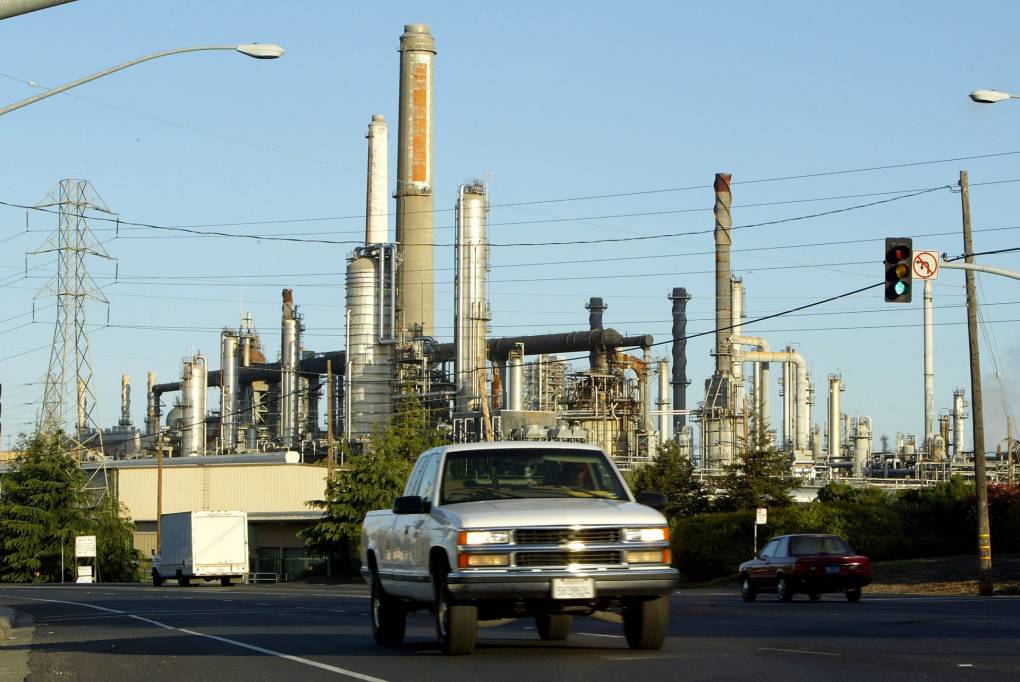
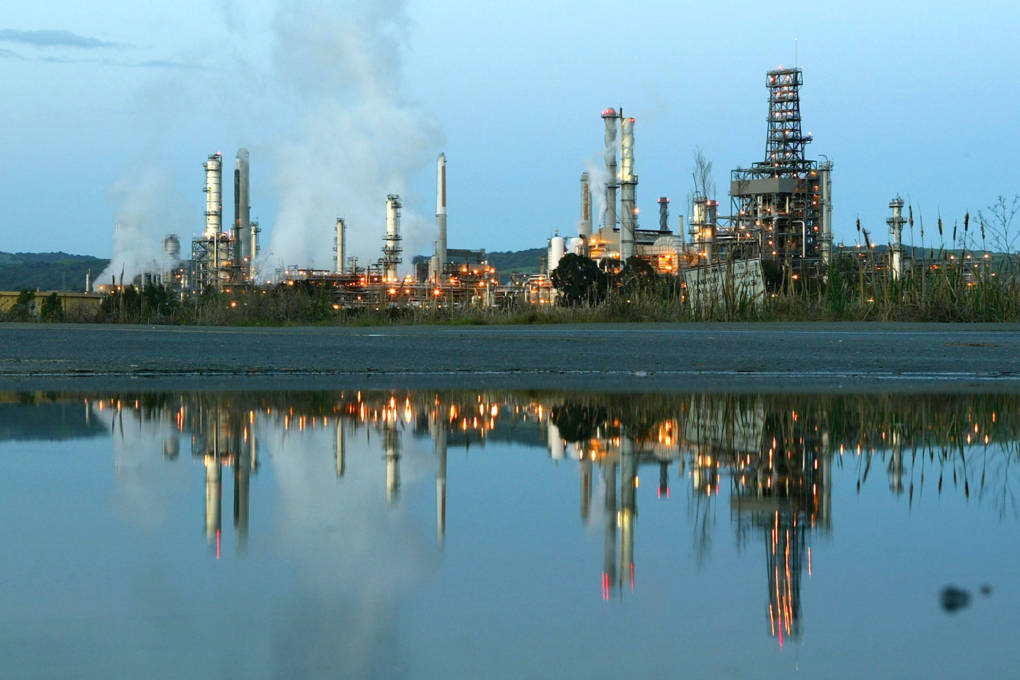
Sale of Shell's Martinez Refinery Delayed Amid Antitrust Concerns
Safety, Competition Concerns Raised Over Proposed Sale of Major California Oil Pipeline
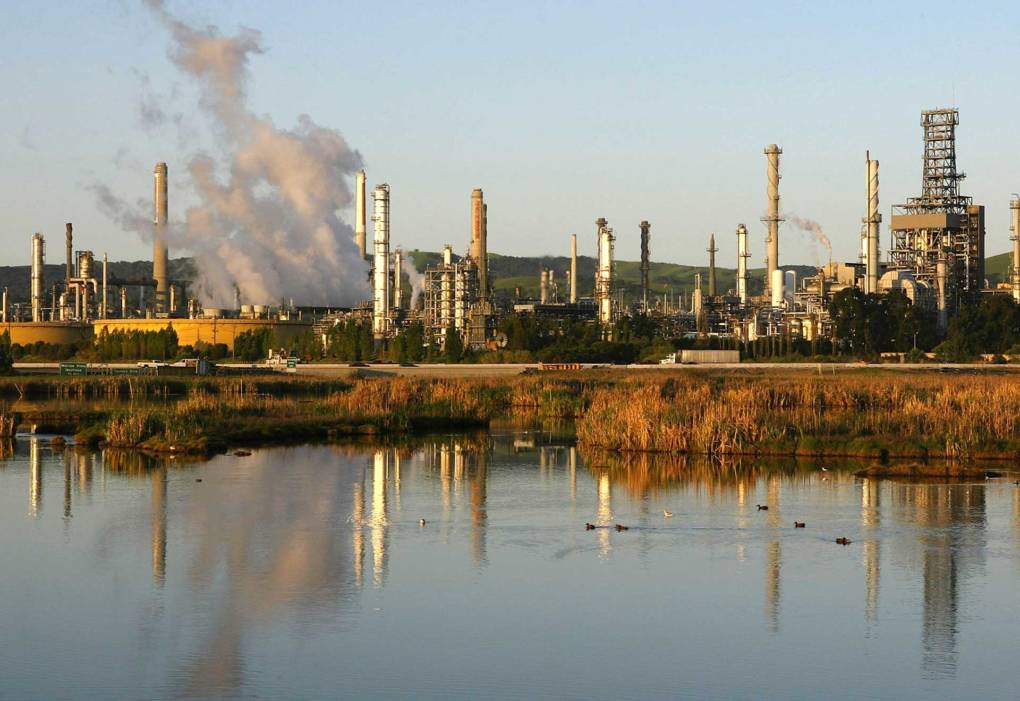
Shell to Sell Martinez Refinery for $1 Billion
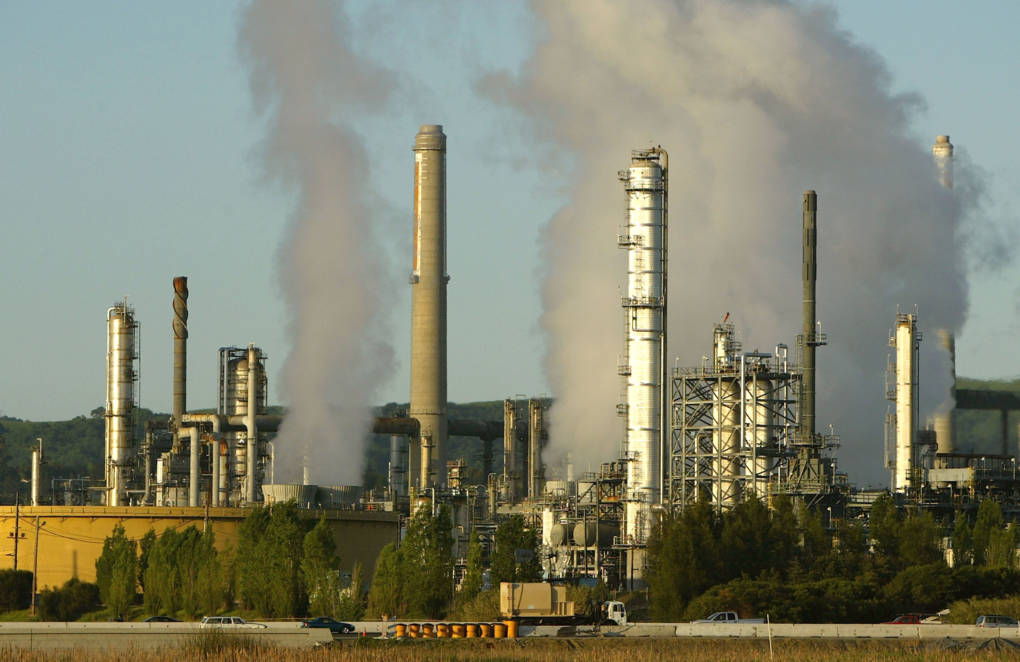
Shell to Pay $50,000 Fine for Releasing 20 Tons of Gas From Martinez Refinery
Shell Wants to Sell Large, Troubled California Pipeline System
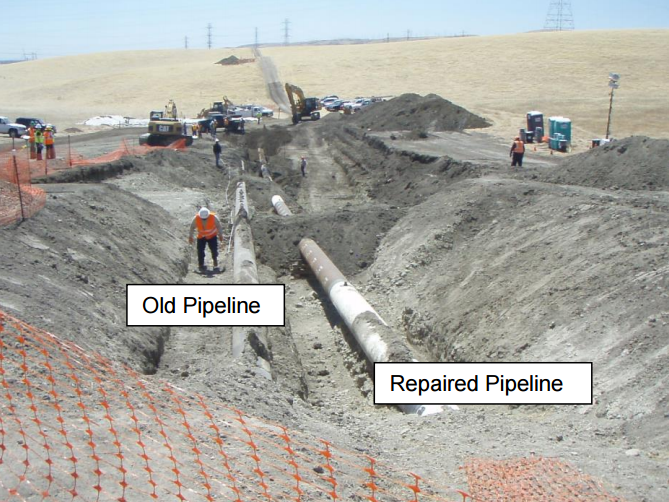
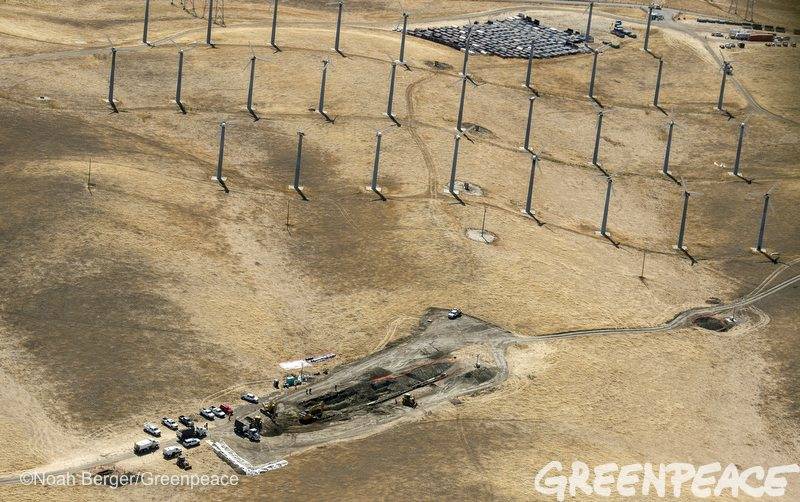
After Two Spills, Shell Oil to Replace Miles of Problem Pipeline
Shell Not Revealing Full List of Gases Released in December Martinez Refinery Flares
Sponsored
Player sponsored by
window.__IS_SSR__=true
window.__INITIAL_STATE__={
"attachmentsReducer": {
"audio_0": {
"type": "attachments",
"id": "audio_0",
"imgSizes": {
"kqedFullSize": {
"file": "https://ww2.kqed.org/news/wp-content/themes/KQED-unified/img/audio_bgs/background0.jpg"
}
}
},
"audio_1": {
"type": "attachments",
"id": "audio_1",
"imgSizes": {
"kqedFullSize": {
"file": "https://ww2.kqed.org/news/wp-content/themes/KQED-unified/img/audio_bgs/background1.jpg"
}
}
},
"audio_2": {
"type": "attachments",
"id": "audio_2",
"imgSizes": {
"kqedFullSize": {
"file": "https://ww2.kqed.org/news/wp-content/themes/KQED-unified/img/audio_bgs/background2.jpg"
}
}
},
"audio_3": {
"type": "attachments",
"id": "audio_3",
"imgSizes": {
"kqedFullSize": {
"file": "https://ww2.kqed.org/news/wp-content/themes/KQED-unified/img/audio_bgs/background3.jpg"
}
}
},
"audio_4": {
"type": "attachments",
"id": "audio_4",
"imgSizes": {
"kqedFullSize": {
"file": "https://ww2.kqed.org/news/wp-content/themes/KQED-unified/img/audio_bgs/background4.jpg"
}
}
},
"placeholder": {
"type": "attachments",
"id": "placeholder",
"imgSizes": {
"thumbnail": {
"file": "https://cdn.kqed.org/wp-content/uploads/2024/12/KQED-Default-Image-816638274-2000x1333-1-160x107.jpg",
"width": 160,
"height": 107,
"mimeType": "image/jpeg"
},
"medium": {
"file": "https://cdn.kqed.org/wp-content/uploads/2024/12/KQED-Default-Image-816638274-2000x1333-1-800x533.jpg",
"width": 800,
"height": 533,
"mimeType": "image/jpeg"
},
"medium_large": {
"file": "https://cdn.kqed.org/wp-content/uploads/2024/12/KQED-Default-Image-816638274-2000x1333-1-768x512.jpg",
"width": 768,
"height": 512,
"mimeType": "image/jpeg"
},
"large": {
"file": "https://cdn.kqed.org/wp-content/uploads/2024/12/KQED-Default-Image-816638274-2000x1333-1-1020x680.jpg",
"width": 1020,
"height": 680,
"mimeType": "image/jpeg"
},
"1536x1536": {
"file": "https://cdn.kqed.org/wp-content/uploads/2024/12/KQED-Default-Image-816638274-2000x1333-1-1536x1024.jpg",
"width": 1536,
"height": 1024,
"mimeType": "image/jpeg"
},
"fd-lrg": {
"file": "https://cdn.kqed.org/wp-content/uploads/2024/12/KQED-Default-Image-816638274-2000x1333-1-1536x1024.jpg",
"width": 1536,
"height": 1024,
"mimeType": "image/jpeg"
},
"fd-med": {
"file": "https://cdn.kqed.org/wp-content/uploads/2024/12/KQED-Default-Image-816638274-2000x1333-1-1020x680.jpg",
"width": 1020,
"height": 680,
"mimeType": "image/jpeg"
},
"fd-sm": {
"file": "https://cdn.kqed.org/wp-content/uploads/2024/12/KQED-Default-Image-816638274-2000x1333-1-800x533.jpg",
"width": 800,
"height": 533,
"mimeType": "image/jpeg"
},
"post-thumbnail": {
"file": "https://cdn.kqed.org/wp-content/uploads/2024/12/KQED-Default-Image-816638274-2000x1333-1-672x372.jpg",
"width": 672,
"height": 372,
"mimeType": "image/jpeg"
},
"twentyfourteen-full-width": {
"file": "https://cdn.kqed.org/wp-content/uploads/2024/12/KQED-Default-Image-816638274-2000x1333-1-1038x576.jpg",
"width": 1038,
"height": 576,
"mimeType": "image/jpeg"
},
"xxsmall": {
"file": "https://cdn.kqed.org/wp-content/uploads/2024/12/KQED-Default-Image-816638274-2000x1333-1-160x107.jpg",
"width": 160,
"height": 107,
"mimeType": "image/jpeg"
},
"xsmall": {
"file": "https://cdn.kqed.org/wp-content/uploads/2024/12/KQED-Default-Image-816638274-2000x1333-1-672x372.jpg",
"width": 672,
"height": 372,
"mimeType": "image/jpeg"
},
"small": {
"file": "https://cdn.kqed.org/wp-content/uploads/2024/12/KQED-Default-Image-816638274-2000x1333-1-672x372.jpg",
"width": 672,
"height": 372,
"mimeType": "image/jpeg"
},
"xlarge": {
"file": "https://cdn.kqed.org/wp-content/uploads/2024/12/KQED-Default-Image-816638274-2000x1333-1-1020x680.jpg",
"width": 1020,
"height": 680,
"mimeType": "image/jpeg"
},
"full-width": {
"file": "https://cdn.kqed.org/wp-content/uploads/2024/12/KQED-Default-Image-816638274-2000x1333-1-1920x1280.jpg",
"width": 1920,
"height": 1280,
"mimeType": "image/jpeg"
},
"guest-author-32": {
"file": "https://cdn.kqed.org/wp-content/uploads/2025/01/KQED-Default-Image-816638274-1333x1333-1-160x160.jpg",
"width": 32,
"height": 32,
"mimeType": "image/jpeg"
},
"guest-author-50": {
"file": "https://cdn.kqed.org/wp-content/uploads/2025/01/KQED-Default-Image-816638274-1333x1333-1-160x160.jpg",
"width": 50,
"height": 50,
"mimeType": "image/jpeg"
},
"guest-author-64": {
"file": "https://cdn.kqed.org/wp-content/uploads/2025/01/KQED-Default-Image-816638274-1333x1333-1-160x160.jpg",
"width": 64,
"height": 64,
"mimeType": "image/jpeg"
},
"guest-author-96": {
"file": "https://cdn.kqed.org/wp-content/uploads/2025/01/KQED-Default-Image-816638274-1333x1333-1-160x160.jpg",
"width": 96,
"height": 96,
"mimeType": "image/jpeg"
},
"guest-author-128": {
"file": "https://cdn.kqed.org/wp-content/uploads/2025/01/KQED-Default-Image-816638274-1333x1333-1-160x160.jpg",
"width": 128,
"height": 128,
"mimeType": "image/jpeg"
},
"detail": {
"file": "https://cdn.kqed.org/wp-content/uploads/2025/01/KQED-Default-Image-816638274-1333x1333-1-160x160.jpg",
"width": 160,
"height": 160,
"mimeType": "image/jpeg"
},
"kqedFullSize": {
"file": "https://cdn.kqed.org/wp-content/uploads/2024/12/KQED-Default-Image-816638274-2000x1333-1.jpg",
"width": 2000,
"height": 1333
}
}
},
"news_11793288": {
"type": "attachments",
"id": "news_11793288",
"meta": {
"index": "attachments_1716263798",
"site": "news",
"id": "11793288",
"found": true
},
"parent": 11793275,
"imgSizes": {
"apple_news_ca_landscape_5_5": {
"file": "https://ww2.kqed.org/app/uploads/sites/10/2019/12/RS40608_GettyImages-3188668-qut-1044x783.jpg",
"width": 1044,
"mimeType": "image/jpeg",
"height": 783
},
"apple_news_ca_square_4_0": {
"file": "https://ww2.kqed.org/app/uploads/sites/10/2019/12/RS40608_GettyImages-3188668-qut-470x470.jpg",
"width": 470,
"mimeType": "image/jpeg",
"height": 470
},
"twentyfourteen-full-width": {
"file": "https://ww2.kqed.org/app/uploads/sites/10/2019/12/RS40608_GettyImages-3188668-qut-1038x576.jpg",
"width": 1038,
"mimeType": "image/jpeg",
"height": 576
},
"thumbnail": {
"file": "https://ww2.kqed.org/app/uploads/sites/10/2019/12/RS40608_GettyImages-3188668-qut-160x107.jpg",
"width": 160,
"mimeType": "image/jpeg",
"height": 107
},
"post-thumbnail": {
"file": "https://ww2.kqed.org/app/uploads/sites/10/2019/12/RS40608_GettyImages-3188668-qut-672x372.jpg",
"width": 672,
"mimeType": "image/jpeg",
"height": 372
},
"kqedFullSize": {
"file": "https://ww2.kqed.org/app/uploads/sites/10/2019/12/RS40608_GettyImages-3188668-qut.jpg",
"width": 1920,
"height": 1283
},
"apple_news_ca_landscape_4_7": {
"file": "https://ww2.kqed.org/app/uploads/sites/10/2019/12/RS40608_GettyImages-3188668-qut-632x474.jpg",
"width": 632,
"mimeType": "image/jpeg",
"height": 474
},
"large": {
"file": "https://ww2.kqed.org/app/uploads/sites/10/2019/12/RS40608_GettyImages-3188668-qut-1020x682.jpg",
"width": 1020,
"mimeType": "image/jpeg",
"height": 682
},
"complete_open_graph": {
"file": "https://ww2.kqed.org/app/uploads/sites/10/2019/12/RS40608_GettyImages-3188668-qut-1200x802.jpg",
"width": 1200,
"mimeType": "image/jpeg",
"height": 802
},
"apple_news_ca_landscape_4_0": {
"file": "https://ww2.kqed.org/app/uploads/sites/10/2019/12/RS40608_GettyImages-3188668-qut-536x402.jpg",
"width": 536,
"mimeType": "image/jpeg",
"height": 402
},
"apple_news_ca_portrait_12_9": {
"file": "https://ww2.kqed.org/app/uploads/sites/10/2019/12/RS40608_GettyImages-3188668-qut-1122x1283.jpg",
"width": 1122,
"mimeType": "image/jpeg",
"height": 1283
},
"medium": {
"file": "https://ww2.kqed.org/app/uploads/sites/10/2019/12/RS40608_GettyImages-3188668-qut-800x535.jpg",
"width": 800,
"mimeType": "image/jpeg",
"height": 535
},
"apple_news_ca_portrait_4_0": {
"file": "https://ww2.kqed.org/app/uploads/sites/10/2019/12/RS40608_GettyImages-3188668-qut-354x472.jpg",
"width": 354,
"mimeType": "image/jpeg",
"height": 472
},
"apple_news_ca_portrait_9_7": {
"file": "https://ww2.kqed.org/app/uploads/sites/10/2019/12/RS40608_GettyImages-3188668-qut-840x1120.jpg",
"width": 840,
"mimeType": "image/jpeg",
"height": 1120
},
"apple_news_ca_landscape_12_9": {
"file": "https://ww2.kqed.org/app/uploads/sites/10/2019/12/RS40608_GettyImages-3188668-qut-1832x1283.jpg",
"width": 1832,
"mimeType": "image/jpeg",
"height": 1283
},
"apple_news_ca_square_9_7": {
"file": "https://ww2.kqed.org/app/uploads/sites/10/2019/12/RS40608_GettyImages-3188668-qut-1104x1104.jpg",
"width": 1104,
"mimeType": "image/jpeg",
"height": 1104
},
"apple_news_ca_portrait_4_7": {
"file": "https://ww2.kqed.org/app/uploads/sites/10/2019/12/RS40608_GettyImages-3188668-qut-414x552.jpg",
"width": 414,
"mimeType": "image/jpeg",
"height": 552
},
"apple_news_ca_square_12_9": {
"file": "https://ww2.kqed.org/app/uploads/sites/10/2019/12/RS40608_GettyImages-3188668-qut-1472x1283.jpg",
"width": 1472,
"mimeType": "image/jpeg",
"height": 1283
},
"apple_news_ca_portrait_5_5": {
"file": "https://ww2.kqed.org/app/uploads/sites/10/2019/12/RS40608_GettyImages-3188668-qut-687x916.jpg",
"width": 687,
"mimeType": "image/jpeg",
"height": 916
},
"full-width": {
"file": "https://ww2.kqed.org/app/uploads/sites/10/2019/12/RS40608_GettyImages-3188668-qut-1920x1283.jpg",
"width": 1920,
"mimeType": "image/jpeg",
"height": 1283
},
"apple_news_ca_square_4_7": {
"file": "https://ww2.kqed.org/app/uploads/sites/10/2019/12/RS40608_GettyImages-3188668-qut-550x550.jpg",
"width": 550,
"mimeType": "image/jpeg",
"height": 550
},
"apple_news_ca_landscape_9_7": {
"file": "https://ww2.kqed.org/app/uploads/sites/10/2019/12/RS40608_GettyImages-3188668-qut-1376x1032.jpg",
"width": 1376,
"mimeType": "image/jpeg",
"height": 1032
},
"apple_news_ca_square_5_5": {
"file": "https://ww2.kqed.org/app/uploads/sites/10/2019/12/RS40608_GettyImages-3188668-qut-912x912.jpg",
"width": 912,
"mimeType": "image/jpeg",
"height": 912
}
},
"publishDate": 1577733680,
"modified": 1577740066,
"caption": "Federal regulators are raising antitrust concerns about a large independent refining company's plans to buy Shell Oil's Martinez refinery in a proposed $1 billion deal.",
"description": "Federal regulators are raising antitrust concerns about a large independent refining company's plans to buy Shell Oil's Martinez refinery in a proposed $1 billion deal.",
"title": "Federal regulators are raising antitrust concerns about a large independent refining company's plans to buy Shell Oil's Martinez refinery in a proposed $1 billion deal.",
"credit": "Justin Sullivan/Getty Images",
"status": "inherit",
"fetchFailed": false,
"isLoading": false
},
"news_10974514": {
"type": "attachments",
"id": "news_10974514",
"meta": {
"index": "attachments_1716263798",
"site": "news",
"id": "10974514",
"found": true
},
"parent": 10973228,
"imgSizes": {
"jmtc-small-thumb": {
"file": "https://ww2.kqed.org/app/uploads/sites/10/2016/06/shellpipeline-280x150.png",
"width": 280,
"mimeType": "image/png",
"height": 150
},
"thumbnail": {
"file": "https://ww2.kqed.org/app/uploads/sites/10/2016/06/shellpipeline-400x300.png",
"width": 400,
"mimeType": "image/png",
"height": 300
},
"post-thumbnail": {
"file": "https://ww2.kqed.org/app/uploads/sites/10/2016/06/shellpipeline-669x372.png",
"width": 669,
"mimeType": "image/png",
"height": 372
},
"kqedFullSize": {
"file": "https://ww2.kqed.org/app/uploads/sites/10/2016/06/shellpipeline.png",
"width": 669,
"height": 502
},
"guest-author-50": {
"file": "https://ww2.kqed.org/app/uploads/sites/10/2016/06/shellpipeline-50x50.png",
"width": 50,
"mimeType": "image/png",
"height": 50
},
"guest-author-96": {
"file": "https://ww2.kqed.org/app/uploads/sites/10/2016/06/shellpipeline-96x96.png",
"width": 96,
"mimeType": "image/png",
"height": 96
},
"guest-author-64": {
"file": "https://ww2.kqed.org/app/uploads/sites/10/2016/06/shellpipeline-64x64.png",
"width": 64,
"mimeType": "image/png",
"height": 64
},
"detail": {
"file": "https://ww2.kqed.org/app/uploads/sites/10/2016/06/shellpipeline-150x150.png",
"width": 150,
"mimeType": "image/png",
"height": 150
},
"guest-author-32": {
"file": "https://ww2.kqed.org/app/uploads/sites/10/2016/06/shellpipeline-32x32.png",
"width": 32,
"mimeType": "image/png",
"height": 32
},
"guest-author-128": {
"file": "https://ww2.kqed.org/app/uploads/sites/10/2016/06/shellpipeline-128x128.png",
"width": 128,
"mimeType": "image/png",
"height": 128
}
},
"publishDate": 1464817888,
"modified": 1561417587,
"caption": "Image from Central Valley Water Quality Control Board report on Shell Oil's May 20, 2016, pipeline break. Picture shows inactive older pipeline and newer pipeline that ruptured, spilling about 21,000 gallons of oil. ",
"description": null,
"title": "shellpipeline",
"credit": "Central Valley Water Quality Control Board",
"status": "inherit",
"fetchFailed": false,
"isLoading": false
},
"news_11754056": {
"type": "attachments",
"id": "news_11754056",
"meta": {
"index": "attachments_1716263798",
"site": "news",
"id": "11754056",
"found": true
},
"parent": 11754005,
"imgSizes": {
"apple_news_ca_landscape_5_5": {
"file": "https://ww2.kqed.org/app/uploads/sites/10/2019/06/Shell-Oil-Refinery-Martinez-1044x783.jpg",
"width": 1044,
"mimeType": "image/jpeg",
"height": 783
},
"apple_news_ca_square_4_0": {
"file": "https://ww2.kqed.org/app/uploads/sites/10/2019/06/Shell-Oil-Refinery-Martinez-470x470.jpg",
"width": 470,
"mimeType": "image/jpeg",
"height": 470
},
"twentyfourteen-full-width": {
"file": "https://ww2.kqed.org/app/uploads/sites/10/2019/06/Shell-Oil-Refinery-Martinez-1038x576.jpg",
"width": 1038,
"mimeType": "image/jpeg",
"height": 576
},
"thumbnail": {
"file": "https://ww2.kqed.org/app/uploads/sites/10/2019/06/Shell-Oil-Refinery-Martinez-160x107.jpg",
"width": 160,
"mimeType": "image/jpeg",
"height": 107
},
"post-thumbnail": {
"file": "https://ww2.kqed.org/app/uploads/sites/10/2019/06/Shell-Oil-Refinery-Martinez-672x372.jpg",
"width": 672,
"mimeType": "image/jpeg",
"height": 372
},
"kqedFullSize": {
"file": "https://ww2.kqed.org/app/uploads/sites/10/2019/06/Shell-Oil-Refinery-Martinez.jpg",
"width": 1920,
"height": 1280
},
"apple_news_ca_landscape_4_7": {
"file": "https://ww2.kqed.org/app/uploads/sites/10/2019/06/Shell-Oil-Refinery-Martinez-632x474.jpg",
"width": 632,
"mimeType": "image/jpeg",
"height": 474
},
"large": {
"file": "https://ww2.kqed.org/app/uploads/sites/10/2019/06/Shell-Oil-Refinery-Martinez-1020x680.jpg",
"width": 1020,
"mimeType": "image/jpeg",
"height": 680
},
"complete_open_graph": {
"file": "https://ww2.kqed.org/app/uploads/sites/10/2019/06/Shell-Oil-Refinery-Martinez-1200x800.jpg",
"width": 1200,
"mimeType": "image/jpeg",
"height": 800
},
"apple_news_ca_landscape_4_0": {
"file": "https://ww2.kqed.org/app/uploads/sites/10/2019/06/Shell-Oil-Refinery-Martinez-536x402.jpg",
"width": 536,
"mimeType": "image/jpeg",
"height": 402
},
"apple_news_ca_portrait_12_9": {
"file": "https://ww2.kqed.org/app/uploads/sites/10/2019/06/Shell-Oil-Refinery-Martinez-1122x1280.jpg",
"width": 1122,
"mimeType": "image/jpeg",
"height": 1280
},
"medium": {
"file": "https://ww2.kqed.org/app/uploads/sites/10/2019/06/Shell-Oil-Refinery-Martinez-800x533.jpg",
"width": 800,
"mimeType": "image/jpeg",
"height": 533
},
"apple_news_ca_portrait_4_0": {
"file": "https://ww2.kqed.org/app/uploads/sites/10/2019/06/Shell-Oil-Refinery-Martinez-354x472.jpg",
"width": 354,
"mimeType": "image/jpeg",
"height": 472
},
"apple_news_ca_portrait_9_7": {
"file": "https://ww2.kqed.org/app/uploads/sites/10/2019/06/Shell-Oil-Refinery-Martinez-840x1120.jpg",
"width": 840,
"mimeType": "image/jpeg",
"height": 1120
},
"apple_news_ca_landscape_12_9": {
"file": "https://ww2.kqed.org/app/uploads/sites/10/2019/06/Shell-Oil-Refinery-Martinez-1832x1280.jpg",
"width": 1832,
"mimeType": "image/jpeg",
"height": 1280
},
"apple_news_ca_square_9_7": {
"file": "https://ww2.kqed.org/app/uploads/sites/10/2019/06/Shell-Oil-Refinery-Martinez-1104x1104.jpg",
"width": 1104,
"mimeType": "image/jpeg",
"height": 1104
},
"apple_news_ca_portrait_4_7": {
"file": "https://ww2.kqed.org/app/uploads/sites/10/2019/06/Shell-Oil-Refinery-Martinez-414x552.jpg",
"width": 414,
"mimeType": "image/jpeg",
"height": 552
},
"apple_news_ca_square_12_9": {
"file": "https://ww2.kqed.org/app/uploads/sites/10/2019/06/Shell-Oil-Refinery-Martinez-1472x1280.jpg",
"width": 1472,
"mimeType": "image/jpeg",
"height": 1280
},
"apple_news_ca_portrait_5_5": {
"file": "https://ww2.kqed.org/app/uploads/sites/10/2019/06/Shell-Oil-Refinery-Martinez-687x916.jpg",
"width": 687,
"mimeType": "image/jpeg",
"height": 916
},
"full-width": {
"file": "https://ww2.kqed.org/app/uploads/sites/10/2019/06/Shell-Oil-Refinery-Martinez-1920x1280.jpg",
"width": 1920,
"mimeType": "image/jpeg",
"height": 1280
},
"apple_news_ca_square_4_7": {
"file": "https://ww2.kqed.org/app/uploads/sites/10/2019/06/Shell-Oil-Refinery-Martinez-550x550.jpg",
"width": 550,
"mimeType": "image/jpeg",
"height": 550
},
"apple_news_ca_landscape_9_7": {
"file": "https://ww2.kqed.org/app/uploads/sites/10/2019/06/Shell-Oil-Refinery-Martinez-1376x1032.jpg",
"width": 1376,
"mimeType": "image/jpeg",
"height": 1032
},
"apple_news_ca_square_5_5": {
"file": "https://ww2.kqed.org/app/uploads/sites/10/2019/06/Shell-Oil-Refinery-Martinez-912x912.jpg",
"width": 912,
"mimeType": "image/jpeg",
"height": 912
}
},
"publishDate": 1560297519,
"modified": 1587605233,
"caption": "The former Shell Oil refinery in Martinez, now owned and operated by New Jersey-based PBF Energy. ",
"description": "The Shell Oil refinery in Martinez.",
"title": "PBF Energy Refinery-Martinez",
"credit": "Justin Sullivan/Getty Images",
"status": "inherit",
"fetchFailed": false,
"isLoading": false
},
"news_11685494": {
"type": "attachments",
"id": "news_11685494",
"meta": {
"index": "attachments_1716263798",
"site": "news",
"id": "11685494",
"found": true
},
"parent": 11685038,
"imgSizes": {
"small": {
"file": "https://ww2.kqed.org/app/uploads/sites/10/2018/08/GettyImages-3188658-520x338.jpg",
"width": 520,
"mimeType": "image/jpeg",
"height": 338
},
"twentyfourteen-full-width": {
"file": "https://ww2.kqed.org/app/uploads/sites/10/2018/08/GettyImages-3188658-1038x576.jpg",
"width": 1038,
"mimeType": "image/jpeg",
"height": 576
},
"thumbnail": {
"file": "https://ww2.kqed.org/app/uploads/sites/10/2018/08/GettyImages-3188658-160x104.jpg",
"width": 160,
"mimeType": "image/jpeg",
"height": 104
},
"fd-sm": {
"file": "https://ww2.kqed.org/app/uploads/sites/10/2018/08/GettyImages-3188658-960x623.jpg",
"width": 960,
"mimeType": "image/jpeg",
"height": 623
},
"post-thumbnail": {
"file": "https://ww2.kqed.org/app/uploads/sites/10/2018/08/GettyImages-3188658-672x372.jpg",
"width": 672,
"mimeType": "image/jpeg",
"height": 372
},
"xsmall": {
"file": "https://ww2.kqed.org/app/uploads/sites/10/2018/08/GettyImages-3188658-375x244.jpg",
"width": 375,
"mimeType": "image/jpeg",
"height": 244
},
"kqedFullSize": {
"file": "https://ww2.kqed.org/app/uploads/sites/10/2018/08/GettyImages-3188658-e1552593074481.jpg",
"width": 1920,
"height": 1247
},
"large": {
"file": "https://ww2.kqed.org/app/uploads/sites/10/2018/08/GettyImages-3188658-1020x662.jpg",
"width": 1020,
"mimeType": "image/jpeg",
"height": 662
},
"xlarge": {
"file": "https://ww2.kqed.org/app/uploads/sites/10/2018/08/GettyImages-3188658-1180x766.jpg",
"width": 1180,
"mimeType": "image/jpeg",
"height": 766
},
"complete_open_graph": {
"file": "https://ww2.kqed.org/app/uploads/sites/10/2018/08/GettyImages-3188658-1200x779.jpg",
"width": 1200,
"mimeType": "image/jpeg",
"height": 779
},
"guest-author-50": {
"file": "https://ww2.kqed.org/app/uploads/sites/10/2018/08/GettyImages-3188658-50x50.jpg",
"width": 50,
"mimeType": "image/jpeg",
"height": 50
},
"guest-author-96": {
"file": "https://ww2.kqed.org/app/uploads/sites/10/2018/08/GettyImages-3188658-96x96.jpg",
"width": 96,
"mimeType": "image/jpeg",
"height": 96
},
"medium": {
"file": "https://ww2.kqed.org/app/uploads/sites/10/2018/08/GettyImages-3188658-800x519.jpg",
"width": 800,
"mimeType": "image/jpeg",
"height": 519
},
"guest-author-64": {
"file": "https://ww2.kqed.org/app/uploads/sites/10/2018/08/GettyImages-3188658-64x64.jpg",
"width": 64,
"mimeType": "image/jpeg",
"height": 64
},
"guest-author-32": {
"file": "https://ww2.kqed.org/app/uploads/sites/10/2018/08/GettyImages-3188658-32x32.jpg",
"width": 32,
"mimeType": "image/jpeg",
"height": 32
},
"fd-lrg": {
"file": "https://ww2.kqed.org/app/uploads/sites/10/2018/08/GettyImages-3188658-1920x1247.jpg",
"width": 1920,
"mimeType": "image/jpeg",
"height": 1247
},
"fd-med": {
"file": "https://ww2.kqed.org/app/uploads/sites/10/2018/08/GettyImages-3188658-1180x766.jpg",
"width": 1180,
"mimeType": "image/jpeg",
"height": 766
},
"full-width": {
"file": "https://ww2.kqed.org/app/uploads/sites/10/2018/08/GettyImages-3188658-1920x1247.jpg",
"width": 1920,
"mimeType": "image/jpeg",
"height": 1247
},
"detail": {
"file": "https://ww2.kqed.org/app/uploads/sites/10/2018/08/GettyImages-3188658-150x150.jpg",
"width": 150,
"mimeType": "image/jpeg",
"height": 150
},
"guest-author-128": {
"file": "https://ww2.kqed.org/app/uploads/sites/10/2018/08/GettyImages-3188658-128x128.jpg",
"width": 128,
"mimeType": "image/jpeg",
"height": 128
},
"xxsmall": {
"file": "https://ww2.kqed.org/app/uploads/sites/10/2018/08/GettyImages-3188658-240x156.jpg",
"width": 240,
"mimeType": "image/jpeg",
"height": 156
}
},
"publishDate": 1533677464,
"modified": 1626902651,
"caption": "The PBF Energy refinery in Martinez, pictured in August 2018 when it was owned by Shell. ",
"description": "The PBF Energy refinery in Martinez, pictured in August 2018 when it was owned by Shell. ",
"title": "The Martinez Refining Company Refinery",
"credit": "Justin Sullivan/Getty Images",
"status": "inherit",
"altTag": null,
"fetchFailed": false,
"isLoading": false
},
"news_10974511": {
"type": "attachments",
"id": "news_10974511",
"meta": {
"index": "attachments_1716263798",
"site": "news",
"id": "10974511",
"found": true
},
"parent": 10973228,
"imgSizes": {
"jmtc-small-thumb": {
"file": "https://ww2.kqed.org/app/uploads/sites/10/2016/06/shellpipelinegp1-280x150.jpg",
"width": 280,
"mimeType": "image/jpeg",
"height": 150
},
"thumbnail": {
"file": "https://ww2.kqed.org/app/uploads/sites/10/2016/06/shellpipelinegp1-400x251.jpg",
"width": 400,
"mimeType": "image/jpeg",
"height": 251
},
"post-thumbnail": {
"file": "https://ww2.kqed.org/app/uploads/sites/10/2016/06/shellpipelinegp1-672x372.jpg",
"width": 672,
"mimeType": "image/jpeg",
"height": 372
},
"kqedFullSize": {
"file": "https://ww2.kqed.org/app/uploads/sites/10/2016/06/shellpipelinegp1.jpg",
"width": 800,
"height": 502
},
"guest-author-50": {
"file": "https://ww2.kqed.org/app/uploads/sites/10/2016/06/shellpipelinegp1-50x50.jpg",
"width": 50,
"mimeType": "image/jpeg",
"height": 50
},
"guest-author-96": {
"file": "https://ww2.kqed.org/app/uploads/sites/10/2016/06/shellpipelinegp1-96x96.jpg",
"width": 96,
"mimeType": "image/jpeg",
"height": 96
},
"medium": {
"file": "https://ww2.kqed.org/app/uploads/sites/10/2016/06/shellpipelinegp1-800x502.jpg",
"width": 800,
"mimeType": "image/jpeg",
"height": 502
},
"guest-author-64": {
"file": "https://ww2.kqed.org/app/uploads/sites/10/2016/06/shellpipelinegp1-64x64.jpg",
"width": 64,
"mimeType": "image/jpeg",
"height": 64
},
"detail": {
"file": "https://ww2.kqed.org/app/uploads/sites/10/2016/06/shellpipelinegp1-150x150.jpg",
"width": 150,
"mimeType": "image/jpeg",
"height": 150
},
"guest-author-32": {
"file": "https://ww2.kqed.org/app/uploads/sites/10/2016/06/shellpipelinegp1-32x32.jpg",
"width": 32,
"mimeType": "image/jpeg",
"height": 32
},
"guest-author-128": {
"file": "https://ww2.kqed.org/app/uploads/sites/10/2016/06/shellpipelinegp1-128x128.jpg",
"width": 128,
"mimeType": "image/jpeg",
"height": 128
}
},
"publishDate": 1464817548,
"modified": 1501889209,
"caption": "Site of May 20, 2016, crude oil pipeline rupture east of Altamont Pass.",
"description": null,
"title": "Shell Pipeline",
"credit": "Noah Berger/Courtesy of Greenpeace",
"status": "inherit",
"fetchFailed": false,
"isLoading": false
},
"news_11287828": {
"type": "attachments",
"id": "news_11287828",
"meta": {
"index": "attachments_1716263798",
"site": "news",
"id": "11287828",
"found": true
},
"parent": 0,
"imgSizes": {
"small": {
"file": "https://ww2.kqed.org/app/uploads/sites/10/2017/01/shell-refinery-1920-520x357.jpg",
"width": 520,
"mimeType": "image/jpeg",
"height": 357
},
"twentyfourteen-full-width": {
"file": "https://ww2.kqed.org/app/uploads/sites/10/2017/01/shell-refinery-1920-1038x576.jpg",
"width": 1038,
"mimeType": "image/jpeg",
"height": 576
},
"thumbnail": {
"file": "https://ww2.kqed.org/app/uploads/sites/10/2017/01/shell-refinery-1920-160x110.jpg",
"width": 160,
"mimeType": "image/jpeg",
"height": 110
},
"fd-sm": {
"file": "https://ww2.kqed.org/app/uploads/sites/10/2017/01/shell-refinery-1920-960x660.jpg",
"width": 960,
"mimeType": "image/jpeg",
"height": 660
},
"post-thumbnail": {
"file": "https://ww2.kqed.org/app/uploads/sites/10/2017/01/shell-refinery-1920-672x372.jpg",
"width": 672,
"mimeType": "image/jpeg",
"height": 372
},
"xsmall": {
"file": "https://ww2.kqed.org/app/uploads/sites/10/2017/01/shell-refinery-1920-375x258.jpg",
"width": 375,
"mimeType": "image/jpeg",
"height": 258
},
"kqedFullSize": {
"file": "https://ww2.kqed.org/app/uploads/sites/10/2017/01/shell-refinery-1920.jpg",
"width": 1920,
"height": 1319
},
"large": {
"file": "https://ww2.kqed.org/app/uploads/sites/10/2017/01/shell-refinery-1920-1020x701.jpg",
"width": 1020,
"mimeType": "image/jpeg",
"height": 701
},
"xlarge": {
"file": "https://ww2.kqed.org/app/uploads/sites/10/2017/01/shell-refinery-1920-1180x811.jpg",
"width": 1180,
"mimeType": "image/jpeg",
"height": 811
},
"guest-author-50": {
"file": "https://ww2.kqed.org/app/uploads/sites/10/2017/01/shell-refinery-1920-50x50.jpg",
"width": 50,
"mimeType": "image/jpeg",
"height": 50
},
"guest-author-96": {
"file": "https://ww2.kqed.org/app/uploads/sites/10/2017/01/shell-refinery-1920-96x96.jpg",
"width": 96,
"mimeType": "image/jpeg",
"height": 96
},
"medium": {
"file": "https://ww2.kqed.org/app/uploads/sites/10/2017/01/shell-refinery-1920-800x550.jpg",
"width": 800,
"mimeType": "image/jpeg",
"height": 550
},
"guest-author-64": {
"file": "https://ww2.kqed.org/app/uploads/sites/10/2017/01/shell-refinery-1920-64x64.jpg",
"width": 64,
"mimeType": "image/jpeg",
"height": 64
},
"guest-author-32": {
"file": "https://ww2.kqed.org/app/uploads/sites/10/2017/01/shell-refinery-1920-32x32.jpg",
"width": 32,
"mimeType": "image/jpeg",
"height": 32
},
"jmtc-small-thumb": {
"file": "https://ww2.kqed.org/app/uploads/sites/10/2017/01/shell-refinery-1920-280x150.jpg",
"width": 280,
"mimeType": "image/jpeg",
"height": 150
},
"fd-lrg": {
"file": "https://ww2.kqed.org/app/uploads/sites/10/2017/01/shell-refinery-1920-1920x1319.jpg",
"width": 1920,
"mimeType": "image/jpeg",
"height": 1319
},
"fd-med": {
"file": "https://ww2.kqed.org/app/uploads/sites/10/2017/01/shell-refinery-1920-1180x811.jpg",
"width": 1180,
"mimeType": "image/jpeg",
"height": 811
},
"full-width": {
"file": "https://ww2.kqed.org/app/uploads/sites/10/2017/01/shell-refinery-1920-1920x1319.jpg",
"width": 1920,
"mimeType": "image/jpeg",
"height": 1319
},
"detail": {
"file": "https://ww2.kqed.org/app/uploads/sites/10/2017/01/shell-refinery-1920-150x150.jpg",
"width": 150,
"mimeType": "image/jpeg",
"height": 150
},
"guest-author-128": {
"file": "https://ww2.kqed.org/app/uploads/sites/10/2017/01/shell-refinery-1920-128x128.jpg",
"width": 128,
"mimeType": "image/jpeg",
"height": 128
},
"xxsmall": {
"file": "https://ww2.kqed.org/app/uploads/sites/10/2017/01/shell-refinery-1920-240x165.jpg",
"width": 240,
"mimeType": "image/jpeg",
"height": 165
}
},
"publishDate": 1485468849,
"modified": 1485799631,
"caption": "Water vapor drifts away from a Shell Oil refinery on April 1, 2004, in Martinez, California. ",
"description": null,
"title": "shell-refinery-1920",
"credit": "Justin Sullivan/Getty Images",
"status": "inherit",
"fetchFailed": false,
"isLoading": false
}
},
"audioPlayerReducer": {
"postId": "stream_live",
"isPaused": true,
"isPlaying": false,
"pfsActive": false,
"pledgeModalIsOpen": true,
"playerDrawerIsOpen": false
},
"authorsReducer": {
"tgoldberg": {
"type": "authors",
"id": "258",
"meta": {
"index": "authors_1716337520",
"id": "258",
"found": true
},
"name": "Ted Goldberg",
"firstName": "Ted",
"lastName": "Goldberg",
"slug": "tgoldberg",
"email": "tgoldberg@kqed.org",
"display_author_email": true,
"staff_mastheads": [
"news"
],
"title": "KQED Managing Editor, News and Newscasts",
"bio": "Ted Goldberg is Managing Editor of News and Newscasts at KQED. His main reporting beat is the Bay Area's oil refining industry.\r\n\r\nPrior to joining KQED in 2014, Ted worked at CBS News and WCBS AM in New York and Bay City News and KCBS Radio in San Francisco. He graduated from Oberlin College in Ohio in 1998.",
"avatar": "https://secure.gravatar.com/avatar/16d702c9ec5f696d78dbfb76b592cf0a?s=600&d=blank&r=g",
"twitter": "TedrickG",
"facebook": null,
"instagram": null,
"linkedin": null,
"sites": [
{
"site": "news",
"roles": [
"editor"
]
},
{
"site": "science",
"roles": [
"editor"
]
}
],
"headData": {
"title": "Ted Goldberg | KQED",
"description": "KQED Managing Editor, News and Newscasts",
"ogImgSrc": "https://secure.gravatar.com/avatar/16d702c9ec5f696d78dbfb76b592cf0a?s=600&d=blank&r=g",
"twImgSrc": "https://secure.gravatar.com/avatar/16d702c9ec5f696d78dbfb76b592cf0a?s=600&d=blank&r=g"
},
"isLoading": false,
"link": "/author/tgoldberg"
}
},
"breakingNewsReducer": {},
"pagesReducer": {},
"postsReducer": {
"stream_live": {
"type": "live",
"id": "stream_live",
"audioUrl": "https://streams.kqed.org/kqedradio",
"title": "Live Stream",
"excerpt": "Live Stream information currently unavailable.",
"link": "/radio",
"featImg": "",
"label": {
"name": "KQED Live",
"link": "/"
}
},
"stream_kqedNewscast": {
"type": "posts",
"id": "stream_kqedNewscast",
"audioUrl": "https://www.kqed.org/.stream/anon/radio/RDnews/newscast.mp3?_=1",
"title": "KQED Newscast",
"featImg": "",
"label": {
"name": "88.5 FM",
"link": "/"
}
},
"news_11793275": {
"type": "posts",
"id": "news_11793275",
"meta": {
"index": "posts_1716263798",
"site": "news",
"id": "11793275",
"score": null,
"sort": [
1577740265000
]
},
"guestAuthors": [],
"slug": "sale-of-shells-martinez-refinery-delayed-amid-antitrust-concerns",
"title": "Sale of Shell's Martinez Refinery Delayed Amid Antitrust Concerns",
"publishDate": 1577740265,
"format": "standard",
"headTitle": "Sale of Shell’s Martinez Refinery Delayed Amid Antitrust Concerns | KQED",
"labelTerm": {
"term": 72,
"site": "news"
},
"content": "\u003cp>Federal regulators are raising antitrust concerns about a large independent refining company’s plans to buy Shell Oil’s Martinez refinery.\u003c/p>\n\u003cp>In a rare move, the Federal Trade Commission has asked New Jersey-based PBF Energy a series of extra questions about the proposed $1 billion deal, delaying the purchase of one of the Bay Area’s largest refineries.\u003c/p>\n\u003cp>PBF \u003ca href=\"https://www.kqed.org/news/11754005/shell-to-sell-martinez-refinery-for-1-billion\" target=\"_blank\" rel=\"noopener noreferrer\">announced\u003c/a> plans in June to buy the Contra Costa County facility that has a refining capacity of 160,000 barrels of oil a day. At the time, PBF’s top executive called Shell the best refinery in the region, and executives for both companies said they expected the sale to close by the end of 2019.\u003c/p>\n\u003cp>The Federal Trade Commission, which is reviewing the merger, has asked PBF another round of questions about the proposed sale in what’s known as a “second request,” according to PBF spokesman Michael Karlovich.\u003c/p>\n\u003cp>[aside tag=\"martinez-refinery\" label=\"Related coverage\"]\u003c/p>\n\u003cp>“Pending regulatory and other approvals … we now anticipate that the transaction will close during the first quarter of 2020,” Karlovich said last week in an email.\u003c/p>\n\u003cp>Betsy Lordan, a FTC spokeswoman, said she could not comment on what specifically prompted the subsequent request for more information, but in general it represents worries from regulators.\u003c/p>\n\u003cp>“When one of the antitrust agencies issues a second request, it is because the initial review has raised antitrust concerns that warrant closer examination,” Lordan said Monday in an email.\u003c/p>\n\u003cp>Second requests take place in less than 4% of such mergers, said Aaron Edlin, a professor of law and economics at UC Berkeley, who specializes in anti-trust issues.\u003c/p>\n\u003cp>The queries “indicate that the agency has concerns about the impact of the merger on competition,” Edlin said.\u003c/p>\n\u003cp>“More information could alleviate those concerns but if the agency continues to be concerned it can challenge the merger or negotiate with the companies to get some pro-competitive concession,” he said.\u003c/p>\n\u003cp>PBF disclosed the delay to investors during an \u003ca href=\"https://www.fool.com/earnings/call-transcripts/2019/11/01/pbf-energy-pbf-q3-2019-earnings-call-transcript.aspx\" target=\"_blank\" rel=\"noopener noreferrer\">earnings call\u003c/a> in late October, but it did not gain wide attention.\u003c/p>\n\u003cp>Company president Matthew Lucey said then that he expected the deal to close in the first half of the first quarter of 2020.\u003c/p>\n\u003cp>“But again, it’s not completely in our control,” Lucey said.\u003c/p>\n\u003cp>When asked about the status of the deal, Shell did not indicate any problems with the proposed transaction.\u003c/p>\n\u003cp>“Shell’s Martinez Refinery divestment deal with PBF Holding Company, LLC, continues to move forward towards closing while working through all necessary regulatory approvals and execution of key implementation activities,” said spokesman Ray Fisher.\u003c/p>\n\u003cp>In June, Shell said the sale was part of the company’s efforts to focus on a “smaller, smarter refining portfolio.”\u003cbr>\n[pullquote size=\"small\" align=\"right\" citation=\"Betsy Lordan, a Federal Trade Commission spokeswoman\"]‘When one of the antitrust agencies issues a second request, it is because the initial review has raised antitrust concerns that warrant closer examination.’[/pullquote]The announcement came as state regulators began reviewing Shell’s proposal to sell a California \u003ca href=\"https://www.kqed.org/news/11752024/industry-safety-advocates-raise-concerns-over-sale-of-large-california-oil-pipeline\" target=\"_blank\" rel=\"noopener noreferrer\">pipeline\u003c/a> to Long Beach-based Crimson Pipeline.\u003c/p>\n\u003cp>Martinez Mayor Rob Schroder said PBF’s new refinery manager told him in November that the sale was planned for February.\u003c/p>\n\u003cp>“Although I believe that Shell has been a good corporate member of the Martinez community and has a culture of safety for its employees and community, I do not have concerns, at this time, about the sale,” he said. “But I am saddened to see a business leave Martinez after over 100 years.”\u003c/p>\n\u003cp>The Shell facility converts crude petroleum into vehicle gasoline, jet fuel, diesel and asphalt, among other products. Shell and PBF have said in the past that workers employed at the Martinez site would be offered jobs at PBF.\u003c/p>\n\u003cp>The California Attorney General’s Office would be the key state agency tasked with reviewing PBF and Shell’s deal, but it has declined to discuss the proposal.\u003c/p>\n\u003cp>“To protect its integrity, we are unable to comment on, even to confirm or deny, a potential or ongoing investigation,” the attorney general’s office said in an email.\u003c/p>\n\u003cp>[ad fullwidth]\u003c/p>\n\u003cp>\u003c/p>\n",
"blocks": [],
"excerpt": "Federal regulators are raising antitrust concerns about a large independent refining company's plans to buy Shell Oil's Martinez refinery in a proposed $1 billion deal.",
"status": "publish",
"parent": 0,
"modified": 1721109098,
"stats": {
"hasAudio": false,
"hasVideo": false,
"hasChartOrMap": false,
"iframeSrcs": [],
"hasGoogleForm": false,
"hasGallery": false,
"hasHearkenModule": false,
"hasPolis": false,
"paragraphCount": 24,
"wordCount": 722
},
"headData": {
"title": "Sale of Shell's Martinez Refinery Delayed Amid Antitrust Concerns | KQED",
"description": "Federal regulators are raising antitrust concerns about a large independent refining company's plans to buy Shell Oil's Martinez refinery in a proposed $1 billion deal.",
"ogTitle": "",
"ogDescription": "",
"ogImgId": "",
"twTitle": "",
"twDescription": "",
"twImgId": "",
"schema": {
"@context": "https://schema.org",
"@type": "NewsArticle",
"headline": "Sale of Shell's Martinez Refinery Delayed Amid Antitrust Concerns",
"datePublished": "2019-12-30T13:11:05-08:00",
"dateModified": "2024-07-15T22:51:38-07:00",
"image": "https://cdn.kqed.org/wp-content/uploads/2020/02/KQED-OG-Image@1x.png",
"isAccessibleForFree": "True",
"publisher": {
"@type": "NewsMediaOrganization",
"@id": "https://www.kqed.org/#organization",
"name": "KQED",
"logo": "https://cdn.kqed.org/wp-content/uploads/2020/02/KQED-OG-Image@1x.png",
"url": "https://www.kqed.org",
"sameAs": [
"https://www.facebook.com/KQED",
"https://twitter.com/KQED",
"https://www.instagram.com/kqed/",
"https://www.tiktok.com/@kqedofficial",
"https://www.linkedin.com/company/kqed",
"https://www.youtube.com/channel/UCeC0IOo7i1P_61zVUWbJ4nw"
]
}
}
},
"sticky": false,
"path": "/news/11793275/sale-of-shells-martinez-refinery-delayed-amid-antitrust-concerns",
"audioTrackLength": null,
"parsedContent": [
{
"type": "contentString",
"content": "\u003cdiv class=\"post-body\">\u003cp>\u003cp>Federal regulators are raising antitrust concerns about a large independent refining company’s plans to buy Shell Oil’s Martinez refinery.\u003c/p>\n\u003cp>In a rare move, the Federal Trade Commission has asked New Jersey-based PBF Energy a series of extra questions about the proposed $1 billion deal, delaying the purchase of one of the Bay Area’s largest refineries.\u003c/p>\n\u003cp>PBF \u003ca href=\"https://www.kqed.org/news/11754005/shell-to-sell-martinez-refinery-for-1-billion\" target=\"_blank\" rel=\"noopener noreferrer\">announced\u003c/a> plans in June to buy the Contra Costa County facility that has a refining capacity of 160,000 barrels of oil a day. At the time, PBF’s top executive called Shell the best refinery in the region, and executives for both companies said they expected the sale to close by the end of 2019.\u003c/p>\n\u003cp>The Federal Trade Commission, which is reviewing the merger, has asked PBF another round of questions about the proposed sale in what’s known as a “second request,” according to PBF spokesman Michael Karlovich.\u003c/p>\n\u003cp>\u003c/p>\u003c/div>",
"attributes": {
"named": {},
"numeric": []
}
},
{
"type": "component",
"content": "",
"name": "aside",
"attributes": {
"named": {
"tag": "martinez-refinery",
"label": "Related coverage "
},
"numeric": []
}
},
{
"type": "contentString",
"content": "\u003cdiv class=\"post-body\">\u003cp>\u003c/p>\n\u003cp>“Pending regulatory and other approvals … we now anticipate that the transaction will close during the first quarter of 2020,” Karlovich said last week in an email.\u003c/p>\n\u003cp>Betsy Lordan, a FTC spokeswoman, said she could not comment on what specifically prompted the subsequent request for more information, but in general it represents worries from regulators.\u003c/p>\n\u003cp>“When one of the antitrust agencies issues a second request, it is because the initial review has raised antitrust concerns that warrant closer examination,” Lordan said Monday in an email.\u003c/p>\n\u003cp>Second requests take place in less than 4% of such mergers, said Aaron Edlin, a professor of law and economics at UC Berkeley, who specializes in anti-trust issues.\u003c/p>\n\u003cp>The queries “indicate that the agency has concerns about the impact of the merger on competition,” Edlin said.\u003c/p>\n\u003cp>“More information could alleviate those concerns but if the agency continues to be concerned it can challenge the merger or negotiate with the companies to get some pro-competitive concession,” he said.\u003c/p>\n\u003cp>PBF disclosed the delay to investors during an \u003ca href=\"https://www.fool.com/earnings/call-transcripts/2019/11/01/pbf-energy-pbf-q3-2019-earnings-call-transcript.aspx\" target=\"_blank\" rel=\"noopener noreferrer\">earnings call\u003c/a> in late October, but it did not gain wide attention.\u003c/p>\n\u003cp>Company president Matthew Lucey said then that he expected the deal to close in the first half of the first quarter of 2020.\u003c/p>\n\u003cp>“But again, it’s not completely in our control,” Lucey said.\u003c/p>\n\u003cp>When asked about the status of the deal, Shell did not indicate any problems with the proposed transaction.\u003c/p>\n\u003cp>“Shell’s Martinez Refinery divestment deal with PBF Holding Company, LLC, continues to move forward towards closing while working through all necessary regulatory approvals and execution of key implementation activities,” said spokesman Ray Fisher.\u003c/p>\n\u003cp>In June, Shell said the sale was part of the company’s efforts to focus on a “smaller, smarter refining portfolio.”\u003cbr>\n\u003c/p>\u003c/div>",
"attributes": {
"named": {},
"numeric": []
}
},
{
"type": "component",
"content": "‘When one of the antitrust agencies issues a second request, it is because the initial review has raised antitrust concerns that warrant closer examination.’",
"name": "pullquote",
"attributes": {
"named": {
"size": "small",
"align": "right",
"citation": "Betsy Lordan, a Federal Trade Commission spokeswoman",
"label": ""
},
"numeric": []
}
},
{
"type": "contentString",
"content": "\u003cdiv class=\"post-body\">\u003cp>The announcement came as state regulators began reviewing Shell’s proposal to sell a California \u003ca href=\"https://www.kqed.org/news/11752024/industry-safety-advocates-raise-concerns-over-sale-of-large-california-oil-pipeline\" target=\"_blank\" rel=\"noopener noreferrer\">pipeline\u003c/a> to Long Beach-based Crimson Pipeline.\u003c/p>\n\u003cp>Martinez Mayor Rob Schroder said PBF’s new refinery manager told him in November that the sale was planned for February.\u003c/p>\n\u003cp>“Although I believe that Shell has been a good corporate member of the Martinez community and has a culture of safety for its employees and community, I do not have concerns, at this time, about the sale,” he said. “But I am saddened to see a business leave Martinez after over 100 years.”\u003c/p>\n\u003cp>The Shell facility converts crude petroleum into vehicle gasoline, jet fuel, diesel and asphalt, among other products. Shell and PBF have said in the past that workers employed at the Martinez site would be offered jobs at PBF.\u003c/p>\n\u003cp>The California Attorney General’s Office would be the key state agency tasked with reviewing PBF and Shell’s deal, but it has declined to discuss the proposal.\u003c/p>\n\u003cp>“To protect its integrity, we are unable to comment on, even to confirm or deny, a potential or ongoing investigation,” the attorney general’s office said in an email.\u003c/p>\n\u003cp>\u003c/p>\u003c/div>",
"attributes": {
"named": {},
"numeric": []
}
},
{
"type": "component",
"content": "",
"name": "ad",
"attributes": {
"named": {
"label": "fullwidth"
},
"numeric": [
"fullwidth"
]
}
},
{
"type": "contentString",
"content": "\u003cdiv class=\"post-body\">\u003cp>\u003c/p>\n\u003cp>\u003c/p>\n\u003c/div>\u003c/p>",
"attributes": {
"named": {},
"numeric": []
}
}
],
"link": "/news/11793275/sale-of-shells-martinez-refinery-delayed-amid-antitrust-concerns",
"authors": [
"258"
],
"programs": [
"news_72"
],
"categories": [
"news_1758",
"news_19906",
"news_8",
"news_356"
],
"tags": [
"news_227",
"news_20455",
"news_3111",
"news_20456"
],
"featImg": "news_11793288",
"label": "news_72"
},
"news_11752024": {
"type": "posts",
"id": "news_11752024",
"meta": {
"index": "posts_1716263798",
"site": "news",
"id": "11752024",
"score": null,
"sort": [
1561383012000
]
},
"guestAuthors": [],
"slug": "industry-safety-advocates-raise-concerns-over-sale-of-large-california-oil-pipeline",
"title": "Safety, Competition Concerns Raised Over Proposed Sale of Major California Oil Pipeline",
"publishDate": 1561383012,
"format": "standard",
"headTitle": "Safety, Competition Concerns Raised Over Proposed Sale of Major California Oil Pipeline | KQED",
"labelTerm": {
"term": 72,
"site": "news"
},
"content": "\u003cp>\u003cem>This story includes a correction (see end of text). \u003c/em>\u003c/p>\n\u003cp>A leading safety expert says California regulators should give careful scrutiny to the proposed purchase of a pipeline that carries crude petroleum to several Bay Area oil refineries because of the prospective buyer’s record of oil spills.\u003c/p>\n\u003cp>The deal has also drawn widespread concern from California energy companies, which have told regulators that the sale of the Shell Oil pipeline system to Long Beach-based Crimson Pipeline could harm them.\u003c/p>\n\u003cp>Crimson has proposed buying the Shell system, one of three pipeline networks that carry crude oil from Central California oil fields to the Bay Area, for at least $120 million.\u003c/p>\n\u003cp>Crimson already owns one of the pipeline systems, and industry groups say that the sale would allow the company to dominate the transportation of crude to refineries in Contra Costa and Solano counties.\u003c/p>\n\u003cp>[ad fullwidth]\u003c/p>\n\u003cp>The California Public Utilities Commission has begun reviewing the proposed sale, a process that could take between several months to more than a year.\u003c/p>\n\u003cp>One of the nation’s top pipeline safety experts said he’s concerned about the deal.\u003c/p>\n\u003cp>Carl Weimer, executive director of the \u003ca href=\"http://pstrust.org/\" target=\"_blank\" rel=\"noopener\">Pipeline Safety Trust\u003c/a>, an independent advocacy group based in Bellingham, Washington, said the CPUC should carefully review Crimson’s recent safety history.\u003c/p>\n\u003cp>“I think the regulators would want to get some assurance that Crimson has the ability to operate and maintain a pipeline that’s already been somewhat problematic,” Weimer said.\u003c/p>\n\u003cp>Under Shell’s management, the pipeline ruptured in 2015 and 2016, releasing tens of thousands of gallons of oil in eastern Alameda County and causing millions of dollars in damage.\u003c/p>\n\u003cp>The spills prompted California’s fire marshal, for the first time, to call on a pipeline operator \u003ca href=\"https://www.kqed.org/news/11495013/after-two-spills-shell-oil-to-replace-miles-of-problem-pipeline\" target=\"_blank\" rel=\"noopener\">to replace about 12 miles of the line\u003c/a>.\u003c/p>\n\u003cp>Weimer pointed to recent data from the federal Pipeline and Hazardous Materials Safety Administration as demonstrating potential concern about Crimson’s operations.\u003c/p>\n\u003cp>One of the metrics PHMSA uses to compare how much oil a pipeline spills is “barrel miles.” Each barrel mile represents one barrel of oil transported 1 mile in a pipeline.\u003c/p>\n\u003cp>By that measure — the number of barrels spilled per billion barrel miles — PHMSA says Crimson had the nation’s second-highest three-year average of oil spilled. The agency data included spills from 2016 through 2018.\u003c/p>\n\u003cp>In 2016 \u003ca href=\"https://www.vcstar.com/story/news/local/communities/ventura/2018/12/22/crimson-pipeline-oil-spill-ventura-spurs-homeowner-lawsuits/2318377002/\" target=\"_blank\" rel=\"noopener\">a Crimson line ruptured\u003c/a>, spilling 45,000 gallons of crude in Ventura. The \u003ca href=\"https://www.latimes.com/local/california/la-me-live-updates-oil-spill-ventura-crimson-pipeline-has-history-of-spills-1466709978-htmlstory.html\" target=\"_blank\" rel=\"noopener\">Los Angeles Times\u003c/a> reported the company had recorded 10 spills in the previous decade, totaling 313,000 gallons and causing close to $6 million in property damage.\u003c/p>\n\u003cp>Weimer said the CPUC should require Crimson to explain its record of spills. He added that regulators should consider how the Shell pipeline system works when assessing Crimson’s purchase proposal.\u003c/p>\n\u003cp>The Shell pipeline carries crude that’s heated and pushed through at different pressures, two factors that raise safety challenges, according to Weimer.\u003c/p>\n\u003cp>Shell’s pipeline problems arose “because of those two exact things,” Weimer said. “They need to make sure that Crimson has the ability to deal with those types of issues.”\u003c/p>\n\u003cp>A representative for Crimson did not respond to a request for comment on industry and safety concerns tied to the proposed sale.\u003c/p>\n\u003cp>\u003cstrong>Sale Raises Industry Concerns\u003c/strong>\u003c/p>\n\u003cp>Shell and Crimson announced the pipeline deal in January. Crimson, which owns \u003ca href=\"https://www.crimsonmidstream.com/pipeline-locations\" target=\"_blank\" rel=\"noopener\">several other lines\u003c/a> in California and Louisiana, \u003ca href=\"http://docs.cpuc.ca.gov/PublishedDocs/Efile/G000/M281/K395/281395615.PDF\" target=\"_blank\" rel=\"noopener\">filed paperwork\u003c/a> in April asking the CPUC to approve the sale.\u003c/p>\n\u003cp>That centerpiece of the deal is the San Pablo Bay Pipeline, a 177-mile system that runs up the west side of the San Joaquin Valley from Coalinga, across the southwestern edge of the Delta, and through the hills of eastern Alameda and Contra Costa counties to the Shell and Marathon refineries in Martinez and Valero in Benicia.\u003c/p>\n\u003cp>The San Pablo Bay system is one of three pipelines that bring crude oil to Bay Area refineries. Crimson already owns a line known as the KLM pipeline, and Phillips 66 runs a pipeline that brings crude from Kern County to its refinery in Rodeo.\u003c/p>\n\u003cp>Crimson says in its CPUC filing its plan to buy the Shell line is in the public interest, would benefit producers and refineries, and would not harm competition.\u003c/p>\n\u003cp>Shell says it wants to sell its pipelines in California because they “are not a strategic fit in its portfolio,” company spokesman Ray Fisher said in a statement.\u003c/p>\n\u003cp>Earlier this month Shell \u003ca href=\"https://www.kqed.org/news/11754005/shell-to-sell-martinez-refinery-for-1-billion\" target=\"_blank\" rel=\"noopener\">agreed to sell its Martinez refinery\u003c/a> to PBF Energy, a large independent refining company, for up to $1 billion.\u003c/p>\n\u003cp>\u003cstrong>Oil Giants That Run Bay Area Refineries Want Assurances\u003c/strong>\u003c/p>\n\u003cp>The Valero Energy Co., which has a major refinery in Benicia, and Marathon Petroleum, which owns the old Tesoro refinery (formerly known as the Golden Eagle refinery) in Martinez, have filed \u003ca href=\"http://docs.cpuc.ca.gov/PublishedDocs/Efile/G000/M294/K815/294815760.PDF\" target=\"_blank\" rel=\"noopener\">official protests\u003c/a> with the CPUC over the sale.\u003c/p>\n\u003cp>The major oil companies, referred to as “joint shippers” in their CPUC filing, say they fear Crimson will charge them more than Shell currently does to transport crude to their facilities.\u003c/p>\n\u003cp>“Joint shippers respectfully urge the commission to direct Crimson to provide, and to carefully review, Crimson’s financial books and records to properly assess whether Crimson is economically equipped to acquire yet another large pipeline infrastructure,” the companies wrote to the CPUC.\u003c/p>\n\u003cp>Valero and Marathon say they want assurances that Crimson will continue to provide heated crude to Bay Area refineries, as Shell has been doing. The also want to know whether the company plans to consolidate what would be its two lines between the Central Valley and Bay Area.\u003c/p>\n\u003cp>Valero and Marathon declined comment beyond the public filings.\u003c/p>\n\u003cp>\u003cstrong>Independent Producers Protest Deal\u003c/strong>\u003c/p>\n\u003cp>A trade association representing 500 independent crude oil and natural gas producers and other companies \u003ca href=\"http://docs.cpuc.ca.gov/PublishedDocs/Efile/G000/M290/K324/290324430.PDF\" target=\"_blank\" rel=\"noopener\">has also filed a protest\u003c/a> with the CPUC over the proposed sale.\u003c/p>\n\u003cp>“By any measure, Crimson will have substantial market power over a critical pipeline for California petroleum resources,” said the filing from the California Independent Petroleum Association. The group said it represents about 70% of the state’s oil producers and 90% of its natural gas producers.\u003c/p>\n\u003cp>The association wants to be assured that if the sale goes through, its members rates won’t change for at least five years. It expressed worries that if Crimson were to shut down one of the two main pipelines, some of its members would be forced to truck their product to Bay Area refineries.\u003c/p>\n\u003cp>Those concerns may be tied to a change in oil production in the last couple of decades: Oil producers are pumping out less oil, and both the Shell and KLM lines are carrying less crude.\u003c/p>\n\u003cp>“Much of the active pipeline capacity out of the San Joaquin Valley is unfilled,” Crimson said in its filing.\u003c/p>\n\u003cp>That can have a negative effect on line performance. If a pipeline has too little oil, the fuel can solidify and damage the line. Operators heat the crude petroleum to avoid that problem.\u003c/p>\n\u003cp>“It’s like trying to move cold honey through a pipeline. It won’t move if it’s cold. You need to keep it warm enough to keep it moving,” said the Pipeline Safety Trust’s Weimer.\u003c/p>\n\u003cp>CIPA CEO Rock Zierman says his association supports the deal — his association just wants to make sure its members don’t lose out.\u003c/p>\n\u003cp>“It is of significant interest to CIPA members that the transaction results in fair and reasonable rates and competitive conditions of operation for California’s petroleum pipelines,” Zierman said.\u003c/p>\n\u003cp>“The goal of the protest is for the CPUC to grant ‘party status’ to CIPA, so that independent producers can ensure their interests are heard during the transaction process,” he said.\u003c/p>\n\u003cp>[ad floatright]\u003c/p>\n\u003cp>\u003cem>\u003cstrong>Correction:\u003c/strong> This story originally reported that Shell Oil’s pipeline carries crude petroleum to Chevron’s Richmond refinery, information included in Crimson’s application to the CPUC. However, Chevron says the Richmond facility gets crude only by ship, through the refinery’s marine terminal.\u003c/em>\u003c/p>\n\n",
"blocks": [],
"excerpt": "Shell Oil pipeline, which carries crude to Bay Area refineries, has a history of recent spills. So does the firm that wants to buy it. ",
"status": "publish",
"parent": 0,
"modified": 1721111398,
"stats": {
"hasAudio": false,
"hasVideo": false,
"hasChartOrMap": false,
"iframeSrcs": [],
"hasGoogleForm": false,
"hasGallery": false,
"hasHearkenModule": false,
"hasPolis": false,
"paragraphCount": 46,
"wordCount": 1372
},
"headData": {
"title": "Safety, Competition Concerns Raised Over Proposed Sale of Major California Oil Pipeline | KQED",
"description": "Shell Oil pipeline, which carries crude to Bay Area refineries, has a history of recent spills. So does the firm that wants to buy it. ",
"ogTitle": "",
"ogDescription": "",
"ogImgId": "",
"twTitle": "",
"twDescription": "",
"twImgId": "",
"schema": {
"@context": "https://schema.org",
"@type": "NewsArticle",
"headline": "Safety, Competition Concerns Raised Over Proposed Sale of Major California Oil Pipeline",
"datePublished": "2019-06-24T06:30:12-07:00",
"dateModified": "2024-07-15T23:29:58-07:00",
"image": "https://cdn.kqed.org/wp-content/uploads/2020/02/KQED-OG-Image@1x.png",
"isAccessibleForFree": "True",
"publisher": {
"@type": "NewsMediaOrganization",
"@id": "https://www.kqed.org/#organization",
"name": "KQED",
"logo": "https://cdn.kqed.org/wp-content/uploads/2020/02/KQED-OG-Image@1x.png",
"url": "https://www.kqed.org",
"sameAs": [
"https://www.facebook.com/KQED",
"https://twitter.com/KQED",
"https://www.instagram.com/kqed/",
"https://www.tiktok.com/@kqedofficial",
"https://www.linkedin.com/company/kqed",
"https://www.youtube.com/channel/UCeC0IOo7i1P_61zVUWbJ4nw"
]
}
}
},
"sticky": false,
"path": "/news/11752024/industry-safety-advocates-raise-concerns-over-sale-of-large-california-oil-pipeline",
"audioTrackLength": null,
"parsedContent": [
{
"type": "contentString",
"content": "\u003cdiv class=\"post-body\">\u003cp>\u003cp>\u003cem>This story includes a correction (see end of text). \u003c/em>\u003c/p>\n\u003cp>A leading safety expert says California regulators should give careful scrutiny to the proposed purchase of a pipeline that carries crude petroleum to several Bay Area oil refineries because of the prospective buyer’s record of oil spills.\u003c/p>\n\u003cp>The deal has also drawn widespread concern from California energy companies, which have told regulators that the sale of the Shell Oil pipeline system to Long Beach-based Crimson Pipeline could harm them.\u003c/p>\n\u003cp>Crimson has proposed buying the Shell system, one of three pipeline networks that carry crude oil from Central California oil fields to the Bay Area, for at least $120 million.\u003c/p>\n\u003cp>Crimson already owns one of the pipeline systems, and industry groups say that the sale would allow the company to dominate the transportation of crude to refineries in Contra Costa and Solano counties.\u003c/p>\n\u003cp>\u003c/p>\u003c/div>",
"attributes": {
"named": {},
"numeric": []
}
},
{
"type": "component",
"content": "",
"name": "ad",
"attributes": {
"named": {
"label": "fullwidth"
},
"numeric": [
"fullwidth"
]
}
},
{
"type": "contentString",
"content": "\u003cdiv class=\"post-body\">\u003cp>\u003c/p>\n\u003cp>The California Public Utilities Commission has begun reviewing the proposed sale, a process that could take between several months to more than a year.\u003c/p>\n\u003cp>One of the nation’s top pipeline safety experts said he’s concerned about the deal.\u003c/p>\n\u003cp>Carl Weimer, executive director of the \u003ca href=\"http://pstrust.org/\" target=\"_blank\" rel=\"noopener\">Pipeline Safety Trust\u003c/a>, an independent advocacy group based in Bellingham, Washington, said the CPUC should carefully review Crimson’s recent safety history.\u003c/p>\n\u003cp>“I think the regulators would want to get some assurance that Crimson has the ability to operate and maintain a pipeline that’s already been somewhat problematic,” Weimer said.\u003c/p>\n\u003cp>Under Shell’s management, the pipeline ruptured in 2015 and 2016, releasing tens of thousands of gallons of oil in eastern Alameda County and causing millions of dollars in damage.\u003c/p>\n\u003cp>The spills prompted California’s fire marshal, for the first time, to call on a pipeline operator \u003ca href=\"https://www.kqed.org/news/11495013/after-two-spills-shell-oil-to-replace-miles-of-problem-pipeline\" target=\"_blank\" rel=\"noopener\">to replace about 12 miles of the line\u003c/a>.\u003c/p>\n\u003cp>Weimer pointed to recent data from the federal Pipeline and Hazardous Materials Safety Administration as demonstrating potential concern about Crimson’s operations.\u003c/p>\n\u003cp>One of the metrics PHMSA uses to compare how much oil a pipeline spills is “barrel miles.” Each barrel mile represents one barrel of oil transported 1 mile in a pipeline.\u003c/p>\n\u003cp>By that measure — the number of barrels spilled per billion barrel miles — PHMSA says Crimson had the nation’s second-highest three-year average of oil spilled. The agency data included spills from 2016 through 2018.\u003c/p>\n\u003cp>In 2016 \u003ca href=\"https://www.vcstar.com/story/news/local/communities/ventura/2018/12/22/crimson-pipeline-oil-spill-ventura-spurs-homeowner-lawsuits/2318377002/\" target=\"_blank\" rel=\"noopener\">a Crimson line ruptured\u003c/a>, spilling 45,000 gallons of crude in Ventura. The \u003ca href=\"https://www.latimes.com/local/california/la-me-live-updates-oil-spill-ventura-crimson-pipeline-has-history-of-spills-1466709978-htmlstory.html\" target=\"_blank\" rel=\"noopener\">Los Angeles Times\u003c/a> reported the company had recorded 10 spills in the previous decade, totaling 313,000 gallons and causing close to $6 million in property damage.\u003c/p>\n\u003cp>Weimer said the CPUC should require Crimson to explain its record of spills. He added that regulators should consider how the Shell pipeline system works when assessing Crimson’s purchase proposal.\u003c/p>\n\u003cp>The Shell pipeline carries crude that’s heated and pushed through at different pressures, two factors that raise safety challenges, according to Weimer.\u003c/p>\n\u003cp>Shell’s pipeline problems arose “because of those two exact things,” Weimer said. “They need to make sure that Crimson has the ability to deal with those types of issues.”\u003c/p>\n\u003cp>A representative for Crimson did not respond to a request for comment on industry and safety concerns tied to the proposed sale.\u003c/p>\n\u003cp>\u003cstrong>Sale Raises Industry Concerns\u003c/strong>\u003c/p>\n\u003cp>Shell and Crimson announced the pipeline deal in January. Crimson, which owns \u003ca href=\"https://www.crimsonmidstream.com/pipeline-locations\" target=\"_blank\" rel=\"noopener\">several other lines\u003c/a> in California and Louisiana, \u003ca href=\"http://docs.cpuc.ca.gov/PublishedDocs/Efile/G000/M281/K395/281395615.PDF\" target=\"_blank\" rel=\"noopener\">filed paperwork\u003c/a> in April asking the CPUC to approve the sale.\u003c/p>\n\u003cp>That centerpiece of the deal is the San Pablo Bay Pipeline, a 177-mile system that runs up the west side of the San Joaquin Valley from Coalinga, across the southwestern edge of the Delta, and through the hills of eastern Alameda and Contra Costa counties to the Shell and Marathon refineries in Martinez and Valero in Benicia.\u003c/p>\n\u003cp>The San Pablo Bay system is one of three pipelines that bring crude oil to Bay Area refineries. Crimson already owns a line known as the KLM pipeline, and Phillips 66 runs a pipeline that brings crude from Kern County to its refinery in Rodeo.\u003c/p>\n\u003cp>Crimson says in its CPUC filing its plan to buy the Shell line is in the public interest, would benefit producers and refineries, and would not harm competition.\u003c/p>\n\u003cp>Shell says it wants to sell its pipelines in California because they “are not a strategic fit in its portfolio,” company spokesman Ray Fisher said in a statement.\u003c/p>\n\u003cp>Earlier this month Shell \u003ca href=\"https://www.kqed.org/news/11754005/shell-to-sell-martinez-refinery-for-1-billion\" target=\"_blank\" rel=\"noopener\">agreed to sell its Martinez refinery\u003c/a> to PBF Energy, a large independent refining company, for up to $1 billion.\u003c/p>\n\u003cp>\u003cstrong>Oil Giants That Run Bay Area Refineries Want Assurances\u003c/strong>\u003c/p>\n\u003cp>The Valero Energy Co., which has a major refinery in Benicia, and Marathon Petroleum, which owns the old Tesoro refinery (formerly known as the Golden Eagle refinery) in Martinez, have filed \u003ca href=\"http://docs.cpuc.ca.gov/PublishedDocs/Efile/G000/M294/K815/294815760.PDF\" target=\"_blank\" rel=\"noopener\">official protests\u003c/a> with the CPUC over the sale.\u003c/p>\n\u003cp>The major oil companies, referred to as “joint shippers” in their CPUC filing, say they fear Crimson will charge them more than Shell currently does to transport crude to their facilities.\u003c/p>\n\u003cp>“Joint shippers respectfully urge the commission to direct Crimson to provide, and to carefully review, Crimson’s financial books and records to properly assess whether Crimson is economically equipped to acquire yet another large pipeline infrastructure,” the companies wrote to the CPUC.\u003c/p>\n\u003cp>Valero and Marathon say they want assurances that Crimson will continue to provide heated crude to Bay Area refineries, as Shell has been doing. The also want to know whether the company plans to consolidate what would be its two lines between the Central Valley and Bay Area.\u003c/p>\n\u003cp>Valero and Marathon declined comment beyond the public filings.\u003c/p>\n\u003cp>\u003cstrong>Independent Producers Protest Deal\u003c/strong>\u003c/p>\n\u003cp>A trade association representing 500 independent crude oil and natural gas producers and other companies \u003ca href=\"http://docs.cpuc.ca.gov/PublishedDocs/Efile/G000/M290/K324/290324430.PDF\" target=\"_blank\" rel=\"noopener\">has also filed a protest\u003c/a> with the CPUC over the proposed sale.\u003c/p>\n\u003cp>“By any measure, Crimson will have substantial market power over a critical pipeline for California petroleum resources,” said the filing from the California Independent Petroleum Association. The group said it represents about 70% of the state’s oil producers and 90% of its natural gas producers.\u003c/p>\n\u003cp>The association wants to be assured that if the sale goes through, its members rates won’t change for at least five years. It expressed worries that if Crimson were to shut down one of the two main pipelines, some of its members would be forced to truck their product to Bay Area refineries.\u003c/p>\n\u003cp>Those concerns may be tied to a change in oil production in the last couple of decades: Oil producers are pumping out less oil, and both the Shell and KLM lines are carrying less crude.\u003c/p>\n\u003cp>“Much of the active pipeline capacity out of the San Joaquin Valley is unfilled,” Crimson said in its filing.\u003c/p>\n\u003cp>That can have a negative effect on line performance. If a pipeline has too little oil, the fuel can solidify and damage the line. Operators heat the crude petroleum to avoid that problem.\u003c/p>\n\u003cp>“It’s like trying to move cold honey through a pipeline. It won’t move if it’s cold. You need to keep it warm enough to keep it moving,” said the Pipeline Safety Trust’s Weimer.\u003c/p>\n\u003cp>CIPA CEO Rock Zierman says his association supports the deal — his association just wants to make sure its members don’t lose out.\u003c/p>\n\u003cp>“It is of significant interest to CIPA members that the transaction results in fair and reasonable rates and competitive conditions of operation for California’s petroleum pipelines,” Zierman said.\u003c/p>\n\u003cp>“The goal of the protest is for the CPUC to grant ‘party status’ to CIPA, so that independent producers can ensure their interests are heard during the transaction process,” he said.\u003c/p>\n\u003cp>\u003c/p>\u003c/div>",
"attributes": {
"named": {},
"numeric": []
}
},
{
"type": "component",
"content": "",
"name": "ad",
"attributes": {
"named": {
"label": "floatright"
},
"numeric": [
"floatright"
]
}
},
{
"type": "contentString",
"content": "\u003cdiv class=\"post-body\">\u003cp>\u003c/p>\n\u003cp>\u003cem>\u003cstrong>Correction:\u003c/strong> This story originally reported that Shell Oil’s pipeline carries crude petroleum to Chevron’s Richmond refinery, information included in Crimson’s application to the CPUC. However, Chevron says the Richmond facility gets crude only by ship, through the refinery’s marine terminal.\u003c/em>\u003c/p>\n\n\u003c/div>\u003c/p>",
"attributes": {
"named": {},
"numeric": []
}
}
],
"link": "/news/11752024/industry-safety-advocates-raise-concerns-over-sale-of-large-california-oil-pipeline",
"authors": [
"258"
],
"programs": [
"news_72"
],
"categories": [
"news_1758",
"news_19906",
"news_8",
"news_356"
],
"tags": [
"news_20023",
"news_19542",
"news_21390",
"news_20456"
],
"featImg": "news_10974514",
"label": "news_72"
},
"news_11754005": {
"type": "posts",
"id": "news_11754005",
"meta": {
"index": "posts_1716263798",
"site": "news",
"id": "11754005",
"score": null,
"sort": [
1560297408000
]
},
"parent": 0,
"labelTerm": {
"site": "news"
},
"blocks": [],
"publishDate": 1560297408,
"format": "standard",
"disqusTitle": "Shell to Sell Martinez Refinery for $1 Billion",
"title": "Shell to Sell Martinez Refinery for $1 Billion",
"headTitle": "KQED News",
"content": "\u003cp>Shell Oil has agreed to sell its Martinez refinery to PBF Energy, a large independent refining company, for up to $1 billion, the two companies announced Tuesday.\u003c/p>\n\u003cp>The chief executive for New Jersey-based \u003ca href=\"https://investors.pbfenergy.com/news/2019/06-11-2019-210941867\" target=\"_blank\" rel=\"noopener noreferrer\">PBF\u003c/a> called the Contra Costa County facility, which has refining capacity of 160,000 barrels a day, the best refinery in the Bay Area.\u003c/p>\n\u003cp>[aside postID=news_11732859 label='Related Coverage']\u003c/p>\n\u003cp>\"The Martinez acquisition is too compelling for us to pass up,\" Tom Nimbley, the company's chairman and CEO, said during a conference call with analysts Tuesday afternoon. \"We are buying a world-class asset at a fair price and an opportune time.\"\u003c/p>\n\u003cp>\u003ca href=\"https://www.shell.com/media/news-and-media-releases/2019/shell-agrees-to-sale-of-martinez-refinery.html\" target=\"_blank\" rel=\"noopener noreferrer\">Shell\u003c/a> executives say the sale is part of the company's effort to make significant changes in the oil industry. The oil giant, in a press release, said it wants to \"reshape efforts toward a smaller, smarter refining portfolio.\"\u003c/p>\n\u003cp>\"This deal is another step in our transformation,\" said Shell Downstream Director John Abbott.\u003c/p>\n\u003cp>Local workers employed at the Martinez site are expected to be offered jobs at PBF. Shell says it employs more than 700 people at the site.\u003c/p>\n\u003cp>\"We look forward to welcoming Martinez's employees to the PBF family and continuing Shell's dedicated community partnerships,\" said Nimbley.\u003c/p>\n\u003cp>PBF operates \u003ca href=\"https://www.pbfenergy.com/refineries\" target=\"_blank\" rel=\"noopener noreferrer\">several oil refineries\u003c/a> and related facilities throughout the country, including one of its most recent purchases, a refinery in Torrance (Los Angeles County).\u003c/p>\n\u003cp>Both companies expect the sale of the refinery to close by the end of the year.\u003c/p>\n\u003cp>[ad fullwidth]\u003c/p>\n\u003cp>While the deal has been in the works for months, a PBF representative said he was unaware of which agencies would need to approve it.\u003c/p>\n\u003cp>\"Now that we have announced the pending acquisition of the Martinez refinery from Shell, we will begin identifying which agencies have oversight responsibilities for the transaction,\" PBF spokesman Michael Karlovich said in an email.\u003c/p>\n\u003cp>In fact, the Federal Trade Commission and the California Attorney General's Office would be tasked with overseeing the purchase, according to Edward Ortiz, a spokesman for the California Energy Commission.\u003c/p>\n\u003cp>The Shell facility is one of the Bay Area's five oil refining facilities and two in the Martinez area.\u003c/p>\n\u003cp>The company says the refinery has been in operation since 1915 and has touted it as one of the most complex in the world. It converts crude into vehicle gasoline, jet fuel, diesel and asphalt, among other products.\u003c/p>\n\u003cp>In March local air regulators announced that Shell agreed to pay $165,000 to \u003ca href=\"https://www.kqed.org/news/11732859/shell-martinez-refinery-fine-for-2016-air-pollution-incident\" target=\"_blank\" rel=\"noopener noreferrer\">settle 16 air violations\u003c/a> at the Martinez refinery that took place between late 2015 and 2016. That included several penalties associated with an outage in Dec. 19, 2016, which forced the refinery to flare off nearly 20 tons of gases and send flames and black smoke into the sky.\u003c/p>\n\u003cp>Like other Bay Area refineries, the facility has experienced a number of minor flaring incidents in recent years. According to the Bay Area Air Quality Management District, problems at the refinery led the Shell Martinez plant to send gases to its flares \u003ca href=\"http://www.baaqmd.gov/~/media/files/compliance-and-enforcement/flares/graphs/flare-emissions-charts/frequency-pdf.pdf\" target=\"_blank\" rel=\"noopener noreferrer\">73\u003c/a> times between 2005 and last year.\u003c/p>\n\u003cp>Last Friday the refinery experienced a pump fire in a process unit, prompting workers to evacuate that part of the facility.\u003c/p>\n\u003cp>Environmentalists have not been happy with the refinery for years, and the change in ownership will probably not change that perception.\u003c/p>\n\u003cp>\"Good riddance to Shell,\" said Hollin Kretzmann, an Oakland-based attorney with the Center for Biological Diversity.\u003c/p>\n\u003cp>\"But the new operator has a history of excessive flaring at its other California refinery, so communities near this dirty refinery aren't likely to see these problems go away,\" Kretzmann said.\u003c/p>\n\u003cp>Kretzmann pointed toward a \u003ca href=\"https://www.dailybreeze.com/2018/02/18/fines-air-quality-violations-continue-at-the-pbf-owned-refinery-in-torrance/\" target=\"_blank\" rel=\"noopener noreferrer\">series of violations\u003c/a> PBF's Torrance refinery committed in recent years that led to investigations and fines by the South Coast Air Quality Management District.\u003c/p>\n\u003cp>\u003c/p>\n",
"disqusIdentifier": "11754005 https://ww2.kqed.org/news/?p=11754005",
"disqusUrl": "https://ww2.kqed.org/news/2019/06/11/shell-to-sell-martinez-refinery-for-1-billion/",
"stats": {
"hasVideo": false,
"hasChartOrMap": false,
"hasAudio": false,
"hasPolis": false,
"wordCount": 633,
"hasGoogleForm": false,
"hasGallery": false,
"hasHearkenModule": false,
"iframeSrcs": [],
"paragraphCount": 24
},
"modified": 1577732898,
"excerpt": "PBF, a New Jersey-based refining company, believes the sale should close by the end of the year. ",
"headData": {
"twImgId": "",
"twTitle": "",
"ogTitle": "",
"ogImgId": "",
"twDescription": "",
"description": "PBF, a New Jersey-based refining company, believes the sale should close by the end of the year. ",
"title": "Shell to Sell Martinez Refinery for $1 Billion | KQED",
"ogDescription": "",
"schema": {
"@context": "https://schema.org",
"@type": "NewsArticle",
"headline": "Shell to Sell Martinez Refinery for $1 Billion",
"datePublished": "2019-06-11T16:56:48-07:00",
"dateModified": "2019-12-30T11:08:18-08:00",
"image": "https://cdn.kqed.org/wp-content/uploads/2020/02/KQED-OG-Image@1x.png",
"isAccessibleForFree": "True",
"publisher": {
"@type": "NewsMediaOrganization",
"@id": "https://www.kqed.org/#organization",
"name": "KQED",
"logo": "https://cdn.kqed.org/wp-content/uploads/2020/02/KQED-OG-Image@1x.png",
"url": "https://www.kqed.org",
"sameAs": [
"https://www.facebook.com/KQED",
"https://twitter.com/KQED",
"https://www.instagram.com/kqed/",
"https://www.tiktok.com/@kqedofficial",
"https://www.linkedin.com/company/kqed",
"https://www.youtube.com/channel/UCeC0IOo7i1P_61zVUWbJ4nw"
]
}
}
},
"guestAuthors": [],
"slug": "shell-to-sell-martinez-refinery-for-1-billion",
"status": "publish",
"path": "/news/11754005/shell-to-sell-martinez-refinery-for-1-billion",
"audioTrackLength": null,
"parsedContent": [
{
"type": "contentString",
"content": "\u003cdiv class=\"post-body\">\u003cp>\u003cp>Shell Oil has agreed to sell its Martinez refinery to PBF Energy, a large independent refining company, for up to $1 billion, the two companies announced Tuesday.\u003c/p>\n\u003cp>The chief executive for New Jersey-based \u003ca href=\"https://investors.pbfenergy.com/news/2019/06-11-2019-210941867\" target=\"_blank\" rel=\"noopener noreferrer\">PBF\u003c/a> called the Contra Costa County facility, which has refining capacity of 160,000 barrels a day, the best refinery in the Bay Area.\u003c/p>\n\u003cp>\u003c/p>\u003c/div>",
"attributes": {
"named": {},
"numeric": []
}
},
{
"type": "component",
"content": "",
"name": "aside",
"attributes": {
"named": {
"postid": "news_11732859",
"label": "Related Coverage "
},
"numeric": []
}
},
{
"type": "contentString",
"content": "\u003cdiv class=\"post-body\">\u003cp>\u003c/p>\n\u003cp>\"The Martinez acquisition is too compelling for us to pass up,\" Tom Nimbley, the company's chairman and CEO, said during a conference call with analysts Tuesday afternoon. \"We are buying a world-class asset at a fair price and an opportune time.\"\u003c/p>\n\u003cp>\u003ca href=\"https://www.shell.com/media/news-and-media-releases/2019/shell-agrees-to-sale-of-martinez-refinery.html\" target=\"_blank\" rel=\"noopener noreferrer\">Shell\u003c/a> executives say the sale is part of the company's effort to make significant changes in the oil industry. The oil giant, in a press release, said it wants to \"reshape efforts toward a smaller, smarter refining portfolio.\"\u003c/p>\n\u003cp>\"This deal is another step in our transformation,\" said Shell Downstream Director John Abbott.\u003c/p>\n\u003cp>Local workers employed at the Martinez site are expected to be offered jobs at PBF. Shell says it employs more than 700 people at the site.\u003c/p>\n\u003cp>\"We look forward to welcoming Martinez's employees to the PBF family and continuing Shell's dedicated community partnerships,\" said Nimbley.\u003c/p>\n\u003cp>PBF operates \u003ca href=\"https://www.pbfenergy.com/refineries\" target=\"_blank\" rel=\"noopener noreferrer\">several oil refineries\u003c/a> and related facilities throughout the country, including one of its most recent purchases, a refinery in Torrance (Los Angeles County).\u003c/p>\n\u003cp>Both companies expect the sale of the refinery to close by the end of the year.\u003c/p>\n\u003cp>\u003c/p>\u003c/div>",
"attributes": {
"named": {},
"numeric": []
}
},
{
"type": "component",
"content": "",
"name": "ad",
"attributes": {
"named": {
"label": "fullwidth"
},
"numeric": [
"fullwidth"
]
}
},
{
"type": "contentString",
"content": "\u003cdiv class=\"post-body\">\u003cp>\u003c/p>\n\u003cp>While the deal has been in the works for months, a PBF representative said he was unaware of which agencies would need to approve it.\u003c/p>\n\u003cp>\"Now that we have announced the pending acquisition of the Martinez refinery from Shell, we will begin identifying which agencies have oversight responsibilities for the transaction,\" PBF spokesman Michael Karlovich said in an email.\u003c/p>\n\u003cp>In fact, the Federal Trade Commission and the California Attorney General's Office would be tasked with overseeing the purchase, according to Edward Ortiz, a spokesman for the California Energy Commission.\u003c/p>\n\u003cp>The Shell facility is one of the Bay Area's five oil refining facilities and two in the Martinez area.\u003c/p>\n\u003cp>The company says the refinery has been in operation since 1915 and has touted it as one of the most complex in the world. It converts crude into vehicle gasoline, jet fuel, diesel and asphalt, among other products.\u003c/p>\n\u003cp>In March local air regulators announced that Shell agreed to pay $165,000 to \u003ca href=\"https://www.kqed.org/news/11732859/shell-martinez-refinery-fine-for-2016-air-pollution-incident\" target=\"_blank\" rel=\"noopener noreferrer\">settle 16 air violations\u003c/a> at the Martinez refinery that took place between late 2015 and 2016. That included several penalties associated with an outage in Dec. 19, 2016, which forced the refinery to flare off nearly 20 tons of gases and send flames and black smoke into the sky.\u003c/p>\n\u003cp>Like other Bay Area refineries, the facility has experienced a number of minor flaring incidents in recent years. According to the Bay Area Air Quality Management District, problems at the refinery led the Shell Martinez plant to send gases to its flares \u003ca href=\"http://www.baaqmd.gov/~/media/files/compliance-and-enforcement/flares/graphs/flare-emissions-charts/frequency-pdf.pdf\" target=\"_blank\" rel=\"noopener noreferrer\">73\u003c/a> times between 2005 and last year.\u003c/p>\n\u003cp>Last Friday the refinery experienced a pump fire in a process unit, prompting workers to evacuate that part of the facility.\u003c/p>\n\u003cp>Environmentalists have not been happy with the refinery for years, and the change in ownership will probably not change that perception.\u003c/p>\n\u003cp>\"Good riddance to Shell,\" said Hollin Kretzmann, an Oakland-based attorney with the Center for Biological Diversity.\u003c/p>\n\u003cp>\"But the new operator has a history of excessive flaring at its other California refinery, so communities near this dirty refinery aren't likely to see these problems go away,\" Kretzmann said.\u003c/p>\n\u003cp>Kretzmann pointed toward a \u003ca href=\"https://www.dailybreeze.com/2018/02/18/fines-air-quality-violations-continue-at-the-pbf-owned-refinery-in-torrance/\" target=\"_blank\" rel=\"noopener noreferrer\">series of violations\u003c/a> PBF's Torrance refinery committed in recent years that led to investigations and fines by the South Coast Air Quality Management District.\u003c/p>\n\u003cp>\u003c/p>\n\u003c/div>\u003c/p>",
"attributes": {
"named": {},
"numeric": []
}
}
],
"link": "/news/11754005/shell-to-sell-martinez-refinery-for-1-billion",
"authors": [
"258"
],
"categories": [
"news_1758",
"news_19906",
"news_457",
"news_8",
"news_356",
"news_1397"
],
"tags": [
"news_227",
"news_20455",
"news_20456"
],
"featImg": "news_11754056",
"label": "news"
},
"news_11732859": {
"type": "posts",
"id": "news_11732859",
"meta": {
"index": "posts_1716263798",
"site": "news",
"id": "11732859",
"score": null,
"sort": [
1552593329000
]
},
"guestAuthors": [],
"slug": "shell-martinez-refinery-fine-for-2016-air-pollution-incident",
"title": "Shell to Pay $50,000 Fine for Releasing 20 Tons of Gas From Martinez Refinery",
"publishDate": 1552593329,
"format": "standard",
"headTitle": "Shell to Pay $50,000 Fine for Releasing 20 Tons of Gas From Martinez Refinery | KQED",
"labelTerm": {
"site": "news"
},
"content": "\u003cp>Shell has agreed to pay $50,000 to settle several air pollution violations stemming from a major release of toxic gas at its Martinez refinery in 2016.\u003c/p>\n\u003cp>The penalty amounts are renewing criticism from environmentalists who say air quality penalties are too low — a year after an effort to increase the fines failed to even get a hearing in the state Legislature.\u003c/p>\n\u003cp>“These fines are a gentle tap on the wrist for an oil giant like Shell,” said Hollin Kretzmann, an Oakland-based attorney for the Center for Biological Diversity.\u003c/p>\n\u003cp>“It’s no surprise that these accidents keep happening when the air district fines are too small to change Shell’s bad behavior,” Kretzmann said. “Martinez and other communities near these dangerous refineries need and deserve better protection from public officials.”\u003c/p>\n\u003cp>The Bay Area Air Quality Management District \u003ca href=\"http://www.baaqmd.gov/news-and-events/page-resources/2019-news/031319-shell-settlement\" target=\"_blank\" rel=\"noopener\">announced Wednesday\u003c/a> that Shell would pay a total of $165,000 to settle 16 violations at the Martinez facility that took place between late 2015 and the end of 2016.\u003c/p>\n\u003cp>[ad fullwidth]\u003c/p>\n\u003cp>The violations included penalties for exceeding sulfur dioxide and hydrogen sulfide release limits, broken tank seals and overdue emission leak tests.\u003c/p>\n\u003cp>Four of the violations stemmed from an incident on Dec. 19, 2016, when parts of \u003ca href=\"https://www.kqed.org/news/11233969/shells-martinez-refinery-sent-close-to-20-tons-of-gas-to-its-flares-during-monday-outage\" target=\"_blank\" rel=\"noopener\">the refinery lost power\u003c/a>. The outage forced the facility to flare off nearly 20 tons of gases and sent flames and black smoke into the sky.\u003c/p>\n\u003cp>The incident prompted local health officials authorities to issue an hours-long health advisory for people near the facility.\u003c/p>\n\u003cp>The problem began when electrical engineers troubleshooting a problem with an alarm accidentally \u003ca style=\"color: #41a62a;\" href=\"https://www.kqed.org/news/11286402/shell-wont-say-what-gases-its-martinez-refinery-sent-into-the-air-during-outage\" target=\"_blank\" rel=\"noopener\">tripped a circuit breaker\u003c/a> connected to a substation that feeds power to the refinery.\u003c/p>\n\u003cp>The refinery later reported that a significant portion of the gas sent to its flares was hydrogen sulfide. When that gas burns through flaring it turns into sulfur dioxide, a pollutant that can harm the respiratory system and make breathing difficult. High levels of sulfur dioxide can damage trees and plants, and it also contributes to the formation of acid rain.\u003c/p>\n\u003cp>The air district fined Shell $20,000 for releasing sulfur dioxide into the air for four hours, according to air district spokesman Ralph Borrmann. The agency issued three $10,000 fines against the company for other emissions from three of the facility’s boilers, Borrmann said.\u003c/p>\n\u003cp>Shell says it has made fixes to prevent a repeat of the December 2016 episode.\u003c/p>\n\u003cp>“Even though these violations did not result in significant impacts to people or the environment, we take them seriously and aim to prevent them from happening again,” said the Martinez refinery’s spokeswoman, Ann Notarangelo, in an emailed statement.\u003c/p>\n\u003cp>“The Bay Area is home to some of the strictest air quality standards in the world, and those standards we embrace,” Notarangelo said. “When we fall short of them, we want to immediately report and correct.”\u003c/p>\n\u003cp>Last year, after several serious refinery malfunctions at Benicia’s Valero refinery and the Phillips 66 facility in Rodeo, state Sen. Bill Dodd, D-Napa, proposed tripling many fines for refineries that violate air quality laws.\u003c/p>\n\u003cp>Two Bay Area mayors and environmental groups said the proposal was too weak, and the Western States Petroleum Association, which represents the state’s major oil companies, opposed it as unnecessary.\u003c/p>\n\u003cp>\u003c/p>\n\u003cp>The bill was \u003ca href=\"https://www.kqed.org/news/11660005/facing-widespread-opposition-lawmaker-ends-effort-to-increase-refinery-penalties\" target=\"_blank\" rel=\"noopener\">killed\u003c/a> before it received its first hearing.\u003c/p>\n\n",
"blocks": [],
"excerpt": "December 2016 release happened after a power outage to the facility. Environmental group calls the fine a 'gentle tap on the wrist.'",
"status": "publish",
"parent": 0,
"modified": 1721109103,
"stats": {
"hasAudio": false,
"hasVideo": false,
"hasChartOrMap": false,
"iframeSrcs": [],
"hasGoogleForm": false,
"hasGallery": false,
"hasHearkenModule": false,
"hasPolis": false,
"paragraphCount": 19,
"wordCount": 577
},
"headData": {
"title": "Shell to Pay $50,000 Fine for Releasing 20 Tons of Gas From Martinez Refinery | KQED",
"description": "December 2016 release happened after a power outage to the facility. Environmental group calls the fine a 'gentle tap on the wrist.'",
"ogTitle": "",
"ogDescription": "",
"ogImgId": "",
"twTitle": "",
"twDescription": "",
"twImgId": "",
"schema": {
"@context": "https://schema.org",
"@type": "NewsArticle",
"headline": "Shell to Pay $50,000 Fine for Releasing 20 Tons of Gas From Martinez Refinery",
"datePublished": "2019-03-14T12:55:29-07:00",
"dateModified": "2024-07-15T22:51:43-07:00",
"image": "https://cdn.kqed.org/wp-content/uploads/2020/02/KQED-OG-Image@1x.png",
"isAccessibleForFree": "True",
"publisher": {
"@type": "NewsMediaOrganization",
"@id": "https://www.kqed.org/#organization",
"name": "KQED",
"logo": "https://cdn.kqed.org/wp-content/uploads/2020/02/KQED-OG-Image@1x.png",
"url": "https://www.kqed.org",
"sameAs": [
"https://www.facebook.com/KQED",
"https://twitter.com/KQED",
"https://www.instagram.com/kqed/",
"https://www.tiktok.com/@kqedofficial",
"https://www.linkedin.com/company/kqed",
"https://www.youtube.com/channel/UCeC0IOo7i1P_61zVUWbJ4nw"
]
}
}
},
"sticky": false,
"path": "/news/11732859/shell-martinez-refinery-fine-for-2016-air-pollution-incident",
"audioTrackLength": null,
"parsedContent": [
{
"type": "contentString",
"content": "\u003cdiv class=\"post-body\">\u003cp>\u003cp>Shell has agreed to pay $50,000 to settle several air pollution violations stemming from a major release of toxic gas at its Martinez refinery in 2016.\u003c/p>\n\u003cp>The penalty amounts are renewing criticism from environmentalists who say air quality penalties are too low — a year after an effort to increase the fines failed to even get a hearing in the state Legislature.\u003c/p>\n\u003cp>“These fines are a gentle tap on the wrist for an oil giant like Shell,” said Hollin Kretzmann, an Oakland-based attorney for the Center for Biological Diversity.\u003c/p>\n\u003cp>“It’s no surprise that these accidents keep happening when the air district fines are too small to change Shell’s bad behavior,” Kretzmann said. “Martinez and other communities near these dangerous refineries need and deserve better protection from public officials.”\u003c/p>\n\u003cp>The Bay Area Air Quality Management District \u003ca href=\"http://www.baaqmd.gov/news-and-events/page-resources/2019-news/031319-shell-settlement\" target=\"_blank\" rel=\"noopener\">announced Wednesday\u003c/a> that Shell would pay a total of $165,000 to settle 16 violations at the Martinez facility that took place between late 2015 and the end of 2016.\u003c/p>\n\u003cp>\u003c/p>\u003c/div>",
"attributes": {
"named": {},
"numeric": []
}
},
{
"type": "component",
"content": "",
"name": "ad",
"attributes": {
"named": {
"label": "fullwidth"
},
"numeric": [
"fullwidth"
]
}
},
{
"type": "contentString",
"content": "\u003cdiv class=\"post-body\">\u003cp>\u003c/p>\n\u003cp>The violations included penalties for exceeding sulfur dioxide and hydrogen sulfide release limits, broken tank seals and overdue emission leak tests.\u003c/p>\n\u003cp>Four of the violations stemmed from an incident on Dec. 19, 2016, when parts of \u003ca href=\"https://www.kqed.org/news/11233969/shells-martinez-refinery-sent-close-to-20-tons-of-gas-to-its-flares-during-monday-outage\" target=\"_blank\" rel=\"noopener\">the refinery lost power\u003c/a>. The outage forced the facility to flare off nearly 20 tons of gases and sent flames and black smoke into the sky.\u003c/p>\n\u003cp>The incident prompted local health officials authorities to issue an hours-long health advisory for people near the facility.\u003c/p>\n\u003cp>The problem began when electrical engineers troubleshooting a problem with an alarm accidentally \u003ca style=\"color: #41a62a;\" href=\"https://www.kqed.org/news/11286402/shell-wont-say-what-gases-its-martinez-refinery-sent-into-the-air-during-outage\" target=\"_blank\" rel=\"noopener\">tripped a circuit breaker\u003c/a> connected to a substation that feeds power to the refinery.\u003c/p>\n\u003cp>The refinery later reported that a significant portion of the gas sent to its flares was hydrogen sulfide. When that gas burns through flaring it turns into sulfur dioxide, a pollutant that can harm the respiratory system and make breathing difficult. High levels of sulfur dioxide can damage trees and plants, and it also contributes to the formation of acid rain.\u003c/p>\n\u003cp>The air district fined Shell $20,000 for releasing sulfur dioxide into the air for four hours, according to air district spokesman Ralph Borrmann. The agency issued three $10,000 fines against the company for other emissions from three of the facility’s boilers, Borrmann said.\u003c/p>\n\u003cp>Shell says it has made fixes to prevent a repeat of the December 2016 episode.\u003c/p>\n\u003cp>“Even though these violations did not result in significant impacts to people or the environment, we take them seriously and aim to prevent them from happening again,” said the Martinez refinery’s spokeswoman, Ann Notarangelo, in an emailed statement.\u003c/p>\n\u003cp>“The Bay Area is home to some of the strictest air quality standards in the world, and those standards we embrace,” Notarangelo said. “When we fall short of them, we want to immediately report and correct.”\u003c/p>\n\u003cp>Last year, after several serious refinery malfunctions at Benicia’s Valero refinery and the Phillips 66 facility in Rodeo, state Sen. Bill Dodd, D-Napa, proposed tripling many fines for refineries that violate air quality laws.\u003c/p>\n\u003cp>Two Bay Area mayors and environmental groups said the proposal was too weak, and the Western States Petroleum Association, which represents the state’s major oil companies, opposed it as unnecessary.\u003c/p>\n\u003cp>\u003c/p>\n\u003cp>The bill was \u003ca href=\"https://www.kqed.org/news/11660005/facing-widespread-opposition-lawmaker-ends-effort-to-increase-refinery-penalties\" target=\"_blank\" rel=\"noopener\">killed\u003c/a> before it received its first hearing.\u003c/p>\n\n\u003c/div>\u003c/p>",
"attributes": {
"named": {},
"numeric": []
}
}
],
"link": "/news/11732859/shell-martinez-refinery-fine-for-2016-air-pollution-incident",
"authors": [
"258"
],
"categories": [
"news_19906",
"news_8",
"news_356"
],
"tags": [
"news_227",
"news_20455",
"news_3111",
"news_20456"
],
"featImg": "news_11685494",
"label": "news"
},
"news_11694959": {
"type": "posts",
"id": "news_11694959",
"meta": {
"index": "posts_1716263798",
"site": "news",
"id": "11694959",
"score": null,
"sort": [
1538118343000
]
},
"parent": 0,
"labelTerm": {
"site": "news",
"term": 72
},
"blocks": [],
"publishDate": 1538118343,
"format": "standard",
"disqusTitle": "Shell Wants to Sell Large, Troubled California Pipeline System",
"title": "Shell Wants to Sell Large, Troubled California Pipeline System",
"headTitle": "The California Report | KQED News",
"content": "\u003cp>Shell Oil Co. executives confirmed Thursday that the oil and gas giant intends to sell one of California's largest pipeline systems, one that carries crude petroleum from oil fields in the Central Valley to refineries in the Bay Area.\u003c/p>\n\u003cp>The move comes over a year after state regulators called on Shell to replace parts of the 265-mile system of lines, following a series of oil spills in eastern Alameda County.\u003c/p>\n\u003cp>The possibility of a sale has sparked concerns from local environmentalists who caution the pipeline's new owner may try to increase the flow of oil to the region's refineries, increasing the risk of additional spills.\u003c/p>\n\u003cp>\"If Shell sells the pipeline, good riddance to Shell,\" said Hollin Kretzmann, an Oakland-based attorney at the Center for Biological Diversity.\u003c/p>\n\u003cp>\"But if the company taking over those operations continues or expands oil production via that pipeline, we're no better off,\" Kretzmann said.\u003c/p>\n\u003cp>[ad fullwidth]\u003c/p>\n\u003cp>Shell's San Pablo Bay Pipeline ruptured, causing oil spills between the Altamont Pass and Tracy, in September 2015 and May 2016. The spills led to the release of about 60,000 gallons of crude on grassland near Interstate 580 and resulted in more than $6 million in damage, emergency response and cleanup costs.\u003c/p>\n\u003cp>Investigations into those two spills led the Office of the State Fire Marshal's Pipeline Safety Division, a unit of Cal Fire, to push for a \u003ca href=\"https://www.kqed.org/news/11495013/after-two-spills-shell-oil-to-replace-miles-of-problem-pipeline\" target=\"_blank\" rel=\"noopener\">pipeline replacement\u003c/a> for the first time.\u003c/p>\n\u003cp>The potential sale was first reported by the \u003ca href=\"https://www.bakersfield.com/news/shell-plans-to-sell-off-its-california-pipeline-system/article_4374124c-c0ee-11e8-9ea5-cfc2d37c38f0.html\">Bakersfield Californian\u003c/a>.\u003c/p>\n\u003cp>On Thursday Shell spokesman Ray Fisher confirmed the company's interest in selling the line.\u003c/p>\n\u003cp>\"Shell Pipeline Company LP has determined to market its California crude pipeline systems,\" the company said in a statement emailed by Fisher.\u003c/p>\n\u003cp>The company decided to put the system up for a sale after \"an extensive and thorough review,\" Shell said.\u003c/p>\n\u003cp>\"During this marketing process, we will continue to operate the pipelines with the core values of commitment to people, safety and environment,\" the company said.\u003c/p>\n\u003cp>Shell's San Pablo Bay crude pipeline system can carry up to 210,000 barrels per day, which marks the largest throughput capacity for a pipeline system in California, according to the California Energy Commission.\u003c/p>\n\u003cp>It is unclear which companies plan to bid for the pipeline.\u003c/p>\n\u003cp>The Californian reported that likely bidders include Crimson Midstream and PBF Energy. Both companies did not respond to a request for comment.\u003c/p>\n\u003cp>Chuck Rice, a spokesman for another oil firm, the Marathon Petroleum Corp., said that as a matter of policy, the company \"does not respond to market rumors.\"\u003c/p>\n\u003cp>The company's interest in selling its pipeline comes amid increased scrutiny on the safety of some of the state's pipelines.\u003c/p>\n\u003cp>Earlier this month a Santa Barbara County jury convicted the Plains All American Pipeline company of nine criminal charges for causing the worst California coastal oil spill in 25 years\u003c/p>\n\u003cp>\u003c/p>\n\u003cp>And it comes weeks after Gov. Jerry Brown signed legislation that calls for California to use 100 percent clean energy by 2045.\u003c/p>\n\n",
"disqusIdentifier": "11694959 https://ww2.kqed.org/news/?p=11694959",
"disqusUrl": "https://ww2.kqed.org/news/2018/09/28/shell-wants-to-sell-large-troubled-california-pipeline-system/",
"stats": {
"hasVideo": false,
"hasChartOrMap": false,
"hasAudio": false,
"hasPolis": false,
"wordCount": 505,
"hasGoogleForm": false,
"hasGallery": false,
"hasHearkenModule": false,
"iframeSrcs": [],
"paragraphCount": 21
},
"modified": 1538092944,
"excerpt": "Shell's pipeline burst twice several years ago, spilling 60,000 gallons of crude near the Altamont Pass. ",
"headData": {
"twImgId": "",
"twTitle": "",
"ogTitle": "",
"ogImgId": "",
"twDescription": "",
"description": "Shell's pipeline burst twice several years ago, spilling 60,000 gallons of crude near the Altamont Pass. ",
"title": "Shell Wants to Sell Large, Troubled California Pipeline System | KQED",
"ogDescription": "",
"schema": {
"@context": "https://schema.org",
"@type": "NewsArticle",
"headline": "Shell Wants to Sell Large, Troubled California Pipeline System",
"datePublished": "2018-09-28T00:05:43-07:00",
"dateModified": "2018-09-27T17:02:24-07:00",
"image": "https://cdn.kqed.org/wp-content/uploads/2020/02/KQED-OG-Image@1x.png",
"isAccessibleForFree": "True",
"publisher": {
"@type": "NewsMediaOrganization",
"@id": "https://www.kqed.org/#organization",
"name": "KQED",
"logo": "https://cdn.kqed.org/wp-content/uploads/2020/02/KQED-OG-Image@1x.png",
"url": "https://www.kqed.org",
"sameAs": [
"https://www.facebook.com/KQED",
"https://twitter.com/KQED",
"https://www.instagram.com/kqed/",
"https://www.tiktok.com/@kqedofficial",
"https://www.linkedin.com/company/kqed",
"https://www.youtube.com/channel/UCeC0IOo7i1P_61zVUWbJ4nw"
]
}
}
},
"guestAuthors": [],
"slug": "shell-wants-to-sell-large-troubled-california-pipeline-system",
"status": "publish",
"path": "/news/11694959/shell-wants-to-sell-large-troubled-california-pipeline-system",
"audioTrackLength": null,
"parsedContent": [
{
"type": "contentString",
"content": "\u003cdiv class=\"post-body\">\u003cp>\u003cp>Shell Oil Co. executives confirmed Thursday that the oil and gas giant intends to sell one of California's largest pipeline systems, one that carries crude petroleum from oil fields in the Central Valley to refineries in the Bay Area.\u003c/p>\n\u003cp>The move comes over a year after state regulators called on Shell to replace parts of the 265-mile system of lines, following a series of oil spills in eastern Alameda County.\u003c/p>\n\u003cp>The possibility of a sale has sparked concerns from local environmentalists who caution the pipeline's new owner may try to increase the flow of oil to the region's refineries, increasing the risk of additional spills.\u003c/p>\n\u003cp>\"If Shell sells the pipeline, good riddance to Shell,\" said Hollin Kretzmann, an Oakland-based attorney at the Center for Biological Diversity.\u003c/p>\n\u003cp>\"But if the company taking over those operations continues or expands oil production via that pipeline, we're no better off,\" Kretzmann said.\u003c/p>\n\u003cp>\u003c/p>\u003c/div>",
"attributes": {
"named": {},
"numeric": []
}
},
{
"type": "component",
"content": "",
"name": "ad",
"attributes": {
"named": {
"label": "fullwidth"
},
"numeric": [
"fullwidth"
]
}
},
{
"type": "contentString",
"content": "\u003cdiv class=\"post-body\">\u003cp>\u003c/p>\n\u003cp>Shell's San Pablo Bay Pipeline ruptured, causing oil spills between the Altamont Pass and Tracy, in September 2015 and May 2016. The spills led to the release of about 60,000 gallons of crude on grassland near Interstate 580 and resulted in more than $6 million in damage, emergency response and cleanup costs.\u003c/p>\n\u003cp>Investigations into those two spills led the Office of the State Fire Marshal's Pipeline Safety Division, a unit of Cal Fire, to push for a \u003ca href=\"https://www.kqed.org/news/11495013/after-two-spills-shell-oil-to-replace-miles-of-problem-pipeline\" target=\"_blank\" rel=\"noopener\">pipeline replacement\u003c/a> for the first time.\u003c/p>\n\u003cp>The potential sale was first reported by the \u003ca href=\"https://www.bakersfield.com/news/shell-plans-to-sell-off-its-california-pipeline-system/article_4374124c-c0ee-11e8-9ea5-cfc2d37c38f0.html\">Bakersfield Californian\u003c/a>.\u003c/p>\n\u003cp>On Thursday Shell spokesman Ray Fisher confirmed the company's interest in selling the line.\u003c/p>\n\u003cp>\"Shell Pipeline Company LP has determined to market its California crude pipeline systems,\" the company said in a statement emailed by Fisher.\u003c/p>\n\u003cp>The company decided to put the system up for a sale after \"an extensive and thorough review,\" Shell said.\u003c/p>\n\u003cp>\"During this marketing process, we will continue to operate the pipelines with the core values of commitment to people, safety and environment,\" the company said.\u003c/p>\n\u003cp>Shell's San Pablo Bay crude pipeline system can carry up to 210,000 barrels per day, which marks the largest throughput capacity for a pipeline system in California, according to the California Energy Commission.\u003c/p>\n\u003cp>It is unclear which companies plan to bid for the pipeline.\u003c/p>\n\u003cp>The Californian reported that likely bidders include Crimson Midstream and PBF Energy. Both companies did not respond to a request for comment.\u003c/p>\n\u003cp>Chuck Rice, a spokesman for another oil firm, the Marathon Petroleum Corp., said that as a matter of policy, the company \"does not respond to market rumors.\"\u003c/p>\n\u003cp>The company's interest in selling its pipeline comes amid increased scrutiny on the safety of some of the state's pipelines.\u003c/p>\n\u003cp>Earlier this month a Santa Barbara County jury convicted the Plains All American Pipeline company of nine criminal charges for causing the worst California coastal oil spill in 25 years\u003c/p>\n\u003cp>\u003c/p>\n\u003cp>And it comes weeks after Gov. Jerry Brown signed legislation that calls for California to use 100 percent clean energy by 2045.\u003c/p>\n\n\u003c/div>\u003c/p>",
"attributes": {
"named": {},
"numeric": []
}
}
],
"link": "/news/11694959/shell-wants-to-sell-large-troubled-california-pipeline-system",
"authors": [
"258"
],
"programs": [
"news_72"
],
"categories": [
"news_19906",
"news_8",
"news_356"
],
"tags": [
"news_20023",
"news_20456"
],
"featImg": "news_10974511",
"label": "news_72"
},
"news_11495013": {
"type": "posts",
"id": "news_11495013",
"meta": {
"index": "posts_1716263798",
"site": "news",
"id": "11495013",
"score": null,
"sort": [
1502090150000
]
},
"guestAuthors": [],
"slug": "after-two-spills-shell-oil-to-replace-miles-of-problem-pipeline",
"title": "After Two Spills, Shell Oil to Replace Miles of Problem Pipeline",
"publishDate": 1502090150,
"format": "standard",
"headTitle": "After Two Spills, Shell Oil to Replace Miles of Problem Pipeline | KQED",
"labelTerm": {
"term": 72,
"site": "news"
},
"content": "\u003cp>Shell Oil Co. is replacing more than 12 miles of a pipeline that carries crude petroleum from Central Valley oil fields to Bay Area refineries after an investigation into two ruptures in eastern Alameda County in 2015 and 2016.\u003c/p>\n\u003cp>The move follows a series of strong recommendations from the Office of the State Fire Marshal’s Pipeline Safety Division, a division of Cal Fire that oversees 6,500 miles of pipelines — the first time the agency has pushed for a pipeline replacement.\u003cbr>\n[audio src=\"http://www.kqed.org/.stream/anon/radio/RDnews/2017/08/ShellOilLine.mp3\" image=\"https://u.s.kqed.net/2017/08/07/shellpipelinegp3.jpg\" title=\"After Two Spills, Shell Oil to Replace Miles of Problem Pipeline\" program=\"The California Report\"]\u003c/p>\n\u003cp>The ruptures took place on Shell’s 177-mile-long San Pablo Bay Pipeline, which runs up the west side of the San Joaquin Valley from Coalinga, across the southwestern edge of the Delta, and through the hills of eastern Alameda and Contra Costa counties to the company’s Martinez refinery.\u003c/p>\n\u003cp>The spills occurred between Altamont Pass and Tracy in September 2015 and \u003ca href=\"https://ww2.kqed.org/news/2016/05/24/pipeline-at-center-of-altamont-pass-oil-spill-also-ruptured-last-september/\" target=\"_blank\" rel=\"noopener noreferrer\">May 2016\u003c/a>.\u003c/p>\n\u003cp>Investigators found both were caused by “fatigue cracks” that grew as pressure on the underground line fluctuated to deal with different grades of oil, according to documents obtained by KQED.\u003c/p>\n\u003cp>[ad fullwidth]\u003c/p>\n\u003cp>The two ruptures spilled a total of about 60,000 gallons on grassland near Interstate 580 and resulted in more than $6 million in damage, emergency response and cleanup costs.\u003c/p>\n\u003cfigure id=\"attachment_11610225\" class=\"wp-caption alignright\" style=\"max-width: 561px\">\u003cimg loading=\"lazy\" decoding=\"async\" class=\"size-full wp-image-11610225\" src=\"https://ww2.kqed.org/news/wp-content/uploads/sites/10/2017/08/Capture.jpg\" alt=\"\" width=\"561\" height=\"772\" srcset=\"https://cdn.kqed.org/wp-content/uploads/sites/10/2017/08/Capture.jpg 561w, https://cdn.kqed.org/wp-content/uploads/sites/10/2017/08/Capture-160x220.jpg 160w, https://cdn.kqed.org/wp-content/uploads/sites/10/2017/08/Capture-240x330.jpg 240w, https://cdn.kqed.org/wp-content/uploads/sites/10/2017/08/Capture-375x516.jpg 375w, https://cdn.kqed.org/wp-content/uploads/sites/10/2017/08/Capture-520x716.jpg 520w\" sizes=\"(max-width: 561px) 100vw, 561px\">\u003cfigcaption class=\"wp-caption-text\">This map shows the length of the Shell Oil pipeline. The break on May 20, 2016, occurred between Livermore and Tracy in East Alameda County. \u003ccite>(Cal Fire)\u003c/cite>\u003c/figcaption>\u003c/figure>\n\u003cp>Oil from the first spill seeped 10 feet into the ground. Crude from the second incident was discovered as much as 20 feet beneath the surface, according to the Central Valley Regional Water Quality Control Board. The water agency oversaw the cleanups, which involved removing nearly 16,000 tons of contaminated soil and dumping it in an Altamont Pass landfill.\u003c/p>\n\u003cp>After completing an investigation into the 2016 spill, the fire marshal’s office placed the pipeline on its list of higher-risk lines, requiring Shell to conduct more frequent inspections.\u003c/p>\n\u003cp>Shell had inspected the failed sections of pipeline just months before they broke. The state last inspected the pipeline in 2012.\u003c/p>\n\u003cp>The fire marshal is calling on the company to review all of its California pipelines that switch between different pressure levels to see if they need more frequent inspections. The state agency also wants to know whether the company can reduce the practice, known as “pressure cycling.”\u003c/p>\n\u003cp>The agency’s pipeline division also says it will review Shell’s pipeline integrity management program this fall.\u003c/p>\n\u003cp>\u003cstrong>Critics, Safety Advocates Call For Penalty Against Shell\u003c/strong>\u003c/p>\n\u003cp>Environmentalists and experts who reviewed the investigations into the breaks for KQED applauded the state for taking action but say regulators should have been more aggressive.\u003c/p>\n\u003caside class=\"alignright\">\n\u003ch3>\u003ca href=\"http://center.maps.arcgis.com/apps/webappviewer/index.html?id=b35f4d78e2d8431b8f28aec94413f42b\">From the Center for Biological Diversity\u003c/a>\u003c/h3>\n\u003cfigure>\u003ca href=\"http://center.maps.arcgis.com/apps/webappviewer/index.html?id=b35f4d78e2d8431b8f28aec94413f42b\" target=\"_blank\" rel=\"noopener noreferrer\">\u003cimg decoding=\"async\" src=\"https://ww2.kqed.org/news/wp-content/uploads/sites/10/2017/08/Capture2.jpg\">\u003c/a>\u003c/figure>\n\u003cp>Click on the map above from the Center for Biological Diversity to see a map of the Shell Oil pipeline and nearby endangered species.\u003c/p>\n\u003c/aside>\n\u003cp>“We don’t think that what they’re recommending goes far enough,” said Patrick Sullivan, a spokesman for the Center for Biological Diversity, in an interview.\u003c/p>\n\u003cp>Sullivan noted the state fire marshal’s office is calling for repairs along just a small portion of a pipeline that runs past several reservoirs.\u003c/p>\n\u003cp>After two breaks on the same pipeline in the same area, the state should slap Shell with a monetary penalty, he said\u003c/p>\n\u003cp>“If it triggers one leak and then triggers another one, the company needs to be held responsible in a financial way for the damage that it caused,” Sullivan said.\u003c/p>\n\u003cp>Carl Weimer, executive director of the Pipeline Safety Trust, an independent advocacy group based in Bellingham, Washington, agrees.\u003c/p>\n\u003cp>“I think a penalty would be warranted especially in this case where there’s two failures on a pipe so close together,” Weimer said in an interview.\u003c/p>\n\u003cp>[contextly_sidebar id=”6hATIqtIBApr69U4cQJyFoWGS9gZGjzm”]\u003c/p>\n\u003cp>Dennis Mathisen, the state fire marshal, says regulators did not penalize Shell because the company did not violate any pipeline safety law.\u003c/p>\n\u003cp>The fire marshal’s Pipeline Safety Division last fined a pipeline operator — a $78,000 civil penalty against Phillips 66 — in March 2014, the agency says.\u003c/p>\n\u003cp>\u003cstrong>Break Prompts Shell to Change Pipeline Inspections\u003c/strong>\u003c/p>\n\u003cp>After the September 2015 break, Shell conducted inspections using so-called \u003ca href=\"http://smartpigs.net/\" target=\"_blank\" rel=\"noopener noreferrer\">smart pigs\u003c/a>, devices that travel inside pipelines while they’re still operating, instead of \u003ca href=\"http://petrowiki.org/Hydrostatic_testing\" target=\"_blank\" rel=\"noopener noreferrer\">hydrostatic testing\u003c/a>, where a section of pipeline is shut down and tested for leaks and weakness with high-pressure water.\u003c/p>\n\u003cp>“If they had done a hydrotest at that time instead of running these smart pigs they probably would have found this problem and prevented the 2016 failure,” said Weimer.\u003c/p>\n\u003cp>“Smart pigs didn’t work out very well in this instance,” Weimer said. “Hydrotests oftentimes will find these types of failures where these smart pigs won’t.”\u003c/p>\n\u003cp>The heavy crude the San Pablo Pipeline was transporting when it ruptured is similar to the tar sands oil the Keystone Pipeline is expected to transport, Weimer noted. That thickness could cause “cyclic fatigue” on other lines throughout California, he said, so the state should require all oil pipeline operators to conduct the hydrotesting.\u003c/p>\n\u003cp>“Smart pigs just aren’t smart enough on some of these flaws,” Weimer said.\u003c/p>\n\u003cp>A month after the May 2016 oil spill, Shell says, it conducted hydrostatic testing on the pipeline — the first of its kind on the line in more than 25 years.\u003c/p>\n\u003cp>Shell says the two spills prompted the company to expand the range of problems it looks for when it inspects the San Pablo Pipeline and some of its other lines.\u003c/p>\n\u003cp>\u003cstrong>Details of Investigation Into Second Oil Spill\u003c/strong>\u003c/p>\n\u003cp>Documents obtained by KQED give a vivid picture of how the second pipeline spill unfolded.\u003c/p>\n\u003cp>Just after midnight on May 20, 2016, Shell’s pipeline control center in Houston, Texas, detected a drop in operating pressure on the pipeline near West Patterson Pass Road and Interstate 580. At the time, it was pumping more than 6,000 barrels of heavy crude per hour, state officials said. The company says it immediately shut down the line.\u003c/p>\n\u003cp>Two hours later the company \u003ca href=\"https://w3.calema.ca.gov/operational/malhaz.nsf/f1841a103c102734882563e200760c4a/488e4a35e60e506e88257fb900336731?OpenDocument&Highlight=0,Shell\" target=\"_blank\" rel=\"noopener noreferrer\">notified \u003c/a>the Governor’s Office of Emergency Services, several local agencies were called in to respond, and a cleanup effort began that would last for months.\u003c/p>\n\u003cfigure id=\"attachment_10974514\" class=\"wp-caption aligncenter\" style=\"max-width: 669px\">\u003cimg loading=\"lazy\" decoding=\"async\" class=\"size-full wp-image-10974514\" src=\"https://ww2.kqed.org/news/wp-content/uploads/sites/10/2016/06/shellpipeline.png\" alt=\"\" width=\"669\" height=\"502\" srcset=\"https://cdn.kqed.org/wp-content/uploads/sites/10/2016/06/shellpipeline.png 669w, https://cdn.kqed.org/wp-content/uploads/sites/10/2016/06/shellpipeline-400x300.png 400w\" sizes=\"(max-width: 669px) 100vw, 669px\">\u003cfigcaption class=\"wp-caption-text\">Image from Central Valley Water Quality Control Board report on Shell Oil’s May 20, 2016, pipeline break. Picture shows inactive older pipeline and newer pipeline that ruptured, spilling about 21,000 gallons of oil. \u003ccite>(Central Valley Water Quality Control Board)\u003c/cite>\u003c/figcaption>\u003c/figure>\n\u003cp>Almost immediately, a federal regulator wanted answers.\u003c/p>\n\u003cp>“Please provide a report on this event when possible,” wrote Peter Katchmar, an accident coordinator at the federal Pipeline and Hazardous Materials Safety Administration (PHMSA) in an email to the state fire marshal’s office four hours after the rupture took place.\u003c/p>\n\u003cp>The 24-inch pipeline released 500 barrels of oil from a break that measured 45 by 4.5 inches, according to state investigators.\u003c/p>\n\u003cp>As it did for the September 2015 break, Shell hired the risk management firm, Det Norske Veritas (DNV), to investigate the May 2016 spill.\u003c/p>\n\u003cfigure id=\"attachment_11120004\" class=\"wp-caption alignright\" style=\"max-width: 800px\">\u003cimg loading=\"lazy\" decoding=\"async\" class=\"size-medium wp-image-11120004\" src=\"https://ww2.kqed.org/news/wp-content/uploads/sites/10/2016/10/pipeline-split-800x335.jpg\" alt=\"\" width=\"800\" height=\"335\" srcset=\"https://cdn.kqed.org/wp-content/uploads/sites/10/2016/10/pipeline-split-800x335.jpg 800w, https://cdn.kqed.org/wp-content/uploads/sites/10/2016/10/pipeline-split-400x167.jpg 400w, https://cdn.kqed.org/wp-content/uploads/sites/10/2016/10/pipeline-split.jpg 856w\" sizes=\"(max-width: 800px) 100vw, 800px\">\u003cfigcaption class=\"wp-caption-text\">A photo of the pipeline longitudinal seam split from the September 2015 rupture. \u003ccite>(Courtesy of Shell Oil Company)\u003c/cite>\u003c/figcaption>\u003c/figure>\n\u003cp>DNV and Shell say the rupture was due to a “fatigue crack” that grew over time. The oil company also says that smart pig, or in-line, tests conducted on the pipeline before the break were incorrectly reported to Shell officials.\u003c/p>\n\u003cp>Shell says that incorrect information led them to increase pressure on the line three days before it ruptured. The oil giant blames a firm it hired to do the in-line inspections on the heels of the first break, the Rosen Group, for failing to identify and report the fatigue crack.\u003c/p>\n\u003cp>“Based on the … surveys confirming the absence of any actionable defects, the recommendation was made … to remove the operating pressure reductions,” Shell said in its report.\u003c/p>\n\u003cp>A representative for Rosen declined to comment.\u003c/p>\n\u003cp>Despite the inline inspection company’s mistakes that may have led to the pipeline break, Shell continues to use Rosen for in-line inspections, company spokesman Ray Fisher said in an email.\u003c/p>\n\u003cp>Like the first break, DNV said small pits of corrosion, along with the line’s frequent changes in pressure due to the different grades of oil it carries, contributed to the rupture. The firm added that the crack could have developed when the pipe was transported to the West Coast 35 years ago.\u003c/p>\n\u003cp>In its report Shell said it wants to improve detecting cracks along its pipelines and take a closer look at its pipes that undergo aggressive pressure cycling.\u003c/p>\n\u003cp>“There needs to be corporate awareness for what pressure cycling does to the pipelines,” Shell’s review said. “This action needs to lead to more discipline and visibility of the issue.”\u003c/p>\n\u003cfigure id=\"attachment_10974518\" class=\"wp-caption alignright\" style=\"max-width: 800px\">\u003cimg loading=\"lazy\" decoding=\"async\" class=\"size-medium wp-image-10974518\" src=\"https://ww2.kqed.org/news/wp-content/uploads/sites/10/2016/06/shellpipelinegp3-800x516.jpg\" alt=\"\" width=\"800\" height=\"516\" srcset=\"https://cdn.kqed.org/wp-content/uploads/sites/10/2016/06/shellpipelinegp3.jpg 800w, https://cdn.kqed.org/wp-content/uploads/sites/10/2016/06/shellpipelinegp3-400x258.jpg 400w\" sizes=\"(max-width: 800px) 100vw, 800px\">\u003cfigcaption class=\"wp-caption-text\">Containers of contaminated soil excavated from the site of May 20, 2016, Shell Oil pipeline rupture east of the Altamont Pass. \u003ccite>(Noah Berger/Courtesy of Greenpeace)\u003c/cite>\u003c/figcaption>\u003c/figure>\n\u003cp>Fisher says crude that the pipeline brings from the Central Valley to refineries in the Bay Area “varies in viscosity.”\u003c/p>\n\u003cp>“Customer demands frequently dictate varying pressure loads on the pipeline,” Fisher said.\u003c/p>\n\u003cp>The company has taken measures to reduce pressure cycling on the pipeline that broke as well as others in its network, he said.\u003c/p>\n\u003cp>\u003cstrong>State’s Reliance on Private Industry to Police Itself\u003c/strong>\u003c/p>\n\u003cp>Last October, KQED reported the \u003ca href=\"https://ww2.kqed.org/news/2016/10/10/state-outsources-east-bay-pipeline-spill-investigation-to-oil-company/\" target=\"_blank\" rel=\"noopener noreferrer\">state relied heavily on Shell\u003c/a> to investigate the September 2015 break.\u003c/p>\n\u003cp>Critics say the state’s probe into the second spill — the state’s findings mirror the company’s conclusions — was basically another regurgitation of the oil giant’s own review.\u003c/p>\n\u003cp>Sullivan, of the Center for Biological Diversity, says that shows the state fire marshal isn’t up to the job of overseeing pipeline safety.\u003c/p>\n\u003cp>“If we are letting companies police their own pipelines, we cannot be sure that they’re doing a good job,” Sullivan said. “This operator is operating a very dangerous pipeline and they do not seem to have a system in place to prevent these kinds of leaks. I don’t think Cal Fire’s report and recommendations really changes that.”\u003c/p>\n\u003cp>Sullivan says Cal Fire does not have enough engineers to police the hundreds of pipelines it’s responsible for watching over.\u003c/p>\n\u003cp>“It’s impossible for them to do the kind of rigorous oversight that they should be doing,” he said, adding that the agency needs more resources.\u003c/p>\n\u003cp>“If they continue to take the kind of lax approach with enforcement that we’ve seen certainly with these two incidents, I think it’s worth considering if there is another agency that could do this better.”\u003c/p>\n\u003cp>In May 2015, the pipeline safety division had just a handful of inspectors and engineers. A top official with the agency said then that it had been working with a \u003ca href=\"https://ww2.kqed.org/news/2015/05/30/patchwork-of-oversight-keep-tabs-of-californias-vast-network-of-oil-pipelines/\" target=\"_blank\" rel=\"noopener noreferrer\">minimum staff for several years\u003c/a>.\u003c/p>\n\u003cp>But the state’s new fire marshal says that’s changing significantly.\u003c/p>\n\u003cp>“We have been able to bolster our pipeline safety resources significantly,” said Mathisen in an interview. “We’ve more than doubled our engineers on staff.”\u003c/p>\n\u003cp>When the San Pablo Bay Pipeline broke, the agency had five engineers who oversaw 752 intrastate pipelines, according to Mathisen. The division conducted an average of nine investigations a year for the last five years, said Cal Fire spokeswoman Janet Upton.\u003c/p>\n\u003cp>But, now the agency has 13 engineers and supervisors and there are plans to hire 13 more, Upton says.\u003c/p>\n\u003cp>Mathisen says he wants his agency to take a more active role in pipeline break investigations.\u003c/p>\n\u003cp>The increase in staff came as a result of legislation in response to the \u003ca href=\"https://ww2.kqed.org/news/2015/05/21/crews-struggle-to-clean-up-oil-spill-near-santa-barbara/\" target=\"_blank\" rel=\"noopener noreferrer\">Refugio oil spill\u003c/a> in Santa Barbara County that mandated more pipeline inspections and required the oil industry to put in place better leak detection systems.\u003c/p>\n\u003cp>“We are gaining the resources to keep up,” Mathisen said.\u003c/p>\n\u003cp>State regulators recently ordered another change: Companies hired by the oil industry to inspect pipelines are now required to send the results of those tests to the fire marshal’s office before they are sent to the line operators.\u003c/p>\n\u003cp>\u003cstrong>Shell Works to Replace Pipeline\u003c/strong>\u003c/p>\n\u003cp>The company recently began the process of replacing three sections of pipeline totaling 12.5 miles, company spokesman Fisher said. Each of those sections — one near Tracy, one near the Stanislaus-Merced county line, and one near Coalinga — involves pipeline that was manufactured in 1982 and then stored outside for six years before being shipped to California and installed as part of an existing pipeline.\u003c/p>\n\u003cp>“Shell is choosing to replace the 1982 Columbia pipe sections with newly fabricated pipe out of an abundance of caution, despite the existing pipeline having been repaired and passing subsequent hydrotests,” Fisher said.\u003c/p>\n\u003cp>Shell says it expects to complete construction of the new pipeline sections by 2019, he said. The company plans to shut down the line for several days when it’s installed, a move that has to be worked out with the refinery companies the pipeline serves.\u003c/p>\n\u003cp>[ad floatright]\u003c/p>\n\u003cp>Shell is not disclosing the cost of the project.\u003c/p>\n\n",
"blocks": [],
"excerpt": "Two pipeline ruptures occurred between Altamont Pass and Tracy in September 2015 and May 2016.\r\n",
"status": "publish",
"parent": 0,
"modified": 1721111418,
"stats": {
"hasAudio": true,
"hasVideo": false,
"hasChartOrMap": false,
"iframeSrcs": [],
"hasGoogleForm": false,
"hasGallery": false,
"hasHearkenModule": false,
"hasPolis": false,
"paragraphCount": 74,
"wordCount": 2326
},
"headData": {
"title": "After Two Spills, Shell Oil to Replace Miles of Problem Pipeline | KQED",
"description": "Two pipeline ruptures occurred between Altamont Pass and Tracy in September 2015 and May 2016.\r\n",
"ogTitle": "",
"ogDescription": "",
"ogImgId": "",
"twTitle": "",
"twDescription": "",
"twImgId": "",
"schema": {
"@context": "https://schema.org",
"@type": "NewsArticle",
"headline": "After Two Spills, Shell Oil to Replace Miles of Problem Pipeline",
"datePublished": "2017-08-07T00:15:50-07:00",
"dateModified": "2024-07-15T23:30:18-07:00",
"image": "https://cdn.kqed.org/wp-content/uploads/2020/02/KQED-OG-Image@1x.png",
"isAccessibleForFree": "True",
"publisher": {
"@type": "NewsMediaOrganization",
"@id": "https://www.kqed.org/#organization",
"name": "KQED",
"logo": "https://cdn.kqed.org/wp-content/uploads/2020/02/KQED-OG-Image@1x.png",
"url": "https://www.kqed.org",
"sameAs": [
"https://www.facebook.com/KQED",
"https://twitter.com/KQED",
"https://www.instagram.com/kqed/",
"https://www.tiktok.com/@kqedofficial",
"https://www.linkedin.com/company/kqed",
"https://www.youtube.com/channel/UCeC0IOo7i1P_61zVUWbJ4nw"
]
}
}
},
"sticky": false,
"path": "/news/11495013/after-two-spills-shell-oil-to-replace-miles-of-problem-pipeline",
"audioTrackLength": null,
"parsedContent": [
{
"type": "contentString",
"content": "\u003cdiv class=\"post-body\">\u003cp>\u003cp>Shell Oil Co. is replacing more than 12 miles of a pipeline that carries crude petroleum from Central Valley oil fields to Bay Area refineries after an investigation into two ruptures in eastern Alameda County in 2015 and 2016.\u003c/p>\n\u003cp>The move follows a series of strong recommendations from the Office of the State Fire Marshal’s Pipeline Safety Division, a division of Cal Fire that oversees 6,500 miles of pipelines — the first time the agency has pushed for a pipeline replacement.\u003cbr>\n\u003c/p>\u003c/div>",
"attributes": {
"named": {},
"numeric": []
}
},
{
"type": "component",
"content": "",
"name": "audio",
"attributes": {
"named": {
"src": "http://www.kqed.org/.stream/anon/radio/RDnews/2017/08/ShellOilLine.mp3",
"image": "https://u.s.kqed.net/2017/08/07/shellpipelinegp3.jpg",
"title": "After Two Spills, Shell Oil to Replace Miles of Problem Pipeline",
"program": "The California Report",
"label": ""
},
"numeric": []
}
},
{
"type": "contentString",
"content": "\u003cdiv class=\"post-body\">\u003cp>\u003c/p>\n\u003cp>The ruptures took place on Shell’s 177-mile-long San Pablo Bay Pipeline, which runs up the west side of the San Joaquin Valley from Coalinga, across the southwestern edge of the Delta, and through the hills of eastern Alameda and Contra Costa counties to the company’s Martinez refinery.\u003c/p>\n\u003cp>The spills occurred between Altamont Pass and Tracy in September 2015 and \u003ca href=\"https://ww2.kqed.org/news/2016/05/24/pipeline-at-center-of-altamont-pass-oil-spill-also-ruptured-last-september/\" target=\"_blank\" rel=\"noopener noreferrer\">May 2016\u003c/a>.\u003c/p>\n\u003cp>Investigators found both were caused by “fatigue cracks” that grew as pressure on the underground line fluctuated to deal with different grades of oil, according to documents obtained by KQED.\u003c/p>\n\u003cp>\u003c/p>\u003c/div>",
"attributes": {
"named": {},
"numeric": []
}
},
{
"type": "component",
"content": "",
"name": "ad",
"attributes": {
"named": {
"label": "fullwidth"
},
"numeric": [
"fullwidth"
]
}
},
{
"type": "contentString",
"content": "\u003cdiv class=\"post-body\">\u003cp>\u003c/p>\n\u003cp>The two ruptures spilled a total of about 60,000 gallons on grassland near Interstate 580 and resulted in more than $6 million in damage, emergency response and cleanup costs.\u003c/p>\n\u003cfigure id=\"attachment_11610225\" class=\"wp-caption alignright\" style=\"max-width: 561px\">\u003cimg loading=\"lazy\" decoding=\"async\" class=\"size-full wp-image-11610225\" src=\"https://ww2.kqed.org/news/wp-content/uploads/sites/10/2017/08/Capture.jpg\" alt=\"\" width=\"561\" height=\"772\" srcset=\"https://cdn.kqed.org/wp-content/uploads/sites/10/2017/08/Capture.jpg 561w, https://cdn.kqed.org/wp-content/uploads/sites/10/2017/08/Capture-160x220.jpg 160w, https://cdn.kqed.org/wp-content/uploads/sites/10/2017/08/Capture-240x330.jpg 240w, https://cdn.kqed.org/wp-content/uploads/sites/10/2017/08/Capture-375x516.jpg 375w, https://cdn.kqed.org/wp-content/uploads/sites/10/2017/08/Capture-520x716.jpg 520w\" sizes=\"(max-width: 561px) 100vw, 561px\">\u003cfigcaption class=\"wp-caption-text\">This map shows the length of the Shell Oil pipeline. The break on May 20, 2016, occurred between Livermore and Tracy in East Alameda County. \u003ccite>(Cal Fire)\u003c/cite>\u003c/figcaption>\u003c/figure>\n\u003cp>Oil from the first spill seeped 10 feet into the ground. Crude from the second incident was discovered as much as 20 feet beneath the surface, according to the Central Valley Regional Water Quality Control Board. The water agency oversaw the cleanups, which involved removing nearly 16,000 tons of contaminated soil and dumping it in an Altamont Pass landfill.\u003c/p>\n\u003cp>After completing an investigation into the 2016 spill, the fire marshal’s office placed the pipeline on its list of higher-risk lines, requiring Shell to conduct more frequent inspections.\u003c/p>\n\u003cp>Shell had inspected the failed sections of pipeline just months before they broke. The state last inspected the pipeline in 2012.\u003c/p>\n\u003cp>The fire marshal is calling on the company to review all of its California pipelines that switch between different pressure levels to see if they need more frequent inspections. The state agency also wants to know whether the company can reduce the practice, known as “pressure cycling.”\u003c/p>\n\u003cp>The agency’s pipeline division also says it will review Shell’s pipeline integrity management program this fall.\u003c/p>\n\u003cp>\u003cstrong>Critics, Safety Advocates Call For Penalty Against Shell\u003c/strong>\u003c/p>\n\u003cp>Environmentalists and experts who reviewed the investigations into the breaks for KQED applauded the state for taking action but say regulators should have been more aggressive.\u003c/p>\n\u003caside class=\"alignright\">\n\u003ch3>\u003ca href=\"http://center.maps.arcgis.com/apps/webappviewer/index.html?id=b35f4d78e2d8431b8f28aec94413f42b\">From the Center for Biological Diversity\u003c/a>\u003c/h3>\n\u003cfigure>\u003ca href=\"http://center.maps.arcgis.com/apps/webappviewer/index.html?id=b35f4d78e2d8431b8f28aec94413f42b\" target=\"_blank\" rel=\"noopener noreferrer\">\u003cimg decoding=\"async\" src=\"https://ww2.kqed.org/news/wp-content/uploads/sites/10/2017/08/Capture2.jpg\">\u003c/a>\u003c/figure>\n\u003cp>Click on the map above from the Center for Biological Diversity to see a map of the Shell Oil pipeline and nearby endangered species.\u003c/p>\n\u003c/aside>\n\u003cp>“We don’t think that what they’re recommending goes far enough,” said Patrick Sullivan, a spokesman for the Center for Biological Diversity, in an interview.\u003c/p>\n\u003cp>Sullivan noted the state fire marshal’s office is calling for repairs along just a small portion of a pipeline that runs past several reservoirs.\u003c/p>\n\u003cp>After two breaks on the same pipeline in the same area, the state should slap Shell with a monetary penalty, he said\u003c/p>\n\u003cp>“If it triggers one leak and then triggers another one, the company needs to be held responsible in a financial way for the damage that it caused,” Sullivan said.\u003c/p>\n\u003cp>Carl Weimer, executive director of the Pipeline Safety Trust, an independent advocacy group based in Bellingham, Washington, agrees.\u003c/p>\n\u003cp>“I think a penalty would be warranted especially in this case where there’s two failures on a pipe so close together,” Weimer said in an interview.\u003c/p>\n\u003cp>\u003c/p>\u003cp>\u003c/p>\u003cp>\u003c/p>\n\u003cp>Dennis Mathisen, the state fire marshal, says regulators did not penalize Shell because the company did not violate any pipeline safety law.\u003c/p>\n\u003cp>The fire marshal’s Pipeline Safety Division last fined a pipeline operator — a $78,000 civil penalty against Phillips 66 — in March 2014, the agency says.\u003c/p>\n\u003cp>\u003cstrong>Break Prompts Shell to Change Pipeline Inspections\u003c/strong>\u003c/p>\n\u003cp>After the September 2015 break, Shell conducted inspections using so-called \u003ca href=\"http://smartpigs.net/\" target=\"_blank\" rel=\"noopener noreferrer\">smart pigs\u003c/a>, devices that travel inside pipelines while they’re still operating, instead of \u003ca href=\"http://petrowiki.org/Hydrostatic_testing\" target=\"_blank\" rel=\"noopener noreferrer\">hydrostatic testing\u003c/a>, where a section of pipeline is shut down and tested for leaks and weakness with high-pressure water.\u003c/p>\n\u003cp>“If they had done a hydrotest at that time instead of running these smart pigs they probably would have found this problem and prevented the 2016 failure,” said Weimer.\u003c/p>\n\u003cp>“Smart pigs didn’t work out very well in this instance,” Weimer said. “Hydrotests oftentimes will find these types of failures where these smart pigs won’t.”\u003c/p>\n\u003cp>The heavy crude the San Pablo Pipeline was transporting when it ruptured is similar to the tar sands oil the Keystone Pipeline is expected to transport, Weimer noted. That thickness could cause “cyclic fatigue” on other lines throughout California, he said, so the state should require all oil pipeline operators to conduct the hydrotesting.\u003c/p>\n\u003cp>“Smart pigs just aren’t smart enough on some of these flaws,” Weimer said.\u003c/p>\n\u003cp>A month after the May 2016 oil spill, Shell says, it conducted hydrostatic testing on the pipeline — the first of its kind on the line in more than 25 years.\u003c/p>\n\u003cp>Shell says the two spills prompted the company to expand the range of problems it looks for when it inspects the San Pablo Pipeline and some of its other lines.\u003c/p>\n\u003cp>\u003cstrong>Details of Investigation Into Second Oil Spill\u003c/strong>\u003c/p>\n\u003cp>Documents obtained by KQED give a vivid picture of how the second pipeline spill unfolded.\u003c/p>\n\u003cp>Just after midnight on May 20, 2016, Shell’s pipeline control center in Houston, Texas, detected a drop in operating pressure on the pipeline near West Patterson Pass Road and Interstate 580. At the time, it was pumping more than 6,000 barrels of heavy crude per hour, state officials said. The company says it immediately shut down the line.\u003c/p>\n\u003cp>Two hours later the company \u003ca href=\"https://w3.calema.ca.gov/operational/malhaz.nsf/f1841a103c102734882563e200760c4a/488e4a35e60e506e88257fb900336731?OpenDocument&Highlight=0,Shell\" target=\"_blank\" rel=\"noopener noreferrer\">notified \u003c/a>the Governor’s Office of Emergency Services, several local agencies were called in to respond, and a cleanup effort began that would last for months.\u003c/p>\n\u003cfigure id=\"attachment_10974514\" class=\"wp-caption aligncenter\" style=\"max-width: 669px\">\u003cimg loading=\"lazy\" decoding=\"async\" class=\"size-full wp-image-10974514\" src=\"https://ww2.kqed.org/news/wp-content/uploads/sites/10/2016/06/shellpipeline.png\" alt=\"\" width=\"669\" height=\"502\" srcset=\"https://cdn.kqed.org/wp-content/uploads/sites/10/2016/06/shellpipeline.png 669w, https://cdn.kqed.org/wp-content/uploads/sites/10/2016/06/shellpipeline-400x300.png 400w\" sizes=\"(max-width: 669px) 100vw, 669px\">\u003cfigcaption class=\"wp-caption-text\">Image from Central Valley Water Quality Control Board report on Shell Oil’s May 20, 2016, pipeline break. Picture shows inactive older pipeline and newer pipeline that ruptured, spilling about 21,000 gallons of oil. \u003ccite>(Central Valley Water Quality Control Board)\u003c/cite>\u003c/figcaption>\u003c/figure>\n\u003cp>Almost immediately, a federal regulator wanted answers.\u003c/p>\n\u003cp>“Please provide a report on this event when possible,” wrote Peter Katchmar, an accident coordinator at the federal Pipeline and Hazardous Materials Safety Administration (PHMSA) in an email to the state fire marshal’s office four hours after the rupture took place.\u003c/p>\n\u003cp>The 24-inch pipeline released 500 barrels of oil from a break that measured 45 by 4.5 inches, according to state investigators.\u003c/p>\n\u003cp>As it did for the September 2015 break, Shell hired the risk management firm, Det Norske Veritas (DNV), to investigate the May 2016 spill.\u003c/p>\n\u003cfigure id=\"attachment_11120004\" class=\"wp-caption alignright\" style=\"max-width: 800px\">\u003cimg loading=\"lazy\" decoding=\"async\" class=\"size-medium wp-image-11120004\" src=\"https://ww2.kqed.org/news/wp-content/uploads/sites/10/2016/10/pipeline-split-800x335.jpg\" alt=\"\" width=\"800\" height=\"335\" srcset=\"https://cdn.kqed.org/wp-content/uploads/sites/10/2016/10/pipeline-split-800x335.jpg 800w, https://cdn.kqed.org/wp-content/uploads/sites/10/2016/10/pipeline-split-400x167.jpg 400w, https://cdn.kqed.org/wp-content/uploads/sites/10/2016/10/pipeline-split.jpg 856w\" sizes=\"(max-width: 800px) 100vw, 800px\">\u003cfigcaption class=\"wp-caption-text\">A photo of the pipeline longitudinal seam split from the September 2015 rupture. \u003ccite>(Courtesy of Shell Oil Company)\u003c/cite>\u003c/figcaption>\u003c/figure>\n\u003cp>DNV and Shell say the rupture was due to a “fatigue crack” that grew over time. The oil company also says that smart pig, or in-line, tests conducted on the pipeline before the break were incorrectly reported to Shell officials.\u003c/p>\n\u003cp>Shell says that incorrect information led them to increase pressure on the line three days before it ruptured. The oil giant blames a firm it hired to do the in-line inspections on the heels of the first break, the Rosen Group, for failing to identify and report the fatigue crack.\u003c/p>\n\u003cp>“Based on the … surveys confirming the absence of any actionable defects, the recommendation was made … to remove the operating pressure reductions,” Shell said in its report.\u003c/p>\n\u003cp>A representative for Rosen declined to comment.\u003c/p>\n\u003cp>Despite the inline inspection company’s mistakes that may have led to the pipeline break, Shell continues to use Rosen for in-line inspections, company spokesman Ray Fisher said in an email.\u003c/p>\n\u003cp>Like the first break, DNV said small pits of corrosion, along with the line’s frequent changes in pressure due to the different grades of oil it carries, contributed to the rupture. The firm added that the crack could have developed when the pipe was transported to the West Coast 35 years ago.\u003c/p>\n\u003cp>In its report Shell said it wants to improve detecting cracks along its pipelines and take a closer look at its pipes that undergo aggressive pressure cycling.\u003c/p>\n\u003cp>“There needs to be corporate awareness for what pressure cycling does to the pipelines,” Shell’s review said. “This action needs to lead to more discipline and visibility of the issue.”\u003c/p>\n\u003cfigure id=\"attachment_10974518\" class=\"wp-caption alignright\" style=\"max-width: 800px\">\u003cimg loading=\"lazy\" decoding=\"async\" class=\"size-medium wp-image-10974518\" src=\"https://ww2.kqed.org/news/wp-content/uploads/sites/10/2016/06/shellpipelinegp3-800x516.jpg\" alt=\"\" width=\"800\" height=\"516\" srcset=\"https://cdn.kqed.org/wp-content/uploads/sites/10/2016/06/shellpipelinegp3.jpg 800w, https://cdn.kqed.org/wp-content/uploads/sites/10/2016/06/shellpipelinegp3-400x258.jpg 400w\" sizes=\"(max-width: 800px) 100vw, 800px\">\u003cfigcaption class=\"wp-caption-text\">Containers of contaminated soil excavated from the site of May 20, 2016, Shell Oil pipeline rupture east of the Altamont Pass. \u003ccite>(Noah Berger/Courtesy of Greenpeace)\u003c/cite>\u003c/figcaption>\u003c/figure>\n\u003cp>Fisher says crude that the pipeline brings from the Central Valley to refineries in the Bay Area “varies in viscosity.”\u003c/p>\n\u003cp>“Customer demands frequently dictate varying pressure loads on the pipeline,” Fisher said.\u003c/p>\n\u003cp>The company has taken measures to reduce pressure cycling on the pipeline that broke as well as others in its network, he said.\u003c/p>\n\u003cp>\u003cstrong>State’s Reliance on Private Industry to Police Itself\u003c/strong>\u003c/p>\n\u003cp>Last October, KQED reported the \u003ca href=\"https://ww2.kqed.org/news/2016/10/10/state-outsources-east-bay-pipeline-spill-investigation-to-oil-company/\" target=\"_blank\" rel=\"noopener noreferrer\">state relied heavily on Shell\u003c/a> to investigate the September 2015 break.\u003c/p>\n\u003cp>Critics say the state’s probe into the second spill — the state’s findings mirror the company’s conclusions — was basically another regurgitation of the oil giant’s own review.\u003c/p>\n\u003cp>Sullivan, of the Center for Biological Diversity, says that shows the state fire marshal isn’t up to the job of overseeing pipeline safety.\u003c/p>\n\u003cp>“If we are letting companies police their own pipelines, we cannot be sure that they’re doing a good job,” Sullivan said. “This operator is operating a very dangerous pipeline and they do not seem to have a system in place to prevent these kinds of leaks. I don’t think Cal Fire’s report and recommendations really changes that.”\u003c/p>\n\u003cp>Sullivan says Cal Fire does not have enough engineers to police the hundreds of pipelines it’s responsible for watching over.\u003c/p>\n\u003cp>“It’s impossible for them to do the kind of rigorous oversight that they should be doing,” he said, adding that the agency needs more resources.\u003c/p>\n\u003cp>“If they continue to take the kind of lax approach with enforcement that we’ve seen certainly with these two incidents, I think it’s worth considering if there is another agency that could do this better.”\u003c/p>\n\u003cp>In May 2015, the pipeline safety division had just a handful of inspectors and engineers. A top official with the agency said then that it had been working with a \u003ca href=\"https://ww2.kqed.org/news/2015/05/30/patchwork-of-oversight-keep-tabs-of-californias-vast-network-of-oil-pipelines/\" target=\"_blank\" rel=\"noopener noreferrer\">minimum staff for several years\u003c/a>.\u003c/p>\n\u003cp>But the state’s new fire marshal says that’s changing significantly.\u003c/p>\n\u003cp>“We have been able to bolster our pipeline safety resources significantly,” said Mathisen in an interview. “We’ve more than doubled our engineers on staff.”\u003c/p>\n\u003cp>When the San Pablo Bay Pipeline broke, the agency had five engineers who oversaw 752 intrastate pipelines, according to Mathisen. The division conducted an average of nine investigations a year for the last five years, said Cal Fire spokeswoman Janet Upton.\u003c/p>\n\u003cp>But, now the agency has 13 engineers and supervisors and there are plans to hire 13 more, Upton says.\u003c/p>\n\u003cp>Mathisen says he wants his agency to take a more active role in pipeline break investigations.\u003c/p>\n\u003cp>The increase in staff came as a result of legislation in response to the \u003ca href=\"https://ww2.kqed.org/news/2015/05/21/crews-struggle-to-clean-up-oil-spill-near-santa-barbara/\" target=\"_blank\" rel=\"noopener noreferrer\">Refugio oil spill\u003c/a> in Santa Barbara County that mandated more pipeline inspections and required the oil industry to put in place better leak detection systems.\u003c/p>\n\u003cp>“We are gaining the resources to keep up,” Mathisen said.\u003c/p>\n\u003cp>State regulators recently ordered another change: Companies hired by the oil industry to inspect pipelines are now required to send the results of those tests to the fire marshal’s office before they are sent to the line operators.\u003c/p>\n\u003cp>\u003cstrong>Shell Works to Replace Pipeline\u003c/strong>\u003c/p>\n\u003cp>The company recently began the process of replacing three sections of pipeline totaling 12.5 miles, company spokesman Fisher said. Each of those sections — one near Tracy, one near the Stanislaus-Merced county line, and one near Coalinga — involves pipeline that was manufactured in 1982 and then stored outside for six years before being shipped to California and installed as part of an existing pipeline.\u003c/p>\n\u003cp>“Shell is choosing to replace the 1982 Columbia pipe sections with newly fabricated pipe out of an abundance of caution, despite the existing pipeline having been repaired and passing subsequent hydrotests,” Fisher said.\u003c/p>\n\u003cp>Shell says it expects to complete construction of the new pipeline sections by 2019, he said. The company plans to shut down the line for several days when it’s installed, a move that has to be worked out with the refinery companies the pipeline serves.\u003c/p>\n\u003cp>\u003c/p>\u003c/div>",
"attributes": {
"named": {},
"numeric": []
}
},
{
"type": "component",
"content": "",
"name": "ad",
"attributes": {
"named": {
"label": "floatright"
},
"numeric": [
"floatright"
]
}
},
{
"type": "contentString",
"content": "\u003cdiv class=\"post-body\">\u003cp>\u003c/p>\n\u003cp>Shell is not disclosing the cost of the project.\u003c/p>\n\n\u003c/div>\u003c/p>",
"attributes": {
"named": {},
"numeric": []
}
}
],
"link": "/news/11495013/after-two-spills-shell-oil-to-replace-miles-of-problem-pipeline",
"authors": [
"258"
],
"programs": [
"news_6944",
"news_72"
],
"categories": [
"news_19906",
"news_457",
"news_8",
"news_356",
"news_1397"
],
"tags": [
"news_20023",
"news_19542",
"news_950",
"news_20456",
"news_17041"
],
"featImg": "news_10974511",
"label": "news_72"
},
"news_11286402": {
"type": "posts",
"id": "news_11286402",
"meta": {
"index": "posts_1716263798",
"site": "news",
"id": "11286402",
"score": null,
"sort": [
1485764146000
]
},
"parent": 0,
"labelTerm": {
"site": "news",
"term": 72
},
"blocks": [],
"publishDate": 1485764146,
"format": "standard",
"disqusTitle": "Shell Not Revealing Full List of Gases Released in December Martinez Refinery Flares",
"title": "Shell Not Revealing Full List of Gases Released in December Martinez Refinery Flares",
"headTitle": "The California Report | KQED News",
"content": "\u003cp>Electrical engineers inadvertently caused a power outage at the Shell Oil company's Martinez refinery last month that led to a loud flaring operation, sending thousands of pounds of toxic gas into the air, prompting a health alert for nearby residents.\u003c/p>\n\u003cp>The refinery workers were troubleshooting a separate problem with an alarm, discovered six days earlier, when they mistakenly tripped a circuit breaker connected to a decades-old substation that feeds electricity to the facility, according to a company investigation obtained by KQED.\u003c/p>\n\u003caside class=\"alignright\">\n\u003ch3>Documents Regarding the Shell Martinez Refinery Flaring Incident\u003c/h3>\n\u003cul>\n\u003cli>\u003ca href=\"https://www.scribd.com/document/337737977/Emissions-Report-From-Shell-Oil-Regarding-the-Dec-19-2016-Shell-Martinez-Refinery-Flaring-Incident\" target=\"_blank\">Emissions Report From Shell Oil Regarding the Dec. 19, 2016, Shell Martinez Refinery Flaring Incident\u003c/a>\u003c/li>\n\u003cli>\u003ca href=\"https://www.scribd.com/document/337737567/72-Hour-Report-on-the-Flaring-Incident-on-Dec-19-2016-at-the-Shell-Martinez-Refinery\" target=\"_blank\">72-Hour Report on the Flaring Incident on Dec. 19, 2016, at the Shell Martinez Refinery\u003c/a>\u003c/li>\n\u003cli>\u003ca href=\"https://www.scribd.com/document/337737359/30-Day-Report-for-Dec-19-2016-Partial-Power-Outage-and-Flaring-Incident-at-Shell-Martinez-Refinery\" target=\"_blank\">30-Day Report for Dec. 19, 2016, Partial Power Outage and Flaring Incident at Shell Martinez Refinery\u003c/a>\u003c/li>\n\u003c/ul>\n\u003c/aside>\n\u003cp>But Shell's report, recently sent to Contra Costa County health officials, does not satisfy a promise the oil company made in the days after the incident: to explain what exactly was released into the air after close to \u003ca href=\"https://ww2.kqed.org/news/2016/12/23/shells-martinez-refinery-sent-close-to-20-tons-of-gas-to-its-flares-during-monday-outage/\" target=\"_blank\">20 tons of gas was sent to its flares\u003c/a> on Dec. 19.\u003c/p>\n\u003cp>\"We will have the emissions information by the 30-day report,\" the initial Shell assessment said.\u003c/p>\n\u003cp>The refinery has said that a significant portion of the gas sent to its flares was hydrogen sulfide. When that gas burns through flaring it turns into sulfur dioxide, a pollutant that can harm the respiratory system, make breathing difficult, and also harm the environment.\u003c/p>\n\u003cp>[ad fullwidth]\u003c/p>\n\u003cp>The lack of information on the release angers environmentalists.\u003c/p>\n\u003cp>\"It's pretty troubling what we know and what we don't know,\" said Hollin Kretzmann, a staff attorney at the Center for Biological Diversity, who read the company's report. \"What Shell isn't telling us is what other toxic contaminants might have been released.\"\u003c/p>\n\u003cp>Earlier this month Shell revealed that the flaring restarted a day after the power outage. Altogether, close to 5,000 pounds of sulfur dioxide was released into the air on those two days, the company said in a letter to the Contra Costa County Health Services Department.\u003c/p>\n\u003cp>Shell spokesman Ray Fisher said the incident was \"minor.\"\u003c/p>\n\u003cp>[contextly_sidebar id=\"kHChisn0VGADhKxCizMNwS9iOmuBlW3T\"]\u003c/p>\n\u003cp>Another company representative, Ann Notarangelo, stressed that while close to 39,000 pounds of light hydrocarbons and hydrogen sulfide were released to one of its flares, that's not necessarily the same amount of gas that was released into the air.\u003c/p>\n\u003cp>\"We don't release specifics beyond what's in the public record of our reports to the county and the EPA, but what comes out of the flare is primarily a combination of carbon dioxide and water,\" Notarangelo said in an email.\u003c/p>\n\u003cp>That answer does not sit well with Kretzmann.\u003c/p>\n\u003cp>\"Shell's refusal to come clean on its dangerous air emissions ought to be a wake-up call for local officials,\" Kretzmann said. \" 'We don't release specifics' is a completely unacceptable position, given the dangers of these air pollutants, and demonstrates Shell's contempt for public health and safety.\"\u003c/p>\n\u003cp>The other gases that could have been released include water vapor, carbon dioxide, carbon monoxide, nitrous oxides and other hydrocarbons, according to Randy Sawyer, Contra Costa County's chief environmental health and hazardous materials officer.\u003c/p>\n\u003cp>Local air regulators, who are investigating Shell's malfunction, haven't revealed the chemical makeup of the release either.\u003c/p>\n\u003cp>The Bay Area Air Quality Management District, which launched an investigation on the day of the outage, has not released any information about its probe.\u003c/p>\n\u003cp>Shell and other oil companies that operate refineries in the Bay Area consistently emphasize that flaring is a safe way to relieve pressure, burn gases and operate safely.\u003c/p>\n\u003cp>Experts note that the technique averts major disasters but unfortunately releases toxic chemicals into the air.\u003c/p>\n\u003cp>Shell's December breakdown, instead, highlights concerns about the refinery's old equipment and need for better training, according to Alexandra von Meier, an adjunct professor at UC Berkeley's Department of Electrical Engineering and Computer Science.\u003c/p>\n\u003cp>\"I feel for the guy who wiggled the relay, and bam, the lights go out,\" said von Meier, who reviewed Shell's investigation.\u003c/p>\n\u003cp>The company's electrical staff \"had an incorrect mental map\" and \"misinterpreted the connections between different parts of the system,\" von Meier said.\u003c/p>\n\u003cp>Shell bought the substation at the center of the outage from PG&E more than 30 years ago.\u003c/p>\n\u003cp>\"It is an outdated and dangerous piece of equipment that should have been taken care of by the company but just wasn't,\" Kretzmann said.\u003c/p>\n\u003cp>Shell plans to spend the next year implementing changes to avoid a repeat. That will include adding more electrical staff to troubleshoot circuit breaker problems and adding labels that show which devices could lead to outages, according to its 30-day report.\u003c/p>\n\u003cp>Contra Costa County officials plan to ensure the reforms are made when they audit the Martinez refinery in the next few years, Sawyer said.\u003c/p>\n\u003cp>\u003c/p>\n\u003cp>The Shell incident was one of several Bay Area refinery malfunctions blamed for a \u003ca href=\"https://ww2.kqed.org/news/2017/01/13/bay-area-refinery-malfunctions-lead-to-jump-in-gasoline-prices/\" target=\"_blank\">recent rise in California gas prices\u003c/a>.\u003c/p>\n\n",
"disqusIdentifier": "11286402 https://ww2.kqed.org/news/?p=11286402",
"disqusUrl": "https://ww2.kqed.org/news/2017/01/30/shell-wont-say-what-gases-its-martinez-refinery-sent-into-the-air-during-outage/",
"stats": {
"hasVideo": false,
"hasChartOrMap": false,
"hasAudio": false,
"hasPolis": false,
"wordCount": 861,
"hasGoogleForm": false,
"hasGallery": false,
"hasHearkenModule": false,
"iframeSrcs": [],
"paragraphCount": 29
},
"modified": 1485754568,
"excerpt": "'Shell's refusal to come clean on its dangerous air emissions ought to be a wake-up call for local officials,' said the Center for Biological Diversity's Hollin Kretzmann.",
"headData": {
"twImgId": "",
"twTitle": "",
"ogTitle": "",
"ogImgId": "",
"twDescription": "",
"description": "'Shell's refusal to come clean on its dangerous air emissions ought to be a wake-up call for local officials,' said the Center for Biological Diversity's Hollin Kretzmann.",
"title": "Shell Not Revealing Full List of Gases Released in December Martinez Refinery Flares | KQED",
"ogDescription": "",
"schema": {
"@context": "https://schema.org",
"@type": "NewsArticle",
"headline": "Shell Not Revealing Full List of Gases Released in December Martinez Refinery Flares",
"datePublished": "2017-01-30T00:15:46-08:00",
"dateModified": "2017-01-29T21:36:08-08:00",
"image": "https://cdn.kqed.org/wp-content/uploads/2020/02/KQED-OG-Image@1x.png",
"isAccessibleForFree": "True",
"publisher": {
"@type": "NewsMediaOrganization",
"@id": "https://www.kqed.org/#organization",
"name": "KQED",
"logo": "https://cdn.kqed.org/wp-content/uploads/2020/02/KQED-OG-Image@1x.png",
"url": "https://www.kqed.org",
"sameAs": [
"https://www.facebook.com/KQED",
"https://twitter.com/KQED",
"https://www.instagram.com/kqed/",
"https://www.tiktok.com/@kqedofficial",
"https://www.linkedin.com/company/kqed",
"https://www.youtube.com/channel/UCeC0IOo7i1P_61zVUWbJ4nw"
]
}
}
},
"guestAuthors": [],
"slug": "shell-wont-say-what-gases-its-martinez-refinery-sent-into-the-air-during-outage",
"status": "publish",
"path": "/news/11286402/shell-wont-say-what-gases-its-martinez-refinery-sent-into-the-air-during-outage",
"audioTrackLength": null,
"parsedContent": [
{
"type": "contentString",
"content": "\u003cdiv class=\"post-body\">\u003cp>\u003cp>Electrical engineers inadvertently caused a power outage at the Shell Oil company's Martinez refinery last month that led to a loud flaring operation, sending thousands of pounds of toxic gas into the air, prompting a health alert for nearby residents.\u003c/p>\n\u003cp>The refinery workers were troubleshooting a separate problem with an alarm, discovered six days earlier, when they mistakenly tripped a circuit breaker connected to a decades-old substation that feeds electricity to the facility, according to a company investigation obtained by KQED.\u003c/p>\n\u003caside class=\"alignright\">\n\u003ch3>Documents Regarding the Shell Martinez Refinery Flaring Incident\u003c/h3>\n\u003cul>\n\u003cli>\u003ca href=\"https://www.scribd.com/document/337737977/Emissions-Report-From-Shell-Oil-Regarding-the-Dec-19-2016-Shell-Martinez-Refinery-Flaring-Incident\" target=\"_blank\">Emissions Report From Shell Oil Regarding the Dec. 19, 2016, Shell Martinez Refinery Flaring Incident\u003c/a>\u003c/li>\n\u003cli>\u003ca href=\"https://www.scribd.com/document/337737567/72-Hour-Report-on-the-Flaring-Incident-on-Dec-19-2016-at-the-Shell-Martinez-Refinery\" target=\"_blank\">72-Hour Report on the Flaring Incident on Dec. 19, 2016, at the Shell Martinez Refinery\u003c/a>\u003c/li>\n\u003cli>\u003ca href=\"https://www.scribd.com/document/337737359/30-Day-Report-for-Dec-19-2016-Partial-Power-Outage-and-Flaring-Incident-at-Shell-Martinez-Refinery\" target=\"_blank\">30-Day Report for Dec. 19, 2016, Partial Power Outage and Flaring Incident at Shell Martinez Refinery\u003c/a>\u003c/li>\n\u003c/ul>\n\u003c/aside>\n\u003cp>But Shell's report, recently sent to Contra Costa County health officials, does not satisfy a promise the oil company made in the days after the incident: to explain what exactly was released into the air after close to \u003ca href=\"https://ww2.kqed.org/news/2016/12/23/shells-martinez-refinery-sent-close-to-20-tons-of-gas-to-its-flares-during-monday-outage/\" target=\"_blank\">20 tons of gas was sent to its flares\u003c/a> on Dec. 19.\u003c/p>\n\u003cp>\"We will have the emissions information by the 30-day report,\" the initial Shell assessment said.\u003c/p>\n\u003cp>The refinery has said that a significant portion of the gas sent to its flares was hydrogen sulfide. When that gas burns through flaring it turns into sulfur dioxide, a pollutant that can harm the respiratory system, make breathing difficult, and also harm the environment.\u003c/p>\n\u003cp>\u003c/p>\u003c/div>",
"attributes": {
"named": {},
"numeric": []
}
},
{
"type": "component",
"content": "",
"name": "ad",
"attributes": {
"named": {
"label": "fullwidth"
},
"numeric": [
"fullwidth"
]
}
},
{
"type": "contentString",
"content": "\u003cdiv class=\"post-body\">\u003cp>\u003c/p>\n\u003cp>The lack of information on the release angers environmentalists.\u003c/p>\n\u003cp>\"It's pretty troubling what we know and what we don't know,\" said Hollin Kretzmann, a staff attorney at the Center for Biological Diversity, who read the company's report. \"What Shell isn't telling us is what other toxic contaminants might have been released.\"\u003c/p>\n\u003cp>Earlier this month Shell revealed that the flaring restarted a day after the power outage. Altogether, close to 5,000 pounds of sulfur dioxide was released into the air on those two days, the company said in a letter to the Contra Costa County Health Services Department.\u003c/p>\n\u003cp>Shell spokesman Ray Fisher said the incident was \"minor.\"\u003c/p>\n\u003cp>\u003c/p>\u003cp>\u003c/p>\u003cp>\u003c/p>\n\u003cp>Another company representative, Ann Notarangelo, stressed that while close to 39,000 pounds of light hydrocarbons and hydrogen sulfide were released to one of its flares, that's not necessarily the same amount of gas that was released into the air.\u003c/p>\n\u003cp>\"We don't release specifics beyond what's in the public record of our reports to the county and the EPA, but what comes out of the flare is primarily a combination of carbon dioxide and water,\" Notarangelo said in an email.\u003c/p>\n\u003cp>That answer does not sit well with Kretzmann.\u003c/p>\n\u003cp>\"Shell's refusal to come clean on its dangerous air emissions ought to be a wake-up call for local officials,\" Kretzmann said. \" 'We don't release specifics' is a completely unacceptable position, given the dangers of these air pollutants, and demonstrates Shell's contempt for public health and safety.\"\u003c/p>\n\u003cp>The other gases that could have been released include water vapor, carbon dioxide, carbon monoxide, nitrous oxides and other hydrocarbons, according to Randy Sawyer, Contra Costa County's chief environmental health and hazardous materials officer.\u003c/p>\n\u003cp>Local air regulators, who are investigating Shell's malfunction, haven't revealed the chemical makeup of the release either.\u003c/p>\n\u003cp>The Bay Area Air Quality Management District, which launched an investigation on the day of the outage, has not released any information about its probe.\u003c/p>\n\u003cp>Shell and other oil companies that operate refineries in the Bay Area consistently emphasize that flaring is a safe way to relieve pressure, burn gases and operate safely.\u003c/p>\n\u003cp>Experts note that the technique averts major disasters but unfortunately releases toxic chemicals into the air.\u003c/p>\n\u003cp>Shell's December breakdown, instead, highlights concerns about the refinery's old equipment and need for better training, according to Alexandra von Meier, an adjunct professor at UC Berkeley's Department of Electrical Engineering and Computer Science.\u003c/p>\n\u003cp>\"I feel for the guy who wiggled the relay, and bam, the lights go out,\" said von Meier, who reviewed Shell's investigation.\u003c/p>\n\u003cp>The company's electrical staff \"had an incorrect mental map\" and \"misinterpreted the connections between different parts of the system,\" von Meier said.\u003c/p>\n\u003cp>Shell bought the substation at the center of the outage from PG&E more than 30 years ago.\u003c/p>\n\u003cp>\"It is an outdated and dangerous piece of equipment that should have been taken care of by the company but just wasn't,\" Kretzmann said.\u003c/p>\n\u003cp>Shell plans to spend the next year implementing changes to avoid a repeat. That will include adding more electrical staff to troubleshoot circuit breaker problems and adding labels that show which devices could lead to outages, according to its 30-day report.\u003c/p>\n\u003cp>Contra Costa County officials plan to ensure the reforms are made when they audit the Martinez refinery in the next few years, Sawyer said.\u003c/p>\n\u003cp>\u003c/p>\n\u003cp>The Shell incident was one of several Bay Area refinery malfunctions blamed for a \u003ca href=\"https://ww2.kqed.org/news/2017/01/13/bay-area-refinery-malfunctions-lead-to-jump-in-gasoline-prices/\" target=\"_blank\">recent rise in California gas prices\u003c/a>.\u003c/p>\n\n\u003c/div>\u003c/p>",
"attributes": {
"named": {},
"numeric": []
}
}
],
"link": "/news/11286402/shell-wont-say-what-gases-its-martinez-refinery-sent-into-the-air-during-outage",
"authors": [
"258"
],
"programs": [
"news_6944",
"news_72"
],
"categories": [
"news_19906",
"news_457",
"news_8",
"news_356"
],
"tags": [
"news_20455",
"news_20456"
],
"featImg": "news_11287828",
"label": "news_72"
}
},
"programsReducer": {
"all-things-considered": {
"id": "all-things-considered",
"title": "All Things Considered",
"info": "Every weekday, \u003cem>All Things Considered\u003c/em> hosts Robert Siegel, Audie Cornish, Ari Shapiro, and Kelly McEvers present the program's trademark mix of news, interviews, commentaries, reviews, and offbeat features. Michel Martin hosts on the weekends.",
"airtime": "MON-FRI 1pm-2pm, 4:30pm-6:30pm\u003cbr />SAT-SUN 5pm-6pm",
"imageSrc": "https://cdn.kqed.org/wp-content/uploads/2024/04/All-Things-Considered-Podcast-Tile-360x360-1.jpg",
"officialWebsiteLink": "https://www.npr.org/programs/all-things-considered/",
"meta": {
"site": "news",
"source": "npr"
},
"link": "/radio/program/all-things-considered"
},
"american-suburb-podcast": {
"id": "american-suburb-podcast",
"title": "American Suburb: The Podcast",
"tagline": "The flip side of gentrification, told through one town",
"info": "Gentrification is changing cities across America, forcing people from neighborhoods they have long called home. Call them the displaced. Now those priced out of the Bay Area are looking for a better life in an unlikely place. American Suburb follows this migration to one California town along the Delta, 45 miles from San Francisco. But is this once sleepy suburb ready for them?",
"imageSrc": "https://cdn.kqed.org/wp-content/uploads/2024/04/American-Suburb-Podcast-Tile-703x703-1.jpg",
"officialWebsiteLink": "/news/series/american-suburb-podcast",
"meta": {
"site": "news",
"source": "kqed",
"order": 19
},
"link": "/news/series/american-suburb-podcast/",
"subscribe": {
"npr": "https://rpb3r.app.goo.gl/RBrW",
"apple": "https://itunes.apple.com/WebObjects/MZStore.woa/wa/viewPodcast?mt=2&id=1287748328",
"tuneIn": "https://tunein.com/radio/American-Suburb-p1086805/",
"rss": "https://ww2.kqed.org/news/series/american-suburb-podcast/feed/podcast",
"google": "https://podcasts.google.com/feed/aHR0cHM6Ly9mZWVkcy5tZWdhcGhvbmUuZm0vS1FJTkMzMDExODgxNjA5"
}
},
"baycurious": {
"id": "baycurious",
"title": "Bay Curious",
"tagline": "Exploring the Bay Area, one question at a time",
"info": "KQED’s new podcast, Bay Curious, gets to the bottom of the mysteries — both profound and peculiar — that give the Bay Area its unique identity. And we’ll do it with your help! You ask the questions. You decide what Bay Curious investigates. And you join us on the journey to find the answers.",
"imageSrc": "https://cdn.kqed.org/wp-content/uploads/2024/04/Bay-Curious-Podcast-Tile-703x703-1.jpg",
"imageAlt": "\"KQED Bay Curious",
"officialWebsiteLink": "/news/series/baycurious",
"meta": {
"site": "news",
"source": "kqed",
"order": 3
},
"link": "/podcasts/baycurious",
"subscribe": {
"apple": "https://podcasts.apple.com/us/podcast/bay-curious/id1172473406",
"npr": "https://www.npr.org/podcasts/500557090/bay-curious",
"rss": "https://ww2.kqed.org/news/category/bay-curious-podcast/feed/podcast",
"google": "https://podcasts.google.com/feed/aHR0cHM6Ly93dzIua3FlZC5vcmcvbmV3cy9jYXRlZ29yeS9iYXktY3VyaW91cy1wb2RjYXN0L2ZlZWQvcG9kY2FzdA",
"stitcher": "https://www.stitcher.com/podcast/kqed/bay-curious",
"spotify": "https://open.spotify.com/show/6O76IdmhixfijmhTZLIJ8k"
}
},
"bbc-world-service": {
"id": "bbc-world-service",
"title": "BBC World Service",
"info": "The day's top stories from BBC News compiled twice daily in the week, once at weekends.",
"airtime": "MON-FRI 9pm-10pm, TUE-FRI 1am-2am",
"imageSrc": "https://cdn.kqed.org/wp-content/uploads/2024/04/BBC-World-Service-Podcast-Tile-360x360-1.jpg",
"officialWebsiteLink": "https://www.bbc.co.uk/sounds/play/live:bbc_world_service",
"meta": {
"site": "news",
"source": "BBC World Service"
},
"link": "/radio/program/bbc-world-service",
"subscribe": {
"apple": "https://itunes.apple.com/us/podcast/global-news-podcast/id135067274?mt=2",
"tuneIn": "https://tunein.com/radio/BBC-World-Service-p455581/",
"rss": "https://podcasts.files.bbci.co.uk/p02nq0gn.rss"
}
},
"californiareport": {
"id": "californiareport",
"title": "The California Report",
"tagline": "California, day by day",
"info": "KQED’s statewide radio news program providing daily coverage of issues, trends and public policy decisions.",
"imageSrc": "https://cdn.kqed.org/wp-content/uploads/2024/04/The-California-Report-Podcast-Tile-703x703-1.jpg",
"imageAlt": "KQED The California Report",
"officialWebsiteLink": "/californiareport",
"meta": {
"site": "news",
"source": "kqed",
"order": 8
},
"link": "/californiareport",
"subscribe": {
"apple": "https://podcasts.apple.com/us/podcast/kqeds-the-california-report/id79681292",
"google": "https://podcasts.google.com/feed/aHR0cHM6Ly9mZWVkcy5tZWdhcGhvbmUuZm0vS1FJTkM1MDAyODE4NTgz",
"npr": "https://www.npr.org/podcasts/432285393/the-california-report",
"stitcher": "https://www.stitcher.com/podcast/kqedfm-kqeds-the-california-report-podcast-8838",
"rss": "https://ww2.kqed.org/news/tag/tcram/feed/podcast"
}
},
"californiareportmagazine": {
"id": "californiareportmagazine",
"title": "The California Report Magazine",
"tagline": "Your state, your stories",
"info": "Every week, The California Report Magazine takes you on a road trip for the ears: to visit the places and meet the people who make California unique. The in-depth storytelling podcast from the California Report.",
"airtime": "FRI 4:30pm-5pm, 6:30pm-7pm, 11pm-11:30pm",
"imageSrc": "https://cdn.kqed.org/wp-content/uploads/2024/04/The-California-Report-Magazine-Podcast-Tile-703x703-1.jpg",
"imageAlt": "KQED The California Report Magazine",
"officialWebsiteLink": "/californiareportmagazine",
"meta": {
"site": "news",
"source": "kqed",
"order": 10
},
"link": "/californiareportmagazine",
"subscribe": {
"apple": "https://podcasts.apple.com/us/podcast/the-california-report-magazine/id1314750545",
"google": "https://podcasts.google.com/feed/aHR0cHM6Ly9mZWVkcy5tZWdhcGhvbmUuZm0vS1FJTkM3NjkwNjk1OTAz",
"npr": "https://www.npr.org/podcasts/564733126/the-california-report-magazine",
"stitcher": "https://www.stitcher.com/podcast/kqed/the-california-report-magazine",
"rss": "https://ww2.kqed.org/news/tag/tcrmag/feed/podcast"
}
},
"city-arts": {
"id": "city-arts",
"title": "City Arts & Lectures",
"info": "A one-hour radio program to hear celebrated writers, artists and thinkers address contemporary ideas and values, often discussing the creative process. Please note: tapes or transcripts are not available",
"imageSrc": "https://ww2.kqed.org/radio/wp-content/uploads/sites/50/2018/05/cityartsandlecture-300x300.jpg",
"officialWebsiteLink": "https://www.cityarts.net/",
"airtime": "SUN 1pm-2pm, TUE 10pm, WED 1am",
"meta": {
"site": "news",
"source": "City Arts & Lectures"
},
"link": "https://www.cityarts.net",
"subscribe": {
"tuneIn": "https://tunein.com/radio/City-Arts-and-Lectures-p692/",
"rss": "https://www.cityarts.net/feed/"
}
},
"closealltabs": {
"id": "closealltabs",
"title": "Close All Tabs",
"tagline": "Your irreverent guide to the trends redefining our world",
"info": "Close All Tabs breaks down how digital culture shapes our world through thoughtful insights and irreverent humor.",
"imageSrc": "https://cdn.kqed.org/wp-content/uploads/2025/02/CAT_2_Tile-scaled.jpg",
"imageAlt": "\"KQED Close All Tabs",
"officialWebsiteLink": "/podcasts/closealltabs",
"meta": {
"site": "news",
"source": "kqed",
"order": 1
},
"link": "/podcasts/closealltabs",
"subscribe": {
"apple": "https://podcasts.apple.com/us/podcast/close-all-tabs/id214663465",
"rss": "https://feeds.megaphone.fm/KQINC6993880386",
"amazon": "https://music.amazon.com/podcasts/92d9d4ac-67a3-4eed-b10a-fb45d45b1ef2/close-all-tabs",
"spotify": "https://open.spotify.com/show/6LAJFHnGK1pYXYzv6SIol6?si=deb0cae19813417c"
}
},
"code-switch-life-kit": {
"id": "code-switch-life-kit",
"title": "Code Switch / Life Kit",
"info": "\u003cem>Code Switch\u003c/em>, which listeners will hear in the first part of the hour, has fearless and much-needed conversations about race. Hosted by journalists of color, the show tackles the subject of race head-on, exploring how it impacts every part of society — from politics and pop culture to history, sports and more.\u003cbr />\u003cbr />\u003cem>Life Kit\u003c/em>, which will be in the second part of the hour, guides you through spaces and feelings no one prepares you for — from finances to mental health, from workplace microaggressions to imposter syndrome, from relationships to parenting. The show features experts with real world experience and shares their knowledge. Because everyone needs a little help being human.\u003cbr />\u003cbr />\u003ca href=\"https://www.npr.org/podcasts/510312/codeswitch\">\u003cem>Code Switch\u003c/em> offical site and podcast\u003c/a>\u003cbr />\u003ca href=\"https://www.npr.org/lifekit\">\u003cem>Life Kit\u003c/em> offical site and podcast\u003c/a>\u003cbr />",
"airtime": "SUN 9pm-10pm",
"imageSrc": "https://cdn.kqed.org/wp-content/uploads/2024/04/Code-Switch-Life-Kit-Podcast-Tile-360x360-1.jpg",
"meta": {
"site": "radio",
"source": "npr"
},
"link": "/radio/program/code-switch-life-kit",
"subscribe": {
"apple": "https://podcasts.apple.com/podcast/1112190608?mt=2&at=11l79Y&ct=nprdirectory",
"google": "https://podcasts.google.com/feed/aHR0cHM6Ly93d3cubnByLm9yZy9yc3MvcG9kY2FzdC5waHA_aWQ9NTEwMzEy",
"spotify": "https://open.spotify.com/show/3bExJ9JQpkwNhoHvaIIuyV",
"rss": "https://feeds.npr.org/510312/podcast.xml"
}
},
"commonwealth-club": {
"id": "commonwealth-club",
"title": "Commonwealth Club of California Podcast",
"info": "The Commonwealth Club of California is the nation's oldest and largest public affairs forum. As a non-partisan forum, The Club brings to the public airwaves diverse viewpoints on important topics. The Club's weekly radio broadcast - the oldest in the U.S., dating back to 1924 - is carried across the nation on public radio stations and is now podcasting. Our website archive features audio of our recent programs, as well as selected speeches from our long and distinguished history. This podcast feed is usually updated twice a week and is always un-edited.",
"airtime": "THU 10pm, FRI 1am",
"imageSrc": "https://cdn.kqed.org/wp-content/uploads/2024/04/Commonwealth-Club-Podcast-Tile-360x360-1.jpg",
"officialWebsiteLink": "https://www.commonwealthclub.org/podcasts",
"meta": {
"site": "news",
"source": "Commonwealth Club of California"
},
"link": "/radio/program/commonwealth-club",
"subscribe": {
"apple": "https://itunes.apple.com/us/podcast/commonwealth-club-of-california-podcast/id976334034?mt=2",
"google": "https://podcasts.google.com/feed/aHR0cDovL3d3dy5jb21tb253ZWFsdGhjbHViLm9yZy9hdWRpby9wb2RjYXN0L3dlZWtseS54bWw",
"tuneIn": "https://tunein.com/radio/Commonwealth-Club-of-California-p1060/"
}
},
"forum": {
"id": "forum",
"title": "Forum",
"tagline": "The conversation starts here",
"info": "KQED’s live call-in program discussing local, state, national and international issues, as well as in-depth interviews.",
"airtime": "MON-FRI 9am-11am, 10pm-11pm",
"imageSrc": "https://cdn.kqed.org/wp-content/uploads/2024/04/Forum-Podcast-Tile-703x703-1.jpg",
"imageAlt": "KQED Forum with Mina Kim and Alexis Madrigal",
"officialWebsiteLink": "/forum",
"meta": {
"site": "news",
"source": "kqed",
"order": 9
},
"link": "/forum",
"subscribe": {
"apple": "https://podcasts.apple.com/us/podcast/kqeds-forum/id73329719",
"google": "https://podcasts.google.com/feed/aHR0cHM6Ly9mZWVkcy5tZWdhcGhvbmUuZm0vS1FJTkM5NTU3MzgxNjMz",
"npr": "https://www.npr.org/podcasts/432307980/forum",
"stitcher": "https://www.stitcher.com/podcast/kqedfm-kqeds-forum-podcast",
"rss": "https://feeds.megaphone.fm/KQINC9557381633"
}
},
"freakonomics-radio": {
"id": "freakonomics-radio",
"title": "Freakonomics Radio",
"info": "Freakonomics Radio is a one-hour award-winning podcast and public-radio project hosted by Stephen Dubner, with co-author Steve Levitt as a regular guest. It is produced in partnership with WNYC.",
"imageSrc": "https://ww2.kqed.org/news/wp-content/uploads/sites/10/2018/05/freakonomicsRadio.png",
"officialWebsiteLink": "http://freakonomics.com/",
"airtime": "SUN 1am-2am, SAT 3pm-4pm",
"meta": {
"site": "radio",
"source": "WNYC"
},
"link": "/radio/program/freakonomics-radio",
"subscribe": {
"npr": "https://rpb3r.app.goo.gl/4s8b",
"apple": "https://itunes.apple.com/us/podcast/freakonomics-radio/id354668519",
"tuneIn": "https://tunein.com/podcasts/WNYC-Podcasts/Freakonomics-Radio-p272293/",
"rss": "https://feeds.feedburner.com/freakonomicsradio"
}
},
"fresh-air": {
"id": "fresh-air",
"title": "Fresh Air",
"info": "Hosted by Terry Gross, \u003cem>Fresh Air from WHYY\u003c/em> is the Peabody Award-winning weekday magazine of contemporary arts and issues. One of public radio's most popular programs, Fresh Air features intimate conversations with today's biggest luminaries.",
"airtime": "MON-FRI 7pm-8pm",
"imageSrc": "https://cdn.kqed.org/wp-content/uploads/2024/04/Fresh-Air-Podcast-Tile-360x360-1.jpg",
"officialWebsiteLink": "https://www.npr.org/programs/fresh-air/",
"meta": {
"site": "radio",
"source": "npr"
},
"link": "/radio/program/fresh-air",
"subscribe": {
"npr": "https://rpb3r.app.goo.gl/4s8b",
"apple": "https://itunes.apple.com/WebObjects/MZStore.woa/wa/viewPodcast?s=143441&mt=2&id=214089682&at=11l79Y&ct=nprdirectory",
"tuneIn": "https://tunein.com/radio/Fresh-Air-p17/",
"rss": "https://feeds.npr.org/381444908/podcast.xml"
}
},
"here-and-now": {
"id": "here-and-now",
"title": "Here & Now",
"info": "A live production of NPR and WBUR Boston, in collaboration with stations across the country, Here & Now reflects the fluid world of news as it's happening in the middle of the day, with timely, in-depth news, interviews and conversation. Hosted by Robin Young, Jeremy Hobson and Tonya Mosley.",
"airtime": "MON-THU 11am-12pm",
"imageSrc": "https://cdn.kqed.org/wp-content/uploads/2024/04/Here-And-Now-Podcast-Tile-360x360-1.jpg",
"officialWebsiteLink": "http://www.wbur.org/hereandnow",
"meta": {
"site": "news",
"source": "npr"
},
"link": "/radio/program/here-and-now",
"subsdcribe": {
"apple": "https://itunes.apple.com/WebObjects/MZStore.woa/wa/viewPodcast?mt=2&id=426698661",
"tuneIn": "https://tunein.com/radio/Here--Now-p211/",
"rss": "https://feeds.npr.org/510051/podcast.xml"
}
},
"hidden-brain": {
"id": "hidden-brain",
"title": "Hidden Brain",
"info": "Shankar Vedantam uses science and storytelling to reveal the unconscious patterns that drive human behavior, shape our choices and direct our relationships.",
"imageSrc": "https://ww2.kqed.org/radio/wp-content/uploads/sites/50/2018/05/hiddenbrain.jpg",
"officialWebsiteLink": "https://www.npr.org/series/423302056/hidden-brain",
"airtime": "SUN 7pm-8pm",
"meta": {
"site": "news",
"source": "NPR"
},
"link": "/radio/program/hidden-brain",
"subscribe": {
"apple": "https://itunes.apple.com/us/podcast/hidden-brain/id1028908750?mt=2",
"tuneIn": "https://tunein.com/podcasts/Science-Podcasts/Hidden-Brain-p787503/",
"rss": "https://feeds.npr.org/510308/podcast.xml"
}
},
"how-i-built-this": {
"id": "how-i-built-this",
"title": "How I Built This with Guy Raz",
"info": "Guy Raz dives into the stories behind some of the world's best known companies. How I Built This weaves a narrative journey about innovators, entrepreneurs and idealists—and the movements they built.",
"imageSrc": "https://ww2.kqed.org/news/wp-content/uploads/sites/10/2018/05/howIBuiltThis.png",
"officialWebsiteLink": "https://www.npr.org/podcasts/510313/how-i-built-this",
"airtime": "SUN 7:30pm-8pm",
"meta": {
"site": "news",
"source": "npr"
},
"link": "/radio/program/how-i-built-this",
"subscribe": {
"npr": "https://rpb3r.app.goo.gl/3zxy",
"apple": "https://itunes.apple.com/us/podcast/how-i-built-this-with-guy-raz/id1150510297?mt=2",
"tuneIn": "https://tunein.com/podcasts/Arts--Culture-Podcasts/How-I-Built-This-p910896/",
"rss": "https://feeds.npr.org/510313/podcast.xml"
}
},
"hyphenacion": {
"id": "hyphenacion",
"title": "Hyphenación",
"tagline": "Where conversation and cultura meet",
"info": "What kind of no sabo word is Hyphenación? For us, it’s about living within a hyphenation. Like being a third-gen Mexican-American from the Texas border now living that Bay Area Chicano life. Like Xorje! Each week we bring together a couple of hyphenated Latinos to talk all about personal life choices: family, careers, relationships, belonging … everything is on the table. ",
"imageSrc": "https://cdn.kqed.org/wp-content/uploads/2025/03/Hyphenacion_FinalAssets_PodcastTile.png",
"imageAlt": "KQED Hyphenación",
"officialWebsiteLink": "/podcasts/hyphenacion",
"meta": {
"site": "news",
"source": "kqed",
"order": 15
},
"link": "/podcasts/hyphenacion",
"subscribe": {
"apple": "https://podcasts.apple.com/us/podcast/hyphenaci%C3%B3n/id1191591838",
"spotify": "https://open.spotify.com/show/2p3Fifq96nw9BPcmFdIq0o?si=39209f7b25774f38",
"youtube": "https://www.youtube.com/c/kqedarts",
"amazon": "https://music.amazon.com/podcasts/6c3dd23c-93fb-4aab-97ba-1725fa6315f1/hyphenaci%C3%B3n",
"rss": "https://feeds.megaphone.fm/KQINC2275451163"
}
},
"jerrybrown": {
"id": "jerrybrown",
"title": "The Political Mind of Jerry Brown",
"tagline": "Lessons from a lifetime in politics",
"info": "The Political Mind of Jerry Brown brings listeners the wisdom of the former Governor, Mayor, and presidential candidate. Scott Shafer interviewed Brown for more than 40 hours, covering the former governor's life and half-century in the political game – and Brown has some lessons he'd like to share. ",
"imageSrc": "https://cdn.kqed.org/wp-content/uploads/2024/04/The-Political-Mind-of-Jerry-Brown-Podcast-Tile-703x703-1.jpg",
"imageAlt": "KQED The Political Mind of Jerry Brown",
"officialWebsiteLink": "/podcasts/jerrybrown",
"meta": {
"site": "news",
"source": "kqed",
"order": 18
},
"link": "/podcasts/jerrybrown",
"subscribe": {
"npr": "https://www.npr.org/podcasts/790253322/the-political-mind-of-jerry-brown",
"apple": "https://itunes.apple.com/us/podcast/id1492194549",
"rss": "https://ww2.kqed.org/news/series/jerrybrown/feed/podcast/",
"tuneIn": "http://tun.in/pjGcK",
"stitcher": "https://www.stitcher.com/podcast/kqed/the-political-mind-of-jerry-brown",
"spotify": "https://open.spotify.com/show/54C1dmuyFyKMFttY6X2j6r?si=K8SgRCoISNK6ZbjpXrX5-w",
"google": "https://podcasts.google.com/feed/aHR0cHM6Ly93dzIua3FlZC5vcmcvbmV3cy9zZXJpZXMvamVycnlicm93bi9mZWVkL3BvZGNhc3Qv"
}
},
"latino-usa": {
"id": "latino-usa",
"title": "Latino USA",
"airtime": "MON 1am-2am, SUN 6pm-7pm",
"info": "Latino USA, the radio journal of news and culture, is the only national, English-language radio program produced from a Latino perspective.",
"imageSrc": "https://ww2.kqed.org/radio/wp-content/uploads/sites/50/2018/04/latinoUsa.jpg",
"officialWebsiteLink": "http://latinousa.org/",
"meta": {
"site": "news",
"source": "npr"
},
"link": "/radio/program/latino-usa",
"subscribe": {
"npr": "https://rpb3r.app.goo.gl/xtTd",
"apple": "https://itunes.apple.com/WebObjects/MZStore.woa/wa/viewPodcast?s=143441&mt=2&id=79681317&at=11l79Y&ct=nprdirectory",
"tuneIn": "https://tunein.com/radio/Latino-USA-p621/",
"rss": "https://feeds.npr.org/510016/podcast.xml"
}
},
"marketplace": {
"id": "marketplace",
"title": "Marketplace",
"info": "Our flagship program, helmed by Kai Ryssdal, examines what the day in money delivered, through stories, conversations, newsworthy numbers and more. Updated Monday through Friday at about 3:30 p.m. PT.",
"airtime": "MON-FRI 4pm-4:30pm, MON-WED 6:30pm-7pm",
"imageSrc": "https://cdn.kqed.org/wp-content/uploads/2024/04/Marketplace-Podcast-Tile-360x360-1.jpg",
"officialWebsiteLink": "https://www.marketplace.org/",
"meta": {
"site": "news",
"source": "American Public Media"
},
"link": "/radio/program/marketplace",
"subscribe": {
"apple": "https://itunes.apple.com/WebObjects/MZStore.woa/wa/viewPodcast?s=143441&mt=2&id=201853034&at=11l79Y&ct=nprdirectory",
"tuneIn": "https://tunein.com/radio/APM-Marketplace-p88/",
"rss": "https://feeds.publicradio.org/public_feeds/marketplace-pm/rss/rss"
}
},
"masters-of-scale": {
"id": "masters-of-scale",
"title": "Masters of Scale",
"info": "Masters of Scale is an original podcast in which LinkedIn co-founder and Greylock Partner Reid Hoffman sets out to describe and prove theories that explain how great entrepreneurs take their companies from zero to a gazillion in ingenious fashion.",
"airtime": "Every other Wednesday June 12 through October 16 at 8pm (repeats Thursdays at 2am)",
"imageSrc": "https://cdn.kqed.org/wp-content/uploads/2024/04/Masters-of-Scale-Podcast-Tile-360x360-1.jpg",
"officialWebsiteLink": "https://mastersofscale.com/",
"meta": {
"site": "radio",
"source": "WaitWhat"
},
"link": "/radio/program/masters-of-scale",
"subscribe": {
"apple": "http://mastersofscale.app.link/",
"rss": "https://rss.art19.com/masters-of-scale"
}
},
"mindshift": {
"id": "mindshift",
"title": "MindShift",
"tagline": "A podcast about the future of learning and how we raise our kids",
"info": "The MindShift podcast explores the innovations in education that are shaping how kids learn. Hosts Ki Sung and Katrina Schwartz introduce listeners to educators, researchers, parents and students who are developing effective ways to improve how kids learn. We cover topics like how fed-up administrators are developing surprising tactics to deal with classroom disruptions; how listening to podcasts are helping kids develop reading skills; the consequences of overparenting; and why interdisciplinary learning can engage students on all ends of the traditional achievement spectrum. This podcast is part of the MindShift education site, a division of KQED News. KQED is an NPR/PBS member station based in San Francisco. You can also visit the MindShift website for episodes and supplemental blog posts or tweet us \u003ca href=\"https://twitter.com/MindShiftKQED\">@MindShiftKQED\u003c/a> or visit us at \u003ca href=\"/mindshift\">MindShift.KQED.org\u003c/a>",
"imageSrc": "https://cdn.kqed.org/wp-content/uploads/2024/04/Mindshift-Podcast-Tile-703x703-1.jpg",
"imageAlt": "KQED MindShift: How We Will Learn",
"officialWebsiteLink": "/mindshift/",
"meta": {
"site": "news",
"source": "kqed",
"order": 12
},
"link": "/podcasts/mindshift",
"subscribe": {
"apple": "https://podcasts.apple.com/us/podcast/mindshift-podcast/id1078765985",
"google": "https://podcasts.google.com/feed/aHR0cHM6Ly9mZWVkcy5tZWdhcGhvbmUuZm0vS1FJTkM1NzY0NjAwNDI5",
"npr": "https://www.npr.org/podcasts/464615685/mind-shift-podcast",
"stitcher": "https://www.stitcher.com/podcast/kqed/stories-teachers-share",
"spotify": "https://open.spotify.com/show/0MxSpNYZKNprFLCl7eEtyx"
}
},
"morning-edition": {
"id": "morning-edition",
"title": "Morning Edition",
"info": "\u003cem>Morning Edition\u003c/em> takes listeners around the country and the world with multi-faceted stories and commentaries every weekday. Hosts Steve Inskeep, David Greene and Rachel Martin bring you the latest breaking news and features to prepare you for the day.",
"airtime": "MON-FRI 3am-9am",
"imageSrc": "https://cdn.kqed.org/wp-content/uploads/2024/04/Morning-Edition-Podcast-Tile-360x360-1.jpg",
"officialWebsiteLink": "https://www.npr.org/programs/morning-edition/",
"meta": {
"site": "news",
"source": "npr"
},
"link": "/radio/program/morning-edition"
},
"onourwatch": {
"id": "onourwatch",
"title": "On Our Watch",
"tagline": "Deeply-reported investigative journalism",
"info": "For decades, the process for how police police themselves has been inconsistent – if not opaque. In some states, like California, these proceedings were completely hidden. After a new police transparency law unsealed scores of internal affairs files, our reporters set out to examine these cases and the shadow world of police discipline. On Our Watch brings listeners into the rooms where officers are questioned and witnesses are interrogated to find out who this system is really protecting. Is it the officers, or the public they've sworn to serve?",
"imageSrc": "https://cdn.kqed.org/wp-content/uploads/2024/04/On-Our-Watch-Podcast-Tile-703x703-1.jpg",
"imageAlt": "On Our Watch from NPR and KQED",
"officialWebsiteLink": "/podcasts/onourwatch",
"meta": {
"site": "news",
"source": "kqed",
"order": 11
},
"link": "/podcasts/onourwatch",
"subscribe": {
"apple": "https://podcasts.apple.com/podcast/id1567098962",
"google": "https://podcasts.google.com/feed/aHR0cHM6Ly9mZWVkcy5ucHIub3JnLzUxMDM2MC9wb2RjYXN0LnhtbD9zYz1nb29nbGVwb2RjYXN0cw",
"npr": "https://rpb3r.app.goo.gl/onourwatch",
"spotify": "https://open.spotify.com/show/0OLWoyizopu6tY1XiuX70x",
"tuneIn": "https://tunein.com/radio/On-Our-Watch-p1436229/",
"stitcher": "https://www.stitcher.com/show/on-our-watch",
"rss": "https://feeds.npr.org/510360/podcast.xml"
}
},
"on-the-media": {
"id": "on-the-media",
"title": "On The Media",
"info": "Our weekly podcast explores how the media 'sausage' is made, casts an incisive eye on fluctuations in the marketplace of ideas, and examines threats to the freedom of information and expression in America and abroad. For one hour a week, the show tries to lift the veil from the process of \"making media,\" especially news media, because it's through that lens that we see the world and the world sees us",
"airtime": "SUN 2pm-3pm, MON 12am-1am",
"imageSrc": "https://ww2.kqed.org/radio/wp-content/uploads/sites/50/2018/04/onTheMedia.png",
"officialWebsiteLink": "https://www.wnycstudios.org/shows/otm",
"meta": {
"site": "news",
"source": "wnyc"
},
"link": "/radio/program/on-the-media",
"subscribe": {
"apple": "https://itunes.apple.com/us/podcast/on-the-media/id73330715?mt=2",
"tuneIn": "https://tunein.com/radio/On-the-Media-p69/",
"rss": "http://feeds.wnyc.org/onthemedia"
}
},
"pbs-newshour": {
"id": "pbs-newshour",
"title": "PBS NewsHour",
"info": "Analysis, background reports and updates from the PBS NewsHour putting today's news in context.",
"airtime": "MON-FRI 3pm-4pm",
"imageSrc": "https://cdn.kqed.org/wp-content/uploads/2024/04/PBS-News-Hour-Podcast-Tile-360x360-1.jpg",
"officialWebsiteLink": "https://www.pbs.org/newshour/",
"meta": {
"site": "news",
"source": "pbs"
},
"link": "/radio/program/pbs-newshour",
"subscribe": {
"apple": "https://itunes.apple.com/us/podcast/pbs-newshour-full-show/id394432287?mt=2",
"tuneIn": "https://tunein.com/radio/PBS-NewsHour---Full-Show-p425698/",
"rss": "https://www.pbs.org/newshour/feeds/rss/podcasts/show"
}
},
"perspectives": {
"id": "perspectives",
"title": "Perspectives",
"tagline": "KQED's series of daily listener commentaries since 1991",
"info": "KQED's series of daily listener commentaries since 1991.",
"imageSrc": "https://cdn.kqed.org/wp-content/uploads/2025/01/Perspectives_Tile_Final.jpg",
"officialWebsiteLink": "/perspectives/",
"meta": {
"site": "radio",
"source": "kqed",
"order": 14
},
"link": "/perspectives",
"subscribe": {
"apple": "https://podcasts.apple.com/us/podcast/id73801135",
"npr": "https://www.npr.org/podcasts/432309616/perspectives",
"rss": "https://ww2.kqed.org/perspectives/category/perspectives/feed/",
"google": "https://podcasts.google.com/feed/aHR0cHM6Ly93dzIua3FlZC5vcmcvcGVyc3BlY3RpdmVzL2NhdGVnb3J5L3BlcnNwZWN0aXZlcy9mZWVkLw"
}
},
"planet-money": {
"id": "planet-money",
"title": "Planet Money",
"info": "The economy explained. Imagine you could call up a friend and say, Meet me at the bar and tell me what's going on with the economy. Now imagine that's actually a fun evening.",
"airtime": "SUN 3pm-4pm",
"imageSrc": "https://ww2.kqed.org/radio/wp-content/uploads/sites/50/2018/04/planetmoney.jpg",
"officialWebsiteLink": "https://www.npr.org/sections/money/",
"meta": {
"site": "news",
"source": "npr"
},
"link": "/radio/program/planet-money",
"subscribe": {
"npr": "https://rpb3r.app.goo.gl/M4f5",
"apple": "https://itunes.apple.com/us/podcast/planet-money/id290783428?mt=2",
"tuneIn": "https://tunein.com/podcasts/Business--Economics-Podcasts/Planet-Money-p164680/",
"rss": "https://feeds.npr.org/510289/podcast.xml"
}
},
"politicalbreakdown": {
"id": "politicalbreakdown",
"title": "Political Breakdown",
"tagline": "Politics from a personal perspective",
"info": "Political Breakdown is a new series that explores the political intersection of California and the nation. Each week hosts Scott Shafer and Marisa Lagos are joined with a new special guest to unpack politics -- with personality — and offer an insider’s glimpse at how politics happens.",
"airtime": "THU 6:30pm-7pm",
"imageSrc": "https://cdn.kqed.org/wp-content/uploads/2024/04/Political-Breakdown-2024-Podcast-Tile-703x703-1.jpg",
"imageAlt": "KQED Political Breakdown",
"officialWebsiteLink": "/podcasts/politicalbreakdown",
"meta": {
"site": "radio",
"source": "kqed",
"order": 5
},
"link": "/podcasts/politicalbreakdown",
"subscribe": {
"apple": "https://podcasts.apple.com/us/podcast/political-breakdown/id1327641087",
"google": "https://podcasts.google.com/feed/aHR0cHM6Ly9mZWVkcy5tZWdhcGhvbmUuZm0vS1FJTkM5Nzk2MzI2MTEx",
"npr": "https://www.npr.org/podcasts/572155894/political-breakdown",
"stitcher": "https://www.stitcher.com/podcast/kqed/political-breakdown",
"spotify": "https://open.spotify.com/show/07RVyIjIdk2WDuVehvBMoN",
"rss": "https://ww2.kqed.org/news/tag/political-breakdown/feed/podcast"
}
},
"possible": {
"id": "possible",
"title": "Possible",
"info": "Possible is hosted by entrepreneur Reid Hoffman and writer Aria Finger. Together in Possible, Hoffman and Finger lead enlightening discussions about building a brighter collective future. The show features interviews with visionary guests like Trevor Noah, Sam Altman and Janette Sadik-Khan. Possible paints an optimistic portrait of the world we can create through science, policy, business, art and our shared humanity. It asks: What if everything goes right for once? How can we get there? Each episode also includes a short fiction story generated by advanced AI GPT-4, serving as a thought-provoking springboard to speculate how humanity could leverage technology for good.",
"airtime": "SUN 2pm",
"imageSrc": "https://cdn.kqed.org/wp-content/uploads/2024/04/Possible-Podcast-Tile-360x360-1.jpg",
"officialWebsiteLink": "https://www.possible.fm/",
"meta": {
"site": "news",
"source": "Possible"
},
"link": "/radio/program/possible",
"subscribe": {
"apple": "https://podcasts.apple.com/us/podcast/possible/id1677184070",
"spotify": "https://open.spotify.com/show/730YpdUSNlMyPQwNnyjp4k"
}
},
"pri-the-world": {
"id": "pri-the-world",
"title": "PRI's The World: Latest Edition",
"info": "Each weekday, host Marco Werman and his team of producers bring you the world's most interesting stories in an hour of radio that reminds us just how small our planet really is.",
"airtime": "MON-FRI 2pm-3pm",
"imageSrc": "https://cdn.kqed.org/wp-content/uploads/2024/04/The-World-Podcast-Tile-360x360-1.jpg",
"officialWebsiteLink": "https://www.pri.org/programs/the-world",
"meta": {
"site": "news",
"source": "PRI"
},
"link": "/radio/program/pri-the-world",
"subscribe": {
"apple": "https://itunes.apple.com/us/podcast/pris-the-world-latest-edition/id278196007?mt=2",
"tuneIn": "https://tunein.com/podcasts/News--Politics-Podcasts/PRIs-The-World-p24/",
"rss": "http://feeds.feedburner.com/pri/theworld"
}
},
"radiolab": {
"id": "radiolab",
"title": "Radiolab",
"info": "A two-time Peabody Award-winner, Radiolab is an investigation told through sounds and stories, and centered around one big idea. In the Radiolab world, information sounds like music and science and culture collide. Hosted by Jad Abumrad and Robert Krulwich, the show is designed for listeners who demand skepticism, but appreciate wonder. WNYC Studios is the producer of other leading podcasts including Freakonomics Radio, Death, Sex & Money, On the Media and many more.",
"airtime": "SUN 12am-1am, SAT 2pm-3pm",
"imageSrc": "https://ww2.kqed.org/radio/wp-content/uploads/sites/50/2018/04/radiolab1400.png",
"officialWebsiteLink": "https://www.wnycstudios.org/shows/radiolab/",
"meta": {
"site": "science",
"source": "WNYC"
},
"link": "/radio/program/radiolab",
"subscribe": {
"apple": "https://itunes.apple.com/us/podcast/radiolab/id152249110?mt=2",
"tuneIn": "https://tunein.com/radio/RadioLab-p68032/",
"rss": "https://feeds.wnyc.org/radiolab"
}
},
"reveal": {
"id": "reveal",
"title": "Reveal",
"info": "Created by The Center for Investigative Reporting and PRX, Reveal is public radios first one-hour weekly radio show and podcast dedicated to investigative reporting. Credible, fact based and without a partisan agenda, Reveal combines the power and artistry of driveway moment storytelling with data-rich reporting on critically important issues. The result is stories that inform and inspire, arming our listeners with information to right injustices, hold the powerful accountable and improve lives.Reveal is hosted by Al Letson and showcases the award-winning work of CIR and newsrooms large and small across the nation. In a radio and podcast market crowded with choices, Reveal focuses on important and often surprising stories that illuminate the world for our listeners.",
"airtime": "SAT 4pm-5pm",
"imageSrc": "https://ww2.kqed.org/radio/wp-content/uploads/sites/50/2018/04/reveal300px.png",
"officialWebsiteLink": "https://www.revealnews.org/episodes/",
"meta": {
"site": "news",
"source": "npr"
},
"link": "/radio/program/reveal",
"subscribe": {
"apple": "https://itunes.apple.com/us/podcast/reveal/id886009669",
"tuneIn": "https://tunein.com/radio/Reveal-p679597/",
"rss": "http://feeds.revealradio.org/revealpodcast"
}
},
"rightnowish": {
"id": "rightnowish",
"title": "Rightnowish",
"tagline": "Art is where you find it",
"info": "Rightnowish digs into life in the Bay Area right now… ish. Journalist Pendarvis Harshaw takes us to galleries painted on the sides of liquor stores in West Oakland. We'll dance in warehouses in the Bayview, make smoothies with kids in South Berkeley, and listen to classical music in a 1984 Cutlass Supreme in Richmond. Every week, Pen talks to movers and shakers about how the Bay Area shapes what they create, and how they shape the place we call home.",
"imageSrc": "https://cdn.kqed.org/wp-content/uploads/2024/04/Rightnowish-Podcast-Tile-500x500-1.jpg",
"imageAlt": "KQED Rightnowish with Pendarvis Harshaw",
"officialWebsiteLink": "/podcasts/rightnowish",
"meta": {
"site": "arts",
"source": "kqed",
"order": 16
},
"link": "/podcasts/rightnowish",
"subscribe": {
"npr": "https://www.npr.org/podcasts/721590300/rightnowish",
"rss": "https://ww2.kqed.org/arts/programs/rightnowish/feed/podcast",
"apple": "https://podcasts.apple.com/us/podcast/rightnowish/id1482187648",
"stitcher": "https://www.stitcher.com/podcast/kqed/rightnowish",
"google": "https://podcasts.google.com/feed/aHR0cHM6Ly9mZWVkcy5tZWdhcGhvbmUuZm0vS1FJTkMxMjU5MTY3NDc4",
"spotify": "https://open.spotify.com/show/7kEJuafTzTVan7B78ttz1I"
}
},
"science-friday": {
"id": "science-friday",
"title": "Science Friday",
"info": "Science Friday is a weekly science talk show, broadcast live over public radio stations nationwide. Each week, the show focuses on science topics that are in the news and tries to bring an educated, balanced discussion to bear on the scientific issues at hand. Panels of expert guests join host Ira Flatow, a veteran science journalist, to discuss science and to take questions from listeners during the call-in portion of the program.",
"airtime": "FRI 11am-1pm",
"imageSrc": "https://cdn.kqed.org/wp-content/uploads/2024/04/Science-Friday-Podcast-Tile-360x360-1.jpg",
"officialWebsiteLink": "https://www.wnycstudios.org/shows/science-friday",
"meta": {
"site": "news",
"source": "npr"
},
"link": "/radio/program/science-friday",
"subscribe": {
"apple": "https://itunes.apple.com/WebObjects/MZStore.woa/wa/viewPodcast?s=143441&mt=2&id=73329284&at=11l79Y&ct=nprdirectory",
"tuneIn": "https://tunein.com/radio/Science-Friday-p394/",
"rss": "http://feeds.wnyc.org/science-friday"
}
},
"snap-judgment": {
"id": "snap-judgment",
"title": "Snap Judgment",
"tagline": "Real stories with killer beats",
"info": "The Snap Judgment radio show and podcast mixes real stories with killer beats to produce cinematic, dramatic radio. Snap's musical brand of storytelling dares listeners to see the world through the eyes of another. This is storytelling... with a BEAT!! Snap first aired on public radio stations nationwide in July 2010. Today, Snap Judgment airs on over 450 public radio stations and is brought to the airwaves by KQED & PRX.",
"airtime": "SAT 1pm-2pm, 9pm-10pm",
"imageSrc": "https://cdn.kqed.org/wp-content/uploads/2024/05/Snap-Judgment-Podcast-Tile-703x703-1.jpg",
"officialWebsiteLink": "https://snapjudgment.org",
"meta": {
"site": "arts",
"source": "kqed",
"order": 4
},
"link": "https://snapjudgment.org",
"subscribe": {
"apple": "https://podcasts.apple.com/us/podcast/snap-judgment/id283657561",
"npr": "https://www.npr.org/podcasts/449018144/snap-judgment",
"stitcher": "https://www.pandora.com/podcast/snap-judgment/PC:241?source=stitcher-sunset",
"spotify": "https://open.spotify.com/show/3Cct7ZWmxHNAtLgBTqjC5v",
"rss": "https://snap.feed.snapjudgment.org/"
}
},
"soldout": {
"id": "soldout",
"title": "SOLD OUT: Rethinking Housing in America",
"tagline": "A new future for housing",
"info": "Sold Out: Rethinking Housing in America",
"imageSrc": "https://cdn.kqed.org/wp-content/uploads/2024/04/Sold-Out-Podcast-Tile-703x703-1.jpg",
"imageAlt": "KQED Sold Out: Rethinking Housing in America",
"officialWebsiteLink": "/podcasts/soldout",
"meta": {
"site": "news",
"source": "kqed",
"order": 13
},
"link": "/podcasts/soldout",
"subscribe": {
"npr": "https://www.npr.org/podcasts/911586047/s-o-l-d-o-u-t-a-new-future-for-housing",
"apple": "https://podcasts.apple.com/us/podcast/introducing-sold-out-rethinking-housing-in-america/id1531354937",
"rss": "https://feeds.megaphone.fm/soldout",
"spotify": "https://open.spotify.com/show/38dTBSk2ISFoPiyYNoKn1X",
"stitcher": "https://www.stitcher.com/podcast/kqed/sold-out-rethinking-housing-in-america",
"tunein": "https://tunein.com/radio/SOLD-OUT-Rethinking-Housing-in-America-p1365871/",
"google": "https://podcasts.google.com/feed/aHR0cHM6Ly9mZWVkcy5tZWdhcGhvbmUuZm0vc29sZG91dA"
}
},
"spooked": {
"id": "spooked",
"title": "Spooked",
"tagline": "True-life supernatural stories",
"info": "",
"imageSrc": "https://cdn.kqed.org/wp-content/uploads/2024/10/Spooked-Podcast-Tile-703x703-1.jpg",
"imageAlt": "",
"officialWebsiteLink": "https://spookedpodcast.org/",
"meta": {
"site": "news",
"source": "kqed",
"order": 7
},
"link": "https://spookedpodcast.org/",
"subscribe": {
"apple": "https://podcasts.apple.com/us/podcast/spooked/id1279361017",
"npr": "https://www.npr.org/podcasts/549547848/snap-judgment-presents-spooked",
"spotify": "https://open.spotify.com/show/76571Rfl3m7PLJQZKQIGCT",
"rss": "https://feeds.simplecast.com/TBotaapn"
}
},
"tech-nation": {
"id": "tech-nation",
"title": "Tech Nation Radio Podcast",
"info": "Tech Nation is a weekly public radio program, hosted by Dr. Moira Gunn. Founded in 1993, it has grown from a simple interview show to a multi-faceted production, featuring conversations with noted technology and science leaders, and a weekly science and technology-related commentary.",
"airtime": "FRI 10pm",
"imageSrc": "https://cdn.kqed.org/wp-content/uploads/2024/04/Tech-Nation-Radio-Podcast-Tile-360x360-1.jpg",
"officialWebsiteLink": "http://technation.podomatic.com/",
"meta": {
"site": "science",
"source": "Tech Nation Media"
},
"link": "/radio/program/tech-nation",
"subscribe": {
"rss": "https://technation.podomatic.com/rss2.xml"
}
},
"ted-radio-hour": {
"id": "ted-radio-hour",
"title": "TED Radio Hour",
"info": "The TED Radio Hour is a journey through fascinating ideas, astonishing inventions, fresh approaches to old problems, and new ways to think and create.",
"airtime": "SUN 3pm-4pm, SAT 10pm-11pm",
"imageSrc": "https://ww2.kqed.org/radio/wp-content/uploads/sites/50/2018/04/tedRadioHour.jpg",
"officialWebsiteLink": "https://www.npr.org/programs/ted-radio-hour/?showDate=2018-06-22",
"meta": {
"site": "news",
"source": "npr"
},
"link": "/radio/program/ted-radio-hour",
"subscribe": {
"npr": "https://rpb3r.app.goo.gl/8vsS",
"apple": "https://itunes.apple.com/WebObjects/MZStore.woa/wa/viewPodcast?s=143441&mt=2&id=523121474&at=11l79Y&ct=nprdirectory",
"tuneIn": "https://tunein.com/radio/TED-Radio-Hour-p418021/",
"rss": "https://feeds.npr.org/510298/podcast.xml"
}
},
"thebay": {
"id": "thebay",
"title": "The Bay",
"tagline": "Local news to keep you rooted",
"info": "Host Devin Katayama walks you through the biggest story of the day with reporters and newsmakers.",
"imageSrc": "https://cdn.kqed.org/wp-content/uploads/2024/04/The-Bay-Podcast-Tile-703x703-1.jpg",
"imageAlt": "KQED The Bay",
"officialWebsiteLink": "/podcasts/thebay",
"meta": {
"site": "radio",
"source": "kqed",
"order": 2
},
"link": "/podcasts/thebay",
"subscribe": {
"apple": "https://podcasts.apple.com/us/podcast/the-bay/id1350043452",
"google": "https://podcasts.google.com/feed/aHR0cHM6Ly9mZWVkcy5tZWdhcGhvbmUuZm0vS1FJTkM4MjU5Nzg2MzI3",
"npr": "https://www.npr.org/podcasts/586725995/the-bay",
"stitcher": "https://www.stitcher.com/podcast/kqed/the-bay",
"spotify": "https://open.spotify.com/show/4BIKBKIujizLHlIlBNaAqQ",
"rss": "https://feeds.megaphone.fm/KQINC8259786327"
}
},
"thelatest": {
"id": "thelatest",
"title": "The Latest",
"tagline": "Trusted local news in real time",
"info": "",
"imageSrc": "https://cdn.kqed.org/wp-content/uploads/2025/05/The-Latest-2025-Podcast-Tile-703x703-1.jpg",
"imageAlt": "KQED The Latest",
"officialWebsiteLink": "/thelatest",
"meta": {
"site": "news",
"source": "kqed",
"order": 6
},
"link": "/thelatest",
"subscribe": {
"apple": "https://podcasts.apple.com/us/podcast/the-latest-from-kqed/id1197721799",
"npr": "https://www.npr.org/podcasts/1257949365/the-latest-from-k-q-e-d",
"spotify": "https://open.spotify.com/show/5KIIXMgM9GTi5AepwOYvIZ?si=bd3053fec7244dba",
"rss": "https://feeds.megaphone.fm/KQINC9137121918"
}
},
"theleap": {
"id": "theleap",
"title": "The Leap",
"tagline": "What if you closed your eyes, and jumped?",
"info": "Stories about people making dramatic, risky changes, told by award-winning public radio reporter Judy Campbell.",
"imageSrc": "https://cdn.kqed.org/wp-content/uploads/2024/04/The-Leap-Podcast-Tile-703x703-1.jpg",
"imageAlt": "KQED The Leap",
"officialWebsiteLink": "/podcasts/theleap",
"meta": {
"site": "news",
"source": "kqed",
"order": 17
},
"link": "/podcasts/theleap",
"subscribe": {
"apple": "https://podcasts.apple.com/us/podcast/the-leap/id1046668171",
"google": "https://podcasts.google.com/feed/aHR0cHM6Ly9mZWVkcy5tZWdhcGhvbmUuZm0vS1FJTkM0NTcwODQ2MjY2",
"npr": "https://www.npr.org/podcasts/447248267/the-leap",
"stitcher": "https://www.stitcher.com/podcast/kqed/the-leap",
"spotify": "https://open.spotify.com/show/3sSlVHHzU0ytLwuGs1SD1U",
"rss": "https://ww2.kqed.org/news/programs/the-leap/feed/podcast"
}
},
"the-moth-radio-hour": {
"id": "the-moth-radio-hour",
"title": "The Moth Radio Hour",
"info": "Since its launch in 1997, The Moth has presented thousands of true stories, told live and without notes, to standing-room-only crowds worldwide. Moth storytellers stand alone, under a spotlight, with only a microphone and a roomful of strangers. The storyteller and the audience embark on a high-wire act of shared experience which is both terrifying and exhilarating. Since 2008, The Moth podcast has featured many of our favorite stories told live on Moth stages around the country. For information on all of our programs and live events, visit themoth.org.",
"airtime": "SAT 8pm-9pm and SUN 11am-12pm",
"imageSrc": "https://ww2.kqed.org/radio/wp-content/uploads/sites/50/2018/04/theMoth.jpg",
"officialWebsiteLink": "https://themoth.org/",
"meta": {
"site": "arts",
"source": "prx"
},
"link": "/radio/program/the-moth-radio-hour",
"subscribe": {
"apple": "https://itunes.apple.com/us/podcast/the-moth-podcast/id275699983?mt=2",
"tuneIn": "https://tunein.com/radio/The-Moth-p273888/",
"rss": "http://feeds.themoth.org/themothpodcast"
}
},
"the-new-yorker-radio-hour": {
"id": "the-new-yorker-radio-hour",
"title": "The New Yorker Radio Hour",
"info": "The New Yorker Radio Hour is a weekly program presented by the magazine's editor, David Remnick, and produced by WNYC Studios and The New Yorker. Each episode features a diverse mix of interviews, profiles, storytelling, and an occasional burst of humor inspired by the magazine, and shaped by its writers, artists, and editors. This isn't a radio version of a magazine, but something all its own, reflecting the rich possibilities of audio storytelling and conversation. Theme music for the show was composed and performed by Merrill Garbus of tUnE-YArDs.",
"airtime": "SAT 10am-11am",
"imageSrc": "https://cdn.kqed.org/wp-content/uploads/2024/04/The-New-Yorker-Podcast-Tile-360x360-1.jpg",
"officialWebsiteLink": "https://www.wnycstudios.org/shows/tnyradiohour",
"meta": {
"site": "arts",
"source": "WNYC"
},
"link": "/radio/program/the-new-yorker-radio-hour",
"subscribe": {
"apple": "https://itunes.apple.com/us/podcast/id1050430296",
"tuneIn": "https://tunein.com/podcasts/WNYC-Podcasts/New-Yorker-Radio-Hour-p803804/",
"rss": "https://feeds.feedburner.com/newyorkerradiohour"
}
},
"the-sam-sanders-show": {
"id": "the-sam-sanders-show",
"title": "The Sam Sanders Show",
"info": "One of public radio's most dynamic voices, Sam Sanders helped launch The NPR Politics Podcast and hosted NPR's hit show It's Been A Minute. Now, the award-winning host returns with something brand new, The Sam Sanders Show. Every week, Sam Sanders and friends dig into the culture that shapes our lives: what's driving the biggest trends, how artists really think, and even the memes you can't stop scrolling past. Sam is beloved for his way of unpacking the world and bringing you up close to fresh currents and engaging conversations. The Sam Sanders Show is smart, funny and always a good time.",
"airtime": "FRI 12-1pm AND SAT 11am-12pm",
"imageSrc": "https://cdn.kqed.org/wp-content/uploads/2025/11/The-Sam-Sanders-Show-Podcast-Tile-400x400-1.jpg",
"officialWebsiteLink": "https://www.kcrw.com/shows/the-sam-sanders-show/latest",
"meta": {
"site": "arts",
"source": "KCRW"
},
"link": "https://www.kcrw.com/shows/the-sam-sanders-show/latest",
"subscribe": {
"rss": "https://feed.cdnstream1.com/zjb/feed/download/ac/28/59/ac28594c-e1d0-4231-8728-61865cdc80e8.xml"
}
},
"the-splendid-table": {
"id": "the-splendid-table",
"title": "The Splendid Table",
"info": "\u003cem>The Splendid Table\u003c/em> hosts our nation's conversations about cooking, sustainability and food culture.",
"imageSrc": "https://cdn.kqed.org/wp-content/uploads/2024/04/The-Splendid-Table-Podcast-Tile-360x360-1.jpg",
"officialWebsiteLink": "https://www.splendidtable.org/",
"airtime": "SUN 10-11 pm",
"meta": {
"site": "radio",
"source": "npr"
},
"link": "/radio/program/the-splendid-table"
},
"this-american-life": {
"id": "this-american-life",
"title": "This American Life",
"info": "This American Life is a weekly public radio show, heard by 2.2 million people on more than 500 stations. Another 2.5 million people download the weekly podcast. It is hosted by Ira Glass, produced in collaboration with Chicago Public Media, delivered to stations by PRX The Public Radio Exchange, and has won all of the major broadcasting awards.",
"airtime": "SAT 12pm-1pm, 7pm-8pm",
"imageSrc": "https://ww2.kqed.org/radio/wp-content/uploads/sites/50/2018/04/thisAmericanLife.png",
"officialWebsiteLink": "https://www.thisamericanlife.org/",
"meta": {
"site": "news",
"source": "wbez"
},
"link": "/radio/program/this-american-life",
"subscribe": {
"apple": "https://itunes.apple.com/WebObjects/MZStore.woa/wa/viewPodcast?s=143441&mt=2&id=201671138&at=11l79Y&ct=nprdirectory",
"rss": "https://www.thisamericanlife.org/podcast/rss.xml"
}
},
"tinydeskradio": {
"id": "tinydeskradio",
"title": "Tiny Desk Radio",
"info": "We're bringing the best of Tiny Desk to the airwaves, only on public radio.",
"airtime": "SUN 8pm and SAT 9pm",
"imageSrc": "https://cdn.kqed.org/wp-content/uploads/2025/04/300x300-For-Member-Station-Logo-Tiny-Desk-Radio-@2x.png",
"officialWebsiteLink": "https://www.npr.org/series/g-s1-52030/tiny-desk-radio",
"meta": {
"site": "news",
"source": "npr"
},
"link": "/radio/program/tinydeskradio",
"subscribe": {
"rss": "https://feeds.npr.org/g-s1-52030/rss.xml"
}
},
"wait-wait-dont-tell-me": {
"id": "wait-wait-dont-tell-me",
"title": "Wait Wait... Don't Tell Me!",
"info": "Peter Sagal and Bill Kurtis host the weekly NPR News quiz show alongside some of the best and brightest news and entertainment personalities.",
"airtime": "SUN 10am-11am, SAT 11am-12pm, SAT 6pm-7pm",
"imageSrc": "https://cdn.kqed.org/wp-content/uploads/2024/04/Wait-Wait-Podcast-Tile-300x300-1.jpg",
"officialWebsiteLink": "https://www.npr.org/programs/wait-wait-dont-tell-me/",
"meta": {
"site": "news",
"source": "npr"
},
"link": "/radio/program/wait-wait-dont-tell-me",
"subscribe": {
"npr": "https://rpb3r.app.goo.gl/Xogv",
"apple": "https://itunes.apple.com/WebObjects/MZStore.woa/wa/viewPodcast?s=143441&mt=2&id=121493804&at=11l79Y&ct=nprdirectory",
"tuneIn": "https://tunein.com/radio/Wait-Wait-Dont-Tell-Me-p46/",
"rss": "https://feeds.npr.org/344098539/podcast.xml"
}
},
"weekend-edition-saturday": {
"id": "weekend-edition-saturday",
"title": "Weekend Edition Saturday",
"info": "Weekend Edition Saturday wraps up the week's news and offers a mix of analysis and features on a wide range of topics, including arts, sports, entertainment, and human interest stories. The two-hour program is hosted by NPR's Peabody Award-winning Scott Simon.",
"airtime": "SAT 5am-10am",
"imageSrc": "https://cdn.kqed.org/wp-content/uploads/2024/04/Weekend-Edition-Podcast-Tile-360x360-1.jpg",
"officialWebsiteLink": "https://www.npr.org/programs/weekend-edition-saturday/",
"meta": {
"site": "news",
"source": "npr"
},
"link": "/radio/program/weekend-edition-saturday"
},
"weekend-edition-sunday": {
"id": "weekend-edition-sunday",
"title": "Weekend Edition Sunday",
"info": "Weekend Edition Sunday features interviews with newsmakers, artists, scientists, politicians, musicians, writers, theologians and historians. The program has covered news events from Nelson Mandela's 1990 release from a South African prison to the capture of Saddam Hussein.",
"airtime": "SUN 5am-10am",
"imageSrc": "https://cdn.kqed.org/wp-content/uploads/2024/04/Weekend-Edition-Podcast-Tile-360x360-1.jpg",
"officialWebsiteLink": "https://www.npr.org/programs/weekend-edition-sunday/",
"meta": {
"site": "news",
"source": "npr"
},
"link": "/radio/program/weekend-edition-sunday"
}
},
"racesReducer": {},
"racesGenElectionReducer": {},
"radioSchedulesReducer": {},
"listsReducer": {
"posts/news?tag=shell-oil": {
"isFetching": false,
"latestQuery": {
"from": 0,
"postsToRender": 9
},
"tag": null,
"vitalsOnly": true,
"totalRequested": 7,
"isLoading": false,
"isLoadingMore": true,
"total": {
"value": 7,
"relation": "eq"
},
"items": [
"news_11793275",
"news_11752024",
"news_11754005",
"news_11732859",
"news_11694959",
"news_11495013",
"news_11286402"
]
}
},
"recallGuideReducer": {
"intros": {},
"policy": {},
"candidates": {}
},
"savedArticleReducer": {
"articles": [],
"status": {}
},
"pfsSessionReducer": {},
"subscriptionsReducer": {},
"termsReducer": {
"about": {
"name": "About",
"type": "terms",
"id": "about",
"slug": "about",
"link": "/about",
"taxonomy": "site"
},
"arts": {
"name": "Arts & Culture",
"grouping": [
"arts",
"pop",
"trulyca"
],
"description": "KQED Arts provides daily in-depth coverage of the Bay Area's music, art, film, performing arts, literature and arts news, as well as cultural commentary and criticism.",
"type": "terms",
"id": "arts",
"slug": "arts",
"link": "/arts",
"taxonomy": "site"
},
"artschool": {
"name": "Art School",
"parent": "arts",
"type": "terms",
"id": "artschool",
"slug": "artschool",
"link": "/artschool",
"taxonomy": "site"
},
"bayareabites": {
"name": "KQED food",
"grouping": [
"food",
"bayareabites",
"checkplease"
],
"parent": "food",
"type": "terms",
"id": "bayareabites",
"slug": "bayareabites",
"link": "/food",
"taxonomy": "site"
},
"bayareahiphop": {
"name": "Bay Area Hiphop",
"type": "terms",
"id": "bayareahiphop",
"slug": "bayareahiphop",
"link": "/bayareahiphop",
"taxonomy": "site"
},
"campaign21": {
"name": "Campaign 21",
"type": "terms",
"id": "campaign21",
"slug": "campaign21",
"link": "/campaign21",
"taxonomy": "site"
},
"checkplease": {
"name": "KQED food",
"grouping": [
"food",
"bayareabites",
"checkplease"
],
"parent": "food",
"type": "terms",
"id": "checkplease",
"slug": "checkplease",
"link": "/food",
"taxonomy": "site"
},
"education": {
"name": "Education",
"grouping": [
"education"
],
"type": "terms",
"id": "education",
"slug": "education",
"link": "/education",
"taxonomy": "site"
},
"elections": {
"name": "Elections",
"type": "terms",
"id": "elections",
"slug": "elections",
"link": "/elections",
"taxonomy": "site"
},
"events": {
"name": "Events",
"type": "terms",
"id": "events",
"slug": "events",
"link": "/events",
"taxonomy": "site"
},
"event": {
"name": "Event",
"alias": "events",
"type": "terms",
"id": "event",
"slug": "event",
"link": "/event",
"taxonomy": "site"
},
"filmschoolshorts": {
"name": "Film School Shorts",
"type": "terms",
"id": "filmschoolshorts",
"slug": "filmschoolshorts",
"link": "/filmschoolshorts",
"taxonomy": "site"
},
"food": {
"name": "KQED food",
"grouping": [
"food",
"bayareabites",
"checkplease"
],
"type": "terms",
"id": "food",
"slug": "food",
"link": "/food",
"taxonomy": "site"
},
"forum": {
"name": "Forum",
"relatedContentQuery": "posts/forum?",
"parent": "news",
"type": "terms",
"id": "forum",
"slug": "forum",
"link": "/forum",
"taxonomy": "site"
},
"futureofyou": {
"name": "Future of You",
"grouping": [
"science",
"futureofyou"
],
"parent": "science",
"type": "terms",
"id": "futureofyou",
"slug": "futureofyou",
"link": "/futureofyou",
"taxonomy": "site"
},
"jpepinheart": {
"name": "KQED food",
"relatedContentQuery": "posts/food,bayareabites,checkplease",
"parent": "food",
"type": "terms",
"id": "jpepinheart",
"slug": "jpepinheart",
"link": "/food",
"taxonomy": "site"
},
"liveblog": {
"name": "Live Blog",
"type": "terms",
"id": "liveblog",
"slug": "liveblog",
"link": "/liveblog",
"taxonomy": "site"
},
"livetv": {
"name": "Live TV",
"parent": "tv",
"type": "terms",
"id": "livetv",
"slug": "livetv",
"link": "/livetv",
"taxonomy": "site"
},
"lowdown": {
"name": "The Lowdown",
"relatedContentQuery": "posts/lowdown?",
"parent": "news",
"type": "terms",
"id": "lowdown",
"slug": "lowdown",
"link": "/lowdown",
"taxonomy": "site"
},
"mindshift": {
"name": "Mindshift",
"parent": "news",
"description": "MindShift explores the future of education by highlighting the innovative – and sometimes counterintuitive – ways educators and parents are helping all children succeed.",
"type": "terms",
"id": "mindshift",
"slug": "mindshift",
"link": "/mindshift",
"taxonomy": "site"
},
"news": {
"name": "News",
"grouping": [
"news",
"forum"
],
"type": "terms",
"id": "news",
"slug": "news",
"link": "/news",
"taxonomy": "site"
},
"perspectives": {
"name": "Perspectives",
"parent": "radio",
"type": "terms",
"id": "perspectives",
"slug": "perspectives",
"link": "/perspectives",
"taxonomy": "site"
},
"podcasts": {
"name": "Podcasts",
"type": "terms",
"id": "podcasts",
"slug": "podcasts",
"link": "/podcasts",
"taxonomy": "site"
},
"pop": {
"name": "Pop",
"parent": "arts",
"type": "terms",
"id": "pop",
"slug": "pop",
"link": "/pop",
"taxonomy": "site"
},
"pressroom": {
"name": "Pressroom",
"type": "terms",
"id": "pressroom",
"slug": "pressroom",
"link": "/pressroom",
"taxonomy": "site"
},
"quest": {
"name": "Quest",
"parent": "science",
"type": "terms",
"id": "quest",
"slug": "quest",
"link": "/quest",
"taxonomy": "site"
},
"radio": {
"name": "Radio",
"grouping": [
"forum",
"perspectives"
],
"description": "Listen to KQED Public Radio – home of Forum and The California Report – on 88.5 FM in San Francisco, 89.3 FM in Sacramento, 88.3 FM in Santa Rosa and 88.1 FM in Martinez.",
"type": "terms",
"id": "radio",
"slug": "radio",
"link": "/radio",
"taxonomy": "site"
},
"root": {
"name": "KQED",
"image": "https://ww2.kqed.org/app/uploads/2020/02/KQED-OG-Image@1x.png",
"imageWidth": 1200,
"imageHeight": 630,
"headData": {
"title": "KQED | News, Radio, Podcasts, TV | Public Media for Northern California",
"description": "KQED provides public radio, television, and independent reporting on issues that matter to the Bay Area. We’re the NPR and PBS member station for Northern California."
},
"type": "terms",
"id": "root",
"slug": "root",
"link": "/root",
"taxonomy": "site"
},
"science": {
"name": "Science",
"grouping": [
"science",
"futureofyou"
],
"description": "KQED Science brings you award-winning science and environment coverage from the Bay Area and beyond.",
"type": "terms",
"id": "science",
"slug": "science",
"link": "/science",
"taxonomy": "site"
},
"stateofhealth": {
"name": "State of Health",
"parent": "science",
"type": "terms",
"id": "stateofhealth",
"slug": "stateofhealth",
"link": "/stateofhealth",
"taxonomy": "site"
},
"support": {
"name": "Support",
"type": "terms",
"id": "support",
"slug": "support",
"link": "/support",
"taxonomy": "site"
},
"thedolist": {
"name": "The Do List",
"parent": "arts",
"type": "terms",
"id": "thedolist",
"slug": "thedolist",
"link": "/thedolist",
"taxonomy": "site"
},
"trulyca": {
"name": "Truly CA",
"grouping": [
"arts",
"pop",
"trulyca"
],
"parent": "arts",
"type": "terms",
"id": "trulyca",
"slug": "trulyca",
"link": "/trulyca",
"taxonomy": "site"
},
"tv": {
"name": "TV",
"type": "terms",
"id": "tv",
"slug": "tv",
"link": "/tv",
"taxonomy": "site"
},
"voterguide": {
"name": "Voter Guide",
"parent": "elections",
"alias": "elections",
"type": "terms",
"id": "voterguide",
"slug": "voterguide",
"link": "/voterguide",
"taxonomy": "site"
},
"guiaelectoral": {
"name": "Guia Electoral",
"parent": "elections",
"alias": "elections",
"type": "terms",
"id": "guiaelectoral",
"slug": "guiaelectoral",
"link": "/guiaelectoral",
"taxonomy": "site"
},
"news_20456": {
"type": "terms",
"id": "news_20456",
"meta": {
"index": "terms_1716263798",
"site": "news",
"id": "20456",
"found": true
},
"relationships": {},
"featImg": null,
"name": "Shell Oil",
"description": null,
"taxonomy": "tag",
"headData": {
"twImgId": null,
"twTitle": null,
"ogTitle": null,
"ogImgId": null,
"twDescription": null,
"description": null,
"title": "Shell Oil Archives | KQED News",
"ogDescription": null,
"imageData": {
"ogImageSize": {
"file": "https://cdn.kqed.org/wp-content/uploads/2020/02/KQED-OG-Image@1x.png",
"width": 1200,
"height": 630
},
"twImageSize": {
"file": "https://cdn.kqed.org/wp-content/uploads/2020/02/KQED-OG-Image@1x.png"
},
"twitterCard": "summary_large_image"
}
},
"ttid": 20473,
"slug": "shell-oil",
"isLoading": false,
"link": "/news/tag/shell-oil"
},
"news_72": {
"type": "terms",
"id": "news_72",
"meta": {
"index": "terms_1716263798",
"site": "news",
"id": "72",
"found": true
},
"relationships": {},
"featImg": "https://ww2.kqed.org/app/uploads/sites/10/2014/10/TCR-2-Logo-Web-Banners-03.png",
"name": "The California Report",
"description": null,
"taxonomy": "program",
"headData": {
"twImgId": null,
"twTitle": null,
"ogTitle": null,
"ogImgId": null,
"twDescription": null,
"description": null,
"title": "The California Report Archives | KQED News",
"ogDescription": null
},
"ttid": 6969,
"slug": "the-california-report",
"isLoading": false,
"link": "/news/program/the-california-report"
},
"news_1758": {
"type": "terms",
"id": "news_1758",
"meta": {
"index": "terms_1716263798",
"site": "news",
"id": "1758",
"found": true
},
"relationships": {},
"featImg": null,
"name": "Economy",
"description": null,
"taxonomy": "category",
"headData": {
"twImgId": null,
"twTitle": null,
"ogTitle": null,
"ogImgId": null,
"twDescription": null,
"description": "Full coverage of the economy",
"title": "Economy Archives | KQED News",
"ogDescription": null
},
"ttid": 2648,
"slug": "economy",
"isLoading": false,
"link": "/news/category/economy"
},
"news_19906": {
"type": "terms",
"id": "news_19906",
"meta": {
"index": "terms_1716263798",
"site": "news",
"id": "19906",
"found": true
},
"relationships": {},
"featImg": null,
"name": "Environment",
"description": null,
"taxonomy": "category",
"headData": {
"twImgId": null,
"twTitle": null,
"ogTitle": null,
"ogImgId": null,
"twDescription": null,
"description": null,
"title": "Environment Archives | KQED News",
"ogDescription": null
},
"ttid": 19923,
"slug": "environment",
"isLoading": false,
"link": "/news/category/environment"
},
"news_8": {
"type": "terms",
"id": "news_8",
"meta": {
"index": "terms_1716263798",
"site": "news",
"id": "8",
"found": true
},
"relationships": {},
"featImg": null,
"name": "News",
"description": null,
"taxonomy": "category",
"headData": {
"twImgId": null,
"twTitle": null,
"ogTitle": null,
"ogImgId": null,
"twDescription": null,
"description": null,
"title": "News Archives | KQED News",
"ogDescription": null
},
"ttid": 8,
"slug": "news",
"isLoading": false,
"link": "/news/category/news"
},
"news_356": {
"type": "terms",
"id": "news_356",
"meta": {
"index": "terms_1716263798",
"site": "news",
"id": "356",
"found": true
},
"relationships": {},
"featImg": null,
"name": "Science",
"description": null,
"taxonomy": "category",
"headData": {
"twImgId": null,
"twTitle": null,
"ogTitle": null,
"ogImgId": null,
"twDescription": null,
"description": null,
"title": "Science Archives | KQED News",
"ogDescription": null
},
"ttid": 364,
"slug": "science",
"isLoading": false,
"link": "/news/category/science"
},
"news_227": {
"type": "terms",
"id": "news_227",
"meta": {
"index": "terms_1716263798",
"site": "news",
"id": "227",
"found": true
},
"relationships": {},
"featImg": null,
"name": "Martinez",
"description": null,
"taxonomy": "tag",
"headData": {
"twImgId": null,
"twTitle": null,
"ogTitle": null,
"ogImgId": null,
"twDescription": null,
"description": null,
"title": "Martinez Archives | KQED News",
"ogDescription": null
},
"ttid": 235,
"slug": "martinez",
"isLoading": false,
"link": "/news/tag/martinez"
},
"news_20455": {
"type": "terms",
"id": "news_20455",
"meta": {
"index": "terms_1716263798",
"site": "news",
"id": "20455",
"found": true
},
"relationships": {},
"featImg": null,
"name": "Martinez Refinery",
"description": null,
"taxonomy": "tag",
"headData": {
"twImgId": null,
"twTitle": null,
"ogTitle": null,
"ogImgId": null,
"twDescription": null,
"description": null,
"title": "Martinez Refinery Archives | KQED News",
"ogDescription": null
},
"ttid": 20472,
"slug": "martinez-refinery",
"isLoading": false,
"link": "/news/tag/martinez-refinery"
},
"news_3111": {
"type": "terms",
"id": "news_3111",
"meta": {
"index": "terms_1716263798",
"site": "news",
"id": "3111",
"found": true
},
"relationships": {},
"featImg": null,
"name": "oil",
"description": null,
"taxonomy": "tag",
"headData": {
"twImgId": null,
"twTitle": null,
"ogTitle": null,
"ogImgId": null,
"twDescription": null,
"description": null,
"title": "oil Archives | KQED News",
"ogDescription": null
},
"ttid": 3129,
"slug": "oil",
"isLoading": false,
"link": "/news/tag/oil"
},
"news_20023": {
"type": "terms",
"id": "news_20023",
"meta": {
"index": "terms_1716263798",
"site": "news",
"id": "20023",
"found": true
},
"relationships": {},
"featImg": null,
"name": "environment",
"description": null,
"taxonomy": "tag",
"headData": {
"twImgId": null,
"twTitle": null,
"ogTitle": null,
"ogImgId": null,
"twDescription": null,
"description": null,
"title": "environment Archives | KQED News",
"ogDescription": null
},
"ttid": 20040,
"slug": "environment",
"isLoading": false,
"link": "/news/tag/environment"
},
"news_19542": {
"type": "terms",
"id": "news_19542",
"meta": {
"index": "terms_1716263798",
"site": "news",
"id": "19542",
"found": true
},
"relationships": {},
"featImg": null,
"name": "featured",
"description": null,
"taxonomy": "tag",
"headData": {
"twImgId": null,
"twTitle": null,
"ogTitle": null,
"ogImgId": null,
"twDescription": null,
"description": null,
"title": "featured Archives | KQED News",
"ogDescription": null
},
"ttid": 19559,
"slug": "featured",
"isLoading": false,
"link": "/news/tag/featured"
},
"news_21390": {
"type": "terms",
"id": "news_21390",
"meta": {
"index": "terms_1716263798",
"site": "news",
"id": "21390",
"found": true
},
"relationships": {},
"featImg": null,
"name": "oil industry",
"description": null,
"taxonomy": "tag",
"headData": {
"twImgId": null,
"twTitle": null,
"ogTitle": null,
"ogImgId": null,
"twDescription": null,
"description": null,
"title": "oil industry Archives | KQED News",
"ogDescription": null
},
"ttid": 21407,
"slug": "oil-industry",
"isLoading": false,
"link": "/news/tag/oil-industry"
},
"news_457": {
"type": "terms",
"id": "news_457",
"meta": {
"index": "terms_1716263798",
"site": "news",
"id": "457",
"found": true
},
"relationships": {},
"featImg": null,
"name": "Health",
"description": null,
"taxonomy": "category",
"headData": {
"twImgId": null,
"twTitle": null,
"ogTitle": null,
"ogImgId": null,
"twDescription": null,
"description": null,
"title": "Health Archives | KQED News",
"ogDescription": null
},
"ttid": 16998,
"slug": "health",
"isLoading": false,
"link": "/news/category/health"
},
"news_1397": {
"type": "terms",
"id": "news_1397",
"meta": {
"index": "terms_1716263798",
"site": "news",
"id": "1397",
"found": true
},
"relationships": {},
"featImg": null,
"name": "Transportation",
"description": null,
"taxonomy": "category",
"headData": {
"twImgId": null,
"twTitle": null,
"ogTitle": null,
"ogImgId": null,
"twDescription": null,
"description": null,
"title": "Transportation Archives | KQED News",
"ogDescription": null
},
"ttid": 1409,
"slug": "transportation",
"isLoading": false,
"link": "/news/category/transportation"
},
"news_6944": {
"type": "terms",
"id": "news_6944",
"meta": {
"index": "terms_1716263798",
"site": "news",
"id": "6944",
"found": true
},
"relationships": {},
"featImg": "https://ww2.kqed.org/app/uploads/sites/10/2014/10/News-Fix-Logo-Web-Banners-04.png",
"name": "News Fix",
"description": null,
"taxonomy": "program",
"headData": {
"twImgId": null,
"twTitle": null,
"ogTitle": null,
"ogImgId": null,
"twDescription": null,
"description": "The News Fix is a daily news podcast from KQED that breaks down the latest headlines and provides in-depth analysis of the stories that matter to the Bay Area.",
"title": "News Fix - Daily Dose of Bay Area News | KQED",
"ogDescription": null
},
"ttid": 6968,
"slug": "news-fix",
"isLoading": false,
"link": "/news/program/news-fix"
},
"news_950": {
"type": "terms",
"id": "news_950",
"meta": {
"index": "terms_1716263798",
"site": "news",
"id": "950",
"found": true
},
"relationships": {},
"featImg": null,
"name": "pipelines",
"description": null,
"taxonomy": "tag",
"headData": {
"twImgId": null,
"twTitle": null,
"ogTitle": null,
"ogImgId": null,
"twDescription": null,
"description": null,
"title": "pipelines Archives | KQED News",
"ogDescription": null
},
"ttid": 960,
"slug": "pipelines",
"isLoading": false,
"link": "/news/tag/pipelines"
},
"news_17041": {
"type": "terms",
"id": "news_17041",
"meta": {
"index": "terms_1716263798",
"site": "news",
"id": "17041",
"found": true
},
"relationships": {},
"featImg": null,
"name": "the-california-report-featured",
"description": null,
"taxonomy": "tag",
"headData": {
"twImgId": null,
"twTitle": null,
"ogTitle": null,
"ogImgId": null,
"twDescription": null,
"description": null,
"title": "the-california-report-featured Archives | KQED News",
"ogDescription": null
},
"ttid": 17067,
"slug": "the-california-report-featured",
"isLoading": false,
"link": "/news/tag/the-california-report-featured"
}
},
"userAgentReducer": {
"userAgent": "Mozilla/5.0 AppleWebKit/537.36 (KHTML, like Gecko; compatible; ClaudeBot/1.0; +claudebot@anthropic.com)",
"isBot": true
},
"userPermissionsReducer": {
"wpLoggedIn": false
},
"localStorageReducer": {},
"browserHistoryReducer": [],
"eventsReducer": {},
"fssReducer": {},
"tvDailyScheduleReducer": {},
"tvWeeklyScheduleReducer": {},
"tvPrimetimeScheduleReducer": {},
"tvMonthlyScheduleReducer": {},
"userAccountReducer": {
"user": {
"email": null,
"emailStatus": "EMAIL_UNVALIDATED",
"loggedStatus": "LOGGED_OUT",
"loggingChecked": false,
"articles": [],
"firstName": null,
"lastName": null,
"phoneNumber": null,
"fetchingMembership": false,
"membershipError": false,
"memberships": [
{
"id": null,
"startDate": null,
"firstName": null,
"lastName": null,
"familyNumber": null,
"memberNumber": null,
"memberSince": null,
"expirationDate": null,
"pfsEligible": false,
"isSustaining": false,
"membershipLevel": "Prospect",
"membershipStatus": "Non Member",
"lastGiftDate": null,
"renewalDate": null,
"lastDonationAmount": null
}
]
},
"authModal": {
"isOpen": false,
"view": "LANDING_VIEW"
},
"error": null
},
"youthMediaReducer": {},
"checkPleaseReducer": {
"filterData": {},
"restaurantData": []
},
"location": {
"pathname": "/news/tag/shell-oil",
"previousPathname": "/"
}
}