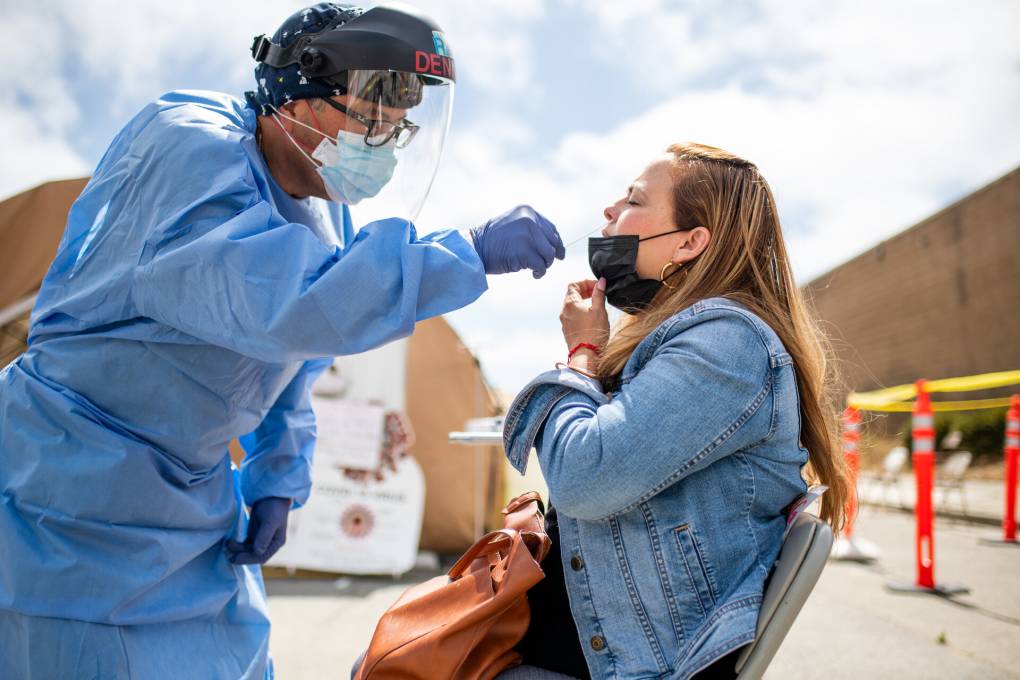
Here's Where COVID Rates and Hospitalizations Stand in California
Bay Area Health Officials Urge Residents to Mask Up Indoors (Again) as COVID Cases Rise
The Great Unmasking II
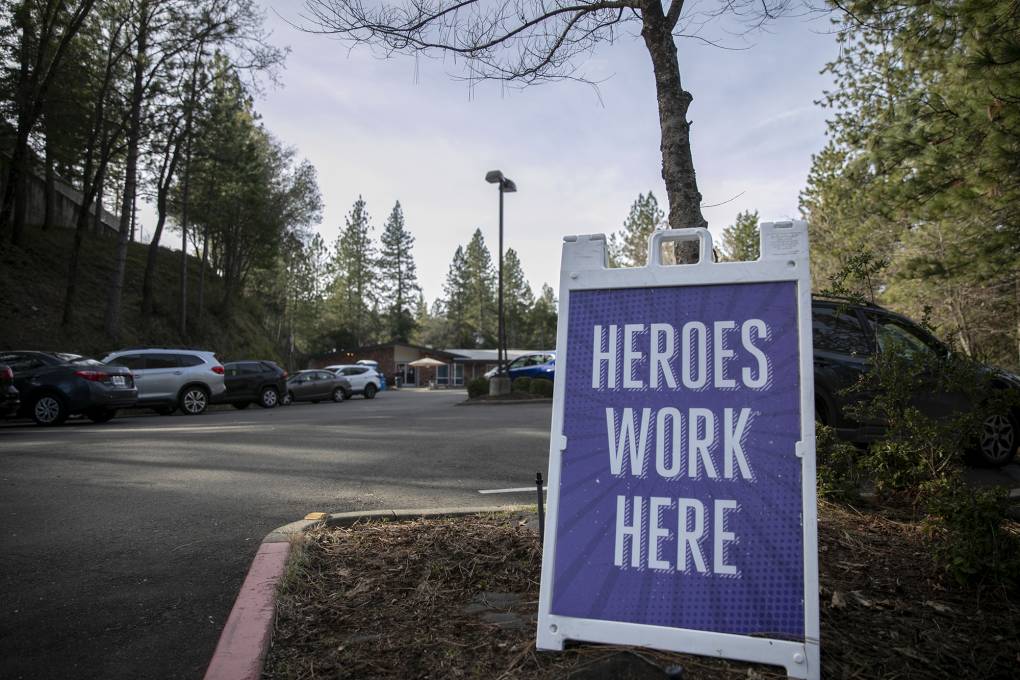
COVID-Positive Employees at Some California Nursing Homes Continue to Work Amid Critical Staffing Shortages
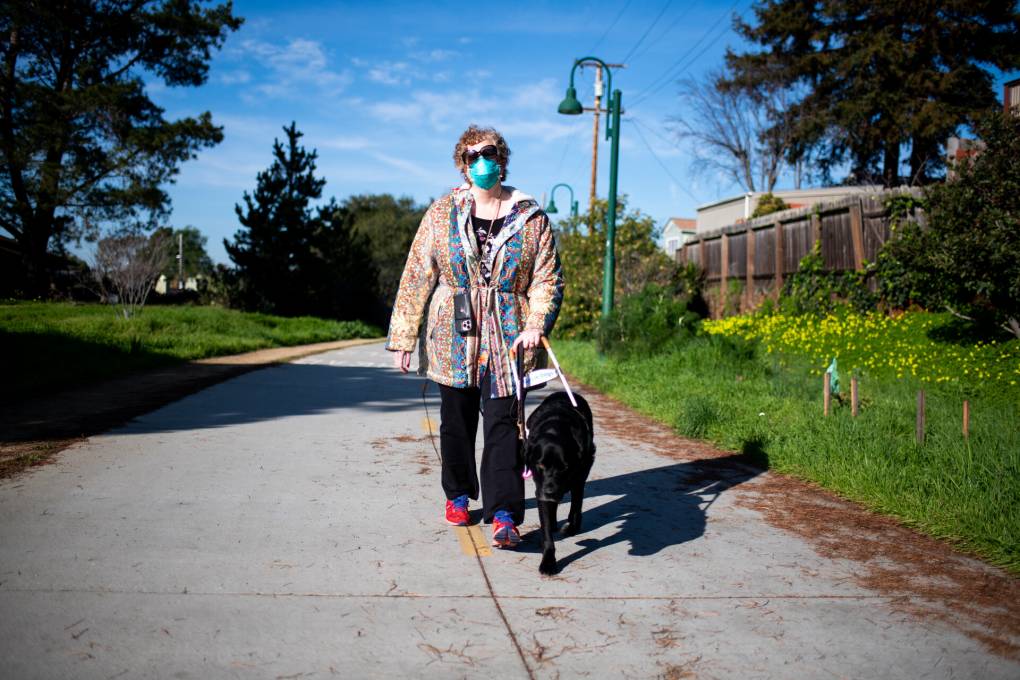
'Risk No Matter Where I Go': For Many Disabled People, a Future of Ever-Present COVID Is Daunting
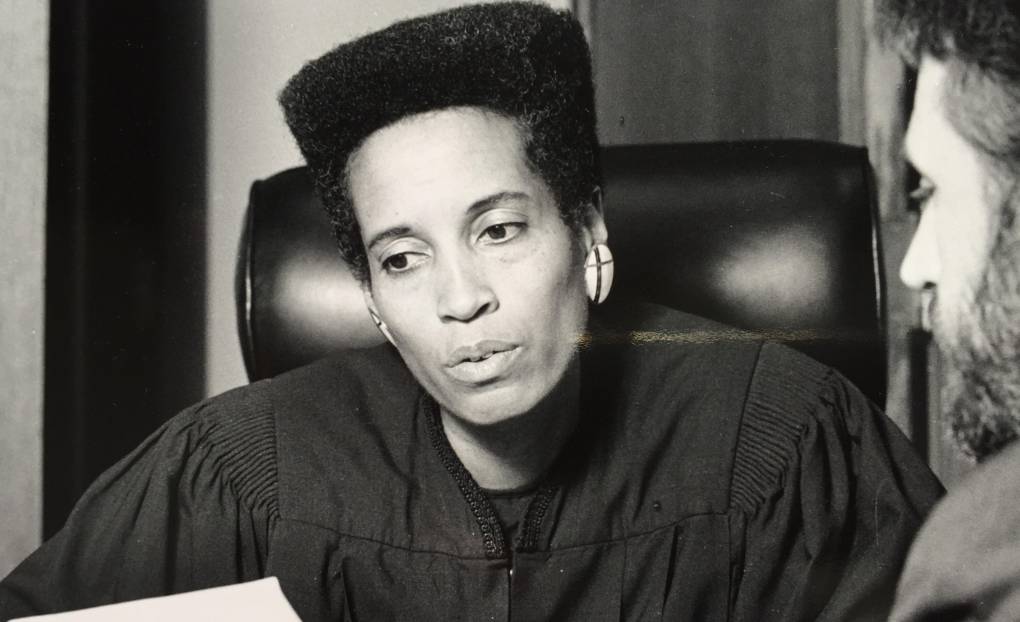
COVID-19 | Judge LaDoris Cordell | This Week in California
COVID-19 | London Breed | This Week in California Politics
Will COVID Sick Leave Return to California?
Sponsored
Player sponsored by
window.__IS_SSR__=true
window.__INITIAL_STATE__={
"attachmentsReducer": {
"audio_0": {
"type": "attachments",
"id": "audio_0",
"imgSizes": {
"kqedFullSize": {
"file": "https://ww2.kqed.org/news/wp-content/themes/KQED-unified/img/audio_bgs/background0.jpg"
}
}
},
"audio_1": {
"type": "attachments",
"id": "audio_1",
"imgSizes": {
"kqedFullSize": {
"file": "https://ww2.kqed.org/news/wp-content/themes/KQED-unified/img/audio_bgs/background1.jpg"
}
}
},
"audio_2": {
"type": "attachments",
"id": "audio_2",
"imgSizes": {
"kqedFullSize": {
"file": "https://ww2.kqed.org/news/wp-content/themes/KQED-unified/img/audio_bgs/background2.jpg"
}
}
},
"audio_3": {
"type": "attachments",
"id": "audio_3",
"imgSizes": {
"kqedFullSize": {
"file": "https://ww2.kqed.org/news/wp-content/themes/KQED-unified/img/audio_bgs/background3.jpg"
}
}
},
"audio_4": {
"type": "attachments",
"id": "audio_4",
"imgSizes": {
"kqedFullSize": {
"file": "https://ww2.kqed.org/news/wp-content/themes/KQED-unified/img/audio_bgs/background4.jpg"
}
}
},
"placeholder": {
"type": "attachments",
"id": "placeholder",
"imgSizes": {
"thumbnail": {
"file": "https://cdn.kqed.org/wp-content/uploads/2024/12/KQED-Default-Image-816638274-2000x1333-1-160x107.jpg",
"width": 160,
"height": 107,
"mimeType": "image/jpeg"
},
"medium": {
"file": "https://cdn.kqed.org/wp-content/uploads/2024/12/KQED-Default-Image-816638274-2000x1333-1-800x533.jpg",
"width": 800,
"height": 533,
"mimeType": "image/jpeg"
},
"medium_large": {
"file": "https://cdn.kqed.org/wp-content/uploads/2024/12/KQED-Default-Image-816638274-2000x1333-1-768x512.jpg",
"width": 768,
"height": 512,
"mimeType": "image/jpeg"
},
"large": {
"file": "https://cdn.kqed.org/wp-content/uploads/2024/12/KQED-Default-Image-816638274-2000x1333-1-1020x680.jpg",
"width": 1020,
"height": 680,
"mimeType": "image/jpeg"
},
"1536x1536": {
"file": "https://cdn.kqed.org/wp-content/uploads/2024/12/KQED-Default-Image-816638274-2000x1333-1-1536x1024.jpg",
"width": 1536,
"height": 1024,
"mimeType": "image/jpeg"
},
"fd-lrg": {
"file": "https://cdn.kqed.org/wp-content/uploads/2024/12/KQED-Default-Image-816638274-2000x1333-1-1536x1024.jpg",
"width": 1536,
"height": 1024,
"mimeType": "image/jpeg"
},
"fd-med": {
"file": "https://cdn.kqed.org/wp-content/uploads/2024/12/KQED-Default-Image-816638274-2000x1333-1-1020x680.jpg",
"width": 1020,
"height": 680,
"mimeType": "image/jpeg"
},
"fd-sm": {
"file": "https://cdn.kqed.org/wp-content/uploads/2024/12/KQED-Default-Image-816638274-2000x1333-1-800x533.jpg",
"width": 800,
"height": 533,
"mimeType": "image/jpeg"
},
"post-thumbnail": {
"file": "https://cdn.kqed.org/wp-content/uploads/2024/12/KQED-Default-Image-816638274-2000x1333-1-672x372.jpg",
"width": 672,
"height": 372,
"mimeType": "image/jpeg"
},
"twentyfourteen-full-width": {
"file": "https://cdn.kqed.org/wp-content/uploads/2024/12/KQED-Default-Image-816638274-2000x1333-1-1038x576.jpg",
"width": 1038,
"height": 576,
"mimeType": "image/jpeg"
},
"xxsmall": {
"file": "https://cdn.kqed.org/wp-content/uploads/2024/12/KQED-Default-Image-816638274-2000x1333-1-160x107.jpg",
"width": 160,
"height": 107,
"mimeType": "image/jpeg"
},
"xsmall": {
"file": "https://cdn.kqed.org/wp-content/uploads/2024/12/KQED-Default-Image-816638274-2000x1333-1-672x372.jpg",
"width": 672,
"height": 372,
"mimeType": "image/jpeg"
},
"small": {
"file": "https://cdn.kqed.org/wp-content/uploads/2024/12/KQED-Default-Image-816638274-2000x1333-1-672x372.jpg",
"width": 672,
"height": 372,
"mimeType": "image/jpeg"
},
"xlarge": {
"file": "https://cdn.kqed.org/wp-content/uploads/2024/12/KQED-Default-Image-816638274-2000x1333-1-1020x680.jpg",
"width": 1020,
"height": 680,
"mimeType": "image/jpeg"
},
"full-width": {
"file": "https://cdn.kqed.org/wp-content/uploads/2024/12/KQED-Default-Image-816638274-2000x1333-1-1920x1280.jpg",
"width": 1920,
"height": 1280,
"mimeType": "image/jpeg"
},
"guest-author-32": {
"file": "https://cdn.kqed.org/wp-content/uploads/2025/01/KQED-Default-Image-816638274-1333x1333-1-160x160.jpg",
"width": 32,
"height": 32,
"mimeType": "image/jpeg"
},
"guest-author-50": {
"file": "https://cdn.kqed.org/wp-content/uploads/2025/01/KQED-Default-Image-816638274-1333x1333-1-160x160.jpg",
"width": 50,
"height": 50,
"mimeType": "image/jpeg"
},
"guest-author-64": {
"file": "https://cdn.kqed.org/wp-content/uploads/2025/01/KQED-Default-Image-816638274-1333x1333-1-160x160.jpg",
"width": 64,
"height": 64,
"mimeType": "image/jpeg"
},
"guest-author-96": {
"file": "https://cdn.kqed.org/wp-content/uploads/2025/01/KQED-Default-Image-816638274-1333x1333-1-160x160.jpg",
"width": 96,
"height": 96,
"mimeType": "image/jpeg"
},
"guest-author-128": {
"file": "https://cdn.kqed.org/wp-content/uploads/2025/01/KQED-Default-Image-816638274-1333x1333-1-160x160.jpg",
"width": 128,
"height": 128,
"mimeType": "image/jpeg"
},
"detail": {
"file": "https://cdn.kqed.org/wp-content/uploads/2025/01/KQED-Default-Image-816638274-1333x1333-1-160x160.jpg",
"width": 160,
"height": 160,
"mimeType": "image/jpeg"
},
"kqedFullSize": {
"file": "https://cdn.kqed.org/wp-content/uploads/2024/12/KQED-Default-Image-816638274-2000x1333-1.jpg",
"width": 2000,
"height": 1333
}
}
},
"news_11926000": {
"type": "attachments",
"id": "news_11926000",
"meta": {
"index": "attachments_1716263798",
"site": "news",
"id": "11926000",
"found": true
},
"parent": 11925957,
"imgSizes": {
"thumbnail": {
"file": "https://ww2.kqed.org/app/uploads/sites/10/2022/09/GettyImages-1310510237-160x107.jpg",
"width": 160,
"mimeType": "image/jpeg",
"height": 107
},
"post-thumbnail": {
"file": "https://ww2.kqed.org/app/uploads/sites/10/2022/09/GettyImages-1310510237-672x372.jpg",
"width": 672,
"mimeType": "image/jpeg",
"height": 372
},
"kqedFullSize": {
"file": "https://ww2.kqed.org/app/uploads/sites/10/2022/09/GettyImages-1310510237.jpg",
"width": 724,
"height": 483
}
},
"publishDate": 1663353738,
"modified": 1663356488,
"caption": "As vaccination rates reach 80% statewide, and testing for the omicron subvariant proves ineffective, California has lifted vaccine mandates for educational staff.",
"description": "Teacher writing 'vaccine' on the blackboard at the front of a classroom speaking to a masked group of students about the Covid-19 vaccination.",
"title": "Speaking to students about vaccinations",
"credit": "FatCamera/Getty Images",
"status": "inherit",
"altTag": "A teacher writes the word \"vaccine\" on a blackboard as students in the foreground look on in the classroom.",
"fetchFailed": false,
"isLoading": false
},
"news_11933875": {
"type": "attachments",
"id": "news_11933875",
"meta": {
"index": "attachments_1716263798",
"site": "news",
"id": "11933875",
"found": true
},
"parent": 11919089,
"imgSizes": {
"twentyfourteen-full-width": {
"file": "https://ww2.kqed.org/app/uploads/sites/10/2022/07/Screen-Shot-2022-12-02-at-12.17.21-PM-1038x576.png",
"width": 1038,
"mimeType": "image/png",
"height": 576
},
"thumbnail": {
"file": "https://ww2.kqed.org/app/uploads/sites/10/2022/07/Screen-Shot-2022-12-02-at-12.17.21-PM-160x101.png",
"width": 160,
"mimeType": "image/png",
"height": 101
},
"post-thumbnail": {
"file": "https://ww2.kqed.org/app/uploads/sites/10/2022/07/Screen-Shot-2022-12-02-at-12.17.21-PM-672x372.png",
"width": 672,
"mimeType": "image/png",
"height": 372
},
"kqedFullSize": {
"file": "https://ww2.kqed.org/app/uploads/sites/10/2022/07/Screen-Shot-2022-12-02-at-12.17.21-PM.png",
"width": 2096,
"height": 1324
},
"2048x2048": {
"file": "https://ww2.kqed.org/app/uploads/sites/10/2022/07/Screen-Shot-2022-12-02-at-12.17.21-PM-2048x1294.png",
"width": 2048,
"mimeType": "image/png",
"height": 1294
},
"large": {
"file": "https://ww2.kqed.org/app/uploads/sites/10/2022/07/Screen-Shot-2022-12-02-at-12.17.21-PM-1020x644.png",
"width": 1020,
"mimeType": "image/png",
"height": 644
},
"1536x1536": {
"file": "https://ww2.kqed.org/app/uploads/sites/10/2022/07/Screen-Shot-2022-12-02-at-12.17.21-PM-1536x970.png",
"width": 1536,
"mimeType": "image/png",
"height": 970
},
"full-width": {
"file": "https://ww2.kqed.org/app/uploads/sites/10/2022/07/Screen-Shot-2022-12-02-at-12.17.21-PM-1920x1213.png",
"width": 1920,
"mimeType": "image/png",
"height": 1213
},
"medium": {
"file": "https://ww2.kqed.org/app/uploads/sites/10/2022/07/Screen-Shot-2022-12-02-at-12.17.21-PM-800x505.png",
"width": 800,
"mimeType": "image/png",
"height": 505
}
},
"publishDate": 1670012272,
"modified": 1670012308,
"caption": "A static image from an interactive map showing COVID case rates for all nine Bay Area counties.",
"description": null,
"title": "Screen Shot 2022-12-02 at 12.17.21 PM",
"credit": "Matthew Green/KQED",
"status": "inherit",
"altTag": "a multicolored map indicating COVID rates in all 9 Bay Area counties",
"fetchFailed": false,
"isLoading": false
},
"news_11885854": {
"type": "attachments",
"id": "news_11885854",
"meta": {
"index": "attachments_1716263798",
"site": "news",
"id": "11885854",
"found": true
},
"parent": 11818312,
"imgSizes": {
"twentyfourteen-full-width": {
"file": "https://ww2.kqed.org/app/uploads/sites/10/2020/05/RS50676_007_SanFrancisco_COVIDTesting_08172021-qut-1038x576.jpg",
"width": 1038,
"mimeType": "image/jpeg",
"height": 576
},
"thumbnail": {
"file": "https://ww2.kqed.org/app/uploads/sites/10/2020/05/RS50676_007_SanFrancisco_COVIDTesting_08172021-qut-160x107.jpg",
"width": 160,
"mimeType": "image/jpeg",
"height": 107
},
"post-thumbnail": {
"file": "https://ww2.kqed.org/app/uploads/sites/10/2020/05/RS50676_007_SanFrancisco_COVIDTesting_08172021-qut-672x372.jpg",
"width": 672,
"mimeType": "image/jpeg",
"height": 372
},
"kqedFullSize": {
"file": "https://ww2.kqed.org/app/uploads/sites/10/2020/05/RS50676_007_SanFrancisco_COVIDTesting_08172021-qut.jpg",
"width": 1920,
"height": 1280
},
"large": {
"file": "https://ww2.kqed.org/app/uploads/sites/10/2020/05/RS50676_007_SanFrancisco_COVIDTesting_08172021-qut-1020x680.jpg",
"width": 1020,
"mimeType": "image/jpeg",
"height": 680
},
"1536x1536": {
"file": "https://ww2.kqed.org/app/uploads/sites/10/2020/05/RS50676_007_SanFrancisco_COVIDTesting_08172021-qut-1536x1024.jpg",
"width": 1536,
"mimeType": "image/jpeg",
"height": 1024
},
"medium": {
"file": "https://ww2.kqed.org/app/uploads/sites/10/2020/05/RS50676_007_SanFrancisco_COVIDTesting_08172021-qut-800x533.jpg",
"width": 800,
"mimeType": "image/jpeg",
"height": 533
}
},
"publishDate": 1629501603,
"modified": 1663595045,
"caption": null,
"description": "Dennis Otoshi administers a COVID-19 test outside the Southeast Health Center in San Francisco's Bayview neighborhood on Aug. 17, 2021.",
"title": "RS50676_007_SanFrancisco_COVIDTesting_08172021-qut",
"credit": "Beth LaBerge/KQED",
"status": "inherit",
"altTag": "A seated woman gets a COVID test via swab from a gowned practitioner",
"fetchFailed": false,
"isLoading": false
},
"news_11905129": {
"type": "attachments",
"id": "news_11905129",
"meta": {
"index": "attachments_1716263798",
"site": "news",
"id": "11905129",
"found": true
},
"parent": 11905122,
"imgSizes": {
"twentyfourteen-full-width": {
"file": "https://ww2.kqed.org/app/uploads/sites/10/2022/02/lifted_021422_final-1038x576.png",
"width": 1038,
"mimeType": "image/png",
"height": 576
},
"thumbnail": {
"file": "https://ww2.kqed.org/app/uploads/sites/10/2022/02/lifted_021422_final-160x109.png",
"width": 160,
"mimeType": "image/png",
"height": 109
},
"post-thumbnail": {
"file": "https://ww2.kqed.org/app/uploads/sites/10/2022/02/lifted_021422_final-672x372.png",
"width": 672,
"mimeType": "image/png",
"height": 372
},
"kqedFullSize": {
"file": "https://ww2.kqed.org/app/uploads/sites/10/2022/02/lifted_021422_final.png",
"width": 1920,
"height": 1307
},
"large": {
"file": "https://ww2.kqed.org/app/uploads/sites/10/2022/02/lifted_021422_final-1020x694.png",
"width": 1020,
"mimeType": "image/png",
"height": 694
},
"1536x1536": {
"file": "https://ww2.kqed.org/app/uploads/sites/10/2022/02/lifted_021422_final-1536x1046.png",
"width": 1536,
"mimeType": "image/png",
"height": 1046
},
"medium": {
"file": "https://ww2.kqed.org/app/uploads/sites/10/2022/02/lifted_021422_final-800x545.png",
"width": 800,
"mimeType": "image/png",
"height": 545
}
},
"publishDate": 1644875452,
"modified": 1644875545,
"caption": null,
"description": null,
"title": "lifted_021422_final",
"credit": null,
"status": "inherit",
"altTag": "Cartoon: titled \"mask mandates lifted,\" shows a woman happily saying \"hooray!\" and tossing her mask aside. Frame is captioned, \"June 2021.\" A nearly identical image with a woman tossing her mask aside while still wearing another mask as she says, \"hooray?\" is captioned, \"feb. 2022.\"",
"fetchFailed": false,
"isLoading": false
},
"news_11902545": {
"type": "attachments",
"id": "news_11902545",
"meta": {
"index": "attachments_1716263798",
"site": "news",
"id": "11902545",
"found": true
},
"parent": 11902542,
"imgSizes": {
"twentyfourteen-full-width": {
"file": "https://ww2.kqed.org/app/uploads/sites/10/2022/01/012122-Pines-Placerville-Nursing-Home-MG-CM-07-1038x576.jpeg",
"width": 1038,
"mimeType": "image/jpeg",
"height": 576
},
"thumbnail": {
"file": "https://ww2.kqed.org/app/uploads/sites/10/2022/01/012122-Pines-Placerville-Nursing-Home-MG-CM-07-160x107.jpeg",
"width": 160,
"mimeType": "image/jpeg",
"height": 107
},
"post-thumbnail": {
"file": "https://ww2.kqed.org/app/uploads/sites/10/2022/01/012122-Pines-Placerville-Nursing-Home-MG-CM-07-672x372.jpeg",
"width": 672,
"mimeType": "image/jpeg",
"height": 372
},
"kqedFullSize": {
"file": "https://ww2.kqed.org/app/uploads/sites/10/2022/01/012122-Pines-Placerville-Nursing-Home-MG-CM-07.jpeg",
"width": 2000,
"height": 1333
},
"large": {
"file": "https://ww2.kqed.org/app/uploads/sites/10/2022/01/012122-Pines-Placerville-Nursing-Home-MG-CM-07-1020x680.jpeg",
"width": 1020,
"mimeType": "image/jpeg",
"height": 680
},
"1536x1536": {
"file": "https://ww2.kqed.org/app/uploads/sites/10/2022/01/012122-Pines-Placerville-Nursing-Home-MG-CM-07-1536x1024.jpeg",
"width": 1536,
"mimeType": "image/jpeg",
"height": 1024
},
"full-width": {
"file": "https://ww2.kqed.org/app/uploads/sites/10/2022/01/012122-Pines-Placerville-Nursing-Home-MG-CM-07-1920x1280.jpeg",
"width": 1920,
"mimeType": "image/jpeg",
"height": 1280
},
"medium": {
"file": "https://ww2.kqed.org/app/uploads/sites/10/2022/01/012122-Pines-Placerville-Nursing-Home-MG-CM-07-800x533.jpeg",
"width": 800,
"mimeType": "image/jpeg",
"height": 533
}
},
"publishDate": 1643067575,
"modified": 1643139407,
"caption": "The Pines at Placerville Healthcare Center in Placerville, a nursing and short-term rehabilitation facility, on Jan. 21, 2022. ",
"description": null,
"title": "012122-Pines-Placerville-Nursing-Home-MG-CM-07",
"credit": "Miguel Gutierrez Jr./CalMatters",
"status": "inherit",
"altTag": "A sign in front of a parking lot that says \"HEROES WORK HERE.\"",
"fetchFailed": false,
"isLoading": false
},
"news_11902362": {
"type": "attachments",
"id": "news_11902362",
"meta": {
"index": "attachments_1716263798",
"site": "news",
"id": "11902362",
"found": true
},
"parent": 11902253,
"imgSizes": {
"twentyfourteen-full-width": {
"file": "https://ww2.kqed.org/app/uploads/sites/10/2022/01/RS53238_007_Berkeley_SassyOutwaterWright_01202022-qut-1038x576.jpg",
"width": 1038,
"mimeType": "image/jpeg",
"height": 576
},
"thumbnail": {
"file": "https://ww2.kqed.org/app/uploads/sites/10/2022/01/RS53238_007_Berkeley_SassyOutwaterWright_01202022-qut-160x107.jpg",
"width": 160,
"mimeType": "image/jpeg",
"height": 107
},
"post-thumbnail": {
"file": "https://ww2.kqed.org/app/uploads/sites/10/2022/01/RS53238_007_Berkeley_SassyOutwaterWright_01202022-qut-672x372.jpg",
"width": 672,
"mimeType": "image/jpeg",
"height": 372
},
"kqedFullSize": {
"file": "https://ww2.kqed.org/app/uploads/sites/10/2022/01/RS53238_007_Berkeley_SassyOutwaterWright_01202022-qut.jpg",
"width": 1920,
"height": 1280
},
"large": {
"file": "https://ww2.kqed.org/app/uploads/sites/10/2022/01/RS53238_007_Berkeley_SassyOutwaterWright_01202022-qut-1020x680.jpg",
"width": 1020,
"mimeType": "image/jpeg",
"height": 680
},
"1536x1536": {
"file": "https://ww2.kqed.org/app/uploads/sites/10/2022/01/RS53238_007_Berkeley_SassyOutwaterWright_01202022-qut-1536x1024.jpg",
"width": 1536,
"mimeType": "image/jpeg",
"height": 1024
},
"medium": {
"file": "https://ww2.kqed.org/app/uploads/sites/10/2022/01/RS53238_007_Berkeley_SassyOutwaterWright_01202022-qut-800x533.jpg",
"width": 800,
"mimeType": "image/jpeg",
"height": 533
}
},
"publishDate": 1642802854,
"modified": 1671477629,
"caption": "Sassy Outwater-Wright walks through her Berkeley neighborhood with her guide dog, Ferdinand, on Jan. 20, 2022.",
"description": null,
"title": "RS53238_007_Berkeley_SassyOutwaterWright_01202022-qut",
"credit": "Beth LaBerge/KQED",
"status": "inherit",
"altTag": "A black guide dog leads a woman with a face mask down a sidewalk.",
"fetchFailed": false,
"isLoading": false
},
"news_11902354": {
"type": "attachments",
"id": "news_11902354",
"meta": {
"index": "attachments_1716263798",
"site": "news",
"id": "11902354",
"found": true
},
"parent": 11902321,
"imgSizes": {
"twentyfourteen-full-width": {
"file": "https://ww2.kqed.org/app/uploads/sites/10/2022/01/On-the-bench_Early-1990s_Credit-to-LaDoris-Cordell-1038x576.jpg",
"width": 1038,
"mimeType": "image/jpeg",
"height": 576
},
"thumbnail": {
"file": "https://ww2.kqed.org/app/uploads/sites/10/2022/01/On-the-bench_Early-1990s_Credit-to-LaDoris-Cordell-160x98.jpg",
"width": 160,
"mimeType": "image/jpeg",
"height": 98
},
"post-thumbnail": {
"file": "https://ww2.kqed.org/app/uploads/sites/10/2022/01/On-the-bench_Early-1990s_Credit-to-LaDoris-Cordell-672x372.jpg",
"width": 672,
"mimeType": "image/jpeg",
"height": 372
},
"kqedFullSize": {
"file": "https://ww2.kqed.org/app/uploads/sites/10/2022/01/On-the-bench_Early-1990s_Credit-to-LaDoris-Cordell-scaled.jpg",
"width": 2560,
"height": 1560
},
"2048x2048": {
"file": "https://ww2.kqed.org/app/uploads/sites/10/2022/01/On-the-bench_Early-1990s_Credit-to-LaDoris-Cordell-2048x1248.jpg",
"width": 2048,
"mimeType": "image/jpeg",
"height": 1248
},
"large": {
"file": "https://ww2.kqed.org/app/uploads/sites/10/2022/01/On-the-bench_Early-1990s_Credit-to-LaDoris-Cordell-1020x622.jpg",
"width": 1020,
"mimeType": "image/jpeg",
"height": 622
},
"1536x1536": {
"file": "https://ww2.kqed.org/app/uploads/sites/10/2022/01/On-the-bench_Early-1990s_Credit-to-LaDoris-Cordell-1536x936.jpg",
"width": 1536,
"mimeType": "image/jpeg",
"height": 936
},
"full-width": {
"file": "https://ww2.kqed.org/app/uploads/sites/10/2022/01/On-the-bench_Early-1990s_Credit-to-LaDoris-Cordell-1920x1170.jpg",
"width": 1920,
"mimeType": "image/jpeg",
"height": 1170
},
"medium": {
"file": "https://ww2.kqed.org/app/uploads/sites/10/2022/01/On-the-bench_Early-1990s_Credit-to-LaDoris-Cordell-800x488.jpg",
"width": 800,
"mimeType": "image/jpeg",
"height": 488
}
},
"publishDate": 1642800741,
"modified": 1642800741,
"caption": null,
"description": null,
"title": "On the bench_Early 1990s_Credit to LaDoris Cordell",
"credit": null,
"status": "inherit",
"altTag": null,
"fetchFailed": false,
"isLoading": false
},
"news_11901765": {
"type": "attachments",
"id": "news_11901765",
"meta": {
"index": "attachments_1716263798",
"site": "news",
"id": "11901765",
"found": true
},
"parent": 11901749,
"imgSizes": {
"twentyfourteen-full-width": {
"file": "https://ww2.kqed.org/app/uploads/sites/10/2022/01/RS31770_sfmayor0712.0003-qut-1038x576.jpg",
"width": 1038,
"mimeType": "image/jpeg",
"height": 576
},
"thumbnail": {
"file": "https://ww2.kqed.org/app/uploads/sites/10/2022/01/RS31770_sfmayor0712.0003-qut-160x107.jpg",
"width": 160,
"mimeType": "image/jpeg",
"height": 107
},
"post-thumbnail": {
"file": "https://ww2.kqed.org/app/uploads/sites/10/2022/01/RS31770_sfmayor0712.0003-qut-672x372.jpg",
"width": 672,
"mimeType": "image/jpeg",
"height": 372
},
"kqedFullSize": {
"file": "https://ww2.kqed.org/app/uploads/sites/10/2022/01/RS31770_sfmayor0712.0003-qut.jpg",
"width": 1920,
"height": 1281
},
"large": {
"file": "https://ww2.kqed.org/app/uploads/sites/10/2022/01/RS31770_sfmayor0712.0003-qut-1020x681.jpg",
"width": 1020,
"mimeType": "image/jpeg",
"height": 681
},
"1536x1536": {
"file": "https://ww2.kqed.org/app/uploads/sites/10/2022/01/RS31770_sfmayor0712.0003-qut-1536x1025.jpg",
"width": 1536,
"mimeType": "image/jpeg",
"height": 1025
},
"medium": {
"file": "https://ww2.kqed.org/app/uploads/sites/10/2022/01/RS31770_sfmayor0712.0003-qut-800x534.jpg",
"width": 800,
"mimeType": "image/jpeg",
"height": 534
}
},
"publishDate": 1642200111,
"modified": 1642200111,
"caption": "San Francisco Mayor London Breed waits to walk out of City Hall for her inauguration in San Francisco, Calif. on Wednesday, July 11, 2018.",
"description": null,
"title": "SFMayor0712",
"credit": null,
"status": "inherit",
"altTag": null,
"fetchFailed": false,
"isLoading": false
},
"news_11876644": {
"type": "attachments",
"id": "news_11876644",
"meta": {
"index": "attachments_1716263798",
"site": "news",
"id": "11876644",
"found": true
},
"parent": 0,
"imgSizes": {
"twentyfourteen-full-width": {
"file": "https://ww2.kqed.org/app/uploads/sites/10/2021/06/GettyImages-1319836267-1-1024x576.jpg",
"width": 1024,
"mimeType": "image/jpeg",
"height": 576
},
"thumbnail": {
"file": "https://ww2.kqed.org/app/uploads/sites/10/2021/06/GettyImages-1319836267-1-160x110.jpg",
"width": 160,
"mimeType": "image/jpeg",
"height": 110
},
"post-thumbnail": {
"file": "https://ww2.kqed.org/app/uploads/sites/10/2021/06/GettyImages-1319836267-1-672x372.jpg",
"width": 672,
"mimeType": "image/jpeg",
"height": 372
},
"kqedFullSize": {
"file": "https://ww2.kqed.org/app/uploads/sites/10/2021/06/GettyImages-1319836267-1.jpg",
"width": 1024,
"height": 703
},
"large": {
"file": "https://ww2.kqed.org/app/uploads/sites/10/2021/06/GettyImages-1319836267-1-1020x700.jpg",
"width": 1020,
"mimeType": "image/jpeg",
"height": 700
},
"medium": {
"file": "https://ww2.kqed.org/app/uploads/sites/10/2021/06/GettyImages-1319836267-1-800x549.jpg",
"width": 800,
"mimeType": "image/jpeg",
"height": 549
}
},
"publishDate": 1622767976,
"modified": 1642105185,
"caption": "A butcher stocks a display case with packages of steaks at a Costco store in Novato on May 24, 2021.",
"description": null,
"title": "Inflation Increases As Grocery Shoppers Pay More For Meat",
"credit": "Justin Sullivan/Getty Images",
"status": "inherit",
"altTag": "A man in a white coat stocking containers of meat in a market.",
"fetchFailed": false,
"isLoading": false
}
},
"audioPlayerReducer": {
"postId": "stream_live",
"isPaused": true,
"isPlaying": false,
"pfsActive": false,
"pledgeModalIsOpen": true,
"playerDrawerIsOpen": false
},
"authorsReducer": {
"byline_news_11925957": {
"type": "authors",
"id": "byline_news_11925957",
"meta": {
"override": true
},
"slug": "byline_news_11925957",
"name": "\u003ca href=\"https://edsource.org/author/dlambert\">Diana Lambert\u003c/a>",
"isLoading": false
},
"byline_news_11902542": {
"type": "authors",
"id": "byline_news_11902542",
"meta": {
"override": true
},
"slug": "byline_news_11902542",
"name": "\u003ca href=\"https://calmatters.org/author/kristen-hwang/\">Kristen Hwang\u003c/a>",
"isLoading": false
},
"byline_news_11901641": {
"type": "authors",
"id": "byline_news_11901641",
"meta": {
"override": true
},
"slug": "byline_news_11901641",
"name": "\u003ca href=\"https://calmatters.org/author/sameea-kamal/\">Sameea Kamal\u003c/a>",
"isLoading": false
},
"kqed": {
"type": "authors",
"id": "236",
"meta": {
"index": "authors_1716337520",
"id": "236",
"found": true
},
"name": "KQED News Staff",
"firstName": "KQED News Staff",
"lastName": null,
"slug": "kqed",
"email": "faq@kqed.org",
"display_author_email": false,
"staff_mastheads": [],
"title": null,
"bio": null,
"avatar": "https://secure.gravatar.com/avatar/ef0e801a68c4c54afa9180db14084167?s=600&d=blank&r=g",
"twitter": null,
"facebook": null,
"instagram": null,
"linkedin": null,
"sites": [
{
"site": "arts",
"roles": [
"contributor"
]
},
{
"site": "news",
"roles": [
"editor"
]
},
{
"site": "futureofyou",
"roles": [
"author"
]
}
],
"headData": {
"title": "KQED News Staff | KQED",
"description": null,
"ogImgSrc": "https://secure.gravatar.com/avatar/ef0e801a68c4c54afa9180db14084167?s=600&d=blank&r=g",
"twImgSrc": "https://secure.gravatar.com/avatar/ef0e801a68c4c54afa9180db14084167?s=600&d=blank&r=g"
},
"isLoading": false,
"link": "/author/kqed"
},
"matthewgreen": {
"type": "authors",
"id": "1263",
"meta": {
"index": "authors_1716337520",
"id": "1263",
"found": true
},
"name": "Matthew Green",
"firstName": "Matthew",
"lastName": "Green",
"slug": "matthewgreen",
"email": "mgreen@kqed.org",
"display_author_email": false,
"staff_mastheads": [],
"title": "KQED Editor/Reporter",
"bio": "Matthew Green is a digital media producer for KQED News. He previously produced \u003ca href=\"http://www.kqed.org/lowdown\">The Lowdown\u003c/a>, KQED’s multimedia news education blog. Matthew's written for numerous Bay Area publications, including the Oakland Tribune and San Francisco Chronicle. He also taught journalism classes at Fremont High School in East Oakland.\r\n\r\nEmail: mgreen@kqed.org; Twitter: @MGreenKQED",
"avatar": "https://secure.gravatar.com/avatar/3bf498d1267ca02c8494f33d8cfc575e?s=600&d=blank&r=g",
"twitter": "MGreenKQED",
"facebook": null,
"instagram": null,
"linkedin": null,
"sites": [
{
"site": "news",
"roles": []
},
{
"site": "lowdown",
"roles": []
},
{
"site": "science",
"roles": []
},
{
"site": "education",
"roles": []
},
{
"site": "quest",
"roles": []
},
{
"site": "liveblog",
"roles": []
}
],
"headData": {
"title": "Matthew Green | KQED",
"description": "KQED Editor/Reporter",
"ogImgSrc": "https://secure.gravatar.com/avatar/3bf498d1267ca02c8494f33d8cfc575e?s=600&d=blank&r=g",
"twImgSrc": "https://secure.gravatar.com/avatar/3bf498d1267ca02c8494f33d8cfc575e?s=600&d=blank&r=g"
},
"isLoading": false,
"link": "/author/matthewgreen"
},
"markfiore": {
"type": "authors",
"id": "3236",
"meta": {
"index": "authors_1716337520",
"id": "3236",
"found": true
},
"name": "Mark Fiore",
"firstName": "Mark",
"lastName": "Fiore",
"slug": "markfiore",
"email": "mark@markfiore.com",
"display_author_email": false,
"staff_mastheads": [
"news"
],
"title": "KQED News Cartoonist",
"bio": "\u003ca href=\"http://www.MarkFiore.com\">MarkFiore.com\u003c/a> | \u003ca href=\"https://twitter.com/markfiore\">Follow on Twitter\u003c/a> | \u003ca href=\"https://www.facebook.com/pages/Mark-Fiore-Animated-Political-Cartoons/94451707396?ref=bookmarks\">Facebook\u003c/a> | \u003ca href=\"mailto:mark@markfiore.com\">email\u003c/a>\r\n\r\nPulitzer Prize-winner, Mark Fiore, who the Wall Street Journal has called “the undisputed guru of the form,” creates animated political cartoons in San Francisco, where his work has been featured regularly on the San Francisco Chronicle’s web site, SFGate.com. His work has appeared on Newsweek.com, Slate.com, CBSNews.com, MotherJones.com, DailyKos.com and NPR’s web site. Fiore’s political animation has appeared on CNN, Frontline, Bill Moyers Journal, Salon.com and cable and broadcast outlets across the globe.\r\n\r\nBeginning his professional life by drawing traditional political cartoons for newspapers, Fiore’s work appeared in publications ranging from the Washington Post to the Los Angeles Times. In the late 1990s, he began to experiment with animating political cartoons and, after a short stint at the San Jose Mercury News as their staff cartoonist, Fiore devoted all his energies to animation.\r\nGrowing up in California, Fiore also spent a good portion of his life in the backwoods of Idaho. It was this combination that shaped him politically. Mark majored in political science at Colorado College, where, in a perfect send-off for a cartoonist, he received his diploma in 1991 as commencement speaker Dick Cheney smiled approvingly.\r\nMark Fiore was awarded the Pulitzer Prize for political cartooning in 2010, a Robert F. Kennedy Journalism Award in 2004 and has twice received an Online Journalism Award for commentary from the Online News Association (2002, 2008). Fiore has received two awards for his work in new media from the National Cartoonists Society (2001, 2002), and in 2006 received The James Madison Freedom of Information Award from The Society of Professional Journalists.",
"avatar": "https://secure.gravatar.com/avatar/fc4e2a612b15b67bad0c6f0e1db4ca9b?s=600&d=blank&r=g",
"twitter": "MarkFiore",
"facebook": null,
"instagram": "https://www.instagram.com/markfiore/?hl=en",
"linkedin": null,
"sites": [
{
"site": "arts",
"roles": [
"contributor"
]
},
{
"site": "news",
"roles": [
"editor"
]
},
{
"site": "futureofyou",
"roles": [
"editor"
]
},
{
"site": "science",
"roles": [
"editor"
]
}
],
"headData": {
"title": "Mark Fiore | KQED",
"description": "KQED News Cartoonist",
"ogImgSrc": "https://secure.gravatar.com/avatar/fc4e2a612b15b67bad0c6f0e1db4ca9b?s=600&d=blank&r=g",
"twImgSrc": "https://secure.gravatar.com/avatar/fc4e2a612b15b67bad0c6f0e1db4ca9b?s=600&d=blank&r=g"
},
"isLoading": false,
"link": "/author/markfiore"
},
"lesleymcclurg": {
"type": "authors",
"id": "11229",
"meta": {
"index": "authors_1716337520",
"id": "11229",
"found": true
},
"name": "Lesley McClurg",
"firstName": "Lesley",
"lastName": "McClurg",
"slug": "lesleymcclurg",
"email": "lmcclurg@KQED.org",
"display_author_email": false,
"staff_mastheads": [
"news",
"science"
],
"title": "KQED Health Correspondent",
"bio": "Lesley McClurg is a health correspondent and fill-in host whose work is regularly rebroadcast on NPR and PBS programs. She’s earned multiple regional Emmy awards, a national and a regional Edward R. Murrow award, and was named Best Beat Reporter by the Association of Health Care Journalists. The Society of Professional Journalists has recognized her work several times, and the Society of Environmental Journalists spotlighted her coverage of California’s historic drought.\r\n\r\nBefore joining KQED in 2016, Lesley covered food and sustainability for Capital Public Radio, environmental issues for Colorado Public Radio, and reported for KUOW and KCTS 9 in Seattle. Away from the newsroom, she loves skiing with her daughter, mountain biking with her partner, and playing with Ollie, the family’s goldendoodle. On deadline, she runs almost entirely on chocolate chips.\r\n\r\n ",
"avatar": "https://secure.gravatar.com/avatar/3fb78e873af3312f34d0bc1d60a07c7f?s=600&d=blank&r=g",
"twitter": "lesleywmcclurg",
"facebook": null,
"instagram": null,
"linkedin": null,
"sites": [
{
"site": "arts",
"roles": [
"author"
]
},
{
"site": "news",
"roles": [
"editor"
]
},
{
"site": "futureofyou",
"roles": [
"editor"
]
},
{
"site": "stateofhealth",
"roles": [
"author"
]
},
{
"site": "science",
"roles": [
"editor"
]
},
{
"site": "quest",
"roles": [
"subscriber"
]
},
{
"site": "forum",
"roles": [
"administrator"
]
},
{
"site": "liveblog",
"roles": [
"author"
]
}
],
"headData": {
"title": "Lesley McClurg | KQED",
"description": "KQED Health Correspondent",
"ogImgSrc": "https://secure.gravatar.com/avatar/3fb78e873af3312f34d0bc1d60a07c7f?s=600&d=blank&r=g",
"twImgSrc": "https://secure.gravatar.com/avatar/3fb78e873af3312f34d0bc1d60a07c7f?s=600&d=blank&r=g"
},
"isLoading": false,
"link": "/author/lesleymcclurg"
}
},
"breakingNewsReducer": {},
"pagesReducer": {},
"postsReducer": {
"stream_live": {
"type": "live",
"id": "stream_live",
"audioUrl": "https://streams.kqed.org/kqedradio",
"title": "Live Stream",
"excerpt": "Live Stream information currently unavailable.",
"link": "/radio",
"featImg": "",
"label": {
"name": "KQED Live",
"link": "/"
}
},
"stream_kqedNewscast": {
"type": "posts",
"id": "stream_kqedNewscast",
"audioUrl": "https://www.kqed.org/.stream/anon/radio/RDnews/newscast.mp3?_=1",
"title": "KQED Newscast",
"featImg": "",
"label": {
"name": "88.5 FM",
"link": "/"
}
},
"news_11925957": {
"type": "posts",
"id": "news_11925957",
"meta": {
"index": "posts_1716263798",
"site": "news",
"id": "11925957",
"score": null,
"sort": [
1663356625000
]
},
"guestAuthors": [],
"slug": "california-lifts-vaccine-mandate-for-school-staff",
"title": "California Lifts Vaccine Mandate for School Staff",
"publishDate": 1663356625,
"format": "standard",
"headTitle": "California Lifts Vaccine Mandate for School Staff | KQED",
"labelTerm": {},
"content": "\u003cp>Teachers and other school staff who have not been vaccinated against COVID-19 will no longer have to be tested weekly to remain on campuses after this week.\u003c/p>\n\u003cp>On Tuesday, State Public Health Officer Dr. Tomás Aragón rescinded a public health order requiring that all school employees show proof of vaccination or be tested at least weekly. The new policy is effective September 17.\u003c/p>\n\u003cp>The decision was made to align state and federal health guidance and because most Californians have been vaccinated against the virus, he said.[aside label='related articles' tag='vaccine']“We’ve entered a phase of the pandemic where the majority of people in these workplace settings are vaccinated, and our youngest Californians are now eligible for vaccination, too, which protects all of our communities against severe illness, hospitalization and death,” Aragón said. “While unvaccinated individuals remain at greatest risk of serious health consequences from COVID-19 infection, weekly testing of unvaccinated groups is no longer slowing the spread as it did earlier in the pandemic due to the more infectious omicron variants.”\u003c/p>\n\u003cp>Currently, 80% of California residents 12 years of age and older have had the first two vaccinations that make up the primary series of vaccines, according to a press release from the health department. Just under half have received their first booster. The department did not say how many California residents have had the second booster.\u003c/p>\n\u003cp>Despite those high vaccination numbers, omicron subvariants have infected vaccinated as well as unvaccinated people, although vaccinated people are less likely to be infected or to become seriously ill.[pullquote size=\"medium\" align=\"right\" citation=\"Dr. Tomás Aragón, California public health officer\"]‘Weekly testing of unvaccinated groups is no longer slowing the spread as it did earlier in the pandemic due to the more infectious omicron variants.’[/pullquote]“Consequently, mandated testing of the small number of unvaccinated workers is not effectively preventing disease transmission as with the original COVID-19 virus and prior variants earlier in the pandemic,” Aragón said.\u003c/p>\n\u003cp>Vaccinations targeting the omicron variant are currently available, and department officials urge California residents to stay up to date on their COVID-19 vaccines to protect themselves and slow the spread of the disease in their communities.\u003c/p>\n\u003cp>Last August, California became \u003ca href=\"https://www.cdph.ca.gov/Programs/CID/DCDC/Pages/COVID-19/Order-of-the-State-Public-Health-Officer-Vaccine-Verification-for-Workers-in-Schools.aspx\">the first state in the nation to require all school staff to be fully vaccinated\u003c/a> for COVID-19 or to be tested weekly, although several individual school districts in the state had already instituted that requirement.\u003c/p>\n\u003cp>The decision to mandate vaccines for school staff was made after conversations with school districts, labor unions and public health officers, according to Gov. Gavin Newsom.\u003c/p>\n\u003cp>“Since the beginning of this pandemic, we’ve relied on science and public health guidance to keep our students and school communities safe,” said Lisa Gardiner, spokesperson for the California Teachers Association, in a statement today. “This moment is no different, as COVID-19 continues to evolve and more students and Californians are now vaccinated. We continue to support local decisions that include the voice and expertise of local educators and families in determining best practices for the safety of school communities.”\u003c/p>\n\u003cp>[ad fullwidth]\u003c/p>\n\u003cp>\u003ca href=\"https://edsource.org/2022/state-lifts-vaccine-mandate-for-school-staff/678020\">\u003cem>This story originally appeared in EdSource.\u003c/em>\u003c/a>\u003c/p>\n\u003cp>\u003c/p>\n",
"blocks": [],
"excerpt": null,
"status": "publish",
"parent": 0,
"modified": 1740699484,
"stats": {
"hasAudio": false,
"hasVideo": false,
"hasChartOrMap": false,
"iframeSrcs": [],
"hasGoogleForm": false,
"hasGallery": false,
"hasHearkenModule": false,
"hasPolis": false,
"paragraphCount": 12,
"wordCount": 551
},
"headData": {
"title": "California Lifts Vaccine Mandate for School Staff | KQED",
"description": "Teachers and other school staff who have not been vaccinated against COVID-19 will no longer have to be tested weekly to remain on campuses after this week. On Tuesday, State Public Health Officer Dr. Tomás Aragón rescinded a public health order requiring that all school employees show proof of vaccination or be tested at least weekly. The new policy is effective September 17. The decision was made to align state and federal health guidance and because most Californians have been vaccinated against the virus, he said.“We’ve entered a phase of the pandemic where the majority of people in these workplace",
"ogTitle": "",
"ogDescription": "",
"ogImgId": "",
"twTitle": "",
"twDescription": "",
"twImgId": "",
"schema": {
"@context": "https://schema.org",
"@type": "NewsArticle",
"headline": "California Lifts Vaccine Mandate for School Staff",
"datePublished": "2022-09-16T12:30:25-07:00",
"dateModified": "2025-02-27T15:38:04-08:00",
"image": "https://cdn.kqed.org/wp-content/uploads/2020/02/KQED-OG-Image@1x.png",
"isAccessibleForFree": "True",
"publisher": {
"@type": "NewsMediaOrganization",
"@id": "https://www.kqed.org/#organization",
"name": "KQED",
"logo": "https://cdn.kqed.org/wp-content/uploads/2020/02/KQED-OG-Image@1x.png",
"url": "https://www.kqed.org",
"sameAs": [
"https://www.facebook.com/KQED",
"https://twitter.com/KQED",
"https://www.instagram.com/kqed/",
"https://www.tiktok.com/@kqedofficial",
"https://www.linkedin.com/company/kqed",
"https://www.youtube.com/channel/UCeC0IOo7i1P_61zVUWbJ4nw"
]
}
}
},
"source": "EdSource",
"sourceUrl": "https://edsource.org/",
"sticky": false,
"nprByline": "\u003ca href=\"https://edsource.org/author/dlambert\">Diana Lambert\u003c/a>",
"excludeFromSiteSearch": "Include",
"showOnAuthorArchivePages": "No",
"path": "/news/11925957/california-lifts-vaccine-mandate-for-school-staff",
"audioTrackLength": null,
"parsedContent": [
{
"type": "contentString",
"content": "\u003cdiv class=\"post-body\">\u003cp>\u003cp>Teachers and other school staff who have not been vaccinated against COVID-19 will no longer have to be tested weekly to remain on campuses after this week.\u003c/p>\n\u003cp>On Tuesday, State Public Health Officer Dr. Tomás Aragón rescinded a public health order requiring that all school employees show proof of vaccination or be tested at least weekly. The new policy is effective September 17.\u003c/p>\n\u003cp>The decision was made to align state and federal health guidance and because most Californians have been vaccinated against the virus, he said.\u003c/p>\u003c/div>",
"attributes": {
"named": {},
"numeric": []
}
},
{
"type": "component",
"content": "",
"name": "aside",
"attributes": {
"named": {
"label": "related articles ",
"tag": "vaccine"
},
"numeric": []
}
},
{
"type": "contentString",
"content": "\u003cdiv class=\"post-body\">\u003cp>“We’ve entered a phase of the pandemic where the majority of people in these workplace settings are vaccinated, and our youngest Californians are now eligible for vaccination, too, which protects all of our communities against severe illness, hospitalization and death,” Aragón said. “While unvaccinated individuals remain at greatest risk of serious health consequences from COVID-19 infection, weekly testing of unvaccinated groups is no longer slowing the spread as it did earlier in the pandemic due to the more infectious omicron variants.”\u003c/p>\n\u003cp>Currently, 80% of California residents 12 years of age and older have had the first two vaccinations that make up the primary series of vaccines, according to a press release from the health department. Just under half have received their first booster. The department did not say how many California residents have had the second booster.\u003c/p>\n\u003cp>Despite those high vaccination numbers, omicron subvariants have infected vaccinated as well as unvaccinated people, although vaccinated people are less likely to be infected or to become seriously ill.\u003c/p>\u003c/div>",
"attributes": {
"named": {},
"numeric": []
}
},
{
"type": "component",
"content": "‘Weekly testing of unvaccinated groups is no longer slowing the spread as it did earlier in the pandemic due to the more infectious omicron variants.’",
"name": "pullquote",
"attributes": {
"named": {
"size": "medium",
"align": "right",
"citation": "Dr. Tomás Aragón, California public health officer",
"label": ""
},
"numeric": []
}
},
{
"type": "contentString",
"content": "\u003cdiv class=\"post-body\">\u003cp>“Consequently, mandated testing of the small number of unvaccinated workers is not effectively preventing disease transmission as with the original COVID-19 virus and prior variants earlier in the pandemic,” Aragón said.\u003c/p>\n\u003cp>Vaccinations targeting the omicron variant are currently available, and department officials urge California residents to stay up to date on their COVID-19 vaccines to protect themselves and slow the spread of the disease in their communities.\u003c/p>\n\u003cp>Last August, California became \u003ca href=\"https://www.cdph.ca.gov/Programs/CID/DCDC/Pages/COVID-19/Order-of-the-State-Public-Health-Officer-Vaccine-Verification-for-Workers-in-Schools.aspx\">the first state in the nation to require all school staff to be fully vaccinated\u003c/a> for COVID-19 or to be tested weekly, although several individual school districts in the state had already instituted that requirement.\u003c/p>\n\u003cp>The decision to mandate vaccines for school staff was made after conversations with school districts, labor unions and public health officers, according to Gov. Gavin Newsom.\u003c/p>\n\u003cp>“Since the beginning of this pandemic, we’ve relied on science and public health guidance to keep our students and school communities safe,” said Lisa Gardiner, spokesperson for the California Teachers Association, in a statement today. “This moment is no different, as COVID-19 continues to evolve and more students and Californians are now vaccinated. We continue to support local decisions that include the voice and expertise of local educators and families in determining best practices for the safety of school communities.”\u003c/p>\n\u003cp>\u003c/p>\u003c/div>",
"attributes": {
"named": {},
"numeric": []
}
},
{
"type": "component",
"content": "",
"name": "ad",
"attributes": {
"named": {
"label": "fullwidth"
},
"numeric": [
"fullwidth"
]
}
},
{
"type": "contentString",
"content": "\u003cdiv class=\"post-body\">\u003cp>\u003c/p>\n\u003cp>\u003ca href=\"https://edsource.org/2022/state-lifts-vaccine-mandate-for-school-staff/678020\">\u003cem>This story originally appeared in EdSource.\u003c/em>\u003c/a>\u003c/p>\n\u003cp>\u003c/p>\n\u003c/div>\u003c/p>",
"attributes": {
"named": {},
"numeric": []
}
}
],
"link": "/news/11925957/california-lifts-vaccine-mandate-for-school-staff",
"authors": [
"byline_news_11925957"
],
"categories": [
"news_18540",
"news_457",
"news_8"
],
"tags": [
"news_27989",
"news_30305",
"news_19960",
"news_2998",
"news_981"
],
"featImg": "news_11926000",
"label": "source_news_11925957"
},
"news_11919089": {
"type": "posts",
"id": "news_11919089",
"meta": {
"index": "posts_1716263798",
"site": "news",
"id": "11919089",
"score": null,
"sort": [
1657838932000
]
},
"guestAuthors": [],
"slug": "with-ba-5-on-the-rise-heres-where-covid-rates-stand-in-your-county",
"title": "Here's Where COVID Rates and Hospitalizations Stand in California",
"publishDate": 1657838932,
"format": "aside",
"headTitle": "Here’s Where COVID Rates and Hospitalizations Stand in California | KQED",
"labelTerm": {
"site": "news"
},
"content": "\u003cp>Explore our updated visualizations showing daily case rates averages over a seven-day period (through May 30), current hospitalizations and cumulative cases and deaths since the pandemic began for every Bay Area county.\u003c/p>\n\u003cp>\u003c!-- iframe plugin v.4.3 wordpress.org/plugins/iframe/ -->\u003cbr>\n\u003ciframe loading=\"lazy\" title=\"California COVID-19 Case Rates\" aria-label=\"Interactive line chart\" id=\"datawrapper-chart-lnfNR3\" src=\"https://datawrapper.dwcdn.net/lnfNR/4/\" scrolling=\"no\" frameborder=\"0\" style=\"border: none;\" width=\"1000\" height=\"672\" class=\"iframe-class\">\u003c/iframe>\u003c/p>\n\u003cp>\u003c!-- iframe plugin v.4.3 wordpress.org/plugins/iframe/ -->\u003cbr>\n\u003ciframe loading=\"lazy\" title=\"Confirmed COVID Cases in California Hospitals and ICUs\" aria-label=\"Interactive line chart\" id=\"datawrapper-chart-yrtI1\" src=\"https://datawrapper.dwcdn.net/yrtI1/10/\" scrolling=\"no\" frameborder=\"0\" style=\"border: none;\" width=\"1000\" height=\"672\" class=\"iframe-class\">\u003c/iframe>\u003c/p>\n\u003cp>[ad fullwidth]\u003c/p>\n\u003cp>\u003c/p>\n",
"blocks": [],
"excerpt": "Explore a series of automatically updated graphics showing case rates and hospitalizations across the Bay Area.",
"status": "publish",
"parent": 0,
"modified": 1726005691,
"stats": {
"hasAudio": false,
"hasVideo": false,
"hasChartOrMap": true,
"iframeSrcs": [
"https://datawrapper.dwcdn.net/lnfNR/4/",
"https://datawrapper.dwcdn.net/yrtI1/10/"
],
"hasGoogleForm": false,
"hasGallery": false,
"hasHearkenModule": false,
"hasPolis": false,
"paragraphCount": 5,
"wordCount": 35
},
"headData": {
"title": "Here's Where COVID Rates and Hospitalizations Stand in California | KQED",
"description": "Explore a series of automatically updated graphics showing case rates and hospitalizations across the Bay Area.",
"ogTitle": "",
"ogDescription": "",
"ogImgId": "",
"twTitle": "",
"twDescription": "",
"twImgId": "",
"schema": {
"@context": "https://schema.org",
"@type": "NewsArticle",
"headline": "Here's Where COVID Rates and Hospitalizations Stand in California",
"datePublished": "2022-07-14T15:48:52-07:00",
"dateModified": "2024-09-10T15:01:31-07:00",
"image": "https://cdn.kqed.org/wp-content/uploads/2020/02/KQED-OG-Image@1x.png",
"isAccessibleForFree": "True",
"publisher": {
"@type": "NewsMediaOrganization",
"@id": "https://www.kqed.org/#organization",
"name": "KQED",
"logo": "https://cdn.kqed.org/wp-content/uploads/2020/02/KQED-OG-Image@1x.png",
"url": "https://www.kqed.org",
"sameAs": [
"https://www.facebook.com/KQED",
"https://twitter.com/KQED",
"https://www.instagram.com/kqed/",
"https://www.tiktok.com/@kqedofficial",
"https://www.linkedin.com/company/kqed",
"https://www.youtube.com/channel/UCeC0IOo7i1P_61zVUWbJ4nw"
]
}
}
},
"sticky": false,
"excludeFromSiteSearch": "Include",
"articleAge": "0",
"path": "/news/11919089/with-ba-5-on-the-rise-heres-where-covid-rates-stand-in-your-county",
"audioTrackLength": null,
"parsedContent": [
{
"type": "contentString",
"content": "\u003cdiv class=\"post-body\">\u003cp>\u003cp>Explore our updated visualizations showing daily case rates averages over a seven-day period (through May 30), current hospitalizations and cumulative cases and deaths since the pandemic began for every Bay Area county.\u003c/p>\n\u003cp>\u003c!-- iframe plugin v.4.3 wordpress.org/plugins/iframe/ -->\u003cbr>\n\u003ciframe loading=\"lazy\" title=\"California COVID-19 Case Rates\" aria-label=\"Interactive line chart\" id=\"datawrapper-chart-lnfNR3\" src=\"https://datawrapper.dwcdn.net/lnfNR/4/\" scrolling=\"no\" frameborder=\"0\" style=\"border: none;\" width=\"1000\" height=\"672\" class=\"iframe-class\">\u003c/iframe>\u003c/p>\n\u003cp>\u003c!-- iframe plugin v.4.3 wordpress.org/plugins/iframe/ -->\u003cbr>\n\u003ciframe loading=\"lazy\" title=\"Confirmed COVID Cases in California Hospitals and ICUs\" aria-label=\"Interactive line chart\" id=\"datawrapper-chart-yrtI1\" src=\"https://datawrapper.dwcdn.net/yrtI1/10/\" scrolling=\"no\" frameborder=\"0\" style=\"border: none;\" width=\"1000\" height=\"672\" class=\"iframe-class\">\u003c/iframe>\u003c/p>\n\u003cp>\u003c/p>\u003c/div>",
"attributes": {
"named": {},
"numeric": []
}
},
{
"type": "component",
"content": "",
"name": "ad",
"attributes": {
"named": {
"label": "fullwidth"
},
"numeric": [
"fullwidth"
]
}
},
{
"type": "contentString",
"content": "\u003cdiv class=\"post-body\">\u003cp>\u003c/p>\n\u003cp>\u003c/p>\n\u003c/div>\u003c/p>",
"attributes": {
"named": {},
"numeric": []
}
}
],
"link": "/news/11919089/with-ba-5-on-the-rise-heres-where-covid-rates-stand-in-your-county",
"authors": [
"1263"
],
"categories": [
"news_457",
"news_8",
"news_356"
],
"tags": [
"news_18538",
"news_27350",
"news_27989",
"news_27504",
"news_18543",
"news_30305"
],
"featImg": "news_11933875",
"label": "news"
},
"news_11914110": {
"type": "posts",
"id": "news_11914110",
"meta": {
"index": "posts_1716263798",
"site": "news",
"id": "11914110",
"score": null,
"sort": [
1652493158000
]
},
"guestAuthors": [],
"slug": "bay-area-health-officials-urge-residents-to-mask-up-again-and-be-vigilant-as-covid-cases-rise",
"title": "Bay Area Health Officials Urge Residents to Mask Up Indoors (Again) as COVID Cases Rise",
"publishDate": 1652493158,
"format": "standard",
"headTitle": "Bay Area Health Officials Urge Residents to Mask Up Indoors (Again) as COVID Cases Rise | KQED",
"labelTerm": {
"site": "news"
},
"content": "\u003cp>It’s déjà vu all over again (and again and again).\u003c/p>\n\u003cp>Public health officials in nearly every Bay Area county — and some neighboring ones — urged residents on Friday to once again mask up in public indoor spaces and take other COVID-19 precautions, as cases and hospitalizations rise across the region.\u003c/p>\n\u003cp>In a rare joint statement, officials in Alameda, Contra Costa, Marin, Monterey, Napa, San Francisco, San Mateo, Santa Clara, Sonoma, Santa Cruz and San Benito counties said the Bay Area is now home to California’s highest infection rates, an unwelcome uptick fueled by the \u003ca href=\"https://khn.org/news/article/omicron-subvariants-guide/\">highly contagious omicron subvariants\u003c/a>.\u003c/p>\n\u003cp>“We’re seeing an increase in cases, and that’s true throughout the region,” Dr. Susan Philip, San Francisco’s health officer, told KQED in an interview Friday. “We’re on the upswing right now. And to me, that’s the trend that we should be thinking about and then making our decisions based on.”\u003c/p>\n\u003cp>Since early April, case rates in almost every county in the region have ticked up faster than the statewide average, officials said, noting that the number of positive cases are likely higher than reported given the prevalence of at-home tests. And COVID-related hospitalizations in the area, while still relatively low, are also rising at a more rapid clip than elsewhere in the state.[aside label=\"related coverage\" tag=\"covid-19\"] Philip emphasized that Friday’s warning is “not meant to scare people.”\u003c/p>\n\u003cp>“Really, what we are trying to do is make people aware that this is happening and then to remind them of all the ways that they can personally take steps to either prevent COVID infections, if that’s their goal, or to know how they can get treatment if they do test positive, if they are higher risk,” she said, adding that it’s not known why there are more infections in this area compared to others.\u003c/p>\n\u003cp>Health officials doubled down on their ongoing recommendation that people wear \u003ca href=\"https://www.kqed.org/news/11900169/choosing-the-right-mask-can-help-protect-against-the-omicron-variant\">high-quality mask\u003c/a>\u003ca href=\"https://www.kqed.org/news/11900169/choosing-the-right-mask-can-help-protect-against-the-omicron-variant\">s\u003c/a> (like N95/KN95s or snug-fitting surgical masks) in public indoor areas — even though doing so is no longer required in most places. They also encouraged residents to stay up to date on vaccinations by getting boosters when eligible, and getting tested after potential exposures.\u003c/p>\n\u003cp>Philip said that despite the troubling increase, officials in San Francisco are “not considering at the moment going back towards mandates,” including the city’s recently lifted mask rule for passengers riding on Muni.\u003c/p>\n\u003cp>“We are at a time now in the pandemic that’s very different than where we’ve been for the past few years because of the high uptake of vaccines — 84% of us now being vaccinated — and also because we have treatments,” she said, pointing to the increasing availability of \u003ca href=\"https://www.sfchronicle.com/bayarea/article/Paxlovid-covid-california-17169744.php\">Paxlovid and other antiviral pills\u003c/a> that can help stave off more serious COVID symptoms. The treatments, she said, will be increasingly accessible online and at community pharmacies for seniors and people with medical conditions who test positive.\u003c/p>\n\u003cp>And while cases and hospitalizations are on the rise, Philip said that unlike in some of the previous surges, the number of people needing treatment in hospital intensive care units remains low. Vaccines and other therapies have so far helped keep people from getting “very, very sick with COVID-19,” she said. “The data are really encouraging.”\u003cbr>\n[ad fullwidth]\u003c/p>\n\u003cp>\u003c/p>\n",
"blocks": [],
"excerpt": "In a rare joint statement, health officials in almost every Bay Area county said the region now has California's highest infection rates, and urged residents to take precautions, including wearing masks in public indoor settings.",
"status": "publish",
"parent": 0,
"modified": 1726005723,
"stats": {
"hasAudio": false,
"hasVideo": false,
"hasChartOrMap": false,
"iframeSrcs": [],
"hasGoogleForm": false,
"hasGallery": false,
"hasHearkenModule": false,
"hasPolis": false,
"paragraphCount": 11,
"wordCount": 592
},
"headData": {
"title": "Bay Area Health Officials Urge Residents to Mask Up Indoors (Again) as COVID Cases Rise | KQED",
"description": "In a rare joint statement, health officials in almost every Bay Area county said the region now has California's highest infection rates, and urged residents to take precautions, including wearing masks in public indoor settings.",
"ogTitle": "",
"ogDescription": "",
"ogImgId": "",
"twTitle": "",
"twDescription": "",
"twImgId": "",
"schema": {
"@context": "https://schema.org",
"@type": "NewsArticle",
"headline": "Bay Area Health Officials Urge Residents to Mask Up Indoors (Again) as COVID Cases Rise",
"datePublished": "2022-05-13T18:52:38-07:00",
"dateModified": "2024-09-10T15:02:03-07:00",
"image": "https://cdn.kqed.org/wp-content/uploads/2020/02/KQED-OG-Image@1x.png",
"isAccessibleForFree": "True",
"publisher": {
"@type": "NewsMediaOrganization",
"@id": "https://www.kqed.org/#organization",
"name": "KQED",
"logo": "https://cdn.kqed.org/wp-content/uploads/2020/02/KQED-OG-Image@1x.png",
"url": "https://www.kqed.org",
"sameAs": [
"https://www.facebook.com/KQED",
"https://twitter.com/KQED",
"https://www.instagram.com/kqed/",
"https://www.tiktok.com/@kqedofficial",
"https://www.linkedin.com/company/kqed",
"https://www.youtube.com/channel/UCeC0IOo7i1P_61zVUWbJ4nw"
]
}
}
},
"sticky": false,
"excludeFromSiteSearch": "Include",
"path": "/news/11914110/bay-area-health-officials-urge-residents-to-mask-up-again-and-be-vigilant-as-covid-cases-rise",
"audioTrackLength": null,
"parsedContent": [
{
"type": "contentString",
"content": "\u003cdiv class=\"post-body\">\u003cp>\u003cp>It’s déjà vu all over again (and again and again).\u003c/p>\n\u003cp>Public health officials in nearly every Bay Area county — and some neighboring ones — urged residents on Friday to once again mask up in public indoor spaces and take other COVID-19 precautions, as cases and hospitalizations rise across the region.\u003c/p>\n\u003cp>In a rare joint statement, officials in Alameda, Contra Costa, Marin, Monterey, Napa, San Francisco, San Mateo, Santa Clara, Sonoma, Santa Cruz and San Benito counties said the Bay Area is now home to California’s highest infection rates, an unwelcome uptick fueled by the \u003ca href=\"https://khn.org/news/article/omicron-subvariants-guide/\">highly contagious omicron subvariants\u003c/a>.\u003c/p>\n\u003cp>“We’re seeing an increase in cases, and that’s true throughout the region,” Dr. Susan Philip, San Francisco’s health officer, told KQED in an interview Friday. “We’re on the upswing right now. And to me, that’s the trend that we should be thinking about and then making our decisions based on.”\u003c/p>\n\u003cp>Since early April, case rates in almost every county in the region have ticked up faster than the statewide average, officials said, noting that the number of positive cases are likely higher than reported given the prevalence of at-home tests. And COVID-related hospitalizations in the area, while still relatively low, are also rising at a more rapid clip than elsewhere in the state.\u003c/p>\u003c/div>",
"attributes": {
"named": {},
"numeric": []
}
},
{
"type": "component",
"content": "",
"name": "aside",
"attributes": {
"named": {
"label": "related coverage ",
"tag": "covid-19"
},
"numeric": []
}
},
{
"type": "contentString",
"content": "\u003cdiv class=\"post-body\">\u003cp> Philip emphasized that Friday’s warning is “not meant to scare people.”\u003c/p>\n\u003cp>“Really, what we are trying to do is make people aware that this is happening and then to remind them of all the ways that they can personally take steps to either prevent COVID infections, if that’s their goal, or to know how they can get treatment if they do test positive, if they are higher risk,” she said, adding that it’s not known why there are more infections in this area compared to others.\u003c/p>\n\u003cp>Health officials doubled down on their ongoing recommendation that people wear \u003ca href=\"https://www.kqed.org/news/11900169/choosing-the-right-mask-can-help-protect-against-the-omicron-variant\">high-quality mask\u003c/a>\u003ca href=\"https://www.kqed.org/news/11900169/choosing-the-right-mask-can-help-protect-against-the-omicron-variant\">s\u003c/a> (like N95/KN95s or snug-fitting surgical masks) in public indoor areas — even though doing so is no longer required in most places. They also encouraged residents to stay up to date on vaccinations by getting boosters when eligible, and getting tested after potential exposures.\u003c/p>\n\u003cp>Philip said that despite the troubling increase, officials in San Francisco are “not considering at the moment going back towards mandates,” including the city’s recently lifted mask rule for passengers riding on Muni.\u003c/p>\n\u003cp>“We are at a time now in the pandemic that’s very different than where we’ve been for the past few years because of the high uptake of vaccines — 84% of us now being vaccinated — and also because we have treatments,” she said, pointing to the increasing availability of \u003ca href=\"https://www.sfchronicle.com/bayarea/article/Paxlovid-covid-california-17169744.php\">Paxlovid and other antiviral pills\u003c/a> that can help stave off more serious COVID symptoms. The treatments, she said, will be increasingly accessible online and at community pharmacies for seniors and people with medical conditions who test positive.\u003c/p>\n\u003cp>And while cases and hospitalizations are on the rise, Philip said that unlike in some of the previous surges, the number of people needing treatment in hospital intensive care units remains low. Vaccines and other therapies have so far helped keep people from getting “very, very sick with COVID-19,” she said. “The data are really encouraging.”\u003cbr>\n\u003c/p>\u003c/div>",
"attributes": {
"named": {},
"numeric": []
}
},
{
"type": "component",
"content": "",
"name": "ad",
"attributes": {
"named": {
"label": "fullwidth"
},
"numeric": [
"fullwidth"
]
}
},
{
"type": "contentString",
"content": "\u003cdiv class=\"post-body\">\u003cp>\u003c/p>\n\u003cp>\u003c/p>\n\u003c/div>\u003c/p>",
"attributes": {
"named": {},
"numeric": []
}
}
],
"link": "/news/11914110/bay-area-health-officials-urge-residents-to-mask-up-again-and-be-vigilant-as-covid-cases-rise",
"authors": [
"1263"
],
"categories": [
"news_457",
"news_8"
],
"tags": [
"news_27350",
"news_27504",
"news_27626",
"news_18543",
"news_29575",
"news_30305"
],
"featImg": "news_11885854",
"label": "news"
},
"news_11905122": {
"type": "posts",
"id": "news_11905122",
"meta": {
"index": "posts_1716263798",
"site": "news",
"id": "11905122",
"score": null,
"sort": [
1644889271000
]
},
"parent": 0,
"labelTerm": {
"site": "news",
"term": 18515
},
"blocks": [],
"publishDate": 1644889271,
"format": "aside",
"disqusTitle": "The Great Unmasking II",
"title": "The Great Unmasking II",
"headTitle": "Mark Fiore: Drawn to the Bay | KQED News",
"content": "\u003cp>\u003ca href=\"https://ww2.kqed.org/app/uploads/sites/10/2022/02/lifted_021422_final.png\">\u003cimg class=\"alignnone size-full wp-image-11905129\" src=\"https://ww2.kqed.org/app/uploads/sites/10/2022/02/lifted_021422_final.png\" alt='Cartoon: titled \"mask mandates lifted,\" shows a woman happily saying \"hooray!\" and tossing her mask aside. Frame is captioned, \"June 2021.\" A nearly identical image with a woman tossing her mask aside while still wearing another mask as she says, \"hooray?\" is captioned, \"feb. 2022.\"' width=\"1920\" height=\"1307\" srcset=\"https://ww2.kqed.org/app/uploads/sites/10/2022/02/lifted_021422_final.png 1920w, https://ww2.kqed.org/app/uploads/sites/10/2022/02/lifted_021422_final-800x545.png 800w, https://ww2.kqed.org/app/uploads/sites/10/2022/02/lifted_021422_final-1020x694.png 1020w, https://ww2.kqed.org/app/uploads/sites/10/2022/02/lifted_021422_final-160x109.png 160w, https://ww2.kqed.org/app/uploads/sites/10/2022/02/lifted_021422_final-1536x1046.png 1536w\" sizes=\"(max-width: 1920px) 100vw, 1920px\">\u003c/a>\u003c/p>\n\u003cp>COVID-19 case counts are down dramatically and California is set to lift the indoor mask mandate on Wednesday for people who are vaccinated — although some may be a little more cautious this time around about ditching masks immediately.\u003c/p>\n\u003cp>After battling first the delta variant and then omicron, The Great Unmasking II feels a little less celebratory \u003ca href=\"https://www.kqed.org/news/11877874/the-reopening-day-weve-all-been-waiting-for\">compared to last June's trumpeted \"grand reopening.\"\u003c/a>\u003c/p>\n\u003cp>If scientists and state health officials say it's OK to forgo face masks in indoor public spaces, I, for one, am going to happily ditch my mask and let the vaccine do its work.\u003c/p>\n\u003cp>I've always thought that not having to wear a face mask is just one of the many, many perks of having a COVID-19 vaccine and booster.\u003c/p>\n\u003cp>But we'd better keep those face masks handy, just in case.\u003c/p>\n\u003cp>[ad fullwidth]\u003c/p>\n\u003cp>\u003c/p>\n",
"disqusIdentifier": "11905122 https://ww2.kqed.org/news/?p=11905122",
"disqusUrl": "https://ww2.kqed.org/news/2022/02/14/the-great-unmasking-ii/",
"stats": {
"hasVideo": false,
"hasChartOrMap": false,
"hasAudio": false,
"hasPolis": false,
"wordCount": 143,
"hasGoogleForm": false,
"hasGallery": false,
"hasHearkenModule": false,
"iframeSrcs": [],
"paragraphCount": 8
},
"modified": 1644952848,
"excerpt": "COVID-19 case counts are down dramatically and California is set to lift the indoor mask mandate for people who are vaccinated — although some may be a little more cautious this time around about ditching masks immediately. ",
"headData": {
"twImgId": "",
"twTitle": "",
"ogTitle": "",
"ogImgId": "",
"twDescription": "",
"description": "COVID-19 case counts are down dramatically and California is set to lift the indoor mask mandate for people who are vaccinated — although some may be a little more cautious this time around about ditching masks immediately. ",
"title": "The Great Unmasking II | KQED",
"ogDescription": "",
"schema": {
"@context": "https://schema.org",
"@type": "NewsArticle",
"headline": "The Great Unmasking II",
"datePublished": "2022-02-14T17:41:11-08:00",
"dateModified": "2022-02-15T11:20:48-08:00",
"image": "https://cdn.kqed.org/wp-content/uploads/2020/02/KQED-OG-Image@1x.png",
"isAccessibleForFree": "True",
"publisher": {
"@type": "NewsMediaOrganization",
"@id": "https://www.kqed.org/#organization",
"name": "KQED",
"logo": "https://cdn.kqed.org/wp-content/uploads/2020/02/KQED-OG-Image@1x.png",
"url": "https://www.kqed.org",
"sameAs": [
"https://www.facebook.com/KQED",
"https://twitter.com/KQED",
"https://www.instagram.com/kqed/",
"https://www.tiktok.com/@kqedofficial",
"https://www.linkedin.com/company/kqed",
"https://www.youtube.com/channel/UCeC0IOo7i1P_61zVUWbJ4nw"
]
}
}
},
"guestAuthors": [],
"slug": "the-great-unmasking-ii",
"status": "publish",
"excludeFromSiteSearch": "Include",
"path": "/news/11905122/the-great-unmasking-ii",
"audioTrackLength": null,
"parsedContent": [
{
"type": "contentString",
"content": "\u003cdiv class=\"post-body\">\u003cp>\u003cp>\u003ca href=\"https://ww2.kqed.org/app/uploads/sites/10/2022/02/lifted_021422_final.png\">\u003cimg class=\"alignnone size-full wp-image-11905129\" src=\"https://ww2.kqed.org/app/uploads/sites/10/2022/02/lifted_021422_final.png\" alt='Cartoon: titled \"mask mandates lifted,\" shows a woman happily saying \"hooray!\" and tossing her mask aside. Frame is captioned, \"June 2021.\" A nearly identical image with a woman tossing her mask aside while still wearing another mask as she says, \"hooray?\" is captioned, \"feb. 2022.\"' width=\"1920\" height=\"1307\" srcset=\"https://ww2.kqed.org/app/uploads/sites/10/2022/02/lifted_021422_final.png 1920w, https://ww2.kqed.org/app/uploads/sites/10/2022/02/lifted_021422_final-800x545.png 800w, https://ww2.kqed.org/app/uploads/sites/10/2022/02/lifted_021422_final-1020x694.png 1020w, https://ww2.kqed.org/app/uploads/sites/10/2022/02/lifted_021422_final-160x109.png 160w, https://ww2.kqed.org/app/uploads/sites/10/2022/02/lifted_021422_final-1536x1046.png 1536w\" sizes=\"(max-width: 1920px) 100vw, 1920px\">\u003c/a>\u003c/p>\n\u003cp>COVID-19 case counts are down dramatically and California is set to lift the indoor mask mandate on Wednesday for people who are vaccinated — although some may be a little more cautious this time around about ditching masks immediately.\u003c/p>\n\u003cp>After battling first the delta variant and then omicron, The Great Unmasking II feels a little less celebratory \u003ca href=\"https://www.kqed.org/news/11877874/the-reopening-day-weve-all-been-waiting-for\">compared to last June's trumpeted \"grand reopening.\"\u003c/a>\u003c/p>\n\u003cp>If scientists and state health officials say it's OK to forgo face masks in indoor public spaces, I, for one, am going to happily ditch my mask and let the vaccine do its work.\u003c/p>\n\u003cp>I've always thought that not having to wear a face mask is just one of the many, many perks of having a COVID-19 vaccine and booster.\u003c/p>\n\u003cp>But we'd better keep those face masks handy, just in case.\u003c/p>\n\u003cp>\u003c/p>\u003c/div>",
"attributes": {
"named": {},
"numeric": []
}
},
{
"type": "component",
"content": "",
"name": "ad",
"attributes": {
"named": {
"label": "fullwidth"
},
"numeric": [
"fullwidth"
]
}
},
{
"type": "contentString",
"content": "\u003cdiv class=\"post-body\">\u003cp>\u003c/p>\n\u003cp>\u003c/p>\n\u003c/div>\u003c/p>",
"attributes": {
"named": {},
"numeric": []
}
}
],
"link": "/news/11905122/the-great-unmasking-ii",
"authors": [
"3236"
],
"series": [
"news_18515"
],
"categories": [
"news_457",
"news_8",
"news_13"
],
"tags": [
"news_27350",
"news_27989",
"news_27504",
"news_29660",
"news_27804",
"news_20949",
"news_29535",
"news_29575",
"news_30305",
"news_30306"
],
"featImg": "news_11905129",
"label": "news_18515"
},
"news_11902542": {
"type": "posts",
"id": "news_11902542",
"meta": {
"index": "posts_1716263798",
"site": "news",
"id": "11902542",
"score": null,
"sort": [
1643119202000
]
},
"parent": 0,
"labelTerm": {},
"blocks": [],
"publishDate": 1643119202,
"format": "standard",
"disqusTitle": "COVID-Positive Employees at Some California Nursing Homes Continue to Work Amid Critical Staffing Shortages",
"title": "COVID-Positive Employees at Some California Nursing Homes Continue to Work Amid Critical Staffing Shortages",
"headTitle": "KQED News",
"content": "\u003cp>Four days after Celine started working as a nursing assistant in the COVID-19 unit at a Placerville nursing home, she tested positive for the virus. She was fatigued and weak and had a dry cough — but she kept working. She said she has worked 13 days in the last two weeks, frequently taking care of more than a dozen patients at a time or working a double shift when asked.\u003c/p>\n\u003cp>“I’d have to sit down at least 10 minutes because I just get tired, and I’m still tired honestly,” said Celine, who works at the Pines at Placerville Healthcare Center, and asked not to be fully identified because she fears losing her job.\u003c/p>\n\u003cp>Severe worker shortages — worsened by the omicron surge — have forced some of California’s long-term care facilities to rely on COVID-positive staff for patient care. \u003ca href=\"https://www.cdph.ca.gov/Programs/CID/DCDC/Pages/COVID-19/SNFsCOVID_19.aspx\">According to state data\u003c/a>, 11,500 long-term care center workers, or roughly 8% of the workforce, are now infected with COVID. That's 48 times as many as were infected at the beginning of December, \u003ca href=\"https://calmatters.org/health/coronavirus/2021/12/first-us-omicron-infection-san-francisco/\">when omicron emerged\u003c/a>, even though 93% of them are fully vaccinated.[pullquote align=\"right\" size=\"medium\" citation=\"Claire Enright, workforce specialist, California Association of Health Facilities\"]'I've been a nurse in long-term care for over 25 years, and there's never been a time where we haven't had a 'help wanted' sign out in some form.'[/pullquote]The California Department of Public Health earlier this month quietly issued controversial \u003ca href=\"https://www.cdph.ca.gov/Programs/CHCQ/LCP/Pages/AFL-21-08.aspx\">emergency guidelines\u003c/a> allowing infected health care employees with no symptoms to continue working. And at facilities with the most severe staffing shortages, symptomatic staff are allowed to work with COVID patients.\u003c/p>\n\u003cp>Since the latest omicron-fueled surge, Celine said she’s actually worked more overtime and cared for more patients than usual, despite having the virus.\u003c/p>\n\u003cp>“There really wasn’t a lot of staff at the beginning to work the COVID unit, so that’s why I continue to work,” she said. “It’s really hard to get staff in the building because a lot of people are afraid. If [workers] did not feel well enough, they didn’t force anybody to work.”\u003c/p>\n\u003cp>[ad fullwidth]\u003c/p>\n\u003cp>So many workers are sick that the company installed a portable toilet in the parking lot for them to use away from the nursing home residents. Water pumped in for handwashing freezes at night, and some colleagues go home or to a nearby McDonald's to use the restroom, she said.\u003c/p>\n\u003cp>The Pines at Placerville did not respond to multiple requests for comment.\u003c/p>\n\u003cp>At the Grant Cuesta Sub-Acute and Rehabilitation Center in Mountain View, a certified nursing assistant, who also did not want to be identified to protect her job, said she was asked to return to work five days after contracting COVID-19. State and federal health guidelines have sanctioned five-day quarantines or shorter at facilities with critical staffing shortages, but her lingering cough and body aches convinced her to refuse.\u003c/p>\n\u003cp>Now, three weeks later, she is back at work, surrounded by colleagues who tell her they too are COVID-19-positive, she said.\u003c/p>\n\u003cp>“It’s been like one co-worker after another, after another, everyone getting sick,” she said.\u003c/p>\n\u003cp>Nine residents also have the virus, and the facility has set up an isolation ward.\u003c/p>\n\u003cp>“No matter how much you protect yourself, we’re still eating in the same dining room,” she said, noting that workers who test positive are required to wear N95 masks. “You know, we’re still sharing the same restroom. So what’s the whole point? It’s almost like they don’t care about us getting sick.”\u003c/p>\n\u003cp>Grant Cuesta also did not respond to multiple requests for comment.\u003c/p>\n\u003cp>California’s \u003ca href=\"https://www.cahf.org/About/Consumer-Help/Facts-and-Statistics\">1,200 residential care and skilled nursing facilities\u003c/a>, home to more than 400,000 people, have been the \u003ca href=\"https://calmatters.org/health/coronavirus/2021/03/when-will-nursing-homes-reopen-to-visitors-state-officials-wont-say/\">epicenter of COVID-19 outbreaks\u003c/a> since the beginning of the pandemic.\u003c/p>\n\u003cp>\u003c!-- iframe plugin v.4.3 wordpress.org/plugins/iframe/ -->\u003cbr>\n\u003ciframe src=\"https://flo.uri.sh/visualisation/8490678/embed#?secret=bun2dGyF2l\" width=\"800\" height=\"500\" scrolling=\"yes\" class=\"iframe-class\" frameborder=\"0\">\u003c/iframe>\u003c/p>\n\u003cp>While vaccination and testing requirements have helped bring those numbers down, the omicron surge is now hampering facilities’ ability to prevent the spread of the virus among residents, who are often elderly and medically vulnerable.\u003c/p>\n\u003cp>“For me, I think this wave was a shocker only because it swept through boosted and vaccinated people,” said Christina Lockyer-White, a certified nursing assistant at Kingston Healthcare Center in Bakersfield.\u003c/p>\n\u003cp>Staff members there are required to wear full protective equipment including face shields, gowns, gloves and N95 masks throughout the facility, but several have tested positive regardless, Lockyer-White said.\u003c/p>\n\u003cp>“We didn’t think we’d be in this position, and here we are,” Lockyer-White said. “It’s like reliving a nightmare.”\u003c/p>\n\u003ch3>'Help wanted': Long-term shortage of workers\u003c/h3>\n\u003cp>Workplace shortages have plagued nursing homes and memory-care and assisted-living centers for years, driven by an aging population, stagnant wages and dwindling training programs.\u003c/p>\n\u003cp>“I’ve been a nurse in long-term care for over 25 years, and there’s never been a time where we haven’t had a ‘help wanted’ sign out in some form,” said Claire Enright, workforce specialist at the California Association of Health Facilities, which represents skilled nursing facilities.\u003c/p>\n\u003cp>“Five to six years ago, there were over 600 training programs for [certified nursing assistants] in the state. We’re down to around 300,” she said.\u003c/p>\n\u003cp>[aside label=\"Related Coverage\" tag=\"nursing-homes\"]Skilled nursing facilities provide 24-hour medical care for sick residents who require constant monitoring or rehabilitation. Other long-term care facilities, such as assisted-living and memory-care centers, as well as some retirement homes, are for residents who need help with some daily activities.\u003c/p>\n\u003cp>Even before the pandemic, most long-term care facilities struggled to hire enough staff, like certified nursing assistants and registered nurses, who often work very demanding jobs for minimal pay. But the last two years have stretched many of these facilities to their breaking points. Nationwide, hundreds of thousands of long-term care workers have left their jobs, more than in any other health care sector, according to the American Health Care Association/National Center for Assisted Living.\u003c/p>\n\u003cp>Staff shortages also are directly affecting capacity at these facilities. Before the pandemic, most nursing homes in California operated at about 88% capacity. Now that’s down to 70% to 75%, Enright said.\u003c/p>\n\u003cp>Enright said the association has heard of some long-term care facilities relying on COVID-19-positive employees during this surge, but she said there’s no way of telling how many of them are actually caring for patients.\u003c/p>\n\u003ch3>\u003cstrong>Staff shortages vs. sick workers\u003c/strong>\u003c/h3>\n\u003cp>Omicron has been a nightmare for families of residents, too.\u003c/p>\n\u003cp>Two weeks ago, Miriam Raftery’s 91-year-old mother, Mary, contracted COVID-19 in her La Mesa memory-care facility. She’s now in an isolation room by herself, and Raftery said she isn’t allowed to visit her.\u003c/p>\n\u003cp>“It is scary. They say dry cough, but who knows. At 91, she’s very frail. It’s frightening,” Raftery said.\u003c/p>\n\u003cfigure id=\"attachment_11902549\" class=\"wp-caption alignright\" style=\"max-width: 400px\">\u003ca href=\"https://ww2.kqed.org/app/uploads/sites/10/2022/01/012122-Nursing-Home-Worker-Shortage-COVID-CM-01-e1643068091709.jpeg\">\u003cimg class=\"size-full wp-image-11902549\" src=\"https://ww2.kqed.org/app/uploads/sites/10/2022/01/012122-Nursing-Home-Worker-Shortage-COVID-CM-01-e1643068091709.jpeg\" alt=\"An elderly with glasses and a purple sweater sits at a table.\" width=\"400\" height=\"533\">\u003c/a>\u003cfigcaption class=\"wp-caption-text\">Miriam Raftery’s 91-year-old mother, Mary, lives in a long-term memory-care facility near San Diego and contracted COVID-19 in mid-January during the height of the omicron surge. \u003ccite>(Courtesy of Miriam Raftery)\u003c/cite>\u003c/figcaption>\u003c/figure>\n\u003cp>What frightens Raftery even more, however, is Mary being left alone in isolation. During last winter’s surge, most long-term care facilities implemented strict lockdown measures.\u003c/p>\n\u003cp>“When she was in that first place, she would just cry. They’d let me have window visits. She couldn’t really hear me very well, but she would just cry and plead with me to take her home. She didn’t understand what was happening,” Raftery said.\u003c/p>\n\u003cp>Now, with her mom confined to an isolation room, Raftery is concerned she will get depressed again or, worse, injure herself.\u003c/p>\n\u003cp>Mary has dementia and is considered a high-fall risk — she forgets that she can’t walk unassisted, Raftery said, who grew so concerned about her falling that she hired a private caregiver to sit with her for eight hours a day.\u003c/p>\n\u003cp>“I felt like I had no choice,” Raftery said. “It’s costing me $5,500 to do this for her, but given her history of serious falls and winding up in hospital multiple times from falling out of bed at these other places, you know, when she was left unattended during the day.”\u003c/p>\n\u003cp>Raftery said Mary already has experienced the consequences of understaffed facilities. She’s been in four homes in the San Diego area since February, moving each time Raftery discovered possible signs of neglect. When Raftery questioned those facilities about why no one was monitoring her mother, she said she was told there wasn’t enough staff to do so.\u003c/p>\n\u003cp>“The facilities she’s been in, they were all losing people because certain people didn’t want to get vaccinated or they were just fed up,” Raftery said.\u003c/p>\n\u003cp>Families and advocates say staffing shortages caused by the omicron wave are a catch-22: Sick workers risk spreading the disease to elderly and vulnerable residents, but understaffing leads to neglect and inadequate care.\u003c/p>\n\u003cp>“I get why [the state health department] has opened the doors to asymptomatic workers, but it’s still highly transmissible, whether we’re asymptomatic or not, whether we’re vaccinated or not, right? So it’s a scary proposition,” said Maitely Weismann, co-founder of the Essential Caregivers Coalition.[pullquote align=\"right\" size=\"medium\" citation=\"Angela Trivonovich, daughter of nursing home resident\"]'If people feel good and they come in positive, I don't know if that's going to spread it any more than it does already. And I think the residents need all the care they can get. They're desperate.'[/pullquote]Weismann’s 79-year-old mother, Celia, lives in a Los Angeles-area assisted-living facility, where there was an outbreak last year — which she narrowly avoided because of an unrelated hospital stay. Now she’s worried her mom will catch COVID this time around.\u003c/p>\n\u003cp>Even though her mother is vaccinated and boosted, Weismann said she hears about people with similar conditions and disabilities dying from the disease.\u003c/p>\n\u003cp>The state health department has come under fire for insufficient oversight of nursing homes, with some families alleging their loved ones died of COVID-19 after sick staff were forced to work.\u003c/p>\n\u003cp>But for some, having reliable, COVID-positive staff available to care for their relatives is better than no one at all.\u003c/p>\n\u003cp>“Personally, if someone’s positive and comes in, I’m OK with that because I would rather my mom have the care that she needs than have her be neglected,” said San Diego resident Angela Trivonovich. “I’ve seen the results of neglect and not a lot of care in a nursing home. I would rather her not get severe diaper rash. I’d rather her not get a bed sore.”\u003c/p>\n\u003cp>Trivonovich said she was just notified that 22 workers have tested positive in the last two weeks at the facility where her 84-year-old mother lives.\u003c/p>\n\u003cp>“If people feel good and they come in positive, I don’t know if that’s going to spread it any more than it does already. And I think the residents need all the care they can get,” she said. “They’re desperate.”\u003c/p>\n\u003cp>[ad floatright]\u003c/p>\n\u003cp>\u003cem>CalMatters reporter Alejandro Lazo contributed to this report.\u003c/em>\u003c/p>\n\n",
"disqusIdentifier": "11902542 https://ww2.kqed.org/news/?p=11902542",
"disqusUrl": "https://ww2.kqed.org/news/2022/01/25/covid-positive-employees-at-some-california-nursing-homes-continue-to-work-amid-critical-staffing-shortages/",
"stats": {
"hasVideo": false,
"hasChartOrMap": true,
"hasAudio": false,
"hasPolis": false,
"wordCount": 1994,
"hasGoogleForm": false,
"hasGallery": false,
"hasHearkenModule": false,
"iframeSrcs": [
"https://flo.uri.sh/visualisation/8490678/embed#"
],
"paragraphCount": 47
},
"modified": 1643217000,
"excerpt": "About 11,500 long-term care center workers in California are now sick with COVID, and a significant number are continuing to work.",
"headData": {
"twImgId": "",
"twTitle": "",
"ogTitle": "",
"ogImgId": "",
"twDescription": "",
"description": "About 11,500 long-term care center workers in California are now sick with COVID, and a significant number are continuing to work.",
"title": "COVID-Positive Employees at Some California Nursing Homes Continue to Work Amid Critical Staffing Shortages | KQED",
"ogDescription": "",
"schema": {
"@context": "https://schema.org",
"@type": "NewsArticle",
"headline": "COVID-Positive Employees at Some California Nursing Homes Continue to Work Amid Critical Staffing Shortages",
"datePublished": "2022-01-25T06:00:02-08:00",
"dateModified": "2022-01-26T09:10:00-08:00",
"image": "https://cdn.kqed.org/wp-content/uploads/2020/02/KQED-OG-Image@1x.png",
"isAccessibleForFree": "True",
"publisher": {
"@type": "NewsMediaOrganization",
"@id": "https://www.kqed.org/#organization",
"name": "KQED",
"logo": "https://cdn.kqed.org/wp-content/uploads/2020/02/KQED-OG-Image@1x.png",
"url": "https://www.kqed.org",
"sameAs": [
"https://www.facebook.com/KQED",
"https://twitter.com/KQED",
"https://www.instagram.com/kqed/",
"https://www.tiktok.com/@kqedofficial",
"https://www.linkedin.com/company/kqed",
"https://www.youtube.com/channel/UCeC0IOo7i1P_61zVUWbJ4nw"
]
}
}
},
"guestAuthors": [],
"slug": "covid-positive-employees-at-some-california-nursing-homes-continue-to-work-amid-critical-staffing-shortages",
"status": "publish",
"sourceUrl": "https://calmatters.org/",
"nprByline": "\u003ca href=\"https://calmatters.org/author/kristen-hwang/\">Kristen Hwang\u003c/a>",
"excludeFromSiteSearch": "Include",
"source": "CalMatters",
"showOnAuthorArchivePages": "No",
"path": "/news/11902542/covid-positive-employees-at-some-california-nursing-homes-continue-to-work-amid-critical-staffing-shortages",
"audioTrackLength": null,
"parsedContent": [
{
"type": "contentString",
"content": "\u003cdiv class=\"post-body\">\u003cp>\u003cp>Four days after Celine started working as a nursing assistant in the COVID-19 unit at a Placerville nursing home, she tested positive for the virus. She was fatigued and weak and had a dry cough — but she kept working. She said she has worked 13 days in the last two weeks, frequently taking care of more than a dozen patients at a time or working a double shift when asked.\u003c/p>\n\u003cp>“I’d have to sit down at least 10 minutes because I just get tired, and I’m still tired honestly,” said Celine, who works at the Pines at Placerville Healthcare Center, and asked not to be fully identified because she fears losing her job.\u003c/p>\n\u003cp>Severe worker shortages — worsened by the omicron surge — have forced some of California’s long-term care facilities to rely on COVID-positive staff for patient care. \u003ca href=\"https://www.cdph.ca.gov/Programs/CID/DCDC/Pages/COVID-19/SNFsCOVID_19.aspx\">According to state data\u003c/a>, 11,500 long-term care center workers, or roughly 8% of the workforce, are now infected with COVID. That's 48 times as many as were infected at the beginning of December, \u003ca href=\"https://calmatters.org/health/coronavirus/2021/12/first-us-omicron-infection-san-francisco/\">when omicron emerged\u003c/a>, even though 93% of them are fully vaccinated.\u003c/p>\u003c/div>",
"attributes": {
"named": {},
"numeric": []
}
},
{
"type": "component",
"content": "'I've been a nurse in long-term care for over 25 years, and there's never been a time where we haven't had a 'help wanted' sign out in some form.'",
"name": "pullquote",
"attributes": {
"named": {
"align": "right",
"size": "medium",
"citation": "Claire Enright, workforce specialist, California Association of Health Facilities",
"label": ""
},
"numeric": []
}
},
{
"type": "contentString",
"content": "\u003cdiv class=\"post-body\">\u003cp>The California Department of Public Health earlier this month quietly issued controversial \u003ca href=\"https://www.cdph.ca.gov/Programs/CHCQ/LCP/Pages/AFL-21-08.aspx\">emergency guidelines\u003c/a> allowing infected health care employees with no symptoms to continue working. And at facilities with the most severe staffing shortages, symptomatic staff are allowed to work with COVID patients.\u003c/p>\n\u003cp>Since the latest omicron-fueled surge, Celine said she’s actually worked more overtime and cared for more patients than usual, despite having the virus.\u003c/p>\n\u003cp>“There really wasn’t a lot of staff at the beginning to work the COVID unit, so that’s why I continue to work,” she said. “It’s really hard to get staff in the building because a lot of people are afraid. If [workers] did not feel well enough, they didn’t force anybody to work.”\u003c/p>\n\u003cp>\u003c/p>\u003c/div>",
"attributes": {
"named": {},
"numeric": []
}
},
{
"type": "component",
"content": "",
"name": "ad",
"attributes": {
"named": {
"label": "fullwidth"
},
"numeric": [
"fullwidth"
]
}
},
{
"type": "contentString",
"content": "\u003cdiv class=\"post-body\">\u003cp>\u003c/p>\n\u003cp>So many workers are sick that the company installed a portable toilet in the parking lot for them to use away from the nursing home residents. Water pumped in for handwashing freezes at night, and some colleagues go home or to a nearby McDonald's to use the restroom, she said.\u003c/p>\n\u003cp>The Pines at Placerville did not respond to multiple requests for comment.\u003c/p>\n\u003cp>At the Grant Cuesta Sub-Acute and Rehabilitation Center in Mountain View, a certified nursing assistant, who also did not want to be identified to protect her job, said she was asked to return to work five days after contracting COVID-19. State and federal health guidelines have sanctioned five-day quarantines or shorter at facilities with critical staffing shortages, but her lingering cough and body aches convinced her to refuse.\u003c/p>\n\u003cp>Now, three weeks later, she is back at work, surrounded by colleagues who tell her they too are COVID-19-positive, she said.\u003c/p>\n\u003cp>“It’s been like one co-worker after another, after another, everyone getting sick,” she said.\u003c/p>\n\u003cp>Nine residents also have the virus, and the facility has set up an isolation ward.\u003c/p>\n\u003cp>“No matter how much you protect yourself, we’re still eating in the same dining room,” she said, noting that workers who test positive are required to wear N95 masks. “You know, we’re still sharing the same restroom. So what’s the whole point? It’s almost like they don’t care about us getting sick.”\u003c/p>\n\u003cp>Grant Cuesta also did not respond to multiple requests for comment.\u003c/p>\n\u003cp>California’s \u003ca href=\"https://www.cahf.org/About/Consumer-Help/Facts-and-Statistics\">1,200 residential care and skilled nursing facilities\u003c/a>, home to more than 400,000 people, have been the \u003ca href=\"https://calmatters.org/health/coronavirus/2021/03/when-will-nursing-homes-reopen-to-visitors-state-officials-wont-say/\">epicenter of COVID-19 outbreaks\u003c/a> since the beginning of the pandemic.\u003c/p>\n\u003cp>\u003c!-- iframe plugin v.4.3 wordpress.org/plugins/iframe/ -->\u003cbr>\n\u003ciframe src=\"https://flo.uri.sh/visualisation/8490678/embed#?secret=bun2dGyF2l\" width=\"800\" height=\"500\" scrolling=\"yes\" class=\"iframe-class\" frameborder=\"0\">\u003c/iframe>\u003c/p>\n\u003cp>While vaccination and testing requirements have helped bring those numbers down, the omicron surge is now hampering facilities’ ability to prevent the spread of the virus among residents, who are often elderly and medically vulnerable.\u003c/p>\n\u003cp>“For me, I think this wave was a shocker only because it swept through boosted and vaccinated people,” said Christina Lockyer-White, a certified nursing assistant at Kingston Healthcare Center in Bakersfield.\u003c/p>\n\u003cp>Staff members there are required to wear full protective equipment including face shields, gowns, gloves and N95 masks throughout the facility, but several have tested positive regardless, Lockyer-White said.\u003c/p>\n\u003cp>“We didn’t think we’d be in this position, and here we are,” Lockyer-White said. “It’s like reliving a nightmare.”\u003c/p>\n\u003ch3>'Help wanted': Long-term shortage of workers\u003c/h3>\n\u003cp>Workplace shortages have plagued nursing homes and memory-care and assisted-living centers for years, driven by an aging population, stagnant wages and dwindling training programs.\u003c/p>\n\u003cp>“I’ve been a nurse in long-term care for over 25 years, and there’s never been a time where we haven’t had a ‘help wanted’ sign out in some form,” said Claire Enright, workforce specialist at the California Association of Health Facilities, which represents skilled nursing facilities.\u003c/p>\n\u003cp>“Five to six years ago, there were over 600 training programs for [certified nursing assistants] in the state. We’re down to around 300,” she said.\u003c/p>\n\u003cp>\u003c/p>\u003c/div>",
"attributes": {
"named": {},
"numeric": []
}
},
{
"type": "component",
"content": "",
"name": "aside",
"attributes": {
"named": {
"label": "Related Coverage ",
"tag": "nursing-homes"
},
"numeric": []
}
},
{
"type": "contentString",
"content": "\u003cdiv class=\"post-body\">\u003cp>Skilled nursing facilities provide 24-hour medical care for sick residents who require constant monitoring or rehabilitation. Other long-term care facilities, such as assisted-living and memory-care centers, as well as some retirement homes, are for residents who need help with some daily activities.\u003c/p>\n\u003cp>Even before the pandemic, most long-term care facilities struggled to hire enough staff, like certified nursing assistants and registered nurses, who often work very demanding jobs for minimal pay. But the last two years have stretched many of these facilities to their breaking points. Nationwide, hundreds of thousands of long-term care workers have left their jobs, more than in any other health care sector, according to the American Health Care Association/National Center for Assisted Living.\u003c/p>\n\u003cp>Staff shortages also are directly affecting capacity at these facilities. Before the pandemic, most nursing homes in California operated at about 88% capacity. Now that’s down to 70% to 75%, Enright said.\u003c/p>\n\u003cp>Enright said the association has heard of some long-term care facilities relying on COVID-19-positive employees during this surge, but she said there’s no way of telling how many of them are actually caring for patients.\u003c/p>\n\u003ch3>\u003cstrong>Staff shortages vs. sick workers\u003c/strong>\u003c/h3>\n\u003cp>Omicron has been a nightmare for families of residents, too.\u003c/p>\n\u003cp>Two weeks ago, Miriam Raftery’s 91-year-old mother, Mary, contracted COVID-19 in her La Mesa memory-care facility. She’s now in an isolation room by herself, and Raftery said she isn’t allowed to visit her.\u003c/p>\n\u003cp>“It is scary. They say dry cough, but who knows. At 91, she’s very frail. It’s frightening,” Raftery said.\u003c/p>\n\u003cfigure id=\"attachment_11902549\" class=\"wp-caption alignright\" style=\"max-width: 400px\">\u003ca href=\"https://ww2.kqed.org/app/uploads/sites/10/2022/01/012122-Nursing-Home-Worker-Shortage-COVID-CM-01-e1643068091709.jpeg\">\u003cimg class=\"size-full wp-image-11902549\" src=\"https://ww2.kqed.org/app/uploads/sites/10/2022/01/012122-Nursing-Home-Worker-Shortage-COVID-CM-01-e1643068091709.jpeg\" alt=\"An elderly with glasses and a purple sweater sits at a table.\" width=\"400\" height=\"533\">\u003c/a>\u003cfigcaption class=\"wp-caption-text\">Miriam Raftery’s 91-year-old mother, Mary, lives in a long-term memory-care facility near San Diego and contracted COVID-19 in mid-January during the height of the omicron surge. \u003ccite>(Courtesy of Miriam Raftery)\u003c/cite>\u003c/figcaption>\u003c/figure>\n\u003cp>What frightens Raftery even more, however, is Mary being left alone in isolation. During last winter’s surge, most long-term care facilities implemented strict lockdown measures.\u003c/p>\n\u003cp>“When she was in that first place, she would just cry. They’d let me have window visits. She couldn’t really hear me very well, but she would just cry and plead with me to take her home. She didn’t understand what was happening,” Raftery said.\u003c/p>\n\u003cp>Now, with her mom confined to an isolation room, Raftery is concerned she will get depressed again or, worse, injure herself.\u003c/p>\n\u003cp>Mary has dementia and is considered a high-fall risk — she forgets that she can’t walk unassisted, Raftery said, who grew so concerned about her falling that she hired a private caregiver to sit with her for eight hours a day.\u003c/p>\n\u003cp>“I felt like I had no choice,” Raftery said. “It’s costing me $5,500 to do this for her, but given her history of serious falls and winding up in hospital multiple times from falling out of bed at these other places, you know, when she was left unattended during the day.”\u003c/p>\n\u003cp>Raftery said Mary already has experienced the consequences of understaffed facilities. She’s been in four homes in the San Diego area since February, moving each time Raftery discovered possible signs of neglect. When Raftery questioned those facilities about why no one was monitoring her mother, she said she was told there wasn’t enough staff to do so.\u003c/p>\n\u003cp>“The facilities she’s been in, they were all losing people because certain people didn’t want to get vaccinated or they were just fed up,” Raftery said.\u003c/p>\n\u003cp>Families and advocates say staffing shortages caused by the omicron wave are a catch-22: Sick workers risk spreading the disease to elderly and vulnerable residents, but understaffing leads to neglect and inadequate care.\u003c/p>\n\u003cp>“I get why [the state health department] has opened the doors to asymptomatic workers, but it’s still highly transmissible, whether we’re asymptomatic or not, whether we’re vaccinated or not, right? So it’s a scary proposition,” said Maitely Weismann, co-founder of the Essential Caregivers Coalition.\u003c/p>\u003c/div>",
"attributes": {
"named": {},
"numeric": []
}
},
{
"type": "component",
"content": "'If people feel good and they come in positive, I don't know if that's going to spread it any more than it does already. And I think the residents need all the care they can get. They're desperate.'",
"name": "pullquote",
"attributes": {
"named": {
"align": "right",
"size": "medium",
"citation": "Angela Trivonovich, daughter of nursing home resident",
"label": ""
},
"numeric": []
}
},
{
"type": "contentString",
"content": "\u003cdiv class=\"post-body\">\u003cp>Weismann’s 79-year-old mother, Celia, lives in a Los Angeles-area assisted-living facility, where there was an outbreak last year — which she narrowly avoided because of an unrelated hospital stay. Now she’s worried her mom will catch COVID this time around.\u003c/p>\n\u003cp>Even though her mother is vaccinated and boosted, Weismann said she hears about people with similar conditions and disabilities dying from the disease.\u003c/p>\n\u003cp>The state health department has come under fire for insufficient oversight of nursing homes, with some families alleging their loved ones died of COVID-19 after sick staff were forced to work.\u003c/p>\n\u003cp>But for some, having reliable, COVID-positive staff available to care for their relatives is better than no one at all.\u003c/p>\n\u003cp>“Personally, if someone’s positive and comes in, I’m OK with that because I would rather my mom have the care that she needs than have her be neglected,” said San Diego resident Angela Trivonovich. “I’ve seen the results of neglect and not a lot of care in a nursing home. I would rather her not get severe diaper rash. I’d rather her not get a bed sore.”\u003c/p>\n\u003cp>Trivonovich said she was just notified that 22 workers have tested positive in the last two weeks at the facility where her 84-year-old mother lives.\u003c/p>\n\u003cp>“If people feel good and they come in positive, I don’t know if that’s going to spread it any more than it does already. And I think the residents need all the care they can get,” she said. “They’re desperate.”\u003c/p>\n\u003cp>\u003c/p>\u003c/div>",
"attributes": {
"named": {},
"numeric": []
}
},
{
"type": "component",
"content": "",
"name": "ad",
"attributes": {
"named": {
"label": "floatright"
},
"numeric": [
"floatright"
]
}
},
{
"type": "contentString",
"content": "\u003cdiv class=\"post-body\">\u003cp>\u003c/p>\n\u003cp>\u003cem>CalMatters reporter Alejandro Lazo contributed to this report.\u003c/em>\u003c/p>\n\n\u003c/div>\u003c/p>",
"attributes": {
"named": {},
"numeric": []
}
}
],
"link": "/news/11902542/covid-positive-employees-at-some-california-nursing-homes-continue-to-work-amid-critical-staffing-shortages",
"authors": [
"byline_news_11902542"
],
"categories": [
"news_457",
"news_8"
],
"tags": [
"news_27350",
"news_27504",
"news_27626",
"news_2813",
"news_30305"
],
"featImg": "news_11902545",
"label": "source_news_11902542"
},
"news_11902253": {
"type": "posts",
"id": "news_11902253",
"meta": {
"index": "posts_1716263798",
"site": "news",
"id": "11902253",
"score": null,
"sort": [
1643032803000
]
},
"parent": 0,
"labelTerm": {
"site": "news"
},
"blocks": [],
"publishDate": 1643032803,
"format": "standard",
"disqusTitle": "'Risk No Matter Where I Go': For Many Disabled People, a Future of Ever-Present COVID Is Daunting",
"title": "'Risk No Matter Where I Go': For Many Disabled People, a Future of Ever-Present COVID Is Daunting",
"headTitle": "KQED News",
"content": "\u003cp>Even before the COVID pandemic hit, Danny and Nikki Miller devoted all the time and energy they could to caring for their two sons, both of whom have a rare genetic disorder called \u003ca href=\"https://www.mepan.org/\">MEPAN syndrome\u003c/a>.\u003c/p>\n\u003cp>Ten-year-old Chase and 11-year-old Carson have alert minds and radiant smiles, but very uncooperative bodies. They can’t sit, stand, talk or walk. The Marin family’s morning routine includes wheelchairs, electric lifts, diaper changes and spoon feeding.[pullquote align=\"right\" size=\"medium\" citation=\"Sassy Outwater-Wright, a Berkeley resident who is immunocompromised\"]'There’s an element of risk no matter where I go. I can't step out into public and not assume that there's somebody unvaccinated nearby.'[/pullquote]The family used to rely heavily on several types of therapists and individual aids — and the boys’ skills were slowly improving. But when COVID hit, all that support went online or stopped entirely. Danny and Nikki struggled to balance their own careers with homeschooling their boys.\u003c/p>\n\u003cp>“We were taxed,” says Danny Miller. “I tried to teach the boys physical therapy while it was being demonstrated over Zoom. We had a lot more responsibility, a lot more on our shoulders. You know, as if we didn't have enough already.”\u003c/p>\n\u003cp>Every new surge of the virus sends the family into chaos, escalating Danny and Nikki’s fears that their boys might contract it. Doctors have warned that their incredibly rare neurological disease (there are fewer than 30 known cases worldwide) puts them at higher risk — and their parents now dread a future riddled with supervariants.\u003c/p>\n\u003cfigure id=\"attachment_11902367\" class=\"wp-caption aligncenter\" style=\"max-width: 1920px\">\u003ca href=\"https://ww2.kqed.org/app/uploads/sites/10/2022/01/Miller-Family-Oct2021-008-scaled-e1642807438637.jpg\">\u003cimg class=\"wp-image-11902367 size-full\" src=\"https://ww2.kqed.org/app/uploads/sites/10/2022/01/Miller-Family-Oct2021-008-scaled-e1642807438637.jpg\" alt=\"A family of four, with two boys in wheelchairs and a mother and father in the middle.\" width=\"1920\" height=\"1280\">\u003c/a>\u003cfigcaption class=\"wp-caption-text\">The Miller family in November 2021. From left: Carson, 11, Danny, Nikki and Chase, 10. \u003ccite>(Courtesy Danny Miller)\u003c/cite>\u003c/figcaption>\u003c/figure>\n\u003cp>“We don't want anything else to potentially compromise their already fragile situation,” Danny says.\u003c/p>\n\u003cp>Even after the omicron surge ends, COVID-19 will still be with us, and learning to live with it will be a challenge for everyone.\u003c/p>\n\u003cp>But that challenge will be especially difficult for the roughly \u003ca href=\"https://jamanetwork.com/journals/jama/fullarticle/2572798\">7 million immunocompromised Americans\u003c/a> who remain especially vulnerable and will have to keep their guard up much higher than the rest of us.\u003c/p>\n\u003cp>Among them is Sassy Outwater-Wright. Her 39-year-old body is also very fragile. Right when COVID hit in the spring of 2020, the Berkeley resident started feeling an agonizing pain in her head and face. Doctors discovered a very aggressive soft-tissue cancer creeping toward her brain. Radiation and chemotherapy treatment wiped out her white blood cells, and therefore her immune system.\u003c/p>\n\u003cp>Leaving the house, let alone taking an Uber to and from the hospital for screenings and checkups, was and still \u003cem>is\u003c/em> terrifying for her. Public transportation is still out of the question.\u003c/p>\n\u003cfigure id=\"attachment_11902363\" class=\"wp-caption aligncenter\" style=\"max-width: 1920px\">\u003ca href=\"https://ww2.kqed.org/app/uploads/sites/10/2022/01/RS53245_015_Berkeley_SassyOutwaterWright_01202022-qut.jpg\">\u003cimg class=\"size-full wp-image-11902363\" src=\"https://ww2.kqed.org/app/uploads/sites/10/2022/01/RS53245_015_Berkeley_SassyOutwaterWright_01202022-qut.jpg\" alt=\"A woman with tattoos and dark glasses sits at a table in a garden.\" width=\"1920\" height=\"1280\" srcset=\"https://ww2.kqed.org/app/uploads/sites/10/2022/01/RS53245_015_Berkeley_SassyOutwaterWright_01202022-qut.jpg 1920w, https://ww2.kqed.org/app/uploads/sites/10/2022/01/RS53245_015_Berkeley_SassyOutwaterWright_01202022-qut-800x533.jpg 800w, https://ww2.kqed.org/app/uploads/sites/10/2022/01/RS53245_015_Berkeley_SassyOutwaterWright_01202022-qut-1020x680.jpg 1020w, https://ww2.kqed.org/app/uploads/sites/10/2022/01/RS53245_015_Berkeley_SassyOutwaterWright_01202022-qut-160x107.jpg 160w, https://ww2.kqed.org/app/uploads/sites/10/2022/01/RS53245_015_Berkeley_SassyOutwaterWright_01202022-qut-1536x1024.jpg 1536w\" sizes=\"(max-width: 1920px) 100vw, 1920px\">\u003c/a>\u003cfigcaption class=\"wp-caption-text\">Sassy Outwater-Wright sits at a picnic table in her backyard in Berkeley on Jan. 20, 2022. \u003ccite>(Beth LaBerge/KQED)\u003c/cite>\u003c/figcaption>\u003c/figure>\n\u003cp>Outwater-Wright has fought cancer her entire life. When she was a baby, a rare cancer attacked her eyes, leaving her blind.\u003c/p>\n\u003cp>“My superhero name is Tumor Killer Girl,” she says. “I just went through my 100th surgery in November.”\u003c/p>\n\u003cp>If Outwater-Wright gets a sniffle, taking a rapid COVID test isn’t an option because she can’t see the results. As a disability advocate, she’s trying to fight for better access to home tests and ensure that vaccine messaging is accessible to people with disabilities. But that’s hard to do over Zoom.\u003c/p>\n\u003cp>“I do not have that face-to-face gravitas of me walking into a room anymore,” she says.\u003c/p>\n\u003cp>Outwater-Wright would also like to sit in a cafe, take a vacation and ditch her N95 mask, which presses into the sensitive scar on her face where her tumor was. But she can’t do any of those things — and that’s unlikely to change for the foreseeable future.\u003c/p>\n\u003cfigure id=\"attachment_11902364\" class=\"wp-caption aligncenter\" style=\"max-width: 1920px\">\u003ca href=\"https://ww2.kqed.org/app/uploads/sites/10/2022/01/RS53249_019_Berkeley_SassyOutwaterWright_01202022-qut.jpg\">\u003cimg class=\"size-full wp-image-11902364\" src=\"https://ww2.kqed.org/app/uploads/sites/10/2022/01/RS53249_019_Berkeley_SassyOutwaterWright_01202022-qut.jpg\" alt=\"A woman stretches, touching the floor with her hands.\" width=\"1920\" height=\"1280\" srcset=\"https://ww2.kqed.org/app/uploads/sites/10/2022/01/RS53249_019_Berkeley_SassyOutwaterWright_01202022-qut.jpg 1920w, https://ww2.kqed.org/app/uploads/sites/10/2022/01/RS53249_019_Berkeley_SassyOutwaterWright_01202022-qut-800x533.jpg 800w, https://ww2.kqed.org/app/uploads/sites/10/2022/01/RS53249_019_Berkeley_SassyOutwaterWright_01202022-qut-1020x680.jpg 1020w, https://ww2.kqed.org/app/uploads/sites/10/2022/01/RS53249_019_Berkeley_SassyOutwaterWright_01202022-qut-160x107.jpg 160w, https://ww2.kqed.org/app/uploads/sites/10/2022/01/RS53249_019_Berkeley_SassyOutwaterWright_01202022-qut-1536x1024.jpg 1536w\" sizes=\"(max-width: 1920px) 100vw, 1920px\">\u003c/a>\u003cfigcaption class=\"wp-caption-text\">Sassy Outwater-Wright participates from home in a remote session with her physical therapist on Jan. 20, 2022. She had to cancel in-person visits to the gym due to the latest COVID-19 surge. \u003ccite>(Beth LaBerge/KQED)\u003c/cite>\u003c/figcaption>\u003c/figure>\n\u003cp>“There’s an element of risk no matter where I go,” she says. “I can't step out into public and not assume that there's somebody unvaccinated nearby.”\u003c/p>\n\u003cp>Alice Wong, a prominent disability rights activist and author, also weighs life or death every time she goes outside. The San Francisco resident has a neuromuscular disability and uses a ventilator to breathe.[aside label=\"RELATED COVERAGE\" tag=\"disability-rights\"]“There is a casual acceptance that the pandemic will turn into something endemic, an inevitability that ‘everyone’ will get COVID eventually,” writes Wong in an email. “Leaders, medical professionals and public health experts have said something along those lines with zero acknowledgement that people will still die and those deaths will be disproportionately from high-risk groups.”\u003c/p>\n\u003cp>Wong is pushing for additional funds to pay for more delivery services to administer boosters, masks and test kits to people who can't leave their homes. She is also advocating for stricter vaccine mandates, extended paid sick leave and free personal protective equipment for home health care workers and employees of long-term care facilities.\u003c/p>\n\u003cp>Wong says it’s hard to see small glimmers of access — like online events, priority shopping hours, curbside pickup and even flexible work schedules — slowly receding. It’s exhausting, she says, defending one’s very existence at a time when being immunocompromised has never been more terrifying.\u003c/p>\n\u003cp>“Their vulnerability is very much dependent on community case rates,” says Bob Wachter, chair of the Department of Medicine at UCSF. “They're probably going to have to modify their behavior based on that level of threat.”\u003c/p>\n\u003cfigure id=\"attachment_11902369\" class=\"wp-caption aligncenter\" style=\"max-width: 2560px\">\u003ca href=\"https://ww2.kqed.org/app/uploads/sites/10/2022/01/Miller-Family-Oct2021-052-scaled.jpg\">\u003cimg class=\"size-full wp-image-11902369\" src=\"https://ww2.kqed.org/app/uploads/sites/10/2022/01/Miller-Family-Oct2021-052-scaled.jpg\" alt=\"Two boys in wheelchairs, smiling and touching hands.\" width=\"2560\" height=\"2169\" srcset=\"https://ww2.kqed.org/app/uploads/sites/10/2022/01/Miller-Family-Oct2021-052-scaled.jpg 2560w, https://ww2.kqed.org/app/uploads/sites/10/2022/01/Miller-Family-Oct2021-052-800x678.jpg 800w, https://ww2.kqed.org/app/uploads/sites/10/2022/01/Miller-Family-Oct2021-052-1020x864.jpg 1020w, https://ww2.kqed.org/app/uploads/sites/10/2022/01/Miller-Family-Oct2021-052-160x136.jpg 160w, https://ww2.kqed.org/app/uploads/sites/10/2022/01/Miller-Family-Oct2021-052-1536x1301.jpg 1536w, https://ww2.kqed.org/app/uploads/sites/10/2022/01/Miller-Family-Oct2021-052-2048x1735.jpg 2048w, https://ww2.kqed.org/app/uploads/sites/10/2022/01/Miller-Family-Oct2021-052-1920x1627.jpg 1920w\" sizes=\"(max-width: 2560px) 100vw, 2560px\">\u003c/a>\u003cfigcaption class=\"wp-caption-text\">Brothers Chase (left), 10, and Carson, 11, in November 2021. \u003ccite>(Courtesy of Danny Miller)\u003c/cite>\u003c/figcaption>\u003c/figure>\n\u003cp>Danny Miller, the father of the two boys with MEPAN syndrome, is frustrated so many people are choosing not to get vaccinated. He says those decisions are threatening his sons' lives, and would like to see politicians and judges take stronger steps to ensure higher vaccine rates.\u003c/p>\n\u003cp>“You have parts of the country where two-thirds of the people are not vaccinated or boosted,” he says. “That means things are going to drag on much longer than they should because we are not all in this together.”[ad fullwidth]\u003c/p>\n\u003cp>\u003c/p>\n",
"disqusIdentifier": "11902253 https://ww2.kqed.org/news/?p=11902253",
"disqusUrl": "https://ww2.kqed.org/news/2022/01/24/risk-no-matter-where-i-go-for-many-disabled-people-a-future-of-ever-present-covid-is-daunting/",
"stats": {
"hasVideo": false,
"hasChartOrMap": false,
"hasAudio": false,
"hasPolis": false,
"wordCount": 1092,
"hasGoogleForm": false,
"hasGallery": false,
"hasHearkenModule": false,
"iframeSrcs": [],
"paragraphCount": 22
},
"modified": 1643058361,
"excerpt": "COVID-19 is likely to remain a threat for the foreseeable future, a particularly frightening prospect for millions of disabled, immunocompromised people. ",
"headData": {
"twImgId": "",
"twTitle": "",
"ogTitle": "",
"ogImgId": "",
"twDescription": "",
"description": "COVID-19 is likely to remain a threat for the foreseeable future, a particularly frightening prospect for millions of disabled, immunocompromised people. ",
"title": "'Risk No Matter Where I Go': For Many Disabled People, a Future of Ever-Present COVID Is Daunting | KQED",
"ogDescription": "",
"schema": {
"@context": "https://schema.org",
"@type": "NewsArticle",
"headline": "'Risk No Matter Where I Go': For Many Disabled People, a Future of Ever-Present COVID Is Daunting",
"datePublished": "2022-01-24T06:00:03-08:00",
"dateModified": "2022-01-24T13:06:01-08:00",
"image": "https://cdn.kqed.org/wp-content/uploads/2020/02/KQED-OG-Image@1x.png",
"isAccessibleForFree": "True",
"publisher": {
"@type": "NewsMediaOrganization",
"@id": "https://www.kqed.org/#organization",
"name": "KQED",
"logo": "https://cdn.kqed.org/wp-content/uploads/2020/02/KQED-OG-Image@1x.png",
"url": "https://www.kqed.org",
"sameAs": [
"https://www.facebook.com/KQED",
"https://twitter.com/KQED",
"https://www.instagram.com/kqed/",
"https://www.tiktok.com/@kqedofficial",
"https://www.linkedin.com/company/kqed",
"https://www.youtube.com/channel/UCeC0IOo7i1P_61zVUWbJ4nw"
]
}
}
},
"guestAuthors": [],
"slug": "risk-no-matter-where-i-go-for-many-disabled-people-a-future-of-ever-present-covid-is-daunting",
"status": "publish",
"audioUrl": "https://traffic.omny.fm/d/clips/0af137ef-751e-4b19-a055-aaef00d2d578/ffca7e9f-6831-4[…]f-aaef00f5a073/fc86fdbe-b168-44cc-b96d-ae2301365466/audio.mp3",
"excludeFromSiteSearch": "Include",
"path": "/news/11902253/risk-no-matter-where-i-go-for-many-disabled-people-a-future-of-ever-present-covid-is-daunting",
"audioTrackLength": null,
"parsedContent": [
{
"type": "contentString",
"content": "\u003cdiv class=\"post-body\">\u003cp>\u003cp>Even before the COVID pandemic hit, Danny and Nikki Miller devoted all the time and energy they could to caring for their two sons, both of whom have a rare genetic disorder called \u003ca href=\"https://www.mepan.org/\">MEPAN syndrome\u003c/a>.\u003c/p>\n\u003cp>Ten-year-old Chase and 11-year-old Carson have alert minds and radiant smiles, but very uncooperative bodies. They can’t sit, stand, talk or walk. The Marin family’s morning routine includes wheelchairs, electric lifts, diaper changes and spoon feeding.\u003c/p>\u003c/div>",
"attributes": {
"named": {},
"numeric": []
}
},
{
"type": "component",
"content": "'There’s an element of risk no matter where I go. I can't step out into public and not assume that there's somebody unvaccinated nearby.'",
"name": "pullquote",
"attributes": {
"named": {
"align": "right",
"size": "medium",
"citation": "Sassy Outwater-Wright, a Berkeley resident who is immunocompromised",
"label": ""
},
"numeric": []
}
},
{
"type": "contentString",
"content": "\u003cdiv class=\"post-body\">\u003cp>The family used to rely heavily on several types of therapists and individual aids — and the boys’ skills were slowly improving. But when COVID hit, all that support went online or stopped entirely. Danny and Nikki struggled to balance their own careers with homeschooling their boys.\u003c/p>\n\u003cp>“We were taxed,” says Danny Miller. “I tried to teach the boys physical therapy while it was being demonstrated over Zoom. We had a lot more responsibility, a lot more on our shoulders. You know, as if we didn't have enough already.”\u003c/p>\n\u003cp>Every new surge of the virus sends the family into chaos, escalating Danny and Nikki’s fears that their boys might contract it. Doctors have warned that their incredibly rare neurological disease (there are fewer than 30 known cases worldwide) puts them at higher risk — and their parents now dread a future riddled with supervariants.\u003c/p>\n\u003cfigure id=\"attachment_11902367\" class=\"wp-caption aligncenter\" style=\"max-width: 1920px\">\u003ca href=\"https://ww2.kqed.org/app/uploads/sites/10/2022/01/Miller-Family-Oct2021-008-scaled-e1642807438637.jpg\">\u003cimg class=\"wp-image-11902367 size-full\" src=\"https://ww2.kqed.org/app/uploads/sites/10/2022/01/Miller-Family-Oct2021-008-scaled-e1642807438637.jpg\" alt=\"A family of four, with two boys in wheelchairs and a mother and father in the middle.\" width=\"1920\" height=\"1280\">\u003c/a>\u003cfigcaption class=\"wp-caption-text\">The Miller family in November 2021. From left: Carson, 11, Danny, Nikki and Chase, 10. \u003ccite>(Courtesy Danny Miller)\u003c/cite>\u003c/figcaption>\u003c/figure>\n\u003cp>“We don't want anything else to potentially compromise their already fragile situation,” Danny says.\u003c/p>\n\u003cp>Even after the omicron surge ends, COVID-19 will still be with us, and learning to live with it will be a challenge for everyone.\u003c/p>\n\u003cp>But that challenge will be especially difficult for the roughly \u003ca href=\"https://jamanetwork.com/journals/jama/fullarticle/2572798\">7 million immunocompromised Americans\u003c/a> who remain especially vulnerable and will have to keep their guard up much higher than the rest of us.\u003c/p>\n\u003cp>Among them is Sassy Outwater-Wright. Her 39-year-old body is also very fragile. Right when COVID hit in the spring of 2020, the Berkeley resident started feeling an agonizing pain in her head and face. Doctors discovered a very aggressive soft-tissue cancer creeping toward her brain. Radiation and chemotherapy treatment wiped out her white blood cells, and therefore her immune system.\u003c/p>\n\u003cp>Leaving the house, let alone taking an Uber to and from the hospital for screenings and checkups, was and still \u003cem>is\u003c/em> terrifying for her. Public transportation is still out of the question.\u003c/p>\n\u003cfigure id=\"attachment_11902363\" class=\"wp-caption aligncenter\" style=\"max-width: 1920px\">\u003ca href=\"https://ww2.kqed.org/app/uploads/sites/10/2022/01/RS53245_015_Berkeley_SassyOutwaterWright_01202022-qut.jpg\">\u003cimg class=\"size-full wp-image-11902363\" src=\"https://ww2.kqed.org/app/uploads/sites/10/2022/01/RS53245_015_Berkeley_SassyOutwaterWright_01202022-qut.jpg\" alt=\"A woman with tattoos and dark glasses sits at a table in a garden.\" width=\"1920\" height=\"1280\" srcset=\"https://ww2.kqed.org/app/uploads/sites/10/2022/01/RS53245_015_Berkeley_SassyOutwaterWright_01202022-qut.jpg 1920w, https://ww2.kqed.org/app/uploads/sites/10/2022/01/RS53245_015_Berkeley_SassyOutwaterWright_01202022-qut-800x533.jpg 800w, https://ww2.kqed.org/app/uploads/sites/10/2022/01/RS53245_015_Berkeley_SassyOutwaterWright_01202022-qut-1020x680.jpg 1020w, https://ww2.kqed.org/app/uploads/sites/10/2022/01/RS53245_015_Berkeley_SassyOutwaterWright_01202022-qut-160x107.jpg 160w, https://ww2.kqed.org/app/uploads/sites/10/2022/01/RS53245_015_Berkeley_SassyOutwaterWright_01202022-qut-1536x1024.jpg 1536w\" sizes=\"(max-width: 1920px) 100vw, 1920px\">\u003c/a>\u003cfigcaption class=\"wp-caption-text\">Sassy Outwater-Wright sits at a picnic table in her backyard in Berkeley on Jan. 20, 2022. \u003ccite>(Beth LaBerge/KQED)\u003c/cite>\u003c/figcaption>\u003c/figure>\n\u003cp>Outwater-Wright has fought cancer her entire life. When she was a baby, a rare cancer attacked her eyes, leaving her blind.\u003c/p>\n\u003cp>“My superhero name is Tumor Killer Girl,” she says. “I just went through my 100th surgery in November.”\u003c/p>\n\u003cp>If Outwater-Wright gets a sniffle, taking a rapid COVID test isn’t an option because she can’t see the results. As a disability advocate, she’s trying to fight for better access to home tests and ensure that vaccine messaging is accessible to people with disabilities. But that’s hard to do over Zoom.\u003c/p>\n\u003cp>“I do not have that face-to-face gravitas of me walking into a room anymore,” she says.\u003c/p>\n\u003cp>Outwater-Wright would also like to sit in a cafe, take a vacation and ditch her N95 mask, which presses into the sensitive scar on her face where her tumor was. But she can’t do any of those things — and that’s unlikely to change for the foreseeable future.\u003c/p>\n\u003cfigure id=\"attachment_11902364\" class=\"wp-caption aligncenter\" style=\"max-width: 1920px\">\u003ca href=\"https://ww2.kqed.org/app/uploads/sites/10/2022/01/RS53249_019_Berkeley_SassyOutwaterWright_01202022-qut.jpg\">\u003cimg class=\"size-full wp-image-11902364\" src=\"https://ww2.kqed.org/app/uploads/sites/10/2022/01/RS53249_019_Berkeley_SassyOutwaterWright_01202022-qut.jpg\" alt=\"A woman stretches, touching the floor with her hands.\" width=\"1920\" height=\"1280\" srcset=\"https://ww2.kqed.org/app/uploads/sites/10/2022/01/RS53249_019_Berkeley_SassyOutwaterWright_01202022-qut.jpg 1920w, https://ww2.kqed.org/app/uploads/sites/10/2022/01/RS53249_019_Berkeley_SassyOutwaterWright_01202022-qut-800x533.jpg 800w, https://ww2.kqed.org/app/uploads/sites/10/2022/01/RS53249_019_Berkeley_SassyOutwaterWright_01202022-qut-1020x680.jpg 1020w, https://ww2.kqed.org/app/uploads/sites/10/2022/01/RS53249_019_Berkeley_SassyOutwaterWright_01202022-qut-160x107.jpg 160w, https://ww2.kqed.org/app/uploads/sites/10/2022/01/RS53249_019_Berkeley_SassyOutwaterWright_01202022-qut-1536x1024.jpg 1536w\" sizes=\"(max-width: 1920px) 100vw, 1920px\">\u003c/a>\u003cfigcaption class=\"wp-caption-text\">Sassy Outwater-Wright participates from home in a remote session with her physical therapist on Jan. 20, 2022. She had to cancel in-person visits to the gym due to the latest COVID-19 surge. \u003ccite>(Beth LaBerge/KQED)\u003c/cite>\u003c/figcaption>\u003c/figure>\n\u003cp>“There’s an element of risk no matter where I go,” she says. “I can't step out into public and not assume that there's somebody unvaccinated nearby.”\u003c/p>\n\u003cp>Alice Wong, a prominent disability rights activist and author, also weighs life or death every time she goes outside. The San Francisco resident has a neuromuscular disability and uses a ventilator to breathe.\u003c/p>\u003c/div>",
"attributes": {
"named": {},
"numeric": []
}
},
{
"type": "component",
"content": "",
"name": "aside",
"attributes": {
"named": {
"label": "RELATED COVERAGE ",
"tag": "disability-rights"
},
"numeric": []
}
},
{
"type": "contentString",
"content": "\u003cdiv class=\"post-body\">\u003cp>“There is a casual acceptance that the pandemic will turn into something endemic, an inevitability that ‘everyone’ will get COVID eventually,” writes Wong in an email. “Leaders, medical professionals and public health experts have said something along those lines with zero acknowledgement that people will still die and those deaths will be disproportionately from high-risk groups.”\u003c/p>\n\u003cp>Wong is pushing for additional funds to pay for more delivery services to administer boosters, masks and test kits to people who can't leave their homes. She is also advocating for stricter vaccine mandates, extended paid sick leave and free personal protective equipment for home health care workers and employees of long-term care facilities.\u003c/p>\n\u003cp>Wong says it’s hard to see small glimmers of access — like online events, priority shopping hours, curbside pickup and even flexible work schedules — slowly receding. It’s exhausting, she says, defending one’s very existence at a time when being immunocompromised has never been more terrifying.\u003c/p>\n\u003cp>“Their vulnerability is very much dependent on community case rates,” says Bob Wachter, chair of the Department of Medicine at UCSF. “They're probably going to have to modify their behavior based on that level of threat.”\u003c/p>\n\u003cfigure id=\"attachment_11902369\" class=\"wp-caption aligncenter\" style=\"max-width: 2560px\">\u003ca href=\"https://ww2.kqed.org/app/uploads/sites/10/2022/01/Miller-Family-Oct2021-052-scaled.jpg\">\u003cimg class=\"size-full wp-image-11902369\" src=\"https://ww2.kqed.org/app/uploads/sites/10/2022/01/Miller-Family-Oct2021-052-scaled.jpg\" alt=\"Two boys in wheelchairs, smiling and touching hands.\" width=\"2560\" height=\"2169\" srcset=\"https://ww2.kqed.org/app/uploads/sites/10/2022/01/Miller-Family-Oct2021-052-scaled.jpg 2560w, https://ww2.kqed.org/app/uploads/sites/10/2022/01/Miller-Family-Oct2021-052-800x678.jpg 800w, https://ww2.kqed.org/app/uploads/sites/10/2022/01/Miller-Family-Oct2021-052-1020x864.jpg 1020w, https://ww2.kqed.org/app/uploads/sites/10/2022/01/Miller-Family-Oct2021-052-160x136.jpg 160w, https://ww2.kqed.org/app/uploads/sites/10/2022/01/Miller-Family-Oct2021-052-1536x1301.jpg 1536w, https://ww2.kqed.org/app/uploads/sites/10/2022/01/Miller-Family-Oct2021-052-2048x1735.jpg 2048w, https://ww2.kqed.org/app/uploads/sites/10/2022/01/Miller-Family-Oct2021-052-1920x1627.jpg 1920w\" sizes=\"(max-width: 2560px) 100vw, 2560px\">\u003c/a>\u003cfigcaption class=\"wp-caption-text\">Brothers Chase (left), 10, and Carson, 11, in November 2021. \u003ccite>(Courtesy of Danny Miller)\u003c/cite>\u003c/figcaption>\u003c/figure>\n\u003cp>Danny Miller, the father of the two boys with MEPAN syndrome, is frustrated so many people are choosing not to get vaccinated. He says those decisions are threatening his sons' lives, and would like to see politicians and judges take stronger steps to ensure higher vaccine rates.\u003c/p>\n\u003cp>“You have parts of the country where two-thirds of the people are not vaccinated or boosted,” he says. “That means things are going to drag on much longer than they should because we are not all in this together.”\u003c/p>\u003c/div>",
"attributes": {
"named": {},
"numeric": []
}
},
{
"type": "component",
"content": "",
"name": "ad",
"attributes": {
"named": {
"label": "fullwidth"
},
"numeric": [
"fullwidth"
]
}
},
{
"type": "contentString",
"content": "\u003cdiv class=\"post-body\">\u003cp>\u003c/p>\n\u003cp>\u003c/p>\n\u003c/div>\u003c/p>",
"attributes": {
"named": {},
"numeric": []
}
}
],
"link": "/news/11902253/risk-no-matter-where-i-go-for-many-disabled-people-a-future-of-ever-present-covid-is-daunting",
"authors": [
"11229"
],
"categories": [
"news_457",
"news_8"
],
"tags": [
"news_28001",
"news_27350",
"news_27504",
"news_25262",
"news_27626",
"news_30305"
],
"featImg": "news_11902362",
"label": "news"
},
"news_11902321": {
"type": "posts",
"id": "news_11902321",
"meta": {
"index": "posts_1716263798",
"site": "news",
"id": "11902321",
"score": null,
"sort": [
1642815158000
]
},
"guestAuthors": [],
"slug": "covid-19-judge-ladoris-cordell-this-week-in-california",
"title": "COVID-19 | Judge LaDoris Cordell | This Week in California",
"publishDate": 1642815158,
"format": "video",
"headTitle": "COVID-19 | Judge LaDoris Cordell | This Week in California | KQED",
"labelTerm": {
"term": 7052,
"site": "news"
},
"content": "\u003cp>\u003cb>COVID-19 Update\u003cbr>\n\u003c/b>\u003cspan style=\"font-weight: 400\">This week, California logged 7 million cases of the coronavirus since the beginning of the pandemic – adding 1 million cases in just one week. Still, there are signs that the omicron surge is starting to climb down from its peak, as test positivity rates dropped from a high of 23% to 20%. But hospitals are still scrambling and death rates are still nearly double what they were a month ago.\u003c/span>\u003c/p>\n\u003cp>\u003cspan style=\"font-weight: 400\">Guest:\u003c/span>\u003c/p>\n\u003cul>\n\u003cli style=\"font-weight: 400\">\u003cspan style=\"font-weight: 400\">Dr. Matt Willis, Marin County public health officer\u003c/span>\u003c/li>\n\u003c/ul>\n\u003cp>\u003cb>Judge LaDoris Cordell’s “Her Honor”\u003cbr>\n\u003c/b>\u003cspan style=\"font-weight: 400\">Judge LaDoris Hazzard Cordell shattered glass ceilings when she became the first African American female judge in Northern California. Cordell, now retired, is calling out America’s criminal justice system for racial and ethnic bias, which study after study has also highlighted. She says the courts regularly and unfairly punish people of color more severely than white people and she has plenty of ideas for how to fix the system. Cordell shares her insights in her recent book, “\u003c/span>\u003cspan style=\"font-weight: 400\">Her Honor: My Life on the Bench… What Works, What’s Broken, and How to Change It.”\u003c/span>\u003c/p>\n\u003cp>\u003cspan style=\"font-weight: 400\">Guest:\u003c/span>\u003c/p>\n\u003cul>\n\u003cli style=\"font-weight: 400\">\u003cspan style=\"font-weight: 400\">Judge LaDoris Cordell, author, “Her Honor” \u003c/span>\u003c/li>\n\u003c/ul>\n\u003cp>\u003cb>This Week in California News & Politics\u003cbr>\n\u003c/b>\u003cspan style=\"font-weight: 400\">Despite the good news that COVID cases may be declining, the impact of the pandemic continues to be felt everywhere. Gov. Gavin Newsom and some lawmakers are looking to ramp up work-place COVID vaccine mandates and even remove the personal belief exemption. The issue of whether or not to require vaccination is also playing a role in the state Assembly race for David Chiu’s seat, which he vacated to take the job of San Francisco’s City Attorney.\u003c/span>\u003c/p>\n\u003cp>[ad fullwidth]\u003c/p>\n\u003cp>\u003cspan style=\"font-weight: 400\">Guests:\u003c/span>\u003c/p>\n\u003cul>\n\u003cli style=\"font-weight: 400\">\u003cspan style=\"font-weight: 400\">Guy Marzorati, KQED politics and government reporter\u003c/span>\u003c/li>\n\u003cli style=\"font-weight: 400\">\u003cspan style=\"font-weight: 400\">Brian Watt, KQED morning edition host\u003c/span>\u003c/li>\n\u003c/ul>\n\u003cp>\u003c/p>\n\u003cp>\u003cb>Something Beautiful: Art of the Brick\u003cbr>\n\u003c/b>\u003cspan style=\"font-weight: 400\">This week’s look at Something Beautiful is the “Art of the Brick,” an exhibition featuring more than 70 sculptures made from more than 1 million LEGO bricks by artist Nathan\u003c/span> \u003cspan style=\"font-weight: 400\">Sawaya.\u003c/span>\u003c/p>\n\n",
"blocks": [],
"excerpt": null,
"status": "publish",
"parent": 0,
"modified": 1722644400,
"stats": {
"hasAudio": false,
"hasVideo": false,
"hasChartOrMap": false,
"iframeSrcs": [],
"hasGoogleForm": false,
"hasGallery": false,
"hasHearkenModule": false,
"hasPolis": false,
"paragraphCount": 9,
"wordCount": 348
},
"headData": {
"title": "COVID-19 | Judge LaDoris Cordell | This Week in California | KQED",
"description": "COVID-19 Update This week, California logged 7 million cases of the coronavirus since the beginning of the pandemic – adding 1 million cases in just one week. Still, there are signs that the omicron surge is starting to climb down from its peak, as test positivity rates dropped from a high of 23% to 20%. But hospitals are still scrambling and death rates are still nearly double what they were a month ago. Guest: Dr. Matt Willis, Marin County public health officer Judge LaDoris Cordell’s “Her Honor” Judge LaDoris Hazzard Cordell shattered glass ceilings when she became the first African",
"ogTitle": "",
"ogDescription": "",
"ogImgId": "",
"twTitle": "",
"twDescription": "",
"twImgId": "",
"schema": {
"@context": "https://schema.org",
"@type": "NewsArticle",
"headline": "COVID-19 | Judge LaDoris Cordell | This Week in California",
"datePublished": "2022-01-21T17:32:38-08:00",
"dateModified": "2024-08-02T17:20:00-07:00",
"image": "https://cdn.kqed.org/wp-content/uploads/2020/02/KQED-OG-Image@1x.png",
"isAccessibleForFree": "True",
"publisher": {
"@type": "NewsMediaOrganization",
"@id": "https://www.kqed.org/#organization",
"name": "KQED",
"logo": "https://cdn.kqed.org/wp-content/uploads/2020/02/KQED-OG-Image@1x.png",
"url": "https://www.kqed.org",
"sameAs": [
"https://www.facebook.com/KQED",
"https://twitter.com/KQED",
"https://www.instagram.com/kqed/",
"https://www.tiktok.com/@kqedofficial",
"https://www.linkedin.com/company/kqed",
"https://www.youtube.com/channel/UCeC0IOo7i1P_61zVUWbJ4nw"
]
}
}
},
"videoEmbed": "https://youtu.be/Dm5za6vkMI0",
"sticky": false,
"excludeFromSiteSearch": "Include",
"path": "/news/11902321/covid-19-judge-ladoris-cordell-this-week-in-california",
"audioTrackLength": null,
"parsedContent": [
{
"type": "contentString",
"content": "\u003cdiv class=\"post-body\">\u003cp>\u003cp>\u003cb>COVID-19 Update\u003cbr>\n\u003c/b>\u003cspan style=\"font-weight: 400\">This week, California logged 7 million cases of the coronavirus since the beginning of the pandemic – adding 1 million cases in just one week. Still, there are signs that the omicron surge is starting to climb down from its peak, as test positivity rates dropped from a high of 23% to 20%. But hospitals are still scrambling and death rates are still nearly double what they were a month ago.\u003c/span>\u003c/p>\n\u003cp>\u003cspan style=\"font-weight: 400\">Guest:\u003c/span>\u003c/p>\n\u003cul>\n\u003cli style=\"font-weight: 400\">\u003cspan style=\"font-weight: 400\">Dr. Matt Willis, Marin County public health officer\u003c/span>\u003c/li>\n\u003c/ul>\n\u003cp>\u003cb>Judge LaDoris Cordell’s “Her Honor”\u003cbr>\n\u003c/b>\u003cspan style=\"font-weight: 400\">Judge LaDoris Hazzard Cordell shattered glass ceilings when she became the first African American female judge in Northern California. Cordell, now retired, is calling out America’s criminal justice system for racial and ethnic bias, which study after study has also highlighted. She says the courts regularly and unfairly punish people of color more severely than white people and she has plenty of ideas for how to fix the system. Cordell shares her insights in her recent book, “\u003c/span>\u003cspan style=\"font-weight: 400\">Her Honor: My Life on the Bench… What Works, What’s Broken, and How to Change It.”\u003c/span>\u003c/p>\n\u003cp>\u003cspan style=\"font-weight: 400\">Guest:\u003c/span>\u003c/p>\n\u003cul>\n\u003cli style=\"font-weight: 400\">\u003cspan style=\"font-weight: 400\">Judge LaDoris Cordell, author, “Her Honor” \u003c/span>\u003c/li>\n\u003c/ul>\n\u003cp>\u003cb>This Week in California News & Politics\u003cbr>\n\u003c/b>\u003cspan style=\"font-weight: 400\">Despite the good news that COVID cases may be declining, the impact of the pandemic continues to be felt everywhere. Gov. Gavin Newsom and some lawmakers are looking to ramp up work-place COVID vaccine mandates and even remove the personal belief exemption. The issue of whether or not to require vaccination is also playing a role in the state Assembly race for David Chiu’s seat, which he vacated to take the job of San Francisco’s City Attorney.\u003c/span>\u003c/p>\n\u003cp>\u003c/p>\u003c/div>",
"attributes": {
"named": {},
"numeric": []
}
},
{
"type": "component",
"content": "",
"name": "ad",
"attributes": {
"named": {
"label": "fullwidth"
},
"numeric": [
"fullwidth"
]
}
},
{
"type": "contentString",
"content": "\u003cdiv class=\"post-body\">\u003cp>\u003c/p>\n\u003cp>\u003cspan style=\"font-weight: 400\">Guests:\u003c/span>\u003c/p>\n\u003cul>\n\u003cli style=\"font-weight: 400\">\u003cspan style=\"font-weight: 400\">Guy Marzorati, KQED politics and government reporter\u003c/span>\u003c/li>\n\u003cli style=\"font-weight: 400\">\u003cspan style=\"font-weight: 400\">Brian Watt, KQED morning edition host\u003c/span>\u003c/li>\n\u003c/ul>\n\u003cp>\u003c/p>\n\u003cp>\u003cb>Something Beautiful: Art of the Brick\u003cbr>\n\u003c/b>\u003cspan style=\"font-weight: 400\">This week’s look at Something Beautiful is the “Art of the Brick,” an exhibition featuring more than 70 sculptures made from more than 1 million LEGO bricks by artist Nathan\u003c/span> \u003cspan style=\"font-weight: 400\">Sawaya.\u003c/span>\u003c/p>\n\n\u003c/div>\u003c/p>",
"attributes": {
"named": {},
"numeric": []
}
}
],
"link": "/news/11902321/covid-19-judge-ladoris-cordell-this-week-in-california",
"authors": [
"236"
],
"programs": [
"news_7052"
],
"categories": [
"news_223",
"news_1758",
"news_457",
"news_6188",
"news_13",
"news_356"
],
"tags": [
"news_17681",
"news_26437",
"news_18538",
"news_27504",
"news_167",
"news_16",
"news_23289",
"news_3729",
"news_5930",
"news_30305"
],
"featImg": "news_11902354",
"label": "news_7052"
},
"news_11901749": {
"type": "posts",
"id": "news_11901749",
"meta": {
"index": "posts_1716263798",
"site": "news",
"id": "11901749",
"score": null,
"sort": [
1642208734000
]
},
"guestAuthors": [],
"slug": "covid-19-london-breed-this-week-in-california-politics",
"title": "COVID-19 | London Breed | This Week in California Politics",
"publishDate": 1642208734,
"format": "video",
"headTitle": "COVID-19 | London Breed | This Week in California Politics | KQED",
"labelTerm": {
"term": 7052,
"site": "news"
},
"content": "\u003cp>\u003cb>COVID-19 Update\u003cbr>\n\u003c/b>\u003cspan style=\"font-weight: 400\">It’s been a week of pandemic record highs across the nation and in California. State health officials say 23% of professionally administered COVID-19 tests are positive, while the daily count of new cases has been topping 100,000 for the past several days. Some school districts have closed their doors and returned temporarily to online learning, while Sonoma County has taken the step of banning large indoor and outdoor gatherings for the next month.\u003c/span>\u003c/p>\n\u003cp>\u003cspan style=\"font-weight: 400\">Guest:\u003c/span>\u003c/p>\n\u003cul>\n\u003cli style=\"font-weight: 400\">\u003cspan style=\"font-weight: 400\">Dr. Sundari R. Mase, Sonoma County Health Officer\u003c/span>\u003c/li>\n\u003c/ul>\n\u003cp>\u003cb>SF Mayor London Breed\u003cbr>\n\u003c/b>\u003cspan style=\"font-weight: 400\">Last month, Mayor London Breed declared a state of emergency in the Tenderloin neighborhood, vowing a police crackdown on the regular — and open — crime there. Criticism of her call for increased police intervention came swiftly from the city’s district attorney, Chesa Boudin, and other city leaders. The situation in the Tenderloin, and the debate over how to handle it, reveal tensions in a city known for its progressive politics.\u003c/span>\u003c/p>\n\u003cp>\u003cspan style=\"font-weight: 400\">Guest:\u003c/span>\u003c/p>\n\u003cul>\n\u003cli style=\"font-weight: 400\">\u003cspan style=\"font-weight: 400\">San Francisco Mayor London Breed\u003c/span>\u003c/li>\n\u003c/ul>\n\u003cp>\u003cb>This Week in California Politics\u003cbr>\n\u003c/b>\u003cspan style=\"font-weight: 400\">This week, Gov. Gavin Newsom unveiled a $286 billion budget that includes a surplus of $45 billion. Newsom’s proposal aims to address five key areas: COVID-19, climate change, homelessness, the cost of living, and public safety. Our panel of reporters looks at what these spending priorities mean for where California is heading.\u003c/span>\u003c/p>\n\u003cp>[ad fullwidth]\u003c/p>\n\u003cp>\u003cspan style=\"font-weight: 400\">Guests:\u003c/span>\u003c/p>\n\u003cul>\n\u003cli style=\"font-weight: 400\">\u003cspan style=\"font-weight: 400\">Scott Shafer, KQED senior politics and government editor\u003c/span>\u003c/li>\n\u003cli style=\"font-weight: 400\">\u003cspan style=\"font-weight: 400\">Tal Kopan, San Francisco Chronicle Washington, D.C., correspondent\u003c/span>\u003c/li>\n\u003c/ul>\n\u003cp>\u003c/p>\n\u003cp>\u003cb>Something Beautiful: Baughman’s Western Outfitters\u003cbr>\n\u003c/b>\u003cspan style=\"font-weight: 400\">We don’t usually feature a store in this segment, but Baughman’s Western Outfitters has a strong local history: It’s been family-owned for 140 years. If you want to visit a piece of California’s Wild West past, check out their selection of jeans, cowboy hats and boots. \u003c/span>\u003c/p>\n\n",
"blocks": [],
"excerpt": null,
"status": "publish",
"parent": 0,
"modified": 1722986864,
"stats": {
"hasAudio": false,
"hasVideo": false,
"hasChartOrMap": false,
"iframeSrcs": [],
"hasGoogleForm": false,
"hasGallery": false,
"hasHearkenModule": false,
"hasPolis": false,
"paragraphCount": 9,
"wordCount": 314
},
"headData": {
"title": "COVID-19 | London Breed | This Week in California Politics | KQED",
"description": "COVID-19 Update It's been a week of pandemic record highs across the nation and in California. State health officials say 23% of professionally administered COVID-19 tests are positive, while the daily count of new cases has been topping 100,000 for the past several days. Some school districts have closed their doors and returned temporarily to online learning, while Sonoma County has taken the step of banning large indoor and outdoor gatherings for the next month. Guest: Dr. Sundari R. Mase, Sonoma County Health Officer SF Mayor London Breed Last month, Mayor London Breed declared a state of emergency in the",
"ogTitle": "",
"ogDescription": "",
"ogImgId": "",
"twTitle": "",
"twDescription": "",
"twImgId": "",
"schema": {
"@context": "https://schema.org",
"@type": "NewsArticle",
"headline": "COVID-19 | London Breed | This Week in California Politics",
"datePublished": "2022-01-14T17:05:34-08:00",
"dateModified": "2024-08-06T16:27:44-07:00",
"image": "https://cdn.kqed.org/wp-content/uploads/2020/02/KQED-OG-Image@1x.png",
"isAccessibleForFree": "True",
"publisher": {
"@type": "NewsMediaOrganization",
"@id": "https://www.kqed.org/#organization",
"name": "KQED",
"logo": "https://cdn.kqed.org/wp-content/uploads/2020/02/KQED-OG-Image@1x.png",
"url": "https://www.kqed.org",
"sameAs": [
"https://www.facebook.com/KQED",
"https://twitter.com/KQED",
"https://www.instagram.com/kqed/",
"https://www.tiktok.com/@kqedofficial",
"https://www.linkedin.com/company/kqed",
"https://www.youtube.com/channel/UCeC0IOo7i1P_61zVUWbJ4nw"
]
}
}
},
"videoEmbed": "https://youtu.be/b74hapHIOIk",
"sticky": false,
"excludeFromSiteSearch": "Include",
"path": "/news/11901749/covid-19-london-breed-this-week-in-california-politics",
"audioTrackLength": null,
"parsedContent": [
{
"type": "contentString",
"content": "\u003cdiv class=\"post-body\">\u003cp>\u003cp>\u003cb>COVID-19 Update\u003cbr>\n\u003c/b>\u003cspan style=\"font-weight: 400\">It’s been a week of pandemic record highs across the nation and in California. State health officials say 23% of professionally administered COVID-19 tests are positive, while the daily count of new cases has been topping 100,000 for the past several days. Some school districts have closed their doors and returned temporarily to online learning, while Sonoma County has taken the step of banning large indoor and outdoor gatherings for the next month.\u003c/span>\u003c/p>\n\u003cp>\u003cspan style=\"font-weight: 400\">Guest:\u003c/span>\u003c/p>\n\u003cul>\n\u003cli style=\"font-weight: 400\">\u003cspan style=\"font-weight: 400\">Dr. Sundari R. Mase, Sonoma County Health Officer\u003c/span>\u003c/li>\n\u003c/ul>\n\u003cp>\u003cb>SF Mayor London Breed\u003cbr>\n\u003c/b>\u003cspan style=\"font-weight: 400\">Last month, Mayor London Breed declared a state of emergency in the Tenderloin neighborhood, vowing a police crackdown on the regular — and open — crime there. Criticism of her call for increased police intervention came swiftly from the city’s district attorney, Chesa Boudin, and other city leaders. The situation in the Tenderloin, and the debate over how to handle it, reveal tensions in a city known for its progressive politics.\u003c/span>\u003c/p>\n\u003cp>\u003cspan style=\"font-weight: 400\">Guest:\u003c/span>\u003c/p>\n\u003cul>\n\u003cli style=\"font-weight: 400\">\u003cspan style=\"font-weight: 400\">San Francisco Mayor London Breed\u003c/span>\u003c/li>\n\u003c/ul>\n\u003cp>\u003cb>This Week in California Politics\u003cbr>\n\u003c/b>\u003cspan style=\"font-weight: 400\">This week, Gov. Gavin Newsom unveiled a $286 billion budget that includes a surplus of $45 billion. Newsom’s proposal aims to address five key areas: COVID-19, climate change, homelessness, the cost of living, and public safety. Our panel of reporters looks at what these spending priorities mean for where California is heading.\u003c/span>\u003c/p>\n\u003cp>\u003c/p>\u003c/div>",
"attributes": {
"named": {},
"numeric": []
}
},
{
"type": "component",
"content": "",
"name": "ad",
"attributes": {
"named": {
"label": "fullwidth"
},
"numeric": [
"fullwidth"
]
}
},
{
"type": "contentString",
"content": "\u003cdiv class=\"post-body\">\u003cp>\u003c/p>\n\u003cp>\u003cspan style=\"font-weight: 400\">Guests:\u003c/span>\u003c/p>\n\u003cul>\n\u003cli style=\"font-weight: 400\">\u003cspan style=\"font-weight: 400\">Scott Shafer, KQED senior politics and government editor\u003c/span>\u003c/li>\n\u003cli style=\"font-weight: 400\">\u003cspan style=\"font-weight: 400\">Tal Kopan, San Francisco Chronicle Washington, D.C., correspondent\u003c/span>\u003c/li>\n\u003c/ul>\n\u003cp>\u003c/p>\n\u003cp>\u003cb>Something Beautiful: Baughman’s Western Outfitters\u003cbr>\n\u003c/b>\u003cspan style=\"font-weight: 400\">We don’t usually feature a store in this segment, but Baughman’s Western Outfitters has a strong local history: It’s been family-owned for 140 years. If you want to visit a piece of California’s Wild West past, check out their selection of jeans, cowboy hats and boots. \u003c/span>\u003c/p>\n\n\u003c/div>\u003c/p>",
"attributes": {
"named": {},
"numeric": []
}
}
],
"link": "/news/11901749/covid-19-london-breed-this-week-in-california-politics",
"authors": [
"236"
],
"programs": [
"news_7052"
],
"categories": [
"news_1758",
"news_19906",
"news_457",
"news_6188",
"news_8",
"news_13"
],
"tags": [
"news_24162",
"news_27504",
"news_16",
"news_804",
"news_6931",
"news_30305",
"news_163",
"news_4981",
"news_25049",
"news_3181"
],
"featImg": "news_11901765",
"label": "news_7052"
},
"news_11901641": {
"type": "posts",
"id": "news_11901641",
"meta": {
"index": "posts_1716263798",
"site": "news",
"id": "11901641",
"score": null,
"sort": [
1642114346000
]
},
"parent": 0,
"labelTerm": {},
"blocks": [],
"publishDate": 1642114346,
"format": "standard",
"disqusTitle": "Will COVID Sick Leave Return to California?",
"title": "Will COVID Sick Leave Return to California?",
"headTitle": "KQED News",
"content": "\u003cp>Amid the omicron surge, California labor unions and their Democratic allies in the Legislature are pushing the state to \u003ca href=\"https://ktla.com/news/california/newsom-to-call-for-new-supplemental-covid-paid-sick-leave-after-law-expired/\">bring back supplemental paid sick leave\u003c/a>, which Gov. Gavin Newsom also proposed funding for in his recently announced state budget.\u003c/p>\n\u003cp>But as with so much else in this pandemic, doing so is not a simple proposition, further complicated by the current \u003ca href=\"https://calmatters.org/health/coronavirus/2022/01/california-weighs-order-canceling-elective-surgeries-as-covid-surges/\">staffing shortages in health care \u003c/a>and other essential workplaces.\u003c/p>\n\u003cp>A number of powerful business groups oppose the extension. And key details of the sick leave still must be worked out, including whether companies would get any help to offset their costs.\u003c/p>\n\u003cp>Under the previous state law, which was in effect from last March until Newsom and the Legislature let it expire at the end of September, any employer with more than 25 workers was required to offer as many as 80 hours of leave for quarantines or vaccine side effects. Employees could receive as much as $511 a day, or a maximum of $5,110 total, with hours accrued retroactive to Jan. 1, 2021.\u003c/p>\n\u003cp>The supplemental leave — on top of the minimum three days of paid sick leave a year that all employees get — was funded last year by a federal tax credit equal to a worker’s paid time off, including any health care costs. That credit also expired Sept. 30.\u003c/p>\n\u003cp>[aside label=\"related coverage\" tag=\"paid-sick-leave\"]The state law didn’t contain a provision to reimburse businesses — and it's also not included in \u003ca href=\"https://calmatters.org/politics/2022/01/california-budget-newsom/\">Newsom’s proposed budget\u003c/a>, or in his \u003ca href=\"https://www.gov.ca.gov/wp-content/uploads/2022/01/COVID-19-Budget-Fact-Sheet.pdf\">emergency $1.4 billion request for COVID response\u003c/a>.\u003c/p>\n\u003cp>Ashley Hoffman, a policy advocate at the California Chamber of Commerce, said her group continues to have concerns about the costs to businesses — and raised the argument that paid sick leave encourages workers not to get vaccinated.\u003c/p>\n\u003cp>“Businesses are already doing a lot to help fight the pandemic. There’s been a lot of mandates \u003ca href=\"https://calmatters.org/newsletters/whatmatters/2021/12/california-covid-cases-2/\">through Cal/OSHA\u003c/a>,” she told CalMatters. “There’s this general issue of, how much [obligation] does the business community have to continue to subsidize those workers who are choosing to continue to be unvaccinated? That seems to cut against the state’s message to get vaccinated.”\u003c/p>\n\u003cp>The governor’s office said it would not comment on that argument, or whether any aid for businesses is under consideration.\u003c/p>\n\u003cp>“We’re working with the Legislature to craft a policy that meets the needs of 2022, which are different than 2021’s, given new and revised information about science and vaccines,” said H.D. Palmer, a spokesperson for the state's Department of Finance.\u003c/p>\n\u003cp>In voicing his support for renewing paid leave, Assembly Speaker Anthony Rendon suggested he would be open to aiding some employers. “In the absence of new federal funding to assist small businesses with COVID sick leave requirements, I support augmenting the Governor’s budget to add state funding for this purpose, and we have already had a productive discussion on this,” Rendon said in a statement.\u003c/p>\n\u003cp>Federal guidelines, endorsed by state health officials, recommend that everyone, regardless of vaccination status, should \u003ca href=\"https://www.cdc.gov/media/releases/2021/s1227-isolation-quarantine-guidance.html\">isolate for five days\u003c/a> if they test positive. (In response to staffing shortages, the \u003ca href=\"https://www.cdph.ca.gov/Programs/CHCQ/LCP/Pages/AFL-21-08.aspx\">state on Saturday made an exception for some asymptomatic health care workers\u003c/a> through January.)\u003c/p>\n\u003cp>“We believe it’s important to value those workers and provide them sick leave protections,” Newsom said at his budget rollout Monday.\u003c/p>\n\u003cp>Democratic leaders of the Legislature agreed. “We look forward to working out the details and reaching early agreement on this budget action,” Senate President Pro Tem Toni Atkins told CalMatters.\u003c/p>\n\u003cp>Assemblymember Wendy Carrillo, a Democrat from Los Angeles, said that, given the budget surplus, now is the right time to protect workers and help struggling small businesses.\u003c/p>\n\u003cp>“Workers should not have to make a choice between losing their job or taking care of their health or the health of a loved one. And small businesses, who are the heart of many communities, need support as we move forward with pandemic and economic recovery efforts,” she said in a statement Tuesday. “These efforts are not mutually exclusive, they are complementary. We can do both.”\u003c/p>\n\u003cp>[ad fullwidth]\u003c/p>\n\u003cp>Carrillo, state Sen. María Elena Durazo — also from LA — and labor leaders are holding a virtual press conference on Thursday calling on legislators to approve two weeks of supplemental paid sick leave.\u003c/p>\n\u003cp>Newsom's support for extended paid leave came after months of lobbying by unions and public health groups, as well as the Work and Family Coalition,\u003cstrong> \u003c/strong>who are urging the Legislature to act swiftly, well before final approval of the budget in June.\u003c/p>\n\u003cp>The United Food and Commercial Workers Western States Council, which represents 180,000 employees in California, is demanding an immediate reinstatement of the two weeks of COVID leave as a “public health imperative.”\u003c/p>\n\u003cp>“Workers currently have no safety net if they are exposed or sick with COVID-19 just as the virus is breaking new records,” its president, Andrea Zinder, said in a statement.\u003c/p>\n\u003cp>SEIU California, which has 700,000 members in 17 local unions, also is amping up the pressure on legislators.\u003c/p>\n\u003cp>“As omicron continues to spread, it is critical that the Administration has signaled its commitment to providing workers supplemental paid sick leave that we need to keep ourselves, our colleagues, our families, our clients and patients, and our communities safe,” union President Bob Schoonover said in a statement.\u003c/p>\n\u003cp>\u003c/p>\n",
"disqusIdentifier": "11901641 https://ww2.kqed.org/news/?p=11901641",
"disqusUrl": "https://ww2.kqed.org/news/2022/01/13/will-covid-sick-leave-return-to-california/",
"stats": {
"hasVideo": false,
"hasChartOrMap": false,
"hasAudio": false,
"hasPolis": false,
"wordCount": 936,
"hasGoogleForm": false,
"hasGallery": false,
"hasHearkenModule": false,
"iframeSrcs": [],
"paragraphCount": 24
},
"modified": 1642120105,
"excerpt": "Gov. Gavin Newsom, Democratic leaders in the Legislature and labor unions are negotiating how to bring back paid sick leave for COVID. One big issue: Will businesses get state help to offset their costs?\r\n\r\n",
"headData": {
"twImgId": "",
"twTitle": "",
"ogTitle": "",
"ogImgId": "",
"twDescription": "",
"description": "Gov. Gavin Newsom, Democratic leaders in the Legislature and labor unions are negotiating how to bring back paid sick leave for COVID. One big issue: Will businesses get state help to offset their costs?\r\n\r\n",
"title": "Will COVID Sick Leave Return to California? | KQED",
"ogDescription": "",
"schema": {
"@context": "https://schema.org",
"@type": "NewsArticle",
"headline": "Will COVID Sick Leave Return to California?",
"datePublished": "2022-01-13T14:52:26-08:00",
"dateModified": "2022-01-13T16:28:25-08:00",
"image": "https://cdn.kqed.org/wp-content/uploads/2020/02/KQED-OG-Image@1x.png",
"isAccessibleForFree": "True",
"publisher": {
"@type": "NewsMediaOrganization",
"@id": "https://www.kqed.org/#organization",
"name": "KQED",
"logo": "https://cdn.kqed.org/wp-content/uploads/2020/02/KQED-OG-Image@1x.png",
"url": "https://www.kqed.org",
"sameAs": [
"https://www.facebook.com/KQED",
"https://twitter.com/KQED",
"https://www.instagram.com/kqed/",
"https://www.tiktok.com/@kqedofficial",
"https://www.linkedin.com/company/kqed",
"https://www.youtube.com/channel/UCeC0IOo7i1P_61zVUWbJ4nw"
]
}
}
},
"guestAuthors": [],
"slug": "will-covid-sick-leave-return-to-california",
"status": "publish",
"sourceUrl": "https://calmatters.org/",
"nprByline": "\u003ca href=\"https://calmatters.org/author/sameea-kamal/\">Sameea Kamal\u003c/a>",
"excludeFromSiteSearch": "Include",
"source": "CalMatters",
"showOnAuthorArchivePages": "No",
"path": "/news/11901641/will-covid-sick-leave-return-to-california",
"audioTrackLength": null,
"parsedContent": [
{
"type": "contentString",
"content": "\u003cdiv class=\"post-body\">\u003cp>\u003cp>Amid the omicron surge, California labor unions and their Democratic allies in the Legislature are pushing the state to \u003ca href=\"https://ktla.com/news/california/newsom-to-call-for-new-supplemental-covid-paid-sick-leave-after-law-expired/\">bring back supplemental paid sick leave\u003c/a>, which Gov. Gavin Newsom also proposed funding for in his recently announced state budget.\u003c/p>\n\u003cp>But as with so much else in this pandemic, doing so is not a simple proposition, further complicated by the current \u003ca href=\"https://calmatters.org/health/coronavirus/2022/01/california-weighs-order-canceling-elective-surgeries-as-covid-surges/\">staffing shortages in health care \u003c/a>and other essential workplaces.\u003c/p>\n\u003cp>A number of powerful business groups oppose the extension. And key details of the sick leave still must be worked out, including whether companies would get any help to offset their costs.\u003c/p>\n\u003cp>Under the previous state law, which was in effect from last March until Newsom and the Legislature let it expire at the end of September, any employer with more than 25 workers was required to offer as many as 80 hours of leave for quarantines or vaccine side effects. Employees could receive as much as $511 a day, or a maximum of $5,110 total, with hours accrued retroactive to Jan. 1, 2021.\u003c/p>\n\u003cp>The supplemental leave — on top of the minimum three days of paid sick leave a year that all employees get — was funded last year by a federal tax credit equal to a worker’s paid time off, including any health care costs. That credit also expired Sept. 30.\u003c/p>\n\u003cp>\u003c/p>\u003c/div>",
"attributes": {
"named": {},
"numeric": []
}
},
{
"type": "component",
"content": "",
"name": "aside",
"attributes": {
"named": {
"label": "related coverage ",
"tag": "paid-sick-leave"
},
"numeric": []
}
},
{
"type": "contentString",
"content": "\u003cdiv class=\"post-body\">\u003cp>The state law didn’t contain a provision to reimburse businesses — and it's also not included in \u003ca href=\"https://calmatters.org/politics/2022/01/california-budget-newsom/\">Newsom’s proposed budget\u003c/a>, or in his \u003ca href=\"https://www.gov.ca.gov/wp-content/uploads/2022/01/COVID-19-Budget-Fact-Sheet.pdf\">emergency $1.4 billion request for COVID response\u003c/a>.\u003c/p>\n\u003cp>Ashley Hoffman, a policy advocate at the California Chamber of Commerce, said her group continues to have concerns about the costs to businesses — and raised the argument that paid sick leave encourages workers not to get vaccinated.\u003c/p>\n\u003cp>“Businesses are already doing a lot to help fight the pandemic. There’s been a lot of mandates \u003ca href=\"https://calmatters.org/newsletters/whatmatters/2021/12/california-covid-cases-2/\">through Cal/OSHA\u003c/a>,” she told CalMatters. “There’s this general issue of, how much [obligation] does the business community have to continue to subsidize those workers who are choosing to continue to be unvaccinated? That seems to cut against the state’s message to get vaccinated.”\u003c/p>\n\u003cp>The governor’s office said it would not comment on that argument, or whether any aid for businesses is under consideration.\u003c/p>\n\u003cp>“We’re working with the Legislature to craft a policy that meets the needs of 2022, which are different than 2021’s, given new and revised information about science and vaccines,” said H.D. Palmer, a spokesperson for the state's Department of Finance.\u003c/p>\n\u003cp>In voicing his support for renewing paid leave, Assembly Speaker Anthony Rendon suggested he would be open to aiding some employers. “In the absence of new federal funding to assist small businesses with COVID sick leave requirements, I support augmenting the Governor’s budget to add state funding for this purpose, and we have already had a productive discussion on this,” Rendon said in a statement.\u003c/p>\n\u003cp>Federal guidelines, endorsed by state health officials, recommend that everyone, regardless of vaccination status, should \u003ca href=\"https://www.cdc.gov/media/releases/2021/s1227-isolation-quarantine-guidance.html\">isolate for five days\u003c/a> if they test positive. (In response to staffing shortages, the \u003ca href=\"https://www.cdph.ca.gov/Programs/CHCQ/LCP/Pages/AFL-21-08.aspx\">state on Saturday made an exception for some asymptomatic health care workers\u003c/a> through January.)\u003c/p>\n\u003cp>“We believe it’s important to value those workers and provide them sick leave protections,” Newsom said at his budget rollout Monday.\u003c/p>\n\u003cp>Democratic leaders of the Legislature agreed. “We look forward to working out the details and reaching early agreement on this budget action,” Senate President Pro Tem Toni Atkins told CalMatters.\u003c/p>\n\u003cp>Assemblymember Wendy Carrillo, a Democrat from Los Angeles, said that, given the budget surplus, now is the right time to protect workers and help struggling small businesses.\u003c/p>\n\u003cp>“Workers should not have to make a choice between losing their job or taking care of their health or the health of a loved one. And small businesses, who are the heart of many communities, need support as we move forward with pandemic and economic recovery efforts,” she said in a statement Tuesday. “These efforts are not mutually exclusive, they are complementary. We can do both.”\u003c/p>\n\u003cp>\u003c/p>\u003c/div>",
"attributes": {
"named": {},
"numeric": []
}
},
{
"type": "component",
"content": "",
"name": "ad",
"attributes": {
"named": {
"label": "fullwidth"
},
"numeric": [
"fullwidth"
]
}
},
{
"type": "contentString",
"content": "\u003cdiv class=\"post-body\">\u003cp>\u003c/p>\n\u003cp>Carrillo, state Sen. María Elena Durazo — also from LA — and labor leaders are holding a virtual press conference on Thursday calling on legislators to approve two weeks of supplemental paid sick leave.\u003c/p>\n\u003cp>Newsom's support for extended paid leave came after months of lobbying by unions and public health groups, as well as the Work and Family Coalition,\u003cstrong> \u003c/strong>who are urging the Legislature to act swiftly, well before final approval of the budget in June.\u003c/p>\n\u003cp>The United Food and Commercial Workers Western States Council, which represents 180,000 employees in California, is demanding an immediate reinstatement of the two weeks of COVID leave as a “public health imperative.”\u003c/p>\n\u003cp>“Workers currently have no safety net if they are exposed or sick with COVID-19 just as the virus is breaking new records,” its president, Andrea Zinder, said in a statement.\u003c/p>\n\u003cp>SEIU California, which has 700,000 members in 17 local unions, also is amping up the pressure on legislators.\u003c/p>\n\u003cp>“As omicron continues to spread, it is critical that the Administration has signaled its commitment to providing workers supplemental paid sick leave that we need to keep ourselves, our colleagues, our families, our clients and patients, and our communities safe,” union President Bob Schoonover said in a statement.\u003c/p>\n\u003cp>\u003c/p>\n\u003c/div>\u003c/p>",
"attributes": {
"named": {},
"numeric": []
}
}
],
"link": "/news/11901641/will-covid-sick-leave-return-to-california",
"authors": [
"byline_news_11901641"
],
"categories": [
"news_8"
],
"tags": [
"news_27350",
"news_27504",
"news_19904",
"news_30305",
"news_6703"
],
"featImg": "news_11876644",
"label": "source_news_11901641"
}
},
"programsReducer": {
"all-things-considered": {
"id": "all-things-considered",
"title": "All Things Considered",
"info": "Every weekday, \u003cem>All Things Considered\u003c/em> hosts Robert Siegel, Audie Cornish, Ari Shapiro, and Kelly McEvers present the program's trademark mix of news, interviews, commentaries, reviews, and offbeat features. Michel Martin hosts on the weekends.",
"airtime": "MON-FRI 1pm-2pm, 4:30pm-6:30pm\u003cbr />SAT-SUN 5pm-6pm",
"imageSrc": "https://cdn.kqed.org/wp-content/uploads/2024/04/All-Things-Considered-Podcast-Tile-360x360-1.jpg",
"officialWebsiteLink": "https://www.npr.org/programs/all-things-considered/",
"meta": {
"site": "news",
"source": "npr"
},
"link": "/radio/program/all-things-considered"
},
"american-suburb-podcast": {
"id": "american-suburb-podcast",
"title": "American Suburb: The Podcast",
"tagline": "The flip side of gentrification, told through one town",
"info": "Gentrification is changing cities across America, forcing people from neighborhoods they have long called home. Call them the displaced. Now those priced out of the Bay Area are looking for a better life in an unlikely place. American Suburb follows this migration to one California town along the Delta, 45 miles from San Francisco. But is this once sleepy suburb ready for them?",
"imageSrc": "https://cdn.kqed.org/wp-content/uploads/2024/04/American-Suburb-Podcast-Tile-703x703-1.jpg",
"officialWebsiteLink": "/news/series/american-suburb-podcast",
"meta": {
"site": "news",
"source": "kqed",
"order": 19
},
"link": "/news/series/american-suburb-podcast/",
"subscribe": {
"npr": "https://rpb3r.app.goo.gl/RBrW",
"apple": "https://itunes.apple.com/WebObjects/MZStore.woa/wa/viewPodcast?mt=2&id=1287748328",
"tuneIn": "https://tunein.com/radio/American-Suburb-p1086805/",
"rss": "https://ww2.kqed.org/news/series/american-suburb-podcast/feed/podcast",
"google": "https://podcasts.google.com/feed/aHR0cHM6Ly9mZWVkcy5tZWdhcGhvbmUuZm0vS1FJTkMzMDExODgxNjA5"
}
},
"baycurious": {
"id": "baycurious",
"title": "Bay Curious",
"tagline": "Exploring the Bay Area, one question at a time",
"info": "KQED’s new podcast, Bay Curious, gets to the bottom of the mysteries — both profound and peculiar — that give the Bay Area its unique identity. And we’ll do it with your help! You ask the questions. You decide what Bay Curious investigates. And you join us on the journey to find the answers.",
"imageSrc": "https://cdn.kqed.org/wp-content/uploads/2024/04/Bay-Curious-Podcast-Tile-703x703-1.jpg",
"imageAlt": "\"KQED Bay Curious",
"officialWebsiteLink": "/news/series/baycurious",
"meta": {
"site": "news",
"source": "kqed",
"order": 3
},
"link": "/podcasts/baycurious",
"subscribe": {
"apple": "https://podcasts.apple.com/us/podcast/bay-curious/id1172473406",
"npr": "https://www.npr.org/podcasts/500557090/bay-curious",
"rss": "https://ww2.kqed.org/news/category/bay-curious-podcast/feed/podcast",
"google": "https://podcasts.google.com/feed/aHR0cHM6Ly93dzIua3FlZC5vcmcvbmV3cy9jYXRlZ29yeS9iYXktY3VyaW91cy1wb2RjYXN0L2ZlZWQvcG9kY2FzdA",
"stitcher": "https://www.stitcher.com/podcast/kqed/bay-curious",
"spotify": "https://open.spotify.com/show/6O76IdmhixfijmhTZLIJ8k"
}
},
"bbc-world-service": {
"id": "bbc-world-service",
"title": "BBC World Service",
"info": "The day's top stories from BBC News compiled twice daily in the week, once at weekends.",
"airtime": "MON-FRI 9pm-10pm, TUE-FRI 1am-2am",
"imageSrc": "https://cdn.kqed.org/wp-content/uploads/2024/04/BBC-World-Service-Podcast-Tile-360x360-1.jpg",
"officialWebsiteLink": "https://www.bbc.co.uk/sounds/play/live:bbc_world_service",
"meta": {
"site": "news",
"source": "BBC World Service"
},
"link": "/radio/program/bbc-world-service",
"subscribe": {
"apple": "https://itunes.apple.com/us/podcast/global-news-podcast/id135067274?mt=2",
"tuneIn": "https://tunein.com/radio/BBC-World-Service-p455581/",
"rss": "https://podcasts.files.bbci.co.uk/p02nq0gn.rss"
}
},
"californiareport": {
"id": "californiareport",
"title": "The California Report",
"tagline": "California, day by day",
"info": "KQED’s statewide radio news program providing daily coverage of issues, trends and public policy decisions.",
"imageSrc": "https://cdn.kqed.org/wp-content/uploads/2024/04/The-California-Report-Podcast-Tile-703x703-1.jpg",
"imageAlt": "KQED The California Report",
"officialWebsiteLink": "/californiareport",
"meta": {
"site": "news",
"source": "kqed",
"order": 8
},
"link": "/californiareport",
"subscribe": {
"apple": "https://podcasts.apple.com/us/podcast/kqeds-the-california-report/id79681292",
"google": "https://podcasts.google.com/feed/aHR0cHM6Ly9mZWVkcy5tZWdhcGhvbmUuZm0vS1FJTkM1MDAyODE4NTgz",
"npr": "https://www.npr.org/podcasts/432285393/the-california-report",
"stitcher": "https://www.stitcher.com/podcast/kqedfm-kqeds-the-california-report-podcast-8838",
"rss": "https://ww2.kqed.org/news/tag/tcram/feed/podcast"
}
},
"californiareportmagazine": {
"id": "californiareportmagazine",
"title": "The California Report Magazine",
"tagline": "Your state, your stories",
"info": "Every week, The California Report Magazine takes you on a road trip for the ears: to visit the places and meet the people who make California unique. The in-depth storytelling podcast from the California Report.",
"airtime": "FRI 4:30pm-5pm, 6:30pm-7pm, 11pm-11:30pm",
"imageSrc": "https://cdn.kqed.org/wp-content/uploads/2024/04/The-California-Report-Magazine-Podcast-Tile-703x703-1.jpg",
"imageAlt": "KQED The California Report Magazine",
"officialWebsiteLink": "/californiareportmagazine",
"meta": {
"site": "news",
"source": "kqed",
"order": 10
},
"link": "/californiareportmagazine",
"subscribe": {
"apple": "https://podcasts.apple.com/us/podcast/the-california-report-magazine/id1314750545",
"google": "https://podcasts.google.com/feed/aHR0cHM6Ly9mZWVkcy5tZWdhcGhvbmUuZm0vS1FJTkM3NjkwNjk1OTAz",
"npr": "https://www.npr.org/podcasts/564733126/the-california-report-magazine",
"stitcher": "https://www.stitcher.com/podcast/kqed/the-california-report-magazine",
"rss": "https://ww2.kqed.org/news/tag/tcrmag/feed/podcast"
}
},
"city-arts": {
"id": "city-arts",
"title": "City Arts & Lectures",
"info": "A one-hour radio program to hear celebrated writers, artists and thinkers address contemporary ideas and values, often discussing the creative process. Please note: tapes or transcripts are not available",
"imageSrc": "https://ww2.kqed.org/radio/wp-content/uploads/sites/50/2018/05/cityartsandlecture-300x300.jpg",
"officialWebsiteLink": "https://www.cityarts.net/",
"airtime": "SUN 1pm-2pm, TUE 10pm, WED 1am",
"meta": {
"site": "news",
"source": "City Arts & Lectures"
},
"link": "https://www.cityarts.net",
"subscribe": {
"tuneIn": "https://tunein.com/radio/City-Arts-and-Lectures-p692/",
"rss": "https://www.cityarts.net/feed/"
}
},
"closealltabs": {
"id": "closealltabs",
"title": "Close All Tabs",
"tagline": "Your irreverent guide to the trends redefining our world",
"info": "Close All Tabs breaks down how digital culture shapes our world through thoughtful insights and irreverent humor.",
"imageSrc": "https://cdn.kqed.org/wp-content/uploads/2025/02/CAT_2_Tile-scaled.jpg",
"imageAlt": "\"KQED Close All Tabs",
"officialWebsiteLink": "/podcasts/closealltabs",
"meta": {
"site": "news",
"source": "kqed",
"order": 1
},
"link": "/podcasts/closealltabs",
"subscribe": {
"apple": "https://podcasts.apple.com/us/podcast/close-all-tabs/id214663465",
"rss": "https://feeds.megaphone.fm/KQINC6993880386",
"amazon": "https://music.amazon.com/podcasts/92d9d4ac-67a3-4eed-b10a-fb45d45b1ef2/close-all-tabs",
"spotify": "https://open.spotify.com/show/6LAJFHnGK1pYXYzv6SIol6?si=deb0cae19813417c"
}
},
"code-switch-life-kit": {
"id": "code-switch-life-kit",
"title": "Code Switch / Life Kit",
"info": "\u003cem>Code Switch\u003c/em>, which listeners will hear in the first part of the hour, has fearless and much-needed conversations about race. Hosted by journalists of color, the show tackles the subject of race head-on, exploring how it impacts every part of society — from politics and pop culture to history, sports and more.\u003cbr />\u003cbr />\u003cem>Life Kit\u003c/em>, which will be in the second part of the hour, guides you through spaces and feelings no one prepares you for — from finances to mental health, from workplace microaggressions to imposter syndrome, from relationships to parenting. The show features experts with real world experience and shares their knowledge. Because everyone needs a little help being human.\u003cbr />\u003cbr />\u003ca href=\"https://www.npr.org/podcasts/510312/codeswitch\">\u003cem>Code Switch\u003c/em> offical site and podcast\u003c/a>\u003cbr />\u003ca href=\"https://www.npr.org/lifekit\">\u003cem>Life Kit\u003c/em> offical site and podcast\u003c/a>\u003cbr />",
"airtime": "SUN 9pm-10pm",
"imageSrc": "https://cdn.kqed.org/wp-content/uploads/2024/04/Code-Switch-Life-Kit-Podcast-Tile-360x360-1.jpg",
"meta": {
"site": "radio",
"source": "npr"
},
"link": "/radio/program/code-switch-life-kit",
"subscribe": {
"apple": "https://podcasts.apple.com/podcast/1112190608?mt=2&at=11l79Y&ct=nprdirectory",
"google": "https://podcasts.google.com/feed/aHR0cHM6Ly93d3cubnByLm9yZy9yc3MvcG9kY2FzdC5waHA_aWQ9NTEwMzEy",
"spotify": "https://open.spotify.com/show/3bExJ9JQpkwNhoHvaIIuyV",
"rss": "https://feeds.npr.org/510312/podcast.xml"
}
},
"commonwealth-club": {
"id": "commonwealth-club",
"title": "Commonwealth Club of California Podcast",
"info": "The Commonwealth Club of California is the nation's oldest and largest public affairs forum. As a non-partisan forum, The Club brings to the public airwaves diverse viewpoints on important topics. The Club's weekly radio broadcast - the oldest in the U.S., dating back to 1924 - is carried across the nation on public radio stations and is now podcasting. Our website archive features audio of our recent programs, as well as selected speeches from our long and distinguished history. This podcast feed is usually updated twice a week and is always un-edited.",
"airtime": "THU 10pm, FRI 1am",
"imageSrc": "https://cdn.kqed.org/wp-content/uploads/2024/04/Commonwealth-Club-Podcast-Tile-360x360-1.jpg",
"officialWebsiteLink": "https://www.commonwealthclub.org/podcasts",
"meta": {
"site": "news",
"source": "Commonwealth Club of California"
},
"link": "/radio/program/commonwealth-club",
"subscribe": {
"apple": "https://itunes.apple.com/us/podcast/commonwealth-club-of-california-podcast/id976334034?mt=2",
"google": "https://podcasts.google.com/feed/aHR0cDovL3d3dy5jb21tb253ZWFsdGhjbHViLm9yZy9hdWRpby9wb2RjYXN0L3dlZWtseS54bWw",
"tuneIn": "https://tunein.com/radio/Commonwealth-Club-of-California-p1060/"
}
},
"forum": {
"id": "forum",
"title": "Forum",
"tagline": "The conversation starts here",
"info": "KQED’s live call-in program discussing local, state, national and international issues, as well as in-depth interviews.",
"airtime": "MON-FRI 9am-11am, 10pm-11pm",
"imageSrc": "https://cdn.kqed.org/wp-content/uploads/2024/04/Forum-Podcast-Tile-703x703-1.jpg",
"imageAlt": "KQED Forum with Mina Kim and Alexis Madrigal",
"officialWebsiteLink": "/forum",
"meta": {
"site": "news",
"source": "kqed",
"order": 9
},
"link": "/forum",
"subscribe": {
"apple": "https://podcasts.apple.com/us/podcast/kqeds-forum/id73329719",
"google": "https://podcasts.google.com/feed/aHR0cHM6Ly9mZWVkcy5tZWdhcGhvbmUuZm0vS1FJTkM5NTU3MzgxNjMz",
"npr": "https://www.npr.org/podcasts/432307980/forum",
"stitcher": "https://www.stitcher.com/podcast/kqedfm-kqeds-forum-podcast",
"rss": "https://feeds.megaphone.fm/KQINC9557381633"
}
},
"freakonomics-radio": {
"id": "freakonomics-radio",
"title": "Freakonomics Radio",
"info": "Freakonomics Radio is a one-hour award-winning podcast and public-radio project hosted by Stephen Dubner, with co-author Steve Levitt as a regular guest. It is produced in partnership with WNYC.",
"imageSrc": "https://ww2.kqed.org/news/wp-content/uploads/sites/10/2018/05/freakonomicsRadio.png",
"officialWebsiteLink": "http://freakonomics.com/",
"airtime": "SUN 1am-2am, SAT 3pm-4pm",
"meta": {
"site": "radio",
"source": "WNYC"
},
"link": "/radio/program/freakonomics-radio",
"subscribe": {
"npr": "https://rpb3r.app.goo.gl/4s8b",
"apple": "https://itunes.apple.com/us/podcast/freakonomics-radio/id354668519",
"tuneIn": "https://tunein.com/podcasts/WNYC-Podcasts/Freakonomics-Radio-p272293/",
"rss": "https://feeds.feedburner.com/freakonomicsradio"
}
},
"fresh-air": {
"id": "fresh-air",
"title": "Fresh Air",
"info": "Hosted by Terry Gross, \u003cem>Fresh Air from WHYY\u003c/em> is the Peabody Award-winning weekday magazine of contemporary arts and issues. One of public radio's most popular programs, Fresh Air features intimate conversations with today's biggest luminaries.",
"airtime": "MON-FRI 7pm-8pm",
"imageSrc": "https://cdn.kqed.org/wp-content/uploads/2024/04/Fresh-Air-Podcast-Tile-360x360-1.jpg",
"officialWebsiteLink": "https://www.npr.org/programs/fresh-air/",
"meta": {
"site": "radio",
"source": "npr"
},
"link": "/radio/program/fresh-air",
"subscribe": {
"npr": "https://rpb3r.app.goo.gl/4s8b",
"apple": "https://itunes.apple.com/WebObjects/MZStore.woa/wa/viewPodcast?s=143441&mt=2&id=214089682&at=11l79Y&ct=nprdirectory",
"tuneIn": "https://tunein.com/radio/Fresh-Air-p17/",
"rss": "https://feeds.npr.org/381444908/podcast.xml"
}
},
"here-and-now": {
"id": "here-and-now",
"title": "Here & Now",
"info": "A live production of NPR and WBUR Boston, in collaboration with stations across the country, Here & Now reflects the fluid world of news as it's happening in the middle of the day, with timely, in-depth news, interviews and conversation. Hosted by Robin Young, Jeremy Hobson and Tonya Mosley.",
"airtime": "MON-THU 11am-12pm",
"imageSrc": "https://cdn.kqed.org/wp-content/uploads/2024/04/Here-And-Now-Podcast-Tile-360x360-1.jpg",
"officialWebsiteLink": "http://www.wbur.org/hereandnow",
"meta": {
"site": "news",
"source": "npr"
},
"link": "/radio/program/here-and-now",
"subsdcribe": {
"apple": "https://itunes.apple.com/WebObjects/MZStore.woa/wa/viewPodcast?mt=2&id=426698661",
"tuneIn": "https://tunein.com/radio/Here--Now-p211/",
"rss": "https://feeds.npr.org/510051/podcast.xml"
}
},
"hidden-brain": {
"id": "hidden-brain",
"title": "Hidden Brain",
"info": "Shankar Vedantam uses science and storytelling to reveal the unconscious patterns that drive human behavior, shape our choices and direct our relationships.",
"imageSrc": "https://ww2.kqed.org/radio/wp-content/uploads/sites/50/2018/05/hiddenbrain.jpg",
"officialWebsiteLink": "https://www.npr.org/series/423302056/hidden-brain",
"airtime": "SUN 7pm-8pm",
"meta": {
"site": "news",
"source": "NPR"
},
"link": "/radio/program/hidden-brain",
"subscribe": {
"apple": "https://itunes.apple.com/us/podcast/hidden-brain/id1028908750?mt=2",
"tuneIn": "https://tunein.com/podcasts/Science-Podcasts/Hidden-Brain-p787503/",
"rss": "https://feeds.npr.org/510308/podcast.xml"
}
},
"how-i-built-this": {
"id": "how-i-built-this",
"title": "How I Built This with Guy Raz",
"info": "Guy Raz dives into the stories behind some of the world's best known companies. How I Built This weaves a narrative journey about innovators, entrepreneurs and idealists—and the movements they built.",
"imageSrc": "https://ww2.kqed.org/news/wp-content/uploads/sites/10/2018/05/howIBuiltThis.png",
"officialWebsiteLink": "https://www.npr.org/podcasts/510313/how-i-built-this",
"airtime": "SUN 7:30pm-8pm",
"meta": {
"site": "news",
"source": "npr"
},
"link": "/radio/program/how-i-built-this",
"subscribe": {
"npr": "https://rpb3r.app.goo.gl/3zxy",
"apple": "https://itunes.apple.com/us/podcast/how-i-built-this-with-guy-raz/id1150510297?mt=2",
"tuneIn": "https://tunein.com/podcasts/Arts--Culture-Podcasts/How-I-Built-This-p910896/",
"rss": "https://feeds.npr.org/510313/podcast.xml"
}
},
"hyphenacion": {
"id": "hyphenacion",
"title": "Hyphenación",
"tagline": "Where conversation and cultura meet",
"info": "What kind of no sabo word is Hyphenación? For us, it’s about living within a hyphenation. Like being a third-gen Mexican-American from the Texas border now living that Bay Area Chicano life. Like Xorje! Each week we bring together a couple of hyphenated Latinos to talk all about personal life choices: family, careers, relationships, belonging … everything is on the table. ",
"imageSrc": "https://cdn.kqed.org/wp-content/uploads/2025/03/Hyphenacion_FinalAssets_PodcastTile.png",
"imageAlt": "KQED Hyphenación",
"officialWebsiteLink": "/podcasts/hyphenacion",
"meta": {
"site": "news",
"source": "kqed",
"order": 15
},
"link": "/podcasts/hyphenacion",
"subscribe": {
"apple": "https://podcasts.apple.com/us/podcast/hyphenaci%C3%B3n/id1191591838",
"spotify": "https://open.spotify.com/show/2p3Fifq96nw9BPcmFdIq0o?si=39209f7b25774f38",
"youtube": "https://www.youtube.com/c/kqedarts",
"amazon": "https://music.amazon.com/podcasts/6c3dd23c-93fb-4aab-97ba-1725fa6315f1/hyphenaci%C3%B3n",
"rss": "https://feeds.megaphone.fm/KQINC2275451163"
}
},
"jerrybrown": {
"id": "jerrybrown",
"title": "The Political Mind of Jerry Brown",
"tagline": "Lessons from a lifetime in politics",
"info": "The Political Mind of Jerry Brown brings listeners the wisdom of the former Governor, Mayor, and presidential candidate. Scott Shafer interviewed Brown for more than 40 hours, covering the former governor's life and half-century in the political game – and Brown has some lessons he'd like to share. ",
"imageSrc": "https://cdn.kqed.org/wp-content/uploads/2024/04/The-Political-Mind-of-Jerry-Brown-Podcast-Tile-703x703-1.jpg",
"imageAlt": "KQED The Political Mind of Jerry Brown",
"officialWebsiteLink": "/podcasts/jerrybrown",
"meta": {
"site": "news",
"source": "kqed",
"order": 18
},
"link": "/podcasts/jerrybrown",
"subscribe": {
"npr": "https://www.npr.org/podcasts/790253322/the-political-mind-of-jerry-brown",
"apple": "https://itunes.apple.com/us/podcast/id1492194549",
"rss": "https://ww2.kqed.org/news/series/jerrybrown/feed/podcast/",
"tuneIn": "http://tun.in/pjGcK",
"stitcher": "https://www.stitcher.com/podcast/kqed/the-political-mind-of-jerry-brown",
"spotify": "https://open.spotify.com/show/54C1dmuyFyKMFttY6X2j6r?si=K8SgRCoISNK6ZbjpXrX5-w",
"google": "https://podcasts.google.com/feed/aHR0cHM6Ly93dzIua3FlZC5vcmcvbmV3cy9zZXJpZXMvamVycnlicm93bi9mZWVkL3BvZGNhc3Qv"
}
},
"latino-usa": {
"id": "latino-usa",
"title": "Latino USA",
"airtime": "MON 1am-2am, SUN 6pm-7pm",
"info": "Latino USA, the radio journal of news and culture, is the only national, English-language radio program produced from a Latino perspective.",
"imageSrc": "https://ww2.kqed.org/radio/wp-content/uploads/sites/50/2018/04/latinoUsa.jpg",
"officialWebsiteLink": "http://latinousa.org/",
"meta": {
"site": "news",
"source": "npr"
},
"link": "/radio/program/latino-usa",
"subscribe": {
"npr": "https://rpb3r.app.goo.gl/xtTd",
"apple": "https://itunes.apple.com/WebObjects/MZStore.woa/wa/viewPodcast?s=143441&mt=2&id=79681317&at=11l79Y&ct=nprdirectory",
"tuneIn": "https://tunein.com/radio/Latino-USA-p621/",
"rss": "https://feeds.npr.org/510016/podcast.xml"
}
},
"marketplace": {
"id": "marketplace",
"title": "Marketplace",
"info": "Our flagship program, helmed by Kai Ryssdal, examines what the day in money delivered, through stories, conversations, newsworthy numbers and more. Updated Monday through Friday at about 3:30 p.m. PT.",
"airtime": "MON-FRI 4pm-4:30pm, MON-WED 6:30pm-7pm",
"imageSrc": "https://cdn.kqed.org/wp-content/uploads/2024/04/Marketplace-Podcast-Tile-360x360-1.jpg",
"officialWebsiteLink": "https://www.marketplace.org/",
"meta": {
"site": "news",
"source": "American Public Media"
},
"link": "/radio/program/marketplace",
"subscribe": {
"apple": "https://itunes.apple.com/WebObjects/MZStore.woa/wa/viewPodcast?s=143441&mt=2&id=201853034&at=11l79Y&ct=nprdirectory",
"tuneIn": "https://tunein.com/radio/APM-Marketplace-p88/",
"rss": "https://feeds.publicradio.org/public_feeds/marketplace-pm/rss/rss"
}
},
"masters-of-scale": {
"id": "masters-of-scale",
"title": "Masters of Scale",
"info": "Masters of Scale is an original podcast in which LinkedIn co-founder and Greylock Partner Reid Hoffman sets out to describe and prove theories that explain how great entrepreneurs take their companies from zero to a gazillion in ingenious fashion.",
"airtime": "Every other Wednesday June 12 through October 16 at 8pm (repeats Thursdays at 2am)",
"imageSrc": "https://cdn.kqed.org/wp-content/uploads/2024/04/Masters-of-Scale-Podcast-Tile-360x360-1.jpg",
"officialWebsiteLink": "https://mastersofscale.com/",
"meta": {
"site": "radio",
"source": "WaitWhat"
},
"link": "/radio/program/masters-of-scale",
"subscribe": {
"apple": "http://mastersofscale.app.link/",
"rss": "https://rss.art19.com/masters-of-scale"
}
},
"mindshift": {
"id": "mindshift",
"title": "MindShift",
"tagline": "A podcast about the future of learning and how we raise our kids",
"info": "The MindShift podcast explores the innovations in education that are shaping how kids learn. Hosts Ki Sung and Katrina Schwartz introduce listeners to educators, researchers, parents and students who are developing effective ways to improve how kids learn. We cover topics like how fed-up administrators are developing surprising tactics to deal with classroom disruptions; how listening to podcasts are helping kids develop reading skills; the consequences of overparenting; and why interdisciplinary learning can engage students on all ends of the traditional achievement spectrum. This podcast is part of the MindShift education site, a division of KQED News. KQED is an NPR/PBS member station based in San Francisco. You can also visit the MindShift website for episodes and supplemental blog posts or tweet us \u003ca href=\"https://twitter.com/MindShiftKQED\">@MindShiftKQED\u003c/a> or visit us at \u003ca href=\"/mindshift\">MindShift.KQED.org\u003c/a>",
"imageSrc": "https://cdn.kqed.org/wp-content/uploads/2024/04/Mindshift-Podcast-Tile-703x703-1.jpg",
"imageAlt": "KQED MindShift: How We Will Learn",
"officialWebsiteLink": "/mindshift/",
"meta": {
"site": "news",
"source": "kqed",
"order": 12
},
"link": "/podcasts/mindshift",
"subscribe": {
"apple": "https://podcasts.apple.com/us/podcast/mindshift-podcast/id1078765985",
"google": "https://podcasts.google.com/feed/aHR0cHM6Ly9mZWVkcy5tZWdhcGhvbmUuZm0vS1FJTkM1NzY0NjAwNDI5",
"npr": "https://www.npr.org/podcasts/464615685/mind-shift-podcast",
"stitcher": "https://www.stitcher.com/podcast/kqed/stories-teachers-share",
"spotify": "https://open.spotify.com/show/0MxSpNYZKNprFLCl7eEtyx"
}
},
"morning-edition": {
"id": "morning-edition",
"title": "Morning Edition",
"info": "\u003cem>Morning Edition\u003c/em> takes listeners around the country and the world with multi-faceted stories and commentaries every weekday. Hosts Steve Inskeep, David Greene and Rachel Martin bring you the latest breaking news and features to prepare you for the day.",
"airtime": "MON-FRI 3am-9am",
"imageSrc": "https://cdn.kqed.org/wp-content/uploads/2024/04/Morning-Edition-Podcast-Tile-360x360-1.jpg",
"officialWebsiteLink": "https://www.npr.org/programs/morning-edition/",
"meta": {
"site": "news",
"source": "npr"
},
"link": "/radio/program/morning-edition"
},
"onourwatch": {
"id": "onourwatch",
"title": "On Our Watch",
"tagline": "Deeply-reported investigative journalism",
"info": "For decades, the process for how police police themselves has been inconsistent – if not opaque. In some states, like California, these proceedings were completely hidden. After a new police transparency law unsealed scores of internal affairs files, our reporters set out to examine these cases and the shadow world of police discipline. On Our Watch brings listeners into the rooms where officers are questioned and witnesses are interrogated to find out who this system is really protecting. Is it the officers, or the public they've sworn to serve?",
"imageSrc": "https://cdn.kqed.org/wp-content/uploads/2024/04/On-Our-Watch-Podcast-Tile-703x703-1.jpg",
"imageAlt": "On Our Watch from NPR and KQED",
"officialWebsiteLink": "/podcasts/onourwatch",
"meta": {
"site": "news",
"source": "kqed",
"order": 11
},
"link": "/podcasts/onourwatch",
"subscribe": {
"apple": "https://podcasts.apple.com/podcast/id1567098962",
"google": "https://podcasts.google.com/feed/aHR0cHM6Ly9mZWVkcy5ucHIub3JnLzUxMDM2MC9wb2RjYXN0LnhtbD9zYz1nb29nbGVwb2RjYXN0cw",
"npr": "https://rpb3r.app.goo.gl/onourwatch",
"spotify": "https://open.spotify.com/show/0OLWoyizopu6tY1XiuX70x",
"tuneIn": "https://tunein.com/radio/On-Our-Watch-p1436229/",
"stitcher": "https://www.stitcher.com/show/on-our-watch",
"rss": "https://feeds.npr.org/510360/podcast.xml"
}
},
"on-the-media": {
"id": "on-the-media",
"title": "On The Media",
"info": "Our weekly podcast explores how the media 'sausage' is made, casts an incisive eye on fluctuations in the marketplace of ideas, and examines threats to the freedom of information and expression in America and abroad. For one hour a week, the show tries to lift the veil from the process of \"making media,\" especially news media, because it's through that lens that we see the world and the world sees us",
"airtime": "SUN 2pm-3pm, MON 12am-1am",
"imageSrc": "https://ww2.kqed.org/radio/wp-content/uploads/sites/50/2018/04/onTheMedia.png",
"officialWebsiteLink": "https://www.wnycstudios.org/shows/otm",
"meta": {
"site": "news",
"source": "wnyc"
},
"link": "/radio/program/on-the-media",
"subscribe": {
"apple": "https://itunes.apple.com/us/podcast/on-the-media/id73330715?mt=2",
"tuneIn": "https://tunein.com/radio/On-the-Media-p69/",
"rss": "http://feeds.wnyc.org/onthemedia"
}
},
"pbs-newshour": {
"id": "pbs-newshour",
"title": "PBS NewsHour",
"info": "Analysis, background reports and updates from the PBS NewsHour putting today's news in context.",
"airtime": "MON-FRI 3pm-4pm",
"imageSrc": "https://cdn.kqed.org/wp-content/uploads/2024/04/PBS-News-Hour-Podcast-Tile-360x360-1.jpg",
"officialWebsiteLink": "https://www.pbs.org/newshour/",
"meta": {
"site": "news",
"source": "pbs"
},
"link": "/radio/program/pbs-newshour",
"subscribe": {
"apple": "https://itunes.apple.com/us/podcast/pbs-newshour-full-show/id394432287?mt=2",
"tuneIn": "https://tunein.com/radio/PBS-NewsHour---Full-Show-p425698/",
"rss": "https://www.pbs.org/newshour/feeds/rss/podcasts/show"
}
},
"perspectives": {
"id": "perspectives",
"title": "Perspectives",
"tagline": "KQED's series of daily listener commentaries since 1991",
"info": "KQED's series of daily listener commentaries since 1991.",
"imageSrc": "https://cdn.kqed.org/wp-content/uploads/2025/01/Perspectives_Tile_Final.jpg",
"officialWebsiteLink": "/perspectives/",
"meta": {
"site": "radio",
"source": "kqed",
"order": 14
},
"link": "/perspectives",
"subscribe": {
"apple": "https://podcasts.apple.com/us/podcast/id73801135",
"npr": "https://www.npr.org/podcasts/432309616/perspectives",
"rss": "https://ww2.kqed.org/perspectives/category/perspectives/feed/",
"google": "https://podcasts.google.com/feed/aHR0cHM6Ly93dzIua3FlZC5vcmcvcGVyc3BlY3RpdmVzL2NhdGVnb3J5L3BlcnNwZWN0aXZlcy9mZWVkLw"
}
},
"planet-money": {
"id": "planet-money",
"title": "Planet Money",
"info": "The economy explained. Imagine you could call up a friend and say, Meet me at the bar and tell me what's going on with the economy. Now imagine that's actually a fun evening.",
"airtime": "SUN 3pm-4pm",
"imageSrc": "https://ww2.kqed.org/radio/wp-content/uploads/sites/50/2018/04/planetmoney.jpg",
"officialWebsiteLink": "https://www.npr.org/sections/money/",
"meta": {
"site": "news",
"source": "npr"
},
"link": "/radio/program/planet-money",
"subscribe": {
"npr": "https://rpb3r.app.goo.gl/M4f5",
"apple": "https://itunes.apple.com/us/podcast/planet-money/id290783428?mt=2",
"tuneIn": "https://tunein.com/podcasts/Business--Economics-Podcasts/Planet-Money-p164680/",
"rss": "https://feeds.npr.org/510289/podcast.xml"
}
},
"politicalbreakdown": {
"id": "politicalbreakdown",
"title": "Political Breakdown",
"tagline": "Politics from a personal perspective",
"info": "Political Breakdown is a new series that explores the political intersection of California and the nation. Each week hosts Scott Shafer and Marisa Lagos are joined with a new special guest to unpack politics -- with personality — and offer an insider’s glimpse at how politics happens.",
"airtime": "THU 6:30pm-7pm",
"imageSrc": "https://cdn.kqed.org/wp-content/uploads/2024/04/Political-Breakdown-2024-Podcast-Tile-703x703-1.jpg",
"imageAlt": "KQED Political Breakdown",
"officialWebsiteLink": "/podcasts/politicalbreakdown",
"meta": {
"site": "radio",
"source": "kqed",
"order": 5
},
"link": "/podcasts/politicalbreakdown",
"subscribe": {
"apple": "https://podcasts.apple.com/us/podcast/political-breakdown/id1327641087",
"google": "https://podcasts.google.com/feed/aHR0cHM6Ly9mZWVkcy5tZWdhcGhvbmUuZm0vS1FJTkM5Nzk2MzI2MTEx",
"npr": "https://www.npr.org/podcasts/572155894/political-breakdown",
"stitcher": "https://www.stitcher.com/podcast/kqed/political-breakdown",
"spotify": "https://open.spotify.com/show/07RVyIjIdk2WDuVehvBMoN",
"rss": "https://ww2.kqed.org/news/tag/political-breakdown/feed/podcast"
}
},
"possible": {
"id": "possible",
"title": "Possible",
"info": "Possible is hosted by entrepreneur Reid Hoffman and writer Aria Finger. Together in Possible, Hoffman and Finger lead enlightening discussions about building a brighter collective future. The show features interviews with visionary guests like Trevor Noah, Sam Altman and Janette Sadik-Khan. Possible paints an optimistic portrait of the world we can create through science, policy, business, art and our shared humanity. It asks: What if everything goes right for once? How can we get there? Each episode also includes a short fiction story generated by advanced AI GPT-4, serving as a thought-provoking springboard to speculate how humanity could leverage technology for good.",
"airtime": "SUN 2pm",
"imageSrc": "https://cdn.kqed.org/wp-content/uploads/2024/04/Possible-Podcast-Tile-360x360-1.jpg",
"officialWebsiteLink": "https://www.possible.fm/",
"meta": {
"site": "news",
"source": "Possible"
},
"link": "/radio/program/possible",
"subscribe": {
"apple": "https://podcasts.apple.com/us/podcast/possible/id1677184070",
"spotify": "https://open.spotify.com/show/730YpdUSNlMyPQwNnyjp4k"
}
},
"pri-the-world": {
"id": "pri-the-world",
"title": "PRI's The World: Latest Edition",
"info": "Each weekday, host Marco Werman and his team of producers bring you the world's most interesting stories in an hour of radio that reminds us just how small our planet really is.",
"airtime": "MON-FRI 2pm-3pm",
"imageSrc": "https://cdn.kqed.org/wp-content/uploads/2024/04/The-World-Podcast-Tile-360x360-1.jpg",
"officialWebsiteLink": "https://www.pri.org/programs/the-world",
"meta": {
"site": "news",
"source": "PRI"
},
"link": "/radio/program/pri-the-world",
"subscribe": {
"apple": "https://itunes.apple.com/us/podcast/pris-the-world-latest-edition/id278196007?mt=2",
"tuneIn": "https://tunein.com/podcasts/News--Politics-Podcasts/PRIs-The-World-p24/",
"rss": "http://feeds.feedburner.com/pri/theworld"
}
},
"radiolab": {
"id": "radiolab",
"title": "Radiolab",
"info": "A two-time Peabody Award-winner, Radiolab is an investigation told through sounds and stories, and centered around one big idea. In the Radiolab world, information sounds like music and science and culture collide. Hosted by Jad Abumrad and Robert Krulwich, the show is designed for listeners who demand skepticism, but appreciate wonder. WNYC Studios is the producer of other leading podcasts including Freakonomics Radio, Death, Sex & Money, On the Media and many more.",
"airtime": "SUN 12am-1am, SAT 2pm-3pm",
"imageSrc": "https://ww2.kqed.org/radio/wp-content/uploads/sites/50/2018/04/radiolab1400.png",
"officialWebsiteLink": "https://www.wnycstudios.org/shows/radiolab/",
"meta": {
"site": "science",
"source": "WNYC"
},
"link": "/radio/program/radiolab",
"subscribe": {
"apple": "https://itunes.apple.com/us/podcast/radiolab/id152249110?mt=2",
"tuneIn": "https://tunein.com/radio/RadioLab-p68032/",
"rss": "https://feeds.wnyc.org/radiolab"
}
},
"reveal": {
"id": "reveal",
"title": "Reveal",
"info": "Created by The Center for Investigative Reporting and PRX, Reveal is public radios first one-hour weekly radio show and podcast dedicated to investigative reporting. Credible, fact based and without a partisan agenda, Reveal combines the power and artistry of driveway moment storytelling with data-rich reporting on critically important issues. The result is stories that inform and inspire, arming our listeners with information to right injustices, hold the powerful accountable and improve lives.Reveal is hosted by Al Letson and showcases the award-winning work of CIR and newsrooms large and small across the nation. In a radio and podcast market crowded with choices, Reveal focuses on important and often surprising stories that illuminate the world for our listeners.",
"airtime": "SAT 4pm-5pm",
"imageSrc": "https://ww2.kqed.org/radio/wp-content/uploads/sites/50/2018/04/reveal300px.png",
"officialWebsiteLink": "https://www.revealnews.org/episodes/",
"meta": {
"site": "news",
"source": "npr"
},
"link": "/radio/program/reveal",
"subscribe": {
"apple": "https://itunes.apple.com/us/podcast/reveal/id886009669",
"tuneIn": "https://tunein.com/radio/Reveal-p679597/",
"rss": "http://feeds.revealradio.org/revealpodcast"
}
},
"rightnowish": {
"id": "rightnowish",
"title": "Rightnowish",
"tagline": "Art is where you find it",
"info": "Rightnowish digs into life in the Bay Area right now… ish. Journalist Pendarvis Harshaw takes us to galleries painted on the sides of liquor stores in West Oakland. We'll dance in warehouses in the Bayview, make smoothies with kids in South Berkeley, and listen to classical music in a 1984 Cutlass Supreme in Richmond. Every week, Pen talks to movers and shakers about how the Bay Area shapes what they create, and how they shape the place we call home.",
"imageSrc": "https://cdn.kqed.org/wp-content/uploads/2024/04/Rightnowish-Podcast-Tile-500x500-1.jpg",
"imageAlt": "KQED Rightnowish with Pendarvis Harshaw",
"officialWebsiteLink": "/podcasts/rightnowish",
"meta": {
"site": "arts",
"source": "kqed",
"order": 16
},
"link": "/podcasts/rightnowish",
"subscribe": {
"npr": "https://www.npr.org/podcasts/721590300/rightnowish",
"rss": "https://ww2.kqed.org/arts/programs/rightnowish/feed/podcast",
"apple": "https://podcasts.apple.com/us/podcast/rightnowish/id1482187648",
"stitcher": "https://www.stitcher.com/podcast/kqed/rightnowish",
"google": "https://podcasts.google.com/feed/aHR0cHM6Ly9mZWVkcy5tZWdhcGhvbmUuZm0vS1FJTkMxMjU5MTY3NDc4",
"spotify": "https://open.spotify.com/show/7kEJuafTzTVan7B78ttz1I"
}
},
"science-friday": {
"id": "science-friday",
"title": "Science Friday",
"info": "Science Friday is a weekly science talk show, broadcast live over public radio stations nationwide. Each week, the show focuses on science topics that are in the news and tries to bring an educated, balanced discussion to bear on the scientific issues at hand. Panels of expert guests join host Ira Flatow, a veteran science journalist, to discuss science and to take questions from listeners during the call-in portion of the program.",
"airtime": "FRI 11am-1pm",
"imageSrc": "https://cdn.kqed.org/wp-content/uploads/2024/04/Science-Friday-Podcast-Tile-360x360-1.jpg",
"officialWebsiteLink": "https://www.wnycstudios.org/shows/science-friday",
"meta": {
"site": "news",
"source": "npr"
},
"link": "/radio/program/science-friday",
"subscribe": {
"apple": "https://itunes.apple.com/WebObjects/MZStore.woa/wa/viewPodcast?s=143441&mt=2&id=73329284&at=11l79Y&ct=nprdirectory",
"tuneIn": "https://tunein.com/radio/Science-Friday-p394/",
"rss": "http://feeds.wnyc.org/science-friday"
}
},
"snap-judgment": {
"id": "snap-judgment",
"title": "Snap Judgment",
"tagline": "Real stories with killer beats",
"info": "The Snap Judgment radio show and podcast mixes real stories with killer beats to produce cinematic, dramatic radio. Snap's musical brand of storytelling dares listeners to see the world through the eyes of another. This is storytelling... with a BEAT!! Snap first aired on public radio stations nationwide in July 2010. Today, Snap Judgment airs on over 450 public radio stations and is brought to the airwaves by KQED & PRX.",
"airtime": "SAT 1pm-2pm, 9pm-10pm",
"imageSrc": "https://cdn.kqed.org/wp-content/uploads/2024/05/Snap-Judgment-Podcast-Tile-703x703-1.jpg",
"officialWebsiteLink": "https://snapjudgment.org",
"meta": {
"site": "arts",
"source": "kqed",
"order": 4
},
"link": "https://snapjudgment.org",
"subscribe": {
"apple": "https://podcasts.apple.com/us/podcast/snap-judgment/id283657561",
"npr": "https://www.npr.org/podcasts/449018144/snap-judgment",
"stitcher": "https://www.pandora.com/podcast/snap-judgment/PC:241?source=stitcher-sunset",
"spotify": "https://open.spotify.com/show/3Cct7ZWmxHNAtLgBTqjC5v",
"rss": "https://snap.feed.snapjudgment.org/"
}
},
"soldout": {
"id": "soldout",
"title": "SOLD OUT: Rethinking Housing in America",
"tagline": "A new future for housing",
"info": "Sold Out: Rethinking Housing in America",
"imageSrc": "https://cdn.kqed.org/wp-content/uploads/2024/04/Sold-Out-Podcast-Tile-703x703-1.jpg",
"imageAlt": "KQED Sold Out: Rethinking Housing in America",
"officialWebsiteLink": "/podcasts/soldout",
"meta": {
"site": "news",
"source": "kqed",
"order": 13
},
"link": "/podcasts/soldout",
"subscribe": {
"npr": "https://www.npr.org/podcasts/911586047/s-o-l-d-o-u-t-a-new-future-for-housing",
"apple": "https://podcasts.apple.com/us/podcast/introducing-sold-out-rethinking-housing-in-america/id1531354937",
"rss": "https://feeds.megaphone.fm/soldout",
"spotify": "https://open.spotify.com/show/38dTBSk2ISFoPiyYNoKn1X",
"stitcher": "https://www.stitcher.com/podcast/kqed/sold-out-rethinking-housing-in-america",
"tunein": "https://tunein.com/radio/SOLD-OUT-Rethinking-Housing-in-America-p1365871/",
"google": "https://podcasts.google.com/feed/aHR0cHM6Ly9mZWVkcy5tZWdhcGhvbmUuZm0vc29sZG91dA"
}
},
"spooked": {
"id": "spooked",
"title": "Spooked",
"tagline": "True-life supernatural stories",
"info": "",
"imageSrc": "https://cdn.kqed.org/wp-content/uploads/2024/10/Spooked-Podcast-Tile-703x703-1.jpg",
"imageAlt": "",
"officialWebsiteLink": "https://spookedpodcast.org/",
"meta": {
"site": "news",
"source": "kqed",
"order": 7
},
"link": "https://spookedpodcast.org/",
"subscribe": {
"apple": "https://podcasts.apple.com/us/podcast/spooked/id1279361017",
"npr": "https://www.npr.org/podcasts/549547848/snap-judgment-presents-spooked",
"spotify": "https://open.spotify.com/show/76571Rfl3m7PLJQZKQIGCT",
"rss": "https://feeds.simplecast.com/TBotaapn"
}
},
"tech-nation": {
"id": "tech-nation",
"title": "Tech Nation Radio Podcast",
"info": "Tech Nation is a weekly public radio program, hosted by Dr. Moira Gunn. Founded in 1993, it has grown from a simple interview show to a multi-faceted production, featuring conversations with noted technology and science leaders, and a weekly science and technology-related commentary.",
"airtime": "FRI 10pm",
"imageSrc": "https://cdn.kqed.org/wp-content/uploads/2024/04/Tech-Nation-Radio-Podcast-Tile-360x360-1.jpg",
"officialWebsiteLink": "http://technation.podomatic.com/",
"meta": {
"site": "science",
"source": "Tech Nation Media"
},
"link": "/radio/program/tech-nation",
"subscribe": {
"rss": "https://technation.podomatic.com/rss2.xml"
}
},
"ted-radio-hour": {
"id": "ted-radio-hour",
"title": "TED Radio Hour",
"info": "The TED Radio Hour is a journey through fascinating ideas, astonishing inventions, fresh approaches to old problems, and new ways to think and create.",
"airtime": "SUN 3pm-4pm, SAT 10pm-11pm",
"imageSrc": "https://ww2.kqed.org/radio/wp-content/uploads/sites/50/2018/04/tedRadioHour.jpg",
"officialWebsiteLink": "https://www.npr.org/programs/ted-radio-hour/?showDate=2018-06-22",
"meta": {
"site": "news",
"source": "npr"
},
"link": "/radio/program/ted-radio-hour",
"subscribe": {
"npr": "https://rpb3r.app.goo.gl/8vsS",
"apple": "https://itunes.apple.com/WebObjects/MZStore.woa/wa/viewPodcast?s=143441&mt=2&id=523121474&at=11l79Y&ct=nprdirectory",
"tuneIn": "https://tunein.com/radio/TED-Radio-Hour-p418021/",
"rss": "https://feeds.npr.org/510298/podcast.xml"
}
},
"thebay": {
"id": "thebay",
"title": "The Bay",
"tagline": "Local news to keep you rooted",
"info": "Host Devin Katayama walks you through the biggest story of the day with reporters and newsmakers.",
"imageSrc": "https://cdn.kqed.org/wp-content/uploads/2024/04/The-Bay-Podcast-Tile-703x703-1.jpg",
"imageAlt": "KQED The Bay",
"officialWebsiteLink": "/podcasts/thebay",
"meta": {
"site": "radio",
"source": "kqed",
"order": 2
},
"link": "/podcasts/thebay",
"subscribe": {
"apple": "https://podcasts.apple.com/us/podcast/the-bay/id1350043452",
"google": "https://podcasts.google.com/feed/aHR0cHM6Ly9mZWVkcy5tZWdhcGhvbmUuZm0vS1FJTkM4MjU5Nzg2MzI3",
"npr": "https://www.npr.org/podcasts/586725995/the-bay",
"stitcher": "https://www.stitcher.com/podcast/kqed/the-bay",
"spotify": "https://open.spotify.com/show/4BIKBKIujizLHlIlBNaAqQ",
"rss": "https://feeds.megaphone.fm/KQINC8259786327"
}
},
"thelatest": {
"id": "thelatest",
"title": "The Latest",
"tagline": "Trusted local news in real time",
"info": "",
"imageSrc": "https://cdn.kqed.org/wp-content/uploads/2025/05/The-Latest-2025-Podcast-Tile-703x703-1.jpg",
"imageAlt": "KQED The Latest",
"officialWebsiteLink": "/thelatest",
"meta": {
"site": "news",
"source": "kqed",
"order": 6
},
"link": "/thelatest",
"subscribe": {
"apple": "https://podcasts.apple.com/us/podcast/the-latest-from-kqed/id1197721799",
"npr": "https://www.npr.org/podcasts/1257949365/the-latest-from-k-q-e-d",
"spotify": "https://open.spotify.com/show/5KIIXMgM9GTi5AepwOYvIZ?si=bd3053fec7244dba",
"rss": "https://feeds.megaphone.fm/KQINC9137121918"
}
},
"theleap": {
"id": "theleap",
"title": "The Leap",
"tagline": "What if you closed your eyes, and jumped?",
"info": "Stories about people making dramatic, risky changes, told by award-winning public radio reporter Judy Campbell.",
"imageSrc": "https://cdn.kqed.org/wp-content/uploads/2024/04/The-Leap-Podcast-Tile-703x703-1.jpg",
"imageAlt": "KQED The Leap",
"officialWebsiteLink": "/podcasts/theleap",
"meta": {
"site": "news",
"source": "kqed",
"order": 17
},
"link": "/podcasts/theleap",
"subscribe": {
"apple": "https://podcasts.apple.com/us/podcast/the-leap/id1046668171",
"google": "https://podcasts.google.com/feed/aHR0cHM6Ly9mZWVkcy5tZWdhcGhvbmUuZm0vS1FJTkM0NTcwODQ2MjY2",
"npr": "https://www.npr.org/podcasts/447248267/the-leap",
"stitcher": "https://www.stitcher.com/podcast/kqed/the-leap",
"spotify": "https://open.spotify.com/show/3sSlVHHzU0ytLwuGs1SD1U",
"rss": "https://ww2.kqed.org/news/programs/the-leap/feed/podcast"
}
},
"the-moth-radio-hour": {
"id": "the-moth-radio-hour",
"title": "The Moth Radio Hour",
"info": "Since its launch in 1997, The Moth has presented thousands of true stories, told live and without notes, to standing-room-only crowds worldwide. Moth storytellers stand alone, under a spotlight, with only a microphone and a roomful of strangers. The storyteller and the audience embark on a high-wire act of shared experience which is both terrifying and exhilarating. Since 2008, The Moth podcast has featured many of our favorite stories told live on Moth stages around the country. For information on all of our programs and live events, visit themoth.org.",
"airtime": "SAT 8pm-9pm and SUN 11am-12pm",
"imageSrc": "https://ww2.kqed.org/radio/wp-content/uploads/sites/50/2018/04/theMoth.jpg",
"officialWebsiteLink": "https://themoth.org/",
"meta": {
"site": "arts",
"source": "prx"
},
"link": "/radio/program/the-moth-radio-hour",
"subscribe": {
"apple": "https://itunes.apple.com/us/podcast/the-moth-podcast/id275699983?mt=2",
"tuneIn": "https://tunein.com/radio/The-Moth-p273888/",
"rss": "http://feeds.themoth.org/themothpodcast"
}
},
"the-new-yorker-radio-hour": {
"id": "the-new-yorker-radio-hour",
"title": "The New Yorker Radio Hour",
"info": "The New Yorker Radio Hour is a weekly program presented by the magazine's editor, David Remnick, and produced by WNYC Studios and The New Yorker. Each episode features a diverse mix of interviews, profiles, storytelling, and an occasional burst of humor inspired by the magazine, and shaped by its writers, artists, and editors. This isn't a radio version of a magazine, but something all its own, reflecting the rich possibilities of audio storytelling and conversation. Theme music for the show was composed and performed by Merrill Garbus of tUnE-YArDs.",
"airtime": "SAT 10am-11am",
"imageSrc": "https://cdn.kqed.org/wp-content/uploads/2024/04/The-New-Yorker-Podcast-Tile-360x360-1.jpg",
"officialWebsiteLink": "https://www.wnycstudios.org/shows/tnyradiohour",
"meta": {
"site": "arts",
"source": "WNYC"
},
"link": "/radio/program/the-new-yorker-radio-hour",
"subscribe": {
"apple": "https://itunes.apple.com/us/podcast/id1050430296",
"tuneIn": "https://tunein.com/podcasts/WNYC-Podcasts/New-Yorker-Radio-Hour-p803804/",
"rss": "https://feeds.feedburner.com/newyorkerradiohour"
}
},
"the-sam-sanders-show": {
"id": "the-sam-sanders-show",
"title": "The Sam Sanders Show",
"info": "One of public radio's most dynamic voices, Sam Sanders helped launch The NPR Politics Podcast and hosted NPR's hit show It's Been A Minute. Now, the award-winning host returns with something brand new, The Sam Sanders Show. Every week, Sam Sanders and friends dig into the culture that shapes our lives: what's driving the biggest trends, how artists really think, and even the memes you can't stop scrolling past. Sam is beloved for his way of unpacking the world and bringing you up close to fresh currents and engaging conversations. The Sam Sanders Show is smart, funny and always a good time.",
"airtime": "FRI 12-1pm AND SAT 11am-12pm",
"imageSrc": "https://cdn.kqed.org/wp-content/uploads/2025/11/The-Sam-Sanders-Show-Podcast-Tile-400x400-1.jpg",
"officialWebsiteLink": "https://www.kcrw.com/shows/the-sam-sanders-show/latest",
"meta": {
"site": "arts",
"source": "KCRW"
},
"link": "https://www.kcrw.com/shows/the-sam-sanders-show/latest",
"subscribe": {
"rss": "https://feed.cdnstream1.com/zjb/feed/download/ac/28/59/ac28594c-e1d0-4231-8728-61865cdc80e8.xml"
}
},
"the-splendid-table": {
"id": "the-splendid-table",
"title": "The Splendid Table",
"info": "\u003cem>The Splendid Table\u003c/em> hosts our nation's conversations about cooking, sustainability and food culture.",
"imageSrc": "https://cdn.kqed.org/wp-content/uploads/2024/04/The-Splendid-Table-Podcast-Tile-360x360-1.jpg",
"officialWebsiteLink": "https://www.splendidtable.org/",
"airtime": "SUN 10-11 pm",
"meta": {
"site": "radio",
"source": "npr"
},
"link": "/radio/program/the-splendid-table"
},
"this-american-life": {
"id": "this-american-life",
"title": "This American Life",
"info": "This American Life is a weekly public radio show, heard by 2.2 million people on more than 500 stations. Another 2.5 million people download the weekly podcast. It is hosted by Ira Glass, produced in collaboration with Chicago Public Media, delivered to stations by PRX The Public Radio Exchange, and has won all of the major broadcasting awards.",
"airtime": "SAT 12pm-1pm, 7pm-8pm",
"imageSrc": "https://ww2.kqed.org/radio/wp-content/uploads/sites/50/2018/04/thisAmericanLife.png",
"officialWebsiteLink": "https://www.thisamericanlife.org/",
"meta": {
"site": "news",
"source": "wbez"
},
"link": "/radio/program/this-american-life",
"subscribe": {
"apple": "https://itunes.apple.com/WebObjects/MZStore.woa/wa/viewPodcast?s=143441&mt=2&id=201671138&at=11l79Y&ct=nprdirectory",
"rss": "https://www.thisamericanlife.org/podcast/rss.xml"
}
},
"tinydeskradio": {
"id": "tinydeskradio",
"title": "Tiny Desk Radio",
"info": "We're bringing the best of Tiny Desk to the airwaves, only on public radio.",
"airtime": "SUN 8pm and SAT 9pm",
"imageSrc": "https://cdn.kqed.org/wp-content/uploads/2025/04/300x300-For-Member-Station-Logo-Tiny-Desk-Radio-@2x.png",
"officialWebsiteLink": "https://www.npr.org/series/g-s1-52030/tiny-desk-radio",
"meta": {
"site": "news",
"source": "npr"
},
"link": "/radio/program/tinydeskradio",
"subscribe": {
"rss": "https://feeds.npr.org/g-s1-52030/rss.xml"
}
},
"wait-wait-dont-tell-me": {
"id": "wait-wait-dont-tell-me",
"title": "Wait Wait... Don't Tell Me!",
"info": "Peter Sagal and Bill Kurtis host the weekly NPR News quiz show alongside some of the best and brightest news and entertainment personalities.",
"airtime": "SUN 10am-11am, SAT 11am-12pm, SAT 6pm-7pm",
"imageSrc": "https://cdn.kqed.org/wp-content/uploads/2024/04/Wait-Wait-Podcast-Tile-300x300-1.jpg",
"officialWebsiteLink": "https://www.npr.org/programs/wait-wait-dont-tell-me/",
"meta": {
"site": "news",
"source": "npr"
},
"link": "/radio/program/wait-wait-dont-tell-me",
"subscribe": {
"npr": "https://rpb3r.app.goo.gl/Xogv",
"apple": "https://itunes.apple.com/WebObjects/MZStore.woa/wa/viewPodcast?s=143441&mt=2&id=121493804&at=11l79Y&ct=nprdirectory",
"tuneIn": "https://tunein.com/radio/Wait-Wait-Dont-Tell-Me-p46/",
"rss": "https://feeds.npr.org/344098539/podcast.xml"
}
},
"weekend-edition-saturday": {
"id": "weekend-edition-saturday",
"title": "Weekend Edition Saturday",
"info": "Weekend Edition Saturday wraps up the week's news and offers a mix of analysis and features on a wide range of topics, including arts, sports, entertainment, and human interest stories. The two-hour program is hosted by NPR's Peabody Award-winning Scott Simon.",
"airtime": "SAT 5am-10am",
"imageSrc": "https://cdn.kqed.org/wp-content/uploads/2024/04/Weekend-Edition-Podcast-Tile-360x360-1.jpg",
"officialWebsiteLink": "https://www.npr.org/programs/weekend-edition-saturday/",
"meta": {
"site": "news",
"source": "npr"
},
"link": "/radio/program/weekend-edition-saturday"
},
"weekend-edition-sunday": {
"id": "weekend-edition-sunday",
"title": "Weekend Edition Sunday",
"info": "Weekend Edition Sunday features interviews with newsmakers, artists, scientists, politicians, musicians, writers, theologians and historians. The program has covered news events from Nelson Mandela's 1990 release from a South African prison to the capture of Saddam Hussein.",
"airtime": "SUN 5am-10am",
"imageSrc": "https://cdn.kqed.org/wp-content/uploads/2024/04/Weekend-Edition-Podcast-Tile-360x360-1.jpg",
"officialWebsiteLink": "https://www.npr.org/programs/weekend-edition-sunday/",
"meta": {
"site": "news",
"source": "npr"
},
"link": "/radio/program/weekend-edition-sunday"
}
},
"racesReducer": {},
"racesGenElectionReducer": {},
"radioSchedulesReducer": {},
"listsReducer": {
"posts/news?tag=omicron": {
"isFetching": false,
"latestQuery": {
"from": 0,
"postsToRender": 9
},
"tag": null,
"vitalsOnly": true,
"totalRequested": 9,
"isLoading": false,
"isLoadingMore": true,
"total": {
"value": 36,
"relation": "eq"
},
"items": [
"news_11925957",
"news_11919089",
"news_11914110",
"news_11905122",
"news_11902542",
"news_11902253",
"news_11902321",
"news_11901749",
"news_11901641"
]
}
},
"recallGuideReducer": {
"intros": {},
"policy": {},
"candidates": {}
},
"savedArticleReducer": {
"articles": [],
"status": {}
},
"pfsSessionReducer": {},
"subscriptionsReducer": {},
"termsReducer": {
"about": {
"name": "About",
"type": "terms",
"id": "about",
"slug": "about",
"link": "/about",
"taxonomy": "site"
},
"arts": {
"name": "Arts & Culture",
"grouping": [
"arts",
"pop",
"trulyca"
],
"description": "KQED Arts provides daily in-depth coverage of the Bay Area's music, art, film, performing arts, literature and arts news, as well as cultural commentary and criticism.",
"type": "terms",
"id": "arts",
"slug": "arts",
"link": "/arts",
"taxonomy": "site"
},
"artschool": {
"name": "Art School",
"parent": "arts",
"type": "terms",
"id": "artschool",
"slug": "artschool",
"link": "/artschool",
"taxonomy": "site"
},
"bayareabites": {
"name": "KQED food",
"grouping": [
"food",
"bayareabites",
"checkplease"
],
"parent": "food",
"type": "terms",
"id": "bayareabites",
"slug": "bayareabites",
"link": "/food",
"taxonomy": "site"
},
"bayareahiphop": {
"name": "Bay Area Hiphop",
"type": "terms",
"id": "bayareahiphop",
"slug": "bayareahiphop",
"link": "/bayareahiphop",
"taxonomy": "site"
},
"campaign21": {
"name": "Campaign 21",
"type": "terms",
"id": "campaign21",
"slug": "campaign21",
"link": "/campaign21",
"taxonomy": "site"
},
"checkplease": {
"name": "KQED food",
"grouping": [
"food",
"bayareabites",
"checkplease"
],
"parent": "food",
"type": "terms",
"id": "checkplease",
"slug": "checkplease",
"link": "/food",
"taxonomy": "site"
},
"education": {
"name": "Education",
"grouping": [
"education"
],
"type": "terms",
"id": "education",
"slug": "education",
"link": "/education",
"taxonomy": "site"
},
"elections": {
"name": "Elections",
"type": "terms",
"id": "elections",
"slug": "elections",
"link": "/elections",
"taxonomy": "site"
},
"events": {
"name": "Events",
"type": "terms",
"id": "events",
"slug": "events",
"link": "/events",
"taxonomy": "site"
},
"event": {
"name": "Event",
"alias": "events",
"type": "terms",
"id": "event",
"slug": "event",
"link": "/event",
"taxonomy": "site"
},
"filmschoolshorts": {
"name": "Film School Shorts",
"type": "terms",
"id": "filmschoolshorts",
"slug": "filmschoolshorts",
"link": "/filmschoolshorts",
"taxonomy": "site"
},
"food": {
"name": "KQED food",
"grouping": [
"food",
"bayareabites",
"checkplease"
],
"type": "terms",
"id": "food",
"slug": "food",
"link": "/food",
"taxonomy": "site"
},
"forum": {
"name": "Forum",
"relatedContentQuery": "posts/forum?",
"parent": "news",
"type": "terms",
"id": "forum",
"slug": "forum",
"link": "/forum",
"taxonomy": "site"
},
"futureofyou": {
"name": "Future of You",
"grouping": [
"science",
"futureofyou"
],
"parent": "science",
"type": "terms",
"id": "futureofyou",
"slug": "futureofyou",
"link": "/futureofyou",
"taxonomy": "site"
},
"jpepinheart": {
"name": "KQED food",
"relatedContentQuery": "posts/food,bayareabites,checkplease",
"parent": "food",
"type": "terms",
"id": "jpepinheart",
"slug": "jpepinheart",
"link": "/food",
"taxonomy": "site"
},
"liveblog": {
"name": "Live Blog",
"type": "terms",
"id": "liveblog",
"slug": "liveblog",
"link": "/liveblog",
"taxonomy": "site"
},
"livetv": {
"name": "Live TV",
"parent": "tv",
"type": "terms",
"id": "livetv",
"slug": "livetv",
"link": "/livetv",
"taxonomy": "site"
},
"lowdown": {
"name": "The Lowdown",
"relatedContentQuery": "posts/lowdown?",
"parent": "news",
"type": "terms",
"id": "lowdown",
"slug": "lowdown",
"link": "/lowdown",
"taxonomy": "site"
},
"mindshift": {
"name": "Mindshift",
"parent": "news",
"description": "MindShift explores the future of education by highlighting the innovative – and sometimes counterintuitive – ways educators and parents are helping all children succeed.",
"type": "terms",
"id": "mindshift",
"slug": "mindshift",
"link": "/mindshift",
"taxonomy": "site"
},
"news": {
"name": "News",
"grouping": [
"news",
"forum"
],
"type": "terms",
"id": "news",
"slug": "news",
"link": "/news",
"taxonomy": "site"
},
"perspectives": {
"name": "Perspectives",
"parent": "radio",
"type": "terms",
"id": "perspectives",
"slug": "perspectives",
"link": "/perspectives",
"taxonomy": "site"
},
"podcasts": {
"name": "Podcasts",
"type": "terms",
"id": "podcasts",
"slug": "podcasts",
"link": "/podcasts",
"taxonomy": "site"
},
"pop": {
"name": "Pop",
"parent": "arts",
"type": "terms",
"id": "pop",
"slug": "pop",
"link": "/pop",
"taxonomy": "site"
},
"pressroom": {
"name": "Pressroom",
"type": "terms",
"id": "pressroom",
"slug": "pressroom",
"link": "/pressroom",
"taxonomy": "site"
},
"quest": {
"name": "Quest",
"parent": "science",
"type": "terms",
"id": "quest",
"slug": "quest",
"link": "/quest",
"taxonomy": "site"
},
"radio": {
"name": "Radio",
"grouping": [
"forum",
"perspectives"
],
"description": "Listen to KQED Public Radio – home of Forum and The California Report – on 88.5 FM in San Francisco, 89.3 FM in Sacramento, 88.3 FM in Santa Rosa and 88.1 FM in Martinez.",
"type": "terms",
"id": "radio",
"slug": "radio",
"link": "/radio",
"taxonomy": "site"
},
"root": {
"name": "KQED",
"image": "https://ww2.kqed.org/app/uploads/2020/02/KQED-OG-Image@1x.png",
"imageWidth": 1200,
"imageHeight": 630,
"headData": {
"title": "KQED | News, Radio, Podcasts, TV | Public Media for Northern California",
"description": "KQED provides public radio, television, and independent reporting on issues that matter to the Bay Area. We’re the NPR and PBS member station for Northern California."
},
"type": "terms",
"id": "root",
"slug": "root",
"link": "/root",
"taxonomy": "site"
},
"science": {
"name": "Science",
"grouping": [
"science",
"futureofyou"
],
"description": "KQED Science brings you award-winning science and environment coverage from the Bay Area and beyond.",
"type": "terms",
"id": "science",
"slug": "science",
"link": "/science",
"taxonomy": "site"
},
"stateofhealth": {
"name": "State of Health",
"parent": "science",
"type": "terms",
"id": "stateofhealth",
"slug": "stateofhealth",
"link": "/stateofhealth",
"taxonomy": "site"
},
"support": {
"name": "Support",
"type": "terms",
"id": "support",
"slug": "support",
"link": "/support",
"taxonomy": "site"
},
"thedolist": {
"name": "The Do List",
"parent": "arts",
"type": "terms",
"id": "thedolist",
"slug": "thedolist",
"link": "/thedolist",
"taxonomy": "site"
},
"trulyca": {
"name": "Truly CA",
"grouping": [
"arts",
"pop",
"trulyca"
],
"parent": "arts",
"type": "terms",
"id": "trulyca",
"slug": "trulyca",
"link": "/trulyca",
"taxonomy": "site"
},
"tv": {
"name": "TV",
"type": "terms",
"id": "tv",
"slug": "tv",
"link": "/tv",
"taxonomy": "site"
},
"voterguide": {
"name": "Voter Guide",
"parent": "elections",
"alias": "elections",
"type": "terms",
"id": "voterguide",
"slug": "voterguide",
"link": "/voterguide",
"taxonomy": "site"
},
"guiaelectoral": {
"name": "Guia Electoral",
"parent": "elections",
"alias": "elections",
"type": "terms",
"id": "guiaelectoral",
"slug": "guiaelectoral",
"link": "/guiaelectoral",
"taxonomy": "site"
},
"news_30305": {
"type": "terms",
"id": "news_30305",
"meta": {
"index": "terms_1716263798",
"site": "news",
"id": "30305",
"found": true
},
"relationships": {},
"featImg": null,
"name": "omicron",
"description": null,
"taxonomy": "tag",
"headData": {
"twImgId": null,
"twTitle": null,
"ogTitle": null,
"ogImgId": null,
"twDescription": null,
"description": null,
"title": "omicron Archives | KQED News",
"ogDescription": null,
"imageData": {
"ogImageSize": {
"file": "https://cdn.kqed.org/wp-content/uploads/2020/02/KQED-OG-Image@1x.png",
"width": 1200,
"height": 630
},
"twImageSize": {
"file": "https://cdn.kqed.org/wp-content/uploads/2020/02/KQED-OG-Image@1x.png"
},
"twitterCard": "summary_large_image"
}
},
"ttid": 30322,
"slug": "omicron",
"isLoading": false,
"link": "/news/tag/omicron"
},
"source_news_11925957": {
"type": "terms",
"id": "source_news_11925957",
"meta": {
"override": true
},
"name": "EdSource",
"link": "https://edsource.org/",
"isLoading": false
},
"source_news_11902542": {
"type": "terms",
"id": "source_news_11902542",
"meta": {
"override": true
},
"name": "CalMatters",
"link": "https://calmatters.org/",
"isLoading": false
},
"source_news_11901641": {
"type": "terms",
"id": "source_news_11901641",
"meta": {
"override": true
},
"name": "CalMatters",
"link": "https://calmatters.org/",
"isLoading": false
},
"news_18540": {
"type": "terms",
"id": "news_18540",
"meta": {
"index": "terms_1716263798",
"site": "news",
"id": "18540",
"found": true
},
"relationships": {},
"featImg": null,
"name": "Education",
"description": null,
"taxonomy": "category",
"headData": {
"twImgId": null,
"twTitle": null,
"ogTitle": null,
"ogImgId": null,
"twDescription": null,
"description": null,
"title": "Education Archives | KQED News",
"ogDescription": null
},
"ttid": 2595,
"slug": "education",
"isLoading": false,
"link": "/news/category/education"
},
"news_457": {
"type": "terms",
"id": "news_457",
"meta": {
"index": "terms_1716263798",
"site": "news",
"id": "457",
"found": true
},
"relationships": {},
"featImg": null,
"name": "Health",
"description": null,
"taxonomy": "category",
"headData": {
"twImgId": null,
"twTitle": null,
"ogTitle": null,
"ogImgId": null,
"twDescription": null,
"description": null,
"title": "Health Archives | KQED News",
"ogDescription": null
},
"ttid": 16998,
"slug": "health",
"isLoading": false,
"link": "/news/category/health"
},
"news_8": {
"type": "terms",
"id": "news_8",
"meta": {
"index": "terms_1716263798",
"site": "news",
"id": "8",
"found": true
},
"relationships": {},
"featImg": null,
"name": "News",
"description": null,
"taxonomy": "category",
"headData": {
"twImgId": null,
"twTitle": null,
"ogTitle": null,
"ogImgId": null,
"twDescription": null,
"description": null,
"title": "News Archives | KQED News",
"ogDescription": null
},
"ttid": 8,
"slug": "news",
"isLoading": false,
"link": "/news/category/news"
},
"news_27989": {
"type": "terms",
"id": "news_27989",
"meta": {
"index": "terms_1716263798",
"site": "news",
"id": "27989",
"found": true
},
"relationships": {},
"featImg": null,
"name": "covid",
"description": null,
"taxonomy": "tag",
"headData": {
"twImgId": null,
"twTitle": null,
"ogTitle": null,
"ogImgId": null,
"twDescription": null,
"description": null,
"title": "covid Archives | KQED News",
"ogDescription": null
},
"ttid": 28006,
"slug": "covid",
"isLoading": false,
"link": "/news/tag/covid"
},
"news_19960": {
"type": "terms",
"id": "news_19960",
"meta": {
"index": "terms_1716263798",
"site": "news",
"id": "19960",
"found": true
},
"relationships": {},
"featImg": null,
"name": "public health",
"description": null,
"taxonomy": "tag",
"headData": {
"twImgId": null,
"twTitle": null,
"ogTitle": null,
"ogImgId": null,
"twDescription": null,
"description": null,
"title": "public health Archives | KQED News",
"ogDescription": null
},
"ttid": 19977,
"slug": "public-health",
"isLoading": false,
"link": "/news/tag/public-health"
},
"news_2998": {
"type": "terms",
"id": "news_2998",
"meta": {
"index": "terms_1716263798",
"site": "news",
"id": "2998",
"found": true
},
"relationships": {},
"featImg": null,
"name": "schools",
"description": null,
"taxonomy": "tag",
"headData": {
"twImgId": null,
"twTitle": null,
"ogTitle": null,
"ogImgId": null,
"twDescription": null,
"description": null,
"title": "schools Archives | KQED News",
"ogDescription": null
},
"ttid": 3016,
"slug": "schools",
"isLoading": false,
"link": "/news/tag/schools"
},
"news_981": {
"type": "terms",
"id": "news_981",
"meta": {
"index": "terms_1716263798",
"site": "news",
"id": "981",
"found": true
},
"relationships": {},
"name": "Vaccines",
"slug": "vaccines",
"taxonomy": "tag",
"description": null,
"featImg": null,
"headData": {
"title": "Vaccines | KQED News",
"description": null,
"ogTitle": null,
"ogDescription": null,
"ogImgId": null,
"twTitle": null,
"twDescription": null,
"twImgId": null
},
"ttid": 991,
"isLoading": false,
"link": "/news/tag/vaccines"
},
"news_356": {
"type": "terms",
"id": "news_356",
"meta": {
"index": "terms_1716263798",
"site": "news",
"id": "356",
"found": true
},
"relationships": {},
"featImg": null,
"name": "Science",
"description": null,
"taxonomy": "category",
"headData": {
"twImgId": null,
"twTitle": null,
"ogTitle": null,
"ogImgId": null,
"twDescription": null,
"description": null,
"title": "Science Archives | KQED News",
"ogDescription": null
},
"ttid": 364,
"slug": "science",
"isLoading": false,
"link": "/news/category/science"
},
"news_18538": {
"type": "terms",
"id": "news_18538",
"meta": {
"index": "terms_1716263798",
"site": "news",
"id": "18538",
"found": true
},
"relationships": {},
"featImg": null,
"name": "California",
"description": null,
"taxonomy": "tag",
"headData": {
"twImgId": null,
"twTitle": null,
"ogTitle": null,
"ogImgId": null,
"twDescription": null,
"description": null,
"title": "California Archives | KQED News",
"ogDescription": null
},
"ttid": 31,
"slug": "california",
"isLoading": false,
"link": "/news/tag/california"
},
"news_27350": {
"type": "terms",
"id": "news_27350",
"meta": {
"index": "terms_1716263798",
"site": "news",
"id": "27350",
"found": true
},
"relationships": {},
"featImg": null,
"name": "coronavirus",
"description": null,
"taxonomy": "tag",
"headData": {
"twImgId": null,
"twTitle": null,
"ogTitle": null,
"ogImgId": null,
"twDescription": null,
"description": null,
"title": "coronavirus Archives | KQED News",
"ogDescription": null
},
"ttid": 27367,
"slug": "coronavirus",
"isLoading": false,
"link": "/news/tag/coronavirus"
},
"news_27504": {
"type": "terms",
"id": "news_27504",
"meta": {
"index": "terms_1716263798",
"site": "news",
"id": "27504",
"found": true
},
"relationships": {},
"featImg": null,
"name": "covid-19",
"description": null,
"taxonomy": "tag",
"headData": {
"twImgId": null,
"twTitle": null,
"ogTitle": null,
"ogImgId": null,
"twDescription": null,
"description": null,
"title": "covid-19 Archives | KQED News",
"ogDescription": null
},
"ttid": 27521,
"slug": "covid-19",
"isLoading": false,
"link": "/news/tag/covid-19"
},
"news_18543": {
"type": "terms",
"id": "news_18543",
"meta": {
"index": "terms_1716263798",
"site": "news",
"id": "18543",
"found": true
},
"relationships": {},
"featImg": null,
"name": "Health",
"description": null,
"taxonomy": "tag",
"headData": {
"twImgId": null,
"twTitle": null,
"ogTitle": null,
"ogImgId": null,
"twDescription": null,
"description": null,
"title": "Health Archives | KQED News",
"ogDescription": null
},
"ttid": 466,
"slug": "health",
"isLoading": false,
"link": "/news/tag/health"
},
"news_27626": {
"type": "terms",
"id": "news_27626",
"meta": {
"index": "terms_1716263798",
"site": "news",
"id": "27626",
"found": true
},
"relationships": {},
"featImg": null,
"name": "featured-news",
"description": null,
"taxonomy": "tag",
"headData": {
"twImgId": null,
"twTitle": null,
"ogTitle": null,
"ogImgId": null,
"twDescription": null,
"description": null,
"title": "featured-news Archives | KQED News",
"ogDescription": null
},
"ttid": 27643,
"slug": "featured-news",
"isLoading": false,
"link": "/news/tag/featured-news"
},
"news_29575": {
"type": "terms",
"id": "news_29575",
"meta": {
"index": "terms_1716263798",
"site": "news",
"id": "29575",
"found": true
},
"relationships": {},
"featImg": null,
"name": "mask mandates",
"description": null,
"taxonomy": "tag",
"headData": {
"twImgId": null,
"twTitle": null,
"ogTitle": null,
"ogImgId": null,
"twDescription": null,
"description": null,
"title": "mask mandates Archives | KQED News",
"ogDescription": null
},
"ttid": 29592,
"slug": "mask-mandates",
"isLoading": false,
"link": "/news/tag/mask-mandates"
},
"news_18515": {
"type": "terms",
"id": "news_18515",
"meta": {
"index": "terms_1716263798",
"site": "news",
"id": "18515",
"found": true
},
"relationships": {},
"featImg": "https://ww2.kqed.org/app/uploads/sites/10/2015/09/DrawnBayHeader.jpg",
"name": "Mark Fiore: Drawn to the Bay",
"description": "\"Mark Fiore: Drawn to the Bay\" is a look at the Bay Area through the eyes of a longtime local cartoonist. Sometimes current, sometimes quirky, always interesting and engaging, you can find Drawn to the Bay here and on KQED’s Facebook, Twitter and Instagram feeds Monday through Friday. Mark Fiore is a Pulitzer Prize-winning political animator and cartoonist who hatched in California before the Intertubes were even invented.\r\n",
"taxonomy": "series",
"headData": {
"twImgId": null,
"twTitle": null,
"ogTitle": null,
"ogImgId": null,
"twDescription": null,
"description": "\"Mark Fiore: Drawn to the Bay\" is a look at the Bay Area through the eyes of a longtime local cartoonist. Sometimes current, sometimes quirky, always interesting and engaging, you can find Drawn to the Bay here and on KQED’s Facebook, Twitter and Instagram feeds Monday through Friday. Mark Fiore is a Pulitzer Prize-winning political animator and cartoonist who hatched in California before the Intertubes were even invented.",
"title": "Mark Fiore: Drawn to the Bay Archives | KQED News",
"ogDescription": null
},
"ttid": 18549,
"slug": "mark-fiore-drawn-to-the-bay",
"isLoading": false,
"link": "/news/series/mark-fiore-drawn-to-the-bay"
},
"news_13": {
"type": "terms",
"id": "news_13",
"meta": {
"index": "terms_1716263798",
"site": "news",
"id": "13",
"found": true
},
"relationships": {},
"name": "Politics",
"slug": "politics",
"taxonomy": "category",
"description": null,
"featImg": null,
"headData": {
"title": "Politics | KQED News",
"description": null,
"ogTitle": null,
"ogDescription": null,
"ogImgId": null,
"twTitle": null,
"twDescription": null,
"twImgId": null
},
"ttid": 13,
"isLoading": false,
"link": "/news/category/politics"
},
"news_29660": {
"type": "terms",
"id": "news_29660",
"meta": {
"index": "terms_1716263798",
"site": "news",
"id": "29660",
"found": true
},
"relationships": {},
"featImg": null,
"name": "face mask",
"description": null,
"taxonomy": "tag",
"headData": {
"twImgId": null,
"twTitle": null,
"ogTitle": null,
"ogImgId": null,
"twDescription": null,
"description": null,
"title": "face mask Archives | KQED News",
"ogDescription": null
},
"ttid": 29677,
"slug": "face-mask",
"isLoading": false,
"link": "/news/tag/face-mask"
},
"news_27804": {
"type": "terms",
"id": "news_27804",
"meta": {
"index": "terms_1716263798",
"site": "news",
"id": "27804",
"found": true
},
"relationships": {},
"featImg": null,
"name": "face masks",
"description": null,
"taxonomy": "tag",
"headData": {
"twImgId": null,
"twTitle": null,
"ogTitle": null,
"ogImgId": null,
"twDescription": null,
"description": null,
"title": "face masks Archives | KQED News",
"ogDescription": null
},
"ttid": 27821,
"slug": "face-masks",
"isLoading": false,
"link": "/news/tag/face-masks"
},
"news_20949": {
"type": "terms",
"id": "news_20949",
"meta": {
"index": "terms_1716263798",
"site": "news",
"id": "20949",
"found": true
},
"relationships": {},
"featImg": null,
"name": "mark-fiore-drawn-to-the-bay-featured",
"description": null,
"taxonomy": "tag",
"headData": {
"twImgId": null,
"twTitle": null,
"ogTitle": null,
"ogImgId": null,
"twDescription": null,
"description": null,
"title": "mark-fiore-drawn-to-the-bay-featured Archives | KQED News",
"ogDescription": null
},
"ttid": 20966,
"slug": "mark-fiore-drawn-to-the-bay-featured",
"isLoading": false,
"link": "/news/tag/mark-fiore-drawn-to-the-bay-featured"
},
"news_29535": {
"type": "terms",
"id": "news_29535",
"meta": {
"index": "terms_1716263798",
"site": "news",
"id": "29535",
"found": true
},
"relationships": {},
"featImg": null,
"name": "mask mandate",
"description": null,
"taxonomy": "tag",
"headData": {
"twImgId": null,
"twTitle": null,
"ogTitle": null,
"ogImgId": null,
"twDescription": null,
"description": null,
"title": "mask mandate Archives | KQED News",
"ogDescription": null
},
"ttid": 29552,
"slug": "mask-mandate",
"isLoading": false,
"link": "/news/tag/mask-mandate"
},
"news_30306": {
"type": "terms",
"id": "news_30306",
"meta": {
"index": "terms_1716263798",
"site": "news",
"id": "30306",
"found": true
},
"relationships": {},
"featImg": null,
"name": "omicron variant",
"description": null,
"taxonomy": "tag",
"headData": {
"twImgId": null,
"twTitle": null,
"ogTitle": null,
"ogImgId": null,
"twDescription": null,
"description": null,
"title": "omicron variant Archives | KQED News",
"ogDescription": null
},
"ttid": 30323,
"slug": "omicron-variant",
"isLoading": false,
"link": "/news/tag/omicron-variant"
},
"news_2813": {
"type": "terms",
"id": "news_2813",
"meta": {
"index": "terms_1716263798",
"site": "news",
"id": "2813",
"found": true
},
"relationships": {},
"featImg": null,
"name": "nursing homes",
"description": null,
"taxonomy": "tag",
"headData": {
"twImgId": null,
"twTitle": null,
"ogTitle": null,
"ogImgId": null,
"twDescription": null,
"description": null,
"title": "nursing homes Archives | KQED News",
"ogDescription": null
},
"ttid": 2831,
"slug": "nursing-homes",
"isLoading": false,
"link": "/news/tag/nursing-homes"
},
"news_28001": {
"type": "terms",
"id": "news_28001",
"meta": {
"index": "terms_1716263798",
"site": "news",
"id": "28001",
"found": true
},
"relationships": {},
"name": "Alice Wong",
"slug": "alice-wong",
"taxonomy": "tag",
"description": null,
"featImg": null,
"headData": {
"title": "Alice Wong | KQED News",
"description": null,
"ogTitle": null,
"ogDescription": null,
"ogImgId": null,
"twTitle": null,
"twDescription": null,
"twImgId": null,
"metaRobotsNoIndex": "noindex"
},
"ttid": 28018,
"isLoading": false,
"link": "/news/tag/alice-wong"
},
"news_25262": {
"type": "terms",
"id": "news_25262",
"meta": {
"index": "terms_1716263798",
"site": "news",
"id": "25262",
"found": true
},
"relationships": {},
"featImg": null,
"name": "disability rights",
"description": null,
"taxonomy": "tag",
"headData": {
"twImgId": null,
"twTitle": null,
"ogTitle": null,
"ogImgId": null,
"twDescription": null,
"description": null,
"title": "disability rights Archives | KQED News",
"ogDescription": null
},
"ttid": 25279,
"slug": "disability-rights",
"isLoading": false,
"link": "/news/tag/disability-rights"
},
"news_7052": {
"type": "terms",
"id": "news_7052",
"meta": {
"index": "terms_1716263798",
"site": "news",
"id": "7052",
"found": true
},
"relationships": {
"ogImgId": {
"data": {
"type": "attachments",
"id": "news_117396"
}
}
},
"featImg": "https://ww2.kqed.org/app/uploads/sites/10/2014/10/KQED-Newsroom-Logo-Web-Banners-051.png",
"name": "KQED Newsroom",
"description": null,
"taxonomy": "program",
"headData": {
"twImgId": null,
"twTitle": null,
"ogTitle": "KQED Newsroom",
"ogImgId": "news_117396",
"twDescription": null,
"description": "KQED Newsroom airs every Friday on KQED-9",
"title": "KQED Newsroom | KQED Arts",
"ogDescription": "KQED Newsroom is our weekly show highlighting the issues that matter most to the people of Northern California."
},
"ttid": 7078,
"slug": "kqed-newsroom",
"isLoading": false,
"link": "/news/program/kqed-newsroom"
},
"news_223": {
"type": "terms",
"id": "news_223",
"meta": {
"index": "terms_1716263798",
"site": "news",
"id": "223",
"found": true
},
"relationships": {},
"featImg": null,
"name": "Arts and Culture",
"description": null,
"taxonomy": "category",
"headData": {
"twImgId": null,
"twTitle": null,
"ogTitle": null,
"ogImgId": null,
"twDescription": null,
"description": null,
"title": "Arts and Culture Archives | KQED News",
"ogDescription": null
},
"ttid": 231,
"slug": "arts-and-culture",
"isLoading": false,
"link": "/news/category/arts-and-culture"
},
"news_1758": {
"type": "terms",
"id": "news_1758",
"meta": {
"index": "terms_1716263798",
"site": "news",
"id": "1758",
"found": true
},
"relationships": {},
"featImg": null,
"name": "Economy",
"description": null,
"taxonomy": "category",
"headData": {
"twImgId": null,
"twTitle": null,
"ogTitle": null,
"ogImgId": null,
"twDescription": null,
"description": "Full coverage of the economy",
"title": "Economy Archives | KQED News",
"ogDescription": null
},
"ttid": 2648,
"slug": "economy",
"isLoading": false,
"link": "/news/category/economy"
},
"news_6188": {
"type": "terms",
"id": "news_6188",
"meta": {
"index": "terms_1716263798",
"site": "news",
"id": "6188",
"found": true
},
"relationships": {},
"featImg": null,
"name": "Law and Justice",
"description": null,
"taxonomy": "category",
"headData": {
"twImgId": null,
"twTitle": null,
"ogTitle": null,
"ogImgId": null,
"twDescription": null,
"description": null,
"title": "Law and Justice Archives | KQED News",
"ogDescription": null
},
"ttid": 6212,
"slug": "law-and-justice",
"isLoading": false,
"link": "/news/category/law-and-justice"
},
"news_17681": {
"type": "terms",
"id": "news_17681",
"meta": {
"index": "terms_1716263798",
"site": "news",
"id": "17681",
"found": true
},
"relationships": {},
"name": "49ers",
"slug": "49ers",
"taxonomy": "tag",
"description": null,
"featImg": null,
"headData": {
"title": "49ers | KQED News",
"description": null,
"ogTitle": null,
"ogDescription": null,
"ogImgId": null,
"twTitle": null,
"twDescription": null,
"twImgId": null
},
"ttid": 17715,
"isLoading": false,
"link": "/news/tag/49ers"
},
"news_26437": {
"type": "terms",
"id": "news_26437",
"meta": {
"index": "terms_1716263798",
"site": "news",
"id": "26437",
"found": true
},
"relationships": {},
"featImg": null,
"name": "Brian Watt",
"description": null,
"taxonomy": "tag",
"headData": {
"twImgId": null,
"twTitle": null,
"ogTitle": null,
"ogImgId": null,
"twDescription": null,
"description": null,
"title": "Brian Watt Archives | KQED News",
"ogDescription": null
},
"ttid": 26454,
"slug": "brian-watt",
"isLoading": false,
"link": "/news/tag/brian-watt"
},
"news_167": {
"type": "terms",
"id": "news_167",
"meta": {
"index": "terms_1716263798",
"site": "news",
"id": "167",
"found": true
},
"relationships": {},
"featImg": null,
"name": "David Chiu",
"description": null,
"taxonomy": "tag",
"headData": {
"twImgId": null,
"twTitle": null,
"ogTitle": null,
"ogImgId": null,
"twDescription": null,
"description": null,
"title": "David Chiu Archives | KQED News",
"ogDescription": null
},
"ttid": 174,
"slug": "david-chiu",
"isLoading": false,
"link": "/news/tag/david-chiu"
},
"news_16": {
"type": "terms",
"id": "news_16",
"meta": {
"index": "terms_1716263798",
"site": "news",
"id": "16",
"found": true
},
"relationships": {},
"featImg": null,
"name": "Gavin Newsom",
"description": null,
"taxonomy": "tag",
"headData": {
"twImgId": null,
"twTitle": null,
"ogTitle": null,
"ogImgId": null,
"twDescription": null,
"description": null,
"title": "Gavin Newsom Archives | KQED News",
"ogDescription": null
},
"ttid": 16,
"slug": "gavin-newsom",
"isLoading": false,
"link": "/news/tag/gavin-newsom"
},
"news_23289": {
"type": "terms",
"id": "news_23289",
"meta": {
"index": "terms_1716263798",
"site": "news",
"id": "23289",
"found": true
},
"relationships": {},
"featImg": null,
"name": "Guy Marzorati",
"description": null,
"taxonomy": "tag",
"headData": {
"twImgId": null,
"twTitle": null,
"ogTitle": null,
"ogImgId": null,
"twDescription": null,
"description": null,
"title": "Guy Marzorati Archives | KQED News",
"ogDescription": null
},
"ttid": 23306,
"slug": "guy-marzorati",
"isLoading": false,
"link": "/news/tag/guy-marzorati"
},
"news_3729": {
"type": "terms",
"id": "news_3729",
"meta": {
"index": "terms_1716263798",
"site": "news",
"id": "3729",
"found": true
},
"relationships": {},
"featImg": null,
"name": "Marin County",
"description": null,
"taxonomy": "tag",
"headData": {
"twImgId": null,
"twTitle": null,
"ogTitle": null,
"ogImgId": null,
"twDescription": null,
"description": null,
"title": "Marin County Archives | KQED News",
"ogDescription": null
},
"ttid": 3747,
"slug": "marin-county",
"isLoading": false,
"link": "/news/tag/marin-county"
},
"news_5930": {
"type": "terms",
"id": "news_5930",
"meta": {
"index": "terms_1716263798",
"site": "news",
"id": "5930",
"found": true
},
"relationships": {},
"featImg": null,
"name": "Northern California",
"description": null,
"taxonomy": "tag",
"headData": {
"twImgId": null,
"twTitle": null,
"ogTitle": null,
"ogImgId": null,
"twDescription": null,
"description": null,
"title": "Northern California Archives | KQED News",
"ogDescription": null
},
"ttid": 5954,
"slug": "northern-california",
"isLoading": false,
"link": "/news/tag/northern-california"
},
"news_19906": {
"type": "terms",
"id": "news_19906",
"meta": {
"index": "terms_1716263798",
"site": "news",
"id": "19906",
"found": true
},
"relationships": {},
"featImg": null,
"name": "Environment",
"description": null,
"taxonomy": "category",
"headData": {
"twImgId": null,
"twTitle": null,
"ogTitle": null,
"ogImgId": null,
"twDescription": null,
"description": null,
"title": "Environment Archives | KQED News",
"ogDescription": null
},
"ttid": 19923,
"slug": "environment",
"isLoading": false,
"link": "/news/category/environment"
},
"news_24162": {
"type": "terms",
"id": "news_24162",
"meta": {
"index": "terms_1716263798",
"site": "news",
"id": "24162",
"found": true
},
"relationships": {},
"featImg": null,
"name": "Chesa Boudin",
"description": null,
"taxonomy": "tag",
"headData": {
"twImgId": null,
"twTitle": null,
"ogTitle": null,
"ogImgId": null,
"twDescription": null,
"description": null,
"title": "Chesa Boudin Archives | KQED News",
"ogDescription": null
},
"ttid": 24179,
"slug": "chesa-boudin",
"isLoading": false,
"link": "/news/tag/chesa-boudin"
},
"news_804": {
"type": "terms",
"id": "news_804",
"meta": {
"index": "terms_1716263798",
"site": "news",
"id": "804",
"found": true
},
"relationships": {},
"featImg": null,
"name": "Livermore",
"description": null,
"taxonomy": "tag",
"headData": {
"twImgId": null,
"twTitle": null,
"ogTitle": null,
"ogImgId": null,
"twDescription": null,
"description": null,
"title": "Livermore Archives | KQED News",
"ogDescription": null
},
"ttid": 814,
"slug": "livermore",
"isLoading": false,
"link": "/news/tag/livermore"
},
"news_6931": {
"type": "terms",
"id": "news_6931",
"meta": {
"index": "terms_1716263798",
"site": "news",
"id": "6931",
"found": true
},
"relationships": {},
"featImg": null,
"name": "London Breed",
"description": null,
"taxonomy": "tag",
"headData": {
"twImgId": null,
"twTitle": null,
"ogTitle": null,
"ogImgId": null,
"twDescription": null,
"description": null,
"title": "London Breed Archives | KQED News",
"ogDescription": null
},
"ttid": 6955,
"slug": "london-breed",
"isLoading": false,
"link": "/news/tag/london-breed"
},
"news_163": {
"type": "terms",
"id": "news_163",
"meta": {
"index": "terms_1716263798",
"site": "news",
"id": "163",
"found": true
},
"relationships": {},
"featImg": null,
"name": "Scott Shafer",
"description": null,
"taxonomy": "tag",
"headData": {
"twImgId": null,
"twTitle": null,
"ogTitle": null,
"ogImgId": null,
"twDescription": null,
"description": null,
"title": "Scott Shafer Archives | KQED News",
"ogDescription": null
},
"ttid": 170,
"slug": "scott-shafer",
"isLoading": false,
"link": "/news/tag/scott-shafer"
},
"news_4981": {
"type": "terms",
"id": "news_4981",
"meta": {
"index": "terms_1716263798",
"site": "news",
"id": "4981",
"found": true
},
"relationships": {},
"featImg": null,
"name": "Sonoma County",
"description": null,
"taxonomy": "tag",
"headData": {
"twImgId": null,
"twTitle": null,
"ogTitle": null,
"ogImgId": null,
"twDescription": null,
"description": null,
"title": "Sonoma County Archives | KQED News",
"ogDescription": null
},
"ttid": 5000,
"slug": "sonoma-county",
"isLoading": false,
"link": "/news/tag/sonoma-county"
},
"news_25049": {
"type": "terms",
"id": "news_25049",
"meta": {
"index": "terms_1716263798",
"site": "news",
"id": "25049",
"found": true
},
"relationships": {},
"featImg": null,
"name": "tal kopan",
"description": null,
"taxonomy": "tag",
"headData": {
"twImgId": null,
"twTitle": null,
"ogTitle": null,
"ogImgId": null,
"twDescription": null,
"description": null,
"title": "tal kopan Archives | KQED News",
"ogDescription": null
},
"ttid": 25066,
"slug": "tal-kopan",
"isLoading": false,
"link": "/news/tag/tal-kopan"
},
"news_3181": {
"type": "terms",
"id": "news_3181",
"meta": {
"index": "terms_1716263798",
"site": "news",
"id": "3181",
"found": true
},
"relationships": {},
"featImg": null,
"name": "Tenderloin",
"description": null,
"taxonomy": "tag",
"headData": {
"twImgId": null,
"twTitle": null,
"ogTitle": null,
"ogImgId": null,
"twDescription": null,
"description": null,
"title": "Tenderloin Archives | KQED News",
"ogDescription": null
},
"ttid": 3199,
"slug": "tenderloin",
"isLoading": false,
"link": "/news/tag/tenderloin"
},
"news_19904": {
"type": "terms",
"id": "news_19904",
"meta": {
"index": "terms_1716263798",
"site": "news",
"id": "19904",
"found": true
},
"relationships": {},
"name": "Labor",
"slug": "labor",
"taxonomy": "tag",
"description": null,
"featImg": null,
"headData": {
"title": "Labor | KQED News",
"description": null,
"ogTitle": null,
"ogDescription": null,
"ogImgId": null,
"twTitle": null,
"twDescription": null,
"twImgId": null
},
"ttid": 19921,
"isLoading": false,
"link": "/news/tag/labor"
},
"news_6703": {
"type": "terms",
"id": "news_6703",
"meta": {
"index": "terms_1716263798",
"site": "news",
"id": "6703",
"found": true
},
"relationships": {},
"featImg": null,
"name": "Paid Sick Leave",
"description": null,
"taxonomy": "tag",
"headData": {
"twImgId": null,
"twTitle": null,
"ogTitle": null,
"ogImgId": null,
"twDescription": null,
"description": null,
"title": "Paid Sick Leave Archives | KQED News",
"ogDescription": null
},
"ttid": 6727,
"slug": "paid-sick-leave",
"isLoading": false,
"link": "/news/tag/paid-sick-leave"
}
},
"userAgentReducer": {
"userAgent": "Mozilla/5.0 AppleWebKit/537.36 (KHTML, like Gecko; compatible; ClaudeBot/1.0; +claudebot@anthropic.com)",
"isBot": true
},
"userPermissionsReducer": {
"wpLoggedIn": false
},
"localStorageReducer": {},
"browserHistoryReducer": [],
"eventsReducer": {},
"fssReducer": {},
"tvDailyScheduleReducer": {},
"tvWeeklyScheduleReducer": {},
"tvPrimetimeScheduleReducer": {},
"tvMonthlyScheduleReducer": {},
"userAccountReducer": {
"user": {
"email": null,
"emailStatus": "EMAIL_UNVALIDATED",
"loggedStatus": "LOGGED_OUT",
"loggingChecked": false,
"articles": [],
"firstName": null,
"lastName": null,
"phoneNumber": null,
"fetchingMembership": false,
"membershipError": false,
"memberships": [
{
"id": null,
"startDate": null,
"firstName": null,
"lastName": null,
"familyNumber": null,
"memberNumber": null,
"memberSince": null,
"expirationDate": null,
"pfsEligible": false,
"isSustaining": false,
"membershipLevel": "Prospect",
"membershipStatus": "Non Member",
"lastGiftDate": null,
"renewalDate": null,
"lastDonationAmount": null
}
]
},
"authModal": {
"isOpen": false,
"view": "LANDING_VIEW"
},
"error": null
},
"youthMediaReducer": {},
"checkPleaseReducer": {
"filterData": {},
"restaurantData": []
},
"location": {
"pathname": "/news/tag/omicron",
"previousPathname": "/"
}
}